To show how deep bunker-buster bombs penetrate the ground, the New York Times used the long graphic method that requires a scroll to the end. The GBU-57, a.k.a. the Massive Ordnance Penetrator, goes down pretty far.
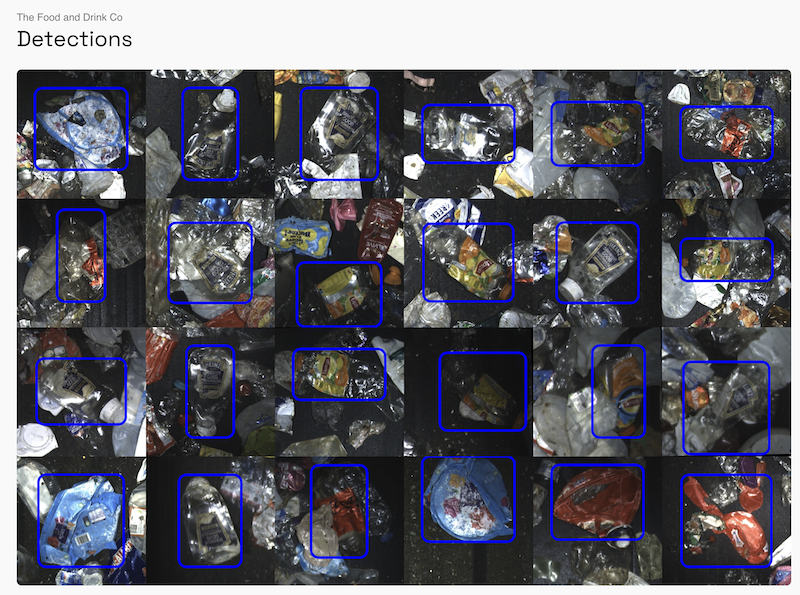
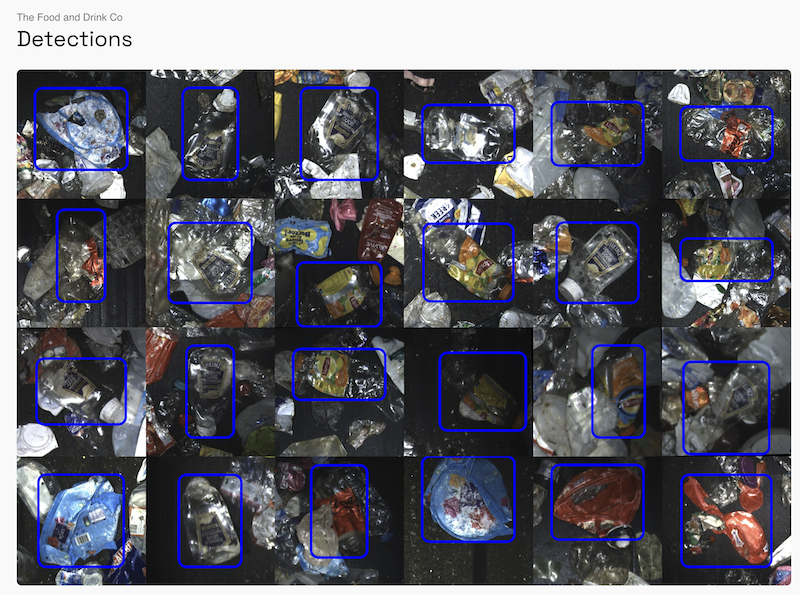
Greyparrot, a specialist in waste analytics, has launched Deepnest, pitched as a world first AI platform that gives brands direct access to their recyclable waste data.
This tracks packaging performance by brand, material, product type, and region. It reveals exactly how packaging moves through the waste system: what’s sorted, recycled, or lost.
Powered by Greyparrot Analyser AI camera systems in material recovery facilities, Deepnest relies on what is claimed to be the world’s most comprehensive household packaging waste database - these systems process over 40 billion waste objects annually across more than 20 countries.
Greyparrot currently detects $1 billion worth of recyclable materials in the waste streams it monitors, and estimates that, if rolled out globally, its systems could uncover up to $100 billion in recyclable value every year by 2040. Using this data, Deepnest then provides brands with actionable insights, generating tailored recommendations to improve packaging, from shape and colour to material composition.
Ambarish Mitra, Co-founder at Greyparrot, says: “The term “waste” is itself a misnomer - our data shows that post-consumption materials are worth billions to our global economy. For too long, brands have had to operate with little visibility into their packaging’s end of life.”
“Empowering brands with real-world data on their products' recyclability gives them a huge competitive advantage, which is exactly what Deepnest is designed to do. As regulations tighten and consumer demands grow, winners will be those who act on real-time insight - and can prove it.”
Unilever and Amcor are some of the major consumer goods brands and packaging producers trialling Greyparrot’s technology.
Dr Liz Smith, Global R&D Head of Deodorants at Unilever, says: “AI enabled waste intelligence tools have great potential to provide new visibility into how packaging is actually being sorted and processed in real-world recycling systems.”
“Our goal is to reduce our virgin plastic use and make our plastic packaging reusable, recyclable or compostable - and insights like these could critically help to inform future packaging design, enable recyclability in practice and at scale, and increase the supply of high-quality recycled materials.”
Sandra Gibbs, Chief Supply Chain Officer at Asahi Beverages, says: “Asahi Beverages has made big strides in sustainable packaging, including switching to 100% recycled plastic bottles for brands like Pepsi Max, Solo, Schweppes, and Sunkist.”
“We also operate Australia’s largest PET recycling facility - a joint venture with Coca-Cola Europacific Partners - and we’ve been looking for real-time data to help maximise its impact. That’s why we installed Greyparrot Analysers to unlock operational data to improve recycling quality and output. Deepnest can transform that data into insights to guide smarter packaging design from the outset. We’re exploring how this technology can help us embed a data driven approach across the entire packaging lifecycle, moving us closer to 100% circular packaging.”
Mark Roberts, Circular Economy Director at Amcor, comments: "The packaging industry relies on lab scale testing and software models to predict recyclability of packaging solutions, but actual real-life data is missing, given the huge resources it would take to get real waste data at scale from operating facilities. With Greyparrot’s AI powered waste intelligence, Deepnest is unlocking real-world recyclability data that the packaging data chain has been missing."
As we witness a digital transformation revolution across all channels, AI tools are reshaping the omnichannel game, from personalising customer experiences to optimising inventory, uncovering insights into consumer behaviour, and enhancing the human element of retailers' businesses.
With 2025 set to be the year when AI and especially gen AI shake off the ‘heavily hyped’ tag and become embedded in retail business processes, our newly launched awards celebrate global technology innovation in a fast moving omnichannel world and the resulting benefits for retailers, shoppers and employees.
Our 2025 winners will be those companies who not only recognise the potential of AI, but also make it usable in everyday work - resulting in more efficiency and innovation in all areas.
Winners will be announced at an evening event at The Barbican in Central London on Wednesday, 3rd September.
This will kick off with a drinks reception in the stunning Conservatory, followed by a three course meal, and awards ceremony in the Garden Room.
Notably absent from the latest International Atomic Energy Agency’s damage report are three research reactors operating at the Isfahan Nuclear Technology and Research Center. One of the so-called miniature neutron source reactors, made by China in 1991, runs on 900 grams (2 pounds) of bomb-grade uranium.
It seems we’re going to see more satellite imagery in the coming weeks.
Le plus grand fabricant de puces au monde, TSMC (Taiwan Semiconductor Manufacturing Company), tire la sonnette d’alarme : de nouveaux droits de douane envisagés par les États-Unis sur les semi-conducteurs pourraient menacer l’un des plus vastes projets industriels du pays. Dans une lettre officielle envoyée au Département du Commerce américain le 5 mai, la filiale américaine de […]
Carrefour says that the digitalisation of stores is a priority, and this includes a partnership with VusionGroup.
“At VivaTech, we announced a partnership with VusionGroup to deploy EdgeSense technology, a first in Europe,” says Emmanuel Grenier, Executive Director E-commerce, Data and Digital Transformation at Carrefour.
“Already tested in our Villabé hypermarket, this solution is based on: AI and computer vision to ensure shelves are always full; Product geolocation to simplify the customer journey; Ultra-accurate data to guide our teams in real-time.”
He adds: “This partnership marks a key step in the modernisation of our stores and brings immediate benefits for our customers, our employees and our operational performance.”
Carrefour is the first major European grocer to adopt the tech, following its deployment by Walmart in the US. EdgeSense delivers real-time shelf monitoring, stockout detection, pricing compliance and precise product geolocation.
At the hypermarket in Villabé, France, approximately 70,000 electronic shelf labels, 500 cameras, and 7,000 EdgeSense rails have been installed, with a second site due to launch soon.
The awards, which are now open for entries, celebrate global tech innovation in a fast moving omnichannel world.
Our 2024 hall of fame entrants were revealed during an event which took place at RIBA’s 66 Portland Place HQ in Central London on 21st November, and consisted of a drinks reception, three course meal, and awards ceremony presided over by comedian Lucy Porter.
In his welcome speech, Scott Thompson, Founder and Editor, RTIH, said: “The event is now into its sixth year and what a journey it has been. The awards started life as an online only affair during the Covid outbreak, before launching as a small scale in real life event and growing year on year to the point where we’re now selling out this fine, historic venue.”
He added: “Congratulations to all of our finalists. Many submissions did not make it through to the final stage, and getting to this point is no mean feat. Checkout-free stores, automated supply chains, immersive experiences, on-demand delivery, next generation loyalty offerings, inclusive retail, green technology. We’ve got all the cool stuff covered this evening.”
“But just importantly we’ve got lots of great examples of companies taking innovative tech and making it usable in everyday operations - resulting in more efficiency and profitability in all areas.”
Congratulations to our 2024 winners, and a big thank you to our sponsors, judging panel, the legend that is Lucy Porter, and all those who attended November's gathering.
For further information on the 2025 RTIH Innovation Awards, please fill in the below form and we will get back to you asap.
Name
*
First Name
Last Name
Email
*
Subject
*
Message
*
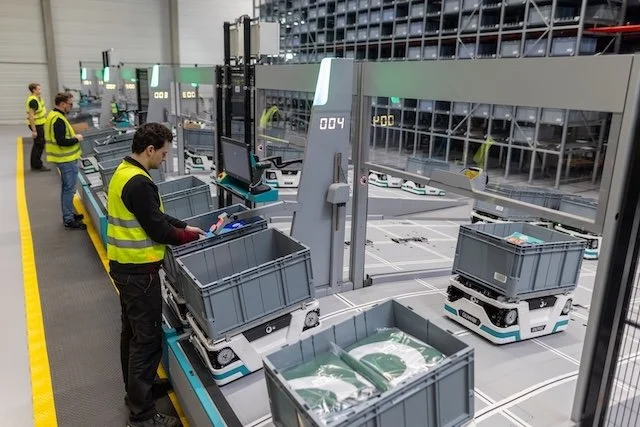
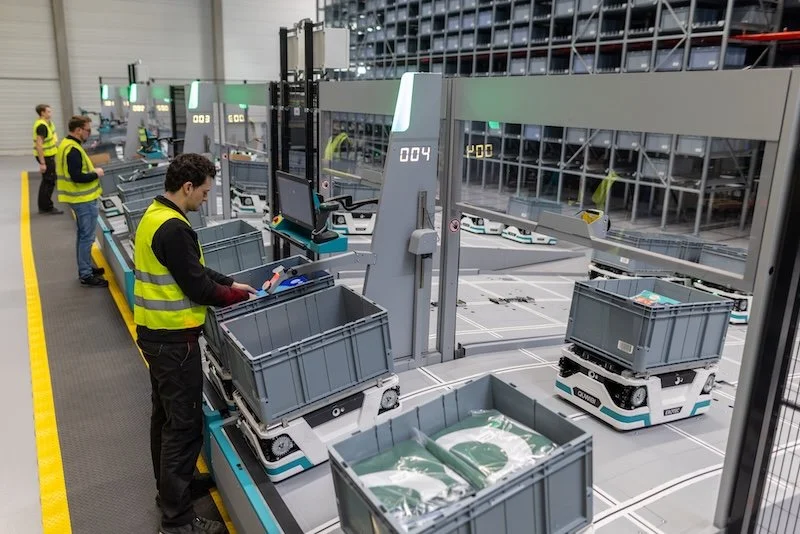
Flexibility, reliability, and security in logistics warehouses are crucial for staying competitive amid ongoing uncertainty for businesses, says Thomas Genestar, Managing Director of Western Europe at Exotec.
Global supply chains are operating under considerable strain, with issues such as international conflicts, product shortages, new tariffs and stricter regulations causing significant disruption. Warehouse operators are very much in the middle of this maelstrom, and according to Exotec, robotisation of the warehouse will be key to successfully navigating these challenges.
Genestar says: “While certain geopolitical and economic factors cannot be controlled, there are always things you can do as a business to soften the blow. As an organisation in the logistics sector, it’s important to fortify your own operations to build resilience. This is where robotisation has a major role to play."
“Effective stock management streamlined picking processes and efficient order preparation are critical. Start by mapping these processes to identify areas for improvement. Once optimised, warehouse automation through robotics becomes a vital ally, automating essential tasks. And goods-to-person systems reduce walking distances and improve operator ergonomics, speeding up order preparation. This not only reduces errors but also ensures 24/7 operational continuity, regardless of external disruptions.
“Seasonal peaks, unexpected order surges and labour shortages also present a challenge for logistics operations. Robotic automation systems feature a modular fleet of autonomous mobile robots (AMRs), allowing businesses to scale up or down flexibly in response to fluctuating demand. This adaptability ensures operational efficiency in both short- and long-term scenarios."
“Such systems should be simple to install and deliver smooth flow capacity, with the option to easily add new robots to active systems in minutes depending on demand. They should also be able to adapt to both business-to-business and business-to-consumer models and operate in both environments simultaneously when required."
“Additionally, geographical reconfiguration is an important consideration, and warehouses should be close to consumers or production sites to minimise delays and guarantee product availability.”
Genestar concludes: “To remain a step ahead and prepare for economic instability, or business fluctuations, having a robotic automated system is a real asset to manage operations. Flexibility and scalability provide our clients an outstanding additional value, even more when economic disruptions emerge.”
“Robotic systems integrate with warehouse management systems and provide real-time visibility and traceability of inventory, helping businesses plan for the toughest of periods. This results in faster fulfilment, better working conditions, and higher customer satisfaction.”
The awards, which are now open for entries, celebrate global tech innovation in a fast moving omnichannel world.
Our 2024 hall of fame entrants were revealed during an event which took place at RIBA’s 66 Portland Place HQ in Central London on 21st November, and consisted of a drinks reception, three course meal, and awards ceremony presided over by comedian Lucy Porter.
In his welcome speech, Scott Thompson, Founder and Editor, RTIH, said: “The event is now into its sixth year and what a journey it has been. The awards started life as an online only affair during the Covid outbreak, before launching as a small scale in real life event and growing year on year to the point where we’re now selling out this fine, historic venue.”
He added: “Congratulations to all of our finalists. Many submissions did not make it through to the final stage, and getting to this point is no mean feat. Checkout-free stores, automated supply chains, immersive experiences, on-demand delivery, next generation loyalty offerings, inclusive retail, green technology. We’ve got all the cool stuff covered this evening.”
“But just importantly we’ve got lots of great examples of companies taking innovative tech and making it usable in everyday operations - resulting in more efficiency and profitability in all areas.”
Congratulations to our 2024 winners, and a big thank you to our sponsors, judging panel, the legend that is Lucy Porter, and all those who attended November's gathering.
For further information on the 2025 RTIH Innovation Awards, please fill in the below form and we will get back to you asap.
Name
*
First Name
Last Name
Email
*
Subject
*
Message
*
Snap Inc., the company behind the Snapchat social app and Spectacles AR glasses, has teamed up with Niantic Spatial to bring accurate geospatial capabilities to the Snapchat and Spectacles platforms. The partnership could be mutually beneficial as Snap’s platforms will get city-scale positioning capabilities while Niantic could see a massive influx of user-generated data to enhance its ‘Visual Positioning System’.
Many AR devices today are capable of localizing themselves within an arbitrary environment. An AR headset, for instance, looks at the room around you and uses that information to understand how the headset itself is moving through the space.
But if you want to enable multiple devices to interact in a shared space, both need to be able to localize themselves not just to the environment, but with regards to one another. Essentially, you need both devices to share the same map so that both users see the same thing happening in the same place in the real world.
That’s the goal of Niantic’s Visual Positioning System. The company has spent years aiming to allow AR devices to tap into a shared spatial map to establish their real-world position. While GPS would be far too inaccurate for the job, such a system allows devices to understand if they’re in a shared space together, allowing for content to be synchronized between the two for multiplayer and persistent content.
Now Niantic is partnering with social media and AR company Snap Inc to bring its VPS tool to the company’s Snapchat and Spectacles platforms. The companies released a concept video showing the kind of city-scale spatial and social experiences that could be possible with the system:
“For AR Lenses, developers will be able to anchor their AR experiences to millions of real-world locations with centimeter-level precision. That means not just layering effects on top of the camera view — the experiences truly live in the world, making it possible, for example, to create a lens where a virtual concert springs to life in a city square or where a portal opens only when someone walks to a specific park bench. VPS makes that possible — and lets multiple people see the same AR moment, in the same place, at the same time. It’s a powerful new tool for turning public spaces into canvases for creativity,” the announcement reads.
The joint announcement describes the relationship as a “strategic multi-year partnership,” which includes an unspecified capital investment by Snap into Niantic.
Strategic indeed… not only will Snap’s platforms get access to perhaps the most comprehensive city-scale positioning system for AR, but Niantic stands to gain a massive quantity of new data to enhance its VPS system.
Niantic sees user-generated scans as the way to not only scale its VPS system to more places around the world, but also to keep its map consistently up to date.
With VPS integrated into certain AR apps on Snapchat or Spectacles, users could be asked to contribute scans in order to unlock usage of a given lens. That scan data can be incorporated into the VPS’s understanding of the world, and thus allowing future users to use any VPS-dependent apps in that location.
Niantic has long been a pioneer when it comes to leveraging user-generated scans and data for spatial understanding. The company cut its teeth on social geo-location games like Ingress (2013) and Pokemon Go (2016). After recently selling off its gaming division, Niantic is only getting more serious about its VPS system and the user-generated data that powers it—hence its new formal name: Niantic Spatial.
While Snap’s Spectacles AR glasses are still a nascent platform, the 900 million existing Snapchat users could give Niantic and Snap a massive jump start on building out the most extensive geospatial AR dataset in the industry.
Les journées professionnelles restent souvent rythmées par les réunions à la chaîne.
Chacune de ces sessions génère une quantité significative d’informations, mais capturer, organiser et exploiter ces données de manière efficace peut vite devenir une contrainte. La prise de notes traditionnelle est souvent laborieuse, détournant l’attention de la discussion en cours et rendant le processus fastidieux.
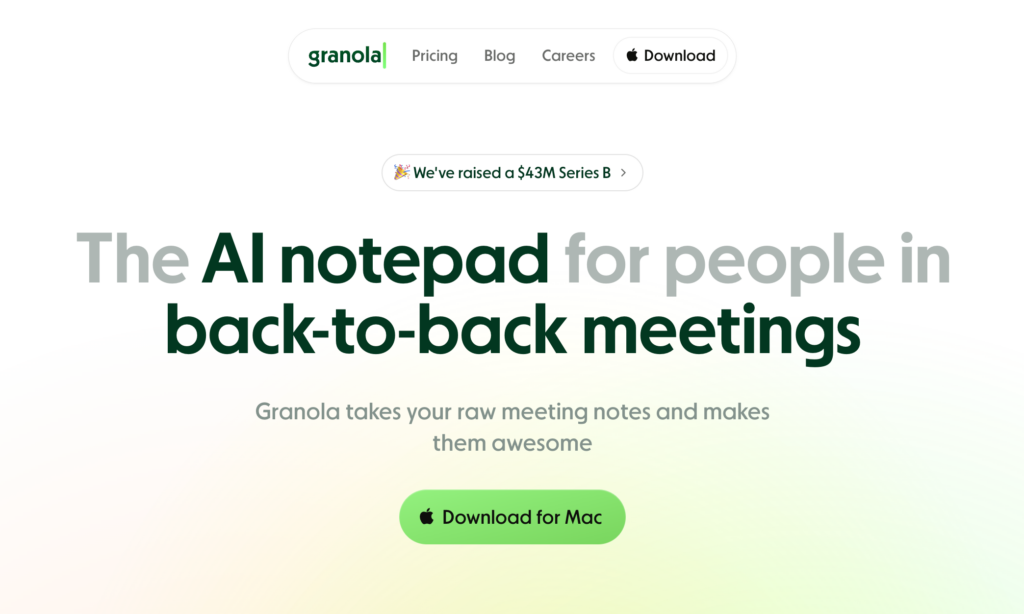
Granola se présente comme une solution concrète à ce défi quotidien. Ce bloc-notes intelligent alimenté par l’IA est conçu pour faciliter la prise et l’utilisation de vos notes de réunion. Il ne se contente pas de transcrire ; il combine vos propres annotations avec une transcription intelligente pour capturer chaque détail essentiel.
L’objectif est clair : vous permettre de rester pleinement présent lors de vos réunions et interactions, sans le stress de manquer un détail important.
Un assistant intelligent pour des notes complètes et structurées
Contrairement à de nombreux outils qui s’appuient sur des bots pour enregistrer les réunions, Granola fonctionne comme un bloc-notes classique, mais avec une IA puissante en coulisses.
Granola utilise l’audio de votre ordinateur pour transcrire vos réunions en temps réel. Que vous utilisiez Zoom, Google Meet, Microsoft Teams ou WebEx, l’outil s’active discrètement en arrière-plan sans nécessiter l’ajout d’un “bot” de réunion visible par les autres participants.
Une garantie pour la confidentialité des échanges, même lors de discussions sensibles ou de présentations commerciales.
Vos notes, enrichies et structurées automatiquement
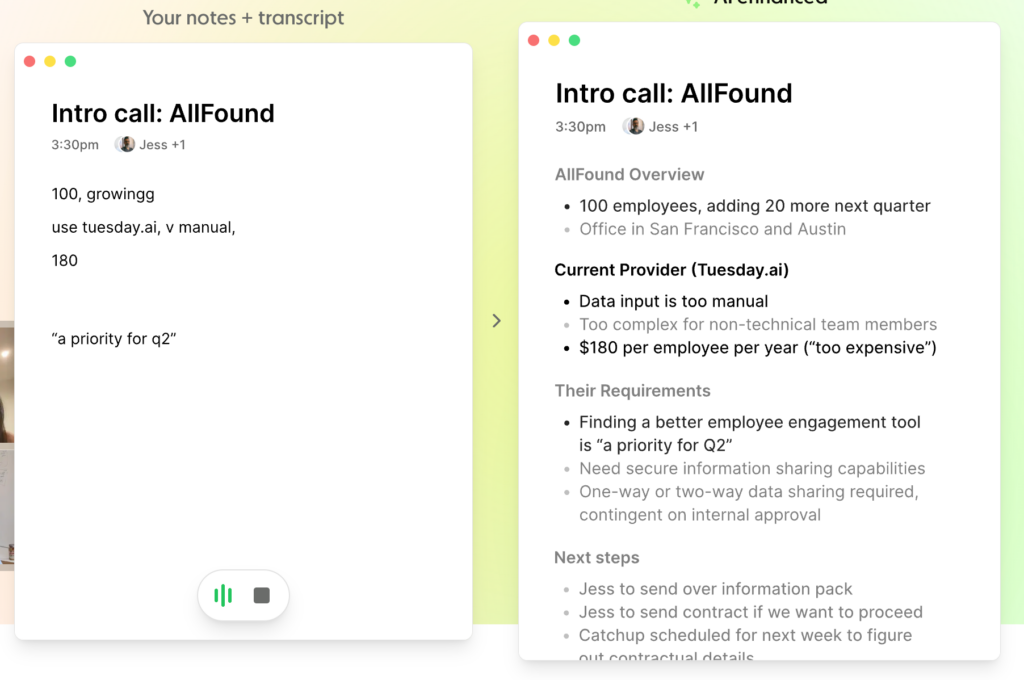
L’un des atouts majeurs de Granola est sa capacité à combiner vos propres notes avec une transcription intelligente de la réunion. Vous écrivez ce que vous jugez important, l’IA complète et structure l’ensemble pour créer une synthèse claire, hiérarchisée et actionnable.
Les notes générées par l’IA apparaissent en gris pour les distinguer de vos apports personnels (en noir), et chaque point clé est hyperlié à la transcription pour un accès rapide au contexte original.
L’outil ajoute automatiquement de la hiérarchie et une structure à vos notes, les rendant plus faciles à parcourir et à assimiler, même si vous n’avez pris que des notes minimales. À l’usage c’est hyper efficace.
Organisation Automatique et Partage Simplifié
À la fin de chaque session, Granola organise vos notes de manière claire et hiérarchisée. Les décisions clés, les actions à entreprendre et les prochaines étapes sont mises en évidence. Granola est très bon aussi dans la transformation des discussions en éléments exploitables.
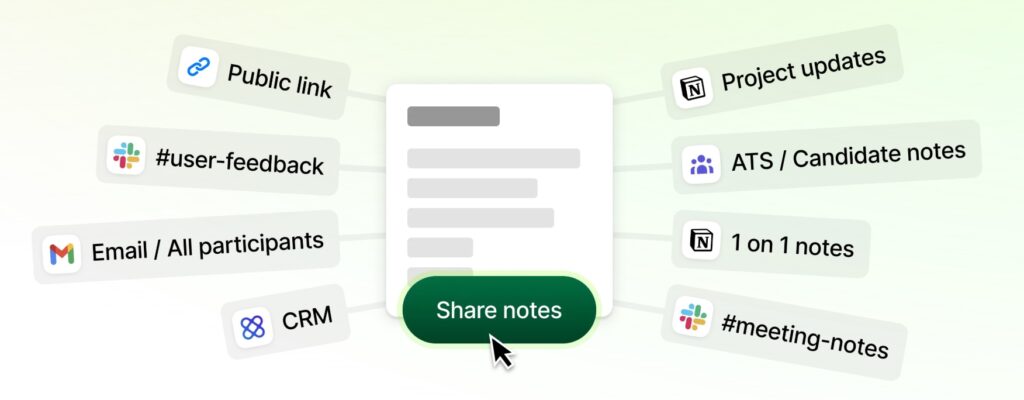
Il génère des résumés thématiques avec des sections extensibles et des points d’action clairs. Le partage des notes avec vos collègues est également facilité, avec des options d’exportation par email, Slack, Google Drive ou des dossiers partagés.
Un boost pour votre productivité
La plateforme a des effets rapides sur la productivité de vos équipes. Les principales fonctions de cet outil ont été pensées pour cela:
Transcription en direct : L’audio de la réunion est capturé et transcrit instantanément, sans intervention extérieure.
Templates personnalisables : Adaptez la structure des notes selon le type de réunion (entretien, point projet, rendez-vous commercial, etc.).
Partage en un clic : Diffusez vos notes sur Slack, Notion, ou tout autre outil collaboratif, ou générez un lien partageable pour votre équipe.
Recherche et chat IA : Interrogez l’IA sur le contenu d’une réunion passée pour retrouver une décision, un chiffre ou une question sans avoir à relire l’intégralité du transcript.
Automatisation des suites de réunion : Demandez à Granola de rédiger un email de suivi, de lister les actions à mener ou de synthétiser les objections et décisions prises. C’est magique.
Screenshot
Un sans faute… ou presque
Comme tout outil utilisant l’IA, Granola présente certaines limites, notamment lorsqu’il s’agit de transcrire des données chiffrées complexes ou de travailler dans des environnements très techniques. Cependant, dans la plupart des situations, il se révèle être un assistant fiable, facile à prendre en main et d’une gande efficacité.
Le logiciel est disponible sur toutes les plateformes. Vous pouvez l’utiliser gratuitement avec ses fonctionnalités de base pour jusqu’à 25 réunions par mois. Les abonnements complets et illimités commencent à environ quinze euros par mois.
Un allié pour rester présent et créatif en réunion
En déchargeant l’utilisateur du stress de tout noter, la plateforme Granola permet d’être plus attentif et participatif pendant les réunions. Essayez-le et vous constaterez une meilleure implication et plus de créativité, l’IA vous servant de filet de sécurité pour ne rien perdre des échanges.
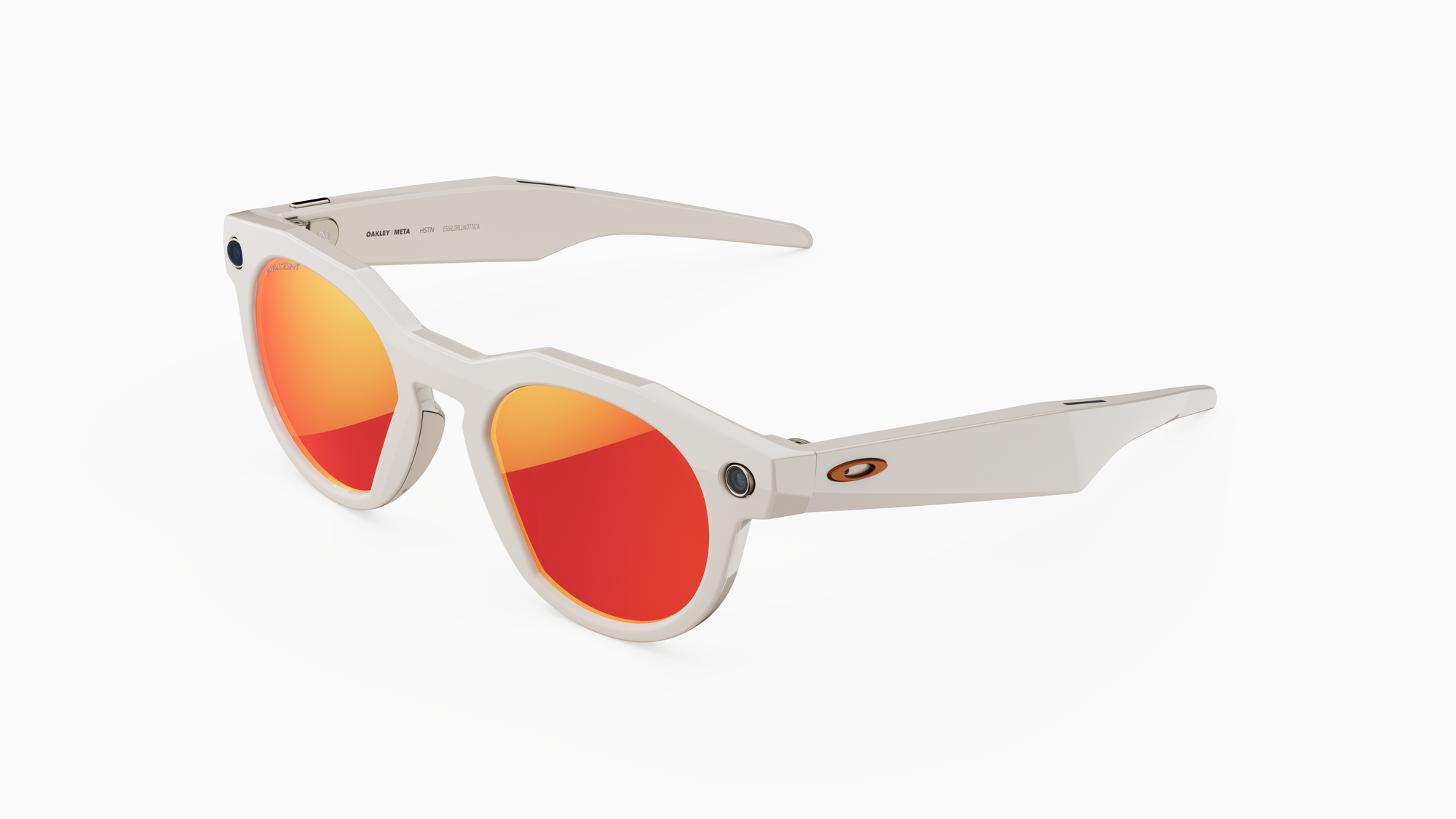
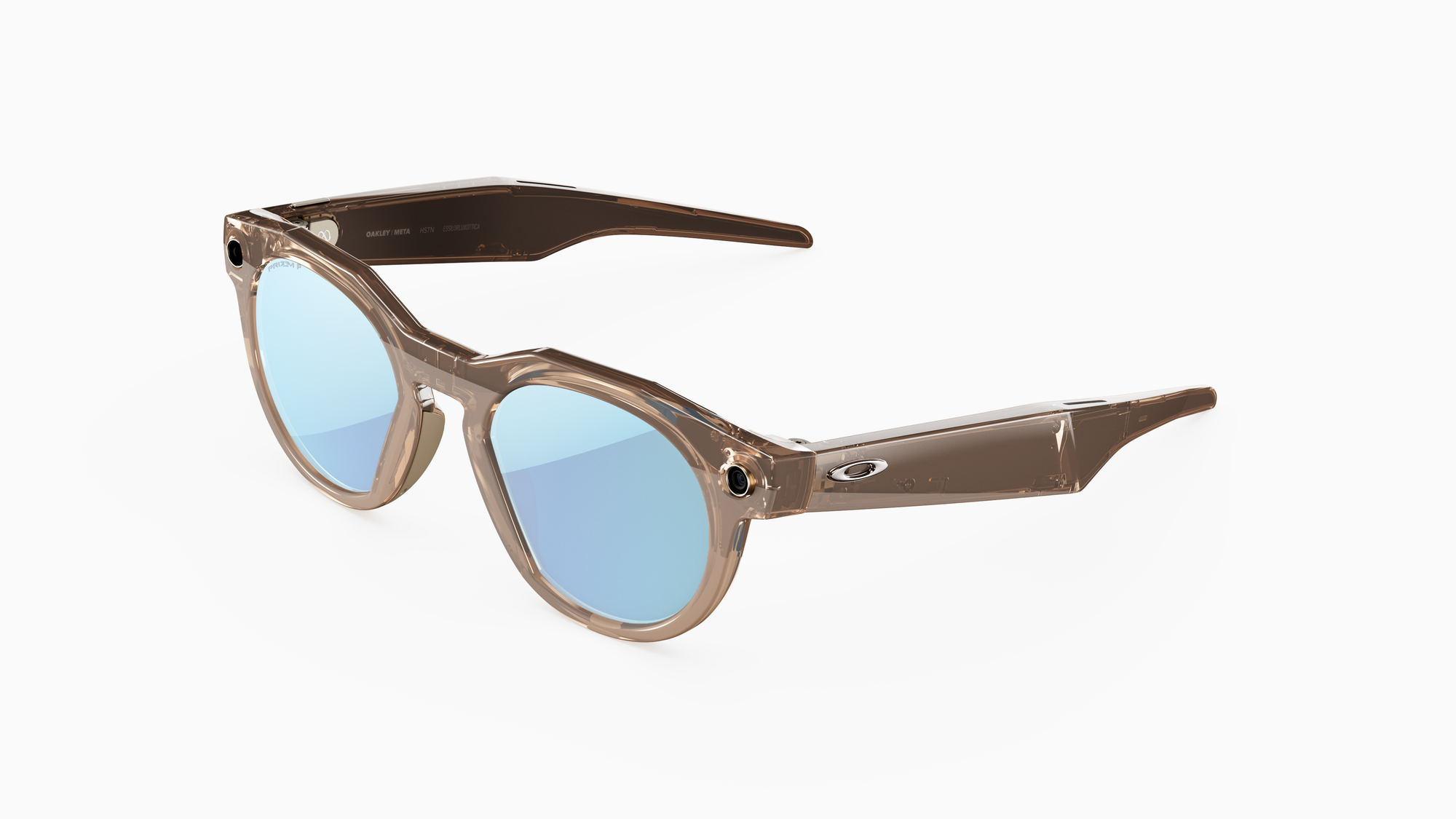
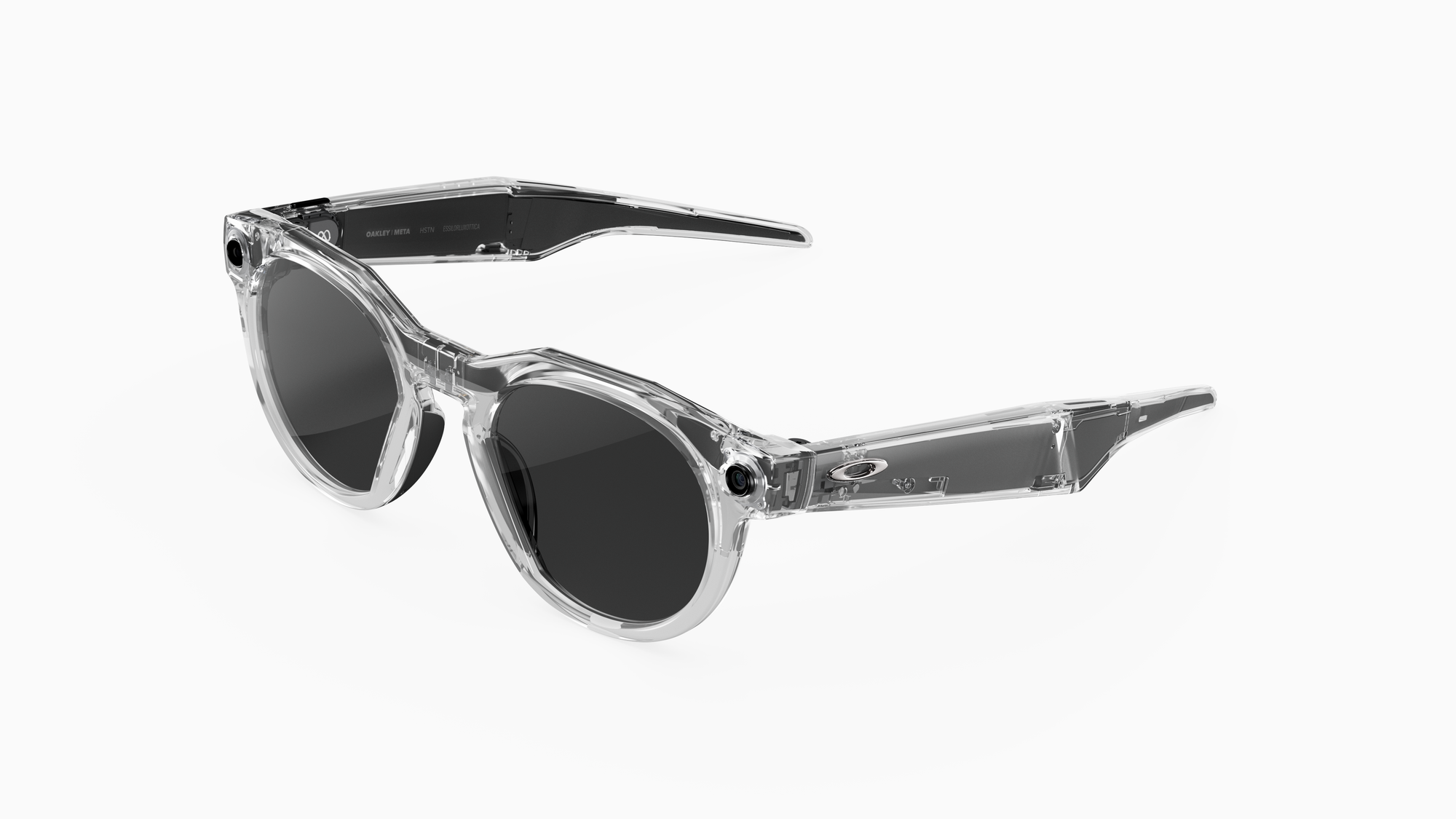
Oakley Meta HSTN glasses are official, after months of rumors and a tease earlier this week.
Ray-Ban and Oakley are both owned by EssilorLuxottica, the eyewear giant with which Meta last year secured an agreement extending their partnership “into the next decade”.
The partnership has been a success so far, with EssilorLuxottica announcing in February that 2 million Ray-Ban Meta glasses had been sold, as it vowed to increase annual production capacity to 10 million units by the end of 2026. Now, it's expanding to Oakley's HSTN design.
0:00
/0:14
1×
Meta says the Oakley Meta HSTN glasses have 8 hours of battery life in typical use, compared to 4 hours for the Ray-Ban Meta glasses. They also capture 3K video, up from 1080p.
The included charging case also has a larger battery, delivering up to 8 full recharges, compared to 6 for the Ray-Ban Meta case.
No Centered Camera?
Bloomberg's Mark Gurman was the first to report the existence of an Oakley smart glasses project at Meta.
His January report claimed that Oakley Meta glasses would have a camera in the center, instead of on a temple, but the Oakley Meta HSTN glasses do not.
Gurman now says that the centered camera model will be coming later this year, in a separate Oakley Meta Sphaera glasses product.
Other than these improvements, Oakley Meta HSTN glasses function the same way as Ray-Ban Meta. They're screenless smart glasses with a camera, microphones, and speakers. You can use them to capture photos and videos, listen to music/podcasts/audiobooks, make and receive calls, share your first-person view on WhatsApp/Messenger/Instagram video calls, translate speech, scan QR codes, and query Meta AI, the company's LLM-based assistant that can see via the camera when you ask about something in view. It'll also read out some phone notifications, if you want.
Like the existing Ray-Ban Meta glasses, Oakley Meta HSTN glasses are IPX4 water resistant, meaning they repel splashing water, but aren't rated for water jets or submersion. And also like Ray-Ban Meta, Oakley Meta HSTN feature an LED on the front that illuminates whenever the camera is in use, be it for capture or for Meta AI.
Oakley Meta HSTN glasses are not replacing Ray-Ban Meta, to be clear. They're a slightly higher-end option, aimed at athletes and smart glasses power users.
Oakley Meta HSTN glasses will be available "later this summer", starting at $400, in the US, Canada, the UK, Ireland, France, Italy, Spain, Austria, Belgium, Australia, Germany, Sweden, Norway, Finland, and Denmark.
They'll also be coming to Mexico, India, and the United Arab Emirates later in the year.
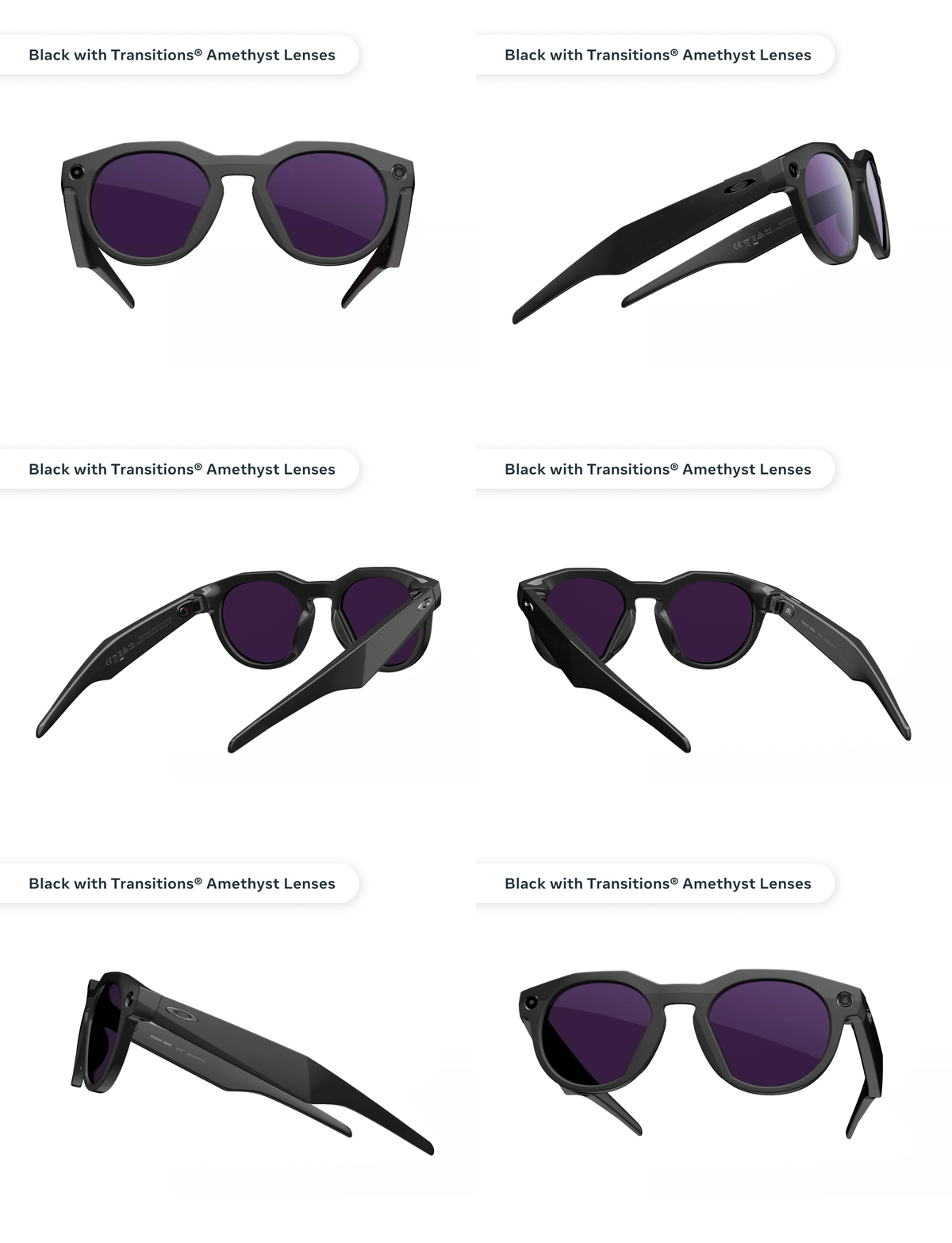
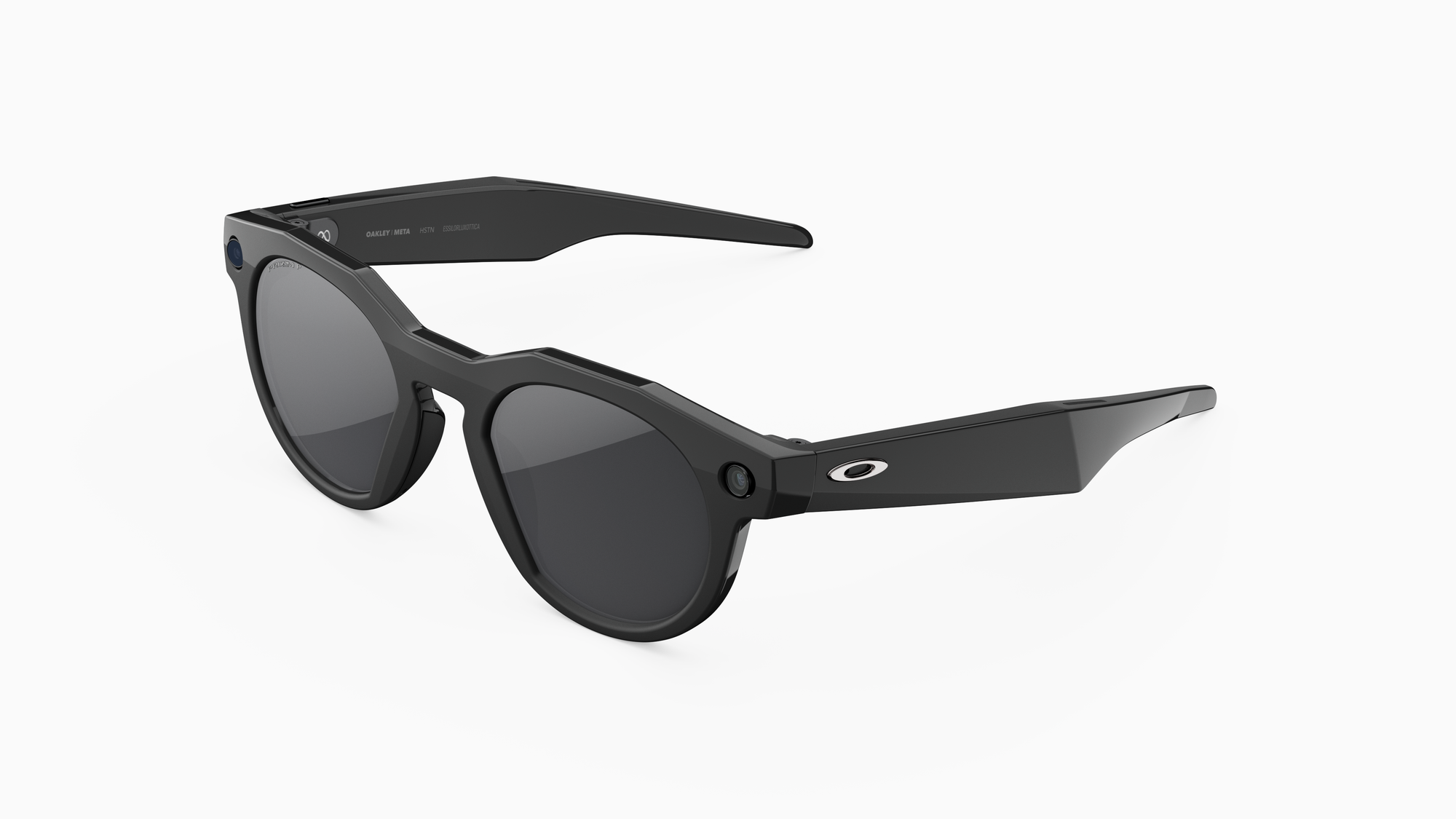
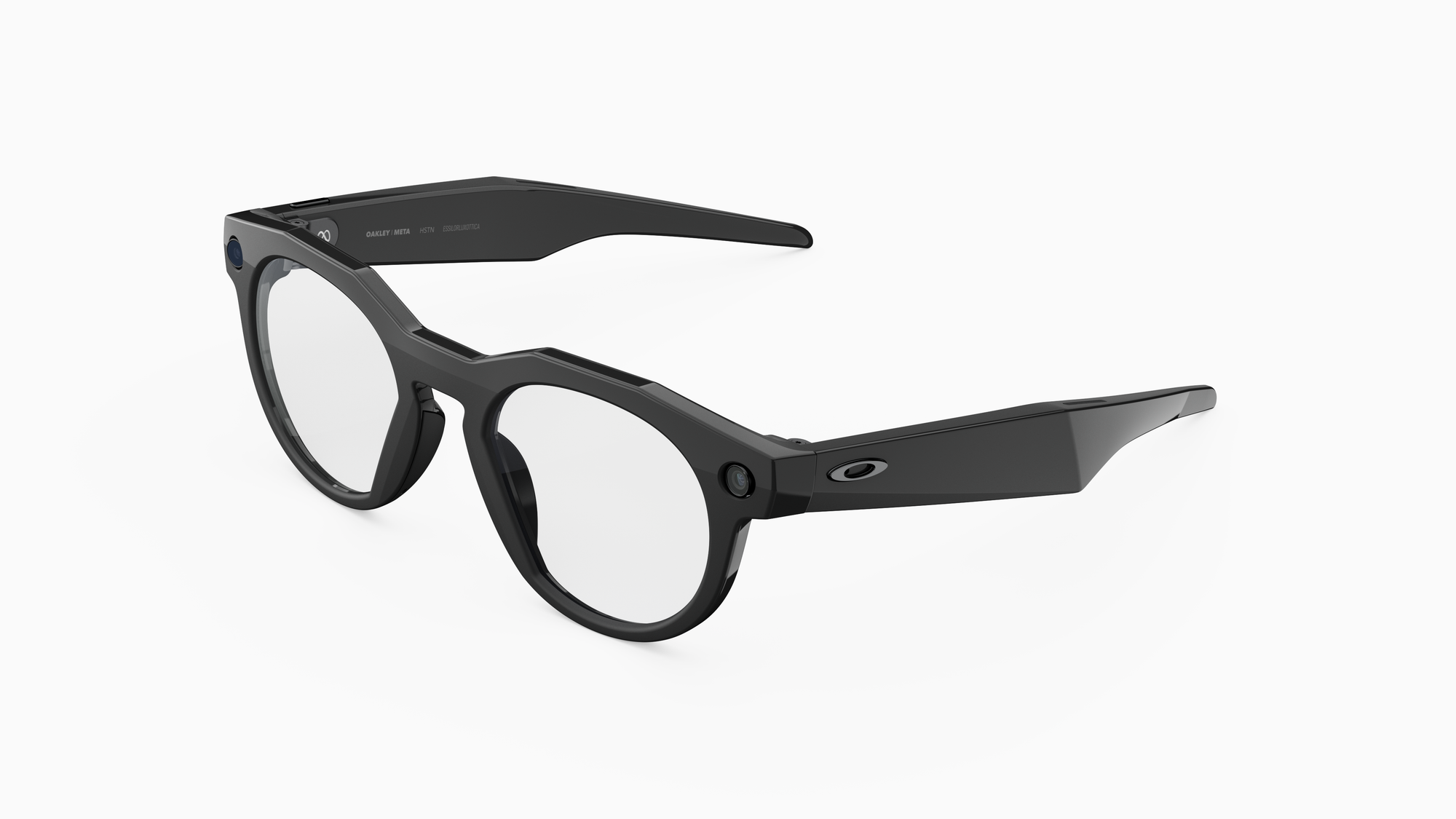
The glasses will be offered in six regular frame and lens color combinations:
Warm Grey with Ruby PRIZM LensesBrown Smoke with Polar Deep Water PRIZM LensesBlack with Amethyst Transitions LensesBlack with Black PRIZM Polar LensesBlack with Clear LensesClear with Grey Transitions Lenses
The sunglasses models use Oakley's PRIZM lens technology, which EssilorLuxottica says enhances colors and contrast.
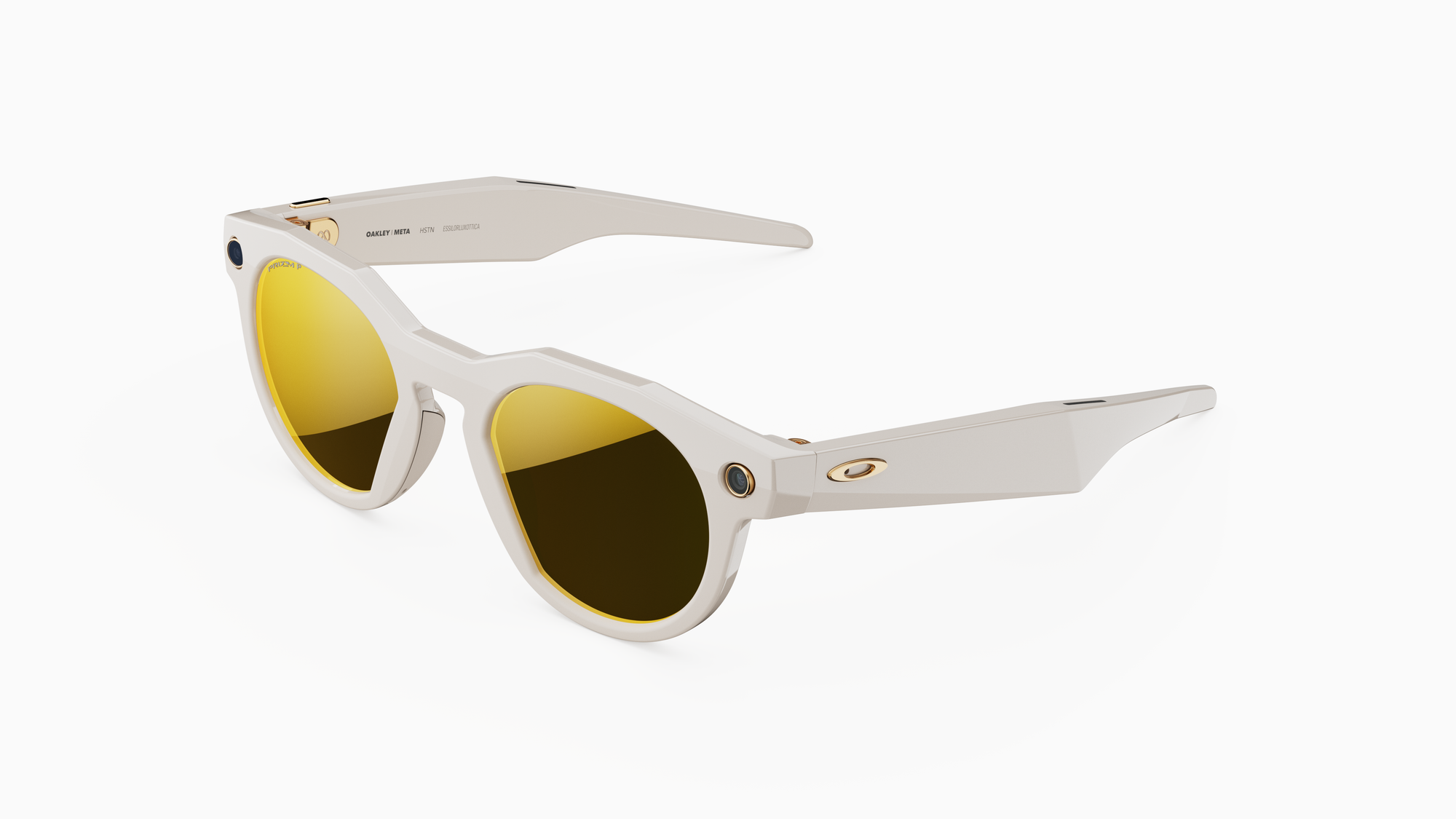
Before the regular models hit the market, preorders for a limited-edition model with gold accents and gold 24K Polar lenses will open on July 11, priced at $500.
Limited Edition Desert with Golf 24K PRIZM Polar lenses.
Meta says it's still "just getting started" with smart glasses, and Oakley says this is "just the first chapter of a new era for sports".
As a reminder, each week, every Friday, we’re sending out this overview of content in the Stratechery bundle; highlighted links are free for everyone. Additionally, you have complete control over what we send to you. If you don’t want to receive This Week in Stratechery emails (there is no podcast), please uncheck the box in your delivery settings.
On that note, here were a few of our favorites this week.
OpenAI Gets Testy and xAI Gets Expensive. A slow news week after WWDC provided an opportunity to take a closer look at two leading AI players. First, Tuesday’s Daily Update covered the latest round of tensions between OpenAI and Microsoft, as OpenAI reportedly threatens a complaint to regulators and the companies continue to haggle over contract terms in the midst of OpenAI’s attempts to change its corporate structure (again). Next, Wednesday’s Daily Update drew on reports of spiraling costs and limited revenue at xAI to examine the company’s core challenges, potential solutions, and why it would benefit the entire AI ecosystem to maintain xAI as an additional competitor in the space. Alliances are evolving and costs are spiraling as the hierarchies that will define the future are still very much in flux.—Andrew Sharp
Speedbumps for China’s Car Industry. The overnight emergence and dominance of Chinese EV companies has been one of the biggest stories in the world over the past two years, both because of the skill and ingenuity of PRC manufacturers, as well as the low cost and (over)supply of Chinese brands, which has inflamed trade tensions and threatened incumbent car companies elsewhere in the world. This is context for recent reports that many of the biggest Chinese companies are struggling for cash flow, themselves, caught in the middle of a ruthless domestic competition for market share. Bill and I discussed that story at the end of this week’s episode Sharp China, including why consolidation in the industry has been slower than experts predicted, and why shutting down any factories in China is politically sensitive and rare in 2025. Also covered in that show: a new framework for a temporary US-China trade truce, and worldwide tensions surrounding rare earth access, which may be a theme for the rest of the decade. —AS
Meta Continues Its AI Hiring Spree. One week removed from hiring Alexandr Wang to lead a “superintelligence” division as Meta attempts to reset its AI efforts, The Information reported on Wednesday night that Meta is also in advanced talks to add prominent AI investors Daniel Gross and Nat Friedman to the new AI team with an offer that could exceed $1 billion. In light of that news, my recommendation here is two-fold. First, anyone unfamiliar with Friedman and Gross should review the Stratechery Interviews with Friedman and Gross over the last three years, as that interview series is not only a window into how Gross and Friedman think about AI and related products, but also just a great way to trace the mind-blowing evolution of the AI conversations we’ve all been having since October 2022 (seven weeks before ChatGPT launched). And second, for contemporary thoughts on what these moves signify at Meta and what the astounding price tag may signify for the future of tech salaries, Ben and I had a great time reacting to the news on this week’s Sharp Tech. —AS
All-in-one computers in which the mainboard lurked beneath a keyboard were once the default in home computing, but more recently they have been relegated to interesting niche devices such as the Raspberry Pi 400 and 500.
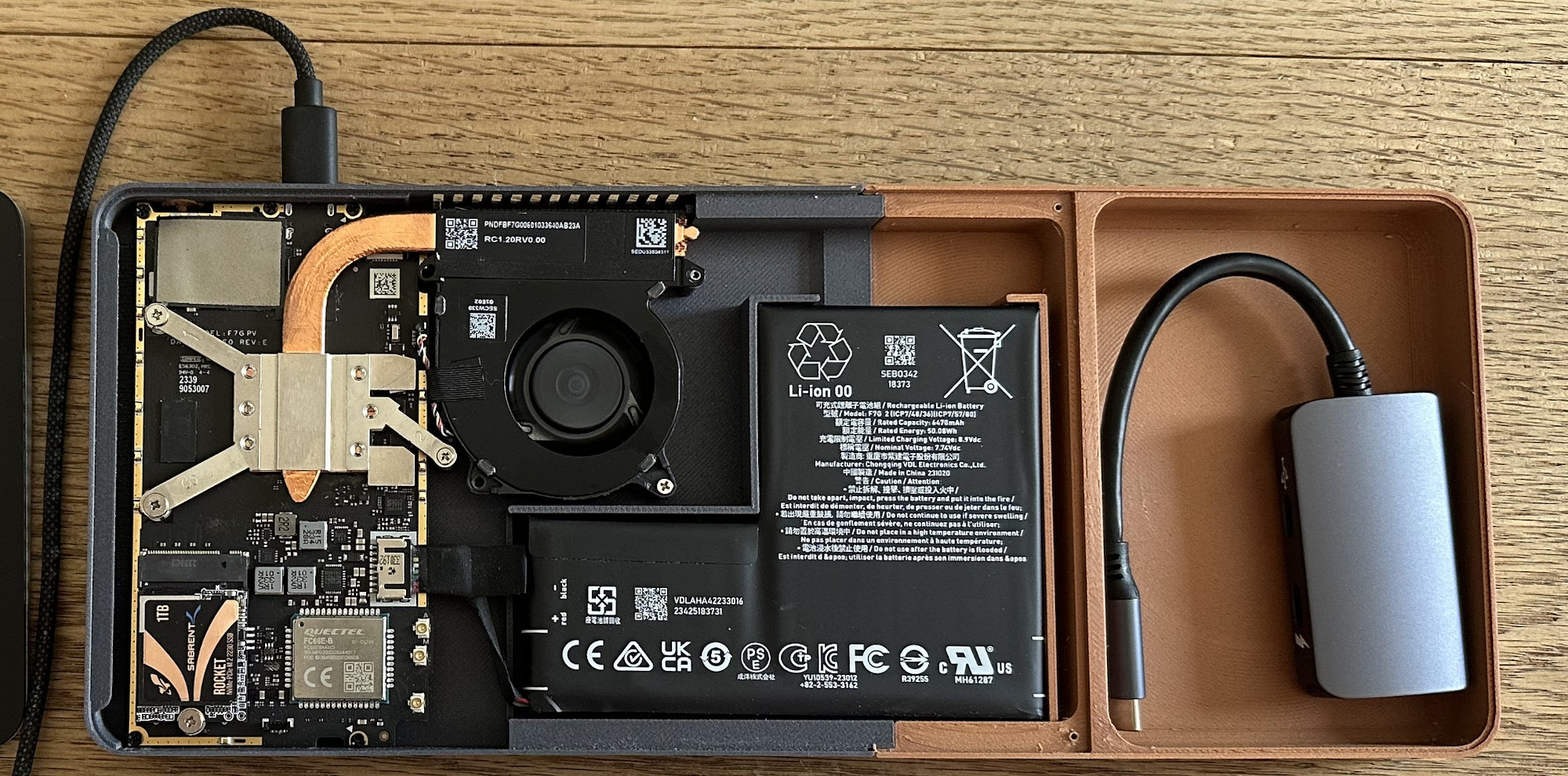
The Bento is another take on the idea, coming at it not with the aim of replacing a desktop machine, instead as a computer for use with wearable display glasses. The thinking goes that when your display is head mounted, why carry around a screen with your laptop.
On top it’s a keyboard, but underneath it’s a compartmentalized space similar to the Japanese lunchboxes which lend the project its name. The computing power comes courtesy of a Steam Deck so it has a USB-C-for-everything approach to plugging in a desktop, though there’s a stated goal to produce versions for other boards such as the Raspberry Pi. There’s even an empty compartment for storage of peripherals.
We like this computer, both for being a cyberdeck and for being without a screen so not quite like the other cyberdecks. It’s polished enough that we could almost imagine it as a commercial product. It’s certainly not the first Steam Deck based cyberdeck we’ve seen.
Un nouveau traitement oral pourrait redéfinir la prise en charge du cholestérol. Obicetrapib, une pilule prise une fois par jour, montre des résultats prometteurs contre les maladies...
Before our first child was born, we attended a series of classes with other expecting couples. The class aimed to prepare us for the joys and challenges of childbirth and the life changes that come with becoming parents.
Most parents-to-be were feeling a little anxious. One dad, though, never seemed fazed—he stayed cool through everything. At one point, I asked him how he was so relaxed. He said, "I'm calm like a duck. On the surface, I'm gently floating, but under the water, I'm paddling like crazy."
It's over 10 years ago now, but I remember it clearly. It stuck with me for two reasons.
First, it's a brilliant analogy for calmness—the two halves of a duck—and makes for a funny picture, which is why I thought it deserved a sketch.
Second, it reminds me that when I'm in a stressful situation or feeling nervous, it's easy to look around and see people who seem calm and confident. And if I start thinking I'm the only one feeling anxious, it usually makes it worse. However, when I recall this story, I remember that just because someone looks calm, it doesn't mean they feel calm. They might be "calm like a duck." Under the surface, their legs may be waggling furiously, just like I'm feeling.
"Ducks look calm as they glide along the surface of the water but they're paddling like hell underneath. When you're doing your preparation right, it sometimes looks so good that people watching you make the mistake of assuming it's all natural and effortless. In my experience, it never is."
In some ways, this misconception is everywhere when we see high performers who make things look easy:
In mid-June, IBM released its quantum roadmap, outlining a path to “IBM Quantum Starling,” what the company expects to be the “first large-scale, fault-tolerant quantum computer,” by 2029. Nvidia CEO Jensen Huang, meanwhile, said during his keynote speech at the GTC Paris developer conference last week that quantum computing is “reaching an inflection point” and that applicable quantum computers are “within reach.”
The announcements add to a deluge of breakthroughs from tech firms throughout the past six months, including quantum computing chips from giants like Google, Amazon and Microsoft. With so much weight behind the movement, the future of quantum is looking less murky by the day, said John Levy, CEO of quantum computing architecture firm SEEQC.
“The large companies working in quantum, nearly all of them are focused on building better (quantum bits),” said Levy. “The better the quality of the qubit, the better the quality of the system.”
Emerging from ‘Deep R&D’
For a long time, quantum has been stuck in “deep R&D,” confined to labs and theory rather than considered for practical applications, said Levy. Interest from the trendsetters and decision-makers of tech, however, has brought development out of the shadows:
Developers’ questions aren’t focused on whether quantum is possible, but rather how it can scale, said Levy.
“A whole bunch of fundamental risk has been taken off the table,” Levy said. “Now we have new risks.”
Barriers to scaling still exist, he noted, including energy efficiency, error correction and running algorithms that actually bring value. At SEEQC, Levy’s team is seeking to tackle the problem of quantum’s complicated infrastructure, using its single flux quantum processors to allow for control over quantum systems without excessive hardware or energy usage.
The company recently announced a partnership with IBM as part of DARPA’s Quantum Benchmarking initiative, which would use SEEQC’s processors within IBM’s large-scale quantum computer in development. “This is all about scaling quantum computers,” Levy said. “And scaling doesn’t just mean adding more qubits.”
Though overcoming some barriers simply reveals more, the interest in developing quantum technology is only growing. As the timeline for scalable quantum computers grows shorter and shorter, enterprise leaders shouldn’t write the tech off as fringe, Levy said. For now, CIOs and tech leaders should keep an eye on road maps like IBM’s, seeing how it intersects with their own ideas of quantum and how it applies to their businesses.
Quantum may eventually catch enterprises that keep their heads in the sand off-guard, Levy said, just as the initial AI wave threw many unprepared companies into a tailspin.
“I don’t think we can think of this as business as usual,” he said. “ One step at a time, we’re doing it as an industry. And those steps are coming faster.”
C'était une immense énigme de l'astrophysique et de la cosmologie. Selon des chercheurs, la matière manquante de l'Univers a pu être localisée avec un bon degré de confiance entre les galaxies. Et non, il ne s'agit pas de l'insaisissable matière noire, dont on ne sait pas comment, ni même si elle interagit avec la matière dite ordinaire (ou “baryoniq...
Novo Nordisk, the Danish company behind Ozempic and Wegovy, made one very dumb decision a few years ago that's now poised to massively eat into its profits — a wild twist in the pharma company's saga, and an all-time cautionary tale for its peers.
When watching an interview with the head of generic drugmaker Sandoz, Science magazine columnist Derek Lowe learned something incredible: that Novo failed to renew its Canadian patent on semaglutide, the active ingredient in the uber-expensive drugs Ozempic and Wegovy.
Speaking to the biopharma industry outlet Endpoints News earlier this month, Sandoz CEO Richard Saynor dropped the information as an aside in a larger conversation about the company's plans to sell generic semaglutide in Canada in 2026 — the same year that Novo's patent expires there due to the filing oversight.
"Canada, we filed and are waiting for approval once the data exclusivity expires sometime in Q1 next year," Saynor told Endpoints. "Interesting market. Novo never filed a patent in Canada."
Saynor, to be clear, was not quite correct in saying Novo never filed for a semaglutide patent in Canada — but the truth of the matter is actually way funnier.
Lowe learned, via trawling through Canadian patent records, that Novo last filed to renew its semaglutide patent in the great white north back inthe year 2018. When the regulatory body that governs patents reminded the Danish manufacturer that it was time to pay the annual maintenance fee, a paltry $250, Novo hemmed and hawed about whether it wanted to pay for so long that it quite literally lapsed.
Incredibly the Canadian patent office even gave the company a year-long grace period to make up for it, but the company never took the authorities up on the offer.
"Once a patent has lapsed," the Canadian patent officials reminded Novo Nordisk in a letter viewed by Lowe, "it cannot be revived."
As the Sandoz CEO remarked in his Endpoints interview, there's little doubt that "someone's lost their job" over the patent problem in Canada. Indeed, Saynor described that country as Novo's second-largest semaglutide market, and Ozempic sales in Canada garnered the pharma giant $2.5 billion CAD last year.
"You gotta ask why. I don’t think Canadians are disproportionately large," Saynor said. "There’s clearly a dynamic, like insulin, with cross-border business. It’s going to be interesting to see how that evolves."
Novo has, notably, kept up with its patent fees in the US, and generic semaglutide won't hit American shelves until at least 2032 — but as Saynor alluded to, they might be able to drive up to Canada to get it next year.
A fascinating recent development enabling musicians to improvise live music with AI-generated sound could be the biggest innovation since the advent of sampling, or perhaps even the invention of recorded sound, according to a music researcher at York.
Electronics and Telecommunications Research Institute (ETRI) has developed hyper-realistic AI technology that can create an avatar that speaks naturally like a real person using only a single portrait photo.
Au salon du Bourget, sur le stand de l’Armée de l’Air et de l’Espace, la nouveauté repose essentiellement sur le futur Rafale F5. Certaines de ses améliorations sont visibles, quand d’autres beaucoup plus révolutionnaires se font discrètes. Revue de détail.
It appears that Vuzix is at the forefront of smart glasses innovation and scale. With the current AR smart glasses hype wave building, it is no surprise that the veteran firm is achieving major milestones each quarter toward deploying enterprise AR devices and services.
This week, Vuzix announced that it has received a second tranche investment of $5 million from Quanta Computer, a leading global ODM and strategic partner. This brings Quanta’s total investment in Vuzix to approximately $15 million, following previous investments over the years.
The completion of this second tranche investment marks another important milestone in strengthening our partnership with Quanta and expanding the capabilities of our cutting-edge waveguide production facility. With this funding, we are further enhancing our state-of-the-art waveguide manufacturing capabilities, positioning Vuzix to deliver the world’s most affordable, lightweight, and performance-driven AI smart glasses for mass-market adoption. We are excited about the continued collaboration and innovation ahead with a partner as respected as Quanta.
Vuzix Powers Up Smart Glasses for 2025
Vuzix Corporation, a smart glasses vendor, recently announced a new partnership with Ramblr. This collaboration represents another critical step toward the company’s anticipated success in 2025. Additionally, this partnership allows Vuzix to advance its efforts in integrating AI into its augmented reality hardware portfolio. This trend is notable across the smart glasses market, which Google recently pointed out is reaching a significant convergence this year.
More specifically, the partnership brings Ramblr AI agent solutions to Vuzix smartglasses, with Travers explaining:
Deploying Ramblr’s AI agents on Vuzix M400 smart glasses redefines how users interact with technology, both on the factory floor and in everyday life. From real-time guidance to photo documentation after the job is complete, this is yet another example of how AR and AI are redefining every step of user workflows.
Roman Hasenbeck, CEO of Ramblr, also said that Ramblr “gives developers the tools to build and deploy these intelligent real-world assistants through a powerful platform that enables rapid adaptation to diverse domains and use cases. Our partnership with Vuzix brings this vision to life.”
Ramblr notes that its AI develops a deep contextual understanding of its environment, providing real-time, natural language guidance and visuals to workers using Vuzix smart glasses.
Recently, Vuzix Corporation acquired a waveguide research and development facility in Milpitas, California. This acquisition will enhance Vuzix’s waveguide tools, which are essential for its next-generation, AI-driven smart glasses, benefiting its products and ODM/OEM partners.
This move centralises Vuzix’s innovation efforts in the heart of Silicon Valley. It involves acquiring cutting-edge equipment, further solidifying its position as a key player in the smart glasses market.
Additionally, Vuzix is strengthening its OEM partnerships with recent developments. The company has begun shipping its latest order of XanderGlasses, a private-label version of the Vuzix Shield smart glasses designed to assist individuals with hearing loss.
This advancement marks a significant milestone for Vuzix following a strong start to 2025. XanderGlasses aims to support approximately 48 million people in the U.S. who experience hearing loss, and the devices are currently being distributed nationwide.
The Vuzix Shield smart glasses can display real-time captions of in-person conversations directly within the wearer’s field of view, enabling users to remain fully engaged in social and professional settings. Xander has received recognition for its product, earning a CES 2024 Innovation Award Honoree in both the Accessibility and Ageing Tech categories.
The news arrives during a crucial growth period for Vuzix, as the market gains momentum, indicating a bright future for the smart glasses veteran.
A l’issue de Vivatech, le PDG du groupe iliad, Thomas Reynaud, a lancé un appel sans détour à une mobilisation collective en faveur de la souveraineté technologique européenne. Dans un message publié sur LinkedIn, il résume en quelques lignes un sentiment de plus en plus partagé parmi les industriels du numérique, l’Europe est encore trop …
Vuzix, the veteran smart glasses maker, announced it’s secured a $5 million investment from Quanta Computer, the Taiwan-based ODM and major Apple assembler.
The latest investment was the second tranche following an initial $10 million investment made by Quanta in September 2024, which included the purchase of Vuzix common stock at $1.30 per share. At the time, Vuzix anticipated a total of $20 million from Quanta.
Paul Travers, President and CEO of Vuzix, notes the funding will be used to enhance Vuzix’s waveguide manufacturing capabilities, something he says will help Vuzix deliver “the world’s most affordable, lightweight, and performance-driven AI smart glasses for mass-market adoption.”
Additionally, Travers says the investment “marks another important milestone in strengthening our partnership with Quanta and expanding the capabilities of our cutting-edge waveguide production facility.”
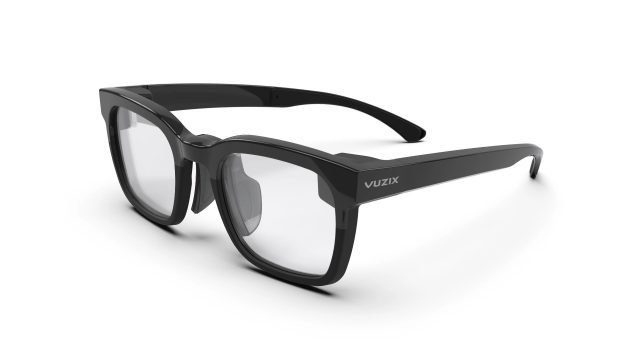
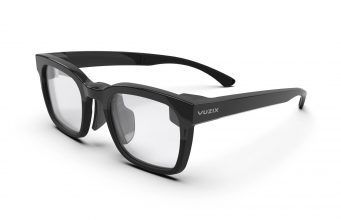
Vuzix Z100 Smart Glasses | Image courtesy Vuzix
Founded in 1997, Vuzix has largely serviced enterprise with its evolving slate of smart glasses, which have typically targeted a number of industrial roles, including healthcare, manufacturing, and warehousing.
The company also produces its own waveguides for both in-house use and licensing. In the past, Vuzix has worked to integrate its waveguide tech with Garmin, Avegant, an unnamed US Fortune 50 tech company, and an unnamed U.S. defense supplier.
While the company has made a few early consumer devices in the 2010s, including V920 video eyewear and STAR 1200 AR headset, in November 2024, Vuzix introduced the Z100 smart glasses, its first pair of sleek, AI‑assisted smart glasses, priced at $500.
Its Z100 smart glasses include a 640 × 480 monochrome green microLED waveguide, and were designed to pair with smartphones to display notifications, fitness metrics, maps, targeting everyday consumers and enterprise customers alike.
Notably, the investment also coincides with greater market interest in smart glasses on the whole. Google announced last month it’s partnering with eyewear companies Warby Parker and Gentle Monster to release a line of fashionable smart glasses running Android XR.
Meta also recently confirmed it’s expanding its partnership with Ray-Ban Meta-maker EssilorLuxottica to create Oakley-branded smart glasses, expected to launch on June 20th, 2025.
Et si on appliquait la philosophie des IDE de développement aux outils juridiques ?
C’est exactement ce qu’a fait Drew Miller avec Tritium, un éditeur de texte écrit en Rust qui traite les documents juridiques comme des projets de code, avec annotation automatique, du redlining intégré et des performances à 60 FPS.
Drew Miller n’est pas n’importe qui dans cette histoire. Cet ancien avocat corporatiste chez Schulte Roth & Zabel à Londres a passé plus de 10 ans à jongler entre droit transactionnel et développement logiciel. En août 2024, il franchit le pas et lance Tritium Legal Technologies avec une vision claire : révolutionner le traitement de texte pour les avocats d’affaires. Son constat c’est que les outils actuels, Word en tête, sont des bloatwares qui sont utilisés depuis 40 ans sans répondre aux besoins spécifiques du secteur juridique.
The timing of Israel’s plan to attack Iran was top-secret. But Washington pizza delivery trackers guessed something was up before the first bombs fell.
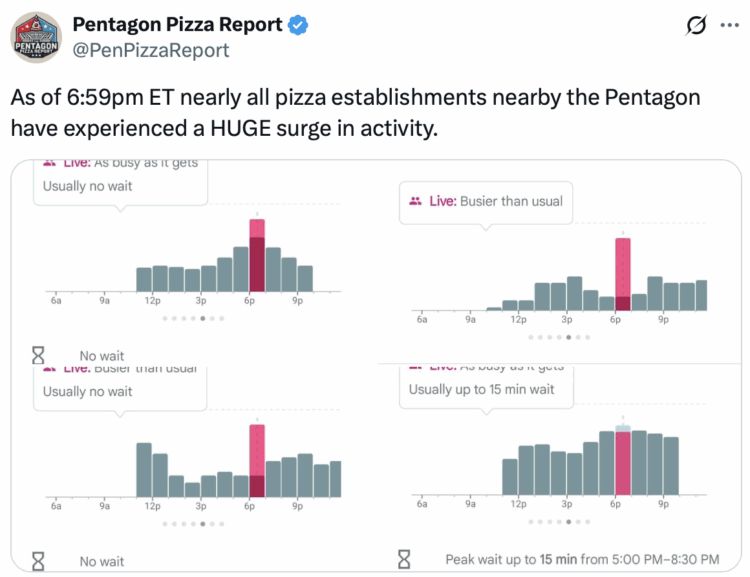
About an hour before Iranian state TV first reported loud explosions in Tehran, pizza orders around the Pentagon went through the roof, according to a viral X account claiming to offer “hot intel” on “late-night activity spikes” at the US military headquarters.
The Pizza Meter Theory has been around since the 1990s, which is something new I learned today.
The Pizza Meter, also known as the Pentagon Pizza Orders Theory, is a theory proposing that upticks in pizza orders received by restaurants near the Pentagon can predict international conflicts and times of crisis in the U.S. government. The concept originated in the early 1990s after a Domino’s Pizza franchise owner in Northern Virginia near the Pentagon named Frank Meeks, told newspapers that before major national security events, he saw a noticeable uptick in business.
I guess there is some truth to the theory.
It reminds me of the Waffle House Index and Canadian pee times during a hockey game. What other unexpected indicators are there for real-time events?
Anne Wojcicki has been declared the winner of a bankruptcy auction for 23andMe, the genetics testing start-up she founded, prevailing over a rival bid from Regeneron Pharmaceuticals.
TTAM Research Institute, a non-profit public benefit company also founded by Wojcicki, won the auction with a $305 million bid for the 23andMe assets, which will not come with any company liabilities attached.
23andMe filed for bankruptcy in March after rejecting several go-private offers from Wojcicki in recent years. Regeneron was declared the winning bidder in May after the company accepted a $256 million bid in a previous auction.
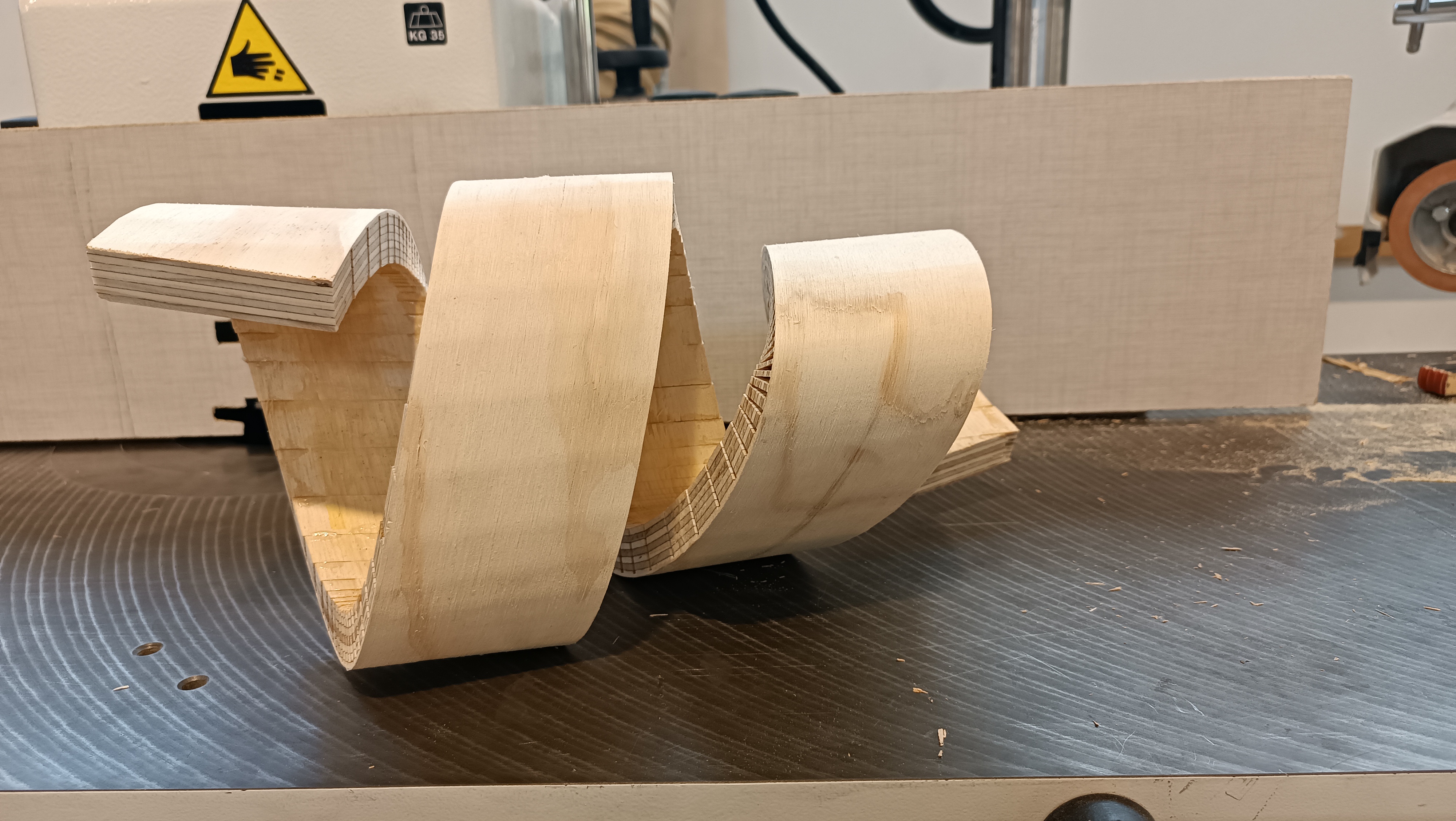
The intersection between “woodworkers” and “programmers” is not a densely populated part of the Venn diagram, but [Michael Schiebler] is there with his Kerf Bend Wizard to help us make wood twist and bend like magic.
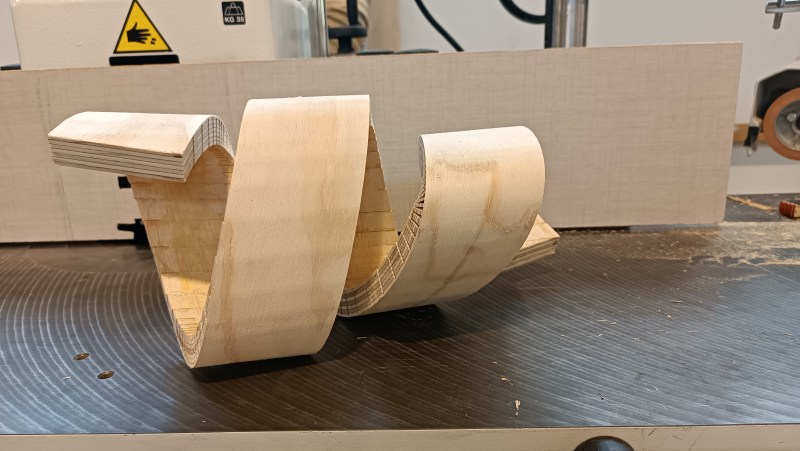
Kerf bending is a fine technique we have covered before: by cutting away material on the inside face of a piece of wood, you create an area weak enough to allow for bending. The question becomes: how much wood do I remove? And where? That’s where Kerf Bend Wizard comes to the rescue.
More after the break…
From spline (user input in black, expected output in pink)…
You feed it a spline– either manually or via DXF–and it feeds you a cut pattern that will satisfy that spline: just enough wood removed in just the right places that the edges of the cut should touch when the bend is achieved. This means less cut time and a stronger piece than eyeballing the kerfs. It works with both a table saw blade or a tapered end mill on a CNC or manual router. You can specify the kerf width of your table saw, or angle of your end mill, along with your desired cut depth.
… to cuts …
The output is DXF, convenient for use with a CNC, and a simple table giving distances from the edge of the piece and which side to cut, which is probably easier for use on the table saw. (Kerf Bend Wizard is happy to handle complex bends that require kerfing both sides of the material, as you can see.)
… to curved wood.
This was [Michael]’s thesis project, for which he hopefully got a good grade. The code is “semi-open” according to [Michael]; there’s a GitHub where you can grab an offline version for your own use, but no open-source license is on offer. Being a broke student and an artist to boot, [Michael] also can’t promise he will be able to keep the web version available without ads or some kind of monetization, so enjoy it while you can!
Our thanks (which, as always, is worth its weight in gold) to [Michael] for the tip. If you’re in the intersection of the Venn diagram with [Michael], we’d love to hear what you’re up to.
The city of London is no stranger to tall constructions today, but long before the first skyscrapers would loom above its streets, Watkin’s Tower was supposed to be the tallest structure in not only London but also the entirety of the UK. Inspired by France’s recently opened Eiffel tower, railway entrepreneur and Member of Parliament [Sir Edward Watkin] wanted to erect a structure that would rival the Eiffel tower, as part of a new attraction park to be constructed near the Middlesex hamlet of Wembley. In a retrospective, [Rob’s London] channel takes a look at what came to be known as Watkin’s Folly among other flattering names.
The first stage of Watkin’s Tower at Wembley Park. The only to be ever completed. (Source: Wikimedia)
After [Gustave Eiffel], the architect of the Eiffel tower recused himself, a design competition was held for a tower design, with the Illustrated Catalogue of the 68 designs submitted available for our perusal. The winner turned out to be #37, an eight-legged, 366 meter tall tower, much taller than the 312.2 meter tall Eiffel tower, along with multiple observation decks and various luxuries to be enjoyed by visitors to Wembley Park.
Naturally, [Watkin] commissioned a redesign to make it cheaper, which halved the number of legs, causing subsidence of the soil and other grievances later on. Before construction could finish, the responsible company went bankrupt and the one constructed section was demolished by 1907. Despite this, Wembley Park was a success and remains so to this day with Wembley Stadium built where Watkin’s Folly once stood.
Des chercheurs en cybersécurité ont révélé une vulnérabilité majeure dans l’IA Microsoft 365 Copilot, permettant à des pirates de voler des données sensibles d'entreprises, sans le moindre clic d'utilisateur. Baptisée EchoLeak, cette faille exploitait l’IA générative intégrée aux outils Microsoft pour exfiltrer des informations via un simple e-mail, même non ouvert.