Imaginez un navigateur Web entièrement centré sur ChatGPT — un logiciel qui ne se contente pas de suivre vos recherches, mais apprend vos habitudes, accède à vos fichiers Drive, agit comme un assistant personnel, et même fait du shopping à votre place. C’est le concept derrière le navigateur ChatGPT Atlas, le nouveau navigateur expérimental d’OpenAI. […]
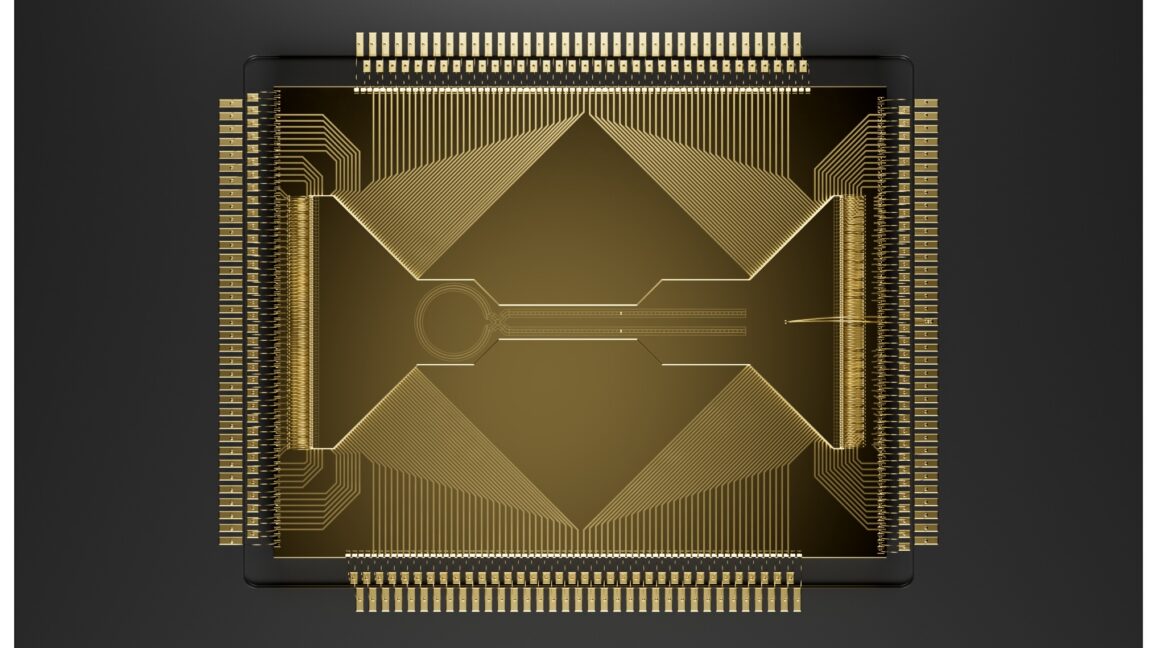
Quantum computers based on ions or atoms have one major advantage: The qubits themselves aren’t manufactured, and there’s no device-to-device among atoms. Every atom is the same and should perform similarly every time. And since the qubits themselves can be moved around, it’s theoretically possible to entangle any atom or ion with any other in the system, allowing for a lot of flexibility in how algorithms and error correction are performed.
This combination of consistent, high-fidelity performance with all-to-all connectivity has led many key demonstrations of quantum computing to be done on trapped-ion hardware. Unfortunately, the hardware has been held back a bit by relatively low qubit counts—a few dozen compared to the hundred or more seen in other technologies. But on Wednesday, a company called Quantinuum announced a new version of its trapped-ion hardware that significantly boosts the qubit count and uses some interesting technology to manage their operation.
Trapped-ion computing
Both neutral atom and trapped-ion computers store their qubits in the spin of the nucleus. That spin is somewhat shielded from the environment by the cloud of electrons around the nucleus, giving these qubits a relatively long coherence time. While neutral atoms are held in place by a network of lasers, trapped ions are manipulated via electromagnetic control based on the ion’s charge. This means that key components of the hardware can be built using standard electronic manufacturing, although lasers are still needed for manipulations and readout.
Les programmes d'intelligence artificielle les plus avancés sont aujourd'hui capables d'accélérer considérablement la recherche pharmaceutique en modélisant les interactions moléculaires. Une...
You thought a real retractable lightsaber that actually looks amazing was impossible? Think again.
HeroTech has just dropped the latest version of the weapon and it’s the closest thing to a real Jedi weapon you’ll ever see outside of ILM’s effects studio. This isn’t just another glowing toy, it’s a fully retractable, spinning, light-emitting masterpiece that fits inside an Graflex hilt replica, the exact same style used in the original Star Wars films.
The engineering behind this thing is pure magic! Inside that tiny hilt, HeroTech managed to pack a clear magician’s cane mechanism, a COB LED strip on a spool, four motors, and even a reed switch system activated by magnets. The blade extends instantly, spins to create that classic shimmering saber glow, and retracts smoothly back into the handle. Oh, and yes, you can actually lightly duel with it!
After countless failed prototypes, broken gears, burned circuits, and sleepless nights before New York Comic Con, HeroTech finally pulled it off, showing off the finished saber to amazed fans at the convention. The result? A retractable blade that looks and feels like the real deal.
Watch the full build here and see how the impossible finally became real.
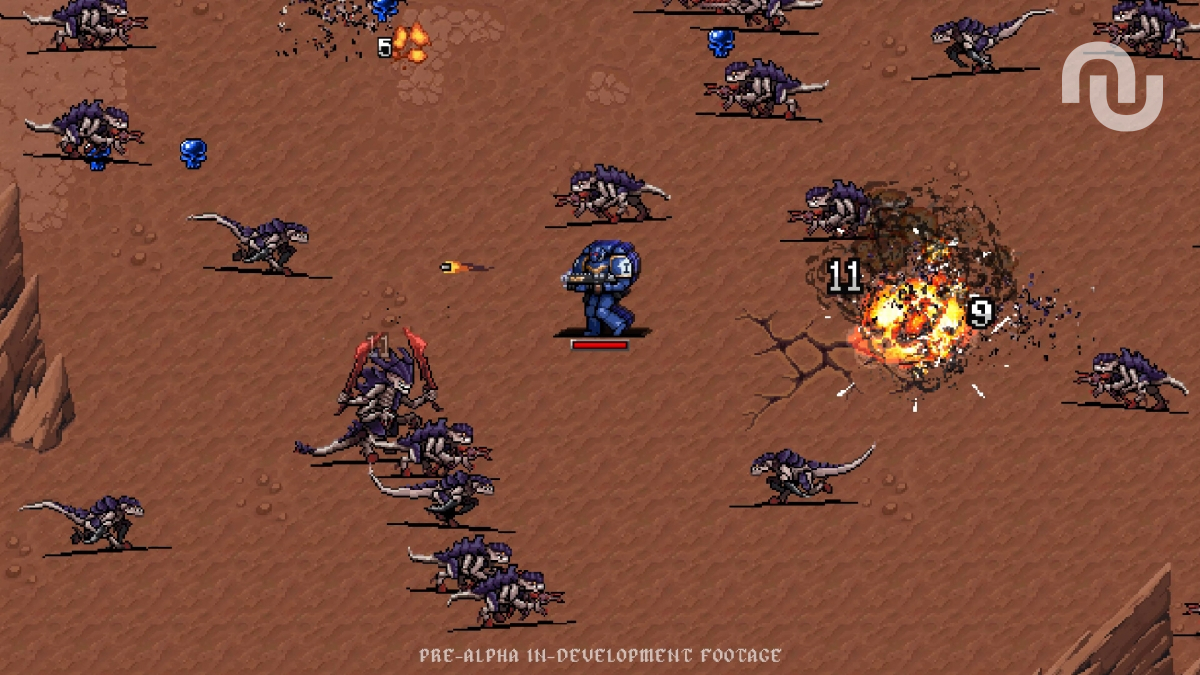
Alerte GOTY 2026 : Poncle, créateur de Vampire Survivors, s'associe à Auroch Digital pour lancer en 2026 Warhammer Survivors. C'est la même expérience grisante que Vampire Survivors, mais dans les univers cultes de Warhammer. On achète déjà.
En décembre, la mise à jour iOS 26.2, disponible en bêta dès aujourd'hui, activera la traduction en direct sur les AirPods 4, AirPods Pro 2 et AirPods Pro 3. Dévoilée en septembre, la nouveauté était bloquée dans l'Union européenne à cause d'incertitudes règlementaires.
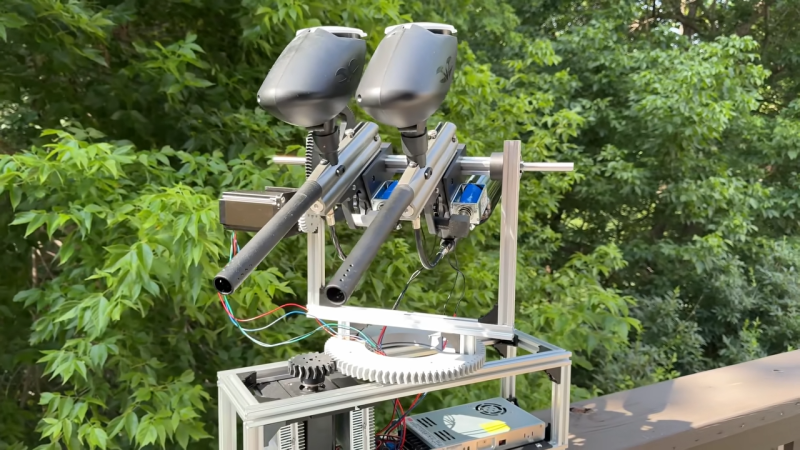
Video games, movies, and modern militaries are all full of robotic gun turrets that allow for remotely-controlled carnage. [Paul Junkin] decided to build his own, albeit in a less-destructive paint-hurling fashion.
The turret sits upon a lazy susan bearing mounted atop a aluminium extrusion frame. A large gear is mounted to the bearing allowing the turret to pan when driven by a stepper motor. A pair of pillow block bearings hold a horizontal shaft which mounts the two paint markers, which again is controlled by another stepper motor to move in the tilt axis. An ESP32 microcontroller is responsible for running the show, panning and tilting the platform by commanding the large stepper motors. Firing the paintball markers is achieved with solenoids mounted to the triggers, which cycle fast enough to make the semi-auto markers fire in a way that almost feels like full-auto. Commanding the turret is via an Xbox One controller; communicating with the ESP32 over Bluetooth using the BluePad32 library.
It’s worth noting you shouldn’t shoot paintballs at unsuspecting individuals, since they can do extreme amounts of damage to those not wearing the proper protection. We’ve featured a great many other sentry guns over the years, too, like this impressive Portal-themed build. Video after the break.
Utkarsh Gupta, chercheur à l’Anglia Ruskin University de Cambridge, vient de publier une étude dans
Scientific Reports de Nature
qui va vous faire halluciner. Pour retrouver vos souvenirs d’enfance, il suffit de hacker votre propre visage ! Hé oui, on peut littéralement débloquer sa mémoire avec un simple filtre photo de vous plus jeune.
Car votre cerveau garde vos souvenirs d’enfance derrière une porte verrouillée dont votre visage d’enfant est la clé !
Le principe est simple… vous prenez 50 adultes, vous leur montrez leur propre visage en live sur un écran, mais modifié par un filtre pour ressembler à leur tête de gamin. Ce genre de filtres bébé qui traînent sur Snapchat et Instagram…
Et là, résultat de malade : ceux qui ont vu leur visage d’enfant se sont souvenus de beaucoup plus de détails de leur enfance que ceux qui voyaient leur visage d’adulte. Vraiment beaucoup plus !
Cette technique s’appelle l’enfacement illusion. C’est une illusion cognitive où votre cerveau se fait avoir. Il pense que le visage qu’il voit sur l’écran, c’est le vôtre, comme si vous vous regardiez dans un miroir. D’habitude, l’enfacement illusion sert aux neuroscientifiques pour étudier la plasticité de la représentation de soi mais là, les chercheurs l’ont détournée pour créer une sorte de machine à remonter le temps low-tech.
Votre mémoire est comme un trousseau de clés où chaque visage que vous avez eu dans votre vie correspond à une clé différente. Avec votre tête d’adulte, vous n’avez accès qu’aux souvenirs récents, c’est à dire les titres qui passent en boucle sur votre playlist mentale. Mais avec votre visage d’enfant, vous accédez aux deep cuts, aux morceaux oubliés tout au fond de votre disque dur cérébral.
Une sorte de reverse engineering de la mémoire, si vous voulez.
L’enfacement illusion fonctionne grâce à une stimulation multisensorielle synchrone. Concrètement, vous voyez des touches tactiles sur le visage à l’écran en même temps que vous sentez ces touches sur votre propre visage. Votre cerveau fait alors la connexion et se dit : “Ok, ce visage là-bas, c’est moi”. C’est exactement le même mécanisme que l’illusion de la main en caoutchouc, vous savez, quand on arrive à vous faire croire qu’une fausse main posée sur une table est la vôtre.
Du coup, qui êtes-vous vraiment ? Votre tête actuelle ? Toutes vos tronches du passé ? Ou la somme de toutes ces versions ?
Si vous voulez tester ça vous même, trouvez un bon filtre et suivez ce tuto de Utkarsh :
Cette méthode pourrait beaucoup aider dans tout ce qui est travail thérapeutique ou pour aider les victimes de traumatismes à accéder à des souvenirs enfouis. Et si vous savez coder une application mobile, vous pouvez même devenir très riche en proposant la première app qui débloque vos souvenirs d’enfance ;-)))
Bon, il y a quand même un truc à garder en tête c’est que cette technique ouvre des portes, mais il faut faire attention à ce qui se cache derrière. La recherche a montré par exemple que des enfants exposés à de la réalité virtuelle pouvaient développer de faux souvenirs… Donc manipuler la perception corporelle pour accéder aux souvenirs, c’est très puissant, mais ça demande quand même un peu de précautions.
Je sais pas si vous allez essayer mais si ça marche, faites moi un mail, je suis vraiment curieux.
Cloudflare a dévoilé une proposition ambitieuse qui pourrait transformer la manière dont les plateformes Web identifient et gèrent le trafic automatisé. L’entreprise américaine — pilier de l’infrastructure Internet mondiale — veut introduire un format de registre ouvert pour authentifier les bots et agents Web, une approche décentralisée basée sur des clés cryptographiques vérifiables, plutôt que […]
Revolut passe à la vitesse supérieure dans la crypto. Après l'obtention de sa nouvelle licence MiCA, la neobanque prépare le déploiement de « Crypto 2.0 », une plateforme conçue pour consolider sa présence sur le marché européen des actifs numériques.
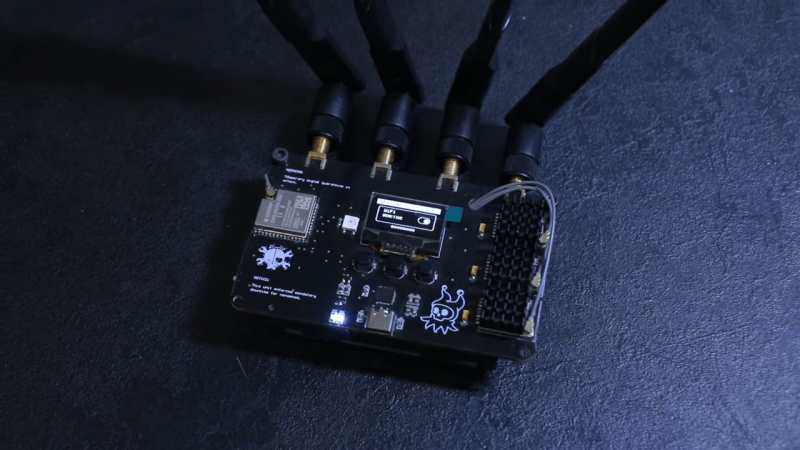
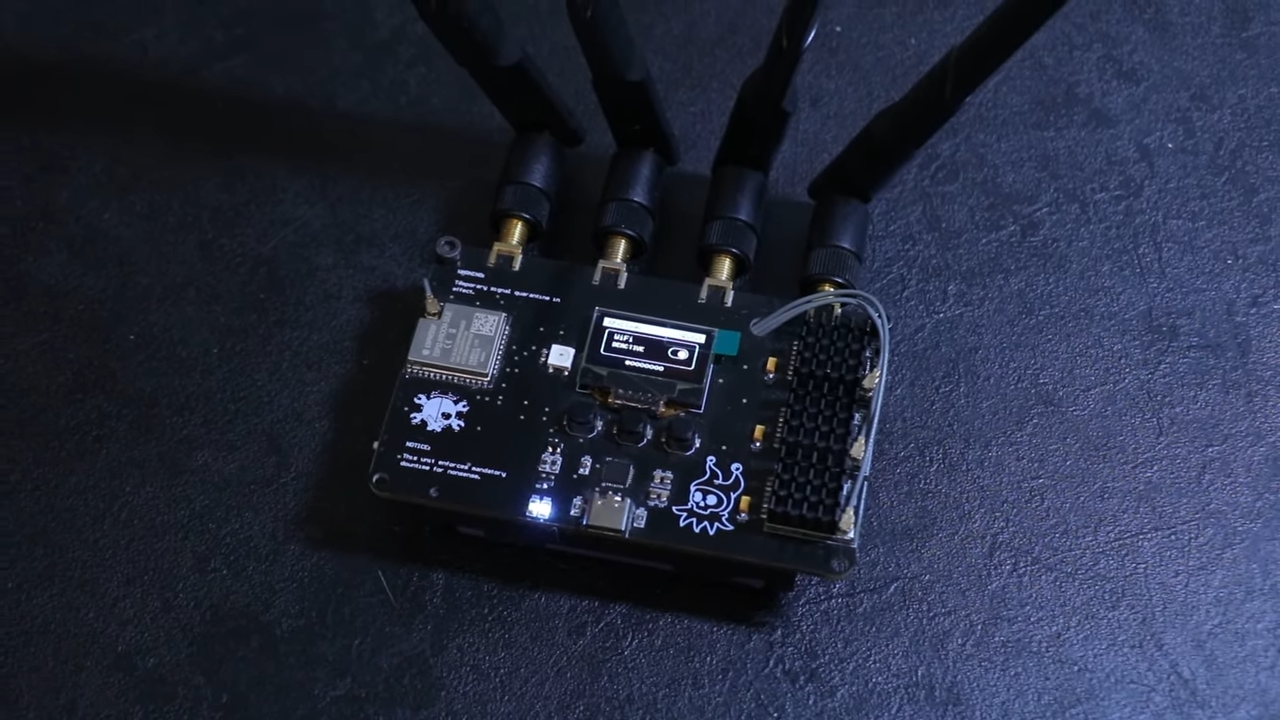
The build is based around an ESP32, with three tactile switches and an OLED display for the user interface. The microcontroller is hooked up to a trio of GT—24 Mini radio modules, which feed a bank of antennas on top of the device. Depending on the mode the device is set to, it will command these modules to jam Bluetooth, BLE, or Wi-Fi traffic in the area with relatively crude transmissions.
The use of multiple radio modules isn’t particularly sophisticated—it just makes it easier to put out more signal on more bands at the same time, flooding the zone and making it less likely legitimate transmissions will get through. Specifically, [CiferTech] demonstrates the use case of taking out a Wi-Fi camera—with the device switched on, the video feed freezes because packets from the camera simply stop making it through.
Avant-hier soir à la Paris Games Week,
Papi Geek
m’a fait une démo rapide de sa Vectrex ressuscitée sur le stand de
MO5
et en voyant ces lignes lumineuses danser sur cet écran à rayons cathodiques vectoriel, je me suis dit que j’allais vous en parler. Car oui, Papi Geek lance une
Vectrex Mini sur Kickstarter
le 3 novembre (c’est lundi !), et c’est assez fou de voir comment ils ont réussi à ressusciter une technologie qui n’existait plus depuis des années.
Pour ceux qui n’ont jamais croisé cette console légendaire, la Vectrex c’est un ovni sorti en octobre 1982 et qui contrairement à toutes les autres consoles de l’époque qui affichaient des pixels sur votre télé, embarquait son propre écran CRT de 9 pouces et surtout, utilisait des graphismes vectoriels. Pas de pixels, pas de rasterisation mais juste un faisceau d’électrons qui trace des lignes lumineuses directement sur l’écran noir comme le ferait un oscilloscope mais en mieux. Car le rendu était d’une précision chirurgicale, avec un contraste infini et cette lueur caractéristique qu’aucun écran LCD ou OLED ne peut vraiment reproduire.
Seulement voilà, la Vectrex a fait faillite en deux ans à cause du crash du jeu vidéo de 1983 et a rejoint le cimetière des belles idées avant-gardistes incomprises de leur époque. Et contrairement aux autres consoles disparues, la Vectrex avait un problème. Sa technologie d’affichage vectoriel était tellement spécifique qu’on ne pouvait pas l’émuler facilement.
Bah oui, vous pouvez faire tourner un émulateur NES ou Megadrive sur n’importe quel écran moderne mais pour la Vectrex, il faut simuler le comportement d’un tube cathodique vectoriel, et ça, c’est autrement plus coton. Du coup, pendant des décennies, les passionnés ont bidouillé des émulateurs logiciels sur PC, mais l’expérience restait approximative. La fluidité organique des lignes, la persistance rétinienne du phosphore, la sensation de regarder de la lumière pure plutôt que des pixels, tout cela manquait affreusement…
Et c’est donc là que Papi Geek et son équipe entrent en scène avec un seul objectif : créer une Vectrex Mini qui sertait de la moitié de la taille de l’originale, tout en préservant l’âme de l’expérience vectorielle. Pour cela, ils ont décidé d’utiliser un écran AMOLED de 5 pouces avec une résolution de 800×600.
Alors là normalement, vous devez bugger… Car c’est bien un écran censé afficher des pixels… Alors comment on fait pour simuler une technologie sans pixels sur un écran conçu pour en afficher ?
Hé bien l’AMOLED a un avantage, c’est que chaque pixel peut s’éteindre complètement, créant ainsi un noir absolu comme sur les CRT. Et surtout, l’AMOLED peut afficher du blanc pur ultra-lumineux. En combinant les deux, on recrée alors l’esthétique de la Vectrex avec des lignes brillantes qui flottent sur un fond d’encre noire. C’est du faux vectoriel, certes, mais du faux vectoriel hyper convaincant.
Le projet sera donc financé par un Kickstarter qui démarre ce 3 novembre 2025 et 3 niveaux de prix sont prévus : 99 euros pour les 50 premiers chanceux (Founder Edition), 129 euros pour les 300 suivants (Early Bird), et 149 euros en prix régulier. Il y aura même une édition limitée blanche à 219 euros tirée à 200 exemplaires, avec certificat d’authenticité et numéro de série. Pour une console unique qui coûtait l’équivalent de 500 dollars en 1982, c’est plutôt raisonnable je trouve…
Maintenant côté contenu, la Vectrex Mini embarquera 12 jeux intégrés avec leurs overlays physiques. Oui, les overlays, ce sont ces feuilles de plastique transparent coloré qu’on plaquait sur l’écran monochrome pour simuler la couleur. C’était rudimentaire mais ingénieux et l’équipe de la Vectrex Mini a reproduit ce détail. Et si 12 jeux ne suffisent pas, il y aura un port microSD pour charger des homebrews si ça vous amuse, parce que, croyez le ou non, la communauté Vectrex n’a jamais cessé de créer de nouveaux jeux depuis 43 ans.
L’alimentation se fera en USB-C, parce qu’on est en 2025 quand même et vous pourrez la brancher sur secteur ou sur une batterie externe pour jouer n’importe où. Enfin, sous le capot, comme me l’a expliqué Papi Geek, il y aura un processeur ESP32 qui gérera l’émulation et l’affichage.
Bref, c’est un sacré challenge et une sacrée résurrection je trouve, car il faut tout réinventer puisque la technologie d’origine a totalement disparue.
Voilà, si vous allez à la Paris Games Week cette année, passez voir le stand MO5 car ils fêtent les 30 ans de la Saturn et de la PS1, et leur collection de machines vintage vaut le détour !! Et peut-être que Papi Geek sera encore là avec sa Vectrex donc n’hésitez pas à lui demander une démo, car ça vaut vraiment le coup de voir cette technologie en vrai.
Introduction – Busy Studying the Meta Ray-Ban Display and Helping with Teardowns
As I was about to be away for nearly a month in Europe, including presenting at the AR/VR/MicroLED Connect conference in Eindhoven, news broke about the Meta Ray-Ban Display Glasses. I immediately noticed that the glasses used a Lumus Geometric waveguide (see: Meta Ray-Ban AR Glasses Show Lumus Waveguide Structures in Leaked Video and the image below, left). However, an X-ray-like view of the glasses was subsequently published (below right), revealing that the optical engine didn’t resemble any previous Lumus optical engine. While in Eindhoven during the “networking time,” I heard that it used an OmniVision LCOS microdisplay, and that Goertek designed the optical engine and manufactured the glasses.
If you look at the Lumus engine (right), you will see a long “integrating rod” homogenizer that is not seen in the X-Ray view of the MRBD (above right, pointed at by red arrow)
There have been several teardowns of the Meta Glasses. I helped iFixit with their teardown, which was published on October 8th. iFixit worked with Lumafield to get an intact CT scan of the glasses. This turned out to be a very good thing because, as the optical engine was being assembled, it required disassembling it to inspect its components. iFixit has also provided me with the engine components for further analysis.
I’m also working with Radu Reit’s Display Training Center on his teardown of the Meta Display Glasses (he has one part published on YouTube as of this writing). Radu managed to remove the Lumus Waveguide while keeping the rest of the engine intact and running, allowing us to compare the projector’s output with that via the Waveguide. He was also able to reassemble it with the waveguide.
The combination of the iFixit teardowns and parts, Radu’s partial teardown, and my non-open unit should provide a comprehensive picture of how the Meta Ray-Ban Display Glasses (hereafter, MRBD) display and optics work.
I would also like to thank David Bonelli of Pulsar Solutions for his assistance in analyzing the design. David thinks he could improve on the Goertek optical engine.
In Part 1 of this multi-part series, I will focus on the display and optical path, primarily based on iFixit’s Teardown and the components they lent me for further evaluation.
Partnership with Display Training Center Videos
Radu Reit, formerly with Apple, working on the Apple Watch, iPhone, Vision Pro, and more, has founded The Display Training Center and its YouTube channel. Radu and I first met at the MicroLED Connect and ARVRMR Connect in Eindhoven, and agreed to team up. Our first joint video on the Meta Ray Band Display was published today. There is a free 30-minute cut-down version, as well as the full two-hour video (available behind a Patreon paywall), which provides more detail and covers additional issues.
Radu Reit, a former Apple display engineer, and I have teamed up to do a video and podcast series on display devices. We first met at the MicroLED and AR/VR Connect conference in Eindhoven in September and decided to collaborate on developing a new video and audio series.
The first video features the Meta Ray-Ban Display glasses. A free 30-minute version (https://lnkd.in/giZD8rm8) and a 2-hour “Director’s cut” (https://lnkd.in/gBDpTJ3W via Patreon for $20/month) are available. We plan to release about two videos per month.
Meta Spending ~1.5B/Month & Everything is Off the Shelf
What I find fascinating is that, with all the money Meta is spending on R&D and all the papers they have published, when they actually had to make a product to sell, they went with LCOS rather than MicroLEDs that Meta has heavily invested in; Lumus geometric waveguide, not silicon carbide or even glass diffractive waveguides; and optics are designed by Goertek (a very well-known company for optical design and assembly) and not some in-house design.
I can understand the argument that MicroLEDs are not yet ready for prime time when it comes to full-color displays. Still, I would emphasize that there may be reasons LCOS will remain a better solution for some time, at least for full color (a discussion for another day). OmniVision’s LCOS appears to be a solid choice. I also understand why Meta chose Goertek for the glasses’ design, though I am not a big fan of Goertek’s optical engine (more on that below).
What really stands out is their use of Lumus’s geometric waveguide. There must have been a mountain of NIH (not-invented-here) to overcome not using an in-house diffractive waveguide design and to go with Lumus. I understand that it has technical advantages in terms of efficiency, significantly less eye glow, and better color uniformity, but Meta still has many diffractive waveguide designers. From an intellectual property perspective, many companies are developing LCOS and MicroLED microdisplays; dozens of companies have diffractive waveguide technology, but only one has developed good geometric waveguides. To top it off, Lumus has achieved waveguides with 70+° FOVs in glass rather than the very expensive Silicon Carbide.
Lumus waveguides are typically 3-7 times more efficient (for the same FOV/eyebox), have vastly better color uniformity, and a small fraction of the eye glow when compared to diffractive waveguides. The knock on Lumus has been manufacturability and cost, so the MRBD glasses will be a big test, given the volumes needed to drive process and yield improvements. Historically, Lumus waveguides have been used in higher-end military, medical, and industrial applications.
I can’t see any of the distinctive Lumus Z-Lens “slats,” like in Rivit Pictures on Anduril’s website or when Palmer Luckey went on Joe Rogan’s Podcast and showed Anduril’s Eagle Eye glasses (above left), because the Anduril website pictures and the Video (with compression) are too low in resolution. The beauty of video is that you get to see optics/waveguides from many different angles, which reveal the telltale attributes. But there was no telltale diffractive waveguide eye glow, or what I call “diffractive waveguide passive glint,” when Palmer removed the darkening “shield” and gave them to Joe Rogan to try on. What I call “diffractive glint” is where you see colors reflecting from the exit grating due to external light (see the HoloLens 2, Magic Leap 1, and WaveOptics examples of diffractive waveguide glint below).
With all the studio lighting and the various angles of the glasses relative to the camera, if they had used diffractive waveguides, the glint would surely be visible coming off the glasses. By a process of elimination, either Palmer Lucky was showing dummy glasses, or they were using Lumus Waveguides. Still, they certainly were not using diffractive waveguides like in Microsoft’s HoloLens IVAS glasses (plus they look nothing like what Microsoft developed for IVAS).
Front Projection (Eye Glow) “Controversy” with the MRBD
In Radu Reit’s Meta Ray-Ban Display (MRBD) teardown video and Navaneeth Tejasvi M N’s LinkedIn post, both discussed finding “eye glow” despite most influencers stating that it did not exist. While there is eye glow, I measured it at only about 1.5% of the brightness reaching the eye, and the light is directed down. Compared to diffractive waveguides, which typically have eye glow that is 50% to 100% of what the user sees, the MRBD eye glow is much less noticeable in typical use, where the glasses’ ambient light sensor adjusts the brightness, which is likely why most reviewers didn’t notice it. The eye glow can be visible when brightness is set very high in low ambient lighting, as occurs during more extensive evaluations.
Shown below are some pictures I took indoors with the brightness set to maximum. You can see the eye box projected on my eye and see how much range there is to see the image. This is much brighter than one would want for the given ambient light; this is what 5,000 nits projected at your eye looks like indoors. You can then see the eye glow at maximum brightness when viewed from below. With normal brightness levels for a given ambient light, the eye glow is barely noticeable, even at an optimum angle. Also, notice that the image is broken up when viewed from this direction, making it impossible to recognize the content (which, in this case, was a test pattern with a photograph).
Image Quality, Brightness, and FOV
I will go into the image quality and specifications of the MRBD in more detail in future articles, as well as on the 2-hour Display Training Center video. I did extensive evaluations of the image quality, which will be the subject of an upcoming article. I also worked with Radu Reit, who removed the Lumus waveguide and projected the image directly from the glasses projector to help ascertain the source of various issues.
Overall, I would say the image quality is very good for waveguide-type glasses. The color uniformity is very good (compared to diffractive waveguides), while not perfect. My one complaint about the image quality is that it’s a bit “soft.” I think the softness is due to the glasses digitally resampling (for more on the problems with resampling, see: Simplified Scaling Example – Rendering a Pixel Size Dot) and to some softness in the optics.
Based on Radu’s testing without the waveguide, the image is soft when it leaves the projector, not due to the waveguide (I plan to go through the details of this issue in a future article and discuss it briefly in the 2-hour Display Training Center video). The effective resolution of the glasses is closer to 400×400 pixels rather than the stated 600×600 pixels. With the glasses having 40 pixels per degree, and when viewed against the real world (as opposed to a black background in my testing), this is not necessarily a significant problem.
Radu measured about 1 lumen being output from the projector at full brightness, and I was able to confirm Meta’s claim that the display outputs about 5,000 nits (cd/m2), so it looks like they are getting about 5,000 nits per projector Lumen to the eye.
The field of view, compared to many other AR/Smart glasses, is considered small at 20 degrees (diagonal with square aspect ratio. Interestingly, the glasses almost never use the full 20 degrees except in some very special cases. For most cases, the display shows about 16 degrees or less of the field of view. Below are several examples where I changed the font size and toggled “bold” to see if it would use up more of the FOV (it does not; it just wraps text). The Orange square in the pictures below indicates the full 20-degree FOV.
From the battery life, he calculated a power draw of approximately 0.38W for the glasses (including the LED and display) with the display and audio running. Perhaps surprisingly, running the camera to take photos more than doubles the power draw to 1W, and taking videos increases it to 1.7W or about 1.3W more than the display plus audio alone.
Color Uniformity
The color uniformity of the MRBD glasses is significantly better than that of the diffractive waveguides, although it is not perfect (see the right image). On the right is a white picture that has been expanded to fill the FoV (use a “zoom” mode, which loses resolution, but does not matter for a solid white image).
No way to load images into the glasses except via WhatsApp
The only way I have found to load pictures into the MRBD is to use WhatsApp. Unfortunately, when opening a WhatsApp picture, only about 16 degrees or approximately 464 pixels are used, and even then, the image has been resampled, which reduces its sharpness (more on this in future articles). There is an option in the Meta AI phone application to “magnified images” with a triple-tap. Still, while this fills the FoV with the image, it also performs a software zoom, which compromises the resolution of the original image (and how I obtained the white image to cover the whole FoV above).
OmniVision’s LCOS
The information I obtained in Eindhoven about the source of the LCOS device proved to be true, with an OmniVision part number (OPO3010) stamped right on the device’s flex. This device utilizes the same LCOS device as OmniVision’s catalog part, OPO3011, but it is mounted on a different flex board to better fit into the MRBD. Meta says they have a 600×600-pixel display, so 48 pixels in each direction are not being used to display information. Unfortunately, the optical engine is too soft for me to confirm exactly how many pixels the glasses are using.
OmniVision is best known for its camera technology, which is used in numerous cell phones and other devices. They have leveraged some of that technology in their LCOS designs, integrating all LCOS control, frame buffer memory, and MIPI receiver onto their LCOS’s silicon backplane (see right). This integration not only reduces size and power consumption but also improves performance. It’s also worth noting that the MIPI receiver reduces the number of wires that must cross the hinge where the glasses fold.
Contrast
OmniVision claims their LCOS has a 1000:1 on-off contrast ratio, and I measure about 600:1 across the whole system, which will include contrast losses in the optics. This level of contrast is more than good enough for most applications when the display brightness is controlled by the ambient light sensor (ALS).
LCOS has gotten a rather bad rap for the “picture frame effect,” much of it stemming from Google Glass in 2013, which appeared to have a contrast ratio of less than 100:1 — comparatively poor even then. The human visual system has an instantaneous dynamic range of approximately 1,000 to 16,000 to 1, and a total dynamic range (from day to night) of over 1 million to 1. So if you crank up the brightness in a dim-to-dark environment, you will see the gray “frame” of the display. Generally, when the ALS is working, the frame is barely noticeable, if at all.
Field Sequential Color Breakup
While Ommivision’s LCOS supports up to 120 frames (360 R-G-B color fields) per second, the MRBD has only 90 frames/second. This results in a slightly more noticeable field-sequential color (FSC) breakup, as noted in Radu’s video (a still at 8:36 below). The cause of the FSC breakup is that the various color fields appear at different times; the longer the time between the first and last color fields, the less likely the human visual system is to align them properly, and the larger the breakup will appear. The extent to which a person notices the FSC breakup varies dramatically across the population. I’m hoping that with OmniVision’s level of integration, they will be able to go to higher field sequential rates and reduce FSC breakup.
No MMU FSC Breakup Correction
There are two known ways to reduce FSC breakup: the first is to reduce the time (increase the field rate) between the first and last color field, and the second is to use motion feedback and image warping/reprojection to align the later color fields to the earlier ones, as Snap (among others) uses in their Spectacles 5 (see: Cameras, 6DOF, and Reprojection to Reduce LCOS Field Sequential Color Breakup). Integrating everything on the backplane, as Omnvision has done, supports increasing the color field rate without significantly increasing power, but does not help with motion warping (at least until warping processing can be supported on the backplane).
Goertek Projection Engine
Unfortunately, the way the MRBDs are assembled, it is not possible (or at least not easy) to get a good picture of the optical engine as a whole. Below are the various components arranged in a rough “exploded view” in the same order as they occur in the projector engine.
iFixit had Lumafield make a CT scan of the glasses before their teardown (below left). I have drawn in red the components that were not visible on the CT scan. For comparison, I have included a 2017 article featuring a “conventional LCOS engine” for a much brighter front projector, published by Polyfractal (I have added larger labels).
The MRBD, not needing to be as bright, places the red and blue LEDs next to each other on the same ceramic substrate, thus requiring only a two-way combination with a single dichroic mirror, unlike the three individual LEDs and two dichroic mirrors used in the larger pico projector. The two-way combination of the glasses’ engine eliminated the need for a “correcting lens” because all three LEDs are at the same distance from the rest of the engine. Both designs use a microlens fly-eye homogenizer to mix the various colors and generate a square/rectangular illumination pattern.
There is one major structural difference between the two designs: a very different quarter-wave plate (QWP) and a Concave mirror at the bottom of the polarizing beam splitter (PBS). I have taken a close-up photo of the PBS with these optics attached (below left) and drawn arrows showing the direction of the light flow. The result of this structure is that the light exits the PBS at right angles to the LCOS device, whereas in a conventional LCOS engine (above right), it exits directly opposite the LCOS device. Knowing that Goertek likely designed the optics, I conducted a quick patent search and found a Goertek patent application that shows this same unusual optical configuration (parts 62, 61, and 6).
The different configuration was likely implemented to improve the fit of the optics when connected to waveguides in AR glasses. Optically, it appears worse because there is a direct path from the incoming bright light to the output, which relies on very good polarization control of the pre-polarizer and PBS to block it. In a more conventional configuration, there is no such path. The optics also send the image back into the PBS, which is another source of possible ghost images.
I’m unsure if this unusual optical path is the cause of the projector’s softness, but it has to sacrifice something for the form factor advantage. I’m not an optics designer (my degrees are in electrical engineering), but on the surface, I’m not a fan of this configuration, as there are multiple paths to image quality issues, including ghosting and contrast loss. Still, the engine’s on-off performance appears reasonably good, with a measured contrast ratio of 600:1, even if the image is a bit soft.
Fly-Eye Homoginizer
Fly-Eye Homoginizers have been used for decades within both LCOS and LCD projectors. A fly eye homogenizer has microlens arrays on two sides. The left image is a series of close-up pictures of the glasses homogenizer showing the lenses on both sides.
For educational purposes, I have included pictures (right) of how the fly-eye affects an oblong spot of light from a cheap laser pointer (aimed above the fly-eye, as shown on the right). The fly-eye with two sets of micro-lenses produces a uniform square light for illuminating the LCOS device, and it does so even when the input light is non-uniform, thereby homogenizing and shaping red, green, and blue light. The homogenizer has some impact on the étendue (light randomness vs area), but using two sets of lenses is much less than, say, a simple diffuser would have.
The alternative to a fly-eye homogenizer is an integrating rod homogenizer. Integrating rod homogenizers are more commonly used with DLP projectors (some DLP projectors use fly-eye homogenizers). Lumus is the only company I know of that has used an integrating rod homogenizer with LCOS, which led to my suspecting that while Lumus designed the Waveguide, they likely did not make the optical engine when I saw the x-ray view in the Introduction above.
Conclusion
When push came to shove and they needed to get a set of glasses out today, Meta chose more or less off-the-shelf technology. The use of the Lumus waveguide stands out, as most have opted for diffractive waveguides to date. I assume it was to achieve the standout characteristics of the Lumus waveguides, which include improved efficiency, enabling higher brightness, and significantly reduced eye glow (to the point that most reviewers didn’t even notice it).
I’ve heard rumors that Meta is working on binocular display glasses using diffractive waveguides (glass, as Silicon Carbide, is still far from practical). I can’t see why Meta would go backwards in terms of efficiency (=brightness) and eye glow.
It appears that there is an issue in the optical engine that affects resolution. Both in terms of what I see of the design and the image results, I’m not a fan of Goertek’s LCOS optical engine in the MRBD, despite Goertek being one of the go-to companies in high-volume headsets.
Omnivision’s LCOS appears to be a solid choice, and I appreciate the level of integration between the driver and frame buffer within the LCOS device. I’m hoping they’ll increase frame rates in the future to reduce field-sequential color breakup.
DFRobot HUSKYLENS 2 is an LLM and AI vision camera powered by a Kendryte K230 dual-core RISC-V SoC with a 6 TOPS AI accelerator and designed to be easy-to-use for makers, educators, competition teams, and AI enthusiasts. It provides an upgrade to the HUSKYLENS AI camera introduced in 2019 with the Kendryte K210 SoC.
It features 1GB of LPDDR4, an 8GB eMMC flash, a microSD card slot, a 2MP camera sensor, a 4-pin Gravity expansion connector, and a USB-C port for power and programming. The company says the HUSKYLEN 2 comes preloaded with over 20 AI models, including object tracking, hand recognition, and instance segmentation, but users can also train and deploy their own AI models using features like the self-learning classifier.
64-bit RISC-V processor @ 1.6GHz with RVV 1.0 support
64-bit RISC-V processor @ 800MHz
AI accelerator – Up to 6 TOPS
DPU” using 3D structured light depth calculation up to 1280×800 @ 30fps
VPU – Video encoding/decoding for H.264/H.265/JPEG/MJPEG up to 4Kp40/4Kp20
System Memory – 1GB LPDDR4
Storage
8GB eMMC flash
MicroSD card slot
Display – 2.4-inch IPS touchscreen display with 640×480 resolution
Camera – 2MP GC2093 image sensor (1/2.9″); replaceable lens, and an optional microscope lens is also available
Audio – Capacitive silicon microphone and 1W speaker
Networking – Optional 2.4 GHz WiFi 6 via slot-in module
USB – USB 2.0 Type-C port
Expansion – 4-pin Gravity connector (I2C or UART)
Misc
Function button
2x LEDs
1x RGB LED
Power Supply – 3.3V to 5V
Power Consumption – 1.5 to 3 Watts
Dimensions – 70 x 58 x 19mm
With the 4-pin Gravity connector with UART and I2C interfaces and code samples, DFRobot claims the HUSKYLENS 2 is fully compatible with Arduino, BBC micro:bit, ESP32, Raspberry Pi, UNIHIKER, and other devices used for robotics, automation, and STEM education.
On the software side, beyond the 20 preloaded models, the Model Context Protocol (MCP) service allows the HUSKYLENS 2 to connect local visual recognition to large language models. For instance, the camera can process an image of your lunch and provide nutritional information and personalized dietary advice. Custom vision models can be trained using YOLO, and real-time video can be transmitted over USB-C or the optional WiFi module. You’ll find more details to get started in the rather detailed wiki.
20 preloaded AI modelsFace recognition with the person’s name
It’s not the first Kendryte K230 device around, as we covered the CanMV-K230 Edge AI development board in October 2023, and the Banana Pi BPI-CanMV-K230D-Zero in 2024. Having said that, the HUSKYLEN 2 is a complete device and may be easier to use since the company appears to have done a lot of work on the software side.
The best way to understand the capabilities of the HUSKYLEN 2 Edge AI camera is probably to watch the short video embedded below, showcasing the main features with a few demos.
Perfect Corp. has announced a collaboration with Louis Vuitton, part of the LVMH group, for the debut of the Maison’s first full makeup collection branded La Beauté Louis Vuitton.
The tie up brings AI and AR powered experiences to consumers across 33 countries via web, mobile app, and WeChat in China, with virtual try-on (VTO) technology integrated at launch.
The makeup line includes eight eyeshadow palettes, 65 lipstick shades across three finishes - satin, matte, and balm - and 24 curated makeup looks. At the core of the digital experience is Perfect Corp.'s beauty tech suite, which has been customised to support Louis Vuitton’s approach to luxury beauty.
“For us, this makeup launch is more than a product release - it is the expression of a new creative territory. By collaborating with Perfect Corp., we ensure that our customers can explore and experience this universe with a level of personalisation, realism, and innovation that reflects our commitment to excellence in every detail,” says Maria-Jose Barrera Rojas, Global VP E-Commerce at Louis Vuitton.
“With Louis Vuitton, we are proud to push the boundaries of what's possible in virtual beauty experiences,” says Alice Chang, CEO and Founder at Perfect Corp. “This collaboration showcases the future of luxury beauty - personalised, immersive, and digitally elevated from the very first touchpoint.”
As we witness a digital transformation revolution across all channels, AI tools are reshaping the omnichannel game, from personalising customer experiences to optimising inventory, uncovering insights into consumer behaviour, and enhancing the human element of retailers' businesses.
With 2025 set to be the year when AI and especially gen AI shake off the ‘heavily hyped’ tag and become embedded in retail business processes, our newly launched awards celebrate global technology innovation in a fast moving omnichannel world and the resulting benefits for retailers, shoppers and employees.
Our 2025 winners will be those companies who not only recognise the potential of AI, but also make it usable in everyday work - resulting in more efficiency and innovation in all areas.
Winners will be announced at an evening event at The Barbican in Central London on Thursday, 29th January. This will kick off with a drinks reception in the stunning Conservatory, followed by a three course meal, and awards ceremony in the Garden Room.
Helical Fusion a annoncé une avancée majeure dans sa quête pour la fusion nucléaire. Cette entreprise japonaise a conçu une bobine qui serait capable de fournir cette énergie convoitée dans le monde entier.
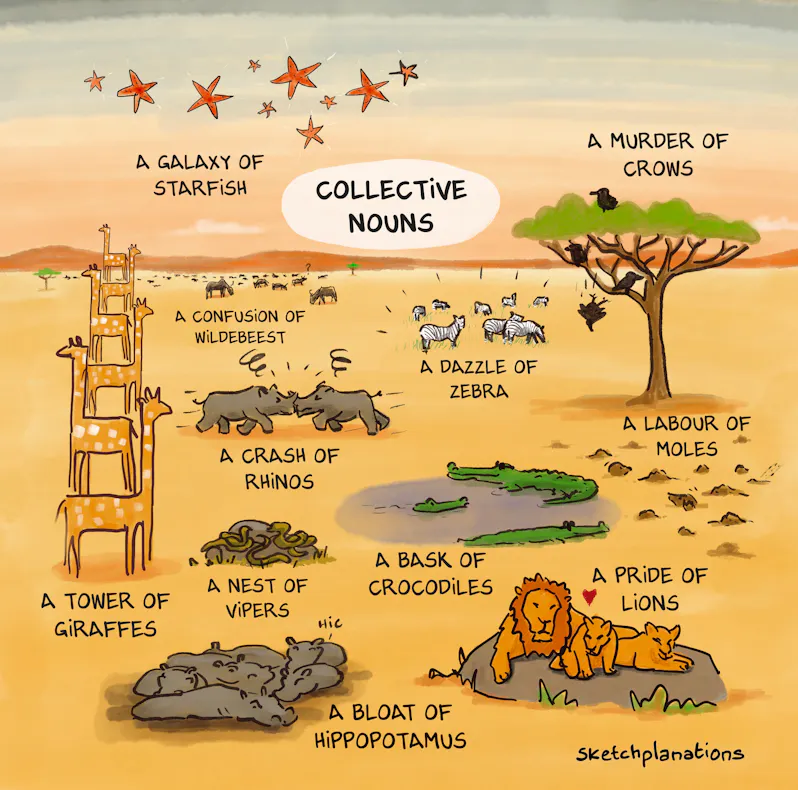
Some of the most delightful words in English are collective nouns.
A collective noun is a word used to describe a group of individuals or things — most commonly groups of animals. The best capture character and imagination in a single word.
Everyone loves a good collective noun. So here's a small collective nouns list with some of the most delightful examples.
Fun Examples of Collective Nouns for Animals
Some crackers:
A tower of giraffes
A crash of rhinos
A galaxy of starfish
A shiver of sharks
A destruction of wildcats
A bask of crocodiles
A pride of lions
A bloat of hippopotamus
A nest of vipers
A confusion of wildebeests
A shrewdness of apes
A dazzle (or zeal) of zebra
A labour of moles
A prickle of porcupines
An embarrassment of pandas
A skulk of foxes
A leap of leopards
Collective Nouns for Birds
We all know a gaggle of geese, thanks to the great alliteration, but these are lovely too:
A parliament of owls
A murmuration of starlings
A charm of goldfinches
A pandemonium of parrots
An ostentation of peacocks
An exaltation of larks
A flamboyance of flamingos
A murder of crows
A deceit of lapwings (poor lapwings)
An exaltation of larks
A raft of coots
Collective nouns for other things
Are collective nouns for other things, not just animals? Yes. We say a bunch of bananas, a quiver of arrows, a bouquet of flowers, a fleet of ships, or a squadron of aircraft.
Collective nouns for professions or groups of people are some of the more fun. Take, for example:
a pack of thieves
a coven of witches
a haggle of vendors
a sentence of judges
a flock of tourists
a wince of dentists
an absence of professors
a tangle of coat hangers
or a torment of personal trainers
Collective nouns are everywhere.
Where do collective nouns come from?
Many collective nouns still used today were first recorded in a 1486 book by an English noblewoman called The Book of St Albans, or The Book of Hawking, Hunting and Blasing of Arms. It includes an appendix in wonderful olde englishe with "The Compaẏnẏs of beestẏs and fowlẏs." It meant that people out hunting could correctly identify their "Besynes of ferettis" (business of ferrets) and "Brace of grehoundis" (brace of greyhounds).
But English continues to evolve, and the older zeal of zebra may give way to a dazzle when enough people decide to use that one. As there appears to be no established authority, may the best collective noun win.
Wiktionary has a mighty list of collective nouns in case you ever wanted to discover a glitter of generals, an implausibility of gnus, or a helix of geneticists. I can't vouch for their accuracy, though. If you know or find any others you particularly like, please share them with me in a reply or comment.
For me, the best collective nouns sum up, often with a touch of humour, poetry, and perhaps a wink, the most salient qualities of their nouns. It’s what makes a shiver of sharks, or a bask of crocodiles, so much more enjoyable than, say, a cloud of sharks, or a litter of crocodiles, or just a bunch of either of them.
Perhaps we need a collective noun for a group of sketches?
A short BBC video, The Strange World of Collective Nouns, gives a lovely overview of their origin and some fun examples. A pedant of Oxford commas? As Susie Dent says, "The only boring thing about collective nouns is their name."
Update 10 Nov 2025: I added a few more from suggestions and a link to the excellent book An Exaltation of Larks.
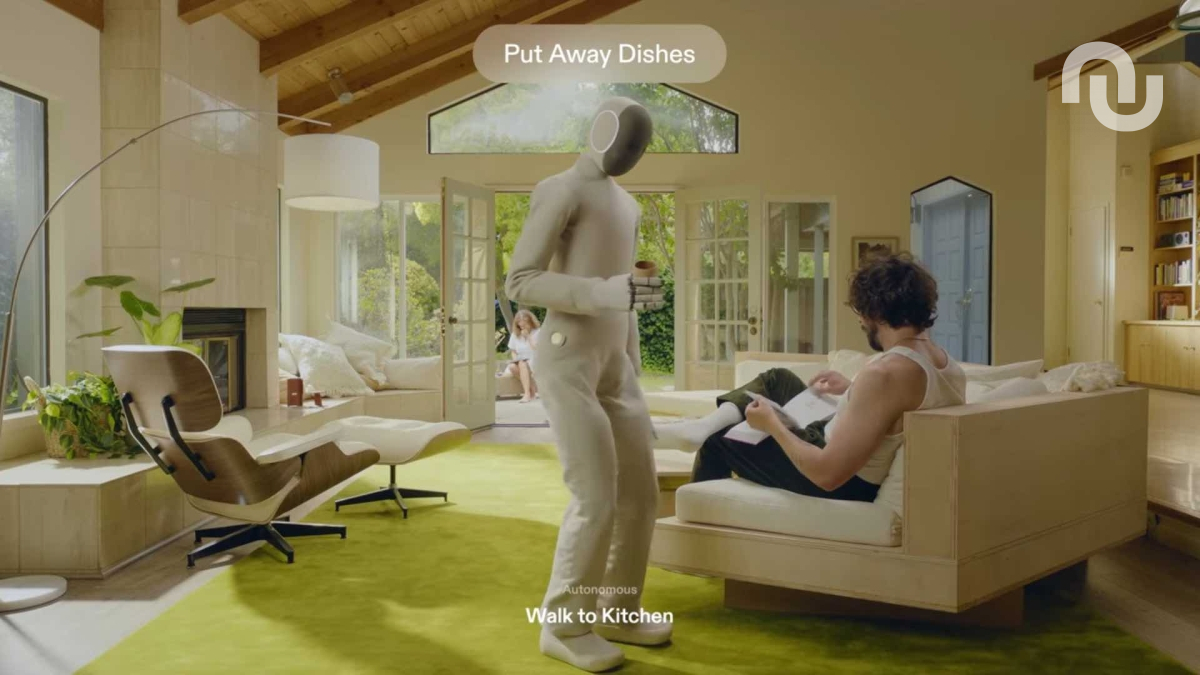
Développé par la startup 1X Technologies, le robot Neo fait 1,65 m, pèse 30 kg et s'occupe des tâches domestiques de la maison (ménage, ramasser les objets, arroser les plantes, etc.) Il est le premier d'une catégorie de produits amenée à révolutionner le monde… à condition que la promesse soit réelle.
Dans un rapport publié le 27 octobre 2025, la société de cybersécurité Kaspersky revient sur une vaste campagne de cyberespionnage ayant pris pour cible le navigateur Google Chrome. Les pirates sont parvenus à contourner la sandbox du navigateur afin d’infecter de nombreuses victimes.
La France a lancé officiellement le chantier du nouveau radar Aurore, qui viendra prendre la suite du radar GRAVES. Objectif : donner au pays de nouveaux « yeux » pour observer tout ce qui se passe en orbite terrestre basse.
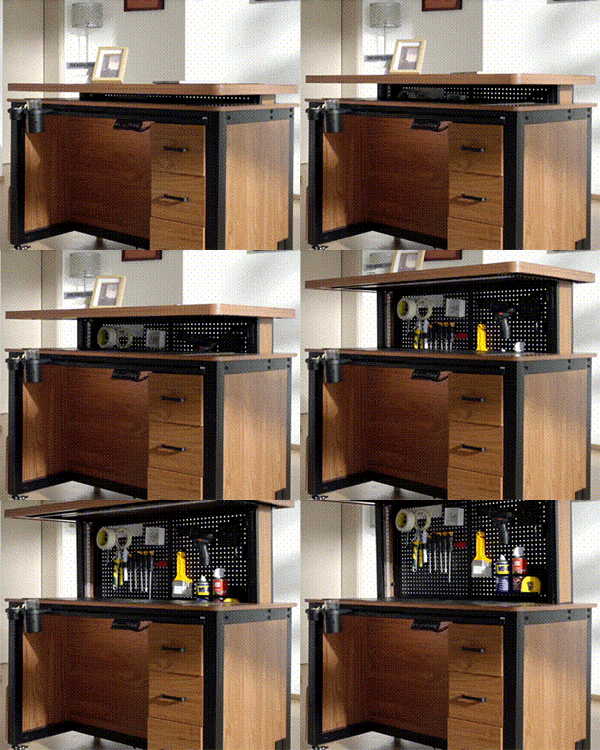
The Domitree 10-in-1 Electric Sit-Stand Desk redefines workspace versatility with hidden storage, modular pegboards, built-in charging, and ambient lighting. Its smart lift system adjusts from 28-47 inches, combining ergonomic comfort, organization, and sleek design.
What happens when you push LEGO engineering… and physics… to their absolute limits? Brick Technology decided to find out by designing a series of remote-controlled LEGO vehicles built to cross increasingly wider gaps in the road without slowing down. Each car is 1:14 scale, weighs about 650 grams, and drives at a real-world equivalent of 100 km/h. Check it out!
PayPal va permettre aux utilisateurs de payer leurs achats directement dans ChatGPT grâce à un nouveau partenariat technologique avec OpenAI, effectif dès 2026.
La branche française d'Activision a choisi une drôle d'égérie pour promouvoir Call of Duty: Black Ops 7. Philippe Etchebest, charismatique chef cuisinier, apparaît bien dans une pub pour le FPS.
Dans un article de blog publié le 24 octobre 2025, des chercheurs de la société de cybersécurité NeuralTrust ont révélé une méthode permettant à un acteur malveillant de contourner les mécanismes de sécurité de l’assistant IA intégré au nouveau navigateur ChatGPT Atlas.
Businesses are increasingly being deceived by employees using artificial intelligence for an age-old scam: faking expense receipts.
The launch of new image-generation models by top AI groups such as OpenAI and Google in recent months has sparked an influx of AI-generated receipts submitted internally within companies, according to leading expense software platforms.
Software provider AppZen said fake AI receipts accounted for about 14 percent of fraudulent documents submitted in September, compared with none last year. Fintech group Ramp said its new software flagged more than $1 million in fraudulent invoices within 90 days.
Interrogé au sujet des constructeurs chinois, Carlos Ghosn, l’ancien patron de Renault-Nissan connu pour sa fuite rocambolesque du Japon dans une malle, a livré une séquence pour le moins surprenante.
– Article invité, rédigé par Vincent Lautier, contient des liens affiliés Amazon –
J’ai déménagé récemment, et je me suis très vite rendu compte que je manquais de multiprise, rapport que je suis un Geek avec un bureau franchement très encombré de produits tech divers et variés qui ont besoin d’énergie. L’ami Korben a eu la gentillesse de me dépanner d’une multiprise, mais franchement, elle fait un peu peur, dans son jus bien vintage. Du coup je suis parti à la recherche de multiprises un peu sympa, et comme souvent,
je me suis arrêté sur une proposions de la marque UGREEN
…
Donc UGREEN, j’en parle souvent, vous connaissez sûrement pour leurs câbles et leurs chargeurs GaN de qualité, a sorti une multiprise 10-en-1. Et franchement, après quelques jours de test, j’en suis bien content.
Le concept n’a rien d’original, un seul bloc qui offre dix sorties. D’abord, vous avez six prises AC (les bonnes vieilles prises 220V). Le point crucial ? Le bloc encaisse une puissance totale de 3680W. En gros, vous pouvez y brancher votre PC gaming avec son alim de 1000W, votre écran 4K, votre imprimante 3D et même la bouilloire pour le café sans foutre le feu à votre baraque.
Mais le vrai plus, ce qui fait la différence avec la rallonge moche que Korben m’a filé (punaise mais je suis d’une ingratitude moi…), c’est la partie chargeur intégrée. On se retrouve avec trois ports USB-A pour les accessoires, et surtout, un port USB-C. Et là, UGREEN n’a pas fait les choses à moitié. Ce port USB-C n’est pas un gadget anémique ; il envoie 20W en Power Delivery. Traduction : il recharge votre iPhone (compatible 17, 16, 15…) ou votre Galaxy (S25, S24…) franchement rapidement, et c’est très bien.
Alors vous allez me dire que des multiprises avec des ports USB et même USB-C ça existe déjà, mais en général ils sont franchement lents. Alors que là, non. Le bloc est équipé d’une puce GaN. Le Nitrure de Gallium, pour les intimes. C’est plus petit, ça chauffe beaucoup moins qu’un chargeur silicium classique, et c’est bien plus efficace énergétiquement. C’est ce qui permet au bloc de ne pas se transformer en radiateur d’appoint tout en délivrant sa puissance. On valide fort.
Au-delà de la puissance, c’est sobre, c’est noir, ça fait “pro” sur un bureau. Les prises sont bien espacées, on peut enfin brancher ces satanés adaptateurs secteur sans jouer à Tetris. UGREEN a même pensé à un interrupteur indépendant (avec un petit clic satisfaisant) pour tout couper d’un coup. Des petits patins en silicone sous le bloc l’empêchent de glisser sur le bureau. C’est bête, mais ça évite de tout arracher en tirant sur un câble.
Niveau sécurité, c’est du solide. Ce n’est pas une simple rallonge, c’est un bloc parafoudre et surtension. Il embarque aussi toutes les protections habituelles (surcharge, court-circuit, etc.). Vos précieux joujoux sont à l’abri. Le câble de 1,3m est bien épais, on sent que c’est fait pour durer.
Franchement, pour un setup propre, que ce soit au bureau, derrière la TV du salon ou sous la table de chevet, c’est parfait. On branche tout, on recharge tout (rapidement !), et on le fait en sécurité, et on limite un peu le “cable management” de l’enfer et la multiplication des blocs chargeurs.
Et le meilleur pour la fin : le prix. D’habitude, ce genre de bestiole bien finie avec du GaN et du Power Delivery 20W tourne autour de 40€, c’est d’ailleurs son prix habituel,
mais en ce moment sur Amazon, elle est à moins de 30 euros
. Je viens d’en commander deux de plus, et c’est la raison pour laquelle je pense à vous rédiger ce petit test :p
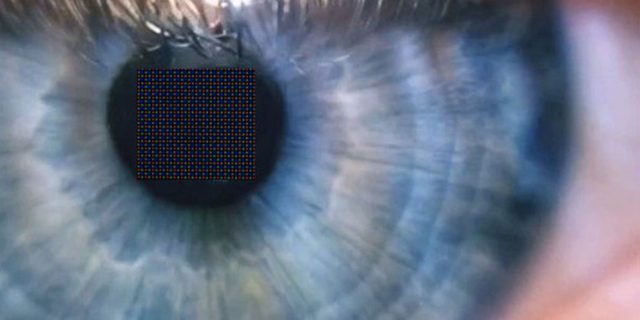
A group of Sweden-based researchers proposed a novel e-ink display solution that could make way for super compact, retina-level VR headsets and AR glasses in the future.
The News
Traditional emissive displays are shrinking, but they face physical limits; smaller pixels tend to emit less uniformly and provide less intense light, which is especially noticeable in near-eye applications like virtual and augmented reality headsets.
In a recent research paper published in Nature, a team of researchers presents what a “retinal e-ink display” which hopes to offer a new solution quite unlike displays seen in modern VR headsets today, which are increasingly adopting micro-OLEDs to reduce size and weight.
The paper was authored by researchers affiliated with Uppsala University, Umeå University, University of Gothenburg, and Chalmers University of Technology in Gothenburg: Ade Satria Saloka Santosa, Yu-Wei Chang, Andreas B. Dahlin, Lars Österlund, Giovanni Volpe, and Kunli Xiong.
While conventional e-paper has struggled to reach the resolution necessary for realistic, high-fidelity images, the team proposes a new form of e-paper featuring electrically tunable “metapixels” only about 560 nanometres wide.
This promises a pixel density of over 25,000 pixels per inch (PPI)—an order of magnitude denser than displays currently used in headsets like Samsung Galaxy XR or Apple Vision Pro. Those headsets have a PPI of around 4,000.
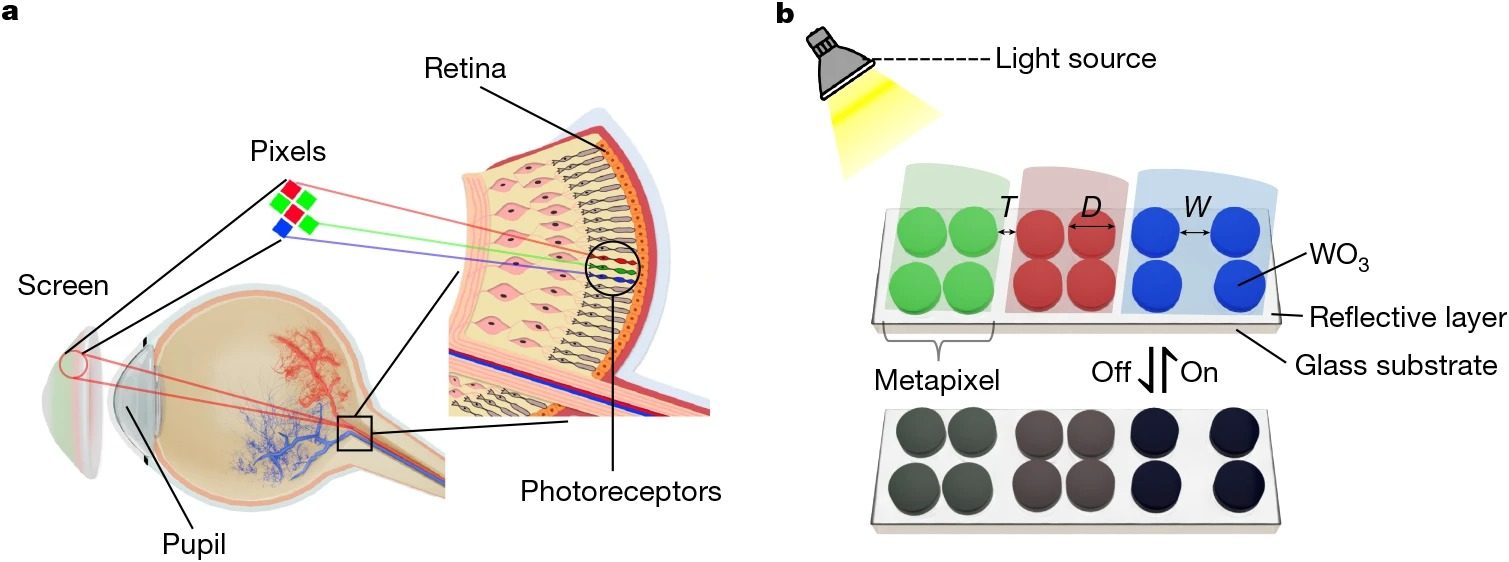
Image courtesy Nature
As the paper describes it, each metapixel is made from tungsten trioxide (WO₃) nanodisks that undergo a reversible insulator-to-metal transition when electrically reduced. This process dynamically changes the material’s refractive index and optical absorption, allowing nanoscale control of brightness and color contrast.
In effect, when lit by ambient light, the display can create bright, saturated colors far thinner than a human hair, as well as deep blacks with reported optical contrast ratios around 50%—a reflective equivalent of high-dynamic range (HDR).
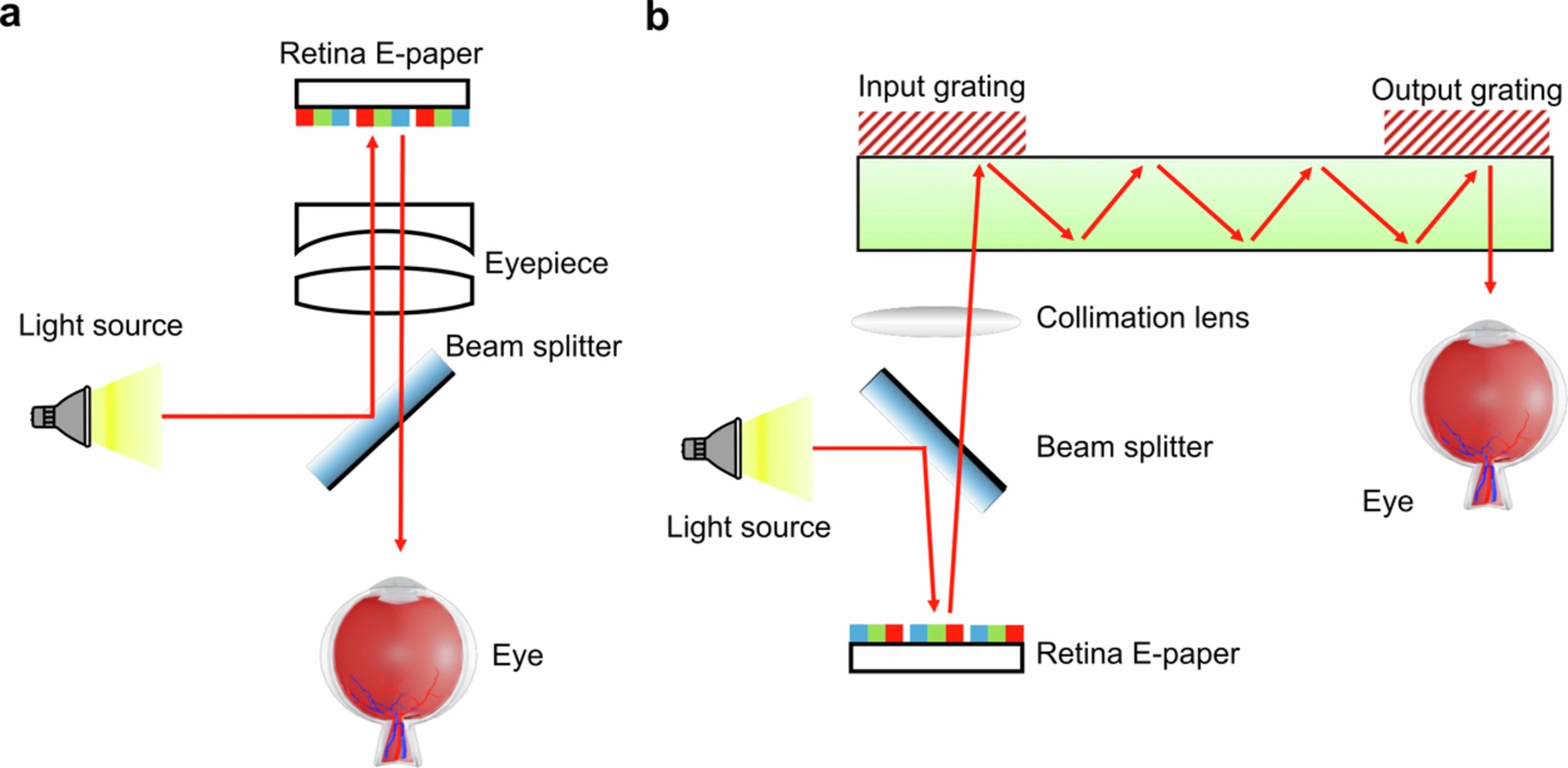
And the team says it could be useful in both AR and VR displays. The figure below shows a conceptual optical stack for both applications, with Figure A representing a VR display, and Figure B showing an AR display.
Image courtesy Nature
Still, there are some noted drawbacks. Beyond sheer resolution, the display delivers full-color video at “more than 25 Hz,” which is significantly lower than what VR users need for comfortable viewing. In addition to a relatively low refresh rate, researchers note the retina e-paper requires further optimization in color gamut, operational stability and lifetime.
“Lowering the operating voltage and exploring alternative electrolytes represent promising engineering routes to extend device durability and reduce energy consumption,” the paper explains. “Moreover, its ultra-high resolution also necessitates the development of ultra-high-resolution TFT arrays for independent pixel control, which will enable fully addressable, large-area displays and is therefore a critical direction for future research and technological development.”
And while the e-paper display itself is remarkably low-powered, packing in the graphical compute to put those metapixels to work will also be a challenge. It’s a good problem to have, but a problem none the less.
My Take
At least as the paper describes it, the underlying tech could produce XR displays approaching the size and pixel density that we’ve never seen before. And reaching the limits of human visual perception is one of those holy grail moments I’ve been waiting for.
Getting that refresh rate up well beyond 25 Hz is going to be extremely important though. As the paper describes it, 25 Hz is good for video playback, but driving an immersive VR environment requires at least 60 Hz refresh to be minimally comfortable. 72 Hz is better, and 90 Hz is the standard nowadays.
I’m also curious to see the e-paper display stacked up against lower resolution micro-OLED contemporaries, if only to see how that proposed ambient lighting can achieve HDR. I have a hard time wrapping my head around it. Essentially, the display’s metapixels absorb and scatter ambient light, much like Vantablack does—probably something that needs to be truly seen in person to be believed.
Healthy skepticism aside, I find it truly amazing we’ve even arrived at the conversation in the first place: we’re at the point where XR displays could recreate reality, at least as far as your eyes are concerned.
C'est un projet futuriste qui n'existe que sur le papier pour l'instant. Mais il a de quoi inquiéter les astronomes : la startup Reflect Orbital a l'idée de lancer des « satellites miroirs » dans l'espace pour refléter la lumière du Soleil sur Terre, pendant la nuit.