Shared posts

14 Aug 23:01

Wanted to tell one more story from YMCA camp. As part of their...


Wanted to tell one more story from YMCA camp. As part of their camp experience, each camper chooses a goal that he/she wishes to accomplish before the end of the session. Each camper is then assigned a counselor to mentor them in pursuit of their goal.

This is Malik from Brooklyn. Last summer, Malik’s goal was to stop bullying at camp.
"How do you do that?" I asked.
"Well, you can’t stop it completely," he said. "But if you see someone getting bullied, you can ask the bully to think about how he would feel if the same thing happened to him."

The coolest part of the story happened after camp ended, when Malik returned home to Brooklyn. He ran for president of his 4th grade class on an anti-bullying platform, and won the election because “there were 15 other kids who got bullied who all voted for him.” After he was elected, he convened a meeting of all the class presidents, and passed a school-wide rule than anyone seen bullying would have to serve detention during both lunch and recess.

13 Aug 22:28

Teaching the Program

by George David Clark

A friend once told me about a sophomore in his 20th-century American-history course who couldn’t remember which side had won the Civil War. Like my friend, from time to time I am caught off guard by what students don’t know, and in response I usually find myself muttering something about what’s not being taught in high school, or in the university’s gen-ed requirements, or even in my own department’s intro courses. Meanwhile some member of the grad faculty is surely chiding the gaps in my former students’ preparation for her class.

Until recently I thought of these holes in our students’ education as simply an unavoidable hazard of the academic profession: “There are only so many hours in a semester,” “different professors privilege different knowledge,” and so on. We can demand at least a cursory knowledge of the Civil War, but we’ll always have to deal with more ignorance than we would like. Lately though, I have been wondering if I don’t owe this issue a bit more thought.

This summer I have found some excellent advice in the comments to my blog posts on the development of junior faculty, and one of the ones I keep returning to may suggest a way forward. Back in June, Kathden responded to my thoughts on deep learning by pointing out that the facilitation of higher-level thinking in any given course is really only an intermediate stage in an instructor’s maturation. Ideally, deep learning in one course should be meaningfully connected to the university’s greater academic objectives and the students’ continuing education at large. In other words, the best teachers are thinking carefully about those gaps in our students’ learning and working to fill them in across the whole of an academic program.

Susan VanZanten has written thoughtfully on this topic in Joining the Mission: A Guide for (Mainly) New College Faculty. In her chapter on academic citizenship she describes the potential for instructors to isolate themselves within their own courses. Junior faculty, who likely have little practical knowledge of their new departments’ continuing conversations about curriculum, sequencing, and mission, seem particularly susceptible to this kind of pedagogical isolation. In many cases their previous teaching as grad students, postdocs, or adjuncts has been concentrated in introductory-level courses, and that narrowness of experience may encourage a myopic focus on “their classes.” I know I have been guilty of thinking that way.

Last semester I taught a course in which about three quarters of the students had worked with me before. Naturally, I built on our previous conversations and often called on those veterans to clarify notions they had studied in the previous semester. Sometimes I could cite specific work that they had done and ask them to share their research with their peers. It made them experts on those topics and empowered all of us to think of our subject as an intellectual pursuit that can live outside the confines of a single four-month course. And yet for some reason it didn’t strike me until now that, if I knew my fellow faculty members’ courses better, I could build on their work too. Similarly, if I am more thoughtful about the courses students will be taking after mine, I can set up others to extend deep learning across the degree.

For VanZanten, academic citizenship demands that we “jointly analyze the shape of the major, minor, or general-education programs,” a process that begins in candid dialogue with other professors. I am challenged to begin that conversation simply by asking my department’s senior faculty where they see gaps in our students’ learning and what they wish students knew on the semester’s first day.

Is this conversation taking place on your campus? What advice do you have for new faculty members who want to contribute to the larger program, not just teach their own courses? How can senior faculty welcome new colleagues into such a discussion?

13 Aug 22:23

The Banal, Insidious Sexism of Smurfette

by Philip N. Cohen, PhD
1

Columbia Pictures/Sony Pictures Animation

.

The Smurfs, originating as they did in mid-century Europe, exhibit the quaint sexism in which boys or men are generic people – with their unique qualities and abilities – while girls and women are primarily identified by their femininity. The sequel doesn’t upend the premise of Smurfette.

In the original graphic novels, Smurfette (or La Schtroumpfette in French) was the creation of the evil Gargamel, who made her to sow chaos among the all-male Smurf society. His recipe for femininity included coquetry, crocodile tears, lies, gluttony, pride, envy, sentimentality, and cunning.

In the Smurfs 2, there are a lot of Smurfs. And they all have names based on their unique qualities. According to the cast list, the male ones are Papa, Grouchy, Clumsy, Vanity, Narrator, Brainy, Handy, Gutsy, Hefty, Panicky, Farmer, Greedy, Party Planner, Jokey, Smooth, Baker, Passive-Aggressive, Clueless, Social, and Crazy. And the female one is Smurfette–because being female is enough for her. There is no boy Smurf whose identifying quality is his gender, of course, because that would seem hopelessly limited and boring as a character.

Here are the Smurf characters McDonald’s is using for their Happy Meals:

2

When you buy a Happy Meal at McDonald’s, the cashier asks if it’s for a boy or a girl. In my experience, which is admittedly limited to my daughters, girls get Smurfette. I guess boys get any of the others.

The Way It’s Never Been

Identifying male characters by their non-gender qualities and females by their femininity is just one part of the broader pattern of gender differentiation, or what you might call gendering.

There are two common misconceptions about gendering children. One is that it has always been this way – with boys and girls so different naturally that all products and parenting practices have always differentiated them. This is easily disproved in the history of clothing, which shows that American parents mostly dressed their boys and girls the same a century ago. In fact, boys and girls were often indistinguishable, as evident in this 1905 Ladies’ Home Journal contest in which readers were asked to guess the sex of the babies (no one got them all right):

3

Source: Jo Paoletti, Pink and Blue: Telling the Boys from the Girls in America

.

The other common perception is that our culture is actually eliminating gender distinctions, as feminism tears down the natural differences that make gender work. In the anti-feminist dystopian mind, this amounts to feminizing boys and men. This perspective gained momentum during the three decades after 1960, when women entered previously male-dominated occupations in large numbers (a movement that has largely stalled).

However, despite some barrier-crossing, we do more to gender-differentiate now than we did during the heyday of the 1970s unisex fashion craze (the subject of Jo Paoletti’s forthcoming book, Sex and Unisex). On her Tumblr, Paoletti has a great collection of unisex advertising, such as this 1975 Garanimals clothing ad, which would be unthinkable for a major clothier today:

4

And these clothing catalog images from 1972 (left) and 1974 (right):

5

Today, the genders are not so easily interchangeable. Quick check: Google image search for “girls clothes” (left) vs. “boys clothes” (right):

6

Today, a blockbuster children’s movie can invoke 50-year-old gender stereotypes with little fear of a powerful feminist backlash. In fact, even the words “sexism” and “sexist,” which rose to prominence in the 1970s and peaked in the 1990s, have once again become less common than, say, the word “bacon”:

7

And the gender differentiation of childhood is perhaps stronger than it has ever been. Not all differences are bad, of course. But what Katha Pollitt called “the Smurfette principle” – in which “boys are the norm, girls the variation” — is not a difference between equals.

Cross-posted at The Atlantic and Family Inequality

Philip N. Cohen is a professor of sociology at the University of Maryland, College Park, and writes the blog Family Inequality. You can follow him on Twitter or Facebook.

(View original at http://thesocietypages.org/socimages)

13 Aug 18:11

Things Teachers Say

by Brittany

I teach college English. I’ve seldom written about my job, however I often post status updates on Facebook discussing things that happen at work. Here are some of the gems I’ve collected.

I was just given my first-ever free teacher’s edition of a literature anthology! (I should not be this excited–but I am.)

The first day of class went really well, but we’ll see how things go today when I take the crayons away.

In her review of my class, the girl who was 15 minutes late every day, slept through the whole 75 mins., never paid attention, only turned in half of her homework, and was verbally abusive toward me when I refused to alter her essay grade said she wished I had taught with more enthusiasm and had had an overall more positive attitude.

The future belongs to those who can conjugate the verb “to be.”

The highly-affectionate cat in my lap is making grading quite challenging.

Today we discussed steps for revising essays. Near the end of our PowerPoint, a student raised his hand and said, “I can’t revise because I find it boring.” I replied, “So you’ll either get over that or fail. Any legitimate questions?” This might be an indicator I’m becoming callous.

Students want extensions for crazy reasons: “I was working on stuff for another class,” or “I forgot,” or “I needed help but didn’t know that until after the tutoring center closed.” To this kind of reasoning, I always want to reply, “You have not the foresight of a chipmunk, my friend.”

Think I might have scared my students about plagiarism. I have a fair number including citations when they mention article titles.

I can’t go into public any more. Just now a girl kept staring at me, and finally she said, “You taught me English!” I have no idea who she is–I have absolutely no memory of her–but I’m taking her word for it since that’s what I do.

When the first essay from my world literature class begins, “In our American literature class…,” I start to worry.

Last night in world lit we read and discussed The Communist Manifesto. I expected resistance on the students’ part, but instead they were embracing socialism and planning to start a commune. If rich folks’ “means of production” are wrecked or stolen in the next few days, I hope I won’t be held responsible!

After a ten-minute lecture on MLA, a student came up to me and said, “That blew away EVERYTHING I learned in high school!” I don’t know what that means, but I’m going to be arrogant and take it as a compliment.

I support the legalization of marijuana…so that I never have to read another essay about the legalization of marijuana.

Every semester begins, “I’m going to eat healthy and get enough sleep!”
Every semester ends, “Soda for breakfast, Pop-tart for dinner…how the hell did it get to be 3 AM?”

You are in college. If you send your mommy to talk to me, I think that should be grounds for me to fail you because obviously you don’t know how to structure an argument on your own.

From a student essay: “A negative thing about books is they lead to great expectations.”

Out of nowhere, an unidentified woman dashed into my cube and asked me to “explain the Middle Ages.”

Just read a student essay from someone in my lit class, and it was fabulous! I should not be nearly this excited, but I’m so, so proud that he’s talking about metaphors, connotation, and synecdoche! (And it is now official–I am the world’s biggest nerd.)

Last night for the first time, a student said to me, “I guess I see technology differently because I am young.” I wanted to ask when I became old, but then I realized my 10-year reunion is next year. *sigh*


10 Aug 04:09

On Being a Great Dad vs a Great Mom

by Isis the Scientist

On of my favorite dad scientists, Proflike Substance, has a repost up of something he wrote a couple of years ago that has me thinking. He writes on taking his baby to a meeting [emphasis mine]:

But as I was leaving the meeting, I got several comments. A couple people asked me about the baby and then something unexpected happened. One of my senior colleagues with whom I do not interact much, said to me “You’re such a great dad.” This was quickly agreed to by another colleague. Now maybe I am, maybe I’m not, these people wouldn’t have any idea. I could have been on my way to dropping her off to the traveling circus*. But apparently being willing to watch your kid while fulfilling work obligations is enough to win me the distinction.

But it got me wondering, how many women who have to bring kids in to a meeting are considered “great”? While I will admit that my department is pretty family friendly, I have never seen a female colleague admired for just making the best of a childcare “situation”.

My response to Proflike’s inquiry?

ROFLMAO

Figure 1: For real. I laughed so hard, I may need to send Proflike my dry cleaning bill.

The answer to Proflike’s question? No. I have never been regarded as a “great mom” for taking my kid to a meeting, which I still do occasionally and did frequently with Tiny Diva during my “maternity leave.”  I’ve gotten some side eye. I’ve gotten the look that tells you that folks in the room find it highly inconvenient that you let a person emerge from your naughty bits and are inflicting your bad decisions on the group. But, no. It’s never made me a “great mom” to be seen caring for my children and it’s frequently a no-win battle when a woman tries to placate both home and office. It’s like the surest of signs that she doesn’t have her “balancing act” on point.  Por ejemplo…

One of my local friends is the only clinical specialist of her kind in a several hour radius. She trains residents and fellows, but she’s the end of the line. She has a daughter Tiny Diva’s age. A bit ago, her daughter had an illness that lasted ~ a week and my friend needed to stay with her. By the end of the week, the clinic was calling with an emergency and my friend took her daughter in to work briefly to see this patient. She left her daughter with the nurses, did her job, and went back home with her daughter. A couple of months later, she received her evaluations from her fellows and residents, including a comment of how inappropriate it was that she had brought her daughter to work and expected the nurses to care for her. Not a comment about how amazing it was that she had agreed to see this patient instead of having him transferred hours away or a comment about what a great mom she was…

Now, I want to be very clear that I think a lot of the male scientists that I interact with around here are actually great dads, Proflike included.  But, let’s not forget that the expectations of what makes a “great mom” and a “great dad” to society are epically different. To be a “great mom”, you basically have to take Hornbein’s route to summit Everest without supplemental oxygen, do it in record time, and no one can lose any toes. You’d better also cook some food and do some laundry while you’re at it.

Hornbein RoutesFigure 2:  Hornbein’s 1963 ascent (the first of the west ridge) is in green. His 1980 ascent is in yellow.

If you’re a dad, you can just show up at base camp, have a beer with a Sherpa, and throw a peace sign up at the mountain and society will generally hand you a cookie.

That all said, it’s important to not lose sight of what’s important.  I have reached a point in my parenthood where I could not give fewer fucks about what society thinks of my skillz, or lack there of. It’s more important to me that my kids think I am a “great mom” and the bar is much, much lower with them. Yesterday Little Isis was in the group of kids that visited my lab. As I walked the ~two dozen hooligans out of the hospital, I overheard him talking to one of his friends who informed him,

“Little Isis, you have the coolest mom ever. I want to be a scientist.”

His reply?

“Yeah, she’s pretty rad. It’s a secret, but she’s also working on Hulk technology.”

I think it’s alright if nobody around a conference table thinks that I am a great mom. As long as my kids do…

Charlie and MRoseFigure 3: The Isis wackaloons.


09 Aug 20:38

fauxductivity

fauxductivity
n. Pretending to work hard; busyness that consists of trivial or unproductive activities. Also: faux-ductivity. [Faux + productivity.]
fauxductive adj.
Example Citations:
I am very familiar with that tactic, but I have another one that"s even worse. Fake productivity, or “fauxductivity” as I like to think of it, is where you surround yourself with accoutrements of productivity and busyness so not only does it look like you are busy and important but you are hoping to trick your brain into acknowledging the need to get work done and then spend extra time doing it.
—Minerva Cheevy, “Fauxductivity,” The Chronicle of Higher Education, October 4, 2011
 

I wrote “fauxductive” on my hand. Then I photocopied my hand.

It was extremely fauxductive.

Oh, and then I took a picture of my hand with the photocopy. This was before the photocopy and I did a fauxductivity high five.
—Andrew Jaico, “Fauxductivity: a short example,” The Honeycomb Collective, August 20, 2008


Earliest Citation:
fauxductivity

Pretending to be productive at work.
—Glassman, “fauxductivity,” Urban Dictionary, August 14, 2008

Related Words:
 

Categories:
 

Posted on August 8, 2013 


09 Aug 20:32

Power, Mickey Mouse, and the Infantilization of Women

by Lisa Wade, PhD

Here and there the media becomes interested in the sexualization of little girls and, when they do, I often get a call from a reporter or two.  I’ve yet to see any of them pick up on what I think is the really interesting story.  They want to talk about child models, little girls in beauty pageants, and the transitional tween years for Disney star prodigies, but I always want to add into the mix the infantilization of adult women.

The sexualization of girls and the infantilization of adult women are two sides of the same coin.  They both tell us that we should find youth, inexperience, and naivete sexy in women, but not in men.  This reinforces a power and status difference between men and women, where vulnerability, weakness, and dependency and their opposites are gendered traits: desirable in one sex but not the other.

Now, thanks to @BonneZ, I know that this has something interesting to do with Mickey Mouse.

The original Mouse, Stephen Jay Gould has observed, was a kind of nasty character.  But, as he has evolved into the “cute and inoffensive host to a magic kingdom,” he has appeared increasingly childlike. This six figures below indicate Mickey’s evolution over time:

1

Childlike features, Gould argues, inspire a need to nurture: “When we see a living creature with babyish features,” he writes, “we feel an automatic surge of disarming tenderness.”   Allison Guy observes that we see a similar trend in recent toy makeovers – larger eyes, bigger heads, fatter stumpier limbs — but we see this primarily in toys aimed at infants and girls, not boys:

1 2 3

Guy interprets this trend as the “result of a cultural imperative for women to embody both the cute and the sexual.”  So, women don “cute” clothes with colorful patterns associated with children and wear “flippy skirts” and “baby doll” t-shirts. They wear eyeliner to give the illusion of the large eyes of childhood, foundation to hide the marks of aging on the face, and pink on their cheeks to mimic the blush of youth.  They are taught these imperatives from an early age.

What does it mean that feminine beauty is conflated with youthfulness, but masculine beauty is not – that we want women to be both cute and sexual?  It means that we feel comfortable with women who seem helpless and require taking care of, perhaps we even encourage or demand these traits from women.  Perhaps these childlike characteristics are most comforting in women who are, in fact, the least needy; I submit that we are more accepting of powerful women when they perform girlish beauty.  When they don’t, they are often perceived as threatening or unlikable.

So, yes, the sexualization of girls is interesting — and no doubt it’s no good for girls and likely contributes to older men’s sexual interest in young women — but it’s not just about sexualizing kids early.  It’s about infantilizing adult women, too, as a way to remind women of their prescribed social position relative to men.

Cross-posted at Jezebel.

Lisa Wade is a professor of sociology at Occidental College. You can follow her on Twitter and Facebook.

(View original at http://thesocietypages.org/socimages)

09 Aug 19:24

Men Need Clothes; Women Need to Look Sexy

by Lisa Wade, PhD

Caoileann A. sent in a great example of the way that women, but not men, are sexualized in our society.  In this case it’s a series of American Apparel ads.  I know, low hanging fruit. This example is extra great, though.

While normally it’s up to the critic to counterpose the portrayal of men and women in our society, in this case American Apparel does it for us. Here are the categories of attire for men and women exactly the way they appear on the website (i.e., side-by-side) as of Aug. 6th 5:46pm PST:

Screenshot_1Screenshot_2

The categories are exactly the same, but the way men and women are posed is strikingly different.  Only “Sweatshirts for Women” shows any commensurability.

This is — all too much — how we look at men and women in our society today. Caitlin Welsh said it nicely:

Women are presented too often not as consumers of the product, but part of the product – a sexy body sexily getting ready to surf, or a sexy body sexily wearing American Apparel. We’re used to seeing women look sexy and undressed in ads, while men in ads tend to just wear the clothes properly while also looking handsome in the face area.

Lisa Wade is a professor of sociology at Occidental College. You can follow her on Twitter and Facebook.

(View original at http://thesocietypages.org/socimages)

09 Aug 15:46

Fruitvale Station and What Privilege Really Means

by Isis the Scientist

I have a really fantastic student that is back and working with me for the summer, trying to finish a project that he started before he left for med school. Yesterday, after weeks of experimental toiling and a small success with one of our manuscripts, we decided to see a movie together. We were then going to head downtown so that I could also meet the person he’s been dating since returning to MRU town. I don’t typically interact socially with my students, but this kid is special to me. He’s one of those folks that you look at and think, “We’re all going to work for him some day…”

We had wanted to see the Kevin Hart movie, but it wasn’t playing. I told him to pick another and he chose Fruitvale Station.  Here’s the trailer, if you haven’t seen it:

Fruitvale Station is the story of Oscar Grant, who was shot by the BART police in Oakland on New Year’s Eve while trying to return home.  Being from The Golden State and still having ties there, I knew about Oscar Grant’s shooting.  Since I was living away from California when it happened in 2009, I experienced the aftermath of Grant’s execution-style shooting (the link takes you to the video of the shooting) more abstractly than my friends who were living in California and reporting the events to me.

Now, more than 12 hours after having seen the movie, my mind is still fucked up by it. I can’t tell you how surreal it was to see this movie in MRU town. My student and I surrounded by an ocean of white hair and pale skin.  I didn’t grow up in a black family in Oakland; I grew up in a Latin family in East Los Angeles, but there are many, many similarities and it was so disconcerting to be watching something that felt like home to me while being surrounded by MRU people. I felt the place on the screen viscerally while they clearly watched it academically. Reliving so many of the affects that used to be part of the daily me. There’s a scene where Oscar’s girlfriend uses the phrase “kick it”.  How many times have I used that phrase (among others) back home…

One of the things that especially struck me was the moment to moment switch in the characters, especially in the men. I remembered this happening so, so many times back home.  One moment loving and sweet. When threatened, instantly hard and ready to fight.  There’s a scene where Oscar Grant is in prison talking to his mother. She’s clearly his baby, sweet and loving. Then he’s threatened and his face changes in an instant. She begs him to calm down.  He changes similarly, for a flash of a second, on the train when new men board. This all made me remember a man I dated back home who could be so gentle when we were alone.  We’d be out at a party though, and he and every new guest would size each other up. That look – Are you going to challenge me? Are we going to fight? Even in April, when I was home after my stepfather’s death, I saw this in my brother.  My baby brother when we were in the house alone, but then we’d go out and he’d be hard. So heavily barrio.

I knew that part of that, at least for the men in my life, was the need to feel powerful and important in some sphere, in the face of a society that treated them like pawns and pushed them through the system.  A system that invests little in them, but always expects criminal behavior. A system that treats them like criminals before they’re old enough to understand. I thought about this a lot watching the scene where Oscar’s family is sitting in the waiting room of the hospital after he’s been shot. He is everything in the world to them, flaws and all, but he is nothing to the people who run system.

In April when I was home, my brother needed to get some documentation from the county coroner to get a hardship waiver for my stepfather’s cremation. My stepfather and brother had nothing, and were only barely not homeless. I couldn’t afford a funeral. My brother said to me, “Isis, they won’t help me. They’re not returning my calls and I tried going down there on the bus,  but they said I had to come back another day. The woman was rude. It’s fucked up” I watched him try to contact the coroner for help by phone for a couple more days, always being put on hold. Always being told the person who could help him wasn’t there. Then, I put on a skirt and blouse, slipped my pale ankles into a pair of conservative heels, and went down to the county office with him myself. We met the same woman he had met previously and he introduced me, “This is my sister, Dr. Isis. She’s handling everything.” I’ll never forget the look of hurt on his face when she said, “Yes, sit down, doctor.  I’ll go get the paperwork for you.” Now, I don’t know if she really could have helped my brother when he went there alone, but I will never forget the look of helpless emasculation on his face when she treated me with such courtesy. She had treated him like he was nothing.

That, my friends, is the essence of privilege.

Why bring all of this to a conversation about privilege? Yesterday mi hermana QueSera sent me a link to a post written by an apparently white blogger about interactions with her minority friends. This blogger writes..

I know that I don’t know what it’s like to have grown up in either a better or a worse environment. But this was the first time I was in a situation where all the people around me believed that I grew up with privilege. Yes, even being surrounded by drunks (my parents), drug addicts (my extended family and neighbors), poor people who shot at each other (my neighbors) and people who fought and constantly threatened divorce every other day (my parents) — to my colleagues — sounds like being privileged. Is it just because I’m white? We were also extremely poor. We were the charity people at my Catholic school. But then again, we did go to Catholic school, not public.

If I were privileged, it was certainly a midlist, or even maybe e-published, privilege. I wonder how much of that belief in my privilege is due to skin color. Even writing about this coffee date makes me feel like a classist or perhaps a racist, despite my well-intentioned liberal politics.

I tried to show them that I was one of them — not some bourgeoise snob who rode to success on the privilege of her youth.

It was painful to watch this person make the same mistake that most white people make when they ponder privilege – they mistake economic status for privilege. Not to say that these things aren’t frequently intertwined, but they’re not the same. Being privileged doesn’t mean that you grew up with money. Being privileged means that, because of what you look like, you don’t ever seriously have to ponder the reality of being shot execution style on a train platform.  Women don’t clutch their purses when you get into the elevator. They don’t call the police when they see you walking down a street and you don’t get arrested when you lose your keys.  They don’t make assumptions about what your family structure must look like.

latinos have too many children

Figure 1: The results of a little experiment I did earlier today.

For me, my privilege is that I can walk my pale ankles into the system’s office and expect that they will help me calmly and courteously.  My darker family members can’t always expect that, even though we were raised the same. I use that privilege every chance I get.

For QueSera, it means:

Que Sera Tweet

Figure 2: QueSera’s tweet.

Her tweet hits the privileged nail on its privileged head. Privilege has nothing to do with what you have, how you were raised, how hard you worked, or how much you’ve achieved. It has nothing to do with the person you are inside and everything to do with the person you are on the outside. Privilege is the inequality that you have left when you take two people and make them equitable in every other way. Recognizing privilege means coming to the realization that certain groups will always be at higher risk simply because of how they look.

Having privilege means that you can leave the theater and choose to never really have to think about it again.


06 Aug 22:17

Thursday Afternoon Ponderings…

by Isis the Scientist

It’s important to remember that feminism is no longer a group of organizations or leaders. It’s the expectations that parents have for their daughters, and their sons, too. It’s the way we talk about and treat one another. It’s who makes the money and who makes the compromises and who makes the dinner. It’s a state of mind. It’s the way we live now. — Anna Quindlen


06 Aug 22:15

How Friedrich Engels’ Radical Lover Helped Him Father Socialism

by Mike Dash

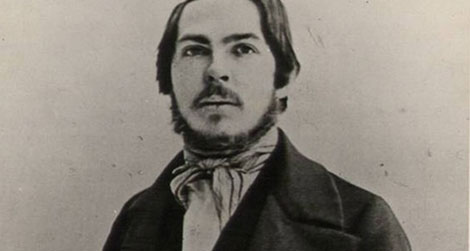
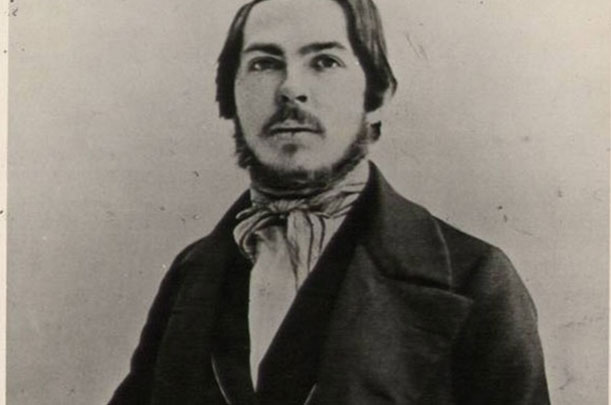
Portrait of a young revolutionary: Friedrich Engels at age 21, in 1842, the year he moved to Manchester–and the year before he met Mary Burns.

Friedrich Engels’ life appears replete with contradiction. He was a Prussian communist, a keen fox-hunter who despised the landed gentry, and a mill owner whose greatest ambition was to lead the revolution of the working class. As a wealthy member of the bourgeoisie, he provided, for nearly 40 years, the financial support that kept his collaborator Karl Marx at work on world-changing books such as Das Kapital. Yet at least one biographer has argued that while they were eager enough to take Engels’s money, Marx and his aristocratic wife, Jenny von Westphalen, never really accepted him as their social equal.

Amid these oddities lurks another—a puzzle whose solution offers fresh insights into the life and thinking of the midwife of Marxism. The mystery is this: Why did Engels, sent in 1842 to work in the English industrial city of Manchester, choose to lead a double life, maintaining gentleman’s lodgings in one part of the city while renting a series of rooms in workers’ districts? How did this well-groomed scion of privilege contrive to travel safely through Manchester’s noisome slums, collecting information about their inhabitants’ grim lives for his first great work, The Condition of the Working Class in England? Strangest of all, why—when asked many years later about his favorite meal—would a native German like Engels answer: “Irish stew”?

Manchester in 1870, the year Engels left the city he had lived in for 28 years. It was the largest industrial town in England and a noted center of the profitable cotton trade.

To answer these questions, we need to see Engels not as he was toward the end of his long life, the heavily bearded grand old man of international socialism, but as he was at its beginning. The Friedrich Engels of the 1840s was a  gregarious young man with a facility for languages, a liking for drink and a preference for lively female company. (“If I had an income of 5,000 francs,” he once confessed to Marx, “I would do nothing but work and amuse myself with women until I went to pieces.”) It was this Engels who arrived in England in December 1842–sent there to help manage a factory part-owned by his wealthy father, by a family desperate to shield their young radical from the Prussian police. And it was this Engels who, to the considerable alarm of his acquaintances, met, fell for and, for the better part of two decades, covertly lived with an Irish woman named Mary Burns.

Burns’ influence on Engels—and hence on communism and on the history of the world in the past century—has long been badly underestimated. She makes at best fleeting appearances in books devoted to Engels, and almost none in any general works on socialism. And since she was illiterate, or nearly so, not to mention Irish, working class and female, she also left only the faintest of impressions in the contemporary record. The sterling efforts of a few Manchester historians aside, almost nothing is known for certain about who she was, how she lived or what she thought. Yet it is possible, reading between the lines of Engels’ writings, to sense that she had considerable influence on several of her lover’s major works.
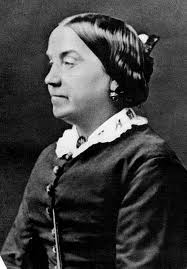
Mary Burns’ younger sister, Lizzie, c.1865. Lizzie lived with Engels after her sister died, and married him a day before she herself died. No image of Mary is known to exist.

Let us begin this attempt at recovered memory by sketching the main setting for the tale. Manchester, it must be said, was a poor choice of exile for a young man whose left-wing convictions had so concerned his family. It was the greatest and most terrible of all the products of Britain’s industrial revolution: a large-scale experiment in unfettered capitalism in a decade that witnessed a spring tide of economic liberalism. Government and business alike swore by free trade and laissez fairewith all the attendant profiteering and poor treatment of workers. It was common for factory hands to labor for 14 hours a day, six days a week, and while many of them welcomed the idea of fixed employment, unskilled workers rarely enjoyed much job security.

Living conditions in the city’s poorer districts were abominable. Chimneys choked the sky; the city’s population soared more than sevenfold. Thanks in part to staggering infant mortality, the life expectancy of those born in Manchester fell to a mere 28 years, half that of the inhabitants of the surrounding countryside. And the city still bore the scars of the infamous Peterloo Massacre (in which cavalry units charged down unarmed protesters calling for the vote) and had barely begun to recover from the more recent disaster of an unsuccessful general strike.

Engels had been sent to Manchester to take up a middle-management position in a mill, Ermen & Engels, that manufactured patent cotton thread. The work was tedious and clerical, and Engels soon realized that he was less than welcome in the company. The senior partner, Peter Ermen, viewed the young man as little more than his father’s spy and made it clear that he would not tolerate interference in the running of the factory. That Engels nonetheless devoted the best years of his life to what he grimly called “the bitch business,” grinding through reams of stultifying correspondence for the better part of 20 years, suggests not so much obedience to his father’s wishes as a pressing need to earn a living. As part-owner of the mill, he eventually received a 7.5 percent share in Ermen & Engels’ rising profits, earning £263 in 1855 and as much as £1,080 in 1859—the latter a sum worth around $168,000 today.
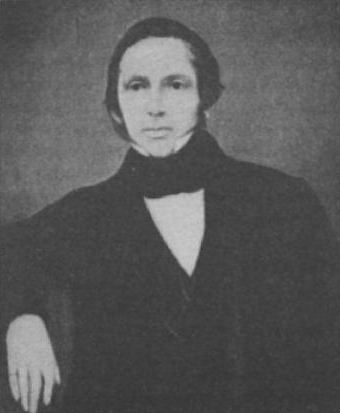
Peter Ermen, the Engels family’s business partner in Manchester, was a taskmaster who tolerated little independence in his managers.

What made Engels different from the mill owners with whom he mixed was how he spent his wealth (and the contents of Peter Ermen’s petty-cash box, which was regularly pilfered). Much of the money, and almost all of Engels’ spare time, was devoted to radical activities. The young German fought briefly in the revolutions of 1848-9, and for decades pursued an intensive program of reading, writing and research that resulted in a breakdown as early as 1857 but eventually yielded a dozen major works. He also offered financial support to a number of less-well-off revolutionaries—most important, Karl Marx, whom he had met while traveling to Manchester in 1842. Even before he became relatively wealthy, Engels frequently sent Marx as much as £50 a year—equivalent to around $7,500 now, and about a third of the annual allowance he received from his parents.

Few of Engels’ contemporaries knew of this hidden life; fewer still were aware of Mary Burns. As a result, almost all of what we know of Burns’ character comes from Engels’ surviving correspondence and a handful of clues exhumed from local archives.

It is not even certain where they met. Given what we know of working-class life during this period, it seems likely that Mary first went to work around age 9, and that her first job would have been as a “scavenger,” one of the myriad of nimble children paid a few pennies a day to keep flying scraps of fluff and cotton out of whirring factory machinery. The noted critic Edmund Wilson took this speculation further, writing that by 1843 Mary had found a job in Ermen’s mill. But Wilson gave no source for this assertion, and other biographers argue that Engels’ less-than-gallant pen portrait of his female employees—”short, dumpy and badly formed, decidedly ugly in the whole development of the figure”—makes it unlikely that he met the “very good natured and witty” young woman whom Marx remembered on the factory floor.
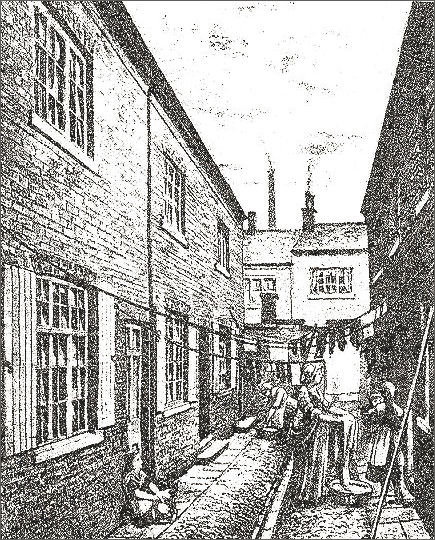
The Manchester slums of the mid-19th century were the subject of Engels’ first book, and a district that—thanks to his lover Mary Burns—he came to know remarkably well.

If Mary was not a factory girl, there were not too many other ways in which she could have made a living. She lacked the education to teach, and the only other respectable employment available was probably domestic service; an 1841 census does suggest that she and her younger sister, Lizzie, worked as servants for a while. A ”Mary Burn” of the right age and “born in this parish” is recorded in the household of a master painter named George Chadfield, and it may be, as Belinda Webb suggests, that Burns took this job because it offered accommodation. Her mother had died in 1835, and she and her sister had to come to terms with a stepmother when their father remarried a year later; perhaps there were pressing reasons for their leaving home. Certainly a career in domestic service would have taught Mary and Lizzie the skills they needed to keep house for Engels, which they did for many years beginning in 1843.

Not every historian of the period believes that Mary was in service, though. Webb, noting that Engels described taking frequent, lengthy walking tours of the city, argues that Mary would scarcely have had the time to act as his guide to Manchester had she labored as a factory hand or servant, and may instead have been a prostitute. Webb notes that Burns was said to have sold oranges at Manchester’s Hall of Science–and “orange selling” had long been a euphemism for involvement in the sex trade. Nell Gwyn, King Charles II’s “Protestant Whore,” famously hawked fruit at Drury Lane Theater, and the radical poet Georg Weerth–whom Mary knew, and who was one of Engels’ closest associates—penned some double entendre-laced lines in which he described a dark-eyed Irish strumpet named Mary who sold her “juicy fruits” to “bearded acquaintances” at the Liverpool docks.

That Engels’ relationship with Mary had a sexual element may be guessed from what what might be a lewd phrase of Marx’s; taking in the news that Engels had acquired an interest in physiology, the philosopher inquired: “Are you studying…on Mary?” Engels did not believe in marriage—and his correspondence reveals a good number of affairs—but he and Burns remained a couple for almost 20 years.

Nothing is known for certain about Mary’s involvement in Engels’ political life, but a good deal can be guessed. Edmund and Ruth Frow point out that Engels describes the Manchester slum district known as Little Ireland in such graphic detail that he must have known it; Mary, they argue, “as an Irish girl with an extended family…would have been able to take him around the slums…. If he had been on his own, a middle-class foreigner, it is doubtful he would have emerged alive, and certainly not clothed.”
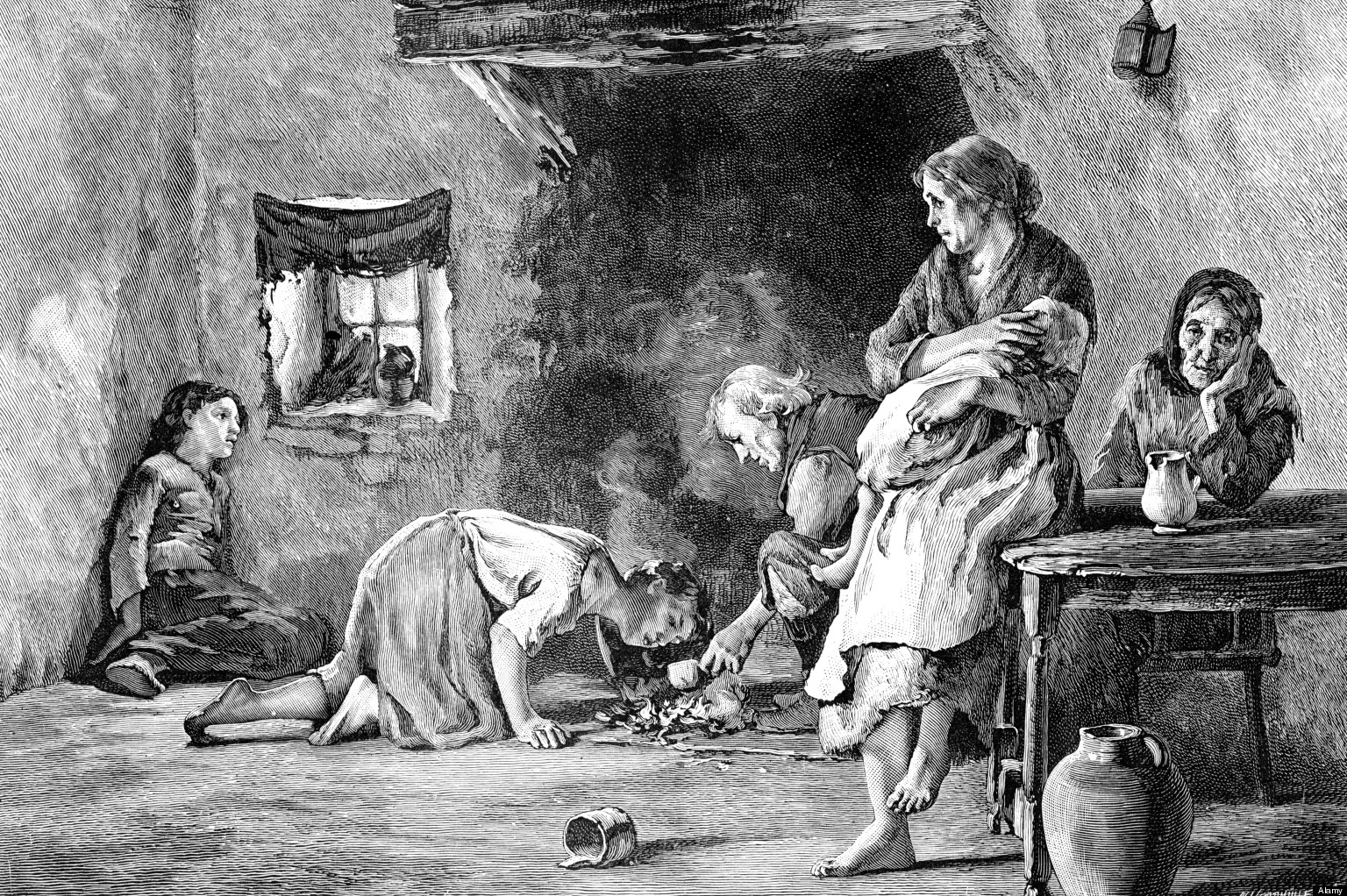
The interior of an Irish hovel during the great famine of 1845-50. Engels toured Ireland with Mary Burns in 1856, when almost every village still suffered from the consequences of the disaster.

Engels’ acquaintance with Manchester’s worst slums is a matter of some significance. Though he had been born in a business district in the Ruhr, and though (as his biographer Gustav Meyer puts it) he “knew from childhood the real nature of the factory system”—Engels was still shocked at the filth and overcrowding he found in Manchester. “I had never seen so ill-built a city,” he observed. Disease, poverty, inequality of wealth, an absence of education and hope all combined to render life in the city all but insupportable for many. As for the factory owners, Engels wrote, “I have never seen a class so demoralized, so incurably debased by selfishness, so corroded within, so incapable of progress.” Once, Engels wrote, he went into the city with such a man “and spoke to him of the bad, unwholesome method of building, the frightful condition of the working people’s quarters.” The man heard him out quietly “and said at the corner where we parted: ‘And yet there is a great deal of money to be made here: good morning, sir.’ ”

Making the acquaintance of the Burns sisters also exposed Engels to some of the more discreditable aspects of the British imperialism of the period. Although born in England, Mary’s parents had been immigrants from Tipperary, in the south of Ireland. Her father, Michael, labored on and off as a cloth dyer, but ended his days in miserable poverty, spending the last 10 years of his life in a workhouse of the sort made notorious in Oliver Twist. This, combined with the scandal of the Great Famine that gripped Ireland between 1845 and 1850, and saw a million or more Irish men, women and children starve to death in the heart of the world’s wealthiest empire, confirmed the Burns sisters as fervent nationalists. Mary joined Engels on a brief tour of Ireland in 1856, during which they saw as much as two-thirds of the devastated country. Lizzie was said to have been even more radical; according to Marx’s son-in-law, Paul Lafargue, she offered shelter to two senior members of the revolutionary Irish Republican Brotherhood who were freed from police custody in 1867 in a daring operation mounted by three young Fenians known as the Manchester Martyrs.
Three young Fenians free two senior Irish revolutionaries from a Manchester police van in November 1867. They were captured and hanged, but the freed men—Thomas Kelly and Timothy Deasy—escaped to the United States. Some sources say Lizzie Burns helped spirit the pair out of Manchester.

Thanks to Manchester’s census records and rates books from this period—and to the painstaking work of local labor historians—it is possible to trace the movements of Engels and the Burns sisters under a variety of pseudonyms. Engels passed himself off as Frederick Boardman, Frederick Mann Burns and Frederick George Mann, and gave his occupation as bookkeeper or “commercial traveler.” There are gaps in the record–and gaps in Engels’ commitment to both Manchester and Mary; he was absent from England from 1844 until the very end of 1849. But Burns evidently retained her place in Engels’ affections through the revolutionary years of 1848-9. Webb notes that, after his return to Manchester, “he and Mary seem to have proceeded more formally,” setting up home together in a modest suburb. Lizzie moved in and seems to have acted as housekeeper, though details of the group’s living arrangements are very hard to come by; Engels ordered that almost all of the personal letters he wrote during this period be destroyed after his death.

Engels seems to have acknowledged Mary, at least to close acquaintances, as more than a friend or lover. “Love to Mrs Engels,” the Chartist Julian Harney wrote in 1846. Engels himself told Marx that only his need to maintain his position among his peers prevented him from being far more open: “I live nearly all the time with Mary so as to save money. Unfortunately I cannot manage without [private] lodgings; if I could I would live with her all the time.”

Engels and Mary moved frequently. There were lodgings in Burlington and Cecil Streets (where the Burns sisters appear to have earned extra money by renting out spare rooms), and in 1862 the couple and Lizzie moved into a newly built property in Hyde Road (the street on which the Manchester Martyrs would free Thomas Kelly and Timothy Deasy five years later). But the years–and perhaps Engels’ long absences on business, private and revolutionary—began to take their toll. In her 20s, Eleanor Marx recorded, Mary “had been pretty, witty and charming…but in later years [she] drank to excess.” This may be no more than family lore—Eleanor was only 8 when Burns died, and she admitted in another letter that “Mary I did not know”—but it seems to fit the known facts well enough. When Burns died, on January 6, 1863, she was only 40.
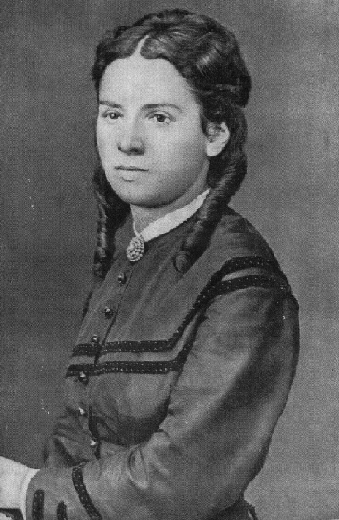
Jenny Marx—neé Jenny von Westphalen, a member of Prussia’s aristocracy—in 1844.

If it is Mary Burns’ death, not life, that scholars focus on, that is because it occasioned a momentous falling-out between Engels and Marx—the only one recorded in four decades of close friendship. The earliest signs of discord date back several years. During a sojourn in Belgium between 1845 and 1848, during which the two men wrote the Communist Manifesto, Mary went to live in Brussels, an unusual adventure in those days for someone of her sex and class. Jenny Marx had few acquaintances among working-class women, and was undoubtedly shocked when Engels held up his lover as a model for the woman of the future. Burns, Jenny thought, was “very arrogant,” and she observed, sarcastically, that “I myself, when confronted with this abstract model, appear truly repulsive in my own eyes.” When the two found themselves together at a workers’ meeting, Simon Buttermilch reported, Marx “indicated by a significant gesture and a smile that his wife would in no circumstances meet Engels’ companion.”

It was against this backdrop that Engels wrote to Marx to tell his friend of Mary’s death. “Last night she went to bed early,” he wrote, “and when at midnight Lizzie went upstairs, she had already died. Quite suddenly. Heart disease or stroke. I received the news this morning, on Monday evening she was still quite well. I can’t tell you  how I feel. The poor girl loved me with all her heart.”

Marx sympathized–briefly. “It is extraordinarily difficult for you,” he wrote, “who had a home with Mary, free and withdrawn from all human muck, as often as you pleased.” But the remainder of the missive was devoted to a long account of Marx’s woes, ending with a plea for money. “All my friends,” Engels fired back in anger, “including philistine acquaintances, have shown me, at this moment which hit me deeply, more sympathy and friendship than I expected. You found this moment appropriate to display the superiority of your cool intellect.”

Engels in later life. He died in 1895, at age 74.

Marx wrote again, apologizing, extending more elaborate condolences and blaming his first letter on his wife’s demands for money. “What drove me particularly mad,” he wrote, “was that [Jenny] thought I did not report to you adequately our true situation.” Mike Gane, among other writers, suspects that Marx objected to Engels’ love of a working-class woman not on the grounds of class, but because the relationship was bourgeois, and hence violated the principles of communism. Whatever the reason for the argument, Engels seems to have been glad when it ended.

He lived with Mary’s sister for 15 more years. Whether their relationship was as passionate as the one Engels had enjoyed with Mary may be doubted, but he was certainly very fond of Lizzie Burns; just before she was struck down by some sort of tumor in 1878, he acceded to her dying wish and married her. “She was of genuine Irish proletarian stock,” he wrote, “and her passionate and innate feelings for her class were of far greater value to me and stood me in better stead at moments of crisis than all the refinement and culture of your educated and ascetic young ladies.”

Historians remain divided over the importance of Engels’ relations with the Burns sisters. Several biographers have seen Mary and Lizzie as little more than sexual partners who also kept house, something that a Victorian gentleman could scarcely have been expected to do for himself.  Terrell Carver has suggested that “in love, Engels does not seem to have gone in search of his intellectual equal.”

Others see Mary Burns as vastly more important. ”I wanted to see you in your own homes,” Engels wrote in dedicating his first book to “the Working Classes of Great Britain.” “To observe you in everyday life, to chat with you on your conditions and grievances, to witness your struggles.” He never could have achieved this ambition without a guide, certainly not in the short span of his first sojourn in England. And achieving it marked him for life. “Twenty months in Manchester and London,” W.O. Henderson observes–for which read 10 or 15 months with Mary Burns—”had turned Engels from an inexperienced youth into a young man who had found a purpose in life.”

Sources

Roland Boer. “Engels’ contradictions: a reply to Tristram Hunt.” International Socialism 133 (2012); William Delaney. Revolutionary Republicanism and Socialism in Irish History, 1848-1923. Lincoln [NE]: Writer’s Showcase, 2001; Edmund and Ruth Frow. Frederick Engels in Manchester and “The Condition of the Working Class in England”; Salford: Working Class Movement Library, 1995; Mike Gane. Harmless Lovers? Gender, Theory and Personal Relationship. London: Routledge, 1993; Lindsay German. Frederick Engels: life of a revolutionary. International Socialism Journal 65 (1994); W.O. Henderson. The Life of Friedrich Engels. London: Frank Cass, 1976; W.O. Henderson. Marx and Engels and the English Workers, and Other Essays. London: Frank Cass, 1989; Tristram Hunt. The Frock-Coated Communist: The Revolutionary Life of Friedrich Engels. The Life and Times of the Original Champagne Socialist. London: Penguin, 2010; Sarah Irving. “Frederick Engels and Mary and Lizzie Burns.” Manchester Radical History, accessed April 3, 2013; Mick Jenkins. Frederick Engels in Manchester. Manchester: Lancashire & Cheshire Communist Party, 1964; Jenny Marx to Karl Marx, March 24, 1846, in Marx/Engels Collected Works, 38. New York: International Publishers, 1975; Marx to Engels, January 8, 1863; Engels to Marx, January 13, 1863; Marx to Engels, January 24, 1863; Engels to Marx, January 26, 1863, all in Marx/Engels Collected Works, 41. New York: International Publishers, 1985; Belinda Webb. Mary Burns. Unpublished Kingston University PhD thesis, 2012; Roy Whitfield. Frederick Engels in Manchester: The Search for a Shadow. Salford: Working Class Movement Library, 1988.

06 Aug 21:35

Kerfuffle: an Argument

by Anne Curzan
Kerfuffle cartoon

Cartoon courtesy of Megan Hills, www.mycartoonthing.com

When my 9-year old nephew asked his parents what a kerfuffle was, they said, “It’s like a brouhaha.” My nephew followed up, “What’s a brouhaha?” And his parents, in a move no lexicographer would endorse, responded, “It’s a kerfuffle.”

Had my nephew looked up kerfuffle in Merriam-Webster online, he would have found “disturbance, fuss,” and a note that the word is chiefly British. The Oxford English Dictionary cross-references curfuffle (the original Scottish form and a common spelling through the first half of the 20th century) and defines that as “disorder, flurry, agitation.”

The word kerfuffle is just plain fun to say and spell, and I use it as often as possible to describe a fuss that I think is bigger than it probably needs to be. I’m writing about kerfuffle today, though, not just to celebrate a good English word but to put forward the hypothesis that its meaning is subtly shifting under our very noses.

I had not realized until recently that kerfuffle had been primarily a British term (the OED cites it back as far as 1813), popularized in the United States within the past 30 years or so. The Corpus of Contemporary American English (COCA) shows kerfuffle coming into its own in spoken and written contexts within the past 10 years. All the numbers are low, but the increase is striking: one occurrence from 1990-99; six occurrences from 2000-04; 13 from 2005-09; and 22 from 2010-12 (more than a threefold increase in the past three years). The Google Books Ngram Viewer starts the sharp upward trend in usage in the 1980s in both American and British English, with the word continuing to skyrocket in use in American English at the end of the 20th century while tapering off in British English.

I was thinking about the word kerfuffle this week because it came up on “A Way With Words” on National Public Radio. Veronica, a British woman from Liverpool now living in the States, called in to talk about her surprise at recent sightings of kerfuffle in American media. She then talked about how her mother would come home sometimes to the disarray of children’s activities and ask, “What’s all the kerfuffle?” I found myself thinking, I don’t think I hear kerfuffle used much this way, to refer to exactly this kind of confusion or disturbance—a more physical, concrete state of affairs. A kerfuffle, it seemed to me as I drove along in the beautiful Michigan wilderness listening to the radio with no linguistic resources to consult other than my own intuition, is often a verbal uproar and it often involves arguing.

Having now checked some data on actual usage, here is my hypothesis: the word kerfuffle is coming to refer not only to a fuss or uproar but often specifically to a fuss or uproar stemming from a disagreement or argument. It is a subtle shift, but semantic shifts often are—and it is the fun of linguistic detective work to see if we can spot these shifts as they occur.

Many of the occurrences of kerfuffle in COCA seem to refer to general fusses, such as “a huge media-ethics kerfuffle” or “this immigration kerfuffle” (in the Republican Party). But there is also some arguably more argumentative kerfuffling (I am aware that kerfuffle as a verb has not yet caught on in the States—I’m hoping for credit as an innovator on this one).

Some examples are ambiguous, exactly the context in which semantic shifts flourish. For instance, in 2003 The Atlantic Monthly includes this sentence in a discussion of whether children with nits should be allowed to attend school (studies show that not all children with nits have lice): “The nits versus no-nits debate has turned into a major kerfuffle among parents, teachers, school nurses, and—for all I know—cafeteria workers forced to wear those ugly hairnets.” Has the debate caused the disturbance that is a kerfuffle or is the debate actually part of the kerfuffle?

Other instances are less ambiguous, where kerfuffle seems to refer specially to an altercation. Consider this 2009 example from “Tell Me More” on NPR. Michel Martin, the host, says at one point, “There’s this kind of kerfuffle between David Letterman and Sarah Palin.” Jimi Izrael, a regular contributor to the show, responds, “Yeah. It’s kind of problematic. You know David Letterman and Governor Sarah Palin, they kind of going at it in a war of words over jokes dude [sic] made about Bristol.” That is an argument kerfuffle.

A search online turns up a definition of kerfuffle in Cambridge Dictionaries Online that reads “noise, excitement, and argument.” The Urban Dictionary, which can offer its own kind of insight into how folks are using words, now has several definitions that cite “disagreement,” “accusations and defensiveness,” and “altercation.” But a definition that captures this argumentative connotation has not infiltrated all standard dictionaries yet.

Were I asked to write that definition right now, I would try to capture that a kerfuffle is not just any argument or altercation, at least right now. It is a less serious kind of argument, perhaps an overblown one. It may be the fluffy, puffed up sound of kerfuffle that gives it this more frivolous or silly connotation (and Grant Barrett mentioned on “A Way with Words” that some folks say “kerfluffle”). The word kerfuffle thereby allows us to offer our own perspective on the merits of a dispute. And as we do, we change the language an inch at a time, word by word, meaning by meaning. Sometimes semantic shifts are dramatic (e.g., peruse shifting from “read carefully” to “skim”) but often they are so subtle as to barely seem like changes at all.

Kerfuffle cartoon courtesy Megan Hills, mycartoonthing.com.

06 Aug 20:29

Desolate Desertions: 7 Abandoned Wonders of Antarctica

by Steph
[ By Steph in 7 Wonders Series & Global. ]

Abandoned Antarctica Main

At the end of the earth, in some of the most remote places known to man, the remains of ill-advised human exploration and activity can be found in the form of rusting equipment, buildings almost entirely buried in snow, and abandoned ships. Left behind due to inaccessibility, war, failing industries and harsh, inhospitable conditions, these whaling factories, military bases and research facilities make up some of the world’s eeriest ghost towns.

Whaler’s Bay Ghost Town, Deception Island

Abandoned Anatarctica Deception Island Whalers Bay 1

Abandoned Antarctica Deception Island Whalers Bay 2

Abandoned Antarctica Deception Island Whalers Bay 3

(images via: wili_hybrid, wikimedia commons)

Established as a ship base on C-shaped Deception Island by a Norwegian-Chilean whaling company in the early 20th century, Whaler’s Bay was abandoned when oil prices plummeted during the Great Depression. It sat empty until the British reclaimed it as a base in 1944, but a series of volcanic eruptions in the 1960s sent everyone packing again. A mudslide caused by the most recent eruption in 1969 buried many of the structures.

Decades later, it’s totally empty but for the remains of the buildings, equipment and ships. Deception Island is so named because the tiny entrance to its bay is difficult to find; some explorers thought the island was nothing but high, rocky cliffs that are impossible to access. Once inside, however, visitors are greeted by surprisingly warm waters courtesy of the dormant volcanoes, which boil in some spots but offer comfortable bathing in others.

Pole of Inaccessability with Bust of Lenin

Abandoned Antarctica Pole of Inaccessibility

Abandoned Antarctica Pole of Inaccessibility 2

Abanoned Antarctica Pole of Inaccessibility 3

(images via: wikimedia commons, npolar.no)

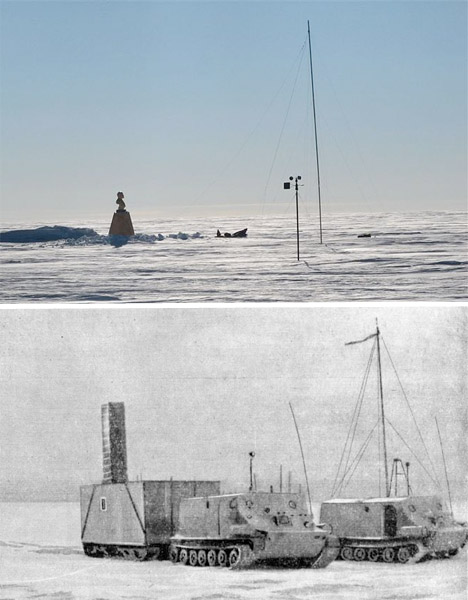
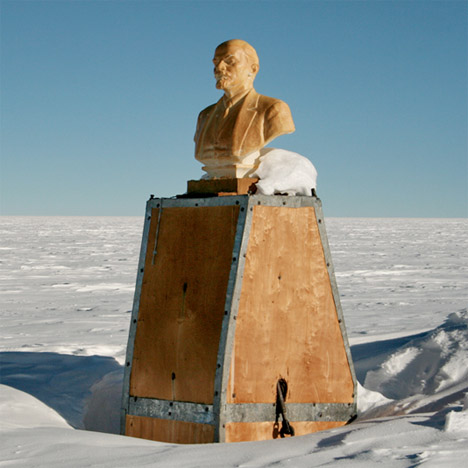
The southern point of inaccessibility – the point in Antarctica that’s furthest from any ocean – is the location of a now-defunct Soviet research station established in 1958. As difficult to reach as it was, the station was never very robust; it had a hut for four people, a radio shack, and an electrical hut, all of which were pre-fabricated and brought in on tractors. The base was in use for a whopping 12 days before it was suspended indefinitely due to its remote location. All that was left behind was a single building topped with a bust of Vladimir Lenin. Snow drifts have buried most of the building so that the bust is all that can be seen of it today.

Grytviken Harbour, South Georgia

Abandoned Antarctica Grytviken Shackleton's Hut

Abandoned Antarctica Grytviken Whaling Station

Abandoned Antarctica Grytviken

(images via: wikimedia commons, tripmondo)

This rusted jumble of equipment was once a large Norwegian whaling base, with about 300 men working to process captured whales, rendering the blubber, meat, bones and viscera into oil. Established in 1904 in the most protected harbor of British-owned South Georgia Island, which offered plenty of flat land for building, it soon became home to an Argentine meteorological station as well. But over the following sixty years, the population of whales in the seas around the island declined dramatically, and by 1966, the station closed. The whaling station site is still littered with whale bones as well as carcasses of industry and architecture. The island of Grytviken is also the gravesite of the explorer Ernest Shackleton, who was buried alongside whalers who died there.

Next Page:
Desolate Desertions 7 Abandoned Wonders Of Antarctica

Share on Facebook

[ By Steph in 7 Wonders Series & Global. ]

[ WebUrbanist | Archives | Galleries | Privacy | TOS ]


06 Aug 20:16

High Diver, by Kurt Brown

by Kurt Brown
Straight-backed, clean-limbed, freckled like a trout / she stands at the edge of the high board / defiant and ashamed at once, conscious / of our eyes on her, this diver all of seventeen / whose body is a beauty she can barely comprehend. / The boys shout insults, shove each other / in their awkwardness,...
06 Aug 19:47

“I Hate Your Friend… So I Stuck My D— in Her Water Bottle”

by Lisa Wade, PhD

Earlier this year I wrote about how truly disturbing it is that so many of our insults have sexual connotations.  ”Fuck you,” is a choice example, but I give lots more in the original post (read at your own risk).  I concluded:

…it’s interesting, right, to notice how often attempts to hurt other people come in the language of sexuality.  This reveals why sex can be scary, especially for women who are so often positioned as the one who “gets fucked”…  It’s also part of how we demean and marginalize gay and bisexual men.

This post came to mind when I saw this confession at PostSecret:

1

Let me put this in black and white: this person expressed “hate” by exposing another person to his penis.  So he considers his penis a thing that can defile.  This is the same penis that he puts (presumably) in his wife who he (presumably) doesn’t hate.  If I were his wife, I would wonder how exactly he decides when putting his penis in things is a loving thing to do and when it’s a way to harm or humiliate someone.

I don’t mean to pick on this individual.  The idea that it’s funny (“LOL”) to expose this woman to his genitalia without her consent is widespread.  This confession is just a manifestation of our cultural belief that men can hurt people with their penises.  And that it’s funny when they do.

Lisa Wade is a professor of sociology at Occidental College. You can follow her on Twitter and Facebook.

(View original at http://thesocietypages.org/socimages)

06 Aug 19:44

Unquote

by Greg Ross

“Few people are capable of expressing with equanimity opinions that differ from the prejudices of their social environment. Most people are even incapable of forming such opinions.” — Albert Einstein

“Most people are other people. Their thoughts are someone else’s opinions, their lives a mimicry, their passions a quotation.” — Oscar Wilde

“We think as we do mainly because other people think so.” — Samuel Butler

06 Aug 19:43

The Essay, by Brian Culhane

by Brian Culhane
I have asked my students once again to write on a theme. / The subject is not the end of the summer, / Though summer has once again ended and they are here. / The subject is not even the throes of adolescence, / Or the Shakespearean sonnet's use of the couplet. / No, theirs...
06 Aug 03:33

On Heroes

by thegaslight

image

This post is off topic for Georgian London, so I totally understand if you don’t read on from here!

The recent abuse suffered on Twitter by feminist Caroline Criado-Perez is abhorrent. Disgusting, vile, wrong. But I won’t be taking the #trolliday on August 4th, or campaigning for Twitter (the business, not the users) to ‘behave’ better, or boycotting the service. I’m not in favour of women being abused, obviously. But it’s just not as simple as that, is it. There’s too much shouting on Twitter about things like this at the moment, by women who want to be seen as feminist icons and men who want to cement their ‘liberal’ status. And the outragemongers. 

This seems to come from a fundamental missing of the point that stupid and/or socially inadequate men are frightened by intelligent and therefore (in the land of these new, free, internet platforms) powerful women. Or about the fact that even more allegedly competent men such as certain American politicians currently in the news have some very peculiar ideas about what constitutes a normal way to address women online. Do people really imagine that these men, or groups of men are going to think, ‘Oh, an online petition shows that xx thousand people don’t like that I said I wanted to rape and sodomise a stupid bitch and show her who’s boss, so I’ll stop that now and never look at extreme porn or leer at a woman in the street again’. I don’t think so.

This is a post about men and women. As much as we want to believe we’re all people, until we admit the differences, we can’t address them and make them work for all of us. I’ve tried to work out what I think about the whole situation, and I remembered something that happened a long time ago. It’s a nice story with a good ending. A reason to be cheerful. So I thought, maybe you’d like to hear it too.

When I was sixteen I had a boyfriend. No really, I did. He was and is, lovely. Then he went off to university and I had to get the train halfway across the country to see him. I know, young love. You wouldn’t know it now, but I was exceptionally shy. On the train, at night, somewhere in Middle England, a man in a black poloneck (*obvious villain klaxon*) sat down opposite me and starting asking if I understood about what God wanted a woman to do with her life, and if I wanted a Coke and where was I getting off and who was meeting me. I knew this was a Very. Bad. Thing. Total Stranger Danger. And I’d seen those videos, a lot (remember The 90s). But I was too politely-brought-up, and too afraid to do anything. I was so afraid that I was still sitting there like a rabbit in the headlights, when the train divided and I was in the front end, the wrong end, and not stopping at the station where my boyfriend was waiting in his Ford Fiesta. But far, far worse, I was with a man who had sat there and talked me into it happening. Without a doubt, he knew exactly what he was doing. 

What did I do? Was I some sort of teenage ninja? Did I ask for help from the people walking through the night-time carriage? No, obviously not. I wanted to. A couple of times I almost did. But I didn’t. And these were the days before mobile phones, Twitter and certainly before modern journalists were empowering teenage girls. 

So I sat there, with tears leaking from my face, looking out of the window as this man continued to speak to me about God. And the importance of ‘special relationships’. He had a black blazer in his lap with one of those fish badges on it. But he wasn’t a Christian. Christians don’t talk to lone girls about what ‘God’ wants from them. They don’t reach out and try to touch their hands across the table. He was an unpleasant, opportunistic creep at best. At worst, I was in a lot of trouble. 

ENTER STAGE LEFT (from the next carriage): Our Hero. He was probably in his early twenties, with brown hair, a bit squinty with tired, wearing a navy t-shirt, board shorts (it was the 90s, people) and carrying a vast rucksack. He stopped, exactly at the end of the table, where so many others had walked by in the previous forty minutes.

‘Are you okay?’

Poloneck: ‘She’s fine.’

Long pause. ‘I wasn’t asking you.’

Poloneck: ‘I told you, she’s fine.’

‘And I said I wasn’t asking you.’

Like your true modern feminist, I started to sob. How on earth could I say I didn’t know this man at all and that I had missed my change and was incoherent with fear?

Our Hero dumped his bag against the table and sat down next to me, smiling.

Poloneck: We were having a conversation.

Our Hero: Don’t let me stop you.

Poloneck: It was a private conversation.

Our Hero: I don’t mind.

After ten very silent minutes, (it may have been two or one and a half; it felt like a lifetime) of staring amongst them and me sniffing, The Poloneck got up and went to sit a few rows away, glowering.

Our Hero’s name was Peter. He was on his way back home after backpacking, somewhere. I don’t remember where. I told him I’d missed my connection. He jumped up and found the conductor. Remember those? I sat, petrified in the half a minute Peter was gone, The Poloneck being no more than a few yards away. Peter came back with an extremely tall Sikh in a plum-coloured turban with the big grey machine strapped around his neck like a cinema ice-cream girl. He had already passed me twice. He’d checked my ticket while tears ran down my face. 

But now, because of one young, self-assured man, everything was going to be okay. They had a plan.

Peter had brought back with him a very cold Coke (yes, really, but remember it was the 90s), and did that cool thing with the ring pull and a straw. Then we shared it because he thought I was frightened about it being drugged and this whole thing being some sort of plot. That hadn’t crossed my mind. I can’t remember what we talked about and the Coke made my head ache. A few minutes later, he jumped up and grabbed my bag, and we went to the door. The conductor stood there, waiting. The train slowed, then stopped, at a tiny station. The platform was completely empty apart from a red geranium and an orange overhead light.

The conductor smiled. ‘Your train will be along in a couple of minutes. Stand in this spot and get on quickly. They are stopping it just for you.’ I didn’t register until a long time later that they were stopping not one, but two Intercity trains for me. He opened the doors and Peter jumped out, put my bag on the ground, and got back onto the train. They both waved, through the glass. It pulled away.

As it charged off into the night, I remembered I’d forgotten to say thank you. Or goodbye. Or, in fact, anything. And I’m sorry about that.

A few anxious minutes later, there were the headlights of another train in the distance. It careered to a halt on the platform, the doors opened and I stepped out of the night air and into the carriage. There was no one there, no one to thank. Soon after that, I was climbing into the passenger seat of a Ford Fiesta, only a little late. My boyfriend leant across me to check that the cranky door was shut. ‘Are you okay?’ he said, ‘you look as if you’ve been crying.’

What happened to me that night? Nothing. I had a crap train journey, an indifferent pizza and slept in a single bed with a young man who suffered from the worst hayfever I’ve ever encountered. But what might have happened?

And that’s my point. Being well-meaning in a tweet or an online signature isn’t enough. And all the loud online posturing in the world is not going to take the place of that one good deed. The one moment where we should act in real life, and don’t. And then that moment changes someone else’s life. After all, bad men don’t have to be yelling rape abuse. 

Twenty years on, I’m not a frightened little girl any more. I’ve lived in London for most of that time, and I’ve been jostled, pushed, spat on and called all the choicest names for female genitalia by men I don’t know. (If you’re interested in this, you don’t have to go to specialist clubs and pay or anything, just travel by Tube or bus for a month. Or cycling. That really brings out the best in some men. Every journey a joy.) But I try to stick up for myself out there in the world, and for anyone else, man, woman or animal, if I think they need it. Yes, it’s not always that simple. Sometimes it’s frightening. Assistance isn’t always welcome. You have to pick your fights and you can’t always get it right: taking on the mob at Gatwick Wetherspoons at 0630 over a small matter of etiquette probably wasn’t my finest call. What I have learned in those years is that there are a lot of good men out there, and it just takes one of them to see a woman in distress and change the outcome of that situation. There are also lots of not so nice men, but not one, not ten online campaigns are going to take the place of the person on the street, at a party, on the train, or in the office who steps in and says, ‘This is not okay’.

I don’t remember the many people who walked past a tearful teenage girl in the train carriage that night. But I remember the one who didn’t. 

05 Aug 21:26

Mimesis, by Fady Joudah

by Fady Joudah
My daughter / wouldn't hurt a spider / That had nested / Between her bicycle handles / For two weeks / She waited / Until it left of its own accord / If you tear down the web I said / It will simply know / This isn't...
05 Aug 20:55

Fact and Fancy

by Greg Ross

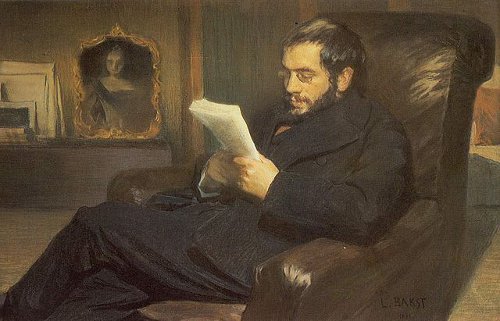
http://commons.wikimedia.org/wiki/File:Benua_Bakst.jpg

As readers, we remain in the nursery stage so long as we cannot distinguish between taste and judgment, so long, that is, as the only possible verdicts we can pass on a book are two: this I like; this I don’t like.

For an adult reader, the possible verdicts are five: I can see this is good and I like it; I can see this is good but I don’t like it; I can see this is good and, though at present I don’t like it, I believe that with perseverance I shall come to like it; I can see that this is trash but I like it; I can see that this is trash and I don’t like it.

– W.H. Auden, A Certain World, 1970

04 Aug 01:45

Wearing Privilege

by Jennifer Lee PhD

Trayvon Martin was a black teenage boy. He was walking home from the convenience store when he caught the attention and ire of George Zimmerman. Perceived as a “punk” and a threat, Martin was accosted by the older man, and a physical altercation ensued. Trayvon Martin died when he was shot through the heart at close range. Though Florida’s expansive “Stand Your Ground” laws were invoked in media conversations, that defense never even entered into the trial. Zimmerman was acquitted when a jury decided he’d killed Martin in self-defense. Zimmerman has since said Martin’s death was “God’s plan.”

Some Americans believe that race was not central to this killing or to the case that followed—they have believed it from February 2012 right up until today. But ask yourself: How many times you have been stopped and harassed because you looked threatening or suspicious wearing a hooded sweatshirt? For me, an Asian American female, that number is zero.

Yes, my gender alone distinguishes me from Trayvon Martin, but my partner Mike is a white male, and he, too, can only say “Zero.” We have never been stopped nor questioned, no matter how many times we’ve pulled on our hooded sweatshirts for warmth (and, in my case, to hide sea-tangled hair) after early morning surfing.

Stopping for breakfast or to run errands, Mike and I may not look polished in our hoodies, but we’ve also never had to worry that our appearance would cause suspicion. That’s privilege. It’s such a privilege, this presumed innocence of ours, that the morning after Zimmerman was acquitted, we went ignored even while acting suspiciously. Hoodies up, we casually stopped to look at a condo for rent in an affluent beach community in southern California. We knew from the online ad that the condo was vacant, so we parked outside, walked up the stairs to the unit, and peered into its windows. We sauntered around the grounds and walked into the unlocked community laundry room and garage. Several neighbors saw us, and they smiled.

I couldn’t help but think that the scenario would have been very different if Mike and I were black. Mike and I don’t have to wear our class in order to obviate being treated like threats or criminals; we can wear hoodies and board shorts without worrying that others will be suspicious, fearful, or make assumptions about our class status. Just being “not black” affords us this benefit of the doubt. It is a privilege because it is not something we have earned, but it is gifted to us every day regardless. I have always known about my privilege intellectually, but I felt it keenly last Saturday.

That some are afforded this privilege while others are systematically denied should make us all more empathetic. People perceive and experience the same event differently, depending on visible status markers such as race, gender, age, and class. Such status markers are more than just categories, they form a “system of social practices” that organize social relations. Status markers presume difference, and so people will react to and engage with Mike or with me differently than they would with someone like Trayvon Martin, even when we’re dressed the same.

We would like to believe that we don’t make assumptions based on race or gender, but evidence proves otherwise, as this social experiment of three individuals (a white male, a black male, and white female) trying to steal a bike clearly reveals:

As the sociologist Robert K. Merton insightfully observed nearly three-quarters of a century ago, “The very same behavior undergoes a complete change in evaluation in its transition from the in-group to the out-group.” As the video above indicates, the behavior of a black male (an out-group member) is regarded entirely differently than the same behavior of a white male and white female (in-group members).

The in-group/out-group divide goes further, with grave consequences in our criminal justice system. For example, Jennifer Eberhardt’s research has shown that race affects the severity of sentences that juvenile offenders receive, even for the same crime. Just the idea of a black juvenile offender leads people to imagine juveniles more like adults. Even liberal white Americans who claim low levels of prejudice project more blame onto black boys and sentence them more harshly. As Eberhardt has shown, “race has the power to dampen our desire to be merciful.”

I don’t have children, but if I did, I don’t know how I would explain Trayvon Martin’s death or the acquittal of his killer. But even just imagining being a parent to a black son makes me feel immense empathy for the parents of young black men. Can just that simple exercise make others more aware of race and class privilege, more aware of the power they have to recognize and even challenge that privilege and its consequences? As Henry David Thoreau asked, “Could a greater miracle take place than for us to look through each other’s eyes for an instant?”

References:

Jennifer Eberhardt and Aneeta Rattan, “The Race Factor,” New York Times, June 12, 2012.

Robert K. Merton. 1968 [1948]. “Self-fulfilling Prophecy,” in Robert K. Merton, Social Theory and Social Structure, 2nd edition. New York: Free Press.

Cecilia L. Ridgeway. 2011. Framed by Gender. New York: Oxford University Press.

Cross-posted at The Society Pages.

Jennifer Lee is a sociologist at the University of California, Irvine. Her book, The Diversity Paradox, examines patterns of intermarriage and multiracial identification among Asians, Latinos, and African Americans.

(View original at http://thesocietypages.org/socimages)

03 Aug 03:54

Understanding across varieties of English

by John Rickford

Yesterday, I posted on Speakout/Truthout about Rachel Jeantel's African American Vernacular English use in the Zimmerman trial/verdict: "Race, Credibility, Communication and Evidence in the Zimmerman Trial, and Beyond", 7/30/2013.

Readers of my Language Log post of July 10 — written before the verdict was announced — may recall that I felt that despite its vernacular character, Jeantel's testimony would be understood by the jury, but that they might not relate to her. Turns out I was both right and wrong. They didn't relate to her, didn't even find her credible, but they (at least Juror B37) also found her difficult to understand.

This case raises an interesting research question about the extent to which African American Vernacular English (and other social/regional dialects of English) are understood by speakers of Mainstream American English or Standard English. We seem to have very little research evidence about this, apart from studies focused on individual grammatical or lexical features, like the study of stressed BIN that I mentioned in my blog, and studies of individual lexical items like cut-eye and suck-teeth.

Here's another bit of anecdotal evidence that makes me question the widespread assumption that people from other dialect backgrounds understand AAVE quite well. Last weekend, my wife and I went to see Fruitvale Station –a powerful new film about the fatal shooting of handcuffed Oscar Grant, a young Black man who was "just trying to get home" on the train after New Year's Day midnight festivities in SFO (). As the credits rolled at the end of this powerful movie, I heard an older white man across the aisle comment that "The acting was superb," to which his wife responded, "But I couldn't understand a word of the dialogue!" To which I thought, "Not a word?!" And I wondered to myself again how much of African American vernacular (especially if fluently spoken) Whites really understand. We really don't know. But think about the implications, if teachers, jurors, job interviewers and so on miss some or all of what students, witnesses, defendants, job seekers say! This is an area crying out for research.

Please let me know if you're aware of any good relevant research on this specific point (intelligibility of AAVE to non-AAVE users), or on intelligibility among speakers of other ethnic, social, and regional varieties, especially of English, but of other languages/dialects as well. I'm as interested in the various methods people use to assess intelligibility reliably, as in their substantive results. I'm aware of Labov's relevant stuff, e.g. the Gating Experiments from the Project on Cross-Dialectal Comprehension reported on in his 2010 Principles of Linguistic Change, vol. 3, as well as his older (1973) paper on "The Boundaries of Words and their Meanings." And of Gary Simons' 1979 monograph on Language Variation and Limits to Communication. What about other studies, especially recent ones, and ones that also take into account attitudes and ideologies and how those affect cross-dialect comprehension?

29 Jul 21:36

Margents and All: Thomas Milles between manuscript and print

by Heather Wolfe

Co-written by Heather Wolfe and Bill Sherman

Milles' motto

Thomas Milles’s motto, inscribed at the bottom of the title page in Columbia University’s copy of An Out-Port-Customers Accompt (STC 17935), as reproduced on EEBO. It appears in print on many of his other printed treatises (minus “Margents and All”), but here is supplied in manuscript.

Margins are exciting places, full of possibility. Early modern authors use them to guide readers, emphasize important passages, and add commentary. Early modern readers use them to highlight memorable text and make notes on their reading. Early modern scholars like to hang out in margins in order to witness these interactions, and then draw conclusions about the particular reader(s) or work, or about reading practices in general.

This relationship between author, reader, and scholar works well when we think about marginalia in published works as being primarily about reader guidance (printed marginalia) or reader response (manuscript marginalia). But what happens when early modern margins break the rules, when authors use them in unexpected ways, when the distinction between print and manuscript marginalia is fuzzy at best and when the marginalia threaten to usurp the work itself? 

What follows is some early collaborative thinking for a case study on the works of Thomas Milles (c.1550-1626). Milles’s particular form of self-publication poses some interesting puzzles about text and margin, and manuscript and print. (Click on any of the images in this post to enlarge them.)1

Two typical marginal additions in Milles's An Out-Port-Customers Accompt (STC 17935), sig. O2r. The first one is printed on the leaf, and then extended in manuscript by the author. The second one is a printed slip pasted to the margin, with interlineal manuscript insertions and manuscript verse in Latin at the end that extends off the slip, in the hand of the author.

Two typical marginal additions in Milles’s An Out-Port-Customers Accompt (STC 17935), sig. O2r. The first one is printed on the leaf, and then extended in manuscript by the author. The second one is a printed slip pasted to the margin, with interlineal manuscript insertions and manuscript verse in Latin at the end that extends off the slip, in the hand of the author.

In addition to printed marginalia, printed slips of marginalia, and ink marginalia, Milles also added marginal notes in pencil. In this example, he supplements a printed slip with a pencil addition.

In addition to printed marginalia, printed slips of marginalia, and ink marginalia, Milles also added marginal notes in pencil. In this example, he supplements a printed slip with a pencil addition.

In the library where we both did our graduate research—the Cambridge University Library—early printed books are consulted on the first floor while manuscripts are consulted on the third. If we look at the entries for Milles in the Short Title Catalogue or Dictionary of National Biography, he would seem to sit comfortably on the first floor. In his long career as a customs officer, Milles proved to be a prolific author of printed books. The ESTC lists more than a dozen titles printed between 1599 and 1619, in which Milles outlined his schemes for fiscal and religious reform — becoming England’s first, and fiercest, advocate of the early form of mercantilism known as Bullionism. Milles’s position as the “Customer of Sandwich” in Kent gave him an ideal vantage point to witness and diagnose England’s chronic shortage of precious metals. He made a passionate case for free trade through so-called “staple ports” (or outports) rather than monopolies for London’s merchants as the solution to the struggle for a favorable balance of trade.

All of Milles’s “bullion” books are printed in small folio format. His first two publications were most likely printed by James Roberts, and STC assigns the latter ones to the printer who took over Roberts’ business in ca. 1608, William Jaggard (two of the printers, as it happens, most closely associated with Shakespeare). At first glance, they look like most other printed books from the period. But it quickly becomes clear that Milles disseminated his works in a way that bears more resemblance to scribal circulation than print publication.

a "title" page?

The “title page” for a treatise by Thomas Milles, lacking almost everything that normally appears on a printed title page: a full title (it is completed in manuscript), author name, printer, publisher, or date of publication. The title page is preceded by a manuscript dedication to Sir George Calvert. (Folger STC 17932.5)

In fact, he describes his first printed treatise, The Custumers Apology (STC 17928),  as being “not so publikely then printed, as priuately directed” (STC 17935, sig. B2r). It had a print run of fifty, and was evidently distributed by him to members of the Privy Council. All known copies are signed by Milles and dated by hand on the title page. Thomas Egerton’s copy is particularly ornate, with red ruled margins and gold, red, and black manuscript marginalia [Huntington 62639]).

The Customers Apology, sig. B3r, with gold, red, and black ink. All known copies of this work are signed and dated by the author, and were meant to be circulated among members of the Privy Council. This copy belonged to Thomas Egerton.

The Customers Apology, sig. B3r, with gold, red, and black ink. All known copies of this work are signed and dated by the author, and were meant to be circulated among members of the Privy Council. This copy belonged to Thomas Egerton.

Later works also appear to be “privately directed,” rather than disseminated by a publisher. A copy of The Customers Alphabet (STC 17927) at the Huntington is inscribed by Milles to the Earl of Northampton (Huntington 62634), while a copy of the same work, purchased by the Folger this week, is inscribed on the title page to Sir Thomas Edmondes.

The inscription to Sir Thomas Edmondes, signed by "T:M:" This is one of the few treatises with a printed date on the title page, but no place of publication, printer, or publisher. New Folger acquisition, photo courtesy of Quaritch.

The inscription to Sir Thomas Edmondes, signed by “T:M:” This is one of the few treatises with a printed date on the title page, but no place of publication, printer, or publisher. New Folger acquisition, photo courtesy of Quaritch.

Virtually all of the copies are individually enhanced by Milles for his small circle of readers. He is not so much revising as supplementing, using pen, pencil, and printed slips of paper. These additions perform a wide range of functions, offering second thoughts, glossing key words, supplying details left vague in the text, and guiding readers through its argument. While the use of cancel slips and pen corrections by printer, publisher, or author is not entirely unusual, Milles takes these practices to the extreme.

In a 1961 article in The Library, P. H. Davidson described the method of Milles and his printers as “unusual, possibly even unique,” and he created a handy summary of some copies of his works.2

A list of Milles' treatises compiled by P. Davidson and printed in the Library, 1961.

A list of Milles’ treatises compiled by P. Davidson and printed in The Library, 1961.

Davidson’s list, based on a manuscript marginal note by Milles in An Out-Port-Customers Accompt (STC 17935) and on three additional abridgments at the Bodleian, turns out to be the tip of a bibliographical iceberg. There are modified copies of this and other treatises at the Folger, the Huntington, the Beinecke, Lambeth Palace Library, Columbia University, and elsewhere. And as described at the end of this post, the Folger has two additional treatises not listed by Davidson.

Milles lists nine of his works in this marginal annotation, appearing in most, if not all, copies of An Out-Port-Customers Accompt, sig. Q1r (STC 17935).

Milles lists nine of his works in this marginal annotation, appearing in most, if not all, copies of An Out-Port-Customers Accompt, sig. Q1r (STC 17935).

There are countless signs throughout his treatises that the production of a printed text was by no means the final stage in the evolution of Milles’s writing: indeed, it’s not at all clear that Milles ever saw his texts as closed, finishable units. While the majority of copies are supplemented by hand very uniformly, there are occasional, minor differences: the same correction might appear in pencil in one copy and pen in another, and the wording might be slightly different. In some titles there appear to be more significant differences, reflecting his continual tinkering with the text: additions made by hand in one copy can then appear as a printed slip in another copy (and not necessarily in the same place!).

The Lambeth Palace copy of An Out-Port Customers Accompt (STC 17935)—presented to the Archbishop of Canterbury—has the list of works shown in manuscript above as a printed slip (which has then been modified by hand) as well as an apparently unique pair of full-page fold-out extensions bearing both printed and handwritten text. The most elaborate example in the Milles corpus, however, is The Misterie of Iniquitie (STC 17934). All surviving copies of this text are heavily modified with manuscript additions and tipped-in slips of many shapes and sizes that vary from copy to copy. The evolution of sig. K1r is particularly fascinating. There is a half-page printed slip that exists in at least two settings, with an additional note underneath it about the “Conclaues of Lubeck and London” appearing first as a manuscript insertion (in the Beinecke copy) and then as a printed slip (found at the top of the half-page slip in the Quaritch copy and pasted into its proper place in the Huntington copy).

Tipped-in printed supplement to the Huntington Library's copy of STC 17934, and (below) the leaf beneath it.

Tipped-in printed supplement to the Huntington Library’s copy of STC 17934, and (below) the leaf beneath it.

IMG_2683

Folger's newly acquired copy

Quaritch copy, newly acquired by the Folger (and below)

Quaritchsig.K1runderslip

In the Quaritch copy, this large slip covers another text headed “Nil magis” along with four miscellaneous notes not yet cut out and pasted into their appropriate places on four different pages of the book. The “Nil magis” text itself ends up as a sort of free-standing frontispiece in at least two surviving copies (Huntington and Lambeth) and disappears entirely from others—see, for example, Yale’s copy of the book.

This example and others raise many questions, particularly about the printed slips. Is Milles recycling his pasted-on printed marginalia from other previously printed sources? Or is some of his marginalia specifically printed as sheets of marginalia to add to something that is already printed, which may then be modified in manuscript? Why are some of his marginalia printed at the same time as the text, some printed and pasted in later, and some added by hand? What sort of printer would put up with the constant modifications of texts, margins, and the relationship between them—before, during, and after a single print-run? Why did Milles use the printing press at all? Why not just have the texts copied out as manuscript presentation copies? Was it cheaper to do what he did or were there other reasons for doing it? When a printed book is not complete until it has been supplemented with handwriting, doesn’t it start to look like a manuscript? And how much do the sheets that came off the press need to be altered for a book to become a manuscript?

In one final treatise, purchased by the Folger in 2006, Milles pushes the relationship between text and margin and the interplay of print and manuscript to its limits (STC 17932.5; click here for digital images of the entire volume). The volume in which it is bound begins with 13 leaves from de Bry’s Americae pars decima… (1619) and is followed by two previously unknown tracts by Milles, one in print (but not in ESTC) with a long manuscript dedication, and one entirely in manuscript. These tracts appear to be his final words in his bitter retirement, reflecting his disappointment about all the bullion being drained from England’s economy.

Perfectly capturing the untethered nature of some of Milles’s marginalia is the title of the final treatise, written entirely in manuscript and dedicated to Sir George Calvert: “A marginall Note upon the worde (Almost) in the Text of the synopsis touchinge Bullion Myntes and Money at free-Staples.”

A marginal note that is 27 pages long, with its own marginalia.

A marginal note that is 27 pages long, with its own marginalia.

Final leaf of Milles' treatise, "A marginall Note upon the worde (Almost)...

Final leaf of Milles’ treatise, “A marginall Note upon the worde (Almost)…

Gone is the pretense of relegating marginalia to the margin. The hand is shaky and tired. The whole treatise is one long marginal note to a single word, “almost,” which he highlights with a hopeful marginal manuscript note on the fifth page of the preceding treatise in the volume:

The passage and manuscript marginal note that inspired an additional, treatise-length marginal note.

The passage and manuscript marginal note that inspired an additional, treatise-length marginal note.

It seems fitting that Milles’s last word is a 27-page manuscript presenting itself as a marginal note on the word “almost” from an 8-page printed treatise.

But perhaps it isn’t his last word—we would love to hear about other examples of Milles’s handiwork, if you come across them!


BILL SHERMAN is Professor of Renaissance/Early Modern Studies at the University of York. He is the author of Used Books: Marking Readers in Renaissance England, and is now working on a study of visual marginalia called The Reader’s Eye.

(Please see below the notes for Heather Wolfe’s bio.)

  1. This case study is for a larger concept-in-progress, “Beyond Marginalia,” which focuses on the hybridity of many surviving early modern codices and on printed works as sources to be mined for manuscript miscellanies and commonplace books. We are grateful to Jeffrey Todd Knight, Stephen Tabor, and David Vander Meulen for their assistance with this post.
  2. “The Annotations to Copies of Thomas Milles’ Books in the British Museum and Bodleian Libraries,” The Library (1961): 133-139
29 Jul 21:20

1919 : “To ask freedom for women is not a crime”

by Chris Wild
"To ask freedom for women is not a crime"

29 Jul 03:43

The Wealth of Nations: The U.S. is No. 1 in Inequality

by Martin Hart-Landsberg, PhD
Wealth data is not easy to get.  Still for three years now, Credit Suisse Research Institute has published an annual Global Wealth Databook which attempts to estimate global wealth holdings.  The most recent issue includes data covering 2012.  According to Credit Suisse, “The aim of the Credit Suisse Global Wealth project is to provide the [...]
29 Jul 03:38

Kid Lit

by Greg Ross

In 1967 Luis d’Antin Van Rooten published Mots D’Heures: Gousses, Rames, a collection of French poems that make little sense until you read them aloud:

Oh, les mots d’heureux bardes
Où en toutes heures que partent.
Tous guetteurs pour dock à Beaune.
Besoin gigot d’air
De que paroisse paire.
Et ne pour dock, pet-de-nonne.

Et qui rit des curés d’Oc?
De Meuse raines, houp! de cloques.
De quelles loques ce turque coin.
Et ne d’ânes ni rennes,
Écuries des curés d’Oc.

In 1980 Ormonde de Kay met this with N’Heures Souris Rames:

Très bel aï n’ de maïs
Si à Oudh héronne.
Des Halles Roi Naphte de phare mer soif
Chicot taffetas tel suite de carvi naïf.
Didier voyou si sachée saille t’ignore l’aï
Fesse très bel aï n’ de maïs.

Rabais dab dab
Trille, ménine, taupe.
Hindou d’yeux tines, que débit?
Débouchoir du bécarre
De canne d’élastique maigre.
Trop d’émaux, nefs alterés.

And in 1981 John Hulme expanded into German with Mörder Guss Reims:

Schach an Schill! Wend’ ab die Hilde –
Fesch Appel, oh Worte!
Schachfell Daunen, Brockensgrauen,
Und Schill Keim Tuümpel in Naphtha.

Pater keck, Pater keck, Bechers Mann.
Bigamie er keck es Festeschuh kann.
Batet und Brikett und Marktwitwe Tie
Und Butter, Tinte offen fort Omi Anämie.

Um die Dumm’ die Saturn Aval;
Um die Dumm’ die Ader Grät’ fahl.
Alter ging’s Ohr säss und Alter ging’s mähen.
Kuh denn “putt” um Dieter Gitter er gähn.

“In this lively allegorical poem a foolish Greek maiden becomes embroiled with the supernatural and is rescued in the nick of time from a fate worse than immortality by being turned into a cow.”

See also “It Means Just What I Choose It to Mean” and Read It Aloud.

(I think de Kay is the same fellow who proposed the theory of continental drip — a very playful man!)

29 Jul 03:26

White racial violence after Hurricane Katrina

by Gwen Sharp, PhD

Trigger warning for racist language and discussions of racial violence.

After the storm had passed, while New Orleans was still in a state of crisis, residents of a predominantly white neighborhood that had escaped flooding, Algiers Point, took it upon themselves to violently patrol their streets.

“It was great!” says one man interviewed below. “It was like pheasant season in South Dakota. If it moved, you shot it!” According to one witness testimony, they were looking for “anything coming up this street darker than a paper bag…” At least 11 black men were shot.

Here is a short interview with two of the men of Algiers Point, from the documentary Welcome to New Orleans:

This next video, sent in by reader Martha O., includes some of the footage above, but focuses much more on the experiences of several African American men who lived in the neighborhood and were shot or threatened by their White neighbors.

The men talk about the panic and terror they felt during these incidents. Toward the end, Donnell Herrington watches footage of the White residents bragging about their exploits. It’s brutal to watch this man listening to the militia members talk about shooting African Americans casually and with obvious enthusiasm and pride.

The video is part of an in-depth story about the Algiers Point shootings featured in The Nation in 2008. And as Martha explained, it’s a harrowing example of how swiftly organized violent racism can emerge when external constraints are even briefly weakened.

Originally posted in 2012. Watch the full documentary here.

Gwen Sharp is an associate professor of sociology at Nevada State College. You can follow her on Twitter at @gwensharpnv.

(View original at http://thesocietypages.org/socimages)

29 Jul 03:04

Framing Children’s Deviance

by Lisa Wade, PhD


Leontine G. sent in a troubling example of the framing of children’s deviance, and their own complicity in this framing. She included two links: one to a Today show story about a 7-year-old boy who took his family’s car on a joyride and got caught by police, and one to a CNN story about a 7-year-old boy who took his family’s car on a joyride and got caught by police.  Different 7-year-olds.  One white, one black.

The white boy, Preston, is interviewed with his family on the set of the Today show.  Knowing his kid is safe, his Dad describes the event as “funny” and tells the audience that if this could happen to a “cotton candy all-American kid like Preston,” then “it could happen to anybody.”

When the host, Meredith Vieira, asks Preston why hid from the police, he says, “cause I wanted to,” and she says, “I don’t blame you actually.”  With Preston not too forthcoming, his Mom steps in to say that he told her that “he just wanted to know what it felt like to drive a car.”  When Vieira asks him why he fled from the police, he replies with a shrug.  Vieira fills in the answer, “You wanted to get home?”

Vieira then comments on how they all then went to church.  The punishment?  Grounded for four days without TV or video games.  Vieira asks the child, “Do you think that’s fair?”  He says yes.  And she continues, “Do you now understand what you did?”  He nods and agrees.  “And that maybe it wasn’t the smartest thing?”  He nods and agrees.  “You gonna get behind the wheel of a car again?”  He says no.  Then she teases him about trying out model toy cars.

They conclude that this incident just goes to show that “Any little kid, you never know what can happen…” and closes “I’ll be seeing you at church buddy boy!”

The video:

All in all, exactly what you’d expect from the Today show: a heartwarming, human interest story with a happy ending. The child is framed as a fundamentally good kid who was curious and perhaps a bit impetuous. When he has no answers for Vieira’s questions, she slots in innocent ones.  And the mild punishment is seen as incidental to the more important idea that he learned something.

This story contrasts dramatically to the CNN story about Latarian Milton, a black 7-year-old who took his family’s car on a joy ride.  I’ll put the video first, but be forewarned, it’s disturbing not only because of the different frame placed on the boys actions, but because of the boy’s embracing of the spoiled identity (apology for the commercial):

With an absolutely polar introduction of “Not your typical 7-year-old,” this story is filmed on the street. Whereas the Today show screened the chase footage in real time, this one is sped up, making it seem even more extreme.

The interviewer, off-camera, asks Latarian why he took the car. He replied: “I wanted to do it ’cause it’s fun, it’s fun to do bad things.” The interviewer asks further, “Did you know that you could perhaps kill somebody?” And he replies: “Yes, but I wanted to do hoodrat stuff with my friends.”

The interviewer asks him what punishment he should receive and Latarian offers a punishment very similar to Preston’s: “Just a little bit… no video games for a whole weekend.” In a longer version of this news story, now taken down, the camera focuses on a reporter who explains that the police plan to go forward with charges of grand theft against him.  While he’s “too young to go into any type of juvenile facility,” he says, “police say they do want to get him into the system, so that they can get him some type of help.”

The implication here, of course, is that this child is not innocent or impetuous like Preston, he’s a pre-criminal who needs “some type of help.” The sooner they get Latarian into “the (prison?) system,” the better. No cotton candy kid this one.

Unfortunately, Latarian says all the right things to make the narrative fit. He says he likes to do “bad” things, calls himself a “hoodrat,” and seems unremorseful, even defiant, for at least part of the interview (he looks a bit sheepish in the end when he finds out his grandmother is going to have to pay for the damage he did to other cars).

One way to interpret this is to say that Latarian IS a pre-criminal. That he DOES need to get into the system because he’s clearly a bad kid.  Someone inclined to believe that black people were, in fact, more prone to criminal behavior could watch these two videos and feel confirmed in their view.

But there is good evidence that people, beginning as children, internalize the stereotypes that others have of them.  As Ann Ferguson shows in her book, Bad Boys: Public Schools in the Making of Black Masculinity, black children, especially boys, are stereotyped as pre-criminals; not adorably naughty, like white boys, but dangerously bad from the beginning.  And studies with children have shown that they often internalize this idea, as in the famous doll experiment in which both black and white children were more likely than not to identify the black doll as bad (see this similar demonstration of white preference on CNN and a discussion of the original doll experiment at ABC).  So I think this terribly sad story of Latarian is showing us how children learn to think of themselves as deviant and bad from the society around them.  Latarian, remember, is seven, just like Preston.  They’re both children, but they are being treated very differently, as these programs illustrate, and it is already starting to sink in.

Originally posted in 2010. Re-posted in solidarity with the African American community; regardless of the truth of the Martin/Zimmerman confrontation, it’s hard not to interpret the finding of not-guilty as anything but a continuance of the criminal justice system’s failure to ensure justice for young Black men. Crossposted at Racialicious and Love Isn’t Enough.

Lisa Wade is a professor of sociology at Occidental College. You can follow her on Twitter and Facebook.

(View original at http://thesocietypages.org/socimages)

27 Jul 03:19

Matilda effect

Matilda effect
n. The systematic under-recognition of the contributions of women to science, particularly in favor of their male colleagues.
Example Citations:
Have you heard of the Matilda Effect? A term coined by historian of science Margaret Rossiter, it is the systematic downplaying/overlooking of women"s roles in scientific discovery.
—Athene Donald and Frank Norman, “Using Wikipedia to inspire the next generation of women scientists,” The Guardian, July 25, 2013
 

Gender stereotyping of women in the sciences has been shown in what is called the Matilda effect.

The Matilda effect credits men for the scientific contributions of women. This means that women are being overlooked and receiving little to no credit for their scientific achievements because of gender, not because of the quality of the scientific work.
—“Matilda Effect,” Women in Science, August 9, 2012


Earliest Citation:
Since this systematic bias in scientific information and recognition practices fits the second half of Matthew 13:12 in the Bible, which refers to the under-recognition accorded to those who have little to start with, it is suggested that sociologists of science and knowledge can add to the ‘Matthew Effect’, made famous by Robert K. Merton in 1968, the ‘Matilda effect’, named for the American suffragist and feminist critic Matilda J. Gage of New York, who in the late nineteenth century both experienced and articulated this phenomenon.
—Margaret W. Rossiter, “The Matthew Matilda Effect in Science,” Social Studies of Science, May 1, 1993

Notes:
Tweets about ""Matilda effect""  

Related Words:
 

Categories:
 

Posted on July 26, 2013 


25 Jul 22:49

c. 13,000 - 9,000 BCE : Cave of the Hands

by Chris Wild
Cave of the Hands