
Shared posts

22 Dec 18:40

The Billy Graham Of The 18th Century

by Dish Staff
Ibktim

Never heard of the guy. This was interesting and poses a fascinating "what if."

by Dish Staff

Last week marked three hundred years since the birth of George Whitefield, whom Thomas Kidd, author of George Whitefield: America’s Spiritual Founding Father, describes as “the greatest evangelist of the eighteenth century, and the best known person in colonial America prior to the Revolution.” More background from Kidd:

George Whitefield, born on Dec. 16, 1714, was a Church of England minister who led the Great Awakening, a series of Christian revivals that swept through dish_whitefieldBritain and America in the mid-1700s. Whitefield drew enormous audiences wherever he went on both sides of the Atlantic, and his publications alone doubled the output of the American colonial presses between 1739 and 1742. If there is a modern figure comparable to Whitefield, it is Billy Graham. But even Mr. Graham has followed a path first cut by Whitefield.

What made Whitefield and his gospel message so famous? First, he mastered the period’s new media. Cultivating a vast network of newspaper publicity, printers and letter-writing correspondents, Whitefield used all means available to get the word out. Most important, he joined with Benjamin Franklin, who became Whitefield’s main printer in America, even though Franklin was no evangelical. Their business relationship transformed into a close friendship, although Whitefield routinely pressed Franklin, unsuccessfully, about his need for Jesus.

In an interview, Kidd draws out Whitefield’s importance for American history:

To call Whitefield “America’s Spiritual Founding Father” is, in part, just to acknowledge that before the Revolution he was the most famous man in America, period. I also think he represents a kind of evangelical faith that continues to have huge cultural traction in America in a way that it does not in the U.K. And in an inarticulate, symbolic way, Americans at the time of the Revolution appropriated Whitefield as their spiritual founding father.

The best example of this is when the Continental Army is on a 1775 campaign against Canada. They stop in Newburyport, Massachusetts, on the Sabbath, and they don’t want to march on the Sabbath, so they have a service in the Presbyterian church where Whitefield is buried. They go down to the crypt, the officers open up the crypt, and there’s Whitefield’s dead body. They take his clerical collar and wristbands, cut the things up, and pass them out to the troops. They never explain why they do this. It’s just something that seems like the right thing to do, because what Whitefield is about is what we’re about. Whitefield is somehow about liberty and freedom, and we love him, and he’s our hero. So this passing out of Whitefield’s relics just makes sense to the officers of the Continental Army in 1775.

Adelle M. Banks notes Whitefield’s support for slavery:

In his early visits to the U.S., Whitefield condemned the beating of slaves by their masters and encouraged evangelizing slaves. But he later became a slave owner.

“I think he probably shares in some respect the sort of failure … of evangelicals as well as the larger culture to understand the horrors of slavery,” said Haykin, whose seminary held a conference on Whitefield in October. “He was the man directly responsible for the introduction of slavery into Georgia.”

Some scholars wonder what difference Whitefield could have made if he had condemned slavery — as fellow evangelist John Wesley did after Whitefield’s death in 1770. “No one was more influential than Whitefield at the time. What if he had crusaded against slavery instead of advocating for it?” wrote blogger Alan Cross, author of When Heaven and Earth Collide: Racism, Southern Evangelicals, and the Better Way of Jesus, in SBC Voices. “Would the United States have begun differently 30, 40 years later?”

(Portrait of Whitefield, 1770, via Wikimedia Commons)


20 Dec 01:15

Email Of The Day

by Dish Staff
by Dish Staff

A reader writes:

I live in the very small town of Pendleton, SC, which means I see Lindsey Graham on the reg. We both frequently go to 1826, a tiny little restaurant in the center of town (it was built in 1826 – clever, no?) I am a stand-up comedian. My dad was my comedic mentor from the get, even though he was a special agent with the IRS and therefore his stand-up was constrained to toasts and such … the man is a brilliant comic. We are all loud, very, very loud Irish Catholics, with zero ability to whisper.

The first time I saw Butters in town, he was seated very close to me in the Pendleton Cafe and I didn’t yet know he lived in town. I said, in a very loud voice in that very loud restaurant, “That man looks like Lindsey Graham. That IS Lindsey Graham. Oh, my gosh! They put so much make-up on him on TV!” I turned to my dining companions, all of whom stared at me with their mouths wide open. I said, in the same voice, “Did I say that in a normal voice?” And then I realized Butters was sort of cringing, and I was mortified. MORTIFIED.

Cue five years later.

Dinner at 1826 with my parents. My dad is a cheery sort, and oblivious of a lot of things. He watches the evening news and takes it as gospel, votes Republican, etc. (Benedict had a very negative impact on my parents political thinking, FYI.) Lindsey Graham comes in and my dad’s just real, real excited to see somebody from the TV and he’s all, “Senator Graham! Here are some of your constituents!” Lindsey glad hands around, then sits down.

This restaurant is TINY. I mean to say, TINY. Ten tables, tops. Now, I no longer have any recollection of how we got to this point in conversation – it’s like alien abduction, I suffer missing time. I just know my memory kicks in with my dad, in his very loud normal voice, saying, “Of course Lindsey Graham is gay.” To which I say, “Dad, shut up.” But for some reason, my dad misinterprets the shut up and says, “Everybody knows Lindsey Graham’s gay!” And I’m like, SHUUUUT UUUUP! As I’m saying shut up, I’m meaning shut up, Lindsey Graham is five feet behind you and is listening, but my dad hears something else, and says, “Carrie, just because a man is homosexual does not in any way affect his performance as a senator or anything else!” And I’m like, “I AGREE WITH THAT, PLEASE SHUT UP.” But no, my dad is on the warpath, there to defend Lindsey Graham’s sexual orientation against all attackers, completely oblivious to the fact that literally every single person – including Lindsey Graham – can hear him in this tiny restaurant.

My mom just sat with her face in her hands the entire time.

But it’s progress, right? Defending a possibly gay man in public life … in South Carolina.


09 Dec 17:31

Another Educated Guess about Philanthropy and School Reform

by larrycuban

Every reform movement leaves a residue in public schools. Consider the “best” elementary school in any U.S. city during the 1890s before the Progressive education reforms cascaded over public schools in the early 20th century.*

The “best” elementary school (often called “grammar” school) of the 1890s, situated in a middle-class part of the city, had at least eight large classrooms–one for each grade–where teachers taught all the subjects to groups of 40-50 children sitting in rows of bolted down desks.

oldschool


The teacher’s task was to cover the entire prescribed curriculum during the school year, have students recite–often standing up–portions of the textbook, and repeat what has been learned on periodic tests. At the end of the semester, teachers would decide which students would get promoted and which ones would be held back. In immigrant neighborhoods of the same city, elementary school buildings, curriculum and pedagogy were the same but what differed was that not all immigrant children  attended school and those that did often dropped out by the end of the third grade and worked in sweatshops, peddled newspapers, picked up off jobs on the street, or worked in industrial jobs that needed quick and small hands and feet.

3a39508r


backtoschool


Much of that “best” 1890 elementary school changed with the slow penetration of progressive education reforms over the next forty years. The reform movement looked to the “whole child” beyond absorbing what the teacher said and what was contained within textbooks. The physical, social, psychological, emotional, and general well being of the student was at the heart of the progressive ideology of reform in these decades. By 1940, the “best” elementary school building now had more than a dozen classrooms, a lunchroom, auditorium, outside playground, suites of rooms for a visiting doctor to examine students and a separate room for an on-site nurse, a social worker, and, if space permitted, a psychologist who would administer individual intelligence tests. The curriculum still contained reading, math, and science and a new subject called “social studies,” but the content itself and new textbooks were geared to real-world examples rather than traditional content taught in the late-19th century.

Trinity Lutheran School 03-14-2010


In progressive classrooms, movable chairs and desks replaced the rows of bolted down ones. Kindergartens where five year olds would work and play in large airy, furnished rooms with a reading area, sand box, artist corner, and blocks became part of the age- graded school. While textbooks still reigned supreme in the upper grades, additional books and materials appeared in classrooms. Many elementary school teachers began dividing up their entire class–still in the 30+ student range–into reading groups where a teacher would assign tasks to the rest of the class while she–by now teachers were mostly single women–would work with handful of students on a reading or math lesson. Instead of straight recitation from the text, often in unison, the “best” teachers in this “best” elementary school would guide a whole-group discussion of a topic calling on individual students who raised their hands to respond to teacher questions but no longer had to stand and recite memorized passages.

artclass


Since the early 1950s, when progressive schools came under political attack and a new wave of reforms swept across U.S. schools, deposits of these earlier reforms remained in elementary schools even after  the word “progressive” became a naughty word in the lexicon of school reformers. An informed observer walking into a “best” elementary school in 2014 would see vestiges of a much earlier progressive movement to improve schools.

Now fast forward to the first decade of the 21st century after thirty years of market-driven and donor-supported school reform. Vestiges of these decades of reform, like earlier progressive reforms, I am guessing, will be quietly incorporated into public schooling. Charter schools will survive, standardized testing will persist but be scaled back, a downsized version of a national curriculum standards will be in evidence, routine use of technologies will show up in classrooms, reduced  accountability regulations will be around but penalties will be fewer. While a high regard for student outcomes will persist, other outcomes of learning in the arts, humanities, and emotional growth will emerge.

Other current reforms such as evaluating teachers on the basis of test scores, ending tenure and seniority, calling principals CEOs, and children learning to code will be like tissue-paper reforms of the past (e.g., zero-based budgeting, right- and left-brain teaching) that have been crumpled up and tossed away.

Also the idée fixe of schools concentrating on producing human capital first and civic engagement second or third will persist but lose its potency slowly as popular pushback against too much standardized testing and a national curriculum grow in momentum.

I have seen many waves of school reform in my adult life as a teacher, administrator, and researcher. As a researcher, I have studied both 19th and 20th century school reform movements. In each movement then, bits and pieces of prior school reforms stuck. For contemporary policymakers and philanthropists who have invested much time, energy, and monies into these market-driven reforms and are alive, say 20 years from now, I would guess, will not break out the champagne for these remnants.


__________________________________________

*Lawrence Cremin, The Transformation of the School (New York: Vintage Press, 1961); David Tyack and Elisabeth Hansot, Managers of Virtue (New York: Basic Books, 1982)); Someone Has To Fail (Cambridge, MA: Harvard University Press, 2010). Diane Ravitch, Left Back: A Century of Failed School Reform (New York Simon & Schuster, 2000).


02 Dec 15:21

Platonic Procreation, Ctd

by Andrew Sullivan
Ibktim

See, specifically, the portion on Smart Kids at the bottom of the article.

A reader remarks on a recent post:

Long before Michael Woodley theorized it, the link between asexuality and genius was covered on Seinfeld, when George Costanza’s girlfriend had mononucleosis and couldn’t have sex with him for six weeks. The result, as you may recall, was that George dedicated all of that time and energy once used to think about women and sex to thinking about other things and became … a genius!

Another goes on a bit of a rant:

I’m going to call BS on the evolutionary psychology idea that asexuals devote more of their brain away from sex. That is an incredibly self-serving idea; it simultaneously flatters the person who says they are too smart for sex and absolves them from having to engage with the cognitive complexities (and potential failures) of an intimate relationship or coupling.

I am certain there are asexuals, but I don’t think they are asexual because their brains are eugenically superior by dent of conscious intervention on the part of the asexual in question. There are definitely a few geniuses who are asexual, but the idea that most geniuses are asexual is absurd. There are probably an equal number of dumb asexuals and smart asexuals. Humans simply do not have that granular level of control over their own hormones – and if you think you do, that’s just a sad cognitive illusion and you are deluding yourself.

Geniuses are just the extreme end example of this. Their brain is so great and everyone else’s brains are so puny their ineptness in relationships must be because their brain is so great, omg, in fact, their ineptness is actually EVIDENCE their brain is greater! It’s a beautiful unbreakable feedback loop of self-serving delusion. Like Fox News.

I dated a very brilliant woman in college whom as best I can tell from Facebook now identifies as asexual. She had her own set of background and baggage she prefers to believe she is above, and she would love the theory that she was just so smart her body wasn’t interested in sex. Her body was interested in sex, but as she would often assert she would eventually mentally clamp down hard on any sexual response she felt when we were making out because she didn’t want to lose control (and she would get scared at her own non-conscious responses to physical intimacy, in my opinion).

I respected her boundaries, and while we explored each other moderately, we never went very far – which was fine, considering we were eighteen and it was a first relationship for both of us. I think our relationship was a positive growing experience for both of us, but she never got comfortable with the idea that her body had a mind of its own.

Personally, I think this whole evo-psyche explanation is an extension of Smart Kid Syndrome. Smart Kids have everything relating to school come so easily to them that they never learn how to struggle through something that is new and initially incomprehensible and requires a long time investment of repeatedly failing before its no longer impossible. On top of that, Smart Kids are subjected to an unending geyser of addictive exclamatory over-the-top praise about how SMART and brilliant they are. Every time they make a minor achievement, they’re given a hit of that addictive praise for something that required a minimal input of effort; this has a huge downside, when something is not effortless their output is not amazing and they don’t get praised and they don’t get the endorphin rush they’re used to getting every time they complete something. And when they try hard and put in tons of effort the praise they get is not commensurate to their immense effort, it’s the same praise they get for doing something that took minimal effort.

The natural response to this is anything that does not come as easily as schooling is derided and diminished as “stupid”. This is exacerbated when the “stupid” thing is widespread or popular and the Smart Kid feels that they are missing out on something or being deliberately excluded. But the fault cannot be the self, no, it must be the “other” exterior to the self that is at fault.

Do you see how seductive this line of thinking is? “I’m smarter than everybody else therefore I’m better than everybody else, how come they can get dates or play sports when I am so much better and smarter? It’s because X are so stupid or X are so shallow” etc.

No it is not. It is because X made the effort, X tried to have a relationship, X invested years in learning sports skills. It isn’t that asking a girl out is hard, or taking that long anxiety ridden path towards a first kiss is difficult, nope, according to the smart kid it is the entirety of society being stupid. How dare they achieve success in something and win praise for something the smart kid is scared of confronting and failing at? There’s nothing worse than failing, you don’t get your hit of endorphins from a geyser of praise when you fail, so the best strategy is to avoid at all costs situations where failure is likely to recur.

Previous Dish on asexuality here. Update from a reader:

Asexual here (I’ve written into the Dish about it before), and I’m calling bullshit on “asexual people are smarter because they don’t think about sex.” I actually had someone say this to me on OKCupid (I’m open about being asexual, as well as trans), and was totally caught off guard by it, it was a bizarre idea and not something I would have ever thought up on my own. I shared it with other asexual friends and they found it similarly laughable. No, I don’t think about sex, but just because I think about different things than different people doesn’t mean I’m thinking about smarter things. I’m sure I fill that brain space with plenty of frivolous things, as do my friends. Not to say that I don’t think about smart things, but I don’t even remotely feel like I do that more than other people, and I’m certainly not a genius.


10 Nov 18:08

Ne’er-do-well synonyms

by admin

Among the nebulons.

I was writing a column recently on the term “ne’er-do-well,” meaning a worthless or disreputable person, when I remembered that every entry in the Oxford English Dictionary Online (www.oed.com) has a link to the OED Historical Thesaurus (OEDHT) entry for that particular word. The Historical Thesaurus, which was completed in 2009 after 44 years of work, is the largest thesaurus in the world, and the online version links every synonym of a word to the synonym’s entry in the OED. It sounds complicated, but using it is very easy, endlessly fascinating  and weirdly addictive. The OED Online, which includes the OEDHT, is available through many public libraries, so it’s worth checking your local library’s website.

Meanwhile, when I clicked on the OEDHT link next to “ne’er-do-well,” I discovered that it was categorized by the thesaurus under “society > morality > moral evil > evil nature or character > lack of magnanimity or noble-mindedness > worthlessness > good-for-nothing person” and that there were 81, count ‘em, synonyms for it dating back to the late 13th century. Makes sense, I guess. Deadbeat nephews aren’t exactly a recent invention.

The earliest term for “worthless fellow” in the list is “bretheling” (circa 1275), which later appeared in the 15th century as “brethel,” derived from the Old English “breothan,” meaning “to go to ruin.” That Old English root also gave us “brothel,” which originally meant a degenerate person of either sex. In the late 15th century “brothel” came to mean “an abandoned woman” and then “prostitute.” A house of prostitution was called a “bordel,” an Old French word, but somehow “brothel” (person) and “bordel” (place) became confused and today a place of prostitution is a “brothel” and “bordel” is obsolete except in its Italianate form “bordello.”

Around 1475 in the timeline of worthlessness we meet a truly wonderful word: “nebulon,” meaning “a worthless person; a fool” (“Why you brute Nebulons, … cannot [you] yet tell how to [edify] an argument?” 1586). It seems a crime that such a concise, modern-sounding word should be classified as “obsolete,” and I plan to introduce it into my business correspondence forthwith. As you might have guessed, the root of “nebulon” is the Latin “nebula,” meaning “cloud or mist.”

The 17th century gave us the odd “ragabash” for a scoundrel, which is probably related to the earlier “bash-rag,” “ragman,” “ragmall,” and possibly “ragamuffin.” All these terms use “rag” to evoke a sense of raggedness and disorder. Today we use “ragamuffin” to mean “a scruffy lad or urchin” of the sort found in Dickens or Disney, but in the 16th century it could apply as well to a not-at-all-cute adult vagrant or drifter of ragged and dirty appearance. The first “ragamuffin” in literature was, in fact, a genuine demon, Ragamoffyn, in William Langland’s 14th century epic Middle English allegorical poem “Piers Plowman.” The “muffin” of “ragamuffin” has nothing to do with cozy cakes and coffee and may, in fact, hark back to the Anglo-Norman “malfelon,” meaning “devil.”

There are dozens of other strange and wonderful synonyms of “ne’er-do-well” in the OEDHT, but the truly strange ones slowly give way to the 20th century dullness of “loser,” “punk” and, around 1964, the evocative but unexciting “schlub” (worthless person, oaf, from Yiddish, possibly originally the Polish “zlob,” meaning “blockhead”). But it’s never too late to bring back “nebulon.”

14 Oct 19:18

A Congress Representing The Rich

by Andrew Sullivan

K. Sabeel Rahman unpacks Nicholas Carnes’ White Collar Government, which documentsthe dominance of upper class individuals in the composition of legislatures”:

The intuition that class skews politics is mainstream by now, but Carnes provides a novel account of the mechanics of class identity in public policy. The issue for Carnes is not income levels so much as occupational background—the ways in which policymakers have earned their living in the past. Work, in his view, is what most centrally shapes daily life, and as a result, political attitudes. Carnes shows that working-class backgrounds—having the experience of working in occupations that provide little material security and generally require less formal education—characterizes 65 percent of American families, but are vastly underrepresented in Congress. This has major repercussions for Congress’ political views and outcomes. Even when controlling for differences in party affiliation, constituencies, campaign contribution sources, and demographic factors, legislators with working-class backgrounds are systematically more liberal on economics—in both their individual voting records and political attitudes towards issues like the role of government and the importance of social safety net policies. …

In real-world terms, turning the tables would have a major impact. If Congress’s class composition reflected the country as a whole, Carnes estimates it would be more labor-friendly and less business-friendly—enough to flip approximately six major legislative policy issues per term. If we were to reweight the last few Congresses to reflect the country’s actual class composition (while retaining other partisan and geographic features), a host of corporate-friendly liability shields and tax incentives would have failed, as would the Bush tax cuts of 2001 and 2003 and the financial bailout.


14 Oct 19:13

Arguing Over What Public Schools Should Do?*

by larrycuban
Ibktim

Finally sort of settled into a new life and ready to get back to sharing/commenting again. If I have time I'll go back to Sam's last request, but consider me live on TOR again.

“Why do people argue so much about education?”

I heard this question as I pumped up Mt. Hamilton. Biking up a California mountain forces you to think about many things or else you note how goofy you are for taking five hours to climb nineteen miles just to eat peanut butter sandwiches in the parking lot of the James Lick Observatory. So two friends and I chat about biking, the panoramas of the Santa Clara valley and, yes, even education.

About halfway up the mountain my friends and I began talking about the constant disagreement over schools. Victor mentioned the uproar over whether a high school should provide condoms to students. Deborah remembered a conversation with an aunt who was a “creationist.” They knew I was an educator and this led to Deborah’s question: “Why do people argue so much about education?” Let me pick up the conversation as we passed a sign that said five miles to the top.

“There’s a lot of agreement among Americans,” I said. “Most folks believe that kids have to learn the basic skills,” I paused for some breath. “They want kids to know the humanities, sciences, and arts. They want their children to be prepared for college and getting a job. And most people believe that computers help kids learn more.”

Victor said: “OK, let’s say you’re right about the agreement but what about those controversial issues we just talked about? They show less consensus and more dissensus.” I liked how Victor could use those 50-cent words.

“Well, you’re right. Even with all of the agreement, there are serious differences among people about purposes of schooling.” I took a quick breath and said: “Many people want orderly schools where kids study academics, do well on tests, and get into college.”

Victor said that they had those schools when he grew up. I said: “Fine, but there are other people who want schools to help kids become independent thinkers  who will use their minds and hearts to live full lives while working with others to build a better, more democratic society.”

Victor turned and looked at my face to see if I was joking. “Do you have anything else in that water bottle? Those are beautiful sentiments but are there people who think schools can do that with kids?” Before I could answer, Deborah said to Victor: “I do.”

Deborah said she had gone to a middle school where teachers and students worked in teams on projects that included math, science, writing, and social studies. For one project the class worked with elderly poor people in a neighborhood facility. She read the newspaper to an old man who had no children. In school, they studied what the town and state did for the elderly and the problems they have. She marveled at how much she recalled from those experiences.

We stopped for a break two miles from the summit but the conversation continued. While I munched on carrot sticks, Deborah recalled class discussions about whether euthanasia was right or wrong. She wrote short stories and even had one published in the school newspaper; for the first time math made sense to her because teachers made sure that every project–including learning about the elderly-blended math with other content. What she remembered best, as we resumed our last pull to the top, were the teachers and friends she had made that year. She wanted her kids to go to that kind of school.

No one interrupted Deborah’s recollections. When she had finished, Victor said: “Deborah, your school was really different than mine but I’m not sure I would like my kids to go to that kind of school. It sounds too loose.” He continued, “I want a school that is a real school where they teach you what you have to know to get the right job or get you into college. It is nice to help out old people and have discussions but that’s not what schools are about.”

As Deborah started to protest, I said: “Hey, look, here we are finally reaching the top of the mountain on a beautiful day and we are arguing about which schools are good for kids. Don’t you see,” I said, “that there is no right answer here. There is no one best purpose for public schools. There is no one best system of schooling. There is no one best way of teaching or learning. People are going to disagree because their values differ.”

As I sat in front of the planetarium soaking up the sun, I continued. “That’s why parental choice keeps coming up over and over. That’s why many districts offer kids different programs. Both purposes are attractive to different people. Too few educators and public officials, however, lay out these differences in purposes and then try to seek the best of both.” And that,” I ended, “is why schools have been a battleground.” There was an awkward silence. As I got back on my bike I knew that this conversation was over. The discussion had gotten me up the mountain but it gave us no neat answers to a puzzling question. And on that swift, beautiful descent down Mt. Hamilton I thought about other things.


____________________________

*An earlier version of this post appeared November 25, 2009

22 Sep 17:03

When Edgar Allan Poe Looked Beyond The Stars

by Andrew Sullivan

7108632527_1e6ff7b38b_k

Eliza Strickland revisits his long prose-poem about the origins and fate of the universe, Eureka, which includes “a spookily intuitive description of the Big Bang theory more than 70 years before astrophysicists came up with the idea”:

Scientists who have read Eureka in the decades since have justly called attention to errors in other parts of Poe’s cosmology, and many consider his Big Bang notion to be nothing more than a lucky guess. But a few give Poe credit for a creative leap that contemporaneous astronomers were unable to make. Alberto Cappi is an Italian astronomer who studies galactic clusters and the structure of the universe, and who has taken an interest in Eureka. “It’s surprising that Poe arrived at his dynamically evolving universe, because there was no observational or theoretical evidence suggesting such a possibility,” Cappi wrote in an email. “No astronomer in Poe’s day could imagine a non-static universe.”

Perhaps the astronomers of Poe’s day didn’t have his motivation. Eureka goes on to propose that all the scattered and blown-apart atoms of the universe are now rushing together again, compelled by their “appetite for oneness.” In the due course of ages, he says, the “bright stars will become blended,” and all matter will merge in a final embrace. Poe, the bereft widower, seems to take comfort in this promise of reunification, perhaps dreaming of being reunified with his love. Many of today’s cosmologists predict a quite different fate for us all: an ever-continuing expansion, with all matter spread out in an increasingly diffuse and featureless Universe. The macabre Poe, rather than the romantic one, might have found that conclusion appropriate.

(Photo by John Lemieux)


22 Sep 16:40

An Actual War On Women, Ctd

by Andrew Sullivan
Ibktim

This was fascinating. A step beyond thinking about rape and pillage for the sake of rape and pillage. I wonder how much of this is intentional and how much of it is simply a reality of the behavior.

Ariel Ahram goes deep in exploring ISIS’s use of sexual violence, arguing that it represents “as much an undertaking in state-making as in war-making”:

The power to control or manipulate sexual and ethnic identity is a key component of all state power. In the Middle East, the regulation of sexual relations is often used as a means to create or reinforce ethno-sectarian boundaries.

In the 19th century the Ottoman authorities prohibited marriage between Shi’i men and Sunni women in the provinces of Iraq for fear that Shi’i Iranians were gaining a demographic foothold in the region. Since Islamic law privileges male prerogative over children, the move was meant to block the propagation of Shi’ism within the Ottoman domain. Marriage of Shi’i women to Sunni men was still permitted, since the children of such a union were deemed Sunni. Saddam Hussein took similar measures in the 1970s and 1980s. In late 1970s, in the immediate wake of the Islamic Revolution in Iran, the government moved to deport some 40,000 people deemed to be of “Iranian” (i.e., Shi’i) origins. Thousands of families were interned in prison or prison camps for months, where they were subject to rape and torture, before being transported to the border. …

ISIS’s violence is a heinous crime of war, but also represents a particular form of statecraft. At first glance, it might appear that these practices, though justified by selective interpretations of Islamic law, serve only to satisfy prurient sexual urges. Much like its manipulation of water and oil resources, though, ISIS’s use of sexual and ethnic violence has both ancient and modern antecedents. By selectively reinforcing, creating, and severing ties of kinship, these violent practices can affect bonds of loyalty and obedience far more substantially than the simple distribution of resource rents.


22 Sep 00:10

Thinking Like A Conservative, Ctd

by Andrew Sullivan
Ibktim

Shared to save. Read the first couple of paragraphs and found it intriguing.

Last weekend we flagged philosopher Roger Scruton’s new book, How to Be a Conservative. In an interview he expands on his distinctive style of conservatism:

Q: It struck me that the empirical side of your conservatism is also underpinned by what might be call a metaphysics of personhood, a conception of the nature of the human person.

RS: That’s absolutely true. I think it’s what conservatism—my kind of conservatism, at least—shares with liberalism: an attempt to found things ultimately on a vision of what the human person is. Of course, it is the case that conservatism as I envisage it distances itself always from abstract conceptions and tries to find the concrete reality… the good in the present.

Related to this is the emphasis you place on what you call the “first-person plural,” a phrase that occurs several times in the book.

Yes. Ultimately, political order does not generate itself. For that reason, social contract theories are suspended in mid-air, so to speak. All political order presupposes a pre-political order, a sense that people belong together. And then, of course, they might seek a contract that embodies their togetherness. But the togetherness has to be there.

With Oakeshott’s remarks about conservatism as a “disposition” in mind, I was very struck by something you say about the tone of voice in which this book is written. You say: “The case for conservatism does not have to be presented in elegiac accents.” What do you mean by that?

So much of modern political conservatism—and you see this in America, which has a quite articulate conservative movement compared with us—is phrased in elegiac terms. [It’s about] what we’ve lost—we’ve lost the traditional working-class family, the black family or whatever it might be. Now, all that is perfectly reasonable. But the most important question is what have we got, rather than what we’ve lost, and how do we keep it?

Dreher applies Scruton’s insights to his interest in the “Benedict Option” as a “way forward for religious conservatives in this rapidly changing social order”:

We must give up on the hope of restoring the past in this culture. It’s not that some aspects of the past shouldn’t be reclaimed, but rather that doing so, at least at a society-wide level, is not feasible at this point in time. The more we act as if it were so, the greater our losses will be once we definitively lose an unwinnable battle. This “take back America” stuff is self-deluding nostalgia, and the more conservatives believe it, the worse off they will be.

There are times when you have to fade into the forest and retrench. I’ve called this call for retrenchment the Benedict Option, because it strikes me as the most sensible strategy by which religious conservatives can engage the world as it is now and is to come. The Benedictines were ordinarily not completely cloistered; they engaged with the people in the areas where their monasteries were. But they established walls and habits that set them apart from the secular world, and gave them the means to preserve their identity over generations. This is what I’m talking about: how to preserve the core of our identity in a post-Christian culture?

Recent Dish on Dreher’s arguments for the Benedict Option here, here, and here.


15 Sep 16:51

Teacher, Principal, and Superintendent Core Dilemmas That Need to Be Managed

by larrycuban
Ibktim

I'm not sure where this leaves me in terms of an action or understanding of any particular dilemma, but it seemed worth reading and sharing.

I have used the word “dilemma” in earlier posts since superintendents, principals, teachers, and, yes, students face situations that call for difficult choices among conflicting values. So for this post, I delve into the two persistent dilemmas at the core of the work teachers and administrators do daily.

images-5

By dilemmas, I mean situations where you have to choose between two or more competing and prized values. The choice is often hard because in choosing you end up sacrificing something to gain a bit of satisfaction. That is the compromise that all of us construct to reduce the tension.

2007-01-26 Compromise

There are two core dilemmas that educators face in the classroom, school site, and district office that won’t go away. They are in the air we breathe, the water we drink: the multiple roles we have to perform daily and the personal/professional conflict.

Multiple Roles Dilemmas

Teachers, principals, and superintendents have to perform three different roles in their classrooms and offices.

Instructional role. For teachers, that is obvious. For principals and superintendents, the pressure on these administrators to assume responsibility for instructionally guiding teachers has grown dramatically in the past three decades.

Since the 1980s, mainstream thinking about principals has shifted markedly from managing school-site decisions to re-asserting the importance of  being instructional leaders. Now, principals and superintendents are expected to help teachers in meeting state academic standards, aligning curriculum, textbooks, and tests to those state standards, evaluating teachers, and producing higher student test scores.

Managerial role. Principals and superintendents have always been hired to administer schools. Superintendents expect their principals to set priorities consistent with district goals, use data for decision making, plan and schedule work of the school, oversee the budget and many other managerial tasks—including punctual submission of reports to the central office. School boards also expect their superintendents to discharge the managerial role. Currently, efforts by reformers to call superintendents and principals  CEOs elevates the managerial role. And teachers, well, controlling a crowd of students to pay attention to a lesson, complete classroom tasks, and parcel out help to individual students requires sharply acute administrative skills.

Political role. A century ago, progressive reformers divorced partisan politics from schooling. The norm of political neutrality held that superintendents, principals, and teachers hide their political party preferences.

So most principals, superintendents, and teachers have avoided partisan politics in the workplace but they do act politically within the school community and classrooms. For example, to advance their school agenda, principals and superintendents negotiate with parents, individual teachers, student groups, central office administrators, and even city officials. They figure out ways to build political coalitions for their schools at budget time or to put a positive spin on bad news during crises. Such politics aim to improve a school’s image, implement an innovation, or secure new resources. Most principals and superintendents see this as going about their daily business, not politics. But it is acting politically.

And, yes, teachers also act politically when they figure out which students in their classes are the leaders, which students need to be cajoled into compliance or  helpfulness, which students can help advance the teacher’s goals. Astute teachers build a coalition of support among their students for reaching the goals the teacher has set for the class. Experienced teachers often carry out that political analysis the first few weeks of the school year. Teachers are also political in dealing with their principal and district office in helping or hindering their school site leader achieve school goals.

Dilemmas inevitably arise when educators come to see that they are stronger at some roles than others, prefer some roles over the other but realize that often times they have to perform roles that they are less strong at and hardly prefer doing. This is the persistent dilemma of multiple core roles.

Personal/Professional Bind

You value highly your work and you value highly your family and friends. Both are highly prized. But your time and energy are limited. So you have to calculate the trade-offs between doing more of one and less of the other. You have to make choices.

Teachers, principals, and superintendents map out options: Put in fewer hours at work and more time at home. Or the reverse. Take more vacations and give up thoughts of career advancement. These and other options, each with its particular trade-offs, become candidates for a compromise that includes both satisfaction and sacrifice. If  nothing is done–another option–risks rise for hurting family and friends or the job.

This is not a problem that one neatly solves and moves on to the next one. It is a dilemma that won’t go away. It is literally built into daily routines. There is no tidy solution; it has to be managed because the compromises worked out may unravel and  again, teachers, principals, and superintendents would face unattractive choices.

Keep in mind  also that the personal/professional dilemma bind. The new teacher or principal who is single and is passionate about becoming a first-rate educator will come in early, go home late and think constantly about students and teachers. The job is her life.  But once a partner and children enter her life, the personal/professional dilemma shifts and a new compromise between work and home has to be worked out. Compromises to dilemmas don’t stand still.

These two persistent dilemmas are at the core of the work teachers and administrators do daily.


09 Sep 15:36

Dawn Neely-Randall: Silent No More

by dianeravitch

Dawn Neely-Randall is a teacher in Ohio. She is in her 25th year in the classroom. For a long while, she watched in silence as the testing mania absorbed more and more instructional time. And then she decided she had to speak out. She had to defend her students. She had to defend her professional ethics. She could not remain silent. And speak she did. Here is an article that she wrote that appeared on Valerie Strauss’s blog.

If every state had 1,000 teachers as brave, bold, and outspoken as Dawn Neely-Randall, we could stop the insanity that is destroying children’s lives and debasing education. For her courage in speaking out, for her refusal to remain docile and silent, I add Dawn Neely-Randall to the honor roll.

Here are a few choice excerpts from her impassioned article.

“Last spring, you wouldn’t find the fifth-graders in my Language Arts class reading as many rich, engaging pieces of literature as they had in the past or huddled over the same number of authentic projects as before. Why? Because I had to stop teaching to give them a Common Core Partnership for Assessment of Readiness for College and Careers (PARCC) online sample test that would prepare them for the upcoming PARCC pilot pre-test which would then prepare them for the PARCC pilot post test – all while taking the official Ohio Achievement Tests. This amounted to three tests, each 2 ½ hours, in a single week, the scores of which would determine the academic track students would be placed on in middle school the following year.”

“In addition to all of that, I had to stop their test prep lessons (also a load of fun) to take each class three floors down to our computer lab so they could take the Standardized Testing and Reporting (“STAR”) tests so graphs and charts could be made of their Student Growth Percentile (SGP) which would then provide quantitative evidence to suggest how these 10-year-olds would do on the “real” tests and also surmise the teacher’s (my) affect on their learning.

“Tests, tests, and more freakin’ tests.

“And this is how I truly feel in my teacher’s heart: the state is destroying the cherished seven hours I have been given to teach my students reading and writing each week, and these children will never be able to get those foundational moments back. Add to that the hours of testing they have already endured in years past, as well as all the hours of testing they still have facing them in the years to come. I consider this an unconscionable a theft of precious childhood time……”

“And most disconcerting of all, in my entire 24-year career, not one graded standardized test has EVER been returned to the students, their parents, or to me, the teacher. Also, for the past three years here in Ohio, released test questions have no longer been posted online. In addition, teachers have had to sign a “gag order” before administering tests putting their careers on the line ensuring they will not divulge any content or questions they might happen to oversee as they walk around monitoring the test.”


09 Sep 14:28

The Book That Got Teaching Right (Samuel Freedman)

by larrycuban


Samuel G. Freedman has authored seven books one of which is Small Victories: The Real World of a Teacher, Her Students, and Their High School. He is a frequent contributor to the New Yorker.  This piece was published September 1, 2014.

In the course of a few decades, I became separated from my copy of “Up the Down Staircase,” Bel Kaufman’s classic novel about a New York City schoolteacher. So after Kaufman died, in July, at the age of a hundred and three, I felt compelled to reread the book. I called up my neighborhood Barnes & Noble to reserve a copy. Considering the stunning popularity “Up the Down Staircase” had enjoyed—it spent sixty-four weeks on the best-seller list after its release, in 1965, inspired a popular film adaptation in 1967, and ultimately sold more than six million copies—I assumed that the coverage of Kaufman’s death had renewed interest in the book, and that copies would be selling out.

Bel-Kaufman-690

Instead, very much to my surprise, the Barnes & Noble clerk informed me that “Up the Down Staircase” was out of print. Unconvinced, I checked several online booksellers, and, sure enough, no current edition was available. So I grabbed a copy from the library, and as I plunged into it I realized just how sadly appropriate it was that the book had fallen into obsolescence What place can there be for a book about the large struggles and little glories of a teacher, at a time when teacher bashing has become a major strain, even the dominant strain, of what passes for “education reform.”

There is no small amount of autobiography in “Up the Down Staircase.” Kaufman was the granddaughter of the renowned Yiddish author Sholem Aleichem, whose Tevye stories inspired “Fiddler on the Roof.” She came to America as a twelve-year-old immigrant from Russia, and, like many Jewish immigrants, she used public school as a ladder of upward mobility and Americanization. And, like so many Jewish women of her era, she then became a teacher herself. She ultimately spent about thirty years in New York’s public schools, and those experiences deeply informed “Up the Down Staircase.”

Up-Down-Staircase-776

Kaufman’s story centers upon Sylvia Barrett, a first-year teacher at a massive public high school named after Calvin Coolidge. At its most straightforward level, the book follows Barrett through one semester, as she learns her own craft through trial and error, and gives up a job offer from an élite private school in order to stay at overcrowded, underfunded Coolidge, where she is so desperately needed. Yet Kaufman composed the book in an almost presciently postmodern style, largely assembling her story through an accretion of found objects: bureaucratic circulars, homework assignments, wastebasket contents, doodles, and interoffice memos among teachers.

Though Sylvia is unmistakably the story’s heroine, Kaufman was no sentimentalist. Coolidge High has dropouts, runaways, mind-numbing rules, a lunchroom riot, intimations of heroin use out in the neighborhood. Sylvia’s students are reading, she estimates, at a fourth- or fifth-grade level. When she pours her attention into a brutish boy with some intellectual talent, he misreads the gesture as a come-on and very nearly rapes her. Another of Sylvia’s students, a sixteen-year-old girl, tries to commit suicide after the male teacher whom she adores returns a love letter she wrote him, line-edited as if it were a term paper. Sylvia’s nickname for her assistant principal is Admiral Ass, and some of her colleagues, she writes, are “the bitter, the misguided, the failures from other fields,” who “find in the school system an excuse or a refuge.”

I have spent a good part of my journalistic career writing about education, which has involved going into schools and seeing teachers teach. To revisit “Up the Down Staircase” was to find myself in a recognizable and deeply truthful place. And to follow Sylvia Barrett on her exhausting and exhilarating trajectory was to see, in fictional form, many of the teachers I have admired for doing their valiant work in obscurity, at best, and amid societal contempt and scapegoating, at worst.

One reason “Up the Down Staircase” has aged so well has to do with the particular moment in which its story is set. Kaufman’s own teaching career coincided with a golden age in public education, and it was a golden age for some largely ignored reasons. Public schools were only expected to send a small fraction of students on to college. Congress’s restriction of immigration in 1924, not fully lifted until 1965, gave schools two generations to acculturate and assimilate newcomers. The horrific job market during the Great Depression, combined with commonplace sexism of the day, filled public-school faculties with overqualified educators, many of them women with no other career options apart from nursing.

At Coolidge High, though, the ground is beginning to shift. One of Kaufman’s characters is a black student sent there as part of an integration plan. Several others are Puerto Rican. Even before the urban upheavals of the nineteen-sixties, the relaxing of immigration laws, and the white flight from big cities and urban public schools, Kaufman was able to register and record the tremors of change. And she fully grasped the thankless position of the teachers left to impart knowledge and instill citizenship in the face of awesome obstacles.

Around the same time that “Up the Down Staircase” was published, New York City was convulsed by a battle over community control of public schools. The struggle reached its apogee between 1967 and 1968, with the installation of a black governing board in the Ocean Hill-Brownsville section of Brooklyn, its dismissal of several dozen white teachers, and a series of citywide teachers’ strikes in response. In retrospect, one of the most significant aspects of the controversy over “decentralization,” as community control was formally called, was how it fostered the idea of teachers as the enemy. Decentralization was the product of an alliance between organizations run by liberal élites, such as the Ford Foundation, and low-income black and Puerto Rican communities. This created a pincer effect, with middle-class white teachers and principals portrayed, from both above and below, as the problem. They didn’t live where they taught; they didn’t care.

The race-baiting element of teacher bashing has subsided over the years, as many nonwhites have gone into teaching. But the alliance against teachers remains intact, and, if anything, it has grown stronger.  Today, the élites are not only foundations but also hedge-fund philanthropists and politicians from both parties. Teachers’ unions are routinely portrayed not as legitimate stakeholders but as nefarious special interests. The mass firing of teachers—whether in Central Falls, Rhode Island, or by Michelle Rhee during her reign as schools chancellor in Washington, D.C.—are widely hailed as an overdue cleansing of the Augean stables. Hurricane Katrina provided a convenient excuse for getting rid of virtually the entire teaching and administrative staff of New Orleans’s public schools.

The antipathy toward teachers is often expressed through extolling the exceptional ones. In the nineteen-eighties, that meant books and films and TV shows about Jaime Escalante and Marva Collins. In the current moment, it means valorizing Teach For America participants, who commit only two years to the job. And it means, as in the documentary “Waiting for Superman,” believing that charter schools are the answer precisely because they aren’t in the devious hands of teachers’ unions and career educators. After I finished reading my library copy of “Up the Down Staircase,” I discovered that it is also available as an e-book. So I can only hope that the download generation will discover it. Kaufman did not write a period piece; she wrote the most enduring account we have of teachers’ lives—not naïve, not exculpatory, but empathetic and aware. Early in the book, Sylvia writes, in a letter to a college classmate who is living in the suburbs:

“I’m told that Calvin Coolidge is not unique; it’s as average as any metropolitan school can be. There are many schools worse than this (the official phrase is ‘problem-area schools for the lower socioeconomic groups’) and a few better ones. Kids with an aptitude in a trade can go to vocational high schools; kids with outstanding talents in math, science, drama, dance, music, or art can attend special high schools which require entrance exams or auditions; kids with emotional problems or difficulties in learning are sent to the ‘600 schools.’ But the great majority, the ordinary kids, find themselves in Calvin Coolidge or its reasonable facsimile. And so do the teachers.”


04 Sep 17:48

Love Is All You Need: Insights from the Longest Longitudinal Study on Men Ever Conducted

by Brett & Kate McKay

grant

Why do two men from very similar socioeconomic and educational backgrounds sometimes take very different life paths?

Is nature or nurture more important in determining a man’s success in his relationships and career?

What physiological and psychological traits present in a man’s younger years predict his chances of living a long, flourishing life?

In 1938, researchers at Harvard’s medical school began a study that aimed to answer these fascinating questions and discover what factors lead to an “optimum” life. The study recruited 268 of the university’s sophomores from the all-male classes of 1939-1944, and set out to examine every aspect of their lives for at least a couple decades. The men selected were healthy in body and mind, and deemed likely to capitalize on their potential and become successful adults. While many of them came from well-off families, some were intelligent students who had been plucked from poor households and given full scholarships.

The study’s participants were signing on for extensive probing into their lives. They were given physicals and thorough psychological evaluations; researchers visited their homes to interview their parents, as well as three generations of relatives; each year the men filled out an exhaustive questionnaire that inquired about numerous aspects of their health, habits, family, political views, career, and marriage; and every 10-15 years, the men were interviewed face-to-face.

This research project, known as the Grant Study, continues today, more than 75 years after its inception. Having been extended numerous times, it has become one of the longest longitudinal studies ever conducted. When George Vaillant, who has been the study’s director for several decades, first started working on the project, he was thirty-two, and the participants were in their fifties; today, Vaillant is pushing eighty, and the men are in their nineties. The participants continue to fill out their annual questionnaires, and Vaillant continues to study their answers.

Nothing quite like the Grant Study has ever been attempted; as Vaillant puts it, this research represents “one of the first vantage points the world has ever had on which to stand and look prospectively at a man’s life from eighteen to ninety.” The mountains of data collected over more than seven decades has become a rich trove for examining what factors present in a man’s younger years best predict whether he will be successful and happy into old age. The study’s researchers have continually sifted through the results and reports in an attempt to ferret out these promising elements. As Vaillant details in The Triumphs of Experience, some of the researchers’ original hypotheses did not pan out, and the job of untangling issues of causation and correlation goes on. Yet several insights have emerged very strongly and prominently from the data, offering brightly marked guideposts to a life well lived.

The Importance of Relationships

To discover what factors predicted a man’s ability to become a successful, well-adjusted adult, Vaillant created a list of ten accomplishments, which included career success and professional prominence, mental and physical health, a good marriage, supportive friendships, closeness to one’s children, the ability to enjoy work, love, and play, and a subjective level of happiness. He called this set of accomplishments the “Decathlon of Flourishing”, and measured the level to which each man in the study had achieved these “events” between the ages 65-80. Vaillant then looked back over the men’s personal histories to figure out what factors present earlier in the men’s lives most predicted their Decathlon score.

When Vaillant crunched the numbers, he discovered no significant relationship between a man’s level of flourishing and his IQ, his body type (mesomorph, ectomorph, endomorph), or the income and education level of his parents.

The factors that did loom large, and collectively predicted all ten Decathlon events, had one thing in common: relationships. This rubric included:

  • A warm, supportive childhood
  • A mature “coping style” (being able to roll with the punches, be patient with others, keep a sense of humor in the face of setbacks, delay gratification, etc.)
  • Overall “soundness” as evaluated during college years (resilient, warm personality, social, not overly sensitive)
  • Warm adult relationships between the ages of 37-47 (having close friends, maintaining contact with family, being active in social organizations)

Vaillant found that the men who had the best scores in these areas during their youth and mid-life, were the happiest, most successful, and best adjusted in their latter years. This is the finding of the Grant Study that has emerged most prominently: “It was the capacity for intimate relationships that predicted flourishing in all aspects of these men’s lives.”

The powerful effect of intimate relationships can be seen in a variety of factors in a man’s life, including their income levels:

  • Men with at least one good relationship with a sibling growing up made $51,000 more per year than men who had poor relationships with their siblings, or no siblings at all
  • Men who grew up in cohesive homes made $66,000 more per year than men from unstable ones
  • Men with warm mothers took home $87,000 more than those men whose mothers were uncaring
  • The 58 men with the best scores for warm relationships made almost $150,000 more per year than the 31 men with the worst scores

Remember that these men all entered the workforce with a Harvard education. Also remember that their parents’ socioeconomic status turned out not to be a significant factor in their own future income.

In addition to finding that warm relationships in general had a positive impact on the men’s lives, Vaillant uncovered specific effects that stemmed from a man’s childhood, and from the respective influence of his mother and father.

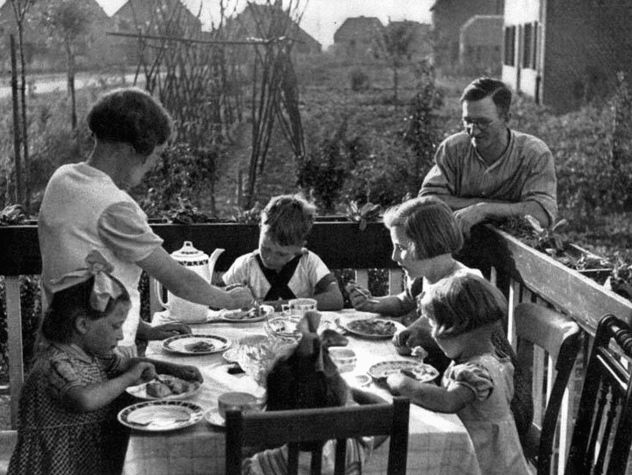
The Impact of a Man’s Childhood
childhood

“Woe to the man whose heart has not learned while young to hope, to love, to put its trust in life.” –Joseph Conrad

In order to gauge the effect of a man’s childhood on his future prospects in life, Vaillant scored the quality of the participants’ upbringing according to these criteria:

  • Was the home atmosphere warm and stable?
  • Was the boy’s relationship with his father warm and encouraging, conducive to autonomy, and supportive of initiative and self-esteem?
  • Was the boy’s relationship with his mother warm and encouraging, conducive to autonomy, and supportive of initiative and self-esteem?
  • Would the rater have wished to grow up in that home environment?
  • Was the boy close to at least one sibling?

When the outcomes of the men’s lives were analyzed, and compared to this set of criteria, it became quite clear that “for good or ill, the effects of childhood last a long time.” A warm childhood proved a much stronger predictor of many aspects of a man’s flourishing later in life, including his overall contentment in his late seventies, than either his parent’s social class or his own income. These effects are particularly striking when the men with the warmest childhoods (who were dubbed “the Cherished”) are compared with those in the bottom tenth (who were called “the Loveless”):

  • The Cherished made 50% more money than the Loveless
  • The Cherished were 5X more likely to enjoy rich friendships and warm social supports at age seventy
  • The Loveless were 3.5X more likely to be diagnosed as mentally ill (which includes serious depression, abuse of drugs and alcohol, and need for extended psychiatric care)
  • The Loveless were 5X more likely to be unusually anxious
  • The Loveless took more prescription drugs of all kinds, and were twice as likely to seek medical attention for minor physical complaints

A loving, supportive upbringing seemed to both bolster a man’s chances for success in his relationships and career, and inoculate him against future psychological distress.

A Loving Childhood Develops Independence and Resilience

While parenting pundits at various times in our history have worried that a household full of unwavering love and support could turn out a young man who was too coddled and dependent, the Grant Study found that abundant familial love, when coupled with an emphasis on autonomy and initiative, actually produced the most stoical (able to keep a stiff upper lip) and independent men. Such men, Vaillant explains, had learned to be comfortable with their feelings, and “that they could put their trust in life, which gave them courage to go out and face it.” In contrast, the men from the worst childhoods turned out to be the most dependent, and struggled with taking initiative.

This correlation held up even when examined in relation to the traditionally masculine pursuit of attaining military rank. Since the Grant Study began at the outset of WWII, its researchers were naturally interested in tracking which aspects of the men’s physical and psychological make-up would best predict their likelihood of becoming officers during the war. They found that the rank the men had attained at the time of their discharge had no relation to their body type, intelligence, or their parents’ social class. Instead, higher rank was most strongly correlated with a loving childhood, and whether a man had warm relationships with his mother and siblings. “Twenty-four of the twenty-seven men with the warmest childhoods made at least first lieutenant, and four became majors. In contrast, of the thirty men with the worst childhoods, thirteen failed to make first lieutenant, and none became majors.” As Vaillant concludes, “We don’t breed good officers; we don’t even build them on the playing fields of Eton; we raise them in loving homes.”

What Goes Right Matters More Than What Goes Wrong

In studying the powerful impact a man’s childhood has on his prospects for health, happiness, and success, an important corollary was discovered: “it is not any one thing for good or ill—social advantage, abusive parents, physical weakness—that determines the way children adapt to life, but the quality of their total experience.” Basically, what the Grant Study found is that even if a lot of bad things happen during your childhood, if they’re outweighed by the good things, you’ll still turn out okay. So if, say, a man had an absent father but a warm relationship with his mother and siblings, or cold parents, but loving grandparents, his prospects for future flourishing were still good. It was not any one factor, or constellation of factors, Vaillant reports, but the quality of one’s childhood as a whole that mattered most.

This point is driven home by the findings of a study that was done in tandem with the Grant Study. Since the participants in the Grant Study were not a terribly diverse group, in 1940 researchers began to run the Gluek Study alongside it, which included a second cohort of 456 disadvantaged non-delinquent inner-city youths from the Boston area. When the childhoods of the men in this study were examined, it was found that even if the family was poor, the father was on welfare, and the family had numerous other problems, sons who were loved by their mothers, admired their dads, and had good friendships went on to become successful and attain a higher socioeconomic status. This explains why men who grew up in impoverished households, but who go on to flourish anyway, often say things like, “Even though we were poor, we never realized it when we were children, because our parents made our home such a wonderful place.”

Vaillant further found that in both studies, “Even the death of a parent was relatively unimportant predictively by the time the men were fifty; by the time they were eighty, men who had lost parents when young were as mentally and physically healthy as men whose parents had lovingly watched them graduate from high school.”

The Influence of a Mother

mom and sons

Not only did a man’s overall childhood experience greatly impact the rest of his life, but his mother and father each influenced it in a particular way. The Grant Study found that a warm relationship with his mother was significantly associated with a man’s:

  • effectiveness at work
  • maximum late-life income
  • military rank at the end of WWII
  • inclusion in Who’s Who
  • IQ in college
  • Verbal test scores
  • Class rank in college
  • Mental competence at age 80

On the flip side of that last point is the fact that “a poor relationship with his mother was very significantly, and very surprisingly, associated with dementia.” Men who lacked a warm relationship with their mothers were 3X more likely to get dementia in their old age.

mom

One of the findings of the study that I personally found most interesting, was that “a mother who could enjoy her son’s initiative and autonomy was a tremendous boon to his future.” Mothers of men who scored highly on the Decathlon of Flourishing admired their sons’ assertiveness, and boasted to researchers that their boys were “fearless to the point of being reckless,” “could fight any kid on the block,” and “is a tyrant in a way that I adore.” In other words, mothers who celebrated their boys’ boyishness bolstered their chances of achieving a successful, mature manhood.

The Influence of a Father

father and sons fishing

The Grant Study also found influences that were associated exclusively with dads. Loving fathers imparted to their sons:

  • enhanced capacity to play
  • more enjoyment of vacations
  • greater likelihood of being able to use humor as a healthy coping mechanism
  • better adjustment to, and contentment with, life after retirement
  • less anxiety and fewer physical and mental symptoms under stress in young adulthood

In the negative column, it “was not the men with poor mothering but the ones with poor fathering who were significantly more likely to have poor marriages over their lifetimes.” Men who lacked a positive relationship with their fathers were also “much more likely to call themselves pessimists and to report having trouble letting others get close.”

If there was ever any doubt, fathers matter, a lot: When all is said and done, a man’s relationship with his father very significantly predicted his overall life satisfaction at age 75 — “a variable not even suggestively associated with the maternal relationship.”

The Mysterious Influence of the Maternal Grandfather

When Grant Study researchers examined whether the longevity of a man’s immediate relatives affected his chances of flourishing, they found that the age of death of his mother, father, maternal grandmother, and both paternal grandparents wasn’t associated at all with his Decathlon score. Yet there emerged a “marked and unexpected association between age at death of maternal grandfathers [MGFs] and the mental health of their grandsons”:

  • The MGFs of men with the highest scores on the Decathlon of Flourishing lived nine years longer than the men with the lowest scores
  • The MGFs of the men who never saw a psychiatrist lived nine years longer than the men who made the most visits to psychiatrists
  • The MGFs of the most psychologically healthy men lived 15 years longer than the MGFs of the men who were most depressed
  • The MGFs of the men with the least anxiety lived 27 years longer than the MGFs of the most anxious men(!)

From these intriguing data points, Vaillant concludes that “long-lived maternal grandfathers predict unusual psychological stability in their grandsons.” Why this would be is still unknown – it may be that a man’s mental health is partly genetic and springs from the MGF.

Men and Marriage
wedding3

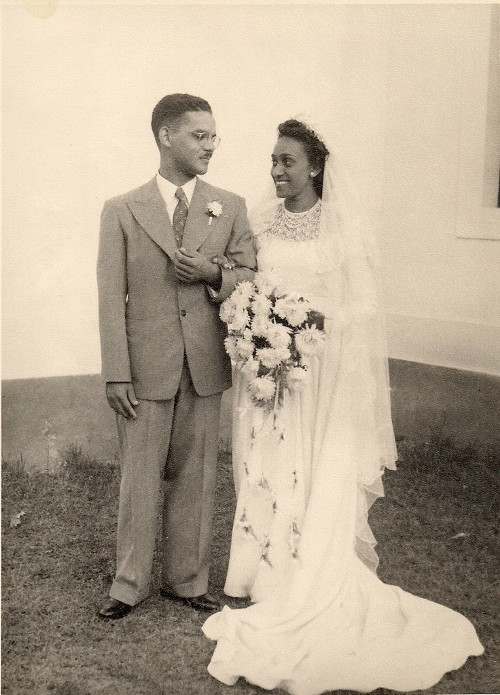
A man’s relationships in childhood were not the only ones that affected his life’s outcome. His friendships in mid-life also played a role, as did, of course, the quality of his marriage.

When several decades ago Vaillant evaluated the men according to “Adult Adjustment Outcome determinations” (a kind of earlier version of the Decathlon of Flourishing, from what I gather), he found that:

all of the fifty-five Best Outcomes had gotten married relatively early and stayed married for most of their adult lives. (And by the time those men were eighty-five, we learned later, only one marriage had ended in divorce.) In contrast, among the seventy-eight Worst Outcomes, five had never married, and by seventy-five years of age, thirty-five (45 percent) of the marriages had ended in divorce. Proportionately three times as many of the Best Adjusted men enjoyed lifelong happy marriages as the Worst.”

The effect of marriage was even starker for the inner-city men of the Glueck Study: “two-thirds of the never-married were in the bottom fifth in overall social relations, 57 percent were in the bottom fifth in income, and 71 percent were classified by the Study raters as mentally ill.”

These results were not too surprising – marriage has been found to correlate to better life outcomes for men in other studies as well. But Vaillant did make a few other findings that were less expected:

  • Earlier in his career, Vaillant had supposed that divorced men would not fare any better in their second marriages – that their first marriages had failed because of psychological traits and behaviors that would similarly doom future attempts at matrimony. But when he checked in with the men at age eighty-five, 23 of the surviving 27 divorced and remarried men were in happy marriages that had lasted for an average of 30 years. The failure of a first marriage did not mean a man was incapable of succeeding the second time round.
  • The single most important factor in all the study participants’ divorces was alcoholism – either the men’s or their wives. 57% of the divorces could be traced to it. While the wives were usually open about their husbands’ drinking problems, the husbands were often reluctant to talk about their wives’ alcoholism, and it thus took almost 70 years for this finding to emerge.
  • While co-dependence is often a dirty word in our culture, spouses’ mutual dependence on each other was associated with happy and healthy marriages.
  • This dependence deepens with time, as does the happiness of marriages. When the men were ages 20-70 only 18% reported that their marriage had been consistently happy (as opposed to so-so or unhappy) for at least 20 years. (The lowness of this number may partially be a generational thing – the WWII generation had different criteria in choosing a spouse and expectations for the relationship.) But at age eighty-five, 76% said their marriages were happy. In old age, spouses increasingly rely on each other, and with the passing of time we tend to remember only the good and forget the bad. Husbands and wives truly grow more precious to each other as they enter the twilight of their lives.

Overall, the Grant Study showed that a happy marriage is an incredibly positive thing in a man’s life. What then makes for wedded bliss? Vaillant doesn’t delve too much into that question, but holds up what is perhaps the most successful marriage in the study as an example. This couple, who Vaillant calls “the Chipps” (a pseudonym), enjoyed doing various activities — they regularly sailed, took a yearly canoeing trip to Nova Scotia, and walked 3 miles a day together. They always kept a sense of humor about everything. Instead of resorting to passive aggression, husband and wife talked openly talked about their issues and “even conflict was filled with laughter.” By the time this gentleman was 80, “he (and his wife) had been giving their marriage rave reviews for six decades”; “I’ve lived happily ever after,” he gushed to his interviewer. Indeed, as Vaillant looked through his notes on him, he found he had written that Mr. Chipps was “perhaps the happiest man in the study.”

Hope for Those Who Had an Inauspicious Start in Life
hope

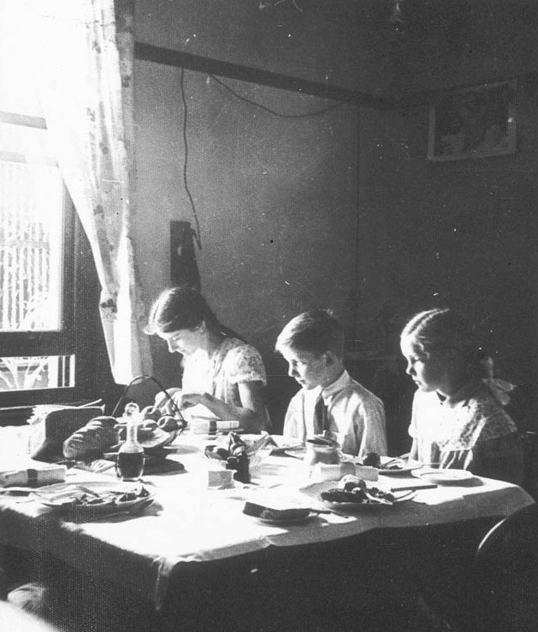
In looking over the association between childhood, marriage, and the trajectory of a man’s life, Vaillant concludes that “The majority of the men who flourished found love before thirty, and that was why they flourished.” Whether familial, romantic, or even platonic, men who enjoyed warm relationships in their youth went on to live the fullest, happiest, most successful lives.

Why would this be so? Men who were loved, and learned to love in their younger years, develop positive mental health, resilience, and a capacity for intimacy — qualities that “reflect the process of replacing narcissism with empathy” and lead to greater confidence, autonomy, social and emotional intelligence, and maturity. These traits in turn lead not only to more relationships, but success in other areas (like one’s career). In contrast, men who had bleak childhoods have a harder time forming intimate relationships, are more likely “to be pessimistic and self-doubting,” and are “handicapped later in mastering the assertiveness, initiative, and autonomy that are the foundation of successful adulthood.”

For those readers who enjoyed warm, loving support in their younger years, the above findings have likely been an interesting look at some of the reasons they’ve been able to find a positive path in life. For those who are currently or hope to one day be fathers, it hopefully inspires you to create a warm and nurturing household for your own children.

But for readers whose upbringing left much to be desired, these findings may seem depressing and fatalistic. Yet all hope is not lost. The Grant Study does show that a grim childhood definitely stacks the deck against you – there’s no way around that. But the study also revealed that “people really can change, and people really can grow. Childhood need be neither destiny nor doom.” Some of the participants who had an inauspicious start in life were able to turn their lives around, and go on to flourish in their later years. How did they do it? Vaillant points to “restorative marriages and maturing [psychological] defenses” as “the soil out of which new resilience and post-traumatic growth emerge.”

Marriage as a Healer
wedding2

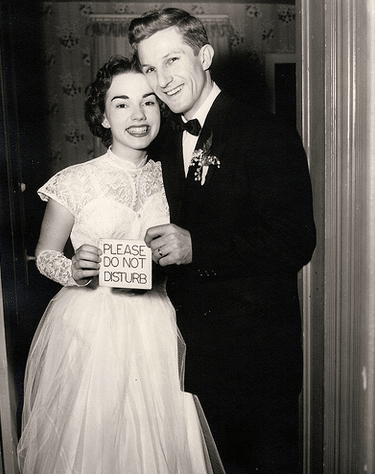
As we have seen, a warm childhood strongly predicted a man’s score in most of the events in the Decathlon of Flourishing. But not all of them. Vaillant was surprised to find that “bleak childhoods were not always associated with bleak marriages”:

“With the exception of a man’s closeness to his father, childhood environment did not predict stable marriage, and even where a warm paternal relationship was lacking, good marriages could be made—eventually. Indeed, marriage seemed to be a means for making good on a poor childhood. After almost fifty years of following disadvantaged youths, psychologist Emmy Werner noted that ‘the most salient turning points . . . for most of these troubled individuals were meeting a caring friend and marrying an accepting spouse.’”

Vaillant found that the men in the study who hadn’t learned to love, and be loved as a boy, but who went on to flourish against the odds, used marriage as a second chance to figure out the landscape of intimacy. (Having children provided a similar opportunity to open their hearts in a new way.) While Vaillant found that “The most dependent adults came from the most unhappy childhoods,” as mentioned above, mutual dependence can actually be a healthy thing. For these men, it indeed turned out to be quite healing. Ultimately, marriage, “however imperfect, is an opportunity to assuage some of the loneliness of bleak early years.”

What’s even more interesting is that while many folks think that two people with “baggage” will have a tough time making a go at a successful marriage together, Vaillant found that this was not necessarily the case: “It turned out that happy marriages after eighty were not associated either with warm childhoods or with mature defenses in early adulthood—that is, you don’t have to start out ‘all grown up’ to end up solidly married.” Instead, marriage might just be the best “classroom” for learning how to be a mature man.

Mature Defenses

Beyond warm relationships, two of the factors that most strongly predicted a man’s Decathlon score were mature defenses and character traits.

Mature defenses are our “involuntary psychological coping style” – the ways we instinctively respond to and deal with setbacks, frustration, pain, etc. Immature defenses include things like passive aggression, projection, and denial. They seek to put the responsibility for what happens on other people. In contrast, men with mature defenses take ownership of what happens to them, and try to figure out a healthy way to deal with life’s challenges. These healthy coping methods include things like keeping a sense of humor, finding a gratifying alternative when you can’t get what you want, being altruistic, and facing problems with resilience and stoicism. Mature defenses are a huge factor both in rewarding relationships, and success in one’s career; the twelve men with the most mature coping styles made over $200k more a year than the sixteen men with the most immature coping styles.

Vaillant points out that these mature defenses can unfortunately not be developed through willpower alone – your upbringing, environment, and even genetics play a role. But they are at least partially under your control, and can be actively strengthened and developed throughout your life.

Character Traits

There are also several character traits strongly associated with flourishing, and their cultivation is happily within our control to a greater degree.

When Vaillant looked at 26 personality traits the men in the Grant Study had been evaluated on in college, he found that a trait called “Practical, Organized” best predicted their mental health in middle-age. This trait involves, obviously, the ability to organize one’s life, as well as to delay gratification. In a related study, “prudence, forethought, willpower, and perseverance in junior high school were the best predictors of vocational success at age fifty.”

Vaillant uncovered another related trait that correlated with a whopping 8 Decathlon events: “Well Integrated.” Men who were “well integrated” were deemed to be “steady, dependable, thorough, sincere, and trustworthy,” while those who were Incompletely Integrated lacked perseverance and were seen as “erratic, unreliable, sporadic, undependable, ill directed and little organized.” Compared to the Incompletely Integrated, the Well Integrated men:

  • Were 4X more likely to enjoy a good marriage
  • Lived, on average, seven years longer
  • Were significantly more likely to be physically active and cognitively intact in old age

Being Active
cycle

Finally, while body type turned out not to predict a man’s score on the Decathlon of Flourishing, athletic prowess was in fact strongly associated with it. That is, it seems that while the body type a man was born with didn’t affect the trajectory of his life, what he did with that body mattered (remember that Churchill was born an endomorph and fought it every step of the way!). This association between fitness and flourishing may possibly be chalked up to the benefits that physical training provides; staying in shape, as we know, can strengthen our discipline, boost our minds, and impart metaphorical life lessons as to the importance of things like humility and consistency. It is perhaps for this reason that the participants’ performance in a physical test of endurance turned out to be a better predictor of their ability to form successful relationships than even of their health later in life. Exercise makes us better people.

Whatever Your Upbringing, You Can Become the Man You Want to Be

That qualities like organization, discipline, and dependability would so strongly predict flourishing in middle and late life should not be surprising; they are, Vaillant notes, “precisely the traits people need to find ways around failures, and make the most of successes when they come along.” So too they are fortunately qualities that we can develop in ourselves, no matter how much, or how little, training we got in them in our youth. Those who were never taught as a boy the importance of scheduling their time, persevering in the face of setbacks, and developing their trustworthiness will certainly have a tougher row to hoe, but learning these skills is possible at any age.

While it is easiest to pick up new habits before your mid-twenties, when your brain is most pliable, our brains remain plastic and moldable throughout our lives. In fact, the process of myelinization – which increases the efficiency of our neurons – continues up until age 60. During that time, our prefrontal lobes (which function as the practical, organized, CEO of our brains) can become better and better at checking the limbic parts of our brains (which cause us to be unthinkingly impulsive). Thus Vaillant found that the study participants, regardless of their upbringing, could grow over time – could become wiser, more patient, more mature. The more such traits are actively sought, and exercised, the more you can aid and accelerate that process. So start working on your character early if you can, and continue to practice the qualities of mature manhood in every decade of your life. As Vaillant notes, ultimately what the men “did with a loving or bleak childhood had as much to do with future success as the childhood itself.”

Conclusion: Love Is All You Need (Even When You’re a Dude)
2722816266_986050f98a_z

“The recent years of the Grant Study have shown that our lives when we are old are the sum of all of our loves.” –George Vaillant

What leads to a flourishing life has been debated and discussed for centuries. Is it your parents’ social class? It is a career with a high income? Is it the type of body you’re born with?

After decades of studying the scope of men’s lives from ages 18-90, Valliant’s answer is this: “Happiness is love. Full stop.” It’s really a conclusion all of us knew all along, but it helps to be reminded of it, and to see that it is backed up not only by intuition, but by nearly 80 years of research.

Character traits matter too, but even then their real importance is helping us replace a scattered narcissism with the steady maturity that leads to rewarding relationships. Perhaps it sounds cheesy, but we are ultimately here to love, and to be loved. Love leads to our ability to “put our trust in life” and the confidence to tackle our goals. Thus if we fill our lives with warm, rich relationships, all the other good stuff – career success, prestige, adventure – will be sure to follow.

__________

Source:

The Triumphs of Experience: The Men of the Harvard Grant Study by George Vaillant

11 Jun 15:24

Love and Iron Fused Together: Dr. Vincent Harding

Ibktim

I love the idea of love and iron fused together.

by Scott Nine

I met Dr. Vincent Harding during my first week with IDEA. I was facilitating a gathering in Detroit that he ignited with his opening remembering of a favorite poem, “We are citizens of country that does not yet exist,” and his adaption for that gathering on education: “We are citizens of an education system that does not yet exist.”

In the middle of the four hour assembly, he changed the conversation by posing the question, “What are the attributes, the qualities, we want for the young people we love to possess?”

And later by leading us in song.

Then, at the end, he called us to be courageous, honest, and generous to one another.

After the assembly, for a just a few moments we spoke. He put his hand on my shoulder and said, “we must be like love and iron fused together.”

I’ve yet to meet that challenge, though it has and continues to live as a mantra inside me. I imagine he’s left this and thousands of other mantras in the hearts and minds of those he touched.

Today, as thousands mourn his passing, I wanted to write simply to acknowledge what he set off in my own life and soul.

Dr. Harding, you were and will remain a center of gravity.Thank you for your words, your presence, your song, your courage, your dignity, your humility, and your generosity. May more in the world come to know what you knew and see what you saw. I ask that of myself as in these days of mourning and letting you go. Prayers, love, and strength to your family and all who knew you far better than I.

With much gratitude,

Scott


Search for

Search
 

Vincent Harding, In Memoriam — Civility, History And Hope from On Hope

Vincent Harding, 82, Civil Rights Author and Associate of Dr. King, Dies from New York Times


03 Jun 12:41

Poseur Alert

by Andrew Sullivan
Ibktim

Wow.

“I have no axe to grind about the ban on smoking in public places, nor do I resist the shift in social mores that nowadays makes it, oftentimes, a solecism to light up in a private home. Nonetheless I miss smoke; it draped a decent veil across interior vulgarities, while softening our loved ones’ hateful features. Moreover, it was something to look at: its chiffon convolutions and tulle thunderheads made perfectly dull places seem excitingly mysterious. I don’t think the NHS’s smoking cessation schemes make enough of this: what we smokers need to help us kick this obnoxious addiction is a portable son et lumière, not a packet of nicotine gum. Nicotine gum is in fact the spatial inversion of smoking: the gum-chewer, instead of looking out, as the smoker does, on a roiling boiling atmosphere, has his attention driven entirely inward to a dark and claustrophobic space where giant teeth clash and clash again,” – Will Self.

29 May 23:24

He Certainly Did More Than Paint

by Matthew Sitman
Ibktim

Greatness breeds (slightly lesser) greatness. What did TJ's relatives ever do for the world?

by Matthew Sitman

In a long review of three recent books about John Quincy Adams and his wife, Louisa Catherine, Susan Dunn considers the accomplishments of his post-presidential career, which saw Adams return to public life as a member of the House of Representative and take up the abolitionist cause:

Though launched anew upon what he called “the faithless wave of politics,” Adams had a John_Quincy_Adams_1843guiding star, a clear path forward: the battle against American slavery. In 1831 and again in 1832, he dined with an impressive young Frenchman who queried him about the culture of democracy in America. “Do you look on slavery as a great plague for the United States?” asked Alexis de Tocqueville. “Yes, certainly,” Adams replied. “That is the root of almost all the troubles of the present and fears for the future.”

Ending slavery became Adams’s great mission. But because he understood that slavery was the one issue that could tear apart the union, he decided that, instead of taking it on frontally, he would attack it on the flanks. He aggressively defended the right of abolitionists to petition Congress and denounced the “gag resolution” that mandated the tabling of all petitions and propositions relating in any way to slavery, and he opposed Texas’s admission to the union as a slave territory. Invoking the immortal values of the Declaration of Independence, taunting his foes, barely surviving a censure resolution, he became known to sympathizers, as Robert Remini noted in his excellent short biography of Adams, as “Old Man Eloquent” and to southerners as “the Madman from Massachusetts.”

In 1847, Abraham Lincoln, a freshman congressman from Illinois, took his seat alongside Adams in the House of Representatives. John Quincy, whose mother had taken him more than seventy years before to watch the Battle of Bunker Hill from atop Penn’s Hill in Quincy, was a living link between the revolutionary generation that created a republic tragically flawed by its compromise with slavery and Abraham Lincoln, who would end slavery and rescue the republic from its own undoing.

Focusing on Fred Kaplan’s biography, John Quincy Adams: American Visionary, Carol Berkin emphasizes that “John Quincy did not find his independent voice until he was in his 70s,” when his anti-slavery activism reached its peak:

As Kaplan lays out the events that heightened Adams’ commitment to abolition, the narrative’s tempo increases and the story unfolds more powerfully. It culminates with the Amistad trials, which revolved around 53 Africans seized by Portuguese slave traders. Sold to Spanish planters, they were loaded onto the Amistad to be sent to Caribbean plantations. They rebelled, killed the captain and attempted to sail to Africa, but the ship was seized by an American brig off the U.S. coast. The Africans were imprisoned in New Haven, Connecticut. As the planters, the Spanish government and the brig captain argued over who owned this human property, abolitionists insisted the Amistad passengers were free individuals, kidnapped illegally.

When the case came to the Supreme Court, it was Adams who argued — and won — the defendants’ case. This, at last, was Adams’ moment — not a tribute to his father’s memory but a declaration of his own commitment to human equality and justice.

(Image: John Quincy Adams in 1843, via Wikimedia Commons)

26 May 23:53

Punnin’ Games

by Jessie Roberts
Ibktim

You all know how I feel about puns.

by Jessie Roberts

“In mixed company, puns are, along with politics and religion, best left alone,” states Ted Trautman, who traveled to Austin, Texas, to compete in the O. Henry Pun-Off World Championships:

Contestants in the “Punslingers” bracket, facing off in pairs onstage, are given a theme—Disney, weather, et cetera—and forced to make thematically relevant puns every ten seconds or so until one contestant runs out of ideas. … Just as a slam-dunk in basketball earns the same number of points as a layup, this portion of the Pun-Off rewards a contestant for the quantity of her puns rather than their quality. As the moderators explained several times, in a refrain later echoed by desperate contestants defending their ripostes, “It doesn’t have to be good. It just has to be a pun.” The Punslingers event may be the only sport on Earth in which the highest level of play is the most painful to watch. …

[M]y favorite moment of the day occurred during a round in which players had to pun on the theme of “Groups (human and animal)”—e.g., flock, herd, choir, and the like.

The two men on stage had exhausted most of the obvious words in the category, and were beginning to butt heads with the moderators…. After a healthy volley one of the contestants offered an invalid answer, and then another, courting disqualification. And then he rebounded with the perfect pun—not the most clever, not the most original, but one that managed to both keep the round going and poke fun at the increasingly strict moderators: “Next year,” he said, “this topic ought to be band.” Despite the limits on both time and topic, this contestant delivered a pun in the heat of the moment that, against all odds, actually made sense. The crowd went wild, perhaps forgetting for a moment that on Monday they would have to return to a world where words mean just one thing at a time.

20 May 19:10

Napoleon: Complex

by Tracy R. Walsh
Ibktim

Too soon?

by Tracy R. Walsh

Jacques_Louis_David_-_Bonaparte_franchissant_le_Grand_Saint-Bernard,_20_mai_1800_-_Google_Art_Project

Brian Eads notes that “200 years on, the French still cannot agree on whether Napoleon was a hero or a villain”:

“The divide is generally down political party lines,” says professor Peter Hicks, a British historian with the Napoléon Foundation in Paris. “On the left, there’s the ’black legend’ of Bonaparte as an ogre. On the right, there is the ’golden legend’ of a strong leader who created durable institutions.”

French politicians and institutions in particular appear nervous about marking the 200th anniversary of Napoleon’s exile. … While the 200th anniversary of the French Revolution that toppled the monarchy and delivered thousands to death by guillotine was officially celebrated in 1989, Napoleonic anniversaries are neither officially marked nor celebrated. For example, a decade ago, the president and prime minister – at the time, Jacques Chirac and Dominque de Villepin – boycotted a ceremony marking the 200th anniversary of the battle of Austerlitz,Napoleon’s greatest military victory. “It’s almost as if Napoleon Bonaparte is not part of the national story,” Hicks tells Newsweek.

17 Apr 17:27

What’s More Dangerous: Marijuana or Alcohol? Full Transcript

by Freakonomics
Ibktim

I love this program. Just read the though experiment if you don't have time/inclination to read the entire thing.

[MUSIC: Brilliantes del Vuelo, “Drunken Heroics”]

Stephen J. DUBNER: Hey podcast listeners, don’t forget our new book Think Like a Freak will be published on May 12th. So if you think you need to set aside a little bit of time on that day for some light reading, maybe you want to go ahead and call in sick right now just to get it out of the way.

Stephen J. DUBNER: Let’s begin with a thought experiment. Imagine a fantasy world that’s exactly as the world is today – smartphones, cars, podcasts, Jimmy Fallon at 11:35pm. But two things are missing: alcohol and marijuana. They don’t exist yet. Now, it may be hard to imagine that our civilization has gotten to this advanced stage without alcohol and marijuana – but that’s a different thought experiment. That’s not what I want to talk about today. What I want to talk about is this fantasy world – the one we have today – without alcohol or marijuana, and then tomorrow, they are both discovered. What happens now? How are each of them used – and, perhaps more important, how are each of them regulated? If we were starting from scratch – with no cultural or legal baggage, with no preconceptions – how would we weigh the relative benefits and, especially, the costs of marijuana versus alcohol?

David NUTT: Alcohol, I’m not so sure about alcohol. I wonder if alcohol was discovered today, I think people would be very concerned about the toxicity. And I suspect alcohol would be banned within ten years if it became available today. If marijuana was discovered today I think people would probably accept it.

[THEME]

[MUSIC: Louis Thorne, “Waltz for Robin”]

ANNOUNCER: From WNYC: This is FREAKONOMICS RADIO, the podcast that explores the hidden side of everything. Here’s your host, Stephen Dubner.

Steve LEVITT: Humankind loves alcohol.

DUBNER: Steve Levitt is my Freakonomics friend and co-author. He’s an economist at the University of Chicago.

LEVITT: We should just start by saying that. That it is amazing how widespread alcohol use is, how much utility people get out of it. And we’re going to focus on the negatives now, but I think you can’t forget that basic point.

DUBNER: Okay, we won’t forget that basic point. But first, let’s focus on the relative costs of alcohol and marijuana. Now, I don’t mean the price; I’m talking about costs to society, especially. If the world suddenly discovered both alcohol and marijuana tomorrow, how would we assess their effects, and how would we treat each of them?

LEVITT: I’ll give you the answer of what an economist would do, which is obviously very different than what a politician might do, but an economist would take the view that things that people do to themselves maybe we shouldn’t worry about very much. That all we need to worry about when it comes to alcohol and marijuana are the externalities. What negative effect of my consuming alcohol is there on the people around me on society. And the same for marijuana. And those are numbers you can imagine trying to quantify. And what an economist would say is, ‘well, let’s just build into the price of alcohol a tax that is appropriate to try to internalize that externality.’ And then to do the same thing with marijuana. I think what we maybe have less information about what the externalities are on marijuana, but my guess is that many people, probably, rightly, would think that the externalities of marijuana are smaller than the externalities of alcohol.

[MUSIC: Ruby Velle & The Soulphonics, “The Agenda” (from It’s About Time)]

DUBNER: Now, the reason that we have less information about the negative externalities of marijuana is because in most places, marijuana is illegal. This does a few things. It makes it harder to collect reliable data. It dictates the nature of the market for marijuana; when you have an illicit market, and the profits that go along with it, you have the potential for criminal activity and violence, and other costs to society – like the police and the jails you need to devote to marijuana. According to F.B.I. data, roughly half of all drug arrests in the U.S. are for marijuana offenses: 42 percent for possession and 6 percent for sale or manufacturing. But as we all know, marijuana is becoming legal in more places – in Colorado and Washington State here in the U.S.; in 2001, Portugal decriminalized personal possession of many drugs, including marijuana. President Obama, quite famously, told David Remnick of The New Yorker that “I don’t think it [marijuana] is more dangerous than alcohol.” Alright, so let’s start there, with something we can measure pretty well: how dangerous is alcohol?

NUTT: It’s a significant factor in high blood pressure and heart damage; it’s the most damaging drug to the brain.

DUBNER: That’s David Nutt. He’s a psychiatrist at Imperial College London and former chairman of the U.K.’s Advisory Council on the Misuse of Drugs – emphasis on former chairman; we’ll get to that in a minute.

NUTT: It’s one of the most addictive substances, and it’s associated with a whole range of different cancers. So overall, alcohol is responsible for shortening the life expectancy, accelerating death in over 3 million people in the world today. It’s the leading cause of death in the world today after tobacco.

DUBNER: Nutt worked in government for 10 years, trying to assess the relative dangers of all different sorts of drugs.

NUTT: And all the time I was trying to get evidence to dominate decision making, which is what the law says it should do. And all the time I was meeting resistance. And eventually I got sacked…

DUBNER: And why did David Nutt get fired?

BBC BROADCAST: Now, the government’s chief adviser on drug policy has been sacked after insisting that alcohol and cigarettes are more dangerous than cannabis and ecstasy. The Home Secretary Alan Johnson said he no longer had confidence in the advice being given by Professor David Nutt, who had also criticized Ministers for reclassifying Cannabis as a more serious drug.

DUBNER: So you can see which side of the debate David Nutt would land on in our marijuana vs. alcohol thought experiment. And it isn’t just the personal downsides of alcohol consumption; it’s the externalities, the societal costs. Drunk driving, for instance. In the U.S., there are roughly 10,000 alcohol-related driving deaths a year, roughly a third of total traffic deaths. Drinking is heavily correlated with other antisocial behaviors.

NUTT: We know that alcohol is strongly associated with acquisitive crime, burglary, with violence generally, particularly with domestic violence, child abuse…

LEVITT: The share of people who are arrested who are, who have been drinking is shockingly high.

DUBNER: That’s Steve Levitt again.

LEVITT: And even more telling, in some sense, is that the share of victims of crimes are incredibly likely to be drunk as well. I always wondered whether it was just that everybody’s drunk all the time, or really being drunk puts you in situations where you get arrested. But, if you watch “Cops,” and as you know I watch “Cops.” If you watch “Cops..”

DUBNER: We should say “Cops” the TV show, we’re talking about. Not actual cops.

LEVITT: If you watch “Cops” the TV show, the next time you watch “Cops” the TV show, just try to keep a tally of every person who comes around who’s engaged with the police, what share of them do you think have not been using either drugs or alcohol in the last few hours, and it is a really, really low number.

DUBNER: Right, although, as a selection tool goes, that’s not very precise because it could be that all the non-drunk people are too boring for TV.

LEVITT: It could be. And it’s hard to know. But the official data, it is shocking. The level of alcohol abuse among people who get arrested is just amazingly high.

[MUSIC: Glenn Crytzer and his Syncopators, “Witching Hour Blues” (from Harlem Mad)]

DUBNER: Here’s a number to consider: roughly half of all homicide offenders in the U.S. were under the influence of alcohol at the time of the crime. When it comes to domestic violence, roughly two-thirds of the offenders had been drinking. So you could imagine that if society was starting from scratch without alcohol, in this fantasy world, we might all say no way. It’s just too dangerous. And what about marijuana?

LEVITT: I don’t think that there is any evidence that links use of marijuana to increased violence.

DUBNER: Note that Levitt said “use of marijuana.” Not selling drugs, which as we know can create violence. That said, there was a time when marijuana use was linked to violence:

ARCHIVAL AUDIO: Marijuana, the burning weed with its roots in Hell.

Jeffrey MIRON: That was the whole “Reefer Madness” story from, you know, from 50, 60 years ago, that marijuana use made you a homicidal maniac.

DUBNER: That is Jeffrey Miron. He teaches economics at Harvard and is the director of economic policy studies for the Cato Institute.

MIRON: I don’t think there is much credibility left of that perspective. So many people are concerned that marijuana is what is known as a gateway drug, that is once you use marijuana it makes you more likely to use other drugs. I don’t think there’s any evidence for it that I would regard as statistically credible. All that one can really document is that many people who use harder drugs did use marijuana before they used harder drugs. But a huge fraction of those who use marijuana never go on to use harder drugs. So the effect, if any, would appear to be quite small. And of course we can point out that almost everybody who goes on to use marijuana or alcohol say, started off on mother’s milk or McDonald’s French fries. So the prior use by itself we don’t think of as causal, it’s just that there does seem to be an evolution in the pattern for those people who end up going on to use harder drugs.

ARCHIVAL AUDIO: Debauchery, violence, murder, suicide…and the ultimate end of the marijuana addict.

DUBNER: Here’s David Nutt again, the former U.K. drug czar:

NUTT: When we look at the health dangers of marijuana, we see that there are remarkably little considering the wide use of the drug. So in the U.K. there’s almost no deaths attributable to marijuana. And people say well how can that be? When people are smoking it year, on year, on year, and the truth is people actually don’t smoke as much burning material when they smoke marijuana. Also the marijuana leaf burns at a lower temperature than the tobacco leaf so in fact you get less toxic substances into the lungs.

[MUSIC: Tangria Jazz Group, “Ethan’s Song” (from Mabene’s Eleven: Tunes for Two)]

DUBNER: In a 2010 study called “Drug Harms in the UK: A Multicriteria Decision Analysis,” Nutt and a group of colleagues tried to calculate the “harm score” of 20 different drug, not only alcohol and marijuana but heroin, meth, cocaine, LSD, and so on. They factored in mortality rate, the cost of dependence, the loss of relationships, injuries, crime, and they also looked at the costs to society in terms of health care, police and prison, and lost productivity. What’d they find? What would you guess was deemed the most harmful drug overall of these 20 drugs?

NUTT: It turns out that alcohol was the most harmful drug overall, largely because of the massive harms to society, the huge economic cost, the huge health care cost, the huge policing cost of alcohol to society. And cannabis scored less than half of the overall harms of alcohol.

DUBNER: Now keep in mind a few caveats. In this kind of calculation, the societal costs of alcohol are huge in part because alcohol is so readily available. It’s legal, it’s cheap, and for the most part society smiles upon it – compared to most of the other drugs on the list, which are illegal, not necessarily so cheap, and generally frowned upon. So while alcohol might have the highest “harm score,” that may be due in large part to the simple fact of its prevalence.

[MUSIC: Johnny Sangster, “Levanto Adventure”]

DUBNER: Now that said, the evidence is pretty compelling, that alcohol is harmful. So, coming up on Freakonomics Radio: what do you do about it? If the world just discovered alcohol, would you immediately ban it? Well, we’ve tried that before.

LEVITT: If something is worth fighting for, people are willing to fight.

DUBNER: Or: how about a different kind of alcohol – great taste, less killing.

NUTT: You’d have this safe alcohol that you could drink and have fun. But you could also take an antidote that would block its effects. So you would sober up within half an hour if you took a pill.

[UNDERWRITING]

ANNOUNCER: From WNYC: This is FREAKONOMICS RADIO. Here’s your host, Stephen Dubner.

[MUSIC: Johnny Sangster, “Thirsty Vines”]

DUBNER: Alright, so if alcohol and marijuana were both suddenly discovered, and we set out to weigh their relative dangers to society, you might conclude that alcohol at least is pretty dangerous. So you may think – hey, let’s just prohibit it. That’ll work, won’t it? Here’s the economist Jeffrey Miron again.

MIRON: So what I was interested in was whether prohibitions of substances like alcohol or drugs are effective in substantially reducing the use of the substance that’s prohibited. And the best sort of example that we have to look at is alcohol prohibition in the United States, which occurred between 1920 and 1933. The problem of course is there are no decent data on alcohol consumption during prohibition because the government that normally collects such data acted as though alcohol consumption wasn’t happening. Of course some of it was happening. The question was exactly how much.

DUBNER: Since Miron couldn’t get data that directly spoke to alcohol consumption, he looked for a proxy. It wasn’t  a perfect proxy, perhaps, but a useful one: cirrhosis of the liver, which is caused by alcohol abuse.

MIRON: And what you find is that alcohol prohibition seems to have had some effect in reducing alcohol use, maybe 10, 20, 30 percent. But it didn’t have an incredibly dramatic effect when alcohol prohibition was repealed, alcohol use did go up relative to various other factors one controls for, but again a moderate amount, say 20, 25 percent. It’s not as though we went from almost no consumption to some huge, you know, explosion. There was a modest increase in use.

[MUSIC: Crytzer’s Blue Rhythm Band, “Dickey’s Blues” (from Chasin’ the Blues)]

DUBNER: So not only did Prohibition not eliminate the use of alcohol – not by a long shot – but it had some rather grim unintended consequences.

[ARCHIVAL AUDIO]

LEVITT: Sure, I mean, prohibition was a time of amazing violence. The homicide rate in the U.S. in the late 1920’s was as high as it’s ever been, and, you know, two-to-three times higher than now. And the homicide rate fell dramatically after the end of prohibition…And…you know, it makes sense to me that in every setting, when you don’t have well-defined property rights and you don’t have legal structures around it, if something is worth fighting for, people are willing to fight. They’re willing to take tremendous risks and violence becomes the tool. Now my own belief is that, I think people will be surprised that within the U.S. I just don’t think that there is enough money in illegal marijuana to make people want to do a whole lot of killing. Now I understand that in Mexico and in other places there is probably a lot of violence around marijuana but my hunch is that you won’t see really any change at all in drug-related violence in the places where you legalize marijuana because I don’t think that’s why people have been killing each other in the first place. I think they have been killing themselves over cocaine and other drugs that are more profitable.

DUBNER: Levitt, you’ve got 4 kids, the oldest is what, 14?

LEVITT: Uh huh.

DUBNER: So, if you could control all four of your kids in the future and require that they could only consume one or the other, marijuana or alcohol, which would it be?

LEVITT: I think that I would have them consume alcohol and not marijuana. Because I think alcohol is just such an integral part of being an American. And I think that if you have sensible attitudes towards alcohol it can be a huge positive and doesn’t have to be a huge negative. And I would maybe give you a different answer…

DUBNER: If you lived in Holland?

LEVITT: Or in Holland, but especially in thirty years. In thirty years I’d probably give you a different answer because the role of marijuana in society might change, the role of alcohol might change. And it may be that if the social role of marijuana becomes very prominent and the hanging out with the wrong kind of people destructive role goes away; that the pure consumption of the marijuana might be better. But the consumption of the alcohol and the consumption of the marijuana are such a small part of what the social meaning of it is that I think it would be crazy to try to raise a bunch of kids who I didn’t ever want to touch alcohol and who I encouraged actively to be marijuana smokers.

DUBNER: Okay, so go then beyond then your family and society at large, does then the social benefit of alcohol outweigh or justify the social costs of alcohol, which strike me as being incredibly high. I mean no one is looking for a ban here, but as a way of thinking about how we regulate and allow different kinds of activities… I mean I think all of this gets caught up in moral posturing by everybody because alcohol and marijuana both seem to stand for a lot, but if we were talking about just different activities that weren’t a controlled substance, I think people would have a different view, because marijuana to some people seems pretty benign and alcohol to those same people seems potentially to have a lot of costs spread across society.

LEVITT: I’ve never done a calculation, but my hunch is that the benefits of alcohol are huge relative to the costs of alcohol. If you’re willing to count the utility that people get from using and abusing alcohol as part of your calculus. I think it’s not even close. I think that the joy and the pleasure that people get from alcohol, as evidenced by the amount that we drink and how central it is to everything we do, is just orders of magnitude bigger than the costs. I think marijuana that’s probably true too, we just don’t have as much information. But I doubt ever we’re going to get to a place where if we had a vote and we said you could only have one, alcohol or marijuana, that marijuana would ever win. Because I think alcohol, somehow for whatever reason of how we’ve evolved, the brain loves alcohol in a way that I’m not sure the brain loves marijuana.

[MUSIC: The Jaguars, “By By Mai Thai” (from The Jaguars)]

DUBNER: Well, we may find out just how much the brain loves marijuana, as it’s decriminalized in more places. We asked Jeffrey Miron what might happen as marijuana becomes more available – and if, say, some people substituted marijuana for alcohol.

MIRON: So several studies have looked at the following combinations of effects. If marijuana becomes legal and therefore more accessible and cheaper, and some people at least substitute from alcohol to marijuana, and if, as appears to be true, the negative effects on driving ability from marijuana are smaller, in no way zero, but certainly smaller, than those from alcohol then we should actually see fewer traffic fatalities, because some of the people who are driving under the influence would be driving under the influence of marijuana which seems to be less bad, and therefore we might see fatalities go down. And indeed, three or four studies over the past 20 years have found exactly that result. So there is this potentially beneficial externality from legalizing marijuana in inducing this substitution, which reduces traffic accidents.

DUBNER: But as Steve Levitt notes: we know that people love alcohol, side effects and all. So wouldn’t it be great if somehow we could have all the benefits without the costs? Remember David Nutt, the British psychiatrist who was fired for claiming that alcohol is more dangerous than marijuana? He has some ideas about that.

NUTT: Most of my professional career, I have been trying to find ways of treating alcoholism and helping people deal with the problems of alcohol dependence and alcohol withdrawal, and trying to find an antidote to alcohol. And I realize now that’s impossible. And it occurred to me a while back that maybe we’re asking the wrong question, rather than try to solve the problem of alcohol, why don’t we find an alternative to alcohol which doesn’t cause problems, find a safe alternative, a drug which makes you pleasantly intoxicated, but which does not cause addiction, does not rot your brain, you liver or your guts, etc. And when you think about that, the way to do that is to find a substance where you had an antidote, so when you got to a party have fun and then take the antidote and drive home safely. And you could imagine that if that were available and everyone used it you would save 3 million deaths a year, which is more than malaria, tuberculosis, and meningitis put together. Wouldn’t that be a good thing? And that’s what I’m trying to do. I’m trying to bring a rational approach to dealing with the problems of alcohol by getting rid of it and replacing it with a safe alternative.

DUBNER: This is something that David Nutt is actually working on – a synthetic alcohol, designed to mimic the effects of alcohol on the brain while minimizing all the downsides — hangovers, liver damage, and loss of coordination. In conjunction with this, Nutt and his colleagues have also been working on an alcohol antidote, a “sober pill.”

NUTT: So the idea would be you would have this safe alcohol that you could drink and have fun. But you could also take an antidote that would block its effects. So you would sober up within half an hour if you took a pill. And that would mean that you were perfectly, absolutely normal and you could drive home quite safely.

DUBNER: Now that, you’d have to admit, would be a real fantasy world.

CREDITS

16 Apr 16:06

Obama’s Meep Meep On Healthcare

by Andrew Sullivan

obamasmug

There are plenty of imponderables left on the fate of the ACA, Obama’s signature domestic policy achievement. Premiums could still spike later this year; the full data on the numbers with actual, paid-for health insurance via the exchanges is not yet known; the resistance on the right to it is still mighty; in many states, the lack of Medicaid expansion guts a key part of the law’s intent. If you want to read an attempt to argue that Obamacare is as big a liability for Obama this fall as the Iraq War was for Bush in 2006, well go read JPod. My reaction after reading his screed was: seriously?

There’s simply no denying that the law has been rescued by an impressive post-fiasco operation that did to ACA-opponents what the Obama campaign did to the Clintons in 2008 and to Romney in 2012. Obama out-muscled the nay-sayers on the ground. I have a feeling that this has yet to fully sink in with the public, and when it does, the politics of this might change. (Since the law was pummeled at the get-go as something beyond the skills of the federal government to implement, its subsequent successful implementation would seem to me to do a lot to reverse the damage.) There are some signs that this is happening. A new Reuters/Ipsos poll finds the following:

Nearly one-third of respondents in the online survey released on Tuesday said they prefer Democrats’ plan, policy or approach to healthcare, compared to just 18 percent for Republicans. This marks both an uptick in support for Democrats and a slide for Republicans since a similar poll in February.

That’s mainly because of renewed confidence and support from previously demoralized Democrats. But it’s also a reflection, it seems to me, of the political vulnerability of Republicans who have failed to present a viable alternative to the law, and indeed seem set, in the eyes of most voters, merely to repeal ACA provisions that are individually popular. And this bad position is very likely to endure because of the intensity of the loathing for Obama/Obamacare among the Medicare recipients in the GOP base. It seems to me that right now, the GOP cannot offer an alternative that keeps the more popular parts of Obamacare without the air fast leaking out of their mid-term election balloon. And so by the fall, the political dynamics of this may shift some more in Obama’s direction. By 2016, that could be even more dramatic. One party – the GOP – will be offering unnerving change back to the status quo ante, and the other will be proposing incremental reform of the ACA. The only thing more likely to propel Hillary Clinton’s candidacy would be a Republican House and Senate next January.

It’s that long game thing again, isn’t it? Like the civil rights revolution of the Obama years, it seemed a close-to-impossible effort to start with, and then was gradually, skillfully ground out. It also seems true to me that the non-event of the ACA for many, many people will likely undermine some of the hysteria on the right. The ACA-opponents may be in danger of seeming to cry wolf over something that isn’t that big a deal. Yes, they may have premium hikes to tout as evidence of the alleged disaster. And every single piece of bad news on the healthcare front will be attributed to the ACA, fairly or not. But the public will still want to know how premiums can go down without people with pre-existing conditions being kicked out of the system, or without kids being kicked off their parents’ plan, and so on. I think, in other words, that the GOP’s position made a lot of short-term political sense in 2010 and even 2012. But it’s a much tougher sell in 2014, let alone 2016. Once again, they have substituted tactics for strategy. Every time they have done that with Obama, they have failed.

Or maybe I’m biased because my own insurance situation has gotten better. Here’s what’s happened in my individual case.

I stayed on my Newsweek plan via COBRA for my first year as a new business-owner. But when I went on the exchanges this year before my COBRA ran out, I was pleasantly surprised. My old plan had a premium for me and my hubby of $1,535.59 per month, with an in-network out-of-pocket maximum of $2,500 per person. So in 2013 I had total out-of-pocket costs (premiums plus my out-of-pocket maximum of $2,500) of $20,927.08. This year, my ACA plan – a Platinum DC-based one – has a monthly premium of $1,106.33 for the two of us, with an in-network out-of-pocket maximum of $1,800 per person. My out of pocket medical costs this year will therefore be $15,075.96. (One small note: my previous plan was slated for a reduction in premiums this year as well. Not by as much as my current plan – but a significant one nonetheless. But since my COBRA option ran out this June, it wasn’t really a choice.)

So I’m a lot better off with Obamacare this year. I’m also buoyed by the fact that DC’s exchanges have a high number of the young and healthy in them – balancing out my aging AIDSy ass. So I’m reasonably confident my plan won’t go down the toilet any time soon, or face big hikes in premiums. And this new insurance means a lot more to me than the old one – because it cannot be taken away, even if the Dish goes belly-up. When you are a long-term HIV survivor, that kind of health security and independence is, well, priceless. Obamacare affected me in another critical way as well. Its assurance of a stable insurance market that does not screen out someone with a pre-existing condition made me far more comfortable starting my own business. It gave me a baseline of security that simply didn’t exist before. It helped make entrepreneurialism possible.

Yes, I am just one tiny, and rare example. But for me, at least, Obamacare has over-delivered and over-performed. If my experience is replicated more widely, then I suspect the polling and politics will shift yet again.

Meep motherfucking meep.

(Photo: Dennis Brack/Black Star/Getty Images)

11 Apr 00:00

@MrJonesHistory Thank you for the reply! I ended up pulling Fed 10 and the Gettysburg address from your list! I appreciate the help!

by MisterEason (Justen Eason)
@MrJonesHistory Thank you for the reply! I ended up pulling Fed 10 and the Gettysburg address from your list! I appreciate the help!
07 Apr 13:03

@MrJonesHistory yes but I think @gcouros is suggesting we see using tools at our disposal as ok for adults, not kids for learning/tests

by bkuhn (Brian Kuhn)
@MrJonesHistory yes but I think @gcouros is suggesting we see using tools at our disposal as ok for adults, not kids for learning/tests
18 Mar 21:28

Nothing To See Here

by Andrew Sullivan
Ibktim

Szilvasy. Also, other Seinfeld fans.

An oddly compelling supercut:

It’s called “Nothing”, by LJ Frezza, who stitched together scenes from Seinfeld in which nothing happens – no dialogue, just shots of buildings and a bass line. Nathaniel Smith elaborates:

Seinfeld was the award-winning, best-ever show on television that broke the traditional situation comedy mold with producer Larry David’s emphasis on it being “the show about nothing”. Of course, it was about something, four friends and their misadventures in New York City. But a recently prominent super-edit of the series takes the program’s motto to its natural conclusion, by piecing together every cut-scene and still-shots which gave the audience scene establishing, and oddly, never showed any people. The results are disorienting, a bit existential, and completely nostalgic for fans of the show.

(A fair warning, the sound of slap bass might be a bit much at first, but if you are a fan of the show, you heard that familiar 90′s-tinge sound enough times to make finishing the video worth it).

16 Mar 02:33

Sweet Talk, Ctd

by Andrew Sullivan

A reader joins the discussion on the comparative appeal of languages:

Count me as one vote against the beauty supremacy of French – though it may just be my frustration with either reproducing or understanding its pronunciation. I was surprised to read Dreher’s opinion that swept all East Asian tongues under the same blanket! In college I switched from studying Japanese to Chinese in part because I grew enamored of the sounds I overheard in my Chinese-speaking friends’ conversations (Japanese to me sounds elegant, but not really beautiful). And while Mandarin Chinese is music to my ears (except in the sibilant Taiwan accent), Cantonese actually makes my stomach turn a bit.

I also find German rather gorgeous, especially the way it tends to be spoken by women. I can’t listen to any Scandinavian language with a straight face.

English went astray, aesthetically speaking, with its hard A and I sounds … but it indeed has many lovely specimens, like the word “resplendent,” for example. And English’s melting-pot nature also confers the advantage that one can select words originating from different language families for their sonic and cultural associations. Basic examples would be using tons of straight-from-Latin words to sound legalistic, old Germanic ones to be punchy and down-to earth, or French cognates to sound poetic and fussy.

Another:

Your post on how languages sound reminded me of one of my all-time favorite clips from the Catherine Tate show. I’ve probably watched it a dozen times, and it still makes me laugh every time:

10 Mar 14:21

RT @MrJonesHistory: @HargreavesBC MT @russeltarr: Reminder: Mr. Men avatar changes are a protest against #gove and attitude to teachers! ht…

by rkneyber (René Kneyber)
Ibktim

Ignore Tweet: 2 Important bits of info.

One, TOR assures me that they are working on a share to Old Reader function. It's the only thing missing (in my opinion) from this platform.

Two, you must check this out: http://elitedaily.com/news/technology/this-insane-new-app-will-allow-you-to-read-novels-in-under-90-minutes/

This could be so useful in an English class as a first pass through a book (or a chapter etc.). Read this way first for homework, say, then we come back and look at the actual book. I can't see the same sense of enjoying a novel this way, but I can see some good applications of this technology.

RT @MrJonesHistory: @HargreavesBC MT @russeltarr: Reminder: Mr. Men avatar changes are a protest against #gove and attitude to teachers! ht…
06 Mar 20:51

Is Learning a Foreign Language Really Worth It? A New Freakonomics Radio Podcast

by Suzie Lechtenberg

(Photo: SuperFantastic)

(Photo: SuperFantastic)

Our latest podcast is called “Is Learning a Foreign Language Really Worth It?” (You can download/subscribe at iTunes, get the RSS feed, listen via the media player above, or read the transcript.) We produced the episode in response to a question from a listener named Doug Ahmann, who wrote in to say:

I’m very curious how it came to be that teaching students a foreign language has reached the status it has in the U.S. … My oldest daughter is a college freshman, and not only have I paid for her to study Spanish for the last four or more years — they even do it in grade school now! — but her college is requiring her to study EVEN MORE!

What on earth is going on? How did it ever get this far?

In a day and age where schools at every level are complaining about limited resources, why on earth do we continue to force these kids to study a foreign language that few will ever use, and virtually all do not retain?

Or to put it in economics terms, where is the ROI?

Great question, Doug! We do our best to provide some answers.

In the episode you’ll hear from Albert Saiz, an MIT economist who specializes in immigration. In a paper called “Listening to What the World Says: Bilingualism and Earnings in the United States”(abstract; PDF*), Saiz calculated how much learning a foreign language can boost future earnings.

Learning a language is of course not just about making money — and you’ll hear about the other benefits. Research shows that being bilingual improves executive function and memory in kids, and may stall the onset of Alzheimer’s disease.

And as we learn from Boaz Keysar, a professor of psychology at the University of Chicago, thinking in a foreign language can affect decision-making, too — for better or worse.

Bryan Caplan, an economist at George Mason University, talks about how much time the average U.S. student spends learning a language, and how well that learning is retained. (Spoiler alert: not very well!) Caplan also tells us what he really thinks about foreign language education in the U.S.:

CAPLAN: If people are going to get some basic career benefit out of it, or it enriches their personal life, then foreign language study is great. But if it’s a language that doesn’t really help their career, they’re not going to use it, and they’re not happy when they’re there, I really don’t see the point, it seems cruel to me.

Perhaps most important, Caplan points to the opportunity cost of language study:

CAPLAN: There are so many kids who remain barely literate, and numerate in their own language.

Finally: a big thanks to the fourth- and eighth-grade Spanish and Mandarin students at LREI (Little Red School House and Elisabeth Irwin High School) in Manhattan, and to their teachers and principal, for letting us listen in on a lesson. Or, shall we say: muchas gracias and xie xie.


*Review of Economics and Statistics 87, no. 3 (August 2005), pp. 523-538; published by MIT Press Journals. © 2005 President and Fellows of Harvard College and the Massachusetts Institute of Technology.

06 Mar 14:52

“This Is Putin’s Waterloo, Not Ours”

by Andrew Sullivan

GERMANY-CARNIVAL-ROSE-MONDAY-STREET-PARADE

Michael Cohen has a splendid rebuttal to the all the hyper-ventilating from the liberal internationalists and unreconstructed neocons among the punditariat. Money quote:

You don’t have to listen to the “do something” crowd. These are the same people who brought you the wars in Iraq and Afghanistan, among other greatest hits. These are armchair “experts” convinced that every international problem is a vital interest of the US; that the maintenance of “credibility” and “strength” is essential, and that any demonstration of “weakness” is a slippery slope to global anarchy and American obsolescence; and that being wrong and/or needlessly alarmist never loses one a seat at the table.

The funny thing is, these are often the same people who bemoan the lack of public support for a more muscular American foreign policy. Gee, I wonder why.

(Photo: People look at a figure of Russian President Vladimir Putin showing a bomb reading “Crimea” on his arm during the traditional Rose Monday parade in Duesseldorf, Germany on March 3, 2014. By Patrick Stollarz/AFP/Getty.)

06 Mar 14:52

HargreavesBC: @scrapally Thanks Allison. Actually, I meant, sometimes its better to have half of a bad thing if you can't have all of a good thing.

HargreavesBC: @scrapally Thanks Allison. Actually, I meant, sometimes its better to have half of a bad thing if you can't have all of a good thing.
05 Mar 21:36

Yes, The CIA Spied On Congress

by Andrew Sullivan

Why? The torture report, of course:

Late last night, McClatchy reported that the CIA inspector general has asked the Justice Department to investigate allegations that johnbrennanbrendansmialowskigetty.jpgthe CIA illegally monitored Congressional staff investigating the Agency’s secret detention and interrogation programs. The Senate Intelligence Committee spent four years and $40 million investigating the use of waterboarding and enhanced interrogation techniques in secret overseas prisons, producing a reportedly “searing” 6,300 page finding excoriating the Agency’s actions.

As part of this investigation, intelligence committee staff were required by the CIA to use Agency computers in a secure room in Langley to access millions of sensitive documents. Congressional investigators reportedly agreed to use those computers under the condition that their work not be monitored by the CIA, in accordance with due respect for the separation of powers and the integrity and independence of the investigation. Apparently, the spy mentality proved too strong to resist, as earlier this year the committee determined that their work had in fact been monitored in possible violation of their agreement.

What we have here is a rogue agency, believing it is above the law, above Congress and indeed immune to even presidential oversight. John Brennan, a man who never piped up as the CIA was orchestrating war crimes in a manner unprecedented in US history, is now revealed as running an agency that broke the law and attacked the very basis of a constitutional democracy by targeting the Congress for domestic spying! The CIA is legally barred from any domestic spying, let alone on its constitutional over-seers.

It’s enough to make you think that the CIA committed crimes so damning and lied so aggressively during the torture regime that it is now doing what all criminals do when confronted with the evidence: stonewall, attack the prosecution, try to remove or suppress evidence, police its employees’ testimony, and generally throw up as much dust as possible. That they continue to do this is a real challenge to this president. How much longer is he going to let these goons prevent the truth from being known? Why is he allowing Brennan to continue to run an agency when, under his watch, it has laid itself open to a criminal investigation of its own alleged obstruction of justice?

Ed Morrissey rightly fumes:

This is among the worst possible accusations that could be levied against an intelligence service in a constitutional republic. For the CIA, it would be doubly worse, since the CIA’s charter forbids it to conduct any kind of domestic intelligence; that jurisdiction belongs to the FBI, and it’s significantly limited. The legislature oversees CIA, not the other way around, and if the CIA is snooping on their oversight work, that would undermine their authority.

An agency that can commit war crimes and get away with it seems to believe it can also undermine the very basis of a constitutional democracy and get away with it. This agency needs to be cut down to size and pronto. Its record in recent years has been execrable – the latest evidence being their failure to detect Russia’s intentions in Crimea. They are far too busy protecting their collective asses to do their job. Brennan needs to go forthwith. And the report needs to be published, in its original form, with all the vital details included. These war criminals cannot be appeased any longer. They need to be brought back under constitutional control.

(Photo: John Brennan via Getty Images)