Shared posts

02 Nov 09:35

The Day After Halloween (A Peanuts Pastiche)

by David Malki

aaaaaugh

I watched It’s the Great Pumpkin, Charlie Brown with my family (as is their wont) and a few thoughts went through my mind.

Today’s comic (#1170) explores a few of them, but I also decided to play in the Peanuts ballfield for a little while too, and explore the same question from a different angle.

This was the result!


UNRELATED KICKSTARTER UPDATE: Things are going super great!! Lots of people are ordering the new sets of Multi-Purpose Cards. For a while I had been afraid that if we got too successful, I’d run into certain supply problems, but I’ve spoken with the relevant parties and have been assured that it won’t be an issue. Which is good news!! It means NOTHING CAN EVER GO WRONG.

Seven days remain in the campaign!!

30 Oct 09:50

Cos and Effect

by evanier

Comedian and comedy writer Greg Fitzsimmons has come up with a novel way to punish Bill Cosby: Steal his material. I don't think I approve of this.

The post Cos and Effect appeared first on News From ME.

30 Oct 09:46

The House of Lords needs to go, but it still has a job to do while it’s here

by Nick

eyelordsThat image is from the latest Private Eye, but it’s echoing something that’s been all over the right wing of the internet in the last few days, as a harrumph of commentators and keyboard warriors have declared themselves to be shocked beyond all measure that members of the House of Lords have voted against the Government. Suddenly, people who not so long ago were defending the hereditary principle in Lords appointments are now solemnly proclaiming that members of the Lords daring to have opinions is the gravest of constitutional crises. Peak silliness comes in this article by William Hague in which he presents himself as some great scholar of the British constitution while completely forgetting that he was Tory leader at the time Lord Strathclyde declared convention dead and claimed the right for the Lords to vote down statutory instruments.

(On an aside, it’s interesting how rarely countries that actually have written constitutions tend to have constitutional crises, compared to how often they’re threatened in Britain…)

The other common theme in this week’s torrent of bloviation – and features in both Private Eye and Hague’s column – is the implication that there’s something especially illegitimate about Liberal Democrat lords daring to have opinions counter to the government’s. (For all the resistance some people have to electing the Lords, the zeal they occasionally show for the representatives in there to reflect the results of an election is odd) What gets neglected in this – and in the Eye’s quote especially – is any mention of what happened in 2012. There’s a reason Farron’s quote comes from then: it’s because that’s when the Liberal Democrats in government were trying to reform the House of Lords to make it elected. However, thanks to the mutual ambivalence of David Cameron and Ed Miliband, the House of Lords Reform Bill died in the Commons. If Cameron and the Conservatives had shown the same desire for Lords reform then as they do now, we probably wouldn’t be facing the situation we’re in now.

To be frank, I think there are too many Liberal Democrat Lords in Parliament. There are also too many Tory, Labour, UKIP, Green, Plaid Cymru, UUP, DUP and crossbench Lords as well because in my view, any number of unelected Lords sitting in Parliament greater than zero is wrong. That’s why I don’t want to reform the Lords, I want to abolish it and replace it with a much better upper house/Senate. As far as I’m aware, that view – or variations on it to similar ends – is held by most members of the Liberal Democrats.

So yes, Liberal Democrats want to see the House of Lords reformed or replaced, and will happily work with others to make that happen if they want it. However, we’ve been waiting a hundred years or more to see that elected upper house come about and while abstentionism may work as a tactic for some, most conventional political parties seek to work within the systems as they are currently constituted, with most people understanding that working within a system doesn’t mean that you can’t also seek to change that system. All governments need to be challenged and scrutinised, and while the House of Lords might not be the best way of achieving that, it’s what exists within the system at present.

At the moment, the Conservative complaints are sounding very much like ‘we were promised an elective dictatorship, how dare you try and stop us!’ and the Strathclyde review (with irony not yet being dead, the man who declared the convention on statutory instruments dead is the natural choice to lead it) appears to be designed to try and strip away some more of what few brakes on executive authority there are in the current system. I want to see a system where we have two elected chambers in Parliament that are both capable of holding the Government to account in different ways, but until such time as we get to that point, there’s no nobility in refusing to act because the current system isn’t perfect.

29 Oct 19:47

Pro-Europeans need to find some positive arguments

by Jonathan Calder
Nick Clegg has an article in the Independent today:
The Outers want us to believe we can have our cake and eat it, effortlessly freeing ourselves from the shackles of Brussels while continuing to trade on equal terms with our neighbours across the Channel. 
They argue that Britain can simultaneously abandon the EU, end free movement of people, end all EU budget contributions, repatriate control over employment regulations and retain full access to the European single market. It sounds lovely, but it’s a deception. 
And that last point is the most deceptive of all. There is no access to the single market without adherence to its rules and regulations.
This is all true, but I find the tone, which is typical of pro-European Union articles, problematic.

We voters are being told, in effect, that we have no choice. We must vote to stay in the EU or bad things will happen to us.

Yet we live in an age where being told what to do by those in authority goes down very badly.

I fear for the referendum result if the pro-EU side cannot find some positive arguments for our membership.

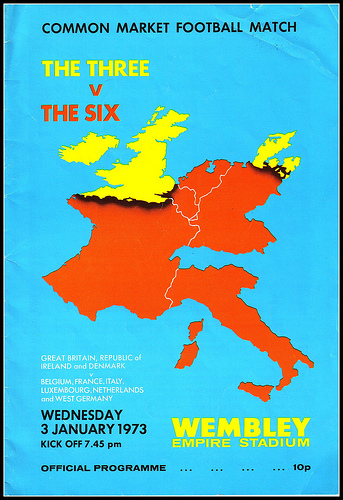
Back in 1973 we greeted our membership of the Common Market with a celebratory football match.

We need some of that spirit - a touch of Ode to Joy - if the forces of light are going to win.
29 Oct 18:07

In the Loop

by Jack Graham

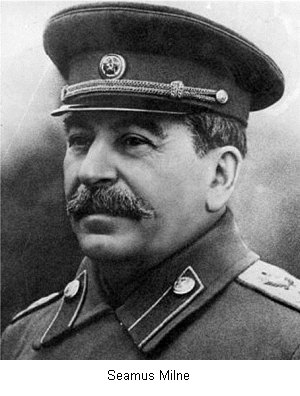
Jeremy Corbyn, leader of the British Labour Party, recently asked Seumas Milne to be his director of communications. Milne is one of the few journalists currently working in the British media who is genuinely worth reading. Milne, for instance, wrote The Enemy Within, which is not the novelisation of the 1996 TV movie (Gary Russell courageously tackled that one), but rather a rigorous investigative expose of the way the Tory government - with help from the ‘security services’ and the tabloid press - set about trying to covertly undermine, smear and frame the NUM and Arthur Scargill during the 1984-5 Miners’ Strike.

Certainly, when you recall that David 'Pigfucker' Cameron’s choice for an equivalent post was Andy Coulson, you see evidence of a stark division – authentically based on a decency and honesty gap – opening up between the parties for the first time in quite a while.

Milne, however, is one of those Left-wing journos who has been repeatedly (and rightly) criticised by Media Lens for being less than brave about criticising the paper he writes for, even as he savages bias elsewhere. So he will already have ability to ruthlessly criticise other people for doing stuff that his own employers do too – something that will come in handy for the director of communications for a political party.  (Just so as you know, Phil - if you start supporting Western imperialism, I'mma call you on it, 'kay?)

Milne's appointment has been hysterically decried by the Right (well, obviously) and also by figures ostensibly on the Left in ostensibly Left-wing publications (I won't link to any of this tripe - if you want to see some of it, just google 'corbyn milne' and it'll be the first stuff you see).  Milne's great crime is supposedly that he's 'an apologist for dictators and terrorists', etc.  If you actually go past the gibbering rhetoric of the denunciations and look at the articles they link to, you find Milne objecting to the ridiculous, dangerous, and hypocritical way Vladimir Putin (of whom I am certainly no fan) is demonized, or trying to provide valuable historical context for terrorist attacks on the West, and turmoil in the Middle East, and having the bad taste to locate such context in the sordid history of Western 'intervention'.  (The detractors link to these articles seemingly confident in the hope that you either won't bother reading them, or that you'll be wearing the same kind of ideological blinkers they do.)  I don't agree with every syllable of what Milne writes, but to call him an apologist for terrorism is just dishonest; and the whingeing about his Oxbridge background is hypocrisy of the highest order coming from the British media and political elites. 

Relatedly, somebody asked me on Tumblr if I thought that Jeremy Corbyn has been so comprehensively smeared in the press that he is now useless against David Cameron. In other words: has a man who looks like Ben Kenobi (after resigning from the Jedi and becoming a Geography teacher) now been so traduced that he seems like a worse option than a man who lies like other people breathe, and whom most people seem to consider a plausible candidate for necrophiliac beastiality?

I have always said that the truly interesting and useful thing about Corbyn is that he is a barometer of the state of British politics… of the balance of forces in the class struggle, if you want the Marxist jargon. He stands as a demonstration of just how far the media – from the Right to what passes for the Left, i.e. Milne’s paper – will go to smear, belittle, insult, infantilise, etc, anyone who has the temerity to put forward basic social-democratic arguments in the age of neoliberal consensus.

But has this campaign – ‘Project Fear’ as Richard Seymour called it – done Corbyn terminal harm? I really don’t think so. Firstly, the kinds of people likely to be taken in by it are the kinds of people predisposed to be. They’re already the kinds of people who will be repulsed by Corbyn’s refusal to idolise the royal family, etc. Or who are already at least slightly horrified by the idea of any party leader diverging from the extreme, blood-soaked, Right-wing neoliberalism and Atlanticist neoconservatism that the mainstream media and political establishment likes to fatuously call 'the centre’. The media project to make Corbyn look like the second coming of Lenin merely provides an aesthetic logic which organises and legitimises such predispositions. In many ways this is a normal task of ideology – to consolidate predispositions, to buffer rather than to persuade. Michael Parenti once called political discourse “the rational manipulation of irrational symbols”.

Having said that, Corbyn’s political discourse is unusual in that it does not lack substantive content (for all that I find it insufficient). The kinds of people already receptive to this content are also the kinds of people who were probably already expecting or half-expecting Project Fear, and are unlikely to be unduly put off by it.  Thus Project Fear might have the equal and opposite effect of consolidating and agitating their own distrust of the mainstream media and political establishment... in much the same way that the original Project Fear, the febrile campaign waged against Scottish independence, will probably turn out to inherit the wind in the long run.

Another thing I’ve always said about Corbyn is that, if he is to have any real value, it will be as a spur to - or a part of, or a beneficiary of - social movements. The relation, if it gets established and takes off, will be dialectical, in that a social movement is the only thing that could, conceivably, propel him to power.

I still think a Labour victory next time is quite unlikely, Corbyn or no Corbyn… especially given the way the Tories now seem to be getting up to their old gerrymandering tricks but on a larger scale. Of course, the moment a Left-wing Labour leader loses an election, the media will howl “See! Told you so!”, forgetting the number of times Right-wing Labour leaders have lost elections, and choosing to forget (i.e. declining to mention) their own part in sabotaging Corbyn's leadership.  The ostensible Left-wingers amongst them will do the same with the added oily coat of hypocrisy glistening on their skins, as they sneer about how the Left prefer to not be in power haw haw haw. The essential underlying logic employed is that the British public are irretrievably - even naturally, inherently - Right-wing, a claim which relies upon a lot of tactical amnesia.

The media - including and perhaps even especially the so-called 'liberal' or 'Left-leaning' media - does an immense amount to create and foster a climate that is Right-wing in real terms.  They daily promulgate a Right-wing ‘common sense’, and peddle an agenda that makes Right-wing concerns seem like the only or the main concerns. Strategic ommission and forgetfulness is an essential part of this.  (As ever, it's amazing how people can contrive to not know, understand or remember things that don't suit them.)  The media doesn’t cover the fact that the electoral system is set up on the basis of random divisions of topography, and is thus inherently skewed away from allowing the mass of people to vote as political blocs based on their class and economic interests. The media chooses to see and represent reality in ahistorical - even atemporal - snapshots, as if people don’t change.  You wonder why politicians bother campaigning if there are certain eternal truths about the opinions of the public that can’t be changed. Isn’t it possible, for instance, that Corbyn might be able to persuade chunks of the electorate away from the ostensibly all-encompassing Right-wing consensus, if he tried? But, of course, to listen to the media, you’d think Corbyn is cheating just by trying. “You can’t change their minds, and you’re not allowed to try in case you do,” is the implicit message.

The media is not a thing sitting alongside capital – it is capital. The political economy underlying the hegemonic way information is distributed in our society determines the kind of information distributed, and the spin put on it, and the way it is interpreted. This isn’t a conspiracy. It’s a self-organising dialectical process. The kind of information that gets disseminated is the kind that is deemed worth disseminating. The value is determined by assessing its believability, sensibleness, responsibility, plausibility, etc. In other words: its adherence to the pre-established standards of mainstream common sense which are further promoted and buttressed by the very process of selection I'm describing!  These factors - believability, sensibleness, responsibility, plausibility, etc. - are relative and are evaluated by people. The people who do the evaluating are the people who get into the industry. The industry selects such people by their class position, and their related ability to make what it sees as good judgements. Once selected, such people generally nestle into a nice comfy echo chamber, buffered by privilege.  And so on.

The irony here is that, for all his truly admirable credentials as an investigative journalist and a vocal opponent of Toryism, Western imperialist intervention, etc, Milne is a part of this same closed system, part of the same institution that refines the news based on judgements of what constitutes political sanity, that makes such judgements within internal loops of logic.  Milne is unusual in how much he manages to contradict the agreed-upon verities of the loop, but he's still in it... hence, perhaps, his unwillingness to criticise his own paper.  Corbyn similarly exists within such a loop, the loop of Westminster... though, like Milne, he shows himself admirably more willing than most to venture outside of it. 

You have to wonder how open both Milne and Corbyn will really be, when the crunch comes, to the very social movements – should they arise – that constitute what is really their only chance of making any kind of difference.

Certainly, other people are wondering that.  As Phil remarked to me when we chatted about this, Milne has suddenly become "controversial" now that he's no longer just an isolated voice in a partyless opposition curated by a pseudo-Left media outlet.  He's become an actual staff-member of an actually Left-wing Labour movement (and, much as Corbyn is just an old-fashioned social democrat, it's surely reasonable to describe him as 'Left-wing' by today's standards).  As a result, Milne has suddenly drawn the intensive flack of the rest of the partyless-media-psuedo-Left (alongside the inevitable sneering and scaremongering of the Right).  Suddenly he's doing more than just providing an 'alternative point of view' that can be slotted in alongside otherwise relentless neoliberal acceptance.  Suddenly he's more than a minority voice that can be proffered by The Guardian as evidence of their independence whenever Media Lens bother them.  Suddenly he looks like part of an actual opposition to neoliberal austerity and interventionism... maybe even part of a social movement.

I only hope the media-pseudo-Left's fearful dreaded outcome turns out to be more realistic than my cynical one.


Also:

I'm currently reading an epic, entertaining, and hugely on-point sporking of Atlas Shrugged.  (Starts here.  Thanks to Daniel Harper for pointing me to the site.  I don't agree with the sporker - Susan of Texas - about the Bolsheviks, but there you go.  I don't agree with many people about the Bolsheviks.)

I remember saying, back in the day, that Fifty Shades of Grey was like Atlas Shrugged but stupider, and with added abusive sex.

I’m sorry to say, I did Fifty Shades of Grey a grave injustice. 

I confess I didn’t finish Atlas Shrugged (oh god, the pain of trying to read that filthily written, evil book...) but I read enough of it to have lots of memories brought back clearly by the sporking I’m reading, and I now recall that, superficial similarities aside:

a) Atlas Shrugged is far more stupid than Fifty Shades of Grey,

b) Atlas Shrugged is only slightly better written,

c) Atlas Shrugged is an immensely more evil book than Fifty Shades, and

d) Atlas Shrugged does actually have abusive, cold-hearted sex in it.

I also confess that, when I forced myself to read three-quarters of Atlas Shrugged, I swallowed the idea that it’s a pro-capitalist book.  It isn’t.  Rather, it promotes a hateful, crypto-fascist, sociopathic elitism that is sometimes pressed into service as ideology by capitalism.  Capitalism itself is actually not championed, not really-existing-capitalism anyway, as Rand clearly doesn’t understand capitalism well enough to praise its actual workings.  She uses capitalism as a fetish object standing for her own cold, cruel, deeply immature impulses about domination. 

I also said, more recently, that Iron Man is a literal Randroid.  That was unfair too, albeit quite funny.  A far better comparison would be Tobias Vaughn from the Doctor Who story 'The Invasion'... a total elitist, incapable of any human emotions except selfish ones, utterly identifying with an alien power that he doesn't really understand but which seems to service his longings for cruelty and power, and slipping from a ruthless concentration upon his own absolute liberty into an inhuman authoritarianism. 

Who is John Galt?  He's a Cyberleader.


29 Oct 15:34

Tricky Dicky, Part 3: First as History, Then as Tragedy

by Jack Graham

William Shakespeare lived at the end of the reign of Elizabeth I and the start of the reign of James I (and VI of Scotland). This was a time when modernity was coming into being. Feudalism was crumbling and fading, and the capitalist epoch was in the process of being born. That’s why we call his time the Early Modern Period (another name for the Renaissance, basically). Modernity is essentially another way of saying capitalism, from its beginnings as a predominant social system onward. (We won’t here argue about whether we currently live in post-modernity.)

Shakespeare lived and died in an era of what Marx refers to as ‘primitive accumulation’. This was the process whereby feudal property was appropriated, broken up and turned into capital.

The basis of the feudal system was land, owned by lords, farmed by peasants who were tied to the land, generally not allowed to leave (which is why it’s such a clever joke when, in ‘The Androids of Tara’, the fourth Doctor responds to Zadek’s observation “You don’t look like a peasant” with “Well of course not, I’ve travelled”). The peasants farmed and produced their own subsistence directly. For the privilege of being allowed to do so (a privilege, incidentally, that people tend to grip hold of tightly when threatened with being forced off the land, out of direct contact with the means of subsistence, and into the wage system) they were obliged to produce surplus for the lord, to be paid upward to him in tribute. This manorial system was the basis of how feudal society was reproduced, i.e. fed and clothed day after day, generation upon generation.  Upon it was built a social system of ties, bonds and reciprocal (though not equal) obligations, arranged in strict hierarchy.

The lord might use part of the surplus he controlled to buy things, or to employ people to produce things for him. Swords, for instance, or clerical records, or domestic service, or minstrelsy, etc. As in our world, the basic economic form produced a wide variety of attendant para-forms and relations. Whatever anyone tells you, today the basis of capitalism as a system of social relations is still industrial production (i.e. people producing stuff for a wage), and yet not every worker is involved directly in industrial production of physical goods (they never were actually, as Marx knew full well). So it was that under feudalism not everybody was either a landowner or a servile farmer. It doesn’t alter the fact that manorial land was the basis of the system.

There was a market even at the highpoint of feudalism, and feudalism became increasingly marketised as time went on. The existence of a market is not an exclusive trait of capitalism, nor it it enough by itself to signify or create capitalism. Capitalism is the ascendancy of market relations. Much work has been done, and many arguments conducted, by Marxists on the question of exactly how and why feudalism transformed into capitalism. Marx himself, to quote David Harvey, thought that

The dissolution of the feudal order, the dissolution of the power of landed property and of feudal land control, was largely accomplished through the powers of merchant capital and usury [not to be considered equivalent to 'the Jews', by the way]. …what we see in usurers’ capital in particular is the independent social power of money (and of the money holders), an independent power that he showed in the money chapter [of Capital vol.1] to be socially necessary within a capitalist mode of production. It is through the deployment of this independent power that usury and the usurers helped bring feudalism to its knees.
- Harvey, A Companion to Marx’s Capital, Chapter 3

Under feudalism, money was a way for the lords to obtain services beyond agricultural production, using the wealth created by agriculture, on a market, by monetizing it. The increasing marketization and monetization of European feudal society is dialectically both cause and effect of the rise of capitalism. As they increase, they feed back into the system. Money, trade, lending, interest, finance… these things become increasingly widespread and essential to European feudal society, and are also the germs of a new society growing within it. (Speaking dialectically, it is the negation of the negation, an opposition which is unified with its opposite but still a constitutive contradiction, a rising and falling quantity which may eventually tip over into a qualitative change… as indeed it gradually did, after strife-filled centuries of social change and class struggle, all fought consciously at the level of ideology – the Reformation, for example.) In much the same way, socialised labour and property grows within capitalism as a capitalist relation but also as a negation which might one day negate capitalism altogether.

We won’t go too far into the question of the relationship of the economic base to the social superstructure, except to note the crucial point that, according to the great central insight of Marx and Engels - historical materialism - this means that feudal land ownership fundamentally determined the nature of the society built upon it. Marx and Engels see a determining relationship between the economic base and the social superstructure, i.e. they think that you get forms of law, behaviour, belief, government, culture, etc, which stem from and reflect the material reality of peoples’ lives, with the most basic reality being how the society is actually made day-to-day.

Marx’s model is not crude and mechanistic. He remembers the role of chance and contingency. He remembers that all society and history is made by humans, and that they make their own history albeit not in circumstances of their own choosing. He remembers that beliefs and ideas and choices and random divergences and inventions can feed back into the economic base (he has to really, if you think about it, otherwise how could he ever think revolutions could happen?). He just doesn’t think such things spring from nowhere. People change the economic base of their society when they invent new ways of doing things… but those inventions themselves stem from people interacting with their economic and social context. Contradictions built into the social context (i.e. antagonisms between classes with fundamentally different material interests, or between nations with similar systems but opposed interests, or between dominant ideas and new technological possibilities, etc etc etc) generate changes. The changes become part of the new context.

(But the question of whether or not this is a correct model is one for another time. Here, I’m basing my argument upon it, and accepting it as essentially true. Here I stand, I can stand nowhere else.)

Primitive accumulation was the violent and traumatic process which Marx was the first to identify as crucial to the formation of capitalism. Labour, land, money, etc, were effectively seized. The old feudal system of nested holdings, tenancies, rights and obligations was broken up. The feudal retainers were not allowed to retain. Monasteries were dissolved. The enclosures turned common lands into farming lands; peasants were turfed off the land and forced into the job market; the land was converted into capitalist farms. Marx describes the violent expropriation, and the cruel legal persecution of people who refused to accept it.

In Illusion and Reality (a work we’ll be returning to), the British Marxist Christopher Caudwell (1907-37) gives this potted summary:

In England during this period [primitive accumulation] the bourgeoisie and that section of the nobility which had gone over to the bourgeoisie, seized the Church lands and treasure and created a horde of dispossessed vagrants by the enclosure of common lands, the closing of the monasteries, the extension of sheep-farming, and the final extinction of the feudal lords with their retainers. The seizure of gold and silver from the New World also played an important part in providing a base for capitalism. This movement was possible because the monarchy, in its fight with the feudal nobility, leant on the bourgeois class and in turn rewarded them for their support. The Tudor monarchs were autocrats in alliance with the bourgeoisie and bourgeoisified nobility.

Primitive accumulation is the forceful - murderous, if needs be - appropriation of any wealth that can be wrested out of common, or non-capitalist, hands and turned into capital. It’s the dark secret on the birth certificate of capitalism.

The account Marx gives in Capital is flawed.  He ignores the issue of how primitive accumulation hit women, which has had to be addressed by later thinkers - perhaps most compellingly Silvia Federici.  Also, his unsparing account is arguably a tad exaggerated, though historical research tends to bear out the thrust of his argument. If it wasn’t quite as savage as he says, it was bad enough. It arguably still is. David Harvey has made the brilliant point - drawing on Rosa Luxemburg - that ‘primitive accumulation’ continues all the way through the history of capital up to the present day. Capitalist imperialism and colonialism entail primitive accumulation in the conquered or dominated lands. Capitalism crashes into non-capitalist societies, accumulates from them very primitively indeed, feeds itself and creates itself anew in them. In the West, capitalism has never been done primitively accumulating. Neoliberal privatisation is arguably a form of primitive accumulation of social wealth which exists to some extent outside the circuit of capital, outside commodification, outside the creation of profit. Our current government is a ruthless facilitator of primitive accumulation.

To anticipate myself, this idea - that primitive accumulation never really stopped and continues today on a global scale - may partly explain why Shakespeare continues to speak to so many people all around the world.

Caudwell (I’m going to be cheeky and quote him at length) goes on to say that

[i]n this period of primitive accumulation the conditions for the growth of the bourgeois class are created lawlessly. To every bourgeois it seems as if his instincts – his “freedom” – are intolerably restricted by laws, rights and restraints, and that beauty and life can only be obtained by the violent expansion of his desires.
Intemperate will, “bloody, bold and resolute,” without norm or measure, is the spirit of this era of primitive accumulation. The absolute-individual will overriding all other wills is therefore the principle of life for the Elizabethan age. Marlowe’s Faust and Tamburlaine express this principle in its naïvest form.
This life-principle reaches its highest embodiment in the Renaissance “prince.” In Italy and England – at this time leaders in primitive accumulation – life reaches its most poignant [sharp] issue in the absolute will of the prince – this figure of the prince expresses most clearly the bourgeois illusion, just as in real society the prince is the necessary means of realising the conditions for bourgeois expansion. To break the moulds of feudalism and wrench from them capital requires the strength and remorselessness of an absolute monarch. [Marx mentions the violent legal measures initiated by Henry VIII, and subsequent monarchs, against expropriated paupers who didn’t “put themselves to labour”] Any established bound or let to the divine right of his will would be wrong, for such bounds or lets, being established and traditional, could only be feudal, and would therefore hold back the development of the bourgeois class.
Elizabethan poetry in all its grandeur and insurgence is the voice of this princely will, the absolute bourgeois will whose very virtue consists in breaking all current conventions and realising itself. That is why all Shakespeare’s heroes are princely; why kingliness is the ideal type of human behaviour at this time.
Marlowe, Chapman, Greene, but above all Shakespeare, born of bourgeois parents, exactly express the cyclonic force of the princely bourgeois will in this era, in all its vigour and recklessness. Lear, Hamlet, Macbeth, Antony, Troilus, Othello, Romeo and Coriolanus, each in his different way knows no other obligation than to be the thing he is, to realise himself to the last drop, to give out in its purest and most exquisite form the aroma of self. The age of chivalry appears, not as it sees itself, but discredited and insulted, as the bourgeois class sees it, in the person of Hotspur, Falstaff and Armado, English cousins of Don Quixote.
At this stage the strength and vigour of the bourgeois depends on his cohesion as a class under monarchist leadership. In many parts already a self-armed, self-acting commune, the bourgeoisie in England, has as its spear-head the court. The court is the seat of progress, and its public collective life is for the moment the source of bourgeois progress and fountain of primitive accumulation. The court itself is not bourgeois: it seeks the coercive imposition of its will like a feudal overlord, but it can only do so by allying itself with the bourgeoisie for whom the “absoluteness” of the monarch, although feudal in its essence, is bourgeois in its outcome because it is creating the conditions for their development.
Hence we find Shakespeare, although expressing the bourgeois illusion, is an official of the court or of the bourgeois nobility. Players are the “Queen’s Servants.” He is not a producer for the bourgeois market or “public.” He has a feudal status.

Actually, feudal status aside (and it’s true that he and his company frequently performed at court, received royal patronage, and even became grooms of James I), Shakespeare was a producer for the bourgeois market. As Caudwell notes, he was of bourgeois parents. His father was a glover-maker, petty criminal (illegally selling wool), usurer (that quintessential practice of rising capitalism!) and sometime mayor of Stratford. William was unusual for a playwright of his time in that he took a share of the receipts as a member of the acting company and part owner of the Globe Theatre. He ended up becoming quite rich, achieved the status of ‘gent’, applied for and got a family coat of arms (a paradoxically feudal sign of his bourgeois rise), and went back to Stratford to buy one of the biggest houses in town. In retirement he invested some of his showbiz fortune in London property and in agricultural land around Stratford. When some of the land on which he was a titheholder was threatened with enclosure by wealthy landowners, and the corporation of the town of Stratford protested on the grounds that the enclosures would impoverish local people, Shakespeare elected not to join the protest once he was personally assured of monetary compensation.

Shakespeare was a new man, a modern man, one of the rising middle classes of this period of bourgeois ascendancy. As a result, we see new men - and women! - of this kind all through his plays. People of rich interiority and subjectivity who strive and struggle to rise. Kernals of truth and ideological fairytales both, these people are the quintessential new type.

And yet Shakespeare displays profound ambivalence about such people, about people like himself, or people who you might expect to be his idealised self image. All through the plays, the rising men are dangerous. Macbeth, Claudius, Edmund, Richard.

Richard, for instance, for all that he is a duke and a prince and a king, is also a man of business. He’s an entrepreneur of power. He’s a ruthless competitor. A self-interested utility-maximiser. He constantly uses the language of business, of trade, of money, of payment, of profession, of coin. He is repeatedly compared to tradespeople. He repeatedly commodifies relationships, buys services, bribes and pays. And he is the quintessential lone, atomised actor of bourgeois economics. He makes himself into such. He sees other people as material. He exploits and reaps the profits. He aggressively expands, launches a hostile takeover of England, and ends up chairman of the board. He unsentimentally eliminates the competition. And for all that he is wicked for doing all this, it’s clear that he succeeds at it because that’s the way the world works now. That’s what’s been going on in England during the preceding years, during the preceding plays even! And he is only unseated in the end by enemies who, for all that they talk a nicer game than him, engage in very much the same kind of ruthless power-grabbing – just enshrining their tactics within a socially stable framework of lawful, pious rhetoric of consensus and virtue. Richard fails because the rhetorical power of his PR proves unenduring in the face of savvier competition. The pre-capitalist and pre-modern world had villains, usurpers, etc, of course… but there is no equivalent for this kind of figure in the literature of that time. It is only in the age of primitive accumulation, of the rise of the bourgeois system, that such creatures as Richard strut the stages. Shakespeare is clearly intoxicated by the dramatic power and will of such stage creatures, and in many ways the plays celebrate them, yet the enjoyment is anxious. They remake the world, and we can often sympathise with their motives and impulses – from Richard down to less overtly villainous iterations. Maybe they even leave the world better than they found it, albeit inadvertently. Maybe they are progress. Yet they are also terrifying, and they bring ruin, destruction and horror in their wake. They are a dramatisation (avant la lettre) of the Marxist insight that progress and horror are inextricable, not just flipsides of each other or unfortunate juxtapositions, but interpenetrating unified contradictions.

They are the Renaissance “princes” that Caudwell talks about, inspiring and inspired by Machaivelli’s Prince. The kings sit atop the feudal system and yet, owing to the contingencies of history, it is their concentration of power which allows them to be key players in the decline of feudalism and the rise of capitalism – manifested in the plays, as Caudwell observed, in the renaissance Machiavellianism of their will and subjectivity. The conservative and the radical mixed up. The dialectical unity of opposites again, negating the negation and leading to the transformation of quantity into quality. The ‘machiavel’ then in turn becomes a figure on the English Renaissance (Early Modern) stage. The figure of wicked calculation, cousin to the stage figure of ‘the Vice’, the embodiment of… well, vice.

Yet that book – Machiavelli’s The Prince - is the product of bitter disappointment and disillusion.  This man, Machiavelli, had been a fierce Florentine patriot, a republican, a defender of the revolutionary city after the popular ousting of the plutocratic Medici.  He lost the game and, having been tortured and exiled, he sat and wrote what is supposed to be a job application to the triumphant Medici... and it turns into the first open admission (in modern European letters) that ethics and politics are separate and often irreconcilable.  It is coded, deliberately or not, to imply that the failure of Republican hopes in the face of the Medici stemmed from a failure to be sufficiently ruthless against them, to be as utterly cynical as the Medici themselves.  In the process, Machiavelli praises Cesare Borgia as the perfect Prince.  The Medici had regained their status in Florence partly owing to an alliance with the bellicose Pope Julius II, who had been one of the Borgia's most implacable enemies. 

Gramsci famously argued that the book was aimed at the common man, because the leaders to whom it was supposedly addressed already knew everything Machiavelli was saying.  They just didn't talk about it.  In this reading, The Prince might become the whistleblowing of ruling-class secrets.  If you convert much of the advice into mordant irony, you find a book that laments a world in which people like the Medici can prosper precisely through a secretive, two-faced instrumentalism based on the most pessimistic view of mankind possible.  Of course, for the Prince himself, the most pessimistic view of mankind is actually the most optimistic, because it posits humanity as a weak and easily-exploited mass of flesh-puppets. 

The essentially double-edged nature of the rise of bourgeois social relations is expressed in the book's implicit recognition of this.  Part of the promise of modernity, of its greater openness and ductility and possibility, is an inextricable co-habitee: opportunistic political tyranny based on the utilisation of people as counters, bargaining chips.  Money again; the force which eats away at feudalism from within.  Money to be banked, exchanged, invested, harvested.  Banking is the basis of the rise of capitalism in Italy. The market is the basis of Medici power.  They make society a market in which people are the tokens.

Machiavelli may have come to accept this view in the counter-revolutionary period after the fall of the Florentine Republic he championed, but I don't think his disillusion equates to an easy reconciliation with the kind of 'realpolitik' people often take from the book.  On the contrary, the book seems more like Michaelangelo's Last Judgement on the wall of the Sistine Chapel - a work of melancholy recognition of the failure of the liberatory promise of the renaissance, destined to be perpetually overlooked by the ceiling upon which the optimism is forever frozen. 

This is the fundamental dichotomy at the heart of the Early Modern Period that Shakespeare too – later than Machiavelli but on the same trajectory - sums up in his Richards: the great burst of opportunity for people to escape the shackles of the fixed way of life that went with feudalism, with all its stratified and rigid reciprocal obligations, all its social immobility, all its strict hierarchies… the great, world-changing progress that can be made by such freedom… and yet the fact that this transgression comes with so much entrepreneurial ruthlessness and businesslike hardnosedness. Shakespeare’s own rise from humble petty-bourgeois beginnings to wealthy semi-gentry entailed a fair amount of grubby horse-trading, speculation, sharp practice, huxterism, brash self-promotion, crawling round patrons, evading taxes, GBH, speculation in property and land, nest-feathering and, last but not least, apparently some pretty cold treatment of his wife. His rich subjectivity is intertwined inextricably with all this. His respectability is intertwined inextricably with what could have been considered low sordidness. And he only had to look around to see other men rising even father and faster by being even more ruthless and sordid.

It seems to have struck some deeply contradictory chord in the man. Even as he forges his fame and fortune and career, even as he rises, even as he dramatises the struggles of the rising new men, he also frets over them. And he frets over the loss of the old world.

Shakespeare’s father John was born roundabout the same time as the key events of the English Reformation were kicking off (you know, Anne Boleyn and all that malarkey). His was the first generation that grew up in an England broken from Rome. This rupture was unfathomably more traumatic than we can imagine today. It gradually mutated into the loss of an entire integral part of English culture, of an entire popular conception of life, of an entire popular conception of time and ritual. Saints and stories and holidays and traditions – steeped in history – became outlawed. (And it’s important to note that, contra the usual account you get from the televised gaggle of Starkeys and Schamas, this wasn’t just a random accident of history that happened because Henry VIII fancied Anne Boleyn – it was an expression of deep changes going on in the structure of Early Modern society. It was the subjective factor at the head of such historical forces. It was about the rise of the modern nation state, the new forms of nascent bourgeois government and imperialism, new ideas of sovereignty, trade, conflict with the Papacy as a foreign power expressing rights over the domestic state, jockeying for position within increasingly cut-throat rival clans of domestic aristocrats - all on the make and allied with different politico-religious formations, etc. The Boleyn girls were fashioned by their father to be attractive stepping-stones for his family’s rise in favour at court, and thus to power and position, etc.)

Later, as a councilman, John Shakespeare probably participated in enforcing the suppression of Catholicism, even down to whitewashing over the old and treasured pictures on the walls of local churches. John might have been a recusant Catholic. There is much debate about this (or at least there used to be; the issue is out of fashion now) but ostensibly a Catholic testament of his was found secreted away after his death (if it existed it is now lost).

In any case, two generations is not enough to get over seismic events like that, and Shakespeare’s plays are filled with a bittersweet longing for the pre-Reformation past. He sets all his History plays – bar one - in the period which led up to the end of the medieval period, the Catholic past. Falstaff represents this past, with his allegiance to his (probably invented) chivalric past, and his allegiance to the rhythms of the body and seasons. He’s Merrie England personified: old, gross, hypocritical and yet honest on his own terms, ridiculous, lost, achingly sad. He is finally rejected by Prince Hal, one of those new men. Similarly, the revelling Sir Toby Belch in Twelfth Night represents something similar in opposition to Malvolio, the prim, proper, priggish and professional representative of Puritanism. “Dost thou think, because thou art virtuous, there shall be no more cakes and ale?” he drunkenly demands of Malvolio, referring to Catholic festivities - possibly even to the Catholic mass - hated by puritans. Hamlet is explicitly torn between the Catholic past – out of which the ghost of his father comes from Purgatory – and his education at Protestant Wittenberg (the same place Faustus taught and Victor Frankenstein would one day go to school).

The same sort of tearing is key to understanding all Shakespeare’s tragic heroes. They are all torn in some way between the past and the future. As Paul O’Flinn says in Them and Us in Literature:

Tragedy in Shakespeare therefore springs not from the hero’s flaw or sin but from his dislocation, his attempt to live in ways that his society suggests but does not accept. So, for example, Macbeth and his wife are desperate to climb a rung higher on the social ladder, a desire which capitalist society has since come to insist on as the motor of all human progress. But they do not live in a socially mobile world; theirs is a feudal one where you are born into a certain station and stay there. Out of that contradiction grows their tragedy.

Hamlet is a modern, educated youth who is caught between a Humanistic version of the future and the old feudal order, built on blood vengeance and rigid hierarchies. His tragedy is that he can't be true to himself and obey his father's ghost, no matter how much he might want to. Lear dismantles his kingdom and sets up a new order based on competition, yet he can't compete! Two of his daughters whittle away his feudal powers after they win in a bourgeois contest of love that the third daughter lost because she clung to a feudal notion of love as a bond, a social obligation. Othello owes his promotion to the forward-looking commercial city of Venice, yet he cannot shake off his awareness of himself as an outsider or the resentments of the bigots... nor can his romantic nature fully handle the Venetian conception of marriage as a property relationship.  Coriolanus cannot be both the imperious aristocratic bullyboy and the tactful politician, yet Rome demands both of him. Timon discovers the power of (bourgeois) money to both create the impossible and destroy all social ties when he fails to negotiate the corrosive contradictions inherent in wealth. And so on.

I suggested earlier that part of Shakespeare’s continued relevance and popularity might be down to the fact that he is the dramatist of primitive accumulation, and primitive accumulation goes on. More broadly, his liminal class position within a liminal historical moment also gives him immense appeal. He not only dramatises many of the social contradictions of bourgeois culture and society, but he also straddles our continuing ambivalence about them.

I said in the opening part of this series (before I got somewhat sidetracked last time) that

…feudalism [was] a brutal, exploitative system in which millions toiled in slavery or near-slavery for gangster clans of bling-laden masters, oppressed by a quasi-totalitarian church, stunted by poverty and tied to the land, etc etc etc… and yet there is no denying that something was lost when the feudal world was slowly destroyed and usurped.

I talked a bit about how the quintessential genres of modernity - SF and Fantasy - create an opening for a mourning of this kind, as they are obsessed with history, and thus reflect the frenzied pace of history under modernity (a function of the capitalist system’s built-in drive to revolutionize).

I then said that we could get at what this mourning signifies by getting to Shakespeare. And we get there by picking up on the fact that, for all that he was a new man, a bourgeois individualist, an entrepreneur, a beneficiary of the new openness of Early Modern society, etc, he was also a conservative.

The word conservative is, unlike a lot of conservatives, very flexible and adaptable. It has, over time, been used to describe a great many radicals and zealous fire-eaters, people who wanted to radically remake the world in which they found themselves. Margaret Thatcher was a ‘conservative’ - a Conservative even - and yet she was to a great extent personally responsible for one of the most radical, far-reaching and successful shake-ups of the British politics, economics, society, and culture for generations. Of course, it’s also true that she did conserve some things from genuinely conservative impulses… what’s interesting is that the essentially radical impulses of neoliberalism (because that’s the socio-historical force of which her Hayekian monetarism was an expression) could co-exist within her, and the party she remade in her image, alongside remnants of traditional ‘One Nation’ Toryism. Some serious squabbles aside, the party has proved itself able to syncretize these impulses, which often contradict each other in both affect and effect. The basic ideological glues which have kept them stuck together are jingoistic chauvinism and fearful contempt of the poor and working class - terror of erosion of privilege, in other words, which is always at the heart of all modern conservatism. (This is no essential obstacle to garnering working class votes, as the Tories do, though notice how the long-term secular decline in their share of the vote has been evident in votes they used to pilfer from the working class… though, again, you have to remember that this is, paradoxically, partly owing to the destruction they themselves have deliberately wrought upon traditional working class industries, jobs and communities… but we veer even more severely off-topic… and though veering severely off-topic, and thus testing the nature of what a single topic can contain, is going to be central to the method and affect of this series, there are, nonetheless, limits.)

The Thatcher factor was, as hinted above, only the subjective factor at the head of historical forces, but that isn’t insignificant. Chomsky was fond, back in the day, of describing the second Bush administration as a coterie of “statist radicals”. His point was that, for all that they oversaw another wave in the neoliberal drive to deregulate business, and expropriate and privatise social wealth (the high point of this being their aggressive expropriation and privatisation of the social wealth of Iraq), they were also radically extreme in their dedication to unfettering American state power and military force. Their project was the obvious one of trying to aggressively combine neoliberalism with neoconservatism; violent neo-imperialism waged by the American state largely in service of American capital. Meanwhile, as is usual with successful American ‘conservatives’, the blather about traditional “values” at home was as performative and tactical as the blather about “democracy” in the Middle East. The former was never based on sincere ideological attachment to the sorts of things Evangelical Christian mothers in Kansas homeschool into their kids, no more than the latter was ever based on sincere ideological attachment to the kinds of things the so-called ‘Decent Left’ still has self-righteous wet dreams about. Nevertheless, the appeals to voters’ ‘values’ is not unlike the way the post-Thatcher UK Tories mouth their jingoistic and traditionalist appeals to the blue rinse brigade in order to scrape together enough votes to institute sweeping social changes.

Aside from all this, there’s also the question of what kind of society you live in, at what point in history, and how it is changing. Conservatives, remember, want to conserve (don’t worry, I’m not going to go all freshman on you and quote the dictionary definition). What it means to say that someone is a ‘conservative’ is going to depend greatly upon how their society is changing, and why. (I’m assuming we’re taking the term to be more meaningful than just a crafted self-description.) I said above that terror at the erosion of privilege is at the heart of all modern conservatism. I’m not entirely sure that’s so true of pre-modern or early-modern conservatism (if we can continue to take the outrageous liberty of deporting the term backwards into anachronism).

Shakespeare, as I say, was a conservative. I’m not being original or iconoclastic in saying so. Certainly, he is often employed and adduced by conservatives for the bolstering of conservative ends. There’s a very long history of this. Michael Portillo famously quoted the “degree” speech from Troilus and Cressida at the Tory Party conference one year. A far less original move than he might’ve thought. But I won’t go into the long history of Shakespeare being ideologically appropriated as a crusading emblem of England and patriotism and empire and hierarchy, and all those lovely things. It’s been well covered elsewhere. Nor am I going to quarrel with it especially. There are all sorts of things that need to be said about it - objections ranging from adding a bit of nuance all the way up to angry denunciation - but for the time being, and for the sake of argument, I’ll tactically concede it. Shakespeare was a conservative. But what does this really mean? I’m not to delve into whether or not it means he would’ve approved of Victorian morals, or modern colonialism, or the Prince of Wales, and been happy to lend his name to Rule Britannia and all that kind of stuff. I’m not talking about whether he would’ve voted for Disraeli, or even for Michael Portillo.

Shakespeare was a conservative in his own time, not in the era which staged his plays as national pageants for a country forging an industrial revolution and an empire. He was a conservative in the age of the decay of feudal social relations (and, relatedly, Catholicism) and the rise of bourgeois social relations. He is a conservative in the senses I’ve already outlined. He distrusts the new men, the ruthless self-seekers who leave their ascribed place and try to rise - even as he is one. He sees their horror and their tragedy even as he sees the way they (or, as I might want to put it, the forces they represent) push the world forward. He sees the way the social contradiction inherent in his hybrid society can tear people to pieces. He distrusts and baits the puritans – the reformers, the radical protestants, the “radical Left” of the time, as Michael Rosen has called them – and mourns the loss of the stories and values of Merrie England, of the Catholic past of his father. He was a conservative in his own time because he was, to be as crude and provocative about this as I can be – an anti-capitalist. He was aligned (broadly) with ideas that we might now want to call radical politics because, in his social moment, he was distrustful of the dawn of the very system that we now live in as a long established and ageing fact. Much the same mirror effect can be seen in the way we look back at the Puritans who get mocked in Twelfth Night. They were the radicals and revolutionaries of their time – despite embracing values that we would now think of as ultraconservative – because they were the ones pushing (whether they knew it or not) a social agenda aligned with the rise of the new bourgeois society. The intimate link between Protestantism and rising middle classes, private property, nascent capitalism, etc, is well documented (even if Weber puts the cart before the horse).

It’s fascinating that modern conservatism relies upon national chauvinism as a vital adhesive for its movement (as noted in the case of Thatcher and the Tories) and spurious moral values (as noted in the case of the American ‘statist radicals’ of the GOP)… and both these strains are quintessential parts of the ideology pioneered and championed by the people who, in Shakespeare’s time, were the radicals. The lineage of the chauvinism traces back to the new national consciousness and beginnings of colonialism which accompanied the sweeping changes in Early Modern England. The lineage of the talk about moral values can be traced back directly to the Puritans, with their emphasis on chastity, sobriety, obedience, private virtue, etc. The ideology of capitalism hasn’t changed all that much.

It’s a performative overstatement, obviously, to say that Shakespeare was an anti-capitalist. I’ve already talked about how he was himself one of the rising new bourgeois. In many ways he is the definition of an arriviste, middle class bourgeois.   But that’s the point. He was both because his time was both at once, and for historically contingent reasons he straddled the fulcrum.

Much as SF/Fantasy contains the implication of other social worlds than modern capitalism, so Shakespeare’s plays contain similar implications, via the conservatism (really nostalgia for the pre-bourgeois) that permeates them. Can there really be something about the divided, implicit distrust of the capitalist spirit in the plays that expresses such distant searching for social change? I think so, and I think we see it very strongly in Richard III… strangely, since the play is by no means Shakespeare’s most profound or subtle statement. I think it stems from the conjunction between the social situation of the playwright (outlined above) and the accident of the fact that Richard III is the king whose death marks the end of the medieval, and whose successor marks the start of the modern. This is a semi-arbitrary and post-facto construction, obviously, and I’d want to argue for an actual understanding of history far less boxy and far more dialectical. But the fact remains, the dawn of the Tudors is what historians have tended to use as a handy marker for the end of the middle ages in England. When Richard goes down to defeat at Bosworth, what’s also being defeated is the last serious gasp of the medieval.

This isn’t to express sympathy with the historical Richard. Nor is it to say that the character of Richard in the play is, in some way, anti-bourgeois. As noted, he’s anything but. I’m pressing him into service – and I like that we vassals and serfs can do that to him – as a bookmark. The Wars of the Roses were a historical expression and symptom of the general crisis of feudalism. Plague, peasants’ revolts, political instability, the gradual monetization and marketization of social relations, the unstable attempts at repression of social mobility by the state… finally, civil war. And the new dynasty presides over the beginnings of a bourgeois revolution in centralised government, taxation, colonialism, and finally to Reformation and the era of primitive accumulation.

For all that this does represent ‘progress’ (in a technical sense rather than a moral one – remember how I said progress is inextricably bound up with horror?), and for all that the feudal system was brutal and tyrannical and exploitative, it’s easy to see the protest latent in Shakespeare’s mythologizing of the fall of the medieval. The fall is not just a fall of tyranny (and I stress again, feudalism was tyrannical and brutally exploitative) but also a fall of a world where people had not yet been uprooted from direct access to the means of making a living, forced into the job market, forced to sell themselves, forced into the world of capital where there are no obligations as well as no ties, where there are no protections as well as no serfage and villeinage, where competition rules. The loss of the social fixity was also a loss of ties of mutual obligation.  Again, let me stress: I’m not rhapsodizing feudalism or yearning to return to it (god forbid!). What I’m saying is that even as those who can compete and self-actualise in the new society praise progress and liberty, these opportunities are based on horrors like primitive accumulation, imperialism, slavery, the misery of wage labour, the marketization of human relations, etc.

Through Richard, we see the old world eating itself. Richard in the play is the worm of capital in the apple of the past. And the First Tetralogy (the four plays which depict the Wars of the Roses) make it clear that Richard isn’t much worse than any of the less self-aware ‘noble warriors’ of his world; indeed, in many ways he’s a just punishment upon them. Yet the Tetralogy, in dealing with the Wars of the Roses, shows us a world eating itself in ruthless competiton, in the Hobbesian bellum omium contra omnes before Hobbes described it, in the ruthless dissatisfaction and competition of capitalism. Of course, such wars actually happened before capitalism – the plays depict one! – but the plays are a product of a nascent capitalism, and as such they dramatise that as much as they dramatise the past. The dreaded outcome represented in the plays by the Wars of the Roses is actually the dreaded outcome of the loss of the old world. It’s a reflection of primitive accumulation at least as much as it’s a reflection of a lordly medieval civil war. The endless discussions of the land torn apart, society sundered, a land steeped in blood, made infertile, families killing each other… it’s about what was happening all around Shakespeare as much as it is about what happened to people during the Wars of the Roses. It’s a lament and a prophecy all at once.

Richard may not win at the end of the play, but - whether anyone in the play realises this or not - his ruthless business values do. So we end up saddled with the consequences.

People in Shakespeare's time used the word 'tragedy' far more freely than we do.  They sometimes called Richard III a tragedy rather than a history, or they used the terms interchangeably.  I think it's actually quite apt.


29 Oct 14:08

The Yogurt Revolution.

by Peter Watts

(Another Nowa Fantaskyka remix)

Pick something you hate.

A government, maybe, or a church. Some multinational that treats its customers like shit. Any institution powerful enough to keep people under its thumb, to crush its competition (or at least fix prices with them) so you have nowhere else to go. Something you’d really like to see burned to the ground, although you know that’s never going to happen.

A good example, here in Toronto, would be a telecommunications giant called Bell Canada. (Rogers would also be a good candidate— they suck almost as hard— but I think Bell owns more media.) If you’ve ever dealt with these guys— and you probably have, if you’ve ever watched Canadian TV— the following scenario might warm you up at night:

Just before Just Desserts. (Photo Rene Johnston.)

Just before Just Desserts. (Photo Rene Johnston.)

Gustav runs a cellphone kiosk for Bell. Walking home from work one night, a passing stranger notices the perky corporate logo on his employee polo shirt— and punches Gustav in the face.

Gustav goes down. “Fucking Bell,” his assailant growls, kicking him in the ribs.

Gustav’s no dummy. He knows everyone hates Bell. He knows all about the bandwidth throttling, the extortionate overpriced contracts, the abusive telemarketing and contemptuous customer service, the routine surveillance of customers for the benefit of any government snoop with her hand out. But— “That’s not me!” he cries around a mouthful of broken teeth. “I don’t make those decisions— I just sell phones!

“It… doesn’t…matter!” the attacker spits out, emphasizing each word with another vicious kick. “You…knew. You… chose… to… work… for… them…” Eventually he tires himself out and wanders away, leaving Gustav to bleed out on the pavement.

Just a psycho with anger-management issues, you might think if you’re a Bell CEO reading about it the next day. Nothing for you to worry about, even if you did just cut Tech Support’s budget by another 10% because you want a fatter year-end bonus. The peasants will never get to you; you’re safe up here on the 50th floor. Shame about poor ol’ Gustav, though.

But then it happens to Shirley. And then Piotr. And Mahmoud, and George. All those underpaid drones hawking your wares at the local malls are suddenly getting the shit kicked out them by random strangers. It’s the weirdest thing. None of the attackers even have criminal records.

Now no one wants to work for you. Drones quit in droves for fear of being kicked to death like dogs in the street, and not even the unprecedented promise of a decent wage can lure in replacements. Management’s safe— they don’t deal with the public— but how can the top of a pyramid stay standing when the base just up and leaves? Bell has but two choices: go broke, or stop pissing off their customers. For the rest of us, it’s win-win.

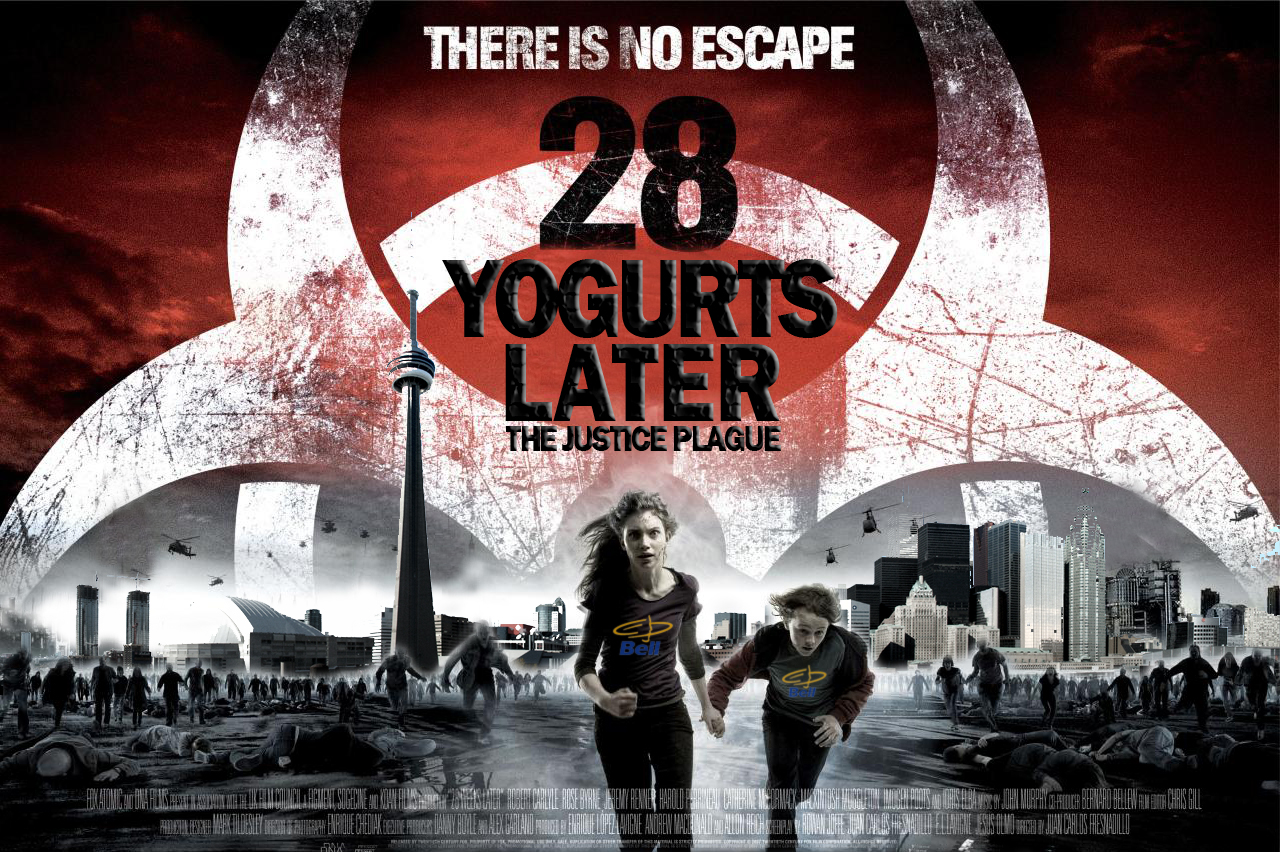
Isn’t that a wonderful little scenario? I call it “The Justice Plague”, and I fully intend to write it as soon as I can come up with an actual storyline. So far it’s all premise and no plot.

It’s a terrific premise, though. It hinges on yogurt— more precisely, on the ways gut microbes affect your behavior.

Of course, we’ve always known that your gut affects your mood. But the extent and complexity of those effects is only now coming to light— and it goes way beyond the cramps you get from salmonella, or the tryptophan drowsiness that lays you low after a turkey dinner. It’s not much of an overstatement to say that your gut bacteria are a large part of what makes you you, psychologically. Transfer gut biota from one animal to another, and you transfer personality traits as well.

Think about that. You can literally transplant personality traits via feces. To that extent, we all have shitty personalities.

Liberté indeed.

Liberté indeed.

How does it work? For starters, your gut has a mind of its own: a standalone neural net with the computational complexity of a cat brain (no surprise there— cats are basically stomachs sheathed in fur anyway). Your gut microbes pull its strings by feeding it a complex cocktail of hormones and neurotransmitters; gutnet, in turn, tugs at the brain along the Vagus nerve. (Gut bacteria also have a more direct pipe into the brain via the endocrine system. Most of your brain’s neurotransmitters— half the dopamine, most of the serotonin— are actually produced in the gut.) Via such avenues, your gut bacteria influence the formation of memories, especially those with strong emotional components. They affect aggression and anxiety responses by influencing neuroinhibitors in the prefrontal cortex and amygdala (which is responsible for fear, aggression, and the intensity of one’s response to personal-space violations). You can make rats more or less aggressive by tweaking their gut biota.

You see where I’m going with this. Engineered gut bacteria— spread through shipments of spiked yogurt, perhaps— tweaked to promote violent, uncontrollable rage in their hosts. It’s barely even speculation; rabies does that much, and it’s not even engineered.

The big problem is targeting, of course— how to trigger reflexive aggression at the sight of a specific corporate logo. Corporations actually give us a lot of help here; they spend millions designing logos that are simple, striking, and immediately recognizable. So you could tweak responses in the V1 and V2 areas of the visual cortex— those pattern-matching parts of the brain that identify specific shapes and edges. If you could bend such circuits to your will, you could provoke a response in anyone who saw a given shape.

But it would be a lot simpler to let the brain do all that heavy lifting on its own, targeting instead those circuits that connect a general sense of “recognition” to the emotional response one feels at the sight of a given brand. You’d have to be familiar with that brand for this trigger to work— it keys on feelings of recognition, not the specific geometry of the stimulus— but who doesn’t recognize the logos of major corporations these days? The best part is that all those recognition/response macros are located in the dorsolateral prefrontal cortex and in the— wait for it—

The amygdala. Back down in the limbic system, where gut bugs already affect aggression.

Why, we might be able to pull this whole thing off without ever leaving the basement. We don’t even have to create the response; just magnify pre-existing resentment and let it off the leash. A thousand, a million disgruntled customers: turned into weapons of mass corporate destruction with a little help from the yogurt industry.

Hey, all you basement biologists. All you DIY Lifehackers.

Looking for a project?

Late-breaking Postscript, 0900 30/10/15: Well, look what came over the transom— from none other than Jesus Olmo, who actually wrote the screenplay for the original “28 Weeks Later”…

Here's hoping 20th Century Fox doesn't sue either of us for copyright infringement...

Here’s hoping 20th Century Fox doesn’t sue either of us for copyright infringement…

29 Oct 11:19

Rogan Gosh: Star of the East

by Lawrence Burton

Peter Milligan & Brendan McCarthy
Rogan Gosh: Star of the East (1990)
Revolver was another one of those 2000AD spin-off comics which came and went back in the nineties. It lasted seven issues and, brushing up on Wikipedia, I realise that I have absolutely no memory of at least half of its contents. I remember the name Happenstance & Kismet, but not Fighting Figurines - whatever the hell that was, nor Dire Streets, which looks horrible. I have the impression that Revolver was instituted in response to the then prevalent subcultural premise of the sixties having been like a really amaaaaaaazing time, yeah? which additionally served to launch a million terrible bands. Grant Morrison's version of Dan Dare appeared in Revolver, and I quite liked that, and there was some sort of biographical strip about Jimi Hendrix which probably worked better for people who care about Jimi Hendrix, and then there was Rogan Gosh, which I didn't really understand.

It's painted by Brendan McCarthy so you can't really blame me for revisiting this one. I still don't understand it, but then I don't think I'm supposed to. The narrative is impressionist rather than realist, and may as well be considered as nothing deeper than an excuse to have a certain quota of Brendan McCarthy pages assembled in the same place. There's an afterword offering explanations about how Rogan Gosh isn't a linear story - which funnily enough I'm sure most of us noticed - but it reads like whining excuses invoking dogs eating homework tagged on at last minute when someone realised that Milligan hadn't actually bothered to write a story, and it particularly reads that way when he invokes Einstein, Bohr, and Schrödinger.

Give me a break.

Nevertheless I'm a big boy, and I can handle impressionism and abstract narratives splattered across the page with a logic closer to music than writing. I've read William Burroughs, and so Rogan Gosh sort of works providing you keep in mind that the words are no more an explanation of what's going on with the pictures than they can be considered representative of any deep insight into the illusory nature of reality. Like most of the stuff we've bothered to remember of the sixties, Rogan Gosh spends a lot of time selecting which books to leave casually scattered across its coffee table prior to your arrival, and oh - there you are at the door - on goes the record: second track, side two so it doesn't look too obvious.

Come in.

This?

Oh they were called the Vanilla Tea Kettle. You probably haven't heard of them. I listen to this album a lot.


Still, as something pretty much inviting its readers to BYOS*, Rogan Gosh is nevertheless enjoyable thanks to the art and the occasional flash of snappy dialogue. It slightly bothers me how this apparent attempt to engage with Indian culture is centred around a man named after a fucking curry, and for pretty much the same reason that Kula Shaker's continuing to draw breath bothers me, although this aspect is addressed a little way into the story, albeit not very convincingly; but providing you keep in mind that Rogan Gosh isn't really about Indian culture so much as it's about our slightly clueless reaction to the same - albeit possibly not deliberately - you should be okay.

*: Bring Your Own Story.
28 Oct 20:36

Meat Your Doom

by Scott Alexander

[Epistemic status: Very dirty and approximate, but I think roughly correct. Check my calculations and tell me if I’m wrong.]

A recent formative experience: a seriously ill patient came in and I recommended a strong psychiatric drug. She looked it up online and told me she wouldn’t take it because was associated with an X% increase in mortality.

“But,” I pointed out, “you’re really miserable.”

“But I don’t want to die!”

So I looked it up, did the calculations, and found that it would on average take a couple of months off her life. And I asked her, “Which would you prefer – living 80 years severely ill, or living 79.5 years feeling mostly okay?”

She still wasn’t convinced, so I asked her if she ate cookies. She said yes, almost every day. I told her that the cookies were probably taking more time off her life than the medication would, and I assured her the medication would probably add more value to her life than cookies.

She took the drug.

I thought of this the other day when everyone started sharing that study about meat causing colon cancer. A lot of people used headlines like Processed Meats Rank Alongside Smoking As Cancer Causes. This was very correctly debunked by infographics like this one:

But I feel like this leaves something to be desired. Eating meat is not as bad as smoking. But that’s still a lot of room for it to be bad. Can we quantify the risk better?

From the BBC article: “‘[There would be] one extra case of bowel cancer in 100 lifetime bacon-eaters,’ argues Sir David Spiegelhalter, a risk professor from the University of Cambridge.”

This teaches us something important: “risk professor” is an awesome job title and “David Spiegelhalter, Risk Professor” ought to be a BBC television show starring Harrison Ford.

But also: use absolute risk instead of relative risk! “21% of bowel cancers are caused by meat” doesn’t give you a really good handle on how worried you should be. “One extra case of bowel-cancer in 100 lifetime bacon-eaters” is better.

But let me try to give even more perspective. A bit less than half of colon cancers are fatal. So one extra case per hundred means if you eat bacon daily then there’s an 0.4% chance you will die from a cancer you would not otherwise have gotten.

The average age at diagnosis of colon cancer is 69; the average life expectancy is 79. Sweeping a lot of complexity under the rug and taking a very liberal estimate, the average death from colon cancer costs you ten years of your life.

Multiply out and an 0.4% chance of losing 10 years means that you lose on average two weeks.

Suppose that every case of cancer, fatal and non-fatal alike, causes you additional non-death-related distress equal to two years of your life. That’s about another week.

So overall, if you eat processed meat every day your entire life, you’ll lose about three weeks of life expectancy from colon cancer. That means each serving of meat costs you a minute of your life. You probably lose twenty times that amount just cooking and preparing it.

II.

Note that I am not saying “eating meat will only decrease your lifespan by three weeks”. That is the amount that we have clear evidence for, from this study. It is an example of why this study needs to be put in context so that you don’t worry about it too much.

There are nevertheless a lot of other studies that suggest greater risks, mostly cardiovascular or metabolic. For example, as per this article, some studies suggest that a serving of red meat per day increases mortality 13%, and a serving of processed meat per day increases it 20%. But it also quotes another study of half a million people that finds meat to be slightly protective (sigh) and finds a higher all-cause mortality in the non-meat-eaters.

Whatever. Forget the object-level question for a minute. What are we to make of a claim like “processed meat increases mortality 20%”?

If you’re like me, you want to think “Okay, average life expectancy is eighty years, subtract 20% off of that, and you get 64 years. I’ll live 64 years if I eat bacon every day.” WRONG. Mortality rates are much more complicated, but the key insight is that very few people die when they’re young. If you have approximately a 0% chance of dying at age 30, then adding 20% to 0 is still 0. Chance of mortality creeps upward very slowly and so even large changes in mortality barely affect the underlying distribution. The only good presentation of this I have ever seen anywhere is on Josh Mitteldorf’s blog, which includes the following chart:

This is decrease and we’re talking increase, but but it shouldn’t make much difference here. A 20% increase in mortality isn’t going to bring you from 80 to 64. It’ll probably just bring you from 80 to 78.

Indeed, later in the BBC article, they bring in David Spiegelhalter (RISK PROFESSOR!) who explains that:

If the studies are right…you would expect someone who eats a bacon sandwich every day to live, on average, two years less than someone who does not. Pro rata, this is like losing an hour of your life for every bacon sandwich you eat. To put this into context, every time you smoke 20 cigarettes, this will take about five hours off your life.

That’s for processed meat. Red meat is safer. Also, we still don’t know if these studies are right.

This is why it’s important to distinguish between absolute and relative risk. You hear all of these scary numbers – 21% increase in bowel cancers! 20% increase in all-cause mortality! – and it sounds like you’re going to drop dead the moment you take a bite of a hot dog. And there’s always that chance. Being healthy is good. Being unhealthy is bad. But is life so dear or peace so sweet, that you’re never going to want to sacrifice an hour to have a bacon sandwich?

All these hours do add up. I’m not saying dietary recommendations aren’t important. But the recommendations are important in aggregate. If you stick to the spirit of not eating in a horribly unhealthy way, you have a lot of leeway to continue to eat specific things you like even if you know they’re not the best for you. And meat falls firmly within that category.

(though you might also want to consider how to manage the moral issues)

28 Oct 20:32

Britain is heading for another crash like 2008.

Britain is heading for another crash like 2008.
28 Oct 20:29

“Independent-minded” Will Quince watch: Tampon Tax

by Nick

Another week in Parliament which means another week where our “independent-minded” MP has steadfastly agreed with whatever the whips tell him to do. This included Monday’s vote on the “Tampon Tax” (removing VAT from women’s sanitary products), but he’s provided a detailed explanation as to why he didn’t vote for it (original Facebook post here).

It’s a long post that meanders around making digs at the EU, claims that the content of the motion wasn’t deliverable and praise for the minister involved, and it all sounds like a reasoned and well-meaning way to explain his vote, until you look at the actual motion he voted against. It reads:

“(1) Within three months of the passing of this Act, the Chancellor of the Exchequer shall lay before both Houses of Parliament a statement on his strategy to negotiate with the European Union institutions an exemption from value added tax for women’s sanitary protection products.

(2) A Minister of the Crown must lay before Parliament a report on progress at achieving an exemption from value added tax for women’s sanitary protection products within European Union law by 1 April 2016.”

That’s it (you can see it here). It doesn’t mandate any actual change in Britain’s laws, but merely asks that the Chancellor explain his strategy for negotiating an exemption and for a minister to make a statement on it sometime in the next six months. So, when Quince writes:

However, this amendment was not deliverable. Parliament cannot make the change on its own. We need all EU states to agree to this change. Why vote for something that is non-deliverable? I think it diminishes respect for Parliamentary votes.

He’s either misunderstood or is misrepresenting the content of the motion he voted against. The motion doesn’t ask Parliament to make the change, it merely requests that the Chancellor include the issue in his negotiations with the EU and report back to Parliament on how that negotiation is progressing. He then tells us:

In responding to the amendment, the Finance Minister (David Gauke MP) made it clear to the House of Commons that he would be taking this issue to the European Commission and other member states to make the case for zero rating. When we have the same goal, why tie the hands of our Ministers and restrict their ability to achieve what we are all aiming for?

He doesn’t bother to explain how the motion would have tied the hands of any ministers, unless he believes that the basic level of accountability involved in telling Parliament how things are going is a hugely onerous burden. Indeed, if the Minister really is sincere in saying that he’ll be making the case, why were the Government whipping their MPs to vote against this motion which merely asks them to do what they’re already doing?

Where's Will this week?

Where’s Will this week?

It seems our MP has yet again forgotten that being “independent-minded” doesn’t mean anything unless you’re prepared to act on it, not do as you’re told then try to explain you way out of it when you’re called on it. But he got to be on TV behind David Cameron again this week, so I’m sure he’s happy.
28 Oct 15:20

More segregated cities spend less on parks, roads and sewers

by Emily Badger
Courtesy of Flickr user Matthew Paul Argall, under a Creative Commons license.

Courtesy of Flickr user Matthew Paul Argall, under a Creative Commons license.

Minneapolis-St. Paul is frequently held up as a place that gets right what many other U.S. urban areas get wrong. The housing is affordable. The streets are clean. Unemployment is low, and education rates are high. Even the suburbs there have historically shared their tax wealth with poorer parts of the region.

But Minneapolis-St. Paul differs from the cities to which it's compared in another important way: It's whiter than many. And if it's easier in more homogeneous places for people to rally behind the common welfare  — see Scandinavia — then Minneapolis's achievements may be more elusive in racially divided cities.

New research by political scientist Jessica Trounstine, at the University of California at Merced, suggests that a broader pattern like this exists across American cities. She's found that more segregated cities — which also typically have larger minority populations — spend less on all kinds of public goods, like roads, parks, police and sewer systems.

Why, exactly, might this happen? People are sometimes less likely to support public spending on programs they believe won't benefit them, like housing vouchers for the poor or public schools for other families' children. But here we're not talking about public spending that benefits some group of others. We're talking about spending on public goods that benefit everyone.

"This is a different kind of pattern," Trounstine says. "I’ve had people say, 'Why would people shoot themselves in the foot?' Why make your own public goods bad?'"

One theory is that whites in segregated cities have created more of their own private alternatives to public goods. They rely on private pools instead of public ones, private back yards instead of public parks, private cars instead of public transit.

"Private police? Yes. Private schools? Absolutely," Trounstine says. As diversity increases in communities, she says, so does the share of policing handled by private forces, as does the share of white children who attend private schools.

"But it doesn’t make any sense for sewers, or water," she adds. "It’s very unlikely that people are willing to spend less on sewers so they can have their own septic tank."

Which brings us back to the mystery here. Why would people in segregated cities, even controlling for income, be less likely to spend on goods that benefit everyone? Why would they spend less all together instead of just doling out those goods in an unequal way?

Trounstine's theory is that segregated cities are also more politically polarized, not necessarily along liberal-conservative lines, but along racial ones. Her research suggests that in these cities, blacks and whites are more likely to support different candidates (even if all of them are Democrats or the elections are nonpartisan). This kind of racial polarization makes it hard to create the broad coalitions you need to raise taxes, or issue public bonds or agree on big new investments in public transit.

In segregated cities, she writes in the latest paper, "the politics of space become intertwined with race." Debates over how to create a new public park become fights about whether to put it in a black or white part of town.

"It would be hard for me to tell a story from a rational point of view of whites across the U.S. thinking, ‘I am so reluctant to spend money on police forces that are going to help black neighborhoods that I’m willing to give up my own police, as well,'" Trounstine says. "It’s just a little bit far-fetched. I don’t think most white people who live in segregated cities would say that."

She goes on: "I think it’s a little bit baser than that. It's, ‘I don’t know if I want to raise a bunch of money for the schools that doesn’t seem like it’s going to be well-spent. I’m suspicious of government. I don’t like the guy who’s mayor right now.’ I think the coalition story is a more logical story."

This pattern, regardless of the exact mechanism that explains it, could have serious consequences. If cities spend less on police — as it appears that segregated places do — crime may worsen. If they spend less on fire departments, the crucial response time to emergencies could go up. Other research Trounstine is conducting suggests segregated cities have more sewer overflows. Less public spending may also mean closed libraries or public pools, or fewer investments in parks.

And given that segregated cities tend to have larger minority populations than less segregated places, that means any burdens from fewer public goods would disproportionately fall on minorities. They'd fall on the people who live in Atlanta to a greater degree than on people in Minneapolis.

Trounstine also suggests that lower spending on public goods could exacerbate inequality, especially given that lower-income families must rely on public goods (like the bus or library) when they can't afford private ones (like a car or a Curious George collection at home).

This idea ties her work as a political scientist to what economists and sociologists have told us about places like Atlanta. That segregated Southern metro, with a large minority population, often fares poorly on things Minneapolis does well, like providing opportunity for poor kids and investing in transit.

Harvard economists Raj Chetty and Nathaniel Hendren have found that more segregated places — and those with large black populations — are correlated with low economic mobility for poor kids. Other research has found that segregated metros perform worse economically if we look at income growth and property value appreciation.

It's too soon to say how all of these patterns fit together — and which might be influencing the others. But this latest research adds to the argument that segregation isn't just bad for the segregated. It might be bad for everyone.

28 Oct 12:29

support!

by Adam Englebright

It’s wrapping up at the end of the month, so with my typical timeliness I finally got around to backing the Novara 10k fundraising effort – an interesting and radical source of news and analysis, and producer of one of my favourite podcasts (I’m at work when the radio show is on, usually). This also led me to do something I’ve been meaning to do for a while but haven’t got around to: creating a Patreon account and backing some of the folks who do things I like: Silence!, Andrews Hickey and Rilstone, Chris Franklin, Videogamer, Tom Siddell and a few others – if anyone can think of anything I’ve missed, or other good things that might appreciate my support, suggestions are welcome. It’s filling a really useful niche, I think – the Kickstarter-class crowdfunding platforms very project-based, which isn’t idea for people who make, e.g. webcomics, blogs, podcasts, silly videos on Youtube (a category comprising a lot of the stuff I greatly enjoy) but who don’t want to depend on merch, or who just want something a bit steadier. For me, it’s just nice to be able to support e.g. the podcasts that I spend several hours each day listening to. There is possibly a degree of indignity to it – Josef and I were talking on an episode of our own podcast about something similar that Bandcamp might be implementing, and how tying it to that particular platform seemed to change it somehow, perhaps because it seems like more of a subscription service. The “pay something get something” model seems to exert a peculiar hold over people and the disintermediation created by giving something away and then having optional support seems peculiar somehow. Hopefully it’ll become less weird with familiarity as I think it’s a good and useful funding model.

27 Oct 22:04

Contra Huemer On Morals

by Scott Alexander

Michael Huemer thinks there are objective moral truths, because we’ve been moving in toward a particular coherent ethical perspective for the past few centuries, and for all we know this could be because that ethical perspective is Objective Truth.

Achitophel: That’s a pretty uncharitable way of putting it.

Berenice: But does this view really deserve more charity? Suppose I said that in the past, almost nobody wore ties. Now lots of people do. This is probably because ties are the objectively correct fashion choice.

Achitophel: What if people in a dozen different civilizations independently converged on wearing ties? Wouldn’t that provide much stronger evidence?

Berenice: People in a dozen different civilizations have converged on wearing ties. Go to France, Russia, China, or Nigeria, and chances are that the most important people you meet there will be wearing ties. Sure, the convergence isn’t independent, but neither was the convergence in values. You don’t think that India becoming a bicameral parliamentary democracy with a bill of rights had anything to do with Britain being a bicameral parliamentary democracy with a bill of rights?!

Achitophel: You’re trying to make it sound like imperial Britain forced their values down India’s throat. And maybe they did. But how come things like representative government, human rights, and decreased torture took off in a bunch of countries that were never colonized at all?

Berenice: Which countries?

Achitophel: Japan? Russia? China?

Berenice: Japan requires an overly restrictive definition of “never colonized”. And China and Russia require a frankly insane definition of “representative government, human rights, and decreased torture taking off”.

Achitophel: Not in an absolute sense! Relative to before!

Berenice: Give me the Yongle Emperor over Mao any day of the week.

Achitophel: Mao was bad. But he pretended not to be. He didn’t say “Let’s go kill a bunch of people because killing is glorious.” He said “We shouldn’t kill people, but sometimes we have to.” He didn’t say “You’re all my slaves, because I have divine right.” He said “We’re all going to work towards freedom together, but the best way to do that is by doing what I say.” He still had more liberal values than the Yongle Emperor, he just did evil despite them.

Berenice: I feel like this is an odd distinction to insist upon when you are sitting atop a pile of skulls.

Achitophel: And Xi is better than Mao.

Berenice: Not too different from Yongle, honestly.

Achitophel: All right. Fine. Let’s forget about independent development by different civilizations. Let’s say we’re mostly talking about the West – which remember, is still a lot of different countries. Britain. France. Germany. Italy –

Berenice: I am aware which countries are in the West.

Achitophel: These countries all converged on the same couple of values. And those values were all coherent with one another. It seems pretty clear that “emancipation of slaves”, “”freedom of speech”, “decolonization”…

Berenice: Wait a second. Sure, we’ve done a lot of decolonizing the past fifty years. But we did a lot of colonizing the five hundred years before that. In fact, around 1450 the West switched from barely colonizing at all, to colonizing lots of stuff all the time. If Huemer had lived in 1750, wouldn’t he have argued that the arc of the moral universe is long but it tends toward colonialism? And then declared colonialism an objectively correct moral truth?

Achitophel: Stop interrupting! “Emancipation”, “freedom of speech”, “decolonization”, “women’s rights”, and “democratic governance” are all kind of in the same moral direction, so to speak. Do you agree that Western values, today, not in 1750, TODAY, are all going in a certain coherent direction instead of varying randomly?

Berenice: You know, it’s not just ties.

Achitophel: What?

Berenice: If you think about it, practically every item of clothing has become less ornate. Think of Louis XIV in his huge expensive wig, his shiny blue fleur-de-lis filled fur robes, his carefully sculpted gold cane, his bejeweled ceremonial sword, his shiny red heels encrusted with diamonds, his gigantic outrageous hat, all sorts of weird neckbands and armbands. The Yongle Emperor would have had a more Chinese style, but it wouldn’t have been so different in conception. But nowadays nobody does that, not even the rich people who could afford it. The only time you’ll get shiny jewel-filled robes and fifty different things going around your neck is when somebody wants to look old-fashioned and traditional, like a Pope or Cardinal. And this is true everywhere. De Gaulle dressed more simply than Louis, and Mao dressed more simply than the Yongle Emperor. And when we picture the future, everyone’s dressed in featureless skin-tight suits. Evidence for objectively correct fashion?

Achitophel: There’s probably some driving force that made simplicity of clothing desirable, and which applied equally everywhere. For example, ornate clothing was a good signal of wealth back in Louis’ time. But after the Industrial Revolution, anyone could wear ornate clothing. Once the middle-class starts showing up to their bear-baitings in ornate fleur-de-lis gowns, wearing it just meant you were too clueless to know that it had no value anymore. So countersignaling took over – haven’t we talked about this before? The clothing thing isn’t because of some objectively correct fashion choice, it’s just a side effect of increasing wealth?

Berenice: Ding ding ding! Gold star for you! But why don’t you follow your theory to its logical conclusion and realize that the change in morality is also an effect of increasing wealth? Robin Hanson has just written about this in response to Huemer. Here, I’ll quote him for you:

One of the two main factors by which national values vary correlates strongly with average national wealth. At each point in time, richer nations have more of this factor, over time nations get more of it as they get richer, and when a nation has an unusual jump in wealth it gets an unusual jump in this factor. And this favor explains an awful lot of the value choices Huemer seeks to explain. All this even though people within a nation that have these values more are not richer on average.

The usual view in this field is that the direction of causation here is mostly from wealth to this value factor. This makes sense because this is the usual situation for variables that correlate with wealth. For example, if length of roads or number of TVs correlate with wealth, that is much more because wealth causes roads and TVs, and much less because roads and TV cause wealth. Since wealth is the main “power” factor of a society, this main factor tends to cause other small things more than they cause it.

This seems obviously correct to me and I don’t know why you and Huemer can’t see it.

Achitophel: You didn’t quote Huemer’s response! Here:

Perhaps there is a gene that inclines one toward illiberal beliefs if one’s society as a whole is primitive and poor, but inclines one toward liberal beliefs if one’s society is advanced and prosperous. Again, it is unclear why such a gene would be especially advantageous, as compared with a gene that causes one to be liberal in all conditions, or illiberal in all conditions. Even if such a gene would be advantageous, there has not been sufficient opportunity for it to be selected, since for almost all of the history of the species, human beings have lived in poor, primitive societies.

Berenice: Which gene that inclines us to take an airplane when we want to get somewhere quickly, but inclines us to take the bus if economy is more important? Is it DRD4 or SERT? I always forget that one.

Achitophel: You’re saying that it isn’t genetic.

Berenice: Or differently genetic, or complicatedly genetic, or gene-environmental-interactionic. This is what Robin Hanson says:

Well if you insist on explaining things in terms of genes, everything is “unclear”; we just don’t have good full explanations to take us all the way from genes to how values vary with cultural context. I’ve suggested that we industry folks are reverting to forager values in many ways with increasing wealth, because wealth cuts the fear that made foragers into farmers. But you don’t have to buy my story to find it plausible that humans are just built so that their values vary as their society gets rich.

Achitophel: That’s your argument? “We just don’t have good full explanations to take us all the way from genes to how values vary with cultural context?” Your whole point is just an argument from ignorance? Forgive me if I wait until you can come up with a plausible mechanism.

Berenice: You want plausible mechanisms? I’ve got your plausible mechanism RIGHT HERE. To put it in Haidtian terms, the Purity moral foundation, plus a sort of ethnocentrism that corresponds roughly to his Loyalty and Authority moral foundations, are carefully evolutionarily regulated by the prevalence of disease. Purity is the most obvious, given that the disgust reflex is obviously an evolutionary defense against pathogens. The reason you’re grossed out at the thought of touching feces, blood, or rats is that they’re full of plague; the reason you’re even more grossed out by the thought of eating them is that eating things is an even better way to get plague than touching things. Likewise, the best reason to avoid strangers is that they might have strange germs; about twenty million Native Americans who learned that lesson the hard way. Humans have an evolved behavior of upping their levels of purity and ethnocentrism under germ threat. Invent sanitation and antibiotics, eliminate most germs, and people naturally tend toward lower purity-concern and ethnocentrism. You get less racism, more sex, nontraditional families, cultural mixing, and all that good stuff. That’s why you get great correlations between the levels of pathogens in a region and the moderrness of their values. Go somewhere cold and lifeless like Sweden and you’ll get a liberal utopia. Go to a jungle in the Congo full of creepy-crawlies and everyone will be slashing everyone else with machetes. Really, read the article!

Achitophel: You think antebellum Southerners didn’t like black people because they thought they had cooties? Forgive me if the whole enslavement thing doesn’t seem to follow.

Berenice: I’m not saying that’s the only explanation or even the main explanation. You asked for a possible mechanism. I gave you one.

Achitophel: Fine. Give me a mechanism that explains slavery, then. And don’t you dare say it’s not the main explanation afterwards. Give me the best you’ve got.

Berenice: Have you ever noticed how much more virtuous rich people are than poor people? Poor people shoplift all the time, but rich people almost never do.

Achitophel: I don’t know where you’re going with this, but rich people commit white-collar crime and defraud people out of millions of dollars.

Berenice: Which just goes to show their moral superiority all the more! The poor person sells his principles for a dollar; the rich person holds fast until the temptation becomes absolutely overwhelming.

Achitophel: Shut up and make your point.

Berenice: A lot of moral decisions are a conflict between a principle and a temptation. People with fewer temptations have an easy time looking more principled. Not shoplifting is easy for a rich person, not because they’re more virtuous, but because they’re not in a position where they gain anything by doing so.

Achitophel: And this relates to slavery how?

Berenice: I would argue that we have many different drives and needs, some of which can be raw materials for making morality. Compassion is a drive. Xenophobia’s also a drive. Either one can be emphasized or deemphasized based on what’s useful or practical. If the most important thing for you is coming up with an excuse to enslave other people to make cotton, you might cultivate this primitive xenophobia into a complicated system of institutionalized racism that becomes the value system of your entire culture. If you’re not doing that, maybe compassion wins out. I mean, isn’t it interesting that all of the moral decent liberal people were north of a certain imaginary line, and all of the immoral bigoted people were south of it? And that imaginary line just happened to separate the climate where you could grow cotton from the one where you couldn’t? I’d argue instead that given a sufficiently lucrative deal with the Devil, the South took it. The Devil didn’t make the North an offer, and so they courageously refused to yield to this total absence of temptation.

Achitophel: You make the Southerners sound pretty Machiavellian.

Berenice: No more than the rest of us. I expect that once somebody invents vatburgers, we’ll all gain an sudden respect for animal rights, and recoil in horror that we ever engaged in factory farming. Until then, we come up with various moral justifications for the thing we’re not going to stop doing.

Achitophel: So liberal values are real morality, and older values are just excuses to justify greed?

Berenice: Not necessarily greed. “Necessity” is too strong, “convenience” is too weak, but somewhere in between the two. Back in the old days nobody really knew what STDs were. They just knew if you had sex too many times, you would break out in a horrible pox and die. And so would anyone else you had sex with, no matter how otherwise-pure they were themselves. Under those circumstances, having a very sex-negative morality where the promiscuous people are shunned and driven from society is a basic concession to the survival instinct. You’d be insane not to. But once we figured out testing and pencillin, the reasoning behind that morality died out and we stopped trying to cultivate those values. The sex-negative morality isn’t trying to justify greed. It’s making basic concessions necessary for survival. And you know what? If we suddenly had a zombie apocalypse and all of the gains of civilization evaporated, we’d be back to the old illiberal morality in the blink of an eye.

Achitophel: It still sounds kind of liberal modern values are the real morality, and other values are just sort of necessary evils.

Berenice: I think it’s more symmetrical than that. A lot of modern values would disappear if we stopped facing modern problems. We worry a lot about racial sensitivity, but if we ever got a society where racism was as thoroughly neutralized as syphilis, we’d probably drop that value pretty quickly too. If we ever totally conquer poverty, so that everyone’s got more than enough, maybe we’ll even stop worrying about compassion and fairness. Likewise, a lot of the democratic values – freedom of speech, freedom from slavery, equality, etc – are based on most countries being democracies which in turn is based on the historical situation. One of the big shifts was from the medieval system of “mostly super-well-trained professional warriors ie knights matter in projecting military force” to “any warm body with a gun matters”. That gave the common people a new level of power and probably led to democracy and the democratic virtues of equality and freedom. Likewise, technology has connected the world to the degree where different races and cultures and ideas are frantically mixing and mutating, making things like tolerance and freedom of thought much more relevant.

Achitophel: What about not torturing people? What about trying to solve poverty?

Berenice: So we’re too egalitarian to worry much about Authority and Loyalty. We’ve got too many antibiotics and contraceptives to care about Purity. But Care/Harm and Fairness seem as relevant as ever. Maybe even moreso. Given the advances in journalism, communication, and art, we have the ability to learn about and appreciate the struggles of others in a way we never have before.

Achitophel: That sounds a little forced. I could come up with a counter-story where given the worldwide increase in wealth and our lack of real-life exposure to any starving people or smallpox victims, the Care foundation atrophies away, but given our increasing crowding and exposure to superplagues like HIV and Ebola, Purity becomes obsessively important.

Berenice: *shrug* Maybe Care/Harm really is just the fundamental moral foundation, and the others are epiphenomena to be abandoned as we outgrow them. How does that saying go? – “The last enemy to be destroyed is submaximal global utility; destroying Death just buys us more time.”

Achitophel: So you kind of agree with Huemer after all?

Berenice: Perish the thought! Huemer thinks that this change in values proves there’s an objective morality and we’re moving toward it. The strongest claim I would dare is that one of these axes has always been the one that, all else being equal, would dominate the balance – and this is just the first time all else has been equal.

27 Oct 11:25

...continues

by Andrew Rilstone
Reporter: And, I suppose, in love?
Charles Windsor: Whatever “in love” means.


3: Love

Some people think there is a thing called “love” which is different from either sexual attraction or actually getting on enjoying each other's company. Two people can be in love without liking each other; you can be in love with someone you hardly know. Indeed, it is theoretically possible to fall in love with someone you have never met -- say, with the painting of the Flying Dutchman in your father's hall, or the David Cassidy centerfold in Jackie magazine. Most of us are rather bemused by the idea of “arranged marriage”: how could you possibly expect to live happily ever after with someone that your friends and family have carefully chosen because they think you might work well together? The idea of "love at first sight" -- that a quick glance at a person's is all you need to know that you are going to spend the rest of your life with them – seems much more rational. 

It works well enough fairy tales like the Princess Bride, where True Love is a rare and mystical force that occurs only once in a hundred years. I even sort of buy the idea of psychic recognition in Elfquest. But I can't swallow it in a naturalistic setting. I always want to scream at Celia Johnson “Go back to your nice husband, your lovely house and your beautiful kids; you’ve barely met the doctor-guy, you definitely haven’t gone to bed with him; are you seriously going to kill yourself over a relationship based on Disney cartoons and British rail tea, you crazy lady?”

This week, Clara tells Danny that she loves him.

Just to summarize: in the One With the Egg, Clara decided to dump the Doctor and commit to Danny. In the One With The Train, Clara decided to stay with the Doctor after all, which involved lying to both of them. In the One in the Forest, Danny saw through this pretty transparent lie, and, being a much nicer man than she deserves, told her that she needed to make a decision, but encouraged her to take time to think about it properly. 

(Am I alone in thinking that Danny’s persona – the endlessly tolerant, permanently bemused doormat -- is rather too close to that of Mickey in the Season 1? The Doctor calls him “P.E” and called Mickey “the idiot”. He didn’t give Amy’s white boy friend any snarky nicknames.)

So, this week, Clara phones up Danny (who she sees every day at work) and announces that she loves him. It isn't clear whether this is love in the sense of "I am going to stop lying to you, stop seeing other people, commit to you and spend the rest of my life with you" or love in the sense of "I am experiencing some warm fizzy feelings towards you.

And we don't find out, because during the phone call, Danny dies. I admit I wasn’t expecting that.


4: Scenes

Conventional story telling is about discovering what a character will do. We know, in general terms, that Hamlet thinks it is his duty to avenge the death of his father. If he didn’t there wouldn’t be a play. We also know that he’s worried about the afterlife and very doubtful about the existence of ghosts. So when he finds his father's murderer alone, unarmed and undefended, its a hugely big deal -- because it means we are going to find out what he believes, how far he's prepared to go, which way he'll jump when the moment comes. (SPOILER: He cops out.)

The scene matters because there is something riding on it: if Hamlet kills the king, the king is dead: is Hamlet doesn't kill the king, he won't get another chance.

In the exciting new form of story telling pioneered by the romantic comedy formally known as Doctor Who, dramatic scenes are just there to be dramatic and scene like. Nothing actually ever comes of them. They are very like Old Monsters: the audience seem to like them, but they never actually achieve very much. The actors put on their sad masks, or their happy masks, or their cross masks, and act really really hard, and then they put them back in the box and everything goes back to how it was before.

The question was never "does Clara love Danny?" Of course she does; whatever love means. The question was always "Will Clara choose an ordinary life with the man she loves (and who is very kind to her); or an amazing life with a man she doesn’t love (and who treats her pretty badly.)” 

So Danny's death is a cop out. It refuses to answer the interesting question (“Who will Clara choose: Danny or the Doctor?”) and replaces it with a boring one: "How would Clara feel if Danny died?”

If Danny died, Clara would feel like any bereaved person feels. She would feel that her loss and her grief is greater than any loss or any grief suffered by anyone in the whole history of the human race. She would blame all sorts of random irrelevant people -- the doctors and the nurses and the prime minister -- for not saving his life. She would feel that she would do anything -- literally anything -- to bring him back from the dead.

This being a romantic fairy story, there is something that she can do: attempt to blackmail the Doctor.

And so we come to The Scene. Everything is riding on this one: Danny's life, the Doctor and Clara's relationship, even, in principal, the continuation of the Doctor's voyages through time and space and therefore the existence of Doctor Who.

There’s a lot I like about The Scene. I like the fact that Clara takes action. I like the fact that she’s a big enough psychopath to drop the TARDIS keys into a volcano. I don’t quite buy the fact that she knows where all the keys are hidden (or is sufficiently naive to believe that she does). I like the fact that she’s applying logic to the story-world she finds herself in: doing the kinds of things you or I might do if we had a time machine. (A lot of us spent quite a lot of time in our childhoods thinking “If I were Peter Parker, I would ask Tony Stark to make an anti-heart-attack breast plate for Aunt May” or “If I were the Invisible Girl I would spend a lot of time in the boys’ changing rooms.”) And I like the fact that when she destroys the final TARDIS key, she’s immediately sorry, not because she’s marooned both of them in Mordor, but because she’s betrayed the Doctor.

And then the Doctor waves his magic doohickey and it turns out that it was all a dream: that there was never anything riding on it and the Doctor knew there wasn't.

So what was the point of the scene? To tell us that Clara loved Danny a really really lot, which we knew already? To provide a reason for the Doctor to try and rescue Danny from the afterlife? But the story would have panned out just the same if Clara had gone to the Doctor and said “Please may we go and rescue my boyfriend from the afterlife” and the Doctor had said “Oh, all right, since you asked so nicely.” Granted, she has shown us that she's willing to hurt the Doctor for the love of Danny, but that's her grief talking. If Danny had recovered from his death then it is highly like that three episodes later she would have been two-timing him with the mad man in a box. And The Scene has not changed her relationship with the Doctor. Indeed, we are specifically told that nothing that happens can ever cause that relationship to grow or develop in any way.

“Do you think I care for you so little that betraying me would make a difference?” asks the Doctor.

What does that even mean?

Does it mean that the Doctor is worthy of Clara’s love because he doesn’t care that she doesn’t actually behave as if she loves him; but Danny is unworthy of it because he expects her to treat him decently?

Does it mean that since Clara being horrible to the Doctor doesn't stop him from loving here, the Doctor is allowed to carry on being horrible to Clara without it making any difference either? Which is a pretty abusive thing to say. What Clara is threatening the Doctor, the Doctor announces that he is really in control, a classic sado-masochistic set-up. The Doctor's only long-term relationship, with Missy, is mutually abusive, so perhaps that is just how he treats people he loves?

Or is the idea simply that the Doctor is literally God-like? Human beings love other human beings because they are lovable. People like God and Doctor Who loves us even though we are not lovable. In fact they make us lovable by loving us. With no Crucifixion it's a very amoral notion of love, but it's a theological step up from Russell T Davies floaty-glowy-jesus-doctor. 

So, anyway. Clara and Danny love each other more than anyone else in human history have loved anyone; so much so that Danny is the one person on earth who is immune to the Cybermen’s emotion dampening devices; and so much so that, for this one person in history, the Doctor is prepared to take Clara into the afterlife to bring him back. But unfortunately, the Doctor’s magic doohickey will only work if Danny follows Clara home, and it will stop working if she ever glances backwards. And they get right to the threshold of the afterlife, when Clara takes a tiny glance behind her and…

Sorry. Wrong story. 


5: Lies

Missy has told the Doctor the true location of Gallifrey. 

The Doctor gives Missy’s magic bracelet to Cyber-Danny.

When Cyber-Danny blows up, his mind is copied back to the Matrix. But the magic bracelet goes with him, even though it’s a physical object. (Maybe his idea of the bracelet goes with him to the nethersphere?) Oh, and the “upgrade” to his mind is reversed, and he gets his emotions back.

The idea-of-the-bracelet, in the copy of Danny’s mind has the power to make a copy of Danny’s physical body (and a physical bracelet) back on earth. 

However, Danny decides that his personal guilt at having caused a civilian death during a war (through absolutely no fault of his own) is more important than Clara’s happiness, and he gives the idea-of-the-bracelet to the dead civilian. Who is presumably delighted to turn up 4,000 miles from his home and 10 years in the future. 

And finally, we seem to have come back to where we started. Deep Breath, rather cleverly, treated the Doctor and Clara as two characters in a drama; and the final scenes tonight seem to do much the same. Forger all the toys and the doohickeys and the continuity, and just play them as characters. 

Before she died, Missy revealed the location of Gallifrey, but of course she lied. The Doctor in turn lies to Clara and tells her that he has finally found his home and will play the wild rover no more. Clara lies to the Doctor that Danny has risen from the dead and they are planning to live happily ever after. 

It’s the gifts of the magi all over again: he lies to her about being happy because he thinks she is happy and wants her to remain so; she lies to him about being happy because she thinks he is happy and wants him to remain so. As endings go, and given that “the Doctor lies” has been this season’s off-the-cuff remark that turns out to be the golden key to the Doctor’s personality, it’s quite a good one. 

Clara loved Danny; but she loves being with the Doctor. Which life will she choose? Having spent the season trying to say “both” it makes sense that the final answer is “neither”.

But of course, everything depends on whether this was a real scene with something riding on it, or a phony. Everything depends on the Doctor and Clara really having sacrificed their own happiness for each others.

Did this scene really happen, and will everyone have to live with the consequences. Or is Santa Claus going to wave a magic wand and make everything go back to how it was before?


27 Oct 11:25

The anti-people’s budget and the constitutional crisis that isn’t

by James Graham

The government rhetoric about the House of Lords’ threat to derail their cherished plan to cut tax credits has been extraordinary over the last few days. To believe it, you would have to think that we are in the deadlocked position Parliament found itself between 1909 and 1911, when the then Liberal government attempted to force through David Lloyd George’s so-called “People’s Budget,” which established the foundations of the modern welfare state and, less successfully, sought to introduce a new system of taxation based on land values. It resulted in a constitutional showdown and eventually the Parliament Act 1911, which limited the powers of the Lords and sought to eventually replace it with a chamber “constituted on a popular basis”.

Then, the landed gentry clubbed together in the Lords to thwart a popular mandate for a more caring system of welfare for the working poor. Now, the Conservative government (which includes a number of members of the landed gentry) are throwing a hissy fit because our semi-reformed House of Lords is threatening to block an attempt to penalise the working poor. We aren’t talking about legislation here, which the Parliament Act prevents the House of Lords from being able to block, but an unamendable and thus unscrutinisable statutory instrument, which the government could retable the very next day if it wished to. In the past, governments have got extremely frustrated by the parliamentary ping-pong which has necessitated when the House of Lords and House of Commons disagree. Here, the government is losing its shit before the first serving volley has been fired.

I suspect this rather shrill reaction has more to do with George Osborne’s insecurities – possibly related to him seeing his future Prime Ministerial career retreating into the sunset – than it has to do with any true constitutional outrage. It was therefore extraordinary to hear this morning that Corbyn’s Labour have already capitulated. Of course, it is reasonable for Labour and the Lib Dems to have a fall back position to support if the crossbenchers are not prepared to support the fatal motion to kill the SI; but to go one step further and adopt the Tory position on constitutional sclerosis is bizarre. This puts Jeremy Corbyn in the odd position of a man who won’t bend the knee before the Queen but is all too eager to prostrate himself before the Prime Minister.

It should not be too hard to see that the Tory position on this is all bluff and bluster. The Tories can’t unilaterally suspend the Lords, as they were suggesting a few days ago. To change the powers of the Lords would require a new Parliament Act and re-open the can of worms on Lords reform, which they insisted was not a priority three years ago. To stuff the Lords with Tory peers would be an act of political suicide; it would make democratic reform of the Lords almost inevitable and make Cameron and the Tories look like the most corrupt administration in parliamentary history; don’t forget that even the Liberal threat to do the same in 1911 was part of an electoral pledge in the face of an overwhelming majority of flagrantly self-serving hereditary peers sitting in the Lords. Even Cameron cannot believe he is in the same position, not matter how great his powers of wishful thinking might be.

If this is their threat, I say bring it on. Fortunately, so does Tim Farron. I’m baffled that Jeremy Corbyn isn’t similarly energised at the prospect; just what is the point of him?

The post The anti-people’s budget and the constitutional crisis that isn’t appeared first on Quaequam Blog!.

27 Oct 11:25

‘Taking the politics out’ only benefits the already powerful

by Nick

One thought that occurred to me after writing yesterday’s post – and clarified by a discussion about it on Facebook – was how depoliticizing something connects to structures of power. I ended up circling around the issue rather than addressing it directly, and I think it’s important to highlight it as we often avoid talking directly about power when we discuss politics.

As I discussed yesterday, ‘taking the politics out’ of a discussion or decision is to pretend it can be removed from the wider context it takes place in. Effectively, it’s saying that we need to accept the status quo and not challenge any of the assumptions we’re operating in. The status quo is presented as ‘just the way things are’ and almost objective facts rather than being subjective and the creation of a political process. By calling to take the politics out of just one thing, whole swathes of subjects are actually being placed out of the reach of political action and discussion.

It’s why attempts at depoliticising things are usually the tool of those already in power, as it’s a great way to load the argument in their favour. They’re just trying to discuss things reasonably, they claim, it’s everyone that’s challenging them who’s politicising the issue. At the extreme end of the scale, it’s why dictatorships implement one-party (or sometimes no-party) states because that allows them to strictly contain the boundaries of what’s political. Limited to only that desired by the party and conducted under its auspices, it assures that the political is kept within a small range and everything else remains unchallenged.

Although not on the same scale, a similar principle applies in our system. Consider that when someone challenges something that’s normally been an accepted part of the consensus, they’re usually then accused of politicising it, as though this is something terrible. All they’re doing, in fact, is putting forward an alternative view and demonstrating that something is political and has always been political. However, the more you can get people to believe that something isn’t political, that it’s part of the fabric of things and doesn’t need to be thought away – don’t look at the entrenched power structures behind the curtain! – the more you can protect that which gives you power: it’s not political, it’s just the way things are.

The key, I think, to understanding British politics is that there are a hueg number of things that have been taken out of the political arena, some recently, some for centuries. It’s the process Peter Mair talks about in Ruling the Void but it’s not a new phenomenon. Our electoral system, the way Parliament works, the Civil Service, the ownership of land and much more: all of these are issues that decide who wields the power in Britain, yet there’s massive attempts to keep them depoliticised and restrict politics to just a small area that doesn’t change too much of importance. Sure, the names at the top change but who wields power is not important, providing that the hierarchical structure always remains the same. Politics is about power, and taking the politics out of something is to remove any attempts to challenge the way power works.
27 Oct 11:16

Here’s the Egregious, Mealy-Mouthed Clump of Bullshit That is the 2015 World Fantasy Convention Harassment Policy

by John Scalzi

It is thus, complete with shoddy copy editing (which I learned about via this tweet by Natalie Luhrs, and subsequently confirmed via two WFC members emailing me copies of the program they had been sent):

As a compare and contrast, here’s the New York City Comic Con policy on harassment, which for the last two years has been visibly and prominently featured on six foot-tall banners at the entrances of the Javits Center, among other places. Note well that NYCC exists in the same state as this year’s World Fantasy Convention, and is subject to the same state laws:

I am not a lawyer, but I expect that ReedPOP, the company that runs NYCC (among many other conventions around the US) has maybe a few lawyers on its staff. If NYCC is utterly and absolutely unafraid to promulgate a harassment policy even though there is a legal statute defining what harassment means in the state of New York, I expect it might have been possible for World Fantasy to have done likewise, if they chose to do so.

Now, over on the 2015 World Fantasy Convention Facebook page, there’s an argument that WFC calling something harassment that is not exactly in line with the legal statute exposes the convention to the risk of libel. One, see the NYCC policy above — either all these things are covered under the NY harassment statute, or NYCC/ReedPOP’s phalanx of lawyers determined that it’s actually okay for a private entity to state that for the purposes of their own private event, the definitions of harassment for that event are thus, and that those found violating those definitions would be tossed from the event, even if the legal standard of harassment was not met.

Two, if you’re absolutely paranoid that calling harassment harassment is libel if it does not meet a certain statutory bar? Then fucking call it something else. And indeed in its statement the WFC already does: “incorrect/uncivil behavior.” Dear World Fantasy Convention: if you cannot or will not create a harassment policy, why won’t you create an “incorrect/uncivil behavior policy?” That almost certainly will not leave you open to a libel lawsuit! And as a template, please see the NYCC policy above.

This also, incidentally, solves the appalling and utterly pathetic rationale the 2015 World Fantasy Convention gives for punting on having an actual and useful harassment policy, i.e., that the staff isn’t trained on recognizing the legal definition of harassment in the state of New York. Leaving aside the cogent point that the staff had most of a year to get up to speed on the matter, if they so chose, especially considering that they were apparently already consulting with the county district attorney and the local police on the harassment policy, if instead there’s an “incorrect/uncivil behavior” policy, the convention can define that behavior however it likes. It’s a private event which can define what it deems incorrect and/or uncivil behavior without referent to the legal statute on harassment. And it can very easily train its staff to recognize and act upon those examples of bad behavior, and it can likewise very easily communicate to convention goers what that inappropriate and uncivil behavior is.

Let’s call the World Fantasy Convention’s decision to hide behind the legal statute of harassment for what it is: Cowardly bullshit. The convention is abdicating its responsibility to provide a safe environment for convention-goers by asserting that it can’t do anything to deal with harassment unless and until it reaches a specific legal definition of harassment — which the convention doesn’t even bother to fucking cite in its material.

When your convention harassment policy boils down to “don’t bother us until you have to call the cops,” you have completely failed. The World Fantasy Convention should be embarrassed and ashamed to have let down its members this way. I’m not a member this year, but if I were, I would cancel my membership. I’d have no interest in attending a convention that decides the best course of action when it comes to the safety of its members is to punt.

(Update: Natalie Luhrs, whose tweet was the means by which I found about this, has thoughts on the matter here. She’s not happy either.)

(Update, 10/28: Via Jon Meltzer in the comments, WFC is attempting to improve its policy. Let’s see what it says when it’s finally published.)


27 Oct 11:14

The Elephant’s Child is a Story About Child Abuse, Straight Up

by Ovid

[Time for this month’s Patreon-selected myth!
Want a say next month?
Fucking pay me, then.]

Right so there’s this elephant
you wouldn’t recognize him though
because at this point in history
all elephants have nubbly little pig noses
it is disgusting.
Also this elephant can talk
so that’s pretty huge.

This elephant uses his miraculous power of speech
to ask his family
(which, disturbingly, is composed mostly of non-elephants)
questions about natural history
and how, oh my bae, do they respond to these questions?
they respond by beating him savagely.
This story is a master class in pro parenting strategy.

But this little elephant is less afraid of beatings
than he is of not knowing absolutely everything about animals
so he keeps asking questions
and getting his ass whupped
until one day he comes up with a brand new question:
“What does a crocodile have for dinner?”
this question so disturbs the members of the elephant’s family
that they beat him savagely.

The problem with relying on savage beatings as a sole method of instruction
is that it provides no mechanism
for distinguishing which questions REALLY shouldn’t be asked
and that is why, oh my bae
when the little elephant fails to receive an answer to this latest question
he makes a crucial mistake:
he asks a bird what to do.

The bird he asks is called a Kolokolo bird
and it has no qualms about sending a baby elephant to go talk to a crocodile
so that’s what it does
it says “Go to the banks of the nastly, sludgy Limpopo river
and I’m sure someone will be DELIGHTED to talk to your ignorant ass.”
so the little elephant packs an incredible amount of food:
a hundred pounds of bananas
a hundred pounds of sugar cane
and seventeen melons
I guess so that he can throw food at a crocodile and see what it eats.
But the first creature he runs into is not a crocodile
it is a Bi-Colored-Python-Rock-Snake
in other words, oh my bae
it is yet another animal that a baby elephant should not fuck with

But the baby elephant doesn’t know this
because the only way anyone has ever tried to convey knowledge to him
is with savage beatings
so he goes up to the snake and he says “hello friend
could you please tell me what a crocodile has for dinner?”
and the snake
being a sly and inscrutable teacher
responds by beating him savagely.

But though he is battered and bruised
the elephant’s wilful optimism/ignorance remains intact
he limps through the swamp until he finds the Limpopo river
where a crocodile lurks in the water.
So the baby elephant is like “Hello friend
are you a crocodile?”
and the crocodile says “Yup hi”
and the elephant says “I was just wondering what you eat for dinner?”
and the crocodile is like “why though?”
and the elephant is like “huh
nobody ever turned that around on me like that.
I guess I’m just curious
and I don’t have thumbs so I can’t look it up on my phone
help me out?”
and the crocodile says “Suuuuure buddy
just come over here and let me whisper in your ear
tell you somethin’ that you might like to hear”

So the elephant goes over to the crocodile
who predictably grabs him by the snout with his teeth
and the elephant is like “I don’t like the look of this at all!”
and the crocodile is like “wait til you see my dick
naw I’m just kidding
unless you say I can
and I’m known to be a real nasty man”
and the elephant is like “How do you keep rapping with my nose in your mouth?
Also are you trying to eat me or have sex with me?
I’m confused”
but just then the bi-colored-python-rock-snake shows up
like “MY WORD, YOUNG PACHYDERM, DO YOU NEVER CEASE WITH YOUR INTERROGATIVES?
THIS LEATHER-CLAD RIVER RUFFIAN SEEMS HELL-BENT ON YOUR CONSUMPTION!”
(bi-colored-python-rock-snakes always talk like this
they read a lot and they don’t get out much
so when they get a chance to talk they just go ham)
then he wraps one end of his snake body around the elephant’s tail
and the other end he wraps around a tree
and he tugs that dumb elephant out of the water
until the crocodile lets go
and swims away to record his new hit single “Dangerous” featuring Wyclef Jean

It’s not clear why the python suddenly decided to help the elephant
but what is clear is that the elephant did not get away clean
the crocodile’s tusks performed some serious plastic surgery on his nose
turning it into a horrific prehensile trunk
flopping everywhere
a grey parody of a wrinkly dong, oh my bae.

The elephant is like “what the hell happened to my face”
and the python is like “dude, it just got better is what happened
you can use it to swat flies
or pick up food
or … and this is critical
you can use it to deliver SAVAGE BEATINGS.”

The elephant is suddenly filled with a sadistic glee
he charges back towards his home
the words he bellows are barely intelligible, oh my bae
but a keen ear might pick out the syllables:
“FINALLY. FINALLY.”
He runs TRAIN on his entire family
he unleashes a lifetime of pent up torment on their hides
he is a cyclone of devastation
with a pendulous face-wang at its center.
The only animal left unscathed is the Kolokolo bird
whose ambivalent advice granted the elephant this terrible power.
His family is devastated by the sudden, unrelenting outburst.
Their only recourse is to enter into a biological arms race.
they flee to the Limpopo river
to get their faces fucked up by crocodiles.
all of them die
except for the elephants.
The family bloodline is finally pure
and no one spanks anyone ever again.

The moral of the story, oh my bae
is that when it comes to domestic abuse
plastic surgery is the only solution.

Jesus, that got dark.

RedditStumbleUponShare

26 Oct 23:11

Oh Bondage Up Yours!

by Tom

There is a new James Bond film out, and so I emailed a select cadre* of FT writers to tell me their favourite a) BOND FILMS and b) BOND THEMES. The idea then being that I would write about these things. But a problem arose! It turns out that the only James Bond film I have definitely seen all the way through is Goldfinger, and that scenes from ‘other Bond films’ I remembered with fondness were, in fact, also from Goldfinger.

octobond

So I haven’t written about them. Well, not much. But here is the Top Ten List as voted for in an exclusive film critic*’s poll. Later in the week I will put up the themes, which I will give (even) more critical consideration to.

10. Dr No

The unforgettable debut. Bikini. Sea. Violence. Pussy Galore, unless she’s in Goldfinger.

9. Live And Let Die

“NOT THE RACIST BITS” said everyone who voted for this. So be warned.

8. A View To A Kill

Grace Jones. Eiffel Tower. And that’s just the theme video! Imagine how great all the rest must be.

7. Skyfall

One of the modern James Bond films which I believe use high tech effects such as acting.

6. Moonraker

Who built the moon? Bond investigates. Good spaceship action I seem to recall.

5. You Only Live Twice

Ski-ing. Spaceships eating each other. Beyond that literally everything I remembered about this turned out to be in Goldfinger.

4. From Russia With Love

I’m guessing there’s a Russian in it.

3. Goldeneye

The other Bond film I have definitely seen is one with surly Timothy Dalton. Neither of his films got into the list, and I can guess why. Here’s Pierce Brosnan instead though.

2. Goldfinger

AT LAST. Painted gold. Laser trap. Bloke with the hat. Web of sin. Don’t go in. What could be better?

1. Casino Royale (the second one)

This could! A firm vote for New Bond as the best. I was pretty sure I’d seen this but I gradually realised all the bits I remembered seeing while half asleep on a sofa were actually in Batman Begins. He gets tied to a chair at some point and there’s a lot of product placement.

That ends our deluxe celebration of the cinema of James Bond.

*some people I go to the pub with

26 Oct 22:58

About Inking…

by evanier

Some folks were intrigued and/or puzzled when I mentioned that a couple of the artists whose comic book art was inked by Murphy Anderson weren't happy with the combination. Let me explain some things about comic book inking…

Most of the time, the way you produce inked line art is that the image is drawn in pencil and then once it's right (or close to right) in that medium, it's inscribed and finished in permanent ink and then whatever can be seen of the penciling is erased. In its purest form, one person does both but it is sometimes expedient or preferable to make it a collaboration. An artist who draws a syndicated newspaper comic strip generally has the option of doing it all himself (or herself) or assigning parts of the process out to others. Some choose to do it all themselves. Others decide to carve up the process and involve others.

There can be many reasons for turning it into a collaboration. The most often is time. There are fixed deadlines and a lot of work to do to meet them…and it's often easier for two or more to get the work done than for one person. There are also artists who are lazy and there are those who just plain more comfy drawing in pencil than ink or vice-versa. It can also be a creative decision. I think Garry Trudeau has someone else ink Doonesbury because he thinks it makes up for any weakness in his penciling, though time is also probably a factor.

That was all very common in newspaper strips before there was a comic book industry. When funnybooks came along, they made it much more common for one guy to pencil and another to ink. That decision was made by editors and publishers, not by artists. Regardless of whether it was preferable for the guys at the drawing tables, it was easier for the office.

For one thing, it kept the assembly line moving in one direction. If one guy penciled and inked his own work, he had to pencil it and then it had to go to a letterer to put in the copy, and then it had to be shipped back to the artist who was probably penciling the next job and had to stop doing that to ink the previous story. It was simpler for the editors to have an artist usually pencil or ink, not both.

For another thing, it increased volume. Let's say Artist A was a great artist and Artist B was not so great, maybe not even good enough to draw for your company. You might well decide that if you have B ink A, the resultant work is good enough to print. It might not be as good as if A finished it himself but, hey, now you've got twice as much to publish!

Or maybe if A and B are both just okay, B can fix A's art a bit to make it more publishable. The penciler/inker system can enable you to employ artists who aren't good enough to do it all on their own.

Covers inked by Murphy Anderson over other artists.

Covers inked by Murphy Anderson over other artists.

In going to that system, they largely created the situation where the penciler and inker might not have any contact. The penciler would hand the work in to the editor, often with no idea who'd be inking it. The inker would receive the job from the editor, ink in the pencil art, then turn it back in. Jack Kirby's penciling at Marvel in the sixties was inked (and inked well) by Joe Sinnott, and the two men neither met nor spoke until years later. Joe had to guess what Jack had in mind…and of course, he often rendered the art in ways that Jack never would have.

This, of course, can create wonderment on the pages when the right match is achieved and can ruin fine pencil work when it is not. It can also put the pencil artist in the position of feeling divorced from his own work because by the time it reaches the readers, a lot of it doesn't look like he intended it to look. It didn't bother Kirby because he preferred moving onto the next story than to spend more of his life finishing the last one. But Jack thought of himself more as a storyteller than as an illustrator. Most comic book artists thought of themselves mainly or wholly as artists.

Many comic fans will tell you that one of the great pairings occurred when John Buscema's pencil art on Conan was inked by Alfredo Alcala — a man who for much of their collaboration was living in another country. They were horrified when Buscema began saying that he hated what Alfredo did with his pencil art, how much he changed it and "lost" things that John wanted to see in the finished product.

There is a downside to doing that to pencilers. Imagine if you were a professional painter, producing lovely scenes on canvas. Imagine then that the guy who paid you then took your paintings and gave them to someone who changed so much of what you did that some of it was unrecognizable to you and much of what you did was obliterated. You might take less pride in your work…or figure, "Why am I trying to hard to get this right?" It might make it harder for you to give the work your all. You might feel less like an artist and more like a tiny cog in a big machine. (Some comic book publishers have not been unhappy when the artists think of themselves that way instead of as important contributors. Tiny cogs are less likely to demand raises.)

The problems described in the previous paragraph were not huge ones in the first few decades of comic books. The talent pool consisted of men (almost all men) who grew up in the Depression Era and were happy to have work…any work. They often did not sign their work. They usually drew whatever they were asked to do. They might not care to ink only or to work on horror comics but if the available work at that moment was inking horror comics, they inked horror comics. Some of them were so good that even when they were not at their best, the work was still good enough.

Two more.

Two more.

When Gil Kane's pencil art was inked by Murphy Anderson at DC, you had the teaming of two men who, paychecks aside, would have each preferred to do the work on their own. Murphy thought of himself as an artist, not a finisher of someone else's art. Gil looked at the finished pages and thought, "That's not my drawing. It's someone changing my drawing!" Many of us readers looked at the printed comics and thought, "That's great!" — and it was great because they were two very talented men. But it might not have been the ideal working situation for them. Murphy, I know, was not thrilled to go through long periods as an inker, essentially not using two-thirds of his talents.

Today, if a kid wandered into the business with the skill set of Murphy Anderson, I doubt he'd find himself in that situation. For one thing, he might not be as desperate to make a steady living as a kid born, as Murphy was, three years before the big Stock Market crash of '29. For another, his name would be on all his work and he might care a lot about his reputation…and about the sales value of his original art. The business might also care more than it once did about the artist being happy with how his work came out. They'd recognize that better, more saleable work would probably result and they'd also want to keep an artist that good from jumping to the competition.

(By the way: In the above paragraph, everywhere I said "his," I probably should have said "his or her." Another thing that's happily changed.)

I could fill this blog for a whole year with postings about how the comic book field has changed. That's one. The way artists approach their work has changed…generally for the better, I think. Murphy Anderson produced wonderful, wonderful work during his time in comics and I don't mean to criticize a single panel of it. I just think he, like a lot of his contemporaries, could have been deployed better if they'd been treated less like warm bodies to fill up pages and more like the total artists they were.

And I say that even though Adam Strange, as penciled by Carmine Infantino and inked by Murphy Anderson, looked real, real terrific to me.

The post About Inking… appeared first on News From ME.

26 Oct 22:54

1941 Retro Hugo Awards: Eligible short fiction, ranked by anthology prevalence

I've done some more delving into the fiction eligible for the 1941 Hugos, helped in the first place again by Meredith and in the second by the Internet Speculative Fiction Database. On the basis that the most memorable stories of 1940 are likely to be those which have been most frequently picked up for anthologies and collections (and therefore also most likely to have been read by subsequent generations of fans), I did a naked-eye scan of the listings to pick up those which have been republished more than once (novellas) or more than twice (novelettes and short stories) since first publication. This does of course skew the odds towards those authors who lived long enough to have many different collections of their own stories published, but I suspect that will also be reflected in the voting.

Novellas

We run immediately into a couple of edge cases with the novellas: as fishlifter discussed in a comment to my last post, the two parts of the book now known as The Incomplete Enchanter - "The Mathematics of Magic" and "The Roaring Trumpet" - were published separately in 1940, with no notion that they would eventually be published as a single work. They might therefore each be eligible separately as novellas rather than jointly as a novel. Ther are also questions about the length of "Fear" by L. Ron Hubbard and "If This Goes On-" by Robert A. Heinlein. Putting those aside, the other 1940 novellas that have been anthologised more than four times since original publication, with links to the ISFDB pages, are:

"Coventry", by Robert A. Heinlein
"The Wheels of If", by L. Sprague de Camp
"Magic, Inc.", Robert A. Heinlein and
"The Mound", by H. P. Lovecraft and Zealia Bishop (written years before but published only in 1940).

Others that I found in two or three anthologies or collections as well as their original publications:
"But Without Horns", by Norvell W. Page
"Darker Than You Think", by Jack Williamson
"Death's Head Face", by Richard Foster
"The Green Lama", by Richard Foster
"The Man Who Wasn't There", by Kendell Foster Crossen
"Mistress of the Blood-Drinkers", by Ralston Shields
"Nopți la Serampore", by Mircea Eliade
"The Sun Maker", by Jack Williamson

Novelettes

There is one clear front-runner which has appeared in more anthologies and collections than any other 1940 short fiction. It is:
"It", by Theodore Sturgeon

After that there are another three stories which are well ahead of the field. They are:
"Blowups Happen", by Robert A. Heinlein
"Farewell to the Master", by Harry Bates (the story that The Day The Earth Stood Still was based on) and
"Vault of the Beast", by A. E. van Vogt

Another 20 novelettes have appeared in three, four, or five anthologies and collections apart from their original publication. They are:
"Butyl and the Breather", by Theodore Sturgeon
"Cargo", by Theodore Sturgeon
"City of Singing Flame", by Clark Ashton Smith
"Dr. Cyclops", by Henry Kuttner
"The Exhalted", by L. Sprague de Camp
"Fruit of Knowledge", by C. L. Moore
"The Gryb", by A. E. van Vogt
"Half-Breed", by Isaac Asimov
"The Hardwood Pile", by L. Sprague de Camp
"I, Spy!", by Eric Frank Russell
"Into the Darkness", by Ross Rocklynne
"The Living Mist" / "We, The Mist", by Ralph Milne Farley
"The Red Death of Mars", by Robert Moore Williams
"The Sandwin Compact", by August W. Derleth
"Seven Seconds of Eternity", by Robert H. Leitfred
"The Smallest God", by Lester del Rey
"The Stars Look Down", by Lester del Rey
"Till Doomsday", by Richard Sale
"The Voyage That Lasted 600 Years", by Don Wilcox and
"The Wonderful Day", by Robert Arthur

Short Stories

Two short stories lead the field here, exceeded only by the Sturgeon novelette. Neither is terribly surprising and I think both must be considered pretty certain to make the final ballot. They are:
"Requiem", by Robert A. Heinlein and
"Strange Playfellow", by Isaac Asimov

Another seven stories appear in ten or more anthologies or collections - but four of them are by an author not closely identified with sf who published a number of different collections of his own works over the years. They are:

"Another American Tragedy", by John Collier
"The Chaser", by John Collier
"Evening Primrose", by John Collier
"Thus I Refute Beelzy", by John Collier
"The Song of the Slaves", by Manly Wade Wellman
"When It Was Moonlight", by Manly Wade Wellman and
"The Bleak Shore", by Fritz Leiber, Jnr.

The last of these is not the greatest of the Lankhmar stories - our heroes get ensorcelled and go on a journey to their likely deaths, and it lacks the usual banter which livens Leiber's prose. But I wouldn't be surprised to see it make the final ballot.

Another 43 short stories have been published between 4 and 9 times according to the ISFDB. They are:

“The Angel Was a Yankee”, by Stephen Vincent Benét
“At the Mountains of Murkiness”, by Arthur C. Clarke
“The Automatic Pistol”, by Fritz Leiber
“Beauty and the Beast”, by Henry Kuttner
“The Circular Ruins”, by Jorge Luís Borges
“Dark Mission”, by Lester del Rey
“Derm Fool”, by Theodore Sturgeon
“The Devil's Rescue”, by L. Ron Hubbard
“The Dwindling Sphere”, by Willard E. Hawkins
“Emergency Landing”, by Ralph Williams
“Escort”, by Daphne du Maurier
“Farewell Performance”, by H. Russell Wakefield
“The Fiddler's Fee”, by Robert Bloch
“Fisherman's Luck”, by Frank Belknap Long
“Footsteps Invisible”, by Robert Arthur
“The Great God Awto”, by Clark Ashton Smith
“Hermit of Saturn's Ring”, by Neil R. Jones
“Hindsight”, by Jack Williamson
“The Impossible Highway”, by Oscar J. Friend
“Inflexible Logic”, by Russell Maloney
“Jay Walkers”, by H. R. Wakefield
“John Duffy's Brother”, by Flann O'Brien
“Jorkens Consults a Prophet”, by Lord Dunsany
“The Last Pin”, by Howard Wandrei
“Let There Be Light”, by Robert A. Heinlein
“Lucky's Grove”, by H. Russell Wakefield
“Me and My Shadow”, by Eric Frank Russell
“Men of Iron”, by Guy Endore
“Philtered Power”, by Malcolm Jameson
“The Pipes of Pan”, by Lester del Rey
“Postpaid to Paradise”, by Robert Arthur
“Quietus”, by Ross Rocklynne
“The Sea Thing”, by A. E. van Vogt
“Song in a Minor Key”, by C. L. Moore
“Stepson of Space”, by Raymond Z. Gallun
“A Stitch in Time”, by Frank Belknap Long
“Successful Operation”, by Robert A. Heinlein
“Threshold”, by Henry Kuttner
“Tlön, Uqbar, Orbis Tertius”, by Jorge Luís Borges
“Train for Flushing”, by Malcolm Jameson
“Vengeance by Proxy”, by John Wyndham
“Warm, Dark Places”, by H. L. Gold
“The Warrior Race”, by L. Sprague de Camp

The Flann O'Brien story is barely genre, concerning a man who briefly believes himself to have become a train, but I may give it one of my own nomination slots. I will certainly be giving a nod to “Tlön, Uqbar, Orbis Tertius”.

I'm afraid that's a rather male list, with one woman writer getting a story in each of the two shorter categories, and another sharing credit for a novella.

I'll do another post tomorrow looking at what anthologies and collections you might want to get if you want to sample the short sf of 1940.
26 Oct 15:00

[eng] Messurier of Credit

One of the true stories that is a favorite of mine, is that of structural engineer William LeMessurier (pronounced "Leh Measure"), and the CitiCorp Center. Do you know it? I had had it brought to my attention online, and wound up reading the 1995 New Yorker article. Worth reading, but.

tl;dr: Engineer designs glorious new cutting-edge skyscraper built in Manhattan. Engineering undergrad who has been assigned to study the building calls up to ask a question about the building's handling of winds diagonal to the plane of the walls. Engineer, in answering the question, discovers: oops. Upon his further investigation, he discovers that he's erected the world's largest domino, and it will topple if blown on. Engineer blows the whistle on himself, going to the corporation (Citibank) for whom he built the building and explaining the problem. Race against time ensues while they secretly perform the repairs before hurricane season.

There's lots more glorious detail, but the upshot is: it's a story of someone who both screwed up big time, and in a big, big way did the right thing. It's structural engineering's favorite ethics fable.

Recently, 99% Invisible, a podcast (h/t yakshaver), won some prestigious award for their episode about the LeMessurier and the CitiCorp Center case, so I had a listen, figuring I knew the story and being curious what they brought to it to win such an award.

Turns out, there's a new wrinkle. Well, new to me.

Here's the page for the podcast. You can listen for yourself, if you want. It's worth listening to it unspoiled. "Wait for it, wait for this moment", says Roman Mars, the host, "It's a good one." Yeah, it is.

Rage. Flames on the side of my face rage.

(Have I mentioned that I was very briefly a structural engineering major?)

There is an old feminist slogan I am taking more and more seriously: Anonymous was a woman.

I used to think of that slogan as meaning something like If we don't know anything about the creator of this thing, why do we assume that it is a man? We might as well assume it was a woman. We certainly don't have any evidence to the contrary.

Now I think of it meaning something more like, If it had been a man, you would have remembered his name. The fact you don't recall the name of who did it suggests it was someone you didn't think was important to give credit to, someone you took no note of, someone you didn't really think of as a person – so "anonymity" – not the refusing to identify oneself, but the failure of others to remember one's name – itself is evidence suggestive of femininity.
26 Oct 13:26

Left Behind Index (now with working links!)

by Fred Clark

Here’s a one-stop portal to everything in the Left Behind series here covering the first two books and movies. The previous versions of this index all have broken links. This one doesn’t (I don’t think).

You’ll notice a handful of missing links and missing posts throughout. These got lost in the shuffle when we transplanted the archives of this blog from TypePad to WordPress. I’ve been unable to find any of the original versions of those, so it seems we’ll need to revisit those pages of the first two books. My plan is to fill in those gaps, gathering steam to resume our journey where we left off in Book 3, Nicolae: The Rise of Antichrist. I’ll add the index for that book once/if we ever get to the end of it.

I’ll be republishing this index again after I’ve got those missing posts filled in, at which point I’d like to embed that link with some kind of nifty logo-button as a permanent part of the homepage here. In the meantime, please bookmark this page, and please feel free to share it with friends on Facebook, Twitter, Instagram, Quora and that guy who still uses Google Plus.

Left Behind: A Novel of the Earth’s Last Days, by Tim LaHaye and Jerry B. Jenkins, Tyndale House Publishers, 1995.

Chapters 1-5

• Pretrib Porno, pp. 1-3
• The denial of death, pp. 4-5
• Meet Buck Williams, pg. 6
• The GIRAT, pp. 6-7
• Weird Science, pp. 6-8

Volume 1 of "The Anti-Christ Handbook" includes everything about the first 200 pages of "Left Behind" in convenient e-reader format.

Volume 1 of “The Anti-Christ Handbook” includes everything about the first 200 pages of “Left Behind” in convenient e-reader format.

• A Thief in the Night
• Peace in the Middle East, pp. 8-9
• The Literal Donkey’s Penis, pp. 10-15
• The Babel Fish, pp. 10-15
• Recycling Sydney Watson
• Why this matters
• Do panic, pp. 15-19
• Tony the flight attendant, pg. 18
• The Hypothetical Bus
• There’s a New World Coming
• Not creepy enough, Chapter 1
• The Naked Truth, pp. 21-25
• Jerry’s book tour
• Welcome to the Hellmouth
• The Lex Luthor Factor, pp. 23-24
• Concorde calling, pp. 25-27
• Hard to get a cab, pp. 28-30
• A fool’s hope, pp. 29-30
• This ain’t science fiction, pg. 30
• My favorite character so far, pp. 22-37
• Email MacGyver, pp. 30-32
• ’60 Minutes’ falls asleep in church
• Rayford ‘Mary Sue’ Steele
• Flirting with disaster, pp. 32-34
• God took my copilot, pp. 34-35
• The evil of banality, pp. 35-39
• Buck deplanes, pp. 41-43
• Scream morality, pp. 43-45
• Inhumanly profamily, pg. 45
• Yesterday’s news, pg. 45
• Go to Hell, pp. 45-46
• Pagan babies, pp. 46-48
• Global Weekly 1 
• Global Weekly 2
• Shackled, pg. 48
• Sorrow Floats, pp. 48-49
• Thank Heaven for little girls, pp. 49-54
• Scream 2 morality, pp. 50-53
• Keep an eye on the Jews, pp. 54-57
• The Final Frontier, pp. 57-58
• Dr. Dives is bored, pg. 59
• 21 days
• Nice people finish last, pp. 59-66
• Get in line, pg. 68
• Unmotivated Closeup, pp. 68-71
• Cursed are the peacemakers, pp. 68-71
• Nero’s fiddle, pp. 71-73
• Ars poetica, pp. 66-68, 73-76
• 10 pages in the men’s room, pg. 77
• Buck & Jules, pp. 77-80
• Not a conspiracy theory, pp. 80-87
• Reciprocity, pp. 87-89
• Rule No. 4, pp. 89-96
• The Good Wife, pp. 89-96
• Accidental honesty, pp. 92-96

Chapters 6-10

• Holy spirits, pp. 97-98
• Explicit content, pp. 101-104
• Spiritual girly-men, pp. 102-104
• No change of power, pp. 104-105
• Making the cut, pp. 105-109
• Finishing Chapter 6, pp. 109-114
• Ninevah, Chapters 1-6
• A less graphic experience (Left Behind: The Video Game)
• Funny you should ask, pp. 115-121
• Opening Irene’s Bible, pp. 121-123
• Other people, pp. 123-126
• If you can make it there, pp. 126-129
• Tin men
• Everybody loves Rayford, pp. 129-133
• The Antichrist Check List, pp. 135-142
• Narcissus reflects, pp. 142-144
• Regarding Hattie, pp. 144-150
• Executive Intelligence Review, pp. 151-154
• The Blair Witch Video, pp. 154-156
• Suspicious phone call, pp. 156-159
• Leap of proof, pp. 159-165
• Selective literalism, pg. 165
• A Grief Denied, pp. 165-170
• This is London, pp. 171-186
• The Nonattenders, pp. 172-174
• The Visitation Pastor, pg. 196

Chapters 11-15

• The Rise of the Anti-Huck, Chapter 11
• God’s battered wife, pp. 188-199
• King of Kings and Capo di tutti capi, pp. 189-190
• Dogs and cats sleeping together, pg. 198
• The real sin of the Rev. Bruce Barnes, pp. 195-197
• Hospitality vs. Sales, Chapter 11
• Buck, incognito, pp. 205-206
• Grace and greed, pp. 206-208
• Still not creepy enough, pp. 211-217
• What’s on second?, pp. 211-213
• yes I said yes I will Yes, pp. 213-217
• Rayford Zork
• Today’s Gospel reading, pp. 217-218
• Tactical decency, pg. 218
• Sunday Morning Coming Down, pp. 218-219
• Full House, pp. 219-221
• Episode IV, pg. 221
• Sunday afternoons, pp. 221-225
• Mostly dead, pp. 227-228
• Driving to O’Hare, pp. 228-231
• Enchanting, pp. 228-231
• When the pawn …, pp. 231-233
• A routine flight, pp. 233-234
• Lunch with Dad, pp. 236-237
• Faith vs. Reason, pg. 237
• Humbert Steele, pp. 237-239
• Going to the UN, pp. 239-241
• Boutros Boutros Carpathia 1, pp. 241-247
• Boutros Boutros Carpathia 2, pp. 242-247
• BBC 3, pp. 239-247
• Domestic agenda, pp. 249-250
• A GIRAT exclusive, pp. 250-251
• Antiheroes, pp. 251-253
• It could be bunnies, pp. 253-255
• Conditional election, pp. 255-256
• LPU&B, pg. 256
• Hot property, pp. 259-261
• Dead man’s messages, pp. 263-265
• Why doctors hate healthy people, pp. 265-268
• SMA, pp. 268-274
• The Longest Day, pp. 227-308
• Mojo, pg. 275
• Skipping steps, pp. 275-281

Chapters 16-20

• Three Days of the Chicken, pp. 283-288
• Late-night phone calls, pp. 288-292
• The Last Temptation of Buck, pp. 292-298
• A Very Bad Reporter, pp. 292-298
• An interlude, ending with a hug, pp. 298-301
• Muggletonians, pp. 301-302
• Buck’s new friends, pp. 305-308
• Fact and fiction, pp. 308-314
• An Inconvenient Sooth, pp. 308-314
• Management material, pp. 314-318
Is the pope Catholic?, pp. 318-320
Ben and Glory, pp. 320-324
Fire-breathing Martians, pp. 324-327
• That beats all, pp. 326-328
• Body and Soul, pp. 328-332
• Dissipation, pp. 332-337
7 pages, 6 phone calls, pp. 334-341
• The sticking-place, pp. 343-344
• Mystery Dance, pp. 344-346
• New Babylon, pp. 346-353
• Chairface Stonagal, pp. 355-359
• Buck’s soul searching, pp. 356-357
• Buck & Hattie & Ray & Chloe, pp. 361-364
• Bucky’s in Love, pp. 364-375
• Cruel to be kind 1, pp. 367-377
• Cruel to be kind 2, pp. 367-377

Chapters 21-25

• Care less, pp. 379-381
• Imperio, pp. 384-387
• 28:06:42:12, pp. 387-391
• The Holy Hand, pp. 393-395
• Knockin’ on Heaven’s Door, pp. 395-397
• Otherwise innocuous, pp. 397-399
• Educational filmstrip, pp. 400-409
• Losing Chloe, pp. 400-409
• In these shoes?, pg. 411
• Willful stupidity, pp. 412-414
• The Imaginary Liberal, pp. 413-415
• Super powers, pp. 415-417
• Martyr envy, pp. 418-421
• The Pope of Mount Prospect, pg. 421
• Passionate sincerity, pp. 421-423
• Buck and the Preacher, pp. 423-424
• Transactions, pp. 424-426
Still unsaved, pp. 426-430
• Geheimkode, pp. 431-435
• Speakerphone, pp. 435-437
• That girl, pp. 436-438
• Dear Captain, pp. 438-440
• Heebie-jeebies, pp. 440-442
• Back to school, pp. 442-443
• Doin’ the deal, pp. 443-448
• Meta-Buck gets saved, pp. 449-451
• Pruneface Stonagal, pp. 452-453
• Chekhov’s GIRAT, pp. 454-456
• Pistol-packing pacifist, pg. 456
• Reliably unreliable, pp. 458-461
• The Talking Dog, pp. 459-461
• Vertigo’s on First, pp. 461-465
• Under cover, pp. 465-468
• What a world, what a world, pp. 466-467
• Freeze frame, roll credits, pp. 467-468

Left Behind: The Movie (2000)

• That’s our Buck!
• Meet the Steeles
• Growing Pains
• Gone off naked
• In case of Rapture
• Jesus met the woman
• Lone Gunmen
• Accumulated radiation
• No love for Hattie
• Think Different
• Something happens
• The worst mankind has ever seen
• L&J vs. ORBP

 Tribulation Force: The Continuing Drama of Those Left Behind, by Tim LaHaye and Jerry B. Jenkins, 1996.

Chapters 1-5

• Inaction heroes, pp. vii-x
• Sign o’ the times, pp. 1-2
• A new car, pp. 2-5
• The militant Verna, pp. 5-8
• Fantasy sequence, pp. 8-14
• No shame, pp. 14-16
• Not funny, pp. 5-20
• Enough with Chapter 1 already, pp. 16-20
• By the rivers of Babylon, pp. 21-27
• Stoppage Time, pp. 21-29
• Bruce’s Big Plan, pp. 28-32
• Love, Apocalypse Style, pp. 33-38
• Bible studies, pp. 38-43
• Meta-NHVC, pg. 45
• What’s the story, Mr. Exposition?, pp. 45-52
• Skip verse 10, pp. 53-55
• The second-biggest story, pp. 56-59
• That Guy, pp. 59-60
• Let us sing, pg. 61
• Bruce’s sermon, part 2, pp. 60-65
• Bruce’s sermon, part 3, pp. 65-67
• Bruce’s sermon, part 4, pp. 69-73
• Out of alignment, pp. 73-74
• Irreconcilable differences, pp. 74-79
• Still a million things to say, pp. 78-82
• No heroes, pp. 82-85
• Mr. McGillicuddy, pp. 85-91
• Feast and Famine, pp. 94-104
• Saving Hattie Durham, pp. 108-109
• Showdown let-down, pp. 108-113
• Spies like us (and we like spies), pp. 113-117
Karma police, pp. 117-126

Chapters 6-10

• Anna Nicolae Carpathia, pp. 126-128
• LaHaye World, pp. 126-128
• Do I love you, do I?, pp. 128-133
• Pan-Con One, pp. 139-147
• The Illuminati
•  The Good King, pp. 147-151
• The end of the interview, pp. 151-157
• The flowers are in the trash, pp. 157-162
• GWFYL, pp. 162-169
• Sign my yearbook?, pp. 169-172
• Dramatic invasion, pp. 172-176
• Morality and sex and all of that, pp. 175-177
• Then as farce, pp. 177-188
• Who’s your daddy?, pp. 189-192
• What are the odds?, pp. 192-205
• Another award-winner, pp. 205-207
• Lying to Stan, pp. 207-212
• The Religion Editor, pp. 213-217
• The Scornful Colleague, pp. 218-219
• Section 4, pp. 219-226
• The ever-present absence of absence, pp. 226-229
• Tribulation baggers, pp. 229-231
• Last supper, pp. 231-235

Chapters 11-15

• Direct leading, pp. 236-243
• Menacing flowers, pp. 243-250
• Gang of Four, pp. 248-251
• Fast-forward, pp. 251-257
• Calvin and Hobbes, pg. 257
• Another world, pp. 257-258
• Back to the airport, pp. 258-265
• Loopholes and paradoxes
• Reaching for the cookie sack, pp. 265-268
• Tossing cookies, pp. 268-274
• Not Xianity, pp. 274-277
• The Cleansing, pp. 275-276
• Oratory, pp. 277-279
• Pocket full of kryptonite, pp. 279-282
• Born to sorrow, pp. 281-289
• Oy vey!, pp. 289-293
• Must be the clouds in my eyes, pp. 293-295
• Beyond Good and Evil, pp. 295-297
• Fly Like a G6, pp. 298-306
• Merry Christmas, pp. 307-310
• I’m gonna take you by surprise and make you realize, pp. 310-312
• Dees ist Tsion, pp. 312-317
• Sweet fire-breathing Moses, pp. 317-325
• Suspending suspense, pp. 325-326
• Subjective miracle; pp. 326-330
• Slurs and epithets, pp. 331-336
• Eli is the straight man, so he gets 60 percent, pp. 336-346
• Proof and madness, pp. 346-352
• Trust-busting, pp. 352-354

Chapters 16-19

• What if that was me?, pp. 354-356
• The President’s Plane Is Missing, pp. 356-362
• ‘I wish I could be of more help,‘ pp. 362-366
• We defy augury, pp. 362-366
• Operation Chaste Harmony, pp. 366-368
• Regional sales force awards banquet, pp. 368-374
• Waiting for my man, pp. 375-379
• Cucumber sandwiches, pp. 379-386
• That rabbi thing, pp. 386-388
• Identification hallmarks, pp. 388-391
• A partial list of famous people born of virgins in Bethlehem, pp. 391-393
• Messiah’s handle, pp. 393-396
• How Not to Do Evangelism, pp. 386-396
• Jesus stole your children, pp. 396-397
• 788,400 moments so dear, pp. 398-399
• As sands through the hourglass, pp. 399-400
• 400 childless pages, pp. 1-401
• EBOWF, pp. 401-402
• Loving an America without Americans, pp. 402-403
• Serving God and Mammon, pp. 403-404
• Private study sessions, pp. 404-406
• Post-Rapture economics, pp. 406-407
• Amanda Hugginkiss, pp. 407-413
• A case of do or die, pp. 413-417
• Sock it to me, pp. 417-422
• A clandestine meeting, pp. 423-425
• Best-kept secrets, pp. 425-426
• Springtime for Nicolae, pp. 426-428
• A beautiful Fifth Avenue penthouse, pp. 428-430
• A secured mail package, pp. 429-433
• A planned vacation, pp. 433-437
• Rev. Barnes Regrets He’s Unable to Lunch Today, pp. 437-440
• Stuck in traffic, pp. 440-443
• Battle come down, pp. 443-445
• A person of action, pp. 445-450

Left Behind II: Tribulation Force (2002)

• Everybody watches TV
• Chauffeurs for the powers that be
• Leave the gun, take the salvation
• This story can’t be part of the story
• The temptation of Buck Williams
• The Antichrist’s inbox
• Jesus Magic
• Return of Angelic Woman
• Happy endings

26 Oct 11:16

25. 2001: A Space Odyssey (1968), dir. Stanley Kubrick

As if a genuine Smell-O-Vision film and an unfilmed Hammer Dracula script hadn't been enough, last weekend's journey of cinematic wonders ended on the Sunday evening in Bradford with 2001: A Space Odyssey, seen as it was originally intended to be seen - that is, in the full glory of Cinerama. I watched, rapt, alongside minnesattva, magister and Andrew Hickey, as the wonders of space opened up before us, and pondered idly what it must have been like to live in those heady days of the late '60s White Hot Technological Revolution, when the world of normalised space travel which it depicted might really have seemed like a plausible likelihood for the far-distant future of 2001.

I have seen the film before, of course, but believe me when I say that seeing it in Cinerama is an entirely different experience. Kubrick designed it specifically to be seen on a curved screen, and once you see it that way it becomes so painfully, searingly obvious that he did that you realise you simply haven't experienced the film he thought he was making until that moment. This was perfectly clear to me already in the first half, when I realised exactly why the location chosen for the ape-creatures drinking from their water-hole was a rounded geographical bowl, and why so many scenes of the lunar landscape are designed the same way - because, of course, in Cinerama they would appear to be actually curving out towards the audience, as though we were sitting ourselves on the far side of that very bowl. In Cinerama, when the idea occurs to one of the ape-creatures for the very first time to pick up a large thigh-bone, and use it to smash up the smaller bones of the animal skeleton lying in front of him, the pieces which fly up into the air appear as though they are coming right out of the screen at you. And as for the space stations and planets which cartwheel by to the music of the Blue Danube - watching them is like looking out from the bridge of your own vessel, as vast bodies thousands of miles away float balletically across your field of vision.

Then in the intermission, Andrew too commented that he had never realised before just how much of a Cinerama film 2001 was. Fresh from having seen The Best of Cinerama that morning, he meant something more than my simple observation of curves, space and quasi-3D. Rather, as he pointed out, Cinerama travelogues of the type he had seen that morning regularly introduced their viewers to a rather surreal combination of the wonders of nature, followed by the wonders of technology - exactly like the early ape-creatures followed by the pirouetting space stations we had just seen. What's more, although 2001 was not shot using the three-strip camera technique which The Best of Cinerama used (and which I have experienced myself for The Wonderful World of the Brothers Grimm (1962)), he had noticed that some of the shots were composed as though they were going to be - that is, with strong verticals positioned 1/3 and 2/3 of the way across the screen, exactly where the joins between the strips would have been visible. I settled down for the second half with his comment in mind, and he was absolutely right - for example, Kubrick had shot the room on the Discovery One containing the three EVA pods exactly and precisely with its two far corners at the 1/3 and 2/3 positions, just as I remember noticing for every scene which ever featured a room in it during The Wonderful World of the Brothers Grimm. I wasn't particularly surprised later on, when checking the Wikipedia page for the film, to learn that it was indeed originally planned to be shot in three-strip Cinerama, exactly in line with what Andrew had noticed.

Truly, truly spectacular, then. A film with an almost boundlessly-ambitious vision, making the fullest possible use of the technology available in its day, stretching it to create a cinematic experience which would actually do justice to the nature of the story. In fact, we were lucky enough to enjoy not only the film, but (part of) an after-show chat from Douglas Trumbull, who did the special effects for the film, and who articulated exactly the vision Kubrick was trying to create. He explained that Kubrick wanted to create a film which was less concerned than usual with the characters on screen, or the experiences and dramas they are having. In fact, this was deliberately minimised by pointing the cameras relatively little at the actors, and having only fairly limited and largely banal dialogue. Rather, he wanted to put the audience and their experiences at the forefront. This is particularly clear at the climax of the film when the last surviving crewman of the Discovery One, David Bowman, comes face to face with the monolith in orbit around Jupiter, and falls into the strange and psychedelic star-gate which it opens up. During this whole sequence there is actually very little screen-time devoted to David's reactions, and as Trumbull put it, this was because Kubrick didn't want this sequence to be about David experiencing the star-gate - he wanted it to be about the audience, in the star-gate. And in Cinerama, boy, is it!

Even without the Cinerama, though, the care, detail and ambition put into the model-work and the special effects is so impressive that even now, almost 50 years after its release, the only thing which really gives the film away as not having been made this year are some of the fashions worn by the female members of the cast. I'd love to say the treatment of gender was a give-away too, given that women appeared almost (though not entirely) exclusively in subservient roles (daughter, mother, air-hostess, receptionist), and that by the time you get to the elite crew of the Discovery One, they have (of course!) vanished altogether. But the sad truth is that there are more films which still do exactly that today than don't. Only two years ago, Geena Davis (Thelma of Thelma and Louise fame) suggested that modern Hollywood films consistently depict women to men in supposedly mixed groups at a ratio of 1 to 5 or 17%, and that what's more men perceive this as a 50:50 balance, and anything more as female-dominated. Here, too, I noticed that in the board-room scene where Heywood Floyd explains to the Clavius base personnel why it is so important to maintain secrecy around the monolith found on the moon, there were two women and ten men: exactly the 1 to 5 or 17% (to be precise, 16.67%) ratio which Geena Davis pointed out. So, in other, words, the gender balance of 2001 may be heavily patriarchal, but it certainly isn't dated! We're still doing it, just the same. :-/

That is on us, though. While we're working on it, a late 1960s film which makes you feel as though you are actually floating in space remains very much worth watching, and I am once again awed by the power of Cinerama.

Click here if you would like view this entry in light text on a dark background.

26 Oct 11:14

Let’s not take the politics out of this

by Nick

One phrase I often hear in the midst of discussions is ‘let’s take the politics out of this’ and it – or its many similar variants – is almost always guaranteed to make me wince.

When someone says it, what they invariably mean is ‘let’s all agree with me’. The assumption is that the speaker’s understanding of the best way to do anything is somehow objectively correct and the only reason everyone else won’t publicly support them is because some malign force called ‘politics’ is preventing them from doing so. The speaker, of course, is not tainted by this nefarious ‘politics’, and all their decisions come from an assessment of the situation that’s totally unbiased by any ideologies, biases, perceptual filters or other things that might get between them and seeing the obvious truth.

This is all part of the technocratic fallacy, of course, and it’s believed by people at all levels of society, even members of the House of Lords. Politics is presented not as the process by which decisions on contentious issues are made, but rather as a barrier to making the ‘right’ decisions. Sure, there are issues where there is a single right answer that politics can’t obscure no matter how hard it tries but it’s a rare day when anyone wants to actually debate most of them. Political decisions are about the subjective, not the objective and taking the politics out of that decision making merely allows someone to pretend that their viewpoint is objective when it’s as subjective as anyone else’s.

Political decisions are about human institutions, and aren’t made in isolation. ‘Taking the politics out’ of an area is separating it from all context and imposing a false consensus on the assumptions that a decision is based on. Any supposedly apolitical decision is based on a series of political assumptions that established the framework for it. Consider that something like the Government’s much-vaunted independent Airports Commission had to base its decision within the political framework established by the Government – the politics might have ostensibly been taken out of the process, but it was surrounded by political decisions about just what forms that decision could take.

We all have a range of different opinions, beliefs and perspectives and even when we can find agreement on the ends we want to reach, we’re not always going to agree on the means. Politics is the process we use to try and come to agreements on things despite our differing perspectives, but the key to it is accepting that we have those differences. Claiming you want to take the politics out of something or that someone else is politicizing it because they disagree with you is attempting to sound noble in the service of an ignoble cause, wanting to short circuit the process of coming to a decision through the process of politics by attempting to impose your own view on everyone else as a pretend consensus.

It might not be a conscious process, but anyone proposing to take the politics out of something is declaring that they want everything their way and don’t want to listen to your opinion. Pretending to be apolitical is a political move.

26 Oct 11:14

The Future Is Not American

by Judith Tarr

Wouldn't you know, just as I put up a Kickstarter for a space opera set a thousand years in the (non-white-American, non-male-dominated) future, a new trailer came out for the latest installment in that great movie space opera series, Star Wars--and the screaming broke the sound barrier.

The latest outrage du jour? Black protagonist! Female protagonist! Cue Luke in anguish: "NOOOOOOOOOOOOOOOOOO!"

There's even a boycott. Because Black! Female! Noooooooooooo!

Best/worst comment I saw on the subject was most hurt, hurt to the very butt, by the sheer unAmerican-ness of it all. "Luke is American. Han is American. Even Leia is American!" Because if you're not white and straight and either male or owned by a straight white male, how can you possibly be, you know, American?

Of course the dear boy was corrected. It is, after all, a long time ago, in a galaxy far, far away. Where unless one has access to time-travel technology, there really is no way for anyone in that universe to have ever heard of, let alone cared about, one very young country on a small planet in a minor solar system a fair ways out on a quite undistinguished, if rather pretty, galactic arm.

And that's the thing.

Americans (even the term is indicative--what about Canada, Mexico, or all of Central and South America?) have this hammered-in conviction that they are the one, the best, the only, the center, the perfect embodiment of all that is. (All right, I should say we, as a citizen of the country, living in that country, fighting the endless fight against all of this crap.) It's called American exceptionalism, and it's a worldwide problem. It's also a distinct problem in the science-fiction genre.

Science fiction is not an American invention, especially if you subscribe to the belief that the original science-fiction novel was written by a British woman, Mary Shelley. And yet there's a distinct sense within the genre that it's an American phenomenon, dominated by American writers, American readers and fans, and American publishers. Just look at how hard it is to get a "Worldcon" going outside of the United States, and how much to-do there is when one actually happens.

There's been a lot of pushback in recent years, and a lot of pressure to open up the genre to other voices--to the whole world rather than a single country, and within that country a single dominant ethnic and cultural group. And, in the way of such things, the dominant group has pushed in its turn, and defended, sometimes sadly, sometimes rabidly, and always angrily, with an undertone of fear, what it perceives as its hegemony.

There's reason for that fear. American here is taken to mean white and male-dominated. English-speaking. Heterosexual. The red-blooded American boy of myth and legend. James T. Kirk conquering the stars with his irresistible sex drive and his corn-fed Iowa values. Even Infinite Diversity in Infinite Combinations can't compete with the good old American way. It gets to have its say, but as the credits roll, it's the American who always wins.

The white, straight, male American with his white, straight, American beliefs and assumptions. He's progressive--he'll have women on board his ship. But they're all in subordinate roles, and their skirts are short, short, short. Same goes for the non-Americans, the non-whites, the aliens (but he's only half, and mostly it's about his acknowledging his human--by which read straight, white, American--side). The American is in charge, and that's how it's supposed to be. Even in a future that's supposed to be diverse, advanced, enlightened.

It's a fantasy. It's not even real now, when the U. S. of A. is a dominant power. That power is collapsing under the weight of toxic politics and global economic, social, and political forces.

A hundred years from now? A thousand? Supposing we haven't blown each other up or destroyed ourselves in our ongoing ecological disaster, we're very unlikely to live in a straight-white-American world. Earth alone is much bigger, wider, more complex, and more (dare I use the word) diverse than that. If and when we head out into space, our species will change and adapt, and that one arrogant blowhard of a country out of all those hundreds will turn out to have been a blip on the radar of a long and varied history.

Just look at human history so far. An observer in the year 1015 C.E. would recognize quite a few countries of 2015 by name and location, but the United States would not be on the map at all. Go back another thousand years, to 15 C.E., and the world is a different place again, with different politics, priorities, and cultural and philosophical views.

Now look a thousand years ahead, and extrapolate. We might see common cultural and religious or political threads, and countries or regional identities that have persisted, but the United States, if it still exists, will be just one of many. It's unlikely to be the dominant world power, and historically speaking, most probably won't be.

Empires fall. Cultures change. And the direction we're headed in, we're shifting away from the dominance of the white male.

If anything, we're more likely to see a future like the one in Firefly (putting aside for the moment the whiteness and Wild-West-American-ness of the show's cast and plots: yet another demonstration of the point here about science fiction and the dominance-by-default of the white American male), which has grown out of China, linguistically and culturally, more than the United States. Or some new entity will rise and form an empire--or something else altogether. We don't know. We can, as writers and readers and enthusiasts, guess.

My own best guess? It's not a white male future. There will be serious blowback, and the Republic of Gilead is a real possibility, but I don't think it will last. I don't think the United States will, either, at least in its current form, or at its current level of dominance. It's been eating itself from within to the point that it may not be salvageable. Certainly it's losing the ability to govern itself, and then there's the whole corporate-dystopia thing we've got going on. Not to mention the toxic levels of wealth and income inequality.

Fixing all that will take serious work, and probably a revolution. Leaving very little room for continuing to rule the world--even in its own mind.

I don't think that's a bad thing. The world changes. Figuring out how and in what direction is part of the science fiction writer's job--and so is seeing, and accepting, that the future won't be exactly like the present.

Especially if that present is a figment of the writer's imagination to begin with. That all-white, all-male, all-American world? Seriously not an accurate reflection of the planet we live on now or, frankly, ever.

26 Oct 10:12

8.11 Dark Water

by Andrew Rilstone
8.12 Death in Heaven

I remember being rather horrified one summer morning long ago when a burly, cheerful labouring man, carrying a hoe and a watering pot came into our churchyard and, as he pulled the gate behind him, shouted over his shoulder to two friends, ‘See you later, I’m just going to visit Mum.’ He meant he was going to weed and water and generally tidy up her grave..... A six-by-three-foot flower-bed had become Mum. That was his symbol for her, his link with her. Caring for it was visiting her...The flower-bed is an obstinate, resistant, often intractable bit of reality, just as Mum in her lifetime doubtless was. As H. was.
                       C.S Lewis

1:  Old Monsters

In 1964, no-one was particularly calling out for a sequel to what I shall persist in calling the Dead Planet. We didn’t care how how pacifism worked out for the Thals, or if they ever managed to rebuild their civilization. All we wanted was for the BBC to “bring back the Daleks”.

Reports of Dalekmania may have been exaggerated. It was the year of Hard Days Night; the press was adding the word “mania” to everything. But there were definitely lots of Dalek toys in the shops. They only vaguely resembled the TV Daleks, but they were dome-shaped, legless, and had antennae of various shapes sticking out of them, so you could see what they were meant to be.

That’s why people liked the Daleks so much. A toy manufacture, a comic book artist, or a kid with a box of crayons could foul up the arrangement of slats and balls and discs and still end up with something Dalek-like. They are a bit like a clockwork robot, given one more twist so that the human shape is gone altogether, and then physically constructed at life size. We liked Robbie the Robot at the same time and for the same reasons, but he was too obviously a toy and too obviously silly. Yes, you know that the Daleks are not robots and I know that the Daleks are not robots but the distinction between is not one that bothers anyone else. The Daleks are the BBCs outer space robot people. The most robotty robots ever invented.

The story that, for consistency’s sake, I will have to call World’s End was all about taking the toys out of their box and playing with them. It was props, not plot, that everyone cared about.

Throughout the 60s and 70s, every alien to appear on Doctor Who was hailed as “the new Daleks” or “the BBCs answer to the Daleks.” Quarks, Chumblies, Mechanoids: only we fans remember them. The only ones who were remotely memorable were the Cybermen. But they were never as iconic as the Daleks. They men in silver suits, and the silver suits kept changing. There was only ever one Cyberman toy.

If you went to Doctor Who conventions during the classic era (as I am ashamed to say I did) you will know that the one question someone invariably asked the produce was “Are you planning to bring back any old monsters.” The answer was generally “if some writer came up with a great story that happened to feature an old monster, of course we would” which is, being interpreted, no.

The fans were like everyone else. We wanted see the old toys brought down from the attic. This was before the era of DVDs and repeats: the only way I was ever going to see a live Ice Warrior was if one attacked Peter Davison on the telly. But there was another thing as well. Graham Williams and Douglas Adams – and, indeed, Tom Baker – regarded Doctor Who mostly as a TV format. They saw their job as producing fun TV, and weren’t particularly interested in what had gone before. So a once in a blue moon appearance by the Cybermen and a twice in a blue moon appearance by the Daleks was a promise that the Guy With The Scarf still had some connection with the Guy With the Yellow Car.

New Who could perfectly well have jettisoned the history and told us that Christopher Eccleston was playing a brand new character. A re, as the young people say, boot. But it didn’t: the first story was a riff on Terror of the Autons, and the first three seasons had climaxes involving Daleks, Cybermen and the Master. That’s a big pledge of loyalty to the fans, and also a definite aesthetic decision.

But it still feels like “bringing back an old monsters” and “dusting down the old toys”. There’s no attempt to give the Daleks a coherent back-story or sketch out the history of the Cybermen. Iconic villains are reinvented every time they appear. The Next Doctor has no more connection with Age of Steel than Invasion does with Moonbase.

Daleks are evil cyborg fascists who want to rule the universe. The Cybermen are evil robot fascists who want to rule the universe. The Sontarans are evil fascists who want to rule the universe. There is no reason for the Cybermen to be in Death in Heaven, except for the fact that we are meant to be excited to see the old toys again. Moffat loves to quote himself, and he loves to quote old Who. We know we are watching Cybermen because they march down the steps of St Pauls and burst out of tombs. If they’d been Daleks they would have emerged from the Thames and trundled across Westminster bridge. You can be completely sure that if Moffat ever does a Yeti story, they will take a trip on the London Underground and need to go to the lavatory in South London.

2: Cybermen

Black clouds converge over every graveyard on earth. Magic rain falls from the sky. Dead bodies rise up out of their graves. “That’s weird. Look at that” exclaims an extra, possibly hoping for the Clumsiest Exposition of the Year award “How come it’s only raining inside the graveyards?” This is not a Cyberman story. This is some kind of gothic horror story. The creatures emerging from the grave yards shouldn't be outer space robot people but ghosts or vampires of some kind. The urge to bring back old monsters has rendered this story meaningless.

There was a 1985 story in which the Daleks took over an alien funeral home because they needed a supply of dead bodies to make new Daleks out of. Just saying.

Let's imagine that this story was called Day of the Space Zombies. Let's suppose that a previously unknown race of Space Zombies want to invade the earth. Being Zombies, they possess and animate the bodies of dead humans. But nowadays, the human race (i.e English people) mostly cremate their dead, and The Walking Small Urns Full of Grey Powder doesn’t sound as intimidating as The Walking Dead.

What would you do if you were Space Zombie? You’d create a scare story that makes cremation go out of fashion. So when the curtain goes up, we discover the humans have been taken in by a whacky new religion that says that dead bodies remain sentient. Burning your granny’s body hurts her just as much as burning her alive would have done. So the human race (i.e the English) start going to great trouble to house dead bodies in comfortable mausoleums. They can even go and visit them if they want to.

After a few years, when these new mausoleum's are full of perfectly preserved dead people, the Space Zombies Clouds come to earth and drip drip drop the dead people come to life, pour out of the mausoleums, fall an army, and set about conquering the entire universe and world.

It’s an impressively sick idea. Many people do behave as if Granny can hear them when they visit her grave; some of us talk as if a dead person is harmed if their grave is desecrated; a lot of people think that people cannot “rest in peace” without a decent burial. Far from being the one simple, horrible possibility that has never occurred to anyone throughout human history it’s a basic gut-level belief shared by the whole human race. It exists alongside traditional beliefs in Heaven, or a scientific beliefs that dead people are just dead.

In 2006 the Cybermen inveigled themselves into human homes by pretending to be ghosts. Just saying.

This Space Zombie story makes perfect sense -- the kind of story-book sense that Doctor Who is supposed to make, at any rate. It would make sense for the Doctor and Clara to go to one of the 3W mausoleum to talk to Dead Danny. It would makes sense for the dead to rise up out of conventional grave yards. Granted, some of the bodies must be in a pretty advanced state of decay -- we are specifically shown a grave stone dating from the eighteenth century. But it makes some kind of sense for the main thing that Space Zombies need to be human skeletons. More sense than for that to be the essential ingredient of a baby Cyberman, at any rate. If what you have is an army of corpses, then it makes sense that some of those corpses have residual memories of people they loved when they were alive. That happens in Zombie films, doesn't it? The scene in which Cyber-Danny asks Clara to end his suffering would have been much less ludicrous if he had been a resuscitated body begging for a silver bullet. The final reveal, in which it turns out that Someone or Something had saved the life of Kate Stewart would have had far more impact if what we had been looking at was the rotting remains of Nicholas Courtney. (Buried in a fully dress uniform, I have no doubt.) Thinking about it, I am actually quite cross at having missed my chance of seeing the Doctor saluted by Zombie Brig.

The actual script seems to think that we are talking about Zombies rather than technologically upgraded humans. Listen to Cyber-Danny:

“This is the earth’s darkest hour. We are the Fallen. But today, we shall rise. The army of the dead will save the land of the living.”

And, indeed, Missy, who we will come to later, in her Edwardian dress and black umbrella, would have made more sense at the command of an army of spooks rather than an army of sleek silver robots. (Surely if she is in league with the Cyberpeople, she ought to be a high-tech Cyber-Mistress?)

In short: a quite good if a little bit sick for 8pm on a Saturday night idea for a story has been hijacked by the voice of a young boy in the back row of a Doctor Who convention.

“Are you going to be bringing back any old monsters?”

"Why yes." says Steven "Yes, we definitely are." And the whole thing unravels.

The simple, macabre idea that “the dead are sentient” morphs into the confused idea that “the minds of the dead, in the afterlife, somehow continue to feel what their physical bodies feel”. Spirit-Danny feels cold because his remains are in a mortuary; Spirit-Danny would feel that he was being burned alive if his dead body were cremated. But, apparently, he wouldn’t mind too much if his his physical body were allowed to slowly decompose. Surely, if you really thought that the dead experienced what their bodies experienced, you’d be looking either to arrest decomposition altogether or else to disintegrate or incinerate bodies in the shortest possible time?

We've been being teased with the "necrosphere" since the beginning of the season. In itself, the bureaucratic afterlife with patchy wi-fi and unctuous staff is quite funny. It is initially said to be a kind of Gallifreyan hard drive on which the memories of the dead are stored. This is vaguely consistent with the idea that the memories of dead Time Lords are stored on the Matrix. This hard drive contains the memories of everyone who has ever died; not just the ones who have been embalmed by the 3W organisation. In fact, it appears to contain the memories of everyone who has ever died in the universe. The half-faced man, an alien robot who was destroyed some time in the 19th century; and Gretchen, a soldier who was killed millions of miles from earth and thousands of years in the future end up in Missy's "heaven".

What Missy intended to do with this vast resource is, er, copy the minds back into the actual bodies they were originally taken from, with their annoying emotions removed. (Based on Danny's experiences, it appears that subjects have to somehow agree or consent to have their emotions taken away.) It appears that what is needed to make new Cybermen is not human bodies, but human minds. It all seems very complicated, compared with cutting someone brain out with a buzz saw, putting it into Cyberman, and then fitting an "emotional inhibitor", which was the procedure as recently as Closing Time.

What has happened, quite obviously, is that the science fictional idea that human "minds", being complex pieces of software, could in principal be copies onto computers; and the magical-religious idea that "the soul" is the animating principal that makes your body be alive have been conflated. In a magical-fantasy story about Zombies, it makes perfect sense to say that a body in a grave yard would come to live if it's soul returned to earth from the afterlife. It makes no sense whatsoever to say that outer space robot people can download stored memories into skeletons.

Oh yes. In the last five minutes it turns out that the minds that have been copied onto the Matrix can return to earth through a star gate, with flesh, bones and all things appertaining to the perfection of man’s nature. If you can do that kind of thing without even pretending to explain it, you aren't telling anything that I am prepared to recognize as "a story" any more.

What turns the bodies in the grave yards into Cybermen is not magic fairy dust or magic lightening, but very specifically magic rain. Magic water. There are some dramatic sequences in which magic water flows down drains, floods a mortuary and magics Cyber Armour around Danny. The bodies in the mausoleum are also suspended in magic water: the Dark Water of the title. One can only suppose that this Dark Water was much more significant in the original zombie version of the script. (This couldn't possibly have been originally a sequel to Waters of Mars, could it?) The Doctor's speech -- about every atom of every Cyberman containing the plans to build a new Cyberman so that when Cybermen explode they produce, er, Cyberpollen, spoken as if this was a well-known and long-established fact about Cyberman -- is clearly a last minute handwave to re-postion Magic Zombie rain as Cyber Pollen.

The story appears to be taking place in the present day, from Clara's point of view. The Cybermen emerge from St Pauls only a few hours after Danny's car accident. (His funeral hasn't taken place; his body is in a mortuary rather than undertaker's chapel of rest.) But Clara is completely unaware of the “three words”; unaware that people are now paranoid about cremation, unaware that people spending money on preserving their loved one’s remains. But is 3W is a comparatively recent and comparatively secret phenomenon, what is the point of it? It appears that the Cybermen have gone to a very great deal of trouble to obtain 91 well preserved human bodies. Not even well preserved ones: we are very specifically shown that they have decomposed. It looks very much as if the one component that Cybermen need to steal from humans is, er, their skeleton. Is there something specific about a human skeleton with a human mind downloaded into it that enables Cybermen to turn into pollen. I give up.

Every single element in this story seems to be a magical doohickey. How does the TARDIS find Danny? Magic. How does Missy turn all the dead people in the world into Cybermen? Magic. Why does Danny, alone of all the people on earth, retain his emotions and memories? Magic.

But the purpose of all this magic is to engineer the final scene between the Doctor, Clara, Missy and Danny in the graveyard. And this scene is, I concede, very good indeed.

25 Oct 17:20

Sister Rosetta Tharpe: Didn't It Rain

by Jonathan Calder


This is my new favourite clip on Youtube. The two quotes below what is going on.

From BBC News:
On 7 May 1964, a gaggle of excited passengers alighted on to a rainy disused railway station platform in south Manchester and took their seats for what one of the city's leading music academics says was a "massively culturally significant" gig. 
The show at Whalley Range's Wilbraham Road station, recorded for Granada TV as the Blues and Gospel Train, saw greats including Muddy Waters and Sister Rosetta Tharpe perform. 
The University of Salford's Dr Chris Lee says the show "influenced nearly everyone who saw it" and was as important as the Sex Pistols' 1976 show at the city's Lesser Free Trade Hall, which spurred attendees Morrissey, Mark E Smith and the musicians who would become Joy Division and Buzzcocks into action.
And from Richard Williams earlier this year in the Guardian:
By the time Sister Rosetta Tharpe sang Take My Hand, Precious Lord to a Copenhagen audience in 1970, she was 55 years old and shortly to suffer the stroke that prefaced her death two years later. 
The funeral of a performer for whom audiences had once packed venues across the US attracted only enough mourners to half-fill a church, and she was buried in an unmarked grave. Yet if you wanted to identify a performer who incarnated the qualities of rock’n’roll before such music had a name, she would top the list of candidates. 
Nobody – not Chuck Berry, not Scotty Moore, not James Burton, not Keith Richards – played wilder or more primal rock’n’roll guitar than this woman who gave her life to God and would have celebrated her 100th birthday on 20 March. With a Gibson SG in her hands, Sister Rosetta could raise the dead. And that was before she started to sing.
In view of the comment that she had given her life to God, it is worth pointing out that the 'Sister' was just a stage name. She was not a funky version of Julie Andrews.
25 Oct 16:24

1941 Retro Hugo Awards: Eligible novels, ranked by popularity

Thanks to Meredith and Steve Davidson, and the SF Encyclopedia, I've compiled a list of novels eligible for the 1941 Retro Hugo Awards which will be presented at next year's Worldcon (MidAmeriCon II in Kansas City, Missouri). My aim is basically to help myself (and others) make an informed nomination, recognising that books which are relatively obscure now are unlikely to make it through the process to the award ceremony. What, then, are the least obscure SF novels of 1940, and the most likely to receive the favour of Hugo voters?

As is my wont, I've ranked them by popularity on Goodreads and LibraryThing, with a couple of tweaks: several of the top works are now much more easily available as parts of larger books than as standalone works, and while I ranked all the books mentioned by Meredith and Steve Davidson, I was a bit more selective in what I took from the later comments to their posts and from the SF Encyclopedia. The full table is further down this post; the top seven, with links to the Wikipedia article about each book, are as follows.

1) The Ill-Made Knight, by T.H. White, these days available as the third part of The Once and Future King. This is the part of the story which centres on Lancelot's travails with Arthur, Guinevere and Elaine. It must be decades since I last read it, but it sticks in my mind pretty vividly.

2) The Invention of Morel, by Adolfo Bioy Casares. I'm not sure if this qualifies as a novel by length - a number of sources describe it as a novella, and the available editions are only 100 pages long. It gets rave reviews from those who have read it, including the author's close friend Jorge Luis Borges (whose own "Tlön, Uqbar, Orbis Tertius" was also published in 1940).

3) If This Goes On—, by Robert A. Heinlein, these days available as the first part of Revolt in 2100. This was Heinlein's first published novel, about the overthrow of a religious theocracy in the United States, which feels uncomfortably closer to plausibility today than it did when I first read it in my teens.

4) Slan, by A.E. van Vogt. I actually can't remember if I have read this, but of all the books on the list it was probably the most influential on the genre.

5) Gray Lensman, by E.E. "Doc" Smith. I gave up on Smith's classic series before reaching this one, but there is a view (which I am not in a position to contest) that this is the best of them.

6) The Incomplete Enchanter, by L. Sprague de Camp and Fletcher Pratt, these days available as the first two parts of The Compleat Enchanter and in various other collections. Although The Incomplete Enchanter was first published as a book in 1941, it compiles two stories published in Unknown in 1940 and is thus eligible. Two scientists explore the worlds of Norse mythology and Spenser's The Faerie Queene.

7) Kallocain, by Karin Boye. Of the 42 novels on my long list, three are by women, and the other two are pretty obscure. This on the other hand is a classic of Swedish literature, a totaliarian dystopia.

The next two novels on the list are by L. Ron Hubbard, which will not count in their favour, and the rest are orders of magnitude more obscure. So I think it's pretty likely that the five Best Novel finalists for the 1941 Retro Hugos will be five of the seven on the above list. And while it would be great to see the voters reach beyond the usual boundaries of Anglo-American genre to include Bioy or Boye, I'm not really counting on it.

Full table:

LibraryThing users Goodreads users notes
The Ill-Made Knight, by T.H. White 10477 73526 in "The Once and Future King"
The Invention of Morel, by Adolfo Bioy Casares 1270 7949
If This Goes On— , by Robert A. Heinlein 1452 3668 in "Revolt in 2100"
Slan, by A. E. van Vogt 1108 2558
Gray Lensman, by E.E. "Doc" Smith 921 2232
The Incomplete Enchanter, by L. Sprague de Camp and Fletcher Pratt 504 1836 in "The Compleat Enchanter"
Kallocain, by Karin Boye 411 1766
Fear, by L. Ron Hubbard 262 899
Final Blackout , by L. Ron Hubbard 179 353
The Trojan Horse, by Hammond Innes 81 63
Typewriter in the Sky, by L. Ron Hubbard 46 106
A Million Years to Conquer / The Creature from Beyond Infinity, by Henry Kuttner 47 56
Twice in Time, by Manly Wade Wellman 88 25
The Wonder City of Oz, by L. Frank Baum 44 43
The Reign of Wizardry, by Jack Williamson 75 21
Captain Future and the Space Emperor, by Edmond Hamilton 28 40
Calling Captain Future, by Edmond Hamilton 26 36
The Triumph of Captain Future, by Edmond Hamilton 22 22
Captain Future’s Challenge, by Edmond Hamilton 23 14
Death's Deputy, by L. Ron Hubbard 16 18
Jongor of Lost Land, by Robert Moore Williams 17 8
Lightning in the Night, by Fred Allhoff 13 8
Babes in the Darkling Wood, by H.G. Wells 13 4
The Flying Visit, by Peter Fleming 8 3
The Devil and the Doctor, by David H. Keller 5 4
The Last Man aka No Other Man, by Alfred Noyes 6 2
The First To Awaken, by Granville Hicks 3 1
The Indigestible Triton, by L. Ron Hubbard 1 2
All Aboard for Ararat, by H. G. Wells 9 0
The Man Who Went Back, by Warwick Deeping 9 0
And No Man's Wit, by Rose Macaulay 6 0
The Twenty-Fifth Hour , by Herbert Best 5 0
Black World , by Raymond A. Palmer 3 0
Lost World of the Colorado, by Jack Heming 2 0
Death Over London, by Malcolm Wheeler-Nicholson 0 1
West Point 3000 A.D., by Manly Wade Wellman 1 0
A Million Years in the Future, by Thomas P. Kelley 0 0
On the Knees of the Gods, by J. Allan Dunn 0 0
The Spark of Allah, by Marian O’Hearn 0 0
Sons of the Deluge, by Nelson S. Bond 0 0
The Time-Wise Guy, by Ralph Milne Farley 0 0
The Tommyknocker, by Thomas Calvert McClary 0 0


(For completeness, I should note that Meredith also listed Synthetic Men of Mars, by Edgar Rice Burroughs, but as far as I can tell that was published in 1939; and Steve Davidson listed Brer Rabbit Again, but as far as I can tell that was published in 1963.)