
Andrew Hickey
Shared posts
29 Mar 10:31
Tricky Dicky, Part 5: By Dissembling
by Jack Graham
 This should be read as, in some ways, a continuation of the previous instalment.
I, that am curtail’d of this fair proportion,
Cheated of feature by dissembling nature,
Deform’d, unfinish’d, sent before my time
Into this breathing world, scarce half made up,
And that so lamely and unfashionable
That dogs bark at me, as I halt by them;
Why, I, in this weak piping time of peace,
Have no delight to pass away the time.Richard III, I, I
Used as the epigraph to Ben Aaronovitch's novelisation of 'Remembrance of the Daleks'
In Richard III, as I started to talk about last time (in Part 4), Richard draws upon his ‘deformity’ for an identity. As noted in a previous instalment, Richard is a narcissist (hardly an original observation) and a vital part of his narcissism is expressed in his concentration upon what he sees - or spins to us, the audience - as his own physical monstrosity. He concentrates on his physical ‘defects’, talking them up, poetically riffing on them and exaggerating them (if he were as monstrous as he says he is nobody would be able to look at him let alone accept him as colleague or husband) until he turns the idea of himself as a monster into a source of strength. It motivates him because he makes it motivate him. It imbues him with power. Moreover, it imbues him with shapelessness which allows him to become protean. He becomes a shapeless mess, thus able to shift his shape to fit any and all occasions plausibly. (He’s almost very-proto-Weird… which is interesting in terms of what I said about him being constructed in a way similar to race-making, and thus also potentially of a different race, considering that the idea of race is a preoccupation of the haute Weird.) This is linked to his narcissism in that it stems from the instability of his core self. Narcissism is an attempt to compensate for a great gaping hole at the centre of the being where one’s ability to connect with others should be, where one’s ability to construct a sense of self from your relationships should be. “I am like no brother,” he says, “I am myself alone.” Richard is able to become anyone and anything he needs to be at any given moment because there is no real inner self that anchors him to one state of being. Like other great Shakespearean villains, particularly Iago, he does what he does because he is essentially empty, and is able to do what he does for the same reason. “I am not what I am,” says Iago. Richard never says as much, but he talks at length about his own instability of self via his boasting about his ability to change to fit any circumstance… about his ability to act, essentially. Iago spends the play Othello spinning various contradictory stories about why he’s doing what he’s doing, attempting to work it out himself, or to happen upon an explanation of his own behaviour that makes sense to him. Richard, similarly, has two speeches (one in Henry VI pt 3 and one at the start of Richard III) in which he construct rationalisations for his project to murder and smile his way to the crown.
They both fit into an idea of evil as being emptiness that wants to eliminate fullness, cleanliness that wants to eliminate what it sees as dirty, meaninglessness that wants to eliminate meaning, blankness that wants to eliminate all content. There’s a lot to be said about Iago but one aspect of his pathology is the desire to disprove, drag down, sully, and hold up for scorn anything in the world which seems meaningful, sincere, full, or pure. He feels that he is made ugly by the “daily beauty” that other have in their lives. Apart from wider social dynamics, Iago hates Othello because Othello seems to embody meaning in a world which Iago sees as a meaningless mess run by people who are actually no better than animals. And that’s how he wants to see the world, because then he has licence to be the selfish bastard that he is. And any evidence that shows up his behaviour as aberrant has to be erased, even if it takes the form of a person.
This is all very much applicable to another villain who should be very familiar to readers of this site: Davros. Davros is, in his own way, a player. He uses his own condition for dramatic effect. He embraces it and uses it to buttress his fundamental sense of self and potency. Indeed, he has embraced his disfigurement and disability to such an extent that he wishes to remake his entire race in the image of the crippled, disfigured, chair-bound, mutated version of himself. This is the real reason why Davros doesn’t transplant his own brain into a new body, Hammer!Frankenstein style, or clone himself a new body. He has accepted his wheelchair-bound and mutated form as the right and proper form. Going back to Ben Aaronovitch’s novelisation of ‘Remembrance’, Davros in one of the flashbacks thinks of what he has become as ‘pure’. He wants to purify everyone else, purge them of all extraneous meaning, boil them down to the essence that he sees himself as embodying.
There are many obvious similarities between Davros and Richard III. They both emerge from a civil war. Both are trusted by the political establishments of their own side, even as they scheme to destroy them from within and usurp their power. They are both ‘deformed’ but able to turn their deformity to their advantage; charismatic and commanding despite being physically ‘crippled’; able to charm and trot out professions of duty while inwardly seething with malice; narcissistic; thirsty for power; driven by a fierce and implacable intellect; driven through ambition to self-destruction. Both have echoing holes within them that they attempt to patch up with grandiose narcissism. Both have that quintessentially Shakespearean form of evil: the desire to reveal meaning as meaningless, and to then annihilate meaninglessness and cleanse the world of it because they consider it filthy. (With Davros, fascinatingly, this Shakespearean evil is adapted to thinking about Nazism, which had that idea of the meaninglessness of other meanings, and the need to cleanse the world of them, at its core.) There are even echoes of Shakespeare in some of the dialogue. "Conscience is a word that cowards use" says Richard. To Davros, conscience is an affliction amongst other "creeds of cowards". I wonder if it's entirely an accident that at least one bit of Davros' dialogue is in iambic pentameter:
That power would set me up above the gods
And through the Daleks I shall have that power.
Davros is unquestionably descended from Richard III. There are, however, crucial distinctions between them. Firstly, whereas Richard is only figuratively a ‘monster’, there is a case for saying that Davros actually is a monster, or that he occupies an interesting liminal stage between villain and monster. By being, essentially, the embodiment of a ‘stage’ in Dalek (i.e. Monster) evolution (never minding that real evolution doesn’t have ‘stages’), Davros illustrates a strange way in which monstrosity literalises the ‘deformity’ of the villain, be it interior or exterior ‘deformity’, or - as in Richard’s case - both. (We don't need to relitigate the issue of linking 'deformity' to evil at this point - let's take it as a given that it's unfair, has squalid origins, and less than desirable ramifications.)
The monster is always a shifting category, but there are ‘human’ monsters and it seems there always have been. From the sirens and harpies of Graeco-Roman myth to the misshapen Grendel of Beowulf and beyond. The line between what is a deformed human and what is a monster has always been fuzzy. (Indeed, it is probably only the cultural imperative to categorize that comes with instrumentalist modernity that even raises the question.)
Is Richard III (in the play) a ‘monster’? He is certainly described in monstrous terms (i.e chimeric animal metaphors, etc) by himself and others. As discussed last time in Part 4, he is constructed in the play in ways akin to race-making, and race (in the modern, constructed biological sense) is one of the most key subtexts beneath all monsters in modern SF and Fantasy. These attenuations are created within the figure of Richard the monstrous villain by the fact that he is being written during early modernity, at the cusp of the transition from feudalism to capitalism, by an artist peculiarly placed to straddle and express that fulcrum (as discussed in Part 3). Even so, he nevertheless grows from older ideas of the monstrous outsider doomed from birth by deformity, whether the deformity is an expression of evil or a cause of it (and the pre-moderns are by no means as simplistic on this as we bigoted moderns might expect).
Further into modernity we find both the project of race-making more advanced and the categories of monster and villain profoundly altered. The monstrous has acquired an entire new track in SF, linked to the constructed ideologies of race and colonialism: the monstrousness of the literal alien race. Davros is clearly a literal embodiment of the process of transition. He is created by working backwards from the Daleks (possibly the ultimate syncresis of the villain/alien/deformed/monster/machine conjunction) to discover a transitional form, a missing link as it were. Davros is human (because he looks human, despite being notionally a ‘Kaled’) and yet inhuman. He’s ‘deformed’ in a way that is left unexplained, though it is implied to be a mutation, with there being notably no attempt made to define whether his villainy is result or cause of his deformation. As well as being ‘human’, he is also a monster. He is literally half-monster. Moreover, his deformity - his ‘mutation’ to use what is in SF simply new lingo for deformity - seems to be the basis for the developed, extrapolated physical monstrosity of the Dalek creature within the shell. He’s a fossil record of the evolution of the modern monster from the early-modern concept of the villain.
He is also a demonstration of a twist in the tale of deformity as villainy: the distinction of disfigurement. Disfigurement is a modern spin on the complex of ideas which links physical monstrosity with moral monstrosity. It is an offshoot on the same evolutionary tree.
Frankenstein’s monster, as ever, occupies a crucial liminal space. He is ‘deformed’ in the sense that he is ‘born’ the way he is, but is ‘disfigured’ in the sense that he is constructed of stitches and sutures and grafts and transplants. Frankenstein is one of the foundations of the Gothic, and the scarred or disfigured person (usually a villain) is donated to the subsequent genre. This fits in with the general way in which the Gothic expresses anxieties about mutilation generated by bourgeois society, but I’ve talked about that elsewhere. The instinct to (ostensibly) rational categorization is suborned to the project of (once again) race-making, which is actually expressed in Frankenstein (as mentioned last time).
The disfigured occupies a connected but distinct space. If ‘deformity’ is about the inborn, or at least the social effect of the inborn, and thus about race or its social effect (when adapted by modernity), then disfigurement is fundamentally about detaching a version of deformity from these things. It’s about an attempt to view deformity as effect rather than cause, as a result of agency.
 Modern pop-culture is replete with scarred or disfigured villains. In Batman’s rogues gallery there’s the Joker and Two-Face. Bond fights lots of disfigured villains… indeed, much as we might like to think we’d be better on this subject than previous generations, Bond seems to fight a higher proportion of disfigured villains now than ever. Three out of four of the villains Craig!Bond came up against were (or became) disfigured. Brosnan!Bond has similar numbers, with only one of his opponents being without mutilation of some kind. What you notice in almost every case is that the disfigurement seems to be the logical - even if sometimes tragic - result of a series of conscious mis-steps, moral or technical, or both. If the projects which lead to disfigurement are not immoral or amoral to start with, then they end up there as a result of the disfigurement. You can see Frankenstein’s monster as Frankenstein’s own disfigurement, the disfigurement of his aims and experiments, or perhaps his death drive, or his id, or his paradoxical rejection of modernity, projected externally upon the world. The Gothic, and the genres that have adopted its interest in disfigurement, has generally merged the two figures into one.
It has to be said for Doctor Who that it hasn’t had that many disfigured villains. On the other hand, the ones it has tend to be biggies. (They also tend to be written by Robert Holmes, but that's a side issue.) There’s Davros, of course. And the dying-version of the Master. And Sharaz Jek, Magnus Greel, and Morbius (though his condition goes beyond disfigurement, I’d say). The only small-fry, one-off, rote villains I can think of with a disfigurement are the Pirate Captain, George Cranleigh and the Borad. Oh, and there’s Max Capricorn, I suppose… though he’s effectively a cyborg, like the Pirate Captain, which is a whole other can of worms. I think there’s a pretty clear pattern discernible in this list. Most of them are disfigured as a result of some form of scientific and/or industrial overreaching, accident, or blowback. The Master artificially extends his life. Same with Morbius and Max. Jek is caught in the intersection between industrial exploitation of the environment and the ruthless competitiveness of capitalism. Greel is disfigured by a scientific technique he invented but did not fully understand. Same with the Borad. Davros was, presumably, maimed and maybe mutated by a Thal shell. Even Cranleigh comes by his disfigurement because, as an English ‘explorer’ in the age of empire and colonialism, he intrudes on native peoples who want to be left alone (whatever problems there might be with that depiction). They are, in short, engaged in scientific and/or technical projects with aims implied by their texts to be immoral or amoral.
In line with lots of the pop-Gothic horror from which it takes inspiration, Doctor Who is here implying a moral dimension to disfigurement. Just as some saw ‘deformity’ as an external sign of inner corruption, or as Bacon reasoned backwards from his own supposed observations to create a pseudo-rational ‘Just So’ story about ‘deformity’ as a cause of certain behaviours (see Part 4), so Doctor Who seems to want to use disfigurement as a symbol of a certain moral deficit. However, as mentioned, the moral deficit implied by disfigurement is usually of a quintessentially modern kind. Jek, for instance, is disfigured as a result of his own involvement with the Sirius Conglomerate’s mining and refinement of a commodity that turns out to be half drug/half anti-aging product, a commodity moreover that is implied to ensnare almost everyone in Jek’s society, and to lead to that society’s utter domination by the same conglomerate. Jek’s sense of injustice is very sharp - where he is concerned. You get the feeling that he would not feel anything like the same yearning for justice if he were still on the board of the conglomerate alongside Morgus. Greel is a war criminal of a distinctly modern kind - i.e. he uses scientific methods to destroy “enemies of the state” - as have countless modern states. The Captain comes by his disfigurement through piratical imperialism based on the technology of travel, which is the basis of all imperialism. Even when the moral deficit isn’t explicitly linked to some kind of identifiable political nightmare, the very technological and scientific background to it implies Western modernity. It’s unfortunate that disfigurement is so often linked to villainous character in gothic fiction and pulp SF/Fantasy, but it’s less a prejudiced or thoughtless association than a by-product to the implied critique of modernity - bourgeois rationality, utility, progress, technology, etc - these genres are so often found to be offering.
Of course, in just as many places disfigurement is still a sign of pre-existing individual moral turpitude, usually of criminality. The Joker has several origin stories, but he is usually a criminal before he ends up with bleached skin, green hair, and a fixed grin. Similarly with those Bond villains. The Brosnan and Craig Bonds both face a disfigured ex-agent of MI6 who is set up as a possible reproach to Bond and his masters… but in both cases, the ultimate effect is to bolster the power structure Bond serves by acquitting it of complicity with the individualistic criminality of deranged villains.
Disfigurement is, of course, an acquired trait rather than an inborn one. Am I being too schematic to suggest that the shift from villains with inborn ‘deformities’ (such as Richard III) to villains who acquire disfigurement through their amoral pursuit of science, rationality, progress, utility, profit, etc, is a sign of the societal shift to the modern? The shift seems to coincide roughly with the dawn of the Gothic, and so would fit quite neatly into the rise of industrial capitalism in Western Europe. If so, we have to make sense of Richard as an example of something proto-bourgeois but pre-Industrial Revolution… which fits perfectly with the ambiguity surrounding the source of his villainy. Just as Bacon insists upon a proto-bourgeois idea of the self-made man, yet also upon the reductionist view of human behaviour, so Richard constructs himself as being self-made (he chooses his villainy) but also as doomed to singularity (See Part 4).
Even so the implication that disfigurement is earned remains uncomfortable. The simple fact is that most actually disfigured people do not bring it upon themselves by meddling amorally with the forces of nature, or being war criminals, etc. Those who are disfigured or disabled without in some way ‘earning it’ are even rarer in Doctor Who. Really, off the top of my head, I can only think of Dortmund in 'Dalek Invasion of Earth' and Ursula in ‘Love & Monsters’. I’ve written a bit about that elsewhere too, but I want to remember the queasiness a lot of people felt about her last scene. Beyond mere prudery about the blow-job gag, some people felt uneasy with the implied violation of her bodily autonomy. Considerably fewer felt uneasy about the explicit violation of Davros’ bodily autonomy that the Doctor commits in ‘The Witch’s Familiar’ (though a few people did raise it).
It's worth noting that all over the world, every year, audiences enjoy the spectacle of Richard III, a 'deformed' and 'disabled' man being killed on stage at the Battle of Bosworth. We are left with this chain from villainy to deformity or disfigurement, to the end of the story where they must all be punished. To do anything about that we would have to do several things. We would have to decouple storytelling from any idea of natural justice, which would be hard to do because storytelling is, in many ways, inherently about questions of justice. And we would also now have to decouple the nightmarish effects of modernity - science, technology, industry, etc - from the body, which doesn't appear to be happening any time soon either. We seem to be stuck with some version of this - though obviously there is no reason why representation couldn't and shouldn't improve. Stories should start featuring people with bodies constructed socially as non-standard simply as a matter of course, with the semiotics accreted around such things deliberately stripped away. It's worth calling for.
I'm not sure there's any way round the fact that one really shouldn't negate a physically vulnerable person's bodily autonomy (or anyone's for that matter), and the Doctor does do this to Davros in ‘The Witch’s Familiar’, as he does in 'Genesis of the Daleks'. However, Davros is far too dangerous and powerful to convince as a straightforward analogue to most disabled people (or most people generally, actually). Davros, as mentioned, is a human/monster hybrid. Is it okay to violate the physical autonomy of a person if they’re also monstrous (morally, I mean)? I think we have to face the fact that the Doctor Who answer is: yes. And that’s not actually a terrible answer, if we take monstrosity to signify monstrous political threats, which is surely what Davros (the Hitler/Mengele of outer space) has always signified. I mean, does anyone seriously want to argue that it would be wrong to physically restrain Hitler (by, say, kidnapping him) from giving vicious orders in the final months of the war, even though he was near crippled with Parkinson’s disease? Simply by being Hitler, he himself pretty much justifies anything needful you can do to him to stop him. The essential problem with violating someone’s bodily autonomy is that you impose your will on them, which is an abuse of power, which is then magnified if you’re talking about people who are ‘disabled’. But a person with a physical ‘disability’ might have immense political and military power. Though, having said that, social discrimination against persons with physical disabilities is so intense that, like other marginalised groups, they are considerably less likely to have that kind of power in the first place. Obviously, there are no hard and fast answers here because we’re not dealing with fully quantifiable quantities, and yet…
Of course, Hitler is easy. He’s seen as a monster rather than as a ‘world leader’, which is what he actually was. He’s a big fat exception to all the ‘rules’. You can blithely say that he should’ve been assassinated and few would take issue with you, whereas the assertion that, say, FDR (whose legs were paralysed by childhood polio, incidentally) should’ve been assassinated before ordering bombing raids on German, Italian, and Japanese civillians would provoke howls of outrage. Here we find ourselves venturing into a massive digression. And I feel fine about that.
In his biography of Hitler, Joachim Fest asks “can we call him great?”. To be clear, Fest is not sympathetic to Hitler, but is instead interrogating the extent to which the personality of a historical personage plays a role in whether we can declare them a ‘great figure’, in the sense of their influence and importance. At a slight angle to Fest, I want to ask why we even have to question whether or not to call Hitler ‘great’. Why wouldn’t we? It is the business of ‘great figures’ to behave exactly the way Hitler did. They prosecute wars, grab territory, etc. Hitler was singularly destructive, but the difference is mainly quantitative rather than qualitative, and is embedded in the historical fact that Hitler - like all the world leaders around him - was a product of industrial modernity, and that his war-effort was organised along those lines. It’s only the fact that terms like ‘great men’ have fallen out of fashion that stops us referring to people like Clive of India as ‘great men’. As Fest insists, the ‘great man theory of history’ is still popular with the public. We are still very much inclined to use words like ‘great’ when talking about figures from our own history (whoever we happen to be), with the BBC happily running polls on ‘Who is the Greatest Briton’, with Churchill winning (of course). And yet the hands of most of these people are steeped in blood. You don’t get to position yourself as ‘the Great’ without spilling plenty of blood. Alexander the Great was a warmonger, an empire-builder, a conqueror, an enslaver. To ask if we should call Hitler ‘great’ is to deceive ourselves about what ‘great’ means in the context of history, and it is to place Hitler as an aberration rather than as what he truly was: a culmination.
It’s banal to observe that we wouldn’t even be having this debate if the Germans had won World War II, and would probably be having it about Churchill instead… not that we don’t actually need an informed national debate about Churchill’s real conduct and legacy… but then that simply restates the point I’m making. We always place Hitler outside the norm, as if he someone does not represent the class of people to whom he belonged. To an extent there is a warrant for this. He does seem to have been aberrant in some ways, and his crimes outweigh those of his opponents, and even his allies. Yet we do ourselves no favours pretending that he was a uniquely monstrous entity. Whatever atypical, even pathological features he and his regime may have had, he was still part of the class of political leaders of industrialised ‘Western’ states. We are trained to think of him in ideological terms rather than in economic and political terms. The evil of Nazism is usually represented to us, certainly in mainstream non-specialist fora like documentaries, as a dangerous ideology, and the crimes of Nazi Germany as results of what happens when ‘normal’ politics is subsumed under fanatical ideology. Hitler is said to have hypnotised a nation with his ideas and rhetoric, etc. The economic basis of Nazism as a form of well-funded, counter-revolutionary nationalism is downplayed. It is bad ideas run amok. The flipside of this is that ‘we’ are never ideological. The British Empire didn’t have an ideology, it was a structure that was administered. It was not the result of an ideology, but of a series of mistakes. It is not even raised as a subject requiring any explanation in most popular discussion, which skips lightly over it even as it ponders the question of why Germany in the early 20th century suddenly made the quixotic decision to try acquiring an empire of its own. Of course, I’m not actually saying that the British Empire was a result of a nationalist, racist, acquisitive ideology… not in any simple sense anyway. I see it as a question of political economy, with each political and economic step informed and justified by adaptations of older ideas, and with the resulting circumstances generating new ideological patterns which then feed back into the system, and so on. What I’m pointing out is that Nazi Germany is used as the great example of how dangerous it is to have ideologies of any kind, whereas the fact that ‘we’ had and have ideologies of our own is effaced. Our ideas are not ideological, by definition. Ideology is the province of dictators. Ideological dictators are, furthermore, the kinds of people who commit horrible crimes… which is why we hear a lot about the genocide of Hitler and less about the genocides of Kaiser Wilhelm or King Leopold of Belgium. The genocides of the slave trade and the elimination of Native Americans are less stressed because they are so obviously structural to western capitalist imperialist modernity that it’s hard to pin the blame on anyone’s ideology. Even so, when they are talked about it’s in terms of racism (which is actually more effect than cause of both) and in the manner of tragedy… much as Britain’s Empire, when the subject comes up, is often framed as a series of embarrassing mistakes. This approach is not just applicable to history. Our current wars always become mistakes when they go ‘wrong’, whereas the wars of our official enemies (or quasi-enemies, like modern Russia) are always cynical and/or the result of bad ideas. These principles are such obvious and self-evident underpinnings to all rational discussion of modern politics that most mainstream journalists, pundits, and policymakers don’t need to think about them, and indeed become very angry when they are raised.
This does actually lead me back to the point we began with last time (Part 4) because we encounter a similar framing of history when it comes to the person of Richard III. Richard is, as previously mentioned, one of the ‘bad’ English kings. Like Richard II, and Edward II, and John. (All the subjects of plays by Shakespeare or Marlowe.)
As mentioned above, in Richard III, Richard - like Iago - constructs rationalisations for his bloody scheming to seize the crown. But why does he need rationalisations, when others around him try to grab the crown without working out why they want it, or at least without bothering to tell us? It’s partly because, for all that he is undoubtedly evil, Richard is the most sympathetic character on stage simply because he’s the most dynamic and exciting, and because he has interiority that the other lack… or that they seem to lack when we see them through Richard’s perceptions of them. Richard is the Renaissance man, the man of subtlety of thought and complexity of emotion. He may be the ‘bad’ Renaissance man, but once again, how do we decide that a particular king - for whom extortion, murder, and oppression were all in the job description - constitutes a bad one? How, in the world in which Machiavelli at least appears to be offering a lecture on cynical ruthlessness as a guide to Renaissance princes, is it decided that a particular prince is evil? Why is it that, on Shakespeare’s stage, the word ‘machiavel’ (whom Richard boasts he can school in perfidy!) becomes a term for murderous schemers, despite the fact that the advice offered by Machiavelli was followed - directly or indirectly - by the princes to whom Shakespeare and his cohorts were loyal?
It is because Richard is constructed as Other - in terms that, as we already discussed, even resemble race-making - that he can be evil. The ways in which he is Other are multifarious and complex. His Otherness is not even always meant to be straightforwardly unsympathetic! Indeed, as mentioned, he is meant to be viewed as different to the others on the stage precisely in the very richness of his interiority, his thoughtfulness, his dialogue with himself and with us, the audience. It is not that he is admirable or self-knowing, or even without self-deception… because, for all that he represents an implicit critique of the others around him, their gullibility and prejudice, their foolishness and their self-flattering hypocrisies (which he, of course, does not share and takes delight in sneering at), he is, nevertheless, spectacularly self-deceiving. It is that he at least thinks. There is a strange way in which only a creature of heightened moral awareness could possibly choose to flout morality so wantonly. And of course, he reveals the hypocrisy of others around him not by his difference to them but by his similarity to them, by how much better he is than them at playing the same game of competitive contextual political performance. Richard II and Bolingbroke in Richard II offer a more complex riff on the same dynamic, but it is with Richard III that Shakespeare begins looking at it. And don’t think that the argument about similarity invalidates Richard’s Otherness. The Otherness is an integral part of it. If the Other weren’t Other, how would its similarity with us be shocking? It is, in its way, a prototype of the ‘horror of compatibility’ that lies at the heart of many a modern monster, such as the Cybermen and the Xenomorphs.
In reality, Richard III did worse than just order the deaths of two young boys. How many people were exploited, oppressed, slaved, driven, sweated, used, abused, whipped, branded, burned, etc, under his regime? How many people were maimed or died in the wars he fought? How many kids died of neglect and starvation because of the scarcity he maintained in order to prop up his rule? We only harp on about the ‘Princes in the Tower’ for two reasons: he almost certainly ordered their deaths directly, and they were of ‘noble blood’. We remember them, as did Shakespeare, as his ultimate crime, because the blue blood in their veins is thought to make their lives more important. But, as I say, they were just two of his victims. And he didn’t even have so many victims because he was an especially bad man. He had them because he was a king, and in the feudal system it was a king’s job to have victims, to preside over a social structure that manufactured suffering and waste and brutality and misery. As ever, the structural violence upon which hierarchical society rests is ignored, effaced, not even recognised as violence. The Richard II who appears on Shakespeare’s stage is said to be bad because he was fey and wasteful and weak and vacillating, and maybe gay. In reality, the historical Richard II oversaw the vicious oppression which provoked the Peasants Revolt, and then gloatingly ran its bloody suppression - a crime which, to me, is incomparably worse than paying too much attention to boyfriends, or being ‘weak’. Similarly, all the official ‘bad’ kings committed worse crimes than the ones they’re popularly associated with, simply because they were kings and medieval kings were brutal gangsters. And here’s the thing: all the ‘good’ ones did too. And yet, as with Hitler, you wouldn't catch anyone referring to Richard III as 'great', even though we comfortably talk of Alfred the Great and Frederick the Great and Catherine the Great... Even Richard's thoughtfulness can be seen as prefiguring something about how we delineate the 'bad' from the 'great'. Richard is a man of ideas, perhaps a prototype man of ideology.
We end up back at a rather elementary and depressing point of politics. Richard is evil in this play because it is a play for the Tudor stage, the Elizabethan stage. The last Plantagenet, deposed and usurped by the barely-royal Henry Tudor, had to be beyond the pale in order to legitimate, or rather to not de-legitimate, the ruling monarch’s grandfather. As mentioned previously, it is far too simplistic to call Shakespeare’s play, or the book by More he used as source material, ‘Tudor propaganda’. The moment we start using words like ‘propaganda’ we implicitly disavow the idea that our own society employs methods of ideological management. As discussed above, in mainstream discourse, ‘propaganda’ is something Nazi Germany did, something Soviet Russia did, something North Korea does, something Iran does. Britain, the United States, etc, do not engage in ‘propaganda’. To call the average BBC news report or British newspaper - no matter how heavy-handedly and crassly its ideological messages have been censored and managed - ‘propaganda’ is to reveal yourself as a crank, an outsider, an extremist, etc. We’re allowed to import the term ‘propaganda’ backwards into the past, to the age of absolute monarchs, because there it can still stand as a salutary contrast to the way we behave now. No matter that modern Western capitalism - even in ‘liberal’ and ‘democratic’ societies - has methods of censorship, ideological control, information management, coercion, surveillance, and the manufacture of consent, that would make Henry VII beat his fists on the meeting table of the Tudor Privy Council in furious envy. Shakespeare doesn’t write Richard III as ‘Tudor propaganda’. He writes it within the mainstream orthodox thoughtworld of his own managed, hierarchical society - just the same way, to pick a name at random, David Aaronovitch writes his newspaper columns.
ADDENDUM: I forgot about Dr Judson, who is an entire can of worms all to himself.
25 Mar 07:52
The case for Eostre, part 1: The Eostur Sacrifice
by cavalorn@yahoo.co.uk
Yes, you read that right. This year's Easter rant is going to redress the balance somewhat in favour of Eostre. As I've pointed out from the start, I've never been opposed to Eostre herself, just the baseless neopagan accretions that have built up around her. However, I've been pruning a bit close to the bough, and babies are in danger of being chucked out with bathwater. So this year I'm going to be building a case for her existence rather than the contrary.
There’s an aspect of Bede’s writing about Eostre that’s easy to overlook. With all the understandable neopagan focus on Eostre the Goddess, many of us have missed the point that the Goddess and the festival that honoured her are distinct concepts with the same (or extremely similar) names. Bede states that the English ‘(call) the joys of the new rite by the time-honoured name of the old observance’, which affirms that the name of the old observance was Eostur.
In the first part of this article, I’m going to talk a lot about Eostur the festival - the ‘old observance’ as Bede has it - as distinct from Eostre the Goddess.
Then as now, Eostur was an event. Even if Eostur was named for Eostre the Goddess, we have to approach it as a calendrical occasion worthy of study in its own right and not simply as a reminder that we once honoured pagan deities in this country. Furthermore, Eostur was evidently an event of such importance that following Christianization, the English people considered Eostur to be an ongoing (if altered) event, rather than an event that had been abolished and replaced with a new one. One asks oneself how this could have happened.
There has to be an explanation for why the Eostur event carried such societal weight that it resisted the imposition of the Christian name for the festival, Pascha. Contrary to neopagan belief, this is not a case of churchmen deliberately adopting an old pagan name in order to make conversion easier. Gregory does not tell Mellitus to adopt festivals’ names. Furthermore, Bede specifically tells us that it was the English people who kept the old name going. The impetus to carry on referring to ‘Eostur’ came from below, not from above.
Illustrative anecdote: about fifteen years ago, my brother came home to find there was a new vacuum cleaner standing in the hall. He told our father that he liked the look of ‘the new hoover’. Our father replied that there was no new hoover in the hall. My brother replied that there was a new hoover, and he was looking at it. Our father insisted there was no new hoover. This went back and forth for a bit until my brother physically fetched our father and pointed the cleaner out to him, upon which our father declared that it was not a ‘hoover’ but a Dyson.
My point here is not to lament my father’s precision (or pedantry) but rather to highlight how people think. ‘Hoover’ was originally a brand name, designating a popular make of vacuum cleaner. However, we English now call any vacuum cleaner a hoover, even the ones made by Dyson. Once we’re accustomed to calling a thing by a particular name, we will carry on doing so until the sky falls even if to do so would be wantonly inaccurate. If we have a feast at springtime that we call Eostur, we will go on calling that feast Eostur even if our new clergy insists that the season really ought to be called Pascha.
In the context of the year as a whole, Eostur would have marked the transition from six (lunar) months of winter into six months of summer. We know from Bede's account of Winterfilleth, the month that began winter, that the transition point was the full moon of that month. I am therefore working on the assumption that the Eostur festival likewise fell on the full moon of Eosturmonath, which is diametrically opposite Winterfilleth in the calendar.
Given that Bede refers to ‘feasts’ rather than to a single feast, we can conclude that Eostur involved considerable preparation and trouble. Even apart from any specifically religious aspect, the formal commencement of summer would surely have been an occasion to rejoice. This would have been an event that brought people together, and for which livestock and other supplies would have been set aside months in advance.
It is highly likely that the main component of Eostur would have been the sacrifice of an animal or animals in Eostre’s honour. We have several sound reasons for thinking this. Firstly, given the Anglo-Saxon diet, in order for a ‘feast’ to occur at all a slaughter would have been necessary; and a slaughter in a religious context is a sacrifice. Secondly, we know from Snorri’s account of Olver of Eggja that ‘sacrifice-feasts’ took place on three occasions in the Nordic calendar, one of which was in Spring, so a corresponding Anglo-Saxon sacrifice-feast is conceivable. Thirdly, in concluding his account of the Anglo-Saxon year, Bede says ‘Good Jesu, thanks be to thee, who hast turned us away from these vanities and given us to offer to thee the sacrifice of praise’. Although this sentence can be read as referring to the sacrifice of Blotmonath alone, I think this unlikely as Bede refers to ‘these vanities’, which I read as the entirety of heathen practice which he has just described.
Bede’s reference to ‘the sacrifice of praise’ is not accidental. He is deliberately contrasting the bloody sacrifices carried out by his heathen forebears with the bloodless Christian replacement for those rites. As we shall see, the supplanting of animal sacrifice with a symbolic Christian alternative is crucial to considerations of Eostur and Easter.
We may also observe that a sacrifice carried out during Eostur would have had a clearly comprehensible motive for a heathen assembly. Sacrifices were not arbitrary nor merely an excuse for a feast, but were carried out for the community’s benefit. Sacrifices have always been a medium of negotiation with the divine, in which an offering is made in the hope that the deity will provide something in return, or refrain from inflicting harm that would otherwise have been inflicted. To offer sacrifice was to propitiate the Gods.
In Snorri’s account, the autumn sacrifice was made ‘for a good winter’. This is a clear example of propitiation, since the life-threatening nature of winter is such that a ‘good’ winter is simply one that is not as bad as it could have been. We may ask ourselves, then, what the expected benefit of an Eostur sacrifice would have been.
The obvious candidate to benefit from a springtime sacrifice would have been the crops in the field. However, I do not think that the Eostur sacrifice would have been made to guarantee the fertility of the Earth, because that aspect of the agricultural process has already been addressed in Solmonath. Let us recollect that Solmonath, the month of the soil, the ‘month of cakes’ as Bede has it, was very probably a time when rites were carried out to bless the fields in preparation for the sowing. We are fortunate enough to have a piece of (barely Christianised) Anglo-Saxon ritual in which a cake is placed into a ploughed field in order to ensure its fertility.
By the time we reach Eosturmonath, then, the Earth-mother (eorthan modor, as the aforementioned ritual has it) has already been ritually ‘fed’. It falls to Eostre to raise the crops from the soil with her life-giving warmth and light. The connection between sunlight and plant growth would have been evident to the Anglo-Saxon farmer; one only needs to leave grass covered up for a short while to see how pale and withered it becomes.
To sum up: I contend that the most important part of Eostre’s rite was the sacrifice, because of a) the impossibility of having a feast without a slaughter, b) Bede’s emphasis that literal sacrifice is no longer the way, and c) the intuitive good sense of making an offering to guarantee a bountiful harvest at that time of year.
We may also take into account Pope Gregory’s famous (and widely misunderstood) letter to Abbot Mellitus. To put that letter into its historical context, we must appreciate that Augustine’s mission to the Anglo-Saxon pagans was only a few years old. Although that mission had been strikingly successful, with King Aethelbert of Kent converting to Christianity, the territory that Mellitus was to enter was still starkly pagan. Furthermore, Aethelbert himself was reluctant to impose Christianity upon his people, preferring to let them worship in the old way or the new, as they chose: 'It is told that the king, while he rejoiced at their conversion and their faith, yet compelled none to embrace Christianity... for he had learned from those who had instructed him and guided him to salvation, that the service of Christ ought to be voluntary, not by compulsion.'
On pagan sacrifices, Gregory has this to say:
‘And because they are used to slaughter many oxen in sacrifice to devils, some solemnity must be given them in exchange for this, as that on the day of the dedication, or the nativities of the holy martyrs, whose relics are there deposited, they should build themselves huts of the boughs of trees about those churches which have been turned to that use from being temples, and celebrate the solemnity with religious feasting, and no more offer animals to the Devil, but kill cattle and glorify God in their feast, and return thanks to the Giver of all things for their abundance; to the end that, whilst some outward gratifications are retained, they may the more easily consent to the inward joys.’
The specific nature of Gregory's instructions suggests that he is reacting to first-hand reports from Augustine concerning entrenched heathen practice in England. We can therefore glean a little information about what the sacrifices were like. The sacrifice of an ox would have yielded an enormous amount of meat, which would have had to be consumed on the spot in warmer weather. This gives us some idea of the number of people who would have attended an Eostur rite.
The proposal that the converts 'build themselves huts of the boughs of trees' around the churches seems bizarre at first sight; why would they need to do this? If the church was the place of worship, what use could satellite huts be, especially huts that had been built on the spot for the occasion?
I suspect that the heathen habit of building huts from tree branches was mentioned in one of Augustine's reports, and would simply have referred to the erection of temporary shelters by heathens who had travelled from their own settlements to take part in a major celebration, such as Eostur. Huts could have been easily constructed from animal skins, which they would have brought with them, and branches, which they would have cut once they reached their destination, since there's no point lugging timber with you from home if you can just gather it at the other end.
Whatever else we may conclude, we can plainly see that the Anglo-Saxon practice of the sacrifice-feast was so important to them that the Pope himself felt it had to be accommodated rather than repressed. We can well understand why this should be, and see the dilemma that Pope Gregory (and the ongoing Christian mission) faced in trying to persuade the Anglo-Saxons to change their ways. Bluntly, if people turn up to a religious occasion expecting a feast, they want what they came for. If your religion will not allow them a feast, then they will stick with the one that does.
We are now in a better position to explain why the name Eostur survived. If Eostur was a sacrifice-feast that the Anglo-Saxon converts were allowed to keep, on condition that they ‘kill cattle and glorify God’ rather than sacrificing to Eostre, then the Eostur event persists in the popular English imagination regardless of any religious dimension. The Anglo-Saxons could still look forward to the feasting of Eostur, even if they were no longer technically sacrificing.
And now we come to the most intriguing theory of all, in my book.
Regular readers will know that the festival of Eostur was actually timed differently from the Christian Easter. Eostur was the fourth full moon of the Anglo-Saxon year (which began with the first new moon after Modranecht, Dec 25th), whereas Easter was the first full moon after Spring Equinox. This means that Eostur and Easter would have coincided on some years, but more often, the Christian celebration would have come first. Easter would have been a whole lunar cycle earlier in the calendar than Eostur.
I invite you to imagine the situation faced by the early Christian missionaries to the Anglo-Saxons. They have already conceded that new converts can carry on killing animals and feasting, just like they used to, to mark the Easter/Paschal event. The feast rapidly becomes an inextricable, eagerly anticipated accompaniment to the Christian rite. So when the Christian Easter happens a month earlier than the pagan Eostur, what happens?
The pagans get to watch the Christian converts enjoy a meaty feast, while they have to endure another 28 days before they can have theirs. Imagine the grumbling when it becomes apparent that your kinsmen are having ‘their Eostur’ a whole month earlier than you.
This was no small matter. The feasting at Eostur would have been something our pagan forebears eagerly looked forward to. After the feast of Modraniht was done, that was it for feasting until Eostur rolled around. (Bede mentions that sacrifices were made to Hretha in the previous month, but does not mention feasts, which to me suggests a lesser and more grave occasion in which a sacrifice was made to ward off divine wrath; Hretha may have been a somewhat savage and martial Goddess, which fits with this theory.) Getting to celebrate Eostur early would have been appealing.
It must have been sorely tempting to the Anglo-Saxon pagans to convert to Christianity on the spot and thus qualify to take part in the earlier feast, and I expect many of them did. This theory gains considerable weight, moreover, when we recall that Easter was traditionally the time for new converts to be baptised as Christians en masse. We therefore have both motive and opportunity for mass conversion at Easter, based on the carrying-over of the crucial element, the feast. I admit that this is a cynical reading of history, but religious conversion often takes place for just such pragmatic reasons.
From the Christians’ viewpoint, the perpetuation of the Eostur feast (in its new secular role) must have been a massive help to to them in their conversion efforts. Once it became apparent to the Anglo-Saxons that the omission of the old sacrifice made no difference to the quality of the harvest, the new ‘Easter’ must have seemed to have all of the benefits of the old celebration (the feasting and gathering) along with a newfound fraternity with the other Christian nations, which was really the point. In those times, becoming Christian was a community-wide affair rather than being a matter of individual conviction, and the chief benefit was not personal salvation so much as participation in Christendom.
It is impossible to reconstruct the old Eostur rite with any certainty, but given the echoes and traces that have come down to us through the years, the temptation to speculate is irresistible. As the full moon would have been the sign that Eostur was at hand, the sacrifice may have taken place at dusk or at night, when the lunar disk was clearly visible. Hundreds of kinsmen would have travelled from their own settlements to be present, and their branch-and-skin huts would have surrounded the ritual site. We know from Gregory’s letter that Anglo-Saxon worship involved ‘idols’, so the sacrificial beast may have been ritually killed before an image of Eostre, or possibly a young woman dressed as the Goddess who could have accepted a portion as her proxy. Either the remains or a portion for the Gods would have been burned on a pyre; we know from Bede that burning was a part of the sacrificial process, since he calls Blotmonath the ‘month of immolations’. There is a surviving German practice of lighting a bonfire at dusk on Easter Sunday; this may have originally been the pyre of immolation, with the bonfire persisting in the absence of the sacrifice as the religious rite and the feast gradually became decoupled. Finally, as Eostre was the dawn-goddess, it is possible that the celebration persisted through the night until dawn the next day. Bede mentions all-night ceremonies elsewhere, in his consideration of Modranecht.
This vision is of course a far cry from the neopagan one. And that, in my view, is how it should be. Eostre’s worship was not some hazy, fluffy, flower-laden business involving cuddly hares and decorated eggs that passively ‘symbolised fertility’, as the neopagan Internet seems to think. It would have involved spilled blood, roasted meat, roaring fires and a lot of noise, more akin to a biker gang party than a hippy festival.
We are now in a position to say what has survived of the old Eostur rite along with the name: the feast. We may leave aside the nonsensical speculation about ‘bunnies and eggs’ and declare with confidence that in England at least, the practice of celebrating Eostur with a feast of roasted meat lives on to this day. Lamb and beef joints are currently on offer at my local supermarkets, so you can have your ‘Easter roast’ with your family. I wonder what Pope Gregory would have made of that.
AFTERWORD: While looking into Proto-Indo-European myths I came across this piece from a Lithuanian myth, in which Aušrinė, Goddess of the morning star and a cognate of Eostre, sacrifices cattle in order to create the world. Nothing more than an interesting aside, this, but worth mentioning for all that:
In Lithuanian, a folktale tells of a bull and three cows which are beheaded by Aušrinė, (the morning star) and then the land appears. "The maiden upon returning released her bull. The bull knelt down and spoke in a man's voice: "Chop off my head!" The maiden did not want to chop it off, but she had to. She chopped the head off—a fourth of the seas disappeared, became land. Her brother emerged from the bull. She cut off the heads of all three cows, who were her sisters. All the seas disappeared, turned to land. The earth sprang to life.
Continue to The Case for Eostre, Part 2: Bede Revisited
There’s an aspect of Bede’s writing about Eostre that’s easy to overlook. With all the understandable neopagan focus on Eostre the Goddess, many of us have missed the point that the Goddess and the festival that honoured her are distinct concepts with the same (or extremely similar) names. Bede states that the English ‘(call) the joys of the new rite by the time-honoured name of the old observance’, which affirms that the name of the old observance was Eostur.
In the first part of this article, I’m going to talk a lot about Eostur the festival - the ‘old observance’ as Bede has it - as distinct from Eostre the Goddess.
Then as now, Eostur was an event. Even if Eostur was named for Eostre the Goddess, we have to approach it as a calendrical occasion worthy of study in its own right and not simply as a reminder that we once honoured pagan deities in this country. Furthermore, Eostur was evidently an event of such importance that following Christianization, the English people considered Eostur to be an ongoing (if altered) event, rather than an event that had been abolished and replaced with a new one. One asks oneself how this could have happened.
There has to be an explanation for why the Eostur event carried such societal weight that it resisted the imposition of the Christian name for the festival, Pascha. Contrary to neopagan belief, this is not a case of churchmen deliberately adopting an old pagan name in order to make conversion easier. Gregory does not tell Mellitus to adopt festivals’ names. Furthermore, Bede specifically tells us that it was the English people who kept the old name going. The impetus to carry on referring to ‘Eostur’ came from below, not from above.
Illustrative anecdote: about fifteen years ago, my brother came home to find there was a new vacuum cleaner standing in the hall. He told our father that he liked the look of ‘the new hoover’. Our father replied that there was no new hoover in the hall. My brother replied that there was a new hoover, and he was looking at it. Our father insisted there was no new hoover. This went back and forth for a bit until my brother physically fetched our father and pointed the cleaner out to him, upon which our father declared that it was not a ‘hoover’ but a Dyson.
My point here is not to lament my father’s precision (or pedantry) but rather to highlight how people think. ‘Hoover’ was originally a brand name, designating a popular make of vacuum cleaner. However, we English now call any vacuum cleaner a hoover, even the ones made by Dyson. Once we’re accustomed to calling a thing by a particular name, we will carry on doing so until the sky falls even if to do so would be wantonly inaccurate. If we have a feast at springtime that we call Eostur, we will go on calling that feast Eostur even if our new clergy insists that the season really ought to be called Pascha.
In the context of the year as a whole, Eostur would have marked the transition from six (lunar) months of winter into six months of summer. We know from Bede's account of Winterfilleth, the month that began winter, that the transition point was the full moon of that month. I am therefore working on the assumption that the Eostur festival likewise fell on the full moon of Eosturmonath, which is diametrically opposite Winterfilleth in the calendar.
Given that Bede refers to ‘feasts’ rather than to a single feast, we can conclude that Eostur involved considerable preparation and trouble. Even apart from any specifically religious aspect, the formal commencement of summer would surely have been an occasion to rejoice. This would have been an event that brought people together, and for which livestock and other supplies would have been set aside months in advance.
It is highly likely that the main component of Eostur would have been the sacrifice of an animal or animals in Eostre’s honour. We have several sound reasons for thinking this. Firstly, given the Anglo-Saxon diet, in order for a ‘feast’ to occur at all a slaughter would have been necessary; and a slaughter in a religious context is a sacrifice. Secondly, we know from Snorri’s account of Olver of Eggja that ‘sacrifice-feasts’ took place on three occasions in the Nordic calendar, one of which was in Spring, so a corresponding Anglo-Saxon sacrifice-feast is conceivable. Thirdly, in concluding his account of the Anglo-Saxon year, Bede says ‘Good Jesu, thanks be to thee, who hast turned us away from these vanities and given us to offer to thee the sacrifice of praise’. Although this sentence can be read as referring to the sacrifice of Blotmonath alone, I think this unlikely as Bede refers to ‘these vanities’, which I read as the entirety of heathen practice which he has just described.
Bede’s reference to ‘the sacrifice of praise’ is not accidental. He is deliberately contrasting the bloody sacrifices carried out by his heathen forebears with the bloodless Christian replacement for those rites. As we shall see, the supplanting of animal sacrifice with a symbolic Christian alternative is crucial to considerations of Eostur and Easter.
We may also observe that a sacrifice carried out during Eostur would have had a clearly comprehensible motive for a heathen assembly. Sacrifices were not arbitrary nor merely an excuse for a feast, but were carried out for the community’s benefit. Sacrifices have always been a medium of negotiation with the divine, in which an offering is made in the hope that the deity will provide something in return, or refrain from inflicting harm that would otherwise have been inflicted. To offer sacrifice was to propitiate the Gods.
In Snorri’s account, the autumn sacrifice was made ‘for a good winter’. This is a clear example of propitiation, since the life-threatening nature of winter is such that a ‘good’ winter is simply one that is not as bad as it could have been. We may ask ourselves, then, what the expected benefit of an Eostur sacrifice would have been.
The obvious candidate to benefit from a springtime sacrifice would have been the crops in the field. However, I do not think that the Eostur sacrifice would have been made to guarantee the fertility of the Earth, because that aspect of the agricultural process has already been addressed in Solmonath. Let us recollect that Solmonath, the month of the soil, the ‘month of cakes’ as Bede has it, was very probably a time when rites were carried out to bless the fields in preparation for the sowing. We are fortunate enough to have a piece of (barely Christianised) Anglo-Saxon ritual in which a cake is placed into a ploughed field in order to ensure its fertility.
By the time we reach Eosturmonath, then, the Earth-mother (eorthan modor, as the aforementioned ritual has it) has already been ritually ‘fed’. It falls to Eostre to raise the crops from the soil with her life-giving warmth and light. The connection between sunlight and plant growth would have been evident to the Anglo-Saxon farmer; one only needs to leave grass covered up for a short while to see how pale and withered it becomes.
To sum up: I contend that the most important part of Eostre’s rite was the sacrifice, because of a) the impossibility of having a feast without a slaughter, b) Bede’s emphasis that literal sacrifice is no longer the way, and c) the intuitive good sense of making an offering to guarantee a bountiful harvest at that time of year.
We may also take into account Pope Gregory’s famous (and widely misunderstood) letter to Abbot Mellitus. To put that letter into its historical context, we must appreciate that Augustine’s mission to the Anglo-Saxon pagans was only a few years old. Although that mission had been strikingly successful, with King Aethelbert of Kent converting to Christianity, the territory that Mellitus was to enter was still starkly pagan. Furthermore, Aethelbert himself was reluctant to impose Christianity upon his people, preferring to let them worship in the old way or the new, as they chose: 'It is told that the king, while he rejoiced at their conversion and their faith, yet compelled none to embrace Christianity... for he had learned from those who had instructed him and guided him to salvation, that the service of Christ ought to be voluntary, not by compulsion.'
On pagan sacrifices, Gregory has this to say:
‘And because they are used to slaughter many oxen in sacrifice to devils, some solemnity must be given them in exchange for this, as that on the day of the dedication, or the nativities of the holy martyrs, whose relics are there deposited, they should build themselves huts of the boughs of trees about those churches which have been turned to that use from being temples, and celebrate the solemnity with religious feasting, and no more offer animals to the Devil, but kill cattle and glorify God in their feast, and return thanks to the Giver of all things for their abundance; to the end that, whilst some outward gratifications are retained, they may the more easily consent to the inward joys.’
The specific nature of Gregory's instructions suggests that he is reacting to first-hand reports from Augustine concerning entrenched heathen practice in England. We can therefore glean a little information about what the sacrifices were like. The sacrifice of an ox would have yielded an enormous amount of meat, which would have had to be consumed on the spot in warmer weather. This gives us some idea of the number of people who would have attended an Eostur rite.
The proposal that the converts 'build themselves huts of the boughs of trees' around the churches seems bizarre at first sight; why would they need to do this? If the church was the place of worship, what use could satellite huts be, especially huts that had been built on the spot for the occasion?
I suspect that the heathen habit of building huts from tree branches was mentioned in one of Augustine's reports, and would simply have referred to the erection of temporary shelters by heathens who had travelled from their own settlements to take part in a major celebration, such as Eostur. Huts could have been easily constructed from animal skins, which they would have brought with them, and branches, which they would have cut once they reached their destination, since there's no point lugging timber with you from home if you can just gather it at the other end.
Whatever else we may conclude, we can plainly see that the Anglo-Saxon practice of the sacrifice-feast was so important to them that the Pope himself felt it had to be accommodated rather than repressed. We can well understand why this should be, and see the dilemma that Pope Gregory (and the ongoing Christian mission) faced in trying to persuade the Anglo-Saxons to change their ways. Bluntly, if people turn up to a religious occasion expecting a feast, they want what they came for. If your religion will not allow them a feast, then they will stick with the one that does.
We are now in a better position to explain why the name Eostur survived. If Eostur was a sacrifice-feast that the Anglo-Saxon converts were allowed to keep, on condition that they ‘kill cattle and glorify God’ rather than sacrificing to Eostre, then the Eostur event persists in the popular English imagination regardless of any religious dimension. The Anglo-Saxons could still look forward to the feasting of Eostur, even if they were no longer technically sacrificing.
And now we come to the most intriguing theory of all, in my book.
Regular readers will know that the festival of Eostur was actually timed differently from the Christian Easter. Eostur was the fourth full moon of the Anglo-Saxon year (which began with the first new moon after Modranecht, Dec 25th), whereas Easter was the first full moon after Spring Equinox. This means that Eostur and Easter would have coincided on some years, but more often, the Christian celebration would have come first. Easter would have been a whole lunar cycle earlier in the calendar than Eostur.
I invite you to imagine the situation faced by the early Christian missionaries to the Anglo-Saxons. They have already conceded that new converts can carry on killing animals and feasting, just like they used to, to mark the Easter/Paschal event. The feast rapidly becomes an inextricable, eagerly anticipated accompaniment to the Christian rite. So when the Christian Easter happens a month earlier than the pagan Eostur, what happens?
The pagans get to watch the Christian converts enjoy a meaty feast, while they have to endure another 28 days before they can have theirs. Imagine the grumbling when it becomes apparent that your kinsmen are having ‘their Eostur’ a whole month earlier than you.
This was no small matter. The feasting at Eostur would have been something our pagan forebears eagerly looked forward to. After the feast of Modraniht was done, that was it for feasting until Eostur rolled around. (Bede mentions that sacrifices were made to Hretha in the previous month, but does not mention feasts, which to me suggests a lesser and more grave occasion in which a sacrifice was made to ward off divine wrath; Hretha may have been a somewhat savage and martial Goddess, which fits with this theory.) Getting to celebrate Eostur early would have been appealing.
It must have been sorely tempting to the Anglo-Saxon pagans to convert to Christianity on the spot and thus qualify to take part in the earlier feast, and I expect many of them did. This theory gains considerable weight, moreover, when we recall that Easter was traditionally the time for new converts to be baptised as Christians en masse. We therefore have both motive and opportunity for mass conversion at Easter, based on the carrying-over of the crucial element, the feast. I admit that this is a cynical reading of history, but religious conversion often takes place for just such pragmatic reasons.
From the Christians’ viewpoint, the perpetuation of the Eostur feast (in its new secular role) must have been a massive help to to them in their conversion efforts. Once it became apparent to the Anglo-Saxons that the omission of the old sacrifice made no difference to the quality of the harvest, the new ‘Easter’ must have seemed to have all of the benefits of the old celebration (the feasting and gathering) along with a newfound fraternity with the other Christian nations, which was really the point. In those times, becoming Christian was a community-wide affair rather than being a matter of individual conviction, and the chief benefit was not personal salvation so much as participation in Christendom.
It is impossible to reconstruct the old Eostur rite with any certainty, but given the echoes and traces that have come down to us through the years, the temptation to speculate is irresistible. As the full moon would have been the sign that Eostur was at hand, the sacrifice may have taken place at dusk or at night, when the lunar disk was clearly visible. Hundreds of kinsmen would have travelled from their own settlements to be present, and their branch-and-skin huts would have surrounded the ritual site. We know from Gregory’s letter that Anglo-Saxon worship involved ‘idols’, so the sacrificial beast may have been ritually killed before an image of Eostre, or possibly a young woman dressed as the Goddess who could have accepted a portion as her proxy. Either the remains or a portion for the Gods would have been burned on a pyre; we know from Bede that burning was a part of the sacrificial process, since he calls Blotmonath the ‘month of immolations’. There is a surviving German practice of lighting a bonfire at dusk on Easter Sunday; this may have originally been the pyre of immolation, with the bonfire persisting in the absence of the sacrifice as the religious rite and the feast gradually became decoupled. Finally, as Eostre was the dawn-goddess, it is possible that the celebration persisted through the night until dawn the next day. Bede mentions all-night ceremonies elsewhere, in his consideration of Modranecht.
This vision is of course a far cry from the neopagan one. And that, in my view, is how it should be. Eostre’s worship was not some hazy, fluffy, flower-laden business involving cuddly hares and decorated eggs that passively ‘symbolised fertility’, as the neopagan Internet seems to think. It would have involved spilled blood, roasted meat, roaring fires and a lot of noise, more akin to a biker gang party than a hippy festival.
We are now in a position to say what has survived of the old Eostur rite along with the name: the feast. We may leave aside the nonsensical speculation about ‘bunnies and eggs’ and declare with confidence that in England at least, the practice of celebrating Eostur with a feast of roasted meat lives on to this day. Lamb and beef joints are currently on offer at my local supermarkets, so you can have your ‘Easter roast’ with your family. I wonder what Pope Gregory would have made of that.
AFTERWORD: While looking into Proto-Indo-European myths I came across this piece from a Lithuanian myth, in which Aušrinė, Goddess of the morning star and a cognate of Eostre, sacrifices cattle in order to create the world. Nothing more than an interesting aside, this, but worth mentioning for all that:
In Lithuanian, a folktale tells of a bull and three cows which are beheaded by Aušrinė, (the morning star) and then the land appears. "The maiden upon returning released her bull. The bull knelt down and spoke in a man's voice: "Chop off my head!" The maiden did not want to chop it off, but she had to. She chopped the head off—a fourth of the seas disappeared, became land. Her brother emerged from the bull. She cut off the heads of all three cows, who were her sisters. All the seas disappeared, turned to land. The earth sprang to life.
Continue to The Case for Eostre, Part 2: Bede Revisited
25 Mar 07:48

The classic Twitter version goes:
Therefore Andrew is a liar.
Therefore Giles' argument is meaningless.
They are currently trying to define all points of view apart from strict scientific reductionism as "the humanities" and declaring "the humanities" as a block as meaningless. This should eventually prevent the nuanced discussion of anything at all.
You should invoke the Ricardian Device whenever anyone quotes or references anything you have previously written. It doesn't matter if the target says "...but last year, you wrote" or "...but this morning, you said": they are still harping on the past, and therefore nursing a grudge (which shows that they are crybabies.)
The practical result will be that you can say anything you like, and be as inconsistent as you choose, without ever being called to account for it.
"The reason I say that you are racist is that you said that there would soon be a race war between black people and Americans."
"That was yesterday. How weak would someone have to be to still be going on about something I said over twenty four hours ago?"
There is a scene in the movie This is England in which young Shaun deliberately misbehaves in a corner shop. When the Punjabi shopkeeper remonstrates with him, his older skinhead friends emerge and accuse the shopkeeper of picking on the little boy.
School teachers now recognize this as reverse bullying. A little guy follows a big guy around, perhaps for weeks, chanting (and I pick a purely hypothetical example here) "your dad’s a fucking cripple". The big guy eventually rounds on little guy.
At this point the little guy either
b: call in six of his bigger mates to beat up the big guy while telling everyone that he started it.
To use this technique on the internet simply say loudly that the mark is fat and smelly, preferably indirectly (see The Coventry Technique). When the mark responds "There is nothing wrong with being fat, and I am not, in fact, smelly", retweet the message to all your friends, and talk loudly to each other about how he is harassing you, abusing you, cyber stalking you, desperate for attention, creepy, sinister, mad, etc.
Advanced practitioners may ever like to try reporting him to the moderators.
We are told that in some ancient kingdoms, it was forbidden to say The king is a scoundrel. But it was also forbidden to say that it was forbidden to say The king is a scoundrel. The person who said If I find the man who said 'the king is a scoundrel' I will chop off his head had himself said The king is a scoundrel, and would therefore have his head cut off. This is also how blasphemy works in fundamentalist Islamic context.
In the school-yard situation, the Midas Stratagem is often a game, although it is the kind of game that can drift into bullying without much effort:
In internet discussions, you should always feel free to take everything your opponent says completely literally; and to take sentences and even individual words as far out of context as possible.
"I think that anyone who uses the word n***** should be banned from Facebook"
"Andrew is the kind of person who uses the word n*****."
TEST YOURSELF
1: How many of the above techniques can you spot in the following (real) exchange?
EPSILON: wow this guy looks like a faggot
ZETA: all Jeremy Corbyn supporters are faggot ass communists
ANDREW RILSTONE: Thank you for your imput. It has changed my mind totally. Tomorrow I shall resign from the Labour party and join UKIP
EPSILON: nobody cares you disfigured faggot
2: How many of the above techniques has David Cameron used in the House of Commons in the last week?

If you would like to contribute to the cost of placing an armed guard outside Andrew's house, please consider supporting his patreon (i.e pledging $1 each time he publishes an essay.)
The rhetoric of internet debate is discussed at greater length in One Hundred and Forty Characters in Search of an Author.
You too can use proven school yard bullying techniques to win political arguments on the internet
by Andrew Rilstone

The Calvin Gambit
A sophisticated form of Hobson's Choice -- heads I win, tails you lose.
To use the Calvin Gambit, deliberately act in an illogical way in order to frustrate and annoy the target. If the target shows signs of frustration or annoyance this indicates that he is weak and deserved to be targeted. (See the Scotsman Tactic.)
To use the Calvin Gambit, deliberately act in an illogical way in order to frustrate and annoy the target. If the target shows signs of frustration or annoyance this indicates that he is weak and deserved to be targeted. (See the Scotsman Tactic.)
The Calvin Gambit somewhat resembles Hopkins Fork:
"I accuse you of being a witch".
"Don’t be silly. You saw me in Church last Sunday; a witch would never do that."
"You seem to know a great deal about witches…seems suspicious to me."
The classic school-yard version goes:
"You are a Muslim,"
"No, I’m not. I am Church of England. I actually go to Sunday School, which is more than can be said for you. There's nothing wrong with being Muslim, but I'm a Christian."
"Anyone who says they aren’t a Muslim is a Muslim!"
"Very well then, if it will satisfy you: I am a Muslim."
"Andrew is a Muslim! Andrew is a Muslim! He said so."
"Only because, according to your own arguments, anyone who says they are a Muslim is not Muslim and anyone who denies it, is. But you can tell quite easily I’m not, for example, because I don't go to Mosque on Friday. Not, as I say, that there is anything wrong with being Muslim, but I happen to be Christian."
"Anyone who denies being Muslim is Muslim! You said you weren't, so you are!"
"Have it you own way: I am a Muslim."
Experts can keep this going for months at a time.
The Calvin Gambit is usually a set up for the Turgoose Maneuver.
The Coventry Technique
Never speak to you opponent. He is a zombie and a moorlock and therefore beneath your contempt. If you address him directly you will get trapped into trying to show why (or even trying to find out if) his ideas are wrong. But the things he believes (man made climate change is a thing, women should be allowed to vote, private citizens should not be allowed to own guns) are so off the wall that they do not even count as ideas.
Instead, talk about him, in a tone of voice that implies that you have already won the argument. Adopt the tone of voice of two school girls having a very confidential conversation in such a way that a third is certain to overhear it:
Oooo god did you see what Prudence wore to the disco last night I'm amazed she has the courage to show her face...
For example:
I met a person yesterday who actually thought Jeremy Corbyn was a politician, and what is more, I could tell from his photo that he smelled.
Do you know, there are people out there who think that philosophy is a proper subject, and what is more, some of them wear unfashionable jackets.
The Financial Times employs a journalist who knows so little about science that he thinks Jesus turned water into wine.
If the mark indicates that they have overheard or otherwise responds, accuse them of being cry-babies and move on to the Turgoose Maneuver.
The Calvin Gambit is usually a set up for the Turgoose Maneuver.
The Coventry Technique
Never speak to you opponent. He is a zombie and a moorlock and therefore beneath your contempt. If you address him directly you will get trapped into trying to show why (or even trying to find out if) his ideas are wrong. But the things he believes (man made climate change is a thing, women should be allowed to vote, private citizens should not be allowed to own guns) are so off the wall that they do not even count as ideas.
Instead, talk about him, in a tone of voice that implies that you have already won the argument. Adopt the tone of voice of two school girls having a very confidential conversation in such a way that a third is certain to overhear it:
Oooo god did you see what Prudence wore to the disco last night I'm amazed she has the courage to show her face...
For example:
I met a person yesterday who actually thought Jeremy Corbyn was a politician, and what is more, I could tell from his photo that he smelled.
Do you know, there are people out there who think that philosophy is a proper subject, and what is more, some of them wear unfashionable jackets.
The Financial Times employs a journalist who knows so little about science that he thinks Jesus turned water into wine.
If the mark indicates that they have overheard or otherwise responds, accuse them of being cry-babies and move on to the Turgoose Maneuver.
The Scotsman Tactic
The Scotsman Tactic involves obfuscation between holding an opinion and membership of a group. It is absolutely central to all modern internet debate.
The classic political version runs:
The classic political version runs:
Jeremy believes that we should nationalize the railways.
People who believe in rail nationalization may be labelled "communist"
Communists are evil.
Therefore Jeremy is evil.
Therefore we should not pay any attention to anything Jeremy says about rail nationalization.
The classic Twitter version goes:
Andrew believes that women should be allowed to vote and own property.
People who believe in women's rights may be labelled "SJW".
The SJW always lie about everything.
Therefore Andrew is a liar.
Therefore, we should not listen to Andrew when he says that women should be allowed to vote and own property.
Note that the New Atheists have adopted a version of the Scotsman Tactic to prevent nuanced discussion of religion:
Giles argues that Jesus preached a progressive message.
Arguments based on close readings of the Bible may be labeled "theological"
All theological arguments are meaningless.
Therefore Giles' argument is meaningless.
Therefore, we should not pay any attention to Giles’ argument that Jesus preached a progressive message.
They are currently trying to define all points of view apart from strict scientific reductionism as "the humanities" and declaring "the humanities" as a block as meaningless. This should eventually prevent the nuanced discussion of anything at all.
The Ricardian Device
When Shakespeare’s Richard III attempts to make a dynastic to marriage to the princess Elizabeth, she recoils in horror, saying that he is the man who murdered her two sons (the princes in the tower).
"Harp not on that!" says Richard "It is past". Which is to say, being interpreted: I murdered your children yesterday. The fact that you are still going on proves you are a crybaby. Suck it up.
You should invoke the Ricardian Device whenever anyone quotes or references anything you have previously written. It doesn't matter if the target says "...but last year, you wrote" or "...but this morning, you said": they are still harping on the past, and therefore nursing a grudge (which shows that they are crybabies.)
The practical result will be that you can say anything you like, and be as inconsistent as you choose, without ever being called to account for it.
"The reason I say that you are racist is that you said that there would soon be a race war between black people and Americans."
"That was yesterday. How weak would someone have to be to still be going on about something I said over twenty four hours ago?"
IMPORTANCE: If your opponent tries to invoke the Ricardian Device, accuse him of a sinister Orwellian tendency to change history.
The Turgoose Maneuver
There is a scene in the movie This is England in which young Shaun deliberately misbehaves in a corner shop. When the Punjabi shopkeeper remonstrates with him, his older skinhead friends emerge and accuse the shopkeeper of picking on the little boy.
School teachers now recognize this as reverse bullying. A little guy follows a big guy around, perhaps for weeks, chanting (and I pick a purely hypothetical example here) "your dad’s a fucking cripple". The big guy eventually rounds on little guy.
At this point the little guy either
a: goes crying to teacher, saying "he’s picking on me", or
b: call in six of his bigger mates to beat up the big guy while telling everyone that he started it.
To use this technique on the internet simply say loudly that the mark is fat and smelly, preferably indirectly (see The Coventry Technique). When the mark responds "There is nothing wrong with being fat, and I am not, in fact, smelly", retweet the message to all your friends, and talk loudly to each other about how he is harassing you, abusing you, cyber stalking you, desperate for attention, creepy, sinister, mad, etc.
Advanced practitioners may ever like to try reporting him to the moderators.
The Midas Stratagem
We are told that in some ancient kingdoms, it was forbidden to say The king is a scoundrel. But it was also forbidden to say that it was forbidden to say The king is a scoundrel. The person who said If I find the man who said 'the king is a scoundrel' I will chop off his head had himself said The king is a scoundrel, and would therefore have his head cut off. This is also how blasphemy works in fundamentalist Islamic context.
In the school-yard situation, the Midas Stratagem is often a game, although it is the kind of game that can drift into bullying without much effort:
"Bet you don’t know which Don McLean song was covered by Elvis"
"And I Love You So"
"Ha-ha Andrew said that he loved me, Andrew is a homo, Andrew is a homo."
In internet discussions, you should always feel free to take everything your opponent says completely literally; and to take sentences and even individual words as far out of context as possible.
"I think that anyone who uses the word n***** should be banned from Facebook"
"Andrew is the kind of person who uses the word n*****."
Note that the new atheists quote passages from the Bible or the Quran without context, and when context is provided, invoke the Scotsman Tactic.
"Jesus wasn't a good moral teacher. He said that people should hate their parents."
"Well, you need to look at what else he says in that particular discourse, at how the saying is quoted in parallel passages, and what the word 'hate' means elsewhere in the Bible..."
"Oh, now you are using theology. Theology is always meaningless. If you ignore theology, then Jesus told everyone to hate their parents."
"Jesus wasn't a good moral teacher. He said that people should hate their parents."
"Well, you need to look at what else he says in that particular discourse, at how the saying is quoted in parallel passages, and what the word 'hate' means elsewhere in the Bible..."
"Oh, now you are using theology. Theology is always meaningless. If you ignore theology, then Jesus told everyone to hate their parents."
TEST YOURSELF
1: How many of the above techniques can you spot in the following (real) exchange?
EPSILON: wow this guy looks like a faggot
ZETA: all Jeremy Corbyn supporters are faggot ass communists
ANDREW RILSTONE: Thank you for your imput. It has changed my mind totally. Tomorrow I shall resign from the Labour party and join UKIP
EPSILON: nobody cares you disfigured faggot
2: How many of the above techniques has David Cameron used in the House of Commons in the last week?
If you would like to contribute to the cost of placing an armed guard outside Andrew's house, please consider supporting his patreon (i.e pledging $1 each time he publishes an essay.)
The rhetoric of internet debate is discussed at greater length in One Hundred and Forty Characters in Search of an Author.
25 Mar 07:18


Reader Request Week 2016 #6: Why I Don’t Drink or Use Drugs
by John Scalzi
There are a couple of people in the thread who asked this, so I’ll just use Thomas Hewlett’s question to represent them:
You’ve mentioned several times that you don’t drink alcohol. I do a lot of work with addiction/recovery and I’m wondering about your relationship to alcohol and drugs and what led to your decision to not drink. Or is this simply a case of “that stuff doesn’t taste good”?
It’s true: I don’t drink alcohol except in very rare circumstances (like, half a glass of champagne at my wedding), I’ve never smoked cigarettes, I’ve never taken an illegal drug, and outside of Novocaine at the dentist’s office, I’m generally reluctant to take legal drugs either; my wife always expresses surprise if I go to the medicine cabinet for ibuprofen, for example. So what’s the story there?
Well, to begin, and initially the reason I avoided the stuff, my family has really bad addiction issues. I’m a child of alcoholics and drug users, and I’ve seen first hand what the stuff can do to people whose brains are wired to leap out of their seats when drugs are around, not only in family members but in the people who were around my family. Many of the people I knew growing up were either struggling with addiction, or trying to get clean, or dealing with the shitshow of a life that is crawling out of the hole that addiction puts you in. All of which reinforced the idea for me early on that this was not what I wanted for my life, or in my life.
This did mean when I was younger I could be pretty humorless about alcohol and drugs. When I was a little kid I was convinced a single beer or puff from a joint would put you on the fast track to being (in the words of South Park) homeless on the streets giving handjobs for crack, and I would sometimes freak out about it. I got better about this as I got older and learned that not everyone had the same addiction problems as I saw in the people around me (this is where I note that for a large part of my childhood my mother was active in the Alcoholics Anonymous community, so I really was surrounded by addicts, albeit ones trying to get and stay clean). But, yeah, as a kid I was definitely not cool with a beer and a joint. I figured it meant you were doomed. Dooooooooomed.
On a personal level, the residual effect of that childhood paranoia manifests itself with a continued personal lack of interest in alcohol or drugs. I’m no longer paranoid that a single shot of hard liquor or a toke would turn me into an uncontrollable gibbering addict, but on the other hand given my family’s inarguable problems with the stuff I don’t feel the need to play the odds, either. I’m not foolish enough to think I don’t have all the features of an addictive personality, nor am I foolish enough to believe that age and understanding will have much compensatory effect against my body’s physical desire for addictive stuff. All in all, best to leave the stuff alone. There are other things to keep me occupied.
When I was younger, there were some people who were amazed that I didn’t drink or do drugs. “Aren’t you curious?” was a question I got a lot (answer: No, because I’d seen enough of it in my life, thanks), sometimes followed by the person, almost always a dude, who would be all “Dude, I’m totally getting you drunk tonight!” because he thought he was doing me a favor my making me relax through alcohol. It didn’t work since someone trying to get me drunk made rather more tense (this sort of thing was almost always about alcohol, I’d note. People smoking pot would offer you the joint, but if you didn’t want it, they were always “cool, whatever” and off it would go to the next person).
Occasionally when I was younger someone would get offended that I didn’t drink, because they thought I was judging them for drinking. Well, when I was a kid, sure, I’d do that. By the time I was drinking age, I didn’t care what other people were doing with their bodies, unless it was directly affecting me. Which is the way I feel today. I don’t drink; I’m fine if you do.
Nowadays, at age 46, no one is in the least offended that, or usually even curious about why, I don’t drink or do drugs. At this age, everyone knows people who stopped drinking or doing drugs, because they are in recovery. No one blames them for it, because everyone knows someone whose life got righteously screwed up because of substance abuse issues. If not drinking or doing drugs is what it takes for you not to have a messed-up life, good on ya. I do assume at this point that most people who notice that I don’t drink or do drugs assume I have some substance abuse history. Well, it’s true, I do; just not mine. I also don’t mind if people assume I’m in recovery. It’s not correct, but it’s not an insult, and if someone is judgey about people in recovery, then they’re the asshole.
(This is the point where I will note that I know a lot of contemporaries in recovery from drugs and alcohol, and they have nothing but my respect and admiration. Recovery is hard, man. Admitting you have a problem is hard. Quitting a thing your body is crying for is hard. Making amends to the people you hurt is hard. Staying on the recovery path each day, every day, is hard. Part of the reason I never started drugs or alcohol is that I saw close up at an early age how fucking hard recovery is. I’m not entirely sure I could do it. Given what the alternative to recovery is, that’s not good. So, yes: People in recovery? You rock, I salute you. Keep on keeping on.)
At this age there are other reasons I don’t drink or do drugs. In the subject of alcohol, first off, I’m cheap, and alcohol is expensive and I don’t understand how people just throw their money down that particular hole (to be fair, I feel this way about Starbucks, too). Second, alcohol has calories and as a middle-aged dude who already weighs more than he likes, I don’t see why I should add to my woes in this regard. Third, given what I know about myself in terms of where I make conscious efforts to inhibit my behavior, I’m pretty sure I’d be a raging asshole when I’m drunk. You know that thing I wrote once, about how the failure mode of clever is asshole? It’s not just a pithy statement. It’s a reminder to me of my own failings. I expect that were I drunk, I’d try to be clever all the time, and would fail.
With drugs, well. I’ve never been a fan of the recreational use of pot, since that shit stinks like wet dogfarts and causes jam bands, neither of which fill me with joy. Pretty much all the other recreational drugs that exist out there just seem like a fast track to either being an asshole and/or losing a bunch of your teeth in one terrible fashion or another. The exception here seems to be psychedelics, which I worry that if I took would cause me to freak out more than I would like, which means that such a freakout would likely be a self-fulfilling prophecy.
Finally with both drugs and alcohol, at the end of the day I like being in control of my own self, as much as I can be, because I’m responsible for my actions and my self. Given what I know of myself and my likely addiction issues, drugs and alcohol would make it harder for me to be in control of myself. This would make me very unhappy, and that in itself would have a number of unpleasant knock-on effects.
All told: Drugs and alcohol are not for me, thanks.
But if they’re for you — and you’re not swimming in addiction issues (in which case please seek help), and you’re not bothering anyone else with your fun (and if you are, stop being an asshole) — then that’s great, and enjoy yourself. Anyone who’s seen me at a convention knows my natural habitat there is in the bar, hanging out and laughing with people. I wouldn’t be there if I was spending my time pursing my lips in disapproval at people loosening up through judicious use of booze. I am a lifetime designated driver, and I’m cool with that, too; I like making sure people get home safe.
I’m not a pot enthusiast, but generally speaking I’m for its legalization, and while I’m less sure about blanket legalization for other currently not legal drugs, the more I look at the mess that is the US response to drugs, the more I lean toward the general libertarian idea of “legalize it all, tax the shit out of it,” with a substantial chunk of that tax earmarked for treatment of addiction (rather than, say, incarceration, which is what we have now and which isn’t working particularly well as far as I can see). My personal prohibition against any of this stuff should not imply one for everyone else.
But yeah, for me, prohibition it is. The good news is, so far, my life has done okay without drugs and alcohol. They’re not things I feel a lack of.
24 Mar 11:55
The Rise of Stupid Politics
by Cicero
When people take a position in any argument, in principle they should base their views upon a platform of facts. Sometimes those facts might be interpreted in different ways, but as the old Guardian motto had it, "Comment is Free, but facts are sacred". This "Dialectic" has been the basis for rational argument for centuries.
Not any more.
We are seeing the rise of political comment and political practice that is not based on any kinds of facts at all. "Evidence based policy" is so rare that these days it has to be specially commented on. The fact is that, from Donald Trump to Katie Hopkins, emotion and not truth is now becoming the primary source of policy.
OK Katie Hopkins makes her money from being a pantomime villain, but in fact very few people get the joke. Her opinions, like those of Donald Trump, or most of the Brexiters in the UK are not based on facts- they are almost entirely made up, and border on the irrational. In a single speech that Donald Trump made recently, he made the largest number of factual errors that Factcheck had ever seen.
In fact these are not mistakes: they are outrageous, brazen lies, which he does not retract.
The same applies to most of the comment from the Leave camp. The twisted logic that says that the Brussels bomb attacks prove that the EU is a threat to the Queen's peace in Britain is utterly outrageous.
This info graphic provides the facts as to why. The level of terrorism in Europe is actually at a fairly low point compared to most of the last forty years. In that time of course, well over half of terrorist murders were in the UK as a result of Irish terrorism. Given that the withdrawal of the UK from the EU would probably restore a working border between Northern Ireland and the Republic, it is far more likely that leaving the EU would increase direct terrorism against the UK itself. The risk is obvious, but as they say, never let the facts get in the way of a good story.
Only a spectacularly stupid commentator like, say, Katie Hopkins would deny the truth of that risk.
Meanwhile in Scotland, stupidity runs riot. Today, March 24th 2016, was the proposed independence day for Scotland. During the referendum campaign the SNP made a case for economic independence that was totally dishonest. Yet the implosion of practically every single economic statement ever made by the SNP is met with a barrage of denial from separatist fanatics. It seems the majority of Scots are still prepared to vote for a party that not only got it wrong, it actively mislead the Scottish people. If there is any case for Scottish independence, it must be built on reality, in other words one built on real sacrifice and hardship, not on the easy lies of the SNP. Worse, those who raise rational arguments with the SNP are subjected to a brutal hate campaign led by thugs. It is irrational at best, at worst, it is a threat to the very basis of freedom.
If today had been independence day, Scotland would be in a very serious crisis, and not only an economic one, but a political one too. Even the most lurid issues raised by "project fear" would have been nothing compared to the grim reality.
Likewise, if the UK votes to leave the EU, the most lurid problems raised by the so-called EU "project fear" may also be as nothing compared to the reality- and the Brexit supporters do not have any idea how to address the problems that their disastrous miscalculation could create. Most of the "facts" raised by the Leave faction are in fact provably not true.
Some of the more patronising political figures complain that the issues are blurred by "politics" and so, for example, Tom Hunter is printing at his own expense a guide to the issues. OK fair enough, but frankly it is up to the voters to do more to educate themselves- indeed they have a civic responsibility to do so.
In the end, the voters get the stupidity they deserve. It is nearly three thousand years since the Greeks established the rules for searching for the truth, the dialectic, which was popularized by Plato's Socratic Dialogues. Voters who do not use the dialectic end up like the wife of the Monty Python Professor of Logic: totally screwed.
The poisonous irrationality of the politics of the stupid needs to be addressed and defeated. Otherwise irrational Fascism and irrational Communism may prove to be the forerunner of a far darker hell, and one from which our species might not recover from.
Not any more.
We are seeing the rise of political comment and political practice that is not based on any kinds of facts at all. "Evidence based policy" is so rare that these days it has to be specially commented on. The fact is that, from Donald Trump to Katie Hopkins, emotion and not truth is now becoming the primary source of policy.
OK Katie Hopkins makes her money from being a pantomime villain, but in fact very few people get the joke. Her opinions, like those of Donald Trump, or most of the Brexiters in the UK are not based on facts- they are almost entirely made up, and border on the irrational. In a single speech that Donald Trump made recently, he made the largest number of factual errors that Factcheck had ever seen.
In fact these are not mistakes: they are outrageous, brazen lies, which he does not retract.
The same applies to most of the comment from the Leave camp. The twisted logic that says that the Brussels bomb attacks prove that the EU is a threat to the Queen's peace in Britain is utterly outrageous.
This info graphic provides the facts as to why. The level of terrorism in Europe is actually at a fairly low point compared to most of the last forty years. In that time of course, well over half of terrorist murders were in the UK as a result of Irish terrorism. Given that the withdrawal of the UK from the EU would probably restore a working border between Northern Ireland and the Republic, it is far more likely that leaving the EU would increase direct terrorism against the UK itself. The risk is obvious, but as they say, never let the facts get in the way of a good story.
Only a spectacularly stupid commentator like, say, Katie Hopkins would deny the truth of that risk.
Meanwhile in Scotland, stupidity runs riot. Today, March 24th 2016, was the proposed independence day for Scotland. During the referendum campaign the SNP made a case for economic independence that was totally dishonest. Yet the implosion of practically every single economic statement ever made by the SNP is met with a barrage of denial from separatist fanatics. It seems the majority of Scots are still prepared to vote for a party that not only got it wrong, it actively mislead the Scottish people. If there is any case for Scottish independence, it must be built on reality, in other words one built on real sacrifice and hardship, not on the easy lies of the SNP. Worse, those who raise rational arguments with the SNP are subjected to a brutal hate campaign led by thugs. It is irrational at best, at worst, it is a threat to the very basis of freedom.
If today had been independence day, Scotland would be in a very serious crisis, and not only an economic one, but a political one too. Even the most lurid issues raised by "project fear" would have been nothing compared to the grim reality.
Likewise, if the UK votes to leave the EU, the most lurid problems raised by the so-called EU "project fear" may also be as nothing compared to the reality- and the Brexit supporters do not have any idea how to address the problems that their disastrous miscalculation could create. Most of the "facts" raised by the Leave faction are in fact provably not true.
Some of the more patronising political figures complain that the issues are blurred by "politics" and so, for example, Tom Hunter is printing at his own expense a guide to the issues. OK fair enough, but frankly it is up to the voters to do more to educate themselves- indeed they have a civic responsibility to do so.
In the end, the voters get the stupidity they deserve. It is nearly three thousand years since the Greeks established the rules for searching for the truth, the dialectic, which was popularized by Plato's Socratic Dialogues. Voters who do not use the dialectic end up like the wife of the Monty Python Professor of Logic: totally screwed.
The poisonous irrationality of the politics of the stupid needs to be addressed and defeated. Otherwise irrational Fascism and irrational Communism may prove to be the forerunner of a far darker hell, and one from which our species might not recover from.
24 Mar 10:57
Book Covers and Stock Photos
by Deirdre
I’ve heard a few things lately about book covers and stock photos that have been bothering me. First, let’s go into a primer of how stock photos work with regard to book covers.
How Stock Photography Works from the Photographer’s Perspective
When a photographer takes photo sessions of a model (or a landscape), they add keywords to each photo they wish to sell. A given photographer may have relationships with as many as 15 or 20 different stock photo agencies, but not all photos may be uploaded to all agencies. Each agency has different audiences and different plans.
Let’s take this photo as an example. Here it is on another site.
Some stock photo sites list how many times a photo’s been sold, but that’s only how many times it’s been sold on that one site. A cover artist (or an indie author doing their own cover) may pick a photo that has relatively few sales on one site and believe they’re picking something that’s not overly popular. But that same photo may be significantly more popular on other sites.
Also, the same photo may be used for completely unrelated purposes. Like buying a new car and suddenly seeing that car all around you, buying cover art has the same perils. A photo I bought for a book cover has also been used in a Korean cosmetics ad. Not all those image uses will be to a given stock photo purchaser’s taste, so unless one wants an exclusive cover shoot for many, many times the cost of a stock photo, one’s just going to have to put up with the fact that this photo may be used in very different contexts, also with the photographer’s permission.
As a final point, within traditional publishing, covers get re-used all the time. Even covers designed to illustrate a particular book get reused, just with different text.
If You Are an Author
Unless you paid for a photo shoot and exclusive rights to all photos taken in that photo shoot, do not contact another author whose cover uses the same photo (or a photo from the same shoot) accusing them of copying/stealing your cover.
If you did pay for that photo shoot, you might want to contact your photographer first in case there was some kind of miscommunication…before engaging with another author.
If You Are a Reader
Do Not criticize an author, either publicly or privately, for using the same cover photo as another author. If the author you’re trying to support said that they had an exclusive shoot, then contact the author who you think was hurt. Let the author make that call.
The post Book Covers and Stock Photos appeared first on Deirdre Saoirse Moen.
24 Mar 10:49
In Angola, free access to Wikipedia is being used for copyright piracy.
In Angola, free access to Wikipedia is being used for copyright piracy.
24 Mar 10:41
Today's "Trump is a Monster" Link
by evanier
Donald Trump recently did an interview with the editorial board of The Washington Post. It really is a marvel of incoherent rambling and non-answers and a recurring theme is that Donald Trump can get something done because he's Donald Trump, no further explanation necessary. I keep expecting some interview with him any day now to include an exchange like this…
TRUMP: I will make it so World War II never happened because I will have a time machine so we can go back and kill Hitler.
INTERVIEWER: But no one has ever figured out how to go back in time. How will you be able to do it?
TRUMP: I will do it because I am Donald Trump.
Part of my distaste for the guy is his lack of seriousness about anything he says. He doesn't answer questions. He bullies his way through with questionable "facts" and superego. Things will be great because he'll do them. We will win because he's tougher. Long before I'd ever heard of Trump, I had a visceral dislike of people who talk tough…which as I've learned over the years is an entirely different thing from actually being tough. In fact, the folks I've encountered who talked the toughest were almost all bluffing because they didn't want to have to follow through and prove they could deliver. "Don't mess with me" is usually uttered by someone who's afraid you'll create a situation where he has to mess with you.
But I also really don't like people who blather on over serious matters without relating them to reality. I wrote this before here but every time the Writers Guild is on strike, we have members who are dissatisfied with the WGA leadership and who insist the impossible is possible if only we're tougher…
HIM: Our committee should get in there and negotiate!
ME: The producers refuse to negotiate.
HIM: Then we should insist they negotiate.
ME: The producers refuse to negotiate.
HIM: Then we should get in there and be real tough and demand they negotiate.
ME: The only weapon we have against them is to strike.
HIM: Don't strike! Negotiate! Demand they negotiate! If I were on that committee, I could force them to negotiate!
ME: How would you do that?
HIM: By being tougher than they are!
It is, of course, easy to say stuff like that when you're never going to have to actually do it. You know, I'd be a much better James Bond than Daniel Craig and if I got in the ring with Lucas Browne (I think he's the current Heavweight Champ), I could knock him on his ass in three minutes.
Hey, you can't prove that isn't true. Just as you can't prove that Trump's or even Ted Cruz's economic plan would grow the economy by 5% every year. Personally, I'd bet on me versus Browne before I'd bet on anyone promising 5% growth, especially if the way they're going to achieve it is by slashing taxes for the rich and social services for the poor. But read the interview with Trump. It'll make you feel Sarah Palin wasn't so bad…
The post Today's "Trump is a Monster" Link appeared first on News From ME.
23 Mar 13:45
"can i talk 2 dogz?" certainly not with that spelling
| archive - contact - sexy exciting merchandise - search - about | |||
 |
|||
| ← previous | March 23rd, 2016 | next | |
|
March 23rd, 2016: I have a new book coming out! It is called Romeo and/or Juliet and I think you will like it. That's what I think! I'm not gonna lie about it!! – Ryan | |||
23 Mar 13:35
 As Stephen Tall rightly says, the announcement in the Budget that all schools will be obliged to become academies amounts to the nationalisation of education.
And as John Elledge shows, that nationalisation includes the biggest appropriation of Church land since the Reformation.
What is going on?
I think I put my finger on it back in 2007 when I reviewed Reinventing the State - the social liberal riposte to the Orange Book - for the Guardian.
I suggested that Liberal Democrat activists would:
But it was clear back in 2007 that the Conservatives believes schools should be run as much like private companies as possible.
Hence the recent emphasis on chains of academies. Hence the Budget's removal of parent governors as part of its nationalisation of schools.
What I fear will come next is the gradual privatisation of what the Treasury has nationalised.
As John Elledge says,
We will be told that they cannot offer the facilities and breadth of curriculum that our children deserve. Expect to hear the 'global race' invoked.
And what will become of these closed small schools? Just think of the prime building land they occupy in the centre of sought-after villages.
The forced application of a business ethos to education will result in narrowed educational provision and a diminished life in many communities, even if the schools stay in the public sector.
But is hard to resist the prediction that, at some point in the process, the Treasury will take the opportunity of cashing in and selling off schools to the private sector.
Schools are being nationalised so they can be privatised
by Jonathan Calder
As Stephen Tall rightly says, the announcement in the Budget that all schools will be obliged to become academies amounts to the nationalisation of education.And as John Elledge shows, that nationalisation includes the biggest appropriation of Church land since the Reformation.
What is going on?
I think I put my finger on it back in 2007 when I reviewed Reinventing the State - the social liberal riposte to the Orange Book - for the Guardian.
I suggested that Liberal Democrat activists would:
appreciate the way Huhne's vision of a rich diversity of local provision contrasts with the Tory idea of popular schools taking over the rest: "It's been a good half for the school: the match with Harrow was won, and St Custard's was purchased through a leveraged buy out."That sounds like me attributing my own eccentric enthusiasms to the party as a whole, and I have forgotten what became of the idea of popular schools taking over the rest.
But it was clear back in 2007 that the Conservatives believes schools should be run as much like private companies as possible.
Hence the recent emphasis on chains of academies. Hence the Budget's removal of parent governors as part of its nationalisation of schools.
What I fear will come next is the gradual privatisation of what the Treasury has nationalised.
As John Elledge says,
Which schools have held out against academisation? They're disproportionately small (larger ones are more likely to be able to afford in house IT teams and so forth). They're disproportionately likely to be primaries (secondaries are larger). And they're disproportionately likely to be rated outstanding (if it ain't broke, don't fix it).
And what type of schools are disproportionately likely to be small but outstanding primaries? Faith schools.Taking on the churches my look a bridge to far even for George Osborne, but it is easy to imagine a campaign against small schools.
We will be told that they cannot offer the facilities and breadth of curriculum that our children deserve. Expect to hear the 'global race' invoked.
And what will become of these closed small schools? Just think of the prime building land they occupy in the centre of sought-after villages.
The forced application of a business ethos to education will result in narrowed educational provision and a diminished life in many communities, even if the schools stay in the public sector.
But is hard to resist the prediction that, at some point in the process, the Treasury will take the opportunity of cashing in and selling off schools to the private sector.
23 Mar 11:39
Fear not
by Fred Clark
Checked the news before heading to bed this morning after work. Horrible.
Realized this story would become The Only Thing Everyone Is Supposed To Be Talking About and briefly worried that the whimsical collection of links I’d scheduled to post this morning would seem out of step with the tone of the morning’s news.
Realized I never worry about that when the morning’s news involves the exact same story happening in Nigeria, Turkey, Lebanon, Syria, Pakistan, India, Thailand, the West Bank, Indonesia, South America, or pretty much anywhere else in the world other than the U.S., Europe, or Israel.
Realized that’s effed up on my part.
Realized that lots of people might be eager to criticize me or anyone else who refuses to drop everything and talk about The Only Thing Everyone Is Supposed To Be Talking About. Realized that those people are effed up too.
Realized that this ritualized response is performative, disingenuous nonsense that corrodes the soul by leading us to act as though our performance of sympathy for victims is what counts most, and that this performance and the monitoring of others’ performance displaces any more substantial, thoughtful, or consequential response.
Realized that this corrosive nonsense multiplies the efforts and effects of the perpetrators while also feeding the demagogic brutes who surf every wave of fear and panic to enhance their own claims to power. Realized that contributing to and participating in this cycle of fear-inducing and fear-indulging mandatory lamentation would ultimately enhance violence against innocents, inhospitality to those fleeing such violence, the erosion of civil liberties, etc.
Decided not to talk about The Only Thing Everyone Is Supposed To Be Talking About this time.
23 Mar 11:29
Losers
Well, I had an interesting journey to work yesterday. Normally I take public transport, but once or twice a month I drive in; and as usual there was a fairly major tailback of traffic at the tunnel that takes you from the motorway to Avenue de Cortenbergh when I hit it at about 0850. But it became clear by the time I reached Rond Point Schuman that this was no ordinary traffic jam; the Rue de la Loi, along which I would normally coast before taking a left turn down Rue de la Science for my office (the green line on my map), was being closed off by serious-looking police, and I ended up taking a very serpentine route indeed, not helped by thinking at one point that it might be smart to double back and then changing my mind. My phone is broken, so I had no idea what was going on, but it was obviously something very serious. (I suppose I could have checked the radio, but I was listening to an audio play, and valued the distraction.)

I finally made it to the office at 1022, those last two kilometres having taken me 90 minutes to drive, to find most of my colleagues gathered ashen-faced in the lobby, greeting me tearfully – I was the only person who was unaccounted for, due to my phone being out of order – and giving me the headlines of what had happened. It’s nice to feel appreciated, still more so when I logged on and saw many concerned messages from friends and family, and even more so when people responded to my posts confirming that I was safe. One of the great things about the interconnectedness of today’s world is that we can often catch up with our friends quickly – Facebook’s check-in system in particular is a source of reassurance.
The horror has hit very close to home. I have flown out of Brussels airport in the morning five times this year, and was originally due to do so again on Friday to go to Eastercon in Manchester (in fact my plans have changed and I’ll take the Eurostar to London for work tomorrow and travel on up by train). My wife was flew out on Monday for a funeral in England and was due to fly back last night; her flight was cancelled and she will now return by Eurostar this evening. Maelbeek metro station (the four-pointed star on my map) is in the heart of the EU quarter, and I go past it almost every day and through it several times a month; a former colleague was actually on the train that was bombed, but fortunately escaped without injury; another former staffer (from before my time) was in the departure hall of the airport, and is recovering well from minor injuries.
As with any awful event, there’s a temptation to grasp for easy explanations. I will give in to that temptation. It seems to my jaundiced eye that, dreadful as they were, yesterday’s attacks were botched. Maelbeek is actually the wrong metro station to attack – both Schuman, the stop before, and Arts-Loi, the stop after, would surely be much more attractive targets, being much busier intersections on the network (and also both recently renovated as prestige architectural projects). Only two of three planned explosions in the airport happened, the third attacker apparently losing his nerve and running away. To adopt a Trump-ism, these guys were losers.
This happened because they are losing. Less than a week ago, a major figure in the terror movement was arrested in Brussels; perhaps yesterday was revenge for his arrest, perhaps it was rushed into because they were afraid he would start talking (or knew that he already had). On the ground, their allies and sponsors are losing territory and resources in Syria and Iraq. I wrote a week ago about violence as story-telling, in the Irish context. This is an attempt to write a story about the weakness of our interconnected world, attacking places where people travel and meet, where many nationalities and cultures join together and build together.
It is a narrative that must not and will not win. I am not interested in hearing that this is all because of migration. I am a migrant myself; so are my brother and my sister and my wife. I bet we will find that the perpetrators of yesterday’s attacks were all EU citizens, maybe even all Belgian citizens; their victims will have been from a much broader variety of backgrounds (the first formally identified victim was a Peruvian, resident in Belgium for many years, who was checking their flight in the departure hall at Zaventem while her Belgian husband kept an eye on their little twin girls playing in the corridor; a British man who was probably on the Metro has not been heard from). Travel broadens the mind; clamping down on migration now, when it’s clear that the culprits are already here, is a surrender to violence.
Likewise I am not interested in hearing that this is a fundamental problem with a particular ethnic, religious or cultural group. I admit that I’m personally sensitive about this, having grown up as a Catholic in Belfast during the bad old days, when it was not always easy to be myself in England. I think also of my numerous Muslim relatives and friends, many of whom are deeply politically engaged and who have themselves fought against fundamentalist extremism in their own communities. (You never hear about that, by the way, because it doesn’t suit the media narrative to report on it.) Targeting an entire community in retaliation for the actions of a few is also a surrender to violence.
The solution is both stick and carrot – to increase the penetration of these groups by our own intelligence services (and I know that the Belgian VSSE is increasing its capacity, though clearly they are not where they should be) and to shift the political calculus on the streets, so that supporting the state becomes a more attractive option than helping out your own community’s hotheads (and in fact we are most of the way there already). For the rest of us not involved with security or community development policy-making, we must continue to show solidarity with the victims and with each other.
I changed my Facebook icon to overlay it with the Belgian flag yesterday; I am proud of this country, which I now call my own, which finds its way to solutions through peculiar paths, and sometimes combines superficial surliness with a silent determination to just get on with things. I’m also proud of the European project, which is about building and sustaining a vision based on transcending past conflict. I am not interested in hearing the views of those who want to open new conflicts. They are losing. We must win.
And now I shall go and see if I can get a temporary solution for my phone situation, and tidy the house up before my better half’s belated arrival this evening. If you have someone to hug, hug them, and tell them (if you like) that I said so.
(A final word to my ambasssador friend who admits that he was in Washington on 9/11 and in London on 7/7 - please let us know where your next posting is, so that we can avoid it!)
I finally made it to the office at 1022, those last two kilometres having taken me 90 minutes to drive, to find most of my colleagues gathered ashen-faced in the lobby, greeting me tearfully – I was the only person who was unaccounted for, due to my phone being out of order – and giving me the headlines of what had happened. It’s nice to feel appreciated, still more so when I logged on and saw many concerned messages from friends and family, and even more so when people responded to my posts confirming that I was safe. One of the great things about the interconnectedness of today’s world is that we can often catch up with our friends quickly – Facebook’s check-in system in particular is a source of reassurance.
The horror has hit very close to home. I have flown out of Brussels airport in the morning five times this year, and was originally due to do so again on Friday to go to Eastercon in Manchester (in fact my plans have changed and I’ll take the Eurostar to London for work tomorrow and travel on up by train). My wife was flew out on Monday for a funeral in England and was due to fly back last night; her flight was cancelled and she will now return by Eurostar this evening. Maelbeek metro station (the four-pointed star on my map) is in the heart of the EU quarter, and I go past it almost every day and through it several times a month; a former colleague was actually on the train that was bombed, but fortunately escaped without injury; another former staffer (from before my time) was in the departure hall of the airport, and is recovering well from minor injuries.
As with any awful event, there’s a temptation to grasp for easy explanations. I will give in to that temptation. It seems to my jaundiced eye that, dreadful as they were, yesterday’s attacks were botched. Maelbeek is actually the wrong metro station to attack – both Schuman, the stop before, and Arts-Loi, the stop after, would surely be much more attractive targets, being much busier intersections on the network (and also both recently renovated as prestige architectural projects). Only two of three planned explosions in the airport happened, the third attacker apparently losing his nerve and running away. To adopt a Trump-ism, these guys were losers.
This happened because they are losing. Less than a week ago, a major figure in the terror movement was arrested in Brussels; perhaps yesterday was revenge for his arrest, perhaps it was rushed into because they were afraid he would start talking (or knew that he already had). On the ground, their allies and sponsors are losing territory and resources in Syria and Iraq. I wrote a week ago about violence as story-telling, in the Irish context. This is an attempt to write a story about the weakness of our interconnected world, attacking places where people travel and meet, where many nationalities and cultures join together and build together.
It is a narrative that must not and will not win. I am not interested in hearing that this is all because of migration. I am a migrant myself; so are my brother and my sister and my wife. I bet we will find that the perpetrators of yesterday’s attacks were all EU citizens, maybe even all Belgian citizens; their victims will have been from a much broader variety of backgrounds (the first formally identified victim was a Peruvian, resident in Belgium for many years, who was checking their flight in the departure hall at Zaventem while her Belgian husband kept an eye on their little twin girls playing in the corridor; a British man who was probably on the Metro has not been heard from). Travel broadens the mind; clamping down on migration now, when it’s clear that the culprits are already here, is a surrender to violence.
Likewise I am not interested in hearing that this is a fundamental problem with a particular ethnic, religious or cultural group. I admit that I’m personally sensitive about this, having grown up as a Catholic in Belfast during the bad old days, when it was not always easy to be myself in England. I think also of my numerous Muslim relatives and friends, many of whom are deeply politically engaged and who have themselves fought against fundamentalist extremism in their own communities. (You never hear about that, by the way, because it doesn’t suit the media narrative to report on it.) Targeting an entire community in retaliation for the actions of a few is also a surrender to violence.
The solution is both stick and carrot – to increase the penetration of these groups by our own intelligence services (and I know that the Belgian VSSE is increasing its capacity, though clearly they are not where they should be) and to shift the political calculus on the streets, so that supporting the state becomes a more attractive option than helping out your own community’s hotheads (and in fact we are most of the way there already). For the rest of us not involved with security or community development policy-making, we must continue to show solidarity with the victims and with each other.
I changed my Facebook icon to overlay it with the Belgian flag yesterday; I am proud of this country, which I now call my own, which finds its way to solutions through peculiar paths, and sometimes combines superficial surliness with a silent determination to just get on with things. I’m also proud of the European project, which is about building and sustaining a vision based on transcending past conflict. I am not interested in hearing the views of those who want to open new conflicts. They are losing. We must win.
And now I shall go and see if I can get a temporary solution for my phone situation, and tidy the house up before my better half’s belated arrival this evening. If you have someone to hug, hug them, and tell them (if you like) that I said so.
(A final word to my ambasssador friend who admits that he was in Washington on 9/11 and in London on 7/7 - please let us know where your next posting is, so that we can avoid it!)
22 Mar 17:43

What today’s Supreme Court decision means for the future of legal weed
by Christopher Ingraham
Marijuana plants grow in a greenhouse at the Los Suenos Farms facility in Avondale, Colorado, U.S. Photographer: Matthew Staver/Bloomberg
The Supreme Court's decision today to toss out a lawsuit that could have brought Colorado's legal marijuana boom to a screeching halt hasn't deterred opponents of the national legalization effort.
Already, the plaintiffs and their supporters are looking to regroup. "The Court’s decision does not bar additional challenges to Colorado’s scheme in federal district court,” said Nebraska Attorney General Doug Peterson in a statement.
Oklahoma and Nebraska asked the Supreme Court to hear a challenge to Colorado's marijuana legalization framework, saying that the state's legalization regime was causing marijuana to flow across the borders into their own states, creating law enforcement headaches.
But by a 6-2 majority, the Supreme Court declined to hear the case, without comment.
[Supreme Court turns down case that challenges Colorado marijuana law]
In a statement, Peterson's office said it would work with Oklahoma and other states "to determine the best next steps toward vindicating the rule of law."
Other opponents are remaining optimistic, as well. "It's obviously a disappointment," said Kevin Sabet of Smart Approaches to Marijuana in an email. "But we think legalization will be defeated on its own policy merits," he added.
They're facing an increasingly steep uphill battle.
In the lawsuit, the plaintiffs argued that since marijuana is illegal under the federal Controlled Substances Act (CSA), it can't be regulated at the state level. But numerous legal experts have pointed out that assumption is incorrect.
"Congress has no power to compel states to prohibit the cultivation, possession and transfer of marijuana," according to Randy Barnett, an attorney who litigated a Supreme Court case exploring the limits of the CSA. "In the absence of such state prohibition, all such activities are completely legal under state law, notwithstanding that they are illegal under federal law," he wrote last year.
In short, Congress can say that marijuana is illegal at the federal level. But if a state doesn't want to enforce that prohibition itself, it doesn't have to do so. And if it wants to go one step further and set up a market to regulate the trade in the drug, it's free to do that as well.
"This is the result that most of us were expecting," legal professor Sam Kamin, who was part of the task force implementing Colorado's marijuana laws, said in an email. "This never seemed like the right case to test the power of the states to tax and regulate marijuana (everyone seems to agree that they have the right to legalize marijuana)."
The U.S. Justice Department filed a brief last December urging the Supreme Court to throw the lawsuit out. "With the federal government uninterested in bringing such a suit at the moment, this seems to take things out of the courts and into the political process for the near term," Kamen said.
Legalization advocates say that while the decision likely won't have any big practical effects in the near-term, it does send a signal to other states mulling their own marijuana policy in the coming years. "The Supreme Court’s rejection of this misguided effort to undo cautious and effective state-level regulation of marijuana is excellent news for the many other states looking to adopt similar reforms in 2016 and beyond," said Tamar Todd, director of the office of legal affairs at the Drug Policy Alliance, in a statement.
Observers on both sides of the issue point out that the court's majority did not issue any explanation of their dismissal, which is standard practice in cases like this. The justices may have objected to the lawsuit on its merits, or they may have simply felt that it wasn't proper for them to take up the case at this time, preferring instead to let the state-level legalization experiments play out.
"Of course, everything may change with a new administration in 2017," law professor Sam Kamin said in an email. "But with marijuana on the ballot in another big handful of states this fall, the genie may be out of the bottle by the time the next president is sworn into office."
22 Mar 17:40

The real reason young women leave their jobs
by Danielle Paquette
(J.J. Alcantara/The Washington Post; iStock)
New York magazine’s Ann Friedman recently offered advice for employers who’d like to attract and retain top female talent:
“Pay us enough that if you were to accidentally email the entire office a spreadsheet containing everyone’s salary, you wouldn’t be ashamed.”
The column, "One Weird Trick To Keep Female Employees From Quitting," highlighted a psychological effect of wage disparities: They’re a real morale killer.
Friedman cited a new survey of women, ages 22 to 35, who graduated from college within the last 10 years. When researchers asked why they’d left a job, respondents didn’t support the old "It's time to focus on my family" narrative.
“Surprisingly,” the report reads, “young women identified finding a higher paying job, a lack of learning and development, and a shortage of interesting and meaningful work as the primary reasons why they may leave.”
The No. 1 response from millennial women: "I have found a job that pays more elsewhere."
In other words, they were frustrated with a lack of money and promotions.
"Don’t assume we want to become mothers. And if we already are mothers, don’t assume that we’d rather have fewer hours or responsibilities,” Friedman wrote. “As long as we keep showing up and doing the job well, and until we tell you that we need different hours or a new role, just pay us more.”
Fresh-out-of-college workers — those who intuitively know that today's women outpace men in college enrollment and degree attainment — might respond, “Well, duh.” That’s because the phenomenon Friedman describes hasn’t yet quite hit them.
In 2012, among workers ages 25 to 34, women’s hourly earnings were 93 percent of men's, according to the Pew Research Center.
The gender wage gap cracks open with time, however. The Census Bureau calculates the median woman in the United States makes 79 cents for every dollar paid to the median man. This statistic has held steady since the 1990s, with some economists and politicians interpreting it as a matter of choice.
But in a January study, Cornell economists Francine Blau and Lawrence Kahn examined national data that included labor market experience and concluded that only half of America's wage gap can be explained by career decisions. And loosely explained, at that.
Across industries, employers don’t pay and promote women on par with men. And when more women enter a field, strangely enough, the average wages tend to shrink.
Paula England, a sociology professor at New York University, analyzed census data from 1950 to 2000 and found that, when more women entered occupations, the jobs started paying less — even after controlling for education, experience, skills, race and region.
England and her co-authors blamed this trend on “the devaluation of work done by women.”
Blau and Kahn present a similar theory: A third of the wage gap, they wrote, is “unexplained.” The researchers referenced a previous study that suggested employers let bias creep into their hiring and promotion decisions.
“Mothers were perceived by evaluators as less competent and less committed to paid work and lower starting salaries were recommended for them,” they wrote. “In contrast, the evaluators did not penalize men for being fathers. Indeed, they perceived fathers to be more committed and recommended higher starting salaries for them.”
Which brings us to the promotion gap. Women hold just more than half of all professional-level jobs, according to the Bureau of Labor Statistics. But they’re just 14.6 percent of executive officers, 8.1 percent of top earners and 4.6 percent of Fortune 500 CEOs.
Again, conventional wisdom pins the disparities on different familial instincts between the sexes. (Blau and Kahn point out that more women may shoulder the bulk of domestic tasks, even if they cherish their own office ambitions, simply because their partner earns more.)
Other research show that both genders are strongly committed to work and family.
Consider a study of 25,000 Harvard Business School graduates. The men and women displayed similar levels of drive early in their careers and increasingly prioritized their home lives as they aged.
But the women ranked “opportunities for career growth and development” as slightly more important than men did — and less than half were satisfied by the state of their careers.
“These results indicate that Harvard MBAs aimed for and continue to value fulfilling professional and personal lives,” wrote Robin Ely, Pamela Stone and Colleen Ammerman in the Harvard Business Review. “Yet their ability to realize them has played out very differently according to gender. Among those graduates who are employed full-time, men are more likely to have direct reports, to hold profit-and-loss responsibility, and to be in senior management positions.”
More from Wonkblog:
Why men get all the credit when they work with women
What a creepy Bloomingdale's ad tells us about America's understanding of rape
22 Mar 14:21
Lugh the Long Handed is Born in an Irish Cowfight
by Ovid
Okay so Saint Patrick’s day just happened two weeks in a row
or maybe I’m just seeing double
or experiencing holidays in double
the point is i’ve finally sobered up
and I feel like it’s high time I did another celtic myth
This story is about a dude called Lugh the Long Handed
I talked about him before a long time ago
he’s good at everything
and he probably fingerbangs like a pro thumb wrestler
but today we’re gonna walk it back a little bit
and talk about how dude gets born
THE STORY WILL FEEL SOMEWHAT FAMILIAR
So Balor of the Evil Eye is a sack of shit
He got a death potion in his eye when he was little
because his dad was cooking meth without proper ventilation
and now whenever he gives someone the stink eye
the stink levels are straight lethal
so he actually has his eyelid pierced
with an ivory hoop
and it keeps his eye closed all the time
and whenever he wants to kill someone
one of his bros has to lift the ring
sort of like cyclops from the X-Men
but infinitely more of an asshole
Balor owns a glass tower on an island
plus a bunch of other shit
all of which used to belong to other people
because when you can stare death at people at will
you can kind of take whatever the fuck you want
so Balor is cruising around in his boat
aiming to become Ireland’s next top dick chef
when he runs up on a druid
and the druid is like “hey dude
you’re gonna die”
and Balor is like “NUH UH”
and the druid is like “yuh huh
but it’s okay
you’re gonna die by your grandson’s hand
and your grandson isn’t even born yet
so you’ve got a while.”
and Balor is like “A while, eh?
How about FOREVER”
and the druid is like “uhhhh good luck???”
So Balor does the usual thing
he chucks his daughter Ethlinn in the glass tower
along with twelve handmaidens
whose job is to keep Ethlinn from ever even knowing what a dick is
this plan
if the Greeks have taught us anything
is extremely solid and has no flaws.
Irish mythology is different from Greek shit though
because there aren’t a bunch of dieties swinging dick all over the sky
Plus Ethlinn is in a glass tower with handmaidens
and not an open-roofed trash hut with NO ONE
so security is significantly tighter
but what Balor gains in security
he makes up for in being an asshole
See, Balor basically takes his daughter’s imprisonment
as a “never-gonna-die-forever” pass
so he just goes on stealing shit and killing people
with no fear of repercussion
and it seems like he’ll just be able to pull this shit off forever
WHEN SUDDENLY
A COW GETS INVOLVED
Basically there are these 3 brothers
Goibniu, Samthainn, and Cian
Cian is going to be the main guy
because his name is by far the easiest to spell
and also because he owns the cow in question
this cow is so special it has a fucking name
and not Bessie or Udders McGee
but THE GLAS GIABHENN
and what’s so special about this cow?
she … gives milk
but like
all the time though
whole gallons of the stuff, for real.
You never know what peole will be impressed by in these stories
like on the one hand
you have a dude who can kill people with his eye
on the other hand
you have a cow that gives milk
it’s a mixed bag.
So apparently most irish cows are just udder garbage
because EVERYBODY wants this magical milk-giving cow
but only one person can have her
because of capitalism
of course Balor the Buttlord thinks the owner should be him
so he’s just waiting for his chance to jack that beef
one day he gets his chance
when Cian and Samthainn go to Giobniu’s place
because Giobniu is a smith and they all need swords
but Giobniu isn’t running a fucking charity
his forge is strictly BYOS
(Bring Your Own Steel. Common smithing acronym)
so Cian and Samthainn have both brought some steel
and Cian has also brought along his cow
because he can’t just leave the cow unattended
there are not a lot of anti-theft measures that work on cows
like you can’t just lock a club through its steering column
because only boy cows can be steers
ANYWAY
Cian goes inside to talk to Giobniu
and he leaves Samthainn outside to watch the cow
which is when Balor Blundercock decides to but his ass in
he disguises himself using SHAPESHIFTING MAGIC
which I GUESS HE HAD THIS WHOLE TIME???
what the fuck
Balor has a save-or-die eyeball effect AND shapeshifting?
Nerf Balor
oh but I guess it’s okay
because he just turns into a little redheaded boy
not a dragon or an ogre or a wizard or anything
and then he goes up to Samthainn and he’s like “yo man
I just heard your brothers totally dissing on you
they said you were a sucker chump
and they were gonna use all your steel to make themselves swords
and then make YOU a sword out of crappy iron”
and Samthainn is like “OH SHIT GOTTA GO INTERFERE
HERE, TOTAL STRANGER
TAKE HOLD OF THIS COW EVERYBODY WANTS”
and then he runs inside
and Cian is like “WHAT THE FUCK WHO’S WATCHING THE COW?”
and Samthainn is like “Oh just some trustworthy young lad”
and Cian runs outside
just in time to see Balor Ballsfiend run off with the cow
and Cian palms his face so hard it comes off
and Giobniu has to smith it back on.
Now Cian is pissed
like, he doesn’t even want the cow back
the cow was really just a regular cow
but he’s gotta fuck with Balor’s shit somehow
so first he goes to a druid to ask what to do
and the druid is like “Balor can’t be killed
except by his grandson”
and Cian is like “Ok…”
and the druid is like “Yeah”
and Cian is like “Anything else?”
and the druid is like “Uh not really”
and Cian is like “fuck this I’ma talk to a lady druid.”
so he goes and finds a lady druid named Birog
OF THE MOUNTAIN
and she’s like “Oh I can TOTALLY help you fuck with Balor’s shit
and what better shit to fuck with
than his daughter???”
And Cian is like “You mean I get to fulfill a prophecy
AND piss off Balor
AND get laid, all at the same time?
SIGN
ME
THE
FUCK
UP”
So Birog dresses Cian in drag
and then uses wind powers to teleport them to Balor’s island
and tells all the handmaidens “yo this is a queen
she’s one of the Tuatha de Danaan
who are all magic as fuuuuck
and she’s looking for a place to lay low for a while
can you hook her up?”
and the handmaidens know better than to fuck with the Tuatha de
so they let them in
and then Birog knocks them all out with magic
and then Cian goes up to Ethlinn’s room
and Ethlinn is like “OH DAAAAAAAAAAAAAAAMN”
and they fuck pretty hard
but then Cian is like “lol i was really just here to prank your dad
bye”
and then Birog uses the wind to whisk him away again
leaving Ethlinn pregnant in her dad’s glass castle
This is a bad place to be pregnant
because as soon as she gives birth to the baby
her dad is like “Noooooooooooooo wayyyyyyyy
and drowning babies isn’t like a big step for him
so he just has some people take the baby to be drowned
but they put the baby in a really shitty bag
and he falls out into the water too early
and everybody’s like “ah it’s probably fine
babies are terrible swimmers
it’s one of a long list of things they are terrible at
honestly why do we even put up with babies
babies are great if you like
need a bunch of shit on your hands
but you’re too impatient to wait for your own shit
I can think of literally no other application for babies.”
then they all go home and get hammered
BUT THE BABY SURVIVES
MOSTLY DUE TO BIROG’S WIND MAGIC
so she brings the baby to Cian
and Cian is like “what is this?
a baby?
nope
don’t want it”
and he gives it to some lady named Taillte to raise
and that baby’s name is Lugh
and he grows up to be good at everything
but that’s a story for another time
the moral of the story
is if some dude steals your cow
revenge-fuck his daughter.
you know
an eye for an eye.
The end.


22 Mar 13:52
A correction: Sir Horace Plunkett's nephews and the Easter Rising
I just want to note that  filigree10 has persuaded me to alter my post about Fantasy and the Easter Rising. I had noticed that the account of how Lord Dunsany was injured was rather different from James Stephens' eyewitness account of how "Sir Horace Plunkett's nephew" was injured, but I assumed that Dunsany was embellishing his account; how likely could it be that his uncle, Sir Horace Plunkett, had two nephews who were both injured during the Rising?
But of course Sir Horace was a man of many talents, and many nephews, and it was indeed the case that the incident involving Lord Dunsany - injured by the rebels - was entirely different from the incident involving Thomas Ponsonby of Kilcooley - injured by the British in a friendly fire incident. So I have corrected my account, with thanks tofiligree10.
filigree10 has persuaded me to alter my post about Fantasy and the Easter Rising. I had noticed that the account of how Lord Dunsany was injured was rather different from James Stephens' eyewitness account of how "Sir Horace Plunkett's nephew" was injured, but I assumed that Dunsany was embellishing his account; how likely could it be that his uncle, Sir Horace Plunkett, had two nephews who were both injured during the Rising?But of course Sir Horace was a man of many talents, and many nephews, and it was indeed the case that the incident involving Lord Dunsany - injured by the rebels - was entirely different from the incident involving Thomas Ponsonby of Kilcooley - injured by the British in a friendly fire incident. So I have corrected my account, with thanks to
filigree10.
22 Mar 13:51
If it goes to the House...
Back in 2004 I analysed the possible permutations of the application of the Twelfth Amendment to the U.S. Constitution in the event that neither John Kerry nor George W. Bush got a majority in the Electoral College in that year's election.
My conclusion was that in such a scenario, Republican congressmen would pick the next President, which would certainly have been Bush in that case. To remind you, if there is no candidate with a majority of votes in the electoral college, the House of Representatives votes, each state casting a single vote, and a majority of all states is require. This has happened only once since the Twelfth Amendment was passed, in 1825.
In 2004, Republicans held the majority of Congressment from 30 out of 50 states, Democrats had a majority in 14, and six delegations were evenly split. By my calculation, a uniform swing giving Kerry a 7.2% lead would have been sufficient to get him the vote of 26 out of 50 state delegations; but of course it would not have mattered as by then he would have been far ahead in the electoral college anyway.
This year it's even tougher. By my count, Republicans currently have a majority of the representatives from 33 of the 50 states; Democrats again 14; and three are evenly balanced. Some of those we could naturally expect to shift back into the Democrat column in a half-decent year - the Republicans won the fifth of their nine seats in Arizona by 109,704 votes to 109,543 in 2014, so that will likely switch at the merest breath of a national swing. New Hampshire's two seats are currently split between the parties, but the Republicans will lose on a 2% swing. However as one goes down the list it becomes increasingly difficult to see where the Democratic gains come from. My rough calculations require a 7% swing to pull the Democrats ahead of the Republicans by 25 states to 24, with Nevada split evenly; the jump to the 26th state is then a good deal further. (See the very useful Daily Kos guide to the 2014 results.)
This only matters if there is no candidate with a majority in the electoral college. In 2004 (and 2008 and 2012) that seemed very improbable, requiring basically a tie at 269 votes each. This year things are different; might a mainstream Republican running against Trump as a third-party candidate, or a ragequitting Trump cheated of the nomination at the convention running against the official Republican, manage to split the vote three ways with Clinton (who to all but the most starry-eyed must surely be a cert as the Democratic nominee, but also clearly has difficulty reaching some parts of the electorate) to the extent that all three are deprived of the 270th electoral college vote?
Some are already convinced that this will happen. I can see a logic to it. For some political leaders, it may be worth having a messy convention outcome and a campaign riven by disputed legitimacy if the result is that the next President is chosen, not by the unreliable and fickle electorate, but by the disciplined members of the House of Representatives.
If so, the fate of the nation may end up resting on the decision of that third representative from Nevada.
My conclusion was that in such a scenario, Republican congressmen would pick the next President, which would certainly have been Bush in that case. To remind you, if there is no candidate with a majority of votes in the electoral college, the House of Representatives votes, each state casting a single vote, and a majority of all states is require. This has happened only once since the Twelfth Amendment was passed, in 1825.
In 2004, Republicans held the majority of Congressment from 30 out of 50 states, Democrats had a majority in 14, and six delegations were evenly split. By my calculation, a uniform swing giving Kerry a 7.2% lead would have been sufficient to get him the vote of 26 out of 50 state delegations; but of course it would not have mattered as by then he would have been far ahead in the electoral college anyway.
This year it's even tougher. By my count, Republicans currently have a majority of the representatives from 33 of the 50 states; Democrats again 14; and three are evenly balanced. Some of those we could naturally expect to shift back into the Democrat column in a half-decent year - the Republicans won the fifth of their nine seats in Arizona by 109,704 votes to 109,543 in 2014, so that will likely switch at the merest breath of a national swing. New Hampshire's two seats are currently split between the parties, but the Republicans will lose on a 2% swing. However as one goes down the list it becomes increasingly difficult to see where the Democratic gains come from. My rough calculations require a 7% swing to pull the Democrats ahead of the Republicans by 25 states to 24, with Nevada split evenly; the jump to the 26th state is then a good deal further. (See the very useful Daily Kos guide to the 2014 results.)
This only matters if there is no candidate with a majority in the electoral college. In 2004 (and 2008 and 2012) that seemed very improbable, requiring basically a tie at 269 votes each. This year things are different; might a mainstream Republican running against Trump as a third-party candidate, or a ragequitting Trump cheated of the nomination at the convention running against the official Republican, manage to split the vote three ways with Clinton (who to all but the most starry-eyed must surely be a cert as the Democratic nominee, but also clearly has difficulty reaching some parts of the electorate) to the extent that all three are deprived of the 270th electoral college vote?
Some are already convinced that this will happen. I can see a logic to it. For some political leaders, it may be worth having a messy convention outcome and a campaign riven by disputed legitimacy if the result is that the next President is chosen, not by the unreliable and fickle electorate, but by the disciplined members of the House of Representatives.
If so, the fate of the nation may end up resting on the decision of that third representative from Nevada.
22 Mar 11:32
Why we are upset with the NYTimes Paris terrorist article.
Why we are upset with the NYTimes Paris terrorist article.
22 Mar 10:52
Narrators, Visible and Not
by Wesley
This blog has developed a running theme: I like science fiction and fantasy, so why do I have trouble finding novels in those genres I want to read? I’ve complained several times that I find many of the worlds imagined by SF even less pleasant than the one in which a large number of people are willing to vote for Donald Trump, but this is not in fact my biggest issue. It’s prose. Quite simply, very little 21st century SF is written in a style I find engaging.
I started writing an essay to figure out what, exactly, is bothering me. It turned out to be, like, really long, and I’m not done yet. So I’m turning it into a series. Given my (lack of) writing speed it may appear once a week. I might collect it all in one place when I’m done; if I get feedback in the meantime that would strengthen my arguments, I’ll edit the final piece.
I’m coming to recognize a particular style that’s got me bored. It’s common in genre novels. (All genres, though I encounter it most in SF.) I can’t define it precisely. These blog posts will be me talking out loud to myself, figuring out something that’s been in the back of my mind, rather than staking out a firm thesis. Also, it’s important to note that the stylistic quirks I’m going to talk about are tendencies, not hard rules. Most novels that tend toward this style don’t stick to it all the way through, or lack one or two of the characteristics I’ll identify. But I can make generalizations:
- This style is written almost entirely in the close third person point of view. The narrative doesn’t necessarily stick to a single character’s point of view, but it rarely uses omniscient techniques. Instead it shifts directly from one close POV to another at section or chapter breaks.
- This style is written in transparent prose.
- Stories in this style privilege action over dialogue, ideas, or psychological observation. This is the key to how this style works: it focuses on what’s happening in the present moment; the characters’ immediate reactions, short-term goals, and surface thoughts. It’s reluctant to draw back and take a wider view of the world, or include anything that might read like an essay or a broader character study. This style tends to conform to an extreme interpretation of “show, don’t tell” more suited to movies, a medium in which telling is impractical.
- These stories are influenced by Hollywood movies. They may even be structured according to the principles laid out in screenwriting books like Story and Save the Cat. The climax is often an action set piece or fighty confrontation with the big villain. The central conflict is resolved more by doing than talking.
- On the other hand, if a book is part of a series the plot may not be so tightly constructed. It may run in place for chapters at a time, like a TV series drawing out its story arcs every time it’s renewed for another season.
- This style often works like visual media even on the level of the prose. For example, breaks in the narrative often define “scenes” in ways that parallel the editing of a movie. Stories often end chapters or sections with cliffhangers. Section breaks may be used for pacing like movies use cuts, increasing (and leading to shorter “shots”) as the action picks up.
- The pace of the action is usually steady. Time scales usually hew close to those of movies or television seasons–hours, days, at most weeks. This can have different effects depending on whether the book follows the “self-contained movie” or the “soap opera” model. Self-contained stories often try to strip away any detail, incident, or line of dialogue that isn’t absolutely functional. On the other hand, volumes in ongoing sagas may seem to plod, as though unwilling to skip over anything no matter how irrelevant.
By themselves most of these stylistic choices are not problems, but I’m tired of what happens when they come together. When I read a novel in this style it feels like reading the novelization of a nonexistent movie. For the purposes of these posts I’ll call this style Novelization Style.
Points of View
The first characteristic of Novelization Style is the close third person point of view. Novelization Style stays in one character’s head at a time, narrating nothing but that character’s thoughts and experiences. This may not sound like much of a characteristic inasmuch as close third person is the most common POV in fiction. What’s important is that Novelization Style sticks to close third person wherever possible, and usually for the entire story.
I’ll explain what I mean with a contrast. Here’s the first paragraph of Shirley Jackson’s The Haunting of Hill House:
No live organism can continue for long to exist sanely under conditions of absolute reality; even larks and katydids are supposed, by some, to dream. Hill House, not sane, stood by itself against its hills, holding darkness within; it had stood so for eighty years and might stand for eighty more. Within, walls continued upright, bricks met neatly, floors were firm, and doors were sensibly shut; silence lay steadily against the wood and stone of Hill House, and whatever walked there, walked alone.
These are not the thoughts of any specific character. The Haunting of Hill House spends most of its time in the mind of Eleanor Vance, but it’s bookended by an omniscient narrator who introduces us to Hill House and its impending inhabitants. Unlike most of the novel, Eleanor’s introduction isn’t close to Eleanor. It knows things she doesn’t. This omniscient narrator is very present–it isn’t just a narrative point of view, it admits that it has a point of view. (When it says Dr. Montague “thought of himself as careful and conscientious,” you can tell it’s using the words thought of himself advisedly.)
Even after switching to Eleanor’s POV Hill House varies its distance. Sometimes it tells us what Eleanor experiences and thinks. Sometimes it backs away, narrating what other characters say and do in Eleanor’s presence but not how Eleanor feels about them. Sometimes it creeps in to peer over her shoulder, feeding us her unfiltered stream of consciousness.
Now let’s look at James S. A. Corey’s Leviathan’s Wake, because Leviathan’s Wake is the world’s most perfect example of a much-hyped, well-loved SF novel that bored the will to live out of me. (I gave up halfway through; when I discuss structure later on, I’ll refer to a book I actually finished.) Also the publisher conveniently provides us with an online sample chapter, so, hey, no retyping. Here’s an early bit:
If you asked OPA recruiters when they were drunk and feeling expansive, they might say there were a hundred million in the Belt. Ask an inner planet census taker, it was nearer to fifty million. Any way you looked, the population was huge and needed a lot of water.
So now the Canterbury and her dozens of sister ships in the Pur’n’Kleen Water Company made the loop from Saturn’s generous rings to the Belt and back hauling glaciers, and would until the ships aged into salvage wrecks.
So as with Hill House a narrator is setting the scene, getting us situated in the novel’s world before pulling in closer to a character’s head.[1] What’s interesting is how it pulls in–this is the very next line:
Jim Holden saw some poetry in that.
Jim Holden is the protagonist of Leviathan Wakes. He’s been looking out a window, thinking about the history of his ship and his job, and everything we’ve read has been inside his point of view. This is true of this entire chapter. The novel orients us to its world by walking Holden through a routine morning on his spaceship and having him notice or contemplate everything it wants us to understand: “Seven years in Earth’s navy, five years working in space with civilians, and he’d never gotten used to the long, thin, improbable bones of Belters.” All facts are things Holden would know and all opinions are his.
Leviathan Wakes sticks to Holden’s heels like a nervous puppy. The narrative distance is constant, the narrator self-effacing and the narrative locked into the point of view character’s head. The effect is that there doesn’t appear to be a narrator, as though this is a direct telepathic transmission from a fictional character’s brain. The narrator is invisible. A while back I read a blog post arguing that a lot of first-person SF could be rewritten in the third person without changing very much. For Leviathan Wakes, and other Novelization Style books, the opposite is true. It would take hardly any rewriting to switch these books to first person.
This post is the first in a series, not a complete argument. So, again, I want to make it clear that just the point of view is not enough to classify a book as Novelization Style. Close third person is a standard style in fiction. I didn’t give up on Leviathan Wakes because it was written in close third person point of view. The problem was the way that narrative choice combined with other characteristics of the text, one of the most important being its prose, which is usually the kind of thing that gets described as “transparent.” In the next post I’ll discuss transparent prose and what happens when it’s combined with the strict close third person point of view.
Next: The Amazing Transparent Narrator
-
Unlike the Hill House excerpt, this isn’t the very beginning of the novel. There’s a prologue that isn’t part of the sample. ↩
22 Mar 10:45


Reader Request Week 2016 #1: Living Where I Do
by John Scalzi
Andrew HickeyThought Holly might like this one.

Welcome to Reader Request Week here on Whatever, where you suggest the topics I then write about. And let’s start off with this one, from Kilroy, who asks:
Urban v. Suburban living: Why I live on a big ass property in the middle of nowhere with awful internet when I could be living it up in a nice house in a big city with all the benefits of modern society and be around more people with the same political and social ideals that I do.
(Note that the “I” here is meant to be me, John Scalzi, not him, Kilroy.)
I’ve noted several times on Whatever how it is I came to live in Ohio, so there’s no point in going into great detail about it again at the moment (the short version: My wife’s family is from here and she wanted to be closer to them as our daughter grew up). I think the question is really about why I, a generally liberal, cosmopolitan sort of fellow, who has the means to move somewhere more in line with my politics and lifestyle, chooses instead to continue to live in a small, rural, conservative town in a small, rural, conservative county, in the Midwest, which is generally less cosmopolitan (and liberal) than the coasts.
Fair question, and here’s why:
To begin: we’ve paid off my mortgage. We’re not in a rush to get another one. I mean, we could afford a new one, I suppose, in a larger city than this, but why? To have the same home lifestyle experience we have where we live, we would have to spend a truckload of money we no longer have to spend here in order to replicate it. Why would we do that?
Well, possibly, to have a richer cultural and social experience than I do. Okay, sure, but let’s qualify that. I lived in the Washington DC area for several years, which meant that at my fingertips I had a whole range of cultural and social activities — and I took advantage of them and saw concerts and events and went out to eat at restaurants and such. And it was great! But we did those cultural events maybe a couple of times a month at most, and went out with friends maybe once a week. The rest of the time we stayed at home and watched movies or read or played video games or whatever.
Fast forward to today, and you know what? Living where we live, Krissy and I go to cultural events fairly regularly, and go out with friends maybe once or twice a week. The rest of the time we stay at home and watch movies or read or play video games or whatever. Which is to say we are who we are, regardless of whether we live in a large metropolitan area or in rural Ohio.
Bear also in mind what “rural Ohio” means. I live in small town of 1,800 and see Amish clopping down my road in their buggies on a daily basis. But this small town of 1,800 in rural Ohio is 45 minutes from Dayton, 90 minutes from Cincinnati or Columbus and two hours from Indianapolis. If I want to see a musical, or look at art, or go to a concert, or go get Ethiopian food, or any other number of things, it’s pretty doable, and the time commitment to and from is not actually all that much greater than it would be on the subway or the freeway. As I frequently say, I live in the middle of nowhere, but it’s the middle of nowhere, Ohio, as opposed to the middle of nowhere, Nebraska. I can go from nowhere to somewhere pretty fast.
The other thing here is that aside from this, I do travel a frankly enormous amount. In the next two months I’ll be in Los Angeles, Detroit, Chicago and Madison, Wisconsin for sure, and there may be other trips I’ll be taking as well. During each of those trips I will see friends, eat well, and go see (or participate in!) cultural events. Because of my travel commitments, I sometimes see friends who live thousands of miles away more often in a year than I will see some of the people who live in my hometown. It also means that when I do get home from travel, what I want to do is not see anyone other than my family and pets for a while. Which means, in point of fact, that living out in the middle of nowhere is perfect for my mental equilibrium.
Now, Kilroy points out another possible advantage to living elsewhere, which is that there would be more of a chance of people having the same mostly liberal-ish politics as I do, as opposed to living where I do, which is a county that went 72% for Romney in the last presidential election, and chose Trump over Kasich in the recently completed GOP primary, 43% to 40%. Even if I moved down the road to Dayton, I would find people whose politics and social stances are much more congenial to my own.
And maybe I would, but two things here. One, there’s the math question of whether I’m willing to pay tens of thousands of dollars a year in a mortgage (or hundreds of thousands of dollars to buy a house outright) simply for the benefit of voting near people who vote like me. That math doesn’t check out, especially because for things like state-wide and Senate and presidential elections, it doesn’t matter how my county votes, it matters how the people in my state vote overall. It’s true my US Representative and my state reps are likely to be Republicans (they all are at the moment), but, eh. That’s life sometimes.
The other thing is that just because people don’t vote like I do doesn’t make them horrible humans; conversely there are horrible humans I know of who share my politics. My next door neighbor and I pretty much cancel each other out when it comes to who we vote for every single election, and he’s as fine a neighbor as I’ve ever had and I would be hard-pressed to find one better. I’m pretty sure he likes me just fine too.
This should not be a surprising fact of life. A civilized society is one where you can disagree politically with your neighbor — sometimes bitterly — and still feel comfortable feeding his cats while he’s away and being glad he enjoys shoveling the snow off your driveway. Meanwhile I can think of at least a couple of people who vote like me up and down the line who I won’t willingly be in the same room with if I can avoid it. Our politics are not the whole of who we are as a person. It’s been politically advantageous for a while now for some folks to suggest we are only who we vote for, and that you can tell everything about us by who we want as president (or senator, or representative, etc). It’s not true, for most people, anyway.
I like my neighbors; I think most of my neighbors like me. I like the little town I live in; I think my little town likes that I live here. I like looking up at the night sky and seeing the Milky Way. I like that I can open my door and just let my pets out, and that every once a while a neighbor dog will come up to the house and ask if my dog can come out and play. I like it that my neighbor’s chickens walk up and down my yard like they own the place. I like it that if there’s a car in my driveway my neighbors don’t recognize, they’ll text just to make sure we know about it. I like that I can take sunset pictures from my deck that make other people jealous. I like the idea that I’ve been writing science fiction in a town where a traffic jam is three cars behind an Amish buggy.
That said, it’s true the Internet here sucks. I’ve had the same speed Internet for the last ten years. It’s possible that will continue to be the case for the next ten years. Dear CenturyLink: You suck.
But honestly, for me and for my family, that’s the major drawback to living where we do. And if the major drawback in your domestic life is slow Internet, well. You’re doing okay, no matter where you live.
(There’s still time to ask questions for 2016’s Reader Request Week — get your requests in here.)
22 Mar 10:40


Reader Request Week 2016 #2: Will Humans Survive?
by John Scalzi
We’re getting cosmic for this next question, from Greg, who asks:
Earthlings have 4 billion years to figure out space colonization before the sun goes red dwarf and consumes the earth Galactus style. They also have 4 billion years before the Andromeda galaxy collides with the Milky Way galaxy, which will likely require massive technology to survive. Can we pull it off? Can we even survive that long?
Well, before we begin, let me make a few corrections here.
<nerd>
Actually, the sun will not turn into a red dwarf, it will turn into a red giant, which has a very real chance of expanding out to the size of Earth’s orbit, swallowing it up in the process. That’s likely to happen closer to five billion years from now, not four billion years from now. Not that it will matter because a mere billion years from now the sun is going to be brighter and hotter than it is now, which will likely turn Earth into something like Venus is today, i.e., a hellish world where greenhouse gases have run amok, so that’s probably the deadline we’re working within.
Also, the Andromeda Galaxy colliding with the Milky Way Galaxy? While it is likely to happen in 4 billion years or so, it’s unlikely any of the stars in either galaxy will collide with each other — the distances between stars is just too great. It’s possible (although unlikely) the Solar System might be ejected into deep space because of the gravitational effects of two galaxies merging, but the solar system itself should be fine. Mind you, by that time the Earth would be uninhabitable anyway because of the sun heating up, but the galactic smash-up will be neither here nor there to that.
</nerd>
So: The now amended question is: Will humans figure out space colonization before the Earth is rendered uninhabitable by the sun, which barring anything else will almost certainly happen a billion or so years from now, and will we survive that long in any event?
 The answers: Maybe, and probably not.
Last part first: Humans, which is to say the species Homo sapiens, is about two hundred thousand years old, which is actually not that old as species go. We evolved out of previous species of the genus Homo; probably Homo heidelbergensis, which went extinct around the time we showed up (probably coincidence, I’m sure). Before heidelbergensis was Homo erectus, from which it was likely descended, and which has also gone extinct. And so on and so forth.
Here’s the thing about species: Generally, they don’t last very long (geologically speaking). Over time, most species are likely to do two things: Evolve into another species, and/or go extinct. To be clear, sooner or later, every species goes extinct (see the ticking timebomb of the sun, above); only some evolve into something else. But it is very rare, generally speaking, for a species to last more than a few million years.
Why? Because the Earth is an unstable place, given enough time — temperatures go up, then they go down. The amount of gases in the atmosphere fluctuates significantly. Ice ages happen. Global warming occurs. Every now and again an asteroid drops in to really screw everything up. Die offs of the majority of all the extant species on the planet have happened several times (and some folks are warning that we’re in the early stages of a new one, thanks to human activity messing with the planet). When the ecologies change, the niches that species developed to take advantage of change too. This is rarely a good thing for the species in question.
Current humans have existed for a mere 200,000 years, in a genus (Homo) whose oldest member existed only 2.5 million years ago — barely even yesterday in geologic time. It would be optimistic in the extreme to suggest that Homo sapiens, as it exists today, will still be with us a billion years from now — 400 times as far into the future as our entire genus extends into the past. Given the assiduousness with which we’re currently reworking the ecology of the planet (unintentionally or otherwise), we’re probably making it more difficult for the species to last another 10,000 years, much less a billion.
But we’re smart! I hear you say. Sure, that’s true, but does it then follow that a) we’re smart enough not to basically kill ourselves by wrecking the planet, b) that our intelligence means that evolution is done with us. The answers here, if you ask me (and you did) are: We’ll see, and probably not. In the latter case, there’s an argument to be made that our intelligence will increase speciation, as humans intentionally do to our species what natural selection did unintentionally before, and do it on a much shorter timescale, in order to adapt to the world that is currently rapidly changing under our feet, in no small part because of our own activities.
So, no. Human beings, meaning Homo sapiens, will almost certainly not be here a billion years from now. We’re probably not even going to be here 100 million years from now, or 10 million years from now, or, hell, even a million years from now. The question is whether our evolutionary descendants will be around, a new branch (or branches) of the genus Homo. My guess is: A million years from now, yes, and we may even recognize them as human. Ten million years from now, maybe, but we could probably only vaguely see them as being descended from us. A hundred million years from now, if our descendants are still around, there would be no family resemblance at all. A billion years from now, well. Remember that your direct ancestors from a billion years back were single-celled eukaryotes who had just figured out this great new thing called “sex.” That’s how far back in time we’ll be from any of our descendants then.
Now, as to the other question, will we have figured out space colonization by a billion years from now, sure. Look, if we really decided that space colonization was something we wanted, we could have a couple million people in space in the next hundred years, easy. The issue to my mind isn’t really technology — I suspect we have the tech to make roughly serviceable colonies in space (and on the moon and on Mars) right now, and we could scale up from there in the next hundred years, no problem. The issue is whether we want to make the effort, and swallow the frankly ridiculous set up and maintenance costs, of permanent space colonization. Barring a Seveneves-like catastrophic event, we probably won’t, because why would we? We’ve got a nice planet down here, even if we’re currently mucking it up a bit, with lots of raw materials and space to work with. It’s easier to try to work with what we have down here, at the bottom of a gravity well, then send people up there and try to make that work.
I mean, yes, sure, eventually the sun will eat the planet, and it will swaddle it with greenhouse gases long before then. But again, the operative phrase here is “geologic time.” These events are going to happen so far out in the future that the human mind — the Homo sapiens mind — literally cannot process how far out in the future it will be. I mean, shit. We think waiting two days for something to arrive to our house via Amazon Prime shipping is forever. To make a mind constructed like that consider the unfathomable expanse of a billion years is folly.
Rather than worry too much about a billion years from now, or five billion years from now, I’d rather have us think about the next hundred years, and what we’re going to do with them. Make no mistake, when we talk about the fact we’re “wrecking the Earth” what we mean is that we’re wrecking it for us. As soon as we’re gone, there’s no other species taxing the planet to the same extent we are. What life remains — and life will remain — will speciate out to take advantage of how the planet is then, and will fill the niches, and over time the planet will change again, and speciation will happen to take advantages of those changes, too. The Earth doesn’t need us, and it won’t miss us when we’re gone. It’ll just… go on. It will do that if we die off, or if we take to the stars. But honestly, the first of these is far more likely than the second.
I’d like for humans to be here in a hundred years, and in a thousand. After that, we can worry about the next million years, and then the next ten million, and so on, until we get to the billion year mark and a much hotter sun. We’ve got a lot of time between now and then, however. First things first.
(There’s still time to ask questions for 2016’s Reader Request Week — get your requests in here.)
22 Mar 10:36
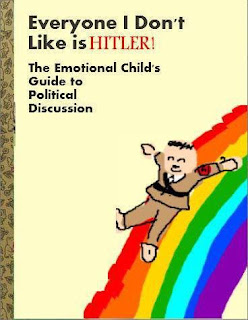
If I describe the little old ladies who decorate the church as the flower mafia then you know what I'm saying: they are a closed circle who are very territorial about their hobby. If I refer to the freemasonry of parents with disabled children, you know exactly what I mean: they mutually support each other and some of what they say is incomprehensible to outsiders. I am obviously not saying that everyone on the flower rota comes from Sicily, or that members of the disability support group wear aprons and role up their trouser legs at meetings. If I describe a political group as fascists then it is pretty clear that I mean they are militaristic, authoritarian racists. Only a colossal bore would say "Huh, huh, they can't be fascists because they're not Italians and this is not the 1940s." I don't think that fascist is a particularly good term for the Twitter trolls who targeted me: I don't think they are a group and I doubt that they have anything as sophisticated as an ideology. I was going to call then small-f fascists but have decided to go with little fascists which is less of a mouthful.
I had another go, for some reason:
What are they doing?
[1] Reformist: I think that the rich should be a bit poorer and the poor should be a bit richer.
Socialist: I think that everyone should be as rich as everyone else.
Communist: I think we should abolish money and possessions and share everything.
Everyone I Don't Like is SJW: a Stroppy Teenager's Guide to Political Discussion
by Andrew Rilstone
Andrew HickeyThis is worth reading, but formatted weirdly on The Old Reader. Click through...
The True Story of How Several People Were Rather Rude to Me On Twitter
Among flippant people the Joke is always assumed to have been made. No one actually makes it; but every serious subject is discussed in a manner which implies that they have already found a ridiculous side to it.
The Screwtape Letters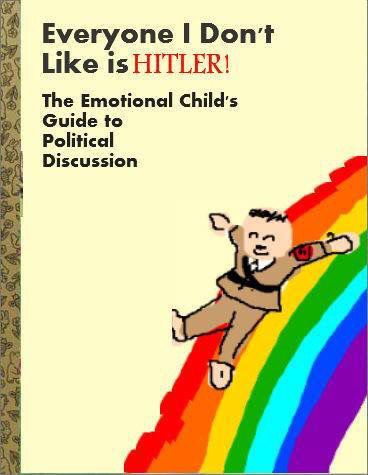
Earlier this year, I came to the attention of one of the very minor fascist groups on the Internet. I don’t know why they selected me. They didn’t seem to have read any of my essays, and they certainly weren't interested in talking about (or even taking the mickey out of) any of my opinions. It was art for art's sake.
I initially thought that I was encountering the unacceptable face of the new atheism. I had at that time an advertisement for my book, Where Dawkins Went Wrong , pinned to the top of my Twitter page, with the comment I was saying that Richard Dawkins was a whey-face coxcomb before it was cool. So I sort of assumed that I had insulted their guru so they were insulting me back.
I now think that the Dawkins angle was incidental to what happened. I had recently made some remarks about Dawkins' shameful trolling of feminist academic Anna Hickey-Moody. I said that his tactics resembled those of Gamergate and the Sad Puppies, and that both groups resembled nothing so much as schoolyard bullies. (Comments I fully stand by.) I think that my use of the words Puppy and Gamergate attracted the attention of some right-wing Twitterati. Although there is evidence that the extreme misogynist right are statistically likely to be new atheists, I don't any longer think that this particular group were in Dawkins' orbit. I think they were using him as a stick to bait me with. Had they become aware of my existence during a different Twitter-cycle they might have said that Stan Lee or Giles Coren were twice the man I was.
I now think that the Dawkins angle was incidental to what happened. I had recently made some remarks about Dawkins' shameful trolling of feminist academic Anna Hickey-Moody. I said that his tactics resembled those of Gamergate and the Sad Puppies, and that both groups resembled nothing so much as schoolyard bullies. (Comments I fully stand by.) I think that my use of the words Puppy and Gamergate attracted the attention of some right-wing Twitterati. Although there is evidence that the extreme misogynist right are statistically likely to be new atheists, I don't any longer think that this particular group were in Dawkins' orbit. I think they were using him as a stick to bait me with. Had they become aware of my existence during a different Twitter-cycle they might have said that Stan Lee or Giles Coren were twice the man I was.
If I describe the little old ladies who decorate the church as the flower mafia then you know what I'm saying: they are a closed circle who are very territorial about their hobby. If I refer to the freemasonry of parents with disabled children, you know exactly what I mean: they mutually support each other and some of what they say is incomprehensible to outsiders. I am obviously not saying that everyone on the flower rota comes from Sicily, or that members of the disability support group wear aprons and role up their trouser legs at meetings. If I describe a political group as fascists then it is pretty clear that I mean they are militaristic, authoritarian racists. Only a colossal bore would say "Huh, huh, they can't be fascists because they're not Italians and this is not the 1940s." I don't think that fascist is a particularly good term for the Twitter trolls who targeted me: I don't think they are a group and I doubt that they have anything as sophisticated as an ideology. I was going to call then small-f fascists but have decided to go with little fascists which is less of a mouthful.
The vector of the infection was Alpha, a journalist or intern who writes bog-standard political-correctness-gone-mad essays for on line publications. (I am not going to use actual names or Twitter handles here. These are, after all, the kinds of people who think it is funny to make death threats. Not serious or credible death threats, but death threats nonetheless.) Alpha's initial tweet, immediately liked and re-tweeted by about twenty little fascists went:
SJW's are the saddest, most bitter creatures 1 RichardDawkins is worth a billion AndrewRilstone/PhilSandifer's
This was attached to some screen shots of Tweets by me and Phil commenting on the Hickey-Moody affair. I am deeply chuffed that my name was linked with as learned and witty a critic as Phil Sandifer. I assume you've all read his Doctor Who essays? His ongoing series about Alan Moore and Grant Morrison includes the second best commentary on Watchmen ever written. I do wonder what an a marxist/post-modernist/occultist like him makes of being associated with a C.S Lewis worshiping reformist [1] like moi.
Alpha's first tweet tells you a great tell about the little fascists' thought patterns. They don’t think in terms of wrong opinions to be refuted; they think in terms of enemies to be squashed. Not Andrew Rilstone is totally wrong about the feminist academic, and here's why... but Andrew Rilstone, by virtue of his support of a feminist academic, can be given the label SJW and as such, barely even qualifies as a person. They don't say that someone is wrong: they say that he is sad or bitter or pathetic or ugly or deformed or smelly or weak or childish or mad or scruffy looking.
What followed was a barrage of playground level name-calling which revealed a fairly consistent set of preoccupations:
- Belief that anyone with mainstream political opinions is part of worldwide conspiracy called the SJW.
- Overwhelming concern with physical appearance, and, curiously, with personal hygiene. ("Christ, maybe they're right about keeping the public baths open".) [2]
- Fascination with military imagery, especially Warhammer 40,000.
- Hatred and contempt for weakness of any kind ("He’s a bit delicate, this one. Talk about a manchild. Lunatic".) If a person responds in any way to an insult, this is taken as evidence that they are weak; the fact that they are weak shows that they deserved to be insulted. (An example of the Scotsman Tactic, (q.v.)) "Suck it up!" is their favourite response when challenged.
- Use of extreme right-wing imagery, such as swastikas and confederate flags. When they are called out on this they say that the SJW see fascism everywhere and that in any case the fascist imagery was only intended ironically. Readers may like to try imagining how the little fascists would react if one of us put an ironic image of Karl Marx on their website. (Claiming that the SJW think everyone is a fascist; and then claiming that since you accused someone of being a fascist, you must be one of the SJW is another good example of the Scotsman Tactic.)
- Use of homophobic and anti-semitic language while simultaneously denying that they are homophobic or anti-semitic.
- Hatred of what-they-call feminism and what-they-call-diversity.
Journalists who have interviewed Katie Hopkins sometimes say that they have found her to be a likable, damaged woman who admits that she doesn't mean half of it. I have heard credible reports of pleasant pints of beer shared with Nigel Farage and Margaret Thatcher. I suppose at some level I believe that if we could have sat down over some beer and bratwurst after a long Bavarian evening listening to Parsifal, Mr Hitler would have admitted to me that he sometimes went a bit too far. I happily throw up my hands and say that I made the schoolboy error of attempting to engage Alpha and some of his little fascists in rational conversation. If I had taken my mother's advise and ignored them, they would probably have gone away. It turns out that rational conversation is not something they really do.
A few examples should give a flavour of how their minds, or at any rate their typing arms, work.
A few examples should give a flavour of how their minds, or at any rate their typing arms, work.
1:
Several months before all this, I had tweeted:
I agree about fires in crowded theaters but anyone using the phrase "freeze peach" will still get slapped
Beta found this in my twitter history, and responded:
Freeze Peach? Seriously, how pathetic are you people you can't say "Free Speech"?...Not afraid of free speech but call it Freeze Peach?
Beta could not possible have supposed that I actually advocated calling free speech freeze peach. It was absolutely clear from the message he had quoted that I was deprecating the expression; saying that it was silly, and, indeed, threatening to slap anyone I caught using it. (I followed it up with a second message saying that I didn't really approve of slapping people, and it would be better to give them a time out or put them on the naughty step.) However, Beta invoked the Midas Stratagem (q.v) and pretended that Andrew says "freeze peach" is a silly phrase and Andrew uses the phrase "freeze peach" are equivalent. Had the feud continued, "Andrew calls free speech freeze peach'" would have become something all the little fascists believed. Had I pointed out that this was not the case, they would have told me to suck it up, called me a crybaby, and invoked the Ricardian Device. (q.v) [3]
2
Alpha had found a picture of me looking drunk at a Christmas party and reposted it to his Twitter friends. In itself this is well within the bounds of legitimate internet mockery, although it says something fairly unpleasant about the little fascists' modus operandi.
This yielded the following deathless bon mot from Gamma:
He looks like the kinda guy who gargles kosher sausage
I took this to mean he looks like the sort of person who sucks Jewish dick. I still think this is what it means, particularly given that Gamma had a swastika on his Twitter profile.
I responded:
I responded:
That awkward moment when you don’t know if a Dawkins minion is being homophobic or anti-Semitic
(I still thought, incorrectly, that I was being target by militant atheists. I don't now think that the little fascists were in fact anything to do with Richard Dawkins.)
Alpha chimed back:
Alpha chimed back:
He's literally making things up too. Nobody was anti-Semitic.
Note the use of the Coventry Technique (q.v): he doesn't speak to me; he speaks about me. When I asked him directly what else "you suck Jewish dick" meant he executed the Ricardian Device (q.v):
He said it over 12 hours ago and you're still banging on about it. Seems desperate for victimhood to me.
It doesn't matter that you were insulted, or what the insult meant, because it happened yesterday.
NOTE: It has subsequently been pointed out to me that he gargles kosher sausage could be taken to mean he has bad breath. This would represent a particular bizarre from of political argument: We can tell from a photograph that your breath smells of garlic, therefore, your views on feminism are nonsense.
NOTE: It has subsequently been pointed out to me that he gargles kosher sausage could be taken to mean he has bad breath. This would represent a particular bizarre from of political argument: We can tell from a photograph that your breath smells of garlic, therefore, your views on feminism are nonsense.
3:
I attempted to pursue this further. I entirely agree that this was a completely insane thing to do:
Andrew Rilstone: May I once again ask what you intended by this remark? Are you saying I am Jewish, or Gay, or something else?
Gamma: You got a problem with jews and gays, bub??
Andrew Rilstone: if someone would explain what it actually meant, I could go to sleep happy.
Gamma: Guess who's not sleeping tonight, jew homo hater?
This doesn't extend far beyond "I am rubber, you are glue". If someone accuses one of the little fascists of using anti-semitic language, they simply double-down ("jew hater!") and reflect the accusation back at them.
I had another go, for some reason:
Andrew Rilstone: In what way do you think that sending abuse to strangers furthers your cause?
Delta: You imply we have a cause, you amuse me greatly. Please continue
Andrew Rilstone: You just simply think it's funny to post random words to strangers?
Gamma: There is nothing funny about anti semetism
Andrew Rilstone Well, I have obviously misunderstood what's going on here. I thought you didn't agree with something I'd said. you are evidently playing some kind of game involving saying random words, like Mornington Crescent. Have fun.
Delta: So first you tag us in order to get some obtuse satisfaction from talking to us, and then when we do you step away? How rude are you? Were you raised among bears in the wilderness or what?
Andrew Rilstone: I am sorry to have wasted your time.
Delta: Well that makes two of us... Now please stop stalking me, I am shaking and hyperventilating here already God what a fucking monsters. I' hope youre happy Andrew.
Gamma: I think that qualifies as harassment if you ask me. He's abusively attacking us.
Delta: I would even go so far as to call AndrewRilstone one of the most creepy cyberstalkers I ever had the displeasure to meet
We are now into the realms of heads-I-win, tales you lose anti-logic. (see The Calvin Gambit). If you continue the conversation, then you are "stalking" and "harassing" them; but if you end the conversation, then you are being rude and uncivilized.
One of the barbs does strike home. I was indeed getting an obtuse satisfaction in talking to them.
One of the barbs does strike home. I was indeed getting an obtuse satisfaction in talking to them.
The final exchange is so stupid it's almost clever:
Andrew Rilstone: I thought you were cross because I had satirized Richard Dawkins. That was where this started,
Gamma:"Cross" are you implying that the Jews killed Jesus? It's been proven already that's anti semetism. [4]
Delta: Woah there, my granduncle was injured by a crossbow once, so that 4 letter c word triggers me greatly
Gamma: Do you mind putting a trigger warning on that?!
Delta: I would, if I could look at the thing. all wooden, crossed and bowey... soo much PTSD
It scarcely seems worth typing that none of the people involved could possibly have believed a single word that they were typing. It is impossible that they actually thought that the word cross (as in annoyed) had something to do with the Crucifixion; or that referring to the Crucifixion (in any context) was anti-semitic; or that asking someone what they meant by an insult amounts to "harassment". I think that these people are human beings with interior lives, even if they don't believe the same of me. They could not conceivably have thought that anything they were saying was true, or even meaningful.
 |
| This picture is ironic. |
So why were they saying it?
Once a thing is seen it cannot be unseen. I have descended into the abyss of the minds, or at any rate Twitter feeds, of these extremely minor-league web-fascists, and I have returned with the boon by which we shall understand all web-fascists.
What are they doing?
Two words: performance art.
(continues)
(continues)
[1] Reformist: I think that the rich should be a bit poorer and the poor should be a bit richer.
Socialist: I think that everyone should be as rich as everyone else.
Communist: I think we should abolish money and possessions and share everything.
[2] Who are "they"? Where is this debate about keeping public baths open happening? Unless you count shower cubicles in the public toilets on larger railway stations, is there in fact a single public bath house in the country which could be kept open? Is anything these people say anything more than word salad?
[3] I was under the impression that the term freeze peach was used by people who disproved of free speech, to disparage it, in the way that little fascists talk about numan rites and elf and safety. It transpires that it's more often used by people who take freedom of speech very seriously indeed, to disparage those who invoke it frivolously. So if a person was banned from Facebook for using racial slurs and tried to claim that this violated the First Amendment, someone might says "He thinks that freeze peach means he can go around calling strangers the n-word."
[4] A priest and a nun were driving through Transylvania in an open top wagon. Suddenly, Dracula leaps out and threatens them. "Quick" says the nun, "Show him your cross". "Cross?" replies the Priest "I'm absolutely livid."
If you would like to contribute to the cost of placing an armed guard outside Andrew's house, please consider supporting his patreon (i.e pledging $1 each time he publishes an essay.)
Where Dawkins Went wrong is still available.
If you would like to contribute to the cost of placing an armed guard outside Andrew's house, please consider supporting his patreon (i.e pledging $1 each time he publishes an essay.)
Where Dawkins Went wrong is still available.
21 Mar 17:21
Let’s get rid of the Budget
by Nick
The last few days of political news have been dominated by the fall out from the Budget, catalysed by Iain Duncan Smith’s resignation on Friday night. We’ve seen more and more recent Budgets dominate the news cycle for weeks before and after, but I think we need to question whether the whole institution of the Budget needs to go.
Note that I’m talking about the Budget as an event, not the whole concept of government’s budgeting which remains a good idea. No, what I’m questioning is the whole theatrics of ‘the Budget’ and Budget Day and whether they’re actually useful to anyone. As with so many elements of British politics, Budget Day isn’t one that’s shared by many other countries where setting the government’s budget for the coming year is a process rather than an event.
 What budgetary process there is in England is all subsumed into the grand theatre of ‘the Budget’ and last week was another demonstration of the flaws of that, as wrangling between the Treasury and DWP over the detail of disability benefit cuts resulted in the ongoing omnishambles we’re in now. The Budget has become an annual spectacle of the Chancellor attempting to pull rabbits out of hats and create headlines, rather than the culmination of a long process of discussion and negotiation.
Back in the days when there was a lot less economic information available (and gathering it required a lot of effort by the Treasury) there was some sense to the Budget as an event, as it was about releasing government reports to Parliament (and to the media and public through that) and announcing the Government’s immediate response to that data. It used to be regarded as one of the highest political crimes for anything from the Budget to be revealed before it was announced in the Commons, but now it’s quite common for selected leaks from it to fill the press for weeks beforehand. Because the routine announcements on taxes and duties that used to be the main focus of Budget reporting are now often dribbled out beforehand, we have the quest for dramatic announcements and political theatre that now dominate the agenda.
The Budget has become one of those great traditions of British politics that creates much more heat than light and serves no real purpose in usefully governing the country. Wouldn’t things progress more efficiently and soberly if the Government followed the examples of other countries and released its proposals for proper scrutiny and discussion over a period of time rather than turning the nation’s finances into yet another reason for a bit of Parliamentary posing and shouting? Perhaps then we might be able to start having a political system in which people interacted in a reasonable manner instead of the pantomime farce we have now.
(Thanks to Laurie Eggleston on Twitter for the graph)
[ generic viagra uk supplies | which is better viagra or cialis | fun with viagra | free sample offers in canada | cialis canada illegal buy | generic viagra free shipping | research on viagra | online viagra sales | levitra versus cialis | female viagra response | cialis soft tablets | viagra for sale in gibralter | how to buy cialis in canada | discount viagra online | viagra dosage | alternative viagra drug | where to get viagra | cheap kamagra viagra | non pescription cialis | does generic cialis work | citrate salt of sildenafil | generic cialis | pfizer viagra 50 mg online | generic viagra on line cheap | sildenafil plant | how much cialis | viagra generic availability india | cialis at real low prices | viagra dosages | buying viagra in canada | cialis online without prescription | free trial of viagra | best viagra alternative | order viagra 1 | women's viagra | sildenafil citrate voltammetry | get viagra drug online | cialis vs levitra | cheapest prices for viagra | viagra stores | cialis 100 mg | double dose of cialis | viagra in canada pfizer | alternative viagra external | cialis overnight delivery | get viagra drug online | levitra vs viagra | cialis dose | cialis okay for women | generic cialis in india | real viagra without prescription | viagra online stores | viagra gay | is viagra dangerous ]
21 Mar 11:50


A short open letter to Stephen Crabb, the new Secretary of State for Work and Pensions
by Mike Taylor
Dear Stephen,
First of all, congratulations on your appointment as Secretary of State for Work and Pensions. It’s a hugely important role, well earned by your years of hard work for your constituency and in government. Decisions that you make, and discussions that you contribute to, will have a massive effect on many lives.

I don’t know whether you remember me, but we were members of the same church in Bermondsey for several years in the 1990s. We have mutual friends who know both of us well enough that they bring their familities to visit both you and me every year, and they always speak very highly of you.
So I know from my own experience and their comments that your Christianity is real: not a cynical stance to appeal to certian voters, but a deeply held conviction that motivates and directs your work. I know that you, like me, don’t take lightly the words of Jesus in Matthew’s Gospel, chapter 25, verse 45: “I tell you the truth, when you refused to help the least of these my brothers and sisters, you were refusing to help me”.
It’s not my place to tell you what policies to enact. But I want to ask you this one thing. Would you please be very sure that your decisions are guided not by non-biblical proverbs like “God helps those who help themselves”, but by the words of Jesus? It pains me when I read David Cameron claiming that “the values of Easter and the Christian religion [include] hard work and responsibility” and “Easter is all about remembering the importance of change, responsibility, and doing the right thing for the good of our children”. We both know that the message of the cross is that God has blessed us even though we don’t deserve his blessing — not because of our “hard work” or “responsibility”.
So my suggestion would be that, in your new and very demanding job, you start each day by re-reading the parable of the sheep and goats.
Good luck!
20 Mar 14:59

An ‘old Cherokee story’ and other lies from the pulpit
by Fred Clark
“Which wolf will win?” “The one I feed the most.” I heard this story dozens and dozens of times from pulpits and in small groups and around campfires. Sometimes it was attributed to an old Indian, sometimes to an old Eskimo, sometimes it was an old African speaking to missionaries on the Dark Continent [sic].
âpihtawikosisân applies a full sniff-text and concludes this “old Cherokee story” probably originated with Billy Graham (or his ghost writer) in 1978. She also explains why these faux-Indian stories are damaging:
The replacement of real indigenous stories with Christian-influenced, western moral tales is colonialism, no matter how you dress it up in feathers and moccasins. It silences the real voices of native peoples by presenting listeners and readers with something safe and familiar. And because of the wider access non-natives have to sources of media, these kinds of fake stories are literally drowning us out.
And there’s something condescending at work, too, in the simple-wisdom-from-simple-people motif. It’s the infantilizing of non-white cultures. Whatever else this little parable is meant to teach, part of what it winds up teaching is that Those People are child-like and must be looked after/ruled over by white adults.
This story may not be as explicitly white supremacist as, say, the sermon legend about the missionary kid’s demonic rock music, but by portraying these simple people as inferior children, it bolsters the idea that they need to be supervised and parented and ruled over by their superiors (i.e., white people) — for their own good.
âpihtawikosisân also provides a quick mini-clinic on how to apply the sniff-test yourself when you encounter these vaguely sourced “old Native stories” that never seem to be specifically attributed to any concrete person, people or culture. It’s good stuff. Read the whole thing.
The other questions here, of course, are ones that need to be addressed by the white preachers circulating this stuff: 1) Why do they think attributing such sermon illustrations to a “wise old Indian” is helpful? and 2) Why do they think it’s cool/necessary/acceptable to pass such stories off as authentic?
Part of the answer to the second question, I suspect, goes back to something white evangelicals have taught themselves to believe during the past two centuries of their “battle for the Bible.” They’ve got it in their heads that stories only matter if they really happened historically. So they think they have to tell all stories as historical accounts that actually occurred.
The Good Samaritan Inn, in the West Bank, is not the real inn where the story really happened. There is no real inn. It’s not that kind of story. (Wikimedia photo by Bukvoed)
This is not how stories work. Bible-loving Christians ought to know that better than anyone, because the Gospels are filled with accounts of Jesus’ parables, and those stories do not claim to be historical accounts, they do not need to be historical accounts, and in many cases do not work if they are read that way.
A literalist hermeneutic teaches a form of illiteracy. Those who strictly follow such an interpretive scheme wind up confounded by stories. They don’t understand how they work, and so they are unable to understand what and how they mean. That’s why the Good Samaritan Inn tourist trap along the Wadi Qelt in the West Bank — a souvenir shop on the road from Jerusalem to Jericho — is filled with American evangelicals who are constantly asking if this is the “real” inn from the parable of the Good Samaritan.
Illiterate literalists need there to be a “real” inn and a “real” Samaritan, because they’re convinced that only historical accounts are valid stories. That’s why they also need there to be a “real,” historical Noah and a real, historical Jonah, and a real, historical Adam and Eve. It’s also why they need there to be a real, historical gorilla who walked into a real, historical bar, or a real, historical fox who really, historically dismissed the unreachable grapes as probably sour anyway.
(It’s a slippery slope, you know. It starts with questioning the historicity of the gorilla being overcharged for a beer and it ends with a denial of the resurrection, the death of God, nihilism and despair.)
This need for all stories to be historical also tends to make this historicity the Most Important Thing about the story. Any story worth telling must have “really happened,” and the point of any story worth telling is that it “really happened.” This does irreparable harm to jokes, parables, fables, allegories, satires, myths and origin stories — among others.
It also leads evangelical pastors to, well, lie a lot when presenting sermon-illustration stories from the pulpit.
“Lie” seems like a harsh word, but I’m sure any other will do here. They have to lie and to present all of their sermon illustrations as factual, historical accounts, because they’ve trained their congregation to think that this is the Most Important Thing about any story. They’ve spent generations teaching these folks that the historicity of every story must be defended or else everything is meaningless. Then they get into the pulpit and want to underscore the point of their sermon with an amusing anecdote and they have no choice but to present that anecdote as a historical account. And the claim that the story actually happened winds up eclipsing any other point of telling that story.
That’s not how stories work.
20 Mar 14:56


Notes on Awards and Slates, 3/18/16
by John Scalzi
They are:
1. As a reminder, I’ve withdrawn my work published in 2015 from award consideration, a fact I’ve mentioned here more than once, and which is well-known in science fiction and fantasy circles. I have no interest in that work being nominated, or suggested for nomination, for awards. To the extent that I am able, in the event my 2015 work is a nominee or finalist for awards, I will decline nominations or withdraw from consideration. This year, please nominate other people and works for awards instead.
2. As this is and has been my stated and well-known wish for the last several months, you may assume any presence of my 2015 work on any slate (or “recommendation list,” nod, nod, wink, wink) designed to produce award nominations is unsolicited and unwelcome and contrary to my expressed wishes, and my work has been placed on that slate without my knowledge, approval or consent.
3. Likewise, as it has also been my long-held position that I would never voluntarily participate in an award nomination slate, you may assume that my presence on any such slate is not voluntary, particularly, again, this year, and that again my appearance on it is without my knowledge, approval or consent.
4. If I or my work has been placed on an awards slate without my desire, knowledge or consent, it’s worth asking what other work may have been placed on such a slate, also without the desire, knowledge or consent of the author. You might also consider what sort of person would add an author and their work to an award nomination slate without their consent, and why those doing so would choose to do such a thing.
5. Some explanations as to why one might place someone or their work on an awards nomination slate without their expressed consent could include but are not limited to:
a) Desire to bring the legitimacy of quality to an otherwise dubious assemblage of potential nominees;
b) A transparent attempt to hide an overall political agenda by bringing in outside work, and/or to use that outside work as camouflage (i.e., slate, minus unwilling draftees to slate, equals actual slate);
c) The hope that by nominating good, outside work, other more dubious work will also get nominated as people vote the entire slate;
d) Latching on to the good reputation of the outsiders and their work for the publicity value, to draw attention to other more dubious work;
e) Being an asshole to people you don’t like, because you’re an asshole.
6. But it’s also entirely possible that those crafting award nomination slates are merely innocent enthusiasts of my work, wishing in all good will to promote a thing of mine that they love. That’s a lovely sentiment, and I appreciate the thought. However, inasmuch as I have a long-stated opposition to myself or my work being on slates designed to produce award nominations (or “recommendation lists” nod, nod, wink, wink, that are designed to achieve the same result), I would then simply and with due appreciation request they withdraw my work from their slate. This would be the case any year, but particularly this year, when I’ve already noted publicly, more than once, that I’ve withdrawn my 2015 work from award consideration.
Note well that in a perfect world I should be able to have my work dropped from a slate for any reason, or no reason, particularly from a slate I did not ask to be part of, and to which my work was added without my desire, knowledge or consent. That would seem to be the polite and respectful thing to do on the part of the slate makers. And not just me, of course; any person who’d prefer they or their work not appear on a slate (or even a particular slate) should have their wishes respected.
7. If those who have made an award nomination slate, who did not seek the approval of those they have placed on it to be on it, will not then remove those who ask to be removed, at once and without delay, it is reasonable to ask why they will not, and what purposes their refusal serves. See point “5” for some possible explanations. I would particularly note sub-point “e.”
8. In sum:
I’m not seeking award consideration this year;
I would not willingly participate on an award nomination slate;
If I’m on such a slate it’s without my consent;
Those who have put me or my work on such a slate should remove me from it;
If they won’t remove me, or anyone who asks to be removed, they’re likely assholes;
And maybe you should factor that in when thinking about them and their motives.
That about sums it up.
20 Mar 13:56
[sci, neuro/psych] Like "Flowers for Algernon", but with Autism, and Real
I maintain the best science fiction these days isn't fiction.
What happens when a treatment for autism abruptly works.
Turns out, being neurotypical isn't quite the unqualified good the neurotypical represent it to autistic people to be.
Oh, ah, PS: there's apparently an apparently effective treatment for autism in trials now.
What happens when a treatment for autism abruptly works.
Turns out, being neurotypical isn't quite the unqualified good the neurotypical represent it to autistic people to be.
Oh, ah, PS: there's apparently an apparently effective treatment for autism in trials now.
20 Mar 13:56


Fine, Let’s Talk About The Autism Life Expectancy Study
by feministaspie
(TRIGGER WARNING: This post is about the autism study that’s been all over the news this week, which means it discusses premature death, suicide, abuse, autism-cure-rhetoric and other aspects of systemic ableism)
For those of you who aren’t aware, a Swedish study has found that autistic people tend to die earlier than the general population. (I have several issues with the BBC article I’m linking to, but chose it because it includes lots of statistics and information) This is not a blog post I want to write. It’s not something I want to spend too long thinking about, and the same probably goes for most of you too. But I’ve ended up here anyway, partly because bottling things up isn’t particularly healthy and partly because I think there are things that need to be said.
I first saw this on a Facebook post with lots of comments, mostly from parents/relatives of autistic people, saying the link should not have been posted because it’s evidently upsetting and they thought we should be focusing on the positives. And yes, the post in question should have included trigger warnings from the start. But unfortunately, ~focusing on the positives~ won’t make the problem go away. Supporting autistic people, and disabled people in general, isn’t just about inspiration porn, it requires recognising that we face problems and a huge number of them are created by abled people. In particular, neurotypical people should be aware that most things written about autism in mainstream media can be that hurtful to us. Something to bear in mind.
Anyway, the study is important, but we should keep this in perspective – it’s one study. The reduced life expectancy is on average, not universal – on the one hand that means you shouldn’t just declare it a load of rubbish because you know someone who knows someone who’s autistic and in their nineties, but on the other hand it’s not guaranteed to apply personally to you or your loved ones. It should also be noted that autistic people who obtain an official diagnosis (and are therefore included in the statistics) are disproportionately those who are for whatever reason less likely to pass for neurotypical, and unfortunately, those people will also disproportionately bear the brunt of mistreatment and abuse of autistic people. Finally, be aware of biases in how the findings are framed in media reports – the new report (although not the study itself) is by Autistica, formerly known as “Autism Speaks in the UK” until it severed ties in 2010, and the autistic community have made their feelings on Autism Speaks and their pro-cure agenda very clear indeed.
According to this study, one of the main causes of the reduced life expectancy is epilepsy, which is often co-morbid with autism. I don’t have epilepsy and don’t want to speak for those who do, so at this point I’d like to direct you to a couple of articles by the wonderful Amy Sequenzia, who is also autistic and has epilepsy. As far as I can work out from what I’ve heard, and I may well be completely wrong, a cure for epilepsy is largely wanted by those who have it, which is not the case for autism – if that’s the case, why not direct research funds there instead of co-opting those deaths to frame autism as the tragedy?
Another big contributor to premature deaths in the autistic population is suicide. Amongst those autistic people who are not considered to be intellectually disabled, suicide was found to be the second biggest cause of death after heart disease; and whilst heart disease is a common cause of death more generally, I would not be surprised if the stress and anxiety of being made to fit into an ableist, neurotypical-centred world plays a factor in that too. I’ve also seen comments elsewhere making the very good point that it can often be difficult for autistic people to access healthcare generally – due to sensory issues making it difficult to know there’s something wrong, but also due to inaccessible communications and environments and being presumed incompetent once we are able to make a point – and this may also have negative consequences long-term. A lot of this boils down to being forced to act neurotypical at all costs, dealing with the sensory assaults of environments created by people who don’t acknowledge that we exist or that autism is something that affects us above and beyond how it affects neurotypical people who have to ~deal with us~, and being bullied and abused and outcast for who we are. And all of those things are preventable.
I’ll repeat that: A lot of this is preventable. Through acceptance, accommodations and services, without having to try and make us neurotypical when that isn’t possible, at least not if you want us to still be us.
Mostly, this has made me feel angry on a societal level (because this is even a thing, and because of the way it’s being framed in the autism-as-tragedy manner) rather than scared on a personal level (I can barely come to terms with my own adulthood, never mind my own mortality!) but having said that, the timing wasn’t necessarily brilliant for me, and I do spend probably far too much time worrying that all the worst-case scenarios – the high rates of unemployment, the high rates of social isolation, now this – might be inevitable. But I want to end on something hopeful. It’s likely that this news will be a wake-up call for many – for autistic people to practice self-care as best we can and seek help when it’s needed rather than suffering in silence, and for neurotypical people to actually provide that support or at least think about whether their attitudes and actions are considerate and/or damaging to the autistic people in their lives and in the wider world.
We can fight this. We can change this. The next generation of autistic people do not have to meet the same fates as the last.
18 Mar 13:37
The rise of Donald Trump may disprove the possibility of time travel
by Fred Clark
I need help working through this. I’m starting to suspect that the 2016 election might disprove the possibility of the future invention of time travel.
We’ve watched Donald Trump rack up a steady stream of GOP primary victories. As he moves closer to securing the Republican nomination, we move closer to the disastrous possibility of Donald Trump actually being elected president.
But note what we haven’t yet seen — the sudden appearance of dozens of time-traveling visitors from the future desperately scrambling to prevent that from happening. That’s surprising.
Now, it’s entirely possible that this merely indicates that our time-traveling friends from the future are looking back on 2016 as the year that Donald Trump eventually lost the November election. In that case, future time-travelers might not regard 2016 as a pivotal year worthy of their energy and attention for missions attempting to correct the disastrous mistakes of history. Or perhaps 2016 therefore constitutes, for them, a kind of official no-fly zone, with time-travelers forbidden to return to early 2016 lest they inadvertently do something to change that outcome and accidentally spark a chain of events that might, instead, result in a Trump victory.
So, come November, after breathing a huge sigh of relief at Trump’s defeat, I may have to change my mind about this and look back at the absence of intervening time-travelers as evidence for the future invention of time-travel.
 It’s also possible, if we take a multiple-divergent-timelines view of how this would work, that any future timeline subsequent to the election of Donald Trump will turn out to be such a dystopian nightmare of proudly oafish brutality and ignorance that no such future society will be capable of inventing and constructing the devices that will make time-travel possible. Maybe the only possible futures in which time travel can be later invented are those futures that follow Trump’s defeat.
Another possibility: The visitors from the future have already been here (been now?), busily mucking about with our politics in an effort to stop Trump, but due to some cruelly ironic law of time-travel determinism they’ve only succeeded in making things worse, producing the strange, chaotic mess that this campaign has turned out to be. (“I’ll travel back in time to stop Trump by convincing Ben Carson to run against him!”)
Or maybe what we think of as our original, unsullied timeline is really the consequence of innumerable failed attempts by future time-travelers to avert some other, worse, outcome that they’ve managed to divert from happening in our reality. Perhaps the first mission was sent to prevent the Horrible Thing that happened because of President Jeb Bush, so the time-travelers first visited December 2000, stopping the Florida recount in time to ensure that Jeb’s brother would be elected and go on to fail so horrifically as president that no one else sharing the name Bush could ever get elected. Or maybe every step of our politics for generations now has been the unintended consequence of the time-travelers’ original mission of preventing the election of President Harvey. (Who’s President Harvey? Exactly.)
Or maybe time travel is possible — and will, one day, be invented — but that it turns out to be an ineffective tool for attempting to alter the past because time-travelers from the future are unable to retain their future memories. They awaken here, in the present, in a Jason-Bourne-like state of amnesia, confused and disoriented, with no way to remember where they’re from or why they chose to come here.*
There’s a lot to consider here.
For me, it boils down to this: The political rise of Donald Trump is exactly the sort of thing that we should expect to attract the attention of future time-travelers intent on correcting the disastrous mistakes of the past, and yet we have not yet witnessed (or detected) the arrival of any such visitors. To me that means one of two things must be true:
1. Donald Trump will lose in November; or
2. Time-travel is impossible and will never be invented even in the distant future.
I suppose both of those things might be true, but the current absence of time-travelers, I think, proves that at least one of them is.
(The above musings stems from reading Matt Kirsch’s plan to stop Donald Trump. That’s a long-shot, but it has a better chance than anything Reince Priebus is likely to come up with.)
– – – – – – – – – – –
* This is what I thought Blindspot was going to be about and I’m still disappointed I was wrong. But I still enjoy compiling a list of people who might be suspected of being just such disoriented visitors from the future, because that would explain rather a lot.