Shared posts

26 Oct 20:05

Theses on Trump 16

by Phil Sandifer


This essay is going to need some substantial (though obviously not total) revision, and keeping the original in circulation feels wrong. A revised version will appear in the generally available edition of Neoreaction a Basilisk that will come out in 2017. 

26 Oct 18:46

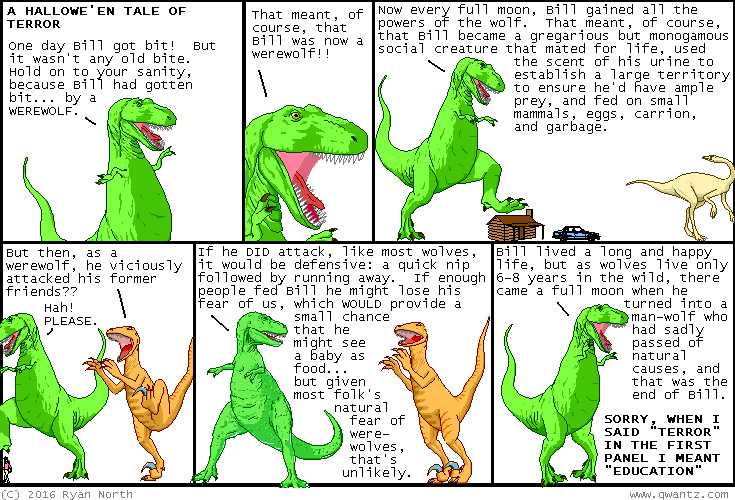
dog comics for maximum dog enjoyment

archive - contact - sexy exciting merchandise - search - about
← previous October 24th, 2016 next

October 24th, 2016: Phew! What a safe comic after all that spooky All Hallow's Eve terror. I for one can feel my sanity returning!!

– Ryan

25 Oct 20:16

Haw haw haw

by Fred Clark
Jack Chick's cartoons were infused with the abominable fancy -- the idea that the supreme delight awaiting true believers in Heaven would be that they got to watch the eternal torment of wicked sinners in Hell. That was pretty much the essence of Chick's faith. He wasn't driven by his love for God or for God's love for us, but by the eschatological hope that one day God would settle all the arguments he was never able to win here on earth -- settle them with remorseless, bloodthirsty finality.
25 Oct 20:06

Gimme Some Truth

by Tim O'Neil

Part 2 of an ongoing series. Catch up with Part 1 here
If you like my writing, please consider a donation to my Patreon


You lose a lot by telling the truth. Lies fester. 
This is especially true of the lies you tell yourself.
The truth is never quite so kind as we’d like.


Do you want to get understood? /
Do you want one thing or are you looking for sainthood? /

“Outlier” is the sixth track off Spoon’s 2014 album They Want My Soul. After four years away Spoon had lapsed into semi-hiatus. Side projects multiplied. The album was good but only just “good” in the context of Spoon’s previous decade, where Spoon released five albums that are also five of the decade’s best. Part of this can be attributed to the record’s production, a more traditional rock sound that saps much of the energy. It is exchanged for a conventional rock presence that never quite coheres. Being Spoon it is still quite listenable. One of the album’s standouts – and one of the few to make good use of the album’s maximal inclinations – “Outlier” immediately attracted interest among reviewers for the seemingly devastating put-down,

And I remember when you walked out of Garden State /
'Cause you had taste, you had taste /
You had no time to waste.


It’s something you imagine Britt Daniel sneering over his shoulder at some cool loft party in SoHo. Except of course that it’s 2016 and for many reasons no one talks about loft parties in SoHo. I don’t know if that was still a thing even ten years ago. And Spoon are from Texas, which is a strange fact we must live with. Britt Daniel is 45 years old.

Who does the line describe? It’s never specified. The song sounds at first listen like a kiss-off but after a few spins the tone reveals itself as something closer to wistful. (Genius helpfully assumes the subject is a she despite the fact that gender is nowhere specified.) You may try to stay current in certain areas of pop culture in an attempt to stave off the inevitable. You don’t want to lose it. There’s nothing wrong with that. I still like to surprise myself musically.

Rock and roll is an attenuated force: not dead but experiencing a dissolution of cultural reverence. It’s on its way to being the new jazz, and there are worst things to be than jazz. Rock records as a genre function similarly to superhero comic books, another seemingly limited sub-genre that somehow hit hard enough early enough to successfully mutate beyond the conditions of its creation. Rock’s relevance is dependent on people growing up with it and coming to regard it as the default background music of their lives. Take that away, reduce rock to just another choice, and it lives or die on its own merits.

Its merits were that white middle class kids grew up listening, and kept listening for the rest of their lives. That’s not something I personally regret by any means. But the reason why I know so much music from before I was born is that my parents have listened to it their whole lives, and to this day they still – dimly, but still – remember a world before rock and roll. I was immersed in it. In any event, the idea that everyone grew up listening to rock music was always a lie, but it was a comfortable lie because we didn’t have to care that “everyone” in this case was a relatively narrow demographic who spent many decades imposing a white-bread monoculture on the rest of the world. Rock’s eternal appeal is premised on the invincibility of youth: rock and roll disconnected from youthfulness becomes rock and roll as a curated object.

As much as I like Spoon there music can be unsettling and insular. It’s sterile in a way that announces them as the product of critical and not necessarily popular culture. It’s rock music for people who listen to a rock music, full of signifiers and trafficking in inference over affect. They Want My Soul is unique in the Spoon discography for the way it plays with expectations, laboriously constructed over the previous fifteen years, of what a Spoon album is supposed to sound like – a stable idea even after the disconcerting Transference. The result is that in many places it doesn’t sound very much like Spoon.

Perhaps the band are aware of these limitations. The tone of They Want My Soul often approaches elegiac: the former Cool Kids, dominant forces in critically-acclaimed rock music of the 2000s, wake up and realize that cool is a devalued currency. Being the most lauded rock band of a generation – at least one of them – gets you a slot on NPR. The album’s last track, “New York Kiss,” returns to these themes with the recurring refrain of,

I knew your New York kiss /
Now it's another place /
A place your memory owns.

It used to matter whether I believed myself to be a person who would nod in approval at a performative walk-out of a Zach Braff vehicle. “Outlier” begins with the words “You were smart / You played no part,” directed at the song’s subject. Who is the “you” here? As in most Spoon songs, it’s never defined. Is it a third party beside either Daniel or the listener? Is it an ex-lover, the diminutive “kid” indicating gendered condescension on Daniel’s part? Or is he addressing his audience directly – all the kids who were savvy hipsters “back in the day” but are growing older and realizing that there’s nothing to be gained from staying “smart” at a comfortable remove from the business of living? New York changed, the idea of “cool” symbolized by pre-9/11 New York changed, maybe even dwindled to nothing. Now these ideas exist in our memory.

The belief that I wanted to be cool, that I cared about being cool – what was that? Pure anxiety. Does any of it matter? Not really. Growing up antipathetic to any expression of masculinity, I gravitated towards that which seemed least odious: the Expert, the man who knows his stuff. I lived to impress record store clerks with my taste, which would be funny if it weren’t true. Anyone who has gone record shopping with me can attest. I tend to preen.

In fairness, the mantle fit. I have a good memory for unimportant trivia and good technique for recalling information I don’t have at my fingerprints. A mania for reference books probably stems from a lifelong battle with short-term recall. Grad school has taught me the value not of knowing everything but of knowing the right things. If I don’t have an answer, I know where to get it.

The problem with being an expert is that the process of becoming an expert can drain the life of your subject. It’s not difficult to go through the motions but at a certain point it becomes rote and unchallenging. Yeah, I like this, this is OK. It sounds like some other thing I heard a while back. And oh yeah I guess this is trying to sound like Monster, well, why don’t I just listen to R.E.M. instead. I don’t listen to Monster near often enough. Didn’t expect Spoon to make an R.E.M. album. Spot the references. Oh, that’s an interesting variation on a theme. Everything interesting in 2016 is a variation of a theme. Good night to the rock and roll era.


No one gets what I've done /
Everyone else seems to look through it /
Oh, but maybe I've never wanted them to /
Couldn't count on it anyway.

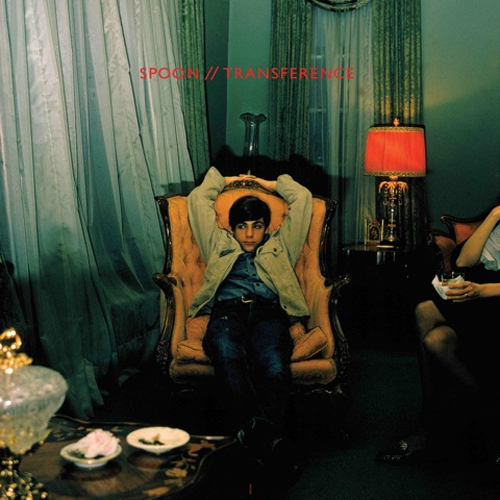
Transference could easily have been the last Spoon record, and it would have been a fitting note on which to go out. After defining their sound to the point of clinical exactitude with their last handful of LPs, they set about to problematize every element. It’s not that the album wasn’t produced to within an inch of its life, a trait it shares with every Spoon album since Girls Can Tell. It stands unsettled and dysphoric next to the mannered perfectionism of Gimme Fiction or the clean-room Rolling Stones vibe of Ga Ga Ga Ga Ga. Beats stutter where you need them to strut. The vibe is desultory: it doesn’t seem to add up to anything more than a series of attempts to wring order from whichever series of random recording events converged to create a song.

Picture yourself /
Set up for good /
In a whole other life.

Disquiet and rootlessness are the bedrock beneath Spoon, but Transference takes anxiety as it primary subject matter. Every moment of placidity is undone by the moment immediately after. The album uses the clarity of production on any given track to communicate emotional state: “Goodnight Laura” is a tender ballad, and you know this because the instrumentation sounds like a four-track demo. (It’s not, of course, but they use the badly recorded, out-of-key piano to ensure the song doesn’t get pretty.) “Trouble” sounds like a leftover from A Series of Sneaks, complete with a clever reproduction of late 90s lo-fi production. It’s lo-fi in the way that Pavement was lo-fi: every stray tousled hair has been calculated for maximum effect. It follows on the heels of “I Saw the Light,” which sounds like an intentional self-parody of Gimme Fiction’s distinctive motorik. It promises the transcendence of that album’s “They Never Got You,” but rewards the listener with five and a half minutes of mounting dread summoned by Jim Eno’s Hitchcock rhythm.

Transference is endlessly fascinating. It doesn’t work, it has been purposefully manufactured to work as poorly as possible, and yet it does, because it’s Spoon. We put up with a lot from bands we know and love. We project our expectations onto them. Spoon gave us a Spoon album that requires a great deal of work to appreciate, jittery and jagged. They did so with the confidence that we would put in the work. Our expectations reveal as much about us as about the art. There’s a bit of transference there. Are we still talking about a Spoon record?

I am drawn to the loping final track, “Nobody Gets Me But You.” It sounds off. It’s got two left feet, sauntering precisely in time but missing the swagger you expect. The sound is minimal, Daniel’s voice floating over the rhythm section. When the song finally kicks into gear at around the 1:45 mark, it struts with a disconcerting military exactitude. Can covering Television.

As a lyricist Daniel appears opaque. He is a perfect rock and roll writer because he understands how to create the illusion of intimacy with very few resources. He’s always having a conversation with someone. Almost everything he writes is in the second person – he is exhorting the listener at all times, constantly repeating the word “you” through so many songs as a way of – what? Drawing the listener in? Singling the listener out? Hectoring? Pleading? Daniel rarely tips his hand. The stories and characters he describes have no easy referent or allegory – they seem more along the lines of private jokes, obliquely described to a stranger.

Nobody gets what I say /
Must be some way to convey /
But no one else remembers my name /
Just those parts that I play /
Nobody gets me /
Nobody gets me but you.

Transference is an album about missing pieces. The album appears unfinished. One envisions a cat walking across the keyboard during the final mix-down – everything is knocked a couple degrees off kilter and woozy. It’s about the anxiety that emerges from having just missed something, past the edge of your perception. Who is Daniel talking to in the final song? Is he talking to a woman? A friend? Himself? There’s an obsession with playacting that pops up periodically in his lyrics – see, “The Two Sides of Monsieur Valentine,” from Gimme Fiction. He can’t move past the deception, whatever kind of deception it may be, because while it may keep him safe, it also means he’s profoundly alone. Needing to make a connection but feeling unable to do so is the kind of pain whose memory doesn’t fade.


I was dreaming in the driver's seat /
When the right words just came to me /
And all my finer feelings came up.

Ga Ga Ga Ga Ga was released in the summer of 2007. I fell in love with the record soon after relocating from Worcester to Holyoke, a necessary move, and still about twenty minutes’ drive from Amherst. It was a pleasant drive over soft hills and ancient lanes – the road from Holyoke to Amherst passes next to the campus of Mt. Holyoke, in South Hadley. My fond memories of New England begin almost entirely the moment I move away from the vicinity of Worcester. The Five Colleges region is beautiful, and were it not for other factors I would consider living there again. (Mostly having to do with people, there being many from my undergraduate years I wish to avoid.)

The album is fixed in my memory to that point in time, not a good fate. Close identification with specific memories make a record difficult to revisit unless you want to dredge up the emotions associated with that record. I remember the period fondly – it was a very hopeful period in my life, one of the most hopeful periods. Perhaps that’s one of the reasons it can be difficult to revisit.

This is also, perhaps not coincidentally, around the time I became disenchanted and bored with music writing. It is possible in hindsight that I could have migrated away from reviews and moved on to feature writing. I could have done that if I’d wanted. My editor put up with a lot from me (all my editors put up with a lot from me). I could tell she liked my writing because I always had all the work I wanted. Even after I got lazy and stopped turning in articles she kept throwing jobs my way, happy to print whatever I sent. Eventually I quit, and I did not leave under amicable circumstances.

Writing reviews is very unrewarding. Even the best review is at the end of the day mostly a product recommendation. Sometimes reviews aspire to something else. I wrote a few of those. Tied as they are to the promotional schedules of major corporations I doubt if music reviews have literary value.

Still there is great technical challenge involved in writing 600-1000 word music reviews. It’s a genre limited by the descriptive imagination of the reviewer. There’s a reason why certain phrases recur so often in writers’ vocabularies, and even become commonplace idiom: it’s hard to come up with pithy yet accurate exegesis without falling back on stock phrases and formulaic structure. It’s so easy to reach for “angular,” although overuse has retired that one.

The masters of the form, such as it is, are writers who craft a distinctive voice for themselves despite the format, a difficult thing to do without becoming a caricature. The best rock writers embrace self-parody – spend some time trolling the archives on Christgau’s site, you’ll feel the grooves of his creative process real quick. Inasmuch as I had a voice, it was close to the voice I used for the early days of this blog – where, likewise, I spent a lot of time honing my chops writing endless reviews for comics that in hindsight did not always warrant aggressive scrutiny

My formula for writing music reviews is simple, and a variation of the format I still use for writing comic book reviews. You always start with context. Especially if you have space limitations, you are going to need to measure every word carefully. Context is hardest to write – a thumbnail history and gesture towards relevant established critical assessment. The cribbed critics’ shorthand required to communicate succinct impressions of a band’s history without any detail is a difficult art. The band’s most recent album is always a disappointment, the new one a “return to form” even if that phrase should be avoided.

It resembles in miniature a structure familiar from late antique and medieval composition: you begin with an infodump of your authorities (I usually pull out the Latin auctoritas to impress the freshmen – never fails) as a way of establishing to your reader that you are a member in good standing of a long-extant discourse network. Medieval monks hunched over parchment in candle-lit scriptoriums scattered across a continent were members of a community tying the middle ages back to the ancient world – that is, the very small proportion of the population throughout history who knew how to read, how to write, and had the time, inclination, resources, and stamina to do what all of these activities required in the ages before the printing press. They all read the same books, committed every line of Macrobius to memory, and could debate their favorite psalms for years at a time through torturously slow correspondence with other members of their tribe. Now it’s music bloggers.

There’s always a long section featuring a description of the record itself. What does it sound like? What is it trying to do? What is unexpected, what is familiar, what works and what doesn’t? There’s maybe time to tie the review into some kind of half-baked sociological thesis that alludes to a longstanding hobbyhorse of yours. Finish with a profound statement on the grand significance of whichever Avril Lavigne album you’re being paid to review (or not being paid to review). Always remember that whatever threads are introduced in the thesis must return in the conclusion, which places a natural limit on the number of themes that can be satisfactorily developed in the space allotted.

If you care about developing a voice as a music reviewer, that’s what you’ll do. Fill in the blanks according to subject matter and temperament. Sometimes, if you've built up enough goodwill to trust your audience, you can get away something expressionistic and personal. Sometimes you can get away with just describing how a song makes you feel.

Any type of writing can be broken down structurally, and once you understand the structure – how a piece of writing induces the desired affect through rhythm and timing – it is possible to create anticipation and suspense solely using sentence and paragraph length to create and sustain pleasurable tension, a ticking clock ratcheting suspense across your narrative. You can use interstitial elements like blockquotes of song lyrics to trick your reader into thinking they’re reading faster when you’re only giving them the false satisfaction of moving their eyes down the page faster. If you are writing something especially long, provide your reader with rest stops in the form of frequent breaks. You have to build to a grand finish, though, or you’ll leave your audience disappointed.

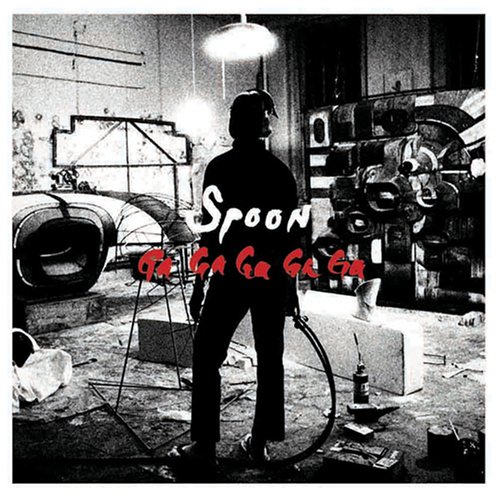
Ga Ga Ga Ga Ga was a conscious attempt on the band’s part to step back from the sterile abyss represented by Gimme Fiction and move in a more organic direction. Organic in this instance meant an album grounded by a Stones-y vibe, complete with slight nods to Sticky Fingers. They do such a good job of inhabiting this voice that Ga Ga Ga Ga Ga is their most unmoored album, the least prickly of their classic period, the most accessible, most translucent. The least Spoon-like Spoon record. It’s mannered without trying: they songs inhabit their specific idiom so well that the record reeks of pastiche, to a greater extent than anything else the band has done. 

Oh, life can be so fair /
Let it go on and on.
 
The way I teach my students to think about writing expository essays is essentially the same way I approach thinking about a record. You need to understand your genre – and to do that you must understand who you are writing for, who you are writing to (not the same thing), and what you are trying to accomplish. Once you have a good idea of these you reverse engineer to create desired results. Stylistic development comes through repetition and practice.

So who are Spoon singing for? Who are they singing to? The lie rock and roll told itself was that rock and roll sang for everyone. There was a presupposition of universality that manifested in the hubristic belief that this music would live forever. Of course it won’t, nothing does. Spoon is a band for people with huge record collections. That’s who they’re playing for here, and it’s never more obvious than here. They’ve taken the idiom apart and put it back together in its most efficient possible configuration. It looks the same and makes all the right moves, but motivations are reptilian.

My favorite track off the album is “You Got Yr. Cherry Bomb,” one of two strangely “classic” pop songs that bookend the middle stretch (the other being the horn-infested “Underdog”). It’s the pop rockist writers imagine when they use the term appreciatively – a platonic ideal of how popular music sounded at some indeterminate point in the past, but unrepresentative of how pop music actually sounds in the present. Spoon are under no illusions their music will ever be played on the radio (even if it sometimes is). It’s not designed to be played on the radio. It’s too arch in its devotion to the lost potential of discarded blueprints.


When you don't feel it, it shows, they tear out your soul /

My unhealthy devotion to Spoon begins in 2005 with Gimme Fiction. I think of the three album stretch of Kill the Moonlight through Ga Ga Ga Ga Ga as one unit, three records that while wildly different from each other in many ways represent the pinnacle of Spoon’s imaginative and fastidious music. At no point in their career do Spoon ever add so much as one single syllable to the rock and roll vocabulary. They operate under the assumption that the lexicon is closed, that it’s a dead language, and that there’s nothing left to be done but further refine the ancient style. They distill the affect of past achievement in a sturdy oaken cask and serve to connoisseurs.

I will argue for Spoon as the last great rock band, and Gimme Fiction is their greatest achievement. The album was designed to be the kind of album people refer to as a “greatest achievement”: from the descending acoustic guitar figure that opens “The Beast and Dragon, Adored” to the album’s jarring stop 2:45 into “Merchants of Soul,” there isn’t a single hair out of place. Some people are allergic to fussy rock records, preferring more spontaneous or at least less labored expressions. For Spoon, the effect doesn’t work unless everything has been constructed just so. It’s supposed to be alienating. It’s the only album that begins with a song about writing the record you’re about to hear, with appropriate nods in the direction of the redemptive power of rock and roll, which also manages to sound like the mounting apprehension that precedes a well-planned massacre.

It’s an album I never tire of revisiting. Nothing else has remained in constant rotation for as long – almost from the moment of its release. It never gets old. I regard individual Spoon albums with the same kind of fervent devotion that others reserve for David Lynch movies: each one presents to the audience evidence of a cover-up, and leaves the audience to imagine the crime at the center of the conspiracy. Gimme Fictionis Spoon’s Mulholland Drive.

I don’t regret that I no longer write music reviews. Doing so sapped a great deal of enjoyment out of music for a long time. You can destroy something through examination – vivisection becomes autopsy in the blink of an eye. I’m pretty good at writing reviews, but the satisfaction of writing a good review is purely intellectual. You have a problem to solve – how to describe an object in such a way as to indicate the dispensation of said object for a hypothetical reader – and very few tools to accomplish the task. I can think deep thoughts on demand about the nature of rock and roll but there’s not a lot of practical use for that. Much of the PR recycling that signifies online music writing is useless.

What really matters about music – and books, and everything – is that it makes you feel something. That’s it.

No, really.

It doesn’t matter what that something is – it could be disgust or titillation, academic curiosity or fevered devotion. When I was young I believed there was good art and bad art, and that it was the responsibility of the critic to differentiate between the two – and the reviewer, the critic’s emaciated and defrocked cousin, although they often inhabit the same body, uneasily. There’s no such thing as good art. There’s interesting art, more or less depending on your inclination. You don’t have to like something to regard it as interesting. On the contrary, discovering virtue in something you have previously dismissed, or in a deeply flawed work that nevertheless carries some spark of intrigue, is one of the great pleasures. Listen carefully to everything you hear, and listen with an open mind, or you’ll miss something important.

Cool is a lie we tell ourselves because we don’t want to be scared. What does being cool actually get you? Does it bring you closer to the people you care about? Does it make you a better friend? Does it help you work faster? The people most concerned with retaining their cool are the people least able to do so. The people you should be the most concerned with are those least concerned with whether or not you are cool.

And that’s Gimme Fiction. It’s a labyrinth with no center, a maze built of allusion, implication, private joke and performative insouciance. The album’s tenth anniversary reissue came with two albums worth of demos and rehearsals. The remarkable thing about the album’s demos is that they reveal almost nothing about the composition of the songs. Even as demos the songs are fully formed. Chord changes are the same, lyrics, every coda and bridge intact as they will appear on the album if recorded poorly. Even Daniel’s inflection is much the same, every merciless sneer and falsetto turn already calculated and constructed to precise effect.  

Hearing the songs in such minutely realized detail at such an early stage magnifies the album’s achievement. They also threaten to break the album’s mystique. Daniel knew exactly how these songs were supposed to sound before he entered the studio. No assembly required; they were always there, waiting to be painstakingly chiseled out. Spend a few minutes reading Sean O’Neal’s oral history of the album, Gimme Facts. Every suspicion you may have had about the album is confirmed. The band spent a lot of time in the studio getting everything right. It’s filled with small little musical jokes that only a select handful of hyper-attentive listeners will ever get. The lyrics, which in context appear so mysterious, are snippets of conversation and reference to events in the band members’ lives. It wasn’t Daniel who played in a drop-D metal band called “Requiem,” but bass player Josh Zarbo.

It makes sense to describe Gimme Fiction, to explain it in the context of the band’s career, to use it to mount an argument concerning the destiny of rock and roll. It’s all hot air. Of certain interest to those who regard sifting words into novel configurations a noble goal in and of itself. Perhaps it is. Or perhaps it is necessary to admit, finally, that any attempt to describe a work of art begins and ends solely with my response. The album is ultimately just a rock album, no matter how much my affection for it makes me want to puff it up into something more. If I’m doing my job I can convince you it’s good and important without making you question whether or not I believe anything I’m saying. Lying in the service of getting you to buy a record – that’s a good use of our time together.

At this point I get up and step back from the desk. I’m talking in circles. I can’t seem to get back to the point I wanted to make. Perhaps the point was lost a while back. Perhaps it doesn’t matter.

I set out to write about Spoon because I had never written about them, even after I realized that they were my favorite band. It seemed an interesting way to talk around what I really wanted to talk about: my voice. I can write music reviews in my sleep. Or at least, I could.  It was a voice I was very comfortable inhabiting. It’s also something that takes a great deal of focus to do correctly, at least to do it in such a way that you’re not insulting your readers’ intelligence. After a certain point it is impossible to know whether you are repeating yourself.

When you were coming up /
Did you think everyone knew /
Something unclear to you? /
And when you were thrown in a crowd /
Could you believe yourself /
Did you repeat yourself? /
Because no one would hear /
And just say it again /

So, who am I writing for? Writing to? Why am I writing?

The answer to the first question is that I’m writing for myself. That’s the only person I’ve ever cared about pleasing. When I write for another venue I write for that venue’s audience, but when I write for myself, I’m writing to my audience. And my audience indulges my every whim. No matter how long an article or demanding an essay, I know there are people who will read it and chew and digest what I’ve said. It’s powerful to know that even if my audience is solely composed of people with whom I’m on a first-name basis, I’m actually on a first name basis with more than a few people. Thanks to my writing.

But it’s not the same anymore. Something’s changed. I can write again, sure, write to excess, quickly, and with alacrity. That much is back. Something that was stuck for a long time came unstuck and now I can barely find it in me to stop writing. Sometimes when I type I know who I am, other times I seem less sure. Recently something inside me shifted and I found a new voice. My old voice did the job for which it was designed: it made me sound smart, made me seem like an Expert. I was making it up as I went along. Most experts are.

It’s a funny type of masculinity that hinges on knowing trivia for fifteen-year-old rock records and thirty year old comic books. It’s the kind of masculinity into which you crawl and hide because it represents the least traumatic way of asserting yourself across a bafflingly gendered social sphere. If you can’t figure out a way to assert yourself, some field in which you can feel as if you have a respectable toehold, then you don’t have anything. It’s not much, but it’s some kind of identity that provides the modicum of success you need to pass relatively unmolested through the world. No one pays close attention to you if you look like you know what you’re doing. Busying yourself with immersive hobbies that demand a great deal of specialized expertise that can only be gained through work and experience? It’s a way of distracting yourself from looking closely at the real problems in your life.

I don’t want to lie anymore. I spent almost every day of my life lying to myself, to other people, to the world – a thousand lies every day, each one more extravagant than the last. I don’t feel like an expert. I feel like an imposter. The reason why is simple: I aman imposter.

And we was cutting through the park /
Trying to get home before too dark /
Who was it that we saw that night /
Was it you?

The third-to-last song on Gimme Fiction,“Was it You?” is a haunted forest, deliberately paced with professional exactitude by Jim Eno, shafts of moonlight falling through the leaves. The band stretches the opening vamp of “Papa Was a Rolling Stone” over a tense five minutes. You encounter a mystery in the forest. You are disquieted but you sit to rest. You close your eyes for a moment and you are asleep before you realize you are in danger.

The sound of soft rain on the forest floor gives way to the mechanical stride of “They Never Got You,” tripping along like a metronome. It’s an odd capstone for an album devoted to irony and subterfuge. There’s nothing sinister at work. Coming on the heels of “Was it You?” – to say nothing of “The Infinite Pet,” “My Mathematical Mind” and much of the rest of the album – you expect to hear something false. You listen intently for the hidden valences. Hints, clues, pieces that can be assembled. But there’s nothing obscured. The song is about what it is about, and what it’s about is seemingly the rarest emotion in the Spoon catalog: reassurance.

There’s no sneer, no paranoia, no apocalyptic medieval imagery. It’s as simple as Daniel describing the sensation of confusion that accompanies profound loneliness – what does everyone else know that I don’t? Behind the (fake) ironic detachment and (affected) cool, behind even the intellectual pretense of the band’s sophisticated art direction, the common thread tying together both Daniel’s lyrics and his peculiar talent for musical pastiche is nostalgia. Not for a specific place or location, but for an age, a feeling – youth. Nostalgia operates differently for Spoon than for most pop bands, however. It’s a negative expression. The past is full of bad things: bullies who count your teeth and managers who sink your career. Daniel doesn’t want to be a kid again. He’s happy being an adult, and proud to have escaped whatever awful childhood he left behind. They never got him.

Don't let em in /
Don't go too far /
And cover your tracks. /
Cover the path to the heart /
Don't let those footholds start /
And don't let no one in /
Because they never got you and you never got them.

Why do everyone else’s lives appear to be so easy – or from a younger perspective, why is my life so uniquely hard? It feels like I spend every day all day talking to people and trying to find someone, anyone, who hears what I’m saying and understands what I’m trying to say. I never do, at least when I dream of being young.

But that’s the lesson. Beneath the surface texture – the stannic coolness of an album that crackles like frost under your foot – lies a beating heart. The monster at the center of the maze is a message of hope. It does get better. You can leave your past behind. The truth is what you take away. Everything else is window dressing. 


I took a river and it wouldn't let go /
I want you to stay and I want you to go /
I took a river and the river was long and it goes on.

I took my first estrogen supplement on July 30th. I’d had the bottle for a few days. I regarded it with the healthy reverence you accord a poisonous snake. Only I wanted to be bitten.

It’s a funny thing, knowing you hold within your hand the means to change your life. The moment is pregnant. You want it, of course you want it. You went to the doctor. You asked for it. The pharmacist filled the prescription for you. You took the bottle home and placed it on your shelf. You don’t want to look at it.

What am I afraid of?

It’s not that I don’t want it to work. Of course I want it to work. I don’t yet know what that means. I know what to expect physiologically even if many of the details vary. I’ve read enough. I’ve been told enough. I’ve thought about precious little else for months.

Am I more afraid of if working, or of not working?

Even though it’s not remotely the same thing, my thoughts dwell on my experience with antidepressants. These were pills that held the promise of some kind of relief and renewal in the face of what I could only perceive as broad dissatisfaction. They never worked – rather, they all worked a little bit. I notice when they aren’t there: my mood suffers and my temper becomes more volcanic than normal. Without them I am less functional, but they give me little in the way of positive help.

It’s not an antidepressant. It’s not a pill to improve my mood. It’s not a medicine to treat the symptoms with dispatch and leave me unchanged. What I have isn’t a disease. It’s part of who I am on a molecular level. The atomic formula of estradiol is C18H24O2. Just a handful of carbon, hydrogen, and oxygen molecules cobbled together by hundreds of millions of years of evolution. Nothing more. Through a strange and cruel biological quirk my body craves but cannot produce the molecule that saves my life.

But it’s not just that. It represents a life somehow – different? Better, hopefully. More problematic in almost every way. Irreversibly altered. No coming back. When you take the first pill you set a timer. Before you take that pill you can push the clock forward indefinitely. Once you do this, time lurches into motion and you are pulled inexorably forward towards –

What, exactly?

My estradiol is coupled with a testosterone blocker called spironolactone. It’s also a diuretic notorious for making people need to go to the bathroom and consume large quantities of salt. I am given the spiro two weeks before estradiol. This is unusual but not unheard of – in any event, I am glad to start the medications in the order that I do because taking the spiro first allows me to feel in minute detail the immensely gratifying sensation of testosterone leaving my body. Long before my first dose of hormones, I notice a gradual calming. A fidgeting creature ceases to squirm quite so much. The experience is illuminating. Without testosterone my vision is clearer. I feel slightly more relaxed, slightly more focused. (Only slightly, however.) Although I am easily winded and disinclined to heavy exertion, I am happier already.

Life without testosterone is a different life altogether. Things make more sense. The constant screaming in the back of my head falls silent. In its absence there is stillness, crisp and cool. In the steep air I can breathe.

Since the moment I voiced I have felt the truth of my circumstances as a solid object, immovable and undeniable. There was no doubt. I suffered great torment because there was no doubt: I did not feel so much as a token resistance, not from my consciousness. It would be a much longer process to flush the hesitation and temporizing, the fear and regret and self-loathing that accompany the revelation, but the actual premise itself? Never once questioned. Once I heard, I knew. I could never unhear.

There was still, however, one last kernel of doubt, a doubt constructed not from a desire to escape my near certain destiny as a transgender woman – but a doubt manufactured from years of bitter experience and disappointment with drugs that promised to heal but could only ever staunch the bleeding. Estradiol works for most people in my position. But I’m not most people.

Only one way to find out.

I want to be there tonight /
I want to get there but it's just out of sight /
I took a river and felt so slight so hold on.

It is custom among the members of my tribe to dissolve our estradiol under the tongue, those who receive the pill. Why do we do this? My doctor doesn’t believe there’s any noticeable difference in efficacy. I’ve come to different conclusions whenever I’ve looked for a concrete answer.

The truth is that we do it because it’s how we do it. There’s no real ceremony in the process of receiving hormone replacement therapy. It feels important. It feels significant to a degree that few things will ever feel significant in your life. There should be something moresignificant to the moment than filling a prescription and taking a pill. Placing the tablet under our tongues signifies the event through the observance of a ritual, however small and private. We have precious little history that isn’t colored by tragedy – long centuries of isolation, ignorance, persecution, and suicide. We cling to the culture we have, whatever form it takes. We create it for ourselves from a whole cloth.   

It is profoundly odd to suddenly become a controversy. People dispute my existence. My symptoms are imaginary. My feelings in the matter are just that – small feelings of no lasting import, indulged only by perverts and the mentally ill. But sensation is a species of feeling, and every feeling is imaginary, in that the capacity to feel is solely confined to intangible processes that flit between a billion neurons in the time it takes you to read these words. That I feel as I do, and that these feelings reveal my misattributed gender as a source of constant pain, is not up for debate. It’s not up for discussion anymore than the color of my eyes or my dominant hand. My reality is solid.

Without testosterone my thoughts are clear: that is reality. I do not feel so harried: that is reality. My extreme paranoia dissipates almost immediately: that is reality. I can examine my emotions rationally and deliberately. Here’s my self-hatred, a knotted ball of calcified hair in my gut. Here’s my feelings of inadequacy, remnants of a fetal twin whose passing is marked by a cluster of vestigial teeth extracted from my side and carefully catalogued. Here’s my anger – all my anger, every single ounce of wrath and rage I’ve ever felt burning through my body like alternating current, a tumor nestled against the base of my skull, coloring every impulse traveling along the highway of nerves that run through my body to my brain. My emotions are strong and random, chaotic impulses nestled equidistant between fight or flight. I always feel under attack.  

Owing to a number of factors I remain largely free of the worst consequences of physical dysphoria. I am immensely grateful for this, even abashed. It is likely to my understanding that ignorance of my nature prevented my from focusing feelings of disquiet on any specific parts of my body. I knew simply that I hated it all. I avoided mirrors and was unable to make myself exercise. My body was the enemy, and naturally my research interests focused on relitigating the disposition of body and mind.

-->
I took a river and the river was long /
I want you to stay course I want you to go /
I took a river and the river was long and goes on.

But reality, if solid, is always more complicated than initially appears. My body wasn’t my enemy. My enemy is my perception of my body. My perception has been until very recently clouded by the presence of the wrong sex hormone. Balance the hormones and balance the perception. That’s how it works on paper. Individual results may vary. I remained convinced, wrapped in the invincibility of my cynicism, that what was wrong with was more than could be fixed with a pill. I was too broken.

And then I took the pill. 

Something unscrews the top of my head. What had been cramped becomes spacious and airy. My ability to think reforms, shattered into a thousand pieces, scattered across a thousand corners of my mind. Where I had felt gravity pulling me downwards, I now feel the loosening of bonds. I am lighter.

Within two days of my first pill I experience a foreshock that heralds a great scouring. I don’t just feel lighter, I feellight, illumination radiating from within and spreading outward to my hands and feet. At first I mistake the sensation for panic. Both panic and joy evolve from similarly tentative origins, moments of unease that often presage imminent danger. But sometimes the danger never arrives. The anxious anticipation that precedes panic gives way to peace. The accumulated plaque and oxidation of decades of misery, crusted across the interior of my skull, begins to dissolve. 

I feel different, emotionally and physically. I move different. I think different. I have reclassified the broad spectrum of negative behaviors that have largely abated since beginning hormones as “masculine”: this is a problematic designation which will need to be revisited at a later day, but it is involuntary. My dysphoria is emotional and behaviorial. When I am angry, when I lash out with rage or sarcasm or caustic wit, it feels wrong, there’s no better way to describe it. When I am compelled to assert myself, to parade my opinions and critical acumen for the world to inspect, preening for praise and looking expectantly to the esteem and approval that I could never instill in myself – it feels like swimming upstream. The testosterone persists as a shadow of fear. I imagine it as black ichor, pure corruption. One drop can scar. There’s no going back to the way things were.   

I stop fighting the current. I let go and float. It’s a cool night. The water feels good against my body. I am warm without heat. The moon is directly above me. I no longer feel my body. I am a speck of consciousness lodged between the earth and the moon. I am quiet.

Had I fought I would have drowned. But I’m not tired anymore. I don’t feel anything. I am empty. I am happy. I am alive.


It's time to take the trash out /
And redefining what you are /
Redefining what you're about.

A Series of Sneaks was released in May of 1998. I didn’t know who Spoon were at the time. The album sold poorly. Four months later their A&R rep Ron Laffitte quit his job and, despite promises, the band were dropped by Elektra and left to fend for themselves.

Bands form their own mythologies, but only great bands leverage that mythology effectively. Lafitte’s betrayal is the catalyst that creates Spoon: after two decent records, one for Matador and one for a major label, there was little left in the way of a career. This despite having already caught the attention of a handful of forward-thinking critics – like any number of bands, at this point in their history they could have easily disappeared and few would have considered it a great loss.

“Laffitte Don't Fail Me Now” is one of two songs recorded and released by Spoon in the immediate aftermath of this debacle. But what should be a straightforward diss track becomes something else. At a point when Spoon’s sound was struggling to assert itself beyond being heavily influenced by the Pixies and Pavement (and the Fall and Wire), they retreated from battle but refused to concede the fight. For a band that could easily have dissolved entirely, to turn around and casually drop one of the best songs of their career under the pretense of attacking their former manager – in hindsight it’s a career-defining move. They had nothing to lose. There was nothing to be gained by not trying to swing for the fences every time.

It’s a gorgeous song, plaintive and urgent in equal measure, wrapped in a minor key melody that lodges itself in your mind despite its grim subject matter. Daniel recycles a painful personal anecdote into a universal complaint with the casual expertise of a master, and its here that his voice fully emerges as more than merely the sum of its influences. The question repeated like a mantra through the chorus, “Are you honest with anyone?” is, an accusation, an expression of anger, but also a lament and ultimately an admission of guilt at his own culpability in having been fooled.

This is Spoon. From the rubble of certain disaster they emerged with something new: a sense of grievance that Daniel could shape his words to fit around, the perfect original sin for a lyricist who would devote his career to exploring the softer side of paranoia. From this betrayal emerged a far more focused band. They returned from a holiday brush with disaster in time to drop five of the great rock and roll records in quick succession at a clip of one every two years. Gaze upon their works, ye mighty.

Redemption. Sentiment without nostalgia. Good things emerge even from lies. One day you too will find the secret key that opens the door to wake the sleeping compassion at the heart of the world.  
 
Part 2 of an ongoing series. Catch up with Part 1 here
If you like my writing, please consider a donation to my Patreon.
25 Oct 14:07

Marginal "Marginal evidence for cosmic acceleration from Type Ia supernovae".

Marginal "Marginal evidence for cosmic acceleration from Type Ia supernovae".
25 Oct 14:06

Reflections on Witney

by noreply@blogger.com (Liberator Collective)
It is evident that the Lib Dem performance in Witney was an overwhelmingly positive occurrence.  The biggest swing in a Conservative-held seat since the freak Winchester by-election of 1997, the campaign was also remarkable for its positive and welcoming atmosphere.  The party has learned to have fun again; it has been a unifying experience.


To what extent, though, has it contributed to the party's recovery from the long-term damage sustained under Nick Clegg's leadership?  This is more debatable.


The starting base was a local party in decline for a decade: a track record of campaigning that was patchy but had covered most of the district at some point or another.  Only the unusual stronghold of Charlbury & Finstock ward could now be described as fertile territory; however, there was potential to grow support in a Remain-voting, affluent seat.  Local councillor Liz Leffman - who in May recorded the ninth-best council ward result in the UK, and whose partner is a former Red Guard Young Liberal - was quickly selected.

A good opportunity, then, for some campaigning innovation - especially with large numbers of activists old and new ready to descend on an easily-accessible location.  A well-located HQ and a notably friendlier team than that of by-elections past made a big difference; people wanted to come back.


While some innovation did take place, visitors did question whether more could have been done.  A seat with over 100 different settlements could have lent itself to this.  The campaign, however, did use a local issue (housing development) and localised strong stories about the NHS.  This was made easier as the candidate (one of an all-local shortlist) had a good campaigning track record on the issue, and more or less neutralised the damage done to the party’s reputation by the Health & Social Care Act.


The mood among the various pro-EU '48%' groups was channeled although reports of the kind of strong pro-Europe messages that made it onto literature - for the first time in decades – were mixed.  Apart from in the partly military community of Carterton this seemed to resonate.  Where it worked particularly well was in galvanising campaign support which came from outside the party as well as a significant quality from the post-Clegg membership.  This led to a particularly heavy blizzard of literature, questioned by some on the campaign.


Also questioned was the campaign’s stance on housing.  West Oxfordshire contains the first Community Land Trust in the country (set up in Stonesfield in the 1970s) and Lib Dems in the district had a good reputation in pushing for provision of affordable housing to enable local people to stay in the area.  The Tory Council had failed to renew its Local Plan, creating a free-for-all for developers, leading to NIMBY campaigning in an area with sky-high house prices.  As a pro-housing party, it was surprising to see campaigning take that NIMBY line, although it was undoubtedly effective.


The Tories tried to select a dull, play-it-safe candidate; a solidly pro-hunt and anti-EU local councillor.  What they didn't count on were some wooden hustings performances in a constituency where such things still mattered; a toxic combination for the largely soft and pro-EU Tory vote.


The result was a massive swing - bigger than Romsey or Bromley, but unfortunately the 2015 starting base left simply too much to do.  A vast number of stakeboards demonstrated momentum.  It is said that the notoriously poor by-election aftercare support will be ramped up.


Nonetheless the Labour vote held up; indeed it seems they increased their share in Witney town itself while it fell everywhere else.  Their candidate was also local and anti-Corbyn.  The Greens' local celebrity Larry Sanders ensured that the progressive anti-Tory vote was firmly split.  This should be a lesson for those seeking anti-Tory pacts.  Equally, it is a reminder that some will not forgive Lib Dems for Clegg.


Liberal Democrats should not get ahead of themselves.  In other local by-elections on the same day as Witney the party's vote remained as low as 3 percent.  In parts of the UK less sympathetic to a ‘drawbridgfe down’ pro-European agenda, the message may not be so well-received.  The Witney result will be ignored by most of the national media in its glee at the party’s fate.  It will take several Witneys and a few wins to make a difference.  But the party now knows it can happen, and it is getting its self-belief back.  It has – if not a strategy – a vision.  The next step is anticipated with some zeal.


25 Oct 14:03

RIP, Sheri Tepper

by John Scalzi

This is genuinely upsetting news for me: Locus is reporting the death of Sheri S. Tepper, who wrote the Hugo-nominated novel Grass among many others, and who was given a lifetime achievement award by the World Fantasy Convention just last year. Tepper was in her late 80s, and had an accomplished life outside of her considerable writing career, including being an executive director of the Rocky Mountain Planned Parenthood in Colorado, so one can’t precisely say this is an unexpected development. But she was one of my favorite science fiction and fantasy writers, and an influence on my thinking about SF/F writing, so to have her gone on is still a deeply depressing thing.

Also a bit depressing: That Tepper, while well-regarded, is as far as I can tell generally not considered in the top rank of SF/F writers, which is a fact I find completely flummoxing. Her novel Grass has the sort of epic worldbuilding and moral drive that ranks it, in my opinion, with works like Dune and Perdido Street Station and the Earthsea series; the (very) loose sequel to Grass, Raising the Stones, is in many ways even better, and the fact that Stones is currently out of print is a thing I find all sorts of appalling.

If you haven’t read Grass, I really suggest you find it and put it near the top of your SF/F reading queue. You won’t be disappointed (and if you are, then, well, I don’t know what to tell you). It’s a stone classic. Not everything that Tepper wrote worked for me, which makes her like literally every single writer I admire; but the things of hers that did (these two novels, The Fresco, Beauty, The Visitor and others) have stayed with me year in and year out.

Aside from her considerable talents as an author, Tepper stands as a reminder that it’s never too late to write. Tepper didn’t publish her first novel until 1983, when she was in her 54th year of life; she wrote something like 40 total, the most recent published in 2014. It’s never too late to write; it’s never too late to write a classic novel; it’s never too late to be a great writer, whether or not the genre has entirely caught up with you yet.

Farewell, Ms. Tepper. Your voice will be missed. I’ll keep reading what you have left us.


25 Oct 10:28

The Election and Productivity

by John Scalzi

I was a couple of months late in turning in The Collapsing Empire; I originally planned to have it to Tor before Worldcon this year (which was mid-August) and ended up sending it to my editor literally the day I left for New York Comic Con, which was the first week of October. Some of that had to do with fine-tuning and changing bits of the story to make them more effective, plus travel and life in general.

But a whole lot more had to do with the 2016 presidential election. There were entire weeks where I got up each day, fully intending to go straight into writing on the book, and instead ended up checking Politico, the Washington Post, Five Thirty Eight and a whole other host of political sites, and got myself wound up enough that it was a miracle if I got any writing done at all, much less hit my daily quota. Now, I’ve written books during presidential elections before, and I’m easily very diverted by them. But my level of distraction has never been this bad before.

At New York Comic Con, I confided to another author about my book being late because of the election, and her reaction was basically to say YES SO VERY MUCH THIS and then we were joined by an editor, who was all OH MY GOD BASICALLY ALL MY AUTHORS ARE SAYING THIS, and then suddenly I didn’t know whether to feel better or worse. On one hand, it was a bit of a relief to know I wasn’t the only author whose schedule was bunged up by the election; on the other, what a mess this election has been if whole swaths of writers have been knocked off course by it. I could go into why this is, but I think you all already know my opinion about this election so we can take it as read for now.

My question to you is: Is it just us? Or have you found that you (or others you know about) have been knocked out of your usual level of work productivity because of this election as well? Has obsessively refreshing poll trackers and political feeds and Twitter kept you from the timely performance of your duties, or, if you still manage to get stuff done on time, is it still a challenge to keep your mind on task? More than usual?

Let me know. I’m actually really interested.


25 Oct 10:27

"They didn't tell us we could do that": Brexit, Mayism, and the economics of nationalism.

"They didn't tell us we could do that": Brexit, Mayism, and the economics of nationalism.
25 Oct 10:18

Nobel prize overturned? No dark energy, no accelerating expansion of the universe?

Nobel prize overturned? No dark energy, no accelerating expansion of the universe?
23 Oct 23:13

The racist and sexist history of keeping birth control side effects secret.

The racist and sexist history of keeping birth control side effects secret.
23 Oct 23:11

A burning philosophical question: dumpster fires vs tire fires.

A burning philosophical question: dumpster fires vs tire fires.
23 Oct 23:09

Cheese and O(pi)nion

by feministaspie

(CONTENT NOTE: This post mentions racism and xenophobia, media sexualisation of children, sexist and racist harassment and sexual assault.)

This week, the 2016 Weird Awful News Machine has heavily featured Match of the Day presenter and crisp-advert-man Gary Lineker. Front-page tabloid headlines calling for him to be sacked, politicians attacking and defending him, debate still raging all over the internet… What on earth did Lineker say that was so huge and controversial it created this massive media storm?

“The treatment by some towards these young refugees is hideously racist and utterly heartless. What’s happening to our country?”


…Oh.

Yep. That’s really it. Very non-confrontational, doesn’t blame anyone or anything directly, he even includes the phrase “by some” which you’d think would combat the usual not-all-white-people-not-all-Brexiters-not-me-not-me-not-me brigade.

Here, Lineker was criticising people and publications who responded to the arrival in the UK of fourteen – yes, fourteen – teenage refugees from Calais by scrutinising their photos, declaring them to “not look like children”, and then being all furious and hateful because they must be lying about their age. (Heavy sarcasm incoming…) It can’t be because people grow and age at different rates and adolescence is a particularly awkward time, with some children barely in secondary school being deemed fully grown (usually by those who want to sexualise them – the Daily Mail is particularly familiar with the “all grown up” trope) while some young adults are told they don’t look old enough to have left school. It can’t be because these refugees have seen horrors and devastation that no child should have to go through. Nope, apparently they have to be liars, because we as a society assume all refugees are lying about their situation (which conveniently means not having to feel guilty about the UK’s part in creating and maintaining their situation) and secretly after “our” money, “our” jobs, “our” resources… wait, who is this “our”? There’s the racism. I would then say the heartlessness is the fact that *fourteen* refugees arrive and the immediate response is anger over the fairly slim chance that a few of them are adults, because heaven forbid we help an 18-year-old get a roof over their head and the chance of a fresh start rather than a 17-year-old, right?

This leads us nicely into the often overlooked distinction between offence and harm. If Lineker is wrong (which he isn’t) then what are the consequences? At worst, an adult refugee gets the assistance they need. You could make the argument that a child refugee would be missing out on that assistance, but frankly the problem there is how limited the numbers are in the first place because immigration even to escape war and persecution is so demonised. As for the people who are angry at Lineker’s statement, I’m not sure the arrival of f o u r t e e n refugees, whatever their age, affects them or the “general public” they claim to represent much at all. It’s not about the risk of harm. It’s about offence.

I’ll make that clear: The Sun (which, as awful as it is, does for some reason hold a lot of sway over public opinion and, in turn, political opinion)  called for a man who talks about people kicking a ball around to be sacked from that job because they’re offended that he had a completely unrelated opinion different from their own. That’s the situation. So where the heck are the free speech brigade?

They were out in force when Richard Keys and Andy Gray, who also talked about people kicking a ball around, were dismissed for making sexually derogatory remarks about women and stating a female linesman was not fit for the role due to her gender – remarks that reinforce prevalent sexual harassment of women and existing barriers to women in male-dominated careers, i.e. causing harm rather than just offence, but were still seen by many as just “banter”. They were out in force when alt-right pundit Milo Yiannopoulos was banned from Twitter for repeatedly violating its terms of service, culminating in sustained racial abuse and harassment against actress Leslie Jones – such harassment and abuse can and does cause long-lasting psychological harm, but as the tweets in the link show, that was seen as suppression of free speech over offence. And, of course, a couple of weeks ago *actual US presidential candidate* Donald Trump pretty much admitted to sexually assaulting women – I hope I don’t need to tell you that sexual assault is harmful, but Trump and his supporters dismissed this as “locker room banter”, and he’s still running for President even though I could continue this “harmful statements defended as free speech” paragraph forever just on the Trump campaign alone.

As the above incidents and many more show, there are a lot of people around who apparently care about nothing more than freedom of expression, no matter how much these views can cause real harm to the rights and freedoms of others (or “special snowflakes looking for offence” as they’d put it). These people use their (mistaken) conception of free speech to attack everything from combating harassment to using trigger warnings. So in comparison to that, you’d think a football presenter and crisp enthusiast who just said refugees are people and should be treated as such would be an easy case, right? But nope, just silence.

Apparently “some people are being racist and heartless towards these refugees” is just too radical a statement.

It’s almost as if those who criticise taking hate speech seriously don’t actually care about freedom of speech; only freedom to hate.


23 Oct 21:20

[womenslib, hist, Patreon] Forward Into Light

[Read in black and white]

Forward, out of error,
Leave behind the night,
Forward through the darkness,
Forward into light!
One hundred years ago today, Oct 22, 1916, suffragist activist and lawyer Inez Milholland Boissevain collapsed at the podium.

She was on tour as a member of the National Women's Party, and giving a speech in Los Angeles. Her health had been failing for some time, but she wouldn't desist from her activism. Her last words to her audience were "Mr. President, how long must women wait for liberty?" She was rushed to a hospital. She died a month later, November 25th, 1916. She was thirty years old.

Milholland – most of her activism was done before she married, so she is generally known by her maiden name – was staggeringly charismatic, a leader of women who convinced two-thirds of her class at Vassar to enroll in her campus suffrage organization, despite it being forbidden by the administration. She lead many protests herself 1911-1913. She had an inspired sense of the theatrical and the symbolic, and became the face of the suffrage movement to many as "The Woman on the Horse":

Inez Milholland, in a crown and gown of white and a long white cape, astride a white horse, at a women"s suffrage protest march, 1913

Yes, that's a crown she's wearing.

What is that woman doing gotten up like that? Well, first of all, she was at a protest she helped organize, in Washington D.C., March 3rd, 1913. It was a parade the day before President Woodrow Wilson's inauguration, of ultimately about 8,000 marchers. It was a "march in a spirit of protest against the present political organization of society, from which women are excluded". Wikipedia also goes on to say the march was "monumental in advancing women's suffrage in the United States".

As you might expect, dressed like that, she was out in front, literally leading it.

Why she'd dressed like that, well, that has to do with the symbolism and rhetoric used by the women's suffrage movement, in the US and in England. As the National Women's History Museum explains:
Herald/Angel as Symbol

In addition to color imagery, both the [American Woman Suffrage Association (NAWSA)] and the [National Women's Party (NWP)] used an allegorical figure, the Herald/Angel. This symbol, a female figure, sometimes shown with wings, sometimes blowing a trumpet, was based on an angelic figure created by Sylvia Pankhurst for the British movement. The Herald appeared in various forms in the United States, with sword or trumpet, used primarily by organizations in the New York area influenced by Blatch and her Women's Political Union. It was also used by the National Woman's Party. Both these groups had especially close ties with the British movement.

To general American audiences, probably not specifically familiar with the Pankhurst origins, these Herald figures appeared as angelic reminiscences in the long tradition of idealized Goddesses of Liberty and Justice, of the figures America and Columbia. Such images were visually familiar in this country since the early Republic in both formal prints and works of art, widely circulated political cartoons and broadsides, and in folk tradition. The Herald/Angel was incorporated by American mainstream suffrage in a direct line of development from the 18th-and-19th century American tradition of the Goddess or archetypal woman in classically draped form to represent abstract civic virtues, and the personification of countries and political parties.

In the United States, these Herald/Angel figures were frequently backed by, or displayed with, rays of sun, or sunbursts (the use of gold). The symbolic meaning of this merging of the figure with the color gold was heralding the dawn of a new day. In the U.S., particularly in NAWSA, the herald figure often blended with a woman carrying a torch, again the color gold.
What you probably don't know, because I just dropped you in the middle of their online exhibit and you don't know what they just spent several pages explaining, is that gold, or yellow, was the color of the US women's suffrage movement. Long before "the yellow ribbon" came to be associated with supporting the troops, the yellow ribbon was such a symbol of women's suffrage, that one of the movement's songs was "The Yellow Ribbon". The world still has a great bounty of yellow suffrage ephemera, a lot of it ribbons.

As the exhibit explains, the color yellow was adopted by US suffragists sort of as an accident of history – it came out of an earlier political effort in Kansas, where the state flower is a sunflower, and they adopted the sunflower as a symbol, which was where the yellow came from – but quickly became representative of a whole complex of symbols and ideas, having to do with "light" and "enlightenment" and dawn and heralds and annunciating angels. The enlightenment of which they spoke was both the enlightenment of women, themselves, and the enlightenment they were seen as bringing to the larger society.

Hence suffragist images of classically draped women carrying torches, blowing trumpets, and bearing banners. Some of the images were printed objects (some examples) from playing cards to pamphlets. But suffragist activists also used enactment and tableaus to communicate:
One example of this American tradition appeared in a tableau staged along "The Golden Lane" at the 1916 Democratic political convention in St. Louis. "Midway on the Lane was the St. Louis Fine Arts Building and here a symbolic tableau was posed on the flight of steps leading to the entrance, the chief figure of which was the Goddess of Liberty (in white, flowing, classical garb, carrying a torch), impersonated by Mrs. David O'Neill of St. Louis."
You'll notice that Milholland, like O'Neill appearing as Liberty, wore white. So were the other women in The Golden Lane:
"A line of women dressed in white with yellow sashes and parasols, spaced four feet apart, stood along the curb beside their state suffrage banners on both sides of the street, forming a lane through which the Democratic delegates must walk . . . to the Coliseum on the opening day of the convention."
And so were the women following behind Miholland March 3, 1913, as this photo shows.

Though suffragist protesters carried golden yellow banners and wore golden yellow ribbons and sashs, they often wore white, especially in the earlier years. Suffragists wore white at marches in protest of their purity and virtue. From the exhibit:
The wearing of white for women demonstrators had a long history in this country beginning with temperance demonstrations in the 19th century. Some men ridiculed the temperance protestors in their street demonstrations, saying that women on the streets must be women of the streets! Temperance workers began wearing white clothing during their protests to denote their personal purity and the purity of their Cause, a tradition followed by the suffrage demonstrators after them.
Meanwhile, back in the 21st century, PopSugar.com argues that Clinton wore white to the last debate as a reference to suffragist activists.

Such as Inez Millholland, personally embodying the light of justice and righteousness dawning upon the Capital, riding at the head of a column of 8,000 women.

Millholland was shockingly beautiful, a topic of much contemporary commentary; what she did with that beauty for her movement was shrewd. Wikipedia says "she was always disappointed that she was better known for her looks than her brains", but she knew what she had and how it might be employed. She was a living, breathing rebuke to every ugly caricature in the media – of which there were many – of suffragists as ugly harridans; her presentation of herself as a white-clad angel leading an army of women threaded the needle between the images of maternal domestic laborer and loose woman. She used her beauty to make strength beautiful, to make political resolve beautiful, to make weilding power and authority beautiful. She presented her fellow women with an image of self-actualization which was glorious – and aspirational. She invited women who saw her to want to be her – to be like her: noble, proud, serene, pure, benign, righteous, fierce, authoritative. She invited the men who saw her to respect her, to literally look up to her as she passed by on the street, to see her as resplendent and powerful, and deeply connected to the civic virtues to which this country laid claim. She promulgated an image – an imagining – of what other ways a woman might be in society than those that had previously been much admitted.

Civil rights movements need many different kinds of people. The names that come down to us most often are the deep thinkers and incendiary writers. But no mass movement goes anywhere that doesn't actually go somewhere – typically out into the streets. Crucial to the success of such movements are also those who get everyone else up on their feet and marching. The rabble rousers and the organizers.

The other thing they need is martyrs.

That's the other thing she provided the movement. From the exhibit:
The National Woman's Party wasted no time in elevating Milholland to sainthood and glorifying her death for the cause. Her memorial service was a brilliantly staged pageant of suffrage imagery and symbolism. On Christmas Day, 1916, the Woman's Party staged the first memorial service ever held for a woman in the United States Capitol. Statuary Hall was ornately decorated with the Woman's Party colors:

"Between the pillars of the balcony hung... pennants of purple, white, and gold - the tricolor of these feminist crusaders.... Presently... boy choristers... marched into the hall chanting: 'Forward, out of error,/ Leave behind the night,/ Forward through the darkness/ Forward into Light.' Behind... came a golden banner with the above words inscribed on it. This was a duplicate of the banner that Inez Milholland bore in the suffrage parade in New York. Behind the golden banner came a great procession of young women... the first division in purple, the next in white, the last in gold, carrying high the standards which bore the tricolor."

Speeches of tribute followed. Maud Younger of California delivered the memorial address, eulogizing Milholland in familiar symbolic terms: "She was the flaming torch that went ahead to light the way - the symbol of light and freedom..."

After Milholland's death, the National Woman's Party widely circulated an idealized poster of her, clad in flowing white robes, with gold helmet and star, riding a white horse and carrying a banner with the legend, "Forward Into Light." The poster quickly became a classic as well as the official logo of the National Woman's Party. "Forward Into Light" became the Party's official motto. A reduced version of the logo continues today, rendered in purple, on all the Party's official stationery and correspondence.
When I first learned how Inez Millholland died, and what was made of her death, I was pretty cynical about it. Inez Millholland, the "woman on the horse", the woman "who died for the freedom of women" as that famed poster says, died of a illness, about which I know a thing or two. Milholland had pernicious anemia, and I was pretty sure she didn't get pernicious anemia by being a suffragist. I mean, it wasn't like she took a bullet for the cause, right?

There are a variety of ways one can develop pernicious anemia. Fundamentally, it's a potentially fatal disability of the body to extract vitamin B12 from food; it's death by B12 deprivation. It can be secondary to a number of other conditions, but in some people, it's just congenital. It's apparently genetic. Sometime, usually in midlife, your body just loses the ability to digest B12. And then you die.

Or you did, back in 1916.

Two things of note happened in 1920. One was that the suffrage movement finally succeeded: the nineteenth amendment of the Constitution was passed, and the women of America attained the right to vote at last. The other was that Dr. George Whipple published a research paper reporting the first successful treatment for pernicious anemia.

Six years after that a cure was found; the doctors who published their findings in 1926 won the Nobel Prize in Medicine for curing what had previously been a fatal disease.

So, here's the thing. If Milholland had taken it easy, if she hadn't exhausted herself on her political tour, she might have lasted a bit longer. Maybe even four years. Maybe even to 1920.

But she didn't. Her family, concerned for her, asked her to take it easy, and she refused. Her work was too important. Women's suffrage was too important.

In the end, I find myself reluctantly coming back around to the NWP's position: yeah, actually, Inez Milholland really did die for for the freedom of women. She worked herself to death for the sake of getting American women the vote.

But not for herself. Ironically, even had Inez Millholland survived to the passing of the nineteenth amendment, she would not have been eligible to cast a vote, due to a different sexism then enshrined in federal US law. At the time, a US citizen lost their citizenship if they married a foreign national and were a woman, as Millholland had and was. Because of whom she married and her sex, her American citizenship was stripped from her, and she was no longer an American in the eyes of the law.


ETA: Inez Milholland Boissevain's widower, Eugen Boissevain, remarried. His second wife was Edna St. Vincent Millay, and she wrote this:

To Inez Milholland
Edna St. Vincent Millay

Read in Washington, November eighteenth, 1923, at the unveiling of a statue of three leaders in the cause of Equal Rights for Women

Upon this marble bust that is not I
Lay the round, formal wreath that is not fame;
But in the forum of my silenced cry
Root ye the living tree whose sap is flame.
I, that was proud and valiant, am no more; ---
Save as a dream that wanders wide and late,
Save as a wind that rattles the stout door,
Troubling the ashes in the sheltered grate.
The stone will perish; I shall be twice dust.
Only my standard on a taken hill
Can cheat the mildew and the red-brown rust
And make immortal my adventurous will.
Even now the silk is tugging at the staff:
Take up the song; forget the epitaph.


Patreon Banner


This post brought to you by the 111 readers who funded my writing it – thank you all so much! You can see who they are at my Patreon page. If you're not one of them, and would be willing to chip in so I can write more things like this, please do so there.

Please leave comments on the Comment Catcher comment, instead of the main body of the post – unless you are commenting to get a copy of the post sent to you in email through the notification system, then go ahead and comment on it directly. Thanks!
22 Oct 21:27

Gary Lineker "needs to decide if he's a political activist or BBC sports journalist - he can't be both"

by Jonathan Calder


So said Alec Shelbrooke, a Tory MP who has hitherto flown beneath the radar of this blog, of Gary Lineker.

But he can be both. There are plenty of precedents.

The great John Arlott fought Epping for the Liberal Party at the 1955 and 1959 general elections.

Not only that: he was a regular panelist on Any Questions? which made him about the best known Liberal in the country before the party's revival under Jo Grimond.

A second member of the Test Match Special team, Alan Gibson, was a supporter of the Liberals. He fought Falmouth and Camborne in 1959.

And, as Andrew Hickey remined me on Twitter today, David Icke was one of the Green Party's principal spokespeople when  he still worked for BBC Sport.

If Shelbrooke would prefer a right-wing example, he need look no further that Denis Compton.

While a member of the BBC's television commentary team for test matches he fronted the organisation Freedom in Sport, which sought to re-establish fixtures with Apartheid-era South Africa.

So Gary Lineker could certainly be a political activist and a BBC sports journalist if he chose. So far, of course, he has done no more than offer an opinion.
22 Oct 21:26

Steve Dillon

by Lew Stringer
I'm very sorry to hear of the news that artist Steve Dillon has passed away today, at just 54 years of age. I hadn't seen Steve for many years but I first knew of him back in the late 1970s when he published his stripzine Ultimate Science Fiction. The work was astonishingly good, and Steve was just 15 at the time. 

I think Steve published three issues of Ultimate Science Fiction in all, and contributed spot illos to fanzines before being discovered by editor Richard Burton and embarking on his professional career at 16 in 1978 drawing Nick Fury, Agent of SHIELD for Dez Skinn's Hulk Weekly and back up strips for Doctor Who Weekly, including Abslom Daak, Dalek Killer. More work followed as Steve's style developed, and he was soon on Warrior right from the first issue in 1982, drawing Laser Eraser and Pressbutton, and on 2000AD drawing various Future Shocks and Judge Dredd.  

Since then, Steve had illustrated numerous strips, finding himself in much demand in the USA on award-winning comics such as Preacher (which he co-created for Vertigo) and on The Punisher. Steve had a natural talent for drawing pages that were easy on the eye and told the story superbly with a fantastic drawing ability. 
This small tribute doesn't do justice to the man or the amount of work that Steve created over the last four decades. I'm sure there will be many more tributes to this well-respected, well-liked artist over the coming days from his friends and his legion of fans. 

R.I.P. Steve Dillon, one of the greats.
21 Oct 21:38

How the Web became unreadable: against low-contrast typography.

How the Web became unreadable: against low-contrast typography.
21 Oct 21:35

"Software architect" is an illegal job title in the UK.

"Software architect" is an illegal job title in the UK.
21 Oct 16:38

Why Clinton is Winning (One Reason, Anyway)

by John Scalzi
Original photo by Adam Schultz, used under Creative Commons license. Click on photo to be taken to the original.

The third presidential debate is in the books, and while the noisiest news coming out of it is about a petulant white nationalist blustering on stage about whether or not he’ll concede the election if he loses, as if that matters for the legal transfer of power (it doesn’t; it’s just that if he doesn’t, he makes himself look even more like a child than he already does), the most interesting thing about the debate — and all the debates, if you ask me — is how very fine a job Hillary Clinton did in each of them. Not just for herself, although she did just fine for herself in each of them, answering in detail when she chose to, and generally effectively deflecting when she didn’t.

No, her real skill was in getting Donald Trump to self-own, debate after debate. There’s the saying that one should not interrupt an enemy when he’s making a mistake; well, Clinton didn’t interrupt Trump, but she did prompt him, winding him up and then letting him spew, not only on the debate stage, but on Twitter and in rallies afterward. She wound him up and let him flail ineffectually at her, as if his onstage taunts and bluster were anything compared to what she’s put up with for over 30 years, but well aware how Trump grumbling that she was nasty or how he was going to put her in jail would play to the large majority of America that isn’t circling around in Trump’s ouroboros of denial. She positioned him to lie and lie again, not just about political subjects in general, but about what’s actually come out of his very own mouth. She made him make himself look like a fool, and she did it without breaking a sweat.

Ezra Klein of Vox has a longer piece on what Clinton was up to and how she did it, which I largely agree with, so I won’t go further into it here. Suffice to say, however, that Clinton played him, once, twice, three times (a lady!), and he never seemed to figure it out. But then, why would he? Trump is apparently mentally unable to conceive of being dunked on by a woman, which left Clinton free to dunk on him at will. Trump has no one to blame but himself — not that he would ever do that — but Clinton gets all the credit for happily exploiting his weaknesses.

This is one reason, incidentally, why the current GOP shibboleth that Clinton would have been defeatable if only she had been up against a different candidate is mostly wishful thinking. Clinton isn’t winning just because she’s up against Trump, and she didn’t cream Trump in the debates just because Trump is so very fabulously incompetent. She’s winning because she’s prepared — she knows her opponent, she knows his weaknesses, and she made him reveal them himself. And she would have done it to anyone the GOP would have thrown her way.

Honestly, now: Does anyone really think that Clinton wouldn’t have shredded Ted Cruz, that pulsating globule of smugness, in any debate they might have had? Yes, Cruz was a nationally-ranked debater in college. That’s very nice for him. Clinton would have walked him into his own wankery, the off-putting self-regard that makes everyone want to find a way to stop talking to him five seconds after he opens his mouth, and let that awfulness happen while he spewed his dominionist nonsense. And let’s not even imagine what she would have done to poor, unprepared Marco Rubio, although the words “chew toy” do come to mind.

Indeed, the only person in the GOP field who I think would have given Clinton a run for her money might have been John Kasich, whose largely-pragmatic and well-seasoned demeanor is not terribly dissimilar to Clinton’s. But the GOP’s not about pragmatic and well-seasoned anymore, and even then I think Clinton would have his number sooner than later — he’s got a temper on him, and she’d poke him until he popped. A Kasich-Clinton debate score would be closer, with no knockouts on either side, but I think in the end she’d win on points.

The fact is, Clinton is and continues to be underappreciated for her own hard-won political skills. It’s easy to say she’s not a natural politician like her husband or Barack Obama (the latter comment being ironic, considering how many comparisons to Spock he endured early on), but here’s a point to consider about “natural” talents — they can be lazy, because, after all, if you can get the “A” with almost no effort, why go for the “A+”? Trust me, I know a little bit about the laziness of “natural talent” and how difficult it is to put in the extra work to go from merely good to something better.

Clinton is not a natural politician. She works and works and works and makes a better effort than everyone around her and just keeps on coming. And if people underestimate how formidable that makes her, as Trump so obviously has, and as smarter politicians than Trump also have and continue to do despite all available evidence? Well, I suspect that’s just fine with her. She’ll do to them what she did to Trump in the debates. And then she’ll keep going.


19 Oct 20:38

Essay: The Junk Mail Candidate

by David Malki

Today on Medium: I wrote an essay about what I’ve learned from subscribing to every presidential candidate’s email list.

that's like TWO DAYS WORTH

I occasionally tweet interesting tidbits from the emails I receive, but today’s essay is a longer, sustained dive into an observation that struck me as interesting…

In February, I subscribed to all the presidential candidates’ email lists.

Since then, I’ve gotten over 1,000 requests for money. Today is the 17th of October, and so far, this month, I’ve heard from Hillary Clinton’s campaign 32 times and Donald Trump’s 53 times. (Carly Fiorina chimed in once in support of Trump, too.)

Sometimes I hear from them many times in a day. “Let’s bug our subscribers incessantly,” the theory seems to go, “so they’ll be more inclined to give us money!”

The emails become an interesting lens through which to examine each campaign’s opinion of its supporters. Do they think they’re the type of people who’re driven by hope, or by fear? By sincere human appeals, or by stern orders? By pleading, or by threats? Or like Jeb!, by just being pathetic?

You can read the whole thing on Medium: The Junk Mail Candidate, by David Malki !

Previously in candidate correspondence: A Poem I Made from Jeb Bush’s Emails
Previously by me on Medium: I grew up in San Bernardino.

19 Oct 07:17

Day 5769: Marmite Wars are Merely the Beginning

by Millennium Dome
Monday:


Today Captain Clegg launched his third pamphlet on the challenges facing the UK due to Brexit. This one is about food and drink.

Nick Clegg at the National Liberal Club


If you’re still watching POLDARK on the BBC you will know it’s a tale of noble-but-impoverished workers of mine and land, ground down by the machinations of sinister bankers who manipulate the laws and the local dimwit Tory MP for their own ends, and so must turn to smuggling to get goods past the exorbitant import tariffs.

What you might NOT realise is that this is a BOLD sci-fi drama set in the DISTOPIAN post-Brexit FUTURE! With occasional topless scything.

And the reaction was basically terrifying. (To Brexit, not the topless scything!)

That’s not the position of Captain Clegg – who was at pains to point out that we should definitely be trying to save people from their fears by at least agreeing a Norway-style EEA agreement that maintains our trading links.

No, the fear was present in the questions arising, questions from small farms, from small retailers – corner shops and newsagents – who are all already staring down the barrel of disaster as the collapse in the pound sees their prices soar; the sort of everyday working folk whose concerns for their businesses and livelihoods and families are dismissed from the ivory towers of Conservatories like Jacob Rees-Mogg who’s never had to do a day’s work in his life and puts down the questions of ordinary people as “just more Project Fear”.

And another very good question came from the Commonwealth countries who can see their gateway deals to the EU via the UK collapsing and WTO trade tariffs of 40% on chocolate or 50-60% on beef and lamb being imposed by the careless diktat of Liam “Fantastic Dr” Fox, disgraced former Defence Minister and not-yet-disgraced (‘96 days and counting’) International Trade Minister.

Across the continent, the papers are not full – as Cap’s Nick put it – of the cunning of Mr Fox, the honesty of David Davis or the diplomacy of Boris Johnson. No, our friends and allies are instead AGHAST at the language and occasional downright xenophobia coming out of this chaotic Tory government, particularly things like the conference speech of the “Go Home” Secretary, Ms Green Amber Rudd. Less of a dog whistle; more of a traffic light stuck on stop!


Prime Monster Theresa May (or May Not) holds out against delivering ANY answers beyond Brexit means Brexit means a slap on the wrist for ministers who dare to speak the unspeakable, but insists that she has the power to Invoke Article 50 without taking a vote in Parliament. Talk about “taking back control!” Will those Tories – David Davis, John Deadwood, Peter Bone, Rees-Moggy? – who made such a BIG THING of Parliamentary Sovereignty call her to account? Or will they sell their principles in a heartbeat?

MPs were EXPRESSLY told that the Referendum would be only ADVISORY – or else they might have voted for more stringent checks, such as a two-thirds majority, or other thresholds – and those Brexiteers who are trying to say that in passing the referendum BILL Parliament has already voted on Brexit are clearly trying to take away the democratic and sovereign rights of Parliament.

Noted thinker A. C Grayling is writing to every MP to ask them why they are allowing this, and that they should demand a debate AND VOTE on the issue.

It is, after all, their DUTY to “take back control”.

It is clear that unchecked, Mrs Maybe’s unelected administration will see us BOUNCED into the most CHAOTIC TORY BREXIT!

Unilever and Tesco may have come to an accommodation that sees the Marmite back on our shelves, but that’s far from the end of it.

We currently SELL more than £18 billion of food abroad, one of our biggest export industries, and two thirds of that goes to the EU. Tariff and other barriers, like regulations or defining chocolate to be only high cocoa solids, that would exclude British chocolate altogether, will more than eliminate any benefits of the cheaper pound. And THEN we have to compete with the highly subsidised EU food production because THEY’LL still have the much-derided Common Agricultural Policy that WAS pouring billions into OUR farms.

But also we EAT more than we can GROW, so we have to BUY IN more than 25% of the food we need, and more than 70% of that is from Europe.

Companies importing food are going to face a choice of three options: put up prices – difficult in a cutthroat market with discounters already at their heels; cut into their own profits – which are already very tight, especially for small firms that import ingredients to make into prepared foods; or stop stocking certain lines altogether – the Marmite option.

For the moment, big importers will have their prices protected – either by long-term agreements with their suppliers or by insurance (called “hedging”) that will cover the higher cost of buying stuff with a pound that is worth up to 18% less.

But small companies who can’t afford big insurance are being hit with those choices already.

And even the bigger companies, their contracts will run out and, as Tesco discovered, new agreements will need to be made; those insurance policies are to smooth out short-term the ups and downs of the currency markets, not to protect long-term from a major devaluation. And then the higher prices will have to be paid.

In the next year to two years we will see a (first) big spike in food inflation, and that will hit the least well off the hardest.

We need to work RIGHT NOW to protect against an even bigger hit from collapsing out of the Single Market.

As Master Yoda so very nearly said of Bojo’s foreign policy: Victory? There was no victory. Begun, this clown war has.

Steve Bell in the Grauniad

19 Oct 07:16

Brexit Inflation Soaring – Tory Government Solutions: MAYhem

by Alex Wilcock

The Pound collapsing. Marmite threatened. Inflation doubled. All that with years still to go before massive trade tariffs start really hurting ordinary people. The unelected new Prime Minister isn’t just throwing out Mr Cameron’s Conservatism – it’s a Great Repeal of every shred of Tory economic responsibility built from Mrs Thatcher’s Single Market and control of inflation.

What plans does Mrs May’s government have to make the Pound seem like it’s still worth anything? Now it’s already fallen to its lowest value since 1848 and with accelerating inflation about to slash all our cash?


Here are some EXCLUSIVE rival proposals.


  • Unelected Prime Minister Theresa May wants to take Britain back to the 1950s. So rumours are she favours repealing decimalisation – because if the Pound has 240 pennies, that must mean it’ll have two and a half times the spending power, right?
  • Unbelievable Foreign Secretary Boris Johnson is said to have a much more flamboyant idea. Issue new banknotes on REALLY BIG pieces of paper so everyone can see the Pound is still huge (it’s just the economy that got small). The 350 million Pound note will be the size of a bus – but unfortunately no-one will be able to spend it.
  • Unshackled-by-reality Brexit Secretary David Davis is understood to favour adopting the leaf as legal tender, so we can all become immensely rich. This has two extra advantages: the Remoaner city dwellers will be immediately impoverished; and when the Pound and the economy have become so small they’re practically non-existent, Britain can proudly remember who won by calling our new currency The Leave.
  • Obviously there isn’t a proposal from Disgraced Defence Minister and Not Yet (‘97 days and counting’) Disgraced Minister* Without Any Actual Role Liam Fox, because he doesn’t have any actual role. But as in the absence of a proper job he spends all his time contradicting anything David Davis says, watch out for Dr Fox taking matches near any woods. Though obviously none of his government ‘colleagues’ allow him to play with matches anyway.

What isn’t funny is that these plans above are more coherent and detailed than anything the Tory Government’s bickering factions have shared with us. What’s even less funny is that while they fight among themselves without a plan, the Pound continues to fall and the really big inflation dangers get ever closer. Take a read of Nick Clegg’s analysis: Food, Drink and Brexit. The threat to all of us ordinary people from rising prices is scarier than anything for Halloween.


In other news, everyone remembers the one absolutely clear, no-ifs, no-buts, no arguing about exactly what it means commitment made by the Leave campaign – that there would absolutely definitely be £350 million extra for the NHS. Every week.

This week, unelected Prime Minister Theresa May said that that wouldn’t happen. In fact, the NHS must make £22 billion of cuts instead.

And then she said that any elected MPs who dare to ask for a vote on her proposals weren’t “respecting the will of the British people”. What about respecting the will of all the voters who voted to “Take Back Control” and Parliamentary Sovereignty? It’s a kick in the face to them now Parliament’s told instead that all decisions will be made by a tiny ruling elite that not one voter chose to run the country. What about respecting the will of all the voters who voted for £200 billion a year extra for the NHS? It’s a kick in the face to them now an unelected Prime Minister is cutting it by £22 billion instead. Call that “respect”?


So What Does Brexit Mean?


The unelected Prime Minister is committing us – against everything the voters were told in June – to a “Hard Brexit”. Throwing away Mrs Thatcher’s Single Market. Rising prices. Crashing the Pound. Trashing the economy. Call that “Conservative”?

Some commentators don’t want to use the word “Hard” because it sounds butch. Macho. Tough. Decisive. When it’s actually just painful. Panicky. Reckless. Damaging. Without a plan. Ideologically extreme. Not giving a toss about kicking ordinary people in the wallet. It’s as if the Tory Government is trying to cost us all as much as possible.

Some people call this “Chaotic Brexit”.

For some it’s “Expensive Brexit”.

What does Mrs May’s Brexit mean? For me, there’s only one word for our unelected Prime Minister’s ‘plan’.

MAYHEM.


*This joke via Millennium Dome, Elephant, in his own excellent analysis of the increasing threat to the British economy from Mrs May’s wreckers.

18 Oct 17:11

Questions after seeing Gisela Stuart

by Nick

meiLast night I was at the Mile End Institute‘s first ‘In Conversation With’ where Professor Philip Cowley was talking to Gisela Stuart MP. It was an interesting discussion, though I did find a lot of her answers to direct questions annoyingly evasive and coupled with a refusal to take responsibility for anything. A case in point is that she won’t take any blame for their being no plan on the Leave side for what happened next, as that’s David Cameron’s fault, and the £350m for the NHS pledge was nothing to do with her, but she’s adamant that we shouldn’t remain in the single market because that was somehow clearly agreed in the referendum campaign.

However, there was one area where I found her arguments very contradictory. Near the start she was waxing lyrically about the wonders of the British way of government and how different it was from the continent. This included our electoral system and the ability of people to throw out governments. Now, my personal opinions on the efficacy of our electoral system differ, but let’s look at it from Stuart’s perspective. The British system effectively allows the electorate to periodically change their minds, throw out one way of doing things and bring in an entirely different way.

Which made what she said later very strange. No one should be trying to overturn Brexit, and we should all be joining her new organisation to make it happen. Suddenly, the great ability of the British system to allow people to change their minds is nowhere to be seen, and anyone trying to prevent it happening is against democracy. This is exactly what doesn’t happen in the British system, even in her view of it. The people are free to change their government, but opposition doesn’t disappear just because of the election result. One vote does not cast an eternal mandate that cannot ever be disputed, and it’s entirely within the right of anyone to question and challenge the entire Brexit process, up to an including overturning it. To argue otherwise is to argue for dictatorship, not democracy, and is a very long way from ‘taking back control’.

(And now for a quick plug and disclaimer, as the Mile End Institute is part of Queen Mary, University of London where I work, and Philip Cowley is one of my PhD supervisors. The next event in the In Conversation With series is on Monday 31st October, and will feature Kenneth Clarke. Tickets are free, and you can find more information by clicking here)

17 Oct 11:13

Michael Gove's war on 'soft' subjects was misconceived

by Jonathan Calder


Triangle ABC is larger than triangle DEF. How do you think triangle DEF feels about this?
It's a joke from an old Punt and Dennis radio show,but I thought of it when I read that some 'soft' subjects are no longer to be offered at A level.

According to the Independent, these include History of Art, Statistics, Classical Civilisation and Archaeology.

These strike me as perfectly valid areas of study for a sixth-former: Statistics is one of the many subjects I wish I knew more about.

More fundamentally, as the joke above shows, any subject can be hard of soft depending on how you examine it.

Somewhere behind the pressure to stop offering such subjects is the idea that teenagers are raw material for the economy without individual talents of interests.

The cull of soft subjects was an initiative from Michael Gove. However, since then he has told us that "people in this country have had enough of experts".

So why bother with academic rigour at all?
17 Oct 11:03

Get ready for another CON by-election defence if the Heathrow expansion is given the go-ahead

by Mike Smithson

zac
Sun

Zac’s 23k majority looks strong

One of the most predicted by-elections of this parliament, at Zac Goldsmith’s Richmond Park, looks set to come about if the government, as expected very shortly, announces that it is going ahead with the expansion at Heathrow.

Zac, of course, was the Tory candidate in May’s London Mayoral election and would likely have resigned his seat then if he’d beaten Sadiq Khan. That wasn’t to be but Zac’s long-standing threat to resign if LHR3 goes ahead remains. He reiterated it again over the weekend and there can be little doubt about his intentions.

Such has been the high possibility of a by-election there that the Lib Dems already have a candidate in place and much groundwork has been done for a campaign. Other parties the same.

What we don’t know is whether Zac himself would fight the seat as an independent. He’s said to be hugely popular locally and saw a huge increase in his vote at GE2015. His majority was 38.9% which looks impregnable.

Large parts of his seat used to be in Lib Dem hands and the party has a strong organisation. So we could have a three way fight with Zac facing the reinvigorated Lib Dems and an official Conservative candidate. This could be very hard to call.

I’d think that the official Tory would be third.

Mike Smithson

Follow @MSmithsonPB

Tweet

16 Oct 16:46

a hallowe'en tale of terror, part i

archive - contact - sexy exciting merchandise - search - about
← previous October 14th, 2016 next

October 14th, 2016: Still on my book tour! COME SAY HI TO ME AND MY PALS

– Ryan

16 Oct 11:35

Hollywood Boulevard Heroes

by evanier

I suppose it says something about unemployment or the economy but in many large cities, areas have sprung up where almost anyone who can work up a neat-looking costume can hang around and pose for photos with tourists in exchange for tips. This reportedly goes on a lot in Times Square in New York and on Fremont Street in Las Vegas.

In Los Angeles, the main place is on Hollywood Boulevard near the famed Chinese Theater and the massive Hollywood-Highland entertainment center. Right now if I was broke, I could make myself a Batman costume, go up there every day and charge people five bucks — or whatever the market would bear — to take a selfie or snap with me.

As this article explains, there are those who don't like these street performers. They block traffic (some say) and there are occasional reports of fights or accidents or tourists who are somehow ripped-off for more than a modest tip. There is talk of limiting their presence or requiring permits or something. In Vegas, only a certain number are allowed at a time and they're confined to little painted areas on the street. Since in Vegas everything has to be some sort of gamble, the performers "win" certain assignments of time to certain areas via a lottery.

New York also limits them to certain areas. L.A. is still considering what, if anything, to do about them. At the moment, they are regulated but not limited.

hollywoodblvd01

Friday, for reasons too trivial even for this blog, I had to walk amongst them to get to somewhere I had to go. I've seen them while driving by — and it is kinda funny to spot a guy in a Spider-Man costume and someone dressed like a giant Elmo from Sesame Street waiting for a bus together. This was the first time I'd walked through the gantlet.

There wasn't a lot of diversity in costumes Friday. There were maybe twenty costumed folks wandering about and posing and around a third were ladies dressed as Catwoman. At least two were dressed and made-up as Marilyn Monroe in the white outfit she wore in famously in The Seven Year Itch. There was one ambitious homemade Minnie Mouse costume and a large, elaborate Transformer…and a half-dozen Spider-Mans.

Most of the Spider-Men wore store-bought costumes but there was at one guy who'd made his own — and not too well, I'm afraid. It looked good from afar but up close, it was pretty amateurish and unimpressive. In the comic book origin story, young Peter Parker — after being bitten by a radio-active spider and discovering it had given him awesome powers — sewed his own costume. I couldn't help but think that his probably looked about as unprofessional as the one this street performer had made for himself.

There were also a couple of street musicians, a few artists offering to do your caricature for a fee, and one sculptor who was ready to render your likeness in clay — also for a fee. MAD magazine artist Tom Richmond, who I know reads this blog, will no doubt be just thrilled (but unsurprised) to hear the following. All of these artists had samples of their handiwork posted to demonstrate the skill they offered. One of the caricaturists was demonstrating his by displaying a number of Tom Richmond drawings as if he'd done them. Not the first time I've seen Tom ripped-off like that.

If I were asked to vote on whether these folks should be banned, I have no idea how I'd vote. Here's a page where some Yelp! reviewers tell of their experiences and post some photos. The experiences are mostly negative but I suspect what would drive someone to post a Yelp! review would more likely be a negative encounter than a positive one.

There was something rather festive about the scene. A lot of tourists head for Hollywood Boulevard and are usually disappointed. It's not a glamorous place, you don't rub elbows with movie stars and there isn't that much to see or do. Clearly, a lot of people were happy the costumers were there.

One thing that struck me: Everyone was taking photos — of the costumed people, of the footprints in the Chinese Theater courtyard, of the stars embedded in the street, of each other. Years ago when I was up there, you saw a lot of cameras but now everyone had a smartphone out and was snapping like crazy. It was a little difficult to walk down the sidewalk because of all the bodies out there but it was impossible to get through without ruining a photo someone was attempting to take. I couldn't help but get in a number of folks' vacation pictures and videos.

The only unpleasantness I saw was that someone snapped a photo of one of the Catwomen without asking permission or offering a tip. She immediately turned on the photog and said, "That'll be five dollars!" The camera wielder didn't want to pay her the five dollars so he started apologizing and saying "I didn't know" and she berated him saying, "Hey, this is how we make our livings. Do you think we're out here for your pleasure?" I didn't see if he forked over any currency but I did notice children staring at Catwoman's apparent villainy.

As I said, L.A. is apparently deciding what to do about this. I have a hunch how it will end.

I'm thinking that one of these days, the folks over at Disney are going to decide that they're missing an opportunity for some free advertising. They'll hire some kids, dress them up as characters the studio is currently promoting, and send them out to Hollywood Boulevard to pass out discount ticket and pose — free! — with tourists. Other studios will follow suit and once there are folks out there in better costumes, not charging and also giving out freebees, the non-pros will not be able to compete and will vanish.

I don't think I like this ending. Corporate America can take the fun out of anything.

The post Hollywood Boulevard Heroes appeared first on News From ME.

15 Oct 16:50

Ever Young?

by Charlie Stross

I turn 52 next week, and I have a confession to make: I feel like a complete failure at "adulting". Adulting, loosely defined, is that set of activities and behaviours which we judge to be characteristics of grown-ups. You can stop now and make your own list: what I'm going to suggest, speculatively, is that you probably feel like a failure at adulting too. (If you don't, you can stop reading here.)

I'm not alone in this self-defined failure. Lots of people I know, my own age and younger, also admit to feeling like failed adults: "I haven't grown up" is merely the tense-shifted version of "I don't want to grow up". But what does this really mean?

Well, in addition to formal educational processes, we humans learn like most mammals—by observing and imitating. Play in young mammals is all about practicing life skills, but unlike most animals we have a huge load of cultural skills to acquire, stuff we aren't born knowing more or less how to do and just need some practice to get right. And we work out what an adult is, and does, by observing the adults around us.

To say I feel like a failure at adulting doesn't mean I am a failure. I'm a middle-aged novelist who lives in an apartment he owns, has a car, is married, and so on. If I make a checklist of things grown up humans do (as I suggested in the first paragraph above) I actually come out pretty well insofar as the things I don't do are mostly optional. But I still feel like I'm missing stuff. So ... why?

Like most of us, my first experience of observing adults in the wild was as an infant, watching my parents. And—I mentioned that I'm nearly 52?—I'm not giving the game away if I say that my parents are not youngsters. They grew up and came of age in the 1930s and early 1940s; they, in turn, will have internalized their own models of adult behaviour from my grandparents, (only one of whom I ever met). And they came of age during or prior to the first world war.

So here's the thing: I suspect that when I was a pre-teen I internalized a model of adult behaviour that is familiar to anyone under 30 today mostly from TV shows like Mad Men. Men wore suits and hats and went out to work, women wore dresses and stayed home to raise kids, the trappings of material success included cars and maybe a black and white television and a vacuum cleaner (a luxury item in 1950s UK) and air travel was exotic. People went to church (or in the case of my family, synagogue) and society was determinedly homogeneous and a little bit bigoted on the side. And because I don't wear a suit and tie and smoke a pipe while surrounded by my nuclear family in our suburban house I feel kind of slightly like a giant overgrown kid who never managed to grow up and attain the complete grown-up checklist.

This is of course complete bullshit. It's imposter syndrome for grown-ups, and about as valid as imposter syndrome ever is. The reality of being an adult was never like that for everyone, except perhaps the rich and famous role models; it's just that the image of middle class success in the prevailing cultural narrative supplied a template, and insecure, frightened people who are trying to convince themselves that they're adults try to conform to what they perceive as the expectations of everyone around them. The generation that lived in 50's suburbia in turn had inherited their mental map of adult behaviour from their parents. They probably felt like adulting failures too—as witness the sky-high rate of tranquiliser use and alcohol and tobacco addiction in real-world mid-20th century suburbia. And you can trace it back further. The conformist parents of the 1920s were probably trying and failing and feeling like utter failures at being a Victorian paterfamilias or home-maker, or faintly inadequate because they couldn't afford to employ a cook, a maid, and a butler (the Victorian equivalent of a microwave oven, a vacuum cleaner, and a broken metaphor).

We base our vision of an aspirational lifestyle on our parents, who in turn got it by looking at the culture they grew up in (and their parents in turn). The rich are okay; they can afford to buy whatever trappings they think they're supposed to have—butlers for the mansion, finishing school for the kids, whatever. "Downton Abbey" was popular for the worked example of the classical lifestyle of the rich that it supplied: a place for everyone and everyone in their place, including the viewers sitting in front of the TV and wondering if that was why mum was always so fussy about positioning the cutlery just so when laying the table for family dinner. (It's not like the silver spoon novel doesn't have a history.) But the rest of us are struggling to find relevance in a slew of anachronistic cultural detritus that we'd be a lot happier if we simply learned to let go of.

So if you're slouched in front of your laptop wearing a hoodie and joggers while listening to 80s bubblegum pop on a streaming audio channel, and if you've got a collection of bobble-heads or models of the Starship Enterprise on your desk, and your kids (assuming you have any) are wearing retro fashions that remind you of photos of your parents back when they were dating, relax: you are not a failure! Cultural change happens over generations and you're going with the flow rather than trying to cling onto the past like these folk. As Terry Pratchett said, "inside every 80 year old man there's a bewildered 8 year old boy wondering what the hell just happened to him." Give that 8 year old a hug, and tell him he's doing just fine.

15 Oct 12:12

Know We Kant.

by Peter Watts
He died of undiagnosed medical issues too.

He died of undiagnosed medical issues too.

The single most vital thing I learned at the neurologist this week was: I really need to read up on Immanuel Kant.  Apparently he made a pretty valiant stab at rescuing the concept of Free Will from science, but only by redefining science itself as an unreliable construct.  Or something. My neurologist is pursuing a PhD in philosophy. It made for some really interesting conversation in and around the needles he kept sticking into my muscles, and the little jolts of electricity he used to make them jump.  And the utterly unremarkable spikes and scribbles scrolling across the monitor.

Nothing to see here, he says. Judging by my reported symptoms and the way I winced when I pulled myself onto the examination table, he thinks it’s rheumatological. I pointed out that it was a rheumatologist who’d sent me to a neurologist. It was like being on the phone to Dell Tech Support.

He tells me that this is what I want, that the moment a doctor gives you a firm diagnosis then there’s definitely something wrong with you. I find this a surprisingly quantum-mechanical way of looking at it— it doesn’t exist until you measure it— but then again, the dude is pursuing a philosophy degree. And if any medical professional is going to find something wrong with you, you don’t want that person to be a neurologist.  Neuro is bad. Neuro always seems to mean wasting and spasms and paralysis and death. You never hear about people who come down with a fully understood, trivially-treatable neurological condition that can be cured with a couple of Advil. Nobody ever comes down with Singular Sclerosis.

This particular neurologist says it’s not unusual for weird suites of symptoms to manifest without ever leading to a definitive diagnosis. At the same time, he admits that my particular suite— the ability to run 10K without incident, coupled with fever and near paralysis when I walk the same distance— are “unusual”.  He has no explanation (although I myself am starting to wonder about a malign post-hypnotic suggestion somewhere along the line).

My strength seems to have largely returned at least, even if the pain and stiffness persist. My main fear is that some trivial bit of exertion— taking out the garbage, trying to hold more than three cats at once— might kick me past the Invisible Threshold and into another collapse. At which point, I guess I go to Emergency while all those acute symptoms are still on display, and tell them to figure it out.

Sometimes, apparently, this stuff just goes away on its own. If you’re lucky.  Whether I am depends on whether you put more stock in the fact that I survived Flesh-eating disease, or the fact that I came down with it in the first place.

Anyway. It’s not cancer, and it’s not Lyme (the blood work finally came back). It’s not arthritis or PMR or myositis or Giant-cell arteritus. And now it’s not neurological either (although I’ve got a card that gets me to the front of the line in case of another collapse). Who knows, maybe it’s gluten after all. Or maybe I’ve got some kind of weird new disease yet undiscovered by Science.  Maybe they’ll name it after me when I’m dead.

Just in case, I’ve prevailed upon The BUG to agree to the following terms: if it turns out that I do have something terminal and incurable, I get to stop working and just play video games in whatever time remains to me. It could be a slow, lingering death— it might take 40 or 50 years to kill me— but at least I can take comfort in the fact that my wife has agreed to let me pass with some semblance of dignity.

Speaking of which, a video game is what I’ll be writing about next time I sit down here. Enough of this open-ended, narratively-unsatisfying medical whingeing.  Next time I’m gonna review SOMA, only a year after it came out.

They say it was partly inspired by me.

14 Oct 12:32

101 ways to screw up when making a fake online identity.

101 ways to screw up when making a fake online identity.