Shared posts

09 Nov 22:44

Notes on the Russian revolution

by chris

It's the 100th anniversary of the Bolsheviks taking power in Russia. Here are some of my thoughts on it:

1.The revolution did not fit Marx’s idea of what a socialist revolution should be. He thought that:

No social order is ever destroyed before all the productive forces for which it is sufficient have been developed, and new superior relations of production never replace older ones before the material conditions for their existence have matured within the framework of the old society.

This was probably not the case in Russia then. And he feared - rightly as it turned out - that a premature revolution would lead to continued struggle. As G.A Cohen wrote:

[Marx] thought that anything short of an abundance so complete that it removes all major conflicts of interests would guarantee continued social strife, "a struggle for necessities and all the old filthy business". It was because he was so uncompromisingly pessimistic about the social consequences of anything less than limitless abundance that Marx needed to be so optimistic about the possibility of that abundance.  (Self-ownership, freedom and equality, (p10-11)

2. The revolution was not predictable. As Paul Berman says, it was “a matter of chance… predicted by no one at all.” It’s far more an example of the role of emergence than of historical determinism. The rise and fall of communism teaches us that social orders might be more brittle than we think.

3. The idea that the Soviet Union was destined to collapse contains a massive hindsight bias. For much of the mid-20th century, communism was seen as not just a viable system but a serious challenger to capitalism.

4. Rightist attitudes to communism are hypocritical. For example:

 - They follow Popper and Berlin in deriding the notion of historical determinism (perhaps rightly) but claim that it was inevitable that communism would descend into tyranny.

 - They claimed (rightly) in the 70s and 80s that a big defect of Communism was its restriction of freedom of movement – for example banning dissidents from leaving. Yet today, many of these support for immigration controls. They cheered when Reagan told Gorbachev “Tear down this wall”, and also when Trump proposed to build one.

 - Many cold warriors attacked the USSR’s lack of freedom, whilst supporting the illiberal regimes of Apartheid and Pinochet’s Chile.

5. The revolution had ambiguous effects on the western left. On the one hand, it greatly weakened it by associating socialism with tyranny and by splitting the left not just between Communists and non-Communists but between those with different diagnoses of the USSR’s failings. On the other hand, though, the threat of communism might well have reined in western inequality by forcing capitalists to buy off discontent. It might be no accident that inequality was low during the cold war but has increased since the collapse of communism.

6. We leftists have learned the lesson from the failure of communism. Hardly any of us now believe in undemocratic top-down central planning. We envisage alternatives to capitalism as being various forms of market socialism or participatory economics. Supporters of central planning can still be found – but in the boardrooms of large companies. In truth, the issue here is one of transactions cost economics (pdf): to what extent are transactions better (pdf) done decentralized (by markets or other forms of cooperation) or by hierarchy? The answer, of course, is: it depends.

7. We have also learned what a revolution should not be. It’s not the violent seizing of the state by a handful of people. Instead, it requires the building of mass support, and the creation of building blocks – small non-capitalist behaviours and structures that can grow.

8. The Bolshevik revolution was the seizing of power through a mix of tactical skill, foreign help and a loss of authority by an incompetent regime. It led to social division and confusion as the Bolsheviks did not know what to do with their victory, and ultimately to failure. In this sense, there are perhaps parallels with Brexit.

09 Nov 11:41

‘They are filled with new wine’

by Fred Clark
Part of what the disciples were struggling with, I think, was the mistaken idea that Pentecost had to be a zero-sum game. If we start letting in the Pamphylians and Cyrenians, then won't we have to kick somebody else out to make room?
07 Nov 21:51

Day 6154: Time to Tear Down This Institution Before It Falls Down

by Millennium Dome
Monday:


Parliament is crumbling, and that isn’t just a metaphor.

We should all be concerned for the physical safety of the thousands of people who have to work in the enormous Westminster folly, built on a swamp, a firetrap with miles of wiring and gas pipes, which is absolutely falling to bits.

But we should worry much more about the safety of our democracy.

It’s the day after Bonfire Night and too many people are saying Guy Fawkes had the right idea. But it’s not the PEOPLE who want to be EXPLODED, it’s the building that traps them in a democracy time-warp.

Private Eye cover headline says House of Commons to relocate over picture of Soho sex shop
Private Eye, even less subtle about the state of Parliament


The way we run Parliament is as gothic and arcane as the building itself.

Last week saw another attempt to bring the voting age down to 16 defeated by a process called “talking out”. The Deputy Speaker even refused a request to call a vote because the issue was so important but had only had an hour and twenty minutes debate. So important, then, that it will be shoved to the back of the queue and probably never talked about again, at least not for this backbench bill.

This makes Parliament look ridiculous, and impotent, and deliberately opposed to the issues of young people.

And it happens time and time again. This rule makes no sense to the public, and give a ridiculous amount of power to a certain group of Tory backbenchers who, because they have been gifted with safe seats and so do not need to bother going back to their constituencies on Fridays, can spend their time shooting down legislation basically on a whim. This isn’t democracy. It’s as bad and corrupt as the Rotten Boroughs.

Last week the House of Lords, Nick Clegg’s efforts to reform it having been sunk by the unholy alliance of Tory backbenchers and the Labour Party, proposed measures to voluntarily reduce the size of the World’s second-largest unelected chamber. If all Parties agree – and if the Prime Minister agrees to stop stuffing the place with more Tory peers, itself unlikely given that that power of patronage is one of the few levers remaining to her in her weakened condition – then the upper chamber will diminish from over 800 peers to merely around 600 by 2029.

Asked why not just introduce a mandatory retirement age, the response comes no that would be unfair because Labour Lords tend to be so very much older than Liberal Democrats and so would have an unfair outcome. Well okay, what about retiring people on the basis of attendance, or lack thereof? No, that would be unfair also, because it would seem, Liberal Democrats peers have a much better attendance record than other lords and ladies also.

And what if Lord Tarquin decides he doesn’t want to give up the ermine? Well, hope the reformers, we might not come to that.

Theresa May’s Government, hardly the most legitimate having lost her majority and bought a billion-pound lifeline from the DUP, has adopted a policy of ignoring Opposition Day motions, and not even turning up to vote.

Last week we saw the Opposition resorting to the manoeuvre of “An Humble Address to Her Majesty” in order to force the Government to disclose the assessments of the impact of Brexit on 58 sectors of the economy.

How can Parliament do its job without transparency?

But what good holding a government to account if that government just ignores you? And the government gets away with holding Parliament in contempt because the people hold Parliament in contempt.

What do people think when they think of Parliament? They think expenses scandal, they now think harassing younger women, and they think Prime Minister’s Questions.

Week in week out we see the grotesque spectacle that is the bear pit of Prime Minister’s Questions. Never Prime Minister’s Answers, of course. Deflect, obscure, quote irrelevant statistics, pass the buck, blame the opposition. And bonus points for titillating the sketch writers. MPs always assure us that this half hour of jeering and name-calling is not typical of the House. And yet it is the bit of the House’s week that is most seen by the public and the bit that is most attended by MPs.

And the chamber and building itself are physically designed, confrontational, oppositional, and too small to hold all the members, to drive PMQs – or any important debate – to be an angry shouting match.

PMQs is not an aberration. It’s merely the most obvious sign that the Houses of Parliament are toxic to democracy.

In a building that is by equal parts Public School, Gentleman’s (with emphasis on the “man’s”) Club and Retirement Home, where the people in charge of keeping order are called “whips”, merging the brutal with the downright kinky, is it really any surprise that bullying and harassment run rampant?

There is a solution. Just get out. Not for the duration of repair, get out forever. Move Parliament out of Westminster. Out of London.

And move the Treasury, the Cabinet Office, the Home Office and the Office of the Prime Minister with them. Probably the Foreign Office and the spending departments too, but at very least those.

Move them to the “Northern Powerhouse” and maybe they’ll take it seriously.

Make big changes to stop the new Parliament being an Old Boys’ Club.

Now’t wrong with being Old unless it’s ONLY for the Old, so make it better with votes at 16.

Now’t wrong with being Boys unless it’s ONLY for the Boys, so make it better with action on gender equality and harassment so it’s a place where people of all genders want to work.

And now’t wrong with being… actually there’s quite a LOT wrong with it being a Club. A Club is for the special members who know the secret handshakes. Westminster is a Palace for nobs; we need a Parliament for people.

Make every vote count. Elect MPs by a proportional system. Of course it should be PR. And British PR at that – multi-member seats and ranking candidates by preference, giving the power to the people.

Make every lawmaker accountable to the people. Replace the Lords with 200 elected senators. Maybe, if you really really must, with 50 appointed cross-benchers – they could speak but not vote. If clashing mandates really really worry you, adopt the Cap’n Clegg solution of electing senators by thirds for fifteen-year terms.

Make MPs subject to a right of recall. Fire them if they are guilty of crimes. It’s no good saying you cannot fire an MP. Right now, an MP will lose their seat if they go bankrupt. Parliament should have the power to suspend for a week, or a month or fire altogether.

Make every vote of the House matter. The government ignores Opposition motions, the Opposition uses them for stunts. Neither is good for democracy. Change the rules so that all Bills before the House are taken in order and debated until they are voted on. And if there aren’t enough members in the House on Friday, carry the debate over to Monday. Ditch the ritual. The Speaker doesn’t need to wear tights. And if people want to say prayers before legislating, let them go to church or mosque or temple*.

(*other places also available.)


But more than anything make it a modern building with proper sized offices and proper IT and proper air-conditioning and enough loos for everyone.

And don’t forget to make room for an HR department.
06 Nov 19:17

Tory Leadership Vacuum

by Cicero
In Brexit Britain, there seem to be few aspects of human behaviour that do not seem to be in some form of crisis.  The return of the Conservative party to the sleazy days of yore is not exactly a surprise. What is a surprise is that it the rather clumsy Sir Michael Fallon who was forced out, rather than the considerably more predatory Boris Johnson.  The fact is that with sleaze, as with everything else, the Conservatives are engaging in a vicious kin strife.

Fallon had to go because he was loyal to Theresa May. Johnson stays because he isn't. That the odious Andrea Leadsom was the occasion of Sir Michael's fall merely underlines her ambition and her utter absence of any wider loyalties at all. She is, of course not very good, which is why her perfidy was quickly revealed. In fact her aspirations are way beyond her skills. I encountered her at Perpetual, which she "administered" and it was clear that this was a pretty unhappy ship, with good asset managers over ruled by a woman with little understanding of the investment process. She has, I judge, "delusions of adequacy" rather than grandeur particularly, but whereas Theresa May now inspires little but pity, Mrs. Leadsom is increasing the object of hate from her own back benches.

Meanwhile Jacob Rees-Mogg, who I also encountered when he was investing -again rather ineffectually- for Lloyd George Asset Management similarly over estimates his own skill set. Although the Rees-Moggs are not especially grand by the standards of Eton, Jacob has affected a false persona of unfashionable suits and deeply reactionary opinions. he gets away with not because he was a star fund manager- he was actually pretty useless- but because he acquired a great deal of wealth the old fashioned way: he married it. His wife is widely believed to have been worth over £ 300m upon their marriage. His ultramontane religious ideas - extreme though they are- is not why Rees Mogg is as dangerous as he is loathsome. The reality is that under the urbane Etonian charm, Rees-Mogg is about as right wing and reactionary figure as Nigel Farage.  It is not merely a taste for unfashionable and ugly clothes that unites these two figures, but a similar contempt for those who disagree with them.  Farage over the weekend declared that he would "pick up a rifle" if Brexit was overturned. Yes he would- that's what fascists do when they lose the argument and their madness is overturned. Rees Mogg shares this intolerance of the true fanatic. There is no negotiation with such people. Farage has finally left his long suffering wife, but Rees-Mogg's views on women, despite his own famously uxorious life, are at least as primitive as Farage's- arguably more so. 

So the Conservative Party, at a time when the UK faces an extraordinary crisis- which is largely the result of the Tories sacrificing the national interest for their own sectional advantage- is turning to a bunch of duds.  Gove and Johnson are hugely overpaid journalists in the pay of the borderline criminal Rupert Murdoch organisation, and of the senior cabinet  ministers only David Davis has any significant business experience at all. May is a broken reed, Any loyalists are being broken by the 80 or so Tories who insist that the only way forward is a suicidal hard Brexit.

The economy- as long predicted- is now beginning to splutter alarmingly. There is now less than 2 months before British business must know at least the kind of transition that the incompetent Tories are aiming for. I predict they won't get it, and that starting in January and through the whole first quarter that many of the strongest businesses in Britain will be relocating tens of thousands of jobs offshore. National moral is going to take one hell of a beating- and the b*******s who delivered this disaster will finally start to face their judgement. 

Mene mene tekel upharsin


06 Nov 15:33

The PB Cynic’s Dictionary especially complied for the times

by Mike Smithson

Sexual harassment: Boorish behaviour, unwanted by the target. Not to be confused with flirtation or courtship. Often perpetrated by people who have not recently looked in a mirror or who have forgotten their age or marital status.

Code of Conduct: Having some manners.

Witch-hunt: The process of making grown-ups accountable for their behaviour.

Addiction: Bad behaviour turned into an “illness”.

A clinic: A place where “addicts” go to, to hide from the media.

Abuse of power: Bullying. Soon to be classified as an “addiction

Inappropriate: Very popular word covering –

(1) Breaches of social etiquette, such as using fish knives to eat steaks.
(2) Language mistakes e.g. the use of “disinterested” to mean “uninterested”.
(3) Behaviour previously described as “wrong” or “illegal” or “criminal”.

Wrong: Description of behaviour which is either illegal or known by a majority to fall below widely accepted standards of decency. Implies responsibility by the person doing it. Now in high danger of falling into disuse.

Banter: Amusing social interaction between friends and/or colleagues. Not to be confused with bad or offensive language, which becomes “banter” when someone complains about it.

Apology: (1) A short form of words by which a person says sorry for behaviour which is “wrong” (see above). Traditionally starts with the 1st person singular and ends with the word “sorry”. In danger of falling into disuse.

(2) A long form of words by which someone appears to apologise while not in fact doing so. The non-apology apology requires focus on the victim’s reaction while also implying that it is both overegged and may not have happened.
There are many variations of this. Industries where bad behaviour is widespread are fond of adding to their apologies (variant no. (2)) a lengthy reference to all the good people in the industry; see Banking, Parliament, the Police, Journalism.

The time for apologies is over (©Bob Diamond): The time when apologies (see “Apology (1))” should start.

Shame: No known contemporary definition. Last heard of in the 1960’s.

An inquiry: A process by which an embarrassing story disappears from public view.

A report: What a person who had nothing to with the original events has to present to Parliament and/or the media many years later. See the Savile Inquiry Report.

Recommendations: What you find, if you read that far, in the Appendices to a report.

Working group: A group of people unable to avoid being tasked with the responsibility of coming up with suggestions as to how recommendations might be implemented.

The long grass: Where recommendations usually end up. See also “Inquiry

Lack of resources: The best reason yet invented for not implementing any difficult recommendations.

Lessons learned: Lessons which are never learned by those who need to learn them.

Whistleblowing: Something which is frequently talked about but rarely done. The equivalent of an “extreme sport” in some professions e.g. medicine, politics, finance.

The internet: An efficient way of disseminating porn and cat videos.

Over to you, now………

CycleFree

05 Nov 16:54

POLL ALERT: Ignore the hype. Brexit might be going badly, but that doesn’t mean people are changing their minds

by TSE

New numbers from the Polling Matters / Opinium series show that public opinion on Brexit remains stubbornly fixed writes a returning Keiran Pedley

There is a whiff of decay around Westminster at the moment and it is not just because parliament is falling down. The sexual harassment scandal that engulfs the government looks unlikely to end with the resignation of Michael Fallon whilst Theresa May’s premiership limps on with 53% of the British public dissatisfied with her performance as PM according to Ipsos Mori.

Some will ask ‘what does this mean for Brexit?’ Could the increasing unpopularity of the Prime Minister and her government make Brexit less popular too? After all, more numbers from Ipsos Mori show that a clear majority of the public (55%) say that May has done a bad job handling Britain’s exit from the E.U. (up some 20 points from less than a year ago). Could this mean that people are losing faith with Brexit itself?

Source: Ipsos Mori October 2017

In a word, no. Despite some speculation in the press, there is little evidence of a sizeable shift in public opinion against Brexit. It would appear that many commentators are conflating the obvious problems in the current Conservative government right now with a weakening in public support for leaving the E.U. Although linked to a point they are different issues and though there is plenty of evidence for the former, there is very little for the latter.

The PB / Polling Matters podcast has been measuring public opinion on Brexit with Opinium since last December. One of the issues we have tracked is the question of whether there should be another referendum on Brexit once the terms of divorce are known. The idea being that when push comes to shove Brexit can only be reversed (politically at least) through another vote and that will only happen if public opinion demands it. We have several data points that we can look at now that give us a clear picture of what is going on. The latest figures can be found below.

Q, Once we know what terms the government has negotiated, should there be a second referendum on Britain’s membership of the EU, where voters can choose between leaving under the terms negotiated or remaining in the EU after all?

What these numbers show is that despite everything that has happened in 2017, public opinion on another referendum is reasonably stable. At present 38% support another vote, 51% oppose and one in ten (10%) are undecided. What is remarkable about these numbers is that aside from a notable narrowing of the gap in July, the pattern has been quite consistent throughout the year.  Support for another vote grew slightly in the spring as some Remainers moved from ‘don’t know’ to ‘yes’ but opposition has been solidly fixed around the 51%-52% mark.

Two principle factors explain these figures. We consistently see at least one in five Remain voters (often Tory Remainers) opposed to a second referendum whilst Leave voters, as you might expect, remain staunchly opposed too. Put simply, there are more Remain voters prepared to give Brexit the benefit of the doubt and ‘get on with it’ than there are Leave voters that think they made a mistake.

However, these numbers do not mean that the British public are an enthusiastic band of Brexiteers. It should be said that 38% wanting another vote is still a lot of people and when we look at the question of E.U. membership itself the picture complicates further. In fact, rather than split the public into ‘the 52%’ and ‘the 48%’, a better way to look at things would be to split the public into thirds.

One third strongly support Brexit, one third strongly oppose and one third are somewhere in the middle (with some leaning one way and some the other). Interestingly, some 12% say that they ‘don’t know’ or are ‘open minded’ on the question of Britain’s membership of the E.U. It will be interesting to see if this moves over time. So far it has not.

So what have we learned?  The key takeaway from this polling in my opinion is to remember that noise in the media does not necessarily move public opinion. There may be a time where opinion shifts decisively against Brexit (there may not) but we are not there yet. Those that think we are have jumped the gun somewhat.

2017 has been another tumultuous year in British politics. However, on the big question of Brexit and Britain’s membership of the E.U. there is actually little evidence that things have moved at all. Dare I quote someone that has had a particularly bad year and say ‘nothing has changed’?

Keiran Pedley

Keiran Pedley presents the PB / Polling Matters podcast (back soon) and tweets about politics and public opinion at @keiranpedley

Follow @keiranpedley

Tweet

05 Nov 13:12

How to defend capitalism

by chris

Dear right-wingers.

Capitalism as it currently exists has come into question; huge numbers of voters support nationalization of utilities and widespread price and rent controls. This poses the question: how can you defend actually-existing capitalism?

It’s often difficult to build a strong argument if you only talk among yourselves – as we leftists spent years discovering. Here, then, is some advice from an opponent.

First, recognise that anti-capitalism has an economic base. Capitalism hasn’t come into doubt because people woke up stupid one morning. It’s in question because it has stopped delivering the goods. Productivity has flatlined for ten years – something that hasn’t happened since the early days of the industrial revolution. That’s why real wages have fallen, which is why people have got the hump.

In this context, it’s not good enough to say that capitalism has raised living standards immensely. True, it has. But that stopped a decade ago. When you celebrate capitalism you look like a Nottingham Forest fan celebrating his team’s success oblivious to the fact that it was all years ago.

It’s also not good enough to claim that free market capitalism would be OK if it weren’t for cronyism. There are strong economic forces which cause markets to descend into cronyism. You should ask: what are the economic pre-conditions of a healthy market economy? They might not be ones you favour.

Second, forget morality. Yes, there is a moral case for free markets. Most people’s view of economic systems, however, is Deng Xiaoping’s: “It doesn't matter whether a cat is white or black, as long as it catches mice." This requires changing Universal Credit. It’s based upon a belief in the morality of work – which ignores the fact that in-work poverty is now a big problem. It also requires you to forget the idea that capitalism is a meritocracy. As Hayek said, even well-functioning markets are not meritocratic. And we don’t have well-functioning markets but rather systems of adverse selection and an old-boy network.

Third, and perhaps most importantly, raise productivity. Sam Bowman has some reasonable ideas. Note here, though, that there are a lot of free hits. Things like tax reform, better education, infrastructure spending and encouraging freer markets are worth doing even if they don’t greatly increase productivity.

Innovation is an especial problem here. It’s plausible that free markets don’t provide sufficient incentives to innovate: I suspect one reason for secular stagnation is that firms have wised up to Nordhaus’s finding that firms capture only a “minuscule fraction” of the benefits of innovation. Worse still, in actually-existing markets, what little innovation we see is socially useless or worse: this is the history of financial innovation.

Fourth, end austerity. We’re not sure exactly why productivity has stagnated. I suspect it’s largely because of inherent features of capitalism such as neoliberal managerialism, the reluctance (pdf) to invest, or a legacy of the financial crisis. But it might be because fiscal austerity has depressed demand and created what Simon calls an innovations gap. Why not at least try and prove me wrong? Fiscal austerity has helped discredit capitalism generally. Bin it.

Fifth, decide which hills you want to defend. Is it freeish markets, private ownership, high CEO pay, financialization, low corporate taxes or low personal taxes? Each is to at least some extent independent of the other. Some (such as low corporate taxes) are more defensible than others (such as CEO pay).

Sixth, decide whether to use positive or negative defences. Personally, I suspect positive defences are silly: the idea that real-world markets optimize resource use is daft. Better defences would stress that there is a great deal of ruin in a nation – that all systems are flawed and inefficient – and focus upon the dangers of government failure. 

These strategies would, I reckon, make things harder for leftists like me. But they pose a question: is the Tory party today actually capable of doing any of this?

04 Nov 10:01

Bad for the Tories – good for the LDs: This week’s Local By-Elections

by Harry Hayfield

Aldwick West on Arun (Con defence)
Result: Con 480 (35% -17% on last time), Lab 112 (8%, no candidate last time), Lib Dem 719 (53% +35% on last time), Green 54 (4%, no candidate last time) (No UKIP candidate this time -30%)
Liberal Democrat GAIN from Conservative with a majority of 239 (18%) on a swing of 26% from Con to Lib Dem

Beaconsfield on Buckinghamshire (Con defence)
Result: Con 1,298 (81% +11% on last time), Lib Dem 299 (19% +3% on last time) (No Lab candidate this time -7%, No UKIP candidate this time -7%)
Conservative HOLD with a majority of 999 (62%) on a swing of 4% from Lib Dem to Con

Beaconsfield North on South Buckinghamshire (Con defence)
Result: Con 441 (76% -10% on last time), Lib Dem 136 (24%, no candidate last time) (No UKIP candidate this time -14%)
Conservative HOLD with a majority of 305 (52%) on a notional swing of 17% from Con to Lib Dem (2% swing from UKIP to Con)

Braunton East on North Devon (Con defence)
Result: Con 225 (18% -18% on last time), Lab 165 (13% +6% on last time), Lib Dem 459 (37% +3% on last time), Green 387 (31% +10% on last time) (No Other candidate this time -2%)
Liberal Democrat GAIN from Conservative with a majority of 72 (6%) on a swing of 3.5% from Lib Dem to Green (10.5% from Con to Lib Dem)

Duke’s on Sefton (Con defence)
Result: Con 790 (26% -10% on last time), Lab 417 (14% -2% on last time), Lib Dem 1,680 (56% +28% on last time), UKIP 69 (2% -14% on last time), Green 45 (1% -4% on last time)
Liberal Democrat GAIN from Conservative with a majority of 890 (30%) on a swing of 19% from Con to Lib Dem

Ergemont North on Copeland (Lab defence)
Result: Con 321 (48% +23% on last time), Lab 354 (52% +9% on last time) (No Green candidate this time -8%, No Independent candidate this time -24%)
Labour HOLD with a majority of 33 (4%) on a swing of 7% from Lab to Con

Harry Hayfield

03 Nov 15:13

Debunking Professor Winston

by Zoe O'Connell

On Wednesday morning, Profesor Robert Winston made some wild claims regarding trans people on BBC Radio 4’s “Today” programme. He talked about “horrific” surgeries, extremely high surgical complication rates and linked this to a high level of regret. For those not familiar with the topic this might sound like solid science from a respected personality.

It’s not science.

One possibility is that he’s just clueless about the topic. After all, he’s a fertility rather than gender specialist. Another option is that he’s dishonestly using statistics to engage in scaremongering based on a political, not scientific, viewpoint.

Winston made equally wild claims about cycle lanes causing pollution last year. He didn’t say what paper he was referring to so he couldn’t be fack checked. This time, he sourced his claims the following day via Twitter and the article is available online for a fee.

One of Winston’s statements on Radio 4 was that there are complications in about 40% of trans surgeries. That figure does not appear in the paper. It actually says the complication rate is 32.5%, but we also get into confusion over terminology.

You see the same confusion with “elective” vs “emergency” surgery. These are medical terms with specific meanings not apparent to the layperson, and elective just means it was scheduled in advance, but it can still be life-saving surgery. And if you worry about such things, don’t ever read the patient information leaflet for Ibuprofen. Apparently, it causes heart attacks.

Someone as senior as Winston is no doubt aware of the possibility of confusion when using technical terms. But he wants us to believe trans surgery is terrible, so he abuses this confusion and talks about complications then moves on to “horrific” surgeries. He leads the listener to believe that all complications are “horrific” and many surgeries have unwelcome results.

They don’t.

Most complications are minor, and might not even register with the patient as a complication. For example, nearly half (44%) of the complications in the study are “Meatal Stenosis”. These form the bulk of the 21.7% “reoperation” rate, largely from one German study (The paper is available for free, but contains graphic genital surgery images not suitable for an office environment) It might sounds serious and make it seem like SRS is Germany is very dangerous. However, in lay terms, it means “you probably piss in a funny direction, or dribble a bit”. The fix is minor in most cases and might not even need an operation. The Germans seem to use a two-stage technique, so appear to be unfussed by needing “re-operation” – they have already scheduled a second-stage operation.

Some things can go wrong of course, as with any surgery, but most of the “complications” are in this vein or even more minor.  A bit more bleeding than was expected or some tissue granulation.

Now we get into issues of individual agency. If the patient understands the possible consequences of a treatment and has given informed consent, isn’t that OK? Even with the scary prognosis Winston paints, it’s better than the alternative of a lifetime on Spironolactone or Zoladex. And that’s before we worry about the mental health issues involved.

I am a liberal, and I believe firmly in individual agency. It is entirely possible Winston has a more authoritarian view on this. But without knowing his views on similar issues such as abortion and the right-to-die, I don’t know what his outlook is.

Having planted the scary 40% figure in people’s minds, Winston then goes on to conflates regret with surgical complications. Signal boosting stories of regret and framing the debate to exaggerate regret rates is sadly a common anti-trans media tactic right now. However, trans surgeries have one of the lowest regret rates of any surgery – recent studies report it as being around 1-2%, with a meta-study looking at papers all the way back to 1960 when surgical techniques were less developed still only places the figure at 2.2%. For comparison, surgical regret rates for prostate surgery was a whopping 47% in one study. Another paper found that breast cancer surgery had a 24% regret rate.

Finally, the programme was nominally about trans children.

Children can’t get surgery.

The post Debunking Professor Winston appeared first on Complicity.

02 Nov 15:11

Is sunlight the best disinfectant?

by chris

“Sunlight is the best disinfectant.” If this cliché is right, we should welcome the publicity being given to allegations of MPs’ sexual harassment as a means of cleaning up politics. After all, if an MP can abuse his power in one domain*, in what other ways might he do so?

I fear, however, that things aren’t so simple.

A recent experiment (pdf) by Andreas Ostermaier and Matthias Uhl shows one problem. They got people to roll a die and report the result, being paid for high numbers. They found that some people – those with consequentialist rather than rule-based moral codes – were less dishonest if they had to report in public than in private. This suggests sunlight is the best disinfectant.

But, but, but. Their public declarations were not wholly truthful. Instead, they lied by exactly as much as they expected others to lie; they preferred to be seen as crooks than mugs.

This experiment tells us something important. Scrutiny encourages not so much ethical behaviour as conformity to norms. Which poses the problem: what if these norms are themselves unethical? As Ostermaier and Uhl say:

As public scrutiny reinforces conformity with empirical expectations, it can promote unethical as much as ethical behaviour

We don’t need to look far for external validity here. In last year’s presidential election, Democrats hoped that revelations about Trump’s bad behaviour would lose him support. In fact the opposite happened. Democrats misjudged the norms held by many voters, who saw pussy-grabbing as evidence that Trump rejected the “political correctness” they hated and dishonest business deals as evidence that Trump could deal well on the US’s behalf. The norms for decent honest behaviour weren't as strong as Democrats thought.

Another example comes from former Communist countries. Rigorous scrutiny of people’s political views led them not to espouse ethical views, or even their own private ones, but rather support for dictators – something which helped sustain oppressive regimes because everybody believed that everybody else supported them. Timur Kuran calls this preference falsification.

I fear something similar might apply in the case of “sex pest” MPs. Professional golf-club bigots – you know who they are - respond to the allegations by blaming victims, “political correctness” and humourless feminazis zzzzzzz. In this way, the danger is that there’ll be a backlash against feminism rather than that bad behaviour will be weeded out.

Where norms are weak, publicity doesn’t drive out bad behaviour and might even encourage it.

In fact, I have another, different, concern. Remember the MPs’ expenses affair. This contributed to naïve cynicism – “they’re all in it for themselves” and suchlike dazzlingly original “thoughts” – and a loss of confidence in political representatives**. The upshot was a (further?) decline in the idea of politics as a rational deliberation about the public good in favour of a narcissistic pressing of one’s own views, howsoever ill-thought out.

It mightn’t be wholly fanciful to see a link between the MPs’ expenses affair and the EU referendum; the former fuelled the belief that MPs were not fit to take decisions on our behalf.

I fear that revelations about MPs’ sexual misconduct might have the same effect. Is it really an accident that the sexual harassment spreadsheet has been publicised by a sort-of-libertarian who despises the conventional political process?

I say all this in sorrow. And I do so not merely (or even mainly) to make a point about sexual harassment. My point is that the social sciences are a matter of identifying mechanisms. There are several potential mechanisms at work here. And the one that leads to MPs’ behaviour improving is, I fear, only one possible one.

* I'm assuming, arguendo, that there's some truth in allegations of genuinely oppressive behaviour rather than just "high jinks", misunderstandings and gaucheness. 

** I suspect there was a massive dollop of hypocrisy over the affair. Many of the angry older white men who professed to be outraged by MPs’ expenses claims are themselves not wholly unacquainted with imaginative accounting. Perhaps the same could be said of sexual harassment allegations.

29 Oct 11:27

It's getting clearer: the diet-cancer connection points to sugar and carbs.

It's getting clearer: the diet-cancer connection points to sugar and carbs.
28 Oct 19:11

Structure vs character in politics

by chris

BBC1’s The Last Post depicts a group of mostly decent men upholding what many of you regard as an unjust system, of colonial rule. This illustrates an important and under-appreciated point - that the justice or not of social systems is not reducible to, or wholly explicable by, the character of its actors. Social structures are emergent. Or to put the point more trivially obviously, good men can do bad things, and bad ones good things.

To take just two of countless historical examples, Lyndon Johnson did more than most men to advance the cause of racial equality, despite using language that would today disqualify him from politics. And Otto von Bismarck did not create one of Europe’s first welfare states because he was a soft-hearted liberal*.

The classical economists saw this point clearly. Smith famously wrote that “it is not from the benevolence of the butcher, the brewer, or the baker, that we expect our dinner, but from their regard to their own interest.” And Marx wrote that the quality of working conditions “does not, indeed, depend on the good or ill will of the individual capitalist.” Smith thought markets caused greedy men to serve others. Marx thought they caused good men to exploit others. But both agreed that market outcomes weren’t reducible to individuals’ characters.

Instead, what matters are incentives and selection mechanisms. This is true not just of markets, but of organizations and political structures. If we have the right such mechanisms, then bad men can do good things. If we have the wrong ones, good ones will do bad things.

Which brings me to two more recent developments. Simon points out that Article 50 negotiations are going badly in part because the media did not facilitate a rational assessment of the UK’s bargaining position. This is an example of how political structures select (or at least filter) against good policy-making.

And then we have the fuss over Jared O’Mara. Phil makes a good point when he notes that words are not the only form of sexism and that in their actions the Tories are structurally sexist:

Who do they think suffer disproportionately from their Parliamentary votes to cut to social security, their cuts to the NHS, their real terms cuts to public sector wages?

This would be true even if each individual Tory MP were not personally sexist (which of course isn’t the case).

Now, there’s a danger here. It’s easy for Labour to downplay individual displays of sexism, homophobia or anti-Semitism in the belief that the party is structurally a force for equality. There might be an element of self-regard and wishful thinking here: organized labour has not, historically, been wholly untainted by sexism and racism.

Nevertheless, the point remains. We shouldn’t look only at individual politicians’ characters but at political structures. Do these promote justice (or efficiency or liberty) or impede it? Do they select for or against good conduct? Ideally, structures would be so selective of good behaviour that individual character would not matter at all.

In this sense, though, we have a paradox. Let’s suppose, arguendo, that Tories concerns about O’Mara’s language and conduct are sincere and well-founded in fact. What does this tell us about our political structures?

It says that MPs are not selected (by their parties and electorates) to be of good character. And it says that bad character matters because the incentives that MPs face do not rule out future poor conduct - that sexist boors have undue influence. 

But this, of course, means that those Tories are making a leftist point – that our social and political structures do not select against sexism and homophobia and might instead help to sustain it. And they might well be right.

* One of the world’s first welfare states was created by Genghis Khan, which reinforces my point.

28 Oct 19:08

Yes, the BBC is biased

by chris

It’s not often that John Humphrys conducts a genuinely illuminating interview, but he did so this morning (1’10” in) with Neil Kinnock and Michael Gove – albeit perhaps inadvertently.

The revealing thing here is the self-congratulatory matiness. Three old boys are having a laugh together, even including a rape “gag”*. It’s like a bad golf club. This reminds us that the political class – some of the Labour party (thankfully less than in the recent past), the Tories and top journalists are, essentially, all on the same side.

This smugness hid the fact that there are genuine problems with the BBC’s interviewing; in fairness, Gove hinted at one when he said there as too much focus on the Westminster soap opera and too little on policy.

To see a couple of these problems, contrast that interview with Monday’s exchange between Justin Webb and Angela Rayner (1’52 in).

I counted nine interruptions in six minutes. If we compare that to the chumminess of Humphrys with Kinnock and Gove, and to Webb’s own failure to challenge Lord Lawson’s falsehoods on climate change, a picture emerges – that BBC presenters are deferential to insiders such as old white men but more hostile to outsiders: how dare a working class woman like Ms Rayner have the temerity to enter politics?

Yes, the BBC has admitted that Webb’s interview with Lawson breached its own guidelines. But is it really a coincidence that such an insufficiently rigorous interview should have been conducted with a posh old right-winger rather than with (say) someone working class, or black or a woman? (Note in this context the Today programme's consistent deference towards “business leaders”.)

Secondly, note the perspective from which Webb is challenging Ms Rayner. It’s from the “government as housekeeper” view. To his credit, Webb didn’t sink so low as to ask “where’s the money coming from?” but the presumption that Labour might spend too much on education is there.

This left another set of questions unasked. We might ask Ms Rayner: How can it be fair that some young people get two or three times as much spent on their schooling as others? Why is Labour so slow to narrow that gap? (State spending per secondary school pupil is £6300 per year, whereas day fees at Justin Webb’s old school are £15570 pa.) Or: Given that the government can borrow at a real rate of minus 1.5% pa, any education spending with a non-negative real return has a positive NPV, so why isn’t Labour planning to spend even more? Is it failing to take up positive investment opportunities? Or could it be that its spending won’t in fact be so productive?

That such questions went unasked in favour of a perspective that is (to say the least) questionable demonstrates that the BBC does have a bias – a bias against radical questions. This corroborates Tom Mills’ point, that “the BBC will aim to fairly and accurately reflect the balance of opinion amongst elites.” Or as Cardiff University researchers put it (pdf):

The paradigm of impartiality-as-balance means that only a narrow range of views and voices are heard on the most contentious and important issues.

This, though, is not just unbalanced, but also a way of excluding and alienating outsiders – not just women (that rape “gag”) but also the working class, minorities and, we might add, the economically literate.

* Right after that comment, Gove said that “you can make a fool of yourself” in radio interviews. He wasn’t wrong.

28 Oct 01:37

Executive function impairment in high-IQ adults with ADHD.

Andrew Hickey

...I think I just realised I have ADHD as well as being autistic. And http://www.autism.org.uk/ADHD seems to agree...

Executive function impairment in high-IQ adults with ADHD.
27 Oct 10:58

After the Facts

by evanier

The National Archives has released more than 2,800 previously classified or redacted records relating to the 1963 assassination of President John F. Kennedy. A few decades ago, back when I was immersed in the story, I met people who were living for this moment, certain that something in there would validate some grand conspiracy theory they had. Now that the day is here, I wonder how many of them care. It all seems so distant now. Once upon a time, it was possible to believe some revelation would change the world. Now, that seems pretty unlikely.

I was one of those folks who read all the books, went to lectures and even (once) attended a convention of conspiracy buffs. Meeting some of those people in person did a lot to change my mind and not in the way they intended. Most of those folks were willing to consider absolutely any theory as to how J.F.K. was murdered except the one where one lone nut named Oswald acts alone. That was the one that was off-limits. If you'd gotten up at this gathering and said Kennedy was killed by clones of the Three Stooges from the planet Beta-Blue, you would have gotten more respect than someone who thought Lee Harvey dunnit.

Why? Because that was the story fed to the masses…to the stupid people, meaning people who were not you. To some, that alone proved it could not be true. It also did not get you anywhere. The conspiracy theorists I met had fiercely declared that was a lie and would never in a zillion years consider that they might have been wrong.

I eventually came to two decisions. One was that, yes, Oswald acted alone and the Warren Commission Report was at most, only wrong on a few inconsequential details. The other decision was that it was brain-dead foolish to try debating this with anyone…so this is not a debate. It's just me saying what I believe. If you want to believe Peruvian Albinos offed Kennedy, fine. Go right on believing it but don't expect pushback from me.

A lot of these newly-released documents actually have been released before, sometimes in redacted form. I'll be surprised it there are any serious game-changers in there. If there are, I'll be surprised if anyone cares, even those who were alive on 11/22/63. If there's proof what I believe is wrong, I'll just believe what then seems to be right…but it really won't change my life or anyone's.

The post After the Facts appeared first on News From ME.

25 Oct 15:27

Capitalist triumphalism: a brief history

by chris

Ken Burns’ history of the Vietnam war is getting many plaudits. What’s not been noted about it, though, is that it reminds us of something we’ve forgotten – that the victory of capitalism over communism was not generally regarded as inevitable at the time. The idea that it was owes more to the hindsight bias than to historic fact. Indeed, capitalist triumphalism – of the sort we see from CapX, the IEA and Very Selective Reading of Wealth of Nations Institute – is relatively new.

What I mean is that the American government did not commit mass murder, sacrifice tens of thousands of its own young men, cause vicious domestic social divisions and jeopardise the economy in order to save Vietnam from a flawed economic experiment. It did so because it feared communism would succeed, not that it would fail – that communism could supplant capitalism. Equally, the Macarthyism of the early 50s was aimed not at rooting out cranks but genuine threats to American capitalism.

When Khrushchev spoke of “burying” and “overtaking” western capitalism, nobody laughed. The danger was a serious one. And the launch of Sputnik suggested to the world that Communism could produce technologies that eclipsed capitalist ones. As Francis Spufford showed in Red Plenty (discussed here and here) the Soviets had a genuine optimism that they could beat capitalism – and cold warriors feared they were right.

Yes Friedrich Hayek did warn that central planning was unsustainable. But he was regarded as a crank and outsider for most of the 50s and 60s. His was not the mainstream view.

In fact, fears for the viability of capitalism pre-dated the cold war. The classical economists all thought that capitalist growth would eventually cease. In 1848 – after decades of expansion – John Stuart Mill wrote:

The increase of wealth is not boundless: that at the end of what they term the progressive state lies the stationary state, that all progress in wealth is but a postponement of this, and that each step in advance is an approach to it.

(Marx’s view that a declining rate of profit would eventually cause the collapse of capitalism was, in essence, just a riff on Ricardo’s theory of diminishing returns.)

Yes, the classicals mostly approved of free markets. But they didn’t think growth was inevitable. They were free market pessimists. In this tradition, Joseph Schumpeter wrote in 1943:

Can capitalism survive? No. I do not think it can…[Capitalism’s} very success undermines the social institutions which protect it, and “inevitably” creates conditions in which it will not be able to live and which strongly point to socialism as the heir apparent…Prognosis does not imply anything about the desirability of the course of events that one predicts. If a doctor predicts that his patient will die presently, this does not mean that he desires it. One may hate socialism or at least look upon it with cool criticism, and yet foresee its advent. Many conservatives did and do. (Capitalism, Socialism and Democracy (pdf), p61-62)

On top of this, there was throughout the 19th and 20th centuries the constant fear of revolution. Bismarck’s creation of the welfare state in the 1880s was an attempt to buy off working class unrest: that retreat from pure free market capitalism would of course be followed across the west over the next few decades.

And of course, anybody in the 1930s, seeing that capitalism had produced catastrophic war, hyperinflation and then depression, could not have been at all assured of its desirability or viability.

Capitalism, then, like bull markets, has climbed a wall of worry. Confidence that it is the best way of achieving sustained increases in living standards is quite a new phenomenon. It dates from the 1980s. And given that productivity and real wages have stagnated in the last decade, justifiable belief in such a proposition was tenable for only around 20 years.

Why, then, is it so widespread? I’d offer two suggestions.

One is that our ideas are disproportionately influenced by our formative years. Many people in their 40s to 60s were deeply impressed by the collapse of social democracy in the 70s and of communism in the 80s, but are less influenced by the capitalist stagnation of the last decade.

The second is that the alternatives to actually-existing capitalism have for years lacked salience: I’m not sure how far Labour’s mild social democracy counts as a genuine threat to it. Yes, there are alternatives along the lines of participatory economics or market socialism for example. But these are sadly neglected. It’s easy to be a capitalist triumphalist if you think the only alternative is Soviet-style central planning, just as you can believe yourself fit if you compare yourself to a fat slob.

Yes, capitalism has seen off one rival. Whether it can see off all - and whether it deserves to - is an open question.

25 Oct 13:35

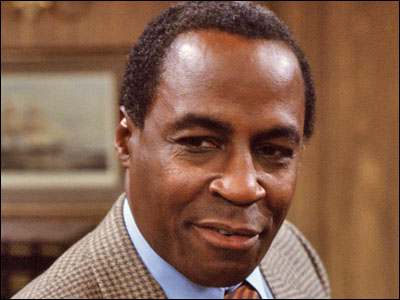
Robert Guillaume, R.I.P.

by evanier

Robert Guillaume was a terrible actor — on one occasion. He was great in everything you ever saw, and he was great in everything I ever saw…with one exception.

In 1997, I was story editor and voice director on a cartoon series and we were casting voices. I had a list of actors we were calling in to read for certain parts and one of the Executive Producers insisted that I call in and read Robert Guillaume for a particular role.

I thought that Mr. Guillaume, as fine an actor as he could be, was all wrong for the part but the Exec Producer guy insisted. He was one of these "my idea is the best one because I thought of it" fellows and I had the feeling that no matter how right or wrong or good or bad Guillaume was in his audition, the E.P. was going to insist on him. The show's creators and I were already battling him on the casting for several other roles.

He had his secretary call Guillaume's agent and schedule him to come in. Mr. Guillaume arrived at the appointed hour wearing — and I remember it because he was the only auditioner we had who dressed this way — a suit and tie. Usually, one does not dress up for a voiceover audition. I had met him before. A few years earlier, I'd been a writer on a short-lived variety show for ABC called The Half-Hour Comedy Hour, which was the kind of show you'd get if you combined Rowan & Martin's Laugh-In with Rowan & Martin's Laugh-In. Same show, different cast members.

Various ABC stars were conscripted to do brief cameos and at the time, Guillaume was starring quite successfully in Benson. He was very funny in his cameo on our show and very cordial and easy to work with. At the cartoon audition though, he seemed sullen and unenthusiastic. He listened politely as I explained the character and he studied the dialogue without much energy. Then he went into the recording booth and gave a professional but uninspiring reading of the audition script. When he came out, I said to him, "You don't want to do this, do you?"

He smiled for the first time since he'd arrived and said, "No. Nothing against you or your show but I've got a lot of projects I'm doing now, mostly books and live theater. I really have no interest in being on a weekly cartoon series just now."

I asked him, "Then what are you doing here?" Which seemed like an obvious question but one well worth asking.

He said, "My agent insisted I come in. I tried to get out of it but he told me to just come in so he wouldn't look bad for not being able to deliver me. Apparently, whoever called up — was it you? — was really insistent that I had to read for this part."

I told him it wasn't me who'd called and I asked, "Would you be happier if I assured you we won't hire you?" He said he would be. I said, "Then you'd better go back in the booth and do a much poorer reading of the audition script."

He smiled and said, "It would be my pleasure." He went back in. I told the engineer to erase what he'd done before and we re-slated as if this was the first read. Guillaume did it very poorly and I then had him do it two more times, giving him direction on how to make it even less acceptable with each read. Finally, I said, "Perfect. If it was any worse, they'd probably kick you out of the Screen Actors Guild."

He thanked me and just before he left, he asked, "Listen, just in case they still want me for some insane reason, how much money do I ask for to ensure I don't get it but I don't embarrass my agent by asking for the moon?" I told him an amount, he thanked me again and that was it. The next day, the Executive Producer told me he was somewhat disappointed with what he'd heard from Robert Guillaume. He may have been the only person in show business who ever was.

The post Robert Guillaume, R.I.P. appeared first on News From ME.

24 Oct 16:45

Brexit & risk attitudes

by chris

Simon Wren-Lewis points out a paradox – that on the one hand we have good evidence that older people tend to be more risk averse than younger ones, but on the other hand they supported the risky prospect that is Brexit. How can this be?

It’s not – or at least not wholly - because older people, being retired, are insulated from some of the costs of Brexit. People tend to vote sociotropically (pdf) – for the common good as they perceive it rather than their own narrow interest – and so older folk should have considered the interests of their children and grandchildren.

What’s more, there’s a good reason why older people should be more risk averse. They have learned – often at that most effective pedagogic establishment, the school of hard knocks – that big ambitions often fail. They should be more aware than most of our cognitive limits, not least because many older folk are so limited (pdf). They should be small-c conservatives, and hence Remainers.

So why weren’t they? Part of the answer, I suspect, lies in a paper (pdf) by Michael Woodford and colleagues. They point out that attitudes to risk are shaped by how we code (pdf) prospective wins and losses.

Take, for example, the question: how much would you pay for a 50-50 chance of winning £1000? The expected value of the bet is £500, but most of us would pay less because we’re risk averse.

Just how much we’d pay, though, depends on how we think about the win and the loss – how we code them. We ask: what could I do with £1000? How much would the loss of (say) £400 hurt? Differences in these codings generate differences in how much we’d pay – that is, differences in risk aversion.

This seems trivial. But it explains a lot. It explains why more intelligent people are more willing (pdf) to take on good bets. They can more clearly translate pay-offs into prospective mental well-being, whereas for others the coding is noisier and so they avoid such bets. It also helps explain why older folk are more risk averse: knowing their cognitive limits (and perhaps knowing that money doesn’t buy happiness) they avoid bets that others would take.

It also explains one element of prospect theory; the tendency to seek risks when you’ve lost money. We see the chance of £1000 and think “yay, I can get even” and think of the loss as “I’m in so much trouble already a little extra won’t make any difference.”

And it also explains why our attitudes to risk vary across domains: why we hold equities and buy insurance; why some avoid financial risk but play risky sports; and so on. It’s because the codiings differ from domain to domain.

Which brings me to Brexit. Brexit was not presented simply as a choice between a risky pay-off (Leave) and a safe one (Remain). Brexiteers also offered what they claimed to be intrinsic goods such as national self-determination. For various reasons – being brought up on 1950s war films, discomfort with immigration, whatever – these goods appealed more to oldsters than youngsters. And this appeal offset the tendency for oldsters to regard Brexit as risky.

In a sense, this is consistent with the coding view of risk aversion: oldsters saw Brexit as the offer of valuable intrinsic goods. They therefore coded it as a safe option. Youngsters, being less attracted to those goods, saw it as riskier.

I offer this only as a theory. But I think Simon’s point is sound: there is a paradox here that needs some sort of explanation, and this is the best I have.  

Update/clarification. I intended this post to be more about the nature of risk aversion than about Brexit. It poses a radical question. If the same option can be coded as either relatively risky or relatively safe -as Brexit was/is - then does the concept of risk aversion apply at all? And if it doesn't apply here, might it be unhelpful in other real-world complex choices we face? 

24 Oct 06:14

#1351; O Icebox, O Lockbox

by David Malki

Well, if Burkins is to be fired, let’s blame all the theft to date on him, just to wrap all that up

24 Oct 06:13

#1352; Personal Pan Patois

by David Malki

You'd develop your own language isolate too, if you lived in a grain silo for three decades

24 Oct 06:12

#1353; The Thrill is in the Attempt

by David Malki

'Crossing' is the industry term of art for lathing a regulation tee from a solid maple log. You'd know that if you were in the class.

23 Oct 12:47

Student speech to be censored at UK universities

by Zoe O'Connell

Last night, I gave a talk at Pembroke College as part of Cambridge Hub’s Michaelmas Series. The topic was censorship.

This morning, I woke up and saw that the headline story in The Times is Jo Johnson, the Secretary of State for Education, wanting to “guarantee free speech” at universities.

It is worth noting there is already a law that ensures freedom of speech at universities, but it would seem that Johnson wants even more extreme guarantees. The existing law is not invoked or referenced when we have one of the regular fusses about high-profile figures having their right to free speech violated. That is because they are not being censored.

Despite existing free-speech laws, there is already quite a bit of censorship at our Universities, and it comes from two sources. Neither form is good, and neither should be extended. Paradoxically, increasing the latter of these two forms of censorship is precisely what Johnson’s proposals will do.

The first is the PREVENT duty. That duty is supposed to target all extremism that leads to terrorism. Controversially, it usually ends up targeting Islamic and other non-white forms of extremism. In a university context, it is used to question room bookings and the nature of invited speakers. I doubt Islamic societies at universities will be welcoming Johnson’s statement today. It is unlikely the duty will be relaxed in support of “free speech”.

The other source is the de-facto censorship of students and student protest against influential media figures.

Wikipedia says censorship is “the suppression of speech, public communication, or other information”. I have mentioned PREVENT, and there’s no doubt that duty involves censorship even if there is disagreement over the desirability of PREVENT overall. China censoring WeChat is an example of that most in the West would regard as negative, and we have also seen cases within LGBT+ communities of censorship gone wrong with unintended consequences.

There is a common theme in those cases. Positive or negative and deliberate or accidental, it is those with power doing the suppression.

What is not censorship is selling only eight tickets to an event and having the venue cancel, as happened to Kate Smurthwaite. Smirthwaite seems to believe “free speech” means she can demand people listen and that venues give her a free platform. Consequently, she used her media contacts and influence to spin a story about how students were suppressing her free speech. The publication of her ideas was undoubtedly not restricted as a result. Quite to the contrary, the resulting media fuss and claims to martyrdom at the altar of free speech gave her an even more prominent platform.

Peter Tatchell was not censored when a student learnt he was due to speak at the same event as her and pulled out. She did not want to share a platform with someone she believed is racist and transphobic. Her withdrawal was not public, but Tatchell’s outrage at being unable to demand the energy of someone less powerful was. He used every possible media outlet he could muster to denigrate her.

A particular shout out needs to go to Julie Bindel at this point, who has repeatedly claimed to be censored herself but has just resorted to issuing legal threats against Brooke Magnanti, a.k.a. Belle De Jour. It is not surprising that Bindel’s claims have not received any media coverage condemning her attempts at silencing. There is a common theme running through these claims of censorship against media figures. Allegations are always targeted at those with less power.

There is a chilling effect hidden within these false claims of censorship, however. Those whom the allegations target become figures of derision in the press with no way of responding. They do not have their voices heard. I was at the event held in parallel to Greer’s Cambridge Union slot, and I know several of the students involved felt traumatised by resulting coverage. They are less likely to now engage in activism.

Media outrage is increasingly invoked to shut down legitimate free speech rights such as protest and running petitions. It happens merely because high-profile disagree with protests or feel threatened.

Ratcheting up that rhetoric will only increase the pressure on students to conform. Contrary to what Johnson believes it will not broaden the minds of young people. Instead, it will teach them that the powerful will not tolerate criticism.

The post Student speech to be censored at UK universities appeared first on Complicity.

23 Oct 10:32

Just two months left for Corbyn to achieve his Glastonbury boast – becoming PM by Christmas

by Mike Smithson

If all the polls had been looked like Survation & the YouGov model there’d have been fewer JC accolades

Just on four months ago, after the LAB leader’s extraordinary reception at Glastonbury, the festival chief, Michael Eavis, reported that Corbyn had told him that he’d be PM within six months and that he would scrap Britain’s Trident nuclear defence system as soon as he could.

The following day the LAB PR machine went into action to seek to play down the latter claim but the becoming PM by Christmas element was left hanging.

The festival had very much caught the mood of that incredible month when TMay had looked all set to win an increased majority if not a landslide and Labour was doomed to be beaten once again.

But because most of the polls were pointing to much bigger vote leads for the Tories the fact Mrs May lost her majority was seen as such a shock and the credit started to be heaped on Corbyn.

    But let’s not forget the election arithmetic. The Tories ended with 318 seats while Labour got 262. There was a gap of 56 seats. This was still a defeat and they are a long way off the 326 MPs required for a majority.

Corbyn should have realised before the Glastonbury hubris that it is hard to envisage the circumstances in which he becomes PM without a new General Election which the Tories, whatever their internal turmoil, are not going to initiate.

Remember the ONLY way an election can be triggered before 2022 is by going through the processes set down in the Fixed-Term Parliament Act. This requires two thirds of all 650 MPs to back one, as last April, or else the government losing two votes of no confidence within a specific time table.

In the current context the latter requires both the DUP and the SNP to join with LAB, PC and the LD MPs. The DUP has been bought off for its 10 votes and LAB should be under no illusions about the SNP’s 35 MPs. Nicola’s party got smashed on June 8th and isn’t going to put its remaining 35 MPs at risk by doing anything that would facilitate an early election.

Corbyn owes his current apparent GE2017 “victory” status to the pollsters who got it wrong. His party actually undershot against the YouGov mode and the final Survation polls.

The current Labour polling leads are nowhere near what you would have thought they should be given the turmoil within the blue team.

Mike Smithson

Follow @MSmithsonPB

Tweet

22 Oct 20:05

End all immigration controls: they're a sign we value money more than people.

End all immigration controls: they're a sign we value money more than people.
20 Oct 15:56

Why new centre parties will fail

by chris

For most of us, having an accident means losing our phone or spilling our drink. Jeremy Cliffe is cut from different cloth: he claims to have accidentally started a new political party. Being conceived by accident, however, does not in itself condemn one to failure – as millions of us can attest. What chance, then, does Radicals UK have?

Two things speak in its favour. One is that it will no doubt get lots of favourable media support from the many centrists who hate Corbyn. The other is that they are clean skins. The Lib Dems are discredited by the fact that they trebled tuition fees and collaborated with the economic illiteracy of austerity – which was of course a major cause of Brexit. Radicals UK will be untainted by such disgrace.

On the other hand, though, two more powerful forces are against it.

History warns us of these. Back in 1981 the SDP launched itself as a centrist party wanting to “break the mould” of British politics. The mould bent but didn’t break. Within nine years, most of the SDP was subsumed into the Lib Dems, and the rest were beaten in a by-election by the Raving Loonies.

One reason why the mould didn’t break is path dependency. Political parties are powerful brands that have been built up over decades. This loyalty doesn’t only attract millions of voters. It means that members stick with the party through thick and thin, even if they profoundly disagree with their policies and leaders. This gives them a resilience that a new centrist party won’t have. It also gives them an army of unpaid labour willing to deliver leaflets, get out the vote and speak up for the party in pubs and workplaces. Parties need bodies as well as heads.

Secondly, successful parties (unless perhaps they are nationalist ones) need some kind of class base and – given our electoral system – a geographically concentrated one at that. What would be the base of Radicals UK?

The party’s promises to be pro-EU and comfortable with both immigration and new technology suggests the obvious base would be younger metropolitan types who voted Remain. Many of these, though, are Corbynistas – attracted to Labour by its (apparent?) offer to end austerity, tax the ultra-rich and solve the housing crisis. What can Radicals UK do to prise them away?

A few weeks back, Jeremy made some suggestions. Whilst many strike me as reasonable (such as shifting taxes from income to land and inheritances) only one speaks to Corbynistas’ main concerns – the promise to build more houses. But I suspect that Labour could match that. Sure, it could mobilize discontent with Corbyn’s lack of support for EU membership. But grudges fade whilst interests do not. Corbyn’s huge appeal to the young declasse "middle-class" elements is founded on these interests. That gives Labour a class base that centrism will lack.

Yes, Radicals UK might appeal to less regressive elements of capital: firms wanting free migration and an open society. But there aren’t many votes in this.

All of which suggests to me an analogy. We already have a political party comprising decent people with reasonable policies and which speaks for around half the country: the Women’s Equality Party. And yet it is a nugatory electoral force. Why should Radicals UK be different?

19 Oct 01:14

John Henry and Universal Health Care

by Fred Clark
"Muscular Christianity" is rooted in fear -- specifically in fear of the physically stronger, and more numerous, working class. Muscular Christianity took that fear and responded by saying, "We'd better starting working out."
18 Oct 14:03

On cutting house prices

by chris

Ian Mulheirn, echoing Kate Barker, writes:

It is very unlikely that the perennial wish of housing commentators to simply ‘build more houses’ will make any meaningful dent in prices.

Many people think this is counter-intuitive, so I’ll try to explain why it’s not.

It’s because flows of supply are too small relative to the stock of housing to much affect prices. There are 23.7 million homes in England. In the 12 months to June, only 153,330 were completed. This means that even if annual housebuilding were to treble, we’d see a less than 2% annual increase in the housing stock.

There’s an analogy here with government bonds. Even before QE, government borrowing did not much affect bond prices. This was simply because the new supply of bonds was generally small relative to the existing stock.

It’s the same with houses. Houses are an asset, and the price of an asset depends upon the willingness and ability of people to hold the stock of it. Changes to the flow of the asset are generally too small to have much effect. For this reason, many economists have traditionally modeled house prices as if only demand matters; see for example this (pdf) or this (pdf).

This isn’t to say that increasing housing supply is a bad idea. It’s not at all. It’s just that it isn’t a magic bullet for solving the problem of affordability. Hpeilgy

If supply doesn’t affect prices, what does? Lots of things: demographics (pdf), incomes, debt levels, expected incomes and the availability of credit. My chart shows another influence: real interest rates. The lower these are, the cheaper is the cost of credit and hence the higher are house prices. (Or if you want to be fancier, lower interest rates mean a higher net present value of future housing services and hence a higher house price.)

All this raises a puzzle: if high house prices are due to high demand, and if they are a problem (as I think they are on balance), what can be done to help young people buy them?

Obviously, some possibilities would do more overall harm than good. A recession would cut house prices, but it’s a lousy idea. I suspect the same would be true of tougher immigration controls. And other policies to help buyers would do no good because they’d be offset by price increases. Help to Buy, for example, seems to have pushed up prices. And I’d expect cuts to stamp duty to have a similar effect; yes, there’s a strong case for reforming property taxation but we shouldn’t hope it’ll much help first-time buyers.

That said, there are some demand-side policies that might reduce house prices, such as restrictions on owning second homes or housing as investments – in short, reversing the financialization of housing. Instinctively, I’m not over-keen on these; they would be abridgements of freedom. As ways of reducing house prices, however, they might be worth considering.  

18 Oct 12:26

Radicals and Democrats and Renewals, oh my!

by Nick

As ever, there’s an xkcd for that
It’s getting very hard to go on social media these days without bumping into someone declaring that they’re going to be creating their own new centrist political party and inviting everyone to join. In this era of Warholian politics, everyone gets to be a party leader for fifteen minutes, and last night it was Economist writer Jeremy Cliffe describing his Macronic dreams in public and declaring a new ‘Radicals UK’ movement. Previous incarnations of this idea include ‘the Democrats‘, ‘Renew‘, multinational street parties in Maidenhead, and the idea that George Osborne will come riding to the rescue sometime around 2022.

Now, I’m not going to repeat the various blog posts and articles I’ve already written about why forming a new centre party isn’t the guaranteed route to political glory some people seem to think it is, but I do want to focus on one particular aspect of all these proposals. Tom King talks about it here, and we could phrase this problem as ‘you want to create a socially liberal, anti-Brexit, forward looking party, yet the Liberal Democrats and the Greens already exist. Why not just join one of them?’

The usual response when asked that is to say something on the lines of ‘because reasons‘ and declarations that this new party is going to be different in some vaguely unspecified way. I think it actually reveals a fundamental flaw in the makeup of these new movements that show why they won’t amount to much more than a short term flash in the pan, even before we get to the massive problems they’d face because of the nature of the British political system and the structure of the British electorate (the ‘socially and economically liberal’ people they want to represent are the smallest segment of British voters and massively over-represented within the commentariat).

The problem I think the ‘we have to have something new’ attitude reveals is an antipathy to dealing with the actual realities of politics, especially centrist politics, which requires the ability to compromise and build wide coalitions of support if you’re going to achieve your long-term goals. Compromise and coalition isn’t just something that happens between parties, it’s something that has to happen within parties unless they’re going to remain hopelessly small or ridiculously centralised and authoritarian. Divisions, disagreements and factions are an inevitable part of creating any political movement that has more than a handful of members. The sort of people declaring that they want to join a new movement/party because they have some disagreements with the existing ones are the sort of people who are going to become very disillusioned very quickly when it turns out that not everyone in their bold new movement agrees with them on everything.

It’s very easy for someone to read what they want into a vague set of principles – consider that even in existing parties, there are people who are a long way away from what you might regard as that party’s core beliefs – and aside from being anti-Brexit these new movements are saying little more than ‘we’re for good things and against bad things’. Jeremy Cliffe talks of his Radicals UK being ‘pro-tech and social liberal‘ but what do those phrases mean to people. One person might see ‘pro-tech’ as full speed ahead to the technofuturist dream, fracking all the way because technology will save us, while another might see it as ‘yes, we must invest more in sustainable technology and renewable energy’ while ‘social liberal’ can mean anything from a vague Cameronian middle-class niceness to full-on Georgist land value taxation fuelling massive social changes. Somewhere along the line if you want to be a proper political party, you’ve got to broker a compromise between these people who’ve all joined your group because they think it means they won’t have to compromise.

If you want to try and create a political party for people who don’t like the realities of doing politics, that’s fine, but at some point you’re going to have to face up to the problems and contradictions that causes for you. If you’re going to build a movement based on people who aren’t willing to compromise, don’t be surprised when they won’t compromise with each other.

17 Oct 11:47

We Need to Talk About Kevin.

by Peter Watts

Oh fuck, I think. I’m gonna get arrested again.

There’s a growing cluster of uniforms in the ravine abutting our property: city employees, police, a couple of guys wearing insignia I don’t recognize.  Two cops poke at the tent in the ravine just across the fence from our tool shed. Their cars are pulled up in front of the house: those ones with the new, aggressive gray-and-black styling because the old blue-and-whites didn’t look enough like the Batmobile.

It was only a matter of time. Kevin spent most of last night screaming death threats to the trees again. Someone must have complained.

I switch on my phone’s voice recorder, slip it into my back pocket, trudge grimly into the underbrush. I pass the two whose insignia I didn’t recognize from the window: Salvation Army, as it turns out (“Gateway: The Hand of God in the Heart of the City”). They look concerned and ready to help. I wonder if they know that Kevin’s gay; the Sally Ann’s a notoriously homophobic organization.

“So what’s going on?” I ask in passing. One of them shrugs, jerks a thumb towards the center of action.

The cops have ripped away the fly and are talking to the huddled figure rocking in the exposed shell of the tent. They look up as I approach.

“Hi. That’s my tent.” Maybe not the optimal ice-breaking line, but better than back away from the homeless guy and no one gets hurt.
vlcsnap-2017-10-16-17h35m39s696

They look at me.

“I gave it to him to keep him from getting rained on.” There was a torrential rainstorm a few months back, punched a hole in our roof and soaked through to the living room ceiling. I came home that afternoon to find Kevin taking shelter on our porch. He apologized for the intrusion. It was the first time we spoke, although he’d been living rough in the ravine for a couple of months at least.  “He’s harmless, really. He yells a lot, but when he’s leveled out he’s actually kind of charming.”

One of the cops is about as tall as me, and broader. The other is short enough to be susceptible to Napoleon Complex. He’s the one who first tells me to back up, who says I’m interfering with their job.

“Kevin?” I say. “You okay, dude?” The figure in the tent keeps rocking.

They tell me, once again, to back off. “The problem,” I say, “is that you guys have a really bad reputation when it comes to dealing with black guys with mental issues. I’m worried about what you might do to him.” At some point during this exchange I’ve pulled my phone from my pocket and switched to video record.

“Look, you want your tent back, we’ll give you your tent back.”

“It’s not about the tent, he’s welcome to the tent—”

“You want to record this, go ahead and record. But you are interfering with our job. So back away.”

Which, despite my gut instincts, I have to admit is reasonable. I take a few steps back.

“Further,” says the littler guy.

Another step.

Further.”

I figure I’m far enough; certainly well out of Interfering Range. “I don’t think that’s gonna happen,” I say, “But I will stay right here.”

He doesn’t push it.

And I have to admit, they seem to be trying their best at a tough job. Nobody’s tasered or shot Kevin (or me) yet. They’re not escalating in the way that ends with unarmed people shot in the back, or choked to death for selling loosies. They’re actually trying to talk to the dude.

One of the Gateway guys has dealt with Kevin before. They bring him over to try and talk Kevin out of the tent. I end up chatting with the City people; against the law to camp on public property, they point out. They gave Kevin almost a week’s warning that they’d be coming. Came by just yesterday to remind him, left a note when he wasn’t there. And there are shelters. Gateway’s got a bed for him.

But Toronto shelters don’t allow pets, and Kevin has a cat: a skittish, overweight black-and-white shorthair named “Blueberry Panda”. They used to live together in an apartment run by the Toronto Community Housing Corporation. Kevin had arranged with the government to have his rent deducted automatically from his disability income. He went for months thinking that his rent was being paid; he believed that right up until the day TCHC evicted him last spring. Apparently they’d refused to authorize the direct-deposit arrangement after being unable to contact him by phone for “verbal confirmation”[1].

I explain this to the City people; they’re sympathetic but whatyagonnado. “Just hypothetically,” I wonder, “what if Kevin moves into our back yard?”

They look at me as though I’m the one rocking back and forth in the tent. “Well he wouldn’t be on public land, but there’d still be the disturbing the peace issue.” And they’re right, of course. The current situation is unsustainable. A few nights back I found myself standing out in the rain at 2 a.m., peering through the fence to see if the fire Kevin had lit was in danger of burning down our shed or setting the ravine alight. It wasn’t; but obviously the guy needs help. I just don’t know if the current system can give him any. In terms of mental health this place has gone to shit ever since the government decided to cut costs by classifying everyone as an outpatient. It’s a lesser-evil sort of thing.

Gateway guy has made no progress; Big Cop (Officer Baird, I learn later) approaches me and says, “I think we got off on the wrong foot. You don’t know me, you’re judging me by the uniform. I’m honestly trying to help this guy; you say you have a relationship with him? Maybe you could try talking to him?”

“Well, sure,” I say, suddenly feeling like kind of a dick.

We go back to Kevin’s tent— my tent, until I gave it to him on the condition that he stop screaming death threats in the middle of the night (or at least that he make it really clear that those death threats were not aimed at us). I remember he smiled when I said that, looked kind of rueful. Now that I think back, though, I realize he made no promises.

He’s originally from Trinidad. Speaks with this cool accent. Back in the nineties he earned a degree from the University of Toronto: dual major in chemistry and philosophy. How cool is that?

Now he huddles half-naked in the woods, and rages against monsters at three in the morning.

*

“Kevin?  Dude? Remember me?”

The tent stinks. There’s a tear down one side where the local raccoons tried to get at Blueberry’s kibble. A small mountain of Bic lighters spills across a dirty scavenged mattress.  A drift of empty plastic bottles. Half-eaten meals gone bad in foil wrappings. A couple of empty prescription vials (big surprise there). Kevin’s knapsack: the thin edge of a grimy Macbook peeking out from a nest of balled up socks and underwear.

He sits in the middle of it all, half-clothed: a dirty sleeping bag wrapped around his shoulders, a forgotten cigarette burning down between his fingers. He looks a little like a performance-artist channeling that mud-and-garbage Devil’s Tower Richard Dreyfuss sculpted in his living room, back in Close Encounters.

After our first sodden introduction, Kevin would wave a cheery “Hello neighbors!” at the BUG and me during his comings and goings. Occasionally he bummed a twenty to pay for a shower and a roof at the local bath-house; once he woke us late on a Saturday morning to ask if he could use our bathroom. Every now and then he’d push it a bit— asked if he could keep my hammer with him in the ravine, asked our house-sitters for the household WiFi password while we were out of town— but he also took No for an answer. We were a bit worried, at first, about getting sucked into a camel-nose scenario, but the dude always respected boundaries. Always cheerful and charming, in the light of day at least.

A centimeter of ash drops off the cig and smolders on the mattress.  I try to tap it out. Kevin flinches away and doesn’t look at me.

I ask how he’s doing, try to invoke past shared experience to bring him out of it: “Remember when we set this tent up? Fucking insects nearly ate me alive.”

Insects don’t exist in Alzheimer Space,” he snaps.

It’s a start. It’s more than he’s said to anyone else. I slide a bit of aluminum foil towards him across the fabric: “Just to keep the ash from, you know, setting the mattress on fire.”

Ash does not exist in Alzheimer Space. Mattress does not exist in Alzheimer Space.

“Dude? What are you—”

You do not exist. You do not exist in Alzheimer—

Finally it clicks: All time and space.

“You do not exist in all time and space. Nothing exists in all time and space.”

In principle it’s a decent coping mechanism. On some level he must know that the voices he hears at night, the things he rails against when the rest of us are trying to sleep, don’t actually exist. So he’s rejecting false input, only he’s— overgeneralizing. He’s rejecting everything as unreal.

I am false data. Why would he believe anything I say?

I try a bit longer, take some small satisfaction that at least I’ve got him talking, even if only to deny reality. Finally I crawl out of the tent, turn to Baird & Bud: “He’s gone totally solipsistic.”

“What’s sol—solistic?”

“He’s not recognizing anything beyond himself as real. I think he thinks we’re all hallucinations or something, like he’s some kind of Boltzmann brain.”

By now the paramedics have arrived. Officer Baird and I stand back and watch one of them squat down, ask Kevin to come out.  “Just want to test your blood pressure, buddy”— which, if not a bald-faced lie, is so very far from the whole truth that it might as well be. And yet, what else is there to do? Kevin couldn’t even pass a Turing test in his current condition.

“You know, the press paints us in a really bad light,” Officer Baird remarks. “There are a few assholes, but most of us are good people. I’m a good person.”

I actually believe him. That last part, anyway.

“I get that,” I say. “The trouble is, you good people cover for the assholes. You have to, because you need to count on them when you’re in a tight spot. I understand the dynamic, but you gotta admit that suspicion is a reasonable mindset to take into these things.”

“I’ve had training in this sort of thing. I go for de-escalation.” (I immediately flash back to a couple of other incidents in my past where LEOs, fully free to escalate, stepped back and chose to engage instead. And others where they, well, didn’t. Funny how the latter interactions tend to loom so much larger in memory.) “I always try to resolve things peacefully,” Baird continues.

“And ninety-five percent of snakes are harmless—” invoking my most-favorite ever biology-cop analogy— “but you still carry an antivenom kit when you go into the desert.”

He shrugs and, I think, concedes the point.

Kevin’s been contained. The paramedics wheel him past on a stretcher. He’s buckled down and strapped in. His hands are cuffed behind his back. He looks around, lost. “Could you take the cuffs off, please?” he asks. “I’m not a violent person.”

Three minutes, tops, since nothing existed in all time or space. Just moments ago he was stuck in a loop that denied the very existence of external reality. Now he’s perfectly coherent. He doesn’t understand why he’s being treated this way.

They don’t take off the cuffs. I don’t blame them. It breaks my heart anyway. I tell Kevin I’ll take care of Blueberry while he’s away (the little pudgeball fled into our backyard while all this was going down). Officer Baird and I wander after the gurney; he gives me his badge and phone number, and his email in case I want to follow up (“I probably won’t be able to give you any details— that’s Kevin’s confidence— but I can at least tell you he’s okay.”) I wonder if he’s the kind of guy who’d be willing to answer a few background questions if I ever put a cop in one of my stories.

The city employees move in with garbage bags and blue latex gloves. They say I can have my tent back if I want but it’s a write-off; I salvage the hollow bones (gotta be able to find a use for those somewhere) and let them collect everything else for disposal.

The ambulance drives away.

There are two people in Kevin’s brain. They don’t play well together; only one is in control at any given time. Some kind of switch toggles between them. I hope Kevin can find a way to keep his hand on it.

What? I told you she was fat.

What? I told you she was fat.

In the meantime, a black shape lurks in the underbrush and glares at me with yellow eyes. She’s lost her best and only friend; Kevin may have his issues but those two have been together for almost ten years, and he chose to sleep without a roof over his head rather than abandon her. So we won’t abandon her either. She still doesn’t trust us as far as she could throw an ibex, but she creeps out of cover to eat the food we serve, once we’ve gone back inside.

I guess it’s a start.


[1] This is typical of the TCHC; they treat their tenants with contempt and every request as a shiftless attempt to game the system. I lived there for years, fighting rearguard against bedbugs and bad electrical wiring. When I asked them to deal with the black mold in my bathroom or the meter-wide hole in my ceiling, they literally laughed in my face.

16 Oct 13:26

Lies We Need to Stop Telling Our Kids.

by Neurodivergent K
There's another post I was supposed to be writing, but things happened and I ended up writing this one instead. Oops. The general ideas of this one have been percolating for a while; a conversation with Chavisory of Chavisory's Notebook helped me finally crystallize it into words instead of free floating irritation at the state of things.

There are a couple lies we tell autistic kids. Kids with disabilities in general. All kids, to an extent. One of them seems to be aimed more at kids who we presume are girls, whereas the other one we hold onto a lot longer with disabled people than with abled people. And we have to stop.

First things first.

Folks, we have got to stop telling girls, women, disabled people, marginalized people that if they follow the right script they will be safe. I saw a white autistic man at a conference I just went to flogging his solution to police violence. Buddy my dude, the Latina obviously neurodivergent little girl you are talking to is not going to be safe from the police if she does what you say. That's not how this works.

So many 'social skills programs' seek to be the cheat codes to a safe life. If you do what this guy says, you won't get shot by the police (not necessarily true). If you use exactly the right words, no one will bully you. This set of words is protective against medical mistreatment. That set of words will protect you from racial aggressions. If you do this little dance just right, you are safe from racism.

I mean, hell, look at peoples' responses to survivors of sexual violence. The first thing they do is ask "well what did they do to deserve it? Did they give the perpetrator the wrong idea?". That's the first response, regardless of disability of the victim. As a society we have bought into this bullshit idea that if you perform The Safety Dance correctly, if you do all the right things, say all the right things, you're safe. You're safe from bigots. You're safe from predators. You're safe from people running the stop sign.

And that's a lie we have got to stop telling people.

And then there's the second lie, which ties into the first in that it prevents people from responding when casting the circle of protection doesn't work.

Stop telling your children and your clients that 'appropriate' is a steady state. Appropriateness is situational. There are very few things you can do that are always appropriate or always inappropriate.

"I don't like that" and "that is inappropriate" are different things, okay? But the people who are tasked with teaching us to navigate the world don't want to deal with situationals. Rather than say "that's annoying" or "I don't like that" or "sometimes that's ok but sometimes it is not" they tell us it's inappropriate.

Hilariously enough, oftentimes the cry of "inappropriate" is used once the abled person in the situation has failed to convey that something is actually inappropriate. An example that you're all sick of but I am going to keep using until people stop making it so available:

A neurodivergent man traps neurodivergent, and sometimes abled, women and people he thinks are women. He wants a girlfriend. For some reason no one has told him that you can't just corner people and try to touch them and whine at them until they agree to be your girlfriend (this is always inappropriate. There is no people or species that courts like this). People have told him nicely to cut the shit, and have been told it's inappropriate to use that language. People have screamed tonelessly to make him go away, and been told it's inappropriate. Someone finally knees him in the fork, and is castigated for how inappropriate that is too.

There's only 2 people being inappropriate in this story: the man who thinks he can whine someone who said no into dating him, and the almost certainly neurotypical person who is lecturing people on doing what it takes to extract themselves. There are, in fact, situations where kneeing someone in the fork is the most appropriate way to go.

Even in less extreme (though this isn't extreme; find a disabled woman or person read as a woman who has been to disability events and they have stories just like this) circumstance, marginalized people are taught from day 1 that resisting awful things is 'inappropriate'. Racialized children, queer children, disabled children, on and on and on. Defending ourselves is 'inappropriate'. What's actually inappropriate in these situations is how the people who wave that stamp around don't even care until they take matters into their own hands.

Words mean things. Inappropriate isn't a blanket category for a thing. Yelling is always loud. It is not always inappropriate.

Say what you mean.

Stop lying to people to get out of uncomfortable situations for yourself.