Shared posts

14 Sep 09:35

Lord Bonkers' Diary: "For me he’s delivered that too well"

by Jonathan Calder
I'll say this for Lord Bonkers: since I met him I have learnt all sorts of things about the history of the Liberal Party that you won't find recorded by any historian.

Wednesday

I read this morning that Vince Cable intends to bring back supporters of our party. I say “bring back” because I well remember the days when we Liberal Party activists would be accompanied by people clad in bobble hats and scarves and carrying rattles, all of them in party colours.

They would cheer one’s every effort and often pass supportive comments such as "A great piece of canvassing by the Rutland peer there, Ron" or "The councillor’s passed him the bundle of leaflets and they’ve gone straight through the letterboxes." (Occasionally one would hear less obliging opinions such as “You’ll win nothing with Young Liberals” or “For me he’s delivered that too well”.)

I once asked a supporter, after we had lost a Kesteven County Council by-election by a distance, what he got from it. “We’ve had a great day out,” he replied, “and this is our cup final.”

Lord Bonkers was Liberal MP for Rutland South West 1906-10.

Previously in Lord Bonkers' Diary:
13 Sep 19:51

Today's Favorite Twitter Exchange

by evanier

The post Today's Favorite Twitter Exchange appeared first on News From ME.

13 Sep 10:41

The Split-brain Universe

by Peter Watts

An extended Nowa Fantaskyka remix.

The year is 1982. I read Isaac Asimov’s newly-published Foundation’s Edge with a sinking heart. Here is the one of Hard-SF’s Holy Trinity writing— with a straight face, as far as I can tell— about the “consciousness” of rocks and trees and doors, for Chrissakes. Isaac, what happened? I wonder. Conscious rocks? Are you going senile?

No, as it turned out. Asimov had simply discovered physical panpsychism: a school of thought that holds that everything— rocks, trees, electrons, even Donald Trump— is conscious to some degree. The panpsychics regard consciousness as an intrinsic property of matter, like mass and charge and spin. It’s an ancient belief— its roots go all the way back to ancient Greece—but it has recently found new life among consciousness researchers. Asimov was simply ahead of his time.

I’ve always regarded panpsychism as an audacious cop-out. Hanging a sign that says “intrinsic” on one of Nature’s biggest mysteries doesn’t solve anything; it merely sweeps it under the rug. Turns out, though, that I’d never really met audacious before. Not until I read “The Universe in Consciousness” by Bernardo Kastrup, in the Journal of Consciousness Studies.

Kastrup goes panpsychism one better. He’s not saying that all matter is conscious. He’s saying that all matter is consciousness— that consciousness is all there is, and matter is just one of its manifestations. “Nothing exists outside or independent of cosmic consciousness,” he writes. “The perceivable cosmos is in consciousness, as opposed to being conscious.” Oh, and he also says the whole universe suffers from Multiple Personality Disorder.

It reads like some kind of flaky New Age metaphor. He means it literally, though.

He calls it science.

*

Just as plausible, apparently.

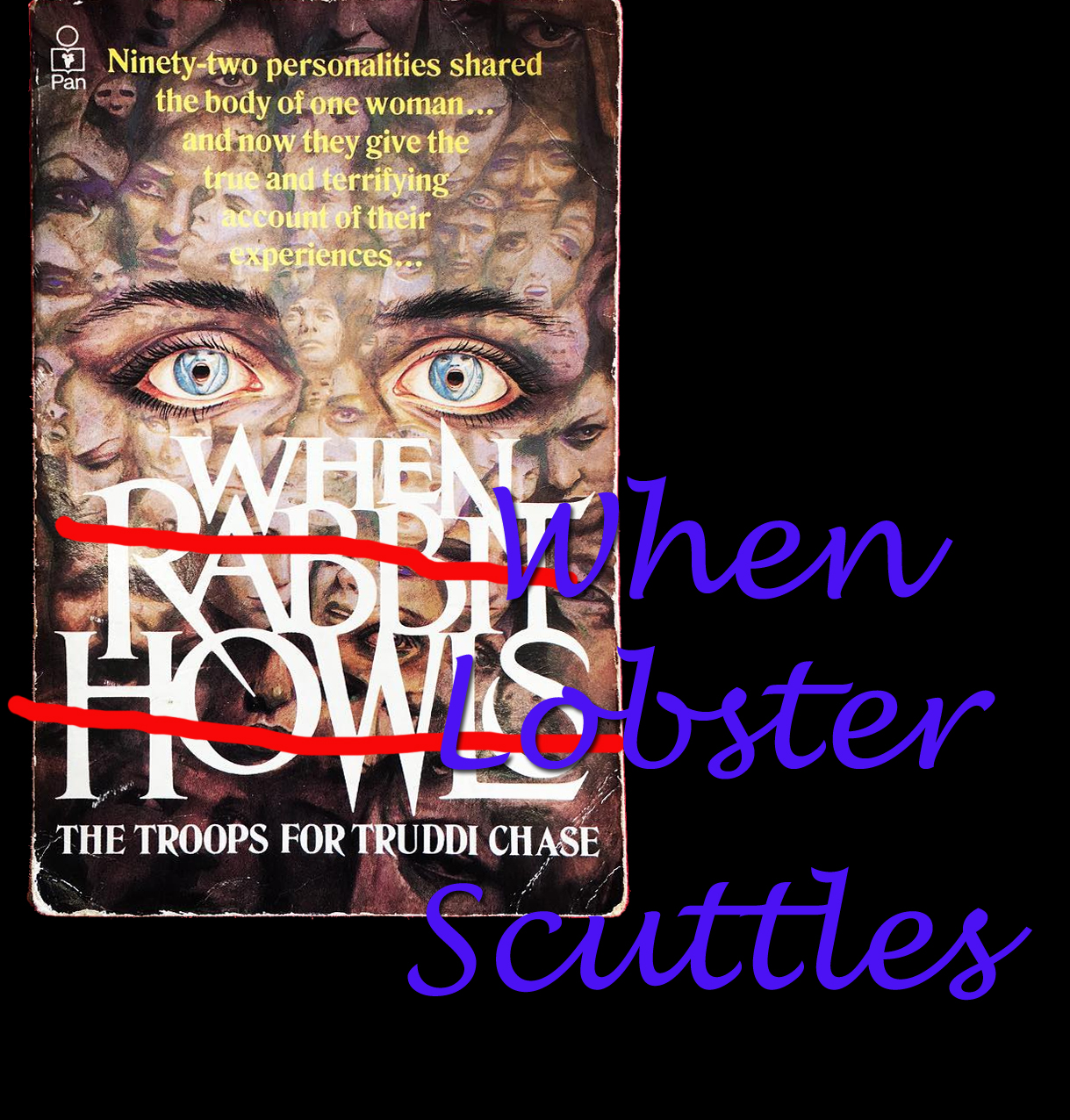
Even on a purely local level, there are reasons to be skeptical of MPS (or DID, as it’s known today: Dissociative Identity Disorder). DID diagnoses tend to spike in the wake of new movies or books about multiple personalities, for example. Many cases don’t show themselves until after the subject has spent time in therapy— generally for some other issue entirely— only to have the alters emerge following nudges and leading questions from therapists whose critical and methodological credentials might not be so rigorous as one would like. And there is the— shall we say questionable nature of certain alternate personalities themselves. One case in the literature reported an alter that identified as a German Shepherd. Another identified— don’t ask me how— as a lobster. (I know what you’re thinking, but this was years before the ascension of Jordan Peterson in the public consciousness.)

When you put this all together with the fact that even normal conscious processes seem to act like a kind of noisy parliament— that we all, to some extent, “talk to ourselves”, all have different facets to our personalities— it’s not unreasonable to wonder if the whole thing didn’t boil down to a bunch of overactive imaginations, being coached by people who really should have known better. Psychic CosPlaying, if you will. This interpretation is popular enough to have its own formal title: the Sociocognitive Model.

There could be a sort of psychiatric Sturgeon’s Law at play here, though; the fact that 90% of such studies are crap doesn’t necessarily mean that all of them are. Brain scans of “possessed” DID bodies show distinctly different profiles than those of professional actors trained to merely behave as though they were: the parts of the brain that lit up in actors are associated with imagination and empathy, while those lighting up in DID patients are involved with stress and fear responses. I’m not entirely convinced— can actors, knowingly faking a condition, really stand in for delusional people who sincerely believe in their affliction? Still, the stats are strong; and it’s hard to argue with a different study in which the visual centers of a sighted person’s brain apparently shut down in a sighted person when a “blind” alter took the controls.

Also let’s not forget the whole split-brain phenomenon. We know that different selves can exist simultaneously within a single brain, at least if it’s been partitioned in some way.

This is the premise upon which Kastrup bases his model of Reality Itself.

*

You’ve probably heard of quantum entanglement. Kastrup argues that entangled systems form a single, integrated, and above all irreducible system. Also that, since everything is ultimately entangled to something else, the entire inanimate universe is “one indivisible whole”, as irreducible as a quark. He argues— let me quote him here directly, so you won’t think I’m making this up—

“that the sole ontological primitive there is is cosmic phenomenal consciousness … Nothing exists outside or independent of cosmic consciousness. Under this interpretation one should say that the cosmos is constituted by phenomenality, as opposed to bearing phenomenality. In other words, here the perceivable cosmos is in consciousness, as opposed to being conscious.”

Why would he invoke such an apparently loopy argument? How are we any further ahead in understanding our consciousness by positing that the universe itself is built from the stuff? Kastrup is trying to reconcile the “combination problem” of bottom-up panpsychism: even if you accept that every particle contains a primitive conscious “essence”, you’re still stuck with explaining how those rudiments combine to form the self-reflective sapience of complex objects like ourselves. Kastrup’s answer is to start at the other end. Instead of positing that consciousness emerges from the very small and working up to sentient beings, why not posit that it’s a property of the universe as a whole and work down?

Well, for one thing, because now you’ve got the opposite problem: rather than having to explain how little particles of proto-consciousness combine to form true sapience, now you have to explain how some universal ubermind splits into separate entities (i.e., if we’re all part of the same cosmic consciousness, why can’t I read your mind? Why do you and I even exist as distinct beings?)

This is where DID comes in. Kastrup claims that the same processes that give rise to multiple personalities in humans also occur at the level of the whole Universe, that all of inanimate “reality” consists of Thought, and its animate components— cats, earthworms, anything existing within a bounded metabolism— are encysted bits of consciousness isolated from the Cosmic Self:

“We, as well as all other living organisms, are but dissociated alters of cosmic consciousness, surrounded by its thoughts. The inanimate world we see around us is the revealed appearance of these thoughts. The living organisms we share the world with are the revealed appearances of other dissociated alters.”

And what about Reality before the emergence of living organisms?

“I submit that, before its first alter [i.e., separate conscious entity] ever formed, the only phenomenal contents of cosmic consciousness were thoughts.”

In case you’re wondering (and you damn well should be): yes, the Journal of Consciousness Studies is peer-reviewed. Respectable, even. Heavy hitters like David Chalmers and Daniel Dennet appear in its pages. And Kastrup doesn’t just pull claims out of his ass; he cites authorities from Augusto to von Neumann to back up his quantum/cosmic entanglement riff, for example. Personally, I’m not convinced— I think I see inconsistencies in his reasoning— but not being a physicist, what would I know? I haven’t read the authorities he cites, and wouldn’t understand them if I did. This Universal Split-Brain thing reads like Philip K. Dick on a bad day; then again, couldn’t you say the same about Schrödinger’s Cat, or the Many Worlds hypothesis?

Still, reading Kastrup’s paper, I have to keep reminding myself: Peer-reviewed. Respectable. Daniel Dennet.

Of course, repeat that too often and it starts to sound like a religious incantation.

*

To an SF writer, this is obviously a gold mine.

Kastrup’s model is epic creation myth: a formless thinking void, creating sentient beings In Its Image. The idea that Thou Art God (Stranger in a Strange Land, anyone?), that God is everywhere— that part of the paradigm reads like it was lifted beat-for-beat out of the Abrahamic religions. The idea that “The world is imagined” seems lifted from the Dharmic ones.

The roads we might travel from this starting point! Here’s just one: at our local Earthbound scale of reality DID is classed as a pathology, something to be cured. The patient is healthy only when their alters have been reintegrated. Does this scale up? Is the entire universe, as it currently exists, somehow “sick”? Is the reintegration of fragmented alters the only way to cure it, can the Universe only be restored to health only by resorbing all sentient beings back into some primordial pool of Being? Are we the disease, and our eradication the cure?

You may remember that I’m planning to write a concluding volume to the trilogy begun with Blindsight and continued in Echopraxia. I had my own thoughts as to how that story would conclude— but I have to say, Kastrup’s paper has opened doors I never considered before.

It just seems so off-the-wall that— peer-reviewed or not— I don’t know if I could ever sell it in a Hard-SF novel.

12 Sep 23:21

Radical Markets: a review

by chris

In recent years the case for free markets has become tainted by association with a defence of the rich – an association which free market think-tanks have done too little to disentangle. It was not always so, however. Adam Smith and David Ricardo (and Thomas Carlyle!) saw free markets as an attack on privilege. Posner and Weyl’s Radical Markets is an attempt to return to that older tradition of Philosophical Radicalism. They want to use markets to equalize wealth.

One of their main ideas is what they call COST – a common ownership self-assessed tax. The idea here is that we assess the value of all our possessions and pay an annual tax on that value – the snag being that everybody can see our assessments and force us to sell our property to them at that assessed price. This gives us an incentive to assess our wealth properly – if we over-estimate it we pay too much tax and if we under-estimate it we risk losing our possessions with insufficient compensation. In effect, then, all property becomes commonly owned and we rent it from others – the rent being the tax we pay. You can think of this as a back-dated consumption tax.

Posner and Weyl see the obvious objections to this, and deal with them well. I was almost convinced.

But only almost. For me, it fails the Cushnie principle: is it worth the bother? Ryan Aven rightly says that self-assessment would impose a massive cognitive load onto all of us. And for what? I’m not sure why a COST is much better than a wealth or land value tax accompanied by their incentive-enhancing self-assessment mechanism, Radical9780691177502_0

Another of their ideas is quadratic voting; in effect, people are given a budget of “voice credits” each year and can allocate more of them onto issues where they feel strongly. I sympathize with this - I’ve supported something similar myself – not least because it might, in the long-run, improve the quality of debate by reducing hyperbole: any blowhard trying to exaggerate an issue can be countered with the question: “how many votes will you spend on it?”

But, but, but. I’m not sure this tackles the big failures of our democracy: the fact that the rich have too much influence; the fact that the standard of public discourse is piss-poor; and the fact that some issues get onto the agenda whilst others, sometimes more deserving, do not.

Yet another of their ideas is that data is labour – that we should be paid for the data we provide for free to the internet giants. This is better. What they hint at – but don’t quite say explicitly – is that this is a challenge to neoclassical economics. For any individual, the marginal product of our data is negligible. Collectively, however, it is huge. What does this tell us about marginal productivity theory?

I these senses I agree with Diane and with Ryan. Whilst their actual proposals are dubious ("barking mad" is Diane's phrase), their philosophy deserves careful thought, as they are asking good questions about the relationships between property rights and markets.

I feel Posner and Weyl are on stronger ground when they advocate limits on institutional investors’ ability to hold shares in companies in the same industry. At the moment, they say, cross-holdings deter firms from competing against each other. This is good. But it’s an extension of anti-trust powers, not a radical market.

What’s more, there are some odd omissions. For me, a better way of using markets to help ordinary people was proposed years ago by Robert Shiller: we should, in theory, have markets that allow us to insure against recessions, falling house prices or declining wages. Posner and Weyl, however, don’t mention this.

And in fact, 26 years after Shiller proposed them, we still don’t have them. Which raises a challenge to Posner and Weyl: why do our imperfect actually-existing markets work in favour of the rich so much? Might it be that they have captured the economy (to use Lindsey and Teles’ phrase) not because of a lack of intellectual energy by those who want proper markets, but because they have the power? (The issue here is one raised by Dani Rodrik, about the weight of ideas versus interests.) If this is the case, then a free market economy requires an attack upon that power. Free marketers such as Posner and Weyl must then answer the question in that old folk song: which side are you on?

12 Sep 19:06

How some Lib Dems misunderstand the rise of Justin Trudeau

by Jonathan Calder
Embed from Getty Images

Ed Davey writes on Liberal Democrat Voice:
If you compare our recent slow recovery with Canada’s Liberals’ fast-track to power, you’ll of course find quite a few differences – but for me the biggest is that Canada’s Liberal Party went big on reform – and grew massively as a result.
But how similar were positions the Canadian Liberals and the British Liberal Democrats faced a few years ago.

The answer is that they were not similar at all.

As the new issue of Liberator reminds us, the Canadian Liberals are their country's natural party of government, having been in power or the official opposition for all but four of the last 144 years.

So you could well argue that it would have been remarkable if the Canadian Liberals hadn't bounced back significantly after coming third in 2011.

Sadly, all this is a world away from the history of the Liberal Democrats and the parties that merged to form us.

There is an irony here. The Canadian Liberals' debacle at the 2011 federal election came after they had adopted another of the ideas being urged on the Liberal Democrats by the leadership. They appointed a leader from outside the political bubble.

Michael Ignatieiff - a distant kinsman of Nick Clegg - was an academic and broadcaster, known in Britain ("the thinking-woman's crumpet") from his spell as a television arts presenter. He also wrote a good biography of Isiah Berlin.

The Canadian Liberals' bounce-back from their unprecedented third place in 2011 was to turn to a leader who was so deep in the bubble it's a wonder he could breathe.

Justin Trudeau, of course, is the son of the former Canadian prime minister and Liberal leader Pierre Trudeau.

The Lib Dems should be open to new ideas from every quarter, but I am sceptical of the idea that the recent experience of the Canadian Liberals offers us a blueprint for guaranteed success.
08 Sep 15:44

Day 6459: Movement Pie

by Millennium Dome
Friday:


Once Upon a Time, the people of the United Kingdom of England and Scotland decided that their king had got too uppity and chopped his head off.

And then, being very British about it, decided that what they really wanted was another king again, thank you very much.

And some MPs thought that things should go back to just how they were, with the King having absolute power over everything.

But some other MPs said, isn’t that what caused all the bother in the first place, and maybe unfair power is something we should do something about.

And so, in the end, Liberalism was born.


Mr Dr Vince “the Power” Cable, isn’t king of the Lib Dems. But he might want to be a bit more cautious about sticking his neck out…

Today he is making a few suggestions about how to turn the Party into a Movement. And, like the “Movement Pie” in TV’s “The Preventers” it is… “strangely unappetising”.

Captain Paddy used to have what was called the “Bungee Squad”, so that when he leapt off a cliff with a new notion, they could reel him back in. This press launch of a proposal to bounce the Party into following is more Lemming Squad – take the leap and expect all the rest of us to follow.


What is behind this is Brexit – obviously – and the cowardice of MPs in government and opposition. The Tory Rebels don’t want to split the Tory Party. The Labour moderates don’t want to split the Labour Party. Their tribalism is what is preventing Parliament coming together to stop Brexit. But that is on THEM not on US.

But creating a “safe space” for disenfranchised members of OTHER PARTIES – at the further expense of our own identity – doesn’t do us any good. Or in the long run the country any good. Last time we behaved like the only adults in the room, we agreed to a coalition and were annihilated for our pains. We no longer have the political capital to do that again! And look what has happened without Liberal voices being heard in Parliament?

I WANT more Liberal voices. So I WANT people to be Liberals, to support and join the Liberal Democrats.

But I’m actually pretty AMBIVALENT about a “supporters scheme”.

On the one fluffy foot, the more the merrier. On the other fluffy foot, this is wasting a lot of time and potentially money (especially if the Leader want’s his own Special Conference to make the changes) on PROCESS when we could be spending that time and money on telling people how GREAT Liberalism is. It looks an awful lot like the Politician’s Syllogism (“Yes, Minister”): we must do SOMETHING – THIS is something – we must do THIS!

(And didn’t we say One Member One Vote would get the members more involved? Now that that’s not worked we want to get the not-even-members more involved?)

We’re not in politics just to be a bigger club for people who like being in The Politics Club. Liberals are in politics to do something DIFFERENT, or we’d just have done the easy thing and joined one of the bigger clubs in the first place.

And that’s why this Movement Pie is the wrong way round. It starts from the idea of being welcoming – which is GOOD – but offers nothing different once everybody gets there. Worse it’s more “None of the Above”

For better or worse – usually worse – that’s why the likes of Brexit or Corbyn are brilliant recruiters: because they have something exciting that appeals to converts.

Liberal Democrats need to be bolder in offering something different, something that ENTHUSES people into signing up. Liberal ideas are a beacon that inspire people, and Liberals should always welcome aboard all the new people inspired by Liberalism.

If your only big idea is to say you’ll welcome as many people as you can find but only for more of the same (but not EVIL!), you may well find that not many people will be very interested in tucking into your biggest pie ever…!

Because it’s a Pie with no FILLING.

Oh it may be EYE-CATCHING. So is any SPECTACULAR BELLY-FLOP. But is it the right answer? Is it even answering the right question?

Because the Liberal Democrats have had, let’s be honest, bit of a problem for a bit of a while now: post-joining the Coalition, no one knows what the Party stands for.

To most people The Tories stood for the people with money, Labour stood for the people without and the Lib Dems USED to stand for “the None of the Above” Party. And then we were in government and we weren’t none of the above any more.

To possibly too many of our MPs and members, we were the “Nice Moderate in the Middle Party”, not to profligate not too evil, just right. The kind of people who thought John Major was too exciting a shade of grey. And while, in the current political climate, you can see the attraction of being the “we’re not nutters” Party, it’s also heavily contributing to the belief that we are the “We stand in the middle, we’ll stand with anyone, not for anything” Party.

Saying we will welcome all and sundry, no need to sign up to our values, and we will have any leader you like so long as you like them… if ANYTHING that is MORE OF THE SAME PROBLEM.

And THIS fluffy elephant says FLUFF OFF to that!

I am a LIBERAL and I want to see my Party doing LIBERAL THINGS – taking part in Europe, cleaning up our air, standing up for people who are a bit different, challenging the RIGHT-WING consensus of Labour and Tory Parties that immigrants are bad and big government is good.

Liberalism started off by being about taking power away from central control and giving it away. It started with the biggest centre of power of them all, the divinely appointed King. But it also became about taking away the power of other bullies over people.

We talk about Human Rights, which are to protect you from a bullying government, and about workers rights which are to protect you from a bullying employer, or about protection for minorities which are to protect you from a bullying mob.

Socialists might talk about seizing power from the capitalists; conservatives might talk about protecting the status quo. But they are just arguing about who has the power. Only Liberalism wants to abolish the idea of there being someone in power.

How we give power and freedom to people are big big questions: how do we – for example – free people from poverty? Lloyd George answered that with a People’s Budget and pensions; Beverage answered it with the Welfare State; today maybe a British dividend or universal basic income might be the answer.

But the question is still relevant.

Which means Liberalism is still relevant.

Which means WE need to have an answer to prove that WE are relevant!
07 Sep 20:58

1998/2018: Whatever 20/20, Day Six: Presidents

by John Scalzi

So, let’s review the presidents we’ve had since 1998: A sexually harassing policy wonk, a genial imbecile, a malevolent imbecile, and Barack Obama.

I don’t think we do presidents well.

This assessment is bolstered by looking at the other five presidents who have been in office in my lifetime (in order, a crook, a placeholder, an ineffectual overthinker, an Alzheimer’s sufferer and George HW Bush, who was not my brand of politics but otherwise was perfectly middlin’, as far as presidents go). We could blame a lot of things for our generally less-than-excellent presidents, including the electoral college, low voter turnout relative to other countries, billionaires funding our political system, and the fact that we in general default to “when in doubt, vote for the guy you’d have a beer with” as a legitimate voting tactic. But after a while you have to suspect that the reason we don’t have great leaders is that we, or at least a large percentage of us, just plain don’t want them.

Mind you, if you had asked me in 1998, I would have been just fine with Bill Clinton, and even now I’m perfectly willing to grant he was a generally effective president whose political inclinations were (and are) largely in step with mine. He was very smart, very knowledgeable about politics, and was savvy enough that when the Republicans came for him with impeachment charges, he came out of the process with higher approval rating than when the process started. It’s not for nothing he was called “Teflon Bill.”

But hey, you know what? He almost certainly was a sexual harasser! And he did have sex with Monica Lewinsky, thank you very much, and was entirely wrong as president to have gotten that blow job from a friggin’ intern. Here in the #MeToo era we can call him for what he was, and not make excuses for him. I don’t have any issue with whatever arrangement he and Hillary Clinton may have had (if they had one) for his extracurricular activities, and I don’t care what he did with other consenting adults he consorted with. But the man crossed enough lines prior to his presidency, and as president, shouldn’t have been doing anything with the interns other than remembering their names correctly and taking a picture with them when it was time for them to leave. This is not rocket science.

I’d like to believe Bill Clinton is a different person now than he was 20 years ago on this matter; I know I am. But I also know that, failed attempt to remove him from office that did him no lasting political damage to the side, he didn’t suffer any particular consequences for his actions. Maybe he’s just happy to have been president when he was.

As for GWB and Trump, well. Most Americans who voted in 2000 and 2016 picked someone else, as well they should have, because TweedleDubya and TweedleTrump are two of the worst presidents since the Civil War. Trump is easily the worst president since Buchanan, and GWB I’d slot in probably at number three (rounding out the top five: Harding, Nixon and A. Johnson). We got GWB and Trump because of white people, specifically white dudes, which strongly suggests that if we are going to go around making it difficult for anyone to vote (which, to be clear, we shouldn’t), we should probably focus on them, since when in doubt, white dudes in particular go for the stupidest, least qualified person possible for president. This isn’t opinion; this is their actual fucking track record.

Dubya shouldn’t have been president; Trump shouldn’t have gotten out of New Hampshire. And yet here we are, dealing with the residue of one and the staggeringly awful reality of the other. If you want to do the United States a solid, the next time there’s a presidential election, find out who the general mass of white dudes say they are voting for, and then vote for the other one. Even if you’re a white dude. Especially if you’re a white dude. History tells you that you probably can’t go wrong, voting against the favorite candidate of the average white dude.

(“Oh, like Gore or Hillary Clinton would have been better presidents!” Why, yes, they absolutely would have been, and the fact that you might think otherwise appalls me. Gore would not have been the greatest president our nation has ever had, but he would have been fine. Hillary Clinton could have been the second worst president in the post-Civil War history of our nation and she still would be better than the cloddish gallstone in human form currently infesting the White House. If Gore had been president we possibly wouldn’t have had the global collapse of the economy in 2008 (posssssibly); if Hillary Clinton were president now the worst thing that would be happening would be the 300th day of investigations into her fucking emails, which would have gone like every other investigation into her, i.e., nowhere.)

Let’s talk about Obama. Obama is, objectively, the best president of my lifetime — he managed to keep the economy from crashing after GWB’s lax policies nearly instigated Depression 2: The Depressioning, he managed to pass the ACA and aside from these and other policies I generally approve of, he was decent, kind, smart and scandal-free in a way that no other modern president has managed. Was he perfect? No — there are legitimate criticisms of him from both the left and the right, and for my money he stepped too lightly at times where he should have been stomping hard. Now, I understand why he did that — because the racist chucklefucks who comprise the GOP primary pool, already in high testeria about the idea that a black man had somehow become President, would possibly have shot up the entire nation — but I think he was overcautious. Be that as it may, when he came into office, we were on the precipice of global collapse. When he left, we were… emphatically not. Obama wasn’t perfect. But he was pretty darn good.

I’d like to think that Trump is an aberration, but let’s be honest with ourselves. The time where we could rely on the GOP to nominate and run competent people for president, for the time being at least, is in the rear view mirror. Barring removal from office — which would be fine with me but let’s be realistic — Trump will run again in 2020 (even if he is removed from office I could see him running again, which should scare the shit out of the GOP, as he currently has 90% approval with Republicans), and then after that who do they have? Ryan? Rubio? That shambling carpet of squamous cells known as Ted Cruz? Fucking Mike Pence, the human personification of an actual stick up one’s ass? John Kasich is out there but he’s as exciting to the GOP primary voters as a stick of unsalted butter. The host of GOP primary voters don’t want sensible; they don’t even want insensible if it comes in a pretending-to-be-sensible package. They want racism, women forced to give birth against their will, and to shove gay people back into the closet as deep as they can go, and they want it at full screaming volume. Trump isn’t an aberration; again, 90% approval rating. He is what the GOP is now.

(It is not what every Republican or conservative person is. Let’s be clear about that. But, news for non-horrible GOPers and conservatives: You’re so very outnumbered now, guys. And maybe that’s on you a bit. Please work on fixing that. The rest of us will thank you for it.)

I can’t say I wished we picked better presidents, since as a nation of individual voters, we did. I can say that I wish our system didn’t allow such terrible presidents to have gotten in. In the last twenty years, we’ve had a sexually harassing policy wonk, a genial imbecile, a malevolent imbecile, and Barack Obama. We could have potentially had a sexually harassing policy wonk, a colorless technocrat, a humorless policy wonk, and Barack Obama. How much better we all would have been if we had.

07 Sep 20:51

Against moral crusades

by chris

The on-going row over anti-semitism in the Labour party raises the question: how could parts of the party, and Corbyn in particular, have gotten into such a damned mess?

It’s not because Labour members have unhappy dealings with the Jews they actually meet. In fact, outside of London and Manchester, the typical Labour member will meet hardly any Jews, and those she meets will almost certainly not inspire any animus.

Instead, the answer lies in the fact that some in the party have for years* adopted the cause of Palestinian rights. There’s some justification for this: Labour should be an internationalist party on the side of the underdog. Palestinians, though, are by no means the only people suffering abuses of their human rights. So too are Turks, Kurds, Syrians, Russians, Iranians and so on. The greater interest that some on the left have in Palestine is, I suspect, due to their desire for a moral crusade - for an issue where there is right and wrong**.

Such an urge is dangerous.

For one thing, the cause is futile. There is no good, feasible solution to the Israel-Palestine issue. In this respect, there’s a big difference with Apartheid. “End Apartheid now” was a simple and correct slogan in the 70s and 80s. There’s no such moral clarity about Palestine. For this reason, Jeremy Corbyn’s activism on the issue has achieved pitifully little – much less than, say, Stella Creasy achieved in her campaign on payday lending.

The biggest danger, though, is that treating politics as a moral crusade leads you to blame and stigmatize the other side. Of course, there is logically a massive gap between anti-Zionism and anti-semitism. For at least a few fanatics, however, the gap disappears. As Phil says, there are pockets of anti-semitism in Labour.

I suspect this is a manifestation of a wider tendency within Labour, described by Graeme Archer – Labour’s belief in its own moral superiority. Just as some (many?) Labour members think the Tories are evil, so some (a few?) think Jews are for their support of Israel’s suppression of Palestinians. The psychological root – an urge for causes in which to demonstrate one’s moral superiority – is perhaps the same in both cases.

We don’t however, need to see politics as a moral crusade. And given that it leads to sanctimonious divisiveness and even to racism, we shouldn’t. Alasdair MacIntyre was right; people have lost the capacity for moral thinking, and (I’d add) it has become little more than an expression of narcissistic self-righteousness.

There are other ways to think of politics.

We could see it as a means of advancing some groups’ interests – which is just what Labour was founded to do. Whilst Jeremy Corbyn was laying wreaths and joining pro-Palestinian marches, the capitalist class was assiduously asserting its own interests.

We could also see it as a way of correcting market failures (for example, the under-supply of innovation or climate change) or of solving collective action problems such as the fact that if we all try to reduce debt we’ll simply all end up poorer.

Yes, I know this sounds technocratic. And technocracy has its own flaws – not least of which are the tendencies to deceive itself about its ideological nature and to be insufficiently heedful of bounded rationality and knowledge. Given the choice between technocrats and moralizers, however, I’ll take the technocrats.

It’s long been a cliché that Labour owes more to methodism than to Marxism. This, however, has come at a heavy price – a tendency towards moralizing.

* Though not always. As the late Tony Judt reminded us, socialist Zionism was strong until the late 60s.

** There’s a difference here between support for Hamas and support for the IRA. In London in the 80s, it was easy to be sucked into the latter simply because one was surrounded by countless people of Irish extraction wanting you to support political prisoners – and reasonable positions can easily shade into less reasonable ones. Most people, I suspect. faced much less pressure to take sides on Israel-Palestine.

31 Aug 12:22

Actually, It's About Ethics in Doctor Who Journalism.

by Andrew Rilstone
or
Why I am no longer talking to Doctor Who fans about race
                 

Not racist. John Bennett as Li H'sen Chang
Tom Baker is my favourite Doctor; Philip Hinchcliffe is my favourite producer; Talons of Weng-Chiang my favourite story. That would have been my position this time last week; and it would be hypocritical to pretend it has changed. It's not a controversial stance. A fortnight ago it would have been about as edgy as saying that Sgt. Pepper was my favourite album or Citizen Kane my favourite movie.

Not racist. John Bennett as Li H'sen Chang
Talons of Weng-Chiang was the final story of the fourteenth season of Doctor Who, first shown in 1977. It's a pastiche of Victorian pulp horror, weaving elements of Frankenstein, Dracula, Jack the Ripper, Phantom of the Opera and Sherlock Holmes into a single story. Tom Baker forgoes his floppy hat in favour of a deerstalker: even the giant rat of Sumatra puts in an appearance.

The BBC are very good at historical costume drama, and Robert Holmes is the best script writer that Doctor Who ever had. The story is full of beautiful little period moments. We all remember when Litefoot the police doctor tried to explain the niceties of English tea to Leela:

-- Oh no, only one lump for ladies!
-- Then why ask me how many I wanted?

And the scene in which he and the theater owner try to remain stiff upper lipped in the face of certain death is so good it very nearly spawned a spin-off series.

--I'm not so bally brave when it comes to it.
--When it comes to it I don't suppose anybody is.

At the exact center of the story is a stage magician called Le H'sen Chang, who is the pawn of the evil Chinese god Weng Chaing, who (as is the way with these things) turns out to be a war criminal with a time machine. Chang's appearance and demeanor is based obviously and unapologetically on Fu Manchu, and the story draws heavily on pulp cliches about sinister Limehouse Chinamen. Naturally, Chang is played by a white British actor in yellow make up. 

Not racist. Boris Karloff as Fu Manchu
Doctor Who Magazine has, for a number of years, carried a feature called Time Team in which a group of younger fans give their first impressions of older episodes. The original feature ran for over a decade, and reviewed every episode of the classic series from Unearthly Child to Survival. The magazine recently relaunched the column with a panel of twelve viewers under the age of 22: people who grew up with the post-2005 version of the show. In the new feature, the panel comment on a selection of thematically linked episodes from different eras. In the most recent issue, they looked at three pseudo-historical stories: The Time Warrior (Jon Pertwee in medieval England), Thin Ice (Peter Capaldi in 19th century London) and the first episode of Talons of Weng-Chiang.

Time Team isn't about in-depth criticism: it's about first reactions. "OMG Linx looks like a potato!" and all that that entails. But it's intelligent and nuanced: they are neither saying "har-har wasn't old days TV awful" nor are they annotating sacred texts. When they look at the Time Warrior, they really like the character of Sarah-Jane but feel she is reduced too quickly to a damsel in distress. Some of them feel that the Third Doctor is sexist towards her, but some of them feel that he doesn't really mean it.

Their response to the first episode of Talons of Weng-Chiang is about as uncontroversial as anything can possibly be. They think that it is a really good story, but that it is ever so slightly incredibly racist. They say things like: "I was really engaged. It felt exciting like a detective story. It's just the racist stuff that's like, no." and "The music, the atmosphere, every shot is just beautiful" and  "...It portrays a race of people from the real world as villains...based on derogatory stereotypes... Yeah, not good."

So. Millennials watch Old Who and come to pretty much the same conclusion that Grumpy Old Fans reached decades ago. Great story, shame about the racism. Nothing more to say.

But Marcus Hearn, editor of Doctor Who Magazine has a great deal more to say. He uses his editorial to set the young folks straight. This strikes me as a curious editorial procedure—hiring a young, diverse panel to offer a fresh take on Doctor Who and then warning the readers not to pay too much attention to them. But it's none of my business how Hearn runs his magazine.

Hearn thinks that the panelists were wrong to find a TV show in which a white man yellows up to play Fu Manchu a teeny weeny bit racist.

His reasons are as follows:

1: Talons of Weng-Chiang is not racist because it was made a long time ago.

2: Talons of Weng-Chiang is not racist because it was not intended to be racist.

3: Talons of Weng-Chiang is not racist because the director, producer and writer were not racists.

4: Talons of Weng-Chiang was not racist because it was a pastiche of the Christopher Lee Fu Manchu Movies.

5: Talons of Weng-Chiang was not racist because it was made a long time ago. Again.

Not racist. Christopher Lee as Fu Manchu

Is Talons of Weng-Chiang racist?

This is the wrong question to be asking. Of course Talons of Weng-Chiang is racist: any idiot can see that. You might as well ask "Was the Aztecs filmed in black and white?" or "Did Nicholas Parsons appear in the Curse of Fenric."

The right question to be asking is "Was racism the only thing about it? Does racism obliterate everything else in the story? Is there anything to talk about apart from the most obvious thing?"

I have watched Talons of Weng-Chiang five times at the very least, and enjoyed it every time. I remember watching it (many years ago now) with a college science fiction society, and overhearing people who were not fans saying that they could hardly believe just how good it was...much too good to be a Doctor Who story. (And also the rat.)

What was going on? I can only think of three possibilities.

1: We enjoyed Talons of Weng-Chiang because it was racist. We were like the man who claims to like fine art but really goes to galleries because it gives him a pretext to look at ladies boobies. We may have said "Ha-ha what a tellingly droll piece of dialogue" but what we were really thinking was "Hurrah! At last we can all get together and have a jolly good laugh at the Chinks!"

2: We enjoyed it despite its being racist. We were prepared to forgive or overlook the racist caricatures because the story was so overwhelmingly fun and well made. In some jurisdictions "redeeming artistic importance" can be a defense against a criminal charge of indecency.

3: We didn't notice that it was racist. We just took it for granted that melodramas contain evil men with yellow faces and long mustaches who can't say their Rs, in much the same way that we took it for granted that space operas included mad scientists with Russio/German accents who say "Nuzzink in ze vurld can stop me now!"

We liked it because it was racist; we liked it despite it being racist; and we didn't notice it was racist. There are, logically, no other options.

And all three positions are, quite obviously, racist. It is racist to not care that something racist is racist; and it is certainly racist to not notice that something racist is racist. If anything, option 3 "It didn't occur to us that there was anything racist about it" is rather less forgivable than "Hooray! We get to dis the Ching-Chongs".  

There is a fourth position, which probably no-one reading this blog would take but which people have taken with me in the past: that Weng-Chiang belongs to a special category of art that has to be experienced in a state of mystical passivity.  You must not think about it and you certainly must not articulate your thoughts. You must merely let it wash over you. "Get over yourself, Andrew. This is just a TV programme, a bit of popular entertainment. Stop analyzing it." The more fanatical a Doctor Who fan a person is the more likely they are to invoke the "this is just a bit of ephemeral rubbish" defense.

Obviously not racist at all. 

Yes, as a matter of fact, I did have a Golly-Wog when I was a child.

And two things are true. I loved my Golly, and I never particularly associated him with the black children in my class, of whom there weren't any. I never gave him de funny Camp Town races doo dah voice when I role played with him. Well, hardly ever. My parents were card carrying liberal Guardian reading CND badge wearing lefties. They would have been mortified if anyone had suggested that buying a Golly-Wog for their little boy was in the least bit racist.

And there is the whole problem. 

We are too willing to limit the definition of "racism" to "being personally bigoted", "being directly horrible to individual people of colour." I have struggled with this myself, particularly over gender issues. I have been far too willing to say "It's true he doesn't think you should be allowed to get married, but he himself is not homophobic."

The least bigoted family you can imagine go to the least bigoted toy shop you can imagine and buy a doll that their child plays with in an entirely non bigoted way. No-one sees themselves as being racist. 

No-one is being racist.

And yet the doll is a fucking grinning blackface caricature.

I loved my Golly. I still have him somewhere.

Obviously not racist when you know the context.

Let us have a look at the Editor's Defense of the Indefensible.

"If you were making Talons of Weng-Chiang today you'd certainly do it differently."

If you were making Marco Polo today, you'd certainly do it differently. You wouldn't cast an English actor (Martin Miller) as Kubla Kahn, and you certainly wouldn't use elastoplast to give him slitty eyes. But there is nothing particularly wrong with the portrayal of Kahn: it's the whole idea of casting white actors in Asian roles we have trouble with. Fix that and you've fixed the story.

If you were making Tomb of the Cybermen today you'd certainly do it differently. You wouldn't make Toberman such a dreadful stereotype. There is really no need for the person who nobly lays down his life in the final episode to be a strong, loyal mute. And even if there is, he could just as well have been a strong, loyal, Caucasian mute.

If you were making Talons of Weng-Chiang today, you'd certainly cast a Chinese actor as Le H'sen Chang. But if the yellow face make-up was the only problem, we wouldn't be having this conversation. We could all just say "Yes, I know! It was a theatrical convention in those days!! What ever were we thinking!!!" and move on.  

But it isn't just the make-up. The sinophobia -- Limehouse opium dens, martial arts, the Tong, sinister laundries, kidnapped white women, funny voices, exotic temples -- run through the story like the word "racist" through a stick of racist rock. It is a major part of the aesthetic. It is -- whisper it softly -- one of the things we like about the story. The cod Chinese aesthetic is one of the things we are talking about when we talk about how superlatively well done it all is. And that isn't something that can be fixed. No one imagines we could say "Oh, let's remake Weng-Chiang, but this time make him, I don't know, Swiss."  In Marco Polo and Tomb of the Cybermen, the racism is a bug. In Weng-Chiang it is very much a feature.

"1976, when this serial began production, was a very long time ago."

This is the only thing in the editorial which I wholeheartedly agree with.

"And you can't judge the past by the standards of the present."

Yes you can.

Really, you can.  

Watch me.

"In 1952, Alan Turing was tried in a criminal court and given libido suppressing drugs as a punishment for being gay. This was wrong."

"In 1900 in the UK, women were not allowed to vote in elections. This was wrong."

"Until 1954 black children were not allowed to go to the same schools as white children in some parts of America. This was wrong."

That wasn't so difficult, was it?

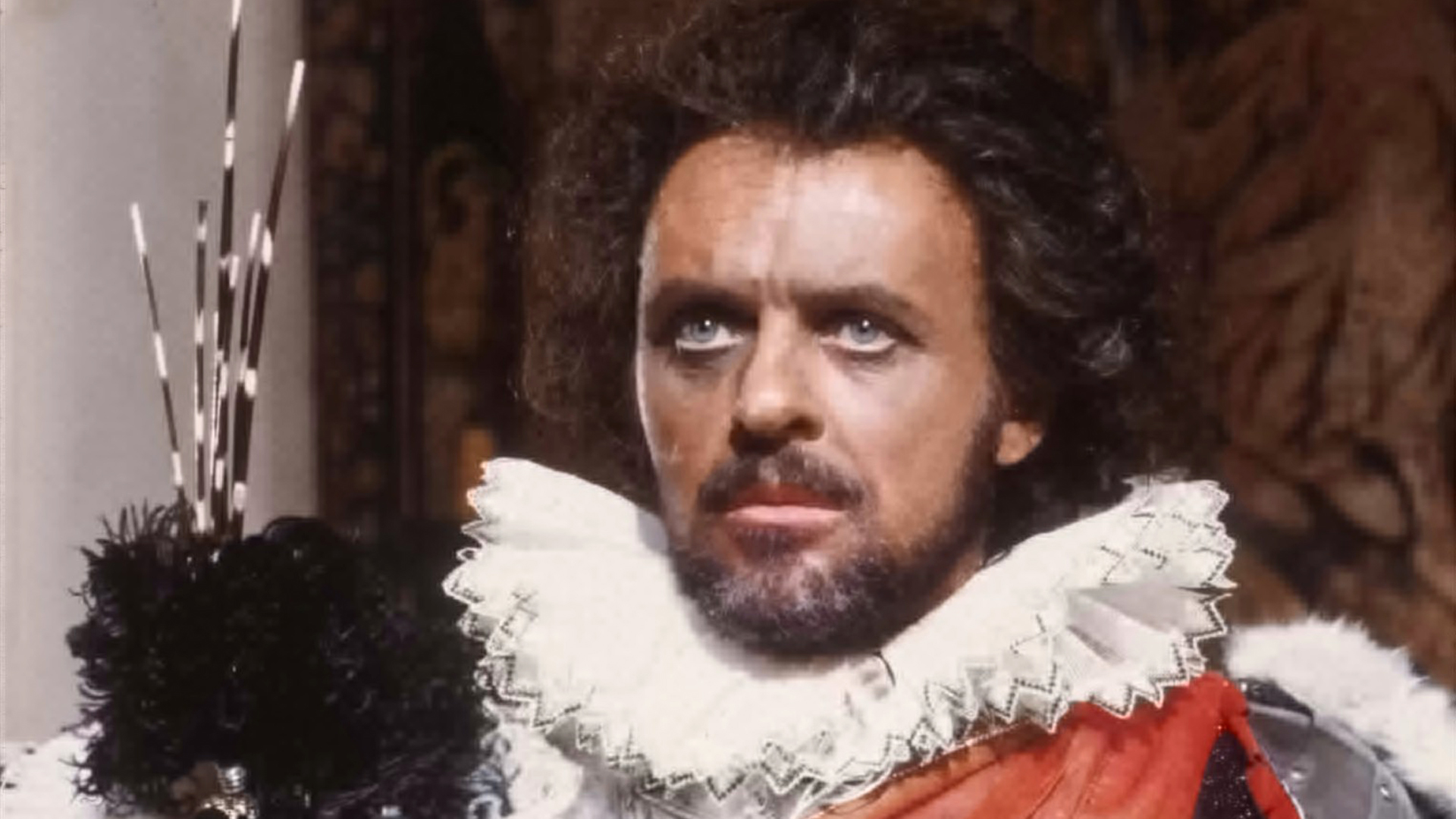
Image result for anthony hopkins as othello
Anthony Hopkins as Othello. It can't be racist it's high culture

"I'm sure that nobody involved with the production of Talons intended to cause offence to any viewers or the ethnic minority represented by the characters in the serial. And the intention behind the work is to me a crucial factor."

Talking about the "intention" of a work is incredibly problematic. It locates the work's meaning outside of the text, in the subjectivity of a person called "the author" who may not even be alive. Talons of Weng-Chiang is a thing; it exists; anyone who can be bothered to put a DVD in the toaster can watch it; and anyone who has watched it may have an opinion about it. The "intentions" of the writer and the producer are a matter of conjecture.

Marcus Hearne is sure that Robert Holmes, Philip Hinchcliffe and David Maloney were not racists. I am sure he is right.  But in 1977 they consciously and freely decided to make a Fu Manchu pastiche.

The poisonous content of the story doesn't magically go away because "some of my best friends are Chinese". The poisonous content of the story doesn't magically go away because Robert Holmes sat at his typewriter in 1976 and intended really really hard for his story not to offend anyone. If you don't think the content is poisonous, then by all means show us how we are mistaken. Show us that you've looked at the episode more carefully than we have and spotted stuff that we've missed. Be the better critic. But don't appeal to some nebulous idea about what may or may not have been in a dead writer's mind forty years ago.


Not racist: Kubla Kahn from the Season 1 story Marco Polo.
"In many key respects Talons was inspired by the penny-dreadful booklets that caused a sensation in Victorian England. The spirit of these lurid stories endured in Sax Rohmer's Dr Fu Manchu and elsewhere. Robert Holmes would almost certainly have been familiar with the films based on that criminal master-mind... He was banking on the fact that his audience were too... Quite understandably, many of these films have been locked in a section of the archive marked 'problematic' making it harder for a young, modern audience to appreciate what Holmes pastiche was attempting to subvert..."

This, on the other hand, is an actual concrete argument. Let's not worry about the scare quotes around "problematic" or ask whether Sax Rohmer's pulps really had anything to do with the penny dreadfuls of fifty years earlier. Let's see if the argument stands up.  If it does, then I am wrong, the time team are wrong, Elisabeth Sandifer is wrong and we can all watch our favourite story with a clear conscience.  

Here is Talons of Weng-Chiang, the Case for the Defence

1: Robert Holmes based the sinophobic tropes in Talons of Weng-Chiang on the Christopher Lee Fu Manchu movies.

2: The BBC had shown The Vengeance of Fu Manchu, The Face of Fu Manchu and the Brides of Fu Manchu (in that order) over three consecutive Wednesdays in 1975.

3: The audience who watched Talons of Weng-Chiang in 1977 can therefore be assumed to have recognized the source of Holmes' tropes.

4: Modern audiences are unlikely to have seen the Fu Manchu movies, so they can be assumed to be unfamiliar with these tropes.

5: You have to be familiar with the Fu Manchu tropes in order to access the true meaning of Talons of Weng-Chiang. 

6: Therefore modern audiences cannot access the original meaning of the story.

7: Those with knowledge of the Fu Manchu movies would have been able to perceive that Robert Holmes was subverting racist tropes, rather than presenting them uncritically. Those without that knowledge are unable to perceive that element of subversion.  

I agree that context makes a difference. I agree that lack of context can lead to misunderstanding. I remember seeing An Unearthly Child for the very first time at Panopticon 2 in 1978 and being Totally Blown Away by it. Jeremy Bentham introduced it, asking us to pretend that we had no idea who Susan Foreman was or why her grandfather was so reclusive, and that Police Boxes were so common that we walked past one every day without noticing it. And that's a perfectly useful piece of context-setting. As useful as your GCSE teacher gently explaining that, yes, when Pygmalion was written "bloody" was regarded as a really dirty word. If someone were stupid enough to say "An Unearthly Child is a waste of space because everyone knows the mysterious Police Box is really a TARDIS from the planet Gallifrey" I would certainly write an editorial in my magazine setting them straight.

On the other hand, the original context is never recoverable. You can't watch An Unearthly Child in ignorance of the fact that the Police Box is bigger-on-the-inside; and you do, in fact know whose daddy Darth Vader is. I myself have said that modern audiences can't possibly understand the impact that Star Wars had when it first came out -- how strange and different it was -- and that's true. But if the only authentic experience is that of the first night audience, then the true meaning of most books and movies and TV shows is lost forever and there is no point talking about them.

I suppose that when you say that a movie is racist, or sexist or dirty it is fair to compare it with the background levels of racism, sexism and smut in the culture around it. The original Star Trek is much more racist than the background levels of racism in our present day culture and certainly today's TV. There is only one black character, and all she does is answer the phone! But as we all know, the original Star Trek was much less racist then the background levels of racism in the 1960s: most TV shows didn't have any people of colour in them at all.  

But is that really the best we can do? Talons is more racist than anything which would be shown on TV today but it was less racist than the background levels of racism on TV in the 1970s? (The Fu Manchu films continued to be shown until 1983; and notoriously the BBC only dropped it's black-face minstrel show in 1978) The Young People are wrong to say "Whoah! A white dude playing an incredibly racist caricature of a Chinese guy! Not cool!" What they ought to have said was "Gosh! A white chappie playing an incredibly racist caricature of a Chinese fellow! But it's obviously based on those movies I watched on BBC 2 last year! And the white chappie in those films played an even more incredibly racist caricature of a Chinese fellow! So that's all right then!"

I am not convinced. Are you convinced?

This leaves us with one more possibility. The people who knew the mystical code-tropes would have understood that Robert Holmes was not merely copying the racist imagery from the Christopher Lee movies. He was subverting it.

Fine word, "subverting". Taking an idea and turning it on its head. Making a film where the Sheriff of Nottingham was an honest policeman and Robin Hood was a terrorist; producing a panto where Cinderella leaves the prince and runs away with Dandini. Trying to read Hamlet on the assumption that the prince is really bonkers and the ghost only exists in his head.

So there is the defense, and its a good one. Talons of Weng-Chiang subverts the racist cliches of Fu Manchu. We start out with racist ideas about devil doctors who kidnap white women, but only in order to show how silly those ideas are. It turns out that everyone has been very silly and unfair and jumped to the wrong conclusions about the Chinese community and everyone comes to a better understanding of the difference between European and Asian culture and sits down to fish and chips and chop suey together....

Er... No. It is perfectly true that Chang becomes slightly less two dimensional as the story moves on; and that he is allowed a sympathetic death scene. (Did I mention that Robert Holmes is a very good writer?) But the whole cod-Chinese aesthetic of the story is never remotely challenged or repudiated and sympathetic characters say some pretty racist stuff without the Doctor challenging them. (This is all covered in great and good-natured detail in Kate Orman's essay.) One villain turns out not to be quite so villainous after all -- you don't need any esoteric knowledge of  old Christopher Lee movies to understand that. But one repentant bad guy doesn't wipe out a story full of anti-Chinese cliches.

Not racist, but quite well drawn.
I was going to conclude with a brief survey of the twitter storm which has blown up around this issue, but I don't really have the heart. It was utterly, utterly predictable. Abuse towards the Time Team panel for being young; accusations of insincerity -- oh, they didn't really care about race or diversity but were just virtue signalling. All the usual whataboutery, oh, but if only yellow people can play yellow roles then we'll have to censure the Time Warrior because Kevin Lindsay isn't really a Sontaran. People who experience the claim "this is racist" as a personal attack on them and jolly well swear to go away and watch some Charlie Chan films just to show us. And unbelievably nasty, attacks on people who defended the original article and took exception to the editorial. Actually, I think that Elisabeth Sandifer possibly maybe sort of overstepped the mark in saying that Marcus Hearn should resign or be fired. But nothing justifies the kind of abuse she was subjected to. Fandom is an all or nothing world. Once someone is on the wrong side of a particular issue, they are sad, failing writers who have never done or said anything worth while in their lives. (It's a very Trumpian tactic.) It wasn't orchestrated; it was people blurting because they felt that a TV show they once liked was being taken away from them. We are still several months from a DoctorWhoGate. But it has the same effect. It drives people off social media. I don't know how I would write a review of Season 11 in the present climate. I wouldn't be talking about whether I liked a TV show or not. I'd be aligning myself with one or other side in a surrogate culture war. And I'd be at risk of people shouting at me. Which ever side I took. It's not fun any more.

Image result for laurence olivier othello
Sir Laurence Olivier as Othello. Dear god in heaven. 
Talons of Weng-Chiang is incredibly racist. Talons of Weng-Chiang is my favourite Doctor Who story. I loved my Gollywog. Why are we still even talking about this?
31 Aug 11:40

how not to write about jazz, probably

by mark sinker

[This post originally went up at my PATREON: subscribers get to read posts and hear podcasts early — and help offset costs and time and help me do more of this kind of thing. Please share widely and encourage participation in the comments!]
A week or three back, my old ilxor pal Kerr put up a list of jazz genres on FB and asked his followers who could define them. And bcz we’re dicks, we gave him a dusty answer (mine, in full, was “I can!”). We played mean games; we suggested he google. And so he did — fair play — and of course the joke was on us, bcz the results (wikipedia!) were terrible, full of error and sententious assumption. Some true claims — especially in the endless lists — mixed in with much confused nonsense and (wikipedia!) inapposite citation.

My dusty answer wasn’t just about being a dick: Kerr’s question had landed right on top of something that’s bothered me for decades. Which is why people often write so badly about jazz — including people who know a lot about it (a lot more than me anyway). They can get the facts right — the chords, the analysis — but then miss the point. They write well about the players’ lives and character, and about the feel. But when they write about what the musicians actually think they’re doing, and think about what they’re doing, it all goes cock-eyed and dull — as if being fully conversant with musical technique and terminology acts as some kind of huge mental block.

And some of this is because music is hard to write about! And because a lot of jazz since the 1940s has been a kind of “music about music” — musicians playing to and at musicians, in other words, to excite or entertain or to baffle them, to engage or surprise them (if a paying public just about keeps up, buzzed or puzzled in turn, that’s a bonus more than a goal).

Anyway, instead of a glib too-quick FB-type response, I wanted actually to dig deeper, and talk through and shake out some of the problems as I answered the question — because I think the problems are also a part of the answer.
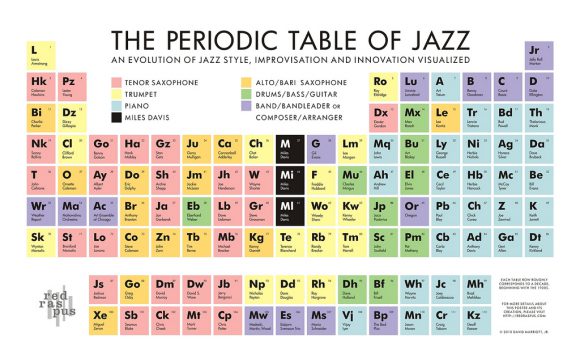
Kerr’s full list was this: BOP, MODAL, HARD BOP, SOUL JAZZ, POST-BOP, FREE JAZZ, JAZZ FUNK and AVANT GARDE. Well, I have books on my shelves which take hundreds of pages to cover the relevant half century usefully. To keep my answer short (lol), I’m going to break the timespan in two (40s to mid-60s), and run through bop aka bebop, hard bop, modal and soul jazz (in this order bcz there’s not much to be gained from breaking historical chronology; the rest in a later piece) (maybe). And this is also an experiment in describing the micro-branchings of genre — the when and the which and the why — and an exploration of what’s actually at stake for the musicians themselves without assuming too much prior knowledge of the technical language that musicians use at one another. Possibly the experiment will merely irritate those already fully in the know (schooled players and composers), but it at least affords a space for someone similarly frustrated (me) by much of what we routinely get (written and on-screen) to think through how to offer those very much wishing to be in the know (like Kerr) the beginnings of a sense of where and how to start thinking about such things. You can to tell me afterward how successful it’s been…

TALKING ABOUT GENRE: In and out of jazz, there are several ways to unpack genre. None are bad, but all have limits and drawbacks…

A: The first and easiest is basically lists: of relevant performers and (recorded) performances. You reel out a bunch of names and titles and entirely leave it to the listener to join the dots and attempt the correct generalisations about the aspects that in fact matter. Which is little help to any would-be listener who already feels lost or daunted or overwhelmed or incapable or unworthy. Not least because the more precise you feel you need to be, the longer the lists become, and it’s this unmanageable length that’s so fearsome and dreary, as antithetical to the spirit of the music itself as summer holiday homework. Stamp-collectors (some would-be listeners will definitely begin resentfully to feel) seem to grasp everything except why

B: The second blends soap-opera biography with sociopolitics, the sounds so-and-so made as the expressive backdrop to a clickbait morality tale about their life and times. And the politics often become a too-broad generalisation blurring everything into everything else (“the blues is an outpouring of SUFFERING”) while the the romantic biopic is surprisingly routinely an erasure, of those colleagues whose lives and voices just didn’t unfold flamboyantly tragically; of those they worked with in the exact same milieu whose luck — and whose character perhaps — was just different. Which is kind of the point and the problem: large swatches of the process of art-making is the opposite of soap opera. It’s actually quite clerical. It’s unrealistic to imagine soap opera will never intrude – some musicians be being divas — and yes, mood-painting is some of what’s going on, though in jazz it’s nearly always collective and thus conflicted (lol “dialogic”) (lol lol “dialectical”), and as often as not it’s pushing hard away from the corny clichés of hand-me-down just-so-stories. Which is why these sketch portraits, even when they’re meticulous rather than tabloid, can deliver music analysis that that’s simple-minded, impoverished, or (per the current trend in music documentaries) fundamentally anti-musical.
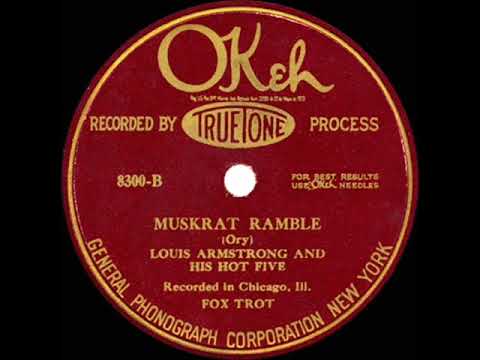
C: The third is production history, the exploration and awareness of how record companies and record shops have packaged certain musics at certain moments, to direct it to the attention of they hope will buy it. Genre necessarily combines generalisation (the words are related), plus how you use examples pulling against one another to sketch limits (when so-and-so is a bebop player and when he isn’t). And for marketing purposes the algorithms of sameness (“if you liked x you’ll like y”) often have to interact with the happenstance of variation (“you’ll learn stuff from y you didn’t find in x”): if only because they want to keep buying (and you won’t if the early stuff supplies everything you need). Musicians often greatly resent this — not always out loud. Miles disliked the word “jazz” altogether — for a variety of reasons, including the fact that he felt it came from an insulting and dismissive root, but mainly in the end because he thought it limited his potential listenership. Some people arrived were coming expecting a thing he didn’t quite do, he felt, and left annoyed — while others never arrived at all, bcz they thought they knew what he did (“jazz”) and never found out what he did do. Meanwhile Louis Armstrong (or possibly Ellington) famously said “There’s only two types of music, good and bad… “

D: Fourth, of course, is full-on scare-the-horses musicology, complete with scales and key changes, types of harmony, families of chords, cadences, modulations, modes and more, much more — the technical insider-speak that composers and musicologists and many performers can’t avoid communicating within. Even unschooled musicians that don’t read will develop their own in-group shorthands — because this jargon is often very necessary, and cumbersome (as we’ll see shortly) to sidestep. It lets players work out how to be in the same place at the same time, moving in an agreed-on direction — all things that could take forever to describe other ways. If you want locate yourself in a landscape, and find the stuff you care about (nice churches, good fishing, whatever it is), a map is useful! Learn to read maps! But hold a map forever in front of your eyes and anything unexpected in that landscape stays hidden. Or you’re watching football for the very first time and you don’t really follow what just happened then, or why it’s good (or bad). Here’s what won’t help: being handed a copy of the official rules. [Footnote 1]

BEBOP (early 40s to maybe mid-50s) Or just bop. It starts as a post-show activity at Minton’s in New York, for hopped-up musicians to tweak and challenge one another, playing the stuff that wasn’t allowed yet on yr average swing bandstand. It was pretty anti-punter — its audience was other musicians. The fun was leaving behind the corniness, stylistic and emotional, that musicians felt the club crowd mostly wanted. The relentlessness of night-on-night performance needed to make rent in New York City means things quickly get old — and thus boring — and these guys (they were nearly all guys) needed a change of game.
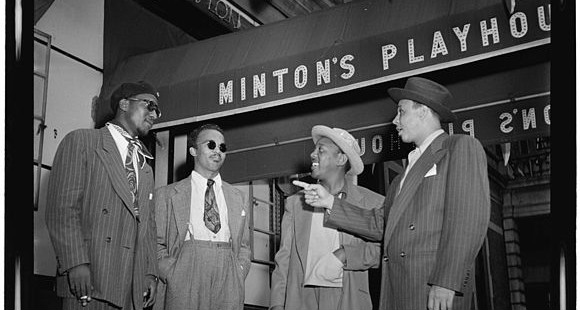
Thelonious Monk, Howard McGhee, Roy Eldridge and Teddy Hill, 1947
© William P. Gottlieb

Cutting contests was already a thing in African American culture, of course — from “the dozens” (first recorded by sociologists in the 40s but decades older) to the good-humoured stride-piano shows where James P. Johnson battled with Willy “The Lion” Smith to be virtuoso boss on the night.

Bop was more of the same, and from the off not unlike surreal-meme twitter — jagged and quick-fire and weird, full of shared in-gang gags to gather the in-crowd in, and keep the dullards at bay. “Martian” was a term unconvinced outsiders used of it, and impenetrability was the hook. The tunes were frenetic and off-centre, technically hard to master as rhythms and as notes, with unexpected accents dropping like disorientation bombs. Its harmonies were demanding at best — not just because the speeds — and in the hands of some plain peculiar. Monk’s (for example) were just undecodable for years afterwards: you had to accept them and trust him and adapt. This was a micro-world of young ambitious men in mid hyper-competitive musical banter, their solos are full of intensely topical quotes, tricky almost catchphrase-ridden figures, wild top-this runs, absurdist shapes and arabesques and, frankly, zings. The tune was the message-board thread’s OP, and off they charged, owning one another and goosing everyone else present, the fastest, the hippest, the weirdest. Highspeed high-wire stuff — not really party or dance music at all, but a young crowd opening out a new art-music language. “Always radical in the context of formal American culture,” said Baraka of (all) jazz in the early 60s. Looking back from the late 80s, Greg Tate tagged this “always radical” as a pure sci-fi charge injected by jazz into the rest of art, via a practical learnable record-based aesthetic that combined delirious speculation with delirious intensification.

So anyway, I’m setting the scene and throwing around a ton of adjectives here — good and correct ones, to be sure — but I’m not yet getting into the deep nitty-gritty musically. How much harmony-homework-for-dummies would I have to set? Bebop was an angry and a joyful and a deeply learned inversion of norms — and some of those norms probably need to be described, in music composition and in the other stuff musicians do, the stuff that isn’t treating the composer as the absolute cause of the result. Here’s one of those norms: in most composition, melody comes first. Ignoring some very out-there (and very recent in 1940) composed music (hi Bartok!), harmony was practically speaking the structure you build around the melody. Perhaps you found counter-melody that fit, and then the chords this created (any two notes not identical are the start of a chord), and then the colour. Of course in jazz — at least until the 50s — you were improvising on a pre-decided song (yours or from rep): so while the melody in the song came first, the melody that was the improvisation arrives after the agreed harmonic sequence. With bop — and we can make an entire topsy-turvy aesthetic politics of this — harmony is a pre-built obstacle course you writhingly hurtle through, and the wriggles of melody are no longer per se always the emotively central element (trying whistling Dizzy’ ‘Bebop’ in a lyrical manner) [2].

BUT: “There’s no such thing as a wrong note,” said Art Tatum. Isn’t this the opposite of chords-as-obstacles? What if we — to get way ahead of ourselves — argue with Art that any note might make sense against any given chord, if only the notes and runs and turns before it and after it gave it the right meaning at the right moment? The obstacle-free obstacle course! But most ordinary players — Tatum was the epitome of extraordinary — people only really began to adapt to this idea when they started looking back at bebop from a newly argued perspective. [3]

HARD BOP (mid-50s-mid-60s) Bebop didn’t last very long in its earliest formulation. First, as problems got solved, solutions became formulas (there are only so many permutations of possible sequences of chords, and of set moves that let you wriggle through those chords) . Second, because it was being recorded, others could listen and learn at their own leisure. Third, the war ended and the shapes of all jazz changed to adapt to a new, far less frenzied and anxious economy. Fourth, those involved grew older and evolved, some (notably Miles) moving implacably off in their own direction. Fifth, sad to say, Charlie Parker died…

And so the after-hours fuck-you texture dissipated, and the charged and experimentally anti-audience attitude dwindled. Art-musicians (many of them white) moved in to explore the abstract concert-hall dimensions of this boldly self-conscious stab at art, and the formalism got a lot less ornery for a while. While the need to play (the joy of playing) at at dances or wild parties re-emerged, along the practicalities of making music that got played on jukeboxes everywhere. A somewhat black pop sensibility reasserted itself a bit, stepping back into jazz from other streams.

Pianist Horace Silver had a Portuguese dad and a mom who sang gospel — he loved blues and jump and latin music. With drummer Art Blakey — a man who eventually devoted himself to schooling several generations of players in the quiddities of effective performance (the exact opposite of “fuck you”) — Silver helped a squad of players explore vibed-up blues-turned mood, joyful or sexy or melancholy or (now and then) thoughtful. He played with his hands close-set — not stride, not the fantastical architectures of a Tatum or a Powell — in a style that was more longer groove than abrupt obstacle avoidance. An earlyish Silver song is called “Opus de Funk”, and the joke in that early use of the word in a title is deliberate: this was still excitingly demanding music, particularly for the players, but the demands on the listener are no longer so cerebral.

Hard bop kept to the same wide harmonic spectrum — players got a buzz from testing themselves this way, and the buzz arrived as energised style and a showmanship of technique. But the head tunes became less fantastical and the ruling mood was body movement — brain maybe moved back behind feeling in the pecking order of musical logics. In place of hurtling virtuosity or quizzical Monkish strangeness, something much more colloquial and convivial.

Minton’s had been the club that birthed bebop; Birdland is where the Jazz Messengers made their bones — but honestly the founding site of hard bop is Rudy van Gelder’s studio, and the deep warm sound he developed for Blue Note’s sessions. Blue Note more or less being the Motown of jazz: this small-scale, tightly run and curated, strikingly industrious factory-line for a rich but narrow sensibility, designed to be better than serviceable any time you turned to them. The Beatles dropping out of nowhere in 1964 was what did for hard bop: a young person’s music that never over-fetishised youth, it found no ways to adapt its routine to rock’s quite different ecologies of distortion-based tonal colour and showing off.

MODAL JAZZ (^^^arrives with a husky trumpet peal in 1959 after early bookish flickers):

To people who don’t play — who don’t have the landscape of scales in their heads, or the feel of them in their fingers — modes are hard to explain! The first point is this: after the age of bebop, the best way to understand structure is that scales are what matter, not chords any more. And the second, well, remember the obstacle course without obstacles? And how any note’s OK if the stuff surrounding it makes it right? If you ignore the folderol of technical theory, this is what “modal” really actually practically amounts to. The hardcore theory is not wrong, but it mostly gets very deep into the mixolydian weeds of how to rewire a trained musician’s head, to get them to perform as if they always thought in this old-new way.

Bebop chords had become so complex and all-encompassing that they often now included or implied all the notes of a scale: full implied chord as opened-out and out-of-sequence scale. [4]. Pre-bop, we suggested the melody came first, with the harmony to be fitted round it afterwards; with bop, the harmony came first and the improvisation fitted around it. Now, via modes, the two merge. The chord is the scale; the scale is the chord. The centre — to get ever so slightly mystical-sounding — is now the entire piece as it unfolds. Musical meaning no longer derives from an-imagined-but-absent pre-set skeleton — the chord sequence filed in a player’s head — but from what everyone (players and audience) are hearing right now.

(Which is not to say the music never had pre-composed pre-sets: but they could well be tiny, fragmentary ideas, and often were…)

Theorist-composer George Russell pioneered all this in 1953, in a large book with an amazing, absurd, theory-as-killer-robot name: The Lydian Chromatic Concept of Tonal Organization. This set out the argument in its daunting entirety — an analysis of the entire history of music so far — but its force almost certainly came less from its precision than from a kind of all-encompassing vagueness. And then Miles hopped on the train, because (a) it allowed him to do exactly what he wanted, and (b) it showed him a way to underlay improvisations with flamenco-derived scales in ways that were (c) strikingly complex emotionally, and therefore (d) not at all corny.

(The last is by far the most important: if Miles abandoned quickly bebop, he stayed loyal to its most militant turn-yr-back-on-the-audience fuck-everyone attitude… )

Of course, since everything — including all jazz so far — was always (on Russell’s reading) already modal, you could just carry on as you were and be (inadvertently) hip to it. But while it didn’t forbid any of bop’s obstacle courses, it allowed you to invert everything conceptually, like the duck-rabbit — to see obstacles as freedoms more than constraints. And it allowed you to consider the idea that the rules of any given piece emerged from that piece.

What do we even mean by rules now? What we’re talking about is sense of pressure and release: real feelings, produced partly by familiarity, possibly also by in-built responsive tendencies in the way we hear. This feeling of a pressure to movement is ordinarily supplied by a tonal centre: a home chord that harmonies are turned away from or towards; a home note that melodies are turned away from or back towards. A point of return and resolution, like the concluding moments of a hymn. You’ve been ferried out on a journey and now you’re back at a point of rest. Hymns are a very strong version of this — but much classical music and pop works this way too, as does plenty of jazz, complete with departure and return, momentary to-and-fro, and the potential journey-over-adventure-done-and-relax that marks the close of a piece.

Bebop’s hyperquick scribbles also seemed to have home chords and home notes — though perhaps more from habit than need? Certainly bop was full of push-and-pull and to-and-fro — but an agitated restlessness was also part of its politics: happy ease and adventure-done maybe never entirely honest parts of the story of being black in America in the mid-20th century. Blues too has a general sense of a falling back towards a place of rest, but deep blues harmonies and structures are ambivalent kinds of tings, and any resting place seems temporary and uneasy. Modernist composed music also often favoured the non-ending sense-of-an-ending (Anton Webern possibly the emperor of this particular ice-cream).

Modal thinking means just whole fleets of mobile homes: a temporary sense of pull or rest, as conjured up by drones or pedal notes or repeated shapes like ostinatos. So that you feel caught between places of easement. Miles’s late 50s work — ‘Milestones’, followed by Kind of Blue, both well at an angle from what was busily going on around it in hard bop, despite employing frontline hard-boppers like Coltrane and Cannonball Adderley — saw long pre-composed long passages where the underlying harmony doesn’t itself move: it stops being the primary motivating element. (No surprise maybe that his concept emerged first from the soundtrack to as bleak a film as it sounds: Ascent to the Scaffold.)
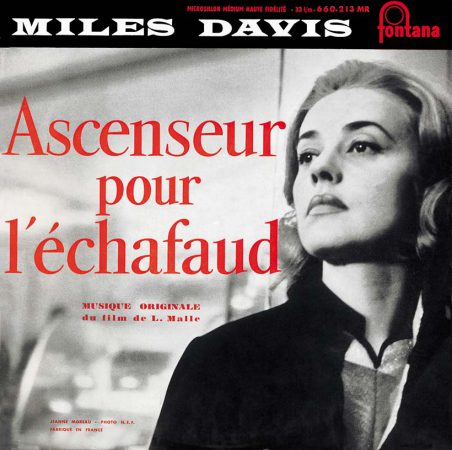
As a player, Miles uses drift and drag to to render chords and structure somehow permeable: as if they’re blockages to pull against or to refuse. Faster players — Coltrane obviously — have an armoury of techniques, because they can move so far so deftly, but again, within the speed, the sensation often becomes one of being caught within a framework (you never felt trapped in bebop; you often do in Coltrane, early or late). A pianist like McCoy Tyner uses repeated chordal patterns that don’t imply a scale (or sometimes imply more than one), and then play runs and line and patterns against these patterns — as if they’re more a prison or an impediment than a home — or else of course lets the other musicians play runs and line and patterns against them. “I tell them,” said Miles in his great 1985 NME interview with Richard Cook, “don’t fuck around trying to find a tone centre.” As a result (this attempt at removal of something a musician’s ear is likely very deeply trained to be hunting for) is why modal jazz as a sensibility — setting aside its generalised rules or techniques — is often this feel almost of an ominous thickened glue to the air, even when the composed sound is open as you like.

(There’s a whole technical territory of how modes lie across scales, relating to note-starting points that aren’t the same as the scale’s [5]: This is there for musicians to orientate themselves and be able to explain what they’re doing precisely to other musicians — but I am unconvinced it’s enormously illuminating to non-playing listeners per se, since the elements that locate it for a musician often aren’t actually themselves played — they’re a sort of off-board anchor… )

SOUL JAZZ (late 50s to late 60s): When I hear the phrase ‘soul jazz’ I mainly think of the UK record label (founded 1992, to pick up the acid jazz slack), which is maybe not entirely unjust. Obviously the word went way back, of course — it’s omnipresent in gospel lyrics, and Coleman Hawkins’s 1939 ’Body and Soul’ was a massive-selling 78. But it was mostly there to describe the flavour and attitude of a way of living or being in the world — of eating, of believing, of looking out for one another as a community… which of course also applied to elements in the musics you associate with ways of eating, ways of believing, ways of oneness. But ‘soul’ as a name for a widely recognised style of music is a mid-60s thing, really — a rebranding of R&B as it hit the mainstream charts. Ben E. King’s “What is Soul?” is 1966; the Atlantic “This is Soul” comps — answering King’s question — start arriving in 1968. So when Cannonball Adderley was being cross with his record label, Riverside for trying to shunt him into a pigeonhole in 1959, he was complaining less about a stylistic pressure than expressing the musicians’ dislike off the name the label wanted press and public to be calling it: “They kept promoting us that way and I kept deliberately fighting it, to the extent that it became a game.”
Anyway, my argument is mainly that soul jazz was a back-formed term for tendencies in the long tail of hard bop, as elements in jazz and R&B began more and more to overlap, and as a specific strand in black pop had majorly coalesced into something wider (white) audiences were also very drawn to. In their interconnected yet opposed ways, bebop and modal had both encouraged the flowering of a wild range of emotional possibility as a function of audience shut-out. As the drones and grooves and pedal points migrated out of modal jazz to form the basis of funk — this is a cheeky over-simplification — the risk was always that open-audience ‘soulfulness’ could decline into a functional set of by-rote indicators, id-pol moves and formulae, invaluable because so imitable but quite likely to get dadrock-stale quite quickly. Disco is with us still, it’s true, and still mutating nearly 50 years on and very likely still a valuable power — but it’s also never been a music of ambitious youngsters cheerfully vying to one-up one another with all they intellectually and physically have, and chuckling at the audience toiling far far behind. [6]

FOOTNOTES

1: So why aren’t other jargons a turn-off for their fans? With sports, cookery, carpentry, even pottery you can make a documentary that explains (and names) technique and what it does. Someone makes a clever pie or an excellent pass out to the wing, as a voice tells you what’s going on — you can learn and absorb, you can shout back at the screen. If they feel they will be able to drop it themselves in an hour’s time and impress someone else who didn’t watch, people LOOOOVE jargon, and quickly master it. Except this is much harder with music, because talking over it is never appreciated! Even though such youtubes exist, the barriers to full fan mastery are high.

2: TIME and HIGH-SPEED ADVENTURES in OBSTACLE SPACE The quickest route through any structure is a straight line. If the structure forbids straight lines, the route will be some sort of zigzag. In this model of bebop, think of chords as a device for introducing obstacles, and tunes as the zigzags round: internal walls with open doorways in them, for example, and the improvised melody bouncing its way through.

Turn the walls-and-doors model on its side now, and imagine wriggling straight through one of those old boxy jungle-gym climbing frames which is basically a cube of nested little cubes. At regular intervals on this wriggle, you approach and pass through a plane fashioned of horizontal and vertical poles, at right angles to your quickest path.

In an unadjusted climbing frame, the horizontal poles you’re approaching and passing over in these planes are all on the same level. So there’s no obstacle — you can slide quickly through, basically in a straight line. This is your most basic melody, if you like: a single long-held note against the same chord, repeated as a sequence. To elaborate the tune between planes (chords) chords you could move up or down, then along some more, then down or up, and so on, making use of the available gaps in the structure above or below the one ahead ahead— and of course the pitch of the melody goes up or down as you do.

Now imagine these entire vertical planes being variously adjusted up or down before you arrive at them, so that the horizontal poles (and the gaps above and below them) are no longer all on a level. Your quickest journey is no longer a straight line — and every journey through (up or down, along, then down or up, and so on… ) has to adjust to the new limitations. The adjusted planes are now the chord sequence; the gaps you can move through between the horizontal poles at are the notes you are “allowed” to play at each stage [see next footnote also].

Recall that in bebop-world you are travelling at breakneck speed, and that all your decisions are quick as thought. Remember your journeys are the improvisations you are creating — and realise that, in the very small intervals of time between the stages or planes that contain the gaps that constrain your route, you are able expertly to manoeuvre up or down, in scales or jumps, in arabesques or zigzags-within-zigzags. And each player will be approaching the identical obstacled structure, in the same sequence — but everyone’s improvisations will their own dancing round the blockages and through the gaps in ways that (a) reflect the shared taste for intricate fuck-you jaggedness, and (b) reflect their own performed character (Miles was not like Dizzy temperamentally; Monk was not like Bud Powell). Everyone’s different mini-adventures as they scramble through is also a clue sent to everyone else playing the same date, and a comment on one another’s solutions to the problem, in a dialogue quips and shade, sometimes convivial, sometimes more inward-turned.

Except — and this is where the climbing-frame metaphor begins to fail — not all bop was fast, and the obstacles are not physical at all, but established and determined entirely by your ear and your will, and (tricksiest of all) the potential chords in bebop are now so complex that some will argue that all possible obstacles have actually been removed. The an obstacle-free obstacle course

3: Another way an obstacles-and-spaces model goes wrong — a physical metaphor for what’s allowed and what isn’t — is the matter of the ACCENTED PASSING NOTE. Much of the drama and grit in music, right back to Bach (and in fact further, but that’s me out of my comfort zone) is supplied by off-notes that strongly want to move one step up or down, to fit into the chord they’re working against. So basically notes that “go through a wall rather than a gap” are far from forbidden: they’re encouraged! But (paradoxically?) the encouragement firms up our awareness of the harmonic rules: the rules are broken in order to be belatedly obeyed. (The Schoenbergians fashioned a music where the rule was — kinda sorta — that passing notes were never resolved, a music-space where the shortcuts became yet another extremely intricate set of harmonic requirements…)
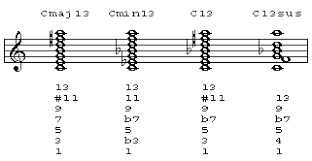
4: “opened out and out-of-sequence”: I mean that instead of an in-sequence run of notes (G, Ab, B, C, D, E, F, say: a scale), you might get a chord like G, B, D, maybe F, Ab, possibly C, then E: the same notes, but in a different order (with unplayed jumps between them, in this instance the jumps called “thirds”). Except of course this too is simultaneously over-schematic and over-simplified. Any reading musician is already shaking their head; as is any non-reading non-musician, very likely, except in despair rather than exasperation. Is there even a way to explain some of this without having to swallow it all? For example, I have to get across right away how easily — “second nature” as the oxymoron has it — a musician has absorbed and processed the fact that a scale functions like modular arithmetic: after eight note-steps the vibration speed doubles, and these seemingly different notes are considered “the same”. It’s called an octave (“octave” derived from the italian for eighth). As for complexity the next level up, a typical pre-bebop jazz chord will contain three or four different sounding notes (not including octaves): in any order, closed up or distant, G, B, D and F make up G7. A bebop chord might well contain more — sometimes six, occasionally even seven (see the Gb913 chord written out at the beginning of the footnote). This footnote is very much NOT lesson one in mastering these symbols, or the system underlying them: definitely go elsewhere for that, and set aside a week at minimum, and get yourself access to a piano keyboard or similar. What it is is an indication of quite how much tangled detail is packed into a player’s head, why it’s such a phenomenal skill to play at speed — and perhaps also why bop deployed a LOT of pre-set runs and devices as part of the game. Of musicians generally spend a lot of time practicing scales — so the realisation that a complex chord identifies exactly with a scale actually helps reduce the information-pressure. And a surprising amount of strong music — and not just out in the super-complex realms — rests on an ability to recast actually existing super-complexity as immediate and affecting (as a reading eye thing becomes an ear thing).

5: Here — for you to read and instantly forget — are the names of the commonest modes discussed: Ionian, Dorian, Phrygian, Lydian , Mixomydian , Aeolian, and Locrian, plus Hypophrygian, Hypolydian, Hypomixolydian and Hypodorian (which is I think the same as the Aeolian?). In modern jazz terms, these can usefully be considered as 18th century category-distortions of Gregorian Chant theory (developed in the 9th or 10th centuries) fashioned out of a very VERY blurred understanding of ancient Greek music theory (from the 1st to 4th centuries BC or so lol). In the scale of the key of C major, the Ionian runs from C to C, the Dorian from D to D, the Phrygian from E to E, and so on (the Hypos are way above my Patreon pay-grade). Anyway, there it is. As I say, I am unpersuaded that getting your head round the entirety of this helps grasp any better what’s going on in this or that Wayne Shorter joint: like a lot of music, you process a small and intricate element somewhere in all this — different elements for different songs or solos! — and it suddenly unrolls into a revelatory shortcut. Writing it up is all too often doubly the long way round.

6: What I’m going for in this piece is some kind of sketch of the mechanisms — often uploaded to muscle-memory from years of practice and study — by which musicians induce in themselves and one another the widest achievable range of intellectual and emotional and what used to be called “sensible” potential, via stuntwork and grind, precision and warp, togetherness and scatter, anticipation, surprise and reference — and a little of the story (in this history of 30-odd years in one type of music) of how it succeeds for a while and then begins to fail. But also to get across — at some level — the fact that bop was meant as a musical fuck-you to mere musicological recuperation, that the speed and the stance were blocks (by choice) to understanding, and that musicology’s painstaking attempts over the decades to recoup its territory are inevitably only as successful as they have been at cost of eliding this deep and difficult social fact.

If you like this post, please support my PATREON which will help me write more! Also let other people know that you think might enjoy it…

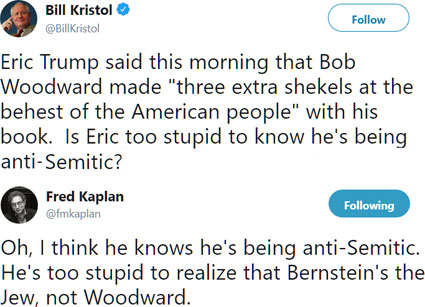
31 Aug 11:21

Marie Severin, R.I.P.

by evanier

It's one of those sad double-obit days at newsfromme.com — and they were both mainstays of Marvel Comics from the sixties onward.

One of the world's great cartoonists, Marie Severin, has died at the age of 89. She had been in poor health for some time and only days ago, suffered a stroke which put her in hospice care. So this was not surprising but it's still a bit of a shocker. Let me say this clearly up top: This lady was one of the most delightful, funny and talented people who ever worked in comics. You will find no one who ever knew her who will disagree with that statement.

Marie was born in Rockaway, New York on August 21, 1929, the younger sister of John Severin…so, two great comic book artists in one family. Their father was an artist, working mostly in fashion design but Marie, at first, did not pursue a career as an artist. She had talent but, she thought, not enough. She was working for a bank in 1949 when John tagged her to do some coloring on work he was doing for the E.C. company. The folks at E.C. liked what she did and liked the idea of having an in-house colorist, as opposed to jobbing the work out to strangers. So she joined the E.C. crew and also did production art and other tasks.

She was also at times, an in-house censor. The E.C. books sometimes featured gore and a wee bit of sex and when Marie was called upon to color such scenes, she made her disapproval felt by coloring those panels dark blue or dark red, minimizing what was seen. Some called her "The Conscience of E.C."

When E.C. folded its comic line and concentrated on the (then) black-and-white MAD magazine, John helped her get a job at the company we now know as Marvel. But then they had major cutbacks and she went back into the banking industry for a time. As Marvel rebuilt, there was eventually a time when her services were needed again. Some sources say this happened in 1959 but I believe it was closer to 1964. In any case, she rejoined the firm, working there until another cutback around 1998. After that, she freelanced all across the business until her health failed.

While at Marvel, she headed up their coloring division and colored hundreds of comics and covers herself. She did production art and corrections, and you can often spot her popping up for a few panels or faces in comics drawn by almost anyone else. She did cover designs and drew many comics including notable runs rendering Dr. Strange, The Hulk, King Kull, Sub-Mariner and so many others. On a few joyous stories, her pencil art was inked by her brother John — and she also secretly assisted him on some of his non-Marvel jobs, such as his work for Cracked magazine. She also did a lot of work on merchandise art for Marvel.

As good as her super-hero work was, I'll betcha a lot of her fans prefer her "funny" work for comics like Not Brand Echh and Crazy. Even better, though it did not reach a wide audience, was her skill at drawing hilarious (and insulting) cartoons that were posted on walls around the Marvel offices. She had a wonderful, scathing sense of humor and a terrific eye for caricature. Among the many cosmic injustices of the comic book industry is that while the E.C. staff occasionally called on her coloring skills for some MAD project, they never hired her to do the kind of actual drawing jobs that went to guys like Mort Drucker and Jack Davis. This may just be my opinion but I thought she had the necessary talent; just not the right gender for that company back then.

There's a photo that I took at a New York Comic Con in either '75 or '76. The gent with Marie is my great friend Tony Isabella.  We had a wonderful time at that convention.  At one point, an extremely rude (and unshowered) fan shambled up to Marie and demanded (not "asked" — demanded)  a free sketch.  Marie told him to get lost.  Five minutes later, a polite fan asked in a charming way if Marie could draw a little something in an autograph book he was carrying around.  Marie asked, "What would you like me to draw?" and the kid replied, "Anything you like.  Maybe a silly monster?"  Marie, in about eight seconds, drew a great likeness of the rude, unshowered comic fan.

Everyone loved this woman and those who never got to know her loved her work.  Never mind that she was one of the first great female comic artists.  She was one of the great comic artists, period.

The post Marie Severin, R.I.P. appeared first on News From ME.

31 Aug 11:19

Gary Friedrich, R.I.P.

by evanier

Gary Friedrich, best known as the co-creator of the motorcycle-riding Ghost Rider character for Marvel, has died at the age of 75. He had been suffering from Parkinson's Disease and that presumably was the cause of death. In 2010, we honored Gary with the Will Eisner Comic Industry Bill Finger Award for Excellence in Comic Writing.

Gary was born in Jackson, Missouri in 1943 where as a teenager, he became a friend of Roy Thomas. The two of them met while working at the Palace Theatre in Jackson and bonded over their mutual love of comics. After Roy moved to New York and became an assistant editor for Marvel, he helped his friend follow much the same career path. Gary got into writing romance comic books for Charlton and then Roy brought him over to Marvel. Basically, as Roy kept getting moved up to more important jobs, Gary inherited the ones Roy had previously done or would have done. He was the longtime writer of Sgt. Fury and his Howling Commandos and did shorter runs on dozens of other comics including Hulk, X-Men, Not Brand Echh, Captain Marvel, Daredevil, Captain America…and the list goes on and on. He also launched their comic, Son of Satan.

Self-admitted problems with drinking and drugs ended his work for Marvel and while he did freelance for Skywald and for Martin Goodman's short-lived Atlas line of the seventies and the short-lived Topps line in the eighties, he never found anything stable. A growing deafness in both ears (and the onslaught of the Parkinson's) further limited his employment prospects. He got involved in some messy legal battles with Marvel over the Ghost Rider character and while matters were eventually settled, they were not settled to Gary's complete satisfaction.

He was a writer of considerable talent and he deserved a better career than he had. So sorry to hear of his passing.

The post Gary Friedrich, R.I.P. appeared first on News From ME.

28 Aug 15:24

Jack

by evanier

Each year on this day, I write something about Jack Kirby, who was one of the most important people in my life. He was one of the most important people in a lot of lives.

I looked back on some of those essays to figure out what I might say this year that I hadn't said before and I realized that for a decade or more now, I've been writing pretty much the same thing about Jack each year on his birthday. Here's the piece I posted here ten years ago today. Everything is the same except (a) I miss him ten years more, (b) he's even more famous and beloved now and (c) He would have been 101 years old today. Oh, and this hasn't changed: He would still have been coming up with fresher and newer ideas than comic book creators a fourth of his age.

Here's a photo I took of Jack Kirby at some early San Diego Con (I think) back in the days before it was even called Comic-Con International. I seem to have a lot of photos of Jack in one of his two natural habitats, the other being "seated at his drawing table." This one is "surrounded by admirers," which he always was at any gathering of folks who knew anything about comic books.

At cons today, I meet a lot of people who feel a genuine sense of loss that they never got to meet Jack…never got to shake the hand that drew some of their favorite comics, never got to tell him that they were their favorite comics. When fans first started telling me this a few years ago, I was a little startled. It was like, "How could you not meet Jack Kirby?" He was always so accessible, so approachable. For a couple of decades, all you had to do was show up at a San Diego Con (or one of many others he attended) and be willing to wait in line for twenty minutes. Or if you had his phone number — and everyone did — you could call up, talk to him and maybe even get an invite to drop by the house for coffee.

And then I remind myself: Jack died in '94. Since then, an awful lot of humans have discovered his work, which remains increasingly in print. There's something about it that grabs readers in a way that few comics can. He drew stories that radiate, as Jack himself did, a certain energy and excitement. Larry Lieber, who wrote scripts for Jack at one point, has said, "If Jack drew a rock, it was fascinating. It was like the rocks had personality." And as someone else (I think it was me) pointed out after Larry said that, at one point, Jack drew a whole pile of personality-filled rocks which they called The Thing and it was one of his most personal, enduring characters.

Jack would have been 91 years old today. Of all the personal, enduring characters he was involved with, the most personal and enduring is turning out to be Jack.

The post Jack appeared first on News From ME.

27 Aug 23:04

New polling analysis finds that enthusiasm for Brexit amongst working class voters is fading

by Mike Smithson

Ammunition for those pressing for a change in LAB’s stance?

The data in this chart above has been extrapolated by the political scientist, Prof Matt Goodwin and shows a pretty clear picture about the view on Brexit amongst the C2DEs – working class voters.

It was this group, of course, that turned most strikingly against staying in the EU during the referendum campaign so any change here could have some political significance.

I congratulate Matt on picking up the trend which is something that I haven’t observed even though I follow the YouGov Brexit tracker very closely. This comes as Labour prepares for its conference next month when there is a big effort likely to take place to commit the party to backing a second referendum.

Maybe the easing off of support for Brexit is down to increasing worries about jobs and general economic security as we get nearer to the day. Those who’ve been able to afford overseas holidays this year will know that their pounds are worth a fair bit less than a few months ago and are down by quite some magnitude on what it was prior to the June 2016 referendum.

Whatever as we get closer to the day polling like this is going to be given much greater scrutiny.

Mike Smithson

Follow @MSmithsonPB

Tweet

27 Aug 22:29

Dread of Heinleinism

by Charlie Stross

Anent nothing: over on his other blog, noted SF critic James Nicoll asked, "I wonder if there's an essay on why discovering a writer of a certain age is setting out to write a Heinlein-style book fills me with dread."

What follows is my attempt at answering his question. If you're unfamiliar with (or uninterested in) the bizarre hold the literary legacy of Robert A. Heinlein holds on the imagination of more recent SF writers, you can safely skip this blog entry.

RAH was, for better or worse, one of the dominant figures of American SF between roughly 1945 and 1990 (he died in 1988 but the publishing pipeline drips very slowly). During his extended career (he first began publishing short fiction in the mid-1930s) he moved through a number of distinct phases. One that's particularly notable is the period from 1946 onwards when, with Scribners, he began publishing what today would be categorized as middle-grade SF novels (but were then more specifically boys adventure stories or childrens fiction): books such as Rocket Ship Galileo, Space Cadet, Red Planet, and Have Space Suit, Will Travel. There were in all roughly a dozen of these books published from 1947 to 1958, and as critic John Clute notes, they included some of the very best juvenile SF ever written (certainly at that point), and were free of many of the flaws that affected Heinlein's later works—they maintained a strong narrative drive, were relatively free from his tendency to lecture the reader (which could become overwhelming in his later adult novels), and were well-strutured as stories.

But most importantly, these were the go-to reading matter for the baby boom generation, kids born from 1945 onwards. It used to be said, somewhat snidely, that "the golden age of SF is 12"; if you were an American born in 1945 you'd have turned 12 in 1957, just in time to read Time for the Stars or Citizen of the Galaxy. And you might well have begun publishing your own SF novels in the mid-1970s—if your name was Spider Robinson, or John Varley, or Gregory Benford, for example.

Then a disturbing pattern begins to show up.

The pattern: a white male author, born in the Boomer generation (1945-1964), with some or all of the P7 traits (Pale Patriarchal Protestant Plutocratic Penis-People of Power) returns to the reading of their childhood and decides that what the Youth of Today need is more of the same. Only Famous Dead Guy is Dead and no longer around to write more of the good stuff. Whereupon they endeavour to copy Famous Dead Guy's methods but pay rather less attention to Famous Dead Guy's twisty mind-set. The result (and the cause of James's sinking feeling) is frequently an unironic pastiche that propagandizes an inherently conservative perception of Heinlein's value-set.

Sometimes this is a side-effect of the process. Spider Robinson, for example (born 1948) wrote Variable Star (published 2006) on the basis of an 8-page outline found in Heinlein's papers. (The result is a dutifully executed late-1940s Heinlein juvenile, designed to captivate 1940s boy scouts, published just in time for the Nintendo generation.) Sometimes it's deliberate: Greg Benford's Jupiter Project or John M. Ford's Growing Up Weightless are tales about teen-agers growing up in space colonies. And sometimes there's a sneaky dialog at work with Heinlein's own work—as many critics have noted (in particular Jo Walton) the state of contemporary SF exists in furious dialog with (and commentary upon) its own antecedents, and one prime example might be John Varley's Steel Beach (shortlisted for the Hugo, Locus, and Prometheus awards in 1993). (While the setting of Steel Beach is utterly non-Heinleinian, there's a very specifically Heinleinian sensibility to the meta-narrative, to the way the author's viewpoint illuminates the events of the story—and there's a specific hat-tip to Heinlein buried in the second half of the book that makes it explicit.) (Mind you, Steel Beach is anything but a Heinlein juvenile, as becomes clear from the very first line: "In five years, the penis will be obsolete," said the salesman.)

But here's the thing: as often as not, when you pick up a Heinlein tribute novel by a male boomer author, you're getting a classic example of the second artist effect.

Heinlein, when he wasn't cranking out 50K word short tie-in novels for the Boy Scouts of America, was actually trying to write about topics for which he (as a straight white male Californian who grew up from 1907-1930) had no developed vocabulary because such things simply weren't talked about in Polite Society. Unlike most of his peers, he at least tried to look outside the box he grew up in. (A naturist and member of the Free Love movement in the 1920s, he hung out with Thelemites back when they were beyond the pale, and was considered too politically subversive to be called up for active duty in the US Navy during WW2.) But when he tried to look too far outside his zone of enculturation, Heinlein often got things horribly wrong. Writing before second-wave feminism (never mind third- or fourth-), he ended up producing Podkayne of Mars. Trying to examine the systemic racism of mid-20th century US society without being plugged into the internal dialog of the civil rights movement resulted in the execrable Farnham's Freehold. But at least he was trying to engage, unlike many of his contemporaries (the cohort of authors fostered by John W. Campbell, SF editor extraordinaire and all-around horrible bigot). And sometimes he nailed his targets: "The Moon is a Harsh Mistress" as an attack on colonialism, for example (alas, it has mostly been claimed by the libertarian right), "Starship Troopers" with its slyly embedded messages that racial integration is the future and women are allowed to be starship captains (think how subversive this was in the mid-to-late 1950s when he was writing it).

In contrast, Heinlein's boomer fans rarely seemed to notice that Heinlein was all about the inadmissible thought experiment, so their homages frequently came out as flat whitebread 1950s adventure yarns with blunt edges and not even the remotest whiff of edgy introspection, of consideration of the possibility that in the future things might be different (even if Heinlein's version of diversity ultimately faltered and fell short).

There are exceptions. Post-boomer cultural appropriation of Heinleinian tropes sometimes results in different outcomes. 1969-vintage John Scalzi is still a straight white male American, but at least he grew up after Martin Luther King, after Stonewall, after Vietnam. His Heinlein tributes aren't challenging, but neither are they reactionary: rather, they're positioned as gateway drugs intended to make reading fun for teenagers. And you can see some of the barest hints of the Heinleinian SF story skeleton in the most unexpected places, once you look for it: Nnedi Okorafor's Binti, winner of the 2016 Hugo and Nebula awards for best novella, is structurally absolutely of a kind with Heinlein's 1950s juveniles and pushes many of the same buttons, even though the society depicted in it would have been beyond Heinlein's wildest imagining (being about as far from white Calfornian male reality as you can get while still writing in the same language).

As for me, I will plead guilty to having committed Heinlein tribute-ism ... but with malice aforethought. I'm of mid-1960s vintage, on the cusp of Generation X: while Heinlein's juveniles were on the library shelves while I was growing up, so were Dangerous Visions, and his scouts-in-space sensibility felt curiously stale and airless to me. Which is why I wrote Saturn's Children as a late period Heinlein tribute, a story in dialogue with Friday. I ended up making it made it all about a diseased society and an abuse victim, and not remotely school library safe. Because the only way to win some games is not to play.

27 Aug 20:27

Neil Simon, R.I.P.

by evanier

Another day, another obit. Neil Simon — arguably the most successful playwright of the last century or two — died early this morning in New York. The cause is being given as complications from pneumonia but Mr. Simon had been in failing health for some time…since 2004 when he wrote an update on his most famous play and gave us Oscar and Felix: A New Look at the Odd Couple. It ran briefly at a playhouse in Westwood and he never wrote another play. If he wasn't writing plays, you know he had to be sick.

The man's output was staggering. If you read all the obits, you'll see a lot of different counts as to how many stage plays, how many screenplays, etc. That's how prolific the man was. His byline appeared on countless scripts…and he even "doctored" hit shows without credit, including A Chorus Line. My favorite would be The Odd Couple, of course, but I remember many wonderful times in the theater because of him. I never laughed as hard in my life as I did at a production of The Last of the Red Hot Lovers that starred Jack Weston…and that's not even considered one of Simon's best works.

And if you read all those obits, you don't need me to tell you the details of his extraordinary life. Here are links to ones at Playbill, in the Los Angeles Times, the Hollywood Reporter and the New York Times. All tell the tale of this amazing man who first distinguished himself writing for Sid Caesar on Your Show of Shows. And almost all of the obits on the 'net will give you inaccurate lists of the other writers who worked on that TV program.

What none of them can possibly convey is how many productions there have been around the world of Simon plays…how many actors learned and earned being in Simon plays…how many people learned to love live theater at Simon plays. These all will continue for centuries to come.

I had two encounters with Mr. Simon, neither of which will mean a lot to you but they meant a lot to me.  One was after an outta-town tryout of his Broadway-bound play, Chapter Two.  It was down at the Ahmanson and my date and I were exiting the theater after the performance, long after the rest of the audience had departed.  I think she had a problem that necessitated an extra-long stay in the Ladies Room.  Anyway, we're walking out and there's Neil Simon, who at this stage was attending all or most performances, deciding what to change.  As he explained in almost every interview, his plays weren't written.  They were rewritten…again and again in tryouts until he was satisfied.

I saw him there and had to say something to just, you know, "connect."  I said, allegedly to my date but for his ears, "You know, the guy who wrote this might have a career some day."  Knowing I'd said that to get his attention, he stopped, extended his hand for shaking purposes and asked me, "What did you really think of it?"  And I suddenly found myself in one of the scariest moments of my life.

I said — and this was not at all a fib — "If I paid top dollar to see this on Broadway, which I probably will, I'd be happy I'd spent the money."

He said, "Good. Now, tell me something you didn't like about it."

Consider that for a moment. Here's the most successful playwright in the world asking a total stranger — and he didn't even know I was a writer, albeit one way, way down on the food chain from him — to criticize his work. There were hints to his success sprinkled all throughout him asking me that.

Thinking as fast as I could, I said something like, "There were moments here and there where I felt Anita Gillette's character was a little too clever and funny. She's supposed to be aware that she's not as quick-witted as her new husband and now and then, she seemed very quick-witted."

Mr. Simon thought for a second and said, "You're probably right. I don't think I'm going to change it but you're probably right." Then he thanked me, shook hands again and turned to go in a way that I think was intended to say politely that he was done with me and had no interest in a continuing conversation. Okay, fine. I was happy. My date wasn't.

As we turned to go, she said, "You didn't introduce me!" I replied, "I didn't introduce me, either." I heard a snicker and glanced over to see it had come from Simon, who gave me a look of amusement. I kept waiting for our exchange to turn up in something he wrote later but I guess it didn't make the cut.

In my other encounter with him, I was actually introduced. It was in 1996 at the Writers Guild Theater in Beverly Hills — an event taped for TV called Caesar's Writers. Sid was there and so were a bevy of men (all men) who'd written for his TV shows and all gone on to great success. Along with The Great Caesar, the dais was Mel Tolkin, Carl Reiner, Aaron Ruben, Larry Gelbart, Mel Brooks, Danny Simon, Sheldon Keller, Gary Belkin and Neil, and it was hosted by a pal of mine, Bob Claster. This was a sold-out-immediately event and I think Bob got me in because I'd persuaded Belkin to participate and because I'd brought as my date, Sid's old sidekick, Howard Morris.

Howie introduced me to everyone and when we got to Neil Simon, it was…well, for me, on a par with meeting Stan Freberg or Jack Kirby or Groucho or anyone else whose work I'd incessantly admired. Nothing particularly quotable was said. It was just important to me and I felt that Mr. Simon knew it was important to me (Howie had introduced me as a writer) and…well, what I remember is a warm feeling that I was standing there for maybe five minutes talking with the guy who wrote some of my favorite things in the world. For a half-second there, I wanted to say but didn't, "Oh, thank you for treating me like I belong on the same planet as you and for not being an asshole. That means a lot to me."

Howie Morris was also my ticket for hanging around with those guys a lot before and a little bit after the event…though Neil hurried out right after, concerned for his brother. In the midst of the on-camera conversation, Danny took sick and walked off the stage. The video was skillfully edited to remove his exit and to call no attention to his sudden disappearance…and it turned out he was okay.

Before the show, I don't think I've ever been in a room with such sharp, witty people — especially Larry Gelbart, who said something brilliant and hilarious with each breath. I said almost nothing…and I couldn't help noticing that Neil Simon said almost nothing. Like me, he just happily played audience for the others.

Comedy writers sometimes don't like to laugh at the quips of others. They don't like admitting that even for a moment, someone thought of something funny that didn't occur to them. Not Neil Simon. He laughed as much as anyone…maybe more than me, even. I didn't say anything because I had absolutely nothing to add. He didn't say anything because he had absolutely nothing to prove. Nothing at all.

The post Neil Simon, R.I.P. appeared first on News From ME.

22 Aug 16:11

Quick Hugo Update

by John Scalzi
Hanging out at the Hugo Losers Party.

Last night I did a thing that no one else in the entire history of the Hugo Awards has ever done, an achievement so singular, so unique, that no one could have possibly have imagined it for me or for anyone else:

I came in second in the Best Novel category to someone who has won back-to-back-to-back Best Novel Hugos!

No one else has ever done this! Ever! My achievement is monumental! No one can take this spectacular moment in time from me!

And naturally, I owe it all to N.K. Jemisin, who, by being the first person ever to win back-to-back-to-back Best Novel Hugo awards, created the necessary conditions for my exceptional position in the history books. I couldn’t have done this without all of her hard work over the years, and I thank her for it.

And of course I spent the evening basking in the glow of this historic event, in the company of friends who witnessed me achieve this thing. We partied through the night, we did. As well we should have. It’s not every night one makes history.

Also, as an aside, Nora Jemisin is heckin’ amazing, her Hugo win tonight was spectacularly deserved, as were her other two wins, and she rocked the ceremony with what is probably the best acceptance speech ever:

I was immensely honored to have been on the ballot with her, not in the least surprised that she won, thrilled that she has done so and would not have had the outcome be other than what it is, in this and in other categories. What a great night for the Hugo Awards.

So, while the first part of this post was obviously a bit silly, do not doubt that I am in all seriousness proud and happy to have come in second in the Best Novel category this year. The right book, and person, won, and I am delighted.

More Hugo and Worldcon thoughts later — today, I have some road tripping to do.

18 Aug 09:38

It would have been a very poor result if we hadn't gained Knaresborough last night

by Jonathan Calder

There were three local by-elections last night and in one them the Liberal Democrats gained the seat from the Conservatives.

So a good night for us then? .

Each Thursday Andrew Teale published wonderfully detailed previews of that week's by-elections. So let's have a look at last night's results in the light of his preview.

There was a by-election in the Gwynfi ward of Neath Port Talbot County Borough Council, but the Liberal Democrats did not field a candidate.

Andrew Teale gives the results for the ward going back to 1983 and there has never been a Lib Dem (or Liberal or SDP) candidate in all that time, so our no-show last night was no surprise.

Incidentally, the Conservatives have not fielded a candidate in Gwynfi since 1983 either. Last night they did and got 4 votes. The seat was gained from Labour by an Independent.

The second by-election was in the East ward of Bury Council and it was a comfortable hold for Labour.

There was a Lib Dem candidate for the first time since 2011, and he came fifth with 2.2 per cent of the vote.

Back in 2004, Andrew Teale records, the only Lib Dem candidate polled over a thousand votes at the council elections in this three-member ward.

The third by-election was in the Knaresborough ward of North Yorkshire County Council and it was here that we made our gain.

Looking at Andrew Teale's preview, however, you find that the Lib Dems held this seat from 2005 to 2017. In other words, it was a ward we could win even during the Coalition.

Which suggests that if we had not gained Knaresborough last night it would have been a sign that we were making no sort of a recovery at all. 

So perhaps we should not get too carried away by this result.

I love to see the Lib Dems gaining seats in local by-elections and tweet the results as eagerly as anyone. 
But, as I have blogged before, we must beware of confirmation bias – our tendency to notice evidence that supports our view (say, that there is a Lib Dem revival taking place) and pass rapidly over evidence that does not. 
I suspect this bias explains why we Lib Dems were disappointed by last year’s general election result and even more why we were shocked when we lost seats in the local elections the month before.
None of this is to detract in any way from the efforts of Lib Dem activists in Knaresborough or anywhere else, who work so hard for these results.

Though, as Simon Titley used to point out, the fact that we have to work so hard to remind our voters that they usually vote for us is a sign of weakness not strength. We have little core support and thus few safe seats.

Let me end on a happier note by saying how much I like Knaresborough. I took the photograph of it above when, many years ago, I was a student at York.
18 Aug 09:20

Font Fail

by evanier

A few nights ago, I was in a restaurant and the above card was on each table, advertising a weekly event. I started pointing it out to people there and asked them what it said…and every single one of them thought at first like I did; that this restaurant holds a special promotion every seven days called Urine Wednesday.

The post Font Fail appeared first on News From ME.

17 Aug 10:48

Bullshit-sensitivity predicts prosocial behavior.

Bullshit-sensitivity predicts prosocial behavior.
17 Aug 08:53

The Sulfide Solution. (Also, Who Sent Me All These Wombats?)

by Peter Watts

Before we get started: does anyone know anything about these?

IMG_3587

They appeared on my doorstep a few days ago, from Australia. No card, no clue. They’re pretty awesome, but they’re also a bit suspicious: I keep remembering that giant wooden rabbit rolling up to the door of the Frawnsh Castle in Holy Grail. Who knows what pathogens or circuitry could be lurking behind these endearing wooden beasties?

Anyone?

*

A paper came out in Aging last month, offered a bit of hope to those of us who don’t want to, you know, die. Eva Latorre et al have managed to “reverse aging” in human skin cells. I put that in quotes because it may not quite be true, despite the fact that one of the actual researchers used those words in a commentary on the subject; the actual paper states that the treatment

“has a senostatic, rather than a senolytic or a proliferation-inducing function in the majority of senescent cells in the culture.”

In other words, it doesn’t reboot old cells into full-on mitosis mode; just makes them more metabolically youthful (and the paper leaves open the possibility that maybe they would have started proliferating again but for the “higher mutational load” of older cells). So at the very least, we’ve got senescent cells acting young. They regain functions lost to age and entropy: notably, alternative splicing— that trick whereby a single gene gets repurposed in different sequences for the synthesis of multiple proteins— reattains its youthful vigor. If the process ports to other cell types, Latorre et al cautiously speculate that their technique

“may have therapeutic potential in the future for extension of health span and treatment of age-related diseases… treatment may be able to retard, as well as partially reverse senescence.”

We’re talking life extension here, folks. We’re talking another hopeful step on the road to immortality. And they did it all with hydrogen sulfide.

"Judge me by my size, do you?"

“Judge me by my size, do you? Humph! And well you do not! For my ally is The Farts!””

That surprised me. I’d always assumed H2S was a bad thing for us eukaryotes: poisonous, corrosive, and flammable, a byproduct of anaerobic metabolism that smells like farts[1]. But it turns out it exists in our own bodies, turns out we actually produce the stuff ourselves. It’s beneficial in small quantities; they call it a “gasotransmitter” (along with, believe it or not, carbon monoxide). Apparently H2S helps protect stressed cells from damage. It even has anticancer properties.

Naturally, the paper’s got a fair bit of attention in the popular science press. There’s one thing that none of those articles have mentioned, though. This is not the first time hydrogen sulfide has proven useful in a medical— even in a life-extension— context. Way back in 2005, Blackstone et al exposed mice to 80ppm H2S and reduced their metabolic rate by 90%, with no ill effects. So now we have a simple compound, endogenously produced, which is instrumental both in extending life and in suspending animation.

Or, if you want to be lurid about it, in conferring “immortality” and inducing an undead state.

Oh, you know who this guy is, don't you? From Danil Krivoruchko and his fellow geniuses over at Blindsight.space.

Oh, you know who this guy is, don’t you? From Danil Krivoruchko and his fellow geniuses over at Blindsight.space.

Back when I was writing Blindsight I didn’t put a lot of thought into the mechanism of vampire hibernation. There wasn’t any real need; everything from chipmunks to lungfish go dormant here in real life, so it’s not like I had to design a novel mechanism from the ground up. Just throw in a couple of offhand references to real-world hibernation peptides and leave it at that.

But this dumb, simple molecule—  one ess, two aitches— is looking so damn useful all of a sudden. We already have the pathways, the mechanisms are established— and there are implications to be considered. If vampires have ramped up their H2S pathways, it follows that they’ll have an abnormally high tolerance to sulfide toxicity. Maybe this even implies tolerance to CO and a bunch of other toxic gases. Vampires could be immune to chemical weapons.

This dumb little molecule is starting to inform elements of actual plot.

And I do have another book to write in this series…


[1] Technically, farts smell like H2S, but you know what I mean.

14 Aug 18:38

Numerology. The next Conservative leader

by TSE

Let me let you in on a dirty secret.  An awful lot of lawyers are terrified of maths.  They can make words sit up and beg, but put them in front of a formula and they quiver.  When the rate of VAT rose to 20%, many lawyers were privately delighted because the calculation was so much easier to do.  Nevertheless, I have maths ahead.  You have been warned.

The Conservative party leadership race is conducted under unusual rules.  The Parliamentary party conducts an exhaustive ballot – a game of musical chairs where another seat is taken away each round – until only two candidates are left (the losers hope for party bags later).  The last two candidates then face off in a head to head with an entirely different electorate: the Conservative party membership.

In reality this election process is two different contests.  Since the final arbiters are the Conservative party members, they may or may not view things similarly to the Parliamentary Conservative party.  The Labour party experience in 2015 is instructive, where a candidate who only scrambled to make the cut with the Parliamentary party stormed to victory with the membership.

The consequence of this is that the order in which the last two candidates finish in the penultimate round doesn’t matter all that much.  Getting into the last two is all that matters.  In 2001 Iain Duncan Smith got into the last two by one vote.  He then beat Kenneth Clarke decisively among the members. A candidate doesn’t need to worry about winning the majority of his fellow MPs’ support.  He or she just needs enough Parliamentary support to be able to display his or her charms to the membership.

What this means is that any aspiring party leader wants to get into the last two against an opponent who the membership can be expected to like less.  Most candidates will be focussing on the first half of that sentence: getting into the last two.  The frontrunner might well be focussing on the second half: engineering an opponent who they can expect to beat when the members have their say. 

Let’s put a name on this problem: Boris Johnson.  The external evidence suggests that many of his fellow MPs would rather gargle glass than see him become party leader.  How many MPs need to be in this group to stop him?

The Conservative party has 316 MPs.  A candidate in the last three can guarantee making the final two by getting the support of more than a third of the MPs.  So the support of 106 MPs in the final round would get any candidate into the last two. 

In practice, fewer MPs will probably suffice unless there’s some finessing.  If the leading candidate gets the support of 150 MPs, you will make the last two with the backing of 84 MPs.  If the leading candidate gets the support of 175 MPs, you will make the last two with the backing of just 71 MPs.  Theresa May picked up the support of 200 MPs in the last round in 2016.  An equally dominant candidate would make second place achievable on just 59 MPs.

So it doesn’t matter if there are over 200 Conservative MPs who cordially loathe Boris Johnson (and there might well be).  What matters is how many either like him or see him as the best of a bad bunch if it comes to the last three.  If he gets through that test, he is going to be considered very seriously by the membership.

Can he be stopped?  Imagine for a moment that at the time of the leadership election you are the Home Secretary.  You have managed to present yourself as a fresh start in a difficult role, offering policy observations on a wide range of public topics.  You have managed to straddle the Leave/Remain divide among MPs, making you hope for some very senior endorsements and confident that you can get into the last two.  If it were down to the MPs, you might well consider yourself home and hosed.

But it isn’t.  The members will have their say and there are plenty of indications that the membership are not looking for nuance or straddling Leave/Remain divides.  They might well prefer a St George to slay Remainian dragons or, failing a knight on a white charger, a mop on a publicity-loving journalist.  The majority of Conservative MPs might have definitively decided that Boris Johnson is not fit to be leader of the Conservative party.  But if he makes the last two, they might find him foisted on them.  You need not one but two stop-Boris candidates. 

How could our putative Home Secretary avoid this personal and party disaster?  If he has enough support at his disposal, he might seek to lend some of it to a more beatable opponent.  If there were a leading Leaver who is not telegenic, widely disliked by the public and now deeply distrusted by the more intense members of the Leave community who nevertheless had a fair support base in the parliamentary party, he might feel confident that the membership would prefer him to such a candidate.

How feasible is this strategy?  Lending support to other candidates is an obviously dangerous game.  No candidate will want to risk missing out completely and so any candidate contemplating such a tactic will want to build in a margin for safety.  Also, any such tactic would almost certainly leak.  That would be unlikely to impress a membership if it thought it was being deprived by jiggery-pokery of a choice that it wanted to make.

For myself, I wouldn’t want to risk going below 130 MPs if I were in pole position, and then only if I really feared one possible opponent.  That would mean that the next candidate would need 94 MPs.  In a last three of Sajid Javid, Michael Gove and Boris Johnson, my guess is that Boris Johnson number is likely to get closer to 100 MPs’ support than 50 and that he might well make the last two whatever gaming of the system his opponents try to work out between them. 

There is another way.  To be in the last three, a candidate first needs to get through earlier rounds.  If a steadier hardline Leaver can be persuaded to stand (Andrea Leadsom maybe?), Boris Johnson might fall at an earlier hurdle if he had insufficient first preferences.  Better yet, get three or four to stand and the chances of the most dangerous opponent falling out early are much improved.  It’s not enough to be acceptable to a sufficiently large constituency of Conservative MPs, you have to be actively wanted by enough to get through the early stages. 

So those first few rounds of musical chairs play a purpose too.  It might be rather easier and more effective for a frontrunner discreetly to loan support to an unfeared rival at an early stage to get rid of that inconvenient Mr Johnson.  From the viewpoint of the Conservative establishment, there might well be more than one way to skin a cat.

Alastair Meeks

Follow @AlastairMeeks

Tweet

13 Aug 15:25

The end of an era. Sir Paul Dacre is said to have edited his last Daily Mail

by Mike Smithson

We can expect fewer powerful pro-Brexit front pages like these?

The biggest political development over the weekend, I’d suggest, was the report in the Observer about the replacement of Paul Dacre as Daily Mail editor with the Geordie Gregg, of the Mail on Sunday, who has taken a totally different view of the referendum outcome.

Gregg will start in September a couple of months earlier than planned and it is hard to see, given his views, him carrying on with Dacre’s strident approach epitomised in a whole series of striking front pages. UK Press Gazette is reporting that “Dacre is understood to have edited his last Daily Mail

The Mail is enormously powerful both because it has the second largest UK circulation and by some margin the busiest online presence. There’s little doubt that it has a big influence on public opinion. The Observer report noted:

“The incoming editor of the Daily Mail has indicated that he will only gradually tone down the strident pro-Brexit agenda espoused by his predecessor when he takes the helm at the powerful rightwing tabloid at the beginning of next month.

Geordie Gregg has told staff not to expect an immediate change in political coverage when he takes the reins from Dacre who spent 26 years in charge, for fear of alienating readers and because the wider political situation is so uncertain. Instead the focus will be on ensuring that the country achieves the least damaging form of Brexit and developing a more nuanced editorial line by next spring, a shift in emphasis that will be welcomed in Downing Street, where Theresa May is battling to control a revolt from the right of her party.

The planned Greig approach of achieving the least damaging form of Brexit appears to chime with that which is being followed by TMay.

The changeover could also impact on whether there’s a CON leadership challenge and the position of the Etonian hard line Brexiter duo of Moggsy and BoJo. It is hard to see them getting the backing from Greig that you’d expect Dacre to have given?

This, of course, comes at a key time in the Brexit negotiations and in the run-up to the party conferences.

Mike Smithson

Follow @MSmithsonPB

Tweet

11 Aug 17:39

Our broken politics

by chris

Many of you believe that our politics is broken. I suspect this is right, in a particular sense.

What I mean is that pretty much all social institutions can be thought of as selection devices. The problem with politics is that these devices are working less well than they used to. Here are five examples of what I mean.

1. Parliamentary candidates used to be selected by mass-membership parties in which an ability to persuade or to build wide support was valued. Today, parties have been captured by fanatics and narcissists who select candidates in their own image; this problem has been exacerbated by the fact that there are bigger rewards on offer outside of parliament, which (at the margin) selects against some able people.

2. Ministers used to be selected as the most able MPs. Today, more premium is placed upon toeing the party line. The wretched Chris Grayling or Liam Fox thus occupy office because they are Brexiters, rather than because of any competence or character.

3. MPs used to see their role in Burkean terms - as being members of a “deliberative assembly” exercising independent judgment. In this way, the “hasty opinion” of the public was sometimes selected against. Today, with the rise of referendums and conception of politics as just another arena where the customer is king, this conception has declined.

4. We used to think that free debate would select for good ideas and against bad. As Mill wrote:

[Mankind’s] errors are corrigible. He is capable of rectifying his mistakes by discussion and experience. Not by experience alone. There must be discussion, to show how experience is to be interpreted. Wrong opinions and practices gradually yield to fact and argument.

Today, this seems doubtful. People are asymmetric Bayesians. Confronted with opposing evidence, thy double-down (pdf) on their prejudices rather than yield to fact. Debate doesn’t therefore select properly for better ideas. (The BBC’s impartiality between truth and falsehood reinforces this failure).

5. Maybe there was a time when the media selected for intelligence or at least against egregious scumbags. Today, it doesn’t. In the 90s, David Irving was shut out of the public domain. Today, though, he’d have lots of Twitter followers and broadcasters, desperate to attract the viewers and attention that comes from controversy, would no doubt invite him onto their shows – as they do with Bannon, Gorka and Farage. This lust for mindless controversy – what I’ve called politics as wrestling – means that buffoonish charlatans like Johnson get attention whilst decent thoughtful MPs such as Jesse Norman do not. (A lot of the left should also be blamed here for preferring the moralistic posturing of “calling out” to engaging with serious ideas.)

Now, I’m not pretending that there was ever a golden age of perfect deliberation. There never was. Politics has always had a share of duffers and crooks. I just suspect that its selection mechanisms are more dysfunctional now than in the past. Bad ideas and bad people are more likely to be selected for rather than against. (This of course is not to deny that there are still some decent people left in politics: there are.) 

Our question, therefore, must be: how can we build better selection mechanisms? Paul Evans deserves huge credit for asking just this.

For me, at least part of the answer would be institutions (pdf) of deliberative democracymechanisms such as citizens juries which consider evidence and which help equalize political power by giving a say to the poor and downgrading the influence of the mass media. Paul Cotterill is right to call for a more Habermasian politics.

Merely saying this, of course, draws attention to the big problem here. Our current broken selection mechanisms serve the rich and powerful very well: why should they take a risk with deliberative, inclusive evidence-based policy-making? Perhaps, therefore, there is a tension between actually-existing capitalism on the one hand and a well-functioning democracy on the other.

09 Aug 10:20

Those whom the Gods wish to destroy. What happens next now that Britain has gone mad

by TSE

So now we know.  A majority of Leavers are stark staring bonkers.  The signs had always been there: the swivel-eyed attacks on the judiciary as enemies of the people for giving judgment in a case, on the governor of the Bank of England for doing his job, on the Chancellor of the Exchequer for having regard to fiscal prudence, calling Remain supporters saboteurs and traitors and exulting in the Prime Minister’s condemnation of citizens of nowhere.  The most recent hate figure is the Electoral Commission for having the temerity to investigate electoral offences committed by Vote Leave.

There had even been polling that should have given us a clue.  A year ago YouGov recorded that 61% of Leave voters thought that significant damage to the British economy would be a price worth paying for bringing Britain out of the EU.  A plurality thought that Brexit causing you or members of your family to lose their job to be a price worth paying for bringing Britain out of the EU.  This was largely taken as an expression of intensity of feeling: the polling was taken seriously but not literally.

Just this last week we have had a poll showing that 58% of Leave voters rated Britain leaving the EU as more important than maintaining peace in Northern Ireland.  This rose to 63% among Conservative Leavers. 

Some commentators tried to explain this away as an unwillingness among Leavers to be cowed by terrorism.  Except there had already been separate polling showing that a strikingly similar 63% of English Leavers thought that even if part of the price of Brexit was Northern Ireland leaving the UK and reuniting with the rest of Ireland, that would be a price worth paying.  Similarly, 61% of English Leavers thought that even if part of the price of Brexit was Scotland leaving the UK that also would be a price worth paying. 

All the evidence points one way: the polling needs to be taken literally.  Something like a third of the population is so strongly motivated for Britain to leave the EU that any consequence up to and including the destruction of the United Kingdom and the outbreak of violence is acceptable. 

More polling would be useful.  Would the collapse of the NHS be a price worth paying?  How about the independence of London?  How about a massacre of the first born?  It would be useful to know the limits to which Leavers would prioritise Brexit.  Their hatred of the EU has so far yet to be fathomed.

The analysis that this reaction needs is less political and more psychiatric.  How can it be that a third of the population can have such crazed priorities?

You have to pity the politicians that must bargain with such a large feral segment of society (or you would if they had not played such a large part in creating it).  Some earnest commentators will tell us that the concerns of these voters must be listened to and addressed.  But voters, even a fairly large section of voters, do not automatically possess oracular wisdom.  We need to bear in mind the possibility that they have been driven doolally.  The evidence is pointing strongly that way.

All of this has betting implications.  First, if like me you believe that the ERG have somewhere between 60 and 100 MPs within their penumbra, the chances of a Conservative leadership contest in the short term are slim.  The uncrazed majority of Conservative MPs will not risk the ERG getting their man into the last two for the membership to consider because it looks highly likely that the membership are going to choose the most Leavey candidate available regardless of any other defects: omnia vincit Brexit.  Theresa May might need to suffer any number of indignities but she is the nurse whose hand will be clung to for fear of something worse.

Next, if a deal is done between Britain and the EU (and I expect it will, given this is in control of the government, which retains a tenuous and incoherent grip on sanity, and MPs, of whom only a relatively small sliver share the majority Leave obsession), that deal will command no legitimacy with either Remainers or Leavers.  There are going to be two simultaneous stab-in-the-back myths circulating simultaneously.  This ain’t going away any time soon. 

However unpalatable it might be, a third of the population makes for a tempting target market.  Nigel Farage is already sniffing around trying to work out how he can make himself relevant again.  If the Conservative party looks as though it has failed to deliver Brexit in the minds of these diehards, he stands a very good chance of doing just that.

So when that Conservative leadership contest does come, the winner will probably be someone who can present themselves as a hardline uncompromising Leaver, regardless of their other qualities.  Boris Johnson is now manifestly unfit for the top job.  He might yet get it.

All of this in turn will shore up the opposition to Brexit.  Remember, polls are now showing a clear lead for Remain over any individual form of Brexit.  With the government seeming to be in the grip of ideologically-driven obsessives, the unconverted are going to be casting around for the most effective way of opposing them.  Right now, for all its defects, that looks likely to be Jeremy Corbyn’s Labour party. 

None of this sounds like good news for Britain.  It isn’t.  A third of the population want to burn the house down and right now no one is manning a hose.  Who knows how much is going to survive their efforts?

Alastair Meeks

Follow @AlastairMeeks

Tweet

05 Aug 12:06

Diversity: a rightist ideal

by chris

The left does not have a monopoly of wisdom - or, if we judge by the row about anti-semitism, any wisdom at all. There is one great truth which, historically, rightists have known better than many leftists. It is that our knowledge and rationality (two different things) are seriously limited.

Hayek, for example, famously based his defence of free markets upon the fact that:

The knowledge of the circumstances of which we must make use never exists in concentrated or integrated form but solely as the dispersed bits of incomplete and frequently contradictory knowledge which all the separate individuals possess.

The economic problem, he said, “is a problem of the utilization of knowledge which is not given to anyone in its totality.” In this, he echoed Edmund Burke:

We are afraid to put men to live and trade each on his own private stock of reason; because we suspect that this stock in each man is small, and that the individuals would be better to avail themselves of the general bank and capital of nations, and of ages.

To Hayek, free markets are a means of aggregating dispersed, fragmentary and even tacit information, and hence a way whereby we can avail ourselves of the general bank of knowledge.

We can of course add Michael Oakeshott to this tradition. As Jesse Norman points out (pdf), he too emphasized the limits of individual reason.

What we have here, then, is a powerful intellectual tradition – one which I think is validated by the research on cognitive biases inspired by Daniel Kahneman.

Which raises a paradox which I suspect is under-rated. It’s hinted at by Will Davies. For conservatives, he says:

Often the deeper anxiety is that the traditional monoculture of the nation, which dates back more than 200 years, is being questioned by feminists and post-colonial critics. Thus another paradox of the free speech panic is that what gets termed censorship is often quite the opposite – namely, the opening up of scholarly debate to a broader range of perspectives.

The paradox is this. If you believe that knowledge and rationality is limited and partial, then it is you who should especially welcome the voices of feminists and ethnic minorities. Their perspectives form part of the “general bank and capital” of wisdom of which Burke spoke. Without them, we are trading only upon the stock of reason of old white men – which is limited. (I should know: I am an old white man).

Similarly – in the spirit of Will’s piece – you should also welcome a diversity of mechanisms for revealing wisdom and knowledge. Yes, markets are one way of revealing these. But so too are scientific methods, peer review and academic debate. You should therefore regret the marketization of universities, as it overturns the wisdom of ages which is for them to be part of the non-market system.

There’s something else that might follow from the Burke-Hayek perspective – a support for worker coops.

Hayek was right to say that markets are a way of mobilizing fragmentary and dispersed information. But as his LSE colleague Ronald Coase pointed out, markets are often suppressed (pdf) in favour of corporate hierarchies. Such hierarchies might well not be an optimal way of aggregating dispersed information: this might be because of path dependency or because firms suffer a form of bureaucratic capture by top managers*. Instead, it’s possible that one way better using fragmentary information is to give workers more say in how the firm is managed. Doing so mobilizes their knowledge of small inefficiencies. It’s a way of aggregating marginal gains through cognitive diversity.

My support for worker democracy owes less to Marx – who wrote little about post-capitalism – than it does to Hayek.

My point here is simple. It’s that diversity should be a rightist ideal. If you take seriously Burke and Hayek’s warnings about the limits of our cognitive powers, you should welcome the diversity of perspectives that comes with hitherto silent groups – women, workers and ethnic minorities – being given a voice.

Which poses the question: why, then, are rightists not championing diversity and coops?

One possibility is that there is a tension here. Ways of harnessing diversity – be it worker democracy or giving more voice to minorities - require us to abandon the wisdom of the past. There’s a trade-off between availing ourselves of the general bank of wisdom of ages and of that of the nation. My personal preference is for the latter. So, in fact, was Hayek’s – hence his essay, Why I am not a Conservative. Many rightists, however, seem prefer the former. Corey Robin says this is simply because their true attachment isn’t to freedom or efficiency but simply to established hierarchy. I wonder: how would one prove him wrong?

* Competition does not eliminate such inefficiencies. We know this from Bloom and Van Reenen’s work showing that there’s a persistent long tail (pdf) of badly managed firms, and from de Loecker and Eeckhout’s work showing that profit margins (pdf) have trended upwards since the 1980s and are widely dispersed.

04 Aug 23:09

The Gamification of Rhetoric

by John Scalzi

I posted a thought earlier on Twitter today and I’ll repost it here in non-tweet form:

It’s really frustrating to me that more people don’t understand that racist/alt-right people have gamified their rhetoric; they’re not interested in discussion, they’re slapping down cards from a “Debate: The Gathering” stack, and the only goal is taking heads.

They gamify their rhetoric because essentially this shit is a low-stake game for them, whereas for other people it’s their actual lives. That’s an advantage they have. If they lose, they shuffle their cards and go on to the next thing. If others lose, their life takes a hit.

And because their rhetorical strategy is essentially card-based, actual knowledge of issues is unimportant and probably a hinderance. They don’t want or need to understand the issues that affect others, they just need you to play their game so they can win.

I don’t have time anymore to diddle about with children who think other people’s lives are some sort of turn-based game, especially when all they want is to hurt other people. And it bothers me more people, especially those with power, don’t understand this shit.

I’m not going to tell people not to engage with these chuckleheads. But don’t engage with them on their terms. Engage with them on your own. One, they hate that, and two, it exposes what they’re doing as a pointless, hateful exercise, and them as awful people.

In sum: Understand what these folks are doing. Refuse to play along. And if you choose, point out to others the hollowness of their game. Because their “game” is to hurt other people, and then go on to the next target. Their game is other people’s lives.

02 Aug 11:06

I Think This Getting Needlessly Dialectical

by Andrew Rilstone
If it is the intention to expose comprehensively the downside of recipients of statues in Bristol, why stop at Colston. To the equestrian statue of William of Orange in Queen's Square could be added "He complied with the invitation from a group of traitors to depose the rightful king, James 2nd." To Cary Grant's: "He was a serial adulterer." To Edward VII's "He was a frequenter of French brothels". To Queen Victoria's; "As Empress of India, she ruled over the oppression of millions of Indians. Of course this will not happen. 

We know our new masters.

Letter, Evening Post, 31/7


"In this country in 15 or 20 years' time the black man will have the whip hand over the white man."

Enoch Powell, April, 1968


intrigued but not surprised to find out that the Colston Cultists are Jacobites, incidentally. 


31 Jul 00:17

European sysadmins and devs: what have you been doing for GDPR?

I've been doing GDPR stuff at the day job.

tl;dr: Nothing about this is hard ... unless your business model is to abuse your customers' personal data. Then it might be hard.

I routinely see the loudest complainers about the onerous nature of GDPR compliance suddenly get vague or stop posting when you ask for details of precisely what bit is so hard for them in particular. So far, it seems a safe assumption that they're abusing personal data, and they know they're abusing personal data. Perhaps one day a clear exception will show up.

Fundamentally: REGULATORY COMPLIANCE IS NOT OPTIONAL. Complaining on Hacker News won't make it so.

There are no roving gangs of GDPR inspectors, waiting for you to slip up so they can find you 20m EUR. This year, in fact, I would say that the most important thing is to do your sincere best. That alone will put you in the top 5% of companies.

Actual GDPR compliance in practice for me so far involves fairly mundane dealing with technical debt. You need to approach this as "we have run up a pile of technical debt, we need to clear it down."

The threat model we're working to is: "querulous upset customer sends GDPR Nightmare Letter, will complain to the ICO if we don't fulfil our obligations."

The GDPR "Nightmare" Letter is not that nightmarish — and it makes a lot of sense if you read it as A List Of Technical Debt You Can Finally Get The Mgt. To Pay For. Because, you know, it actually is. That letter is a blessing.

Despite the increasingly fevered GDPR horror fan-fiction favoured by American commenters, there's no reason to panic — but there is excellent and useful material to get management to finally pay for you to do things properly. I've greatly enjoyed having a GDPR stick to wave and say "no, actually, it's illegal for us not to do this right" or saying "no" to marketing when they think they're being clever.

I must note — we're doing this by the seat of our pants, because, like most businesses, we didn't get into the heavy-duty slog of breaking down our GDPR issues until the last moment either. There's probably better ways to do lots of this, and important stuff we haven't thought of.

The universal GDPR experience is "I never knew just how many systems we had." Someone's going to need to make a proper list.

Our business's interest is to keep our users happy and thinking well of us and keep them as customers for decades. I am delighted to note that the techies are very onside with the GDPR, and what it means in terms of your responsibility as a technologist for the things you build.

The GDPR effectively mandates that you make any database with personal data in it easily redactable. Every pile of data containing personal data needs to be easily redactable — or it needs to be deleted as absolutely soon as possible. Make redaction easy for yourself.

If you decommission an application — you don't keep the final database dump around "just in case." Backups containing Personal Data also need to be deleted as soon as possible.

(I've personally taken great joy in killing a bad idea by saying "certainly, we can save that for you! I'll just tell the data protection officer that your unit's accepting redaction responsibility, and ... oh, you want to delete it? I'll get right on that.")

We've just realised that some applications will need to run (at least) two separate databases — one handling PD and one handling mundane data. Responsible businesses already handle credit card numbers separately, for instance — but you need to do this with any PD.

When we do a new project, one of the handover steps before it's allowed to go live is a GDPR assessment. Note that staff data counts as PD, e.g., employee actions — it may or may not be redactable, but you should definitely note it.

Dev/stage DBs are typically a snapshot of live. PD in these counts! We've had a redaction where we had to redact the dev and stage databases just as we did on live, 'cos refreshing dev and stage from live was very long-winded. (The proper solution is, of course, to make refreshing dev and stage from live easier.)

Apache logs count as PD — they contain IP numbers, and probably login cookies. So if you want to analyse these, do it early, so you can throw the PD away and keep only the impersonal aggregate. We now keep these for 30 days on the server and in our Kibana — we're pretty confident that's legit sysadmin/security usage — and need to work out what to do with them after that. (Ops is heavily advocating Just Delete It.)

So far the only real pain point has been a redaction request for data in our Magento — and at least half of that is because the company we thankfully outsourced the horrible pile of trash to are not so great sometimes. I would be delighted if the business were to decide Magento was too much trouble GDPRwise.

All of this is sensible and obvious with a moment's thought. But the thing is — this is technical debt you had piling up for the past two years anyway. And were ignoring all that time. Personal data is a radioactive toxic waste pool, and must be handled like one.

Everything in the GDPR is stuff you should have been doing anyway, and you know it. That's precisely why the apocalyptic GDPR fanfic is so weird. They're going "BUT WHAT IF YOU HAVE TO DO REDACTIONS FOR THE MARTIANS" and I'm going "dude I've literally been doing GDPR and it's easy if you're not a dick."

I posted the above to LWN and got a few responses. Main difficulty is how git should handle the likely GDPR redactability of email addresses, which is a tricky one.

So! What have you been doing? Is there anything I've missed?

Apocalyptic GDPR horror fanfic is off-topic and liable to be deleted. Looking for your practical on-the-ground issues.

Update: since I wrote the above, our internal counsel advised us that keeping logs 30 days is almost certainly OK for sysadmin purposes, and anything over that needs a damn good reason. I've applied this swingeingly. I am not your lawyer, so if this is a problem you have, then call one, and don't rely on this post for serious purposes as any more than opinions of a non-lawyer.


comment count unavailable comments
30 Jul 10:26

The planned new boundaries give CON 40 more seats than LAB for the same national vote shares

by Mike Smithson

GB vote split C38/L38/LD10 on new boundaries: CON 40 seats ahead

This makes Corbyn’s task much harder

One of the big political developments that could have a huge impact on the outcome of the next general election will come in the next two or three months when the final report of the Boundaries Commission comes out.

Under what was agreed by Parliament seven years ago the number of MPs will be reduced from 650 to 600 and each constituency will be about the same size in terms of the number of voters.

For this to come into effect there needs to be a simple vote of the House of Commons and given that the DUP are not, as in earlier plans, going to be penalised then there must be a good chance that this will go through.

The above seat projections are by using the excellent calculator in Martin Baxter’s Electoral Calculus. They are based on what could happen if the country voted at the next election with Labour and the Conservatives on 38% each and the Lib Dems on 10%. I chose these numbers because they were the shares in the Ipsos and YouGov polls that came out at the end of last week.

    The critical thing here is that the Tories benefit so much more with a significant bias in its favour.

Even without the changes the Tories now benefit most from the system. Without the new boundaries the Baxter projection is that the Tories would be 21 seats ahead on the same 38% vote share as LAB.

About a month before Mrs May made her ill-fated decision to call the 2017 general election I wrote that there was little chance that she would go early because the benefits of the boundary changes were so favourable to the Conservatives that she would want to wait for these to be in force. Alas my prediction about there not being an early election proved to be wrong.

The big question now is whether Mrs May will seek to push the new boundaries through the Commons in the autumn and whether she will succeed. We cannot assume that all Conservative MPs will be happy with the proposal because of the reduction in the overall number and the fact that some might have to fight with neighbouring MPs in order to retain a place in the Commons.

But the gains for the blue team are so great and provide a very comfortable cushion against the prospect of a Labour victory.

Mike Smithson

Follow @MSmithsonPB

Tweet