Shared posts

03 Nov 19:12

Homogeneous delays in the Kuramoto model with time-variable parameters

by Miraslau L. Barabash, Spase Petkoski, and Aneta Stefanovska

Author(s): Miraslau L. Barabash, Spase Petkoski, and Aneta Stefanovska

The Kuramoto model with time-varying parameters has been extended to consider the effect of delay in couplings. A collective dynamics arises from the interplay between the time scales of the original system, the external forcing, and the delays. This complex low-dimensional dynamics is described, un...

[Phys. Rev. E 90, 052903] Published Mon Nov 03, 2014

31 Oct 00:07

A generalized volume dimension of complex networks

by Daijun Wei, Bo Wei, Haixin Zhang, Cai Gao and Yong Deng
The fractal and self-similarity properties are investigated in many real complex networks. The volume dimension method is an effective tool to measure the fractal property of complex networks. In this paper, a new volume dimension measure is proposed based on the node degree of complex networks. We apply the proposed method to calculate the fractal dimension of some real networks and Newman–Watts (NW) small-world. The results show that the proposed method is effective when dealing with the fractal dimension problem of complex networks. In addition, we find that the fractal dimension is mainly influenced by the probability of ‘adding edges’ and the average length of the small-world network.
28 Oct 13:15

Spectra of Random Stochastic Matrices and Relaxation in Complex Systems. (arXiv:1410.7186v1 [cond-mat.dis-nn])

by Reimer Kuehn

We compute spectra of large stochastic matrices $W$, defined on sparse random graphs, where edges $(i,j)$ of the graph are given positive random weights $W_{ij}>0$ in such a fashion that column sums are normalized to one. We compute spectra of such matrices both in the thermodynamic limit, and for single large instances. The structure of the graphs and the distribution of the non-zero edge weights $W_{ij}$ are largely arbitrary, as long as the mean vertex degree remains finite in the thermodynamic limit and the $W_{ij}$ satisfy a detailed balance condition. Knowing the spectra of stochastic matrices is tantamount to knowing the complete spectrum of relaxation times of stochastic processes described by them, so our results should have many interesting applications for the description of relaxation in complex systems. Our approach allows to disentangle contributions to the spectral density related to extended and localized states, respectively, allowing to differentiate between time-scales associated with transport processes and those associated with the dynamics of local rearrangements.

24 Oct 16:10

Revealing effective classifiers through network comparison

by Lazaros K. Gallos and Nina H. Fefferman
The ability to compare complex systems can provide new insight into the fundamental nature of the processes captured, in ways that are otherwise inaccessible to observation. Here, we introduce the n -tangle method to directly compare two networks for structural similarity, based on the distribution of edge density in network subgraphs. We demonstrate that this method can efficiently introduce comparative analysis into network science and opens the road for many new applications. For example, we show how the construction of a “phylogenetic tree” across animal taxa according to their social structure can reveal commonalities in the behavioral ecology of the populations, or how students create similar networks according to the University size. Our method can be expanded to study many additional properties, such as network classification, changes during time evolution, convergence of growth models, and detection of structural changes during damage.
21 Oct 19:52

Community Detection in Quantum Complex Networks

by Mauro Faccin, Piotr Migdał, Tomi H. Johnson, Ville Bergholm, and Jacob D. Biamonte

Author(s): Mauro Faccin, Piotr Migdał, Tomi H. Johnson, Ville Bergholm, and Jacob D. Biamonte

Networks composed of multiple parts are ubiquitous in nature and society. A technique for detecting such subnetworks in quantum systems is presented.

[Phys. Rev. X 4, 041012] Published Tue Oct 21, 2014

21 Oct 19:04

Asymptotic phase for stochastic oscillators

Oscillations and noise are ubiquitous in physical and biological systems. When oscillations arise from a deterministic limit cycle, entrainment and synchronization may be analyzed in terms of the asymptotic phase function. In the presence of noise, the asymptotic phase is no longer well defined. We ...
21 Oct 15:14

Entropy of weighted recurrence plots

by Deniz Eroglu, Thomas K. DM. Peron, Nobert Marwan, Francisco A. Rodrigues, Luciano da F. Costa, Michael Sebek, István Z. Kiss, and Jürgen Kurths

Author(s): Deniz Eroglu, Thomas K. DM. Peron, Nobert Marwan, Francisco A. Rodrigues, Luciano da F. Costa, Michael Sebek, István Z. Kiss, and Jürgen Kurths

The Shannon entropy of a time series is a standard measure to assess the complexity of a dynamical process and can be used to quantify transitions between different dynamical regimes. An alternative way of quantifying complexity is based on state recurrences, such as those available in recurrence qu...

[Phys. Rev. E 90, 042919] Published Tue Oct 21, 2014

20 Oct 14:01

Noise-controlled bistability in an excitable system with positive feedback

by Justus A. Kromer, Reynaldo D. Pinto, Benjamin Lindner and Lutz Schimansky-Geier
We study the interplay between noise and a positive feedback mechanism in an excitable system that generates events. We show that such a system can exhibit a bistability in the dynamics of the event generation (states of low and high activity). The stability of the two states is determined by the strength of the noise such that a change of noise intensity permits complete control over the probabilities with which the two states are occupied. The bistability also has strong implications for the regularity of the event generation. While the irregularity of the interevent interval (short-time variability) and the asymptotic Fano factor of the event count (long-time variability) are limited if the system is only in one of the two states, we show that both measures of variability display giant values if both states are equally likely. The long-time variability is additionally amplified by long-range positive correlations of the interevent intervals.
16 Oct 02:23

Coupled catastrophes: sudden shifts cascade and hop among interdependent systems. (arXiv:1410.4175v4 [physics.soc-ph] UPDATED)

by Charles D. Brummitt, George Barnett, Raissa M. D'Souza

An important challenge in several disciplines is to understand how sudden changes can propagate among coupled systems. Examples include the synchronization of business cycles, population collapse in patchy ecosystems, markets shifting to a new technology platform, collapses in prices and in confidence in financial markets, and protests erupting in multiple countries. A number of mathematical models of these phenomena have multiple equilibria separated by saddle-node bifurcations. We study this behavior in its normal form as fast--slow ordinary differential equations. In our model, a system consists of multiple subsystems, such as countries in the global economy or patches of an ecosystem. Each subsystem is described by a scalar quantity, such as economic output or population, that undergoes sudden changes via saddle-node bifurcations. The subsystems are coupled via their scalar quantity (e.g., trade couples economic output; diffusion couples populations); that coupling moves the locations of their bifurcations. The model demonstrates two ways in which sudden changes can propagate: they can cascade (one causing the next), or they can hop over subsystems. The latter is absent from classic models of cascades. For an application, we study the Arab Spring protests. After connecting the model to sociological theories that have bistability, we use socioeconomic data to estimate relative proximities to tipping points and Facebook data to estimate couplings among countries. We find that although protests tend to spread locally, they also seem to "hop" over countries, like in the stylized model; this result highlights a new class of temporal motifs in longitudinal network datasets.

15 Oct 12:35

A scaling law for random walks on networks

by Theodore J. Perkins

Article

Random walks on a network describe the dynamics of many natural and artificial systems. Here, Perkins et al. study the path distribution—characterizing how the walker moves—and find that it is either finite, stretched exponential or power law for any random walk on a finite network.

Nature Communications doi: 10.1038/ncomms6121

Authors: Theodore J. Perkins, Eric Foxall, Leon Glass, Roderick Edwards

15 Oct 01:57

Regulation of burstiness by network-driven activation. (arXiv:1410.3816v1 [physics.soc-ph])

by Guillermo García-Pérez, Marián Boguñá, M. Ángeles Serrano

We prove that complex networks of interactions have the capacity to regulate and buffer unpredictable fluctuations in production events. We show that non-bursty network-driven activation dynamics can effectively regulate the level of burstiness in the production of nodes, which can be enhanced or reduced. Burstiness can be induced even when the endogenous inter-event time distribution of nodes' production is non-bursty. We found that hubs tend to be less controllable than low degree nodes, which are more susceptible to the networked regulatory effects. Our results have important implications for the analysis and engineering of bursty activity in a range of systems, from telecommunication networks to transcription and translation of genes into proteins in cells.

14 Oct 11:31

Explosive synchronization in adaptive and multilayer networks. (arXiv:1410.2986v1 [physics.soc-ph])

by Xiyun Zhang, Stefano Boccaletti, Shuguang Guan, Zonghua Liu

Explosive synchronization (ES) is nowadays a hot topic of interest in nonlinear science and complex networks. So far, it is conjectured that ES is rooted in the setting of specific microscopic correlation features between the natural frequencies of the networked oscillators and their effective coupling strengths. We show that ES, in fact, is far more general, and can occur in adaptive and multilayer networks also in the absence of such correlation properties. Precisely, we first report evidence of ES in the absence of correlation for networks where a fraction f of the nodes have links adaptively controlled by a local order parameter, and then we extend the study to a variety of two-layer networks with a fraction f of their nodes coupled each other by means of dependency links. In this latter case, we even show that ES sets in, regardless of the differences in the frequency distribution and/or in the topology of connections between the two layers. Finally, we provide a rigorous, analytical, treatment to properly ground all the observed scenario, and to facilitate the understanding of the actual mechanisms at the basis of ES in real-world systems.

10 Oct 17:20

The two-body opportunity

by Lior Pachter

This year half of the Nobel prize in Physiology or Medicine was awarded to May-Britt Moser and Edvard Moser, who happen to be both a personal and professional couple. Interestingly, they are not the first but rather the fourth couple to win the prize jointly: In 1903 Marie Curie and Pierre Curie shared the Nobel prize in physics, in 1935 Frederic Joiliot and Irene Joliot-Curie shared the Nobel prize in chemistry and in 1947 Carl Cori and Gerty Cori also shared the Nobel prize in physiology or medicine. It seems working on science with a spouse or partner can be a formula for success. Why then, when partners apply together for academic jobs, do universities refer to them as “two body problems“?

The “two-body problem” is a question in physics about the motions of pairs of celestial bodies that interact with each other gravitationally. It is a special case of the difficult “N-body problem” but simple enough that is (completely) solved; in fact it was solved by Johann Bernoulli a few centuries ago. The use of the term in the context of academic job searches has always bothered me- it suggests that hiring in academia is an exercise in mathematical physics (it is certainly not!) and even if one presumes that it is, the term is an oxymoron because in physics the problem is solved whereas in academia it is used in a way that implies it is unsolvable. There are countless times I have heard my colleagues sigh “so and so would be great but there is a two body problem”. Semantics aside, the allusion to high brow physics problems in the process of academic hiring belies a complete lack of understanding of the basic mathematical notion of epistasis relevant in the consideration of joint applications, not to mention an undercurrent of sexism that plagues science and engineering departments everywhere.  The results are poor hiring decisions, great harm to the academic prospects of partners and couples, and imposition of stress and anxiety that harms the careers of those who are lucky enough to be hired by the flawed system.

I believe it was Aristotle who first noted used the phrase “the whole is greater than the sum of its parts”. The old adage remains true today: owning a pair of matching socks is more than twice as good as having just one sock. This is called positive epistasis, or synergy. Of course the opposite may be true as well: a pair of individuals trying to squeeze through a narrow doorway together will take more than twice as long than if they would just go through one at a time. This would be negative epistasis. There is a beautiful algebra and geometry associated to positive/negative epistasis this is useful to understand, because its generalizations reveal a complexity to epistasis that is very much at play in academia.

Formally, thinking of two “parts”, we can represent them as two bit strings: 01 for one part and 10 for the other. The string 00 represents the situation of having neither part, and 11 having both parts. A “fitness function” f:[0,1]^2 \rightarrow \mathbb{R}_+ assigns to each string a value. Epistasis is defined to be the sign of the linear form

u=f(00)+f(11)-f(10)-f(01).

That is, u>0 is positive epistasis, u<0 is negative epistasis and u=0 is no epistasis. In the case where f(00)=0, “the whole is greater than the sum of its parts” means that f(11)>f(10)+f(01) and “the whole is less than the sum of its parts” means f(11)<f(10)+f(01). There is an accompanying geometry that consists of drawing a square in the x-y plane whose corners are labeled by 00,01,10 and 11. At each corner,  the function f can be represented by a point on the z axis, as shown in the example below:

epistasis_fun

The black line dividing the square into two triangles comes about by imagining that there are poles at the corners of the square, of height equal to the fitness value, and then that a tablecloth is draped over the poles and stretched taught. The picture above then correspond to the leftmost panel below:

2_epistasis

The crease is the resulting of projecting down onto the square the “fold” in the tablecloth (assuming there is a fold). In other words, positive and negative epistasis can be thought of as corresponding to one of the two triangulations of the square. This is the geometry of two parts but what about n parts? We can similarly represent them by bit strings 100 \cdots 0, 010 \cdots 0, 001 \cdots 0, \ldots, 000 \cdots 1 with the “whole” corresponding to 111 \cdots 1. Assuming that the parts can only be added up all together, the geometry now works out to be that of triangulations of the hyperbipyramid; the case n=3 is shown below:

pos_epistasis


“The whole is greater than the sum of its parts”: the superior-inferior slice.
neg_epistasis


“The whole is less than the sum of its parts”: the transverse slice.

With multiple parts epistasis can become more complicated if one allows for arbitrary combining of parts. In a paper written jointly with Niko Beerenwinkel and Bernd Sturmfels titled “Epistasis and shapes of fitness landscapes“, we developed the mathematics for the general case and showed that epistasis among objects allowed to combine in all possible ways corresponds to the different triangulations of a hypercube. For example, in the case of three objects, the square is replaced by the cube with eight corners corresponding to the eight bit strings of length 3. There are 74 triangulations of the cube, falling into 6 symmetry classes. The complete classification is shown below (for details on the meaning of the GKZ vectors and out-edges see the paper):

cube_epistasis


There is a beautiful geometry describing how the different epistatic shapes (or triangulations) are related, which is known as the secondary polytope. Its vertices correspond to the triangulations and two are connected by an edge when they are the same except for the “flip” of one pair of neighboring tetrahedra. The case of the cube is shown below:

sec_polytope

The point of the geometry, and its connection to academic epistasis that I want to highlight in this post, is made clear when considering the case of n=4. In that case the number of different types of epistatic interactions is given by the number of triangulations of the 4-cube. There are 87,959,448 triangulations and 235,277 symmetry types! In other words, the intuition from two parts that “interaction” can be positive, negative or neutral is difficult to generalize without math, and the point is there are a myriad of ways a faculty in a large department can be interacting both to the benefit and the detriment of their overall scientific output.

In many searches I’ve been involved in the stated principle for hiring is “let’s hire the best person”. Sometimes the search may be restricted to a field, but it is not uncommon that the search is open. Such a hiring policy deliberately ignores epistasis, and I think it’s crazy, not to mention sexist, because the policy affects and hurts women applicants far more than it does men. Not because women are less likely to be “the best” in their field, in fact quite the opposite. It is very common for women in academia to be partnered with men who are also in academia, and inevitably they suffer for that fact because departments have a hard time reconciling that both could be “the best”. There are also many reasons for departments to think epistaticially that go beyond basic fairness principles. For example, in the case of partners that are applying together to a university, even if they are not working together on research, it is likely that each one will be far more productive if the other has a stable job at the same institution. It is difficult to manage a family if one partner needs to commute hours, or in some cases days, to work. I know of a number of couples in academia that have jobs in different states.

In the last few years there are a few couples that have been bold enough to openly declare themselves “positively epistatic”. What I mean is that they apply jointly as a single applicant, or “joint lab” in the case of biology. For example, there is the case of the Altschuler-Wu lab that has recently relocated to UCSF or the Eddy-Rivas lab that is relocating to Harvard. Still, such cases are far and few between, and for the most part hiring is inefficient, clumsy and unfair (it is also worth noting that there are many other epistatic factors that can and should be considered, for example the field someone is working in, collaborators, etc.)

Epistasis has been carefully studied for a long time in population and statistical genetics, where it is fundamental in understanding the effects of genotype on phenotype. The geometry described above can be derived for diploid genomes and this was done by Ingileif Hallgrímsdóttir and Debbie Yuster in the paper “A complete classification of epistatic two-locus models” from 2008. In the paper they examine a previous classification of epistasis among 30 pairs of loci in a QTL analysis of growth traits in chicken (Carlborg et al., Genome Research 2003). The (re)-classification is shown in the figure below:

chicken

If we can classify epistasis for chickens in order to understand them, we can certainly assess the epistasis outlook for our potential colleagues, and we should hire accordingly.

It’s time that the two body problem be recognized as the two body opportunity.


Filed under: expository
10 Oct 17:13

Semiclassical Kuramoto model

Synchronization is an ubiquitous phenomenon occurring in social, biological and technological systems when the internal rhythms of a large number of units evolve coupled. This natural tendency towards dynamical consensus has spurred a large body of theoretical and experimental research during the la...
10 Oct 14:44

How memory generates heterogeneous dynamics in temporal networks

by Christian L. Vestergaard, Mathieu Génois, and Alain Barrat

Author(s): Christian L. Vestergaard, Mathieu Génois, and Alain Barrat

Time-varying social interaction networks empirically show heterogeneous dynamics, such as bursty behavior and broad distributions of event durations. The authors propose four microscopic memory mechanisms from which these heterogeneities emerge.

[Phys. Rev. E 90, 042805] Published Thu Oct 09, 2014

10 Oct 11:38

A necessarily complex model to explain the biogeography of the amphibians and reptiles of Madagascar

by Jason L. Brown

Article

Inferring evolutionary processes from biogeographic patterns is challenging. Here, the authors present a new method to examine spatial patterns of biodiversity and show that biogeographic patterns of Malagasy amphibians and reptiles are influenced by a combination of diversification processes.

Nature Communications doi: 10.1038/ncomms6046

Authors: Jason L. Brown, Alison Cameron, Anne D. Yoder, Miguel Vences

09 Oct 14:41

Controlling chaos faster

by Christian Bick, Christoph Kolodziejski and Marc Timme

Predictive feedback control is an easy-to-implement method to stabilize unknown unstable periodic orbits in chaotic dynamical systems. Predictive feedback control is severely limited because asymptotic convergence speed decreases with stronger instabilities which in turn are typical for larger target periods, rendering it harder to effectively stabilize periodic orbits of large period. Here, we study stalled chaos control, where the application of control is stalled to make use of the chaotic, uncontrolled dynamics, and introduce an adaptation paradigm to overcome this limitation and speed up convergence. This modified control scheme is not only capable of stabilizing more periodic orbits than the original predictive feedback control but also speeds up convergence for typical chaotic maps, as illustrated in both theory and application. The proposed adaptation scheme provides a way to tune parameters online, yielding a broadly applicable, fast chaos control that converges reliably, even for periodic orbits of large period.

09 Oct 00:59

Dynamics of Interacting Diseases

by Joaquín Sanz, Cheng-Yi Xia, Sandro Meloni, and Yamir Moreno

Author(s): Joaquín Sanz, Cheng-Yi Xia, Sandro Meloni, and Yamir Moreno


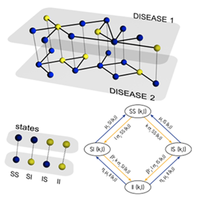
Creative Commons Forecasting epidemic outbreaks has long been the goal of health researchers. By modeling the interactions of two diseases occurring simultaneously, scientists show that specific parameters control the thresholds of epidemics.

[Phys. Rev. X 4, 041005] Published Wed Oct 08, 2014

09 Oct 00:58

A typology of street patterns. (arXiv:1410.2094v1 [physics.soc-ph])

by Rémi Louf, Marc Barthelemy

We propose a quantitative method to classify cities according to their street pattern. We use the conditional probability distribution of shape factor of blocks with a given area, and define what could constitute the `fingerprint' of a city. Using a simple hierarchical clustering method, these fingerprints can then serve as a basis for a typology of cities. We apply this method to a set of 131 cities in the world, and at an intermediate level of the dendrogram, we observe 4 large families of cities characterized by different abundances of blocks of a certain area and shape. At a lower level of the classification, we find that most European cities and American cities in our sample fall in their own sub-category, highlighting quantitatively the differences between the typical layouts of cities in both regions. We also show with the example of New York and its different Boroughs, that the fingerprint of a city can be seen as the sum of the ones characterising the different neighbourhoods inside a city. This method provides a quantitative comparison of urban street patterns, which could be helpful for a better understanding of the causes and mechanisms behind their distinct shapes.

07 Oct 14:46

Hysteretic transitions in the Kuramoto model with inertia

by Simona Olmi, Adrian Navas, Stefano Boccaletti, and Alessandro Torcini

Author(s): Simona Olmi, Adrian Navas, Stefano Boccaletti, and Alessandro Torcini

We report finite-size numerical investigations and mean-field analysis of a Kuramoto model with inertia for fully coupled and diluted systems. In particular, we examine, for a gaussian distribution of the frequencies, the transition from incoherence to coherence for increasingly large system size an...

[Phys. Rev. E 90, 042905] Published Mon Oct 06, 2014

07 Oct 01:38

Synchronization of Two Ensembles of Atoms

by Minghui Xu, D. A. Tieri, E. C. Fine, James K. Thompson, and M. J. Holland

Author(s): Minghui Xu, D. A. Tieri, E. C. Fine, James K. Thompson, and M. J. Holland

We propose a system for observing the correlated phase dynamics of two mesoscopic ensembles of atoms through their collective coupling to an optical cavity. We find a dynamical quantum phase transition induced by pump noise and cavity output coupling. The spectral properties of the superradiant ligh...

[Phys. Rev. Lett. 113, 154101] Published Mon Oct 06, 2014

06 Oct 22:01

Brain networks: small-worlds, after all?

by Lyle Muller, Alain Destexhe and Michelle Rudolph-Lilith
Since its introduction, the ‘small-world’ effect has played a central role in network science, particularly in the analysis of the complex networks of the nervous system. From the cellular level to that of interconnected cortical regions, many analyses have revealed small-world properties in the networks of the brain. In this work, we revisit the quantification of small-worldness in neural graphs. We find that neural graphs fall into the ‘borderline’ regime of small-worldness, residing close to that of a random graph, especially when the degree sequence of the network is taken into account. We then apply recently introducted analytical expressions for clustering and distance measures, to study this borderline small-worldness regime. We derive theoretical bounds for the minimal and maximal small-worldness index for a given graph, and by semi-analytical means, study the small-worldness index itself. With this approach, we find that graphs with small-worldness equivalent to that obs...
06 Oct 21:59

Time-delay effects on the aging transition in a population of coupled oscillators

by Bhumika Thakur, Devendra Sharma, and Abhijit Sen

Author(s): Bhumika Thakur, Devendra Sharma, and Abhijit Sen

We investigate the influence of time-delayed coupling on the nature of the aging transition in a system of coupled oscillators that have a mix of active and inactive oscillators, where the aging transition is defined as the gradual loss of collective synchrony as the proportion of inactive oscillato...

[Phys. Rev. E 90, 042904] Published Mon Oct 06, 2014

06 Oct 21:58

Epidemic spreading on complex networks with general degree and weight distributions

by Wei Wang, Ming Tang, Hai-Feng Zhang, Hui Gao, Younghae Do, and Zong-Hua Liu

Author(s): Wei Wang, Ming Tang, Hai-Feng Zhang, Hui Gao, Younghae Do, and Zong-Hua Liu

The spread of disease on complex networks has attracted wide attention in the physics community. Recent works have demonstrated that heterogeneous degree and weight distributions have a significant influence on the epidemic dynamics. In this study, a novel edge-weight-based compartmental approach is...

[Phys. Rev. E 90, 042803] Published Mon Oct 06, 2014

06 Oct 21:58

Simulating non-Markovian stochastic processes

by Marian Boguñá, Luis F. Lafuerza, Raúl Toral, and M. Ángeles Serrano

Author(s): Marian Boguñá, Luis F. Lafuerza, Raúl Toral, and M. Ángeles Serrano

We present a simple and general framework to simulate statistically correct realizations of a system of non-Markovian discrete stochastic processes. We give the exact analytical solution and a practical and efficient algorithm like the Gillespie algorithm for Markovian processes, with the difference...

[Phys. Rev. E 90, 042108] Published Mon Oct 06, 2014

03 Oct 00:27

Constant identical delays in the Kuramoto model with time-variable parameters

The Kuramoto model with time-varying parameters has been extended to consider the effect of delay in couplings. A collective dynamics arises from the interplay between the time scales of the original system, the external forcing and the delays. This complex low-dimensional dynamics is described, unc...
03 Oct 00:27

Entropy of weighted recurrence plots

The Shannon entropy of a time series is a standard measure to assess the complexity of a dynamical process and can be used to quantify transitions between different dynamical regimes. An alternative way of quantifying complexity is based on state recurrences, such as available in recurrence quantifi...
02 Oct 17:45

Synopsis: Stopping the Spread

A mathematical model quantifies how the behavior of individuals can influence the spreading of diseases.

Published Thu Oct 02, 2014
02 Oct 02:51

Classical mechanics of economic networks. (arXiv:1410.0104v2 [q-fin.RM] UPDATED)

by Nima Dehmamy, Sergey V. Buldyrev, Shlomo Havlin, H. Eugene Stanley, Irena Vodenska

Financial networks are dynamic. To assess their systemic importance to the world-wide economic network and avert losses we need models that take the time variations of the links and nodes into account. Using the methodology of classical mechanics and Laplacian determinism we develop a model that can predict the response of the financial network to a shock. We also propose a way of measuring the systemic importance of the banks, which we call BankRank. Using European Bank Authority 2011 stress test exposure data, we apply our model to the bipartite network connecting the largest institutional debt holders of the troubled European countries (Greece, Italy, Portugal, Spain, and Ireland). From simulating our model we can determine whether a network is in a "stable" state in which shocks do not cause major losses, or a "unstable" state in which devastating damages occur. Fitting the parameters of the model, which play the role of physical coupling constants, to Eurozone crisis data shows that before the Eurozone crisis the system was mostly in a "stable" regime, and that during the crisis it transitioned into an "unstable" regime. The numerical solutions produced by our model match closely the actual time-line of events of the crisis. We also find that, while the largest holders are usually more important, in the unstable regime smaller holders also exhibit systemic importance. Our model also proves useful for determining the vulnerability of banks and assets to shocks. This suggests that our model may be a useful tool for simulating the response dynamics of shared portfolio networks.

01 Oct 17:08

Spectral density of the noncentral correlated Wishart ensembles

Wishart ensembles of random matrix theory have been useful in modeling positive definite matrices encountered in classical and quantum chaotic systems. We consider nonzero means for the entries of the constituting matrix $\mathbb{A}$ which defines the correlated Wishart matrix as $\mathbb{W}=\mathbb...