03 Jul 02:50
by Xiaojun Yin, Guohua Xie, Yuhao Peng, Bowen Wang, Tianhao Chen, Shuqi Li, Wenhao Zhang, Lei Wang, Chuluo Yang
A variety of N-hydrogenated/N-methylated pyridinium salts are elaborately designed and synthesized. Thermogravimetric and X-ray photoelectron spectra analysis indicate the intensities of the N![[BOND]](http://onlinelibrarystatic.wiley.com/undisplayable_characters/00f8ff.gif) H covalent bonds are strengthened step-by-step from 3,3′-(5′-(3-(pyridin-3-yl)phenyl)-[1,1′:3′,1″-terphenyl]-3,3″-diyl)dipyridine (Tm)-HCl to Tm-HBr and then Tm-TfOH, which results in gradually improved cathode interfacial modification abilities. The larger dipole moments of N+H containing moieties compared to those of the N+CH3 endow them with more preferable interfacial modification abilities. Electron paramagnetic resonance signals reveal the existence of radical anions in the solid state of Tm-TfOH, which enables its self-doping property and high electron mobility up to 1.67 × 10⁻³ cm2 V−1 s−1. Using the Tm-TfOH as the cathode interfacial layers (CILs), the phenyl-substituted poly(para-phenylene vinylene)-based all-solution-processed polymer light-emitting diodes (PLEDs) achieve more preferable device performances than the poly[(9,9-bis(3′-(N,N-dimethylamino)propyl)-2,7-fluorene)-alt-2,7-(9,9-dioctylfluorene)]-based ones, i.e., high current density of nearly 300 mA cm−2, very high luminance over 15 000 cd m−2 at a low bias of 5 V. Remarkably, the thickness of the CILs has little impact on the device performance and high efficiencies are maintained even at thicknesses up to 85 nm, which is barely realized in PLEDs with small-molecule-based electron transporting layers.
H covalent bonds are strengthened step-by-step from 3,3′-(5′-(3-(pyridin-3-yl)phenyl)-[1,1′:3′,1″-terphenyl]-3,3″-diyl)dipyridine (Tm)-HCl to Tm-HBr and then Tm-TfOH, which results in gradually improved cathode interfacial modification abilities. The larger dipole moments of N+H containing moieties compared to those of the N+CH3 endow them with more preferable interfacial modification abilities. Electron paramagnetic resonance signals reveal the existence of radical anions in the solid state of Tm-TfOH, which enables its self-doping property and high electron mobility up to 1.67 × 10⁻³ cm2 V−1 s−1. Using the Tm-TfOH as the cathode interfacial layers (CILs), the phenyl-substituted poly(para-phenylene vinylene)-based all-solution-processed polymer light-emitting diodes (PLEDs) achieve more preferable device performances than the poly[(9,9-bis(3′-(N,N-dimethylamino)propyl)-2,7-fluorene)-alt-2,7-(9,9-dioctylfluorene)]-based ones, i.e., high current density of nearly 300 mA cm−2, very high luminance over 15 000 cd m−2 at a low bias of 5 V. Remarkably, the thickness of the CILs has little impact on the device performance and high efficiencies are maintained even at thicknesses up to 85 nm, which is barely realized in PLEDs with small-molecule-based electron transporting layers.

A self-doping cathode interfacial material from diverse pyridinium salts enables high electron mobility and powerful work function tunability. The resulting all-solution-processed polymer light-emitting diodes achieve a very low driving voltage of 2.9 V at 1000 cd m−2, and high external quantum efficiency of 3.5% even in the thick films of cathode interfacial layer up to 85 nm.
03 Jul 02:49
by Yu Hou, Xiao Chen, Shuang Yang, Chunzhong Li, Huijun Zhao, Hua Gui Yang
As the key component in efficient perovskite solar cells, the electron transport layer (ETL) can selectively collect photogenerated charge carriers produced in perovskite absorbers and prevent the recombination of carriers at interfaces, thus ensuring a high power conversion efficiency. Compared with the conventional single- or dual-layered ETLs, a gradient heterojunction (GHJ) strategy is more attractive to facilitate charge separation because the potential gradient created at an appropriately structured heterojunction can act as a driving force to regulate the electron transport toward a desired direction. Here, a SnO2/TiO2 GHJ interlayer configuration inside the ETL is reported to simultaneously achieve effective extraction and efficient transport of photoelectrons. With such an interlayer configuration, the GHJs formed at the perovskite/ETL interface act collectively to extract photogenerated electrons from the perovskite layer, while GHJs formed at the boundaries of the interconnected SnO2 and TiO2 networks throughout the entire ETL layer can extract electron from the slow electron mobility TiO2 network to the high electron mobility SnO2 network. Devices based on GHJ ETL exhibit a champion power conversion efficiency of 18.08%, which is significantly higher than that obtained from the compact TiO2 ETL constructed under the comparable conditions.

A gradient heterojunction electron transport layer (GHJ ETL), prepared by a facile low-temperature route, is utilized in perovskite solar cells (PSCs) for the first time. PSCs based on the potential GHJ ETL demonstrate an efficiency of 18.08% with less hysteresis effect, which is due to excellent management of charge transport and recombination.
03 Jul 02:49
by Anton V. Volkov, Kosala Wijeratne, Evangelia Mitraka, Ujwala Ail, Dan Zhao, Klas Tybrandt, Jens Wenzel Andreasen, Magnus Berggren, Xavier Crispin, Igor V. Zozoulenko
Poly(3,4-ethylenedioxythiophene):polystyrene sulfonate (PEDOT:PSS) is the most studied and explored mixed ion-electron conducting polymer system. PEDOT:PSS is commonly included as an electroactive conductor in various organic devices, e.g., supercapacitors, displays, transistors, and energy-converters. In spite of its long-term use as a material for storage and transport of charges, the fundamentals of its bulk capacitance remain poorly understood. Generally, charge storage in supercapacitors is due to formation of electrical double layers or redox reactions, and it is widely accepted that PEDOT:PSS belongs to the latter category. Herein, experimental evidence and theoretical modeling results are reported that significantly depart from this commonly accepted picture. By applying a two-phase, 2D modeling approach it is demonstrated that the major contribution to the capacitance of the two-phase PEDOT:PSS originates from electrical double layers formed along the interfaces between nanoscaled PEDOT-rich and PSS-rich interconnected grains that comprises two phases of the bulk of PEDOT:PSS. This new insight paves a way for designing materials and devices, based on mixed ion-electron conductors, with improved performance.

By performing 2D Nernst–Planck–Poisson modeling of experimental cyclic voltammograms it is shown that (poly(3,4-ethylenedioxythiophene):polystyrene sulfonate) (PEDOT:PSS) capacitance originates from charging of double layers formed on boundaries between the two phases consisting of PEDOT-rich and PSS-rich grains.
03 Jul 02:49
by Xiaobao Xu, Chu-Chen Chueh, Peifeng Jing, Zhibin Yang, Xueliang Shi, Ting Zhao, Lih Y. Lin, Alex K.-Y. Jen
Photodetectors with ultrafast response are explored using inorganic/organic hybrid perovskites. High responsivity and fast optoelectronic response are achieved due to the exceptional semiconducting properties of perovskite materials. However, most of the perovskite-based photodetectors exploited to date are centered on Pb-based perovskites, which only afford spectral response across the visible spectrum. This study demonstrates a high-performance near-IR (NIR) photodetector using a stable low-bandgap Sn-containing perovskite, (CH3NH3)0.5(NH2CHNH2)0.5Pb0.5Sn0.5I3 (MA0.5FA0.5Pb0.5Sn0.5I3), which is processed with an antioxidant additive, ascorbic acid (AA). The addition of AA effectively strengthens the stability of Sn-containing perovskite against oxygen, thereby significantly inhibiting the leakage current. Consequently, the derived photodetector shows high responsivity with a detectivity of over 1012 Jones ranging from 800 to 970 nm. Such low-cost, solution processable NIR photodetectors with high performance show promising potential for future optoelectronic applications.

A high-performance NIR photodetector derived from a stable low optical bandgap (E
g) Sn-containing perovskite, MA0.5FA0.5Pb0.5Sn0.5I3, is introduced. Ascorbic acid is used as an effective antioxidant additive to enhance the performance of the photodiode. Finally, a high detectivity of over 1012 Jones between 800 and 970 nm with a high response rate is achieved.
03 Jul 02:48
by M. Ibrahim Dar, Alexander Hinderhofer, Gwenole Jacopin, Valentina Belova, Neha Arora, Shaik Mohammed Zakeeruddin, Frank Schreiber, Michael Grätzel
Understanding the relationship between the growth and local emission of hybrid perovskite structures and the performance of the devices based on them demands attention. This study investigates the local structural and emission features of CH3NH3PbI3, CH3NH3PbBr3, and CH(NH2)2PbBr3 perovskite films deposited under different yet optimized conditions using X-ray scattering and cathodoluminescence spectroscopy, respectively. X-ray scattering shows that a CH3NH3PbI3 film involving spin coating of CH3NH3I instead of dipping is composed of perovskite structures exhibiting a preferred orientation with [202] direction perpendicular to the surface plane. The device based on the CH3NH3PbI3 film composed of oriented crystals yields a relatively higher photovoltage. In the case of CH3NH3PbBr3, while the crystallinity decreases when the HBr solution is used in a single-step method, the photovoltage enhancement from 1.1 to 1.46 V seems largely stemming from the morphological improvements, i.e., a better connection between the crystallites due to a higher nucleation density. Furthermore, a high photovoltage of 1.47 V obtained from CH(NH2)2PbBr3 devices could be attributed to the formation of perovskite films displaying uniform cathodoluminescence emission. The comparative analysis of the local structural, morphological, and emission characteristics of the different perovskite films supports the higher photovoltage yielded by the relatively better performing devices.

A comparative analysis of the local structural, morphological, and emission characteristics of different perovskite films rationally justifies the higher photovoltage yielded by the better performing devices.
03 Jul 02:47
by Sunsun Li, Long Ye, Wenchao Zhao, Shaoqing Zhang, Harald Ade, Jianhui Hou
Molecular engineering of nonfullerene electron acceptors is of great importance for the development of organic photovoltaics. In this study, a series of methoxyl-modified dithieno[2,3-d:2′,3′-d′]-s-indaceno[1,2-b:5,6-b′]dithiophene-based small-molecule acceptor (SMA) isomers are synthesized and characterized to determine the effect of substitution position of the terminal group in these acceptor–donor–acceptor-type SMAs. Minor changes in the substitution position are demonstrated to greatly influence the optoelectronic properties and molecular packing of the isomers. Note that SMAs with planar molecular backbones show more ordered molecular packing and smaller π–π stacking distances, thus dramatically higher electron mobilities relative to their counterparts with distorted end-groups. By utilizing polymer poly[(2,6-(4,8-bis(5-(2-ethylhexyl)thiophen-2-yl)benzo[1,2-b:4,5-b′]dithiophen)-co-(1,3-di(5-thiophene-2-yl)-5,7-bis(2-ethylhexyl)benzo[1,2-c:4,5-c′]dithiophene-4,8-dione)] (PBDB-T) as an electron donor, an optimum power conversion efficiency (PCE) of 11.9% is achieved in the device based on PBDB-T:IT-OM-2, which is among the top efficiencies reported as of yet. Moreover, the PCE stays above 10% as the film thickness increases to 250 nm, which is very advantageous for large-area printing. Overall, the intrinsic molecular properties as well as the morphologies of blends can be effectively modulated by manipulating the substituent position on the terminal groups, and the structure–property relationships gleaned from this study will aid in designing more efficient SMAs for versatile applications.

Through substitution position manipulations of methoxyl on terminal groups in ITIC-based small-molecule acceptors (SMAs), relations between the chemical structure and optoelectronic properties of these SMAs are systematically investigated. Benefiting from the planar backbone and strong intermolecular interactions of a 5-methoxyl-substituted SMA (IT-OM-2), an efficiency of 11.9% is achieved, which is among the top efficiencies reported so far.
03 Jul 02:46
by Yu Chen, Yunpeng Qin, Yang Wu, Cheng Li, Huifeng Yao, Ningning Liang, Xiaochen Wang, Weiwei Li, Wei Ma, Jianhui Hou
Ternary blend is proved to be a potential contender for achieving high efficiency in organic photovoltaics, which can apparently strengthen the absorption of active layer so as to better harvest light irradiation. Much of the previous work in ternary polymer solar cells focuses on broadening the absorption spectrum; however, a new insight is brought to study the third component, which in tiny amounts influents the small-molecule acceptor-based device performance. Without contributing to complementing the absorption, a minute amount of fullerene derivative, Bis-PC70BM, can effectively play an impressive role as sensitizer in enhancing the external quantum efficiency of the host binary blend, especially for polymeric donor. Detailed investigations reveal that the minute addition of Bis-PC70BM can realize morphology modification as well as facilitate electron transfer from polymeric donor to small molecule acceptor via cascade energy level modulation, and therefore lead to an improvement in device efficiency.

Ternary blend is proved to be a potential contender for achieving high efficiency in organic photovoltaics. In contrast to complementing absorption, a minute amount of fullerene derivatives is found to play an impressive sensitizer role in enhancing the external quantum efficiency in small-molecule acceptor-based binary polymer solar cells, which is further carefully investigated and interpreted.
03 Jul 02:46
by Wonho Lee, Seonju Jeong, Changyeon Lee, Gibok Han, Changsoon Cho, Jung-Yong Lee, Bumjoon J. Kim
Interfaces between the photoactive layers and electrodes play critical roles in controlling the performance of optoelectronic devices. Herein, a novel nonconjugated polymer additive (nPA), poly(2-vinylpyridine) (P2VP), is reported for modifying the interfaces between the bulk-heterojunction (BHJ) and cathode/metal oxide (MO) layers. The P2VP nPA enables remarkably enhanced power conversion efficiencies (PCEs) and ambient stability in different types of polymer solar cells (PSCs). Importantly, interfacial engineering can be achieved during deposition of the P2VP nPA-containing BHJ active layer via simple, one-step solution processing. The P2VP nPA has much higher surface energy than the BHJ active components and stronger interaction with the surface of MO, which affords spontaneous vertical phase separation from the BHJ layer on the MO surface by one-step solution processing. The self-assembled P2VP layer substantially reduces the work function and surface defect density of MO, thereby minimizing the charge-extraction barrier and increasing the PCEs of the PSCs significantly, i.e., PTB7-Th:PC71BM (10.53%![[RIGHTWARDS ARROW]](http://onlinelibrarystatic.wiley.com/undisplayable_characters/002192.gif) 11.14%), PTB7:PC71BM (7.37%8.67%), and PTB7-Th:P(NDI2HD-T) all-PSCs (5.52%6.14%). In addition, the lifetimes of the PSCs are greatly improved by the use of the P2VP nPA.
11.14%), PTB7:PC71BM (7.37%8.67%), and PTB7-Th:P(NDI2HD-T) all-PSCs (5.52%6.14%). In addition, the lifetimes of the PSCs are greatly improved by the use of the P2VP nPA.

Nonconjugated polymer additives (nPAs) are investigated for highly efficient and stable polymer solar cells (PSCs). The poly(2-vinylpyridine) (P2VP) nPA self-assembles vertically on the ZnO surface via a single coating process for the deposition of active materials. The self-assembled P2VP reduces the work function and surface defect density of ZnO, which leads to efficient and stable PSCs with up to 11.14% efficiency.
03 Jul 02:46
by Niraj N. Lal, Yasmina Dkhissi, Wei Li, Qicheng Hou, Yi-Bing Cheng, Udo Bach
The meteoric rise of perovskite single-junction solar cells has been accompanied by similar stunning developments in perovskite tandem solar cells. Debuting with efficiencies less than 14% in 2014, silicon–perovskite solar cells are now above 25% and will soon surpass record silicon single-junction efficiencies. Unconstrained by the Shockley–Quiesser single-junction limit, perovskite tandems suggest a real possibility of true third-generation thin-film photovoltaics; monolithic all-perovskite tandems have reached 18% efficiency and will likely pass perovskite single-junction efficiencies within the next 5 years. Inorganic–organic metal–halide perovskites are ideal candidates for inclusion in tandem solar cells due to their high radiative recombination efficiencies, excellent absorption, long-range charge-transport, and broad ability to tune the bandgap. In this progress report, the development of perovskite tandem cells is reviewed, with presentation of their key motivations and challenges. In detail, it presents an overview of recombination layer materials, bandgap-tuneability, transparent contact architectures, and perovskite compounds for use in tandems. Theoretical estimates of efficiency for future tandem and triple-junction perovskite cells are presented, outlining roadmaps for future focused research.

The remarkable progress of perovskite tandem solar cells, now above 25% efficiency for a silicon–perovskite four-terminal tandem and 18% for monolithic all-perovskite tandems, is reviewed. In detail, the candidate materials, contact layers, and device challenges are examined, outlining a roadmap toward a future of true third-generation thin-film photovoltaics comprising high-efficiency at low cost.
03 Jul 02:46
by Yani Chen, Yong Sun, Jiajun Peng, Wei Zhang, Xiaojun Su, Kaibo Zheng, Tõnu Pullerits, Ziqi Liang
2D perovskites have recently been shown to exhibit significantly improved environmental stability. Derived from their 3D analogues, 2D perovskites are formed by inserting bulky alkylammonium cations in-between the anionic layers. However, these insulating organic spacer cations also hinder charge transport. Herein, such a 2D perovskite, (iso-BA)2(MA)3Pb4I13, that contains short branched-chain spacer cations (iso-BA+) and shows a remarkable increase of optical absorption and crystallinity in comparison to the conventional linear one, n-BA+, is designed. After applying the hot-casting (HC) technique, all these properties are further improved. The HC (iso-BA)2(MA)3Pb4I13 sample exhibits the best ambient stability by maintaining its initial optical absorption after storage of 840 h in an environmental chamber at 20 °C with a relative humidity of 60% without encapsulation. More importantly, the out-of-plane crystal orientation of (iso-BA)2(MA)3Pb4I13 film is notably enhanced, which increases cross-plane charge mobility. As a result, the highest power conversion efficiencies (PCEs) measured from for current density versus voltage curves afford 8.82% and 10.63% for room-temperature and HC-processed 2D perovskites based planar solar cells, respectively. However, the corresponding steady-state PCEs are remarkably lower, which is presumably due to the significant hysteresis phenomena caused by low charge extraction efficiency at interfaces of C60/2D perovskites.

2D organometal halide perovskites with high environmental stability are successfully obtained by introducing short branched-chain spacer cations. The resulting (iso-BA)2(MA)3Pb4I13 exhibits a remarkable increase of optical absorption, crystallinity, and in particular out-of-plane orientation in comparison to the conventional linear n-BA+. A high power conversion efficiency of 10.63% is hence obtained for such 2D perovskite solar cells.
29 Jun 00:22
Energy Environ. Sci., 2017, 10,1465-1475
DOI: 10.1039/C6EE03702J, Paper
YunHui L. Lin, Marius Koch, Alyssa N. Brigeman, David M. E. Freeman, Lianfeng Zhao, Hugo Bronstein, Noel C. Giebink, Gregory D. Scholes, Barry P. Rand
A novel solid-state design is presented for an organic intermediate band solar cell with electrically integrated triplet-triplet annihilation upconversion.
The content of this RSS Feed (c) The Royal Society of Chemistry

29 Jun 00:21
Energy Environ. Sci., 2017, 10,1358-1366
DOI: 10.1039/C7EE00685C, Communication
Arman Mahboubi Soufiani, Zhuo Yang, Trevor Young, Atsuhiko Miyata, Alessandro Surrente, Alexander Pascoe, Krzysztof Galkowski, Mojtaba Abdi-Jalebi, Roberto Brenes, Joanna Urban, Nan Zhang, Vladimir Bulovic, Oliver Portugall, Yi-Bing Cheng, Robin J. Nicholas, Anita Ho-Baillie, Martin A. Green, Paulina Plochocka, Samuel D. Stranks
The authors directly show that grain size and quality have a negligible impact on the excitonic characteristics of perovskite semiconductors.
The content of this RSS Feed (c) The Royal Society of Chemistry

18 May 06:15
by Yahui Li, Zhenhao Zhao, Feng Lin, Xiaobing Cao, Xian Cui, Jinquan Wei
It is of great importance to investigate the crystallization of organometallic perovskite from solution for enhancing performance of perovskite solar cells. Here, this study develops a facile method for in situ observation of crystallization and growth of the methylammonium lead iodide (MAPbI3) perovskite from microdroplets ejected by an alternating viscous and inertial force jetting method. It is found that there are two crystallization modes when MAPbI3 grows from the CH3NH3I (MAI)/PbI2/N,N-dimethylformamide (DMF) solution: needle precursors and granular perovskites. Generally, needle Lewis adduct of MAPbI3·DMF tends to nucleate and grow from the solution due to low solubility of PbI2. The growth of MAPbI3·DMF depends on both the concentration of MAI and temperature. It tends to form large perovskite domains on substrates at high temperature. The MAPbI3·DMF coverts to nanocrystalline perovskite due to lattice shrinkage when DMF molecules escape from the Lewis adduct. Granular perovskite can also directly nucleate from the solution at high concentration of MAI due to compositional segregation.

Crystallization of perovskite related materials are in situ investigated from microdroplets of CH3NH3I/PbI2/N,N-dimethylformamide (DMF). Two crystallization modes are observed. Similar to PbI2·DMF, it inclines to form a Lewis adduct of CH3NH3 PbI3·DMF with needle shapes from the solution without compositional segregation. Perovskite grains can also precipitate from the droplet where there is enrichment of CH3NH3I.
17 May 00:33
by Wangen Zhao, Dong Yang, Shengzhong Frank Liu
Organic–inorganic hybrid perovskite as a kind of promising photovoltaic material is booming due to its low-cost, high defect tolerance, and easy fabrication, which result in the huge potential in industrial production. In the pursuit of high efficiency photovoltaic devices, high-quality absorbing layer is essential. Therefore, developing organic–inorganic hybrid perovskite thin films with good coverage, improved uniformity, and crystalline in a single pass deposition is of great concern in realizing good performance of perovskite thin-film solar cell. Here, it is found that the introduction of suitable amounts of LiI plays a dramatically positive role in enlarging the grain size and reducing the grain boundaries of absorbing layer. In addition, the carrier lifetime and built-in potential of the LiI doped perovskite device are observed to increase. Thus, it leads to about 15% gain in solar cell efficiency comparing to that without the LiI doping. Meanwhile, a hysteresis reduction is observed and 18.16% power conversion efficiency is achieved in LiI doped perovskite device, as well.

The quality of the absorber layer is a vital factor which affects the performance of the perovskikte photovoltaic device. Here, Li addition obviously enlarges the grain size, reduces the defect states and passivates the grain boundaries, resulting in a perovskite solar cell with higher efficiency.
17 May 00:30
by Ning Wang, Kexiang Zhao, Tao Ding, Wenbo Liu, Ali Said Ahmed, Zongrui Wang, Miaomiao Tian, Xiao Wei Sun, Qichun Zhang
Although perovskite solar cells (PSCs) have emerged as a promising alternative to widely used fossil fuels, the involved high-temperature preparation of metal oxides as a charge transport layer in most state-of-the-art PSCs has been becoming a big stumbling block for future low-temperature and large-scale R2R manufacturing process. Such an issue strongly encourages scientists to find new type of materials to replace metal oxides. Except for expensive PC61BM with unmanageable morphology and electrical properties, the past investigation on the development of low-temperature-processed and highly efficient electron transport layers (ETLs) has met some mixed success. In order to further enhance the performance of all-solution-processed PSCs, we propose a novel n-type sulfur-containing small molecule hexaazatrinaphtho[2,3-c][1,2,5]thiadiazole (HATNT) with high electron mobility up to 1.73 × 10⁻² cm2 V−1 s−1 as an ETL in planar heterojunction PSCs. A high power conversion efficiency of 18.1% is achieved, which is fully comparable with the efficiency from the control device fabricated with PC61BM as ETL. This superior performance mainly attributes from more effective suppression of charge recombination at the perovskite/HATNT interface than that between the perovskite and PC61 BM. Moreover, high electron mobility and strong interfacial interaction via SI or SPb bonding should be also positive factors. Significantly, our results undoubtedly enable new guidelines in exploring n-type organic small molecules for high-performance PSCs.

A new sulfur-containing n-type organic small molecule hexaazatrinaphtho[2,3-c][1,2,5]thiadiazole (HATNT) is proposed for perovskite solar cells. In comparison with traditional PC61BM, benefitting from much more significant suppression of charge recombination at the MAPbI3/HATNT interface and strong interfacial interaction between the MAPbI3 and HATNT via SI or SPb bonding, solution-processed high-performance HATNT-based perovskite solar cells are demonstrated with an optimized efficiency up to 18.1%.
17 May 00:28
by Huanle Chen, Weifei Fu, Chuyi Huang, Zhongqiang Zhang, Shuixing Li, Feizhi Ding, Minmin Shi, Chang-Zhi Li, Alex K.-Y. Jen, Hongzheng Chen
Two hole-extraction materials (HEMs), TPP-OMeTAD and TPP-SMeTAD, have been developed to facilitate the fabrication of efficient p-i-n perovskite solar cells (PVSCs). By replacing the oxygen atom on HEM with sulfur (from TPP-OMeTAD to TPP-SMeTAD), it effectively lowers the highest occupied molecular orbital of the molecule and provides stronger PbS interaction with perovskites, leading to efficient charge extraction and surface traps passivation. The TPP-SMeTAD-based PVSCs exhibit both improved photovoltaic performance and reduced hysteresis in p-i-n PVSCs over those based on TPP-OMeTAD. This work not only provides new insights on creating perovskite-HEM heterojunction but also helps in designing new HEM to enable efficient organic–inorganic hybrid PVSCs.

Two hole-extraction materials (HEMs), TPP-OMeTAD and TPP-SMeTAD, are developed for the construction of p-i-n perovskite solar cells (PVSCs). Through replacing the oxygen atom with sulfur at the arylamine terminal substituents, TPP-SMeTAD exhibits superior energetics, charge extraction and trap passivation capabilities to perovskite, over those of TPP-OMeTAD. It leads to improved photovoltaic performance and reduced hysteresis in TPP-SMeTAD based p-i-n PVSCs.
16 May 00:41
by Changlei Wang, Chuanxiao Xiao, Yue Yu, Dewei Zhao, Rasha A. Awni, Corey R. Grice, Kiran Ghimire, Danae Constantinou, Weiqiang Liao, Alexander J. Cimaroli, Pei Liu, Jing Chen, Nikolas J. Podraza, Chun-Sheng Jiang, Mowafak M. Al-Jassim, Xingzhong Zhao, Yanfa Yan
Through detailed device characterization using cross-sectional Kelvin probe force microscopy (KPFM) and trap density of states measurements, we identify that the J–V hysteresis seen in planar organic–inorganic hybrid perovskite solar cells (PVSCs) using SnO2 electron selective layers (ESLs) synthesized by low-temperature plasma-enhanced atomic-layer deposition (PEALD) method is mainly caused by the imbalanced charge transportation between the ESL/perovskite and the hole selective layer/perovskite interfaces. We find that this charge transportation imbalance is originated from the poor electrical conductivity of the low-temperature PEALD SnO2 ESL. We further discover that a facile low-temperature thermal annealing of SnO2 ESLs can effectively improve the electrical mobility of low-temperature PEALD SnO2 ESLs and consequently significantly reduce or even eliminate the J–V hysteresis. With the reduction of J–V hysteresis and optimization of deposition process, planar PVSCs with stabilized output powers up to 20.3% are achieved. The results of this study provide insights for further enhancing the efficiency of planar PVSCs.

Through detailed characterizations, it is identified that the current density-voltage hysteresis of planar perovskite solar cells using low-temperature atomic-layer deposited SnO2 electron selective layers originates from the poor-electrical conductivity of the SnO2 layers. A facile low-temperature thermal annealing in ambient air can effectively reduce the degrees of the hysteresis and improve the power conversion efficiency of planar perovskite solar cells.
16 May 00:37
by Ming-Gang Ju, Jun Dai, Liang Ma, Xiao Cheng Zeng
Solar cells with organic-inorganic lead halide perovskites have achieved great success and their power conversion efficiency (PCE) has reached to 22.1%. To address the toxicology of lead element and some stability issues associated with the organic-inorganic lead halide perovskites, inorganic lead-free perovskites have gained more attentions from the photovoltaic research community. Herein, a series of chalcogenide perovskites are proposed as optical absorber materials for thin-film solar cells. SrSnSe3 and SrSnS3 are predicted to be direct bandgap semiconductors with the bandgap value being within the optimal range of 0.9–1.6 eV. Both SrSnSe3 and SrSnS3 not only exhibit good optical absorption properties and carrier mobility, but also possess flexible bandgaps that can be continuously tuned within the grange of 0.9–1.6 eV via the element-mixing strategy, thereby render both perovskites as promising candidates for photovoltaic applications.

SrSnSe3 and SrSnS3 are predicted to be direct gap semiconductors with bandgap value being within the optimal range of 0.9–1.6 eV, to exhibit good optical absorption properties and high carrier mobility, and to enable flexible bandgaps continuously tuned within the range of 0.9–1.6 eV via the elemental mixing strategy, thereby render both materials as promising candidates for photovoltaic applications.
16 May 00:34
J. Mater. Chem. A, 2017, 5,10010-10020
DOI: 10.1039/C7TA02492D, Paper
Lingpeng Yan, Jinduo Yi, Qi Chen, Junyan Dou, Yongzhen Yang, Xuguang Liu, Liwei Chen, Chang-Qi Ma
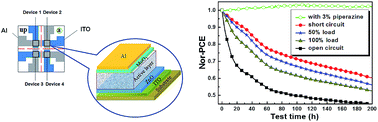
External load dependent degradation behavior of P3HT:PC61BM solar cells is demonstrated, which can be successfully suppressed by blending with an exciton quencher of PC61BM.
The content of this RSS Feed (c) The Royal Society of Chemistry
14 May 04:21
by Qifan Xue, Yang Bai, Meiyue Liu, Ruoxi Xia, Zhicheng Hu, Ziming Chen, Xiao-Fang Jiang, Fei Huang, Shihe Yang, Yutaka Matsuo, Hin-Lap Yip, Yong Cao

In article number 1602333, Shihe Yang, Yutaka Matsuo, Hin-Lap Yip, and co-workers simultaneously optimize both the power conversion efficiency (>12.5%) and average visible transmittance (>20%) of semitransparent perovskite solar cells (ST-PVSCs) through dual interfacial modifications. The success demonstration of high performance ST-PVSCs paves the way for using them as power generating windows, as illustrated in the image.
14 May 04:19
by Ramūnas Augulis, Marius Franckevičius, Vytautas Abramavičius, Darius Abramavičius, Shaik Mohammed Zakeeruddin, Michael Grätzel, Vidmantas Gulbinas
Charge carrier dynamics in organolead iodide perovskites is analyzed by employing time-resolved photoluminescence spectroscopy with several ps time resolution. The measurements performed by varying photoexcitation intensity over five orders of magnitude enable separation of photoluminescence components related to geminate and nongeminate charge carrier recombination and to address the dynamics of an isolated geminate electron–hole pair. Geminate recombination dominates at low excitation fluence and determines the initial photoluminescence decay. This decay component is remarkably independent of the material structure and experimental conditions. It is demonstrated that dependences of the geminate and nongeminate radiative recombination components on excitation intensity, repetition rate, and temperature, are hardly compatible with carrier trapping and exciton dissociation models. On the basis of semiclassical and quantum mechanical numerical calculation results, it is argued that the fast photoluminescence decay originates from gradual spatial separation of photogenerated weakly bound geminate charge pairs.

Ultrafast time-resolved measurements of methylammonium lead halide perovskite photoluminescence enable separation of the fast and slow decay components attributed to the geminate and nongeminate charge carrier recombination. The geminate recombination dominates at very low excitation intensities during initial several tens of picoseconds and reveals the gradual spatial separation of photogenerated weakly bound geminate charge pairs.
14 May 04:09
by Kehang Cui, Yang Qian, Il Jeon, Anton Anisimov, Yutaka Matsuo, Esko I. Kauppinen, Shigeo Maruyama
This study reports a scalable and room-temperature solid-state redox functionalization process for single-walled carbon nanotubes (SWNTs) with instant efficacy and high stability. By drop-casting/spin-coating CuCl2/Cu(OH)2 colloidal ethanol solution onto SWNT films, the sheet resistance of the SWNT films achieves 69.4 Ω sq−1 at 90% transparency without noticeable increase for more than 12 months. The charge transfer mechanism between the redox and the SWNTs is revealed by Raman and X-ray photoelectron spectroscopies. The SWNT/silicon solar cells are utilized as a benchmark to evaluate the effectiveness of the redox functionalization process and its compatibility for device integration. The power conversion efficiency of the SWNT/Si solar cell increases by 115% after redox functionalization, reaching the value of 14.09% without degradation in the ambient for over 12 months. Temperature-dependent operation characteristics of the redox functionalized SWNT/Si solar cells demonstrate that the Fermi level unpinning and enhanced tunneling of the charge carriers contribute to the significant improvement of the photovoltage and fill factor. The CuCl2/Cu(OH)2 redox also serves as an antireflection layer, resulting in a 20% increase of the photocurrent. The proposed redox functionalized SWNTs are promising as multifunctional transparent conductive films for wide-range solar cell applications.

A scalable and room-temperature solid-state redox functionalization process for single-walled carbon nanotubes with instant efficacy and high stability is reported, with the sheet resistance reaching 69.4 Ω sq−1 at 90% transparency without noticeable increase over 12 months. The redox functionalized films also serve as an antireflective layer for Si heterojunction solar cells, achieving the record-high air-stable power conversion efficiency of 14.09%.
14 May 04:09
by Jie Min, Yuriy N. Luponosov, Chaohua Cui, Bin Kan, Haiwei Chen, Xiangjian Wan, Yongsheng Chen, Sergei A. Ponomarenko, Yongfang Li, Christoph J. Brabec
Organic photovoltaic (OPV) technology offers many advantages, although no commercial applications have been achieved after more than a decade of intensive research and development. Several challenges have yet to be overcome including high power conversion efficiency (PCE), good processability, low cost, and excellent long-term stability, and so on. In this article, these fundamental challenges are significantly addressed by surveying and analyzing a new merit factor for material applied accessibility containing three parameters: synthetic complexity, device efficiency, and photostability. Thirty-five donor small molecules are introduced to assess their synthetic accessibility. Furthermore, the PCEs and device photostability of these molecules are carried out, and further measured under one sun illumination within 200 h, respectively. Combining with the characteristics of these three factors, investigated molecules are ranked according to an industrial figure of merit (i-FOM), while some guidelines for the material design and synthesis are given. It is suggested that a PCE of >14% and an i-FOM of >20% via active material engineering are realistic for possible industry future of OPV. Along with the systematic study, it is believed that this i-FOM can be taken into consideration at an early stage of molecular design and provides valuable insight for efficient evaluation of photovoltaic materials for possible commercial applications.

The industrial figure of merit approach as a powerful tool can provide valuable insights for those attempting to realize the efficient evaluation of photovoltaic materials.
14 May 04:09
by Annalisa Bruno, Daniele Cortecchia, Xin Yu Chin, Kunwu Fu, Pablo P. Boix, Subodh Mhaisalkar, Cesare Soci
Despite their excellent power conversion efficiency, MAPbI3 solar cells exhibit strong hysteresis that hinders reliable device operation. Herein it is shown that ionic motion is the dominant mechanism underlying hysteresis of MAPbI3 solar cells by studying the effects of electrical poling in different temperature ranges. Complete suppression of the hysteresis below 170 K is consistent with temperature activated diffusion of I− anions and/or the motion of the MA+ cations. Ionic motion has important effect on the overall efficiency of the MAPbI3 solar cells: the initial decrease of the power conversion efficiency while lowering the operating temperature is recovered and even enhanced up to 20% of its original value by applying an electrical poling. The open circuit voltage significantly increases and the current density fully recovers due to the reduction of the electron extraction barrier at the TiO2/MAPbI3 interface driven by the charge accumulation at the interface. Moreover, beside TiO2/MAPbI3 interfacial charge transfer, charge transport in TiO2 strongly affects the photovoltaic performance, as revealed by MAPbI3/ms-TiO2 field effect transistors. These results establish the basis to develop effective strategies to mitigate operational instability of perovskites solar cells.

It is proven that ionic motion is the dominant mechanism behind MAPbI3 solar cell hysteresis by investigating electrical poling effects in a wide temperature range. The power conversion efficiency reduces at low temperature, but then recovers and improves up to 20% of its original value under electrical bias. This effect is attributed to the electron extraction barrier reduction at the TiO2/MAPbI3 interface.
11 May 12:48
by Yun Hee Park, Inyoung Jeong, Seunghwan Bae, Hae Jung Son, Phillip Lee, Jinwoo Lee, Chul-Ho Lee, Min Jae Ko

In article number 1605988, Chul-Ho Lee, Min Jae Ko, and co-workers report the structural engineering of formamidinium lead iodide (FAPbI3) perovskite thin films by partially substituting the formamidinium cations with smaller rubidium (Rb) cations. Even traces of Rb significantly enhance photovoltaic performances and long-term stability of perovskite solar cells. This is due to the supplement favoring complete conversion of the perovskite to its photoactive phase while offering structural stabilization.
11 May 05:15
J. Mater. Chem. A, 2017, 5,10798-10814
DOI: 10.1039/C7TA02562A, Review Article
Yongxi Li, Minchao Gu, Zhe Pan, Bin Zhang, Xutong Yang, Junwei Gu, Yu Chen
This review surveys recent research advances in the area of IDT-based conjugated materials for photovoltaic applications. The factors affecting the bandgaps, molecular energy levels, film morphologies, as well as the photovoltaic performance of these materials have also been discussed.
The content of this RSS Feed (c) The Royal Society of Chemistry
11 May 05:15
J. Mater. Chem. A, 2017, 5,10092-10109
DOI: 10.1039/C7TA02376F, Review Article
Wu-Qiang Wu, Dehong Chen, Rachel A. Caruso, Yi-Bing Cheng
This review article highlights recent progress on the n-type material-based electron transporting layers for high-performance perovskite solar cells.
The content of this RSS Feed (c) The Royal Society of Chemistry
11 May 05:15
J. Mater. Chem. A, 2017, 5,12811-12821
DOI: 10.1039/C7TA02617J, Paper
Jhao-lin Wu, Wen-Kuan Huang, Yu-Chia Chang, Bo-Chou Tsai, Yu-Cheng Hsiao, Chih-Yu Chang, Chin-Ti Chen, Chao-Tsen Chen
Mono-halogenated perylene diimides as solution-processable electron transporting layers in perovskite solar cells with ZnO nanoparticle cathode buffer layers.
The content of this RSS Feed (c) The Royal Society of Chemistry
11 May 05:14
J. Mater. Chem. A, 2017, 5,11286-11293
DOI: 10.1039/C7TA02486J, Paper
Zhenzhen Zhang, Liuliu Feng, Shutao Xu, Jun Yuan, Zhi-Guo Zhang, Hongjian Peng, Yongfang Li, Yingping Zou
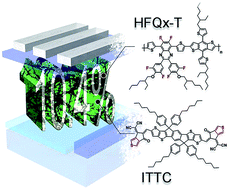
We synthesize a new small molecular acceptor, ITTC, and when it is blended with a hexafluoroquinoxaline based polymer donor HFQx-T, the devices deliver an impressive PCE of 10.4%.
The content of this RSS Feed (c) The Royal Society of Chemistry
10 May 00:36
by Ting Hu, Tim Becker, Neda Pourdavoud, Jie Zhao, Kai Oliver Brinkmann, Ralf Heiderhoff, Tobias Gahlmann, Zengqi Huang, Selina Olthof, Klaus Meerholz, Daniel Többens, Baochang Cheng, Yiwang Chen, Thomas Riedl
Corrosive precursors used for the preparation of organic–inorganic hybrid perovskite photoactive layers prevent the application of ultrathin metal layers as semitransparent bottom electrodes in perovskite solar cells (PVSCs). This study introduces tin-oxide (SnOx) grown by atomic layer deposition (ALD), whose outstanding permeation barrier properties enable the design of an indium-tin-oxide (ITO)-free semitransparent bottom electrode (SnOx/Ag or Cu/SnOx), in which the metal is efficiently protected against corrosion. Simultaneously, SnOx functions as an electron extraction layer. We unravel the spontaneous formation of a PbI2 interfacial layer between SnOx and the CH3NH3PbI3 perovskite. An interface dipole between SnOx and this PbI2 layer is found, which depends on the oxidant (water, ozone, or oxygen plasma) used for the ALD growth of SnOx. An electron extraction barrier between perovskite and PbI2 is identified, which is the lowest in devices based on SnOx grown with ozone. The resulting PVSCs are hysteresis-free with a stable power conversion efficiency (PCE) of 15.3% and a remarkably high open circuit voltage of 1.17 V. The ITO-free analogues still achieve a high PCE of 11%.

Corrosive precursors used to prepare organo-metal-halide perovskite photoactive layers usually prevent the application of ultrathin metal layers in semitransparent bottom electrodes. A tin-oxide/metal/tin-oxide electrode is introduced, where the ultrathin metal layer is shielded by impermeable tin-oxide (SnOx) grown by atomic layer deposition. The SnOx concomitantly functions as an electron extraction layer that affords a high open-circuit voltage of 1.17 V.