31 Jul 00:28
J. Mater. Chem. A, 2017, 5,12015-12021
DOI: 10.1039/C7TA03316H, Communication
Meng Wang, Dongdong Cai, Jingming Xin, Wei Ma, Qisheng Tu, Qingdong Zheng
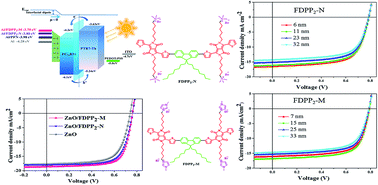
The best performance copolymer exhibits a power conversion efficiency of 9.08%, representing the highest value for ternary conjugated D-A copolymers.
The content of this RSS Feed (c) The Royal Society of Chemistry
31 Jul 00:28
J. Mater. Chem. A, 2017, 5,13639-13647
DOI: 10.1039/C7TA04225F, Paper
Stefano Pisoni, Fan Fu, Thomas Feurer, Mohammed Makha, Benjamin Bissig, Shiro Nishiwaki, Ayodhya N. Tiwari, Stephan Buecheler
An 18.2% efficient flexible perovskite/CIGS tandem device is developed using a flexible CIGS encapsulating front sheet as a substrate for perovskite top cells.
The content of this RSS Feed (c) The Royal Society of Chemistry
31 Jul 00:27
J. Mater. Chem. A, 2017, 5,12699-12717
DOI: 10.1039/C7TA03521G, Review Article
Wu-Qiang Wu, Hao-Lin Feng, Hong-Yan Chen, Dai-Bin Kuang, Cheng-Yong Su
This review article highlights recent progress in three-dimensional hierarchical TiO2 nanotree array-based high-performance solar cells.
The content of this RSS Feed (c) The Royal Society of Chemistry
31 Jul 00:26
J. Mater. Chem. A, 2017, 5,12034-12042
DOI: 10.1039/C7TA02937C, Communication
Rundong Fan, Ligang Wang, Yihua Chen, Guanhaojie Zheng, Liang Li, Ziliang Li, Huanping Zhou
Tailored Au@TiO2 nanostructures successfully enhance the efficiency of planar perovskite solar cells.
The content of this RSS Feed (c) The Royal Society of Chemistry
31 Jul 00:25
J. Mater. Chem. A, 2017, 5,11949-11959
DOI: 10.1039/C7TA01190C, Paper
Jiangbin Zhang, Andreas C. Jakowetz, Guangru Li, Dawei Di, S. Matthew Menke, Akshay Rao, Richard H. Friend, Artem A. Bakulin
Using temperature-dependent optical-control spectroscopy, we show that the binding energy of localised charge-transfer state is about 90 meV in a range of organic photovoltaic systems.
The content of this RSS Feed (c) The Royal Society of Chemistry
31 Jul 00:25
J. Mater. Chem. A, 2017, 5,13807-13816
DOI: 10.1039/C7TA02444D, Paper
Guodong Xu, Liang Gao, Haitao Xu, Liqiang Huang, Yuanpeng Xie, Xiaofang Cheng, Yongfang Li, Lie Chen, Yiwang Chen
These two small conjugated electrolytes with self-doping effect and thick-insensitivity (>30 nm), a notable PCE of 10.2%.
The content of this RSS Feed (c) The Royal Society of Chemistry
30 Jul 08:44
by Bohee Hwang, Jang-Sik Lee
The demand for high memory density has increased due to increasing needs of information storage, such as big data processing and the Internet of Things. Organic–inorganic perovskite materials that show nonvolatile resistive switching memory properties have potential applications as the resistive switching layer for next-generation memory devices, but, for practical applications, these materials should be utilized in high-density data-storage devices. Here, nanoscale memory devices are fabricated by sequential vapor deposition of organolead halide perovskite (OHP) CH3NH3PbI3 layers on wafers perforated with 250 nm via-holes. These devices have bipolar resistive switching properties, and show low-voltage operation, fast switching speed (200 ns), good endurance, and data-retention time >105 s. Moreover, the use of sequential vapor deposition is extended to deposit CH3NH3PbI3 as the memory element in a cross-point array structure. This method to fabricate high-density memory devices could be used for memory cells that occupy large areas, and to overcome the scaling limit of existing methods; it also presents a way to use OHPs to increase memory storage capacity.

Utilizing sequential vapor deposition, a CH3NH3PbI3-based nanoscale memory device that uses 250 nm via-hole structures and a CH3NH3PbI3-based cross-point array structure is demonstrated. The CH3NH3PbI3-based nanoscale resistive switching random access memory (ReRAM) shows fast switching speed, low operation voltage, good endurance, and long data retention. The proposed method paves the way for fabricating organic–inorganic perovskite-based nanoscale memories with complementary metal-oxide semiconductor (CMOS) compatibility.
10 Jul 07:57
by Hailin Cong, Dongwei Han, Bingbing Sun, Dongying Zhou, Chen Wang, Ping Liu and Lai Feng

ACS Applied Materials & Interfaces
DOI: 10.1021/acsami.7b02164

10 Jul 07:53
by Tengling Ye, Junhai Wang, Wenbo Chen, Yulin Yang and Dongqing He

ACS Applied Materials & Interfaces
DOI: 10.1021/acsami.7b02969

10 Jul 07:47
by Muhammad Talha Masood, Christian Weinberger, Jawad Sarfraz, Emil Rosqvist, Simon Sandén, Oskar J. Sandberg, Paola Vivo, Ghufran Hashmi, Peter D. Lund, Ronald Österbacka and Jan-Henrik Smått

ACS Applied Materials & Interfaces
DOI: 10.1021/acsami.7b02868

10 Jul 07:47
by Dong Hun Sin, Sae Byeok Jo, Seung Goo Lee, Hyomin Ko, Min Kim, Hansol Lee and Kilwon Cho

ACS Applied Materials & Interfaces
DOI: 10.1021/acsami.7b02349

10 Jul 07:46
by Ting Yu, Xiaopeng Xu, Ying Li, Zuojia Li and Qiang Peng

ACS Applied Materials & Interfaces
DOI: 10.1021/acsami.7b04496

10 Jul 07:46
by Jeremy W. Ward, Hannah L. Smith, Andrew Zeidell, Peter J. Diemer, Stephen R. Baker, Hyunsu Lee, Marcia M. Payne, John E. Anthony, Martin Guthold and Oana D. Jurchescu

ACS Applied Materials & Interfaces
DOI: 10.1021/acsami.7b03232

10 Jul 07:43
by Collins Nganou, Gerhard Lackner, Bezu Teschome, M. Jamal Deen, Noam Adir, David Pouhe, Doru C. Lupascu and Martin Mkandawire

ACS Applied Materials & Interfaces
DOI: 10.1021/acsami.7b04028

03 Jul 02:43
by Shi Tang, Yehao Deng, Xiaopeng Zheng, Yang Bai, Yanjun Fang, Qingfeng Dong, Haotong Wei, Jinsong Huang
Organic–inorganic halide perovskite (OIHP) solar cells with efficiency over 18% power conversion efficiency (PCE) have been widely achieved with lab scale spin-coating method which is however not scalable for the fabrication of large area solar panels. The PCEs of OIHP solar cells made by scalable deposition methods, such as doctor-blading or slot-die coating, have been lagging far behind than spin-coated devices. In this study the authors report composition engineering in doctor-bladed OIHP solar cells with p–i–n planar heterojunction structure to enhance their efficiency. Phase purer OIHP thin films are obtained by incorporating a small amount of cesium (Cs+) and bromine (Br−) ions into perovskite precursor solution, which also reduces the required film formation temperature. Pinhole free OIHP thin films with micrometer-sized grains have been obtained assisted by a secondary grain growth with added methylammonium chloride into the precursor solution. The OIHP solar cells using these bladed thin films achieved PCEs over 19.0%, with the best stabilized PCE reaching 19.3%. This represents a significant step toward scalable manufacture of OIHP solar cells.

By tuning the composition of precursor solution high phase purity, perovskite thin films are obtained at a temperature of 120 °C via doctor-blading, and over 19% power conversion efficiencies are achieved in inverted p–i–n structured perovskite solar cells.
03 Jul 02:42
by Jianfeng Lu, Liangcong Jiang, Wei Li, Feng Li, Narendra K. Pai, Andrew D. Scully, Cheng-Min Tsai, Udo Bach, Alexandr N. Simonov, Yi-Bing Cheng, Leone Spiccia
Remarkable power conversion efficiencies (PCE) of metal–halide perovskite solar cells (PSCs) are overshadowed by concerns about their ultimate stability, which is arguably the prime obstacle to commercialization of this promising technology. Herein, the problem is addressed by introducing ethane-1,2-diammonium (+NH3(CH2)2NH3+, EDA2+) cations into the methyl ammonium (CH3NH3+, MA+) lead iodide perovskite, which enables, inter alia, systematic tuning of the morphology, electronic structure, light absorption, and photoluminescence properties of the perovskite films. Incorporation of <5 mol% EDA2+ induces strain in the perovskite crystal structure with no new phase formed. With 0.8 mol% EDA2+, PCE of the MAPbI3-based PSCs (aperture of 0.16 cm2) improves from 16.7% ± 0.6% to 17.9% ± 0.4% under 1 sun irradiation, and fabrication of larger area devices (aperture 1.04 cm2) with a certified PCE of 15.2% ± 0.5% is demonstrated. Most importantly, EDA2+/MA+-based solar cells retain 75% of the initial performance after 72 h of continuous operation at 50% relative humidity and 50 °C under 1 sun illumination, whereas the MAPbI3 devices degrade by approximately 90% within only 15 h. This substantial improvement in stability is attributed to the steric and coulombic interactions of embedded EDA2+ in the perovskite structure.

Mixed organic cation lead–halide perovskite solar cells demonstrate remarkably improved stability while maintaining high efficiency. Incorporation of low concentrations of ethylenediammonium into CH3NH3PbI3 perovskite enables fabrication of planar solar cells with up to 18.6% power conversion efficiency that retain 75% of their performance after 72 h of continuous operation under 1 sun irradiation at 50 °C and 50% relative humidity.
03 Jul 02:41
by Frank-Julian Kahle, Christina Saller, Anna Köhler, Peter Strohriegl
Organic solar cells (OSCs) have achieved much attention and meanwhile reach efficiencies above 10%. One problem yet to be solved is the lack of long term stability. Crosslinking is presented as a tool to increase the stability of OSCs. A number of materials used for the crosslinking of bulk heterojunction cells are presented. These include the crosslinking of low bandgap polymers used as donors in bulk heterojunction cells, as well as the crosslinking of fullerene acceptors and crosslinking between donor and acceptor. External crosslinkers often based on multifunctional azides are also discussed. In the second part, some work either leading to OSCs with high efficiencies or giving insight into the chemistry and physics of crosslinking are highlighted. The diffusion of low molar mass fullerenes in a crosslinked matrix of a conjugated polymer and the influence of crosslinking on the carrier mobility is discussed. Finally, the use of crosslinking to make stable interlayers and the solution processing of multilayer OSCs are discussed in addition to presentation of a novel approach to stabilize nanoimprinted patterns for OSCs by crosslinking.

Three promising applications of crosslinking in organic solar cells are reviewed. Most importantly, crosslinking is used to stabilize the blend morphology in bulk heterojunction solar cells. In addition, stable interlayers can be formed and crosslinking enables solution processing of multilayer devices. A third possibility is the stabilization of nanoimprinted patterns in the active layers.
03 Jul 02:41
by Taewoo Jeon, Sung Jin Kim, Jisun Yoon, Jinwoo Byun, Hye Rim Hong, Tae-Woo Lee, Ji-Seon Kim, Byungha Shin, Sang Ouk Kim
Abstract
Outstanding material properties of organic-inorganic hybrid perovskites have triggered a new insight into the next-generation solar cells. Beyond solar cells, a wide range of controllable properties of hybrid perovskites, particularly depending on crystal growth conditions, enables versatile high-performance optoelectronic devices such as light-emitting diodes, photodetectors, and lasers. This article highlights recent progress in the crystallization strategies of organic–inorganic hybrid perovskites for use as effective light harvesters or light emitters. Fundamental background on perovskite crystalline structures and relevant optoelectronic properties such as optical band-gap, electron-hole behavior, and energy band alignment are given. A detailed overview of the effective crystallization methods for perovskites, including thermal treatment, additives, solvent mediator, laser irradiation, nanostructure, and crystal dimensionalityis reported offering a comprehensive correlation among perovskite processing conditions, crystalline morphology, and relevant device performance. Finally, future research directions to overcome current practical bottlenecks and move towards reliable high performance perovskite optoelectronic applications are proposed.

Organic–inorganic hybrid perovskite is a promising material for next-generation optoelectronic devices. A wide range of optoelectronic properties of perovskite are controllable for target applications using effective crystal growth. Recent progress in perovskite optoelectronics is highlighted, focusing particularly on solar cells and light-emitting diodes, as well as crystallization strategies for light harvesting and light emitting.
03 Jul 02:40
by Jens Niklas, Oleg G. Poluektov

After light excitation of OPV blends, the exciton splits at a polymer-fullerene interface forming positive and negative polaron, each of which carries one unpaired electron spin. EPR techniques allow to study polarons' electronic structure and dynamics of charge separation and recombination by probing selectively charge transfer and triplet states. This is reviewed by Jens Niklas and Oleg G. Poluektov in article number 1602226.
03 Jul 02:40
by Silvia Collavini, Juan Luis Delgado

The use of carbon nanoforms for the preparation of photovoltaic devices is currently a hot topic in scientific research. Their suitability for photovoltaic applications is addressed by Nazario Martín in article number 1601102. The current state-of-the-art on the utilization of carbon nanoforms for pervoskite solar cells is addressed by Juan Luis Delgado and Silvia Collavini in article number 1601000.
03 Jul 02:39
by Jiawei Liu, Yujin Ji, Yuqiang Liu, Zhouhui Xia, Yujie Han, Youyong Li, Baoquan Sun
Abstract
Organic conjugated molecule/silicon (Si) heterojunction has been widely investigated to build up an asymmetrical heterocontact for efficient photovoltaics. However, it is still unclear how the organic molecular structures can affect their electronic coupling interaction with Si. Here, two widely explored electron acceptors of poly{[N,N′-bis(2-octyldodecyl)-naphthalene-1,4,5,8-bis(dicarboximide)-2,6-diyl]-alt-5,5′-(2,2′-bithiophene)} (N2200) and [6,6]-phenyl-C61-butyric acid methyl ester (PCBM) are used to build up asymmetrical Si heterocontact to investigate their electronic coupling interaction. It is found that PCBM displays different electronic coupling with Si from N2200, which is ascribed to their various physical distance with Si based on a systematic and detailed density functional theory calculation. Organic layer incorporation not only suppresses the surface charge recombination velocity but also leads to an Ohmic contact between Si and Al. Therefore, a doping-free organic/Si heterojunction photovoltaic with a power conversion efficiency of 14.9% is achieved with PCBM layer. This work discloses a key factor affecting organic/Si electronic coupling interaction, which helps build up high quality Si heterocontact for solar cells and other optoelectronic devices. Furthermore, the simplified heterocontact achieved by a low temperature, solution processed, and lithography-free steps has a dramatic improvement on conventional diffusion doped-silicon one at high temperature.

A dopant-free organic/silicon heterocontact for electron and hole selectively collected by [6, 6]-phenyl-C61-butyric acid methyl ester and (3,4-ethylenedioxythiophene):poly(styrenesulfonate) in a solar cell is developed and implemented by a simple solution deposition process at a low temperature (<150 °C), respectively. It is found that the physical distance between organic and silicon plays a key role on their electronic coupling.
03 Jul 02:39
by Irina Anusca, Sergejus Balčiūnas, Pascale Gemeiner, Šarūnas Svirskas, Mehmet Sanlialp, Gerhard Lackner, Christian Fettkenhauer, Jaroslavas Belovickis, Vytautas Samulionis, Maksim Ivanov, Brahim Dkhil, Juras Banys, Vladimir V. Shvartsman, Doru C. Lupascu
Abstract
Due to the unprecedented rapid increase of their power conversion efficiency, hybrid organic–inorganic perovskites CH3NH3PbX3 (X = I, Br, Cl) can potentially revolutionize the world of solar cells. However, despite tremendous research activity, the origin of the exceptionally large diffusion length of their photogenerated charge carriers, that is, their low recombination rate, remains elusive. Using frequency and temperature-dependent dielectric measurements across the entire frequency spectrum, it is shown that the dielectric constant conserves very high values (>27) for frequencies below 1 THz in all three halides. This efficiently prevents photocarrier trapping and their recombination owing to the strong screening of charged entities. By combining ultrasonic and Raman spectroscopy with dielectric analysis, similarly large contributions to the dielectric constant are attributed to the dipolar disorder of the CH3NH3
+ cations as well as lattice dynamics in the gigahertz range yielding dielectric constants of εstat = 62 for the iodide, 58 for the bromide, and about 45 for the chloride below 1 GHz at room temperature. Disorder continuously reduces for decreasing temperature. Dipole dynamics prevail in the intermediate tetragonal phase. The low-temperature orthorhombic state is antipolar. No indications of ferroelectricity are found.

Charge carrier screening in the methylammonium lead halides is the major mechanism assuring long charge carrier lifetime. The high dielectric response is shown to stem from lattice as well as dipole orientation contributions both acting independently at different frequencies. The resulting screening is more effective than a single mechanism and acts on electronic carriers as well as charged defects.
02 Jul 13:49
by Weiming Qiu, Aniruddha Ray, Manoj Jaysankar, Tamara Merckx, Joao P. Bastos, David Cheyns, Robert Gehlhaar, Jef Poortmans, Paul Heremans
The fabrication of high-quality cesium (Cs)/formamidinium (FA) double-cation perovskite films through a two-step interdiffusion method is reported. CsxFA1-xPbI3-y(1-x)Bry(1-x) films with different compositions are achieved by controlling the amount of CsI and formamidinium bromide (FABr) in the respective precursor solutions. The effects of incorporating Cs+ and Br− on the properties of the resulting perovskite films and on the performance of the corresponding perovskite solar cells are systematically studied. Small area perovskite solar cells with a power conversion efficiency (PCE) of 19.3% and a perovskite module (4 cm2) with an aperture PCE of 16.4%, using the Cs/FA double cation perovskite made with 10 mol% CsI and 15 mol% FABr (Cs0.1FA0.9PbI2.865Br0.135) are achieved. The Cs/FA double cation perovskites show negligible degradation after annealing at 85 °C for 336 h, outperforming the perovskite materials containing methylammonium (MA).

A modified two-step interdiffusion method is developed to fabricate high-quality cesium/formamidinium double cation perovskites with various compositions that have superior intrinsic thermal stability than those with methylammonium cation. Perovskite solar cells and modules based on Cs0.1FA0.9PbI2.865Br0.135 show the highest power conversion efficiency of 19.3% and 16.4%, respectively, in a planar structure.
02 Jul 13:41
by Bin Yang, Chance C. Brown, Jingsong Huang, Liam Collins, Xiahan Sang, Raymond R. Unocic, Stephen Jesse, Sergei V. Kalinin, Alex Belianinov, Jacek Jakowski, David B. Geohegan, Bobby G. Sumpter, Kai Xiao, Olga S. Ovchinnikova
Ionicity plays an important role in determining material properties, as well as optoelectronic performance of organometallic trihalide perovskites (OTPs). Ion migration in OTP films has recently been under intensive investigation by various scanning probe microscopy (SPM) techniques. However, controversial findings regarding the role of grain boundaries (GBs) associated with ion migration are often encountered, likely as a result of feedback errors and topographic effects common in to SPM. In this work, electron microscopy and spectroscopy (scanning transmission electron microscopy/electron energy loss spectroscopy) are combined with a novel, open-loop, band-excitation, (contact) Kelvin probe force microscopy (BE-KPFM and BE-cKPFM), in conjunction with ab initio molecular dynamics simulations to examine the ion behavior in the GBs of CH3NH3PbI3 perovskite films. This combination of diverse techniques provides a deeper understanding of the differences between ion migration within GBs and interior grains in OTP films. This work demonstrates that ion migration can be significantly enhanced by introducing additional mobile Cl− ions into GBs. The enhancement of ion migration may serve as the first step toward the development of high-performance electrically and optically tunable memristors and synaptic devices.

By combining a novel, open-loop, band-excitation, contact Kelvin probe force microscopy, in conjunction with ab initio molecular dynamics simulations, it is demonstrated that ion migration can be significantly enhanced by introducing additional mobile chloride ions into grain boundaries of CH3NH3PbI3 perovskite films. This may serve as the first step toward the development of high-performance electrically and optically tunable memristors and synaptic devices.
02 Jul 13:40
by Kakaraparthi Kranthiraja, Seonha Kim, Changyeon Lee, Kumarasamy Gunasekar, Vijaya Gopalan Sree, Bhoj Gautam, Kenan Gundogdu, Sung-Ho Jin, Bumjoon J. Kim
The performance of all-polymer solar cells (all-PSCs) is often limited by the poor exciton dissociation process. Here, the design of a series of polymer donors (P1–P3) with different numbers of fluorine atoms on their backbone is presented and the influence of fluorination on charge generation in all-PSCs is investigated. Sequential fluorination of the polymer backbones increases the dipole moment difference between the ground and excited states (Δµge) from P1 (18.40 D) to P2 (25.11 D) and to P3 (28.47 D). The large Δµge of P3 leads to efficient exciton dissociation with greatly suppressed charge recombination in P3-based all-PSCs. Additionally, the fluorination lowers the highest occupied molecular orbital energy level of P3 and P2, leading to higher open-circuit voltage (VOC). The power conversion efficiency of the P3-based all-PSCs (6.42%) outperforms those of the P2 and P1 (5.00% and 2.65%)-based devices. The reduced charge recombination and the enhanced polymer exciton lifetime in P3-based all-PSCs are confirmed by the measurements of light-intensity dependent short-circuit current density (JSC) and VOC, and time-resolved photoluminescence. The results provide reciprocal understanding of the charge generation process associated with Δµge in all-PSCs and suggest an effective strategy for designing π-conjugated polymers for high performance all-PSCs.

An efficient approach for achieving high-performance all-polymer solar cells (all-PSCs) is demonstrated by controlling the dipole moment of polymers (P1–P3) via sequential fluorination on polymer backbones. P3-based all-PSCs with large dipole moments produce a greatly enhanced power conversion efficiency of 6.42%, which is well-correlated with efficient charge generation including improved exciton dissociation efficiency, reduced charge recombination, and enhanced lifetime of excitons.
02 Jul 13:40
by Ting Yu, Xiaopeng Xu, Guangjun Zhang, Jiahui Wan, Ying Li, Qiang Peng
Two novel wide bandgap copolymers based on quinoxalino[6,5-f]quinoxaline (NQx) acceptor block, PBDT–NQx and PBDTS–NQx, are successfully synthesized for efficient nonfullerene polymer solar cells (PSCs). The attached conjugated side chains on both benzodithiophene (BDT) and NQx endow the resulting copolymers with low-lying highest occupied molecular orbital (HOMO) levels. The sulfur atom insertion further reduces the HOMO level of PBDTS–NQx to −5.31 eV, contributing to a high open-circuit voltage, Voc, of 0.91 V. Conjugated n-octylthienyl side chains attached on the NQx skeletons also significantly improve the π–π* transitions and optical absorptions of the copolymers in the region of short wavelengths, which induce a good complementary absorption when blending with the low bandgap small molecular acceptor of 3,9-bis(2-methylene-(3-(1,1-dicyanomethylene)-indanone))-5,5,11,11-tetrakis(4-hexylphenyl)-dithieno[2,3-d:2′,3′-d′]-s-indaceno[1,2-b:5,6-b′]dithiophene. The wide absorption range makes the active blends absorb more photons, giving rise to a high short-circuit current density, Jsc, value of 15.62 mA cm−2. The sulfur atom insertion also enhances the crystallinity of PBDTS–NQx and presents its blend film with a favorable nanophase separation, resulting in improved Jsc and fill factor (FF) values with a high power conversion efficiency of 11.47%. This work not only provides a new fused ring acceptor block (NQx) for constructing high-performance wide bandgap copolymers but also provides the NQx-based copolymers for achieving highly efficient nonfullerene PSCs.

Two novel wide bandgap copolymers based on quinoxalino[6,5-f]quinoxaline (NQx) acceptor block, PBDT–NQx and PBDTS–NQx, are successfully synthesized for efficient nonfullerene polymer solar cells. These new polymers exhibit high absorption at short wavelength, matching well with low bandgap acceptors, and have deep highest occupied molecular orbital (HOMO) levels, allowing their use in highly efficient nonfullerene solar cells with up to 11.47% power conversion efficiency.
29 Jun 00:20
Energy Environ. Sci., 2017, 10,1530-1539
DOI: 10.1039/C7EE00899F, Paper
Martin Stolterfoht, Christian M. Wolff, Yohai Amir, Andreas Paulke, Lorena Perdigon-Toro, Pietro Caprioglio, Dieter Neher
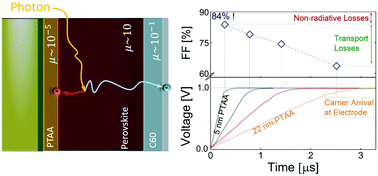
High fill factor, large area perovskite solar cells are realized with undoped organic transport layers by optimizing the charge carrier transit through PTAA.
The content of this RSS Feed (c) The Royal Society of Chemistry

15 Jun 01:25
by David P. McMeekin, Zhiping Wang, Waqaas Rehman, Federico Pulvirenti, Jay B. Patel, Nakita K. Noel, Michael B. Johnston, Seth R. Marder, Laura M. Herz, Henry J. Snaith
The meteoric rise of the field of perovskite solar cells has been fueled by the ease with which a wide range of high-quality materials can be fabricated via simple solution processing methods. However, to date, little effort has been devoted to understanding the precursor solutions, and the role of additives such as hydrohalic acids upon film crystallization and final optoelectronic quality. Here, a direct link between the colloids concentration present in the [HC(NH2)2]0.83Cs0.17Pb(Br0.2I0.8)3 precursor solution and the nucleation and growth stages of the thin film formation is established. Using dynamic light scattering analysis, the dissolution of colloids over a time span triggered by the addition of hydrohalic acids is monitored. These colloids appear to provide nucleation sites for the perovskite crystallization, which critically impacts morphology, crystal quality, and optoelectronic properties. Via 2D X-ray diffraction, highly ordered and textured crystals for films prepared from solutions with lower colloidal concentrations are observed. This increase in material quality allows for a reduction in microstrain along with a twofold increase in charge-carrier mobilities leading to values exceeding 20 cm2 V−1 s−1. Using a solution with an optimized colloidal concentration, devices that reach current–voltage measured power conversion efficiency of 18.8% and stabilized efficiency of 17.9% are fabricated.

The dissolution of colloids that are present in the formamidinium–cesium perovskite ([HC(NH2)2]0.83Cs0.17Pb(Br0.2I0.8)3) precursor solution is triggered with the addition of hydrohalic acids. Dynamic light scattering intensity measurement shows the gradual dissolution of these colloids over a period of time. These colloids impact the morphology, crystal quality, and optoelectronic properties of the perovskite, leading to improvements in solar-cell efficiency.
08 Jun 00:48
by Yang Wang, Xueqin Liu, Zhen Li, Ya Cao, Yinchang Li, Xupo Liu, Songru Jia, Yanli Zhao
Achieving efficient charge transport is a great challenge in nanostructured TiO2-electrode-based photoelectrochemical cells. Inspired by excellent directional charge transport and the well-known electroconductibility of 1D anatase TiO2 nanostructured materials and graphene, respectively, planting ordered, single-crystalline anatase TiO2 nanorod clusters on graphene sheets (rGO/ATRCs) via a facial one-pot solvothermal method is reported. The hierarchical rGO/ATRCs nanostructure can serve as an efficient light-harvesting electrode for dye-sensitized solar cells. In addition, the obtained high-crystallinity anatase TiO2 nanorods in rGO/ATRCs possess a lower density of trap states, thus facilitating diffusion-driven charge transport and suppressing electron recombination. Moreover, the novel architecture significantly enhances the trap-free charge diffusion coefficient, which contributes to superior electron mobility properties. By virtue of more efficient charge transport and higher energy conversion efficiency, the rGO/ATRCs developed in this work show significant advantages over conventional rGO–TiO2 nanoparticle counterparts in photoelectrochemical cells.

Aligned single-crystalline anatase-TiO2-nanorod-cluster–graphene architectures (rGO/ATRCs) are developed via a shape-controlled, one-step solvothermal route. The application of rGO/ATRCs in photoelectrochemical solar cells shows remarkably enhanced performance over conventional nanoparticle–graphene hybrids. The nanostructural design and materials characteristics accelerate the charge transport collaboratively.
08 Jun 00:45
by Senyun Ye, Haixia Rao, Ziran Zhao, Linjuan Zhang, Hongliang Bao, Weihai Sun, Yunlong Li, Feidan Gu, Jianqiang Wang, Zhiwei Liu, Zuqiang Bian and Chunhui Huang

Journal of the American Chemical Society
DOI: 10.1021/jacs.7b01439