14 Aug 23:56
J. Mater. Chem. A, 2017, 5,18716-18724
DOI: 10.1039/C7TA05481E, Paper
Yunseong Choi, Junghyun Lee, Jihyung Seo, Seungon Jung, Ungsoo Kim, Hyesung Park
The effect of the graphene integration process on the performance of graphene/silicon-based Schottky junction solar cells is investigated.
The content of this RSS Feed (c) The Royal Society of Chemistry
08 Aug 00:59
by Jaehoon Ryu, Kisu Lee, Juyoung Yun, Haejun Yu, Jungsup Lee, Jyongsik Jang
Paintable carbon electrode-based perovskite solar cells (PSCs) are of particular interest due to their material and fabrication process costs, as well as their moisture stability. However, printing the carbon paste on the perovskite layer limits the quality of the interface between the perovskite layer and carbon electrode. Herein, an attempt to enhance the performance of the paintable carbon-based PSCs is made using a modified solvent dripping method that involves dripping of the carbon nanotubes (CNTs), which is dispersed in chlorobenzene solution. This method allows CNTs to penetrate into both the perovskite film and carbon electrode, facilitating fast hole transport between the two layers. Furthermore, this method is results in increased open circuit voltage (Voc) and fill factor (FF), providing better contact at the perovskite/carbon interfaces. The best devices made with CNT dripping show 13.57% power conversion efficiency and hysteresis-free performance.

A novel approach for efficient carbon-based perovskite solar cells is explored using a modified solvent engineering method, which involves dripping of carbon nanotubes (CNT)-dispersed in a chlorobenzene solution, while spin-coating a perovskite precursor solution. This method resolves the intrinsically low-quality of the perovskite/carbon interface. In addition, the CNTs act as pathways for fast hole extraction to the carbon electrode.
08 Aug 00:57
by Yao Liu, Lawrence A. Renna, Hilary B. Thompson, Zachariah A. Page, Todd Emrick, Michael D. Barnes, Monojit Bag, D. Venkataraman, Thomas P. Russell
Abstract
Hybrid organic/inorganic perovskite solar cells are invigorating the photovoltaic community due to their remarkable properties and efficiency. However, many perovskite solar cells show an undesirable current–voltage (I–V) hysteresis in their forward and reverse voltage scans, working to the detriment of device characterization and performance. This hysteresis likely arises from slow ion migration in the bulk perovskite active layer to interfaces which may induce charge trapping. It is shown that interfacial chemistry between the perovskite and charge transport layer plays a critical role in ion transport and I–V hysteresis in perovskite-based devices. Specifically, phenylene vinylene polymers containing cationic, zwitterionic, or anionic pendent groups are utilized to fabricate charge transport layers with specific interfacial ionic functionalities. The interfacial-adsorbing boundary induced by the zwitterionic polymer in contact with the perovskite increases the local ion concentration, which is responsible for the observed I–V hysteresis. Moreover, the ion adsorbing properties of this interface are exploited for perovskite-based memristors. This fundamental study of I–V hysteresis in perovskite-based devices introduces a new mechanism for inducing memristor behavior by interfacial ion adsorption.

Ion migration at perovskite interfaces is investigated by varying the interface with cationic, anionic, and zwitterionic functionalities. The zwitterionic polymer interlayer generates an adsorbing boundary at the interface, increasing the local ion concentration, causing current–voltage (I–V) hysteresis in perovskite-based devices. This fundamental study of perovskite I–V hysteresis introduces a new mechanism for device memristor behavior by interfacial ion adsorption.
08 Aug 00:57
by Ying-Chiao Wang, Xiaodong Li, Liping Zhu, Xiaohui Liu, Wenjun Zhang, Junfeng Fang
Abstract
Fullerene derivatives, which possess extraordinary geometric shapes and high electron affinity, have attracted significant attention for thin film technologies. This study demonstrates an important photovoltaic application using carboxyl-functionalized carbon buckyballs, C60 pyrrolidine tris-acid (CPTA), to fabricate electron transport layers (ETLs) that replace traditional metal oxide-based ETLs in efficient and stable n-i-p-structured planar perovskite solar cells (PSCs). The uniform CPTA film is covalently anchored onto the surface of indium tin oxide (ITO), significantly suppressing hysteresis and enhancing the flexural strength in the CPTA-modified PSCs. Moreover, solution-processable CPTA-based ETLs also enable the fabrication of lightweight flexible PSCs. The maximum-performing device structures composed of ITO/CPTA/CH3NH3PbI3/2,2′,7,7′-tetrakis-(N,N-di-p-methoxyphenylamine)-9,9′-spirobifluorene (spiro-OMeTAD)/Au yield power conversion efficiencies of more than 18% on glass substrates and up to 17% on flexible substrates. These results indicate that the CPTA layers provide new opportunities for solution-processed organic ETLs by substantially simplifying the procedure for fabricating PSCs for portable applications.

A low-temperature and solution-processed polar C60 pyrrolidine tris-acid (CPTA) electron transport layer (ETL) with conformal morphology, deposited on an indium tin oxide surface through an esterification step, is used to produce hysteresis-free, bendable, and durable perovskite solar cells. Our results suggest that CPTA is a promising candidate to replace metal oxides and shed light on employing these easily fabricated ETLs in other portable photovoltaic technologies.
08 Aug 00:55
by Xiaoli Zhang, He Liu, Weigao Wang, Jinbao Zhang, Bing Xu, Ke Lin Karen, Yuanjin Zheng, Sheng Liu, Shuming Chen, Kai Wang, Xiao Wei Sun
08 Aug 00:55
by Xiuwen Zhang, Leonardo B. Abdalla, Qihang Liu, Alex Zunger
Stable oxide topological insulators (TIs) have been sought for years, but none have been found; whereas heavier (selenides, tellurides) chalcogenides can be TIs. The basic contradiction between topological insulation and thermodynamic stability is pointed out, offering a narrow window of opportunity. The electronic motif is first identified and can achieve topological band inversion in ABO3 as a lone-pair, electron-rich B atom (e.g., Te, I, Bi) at the octahedral site. Then, twelve ABO3 compounds are designed in the assumed cubic perovskite structure, which satisfy this electronic motif and are indeed found by density function theory calculations to be TIs. Next, it is illustrated that poorly screened ionic oxides with large inversion energies undergo energy-lowering atomic distortions that destabilize the cubic TI phase and remove band inversion. The coexistence windows of topological band inversion and structure stability can nevertheless be expanded under moderate pressures (15 and 35 GPa, respectively, for BaTeO3 and RbIO3). This study traces the principles needed to design stable oxide topological insulators at ambient pressures as a) a search for oxides with small inversion energies; b) design of large inversion-energy oxide TIs that can be stabilized by pressure; and c) a search for covalent oxides where TI-removing atomic displacements can be effectively screened out.

ABO3 perovskites where B is an electron-rich element would be topological insulators if the cubic structure could be stabilized. But in such band-inverted topological insulators, depopulation of bonding valence states and occupation of antibonding conduction states raises the energy, leading, in some cases, to structural distortions that are poorly shielded in oxides. In the distorted structure the band inversion is reversed.
08 Aug 00:54
by Sang Woo Kim, Joonhyeong Choi, Thi Thu Trang Bui, Changyeon Lee, Changsoon Cho, Kwangmin Na, Jihye Jung, Chang Eun Song, Biwu Ma, Jung-Yong Lee, Won Suk Shin, Bumjoon J. Kim
Most of the high-performance all-polymer solar cells (all-PSCs) reported to date are based on polymer donor and polymer acceptor pairs with largely overlapped light absorption properties, which seriously limits the efficiency of all-PSCs. This study reports the development of a series of random copolymer donors possessing complementary light absorption with the naphthalenediimide-based polymer acceptor P(NDI2HD-T2) for highly efficient all-PSCs. By controlling the molar ratio of the electron-rich benzodithiophene (BDTT) and electron-deficient fluorinated-thienothiophene (TT-F) units, a series of polymer donors with BDTT:TT-F ratios of 1:1 (P1), 3:1 (P2), 5:1 (P3), and 7:1 (P4) are prepared. The synthetic control of polymer composition allows for precise tuning of the light absorption properties of these new polymer donors, enabling optimization of light absorption properties to complement those of the P(NDI2HD-T2) acceptor. Copolymer P1 is found to be the optimal polymer donor for the fullerene-based solar cells due to its high light absorption, whereas the highest power conversion efficiency of 6.81% is achieved for the all-PSCs with P3, which has the most complementary light absorption with P(NDI2HD-T2).

A series of poly(benzodithiophene-r-fluorinated-thienothiophene) [P(BDTT-r-TT-F)] random copolymers with tunable light absorption characteristics are developed by controlling the ratios of electron-rich BDTT and electron-deficient TT-F units. All-polymer solar cells (all-PSCs) fabricated from these polymer donors and the P(NDI2HD-T2) acceptor achieve efficiencies of up to 6.8% by optimizing the complementary light absorption of the polymer donor and acceptor.
08 Aug 00:53
J. Mater. Chem. A, 2017, 5,17862-17866
DOI: 10.1039/C7TA04569G, Communication
Xiaoqing Jiang, Ze Yu, Hai-Bei Li, Yawei Zhao, Jishuang Qu, Jianbo Lai, Wanying Ma, Dongping Wang, Xichuan Yang, Licheng Sun
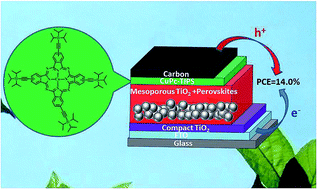
A solution-processable copper(II) phthalocyanine derivative CuPc-TIPS has been explored as a dopant-free hole-transporting material in carbon counter electrode-based perovskite solar cells.
The content of this RSS Feed (c) The Royal Society of Chemistry
08 Aug 00:53
J. Mater. Chem. A, 2017, 5,18101-18110
DOI: 10.1039/C7TA04769J, Paper
Jie Min, Nusret S. Guldal, Jie Guo, Chao Fang, Xuechen Jiao, Huawei Hu, Thomas Heumuller, Harald Ade, Christoph J. Brabec
Morphology evolution mechanisms of thermal and solvent vapor annealing in small-molecule solar cells have been investigated systematically.
The content of this RSS Feed (c) The Royal Society of Chemistry
07 Aug 00:48
J. Mater. Chem. C, 2017, 5,8988-8998
DOI: 10.1039/C7TC02912H, Paper
Baomin Zhao, Cenqi Yan, Zheng Wang, Hongyan Huang, Yueming Hu, Pei Cheng, Mingdong Yi, Chengting Huang, Xiaowei Zhan, Wei Huang
An extended nonacyclic IDTI monomer promising for organic electronics is reported.
The content of this RSS Feed (c) The Royal Society of Chemistry
07 Aug 00:48
J. Mater. Chem. C, 2017, 5,8301-8307
DOI: 10.1039/C7TC02775C, Paper
Sarah Brittman, Sebastian Z. Oener, Ke Guo, Haralds Abolins, A. Femius Koenderink, Erik C. Garnett
Nanophotonic patterns are imprinted into halide perovskite films using polymer stamps and a solvent mixture to control the perovskite's crystallization.
The content of this RSS Feed (c) The Royal Society of Chemistry
07 Aug 00:47
J. Mater. Chem. C, 2017, 5,8774-8781
DOI: 10.1039/C7TC02915B, Paper
Baitian He, Qingwu Yin, Xiye Yang, Liqian Liu, Xiao-Fang Jiang, Jie Zhang, Fei Huang, Yong Cao
NF-PSCs based on PDCB-DFQ812/ITIC reached high PCE values of 8.37% with VOC > 1 V under the synergistic effects of fluorine atoms and alkyl chains.
The content of this RSS Feed (c) The Royal Society of Chemistry
04 Aug 02:42
by Ligang Wang, Yuan Huang, Aashir Waleed, Ke Wu, Cong Lin, Zhengxu Wang, Guanhaojie Zheng, Zhiyong Fan, Junliang Sun, Huanping Zhou, Ling-Dong Sun and Chun-Hua Yan

ACS Applied Materials & Interfaces
DOI: 10.1021/acsami.7b05875

04 Aug 02:30
by Yu-han Zhao, Kai-cheng Zhang, Zhao-wei Wang, Peng Huang, Kai Zhu, Zhen-dong Li, Da-hua Li, Li-gang Yuan, Yi Zhou and Bo Song

ACS Applied Materials & Interfaces
DOI: 10.1021/acsami.7b04833

04 Aug 02:29
by Long Tan, Fan Yang, Mee Rahn Kim, Pandeng Li, Deepak Thrithamarassery Gangadharan, Joëlle Margot, Ricardo Izquierdo, Mohamed Chaker and Dongling Ma

ACS Applied Materials & Interfaces
DOI: 10.1021/acsami.7b06145

04 Aug 02:28
by Yingdong Xia, Yufeng Pan, Haijuan Zhang, Jian Qiu, Yiting Zheng, Yonghua Chen and Wei Huang

ACS Applied Materials & Interfaces
DOI: 10.1021/acsami.7b05422

03 Aug 00:39
by Daehee Seol, Ahreum Jeong, Man Hyung Han, Seongrok Seo, Tae Sup Yoo, Woo Seok Choi, Hyun Suk Jung, Hyunjung Shin, Yunseok Kim
Organic–inorganic hybrid perovskite solar cells are attracting the attention of researchers owing to the high level of performance they exhibit in photovoltaic device applications. However, the attainment of an even higher level of performance is hindered by their anomalous current–voltage (I–V) hysteresis behavior. Even though experimental and theoretical studies have suggested that the perovskite materials may have a ferroelectric nature, it is still far from being fully understood. In this study, the origin of the hysteresis behavior in CH3NH3PbI3 perovskite thin films is investigated. The behavior of ferroelectricity using piezoresponse force microscopy is first examined. Then, by comparing the scan-rate-dependent nano/macroscopic I–V curves, it is found that ion migration assisted by the grain boundaries is a dominant origin of I–V hysteresis from a macroscopic viewpoint. Consequently, the observations suggest that, even though ferroelectricity exists in the CH3NH3PbI3 perovskite materials, ion migration primarily contributes to the macroscopic I–V hysteresis. The presented results can provide fundamental guidelines to the resolution of hysteresis issues in organic–inorganic hybrid perovskite materials.

This study reports on the origin of the hysteresis in CH3NH3PbI3 perovskite thin films. The presence of the ferroelectricity is demonstrated, and further, ion migration assisted by the grain boundaries is demonstrated as a dominant origin of macroscopic I–V hysteresis. Consequently, the observations suggest that although ferroelectricity exists, ion migration primarily contributes to the macroscopic I–V hysteresis.
02 Aug 00:39
by Richard Hildner, Anna Köhler, Peter Müller-Buschbaum, Fabian Panzer, Mukundan Thelakkat
The field of conjugated polymers has expanded in the last years considerably and impressive performance, both in field effect transistors and photovoltaic devices has been achieved. After the initial emphasis on improving the performance, more emphasis is recently given to fundamental studies on structure formation. Therefore, this review concentrates on systematic correlation studies of structure formation in solution, in bulk and thin films as well as in photovoltaic blends of donor-type π-conjugated polymers. The main focus is on the correlation of structure, morphology and molecular chain orientation as a function of macromolecular properties such as molecular weight, dispersity, non-covalent intramolecular and intermolecular interactions, solvent interactions and innovative processing techniques. The tools applied for elucidating fundamental information of structure formation and orientation mainly consist of optical spectroscopy and scattering techniques (SAXS/WAXS/GIWAXS). Since the field of conjugated polymers is very vast in terms of chemical structural diversity, only selected examples of donor polymers are covered here and the emerging class of n-type conjugated polymers are not included. The focus is not on the structural variation or their performance in solar cells or transistors in terms of record efficiencies, but on the systematic studies leading to a structure-property correlation in donor polymers.

A systematic correlation of structure formation of donor-type π-conjugated polymers in solution using optical spectroscopy and in bulk or thin films as well as in photovoltaic blends using scattering techniques (SAXS, WAXS, GIWAXS) is given. The main focus is on the correlation of structures, morphology and molecular chain orientation as a function of molecular weight, dispersity, intramolecular and intermolecular interactions and innovative processing techniques.
02 Aug 00:39
by Bohee Hwang, Jang-Sik Lee

In article number 1701048, Jang-Sik Lee and Bohee Hwang report an approach for designing high density memory devices utilizing organolead halide perovskite (OHP) materials with a cross-point array structure which is deposited by sequential vapor deposition. The OHP-based nanoscale memory devices exhibit remarkably fast switching speed, low operating voltage, and long data retention. OHPs which are a key material in solar cells have a great potential to be used in high-density information storage devices.
02 Aug 00:35
by Xiaojian Zhu, Jihang Lee, Wei D. Lu

Understanding and controlling defect generation and movement in organic-inorganic lead halide perovskite materials will not only lead to more stable devices but also new device concepts. In article number 1700527, Wei D. Lu and co-workers reveal the formation, migration and annihilation of iodine vacancies in CH3NH3PbI3 films under an electric field and/or light illumination. An electric-write and light-erase memory device is demonstrated.
01 Aug 03:29
J. Mater. Chem. B, 2017, 5,6385-6393
DOI: 10.1039/C7TB01332A, Paper
Jian Xu, Daisuke Murata, Yumiko Katayama, Jumpei Ueda, Setsuhisa Tanabe
We have developed a novel persistent phosphor of LaAlO3 perovskite doped with Er3+, Cr3+ and Sm3+ (LAO:Er-Cr-Sm), which exhibits long persistent luminescence (PersL) at 1553 nm due to the Er3+:4I13/2 [rightward arrow] 4I15/2 transition as well as at 734 nm due to the Cr3+:2E(2G) [rightward arrow] 4A2(4F) transition.
The content of this RSS Feed (c) The Royal Society of Chemistry
01 Aug 03:14
J. Mater. Chem. A, 2017, 5,18053-18063
DOI: 10.1039/C7TA04144F, Paper
Yu-Che Lin, Yu-Wei Su, Jia-Xing Li, Bo-Hsien Lin, Chung-Hao Chen, Hsiu-Cheng Chen, Kaung-Hsiung Wu, Yang Yang, Kung-Hwa Wei
We employed ternary blends capable of energy transfer-a synthesized small molecule (SM-4OMe) comprising benzodithiophene (BDT) units (a molecule designed for energy transfer), and a polymer (PTB7-TH) with BDT units with desired packing orientation, and a fullerene-as active layers for single junction photovoltaic devices.
The content of this RSS Feed (c) The Royal Society of Chemistry
31 Jul 08:44
by Bao-Wen Li, Minoru Osada, Yoon-Hyun Kim, Yasuo Ebina, Kosho Akatsuka and Takayoshi Sasaki

Journal of the American Chemical Society
DOI: 10.1021/jacs.7b05665

31 Jul 00:16
J. Mater. Chem. A, 2017, 5,12602-12652
DOI: 10.1039/C7TA01798G, Review Article
Taotao Li, Yufeng Pan, Ze Wang, Yingdong Xia, Yonghua Chen, Wei Huang
Recent advances in additive engineering for improving the perovskite morphology, charge transport, and excitonic and optical properties have been reviewed.
The content of this RSS Feed (c) The Royal Society of Chemistry
30 Jul 23:52
J. Mater. Chem. A, 2017, 5,18044-18052
DOI: 10.1039/C7TA05720B, Paper
Shun-Hsiang Chan, Ming-Chung Wu, Kun-Mu Lee, Wei-Cheng Chen, Tzu-Hao Lin, Wei-Fang Su
The power conversion efficiency of perovskite solar cells can be enhanced by using Ba2+-doped perovskite films.
The content of this RSS Feed (c) The Royal Society of Chemistry
30 Jul 23:52
J. Mater. Chem. A, 2017, 5,17570-17579
DOI: 10.1039/C7TA03505E, Paper
Chaohong Zhang, Stefan Langner, Alexander V. Mumyatov, Denis V. Anokhin, Jie Min, Jose Dario Perea, Kirill L. Gerasimov, Andres Osvet, Dimitri A. Ivanov, Pavel Troshin, Ning Li, Christoph J. Brabec
The miscibility has more influence than the crystallinity on the optimized acceptor : donor ratio in solar cells.
The content of this RSS Feed (c) The Royal Society of Chemistry
30 Jul 23:51
J. Mater. Chem. A, 2017, 5,17204-17210
DOI: 10.1039/C7TA05809H, Communication
Yuan-Qiu-Qiang Yi, Huanran Feng, Meijia Chang, Hongtao Zhang, Xiangjian Wan, Chenxi Li, Yongsheng Chen
A series of new non-fullerene small molecule acceptors (NTIC, NTIC-Me, NTIC-OMe and NTIC-F) based on the acceptor-donor-acceptor (A-D-A) architecture, using hexacyclic naphthalene-(cyclopentadithiophene) as the central unit, were designed and synthesized.
The content of this RSS Feed (c) The Royal Society of Chemistry
30 Jul 23:49
J. Mater. Chem. A, 2017, 5,17943-17953
DOI: 10.1039/C7TA04995A, Paper
Guiting Chen, Fan Zhang, Meiyue Liu, Jun Song, Jiarong Lian, Pengju Zeng, Hin-Lap Yip, Wei Yang, Bin Zhang, Yong Cao
A novel bispyridinium salt (FPyBr) is designed as a cathode modifier to achieve high-performance and low-hysteresis fullerene/perovskite solar cells with a maximal PCE of 19.61%.
The content of this RSS Feed (c) The Royal Society of Chemistry
30 Jul 08:17
by Liyan Yang, Feilong Cai, Yu Yan, Jinghai Li, Dan Liu, Andrew J. Pearson, Tao Wang
The π-conjugated organic small molecule 4,4′-cyclohexylidenebis[N,N-bis(4-methylphenyl) benzenamine] (TAPC) has been explored as an efficient hole transport material to replace poly(3,4-ethylenedio-xythiophene):poly(styrenesulfonate) (PEDOT:PSS) in the preparation of p-i-n type CH3NH3PbI3 perovskite solar cells. Smooth, uniform, and hydrophobic TAPC hole transport layers can be facilely deposited through solution casting without the need for any dopants. The power conversion efficiency of perovskite solar cells shows very weak TAPC layer thickness dependence across the range from 5 to 90 nm. Thermal annealing enables improved hole conductivity and efficient charge transport through an increase in TAPC crystallinity. The perovskite photoactive layer cast onto thermally annealed TAPC displays large grains and low residual PbI2, leading to a high charge recombination resistance. After optimization, a stabilized power conversion efficiency of 18.80% is achieved with marginal hysteresis, much higher than the value of 12.90% achieved using PEDOT:PSS. The TAPC-based devices also demonstrate superior stability compared with the PEDOT:PSS-based devices when stored in ambient circumstances, with a relatively high humidity ranging from 50 to 85%.

Conjugated molecule 4,4′-cyclohexylidenebis[N,N-bis(4-methylphenyl) benzenamine] (TAPC) has been explored to replace poly(3,4-ethylenedio-xythiophene):poly(styrenesulfonate) in perovskite solar cells. The CH3NH3PbI3 solar cells are hysteresis-free, with marginal dependence on the thickness of TAPC, and achieve a power conversion efficiency of 18.8 over 12.9% as a result of increased Jsc, Voc, and fill factor.
30 Jul 07:11
by Nilushi Wijeyasinghe, Anna Regoutz, Flurin Eisner, Tian Du, Leonidas Tsetseris, Yen-Hung Lin, Hendrik Faber, Pichaya Pattanasattayavong, Jinhua Li, Feng Yan, Martyn A. McLachlan, David J. Payne, Martin Heeney, Thomas D. Anthopoulos
This study reports the development of copper(I) thiocyanate (CuSCN) hole-transport layers (HTLs) processed from aqueous ammonia as a novel alternative to conventional n-alkyl sulfide solvents. Wide bandgap (3.4–3.9 eV) and ultrathin (3–5 nm) layers of CuSCN are formed when the aqueous CuSCN–ammine complex solution is spin-cast in air and annealed at 100 °C. X-ray photoelectron spectroscopy confirms the high compositional purity of the formed CuSCN layers, while the high-resolution valence band spectra agree with first-principles calculations. Study of the hole-transport properties using field-effect transistor measurements reveals that the aqueous-processed CuSCN layers exhibit a fivefold higher hole mobility than films processed from diethyl sulfide solutions with the maximum values approaching 0.1 cm2 V−1 s−1. A further interesting characteristic is the low surface roughness of the resulting CuSCN layers, which in the case of solar cells helps to planarize the indium tin oxide anode. Organic bulk heterojunction and planar organometal halide perovskite solar cells based on aqueous-processed CuSCN HTLs yield power conversion efficiency of 10.7% and 17.5%, respectively. Importantly, aqueous-processed CuSCN-based cells consistently outperform devices based on poly(3,4-ethylenedioxythiophene) polystyrene sulfonate HTLs. This is the first report on CuSCN films and devices processed via an aqueous-based synthetic route that is compatible with high-throughput manufacturing and paves the way for further developments.

Dissolution of copper thiocyanate (CuSCN) in aqueous ammonia enables processing of superior quality hole-transporting layers at low temperature in ambient air. Transistors based on these CuSCN layers exhibit mobilities close to 0.1 cm2 V−1 s−1, while solar cells incorporating CuSCN interlayers yield power conversion efficiencies of 10.7% and 17.5% for organic bulk heterojunction and organometal halide cells, respectively.