04 Jan 01:18
by Qunping Fan, Yan Wang, Maojie Zhang, Bo Wu, Xia Guo, Yufeng Jiang, Wanbin Li, Bing Guo, Chennan Ye, Wenyan Su, Jin Fang, Xuemei Ou, Feng Liu, Zhixiang Wei, Tze Chien Sum, Thomas P. Russell, Yongfang Li
Abstract
In this work, a nonfullerene polymer solar cell (PSC) based on a wide bandgap polymer donor PM6 containing fluorinated thienyl benzodithiophene (BDT-2F) unit and a narrow bandgap small molecule acceptor 2,2′-((2Z,2′Z)-((4,4,9,9-tetrahexyl-4,9-dihydro-s-indaceno[1,2-b:5,6-b′]dithiophene-2,7-diyl)bis(methanylylidene))bis(3-oxo-2,3-dihydro-1H-indene-2,1-diylidene))dimalononitrile (IDIC) is developed. In addition to matched energy levels and complementary absorption spectrum with IDIC, PM6 possesses high crystallinity and strong π–π stacking alignment, which are favorable to charge carrier transport and hence suppress recombination in devices. As a result, the PM6:IDIC-based PSCs without extra treatments show an outstanding power conversion efficiency (PCE) of 11.9%, which is the record value for the as-cast PSC devices reported in the literature to date. Moreover, the device performances are insensitive to the active layer thickness (≈95–255 nm) and device area (0.20–0.81 cm2) with PCEs of over 11%. Besides, the PM6:IDIC-based flexible PSCs with a large device area of 1.25 cm2 exhibit a high PCE of 6.54%. These results indicate that the PM6:IDIC blend is a promising candidate for future roll-to-roll mass manufacturing and practical application of highly efficient PSCs.

An efficient polymer solar cell (PSC) based on a polymer donor PM6 containing BDT-2F unit and an n-type organic semiconductor acceptor, IDIC, is developed. The power conversion efficiencies of PSCs without extra treatments reach up to 11.9% and are insensitive to the active layer thickness (95–225 nm) and device area (0.20–0.81 cm2), with values of over 11%.
04 Jan 01:17
by Xiaopeng Xu, Ting Yu, Zhaozhao Bi, Wei Ma, Ying Li, Qiang Peng
Abstract
Two novel wide-bandgap copolymers, PBDT-TDZ and PBDTS-TDZ, are developed based on 1,3,4-thiadiazole (TDZ) and benzo[1,2-b:4,5-b′]dithiophene (BDT) building blocks. These copolymers exhibit wide bandgaps over 2.07 eV and low-lying highest occupied molecular orbital (HOMO) levels below −5.35 eV, which match well with the typical low-bandgap acceptor of ITIC, resulting in a good complementary absorption from 300 to 900 nm and a low HOMO level offset (≤0.13 eV). Compared to PBDT-TDZ, PBDTS-TDZ with alkylthio side chains exhibits the stronger optical absorption, lower-lying HOMO level, and higher crystallinity. By using a single green solvent of o-xylene, PBDTS-TDZ:ITIC devices exhibit a large open-circuit voltage (Voc) up to 1.10 eV and an extremely low energy loss (Eloss) of 0.48 eV. At the same time, the desirable high short-circuit current density (Jsc) of 17.78 mA cm−2 and fill factor of 65.4% are also obtained, giving rise to a high power conversion efficiency (PCE) of 12.80% without any additive and post-treatment. When adopting a homotandem device architecture, the PCE is further improved to 13.35% (certified as 13.19%) with a much larger Voc of 2.13 V, which is the best value for any type of homotandem organic solar cells reported so far.

Two novel 1,3,4-thiadiazole-based wide-bandgap copolymers, PBDT-TDZ and PBDTS-TDZ, are developed for efficient nonfullerene organic solar cells. The single-junction devices processed by a green solvent of o-xylene exhibit a high power conversion efficiency (PCE) of 12.80% with a low energy loss of 0.48 eV. The PCE is finally improved to 13.35% when using a homotandem device architecture.
04 Jan 01:15
by Andrea R. Bowring, Luca Bertoluzzi, Brian C. O'Regan, Michael D. McGehee
Abstract
The future commercialization of halide perovskite solar cells relies on improving their stability. There are several studies focused on understanding degradation under operating conditions in light, but little is known about the stability of these solar cells under reverse bias conditions. Reverse bias stability is important because shaded cells in a module are put into reverse bias by the illuminated cells. In this paper, a phenomenological study is presented of the reverse bias behavior of halide perovskite solar cells and it is shown that reverse bias can lead to a partially recoverable loss in efficiency, primarily caused by a decrease in V
OC. A general mechanism is proposed, supported by drift–diffusion simulations, to explain how these cells breakdown via tunneling caused by accumulated ionic defects and suggests that the reversible loss in efficiency may be due to an electrochemical reaction of these defects. Finally, the implications of these phenomena are discussed and how they can possibly be addressed is also discussed.

The stability of halide perovskite solar cells in reverse bias is investigated. The cells uniformly pass current across the device at breakdown voltages between –1 and −4 V. A partially recoverable decrease in open-circuit voltage is seen for cells held in reverse bias. Drift–diffusion modeling supports breakdown via tunneling, and the implications and some possible solutions are discussed.
04 Jan 01:06
J. Mater. Chem. A, 2018, 6,423-433
DOI: 10.1039/C7TA08669E, Paper
Xiufen Jin, Yilin Wang, Xiaofang Cheng, Huanyu Zhou, Lin Hu, Yinhua Zhou, Lie Chen, Yiwang Chen
A new interface engineering strategy for non-fullerene polymer solar cells by employing a highly conductive interlayer with a fluorinated conjugated backbone to afford a power conversion efficiency of 11.51% based on the PBDB-T:ITIC active layer.
The content of this RSS Feed (c) The Royal Society of Chemistry
21 Dec 11:09
by Wanyi Nie, Hsinhan Tsai, Jean-Christophe Blancon, Fangze Liu, Costas C. Stoumpos, Boubacar Traore, Mikael Kepenekian, Olivier Durand, Claudine Katan, Sergei Tretiak, Jared Crochet, Pulickel M. Ajayan, MercouriG. Kanatzidis, Jacky Even, Aditya D. Mohite
Abstract
Hybrid perovskites are on a trajectory toward realizing the most efficient single-junction, solution-processed photovoltaic devices. However, a critical issue is the limited understanding of the correlation between the degree of crystallinity and the emergent perovskite/hole (or electron) transport layer on device performance and photostability. Here, the controlled growth of hybrid perovskites on nickel oxide (NiO) is shown, resulting in the formation of thin films with enhanced crystallinity with characteristic peak width and splitting reminiscent of the tetragonal phase in single crystals. Photophysical and interface sensitive measurements reveal a reduced trap density at the perovskite/NiO interface in comparison with perovskites grown on poly(3,4-ethylene dioxy thiophene) polystyrene sulfonate. Photovoltaic cells exhibit a high open circuit voltage (1.12 V), indicating a near-ideal energy band alignment. Moreover, photostability of photovoltaic devices up to 10-Suns is observed, which is a direct result of the superior crystallinity of perovskite thin films on NiO. These results elucidate the critical role of the quality of the perovskite/hole transport layer interface in rendering high-performance and photostable optoelectronic devices.

Highly crystalline perovskite thin film can be grown on nickel oxide substrates evidenced by sharp X-ray diffraction pattern with characteristic tetragonal peak splitting observed only in single crystal. As a consequence, high-efficiency photovoltaic cells can be achieved with extended operation lifetime under constant illumination benefit by the high degree of crystallinity.
20 Dec 01:06
Energy Environ. Sci., 2017, Accepted Manuscript
DOI: 10.1039/C7EE02967E, Paper
Junqing Shi, Anna Isakova, Abasi Abudulimu, Marius van den Berg, Oh Kyu Kwon, Alfred J. Meixner, Soo Young Park, Dai Zhang, Johannes Gierschner, Larry Luer
Solution-processable all-small-molecule organic solar cells (OSC) have shown a dramatic progress in improving stability and photovoltaic efficiency. However, knowledge of photoexcitation dynamics in this novel class of materials is very...
The content of this RSS Feed (c) The Royal Society of Chemistry

19 Dec 01:24
J. Mater. Chem. A, 2018, 6,469-477
DOI: 10.1039/C7TA09494A, Paper
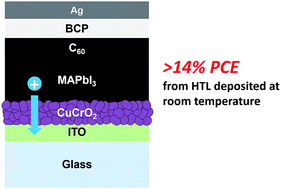
Wiley A. Dunlap-Shohl, Trey B. Daunis, Xiaoming Wang, Jian Wang, Boya Zhang, Diego Barrera, Yanfa Yan, Julia[space]W. P. Hsu, David B. Mitzi
A delafossite CuCrO2 hole transport layer deposited at room temperature from a nanoparticle suspension is used in efficient perovskite cells.
The content of this RSS Feed (c) The Royal Society of Chemistry
19 Dec 01:23
by Zhenzhen Shi, Hao Liu, Yaping Wang, Jinyan Li, Yiming Bai, Fuzhi Wang, Xingming Bian, Tasawar Hayat, Ahmed Alsaedi and Zhan’ao Tan

ACS Applied Materials & Interfaces
DOI: 10.1021/acsami.7b13494

19 Dec 00:56
J. Mater. Chem. A, 2017, Accepted Manuscript
DOI: 10.1039/C7TA08204E, Paper
congcong zhang, Zhao-Kui Wang, Li Meng, Zhiyong Liu, Jien Yang, Yingguo Yang, Xingyu Gao, Heng Ma
We develop an external-electric-field (EEF)-assisted annealing treatment to improve the photoelectric performance of planar organic-inorganic perovskite solar cells (PSCs). The new strategy can control the ion polarization orientation of perovskite...
The content of this RSS Feed (c) The Royal Society of Chemistry
19 Dec 00:47
by Zhiping Wang, Ying Zhou, Tetsuhiko Miyadera, Masayuki Chikamatsu and Yuji Yoshida

ACS Applied Materials & Interfaces
DOI: 10.1021/acsami.7b13989

19 Dec 00:46
by Huifang Ji, Zhifeng Shi, Xuguang Sun, Ying Li, Sen Li, Lingzhi Lei, Di Wu, Tingting Xu, Xinjian Li and Guotong Du

ACS Applied Materials & Interfaces
DOI: 10.1021/acsami.7b13260

15 Dec 00:41
by Jong-Hong Lu, Yi-Hung Lin, Bing-Huang Jiang, Chun-Hung Yeh, Jui-Chih Kao, Chih-Ping Chen
Abstract
High-performance colored aesthetic semitransparent organic photovoltaics (OPVs) featuring a silver/indium tin oxide/silver (Ag/ITO/Ag) microcavity structure are prepared. By precisely controlling the thickness of the ITO layer, OPV devices exhibiting high transparency and a wide and high-purity color gamut are obtained: blue (B), green (G), yellow-green (YG), yellow (Y), orange (O), and red (R). The power conversion efficiencies (PCEs) of the G, YG, and Y color devices are greater than 8% (AM 1.5G irradiation, 100 mW cm−2) with maximum transmittances (TMAX) of greater than 14.5%. An optimized PCE of 8.2% was obtained for the YG OPV [CIE 1931 coordinates: (0.364, 0.542)], with a value of TMAX of 17.3% (at 561 nm). As far as it is known, this performance is the highest ever reported for a transparent colorful OPV. Such high transparency and desired transmitted colors, which can perspective see the clear images, suggest great potential for use in building-integrated photovoltaic applications.

High-performance colored aesthetic semitransparent organic photovoltaics (OPVs) featuring a silver/indium tin oxide/silver microcavity structure are demonstrated. Colored OPVs of high purity and a wide color gamut are obtained: blue, green, yellow-green, yellow, orange, and red. The highest power conversion efficiency was 8.2% for the yellow-green device, with CIE 1931 coordinates of (0.364, 0.542) and a transmittance of 17.3% at 561 nm.
15 Dec 00:41
by Shenkun Xie, Yuxin Xia, Zhong Zheng, Xuning Zhang, Jianyu Yuan, Huiqiong Zhou, Yuan Zhang
Abstract
The considerable improvement on the power conversion efficiency (PCE) for emerging nonfullerene polymer solar cells is still limited by considerable voltage losses that have become one of the most significant obstacles in further boosting desired photovoltaic performance. Here, a comprehensive study is reported to understand the impacts of charge transport, energetic disorder, and charge transfer states (CTS) on the losses in open-circuit voltage (Voc) based on three high performing bulk heterojunction solar cells with the best PCE exceeding 11%. It is found that the champion poly[(2,6-(4,8-bis(5-(2-ethylhexyl)thiophen-2-yl)benzo[1,2-b:4,5-b′]dithiophene)-co-(1,3-di(5-thiophene-2-yl)-5,7-bis(2-ethylhexyl)-benzo[1,2-c:4,5-c′]dithiophene-4,8-dione))] (PBDB-T):IT-M solar cell (PCE = 11.5%) is associated with the least disorder. The determined energetic disorder in part reconciles the difference in Voc between the solar cells. A reduction is observed in the nonradiative losses (ΔVnonrad) coupled with the increase of energy of CTS for the PBDB-T:IT-M device, which may be related to the improved balance in carrier mobilities, and partially can explain the gain in Voc. The determined radiative limit for Voc combined with the ΔVnonrad generates an excellent agreement for the Voc with the experimental values. The results suggest that minimizing the energetic disorder related to transport and CTS is critical for the mitigation of Voc losses and improvements on the device performance.

Voltage losses and charge transport in three representative bulk heterojunction solar cells are investigated. By temperature-dependent open-circuit voltage (Voc) analysis and photovoltaic electroluminescence spectroscopy, we find that the increased Voc in the champion IT-M cell with an excellent balance in mobility is associated with reduced energetic disorder at the D/A interface and non-redative recombination losses at charge transfer states.
15 Dec 00:41
by Zelin Li, Dalei Yang, Xiaoli Zhao, Tong Zhang, Jidong Zhang, Xiaoniu Yang
Abstract
Recently, the influence of molecular weight (Mn) on the performance of polymer solar cells (PSCs) is widely investigated. However, the dependence of optimal thickness of active layer for PSCs on Mn is not reported yet, which is vital to the solution printing technology. In this work, the effect of Mn on the efficiency and especially optimal thickness of the active layer for PBTIBDTT-S-based PSCs is systematically studied. The device efficiency improves significantly as the Mn increases from 12 to 38 kDa, and a remarkable efficiency of 10.1% is achieved, which is among the top efficiencies of wide-bandgap polymer:fullerene PSCs. Furthermore, the optimal thickness of the active layer is also greatly increased from 62 to 210 nm with increased Mn. Therefore, a device employing a thick (>200 nm) active layer with power conversion efficiency exceeding 10% is achieved by manipulating Mn. This exciting result is attributed to both the improved crystallinity, thus hole mobility, and preferable polymer orientation, thus morphology of active layer. These findings, for the first time, highlight the significant impact of Mn on the optimal thickness of active layer for PSCs and provide a facile way to further improve the performance of PSCs employing a thick active layer.

As the molecular weight (Mn) of PBTIBDTT-S increases from 12 to 38 kDa, the efficiency and optimal thickness of the active layer are simultaneously improved from 6.99% to 10.11% and from 62 to 210 nm, respectively. This result demonstrates the importance of Mn in achieving highly efficient devices under a thick active layer.
15 Dec 00:34
Energy Environ. Sci., 2018, 11,78-86
DOI: 10.1039/C7EE02901B, Communication
Silver-Hamill Turren-Cruz, Michael Saliba, Matthew T. Mayer, Hector Juarez-Santiesteban, Xavier Mathew, Lea Nienhaus, Wolfgang Tress, Matthew P. Erodici, Meng-Ju Sher, Moungi G. Bawendi, Michael Gratzel, Antonio Abate, Anders Hagfeldt, Juan-Pablo Correa-Baena
Planar perovskite solar cells yield efficiency of over 20%.
The content of this RSS Feed (c) The Royal Society of Chemistry

15 Dec 00:33
Energy Environ. Sci., 2017, Accepted Manuscript
DOI: 10.1039/C7EE03397D, Perspective
Lioz Etgar
This perspective paper focuses on the dimensionality of organic-inorganic halide perovskite and its relevant advantages over 3D perovskite. The charges in two-dimensional (2D) materials are restricted in their movement to...
The content of this RSS Feed (c) The Royal Society of Chemistry

14 Dec 14:33
by Zhibin Wang, Zhen Luo, Chunyan Zhao, Qiang Guo, Yaping Wang, Fuzhi Wang, Xingming Bian, Ahmed Alsaedi, Tasawar Hayat and Zhan’ao Tan

The Journal of Physical Chemistry C
DOI: 10.1021/acs.jpcc.7b11518

14 Dec 14:33
by Rui Sheng, Maximilian T. Hörantner, Zhiping Wang, Yajie Jiang, Wei Zhang, Amedeo Agosti, Shujuan Huang, Xiaojing Hao, Anita Ho-Baillie, Martin Green and Henry J. Snaith

The Journal of Physical Chemistry C
DOI: 10.1021/acs.jpcc.7b05517

14 Dec 14:32
by Lei Yang, Wenxing Gu, Lei Lv, Yusheng Chen, Yufei Yang, Pan Ye, Jianfei Wu, Ling Hong, Aidong Peng, Hui Huang
Abstract
Triplet materials have been employed to achieve high-performing organic solar cells (OSCs) by extending the exciton lifetime and diffusion distances, while the triplet non-fullerene acceptor materials have never been reported for bulk heterojunction OSCs. Herein, for the first time, three triplet molecular acceptors based on tellurophene with different degrees of ring fusing were designed and synthesized for OSCs. Significantly, these molecules have long exciton lifetime and diffusion lengths, leading to efficient power conversion efficiency (7.52 %), which is the highest value for tellurophene-based OSCs. The influence of the extent of ring fusing on molecular geometry and OSCs performance was investigated to show the power conversion efficiencies (PCEs) continuously increased along with increasing the extent of ring fusing.

Solar fusion: Three triplet molecular acceptors based on tellurophene with different degrees of ring fusing were prepared for organic solar cells (OSCs). These molecules have long exciton lifetime and diffusion lengths, leading to increasing power conversion efficiency (PCE) up to 7.52 %, which is the highest value for tellurophene-based OSCs, as the degree of ring-fusion increases.
14 Dec 00:38
by Nicholas Rolston, Adam D. Printz, Jared M. Tracy, Hasitha C. Weerasinghe, Doojin Vak, Lew Jia Haur, Anish Priyadarshi, Nripan Mathews, Daniel J. Slotcavage, Michael D. McGehee, Roghi E. Kalan, Kenneth Zielinski, Ronald L. Grimm, Hsinhan Tsai, Wanyi Nie, Aditya D. Mohite, Somayeh Gholipour, Michael Saliba, Michael Grätzel, Reinhold H. Dauskardt
Abstract
Photoactive perovskite semiconductors are highly tunable, with numerous inorganic and organic cations readily incorporated to modify optoelectronic properties. However, despite the importance of device reliability and long service lifetimes, the effects of various cations on the mechanical properties of perovskites are largely overlooked. In this study, the cohesion energy of perovskites containing various cation combinations of methylammonium, formamidinium, cesium, butylammonium, and 5-aminovaleric acid is reported. A trade-off is observed between the mechanical integrity and the efficiency of perovskite devices. High efficiency devices exhibit decreased cohesion, which is attributed to reduced grain sizes with the inclusion of additional cations and PbI2 additives. Microindentation hardness testing is performed to estimate the fracture toughness of single-crystal perovskite, and the results indicated perovskites are inherently fragile, even in the absence of grain boundaries and defects. The devices found to have the highest fracture energies are perovskites infiltrated into a porous TiO2/ZrO2/C triple layer, which provide extrinsic reinforcement and shielding for enhanced mechanical and chemical stability.

As reflected in the fragility of state-of-the-art perovskite solar cells, mechanical reliability has too long been an afterthought in their development. The aim of this work is to understand the effects of cation composition (combinations of methylammonium, formamidinium, cesium, butylammonium, and 5-aminovaleric acid) on perovskite mechanical integrity and determine design criteria to increase reliability toward the development of module-scale devices.
14 Dec 00:37
by Haijun Bin, Yankang Yang, Zhengxing Peng, Long Ye, Jia Yao, Lian Zhong, Chenkai Sun, Liang Gao, He Huang, Xiaojun Li, Beibei Qiu, Lingwei Xue, Zhi-Guo Zhang, Harald Ade, Yongfang Li
Abstract
Side-chain engineering is an important strategy for optimizing photovoltaic properties of organic photovoltaic materials. In this work, the effect of alkylsilyl side-chain structure on the photovoltaic properties of medium bandgap conjugated polymer donors is studied by synthesizing four new polymers J70, J72, J73, and J74 on the basis of highly efficient polymer donor J71 by changing alkyl substituents of the alkylsilyl side chains of the polymers. And the photovoltaic properties of the five polymers are studied by fabricating polymer solar cells (PSCs) with the polymers as donor and an n-type organic semiconductor (n-OS) m-ITIC as acceptor. It is found that the shorter and linear alkylsilyl side chain could afford ordered molecular packing, stronger absorption coefficient, higher charge carrier mobility, thus results in higher Jsc and fill factor values in the corresponding PSCs. While the polymers with longer or branched alkyl substituents in the trialkylsilyl group show lower-lying highest occupied molecular orbital energy levels which leads to higher Voc of the PSCs. The PSCs based on J70:m-ITIC and J71:m-ITIC achieve power conversion efficiency (PCE) of 11.62 and 12.05%, respectively, which are among the top values of the PSCs reported in the literatures so far.

Side-chain engineering is performed to optimize photovoltaic properties of the 2D-conjugated polymer donors. The polymer solar cells with m-ITIC as acceptor and J70 and J71 polymer donors with shorter and linear alkyl substituents in their alkylsilyl side chains achieve power conversion efficiency of 11.62% and 12.05%, respectively.
14 Dec 00:34
by Hsin-Ping Wang, Jr-Hau He

Nanostructures produce unique optical and electronic properties, which have the potential to meet the goals of third-generation photovoltaic devices. However, most nanostructures bring accompanying optical or electrical losses to solar cells. In article number 1602385, Jr-Hau He and Hsin-Ping Wang postulate that the concurrent design of both optical and electrical components will be an imperative route toward breaking the present-day limit of nanostructured solar cells.
14 Dec 00:33
by Michael A. Fusella, Alyssa N. Brigeman, Matthew Welborn, Geoffrey E. Purdum, Yixin Yan, Richard D. Schaller, YunHui L. Lin, Yueh-Lin Loo, Troy Van Voorhis, Noel C. Giebink, Barry P. Rand
Abstract
Organic photovoltaic cells possess desirable practical characteristics, such as the potential for low-cost fabrication on flexible substrates, but they lag behind their inorganic counterparts in performance due in part to fundamental energy loss mechanisms, such as overcoming the charge transfer (CT) state binding energy when photogenerated charge is transferred across the donor/acceptor interface. However, recent work has suggested that crystalline interfaces can reduce this binding energy due to enhanced CT state delocalization. Solar cells based on rubrene and C60 are investigated as an archetypal system because it allows the degree of crystallinity to be moldulated from a highly disordered to highly ordered system. Using a postdeposition annealing method to transform as-deposited amorphous rubrene thin films into ones that are highly crystalline, it is shown that the CT state of a highly crystalline rubrene/C60 heterojunction undergoes extreme delocalization parallel to the interface leading to a band-like state that exhibits a linear Stark effect. This state parallels the direct charge formation of inorganic solar cells and reduces energetic losses by 220 meV compared with 12 other archetypal heterojunctions reported in the literature.

Highly crystalline organic solar cells are investigated, and reduced voltage loss attributed to a band-like charge transfer state is found.
13 Dec 08:55
by Yimao Wan, Siva Krishna Karuturi, Christian Samundsett, James Bullock, Mark Hettick, Di Yan, Jun Peng, Parvathala Reddy Narangari, Sudha Mokkapati, Hark Hoe Tan, Chennupati Jagadish, Ali Javey and Andres Cuevas

ACS Energy Letters
DOI: 10.1021/acsenergylett.7b01153
13 Dec 08:53
by Huiting Fu, Zhaohui Wang, Yanming Sun
Ternary blend organic solar cells integrating multiple donor or acceptor materials in one photoactive layer have emerged as a promising strategy to simultaneously improve all device parameters compared with traditional binary solar cells. Recently, a large number of high-performance non-fullerene acceptor materials have been developed. Their preeminent advantages, such as strong light absorption ability and the tunability of optoelectronic properties, make them a compelling choice for fabricating ternary organic solar cells. Thus far, the state-of-the-art efficiency of ternary blend system containing non-fullerene acceptor has reached over 12%, and shows great potential in further improving the photovoltaic performance of the organic solar cells. In this review, we first describe the possible operation mechanisms in ternary systems and then primarily summarize the major achievements in different types of ternary systems based on non-fullerene acceptors over the past few years. In the end, we conclude with the summary and prospects of non-fullerene acceptor based organic ternary solar cells.

The recent emergence of high-performance non-fullerene acceptors provides versatility of designing novel ternary blend organic solar cells (OSCs). They could be employed as host acceptor materials or as a third component to complement the absorption spectra with two other absorbers in the ternary blend, to enhance the light-harvesting capacity and thus to further improve the efficiencies of OSCs.
13 Dec 08:53
by Shun-Shing Yang, Zong-Chun Hsieh, Muchamed L. Keshtov, Ganesh D. Sharma, Fang-Chung Chen

Organic photovoltaic (OPV) devices still work efficiently after sunset! To save energy and improve the sustainability of the many electronic systems, such as Internet of Thing (IoT), distributed harvesters of energy from the local environment could be particularly critical. Photovoltaic devices could be an energy source for such needs. Although traditional solar cells exhibit very high power conversion efficiencies (PCEs) under illumination at about 100 mW cm−2 of solar irradiation, the efficiency drops significantly with the decreasing light intensity. Herein (article No. 201700174), OPV devices may provide a solution; their PCEs are much higher under indoor lighting conditions than they are under sunlight. For example, the device is capable of delivering a power output of 22.57 μW cm−2, corresponding to a PCE of 13.76%, under illumination with indoor lighting conditions at 500 lux. These results might open up new directions for further improving the device performance of OPV devices for local energy harvesters under low-power lighting applications.
09 Dec 11:11
by Fei Wu, Xiao Yue, Qunliang Song, Linna Zhu
Depositing high-quality perovskite film is of great importance to achieve efficient perovskite solar cells. In this work, we develop an improved precursor solution by directly mixing MAPbI3, PbCl2, and MAI. Different from the conventional “one-step” solution processing method, in which MAPbI3 is in situ generated from the reaction of PbI2 and MAI, in our case, pure MAPbI3 from commercial source is applied. The MAPbI3:PbCl2:MAI precursor results in improved perovskite film morphology with large grain sizes, as well as enhanced charge transportation process. In addition, reduced hysteresis of the corresponding device is observed compared to the control device using PbI2:PbCl2:MAI precursor. Planar perovskite solar cell prepared from MAPbI3-based precursor exhibits a champion efficiency of 18.70%, with Voc of 1063 mV, Jsc of 21.91 mA cm−2, and FF of 80%. In contrast, control device shows a moderate PCE of 16.71% under the same condition. The pure MAPbI3 introduced is favorable as perovskite crystallite domains, and the high-quality perovskite films formed lead to enhanced photovoltaic performances.

CH3NH3PbI3 is used directly in precursor solution, together with PbCl2 and CH3NH3I to prepare the CH3NH3PbI3-xClx. Compared to the conventional precursor composed of PbI2, PbCl2, and CH3NH3I, the innovative precursor results in improved perovskite film morphology, enhanced charge transportation process and reduced hysteresis. An improved efficiency of 18.70% is achieved in planar perovskite solar cells.
08 Dec 00:31
by Paifeng Luo, Shengwen Zhou, Yugang Zhou, Wei Xia, Lin Sun, Jigui Cheng, Chenxi Xu and Yingwei Lu

ACS Applied Materials & Interfaces
DOI: 10.1021/acsami.7b12939

08 Dec 00:27
by Junjie Jin, Hao Li, Cong Chen, Boxue Zhang, Lin Xu, Biao Dong, Hongwei Song and Qilin Dai

ACS Applied Materials & Interfaces
DOI: 10.1021/acsami.7b15310

08 Dec 00:23
by Ligang Yuan, Jie Li, Zhao-wei Wang, Peng Huang, Kai-cheng Zhang, Yanfeng Liu, Kai Zhu, Zhendong Li, Tiantian Cao, Bin Dong, Yi Zhou, Mi Zhou, Bo Song and Yongfang Li

ACS Applied Materials & Interfaces
DOI: 10.1021/acsami.7b11648