04 Jan 01:06
J. Mater. Chem. A, 2017, Accepted Manuscript
DOI: 10.1039/C7TA09193A, Paper
Rahul Ranjan, Asit Prakash, Arjun Singh, Anand Singh, Ashish Garg, Raju Kumar Gupta
Perovskite solar cells (PSCs) are currently the most exciting solar photovoltaic technologies for future deployment. Conventional PSC device structure typically employs a titanium dioxide (TiO2) electron transport layer. However, low...
The content of this RSS Feed (c) The Royal Society of Chemistry
04 Jan 01:05
J. Mater. Chem. A, 2017, Accepted Manuscript
DOI: 10.1039/C7TA09504J, Paper
Saqib Javaid, Chang Woo Myung, Jeong-Hun Yun, Geunsik Lee, Kwang S. Kim
Methylammonium lead-iodide (MAPbI3, MA: CH3-NH3) interfaced with rutile TiO2 is widely used in photovoltaic devices. These devices utilize the electron transfer from MAPbI3 to TiO2, which may not be explained...
The content of this RSS Feed (c) The Royal Society of Chemistry
04 Jan 01:04
J. Mater. Chem. A, 2017, Accepted Manuscript
DOI: 10.1039/C7TA09494A, Paper
Wiley Dunlap-Shohl, Trey Daunis, Xiao-Ming Wang, Jian Wang, Boya Zhang, Diego Barrera Mendez, Yanfa Yan, Julia Hsu, David B. Mitzi
Delafossite oxides are promising hole transport layer (HTL) candidates for perovskite solar cells, due to their wide band gap, favorable energy band alignment relative to the perovskite absorber and simplicity...
The content of this RSS Feed (c) The Royal Society of Chemistry
04 Jan 01:04
J. Mater. Chem. A, 2017, Accepted Manuscript
DOI: 10.1039/C7TA07501D, Paper
Feng Liu, Biao Xiao, Jingnan Song, Bing Guo, Minli Zhang, Wanbin Li, Ruixue Zhou, Jiyan Liu, Hong-Bo Wang, Maojie Zhang, Guoping Luo, Thomas P Russell
Organic solar cells (OSCs) with a fused-ring dye, ITIC, and fullerene derivative PC71BM as the acceptor materials were fabricated. Compared to PC71BM-based cells, which reach a power conversion efficiency of...
The content of this RSS Feed (c) The Royal Society of Chemistry
04 Jan 01:03
J. Mater. Chem. A, 2017, Accepted Manuscript
DOI: 10.1039/C7TA09716F, Paper
Rongming Xue, Moyao Zhang, Guiying Xu, Jingwen Zhang, Weijie Chen, Haiyang Chen, Ming Yang, Chaohua Cui, Yaowen Li, Yongfang Li
Organic hole transport layer (HTL) play very important role for realizing high performance and low-cost planar p-i-n perovskite solar cells (pero-SCs). In this work, we synthesized two X-shaped organic HTL...
The content of this RSS Feed (c) The Royal Society of Chemistry
04 Jan 01:03
J. Mater. Chem. A, 2017, Accepted Manuscript
DOI: 10.1039/C7TA10136H, Paper
Chunhui Duan, Xi Liu, Boming Xie, Zhaojing Wang, Baobing Fan, Kai Zhang, Baojun Lin, Fallon Colberts, Wei Ma, Rene A J Janssen, Fei Huang, Yong Cao
The majority of organic semiconductors have a low relative dielectric constant (εr < 6), which is an important limitation for organic solar cells (OSCs). A high dielectric constant would reduce...
The content of this RSS Feed (c) The Royal Society of Chemistry
19 Dec 01:36
J. Mater. Chem. A, 2017, 5,23319-23327
DOI: 10.1039/C7TA08053K, Paper
Lei Guan, Xinxing Yin, Dewei Zhao, Changlei Wang, Qiaoshi An, Jiangsheng Yu, Niraj Shrestha, Corey R. Grice, Rasha A. Awni, Yue Yu, Zhaoning Song, Jie Zhou, Weiwei Meng, Fujun Zhang, Randy J. Ellingson, Jianbo Wang, Weihua Tang, Yanfa Yan
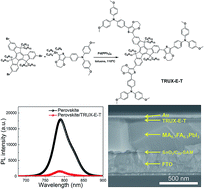
A cost-effective truxene-based hole selective material has been facilely synthesized for efficient perovskite solar cells with 82% FFs.
The content of this RSS Feed (c) The Royal Society of Chemistry
19 Dec 01:27
J. Mater. Chem. A, 2017, 5,24126-24130
DOI: 10.1039/C7TA07730K, Paper
Wei Wei, Yun Hang Hu
Highly conductive porous Na-embedded carbon nanowalls exhibit excellent counter electrode performance for HTM-free perovskite solar cells without metal electrodes.
The content of this RSS Feed (c) The Royal Society of Chemistry
19 Dec 00:51
by Jihoon Lee, Vellaiappillai Tamilavan, Kyung Hwan Rho, Sangha Keum, Ki Hong Park, Daehee Han, Yun Kyung Jung, Changduk Yang, Youngeup Jin, Jae-Won Jang, Jung Hyun Jeong, Sung Heum Park
Abstract
Despite the potential of ternary polymer solar cells (PSCs) to improve photocurrents, ternary architecture is not widely utilized for PSCs because its application has been shown to reduce fill factor (FF). In this paper, a novel technique is reported for achieving highly efficient ternary PSCs without this characteristic sharp decrease in FF by matching the highest occupied molecular orbital (HOMO) energy levels of two donor polymers. Our ternary device—made from a blend of wide-bandgap poly[4,8-bis(2-ethylhexyloxy)benzo[1,2-b:4,5-b′]dithiophene-alt-2,5-dioctyl-4,6-di(thiophen-2-yl)pyrrolo[3,4-c]pyrrole-1,3(2H,5H)-dione) (PBDT-DPPD) polymer, narrow-bandgap poly[4,8-bis[5-(2-ethylhexyl)-2-thienyl]benzo[1,2-b:4,5-b′]dithiophene-alt-(4-(2-ethylhexyl)-3-fluorothieno[3,4-b]thiophene-)-2-carboxylate-2- 6-diyl)] (PTB7-Th) polymer, and [6,6]-phenyl C70-butyric acid methyl ester (PC70BM)—exhibits a maximum power conversion efficiency of 10.42% with an open-circuit voltage of 0.80 V, a short-circuit current of 17.61 mA cm−2, and an FF of 0.74. In addition, this concept is extended to quaternary PSCs made by using three different donor polymers with similar HOMO levels. Interestingly, the quaternary PSCs also yield a good FF (≈0.70)—similar to those of corresponding binary PSCs. This study confirms that the HOMO levels of the polymers used on the photoactive layer of PSCs are a crucial determinant of a high FF.

Highly efficient ternary polymer solar cells (PSCs) are successfully demonstrated by matching the highest occupied molecular orbital (HOMO) energy levels of two donor polymers. Ternary or quaternary PSCs made using two or more donor polymers with similar HOMO levels allow efficient charge transport, and consequently offer notably a higher fill factor and power conversion efficiency.
16 Dec 00:40
by Wei Li, Yu Yan, Yanyan Gong, Jinlong Cai, Feilong Cai, Robert S. Gurney, Dan Liu, Andrew J. Pearson, David G. Lidzey, Tao Wang
Abstract
Crystallizable, high-mobility conjugated polymers have been employed as secondary donor materials in ternary polymer solar cells in order to improve device efficiency by broadening their spectral response range and enhancing charge dissociation and transport. Here, contrasting effects of two crystallizable polymers, namely, PffBT4T-2OD and PDPP2TBT, in determining the efficiency improvements in PTB7-Th:PC71BM host blends are demonstrated. A notable power conversion efficiency of 11% can be obtained by introducing 10% PffBT4T-2OD (relative to PTB7-Th), while the efficiency of PDPP2TBT-incorporated ternary devices decreases dramatically despite an enhancement in hole mobility and light absorption. Blend morphology studies suggest that both PffBT4T-2OD and PDPP2TBT are well dissolved within the host PTB7-Th phase and facilitate an increased degree of phase separation between polymer and fullerene domains. While negligible charge transfer is determined in binary blends of each polymer mixture, effective energy transfer is identified from PffBT4T-2OD to PTB7-Th that contributes to an improvement in ternary blend device efficiency. In contrast, energy transfer from PTB7-Th to PDPP2TBT worsens the efficiency of the ternary device due to inefficient charge dissociation between PDPP2TBT and PC71BM.

Contrasting effects in determining device efficiencies are observed when incorporating two crystallizable, high-mobility conjugated polymers, namely, PffBT4T-2OD and PDPP2TBT, as the secondary donor materials to PTB7-Th:PC71BM-based solar cells, due to different energy transfer between the electron-donating polymers in the ternary photovoltaic blends.
15 Dec 00:38
Energy Environ. Sci., 2018, 11,151-165
DOI: 10.1039/C7EE02415K, Paper
Wolfgang Tress, Mozhgan Yavari, Konrad Domanski, Pankaj Yadav, Bjoern Niesen, Juan Pablo Correa Baena, Anders Hagfeldt, Michael Graetzel
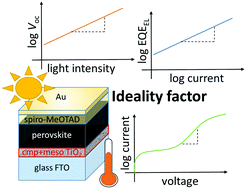
Insights into the interplay of different recombination mechanisms and their origins (bulk, surface) are provided comparing fresh, light-soaked and aged devices.
The content of this RSS Feed (c) The Royal Society of Chemistry

14 Dec 14:33
by Young-Kwang Jung, Keith T. Butler and Aron Walsh

The Journal of Physical Chemistry C
DOI: 10.1021/acs.jpcc.7b10000

14 Dec 14:31
Energy Environ. Sci., 2017, Accepted Manuscript
DOI: 10.1039/C7EE02901B, Communication
Silver Hamill Turren Cruz, Michael Saliba, Matthew T. Mayer, Hector Juarez Santiesteban, Xavier Mathew, Lea Nienhaus, Wolfgang Tress, Matthew P. Erodici, Meng-Ju Sher, Moungi G. Bawendi, Michael Gratzel, Antonio Abate, Anders Hagfeldt, Juan-Pablo Correa-Baena
Perovskite solar cells (PSCs) are very promising lab-scale technologies to deliver inexpensive solar electricity. Low-temperature, planar PSCs are of particularly interest for large-scale deployment due to their inherent suitability for...
The content of this RSS Feed (c) The Royal Society of Chemistry

14 Dec 14:29
by Thomas J. Aldrich, Steven M. Swick, Ferdinand S. Melkonyan and Tobin J. Marks

Chemistry of Materials
DOI: 10.1021/acs.chemmater.7b04616

14 Dec 14:24
by Nicholas D. Eastham, Jenna L. Logsdon, Eric F. Manley, Thomas J. Aldrich, Matthew J. Leonardi, Gang Wang, Natalia E. Powers-Riggs, Ryan M. Young, Lin X. Chen, Michael R. Wasielewski, Ferdinand S. Melkonyan, Robert P. H. Chang, Tobin J. Marks
Abstract
Bulk-heterojunction organic photovoltaic materials containing nonfullerene acceptors (NFAs) have seen remarkable advances in the past year, finally surpassing fullerenes in performance. Indeed, acceptors based on indacenodithiophene (IDT) have become synonymous with high power conversion efficiencies (PCEs). Nevertheless, NFAs have yet to achieve fill factors (FFs) comparable to those of the highest-performing fullerene-based materials. To address this seeming anomaly, this study examines a high efficiency IDT-based acceptor, ITIC, paired with three donor polymers known to achieve high FFs with fullerenes, PTPD3T, PBTI3T, and PBTSA3T. Excellent PCEs up to 8.43% are achieved from PTPD3T:ITIC blends, reflecting good charge transport, optimal morphology, and efficient ITIC to PTPD3T hole-transfer, as observed by femtosecond transient absorption spectroscopy. Hole-transfer is observed from ITIC to PBTI3T and PBTSA3T, but less efficiently, reflecting measurably inferior morphology and nonoptimal energy level alignment, resulting in PCEs of 5.34% and 4.65%, respectively. This work demonstrates the importance of proper morphology and kinetics of ITIC ![[RIGHTWARDS ARROW]](http://onlinelibrarystatic.wiley.com/undisplayable_characters/002192.gif) donor polymer hole-transfer in boosting the performance of polymer:ITIC photovoltaic bulk heterojunction blends.
donor polymer hole-transfer in boosting the performance of polymer:ITIC photovoltaic bulk heterojunction blends.

Three high-fill-factor OPV polymers, PTPD3T, PBTI3T, and PBTSA3T are paired with the high performance acceptor, ITIC. A maximum power conversion efficiency of 8.43% is achieved with PTPD3T:ITIC blends due primarily to increased short-circuit current density. Ultrafast hole-transfer from ITIC to PTPD3T is observed by femtosecond transient absorption measurements due to the superior blend morphology and improved charge transport versus PBTI3T:ITIC and PBTSA3T:ITIC blends.
14 Dec 14:23
by Seyoung Kee, Nara Kim, Byoungwook Park, Bong Seong Kim, Soonil Hong, Jong-Hoon Lee, Soyeong Jeong, Ahryun Kim, Soo-Young Jang, Kwanghee Lee
Abstract
Despite the high expectation of deformable and see-through displays for future ubiquitous society, current light-emitting diodes (LEDs) fail to meet the desired mechanical and optical properties, mainly because of the fragile transparent conducting oxides and opaque metal electrodes. Here, by introducing a highly conductive nanofibrillated conducting polymer (CP) as both deformable transparent anode and cathode, ultraflexible and see-through polymer LEDs (PLEDs) are demonstrated. The CP-based PLEDs exhibit outstanding dual-side light-outcoupling performance with a high optical transmittance of 75% at a wavelength of 550 nm and with an excellent mechanical durability of 9% bending strain. Moreover, the CP-based PLEDs fabricated on 4 µm thick plastic foils with all-solution processing have extremely deformable and foldable light-emitting functionality. This approach is expected to open a new avenue for developing wearable and attachable transparent displays.

Deformable and see-through polymer light-emitting diodes (PLEDs) are developed by using a highly conductive nanofibrillated conducting polymer (CP) as both ultraflexible transparent anode and cathode. The CP-based PLEDs fabricated on plastic foils with all-solution processing exhibit outstanding dual-side light-outcoupling performance and rollable/foldable light-emitting functionality with a high optical transmittance of 75% at a wavelength of 550 nm.
14 Dec 14:23
by Zhifang Wu, Sonia R. Raga, Emilio J. Juarez-Perez, Xuyang Yao, Yan Jiang, Luis K. Ono, Zhijun Ning, He Tian, Yabing B. Qi
Abstract
Because of the rapid rise of the efficiency, perovskite solar cells are currently considered as the most promising next-generation photovoltaic technology. Much effort has been made to improve the efficiency and stability of perovskite solar cells. Here, it is demonstrated that the addition of a novel organic cation of 2-(6-bromo-1,3-dioxo-1H-benzo[de]isoquinolin-2(3H)-yl)ethan-1-ammonium iodide (2-NAM), which has strong Lewis acid and base interaction (between C![[DOUBLE BOND]](http://onlinelibrarystatic.wiley.com/undisplayable_characters/00f8fe.gif) O and Pb) with perovskite, can effectively increase crystalline grain size and reduce charge carrier recombination of the double cation FA0.83MA0.17PbI2.51Br0.49 perovskite film, thus boosting the efficiency from 17.1 ± 0.8% to 18.6 ± 0.9% for the 0.1 cm2 cell and from 15.5 ± 0.5% to 16.5 ± 0.6% for the 1.0 cm2 cell. The champion cell shows efficiencies of 20.0% and 17.6% with active areas of 0.1 and 1.0 cm2, respectively. Moreover, the hysteresis behavior is suppressed and the stability is improved. The result provides a promising route to further elevate efficiency and stability of perovskite solar cells by the fine tuning of triple organic cations.
O and Pb) with perovskite, can effectively increase crystalline grain size and reduce charge carrier recombination of the double cation FA0.83MA0.17PbI2.51Br0.49 perovskite film, thus boosting the efficiency from 17.1 ± 0.8% to 18.6 ± 0.9% for the 0.1 cm2 cell and from 15.5 ± 0.5% to 16.5 ± 0.6% for the 1.0 cm2 cell. The champion cell shows efficiencies of 20.0% and 17.6% with active areas of 0.1 and 1.0 cm2, respectively. Moreover, the hysteresis behavior is suppressed and the stability is improved. The result provides a promising route to further elevate efficiency and stability of perovskite solar cells by the fine tuning of triple organic cations.

A new organic additive (2-NAM) is introduced into the perovskite film. The introduction of this additive boosts the efficiency from 17.1 ± 0.8% to 18.6 ± 0.9% for the 0.1 cm2 area cells and from 15.5 ± 0.5% to 16.5 ± 0.6% for the 1.0 cm2 area cells. Moreover, the hydrophobic nature of this additive effectively reduces the influence from moisture, thus enhancing the solar cell stability.
14 Dec 00:38
by Gan Jin, Nannan Chen, Qingsen Zeng, Fangyuan Liu, Wei Yuan, Siyuan Xiang, Tanglue Feng, Xiaohang Du, Tianjiao Ji, Lijing Wang, Yaohua Wang, Henan Sun, Haizhu Sun, Bai Yang
Abstract
Aqueous-solution-processed solar cells (ASCs) are promising candidates of the next-generation large-area, low-cost, and flexible photovoltaic conversion equipment because of their unique environmental friendly property. Aqueous-solution-processed polymer/nanocrystals (NCs) hybrid solar cells (AHSCs) can effectively integrate the advantages of the polymer (e.g., flexibility and lightweight) and the inorganic NCs (e.g., high mobility and broad absorption), and therefore be considered as an ideal system to further improve the performance of ASCs. In this work, double-side bulk heterojunction (BHJ), in which one BHJ combines the active material with electron transport material and the other combines the active material with hole transport material, is developed in the AHSCs. Through comparing with the single-side BHJ device, promoted carrier extraction, enhanced internal quantum efficiency, extended width of the depletion region, and prolonged carrier lifetime are achieved in double-side BHJ devices. As a result, power conversion efficiency exceeding 6% is obtained, which breaks the bottleneck efficiency around ≈5.5%. This work demonstrates a device architecture which is more remarkable compared with the traditional only donor–acceptor blended BHJ. Under conservative estimation, it provides instructive architecture not only in the ASCs, but also in the organic solar cells (SCs), quantum dot SCs, and perovskite SCs.

A double-side bulk heterojunction (BHJ) is developed in the aqueous-solution-processed solar cells (ASCs). Through comparing with the single-side BHJ device, promoted carrier extraction, enhanced internal quantum efficiency, extended width of the depletion region, and prolonged carrier lifetime are achieved in double-side BHJ devices. As a result, power conversion efficiency exceeding 6% is obtained, which breaks the bottleneck efficiency around ≈5.5% in the ASCs.
14 Dec 00:36
by Wei E. I. Sha, Hong Zhang, Zi Shuai Wang, Hugh L. Zhu, Xingang Ren, Francis Lin, Alex K.-Y. Jen, Wallace C. H. Choy
Abstract
A modified detailed balance model is built to understand and quantify efficiency loss of perovskite solar cells. The modified model captures the light-absorption-dependent short-circuit current, contact and transport-layer-modified carrier transport, as well as recombination and photon-recycling-influenced open-circuit voltage. The theoretical and experimental results show that for experimentally optimized perovskite solar cells with the power conversion efficiency of 19%, optical loss of 25%, nonradiative recombination loss of 35%, and ohmic loss of 35% are the three dominant loss factors for approaching the 31% efficiency limit of perovskite solar cells. It is also found that the optical loss climbs up to 40% for a thin-active-layer design. Moreover, a misconfigured transport layer introduces above 15% of energy loss. Finally, the perovskite-interface-induced surface recombination, ohmic loss, and current leakage should be further reduced to upgrade device efficiency and eliminate hysteresis effect. This work contributes to fundamental understanding of device physics of perovskite solar cells. The developed model offers a systematic design and analysis tool to photovoltaic science and technology.

A modified detailed balance model is built to understand and quantify the efficiency loss of perovskite solar cells. The optical loss, nonradiative recombination loss, and ohmic loss are identified quantitatively. The perovskite-interface-induced surface recombination, ohmic loss, and current leakage are also analyzed.
14 Dec 00:35
by Zhengkun Du, Xichang Bao, Yonghai Li, Deyu Liu, Jiuxing Wang, Chunming Yang, Reinhard Wimmer, Lars Wagner Städe, Renqiang Yang, Donghong Yu
Abstract
Based on the most recently significant progress within the last one year in organic photovoltaic research from either alkylthiolation or fluorination on benzo[1,2-b:4,5-b′]dithiophene moiety for high efficiency polymer solar cells (PSCs), two novel simultaneously fluorinated and alkylthiolated benzo[1,2-b:4,5-b′] dithiophene (BDT)-based donor–acceptor (D–A) polymers, poly(4,8-bis(5′-((2″-ethylhexyl)thio)-4′-fluorothiophen-2′-yl)benzo[1,2-b:4,5-b′]dithiophene-2,6-diyl)-alt-2′-ethylhexyl-3-fluorothieno[3,4-b]thiophene-2-carboxylate (PBDTT-SF-TT) and poly(4,8-bis(5′-((2″-ethylhexyl)thio)-4′-fluorothiophen-2′-yl)benzo[1,2-b:4,5-b′]dithiophene-2,6-diyl)-alt-1,3-bis(thiophen-2-yl)-5,7-bis(2-ethylhexyl)benzo[1,2-c:4,5-c′]dithiophene-4,8-dione (PBDTT-SF-BDD), namely, via an advantageous and synthetically economic route for the key monomer are reported herein. Synergistic effects of fluorination and alkylthiolation on BDT moieties are discussed in detail, which is based on the superior balance between high Voc and large Jsc when PBDTT-SF-TT/PC71BM and PBDTT-SF-BDD/PC71BM solar cells present their high Voc as 1.00 and 0.97 V (associated with their deep highest occupied molecular orbital level of −5.54 and −5.61 eV), a moderately high Jsc of 14.79 and 14.70 mA cm−2, and thus result a high power conversion efficiency of 9.07% and 9.72%, respectively. Meanwhile, for PBDTT-SF-TT, a very low energy loss of 0.59 eV is pronounced, leading to the promisingly high voltage, and furthermore performance study and morphological results declare an additive-free PSC from PBDTT-SF-TT, which is beneficial to practical applications.

Superior balance between high Voc and large Jsc is realized via synergistic effect of fluorination and alkylthiolation on benzo[1,2-b:4,5-b′] dithiophene (BDT) moiety, leading to new efficient conventional BDT-based polymer solar cells are achieved with high power conversion efficiency of 9.07% for poly(4,8-bis(5′-((2″-ethylhexyl)thio)-4′-fluorothiophen-2′-yl)benzo[1,2-b:4,5-b′]dithiophene-2,6-diyl)-alt-2′-ethylhexyl-3-fluorothieno[3,4-b]thiophene-2-carboxylate and 9.72% for poly(4,8-bis(5′-((2″-ethylhexyl)thio)-4′-fluorothiophen-2′-yl)benzo[1,2-b:4,5-b′]dithiophene-2,6-diyl)-alt-1,3-bis(thiophen-2-yl)-5,7-bis(2-ethylhexyl)benzo[1,2-c:4,5-c′]dithiophene-4,8-dione.
13 Dec 08:56
by J. Clay Hamill, Jeffrey Schwartz and Yueh-Lin Loo

ACS Energy Letters
DOI: 10.1021/acsenergylett.7b01057
13 Dec 08:55
by Pingqi Gao, Zhenhai Yang, Jian He, Jing Yu, Peipei Liu, Juye Zhu, Ziyi Ge, Jichun Ye
Abstract
By combining the most successful heterojunctions (HJ) with interdigitated back contacts, crystalline silicon (c-Si) solar cells (SCs) have recently demonstrated a record efficiency of 26.6%. However, such SCs still introduce optical/electrical losses and technological issues due to parasitic absorption/Auger recombination inherent to the doped films and the complex process of integrating discrete p+- and n+-HJ contacts. These issues have motivated the search for alternative new functional materials and simplified deposition technologies, whereby carrier-selective contacts (CSCs) can be formed directly with c-Si substrates, and thereafter form IBC cells, via a dopant-free method. Screening and modifying CSC materials in a wider context is beneficial for building dopant-free HJ contacts with better performance, shedding new light on the relatively mature Si photovoltaic field. In this review, a significant number of achievements in two representative dopant-free hole-selective CSCs, i.e., poly(3,4-ethylene dioxythiophene):poly(styrenesulfonate)/Si and transition metal oxides/Si, have been systemically presented and surveyed. The focus herein is on the latest advances in hole-selective materials modification, interfacial passivation, contact resistivity, light-trapping structure and device architecture design, etc. By analyzing the structure–property relationships of hole-selective materials and assessing their electrical transport properties, promising functional materials as well as important design concepts for such CSCs toward high-performance SCs have been highlighted.

Carrier-selective dopant-free contacts with Si are of great interest to both fundamental researchers and the photovoltaic industry due to the extreme simplifications in device structure and manufacturing procedure. Here, recent advances and open challenges in two typical hole-selective designs of organic poly(3,4-ethylene dioxythiophene):poly(styrenesulfonate) (PEDOT:PSS) and transition metal oxides are reported, examining the topic from both the materials and device engineering.
09 Dec 11:11
by Léo Bucher, Loïc Tanguy, Nicolas Desbois, Paul-Ludovic Karsenti, Pierre D. Harvey, Claude P. Gros, Ganesh D. Sharma
A low bandgap D-π-A polymer (PPDPP; D = Zn-porphyrin, A = diketopyrrolopyrrole, π = ethynyle linker) has been synthesized and used as an electron donor for the fabrication of solution processed bulk heterojunction polymer solar cells (PSCs). PC71BM is used as the electron acceptor. After the optimization of the PPDPP: PC71BM weight ratio in 2-methyltetrahydrofuran (2-MeTHF), the PSC based on PPDPP: PC71BM (1:2) showed an overall power conversion efficiency (PCE) of 4.18% with Jsc = 9.75 mA cm−2, Voc = 0.78 V, and FF = 0.54. After the thermal annealing (TA) and subsequent solvent vapor annealing (SVA) of the active layer, the resulting device showed an overall PCE of 6.44% (Jsc = 13.18 mA cm−2, Voc = 0.74 V, and FF = 0.66) with a small voltage loss of 0.51 eV. The improvement in PCE after the TA and SVA treatment of the active layer is attributed to an enhancement of Jsc and FF related to a more favorable nanoscale morphology for the exciton dissociation and charge transport as evidenced by the increased hole mobility.

Since organization in the solid state is of outmost importance for the optical, charge transport and photovoltaic properties, it would be imperative to control the aggregation mode “on demand” in order to design materials with tunable properties.
09 Dec 11:10
by Kai Zhang, Zhiming Chen, Ardalan Armin, Sheng Dong, Ruoxi Xia, Hin-Lap Yip, Safa Shoaee, Fei Huang, Yong Cao
While the performance of laboratory-scale organic solar cells (OSCs) continues to grow, development of high efficiency large area OSCs remains a big challenge. Although a few attempts to produce large area organic solar cells (OSCs) have been reported, there are still challenges on the way to realizing efficient module devices, such as the low compatibility of the thickness-sensitive active layer with large area coating techniques, the frequent need for toxic solvents and tedious optimization processes used during device fabrication. In this work, highly efficient thickness-insensitive OSCs based on PTB7-Th:PC71BM that processed with single-component green solvent 2-methylanisole are presented, in which both junction thickness limitation and solvent toxicity issues are simultaneously addressed. Careful investigation reveals that this green solvent prevents the evolution of PC71BM into large area clusters resulting in reduced charge carrier recombination, and largely eliminates trapping centers, and thus improves the thickness tolerance of the films. These findings enable us to address the scalability and solvent toxicity issues and to fabricate a 16 cm2 OSC with doctor-blade coating with a state-of-the-art power conversion efficiency of 7.5% using green solvent.

Highly efficient thickness insensitive OSCs based on PTB7-Th:PC71BM is achieved by controling the morphology evolution with a single-component green solvent 2-methylanisole. That way both the junction thickness limitation and the solvent toxicity issues are simultaneously addressed. These findings enable the fabrication of a 16 cm2 OSC with a doctor-blade coating and a state-of-the-art power conversion efficiency of 7.5%, using green solvent.
09 Dec 11:10
by Apoorva Singh, Pabitra K. Nayak, Suman Banerjee, Zhiping Wang, Jacob Tse-Wei Wang, Henry J. Snaith, K.S. Narayan
We report a clear correlation of the features observed in photocurrent noise-fluctuations to the performance parameters of hybrid perovskite solar cells. The general trend of increasing noise amplitude which spreads over a wider range of frequency as a function of aging is established. High-resolution spatial mapping of the photocurrent in typical devices and the associated variation of the noise spectrum confirms the underlying trend.

Hybrid perovskite solar cells of different geometrical structures and at different degradation stages are investigated using noise spectroscopy. A direct correlation between the photocurrent fluctuations and the device performance is established. The results are verified with the complementary studies using thermal admittance spectroscopy and local illumination photocurrent scanning. The insights developed and the approach, potentially have huge implication in monitoring stability and degradation in solar cell devices and large area panels.
04 Dec 06:54
by Yuchuan Shao, Ye Liu, Xiaolong Chen, Chen Chen, Ibrahim Sarpkaya, Zhaolai Chen, Yanjun Fang, Jaemin Kong, Kenji Watanabe, Takashi Taniguchi, André Taylor, Jinsong Huang and Fengnian Xia

Nano Letters
DOI: 10.1021/acs.nanolett.7b02980

01 Dec 00:43
by Yu-Tang Hsiao, Chia-Hua Li, Shao-Ling Chang, Soowon Heo, Keisuke Tajima, Yen-Ju Cheng and Chain-Shu Hsu

ACS Applied Materials & Interfaces
DOI: 10.1021/acsami.7b12612

01 Dec 00:42
by Qiqi He, Kai Yao, Xiaofeng Wang, Xuefeng Xia, Shifeng Leng and Fan Li

ACS Applied Materials & Interfaces
DOI: 10.1021/acsami.7b13621

01 Dec 00:41
by Dong Han, Cuncun Wu, Yunbiao Zhao, Yi Chen, Lixin Xiao and Ziqiang Zhao

ACS Applied Materials & Interfaces
DOI: 10.1021/acsami.7b12476

01 Dec 00:39
by Ming-Hsien Li, Yu-Syuan Yang, Kuo-Chin Wang, Yu-Hsien Chiang, Po-Shen Shen, Wei-Chih Lai, Tzung-Fang Guo and Peter Chen

ACS Applied Materials & Interfaces
DOI: 10.1021/acsami.7b12367