Shared posts

26 Oct 17:08

Nanotube Electromechanics beyond Carbon: The Case of WS2

by Roi Levi, Jonathan Garel, David Teich, Gotthard Seifert, Reshef Tenne and Ernesto Joselevich

TOC Graphic

ACS Nano
DOI: 10.1021/acsnano.5b05468
26 Oct 16:53

Structural and Chemical Dynamics of Pyridinic-Nitrogen Defects in Graphene

by Yung-Chang Lin, Po-Yuan Teng, Chao-Hui Yeh, Masanori Koshino, Po-Wen Chiu and Kazu Suenaga

TOC Graphic

Nano Letters
DOI: 10.1021/acs.nanolett.5b02831
26 Oct 10:53

Structurally driven one-dimensional electron confinement in sub-5-nm graphene nanowrinkles

by Hyunseob Lim

Article

Wrinkles in graphene can restrict the motion of electrons to one dimension. Here, the authors observe a one-dimensional van Hove singularity and bandgap opening in a five nanometre wide wrinkle, which enables them to create a metallic-semiconducting-metallic junction in a single graphene sheet.

Nature Communications doi: 10.1038/ncomms9601

Authors: Hyunseob Lim, Jaehoon Jung, Rodney S. Ruoff, Yousoo Kim

23 Oct 12:57

Formation of Pt and Rh Nanoclusters on a Graphene Moiré Pattern on Cu(111)

by Esin Soy, Zhu Liang and Michael Trenary

TOC Graphic

The Journal of Physical Chemistry C
DOI: 10.1021/acs.jpcc.5b06472
20 Oct 15:06

Closing the Nanographene Gap: Surface-Assisted Synthesis of Peripentacene from 6,6′-Bipentacene Precursors

by Cameron Rogers, Chen Chen, Zahra Pedramrazi, Arash A. Omrani, Hsin-Zon Tsai, Han Sae Jung, Song Lin, Michael F. Crommie, Felix R. Fischer

Abstract

The thermally induced cyclodehydrogenation reaction of 6,6′-bipentacene precursors on Au(111) yields peripentacene stabilized by surface interactions with the underlying metallic substrate. STM and atomic-resolution non-contact AFM imaging reveal rectangular flakes of nanographene featuring parallel pairs of zig-zag and armchair edges resulting from the lateral fusion of two pentacene subunits. The synthesis of a novel molecular precursor 6,6′-bipentacene, itself a synthetic target of interest for optical and electronic applications, is also reported. The scalable synthetic strategy promises to afford access to a structurally diverse class of extended periacenes and related polycyclic aromatic hydrocarbons as advanced materials for electronic, spintronic, optical, and magnetic devices.

Thumbnail image of graphical abstract

Zip it up: Synthesis and atomic-resolution non-contact AFM imaging of a surface-stabilized peripentacene is reported. The key intermediate is the metastable 6,6-bipentacene precursor, which was obtained through a Staudinger-type diazo-thioketone coupling followed by selective 1,4-elimination.

09 Oct 14:56

Exchange bias and room-temperature magnetic order in molecular layers

by Manuel Gruber

Nature Materials 14, 981 (2015). doi:10.1038/nmat4361

Authors: Manuel Gruber, Fatima Ibrahim, Samy Boukari, Hironari Isshiki, Loïc Joly, Moritz Peter, Michał Studniarek, Victor Da Costa, Hashim Jabbar, Vincent Davesne, Ufuk Halisdemir, Jinjie Chen, Jacek Arabski, Edwige Otero, Fadi Choueikani, Kai Chen, Philippe Ohresser, Wulf Wulfhekel, Fabrice Scheurer, Wolfgang Weber, Mebarek Alouani, Eric Beaurepaire & Martin Bowen

Molecular semiconductors may exhibit antiferromagnetic correlations well below room temperature. Although inorganic antiferromagnetic layers may exchange bias single-molecule magnets, the reciprocal effect of an antiferromagnetic molecular layer magnetically pinning an inorganic ferromagnetic layer through exchange bias has so far not been observed. We report on the magnetic interplay, extending beyond the interface, between a cobalt ferromagnetic layer and a paramagnetic organic manganese phthalocyanine (MnPc) layer. These ferromagnetic/organic interfaces are called spinterfaces because spin polarization arises on them. The robust magnetism of the Co/MnPc spinterface stabilizes antiferromagnetic ordering at room temperature within subsequent MnPc monolayers away from the interface. The inferred magnetic coupling strength is much larger than that found in similar bulk, thin or ultrathin systems. In addition, at lower temperature, the antiferromagnetic MnPc layer induces an exchange bias on the Co film, which is magnetically pinned. These findings create new routes towards designing organic spintronic devices.

09 Oct 14:54

Epitaxial growth of two-dimensional stanene

by Feng-feng Zhu

Nature Materials 14, 1020 (2015). doi:10.1038/nmat4384

Authors: Feng-feng Zhu, Wei-jiong Chen, Yong Xu, Chun-lei Gao, Dan-dan Guan, Can-hua Liu, Dong Qian, Shou-Cheng Zhang & Jin-feng Jia

09 Oct 11:46

A molecular switch based on the manipulation of 1,3-dichlorobenzene on Ge(001) between two adsorption sites by inelastic tunneling electrons

Phys. Chem. Chem. Phys., 2015, 17,28830-28836
DOI: 10.1039/C5CP04001A, Paper
A. Wykrota, M. Bazarnik, R. Czajka, K. Morgenstern
A molecular switch between two specific adsorption sites of meta-dichlorobenzene on Ge(001) is initiated by the electronic excitation of the molecule.
The content of this RSS Feed (c) The Royal Society of Chemistry
15 Sep 12:05

Ballistic Josephson junctions in edge-contacted graphene

by V. E. Calado

Nature Nanotechnology 10, 761 (2015). doi:10.1038/nnano.2015.156

Authors: V. E. Calado, S. Goswami, G. Nanda, M. Diez, A. R. Akhmerov, K. Watanabe, T. Taniguchi, T. M. Klapwijk & L. M. K. Vandersypen

Hybrid graphene–superconductor devices have attracted much attention since the early days of graphene research. So far, these studies have been limited to the case of diffusive transport through graphene with poorly defined and modest-quality graphene/superconductor interfaces, usually combined with small critical magnetic fields of the superconducting electrodes. Here, we report graphene-based Josephson junctions with one-dimensional edge contacts of molybdenum rhenium. The contacts exhibit a well-defined, transparent interface to the graphene, have a critical magnetic field of 8 T at 4 K, and the graphene has a high quality due to its encapsulation in hexagonal boron nitride. This allows us to study and exploit graphene Josephson junctions in a new regime, characterized by ballistic transport. We find that the critical current oscillates with the carrier density due to phase-coherent interference of the electrons and holes that carry the supercurrent caused by the formation of a Fabry–Pérot cavity. Furthermore, relatively large supercurrents are observed over unprecedented long distances of up to 1.5 μm. Finally, in the quantum Hall regime we observe broken symmetry states while the contacts remain superconducting. These achievements open up new avenues to exploit the Dirac nature of graphene in interaction with the superconducting state.

08 Sep 14:37

Atomic-Scale Insight into Tautomeric Recognition, Separation, and Interconversion of Guanine Molecular Networks on Au(111)

by Chi Zhang, Lei Xie, Likun Wang, Huihui Kong, Qinggang Tan and Wei Xu

TOC Graphic

Journal of the American Chemical Society
DOI: 10.1021/jacs.5b07314
31 Aug 11:09

H2 Activation and Spillover on Catalytically Relevant Pt–Cu Single Atom Alloys

by Felicia R. Lucci, Matthew D. Marcinkowski, Timothy J. Lawton and E. Charles H. Sykes

TOC Graphic

The Journal of Physical Chemistry C
DOI: 10.1021/acs.jpcc.5b05562
20 Aug 14:03

Nature of the bias-dependent symmetry reduction of iron phthalocyanine on Cu(111)

by Olesia Snezhkova, Johann Lüder, Alissa Wiengarten, Shiri R. Burema, Felix Bischoff, Yuanqin He, Jan Rusz, Jan Knudsen, Marie-Laure Bocquet, Knud Seufert, Johannes V. Barth, Willi Auwärter, Barbara Brena, and Joachim Schnadt

Author(s): Olesia Snezhkova, Johann Lüder, Alissa Wiengarten, Shiri R. Burema, Felix Bischoff, Yuanqin He, Jan Rusz, Jan Knudsen, Marie-Laure Bocquet, Knud Seufert, Johannes V. Barth, Willi Auwärter, Barbara Brena, and Joachim Schnadt

Subtle changes in the geometric and electronic properties of supported molecules, with a potential impact on the functioning of molecular devices, can typically be imaged by scanning probe microscopy, but their exact origin and nature often remain unclear. Here we show explicitly that the symmetry r…


[Phys. Rev. B 92, 075428] Published Wed Aug 19, 2015

17 Aug 12:20

Probing Charges on the Atomic Scale by Means of Atomic Force Microscopy

by F. Albrecht, J. Repp, M. Fleischmann, M. Scheer, M. Ondráček, and P. Jelínek

Author(s): F. Albrecht, J. Repp, M. Fleischmann, M. Scheer, M. Ondráček, and P. Jelínek

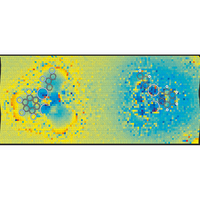
A new scanning-probe-microscopy technique can image the polarity of individual chemical bonds.

[Phys. Rev. Lett. 115, 076101] Published Thu Aug 13, 2015

29 Jul 11:46

A molecular propeller effect for chiral separation and analysis

by Jonathon B. Clemens

Article

Separation and analysis of enantiomers is a difficult task due to the normally identical physical properties they display. Here, the authors show how chiral molecules with non-zero dipoles can be propelled in opposite directions under the influence of a rotating electric field.

Nature Communications doi: 10.1038/ncomms8868

Authors: Jonathon B. Clemens, Osman Kibar, Mirianas Chachisvilis

24 Jul 14:06

Atomic-Scale Dynamics of Surface-Catalyzed Hydrogenation/Dehydrogenation: NH on Pt(111)

by Zhu Liang, Hyun Jin Yang, Junepyo Oh, Jaehoon Jung, Yousoo Kim and Michael Trenary

TOC Graphic

ACS Nano
DOI: 10.1021/acsnano.5b02774
20 Jul 11:41

Quantitative Prediction of Molecular Adsorption: Structure and Binding of Benzene on Coinage Metals

by Wei Liu, Friedrich Maaß, Martin Willenbockel, Christopher Bronner, Michael Schulze, Serguei Soubatch, F. Stefan Tautz, Petra Tegeder, and Alexandre Tkatchenko

Author(s): Wei Liu, Friedrich Maaß, Martin Willenbockel, Christopher Bronner, Michael Schulze, Serguei Soubatch, F. Stefan Tautz, Petra Tegeder, and Alexandre Tkatchenko

Interfaces between organic molecules and solid surfaces play a prominent role in heterogeneous catalysis, molecular sensors and switches, light-emitting diodes, and photovoltaics. The properties and the ensuing function of such hybrid interfaces often depend exponentially on molecular adsorption hei…


[Phys. Rev. Lett. 115, 036104] Published Fri Jul 17, 2015

20 Jul 11:39

Hammond Postulate Mirroring Enables Enantiomeric Enrichment of Phosphorus Compounds via Two Thermodynamically Interconnected Sequential Stereoselective Processes

by Kamalraj V. Rajendran, Kirill V. Nikitin and Declan G. Gilheany

TOC Graphic

Journal of the American Chemical Society
DOI: 10.1021/jacs.5b04415
16 Jul 13:43

1,3-Diiodobenzene on Cu(111) - an exceptional case of on-surface Ullmann coupling

Chem. Commun., 2015, 51,13301-13304
DOI: 10.1039/C5CC04453G, Communication
Atena Rastgoo Lahrood, Jonas Bjork, Wolfgang M. Heckl, Markus Lackinger
Ullmann coupling of 1,3-diiodobenzene is studied on Cu(111) surfaces in ultra-high vacuum (UHV).
The content of this RSS Feed (c) The Royal Society of Chemistry
09 Jul 21:49

Strong antiferromagnetic exchange between manganese phthalocyanine and ferromagnetic europium oxide

Chem. Commun., 2015, 51,12958-12961
DOI: 10.1039/C5CC01823D, Communication
Open Access Open Access
Creative Commons Licence&nbsp This article is licensed under a Creative Commons Attribution 3.0 Unported Licence.
Christian Wackerlin, Fabio Donati, Aparajita Singha, Romana Baltic, Anne-Christine Uldry, Bernard Delley, Stefano Rusponi, Jan Dreiser
A record strong antiferromagnetic exchange interaction between an organic magnetic semiconductor and an insulating ferromagnetic oxide is observed.
The content of this RSS Feed (c) The Royal Society of Chemistry
06 Jul 13:24

Programmed assembly of 4,2[prime or minute]:6[prime or minute],4[prime or minute][prime or minute]-terpyridine derivatives into porous, on-surface networks

Chem. Commun., 2015, 51,12297-12300
DOI: 10.1039/C5CC04186D, Communication
Thomas Nijs, Frederik J. Malzner, Shadi Fatayer, Aneliia Wackerlin, Sylwia Nowakowska, Edwin C. Constable, Catherine E. Housecroft, Thomas A. Jung
4,2[prime or minute]:6[prime or minute],4[prime or minute][prime or minute]-Terpyridine building blocks self-assemble into hydrogen-bonded domains; addition of copper atoms results in an on-surface transformation into a coordination network.
The content of this RSS Feed (c) The Royal Society of Chemistry
26 Jun 16:03

Trapping of Charged Gold Adatoms by Dimethyl Sulfoxide on a Gold Surface

by Zhijing Feng, Simone Velari, Albano Cossaro, Carla Castellarin-Cudia, Alberto Verdini, Erik Vesselli, Carlo Dri, Maria Peressi, Alessandro De Vita and Giovanni Comelli

TOC Graphic

ACS Nano
DOI: 10.1021/acsnano.5b02284
26 May 11:13

Quantum theory of collective strong coupling of molecular vibrations with a microcavity mode

by Javier del Pino, Johannes Feist and Francisco J Garcia-Vidal
Maciej.bazarnik

Jens what you think of this one?

We develop a quantum mechanical formalism to treat the strong coupling between an electromagnetic mode and a vibrational excitation of an ensemble of organic molecules. By employing a Bloch–Redfield–Wangsness approach, we show that the influence of dephasing-type interactions, i.e., elastic collisions with a background bath of phonons, critically depends on the nature of the bath modes. In particular, for long-range phonons corresponding to a common bath, the dynamics of the ‘bright state’ (the collective superposition of molecular vibrations coupling to the cavity mode) is effectively decoupled from other system eigenstates. For the case of independent baths (or short-range phonons), incoherent energy transfer occurs between the bright state and the uncoupled dark states. However, these processes are suppressed when the Rabi splitting is larger than the frequency range of the bath modes, as achieved in a recent experiment (Shalabney et al 2015 Nat. Commun. [...]
12 May 11:35

Bending and buckling of narrow armchair graphene nanoribbons via STM manipulation

by Joost van der Lit, Peter H Jacobse, Daniel Vanmaekelbergh and Ingmar Swart
Semiconducting graphene nanoribbons (GNRs) are envisioned to play an important role in future electronics. This requires the GNRs to be placed on a surface where they may become strained. Theory predicts that axial strain, i.e. in-plane bending of the GNR, will cause a change in the band gap of the GNR. This may negatively affect device performance. Using the tip of a scanning tunneling microscope we controllably bent and buckled atomically well-defined narrow armchair GNR and subsequently probed the changes in the local density of states. These experiments show that the band gap of 7-ac-GNR is very robust to in-plane bending and out-of-plane buckling.
30 Apr 15:35

Giant Single-Molecule Anisotropic Magnetoresistance at Room Temperature

by Ji-Jun Li, Mei-Lin Bai, Zhao-Bin Chen, Xiao-Shun Zhou, Zhan Shi, Meng Zhang, Song-Yuan Ding, Shi-Min Hou, Walther Schwarzacher, Richard J. Nichols and Bing-Wei Mao

TOC Graphic

Journal of the American Chemical Society
DOI: 10.1021/ja512483y
30 Apr 15:28

Snapshots of the retarded interaction of charge carriers with ultrafast fluctuations in cuprates

by S. Dal Conte

Nature Physics 11, 421 (2015). doi:10.1038/nphys3265

Authors: S. Dal Conte, L. Vidmar, D. Golež, M. Mierzejewski, G. Soavi, S. Peli, F. Banfi, G. Ferrini, R. Comin, B. M. Ludbrook, L. Chauviere, N. D. Zhigadlo, H. Eisaki, M. Greven, S. Lupi, A. Damascelli, D. Brida, M. Capone, J. Bonča, G. Cerullo & C. Giannetti

30 Apr 15:26

Surface electron perturbations and the collective behaviour of atoms adsorbed on a cylinder

by Boris Dzyubenko

Nature Physics 11, 398 (2015). doi:10.1038/nphys3302

Authors: Boris Dzyubenko, Hao-Chun Lee, Oscar E. Vilches & David H. Cobden

A single-walled carbon nanotube presents a seamless cylindrical graphene surface and is thus an ideal adsorption substrate for investigating the physics of atoms and molecules in two dimensions and approaching the one-dimensional limit. When a suspended nanotube is made into a transistor, frequency shifts of its mechanical resonances allow precise measurement of the adsorbed mass down to the single-atom level. Here we show that its electrical characteristics are also modified by the adsorbed atoms and molecules, partly as a result of a small charge transfer between them and the carbon surface. We quantify this charge transfer, finding it similar for many different species, and use the associated sensitivity of the conductance to carry out the studies of phase transitions, critical scaling, dynamical fluctuations and dissipative metastable states in a system of interacting atoms confined to a cylindrical geometry.

24 Apr 17:20

Evidence for Flat Bands near the Fermi Level in Epitaxial Rhombohedral Multilayer Graphene

by Debora Pierucci, Haikel Sediri, Mahdi Hajlaoui, Jean-Christophe Girard, Thomas Brumme, Matteo Calandra, Emilo Velez-Fort, Gilles Patriarche, Mathieu G. Silly, Gabriel Ferro, Véronique Soulière, Massimiliano Marangolo, Fausto Sirotti, Francesco Mauri and Abdelkarim Ouerghi

TOC Graphic

ACS Nano
DOI: 10.1021/acsnano.5b01239
22 Apr 12:08

Graphene-Induced Magnetic Anisotropy of a Two-Dimensional Iron Phthalocyanine Network

by Simone Lisi, Pierluigi Gargiani, Mattia Scardamaglia, Nicholas B. Brookes, Violetta Sessi, Carlo Mariani and Maria Grazia Betti

TOC Graphic

The Journal of Physical Chemistry Letters
DOI: 10.1021/acs.jpclett.5b00260
22 Apr 12:08

STM Studies of Self-Assembled Tetrathiafulvalene (TTF) Derivatives on Graphene: Influence of the Mode of Deposition

by Maya N. Nair, Cristina Mattioli, Marion Cranney, Jean-Pierre Malval, François Vonau, Dominique Aubel, Jean-Luc Bubendorff, André Gourdon and Laurent Simon

TOC Graphic

The Journal of Physical Chemistry C
DOI: 10.1021/acs.jpcc.5b00857
21 Apr 09:05

Quantum Hall effect on top and bottom surface states of topological insulator (Bi1−xSbx)2Te3 films

by R. Yoshimi

Article

Three-dimensional topological insulators are materials that are nonmagnetic insulators in the bulk but exhibit metallic surface states. Yoshimi et al , now identify a signature of such two-dimensional states, the quantum Hall effect, in bismuth-based chalcogenide topological insulators.

Nature Communications doi: 10.1038/ncomms7627

Authors: R. Yoshimi, A. Tsukazaki, Y. Kozuka, J. Falson, K.S. Takahashi, J.G. Checkelsky, N. Nagaosa, M. Kawasaki, Y. Tokura