03 Jul 07:36
by Yi‐Yang Tang,
Si‐Yu Gao,
Lan Yang,
Peng‐Lin Zhang

A phosphine–photoredox dual catalytic system enables efficient decarboxylative iodination and chlorination of alkyl carboxylic acids through in situ generation of N-hydroxyphthalimide (NHPI) ester intermediates, enabling broad substrate scope with high functional group tolerance under mild conditions. The versatility of this newly developed reaction is illustrated through its application in the late-stage functionalization of complex natural products and pharmaceuticals.
A phosphine–photoredox dual catalytic system enables efficient decarboxylative iodination and chlorination of alkyl carboxylic acids through in situ generation of N-hydroxyphthalimide (NHPI) ester intermediates, enabling broad substrate scope with high functional group tolerance under mild conditions. Utilizing ICH2CH2I as the iodine source, primary, secondary, and tertiary alkyl acids are converted to alkyl iodides, while selective chlorination of primary substrates is accomplished with DCE, demonstrating tunable halogenation reactivity. The versatility of this newly developed reaction is illustrated through its application in the late-stage functionalization of complex natural products and pharmaceuticals.
02 Jul 08:34
by Masashi Hattori
Nature Chemistry, Published online: 27 June 2025; doi:10.1038/s41557-025-01855-3
The production of fluorination agents generally involves the formation of toxic hydrogen fluoride. Now, a mechanochemical protocol to decompose the fluoropolymer polyvinylidene fluoride has been developed, generating potassium fluoride as a fluorinating agent. This approach provides a safer and sustainable fluorination strategy for efficient S–F, C(sp2)–F and C(sp3)–F bond formation.
02 Jul 07:46
by Theodore Tyrikos‐Ergas,
Sevasti Agiakloglou,
Antonio J. LaPorte,
Wesley Wang,
Chieh‐Kai Chan,
Clare E. Wells,
Christopher K. Rakowski,
Rachel I. Hammond,
Jia Qiu,
Jonathan D. Raymond,
Tiago Vieira,
John Limanto,
Marc N. Feiglin,
Daniel J. Blair,
Martin D. Burke

Automated iterative assembly of MIDA or TIDA boronate building blocks enables generalized and automated preparation of many different types of small functional molecules in a modular fashion. However, until now, this engine could not leverage nitrogen atoms as iteration handles, excluding molecules rich in N─C and C─C bonds. Here, we disclose a new iteration-enabling group, CbzT, that reversibly attenuates the reactivity of nitrogen atoms and enables generalized catch-and-release purification. Leveraging CbzT, we achieve the automated modular synthesis of Imatinib (Gleevec), a widely used drug. This work substantially expands the range of small molecules that can be synthesized using automated block chemistry.
Abstract
Small molecule solutions to many contemporary societal challenges await discovery, but the artisanal and manual process via which this class of chemical matter is typically accessed limits the discovery of new functions. Automated assembly of (N-methyl iminodiacetic acid) MIDA or (tetramethyl N-methyl iminodiacetic acid) TIDA boronate building blocks via iterative C─C bond formation, an approach we call “block chemistry”, alternatively enables generalized and automated preparation of many different types of small molecules in a modular fashion. But in its current form, this engine cannot also leverage nitrogen atoms as iteration handles. Here, we disclose a new iteration-enabling group, CbzT (p-TIDA boronate-substituted carboxybenzyl), that reversibly attenuates the reactivity of nitrogen atoms and enables generalized catch-and-release purification. CbzT is leveraged to achieve the automated modular synthesis of Imatinib (Gleevec), an archetypical clinically approved kinase inhibitor, in which building blocks are iteratively linked by both N─C and C─C bonds. This work substantially expands the types of small molecules that can be iteratively assembled in an automated modular fashion. It also advances the concept of intentionally developing chemistry that machines can do.
27 Jun 07:07
by Syed Anis Ali Shah, Bo-Xi Liu, Muhammad Hasan, Jing-Han Peng, WeiDong Rao, Shu-Su Shen, DaoPeng Sheng, and Shun-Yi Wang

The Journal of Organic Chemistry
DOI: 10.1021/acs.joc.5c01135
25 Jun 07:02
by Yueqi Wang, Lili Pan, Kai Lu, Mingxing Hu, Cheng Zheng, Mufeng Li, Yang Xie, Cheng Yang, Hongbao Sun, Xiaoai Wu, Haoxing Wu, and Wei Chen

Organic Letters
DOI: 10.1021/acs.orglett.5c02193
12 Jun 06:06
by Nikolaos Hadjipaschalis, Sebastiano Ortalli, Zijun Chen, Robert S. Paton, Joseph Ford, Matthew Tredwell, and Véronique Gouverneur

Organic Letters
DOI: 10.1021/acs.orglett.5c02055
11 Jun 14:04
by Argha Saha, Monojit Roy, Shyamali Maji, Gourab Rana, Debabrata Maiti, and Debashis Adhikari

Journal of the American Chemical Society
DOI: 10.1021/jacs.5c04164
10 Jun 09:14
by Yi-Hao Li and Jin-Quan Yu

Journal of the American Chemical Society
DOI: 10.1021/jacs.5c06237
06 Jun 08:49
by Zining Zhang, Kezhi Chen, Peng Liu, and Guangbin Dong

Journal of the American Chemical Society
DOI: 10.1021/jacs.5c08175
26 May 06:52
by Vitthal B. Saptal, Clara Saetta, Adriana Laufenböck, Martin Sterrer, Ik Seon Kwon, Andrea Lucotti, Matteo Tommasini, Ondřej Tomanec, Aristides Bakandritsos, Giovanni Di Liberto, Gianfranco Pacchioni, and Gianvito Vilé

Journal of the American Chemical Society
DOI: 10.1021/jacs.4c17943
22 May 06:11
by Marie A. Hart, Benjamin J. H. Uhlenbruck, Jeffrey N. Levy, and Andrew McNally

Journal of the American Chemical Society
DOI: 10.1021/jacs.5c03091
21 May 07:02
by Arturs Sperga, Artis Kinens, and Janis Veliks

Organic Letters
DOI: 10.1021/acs.orglett.5c01416
15 May 06:28
by Tim Schulte, Deepak Behera, Davide Carboni, Annika Höppner, Felix Waldbach, Javier Mateos, Ahmet Altun, Markus Leutzsch, Moritz L. Krebs, and Tobias Ritter

Journal of the American Chemical Society
DOI: 10.1021/jacs.4c17981
08 May 07:37
by Mark, Crimmin
In this review, we describe synthetic methods that harvest fluoride (F–) from fluorocarbons and deliver it to other molecules through either transfer fluorination or fluoride shuttling. We also summarise related approaches, transfer hydrofluorination and HF shuttling in which hydrogen fluoride (HF) is generated in situ from one fluorocarbon and used to prepare another, along with recent breakthroughs in fluoroalkene cross-metathesis. Our focus is on reactions that can be applied to industrially relevant fluorochemicals, namely refrigerants (HFCs and HFOs) and fluoropolymers (PTFE, PVDF, PVF). We provide insight into the mechanisms that break and remake carbon–fluorine bonds as part of linear reaction sequences or catalytic manifolds. Limitations of the current methodologies are highlighted and opportunities for future developments discussed.
08 May 07:29
by Sara Renfrew
Nature Synthesis, Published online: 01 May 2025; doi:10.1038/s44160-025-00810-x
Ionic liquids for fluoride-ion shuttling
06 May 14:04
by Filip G. Zivkovic,
Fritz Bahns,
Che-Ming Hsu,
Franziska Schoenebeck

The first general synthetic access to N-CH₂F and N-CHRF carbamates, thiocarbamates, formamides, alkynamides, and related compounds is disclosed. The method involves the direct synthesis of carbamoyl fluoride building blocks from readily available amines, followed by their derivatization.
Abstract
This work presents the first general synthetic access to N-CH₂F and N-CHRF carbamates, thiocarbamates, formamides, alkynamides, and related compounds. The synthetic approach employs N-CH2F and N-CHRF carbamoyl fluorides as versatile strategic building blocks, which can be efficiently synthesized in a single step directly from readily available amines or imines.
06 May 14:03
by Haobin Li, Rui Feng, Guo Wang, Yimeng Wang, Wenxi Liu, and Shuai Guo

Journal of the American Chemical Society
DOI: 10.1021/jacs.5c01147
30 Apr 06:56
by Wenjuan Zhu, Dongru Sun, Anran Zhou, Shoujun Wang, Yi Zhang, Henrik P. H. Wong, Akhilesh Kumar, Xiaoyan Lu, Peng Wu, Sayanta Sekhar Nag, Yong Wang, Kallol Ray, Sam P. de Visser, and Wonwoo Nam

Journal of the American Chemical Society
DOI: 10.1021/jacs.4c16522
30 Apr 06:52
by Mark, Crimmin
The production of fluorochemicals is currently achieved through a linear manufacturing process starting from fluorspar (CaF2). While fluorochemicals improve our quality of life, there is increasing concern over their negative impact on health and the environment. Here we report an approach to preparing fluorine-containing molecules through recycling. Treatment of hydrofluorocarbons (HFCs) with a potassium base (KHMDS, KOtBu, KBn) results in rapid defluorination to produce anhydrous potassium fluoride. The scope of fluorochemicals that can be recycled includes industrially relevant HFCs, hydrofluoroolefins (HFOs), fluoroethers – including anaesthetics and battery additives, perfluorooctanoic acid (PFOA), and poly(vinylidene difluoride) (PVDF). The in situ generated potassium fluoride harvested from these materials can then be used to prepare a wide range of fluorinated organic and inorganic molecules.
24 Apr 06:35
by Shuai Liu, Jun Zhou, Lu Yu, Yingle Liu, Yangen Huang, Yao Ouyang, Guo-Kai Liu, Xiu-Hua Xu, and Norio Shibata

Chemical Reviews
DOI: 10.1021/acs.chemrev.4c00661
24 Apr 06:33
by Prof. Dr. AMANULLAH
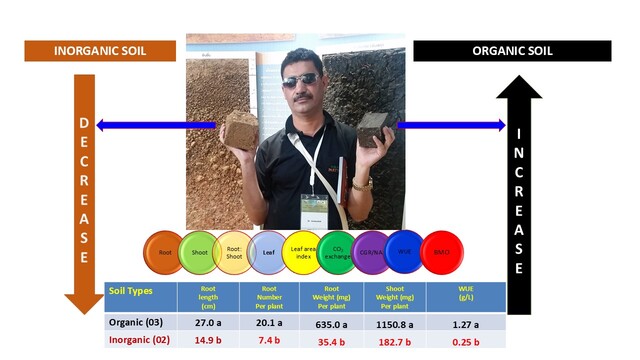
Accurate estimation of carbon in cereal crops is vital for climate-smart agriculture. This practical model offers a simple yet effective approach to quantify both above- and below-ground carbon, supporting sustainable farming and carbon accounting in crop-based systems.
16 Apr 08:52
by Michael, Schnürch
In this work, we present our efforts to develop a Grignard reagent free, low valent cobalt-catalysed C-H arylation, using high-throughput experimentation (HTE). Although we did not succeed to obtain a protocol with synthetically relevant yields, we believe that this data will be valuable for researchers working in the same domain. Additionally, these data will be useful considering the current trend to develop machine learning methods for predicting or optimizing new transformations. Such efforts frequently face the challenge, that data for training sets mainly consist of positive results. However, a good training set needs to include a significant number of negative results as well. Sharing such data can reduce bias in machine learning models and help expand our understanding of chemical space through more complete and realistic datasets.
16 Apr 06:36
by Theodore A. Gazis, Vincenzo Ruta, and Gianvito Vilé

ACS Catalysis
DOI: 10.1021/acscatal.4c07405
16 Apr 06:36
by Seonyoung Kim and Hyunwoo Kim

ACS Catalysis
DOI: 10.1021/acscatal.5c01668
16 Apr 06:36
by Haoyu Zhang, Shiyong Guan, Hanbo Chen, Genhong Zhang, and Yuegang Chen

JACS Au
DOI: 10.1021/jacsau.5c00154
MRV, Seb and one other like this
16 Apr 06:26
by Leidy V. Hooker,
Jeffrey S. Bandar

The merger of deprotonation and halogenation into compatible processes provides a new strategy for functionalizing traditionally unstable carbanionic intermediates, including α,α-difluorobenzylic carbanions. This capability is leveraged toward the first general method for oxidative coupling of α,α-difluoromethylarenes with common pronucleophiles to produce valuable α,α-difluorobenzylic (thio)ethers.
Abstract
We describe how the merger of deprotonation, halogenation, and substitution into compatible processes enables the productive functionalization of traditionally unstable carbanionic intermediates. This strategy enables the first oxidative coupling protocol of α,α-difluorobenzylic C─H bonds with heteronucleophiles. Here, transiently generated α,α-difluorobenzylic carbanionic intermediates undergo halogen transfer from 2-bromothiophenes to form electrophilic ArCF2Br compounds for in situ nucleophilic substitution, thereby avoiding α-fluoride elimination pathways that typically plague α-fluorocarbanions. This method streamlines the modular synthesis of α,α-difluorobenzyl(thio)ethers and led to the broader realization that halogen transfer to unstable carbanions is an enabling principle across diverse C(sp2)─H and C(sp3)─H systems.
16 Apr 06:24
by Yu Zhang,
Hong Lu,
Jie Chang,
Peng‐Fei Xu,
Hang Li,
Yuan Jin,
Hao Wei

A nickel-catalyzed group-exchange strategy has been developed for the direct conversion of aromatic lactones into cyclic hemiboronic acid bioisosteres. Scope evaluation and product derivatization experiments demonstrate broad functional-group compatibility and the synthetic value of this strategy. Furthermore, the application of this methodology to the rapid modification of lactone cores in bioactive molecules underscores its practical utility.
Abstract
Bioisosteric replacement is an important strategy in drug discovery and is commonly practiced in medicinal chemistry; however, the incorporation of bioisosteres typically requires laborious multistep de novo synthesis. The direct conversion of a functional group into its corresponding bioisostere is of particular significance in evaluating structure-property relationships. Herein, we report a functional-group-exchange strategy that enables the direct conversion of aromatic lactones, a prevalent motif in bioactive molecules, into their corresponding cyclic hemiboronic acid bioisosteres. Scope evaluation and product derivatization experiments demonstrate the synthetic value and broad functional-group compatibility of this strategy, while the application of this methodology to the rapid remodeling of chromenone cores in bioactive molecules highlights its utility.
16 Apr 06:23
by Yuanhao Xie,
Li Zhang,
Tobias Ritter

By employing complex arylthianthrenium salts and readily available (hetero)aryl (pseudo)halides as starting materials, in conjunction with hypoboric acid as a reductant, structurally diverse (hetero)biaryl motifs can be rapidly synthesized via palladium-catalyzed cross-coupling reaction. Key to this advance is the selective and mild borylation of arylthianthrenium salts, followed by a conventional SMC (Suzuki–Miyaura cross-coupling) reaction with aryl halides.
Abstract
Herein, we present a cross-coupling reaction of arylthianthrenium salts at a late stage with diverse (hetero)aryl (pseudo)halides under reductive conditions, in which a palladium(0) catalyst differentiates between two aryl electrophiles based on the different rates of oxidative addition of arylthianthrenium salts and aryl halides for selective umpolung. A measured near-zero Hammett rho value is consistent with oxidative addition of the arylthianthrenium salts to palladium(0) being insensitive to substituent effects, which enables reaction with structurally and electronically diverse arylthianthrenium salts. In addition, we show the robustness of this method by coupling of two complex fragments that would otherwise be difficult to access in a single step.
08 Apr 06:47
by Shuai Gong

hello