Marnix van der Kolk
Shared posts
1,2-Aminosulfonylation of Alkenes via Photoexcited Cu(I)- Sub-strate Complex: A Three-Component Coupling Approach
[ASAP] Cross-Electrophile Coupling of Aryl Chlorides with Alkyl Chlorides Using Rotating Magnetic Field and Metal Rods

AI masters Minecraft: DeepMind program finds diamonds without being taught
Nature, Published online: 02 April 2025; doi:10.1038/d41586-025-01019-w
The Dreamer system reached the milestone by ‘imagining’ the future impact of possible decisions.Photochemical Carbosulfonylative Cross-Coupling of Alkenes
A programmable modular robot for the synthesis of molecular machines
[ASAP] Mechanochemical Functionalization of Heterocycles by C–H Activation: An Update

[ASAP] Direct Synthesis of Amides from Nitro Compounds and Alcohols via Borrowing Hydrogenation

Phosphate-enabled mechanochemical PFAS destruction for fluoride reuse
Nature, Published online: 26 March 2025; doi:10.1038/s41586-025-08698-5
This study highlights a protocol that converts various perfluoroalkyl and polyfluoroalkyl substances (PFASs), including fluoroplastics, into valuable fluorochemicals through a solvent-free mechanochemical process, thereby enabling fluorine recovery and contributing to a sustainable circular fluorine economy.Abundant Transition Metal Based Photocatalysts for Red Light‐Driven Photocatalysis

We discussed here the recent developments on the abundant transition metal based photocatalysts and their applications in red light-driven photocatalysis.
Abstract
Photocatalysis emerges as an efficient and versatile tool for the preparation of organic compounds via the development of new methodologies and new photosensitizers. Mostly UV and blue light irradiation are used for such reactions. Red light is low-energy light, it is less harmful and has more penetration depth. Hence red light-driven photocatalysis would be more suitable for preparing value-added products. Red-absorbing photosensitizers are mostly based on rare and expensive metals. In this review, we describe the recent developments on Earth-abundant transition metal-based photosensitizers (W(0), Mo(0), Cr(0), Fe(III), Cu(I), Zn(II)) and their applications in red light-driven photocatalysis. Photocatalysis using both electron transfer and energy transfer processes is discussed. Three different red light-induced reactions such as direct monophotonic excitation, sensitized triplet-triplet annihilation upconversion (sTTA-UC), and dual red light photocatalysis are presented. Various organic transformations such as reductive dehalogenation and detosylation, reduction of diazonium salts, C─C coupling via C─H activation, oxidation of aryl boronic acids to phenols, polymerization reactions, cross dehydrogenative couplings, α-cyanation of tertiary amines, Barton decarboxylation have been carried out using abundant photosensitizers and red light.
[ASAP] Soft Biological Actuators for Meter-Scale Homeostatic Biohybrid Robots
Marnix van der Kolkshare for doggo

Chlorine-free synthesis of axially chiral organophosphorus compounds from white phosphorus
Phosphate-enabled mechanochemical PFAS destruction for fluoride reuse
Nature, Published online: 26 March 2025; doi:10.1038/s41586-025-08698-5
This study highlights a protocol that converts various perfluoroalkyl and polyfluoroalkyl substances (PFASs), including fluoroplastics, into valuable fluorochemicals through a solvent-free mechanochemical process, thereby enabling fluorine recovery and contributing to a sustainable circular fluorine economy.Iron-catalysed direct coupling of organosodium compounds
Nature Synthesis, Published online: 25 March 2025; doi:10.1038/s44160-025-00771-1
Despite the abundance and non-toxic nature of sodium, organosodium reagents have rarely been used in organic synthesis. Now iron-catalysed homocoupling and C(sp2)–C(sp3) cross-coupling reactions of arylsodium compounds are reported. The observed C(sp2)–C(sp3) cross-coupling reactivity of arylsodium reagents is enabled by Lewis donor additive N,N,N′,N′-tetramethylethylenediamine.Pilot-scale reductive catalytic depolymerization of lignin: Challenges and guidelines
[ASAP] Catalytic Fluorination of α-Branched Ketones with Nucleophilic Fluorine
Marnix van der KolkThijss

Fluorine in the Pharmaceutical Industry: FDA‐Approved Fluorine‐Containing Drugs in 2024

This review describes eleven fluorine-containing drugs approved by the US FDA in 2024. The review discusses the synthetic methodologies employed, the structural characteristics of these drugs, and their clinical implications, providing insights into the ongoing innovation within the pharmaceutical industry driven by fluorine chemistry.
Abstract
Fluorine has become an essential element in the development of modern pharmaceuticals, due to its unique chemical properties that can significantly enhance the biological activity, metabolic stability, and lipophilicity of drug molecules. This review explores recent advancements in the synthesis and application of fluorine-containing drugs approved by the US Food and Drug Administration (FDA) in 2024. These novel drugs demonstrate improved efficacy and safety profiles, addressing a range of therapeutic areas including oncology, infectious diseases, metabolic disorders and genetic disorders that affect the adrenal glands. The incorporation of fluorine atoms into drug candidates has facilitated the development of molecules with optimized pharmacokinetic and pharmacodynamic properties, leading to better patient outcomes. The review further discusses the synthetic methodologies employed, the structural characteristics of these drugs, and their clinical implications, providing insights into the ongoing innovation within the pharmaceutical industry driven by fluorine chemistry.
C–H functionalization via single atom metathesis of C–H and C–X bonds
Marnix van der Kolkvoor berts ERC
A Pacific island country contributing to the evidence of one dose HPV vaccine schedule
[ASAP] Sustainable and Integrated Flow-Based Three-Step Synthesis of Sodium Valproate

Halogen-atom transfer of fluoroiodomethane for photoredox-catalyzed fluoromethylation

DOI: 10.1039/D5CC00321K, Communication
This study presents a photoredox-catalyzed and aminoborane-mediated halogen-atom transfer (XAT) approach for the activation of fluoroiodomethane, facilitating the generation of monofluoromethyl radicals.
The content of this RSS Feed (c) The Royal Society of Chemistry
Metal‐Free Electrochemical C─H Chlorination of Terminal Alkanes

A metal-free electrochemical method for the chlorination of terminal C(sp3)─H bonds of alkanes is described. The specific cavity size of organic molecular catalysts ensures high regioselectivity, while the use of inexpensive and readily reusable graphite felt electrodes, a simple electrochemical device, and mild conditions enables the reaction to maintain good efficiency even when applied in flow electrochemistry and used for kilogram-scale production.
Abstract
Although research on the activation of C─H bonds in alkanes has been ongoing for decades, there are still few strategies that are both highly selective and suitable for industrial production. Herein, we report a highly selective method for the chlorination of terminal C─H bonds in alkanes by combining electrochemistry and organocatalysis. The specific cavity size of organic molecular catalysts ensures high regioselectivity, while the use of inexpensive and readily reusable graphite felt electrodes, a simple electrochemical device, and mild conditions enables the reaction to maintain good efficiency even when applied to kilogram-scale production.
[ASAP] Fluorine-Based Oxidant Enables Room-Temperature Pd-Catalyzed C–H Arylation with Boronic Acids

[ASAP] Catalytic Enantioselective α-Fluorination of Ketones with CsF
Marnix van der Kolk@Thijsss

Mechanochemically mediated electrosynthesis: unveiling a new pathway for redox reactions under mechanochemical conditions

DOI: 10.1039/D4GC06293K, Paper
 Open Access
   This article is licensed under a Creative Commons Attribution 3.0 Unported Licence.
Mechanochemically mediated electrochemistry enables sustainable organic synthesis under slurry/paste conditions, achieving high yields and faster reaction times for aromatic bromide reduction and sulfonamide synthesis with minimal solvent.
The content of this RSS Feed (c) The Royal Society of Chemistry
Mapping the Landscape of Digital Government Transformation: A Bibliometric Analysis
Marnix van der Kolkben ik de enige die deze rare vrouw bij al de portfolio's ziet??
 https://www.shs-conferences.org/articles/shsconf/abs/2024/24/shsconf_diges-grace2024_04004/shsconf_diges-grace2024_04004.html
General strategy for the synthesis of N-monofluoromethyl amides
Nature Chemistry, Published online: 11 March 2025; doi:10.1038/s41557-025-01769-0
N-monofluoromethyl amides (N-CH2F) have been challenging to prepare. Now, a general method for the synthesis of N-CH2F amides is developed. The strategy can be applied for the N-CH2F modification of peptides and drug derivatives. Moreover, the N-CH2F amides are relatively stable in various media, which could be beneficial for drug development.Visible light-driven ligand-to-metal charge transfer-mediated selective cleavage of β-O-4 lignin model compounds: a greener route to lignin valorization

DOI: 10.1039/D5GC00948K, Paper
Open Access  This article is licensed under a Creative Commons Attribution 3.0 Unported Licence.
LMCT-mediated selective cleavage of β-O-4 lignin model compounds under visible light.
The content of this RSS Feed (c) The Royal Society of Chemistry
ChemChallenge - a Video Game for Studying and Teaching Chemistry
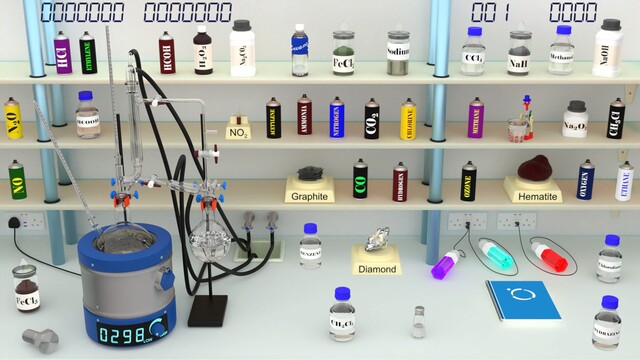 Playing video games is a popular recreational activity and a cyber sport. Is it possible to translate video gaming into chemical education? Below I present ChemChallenge - the first video game with in-game currency and non-linear gameplay (not a quiz game) for studying and teaching thermodynamics.
Alcohol and cancer risk: what you need to know
Nature, Published online: 11 March 2025; doi:10.1038/d41586-025-00729-5
Experts weigh in on the risks of moderate drinking — and how people should assess them.[ASAP] Electrochemical Synthesis of Vinyl Sulfonates Mediated by Bromine Radicals
