Shared posts

07 Mar 13:54

Seattle food jobs ‘soaring’? At only 0.67% growth last year and by several comparisons, ‘anemic’ seems more accurate

by Mark Perry

seattle
SeattleBars

SeattleBar5

Writing in Forbes, Erik Sherman writes an article with the bold headline “Seattle Food Jobs Soar After $11 Minimum Wage Starts.” Sherman reports BLS employment data showing that the “Net gain from January to November was 900 [Seattle food] jobs,” which is displayed graphically in the top chart above (light blue line). Further, Sherman writes:

It’s impossible to say that the increased minimum wage, or anticipation of the hike, had no influence on the number of food jobs. Perhaps restaurant employment would have grown faster (although that would have been out of step with the overall historical trends in the area). Maybe some number of restauranteurs or food franchise owners gave up and closed shop with increased wages adding to other pressures. But what is clear is that the $11 minimum wage failed to crush restaurant employment as opponents apparently hoped to prove.

If Seattle food jobs are really “soaring,” I guess the main question would be “soaring compared to what?” And by several different relevant comparisons, I come to a much different conclusion: food jobs in Seattle have actually stagnated quite dramatically starting in January of last year (see top chart above). Consider that in 2013 net Seattle area restaurant hiring increased by 6% followed by a nearly 5% growth in restaurant employment in 2014. In contrast, restaurant jobs in the rest of the state increased by 3.6% in 2013 and actually fell by -0.2% in 2014. On May 1, 2014, the Seattle city council passed a $15 an hour minimum wage law that mandated increases to $11 an hour on April 1, 2015 followed by further increases to $13 an hour starting last week and $15 an hour next January 1 (the phase-in schedule varies by business size and fringe benefits provided). So it would make sense that Seattle restaurant owners, some anticipating pending increases in labor costs of 62% for minimum wage employees (from $9.25 an hour in 2014 to $15 by as early as next January), would cut back on hiring starting at the beginning of last year – and that’s exactly what we see in the top chart above. Here are some other observations about the data trends highlighted in the three charts above:

1. As Sherman acknowledges, there’s been a +900 job gain at Seattle area restaurants in the first 11 months of last year. But on a percentage basis that’s only a 0.67% increase in food employment last year. Is that “soaring?” And again the most relevant question would be “soaring compared to what?” Well, let’s start by comparing Seattle restaurant job gains to the rest of the state (subject to a  minimum wage of $9.47 an hour both last year), where restaurant jobs increased by 6,700 jobs last year and by a whopping 7.7% — or 11.5 times the growth rate of Seattle restaurant jobs. Food jobs “soaring”? Certainly in the rest of the state, but definitely not in Seattle!

2. The second chart above highlights the differences discussed above (7.7% growth for non-Seattle restaurant jobs in Washington state vs. 0.67% for Seattle last year) and provides some additional comparisons to help address the question: “Soaring compared to what?” On a national basis, restaurant hiring increased by 2.7%, which was more than four times the 0.67% growth in Seattle restaurant hiring last year. Some addition context is provided by comparing Seattle restaurant job growth of 0.67% last year to overall payroll job growth over the same period for the Seattle area (2.2%, or 3.3 times the Seattle restaurant employment), the entire state (2.0%, or 3 times Seattle restaurants) and the country (1.5%, or 2.2 times Seattle restaurants). Therefore, we could conclude that Seattle restaurant jobs (at 0.67%) are not “soaring” compared to: a) restaurant job growth in the rest of the state (7.7%) and the country (2.7%)  last year or b) compared to overall payroll growth in Seattle (2.2%), the state (2.0%) and the US last year (1.5%).

3. How does Seattle MSA restaurant job growth of 0.67% last year in the new era of the “$15 an hour Seattle minimum wage” compare to previous comparable periods historically? The bottom chart above displays Seattle area restaurant job growth during the period between January and November in each of the 26 years back to 1990 (earliest year available). Except for years during recessions (1991, 2001, 2008 and 2009), Seattle restaurant job growth at 0.67% last year was the weakest year for hiring in the last quarter century! Seattle food jobs “soaring” last year? Certainly not compared to any of the past non-recessionary years since 1990!

Bottom Line: Seattle is leading the national movement toward imposing a $15 minimum wage on America’s employers who hire unskilled and limited experience workers, including restaurant workers. Many restaurant owners in the Seattle area are facing $5.80 an hour (and 62%) increases in their labor costs as the city’s minimum wage goes from $9.25 to $15 an hour. It shouldn’t be surprising then that the city on the leading edge of “Fight for $15” experienced sluggish growth in area restaurant hiring last year. By a number of relevant comparisons, Seattle food jobs are really not “soaring,” but have demonstrated very weak growth starting in January of last year. Compared to the growth last year in food jobs in the rest of the state (+7.7%) and the rest of the country (+2.7%) as demonstrated in the top two charts above, and compared to previous years over the last quarter century (see bottom chart above), the 0.67% growth last year in Seattle restaurant payrolls can’t be described as “soaring.” Terms like lackluster, feeble and anemic seem more accurate based on the data displayed in the three charts above.

Related: Among academic and professional economists, nearly three-quarters (72%) oppose a $15 an hour federal minimum wage and only 5% strongly support it, according to a recent survey conducted by the University of New Hampshire Survey Center.

Update 1: In response to several comments from “John of the Prairie/John A.” I present the new chart below of restaurant jobs in Seattle’s neighboring state of Oregon and its major city – Portland. Oregon has a uniform state minimum wage of $9.25 an hour that was in effect last year and will stay the same this year. How do food jobs in Portland compare to the rest of the state when there is no difference in minimum wage? Well, as might be expected there’s not much difference when there’s no significant difference in labor costs.

For example, in the last four full years (2011-2014) restaurants jobs in Portland grew at rates of 2.3%, 4.7%, 3.7% and 5.3% , which were comparable to food job growth rates in the rest of the state of 2.1%, 3.6%, 4.3% and -0.4%. In the first 11 months of last year, Portland food jobs grew at 3.3% vs. 3.9% in the rest of the state. Therefore, in Washington’s neighboring state of Oregon, which has a uniform state minimum wage, we see similar growth rates in restaurant jobs in the state’s major city (Portland) and the rest of the state outside Portland. That’s a much different restaurant job pattern than we see in the state of Washington (top chart above), where there is a significant departure in restaurant employment growth rate following the passing of a city minimum wage in Seattle that raised labor costs for city restaurants well above the rest of the state.

Update 2: See bottom chart below that displays: a) Atlanta MSA food services employment vs. b) Georgia state food services employment without the Atlanta MSA. Like for Portland and Oregon, Atlanta and Georgia are covered by the same minimum wage law. And also like Portland and Oregon, we see similar growth rates in restaurant jobs in Atlanta and the rest of the state. And in 2015, restaurant jobs grew much faster in Atlanta (4.7%) versus restaurant employment in the rest of the state (0.30%). Further, while not shown here graphically, we find a similar pattern in New Orleans vs. the rest of the state of Louisiana (where the minimum wage is the same) — restaurant employment in New Orleans grew last year at a 3.8% rate compared to a growth rate in the rest of the state of 0.1%.

PortlandRestaurant atlanta
04 Mar 18:12

日本公布各种癌症的“10年”存活率排名

各种癌症的10年相对存活率按照从高到低排序如下。甲状腺癌(90.9%)、前列腺癌(84.4%)、子宫癌(83.1%)、乳腺癌(80.4%)、宫颈癌(73.6%)、大肠癌(69.8%)、胃癌(69.0%)、肾癌(62.8%)、 卵巢癌(51.7%)、肺癌(33.2%)、食道癌(29.7%)、胆囊胆管癌(19.7%)、肝癌(15.3%)、胰腺癌(4.9%)……
29 Feb 15:35

The Koch brothers’ biggest sin: disagreeing with the liberal narrative

by Jack Butler

Jane Mayer of The New Yorker has a new book out: “Dark Money: The Hidden History of the Billionaires Behind the Rise of the Radical Right.” It’s mostly about those old devils, the Koch brothers.

Charles and David Koch are billionaires. They own a very big company. They also are very prominent philanthropists, giving hundreds of millions to cancer research, concert halls, and other worthy causes. But what makes them hated and feared by progressives such as Mayer is their political work. They help fund some organizations and foundations, some purely educational, some partisan.

To listen to the Left, they are the closest thing we have to real-world James Bond villains. So what is their agenda? Is it to retreat to their orbiting harems, populated with fertile females, as they wipe out humanity below so that they can return to repopulate the planet? Or is to dupe the Russians and Americans into a nuclear squabble so that the Kochs can rule the ashes?

Well, here’s Mayer’s explanation of their dark and sinister ambitions.

“What people need to understand is the Kochs have been playing a very long game,” she told NPR’s Steve Inskeep. “And it’s not just about elections. It started four decades ago with a plan to change how America thinks and votes. So while some elections they win and some elections they lose, what they’re aiming at is changing the conversation in the country.”

Dear God, it’s worse than I thought! They want to change the conversation! They want to persuade Americans to vote differently! The horror, the horror.

You might be forgiven for thinking that this is pretty much exactly what democracy is about. But no. For you see, only Hollywood, college professors and administrators, the ACLU, People for the American Way, the Human Rights Campaign, NARAL, Emily’s List, the Ford Foundation, Black Lives Matter, Occupy Wall Street, MoveOn.org, the NAACP, the Union of Concerned Scientists, Greenpeace, Tom Steyer, Michael Bloomberg, George Soros, Steven Spielberg and, of course, publications such as the New York Times, The New Republic, The Nation and Mayer’s own The New Yorker are allowed to try to change conversations and argue for people to vote differently.

Ah, but those voices are open and honest — and progressive! — about it, while the Kochs are secretive, sinister denizens of the stygian underworld of “dark money” and the “radical right.”

Except for the fact that the Kochs have been out in the open for nearly a half-century. David Koch ran for vice president on the Libertarian ticket in 1980, which you might argue is a brilliant way to hide in plain sight, given how little attention the Libertarian Party gets.

Which brings me to that term “the radical right.” When racist idiots do idiotically racist things, we’re told that’s the radical Right in action. When Christian conservatives say Christian things, we’re told that’s the radical Right in action. When Donald Trump says he wants to ban Muslims from entering the country or build a giant wall, that earns him the radical-right label. When Ted Cruz says he wants to carpet-bomb the Islamic State, he . . . well, you get the point.

I have myriad problems with those usages of “radical right,” but let’s just stipulate for the sake of argument that this is the correct term in such circumstances. How, then, are the Kochs members of the radical Right? They are pro-gay marriage. They favor liberal immigration policies. They are passionate non-interventionists when it comes to foreign policy. They are against the drug war and are spending a bundle on dismantling so-called “mass-incarceration” policies. They’ve never seized a national park at gunpoint.

They are members of the radical Right for the simple reason that they don’t like big government and spend money to make that case. Full disclosure: I’ve given paid speeches to some Koch-backed groups, despite the fact that I have my disagreements with the Kochs. They haven’t changed my mind, and I haven’t changed theirs. But the conversation continues.

And that’s their great sin. Liberals are constantly talking about how we need an “honest conversation” about race or guns or this or that. But what they invariably mean is they want everyone who disagrees to shut up. (That’s why they hate Fox News, too.)

The best working definition of “right wing” today has almost nothing to do with the ideological content of what right-wingers say or do. A right-winger is someone who disagrees with the liberal narrative, has the temerity to say so, and dares to actually try to change the conversation.

14 Feb 17:47

Margaret Thatcher, Heroine of Classical Liberalism

by John O. McGinnis
Screenshot (88)

When I went to Oxford in 1978, I had looked forward to spending many weekends in London, one of the great metropolises in all of history. But after an initial visit, I rarely returned. Outside of a few well-known precincts it was a shabby city. But even worse than its appearance was the general sense of lassitude, even paralysis. For instance, it was hard to find places to sell you the simplest groceries outside of very strict business hours. And I was always worried about getting back to Oxford. Industrial action in the form of railway and tube strikes could occur at any time. The economic and spiritual climate of the country was as dismal as its fall and winter weather.

But now London is again one of the great cities of the world, vibrant, innovative and resplendent. One woman is responsible for the transformation of the city and the nation of which it is the capital. That is why it is such a wonderful event to have a superb new biography of her glory years by Charles Moore: Margaret Thatcher at Her Zenith: In London, Washington and Moscow. The book shows why she is one of the rare leaders who transfigured her nation for decades, if not centuries to come. The comparison is less to other British Prime Ministers, but to other transformative world leaders, like Peter the Great or Ataturk. And what separates Thatcher from those leaders is not only her sex, but her democratic methods. She was able to accomplish her goals while persuading fickle and shifting popular opinion.

In this volume Moore details the manner in which Thatcher replaced the state with the market in occupying the commanding heights of the economy.Moore rightly sees that her program of reform had three crucial parts. The first was to break the power of the largest unions, like that of the coal miners, that could through industrial action bring down a democratically elected government. The second was to privatize industry to attract more investment and get the government out of the business of placating constituents by inefficient business practices. The third was to lower tax rates to encourage initiative.

Thatcher faced enormous resistance to these changes from all sides. Some of it was deeply antidemocratic. The book reveals that the mine workers’ union led by its Stalin admiring president, Arthur Scargill, were actually getting funded by the Soviet Union. But the chattering class relentlessly attacked her as well, motivated in part by a kind of class hatred: to them she was just a suburban Philistine. In reality, in all of British history she was the prime minister with the most coherent intellectual vision.  But most intellectuals can be defined as the people least able to appreciate ideas that are not their own.

The most difficult opposition, however, came from her cabinet, few of whom were fully on board. She had the indomitable spirit, however, to quell the adversaries within. Here being a woman was a help, not a hindrance. She recognized as she put it, that in this world, “if a woman undertakes a battle, she has to win.” And she used every feminine asset—charm, stubbornness, and even flirtatiousness, to assure victory.  A Prime Minister has been described a first among equals, but there is no doubt that no man in her cabinet (and they were all men) even came close to her.

Moore’s book is no hagiography. In my next post, I will describe how Moore shows that even at her height, she was creating the conditions for her precipitous fall from power.

The post Margaret Thatcher, Heroine of Classical Liberalism appeared first on Online Library of Law & Liberty.

      
14 Feb 10:52

Bizarre desert-dwelling fish may have evolved just a couple hundred years ago

Devils Hole pupfish lives in an extreme environment
12 Feb 17:38

Sweden closes the door to migrants

by Nima Sanandaji

The Swedish government is preparing to reject large numbers of immigrants. Upwards of 80,000 immigrants should, according to the interior minister, be forced to leave the country. The news, which is widely reported by international media, is part of a major shift in immigration policy.

In 2010 the anti-immigration Sweden Democrats gained enough votes to enter the parliament.  Sweden’s then center-right Prime Minister Fredrik Reinfeldt chose to react with a somewhat unusual strategy: Reinfeldt signed a deal with the opposition Environmental Party, transitioning towards nearly free immigration. He has later explained that the ambition was to isolate the Sweden Democrats from power and influence.

Four years later Reinfeldt’s government was voted out of power. The opposition parties on the left merely increased their voter support by 0.02 per cent. The anti-immigration party however doubled its share of votes, something the party – which historically has neo-Nazi roots – has done in seven consecutive elections. Swedish policies was turned into something of a mess, with the introduction of a third block whom nobody wanted to collaborate with. After some parliamentary turmoil, where a new election was announced but later cancelled, the four center-right parties agreed to not challenge the minority government formed by the Social Democrats and the Environmental Party.

The new government continued it´s pro-immigration policies. Sweden, with its generous welfare systems, proved to be quite a magnet for migrants. At the end of 2015, Sweden was receiving 10,000 immigrants per week. As my brother Tino Sanandaji, an economist critical of the current policies, has pointed out, this can be compared to an annual rate of 25,000 immigrants a year during the period 1990-2010. Reinfeldt’s policy shift, coupled with the breakdown of the European border and the Syrian crises, had moved an already generous immigration policy to almost free immigration.

The cost of receiving new immigrants proved quite high. A significant share are youths without adult companionship who come from Afghanistan. It seems that many are Afghanis who have migrated to Iran and, not satisfied with the life there, turn to Sweden. Under the current policies, the cost of giving support to a single youth who comes without adult companionship, is annually upwards to € 100 000. In the last part of 2014 the system came under considerable stress.

Finally, the Social Democratic prime minister Stefan Löfven reversed policies. Or as The Guardian has phrased it, in the end of November 2015 “Sweden slam[med] shut its open-door policy towards refugees”. When announcing this policy, Åsa Romson – the Environment and ceremonial Deputy Prime Minister of Sweden, who is one of the two leaders of the environmental party – had tears in her eyes.

The Environmentalist Party, which strongly supports the idea of a world without borders, cannot be happy about the recent announcement of mass-deportations. However, it is no surprise that the Social Democrats are pushing for the reform. Firstly, Swedish media is unfortunately flooded on a daily basis with accounts of fighting, crime and sexual assaults related to newly arrived migrants. To give just one example, this week a 22 year old asylum worker, herself of immigrant origin, was stabbed to death in her place of work by a recently arrived migrant.

Also, the Swedish welfare state is far from successful when it comes to integrating immigrants on its labour market. The median refugee granted asylum in Sweden during 2004 merely earned £880 a month ten years later. Amongst family immigrants of refugees the level was as low as £360. This of course points to many living of various forms of public support. This is not a sustainable situation in a generous welfare state, where the public system expends much on various social programs, health care etc. are high for all residents.

Lastly, the support for the Social Democrats has been falling significantly. A leading survey published on the 23rd of January found that the Social Democrats are only supported by 23.2 per cent of the Swedish electorate. This is a record low number, and quite a shock for a party that for long has dominated Swedish policies with support of around 40 to 50 per cent of voters in many elections. A poll-of-polls shows that the Social Democrats on average have 23.9 per cent of the support, closely followed by the conservative Moderates (the party previously lead by Reinfeldt) who have 23.2 per cent and the Sweden Democrats who have 21.0 per cent of the support. Since the latter party systematically has a higher actual share of support in elections than in poles, one can say that the vote is evenly split between the three parties.

The Moderates have already moved from the idea of free-immigration to quite strict policies. Adapting to the challenges ahead, the Social Democrats have followed suit. It remains to be seen how Swedish policies can cope with the situation. The famously egalitarian welfare system in the North is unfortunately singularly unfit for integrating those with foreign origin in its society. Besides the obvious problems with social upheaval and crime, the economic policy must adapt. The high taxes, generous welfare provisions and rigid labour regulation that are trapping many immigrants in welfare dependency simply need changing. The question is if Swedish policies will do a U-turn also in these regards.

The post Sweden closes the door to migrants appeared first on CapX.

12 Feb 15:05

SMPY at 50: Research Associate position

by Stephen Hsu
I'm posting the job ad below for David Lubinski. The Study of Mathematically Precocious Youth (SMPY) is the most systematic long term study of individuals of high cognitive ability since the Terman Study.

SMPY helps to establish a number of important facts about individuals of high ability:

1. We can (at least crudely) differentiate between individuals at the 99th, 99.9th and 99.99th percentiles. Exceptional talent can be identified through testing, even at age 13.

2. Probability of significant accomplishment, such as STEM PhD, patents awarded, tenure at leading research university, exceptional income, etc. continues to rise as ability level increases, even within the top 1%.

3. There are systematic differences in cognitive abilities and profiles in different fields (business, medicine, engineering, physics, etc.)

4. Men and women of exceptional ability differ in life aspirations and preferences.

No one can claim to understand high level human capital, technological innovation, scientific progress, or exceptional achievement without first familiarizing themselves with these results.

Needless to say, I think this Research Associate position will entail important and fascinating work.
Research Associate:

The Study of Mathematically Precocious Youth (SMPY) seeks a full-time post-doctoral Research Associate for study oversight, conducting research, writing articles, laboratory management, and statistical analyses using the vast SMPY data base. SMPY is a four-decade longitudinal study consisting of 5 cohorts and over 5,000 intellectually talented participants. One chief responsibility of this position will be to manage laboratory details associated with launching an age-50 follow-up of two of SMPY’s most exceptional cohorts: a cohort of 500 profoundly gifted participants initially identified by age 13 in the early 1980s, and a second cohort of over 700 top STEM graduate students identified and psychologically profiled in 1992 as first- and second-year graduate students. Candidates with interests in assessing individual differences, talent development, and particularly strong statistical-technical skills are preferred. Send vitae, cover letter stating interests, (pre)reprints, and three letters of recommendation to: Dean Camilla P. Benbow, Department of Psychology & Human Development, 0552 Peabody College, Vanderbilt University, Nashville, TN, 37203. The position will remain open until a qualified applicant is selected. For additional information, please contact either co-director: Camilla P. Benbow, camilla.benbow@vanderbilt.edu, or David Lubinski, david.lubinski@vanderbilt.edu.

http://www.vanderbilt.edu/Peabody/SMPY/. Vanderbilt University is an Equal Opportunity/Affirmative Action Employer.

We are aiming for a June 30th start date but that’s flexible.
Some relevant figures based on SMPY results of Lubinski, Benbow, and collaborators. See links above for more discussion of the data displayed.


28 Jan 07:32

Eugenics: The Progressive Race Policy

by Ronald Bailey

Government imposed eugenicsEugenicsTree was a progressive policy aimed at trying to prevent inferior groups from having children. A new book, Illiberal Reformers: Race, Eugenics & American Economics in the Progressive Era by Princeton scholar Thomas Leonard highlights the history of this morally indefensible progressive policy. From the Princeton University Press:

Leonard meticulously reconstructs the influence of Darwinism, racial science, and eugenics on scholars and activists of the late nineteenth and early twentieth centuries, revealing a reform community deeply ambivalent about America’s poor. Economic progressives championed labor legislation because it would lift up the deserving poor while excluding immigrants, African Americans, women, and "mental defectives," whom they vilified as low-wage threats to the American workingman and to Anglo-Saxon race integrity.

The progressives were certainly illiberal in the sense that they were opposed to classical liberalism, or what we call libertarianism today.

In any case, a review on the "dark history of liberal reform" over at The New Republic (historically the leading journalistic outlet for progressivism) observes:

It’s impossible to understand early twentieth-century progressives without eugenics. Even worker-friendly reforms like the minimum wage were part of a racial hygiene agenda. The progressives believed male Anglo-Saxons were the most productive workers, but immigrants and women were willing to accept lower wages and displaced white men. Capitalism was getting in the way of human improvement, promoting inferior genes for near-term profits. “Competition has no respect for the superior races,” Leonard quotes the economist John R. Commons on Jews. “The race with lowest necessities displaces others.” Commons found common cause with the xenophobic wing of the organized labor movement.

HealthySeedThe minimum wage, in addition to providing some workers with a better standard of living, would guard white men from competition. Leonard is worth reading at length:

A legal minimum wage, applied to immigrants and those already working in America, ensured that only the productive workers were employed. The economically unproductive, those whose labor was worth less than the legal minimum, would be denied entry, or, if already employed, would be idled. For economic reformers who regarded inferior workers as a threat, the minimum wage provided an invaluable service. It identified inferior workers by idling them. So identified, they could be dealt with. The unemployable would be removed to institutions, or to celibate labor colonies. The inferior immigrant would be removed back to the old country or to retirement. The woman would be removed to the home, where she could meet her obligations to family and race.

If Leonard didn’t have the quotes from prominent progressives to back up his claims, this would read like right-wing paranoia: The state’s most innocuous protections reframed as malevolent and ungodly social engineering. But his citations are genuine. Charles Cooley, a founding member of American Sociological Association, warned that providing health care and nutrition for black Americans could be “dysgenic” if not accompanied by population control. The eugenicists weren’t just dreaming: Between 1900 and the early 1980s, over 60,000 Americans were involuntarily sterilized under the law.

A Reason review of the book is forthcoming. Stay tuned.

21 Jan 09:40

Don’t underestimate the power of Africa’s informal sector in a global economy

by Terence Jackson, Middlesex University
This Kenyan fishmonger is a typical member of the local informal sector.

The informal economy in Africa is big business. The International Labour Organisation (ILO) estimates that its average size as a percentage of gross domestic product in sub-Saharan Africa is 41%. This ranges from under 30% in South Africa to 60% in Nigeria, Tanzania and Zimbabwe.

It is also a huge employer. It represents about three-quarters of non-agricultural employment, and about 72% of total employment in sub-Saharan Africa. About 93% of new jobs created in Africa during that 1990s were in the informal economy.

The International Labor Office defines the informal economy as:

All economic activities by workers or economic units that are—in law or practice—not covered or sufficiently covered by formal arrangements.

Today the informal economy appears to be as important as ever to Africa and its future development. But governments, and international organisations like the World Bank and ILO, do not like the informal economy. As a result international policy has veered from supportive to antagonistic.

At times opposition to the informal economy has been violent. One example is the notorious Operation Murambatsvina (”get rid of trash”) in Zimbabwe in 2005. At best it is directed at pulling the informal economy into the formal economy.

 A World Bank report points to a trend of people with higher levels of education entering the informal sector as a career of choice. Antagonism is driven by a range of reasons. Informal firms do not pay tax. In addition, reports abound of child labour, low wages (especially for women) and low job security as well as high incidence of HIV. Yet, as the Swedish International Development Co-operation points out, many governments are unaware of the contribution of the informal economy, particularly the high involvement of women.

The report also suggests that it is expanding and is here to stay. And a World Bank report points to a trend of people with higher levels of education entering the informal sector as a career of choice.

A glimpse of the future

Political economist Fantu Cheru asserts that:

… a closer look at the informal sector in Africa provides a glimpse of what could be achieved if Africa’s economies and financial policies were more attuned to the continent’s everyday realities.

He sees the informal economy as being community-based, representing:

… socio-political entities, with their own rules, forms of organisation and internal hierarchies, constituting a node of resistance and defiance against state domination.

The point is that practices more closely allied with collectivist communities may be far more appropriate than “modern” management methods. These methods are based on Western principles and neoliberal economic policies. They have largely been discredited as inappropriate to African communities.

  The informal economy is largely marginalized with a weak voice and is rarely listened to by policymakers. But the informal economy is largely marginalized. It has a weak voice and is rarely listened to by policymakers in government or in international organizations. When policies are made they affect a large percentage of firms, entrepreneurs, employees and communities. But it is unlikely any have been consulted.

Issues that could be given more prominence in policymaking are access to capital and the provision of relevant training. More important is what the formal economy can learn from the informal economy as a model for economic development.

Indigenous practices in a globalised world

If communities that rely on economic activity in the informal sector are indeed the repositories for indigenous management, entrepreneurial and employment practices it is little wonder they are not listened to.

Indigenous refers to practices, knowledge and values that are related to, and grow out of, local and community circumstances. These often stand in contrast to international or global practices, knowledge and values produced by universities and international corporations.

The dominant discourse is that indigenous practices are outmoded, archaic and out of tune with modernity. Yet seeing indigenous practices and those in the informal economy as frozen in time is a mistake. Even the glib packaging in management consultancy circles of concepts like “ubuntu” presents a glorified perception of indigenous knowledge being static and timeless.

As Cheru has pointed out, the informal sector may represent a resistance, an alternative to the prevailing globalised view.

Even so, it exists in the globalised world. While constantly adapting, sometimes resisting, it is never apart from globalisation. Rather than eschewing modern technology, communications, the internet and social media, Africa has been embracing it. This is happening through:

  • better cellular telecommunications;
  • access to cheap smartphones; and
  • initiatives, not without controversy, such as Facebook’s internet.org, providing free and wider internet access.

Hence, Facebook told us in June 2014 that:

… there are 100 million people coming to Facebook every month across the African continent, with over 80% on mobile.

This includes a majority of people living in the informal economy.

 Social media has the potential to change things by providing greater voice and potentially better representation. These developments are providing new tools to trade, to market products and to work. They may even be changing the nature of employment. With practices and organisations still rooted in local contexts and communities, identities are changing.

In addition, social media has the potential to change things by providing greater voice and potentially better representation.

Political leaders may have to start listening to entrepreneurs, managers and staff working in the informal economy to formulate more inclusive policies that may prove more relevant to Africa’s development.The Conversation

Terence Jackson, Professor of Cross-cultural Management, Middlesex University

This article was originally published on The Conversation. Read the original article.

Sign up for the Quartz Africa Weekly Brief — the most important and interesting news from across the continent, in your inbox.

21 Jan 09:33

There really is no such thing as speed reading

by Katherine Ellen Foley
Whig Zhou

Reading for depth takes time.

For all of the technology and techniques available to help us expedite aspects of our lives, it turns out that at least one activity is probably best done the old-fashioned, slow and steady way: reading.

In a review published earlier this month, a team of cognitive psychologists from the University of California, San Diego and the Massachusetts Institute of Technology found that speed reading techniques, which aim to help increase the average 200 to 400 words a minute a person can read, are likely ineffective for actually absorbing material.

“The available scientific evidence demonstrates that there is a trade-off between speed and accuracy,” Elizabeth Schotter, a psychologist at the University of California, San Diego, said in a press release. “As readers spend less time on the material, they necessarily will have a poorer understanding of it.”

Theoretically, being able to read more quickly means being able to consume more—an appealing skill for readers with a voracious appetite for literature or news. Popular methods include the Evelyn Woods program, in existence since 1959, which promises to help readers double their words per minute without sacrificing comprehension by emphasizing vertical reading, eliminating sub-vocalization (reading under your breath), and recognizing phrases as opposed to individual words. Newer apps, including Spritz and Spreeder, reduce lateral eye movement by flashing words on the same part of the screen.

Researchers reviewed a number of studies that tested claims made by some of these companies (including Spritz, which emphasizes the “scientific” evidence behind their technology). They found that throughout the available scientific literature, when students completed large amounts of text astonishingly quickly—such as two graduate students who read entire college-level textbooks in less than six minutes, around 15,000 words per minute—they performed terribly on reading comprehension exams.

The problem, reviewers found, is that regardless of how the information is presented to us, our brains take time to process information. So although you may be able to see words more quickly, you’re less likely to understand and recall what you’ve read.

“If you read at 300 words per minute…it’s unlikely you’re going to get to 500 words per minute and still be as good of a reader,” Schotter told Quartz. She added that the researchers were prompted to review findings of the efficacy of the techniques because they have proved so popular with consumers.

Researchers did acknowledge that some people who consume gobs of information quickly could be very effective skimmers. Skimmers may already have a basic knowledge of the material at hand, or can group the text into large chunks without reading every word. Schotter also says that reading comprehension is linked to concentration abilities; if you’re able to focus on the text in front of you, you’re going to understand it better. Also, like any skill, practice makes perfect: The more you read, the quicker your own reading comprehension will improve.

Only so much of our reading speed is based on our own abilities, though. Schotter emphasized that our capacity to quickly digest what we’ve read also depends on the difficulty and flow of the text. “If the language is a lot easier, you can go through it a lot faster,” she says.

19 Nov 06:06

Today is Manufacturing Day, so let’s recognize America’s world-class manufacturing sector and factory workers

by Mark Perry
Whig Zhou

美国制造业

Manufacturing Day occurs annually on the first Friday of October (October 2 this year) and according to its sponsorsMFG DAY” is a “celebration of modern manufacturing meant to inspire the next generation of manufacturers.” To recognize Manufacturing Day this year, I’ve prepared a series of charts and facts about America’s manufacturing sector below.

mfg1

1. US Manufacturing Output vs. Employment. The chart above shows annual measures of US manufacturing output (based on the BEA’s GDP by Industry data here) and US manufacturing employment (based on BLS data here) from 1947 to 2014. In inflation-adjusted constant 2014 dollars, US manufacturing output has increased more than five-fold over the last 67 years, from $410 billion in 1947 to a record-setting level of output last year of $2.09 trillion (see brown line in chart). Although we frequently hear claims that the US manufacturing sector is dying or in a state of decline, manufacturing output in the US, except during and following periods of economic contraction like the Great Recession, has continued to increase over time, and reached the highest level of output ever recorded in 2014.

What has been in a steady state of decline is the number of manufacturing workers needed to produce the increasing amount of manufacturing output as the blue line in the chart above shows. From a peak of nearly 19.5 million US factory workers in 1979, the number of manufacturing employees has steadily declined to a recent low in 2010 of 11.6 million workers before rebounding to slightly more than 12 million employees last year.

Comment: The ability of the US manufacturing sector to produce increasing amounts of output with fewer and fewer workers should be recognized as a sign of economic strength and vitality, not economic weakness. Thanks to advances in technology, the factory floor today is one with modern, advanced, state-of-the-art equipment that requires fewer employees, but with greater skills and training than in the past. The trend in US manufacturing over the last 30 years – more and more output with fewer and fewer workers – is exactly like the transformation that revolutionized US farming over the last 100 years or more. With fewer than 2% of America’s workers, we produce more agricultural output today in the US than when much greater numbers and much higher shares of the nation’s employees were working on farms. And yet when have you ever heard anybody say that “America just doesn’t grow anything anymore”? The fact that we frequently hear that “America just doesn’t manufacture or produce anything anymore” isn’t consistent with the reality that US factories produce more output today than at any time in US history.

mfg2

2. Manufacturing Output per Worker. The chart above shows the dramatic increases over time in the amount of manufacturing output produced per US worker, which more than doubled in the 42 years between 1955 and 1997 from $40,000 to $85,000, and then more than doubled again in only 13 years between 1997 and 2010 to about $171,000 (all figures are expressed in constant 2014 dollars). Manufacturing output per employee last year of $171,538 established a new all-time record for the productivity of the American factory worker, measured in manufacturing output per factory worker.

3. Manufacturing Fact: The US produced nearly $2.10 trillion of manufacturing output last year. Considered as a separate country, the US manufacturing sector would have been the 9th largest economy in the world in 2014, ahead of No. 10 India’s entire economic output (GPD) of $2.05 trillion and slightly behind No. 8 Italy’s $2.14 trillion of GDP last year.

mfg3

4. International Perspective of US Manufacturing. Another way to grasp the enormous size of the US manufacturing sector is illustrated in the graph above. Based on United Nations data currently available through 2013, the US produced almost as much manufacturing output in 2013 ($2.03 trillion) as the combined manufacturing output of the six countries of Germany, South Korea, France, Russia, Brazil and the UK ($2.14 trillion). Think of that international manufacturing comparison the next time you hear that “America’s manufacturing sector is dying” or that “America just doesn’t produce anything anymore.”

mfg4

5. US Manufacturing Profits. When assessing the size, strength and health of America’s manufacturing sector, what ultimately matters is not the amount of output produced or the number of factory workers, but the amount of profit being generated by US factories. By that measure, US manufacturers as a group have never been bigger, stronger and healthier than in recent years, as the chart above shows. In each of the last four years (2011-2014), annual manufacturing profits have averaged nearly $600 billion (in constant 2014 dollars), which is more than 20% above the annual average of $494 billion in the four years before the Great Recession (2004-2007) and nearly double the average annual manufacturing profits generated during the 1993-1999 period of about $306 billion. Another profit-related indicator of manufacturing strength is the fact that manufacturing profits remained relatively high in 2008 and 2009 during and after the Great Recession, especially when compared to the much greater reduction in profits during the 2001 recession.

mfg5

6. The Miracle of Manufacturing. As US manufacturing has become more technologically advanced and efficient, the price of manufactured durable goods has fallen in relation to both: a) other consumer products and services, and b) Americans’ after-tax disposable personal income. The chart above shows how much Americans collectively spend annually on four manufactured categories of consumer products: food, cars, clothing, and household furnishings like home appliances, as a share of national after-tax disposable income from 1947 to 2014. In 1947, Americans spent more than 42% of total after-tax personal income on those four categories of manufactured consumer products. As manufactured goods fell in price over time due to production efficiencies, technological advances, and greater worker productivity; and as personal income grew, the share of Americans’ disposable income spent on food, cars, clothing and household furnishings gradually and consistently fell to about 15% in each of the last 7 years. In relation to other goods and our income, manufactured goods have never been more affordable.

Bottom Line: As we celebrate Manufacturing Day on Friday, we can be thankful that America’s manufacturing sector has never produced more output or been more profitable than in recent years. Further, factory worker productivity has never been higher and the affordability of manufactured goods as a share of disposable personal income has never been greater. That’s a lot to be thankful for, so let me express my gratitude and thanks today to US world-class manufacturers and America’s factory workers.

29 Aug 02:31

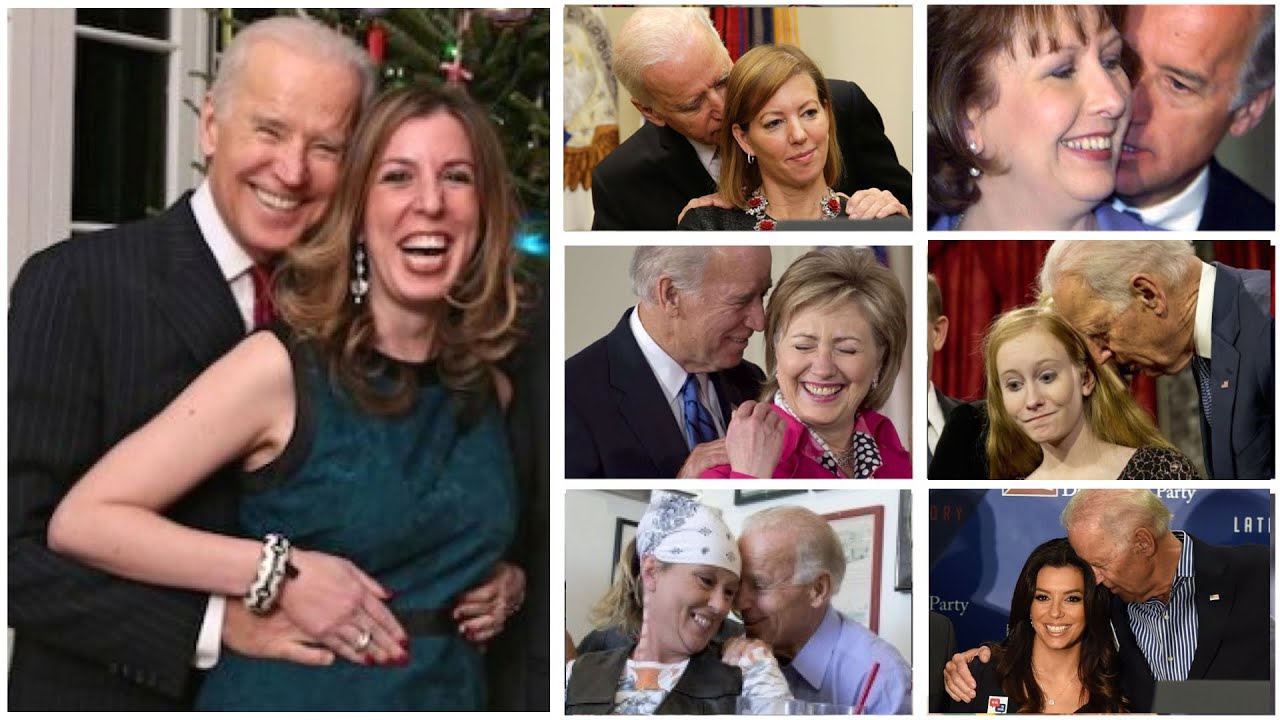
Would A Male Student Be Kicked Out Of College For Joe Biden-Style Kissing, Touching, And Lurking?

by David Garrett
potd-biden-sniff_3203314b

If Barack Obama were ever to be incapacitated, America would not only have a new Commander-in-Chief; it would have an inaugural Commander-in-Creepiness. Such is the reputation, largely swept under the carpet, of Vice President Joe Biden.

An entire photo album (or ten) could be made of the bizarre, forced, and frequently pathetic moments where he fondly touches women (usually without “affirmative consent”), kisses them in a cringeworthy fashion, or otherwise shows that he is obsessed with enforcing draconian expectations on male college students that he has no intention of following himself.

Biden the “protector”

Biden has been one of the chief peddler-architects of the truly Orwellian Campus Accountability and Safety Act (CASA), which is thankfully still a bill yet to pass Congress. Brought to the Senate by professional victim Senator Claire McCaskill, who suddenly realized Game of Thrones was violent after an off-camera rape scene and called for a boycott, CASA is widely deplored by civil libertarians who assert that it will result in “convictions” for “rape” with little or no evidence, let alone the standard of proof required in a court.

Worse still, in a gargantuan illustration of a conflict of interest, those colleges financially penalized for “not acting” on “sexual assault” would be punished by the same organisation, the Department of Education’s Office for Civil Rights, that would receive the fine monies.

Due to his widely documented predilection with touching and lurking over women without asking them, we can see that Joe Biden has a rather sadistic sense of humor. The progressive widening over decades of the definition of “sexual assault,” which can include catcalling and asking for sex, will catch male college students, but not men who graduated in the 1960s like Biden.

This would be sexual assault on any American college campus

White knight lawmakers like Biden frequently talk about men in “positions of power” getting away with things. Male college students have been expelled for this.

From the very firm grip of Biden’s hand and the feigned half-smile of the girl to her head moving away and her body stiffening, the photograph above screams “I do not want Joe Biden to touch or kiss me!”

Compare this to the story of Brian Ferguson, at the time a 20-year-old college special needs student from Texas. He was kicked out of college and later reinstated after hugging a girl and kissing her on the forehead because of mistaken identity. Officials knew he had autism and was in special needs classes at Navarro College. He may have been “exonerated” afterwards, but he was nonetheless kicked out of college at the outset. So where’s non-disabled Biden’s penalty?

I am not arguing that kissing women like Biden has repeatedly should somehow be “the new rape” and punished accordingly. The salient issue here is how and why colleges are singled out. There would be no cameras around when male college students allegedly kiss, hug or touch college women “without their consent.” Yet they can be (and have been) “convicted” of “sexual assault” and banned from college for things that Biden can do in front of the world’s media with absolute impunity.

Why won’t Joe Biden hold himself to what’s expected of male college students?

Women invariably respond to power, so perhaps college-style “sexual assault” is only sexual assault when the power differentials between the man and woman are closer or non-existent.

One mind-boggling case involving two gay students deserves particular attention. The “offender” was sanctioned by Brandeis University for kissing his boyfriend and regular sexual partner while he was waking up from being asleep. By that rationale, I have committed sexual assault 1,000 times and been the victim of it myself another 1,000 times. If two people consistently engaging in sex could not presume consent for kissing, how can Biden when he appears on television with all these relative female strangers?

It seems Biden would be a repeat college campus sexual offender of a much greater magnitude than me or anyone else reading this. And the power differentials between him and the women he kisses, touches, and lurks over are much greater than what you or I possess over the women we get involved with.

If there’s ever been a case of abusing “patriarchal power” to kiss or caress a woman, Biden is this case.

Joe Biden’s political skin is actually made of teflon

Imagine what beer pong with Biden was like in the 1960s.

You can be the proverbial alpha or a relatively popular person at your college and still find yourself in reputation-ruining hot water when you get involved with the wrong revenge- or attention-seeking women. But no hot water gets thrown at a Joe Biden. The falsely accused victims of both UVA’s Jackie Coakley and the Duke lacrosse scandal’s Crystal Mangum can attest to the disparity in how the same acts are treated, depending on whether you’re a politician or a male college student.

In the UVA and Duke cases, all the men were students with good reputations, who each found those reputations sullied not only by a sadistic woman but also by an educational system that treated her convoluted story as Gospel truth. Joe Biden, Barack Obama and others are so obsessed with courting the feminist, broader female and mangina vote that they ignore these stark, distinctly anti-civil rights realities.

Selling young men down the river for his own gain

Biden courting the “Michael Moore’s sister” vote.

Biden and Obama are both concerned with “posterity” and their place in American history, however degenerate it is becoming. Obama is term-limited and Biden has yet to rule out that another Presidential bid is on the cards. Should the Vice President balk at that option, his good health means that other senior roles in American politics are likely.

Tragically, the biggest benefactors of the rabid feminist left are men like Biden, not far less well-known cat ladies like Claire McCaskill. And the routine currency they spend to win the female vote are the rights and legal well-being of young American men.

Like Governor Jerry Brown and the Californian legislature that supported his own “affirmative consent” hogwash, Biden and other Democrats refuse to countenance the possibility that they should be held to the same ridiculous codes on Capitol Hill and in the White House as male college students are bound to on college campuses already, even before the further loss of liberties that will result from any passing of CASA.

If Joe Biden ever decides to head back to college as a mature student, it’s a good thing he has a law degree. With the way he accosts women in the photos above, he’d need to have legal training whilst on campus.

Read More: Academic Advisor Accuses Male College Student Of Harassment For Sitting In A Waiting Room

24 Aug 20:17

这家公司造出了人工合成生命体

by 王丢兜
在四种自然碱基里加入两种新碱基打开了创造新蛋白质的可能性。
20 Aug 05:43

数据:近万亿美元流出新兴市场


金奇,罗格•布里茨伦敦报道

过去13个月已有1万亿美元的资本洪流退出新兴市场,差不多两倍于金融危机期间的资本流出。各方对全球发展中经济体信心低落。

持续的资本外流强化了这样的担忧:遭受经济增长放缓和本币走低的新兴市场经济体,正在交出它们扮演了多年的全球经济增长火车头的角色,转而沦为需求的拖累。

分析师们表示,随着人们对预期的美联储(Federal Reserve)加息感到紧张,加上中国的人民...

11 Aug 08:27

索尼向含有“Pixels”一字的视频大规模发出DMCA删除通知

by WinterIsComing
Whig Zhou

故意的吧?

索尼/哥伦比亚影业出品的科幻电影《Pixels》上映后褒贬不一,票房不振。该公司为避免票房的进一步损失而严打盗版,它向标题含有“Pixels”一字的视频大规模发出DMCA删除通知。毫无疑问,Pixels是一个常用的单词,这一做法导致了大量无辜视频中枪。TorrentFreak报道,上至2006年的独立视频,下至2010年的同名短片《Pixels》(这部短片启发了2015年版的《Pixels》),都收到了错误的删除通知。


10 Aug 18:00

富士康投资50亿美元在印度建厂


詹姆斯•克拉布特里报道

台湾电子产品制造商富士康(Foxconn)将在未来5年投资约50亿美元,在印度西部的马哈拉施特拉邦(Maharashtra)建造一座大型制造工厂,这将是印度企业史上最大的外国直接投资交易之一。

上周末,富士康创始人郭台铭(Terry Gou)与马哈拉施特拉邦首席部长德文德拉•法纳维斯(Devendra Fadnavis)在该邦首府孟买会晤后,签订了关于开发新工厂的谅解备忘录。

09 Aug 07:49

Foxconn Plans to Spend $5 Billion on Factories in India

Taiwanese electronics manufacturer Foxconn, maker of products including Apple iPhones, Xiaomi smartphones and Samsung tablets, says it will spend billions of dollars building factories in India, employing 50,000 people.
01 Aug 19:18

NSA报告称中国五年内入侵了600多家美国公司

by WinterIsComing
根据NSA的简报,中国政府黑客过去五年成功入侵了600多家美国公司和机构。简报显示,中国黑客高度感兴趣的是Google以及国防承包商如洛克希德马丁公司。简报暗示,NSA已经跟踪中国黑客攻击多年,它对中国的网络监视能将攻击与特定来源关联起来。美国现有的法律禁止NSA与美国私人企业分享情报。对于中国的黑客攻击,美国政府正在斟酌应对之策,用NSA局长Mike Rogers上将的话说,如果美国不做出任何回应,有可能会造成意想不到的严重后果,因为这将会向其它国家和组织发出信号——发动此类的攻击是不会有后果的。


31 Jul 10:25

卫星图像告诉你中国正在南海建什么

by DEREK WATKINS
中国在南海的珊瑚礁上堆沙建岛至少已一年,建起七座新的小岛。这种速度和规模已经引起这一地区相关利益国家的担忧,正在加剧本已紧张的地缘政治局势。

一份3月16日的卫星图像显示了南海南沙群岛美济礁上新出现的一个人工岛上的工程。 Center for Strategic and International Studies, via Digital Globe

Center for Strategic and International Studies, via Digital Globe

一份3月16日的卫星图像显示了南海南沙群岛美济礁上新出现的一个人工岛上的工程。

16 Jul 10:49

黑猩猩也爱喝酒

英国牛津布鲁克斯大学的研究人员日前在英国《皇家学会开放科学》杂志网络版上报告称,他们长期研究几内亚某地的黑猩猩发现,这里的黑猩猩会饮用天然发酵的树汁酒,有时候甚至是聚众饮酒,有些黑猩猩还会喝醉。霍金...
15 Jul 18:31

百胜餐饮中国业绩持续下滑

吴佳柏,韩碧如上海,北京报道

对于注册于路易斯维尔的百胜餐饮集团(Yum Brands)的高管而言,中国仍是一个难解之谜。

单店销售额同比下滑了10%,抵消了新开门店的销售额,并令中国市场总销售额下降了4%。

自去年7月的一场食品安全恐慌之后,百胜已很难把顾客拉回到自己的店里。中国是百胜在全球范围销售额最大的市场。中国市场的可比销售额已连续4个季度下滑。(见如下图表)

13 Jul 14:22

手机丢失后的安全风险

by 月光 (williamlong)

  现在手机的功能越来越强大,能做的事也越来越多,手机现在就是一个我们的智能终端了。但是就是这样的终端,整天伴随着我们,万一哪天丢失了,会带来什么样的安全风险?引发什么样的隐私泄漏?我们该如何防止丢失手机所带来的风险呢?

  身份证信息

  捡到手机如何得到机主身份证?对于无锁屏密码或无指纹密码的手机来说,拨打自己电话,得到手机号;登录网上营业厅,输入手机号码,密码使用随机密码,看手机短信,登录;下一步,点击“修改我的资料”;里面会有这个手机主人的全部实名认证信息。

  对于有锁屏密码或指纹密码的手机来说,取出手机SIM卡,插入自己的手机,然后拨打自己另一部电话,获得手机号,之后的操作同上。

  修改手机服务密码

  使用上面的方法获得手机号和身份证号后,就可以执行另一个危险的操作:“重置服务密码”,捡到手机后,通过该手机登录网上营业厅,在网上营业厅里,使用“重置服务密码”将手机的服务密码进行修改,那么原用户就无法通过电话来挂失手机SIM卡,需要亲自跑去营业厅挂失,这给用户的手机安全带来极大风险。

  修改服务密码需要用户的姓名和身份证号码,使用前面的方法获得用户的姓名和身份证号,之后需要用户3个月内拨打过电话的3个不同的号码,打开手机通话记录,查找最近拨出的号码,将其填写进去即可。之后即可顺利修改密码。

  修改手机PIN码

  如果手机的SIM卡设置了PIN码,那么这个SIM卡插入另一个手机就需要PIN码解锁,但如果用户没设置锁屏密码,那么可以通过网上营业厅来重置手机PIN码,具体方法是,登录网上营业厅,查询出手机的PUK码,通过PUK码可以解锁PIN码。输错三次PIN码后,会要求用户输入PUK码,这时输入正确的PUK码之后,就可以输入新的PIN码了,从而实现了修改手机PIN码的功能。

  支付宝和网银的安全

  通过手机可以进行重置支付宝密码的操作,如果验证身份证号码就用上面获得的验证,此外,如果知道用户的其他银行卡号码,可以通过身份证号码和手机可以去绑定用户的其他银行卡,开通快捷支付,然后进行刷卡消费。

手机丢失后的安全风险

  如何防范这种情况的发生(以iPhone为例)

  1、手机的指纹锁屏(密码锁屏)和SIM卡PIN码应该同时启用,缺一不可。如果手机的SIM卡设置了PIN码,那么这个SIM卡插入另一个手机就需要PIN码解锁,重启手机也要PIN码解锁,不解锁无法进行通讯,这从一定程度上保证了手机通讯的安全性,SIM卡默认的PIN码通常是1234,建议手机用户都修改一下这个PIN码。锁屏密码不要使用简单密码,使用数字字母组合长密码,有条件的话建议选择支持指纹密码的iPhone,其使用体验远远优于普通的密码解锁。

  2、开启“查找我的iPhone”功能。iCloud设置强密码。推荐iCloud开通二次验证。

  3、支付宝等应用启用指纹密码。

  4、发现手机丢失后,立即打电话给移动运营商,挂失SIM卡。登录iCloud的“查找我的iPhone”功能,启用“丢失模式”。

  5、电话冻结绑定的支付宝和网银。

  6、忽略那些以苹果名义发来的钓鱼邮件和短信。

  7、如果手机确认无法找回,在“查找我的iPhone”里,使用“抹掉iPhone”功能。

  8、申请一个新的SIM卡并启用。

  总结:iPhone丢失后应该做什么?丢失前:设置指纹锁屏和SIM卡PIN码;开启“查找我的iPhone”功能。iCloud设置强密码。丢失后:打电话给移动运营商,挂失SIM卡。登录iCloud,启用“丢失模式”(无法找回的话就用“抹掉iPhone”)。电话冻结绑定的支付宝和网银。申请一个新的SIM卡并启用。

评论《手机丢失后的安全风险》的内容...

相关文章:


微博:新浪微博 - 微信公众号:williamlonginfo
月光博客投稿信箱:williamlong.info(at)gmail.com
Created by William Long www.williamlong.info
月光博客
13 Jul 07:01

土耳其的非重要选举

by Daniel Pipes
几乎所有对6月7日土耳其即将举行的普选的评估都将其列为共和国近一个世纪的古老历史中最重要的选举之一。纽约时报视其为"决定性的",伦敦每日电讯报 视其为"关键的"。 赫芬顿邮报称其为共和国历史上"最大的选举"。 金融时报声明"土耳其的未来处于险境。" 但我不同意。我认为这是土耳其最不重要的选举之一。原因如下: 着眼点并不同于平常的"谁会组成下届政府?"分析家认同自2002年执政以来的正义与发展党(Adalet ve Kalkınma Partisi, 即 AKP)会再次赢得选举。但它必须签署一个新合伙人吗?它会赢得足够的席位以改变宪法,并履行Recep Tayyip Erdoğan总统将自己仅仅是象征性的地位变成全面执政地位的计划吗? Recep Tayyip Erdoğan 手持《古兰经》做竞选演说。 Erdoğan希望权力延伸得甚广以至于他实际上将它们比做绝对的沙特君王行使的权力。讽刺的是,那些权力将从总理手中抽出,而这个位置Erdoğan坐了十一年,直到去年八月,他自愿让位于一个精挑细选的继任者,一位温和派学者,一个地位更高却远不如从前强大的总统任期。...
09 Jul 17:01

[智利] 种植大麻合法化,是国家之进步?

by 桃子
现在,智利人将可以在家里种植六株大麻,他们一人最多可拥有十克大麻。
09 Jul 03:17

The Chinese stock market crash

by ssumner

I’ve been asked to discuss something that I don’t know much about, the Chinese stock market.  So here goes:

1.  Stock crashes are often predictions of bad times ahead.  Sometimes they are correct (the US in 1929, 2008) and sometimes they are incorrect (1987).  We know from 1987 that stock crashes don’t actually cause economic problems. Roosters don’t cause dawn.  Chinese stocks are still much higher than a year ago, and the Chinese people won’t decide to stop working just because stocks crash.  Indeed they may work even harder.

2.  It’s possible that the Chinese crash is not a prediction of economic distress, but rather just a sort of mass panic.  But the Australian dollar has been falling in sympathy with Chinese equities, which means that in this case it’s not just panic; it’s actual worry about a slowing economy.  (Unless Australian mass hysteria is correlated with Chinese mass hysteria, which I doubt.)

3.  Tyler Cowen often (wisely) points out that lots of things that superficially look stupid actually have good reasons if you look deeper.  Here he speculates as to why the Chinese government might have wanted to prevent a stock market crash.

4.  However even if Tyler is right, in this case the Chinese government probably is being stupid.  The techniques they are using (such as banning the sale of many types of stock) will actually create more panic, and will lead to more sales from that part of the investment community that is still free to sell.  Just as European governments that make it hard to fire workers end up causing higher unemployment, as people are afraid to hire them.

5.  There’s a lesson here for “bubbles.”  Even if you disagree with my view that bubbles are not a useful concept, there is very little evidence that governments can do anything about them.  The Chinese government tried to stop the bubble on the upside, and then more recently tried to stop the price collapse. It tried hard.  It failed miserably.  China will learn from this lesson.

6.  One reason why bubbles are not a useful concept is that it’s hard to tell what the right price should be in any “fundamental” sense.  Some people thought 1987 was a bubble.  After the huge price collapse of late 1987 they said, “I told you so.”  At that point there seemed to be a consensus among experts that prices had gone way too high, and that a correction was inevitable.  In fact, we now know that prices at the peak of the 1987 “bubble” (Dow 2700) were quite reasonable.  (The Dow was 1700 after the crash.)  If you bought at the peak and held stocks for 10 years, or 20 years, or 28 years (up to today) you did fine.  So the experts were wrong.  Thus even after an apparent bubble collapses, it’s really hard to know which price was right, the peak level or the later trough.  In 20 years we’ll have a better idea whether the Shanghai market should now be at 5000 or 3500 3400 (down 100 since I started typing).  Right now no one has a clue, just as no one in 1987 had any idea that the Dow would be at 17,000 today.

7.  I’d rather the Chinese government stay out of the stock market, but this intervention is of trivial importance compared to the bigger changes occurring in China.  I wouldn’t want the US government to spend a trillion dollars on Vanguard index funds, but if they did so it wouldn’t cause much of a problem.  The tiny Norwegian government has almost a trillion dollars in stocks, and it doesn’t seem to have hurt Norway.  There’s a lot of ruin in a nation as big as China, and China should be far more worried that the PBoC will fail to keep NGDP growing at 5% or more, and/or that Premier Li stops the economic reform process that’s been underway for 35 years, than about whether the Chinese government purchases some stocks.

8.  When I first visited China in 1994 almost no one had cars or owned stocks.  I was fascinated by the country, by the urgent moral issue of raising hundreds of millions of people out of abject poverty and misery.  Quite frankly, I find the modern problems of pollution, traffic congestion and stock market crashes to be rather boring.  Even today poverty is a much more urgent problem for China, but overall the situation is dramatically improved.

PS.  Fascinating story from Ambrose Evans-Pritchardmaybe even true.  If so, is a deal still possible?  (This link is better.)

07 Jul 13:44

在埃塞俄比亚,狒狒与狼结盟

by WinterIsComing
灵长类动物学家在东非埃塞俄比亚考察时观察到狒狒与狼和平相处,狒狒群容忍狼在它们中间游荡,而狼则忽略了潜在的美餐——狒狒幼儿——而专心搜寻更容易捕捉的啮齿动物。这一不同寻常的约定可能会让人想起人类驯服狗。灵长类动物学家注意到,狼可以走到相距狒狒不到一米的地方,它们没有恐慌,反而像是熟视无睹。狼通常是在啮齿动物最活跃的中午走到狒狒群中间。研究人员跟踪了个别狼17天,发现如果狼只是依靠自己捕捉啮齿动物其成功率只有25%,而在狒狒存在的情况下成功率提高到了67%。一种可能的解释是体型和颜色与狼相近的狒狒会让啮齿动物分心,狼能更容易在没有被发现的情况下接近这些小动物。


06 Jul 13:16

简单的一次牙科手术抹掉了病人形成新记忆的能力

by WinterIsComing
William的生物钟永久性的停留在了2005年3月14日13:40 ——预约的牙科手术时间。他是英国空军的一名军官,刚刚回国出席祖父的葬礼返回德国的驻地。那天早晨他还打了45分钟的排球,回办公室处理了积累的电子邮件,然后去见牙医进行一次简单的牙根管手术。他仍然记得坐到椅子上,牙医注射了局部麻醉剂。然而之后的记忆却是一片空白。他的病例报告发表在《Neurocase》期刊上。他失去了长期记忆能力,最长记忆时间只有90分钟。每天早晨醒过来,他仍然以为是在2005年的德国,等待访问牙医。他知道自己遇到了问题,他和妻子在智能手机上写下了详细的记录,文件名是”第一件事——读它“。医生至今仍然不知道是什么导致他失去了长期记忆能力。


02 Jul 16:55

美国白人民权领袖冒充黑人,不承认说谎

by RICHARD PÉREZ-PEÑA
Whig Zhou

呵呵

华盛顿州斯波坎市——2004年,蕾切尔·A·多尔扎尔(Rachel A. Dolezal)搬进爱达荷州科达伦镇的叔叔家,住在他的地下室里。科达伦镇的居民大部分都是白人,当时的蕾切尔还是白肤金发。她也自称是个白人,和黑人丈夫离了婚,带着一个混血孩子来到这里。

但在短短几年中,她之前就对黑人的理想与文化产生的强烈认同又有所深化。同事和亲戚开始听到她说,自己来自混血背景,甚至就是黑人。

不少人曾对她形容自己的方式提出质疑,其他人则简单接受了这一点。但似乎没人把它当成一件大事,他们大多都在她身上感受到一种人格力量,这种力量使她成了科达伦人权教育协会(Human Rights Education Institute)里一名坚定而富有激情的倡导者。她在改变身份后没多久就开始在这里工作。

“她的成就令人赞叹,给这些地方带来很多活力,”她的叔叔丹尼尔·A·多尔扎尔(Daniel A. Dolezal)在周二进行的电话采访中回忆到,他说到了上述人权机构和全国有色人种协进会(NAACP)在斯波坎市的分支,多尔扎尔最终成了后者的负责人。他回忆了她一路走来的旅程,最初是一个不走运的单身母亲,兼职做着教师工作,后来试着出售自己创作的艺术品,并在他开在科达伦镇上的照相机商店里打工。当地属于爱达荷州走廊的一部分,一度曾是白人至上主义组织雅利安民族(Aryan Nations)的总部所在地。

自多尔扎尔成为一场有关种族认同和身份造假的热烈争论的对象以来,她在周二首次出现在全国性的电视节目上。一点也不令人诧异的是,尽管无法证明自己有丝毫的黑人血统,她还是拒绝让步和承认自己之前误导了任何人。“我觉得自己是黑人,”她微笑着说。

她不会改变这种说法,而且“我向你保证她永远也不会,”十多年前在她婚姻破裂时收留了她的叔叔说。“这就是她,永远不会后退,永远向前,百分百自信。”

本周二,NBC电视台的马特·劳尔(Matt Lauer)在他主持的《今日》(Today)节目中问她,“你是从什么时候开始骗人的?”周一刚刚卸任NAACP斯波坎市分支负责人一职的她就此做出了强烈回应。

“我反对你这种说法,因为这可比称自己是黑人或回答‘你是黑人还是白人’的问题复杂一些,”多尔扎尔说。在这一天当中,她还称自己“跨种族”,她说:“好吧,我绝对不是白人。有关白人的描绘完全不适用于我。”

她的故事在全美国引发了有关种族身份的争论,一些人赞同她所传达的信息和目标,其他人则谴责她的方式和行为。一些批评人士称,对于多尔扎尔来说,认同、欣赏甚至分享黑人文化是一件事,但试图成为黑人是另一件事,她甚至改变了自己的外貌。

约翰·杰刑事司法学院(John Jay College of Criminal Justice)英语教授、《近似黑人:美国文化中白人冒充黑人的现象》(Near Black: White-to-Black Passing in American Culture)作者巴兹·德莱辛格(Baz Dreisinger)表示,“这涉及有关扮演黑人、呈现黑人特征及整个文化遗产的所有问题,这让这种行为显得更加低下。”

一些只知道多尔扎尔黑人身份的人说,他们感觉受到伤害和误导,并且表示即便没有伪装,她也可以成为同样有力的NAACP领导者。

“对于我来说,问题在于欺骗、撒谎,把自己描绘成另外一个人,”NAACP斯波坎市分会的资深成员、该市的前副城市经理多萝西·韦伯斯特(Dorothy Webster)说。“我无法理解。”

虽然她的倡导工作得到钦佩,但除了种族问题,多尔扎尔的信誉也不断饱受质疑。她发表的有关其家庭及成长过程的公开声明遭到了包括父母在内的亲属的回击,以至于出现了双方通过采访隔空斗嘴的奇怪景象:她在一家电视网发表声明,她的家人则在另一家电视网予以否认。多年来,她曾多次向警方举报出于种族动机的骚扰及恐吓行为,但警方表示,到目前为止,没有足够的可信证据使其可以提出指控。

她与父母露丝安娜·多尔扎尔(Ruthanne Dolezal)、劳伦斯·多尔扎尔(Lawrence Dolezal)已断绝来往。在斯坡坎,她一直声称一名年长的非裔友人是自己的父亲。蕾切尔·多尔扎尔的父母在她十几岁的时候,收养了四名黑人儿童,其中一人现在与多尔扎尔及她的亲生儿子住在一起。这个亲生孩子的父亲是她的黑人前夫凯文·D·莫尔(Kevin D. Moore)。

她同亲生哥哥乔舒亚(Joshua)也形同陌路。目前乔舒亚在科罗拉多州面临数项指控,称其在19岁的时候对父母收养的当时只有六七岁的一个弟弟进行了性骚扰。那时他们还住在科罗拉多州克利尔克里克县的父母家中。露丝安娜·多尔扎尔向《人物》杂志(People)透露,这些猥亵指控并不属实,而且是由蕾切尔提出的。

多尔扎尔来到今天这个尴尬境地是经历了一段不同寻常的过往。她小时候住在蒙大拿州西北部偏远地区的小镇特洛伊附近。今年早些时候,她在自己当时任教的东华盛顿大学(Eastern Washington University)向一家新闻机构表示,自己出生在一顶印第安人的帐篷里,并曾和家人在南非生活过一段时间。蕾切尔称,生母和继父曾痛打他们几个兄弟姐妹,“他们会因为我们的肤色而惩罚我们。”

不过,多名家庭成员表示蕾切尔所说的这些话没有一句是真的。他们一致表示她并没有继父,而这不过是她为了否认生父劳伦斯的存在而采取的几项动作之一。再者,蕾切尔长大离家后,她的父母才去了南非。

至于虐待指控,她的父亲在周五接受采访时表示,“完全是假的。那才是最伤人的。”

多尔扎尔周二在《今日》节目中说道,“你知道吗,5岁的时候,我画自画像用的就是棕色的笔而不是桃色的笔,头发画的是黑色卷发。”之后,其父母在Fox新闻台对此予以否认。

丹尼尔·多尔扎尔在周二表示,蕾切尔对自己5岁时的自画像的回忆并不真实。“她那个时候可能还不认识任何一个黑人,”他说。(时报在周二曾尝试联系蕾切尔·多尔扎尔、露丝安娜和劳伦斯·多尔扎尔夫妇,以及乔舒亚·多尔扎尔,不过均未成功。)

蕾切尔的叔叔透露,上高中的时候,她至少有一部分时间在家自学。在她15到17岁期间,父母收养了四个黑人婴儿。

“她立刻就被这些孩子吸引了,”蕾切尔的父亲说。“从此以后,她就同非裔美国人无比地亲近。”

尽管面对着严厉的批评声,多尔扎尔周二在接受《今日》节目及NBC姊妹台MSNBC的采访时展现出了惊人的镇定,仍然坚持认为族裔遗传并不等同于种族认同。对于有关她是否只是为了获得好处而改变自我认同的问题,她均不予回答。

劳尔还问道,如果她一直把自己描述成白人的话,能否成为同样成功的活动人士?

“我不知道,”多尔扎尔回答。“我想我没有机会以那样的身份去体验,所以我不确定。”

Kirk Johnson自斯坎波、Richard Pérez-Peña自纽约、 John Eligon自堪萨斯报道。 Mo. Bill Morlin自斯坎波、Jack Healy自丹佛、Jada Smith自华盛顿对本文有报道贡献。

翻译:常青、许欣、Mona Wang(实习)

纽约时报中文网

01 Jul 15:24

[经济实时报] 希腊未来货币安排的五个可选方案

希腊目前介于留在欧元区还是退出欧元区之间,对于希腊而言,未来有五个可能的货币安排。
01 Jul 07:19

美国左翼民粹主义寻找新靶子


吉莲•邰蒂

如果你在华尔街说出“伊丽莎白•沃伦”(Elizabeth Warren)这几个字,许多银行业人士会气得七窍生烟。这也难怪。在金融危机爆发后的漫长岁月里,现任马萨诸塞州参议员的沃伦一直坚持不懈站在民粹主义的立场上攻击银行业,这也使她成为了美国左翼的红人。

但现在正在发生一种微妙的变化。沃伦依然一有机会就毫无顾忌地攻击银行家。她还得到了民主党基层的强力支持,以至于连该党领先的总统候...