Shared posts

05 Dec 08:47

Hacked Password Service Leakbase Goes Dark

by BrianKrebs

Leakbase, a Web site that indexed and sold access to billions of usernames and passwords stolen in some of the world largest data breaches, has closed up shop. A source close to the matter says the service was taken down in a law enforcement sting that may be tied to the Dutch police raid of the Hansa dark web market earlier this year.

Leakbase[dot]pw began selling memberships in September 2016, advertising more than two billion usernames and passwords that were stolen in high-profile breaches at sites like linkedin.com, myspace.com and dropbox.com.

But roughly two weeks ago KrebsOnSecurity began hearing from Leakbase users who were having trouble reaching the normally responsive and helpful support staff responsible for assisting customers with purchases and site issues.

Sometime this weekend, Leakbase began redirecting visitors to haveibeenpwned.com, a legitimate breach alerting service run by security researcher Troy Hunt (Hunt’s site lets visitors check if their email address has shown up in any public database leaks, but it does not store corresponding account passwords).

Leakbase reportedly came under new ownership after its hack in April. According to a source with knowledge of the matter but who asked to remain anonymous, the new owners of Leakbase dabbled in dealing illicit drugs at Hansa, a dark web marketplace that was dismantled in July by authorities in The Netherlands.

The Dutch police had secretly seized Hansa and operated it for a time in order to gather more information about and ultimately arrest many of Hansa’s top drug sellers and buyers. 

According to my source, information the Dutch cops gleaned from their Hansa takeover led authorities to identify and apprehend one of the owners of Leakbase. This information could not be confirmed, and the Dutch police have not yet responded to requests for comment. 

A message posted Dec. 2 to Leakbase’s Twitter account states that the service was being discontinued, and the final message posted to that account seems to offer paying customers some hope of recovering any unused balances stored with the site.

“We understand many of you may have lost some time, so in an effort to offer compensation please email, refund@leakbase.pw Send your LeakBase username and how much time you had left,” the message reads. “We will have a high influx of emails so be patient, this could take a while.”

My source noted that these last two messages are interesting because they are unlike every other update posted to the Leakbase Twitter account. Prior to the shutdown message on Dec. 2, all updates to that account were done via Twitter’s Web client; but the last two were sent via Mobile Web (M2).

Ironically, Leakbase was itself hacked back in April 2017 after a former administrator was found to be re-using a password from an account at x4b[dot]net, a service that Leakbase relied upon at the time to protect itself from distributed denial-of-service (DDoS) attacks intended to knock the site offline.

X4B[dot]net was hacked just days before the Leakbase intrusion, and soon after cleartext passwords and usernames from hundreds of Leakbase users were posted online by the hacker group calling itself the Money Team.

Many readers have questioned how it could be illegal to resell passwords that were leaked online in the wake of major data breaches. The argument here is generally that in most cases this information is already in the public domain and thus it can’t be a crime to index and resell it.

However, many legal experts see things differently. In February 2017, I wrote about clues that tied back to a real-life identity for one of the alleged administrators of Leakedsource, a very similar service (it’s worth noting that the subject of that story also was found out because he re-used the same credentials across multiple sites).

In the Leakedsource story, I interviewed Orin Kerr, director of the Cybersecurity Law Initiative at The George Washington University. Kerr told me that owners of services like Leakbase and Leakedsource could face criminal charges if prosecutors could show these services intended for the passwords that are for sale on the site to be used in the furtherance of a crime.

Kerr said trafficking in passwords is clearly a crime under the Computer Fraud and Abuse Act (CFAA).

Specifically, Section A6 of the CFAA, which makes it a crime to “knowingly and with intent to defraud traffic in any password or similar information through which a computer may be accessed without authorization, if…such trafficking affects interstate or foreign commerce.”

“CFAA quite clearly punishes password trafficking,” Kerr said. “The statute says the [accused] must be trafficking in passwords knowingly and with intent to defraud, or trying to further unauthorized access.”

05 Dec 08:38

Fewer toys at once may help toddlers to focus better and play more creatively

05 Dec 08:38

Unglückszahl 13? Datums- fehler bremst auch Macs aus

Der für Probleme unter iOS 11 sorgende Datumsfehler kann auch unter High Sierra für Ärger sorgen.
05 Dec 08:38

How to create automatic System Restore points daily on Windows 10

by Mauro Huculak

Use this hidden option to make sure there is always an up-to-date restore point to roll back changes in case of system issues on Windows 10.

On Windows 10, System Restore is a feature that automatically checks for system changes on your device and saves a system state as a "restore point." In the future, if a problem occurs due to a change you made, or after a driver or software update, you can go back to a previous working state using the information from a restore point without causing data loss.

When the feature is enabled supported apps and Windows 10 can create restore points during significant changes happen, and you can even trigger them manually. However, if you accidentally make a change without creating a restore point and there isn't a recent checkpoint created, you may not be able to revert back. Furthermore, if there is only an old restore point, you may end up undoing other system changes.

If you want to make sure there is always a fresh restore point available, it's possible to enable a Windows Defender Antivirus hidden option to automatically create checkpoints every day before its daily scanning.

05 Dec 08:37

Windows 10 Tip: Get started with Continue on PC in the Microsoft Edge mobile app

by Elana Pidgeon

You know those websites, searches and articles that you pull up on your iPhone or Android phone? With the Windows 10 Fall Creators Update, you can now forward them to instantly open on your PC, so you can continue what you’re doing – researching that project, shopping for those shoes, finishing that article – with all the benefits of the bigger screen.

Here’s how to get started:

Head to Settings, click on Phone and Add a phone. You’ll need to sign in with your Microsoft Account, if you haven’t already. Type your phone number, and click send.

Continue on PC

Once you click send, you’ll receive a text with a link to the app store to download and install an app.

Now, for a seamless browsing experience across your phone and PC, you can download the Microsoft Edge mobile app for free and try out the Continue on PC feature this way! If you’re looking at a website in the app that you want to continue looking at on your PC, simply find the Continue on PC icon on your iPhone or Android phone. Sign in with the same Microsoft Account you’re using on your PC.

Continue on PC

Next it will ask you if you want to “Continue now” or “Continue later.” If you choose “Continue now,” the website will open on the linked PC. If you choose “Continue later,” the website will show up under Action Center for you to get to later when you’re ready.

Head over here for more on what’s new in the Fall Creators Update, and have a great week!

The post Windows 10 Tip: Get started with Continue on PC in the Microsoft Edge mobile app appeared first on Windows Experience Blog.

05 Dec 08:36

Am „Diesel“-Store: Denkmalgeschützte Tür einfach ausgetauscht

by Ramona Weise
An der Residenzstraße 3 kauften die Münchner einst beim Trachtenhaus Wallach ein. „Diesel“ muss dort eine entfernte historische Tür wieder einsetzen.
05 Dec 08:36

Microsoft named a leader in IDC’s MarketScape for Unified Endpoint Management (UEM)

by Microsoft Intune Team

Many organizations are seeing an increasing number of devices, apps and cloud services that are being used by their employees. This creates a need for IT to enable and support new and often more complex scenarios. To be able to solve these challenges, many organizations are looking for a solution that allows them to manage their users, various device platforms, and different types of apps using an integrated, cloud-based platform. Enterprise Mobile + Security (EMS) is designed to solve these challenges and provide unified endpoint management capabilities to tens of thousands of customers. Today, we are happy to be recognized as a leader in IDCs MarketScape: Worldwide Unified Endpoint Management Software 2017 Vendor Assessment!

SOURCE: “IDC MarketScape: Worldwide Unified Endpoint Management Software 2017 Vendor Assessment” by Phil Hochmuth, September 2017 IDC #US42993417

IDC MarketScape vendor analysis model is designed to provide an overview of the competitive fitness of ICT suppliers in a given market. The research methodology utilizes a rigorous scoring methodology based on both qualitative and quantitative criteria that results in a single graphical illustration of each vendors position within a given market. The Capabilities score measures vendor product, go-to-market and business execution in the short-term. The Strategy score measures alignment of vendor strategies with customer requirements in a 3-5-year timeframe. Vendor market share is represented by the size of the circles. Vendor year-over-year growth rate relative to the given market is indicated by a plus, neutral or minus next to the vendor name.

We have been hard at work to help customers enable a modern workplace with Microsoft 365 for their employees as well as provide strong data protection capabilities to keep company data protected. This report validates our vision to build an integrated platform in the cloud with a unified admin experience for identity and access management, enterprise mobility management, data protection, and security. New features are released on a frequent basis, including new features for Android, iOS, and macOS management, enhancements in identity and access management, new modern Windows 10 management features, and a co-management capability with System Center Configuration Manager (ConfigMgr) and Intune.

The report highlights UEM capabilities in EMS for Windows 10 management, strong identity and access management tie-ins with Azure AD, and Office 365 integration for security management and end-user experience. To get more details, you can access an excerpt of the IDC MarketScape report here.

Additional resources:

05 Dec 08:36

„Höhle der Löwen“-Juror Frank Thelen investiert in Blockchain-Startup

Der Startup-Investor und „Höhle der Löwen“-Juror Frank Thelen investiert einem Medienbericht zufolge mehrere Millionen Euro in die Berliner Blockchain-Firma Neufund.

Blockchain-Startup: Starinvestor Frank Thelen setzt auf Neufund

Frank Thelen ist einer der populärsten Startup-Investoren Deutschlands und einem breiteren Publikum als Juror in der Vox-Sendung „Die Höhle der Löwen“ bekannt. Thelen bisher vor allem in Apps wie Mytaxi oder Kaufda investiert, auch in dem Elektroflugzeugbauer Lilium Aviation steckt sein Geld. Jetzt hat Thelen das Boom-Thema Blockchain für sich entdeckt.

Starinvestor Frank Thelen steckt viel Geld in Blockchain-Startup Neufund. (Bild: Frank Thelen)

Wie die Süddeutsche Zeitung berichtet, hat Thelens Risikokapitalfirma Freigeist Capital wohl mehrere Millionen Euro in das erst ein Jahr alte Berliner Blockchain-Startup Neufund der Seriengründer Zoe Adamovicz und Marcin Rudolf investiert. Die genaue Summe wurde nicht bekannt. Thelen meinte lediglich, dass es sich um einen Betrag handle, der „wirklich wehtut“. Erst Anfang November hatte Neufund zehn Millionen Euro von privaten Investoren eingesammelt.

Neufund will eigenen Angaben zufolge Anfang des kommenden Jahres eine Plattform an den Start bringen, über die Investoren Startup-Anteile erwerben und handeln können. Abgesichert werden sollen die Transaktionen – bei geringen Kosten – über Blockchain-Tokens. Das bisher vorrangig von Bitcoin- und Blockchain-basierten Startups genutzte ICO-System soll mit der Neufund-Plattform auch für normale Startups geöffnet werden.

Anzeige

Thelen: Blockchain-Startup ändert Handel mit Firmenanteilen

Für Thelen steht fest: Neufund werde die Art und Weise, wie Firmenanteile verkauft und gekauft werden, verändern, zitiert die Süddeutsche Zeitung den Investor. Auch kleine Transaktionen würden sich damit künftig lohnen. Fraglich ist allerdings, ob die Behörden der Plattform dauerhaft grünes Licht geben werden. ICOs stehen bei der Bafin jedenfalls nicht besonders hoch im Kurs. Aber Thelen meint, dass Neufund – anders als herkömmliche ICOs – eine „transparente, gut regulierte Lösung“ biete.

Interessant in diesem Zusammenhang: „8 Uhr, der iPhone-Wecker klingelt“ – Ein Tag im Leben des Startup-Investors Frank Thelen

05 Dec 08:35

The best way to preserve Macintosh software from floppy disks

05 Dec 08:34

Did American Missile Defense Fail in Saudi Arabia?

05 Dec 08:32

Bat cave solves mystery of SARS virus

05 Dec 08:31

Kill(-1) causes a kernel panic on macOS High Sierra

05 Dec 08:31

High-Speed Trading: Lines, Radios, and Cables

05 Dec 08:31

Windows Update funktioniert momentan nicht unter Windows 7

by Albert Jelica

Wer aktuell Microsofts Windows 7-Betriebssystem verwendet, dürfte beim Suchen nach Updates dieselbe Fehlermeldung zu sehen bekommen.

Der Update-Prozess für das Betriebssystem von 2009 funktioniert momentan nicht aus unklaren Gründen. Wenn nach Updates gesucht wird, zeigt Windows 7 lediglich die Meldung an, dass eine Suche nach Updates nicht durchgeführt werden konnte. Ein Fehler sei bei der Suche aufgetreten. Daraufhin sehen die Nutzer den Fehlercode 80248015 und seit dem 3. Dezember berichten Nutzer von diesem Problem.

Microsoft hat bislang kein Statement dazu veröffentlicht und auch im offiziellen Support-Forum keine Informationen dazu bereitgestellt. Aus diesem Grund sind die Ursachen für den dysfunktionalen Update-Prozess unter Windows 7 noch unklar. Es ist sehr wahrscheinlich, dass auf Server-Seite ein Zertifikat abgelaufen ist, wie es bereits in der Vergangenheit bereits passiert ist.


via zdnet

Der Beitrag Windows Update funktioniert momentan nicht unter Windows 7 erschien zuerst auf WindowsArea.de.

05 Dec 08:31

California Bans Asking Job Applicants About Salary and Criminal History

05 Dec 08:30

Abgasmanipulation: BMW weist Betrugsvorwürfe zurück

by ZEIT ONLINE: Mobilitaet -
Die Abgaswerte der BMW-Wagen seien nicht manipuliert, teilt der Konzern mit. Die Deutsche Umwelthilfe hatte im Alltag deutlich höhere Werte festgestellt als in Tests.
05 Dec 08:27

New OneDrive Sync Tutorials Available for Windows and Mac

by Stephen Rose

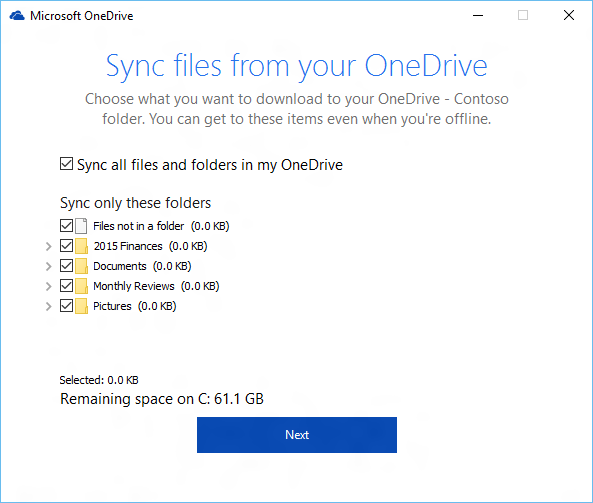
We’re making it easier for everyone to get going with OneDrive! Now new users of OneDrive that set up the OneDrive Sync Client will receive a one-time tutorial on uploading files to OneDrive, accessing their content via the Mobile Application, and sharing their files with others. 


With the sync client, you can choose which files and folders to sync to your computer. You can even add multiple work accounts to the OneDrive Sync Client and sync files or folders to your computer for each account, so you always have the files you need on the go!  


By introducing the tutorial, we’re helping people learn how to use OneDrive right from their first experience. And if you’re looking for more training for your team, check out the Office 365 Training Center.  


These tutorials include:

image.png

These new tutorial are available today in our Office Support Center. If you have feedback on OneDrive, make sure to visit our OneDrive UserVoice site.


-Stephen


05 Dec 08:27

IPvlan overlay-free Kubernetes Networking in AWS

05 Dec 08:27

Webinar 12/7 -Using Microsoft Flow to automate a B2B approval process by Paul Schaeflein

In this webinar Paul Schaeflein, will go through how to use Microsoft Flow, Azure B2B and Microsoft's Cloud services to automate a process to request and approve external users to an Office 365 Group.
05 Dec 08:26

The compelling case for working less

05 Dec 08:26

Vereinte Nationen: UN-Diplomat reist nach Nordkorea

by ZEIT ONLINE: Ausland -
Nach einem erneuten Raketentest Nordkoreas haben sich die Spannungen in der Region verschärft. Jetzt besucht ein ranghoher Vertreter der Vereinten Nationen das Land.
05 Dec 08:25

Softwarequalität: Neue Fehler im neuen iOS 11.2

Apples schnelles Update auf iOS 11.2 behebt zwar Fehler, verursacht aber neue. So werden einige Kabel nicht mehr erkannt, und Face ID kann auf dem iPhone X nicht mehr aktiviert werden. Zudem ist auch unter MacOS High Sierra ein Datumsbug entdeckt worden. (Apple, Applikationen)

05 Dec 08:25

G20-Proteste: Bundesweite Razzien wegen G20-Ausschreitungen

by ZEIT ONLINE: Deutschland -
Polizisten durchsuchen in acht Bundesländern Gebäude auf der Suche nach Hinweisen zu den Krawallen in Hamburg. Es gibt Razzien in Privatwohnungen und Stadtteilzentren.
05 Dec 08:25

FastCharge: BMW und andere forschen an 450 kW-Ladetechnik

by Benny

Die BMW Group forscht gemeinsam mit mehreren anderen Unternehmen an der Entwicklung einer 450 kW FastCharge Ladetechnik für Elektroautos. Das auf drei Jahre angelegte Projekt wird von der BMW Group als Konsortialführer geleitet, außerdem sind die Allego GmbH, die Phoenix Contact E-Mobility GmbH, die Dr. Ing. h.c. F. Porsche AG und die Siemens AG als weitere Partner beteiligt. Das Bundesministerium für Verkehr und digitale Infrastruktur fördert das Projekt mit insgesamt 7,8 Millionen Euro.

Ziel der FastCharge-Kooperation ist eine Antwort auf eine der wichtigsten Fragen rund um Elektroautos und Elektromobilität: Wie lassen sich die Akkus der Fahrzeuge innerhalb einer möglichst kurzen Zeit wieder aufladen? Könnte man die Batterien ähnlich schnell auffüllen wie den Kraftstofftank eines Autos mit Verbrennungsmotor, könnten die Akkus in kommenden Elektroautos viel kleiner dimensioniert werden, was den Entwicklern völlig neue Möglichkeiten bei der Gestaltung des Fahrzeugs bringen würde.

Begonnen hat die Arbeit am FastCharge-Projekt bereits im Juli 2016, seitdem wurde die Technik intensiv erforscht und weiterentwickelt. Um die Ladezeit von Elektroautos in Zukunft dramatisch verkürzen zu können, müssen die Volt- und Amperezahlen deutlich höher ausfallen als bei heutiger Ladetechnik.

Im Rahmen von FastCharge peilen die BMW Group und ihre Partner eine Ladeleistung von bis zu 450 kW an, das ist rund drei Mal so viel Leistung wie an heutigen Ladesäulen. Die angepeilten 900 Volt Spannung und 500 Ampere Stromstärke sind nicht nur eine Herausforderung für den Akku des Fahrzeugs und die Ladesäule, sondern für alle beteiligten Komponenten. Selbst für eine Aufladung in unter 15 Minuten müssten Ladekabel, Stecker und Fahrzeugsteckdose während des FastCharge-Vorgangs gekühlt werden.

Die Ladekabel mit CCS-Stecker sollen dennoch flexibel und dünn ausgeführt sein, um sich ähnlich gut handhaben zu lassen wie heutige Kraftstoffschläuche an Tankstellen für konventionell angetriebene Fahrzeuge mit Verbrennungsmotor. Natürlich sollen die kommenden Schnellladestationen abwärtskompatibel sein und auch für Fahrzeuge geeignet sein, deren Batterien nicht für eine derart schnelle Aufladung konzipiert wurden.

Schon 2018 wollen die beteiligten Unternehmen die FastCharge-Technik in Prototypen umsetzen und der Öffentlichkeit vorstellen. Wir dürfen also bereits gespannt sein, ob dann ein Fahrzeug der BMW Group oder ein Porsche zur Demonstration der neuen Ladetechnik genutzt wird. Sicher ist schon jetzt, dass Elektroautos mit FastCharge-Technik endlich die gleiche Langstreckentauglichkeit wie heutige Benziner und Diesel erhalten würden.

05 Dec 08:25

Fastcharge: BMW will mit 450 kW laden

Elektroautos werden sich nur durchsetzen, wenn sie in akzeptabler Zeit geladen werden können. BMW erprobt daher mit Partnern die Schnellladung Fastcharge, die mit bis zu 450 kW arbeiten soll. (BMW, Technologie)
05 Dec 08:25

Obsolet: Mac Mini 2011 fällt aus dem Support

Apple mustert den veralteten Mac Mini aus dem Jahr 2011 aus. Damit gibt es keine Reparaturen oder Ersatzteile mehr. (Mac Mini, Apple)
05 Dec 08:25

Für jede Lightroom-Einstellung eine Taste: Wie Loupedeck Fotobearbeitung schneller machen will

Knöpfchen drehen statt Maus bewegen in Adobe Lightroom: Das Loupedeck soll Fotobearbeitung vereinfachen, wir haben es für euch getestet. 

Frag zwei Fotografen nach ihrem Kamerasystem und die Chance ist groß, dass damit eine Grundsatzdiskussion startet, die nicht gerade kühl wird. Ähnlich ist das bei Gadgets wie dem Loupedeck oder Konkurrenten zur Bildbearbeitung.

Das ursprüngliche Kickstarter-Projekt hat viel Aufmerksamkeit auf sich gezogen. Brauchen Fotografen ein solches Gadget? Macht es die Bildbearbeitung in Adobe Lightroom wirklich schneller? Um schon mal ein bisschen vorzugreifen: Es kommt drauf an, vor allem auf den eigenen Workflow.

Loupedeck überzeugt mit Einfachheit

Für fast jede Lightroom-Funktion hat das Loupedeck eine Taste. (Foto: t3n)

Das Loupedeck kann auf jeden Fall mit seiner Convenience überzeugen. Mit in der schicken Packung befindet sich ein Kärtchen, das auf die Loupedeck-Setup-Website verweist, auf der Nutzer die aktuellste Version der Software herunterladen können. Ist diese installiert, kann das Board per USB mit dem macOS- oder Windows-Rechner verbunden werden und ist direkt einsatzbereit. Der Großteil der auf dem Gerät vorhandenen Tasten ist vorbelegt und daher schon von Werk aus passend beschriftet.

Die Software kommt mit einer schicken Oberfläche, in der sich die benutzerdefinierten Tasten einfach selbst belegen lassen, und sie dient auch mit einem Lightroom-Plugin als Verbindung zum Programm. Das Loupedeck wirkt wie Lightroom-zugehörig, wenn darüber Funktionen ausgeführt werden, da die Meldungen im Programmfenster den Standardmeldungen gleichen.

Per Software lassen sich auf die Tasten P1 bis P8 jeweils zwei Presets legen, zwischen denen mit der FN-Taste umgeschaltet wird. Auch einige andere Tasten haben so zwei Funktionen. Daneben befinden sich auf dem Board auch noch zwei Funktions-Tasten, die beliebig belegt werden können, ebenso wie ein Drehregler.

Praktisch bei der Arbeit mit dem Loupedeck: Jede Farbe hat einen eigenen Regler. (Foto: t3n)

In der praktischen Arbeit mit dem Loupedeck fällt vor allem positiv auf, dass alle Eingaben ohne Verzögerung direkt in Lightroom angenommen werden. Kein Schieberegler hakt in der Software, und beispielsweise bei der Anpassung der einzelnen Farbregler ist man im Alltag schneller, gerade wenn die umliegenden Farben auch angepasst werden sollen. Mit dem Loupedeck kann Lightroom auch gleichzeitige Eingaben verarbeiten, wenn also beispielsweise an zwei Farbreglern zeitgleich reguliert wird. Durch einen Klick auf einen Regler wird die entsprechende Einstellung wieder zurückgesetzt.

Mit dem Loupedeck lässt sich ein Großteil der Funktionen aufrufen, die sich in der rechten Seitenleiste von Lightroom finden. Wie auf dem Foto oben zu sehen gibt es viele unterschiedliche Tasten, vom Pinsel über den Wechsel von schwarz-weiß zu farbig bis hin zu Pfeil-Tasten oder einem Regler für den Zuschnitt und die Drehung.

Eine praktische Kleinigkeit, die bei der Bedienung auffällt: Wird ein Regler betätigt, dessen Bedienelement in Lightroom gerade nicht im Sichtfeld ist, springt das Programm dorthin, um direkt den Wert am Regler sehen zu können.

Anzeige

Loupedeck muss Kritik bei der Verarbeitung einstecken

Bei der Nutzung der Tasten fällt auf, dass sie nicht den optimalen Druckpunkt haben, auch die Drehregler könnten sich besser anfühlen. (Foto: t3n)

An sich ist das Loupedeck solide verarbeitet. Es gibt keine scharfen Kanten und es macht keinen instabilen Eindruck. Es muss sich allerdings, gerade im Preisbereich von knapp 300 Euro, Kritik in Sachen Verarbeitung gefallen lassen. Am deutlichsten fällt der nicht optimale Druckpunkt der Tasten auf. Besonders spürbar wird das bei der Nutzung der Pfeile für die Bildnavigation. Vielfach reagieren diese nicht bei einer gefühlt angemessenen Druckstärke und Lightroom geht nicht zum nächsten Foto. Bei der Benutzung betätigt man die Tasten automatisch mit mehr Kraft, was die Bedienung nicht angenehmer macht.

Die Potis für die Anpassung von Belichtung, Weißabgleich und mehr haben leider ein wenig Spiel und ein ganz leichtes Kratzen beim Drehen. Außerdem könnten sie insgesamt etwas flüssiger laufen. Auch das Drehrad für den Bildzuschnitt hat deutlich Spiel nach rechts und links.

Die wichtigsten Einstellmöglichkeiten haben die Macher bedacht und die Tasten und Regler sind nach der kurzen Eingewöhnungsphase auch intuitiv bedienbar. Wünschenswert wären noch mehr frei belegbare Tasten oder stattdessen die freie Konfigurierbarkeit aller Tasten, wenn für den eigenen Workflow ein Regler nicht ganz so wichtig ist.

Mehr, mit Tastenkürzeln belegbare Tasten wären praktisch, um den Wechsel zur Tastatur gänzlich vermeiden zu können. (Foto: t3n)

Eins sei an dieser Stelle deutlich erwähnt: Das alles ist natürlich meckern auf hohem Niveau. Alle Regler funktionieren und grundsätzlich ist das Loupedeck ordentlich verarbeitet. Bei einem Preispunkt von rund 300 Euro findet man allerdings das ein oder andere Haar in der Suppe.

Arbeitet man im Entwickeln-Modul von Lightroom mit dem Loupedeck, muss der Weg zur Tastatur nur noch selten genutzt werden – komplett bleibt er aber leider nicht aus. Das Loupedeck bietet zum Beispiel keine Möglichkeit, sich über eine Taste die Maske eines Werkzeugs anzeigen zu lassen. Damit wandert nicht nur eine Hand zur Anpassung der Maske zur Maus, sondern auch die zweite noch auf die reguläre Tastatur, um dort die O-Taste zu betätigen.

Gerade im Bibliotheksmodul wäre eine freiere Tastenbelegung praktisch. Im Test sind wir immer darüber gestolpert, dass sich zwar mit den Stern- und Farbtasten wunderbar bewerten lässt, es aber keine Möglichkeit gibt, von der Detail-Ansicht eines Bildes wieder ins Grid zu wechseln. Die Zoom-Taste kann das umgekehrt, möchte man allerdings für einen besseren Überblick wieder zurück, bleibt nichts als die Escape-Taste auf der richtigen Tastatur.

Die Alternativen im Markt können günstiger sein

(Foto: t3n)

1 von 8

Das Loupedeck ist nicht der einzige Anbieter einer solchen Hardware. Ebenso bekannt ist das System von Palette Gear. Das funktioniert nicht nur mit Lightroom, sondern auch in anderer Adobe-Software wie Photoshop oder Premiere. Der Vorteil hier ist: Es handelt sich um ein modulares System. Alle Regler lassen sich individuell an das Hauptmodul magnetisch andocken. Ähnlich wie beim Loupedeck werden in der Software dann die passenden Funktionen zugewiesen. Preislich liegt die Palette Gear auf einem ähnlichen Level, hat dann aber weniger Regler. Will man mehr, muss der Griff ins Portemonnaie beherzter werden.

Eine günstige Alternative ist das X-Touch Mini von Behringer (Provisions-Link). Große Aufmerksamkeit bekam das Midi-Board durch die beiden Hochzeitsfotografen Nils Hasenau und Manuel Gutjahr, die in ihrem Podcast vom Einsatz berichtet haben. Das nur knapp 70 Euro teure Board lässt sich mit der Software Midi2LR mit Lightroom verbinden und komplett individuell belegen – dank Umschalt-Taste auch jeweils doppelt. Nur selbst beschriften muss man. Wer eine extra Hardware zur Bildbearbeitung ausprobieren möchte, muss hier zumindest nicht so tief in die Tasche greifen und bekommt eine angemessene Verarbeitung für den Preis. Bei einem Test in der Redaktion hat sich auch das Behringer solide geschlagen.

Fazit: Eine Frage des Workflows

Passt eine Hardware wie das Loupedeck in den eigenen Workflow der Fotobearbeitung, ist einiges an Zeitersparnis drin. (Foto: t3n)

Eins ist klar: Gadgets wie das Loupedeck, Palette Gear oder auch das günstige Behringer X-Touch Mini muss man ausprobiert haben und sich darauf einlassen. Denn es ist eine deutliche Frage des Workflows. Der ist bei jedem Fotografen anders und der ein oder andere kann vielleicht mit einem Board nichts anfangen, der andere dafür umso mehr. Die Regler können blind bedient werden, und durch die Anpassungsmöglichkeit der Geschwindigkeit in der Loupedeck-Software erleichtert es einem entweder das Finetuning oder kann mit wenigen Umdrehungen auch schnell Einstellungen mal komplett umkehren.

Insgesamt bietet das Loupedeck ein solides Paket aus Hard- und Software. Es ist unkompliziert in der Einrichtung, versteht sich super mit Lightroom und hat für fast alle gewünschten Funktionen eine Taste parat. Der Preis ist natürlich diskussionswürdig. Für Hobbyfotografen ist es durchaus viel Geld, wer dadurch im Beruf aber deutlich Zeit spart, hat die Investition schnell wieder drin.

Komplett auf Tastatur und Maus verzichten können Fotografen letztlich bei allen Lösungen nicht, bei einer mehr, bei der anderen weniger. Und egal ob Diskussion über Gadgets wie das Loupedeck oder das Kamerasystem: Am Ende kommt es auf das Ergebnis und die eigene Zufriedenheit an – und das ist ganz individuell.

Passend dazu: Neben dem Loupedeck – Coole Gadgets für Fotografen

Hinweis: Wir haben in diesem Artikel Provisions-Links – auch Affiliate-Links genannt – verwendet und sie durch „(Provisions-Link)" gekennzeichnet. Erfolgt über diese Links eine Bestellung, erhält t3n.de eine Provision vom Verkäufer, für den Besteller entstehen keine Mehrkosten.

05 Dec 08:25

"House of Cards": Serienfinale ohne Kevin Spacey

by ZEIT ONLINE: Film -
Die Produktion von "House of Cards" wird fortgesetzt. Allerdings ohne den Hauptdarsteller Kevin Spacey, dem sexueller Missbrauch vorgeworfen wird.
05 Dec 08:24

The Curious Case of the Quarantined Azure AD Identity Protection Weekly Digests

by Paul Cunningham

Exchange Online Protection (EOP) is often criticized for it's effectiveness and accuracy. I have no doubt that some customers are finding EOP's performance to be disappointing. But I also think that EOP, like any other email security service, will not work well for every single customer “out of the box”, and often requires some effort to tweak and tune the configuration to achieve a satisfactory outcome.

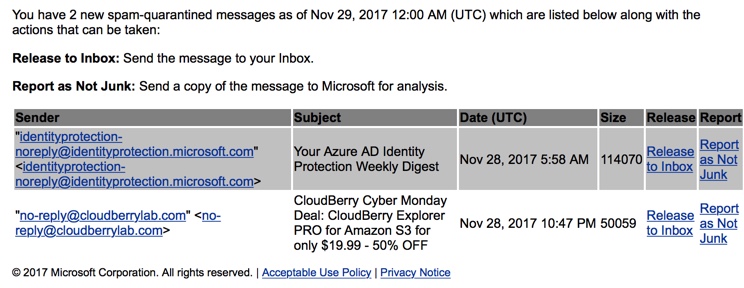
Recently, I've been noticing my Azure AD Identity Protection weekly digest emails getting quarantined by Exchange Online Protection.

At first, it was a minor annoyance. Why would Microsoft block their own service notifications? I clicked “Report as Not Junk” and “Release to Inbox” and got on with my day. But after a few weeks it was starting to bother me, and I spent a few minutes digging into it further.

When you're investigating a spam false positive/negative, the best place to start looking is the message headers. There's a few ways to get the headers. If the message is in quarantine, you can access the headers in the Exchange admin center.

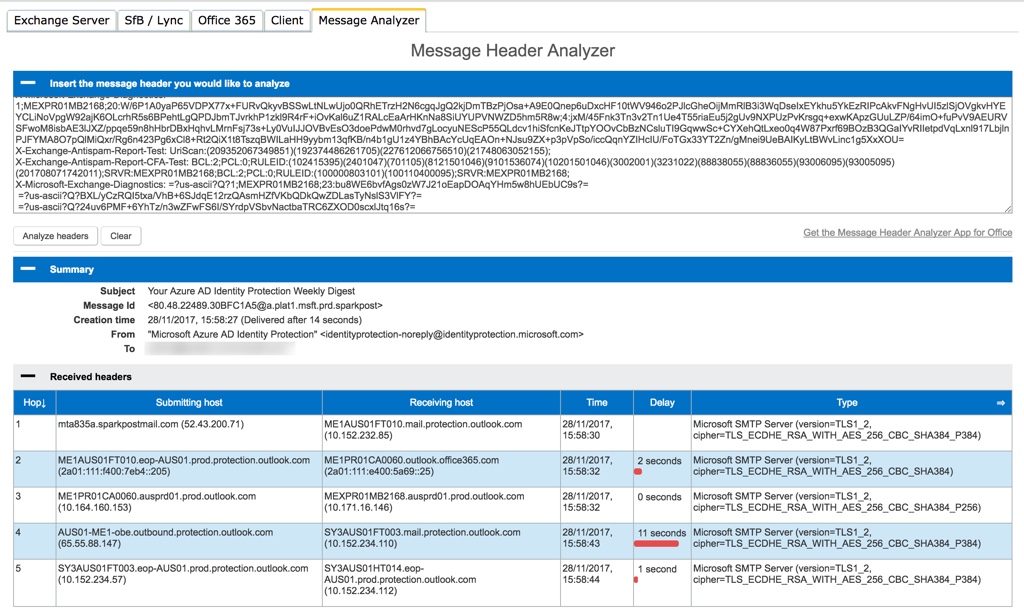
If the message has already been released to the recipient's inbox, you can retrieve the message headers in Outlook. Once you have the message headers, copy and paste them into the Message Analyzer in the Remote Connectivity Analyzer. If the Message Header Analyzer add-in is already installed in Outlook, you can perform the header analysis from within Outlook. I prefer doing it on the RCA website in my web browser though, which is easier to read.

There's a lot of info in the header analyzer output. Some of it is fairly straightforward, looking at things like SPF results. Some of it is more difficult to interpret on its own, and you'll need to refer to the anti-spam message headers documentation.

In the header analyzer, look for the Forefront Antispam Report Header, which provides a neat summary of the EOP verdict on the email. In my case, there's nothing immediately suspicious about this email. The spam confidence level (SCL) is only 1, the IP filtering verdict is okay, the bulk complaint level is low (as you'd expect for a system email from Microsoft), and the phishing confidence level is 0. All looks fine. As a side note, if you're looking at headers for a message that has been released from quarantine, the SCL will be -1 and the spam filtering verdict will be SKQ.

After looking through the headers I noticed that the language was displayed as “ja” (you can see this in the screenshot above), which is the language code for Japanese. Now, this email is definitely not written in Japanese. But something is making EOP think this email is written in Japanese. Interestingly, the same digest email goes to my Outlook.com mailbox, and an analysis of the headers from that message show no country/region or language information.

Why are Japanese emails getting quarantined as spam in my Office 365 tenant? Because I have international spam filtering enabled.

I can't read languages other than English, and some non-English spam was getting through to my mailbox, so I decided to just filter out foreign language emails. It never occurred to me at the time that this might cause system emails from Microsoft to get quarantined (who would anticipate such a thing happening?).

Anyway, since I have no way to control the characteristics of the Azure AD Identity Protection weekly digest email, that leaves me with a few options to fix this problem (aside from reporting the matter to Microsoft, which I've already done). I could remove Japanese from the international spam filtering list, but that's not ideal, as the problem could shift to another language.

I could add the sender email address of the weekly digest emails to the allow list in my spam filter policy. In fact, that's what I did at first. Then it occurred to me that I might be exposing myself to spoofed email from that address. But surely Microsoft would not allow one of its own notification email addresses to be used in that manner, right?

I ran some quick tests, sending emails using PowerShell from my own network, as well as some other networks I have access to. Sending from my own network, I am able to spoof the identityprotection-noreply@identityprotection.microsoft.com email address successfully. The emails are delivered to my inbox, and the headers show a “Spam Filtering Verdict” of SKA, due to the allow list entry that I added.

Clearly it is not a good solution to add that email address to the spam filtering allow list in EOP. After I removed the allow list entry, I repeated my spoofing tests and the emails were not delivered, but were quarantined instead. This brought me back to square one, and I needed to find another way to allow the Azure AD Identity Protection emails to be delivered.

So I looked into it some more. The next thing that caught my attention was that the emails come from an email service called Sparkpost. If you are a developer creating an app or service that needs to send emails, you can use Sparkpost instead of writing your own email service or managing your own email servers. A perfectly normal approach for developers to take, although I'm not sure why Microsoft feels the need to use them for Azure AD Identity Protection emails.

The sender address for the Azure AD Identity Protection emails is identityprotection-noreply@identityprotection.microsoft.com, so I looked up the SPF record for the identityprotection.microsoft.com domain. I found that a redirect is being used, which effectively means that the SPF record for _spf.e.sparkpost.com is used as the SPF record for identityprotection.microsoft.com.

So I looked at the SPF record for _spf.e.sparkpost.com, and found the following.

The use of an “exists” mechanism is not something I see very much of, so I decided to try validating the SPF policy using this tool.

The result was a pass, meaning Sparkpost's IP addresses can send emails from the identityprotection.microsoft.com domain.

However, if you take another look at the SPF record for _spf.e.sparkpost.com above, you'll see that is uses “~all”, which is a SoftFail. A SoftFail says to the receiving server, “the domain owner discourages the use of that IP address as a sender, but you can decide for yourself whether to block it or not”. What's interesting to me is that an SPF SoftFail seems to be enough to get my spoofed emails quarantined (but not rejected), but once I put the allow list entry in, the SoftFail did not cause my spoofed emails to be blocked.

This gave me the idea that there is a potential solution by using mail flow rules, instead of using EOP filter settings. I created a mail flow rule to allow emails from identityprotection-noreply@identityprotection.microsoft.com only if the SPF result is a pass.

The outcome is that legitimate Azure AD Identity Protection emails will now be received in the inbox instead of getting quarantined by EOP. Any spoofing attempts will continue to be rejected or quarantined by EOP based on my spam filter settings.

To summarize:

  • Azure AD Identity Protection emails are being treated as Japanese language by Exchange Online Protection.
  • If you are using international spam filtering in EOP, the Azure AD IP emails will be quarantined or rejected, depending on your spam filter policy.
  • Adding the Azure AD IP sender email address to the EOP allow list exposes you to spoofing of that email address, so it is not an ideal solution.
  • Using a mail flow rule that bypasses spam filtering for the sender address only when the SPF check passes will prevent the quarantine/rejection, without exposing you to spoofing.

The post The Curious Case of the Quarantined Azure AD Identity Protection Weekly Digests appeared first on Practical 365.

05 Dec 08:23

Schluss mit den Vorurteilen: Das Informatik-Studium braucht weniger Nerds

Das Informatik-Studium hat ein Problem: Es kann seinen Vorurteilen nicht entkommen. Die Disziplin muss ihren nerdigen Ruf ablegen und attraktiver für vielfältige Studenten werden, sagt Moritz Stückler.

Wer heute ein Informatik-Studium beginnt, wird in der Einführungswoche mit ziemlich großer Sicherheit irgendwann in Gespräche über League of Legends, Linux-Distributionen oder Grabenkämpfe zwischen Macbook, Thinkpad und Surface verwickelt werden. Ich spreche aus Erfahrung, denn vor dreieinhalb Jahren ging es mir genau so. Während der ersten Woche zweifelte ich ernsthaft daran, ob ein Informatik-Studium tatsächlich das Richtige für mich ist. Klar war ich computeraffin, aber das war für mich eben nur eines von vielen Hobbys. Ich bin kein Zocker, wähle meine Betriebssysteme eher nach pragmatischen Gründen, und wegen Mathe bin ich in der Schule einmal durchgefallen.

Wegen Mathe bin ich in der Schule durchgefallen – jetzt studiere ich Informatik

Heute habe ich keine Zweifel mehr daran, dass meine Entscheidung für das Informatik-Studium goldrichtig war. Was ich beim Rückblick auf die vergangenen Semester aber leider resümieren muss: Der Informatik-Disziplin fehlt es an Vielfalt. Und es tut mir fast weh, dass viele Klischees rund um diesen Studiengang, der mir so ans Herz gewachsen ist, immer noch häufig zutreffen. Das bestätigt auch eine neue Studie des Statistischen Bundesamts: Die Zahl der Informatik-Erstsemester ist rückläufig. Etwa 4,1 Prozent weniger Informatik-Studienanfänger haben sich für das aktuelle Wintersemester 2017/2018 in Deutschland eingeschrieben. Noch schlimmer ist die Tatsache, dass der Rückgang bei den Frauen mit 8,8 Prozent noch deutlicher ausfällt.

Die meisten Kommilitonen sind Informatiker aus voller Überzeugung – Nerds. Spätestens seit der Oberstufe war den meisten klar, was sie werden wollen. Viele sind mit Informatik aufgewachsen und haben schon als Kinder und Teenager programmiert. Die größte verbliebene Unsicherheit im Lebenslauf war nur, welche Teildisziplin der Informatik sie verfolgen möchten (an meiner Hochschule sind das Angewandte Informatik, Wirtschaftsinformatik oder Technische Informatik).

Anzeige

Es fehlen Studenten links und rechts des Informatiker-Klischees

Diese Kommilitonen sind extrem intelligente und gute Informatiker. Ich würde die meisten davon ohne zu Zögern einstellen, und niemand sollte sich davon abhalten lassen, sein Informatik-Hobby auch akademisch zu verfolgen. Aber was der akademischen Disziplin definitiv fehlt, sind zusätzliche Studenten links und rechts der Informatiker-Klischees. Menschen, die vielleicht erst später ihr Interesse für die Disziplin entdeckt haben. Menschen, die nicht direkt vom Gymnasium kommen, und deren Lieblingsfächer nicht unbedingt Mathe und Physik waren. Menschen, die Umwege genommen haben oder vorher einen anderen Beruf hatten. Menschen, für die Informatik kein Selbstzweck ist, sondern Mittel zum Zweck.

Der Informatik mangelt es nicht an Entwicklern, die einen Sortier-Algorithmus korrekt implementieren können. Es mangelt an Leuten, die mit diesem Algorithmus etwas Bedeutendes anstellen. Leute, die mit diesem Wissen Firmen und Initiativen gründen, Produkte bauen und damit andere Industrien und Bereiche verändern und die ihr Wissen auch wieder an andere weitergeben.

Denn wenn Informatiker unter sich bleiben, kommt es zu einem im Internet bekannten Phänomen, dem sogenannten Circle Jerk (in den Medien gerne auch Echo Chamber genannt). Gleichgesinnte unterhalten sich über die neuesten Frameworks und streiten über den besten Window Manager, machen sich aber wenig Gedanken über Themen außerhalb ihres Fachgebiets oder die Rolle der Informatik in unserer Gesellschaft – das sprichwörtliche „Herauszoomen“ aus der Thematik fehlt.

Denn gerade das Stichwort Digitalisierung fällt momentan im Kontext der Bundestagswahl und der Koalitionsverhandlungen häufiger als sonst. Trotzdem sind Informatiker bei der Gestaltung unserer gesellschaftlichen und politischen Zukunft vollkommen unterrepräsentiert. Im Deutschen Bundestag saßen in den letzten Wahlperioden zwischen zwei und vier Informatiker (im Gegensatz zu etwa 150 Juristen). Das ist beschämend für ein Land, das den Anspruch hat, bei der Digitalisierung global vorne mitspielen zu wollen.

Was können wir gegen die Homogenität der Informatik-Studenten unternehmen? Wie schaffen wir mehr Vielfalt in diesem Beruf?

Das Problem ist natürlich größer, als dass es nur die Universitäten beträfe. Im Gegenteil: Die Universitäten können zur Lösung nur erschreckend wenig beitragen (hauptsächlich Lehrpläne aktuell halten, gutes Personal einstellen und gutes Marketing betreiben). Das Problem beginnt in der Erziehung und dem Bildungssystem im frühesten Stadium. Kinder müssen viel früher mit Informatik in Kontakt gebracht werden, und zwar nicht nur als passive Konsumenten, sondern als aktive Gestalter. Denn allein ein iPad im Klassenzimmer löst noch keine Probleme. Ebenso wenig braucht jedes zehnjährige Kind schon ein Smartphone. Zeigt den Kindern und Jugendlichen nicht, wie sie im Zehn-Fingersystem schreiben oder einen Geschäftsbrief in Word aufsetzen. Zeigt ihnen, wie man LEDs zum Leuchten bringt, wie man Stimmen verzerrt, wie man Roboter fahren lässt und wie man die Gaskonzentration und die Lautstärke eines Furzes messen kann.

Der Calliope Mini ist ein kleiner Computer, mit dem Kinder programmieren lernen können. (Quelle: calliope.cc)

Kein Studiengang wie jeder andere. Informatik ist ein Fundament für viele Bereiche

Das Studiensystem suggeriert, Informatik ist ein Studiengang wie jeder andere. Tatsächlich ist Informatik heutzutage aber auch ein essenzieller Bestandteil vieler anderer akademischer Disziplinen. BWLer schreiben Matlab-Scripte, Lehramts-Studenten müssen ihre Inhalte mit digitalen Werkzeugen vermitteln, Maschinenbauer programmieren CAD-Plugins und Journalisten müssen Webdesign können. Die Informatik ist keine Nische, sondern das neue Fundament unserer Gesellschaft. Das sollte sich auch in der Studierendenschaft widerspiegeln. Ein Informatik-Grundstudium mit einer fachlichen Spezialisierung, zum Beispiel im Master oder durch Qualifikationen außerhalb der Universität ist – zu Recht – eine gefragte Kombination auf dem Arbeitsmarkt.

Nur wenn wir es schaffen, dieses Thema für junge Leute aller Geschlechter attraktiv zu machen, wird sich langfristig die Vielfalt an den Universitäten und Fachhochschulen verbessern. Informatik muss für coole und erstrebenswerte Karriereaussichten stehen – in jeder denkbaren Branche. Bis dahin wird der Circle Jerk weitergehen.

Am Ende also ein persönlicher Appell an alle Menschen, die zweifeln und die sich unsicher sind, ob sie in diesem Fach glücklich werden können: Tut es! Studiert Informatik! Wir brauchen euch.

Auch dieser Beitrag könnte dich interessieren:Reich, aber unsexy – Trotz guter Bezahlung sinkt das Interesse am Informatik-Studium