New, state-of-the-art architecture is constantly shooting up with impressive speed in New York City, with one unbelievable building stealing the spotlight from another, equally enormous edifice on a daily basis. (Think: the new
Whitney Museum or midtown's
One57.) And, while certain New York landmarks are unlikely ever to fall out of favor, plenty of smaller, less flashy gems are often overlooked in NYC's obsession with novelty and innovation.
Well, forsaking the underdogs is
not our style. We're determined to celebrate these lesser-known monuments — especially considering many of them may not be around for much longer. Here, we rounded up 12 endangered beacons of New York's architectural history that could soon cease to exist. Not only are they brimming with fascinating stories — they also make for some pretty nifty 'grams, too.
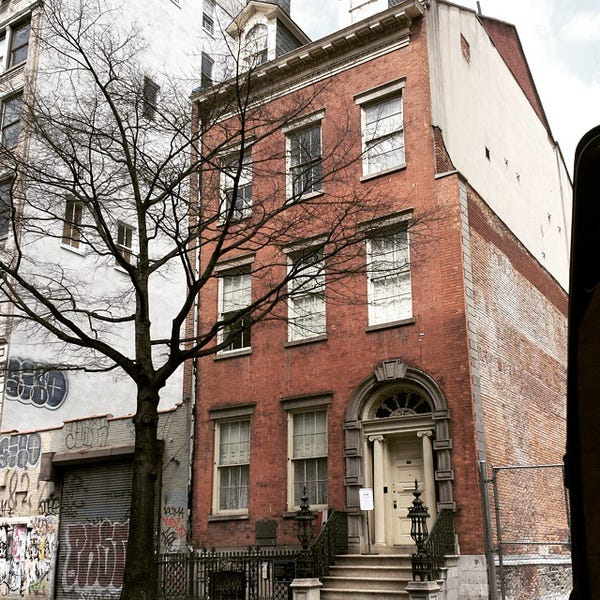
Merchant’s House Museum
New York’s “only remaining preserved family home from the 19th century” — according to this Change.org petition — is not in danger of being razed, but rather, of being dwarfed by a nine-story hotel proposed for its neighboring lot. Conservation advocates believe the proposed property would overwhelm the museum’s extreme narrowness, detracting from the authenticity of its landmarked, late-Federal brick facade. Should the construction move forward, you can still revel in the museum's preserved Greek revival interior.
Merchant’s House Museum, 29 East 4th Street (between Bowery and Lafayette Street); 212-777-1089.
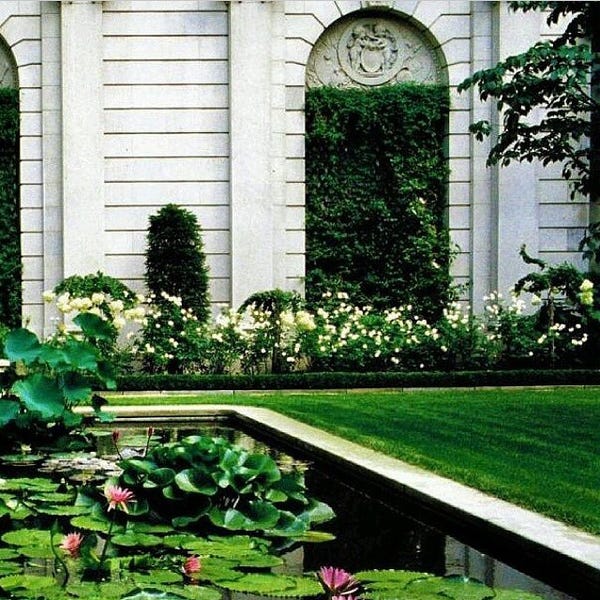
Russell Page Viewing Garden
Over 4,000 people have signed the Change.org petition, “Tell the Frick: Withdraw Your Destructive Plan,” to stop the museum from continuing with its proposed expansion, which would do away with the seriously picturesque Russell Page viewing garden. The garden is one of two works in New York State by the masterful British landscape architect (who died in 1985), and is meant to be observed from inside the museum. Defending the garden, The New York Times wrote, “At human scale, the garden exemplifies the sort of minor miracles New York manages to shoehorn into small spaces.” And, we all know a thing or two about that.
Russell Page Viewing Garden (at the Frick Collection), 1 East 70th Street (between Madison and Fifth avenues); 212-288-0700.
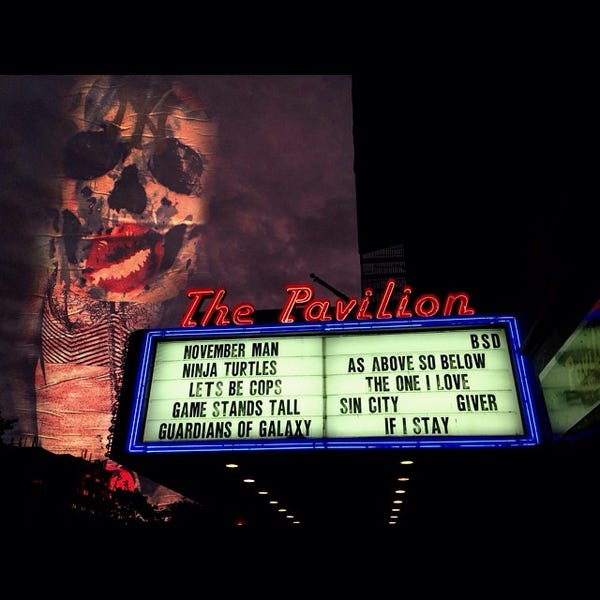
The Pavilion Theater
Would you live inside a movie theater? Recently, Herald Square-based Hidrock Realty made a $16-million bet that you would. The firm purchased the building in 2006, but now plans to convert the funky Art Deco hotspot into 24 residential units occupying six stories. To date, the theater reports about 500,000 customers per year, so its disappearance will leave a lot of Brooklyn movie-lovers unhappy. On the bright side, Hidrock may open a more “sophisticated” version in the neighborhood.
The Pavilion Theater, 188 Prospect Park West (at 14th Street), Brooklyn; 718-369-0838.
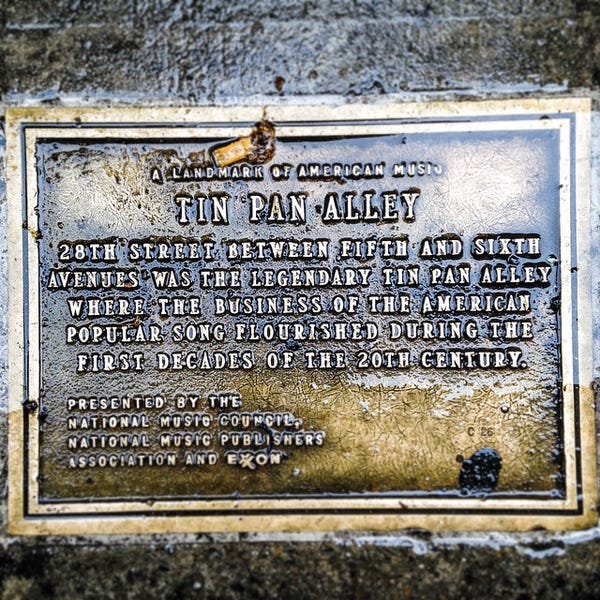
Tin Pan Alley
Music marketing today owes a lot to the publishers and composers who inhabited “Tin Pan Alley,” a stretch of West 28th Street between Broadway and Sixth Avenue, at the turn of the 19th century. It was there that the concept of “plugging,” or pitching songs to popular audiences was devised, and where the idea of marketable musical genres first took hold. The future of Tin Pan Alley is not as entrenched as its history, though; the block will either be included in the expansion of the Madison Square North Historic District, or fall prey to prolific midtown development.
Tin Pan Alley, West 28th Street (between Broadway and Sixth Avenue).
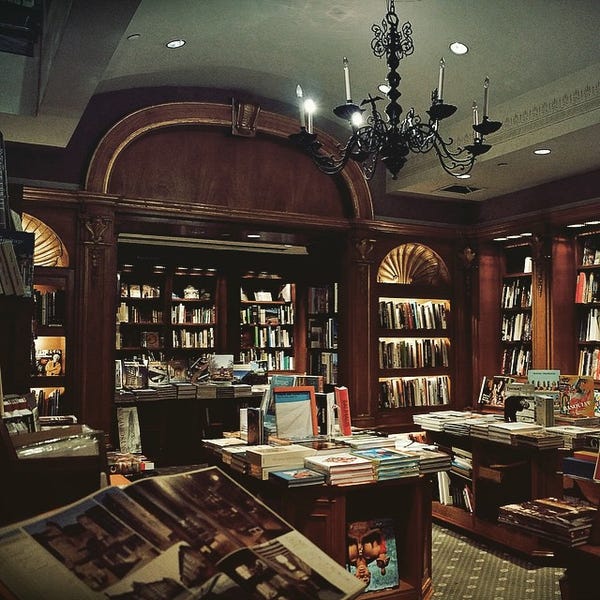
Rizzoli Bookstore Building
Classic New York bookstores had it rough in 2014: legends like the Rizzoli Bookstore and Shakespeare & Co. both closed their doors. After a nearly 30-year stint on 57th Street, Rizzoli packed up its gorgeous, un-electronic books and said goodbye to its historic home. And, while Rizzoli has reportedly signed a lease in a Beaux Arts building in the heart of Nomad, what will happen to the elegant space that once served as the showroom for the now-defunct piano manufacturer Sohmer & Company? Highrise nation, probably. As for the books? #hotdudesreading will have to shop elsewhere.
Rizzoli Bookstore Building, 31 West 57th Street (between Fifth and Sixth avenues).
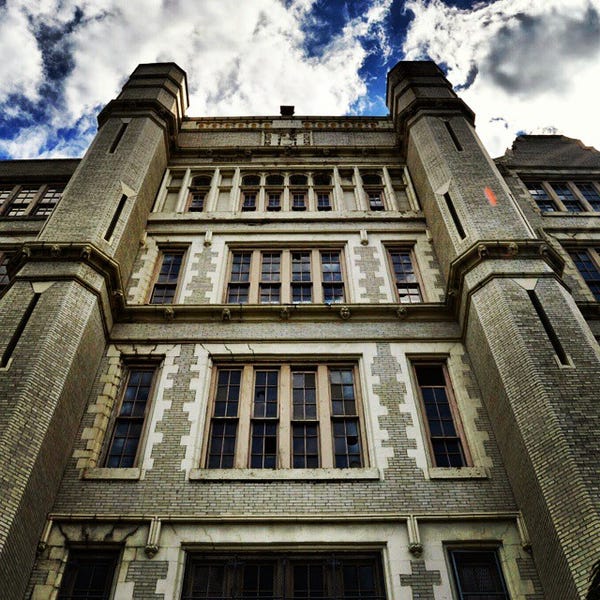
P.S. 31 (a.k.a. "The Castle On The Concourse")
Bronx residents are not happy about the prospect of losing P.S. 31, or “The Castle on the Concourse,” as it's lovingly called, referring to its location on the Grand Concourse thoroughfare. While the looming structure is landmarked, in 1997, it was deemed unsafe for entry. Though an Emergency Demolition Order was placed on the building in November 2013, the decaying school still stands to be admired — or hated — by all those who drive past it. Bronx Borough President Ruben Díaz, an alumnus, has made various demands regarding the building's probable renovation, including affordable housing, and community and commercial spaces.
P.S. 31 (a.k.a. "The Castle on the Concourse"), on the Grand Concourse (at East 114th Street), Bronx.
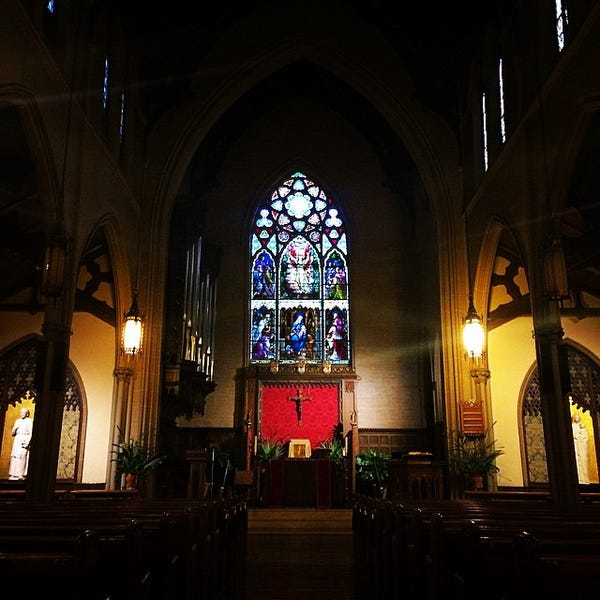
Church Of St. Thomas More
The Catholic Church recently announced plans to purge many parishes from its holdings. This was, of course, controversial for many parishioners, some of whom have taken to accusing the archdiocese of selling out. And, while the Church of St. Thomas More has not been auctioned off — yet — its prospects do not look good. Working in its favor, Peggy Noonan penned a critical editorial on its cultural relevance in The Wall Street Journal, not to mention that the uptown parish was the site of John F. Kennedy Jr.’s private memorial service (Jackie O was a parishioner until her death).
Church of St. Thomas More, 65 East 89th Street (between Park and Madison avenues); 212-876-7718.
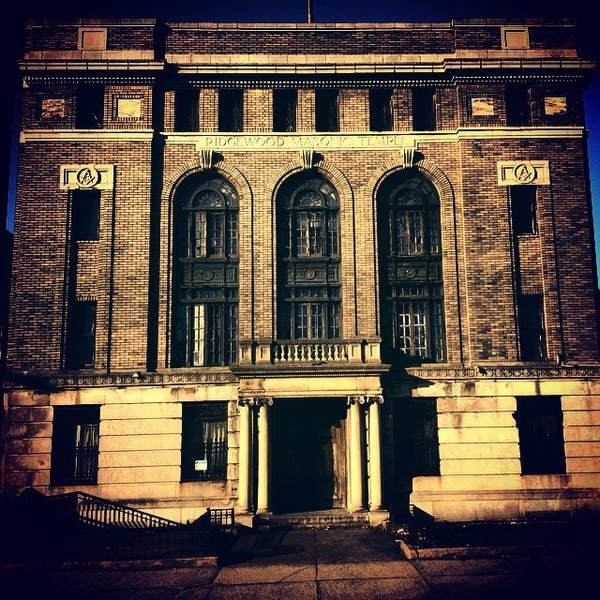
Ridgewood Masonic Temple
If you aren’t familiar with them, Masonic Temples are the meeting places of Freemasons, and exist all over the world. In spite of its name, the Ridgewood Masonic Temple is actually located in Bushwick and, like everything else in Brooklyn, may become an apartment complex in the near future. The building was once home to concerts and parties, which we can only imagine were utterly glorious. In July 2014, the building was awarded landmark status, and is celebrated by preservationists as a prime example of early 20th century civic architecture.
Ridgewood Masonic Temple, 1054 Bushwick Avenue (between Gates Avenue and Palmetto Street), Brooklyn.
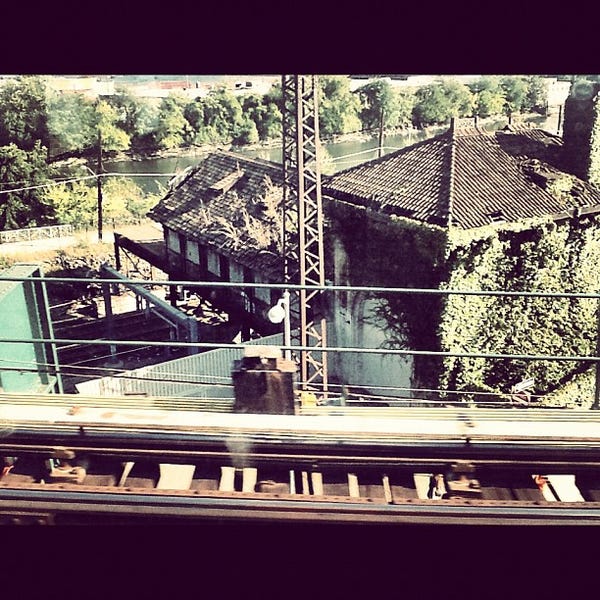
Westchester Avenue Station
Renowned architect Cass Gilbert built the Westchester Avenue station, along with several others, in the early 1900s. This structure is notable for its terracotta facade, colorful — albeit fading — accents, and the steel foundation from which it hulks. “The Bronx stations of old New York...are like a string of pearls — a very broken string. Some have been lost, and others are being slowly crushed by the boot of time,” writes Christopher Gray, a real estate columnist for The New York Times. In an effort to thwart a full stomp, the New York Landmarks Conservancy has listed the structure on its endangered buildings list.
Westchester Avenue Station, Westchester Avenue (at the Bronx River), Bronx.
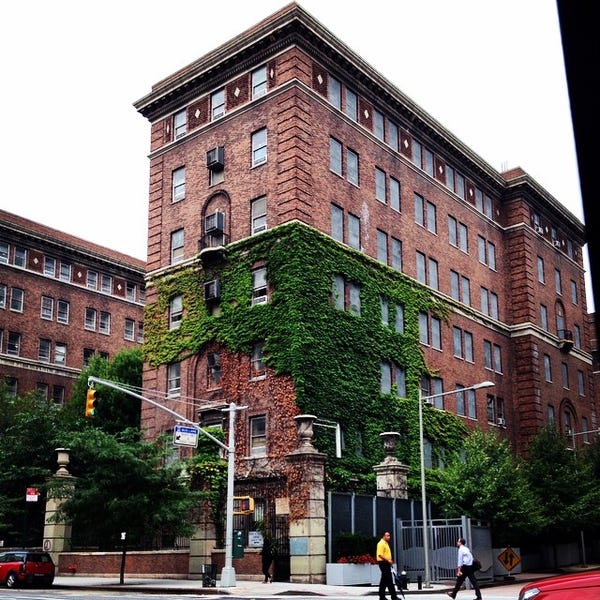
Bellevue Psychiatric Hospital
In its heyday, the Bellevue Psychiatric — or Psychopathic, as it was once known — Hospital treated notables like Norman Mailer, Edie Sedgwick, and John Lennon's assassin Mark David Chapman. Built around 1930, the hospital almost became a luxury hotel in 2010. Now, the Italian Renaissance-style building is crumbling to a creepy First Avenue grave, though The New York Landmarks Conservancy is trying to stop it.
Bellevue Psychiatric Hospital, 510 First Avenue (between 29th and 30th streets).

Riegelmann Boardwalk, Coney Island
Landmark status for this obviously-iconic New York structure was rejected on the claim that Coney Island peaked prior to the boardwalk's construction. Thus began the road to a modern boardwalk composed of “plastic slats that mimic the look of wood” (as opposed to the genuine wood currently in place). By the way: Mayor de Blasio is in favor of the unfortunate-but-necessary overhaul.
Riegelmann Boardwalk, Coney Island, Corbin Place to West 37th Street, Coney Island.
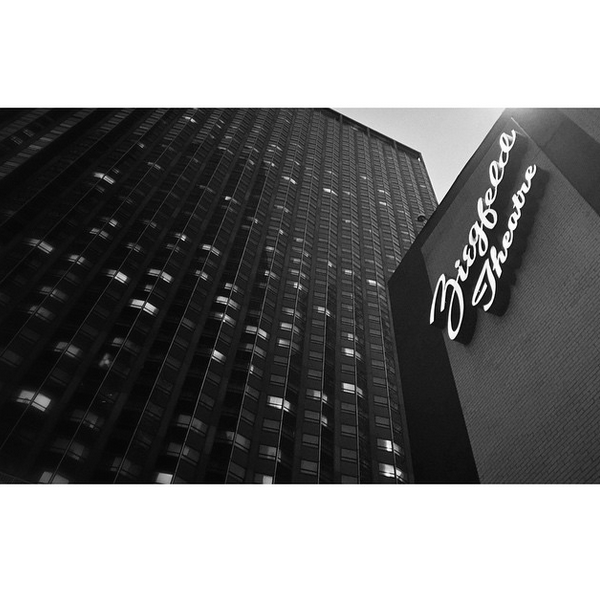
Ziegfeld Theatre
That single-screen movie theaters are undoubtedly a thing of the past only enhances the historical relevance of midtown’s Ziegfeld Theatre. Long before the era of Netflix, Ziegfeld rose to prominence as the largest theatre in New York City, boasting over 1,000 seats, tons of red carpet events, and countless Hollywood film premieres. Financially, the theatre is somewhat of a sinkhole, making its longterm fate precarious. The actual structure may not be endangered, though; plans to use the Ziegfeld as a space for special events appear to be in the works.
Ziegfeld Theatre, 141 West 54th Street (between Sixth and Seventh avenues); 212-765-7600.
Like what you see?How about some more R29 goodness, right here?
Step Inside A 1stdibs Editor's "Normcore" Home
This Charming & Colorful Home Is Brimming With Small-Space Ideas
Brooklynites Are Complaining About Lane Bryant's Subway Ads


 In this city, restaurants come and go faster than you can say "sustainable locavore burger." And even though there are great new additions to the culinary landscape popping up every week, you've gotta give kudos to anyone who can stick it out for over a year. With that in mind, we bring you


 Hey, who cares if the NY Times has a story saying you're


 123 On The Park, a high-end development situated at Prospect Park's southeastern edge, has all the amenities a luxury apartment seeker could ask for: A gaming lounge, a fitness center, bicycle storage, and the ghosts of at least several hundred tortured souls doomed to eternal unrest. [


 This town's got everything from fancy cocktail joints to craft beer havens to wine bars


 Williamsburg, which is fast becoming geographical embodiment of LCD Soundsystem's "New York, I Love You But You're Bringing Me Down," will soon get a new wine bar courtesy of LCD Soundsystem's James Murphy. Farewell,


 Shots rang out last night outside of Habana Outpost in Fort Greene around 8 pm, leaving two injured, according to police. [
 Willie Nelson, Lucius, Punch Brothers, The New Pornographers, Modest Mouse and many, many more will take the stage at the Prospect Park Bandshell in Park Slope this summer as part of the annual


