Jakienle
Shared posts
State regulators approve Duke Energy rate reduction
The Courant Catch Recharges Phones Faster, Fashionably

It’s funny how fast cables become passé and inconvenient once you get used to placing your phone onto a charger instead of having to plug it in. But wireless chargers still have an Achille’s heel: charging speed. Brooklyn, New York startup Courant is attempting to narrow and exceed the speed gap – and rather stylishly – with two chargers outfitted with higher-wattage ratings wrapped in the textural luxury of genuine Italian pebble grain leather.

Available in two models, the smaller $80 Catch:1 and larger $175 Catch:3 (where did the 2 go?), both Qi-Certified Fast Wireless Charging platforms are made of matte aluminum base and handsomely wrapped in Italian leather. The chargers are designed to scale for speeds dependent upon the device placed upon it, with 5W/7.5W/10W fast wireless charging available. The smaller Catch:1 seems ideal for a nightstand or smaller side table for overnight charging duties, while we imagine the Catch:3 as a desk or landing pad for keeping a wallet, keys, watch, and other smaller accessories dependably always in the same place while the phone is being charged.



Available in three colors – Ash, Black, and Bone – the pair of Courant Catch devices joins an ever-growing number of aesthetically pleasing charging solutions, eliminating the need for Lightning or USB cables.
What Happened After the Last HQ2 Competition

“Automobile Alley in Oklahoma City” by katsrcool/Flickr. Licensed under CC BY 2.0
When I traveled to Oklahoma City for the first time a few years ago I was shocked to discover that in the civic narrative of the city’s transformation – it’s origin story if you will – the triggering event for change was losing a competition for a United Airlines maintenance facility in 1991 to Indianapolis.
This United Airlines maintenance base was like a Foxconn or HQ2 of its era. It was a big deal because the thousands of jobs would be very high paying union mechanics and there were going to be a lot of them. It was anticipated that many people would be moving from the San Francisco area, where UA’s main maintenance base was, to this new facility. Here’s how the Chicago Tribune described the deal back at the time.
Score another one for Indianapolis. United Airlines chose Indiana’s capital Wednesday for its $1 billion aircraft-maintenance center, ending a 21-month bidding war among several states for the economic plum.
It was the latest of several recent development coups establishing Indianapolis as the pre-eminent growth city of the Midwest.
Just two weeks ago the U.S. Postal Service chose Indianapolis over 30 other Midwestern cities for its Express Mail sorting facility, which is expected to create up to 700 jobs. Four years ago the city, which has become the national center for amateur sports since the construction of the enclosed Hoosier Dome stadium in 1984, hosted the Pan American games.
The United maintenance hub, however, is by far the largest economic development project captured by the central Indiana metropolis in several decades.
The 3 million-square-foot complex of airplane-maintenance hangars and other buildings, to be built on a 300-acre site at Indianapolis International Airport, will employ up to 7,000 workers paid an average of $45,000 a year.
It will be, in fact, one of the largest aircraft-maintenance facilities in the world.
In addition, the center, to open in late 1994 to service United`s growing fleet of Boeing 737 jet aircraft, is expected to generate another 5,000 jobs at Indianapolis firms that will provide supplies and services to the center and its employees.
Construction of the facility, scheduled to begin next August, also will provide jobs for about 5,000 construction workers and will funnel millions of dollars of additional revenues into the tax coffers of Indianapolis and Indiana.
At the time this competition was ongoing, Oklahoma City had been struggling during an energy bust. The city went all in to win it, putting $300 million in incentives on the table. They made it to the final two, only to be told they’d lost out to Indianapolis.
The city pressed UA to give them a post-mortem analysis on the loss, and the airline eventually told them that even though they had the best bid, their employees had given Oklahoma City the thumbs down. They were unwilling to move there.
Ron Norick, the mayor at the time, went to Indianapolis and saw the downtown developments there. I can assure you, downtown Indianapolis was not that great in 1991. Most downtowns weren’t. However, the level of activity they did have – the relatively new to town Colts, the Pan Am Games, the restored Union Station – was much better than many other places of that era.
Norick ended up proposing what became the first iteration of MAPS – Metropolitan Area Projects – in which city taxpayers agreed to a limited time sales tax increase to fund downtown improvement projects. It was only after MAPS passed that the 1995 bombing occurred, and completing the projects was part of the city’s healing process from that trauma.
What I find interesting about this is that an event which looms so large in the leadership consciousness of Oklahoma City is completely unknown in Indianapolis. I never even knew that it was OKC Indy had beaten to win the deal in the first place. Presumably almost no one in Indianapolis did. Nor did they know the transformative impact this loss had on OKC.
But there’s a reverse side to that. The people I talked to in OKC also had no idea what had become of that maintenance facility in Indianapolis. As it turns out, that United base never achieved its promise. In fact, United closed it only a decade after it opened in 2003. According to the New York times from that era:
A huge, light-gray building, trimmed jauntily in blue, rises from the rolling, grassy fields on the far side of the runways at Indianapolis International Airport. From the approach road, the building seems active. But the parking lots are empty and, inside, the 12 elaborately equipped hangar bays are silent and dark. It is as if the owner of a lavishly furnished mansion had suddenly walked away, leaving everything in place.
That is what happened. United Airlines got $320 million in taxpayer money to build what is by all accounts the most technologically advanced aircraft maintenance center in America. But six months ago, the company walked away, leaving the city and state governments out all that money, and no new tenant in sight.
The shuttered maintenance center is a stark, and unusually vivid, reminder of the risk inherent in gambling public money on corporate ventures. Yet the city and state are stepping up subsidies to other companies that offer, as United once did, to bring high-paying jobs and sophisticated operations to Indiana. Many municipal and state governments are doing the same, escalating a bidding war for a shrunken pool of jobs in America despite the worst squeeze in years on their budgets.
The buildings have subsequently be re-leased, but last I checked the city was still paying off the bonds it issues for the gigantic subsidies it had doled out to win the deal. From the Indianapolis perspective, the deal was a big underperformer and arguably a money loser.
It’s very interesting to me that a shared event of that nature can have such an impact yet produce no shared consciousness.
Indy’s Scooter Conundrum
 Pedestrians dodging and jumping to evade scooter drivers careening too quickly down the sidewalk. Scooter drivers screaming at bystanders to get out of the way. City council inboxes jammed with complaints from residents, particularly those in downtown, Broad Ripple, and Fountain Square, where foot traffic is higher. That’s how Indianapolis City Councilor Zach Adamson recalls the sudden arrival of hundreds of dockless electric scooters in the Circle City in mid-June. “It created a crisis that prompted us to move faster so we could get control of the situation before it got out of control,” Adamson says. Moving fast had not been the plan. The City-County Council was aware of the dockless bike and scooter systems sprouting up across the country and had been chatting with…View Original Post
Lime applies to return to Indy with huge boost in scooters; Bird in wings, too

The Best Rums to Buy for All Your Summer Drinking Needs
Stephen Miller's Own Uncle Thinks He's an Immigrant-Hating Monster
Who’s The Favorite And Who’s A Sleeper In The English Premier League?
The Premier League, which kicks off Friday afternoon, is often regarded as the most competitive league in the world, if not the best. In fact, both of those assumptions might be false: While the Premier League boasts four of the top 10 and six of the top 15 teams in the world according to our Soccer Power Index rankings, only one other team cracks the top 50.21
This imbalance shouldn’t come as a shock: Aside from Blackburn Rovers in 1994-95 and Leicester City in 2015-16, only four teams have won the Premier League since its inception in 1992-93. And if you look at the table for every Premier League season — especially for the past decade — the top six spots are more likely than not occupied by some or all of the same six teams currently ranked in the world top 15.
If you’re hoping that the upcoming season will offer some vicissitude at the top of the table, don’t hold your breath: According to our Premier League predictions, Manchester City is a good bet to repeat as champions. And the five spaces below the Citizens will likely be occupied by — you guessed it! — Liverpool, Tottenham, Chelsea, Arsenal and Manchester United. After we ran 20,000 simulated seasons, the closest any team got to the top six was Crystal Palace — still 16 points off the pace.

The top six teams in the Premier League are among the richest sports franchises on earth. All that money means they can afford to pay often ludicrous fees to attract the world’s best players. Money turns into results in major competitions, and results in major competitions turn into more money. And that new money turns into the buying of yet more of the world’s best players, and the top six feedback loop endures. Let’s look at how each of the top six teams — and a few others — spent this summer, and what it means for their chances at winning the Premier League title.
Who got better?
Liverpool paid a then-record fee for 25-year-old Brazilian goalkeeper Alisson Becker, who led the Italian Serie A in save percentage per 90 minutes during his first year as Roma’s No. 1. He wasn’t at his best during the World Cup, but Liverpool is hoping that if given the chance in a big situation, Alisson will perform better than Loris Karius did. Liverpool also added Guinean midfielder Naby Keita, Brazilian midfielder Fabinho and Swiss winger Xherdan Shaqiri, making its total spend the largest in England. Adding a defensive-minded midfielder like Fabinho and a world-class keeper like Alisson should help bolster a Liverpool defense that, at times, left something to be desired during the 2017-18 campaign — and it should give the Reds a real shot at challenging for the title.
It seems impossible, but defending champion Manchester City also got better, finally landing longtime target Riyad Mahrez. It’s not clear where the former Leicester City maestro will play — Leroy Sané, Raheem Sterling and Bernardo Silva did a pretty good job patrolling the wings last season, after all — but it never hurts to have a winger on your squad who’s proven he can score 15 goals and assist on 10 more. Not a bad pickup for a team that broke the all-time Premier League goal record a season ago.
Despite the departure of longterm manager Arsene Wenger, hopes must be high in Highbury: Arsenal found a potential replacement for the aging Petr Cech in German keeper Bernd Leno, and the addition of Uruguayan holding midfielder Lucas Torreira should help shore up its defense, which conceded the most goals of any of the top six squads last season. Fan favorite Jack Wilshere departed for West Ham United, but injury issues have long relegated him to “could have been” status anyway.
Everton hasn’t finished inside the top six since 2013-14, but Toffee fans will be pleased with their team’s transfer window successes. The club paid Watford a lot of money for the swift and tricky Brazilian winger Richarlison,22 and also added French wingback Lucas Digne. If Evertonians were displeased with the park-the-bus soccer employed by Big Sam Allardyce, they should be happy that this year’s squad will feature some players who like to go forward. Signing Colombian center back and World Cup standout Yerry Mina means they won’t suffer at the back, either. Everton will probably still finish between seventh and 10th, but it should look better doing so.
Who stayed mostly the same?
Manchester United is hoping to unseat rivals Manchester City and win its first title since 2013,23 but it faces one problem: The Red Devils didn’t do much during the transfer window. Portuguese right back Diogo Dalot might be the eventual heir apparent to captain Antonio Valencia, but at the tender age of 19 years old — and with just six first-team starts for Portuguese club Porto — he doesn’t transform United into champions from also-rans. Former Shakhtar Donetsk midfielder and Seleção member Fred should help in the center of the pitch — he is equally capable of going forward and dropping back behind his midfield partners to help in defense, and he can play with both feet — but his high price tag carries an intense weight of expectation. Ask Paul Pogba24 how that plays in Manchester.
Who stayed mostly the same but feels worse?
The boys from White Hart Lane spent zero dollars during the transfer window. Tottenham wanted midfielder Jack Grealish but ultimately couldn’t come to terms with Aston Villa. Spurs don’t really need Grealish — they had the second best possession rate per 90 minutes in the middle third in 2017-18 — but their depth may be a problem, particularly at the start of the season.
Meanwhile, Chelsea experienced one of the most tumultuous summers in recent memory — which is saying a lot, given owner Roman Abramovich’s apparent penchant for drama. Manager Antonio Conte got the sack despite delivering a championship in 2016-17, and truant goalkeeper Thibaut Courtois forced a sale to Real Madrid. The Blues better hope that Kepa Arrizabalaga, for whom they paid a now-record fee for a keeper, is ready for the Premier League grind. Otherwise they may be forced to rely on this guy.
Who got significantly worse?
This will be the first season since 2012-1325 that Leicester City will be without Mahrez, which means that the Foxes probaby stand little chance to repeat their unlikely 2015-16 run to the Premier League title. While Leicester still has goal poacher Jamie Vardy, it failed to re-sign Nigerian striker Ahmed Musa (who, by the way, had a very good World Cup). James Maddison is a nice signing and should make up for some of the offense lost with Mahrez’s departure, but don’t expect another Cinderella run from the Foxes.
The woes of Newcastle United start and end with its agreement to a permanent deal that sent its best option at forward, Aleksandar Mitrovic, to newly promoted Fulham. The Magpies must be hoping that the strike trio of Matt Ritchie, Salomon Rondon and Ayoze Perez — who scored 18 goals combined last season — is enough to account for the potential production lost from the young Serbian hitman.
Who could play Cinderella?
Fulham can find the net — it scored 1.57 goals per 90 minutes last season, the second most in the English League Championship, exceeding its expected goals rate of 1.47. Teenage phenom Ryan Sessegnon scored on 37 percent of the shots he took last season and outperformed his expected goals tally by 5.5, while Mitrovic — who impressed at the World Cup — contributed 12 goals of his own. Adding Andre Schurrle on a two-season loan will only increase Fulham’s firepower. The club also went all in on midfielder Jean Michael Seri, a player who has been linked to seemingly every big club in Europe over the past few seasons.
And let’s not forget about Crystal Palace, the world’s 48th best team according to our SPI rankings. The Eagles got off to a historically atrocious start last season before righting the ship and finishing in the middle of the table. Additions Max Meyer and Cheikhou Kouyaté should help stabilize a midfield that had the eighth worst possession rate per 90 minutes last season, while Manchester United castoff Wilfried Zaha’s return to Selhurst Park continues to bear fruit. Zaha has scored 22 goals from the wing in the past four seasons, and at 25 years old, he is entering the prime of his career. The Eagles will likely go as far as Zaha can take them.
Check out our latest soccer predictions.
Backtrack: Diving In
 It wasn’t fancy. You could hardly call it scenic. It was just an abandoned tank, once used to store natural gas, that the city had cleaned and filled with water. But on August 8, 1911, none of that mattered. Indianapolis had a public swimming pool. Until then, if you were a downtowner who felt like a dip, your options had been taking a streetcar up to Broad Ripple Amusement Park, or heading west to the beach at Riverside Park. There were also swimming holes along Fall Creek and White River—but all the drownings at those spots were exactly why Harry D. Tutewiler, Marion County’s playground manager and coroner, had started campaigning for a public pool in 1907. Four years later, Tutewiler’s dream came to fruition.…View Original Post
10 Colorful Kitchen Appliances That Will Make You Say Goodbye to Stainless
It feels like stainless steel has been the go-to appliance finish for years, replacing basic black and white and standard 70s colors like Harvest Gold and Avocado Green before that. In recent times, brands like Smeg and Big Chill have landed on the market offering a fresh perspective outside of the norm. While those companies might be mostly known for retro-inspired appliances, they also have contemporary lines that will perk up your kitchen without taking it back decades if that’s what you prefer. We decided to see what was out there on the market to freshen up the hub of the home and rounded up 10 refrigerators and stove/ranges, since most homes have those.

1. MARVEL Mercury 22.2-cu ft Counter-Depth French Door Refrigerator in Scarlet 2. Northstar Model 1958 / 1959 Refrigerator in Robin’s Egg Blue 3. Smeg 50’s Retro Style Refrigerator in Pink 4. Big Chill Retropolitan Fridge in Jadite Green 5. Viking 36″ Fully Integrated Bottom-Freezer Refrigerator in Cobalt Blue 6. Steel Cucine Ascot 70 Range in Ametista 7. HALLMAN 36″ Single Oven Dual Fuel Italian Range – Chrome Trim In Emerald Green 8. Verona Classic Series 36 Inch Pro-Style Dual-Fuel Range in Light Blue 9. Smeg Portofino 36 Inch Freestanding Dual Fuel Range in Yellow 10. Big Chill Pro 30″ Pro Range in Orange
A Minimally Modern and Modular Kitchenette for Millennials

It seems particularly ironic my friend who is a technologist and founder of the gastronomical virtual reality experience, Project Nourished, has lived in a Downtown Los Angeles industrial space for the last several years sans kitchen. He told me he’s made it work out of necessity, using a combination of a portable inductive cooktop and a utility sink on wheels. I definitely thought of his past predicament as I helped him move last week to a new place outfitted with a legitimate kitchen, thinking how the challenge of cost of rent versus available space can require sacrifices such as his while living in many of the most dense and expensive cities.

Royal College of Art graduate, Yu Li’s portable kitchen concept Assembly addresses this growing need amongst young professionals struggling to meet the desire to cook against the limitations of space. Li envisions an inductive-technology cooking surface nearly as svelte as a first generation iPad, designed to deliver the portable means for cooking, dining, cleaning, and finally hiding away the kitchen into its own carrying case.


Beyond an urban setting, the Assembly presents an appealing cooking/dining solution for car campers/glampers who might prefer its mod-inflected design in comparison to the usual aesthetic attached to camping/adventure gear.


The all-in-one cooking and dining set Assembly is outfitted to serve space-challenged apartment dwellers in cities like New York, London, Tokyo, or anywhere else where a dedicated kitchen isn’t necessarily an expectation or option. Comprised of a modular carrying case containing nearly everything one needs to get cooking for a party of one – inductive cooktop, pot, pan, cutting board/serving tray, utensils, and even a dish drying rack – Li’s design adopts an IKEA-ish simplicity with some smart double-duty features, like the pan handle that converts into serving tongs, or the cutting board that doubles up for serving board.


From Yu Li:
The end users are millennials, young professionals who don’t have sufficient kitchen space…The idea is to trim the original kitchen space down to a few minimal elements so space can be designed simpler, neater and transformed into other purposes to increase the space utilization.

Has Cincinnati’s Hamilton County Started Recovering from Population Loss?
Hamilton County, Ohio is the core county of the Cincinnati region. It had been shrinking in population since its 1970 peak of 924,018. By 2010 it was down to 802,374, a total decline of 13.2%.
That’s not as high as some of more famous cases in the Midwest, but losing over 120,000 people is a big deal. The comparison with Indianapolis and Marion County, Indiana is similar. Marion County declined in the 70s but then recovered in the 80s and continued growing. Its 2010 population was up 68,155, or 8.6% from 1970.
Here’s the kicker. The 190,000 performance gap between Hamilton County and Marion County accounts for 61%, nearly two-thirds, of the gap in total population growth between the two regions during that time.
However, according to the Census Bureau’s annual population estimates, Hamilton County’s population bottomed out in 2011 and has started growing again, now being up over 11,000 since 2010. Here’s a chart of percentage population change by year since 2000.
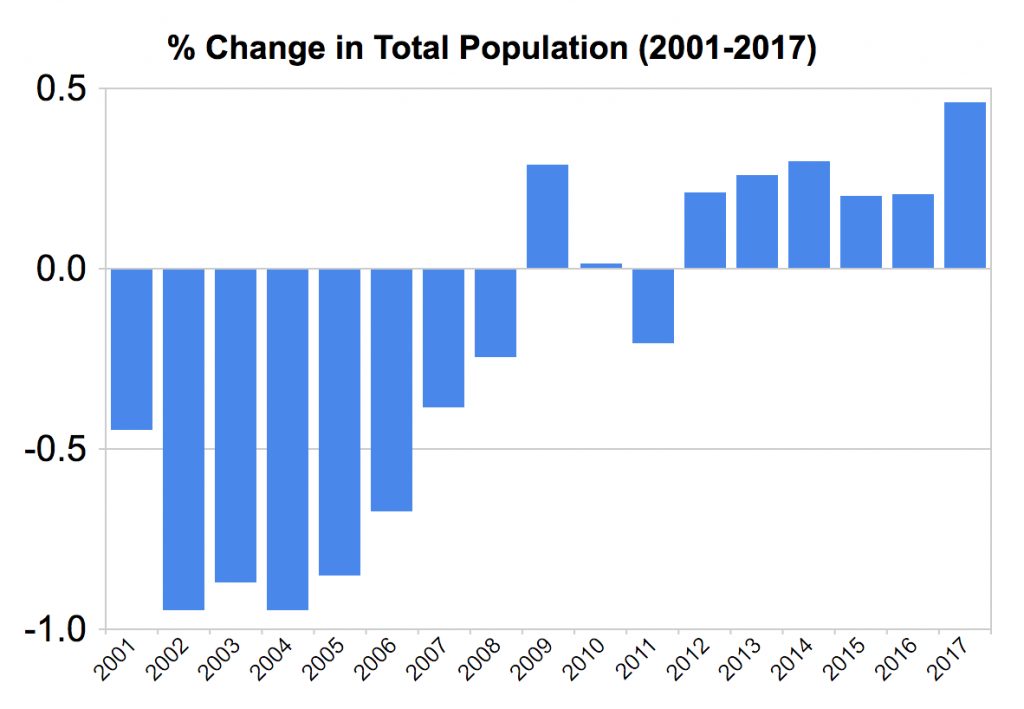
I would not declare victory on this until confirmed by the 2020 census. But if true this would mark an interesting inflection point for a county long in decline. The Census would also tell us more specifically where in the county this population growth has been coming from.
7 Architecture Firms Ripping Up the Rulebook on Public Spaces
Architects: Find the perfect materials for your next project through Architizer. Manufacturers: Sign up now to learn how you can get seen by the world’s top architecture firms.
Architects and designers are increasingly mindful of the value of public space and its role in the development of our buildings, cities and culture, especially as we begin to measure the impact of public space from New York’s High Line to Copacabana Beach in Rio de Janeiro. Pioneers in the profession are proving that architecture can respond to, shape and transform these civic areas while helping to create community and inspire change.
The following examples of public plazas from around the world were created by a variety of different designers to respond to unique environmental, social and urban conditions. Though they share a common typology, they possess unique programs and contextual surroundings. While they employ different forms and options for circulation and contemplation, they also orient individuals to views, establish hard and loose boundaries, and celebrate the histories, conditions and culture of each place. Whether for civic empowerment or a little rest and relaxation, these plazas embody new, dynamic ways to think about architecture and public life.

Arts Plaza by Spillman Farmer Architects, Easton, Penn.
A raw, open-air space for the arts, this plaza at Lafayette College includes a distinctive outdoor theater. The space hosts diverse programs including group musical performances, visual art exhibits, and performance art. The project is an urban “unfill” where only essential elements of the previous, original auto repair facility are left.
Brooklyn Museum Entry and Plaza by Polshek Partnership (now Ennead Architects), New York, NY.
Golden Gate Bridge Plaza by EHDD, Surfacedesign, Inc, and Jensen Architects, San Francisco
This plaza was part of the transformation of the former Presidio military base into an active public space connecting the Bay Area and the Golden Gate National Recreation Area. It was created as a hybrid space that is both civic and educational.
Erie Street Plaza by Stoss Landscape Urbanism, Milwaukee
This project is a small urban plaza in the historic Third Ward district of Milwaukee. It is the final link in a series of public space activators along the Milwaukee Riverwalk. Flexible programming, hybrid ecology and holistic sustainability were all important elements of the plaza design.
SUPERKILEN by BIG (Bjarke Ingels Group), Topotek 1, and Superflex, Copenhagen, Denmark
Superkilen is a half-a-mile-long urban space in Denmark. Within an ethnically diverse neighborhood, the contemporary plaza and park celebrates the neighborhood’s multicultural heritage while uniting people together. It is comprised of three main zones: the red square for sports activities, the green park as a grassy children’s playground, and the black market as a food market and picnic area.
Ribbons by Cliff Garten Studio, San Francisco
Ribbons is a landscape sculpture and plaza design for the Art and Architecture Program of the General Services Administration in San Francisco. A matrix of paving, seating, fountains and planting are inserted into the existing courtyard. The design carefully straddles a line between preservation and adaptive reuse.
Metropol Parasol by J. MAYER H., Seville, Spain
This project explores the potential of the Plaza de la Encarnacion. This urban space in Seville allows a range of activities from leisure to commerce. Large parasols emerge from the site, creating a contemporary landmark in the city.
Dilworth Park by OLIN, Urban Engineers and KieranTimberlake, Philadelphia; art installation by Janet Echelman
This plaza design was intended to completely transform the prior plaza into a new world-class front door for Philadelphia’s City Hall. The project establishes the plaza at street level while surrounding the space with a green landscape veil. It also develops a connection from the plaza to transportation below while simultaneously improving access.
Research all your architectural materials and products through Architizer: Click here to sign up now. Are you a manufacturer looking to connect with architects? Click here.
Feature image: SUPERKILEN by BIG (Bjarke Ingels Group), Topotek 1, and Superflex
The post 7 Architecture Firms Ripping Up the Rulebook on Public Spaces appeared first on Journal.
A Walk Around the Block: Intern Edition
As most of you know via our Twitter account, we went through a heat wave AND a few weeks with no air conditioning in our summer office. Through this humid and sweaty time, Buckingham Properties and Library Square were kind enough to let us use their lobby and office spaces to work. As we temporarily relocated, our interns found cool new places around our block and decided to snap some shots along the way!
Photos taken by Taylor Kelly, Claire Bowles, Keller Masnyk, Lori Bowes, Christina Ni and Samantha Ripperger.


An Open Letter To David Letterman: We Need to Talk About John (Papa, That Is)
 Dear Mr. Letterman, We need to talk about Ball State University’s Papa John problem. Like you, I graduated from Ball State. Like you, I have an abiding affection for its underdog stature. But my affection has been waning in the wake of the university’s craven and short-sighted defense of “Papa” John Schnatter’s recent actions. I’m sure you’re aware of the situation, but here’s a quick synopsis: Our fellow Ball State grad (sigh) and famed purveyor of vaguely pizza-like substance was participating in a sensitivity-training phone call when he used the “N” word while lamenting the good old days when Colonel Sanders, his forebear in diabetes-inducing delectables, was free to utter the same word without fear of retribution. On that same call, in an apparent attempt…View Original Post
5 Ways To Ensure An Energy Efficient Curtain Wall
Architects: Find the perfect materials for your next project through Architizer. Manufacturers: Sign up now to learn how you can get seen by the world’s top architecture firms.
In an era of growing scepticism over the future and sustainability of glass curtain walls, many architects are turning to other façade solutions. However, the question still remains: are curtain walls energy efficient and if not, is it possible to make them so? Here, we outline for five ways to harness this architectural feature, while reducing its overall environmental impact. In this collection, discover five fascinating buildings with varying approaches, including double skin glazing, low iron glass, fritted glass, building-integrated photovoltaics and metal scrims.
1. Double (Or Triple!) Skin Glazing
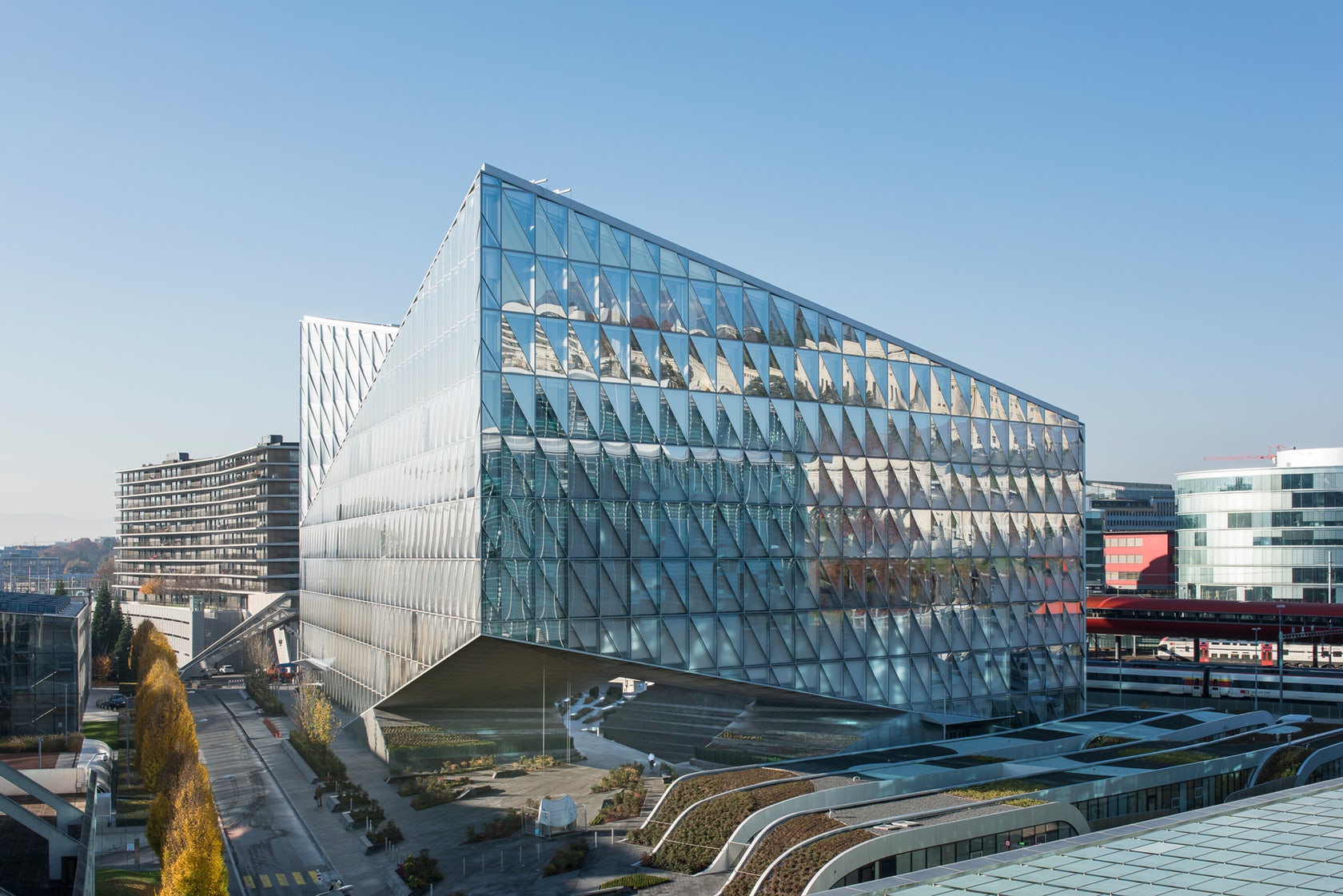
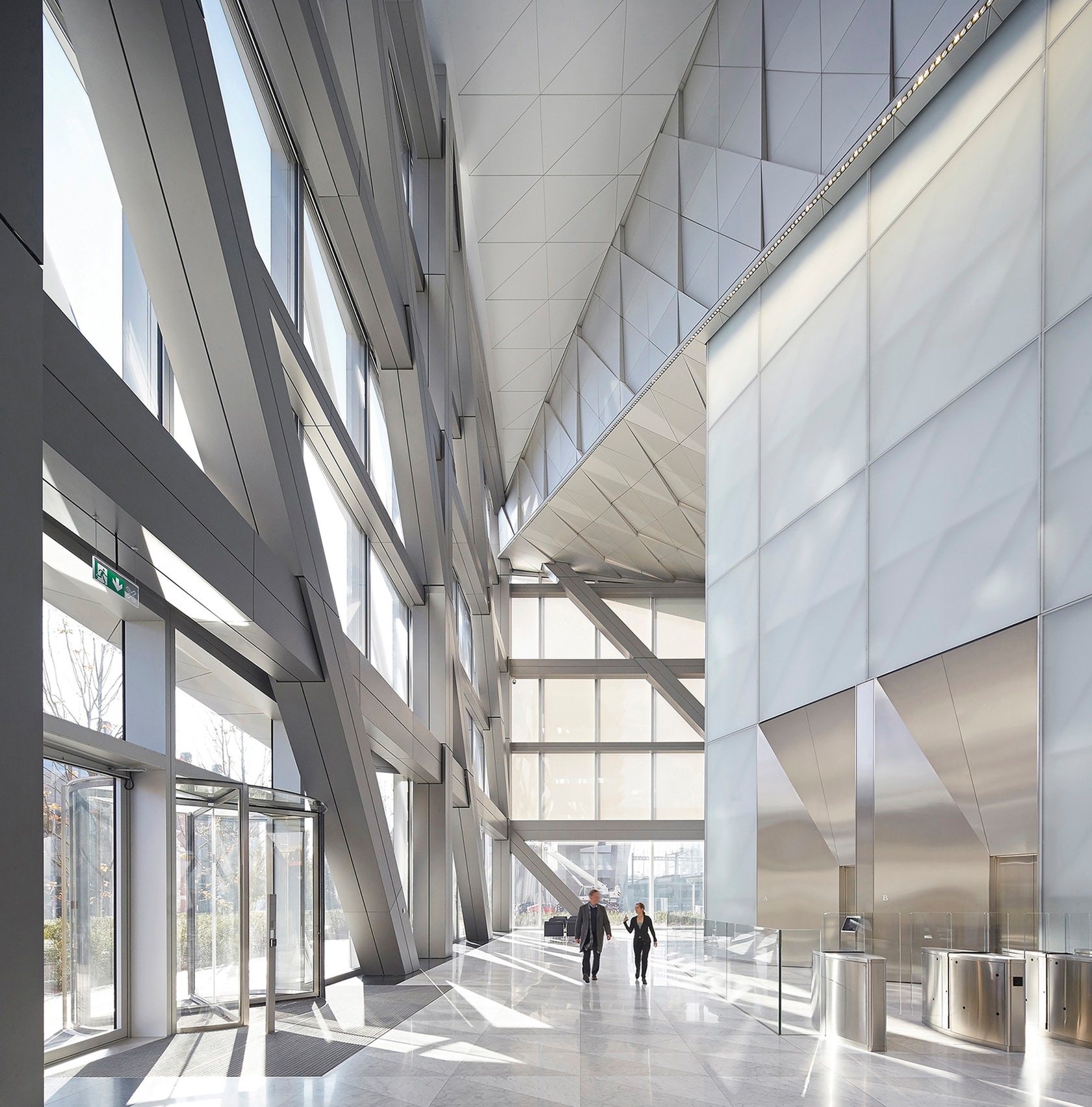 JTI Headquarters by Skidmore, Owings & Merrill LLP (SOM), Geneva, Switzerland
Manufactured by Josef Gartner GmbH
For JTI Headquarters in Geneva, SOM and Josef Gartner GmbH developed the Close Cavity Façade system — an innovative unitized curtain wall system that responds to the demands of seasonally changing external climatic conditions.
SOM sought to maintain the visual qualities of an all-glass design, while also reducing the entire building’s energy demand and carbon emissions.The façade system consists of triple glazing on the inner layer and single glazing on the outer, forming a cavity with a fabric roller blind in between. The panels are sealed with a pressurized supply of filtered and dehumidified air, in order to avoid condensation and heat-build up within the cavity.
2. Low Iron Glass
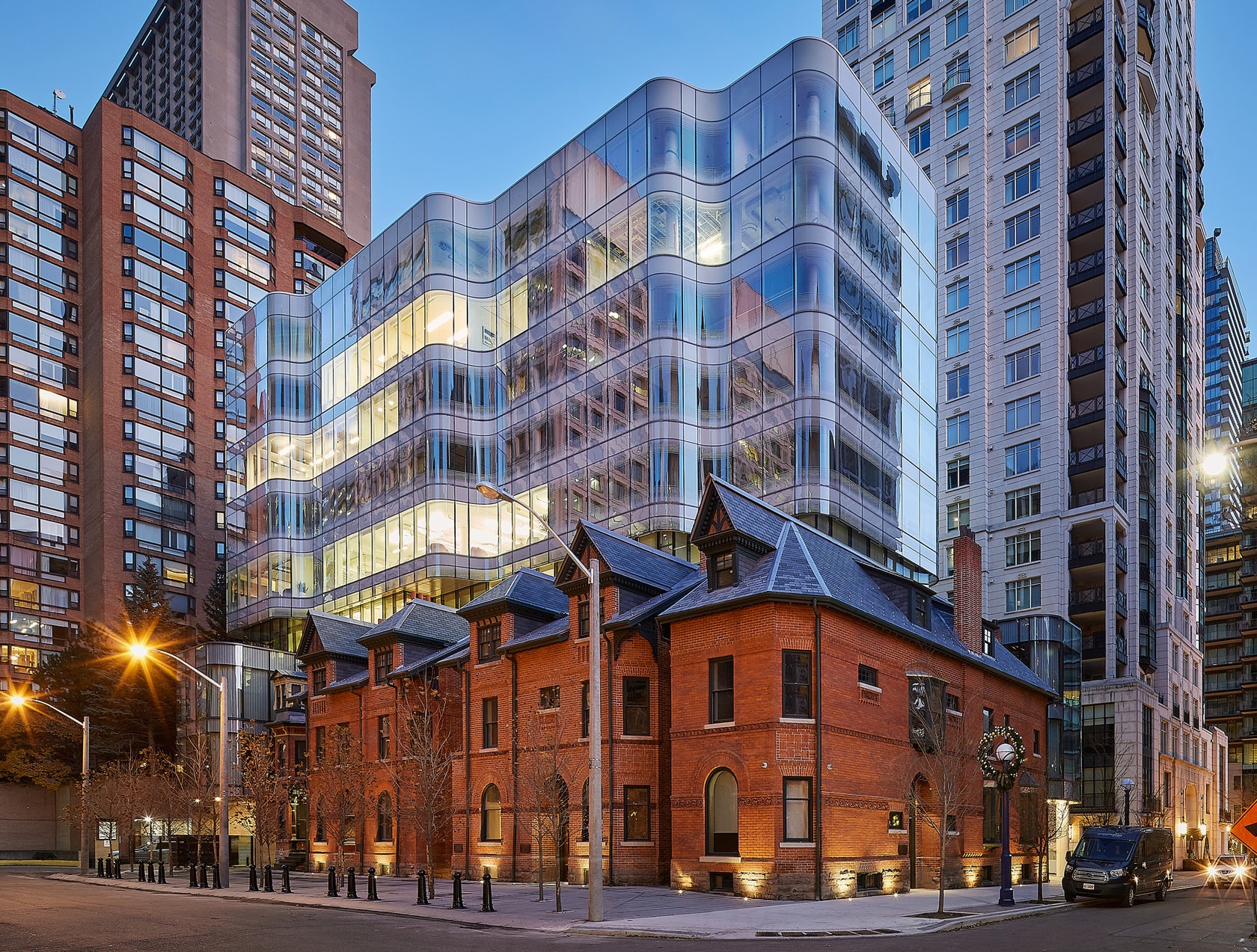
 7 St. Thomas by Hariri Pontarini Architects, Toronto, Canada
Manufactured by Guardian Glass
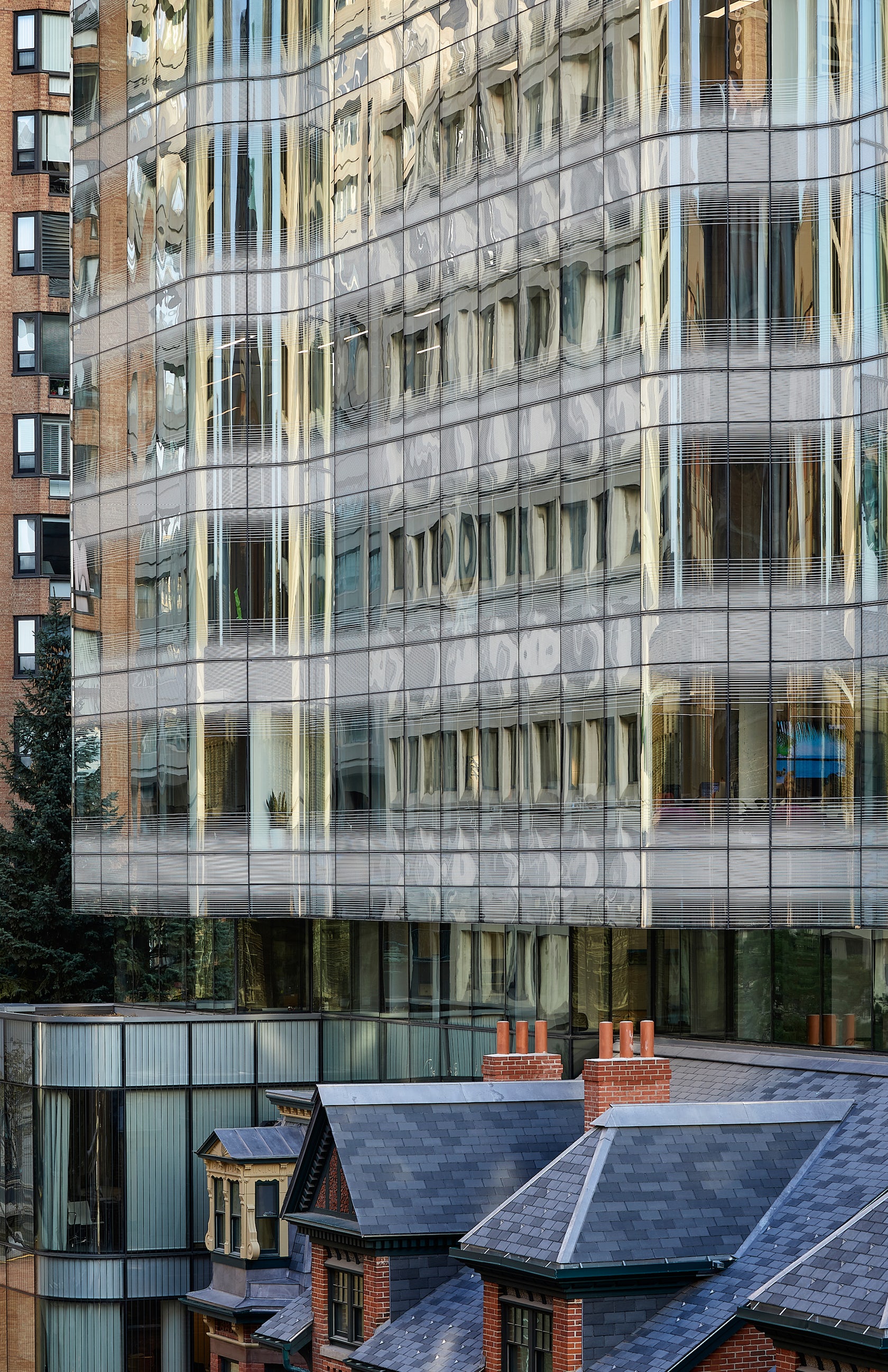
Located in the center of Toronto’s downtown, 7 St. Thomas blends Victorian and contemporary materials to create a unified work. Not only does the tower undulate in response to the existing fabric of the site, but it also features an impressive high-performance curtain wall; fritted patterns allow for pleasant light penetration while specialty insulating and low iron glass by Guardian Glass in bent, concave and convex profiles reduce the overall thermal transmission of the building. For more information on the careful specifications of Hariri Pontarini Architects’ 7 St. Thomas project, head over to Guardian Glass.
3. Metal Scrims
 Allianz Tower by FXCollaborative, Istanbul, Turkey
Glazed envelope by Schüco
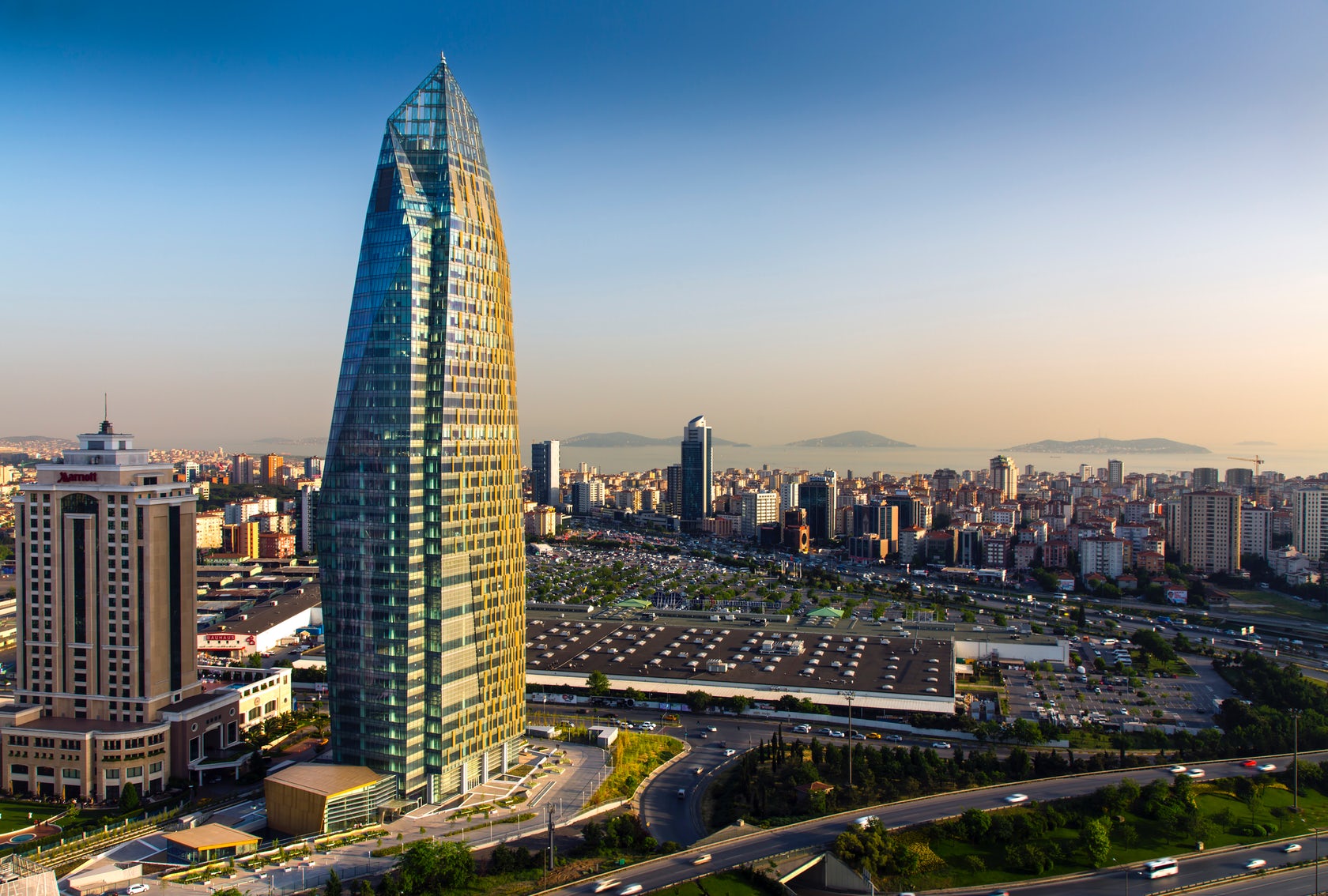
When built in 2014, FXCollaborative’s Allianz Tower rose as the tallest building on the Anatolian side of Istanbul. Located at the intersection of two major highways, the obelisk tower functions as a dramatic symbol, which signals one’s entrance to the major city. Allianz tower takes cues from Ottoman motifs and local landforms, and is rotated at a 33-degree-angle in order to optimize solar control.
In addition to the building’s geometric form, the architects incorporated a double-skin curtain wall with stippled golden scrims to further reduce heat loads and provide an effective thermal buffer between the interior and exterior. With such features, Allianz Tower is an excellent example of a structure where the architects were able to able to successfully merge function and aesthetics, to create a building that is equally high-performing as it is striking.
4. Building-Integrated Photovoltaics

Image via Gensler
C3 by Gensler, Culver City, California, USA
Manufactured by Onyx Solar
For C3 — an office building that challenges preconceptions of workplace design — Gensler partnered with specialty manufacturer Onyx Solar. Today, Onyx Solar is one of the world’s leading makers of building integrated photovoltaic glass for architectural applications, and has worked with firms such as Gensler, Foster + Partners, SOM and Frank Gehry. Not only does the expansive glazed façade enhance the overall performance of the building without the associated eyesore of traditional photovoltaics, but it also invites opportunities for interaction and creative impact among tenants.
5. Fritted Glass
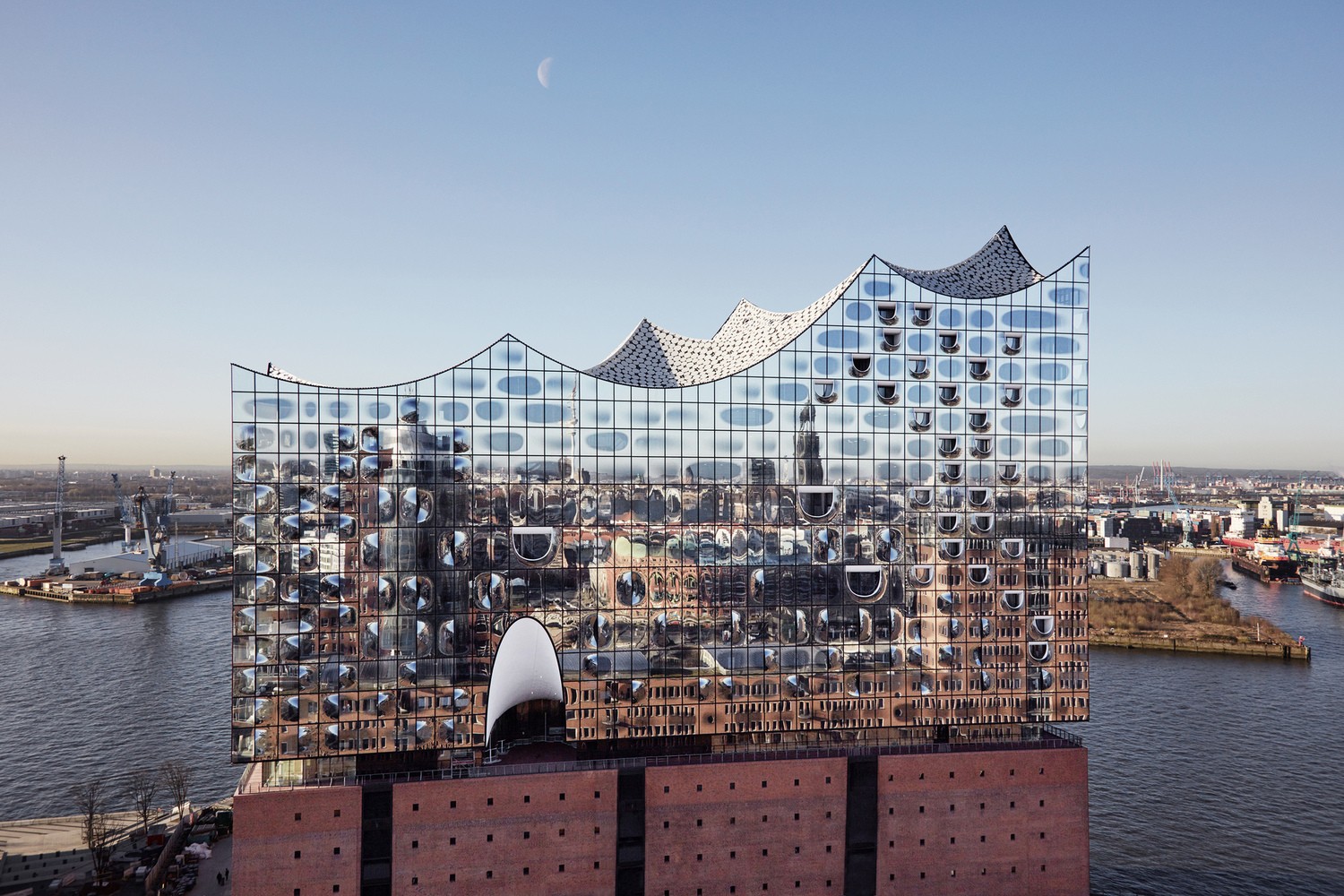
Image via ArchDaily

Image via ArchDaily by Iwan Baan
Elbphilharmonie by Herzog & de Meuron, Hamburg, Germany
Manufactured by Gartner and Guardian Glass
After ten years in the making, Herzog & de Meuron dazzled the world with Elbphilharmonie — a 2,100-seat concert hall in Hamburg that is completely shocking, inside and out. Built on top of a historic warehouse, the upper-area of the structure is wrapped in curved panels of glass that reflect the surrounding city and sky. While a portion of the glass panels are curved and punctured to create jarring openings, others are fritted, rendering eye-catching ellipses that allow selected streams of light to pass through.
To discover five additional projects that harness fritted glass for environmental control, check out Beat the Heat: 5 Innovative Façades Equipped With Fritted Glass.
Research Curtain Wall Manufacturers
Research all your architectural materials through Architizer: Click here to sign up now. Are you a manufacturer looking to connect with architects? Click here.
The post 5 Ways To Ensure An Energy Efficient Curtain Wall appeared first on Journal.
What To Expect If Indy Lands Amazon’s HQ2
 “We started a search for the best places to put a new location in,” the CEO said shortly after making the formal announcement. “We started, believe it or not, with 900 cities. We ended up in Plano, Texas.” You didn’t miss a big announcement. This wasn’t Jeff Bezos, it wasn’t Amazon, and it clearly wasn’t about Indianapolis. It was Liberty Mutual Insurance Group CEO David Long talking to reporters after cutting the ribbon at a new facility in Plano, Texas, in 2017. The press event happened a mere two years after the insurance giant announced Plano was the winner of the bid, a project promising to add up to 5,000 new jobs in and around Plano over the next several years. It’s worth comparing Liberty Mutual…View Original Post
Sommelier Talk: Two Days with the Wine Director for the Capital Grille, Seasons 52 and Olive Garden (Wine Spectator)
8 Modern Houseboats and Floating Homes That Will Make You Say Goodbye to Dry Land
Maybe you’re looking for something different than your average house or apartment, or perhaps you just want to be close to the water but not too far away from land. To get the best of both worlds, a houseboat might be the way to go. Houseboats and floating houses give you life by the water but with the feeling of an actual house and not just a cramped boat. On top of the excellent views, they’re usually more affordable than traditional houses making them particularly attractive to home buyers. Never thought about life on the water? You might just change your mind after seeing these 8 modern houseboats and floating houses.
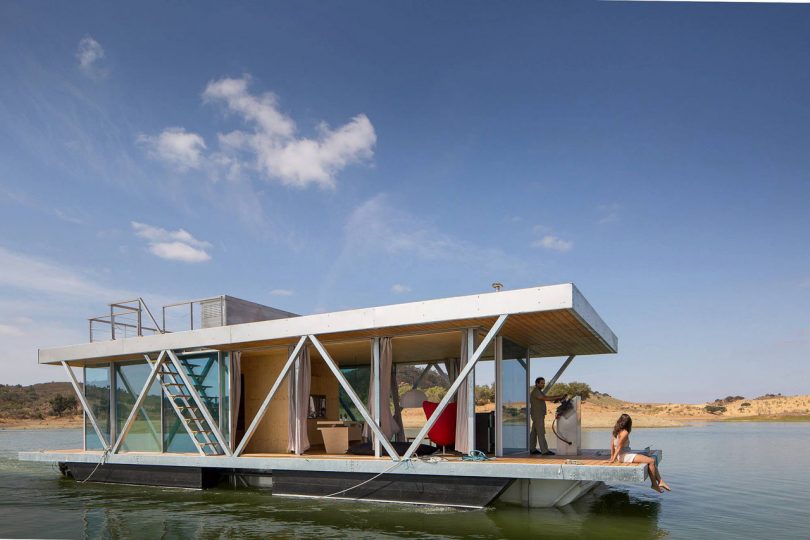
Floatwing is a prefab, self-sustainable floating house designed by Friday, a Portugal-based design house that began at the University of Coimbra. The modular design lets you choose from a studio all the way up to a furnished 3-bedroom house that floats to your desired locale.
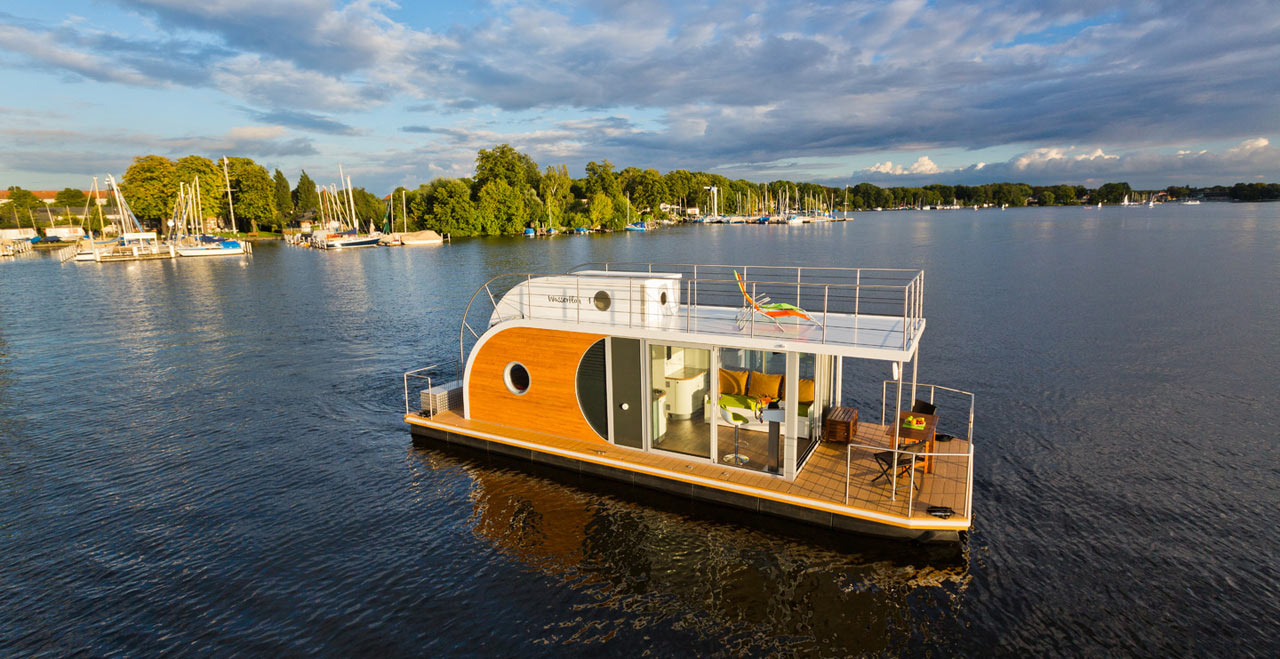
Photo courtesy of Nautilus
Nautilus Houseboats designed the Nautino Maxi, a houseboat large enough to sleep six people comfortably. A smaller deck resides on the lower level with a full rooftop deck above to enjoy the water views all around.
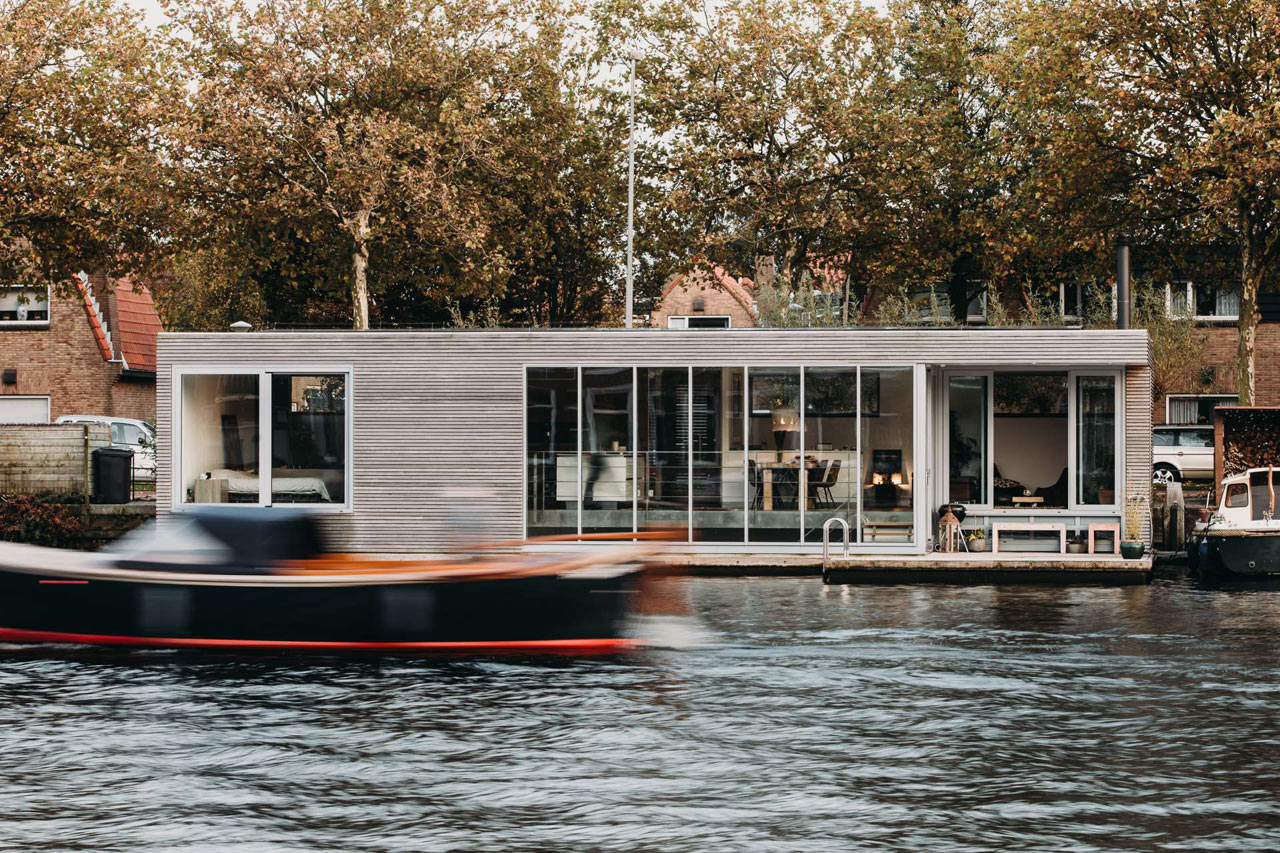
Photo by Eva Bloem
Located in The Netherlands on the Spaarne river near Haarlem’s city center, the vanOmmeren-architecten designed Houseboat Haarlem Shuffle opens up towards the water with floor-to-ceiling windows, while the street side of the rectangular structure is closed off for privacy. Thanks to its solar paneled roof and two heat pumps, the houseboat is energy neutral.
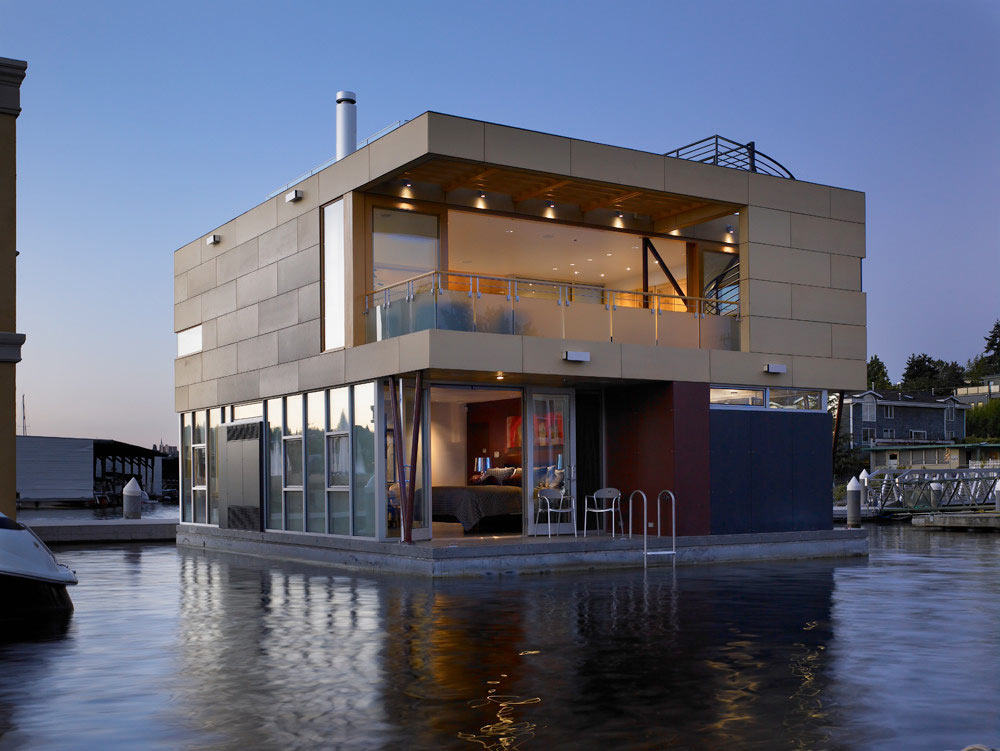
Photo by Ben Benschneider
Vandeventer + Carlander Architects are behind the Lake Union Floating Home that resides on Lake Union in Seattle, Washington. The two-story home takes what could have been a boring box and instead created a contemporary structure with endless visual interest.
Photos by Norbert Wunderling
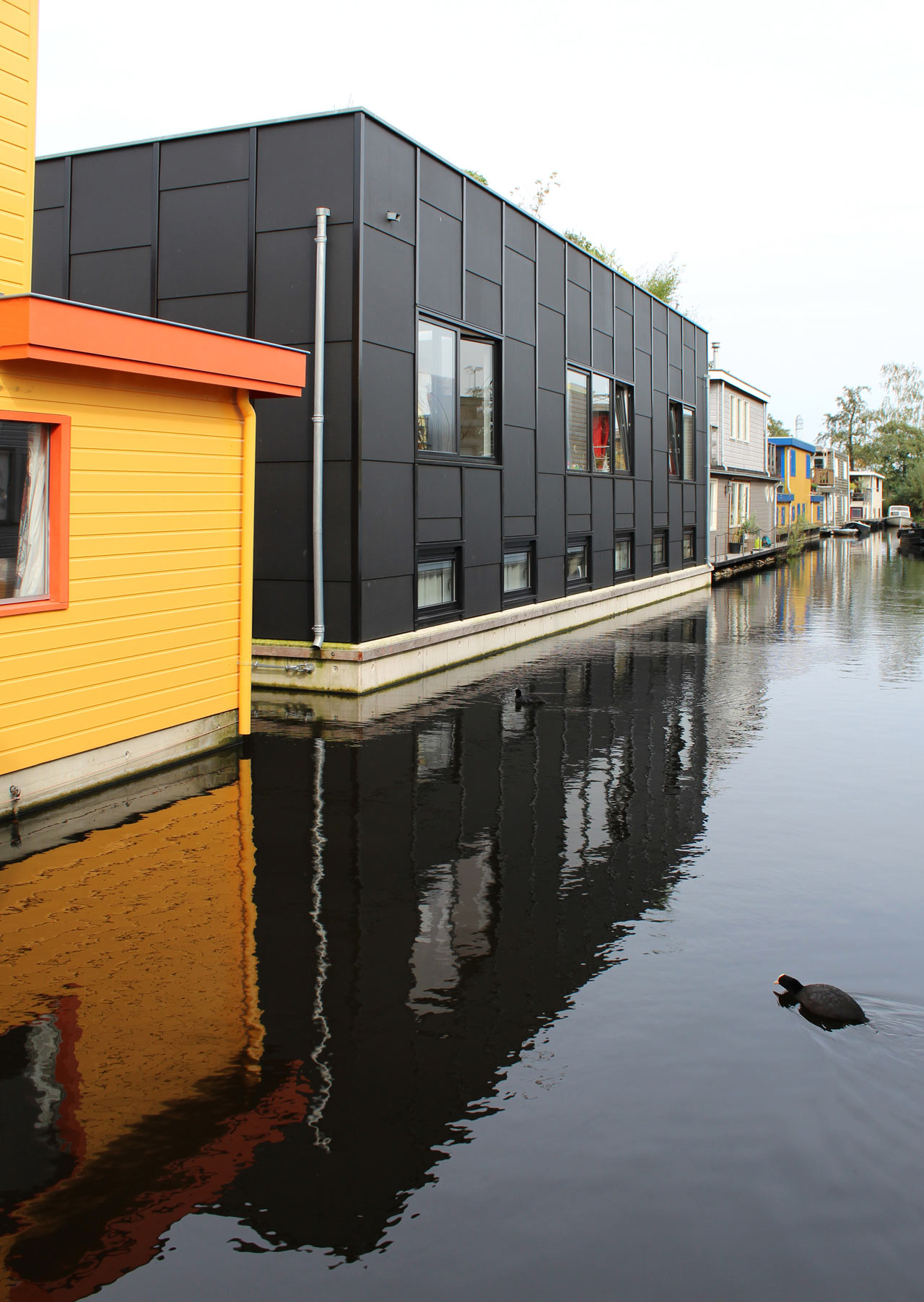
The Tatami House was designed by Julius Taminiau Architects as part of a floating village in Amsterdam. They worked with a low budget and based the design on tatami mat principles concerning their layout. Since the tatami mat is roughly the same size of a plywood panel, the layout is based on the tatami grid which utilized full pieces of wood which helped reduce waste and keep costs down.
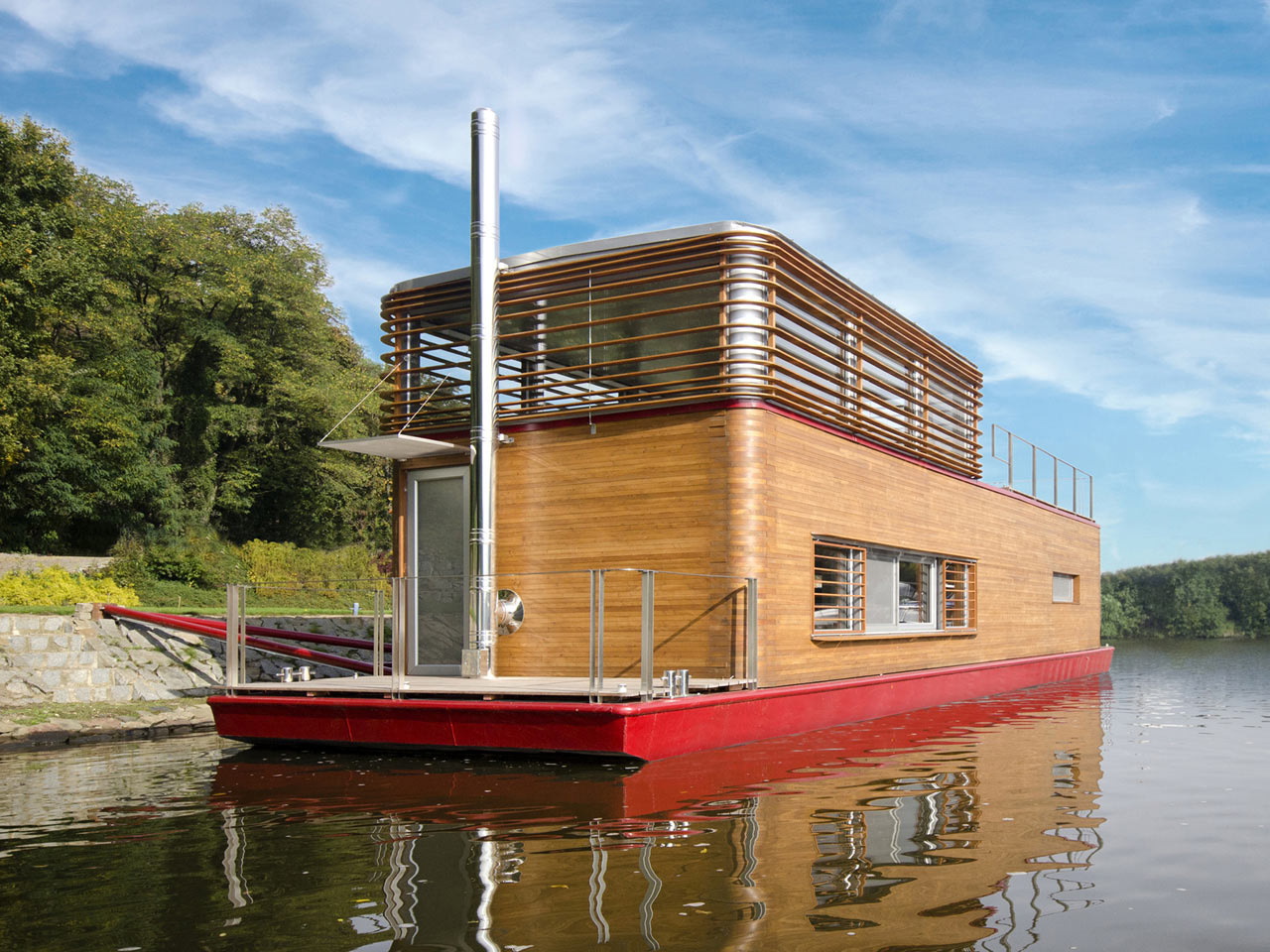
Photo by Richard Navara
Designed and owned by Marek Ridky of Flowhouse in the Czech Republic, the Thesayboat houseboat was made for a couple looking to escape the weekend. The upper bedroom is surrounded by louver-covered windows to views the stars.

Photo courtesy of Welcome Beyond
Welcome Beyond’s Modern Houseboat is situated on Lake Rummelsburg, a small bay in the river Spree in Berlin, Germany, and it’s available for rent. It offers two adults and two children a comfortable place to relax on the water without being too far away from civilization.

Photo courtesy of X Architects
The Dubai-based “O” De Squisito House Boat was designed by X-Architects with clean, contemporary lines and a white and glass exterior. The upper level houses the public living spaces, including a concealed kitchen, a living room, and entertainment room, while the lower level consists of the bedrooms, bathrooms, and steering cabin.
Significant Digits For Monday, July 30, 2018
JakienleRead the McDonald's story.
You’re reading Significant Digits, a daily digest of the numbers tucked inside the news.
“90%”
Following a meeting with New York Times publisher A.G. Sulzberger, President Trump yesterday claimed that “90% of media coverage of my Administration is negative,” that the media has been “driven insane,” that they are “Very unpatriotic!,” that they were engaged in distraction and cover-ups, and that their coverage “truly puts the lives of many … at risk.” It was unclear whether the president was including Significant Digits in his rant. [The Hill]
19 years at Dow Chemical
That’s a line item on the resume of Peter Wright, a lawyer nominated in March by Trump to run the EPA’s Superfund toxic cleanup program. He once described himself as “the company’s dioxin lawyer.” (Dioxin is a toxic chemical which Dow once released into the Tittabawassee River, contaminating more than 50 miles of river and lake.) Unsurprisingly, I think it’s abundantly fair to say, this nomination has raised all sorts of chemically tinged red flags, which you can read more about in this piece from the Times. [The New York Times]
+76 PARG
Last week, my colleagues introduced a new stat, which is one of my favorite things my colleagues do. It’s called PARG — Popularity Above Replacement Governor — and it’s calculated by measuring the distance between a governor’s net approval rating and his or her state’s partisan lean. Leading the inaugural PARG list is Charlie Baker of Massachusetts, with a healthy +76 PARG. At the bottom is Mary Fallin of Oklahoma, with an unhealthy PARG of -93. [FiveThirtyEight]
1 minute and 51 seconds
Geraint Thomas of Wales won the Tour de France yesterday, one minute and 51 seconds ahead of the second-place finisher, after 21 stages over three weeks and 2,000 miles. I imagine Thomas’s immediate celebratory plans include a lot of not riding a bicycle. [BBC]
12-year McDonald’s scam
One day in 2001, in Rhode Island, a crew claiming to be from McDonald’s showed up at a man’s door with video cameras and a giant cashier’s check to celebrate his $1 million winnings from the restaurant’s long-running Monopoly game — wherein you peel real estate “properties” from Cokes and packs of fries, etc., trying to make certain sets to win prizes. The problem for this man, however, was that the crew was really undercover FBI agents. For over a decade, McD’s Monopoly game was the target of a major and colorful criminal conspiracy. [Daily Beast]
“Something like 183 unique conversations on tape”
So said President Trump’s attorney Rudy Giuliani over the weekend, regarding what exactly federal investigators had seized from Michael Cohen, the president’s former attorney. Giuliani also implied that Trump is heard on only one of those tapes, and that there are “maybe 11 or 12 others” on which Trump is discussed at any length. [CBS News]
If you see a significant digit in the wild, please send it to @ollie.
Here's Why Black Thought's 10-Minute Freestyle Is So Remarkable
JakienleDAMN.

The Roots' MC asserted his G.O.A.T. status with a perfectly executed, breathtaking performance on Funkmaster Flex's Hot 97 radio show.
(Image credit: Dimitrios Kambouris/Getty Images)

A Map of The 2016 Transit Referendum, Correlated with the Presidential Vote
I’ve always tried to avoid the topic of politics on this blog. I’ve long felt that the core values of Urban Indy could appeal to a wide spectrum of the general public. With that in mind, I decided it still would be interesting to see how many Indianapolis precincts split their tickets in 2016. A general narrative is that Democrats are usually friendlier to transit than Republicans, but this precinct map shows that there are plenty of exceptions to that narrative within Indianapolis:

Image Credit: Kevin Kastner
This is just a subset of who won in each precinct. There are also variations within each precinct that cut both ways. Anecdotally, I know of several Gary Johnson voters who were also transit voters. Cities contain multitudes.
Texas Judge Steps Up In Defense Of Lawyers Who Are Parents
The Most Fashionable Kennedy

John F. Kennedy Jr, affectionately known as John John to his family, is the only person ever born to a President-elect – a reminder that the country at the time had chosen a young 42 year-old as its leader. And from the moment he was born, JFK Jr. was a national figure. The nation once fell in love with photos of him crawling around the Oval Office, sitting under his father’s Presidential desk (known as the Resolute desk since it’s made from the English oak timbers of the British exploration frigate HMS Resolute). And who can forget that searing image of him as a toddler, just a few days short of his third birthday, saluting his slain father’s coffin as it passed him by? Dan Farrell, who took the photo, called it “the saddest thing I’ve ever seen in my whole life.”
JFK Jr.’s life was as bright as it was short. He attended the prestigious Phillips Academy in Massachusetts, then Brown University to study acting. It’s been suggested that, by throwing himself into the roles of other characters, he was able to briefly escape the pressures of being a Kennedy. And after college, his mother pushed him to study law at New York University. He later failed his first two bar exams, passed his third, and engaged himself in politics. Junior often campaigned on behalf of other Democrats and gave speeches at political rallies, such as at the 1988 Democratic National Convention. In 1995, he launched George, a glossy, politics-as-lifestyle and fashion monthly. Tragically, just as his life was starting to steady, he, his wife, and his sister-in-law died in a plane crash on their way to attend a wedding at Martha’s Vineyard.
Of all the men in the Kennedy family, JFK Jr. was perhaps the most fashionable. Although he wore the traditional prep uniform while attending boarding school – natural shouldered navy sport coats with flat front trousers – he often gave things a bit of a twist, such as pairing the clothes with scuffed up, Cuban-heeled cowboy boots. In college, he liked bold striped shirts, wide lapeled sports jackets, and cream colored, double-breasted suits. He even wore a bit of jewelry.

Junior’s style, however, really came into its own later in life. He never seemed totally comfortable in his preppy clothes, and when he was out of college, he ditched them entirely. Paul Winston of Winston Tailors/ Chipp Neckwear, who dressed many in the Kennedy family, tells me he’s never made anything for Junior. “Our Kennedy customers included JFK, Robert, Smith, Shirver, and Lawford,” he says. “JFK’s closest friend, LeMoyne Billings, who was also a customer, once brought in one of Bobby’s sons for a poplin suit.”
I searched around the internet yesterday, looking for clues as to where Junior bought his clothes, but couldn’t find anything. The only real comment is buried deep in a biography, where one of his friends says JFK Jr. relied on the same look for important events – a dark blue suit, either single or double breasted, with a white shirt, dark tie, and white pocket square. That doesn’t say much, however, since he almost always wore conservative, dark worsted suits in solid blues or grays. On the rare occasion he wore a sport coat, they were usually your basic navy jackets or brown tweeds.
While JFK’s tailoring wasn’t distinguishable by their cloth or detailing, they were unique in their cut. His suits and sport coats were somewhat padded, with slightly extended shoulders and some drape around the chest. The clothes look Italian, or at least influenced by Armani, although they sit somewhere between the overly fashion conscious and stuffy conservative. They were trendy enough to be updated; reserved enough to be tasteful. With few exceptions, he always demonstrated a good sense of taste when it came to ties. Most of the things you see below, from the pin dot jacquards to dusty ancient madders, still look great today.
There are also faint echoes of today’s streetwear in JFK Jr.’s more casual ensembles. Decades before guys like Shia LaBeouf were wearing the same combinations, Junior paired joggers with vests, cable knits with sportswear, and Southwestern print shorts with knitted caps. Candid photos of Junior show a kind of sporty, tailored lifestyle that Ralph Lauren tries to affect in their ads, but he actually lived. In nearly every photo of him as an adult, JFK Jr. still looks like that young boy who’s made to wear a coat-and-tie, but can’t wait to play sports.
Granted, it didn’t hurt that he was tremendously good looking with a body that was almost built for clothes – he was fit and trim, with naturally broad shoulders. But not everyone who’s handsome also dresses well. JFK Jr.’s style was about moderation, which kept him in balance between the day’s Italian fashion and his own sense of good taste. Some of that was perhaps informed by his years of experience wearing a coat-and-tie much his public life. And he knew how to combine on-the-go sportswear in a way that felt more charming than sloppy. He was the most fashionable Kennedy.


The Best of the Best: Announcing the Winners of the 2018 A+Awards!
The wait is finally over. The votes are in for the 2018 A+Awards, the planet’s largest and most democratic awards program for architecture and building products, and the winners can be revealed! Click the button below for the full list of finalists and award winners in every category …
View the 2018 A+Awards Winners
This year’s shortlist was undoubtedly one of the most exciting in the A+Awards’ six-year history, so in order to come out on top, the winning projects had to . The creative talent behind this year’s entries inspired the public to cast more votes than ever before, with some incredible statistics highlighting that the world’s appreciation for great architecture is growing:
- 400,000 public votes from more than 100 countries and territories
- Entries from over 100 nations
- 196 total winners
This amazing level of participation has culminated in a stunning celebration of innovative architecture and building-products from every corner of the globe. Each winning firm will receive a beautiful, custom-designed A+Award trophy to highlight their achievement to visiting clients for years to come.
Furthermore, thanks to Phaidon, winners in the Typology and Plus categories will all feature in a stunning new book entitled ARCHITIZER: The World’s Greatest Architecture. The book promises to be better than ever, with more pages, higher quality images and insightful commentary by the creators of each project. Watch this space for details!
In the meantime, feast your eyes on this selection from both the jury and public vote winners. This is what great architecture looks like today:
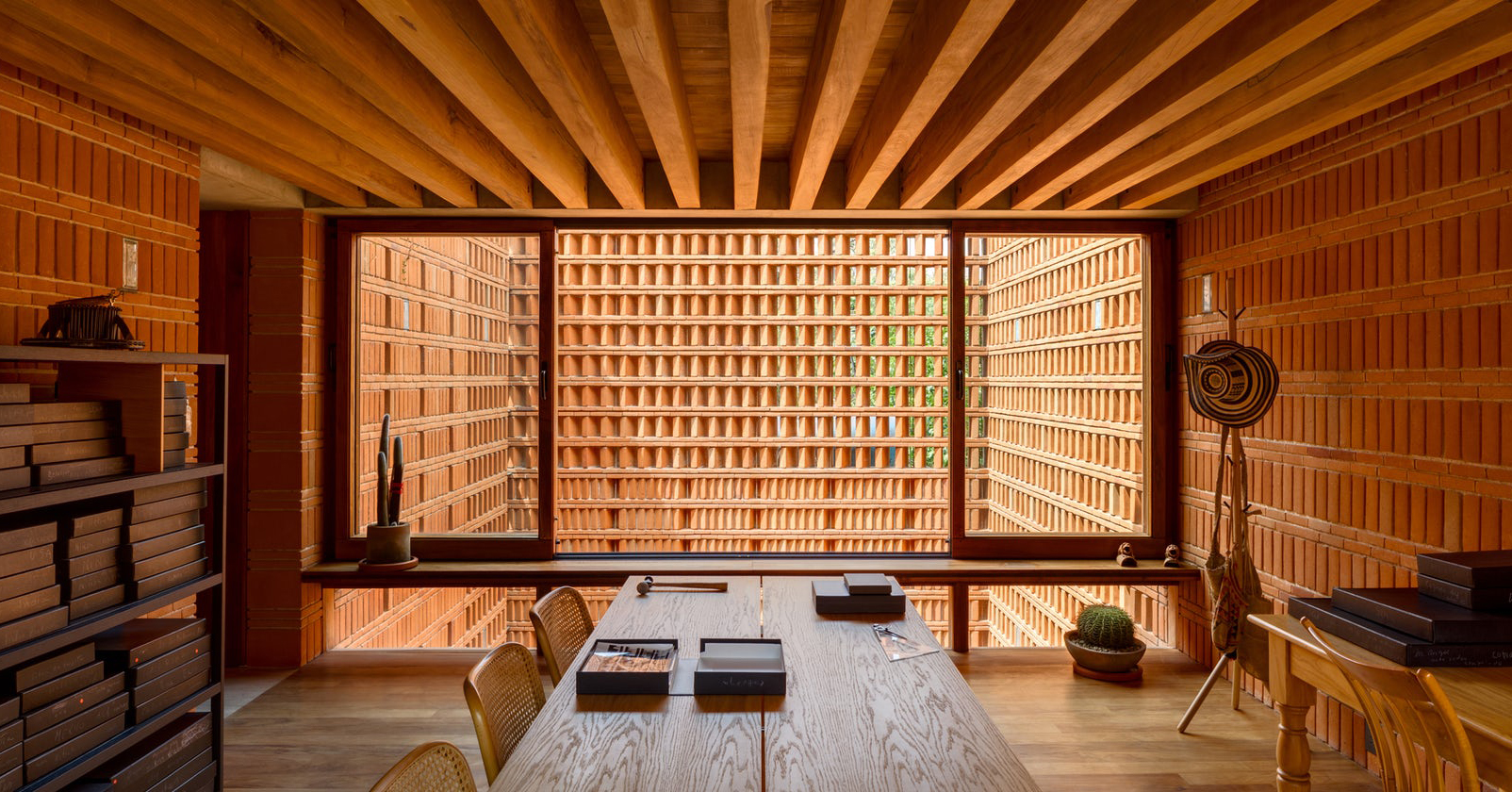
Iturbide Studio by Taller Mauricio Rocha +Gabriela Carrillo, Public Vote winner of Private House (XS <1000 sq ft) category
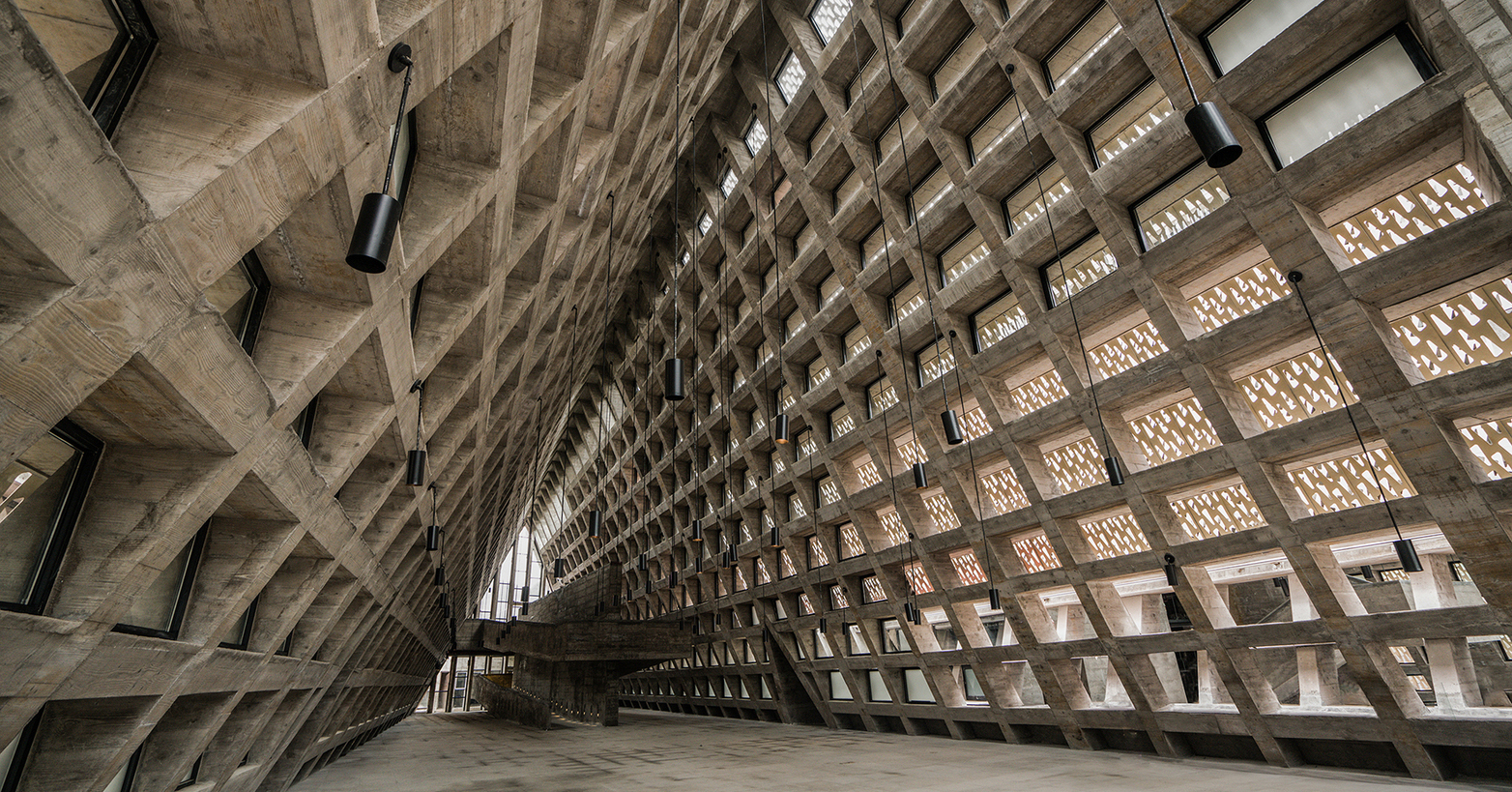
Shui Cultural Center by West-line Studio, Public Vote winner in the Architecture +Concrete category
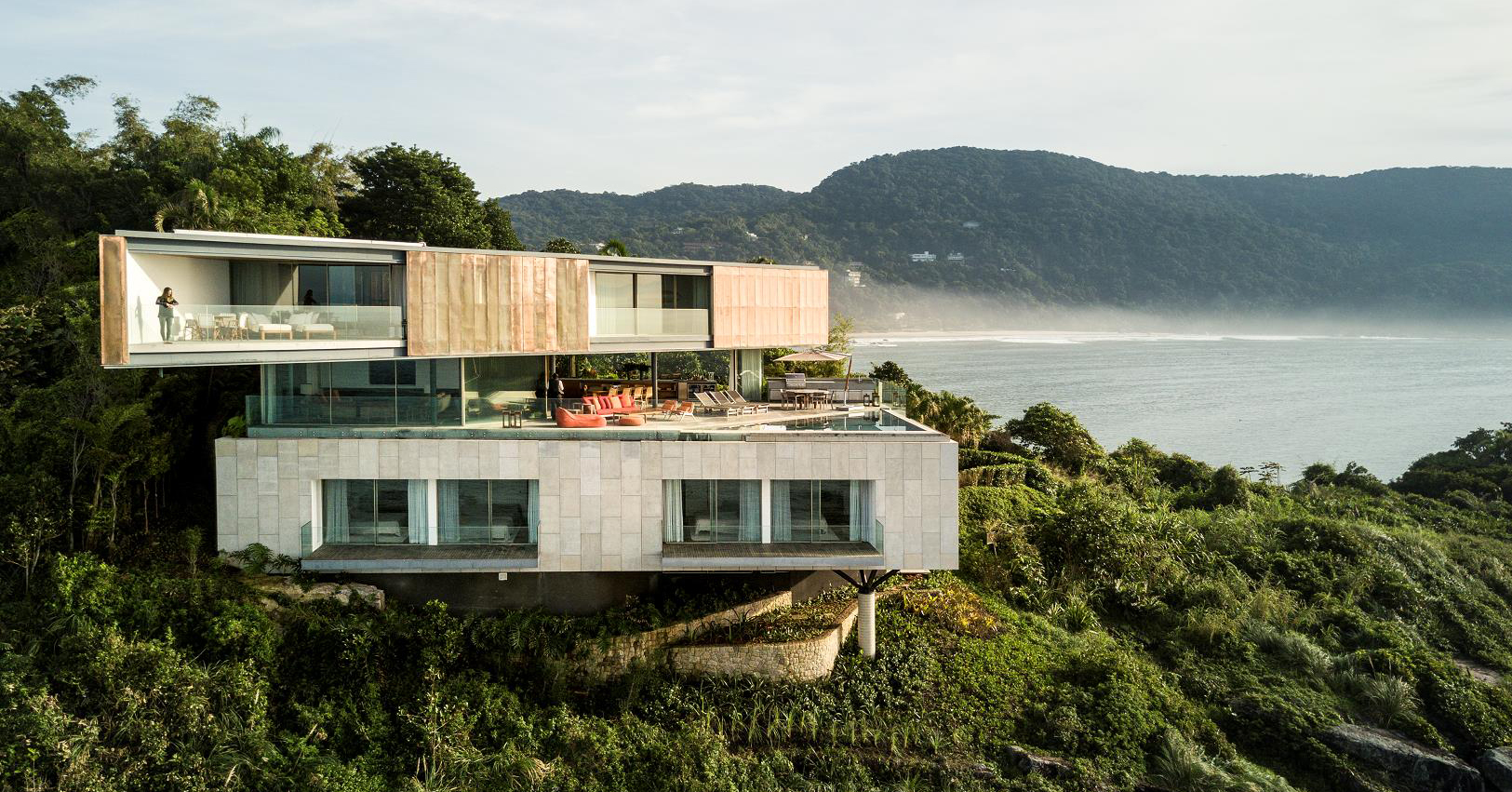
Península House by Bernardes Arquitetura, Public Vote winner in the Private House (XL >5000 sq ft) category
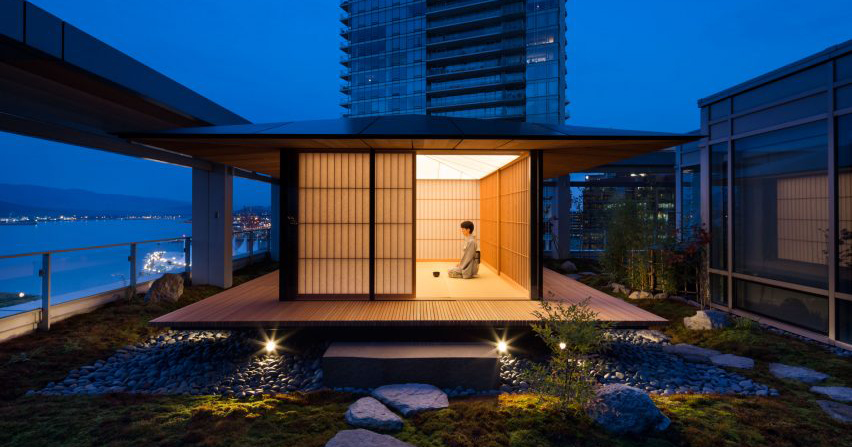
Kengo Kuma Teahouse – Westbank, photographed by Ema Peter Photography, Public Vote winner in the Architecture +Photography & Video category
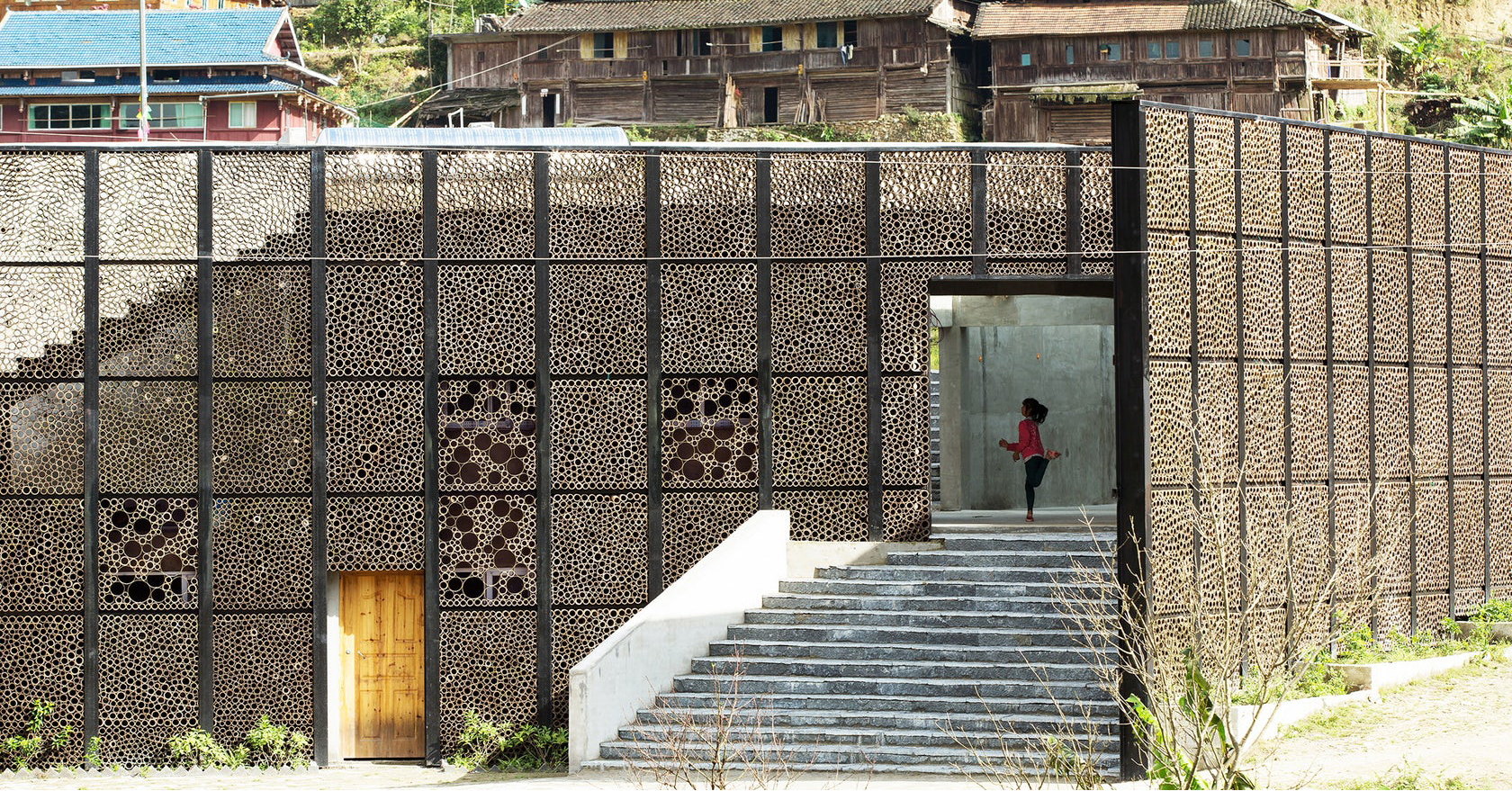
Dabao Primary School and Community Cultural Centre by Project Mingde, Public Vote winner in the Architecture +Humanitarianism category
As well as the Jury and Popular Vote award winners, five special honorees have been selected, each of which demonstrate extraordinary contributions to the profession across the globe. Stay tuned to Architizer Journal in the coming days as we spotlight each!
For a generous dose of 2018’s best buildings, head this way for the gallery of all winners and commended entries in every category.
The post The Best of the Best: Announcing the Winners of the 2018 A+Awards! appeared first on Journal.
The life aquatic

Victor the polar bear enjoys a dip in the water at Yorkshire Wildlife Park in Doncaster, England, as temperatures rise on June 26. Temperatures are widely predicted to rise over the coming days. (Danny Lawson/PA via AP)
Beholder
 Hubby and I finally got out to Beholder the other night. I have been hearing a lot of things about it from several friends and we were anxious to go. I didn’t really have it in my head exactly where it was, but it’s on the near eastside, not far from Irvington. It’s an old garage I think, that has been renovated. It still has a sort of industrial feel, but it’s very modern inside. Plain grey walls with only some flower arrangements as décor. It would be a great space to highlight some local artists. Just my two cents.
 Ok, so we had heard the portions were small, so we went full in with our order. Between the two of us, we started with three smaller plates and ordered two of the larger plates. I loved the way they sort of just paced them all out one at a time to make for a leisurely meal that didn’t feel like they were just trying to turn over the table. The first course we had was a special that evening—the heirloom tomato salad ($13). It was delicious. Local tomatoes, feta cheese, pistachios, some mixed greens and a wonderful vinaigrette with oregano oil. Seriously, everything together here was so good. Just the right balance between the slightly salty, creaminess of the cheese and the acid of the tomatoes. I appreciated the greens that were more of an accent than a major part of the dish. The next dish that came out was the eggplant tartare ($11). I had been told by several people how good this dish was, and they weren’t lying. It is more of a dip than a tartare—a creamy eggplant dip with Middle Eastern seasonings. They serve it with this delicious fry bread that you could happily eat on its own, it has so much flavor itself. It’s rich and buttery tasting with a little kick of salt. Not crunchy, but not super soft either. You could really taste the cumin throughout this dish. Really good. I could see this being one of their classic dishes. I hope it is. Our final small plate was the Kampachi sashimi ($19). This was the one I was most excited about to order, and to be honest, was my least favorite. Although it was still very good. Just the intensity of the flavors of the other dishes were better. The dish had a little mound of sticky rice on the bottom, which was soaked in brown butter. How could you really go wrong with brown butter? It gave the dish not only richness, but a nuttiness as well. The fish was thinly sliced and then topped with local tart cherry garnish. A really interesting flavor combination as well.

 Desserts are a whole other experience here, as they have Pete Schmutte as the pastry chef, formerly from Cerulean. In my opinion, he is maybe one of Indy’s top 2-3 pastry chefs. His desserts are as lovely as they are tasty. Hubby and I shared the gjetost cheese custard with oats and plum ($10). I will tell you, hubby was doubtful when he saw it, but man, was this good. Underneath the crisp cookie-like piece and the super thin sliced fruit, was this mixture of cheesy bits and crunchy oat bits that were kind of like the top of a fruit crumble. Seriously, I know it sounds weird, but it was altogether super delicious. And look how pretty too. Also, Beholder has one of the best dessert wine lists by the glass in Indy. Oh, and they bring you a nice little end of meal plate of sweets that rival many of our best candy makers as well. We had a little disc of dark chocolate and mint, and a berry flavored pate de fruits. Both were outstanding.

A Bonus Bar on Extra Place

Swoon List: Liter House, Moontown, And More
 A cinnamon scone from the pastry case at Pearings (6 W. Washington St., 317-608-6456). A cinnamon scone from PearingsJulia Spalding The shrimp-and-crab-legs combo ordered from the pick-up window at Chef Oya’s The Trap (3355 N. Keystone Ave., 317-762-6172). Get it doused in Yaad Jerk sauce for a spicy, tangy kick. Dig deep for the potatoes, veggies, corn, and boiled egg at the bottom. And load up on napkins. The shrimp-and-crab-legs combo from Chef Oya’s The TrapJulia Spalding The newly opened Liter House (5301 Winthrop Ave., 463-221-2800) dishes up a Texas Brisket Goulash that combines smoked brisket, tomatoes, ancho peppers, paprika, crème fraiche, and scallions atop housemade spaetzle. Texas Brisket Goulash by Liter HouseJoseph Ball Warm masa quesadillas folded over sautéed veggies and loads of stretchy…View Original Post
Wines Listed from Dry to Sweet (Charts)
Any wine – be it Riesling or Cabernet – can be either dry or sweet.
The sweetness of wine is determined by the winemaker. Of course, popular varietal wines and styles tend to share the same sweetness level. Wine sweetness ranges from virtually nothing to upwards of 70% sweetness (like a rare bottle of Spanish PX!).
Here are a couple of simplified charts of popular wines listed from dry to sweet.

Since wine ranges in sweetness, you have to do a little recon to figure out the actual sweetness level of a specific wine. You can use wine tech sheets to find the exact number. (So useful!)
When reading a tech sheet:
- Wines below 1% sweetness are generally considered dry.
- Wines above 3% sweetness are considered “off dry,” or semi-sweet.
- Wines above 5% sweetness are noticeably sweet!
- Dessert wines start at around 7–9% sweetness.
- 1% sweetness is equal to 10 g/L residual sugar (RS).
- 1% sweetness equates to a little less than 2 carbs per 5 oz / 150 ml serving.
- 1% sweetness equals about 6 calories per 5 oz / 150 ml serving.
By the way, the average wine drinker can’t detect sweetness levels below 1.5%. That said, trained tasters guesstimate sweetness within about 0.2% – this is totally learnable!

Where does the sweetness in wine come from?
Thousands of years ago, winemakers figured out how to stop fermentation (by various means) to keep a little leftover grape sugar in their wines. This is where sweetness in wine comes from.
Wine geeks call these leftover sugars “residual sugar,” because the sugar comes from the sweetness of grapes. There are, of course, some poor quality wines made with added sugar (called chaptalization), but this is generally frowned upon.
In truth, we humans are not particularly adept at sensing sweetness. For example bitterness, or tannins in wine, reduces the perception of sugar. So does acidity.

Unlike still wines, sparkling wines are allowed to add sweetness. This is where the term “Brut” comes from. Find out more about: