Shared posts

18 Feb 05:10

Eightball, MJG And Rap From Memphis 20 Years On
Eightball, MJG And Rap From Memphis 20 Years On

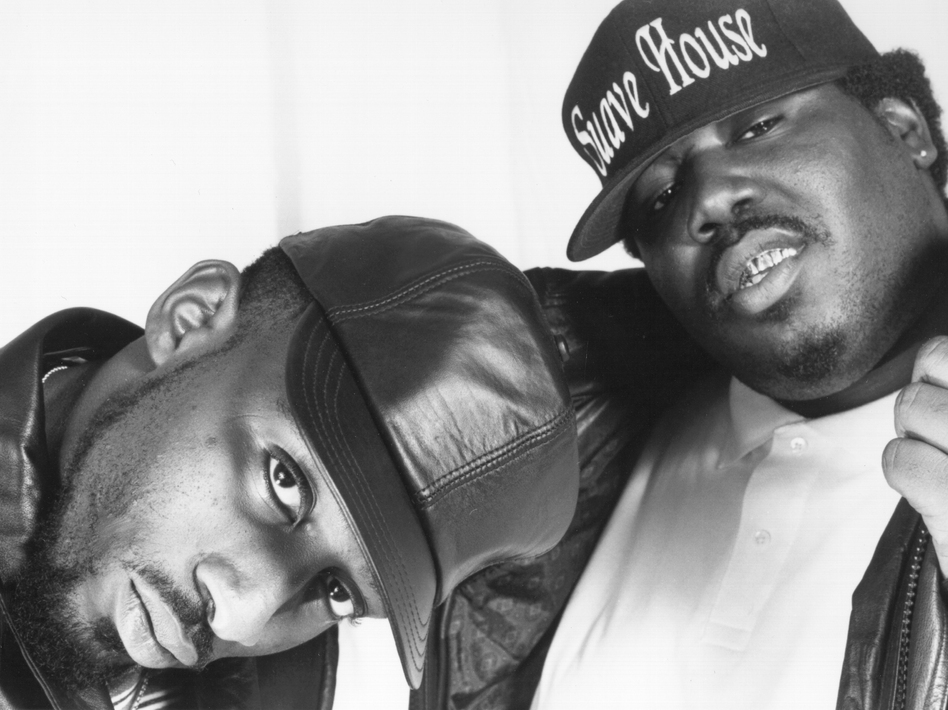
MJG (left) and Eightball in an early, undated photo.i i

MJG (left) and Eightball in an early, undated photo.

Michael Ochs Archives/Getty Images

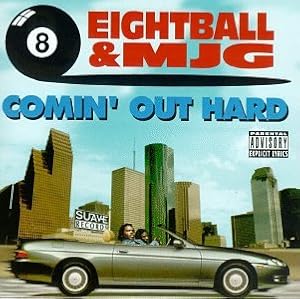
Two decades ago the essence of adolescence was leaving hip-hop. In 1993, the wild success of cinematic albums like The Chronic and Doggystyle had shown corporate America just how large the appetite for rap was, but the next wave of musicians had something more serious in mind. A pair of young rapper-producers from Memphis straddled the tonal shift, and you can hear, on the two albums they released between the summer of '93 and the spring of '94, the unease of an industry flooded with money just as regional markets were wolfing down less commercial, grittier records. Last year, right around the 20th anniversary of the first of those records, Comin' Out Hard, I went to the birthplace of both Stax and Sun Records to hear the story of Premro Smith and Marlon Jermaine Goodwin, better known as Eightball and MJG.

When I got into my rental car at the Memphis Airport, the bass on the stereo was at +9. I left it there, because I was in the city to talk to the men who put a drop-top Lexus coupe on the front and back covers of their first CD and to the people who kept it in their CD players for years.

"I remember popping it into my Oldsmobile — I had a '83 Cutlass Oldsmobile — and we just hit the block, hit the mall and we just went everywhere. Just, 'Woo!' You didn't want to get out the car," says Drumma Boy, a producer born and raised in Memphis, who was 11 when Comin' Out Hard dropped. Even after he got his driver's license, "Mr. Big" was still that song, and Eightball, the rounder half of the group, still an inspiration. "I had a lot of big, fat-ass homies, you know what I'm saying? And I remember, like, how comfortable big dudes started feeling wanting to go out and hit the club more. Like, 'I'm balling, not because of my size.' His flow and who he was — he was just like a fly fat dude."

"I used to always listen to everything my big cousin listened to. You know how you run up behind you big cousin, and whatever they on, that's what you on, from the clothes to the music," says Young Dolph, a rapper who grew up in Memphis. "Eightball and MJG — they legends down here. Everybody was on Comin' Out Hard. Everybody was on it. I remember my cousins and them pulling up in they box Chevys, listening to Comin' Out Hard."

YouTube

The album mattered to Memphis rapper Don Trip for a different reason. "The whole time, coming up as a rapper, that's what they told me: 'You will never make it from Memphis. You can never make it from Memphis.' Growing up, that was one of the milestones. Like, Comin' Out Hard came from here. If they can make it from here, anybody can make it from here," he says. "That's what gave me the ammunition I needed to know I can make it from here, period. I don't have to move to here to make it and say I'm from there."

When you are there, you can see the history of Memphis on plaques and honorary street names and restaurants like the Four-Way, which promotes itself as Martin Luther King Jr.'s favorite place to eat when he was in town. There's B.B. King's on Beale Street. And there are ghosts, too — an empty pyramid by the river, a crime scene at the Lorraine Hotel that's now a museum.

To Yo Gotti, a Memphis rapper who refers to the sanitation workers' strike of 1968 on the cover of his album I Am — the strike is the reason Dr. King was in the city when he was assassinated, the reason he gave his I've Been to the Mountaintop speech at the city's Mason Temple — the connection between the city's iconic soul music and Memphis rap is obvious.

"Soul is like — kinda like pain. You hear that even in the voice tone or the selection of music, and it just feel dark and painful, like the struggle," he says.

Signs of a struggle beyond the Civil Rights Movement are apparent in Memphis. Drugs and the war against them have taken a toll on some neighborhoods in the city, and it shows up in the music.

Yo Gotti makes what he calls "reality music" and told me about getting advice from Slim, co-founder with his brother, Birdman, of New Orleans' Cash Money Records. "I remember when I met him he was like, 'Money, drugs, sex is never gone leave. No matter how strict the laws get for it, people still gonna do it, so it always gonna be listeners for that type of music. Because people gone always be able to relate to it.' Because people living it."

"My aunties and uncles always told me about how they could ride past Stax and might see Isaac Hayes, and a whole lot of other singers from back in the day," says Young Dolph. "They had they cars, they whips out there, they at the studio, it's like the down-south Motown. Motown was just more shinier and more prettier, but all them struggle hits — a lot of stuff came from Memphis."

The music that Eightball and MJG were working on in '93 and into '94 leaned on that Memphis ache. They use the same material that, framed by the G-funk of Dr. Dre, was riding high on the Billboard charts at the time, but their sound is thinner and their delivery more vehement than you'd think wise given how hot it gets in Memphis. They are matter of fact, which makes their scenes grimmer than most, and their spreading popularity did not soften their blows. As they aged and traveled, the continued struggle of their neighbors rose further to the surface of their songs.

I met MJG at a sports bar in East Memphis. Out in the parking lot, I handed him my copy of his first album, and I had to ask why Memphis isn't the city on the cover.

"It's the Houston skyline. You know, we from Memphis, but we was just representing the big move and showing off the big city. We always spoke of Memphis and our neighborhood, Orange Mound, but we always made it a fact too that we was coming nationwide by way of Houston."

They were coming by way of Houston because they were coming by way of an entrepreneur named Tony Draper, who was only a year or two older than Eightball and MJG, and was building a label called Suave House Records over in Texas.

"That type of deal now would just be a regular little rudy-poo deal," MJG says. "It wasn't really like this suitcase of money or a big check right from the beginning. It was just a cat who was basically the same age as us, who knew a cat that we went to school with."

The Suave House deal was the biggest break a Memphis rap group had ever had, but Eightball says their stay in Houston was not particularly glamorous. "We was making the first few songs of Comin' Out Hard in a empty bedroom in a two-bedroom apartment. You know what I mean? No furniture."

"I remember being in Tony Draper's baby mother's apartment, in the back room, belting out those tracks," says MJ. "Some of the neighbors was loving it, and we had one to two call the police on us."

"Then we moved into a place where me, MJ and Draper all stayed together," says Eightball. "That's where the remainder of Comin' Out Hard and On the Outside Looking In was, I guess, created. Right there."

MJG recalls those months as a time of innocence, before they knew the lingo or how the music industry worked. Eightball calls it a "no-pressure lifestyle."

"I didn't know what a big deal was back then, you know what I mean? So I wasn't thinking about nothing being a big deal. We was just making music. We was just: 'This is what we're here to do. This is what we do.' This is what everybody been knowing us for, since we was 15, 14."

And what Eightball and MJG were known for was snatching soul music — secular R&B fused with gospel in a union that had been painful — and putting it to work for a new generation. The title track of Comin' Out Hard samples "Stay," a Rufus and Chaka Khan song that's really a plea, and Simply Red's "Holding Back the Years," which is a lament for an absent mother written by a British singer. Eightball and MJG shoot guns over both of them.

"We left Memphis with a suitcase of records — 45s and 33s," says MJG. "We had a lot of Stax Records, Marvin Gaye records, Simply Red, Rufus, a bunch of stuff."

"All those samples on Comin' Out Hard came from records that we brought to Houston with us that our parents gave us," says Eightball. Records that Eightball says his mom would play when she was cleaning up the house or they'd hear on the radio driving around town — a town where, MJG says, every 10th house has a studio in it.

YouTube

"Memphis artists — Memphis people — have a certain soul. Because we have such a deep and rich music history here. It's a lot of children of old band members, and 'My daddy used to play the guitar for such-and-such,' and 'My uncle was a background singer for Elvis,' and 'My cousin played drums for B.B. King.' This one of them towns where every other two or three people can probably sing or play an instrument just as good as anybody you'll see on TV, but they work a regular job."

Eightball and MJG met after they were each bused out of Orange Mound to Ridgeway Middle School. They both say they knew very young that they wanted to be more than fans of hip-hop — they wanted to make it.

"We was just those guys that as soon as the hip-hop scene was breaking off up in N.Y., we was following all of that. We was already trying to mimic it then," says MJG. "From the first time we was hearing Run-DMC and 'La Di Da Di' and Doug E. Fresh and B.D.P. and all them cats — we was doing it at the same time. Scratching and rapping and beat-boxing back then, in the early '80s."

"We start hanging out at this little spot shooting pool," says Eightball. "At this hole-in-the-wall club by MJG house that did blues, like live blues shows and made blues records. We hung out there so much, when they'd walk away, they'd let us get on the mic and start beat-boxing, rapping and stuff. The owner noticed the younger dudes that was in there selling dope and hanging out — cause they could come in there and smoke weed and stuff like that — was liking that. So that's how we started doing the talent shows."

The duo moved on up to citywide talent shows at the big community centers, with DJ Squeeky, and put out an EP their senior year of high school.

"I think we were more raunchy then, than later in our music," says Eightball. "Because it's a young mind. We were surrounded by all of this stuff, like the older cats that we was around, all they talked about was pimping these b- - - -es, you know what I'm saying? Moving this weight."

Comin' Out Hard, the album, is dramatic. "Every movie is based on a true story," says Eightball, "but they add things that make it look better on the big screen." If each song is a movie, all of them are rated R.

"We come from a time in hip-hop — the story rappers like Kool G Rap, the Slick Ricks. OK, that's East Coast. Then you got Texas music, which was big in Memphis. Rap-a-Lot. The Ganksta Nips, Odd Squad. Then you go to the West Coast. You got Ice-T, his early music: 'Six in the morning, police at my door.' Everybody was telling stories of things that was going on in they places, but back then everybody — I don't give a damn who you was — your music has to have a certain amount of theatrics in it."

" '93 was a changing time. Like if you look at the music one year before '93 and one year after '93, it's kinda totally different," says MJG. "It was really taking a turn."

Money and mainstream popularity were disrupting hip-hop, and musicians who were trying to leave behind gangster theatrics and adolescent glee were frustrated. For Eightball and MJG, and hip-hop largely, the no-pressure lifestyle was no more. Precocious storytellers Biggie and Nas formally debuted in 1994. OutKast opened another front in Atlanta. These artists were haunted, worried about their communities.

Eightball and MJG care about theirs, especially their old neighborhood Orange Mound, and MJG remains in the city where he was born. Eightball is mostly in Atlanta, a hub for the music business. But he says he doesn't consider himself any less of a Memphian for having left to make a living.

YouTube

"It stay with a Memphis person, just like when a person leave New York or somewhere like that and talk with that accent for the next 30 years. And still telling people, 'I just moved here 30 years ago from Brooklyn,' or something, but you still talk like you just left yesterday. It stay with you."

Copyright 2014 NPR. To see more, visit http://www.npr.org/.
07 Feb 21:32

Los Angeles: A Time For Truth

by Aaron M. Renn

I’ve been saying a while now that Los Angeles is a sick man economy. It never really recovered from the peace dividend, and the metro area has fewer jobs now than in 1990, though in fairness that’s in part only because its exurbs are considered a separate MSA. Los Angeles used to have bigtime corporate strength in not just entertainment, but also aerospace and defense, energy, automotive, financial services, and more, all of which have withered apart from entertainment. Even foreign migration to the region is weakening. New York draws two and half times as many immigrants. LA retains a spectacular economy, a powerful immigrant-fueled small business sector, has the ports, etc. and is even still the largest manufacturing center in the country, but it’s pretty clear there are big time problems. This is particularly obvious in contrast to the booming Bay Area.

A recent report called “A Time For Truth” put out by a group called the Los Angeles 2020 Commission lays out some of the grim facts. Though focused on the city and not the region, and thus likely overstating problems on a regional basis, it highlights a lot of the issues. Here are a few sample:

Los Angeles is barely treading water while the rest of the world is moving forward. We risk falling further behind in adapting to the realities of the 21st century and becoming a City in decline.

Activity in most of our key economic sectors is flat or in decline. We have repeat- edly ignored or fumbled opportunities in one of this era’s major growth industries, the intersection of science and engineering — a field where our university-based intellectual capital ought to make us a leader. With the closure of Boeing’s plant in Long Beach, there is no longer a large-scale aircraft, space vehicle fabrication or assembly facility left in the area.

Three decades ago, LA was home to 12 Fortune 500 headquarters. Today, there are 4. New York, in contrast, has 43 and has continued to add major employers in the last decade.

We have developed a “barbell” economy more typical of developing world cities, like São Paulo, rather than a major American urban area. We are experiencing growth at the top of the income ladder and at the bottom, while the middle class shrinks year after year.

The report includes a lot of unpleasant truths that have been written about before by others like Joel Kotkin. Maybe a fancy pants commission will be listened to, however. In any case, it’s worth a read to get a local take on the city. There’s more to come as this report focused on conditions rather than recommendations, though for that reason perhaps it will be less controversial.


The Urban State of Mind: Meditations on the City is the first Urbanophile e-book, featuring provocative essays on the key issues facing our cities, including innovation, talent attraction and brain drain, global soft power, sustainability, economic development, and localism. Included are 28 carefully curated essays out of nearly 1,200 posts in the first seven years of the Urbanophile, plus 9 original pieces. Great for anyone who cares about our cities, The Urban State of Mind also makes a great gift this holiday season.

07 Feb 17:36

Architecture firm closing, renovated HQ on block

by solson@ibj.com
A2SO4 Architecture LLC has begun to wind down operations as a bank forecloses on a couple of construction loans for its new headquarters with a total balance of more than $1 million.
07 Feb 14:56

The Beauty of Bikes is in the Parking

by Graeme Sharpe

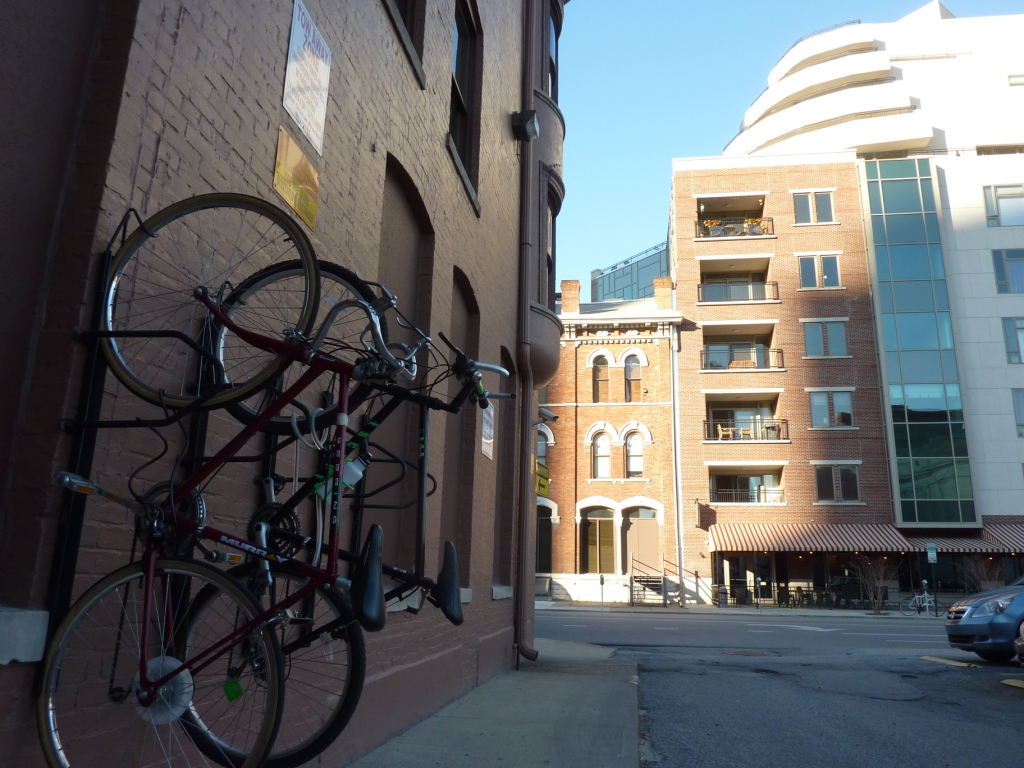
Indianapolis has been pushing hard to catch up with leading bicycle cities such as Portland and San Francisco. Seeing all that two-wheeled traffic in downtown and surrounding neighborhoods has been a blessing in so many ways – less pollution from cars, less vehicle congestion, better public health outcomes, and especially watching people get outside and reconnect with their city.  But I wanted to share what I consider the key benefit to bringing back bicycles:  the opportunity for dense downtown development without parking lots or subsidized garages!

Bicycles and Cities, together again!

Bicycles and Cities, together again!

Bicycles seem to be sprouting everywhere in Indy

Bicycles seem to be sprouting everywhere in Indy

Our current renaissance of downtown required some big bites of that dreaded sandwich of compromise. While many of us at Urban Indy have taken a stand against subsidized vehicle parking, seeing it as a continuation of the old “highways first” policy that doomed many downtown areas to begin with, it is true that city leaders and business developers have a hard time seeing how any modern city could function without adequate parking. Finding a place to park is the most important concern for many commuters and shoppers, especially since densities have been creeping ever lower and people have to travel further for their jobs. But bicycle infrastructure gives us that magical silver bullet to end this concern, and reverse the trend in our cities.

Bicycle parking is radically more efficient than car parking

Bicycle parking is radically more efficient than car parking

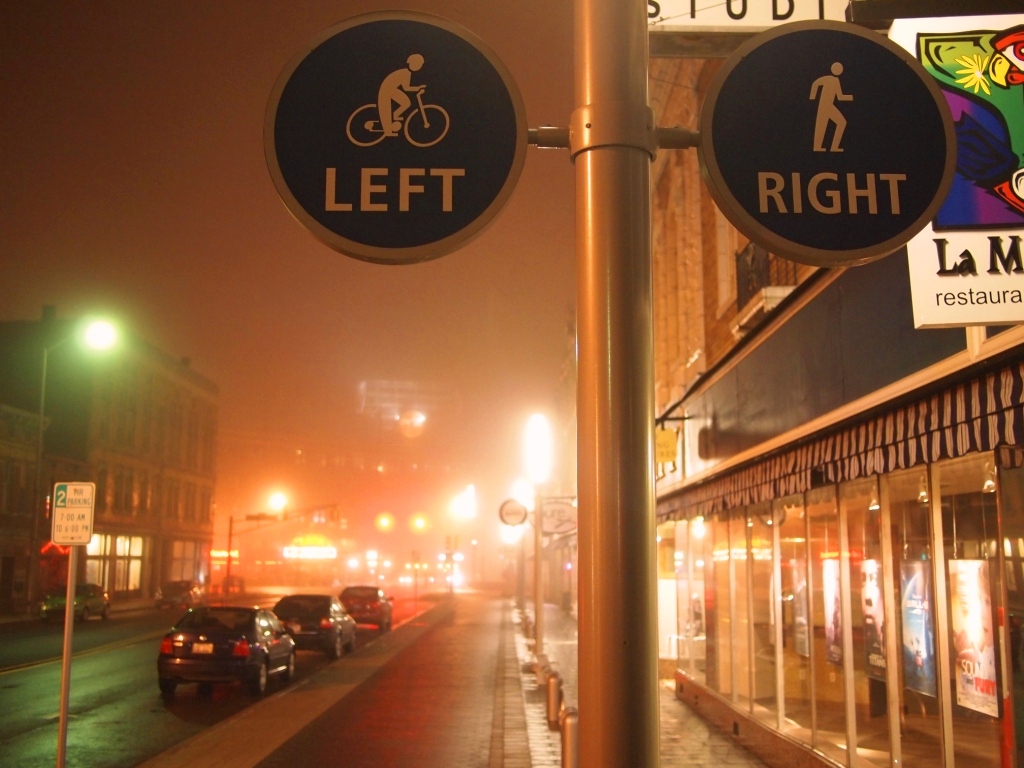
Bicycle infrastructure generates beautiful cities!

Bicycle infrastructure generates beautiful cities!

I certainly don’t want to imply that everyone should be riding bicycles, but it is clear that bicycle infrastructure does benefit everyone. Every dollar not spent on gasoline (or expensive cars, insurance, and vehicle maintenance) is a dollar that is likely spent on local goods and services. The economic benefits are huge! Every bit of mode share (the percentage of people using a particular type of transportation) that bikes can capture means that Indianapolis sees real job growth, real increases in quality of life, and real improvements in household savings.

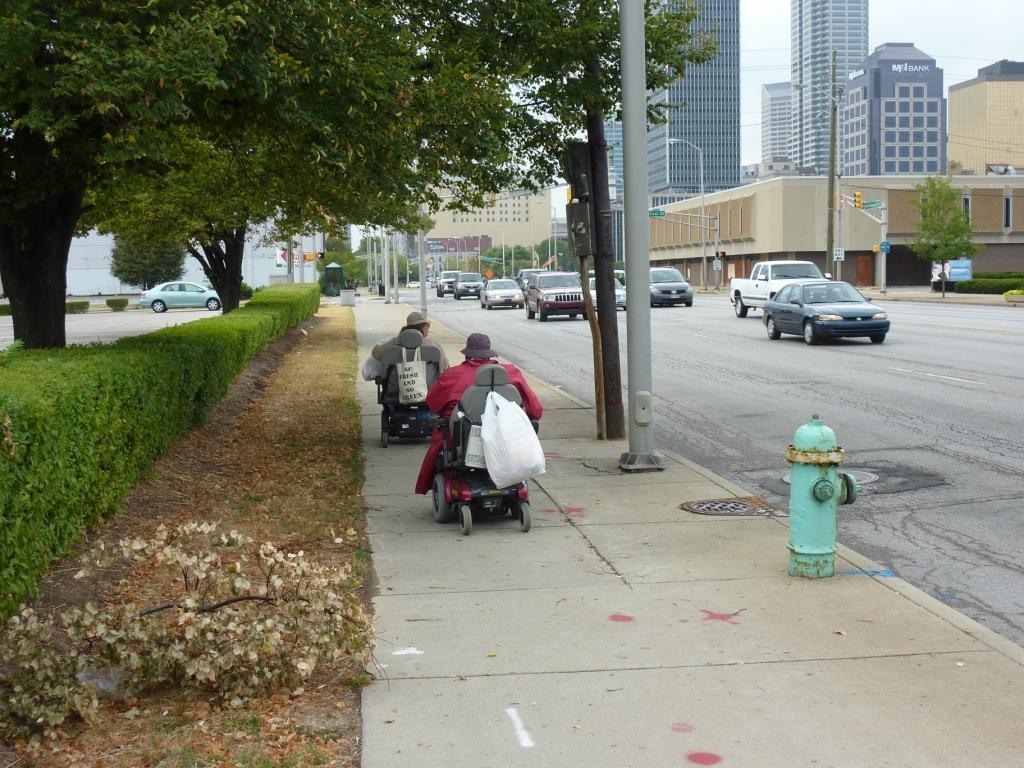
And never forget that bicycle infrastructure can serve double-duty for accessible routes - Vastly improving Quality of Life for some citizens

And never forget that bicycle infrastructure can serve double-duty for accessible routes – vastly improving Quality of Life for our citizens

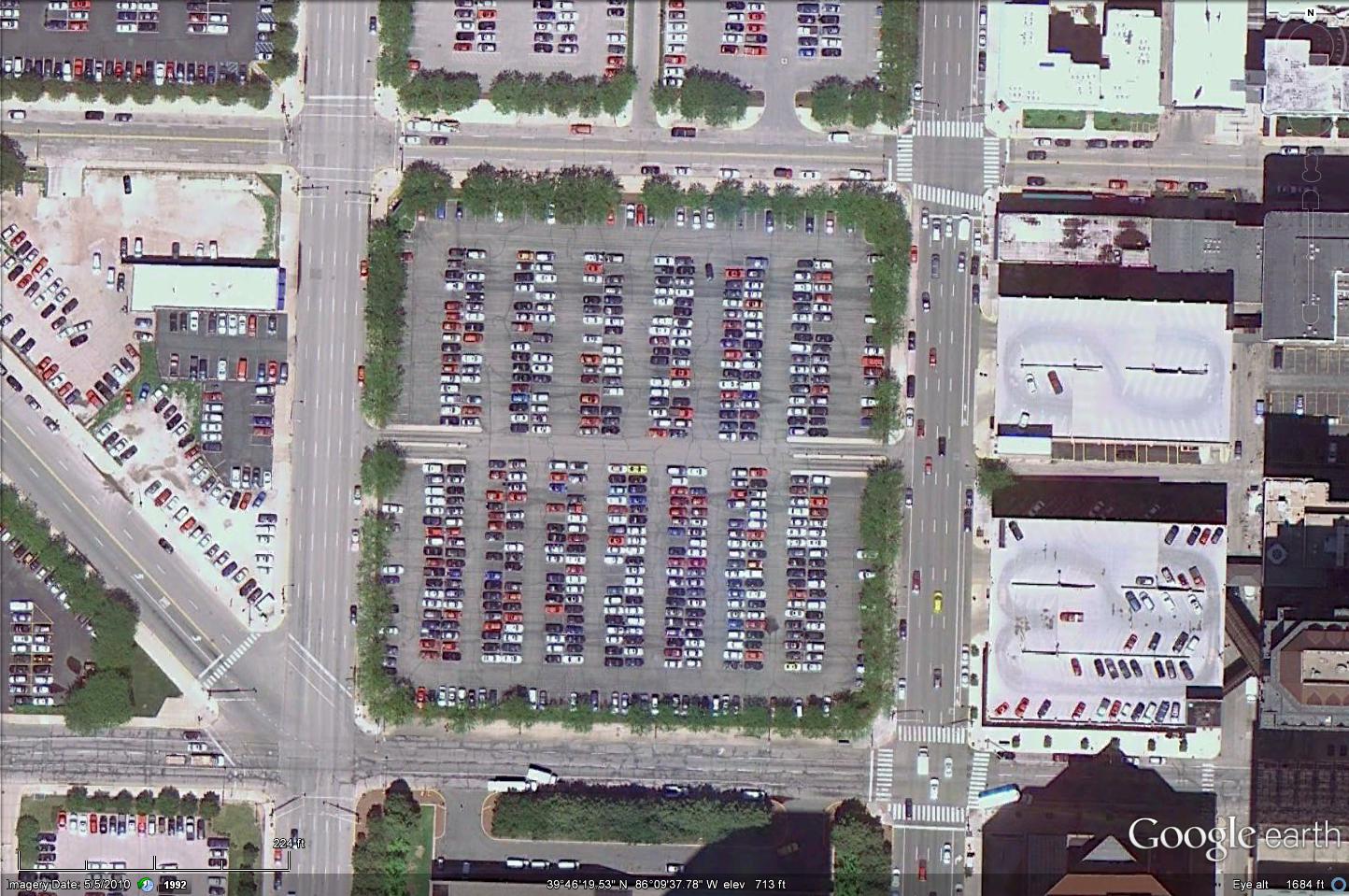
Coming back to the issue of parking, this is where bicycles really deliver their benefits to Urban Design. Building a city to mimic the old streets of Paris or Brooklyn is impossible when everyone must drive. Instead, we end up with a “stroad” and collector system, typically with a design life of 20 years before the cancer of dead mall syndrome takes over.

Car lots don't leave room for the cities they serve

Car lots don’t leave room for the cities they serve

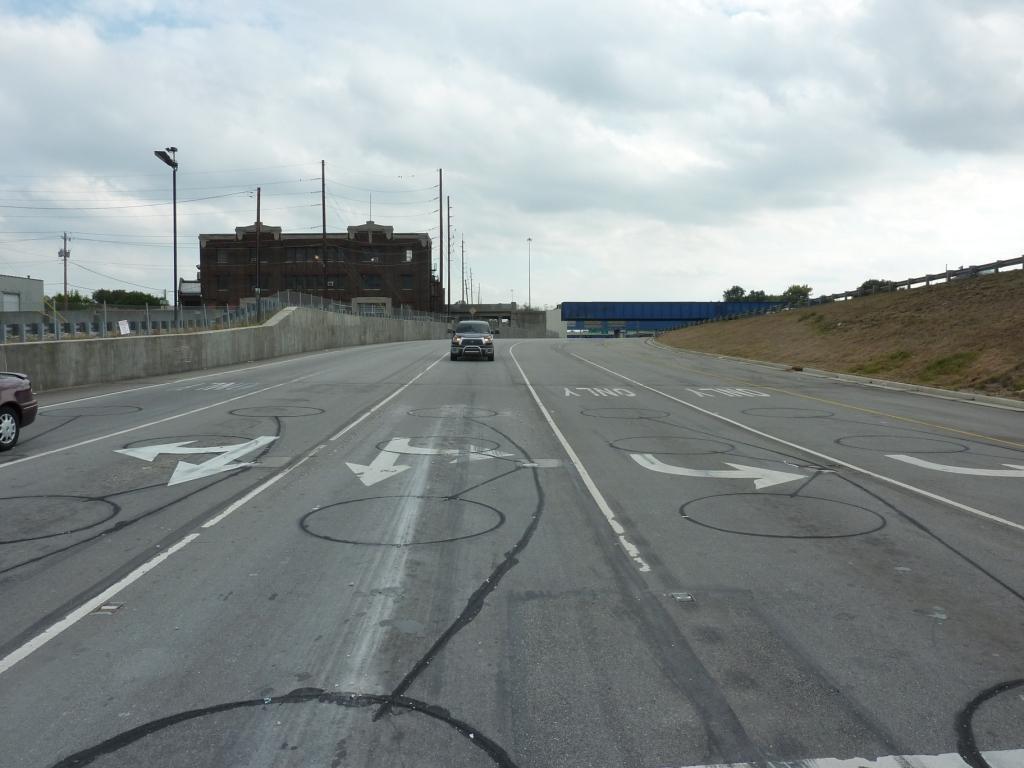
Filling car lots requires this kind of infrastructure

Filling car lots requires this kind of infrastructure

But a city with intensive bicycle infrastructure means that beautiful cityscapes don’t have to remain a fantasy. Because bicycles require so little space for their parking needs, they encourage well-designed traditional urban landscapes. Old-style city blocks become feasible, and in fact become more economical than the sprawling parking lots of suburbia; houses can once again use narrow lots when they don’t need a driveway and triple garage door; and streets can once again use names like “lane” or “avenue” without sounding like a cruel joke.

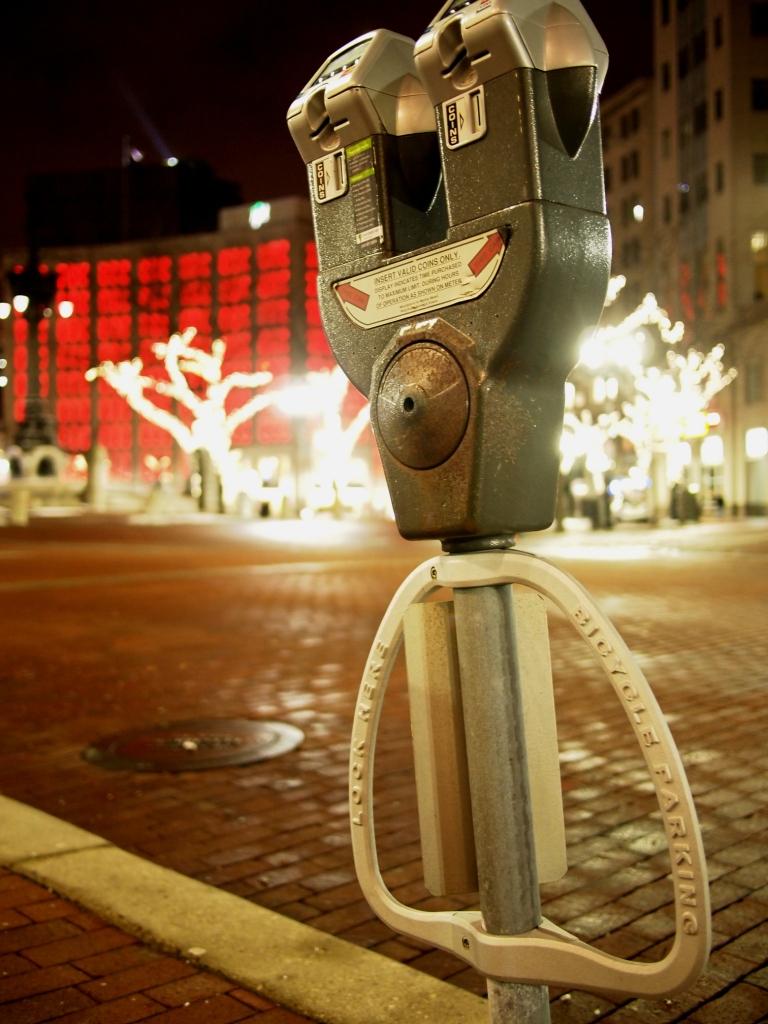
This clever addition to the old meter means I never look for parking near the Circle anymore

This clever addition to the old meter means I never look for parking near the Circle anymore

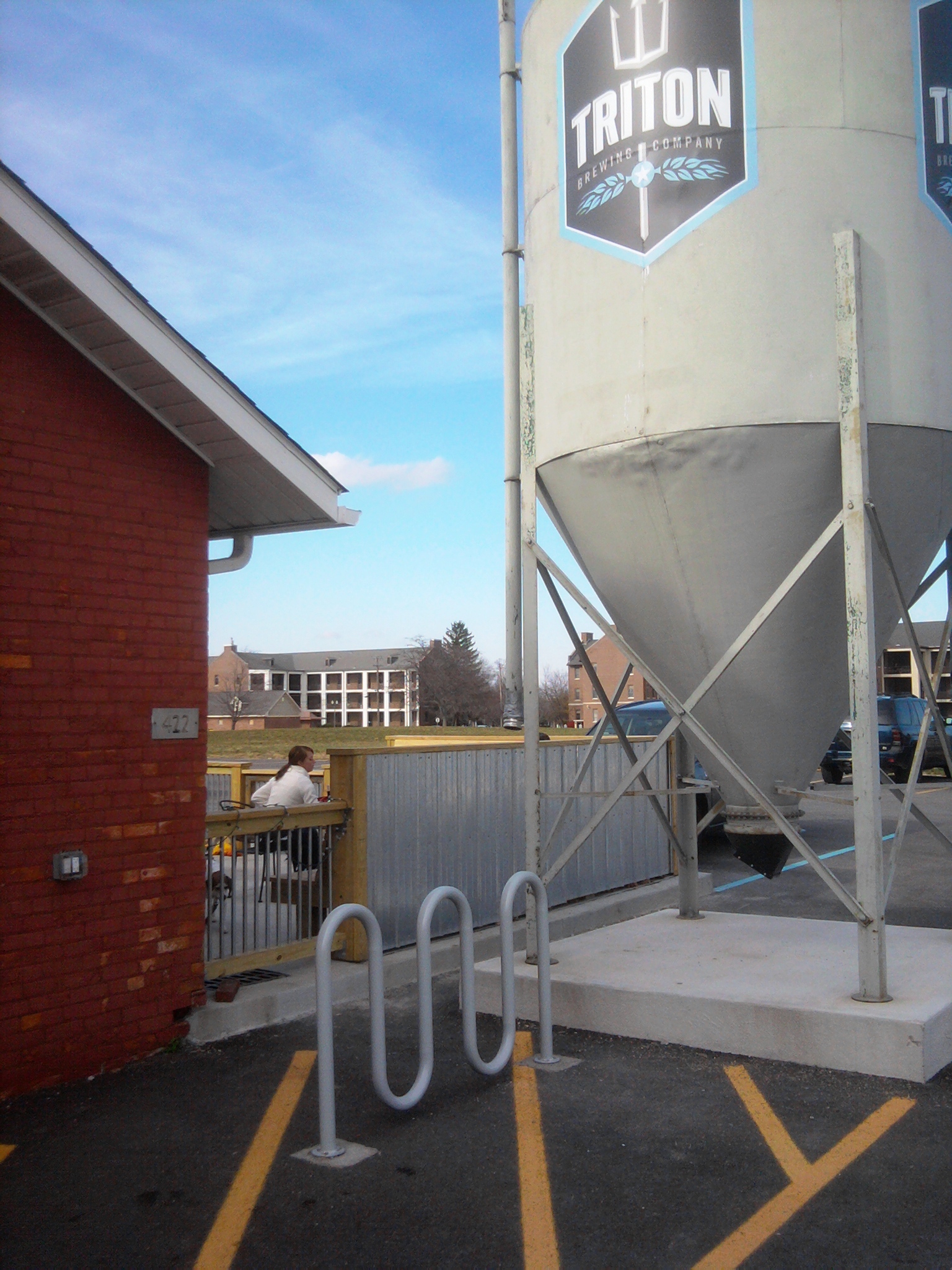
Bike parking can pull in new customers no matter the location

Bike parking can pull in new customers no matter the location

So here are some examples of great bicycle infrastructure that I’ve collected in the past few years. We may never “catch up” with the great cycling initiatives of the West Coast or Copenhagen, but trust me when I tell you that in the case of bicycle infrastructure The Deed is its Own Reward.

A new kind of garage, fit for a modern city (image credit: unknown)

A new kind of residential garage, fit for a modern city (image credit: unknown)

Portland's bike lockers remind us that some bicyclists demand higher levels of protection (image credit: H. Simmons)

Portland’s bike lockers remind us that some bicyclists demand higher levels of protection (image credit: H. Simmons)

New York's bike lanes next to the Flatiron remind us that bicyclists are part of the city too and deserve space on main routes

New York’s bike lanes next to the Flatiron remind us that bicyclists are part of the city too and deserve space on main routes

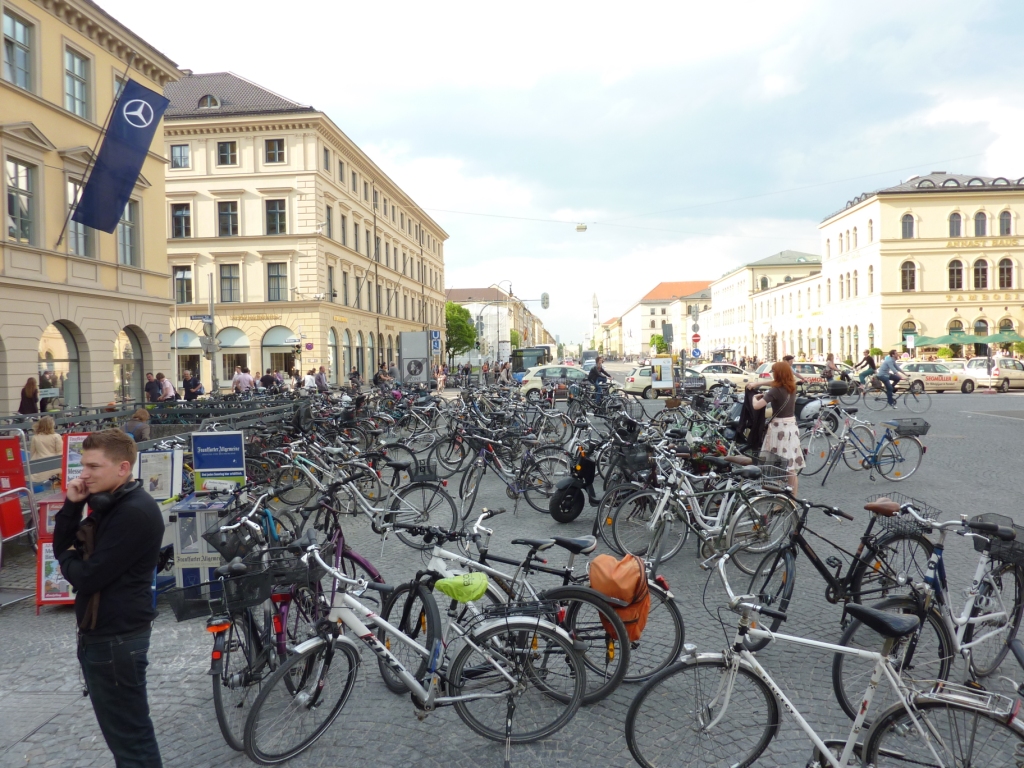
Munich reminds us that multi-modal commuters need a place to store bikes, or people will make their own

Munich reminds us that multi-modal commuters need a place to store bikes, or people will create their own

Milwaukee's "Marsupial" bridge reminds us that there is always room for innovation in bicycle infrastructure

Milwaukee’s “Marsupial” bridge reminds us that there is always room for innovation in bicycle infrastructure

Just because Milwaukee is known for gas-fired two-wheel monsters, there is always room for new technology

Just because Milwaukee is known for gas-fired, two-wheeled monsters, there is always room for new technology

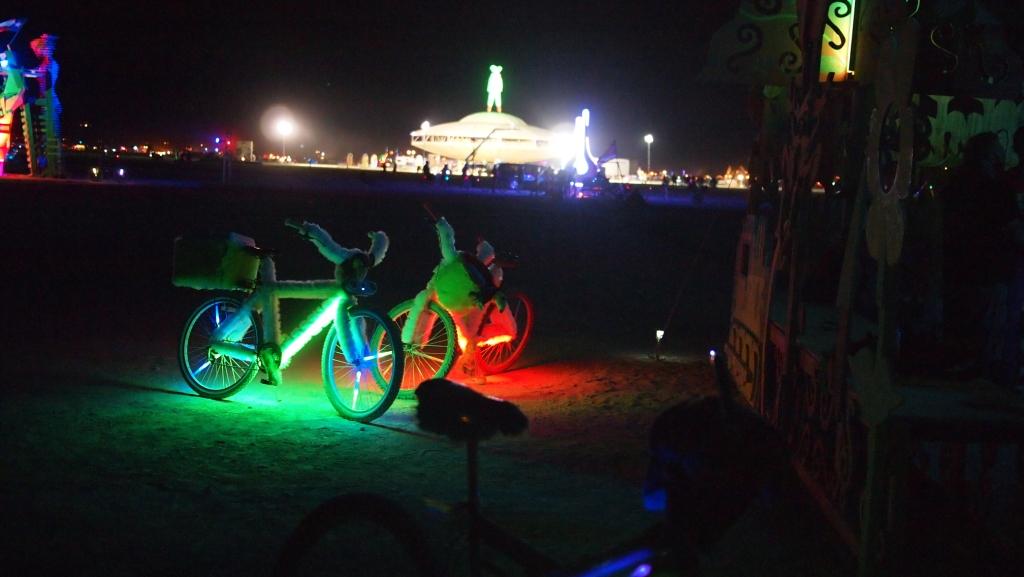
Black Rock City reminds us that bicycling can be a joyful shared experience

Black Rock City reminds us that bicycling can be a joyful shared experience

Bicycles, and their smaller parking requirements, allow us to create the cities that people like to inhabit. Bicycle parking holds the power to invigorate our local economies and unleash the power of our local architects.
Support for bicycle infrastructure is support for a city of humans, rather than a city of vehicles.

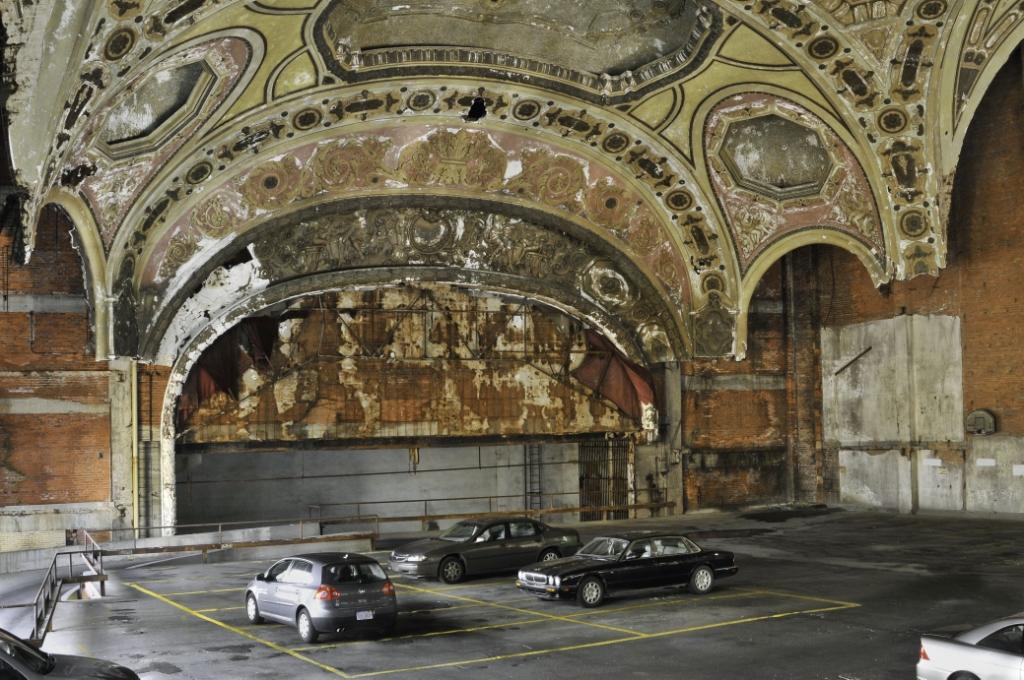
Option #1: Cede the city to parking spaces, Detroit style (image credit: Sean Doerr/WNET.org)

Option #1: Cede the city to parking spaces, Detroit style (image credit: Sean Doerr/WNET.org)

Option #2: Help people build a better city with bicycle parking, as in Amsterdam (image credit: Airbete/Wikimedia)

Option #2: Help people build a better city with bicycle parking, as in Amsterdam (image credit: Airbete/Wikimedia)

05 Feb 16:24

CVS Caremark to stop selling tobacco products

The nation's second-largest drugstore chain said Wednesday that it will phase out cigarettes, cigars and chewing tobacco by Oct. 1, a move that will cost it about $2 billion in annual revenue.
05 Feb 16:17

Sustain Indy’s Bike and Pedestrian Count Study

by Kevin Kastner

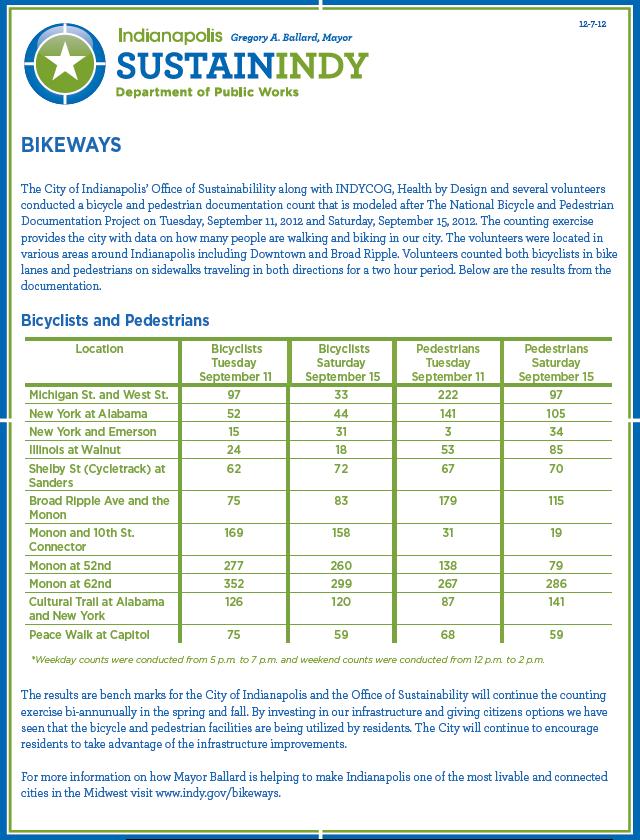
I don’t know about anyone else, but spring weather is on my mind right now.  With that in mind, I checked out Sustain Indy’s Bikeways homepage to see if anything new was on the way.  They have released their bicycle and pedestrian study from September of last year, the results of which can be seen below:
bikepedcount

The first thing that jumps out is that the Monon Trail is still the king of bike and ped infrastructure in Indy.  It is also interesting to see that the Peace Walk is getting relatively steady usage in a part of downtown that used to be mostly forgotten.  These studies help to put some data toward our goal of giving Indy’s citizens safe options for being active in the city.

29 Jan 20:02

Ind. Courts - " 'A BIG SCREW UP:' Woman sentenced to two days in Clark County jail serves five months"

by Marcia Oddi
Updating this post from earlier today, the ILB has learned via this story in The Daily Caller of a long...
29 Jan 18:33

America’s Most “Godless” Cities?

by Aaron M. Renn

The American Bible Society does an annual survey related to what they call “bible mindedness.” The latest results were just released and I was surprised at the amount of media airplay it got, including sites like Time Magazine and Likecool. But perhaps it should be easy to see as this is the type of analysis that can appeal regardless of where you stand on God.

But I found their results and methodology questionable in terms of supporting the conclusions the media drew from it. Here’s the chart (click to enlarge):

Time called this a list of “the most godless cities in America” but in fact it is nothing of the sort. The survey measures instead “bible mindedness,” which they measure using frequency of reading it and a degree of belief in its accuracy. In order to be considered “bible minded” you have to have read the bible within the last seven days and strongly agree that it’s accurate.

This immediately raised a caution flag to me. Obviously it is Christian oriented (though the question set is designed to capture Jewish scripture reading). But the bible minded definition is clearly Protestant-centric. Perhaps I generalize, but historically even devout Catholics tended not to read the bible regularly. My Italian grandfather may have been the most devout Catholic I ever met. Until his very old age he went to mass every single day, said the rosary three times a day, and other things like that. But I never once saw him read a bible.

So we shouldn’t be surprised that the least bible minded metro in America in this survey is Providence, because Rhode Island is either the first or second most Catholic state in America, depending on the survey you use. Whereas the most bible minded city, Chattanooga, is in the least Catholic state. (See this HuffPo piece for some stats. Pew says Rhode Island is 43% Catholic, though how many are practicing is another question).

Practicing Catholics believe in the bible, but don’t generally interact with the text in the same way Protestants do. As a result, surveys that focus heavily on personal bible reading shouldn’t be used as a proxy for Christian religiosity in general, hence most of the conclusions that have been drawn from it are likely wrong.


The Urban State of Mind: Meditations on the City is the first Urbanophile e-book, featuring provocative essays on the key issues facing our cities, including innovation, talent attraction and brain drain, global soft power, sustainability, economic development, and localism. Included are 28 carefully curated essays out of nearly 1,200 posts in the first seven years of the Urbanophile, plus 9 original pieces. Great for anyone who cares about our cities, The Urban State of Mind also makes a great gift this holiday season.

28 Jan 21:48

States Consider Firing Squad as Alternative to Lethal Injection

by Jacob Gershman
As death penalty states struggle to obtain drugs suitable for lethal injections, more old-fashioned methods of executing prisoners are getting another look.
28 Jan 16:48

Partner in a Prestigious Law Firm, and Bankrupt

by By DEALBOOK
Gregory M. Owens is an extreme but vivid illustration of the economic factors roiling the legal profession, James B. Stewart writes in his Common Sense column in The New York Times.
23 Jan 14:15

A Tell-All Born From Goldman Gossip

by By JULIE BOSMAN
Comments heard in the Goldman Sachs elevators are making it into a book.
22 Jan 17:16

Tavern on List For 'Book Nerds'

A social news and entertainment website has named an iconic Hoosier bar on a list of bars "every 'book nerd' should visit." BuzzFeed includes an Indianapolis location among a group that features destinations in England, France and Spain.
22 Jan 13:57

$1 Billion for a Perfect N.C.A.A. Bracket, Courtesy of Warren Buffett

by By SYDNEY EMBER
Don’t bet on anyone winning the $1 billion being offered by Quicken Loans, the Detroit-based mortgage lender, with the backing of Warren Buffett’s Berkshire Hathaway, to anyone who fills out a perfect 2014 tournament bracket.
16 Jan 18:04

Modernist Structure Gets a Facelift

by Kevin Kastner

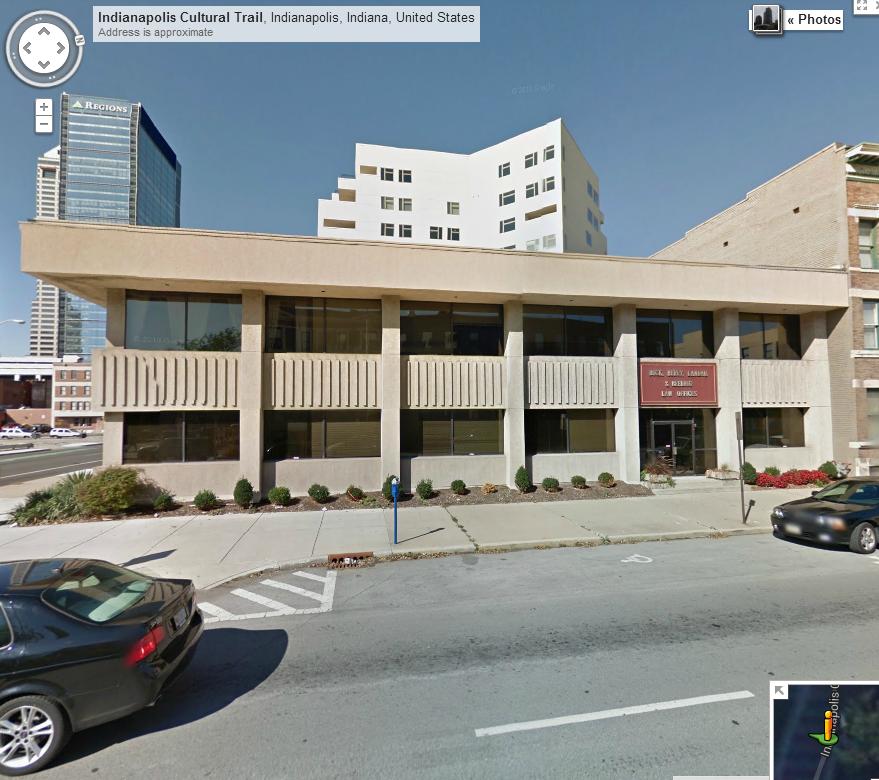
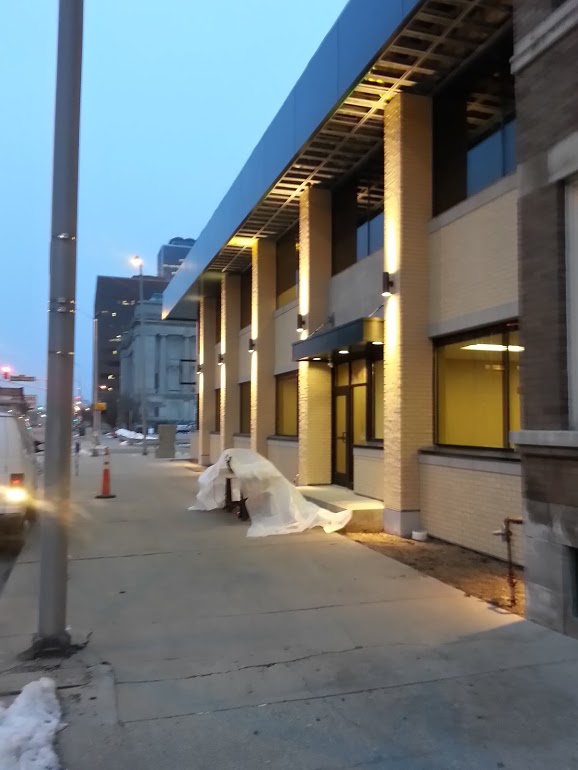
A mostly innocuous-looking building at Alabama and New York Streets is undergoing a major renovation project. Formerly housing only a law firm, the first floor is being converted into a bank.

Here is what it used to look like, courtesy of Google Street View:
before1

before2

Here is how it looked, as of this morning.  Notice the new ADA-accessible entrance on the south side, which appears to be included tastefully:

bldg

14 - 3

14 - 4

14 - 5

There are probably critics who will lament the loss of the concrete facade, as a testament that some developers still have not learned the lessons of the past with regards to appreciation of our city’s history.  In this case, I am not among them, and I think that opening up the structure to the street and lighting it in a tasteful manner well help the building seem more active than it had previously.  Unfortunately, the interior doesn’t look as well-crafted, with acoustic paneled ceilings and fluorescent lighting.  But on the whole, turning the structure from semi-private to semi-public should probably seen as a win for the corner.

16 Jan 15:00

'Parks And Rec' to Feature More Hoosier Flavor

Jakienle

Awesome for U-Relish.

An upcoming episode of NBC's "Parks and Recreation" will feature a meal from a Clay County farm. U-Relish Farm owner Cara Dafforn says word of national exposure for its "Pawnee Chickpeas" has already doubled sales to retailers. She says the show's producers contacted her after shooting an episode last year in Indianapolis. The small business sells pre-packaged, slow-cooker meals at the Indianapolis City Market and local grocers.
14 Jan 22:04

Deal may extricate Pacers from costly TV-rights deal from ABA days

The NBA has quietly brokered a deal with the former owners of the American Basketball Association’s St. Louis franchise that sources say eventually could save the Indiana Pacers millions of dollars a year.
08 Jan 22:53

Iowa Proposal Would Give Law Students More Authority

by Jacob Gershman
Iowa is considering a proposal that would allow law students and recent graduates who haven't passed the bar to practice law under special circumstances.
08 Jan 19:15

Canned Star reporter firing up foodie website

by adavis@ibj.com
Indianapolis Star food writer Jolene Ketzenberger has been dismissed by the state’s largest newspaper for operating a personal website featuring “back of the notebook” snippets of information about the local food scene.
08 Jan 19:13

Three groups puzzled by woman's $7 million bequest

Jakienle

This story is totally amusing to me.

The organizations which include Indianapolis-based Hoosier Oncology Group have no idea why an Evansville teacher chose them as beneficiaries.
07 Jan 19:10

Trends We Hope Die in 2014

by Dan Trepanier

With all this recapping of the past year and planning for what’s to come in 2014, we’ve been doing a lot of talking about the state of menswear and the effects (good and bad) that the internet has had on real guys’ style.

As usual, I have some things on my chest that I’d love to air out (2014 is the year that we don’t hold back) so I figured I’d start with a short list of “trends” that I hope die in 2014.

First, let’s start with a quick discussion about the cyclical nature of fashion and why trends exist in the first place. It all starts with a small group of influencers, let’s call them the “cool kids”. What makes them the “cool kids” is their unique combination of individuality (they have a strong sense of self), confidence (they’re not afraid to stand-out or be seen as “different”) and good taste (they genuinely have a feel for what’s attractive/intriguing/relevant to those around them).

So these “cool kids” (who in many cases are literally young kids in urban creative places like NYC that are being closely observed by trend spotters, designers, artists, etc) start to adopt a new style. They rock it hard, and they rock it well. Soon their new style is being copied. Friends are doing it. Friends of friends are doing it. Eventually corporations (like fashion houses and hollywood-driven media) catch on and before long lots of people are doing it.

The first problem is, the whole reason the style was “cool” in the first place is because it was different and unique. The more people do it, the less cool it becomes. It’s a perfect inverse relationship.

The second problem is, it’s like a giant game of copy cat telephone: as the message (or style, in this case) gets passed on and on and on, it isn’t fully understood and slowly gets morphed into something different. The 1,000th guy to hear the message (or adopt the style) has completely missed the context and subtleties that are necessary to understand why it was a good idea in the first place. Therefore he’s botching the concept and doing it all wrong.

At this point the “cool kids” are over it. Way too many people are doing it now and everybody’s got it all f-cked up. The style has completely lost its appeal, which was to showcase individuality and good taste. So, as is their nature, the “cool kids” re-invent themselves in a different direction – quite possibly the opposite direction of where they sent everyone in the first place.

This, in a nutshell, is why fashion is, and always will be, a cyclical industry and why we will never be able to completely avoid trends.

Moving on, here I put together a short list of recent men’s style trends that started small but have grown too large for their own good. If you can think of any other trends that should be on this death list, please join the conversation via the comments section! We’d love to hear from you.

So without further ado…Dear 2014, please bring us the end of:


Lapel Flowers (and all other lapels ornaments)

These things have been blossoming everywhere, including in the lapels of some very mediocre dressers. I was watching NBA hoops the other day and all five of the gentleman on the TNT halftime show were wearing lapel flowers. ALL FIVE. That includes Charles Barkley. The lapel flower has somehow become the “Look I’m Stylish!!” stamp for the guy who hasn’t studied the art of actually dressing well. Sure, if you’re a style superstar and the rest of your look is on point, it can sometimes be a nice addition. But 99% of the time it just looks corny, especially on a bad suit and/or in combination with a loud pocket square. Just avoid wearing fake flowers or any other kind of silly attention-grabbing ornament in your boutonniere hole (unless, of course, the occasion calls for an actual boutonniere).

Overly Stylized Athletes

I am absolutely thrilled that athletes have been embracing style and fashion. It’s two of my favorite things coming together, and it’s proven to be mutually beneficial for both industries. My problem is with the personal stylists who continually insist on forcing these big bodies into garments that they are not accustomed to, or that don’t fit with the image/personality of the player. The goal of personal styling is to enhance the character of the client, not to create a whole new character who is noticeably uncomfortable in his own skin (and getting openly laughed at as a certified “fashion victim”). These guys are professional athletes, they should look strong, masculine and confident. Too often they end up looking like professional guinea pigs for all the latest trends.

Colored Shoe Laces

These will instantly make your shoes look cheaper and you look cheesier.

Floral Dress Shirts

The right shirt (and there aren’t many) for the right casual outfit, sure. But you know it’s gone too far when guys start pairing colorful floral shirts with pinstripe suits and power ties for the office. 2014 is a time to man up.

Stacked Bracelets

Are we still doing this? Get off the bandwagon and stop the madness.

Colorful Reflective Lenses

In my opinion, these don’t flatter anybody. They draw attention in a startling way and are very distracting to your look as a whole. Not to mention; have you ever tried to have a conversation with a person who’s wearing these? Eek.

Worthless “Design Collaborations”

When two random people with mediocre tastes come together to “design” something the outcome is usually an equally mediocre product that nobody cares about. Last year I read about countless celebs, bloggers, rappers, etc. coming out with bullshit that nobody wants. It’s strictly a PR stunt that makes nobody any money and brings nobody any happiness. All it does is flood the market and confuse consumers. Designers are trained professionals, let’s not insult them.

Camo

Unless you’re hunting animals, or people.

Unwarranted Socklessness

The sockless trend has gotten a little crazy, too. If it’s hot and your wearing loafers or slip-ons, sure. I hardly wear socks between April-September. But if it’s cold enough for heavy winter fabrics and/or you’re wearing lace-up oxfords, it just looks affected.

Unkept Beards

I know, we’ve done the scruffy beard thing on TSB plenty, but most of the time it’s groomed and kept (somewhat) under control. Beards have really caught on and I see so many guys now just letting it all go haywire. I understand it’s an act of rebellion but all I can think is “Damn, you would look so much better if you shaped that a little”.

Dressed-Up Cargo Pants

The cargo pant needs a break. There will always be a time and place for cargos, mainly casual occasions where you might logically need extra storage. But guys on the street keep wearing them with tailored jackets, dress shirts, ties and oxfords. The “cool factor” is wearing thin very quickly.

HighWater Hems

Trousers with no break (skimming the top of the shoe) is one thing, but this three to four inches of airtime around the ankle is a little silly. It makes your legs look short and throws off the entire proportion of your body.

Tight Suits

Slim suits are fantastic. They can make a guy look years younger, and thousands richer. But the obsession with skinny suits has gone a little too far as well. If your suit is pulling and stretching while you’re in a resting state, than it’s not “tailored”, it’s tight. Nothing ruins the elegant appeal of a suit more than visual tightness. You’re better with a little room (minimal drape can look confident and casually nonchalant) than a painted-on garment that’s struggling to hold you together.

Menswear Internet Slang 

Remember when GQ stood for “Gentlemen’s Quarterly”? At some point it (and most other tradition menswear publications) morphed into an immature blend of Hypebeast and F-ck Yea Menswear. It’s full of words like “swag”, “dope”, “steez” and trend-heavy product recommendations from the rap fueled streetwear industry. The funniest part is, when you meet the handful of young guys who write this stuff, they don’t wear the styles that they promote, nor do they even talk like that in real life! Unless it’s in a joking manner. Which begs the question, has menswear become a big joke? Are men not interested in dressing and acting like gentlemen anymore? Or reading thoughts and opinions from guys that they trust and respect? There seems to be a lack of resources for men to have an intelligent conversation about style and get inspired/encouraged by other real guys who walk the walk as much as they talk the talk.


Looking fwd to all your comments and an exciting year on TSBmen.


Thanks, as always, for reading.

Yours in style,

TSBmen


07 Jan 18:17

Hoosier Hoops Player Power Rankings

by JustAJ

After a week into the conference season, we're introducing a new idea to the site. Everyone has power rankings of other teams (including this site) but not everyone ranks their own team. After the jump we take a look at which players played their best and provided the most value.

The below table is in reference to this past week alone. This power ranking will adjust weekly based on what a specific player did that week and not their overall body of work. For example, if Vonleh has a triple double this week and then goes 0-fer the next week there's a very good chance he'll go from #1 to #10.

Either way, check below for this week's rankings.

1 Yogi Ferrell An average Ortg of 113 over two losses ranks second on the team behind Will Sheehey. However, Yogi's 47 points over 76 minutes pushes him to the top of the first weekly player power ranking.
2 Will Sheehey After looking a little closer at the numbers Will Sheehey's performance against Michigan State gave him a huge boost in perception and reality. Leading the team in Ortg he also scored 21 points despite his low usage rate.
3 Noah Vonleh Vonleh comes in at #3 on this week's list. Still struggling with foul trouble and demanding the ball, he provides a huge boost to the team even when he isn't scoring. 18 rebounds in 2 games will keep him high on the list even if he's scoring buckets for the other team.
4 Troy Williams I was surprised to find myself putting Williams this high. However, 46 minutes in which he averaged an ORtg of 96 puts him ahead of most. 12 points isn't spectacular, but only 1 turnover in high minutes gets him the nod for fourth.
5 Evan Gordon A non-factor in the Michigan State game, Gordon slots in at 5 because of his strong role in the Illinois game. After all we're only a Evan Gordon jumper away from feeling a lot better about ourselves.
6 Stanford Robinson Stan is basically the opposite of Gordon. He was a strong factor in the Michigan State game after being a detriment at Illinois. Robinson seemed to find some rhythm against Michigan State and may battle for a starting spot soon.
7 Jeremy Hollowell If Robinson is battling for a starting spot it is probably Hollowell's. Jeremy has not made the leap that we expected this year and though he's improved it hasn't been enough. As a starter 4 points in two games isn't acceptable. Sure he does the dirty stuff as he was second on the team in rebounds, but it's going to take more than that to jump up this list and hold onto his starting spot.
8 Hanner Mosquera-Perea Despite low minutes, Perea has shown some strong play as a role player. At Illinois he had 6 points and 4 rebounds in 15 minutes. Unfortunately he didn't follow that up against MSU with only 2 rebounds in 7 minutes to show for it. Flashes of excellence need more consistency from Perea.
9 Devin Davis 20 minutes of game time from Davis gets him 9th on the list. A low usage guy he's essentially out there to rebound and play defense. He did his job rebounding as he pulled down 1 board every 2 minutes, but he needs to offer some sort of offense in order to climb the rankings.
10 Jeff Howard 2 minutes against Illinois. Still, a walk-on grabbing time that isn't in garbage time makes it a successful week.
11 Collin Hartman 2 minutes, 1 rebound after the game had broken down into AAU ball against Michigan State.
12 Jonny Marlin 3 minutes of time where he, 6' Ferrell and 6' Gordon were on the floor at once. It didn't really hurt or help, but it was certainly weird.
13 Austin Etherington

3 minutes in late crunch time against Illinois. However, he had a 5 second inbounding violation when it mattered. Which drops him below the other low minutes getters.

07 Jan 17:43

Former IU big man Luke Fischer picks Marquette

by podcastonthebrink@gmail.com (Matt Dollinger, Justin Albers)
Jakienle

Since Fischer is from a suburb of Milwaukee I think this indicates he wanted to be closer to home.

Former Indiana center Luke Fischer is making a move closer to home. The 6-foot-10 Wisconsin native announced via his Twitter account on Sunday morning that he is transferring to Marquette. Fischer said he also considered UW-Milwaukee and Creighton. “I am excited to say I will be transferring to Marquette University to play for Coach (Buzz) […]

The post Former IU big man Luke Fischer picks Marquette appeared first on Inside the Hall | Indiana Hoosiers Basketball News, Recruiting and Analysis.

02 Jan 20:39

Luke Fischer leaves Indiana, will transfer

by podcastonthebrink@gmail.com (Matt Dollinger, Justin Albers)
Jakienle

Was this dude homesick or something?

Freshman center Luke Fischer is no longer enrolled at Indiana University, Indiana announced in a press release Monday afternoon. “Luke has decided to withdraw from Indiana and pursue another educational and basketball opportunity,” Indiana coach Tom Crean said in the release. “He explained to us he is looking for a different fit for him. We hate […]

The post Luke Fischer leaves Indiana, will transfer appeared first on Inside the Hall | Indiana Hoosiers Basketball News, Recruiting and Analysis.

30 Dec 19:31

Indiana's Conference Schedule and the Order of Difficulty

by JustAJ

Contributor Red Ramaker compiled what he thought would be the order of remaining games hardest victories to easiest. Because of that, I thought it would be a good idea to put a list that we could continue to reference throughout the rest of the conference schedule. This list, as it currently stands is the schedule with the toughness schedule on a scale of 1-18 next to the game in bold. The full list in order is below that. Take a look at the list and then we'll break down the games.

12/31/2013 at Illinois #6

1/4/2014 vs. Michigan State #9

1/11/2014 at Penn State #10

1/14/2014 vs. Wisconsin #7

1/18/2014 vs. Northwestern #18

1/21/2014 at Michigan State #2

1/26/2014 vs. Illinois #15

1/30/2014 at Nebraska #13

2/2/2014 vs. Michigan #12

2/8/2014 at Minnesota #4

2/12/2014 vs. Penn State #16

2/15/2014 at Purdue #11

2/18/2014 vs. Iowa #8

2/22/2014 at Northwestern #14

2/25/2014 at Wisconsin #1

3/2/2014 vs. Ohio State #5

3/5/2014 vs. Nebraska #17

3/8/2014 at Michigan #3

Order of Difficulty

  1. @Wisconsin
  2. @Michigan State
  3. @Michigan
  4. @Minnesota
  5. Ohio State
  6. @Illinois
  7. Wisconsin
  8. Iowa
  9. Michigan State
  10. @Penn State
  11. @Purdue
  12. Michigan
  13. @Nebraska
  14. @Northwestern
  15. Illinois
  16. Penn State
  17. Nebraska
  18. Northwestern

This list makes the idea of making the tournament feel a little daunting in my eyes. Red Ramaker said he thought that he saw 8-10 in the remaining schedule and I'd say that's a pretty good assessment when looking at it in this lense. Now of course there is the whole issue of Mitch McGary being out for Michigan which makes going into their house not the third toughest schedule on the game, but it's still a game where Indiana will go in as dogs. In all honesty, I feel confident in getting victories only up until the Michigan State game.

If that confidence comes to fruition the Hoosiers will finish the conference 9-9 and on the NCAA bubble. That doesn't leave a whole lot of room for error. Go into West Lafayette and succumb to the passions of a rivalry and you're on the outside looking in before the conference tournament begins. I've always been of the opinion that you should never want to be relying on your results in a conference tournament to get you anything. But there is a very good chance Indiana winds up that way.

I'm curious to what everyone else thinks of this list. If Indiana goes and wins @Illinois tomorrow night do we all breathe a sigh of relief and feel a lot better about ourselves? What if we lose? Red Ramaker pointed out that 2-4 is a very likely start with the way our conference schedule begins. If you assume that single digit games (the top half of the list) are likely losses and the double digit games are likely wins, then we're looking at a schedule that never really gives us a feeling of comfort.

We're talking about starting 1-3 before getting to a peak of 7-5  before trading battles for the final 7 games. It looks very much like Indiana could be going into Michigan just like last year on the final game of the season to get a season defining win. Get it and you're likely a lock for the tournament at 10-8, don't and you're going to be sitting around on selection Sunday sweating it out with a lot of other teams.

30 Dec 19:27

Mark Cuban’s Next Venture: Shining More Light on the SEC

by Jacob Gershman
Mark Cuban's face-off against the U.S. Securities and Exchange Commission has inspired his latest business idea -- publicizing SEC trial transcripts.
30 Dec 17:19

Angie's List hit with shareholder suit

by comalley@ibj.com
The complaint charges the company and executives with misrepresenting the strength of the Indy-based firm's business model, financial performance and future prospects.
30 Dec 17:19

Indiana's Williams Dam could power up again

With its gentle current and miles of shallow water, the White River is no one's idea of a mighty waterway.
30 Dec 15:42

Discussing Jeremy Hollowell

by JustAJ

Before the season began, many IU fans knew that Indiana was going to need to get quite a bit from Jeremy Hollowell to be a major competitor this basketball season. Hollowell was a victim as a freshman of getting limited time behind a very experienced roster as a freshman. Now that he is getting his minutes he is struggling to consistently provide meaningful results that can be measured by numbers. Unfortunately for him, being a very strong defender doesn't really measure out in metrics, so to get respect you've still got to earn it on the offensive end of the court. Let's take a look at where we expected Jeremy to be and where he actually is.

For full disclosure, I was one touting Hollowell to begin the year. I saw him a couple times in high school after he had learned he hadn't made the McDonald's All-American team and was upset. In that mindset he was unstoppable. What I saw out of Jeremy was a kid determined to make everyone else pay for what he viewed as a transgression against him. Night in and night out some of the best teams in the state were made to look silly as Hollowell did whatever he wanted. That's the kind of Hollowell I thought we'd be getting this year. Before the season I said he'd be third team All-Big Ten. That doesn't appear to be happening unless a light bulb clicks here in conference play.

Before the season, our very own Devin set an expectation line of Hollowell that I think everyone could agree was a very fair line for a sophomore in the Big Ten. 25+ minutes, average 10-12 pts and "somewhere around 5 rebounds". As of this moment he's averaging 23.4 minutes, 8.6 ppg and 4.2 rebounds. Now that's not far off, but it is still not quite what we'd like to see. Indiana is going to be a team of balance this year. Outside of Yogi, who apparently is going to have to be Trey Burke this year, this team is going to rely on several different guys doing the little things that add up to a team effort. Hollowell's contribution needs to improve.

Hollowell's gross averages when looking at where he stands on the team show a little better picture of his contributions to date. Being third in minutes played he's fourth in points, third in rebounds, 4th in assists, 1st in blocks (tied), 4th in free throws and 3 point %. In pure volume, he's easily one of the top five players for Indiana currently. That may be more of an indictment on Indiana at this point than it is a positive for Jeremy, but the raw numbers show that he's playing on par with what his expected role was to be early this season. The fourth option behind Yogi, Will and Vonleh.

To continue on with the statistical numbers, if you recall this summer, Devin did a post looking at the 67 seniors who played all four years in the Big Ten from 2007-2013. He took a look at per game productivity and averaged it out over time. In those numbers we saw that the average Big Ten sophomore had a 10.4 per game average. Currently Hollowell is sitting at 13 point average on this scale. Which is actually right at the statistical average of a Big Ten junior. So in this case it appears Jeremy Hollowell is ahead of the pace.

Now let's go ahead and look at Pomeroy efficiency numbers. Earlier in the summer I also took a look at some of the expected growth from a Pomeroy and raw numbers standpoint for freshmen becoming sophomores. It turns out that Hollowell is right on course with those numbers as well. The average Big Ten freshman that saw a major bump in minutes from freshman year to sophomore year averaged a Pomeroy Offensive Rating bump of 7.7 points. Jeremy Hollowell finished the season with an ORtg of 91.4 and is currently sporting a 99.3, which is a change of +7.9. Or right on pace with the expected average.

Extrapolate the expected change to his other efficiency numbers and you'll see that again, Jeremy is doing exactly what you'd expect the average sophomore with his results last year to do. He's ahead of the average growth pace in added minutes, improving assists and turnover rates, blocking%, steal% and drawing fouls. In fact, the only thing that is currently an issue in his efficiency numbers and what I would suggest is holding him back is his stagnant shooting percentage. Shooting 37.6% from the floor is not acceptable in any medium. That is the biggest thing that needs to change.

Basically we're looking at the Jeremy Hollowell that the last couple years of freshman to sophomore jumps would have told you to expect. I would consider it his floor with how I was personally expecting him to play. He's certainly not doing anything to blow anyone's mind, but this is the kind of growth we should have expected. Perhaps it was unfair to think he could/should carry a heavy load. He's following a standard growth curve for any college basketball player and in fact he's ahead of it. Truly if he improves his touch, which is the thing currently wrecking his shooting percentages, he wouldn't be getting the flak that he is.

Despite being slightly below national average in efficiency this year, I think he's still the best option for the starting lineup right now. He defends better than most anyone on the team, rebounds and blocks shots. If he could sink 2 more shots and cut out a half a turnover a game, his value would sky rocket for Indiana. I wouldn't be shocked to see that happen. As we get into conference play the rotation is going to shorten. Add in that he's the third best player on the team at avoiding the fouls and you know his minutes are going to see a bump.

In the end, I would preach patience with Jeremy Hollowell. It is fair to expect a little more right now, but he's slightly ahead of the pace in player development. Hollowell is not going to make my prediction of an All-Conference team this season. I was definitely wrong on that. But we've seen flashes of what he can do. Through the non-conference season he's had 5 great games, 5 bad games and 3 in between.

Finding the consistency will be key down the stretch. What we should be asking is for Jeremy to raise his floor some. It's OK at his young age to have an off night, but those nights can't be ones where he's only worth .7 points per possession. No more Kennesaw St. games where you play 21 minutes but only have a usage percentage of 9 and an ORtg of 65. It is unacceptable to be a non-factor. Heck that one game is what's keeping him from being right at the national average in ORtg this year. Raise the floor of play and Jeremy Hollowell becomes a guy that isn't just in the starting lineup but is a threat to punish you if you don't account for him. Hopefully he's been in the gym all Christmas break shooting. My advice? Make a couple more shots and everyone will get off your back.

30 Dec 15:23

Big Ten Geeks on IU’s rim defense

by podcastonthebrink@gmail.com (Matt Dollinger, Justin Albers)

Big Ten Geeks: Getting Defensive Indiana is allowing a ton of looks at the rim, but the Hoosiers rank ninth in the nation in defensive effective field goal percentage. How can that be? You guessed it–shot-blocking. Indiana is tops in the conference when it comes to blocking shots at the rim, which is part of […]

The post Big Ten Geeks on IU’s rim defense appeared first on Inside the Hall | Indiana Hoosiers Basketball News, Recruiting and Analysis.

26 Dec 18:43

Two downtown office buildings have new owners

by solson@ibj.com
Indianapolis-based Ambrose Property Group bought the Landmark Center at 1099 N. Meridian St., while Chicago-based Zeller Realty purchased the historic Century Building at 36 S. Pennsylvania St.