Shared posts

21 May 20:59

Next round of storms likely to affect already hard-hit areas south of Houston

by Eric Berger

In brief: A round of storms moving into the region today should impact areas south of Houston, including southern Brazoria County which has already been hard-hit by rainfall. Storms should be more scattered in nature on Friday before the likelihood of widespread heavy rainfall ramps up over Memorial Day Weekend.

Rains recap

Since the beginning of these late May storms on Tuesday, most of the Houston area has picked up 1 to 3 inches of rainfall, which has been manageable. However areas south of Houston, particularly in southern Brazoria County near Angleton and Lake Jackson, have had a far wetter time of it. Some of these locations have already received 6 to 8 inches of rainfall. Unfortunately for these locations, it appears that rainfall on Thursday will be mostly concentrated over areas south of Interstate 10.

Rain accumulation map for Tuesday and Wednesday. Note the high totals around Lake Jackson. (NOAA)

Thursday

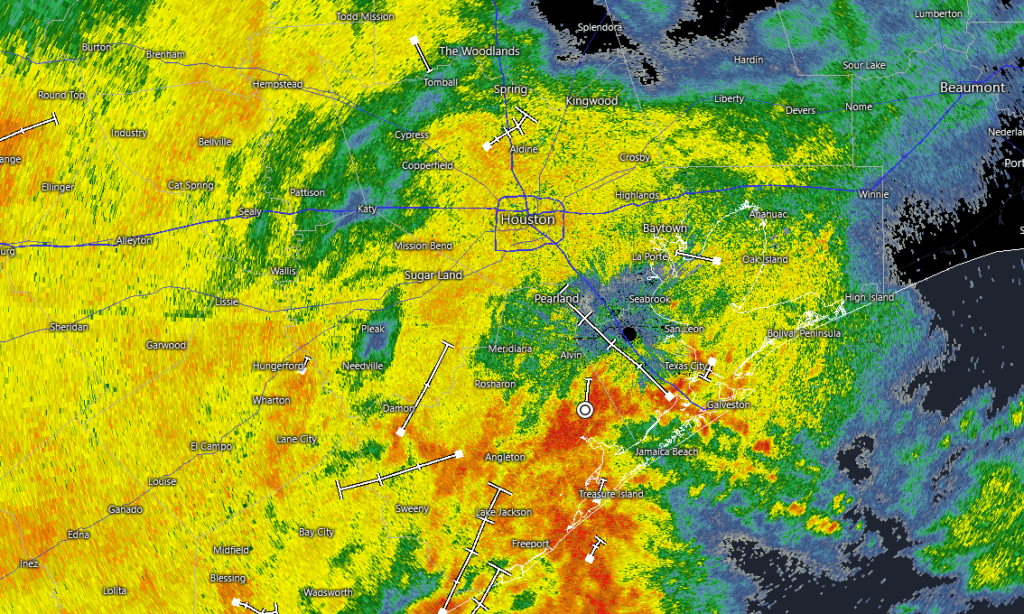
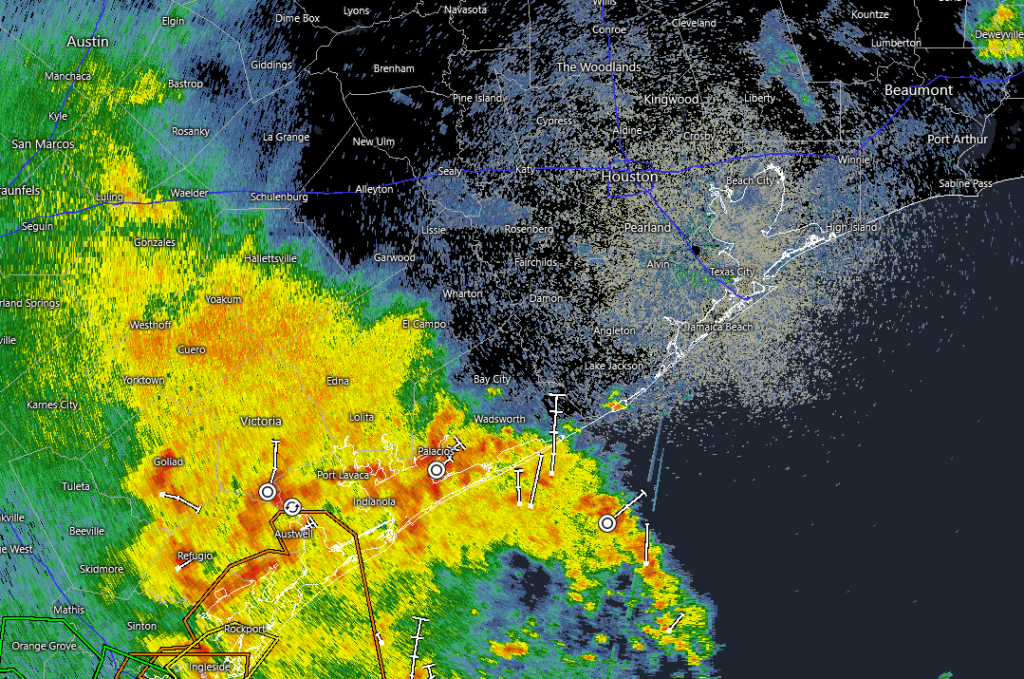
A check of the radar this morning shows a large mass of showers off to the southwest of Houston near Victoria Port Lavaca. These showers and thunderstorms should slowly move to the northeast, toward the metro area this morning. Our latest high-resolution guidance suggests these storms will largely remain confined to areas south of Interstate 10 as they move through during the morning hours, and likely exit to the east by early afternoon. Rain accumulations of 1 to 3 inches will be possible for coastal areas, but I’m hopeful that much of the heavier rain will fall just offshore.

Radar snapshot at 6:35 am CT on Thursday. (RadarScope)

For the rest of the Houston area rain showers and thunderstorms should be more scattered later this afternoon. Skies will be mostly cloudy with high temperatures in the upper 70s to lower 80s. (I have to say that afternoon temperatures on Wednesday afternoon were very comfortable for late May in Houston). Rain chances should be low overnight, with lows around 70 degrees.

Friday

This is looking like a day during which showers and thunderstorms are more scattered in nature rather than organized into a broader system; which is to say rain chances will be a bit lower than the weekend at about 50 percent. With mostly cloudy skies we can probably expect highs in the vicinity of 80 degrees.

Memorial Day Weekend

The upper-air pattern will become more amenable to supporting widespread showers and heavy rainfall this weekend as a low pressure system allows the passage of multiple disturbances over the region. Rain chances will be near 100 percent on Saturday and Sunday, and perhaps only a little bit lower on Monday. Most of the area is likely to pick up an additional 3 to 6 inches of rain this weekend, with higher isolated totals leading to at least street flooding, and possibly some flash flooding. For this reason we are maintaining our Stage 2 flood alert through the holiday weekend.

NOAA accumulation forecast for now through Memorial Day. (Weather Bell)

It’s still a little too early to have precise details about timing, but basically you should be prepared for some disruptions at any point this weekend. Certainly roads should be passable most of the time, but these are the conditions that support some impacts to mobility where rainfall is heaviest and/or prolonged. Basically we want you to be alert to the possibility of flooding, but not fear widespread mayhem.

High temperatures should remain in the low- to mid-80s this weekend with plenty of humidity, and nights not cooling down much. Saturday looks to be mostly cloudy, but we could see some breaks in the sky on Sunday and Monday when it’s not raining.

Next week

I don’t have great confidence in the forecast for next week. Daily rain chances continue to look healthy, perhaps in the vicinity of 50 percent or so, but at this point I think (and hope) amounts will be trending downward after Monday. Highs remain in the 80s, probably.

21 May 20:52

Saturday Morning Breakfast Cereal - Back

by Zach Weinersmith


Click here to go see the bonus panel!

Hovertext:
I want to be buried at the K-T boundary holding a box of brass gears marked Time Machine.


Today's News:
21 May 13:57

POISON or SNACK? White flowers edition!

by BlackForager
21 May 13:51

Nation Begs Frozen Fruit Companies To Keep The Giant Flavorless Blackberries Coming 

by The Onion Staff

WASHINGTON—Stressing that they couldn’t get enough of the bland icy husks that crumble apart in their mouths, the American people reportedly begged frozen fruit companies this week to keep the giant flavorless blackberries coming. “If you can keep making bags of ice-caked blackberries with no taste whatsoever, we’ll take everything you got,” said Nevada resident Conner Morris, echoing the sentiment of all 340 million Americans as he revealed their strong desire to eat nothing but bitter, frosty blackberries the size of golf balls for the rest of their lives. “If we get even a hint of sweetness, though, we’re not going to be happy. Just make them huge, frost-covered, and insipid. Keep shoveling them at us, and we’ll keep slurping them up. And if you could jack up the price more, too, that would be perfect.” The U.S. populace added that the bags of frozen blackberries should ideally be fused into one giant freezer-burnt chunk.

The post Nation Begs Frozen Fruit Companies To Keep The Giant Flavorless Blackberries Coming  appeared first on The Onion.

21 May 13:51

The Iran War By The Numbers

by The Onion Staff

Since the U.S. and Israel attacked Iran on Feb. 28, hostilities have escalated into naval blockades and threats from both sides that could spark a wider war. The Onion examines the key facts and figures behind the conflict.

10-20

Synonyms for “boondoggle” journalists aren’t allowed to use

8.6 million

Schoolchildren remaining in Iranian stockpiles

19-ish

Missiles U.S. will have left for next three decades of global conflicts

2104

Year the last Strait of Hormuz mine is discovered by a Carnival Cruise ship

3

Number of future generations that will fight this war

1

Number of blood clots it would take to end this all

The post The Iran War By The Numbers appeared first on The Onion.

21 May 13:50

Kyle Richards Menacingly Circles ‘Secret Lives Of Mormon Wives’ Spinoff Shoot

by The Onion Staff

LOS ANGELES—Flashing her freshly manicured nails in a show of dominance, Real Housewives Of Beverly Hills cast member Kyle Richards was seen Thursday circling menacingly around the table where The Secret Lives Of Mormon Wives ’ California spinoff was filming. “I don’t care what you Mormon wives get up to in Utah, but California is mine, do you hear me?” said Richards, who snarled at the cast and crew of the competing reality franchise, causing at least one frightened boom-mic operator to drop his pole and flee the scene. “You want to star in a frothy reality show about your friend group, you gotta get through me. And don’t even think about calling yourselves wives. Now back off my turf, before I make you.” At press time, the cowering group of Mormon reality stars had retreated to Newport Beach, only for The Real Housewives Of Orange County star Tamra Judge to urinate on the crew’s camera equipment.

The post Kyle Richards Menacingly Circles ‘Secret Lives Of Mormon Wives’ Spinoff Shoot appeared first on The Onion.

21 May 13:49

Wong takes strong stance on Israel abusing Aussies by not including a ‘hope you’re well’ in latest email

by John Delmenico

Foreign Affairs Minister and “deep concern” enthusiast Penny Wong has taken swift and decisive action following Israeli officials posting footage of Israeli officers assaulting activists from the flotilla bringing aid to Gaza who were being held illegally, including multiple Australians.

Initially Wong responded on behalf of the Australian government by tweeting that she didn’t like that Israel posted the video. Which by condemnation of Israeli actions standards, was already considered one of her strongest stances thus far.

But Labor insiders have revealed that Wong has even gone to the extreme of sending an email to Netanyahu about the incident, where she didn’t include “hope you’re well” after the hello.

Sources suggest that she hopes things don’t escalate to the point where she needs to send a follow up with “as per my last email”.

Wong has also called in the ambassador, who has still not been expelled, to have a chat where reportedly the ambassador will only be offered instant coffee instead of sending a staffer to a cafe for latte.

The post Wong takes strong stance on Israel abusing Aussies by not including a ‘hope you’re well’ in latest email appeared first on The Chaser.

21 May 13:49

New parents celebrate beginning of 18-year, $300,000 failed investment

by Derek Schultz

Elora, ON ― First-time parents Felicity and Ivan Jennings welcomed an enormous waste of time, money, and effort into the world yesterday, which they refer to as their “son,” or Jody. Friends of the temporarily happy couple report that Felicity is doing well and getting some rest, the last she will get for eighteen years, […]

The post New parents celebrate beginning of 18-year, $300,000 failed investment appeared first on The Beaverton.

21 May 13:49

182.8 Meters

They rounded down to 182.8 instead of rounding up to 182.9 because 182.9 might make the statement incorrect.
21 May 02:24

Mock funeral mourns death of academic freedom before UT System updates rule on cutting programs

by Jessica Priest
College students and professors are protesting with mock funerals across Texas, saying universities are dying from political interference. School officials say they’re responding to shifting needs.
21 May 02:23

Easier Way to Win a Million Dollars: Going on Survivor or Storming the Capitol?

by Rachel Levit Ades

“In the end, only one will remain and will leave the island with one million dollars in cash as their reward.” — Jeff Probst, host of Survivor

“For the moment, the fund has been capped at the patriotically symbolic sum of $1.776 billion, and many Jan. 6ers have already done the math in an effort to determine the maximum amount that each of them could get. If all of them sought money and received the same amount, the payouts would be around $1.125 million each.” — New York Times

- - -

- - -

*-“Paramount Is Rolling Back DEI Initiatives to Align With Trump Mandates.” — Variety

20 May 20:54

#CowboyWho

20 May 20:53

Just shows that nobody cares about debugging the parity flag any more

by Raymond Chen

The x86-64 architecture inherited the parity flag (PF) from the x86-32, which in turn inherited it from the 8080, which inherited it from the 8008, which implemented it because it was the processor for the Datapoint 2200 serial terminal.

The parity flag also has a secondary purpose of being a place for the FXAM (x87) and UCOMISD (SSE) instructions to record the results of floating point comparisons. You can still entice compilers into checking the parity flag by checking a value for NaN or performing a floating point equality or inequality comparison (because NaN always fails equality and inequality comparison).

It turns out that the Windows debugging engine for x86-64 had a bug where it reported the parity flag as the opposite of what it actually is. When the parity flag was set, it said “po” instead of “pe”, and vice versa.

The fact that this went unreported for over two decades tells you that nobody cares about debugging the parity flag.

A fix has gone in. We’ll see if it makes it out before this article gets posted.

The post Just shows that nobody cares about debugging the parity flag any more appeared first on The Old New Thing.

20 May 20:41

do I have to hire an employee who went scorched earth after she left?

by Ask a Manager

A reader writes:

I am a senior administrator, with a team of 10. Most of the positions that I supervise are entry level, a lot of recent college grads. I am happy to have these folks on my team and enjoy mentoring them. Generally, I expect people to stay in this role for 2-5 years before advancing to a different department or a different company, sometimes a different field altogether.

Last year, a woman who had been working on my team for five years, Milly, let me know that she was looking for a new job with more growth. I encouraged her and said that I was happy to help however I could and to serve as a reference. She was generally a good employee. While she needed a lot of coaching on professional norms and communication, I expect that in this role, and she had shown growth in her time here.

A few months later, Milly went to my grandboss with a litany of complaints about me and the job, none of which she had ever brought up to me in any way. He referred the issue to my direct supervisor, and we met to discuss her concerns. Many of them had to do with confusion around exempt vs non-exempt employees. At the time, we put some things in place to help with some of her biggest complaints around scheduling and communication.

A few months later she quit, and on her way out she went full scorched earth on me to my direct supervisor. There were dozens of complaints about me, my team, and the department, most of which were objectively and demonstrably not true. Several were things that I could easily prove were simply fabrications.

I certainly have growth areas, but many of her complaints were things that I’ve never heard from anyone I’ve managed in 20 years of management. That said, I really sat with all the feedback and tried to lift out what was true. I processed it with my supervisor (who I have a great relationship with). I made some structural changes that I think have really helped our team (including clarifying roles and lines of communication) that were probably overdue. Things are good. Recent reviews and surveys indicate that the team is happy.

That was six months ago. I am now hiring for a recently created position that is a middle management position. This position and I will work very closely together. Shortly after the position was posted publicly, Milly applied for it.

How do I proceed with this hiring process in a way that is fair? Before she left, I probably would have considered her for this role, but would have had reservations about her communication and professionalism. Those reservations have only increased since she left since I’ve also learned some things since she left that demonstrate questionable judgment in her previous role.

I have a committee that will help with the hiring, so it won’t be down to me alone, but ultimately I will have the final say on who we hire. I think it’s unlikely that Milly will emerge as a top candidate, although she does have some good friends who will be part of that process. I want to give her a fair chance, but I also can’t imagine working so closely with someone who said such awful things about me. I also worry that if she is not selected it may look like retaliation. What is the best way for me to proceed?

You can just say no. You don’t need to meet some outside standard of objectivity where you pretend that you don’t have the knowledge about Milly that you do have, or where you assess her the way you would if you had never worked together.

It is completely normal for a manager to consider what they know about a candidate from working with them previously and to decide, based on that experience, that they don’t want to hire them again, and not to advance them in the hiring process as a result. You don’t need to go through the charade of interviewing her; that’s a waste of your time and her time. And really, offering her an interview out of “fairness” sends her a message that’s strangely out of sync with the reality of the situation, which is that if you tell a bunch of lies as you leave a job, you’ve burned that bridge and that manager isn’t going to want to rehire you later.

(Frankly, it’s bizarre that Milly applied for the position at all, if she realizes that you’re the manager of it! Which might be further illustration that her judgment is weird, which you already knew.)

Even though you’re part of a hiring committee, if you’re the manager for the open position, you are on very solid ground in saying, “I worked with Milly in the past, we did not work together well, and I am not interested in bringing her back.” It would be highly unusual for the rest of the hiring committee to push back on that as long as you’re known to have good judgment, but if you need to enlist your manager in backing you up, do. If anything, I’d think your manager would be surprised to learn you’re even considering interviewing her!

You said that you’re worried not hiring her will look retaliation, but it’s not retaliation to factor in firsthand knowledge of a former employee. It’s an expected and natural outcome.

The post do I have to hire an employee who went scorched earth after she left? appeared first on Ask a Manager.

20 May 20:36

They say dying saved his life.

They say dying saved his life.

20 May 20:34

ALT

A comic of two foxes, one of whom is blue, the other is green. In this one, Blue turns to look at Green, as Green enters while carrying two pizza bozes.
Green: Pizza's here! The top one is yours.
Blue: What did you order again?

The foxes sit down with their pizza boxes in front of them. While Blue is yet to open his, Green is peering at his own pizza.
Green: I got the random pizza! Instead of choosing my toppings myself, I let them do whatever they want.

As Green lists the ingredients on his pizza, Blue turns to look over his shoulder to peer at it himself, with a look of utter disbelief. A third fox is peering out of the pizza box in front of Green, addressing him.
Green: So I got anchovies, ham, sardines, and some guy.
Fox in the pizza box: I'm the shift manager.

Blue and Green look at the pizzeria manager, baffled.
Blue: Frankly I'm impressed that they somehow managed to do that.
Pizzeria manager: Me too.ALT
20 May 16:08

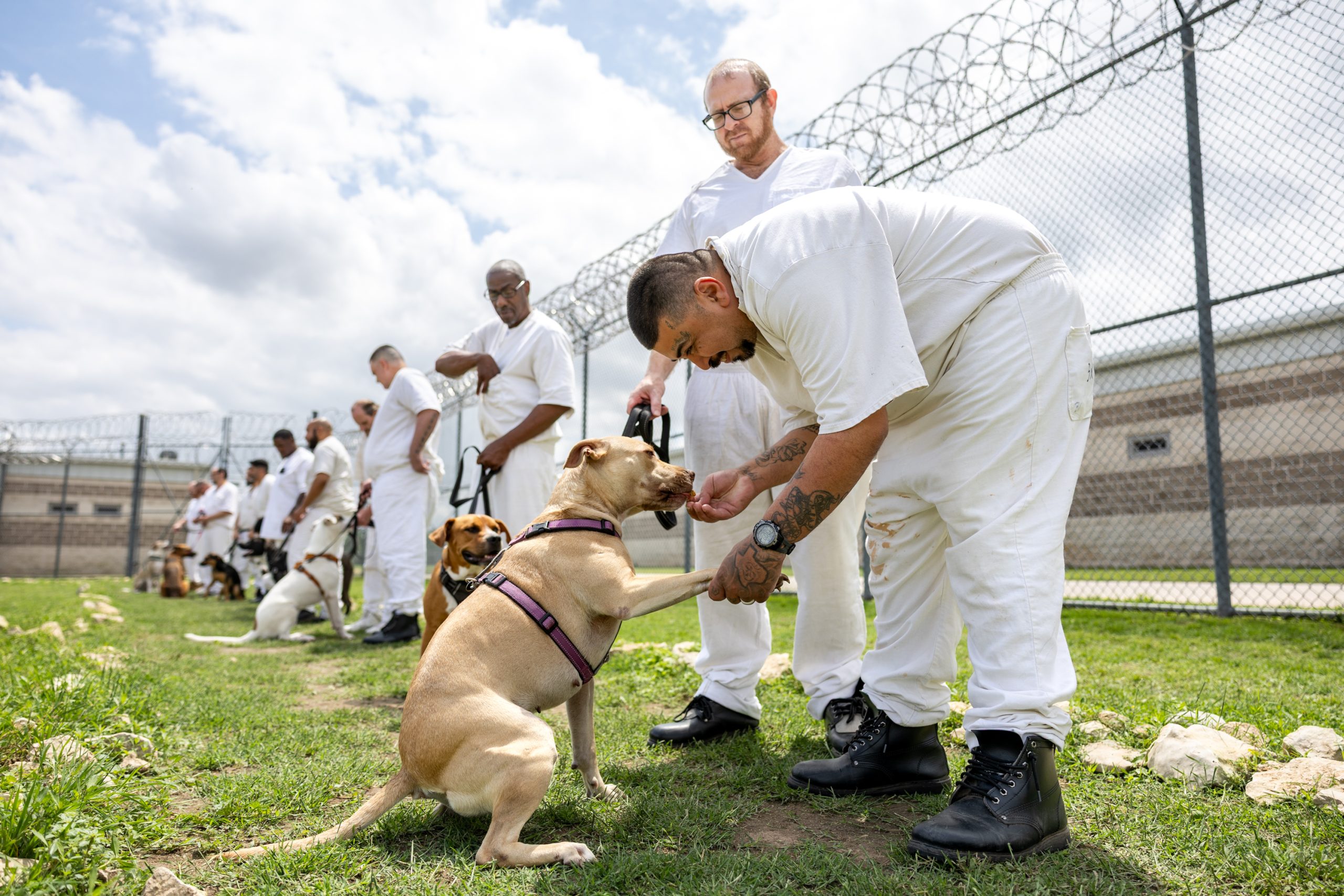
‘All about second chances’: Incarcerated veterans in Texas train shelter dogs for a better life

by Raul Alonzo
The goal of the program is to teach the trainers skills and give dogs a better chance for adoption.
20 May 16:07

#Ryo #RoninWarriors

20 May 14:38

Overnight rains are just the beginning of a wet pattern that should peak over Memorial Day weekend

by Eric Berger

In brief: Tuesday night’s rains were mostly manageable, but they are just the first round of storms that our region will experience over the next week. We now believe the heaviest rain is likely to come this weekend, when flooding concerns will be greatest.

This is just the beginning, not the end

In recent years Houston has often experienced a pattern in which we will see one or two days of rain before a front moves through, or high pressure sets in, or something else happens to turn off the spigot. Then we’ll have a few weeks of sunny skies and no rain. Only rarely have we seen periods of several days of moderate to heavy rainfall as we are now experiencing.

The rain showers across Houston (radar snapshot at 6:35 am) this morning should wane before noon. (Radar Scope)

The ongoing rounds of storms that will rotate into Houston through Memorial Day weekend, and possibly beyond, is probably due to the early phases of an El Niño that appears to be developing in the equatorial Pacific Ocean. This generally promotes a wetter pattern across Texas. This El Niño is likely to peak later this fall or over the winter months, and based on recent model forecasts it could be a rather strong El Niño. So maybe we will see more prolonged periods of rain, and fewer prolonged periods of dry weather.

In any case, the rounds of showers and thunderstorms that passed through the Houston region overnight are likely to continue into early next week. It won’t rain all the time, but for most locations it probably will rain at some point each day. Saturday and Sunday look to have the best chance of precipitation, which will probably spoil a lot of Memorial Day weekend plans. So it goes here at Space City Weather where we don’t control the weather, we just get blamed for it. We’ll be here all weekend, alongside you.

Wednesday

The storms that rolled through over night brought between 0.5 and 3 inches of rain to most locations. As expected, all streams, creeks, and bayous are well within their banks this morning. Flooding will become more likely this weekend, as rain accumulations stack up, and for this reason we issued a Stage 2 flood alert on Tuesday, and plan to hold it in place through the holiday weekend.

Light to moderate rains are ongoing this morning, and the overall trend is one toward weakening rather than strengthening storms. Activity will shift southward over the next couple of hours, and I expect the rains to end entirely across the Houston metro area by or before noon. This afternoon we may briefly see some partly sunny skies, with high temperatures pushing into the mid-80s or so. Lows tonight will fall into the mid-70s. As for rains, I expect low-end chances through the evening hours, so if you have outdoor plans for later today I would be cautiously optimistic.

NOAA rain accumulation forecast for now through Monday. (Weather Bell)

Thursday and Friday

By early Thursday, with our atmosphere recharged, we are likely to see another rain-making disturbance moving into the region from the west. I don’t know whether these storms will be as widespread or active as what we experienced Tuesday night, but they definitely will have the potential to produce another 1 to 3 inches of rainfall. Another, similar, round of storms will be possible at some point on Friday. Highs on both days will be in the low- to mid-80s, with partly to mostly cloudy skies. Again, there are likely to be extended periods when it is not raining, so there will be some time to get outside and enjoy the moderate temperatures (for May).

Memorial Day Weekend

This weekend often kicks off summer in Houston, with sunny skies and our first temperatures in the low- to mid-90s. Well, not this year. A surge of moisture should lead to widespread showers and thunderstorms on both days, with some of these showers producing very heavy rainfall.

By this point we may see rain accumulations from storms this week pushing up to 4 to 8 inches for some locations, so we’ll be tracking creeks and bayous closely. Harris County has an excellent tool for you do to this for locations near you. The National Weather Service also has a good resource for tracking river flooding in our region. Rain chances by Monday may drop to 70 percent.

Highs will be in the low 80s, probably, and if we continue to get morning storms there may be some breaks in the clouds during the afternoon hours. Basically, you’ll need to continue to remain weather aware.

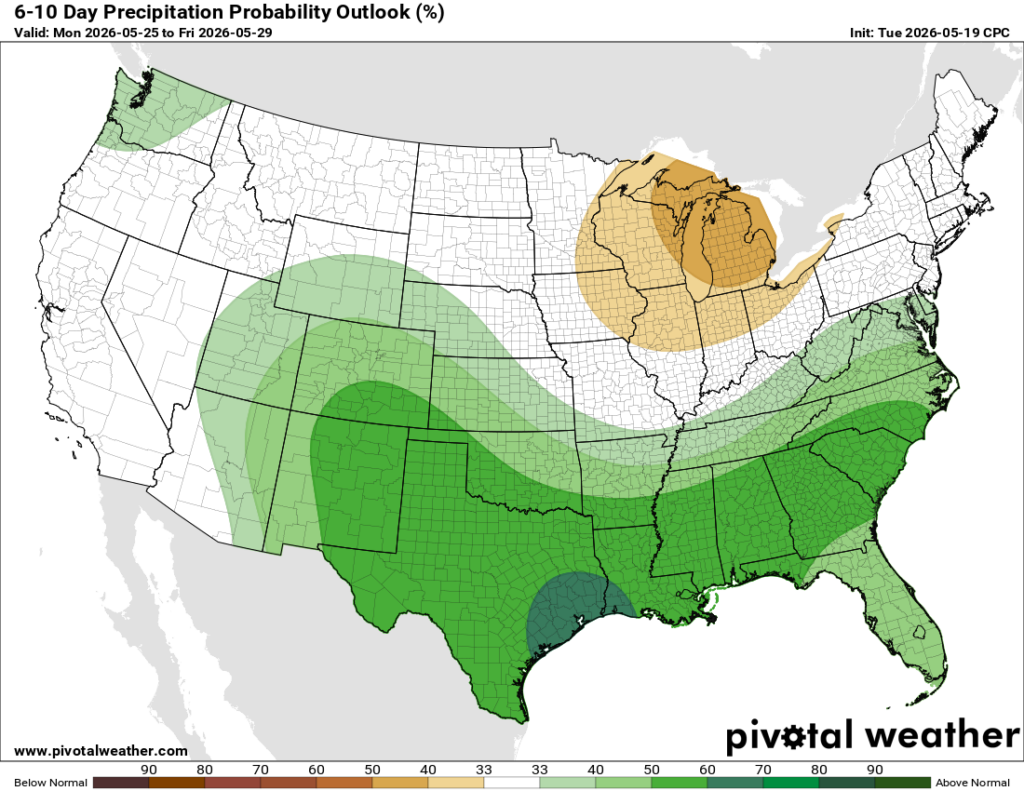
A wet pattern remains likely for next week. (Pivotal Weather)

Next week

After Memorial Day rain chances will probably fall back some next week, but we probably are still looking at something like at least 50 percent daily. This, as well as ongoing partly cloudy skies, should help keep temperatures in check for the remainder of the month—which is to say we might not see 90 degrees again until at least early June.

20 May 14:14

Rawlings Donates 50,000 Baseball Gloves To Ukrainian War Effort

by The Onion Staff

ST. LOUIS—In an effort to meet the urgent needs of a country in the throes of a dire humanitarian crisis, sporting goods manufacturer Rawlings announced Wednesday that it had donated 50,000 baseball gloves to the Ukrainian war effort. “We knew we had to step up and do something for those whose lives have been upended by this war, and we’re proud to give the Ukrainian people the baseball-related aid they need to get through these desperate times,” said company spokesperson Lloyd Merrill, explaining that Russian bombardment had left large parts of the country with little to no access to outfield gloves, catcher’s mitts, or even youth-sized infield models. “Put yourself in their shoes: Your home has been destroyed, your family has been displaced, and now you’re expected to get through the day without any means of catching baseballs? It’s unimaginable. Our hope is that these gloves can provide some small measure of comfort and hope for these brave people.” Merrill added that Rawlings had worked with international relief organizations to airdrop the gloves over hard-hit towns and villages, though reports confirmed most Ukrainian families were still woefully short on bats, bases, and rosin bags.

The post Rawlings Donates 50,000 Baseball Gloves To Ukrainian War Effort appeared first on The Onion.

20 May 14:13

Study Finds Gen Z Adults Moving Home For Better Access To Triscuits

by The Onion Staff

MEDFORD, MA—Charting a steep downturn in the number of young adults living independently, a study published Wednesday by Tufts University researchers found that Gen Z adults were moving back home for better access to Triscuits. “Our data shows that Americans in their 20s are increasingly going back to live with their parents due to the difficulty of obtaining whole-grain wheat crackers of their own in the current market,” said Tufts economist Jessica Fennel, adding that incidence of an adult child living at home was especially high in households that had a kitchen stocked with Triscuit Four Cheese and Herb crackers. “Unlike millennials, members of Gen Z are less likely to rent their own apartments if it means settling for Wheat Thins or saltines. They view reliable access to Triscuits’ signature woven texture as worth the trade-offs of privacy and independence, likely because of the greater value young people place on wholesome whole-grain goodness with a satisfying crunch.” Fennel went on to state that parents of Gen Z children tended to favor these living arrangements due to their own improved access to the contents of difficult-to-open jars.

The post Study Finds Gen Z Adults Moving Home For Better Access To Triscuits appeared first on The Onion.

20 May 14:13

Squirrel Unaware He Embroiled In Months-Long Feud With Homeowner

by The Onion Staff
20 May 14:13

Bobby Hanlon

by The Onion Staff

Well, well, well, it looks like that slick, glad-handing schmooze machine Bobby Hanlon, 45, couldn’t charm his way out of this one (leukemia).

The post Bobby Hanlon appeared first on The Onion.

20 May 03:00

#Kento #RoninWarriors

20 May 03:00

Decades of loyalty points collecting finally yields $5 discount

by Taryn Parrish

OTTAWA – History was made last Saturday when a customer’s quarter-century of dutiful loyalty card usage finally generated a bountiful return, a $5 discount.   The dedicated shopper, Trevor Engel, reached the coveted and near-impossible milestone of 73.66 billion points.  With a simple ratio of 1,031,240,000 to 0.07, this equals the minimum prize amount of $5 […]

The post Decades of loyalty points collecting finally yields $5 discount appeared first on The Beaverton.

20 May 02:59

An awful falling out

by John Allison

Let me be frank: the mystery team reunion is the main reason for this issue. It is a little treat for the long-time reader. I can’t answer every question in a few pages. But I needed you to know they were all still intact.

20 May 02:58

Fixing the Most Dangerous Dam in the World

by Wesley Crump

[Note that this article is a transcript of the video embedded above.]

Mosul Dam rises 370 feet or 113 meters above the Tigris River in northern Iraq as one of the tallest dams in the Middle East. The dam was built in the 1980s, but, in a way, construction never really stopped. That’s because ever since the reservoir filled behind Mosul Dam, the ground has literally been dissolving, nonstop, below the structure. Almost immediately on filling, water started flowing through the foundation of the dam and back out on the downstream side. Just a year later, the volume of seepage was measured at 800 liters or about 200 gallons per second.

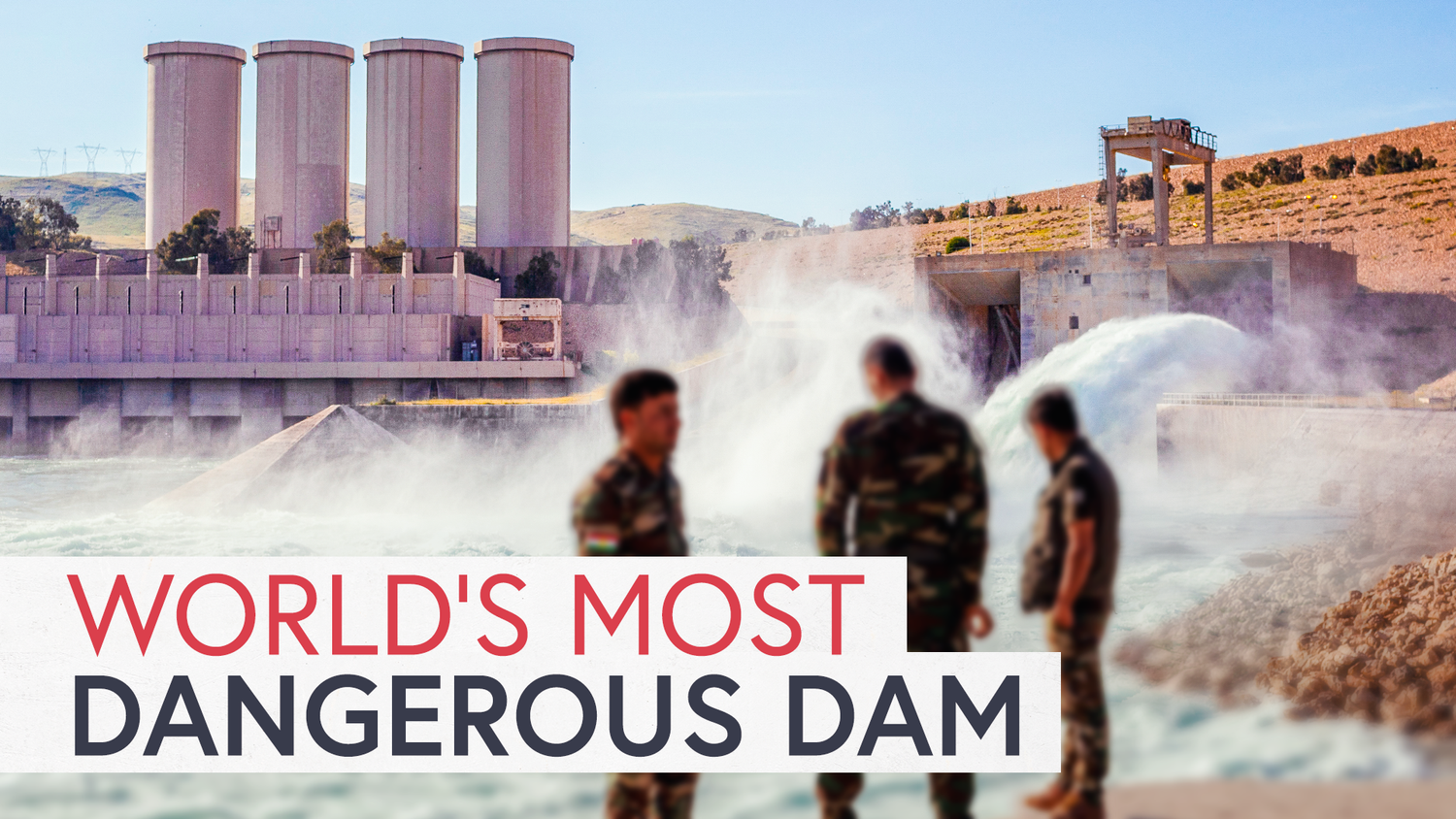
I usually hate to use the olympic-sized swimming pool equivalent, but in this case it makes sense because it was enough to fill one every hour of every day. And the issue is that, once a process like this gets started, it’s pretty hard to stop. So, for the past 40 years or so, the problem at Mosul Dam has been ongoing, scrutinized by some of the most preeminent engineers across the world and complicated by politics, bureaucracy, and, of course, armed conflict. Failure of a structure this large would be catastrophic; towns along the Tigris River would be fully wiped off the map, and some estimate that the breach wave would be so massive that even major parts of Baghdad, hundreds of miles downstream, would be submerged. In 2006, the US Army Corps of Engineers called it, unequivocally, “the most dangerous dam in the world.” That was 20 years ago, and Mosul Dam is still standing, in better shape than ever. And the story of how it got there is fascinating. I’m Grady, and this is Practical Engineering.

Mosul Dam is an earthen embankment dam not far from the City of Mosul in Iraq, built to generate hydropower and store water for irrigation and drinking. The hydro plant is on the west side of the dam with four turbine generators. You can see the massive surge tanks sticking up from the plant that absorb changes in pressure when the units are started and stopped. The dam has an outlet structure through the embankment here. It has a service spillway with radial gates here. And an auxiliary spillway with earthen fuse plugs here. Check out my videos on spillway gates and fuse plugs if you want to learn more about those types of structures after this.

The dam itself is impressive, but the rock that serves as its foundation is extremely complex, and in many ways, far from ideal. The geology of northern Iraq includes a lot of gypsum, a sedimentary rock that is widely used for things like fertilizer, plaster, and drywall. What it’s not widely used for is the foundations of dams. In fact, the consensus of experts involved on Mosul Dam throughout the years is that it was, all around, a terrible idea. One consulting group said that, quote, “the decision to locate such a major and important dam on the foundation rock mass which exists at the Mosul Dam site was fundamentally flawed.” That’s because of a critical property of gypsum, one that it doesn’t share with many other types of rock formations: it dissolves in water.

You might be familiar with limestone caves and karst geology, where water creates voids in the subsurface. Some of these can be quite dramatic like Carlsbad Caverns in New Mexico or Mammoth Cave in Kentucky. They’re formed because the limestone is just a tiny bit soluble in water, as long as it’s a bit acidic, which rainwater usually is. So over the course of millions of years, that water kind of carves away the earth from the inside. Gypsum, on the other hand, is roughly 200 times more soluble in water than limestone. It’s not quite like a spoonful of sugar or salt that dissolves almost instantly, but processes that usually take centuries in limestone are accelerated to human timescales in gypsum. And that’s especially true in the subsurface, because dissolution isn’t a linear process. More dissolving means more space for water which means more dissolving and so on. It’s a positive feedback loop.

Many dam failures have resulted from internal erosion, where water seeping through the soil or rock carries away particles, leaving voids. This process is what led to the demise of Teton Dam, which I covered in an earlier video. But where internal erosion can be combatted by designing filtration systems that catch waterborne particles before they escape the subsurface, you can’t easily filter dissolved gypsum out of seepage.

The designers of the dam knew the gypsum was going to be an issue, and they had a few ideas to address it. One was to install a blanket of bentonite clay lining the bottom of part of the reservoir. This would block seepage from flowing into the subsurface, at least in the dam’s immediate vicinity, lengthening the flow paths and thus reducing the total volume of the flow. However, the volume of material would be enormous, and the blanket layer would be fairly fragile to damage from boats or even strong currents. Another idea was to use a cutoff wall, basically a continuous subsurface diaphragm of some impervious material. The problem was that there were no machines that could trench deep enough to get below the worst of the gypsum. The idea they landed on was the same as at Teton Dam: a grout curtain.

Mosul Dam’s design included a continuous concrete tunnel running along the bottom of the structure. It had one purpose: to provide access to the dam’s foundation for drilling rigs and grout pumps. Political and schedule pressures pushed the government to finish the dam before the grouting was complete, but they knew they would have the access to the gallery tunnel to continue that process after the dam was in operation. Unfortunately, they underestimated how serious and complex a challenge they were setting themselves up to face.

As soon as the reservoir filled up, the problem became obvious. I mentioned the olympic swimming pools of seepage in the intro, but it wasn’t just that. Sinkholes opened up downstream of the dam as caverns formed in the geology below causing the surface to collapse. As time went on, those sinkholes started appearing closer to the dam, an aboveground hint at how the solution cavities were migrating in the subsurface. Essentially since its construction, operators have maintained a continuous grouting program, injecting a mixture of sand, cement, bentonite, and water into the rock below through drilled holes to try and plug up the voids. It’s basically a nonstop race between logistics and chemistry, because grout doesn’t fare well in flowing water and the foundation rock is constantly dissolving.

Recognizing the hazard they had created in the 1980s, the Iraqi government came up with a backup solution. Since it was clear that there really was no permanent fix for Mosul Dam, they would just build another dam downstream that would capture the flood if (and maybe when) Mosul Dam failed. Badush Dam started construction in the late 1980s. It would have a hydropower plant and store water for irrigation, but also include a huge empty storage pool to protect downstream cities from a breach of Mosul Dam. The project got about halfway finished before the geopolitical situation in Iraq ground it to a halt.

In 2003, a US-led coalition invaded Iraq as part of a larger war on terror in response to the September 11th attacks. As a major piece of infrastructure in the country, Mosul Dam had the coalition worried. Some early reports hinted that Iraqi forces might detonate the structure as an act of sabotage. But it didn’t take long to realize that the dam might fail on its own accord. They started coordinating with the US Army Corps of Engineers to assess the structure, whose report concluded that the risk was astronomical. That’s the source of the “most dangerous dam in the world” quote that has plagued the structure ever since. The truth is that the “danger” of a dam is a pretty complicated thing to characterize, and it’s not a statistic that’s widely tracked, especially at a global scale. But the fact that a government agency was willing to say it means a lot. And Iraq’s Ministry of Water Resources took the situation seriously and started working with a panel of experts to review the conditions of the dam. That panel largely came to the same conclusion: Mosul Dam needed serious help.

Coalition forces had bases and equipment along the Tigris River. The situation was concerning enough that they decided to move everything out of the potential inundation area if the dam were to breach. At the same time, a major part of the war effort was helping the new Iraqi government shore up the country’s infrastructure, including improving the grouting program at Mosul Dam. Even though it was really only considered a temporary solution, the consensus seemed to be that it was the only feasible way to address the foundation problems beyond the stalled Badush Dam project downstream.

Initial efforts by the US government to help at Mosul Dam turned into somewhat of a disaster. A few notable examples: The winning contractor for the grout plants submitted a concrete (not grout) mixing plant design, and somehow the review committee didn’t notice, despite it being printed on the front page of the submittal. By the time someone realized it, the concrete plants had already been delivered, and the US government had to pay the contractor to try and convert them into grout mixing plants. The material silos were poorly designed, with no ladders or braces. Some weren’t even bolted to the foundation. The loading ramp for the hoppers had no retaining walls, causing the slopes to slough off. Drills and pumping equipment couldn’t even fit into the grouting galleries below the dam. And the dam operations staff meant to run all this new high-tech equipment had only received a few weeks of training. The oversight report about the project was scathing. Millions of dollars had been spent on 21 contracts for almost no benefit to the dam.

Coalition forces continued efforts to improve the situation at Mosul Dam, but by 2010, the US was withdrawing troops from the country and handing off the reconstruction projects back to the Iraqi government. Unfortunately, that handoff was only temporary, as sectarian violence continued to plague the region. In mid-2014, the Islamic State (also known as ISIS, ISIL, and Daesh) took over several cities in Northern Iraq, disrupting the supplies of materials to Mosul Dam, which was still relying on nearly 24/7 grouting operations to keep the structure safe. That August, ISIS seized control of Mosul Dam, sparking new fears that the structure would collapse. For more than a week, the dam was out of the hands of the Iraqi government, and no one knew what the militants might do (or what they might not do). It was the same situation as before: Even short-term neglect presented a serious safety risk. Fortunately, the dam was recaptured by Kurdish and Iraqi forces, with the help of US air support, 8 days later. The dam was back in Iraqi hands, but the surrounding areas weren’t. With equipment looted during the brief seizure, the disruption of the workforce at the dam, and without regular shipments of cement, the grouting operation wasn’t being maintained. Equipment installed during the Iraq war wasn’t being used. Voids were going untreated, and concerns about the dam’s failure continued to grow.

Realizing that the Iraqi government was too fractured to manage the situation alone, the US decided to stay involved as Mosul Dam’s de facto engineer. In 2015, the Army Corps of Engineers led a task force to assess the condition of the dam, and the results were alarming. The US Embassy released a fact sheet based on their findings, saying that the dam had an “unprecedented risk of catastrophic failure” endangering between half-a-million and 1.5 million people along the Tigris River. A collapse would be a humanitarian crisis unlike almost anything in modern history. The situation was further complicated by the ongoing occupation by the Islamic State, making it difficult or impossible for residents to be able to evacuate to safer areas. Electrical blackouts, lack of government coordination, and poor communication would make things even worse in the event of failure.

The Iraqi government tried to downplay the alarm a bit. In an interview on TV, the Minister of Water Resources said, quote, “The looming danger to Mosul Dam is one in a thousand. This risk level is present in all the world’s dams.” I don’t know if he made that number up, or if it was actually supported by some kind of analysis, but anyone involved in risk management would find it hilarious if it weren’t such a serious situation. Assuming that’s an annual probability, which is what we normally use, and multiplying it by the consequences of failure estimated by the Corps of Engineers, you get an expected annual fatality rate of 500 to 1500 people. Nowhere in the world would anybody consider that acceptable. This is a graph often used to communicate tolerable risks on large dam projects. This green area generally means there’s not a lot of justification for making a structure safer. Yellow, you have to be more thoughtful. Red means unacceptable. Taking the minister’s estimate of probability, and the embassy's estimates of fatalities at face value, Mosul Dam would plot somewhere around here on the chart. That “most dangerous dam in the world” moniker doesn’t seem like hyperbole when you look at it like that. To quote Lieutenant-General Sean MacFarland, “If this dam were in the United States, we would have drained the lake behind it.”

The urgency finally spurred action in 2016. Iraq awarded a contract to an Italian company to rehabilitate the structure, including a massive operation to expand the foundation grouting program. It was one of the most unique civil engineering projects on the globe, with participation from the Iraqi government, the US (through the Corps of Engineers), the Italian military, and a number of international consultants. I actually talked with a few of the engineers involved on the project, and some of their stories are pretty wild. In the early days of the project, they were inserting engineers at night, by helicopter, to support the Iraqis who were operating the dam and install equipment that would let them monitor the situation remotely while ISIS was operating only a short distance away.

The entire project had to happen near the front lines as the conflict with the Islamic State continued to unfold in Iraq. Security forces were needed for the entire duration to protect the dam and supply routes for materials and equipment. That took some time to get set up, but eventually, the project team was able to establish a permanent camp at the dam. Over the next few years, all the grouting infrastructure, including batch plants, piping, electrical systems and drill rigs were replaced with modern equipment. Crews drilled more than 5,000 boreholes with a total length of drilling at more than 400 kilometers or 250 miles. 41,000 cubic meters (50,000 cubic yards) of grout were injected into the foundation along the entire length of the dam. Generally the way it works is this: you can inflate a rubber device called a packer using air or hydraulic pressure, creating a seal between the borehole and injection pipe. Or you just grout the injection pipe directly into the borehole. Then you can pump grout at very high pressure into the borehole, forcing it into voids, cracks, fissures. You just keep pumping until you reach a refusal criterion, a certain maximum pressure that you hold until the grout stops flowing. And you just keep doing it over and over and over.

All this work was done using a sophisticated computer system to keep track of pressure, depth, mix design, flow rate, and quantity of grout for every borehole, allowing the team to track progress, identify issues, and visualize the performance of the operation. From material delivery to batching to drilling and injection, every step of the process became a data point.

I love unique measurement units, and this project had a good one: As a quality control test, the contractor would try to inject water into the foundation rock after it was grouted up. A Lugeon is the loss of water of one liter per minute per meter of borehole length at an overpressure of 1 megapascal or about 145 psi. For all the permeability tests performed for the project, 98 percent had values below 3 Lugeons, a massive improvement over the conditions beforehand.

The project finished in 2019. It was a 3-year effort that cost more than half-a-billion dollars, but Mosul Dam lost its most dangerous dam title as a result. By all accounts, the dam is in a much less precarious position. The project won an award from the Deep Foundations Institute in 2022, highlighting the complexity and the danger of the work.

But this wasn’t like a typical construction project, because the work isn’t over. The goal was to get the Iraqi government set up to continue the process of maintenance grouting. The rock below Mosul Dam may have a lot more grout than it used to, but the gypsum is still soluble, and there’s still a massive reservoir constantly trying to push water through it. A major part of the rehabilitation project was training Iraqi staff to continue the fight. In that way, despite its magnitude, the project was sort of a half-a-billion-dollar bandaid. The grouting has never been considered a permanent solution, and even though this project resulted in an enormous improvement in the long-term prospects of the structure, it’s still a major, ongoing obligation.

Iraq is still planning for a more permanent fix. You can still see the half-finished Badush Dam on the map, downstream from Mosul, and finishing the job is still on the table if anyone can figure out how to come up with the billions of dollars it would take. Another option is that deep foundation cutoff wall considered during the original design. It would provide a continuous barrier for seepage passing through the porous rock below the dam. These are used on a lot of dams across the world, but it’s never been done on the scale and depth as would be required at Mosul. In 2018, the estimated cost for a cutoff was between 3 and 5 billion dollars, an almost unimaginable investment into a dam that already exists and functions today. Whether the electricity and water from Mosul Dam is even worth that scale of capital is something that will probably take a long time to decide. Until then, the government will keep pumping grout and Dinars into the rocks below in the nonstop race against a flawed foundation, but now with much more confidence that they can keep up the pace.

20 May 00:04

‘A journey of discovery’: Duo biking from Texas Gulf Coast to Canada along whooping crane route

by Raul Alonzo
Ecologist Andy Caven and photographer Mike Forsberg are documenting and meeting people along the way to raise awareness about one of North America's rarest birds.
20 May 00:02

Death at SpaceX’s Starbase prompts workplace safety investigation

by Berenice Garcia
SpaceX has had seven OSHA violations in the past year. Despite the worker’s death, the next rocket launch is scheduled for May 21.
20 May 00:02

Rain gives Corpus Christi a small break, delaying projected water crisis by 3 months

by Colleen DeGuzman
Without additional rain, the coastal city expects to impose mandatory water restrictions around December, new data shows.