Cowboy Who?
Shared posts
Texas state leaders target school walkouts as students rally for Houston teen detained by ICE

RFK Jr. Questions Efficacy Of Skin
WASHINGTON—In a firm dismissal of decades of scientific research and real-world data on the organ’s benefits and safety, Health and Human Services Secretary Robert F. Kennedy Jr. publicly questioned the efficacy of skin Wednesday while testifying before Congress. “Everything we know about skin has been learned from so-called scientific studies funded by large corporations who have a financial stake in keeping our musculature covered in an unnecessary layer of man-made flesh,” said the self-proclaimed “membrane skeptic,” declaring that the ubiquity of skin in modern society, from the epidermis down to the subcutaneous tissue, amounted to little more than a “nefarious marketing campaign by the powerful people who manufacture skin.” “A lot of the public has lost their trust in skin, and for good reason. Skin is a significant contributing factor to skin cancer, being linked to it in nearly 100% of cases. One of the most common factors shared by those diagnosed with autism is that they all have skin on their bodies. That’s not a coincidence. What’s more, your muscles can easily suffocate if they don’t get enough exposure to the air.” “That’s why I cover my internal organs with a perforated raw beef hide, which a lot of research shows works even better than whatever skin is made of,” the secretary continued. “I mean, stratum basale, spinosum, granulosum—what the heck are these ingredients, and why are we letting them anywhere near our children’s bodies?” Kennedy added that skin was a relatively recent invention, citing the fact that the bones of prehistoric humans unearthed by archaeologists are consistently skinless.
The post RFK Jr. Questions Efficacy Of Skin appeared first on The Onion.
Fantasy About Impressing Coworkers Unimaginably Pathetic
CHARLOTTE, NC—Describing the woman’s imagined scenario of workplace valor as both “cringeworthy” and “profoundly sad,” office sources confirmed Tuesday that employee Sarah Cobb’s fantasy about impressing her coworkers at Davidson Analytics was unimaginably pathetic. According to reports, Cobb—who in reality has failed to distinguish herself either socially or through her work in her four years at the local company—harbors a delusional and deeply embarrassing daydream in which her heroic performance during a team meeting finally garners the fawning approval of her previously disinterested peers. The the humiliatingly bleak and fanciful little notion reportedly hinges on Cobb confidently speaking up to solve a tough logistical problem that no one else can crack, resulting in applause and an approving fist bump from her manager. In an especially heartbreaking window into her sad, empty life, the pitiful delusion is said to conclude with Cobb receiving an invitation to join several of her colleagues on their daily coffee run, an activity she has long envied from afar. At press time, sources confirmed that Cobb had moved on from imagining her peers cheering “Nice!” and showering her with celebratory Slack emojis to an even more pathetic fantasy in which she recounts the story of impressing her coworkers to her parents, who finally declare that they are proud of her.
The post Fantasy About Impressing Coworkers Unimaginably Pathetic appeared first on The Onion.
Fat Dad Sits On TV Remote Like Mother Hen Warming Young
The post Fat Dad Sits On TV Remote Like Mother Hen Warming Young appeared first on The Onion.

Some small stories about the giant satellite dish antenna that was behind Microsoft Building 11
Back in the day, if you wandered into the parking area behind Building 11 on the original Redmond Microsoft campus, you would find a very large satellite dish antenna. This antenna was used for receiving video signals, such as cable television feeds for distribution to the Redmond campus. One purpose was to provide cable TV service for internal development and testing to teams like the Windows Media Center team and later the Xbox One team.
The satellite dish antenna was a Simulsat-5 which was capable of gathering signals from 35 satellites simultaneously. (The record during this particular antenna’s lifetime was 26 simultaneous satellites.) It was a stationary antenna, not capable of changing its orientation. It went into service in 1997, was upgraded a few times, until it was finally decommissioned in 2017 when all of its tasks had been subsumed by a satellite dish antenna at the Studio C building.
Fun trivial about the satellite dish antenna:
In the summer, bees would nest in the feedbox (the thingie at focus of the satellite dish antenna that collected the signal), so you had to be careful when doing work there to avoid getting stung.
It wasn’t fun in the winter either, because the enclosure for the electronic equipment (known as the “doghouse”) would get filled with spiders who enjoyed the warmth from the equipment.
Snow had to be kept off the antenna for it to continue receiving signals, so whether or not Microsoft formally declared a snow closure, somebody had to remain on site to clear off the snow.
In 2007, there was a mystery to be solved: Occasionally, there would be interference that disrupted the signal. After some investigation, it was discovered that the source was electromagnetic interference generated by the pressure washers that were used to clean the parking lot. The water connection port was at the rear of Building 11, right near the satellite dish antenna. The solution was to do parking lot cleaning at night (when there was less demand for video signals), or if doing it during the day, to put the water pressure generators far away from the antenna.
My favorite piece of trivia is that in addition to being able to control the satellite dish antenna via the front panel, you could also control it over an RS-232 serial port. The serial line ran from the satellite dish to a Toshiba model 400CDT Satellite Pro (get it? Satellite pro?) running MS-DOS. Here’s an archival photo, with some identifying stickers digitally erased.
The post Some small stories about the giant satellite dish antenna that was behind Microsoft Building 11 appeared first on The Old New Thing.
Do Retention Ponds Actually Work?
[Note that this article is a transcript of the video embedded above.]
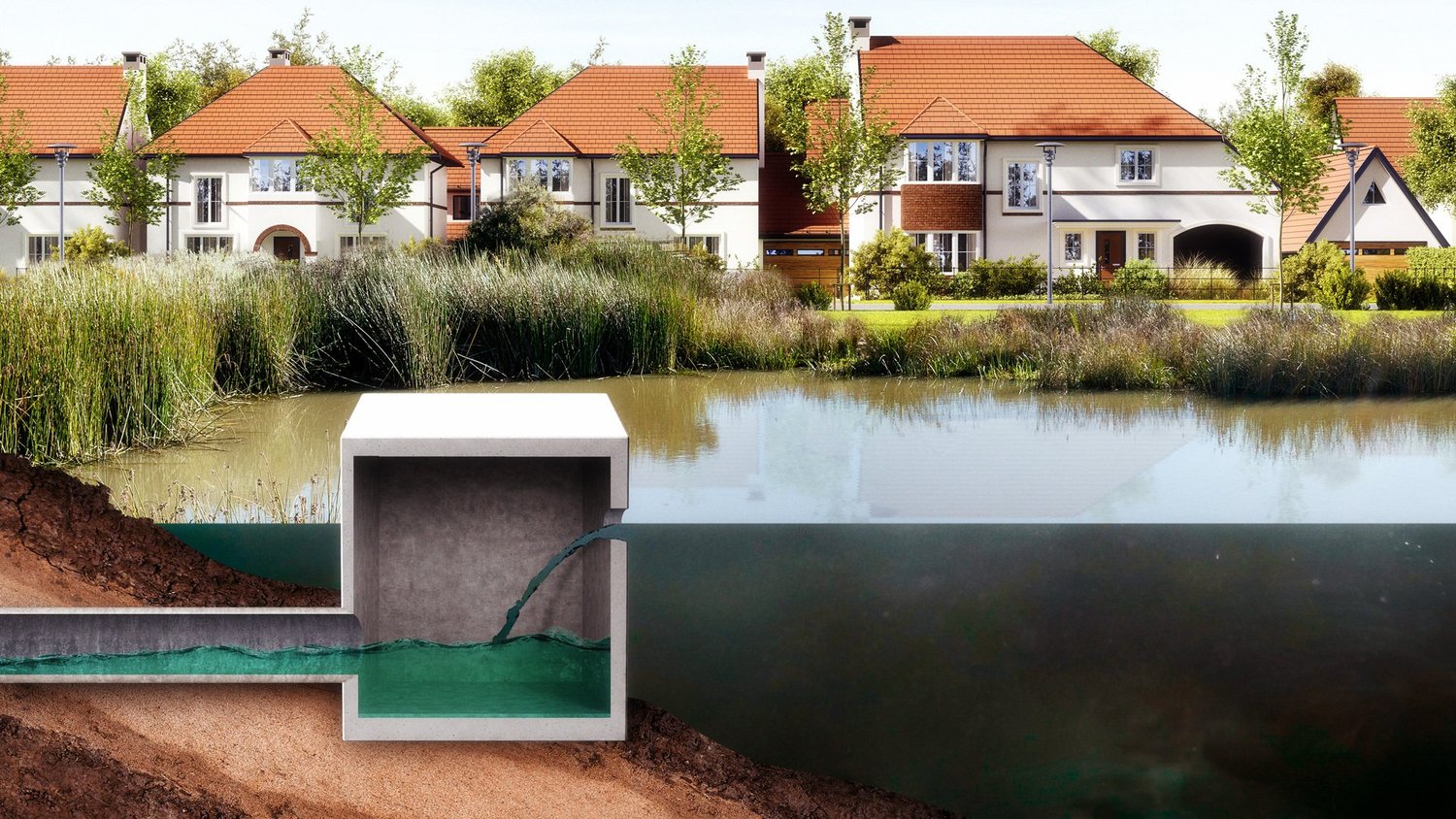
This is the Historic Fourth Ward Park in Atlanta, Georgia. It’s got all the stuff you could want a park to have: landscaped walkways, benches, grassy fields, a playground, and even a splashpad and amphitheater. The focal point is the 5-acre or half-a-hectare pond running through the middle. But this pond isn’t just for looks. In fact, this park would never have been built at all except for the fact that it solves a serious flooding problem. For years, the Fourth Ward neighborhood struggled with drainage and flooding issues. In the 90s, the city came up with a plan: a massive underground tunnel to carry runoff away. Don’t get me wrong. I love flood tunnels. I have a whole video about them. But they’re not always the right call. One engineer in Atlanta had a better idea - a solution that would address the flooding issue for a lower cost, and significantly beautify the area, a rare opportunity to improve form and function.
You’ve almost certainly seen a stormwater pond, whether you realized that’s what it was or not. They kind of blend into the urban landscape to the point where they’re basically hiding in plain sight. Some have been turned into amenities in places like parks where the primary purpose is disguised. But I think it’s fair to say that no other single solution has been installed more extensively in modern cities or delivered greater cumulative protection against runoff than the humble stormwater pond. Let me show you how they work with a model I built in the garage and some of the ways these ponds are evolving in the 21st century. I’m Grady, and this is Practical Engineering.
The problem that stormwater ponds solve is pretty easy to understand. Storms bring water, and that stormwater has to go somewhere. Spray a garden hose on some grass and some concrete, and just watch what happens. How much of that water soaks in, and how much runs off the surface? Depending on the type of soil below the grass (and the duration of the experiment), the answers are pretty different for the two situations. Let’s do a little development to make this clearer.
Say we buy up this piece of land on the edge of the city. Add roads and sidewalks; some commercial parcels with parking lots; a park with a gazebo, tennis and basketball courts; apartments and homes with roofs, driveways, patios, and sheds. Before our project, this entire area was natural ground - soil that could absorb at least some amount of precipitation, allowing it to infiltrate into the earth, recharging aquifers. Now, it’s covered in all kinds of impervious surfaces. Let’s see what happens when it rains.
Essentially, two things can happen to rainfall when it hits the ground. It either soaks in or it runs off. How much of each happens depends on quite a few factors. For soil, it matters what kind. Sandy soils with large particles and interstitial spaces can absorb a lot. Clays, with microscopic particles and almost no voids, very little. It also matters how much water is already in the soil. If it’s wet before the storm, there’s less room for more water to flow in. And as soil absorbs water throughout a storm, its ability to infiltrate more decreases. Any water that can’t infiltrate the soil will run off into creeks or rivers nearby. But, for impervious surfaces like asphalt, concrete, and roofs, there aren’t really any variables. Essentially all the water that falls on them runs off. When it rains in our new development, all the runoff still flows to the same place: maybe into a channel that runs to a creek that eventually connects to a larger river. It’s just that now, there’s a lot more of it.
As I mentioned, depending on the type of soil and the size of the storm, the difference between pre- and post-development conditions can be pretty significant. But a single development usually only represents a small portion of the watershed for a creek or river. So, even with all these new impervious surfaces, the marginal increase in water levels during a storm downstream may be fairly insignificant. But zoom out to the scale of an entire city, and the problem becomes obvious. It’s basically all impervious. Development left unchecked can dramatically increase the frequency and severity of flooding because when it rains, a much greater proportion of that rain runs off into creeks and rivers instead of soaking into the ground. So, most cities don’t let development go unchecked, at least from a flooding standpoint.
Rules vary a lot among cities and across the world, but the most basic requirement you’ll see in most places is pretty simple: To get a building permit to develop a piece of property, you’re going to have to limit the peak runoff from the property to pre-development levels. That means that for a given storm, on a given site, you can’t have a higher flow rate after development than it would have been beforehand. Most development is going to involve adding impervious surfaces, whether they’re roads, buildings, sidewalks, or parking lots. And that means more runoff. You can’t just get rid of the water (in most cases), so somehow, you’re going to have to store it and release it gradually to keep the peak flow below pre-development levels. And the simplest way to do it is a pond.
This is my garage-built stormwater pond. It’s just an acrylic flume I use for some of my demos. But I’ve built this outlet structure that should slow down the water, backing it up into the pond.
I’m measuring flow with a meter on the inflow pipe. I also have a level sensor measuring the volume of discharge over time in this tank below. These are both feeding into an Arduino so we can look at the data.
I’m going to simulate a storm event using this valve. So, this is a hand-crafted, artisan inflow event. A typical storm has kind of a bell-shaped runoff curve. Starts slow, builds to a peak as more and more of the watershed contributes, and then tapers off as the storm moves away. And you can see that my stormwater pond captured some of that peak. Because of the outlet structure (that just has a small hole at the bottom right now), the discharge from the pond is much lower than the inflow. And, after a little post-processing, I can show you the data.
This is a plot of flow versus time. Inflow is the solid line. Outflow is the dashed line. The units are arbitrary since this is just for comparison, but I did calibrate the sensors so they match as closely as possible. You can see that the area under both curves is the same. Just as much water came out of the pond as into it. But the peak outflow rate was a lot lower. And that’s a big deal.
The peak of the flood is everything. That’s what determines how high the water rises downstream. It correlates closely with the total amount of damage that occurs. So most drainage rules in cities don’t really focus on total volume; they focus on the peak flow rate leaving the site. And you can see that the peak coming out of my pond is significantly lower than the peak going into it.
So great, the pond did its job. Problem solved right? But you know this wouldn’t be an engineering challenge if there wasn’t something to balance. You can imagine a pond with no outlet at all that just fills up with runoff. In that case, the peak discharge is zero. We’ve maximized the performance, right? Obviously not, since that storage is expensive, not only in the construction cost to build it but also in the valuable real estate it takes up on the site. So really, the optimal solution is the one that uses the least volume necessary, while still keeping the peak discharge below what it would have been without any development at all.
The problem is storms vary in intensity and duration. So most of the time, you’re going to have to show that your design works for several different storm events of varying magnitude. A little hole at the bottom of the outlet structure might work for a small one. However, for a larger storm, you can see that my pond fills up pretty quickly and eventually overflows. Sure, you could make the pond bigger to hold more volume, but we’re just trying to trim the peak off the flow rate to match pre-development conditions. We can release more water from the pond; we just have to be careful about how much.
When I remove this conspicuous piece of tape from my outlet, you can see that I’ve already built this in. I have a larger hole higher up on the structure, so it can release more during more intense storms. Let me simulate that now. You can see as the water reaches that level, the flows from the two holes combine, and we get more water released from the pond, so it doesn’t overflow. Here’s the graph of the small storm again. And here’s the graph for the big one. You can see that in both cases, we’re not completely eliminating the flow. The pond and outlet structure are just shaving off the peaks to reduce the impact of the impervious surfaces. But that can be a tricky thing to do when you have a lot of different storm magnitudes to consider.
Take a look at a stormwater ponds in the wild and you’ll start to notice the wide variety of outlet designs. Placing the various orifices or weirs is kind of an art as much as it is a science, because every site is different and every city has different rules. An engineer has to tune the structure to balance the amount of storage with the additional runoff from all the impervious surfaces. I added a third hole on top of my structure so it can handle a really big storm. The flow through all three holes in the outlet combines to create more flow out of the pond. Here’s the graph of that run. You can see the discharge is much higher, but it’s still below the peak inflow.
But, this gets quite a bit more complicated, because stormwater runoff doesn’t just create flooding. It also carries pollution. We think of rain as cleansing, but the stuff rain washes off the landscape has to go somewhere. That means everything from trash, oil, dog poop, sediment, road salt, and a whole lot more ends up in creeks and waterways. A lot of the contaminants in stormwater are either attached to sediment (or are sediments themselves). So stormwater ponds can serve double duty, reducing flooding and downstream contamination. You’re not going to get the water really clean like at a wastewater plant, but the treatment for suspended solids can be as simple as letting water sit still for a day or two so bits of stuff can settle to the bottom. You may have heard the terms detention pond or retention pond. We’ve been talking about detention ponds that simply slow down runoff, but they eventually empty out. Retention ponds are related, but they keep some of that water stored permanently, and it makes a big difference when it comes to treatment. Let me show you in the model.
I added a bunch more mica powder to the water so you can easily see how the water flows through the pond. Contamination is worst during the beginning of a storm, sometimes called the “first flush,” when streets and surfaces are dirtiest. You can see in my model, before the pond starts filling, everything suspended in the water is making it through to the outlet. The water is moving pretty quickly, and it’s relatively turbulent, there’s just not enough time for anything to settle out. But I can put a plug in the bottom outlet of the structure and prefill the pond so it acts like a retention facility. Now when I turn on the pump to the same flow rate, you can see a big difference. There’s a lot of turbulence where the water flows in, but things slow way down toward the outlet. It’s still just a scale model, so most of the mica powder is still suspended at the end, but you can imagine if we scaled this up so the water took several hours or more before reaching the outlet, most of the solids in the flow would have enough time to settle out.
And retention ponds have other benefits too. They help with groundwater recharge by giving water more time to soak in, and they often look nicer, since water features are an amenity, and these are often landscaped like any other pond you might intentionally install on a site. But, obviously, there’s a tradeoff here. You get cleaner water out, but you need a bigger pond, since some of the volume is already taken up before a storm arrives. However, there is a way to have your pond-cake and eat it, too.
Outlet structures don’t have to be passive like my demo here. Imagine if you could actively control how much water flows out of the pond based on sensors and weather forecasts. You could hold water in the pond for longer periods of time when there isn’t too much rain, improving the quality of the treatment, and then pre-drain the pond ahead of a storm, freeing up that space for the next runoff event. This is known as Continuous Monitoring and Adaptive Control - it’s basically “smart” stormwater management. It’s a pretty cool idea that’s only just starting to catch on in cities, but it has disadvantages too. One is disease vector control. Because there’s no stable pool, you can’t reliably stock fish to eat mosquito larvae, so there are limits on how long you can hold water before you have to drain the pond. It’s also quite a bit more technically sophisticated, so there’s a tradeoff there too. Usually, these types of systems are operated by specialized companies that install, manage, and maintain them. Some even sell the capacity on an open marketplace, allowing developers to buy credits in lieu of on-site ponds. This stuff gets pretty creative - addressing the lot-level needs of individual developments with larger, watershed-scale outcomes. And in fact, they’re often part of a larger idea called regional detention.
Even though on-site detention or retention is great in theory, it can be messy in practice: small lots don’t have room for meaningful storage, building dozens of tiny basins inevitably leads to uneven maintenance, the small pipes and outlets of minor ponds are more susceptible to clogging, and in some cases, they can actually make flooding worse. You could see on my graphs that detention lowers the peak at each site, but it also delays it. If many basins are designed with similar outlet controls, their attenuated peaks can arrive all at once at a confluence downstream, spiking the creek level worse than if there were no detention at all.
Water quality benefits are hit-or-miss, too, because performance depends on how each little system is built and maintained. So, there are cases where developers get together or a city or drainage district solves the problem at a regional scale, building a single, larger facility that can handle the runoff from multiple sites. By routing excess runoff to a shared basin (or a network of them), you gain real storage volume, coordinated release rates that match downstream capacity, and professional, centralized upkeep. It also lets you optimize water-quality treatment and pipe sizes across the area instead of overbuilding each parcel. Keep the small storms where they fall for infiltration and local benefits; send the larger pulses to regional detention so the watershed sees a calm, controlled hydrograph instead of a patchwork of ponds releasing a chorus of overlapping peaks.
I should make clear that detention and retention are far from the only stormwater management tools. Regional geology and hydrology often drive the design. I live near Austin, which has strict environmental rules because of the Edwards Aquifer. Where the limestone reaches the surface, contaminated runoff can easily enter the groundwater. So many sites in Austin require filtration ponds that actually pass water through a layer of sand before it’s discharged downstream, removing pollutants before they can reach the groundwater. I’ve talked about permeable pavement in a previous video, and there are a lot more solutions out there. Many civil engineers spend their entire careers solving urban stormwater puzzles, trying to balance the important watershed functions with the challenge of flooding and pollution. Detention and retention ponds are just one piece of it. Part park, part plumbing, mostly hiding in plain sight, they are often carefully tuned pieces of infrastructure that help keep the city’s head above water.
China bans all retractable car door handles, starting next year
Flush door handles have been quite the automotive design trend of late. Stylists like them because they don't add visual noise to the side of a car. And aerodynamicists like them because they make a vehicle more slippery through the air. When Tesla designed its Model S, it needed a car that was both desirable and as efficient as possible, so flush door handles were a no-brainer. Since then, as electric vehicles have proliferated, so too have flush door handles. But as of next year, China says no.
Just like pop-up headlights, despite the aesthetic and aerodynamic advantages, there are safety downsides. Tesla's handles are an extreme example: In the event of a crash and a loss of 12 V power, there is no way for first responders to open the door from the outside, which has resulted in at least 15 deaths.
Those deaths prompted the National Highway Traffic Safety Administration to open an investigation last year, but China is being a little more proactive. It has been looking at whether retractable car door handles are safe since mid-2024, according to Bloomberg, and has concluded that no, they are not.

Houston Democrat Christian Menefee wins special election to complete Sylvester Turner’s term in Congress


5-year-old Liam Ramos and his dad released from detention in Texas


Two CBP agents identified in Alex Pretti shooting are from South Texas


After El Paso’s ME ruled migrant’s death a homicide, ICE sent the next body to an Army hospital


I inherited a team from a terrible manager, job application asked about how anxiety affects your work, and more
It’s five answers to five questions. Here we go…
1. I inherited a team from a terrible manager
Thanks to your help, I have a shiny new job. I’ve inherited a team where the last manager, Jane, was a true chaos agent. I’m getting stories of her ignoring staff, not communicating on projects or workload at all, putting the blame on staff to senior manager when projects didn’t happen, drinking too much at work events, inappropriate behavior. All her behavior went unchecked for some years until she was suddenly let go.
The team are generally exhausted. There is some anger that they escalated complaints about Jane and nothing was done (until it was). At least one openly says she has PTSD.
I am trying to support the team and be an aggressively good manager. I’m being transparent about what I’m working on and how it involves them, consulting with them on planning, giving them clear guidance and timelines and so on. They are being super receptive to everything, and bringing good attitudes to the table because they seem so relieved to have a normal manager.
Every single day I’m getting multiple team members say, “Wow, it’s not like it was before” and “Wow, Jane would never have done that” or “Jane always did XYZ, it was awful.”
When they say these things, I want to acknowledge what they’ve been through but also not have meetings turn into group therapy sessions. And when the flush of me being not Jane has worn off, I’m sure they will discover some things they don’t like. They won’t get to do whatever they want all day anymore (like they were before) for a start.
So how do I best support this traumatized team to get the most out of them and help them move on, and what do I say when they start in on the Jane stories?
Visibly being an aggressively good manager (as you’re doing) and time. It’s going to take a while for them to viscerally feel and trust that they’re working in a different situation now and for the stability of that to feel solid.
In response to the comments about how things used to be under Jane, try to keep things moving forward in a reasonably upbeat way: “This is what I’ve found to work well” … “I’m always open to feedback if you have it” … “I’m glad this sounds better to you” … “Let’s see how this goes!” … etc.
I do think you can be open to some one-on-one venting about what happened in the past — and it might give you useful insights into some of the clean-up you’re going to have to do — but it shouldn’t be a group activity that takes over team meetings; that tends to go off the rails quickly and can keep people mired in the past longer. If you see that happening and redirection doesn’t resolve it pretty quickly, it might be worth addressing directly: “I know this team has had a rough time of it. I’m seeing our meetings start to derail on how things used to be, and while some of that is understandable to process the changes this team has been through, I also want to keep us focused on what we’re doing now.” (That said, if people are really struggling with it, there might be value in one discussion to process it together, for anyone who wants to participate, with the understanding that the team needs to move forward after that.)
2. Application asked about how anxiety affects your work
I was filling out a teacher job application and it had a questionnaire that included this question:
“In the last period of time, how much has anxiety interfered with your interaction with your team mates?” The answers you could choose from were:
* None
* Mild; some interactions have been strained, but no serious problems
* Moderate, we have complained or accused each other of minor insults or work slip-ups
* Severe, I am concerned that anxiety has made it difficult to work effectively as a team
* Extreme, I am concerned that my anxiety makes it impossible to work with others on this teamIs this question illegal?
If you’re in the U.S., it’s illegal. Employers can’t legally ask questions that are designed to suss out the existence of a disability. They could certainly ask questions about your relationships with coworkers and how effectively you’ve worked on a team, but they can’t ask, as they’re effectively doing here, “Do you have anxiety and, if so, how does it show up at work?”
3. I did a huge amount of work to save my team’s butt — and no one has even thanked me
My office was changing to a new system in a month after working toward it for over a year, and my manager called me into a meeting, near tears, and told me that the new system had not been set up to create important reports that we desperately need. Our work runs on these reports. We report to auditors and the government using these reports. We track our own data using these reports. Not having them wasn’t an option.
She asked if I had any ideas as to what could be done because I’m good with Excel, and if I knew any formulas that could organize this data in the way we needed.
I spent weeks designing a sprawling framework that automatically mapped all of our data into six wildly different reports, including some that were requested after the initial meeting as a “want” rather than a “need.” I learned new skills to make this happen and put aside my own work to get it done. I worked late. I analyzed and picked apart the old reports to correct the mapping, even identifying errors in the old reports that needed to be corrected moving forward. It was a ton of work and no one else in my department could have created this, including my manager. It felt like a miracle when I pulled it off. It is now being utilized by all levels of management in my division due to how useful it is.
And I never even received a thank you.
Now, six months on, it is invariably “my” file when there is an update or correction that needs to be made, but “our” file in every other context. That’s it.
I’m not expecting a parade or a promotion, but there hasn’t even been a conversation highlighting that someone at least understands that I pulled our butts out of the fire in a major way. I’m wondering if I’m being too sensitive? I work here. It wasn’t volunteer work; they paid me to do it. But without me, they would have had to delay launch and pay the system designers a whole lot of money to get the result I basically handed to them. Is it wrong to expect a ‘thank you’ for working, even if the task was this far outside of my normal purview?
No, you absolutely should have been recognized for going above and beyond and solving a massive problem! That would be true even if it were a normal part of your job; it’s extra true because it wasn’t.
You should ask for a raise, and make this a centerpiece of your argument for why you deserve it — both the creation of the system itself, and your ongoing role in keeping it working.
4. My boss’ personality changed after brain surgery
I’ve worked for the same boss at the same company for 16 years. During that time, my boss needed brain surgery. It’s been three years since his surgery, and his personality and management style have taken quite a turn for the worse. Instead of the demanding but fair boss I worked with for so many years, he is now harsh and downright mean — to the point that other colleagues will contact me privately after an undeserved public dressing down to ask if I’m okay. Executive leadership has been present for some of these meltdowns and have not intervened.
After three very difficult years working with him, I’m looking for another job and it looks like I’m about to get a very welcome offer. But I’m wondering how honest I should be in my eventual exit interview. Should I highlight these personality shifts to HR as a reason for leaving? It doesn’t seem quite fair to my boss, because it is very possible and even likely that these personality changes are due to the brain surgery itself and therefore there is little that can be done to change for the better. All the same, I’ve been shielding the rest of the more junior team from his mercurial moods as best I can and feel guilty quietly leaving them to deal with him in this state.
I want to approach this both honestly and compassionately, and any advice is appreciated!
Yes, tell HR. Your boss is in a position of power over other people and being abusive to them; it’s not a question of whether or not he can help it, it’s a question of the fact that it’s happening. You can certainly present it through a compassionate lens — specifying that it’s a change since his surgery and you realize it might stem from that — but it would be a significant kindness to the people left behind if you make someone aware that it’s happening. (And while executive leadership has seen some of it, they don’t necessarily know the extent of it.)
5. Leaving after I successfully pass a performance improvement plan
I’ve been on a performance improvement plan (PIP) for the past few months (it was paused for a long while) due to poor performance that ended up being caused by a sudden onset of a pretty serious disease.
Now that I’m recovering and back at work, my PIP is active again and … well, I’m progressing fine. No major issues, hitting KPIs and not feeling terrible after the work day. Barring any major hiccups, it’s looking like I’ll pass it.
I want to relax and get into the groove again but on the other hand, the way the middle levels of the company treated me while I was ill (grandboss and HR), up to and including open mockery in meetings. I still want out.
I really love my team but I’ve lost trust in the company. I also have wider issues with the workplace that are more of “we need to all join the union” problems but those don’t really factor into my PIP, they just piss me off.
I’m dealing with guilt from wanting to leave, anger from how I was treated, exhaustion from fighting an illness that impacted my life for the better part of two years and the longing to leave to see if I can get a better deal in a new workplace (likely outside of my current high-stress field). Obviously there’s a lot of parts at play here, but is it common to pass a PIP and leave anyway? Is it ethically questionable?
It’s in no way ethically questionable to leave after passing a PIP. It would be in no way ethically questionable to leave if the PIP had never happened, either. If you want to leave, you get to leave! Ethics don’t come into it, unless you’re, like, an airline pilot parachuting out of the plane mid-flight.
People end up leaving shortly after PIPs all the time — sometimes because they feel poorly treated, but sometimes because the PIP made them realize the job wasn’t a great match (whether due to the work itself or their manager’s expectations, or because the PIP made them feel too much instability, or all sorts of other things).
The post I inherited a team from a terrible manager, job application asked about how anxiety affects your work, and more appeared first on Ask a Manager.
Amid financial crunch, Houston police and fire projected to overshoot OT budgets by more than $50 million
NTSB report cites low visibility, miscommunication before fatal Galveston plane crash
Coldest morning in over 35 years in parts of Florida, while the Carolinas dig out from a massive, challenging snowstorm
In brief: Today’s post recaps historic cold in Florida this morning and the snowstorm in the Carolinas yesterday. We also take a closer look at the Raleigh-Durham area specifically, which saw relatively little snow compared to the rest of North Carolina and why that happened.
Florida freeze & Carolina snow
Let’s talk first about Florida.
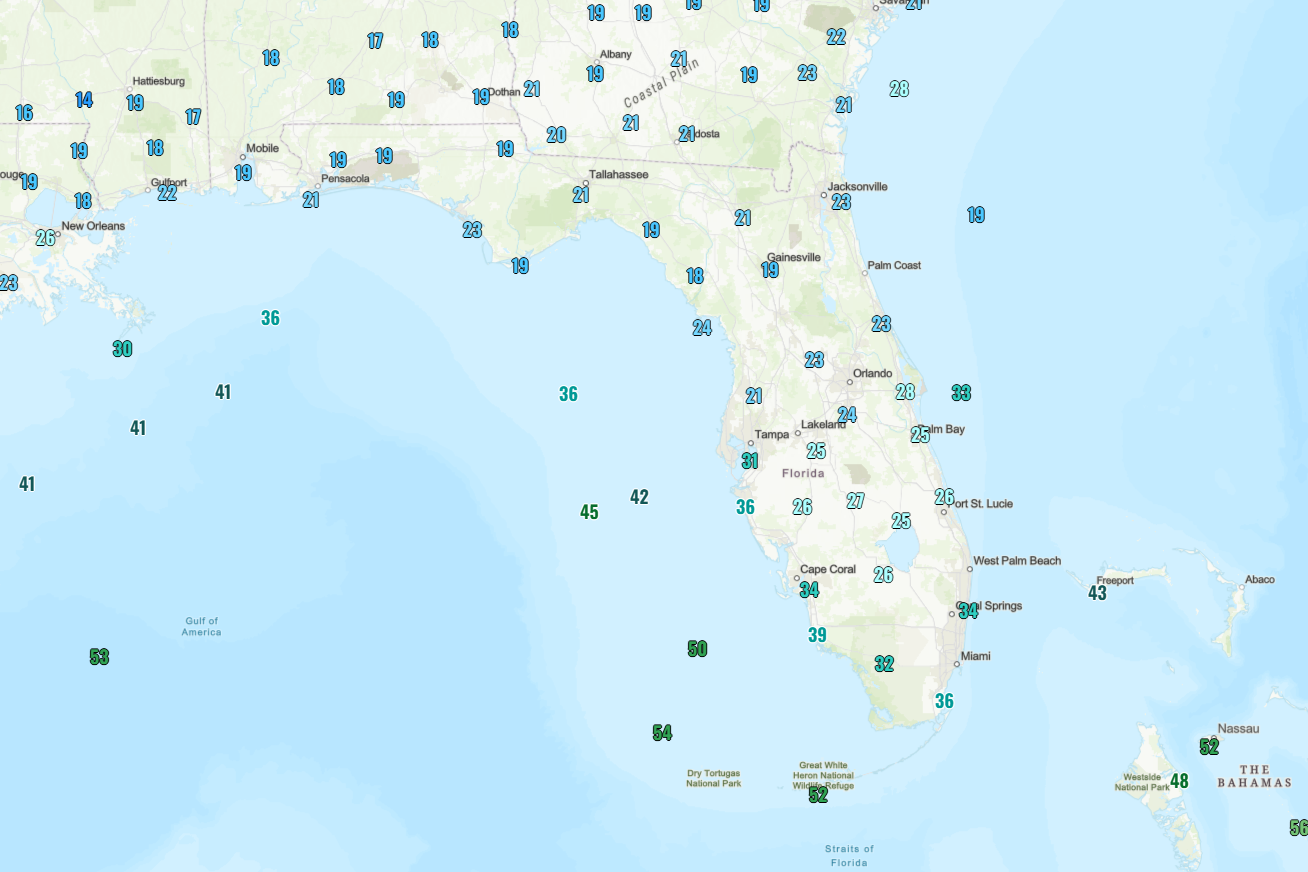
In Jacksonville, the temperature hit 22 degrees for the second time this winter (last seen on January 16th). The wind chill got as cold as 11 degrees there this morning for the first time since January 2014.
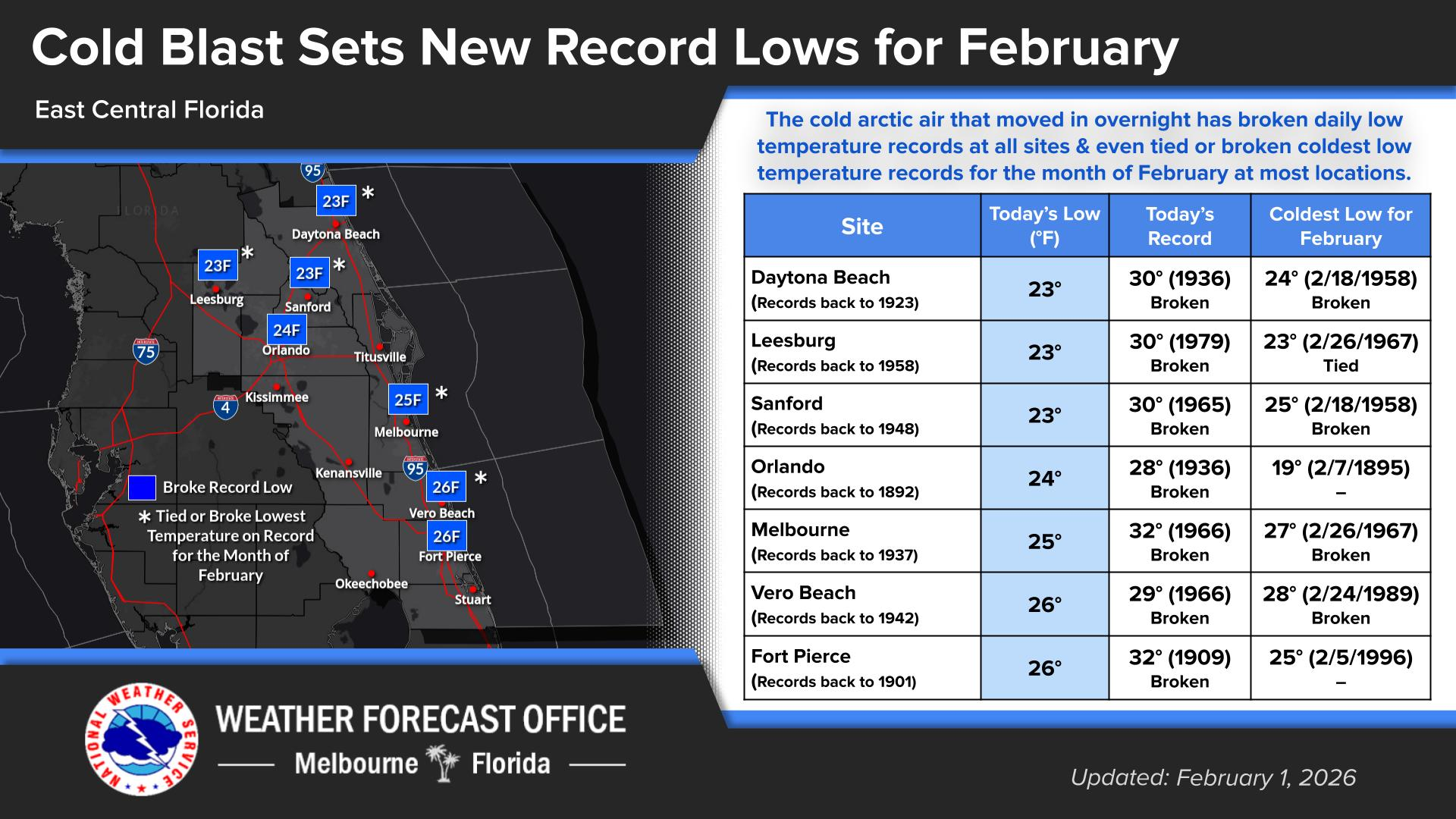
In Orlando, the morning low of 24 degrees was last seen on December 29, 2010 and prior to that Christmas Eve 1989. For Daytona Beach, the 23° morning low was coldest since Christmas 1989. This was also the coldest February morning on record there. Vero Beach and Sanford also had their coldest February mornings back to the 1940s or 1950s as well.
On the Gulf side it was not quite as cold, as Tampa hit 28° (coldest since 2010), Sarasota hit 36° (coldest since 2022), and Fort Myers bottomed out at 34° this morning (coldest since 2018).
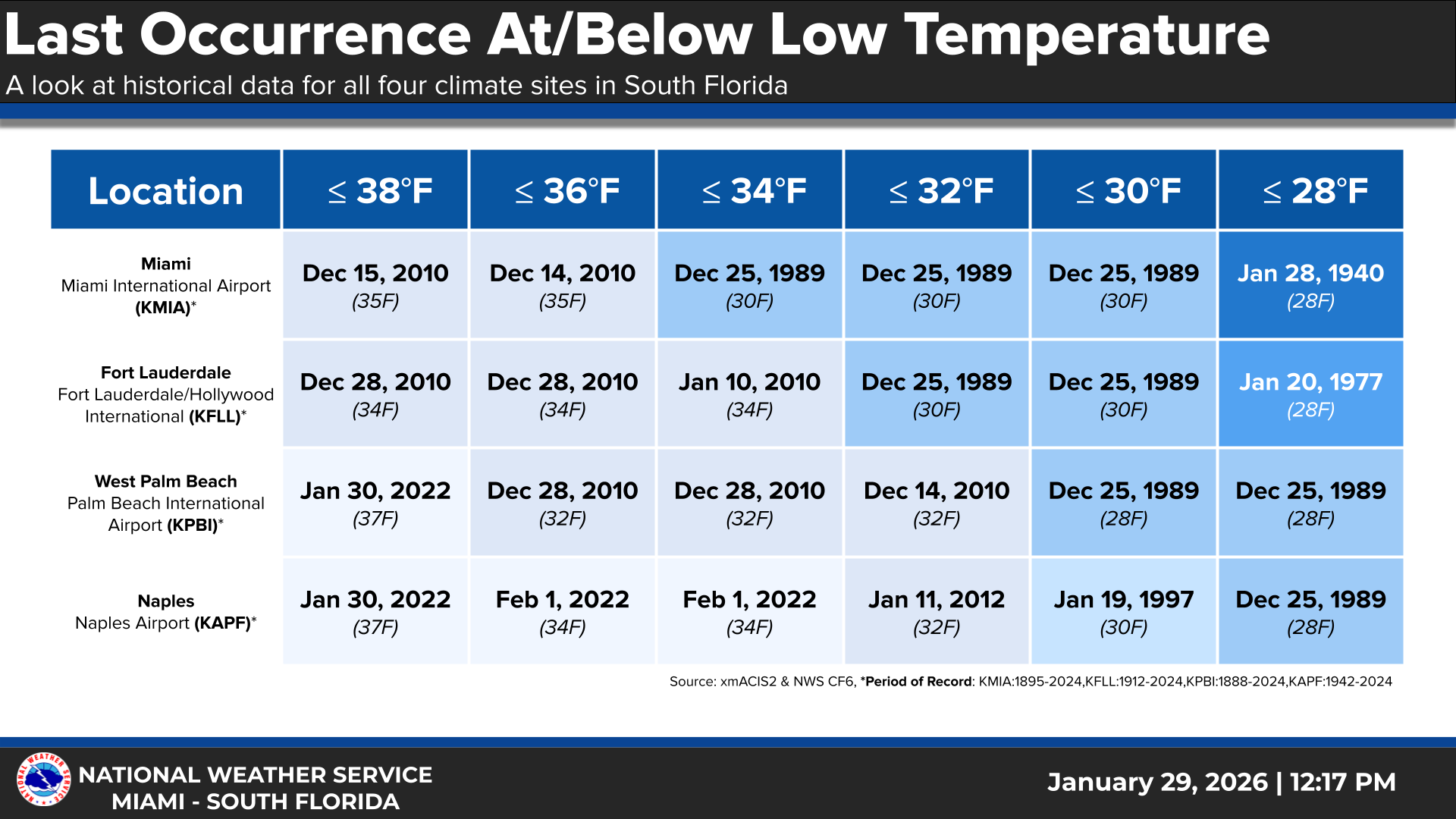
The 30° low in West Palm Beach was the coldest since Christmas Day 1989. Wind chills got down to 20° as well.
For Miami, the morning low of 35° was the coldest since January 10, 2010, when they also hit 35 degrees. Prior to 2010, it last happened on January 21, 1985, when it was 34° in Miami. The wind chill of 26 degrees in Miami at 7 AM appears to be the first time that’s happened since the great cold outbreak of Christmas 1989.
For Key West it was only the 5th time in the last 10 years they’ve hit 52° or colder.
Overall, this was a top tier, borderline hall of fame cold outbreak for Florida.
Carolinas snow
Yesterday’s snowstorm was rather amazing for portions of the Carolinas, with some places seeing historic snow totals.
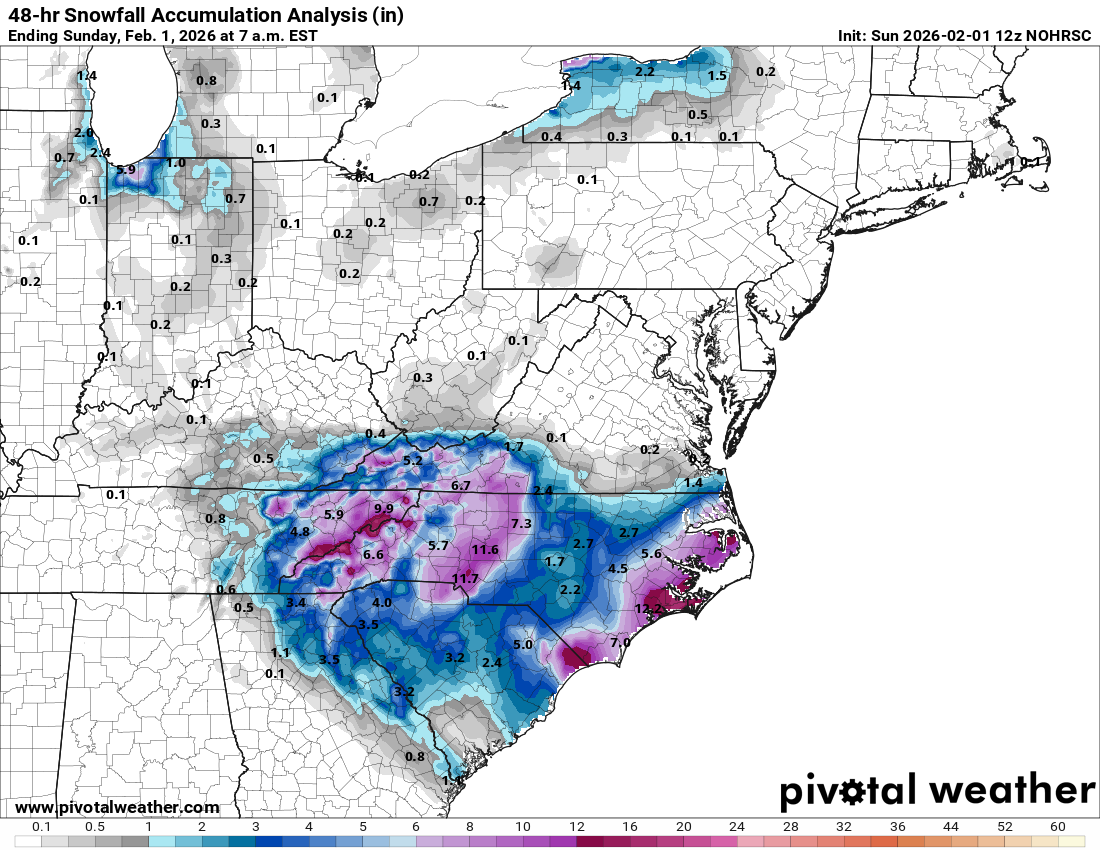
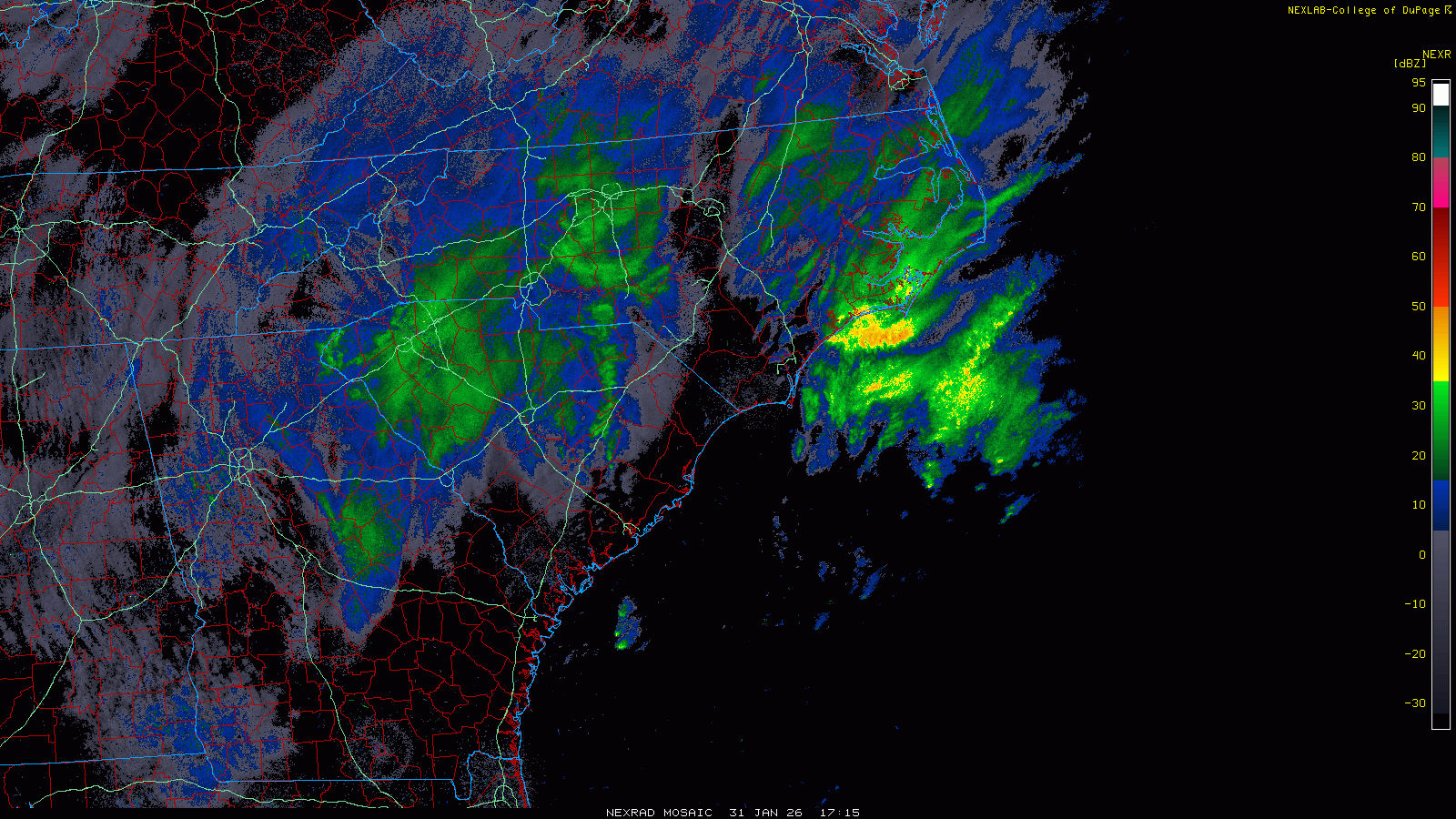
The highest totals I could find were near Faust, NC north of Asheville, where 22.5 inches fell and Peletier, NC, which is just inland from Emerald Isle and just west of Morehead City where 19.5 inches fell. 19 inches was reported near New Bern, NC in Olympia and in Reelsboro, just east of there. It would appear that this is the modern storm of record for portions of southeast North Carolina. New Bern’s previous snowstorm record was 15.5 inches in January 1965. Closer to Wilmington and Myrtle Beach, it was the largest snowstorm since 1989.
Farther inland, Charlotte’s 11.3 inches was the largest snowstorm there since 2004. 10.3 inches was measured in Greensboro, the largest snow there since December 2018.
The RDU snow desert
Interestingly, if you look back at the forecasts ahead of the storm, the Raleigh-Durham area was expected to see 8 to 12 inches of snow, roughly. In reality, they ended up closer to 2 to 5 inches. What the heck happened? In snowstorms like this, you often get these significant mesoscale type impacts that take place. In other words, it’s stuff happening at the small scale that causes outsized impacts.
What seems to have happened yesterday is that the Raleigh-Durham area ended up under a band of sinking air, or subsidence, in between two areas of rising air, one inland and one closer to the developing coastal storm itself. As these transitions to coastal storms happen, you’ll occasionally see that happen. This allowed for snow to accumulate more rapidly inland and near the developing storm before the storm blew up and dumped snow on everyone. There were hints of this in the modeling if you squinted hard enough, which is easy to do when you’re analyzing an event after the fact. But there was nothing clear cut that said the RDU area would be snow-deserted for so long. But if you look at the vertical velocity forecast from Saturday’s 12z NAM model, you can indeed see that basically happening.
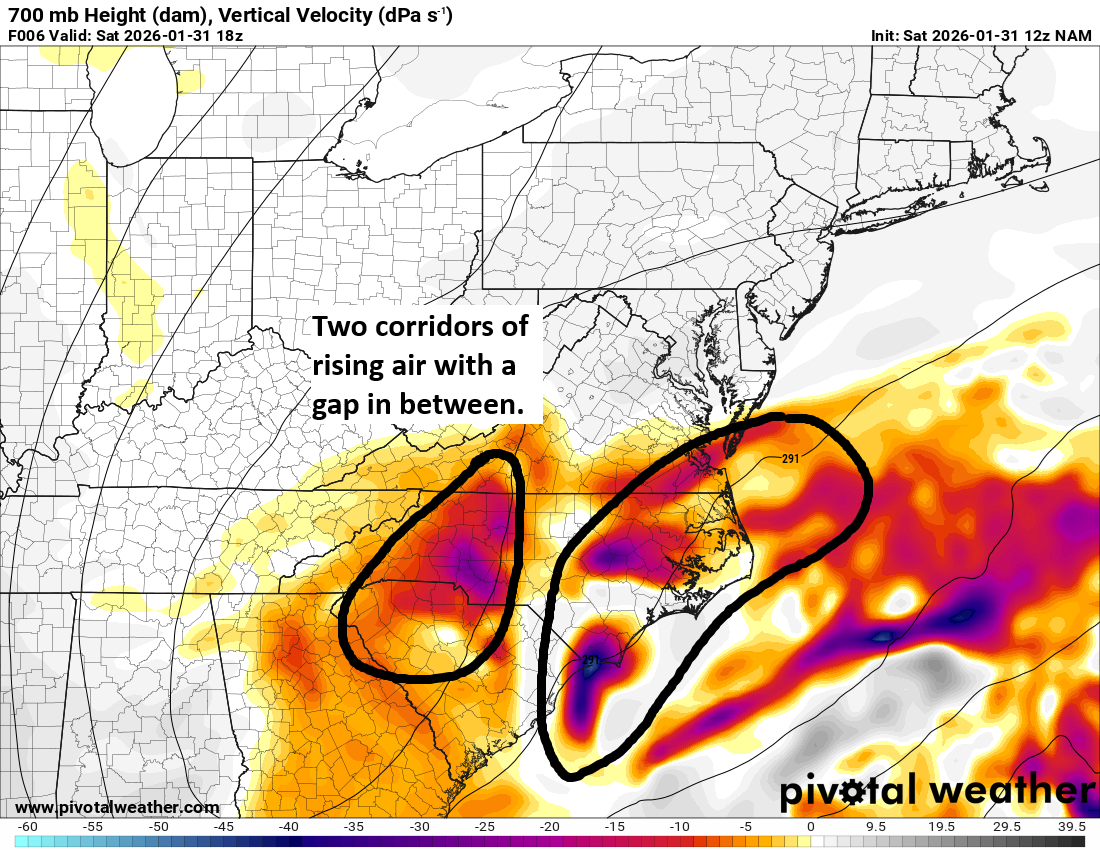
You aren’t going to look at this and say, “Raleigh is going to get no snow,” but it does at least show a slightly better visual of the potential of a vertical velocity minima/subsidence in the atmosphere that would “gap” an area from seeing heavier snow. It’s not as if this was clearly defined or setup the day before. There were hints of something down toward Fayetteville or the Pee Dee in South Carolina on Friday morning. That shifted closer to the Triad with Friday afternoon’s model guidance. But you aren’t going to look at that alone and sketch a forecast that granular in nature and feel confident. It’s just the challenging nature of these snowstorms.
Maybe they were up at the bingo hall last night...
Maybe they were up at the bingo hall last night cheating at bingo? #CowboyWho

Content warning:Racist depiction of Indian/Nati...
Content warning:Racist depiction of Indian/Native American/First Nations People
Hey, come on in here just a second. What's your name? Steve? Come on, have a seat. Look, Steve, eh, this Indian thing just isn't working out. We're not gonna do it anymore. #CowboyWho

Orange Pekoe! Orange Pekoe? Orange Pekoe! Orage...
Orange Pekoe!
Orange Pekoe?
Orange Pekoe!
Oragen Pekoe?
I swear by it!
You swear by it?
and Lewies says that Phylis says that Sybil once had some Earl Grey at her place, and two out of three were delighted.
Well ... I don't go for those exotic teas.
#CowboyWho

Epstein files reveal close ties to Trump's influential inner circle

Experts warn new film about divorced man doing stand-up may lead to more divorced men doing stand-up
MONTREAL – Experts are sounding alarms about the new film Is This Thing On, starring Will Arnett, warning how its depiction of a newly divorced man doing stand-up comedy to process his failed marriage could trigger a dangerous surge in cases of divorced men doing stand-up comedy. “The world of stand-up was already flooded with […]
The post Experts warn new film about divorced man doing stand-up may lead to more divorced men doing stand-up appeared first on The Beaverton.

A big know-it-all

Based on a true story. It wasn’t me endlessly defrosting and refreezing chicken. I’m so paranoid about salmonella that I’ll cross the road to avoid a Chick-fil-A.
The post A big know-it-all appeared first on Bad Machinery.
Frank, one more crack like that, and I’ll…

Frank, one more crack like that, and I’ll…
Rest Of Lakers Trying To Act Casual While LeBron James Spanks Bronny
LOS ANGELES—As they stared intently at their phones and pretended not to notice the steady rhythm of smacks echoing through the locker room, the Los Angeles Lakers were reportedly trying their best to act casual Tuesday while LeBron James spanked his son Bronny in full view of the team. “Wow, yikes, he’s really laying into the kid,” said a visibly uncomfortable Marcus Smart, kneading his neck with a massage gun to block out the sound of Bronny—pants dropped, bent over his father’s knee—begging to be set down while LeBron angrily slapped his bare buttocks over and over. “Not entirely sure what happened, but I think Bronny cussed at his mom or something? I don’t know, not my business, but I’m sure LeBron’s got his reasons. This is the NBA, and at this level you really can’t be disobeying or back-talking like that.” At press time, a sniffling, teary-eyed Bronny was reportedly seen exiting the facility after LeBron ordered him to go to his room and think about what he had done.
The post Rest Of Lakers Trying To Act Casual While LeBron James Spanks Bronny appeared first on The Onion.
Mia Cutler and Xavier Carrasco
The happy couple wed Saturday in the presence of four loving guests and 176 indifferent ones.
The post Mia Cutler and Xavier Carrasco appeared first on The Onion.
Conservatives Boycott All Forms Of Entertainment
WASHINGTON—Decrying the un-American nature of any activity intended to provide amusement or the slightest bit of diversion, conservatives across the country announced an immediate boycott Tuesday of all forms of entertainment. “The insidious liberal bias in music, movies, literature, and television is just the tip of the iceberg,” said Nashville, TN, resident Drew Cardona, one of the millions of conservatives nationwide seen dragging trash cans overstuffed with books, laptops, and artwork to the edge of their driveway, not to mention others observed in groups setting fire to piles of game consoles. “Leftist ideology has tainted literally every form of expression. I posted a video of me backing over a guitar with my truck, but even making a video somehow felt too progressive, so I destroyed my phone too. I don’t even fantasize about anything anymore. Who knows if my own imagination has been contaminated by leftists? I mean, whatever happened to decent people just sitting perfectly still and engaging with nothing?” At press time, the nation’s conservatives had decided to make an exception for certain Facebook memes.
The post Conservatives Boycott All Forms Of Entertainment appeared first on The Onion.
Stephen King’s The Shining, If the Hotel Had Possessed Wendy Instead of Jack
Wendy lit the stove to heat a pot of tomato soup. She turned to grab a wooden spoon and gasped. Two little girls in smocked dresses stood in the doorway.
“Come play with us,” one said.
“I’m making lunch,” Wendy whispered.
“We want you to play with us,” the other girl said. They stared at Wendy. Unblinking. Evil. “Come play Monopoly Junior.”
“Why can’t the two of you play together?” Wendy asked.
“We want to play with you,” they said in unison. “Can we have a snack?”
“I’m literally making lunch!” Wendy sobbed.
Wendy stood outside Room 217. She took the passkey from her pocket and slid it in the lock. Inside, the bathroom door was ajar.
It was in there. She could feel it. She crept in.
There stood a woman: bloated stomach, sagging breasts swaying like ancient cracked punching bags, glassy-eyed, hair dry and wild, pale, lips pulled back in an ugly grimace. Wendy screamed.
It was a mirror. Self-care had fallen to the wayside since Danny was born.
Also, there was a dead body rotting in the bathtub.
The most frightening thing, vaporous and unmentioned, was that all of Wendy’s old drinking symptoms had come back. Stumbling barefoot down the Overlook’s icy front walk, impractical heels in hand, mumbling about nachos. Asking Jack if he’d still love her if she had no ears. Dancing in a miniskirt and pink cowboy boots to the refrain of “Sweet Caroline” coming through the static on the old radio in the kitchen, shouting, “So good! So good! So good!”
Wendy woke from a thin, uneasy sleep to a humming sound. Someone was running the elevator in the deserted hotel. Danny’s hand gripped hers tightly as they followed Jack out into the dark hall. The elevator was coming down. The doors opened. The car was empty.
“What’s that?” Danny asked, pointing to the elevator floor. Confetti and party streamers littered the platform; the colors faded to pale pastels with age.
“Someone should vacuum this…” Jack said.
“Yeah, someone should,” Wendy agreed.
A silence hung in the deserted hallway.
“Anyway, I’m gonna hit the hay.” Jack turned and left, Danny on his tail.
Wendy got the vacuum and cleaned up the mess from the ghost party, crunching three Unisom tablets between her teeth, relishing the dry, bitter taste that spread across her tongue. Chewing Unisom makes you fall asleep faster. She had read it somewhere. You should kill Jack. What, who said that?
All work and no play makes Wendy look like the rotting bathtub corpse. All work and no play makes Wendy look like the rotting bathtub corpse (All work and no play makes Wendy look like the rotting bathtub corpse.)
“All work and no play makes Wendy look like the rotting bathtub corpse? All work and no play makes Wendy look like the rotting bathtub corpse.”
All work and no play makes Wendy look like the rotting bathtub corpse.
Jack and Danny each took Wendy by a leg and dragged her into the pantry.
“It’s the best thing for her,” Jack said. “Like putting her in jail.”
Wendy began to stir. Jack swung the door shut, fumbling with the bolt. Breathing fast, Jack leaned against the locked door. “We’re safe out here, Doc,” he told Danny. “She won’t be able to get out.”
On the other side of the half-inch of solid oak, Wendy made a nest out of the sugar sacks and began thumbing through a magazine, humming to herself, luxuriating in the unexpected alone time.
Wendy danced in the Colorado Lounge. She had no idea how long she had been there in the ballroom. Time ceased to exist. A man pressed a frosty glass of gin in her hand. “Thank you, sir,” she said. Suddenly, she reached out and touched the man’s shoulder. “You’re Grady. You’re the caretaker.”
Grady’s face remained blankly polite. “No, you’re the caretaker, ma’am. You’ve always been the caretaker. You’ll always be the caretaker. You have to be the caretaker.”
“But you—”
“I said you have to be the caretaker! Because of maternal instinct.”
Jack hobbled into the bathroom, carrying Danny. He slammed the door behind him and turned the lock. A mallet crashed through, splintering a wide hole in the door. “Open that door!” Wendy raged. “Come out and take your medicine!” She reached through the splintered hole to turn the lock, shrieking when Jack sliced her hand with a razor blade.
Spent, Wendy retreated and fell exhausted into an armchair, the mallet thudding to the floor beside her. Minutes passed.
The bathroom lock clicked. The door cracked open. Jack and Danny peered out.
“Can you make us a snack?”
Saturday Morning Breakfast Cereal - Waste
Click here to go see the bonus panel!
Hovertext:
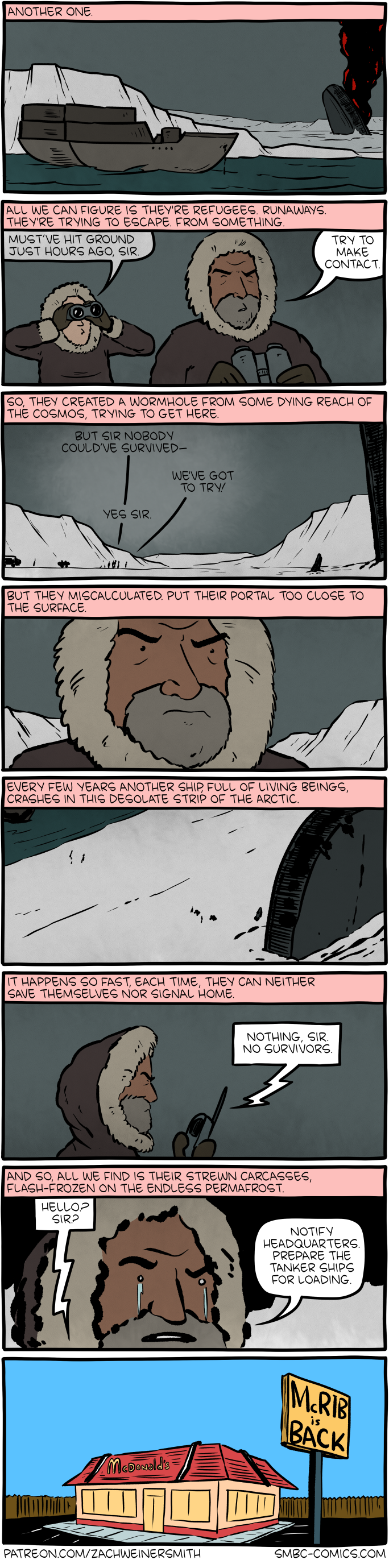
I think I could do about 100 of these if there were a market for a McRib compilation and no such thing as copyright lawsuits.
Today's News: