Shared posts

30 Apr 23:59

I was laid off, but my old coworkers are still texting me with work questions

by Ask a Manager

A reader writes:

My position was recently eliminated.

Now former colleagues are texting me to ask questions. I don’t feel obligated to answer. What are some response options when I want to politely say no?

You’re not obligated to answer questions when you’re no longer working there. That said, it’s also true that if you want to keep good relationships with these colleagues and might need them for job leads or references (informal or otherwise) in the future, you might not want to take a completely black-and-white line on this.

You definitely shouldn’t do work of any real substance when you’re no longer getting paid — like a detailed update on the history of a project or a rundown of the best way to approach a client — but if it’s a very simple question like “where is the key for the X filing cabinet?” that you could answer in a single sentence, it can be to your benefit to answer, because you want to maintain those relationships. Even then, there are limits; if you’re getting multiple questions like that, it’s reasonable to stop helping. But one or two very simple questions? Those are usually in your best interests to answer.

If you’re being asked for more then that, though, then any of these are reasonable to say:

* “I don’t think I can help since I’m no longer working there — I’m sorry about that!”

* “I don’t have access to that anymore now that I’ve left.”

* “I’m not sure off the top of my head — sorry!”

* “I’m not sure off the top of my head, but check the files I left behind.”

* “I can’t keep answering questions now that I’m gone, but try checking the manual.”

If it’s a colleague you particularly like or have good rapport with, you could say, “I know you’re in a tough spot since you’re trying to get this done, but since I’m not being paid anymore, I’m not comfortable continuing to help with the work.”

And if it’s a really large number of questions on substantive things and you’d be willing to help if they paid you, you could say, “I’m getting a lot of requests for help with things like this. I’d be willing to set up a consulting arrangement for a set number of hours of time over the next month or two if you want to do that.” (I’ve noticed people like to suggest quoting an outrageously fee for that, but that’s not in your interests either. A fair rate, yes, but not an obscene one just because you want to stick it to them; that’ll just make your judgment look really off. If you want stick it to them, you’re better off skipping this altogether.)

But if you’re not particularly interested in maintaining these relationships and don’t think you’ll want to call on them for any sort of help in the future, you can also just ignore the messages. You’re not obligated to respond.

The post I was laid off, but my old coworkers are still texting me with work questions appeared first on Ask a Manager.

30 Apr 23:58

Starcrash: The Halle Berry Story.

Starcrash: The Halle Berry Story.

30 Apr 23:57

Rogers buys naming rights to Bell Canada

by Eric Turkienicz

TORONTO – In the latest in a string of branding acquisitions, telecom giant Rogers has secured all naming rights over Bell Canada. “When I think of Bell Canada, I think of a heartless, megalithic, amoral corporation with a blue logo,” said Mike Jeffries, a Sudbury resident. “Now when I see them, all I’ll be able […]

The post Rogers buys naming rights to Bell Canada appeared first on The Beaverton.

30 Apr 23:57

BREAKING: This nepo baby sure hates it when you call them a nepo baby

by Geoff Cork

Los Angeles, CA – Recent interviews with famous people who have benefitted from their familiar relations have gone sour as interviewers correctly described them as nepo babies. “I am not a nepo baby,” said famous nepo baby Zooey Deschanel. “My father was a director of photography and my mom was in some tiny show called […]

The post BREAKING: This nepo baby sure hates it when you call them a nepo baby appeared first on The Beaverton.

30 Apr 23:55

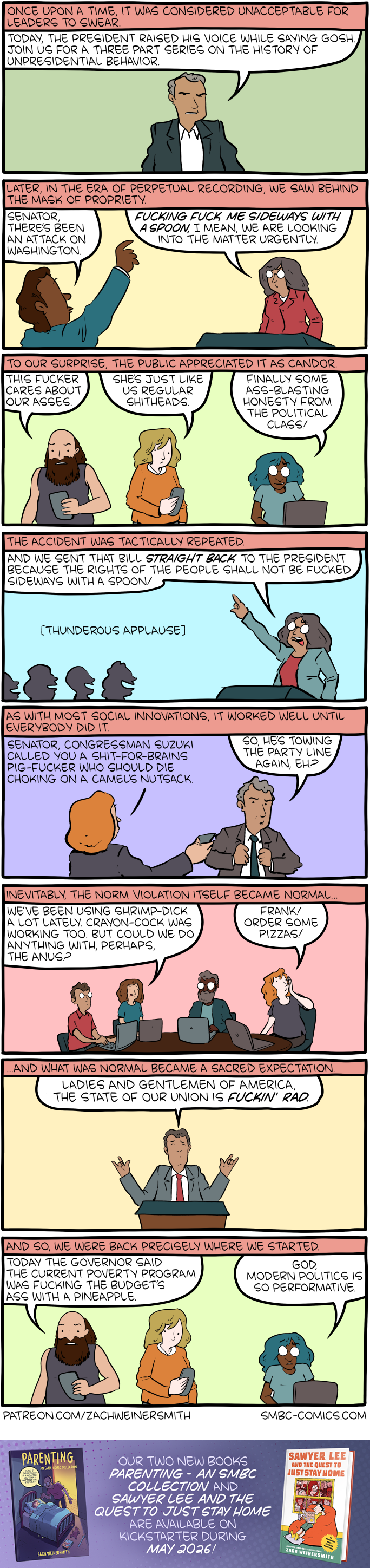
Saturday Morning Breakfast Cereal - Spoon

by Zach Weinersmith


Click here to go see the bonus panel!

Hovertext:
Ten bucks to any president who does the thing in the second-to-last panel.


Today's News:
30 Apr 23:00

Saturday Morning Breakfast Cereal - Meaning

by Zach Weinersmith


Click here to go see the bonus panel!

Hovertext:
The worst part is the robot makes him use reddit 7 hours a day, because that's what past employees were doing in its training data.


Today's News:
30 Apr 22:56

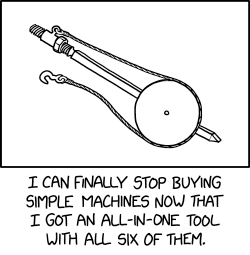
Simple Machines

It's hard to decide which simple machine system to invest in. DeWalt makes a great lever and inclined plane, but I hear Milwaukee's wheel-and-axles are really good.
30 Apr 15:09

Depraved Inbred Community Distances Itself From Prince Andrew

by The Onion Staff
30 Apr 15:09

Overambitious Man Wants To Get 2 Things Done Today

by The Onion Staff

AKRON, OH—Saying the expectations he had set for himself were completely unrealistic, friends of local man James Chao expressed skepticism this morning after the 25-year-old announced plans to get two different things done today. “When I heard James say he was going to pick up some groceries, that was one thing, but when he told me he also wanted to do his laundry, I realized he was pushing himself way too hard,” said roommate Aaron Steiner, adding that Chao was apparently oblivious to how much sustained focus and effort would be required to complete not just one, but two tasks in a single 24-hour period. “At a certain point, you’re only setting yourself up for failure. If you get one thing done, you’ve already gone way past any reasonable person’s expectations. Try for a second thing and, I mean, there’s just no way. That guy really needs to slow down and give himself a moment to put this whole thing into perspective.” At press time, Chao’s friends were reportedly urging him to stop and take it easy after they found him in the kitchen wearing a clean shirt and preparing a meal for himself.

The post Overambitious Man Wants To Get 2 Things Done Today appeared first on The Onion.

30 Apr 15:09

Drunk God Makes A Few Dozen Roosters Materialize Over Pacific Ocean

by The Onion Staff

HONOLULU—Cackling wildly as He willed the barnyard fowl into existence, a drunk God Almighty, Supreme Leader of the Universe, reportedly made a few dozen roosters materialize Thursday over a random point in the Pacific Ocean. “Yo, Gabriel, check this shit out!” the wasted Creator of All Things said while jostling the archangel on the shoulder and pointing at the birds struggling in the waves below. “Look at all these fucking birds I got. Can’t fly to shore, so what you gonna do? Come on, look at this shit. Look, they’re all splashing and squawking like motherfuckers. Should I put ’em in a volcano or something? Maybe I’ll materialize a couple orcas for good measure. Or wait—what about a whirlpool? Damn, I don’t think I’ve had this much fun since the flood!” At press time, reports confirmed God was throwing down an extra large rooster to make as big of a splash as possible.

The post Drunk God Makes A Few Dozen Roosters Materialize Over Pacific Ocean appeared first on The Onion.

30 Apr 15:08

You’re Not Wrong, Babies Are Getting Worse: Enshittification Comes For A Once-Beloved Classic

by The Onion Staff
30 Apr 14:53

The Onion’s Exclusive Interview With Clavicular

by The Onion Staff

Influencer Braden Peters, better known as Clavicular, has generated controversy for his “looksmaxxing” content. The Onion sat down with the streamer to discuss his views, methods, and aspirations.

The Onion : Do you consider your methods to be extreme?

Clavicular: I get called extreme, but no one blinks an eye when Ms. Rachel tells kids to smash their jaws with a hammer.

Is there anything you wouldn’t do in the name of looksmaxxing?

I’m never getting rid of my tail.

Is the looksmaxxing community racist?

Absolutely not, but the racemaxxing community I’m part of definitely is. 

How much testosterone have you taken today?

Well, I currently have six more testicles than I woke up with this morning.

Are you okay?

I’m actually pretty well-adjusted compared to most 20-year-old men.

What are some of the biggest problems facing today’s young men?

Me.

What’s next for you?

I might try becoming attractive to women.

The post The Onion’s Exclusive Interview With Clavicular appeared first on The Onion.

30 Apr 11:18

My kinda town

by John Allison

When I was trying to think what the tourism video would be like, I had to think what Shelley Winters would commission (back in her days in the mayor’s office), and I was certain that it would be almost exactly like one of Telly Savalas’ 5-minute films on British cities. The best one is, for my money, Birmingham. The degree to which it unexpectedly kicks off in this video is magnificent.

30 Apr 11:12

Leading Cancer Charity Stops Funding Open Access Publishing Because It’s Just Not Working

by Glyn Moody

As numerous posts on this blog have emphasised, the underlying idea of open access (OA) – allowing anyone to read and share published academic research for free – is great in principle, but in practice has failed in important ways. That’s because traditional academic publishers have subverted the open access model to such an extent that the costs for research institutions of publishing in OA journals have barely changed at all. And yet one of the other key aims of open access was to save money while widening availability. Against that background, a natural question to ask is: if open access has failed to deliver savings, why bother supporting it? Cancer Research UK, the world’s leading cancer charity, has evidently asked itself that question and come up with an answer, which it explains in a post entitled “Why we won’t be funding open access publishing any more”:

We need efficient scholarly communications to spread scientific ideas via a fair economic model. We currently don’t have that. The open access movement was bold and promising, but ultimately disappointing. Now is the time to stop and call for a new way to make publishing work…

Ceasing to fund open access in the way we currently do will save us £5.2m of donors’ money over the next three years. That’s a substantial amount which can be put towards cancer research.

The post by Dan Burkwood, Director of Research Operations and Communications at Cancer Research UK, explains what exactly the problem is:

We currently fund open access publishing for our researchers in a number of ways. Despite hopes that this would enable a flourishing of open access dissemination of science, most of the growth has occurred in hybrid journals. These are publications that combine OA articles with those behind a paywall – this means the publishers will still charge for university and institute libraries to access them, even though researchers have paid for their work to be published. For us, this means we currently use donated money to fund our researchers, institutes and centres to publish OA research articles, yet they still have to pay to access the majority of journals in which those articles appear. The publishers are – so to speak – having their cake whilst also eating it.

These so-called “hybrid models” are discussed at length in Chapter 3 of Walled Culture the book (free digital versions available). They were presented as a transitional approach towards journals that were fully open access, but in many cases that transition hasn’t happened, not least because the hybrid model is so profitable for publishers, who therefore have little incentive to move to fully open access titles. Burkwood rightly points to a key reason why academic publishers continue to wield such power: the academic world’s insistence on using published articles in prestigious titles as a metric of success.

Cancer Research UK are working to widen the way we evaluate research in order to mitigate the heavy focus on publication outputs. It’s clear to us that a broader view of an applicant’s career is vital to gauge potential success. By signing up to DORA (San Francisco Declaration on Research Assessment), we encourage our reviewers to assess the quality and impact of research through means other than just journal impact factor. Additionally, we invite applicants to submit a narrative CV, allowing a more holistic view of their track record, research outputs and career progression.

But as he acknowledges, “Despite our, and others, attempts to limit the emphasis of the ‘publish-or-perish’ mindset, it will take time for the culture to change.” In the meantime, he suggests:

If researchers have no access to publishing funds they can publish their work for open access at no cost, but the publication will sit behind a paywall for 6 months (under embargo) before being deposited on Europe PMC open access – this is known as green open access.

Green open access provides full and free access to papers, but only after an embargo period, typically six months, but sometimes longer (gold open access provides instant access, but requires payment by researchers’ institutions.) That makes green OA a poor substitute for real, immediate open access.

The problem here is that such embargo periods have long been accepted as the norm, but that is only because a terrible blunder was made over two decades ago by the Research Councils UK (RCUK). In 2005, the RCUK stipulated that the work it funded would require open access publication. However, when the final version of the RCUK’s policy appeared in June 2006, it had a significant flaw, expressed in the following provision: ‘Full implementation of these requirements must be undertaken such that current copyright and licensing policies, for example embargo periods or provisions limiting the use of deposited content to non-commercial purposes, are respected by authors.’ As the leading open access scholar Peter Suber wrote at the time, this was a completely unnecessary concession:

Researchers sign funding contracts with the research councils long before they sign copyright transfer agreements with publishers. Funders have a right to dictate terms, such as mandated open access, precisely because they are upstream from publishers. If one condition of the funding contract is that the grantee will deposit the peer-reviewed version of any resulting publication in an open-access repository [immediately], then publishers have no right to intervene.

At the root of the issue of embargoes lies copyright. If researchers retained full control of the copyright of their articles, rather than assigning it to publishers, they could prevent any embargoes being applied to them.

Cancer Research UK’s decision is regrettable but understandable. The fear has to be that others will follow suit. While the hybrid model is not universal, it is widespread enough to undermine the open access idea. Until researchers refuse to publish in such hybrid titles, publishers will continue to profit from them. Given the unnecessary embargoes imposed on articles released under green open access, that leaves alternatives such as diamond open access, where there are no charges for anyone, an approach that has long been espoused on this blog.

Follow me @glynmoody on Mastodon and on Bluesky. Originally posted to Walled Culture.

29 Apr 20:03

the lack of turtles, the would-be librarian, and other people who didn’t realize they don’t want THIS job

by Ask a Manager

We recently talked about people applying for — in working in — jobs that were clearly at odds with what they wanted to do, and here are 12 of my favorite stories you shared.

1. The lack of turtles

I worked with a lot of field biologists who were unsuited, mostly because they went into the field since they loved being outdoors and then were shocked to find that the job consisted of very boring and monotonous walking off trail and meticulous record keeping. But my favorite not-suited coworker was fine with all that! Except what she really wanted to be doing was surveying for turtles. Sadly, not a lot of our projects involved turtles. She still did a great job, but all her field reports would include lines like, “There were no turtles,” “One turtle seen on my lunch break when I hiked a mile to a waterway,” “Absolutely no habitat for turtles in this area, but I found some likely areas along the drive to this site,” and my favorite, “Thought I saw a turtle, but it was rock.”

Loved her, stopped by her house once to meet her 20something turtles and had a blast. She eventually found a better paying job, sadly not turtle centered though.

2. The honesty

HR and I were interviewing my replacement. It was an admin position supporting a sales team and a few managers. It was going well until the interviewee said, “I hate being constantly interrupted by people needing things.”

3. The wrong choice

There was the internal applicant from a different department who stated in the cover letter that they were trying to move away from a supervisor they weren’t meshing with well. The supervisor who was central to my department’s work. Who was on the search committee. And who would be working more closely with my new hire than most of their own direct reports. Also, the cover letter was emailed to me separately instead of included with the rest of the application materials. I immediately touched base with HR to make sure we got that cover letter on file in case there was any pushback from the candidate (who we’d already scheduled for a panel interview).

4. The computers

I once was in an interview where an applicant spent a lot of time talking about how much he hated computers and working on computers. We literally work entirely on computers and were part of a public paperless initiative so…

5. The veterinary assistant

Applicant to a veterinarian’s office who was a) afraid of cats and b) squeamish about both blood and poop. This was for a kennel-to-veterinary assistant position, not receptionist. I’m not sure what she thought she’d be doing, exactly.

6. The junior reporter

One of the reasons I was a hit as a junior reporter at a rural newspaper was because of the contrast between me and my predecessor. Instead of having an interest in court stories, local events, and making contacts, she was working at the paper because she thought it would be a springboard towards becoming an actress in a local soap. The newspaper didn’t even have a showbiz or entertainment section, we had no connections with the soap opera, and we weren’t even based in the same town as them. I asked my new colleagues how she had planned to pull this transition off and the response was, “Well, obviously it was just pretty misguided and maybe she gave up after realiing that; most of the time she was either making very noisy smoothies while we were busy talking on the phone, or she was napping in her car.”

7. The would-be librarian

A couple of years ago, a retiring teacher called the library reference desk to ask about jobs in the youth section. She went on and on about how, after so many years of teaching, she really needed a job with peace and quiet. I don’t know if any of you have been in a library in recent years, but the youth department is NOT quiet – it is a hub of activity and lovely children and teens making lots of joyful noise! It is not for the faint of heart! Or for anyone looking for peace and quiet!

I did not tell the retiring teacher any of that; I figured it was better she say that if she made it to an interview. No retired teacher showed up in the job.

8. The honey bees

I research honey bees. Every year my group hires one or two field assistants, usually undergraduate students who don’t typically have a lot of research experience. The number of people who make it clear in the interviews that they do not want to work around honey bees is always surprising, given that we are very clear on the job ad that responsibilities largely involve working with honey bees. Special props to the guy who very earnestly tried to convince us to hire him to do his own research on stingrays (???) — my best guess is that he somehow thought it was a grant and not a job.

9. The teacher

My brother’s Leaving Cert Irish teacher had 16-18-year-olds making badges and learning songs, which she then had them sing for the principal when he came in. This was a higher level class and the higher level Leaving Cert Irish exam includes things like writing a short essay in Irish on topics like climate change or unemployment or drug addiction and questions on Irish novels and drama and poetry and back then had a section on the history of the Irish language, which included questions like explaining, in Irish, how the placenames of the country came to be. But yeah, making badges and singing for the principal!

She would have made a brilliant primary school teacher.

10. The anime fan

I work for a large financial institution and a couple of years ago interviewed a candidate for a compliance internship who had apparently confused my company with a cable TV channel and spent the entire interview talking about how much he loved anime.

Very sweet kid, but apparently he was like that in all five of his super day interviews. I still don’t fully understand how you get to the interview stage of a highly competitive finance internship without realizing you’ve applied to the wrong company for the wrong job entirely, but it sure made things easy when we rejected him for a lack of attention to detail.

11. The surprising choice

I was hiring positions for the student package center at a small college. One of the people I interviewed told me she didn’t like “packages, answering the phone, or dealing with people.” Which was literally the core functions of the job, and stated very clearly in the job description. She was so matter of fact about it, I almost thought she had to be pranking me because why on earth would you apply to a job where the job duties were entirely the things you claimed to dislike.

She was not.

I often wonder if she was surprised when she didn’t get hired.

12. The whales

I had to drop an undergrad class I’d been really excited about because of this. Week one of Intro to Creative Memoir, every single minute was spent by my professor talking about whales, showing us videos of whales, telling us what products we needed to boycott to save the whales. Every supposed memoir on our reading list was actually a book about … you guessed it. On day two I started a tally. She used the word “whale” nearly 100 times in an 80-minute class, “write” or “writing” less than a dozen, and “memoir” not at all.

I am firmly pro-whale but geez.

The post the lack of turtles, the would-be librarian, and other people who didn’t realize they don’t want THIS job appeared first on Ask a Manager.

29 Apr 18:15

Guy… Lafleur?

Guy… Lafleur?

29 Apr 18:14

Trump Boys Break Another Blender Attempting To Make Oil Out Of Charcoal

by The Onion Staff

WASHINGTON—In an effort to reduce gas prices while “President Dad” worked to reopen “the Street of Hummus [sic],” Eric Trump and Donald Trump Jr. reportedly broke another blender Wednesday during an attempt to make oil out of charcoal. “Ugh, we made smoke instead of gas, but we’re getting close—I think we just need one more blender,” a soot-covered Donald Jr. said while dumping half a bag of Kingsford briquettes into a new pitcher. “We need to add some water so it turns into gasoline. Start it on low before going to high. You’re not pushing the buttons hard enough! Something’s stuck at the bottom. I’m going to stick my hand in there, and you get stuff moving by pressing the pulse button. Come on, push the buttons better!” At press time, sources confirmed the Trump Boys were attempting to refine their homemade oil concoction by retrieving a cup of electricity from the wall outlet.

The post Trump Boys Break Another Blender Attempting To Make Oil Out Of Charcoal appeared first on The Onion.

29 Apr 18:14

Jazz Guy Has Little Hat And Everything

by The Onion Staff
29 Apr 18:13

Scientist Accused Of Poisoning Colleague Who Got Promotion

by The Onion Staff

A University of Wisconsin lab employee admitted to poisoning a coworker’s water bottle with chloroform after the coworker received a promotion. What do you think?

“That’s just how you determine who’s hearty enough for more responsibility.”

Don Anderson, Haiku Publisher

“Rookie move not poisoning yourself and blaming it on them.”

Jesse Marlin, Grain Scooper

“There’s still so much we don’t know about chloroform’s effect on coworkers.”

Bill Armstrong, Utensil Exporter

The post Scientist Accused Of Poisoning Colleague Who Got Promotion appeared first on The Onion.

29 Apr 18:12

#Kento #Cye #RoninWarriors

29 Apr 18:12

UFO lands in downtown, witnesses describe alien...

UFO lands in downtown, witnesses describe alien visitors: Well ... to begin with, they all have big noses and come out of small cars #CowboyWho

29 Apr 18:11

Distribution Release: Nyarch Linux 26.04

The DistroWatch news feed is brought to you by TUXEDO COMPUTERS. Francesco Caracciolo has announced the release of Nyarch Linux 26.04, the latest update of the project's Arch-based Linux distribution designed for "weebs" (non-Japanese persons interested in anime, manga, cosplay and other aspects of the Japanese culture). This version brings a new edition, with a themed KDE Plasma desktop:....
29 Apr 16:23

how can I signal that my coworker doesn’t speak for me?

by Ask a Manager

A reader writes:

My coworker, Chuckie, has concerns. A lot of concerns. They aren’t necessarily unfounded — I would say about 50% are completely justified, 40% have some foundation but are overblown, either mildly or significantly, and 10% are ridiculous — but he tends to bring them up with the attitude of a beleaguered martyr airing grievances rather than a professional colleague addressing work issues. He often talks at length about his own stress and frustration and implies (or even outright states) that no one outside of our department cares about the work we do or the people we serve.

My main problem is that sometimes Chuckie raises issues in a way that implies he is speaking on behalf of me and our other five coworkers as well. Often, I agree with some of what he says — like, say Chuckie asks if I think that the bells on the new llama harnesses jangle too loudly (made-up example for anonymity’s sake), and I agree that they’re pretty annoying. But he thinks they’re loud enough that no one in the audience of the afternoon llama show will be able to hear the handler speaking. He also thinks the fact that the handling team didn’t consult our team indicates a serious communication breakdown between the two departments and has written up a 1,000-word email detailing “our” concerns and sent it to everyone in my department and both managers.

I try to be more solutions-oriented at work, and when I can, I’ll steer Chuckie’s complaints in that direction, which seems to be taken positively by our manager. But sometimes I don’t think there’s anything we can/should do. Sure, I would have liked the handling team to have consulted us before they made the purchase and would have brought up the bell issue, but I don’t think it’s my place to argue a fait accompli unless I have evidence of a serious problem in my area of expertise — like that the llamas are experiencing acute distress.

He’ll use “our concerns” and “we feel” pretty consistently both in writing and in person, but when it’s in person the problems are usually smaller, and he’ll turn to us at some point for confirmation, at which point I can pivot to solutions and use softer language. It is still very awkward and I would love to not have to do it, but it’s a low-level tension. (I often feel particular pressure to respond because Chuckie and I have more experience and are generally more proactive than our other colleagues, who tend to be quiet in meetings. I am probably the person who brings the second-highest number of concerns to the table, and I couldn’t swear that my tone or word choice has been 100% perfect, either. I think my lapses are milder and rarer than Chuckie’s but I’m wary of being lumped in as The Two Who Complain.)

His snippy emails only happen a few times a year but I typically find them harder to respond to, both due to the medium and due to the fact that the problems either have no easy solutions or aren’t ours to solve. (I think he saves the tough problems for email so he can plan out the language he wants to use.) Sometimes he will raise an issue with me first, sort of taking my temperature, and I’ll express mild agreement, only to be taken by surprise when an email goes out soon after. I usually just don’t reply, if I think I can get away with it, and mostly a manager will respond to the substance of the email without commenting on the tone. Chuckie might grumble a bit to me and our coworkers in person, but not for very long, until the next problem arises.

I should also mention that, due to some internal reorganization, our day-to-day supervision has changed hands a couple of times in the five years we’ve been working together, so this pattern is probably more obvious to me than some of our supervisors.

What do I do? If I keep silent, that feels like I’m endorsing Chuckie’s overreaction, which reflects poorly on me. If I say “I don’t agree with his concerns at all,” that feels dishonest — and I don’t want to endorse the handing team’s decision either, because I do think it was a bad call, just not a disastrous one. What I really want is a professional way to say, “I basically agree with Chuckie but without all the histrionics.” Does that even exist?

It does exist!

When it happens in person and Chuckie is using “our concerns” and “we feel,” you can correct that! For example:

* “I agree the new harness bells are annoying, but I don’t feel that strongly about it. I’m okay with deferring to the llama handling team on this.”

* “I hear the concern, but I don’t think Chuckie is speaking for the whole group on this. I don’t disagree in principle, but I also don’t feel that strongly about it.”

* “I hear the concern, but I also don’t think Chuckie is speaking for the group on this. I don’t disagree in principle — and I told him I agreed the bells were annoying when we talked about it — but I should have made it clearer that I don’t feel that strongly about it.”

* “Eh, I agree the bells are annoying and I wish they would have consulted us, but I don’t think there’s anything we need to do about it now.”

You can also talk to him after the next meeting where he does this and say something like, “You’ve been presenting things as ‘our concerns’ and ‘we feel’ but I would rather you not speak on behalf of the group without our explicit agreement beforehand. Sometimes it ends up not accurately representing my stance — often because I don’t feel as strongly as you do — and I don’t want to end up distracting from what you’re saying if I have to interject to clarify that.” Or even just, “Hey, you made it sound like I fully agreed with you on this, but I don’t actually share your take in the way you explained it. I would rather you just speak for yourself when you’re raising this stuff, and I will speak for myself as well.”

With the emails, you might be able to use a similar format — “I understand where Chuckie is coming from, but now that they’ve ordered the bells, it’s probably easiest to just live with it. We could talk to them about checking with us before they place their next order though.” In other words, a mild correction about where you stand, and a pivot to a solution.

You can also try warding all of this off more preemptively, when Chuckie first raises issues with you. You know from experience that if you express mild agreement, there’s a good chance he’ll relay that as strong agreement later. So instead, you could try changing the responses you’re giving him — leaning more on things like, “Eh, I don’t feel that strongly about it” or “I think it’s probably fine/not worth the capital/something we shouldn’t bother pursuing.”

Also, though, if you have a decent relationship with your current manager, you might just address it directly with her: “I’ve noticed Chuckie will sometimes word things as if he’s speaking for the group when he raises concerns, but I don’t always agree with him or at least don’t feel as strongly, so I wanted to clarify that. I’ll always speak up myself if I do feel strongly about something.”

The post how can I signal that my coworker doesn’t speak for me? appeared first on Ask a Manager.

29 Apr 14:19

Seiwa Market the tiny West Coast chain dominating Houston’s Japanese grocery scene

by Mike
If you took a snapshot of Houston’s Asian retail scene even just 10 years ago, it was largely dominated by Chinese and Vietnamese stores. Since 2016, that has slowly been changing, and while Japanese retailers are still “playing catch-up,” they have a much stronger foothold than they did even just 10 years ago. Today, we’ll be focusing on Seiwa Market, Houston’s premier Japanese supermarket. Before we dive too deep, though, I think it’s worth noting ...
29 Apr 13:17

boss told me my dresses need to be longer, I wish my job would just fire me already, and more

by Ask a Manager

It’s five answers to five questions. Here we go…

1. My boss told me my dresses need to be longer

My line manager told me yesterday that there had been “comments made” about how short / inappropriate my dresses are in the office, as a member of the team who is front-facing for clients. I was asked to not wear these outfits in the office any longer.

These comments have utterly humiliated me, and I spent about an hour crying on my way home. I have always dressed fairly modestly at work and am deeply uncomfortable with my body being perceived as being “on display.” My dresses are long-sleeved, with skirts that stop just above my knee. They are conventional office wear. I prefer dresses and skirts over trousers, as the medications I take have made my stomach quite bloated, and I find tight waistbands uncomfortable. But I was told they need to be longer as I’m greeting clients (as my work wear was just above the knee already, my presumption is that longer means to the knee or below).

It’s a very male heavy office, so what other women wear is split between trousers and skirts that are above the knee or to the knee. My line manager was wearing an above-the-knee dress the day after telling me my outfits were too short.

After looking at my work wardrobe, I estimate I’m going to have to get replace nearly 80% to get to these new standards — of dresses and skirts to the knee or lower — while also managing the other restrictions that are placed on women’s wear at our office. For instance, I’m not allowed to wear a sleeveless blouse because our male directors decided they are not professional for women. This is while the men in our office can meet with clients in hoodies or polo shirts.

I simply don’t understand why my clothing is an issue 16 months into working here. Am I being unreasonable or is this unfair? Is this something I should speak to my union about?

Yes, you should absolutely speak to your union. Something here doesn’t make sense — skirts and dresses to just above the knee aren’t unprofessional or inappropriate work wear, and that goes triple in an office where a bunch of other people are wearing them, including the manager who told you that you couldn’t. “You’re client-facing” doesn’t make sense as an explanation. Is there anything else that could explain why you’re getting this feedback and others aren’t? Sometimes this happens when you’re the only one in your office with a particular body shape (which doesn’t make it okay), and I wonder if that’s in play here.

Ideally you’d go back to your manager and ask for clarification — including explicitly asking if she is telling you that your skirts must be below the knee, and pointing out that all your skirts are currently the same length as the ones you see other women in your office wearing. But since you have a union, pull them in for advice too.

2. CEO sends a delusional AI-generated image of himself with every email

As a mere lower-level staffer, I am certain there is nothing I can do about this issue, but perhaps you have some ideas.

The CEO has begun to attach an AI-generated image of himself to every email he sends out. The images are universally more handsome than the real thing. No more receding hairline, or stomach fat. Plenty of bicep muscles. Not a wrinkle in sight.

This is cringe behaviour, and staff mock him for it behind his back. While I am not personally invested in helping him save face, I do want to stop being forced to look at these unprofessional, inaccurate portraits. Especially since the workplace is a public library, where one would hope to avoid misinformation.

No, this is amazing and you must not try to stop it!

And that’s fortunate, because there’s almost certainly nothing you can do about it anyway. If you were, say, a senior communications staffer or his right-hand person or otherwise a trusted confidant, you could attempt to diplomatically address it, but assuming you are none of those things and therefore have no real standing or obligation to take this on, the only correct response is to sit back and bask in the utter absurdity of it.

Is it a problem for his credibility? Yes! Is it your problem? No.

You can just enjoy the spectacle.

3. I wish my board would just fire me already

I am the chief executive of a small nonprofit and I report to a board, and I have been on a performance improvement plan (PIP) for the past four months. The PIP is full of things that are untrue and half true, along with some things that could legitimately be improved. The PIP was my first notice of any of those gripes that the board (or rather, a few members of the executive committee) had about me, my work, and, more pointedly, my personality.

The first PIP was supposed to be 60 days. They had no objective success measure in it and missed over half the weekly check-ins we had scheduled. They are having a lawyer handle everything for them, so I didn’t receive a determination about the PIP until a couple weeks ago when they gave me another PIP with a 60-day extension. This document, even more than the first one, has things in it explaining where I am failing to meet expectations that I was unaware of and were not part of the job previously.

At this point, it is clear that at least two of the board members just don’t like me and want to fire me, which is completely within their power to do. I have sincerely done what I can to meet their expectations, but I can’t and won’t change my personality or pretend to be someone I am not. And this job has turned into something different than what I was hired for.

I have been looking for a new job since the process started, but it is not easy at this level and I can’t afford to be without an income or I would have quit already. How do I have the conversation with them expressing my desire to leave along with my need to be eligible for unemployment benefits?

Frame it this way: “It’s clear to me that you’re unhappy with my work and I want to be realistic about my chances for success here and not drag out the process, so I’d like to propose a managed separation with a transition that will be as smooth as possible for both of us. I’d ask that you not contest my unemployment benefits since it sounds like I was likely to be let go at the end of this process anyway, but beyond that I’m flexible about what this could look like in terms of timing and messaging.” They are likely to hear this with relief.

You might also consider whether you have an argument to request severance, if they’re now defining success in the role differently than what you were brought on to do.

4. Requiring 15+ hours of outside reading per week

I am curious to your take on a job listing I recently came across. There is an indie bookshop in my city that is looking for booksellers — basically part-time retail work, $12/hour starting wage, nothing atypical for the area.

Amongst the qualifications and job duties listed, alongside needing 3+ years experience as a bookseller and “associates or better” degree, I noticed something that seemed super wild. “Booksellers are required to spend an additional 15+ hours a week reading recent releases and bestsellers to stay up to date on merchandise and better assist customers.”

(I am assuming the 15+ hours of reading homework is unpaid, but I could be wrong; this is a very hipster bookshop that I like to visit now and then but would never work at personally, so I haven’t inquired further or anything.)

Is this as bonkers as it sounds to me? Or does this sound more like “continuing education” and is pretty reasonable to expect?

As a general rule, if outside reading is required for non-exempt employees, they need to be paid for that time. There are exceptions for things like continuing education required to maintain a license, but booksellers aren’t licensed.

They’d be better off saying that they’re looking for employees who already maintain a deep knowledge of recent releases and bestsellers and who will maintain that knowledge going forward — and then screening for dedicated readers of recent releases (which is different from just being a voracious reader in general) in their interview process — instead of presenting it like a job duty with a specific number of hours attached.

5. I was fired from my last job, then didn’t work for several years — how do I explain it in interviews?

I was fired from my job several years ago. Due to a combination of burnout and undiagnosed depression, I effectively went AWOL and didn’t do anything about anything until it was too late, and I’m trying to re-enter the job market now. I have a resume gap of several years, my previous job loss was entirely my fault, and it’s been a very long time since I had to do any kind of job searching.

How do I write a resume to cover this particular ground? And, in the event of an interview, any advice on how to answer the inevitable question of what I was doing while unemployed? (The honest answer is “nothing, while trying to claw my way out of a mental health hole.”)

You don’t address it on a resume at all; that’s the place to highlight your work history and accomplishments. In an interview, the language you want is: “I’ve been dealing with a health issue that is now resolved and I’m excited to return to work.” You don’t need to say more than that; they’re not supposed to ask for details, and it explains why you left the last job as well as what you’ve been doing since then.

The post boss told me my dresses need to be longer, I wish my job would just fire me already, and more appeared first on Ask a Manager.

29 Apr 13:11

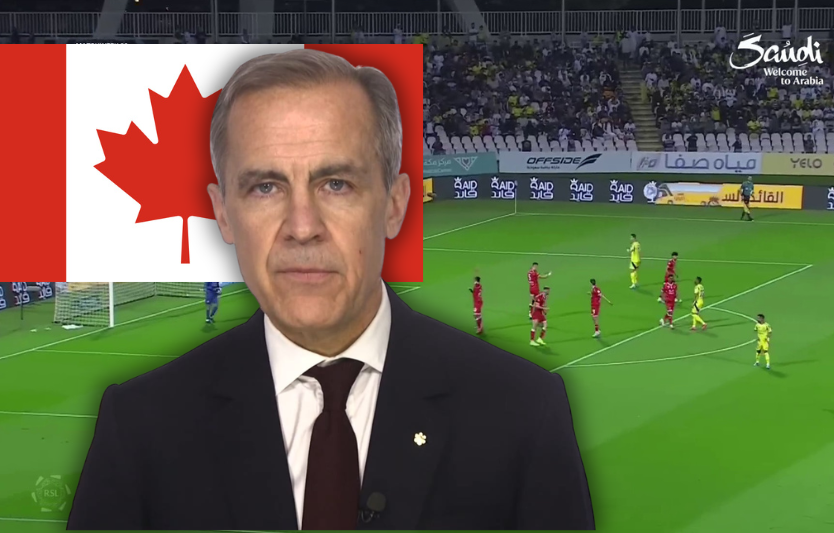
Canada uses new sovereign wealth fund to buy Saudi Arabian soccer team

by Mark Hill

OTTAWA — Prime Minister Mark Carney has announced that the first use of Canada’s new sovereign wealth fund will be to purchase a Saudi Arabian soccer team and festoon it with Canadian branding. “While much of the fund will be used to bribe corrupt American officials, it’s also important to improve Canada’s reputation abroad,” Prime […]

The post Canada uses new sovereign wealth fund to buy Saudi Arabian soccer team appeared first on The Beaverton.

29 Apr 13:09

INTERNAL USE ONLY

INTERNAL USE ONLY

MTD11_AE_v.SW_AI

[img]:mthmmx

description

exploded view of a device

29 Apr 13:08

Visiting Jinja

by David Chart

Last week I went on a research trip to Hamamatsu (浜松) in Shizuoka Prefecture, to do research for the next Shinto in Person essay. My main purpose was to visit Akihasan Hongū Akiha Jinja (秋葉山本宮秋葉神社).

I did, but I am having second thoughts about whether I can include it in the book. “Akihasan” is Mt Akiha, which is 866 metres high, and the Upper Sanctuary is on top of it. To get there, if you don’t have a car, you have to get a train from Hamamatsu (30 minutes), then a bus (45 minutes) that takes you to the Lower Sanctuary. The bus only runs about four times a day.

From the Lower Sanctuary, you have to climb a mountain path, which is the Omotesandō (表参道), or “Front Sacred Path”, that is 4.5 km long and rises about 700 m. And if you want to get the bus back, you really need to be on the train leaving Hamamatsu at 7:30 am, and do the whole round trip, up and down the mountain, in four hours.

It can be done. I did it. The path can be walked along its whole length — there is no actual “mountaineering” involved. But I walk about 4.5 km every day, and this path took me twice as long as my daily walk, because it is steep. In some parts, it has steps. Going down, those are easier than the slopes.

Even if you had a car, you would have to navigate up the mountain road that takes you to the Upper Sanctuary. In winter, there are buses from the railway station to the Upper Sanctuary, apparently, but I imagine it gets quite chilly up there at that time of year.

If you look at the website, you can see that it is quite a spectacular site, but I am not sure that it is really accessible enough for the “in person” part.

Akiha Jinja was originally part of Shinto-Buddhist practice, something that is suggested by its location. The accepted theory is that visiting sacred sites on the top of mountains appears to have originated with Buddhism, although it acquired Shinto elements early on. (The theory is that kami lived on mountains in early Shinto, and so people did not climb and violate the sacred areas. I am not sure how strong the evidence for this is, however.) Some of the Buddhist elements remain. If you follow the path up the mountain, you pass a Buddhist temple honouring Akiha Gongen, the Buddhist figure. That did not seem to get many visitors, possibly because it is quite a walk from the car park at the top.

There were Edo-period stone lanterns along the route, and ruins of a couple of rest stops, which suggest that a lot more people used to climb the main path than do today. It seems that it was a real pilgrimage route in the Edo period, and I did feel more like a pilgrim than I do when visiting most jinja. However, far fewer people appear to climb the path now. I saw about half a dozen people in each direction, which suggests that, at least on weekdays, people climb it at about fifteen-minute intervals. (It was a weekday, but it was also really good weather for it — no rain, mostly cloudy, gentle wind, and a temperature in the high teens centigrade.) I saw rather more people at the Upper Sanctuary, but the orientation of the buildings there shows that the vast majority come from the car park.

If you have mobility problems, or, indeed, just normal mobility for a modern urban dweller (and no car in Japan), the Upper Sanctuary is not accessible. On the other hand, if you are a strong walker but don’t like crowds, you’d love it…

I have a Patreon, where people join as paid members to receive an in-depth essay on some aspect of Shinto every month, or as free members to receive notifications of updates to this blog. If that sounds interesting to you, please take a look.
29 Apr 01:29

“I’m tired of these goddamn tourists” says man whose financial existence depends on them

by Janel Comeau

LUNENBURG, NS – Local resident and business owner Tyson MacNeil expressed his deep disdain for tourists this past Sunday, despite living a life that is only financially possible due to tourist spending.  “It’s the same thing every year from May to October,” said MacNeil, a man who voluntarily chose to live and work in a […]

The post “I’m tired of these goddamn tourists” says man whose financial existence depends on them appeared first on The Beaverton.

28 Apr 20:56

test post

by Ask a Manager
Cowboy Who?

IGNORE ME!

test – ignore!

The post test post appeared first on Ask a Manager.