
ACS Catalysis
DOI: 10.1021/acscatal.2c02955
Nature Catalysis, Published online: 20 September 2022; doi:10.1038/s41929-022-00839-7
Single-atom, small cluster and nanoparticle catalysts feature intriguing reactivity for a variety of transformations, which is often attributed to the properties of specific atomic species. This Review critically revisits the reactivity of such catalysts in term of the ensemble effects that arise from the interaction of multiple metal atoms or single atomic species with neighbouring atoms from supports, additives or surface ligands.
This work demonstrates that the regioselective cycloaddition of 1,2-diboraallene with aryl azide, namely, Huisgen 1,3-dipolar cycloaddition, affords an aromatic diboratriazole derivative. The diboratriazole readily releases N2 without the aid of any catalysts to furnish a 2,3-dibora-4-aza-1,3-butenyne derivative.
Regioselective Huisgen cycloaddition reaction between 1,2-diboraallene and azide proceeds under catalyst-free and mild conditions to furnish a diboratriazole (2). X-ray diffraction analysis and computational studies confirmed the delocalization of π electrons over the B2N3 five-membered ring of (2), indicating its aromatic features. Molecule (2) spontaneously releases N2 to form the 2,3-dibora-4-aza-1,3-butenyne derivative (3). The mechanism of a whole reaction profile was extensively investigated by density functional theory (DFT) calculations.

The chameleonic reactivity of isocyanides in numerous electrochemical transformations has been reviewed herein according to the general reaction modes of isocyanides. Each section will include a critical discussion of the previous studies, along with elucidation of mechanistic insights.
Isocyanides are well-known as efficient CO surrogates and C1 synthons in modern organic synthesis. Although tremendous efforts have been devoted to fully exploiting the reactivity of isocyanides, these transformations are primarily limited by their utilization of stoichiometric toxic chemical oxidants. With the recent resurgence of organic electrochemistry, which has considerably laid dormant over the past several decades, electrolysis has been identified as a green and powerful tool to enrich structural diversity by solely utilizing electric current as clean and inherently safe redox equivalents of stoichiometric chemical oxidants. In this regard, the unique reactivity of isocyanides has been studied in numerous electrochemical transformations. This review comprehensively highlights the most relevant progress in electrochemical strategies towards the functionalization of isocyanides up until June of 2022, with a focus on reaction outcomes and mechanisms.

A novel organic photoredox catalyst was discovered by simply adding a catalytic amount of TfOH as a co-catalyst to readily available thioxanthone. The new catalyst, 9-HTXTF, shows a sufficiently long singlet lifetime and adequately strong oxidation potential, as well as relatively facile photoexcitation, with applications in the hydrogenation and deuteration of carbonylated alkenes.
Hydrogenation of alkenes is one of the most fundamental transformations in organic synthesis, and widely used in the petrochemical, pharmaceutical, and food industries. Although numerous hydrogenation methods have been developed, novel types of catalysis with new mechanisms and new hydrogen sources are still desirable. Thioxanthone (TX) is widely used in energy-transfer photoreactions, but rarely in photoredox processes. Herein we show that a catalytic amount of TfOH as a co-catalyst can tune the properties of TX to make it a photoredox catalyst with highly enhanced oxidative capability in the hydrogenation of carbonylated alkenes with the cheap petroleum industrial product p-xylene serving as the hydrogen source. Deuterium can also be introduced by this method by using D2O as the D source. To the best of our knowledge, this is the first example of using p-xylene as a hydrogen source.

The first high-yielding synthesis of a phthalocyanine, through simple solid-state static aging, is reported in the Communication (e202209033) by Sandra Kaabel, Eduardo Anaya-Plaza et al. This greener approach diminishes up to 100-fold the solvent usage of the traditional solution synthesis. Several metal derivatives (Zn2+, Co2+, Cu2+, and Mg2+), as well as electron-deficient derivatives were synthesized. The image shows the crude zinc tetra(tBu)phthalocyanine as obtained. Image: S. Kaabel.

This Review highlights single-atom catalysis on covalent triazine frameworks (CTFs), thus focusing on the available insights on factors influencing nuclearity and coordination environment of metal species on CTFs and the effect on catalytic performance.
Heterogeneous single-site and single-atom catalysts potentially enable combining the high catalytic activity and selectivity of molecular catalysts with the easy continuous operation and recycling of solid catalysts. In recent years, covalent triazine frameworks (CTFs) found increasing attention as support materials for particulate and isolated metal species. Bearing a high fraction of nitrogen sites, they allow coordinating molecular metal species and stabilizing particulate metal species, respectively. Dependent on synthesis method and pretreatment of CTFs, materials resembling well-defined highly crosslinked polymers or materials comparable to structurally ill-defined nitrogen-containing carbons result. Accordingly, CTFs serve as model systems elucidating the interaction of single-site, single-atom and particulate metal species with such supports. Factors influencing the transition between molecular and particulate systems are discussed to allow deriving tailored catalyst systems.
Nature, Published online: 19 September 2022; doi:10.1038/d41586-022-02984-2
Pan-European agreement aims for broader measures of researchers’ contributions to science.Nature, Published online: 16 September 2022; doi:10.1038/d41586-022-02958-4
Examining funded proposals enables grant writers to produce more compelling proposals, say Orit Rapaport, Justin Crest and Crystal Botham.Nature Catalysis, Published online: 15 September 2022; doi:10.1038/s41929-022-00831-1
Controlling the enantioselectivity in metallaphotoredox-catalysed radical cross-couplings using cobalt has proven challenging. Now, the identification of a chiral polydentate ligand enables cobalt-catalysed enantioselective couplings with a broad scope of radicals affording chiral heterobiaryl products.Abstract
The formation and scission of chemical bonds facilitated by mechanical force (mechanochemistry) can be accomplished through various experimental strategies. Among them, ultrasonication of polymeric matrices and ball milling of reaction partners have become the two leading approaches to carry out polymer and small molecule mechanochemistry, respectively. Often, the methodological differences between these practical strategies seem to have created two seemingly distinct lines of thought within the field of mechanochemistry. However, in this Perspective article, the reader will encounter a series of studies in which some aspects believed to be inherently related to either polymer or small molecule mechanochemistry sometimes overlap, evidencing the connection between both approaches.
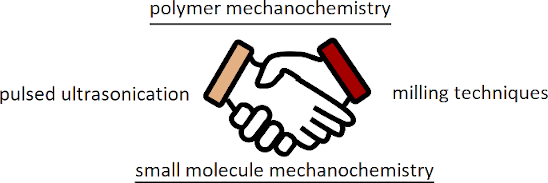
Beilstein J. Org. Chem. 2022, 18, 1225–1235. doi:10.3762/bjoc.18.128


The first example of quinoline synthesis from a major lignin motif by a one-pot cascade reaction is reported in yields of up to 89 %. The reaction path involves selective C−O bond cleavage, dehydrogenation, aldol condensation, and C−N bond formation along with heterocyclic aromatic ring construction. This transformation provides a new example for the application of lignin β-O-4 segments in the construction of N-heterocyclic aromatic compounds, thus offering a petroleum-independent path to heterocyclic aromatic chemicals.
Direct production of heterocyclic aromatic compounds from lignin β-O-4 models remains a huge challenge due to the incompatible catalysis for aryl ether bonds cleavage and heterocyclic ring formation. Herein, the first example of quinoline synthesis from β-O-4 model compounds by a one-pot cascade reaction is reported in yields up to 89 %. The reaction pathway involves selective cleavage of C−O bonds, dehydrogenation, aldol condensation, C−N bond formation along with heterocyclic aromatic ring construction. The control experiments suggest that both imine and chalcone were identified as the key intermediates, and the rate determining step as well as the preferred pathway were experimentally clarified and supported by density functional theory (DFT) calculations. Based on this protocol, the conversion of β-O-4 polymer delivered 56 wt % yield of quinoline derivative in three steps. This transformation provides a potential petroleum-independent choice for heterocyclic aromatic chemicals.


A distinct alkoxycarbonylation pattern via an in situ generated Fe2− catalyst is reported. This low-valent iron catalyst activates alkyl halides via a two-electron transfer (TET) process, unlike previous reports where alkyl halides underwent a single electron transfer (SET). This reaction provides easy and efficient access to esters, and its mechanism will provide new ideas for the activation of alkyl halides in the field of carbonylation.
Transition metal-catalyzed carbonylative cross-coupling reactions are some of the most widely used methods in organic synthesis. However, despite the obvious advantages of iron as an abundant and low toxicity transition metal catalyst, its practical application in carbonylation reaction remains largely unexplored. Here we report our recent study on Fe-catalyzed alkoxycarbonylation of alkyl halides. Mechanistic studies indicate that the reaction is catalyzed by an in situ generated Fe2− complex. This low-valent iron species activates alkyl bromides via a distinctive two-electron transfer (TET) process, whereas it proceeds via a single electron transfer (SET) process for alkyl iodides which is consistent with literature.
Publication date: 15 December 2022
Source: Coordination Chemistry Reviews, Volume 473
Author(s): Jun Xiong, Huaming Li, Jiadong Zhou, Jun Di
Nature, Published online: 07 September 2022; doi:10.1038/s41586-022-05075-4
Catalysts consisting of oxide-supported pair sites can enable bifunctional reaction mechanisms with high activity and selectivity for reactions and so overcome the limitations in industry imposed by the use of homogeneous catalysts.Nature, Published online: 07 September 2022; doi:10.1038/d41586-022-02791-9
A fossilized pile of small bones is probably a meal that an animal heaved up 150 million years ago.


By developing a sterically hindered fluorinating agent, N-fluoro-N-(tert-butyl)-tert-butanesulfonamide (NFBB), we discovered a conceptually novel base-catalyzed, self-sustaining fluorination of active methylene compounds and achieved an unprecedented high-yield fluorination of highly basic (hetero)aryl and alkenyl lithium species.
Fluorination of carbanions is pivotal for the synthesis of fluorinated compounds, but the current N-F fluorinating agents have significant drawbacks due to many reactive locations that surround the reactive N−F site. By developing a sterically hindered N-fluorosulfonamide reagent, namely N-fluoro-N-(tert-butyl)-tert-butanesulfonamide (NFBB), we discovered a conceptually novel base-catalyzed, self-sustaining fluorination of active methylene compounds and achieved the high-yielding fluorination of the hitherto difficult highly basic (hetero)aryl and alkenyl lithium species. In the former, the mild and high yield fluorination of active methylene compounds exhibited wide functional group tolerance and its novel catalytic fluorination-deprotonation cycle mechanism was demonstrated by deuterium-tracing experiments. In the latter, NFBB reacted with a variety of highly basic (hetero)aryl and alkenyl lithium species to provide the desired fluoro (hetero)arenes and alkenes in unprecedented high or quantitative yields.

Helicenes and helicene-like molecules have found a plethora of important applications in many research fields. Consequently, the catalytic enantioselective synthesis of these unique skeletons have drawn a lot of research interests and achieved notable advances in the last two decades. In this review, we comprehensively summarized the progresses in this field, including methods enabled by both asymmetric transition metal catalysis and organocatalysis.
Helicenes and helicene-like molecules, usually containing multiple ortho-fused aromatic rings, possess unique helical chirality. These compounds have found a wide range of important applications in many research fields, such as asymmetric catalysis, molecular recognition, sensors and responsive switches, circularly polarized luminescence materials and others. However, the catalytic enantioselective synthesis of helicenes was largely underexplored, when compared with the enantioselective synthesis of molecules bearing other stereogenic elements (e.g. central chirality and axial chirality). Since the pioneer work of asymmetric synthesis of helicenes via enantioselective [2+2+2] cycloaddition of triynes by Stará and Starý, last two decades have witnessed the tremendous development in the catalytic enantioselective synthesis of helicenes. In this review, we comprehensively summarized the advances in this field, which include methods enabled by both transition metal catalysis and organocatalysis, and provide our perspective on its future development.
Synlett
DOI: 10.1055/a-1916-2937

A novel palladium-catalyzed stereoselective remote hydroamination reaction is disclosed. A series of azoles and skipped dienes undergo the migratory allylic C–H amination in good yields and selectivities. A desymmetric migratory azolation process is also developed to highlight the reliability of the transformation. Preliminary mechanistic experiments corroborate the designed metal walking and allylic substitution cascade strategy via Pd–H catalysis, different from prior ligand-to-ligand hydrogen transfer pathway for conjugated dienes.
[...]
Georg Thieme Verlag KG Rüdigerstraße 14, 70469 Stuttgart, Germany
Article in Thieme eJournals:
Table of contents | Abstract | Full text
Publication date: 1 December 2022
Source: Coordination Chemistry Reviews, Volume 472
Author(s): Praveen K. Verma

Amidation Reaction: A sustainable and cost-effective protocol has been reported for the synthesis of amide bonds from unactivated esters and non-nucleophilic amines promoted by potassium tert-butoxide under aerobic conditions, encompassing wide substrate scope.
A sustainable and cost-effective protocol has been reported for the synthesis of amide bonds from unactivated esters and non-nucleophilic amines promoted by potassium tert-butoxide under aerobic conditions. The reaction proceeds under relatively mild conditions, encompassing wide substrate scope. A combined experimental and quantum chemical study has been performed to shed light on the mechanism, which implied that a radical pathway is operating for the present protocol.
Synthesis
DOI: 10.1055/a-1900-8895

In recent times, desulfonylative radical-cross-coupling (RCC) has come to the forefront in synthetic organic, bio, and material chemistry as a powerful strategy to form C–C and C–heteroatom bonds. Diverse functionalization through metal- and photoredox-catalyzed desulfonylation reactions has attracted the scientific community due to the mild reaction conditions, wide functional group tolerance, and excellent synthetic efficacy. In this review, we have highlighted photoredox-mediated desulfonylation reactions developed since 2000. This review will summarize the newly reported methodologies, with particular emphasis on their mechanistic aspects and selectivity issues which have paved a new way towards sustainable C–C and C–X (X = H or heteroatom) bond formation.1 Introduction2 Photoredox-Catalyzed C–C Bond Formation2.1 Aryl Sulfones as Radical Precursor2.2 Reactions of Allyl Sulfones3 Photoredox-Catalyzed C–Heteroatom Bond Formation4 Conclusion
[...]
Georg Thieme Verlag KG Rüdigerstraße 14, 70469 Stuttgart, Germany
Article in Thieme eJournals:
Table of contents | Abstract | Full text


