One of the most pernicious parts of the COVID-19 crisis is how uncertain everything is. Researchers and officials cite statistical models that estimate infection rates, death counts and when things will go back to normal, but those estimates are changing rapidly. And as the forecasts bounce around, so do the rest of us living through the crisis. How can one feel settled when the future feels so volatile?
Still, there’s a way to at least get a sense for what the experts are thinking. For the past five weeks, infectious disease researchers from institutions around the United States have been taking a survey that gathers their thoughts on the trajectory of the COVID-19 virus. The researchers come from academia, government and industry and are experts in modeling the spread of viruses like this one. The survey asks about things like how many people will eventually get COVID-19 and how many Americans will die.
The top-line numbers are sobering. The most recent survey, taken on March 16 and 17, found that, as a group, the experts think that as of March 15, only 12 percent of infections in the U.S. had been reported by the Centers for Disease Control and Prevention. They think there’s a 73 percent chance of a second wave of hospitalizations this fall. And they expect approximately 200,000 deaths in the U.S. by the end of the year.
But averages can only tell you so much. When forecasting the future, it also matters what a person (or model) thinks the range of possibilities could be — how uncertain the forecast is, in other words. In this survey, the experts gave three answers to most questions, representing the most likely future scenario and the best-case and worst-case scenarios.
Collecting responses in this form captures both the best-guess estimate from each respondent and the uncertainty surrounding it. It also lets the people in charge of the survey — Thomas McAndrew and Nicholas Reich, both biostatisticians at the University of Massachusetts, Amherst — convert the responses to a probabilistic consensus forecast,16 something that can answer questions like, “According to these researchers, what is the probability that we will have 50,000 reported cases by March 29?”
Expert consensus forecasts give you what a model does — a forecast that gives a measure of its uncertainty — without being overly reliant on just one way of thinking about a problem. In this instance, each expert has their own assumptions about how likely the virus is to spread or to be fatal, as well as assumptions about the ways humans might try to mitigate its damage.
Here’s what the researchers collectively had to say in the March 16-17 survey.
How many total COVID-19 cases in the U.S. will the CDC report on March 29?
At the time the survey was in the field, about 3,500 cases had been reported. But the experts estimated that by Sunday, March 29 — a little under two weeks after they took the survey — the country would have seen anywhere from 10,000 to 75,000 cases. (The current count is 15,219.) The experts’ confidence in those estimates, however, varied greatly:
Andrew Lover, an epidemiologist from the University of Massachusetts who took the survey, said his estimates were “semi-quantitative” and based on the virus’s progression in other countries. “The doubling times have been 5-8 days most places, so it’s a matter of applying that with some sliding-scale adjustments (testing rates, population density, etc.) based on the ‘feel’ of the epidemic curves.”
The consensus forecast generated by the individual responses indicates that we should expect roughly 19,000 reported cases by March 29, with an 80 percent chance of seeing between 10,500 and 81,500 cases.
What percentage of all COVID-19 cases in the U.S. had been reported as of March 15?
Experts estimated that, on March 15, when the CDC had publicly identified about 3,500 cases, only between 5 percent and 40 percent of actual COVID-19 cases had been reported. But experts’ confidence in those numbers was shaky.
The consensus model indicates that only 12 percent of cases had been reported at that time. In other words, the researchers think there were actually about 29,000 infections in the U.S. as of March 15, more than eight times the known tally.
How likely is it that there will be a second wave of hospitalizations later this year?
Just as flu season can have two peaks, the surveyed experts think there’s a good chance there will be a second wave of coronavirus-related hospitalizations sometime between August and December. Individual estimates for the likelihood of that second round of cases ranged from 40 percent to 96 percent, with an expert consensus of a 73 percent chance.
How many people will die in the U.S. due to COVID-19 this year?
Experts’ estimates of the number of COVID-19 deaths in the U.S. in 2020 ranged from 4,000 all the way to 1 million, a huge range that highlights how much we still don’t know about this disease.
The expert consensus is to expect about 200,000 deaths in the U.S. from COVID-19 this year, but the uncertainty around that number is also huge: There’s an 80 percent chance the final number will be between 19,000 and 1.2 million, according to these estimates.
The researchers plan to continue conducting these weekly surveys. As some elements of the pandemic become clearer — such as the virus’s incubation period and fatality rate, and how far the U.S. is willing to go to slow the spread of the virus — these ranges will presumably narrow.
But for now, there’s a lot the experts still aren’t certain of. Just like the rest of us.
A Texas official is suing to defend his opposition to same-sex marriage.
Jack County Judge Brian Keith Umphress claims the State Commission on Judicial Conduct is violating his First Amendment rights. Last year, the commission issued a warning against another judge, McLennon County Justice of the Peace Diane Hensley, for refusing to perform same-sex marriages due to her Christian faith. Hensley is also suing, and Attorney General Ken Paxton has declined to defend the commission.
In his federal lawsuit, Umphress challenges the commission’s finding that Hensley’s anti-gay views cast “reasonable doubt” as to her impartiality.
“Most judges disapprove of adultery, a substantial number (though probably not a majority) disapprove of pre-marital sex, and nearly every judge disapproves of polygamy, prostitution, pederasty, and pedophilia,” Umphress’ lawsuit states. “A judge who holds these beliefs — either on religious or non-religious grounds—has not compromised his impartiality toward litigants who engage in those behaviors. It is absurd to equate a judge’s disapproval of an individual’s behavior as undermining the judge’s impartiality toward litigants who engage in that conduct. Otherwise no judge who opposes murder or rape could be regarded as impartial when an accused murderer or rapist appears in his court.”
More from Courthouse News: Umphress says he “faithfully applies” the Supreme Court’s 2015 ruling legalizing same-sex marriage and impartially applies the law to every litigant before his court, but he also refuses to perform same-sex weddings while continuing to perform heterosexual marriages. … He further argues that in spite of the Obergefell ruling, Texas has not amended or repealed its marriage laws against same-sex marriage and that the Supreme Court “has no power to formally amend or revoke” state law or a constitutional provision. … Umphress claims the commission’s discipline causes judges to question whether they can support charities like the Salvation Army or other Christian organizations that do not recognize same-sex marriage.
Worry americans? "Should keep Americans shitting their pants 24x7" is what that looks like. The news out of Italy is horrific but it's still getting worse. That's not a good trajectory.
Christina Animashaun/Vox
Italy tried to stem its outbreak, belatedly. We’re on a similar course.
The national mobilization against the coronavirus is now in full swing. Schools and workplaces nationwide have shuttered. The federal government has recommended that people not gather in groups of 10 or more. Social distancing and self-isolation are now becoming part of the fabric of daily American life.
This has all sparked a serious question among many people: Are weoverreacting? It’s not just a question being asked by partiers and bar-goers — it has also been asked in the New York Times. A widely circulated article by Stanford’s John Ioannidissuggests that the stepped-up US response is a “fiasco in the making” that’s being made without enough data.
To someone who hasn’t been following the pandemic’s spread closely, the drastic measures indeed might seem like an overreaction. After all, around 35,000 cases and 500 deaths —as of March 22 —in a country of 330 million may not seem that bad. Is it really worth shutting down the economy, a measure that will of course have horrific costs of its own, for such a small toll?
But the numbers mask what’s really causing experts to worry: The coronavirus’s trajectory is putting us on a course of many, many more cases and many, many more deaths unless we do something drastic.
In other words, there’s a simple answer to the question: No, we’re not overreacting.
To explain why we’re not overreacting, we need to look to the experience of another country going through the coronavirus crisis: Italy. Here’s a chart comparing the country’s cases to the US’s.
Christina Animashaun/Vox
A couple of weeks ago, Italy’s outbreak did not seem so severe, with 107 deaths on March 4. But things were alreadyrapidly getting worse; by March 10, more than 600 people were dead, and now more than 3,400 are. That makes Italy the epicenter of coronavirus fatalities in the world, with more deaths than even China, where the outbreak started. Hospitals have been pushed to the breaking point, with doctors and nurses without adequate protective equipment collapsing at work and other doctors reporting that patients won’t all get lifesaving care because there isn’t enough of it to go around.
But case numbers kept growing. On March 8, Italy locked down the north of the country, and on March 9 it extended the lockdown to the whole country. It’s not clear even that was sufficient to stem the growth of cases, which grew by 6,557 on March 22 and 5,560 on March 23. It is possible the lockdown will start to produce a drop in cases this week. It’s also possible even the lockdown wasn’t enough — experts from China have argued it needs to be stricter.
Italy has been devastated by the virus because the action it took was just a little too moderate, a little too restrained, and a little too slow. The country took measures that were substantial and costly but nonetheless insufficient to actually bring the epidemic to a halt. (This was the message hammered home in a recent project in which Italians sent video messages to themselves as they were 10 days earlier.)
There’s some reason to think we won’t be hit as hard as Italy. Italy’s population is older than ours, and older people are hit hardest by the virus.
Smoking might affect death tolls, too, and smoking is more common in Europe than in the US. The lack of testing in the US until recently means reported cases per capita are a little further behind Italy’s than the raw confirmed case numbers are. (Italy has about 60 million residents, and the US has about 330 million.)
And comparing confirmed cases across countries is difficult anyway, including because most countries are undertesting and it’s hard to be sure who is undertesting more.
But the bottom line remains that there’s no real reason to think measures that didn’t suffice in Italy will suffice here.
The lesson from Italy isn’t just that you have to act before your hospitals are overwhelmed. It’s that you have to take steps that appear in the momentto be an exceptional overreaction — because by the time it looks like the steps you’re taking are appropriate, it will have been too late.
Why we should be worried
Now, when public health experts say the US is on Italy’s general trajectory, what exactly does that mean?
It means that the US and most European countries are seeing early coronavirus growth numbers that look like the ones from Italy. Our confirmed cases are increasing at about the rate theirs did. That gives us every reason to think our health systems will eventually be overwhelmed like theirs were, unless we take strong measures sooner than they did.
So far, we’ve taken some strong measures — which is good. But it’s not clear that we’re acting that much faster than Italy did — and remember, Italy wasn’t fast enough.
Thefrightening chart abovecompares the US’s reactions to Italy’s. It shows confirmed case numbers in Italy and in the US, starting on the day when each country passed 100 confirmed cases. It shows the points at which Italy took various precautionary measures. To break away from Italy’s trajectory, we need to take measures that are stronger than the ones it took, or take measures sooner along the trajectory than it did.
The US passed the 13,000 confirmed case mark on March 19. Italy locked down the northern half of the country on the day it reached 13,000 cases and extended the lockdown to the southern half one day later.
Marco Sabadin/AFP via Getty Images
Italy imposed unprecedented national restrictions on its 60 million people on March 9, 2020.
Apu Gomes/AFP via Getty Images
All residents of California were ordered to stay at home in a bid to battle the coronavirus on March 19, 2020.
To be sure, there are a lot of problems with using confirmed case data for these trajectory estimates. Italy is likely substantially undertesting, as is the US. Confirmed cases are a poor reflection of overall cases. Sometimes, growth in confirmed cases is due to increases in testing capacity, not increases in the virus’s spread.
But even with those caveats, confirmed case data isn’t worthless. “They lag behind reality,” Caitlin Rivers, a senior associate at the Johns Hopkins Center for Health Security, told me on Monday, but they’re still our best window into what is going on.
And looking through that window, the picture looks bleak for the US. Taking the drastic steps some parts of the country are now taking, like the California stay-at-home order, gives us a chance — not a guarantee, to be clear — to veer from the Italian trajectory. (This online tool offers state-by-state projections of hospitalizations over time depending on which interventions a state takes.)
“You are always behind where you think you are”
In a press conference on March 16, the National Institutes of Health’s Dr. Anthony Fauci, who has played a major role in leading the US response, explained to Americans why the strong measures the government was taking were not an overreaction.
“Some will look and say, well, maybe we’ve gone a little bit too far,” he said. “The thing that I want to reemphasize, and I’ll say it over and over again, when you’re dealing with an emerging infectious diseases outbreak, you are always behind where you think you are if you think that today reflects where you really are.”
Let’s say that today we found 1,000 new Covid-19 cases. Keep in mind that the virus has atwo- to 10-day incubation period. In the past week or so, each of those people was exposed to the virus. Then they got sick. Then they got sick enough to seek medical attention, which can take a few more days. Then they got a test. Then the test took a day or more to return positive results (some people are reporting longer waits than that for results, while some newly designed tests might be able to get results faster).
Each of those positive tests, then, reflects an infection up totwo weeks ago. The situation has already worsened for thetwo weeks or so since those new cases were infected. For much of that time, those 1,000 people have been out and about in the world, potentially infecting others. In a population not taking strong social distancing measures, it is estimated that on average they will have infected two or three others. Some of those newly infected will themselves have started infecting others.
Italy took strong measures. Its mistake was not that it didn’t react at all — it’s thatit kept being a little bit behind the ball. Each measure was appropriate to the situation the Italians observed. But the real situationwas alwaysmuch worse. So things kept worsening until they pulled out all the stops with a countrywide lockdown.
“It will always seem that the best way to address [the virus] would be to be doing something that looks like it might be an overreaction,” Fauci said. “It isn’t an overreaction. It’s a reaction we feel is commensurate [with what] is actually going on in reality.”
To avoid Italy’s trajectory, we have to respond with stronger measures than Italy. We have to respond in ways that feel like an overreaction. In the past few days, we’ve seen the first US steps that are stronger than Italy’s responsesat a similar point in the outbreak— steps like the Bay Area’s shelter-in-place order, the follow-up extending it to all of California, New York’s similar order Friday, and state orders shutting down restaurants and bars. That’s what it will taketo give ourselves a chance at a different curve.
Sign up for the Future Perfect newsletter and we’ll send you a roundup of ideas and solutions for tackling the world’s biggest challenges — and how to get better at doing good.
Future Perfect is funded in part by individual contributions, grants, and sponsorships. Learn more here.
Enlarge / New Hampshire Governor Chris Sununu. (credit: Shannon Finney/Getty Images)
Three New Hampshire residents have sued Gov. Chris Sununu arguing that a ban on gatherings larger than 50 people in the state violates their constitutional rights.
The New Hampshire Union Leader reports that one of the plaintiffs, Eric Couture, attends services three times a week at a Baptist church in Nashua.
"Anyone can choose not to exercise their God-given unalienable rights,” Couture said. “We can choose not to assemble if that is our desire. What cannot occur is one man in a position of power deciding to strip us of our rights in the name of safety and without due process.”
Gaslighting and lies. It looks like they only consequences may be Fox losing its viewers because they're dead. At this point, fine.
Sean Hannity on set at FOX Studios in New York City on April 21, 2014. | Paul Zimmerman/Getty Images
Hannity is trying to put his irresponsible coronavirus coverage down the memory hole. Here are receipts.
Sean Hannity’s coronavirus coverage underwent a remarkable transformation in just a week. And it’s not just him — the shift is emblematic of a broader trend at Fox News.
At first, Hannity took an antagonistic approach to coronavirus coverage, even using the word “hoax” as recently as 10 days ago. “This scaring the living hell out of people — I see it, again, as like, let’s bludgeon Trump with this new hoax,” Hannity said during his March 9 broadcast, during a segment in which he downplayed the risk of coronavirus to everyone except for people with compromised immune systems and older individuals.
He even cited “coronavirus hysteria” just two days after alleging a “hoax.”
“We’ve been telling you this is happening... Those numbers as I’ve been saying will likely rise” - He literally had a “Coronavirus Hysteria” graphic eight days ago pic.twitter.com/G8X3YG4d9i
But Hannity is now singing a different tune. While he’s still singing the praises of Trump and trying to shift blame for the coronavirus onto China, Hannity is now urging his viewers to take the coronavirus seriously. Alluding to the social distancing guidelines recommended by the White House’s coronavirus task force and others, Hannity on Tuesday night told his viewers to “take the following crucial precautions over the next couple of weeks. Do it why? Because we love our grandmothers, our grandfathers, our older moms and dads. They are the most vulnerable. They are the most at risk.”
Hannity even commended himself this Wednesday for his responsible coverage of the coronavirus pandemic. “By the way, this program has always taken the coronavirus seriously,” Hannity said. “We’ve never called the virus a hoax.”
The transformation is remarkable:
HANNITY, March 9: "This scaring the living hell out of people -- I see it, again, as like, let's bludgeon Trump with this new hoax."
HANNITY, March 18: "By the way, this program has always taken the coronavirus seriously. We've never called the virus a hoax." pic.twitter.com/yLKpojA7BI
A similar change has been noticeable across a number of Fox News and Fox Business News shows — from Fox & Friends to The Ingraham Angle to the elimination of Trish Reagan’s show on Fox Business — as the magnitude of the pandemic and its impact on the economy has become undeniable. This shift has also been noticeable in the rhetoric of the president, who reliably watches and live-tweets Fox News programming and enjoys something resembling a symbiotic relationship with the network.
Fox News has been a leader in presenting a Trumpy version of the truth, often portraying news in the best possible light for the president at the expense of science-based facts. But the coronavirus pandemic has destroyed that old paradigm, in part because the reality is that its viewers are perhaps most at risk. Downplaying the pandemic is journalistically irresponsible, and Fox News finally realized that.
The broader shift at Fox News
The most emblematic example of the Fox News pivot is what happened to Trish Regan, a reliably Trump-friendly host who has interviewed the president twice. She went on a rant about the “Coronavirus Impeachment Scam” on March 9 that quickly went viral — one in which she characterized the pandemic as “an attempt to demonize and destroy the president, despite the virus originating halfway around the world.” By Friday of that week, Fox News announced Regan’s Fox Business show was being pulled off the air.
Beyond Hannity and Trish Regan, the Washington Post video team put together this helpful video of before/after clips documenting how a number of Fox News personalities abruptly went from dismissing the coronavirus to taking it seriously within a matter of days last week.
The New York Times’s Michael Grynbaum reported that Fox brass attributed Regan’s forced hiatus to “the demands of the evolving pandemic crisis coverage.” Grynbaum also noted that following Regan’s show on Monday, network executives sent staff a memo urging them to “[p]lease keep in mind that viewers rely on us to stay informed during a crisis of this magnitude.”
“We are providing an important public service to our audience by functioning as a resource for all Americans,” the memo added.
Fox News did not immediately respond to an inquiry from Vox seeking further comment on the shifting tone of the network’s coronavirus coverage.
Fox News viewers took Hannity’s dismissive tone seriously
That the top-rated cable news network in the country is no longer dismissing, downplaying, and politicizing the coronavirus pandemic is a good thing. But polling released this week indicates that Fox News’s earlier tone is having residual effects.
According to a YouGov/Economist poll conducted March 15-17, only 38 percent of Fox News viewers say they’re worried about the virus — a far lesser percentage than those who pay more attention to broadcast news (68 percent) or national newspapers (72 percent). Along similar lines, new Pew Research Center polling shows that Fox News viewers are far more likely to believe the media has “greatly exaggerated the risks” of coronavirus than typical adults or viewers of other TV news networks.
The Pew poll indicates that only 27 percent of Fox viewers consider coronavirus to be “a major threat” to public health in the US. The irony is that about half of the network’s viewers are 50 or older and therefore more at risk of having serious health complications from Covid-19 (the disease caused by coronavirus) in relation to younger people.
Pew also found that 66 percent of Fox viewers are “very confident” in Trump’s handling of coronavirus, which is more than twice as high as the confidence level in Trump among all US adults (24 percent).
The White House, for what it’s worth, seems to appreciate Hannity and company’s efforts. During appearances this week, both Health and Human Services Secretary Alex Azar and Vice President Mike Pence praised Laura Ingraham and Sean Hannity respectively for their coronavirus coverage.
Disney and Pixar's new animated movie "Onward" is following the recent trend of movies arriving early on digital platforms amid the ongoing COVID-19 pandemic.
Starting in the United States tonight, March 20 at 5 p.m. PT, "Onward" will be available to purchase on digital retail platforms like iTunes for $19.99 (via Variety).
Following this, the movie will be streaming for Disney+ subscribers beginning Friday, April 3. "Onward" was released in theaters two weeks ago, right as the coronavirus pandemic was beginning to spread across the United States.
Many studios are now releasing films early on digital, due to the fact that going to a movie theater is no longer feasible for most Americans. Beginning today, Universal films like "The Invisible Man," "The Hunt," and "Emma" are available to rent for $19.99 on iTunes and other platforms.
Yep, it's gonna get lots worse before it gets better
Facing a dire shortage of protective masks, gowns and face shields as the coronavirus crisis intensifies, frontline healthcare workers are turning to social media in a desperate plea for supplies.
On Thursday, President Donald Trump shrugged off responsibility for the shortages, saying it is up to individual states to make sure they are well stocked.
Meanwhile, the CDC has suggested that healthcare workers use bandanas and scarves, despite a lack of evidence that they provide protection against the coronavirus.
The New York Times reports: As hospital supplies have dwindled, the vice president has called on construction companies to donate masks, the surgeon general has urged the public to stop buying them, and experts have warned that, the more doctors and nurses who get sick, the greater strain on a system already stretched thin. Now, doctors, nurses and others are rallying on social media with the hashtag #GetMePPE, referring to personal protective equipment like masks, gowns and face shields, to put pressure on elected leaders to get them more gear to guard against infection. Some suggested that members of the public reach out to a nearby hospital if they had masks or other medical equipment to donate.
Both my wife and I are frontline ER physicians. With such a shortage of N95 masks, we’ve had to resort to sharing 1 mask between the 2 of us. We even had to write our names on our one precious mask because now even nurses and doctors are stealing masks from each other! #GetMePPEpic.twitter.com/3Aovt01ULn
The executives at my hospital are posting on LinkedIn, congratulating themselves over their PPE-crafting party. They hand-sewed 500 masks! What in the actual fuck? #GetMePPEpic.twitter.com/mq7HDtiLXP
This is what it looks like in the ICU. Rows of brown bags each labeled with the name of a nurse or doctor . We are told to keep and reuse these masks , which under normal conditions would be thrown out each time we leave the isolation room. #GetMePPEpic.twitter.com/8blP8LzAGv
#GetMePPE This is my one N95 mask. I have been instructed to preserve it for up to 30 days by covering it with regular surgical masks which are also on critical shortage. The supply chain should not have crumbled. Our patients deserve better! We deserve better! pic.twitter.com/5FqFs5lytm
Anesthesiologists are literally putting plastic bags over their heads to intubation patients as they have no PPE. Shared with permission. #GetMePPEpic.twitter.com/J5jXpZCUc0
Making splash shields out of clear plastic dividers, foam, mounting tape and twill. Thank you infectious disease nurse in Swedish for the idea. Getting ready to deliver to local hospital if they will take it. #GetMePPEpic.twitter.com/3SV2SS3FPe
Any healthcare worker who is handed their one rationed mask to write their name on and a paper bag to put it in when not wearing it during their 12.5 hour shift during COVID-19 should have all student loan debt eliminated! PS thats just a dust mask it isn’t even an N95. #GetMePPEpic.twitter.com/0v5Dai6K5h
This is the bandana I am going to rock up to work in when I no longer have proper protective equipment to take care of my patients. #GetMePPEpic.twitter.com/0uMivZmqlg
This is quite the scandal, and Loefler's are targeted in ways that make it impossible to believe they're just random.
On Thursday afternoon, reports showed that Senate Intelligence chair Richard Burr sold off a huge amount of stock in early February, after senators received a private briefing on the threat posed by the novel coronavirus. The information relayed to Burr is exactly the kind of information that senators are not supposed to use for the personal advantage, but it was only after his money was safely pocketed that Burr went on to share the warning with a group of high-dollar Republican donors.
But after an evening of shifting stock records, reporters and analysts have determined that Burr was definitely not alone. Six senators made significant sales in the weeks immediately following the closed-door briefing, but before the seriousness of the coronavirus threat was clear to the nation. At least two of those appear to be part of longer transactions that had been in the works for some time. However, one of senators stands out for two reasons: First, Georgia Republican Kelly Loeffler dumped millions in stock in a cascade of transactions that started on the same day that Loeffler took part in the private briefing; Second … Loeffler’s husband is Jeffrey Sprecher, who just happens to be the chairman of the New York Stock Exchange.
Though it was hidden from the public, it’s possible to get a good sense of what was explained to Burr and Loeffler by looking at what Burr told his fellow Republican bigwigs — after his own money was safely tucked away. Speaking in February, weeks after that initial briefing but before the explosion of cases in the United States or the huge tumble of the markets, Burr warned the Republican group that novel coronavirus is “much more aggressive in its transmission than anything that we have seen in recent history," and told them frankly that it is “probably more akin to the 1918 pandemic.”
But weeks before he allowed this dire language to slip out, even to the well-heeled Tar Heel Circle members, Burr had already sold off not one or two, but twenty-nine different stocks that made up what may be the majority of his net worth. In doing so, Burr safely put away his money near the market’s all time high, just before fears related to the coronavirus sent the markets into a record fall.
The idea that Barr might engage in insider trading when his own wealth is on the line isn’t exactly helped by this story from 2012 showing that Burr was one of just three senators who opposed a bill that prevents members of Congress “from using nonpublic information for insider trading.” At the time, Barr was offended — terribly, terribly offended — that the Senate would even take up such a bill. “We're doing this at a time when we should be talking about the economy and jobs … Why do (Americans) think so little of us?” As it turns out, Americans had very good reasons to think little of Barr.
However, if Burr’s actions were bad enough to have even Republicans—and even Fox News hosts—calling on him to resign, Loeffler’s may be worse. As The Daily Beast reports, the Senate’s newest member didn’t even wait a day before translating what she heard in that private January 24 briefing into a series of transactions. Starting with a sale on that day, Loeffler and her husband made 29 transactions over the next two weeks, selling off millions of stock in industries across the board.
Loeffler is claiming that these were all managed transactions, that the fact that they drew millions from a market that was still moving upward at the time was coincidence, and that none of it had anything to do with her private, insider knowledge that the CDC director and National Institute of Allergy and Infectious Diseases director Anthony Fauci provided in an all-senators briefing.
That might be easier to believe except for the fact that of those 29 transactions, two were actually purchases. One of those two was a sizable investment in Citrix, a company that specializes in providing online meetings and other tools for remote workers. In other words, one of the few stocks that seems like a good purchase in the face of a threat that was about to send huge parts of the nation into lockdown. Exactly the kind of transaction that someone who was trading on insider information unavailable to the public might make.
Exactly the kind of transaction that might come if someone violated the law against senators using their insider information to boost their own wealth, even as most people in the nation were about to see 401Ks and life savings evaporate. At least her other purchase didn’t seem to be either Charmin … or Smith & Wesson.
SCOOP: NC's GOP Senator Richard Burr told the public he was confident the govt can fight off COVID-19 the same time he & his wife sold up to ~$1.5 million stock in major corporations that ended up losing most of their value during the coronavirus pandemic https://t.co/JsXkaxb2Pwpic.twitter.com/lMnnbBfoNZ
Soldiers stand guard in Sol Square following the 15-day state of emergency declaration as a precaution against coronavirus in Madrid, Spain, on March 17, 2020. | Burak Akbulut/Anadolu Agency via Getty Images
After a slow response from the government and the public, Spaniards now say “I will resist.”
Ellen Hietsch made quite a life for herself in Spain over the last three years.
She and her boyfriend would walk together in Madrid’s parks. She’d wake up certain mornings regretting the money she spent at bars. And when it was time to work, she enjoyed teaching English to her young students at Colegio Madrigal.
Amidst the fun, the 25-year-old Pennsylvanian expat kept an eye on the news. Watching Italy struggle to contain its coronavirus outbreak gave her pause, she said, but she “never thought something like that would happen over here.”
But it did.
Spain now has the world’s fourth-largest Covid-19 outbreak and is second only to Italy in all of Europe. To stop the spread, the government — slow at first to respond to the crisis — imposed a country-wide lockdown last Saturday.
Now the life Hietsch built is on hold. To pass the time, she meditates, does yoga, and chats with her three American roommates. She used to run up and down the building’s stairs for exercise — a neighbor’s young daughter would sometimes cheer her on — but other tenants just put up a sign asking her to stop.
Hietsch’s new normal is fine for the moment. Other than missing her boyfriend, she makes turmeric lattes for her roommates and online videos for her students.
The sudden change, though, remains jarring. “It’s been one of the oddest weeks of my life,” she told me.
Keep your mind busy these days! Ellen started a diary about how she feels. What about you? What are you doing to...
Not only does everyone in Spain have to stay inside, but also they have to live with police and drones patrolling the streets to keep pedestrians at home. They have to put up with an uneasy, rare silence. And they have to watch one of Europe’s best health care systems struggle to treat patient after patient.
“What makes me most angry is that we had a month and a half to get ready after our first case, and we had weeks to prepare after watching what’s happened in Italy,” said Ángela Hernández Puente, a top official at a health labor union in Madrid, the country’s outbreak epicenter.
The problem is that Spain’s long-standing political, economic, and historical problems are making a coherent response difficult.
The politics alone are daunting. Prime Minister Pedro Sánchez, weak after forming a minority government, likely didn’t want to risk his fragile hold on power by banning large gatherings, experts say. Instead, he allowed thousands to attend soccer games last week, as well as permitted a 120,000-strong feminist rally in Madrid to proceed.
Mariscal/AFP via Getty Images
Spain’s Prime Minister Pedro Sánchez warned his country on March 18 that “the hardest is yet to come” after a delayed response to the coronavirus.
Pablo Blazquez Dominguez/Getty Images
Thousands of women marched against gender inequality to mark International Women’s Day in Madrid, Spain, on March 8, 2020, despite concerns of coronavirus.
Hietsch was at that demonstration. “I regret going,” she told me, fearing it may have accelerated the spread. “I’ve felt anxiety ever since that I could be a carrier of the disease.” So far, though, she’s healthy.
The crisis has now reached even the highest levels of Spanish power. On March 14, Begoña Gómez — the wife of the prime minister — tested positive for coronavirus. That news came after two government ministers also contracted the disease. As a precaution, Sánchez does his best to keep away from others as he works and conducts press conferences over a video link. Even Semana Santa (Holy Week) — one of the country’s most cherished traditions and religious ceremonies — had to be canceled for the first time since 1933.
What’s especially worrying is that Spain isn’t an anomaly. Like Italy, it’s a grim warning of what’s to come in countries around the world, including the United States, if their governments don’t act aggressively or quickly enough to confront the crisis. In that sense, Spain is a glimpse into much of the world’s new normal.
“Nobody is ready for this,” Evangelina Martich, a health policy expert at the University of Carlos III in Madrid, told me.
How Spain’s outbreak got so bad so fast
The Spanish government confirmed the nation’s first case of coronavirus on January 31 in the Canary Islands, which lie to the west of Morocco. That same day, Spaniards evacuated from Wuhan, China — where Covid-19 first emerged — arrived in Madrid. Nine days later, another case was reported, this time on the island of Mallorca.
The first positive cases of coronavirus on the Spanish mainland came on February 26, including in both Madrid and Barcelona, the country’s two most important cities. It was then that the heads of Spain’s largest public hospitals told the Health Ministry “more tests had to be done, and as soon as possible.”
Ramping up testing was easier said than done.
“The [health care] system was not prepared for the seriousness of what was coming,” a doctor in a southern Spanish hospital told El País newspaper this week. “Up until at least a week ago, we weren’t able to do a PCR [a diagnostic test] for coronavirus without asking for authorization. I could order a PCR for the flu, but not for the coronavirus.”
Even today, large hospitals, including ones in Madrid, can’t process more than 400 tests a day. “We would like to test everyone but with the diagnostic capability and number of kits we have, that is not possible,” Rafael Cantón, the microbiology chief in the city’s Ramón y Cajal hospital, also told El País.
Cinta Moro, a doctor in the southern city of Seville, believes the lack of foresight and planning doomed Spain from the start. “With tests, we would’ve stopped a lot of the problems we have now,” she told me.
But it wasn’t just a testing failure, it was a cultural and political failure, too.
Javier Soriano/AFP via Getty Images
Real Madrid fans seen during the Spanish League football match in Madrid, Spain, on March 1, 2020.
Those I spoke with noted two aspects of the Spanish lifestyle that complicated the public’s own response. First, the country has a deeply embedded late-night culture, with everyone staying out late to hang out at bars or simply eat dinner. Second, a paranoia stemming back to Spain’s decades-long dictatorship created a palpable friction between the public and law enforcement.
The result was that few in Spain felt compelled to change their ways despite signs of chaos. “The Spanish character is not to believe a crisis is coming,” Moro said. “Once you see people die, that’s when you react — but by then it’s too late.”
Government inaction didn’t help. As mentioned above, Prime Minister Sánchez refused to stop large gatherings like soccer matches and political rallies from proceeding. Some experts I spoke to said that allowing so many people to congregate almost surely spurred a larger outbreak. But Martich, the health policy expert at the University of Carlos III, cautioned that it’s too early to know if that’s truly the case.
Still, it was only last week that the Spanish government really ramped up its response as the number of cases and deaths rose. It shut down the soccer league, closed schools, and asked people to stay home. But even then, people I spoke to said few took it seriously. Many were still going to bars, walking outside, and carrying on as if not much had changed.
The central government had to take more drastic measures. Last Friday, Spain declared a state of emergency, giving the central government the authority to override any decisions made by Spain’s 17 autonomous regions (think of them as more powerful US states). And the next day, Sánchez took an even bigger step, one others in Europe had already taken: imposing a 15-day complete lockdown of the entire country. Some believe it will ultimately last for longer.
Everyone now has to stay home unless they’re going to the grocery store or pharmacy, getting medical treatment, caring for an older or sick person, or walking a pet. To enforce these rules, police and drones roam the streets to reprimand and fine anyone caught wandering outside. Authorities have also set up about 30,000 roadblocks so no one secretly drives to another location.
Spanish Cop: “Walking around is prohibited. This is very serious. Lots of people are dying.” https://t.co/WXfxEAe7P4
Now, millions are stuck inside as they wait for the government to lift the restrictions. The hope is that the draconian measures will help stop the spike in the thousands of positive cases and hundreds dead.
While understandable, those moves angered and surprised people like Erika Tepler, a 35-year-old from Maine living in Seville. “It all changed so fast,” she told me. “I’m in Spain, and it sucks.”
A feeling of “anger and abandonment” in Spanish hospitals
Moro, the 35-year-old doctor from Seville, has a deeply personal connection to the crisis.
Her partner Sebastián, also a physician, was in contact with someone who tested positive for Covid-19. For at least the next week, he’s self-quarantining in a separate bedroom and using his own bathroom.
He finally got permission to do that after the Spanish government on Monday authorized doctors who’d been exposed to the virus to stay home. Before then, he’d been forced to keep treating patients even while possibly carrying the disease himself.
That leaves Moro alone to care for her 11-year-old daughter. It hasn’t been too hard, she says, because her child doesn’t require as much attention as a toddler. Were her daughter younger, the quarantine — while necessary — would’ve proven a greater burden on the family. What bothers Moro most, though, is that people can do little more than sit around and wait for this all to be over.
But the nation’s medical workers are anything but idle. Night and day, they contend with patients flooding into their hospitals, and it doesn’t look like that’s going to end any time soon. “The crisis is overwhelming the system,” said Martich, the health policy expert.
Part of the problem is that while Spain has a national health care system, each of the 17 regions actually administer it separately. That, according to health labor leader Hernández Puente, caused a lot of coordination issues early on, including leaving doctors ill-supplied to provide care. The central government has now tried to address this disconnect by temporarily nationalizing all the country’s private hospitals.
Those physicians who receive incoming patients lack masks, gloves, and other protective gear. And those doctors who treat patients with the most severe coronavirus symptoms are short of beds to put them in and respirators to help patients breathe, all in understaffed intensive care units.
Manu Fernandez/AP
Medical workers wave from a window of a hospital Madrid, Spain, on March 18, 2020.
Emilio Morenatti/AP
People wait to give a blood sample in a hospital in Barcelona, Spain, on March 18, 2020.
The central government still hasn’t addressed these critical needs, Hernández Puente said. “The general feeling among doctors and nurses is anger and abandonment.”
To ensure there are enough workers and resources for coronavirus care, some hospitals in Madrid and elsewhere are suspending services like general family care or cancer-related surgeries. That’s a tough position for health care providers to be in. “I wouldn’t want to be in that situation,” Martich told me.
Fourth-year medical students are also being called in to help address the staffing shortfall, and companies that can produce medical equipment must now contact the Ministry of Health for an assessment of how they might contribute to the national response.
When care fails, Moro says physicians put the dead bodies in special biodegradable bags. They’re closed tightly to ensure bodily liquids don’t spill out and spread the virus on surfaces or onto other people. No autopsies are performed to minimize droplets from landing on a healthy person, possibly getting them sick.
There’s at least a shared national sense of the struggle. Every day, at 8 pm, Spaniards stand on their balconies and clap together for health care workers returning home from their day shifts. At first, that happened at 10 pm, but the time was moved earlier so children could join in. That includes Moro’s daughter.
— ConSalud.es #QuédateEnCasa (@Consalud_es) March 14, 2020
“I will resist”
When she needs to go to the grocery store, Tepler, the American living in Seville, is surprised by what she finds. The streets are eerily quiet, save for the police officer asking her where she’s going. When she finally arrives, she finds the shelves of toilet paper stocked up while the wine aisles are empty. “It’s so demoralizing,” she said.
But there are some signs of optimism.
A social media movement with the hashtag #YoMeQuedoEnCasa — “I’m staying at home” — has found some success convincing people not to yearn for the outdoors. Even police who make announcements on empty roads reminding people to stay inside are now met with applause and chants of “bravo!”
And a doctor from Granada in southern Spain has become something of a national folk hero for boosting the message of what needs to be done to combat the virus in the country. With his YouTube videos, which he posts under the name Spiriman, Jesús Candel especially reprimands the country’s youth.
“I ask young people to stop watching stupid shit on their phones and look up information on the coronavirus,” he says in one of his more famous videos. “Young people need to fucking understand what they have to do.”
“There are young people going to the hospital with some symptoms who ask for a coronavirus test because all they care about is themselves,” he continues. Medical professionals will likely tell you to go home, he explains, “so we can attend to the severely sick people, like the woman I just attended to who was drowning alive, who had a week-long fever, and who’s in bad shape.”
Spaniards have also taken a cue from the Italians and have begun singing together from their apartments. The song most often heard blaring across the country is an old Spanish hit called “Resistiré” (I will resist). Part of the chorus is particularly relevant to life these days:
I will resist, to stay alive I’ll resist the blows and won’t give up Even though my dreams might tear me to pieces I will resist, I will resist
Of course, many are still worried about what’s next. Spain just barely recovered from the 2008 financial crisis and will struggle to climb out of another recession. The country has a lot of elderly people that will remain susceptible to the coronavirus for the coming months. And political polarization, which has stymied Spanish politics over the years, is likely to get worse during the crisis.
“The hardest is yet to come,” Sánchez told a near-empty Parliament on Wednesday.
But in some ways Spain might be one of the lucky ones. It has an advanced economy, a health care system that won’t entirely implode, and many of its citizens have enough resources to weather the crisis.
As the disease spreads further around the globe, those living in less-prepared nations will struggle to even sing from their homes. “It’s going to be much worse in other countries that aren’t as advanced,” Martich told me, referring mostly to countries in Latin America and Africa. “Spain is better prepared than most.”
The hope is that people who will soon face a similar reality can, like those in Spain now, resist.
Yep, more rot at the heart of the GOP. They are just there to enrich themselves
Two GOP senators, Richard Burr of North Carolina and Kelly Loeffler of Georgia, sold millions of dollars worth of stock after receiving closed-door briefings about the impending coronavirus crisis.
As we reported Thursday, Burr went on to privately warn a group of wealthy constituents that the coronavirus outbreak would be comparable to the 1918 flu pandemic while publicly toeing the White House line and downplaying its potential impact. Burr was also one of only three senators who opposed a 2012 bill that explicitly barred lawmakers and staff from using nonpublic information for stock trades, and required public disclosure of the trades.
Meanwhile, Loeffler’s husband, Jeffrey C. Sprecher, is chairman of the New York Stock Exchange.
ProPublica reports: Soon after he offered public assurances that the government was ready to battle the coronavirus, the powerful chairman of the Senate Intelligence Committee, Richard Burr, sold off a significant percentage of his stocks, unloading between $628,000 and $1.72 million of his holdings on Feb. 13 in 33 separate transactions. As the head of the intelligence committee, Burr, a North Carolina Republican, has access to the government’s most highly classified information about threats to America’s security. His committee was receiving daily coronavirus briefings around this time, according to a Reuters story. A week after Burr’s sales, the stock market began a sharp decline and has lost about 30% since.
From the Daily Beast: Sen. Kelly Loeffler (R-GA) reported the first sale of stock jointly owned by her and her husband on Jan. 24, the very day that her committee, the Senate Health Committee, hosted a private, all-senators briefing from administration officials, including the CDC director and Anthony Fauci, the head of the National Institute of Allergy and Infectious Diseases, on the coronavirus. “Appreciate today’s briefing from the President’s top health officials on the novel coronavirus outbreak,” she tweeted about the briefing at the time. … It was the first of 29 stock transactions that Loeffler and her husband made through mid-February, all but two of which were sales. One of Loeffler’s two purchases was stock worth between $100,000 and $250,000 in Citrix, a technology company that offers teleworking software and which has seen a small bump in its stock price since Loeffler bought in as a result of coronavirus-induced market turmoil.
In response to the reports, Democratic Congresswoman Alexandria Ocasio-Cortez was among those called for both Burr and Loeffler to resign.
UPDATE:Raw Story reports that Sens. Jim Inhofe and Ron Johnson have also been implicated in the GOP stock-selling scandal. And the New York Times notes that Democratic Sen. Diane Feinstein dumped major holdings around the same time.
As Intel chairman, @SenatorBurr got private briefings about Coronavirus weeks ago.
Burr knew how bad it would be. He told the truth to his wealthy donors, while assuring the public that we were fine.
THEN he sold off $1.6 million in stock before the fall.
Imagine the reaction of Red State Rage Addicts if Sen. H.R. Clinton had dumped millions in stock just after keeping it to herself that she'd been informed of an impending pandemic. https://t.co/rXq7xc9VB5
Here’s an idea – @SenatorBurr@SenatorLoeffler May I suggest both of you donate the gains from your stock sales to your local hospitals. There is still much to investigate legally & ethically. That may take time. But we know you’ve got the cash on hand TODAY & heroes need it https://t.co/SGyPx6POnY
The court understands that local health directives, personal preference, and other conditions may make travel inadvisable for certain attorneys, especially those located in the Puget Sound area. Any attorney wishing to appear at argument via telephone conference is permitted to do so. Any attorney wishing to appear at argument via video is permitted to do so, so long as the video connection is compatible with the courts system. Attorneys from Washington State may also appear via video from the Nakamura US Court of Appeals Courthouse in Seattle, Washington. Any attorney wishing to appear via telephone or video shall advise the clerk of the court no later than March 16 via a written request.
Last week's reference to the Puget Sound now sounds quaintly old-fashioned, though note that even then the order applied to "Any attorney."
In both cases, argument was postponed rather than going on by video, but presumably the court is open to conducting video arguments in the months to come. If you know of any appellate video arguments that have already taken place, please let me know. No videos of arguments have been posted to the Ninth Circuit site since March 12, though I'm not sure if that means that no arguments have taken place, or if there is just a delay in posting.
Question 1: Vaccine Referendum
Do you want to reject the new law that removes religious and philosophical exemptions to requiring immunization against certain communicable diseases for students to attend schools and colleges and for employees of nursery schools and health care facilities?
DirectX ray tracing became available in early 2018. DX12 Ultimate brings new features that weren't available in DXR1.0. [credit:
Nvidia ]
Today, Microsoft is announcing a new version of its gaming and multimedia API platform, DirectX. The new version, DirectX 12 Ultimate, largely unifies Windows PCs with the upcoming Xbox Series X platform, offering the platform's new precision rendering features to Windows gamers with supporting video cards.
Many of the new features have more to do with the software side of development than the hardware. The new DirectX 12 Ultimate API calls aren't just enabling access to new hardware features, they're offering deeper, lower-level, and potentially more efficient access to hardware features and resources that are already present.
For now, the new features are slated largely for Nvidia cards only, with "full support on GeForce RTX"—the presentation you're seeing slides from actually came from Nvidia itself, not Microsoft. Meanwhile, AMD has announced that its upcoming slate of RDNA 2 GPUs will have "full support" for the DirectX 12 Ultimate API—but not any prior generations of AMD cards. (AMD takes the opportunity to remind gamers that the same RDNA 2 architecture is powering both Microsoft's Xbox Series X and Sony's PlayStation 5 consoles.)
And yet the media generally reports this as "Trump does a thing" instead of "jesus tapdancing christ, that man's a gibbering idiot"
President Trump arrives for the daily briefing on the coronavirus at the White House on March 19, 2020. | Brendan Smialowski/AFP via Getty Images
We need clear guidance during a national crisis. Trump is failing.
In times of national crisis, the country is supposed to rely on the president to provide clear messages to guide them through new problems. But as America continues to deal with the coronavirus outbreak, President Donald Trump is failing.
That was very clear at Thursday’s daily coronavirus press briefing, as Trump went on long, boastful rants, talked about unrelated topics, and joked about kicking journalists out of daily press briefings. At times, it was unclear what Trump was talking about at all.
While discussing some of the federal government’s work to establish new treatments for Covid-19, the disease caused by the novel coronavirus, he started to boast about passing “right to try,” an unrelated law that attempts to let terminally sick people use experimental treatments.
Here is just one small section of Trump’s comments:
We’re also reviewing drugs that are approved abroad or drugs approved here for other uses. And, you know, one of the things that I’m most proud of that I got was “right to try.” That’s where somebody who is ill, somebody who is very sick — terminally ill, usually. In past administrations — we signed this a year and a half ago — you wouldn’t even be able to think about getting these drugs. They’ve been trying for decades to get these drugs approved. And it sounds simple, but it’s not. There’s liability and all kinds of things. I was able to get it approved — “right to try.” This is beyond “right to try.” What we’re talking about today is beyond “right to try.” “Right to try,” by the way, has been a tremendous success. People are living now that had no chance of living.
It’s difficult to parse this. On the one hand, Trump acknowledged that “right to try” is “beyond” current coronavirus efforts; “right to try” is focused on letting patients with terminal conditions like cancer get experimental treatments, while the current coronavirus treatment trials are going through the standard FDA process. On the other hand, Trump seemingly wanted to take the moment to boast about how “right to try” is “a tremendous success” — so he did it anyway.
As part of this, Trump also muddled messaging about what treatments are coming down the line, delivering a long series of remarks that were similarly hard to follow.
At other points during the press conference, Trump cited social distancing efforts to joke about kicking journalists who are critical of him out of daily press briefings. “You’re actually sitting too close,” he told reporters at the briefing. “Really, we should probably get rid of about another 75, 80 percent of you. I’ll have just two or three that I like in this room. I think that’s a great way of doing it. We just figured a new way of doing it.”
At another point, Trump went on an extended ramble about “fake news” — a term he took credit for inventing — and how the media has been so unfair to him.
During normal times, these unclear, random rants are bizarre but possible to overlook — we’ve even gotten a bit accustomed to them with Trump as president. But during a national crisis, it’s dangerous.
Leadership is more important now than ever
Due to the coronavirus pandemic, Americans are being asked to make sacrifices. They’re being asked to social distance, isolating themselves from their loved ones. They’re being asked to potentially give up income and benefits, as restaurants and other businesses shut down to avoid spreading the disease. They’re being told to abandon activities that previously enriched their lives, from working out at the gym to going out with friends.
It’s during these kinds of times, experts say, that people need leaders to provide clear guidance. “You really need to very strong leadership from the top,” Céline Gounder, an epidemiologist at New York University, told me.
Public health experts have been highly critical of Trump’s messaging. Ashish Jha, director of the Harvard Global Health Institute, previously called it “deeply disturbing,” adding that it’s “left the country far less prepared than it needs to be for what is a very substantial challenge ahead.”
While Trump has started to take the threat of coronavirus more seriously in his public remarks since Monday, he’s used racist, xenophobic language to describe the virus. That continued on Thursday as well, along with his other disjointed remarks.
Trump could have given the podium over to his administration’s coronavirus task force leaders and experts, who have generally done a much better job over the past few weeks messaging what needs to be done. While Trump typically does this at some point in the press conferences, it’s not until after he’s delivered a ramble of his own — and the experts are often forced to clarify or amend the president’s comments. Indeed, FDA Commissioner Stephen Hahn on Thursday had to clarify that upcoming coronavirus treatments are being tested and offered through traditional means, not “right to try.”
The result is Americans are less likely to understand what is going on, what the government is doing to help them, and what is expected of all of us to help combat the crisis. It makes a bad situation even worse.
When you include high blood pressure and diabetes as conditions, that doesn't narrow the population much
More than 99% of Italy's coronavirus fatalities were people who suffered from previous medical conditions, according to a study [PDF] by the country's national health authority. Reader schwit1 shares a report: The new study could provide insight into why Italy's death rate, at about 8% of total infected people, is higher than in other countries. The Rome-based institute has examined medical records of about 18% of the country's coronavirus fatalities, finding that just three victims, or 0.8% of the total, had no previous pathology. Almost half of the victims suffered from at least three prior illnesses and about a fourth had either one or two previous conditions. More than 75% had high blood pressure, about 35% had diabetes and a third suffered from heart disease.
One of the industries most directly impacted by COVID-19 is the airline industry. As travel bans begin taking place, coupled with severe drops in people’s travel plans, airlines find themselves needing a rainy day fund. Good news! For the last decade, the airline industry has made billions in profits and I’m sure they’ve been creating jobs and making sure they are robust and healthy companies that can weather some terrible turn of events. Nope.
According to Bloomberg News, airlines in the United States spent about 96% of their “free cash flow” profits on stock buybacks! Highlights include: American Airlines spending $12.5 billion on buybacks, and United Airlines using 80% of their cash flow for buybacks! Sweet!
This fact has not gone unnoticed by many on the left, including Rep. Alexandria Ocasio-Cortez who tweeted out:
96% of airline profits over the last decade went to buying up their own stocks to juice the price - not raising wages or other investments. If there is so much as a DIME of corporate bailout money in the next relief package, it should include a reinstated ban on stock buybacks.
Since the Trump administration finally began to acknowledge the magnitude of their failure a couple of weeks ago, the Republican administration has floated out useless ways to keep stock prices floating, while dragging their feet in providing economic relief to the millions of Americans soon to be out of work. The craven narrow-minded idea factory that is the Grand Old Party, has so far come up with tax cuts to big businesses and injecting trillions into the economy to make pretend that everything is going swimmingly.
The fact that the Trump administration did nothing to plan for these inevitabilities means they have nothing but half-baked scams. The first scam is to propose dolling out $1 trillion in taxpayer money to industries in need, like the airline industry and, of course … casinos and hotels. Of course, they can barely lift one of their money-grubbing fingers to help Americans losing jobs and wages and childcare. Nor are they willing to bail out the millions of small businesses, offering up “low interest loans” to small business with no other credit: meaning banks still make their money while most small businesses just dig deeper into debt.
At this point, it's GOP failings wiping out their voters. Maybe they'll get lucky and their rural population base will survive, but maybe not.
On last night’s Rachel Maddow Show, Maddow broadcast several informative and enlightening segments on COVID-19, echoing experts who have pointed out that the curve of coronavirus infections in the U.S. looks much like Italy’s curve. Yesterday, Italy recorded 475 deaths in a single day, the highest one-day toll of any nation in the world so far.
Maddow also spoke with Donald McNeil, science and health reporter for the New York Times, who offered a grim forecast of what is ahead for the U.S.
But before we get to that, Maddow expressed her concern over 7 states, some with enormous populations, that don’t seem to be doing anything to curb the spread of coronavirus at all. Those states are Texas, Tennessee, Oklahoma, Idaho, Mississippi, Missouri, and Wyoming.
“No state-mandated school closures. No state-mandated limits on large gatherings,” said Maddow. “No state mandates on the operations of businesses like bars and restaurants. …. Because sure, why not? Make it up yourself. See how it goes. No reason to panic, right? No reason to hustle. Let’s just see how this plays out.”
In another segment, Maddow highlighted one town in Italy, Vò, which very successfully used aggressive testing to neutralize the spread of the virus. Those tested, including several people who were asymptomatic, were isolated from the rest of the population quickly.
“They have now gone days with no new cases in that town.”
Unfortunately, the U.S. can’t manage to get enough test kits manufactured and distributed.
Another segment offered a grim forecast of what is ahead for the U.S.
Said McNeil to Maddow: “I will predict that since we are going down the path of Italy, and we are a much bigger country than Italy, that we will surpass Italy in the number of dead in a few weeks. … I don’t understand why we’re talking about a small town like Vo in Italy when that same lesson, that you have to test and isolate as many people as possible was a lesson learned in cities all over Asia months ago, and we have been paying very little attention to what they’re doing.”
The FCC, under Trump’s pick Ajit Pai, has done away with net neutrality protections in part by arguing that the internet is not a utility in the same way as telephones. While this argument has been disingenuous from the beginning, its limitations, as with anything, are now being tested by the current COVID-19 pandemic. In fact, Ajit Pai, having de-fanged his agency’s ability to regulate the telecommunications industry, is now trying really hard to get that same industry to offer some basic consumer protections.
On March 13, FCC chairman Ajit Pai released the Keep Americans Connected Pledge. The pledge, according to Pai, was signed by Internet Service Providers (ISPs) across the board and promises that all these telecoms:
not terminate service to any residential or small business customers because of their inability to pay their bills due to the disruptions caused by the coronavirus pandemic;
waive any late fees that any residential or small business customers incur because of their economic circumstances related to the coronavirus pandemic; and
open its Wi-Fi hotspots to any American who needs them.
These are all good things. They aren’t exactly enough, however. This is something Pai knows, which is why the release also mentions that chairman Pai called for ISPs to “relax their data cap policies in appropriate circumstances, on telephone carriers to waive long-distance and overage fees in appropriate circumstances, on those that serve schools and libraries to work with them on remote learning opportunities, and on all network operators to prioritize the connectivity needs of hospitals and healthcare providers.” It’s not in the pledge for a reason.
As ArsTechnica points out, ISPs like AT&T announced plans to lift data caps for 60 days to help with the obvious needs to people working and using the internet at home during this time. Comcast, while signing the pledge at the time, did not lift data caps; but being under pressure from consumers and governments alike, relented, and a day later announced they too would waive data caps for internet subscribers.
The FCC’s now bogus logic has always been that a free and open internet means a free market for ISPs to monopolize and try to squeeze out the most profit from these essential communication platforms. In fact, after arguing that the federal government shouldn’t regulate smaller markets, they’ve turned around and argued that states and local municipalities shouldn’t either, saying that only the federal government can regulate these kinds of utilities.
Since the Republican-led FCC took control they have rolled back the very basic protections offered by net neutrality under the Obama administration. At the time, like all good cronies, Pai and other Republicans said that in deregulating the telecom industry, all of that profit would somehow lead to more freedom and better infrastructure. As with every other deregulated industry in the history of history, that promise was a lie.
The current conditions of Americans across the country is stressful. We are all trying to distance ourselves from one another while also trying to retain communications in very uncertain times. People need to be informed as to what is happening and how things are unfolding. Children have to learn, and all of us need some entertainment from time to time. Net neutrality doesn’t mean everything is free, it means that internet providers treat the consumers of their very well subsidized product as the essential communications services they are.
It was inevitable that a member of Congress or a high-ranking Trump administration official would be diagnosed with COVID-19. Inevitable, in fact, that more than one will be. But the title of first—to admit it, anyway—goes to Rep. Mario Diaz-Balart, a Republican from Florida.
“I am feeling much better,” Diaz-Balart said in a statement. “However, it's important that everyone take this seriously and follow CDC guidelines in order to avoid getting sick and mitigate the spread of this virus. We must continue to work together to emerge stronger as a country during these trying times.”
Diaz-Balart was tested after developing symptoms including a fever and headache on Saturday. He had already decided to self-quarantine in Washington, D.C., to protect his wife from potential exposure since her pre-existing conditions put her at “exceptionally high risk.”
Utah Rep. Ben McAdams, a Democrat, announced Wednesday evening that he has also tested positive for COVID-19.
Please read my statement on contracting #COVID19. I have self-quarantined since first having symptoms and consulted with my doctor. #utpolpic.twitter.com/upx4NcTvF8
Asia is seeing a second wave of coronavirus infections after weeks of declines in new cases, troubling governments hoping to contain the virus.
The Daily Beast reports: “The Financial Times reports that virus cases have resurged in Asia, dashing hopes that strict containment measures introduced throughout the continent had been successful. The governments of South Korea, Taiwan, and some parts of China are reportedly bringing in urgent new containment measures after they hit second waves of new infections after weeks of declines. … Infections appear to have increased as people fled home from the coronavirus outbreak in Europe, but the resurgence may also expose the limits of the containment strategy.”
[They are allowed in some states, but only a small minority; should courts in other states authorize online notarization on an emergency basis?]
According to notarize.com, online video notarization is allowed in Virginia, Montana, Texas, Nevada, Minnesota, Michigan, Tennessee, Ohio, Indiana, and Vermont—but still not in most states.
I doubt most state legislatures would want to spend time focusing on this right now, but it seems to me that state courts may well have inherent powers to accept documents notarized online (for those filings that require notarization), at least for the duration of the coronavirus epidemic. Has there been any move towards that?
UPDATE: Just to be clear, here's how (according to notarize.com) the process works:
[1.] Upload a Document: Notarize any document by uploading it to your computer, iPhone, or Android phone. You can access documents from your email, by taking a picture on your phone, or through cloud storage services like Dropbox.
[2.] Prove Your Identity: Notarize uses a patent-pending forensic analysis to verify government issued photo IDs and passports. Take a picture of your government issued ID, answer a few questions, and Notarize will confirm your identity in seconds.
[3.] Connect with a Live Notary Agent: Connect with a licensed electronic notary public over live video to sign your document. The Notarize agent will confirm your identity, witness your signature and assist you throughout the process.
[4.] Save and share your notarized documents: Now you can download or share your notarized document. Completed document will be stored in your safe and secure Notarize account, if you ever need it in the future.
Racist gaslighter continues to spread racism while gaslighting
President Trump called the coronavirus pandemic a hoax during a Keep America Great Rally in North Charleston, South Carolina, on February 28, 2020. | Kyle Mazza/Anadolu Agency via Getty Images
Trump’s claim that he’s always taken the coronavirus “very seriously,” refuted by Donald Trump.
President Donald Trump has evolved on the coronavirus pandemic.
But this week, as the number of cases — and the death toll — rises and the economy looks increasingly bleak, Trump’s tone has shifted. In a notable development, Trump took a calm and measured tone during Monday’s press conference, deferring to experts on scientific questions and outlining the government’s social distancing guidelines.
“My administration is recommending that all Americans, including the young and healthy, work to engage in schooling from home when possible, avoid gathering in groups of more than 10 people, avoid discretionary travel, and avoid eating and drinking at bars, restaurants, and public food courts,” Trump said.
That the president is taking the outbreak seriously is certainly a step in the right direction. If people listen to Trump and follow experts’ advice, that may actually save lives.
But Trump is also interested in seizing the narrative of the pandemic now, attempting to frame himself as a president who competently handled the crisis, even referring to himself in Wednesday’s press conference as a “wartime president.”
He’s also trying to erase his early rhetoric and response. Trump proclaimed during Tuesday’s press conference that “I’ve always known this is a real — this is a pandemic. I felt it was a pandemic long before it was called a pandemic.”
CNN ran a segment Wednesday highlighting the disconnect between Trump’s public statements now and what he’s been saying the past six weeks. Trump fired off this tweet a short time later: “I always treated the Chinese Virus very seriously, and have done a very good job from the beginning, including my very early decision to close the ‘borders’ from China - against the wishes of almost all. Many lives were saved. The Fake News new narrative is disgraceful & false!”
I always treated the Chinese Virus very seriously, and have done a very good job from the beginning, including my very early decision to close the “borders” from China - against the wishes of almost all. Many lives were saved. The Fake News new narrative is disgraceful & false!
It’s good that Trump is now taking the Covid-19 pandemic seriously, but it is simply not the case that he did so from the start. His own actions and public statements demonstrate this.
As the media continues to cover the story, it’s important to hold the president accountable for his actions — and inactions. Trump lost valuable time ignoring expert calls to act. He also actively spread misinformation. Real people’s lives were harmed and we shouldn’t forget it. Here’s a look back at Trump’s evolution over the two months.
Trump gutted the government’s pandemic response capability and then downplayed the seriousness of an ensuing pandemic
As my colleague German Lopez detailed last week, two years ago Trump and then-National Security Adviser John Bolton disbanded a White House agency that was set up by the Obama administration to lead federal preparation and coordination for outbreaks like the one the world is now trying to contend with.
But during a news conference last week, Trump pretended he had no involvement in that decision, saying, “I didn’t do it. We have a group of people ... I don’t know anything about it.”
.@Yamiche: You said you don't yet responsibility for any failures, & yet you disbanded the pandemic response team. What do you say to criticism of that?
TRUMP: "I just think it's a nasty question ... I didn't do it. We have a group of people ... I don't know anything about it." pic.twitter.com/PGRY0kI6uh
When he wasn’t insisting that the buck stops elsewhere, Trump was telling the public that coronavirus was really nothing to worry about. As the coronavirus spread in China and the first US case was reported by the Centers for Disease Control and Prevention (CDC) on January 21, Trump was asked during an interview with CNBC on January 22 if he had any worries about the situation escalating into a pandemic. He said he did not.
“No, not at all. We have it totally under control,” Trump said. “It’s one person coming in from China, and we have it under control. It’s going to be just fine.”
That comment set the tone for Trump’s remarks about the coronavirus until this Monday, when — as the stock market endured one of its worst days in history and the country entered a lockdown posture to stop the virus’s spread — Trump finally started to talk about the situation with the seriousness it deserves.
The change in tone was remarkable considering how dismissive Trump had been about the coronavirus before then. During an interview on February 2, for instance, Trump alluded to the move his administration announced in January to restrict entry into the country from China and said, “We pretty much shut it down coming in from China.” But by that time cases were already spreading inside the country. Then, 10 days later, Trump made the scientifically dubious assertion that “you know in April, supposedly [the virus] dies with the hotter weather.”
Trump even expressed hope that the coronavirus would go away before winter ended. During a news conference on February 26, he noted there were only five coronavirus cases in the country and said “we could be at just one or two people over the next short period of time.”
But despite issues with testing preventing the full scope of infection in the US from being known, by the end of February the number of cases in the US had broken 60 and instances of community spread had been recorded. Trump, however, ignored those problems and cited his “hunch” to make a case that the coronavirus death rate is lower than official estimates coming from organizations like the World Health Organization (WHO).
Perhaps most memorably, Trump closed out February with a rally in which he dismissed criticism of the government’s testing failures coming from Democrats and elsewhere as “their new hoax.” After receiving criticism for it, Trump quickly tried to walk it back — but in the days that followed he misleadingly hyped a coronavirus vaccine even as experts were telling him it wouldn’t be available for a year or more.
On March 6, Trump proclaimed during a tour of the CDC in Atlanta that “anybody right now and yesterday, anybody that needs a test gets a test.” Trump’s claim was false then and false now: The US continues to lag far behind other countries in testing capability.
As recently as March 7, Trump was telling reporters he was “not concerned” about coronavirus’s spread because “we’ve done a great job.” Ironically, he made that remark during a summit with Brazilian leaders at Mar-a-Lago that culminated in at least four people who were there testing positive for the virus. Two days later, Trump posted a tweet in which he undersold the coronavirus threat by misleadingly comparing it to the common flu, which is less deadly and spreads less easily.
So last year 37,000 Americans died from the common Flu. It averages between 27,000 and 70,000 per year. Nothing is shut down, life & the economy go on. At this moment there are 546 confirmed cases of CoronaVirus, with 22 deaths. Think about that!
So instead of treating the coronavirus “very seriously,” Trump actually spent weeks downplaying it. The Recount put together this helpful video tracking Trump’s dismissive comments with the spread in the United States.
Today, @realdonaldtrump said: “I’ve always known this is a pandemic. I’ve felt that it was a pandemic long before it was called a pandemic ... I’ve always viewed it as serious.”
Something seemed to change for Trump toward the end of last week — a week in which the WHO officially declared coronavirus to be a pandemic as the number of cases and deaths in the United States mounted and the financial markets tanked.
Trump declared coronavirus to be a national emergency last Friday — days after the national address when many thought he would — and then began this week with a news conference in which he discussed new federal guidelines about what people should do to slow the spread of coronavirus. That was followed by the news conference on Tuesday in which Trump claimed “I felt it was a pandemic long before it was called a pandemic” and his Wednesday morning tweet on the same theme.
The president is telling people the right thing now, but he spent a long time telling them the wrong thing
To be clear: The president finally treating coronavirus with the seriousness it deserves is a good thing. He finally seems to realize he can’t bluster his way out of this one and is giving the public responsible advice.
But it’s also worth remembering the steps Trump took to dismantle America’s pandemic preparedness capabilities during his first three years in office, as well as dismissive comments he made more recently that may have resulted in people not taking the proper precautions.
With the US economy spiraling into a possible recession, the number of cases domestically still increasing exponentially, and the number of deaths surpassing 100 — and all of this happening as the president tries to campaign for reelection — Trump has good reasons to try to get people to believe he’s taken the coronavirus seriously all along.
But the truth of the matter is he didn’t. And as a result, the country was less prepared for what it’s now dealing with than it could’ve been.
Apple today introduced a new iPad Pro with a faster A12Z Bionic chip, a new Magic Keyboard accessory with a built-in trackpad, an Ultra Wide camera, a LiDAR Scanner, and more. In Apple's description of the new tablet, it calls it "faster and more powerful than most Windows PC laptops."
The updated iPad Pro has a new camera system that features a 12MP Wide camera and a 10MP Ultra Wide camera, which can zoom out two times to capture a wider field of view. This brings the iPad Pro family in line with the most recent iPhones, which also sport the square-shaped triple-lens camera bump.
The device's new A12Z Bionic chip supports an eight-core GPU, enhanced thermal architecture, and tuned performance controllers. Apple said that professionals working on the iPad Pro can edit 4K video and design 3D models thanks to the internal update, and the new tablet has a 10 hour battery life, faster Wi-Fi, and gigabit-class LTE that's 60 percent faster than the previous generation.
The iPad Pro is still available in both 11-inch and 12.9-inch sizes, with an edge-to-edge Liquid Retina display and ProMotion technology. The tablet also now features five studio-quality microphones and four speakers that adjust to any orientation.
The new LiDAR Scanner measures the distance to surrounding objects up to 5 meters away, and enables advanced experiences with augmented reality on the iPad Pro. Apple said this means that ARKit apps on the new iPad Pro will get improved motion capture and people occlusion, leading to AR experiences "never before possible."
Lastly, Apple is adding trackpad support to iPadOS 13.4 and the new Magic Keyboard. This new accessory attaches magnetically to iPad Pro and includes a floating design that works well on both a lap or a desk. The Magic Keyboard features cantilevered hinges for smooth adjustments of the viewing angle up to 130 degrees, including a full-size keyboard with backlit keys and a scissor mechanism that delivers 1mm travel.
The Magic Keyboard also has USB-C pass-through charging and the new trackpad. With this, Apple said that users will be able to enhance their workflows in multiple ways: scrolling through web pages in Safari, photo libraries in Photos, precisely edit text in Notes, organizing Mail, and more. Most third-party apps will work with the trackpad as well, without any update required.
The new iPad Pro is available to order starting today on apple.com and in the Apple Store app in 30 countries and regions, including the US. iPad Pro will be available in stores starting next week. The 11-inch iPad Pro starts at $799 for 128GB Wi-Fi, while the 12.9-inch model starts at $999 for 128GB Wi-Fi. More storage capacities include 256GB, 512GB, and 1TB, and cellular options are available.
The Magic Keyboard for iPad Pro will be available to purchase in May in two versions: $299 for the 11-inch iPad Pro and $349 for the 12.9-inch iPad Pro. There are also new Smart Keyboard Folio accessories out today, priced at $179 for 11-inch and $199 for 12.9-inch.
The buck stops with Trump when everything is good, like the stock market going up! Here, let’s have him sign a stock chart for his supporters. But when something goes bad? Never his fault. Ever. And when it undoubtedly is? Well, it’s still not his fault because how could it be? This is all so brand-new! It isn’t, of course. Heck, he lost his shit over Ebola, even as President Barack Obama was ably handling it. There was a reason we had a pandemic response task force before Trump happily axed it.
But even if true, could you imagine other presidents whining about having to face an unprecedented challenge?
George Washington: Well, we gave that “new nation” thing a try, but it’s not my fault. It has never been done before.
Abraham Lincoln: Yeah, it sucks to see the South go, but it’s not my fault. A civil war wasn’t something ever done before.
Franklin D. Roosevelt: Damn, there goes Europe. Hope the Nazis aren’t too bad! But it’s not my fault. An evil marauding invading army wasn’t something that had ever been done before.
Dwight D. Eisenhower: Oof, I know, driving those small roads from city to city is brutal. Wish I could’ve pulled off that “interstate highway” thing. But not my fault! A road system has never been done before.
John F. Kennedy: Sorry about the whole nuclear holocaust thing. But it’s not my fault we botched the Cuban missile crisis. It had never been done before.
Lyndon B. Johnson: Darn it, black people still can’t vote. But hey, what could I do? Not my fault. This had never been done before.
Barack Obama: Sorry to see the whole economy collapse, ushering the “Great Depression of the 2000s,” but not my fault. This had never been done before! Sure would’ve been nice to have more people insured, huh? Not my fault. Yup. It had never been done before.
As for the former dumbest president ever?
George W. Bush: Sorry about ignoring that intelligence briefing titled “Bin Laden determined to strike the U.S.,” then attacking the wrong country in response, costing millions of lives, trillions of dollars, and giving rise to ISIS.
Well … they don’t always rise to the challenge.
And as if that wasn’t horrific enough, Republicans decided to go even dumber with Trump. Worst part? You know Trump isn’t their rock bottom. Get ready for them to nominate Ted Nugent someday. Or QAnon.
Real leaders rise to the challenges before them, even if they’re not of their own doing. Republicans have completely forgotten what a “real leader” even looks like. For starters, they don’t pass the buck to someone else, or refuse to take responsibility for their actions. It’s not that high a bar.


 Christina Animashaun/Vox
/cdn.vox-cdn.com/uploads/chorus_asset/file/19826029/italy_us_gap_11.jpg) Christina Animashaun/Vox
Christina Animashaun/Vox
/cdn.vox-cdn.com/uploads/chorus_asset/file/19820966/GettyImages_1206523500.jpg) Marco Sabadin/AFP via Getty Images
Marco Sabadin/AFP via Getty Images
/cdn.vox-cdn.com/uploads/chorus_asset/file/19820981/GettyImages_1207688340.jpg) Apu Gomes/AFP via Getty Images
Apu Gomes/AFP via Getty Images
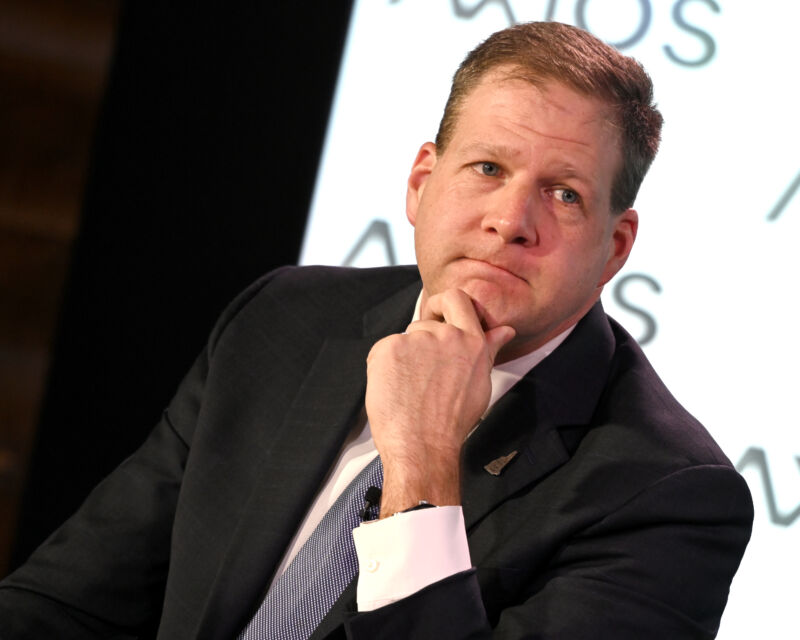
 Sean Hannity on set at FOX Studios in New York City on April 21, 2014. | Paul Zimmerman/Getty Images
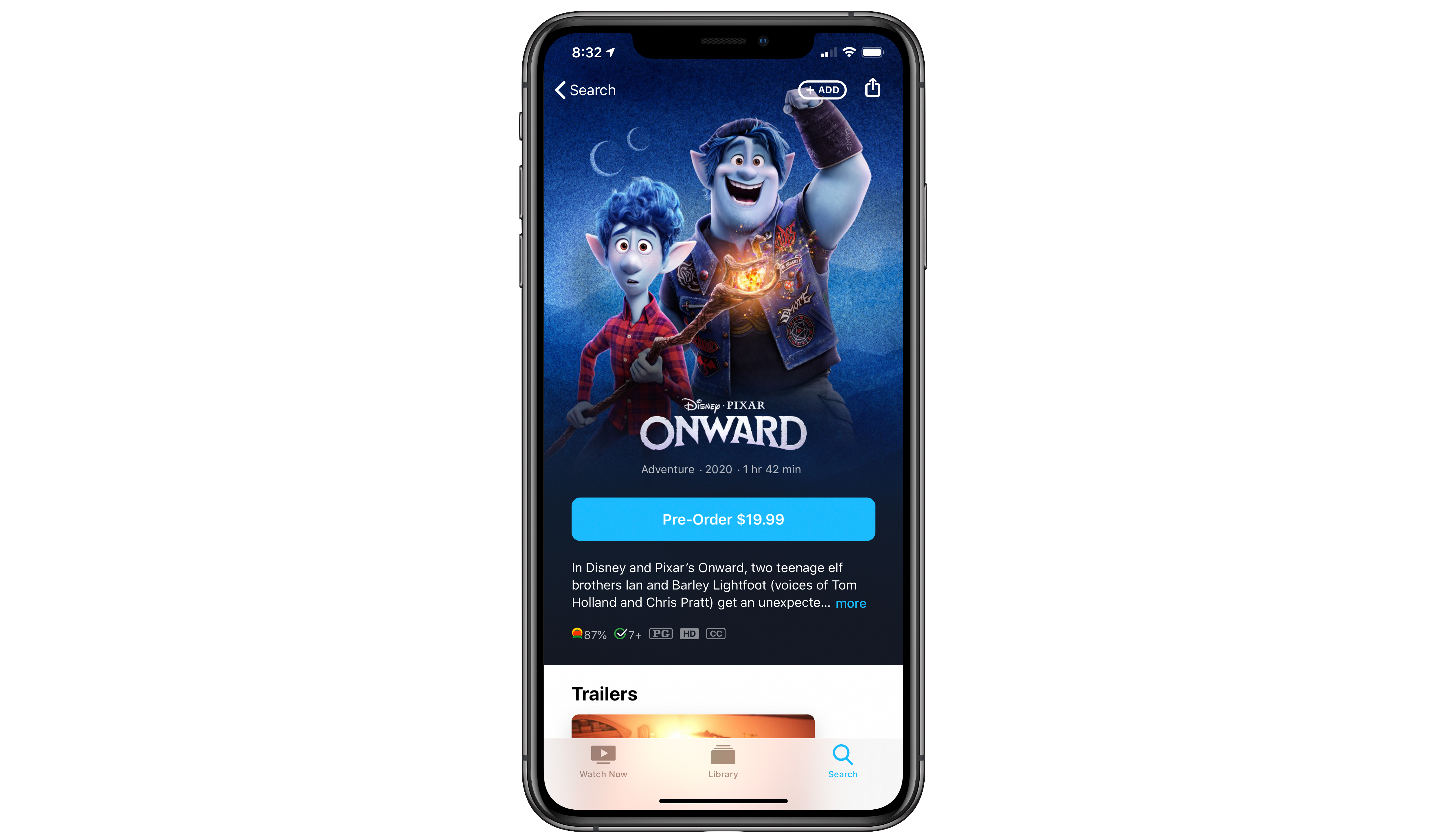
 (@cleebennett)

 Soldiers stand guard in Sol Square following the 15-day state of emergency declaration as a precaution against coronavirus in Madrid, Spain, on March 17, 2020. | Burak Akbulut/Anadolu Agency via Getty Images
/cdn.vox-cdn.com/uploads/chorus_asset/file/19819198/GettyImages_1207591590.jpg) Mariscal/AFP via Getty Images
Mariscal/AFP via Getty Images
/cdn.vox-cdn.com/uploads/chorus_asset/file/19819188/GettyImages_1211180488.jpg) Pablo Blazquez Dominguez/Getty Images
Pablo Blazquez Dominguez/Getty Images
/cdn.vox-cdn.com/uploads/chorus_asset/file/19819272/GettyImages_1204515354.jpg) Javier Soriano/AFP via Getty Images
Javier Soriano/AFP via Getty Images
/cdn.vox-cdn.com/uploads/chorus_asset/file/19819297/AP_20078487426963.jpg) Manu Fernandez/AP
Manu Fernandez/AP
/cdn.vox-cdn.com/uploads/chorus_asset/file/19819301/AP_20078392555751.jpg) Emilio Morenatti/AP
Emilio Morenatti/AP



 President Trump arrives for the daily briefing on the coronavirus at the White House on March 19, 2020. | Brendan Smialowski/AFP via Getty Images


 President Trump called the coronavirus pandemic a hoax during a Keep America Great Rally in North Charleston, South Carolina, on February 28, 2020. | Kyle Mazza/Anadolu Agency via Getty Images