Eight of the 10 most challenged books in 2019 were LGBT-related, according to an annual report from the American Library Association.
The New York Times reports: One of them parodied Marlon Bundo, Vice President Mike Pence’s rabbit. Another told a story about a marriage between two men. Other books on the 2019 list were stories about children and transgender identity. “This year, we saw the continuation of a trend of a rising number of challenges to L.G.B.T.Q. books,” said Deborah Caldwell-Stone, executive director of the library association’s Office for Intellectual Freedom, which compiles the list. “Our concern is the fact that many of the books are age-appropriate and developmentally appropriate books intended for young people, but they are being challenged because they allegedly advance a political agenda or sexualize children,” she said. According to the association, the challenges came from parents, legislators and religious leaders.
More from Openly: The most recent list showed more objections than ever to gay- and trans-themed books, said the ALA, which releases an annual list. Since 2016, at least half of the most challenged books have been LGBT+ related, it said. “We’re seeing a pushback against diversity and an effort to silence the voices of LGBT people, and, in a very real sense, trying to push these voices back into the closet,” said Deborah Stone, head of the ALA’s office for intellectual freedom. … At the top of the list were Alex Gino’s “George” about a young trans girl and Susan Kuklin’s “Beyond Magenta: Transgender Teens Speak Out,” it said.
Enlarge / A screenshot from a shutterstock video of a tit. Bing linked to the video with the caption "big tits stock video footage." (credit: Shutterstock)
Microsoft has shut down a feature in its Bing search engine that shows popular articles from major websites after Ars Technica reported that the feature was showing wildly inappropriate results from the stock photo site Shutterstock. How inappropriate? Well, here are a couple of screenshots I took on Wednesday morning after a reader tipped me off to the problem:
The first three images in the carousel. We blurred the "little girl peeing" image.
This is what I saw after searching Bing for "Shutterstock." These weren't the very top results—I scrolled down a bit before taking these screenshots—but this "trending articles" carousel appeared on the first page.
I wasn't about to click on a link to "boys erection" without talking to a lawyer first. So my editor advised our tipster to notify the FBI, while I emailed Microsoft and Shutterstock to see if they could explain what was going on.
Apple is planning to start selling Mac computers with its own main processors by next year, relying on designs that helped popularize the iPhone and iPad, Bloomberg reported Thursday. From the report: The Cupertino, California-based technology giant is working on three of its own Mac processors, known as systems-on-a-chip, based on the A14 processor in the next iPhone. The first of these will be much faster than the processors in the iPhone and iPad, the people said. Apple is preparing to release at least one Mac with its own chip next year, according to the people. But the initiative to develop multiple chips, codenamed Kalamata, suggests the company will transition more of its Mac lineup away from current supplier Intel Corp. Taiwan Semiconductor Manufacturing Company, Apple's partner for iPhone and iPad processors, will build the new Mac chips, said the people, who asked not to be identified discussing private product plans. The components will be based on a 5-nanometer production technique, the same size Apple will use in the next iPhones and iPad Pros, one of the people said.
What the hell is it with the GOP and people running animal businesses? Show horses for Katrina, puppy mill for COVID? jesus
Donald Trump started off blaming his cataclysmal response to the COVID-19 pandemic on China. When that finger pointing proved insufficient to distract for tens of thousands dead, Trump added the World Health Organization to his list. But Wednesday brought some signals that Trump may have found scapegoats closer to home … and this time, there might actually be a sound reason.
Secretary of Health and Human Services Alex Azar was a lead singer in the “we got this” chorus when coronavirus first entered public awareness back in January. Whether talking to Congress or the media, Azar was quick to dismiss the threat of novel coronavirus. America already had tests ready for the virus, Azar said, weeks before there were tests. America was prepared, Azar said, when it clearly was not. And to make America ready for threat and disruption of a global pandemic, Azar had the perfect guy … a former labradoodle breeder with no experience in public health.
Azar was apparently so cool with the leadership provided by his chief of staff, dog dude Brian Harrison, that he didn’t feel the need to engage with epidemiologists, or doctors, or any of the numerous agencies that should have been pulled into early planning. As The Wall Street Journal reports, that includes cutting out FEMA, because bringing in experts in planning for emergencies would only “complicate” the plans that he and Mr. Doodle were making for America.
Instead, Azar put Harrison—just back in D.C. from six years of running his family puppy mill—in charge of the entire nation’s entire coronavirus response. Despite having already told the media that the CDC had tests prepared on January 21, in truth there were no such tests. But Azar and Harrison set out to fix that. In the process, they apparently blocked any test put forward by companies who came to the FDA with functioning tests, none were given approval until February 29—a full month lost in the ability to distribute and conduct tests.
In the meantime, the CDC developed a test, issued the test, discovered problems with the test. The FDA visited the CDC and found that the lab which created the test was “a mess.” The CDC denied that the lab was a mess. The HHS launched an investigation of the CDC … and America has still not gotten up to speed with testing despite after being badly delayed at the start.
On Wednesday, Donald Trump was asked about how an inexperienced labradoodle breeder can be leading the national response to the biggest crisis in decades. Trump’s response was to deny knowing Harrison.
There’s no doubt that Harrison’s leadership has been incompetent. But then, Azar is incompetent. His “years of experience in the pharmaceutical industry” doesn’t come because he was a doctor or pharmacist. Azar is an attorney, who worked for Big Pharma as a lobbyist. Of course he told everyone who would listen that they could handle a killer disease without an issue—that’s what he had done for a living for years.
On Thursday morning, it’s clear that both Azar and his dog dude are on the outs. Not only had Trump given Harrison the sniff of denial, stories reporting Azar’s incompetence are suddenly everywhere. Notably, the WSJ’s report has it as Azar who is determined that the CDC develop its own test, and Azar covering up the fact that there were problems with testing—including in cabinet meetings.
But Azar’s incompetence, and how readily he appointed someone totally unprepared to a critical position, is only a mirror of the guy who put a Big Pharma lobbyist in charge of public health. The same guy who put a coal company lobbyist in charge of the environment. And an investment banker in charge of the Treasury. And Jared Kushner in charge of #$@$ing everything.
Harrison and Azar look to be the designated fall guys in this stage of the unfolding drama, and there’s no doubt they deserve to fall. But if there’s one thing that does trickle down from the top in the Trump White House, it’s incompetence.
In the week ending April 18, the advance figure for seasonally adjusted initial claims was 4,427,000, a decrease of 810,000 from the previous week's revised level. The previous week's level was revised down by 8,000 from 5,245,000 to 5,237,000. The 4-week moving average was 5,786,500, an increase of 280,000 from the previous week's revised average. The previous week's average was revised down by 2,000 from 5,508,500 to 5,506,500. emphasis added
The previous week was revised down.
The following graph shows the 4-week moving average of weekly claims since 1971.
Click on graph for larger image.
The dashed line on the graph is the current 4-week average. The four-week average of weekly unemployment claims increased to 5,786,500.
This was higher than the consensus forecast.
The second graph shows seasonally adjust continued claims since 1967 (lags initial by one week while increasing sharply).
At the worst of the Great Recession, continued claims peaked at 6.635 million, but then steadily declined.
Continued claims have already increased to a new record high of 15.976 million (SA) and will increase further over the next few weeks - and likely stay at that high level until the crisis abates.
Workers in protective suits walk next to the closed Huanan Seafood Wholesale Market in Wuhan, China, on March 30. It’s one of many possible places where the novel coronavirus could have jumped from a bat, or from an intermediary species, to humans. | Hector Retamal/AFP via Getty Images
A Wuhan lab studied SARS-related viruses. But there’s no evidence it discovered or was working on the new virus.
One of the great mysteries of the Covid-19 pandemic is how, exactly, the SARS-CoV-2 virus made the leap from wildlife into humans. Scientists who’ve analyzed the virus’s genome believe it came from a bat, likely in China. But Chinese epidemiologists have revealed little about how or where the first patients were infected.
One focus has been a wet market in Wuhan, where live wildlife was sold for food, because 66 percent of the first cluster of 41 cases in December 2019 had exposure to this market. Yet there is also genomic evidence and reports the virus could have been circulating earlier, in November. Which means there are many other possible places it could have jumped from a bat, or an intermediary species, to humans.
Finding the index case, or “patient zero,” for an infectious disease that’s just emerged can take months or years, if the person can even be found at all. So it’s not unusual we still don’t have one, especially for a disease with so much asymptomatic transmission.
In March, I offered explanations from virus experts for why they dismiss two of the theories that have surfaced about the coronavirus origin: that Chinese scientists bioengineered it in a lab and/or deployed it as a bioweapon.
In this piece, I’ll address the theory du jour: that a Chinese researcher was infected with the new virus inside a high-containment Wuhan laboratory and accidentally spread it, after which China attempted to cover it up.
This hypothesis has been circulating in US, UK, and Chinese media since February, with fresh reporting and speculation this month in the Daily Mail, Vanity Fair, Fox News, and the Washington Post. A Tuesday op-ed drawing solely from circumstantial evidence by chief “labber” Sen. Tom Cotton (R-AR) in the Wall Street Journal raised the question anew.
Riding the wave of these reports, President Donald Trump is also now using this potential avenue for blaming China; on April 15, he said his government was looking into whether the virus came from the Wuhan lab. Secretary of State Mike Pompeo has also said Beijing “needs to come clean” on what it knows about the virus’s origin.
Trump and the GOP’s motivation to establish new ways to blame China for the pandemic is clear: The president’s response to the pandemichas been abominable, and he faces an election in six months, with more than 22 million people unemployed and an economy heading toward recession. The lab-escape theory joins a variety of arguments he and his supporters are using — including scapegoating the World Health Organization and former President Barack Obama — to divert attention from his failures.
The Wuhan lab may also be the most tantalizing of the diversions, not just for Trump’s supporters but also for some political journalists and China hawks. What if the catastrophe is a result not of nature but of China’s incompetence with handling viruses and habit for suppressing information?
Such a spy-novel-worthy plot may seem plausible for a number of reasons: the Chinese government’s poor record of transparency; the fact that the Wuhan Institute of Virology, a research center with facilities in the same city where the virus first appeared, was studying dangerous pathogens, including bat coronaviruses; and US officials’ concerns about the lab’s safety standards in 2018, per the Washington Post.
Yet five scientists I interviewed, some of whom have worked extensively in China with researchers at the Wuhan Institute of Virology, say the pandemic can’t logically be pinned on an accident at that lab. (Researchers at the institute didn’t respond to my request for comment.)
The scientists I did speak to all acknowledge it’s not possible to definitively rule out the lab-escape theory. “The trouble with hypotheses is that they are not disprovable. You cannot prove a negative,” said Peter Daszak, president of EcoHealth Alliance and a disease ecologist who has studied emerging infectious diseases with colleagues in China. Yet he also sees the lab-escape theory as “ironic and preposterous.”
The scientists I spoke to also noted that all countries with high-level containment facilities, including China and the US, must be vigilant to prevent accidental leaks of dangerous diseases from labs. “I think we all are concerned about the increasing presence of high-consequence pathogens in laboratories and the issue of inadequate biosecurity,” said Dennis Carroll, the former director of USAID’s emerging threats division who helped design Predict, a surveillance program for dangerous animal viruses that the Trump administration chose to shut down in October. “We’ve seen examples of inadvertent release in the past and I’m sure we will see it in the future. So it’s a very major concern that we need to pay attention to.”
But scientists told me that based on what they know about the Wuhan Institute of Virology and the likelihood of a natural spillover event, they didn’t see lab escape as probable. And one expertadded that it could be dangerous to get too preoccupied with this theory when the threat of another disease with pandemic potential from wildlife is so high.
Since politics will continue to propel this theory into the public sphere, let’s walk through six reasons a lab leak is unlikely.
1) The probability of the virus jumping from animals to humans outside the lab is much higher than the virus infecting humans inside the lab
Daszak is a scientist who has spent the past 15 years collaborating with scientists in China and other emerging disease hot spots around the world to find out where dangerous viruses lurking in wildlife — like the first SARS virus, MERS, and Ebola — are, how they get into people, and how to stop people from spreading them and spiraling into pandemics.
He says he’s confident SARS-CoV-2, the new coronavirus, originated in bats and jumped into people somewhere, likely in China, because he and his colleagues have established that viruses like it are out there and there are so many opportunities for this to happen.
“If you do the math on this, it’s very straightforward. ...We have hundreds of millions of bats in Southeast Asia and about 10 percent of bats in some colonies have viruses at any one time. So that’s hundreds of thousands of bats every night with viruses,” Daszak says. “We also find tens of thousands of people in the wildlife trade, hunting and killing wildlife in China and Southeast Asia, and millions of people living in rural populations in Southeast Asia near bat caves.”
Next, he says, consider the data he’s collected on people near bat caves getting exposed to viruses: “We went out and surveyed a population in Yunnan, China — we’d been to bat caves and found viruses that we thought could be high risk. So we sample people nearby, and 3 percent had antibodies to those viruses,” he says. “So between the last two and three years, those people were exposed to bat coronaviruses. If you extrapolate that population across the whole of Southeast Asia, it’s 1 million to 7 million people a year getting infected by bat viruses.”
Compare that, he says, to what we know about the labs: “If you look at the labs in Southeast Asia that have any coronaviruses in culture, there are probably two or three and they’re in high security. The Wuhan Institute of Virology does have a small number of bat coronaviruses in culture. But they’re not [the new coronavirus], SARS-CoV-2. There are probably half a dozen people that do work in those labs. So let’s compare 1 million to 7 million people a year to half a dozen people; it’s just not logical.”
Hector Retamal/AFP via Getty Images
The biosafety level-4 (BSL-4) laboratory (left) at the Wuhan Institute of Virology in Wuhan, China, on April 17.
But he told me he gets why people in the US, who aren’t regularly exposed to bats, have a hard time understanding how great the risk is of humans getting infected with novel coronaviruses circulating in bats.
“I understand — it’s a weird thing. Bats live out there, we don’t see them that often, we don’t realize how common, how abundant, how diverse they are,” he says. “In Southeast Asia, they carry their own viruses, and there’s just this really big interface between bats and people, every night, every day. People live in caves, people shelter from the rain in caves, people hunt bats.”
Angela Rasmussen, a virologist at Columbia University, also sees the lab-leak theory as very unlikely. “This virus came from bats under unknown circumstances,” she told me. “While I cannot rule out the lab-accident theory, there are so many other possibilities for how it could have happened. It could have been someone collecting bat guano for fertilizer, somebody cleaning out a barn, somebody exploring a cave. It could be any situation like that of someone in contact with animals who then spread it to other humans. There are so many other options than a lab leak.”
2) Yes, the Wuhan lab studied bat coronaviruses and SARS-related viruses. But there’s no evidence it discovered or was working on the new virus.
One of the big arguments “labber” theorists make for why we should suspect the Wuhan Institute of Virology of accidentally leaking the virus: Researchers there were already studying bat coronaviruses.
This is true; they published studies on the first SARS coronavirus that infected humans in 2003 and other bat coronaviruses, noting presciently in one paper, “it is highly likely that future SARS- or MERS-like coronavirus outbreaks will originate from bats, and there is an increased probability that this will occur in China.”
In 2020, they reported on a virus called RaTG13 that they’d discovered in a cave in Yunnan, China, in 2013. This virus shares 96 percent of its genome with the new coronavirus, which makes it the new virus’s closest known relative.
Some have speculated that perhaps the new coronavirus is derived from RaTG13. Yet virologists say it’s very unlikely: A 4 percent difference in genome is actually huge in evolutionary terms.
“The level of genome sequence divergence between SARS-CoV-2 and RaTG13 is equivalent to an average of 50 years (and at least 20 years) of evolutionary change,” said Edward Holmes, a professor at the University of Sydney who has published six academic papers this year on the genome and origin of SARS-CoV-2, in a statement. “Hence, SARS-CoV-2 was not derived from RaTG13.”
Another questionable assumption is that the mere existence of a related virus in the lab signals the possibility that SARS-CoV-2 was also there.
Daszak, who collaborates with the Wuhan bat coronavirus researchers and has co-authored papers with them, says this is false. He and the researchers there were indeed looking for viruses related to the first SARS virus, also known as SARS-1, in the hope of finding ones that might be a threat to humans. He confirmed that they had collected samples of bat feces that contained viruses and brought them back to the Wuhan lab.
However, he said, the new coronavirus is only 80 percent similar to SARS-1 — again, a very big difference. “No one [in Wuhan] cultured viruses from those samples that were 20 percent different, i.e., no one had SARS-CoV-2 in culture. All of the hypotheses [of lab release] depend on them having it in culture or bats in a lab. No one’s got bats in a lab, it’s absolutely unnecessary and very difficult to do.” (Cell culture is a way of storing viruses in vitro in a lab so they can be studied over long periods.)
3) Scientists like to gossip about new viruses. There was no chatter before the outbreak about the virus that causes Covid-19.
Carroll, the former director of USAID’s emerging threats division who also spent years working with emerging infectious disease scientists in China, agrees that there’s no evidence the Chinese researchers were working with a novel pathogen. His reasoning? He would have heard about it.
“The reason I’m not putting a lot of weight on [the lab-escape theory] is there was no chatter prior to the emergence of this virus to a discovery that would have ended up bringing the virus into a lab,” he says. “And if nothing else, the scientific community tends to be very gossipy. If there is a novel, potentially dangerous virus which has been identified, circulating in nature, and it’s brought into a laboratory, there is chatter about that. And when you look back retrospectively, there’s no chatter whatsoever about the discovery of a new virus.”
“If nothing else, the scientific community tends to be very gossipy”
Carroll is confident he would have heard about it because, in his current role as head of the Global Virome Project, he has his ear to the ground and remains active in the community.
When I asked if the Chinese researchers would have kept it secret, he replied, “People will come back and say China is China,they would have suppressed that information. But Chinese scientists, I think, are just as gregarious as everyone else.”
Rasmussen, for her part, also thinks there’s no suggestion of a cover-up. “I haven’t seen evidence of a grand conspiracy to cover up that there was a lab leak of this virus,” she said.
4) The US military chief reviewed the evidence and says “the weight of evidence seems to indicate natural” origin
As the lab-escape theory has gotten more attention in the media, we’ve learned that US military and intelligence officials have also been reviewing the possibility.
On April 14, we got a window into what those ongoing investigations have revealed so far about whether the virus leaked from a lab or jumped to people outside a lab, in nature.
“There’s a lot of rumor and speculation in a wide variety of media, blog sites, etc,” Chairman of the Joint Chiefs of Staff Gen. Mark Milley told reporters at the Pentagon. “It should be no surprise to you that we’ve taken a keen interest in that, and we’ve had a lot of intelligence look at that. And I would just say at this point, it’s inconclusive, although the weight of evidence seems to indicate natural [origin]. But we don’t know for certain.”
Brig. Gen. Paul Friedrichs, the Joint Staff surgeon, has also said “there is nothing to” the idea that the virus originated in a laboratory as a bioweapon experiment.
What’s more, as the New York Times reported in its sweeping April 11 review of the administration’s failed coronavirus response, intelligence officials couldn’t find evidence for the lab theory after Matthew Pottinger, the deputy national security adviser who was one of the earliest advocates for Trump to refer to Covid-19 as the “Wuhan virus,” pushed them to look for it:
With his skeptical — some might even say conspiratorial — view of China’s ruling Communist Party, Mr. Pottinger initially suspected that President Xi Jinping’s government was keeping a dark secret: that the virus may have originated in one of the laboratories in Wuhan studying deadly pathogens. In his view, it might have even been a deadly accident unleashed on an unsuspecting Chinese population.
During meetings and telephone calls, Mr. Pottinger asked intelligence agencies — including officers at the C.I.A. working on Asia and on weapons of mass destruction — to search for evidence that might bolster his theory.
They didn’t have any evidence. Intelligence agencies did not detect any alarm inside the Chinese government that analysts presumed would accompany the accidental leak of a deadly virus from a government laboratory.
Newsweek reported April 27 that in March the US Defense Intelligence Agency issued a report that “reveals that U.S. intelligence revised its January assessment in which it ‘judged that the outbreak probably occurred naturally’ to now include the possibility that the new coronavirus emerged ‘accidentally’ due to ‘unsafe laboratory practices’ in the central Chinese city of Wuhan.”
Again, the US government’s investigation into the theory is ongoing, so it’s possible it will turn up new information. But so far, the reports we do have suggest the natural origin is more likely.
5) Wuhan Institute of Virology scientists deny a lab leak
There’s no question the Chinese government and ruling party made grave errors in managing the outbreak from the outset that contributed to its spread around the world. And according to Nature, the government is putting in place new rules in reviewing research on the virus origin.
As Sen. Ed Markey (D-MA) put it to my colleague Alex Ward, “We don’t know the true extent of the Chinese government’s complicity in the spread of the virus, and we may never have a full picture due to their obfuscation and control of information. We do know that they lied to their own people and the world about the details and spread of the virus, and today we face a pandemic that has left no country untouched.”
And China should, as the Washington Post’s David Ignatius pointed out on April 23, “promptly begin a serious, credible investigation into how the Covid-19 pandemic began.”
But the scientists I interviewed say that we still shouldn’t immediately conflate the work of the highly regarded Chinese scientists who work at the lab with the transgressions of their government.
We also have the word of one of the top virologists at the Wuhan lab, documented in news articles, that she too wondered if the virus could have originated in her lab and then took steps to verify it didn’t match any of the viruses they had in culture.
In this excellent article by Jane Qiu in Scientific American, we learned that the team at the Wuhan lab led by Shi Zhengli, known as China’s “bat woman” for her 16 years of work collecting samples of bat viruses in caves, sequenced the genome of the new virus in early January and published it on January 23:
Shi instructed her team to repeat the tests and, at the same time, sent the samples to another laboratory to sequence the full viral genomes. Meanwhile she frantically went through her own laboratory’s records from the past few years to check for any mishandling of experimental materials, especially during disposal. Shi breathed a sigh of relief when the results came back: none of the sequences matched those of the viruses her team had sampled from bat caves. “That really took a load off my mind,” she says. “I had not slept a wink for days.”
Yuan Zhiming, vice director of the Wuhan Institute of Virology, also recently spoke up on Chinese state broadcaster CGTN. “As people who carry out viral study, we clearly know what kind of research is going on in the institute and how the institute manages viruses and samples. As we said early on, there is no way this virus came from us,” he said, according to NBC News.
I asked Jim LeDuc, head of the Galveston National Laboratory, a level-4 biosafety lab in Texas, for his thoughts on Yuan’s statement. “I like to think that we can take Zhiming Yuan at his word, but he works in a very different culture with pressures we may not fully appreciate,” he said. In other words, we don’t know what kind of pressures he might be under from his government to make such a statement.
LeDuc says the hypothesis that the animal market played a role in the virus jumping to humans also remains strong. “The linkage back to the market is pretty realistic, and consistent with what we saw with SARS,” said LeDuc. “It’s a perfectly plausible and logical explanation: The virus exists in nature and, jumping hosts, finds that it likes humans just fine, thank you.“
6) State Department officials worried about safety issues at the Wuhan lab in 2018. This is concerning but doesn’t prove its scientists were incompetent.
In an April 14 piece, Josh Rogin, a global opinions columnist for the Washington Post, reported that in January 2018, the US Embassy in Beijing dispatched science diplomats to the Wuhan Institute of Virology who later sent back cables that warned of “safety and management weaknesses at the WIV lab and proposed more attention and help.”
Rogin went on to cite an anonymous senior administration official’s belief that “the cables provide one more piece of evidence to support the possibility that the pandemic is the result of a lab accident in Wuhan.”
The article sparked a rich discussion on Twitter, with Rasmussen of Columbia pointing out, “The bottom line is that those vague diplomatic cables do not provide any specific information suggesting that #SARSCoV2 emerged from incompetence or poor biosafety protocols or anything else.”
I had a great exchange with @JeremyKonyndyk about the state department cables reported yesterday by @joshrogin and the credence they supposedly lend to the "lab accident" origin story of #SARSCoV2. Jeremy distilled this into the perfect meme: https://t.co/2CiWvbtt8l
— Dr. Angela Rasmussen (@angie_rasmussen) April 15, 2020
In a follow-up conversation with me, she reiterated: “This line that they’re incompetent, it doesn’t hold water with me.”
Other scientists who have worked with the Wuhan Institute of Virology have spoken up about its standards and practices in the face of the theory it leaked the virus.
“I have worked in this exact laboratory at various times for the past 2 years,” wrote Danielle Anderson, scientific director of the Duke-NUS Medical School ABSL3 Laboratory, in a March 2 post on Health Feedback, a site where scientists review the veracity of news reports. “I can personally attest to the strict control and containment measures implemented while working there. The staff at WIV are incredibly competent, hardworking, and are excellent scientists with superb track records.”
“The Wuhan lab is (as far as I know because I have never visited) state of the art in terms of safety and security systems and protocols, and because [the Galveston National Laboratory in the US] helped to train many of them and has collaborations I would bet they are highly professional, which makes the likelihood of an accident remote,” he said. “Is it possible? Yes. Is it likely? In my opinion, no.”
We may never find out exactly when this virus made the leap into humans. But focusing too much on the lab-leak theory could ultimately be dangerous.
Since there’s no robust evidence in support of the lab-leak theory, Daszak says he’s worried that it could become a conspiratorial distraction with serious consequences.
“There is a group of people who do not want to believe that this is a natural, unfortunate incident,” he said. “And the real bad part of that is that if we don’t believe that we won’t try and stop other viruses in wildlife. Instead, we will focus on labs and close them down when they’re the ones trying to develop vaccines to cure us right now. I mean, how ironic could we go?”
Carroll says the lab-leak theory, even if there isn’t evidence to support it, is a healthy reminder that lab accidents can happen and that biosecurity needs attention in country studying dangerous pathogens. But he’s also much more concerned with preventing the next pandemic.
Pandemics, says Carroll, do not have to happen. “They are a consequence of the way we live. You can pick [viruses] up earlier if you’re really including in your surveillance those places where animals and people are having high-risk interaction, those hot spots.”
If you have that surveillance, “you would never get a virus sweeping out of hand. You would never get a repeat of an uncontrolled, unrecognized event.”
Which means it’s time for the whole world to invest in studying the viruses in the bat caves and beyond, and building up the systems to stop them from spreading in humans, so this doesn’t happen again. Because otherwise, it will.
Support Vox’s explanatory journalism
Every day at Vox, we aim to answer your most important questions and provide you, and our audience around the world, with information that has the power to save lives. Our mission has never been more vital than it is in this moment: to empower you through understanding. Vox’s work is reaching more people than ever, but our distinctive brand of explanatory journalism takes resources — particularly during a pandemic and an economic downturn. Your financial contribution will not constitute a donation, but it will enable our staff to continue to offer free articles, videos, and podcasts at the quality and volume that this moment requires. Please consider making a contribution to Vox today.
Justice Samuel Alito testifies about the court’s budget during a House hearing on March 7, 2019. | Chip Somodevilla/Getty Images
Alito gets very upset if you suggest that racism exists.
Earlier this year, the Supreme Court held, 6-3, in Ramos v. Louisiana that criminal defendants in state court may be convicted only by a unanimous jury.
The practical impact of Ramos is small — until recently, only two states, Louisiana and Oregon, permitted a non-unanimous jury to convict a defendant. And Louisiana recently amended its constitution to eliminate this practice. But advocates saw in the ruling a big symbolic change in favor of racial justice. As the Court’s lead opinion pointed out, non-unanimous juries are a practice rooted in white supremacy.
One justice took umbrage with that invocation of racism: Justice Samuel Alito. His dissent was the latest in a string of opinions bristling at the idea that racism still shapes many policymakers’ decisions today, and that the legacy of past racism still affects people of color.In the most noteworthy of those opinions, 2018’s Abbott v. Perez, Alito convinced a majority of his colleagues to write such a strong presumption of white racial innocence into the law governing racial voter discrimination that it is now virtually impossible for voting rights plaintiffs to prove that state lawmakers acted with racist intent.
Alito does not appear driven by broad skepticism of racial issues. While he has repeatedly lashed out at the mere suggestion that white policymakers may have been motivated by racism, he took a drastically different tone in Ricci v. DeStefano(2009). In that case, Alito wrote a lengthy concurring opinion suggesting that a cohort of mostly white firefighters were denied promotions due to a conspiracy between New Haven Mayor John DeStefano and a local black preacher.
In other words, when black or brown people have been on the receiving end of allegedly racist treatment, Alito preaches that we shouldn’t jump to such conclusions; yet in a case where white people were allegedly harmed, he wasn’t so cautious.
With his Ramos opinion, Alito continues to build a distinctive profile as a jurist: He has emerged as the Court’s foremost defender of white racial innocence.
Alito scolded his fellow Republican justices for pointing to the legacy of racism
Alito sometimes scolds liberals for attributing modern-day policy outcomes to racism. But in Ramos, much of his vitriol was directed at two of his fellow Republican justices. Indeed, the racist origins of non-unanimous juries were discussed prominentlyin the Court’s lead opinion in Ramos, which was authored by conservative Trump appointee Neil Gorsuch.
In his opinion, Gorsuch offered a brief history of how the practice of allowing non-unanimous juries to decide a defendant’s fate is rooted in white supremacy. The delegates who drafted Louisiana’s 1898 constitution, Gorsuch argues, “sought to undermine African-American participation on juries” by allowing juries to resolve cases in a 10 to 2 verdict (the idea was that only a small number of black jurors were likely to serve on the jury in the first place).
Gorsuch also argues that Oregon’s use of non-unanimous juries “can be similarly traced to the rise of the Ku Klux Klan and efforts to dilute ‘the influence of racial, ethnic, and religious minorities on Oregon juries.’”
Gorsuch’s decision to invoke this dark history produced a livid response from Alito. “To add insult to injury, the Court tars Louisiana and Oregon with the charge of racism for permitting nonunanimous verdicts,” Alito writes in the introduction to his dissent. He adds that “too much public discourse today is sullied by ad hominem rhetoric, that is, attempts to discredit an argument not by proving that it is unsound but by attacking the character or motives of the argument’s proponents,” and accuses the majority of his colleagues of engaging in such rhetoric.
Alito goes on to make a fair point. Though Louisiana and Oregon may have originally permitted non-unanimous jury verdicts to advance white supremacy, “both States readopted their rules under different circumstances in later years.” Louisiana, for example, originally provided for non-unanimous juries at an 1898 constitutional convention dominated by white supremacists. But the state “adopted a new, narrower rule” at a new constitutional convention in 1974.
Alito suggests that it is unfair to attribute the results of the 1974 convention to racism, if the delegates to that particular convention were not actually motivated by racism. It will be interesting to see whether he applies a similarly forgiving rule in a pending case alleging that provision of Montana’s 1972 constitution is tainted by 19th-century anti-Catholic bias.(It’s also worth noting that liberal Justice Elena Kagan joined most of Alito’s opinion, most likely because Kagan is the Court’s most stalwart defender of the idea that the justices should be reluctant to overrule precedents, and Ramos overruled a 1972 decision.)
But Alito’s Ramos dissent also fits into a broader pattern. In multiple cases, including cases where there is clear evidence that modern-day lawmakers acted with invidious racial intentions, Alito treats the mere suggestion that anti-black or anti-brown racism may still play a role in policymaking with contempt.
Alito’s brand of racial resentment is unique on the Supreme Court
It’s notable that both Gorsuch and Justice Brett Kavanaugh penned opinions in Ramos that acknowledged what Kavanaugh described as “the racist origins of the non-unanimous jury.”
And then there’s the Court’s other white conservative, Chief Justice John Roberts. Roberts’s race opinions are animated by his belief that any legal acknowledgment of race is odious, regardless of whether the purpose of a race-conscious law is to foster white supremacy or to tear it down. “The way to stop discrimination on the basis of race is to stop discriminating on the basis of race,” Roberts famously wrote in an opinion arguing that two race-conscious plans to desegregate public schools were unconstitutional.
Roberts’s form of color-blindness is often actively hostile to civil rights laws. Hence his decision in that school segregation case, and his later decision in Shelby County v. Holder(2013), which struck down much of the Voting Rights Act.
And yet, there is daylight between Roberts and Alito. Though Roberts joined Alito’s opinion in Ramos, he did not join Alito’s Ricci concurrence.
And Roberts broke rather sharply with Alito in a recent dispute about whether the Trump administration could add a question to the 2020 census form that would have discouraged many immigrants from participating in the census. Department of Commerce v. New York (2019) involved the Trump administration’s attempt to add a question to the 2020 census form asking whether each respondent is a US citizen.
The idea of adding a citizenship question to the main census form is opposed by prominent census experts in both parties.As top Census officials from the Reagan and Bush I administration warned, adding such a question “could seriously jeopardize the accuracy of the census,” because “people who are undocumented immigrants may either avoid the census altogether or deliberately misreport themselves as legal residents.”
The Trump administration made the implausible claim that it added this question to help enforce the Voting Rights Act — a statute this administration has shown little interest in enforcing. But, while the New York case was pending before the Supreme Court, leaked documents revealed that the administration may have had a very different motive. Alate Republican strategist, Thomas Hofeller, who urged the Trump administration to include a citizenship question on the 2020 Census form, had determined that such a question would ”clearly be a disadvantage to the Democrats” and “advantageous to Republicans and Non-Hispanic Whites.”
In any event, a 5-4 Supreme Court struck down the citizenship question, with Roberts coming very close to accusing the Trump administration of lying. The claim that a citizenship question was needed to enforce the Voting Right Act, Roberts concluded, “rested on a pretextual basis.”
Alito began his dissent with characteristic anger at the idea that anyone would dare accuse the Trump administration of racism. In a preview of the sort of rhetoric he later deployed in his Ramos dissent, Alito wrote that “it is a sign of our timethat the inclusion of a question about citizenship on the census has become a subject of bitter public controversy and has led to today’s regrettable decision” in the opening paragraph of his New York dissent. For Alito, it was fundamentally wrong to attack “the decision to place such a question on the 2020 census questionnaire ... as racist.”
No other justice joined Alito’s dissent.
Alito’s racial views have fundamentally reshaped American voting rights law
Yet, while Alito’s jurisprudence of white racial innocence is distinct, Alito’s views on race still overlap a great deal with his fellow Republican justices. The greatest triumph of Alito’s efforts to write white innocence into the law came in Abbott v. Perez, where Alito wrote the majority opinion.
The facts of Perez are, to say the least, complicated. In 2011, Texas’s Republican-controlled legislature drew congressional maps that, as a federal court eventually determined, included some districts that were illegally racially gerrymandered. These maps never took effect, in large part because a different federal court determined that they violated the Voting Rights Act.
That left Texas in a bind. In early 2012, the state still had no lawful maps that it could use in its upcoming congressional elections, and the state’s primaries for these congressional races were just a few months away.
As a stopgap measure, a federal court in Texas drew interim maps that the state could use in its 2012 elections. Many of the districts in these hastily drawn interim maps closely resembled the racially gerrymandered districts drawn by the Texas legislature in 2011. The court, moreover, emphasized that “this interim map is not a final ruling on the merits of any claims” that some parts of the map were illegal racial gerrymanders.
The court, in other words, would allow Texas to use imperfect maps for one election only, given the risk that Texas would not be able to hold an election otherwise. But the court was also equally clear that it might strike down some of the state’s racially gerrymandered districts at a later date.
Nevertheless, in 2013, the Texas legislature passed a new law ratifying these interim maps as its own — including the districts that were still being challenged as racial gerrymanders. And Alito’s Perez opinion held that this new law reenacting the racial gerrymanders should be upheld.
“The primary question” in Perez, according to Alito, “is whether the Texas court erred when it required the State to show that the 2013 Legislature somehow purged the ‘taint’ that the court attributed to the defunct and never-used plans enacted by a prior legislature in 2011.”
According to Alito, courts must apply a strong presumption that lawmakers did not act with racist intent — even under the unusual facts that existed in the Perez case. “Whenever a challenger claims that a state law was enacted with discriminatory intent,” Alito wrote, “the burden of proof lies with the challenger, not the State.”
Having laid out this standard, Alito then swiftly absolved the Texas legislature of any racial guilt. “The only direct evidence brought to our attention suggests that the 2013 Legislature’s intent was legitimate,” Alito wrote in Perez. “It wanted to bring the litigation about the State’s districting plans to an end as expeditiously as possible.”
Alito’s argument, in other words, is that the 2013 maps weren’t enacted to preserve a racial gerrymander; they were enacted to shut down litigation challenging a racial gerrymander. And this distinction is sufficient to cleanse the state legislature of any allegation of racism.
It’s as if the school districts on the losing end of Brown v Board of Education (1954) had passed a new law recreating the same racially segregated schools that were challenged in the Brown litigation, but claimed that these segregated schools should be upheld because the new law had a legitimate purpose — to bring the litigation challenging public school segregation to an end as expeditiously as possible.
Alito sees a racial conspiracy when white people are the alleged victims
The common thread animating Alito’s opinions in Ramos, New York, and Perez is that he views allegations of racial animus with extreme skepticism. Someone who reads these cases in isolation, in other words, could easily conclude that Alito is a particularly strident defender of the sort of color-blindness favored by Chief Justice Roberts.
But then there is Alito’s opinion in Ricci v. DeStefano.
Ricci was a difficult case involving the exam that New Haven, Connecticut used to determine which firefighters would be eligible for promotion to lieutenant or captain. The 2003 exam produced significant racial disparities. As Justice Ruth Bader Ginsburg laid out in her Ricci dissent, “the pass rate for African-American candidates was about one-half the rate for Caucasian candidates” on the lieutenant exam, and the “pass rate for Hispanic candidates was even lower.” On the captain exam, “both African-American and Hispanic candidates passed at about half the rate of their Caucasian counterparts.”
These results led to allegations that the test itself was racially biased, and the city eventually decided to disregard the examinations. After a cohort of firefighters who performed well on the exam sued, the Supreme Court voted 5-4 to reinstate the tests.
Alito joined the majority, but he also wrote a separate concurring opinion suggesting that the city decided to discard the exams, not because of a good-faith concern that the tests’ disparate impact on racial minorities arose from a flaw in the test, but because of a conspiracy involving the mayor and a prominent local black activist. Alito’s concurring opinion describes, at length, the relationship between then-Mayor John DeStefano and the Reverend Boise Kimber, whom Alito described as “a politically powerful New Haven pastor and a self-professed ‘kingmaker.’”
Alito quotes DeStefano’s former campaign manager, who described Kimber as “very good at organizing people and putting together field operations, as a result of his ties to labor, his prominence in the religious community and his long-standing commitment to roots,” and Alito also claims that “Rev. Kimber adamantly opposed certification of the test results—a fact that he or someone in the Mayor’s office eventually conveyed to the Mayor.”
The implication of Alito’s opinion, in other words, is that the tests were scuttled due to a corrupt bargain between the city mayor and a local black activist that DeStefano needed to turn out votes.
Alito’s concurrence hedges a bit. His ultimate conclusion is that “a reasonable jury” could conclude that the city tossed out the exams due to pressure from Kimber. But Alito’s Ricci opinion shows none of the caution — and certainly none of the anger — that Alito musters when someone suggests that a white policymaker might have been motivated by racism against people of color.
Alito raises his allegations of a racially motivated conspiracy, moreover, despite the fact that there is considerable reason to reject this theory of why the city tossed out the tests. Among other things, as Ginsburg points out in her dissent, “the decision against certification of the exams was made neither by Kimber nor by the mayor and his staff.” Rather, “the relevant decision was made by the [New Haven Civil Service Board], an unelected, politically insulated body.”
It is still possible that the Civil Service Board felt pressured to throw out the test by the mayor, and it is equally possible that the mayor acted the way he did due to pressure from Kimber. Ginsburg’s opinion does not reject Alito’s theory outright — though it does express a great deal of skepticism. As mentioned above, Ricci was a tough case. And it’s doubtful we’ll ever know with certainty why the city decided to discard the tests.
But if there were plausible reasons to suspect that invidious racial motives played a role in Ricci, there was far more reason to suspect such motives in Abbott v. Perez. Both cases required judges who were, at the very least, open to the possibility that racial animus tainted the government’s decisions.
Alito is not that judge.
Support Vox’s explanatory journalism
Every day at Vox, we aim to answer your most important questions and provide you, and our audience around the world, with information that has the power to save lives. Our mission has never been more vital than it is in this moment: to empower you through understanding. Vox’s work is reaching more people than ever, but our distinctive brand of explanatory journalism takes resources — particularly during a pandemic and an economic downturn. Your financial contribution will not constitute a donation, but it will enable our staff to continue to offer free articles, videos, and podcasts at the quality and volume that this moment requires. Please consider making a contribution to Vox today.
Throughout 2019, the National Rifle Association (NRA) has made headlines (mostly) due to their ongoing legal troubles. Whether it’s their ugly infighting with former public relations firm and bankroller Ackerman McQueen, or the subsequent questions of nonprofit status shenanigans, the Second Amendment crusaders have been spending a lot of money on lawyers.
Now, NPR reports that they have obtained a secret audio recording purported to be from a January meeting with the board (or what remains of the NRA board after infighting led to the departure of numerous members). According to the audio, NRA CEO Wayne LaPierre called the ongoing New York and D.C. attorneys general investigations into the nonprofit’s management the result of a “weaponized government,” and that the legal costs have been upward of $100 million for these gun-toting “patriots.”
Considering that the NRA has bought and paid for control of the U.S. Senate, virtually all of the House GOP, the executive branch of the government, and as a result the U.S. attorney general’s office, it’s hard to not roll one’s eyes out of one’s head at the idea of the liberal “weaponized government” LaPierre is whining about. LaPierre seems to have forgotten to mention that a lot of the legal issues the NRA has faced this past year seem to be directly related to his opulent spending habits as the top dog of the nonprofit organization. I mean, spending almost half a million dollars on luxury travel and fancy suits is a lot for one man to spend.
The good news is that according to NPR, LaPierre told the board of directors at this January meeting that the NRA would need to make $80 million in cuts to keep the organization from going bankrupt. This corroborates recent reports that the NRA was quietly shedding dozens of jobs over the past few weeks, and continues a trend of budget tightening on the company’s peons that began a while ago.
The lack of easily generated Second Amendment paranoia and fear for the gun industry under Trump has hurt the NRA. But the real story is that the NRA is a seemingly corrupt, single-product institution that has done very little to promote a firearms culture that the majority of Americans want to support.
As cities across the United States continue shelter-in-place orders due to the COVID-19 pandemic, some in-person court proceedings are now taking place over Zoom. "It's an unprecedented moment for the justice system, which is typically slow to adapt to new technology," writes Zoe Schiffer from The Verge. "No one is sure if that's a good thing." From the report: Critics worry the change has made it more difficult for the public to access court proceedings. Court watchers -- volunteers who monitor hearings to hold judges and prosecutors accountable -- say their access has evaporated during the pandemic. There's also concern that remote hearings can unfairly advantage fancy law firms that can pay for good lighting and stable internet connections. Zoom has also had major security flaws, including default settings that didn't include meeting passwords (a problem the company has now fixed) and a misleading definition of end-to-end encryption. (The company claimed meetings were end-to-end encrypted; they are not.) But supporters say going online is critical for protecting public health. For those in detention, postponing a hearing means potentially spending more time in jail, while appearing in person could put the individual and those around them at risk.
[Judge Vince Chhabria said] that while conducting remote trials makes sense during the pandemic, he's wary of extending this beyond the crisis. "So much of trying a case from the lawyers' perspective is having a feel for the courtroom and for the people in the courtroom and what is interesting to them," he says. "So much of presiding over a trial, as a judge, has to do with feel. I think it would be unfortunate if the new normal became too reliant on remote proceedings." His concern is echoed by Alan Rupe, [employment lawyer at Lewis Brisbois]. "A lot of what I do involves witness credibility," he says. "When you're assessing someone's credibility you have to be in the same room as them."
Enlarge / Valve's cagey response to news of a code leak didn't seem like great news for fans of Team Fortress 2. The game maker waited hours to offer a vague update to that game's community. (credit: Valve / Aurich Lawson / Getty)
A major source code leak for Valve's biggest competitive PC multiplayer games—Counter-Strike: Global Offensive and Team Fortress 2—began making the rounds late Tuesday. Amid worries that this code leak for active online games would lead to hackers finding exploits and developing remote code executions (RCEs), Valve issued a statement on Wednesday that such worries were moot.
There's a catch, however. In an emailed statement to Ars Technica about the nature of the leak, Valve only offered a statement about CS:GO:
We have reviewed the leaked code and believe it to be a reposting of a limited CS:GO engine code depot released to partners in late 2017, and originally leaked in 2018. From this review, we have not found any reason for players to be alarmed or avoid the current builds (as always, playing on the official servers is recommended for greatest security). We will continue to investigate the situation and will update news outlets and players if we find anything to prove otherwise. In the meantime, if anyone has more information about the leak, the Valve security page (https://www.valvesoftware.com/en/security) describes how best to report that information.
(To clarify: Valve's Source Engine emerged in 2004 as the framework for a different version of Counter-Strike. Before Valve launched any games with that engine, its source code leaked. This week's news is about an entirely different leak, which Valve claims first took place in 2018.)
President Donald Trump walks in front of HHS Secretary Alex Azar on March 6, 2020. | Win McNamee/Getty Images
Dr. Rick Bright says his demotion is an example of the White House putting “cronyism ahead of science.”
In a scathing letter, the former director of the federal agency overseeing the development of a coronavirus vaccine claims he was removed from his post following clashes with Trump administration officials over their pushing of unproven and potentially dangerous coronavirus treatments.
“Specifically, and contrary to misguided directives, I limited the broad use of chloroquine and hydroxychloroquine, promoted by the administration as a panacea, but which clearly lack scientific merit,” writes Dr. Rick Bright in the letter, which was released through the law firm representing him.
Bright was alluding to efforts President Donald Trump and a number of his supporters in government and the media have made in recent weeks to promote hydroxychloroquine as a potential coronavirus miracle drug.
“While I am prepared to look at all options and to think ‘outside the box’ for effective treatments, I rightly resisted efforts to provide an unproven drug on demand to the American public,” Bright continued. “I insisted that these drugs be provided only to hospitalized patients with confirmed Covid-19 while under the supervision of a physician.”
Bright led the Department of Health and Human Services’ Biomedical Advanced Research and Development Authority (BARDA), the agency leading the push for vaccines and treatments for Covid-19, until he was demoted Tuesday into a lesser role within the National Institutes of Health.
In the letter, first reported by the New York Times, Bright demanded the Department of Health and Human Services Inspector General investigate whether his demotion to a lesser role with the National Institutes of Health (NIH) stemmed from political or financial motives instead of public health ones. (Trump has a small investment in a company that manufactures Plaquenil, the brand-name version of hydroxychloroquine, and numerous wealthy Republican donors who are close with Trump have larger financial stakes in hydroxychloroquine drugs.)
“These drugs have potentially serious risks associated with them, including increased mortality observed in some recent studies in patients with Covid-19,” Bright writes. “Sidelining me in the middle of this pandemic and placing politics and cronyism ahead of science puts lives at risk and stunts national efforts to safely and effectively address this urgent public health crisis.”
Here is Dr. Rick Bright's full statement, just emailed out by the law firm Katz, Marshall & Banks which will be representing him as he files a whistleblower complaint. (First reported by @maggieNYT) pic.twitter.com/oQ3j9Z17SK
HHS did not immediately respond to an email from Vox seeking comment. Politico, however, cited unnamed sources within the department who pushed back on Bright’s explosive account by characterizing his departure as “more than a year in the making” and following clashes between him and other officials.
Later Wednesday, another Politico report cited “three people with with knowledge of HHS’s recent acquisition” of hydroxychloroquine who claimed Bright actually praised the purchases in internal email exchanges.
Trump, for what it’s worth, claimed to have never heard of Bright during Wednesday’s press briefing.
Trump says he has never heard of Dr. Rick Bright, the HHS coronavirus official who says he was pushed out because of his resistance to Trump's hydroxychloroquine push pic.twitter.com/Ep7uBk9BHP
Bright’s demotion came just ahead of publication of a study of coronavirus patients in Veterans Affairs hospitals that found more deaths among those treated with hydroxychloroquine, an anti-malaria drug, than those treated with standard care. Researchers reported finding no benefit to its use, reinforcing previous warnings from doctors that hydroxychloroquine can result in drug-induced cardiac arrest for a small subset of the population.
The study of VA patients, which the NIH posted to its website on Tuesday and is the largest of its kind, was not peer-reviewed, and the authors concluded more rigorous studies are needed.
But while it isn’t the final word, the new study represented a major setback to Trumpworld’s efforts to portray hydroxychloroquine as a magic bullet that could end the coronavirus crisis. During press briefings earlier this month, Trump described hydroxychloroquine as a “game-changer” and said of doctors, “I hope they use it because I’ll tell you what, what do you have to lose?”
On April 7, Trump told Sean Hannity, “by the way, the hydroxychloroquine, we have millions of doses that I bought. I bought millions of doses. You know, for the country.” Indeed, HHS recently acquired millions of doses of the drug, and late last month the Food and Drug Administration authorized its emergency use for coronavirus.
Trump’s infatuation with hydroxychloroquine can be traced back to a controversial French study released in March on a small number of Covid-19 patients that found hydroxychloroquine could lessen the duration of infection. Media Matters for America has detailed how the French study and similar anecdotal evidence from China were covered by Fox News, amplified by Trump, with Trump’s amplification in turn being covered by Fox — a perfect illustration of the Fox-to-Trump feedback loop.
As it became clear that the United States was going to be especially hard hit by the coronavirus pandemic, Trump became insistent that the drug could be a savior — despite warnings from National Institute of Allergy and Infectious Diseases Director Dr. Anthony Fauci that clinical trials were needed and it was too soon to “make any definitive statement” about the efficaciousness of the drug.
"I answered this 15 times. You don't have to answer." -- Trump prevents Dr Fauci from answering a question about hydroxychloroquine pic.twitter.com/8R1K1hDsaX
On Tuesday, however, Trump’s tone suddenly changed. Asked about the results of the VA study during that evening’s White House press briefing, Trump dodged, saying, “I don’t know of the report,” and then tried to distance himself from the drug.
“We’ll be looking at it, we’ll have a comment on it at some point,” he said.
JON KARL: Are you concerned about this VA study showing that hydroxychloroquine can be fatal?
TRUMP: "I don't know of the report."
KARL: Are you concerned that the NIH is recommending against treatments you recommended?
While those comments put Trump’s position on the unproven drug more in line with public health experts, Bright’s letter indicates there is still a great deal of discord happening behind the scenes.
“I am speaking out because to combat this deadly virus, science — not politics or cronyism — has to lead the way,” he wrote.
Support Vox’s explanatory journalism
Every day at Vox, we aim to answer your most important questions and provide you, and our audience around the world, with information that has the power to save lives. Our mission has never been more vital than it is in this moment: to empower you through understanding. Vox’s work is reaching more people than ever, but our distinctive brand of explanatory journalism takes resources — particularly during a pandemic and an economic downturn. Your financial contribution will not constitute a donation, but it will enable our staff to continue to offer free articles, videos, and podcasts at the quality and volume that this moment requires. Please consider making a contribution to Vox today.
Well that's horrifying and completely unsurprising. Good for him for speaking out, now time to get some real investigations moving.
Dr. Rick Bright has been lauded as one of the best and brightest in the world of vaccine development. On Tuesday, healthcare news website Stat News reported Dr. Bright had left his post as the director of the Biomedical Advanced Research and Development Authority. That agency is the part of the U.S. Department of Health and Human Services and it is responsible for overseeing the development of vaccines for deadly viruses like COVID-19 and a whole host of other just as potential deadly public health issues like chemical, biological, and nuclear threats.
Dr. Bright’s departure right in the midst of a global health crisis certainly raised eyebrows. His entire career has been spent in vaccine development. Stat News said his departure “couldn’t have come at a more inopportune time.”
Turns out, Dr. Bright was dismissed from his job at the time he was needed the most. All because he pushed for far more rigorous testing of the drug Trump and Fox News were pushing. Dr. Bright’s comments are nothing short of alarming:
“Sidelining me in the middle of this pandemic and placing politics and cronyism ahead of science puts lives at risk and stunts national efforts to safely and effectively address this urgent public health crisis,” Dr. Bright said.
In a statement to Maggie Haberman at The New York Times, Bright said, “I believe this transfer was in response to my insistence that the government invest the billions of dollars allocated by Congress to address the COVID-19 pandemic into safe and scientifically vetted solutions, and not in drugs, vaccines and other technologies that lack scientific merit.”
Dr. Bright did not pull any punches and noted that the Trump administration dismissing him at this critical moment will cost lives. This really is a must-read statement.
“Specifically, and contrary to misguided directives, I limited the broad use of chloroquine and hydroxychloroquine, promoted by the administration as a panacea, but which clearly lack scientific merit,” he said.
“While I am prepared to look at all options and to think ‘outside the box’ for effective treatments, I rightly resisted efforts to provide an unproven drug on demand to the American public,” Dr. Bright said, describing what ultimately happened: “I insisted that these drugs be provided only to hospitalized patients with confirmed Covid-19 while under the supervision of a physician.
“These drugs have potentially serious risks associated with them, including increased mortality observed in some recent studies in patients with Covid-19.
“Sidelining me in the middle of this pandemic and placing politics and cronyism ahead of science puts lives at risk and stunts national efforts to safely and effectively address this urgent public health crisis,” Dr. Bright said.
Donald Trump’s narcissism and incompetence is quite seriously getting people killed, something Dr. Bright also noted in his statement.
“Rushing blindly towards unproven drugs can be disastrous and result in countless more deaths. Science, in service to the health and safety of the American people, must always trump politics.”
Dr. Bright should immediately be returned to the role he’s been preparing for his entire life. And while Dr. Bright is asking the HHS inspector general to investigate his dismissal, Congress should immediately launch an investigation of their own. This is the absolute worst kind of political cronyism in the middle of the worst public health emergency in decades.
Hats off to Dr. Bright for having the courage to speak out.
Las Vegas Mayor Carolyn Goodman made headlines on Tuesday and Wednesday as she called the closing of businesses due to the COVID-19 pandemic “insanity.” In an interview with Las Vegas’ local NBC affiliate News 3, Goodman wondered aloud whether we stop driving just because we have vehicle accidents. Asked how and when Las Vegas should “re-open,” Goodman told the news station that she would allow private businesses to open if they wanted to because that would mean those private businesses “had a plan” on how to reopen. “And if your business has too many cockroaches on the floor, then you aren’t going to have any business.”
Yup—the interview continued on exactly as coherently as that. Mayor Goodman brought this conservative no-plan, no-ideas approach to CNN in an interview with Anderson Cooper Tuesday night. Cooper tried to get Goodman to explain what her plan was, and the results were … something to watch.
Cooper acknowledged the devastating economic toll stay-at-home orders are having on Las Vegas’ economy. But what exactly was Mayor Goodman’s plan for keeping people safe while reopening Las GODDAMN Vegas while this pandemic was raging around the country, with no therapeutics or vaccines in sight? Explaining that if she was a hotel or casino owner (“I wish I were!” she chirped), she would “have the cleanest hotel, with six feet figured out for every human being that comes in there.”
Without screaming, Cooper (to his credit) attempted to walk Goodman through the logic of her … idea.
ANDERSON COOPER: So, if you can’t figure out how to do this safely why, as mayor of a city that you are responsible for people’s safety, are you calling for something that you have no plan for how it would be done safely?
Dumb and confident is a toxic mixture, and Goodman seems have gallons of both in her gas tank.
MAYOR CAROLYN GOODMAN: I am not a private a private owner. That’s the competition in this country. The free enterprise. The free enterprise to be able to make sure what you offer the public meets the needs of the public. Right now we are in a crisis, health-wise, and so for a restaurant to be open or a small boutique to be open, they better figure it out. That’s their job, not the mayor’s job.
Now, that’s leadership! Cooper then attempted to repeat back to Goodman what she had just said to the world on television. He then asked her about an earlier interview where she said the same thing, but explained that the free market would clear out bad businesses who let people get sick. Cooper asked Goodman if she stood by the statement. She said she did, and then Cooper tried to explain that it would take weeks before it became evident that a specific business and location had “become an epicenter” for the virus—and by then it would obviously be too late for many, many people.
Goodman had a great reply to that: ”I am not going down that road.” Cooper said he was just repeating what she said, to which Goodman said it was Cooper’s “opinion” of what he thought she was saying. You cannot make this up.
At another point in the interview, Goodman explained more clearly that she thinks she knows what she’s asking of her citizens, and that she also doesn’t understand science or how math and the virus work. She explained that while it is sad that people are dying from this virus, there are a lot of people that haven’t gotten sick or died from it yet. Cooper explained that there is a very good chance that the social distancing policies, like those in California and Las Vegas, have been the reason that Las Vegas has yet to see the terrible outbreak that places like New York City have seen. Hold on to your socks because Mayor Carolyn Goodman is full-on crazy pants about her ideas!
MAYOR GOODMAN: How do you know (that social distancing has worked), until you have a control group? We offered to be a control group. Anybody who knows anything about statistics knows—
COOPER: —You’re offering the citizens of Las Vegas to be a control group to see if your theory on social distancing ...
GOODMAN: —I did offer. It was turned down.
COOPER:- … works or doesn’t work?
GOODMAN: No no no no no. Wrong. Absolutely wrong. Don’t put words in my mouth.
Goodman went on to explain how placebos work. It was mind-bending. Cooper asked whether or not she would be going to casinos every night if she was successful in getting Vegas reopened. After dancing around the question and then saying it would be silly for her to be at a casino, and why would he ask such a question, Cooper, fed up, explained exactly why it was a valid question.
COOPER: Because it would be putting your money where your mouth is.
Las Vegas native and late night talk show host Jimmy Kimmel was watching the interview, aghast, and tweeted:
The @mayoroflasvegas Carolyn Goodman should resign before lunch arrives today. She is an embarrassment to my hometown.
Kimmer was joined by Nevada-based journalist Jon Ralston.
I have seen many Nevada officials stumble on national TV. But that was the single most embarrassing thing i have seen by a NV pol in 35 years here. The mayor just showed the country she is unfit for office, and the commentary and shock and disgust here bears that out. My God.
Goodman was on MSNBC with Katy Tur earlier, and gave this fact-free explanation of her worldly opinions.
Mayor Goodman, pushing to reopen Las Vegas, says the city has survived diseases such as E. coli and bird flu.@KatyTurNBC: "Those were not as contagious." Goodman: �We�ll find out the facts afterwards." Tur: "Those are the facts; we have a death toll that proves it." pic.twitter.com/8iN0EqExJ0
Here’s a glimpse of the kind of leadership that wants to “reopen” our country.
Las Vegas Mayor says time to reopen the city, let private businesses compete for which business can drive the least viral spread. pic.twitter.com/E00wH6Yv74
Here’s where Mayor Goodman offered up Las Vegas to be a “control group” for COVID-19 study.
Las Vegas Mayor offers city as "control group", "we offer to be a control group" to see how many people die without social distancing. pic.twitter.com/NESE2hActE
Conservatives want to scrap USPS, but this would be an excellent idea.
A postal worker loads his truck. | Jeff Greenberg/Universal Images Group via Getty Images
EVs for the US Postal Service would reduce noise, air, and carbon pollution in every US community.
With the US trapped in a historic lockdown, everyone agrees that enormous federal spending is necessary to keep the economy going over the next year and beyond — and everyone has their own ideas about how, exactly, that federal spending should be targeted. A whole genre of essays and white papers devoted to clever stimulus plans has developed almost overnight.
I’ve contributed to that genre: Go here for my ideal recovery/stimulus plan, here for what I think Democrats’ bottom-line demands should be in stimulus negotiations, here for my take on the wisdom of investing in clean energy, and here for why devoting stimulus money to fossil fuels is short-sighted.
Now I want to offer a much more modest idea — a fun idea, even. It’s a win-win-win proposal that would be worth doing even if the economy were at full employment, but a total no-brainer in an economy that needs a kickstart. The cost would be a tiny rounding error amid the trillions of dollars of stimulus being contemplated, and it would produce outsized social benefits in the form of improved public health, more efficient public services, and lower climate pollution.
I’m talking about electrifying mail trucks.
Postal trucks are old and janky
The boxy, whiny postal truck that is so familiar to Americans, with the driver on the right next to a loud sliding door, is called a Grumman Long Life Vehicle (LLV). As of 2018, the US Postal Service owns and operates 229,000 total vehicles, more than 141,000 of which are LLVs.
Grumman Aerospace Corporation (later Northrop-Grumman) built the LLVs on spec between 1987 and 1994. They were sophisticated at the time and have proven quite sturdy, but as any calendar will confirm, 1994 was 26 years ago. The vehicles lack such modern automotive technologies as anti-lock brakes, air conditioning, and airbags. They get about 10 miles per gallon, are too small for many modern e-commerce packages, and, somewhat disturbingly, are prone to bursting into flames.
Noam Galai/Getty Images
USPS trucks in service are well over 20 years old, lack air conditioning, and are prone to bursting into flames, making them long overdue for an upgrade.
The LLVs’ lifespan was meant to be about 24 years; they average 28 years old, with many over 30. They are so old that the USPS often has difficulty finding mechanics who can work on them. According to a December 2019 report from the Government Accountability Office (GAO), it now costs the USPS $2 billion a year to maintain those aging vehicles, one reason the operational costs of the “last mile” system of mail delivery have steadily risen, even as costs have been cut elsewhere in the USPS.
In 2019, the USPS fleet consumed 195 million gallons of gasoline equivalent (GGE). Of that, 194.5 million gallons were gasoline and diesel, consumption of which has risen 28 percent since 2005. The rest was a little ethanol-infused gasoline (E-85), a little biodiesel, a little natural gas, and very, very little electricity (just over 1,300 GGEs). The USPS has not made much progress modernizing its fleet.
USPS fuel costs are about $500 million a year. Vehicle fuel represents roughly half of the USPS’s energy consumption, which, at 44 trillion BTU, is the highest of any agency in the federal government.
In short, the USPS has a giant fleet of aging, energy-intensive, carbon-intensive, expensive-to-maintain vehicles that are long overdue for an upgrade.
People have been talking about new postal trucks forever
The need for new mail trucks has been the subject of discussion for years. A GAO report from way back in 2011 describes the need to upgrade the USPS fleet, noting the rising costs of fuel and maintenance. In 2014, California Rep. Jared Huffman introduced a bill to modernize the postal fleet. The Federal Leadership in Energy Efficient Transportation (FLEET) Act was reintroduced in 2018 and is still waiting for a vote.
The USPS launched the process of procuring 186,000 new next-generation delivery vehicles (NGDVs) with a design request for proposals (RFP) back in 2015. Originally, it planned to conclude testing and prototyping and award a final production contract by 2018, with vehicles deployed by summer 2019. Obviously, that didn’t happen.
Prototype testing was finally completed in March 2019. In December 2019, the USPS issued a production RFP. It will evaluate bids and expects to award contracts for production by the end of fiscal year 2020.
It’s not clear how the coronavirus and subsequent plunge in consumer demandwill affect these plans. The USPS does not receive any taxpayer money for operational expenses. It pays for them through sales of postage and services, which are crashing just like everything else. The USPS is on course to run out of money by September or so. The status of ongoing operations, much less fleet replacement, is up in the air.
Electric postal trucks would help solve several problems at once
USPS spokesperson Kimberly Frum told me that the agency “cannot comment on which companies are vying for the NGDV contract, their potential subcontractors, team members, or any other details.”
So we don’t know much about the trucks or companies being considered, through Trucks.com (a trucking and automotive news site) published a piece back in September 2019 that identified four companies that competed in the prototype phase. Only two of them had all-electric trucks.
In selecting a manufacturer, Frum said, “The Postal Service will make a choice based on an evaluation of best value,” which could include everything from durability to features to total cost of ownership.
Here’s the thing: On a full life-cycle basis, electric vehicles are absolutely a better value.
An electric motor converts electricity into motion more efficiently (around 90-95 percent) than an internal combustion engine (ICE) converts gasoline or diesel (40-45 percent at the high end, much lower in average use). That’s mainly because combustion engines produce an enormous amount of waste heat, whereas electric motors produce virtually none.
Consequently, electricity is a cheaper vehicle fuel than gasoline or diesel. “On a national average,” says the Department of Energy, “it costs less than half as much to travel the same distance in an EV than a conventional vehicle.” A wholesale shift to electricity would save the USPS hundreds of millions of dollars in fuel costs a year.
Just as importantly, the price of electricity tends to be much more stable than the price of combustion fuels. That would help the USPS more accurately project its operational costs.
US Department of Energy/Alternative Fuels Data Center
Electric vehicles have far more torque than ICE vehicles (they are faster off the line) and can harvest energy through regenerative braking. That makes them perfect for the stop-and-start driving of postal trucks.
Because they contain fewer mechanical parts in less direct contact, EVs also break down less often and are much cheaper to maintain. A 2018 study found that EVs are about half as expensive to operate than ICE vehicles. That could save the USPS hundreds of millions more and improve the reliability of its last-mile service.
Finally, EVs generate no air pollution or greenhouse gas emissions. Shifting to electric trucks would improve air quality in every district in the nation, reducing respiratory and heart problems among the most vulnerable populations, urban and rural. And it would help the USPS meet and exceed its (admittedly modest) sustainability mandates.
For the record, EVs today emit less life-cycle greenhouse gas emissions than ICE vehicles everywhere in the nation, no matter what the electricity mix. And that gap that will only grow as the country’s grid gets cleaner.
One of the overriding principles guiding the selection of the NGDVs is durability, of not only the trucks themselves but also the platform they are built on. Does the USPS really want to tie itself to gasoline and diesel for the next 30 years? Does it want to gamble that ICE vehicles will still be viable in 2050?
There’s a reason Amazon — USPS’s greatest competitor and biggest client — is investing in 100,000 bespoke electric delivery vehicles. It foresees increasing public pressure to decarbonize in favor of increasingly cheap, clean electricity. It is, in the immortal words of Wayne Gretzky, skating to where the puck is going to be.
USPS should do the same. EVs are a better value and a better long-term bet.
The USPS could be a sustainability leader
The only reason the USPS might not select electric mail trucks is the upfront cost: EVs have higher sticker prices. This is especially true if the USPS insists on developing and manufacturing a bespoke fleet of tens of thousands of identical, all-purpose trucks, instead of building a more varied fleet drawing on a range of existing EV platforms (but that’s a story for another post).
Upfront costs are intimidating to any agency that is, like the USPS, paying them out of its own revenues. Especially in the face of the Covid-19 crunch, the USPS could be forced to make a short-sighted decision to save in upfront costs at the expense of much greater maintenance and fuel costs down the road. Gasoline prices are low right now, but history shows they won’t stay that way.
Amazon — USPS’s greatest competitor and biggest client — is investing in 100,000 bespoke electric delivery vehicles
Congress could help prevent that unfortunate choice by covering those upfront costs (for the NGDV program, the USPS pegs it at around $6 billion) with stimulus money. In the process, it would be helping the USPS save money and improve operations for decades to come.
Here’s another big idea: make post offices into community sustainability centers.
All those electric mail trucks will need juice, so put EV chargers next to post offices to charge their vehicles (the public could use them too) at low, fixed rates, much like they pay fixed rates for postage. Retrofit post offices to net-zero energy standards and install solar panels on their roofs. Put literature about the cost savings and pollution reductions of electric mail trucks in every mailbox. Make post offices, one of the most beloved and trusted institutions in America, a source of objective, reliable information on clean energy.
Embedding the benefits of clean electricity and EVs in every community in the US, where virtually every American would encounter them, could do an enormous amount to depoliticize climate-friendly technologies and accelerate their spread. It would produce social benefits wildly out of scale with the upfront investment.
But even if it doesn’t do all of that, Congress should still do the truck thing.
Conservatives want to privatize USPS, so this is a long shot
Among the public, there is little controversy about USPS: They love it. In fact, it is the single-most popular agency in the US government, because it is universal, effective, and reliable.
But precisely because it is such a ubiquitous example of the potential of good government, conservative elites, funders, politicians, and ideologues hate it. They have been pushing to privatize it for years, including by passing an absurd law in 2006 that forced the USPS to pre-fund 75 years’ worth of retiree health benefits, which cost billions of dollars.
Here’s another big idea: Make post offices into community sustainability centers
My colleagues Jen Kirby and Matt Yglesias have written in more detail about the USPS’s financial woes (and President Donald Trump’s weird obsession with the idea that Amazon is cheating it). Suffice it to say, the agency is in rough shape, and the coronavirus lockdown has pushed it to the brink.
It’s not clear how this escalating battle over the very nature and existence of the postal service will play out. But in the meantime, at some point, over on the side, in this stimulus package or the next one, maybe we could just go ahead and electrify the trucks.
It’s not that much money. (Just $6 billion out of the $75 billion in grants and loans the USPS says it needs.) It doesn’t need to be a part of the bigger ideological battle over the post office. It doesn’t need to be partisan. Everyone likes less noise and air pollution in their community. Everyone likes more reliable mail service and happier, healthier mail carriers. Everyone likes the government saving money.
Everything is a vicious, ugly fight these days. This doesn’t need to be. Electric postal trucks are a no-brainer.
Support Vox’s explanatory journalism
Every day at Vox, we aim to answer your most important questions and provide you, and our audience around the world, with information that has the power to save lives. Our mission has never been more vital than it is in this moment: to empower you through understanding. Vox’s work is reaching more people than ever, but our distinctive brand of explanatory journalism takes resources — particularly during a pandemic and an economic downturn. Your financial contribution will not constitute a donation, but it will enable our staff to continue to offer free articles, videos, and podcasts at the quality and volume that this moment requires. Please consider making a contribution to Vox today.
And that is a distinctly political opinion. Barr has his thumb on the scales again.
[How often does the SG dismiss an indictment while a cert petition is pending, without a confession of error? And is there a connection to the Obamacare case?]
The motion of petitioner for leave to proceed in forma pauperis and the petition for a writ of certiorari are granted. The judgment is vacated, and the case is remanded to the United States Court of Appeals for the Ninth Circuit for further consideration in light of the pending application to vacate the judgment and dismiss the indictment.
This case presented a constitutional challenge to the federal prohibition on registering machine guns. The proposed question presented was:
Does Congress's power to tax give it the power to punish the possession of unregistered machineguns under § 5861(d) of the NFA, even though it is impossible to register and pay tax on those machineguns, the law generates no revenue, and the only enforcement mechanism is prosecution?
The Solicitor General filed motions to extend the time to file a response on October 31, December 5, and January 7. These motions were routine, and cited the usual heavy caseload. They were granted. But the SG filed a fourth extension on February 5, which included this sentence:
In addition, the government has filed an application in the district court to dismiss petitioner's indictment under Federal Rule of Criminal Procedure 48(a), and that application remains pending. See D. Ct. Doc. 143 (Dec. 5, 2019).
On March 9, the SG finally filed the brief for the United States. There was no confession fo error. Rather the Government offered this policy reason for dismissing the indictment so late in the game:
The government explained in a declaration supporting the application that, "[a]fter consultation with the Solicitor General's Office, the United States Attorney's Office now has determined that dismissal of this criminal case in the interest of justice." D. Ct. Doc. 143, at 5. The government observed to the court that "a Department of Justice policy direct[s] prosecutors to charge the unlawful possession or transfer of a machinegun made after May 19, 1986 under 18 U.S.C. § 922(o), rather than, as in this case, under 26 U.S.C. § 5681(d)." Ibid. The government emphasized that the policy "creates no enforceable rights for a particular defendant" and that the case was "lawfully charged and prosecuted." Id. at 5-6. But the government explained that it had concluded that because of "the possibility that a similarly situated defendant in another district would not have been so charged and convicted," "the strong interest in national uniformity in the application of justice provides good cause for the dismissal of the indictment and vacatur of the judgment." Ibid. Petitioner did not object to the government's application. See D. Ct. Doc. 143, at 6. The application remains pending in the district court.
As a result, the SG urged the Court to GVR the petition:
Petitioner contends (Pet. 5-13) that 26 U.S.C. 5861(d), as applied to unregistered machineguns, exceeds Congress's taxing power under Article I of the Constitution. In view of the government's pending application to dismiss the indictment, this Court should grant the petition, vacate the judgment below, and remand the case.
The case was distributed for the 4/17/20 conference, and on 4/20, the case was GVR'd "in light of the pending application to vacate the judgment and dismiss the indictment."
How often does DOJ dismiss an indictment while a cert petition is pending, without a confession of error? The SG offered several examples, the most recent of which occurred in 1980:
For example, "[t]he Department of Justice has a firmly established policy, known as the 'Petite' policy, under which United States Attorneys are [ordinarily] forbidden to prosecute any person for allegedly criminal behavior if the alleged criminality was an ingredient of previous state prosecution against them." Thompson, 444 U.S. at 248. "Ever since the Justice Department established the 'Petite' policy in 1959, the Court has consistently responded to requests by the Government in cases [where the policy was violated] by granting certiorari and vacating the judgments." Id. at 249; see Hammons v. United States, 439 U.S. 810 (1978); Frakes v. United States, 435 U.S. 911 (1978); Rinaldi, 434 U.S. at 32; Croucher v. United States, 429 U.S. 1034 (1977); Watts v. United States, 422 U.S. 1032 (1975); Ackerson v. United States, 419 U.S. 1099 (1975); Hayles v. United States, 419 U.S. 892 (1974); Thompson v. United States, 400 U.S. 17 (1970) (per curiam); Marakar v. United States, 370 U.S. 723 (1962) (per curiam); Petite v. United States, 361 U.S. 529 (1960) (per curiam).
This Court's practice "is not unique to violations of the 'Petite' policy." Thompson, 444 U.S. at 250. "The Court also has consistently vacated the judgments in other cases which the Solicitor General has represented were in violation of other Justice Department policies." Ibid.; see Blucher v. United States, 439 U.S. 1061 (1979) (obscenity prosecution); Nunley v. United States, 434 U.S. 962 (1977) (prosecution for willfully making false statements); Margraf v. United States, 414 U.S. 1106 (1973) (prosecution for carrying a concealed weapon while boarding an aircraft); Robison v. United States, 390 U.S. 198 (1968) (per curiam) (addition of counts upon retrial); Redmond v. United States, 384 U.S. 264 (1966) (per curiam) (obscenity prosecution).
The SG could not find an example in the last forty years of this practice.
Why did the SG take this strange course? The Affordable Care Act litigation may have played a role in its decision. In Texas v. U.S., the federal government argues that the ACA, which no longer raises revenue, cannot be construed as imposing a tax. The National Firearms Act no longer raises revenue, because the government won't collect the payment. Bronsozian argued that his provision cannot be sustained under NFIB v. Sebelius. As a result, the DOJ would have had to argue that the National Firearms Act, which raises no revenue must be construed as imposing a tax. There is a tension between the two positions. Perhaps the easier path was to simply dismiss the indictment to sustain the Obamacare case.
One of the more frustrating aspects of the coronavirus pandemic has been the amount of disinformation swirling about. Much of this is politically motivated, perhaps unsurprising with the attention given to President Donald Trump's rambling, error-strewn press conferences. It may seem like commonsense that actively misleading the public during a national emergency has consequences, but now Fox News' two most-watched hosts have unwittingly performed a rather elegant experiment on their viewers that allows us to quantify that effect. The results are stark: greater exposure to Sean Hannity versus Tucker Carlson shows a measurable increase in the number of COVID-19 cases and deaths throughout March and early April.
Hannity and Carlson are Fox News' two biggest stars, each commanding around 4 million viewers for their respective evening shows (Hannity and Tucker Carlson Tonight). While often it can be hard to see daylight between their ideological pronouncements on-air, in early 2020, the two had markedly different lines on the coronavirus outbreak. Carlson began regularly covering the virus in January. During February, he did so with a growing sense of alarm that the United States could experience a heavy death toll—the same month that saw much inaction on the part of the federal government.
By contrast, Hannity gave the virus almost no attention in February. And when he began to discuss the virus at the same frequency as Carlson during the first two weeks of March, it was to minimize the threat compared to the number of annual deaths attributable to car crashes, shootings, or seasonal influenza. Additionally, Hannity also accused the Democratic Party of exaggerating the threat as a way of attacking the president. However, by mid-March, Hannity changed his tune once President Trump declared COVID-19 a national emergency.
A vast amount of publicity has been given to a pair of as-yet-unpublished papers from a group of California researchers that indicate COVID-19 is more widespread, and as a result, has a lower fatality rate than official numbers would suggest. There are a lot of reasons to doubt those results.
But statistical reviews of mortality data conducted by The New York Times and The Economist point strongly in the other direction. By comparing deaths in 2020 to the averages found in cities around the world, analysts demonstrate a sharp increase in deaths in region after region, with a particularly obvious change in those nations that have been reluctant to admit the scope of their problem with COVID-19. Other studies have shown that, thanks to COVID-19 monopolizing hospital resources, deaths for all reasons are up. However, many of these deaths are simply people who died from COVID-19, but did so without ever being tested. In all, analysts have found what looks to be at least 25,000 excess deaths attributable to the disease itself, a number large enough to cause a re-estimate of just how deadly this pandemic may be.
Part of what the analysts uncovered was something of global version of what researchers in the U.S. announced on Wednesday: officials in several nations simply didn’t start looking for COVID-19 deaths soon enough. In many countries, deaths were already beginning in February and early March even though the disease wasn’t officially acknowledged, or was considered to be confined to a few cases. In some countries this is still going on as governments that are trying to maintain a pretense of effective action are sweeping deaths into any bin except COVID-19.
Other areas, like Spain and New York City, are areas where COVID-19 is clearly dominating an extraordinary number of excess deaths, to a point where trying to keep up means occasionally bringing forward a big group of previously unidentified deaths, as New York did on April 13. Even so, there are likely thousands of COVID-19 deaths that still need to be added to the tally.
In addition to Spain, where the New York Times researchers show almost 20,000 excess deaths not categorized as COVID-19, another hot spot for additional deaths is the U.K. Both teams find deaths there at over 15,000 above past years, with the difference only partially explained by the official case counts.
Most frightening might be those locations where there are a very large number of excess deaths, but where COVID-19 is officially a minor issue. For example, Indonesia reports just 84 deaths from COVID-19 in Jakarta, but The Economist identifies over 1,500 excess deaths in that area. That could suggest a government either failing to recognize, or deliberately mischaracterizing, a major outbreak.
One factor that affects numerous countries is that deaths are only explicitly categorized when they happen in a hospital. This isn’t so much an effort to suppress numbers on COVID-19, but a recognition that deaths which occur in the home are, in many cases, not followed up by medical experts who determine an exact cause of death. The difficulty of characterizing cause of death for victims who may never have seen a doctor before passing away is easy to understand, especially at a time when coroners and medical examiners are also struggling under a massive case load. But the failure to include these deaths means that the real cost of COVID-19 is being underreported.
And that’s the critical factor here. As right-wing sources seem intent on downplaying the danger of COVID-19 in a wrongheaded effort to “reopen the economy,” the truth is that COVID-19 is actually more dangerous than even the official numbers show. Right-wing sources have been continually pushing the idea that deaths from other causes are being pushed into the COVID-19 category to inflate the effect of the disease, but the opposite is true—tens of thousands of COVID-19 deaths are simply not being tallied as part of the cost of the disease.
When the death toll of the 1918 flu pandemic in the United States is estimated as somewhere around 500,000—plus or minus several hundred thousand—it’s easy to be frustrated by the lack of precision and to assume the fault lies with poor record-keeping a century ago. But a similar inability to pin an exact number on COVID-19 deaths is occurring, both deliberately and out of sheer inability to deal with the scope of the disaster, around the world.
Police bias against black communities has not abated during the Covid-19 pandemic, prompting senators to demand that the Department of Justice provide anti-bias training for law enforcement officers. | John Lamparski/Getty Images
Police bias could prove even deadlier for black people in the pandemic.
On Friday, a group of six US senators, including Kamala Harris and Cory Booker, sent a letter to the Department of Justice and the Federal Bureau of Investigation demanding immediate anti-bias training for law enforcement officials amid the coronavirus pandemic.
The senators wrote with urgency, spurred by recent reports from black men who say they were racially profiled for wearing protective face masks, a measure the CDC recommends to prevent Covid-19.
In a video that went viral earlier this month, an officer in Miami stepped out of his squad car to arrest a black man with a face mask moving items near a van filled with equipment. It took the unmasked officer just over 60 seconds to put the man in handcuffs and detain him. It’s now known that the man, Armen Henderson, was a doctor who has volunteered to test homeless people for Covid-19.
In Wood River, Illinois, last month, two black men wearing surgical masks recorded themselves being trailed by a cop, who was occasionally gripping his gun, in a Walmart store. One of the men said that when the officer approached them, he wrongly told them that there was a national and state order banning the wearing of face masks. The local police department has opened an investigation into the incident and told the Washington Post that the officer followed the men because he believed they were “acting suspiciously.” In the video, the men expressed dismay: “We’re being asked to leave for being safe.”
Not wearing a protective face covering has gotten a black man into trouble, too. A video out of Philadelphia earlier this month shows a black man being forcibly removed from a public bus by at least four officers just a day after the city’s transportation authority required that all riders wear face coverings while on public buses, trolleys, and trains. The video, which shows the police first swarm the man then yank him from the bus, is especially jarring during an already tense public atmosphere. Following the incident, the transit authority announced that face coverings were no longer mandatory.
“These alarming reports highlight the fact that racial biases — implicit or otherwise — don’t cease and in some ways are heightened during a national crisis,” Sen. Booker told Vox in an email. “The truth is, black men in this country are unfortunately all too familiar with racial profiling by law enforcement. It is especially important during these difficult times that these harsh truths continue to be exposed and revealed so that we can continue to work to eradicate bias in policing.”
Booker says he and his colleagues wrote the letter because “we can’t afford the dire consequences of not addressing this issue.”
The police targeting of black men is a longstanding American tradition, one that has naturally incited antagonism and black distrust of law enforcement. This relationship, molded by decades of unequal treatment — as seen through traffic stops, wrongful arrests, officer-involved shootings, surveillance, stop-and-frisk, incarceration, and much more — could prove even deadlier for black people at a time of widespread societal fragility.
The pandemic exposes the country’s history of racist policing. And police bias could harm already vulnerable black communities.
Black communities are already disproportionately challenged during the coronavirus pandemic. Data from the CDC as of April 20 (albeit incomplete; racial demographic info has not been reported for many patients) shows that about 34 percent of Covid-19 patients are black. That’s despite black people making up only about 13 percent of the country’s population.
The same trend is bearing out in available city and state data: In Chicago, where black people are just 32 percent of the population, 55 percent of the city’s Covid-19 fatalities were deaths of black people, as of April 21; in Detroit, black people make up 78 percent of the population, and have had 75 percent of Covid-19 deaths, based on information available on April 22.
These statistics reveal what has been the larger lesson in the pandemic: The coronavirus pandemic is amplifying structural inequality and bringing to greater light the fact that racism along with its bedfellow — deep poverty — has left black people with underlying health conditions (diabetes, hypertension, kidney disease, and more) that are risk factors for the disease.
Now, one of the few practices that could potentially save more black lives — wearing masks — could create the opposite effect. In early April, when the CDC first recommended that all Americans wear face coverings in public, black men were quick to express hesitation: wearing face coverings would intensify racist perceptions of criminality, especially to police. In essence, black men have to pick their poison — risk their lives (and the lives of others) to Covid-19 by not wearing a mask, risk their lives to police officers who see them as suspicious while wearing a mask, or some tragic amalgamation of both.
“These alarming reports highlight the fact that racial biases — implicit or otherwise — don’t cease, and in some ways are heightened during a national crisis”
Their fear and enterprising coping mechanisms (some men are turning to printed and bright-colored face coverings) are not without reason. In likely every measure of the criminal justice system, from arrest figures to incarceration rates, black people are overrepresented. At the root of the disparity is the longstanding belief that blacks are America’s crime problem. From slave patrols to Jim Crow to present-day policing, racism has motivated the country’s interpretation of crime, leading America to value punishment (incarceration) over prevention (working with the community). And law enforcement culture continues to act on these beliefs, whether covertly or overtly.
“There’s a very long and disturbing history in many locations where police are seen as an intimidating presence rather than a support to black communities,” Marc Mauer, the executive director of the criminal justice research and advocacy nonprofit The Sentencing Project, tells Vox. “It is counterproductive for public safety because these communities are less likely to have trust and confidence in police and less likely to report crime.”
According to Mauer, the distrust exists because of policies rooted in discriminatory policing, like stop-and-frisk, in which officers stop and interrogate people on the basis of “reasonable suspicion.” According to data from the American Civil Liberties Union of New York, in 2011 — the peak of stop-and-frisk in New York City (more than 685,000 stops were recorded) — black and Latinx people made up 87 percent of those stopped by police and 88 percent of those stopped overall were deemed innocent of suspected crimes. Two years later, a federal judge would rule that the policy was “indirect racial profiling.”
Stop-and-frisk is just one of many reasons why black people have come to distrust law enforcement. In a pandemic, fears of being profiled and stopped may force them to forgo key safeguards like wearing a facemask or calling on police for help. Plus, wearing a face mask may lead to more stress that comes with being a perpetual victim of racism. In turn, stress exacerbates the aforesaid Covid-19 risk factors; then comes death.
“Before the pandemic, there was always this issue of implicit bias with police officers and quite frankly with everyone — criminal defense attorneys, prosecutors, and judges — in the criminal system,” says trial attorney Kobie Flowers. According to Flowers, who took on police brutality cases as a former civil rights prosecutor at the DOJ and now sues police departments for wrongful conviction cases, implicit bias is only going to be amplified by the pandemic.
“Implicit bias is a shortcut our brains take to make decisions when we have to make thousands of decisions. But if you’re unaware of how your brain is operating, you can make bad decisions,” Flowers told Vox, adding that the pandemic, with everyone already on edge, is a recipe for a lot of bad decisions.
In the case of traffic stops, Flowers points to a Stanford University study of data from 2015 that found that blacks are more likely to be pulled over and searched for illegal substances than white Americans. This is because of implicit bias, Flowers says, not because black drivers are more likely to be carrying illegal substances. “Now add people wearing masks. My experience, rooted in empirical evidence, suggests that bad decisions by law enforcement due to implicit and even explicit bias will only get worse [during the pandemic].”
And since black people fill many essential worker roles, they can’t just hide at home. (Not that home is safe for black people in the face of law enforcement.) “If you’re at the bottom of the economic ladder, you can’t afford to stay home,” says Kami Chavis, a professor and director of the Criminal Justice Program at the Wake Forest University School of Law. “Black and brown people are the home health aides, the food workers, the sanitation workers who take public transportation and are at greater risk of exposure,” she added.
Plus, the combination of being shamed and treated like scapegoats and a lack of access to medical care spells disaster. Nationwide, black people are more likely to be uninsured than whites.
Chavis tells Vox that the stress on poor marginalized communities will be met with the pressure that officers are facing. “Twenty percent of officers [in New York City] have Covid-19. Why? Because they are face-to-face with people, doing hard work and morale is low,” Chavis says, which can lead to officers lashing out and exhibiting violence.
So far, the reports of racial profiling are anecdotal and there are just a known few. But did the incident occur if it wasn’t caught on camera? Shelter-in-place orders might be limiting the presence of public watchdogs. “One of the greatest advances in police accountability hasn’t been a police body camera or surveillance; it’s the people filming,” Chavis says. “People react differently when they know they’re being watched.”
Anti-bias training would be a small step in trying to prevent racist profiling and Covid-19 deaths
While the senators called on the nation’s top law enforcement officials to provide anti-bias training, the training, if implemented, might not make even a small dent.
As Flowers points out, black people have perished at the hands of police departments that had already been engaged in anti-bias training and working on bolstering community relations. “Even with training, you still had [the shooting of] Tamir Rice. Even with training, you had [the death of] Freddie Gray,” Flowers says.
“There’s a very long and disturbing history in many locations where police are seen as an intimidating presence rather than a support to black communities”
Doubling down on anti-bias training is a start, but preventing more black deaths amid the Covid-19 pandemic will take a culture change. “As with any job, there are written rules, the do’s and don’ts. But then there’s also a culture that isn’t written down — people will engage in certain behavior regardless of what the training says because of a job’s unwritten culture,” Flowers tells Vox. “Until you have that change requiring officers to look at their jobs as guardians of the people — not warriors against the people — the current police culture will continue to overtake any training and bad decisions will continue to be made.”
Greater transparency is a step on the way to culture change. Similar to the recent national push for Covid-19 data disaggregated by race and ethnicity, there must be a push for regular information about coronavirus-related arrests by race and other markers like socioeconomic status. Mauer says we must question how police agencies might be defining crime differently right now. For example, if someone is arrested while wearing a mask, or for not wearing a mask, we must first understand how police departments are identifying this as a crime.
“Agencies must review what their practices are and define what they are charging people for,” Mauer says. “They should review statistics on a monthly basis and disseminate the data. If there seems to be disparities that emerge, they need to determine whether it reflects actual patterned behavior or patterns of law enforcement. And they must engage with leaders in the black community.”
For Chavis, changing culture is ultimately about investigating people’s values going forward — and rethinking who should join the police force in the first place. “We need to be careful about who we give a badge and a gun to,” she says. “We need to know their education level and their psych profile. We need to be more careful with what we’re asking them to do.”
Senate Majority Leader Mitch McConnell, having secured his goal of getting more "small business" loan money out of his colleagues in the Senate on Tuesday, immediately threw cold water on a big Phase 4 bill that would fund all the things the country so desperately needs. That gives House Democrats, and particularly Speaker Nancy Pelosi, one valid response: add all the things the country needs into that bill from the Senate and hand it back to him, with a big red bow. He wants his "small business" money? He'll get it if he approves everything else.
Immediately following the bill's Senate passage Tuesday, McConnell pulled out the "deficit" card. "You’ve seen the talk from both sides about acting, but my goal from the beginning of this, given the extraordinary numbers that we’re racking up to the national debt, is that we need to be as cautious as we can be," McConnell told Politico. "We need to see how things are working, see what needs to be corrected, and I do think that the next time we pass a coronavirus rescue bill we need to have everyone here and everyone engaged." That's after May 4. He intends not to act sooner and he intends to drag the entire U.S. Senate back to Washington, whether it's safe for them or not.
He went further with the austerity bullshit talk on Wednesday in an interview with his favorite fellow nihilist, Hugh Hewitt. Rather than the big rescue fund for states and local governments that even Trump has acknowledged is necessary, McConnell says the states should just go bankrupt. "I would certainly be in favor of allowing states to use the bankruptcy route. […] It's saved some cities, and there's no good reason for it not to be available." He was egged on by Hewitt, who said that blue states—California, Illinois, and Connecticut—had given too much to public employee unions. "My guess is their first choice would be for the federal government to borrow money from future generations to send it down to them now so they don't have to do that," McConnell said. "That's not something I'm going to be in favor of."
"You raised yourself the important issue of what states have done, many of them have done to themselves with their pension programs," McConnell continued. "There's not going to be any desire on the Republican side to bail out state pensions by borrowing money from future generations." Well, here's a hearty fuck you, McConnell, from all the blue states that have been paying Kentucky's goddamned bills. Kentucky is the fifth most dependent state in the country; only four other states take more federal money. Connecticut is number 37; California is number 39; and Illinois is number 46.
Oh, and by the way—I'm old enough to remember when Republicans were against letting Puerto Rico resolve its debt crisis by declaring bankruptcy because "Republican lawmakers suspect that if Puerto Rico were to get the tools to legally impair its general-obligation debt, it would not be long before fiscally troubled states, like Illinois, came calling for the same thing." So, again, a resounding fuck you to McConnell on that one.
The House is scheduled to take up the Senate bill Thursday, and while there are some good things in it, there's not enough. Not if McConnells' going to be taking the next bill hostage. Not if he's saying right now he won't let states and cities and counties be left to their own devices.
The House needs to amend this bill. Turn it into the CARES 2 bill McConnell's now throwing cold water on. Add in the money for states and localities. Save the Postal Service. Require vote-by-mail for November. A rent and mortgage payment moratorium for at least three months. Student loans and credit card debt, too. $2,000 checks for everyone and $500 for their kids for the duration of the crisis. Goddamned coronavirus tests for every state, and PPE for every front-line worker who has been deemed essential. And tell McConnell if he wants his "small business" loans, this is how he does it.
Again, this should end careers in any normal time. Instead, it's more wingnut welfare.
Remember how on March 30 Donald Trump held his daily coronavirus press conference in the White House Rose Garden and MyPillow founder Michael Lindell spoke? It was strange and disturbing and unhelpful. Three days later, the number of Americans dying every day from the novel coronavirus went from around 500 per day to over 1,000 per day. About two weeks later, well over 2,000 Americans are dying every day from COVID-19. Why the hell was the MyPillow guy praying on television during a goddamn coronavirus press conference?
The day after the press conference/infomercial for MyPillow, Lindell announced that his company would begin making medical masks. Unfortunately, Mr. Pillow could only produce cloth masks, and so he needed to contract out, and his promises of 50,000 masks by the end of the week came to a halt. But never you fear, Politico is reporting that the Department of Veterans Affairs is ponying up $75,000 to help Lindell along. And the delay? Well, “the order has not been filled yet because the company has yet to find a subcontractor to actually make the masks, since the VA wants KN95 and disposable masks and MyPillow only makes cloth masks.”
So, let’s be clear: instead of the government paying a company that can and does produce the required masks, they are going to pay a guy who cannot produce the masks and will now act as a go-between to contract a company that will produce the masks. No matter how you cut that, this is inefficient, wasteful, and so silly it’s hard to not shake with anger while typing.
Lindell has paid to play with Trump, and one thing we know about Trump is that he is transparently corrupt. According to 1100 Pennsylvania, Lindell has contributed around $628,000 since 2015 to various Republicans. Politico reports that the Republican Party plans to use the freshly negotiated coronavirus relief bill as a political attack on the Democratic Party—saying that Democratic officials delayed the process and it’s somehow their fault that unemployment is skyrocketing.
Long-term reader schwit1 shares a report: Missouri became on Tuesday the first U.S. state to sue the Chinese government over its handling of the coronavirus, saying that China's response to the outbreak that originated in the city of Wuhan brought devastating economic losses to the state. In Beijing, a spokesman for China's foreign ministry dismissed the accusation on Wednesday as "nothing short of absurdity" and lacking any factual or legal basis. The civil lawsuit, filed in federal court by Missouri Attorney General Eric Schmitt, alleges negligence, among other claims. It says Missouri and its residents suffered possibly tens of billions of dollars in economic damages, and seeks cash compensation. "The Chinese government lied to the world about the danger and contagious nature of COVID-19, silenced whistleblowers, and did little to stop the spread of the disease," Schmitt, a Republican, said in a statement. "They must be held accountable for their actions."
The "press conferences" Donald Trump conducts every day (and which for some unknown reason the broadcast media feels compelled to force on us) aren't doing the job for him. He needs his brainless zombie crowds egging him on. He has had to pretend he's presidential for weeks on end now during this unprecedented health crisis, and he just can't do it anymore. That is why he wants to "reopen" the nation. He wants to be able to get back on the road in front of his adoring crowds. And to golf. Always with the golf.
He's harassing his staff to get those events back on his schedule, sources are telling Politico. At a coronavirus briefing this week, he complained that he hasn't "left the White House in months," which in normal people time is six weeks. You can just feel the about-to-have-a-tantrum energy in his early morning tweet: "States are safely coming back. Our Country is starting to OPEN FOR BUSINESS again. Special care is, and always will be, given to our beloved seniors (except me!). Their lives will be better than ever...WE LOVE YOU ALL!"
He's also aiming straight at Democratic governors, who will fight his efforts to have his rallies in their states. "If we're listening to our best medical minds in this country, political events are going to be some of the last activities that are phased in as we reboot our economy," said Michigan's Democratic Gov. Gretchen Whitmer. "I think it's going to be a long time before anyone thinks it's safe to have big gatherings," Whitmer told Politico. "It's important that we’re all very mindful, and that goes for campaign rallies on both sides of the aisle." An aide to Wisconsin's Democratic Gov. Tony Evers agreed. "If there was a situation where the president was trying to violate his own guidelines, we would certainly have a conversation about that."
He wants to have this fight. He thinks it's good for him politically. (If you can attribute "thinking" as the reason for anything Trump does.) This would be fine. He could have his rallies with his zombie crowds. It would absolutely be fine if coronavirus could be contained to just the Trumpers. But they'd go out into the larger world and breathe on everyone else. And more people would die because Trump can't control his own impulses and no one around him is enough of a patriot to force him to.
And just because there's always a tweet, here's a tweet:
All the governors are already backing off of the Ebola quarantines. Bad decision that will lead to more mayhem.
Not many public health experts have been calling for new limits on immigration as a major part of the U.S. strategy to fight the spread of the coronavirus. In fact, some health experts have explicitly said the U.S. should not take such steps. So why is President Trump opting for new immigration restrictions? Probably because Trump is always looking to limit immigration — no matter the context.
Trump has suggested that his proposal, which is expected to halt the issuance of new green cards for at least the next 60 days, is justified on both national security grounds — where the rationale is that it will help stop the spread the virus — and economic ones — where the rationale is that in the middle of a likely recession, immigrants should not take away jobs from people already in the country. It’s probably too soon to evaluate this new policy by those rationales, as the executive order describing the policy has not yet been released. Furthermore, it’s likely that its implementation will be complicated, and the courts could block the policy itself before it goes into effect.
But there are reasons to be skeptical of Trump’s stated rationales. The president nearly always cites economic and security reasons for adopting various anti-immigration stances — and experts nearly always say that those rationalesdon’t stand up to scrutiny.
Instead, the simplest explanation for Trump’s decision to halt some legal immigration to the U.S. is that it aligns with his long-held ideological beliefs, and the electoral strategies and policy choices that spring out of those. Since well before the coronavirus outbreak, Trump has practiced an identity politics where he often uses people of color and immigrants as foils. Since well before the coronavirus, one of Trump’s core policy ideas was limiting immigration however possible. And Trump has campaigned on being tough on immigration since he entered the Republican presidential primary in 2015.
In this light, it’s pretty easy to explain Trump’s new policy. One likely rationale is simply that Trump is an immigration hawk who has long wanted to essentially “shut down the border,” and the virus gave him the pretext for taking one of his more aggressive anti-immigration moves as president. In fact, this new policy might have a limited impact because the administration had alreadydramatically curtailed immigration since the outbreak of COVID-19.
More fundamentally, this new immigration ban fits with Trump’s approach to both governing and electoral politics, which relies on a kind of identity politics that casts certain groups, particularly people who are white and Christians, as allies, and casts others, often those who are non-white, as enemies. Amid the virus outbreak, Trump and his team have continually highlighted that the virus originated in China, attacked the World Health Organization as too tied to the Chinese and released an ad connecting presumptive Democratic presidential nominee Joe Biden to China that the New York Times described as xenophobic.
If you’ve been following Trump’s campaign and presidency for awhile, the president’s attacks on China, immigrants,the media and prominent female politicians shouldn’t feel novel at all. These are his normal political instincts — to frame people and groups outside of his core coalition as foils. This time, the difference is that it’s happening amid a global pandemic.
The same Republican lawmakers who forced Wisconsin residents to choose between exercising their right to vote and risking their lives is now mounting an effort to sacrifice more lives for the sake of the economy. On Tuesday, the GOP-led legislature sued state health officials to reopen the state for business and block an extension of statewide stay-at-home orders to combat the coronavirus.
"The lawsuit was filed against Wisconsin's Department of Health Services Secretary-designee Andrea Palm and other health officials, who recently extended the state's 'Safer at Home' emergency order until May 26, but loosened some restrictions on certain businesses," writes CNN.
The lawsuit specifically argues that the "state will be in shambles" as a result of lost jobs and shuttered companies due to the social distancing measures designed to slow the rate of coronavirus infections. The suit claims the statewide “Safer at Home” order is unlawful and further called it "arbitrary and capricious" for distinguishing between "essential" and "nonessential" businesses. The legislature claimed standing to bring the suit by saying it had been "irreparably harmed" by the order interfering with its ability to provide oversight.
Democratic Gov. Tony Evers skewered the lawsuit as a GOP power play to exploit the pandemic "to further their attempts to undermine the will of the people." Evers charged Republicans with wanting to force state officials to "jump through hoop after hoop" instead of responding with the urgency necessary to save lives.
"Folks, we don't have time. COVID-19 will not wait," Evers tweeted.
A small contingent of fewer than a hundred anti-social distancing protesters showed up at the state's capital over the weekend, part of a bigger effort by well-funded conservative groups trying to stoke discontent. That same network of flush conservative groups has also dispatched lawyers across the country to file lawsuits against the stay-at-home orders. Earlier this week, U.S. Attorney General William Barr also threatened to bring lawsuits against governors trying to save lives.
On Monday, Evers presented a plan for reopening that includes an expansion in both testing and tracing and demonstrable "downward trajectory" in COVID-19 cases over a two-week period.
A wave of account takeovers hitting Nintendo users over the last few weeks continued largely unabated on Tuesday despite Ars’ coverage of the mass hijackings a day earlier. Nintendo isn’t saying why or how so many accounts continue to get compromised, often within hours of hacked users resetting passwords. A likely reason for the sustained hijacking spree: Nintendo’s failure to warn of the risks posed by legacy accounts.
Long before Nintendo introduced the current account system for Switch and other recent devices, the company used a Nintendo Network ID, or NNID, for the earlier Wii U and 3DS platforms. NNIDs had to be created using the notoriously bad resistive-screen keyboards available on these devices, a constraint that made it hard for users to choose strong passwords. The move to the current system was a vast improvement because accounts can be set up using a Web browser.
Error of omission
But there’s a key shortcoming: NNIDs never died, and despite many users forgetting they had ever set up one of these accounts, many continue to be linked to users’ new accounts. That means unauthorized access to an NNID is all it takes to hijack a new account and make off with any PayPal or Switch eShop funds tied to it. As recently as Tuesday, Nintendo emails warning users of potentially hijacked accounts didn’t mention this key detail.







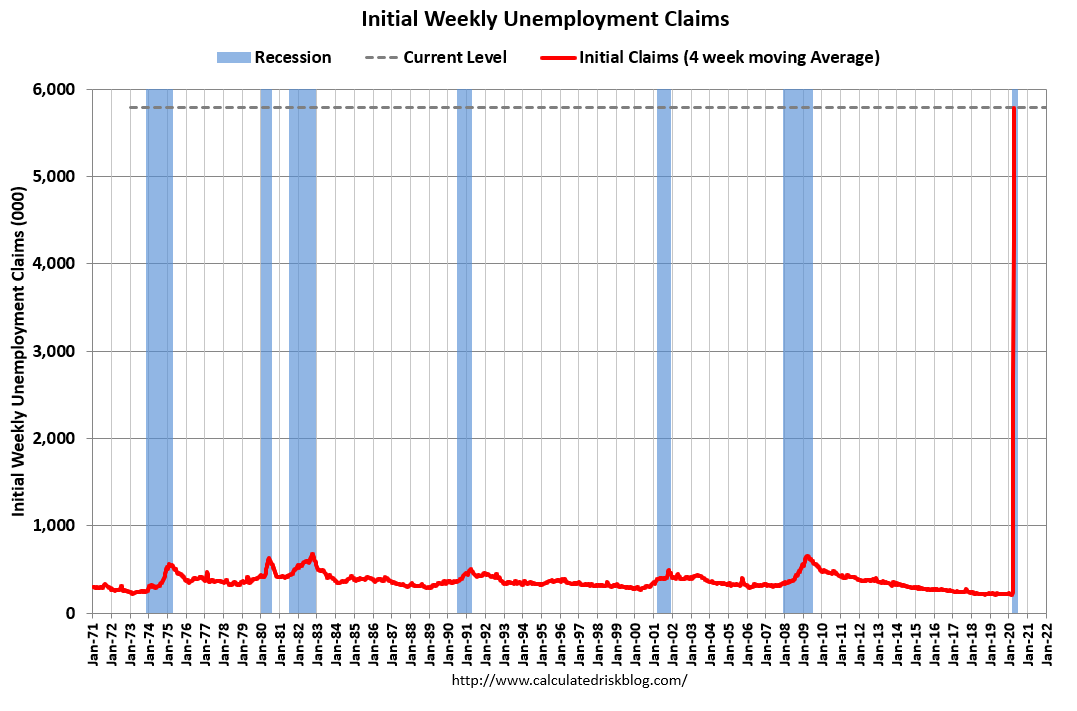
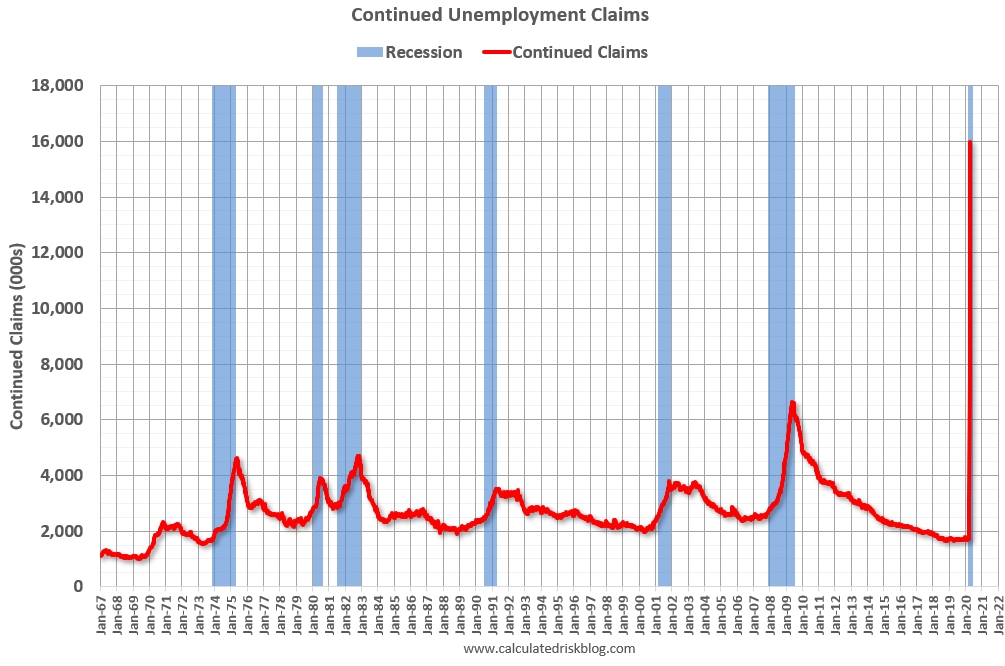
 Workers in protective suits walk next to the closed Huanan Seafood Wholesale Market in Wuhan, China, on March 30. It’s one of many possible places where the novel coronavirus could have jumped from a bat, or from an intermediary species, to humans. | Hector Retamal/AFP via Getty Images
/cdn.vox-cdn.com/uploads/chorus_asset/file/19918350/GettyImages_1210149343.jpg) Hector Retamal/AFP via Getty Images
Hector Retamal/AFP via Getty Images
 Justice Samuel Alito testifies about the court’s budget during a House hearing on March 7, 2019. | Chip Somodevilla/Getty Images

 President Donald Trump walks in front of HHS Secretary Alex Azar on March 6, 2020. | Win McNamee/Getty Images


 A postal worker loads his truck. | Jeff Greenberg/Universal Images Group via Getty Images
/cdn.vox-cdn.com/uploads/chorus_asset/file/19917941/GettyImages_1218476750.jpg) Noam Galai/Getty Images
Noam Galai/Getty Images
/cdn.vox-cdn.com/uploads/chorus_asset/file/19916939/average_retail_fuel_pric.png) US Department of Energy/Alternative Fuels Data Center
US Department of Energy/Alternative Fuels Data Center

 Police bias against black communities has not abated during the Covid-19 pandemic, prompting senators to demand that the Department of Justice provide anti-bias training for law enforcement officers. | John Lamparski/Getty Images