The rise in billionaires’ net worths during the Covid-19 pandemic has reinvigorated the debate about their role in society. | David Ryder/Bloomberg/Getty Images
It’s easy to lose track of the numbers. But you shouldn’t.
The total number of billionaires exploded over the course of the coronavirus pandemic — and they individually became extraordinarily wealthier during the last 12 months.
That’s according to a new report from Forbes, which does one of the most complete analyses each spring about the state of the billionaire class across the globe. Tracking the net worths of the wealthy is painstaking work that requires sifting through arcane filings — and the end results are not perfect — but the estimates offered by Forbes represent one of the best stabs at covering the scale of income inequality in the world. And while it’s easy to lose track of the numbers or to see the figures as old news — “Billionaires continue to be billionaires” — the scale matters for anyone who wants to get a grasp on how much of a problem wealth inequality truly is.
The world is now home to 2,755 billionaires, a world record and a startling 30 percent increase from Forbes’ accounting last year of the world’s uber-rich. And 86 percent of those billionaires are richer than they were a year ago. The list does paint an exaggerated picture of some of the pandemic gains, because it compares today’s net worths to Forbes’ last analysis in mid-March 2020, when the market had yet to recover from the early pandemic-inspired sell-off.
Perhaps no statistic better encapsulates the scale of the yawning inequality than that MacKenzie Scott, the former wife of Jeff Bezos and one of the wealthiest people in the world, probably gave more money away directly to nonprofits in 2020 than any person has in a single year ever before. Yet because of Amazon’s surging stock price, she actually ended the year richer, Forbes reports.
Forbes finds that the tech set, like Scott, fared particularly well. Six of the world’s 10 richest people made their money in tech, and the total assets controlled by all tech billionaires globally measures $2.5 trillion, far more than any other industry. Neither of those figures include Tesla and SpaceX founder Elon Musk, who is classified by Forbes as in the automotive industry but has ridden Tesla’s extraordinary bull run to become the second richest person in the world.
As the fight against the Enbridge Line 3 replacement project continues, new information including invoices have raised concern over the relationship between Minnesota police officials and the company leading the project. The pipeline expansion project is being led by Enbridge, a Canadian pipeline company responsible for the largest inland oil spill in the country. Once completed, the project will go through untouched wetlands and the treaty territory of Anishinaabe peoples, Daily Kos reported.
Activists at the frontlines of the movement have noted not only excessive “safety patrols” of the area, but particular policing of female Indigenous women protesting the pipeline. While invoices obtained by HEATED do not show evidence of Enbridge paying the police department to spend time intimidating and harassing protesters, it does indicate that within the last two months the Cass County Sheriff’s Department has increased its reliance on Enbridge to fund its officers’ paychecks.
According to the Stop Line 3 campaign, Line 3 is a pipeline expansion project that will bring almost one million barrels of tar sands per day from Canada across Minnesota to Wisconsin. “All pipelines spill. Line 3 isn’t about safe transportation of a necessary product, it’s about expansion of a dying tar sands industry,” the campaign argued.
Since the project’s announcement in 2014, activists including the Ojibwe Water Protectors, have been calling for officials to halt the project because not only does it violate Indigenous treaty rights but it poses a huge risk of pollution to the environment.
Construction began on Dec. 1, 2020, and was said to be 50% completed by March 11, according to an announcement by Enbridge. Segments in Canada, North Dakota, and Wisconsin were completed prior to this announcement. Since then protests have been occurring almost daily with activists and advocates, mainly those who identify as women, facing arrests. More than 130 people have been arrested in connection to Line 3 protests, CNN reported. Additionally, over a dozen were arrested on March 25 alone.
Those not arrested have been facing intimidation and harassment at the hands of the police, who are also allegedly tracking protesters. This raises concerns of the influence Enbridge has on the local police department, as invoices indicate the company has been paying for the department’s salaries.
Enbridge is reimbursing police departments all over Minnesota for anything they say is relayed to Line 3. Here is some equipment the oil giant recently paid the Beltrami County Sheriff’s Office for: https://t.co/Ds86deBjkZpic.twitter.com/VFhgfEQhZc
According to invoices obtained by HEATED, Minnesota law enforcement officials and Enbridge began their relationship last year when the company had its permit for Line 3 approved. According to HEATED, the permit noted that Enbridge must pay police for any pipeline-related public safety activity, in efforts to avoid putting undue burden on local taxpayers.
As a result, the Cass County Sheriff’s Department is currently seeking at least $352,576.22 in reimbursement from Enbridge for hours and equipment related to “Line 3 Project Security.”
According to the invoices, the request spans from November 28 to February 19. While most of it is related to physical security hours worked, some of it accounts for equipment including a Live Scan Fingerprint System, which allows officers to quickly confirm the identity of the people they arrest.
Prior to January, less officers were present at the site. Between January to February 19, 43 officers were logged to have been patrolling the pipeline project to prevent disruption, HEATED reported. Records, compiled by HEATED, indicate that if each officer worked full-time, between January to February, the average Cass County officer spent at least 17% of their regular working day on Line 3 “Safety Patrol,” in addition to about 12 overtime hours a week.
What’s worse is that Enbridge is not only paying Cass County officials, the Canadian company has even tapped into other counties for its “safety patrol.” At this time it is unclear how many counties and how much influence Enbridge has over the local police departments, in addition to what HEATED has found.
While it is normal for police officials to be present at certain projects to protect the construction, the actions these officials are taking under the the guise of “safety patrol” have been troubling. Activists are living in fear due to harassment and intimidation at the hands of the police, especially women.
Even prominent actress and activist Jane Fonda expressed concerns over police patrol after visiting the project site. “We pulled over to wait for them, it took a long time to process their identification, and they ended up not being ticketed,” she told HEATED. “Then we drove 12 miles to the press conference and the police car followed us the whole way.”
This fear is not new and restricted to Fonda’s experience. According to tribal attorney and activist Tara Houska, anyone working to oppose the Line 3 project has been followed by cops while driving alone. While many have been verbally intimidated, some have reported violence and brutality. “The police presence has been strong,” Houska told HEATED.“We’ve seen groups of squad cars 20-plus strong from different counties guarding the line. Last week a car followed us for two hours straight.”
In March Houska also told CNN that while some advocates were physically arrested at construction sites, police also watched social media feeds to identify others and sent a summons in the mail. "They seem to think that it's going to deter us from protecting the land. They are fundamentally missing the point of what water protectors are doing, which is willing to put ourselves, our freedom, our bodies, our personal comfort on the line for something greater than ourselves," Houska said.
Women have been not only wrestled to the ground by male officers but held overnight in jail cells meant for lesser capacity, making social distancing impossible. According to HEATED, even female journalists have faced abuse by cops with some being removed from projects with editors fearing for their safety. “I don’t feel safe,” one woman told HEATED. “I walk by the officers in the grocery story every day knowing they’re preparing to beat me up—and doing it with the help of Enbridge.”
Enbridge’s Line 3 pipeline will not only violate treaties protecting Indigenous land and water but endangers lakes, rivers, and wild rice with the barrels of tar sand oils it hopes to transfer. Enbridge knows what risks its project brings—we cannot stay silent as it works to pay off law enforcement officials and intimidates those who stand up against its harmful pipeline.
Auto manufacturers and other companies are hoping that the global chip shortage will end soon, but snarled semiconductor supply chains may not untangle until next year.
The mess began when the pandemic upended the market for semiconductors. As demand for cars plummeted, automakers slashed their orders. But at the same time, demand for chips that power laptops and data centers skyrocketed. That bifurcation shifted the market, and when car and truck sales rebounded, semiconductor manufacturers rushed to meet demand. Soon, though, shortages of key components emerged. The industry is known for planning—and for its long lead times—so it could take a while for the chip market to sort itself out.
“There seems to be a broad consensus that it will stabilize by the end of the year,” Chris Richard, principal in Deloitte’s supply chain and network operations practice, told Ars. “But if I go back to 2008 and the financial crisis, it was a couple years after the rebound started before everything smoothed out again.”
In the New York Times, Nate Cohn concluded that “the law’s voting provisions are unlikely to significantly affect turnout or Democratic chances.” Slate’s Will Saletan notes that some provisions really are troubling, but that the bill also contains good provisions and that critics have “overhyped” their concerns. Brian Riedl, a senior fellow at the conservative Manhattan Institute, writes that “the idea this is an epic war on voting rights is simply absurd.”
On one level, it’s a fair topic of conversation, and the critics make some good points. Research on the effect of voter ID requirements often does find small or no effect on turnout; President Joe Biden’s description of the bill as “Jim Crow on steroids” certainly overstates the case.
But at the same time, some of the policy conversation about the Georgia bill is deeply frustrating. The close reading often takes place in a vacuum, disconnected from the context that gave rise to the law in the first place.
The fundamental truth about SB 202 is this: Its very existence is predicated on a lie. The bill’s passage was motivated by unfounded claims of fraud in the Georgia presidential elections — lies that Donald Trump spread and continues to spread, with the help of both state and national Republicans.
“President Biden, the left, and the national media are determined to destroy the sanctity and security of the ballot box,” Georgia Gov. Brian Kemp said in a statement after the bill’s signing.
The problem with discussing Georgia’s law solely in the narrow terms of what this or that provision does is that it implicitly concedes that the law is a reasonable enterprise to begin with: that the rationale for its passage is legitimate rather than an effort to further a fraudulent and dangerous narrative.
“The conversation is something like the mid-2000s debate over whether torture works. It basically doesn’t, but to even have that debate is to have surrendered something,” writes Seth Masket, a political scientist at the University of Denver.
The Georgia bill is not merely the sum of its provisions in a country where 60 percent of Republicans believe the 2020 presidential election “was stolen” from Trump through voter fraud — it validates a lie that is corroding American democracy. It also extends and deepens a much older Republican campaign to rig the system in their favor.
The debate over the bill’s provisions, briefly explained
Let’s start by getting clear on what Georgia’s new law actually does.
SB 202 is a big piece of legislation, containing a number of provisions touching on different aspects of election law. In his analysis, Cohn divides these provisions into four buckets: new regulations on absentee voting, new in-person voting rules, changes to runoff elections, and expansions of the state legislature’s power over election administration.
Saletan argues that there are sufficient safeguards in the bill to prevent abuse of these powers, but this is a minority view. Voting rights advocates, experts I’ve spoken to, and even Cohn all think there’s a serious potential for abuse here. “This represents an obvious threat to American democracy,” he concludes after an in-depth analysis of the new provisions.
The more serious arguments that Georgia’s law isn’t so dangerous focus on Cohn’s other three buckets, which include regulations that:
Extend voter ID requirements to absentee ballots
Sharply limit the use of ballot drop boxes
Expand weekend voting during the early voting period
Require large precincts to take steps to limit crowd length
Criminalize giving voters with food and water while they wait in line (with an exception for poll workers)
Shorten the time between Election Day and any subsequent runoff elections from nine weeks to four, sharply contracting the early voting period for runoffs
These provisions will clearly make it somewhat harder to vote by mail; the impact on in-person voting is harder to discern but could plausibly make it harder to vote in Democratic-leaning precincts and easier in Republican ones.
But here’s the surprising thing: There’s some decent political science research that making voting marginally easier or harder, through policies like voter ID laws or expanding the use of drop boxes, doesn’t really affect turnout all that much.
Jessica McGowan/Getty Images
An early voting line in Atlanta in December, during the Senate runoff.
“In the contemporary United States, with such wide and ready access to the ballot, changes around the edges don’t disenfranchise people,” Rich Lowry writes in National Review. ”It’s hard to believe that one real voter is going to be kept from voting by the new [Georgia] rules.”
Lowry is overstating the case. Experts like Charlotte Hill, a PhD candidate at UC-Berkeley who studies elections, cited research suggesting that so-called “convenience” reforms making voting easier really do matter for turnout.
The likely effect of Georgia’s ballot access provisions is the sort of thing that reasonable people can disagree about. The evidence on their effects is genuinely mixed; it’s fair, even important, to try to pinpoint exactly what effects certain provisions of the bill are likely to have.
But it’s not the most helpful way to think, and frame the conversation, about the Georgia bill.
The Georgia bill validates Trump’s big lie
Policies are enacted to solve problems. In the case of SB 202, the alleged “problem” is simple: that voters have had a crisis of confidence in the results of the 2020 vote and the integrity of Georgia’s elections.
“The way we begin to restore confidence in our voting system is by passing this bill,” Georgia Rep. Barry Fleming, the bill’s sponsor, said during a floor debate on his proposal.
But this is a problem entirely of Republicans’ own making. From Trump on down, key party leaders and operatives have worked to sow doubt in the validity of the 2020 results. By passing SB 202, Georgia’s Republicans are merely ratifying their own lie.
Think about this from the point of view of someone who believes the Trump story of the 2020 election: that mail-in ballots were fraudulent, that in-person votes are the only reliable ones, that local election officials in heavily Democratic areas like Atlanta cheated, and that feckless state-level Republicans like Georgia Secretary of State Brad Raffensperger refused to intervene to stop them out of cowardice.
Getty Images
Trump supporters rallying in Washington, DC, on January 6.
This is all a ludicrous fantasy, of course. But if you really believed it and wanted to prevent it in the future, then you would have designed a bill like SB 202: one that makes mail-in voting harder and takes power away from voting officials who failed to “stop the steal” in 2020.
And that, in fact, appears to have been what was on state legislators’ minds when they wrote the bill. Stephen Fowler, a Georgia reporter who covers elections, writes that “the vast majority of Georgia’s rank and file Republican elected officials jumped on board a series of hare-brained lawsuits and schemes to try and overthrow the state’s elections.” In December, Georgia House Republicans held a series of hearings in which speakers like Trump attorney Rudy Giuliani were invited to spout theories about how the election was stolen from Trump.
“Democrats are relying on the always-suspect absentee balloting process to inch ahead in Georgia and other close states,” Fleming wrote in December. “If elections were like coastal cities, absentee balloting would be the shady part of town down near the docks you do not want to wander into because the chance of being shanghaied is significant.”
Josh McLaurin, a Democrat in Georgia’s House, told me that the state GOP is “a party whose election policy is driven by Trump’s ‘big lie’” — reverse-engineering SB 202 to solve the wholly fictitious problems invented by Trump and his allies.
The new rules aren’t just premised on a lie. Their enactment also validates that lie.
The successes and failures of the GOP’s anti-democratic agenda
Here’s another piece of context the debate over SB 202’s provisions is missing: The GOP has been working to fix state election rules across the country in its favor for years now, a campaign that’s accelerating in the wake of Trump’s claims of a stolen election.
According to the Brennan Center, a nonpartisan institute that studies voting rights, there are currently 361 bills in 47 statehouses around the country that would restrict the franchise — most of which attempt to put limits on absentee votes. These bills, according to Brennan, are “a backlash to 2020’s historic voter turnout” being pushed “under the pretense of responding to baseless and racist allegations of voter fraud and election irregularities.”
So far, these bills have only passed in Republican-controlled state governments like Georgia’s — and recent history suggests they’re only likely to pass in such governments. A new working paper by the University of Washington’s Jake Grumbach attempted to measure the health of democracy in all 50 states between 2000 and 2018. The findings were unambiguous: Republican control over state government was correlated with large and measurable declines in the health of a state’s democracy.
It’s fair to say, at this point, that the Republican Party is engaged in a long-running, at times systematic attempt to change the rules in their favor. Not every tactic they’ve used in the fight has been equally effective; gerrymandering, at both the state and national level, has a much clearer partisan effect than voter ID laws.
But the fact that some of these laws don’t end up being effective at suppressing turnout isn’t a defense of the GOP. Attempted murder is still a crime. And focusing too heavily on the details of any one bill not only misses this overall context, but also serves to normalize the GOP’s anti-democratic project.
Getty Images
Trump at CPAC 2021.
Of course Democrats shouldn’t lie, or even exaggerate, about Georgia’s law. But they’re right that the bill contains several extremely dangerous new provisions, and they’re also right that the broader context suggests the stakes of our current fight over voting really are existential.
“We’re so obsessed with estimating causal effects of suppression efforts we have ceded important normative ground,” writes Hakeem Jefferson, a political scientist at Stanford. “The right to vote is sacred. Access to the ballot should be expanded, not burdened.”
There’s only one party in modern history whose presidential candidate refused to concede when they lost a national election. It’s the party whose candidate is still insisting that he won the 2020 election, whose partisans violently attacked the US Capitol on January 6 in a last-ditch effort to keep their man in power. Now, that party is using its fantasies of fraud to justify legislation like what passed in Georgia.
And we can expect more attacks on election integrity in the coming months from GOP-controlled statehouses — because the Republican Party, as an institution, seems perfectly willing to use Trump’s big lie as a pretext to seize more power.
Florida Rep. Matt Gaetz has come up with what would seem to be the perfect defense for a Republican audience. In a Washington Examiner editorial, Gaetz explains how the whole series of charges against him are nothing more than fake news from “leftist television anchors” who are after Gaetz because he “loathes the swamp.” He then compares his current troubles to the very-credible accusations made against Brett Kavanaugh, and the Senate verified claims connecting Donald Trump’s campaign to Russia.
But as Gaetz rails that these “bizarre claims” are coming out because he’s decided to take on the FBI and the “Biden Justice Department” in some unspecified way, there seems to be a distinct flood of rats looking for the exit ramp from S.S. Gaetz.
According to Politico, those eager to walk, not run, away from association with Gaetz include Trump, right-wing pundits like Sean Hannity, and other Republican members of Congress. According to one Trump staffer, when it comes to the accusations against Gaetz, “Not a lot of people are surprised.”
The most surprising thing about Gaetz’s current position is just how unsurprising every Republican in D.C. seems to find it. But there’s a good reason: Not only did Gaetz show off naked pictures and videos of his supposed conquests to other Republican members of Congress, his staff apparently sent around videos of his most outrageous exploits to their counterparts with other Republican officials.
When it comes to Matt Gaetz, Republicans weren’t facing vague rumors about his conduct, they were getting bragging self-confessions from the man himself. And they were getting both photos and video, some of it delivered by Gaetz right from the floor of the House.
Part of what made Gaetz feel as if sending his sex tapes to fellow Republicans acceptable can be seen in a new Orlando Sentinel article that describes Gaetz’s feelings about such images. Gaetz believes that once he has an “intimate” picture of someone, that image is his to use however he wants. That includes feeding his ego, or using the image as revenge porn. Which is why Gaetz as the primary source of opposition to a bill against revenge porn when he served in the Florida house.
All of this suggests that the biggest crime connected to Matt Gaetz may not be transporting an underage girl across state lines and putting her up at a hotel for the purposes of sex, or Gaetz’s long-running partnership with Republican official and fake ID supplier Joel Greenberg. The biggest crime is the conspiracy of silence among Republican lawmakers who continued to protect Gaetz even though they were seeing graphic evidence of his behavior. They knew what he was doing. And they were just fine with it until Gaetz was caught.
How bad do Republicans think Gaetz’s actions were? When Rep. Jim Jordan faced reports that he was connected to a coverup involving dozens of cases of sexual abuse at Ohio State, six Republican lawmakers stepped forward to put a statement of support for Jordan on the record. None of them has offered anything similar for Gaetz. (Of course, Gaetz has been praised by new Republican leader Rep. Marjorie Taylor Greene. So there’s that.)
As CNN reported last week, Gaetz sent to other members of Congress “photos and videos of nude women he said he had slept with.” This isn’t something that happened just once, but repeatedly.
As Politico reported on Tuesday, Gaetz’s staffers “would regularly send embarrassing videos of their boss to other GOP operatives.” Not once, but “regularly.”
As The Washington Post reported last Friday, Gaetz “repeatedly boasted” about women he met through Greenberg, who has been facing at least 33 indictments since last summer, including sex trafficking of a minor.
As Florida Trend reported in 2015, Gaetz not only led the opposition to a revenge porn bill, he was ultimately only one of two representatives to vote against the bill.
Over and over again, Gaetz showed Republicans exactly who he was. But until word of an actual FBI investigation made the news, not one of them made a move to speak out against Gaetz. No Republican turned those nude videos into an ethics complaint. No Republican warned that Gaetz was bragging about the women he picked up through an indicted sex trafficker.
Even now, the best Republican leader Kevin McCarthy will say is that Gaetz will be removed from his campaign committees should the accusations “turn out to have merit.” That’s a position of incredible weakness—especially from someone who very likely has already seen nude pics passed along by Gaetz.
The Republican willingness to accept this behavior from a representative is nothing short of disgusting.
An unusually quiet street in New York on March 28, 2020, during the initial Covid-19 lockdowns in the US. | Spencer Platt/Getty Images
Critics of lockdowns claimed they would cause a spike in suicides. That didn’t happen.
Last year, as then-President Donald Trump railed against Covid-19 lockdowns and called on states to reopen their economies, he claimed the shutdowns would lead to a spike in suicides: “You’re going to lose more people by putting a country into a massive recession or depression. You’re going to lose people. You’re going to have suicides by the thousands.”
But new data suggests that the number of suicides actually decreased in the US last year. According to the National Center for Health Statistics, suicides totaled fewer than 45,000 in 2020, down from about 47,500 in 2019 and more than 48,000 in 2018.
So far, this seems to be true globally. England saw no increase in suicides in the aftermath of lockdowns, Louis Appleby, a researcher on suicide and self-harm at the University of Manchester, wrote for the medical journal BMJ. The same seems to be true in other nations, including Australia, Canada, New Zealand, Norway, Peru, and Sweden, based on data for the first few months of lockdowns around the globe.
“Our conclusions at this stage, however, should be cautious. These are early findings and may change,” Appleby wrote in BMJ. “Beneath the overall numbers there may be variations between demographic groups or geographical areas. After all, the impact of covid-19 itself has not been uniform across communities.”
Still, the news overall seems good.
Trump wasn’t alone in his concerns. For much of 2020, this was a popular argument among opponents of lockdowns — that the measures would lead to an increase in suicides. Various news articles have echoed the claim in some form, exemplified by the recent New York Times headline, “Suicide and Self-Harm: Bereaved Families Count the Costs of Lockdowns.”
It’s all wrapped up in an argument that lockdowns weren’t worth the costs. As Trump put it, “WE CANNOT LET THE CURE BE WORSE THAN THE PROBLEM ITSELF.”
The reality is lockdowns worked to contain the spread of Covid-19, based on studies from Health Affairs, The Lancet, the Centers for Disease Control and Prevention, and others. And experts now widely agree that it was the US’s move to reopen too quickly, fueled in part by Trump’s claims, that made the country one of the worst in the world for Covid-19 deaths.
That’s not to say the lockdowns were costless. The emotional anguish brought by isolation and lack of social contact, as well as the economic calamity of the last year, are both clear examples of the downsides to lockdowns — even if the measures were ultimately worth it in the face of a deadly pandemic.
According to one CDC study, self-reported mental distress increased in the early months of the pandemic (though it’s not clear if lockdowns were the cause).
Another category of “deaths of despair” — drug overdoses — also appeared to increase dramatically last year: The latest data shows there were more than 88,000 overdose deaths in the year through August 2020, up from nearly 70,000 in the same time period of 2019. It’s plausible that lockdowns fueled overdoses as people turned to drugs during isolation or as addiction treatment and harm reduction services closed down, though it’s also possible that the increase was driven by something else, like the continued spread of the dangerous synthetic opioid fentanyl in illicit drug markets.
There’s also genuine debate about how the lockdowns worked. Based on the more recent evidence, it seems like mass closings of schools were ultimately misguided — as children and schools ended up not being major vectors of the coronavirus’s spread. Meanwhile, the risky indoor spaces many states pushed to reopen quickly, like bars and restaurants, have proven to be significant sources of outbreaks. All of that suggests the US may have closed down the wrong places, while reopening the wrong places too.
At the very least, though, it seems lockdowns didn’t produce one of the bad effects people initially feared.
If you or anyone you know in the US is considering suicide or self-harm, or is anxious, depressed, upset, or needs to talk, you can call the National Suicide Prevention Hotline at 1-800-273-8255, or text CRISIS to 741741 for free, confidential crisis counseling. Outside the US, the International Association for Suicide Prevention maintains a list of crisis hotlines and their respective phone numbers around the world.
An anonymous reader quotes a report from The Intercept: The popular legal research and data brokerage firm LexisNexis signed a $16.8 million contract to sell information to U.S. Immigration and Customs Enforcement, according to documents shared with The Intercept. The deal is already drawing fire from critics and comes less than two years after the company downplayed its ties to ICE, claiming it was "not working with them to build data infrastructure to assist their efforts." Though LexisNexis is perhaps best known for its role as a powerful scholarly and legal research tool, the company also caters to the immensely lucrative "risk" industry, providing, it says, 10,000 different data points on hundreds of millions of people to companies like financial institutions and insurance companies who want to, say, flag individuals with a history of fraud. LexisNexis Risk Solutions is also marketed to law enforcement agencies, offering "advanced analytics to generate quality investigative leads, produce actionable intelligence and drive informed decisions" -- in other words, to find and arrest people.
The LexisNexis ICE deal appears to be providing a replacement for CLEAR, a risk industry service operated by Thomson Reuters that has been crucial to ICE's deportation efforts. In February, the Washington Post noted that the CLEAR contract was expiring and that it was "unclear whether the Biden administration will renew the deal or award a new contract." LexisNexis's February 25 ICE contract was shared with The Intercept by Mijente, a Latinx advocacy organization that has criticized links between ICE and tech companies it says are profiting from human rights abuses, including LexisNexis and Thomson Reuters. The contract shows LexisNexis will provide Homeland Security investigators access to billions of different records containing personal data aggregated from a wide array of public and private sources, including credit history, bankruptcy records, license plate images, and cellular subscriber information. The company will also provide analytical tools that can help police connect these vast stores of data to the right person. In a statement to The Intercept, a LexisNexis Risk Solutions spokesperson said: "Our tool contains data primarily from public government records. The principal non-public data is authorized by Congress for such uses in the Drivers Privacy Protection Act and Gramm-Leach-Bliley Act statutes." They declined to say exactly what categories of data the company would provide ICE under the new contract, or what policies, if any, will govern how agency agency uses it.
It's been a month and change since massive Texas blackouts caused by cold weather caused chaos, widespread property damage, and deaths, which has been enough time for Texas Republicans to move on from incoherent claims about it all being caused by windmills to incoherent legislative proposals aimed at deflecting attention from the state's own screw-ups while once again sticking it to any energy company not chained to the state's all-powerful fossil fuel industry.
Oh, and it's evidently an attempt to retaliate against Joe Biden, Democrats, liberals, or book learners in general, aka the party's sole remaining legislative agenda nationwide. Sure, of course it is.
Financial Times reports on the plans of Texas Republican legislators to respond to February's mass blackouts by sticking it to wind and solar companies good and hard. New bills would "keep wind turbines at least a mile apart," require "solar and wind farms to procure back-up power" to cover some of the times when their plants were not generating. The first one would rather obviously make large-scale wind energy plants unviable, even in the great wastelands of rural Texas; the second is both a transparent attempt to raise the costs associated with wind and solar plants and a demand that those plants pay stipends directly to the fossil fuel-using plants they are competing against.
That second one is sponsored by Texas Rep. Cody Vasut, "a lawyer who has represented the oil and gas industry." Yeah, go figure. It's also nonsensical, except as pure kickback; having renewable plants contract with fossil fuel plants does nothing to ensure the fossil fuel plants don't themselves go down, in a crisis, and in a non-crisis fluctuations in wind and solar power are already covered by the state's other power generators, that being the whole point of an electrical grid.
What does all this have to do with the near-collapse of the state power grid in February? Not much. It is governance by disaster in the now-omnipresent Republican way. Step One: Screw something up in spectacular, history-bending fashion. Step Two: Blame your enemies. Step Three: Demand those enemies be punished. Step Four: Double down on whatever caused the screwup in the first place.
To review, the reasons for the Texas blackouts were well understood from the beginning. Texas is very proud of its near-total isolation from the rest of the nation's energy grid, an intentional strategy to avoid federal regulation. The state instead has developed a more laissez-faire internal marketplace that prioritizes low prices over high stability—an approach that is much bragged about during the times of low prices, and one that makes everyone involved heroes until Bad Things happen and everyone suddenly gets real quiet.
In February, Texas was hit with unusually cold weather. Natural gas-based generating plants that had chosen to forgo cold-weather protections designed to withstand the dip were knocked offline. Coal plants suffered similarly. Gas pipelines had never been sized to account for record demand that would come with such weather, and homes ran out. None of this is particularly outrageous or unforeseen; the most profitable decision for any of the companies involved is to spend as little money as possible preparing for outlier situations, pocket that money, and accept that in those rare outlier situations your plant will probably have to shut down.
It's all perfectly rational, but "weather" is something that can affect an entire state at once. When it did, every company making the cheaper-but-more-fragile decision was tested all at once, and the predicted shutoffs happened all at once. Things broke.
We know how to fix this problem, however! Since "unusually cold weather" is a rare but perfectly foreseeable event, governments can mandate a specific level of weatherproofing for power providers that may cost each plant more money to install and maintain, but will prevent widespread system collapse when the rare event happens. We call these rules "regulations," and individual companies tend to not like them because they add expense and restrict each company's power to decide for themselves how close to the edge they would prefer to run. Those regulations only pay off when the rare event actually happens, but widespread public catastrophe is prevented.
When dealing with infrastructure as fundamental as heat and electricity, the prolonged absence of which can cause significant damage and death, the free market decision to make as much profit as possible most of the time while leaving the public to their own devices during the unprofitable times is generally thought to need a bit of reining in. Again, the point is not to be great big government jerks. The point is to keep small decisions made by a large number of interconnected but private companies from cascading into an overall system collapse that causes widespread public damage.
So that's where we are. "Business-friendly" Texas conservatives have rather proudly insisted on choosing the path of cheaper prices and more profit for most consumers most of the time, and sucks to be you during the rare times. It's a choice, and as long as you are willing to endorse whatever deaths-to-profit ratio you've settled on, a perfectly valid one so long as the public genuinely approves of it and has not been snowed into thinking that the ratio is something other than what it is.
The plan was to trade cheap prices for possible widespread damage. It was considered genius up until the widespread damage part actually happened, and the public was faced with bursting water pipes and collapsed ceilings. In the aftermath of that, it's time for some good ole' fashioned misdirection. It wasn't our fault, say the lawmakers willing to take those longterm risks. It was because of the windmills. It was because of liberals. It was because Hunter Biden did a Green New Deal which clogged up our freedom tubes and, um, plugged up the freedom juice.
Yes, it's corruption and camouflage time in the Republican legislature. A bill has come due and if each lawmaker wants to save their career in the aftermath, it will rely on convincing voters that 'twas the culture wars that froze their pipes and spiked their electricity bills, not decades of willing government complicity in corporate sucks to be you disaster planning.
While the new attempts by Texas Republicans to sabotage their own state's renewable energy companies might seem extremely odd, and especially odd as a response to power blackouts caused by conservatism's own insufficient energy regulations, there is nothing odd about Republican officials reacting to a scandal of their own making by hurling conspiracy theories blaming their enemies for their own bumbling. Within the first days of crisis fossil fuel lobbyists and their loyalists told the public that the problem was wind turbines freezing up, not natural gas and coal plants. Now this has morphed into a series of bizarrely premised legislative attacks on renewable energy on behalf of those fossil fuel plants, boosted by the party's all-consuming contempt for scientists, expertise, and anyone else who might speak poorly of the state's extra-active industries.
It's not supposed to make sense. It's supposed to deflect attention from the true causes of the Texas catastrophe and give Republican-loyal voters something to blame other than the lawmakers and ideologies they voted for. This is a party that genuinely tells their constituents that the "liberals" want to "ban cows." None of it has to make sense, when you've got a base as gullible as the Texas right has cultivated.
Enlarge / People practice social distancing in white circles in Domino Park in Williamsburg during the coronavirus pandemic on May 17, 2020, in New York City. (credit: Getty | Noam Galai)
The B.1.1.7 coronavirus variant is estimated to spread about 50 percent more than previous versions—but it doesn’t seem to manage that higher transmissibility by surviving in the air better than other versions of the virus, according to a new study.
In lab experiments looking at virus survival in artificially produced aerosolized particles, a B.1.1.7 lineage virus (first identified in the UK) had about the same survival rate as a strain of the virus that was circulating in Wuhan, China, in January 2020, according to the study, which was published recently in The Journal of Infectious Diseases.
For the study, government researchers created aerosolized particles that mimic those spewed from deep in a person’s lungs. Then the researchers tested how well the viruses survived in those particles under different temperature, humidity, and light conditions.
Pending now are seven administrative motions to seal covering over a hundred documents filed in connection with defendants' summary judgment and Daubert motions, as well as documents related to the Court's prior order on supplemental briefing. The Court has reviewed these administrative motions and is shocked to see the parties wish to seal such trivia as:
The statement "Can't wait to try it" as well as a reference to that statement in a brief;
Luckey's statement in a 2012 email to Seidl that Luckey "Can't wait to get into this, very enthused" along Luckey's name, email address, and the email's send date;
Just the words "attached is an invoice" and "From: Palmer Luckey palmertech@gmail.com" in a 2012 email;
A reference in a brief that Ron Igra stated he would "get rich" from the success of Oculus;
The words "3D is essential" in an email from Seidl to Luckey;
The statement "Talking with John Carmack (id Software) about the possibility of designing future games for use with my open-source head mounted display design" posted on social media.
This is beyond the pale. The indiscriminate use of the confidentiality stamp alone warrants the denial of the entirety of the motions. The only arguably legitimate request that the Court can so far find is a request to seal a spreadsheet containing the names and addresses of multiple uninvolved third parties.
In addition, the parties are denied under the "compelling reasons" standard required by Kamakana v. City & County of Honolulu (9th Cir. 2006). The parties seek to seal documents required for even a basic understanding of the case, including large substantive portions of briefs, entire email threads covering multiple exchanges between Luckey and Seidl, relevant portions of deposition transcripts, and documents relevant to the preliminary phases of Oculus's formation.
The United States District Court is not a wholly owned subsidiary of either TRT or Facebook Technologies. If the parties wanted to proceed in total privacy, they should have arbitrated this dispute. Instead, they brought this dispute to a public forum that belongs to the people of the United States, not TRT or Facebook. The United States people have every right to look over our shoulder and review the documents before the Court. The standard under Kamakana is not met for any document.
The information contained in the documents is stale, having occurred years ago. Even if the documents had a figment of needed privacy when they were fresh, that time has long since passed.
After 16 years of asinine questions and dubious answers, Yahoo Answers is shutting down next month. From a report: The company announced that starting April 20, users won't be able to post new questions or answer other people's questions; on May 4, the site will become inaccessible, and will redirect to the Yahoo homepage. Users who've posted questions and answers in the past can download their data via request before June 30, 2021, here. "While Yahoo Answered was once a key part of Yahoo's products and services, it has become less popular over the years as the needs of our members have changed," an announcement that went out to users, as spotted by the good people of the r/DataHoarder subreddit, said.
Yup. It's not on Dems to fix this. The GOP spent 12 years screaming how obstructionist it was. It's taken til now for Dems to finally believe them. Now the GOP has to be reasonable if it wants to be perceived as a real party and not just a bunch of white supremacists, corporate stooges, and conspiracy theorists.
Last week, GOP Minority Leader Mitch McConnell kicked off the infrastructure debate by promising lockstep opposition to President Joe Biden's $2 trillion proposal. This week, Senate Republicans are suggesting that maybe, just maybe, they could support a plan that's roughly a third of the price, or some $615 billion, but only if the White House finds a way to pay for it without raising the corporate tax rate—because GOP donors, of course.
“There’s an easy win here,” Blunt said on Fox News Sunday.
Riiiiiiight. So easy, in fact, that Republicans took a pass on even trying for a solid four years under Trump. Biden's response? Sorry, fellas, fool me once, shame on you; fool me twice, shame on me.
Biden already redefined so-called bipartisanship while crafting his COVID-19 rescue plan, and Republican lawmakers are giving the president zero reason to reevaluate. In fact, as my colleague Joan McCarter points out, Republicans are simply re-running their last disastrous attempt to mount an opposition to Biden's wildly popular coronavirus relief package.
When asked at a recent press conference about McConnell's suggestion that the White House had rejected bipartisanship, Biden responded that perhaps McConnell should check in with his own base. "What I know I have now is that I have electoral support from Republican voters. Republican voters agree with what I’m doing," Biden said. As for McConnell, Biden added, "He ought to a look at his party,” noting that over 50% of GOP voters supported his COVID-19 relief plan.
This week, Biden is already laughing off the GOP's knee-jerk criticism of his infrastructure package. Asked on Monday if he worried that raising the corporate rate would send jobs overseas, Biden told White House reporters, "Not at all," adding, "There's no evidence of that," according to the White House pool report.
"You're talking about companies in the Fortune 500 that haven't paid a single penny in tax for 3 years," Biden offered, adding his signature catch-all comeback to GOP ridiculousness. "Come on, man."
Biden also said he wasn't going to waste any time bargaining with Republicans over what counted as infrastructure in their view and what didn't. "I'm going to push as hard as I can, to compete with the rest of the world," he said. "Everybody else in the rest of the world is investing billions and billions of dollars in infrastructure, and we're going to do it here."
Biden has absolutely no reason to give Republican lawmakers a second thought in crafting his approach to revolutionizing the nation’s outdated infrastructure. Not only are Biden's approvals on his handling of the coronavirus—including his relief bill—soaring in multiple polls, Republicans have effectively let him off the hook. On the one hand, they're already pledging unified opposition, and on the other, they're making outrageous demands in exchange for the implausibility that one or two GOP stragglers might hop on board.
Meanwhile, after eight years of stonewalling President Obama's agenda and two Trump-era years of jamming through tax cuts and failed attempts to strip Americans of their health care, Republicans are suddenly lamenting the current state of partisan relations.
"You lose the muscle memory of working together if you’re constantly jamming through partisan measures," said Sen. Rob Portman of Ohio, suggesting that Democrats are the real jammers. Also, sometimes you lose the muscle memory of living in a reality-based world if you're constantly surrounded by a partisan echo chamber that tunes out even your own voters.
Portman added, "It doesn’t have to be this way."
Maybe not, but that's not on Democrats or President Biden. Biden is delivering on the platform on which he ran, and he's receiving plenty of bipartisan support from American voters as he does it. One might think it would be Republicans who paused to reconsider for a moment, but they’ve apparently lost that muscle memory.
Rep. Matt Gaetz, R-Fla., defended himself Monday against allegations involving sex with underage girls and trafficking as a former congressional aide stepped forward to vouch for his embattled ex-boss. The staunchly pro-Trump lawmaker used very specific phrases to deny having sex with a 17-year-old and paying for sex. But the 38-year-old also acknowledged having an active “lifestyle,” before getting engaged last year. “I am a representative in Congress, not a monk, and certainly not a criminal,” Gaetz wrote in an op-ed piece for the right-wing Washington Examiner news outlet. “My lifestyle of …
Mother Jones reports that Chicago Police took two days to inform the mother of a 13-year-old child shot and killed by an officer that her son was dead. She was not allowed to immediately see Adam Toledo’s body, and was asked to identify him through a picture. Only later was she informed how he died, the report said. “In the days after Chicago police killed the boy, Elizabeth Toledo wasn’t the only one kept in the dark; city officials were also slow to provide key details to the public,” Mother Jones said.
That included omitting key details about the child in statements to the media and public. In an initial statement on March 29, police referred to the boy as an “offender.” A family lawyer said he had no criminal history. A second statement on April 1 then called him a “juvenile,” but still didn’t list his age. “[I]t took reporters digging through an autopsy ledger to break the news about his age that day, according to Lakeidra Chavis, a Chicago-based reporter at the Trace, which covers gun violence.”
Block Club Chicago reports that outraged and saddened members from the largely Latino Little Village community held a vigil for the boy on Friday, several days after he was shot and killed by police at 2:30 in the morning last Monday. Both Mother Jones and Block Club Chicago report that Adam had been missing from home until last Sunday, when his mom says he reappeared. But Adam left again when night fell, and when police asked Elizabeth for his picture on Wednesday, she assumed it was for the missing persons report she’d filed when he initially disappeared. She did not know her child was already dead.
“In an initial police statement more than 12 hours after the shooting, officials said one ‘armed male’ was running from officers, who chased him,” Block Club Chicago reported. “The ‘foot pursuit ensued which resulted in a confrontation in the alley. … The officer fired his weapon striking the offender in the chest.’ Police have described the encounter as an ‘armed confrontation.’ A photo of a gun was shared by a police spokesman on Twitter, but police have not answered additional questions about the shooting or who the gun belonged to.”
A small group is marching the streets in #LoganSquare to demand justice for Adam Toledo, the 13-year-old shot and killed by police. Enrique Enriquez, of Little Village, holds a sign that reads “Justicia para Adam.” #OnAssignment for @BlockClubCHIpic.twitter.com/pFfcRelLRo
Mother Jones reported that officials initially declined to release body-cam footage of the shooting, in a statement citing the child’s age. But they then backtracked the next day, saying in a second statement that officials “determined that certain provisions of state law intended to protect the confidentiality of juvenile records do not prohibit the agency’s release of material related to its investigation of a Chicago Police Officer’s fatal shooting of 13-year old Adam Toledo.”
Mother Jones reports that the officer who shot and killed Adam has been placed on administrative leave for a month. “Alderwoman Rossana Rodriguez told Block Club that incidents like the case have left her with little trust for the police,” the report continued. “’For a very long time the police have been taken at their word. We’re not accepting that anymore,’ she said. ‘You shot a 13 year old.’” Following the protest in support of Adam on Friday, Little Village Community Council member Kristian Armendariz told Block Club Chicago that “[i]f we don’t speak our voice, they are going to keep covering up death. Today we are here for Adam but also to try and change CPD’s corruption.”
Mother of Adam Toledo,13, has not seen the police body camera video showing an officer shooting her son in the chest. He died. She will view it next week Family says they knew nothing about Adam having a gun. Police say they recovered a gun at the scene @cbschicago#AdamToledopic.twitter.com/KsTjjSsESJ
"Adam Toledo was killed early Monday morning, due to the unreasonable conduct of a Chicago Police Officer,” ABC 7 Chicago reports the boy’s family said in a statement. “We are confident that the Chicago Police Department and the Civilian Office of Police Accountability will conduct a thorough investigation, that there will be transparency, and that Toledo Family wilt [sic] find out the truth of what happened to Adam. Adam was killed on March 29th, 2021, but the Toledo Family was only notified of his death two days later.”
“Adam was a seventh grade student at Garvey School, enjoyed sports and was a good kid,” the family continued in the statement. “He did not deserve to die the way he did. The Toledo Family will seek justice for this reprehensible crime and requests privacy during this time of mourning.”
Tom Hiddleston returns as everyone's favorite Norse god of mischief in the forthcoming limited spinoff series Loki.
We just finished enthusing over WandaVision and are still awaiting the final episodes of The Falcon and the Winter Solider, but Marvel has a lot more in store for us. The studio just dropped the official trailer for Loki, its spinoff limited series starring Tom Hiddleston as the charismatic trickster demigod and (adoptive) brother to Thor. According to the official premise, after absconding with the Tesseract in Avengers: Endgame, Loki "is a fish-out-of-water when he lands in a world of trouble with the bureaucratic TVA (Time Variance Authority)." One Ars staffer described the overall tone as "Men in Black meets Doctor Who," which sounds like a winning combination to me.
As we've reported previously, Marvel Studios announced the development of its various limited series for Disney+ in 2018, all featuring supporting characters from the films who were not given their own standalone movies within the Marvel cinematic universe (MCU). Details have largely been kept under wraps, but we do know that, like WandaVision, Loki will tie into the forthcoming MCU film Doctor Strange in the Multiverse of Madness. And like Falcon and the Winter Soldier, it will consist of six episodes.
A brief shot from Loki that aired during the Super Bowl last year showed the titular character wearing a jumpsuit with the initials "TVA" stamped on it. TVA agents are the so-called "custodians of chronology" who monitor violations to the timeline in the MCU. Catch their attention by trying to change history, and you just might meet the wrong end of the Retroactive Cannon (Ret-Can) and have your entire history deleted from the historical timeline.
More partisan hackery to try to stop conservatives from facing consequences for bigotry.
Last fall, Justice Clarence Thomas argued that it was time to rein in Section 230 immunity. Now, Justice Thomas is laying out an argument for why companies like Facebook, Twitter and Google should be regulated as utilities. From a report: On Monday, the Supreme Court vacated a lower court ruling in finding that President Trump had acted unconstitutionally by blocking people on Twitter. That case, which the justices deemed moot, hinged on the idea that the @realdonaldtrump account was a public forum run by the President of the United States, and therefore, was constitutionally prohibited from stifling private speech. In his concurrence, Justice Thomas agrees with the decision, but argues that, in fact, Twitter's recent ban of the @realdonaldtrump account suggests that it's platforms themselves, not the government officials on them, that hold all the power. "As Twitter made clear, the right to cut off speech lies most powerfully in the hands of private digital platforms," Thomas writes. "The extent to which that power matters for purposes of the First Amendment and the extent to which that power could lawfully be modified raise interesting and important questions."
homas argues that some digital platforms are "sufficiently akin" to common carriers like telephone companies. "A traditional telephone company laid physical wires to create a network connecting people," Thomas writes. "Digital platforms lay information infrastructure that can be controlled in much the same way." Thomas argues that while private companies aren't subject to the First Amendment, common carriers are unique to other private businesses in that they do not have the "right to exclude." Thomas suggests that large tech platforms with substantial market power should be bound by the same restrictions. "If the analogy between common carriers and digital platforms is correct, then an answer may arise for dissatisfied platform users who would appreciate not being blocked: laws that restrict the platform's right to exclude," Thomas writes.
Demonstrators protest against voter suppression bills outside the Georgia Capitol in Atlanta on March 8. | Megan Varner/Getty Images
New research quantifies the health of democracy at the state level — and Republican-governed states tend to perform much worse.
In late March, Georgia passed a restrictive new voting law that, in effect, permits the Republican state legislature to put partisan operatives in charge of disqualifying ballots in Democratic-leaning precincts. The law is one of at least eight proposals from GOP lawmakers in state legislatures around the country for increasing partisan influence over electoral administration — and one of more than 360 state bills that would curtail voting rights in one way or another.
The paper, by University of Washington professor Jake Grumbach, constructs a quantitative measure of democratic health at the state level in the US. He looked at all 50 states between 2000 and 2018 to figure out why some states got more democratic over this period and others less. The conclusions were clear: The GOP is the problem.
“Results suggest a minimal role for all factors except Republican control of state government, which dramatically reduces states’ democratic performance during this period,” he writes.
While many researchers have attempted to quantify the health of democracy in different countries around the world, Grumbach’s paper is the first effort to develop some kind of ranking system for US states. It’s still in working paper form, which means it has not been peer-reviewed. But Grumbach’s work has been widely praised by other political scientists who had read a draft or seen him present it at a conference.
“This is one of those papers that makes me proud to be an empirical political scientist. It’s important, carefully done, and just plain smart,” writes Vin Arceneaux, a professor at Temple University. “It helps us not only understand American politics but democratic backsliding in general.”
When I spoke to Grumbach on the phone about his work, he explained that his approach was inspired by V-Dem, the political science gold standard for quantitatively measuring democracy in countries around the world.
V-Dem breaks down democracy into individual component parts, like whether the press is free or the people can assemble peacefully, which can be measured and added together to produce an overall “democracy” score for any one country. You can’t just apply this to American states directly; no place in the United States is violently repressive in the way that China or Russia is, so the measurements might not be precise enough to clearly illustrate differences between states.
Grumbach’s State Democracy Index (SDI) is the first attempt to use a V-Dem-style approach to measure the more subtle ailments afflicting democracy in the United States. Metrics include the extent to which a state is gerrymandered at the federal level, whether it permits same-day voter registration, and whether felons are permitted to vote. He also includes criminal justice indicators, like a state’s Black incarceration rate, that are designed to measure state coercion.
To turn these metrics into an actual score, Grumbach uses a process that’s part subjective and part algorithmic.
The subjective part strives to determine whether an individual practice, like voter ID laws, is helpful or harmful to democracy. Grumbach then uses an algorithm to determine how much each of these practices should count toward a state’s overall score, either negatively or positively. This automated process ended up downplaying the criminal justice metrics, which barely factor into a state’s ultimate score. By contrast, the algorithm gave significant weight to electoral practices like gerrymandering (negative) and same-day registration (positive).
With a system in hand, Grumbach then proceeded to score all 50 states in every year between 2000 and 2018, from -3 (worst) to 2 (best). The following maps show the changes in state scores; the lighter the color, the worse the score is.
Just eyeballing the map, you can pick up on the clear pattern of states with Republican governments scoring lower in 2018 than they did in 2000. That year, the average GOP-controlled state was slightly more small-d democratic than its average Democratic-controlled peer. Over the next two decades, the average Republican score declined dramatically.
There could be all sorts of reasons why this is happening. Maybe Republican states had high levels of demographic change, causing white voters to embrace voter suppression in response. Maybe Republicans won power in states in which the parties were highly polarized, which raised the stakes of political conflict and caused incumbents to try to secure their hold on power.
To test these theories, Grumbach ran a series of regression analyses designed to isolate correlations between a state’s democracy score and variables like percentage of nonwhite voters and measures of state-level polarization. Strikingly, these things either barely mattered or didn’t matter at all.
Only two things really did: whether a state was controlled by Republicans and whether Republicans had gained that control recently. Republican-controlled states in general were far more likely to perform worse in the State Democracy Index over time; Republican states with a recent history of close elections, like Wisconsin and North Carolina, were especially likely to decline from 2000 to 2018.
“Among Republican controlled states ... those whose recent elections have been especially competitive are the states to take steps to reduce their democratic performance,” he writes.
The paper’s findings suggest a consistent national Republican policy on democracy being enacted at the state level to make it harder for voters to take away their power.
“Regardless of the particular circumstances or geography, state governments controlled by same party behave similarly when they take power,” Grumbach writes. “The Republican controlled governments of states as distinct as Alabama, Wisconsin, Ohio, and North Carolina have taken similar actions with respect to democratic institutions.”
The GOP’s anti-democratic agenda is real
To be sure, this is just one study and not yet peer-reviewed, to boot, so it shouldn’t be taken as definitive. And skeptics can certainly poke holes in some of Grumbach’s choices.
For instance, one could question just how bad the anti-democratic infractions Grumbach cites really are. Voter ID laws, to take one example, counted against many Republican states — but the evidence on whether they actually reduce voter turnout is surprisingly mixed. A conservative might object that Grumbach is making a mountain out of a molehill: creating a metric that makes Republican states look worse than Democratic ones when, in reality, the differences just aren’t that big.
But methodological quibbles aside, the paper does seem to capture something real. One of its most valuable contributions is the way it treats gerrymandering.
Drawing lines to give your party a leg up disproportionate to its numbers is one of those practices that no one can really defend in democratic terms. Elected authoritarians abroad, like Hungary’s Viktor Orbán, have abused gerrymanders to ensure that they maintain a hammerlock on national power despite winning less than a majority of national votes.
The SDI shows that, in the United States, gerrymandering is not a “both sides” problem. It uses 16 different measurements of gerrymandering to assess how prevalent the tactic is in different states; 10 of these measures are the most heavily weighted factors in a state’s ultimate democracy score. These metrics show that Republican legislators abuse gerrymandering in a way that Democrats simply do not.
Some of this abuse has happened quite recently. Take a look at North Carolina’s SDI score over time — it starts to plunge shortly after Republicans drew new maps in 2011, ones that allowed them to win 77 percent of the state’s House seats in 2018 with just under 50 percent of the state vote:
(It’s worth noting that one of the worst abuses by North Carolina’s Republican legislature — stripping Democratic Gov. Roy Cooper of key powers after his 2016 victory — doesn’t factor into the state’s score, as Grumbach hasn’t decided on a satisfactory way to quantify it. A similar maneuver performed by the Wisconsin state legislature after Democratic Gov. Tony Evers’s victory in 2018 also doesn’t count against the state’s already dismal SDI score.)
Offering empirical ballast for a phenomenon we’ve observed in real time these past few years, Grumbach’s paper is another passage in the dominant political story of our time: the Republican Party’s drift against democracy.And, crucially, it’s a drift that began before Trump and his allegations of fraud in 2020. Republicans didn’t need Trump to enact extreme gerrymandering after the 2010 census; his anti-democratic instincts helped bring out something that was already there.
We have every reason to expect things will get worse, not better.
Georgia’s law, for example, is more worrying than even voter ID laws. It gives Republicans more direct control over election administration, allowing them to bend the rules in their favor: enforcing strict standards for ballot disqualification in Democratic-leaning precincts and lax ones in Republican-leaning ones, for example.
Once 2020 census data is available, states will do another round of redistricting. This time, those who want to tilt the field in their favor will have a freer hand due to a 2019 Supreme Court ruling that partisan gerrymanders can’t be stopped by courts.
There’s a reason that Grumbach calls states, in the paper’s title, “Laboratories of Democratic Backsliding.” Republicans have been engaging in a series of grand experiments in rigging a political system one state at a time — one that is, slowly but surely, undermining the foundations of America’s free political system.
Volkswagen's early April Fool's Day prank (pretending to re-name the company "Voltswagen") "may have put the company at risk of running afoul of U.S. securities law by wading into the murky waters of potentially misleading investors," reports CNN:
"This is not the sort of thing that a responsible global company should be doing," said Charles Whitehead, Myron C. Taylor Alumni Professor of Business Law at Cornell Law School...
Volkswagen is indeed investing heavily in electric vehicles, but confusion over the name change could prompt scrutiny from the Securities and Exchange Commission or litigation from investors who feel misled by the joke. The Securities Exchange Act prohibits companies from making false or misleading statements to investors... Quipping about the status of a business that Volkswagen is positioning as more environmentally friendly also could irk investors, especially in light of the 2015 diesel emissions scandal the company has been trying to put behind it.
"Will the SEC inquire? Well, of course they will," Whitehead said. "It's gotten enough publicity and people are concerned about it and there are issues about whether or not companies should be doing this that I'm sure [the SEC is] going to make a phone call." A representative from Volkswagen's headquarters said Wednesday afternoon the company had not been contacted by the SEC. The agency declined to comment on the matter.
There is precedent for the SEC taking action against cheeky statements regarding big companies. In 2018, Tesla CEO Elon Musk settled with the SEC for $20 million after the agency said his tweet about securing funding to take the company private at $420 a share — an apparent joke about weed — misled investors...
it didn't help that the statement announcing the purported name change included no reference to April Fools' Day — and it landed two days before the holiday... Volkswagen's stock fell nearly 4% on Wednesday in the wake of news of the debacle. And that's no joke.
Whitehead doesn't think the SEC would ultimately consider a name change material to investors, though he adds that "These are all kind of gray areas, which is why a responsible company just doesn't go down this path...."
But with some VW stock near a six-year high, a Bloomberg columnist calls the episode a reminder "that we now live in the meme-stock age where even bad jokes can add or subtract billions of dollars in market value." They also call it a lesson in just how difficult it is to "be Elon."
"Charming young Redditors in an authentic way isn't an easy act to pull off..."
Despite being one of the planet's richest people, Musk's counterculture savvy and feisty irreverence has made him a hero for Redditors. Tesla has weaponized its soaring share price to raise billions of dollars in cheap funding. That money pays for new factories and products and is a threat to established carmakers. VW must fund its investments via the cash it generates. Even after this year's blistering run its share price is less than 10 times the value of its earnings. It would be self-defeating if VW didn't try to be a bit "cooler."
There's also a double-standard in play. We expect VW to be reliable, while Tesla gets to be quirky. Indeed, Musk gets away with things that others wouldn't. For years Tesla has marketed an autopilot system called "Full Self Driving" that can't yet drive entirely by itself — the timeline for when it will be able to do that always seems to be just around the corner....
Following VW's successful "Power Day" — a straight copy of Musk's "Battery Day" event — I quipped that it wouldn't be long before VW boss Herbert Diess was appointed "TechnoKaiser." Finance blog Zerohedge came up with the better punchline: "VW should go full Elon and file an 8K saying its new title is Voltswagen," it tweeted. VW appears to have taken that tongue-in-cheek advice rather too literally. More fool them.
Bloomberg's columnist also acknowledges that Volkswagen "has an ambitious and convincing electric-vehicle plan and may soon leapfrog Tesla to become the world's largest battery-vehicle manufacturer. But being ploddingly German is an impediment in today's stock market."
Federal Judge Reed O'Connor at the District Court for the Northern District of Texas is getting ready to strike again. You might remember this appointee of President George W. Bush as the judge who (along with the whack-job extremists on the 5th Circuit Court of Appeals) advanced the latest challenge to the Affordable Care Act (ACA) to reach the U.S. Supreme Court, a challenge so flimsy that even Justice Brett Kavanaugh proved hostile to it in oral arguments last November. The court hasn't ruled in that challenge yet, and O'Connor is preparing to advance the next one.
O'Connor ruled in late February that the religious conservative activists who have worked diligently to limit access to care specifically for women have both the legal standing and constitutional grounds to challenge the provisions in Obamacare that require health insurers to cover preventive care without additional co-pays. So it provides for "free" (after health insurance premium payments) preventive care like reproductive health screenings and birth control, as well as vaccinations and cancer screenings and well-baby and child care. The provision allows people to stay healthy, avoid preventable diseases, and to have serious conditions diagnosed early to provide for effective treatment. It allows them the freedom to do that without having to worry, at least at the preventive stage, of having to figure out how to pay for it.
The tea leaves on this case don't bode well, Ian Millhiser explains at Vox. Congress did not delineate what specific treatments and screenings would be covered in the law, because of course they didn't. COVID-19 demonstrates precisely why: New viruses come along all the time, and new treatments and vaccines for them follow. If Congress explicitly set out what visits and treatments had to be covered, they would have to be constantly revising and amending the law to keep up. So they delegated those determinations to the regulators, the United States Preventive Services Task Force (PSTF). That's an expert panel which, along with the Advisory Committee on Immunization Practices (ACIP) of the Centers for Disease Control and Prevention, determines which services and which vaccines should be added to the list of covered treatments. In addition, the Health Resources and Services Administration (HRSA) advises on the necessary "preventive care and screenings" for women and children.
The challengers in this case, Kelley v. Becerra, believe that they should not have to purchase health plans that cover other people's birth control and vaccinations or drugs that help prevent HIV because those drugs "encourage and facilitate homosexual behavior."
They argue that Congress handing these decisions about what must be covered without additional payment from patients over to regulators is unconstitutional. First, they argue that PSTF and ACIP—the experts—aren't "officers of the United States" and shouldn't have this regulatory power. That argument is pretty weak as they are appointed by heads of departments, as the Constitution provides for. However, the members of the PTSF committee are selected by the director of the federal Agency for Healthcare Research and Quality, which may or may not qualify as a department head if you squint at the Constitution just right. But that's not the part of their argument that has advocates for the law worried.
Where there's a major concern specifically with five of the Supreme Court's conservatives is a fairly radical idea from Justice Neil Gorsuch that Congress should not have the power to delegate the ability to regulate private entities to agencies. In a 1989 case, Mistretta v. United States, the Supreme Court upheld Congress' broad authority to delegate the rule-making to agencies, declaring that it was permitted to do so provided it "lay[s] down by legislative act an intelligible principle to which the person or body authorized to [exercise the delegated authority] is directed to conform."
It's not just the ACA that could come under the Supreme Court conservative cabal's scalpel when it comes to slashing the ability of Congress and the White House to regulate private enterprise. The Clean Air and Water acts come immediately to mind as laws—with their regulations—the likes of which the Federalist Society, the Kochs, and a Republican Party owned by the fossil fuel industry would like to dismantle.
Legal scholar Tim Jost, a retired Washington and Lee University law professor who tracks ACA litigation, details the pattern coming from the far right in the courts:
private plaintiffs—often the same ones—or the Texas Attorney General file cases before Judge O'Connor or other deeply conservative judges, challenging progressive statutes and regulations under the Constitution or under RFRA [the Religious Freedom Restoration Act] as a "superstatute" (i.e., a statute that attains a near-constitutional status);
the district court holding the statute or regulation unconstitutional or in violation of RFRA;
the Fifth Circuit Court of Appeals upholding the judgement; and/or
cases come before the Supreme Court, which has a strong conservative majority.
This is going to keep happening. As long as there’s a Trumpist majority on the Supreme Court, nothing that's good in this country is safe. Nor is a great deal of President Joe Biden's forthcoming agenda on voting rights, on immigration, on climate change, on health care—on most anything.
He's playing court reform very cautiously right now, having turned the question of expanding the courts and Supreme Court reform over to a commission to study the issue. They'd better study it fast, and they'd better be aware of the looming threat to everything nice that the Supreme Court poses.
Funny thing about the constitution, prohibiting one religion while encouraging others is not ok ;)
Did you know that for 28 years, Alabama has had a ban on teaching yoga in the Yellowhammer State? Well, it’s true. Since 1993, the Alabama board of education has blocked yoga, hypnosis, and meditation from public schools. According toNewsweek, the state’s guidelines explain it this way: "The State Board of Education specifically prohibits the use of hypnosis and dissociative mental states. School personnel shall be prohibited from using any techniques that involve the induction of hypnotic states, guided imagery, meditation or yoga." [Insert your eyes widening in disbelief here.]
Since 2019, Democratic Rep. Jeremy Gray has been trying to get the ban lifted because it’s … bewildering, provincial, and bewildering again. A couple of weeks ago, Gray’s bill—HB235—that would override the ban was passed through Alabama’s House of Representatives with a 73-25 vote. At the time, Gray, who has taught and practiced yoga for years, told The New York Times that he was hopeful: “Most of the senators that I’ve talked to are OK with it. A lot of people in their districts have reached out to them, and a lot of their wives actually do yoga. So I think it has a good chance of passing.”
Alabama’s state senate has 35 seats, 27 of which are filled by Republicans. I’ll give you one guess.
The Associated Press reports that on Wednesday, the bill stalled in the Alabama Senate Judiciary Committee. How come? “During a hearing, two conservative groups objected because of yoga’s historic ties to Hinduism.” When they aren’t turning your kids Muslim I guess they’re exercising them into Hinduism? It’s hard to say how this works in the mind of the right.
The Alabama Citizens Action Program (ALCAP) legal adviser, Eric Johnston, told the Times that yoga’s important place in the Hindu religion made it dangerous; he said that “it does not need to be taught to small children in public schools.” ALCAP was one of the groups testifying against the bill in the senate committee. To be clear, Johnston says that he does not oppose the practice of yoga as it’s already accepted and taught at some Christian churches. The issue is the slippery slope defense that the religious right has used for years. “You cannot have any kind of religious activities in elementary schools.” Remember how same sex marriage was going to end in all of us marrying houseplants and pets?
"I can give you a ton of reasons why yoga is beneficial and those reasons are backed by studies and data," he continued. "There is no study to my knowledge that says doing yoga exercise converts people to Hinduism."
- rep. Jeremy Gray
A woman in the U.K. attempts to turn her baby on to Hinduism!
Gray was not unaware of the ignorance he was facing in trying to get this baseless ban lifted. Gray himself was introduced to yoga as a college football player and considers himself a practicing Christian. He had hoped that by “compromising” and focusing the bill on the physical health benefits of yoga—and specifically prohibiting language that could be perceived as the more religiously connected aspects of yoga practice—might help move this legislation past the less open-minded* among us.
Instruction in yoga shall be an elective activity. Students shall have the option to opt out in favor of alternative activities, which shall be made available.
Each local board of education shall have exclusive discretion to determine the duration and frequency of periods of instruction in yoga.
All instruction in yoga shall be limited exclusively to poses, exercises, and stretching techniques.
All poses shall be limited exclusively to sitting, standing, reclining, twisting, and balancing.
All poses, exercises, and stretching techniques shall have exclusively English descriptive names.
Chanting, mantras, mudras, use of mandalas, and namaste greetings shall be expressly prohibited.
Turns out President Obama was a globalist sleeper cell agent trying to turn our country into a Muslim Caliphate filled with Marxist Hindi yoga soldiers. Open your eyes, man!
*Is it still called being “open-minded” if everyone else’s minds have been “opened” to something for decades, if not thousands of years?
More GOP messaging. Not an issue? That's ok, just gotta make clear that they REALLY hate immigrants
No so-called “sanctuary cities” actually exist in Montana, but Republican Gov. Greg Gianforte has signed a bill purporting to ban them in the state anyway. Democratic Gov. Steve Bullock had vetoed such legislation in 2019, calling it “a solution searching for a problem.” But when you have no solutions to actual problems, the Republican playbook is to just blame an immigrant.
“Supporters of the measure have said that sanctuary cities in other parts of the country have led to increased criminal activity, and that the Montana ban is necessary to preempt such problems,” the Associated Press (AP) reported. But that’s not only faulty thinking, it’s also flat-out untrue.
“Cities that have adopted ‘sanctuary’ policies did not record an increase in crime as a result of their decision to limit cooperation with federal immigration authorities, according to a new Stanford University report,” The Washington Postreported last year. That study came after years of lies from the previous administration that claimed safer city policies endangered communities. That administration also attempted to unlawfully strip funds from localities that had passed such measures.
“There’s no evidence sanctuary policies harm public safety, and there’s no evidence those policies increase crime,” researcher David K. Hausman said according to the Post.
The AP reported that Montana’s new law “will require state and local law enforcement to comply with federal immigration law and empower the state's attorney general to pursue civil action against jurisdictions that do not comply—including fines and withholding state grant funds.” In his veto statement, Bullock warned that police holding detained immigrants past their release date for Immigration and Customs Enforcement (ICE) to pick up is both unlawful and could expose localities to severe civil liabilities. Really severe.
Last October, Los Angeles County agreed to pay $14 million to settle a 2012 class action lawsuit brought forward by immigrants who had initially been detained by the Los Angeles County Sheriff’s Office but were then unlawfully held for federal immigration agents to pick up later. It was the largest such settlement ever reached, The Washington Postreported at the time. “The holds, also called ‘immigration detainers,’ forced individuals to be held in county jails after they were legally entitled to be released,” National Immigration Justice Center (NIJC) said in a release received by Daily Kos.
Seems like Bullock had the right idea there. But when you have no ideas period, you go the Gianforte route, I guess. He hasn’t been the only one either. Sarah Huckabee Sanders, the previous president’s second of many lying press secretaries, launched her gubernatorial campaign with a pledge to also ban so-called sanctuary cities. But, like in Montana, none exist in Arkansas either. “New election cycle, same old xenophobic dog-whistling campaign,” tweeted Zach Mueller of immigrant rights advocacy group America’s Voice. “Lies told for power and profit, lies to divide and distract, lies that will hurt ALL Arkansans. But likely just a foreshadow of a GOP who learns no lessons and takes no responsibility.”
NIJC said in a report last year that “a growing body of social science research shows that communities with immigrant populations are safe, vibrant, and full communities. Sociologists have long found that immigrants bring an inter-connectedness to communities that correlate to lower crime rates.”
“Simply put, more immigrants means safer communities—for everyone,” NIJC continued. “In fact, many studies have found that crime actually decreases in cities with large immigrant populations. Social scientists even have a term for it: the ‘immigrant revitalization perspective.’”




/cdn.vox-cdn.com/uploads/chorus_asset/file/22216099/1230123473.jpg) Jessica McGowan/Getty Images
Jessica McGowan/Getty Images
/cdn.vox-cdn.com/uploads/chorus_asset/file/22424499/1296432298.jpg) Getty Images
Getty Images
/cdn.vox-cdn.com/uploads/chorus_asset/file/22424503/1231447828.jpg) Getty Images
Getty Images
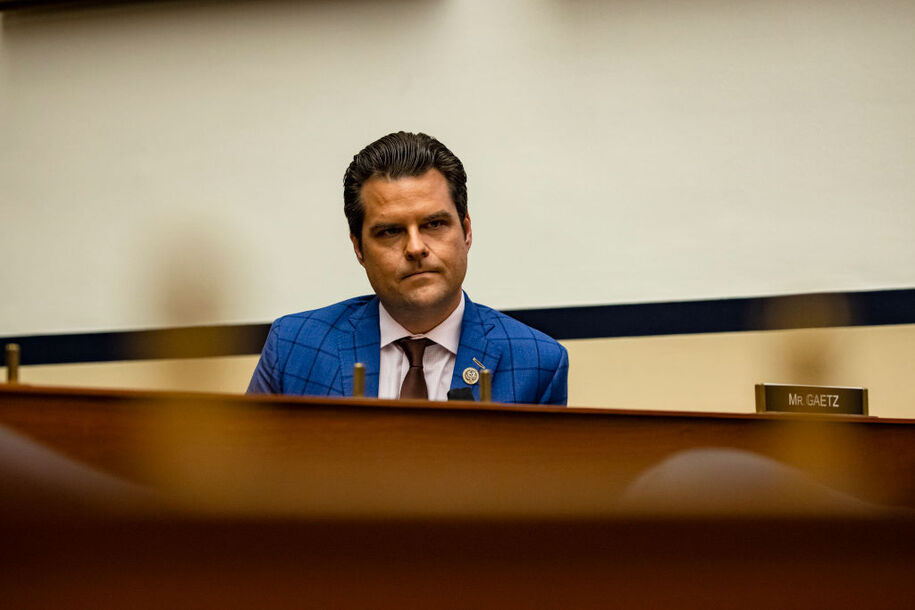







/cdn.vox-cdn.com/uploads/chorus_asset/file/22408248/Screen_Shot_2021_03_30_at_12.31.20_PM.png)
/cdn.vox-cdn.com/uploads/chorus_asset/file/22408267/Screen_Shot_2021_03_30_at_12.38.55_PM.png)
/cdn.vox-cdn.com/uploads/chorus_asset/file/22408760/Screen_Shot_2021_03_30_at_3.29.04_PM.png)