Really not happy about this. More fucking lock-in on devices that will just be a pointless markup
Synology, maker of network-attached storage (NAS) devices, will seemingly remove advanced features from its Plus devices that are not using hard drives provided by, or certified by, Synology itself, starting with its 2025 lineup.
A report on the German site HardwareLuxx (translated by Google) and a press release on Synology's German-language website appear to confirm Synology's strategy. The company, which sees "significant benefits" to its "proprietary hard drive solution" (also per Google's translation), will be "expanding [its] integrated ecosystem to the Plus series." For those Plus series models released in 2025, only Synology's own hard drives, and third-party drives certified by Synology, will offer "the full range of functions and support." Synology's release states that it can provide the "highest levels of security and performance, while also offering significantly more efficient support."
Ars has contacted Synology's US offices for comment and will update this post with any response.
Tesla is facing a new scandal that once again sees the electric automaker accused of misleading customers. In the past, it has been caught making "misleading statements" about the safety of its electric vehicles, and more recently, an investigation by Reuters found Tesla EVs exaggerated their efficiency. Now, a lawsuit filed in California alleges that the cars are also falsely exaggerating odometer readings to make warranties expire prematurely.
The lead plaintiff in the case, Nyree Hinton, bought a used Model Y with less than 37,000 miles (59,546 km) on the odometer. Within six months, it had pushed past the 50,000-mile (80,467 km) mark, at which point the car's bumper-to-bumper warranty expired. (Like virtually all EVs, Tesla powertrains have a separate warranty that lasts much longer.)
For this six-month period, Hinton says his Model Y odometer gained 13,228 miles (21,288 km). By comparison, averages of his three previous vehicles showed that with the same commute, he was only driving 6,086 miles (9,794 km) per 6 months.
An anonymous reader quotes a report from 404 Media: As part of the company's months-long obsession with catching employees leaking internal developments to the press, staff at Wordpress parent company Automattic recently noticed individually-unique watermarks on internal sites, according to employees who spoke to 404 Media. Automattic added the watermarks to an internal employee communications platform called P2. P2 is a WordPress product other workplaces can also use. There are hundreds of P2 sites across teams at Automattic alone; many are team-specific, but some are company-wide for announcements. The watermarks in Automattic's P2 instance are nearly invisible, rendered as a pattern overlaid on the site's white page backgrounds. Zooming in or manually changing the background color reveals the pattern. If, for example, a journalist published a screenshot leaked to them that was taken from P2, Automattic could theoretically identify the employee who shared it.
In October, as part of a series of buyout offers meant to test employee's loyalty to his leadership, Automattic CEO Matt Mullenweg issued a threat for anyone speaking to the press, saying they should "exit gracefully, or be fired tomorrow with no severance." Earlier this month, the company laid off nearly 300 people. [...] It's not clear when the watermarks started appearing on P2, and Automattic has not responded to a request for comment. But Mullenweg has been warring with web hosting platform WP Engine -- and as the story has developed, seemingly with his own staff -- since last year. [...] One Automattic employee told me they don't think anyone is shocked by the watermarking, considering Mullenweg's ongoing campaign to find leakers, but that it's still adding to the uncertain, demoralized environment at the company. "Can't help but feel even more paranoid now," they said.
No surprise there, more of the intuit protection racket at work
The Trump administration plans to eliminate the IRS' Direct File program, an electronic system for filing tax returns directly to the agency for free, AP reported Wednesday, citing two people familiar with the decision. From the report: The program developed during Joe Biden's presidency was credited by users with making tax filing easy, fast and economical. But Republican lawmakers and commercial tax preparation companies complained it was a waste of taxpayer money because free filing programs already exist, although they are hard to use.
In one of the dumbest national security breaches in recent memory, top Trump administration officials discussed war plans in a group chat on the messaging app Signal—in the presence of a reporter mistakenly added to the conversation.
You’d think at least one big-name person would lose their job over a blunder this colossal. Instead, there have been crickets, with the Trump administration largely shrugging off the embarrassing leak, which threatened to damage its credibility with foreign allies.
Voters aren’t very forgiving, though. According to the latest Civiqs poll for Daily Kos, 51% of registered voters say the person responsible for sharing the classified information should be fired. Another 24% say that person should face disciplinary action. Just 17% think there should be no consequences.
That tracks with a Quinnipiac University poll from last week, in which 61% of registered voters said someone should be fired over the breach. And it wasn’t just the leak that rattled people—74% called the use of Signal for sensitive Cabinet communications a serious problem.
So far, no one in Trump’s inner circle has paid a price. One participant in the group chat, Director of National Intelligence Tulsi Gabbard, had to face hard questioning during a Senate hearing. Another, Defense Secretary Pete Hegseth, responded by launching into a tirade against The Atlantic, accusing Editor-in-Chief Jeffrey Goldberg, who had been added to the chat, of making “a profession of peddling hoaxes.”
That’s especially rich coming from Hegseth, who suggested no one in the chat should face consequences—even as lower-level staffers under his command are punished for far less.
The public, meanwhile, is clearly paying attention. A fairly large majority of voters (62%) have heard “a lot” about the leak, and another 27% have heard “some” about it, according to the Civiqs/Daily Kos poll. Only 4% have heard nothing at all. That suggests this scandal has broken through the usual political noise.
Still, Democrats (74%) are far more likely than Republicans (49%) to say they’ve heard a lot about the leak—likely because many GOP voters have tuned it out or stuck to Fox News, where anchors either downplayed the breach or flat-out excused it.
As expected, Democrats are also more eager to see heads roll over the leak. Eighty-three percent say someone should be fired over the incident, compared with just 18% of Republicans who say the same. Meanwhile, 35% of GOP voters say the responsible parties should merely be disciplined.
It’s striking that more Republican voters aren’t demanding accountability for a national security lapse involving war plans. After all, Trump and Elon Musk’s so-called Department of Government Efficiency have laid off tens of thousands of federal workers who have done nothing wrong—all in the name of “cutting waste.” And yet 74% Republicans say those mass firings are “a very good thing,” according to the Civiqs/Daily Kos poll.
The person most directly responsible for the leak appears to be national security adviser Mike Waltz, who added Goldberg to the chat and then claimed not to really know the guy, despite having his number saved in his phone. Waltz is still on the job, and Trump is standing by his man. That said, Waltz has faced skepticism from MAGA hard-liners, so if someone eventually gets thrown under the bus, he’d be the obvious choice.
But don’t hold your breath. In true Trump fashion, the administration has chosen to punish the press, not the people who caused the screwup. In this White House, leaking war plans might get you a high-five—but reporting on it will get you Trump’s wrath.
CISA says the U.S. government has extended funding to ensure no continuity issues with the critical Common Vulnerabilities and Exposures (CVE) program. From a report: "The CVE Program is invaluable to cyber community and a priority of CISA," the U.S. cybersecurity agency told BleepingComputer. "Last night, CISA executed the option period on the contract to ensure there will be no lapse in critical CVE services. We appreciate our partners' and stakeholders' patience."
The announcement follows a warning from MITRE Vice President Yosry Barsoum that government funding for the CVE and CWE programs was set to expire today, April 16, potentially leading to widespread disruption across the cybersecurity industry. "If a break in service were to occur, we anticipate multiple impacts to CVE, including deterioration of national vulnerability databases and advisories, tool vendors, incident response operations, and all manner of critical infrastructure," Barsoum said.
A major step change in allergy medicine could make spring a more enjoyable season for a lot of people.
If you’re bothered by allergies every spring, you may pop a Benadryl or Claritin most mornings to make the days tolerable. Two-thirds of Americans report spring allergies, and about 4 in 10 say they take an allergy medication several times a week.
But those medicines, while valuable, don’t exactly fix the problem. One 2001 study in the United Kingdom found 60 percent of people who took some kind of over-the-counter medication for allergies reported they were not satisfied with how it managed their symptoms.
Nasal sprays are not exactly enjoyable or easy to operate. Allergy medicines have to be taken every day if you deal with serious hay fever, and they can produce, ironically, tiredness for some people during this season of renewal. A missed dose can lead to a day of hacking and sneezing. Oh, and the more you take them, the less likely they are to work.
A century ago, antihistamines were a revolution in allergy treatment. But now, we’re on the cusp of another.
Omalizumab, sold as Xolair, is an asthma medication that was approved more than 20 years ago, but it has proven successful in treating seasonal allergies in recent preliminary trials. So successful, in fact, that now some doctors in the US are prescribing it for certain patients during hay fever season. It is an injection, rather than a pill or a spray, that’s given a couple of weeks before pollen and grass levels start to rise.
One obvious benefit is you get a single shot and enjoy your spring. But even better, omalizumab can forestall allergic reactions at the source. That means an injection could stop all allergic reactions — not only seasonal allergies but food allergies (such as peanuts) and insect allergies for a prolonged period of time. This class of treatment — monoclonal antibodies, special artificial proteins that carry instructions to the body’s immune system — have the potential to be a genuine all-in-one allergy wonder drug.
“The biggest advantage of antibody-based therapeutics is that they offer the potential to target the underlying pathways driving allergic reactions in general,” said Sayantani Sindher, a clinical associate professor at Stanford University’s Sean N. Parker Center for Allergy and Asthma Research. “This means antibody-based therapies will simultaneously impact all of the patient’s allergens.”
Large clinical trials are underway in China and Japan, which could lead to omalizumab’s approval in those countries for seasonal allergies. The next generation of monoclonal antibody allergy treatments is already in the works.
How monoclonal antibodies could stop allergy season before it starts
In the United States, the use of monoclonal antibodies started with doctors studying and prescribing preexisting treatments “off label” — meaning these are drugs that were actually developed for something else.
Asthma and seasonal allergies often occur in tandem, which made omalizumab an obvious candidate for a new approach to allergy treatment. The drug had also separately proven effective in treating food allergies, adding to evidence that it had the right properties to stop seasonal allergies at the source.
The treatment has demonstrated significantly better outcomes than antihistamines in small randomized trials, requiring only one dose two weeks before pollen and grass season. A 2022 study reported that patients who received a 300 mg injection of Xolair experienced fewer symptoms and fewer days that required a daily antihistamine or other medication; the patients also reported a better quality of life during the allergy season. Their symptoms were particularly improved during the worst pollen days when compared to the people who only took a daily medication.
When pollen and other allergens emerge every year and enter your body through your eyes, ears, or nose while you’re enjoying the crisp spring air, your body’s immune system overreacts. Immunoglobulin, proteins that are supposed to identify and attack parasites or a virus, instead go after the otherwise harmless allergen.
When the immunoglobulin attacks the allergen, your body releases histamine, a chemical critical to inflammation (which, again, is really important when you are actually exposed to a dangerous parasite or virus). That inflammation then creates all that mucus and sneezing.
Monoclonal antibodies stop that process before it begins. They deliver artificial proteins that carry instructions to your immune system to block the receptors that create allergic reactions and prevent the overresponse that releases histamine in the first place.
Artificially altered antibodies have been around for decades, with different iterations being developed to respond to new health threats. Monoclonal antibodies were developed for Covid-19 during the pandemic and recently provided the platform for an RSV vaccine.
Dupilumab (another monoclonal antibody treatment used for skin rashes, asthma, and a lung disease that makes it difficult to breathe called COPD) targets a different receptor but has likewise shown promising results in studies so far. In a large 2018 study, asthma patients who suffer from seasonal allergies received a 300 mg injection every two weeks and showed significant improvements in their nasal blockage. A 2022 study found fewer allergy symptoms among both people with allergic asthma and people without.
Monoclonal antibody injections superficially resemble allergy vaccines, which have been investigated more aggressively in recent years. Those shots as well as oral tablets that work in the same way function differently: They expose people to small amounts of the actual allergen, giving their bodies a chance to develop natural immunity to it. They can unlock more durable resistance to specific allergies — but they can only treat one allergy at a time.
You may also need to go to the doctor once a week for a month or longer during the initial treatment course. Some companies are trying to make them easier to use.
Going forward, the conventional kind of allergy vaccine could still have a place, particularly for patients who are at particularly high risk of developing asthma, by strengthening immune systems for the longer term; monoclonal antibodies, by contrast, do not actually modify the immune system in the same way, so they would need to be taken again periodically.
But Sindher emphasized the potential to treat all allergies at once as an obvious advantage for monoclonal antibodies over immunotherapies.
“Pollen allergy and food allergy are frequently found together,” she said. “Omalizumab has the potential to treat both.”
With monoclonal antibody shots, patients also report fewer side effects. There is a subset of people for whom antihistamines don’t work, including those who have built up a tolerance to those drugs after frequent usage. These new monoclonal antibodies may help them where those old treatments are now failing.
Specially tailored allergy-specific products are now in the works, ushering in this new era of allergy treatment. In early April, the final stage of one clinical trial found the following results after four weeks: Patients who had still reported symptoms after taking the standard-of-care treatment and then received a monoclonal antibody injection were much more likely to report mild or no nasal symptoms (62 percent) than people who were taking the placebo (39 percent). They scored significantly better on oral symptoms and other measures of efficacy without serious side effects.
The drug in the clinical trial, Stapokibart, was recently approved for seasonal allergy treatment in China, and its developer, Keymed, has premised its business on developing and gaining approval for treatments in that country and then bringing them to the US. Monoclonal antibodies will continue to make inroads as more products come to the market.
Omalizumab is a promising new treatment for seasonal allergies, but the FDA has not specifically approved it for seasonal allergy care yet. So far, doctors have been prescribing this “off label” — meaning it has proven safe to use for a different purpose, but the science on its effectiveness for allergies is preliminary. A prescription is ultimately at your doctor’s discretion, but if you suffer from severe allergies, it could be a fit for you.
Here are some things to consider asking your physician if you’re interested in this kind of treatment:
Are there other existing treatments they would advise trying first?
Do I have another condition for which Xolair is intended to treat?
What steps should we take for my health plan to cover the cost?
With antihistamines and nasal sprays, you must regularly buy them yourself and repeatedly remember to take them correctly to stave off allergy symptoms. That 2001 study in the UK found that many people who suffered seasonal allergy symptoms nonetheless did a poor job of taking medication as they should: Among the 54 percent of people who were experiencing poor allergy symptoms, 70 percent didn’t use the conventional allergy medicines according to the clinical guidelines.
But for allergy sufferers to make the jump from something like Claritin to an annual allergy shot that works even better, health insurance coverage will be critical: The list price on omalizumab is $1,500 a pop. This would be a new cost to health plans because patients often bear their own over-the-counter antihistamine med costs. Off-label coverage of any drug, including omalizumab for seasonal allergies, can be fickle. Some popular plans, such as United Healthcare, are not currently covering the drug for that use at this time because they consider it unproven.
As more research comes in and more products come on the market, the insurers’ value proposition may change. The FDA recently approved a generic version of omalizumab, which should help reduce prices for that injection. As they do, they could offer more value for the patients for whom conventional therapies aren’t working.
Seasonal allergies can significantly diminish a person’s quality of life — during what should be one of the most enjoyable times on the calendar — and they come around every year.
The work to provide all-in-one allergy relief isn’t finished yet. But at long last, we are on the precipice of allowing more people to break free from the perennial pollen cycle for good.
Those republicans better be feeling mighty concerned for their seats
President Donald Trump's nonsensical "Liberation Day" tariffs are unpopular, and voters want Congress to stop them, according to a new poll conducted by Civiqs for Daily Kos.
The poll, fielded April 12 to 15, finds that 53% of registered voters oppose the tariffs Trump placed on nearly every country in the world. That includes 50% of independents, 45% of whom are strongly opposed to the tariffs.
Voters oppose Trump's tariffs likely because they believe the tariffs will raise prices. Experts say the tariffs could cost the average American household $4,700 a year.
The Civiqs/Daily Kos poll finds 67% of voters believe the tariffs will raise the prices on everyday items. That includes a plurality (33%) of Republican voters, who are usually reluctant to criticize Trump’s agenda. Another 28% of GOP voters say they are "unsure" if tariffs will increase costs—likely because they don’t want to admit that tariffs will raise costs.
A majority (53%) of voters also want Congress to limit Trump's tariffs. That includes independents, 53% of whom want the Republican-controlled Congress to limit the tariffs. Only 40% don’t want Congress to do so.
The poll is bad news for Republicans, who have no public plans to block Trump's tariffs and are even praising the policy that experts say will spike inflation and could sink the country into a recession. Shortly after implementing the near-universal tariffs, Trump announced he would lower them for 90 days for most countries due to the chaos it caused the stock market.
In fact, House Republicans last week snuck a rules change into an unrelated budget bill that blocks Congress from canceling the national emergency Trump used to justify imposing the tariffs. The rules change prevents Democratic lawmakers—or even the handful of Republicans who oppose Trump's tariffs—from forcing a vote to cancel the tariff emergency.
"House Republicans rigged the rules to prevent a vote on Trump's tariffs because they're too chicken to vote yes or no," Democratic Rep. Jim McGovern of Massachusetts wrote in a post on X. "I'll use every tool I can to highlight their cowardice and demand an end to these catastrophic tariffs that will hurt America's farmers, families, and future."
In all, Trump's handling of tariffs has led a majority of voters (54%) to disapprove of the way he's handling the economy—which was arguably the main reason he won the 2024 presidential election.
Those findings are consistent with other polls released on Tuesday, which show Trump’s support dropping among voters as they sour on his handling of the economy.
“Trump is ‘completely underwater’ & has broken his own record with the lowest net approval at this point among independents (-22 pts),” CNN’s Harry Enten wrote in a post on X. “His economic net approval with indies at this [point] is so low (-29 pts) it has ‘no historical analogy.’ Most indies (66%) oppose the new tariffs.”
Maybe this will help relieve some of the price pressures on the 9070 xt...jesus
Nvidia is rounding out its GeForce RTX 50-series graphics cards today with the official announcement of the mainstream RTX 5060 series. The company is announcing three new GPUs today: The 5060 Ti will launch on April 16 in both 8GB and 16GB variations, for $379 and $429, respectively. The regular RTX 5060 will follow at some point in May for the same $299 MSRP as the last-generation RTX 4060. It is also sticking with 8GB of RAM.
Obviously, it remains to be seen whether the company and its partners can actually stock these cards at these prices. GPUs from the top-tier RTX 5090 to the mainstream RTX 5070 have been difficult to impossible to buy at their announced MSRPs. And it's not just Nvidia's problem or a high-end problem—AMD's Radeon RX 9070 series GPUs have also been hard to buy, as have Intel's Arc B580 and B570 cards.
The new graphics cards' specs essentially match numbers that have been floating around for a couple of months now. Both models include modest increases in the number of CUDA cores compared to the last-generation 4060 and 4060 Ti models, with the same amount of RAM and the same 128-bit memory interface. But an upgrade to GDDR7 instead of GDDR6 provides a healthy bump to memory bandwidth and is probably also partially responsible for an increase in peak power consumption. The 4060 Ti in particular was memory bandwidth-constrained at higher resolutions, so hopefully some extra bandwidth will make it a better choice for a decent 1440p gaming PC.
The Court is racing to lay down more christian nationalist cases, and if they can eliminate gay people in the process, they're happy to take cases that are completely premature or based on a lie.
A same-sex marriage supporter waves a pride flag in front of the US Supreme Court Building in Washington, DC. | Anna Moneymaker/Getty Images
Remember Florida’s “Don’t Say Gay” law?
The unconstitutionally vague law imposed such unclear restrictions on teachers who speak about sexual orientation or gender identity that many feared they could be fired merely for mentioning their spouses. Eventually, Florida agreed to a settlement which affirmed its right to do things like excluding Harvey Milk from the state history curriculum, but which also clarified that teachers may refer to the concept of being gay.
Now, however, the Supreme Court will hear a case that could impose a regime similar to Florida’s original Don’t Say Gay law on every public school in the country. The plaintiffs in Mahmoud v. Taylor — a group of Muslim and Christian parents — don’t specifically ask the justices to ban discussions of homosexuality or gender identity from classrooms. Instead, they seek a right to be notified if their children are about to be taught from certain books they claim contain LGBTQ themes, as well as an opportunity to opt those children out of the lessons.
To grant this request, they want the Court to embrace a legal rule that would place such heavy obligations on teachers who discuss these topics that it is unclear whether they would practically be able to do so. Furthermore, even if public schools tried to comply with these disclosure requirements, they are so burdensome that doing so would likely be impossible.
The case arises out of a Maryland school district’s decision to approve a handful of books with LGBTQ themes for use in public school classrooms. While the plaintiffs and the school district appear to agree that some books that focus on queer characters were approved for some purpose, they can’t seem to agree on any of the other facts of the case.
The plaintiffs, who are represented by the Becket Fund, an influential legal organization that often represents conservative Catholic causes, list seven books in their brief that they claim the school district approved for classroom use (though the brief acknowledges that two were later withdrawn). The district’s brief, by contrast, claims that only five books are at issue. Only three books appear on both parties’ lists.
Indeed, as a federal appeals court that heard this case complained, the case record contains no information “about how any teacher or school employee has actually used any of the Storybooks in the Parents’ children’s classrooms, how often the Storybooks are actually being used, what any child has been taught in conjunction with their use, or what conversations have ensued about their themes.”
It is quite odd that the highest Court in the nation decided to weigh in on this case before the lower courts have even determined what the case is actually about, especially given it’s not even clear that these books have been used in any classroom instruction whatsoever.
The Court’s decision to prematurely take up the Mahmoud case, however, is consistent with the current crop of justices’ past behavior, which has favored religious — especially Christian — causes.
Just one month after Justice Amy Coney Barrett’s confirmation gave the Republican Party a 6-3 majority on the Supreme Court, five of the Court’s Republicans handed down a sweeping decision that revolutionized the Court’s approach to religion, giving individuals who object to laws on religious grounds a broad new right to ignore those laws. And that’s just one of many decisions the Court has handed down since then which benefit conservative Christian causes.
The Court’s Republican majority has appeared quite impatient to remake the law to be much more favorable to the religious right. Still, the legal rule Becket seeks in Mahmoud would be so disruptive to public schools that teachers and administrators can only hope that the justices stay their hand in this case.
The Mahmoud plaintiffs would impose impossible obligations on public schools
The First Amendment does not permit laws — or school district policies, for that matter — “prohibiting the free exercise” of religion. The key word here is “prohibiting.” As the Supreme Court said in Lyng v. Northwest Indian Cemetery (1988), the Constitution’s free exercise clause targets government actions that tend “to coerce individuals into acting contrary to their religious beliefs.”
It’s certainly possible to imagine LGBTQ-focused classroom instructions that could violate this rule against coercion. If a teacher required a student who believes that being gay is a sin to write an essay repudiating that belief, for example, that would be unconstitutional. It would also likely be unconstitutional to require this student to read aloud from a pro-gay text.
So it is possible that, once the Mahmoud case is fully litigated and the facts are known, that courts will discover that some of the plaintiffs’ rights were violated. Because the Supreme Court took this case up before any of that could happen, however, there is no way to know if the school district complied with the Constitution.
Becket’s brief seeks to bypass the normal litigation process and instead impose a new obligation on public schools. Schools, they argue, must notify parents if their children will receive “instruction on gender and sexuality in violation of their parents’ religious beliefs,” and give those parents an opportunity to opt their child out of that instruction.
If it were possible to limit this obligation solely to the plaintiffs in this case, then it might at least be logistically feasible for schools to comply with Becket’s proposed rule. But the Constitution does not permit schools to provide a service to people with anti-LGBTQ religious beliefs that it does not also provide to any other person of faith.
Imagine, for example, that a public school offers kosher lunches to Jewish students who request one. Barring extenuating circumstances, it must also offer halal lunches to Muslim students, because the government cannot discriminate against Muslims and in favor of Jews.
The same rule also applies to students with idiosyncratic religious beliefs. Suppose that a school has a dress code which requires all students to wear white shirts. If one student’s religion compels him to wear red shirts, and the school permits this student to do so, it must also allow another student from a blue-shirt-wearing religion to depart from the dress code.
This rule against discrimination has profound implications, if Becket’s clients prevail. If a school gives a particular accommodation to people with one set of religious beliefs — the belief that their children should not be exposed to literature with LGBTQ characters — then it must provide this same accommodation to any other person with a religious objection to how the school operates.
If Becket’s rule were implemented, in other words, every public school would have to provide advance notice to any parent about any lesson that might offend that parent’s religious views. But, in a nation as religiously diverse as the United States, it is simply not possible for public schools to comply with such an obligation.
Consider, for example, Bowen v. Roy (1986), a case involving parents who objected, on religious grounds, to the government’s decision to issue a Social Security number to their daughter. According to the Court’s opinion in Bowen, the girl’s father believed that “he must keep her person and spirit unique, and that the uniqueness of the Social Security number as an identifier” would “‘rob the spirit’ of his daughter.”
Under Becket’s framework, this parent could legally say that he needed to be notified — and allowed to object — before any attempt was made by a school district to assign a unique identification number to his daughter, and other parents might need to be given an opportunity to opt their children out of the school’s internal record-keeping system also.
Consider, as well, a federal appeals court’s opinion in Mozert v. Hawkins County Board of Education (1987), a case very similar to Mahmoud where the appeals court rejected parents’ attempt to opt their children out of lessons they disagreed with on religious grounds. Unlike the parents in Mahmoud, however, the parents in Mozert had much broader religious objections. One of them opposed lessons that touched on themes as diverse as “evolution and ‘secular humanism,’” “futuristic supernaturalism,” “pacifism, magic and false views of death.”
Under Becket’s proposed rule, in other words, schools must provide advance notice if their child will be exposed to works of fantasy like The Chronicles of Narnia or the Harry Potter series, to lessons about famous pacifists like Mahatma Gandhi or Martin Luther King Jr., to the concept of death, or to “secular humanism” — however it was defined.
Indeed, if you spend enough time reading old legal cases brought by people of faith, it’s possible to uncover a nearly infinite variety of religious believers that, under the Constitution, must be treated with the same dignity and given the same rights as Becket’s clients in the Mahmoud case. If public schools were required to provide advance notice of any lesson that might offend any parent’s religious views, they would be overwhelmed by this obligation.
Parents would be deluged with paperwork informing them of every minor detail of any upcoming lesson. Teachers would face the impossible task of tracking which students must be shielded from The Lion, the Witch and the Wardrobe, which students cannot be assigned an ID number, which students must be excused from lessons on the civil rights movement, and which students must never read a book where two women hold hands. And woe betide the poor educator who, without first warning their students’ parents, makes a spontaneous remark that might offend someone’s religious beliefs.
As Justice Robert Jackson warned in a 1948 concurring opinion, “if we are to eliminate everything that is objectionable to any of these warring sects or inconsistent with any of their doctrines, we will leave public education in shreds.”
Becket’s proposed rule is unworkable even in a limited form
Perhaps recognizing that it would be impossible for schools to inform parents of every single lesson that might offend some person’s religious views, Becket spends much of its brief arguing that lessons concerning gender and sexuality are special. They even make the extravagant claim that “no state has ever affirmatively denied parents access to information and opportunity to opt-their child out from instruction on gender and sexuality.”
The idea that children are not routinely exposed to stories about gender and sexuality would baffle anyone with even a passing familiarity with the Disney canon. Snow White, Sleeping Beauty, and Cinderella are all romances about women who marry princes. Some of the most famous, and widely taught, works of literature are musings on gender and sexuality. Think of the first line of Pride and Prejudice: “It is a truth universally acknowledged, that a single man in possession of a good fortune, must be in want of a wife.”
But let’s assume that the Court decides to create a narrowly gerrymandered rule that gives the Mahmoud plaintiffs what they appear to want — advance warning and a right to opt their children out from any exposure to queer gender or sexuality. Even this relatively narrow rule would be a logistical nightmare for public schools, for the simple reason that teachers cannot possibly anticipate everything that will happen in their classrooms and advise parents of it in advance.
Suppose, for example, that during a civics lesson on the structure of America’s executive branch of government, a student raises their hand and asks whether any members of President Donald Trump’s Cabinet are gay. Is the teacher required to halt the lesson, and immediately call every child’s parents to notify them, before they reveal the forbidden knowledge that Treasury Secretary Scott Bessent is a gay man?
Or suppose that a teacher asks their students to read a novel of their own choosing and deliver an oral report on that book to the entire class. Must that teacher also call a halt to a student’s book report if the student selects the book Less, a Pulitzer Prize-winning novel about a gay writer?
As a practical matter, the only way a school could comply with an obligation to inform parents of any instruction that touches on queer gender or sexuality would be to ban spontaneous discussion of these topics from the classroom altogether. What Becket is asking for is a “Don’t Say Gay” rule on steroids.
The Supreme Court isn’t supposed to decide cases before they know what they are about
The Constitution limits the federal judiciary’s jurisdiction to “cases” and “controversies” where one or more parties can articulate a concrete legal dispute with another party. For nearly all of American history, this provision has been understood to prevent the courts from answering hypothetical questions. When the Washington administration submitted a list of questions to the Supreme Court concerning the new nation’s treaty obligations to France, the justices responded with a letter informing President George Washington that they could not answer these questions unless they arose in a proper lawsuit.
One important reason for this rule is that, when judges decide cases involving very particular facts, they can tailor those decisions to the specific dispute between the two parties. Instead of handing down a sweeping, quasi-legislative decree that all public schools are now bound by unworkable disclosure rules, they can craft a legal rule that vindicates a plaintiff’s constitutional rights without doing unnecessary harm to institutions.
That is how the Mahmoud case should proceed. The Supreme Court should send it back to the lower courts without a decision — a process known as dismissing the case as “improvidently granted” — to allow those courts to figure out what is actually going on in this case. Again, it is entirely possible that some of the Mahmoud plaintiffs’ rights were violated by their children’s school district, and if that is the case then the courts should provide them with appropriate relief.
What the Supreme Court should not do is hand down a blunderbuss of a legal rule — one that could very well throw every public school in the country into turmoil — based on a half-baked legal theory constructed by lawyers who don’t even know if their clients’ rights were violated yet. The highest Court in the country should actually bother to figure out if the Constitution was violated before they declare anything unconstitutional.
Sign up for Trump’s Return, a newsletter featuring coverage of the second Trump presidency.
Between the path of outright defiance of the Supreme Court and following its order to “facilitate” the return of Kilmar Abrego Garcia from El Salvador’s infamous Centro de Confinamiento del Terrorismo (CECOT), the Trump administration has chosen a third way: pretending it is complying while refusing to do so.
During an on-camera Oval Office meeting with Salvadoran President Nayib Bukele, whom the Trump administration has paid to imprison immigrants deported from the United States it claims without evidence are gang members, President Donald Trump deferred to Attorney General Pam Bondi, who said the decision was Bukele’s.
“That’s up to El Salvador if they want to return him. That’s not up to us,” Bondi told reporters. “That’s not up to us. If they want to return him, we would facilitate it, meaning provide a plane.” Bukele, for his part, called Abrego Garcia a “terrorist,” saying to a reporter who asked if he would return him, “I hope you’re not suggesting that I smuggle a terrorist into the United States.” He added, “The question is preposterous.”
The bad faith of this exchange is obvious. Bukele has the power to free Abrego Garcia and send him back to the U.S. on an American plane without “smuggling” anyone or anything. But neither side wants that outcome, and so they are both pretending that it’s the other’s responsibility. It’s a game both sides are in on.
Last week, the Supreme Court instructed the Trump administration to follow a lower court’s directive to “facilitate” Abrego Garcia’s return. Born in El Salvador, Abrego Garcia came to the U.S. illegally but was under a protective order from a judge who found that he had a reasonable fear of persecution from gangs if he returned to his home country.
The evidence that Abrego Garcia is a “gang member” or a “terrorist” is negligible. Since coming to the U.S. in 2011 when he was 16 years old, Abrego Garcia has married a U.S. citizen, had an American child, and maintained steady employment. But on March 15, he was sent to the Salvadoran prison without due process as part of the Trump administration’s “mass deportation” program, along with hundreds of other men, 90 percent of whom also have no criminal record. The only support for the idea that Garcia is a gang member is tenuous—he was identified as such by an anonymous informant in a 2019 immigration proceeding but has had no trouble with the law since. Like most of the men rendered to CECOT, Abrego Garcia has fewer criminal convictions than the current president of the United States. Even the Trump administration acknowledged in federal court that it had deported Abrego Garcia “in error.”
This morning, however, Trump’s adviser Stephen Miller claimed on Fox News that the acknowledgment that Abrego Garcia was wrongly deported had been made by a “saboteur” in the Department of Justice and that “he was not mistakenly sent to El Salvador”; he added that “this was the right person sent to the right place.” This is a lie—the admission of error was made by an ICE official in a court filing.
Since last week’s Supreme Court directive, Trump officials have harped on a line stating that the lower court should clarify its “directive, with due regard for the deference owed to the Executive Branch in the conduct of foreign affairs.” Officials including Miller and Secretary of State Marco Rubio have interpreted that to mean that they do not have to follow the order at all. During the Oval Office meeting, Rubio chimed in to say that “no court in the United States has a right to conduct the foreign policy of the United States.”
In other words, the administration is following the Supreme Court’s ruling by ignoring it completely.
This rhetorical game the administration is playing, where it pretends it lacks the power to ask for Abrego Garcia to be returned while Bukele pretends he doesn’t have the power to return him, is an expression of obvious contempt for the Supreme Court—and for the rule of law. The administration is maintaining that it has the power to send armed agents of the state to grab someone off the street and then, without a shred of due process, deport them to a Gulag in a foreign country and leave them there forever. The crucial point here is that the administration’s logic means that it could do the same to American citizens—after all, if deporting someone under a protective order to a Gulag without so much as a hearing is a “foreign policy” matter with which no court may interfere, then the citizenship of the condemned person doesn’t matter.
Trump is already contemplating the possibility of deporting citizens. Aside from numerous public statements to that effect, Trump told Bukele, in an exchange posted on Bukele’s X feed, “Homegrowns are next. The homegrowns. You gotta build about five more places.” Loud laughter filled the Oval Office.
As Justice Sonia Sotomayor wrote in a statement joined by Justices Elena Kagan and Ketanji Brown Jackson accompanying the Supreme Court’s order last week, which was issued with no public dissents, “The Government’s argument, moreover, implies that it could deport and incarcerate any person, including U.S. citizens, without legal consequence, so long as it does so before a court can intervene.” More broadly, this matter is no longer just about deportations or undocumented immigrants. The Trump administration’s defiance of a Supreme Court order is a new step into presidential lawlessness, in that it suggests that the administration will not abide by any court orders it does not feel like complying with.
To state the obvious, if the evidence against these men were ironclad, the Trump administration would not need to violate the Constitution to put them in prison. The reason it is deporting people to an overseas Gulag is because it wants to look like it is being tough on criminals without having to investigate whether the people it is being tough on have committed any crimes.
The Trump administration is defying a Supreme Court order to retrieve a man it marooned in a Gulag abroad, while pretending to comply with it. What it could do to him, it could do to anyone. More significantly, if the Trump administration can defy court orders with impunity, and Congress is unwilling to act, there is no reason for it to respect the constitutional rights of American citizens either. The Roberts Court will now have to decide whether to side with the Constitution or with a lawless president asserting the power to disappear people at will. This is not a power that any person, much less an American president, is meant to have.
Time to start issuing bench warrants and contempt citations
President Donald Trump is escalating his war on the media—this time by backing an appeal to a judge’s ruling that forced the White House to reinstate The Associated Press’ press credentials.
Last week, U.S. District Court Judge Trevor McFadden, a Trump appointee, ordered the administration to let the AP back in after it kicked reporters out for refusing to call the Gulf of Mexico the “Gulf of America.” The ruling went into effect Monday, but AP reporters and photographers were still being locked out of Oval Office events, according to others in the press corps as well as the AP itself, as of midday Monday.
This isn’t just petty—it’s calculated. The strategy’s clear: Bully the press into compliance, and if that doesn’t work, slam the door shut. Outlets that hold the line—like the AP—get punished. Ones that cozy up to Trump, like The Washington Post, get a pat on the head and a few flattering social media posts.
Notably, Trump didn’t stop with the AP.
The Associated Press logo is displayed at the news organization's world headquarters in New York on April 9.
Over the weekend, he threw a tantrum about CBS News and “60 Minutes” because the show aired two segments he didn’t like: one featuring Ukrainian President Volodymyr Zelenskyy and another digging into Trump’s long-running fantasy of buying Greenland. You know, the Danish autonomous territory full of actual people who want nothing to do with him or anyone from his administration?
“They should lose their license!” he raged online. “Hopefully, the Federal Communications Commission (FCC), as headed by its Highly Respected Chairman, Brendan Carr, will impose the maximum fines and punishment, which is substantial, for their unlawful and illegal behavior. CBS is out of control, at levels never seen before, and they should pay a big price for this. MAKE AMERICA GREAT AGAIN!”
The irony, of course, is that Trump still hasn’t pointed to a single thing CBS got wrong. But facts don’t matter when you’re trying to turn the press into a punching bag and whip up another culture war.
It’s convenient, really. Trump is under fire after a series of confusing—and sometimes contradictory—tariff announcements tanked the stock markets and spooked economists into warning of a looming recession. What better time to spin the narrative and cast the press—whether it be the AP or CBS—as public enemy No. 1?
Meanwhile, Trump has had little to say about an actual problem: the arson at the Pennsylvania governor’s residence and attempted murder of Gov. Josh Shapiro. Police arrested a 38-year-old man who admitted he planned to attack Shapiro with a sledgehammer. When asked about it on Monday, Trump brushed it off, calling the suspect “just a whack job.” Trump also made sure to claim the alleged arsonist “was not a fan of Trump.”
Pennsylvania Gov. Josh Shapiro speaks during a news conference at the governor's official residence about a suspected arson fire that forced him, his family and guests to flee in the middle of the night on the Jewish holiday of Passover, Sunday, April 13, 2025, in Harrisburg, Pa
That appears to have been Trump’s first public comment on the arson—after spending the entire weekend silent. Why? Because he was too busy foaming at the mouth over his press coverage. As usual, nothing matters more to him than controlling the narrative.
This isn’t even the first time Trump’s gone after CBS. He’s suing “60 Minutes” for $10 billion over an interview with former Democratic presidential candidate Kamala Harris that Trump claims was edited to make her look good—something the network denies. The Federal Communications Commission, with Trump’s backing, recently announced it would investigate the network.
Trump’s also gone after ABC News and NBC News, both for allegedly giving Harris preferential treatment during the 2024 campaign. ABC even folded with a legal settlement before Trump’s second term officially began.
This is where we are. In a presidency overflowing with power grabs, this latest attack on the free press is another move in the authoritarian playbook. The AP’s allies better show up now—because if the press doesn’t push back, they’re not just giving up ground. They’re laying down the red carpet.
Glad they've learned something from Columbia's blunders
The Trump administration has been using federal research funding as a cudgel. The government has blocked billions of dollars in research funds and threatened to put a hold on even more in order to compel universities to adopt what it presents as essential reforms. In the case of Columbia University, that includes changes in the leadership of individual academic departments.
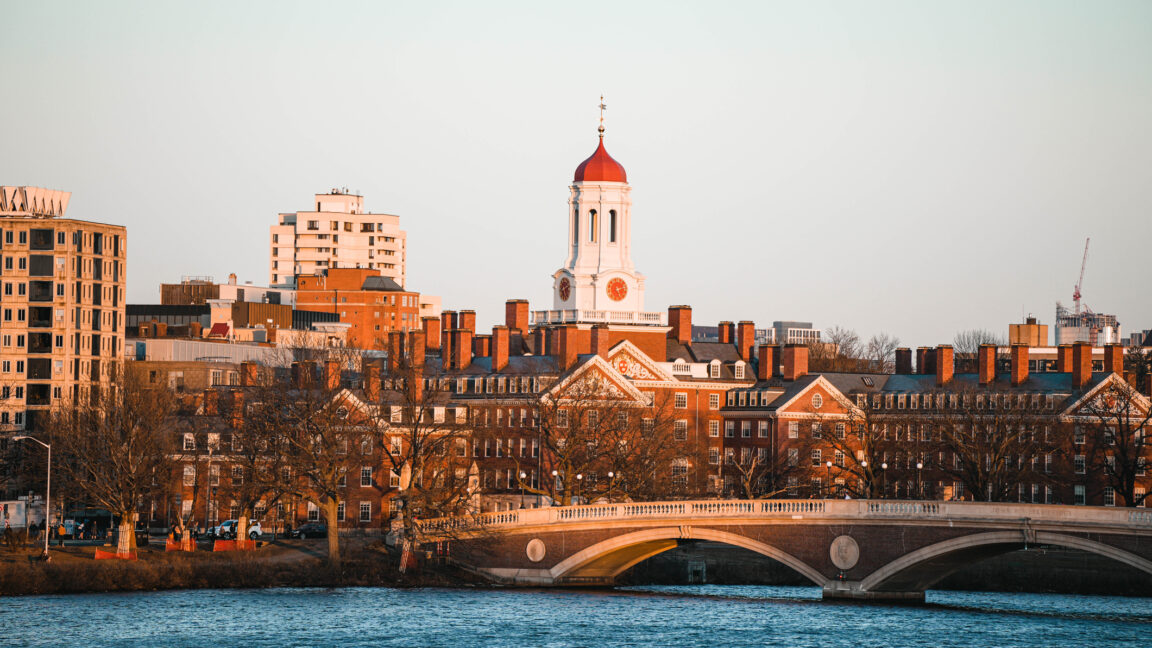
On Friday, the government sent a list of demands that it presented as necessary to "maintain Harvard’s financial relationship with the federal government." On Monday, Harvard responded that accepting these demands would "allow itself to be taken over by the federal government." The university also changed its home page into an extensive tribute to the research that would be eliminated if the funds were withheld.
How cute, an entire discussion of this case without a whiff of the homophobia that is driving it.
Members of Congress speak at a “Protect Our Care” event outside the Supreme Court Building in Washington, DC, April 2, 2019. | Anna Moneymaker/Bloomberg via Getty Images
If you paid any attention at all to US politics in the 2010s, you’ll remember the seemingly endlessstreamof lawsuits seeking to undermine, or even repeal altogether, the Affordable Care Act. Turns out, these suits never ended.
On April 21, the Supreme Court will hear Kennedy v. Braidwood Management, the latest attempt to convince a judiciary dominated by Republicans to sabotage President Barack Obama’s signature legislative achievement.
Unlike some of these earlier lawsuits, Braidwood is not an existential threat to the entire law. Currently, Obamacare gives the Department of Health and Human Services, acting through an institution known as the US Preventive Services Task Force (PSTF), broad authority to require health insurers to cover a wide range of preventative health treatments — from cancer screenings, to medications that prevent the transmission of HIV, to eye ointments that prevent blindness-causing infections in infants.
The plaintiffs in this case, who are represented by former Trump lawyer and anti-abortion crusader Jonathan Mitchell, essentially seek to strip HHS of this authority, thus allowing insurers to deny care for a wide range of treatments they are required to cover by law.
As is often the case in these anti-Obamacare lawsuits, Mitchell essentially argues that the Affordable Care Act and some other relevant health laws should be read to render them — and the PSTF — unconstitutional, and asks the Court to conclude that his reading is the only way to interpret the statute. The government offers a much more plausible interpretation of these laws in its brief.
There are multiple reasons to reject Mitchell’s approach. One is that the Supreme Court has long applied a doctrine, known as “constitutional avoidance,” which says that when a statute is open to multiple interpretations, the Court should avoid choosing one that would render it unconstitutional.
Additionally, in King v. Burwell (2015), the Court specifically warned against reading Obamacare in ways that undermine the law’s goals. In that case, the plaintiffs identified a poorly drafted provision of the law which, if read out of context, seemed to create a regime that would have collapsed the individual health insurance markets in most states. But the Court rejected this interpretation, concluding instead that “Congress passed the Affordable Care Act to improve health insurance markets, not to destroy them,” and so the Court must try to “interpret the Act in a way that is consistent with the former, and avoids the latter.”
Still, the Court’s membership has changed considerably since King. Justices Anthony Kennedy and Ruth Bader Ginsburg, both members of the King majority, were replaced by Trump justices, and King was only a 6-3 decision. So it is far from clear whether the current Court will have the same compunctions about reading federal law to defeat Obamacare.
What’s the legal issue in Braidwood?
Braidwood turns on a provision of the Constitution concerning the federal government’s hiring practices for officials known as “officers of the United States.” The highest-ranking officials, who are commonly referred to as “principal officers,” must be nominated by the president and confirmed by the Senate. A lower tier of officials, known as “inferior officers,” may be appointed by the president, by a federal court, or by “the heads of departments” — meaning that they do not necessarily require Senate confirmation.
Although the Constitution does not define the terms “principal officer” and “inferior officer,” the Supreme Court has fleshed out these two concepts considerably in its decisions. In United States v. Arthrex (2021), for example, the Court suggested that “only an officer properly appointed to a principal office may issue a final decision binding the Executive Branch.” So, if someone makes final, binding decisions that cannot be reviewed by a higher ranking official, they generally must be confirmed by the Senate.
Inferior officers, meanwhile, may still wield considerable influence and authority — so long as their work is overseen by a higher-ranking official. This is true, even if that officer’s superiors typically do not exercise their power to overrule an inferior officer. As the Court said in Edmond v. United States (1997), “‘inferior officers’ are officers whose work is directed and supervised at some level by others who were appointed by Presidential nomination with the advice and consent of the Senate.”
The PSTF is a panel of medical and public health experts appointed by the secretary of Health and Human Services, so their appointments are valid if they count as inferior officers but not if they count as principal officers. Since Obamacare took full effect, the PSTF has typically decided which preventive medical treatments health insurers must cover. The dispute in Braidwood hinges upon whether the health secretary exercises enough supervision over this panel to comply with the constitutional requirement that inferior officers must have a superior who is a principal officer.
According to the Justice Department’s brief in Braidwood, the case for upholding the PSTF’s authority is straightforward. The Court has historically looked at two factors to determine whether an inferior officer is properly supervised — whether they can be removed by a principal officer, and whether a principal officer can review their decisions.
The answer to the first question is pretty clear cut. Thus far, four judges have heard the Braidwood case, and they include some of the most anti-Obamacare voices within the judiciary. All of them concluded that the secretary may remove PSTF members at will.
The answer to the second question is marginally less clear, but the Justice Department still makes a very strong argument that PSTF members are supervised by principal officers. The PSTF sits within the Public Health Service, and a federal law provides that this service “shall be administered by the Assistant Secretary for Health under the supervision and direction of the Secretary.” Both the assistant secretary and the secretary are Senate-confirmed officials, so this statute establishes that the entire Public Health Service is controlled by a principal officer. And it is one of several statutes the government cites, which give the secretary broad control over institutions within the PSTF.
Additionally, after the PSTF determines that a particular medical treatment should be covered by insurers, a different federal law instructs the secretary to determine when that new coverage requirement should take effect — with an additional requirement that implementation of the PSTF’s conclusion must be delayed by at least one year. So, even if the health secretary didn’t have broad control over the entire Public Health Service, he still has the authority to delay any decision made by the PSTF indefinitely — and then to use that period of delay to remove the members of the PSTF and replace them with new officials who reject their predecessors’ decision.
PSTF members, in other words, serve at the pleasure of a principal officer, and cannot actually do anything over that officer’s objections. So, under the Court’s precedents, they sure look like validly appointed inferior officers.
So what’s the case against the PSTF?
Mitchell’s case against the PSTF largely consists of finding statutes that can conceivably be read to render this body unconstitutional, and then insisting that they must be read that way. His brief, for example, places a simply enormous amount of weight on a provision of federal law which states that PSTF members “shall be independent and, to the extent practicable, not subject to political pressure.”
Read in isolation, it’s certainly possible to construe this statute to grant PSTF members complete and total independence from any other public official. But that’s hardly the only permissible reading of this law. Among other things, the fact that it only frees the PSTF from political pressure “to the extent practicable” is a problem for Mitchell. If insulating the PSTF from secretarial control renders it unconstitutional, then it is not “practicable” to do so.
The Justice Department, meanwhile, offers an equally plausible alternative reading of this provision. It says that it requires the PSTF members themselves to “make recommendations based on their impartial medical and public-health judgments,” but the fact that these recommendations are themselves rooted in independent judgment does not mean that the secretary must give legal effect to the PSTF’s decisions.
Under the principle of constitutional avoidance, the justices should prefer the DOJ’s construction of the statute over Mitchell’s, because courts should reject the unconstitutional option when faced with two plausible ways to read a law.
Similarly, Mitchell argues elsewhere in his brief that a law permitting the secretary and assistant secretary to “administer” the PSTF is not broad enough to allow them to supervise its work, but that argument boils down to nothing more than a rehash of his other argument. According to Mitchell, “the responsibility to ‘administer’ does not empower the Assistant Secretary for Health or his commanding officers to direct and supervise a Task Force that the law requires to be ‘independent’ and free from ‘political pressure.’”
There’s also one other reason to question whether Mitchell’s arguments have any real force. Typically, when the Supreme Court determines that a federal body is unconstitutional because of a problem with how its members are appointed or supervised, it tries to preserve that body by striking down the specific legal provision that creates a constitutional problem, while also leaving the rest of the law intact.
In Free Enterprise Fund v. Public Company Accounting Board (2010), for example, the Supreme Court determined that a five-member government board that regulates accounting firms was not adequately supervised by a principal officer because its members could not be fired at will. Rather than strike down the entire board, however, the Court merely stripped its members of their protections from being fired, and placed the board under the full supervision of Senate-confirmed officials in the Securities and Exchange Commission.
Even if Mitchell is correct that PSTF members wield too much authority without enough supervision, in other words, the proper remedy would not be to strip the PSTF of its authority over insurance companies. It would be to strike down the “shall be independent” statute and place the PSTF under the secretary’s full control.
and yet the money behind wall street keeps voting for the GOP
The lie that won’t die is that Republicans are better for the economy than Democrats. By every measure possible, that is just not correct. Republicans break shit, Democrats fix it, and voters reward them by ushering Republicans back in power. Lather, rinse, repeat.
Now, the stock market is not “the economy,” and even boom times have seen economic decline for a significant percentage of people in the United States, particularly in its decaying rural regions. But the market is a proxy for strong economic performance, however inequitable it might be distributed.
At that very least, there’s no scenario in which we have economic development without a strong market. If companies are to create jobs, there has to be a strong market—or investors, in anticipation—pumping money into that job growth.
That’s all to say that Republicans are terrible for the job market. Just take a look at Wall Street’s 10 worst crashes:
1) March 12, 2020
Republican Donald Trump was president, and the emergence of a deadly pandemic and ensuing shutdowns signaled a period of economic uncertainty. Rather than calm jittery markets, Trump suggested that people inject bleach (April 24, 2020) to cure COVID-19. The markets had every reason to panic. Too bad they didn’t remember those lessons in 2024.
2) Nov. 20, 2008
Republican George W. Bush was president when the subprime mortgage crisis took down the global economy. Years of Wall Street deregulation—cheered on by Republicans—created the conditions for this mess.
3) April 4, 2025
Trump is president again, and here we are in a completely self-created and enabled crisis because Wall Street didn’t learn from the lessons of 2020, and their greed overrode all evidence that Trump is a disaster to not just our democracy but to global order. Congratulations, assholes. You voted for this.
4) Nov. 6, 2008
Bush done f’d stuff up.
5) October 15, 2008
Same as #2 and #4, courtesy of Bush and his merry cabal of deregulators.
6) October 7, 2008
Same same.
7) March 9, 2020
Trump again.
8-10) October 9, 10, and 22, 2008
Bush really made a mess of things, which makes it particularly maddening that people walked away thinking that Republicans knew anything about running an economy. Eight years of manufactured scandals against Democratic President Barack Obama really did a number in the United States, ushering in the age of Trump.
It’s quite obvious that, once Trump’s tariffs have fully left their mark, 2025 will occupy far more than just one spot on this list.
Other notable crashes?
Black Friday in October 1929, with Republican Herbert Hoover as president.
Kilmar Abrego Garcia’s mother holds a picture of her son and his family during a news conference to discuss his son’s arrest and deportation. | Alex Wong/Getty Images
On Thursday, the Supreme Court ordered the Trump administration to bring back Kilmar Abrego Garcia, the Maryland man it had sent to a notorious Salvadoran mega-prison in what the government has conceded was an “administrative error.” Not one of the justices dissented from that ruling.
The justices sent the case back to the federal trial court. The court asked for information by Friday morning on Abrego Garcia’s whereabouts and what steps the government has taken and will take going forward to facilitate his return. But the government came up empty-handed. Its lawyers said they couldn’t provide that information on time, effectively defying the court’s order.
“Foreign affairs cannot operate on judicial timelines, in part because it involves sensitive country-specific considerations wholly inappropriate for judicial review,” they wrote in a court filing.
Essentially, the administration is saying it can’t deliver information on Abrego Garcia on time because he is in the custody of a foreign government, and that facilitating his return may require sensitive foreign policy considerations. The US is paying the Salvadoran government to imprison hundreds of deportees, 90 percent of whom have no criminal record.
But immigration law experts said that foreign policy cannot justify the Trump administration’s failure to return Abrego Garcia.
“The idea that somehow this is something other than just picking up the phone and saying, ‘Get this guy back here,’ is absolute poppycock,” said Paul Wickham Schmidt, a retired immigration judge and professor at Georgetown University Law Center. “The idea that this is some sort of sensitive foreign relations is BS.”
This is the second time that the Trump administration has effectively ignored a court order. The first time, it refused to turn around deportation flights headed to El Salvador midair, arguing that US federal courts had no authority outside the US.
On Friday afternoon, the judge ordered the administration to provide daily updates on its plan to bring Abrego Garcia back — as the government slow-walks an order to return a man it, by its own admission, put in grave danger via an “administrative error.”
Where is KilmarAbrego Garcia?
The Trump administration’s reluctance to provide any information about Abrego Garcia raises serious concerns about his safety.
In 2019, an immigration judge granted Abrego Garcia relief from deportation to El Salvador because he faced the risk of being targeted by gangs. Though the government has accused him of being a member of the MS-13 gang, that was never proven in court.
“If the government is now refusing to acknowledge that he is somewhere in that country, that’s suspicious,” said César Cuauhtémoc García Hernández, a professor at the Ohio State University Moritz College of Law and author of several books on US immigration enforcement, including Welcome the Wretched. “It’s alarming to see the Justice Department refuse to even acknowledge that he is there or anywhere else on the face of the earth.”
Why the government’s stonewalling should worry everyone
The government’s actions are part of a larger picture of attacks on the rule of law, Schmidt said.
“They’re targeting law firms that represent people against the government,” he said. “They’re defunding legal services. They’re putting people in obscure locations. They’re compromising the immigration courts.”
There’s no telling how far protections for civil liberties could unravel from here, García Hernández said.
A recent Supreme Court ruling doesn’t provide much assurance: The justices found that the Trump administration could not deport people like Abrego Garcia to El Salvador under an obscure, 18th-century law without allowing them the opportunity to challenge their deportations in a US court. But that assumes that those targeted have access to legal counsel, and that’s hard to come by in some of the remote areas where they have been detained.
While the Trump administration might now be targeting unsympathetic figures — people it accuses of ties to gangs — that might give way to broader assaults on individual rights.
“They made it quite clear that they’re not just targeting people who present some kind of risk of bodily harm to those of us who live in the United States,” García Hernández said. “They’re also targeting people who they think present an ideological risk. And there’s no clear endpoint to that logic.”
America's Justice Department "has shut down its unit that investigates cryptocurrency fraud," reports USA Today.
A Monday night memo from U.S. Deputy Attorney General Todd Blanche said the shut down was "effective immediately."
Blanche directed the closure of the National Cryptocurrency Enforcement Team and ordered prosecutors to pivot to investigating transnational criminal organizations and terrorist groups that use crypto to engage in illicit transactions... In his four-page memo, Blanche said the new order was meant to bring the Justice Department in line with Trump's own Executive Order 14178, which decreed that clarity and certainty regarding enforcement policy "are essential to supporting a vibrant and inclusive digital economy and innovation in digital assets." Blanche, one of several Trump criminal defense lawyers at the top ranks of DOJ, said the president "has also made clear that '[w]e are going to end the regulatory weaponization against digital assets'..."
Consistent with that narrowing of its cryptocurrency enforcement policy, the DOJ Market Integrity and Major Frauds Unit will also cease cryptocurrency enforcement to focus on other administration priorities, including immigration and procurement fraud, Blanche said.
The Washington Post got this assessment from Yesha Yadav, a Vanderbilt University law professor who closely follows cryptocurrency and financial markets. "It's hard to underestimate the importance this task force has had ... in pursuing some really huge crypto hacks and cases."
More from USA Today:
Public corruption and transnational crime experts warned that shutting down the unit could divert critical resources from efforts to stop criminals and corrupt regimes from using cryptocurrency for illicit gain, even as Trump claims he wants to crack down on them. "Dangerous US adversaries rely on cryptocurrencies to launder money and evade sanctions," said Nate Sibley, an anti-corruption expert and director of the Kleptocracy Initiative at the conservative Hudson Institute think tank in Washington, D.C., in a post on X. "If this is accurate, hard to see how it squares with — for example-cracking down on cartel finances or maximum pressure sanctions on Iran...."
Trump's so-called "memecoin" surged from less than $10 on the Saturday before his inauguration to as high as $74.59 before eventually giving up some of its gains. The token, branded $TRUMP, has been criticized by ethics experts as a conflict of interest for the president since the company could likely benefit from his pro-crypto policies...
Last month, Trump signed an order to create a federal Strategic Bitcoin Reserve, signaling new federal support for cryptocurrency in general and Bitcoin in particular.
Since the first-ever White House crypto summit in March, America's Securities and Exchange Commission "has dropped more than a dozen cases against crypto firms," notes the Washington Post:
Last month, both the Federal Deposit Insurance Corp. and the Office of the Comptroller of the Currency pledged to stop evaluating banks based on "reputational risk" — a practice that some venture capitalists have claimed unfairly "de-banked" founders of cryptocurrency start-ups.
In other news, executives from cryptocurrency exchange Binance "met with Treasury Department officials last month," reports the Wall Street Journal, asking them to remove a U.S. monitor overseeing their compliance with anti-money-laundering laws, according to people familiar with the talks.
The article adds that Binance is also concurrently "exploring" a deal with the Trump family to list its new dollar-pegged stablecoin which "could catapult it into a huge market and potentially bring in billions in profit for the family. "
Security and privacy advocates are girding themselves for another uphill battle against Recall, the AI tool rolling out in Windows 11 that will screenshot, index, and store everything a user does every three seconds.
When Recall was first introduced in May 2024, security practitioners roundly castigated it for creating a gold mine for malicious insiders, criminals, or nation-state spies if they managed to gain even brief administrative access to a Windows device. Privacy advocates warned that Recall was ripe for abuse in intimate partner violence settings. They also noted that there was nothing stopping Recall from preserving sensitive disappearing content sent through privacy-protecting messengers such as Signal.
Enshittification at a new scale
Following months of backlash, Microsoft later suspended Recall. On Thursday, the company said it was reintroducing Recall. It currently is available only to insiders with access to the Windows 11 Build 26100.3902 preview version. Over time, the feature will be rolled out more broadly. Microsoft officials wrote:
The GDPNow model estimate for real GDP growth (seasonally adjusted annual rate) in the first quarter of 2025 is -2.4 percent on April 9, up from -2.8 percent on April 3. The alternative model forecast, which adjusts for imports and exports of gold as described here, is -0.3 percent. After recent releases from the US Census Bureau and the US Bureau of Labor Statistics, both the standard model’s and the alternative model’s forecasts of first-quarter real final sales to private domestic purchasers growth increased from 1.4 percent to 2.0 percent. [Apr 9th estimate]
The acting commissioner of the Internal Revenue Service is resigning over a deal to share immigrants’ tax data with Immigration and Customs Enforcement for the purpose of identifying and deporting people illegally in the U.S., according to two people familiar with the decision.
Melanie Krause, who had served as acting head since February, will step down over the new data-sharing document signed Monday by Treasury Secretary Scott Bessent and Homeland Security Secretary Kristi Noem. The agreement will allow ICE to submit names and addresses of immigrants inside the U.S. illegally to the IRS for cross-verification against tax records.
There are laws that threaten fines and prison time for just accessing IRS data from outside agencies. This seems upside down.
In yet another dictatorial move, President Donald Trump on Wednesday signed two executive orders targeting former Trump administration officials who dared to speak out against Dear Leader, weaponizing the federal government to go after his perceived enemies.
The orders direct the Department of Justice to investigate Chris Krebs and Miles Taylor—two men who worked in the first Trump administration and who have since criticized Trump.
Former Homeland Security Secretary Kirstjen Nielsen and Department of Homeland Security chief of staff Miles Taylor, right, at the U.S. Capitol in Washington, March 5, 2019.
Krebs, who was the director of the Cybersecurity and Infrastructure Security Agency under Trump, correctly said the 2020 election wasn't stolen. And Taylor, a former Department of Homeland Security chief of staff under Trump, wrote an infamous op-ed for The New York Times and later a book saying that there was a resistance within the first Trump administration trying to stop his worst whims.
The executive orders Trump signed are absurd.
Trump accused Krebs of “falsely and baselessly” denying “that the 2020 election was rigged and stolen, including by inappropriately and categorically dismissing widespread election malfeasance and serious vulnerabilities with voting machines.”
And he accused Taylor of having “stoked dissension by manufacturing sensationalist reports on the existence of a supposed ‘resistance’ within the federal government that ‘vowed’ to undermine and render effective a sitting President.”
While signing the authoritarian orders in the Oval Office, Trump accused Taylor of committing treason—an insane statement that should send chills down everyone's spines.
“I think it’s like a traitor,” Trump said of Taylor. “It’s like spying.”
By directing the DOJ to go after Krebs and Taylor, Trump is doing what he accused his predecessor of: weaponizing the federal government.
"I said this would happen,” Taylor wrote in a post on X. “Dissent isn’t unlawful. It certainly isn’t treasonous. America is headed down a dark path. Never has a man so inelegantly proved another man’s point."
Democrats slammed Trump’s authoritarian orders.
"Trump’s direction to DOJ to investigate Chris Krebs and Miles Taylor because he doesn’t like what they said is an unprecedented abuse of power by a President of the United States," Rep. Dan Goldman (D-NY) wrote in a post on X. "I call on all Congressional Republicans to condemn this egregious weaponization of the government."
Weaponizing the federal government to go after two former staffers is far from the only dictatorial move Trump has made since taking office.
Trump has similarly targeted law firms who employ his perceived enemies and who have sued to block his unlawful actions.
He’s said it’s illegal for news organizations to publish content he disagrees with.
He’s tried to end birthright citizenship, which is guaranteed by the Constitution, and is deporting people without due process—sending them to a gulag in Central America despite a court order to bring them back.
Trump is also reportedly holding a military parade in Washington, D.C., on his birthday, something he’s wanted for years but which has been blocked because it is incredibly expensive and will destroy roads across the city.
“A steady stream of lies & still living in the past while he destroys the economy,” Democrats on the House Homeland Security Committee wrote in a post on X. “Chris Krebs did the job Trump appointed him to do & Miles Taylor spoke the truth. Weaponizing the gov't against those who failed to cow to him won't make us forget that his Presidency is a disaster.”
Since taking office, President Trump has declared emergencies over immigration, drug trafficking, and trade. | AFP via Getty Images
When President Donald Trump announced his tariffs last week, he also declared a national emergency. According to the White House, the emergency in question is “the large and persistent trade deficit,” or the fact that the United States imports more goods than it exports.
If you’re confused about why that’s an emergency, you’re not alone. So are experts. But regardless of whether the trade deficit is an actual crisis (it isn’t), the reason Trump declared an emergency is straightforward: He wanted to invoke his emergency powers — specifically those granted to him under the International Emergency Economic Powers Act — to quickly implement his new trade policy. (Had Trump not declared an emergency, he could still have implemented tariffs, but he would have had to follow certain procedures first.)
There is no legal definition of an emergency. Anything can be an emergency, so long as the president deems it to be one. And while some crises — like, say, a pandemic — warrant an emergency declaration, presidents often invoke their emergency powers over events that hardly merit that level of urgency.
That might be why it sometimes feels like America is in a perpetual state of crisis. Since taking office, Trump has declared emergencies over immigration, drug trafficking, and trade. He even declared a national emergency over the International Criminal Court’s decision to issue arrest warrants for Israeli Prime Minister Benjamin Netanyahu.
But while Trump has made use of his emergency powers in somewhat unorthodox ways, the use of those expansive powers is not unique to his presidency. “You have this dynamic of presidents increasingly relying on emergency powers to do things that are not directly related to any actual emergency in the traditional understanding of that term,” said Elena Chachko, an assistant professor at Berkeley Law School.
There are many problems with presidents’ tendency to turn to emergency powers to ram policy through. It allows presidents to circumvent Congress, relieving legislators of their responsibility to pass laws that respond to current events. And more importantly, it props up a system that is ripe for abuse.
Emergency powers, explained
In 1976, Congress passed the National Emergencies Act to formalize the use of emergency powers. And in 1977, it passed the International Emergency Economic Powers Act, which allows presidents to follow through on economic policies like imposing sanctions without having to wait for congressional approval. These laws allow presidents to unilaterally declare an emergency as they see fit, but require them to articulate which powers they plan to use and to issue periodic reports to Congress.
The post-9/11 period is certainly not the first time that presidents have claimed to have inherent constitutional powers only to subsequently abuse them. President Franklin D. Roosevelt made that claim, for example, to justify the internment of Japanese Americans during World War II. “But I think this trend sharply accelerated after 9/11,” Goitein added.
In fact, since 9/11, the use of emergency powers have only gotten more alarming.
“In addition to the statutory powers available in a national emergency, modern presidents have increasingly claimed to have inherent constitutional powers in emergencies,” Goitein told me. Unlike statutory powers, which are created through legislation, constitutional powers are derived from the Constitution, and presidents have been more and more liberal with their interpretations of what powers are simply inherent to the office they hold.
So they don’t have to point to a specific statute to say they have the authority to act; instead, they claim that some of their authority during emergencies is fundamental presidential power. “For example, we saw the administration of George W. Bush taking the position in secret memos that the president has inherent powers that allow him to violate laws against warrantless wiretapping, and that he has inherent powers that allow him to violate laws against torture,” Goitein said.
Why presidents rely on emergency governance — and why that’s a problem
Congress has gotten less and less productive over the years. In the previous congressional session, lawmakers passed the fewest laws in decades. With a legislature that is less responsive to the world around it, presidents have even greater incentive to act on their own. And emergency powers give them an avenue to do just that. One example is former President Joe Biden using emergency powers to cancel student loan debt, a politically polarizing issue that Congress was unwilling to address.
But the primary reason that presidents overly rely on declaring emergencies is simple: The system is designed to make emergency governance hard to resist. There are few checks on the president’s emergency powers. (Technically, Congress can end an emergency with a veto-proof majority vote.) Plus, declaring a national emergency gives the president a pretense to, in many cases, find a way around political deadlock or other potential roadblocks, as was the case with canceling student debt.
Presidents can also use emergency declarations to whip up public support. After all, presidents often reiterate that their top priority is to keep people safe, and in a post-9/11 world, many Americans have been seemingly willing to give up certain civil liberties if they get safety and security in return. So by framing problems that hardly count as a crisis as an emergency, presidents hope to gain some political capital to implement their agenda. In his first term, for example, Trump declared an emergency to fund construction of the border wall.
When there is an emergency all the time, the limits on the president’s power become less and less potent. And presidents can seriously abuse their authority with little to no consequence, as was the case with Bush’s post-9/11 torture program.
All of this is why there have been repeated calls on Congress to reform emergency powers to add more oversight and potential recourse in the face of a president with little respect for rules and norms. But barring any change, presidents will continue to take advantage of these powers until Congress reckons with the reality that, oftentimes, the emergency the nation is facing is not trade or immigration or whatever else the president might say is a crisis. It’s the emergency declarations themselves.
Welfare/payback for Musk's donations. Fucking ridiculous
In the last week, the US Space Force awarded SpaceX a $5.9 billion deal to make Elon Musk's space company the Pentagon's leading launch provider, and then it assigned the vast majority of this year's most lucrative launch contracts to SpaceX.
On top of these actions, the Space Force reassigned the launch of a GPS navigation satellite from United Launch Alliance's long-delayed Vulcan rocket to fly on SpaceX's Falcon 9. ULA, a joint venture between Boeing and Lockheed Martin, is SpaceX's chief US rival in the market for military satellite launches.
Sign up for Trump’s Return, a newsletter featuring coverage of the second Trump presidency.
Only yesterday, President Donald Trump was mocking Republicans nervous about his global trade war as “Panicans.” In a defiant speech to the National Republican Congressional Committee, he insisted, “This time I’m doing what I want to do with respect to the tariffs,” and that only he had the courage to defy “the globalists.”
But the globalists turn out to have had enough power to bring Trump to heel after all. This afternoon, the president announced a 90-day pause on what he has called his “reciprocal tariffs” against every country other than China.
According to Charlie Gasparino of Fox News, Trump retreated in the face of troubling developments in the bond market. Asked by reporters, Trump didn’t deny this, noting that, even with a “beautiful” bond market, “I saw last night where people were getting a little queasy.” This was a completely new layer of danger that appeared overnight. Before yesterday evening, the interest rate on Treasury bonds had fallen slightly, a sign of increased demand as nervous investors retreated to the historically safe strategy of lending their savings to the U.S. government. Then, suddenly, investors began pulling money out, sensing that the U.S. government was no longer safe, a prospect that created the risk of everything from higher interest payments on the debt to a full-scale financial crisis.
All of this is to suggest that if a stock-market swoon, or even a recession, does not frighten Trump, the prospect of a 2008-style meltdown apparently still does. And so the gargantuan trade war is back off, for now.
Where does this leave the economy? The new 10 percent tariff on almost every good imported from every country not controlled by Vladimir Putin remains in place. This global flat tax on imports, it must be said, is much closer to the policy he campaigned on in 2024 than the confusing sampler platter of tariffs unveiled on Liberation Day.
That policy is, to be clear, quite harmful. Despite Trump’s rhetoric about reindustrialization, the universal tariff applies indiscriminately to almost every country and product. Some of those products, like coffee and bananas, cannot be practically grown in the United States, and will just get more expensive. Others, like metals and other industrial inputs, will make American manufacturing less competitive, not more.
The stock market surged after Trump’s “pause” announcement, but once the relief wears off, reality is likely to dull investors’ enthusiasm. Goldman Sachs, absorbing the news, has returned to its previous economic forecast, which calls for meager 0.5 percent economic growth this year and a 45 percent chance of recession. That is not the blinking-light disaster that the economy was facing before the pause, but it is still terrible, and much worse than the situation Trump inherited when he took office.
That’s one view, anyway. Within the MAGAverse, Trump’s latest pivot has been hailed as a masterstroke of economic statecraft. Treasury Secretary “Scott Bessent and I sat with the President while he wrote one of the most extraordinary Truth posts of his Presidency,” gushed Commerce Secretary Howard Lutnick on X. (This is plausible, to be fair; “one of the most extraordinary Truth posts of his Presidency” is not exactly the highest bar.) The financier Bill Ackman, who had spent much of the past few days posting (and occasionally deleting) careful critiques of Trump’s tariffs, posted, “This was brilliantly executed by @realDonaldTrump. Textbook, Art of the Deal.”
What deal? Nobody has made a new trade agreement with Trump. To the contrary, other countries have found the administration unable to even articulate its goals or objectives, because Trump’s “reciprocal” tariffs are the product of a nonsensical formula putatively serving a grab bag of mutually exclusive goals.
To the extent that the reciprocal tariffs created any leverage, it rests on the side of Trump’s counterparties, who now know that he may be a madman, but is not mad enough to risk a full-blown global economic meltdown. The gun on the table is pointed at Trump’s own foot.
Trump could very well restore the gigantic tariffs, especially if he feels humiliated by today’s events. The likelier outcome is that he will muddle through with policies that push prices up and growth down, but don’t directly precipitate an economic collapse. Trump’s allies will tolerate an enormous amount of damage to the country, especially damage that takes place over an extended period of time or primarily hurts people who aren’t rich. Immediate, massive harm to his wealthiest supporters appears to be one of the few red lines that Trump still won’t cross.
The battle for AI talent is so hot that Google would rather give some employees a paid one-year vacation than let them work for a competitor. From a report: Some Google DeepMind staff in the UK are subject to noncompete agreements that prevent them from working for a competitor for up to 12 months after they finish work at Google, according to four former employees with direct knowledge of the matter who asked to remain anonymous because they were not permitted to share these details with the press.
Aggressive noncompetes are one tool tech companies wield to retain a competitive edge in the AI wars, which show no sign of slowing down as companies launch new bleeding-edge models and products at a rapid clip. When an employee signs one, they agree not to work for a competing company for a certain period of time. Google DeepMind has put some employees with a noncompete on extended garden leave. These employees are still paid by DeepMind but no longer work for it for the duration of the noncompete agreement.
Several factors, including a DeepMind employee's seniority and how critical their work is to the company, determine the length of noncompete clauses, those people said. Two of the former staffers said six-month noncompetes are common among DeepMind employees, including for individual contributors working on Google's Gemini AI models. There have been cases where more senior researchers have received yearlong stipulations, they said.
A rare spot of good news today: For the second year in a row, US roads got a little safer. The National Highway Traffic Safety Administration published its early estimate of road deaths in 2024; 39,345 people lost their lives, which is a 3.8 percent decrease from the 40,901 deaths that occurred on US roads in 2023.
There's no single cause, and studies have identified multiple contributing factors: empty roads designed to practically encourage speeding, little to no enforcement of traffic laws by the police, a general sense of fatalism in the face of public health restrictions that few Americans had ever contemplated in recent times, and car companies making big trucks and SUVs with high hoods, which are much more deadly to pedestrians and other vulnerable road users in a crash.
Seems like a reasonable response to so many fake job postings
Fake job seekers using AI tools to impersonate candidates are increasingly targeting U.S. companies with remote positions, creating a growing security threat across industries. By 2028, one in four global job applicants will be fake, according to Gartner. These imposters use AI to fabricate photo IDs, generate employment histories, and provide interview answers, often targeting cybersecurity and cryptocurrency firms, CNBC reports.
Once hired, fraudulent employees can install malware to demand ransoms, steal customer data, or simply collect salaries they wouldn't otherwise obtain, according to Vijay Balasubramaniyan, CEO of Pindrop Security. The problem extends beyond tech companies. Last year, the Justice Department alleged more than 300 U.S. firms inadvertently hired impostors with ties to North Korea, including major corporations across various sectors.