TALLAHASSEE — Schools in Florida are reporting droves of absences among teachers and students this week, a sign that the highly contagious Omicron variant is already wrecking the budding new semester.
With Covid-19 cases skyrocketing throughout the state, Gov. Ron DeSantis is pledging to keep schools open and in-person classes churning without any mask mandates or new restrictions. The DeSantis administration instead is messaging that asymptomatic people should resist being tested for the coronavirus as hundreds of students and teachers miss the first days of school in 2022.
“If you don’t have symptoms, you’re not a case,” state Surgeon General Joseph Ladapo said Tuesday at an event in Naples.
In Miami Dade County, Florida’s largest school district, some 10 percent of instructional staff, 2,100 employees including counselors, missed the first day of school on Monday, according to school officials. It’s impossible to say whether every absence was tied to Covid-19, but for comparison, Miami Dade recorded 1,333 staff absences on the first day back from winter break in 2021.
More than 300 instructional staffers returned to school on Tuesday, officials said.
Broward County was missing some 1,740 teachers on Tuesday, poking a sizable hole in the districts staffing, school officials said. The school district could find substitutes for 35 percent of classrooms, leading schools to deploy campus and district staffers to fill in the gaps.
The trend is similar in central Florida, where schools in Osceola County recorded 314 teacher absences so far this week compared to 180 absences at the same time last year, according to school officials. That represents nearly 8 percent of the district’s teaching staff.
The teacher absences are putting a strain on local schools, with education officials warning they may be forced to “double up” on classrooms. Outgoing Miami schools chief Alberto Carvalho taught a high school science class on Tuesday as substitutes and bus drivers prove to be in short supply across the state amid the Covid-19 surge. More than 150 bus drivers called out sick on Tuesday in Broward County alone.
School leaders in Leon County were optimistic that schools will be close to fully staffed when students show up for class on Wednesday. Schools superintendent Rocky Hanna estimated that the district was down three or four teachers each campus during a district workday Tuesday.
“I was expecting worse,” Hanna told reporters Tuesday. “I’m happy to say it looks like the vast majority of our employees will be able to return to welcome our kids back tomorrow.”
Meanwhile, Osceola County reported that some 23 percent of students — 12,660 — were absent from school on Monday, more than double the district’s daily norm in December, school officials said. Schools in Miami saw an attendance rate of 82.4 percent on Monday, marking a slight downturn — 6 percentage points — from a typical year. Broward County tallied 24,700 student absences on Tuesday, down from 41,700 absences on Monday.
Schools in Florida are explicitly banned from mandating masks for students in state law, leaving officials with limited coronavirus precautions at their disposal to combat the Omicron surge. Many school districts implemented employee and visitor masking requirements in hopes of reducing cases.
The DeSantis administration continues to shut down the idea of adding coronavirus restrictions in schools during the current uptick in cases. On Tuesday, the Republican governor criticized schools that are requiring teachers and students to test negative for Covid-19 to attend school.
“It’s not good policy to use testing as a tool to basically limit opportunity and limit people’s ability to get an education,” DeSantis told reporters in Naples.
Enlarge / On Jan. 4, 2022, engineers successfully completed the deployment of the James Webb Space Telescope’s sunshield, seen here during its final deployment test on Earth in December 2020 at Northrop Grumman in Redondo Beach, California. (credit: NASA)
NASA has not finished deploying the James Webb Space Telescope yet, but the scientists and engineers working on the $10 billion instrument are feeling a lot better today.
As of late Tuesday morning, NASA and the telescope's primary contractor, Northrop Grumman, successfully stretched all five layers of the telescope's sunshield. This step completed the critical process of deploying the telescope's massive and essential sunshield, which keeps the telescope cold so that it can make delicate observations of faint objects.
"The mood is hard to describe," said Hilary Stock, a structural engineer at Northrop Grumman who worked on the sunshield "tensioning" Monday and Tuesday, during a teleconference with reporters. "It was a wonderful moment. A lot of joy. A lot of relief."
It's going to take forever to pry these blights out of the judiciary. Until then they can do tremendous damage.
President Joe Biden salutes as he exits Marine One at the White House on December 20. | Drew Angerer/Getty Images
The disturbing implications of a GOP judge’s ruling against the military’s vaccination requirement, explained.
One of the most well-settled principles of US national security law is that courts give tremendous deference to the military’s decisions regarding how to maintain discipline among its own personnel. “The essence of military service,” the Court held in Goldman v. Weinberger (1986), “is the subordination of the desires and interests of the individual to the needs of the service.” Servicemembers voluntarily give up some of their constitutional rights when they choose to join the armed services.
And yet, on Monday, a notoriously partisan federal judge in Texas thumbed his nose at decades of law and Supreme Court precedents, holding that members of the military may refuse an order to take the Covid-19 vaccination if they object to it on religious grounds. In a brief order in US Navy SEALs 1-26 v. Biden, US District Court Judge Reed O’Connor claims that a policy requiring nearly all servicemembers to be vaccinated against Covid-19 violates both the First Amendment and a federal religious liberty statute.
The plaintiffs in the SEALs case are represented by the America First Policy Institute, a young policy shop led by former Trump administration officials and other former consiglieri to the ex-president.
O’Connor’s SEALs opinion isn’t just wrong under established precedent, it is egregiously wrong. It’s also weakly argued.He spends less than six pages discussing the core issue in the case — whether the military’s vaccination policy must include exemptions for personnel with religious objections — and does not even acknowledge Supreme Court cases that directly refute his analysis, including the Goldman decision mentioned above.
Under ordinary circumstances, O’Connor would be swiftly reversed. But his decision will be appealed to the US Court of Appeals for the Fifth Circuit, a court dominated by Donald Trump appointees and other hardline conservatives who share many of O’Connor’s sensibilities.
And it is equally unclear whether the Supreme Court’s 6-3 conservative majority will honor its own precedents urging the judiciary to defer to an elected branch led by President Joe Biden.
O’Connor’s opinion is egregiously wrong
The Supreme Court has long held that courts typically should defer to the elected branches on military matters, even if that means individual rights apply with less force to servicemembers.
Under ordinary circumstances, for example, the Court has held that “a party seeking to uphold government action based on sex must establish an ‘exceedingly persuasive justification’ for the classification.” But in Rostker v. Goldberg(1981), the Court permitted the Selective Service System to discriminate against men by requiring them, and not women, to register for the draft.
As the Court explained in Rostker, “it is difficult to conceive of an area of governmental activity in which the courts have less competence” than on questions of military governance. “The complex, subtle, and professional decisions as to the composition, training, equipping, and control of a military force are essentially professional military judgments, subject always to civilian control of the Legislative and Executive Branches.”
This judicial deference to the military sometimes comes at a high price — the same doctrines that require courts to defer to a military vaccination requirement also bolstered discriminatory policies such as Don’t Ask, Don’t Tell. But such deference is also supposed to prevent highly political judges like O’Connor from imposing their preferences on the military.
Indeed, the Supreme Court has specifically held that this deference to the elected branches applies when a servicemember seeks a religious exemption from a military regulation. That was in Goldman, which held that a Jewish officer was not exempt from an Air Force regulation prohibiting him from wearing a yarmulke — or any other form of head covering while he was indoors.
“Our review of military regulations challenged on First Amendment grounds is far more deferential than constitutional review of similar laws or regulations designed for civilian society,” Justice William Rehnquist wrote for his Court in Goldman. Granting an exemption, Rehnquist warned, would undermine servicemembers’ “habit of immediate compliance with military procedures and orders” — a habit that “must be virtually reflex with no time for debate or reflection.”
Goldman eviscerates the plaintiffs’ First Amendment arguments in the SEALs case, and yet O’Connor does not mention it once in his entire opinion.
I want to emphasize the sheer audacity of this omission. State bars typically impose a duty of “candor toward the tribunal,” which requires lawyers to disclose binding precedents that negate their arguments. The Texas Disciplinary Rules of Professional Conduct, for example, provide that “a lawyer shall not knowingly ... fail to disclose to the tribunal authority in the controlling jurisdiction known to the lawyer to be directly adverse to the position of the client and not disclosed by opposing counsel.”
If a mere lawyer had filed a brief arguing that the military’s Covid-19 vaccination policy violates the First Amendment, but failed to cite the Goldman decision in that brief, that lawyer could face professional discipline or even disbarment. And O’Connor must have known about the Goldman decision because it is discussed in the government’s brief defending the military policy. Yet he did not even hold himself to the minimal ethical standard demanded of the lawyers who practice in his court.
Nor does O’Connor discuss the Supreme Court’s most recent decision governing religious liberties in the national security context, Trump v. Hawaii (2018), which held that “‘any rule of constitutional law that would inhibit the flexibility’ of the President ‘to respond to changing world conditions should be adopted only with the greatest caution,’ and our inquiry into matters of entry and national security is highly constrained.”
In fairness, O’Connor determined that the military’s policy violates both the First Amendment and the federal Religious Freedom Restoration Act (RFRA), and the Supreme Court’s decision in Burwell v. Hobby Lobby (2014) does indicate that RFRA sometimes provides more robust protections than the First Amendment does.
But Hobby Lobby was not a national security case — it involved an Obama administration rule requiring most employers to include contraceptive coverage in their employees’ health plans. And O’Connor doesn’t even try to argue that RFRA provides the SEALs plaintiffs with greater protections than they enjoy under the First Amendment. Indeed, he explicitly rejects this claim, writing that “for the same reasons Plaintiffs succeed on their RFRA claim, they also prevail on their First Amendment claim.”
There are obvious downsides to the Supreme Court’s decisions demanding judicial deference to the military — sometimes military personnel raise compelling claims that their individual rights are being denied needlessly. But there’s also a very significant upside to these cases.
The Court’s decisions establishing that the military is “subject always to civilian control of the Legislative and Executive Branches” play an important role in maintaining elected civilian control over the armed forces. Judges should not exercise command over the military for the simple reason that they are not elected, and thus unaccountable to the people if they exercise that command unwisely or maliciously.
I want to be careful not to exaggerate the immediate significance of O’Connor’s opinion. Wrong as it is, it will apply only to a small fraction of servicemembers. The overwhelming majority of servicemembers are vaccinated.
But O’Connor is claiming a power to override lawful orders given to members of the military. And he’s inviting other members of the military to seek out sympathetic judges if they disagree with an elected president’s policies.
Given O’Connor’s highly partisan record, he should not be trusted with that power.
Enlarge / Installers nail GAF Energy's new solar shingles to a demonstration house. (credit: GAF Energy)
A new solar technology introduced yesterday at CES could bring power-producing roofs mainstream by relying on an old building material—nails.
For years, homeowners who wanted solar power have stripped their old roofs of shingles, added new ones, and then slapped large solar panels on top using sturdy frames. It’s a model that works well, but it also creates a two-step process that engineers have been striving to simplify.
Plenty of companies have offered their own take on solar roofs, but so far, they’ve remained niche products. GAF Energy is hoping to change that with the Timberline Solar Energy Shingle that looks strikingly like typical asphalt shingles. But their key feature isn’t so much that they emulate the look of asphalt shingles, but that they’re installed in nearly the same way. Roofers can slap the flexible sheets down and nail the top strip to the roof, just like they do for traditional roofs.
Enlarge / Dell XPS 13 Plus in its platinum color. (credit: Scharon Harding)
Dell today unveiled the latest in its long line of XPS laptops. Previous updates have ranged from minor CPU refreshes to moderate redesigns with larger screen-to-body ratios, smaller dimensions, and critical changes, like the removal of the up-the-nose webcam. But the latest XPS 13 is one of the most unusual-looking in years. And with a design built to host a more power-hungry CPU, Dell is calling it the XPS 13 Plus.
Announced to coincide with CES 2022 this week, the XPS 13 Plus (9320) will be available globally this spring with Windows 11 or Ubuntu 20.04 (XPS 13 Plus Developer Edition). Dell hasn't settled on a starting price yet but told the press it's "targeting" $1,199.99 in the US. That's a notable bump from the current non-Plus XPS, which starts at $850 (that configuration was out of stock on Dell's website as of writing. The next cheapest available SKU starts at $950). Dell said it will confirm the XPS 13 Plus' price closer to the shipping date.
One look at the XPS 13 Plus and you can tell that it offers a different experience than the prior XPS 13. The machine's keyboard stretches across the entire deck with no space between individual keys. The touchpad isn't outlined with a border or completed with left- and right-click keys, and it responds with haptic feedback. And rather than topping the keyboard with a row of function keys, the XPS 13 Plus has an Apple Touch Bar-like capacitive touch strip that you can toggle to show function-row inputs or media functions.
How about no. Or are consequences only for Democrats?
Since the beginning of the COVID-19 pandemic, Republicans across the board have done everything they can to not work productively on a course of action that might succeed in protecting the public and controlling the spread of the virus. The first step, led by the incompetent Trump administration, was to deny the serious nature of the pandemic. The second step was to blame China for the pandemic while both denying the seriousness of the event and not doing anything about it. The third step was to maintain that the virus, which has taken almost 1 million American lives—and claimed the lives of countless others due to the stresses on our health care infrastructure—was not serious, and any attempts at mitigating its spread through public policy were an affront to Americans’ constitutional rights.
The news that Texas was in COVID-related trouble came around the same time that Patrick, who has also attacked mask mandates and stay-at-home policies, began having “symptoms [that] were mild.” Patrick announced on Monday that he recently tested positive for COVID-19.
Abbott, who is now begging for a bail-out, is trying to make it sound like the Biden administration is to blame for his bad policies and the previous administration’s incompetence. You might remember that in June 2020, the Trump administration stopped funding seven coronavirus testing sites even as both Democratic representatives and Republican ones asked that the sites continue being funded. You know which Republican didn’t fight the Trump administration’s decision? You guessed it.
"The good news is there is a strategy that will supplant and actually be superior to that strategy [that] we will be announcing soon," Abbott told KTVT-TV in the Dallas-Fort Worth area. Pressed for a timeline, Abbott said the announcement would come "hopefully within a week."
Even with reduced mortality from omicron, this will not end well
According to data from Johns Hopkins University, more than 1 million people in the U.S. were diagnosed with COVID-19 on Monday. Bloomberg reports: The highly mutated variant drove U.S. cases to a record, the most -- by a large margin -- that any country has ever reported. Monday's number is almost double the previous record of about 590,000 set just four days ago in the U.S., which itself was a doubling from the prior week. It is also more than twice the case count seen anywhere else at any time since the pandemic began more than two years ago. The highest number outside the U.S. came during India's delta surge, when more than 414,000 people were diagnosed on May 7, 2021.
Three lawsuits have been launched against the state of Georgia since GOP legislators hacked congressional and legislative maps, disarming population growth in Black and brown communities with alleged gerrymandering. “Among the most controversial moves was making Carolyn Bordeaux’s Gwinnett County 7th District seat safely Democratic by turning fellow Democrat Lucy McBath’s neighboring 6th District into a Republican stronghold,” Channel 2 Action News reported. “The bill also shifts heavily minority and Democratic sections of West Cobb County into conservative Marjorie Taylor Green’s safely Republican 14th District.”
Gov. Brian Kemp signed the new maps into law on Thursday, a month after the state legislature passed the plans and organizations readied the appropriate lawsuits in response. They couldn't file them, however, until Kemp actually signed the plans, creating a time crunch for the lawsuits to work their way through the courts before the state primary election in May, Channel 2 reported.
Bordeaux tweeted on Thursday: “Today is a sad day for Georgia as Republicans have gerrymandered our state at every level. I will continue to advocate for a non-partisan redistricting process and fair maps.”
Jerry Gonzalez, executive director of the Hispanic civic engagement nonprofit Galeo, launched one lawsuit with the Georgia State Conference of the NAACP, and the Georgia Coalition for the People's Agenda Thursday in the U.S. District Court for the Northern District of Georgia. Kemp is named as a defendant in the suit, as is Secretary of State Brad Raffensperger and the state of Georgia.
“They did their best to pack and dilute the minority community’s growth in order to consolidate their power,” Gonzalez told Channel 2. “We think that’s an illegal use of race in the redistricting process.”
Georgia's population has increased by about 1 million people since 2010, and most of that growth has happened in Black and brown communities, the news station reported.
In the wake of the growth of communities of color in Georgia, which was reflected in the 2020 elections and the January 2021 Senate runoffs, the State of Georgia has drawn its Congressional and State legislative maps in violation of the U.S. Constitution and the Voting Rights Act. Reverting to the strategies of the Jim Crow era, Georgia has employed the two classic tactics of gerrymandering to tilt the balance of electoral power to the White majority: “cracking” (diluting the voting power of voters of color across many districts) and “packing” (concentrating the voting power of voters of color in one district to reduce and dilute their voting power in other districts). These redistricting techniques undermine the voting rights of Georgia’s Black, Hispanic/Latino (“Latinx”) and Asian American Pacific Islander(“AAPI”) citizens, and deny them an equal opportunity to elect candidates of their choice.
The advocacy organizations are requesting a three-judge panel, and they are asking the court to invalidate the new maps “on the grounds that they violate the Fourteenth Amendment to the U.S. Constitution, which guarantees equal protection under the law, and Section 2 of the Voting Rights Act of 1965, which prohibits efforts to dilute the voting power of protected groups that have historically faced racial discrimination in voting.”
“The majority party in Georgia purposely ignored the population growth of people of color and impermissibly used race to try to maintain control of Georgia’s congressional delegation, as well as the entire General Assembly,” Ezra Rosenberg, co-director of the Voting Rights Project with the Lawyers’ Committee for Civil Rights Under Law, said in an emailed media statement. “It was unlawful and unconstitutional when the Democrats did it decades ago, and it is no less so when the Republicans do it today. States cannot use race to achieve political ends – particularly when they do it at the expense of the voting rights of people of color.”
In another suit launched by Alpha Phi Alpha Fraternity, the organization is seeking a declaratory judgment and injunctive relief to block the new maps from going into effect.
Attorneys stated in the suit:
Georgia’s growing Black population could easily support over a half dozen new Black-majority State Senate and State House districts in areas whereBlack voters, despite voting cohesively, have previously been unable to elect candidates of their choice. That includes new Black-majority districts in areas around metro Atlanta, Augusta, Southwestern Georgia, and elsewhere across theState. But the State’s maps do not do that. Instead, the State drew only a small handful of new Black-majority districts, mostly in areas that were already electingBlack-preferred candidates. Thus, despite the tremendous growth of the State’s Black population over the past decade, Black Georgians will have few new political opportunities in the State Senate and State House under the State’s new maps.
And in yet another lawsuit, activists argued that an "additional majority-Black district can be drawn without reducing the total number of districts in the region and statewide."
Attorneys stated in the lawsuit:
Rather than draw this additional congressional district to allow Georgians of color the opportunity to elect their preferred candidates, the General Assembly instead chose to “pack” some Black voters in the Atlanta metropolitan area and “crack” other Black voters among rural-reaching, predominantly white districts.
Marc Elias, founder of the progressive site Democracy Docket, tweeted a list of states to watch for "new voting rights, redistricting and pro-democracy litigation (in order of likelihood)." He listed Georgia as No. 2, only beaten by Arizona and followed by New York.
States to watch for new voting rights, redistricting and pro-democracy litigation (in order of likelihood)👀 1. Arizona 2. Georgia 3. New York 4. New Hampshire 5. Missouri 6. Arkansas 7. Oklahoma 8. Michigan 9. Texas 10. South Carolina
“It’s going to be hard next month, and just thinking about it, it really makes me want to bite my nails to the quick,” Anna Lara toldThe New York Times in December. She’s talking about the end of the monthly Child Tax Credit payments; the last payment went out on December 15. She’s a mother of two young children and she lives in Huntington, West Virginia. “Honestly, it’s going to be scary. It’s going to be hard going back to not having it.”
It’s her senator, Democrat Joe Manchin, who has given Senate Republicans an assist in blocking President Joe Biden’s Build Back Better plan, and the extension of those monthly payments. Manchin has privately told colleagues that he’s opposed to those payments because he believes parents will spend the money on drugs instead of on their children. “Your children watch you, and if you worry, they catch on to that,” Lara said. “With that extra cushion, we didn’t have to worry all the time.” The money has helped her family since she lost her job in the pandemic and hasn’t been able to return to work because of the cost of childcare. Her partner still has his job, but the payments have helped them meet all their living expenses—replacing a broken appliance, car repairs, a new car seat for their 6-year old, and new shoes. Not illegal drugs.
According to nonpartisan, independent research from the Center on Poverty & Social Policy at Columbia University, the payments kept 3.8 million out of poverty in November of 2021. In just that month, the families of 61.3 million children received the payments. That resulted in a nearly 30% reduction in poverty rates compared to the level they estimate in the absence of the payments.
The credit was temporarily expanded and extended in the American Rescue Plan signed into law by President Biden last spring, but Congress and Biden intended to make the program permanent and included it in the Build Back Better plan. The payments were increased from the previous maximum of $2,000 annually per child to $3,600 annually for children up to age 5, and $3,000 for older children. The other change was to make those payments monthly, instead of coming in one payment after families file their tax returns. It also expanded the program to people who hadn’t been able to get the full credit because they had too little income. That’s what’s really helping reduce poverty among children—about 1/3 of the nation’s kids (half of Black and Hispanic children and 70% of kids with single parents) previously didn’t qualify for the full credit.
“What we’ve seen with the child tax credit is a policy success story that was unfolding, but it’s a success story that we risk stopping in its tracks just as it was getting started,” Megan Curran, director of policy at Columbia’s Center on Poverty and Social Policy, told the Times. “The weight of the evidence is clear here in terms of what the policy is doing. It’s reducing child poverty and food insufficiency.”
Another argument against the policy has been that it would discourage work, but there’s been no evidence of that happening, either. In fact, says Samuel Hammond, director of poverty and welfare policy at the Niskanen Center, it is probably encouraging more parents to work because they can more easily afford child care. “There’s every reason to believe that in the current labor market, the child tax credit is work-enabling, and no evidence to the contrary has been presented,” he told the Times. He wrote a report last summer estimating the expanded payments would create the equivalent of 500,000 full-time jobs and provide $27 billion in increased consumer spending.
That doesn’t mean it’s contributing to inflation, one economist says, as Manchin and Republicans have argued. “That’s a noninflationary program,” said Joe Brusuelas, chief economist at the accounting firm RSM. “That’s dedicated toward necessities, not luxuries.” Or illegal drugs.
As of now, Manchin is still demanding that either a further income limit is placed on the child tax credits, or the provision is removed entirely. The CTC does already have income limits for 2021 filers, starting at above $150,000 for joint filers, $112,500 for heads of household, and $75,000 for single filers—and no, it makes no sense for single parents to be penalized with that lower-income threshold. Those limits were higher under the Rescue Plan, phasing out at $200,000 and $400,000 levels are where the child tax credit phases out faster for individual or joint tax filers.
Nonetheless, and probably because he hasn’t done his homework to know already that the CTC is means-tested, Manchin wants it to be limited. He’s also said maybe there should be work requirements, a Dickensian solution at any time but particularly with COVID-19 resurging and the omicron variant taking hold.
Also, the omicron variant is causing a massive COVID surge, and schools and businesses are going to start closing again and heating bills in much of the country are going to rise and the monthly CTC payments have ended. None of which Manchin gives a genuine shit about. Never mind that 181,000 West Virginia families got their final monthly checks last month. The checks averaged $446 and reached 305,000 children. That’s 93% of the state’s children, 50,000 of whom are at risk of their families falling into poverty if the program isn’t resumed.
Among them is Anna Lara’s family. “Right now, both of my vehicles need gas and I can’t put gas in the car,” she told the Times. “But it’s OK, because I’ve got groceries in the house and the kids can play outside.” At least it was okay in December.
Straight up anti-democratic, and the GOP is here rooting for dictators.
Published by AFP
Hungary's Prime Minister Viktor Orban listens while US President Donald Trump speaks to the press before a meeting in the Oval Office on May 13, 2019
Washington (AFP) – Former US president Donald Trump on Monday enthusiastically backed the reelection of Hungarian Prime Minister Viktor Orban, a hero of the far-right who has been accused of creeping authoritarianism.
In a statement issued along the lines of his frequent blessings to Republican candidates in primary elections at home, Trump wrote that the Hungarian leader has his “Complete support and Endorsement” in elections expected in April.
“He has done a powerful and wonderful job in protecting Hungary, stopping illegal immigration, creating jobs, trade, and should be allowed to continue to do so in the upcoming Election. He is a strong leader and respected by all,” Trump wrote.
Trump welcomed Orban to the White House in 2019, a symbolic acceptance for the prime minister who frequently clashes with the European Union leadership and was snubbed both by President Joe Biden and Trump’s predecessor Barack Obama.
Some Trump administration officials argued at the time that the goal was to keep in the Western fold a leader who had flirted with Russia, and then secretary of state Mike Pompeo made a point of meeting activists who ran afoul of Orban during a visit to Budapest.
But Orban has increasingly been hailed both by Trump’s wing of the Republican Party and European far-right leaders such as France’s Marine Le Pen, especially over his refusal to accept refugees.
Tucker Carlson, a Fox News host close to Trump, broadcast last year from Budapest and was given an interview with Orban as well as a helicopter tour of a border fence.
Orban has also sought to mobilize support on opposition to LGBTQ rights, with a ban on “promotion and display” of homosexuality and a related referendum expected on the same day as the election.
Orban, who has been in charge since 2010, faces a potentially serious challenge from Peter Marki-Zay, who describes himself as a traditional Catholic conservative and has vowed to scrap homophobic laws if elected.
Microsoft has released a fix for a harebrained Exchange Server bug that shut down on-premises mail delivery around the world just as clocks were chiming in the new year.
The mass disruption stemmed from a date check failure in Exchange Server 2016 and 2019 that made it impossible for servers to accommodate the year 2022, prompting some to call it the Y2K22 bug. The mail programs stored dates and times as signed integers, which max out at 2147483647, or 231 - 1. Microsoft uses the first two numbers of an update version to denote the year it was released. As long as the year was 2021 or earlier, everything worked fine.
“What in the absolute hell Microsoft?”
When Microsoft released version 2201010001 on New Year’s Eve, however, on-premises servers crashed because they were unable to interpret the date. Consequently, messages got stuck in transport queues. Admins around the world were left frantically trying to troubleshoot instead of ringing in the New Year with friends and family. All they had to go on were two cryptic log messages that looked like this:
Where the crisis in American democracy might be headed.
Americans have long believed our country to be exceptional. That is true today in perhaps the worst possible sense: No other established Western democracy is at such risk of democratic collapse.
January 6, 2021, should have been a pivot point. The Capitol riot was the violent culmination of President Donald Trump and his Republican allies’ war on the legitimacy of American elections — but also a glimpse into the abyss that could have prompted the rest of the party to step away.
Yet the GOP’s fever didn’t break that day. Large majorities of Republicans continue to believe the lie that the 2020 election was stolen from Trump, and elected Republicans around the country are acting on this conspiracy theory — attempting to lock Democrats out of power by seizing partisan control of America’s electoral systems. Democrats observe all this and gird for battle, with many wondering if the 2024 elections will be held on the level.
These divisions over the fairness of our elections are rooted in an extreme level of political polarization that has divided our society into mutually distrustful “us versus them” camps. Jennifer McCoy, a political scientist at Georgia State University, has a term for this: “pernicious polarization.”
In a draft paper, McCoy and co-author Ben Press examine every democracy since 1950 to identify instances where this mindset had taken root. One of their most eye-popping findings: None of America’s peer democracies have experienced levels of pernicious polarization as high for as long as the contemporary United States.
“Democracies have a hard time depolarizing once they’ve reached this level,” McCoy tells me. “I am extremely worried.”
But worried about what, exactly? This is the biggest question in American politics: Where does our deeply fractured country go from here?
A deep dive into the academic research on democracy, polarization, and civil conflict is sobering. Virtually all of the experts I spoke with agreed that, in the near term, we are in for a period of heightened struggle. Among the dire forecasts: hotly contested elections whose legitimacy is doubted by the losing side, massive street demonstrations, a paralyzed Congress, and even lethal violence among partisans.
Spencer Platt/Getty Images
Trump supporters gather for the “Stop the Steal” rally in Washington, DC, on January 6, 2021, to protest the ratification of President-elect Joe Biden’s Electoral College victory over President Trump in the 2020 election.
Lilliana Mason, a Johns Hopkins University political scientist who studies polarization and political violence in America, warned of a coming conflagration “like the summer of 2020, but 10 times bigger.”
In the longer term, some foresaw one-party Republican rule — the transformation of America into something like contemporary Hungary, an authoritarian system in all but name. Some looked to countries in Latin America, where some political systems partly modeled on the United States have seen their presidencies become elected dictatorships.
“The night that Trump got elected, one of my Peruvian students writing about populism in the Andes [called me] and said, ‘Jesus Christ, what’s happening now is what we’ve been talking about for years,’” says Edward Gibson, a scholar of democracy in Latin America at Northwestern University. “These are patterns that repeat themselves in different ways. And the US is not an exception.”
Others warned of a retreat to America’s Cold War past, where Democrats stoke conflict with a great power — this time, China — and abandon their commitment to multiracial democracy to appeal to racially resentful whites.
“The losers in the resolution of past democratic crises in the United States have, more often than not, been Black Americans,” says Rob Lieberman, an expert on American political history at Johns Hopkins.
America’s dysfunction stems, in large part, from an outdated political system that creates incentives for intense partisan conflict and legislative gridlock. That system may well be near the point of collapse.
Reform is certainly a possibility. But the most meaningful changes to our system have been won only after bloodshed and struggle, on the fields of Gettysburg and in the streets of Birmingham. It is possible, maybe even likely, that America will not be able to veer from its dangerous path absent more eruptions and upheavals — that things will get worse before they get better.
Part I: Conflict
Barbara Walter is one of the world’s leading experts on civil wars. A professor at the University of California San Diego, she has done field research in places ranging from Zimbabwe to the Golan Heights, and has analyzed which countries are most likely to break down into violent conflict.
Her forthcoming book, How Civil Wars Start, summarizes the voluminous research on the question and applies it to the contemporary United States. Its conclusions are alarming.
“The warning signs of instability that we have identified in other places are the same signs that, over the past decade, I’ve begun to see on our own soil,” Walter writes. “I’ve seen how civil wars start, and I know the signs that people miss. And I can see those signs emerging here at a surprisingly fast rate.”
Walter uses the term “civil war” broadly, encompassing everything from the American Civil War to lower-intensity insurgencies like the Troubles in Northern Ireland. Something like the latter, in her view, is more likely in the United States: One of the book’s chapters envisions a scenario in which a wave of bombings in state capitols, perpetrated by white nationalists, escalates to tit-for-tat violence committed by armed factions on both the right and the left.
Seth Herald/Getty Images
The Boogaloo Boys hold a rally at the Michigan State Capitol in Lansing on October 17, 2020. Some of the men arrested in the plot to kidnap Michigan Gov. Gretchen Whitmer reportedly subscribed to the ideology of the anti-government “Boogaloo” movement.
Countries are most likely to collapse into civil war, Walter explains, under a few circumstances: when they are neither fully democratic nor fully autocratic; when the leading political parties are sharply divided along multiple identity lines; when a once-dominant social group is losing its privileged status; and when citizens lose faith in the political system’s capacity to change.
Under these conditions, large swaths of the population come to see members of opposing groups as existential threats and believe that the government neither represents nor protects them. In such an insecure environment, people conclude that taking up arms is the only recourse to protect their community. The collapse of the former Yugoslavia in the 1990s — leading to conflicts in Bosnia, Croatia, and Kosovo — is a textbook example.
Worryingly, all four warning signs Walter identifies are present, at least to some degree, in the United States today.
Courtney Pedroza/Getty Images
Supporters of former President Donald Trump protest outside Veterans Memorial Coliseum in Phoenix, Arizona, where a recount of ballots from the 2020 general election was underway on May 1, 2021. The Maricopa County ballot recount came after two election audits found no evidence of widespread fraud in Arizona.
Walter doesn’t think that a rerun of the American Civil War is in the cards. What she does worry about, and believes to be in the realm of the possible, is a different kind of conflict. “The next war is going to be more decentralized, fought by small groups and individuals using terrorism and guerrilla warfare to destabilize the country,” Walter tells me. “We are closer to that type of civil war than most people realize.”
How close is hard to say. There are important differences not only between the United States of today and 1861, but also between contemporary America and Northern Ireland in 1972. Perhaps most significantly, the war on terror and the rise of the internet have given law enforcement agencies unparalleled capacities to disrupt organized terrorist plots and would-be domestic insurgent groups.
But violence can still spiral absent a nationwide bombing campaign or a full-blown war — think lone-wolf terrorism, mob assaults on government buildings, rioting, street brawling.
Historical examples abound, some even in advanced democracies in the not-so-distant past. For about a decade and a half beginning in 1969, Italy suffered through a spree of bombings and assassinations perpetrated by far-right and far-left extremists that killed hundreds — the “Years of Lead.” Walter and other observers have pointed to this as a possible glimpse into America’s future: not quite a civil war, but still significant political violence that terrified civilians and threatened the democratic system.
Since Barack Obama’s 2008 presidential victory, America has seen a surge in membership in far-right militias. During the Trump era, some prominent militias directly aligned themselves with his presidency — with some groups, like the heavily armed Oathkeepers and street-brawling Proud Boys, participating in the attack on the Capitol. In May, the attorney general and the secretary of homeland security both testified before Congress that white supremacist terrorism is the greatest domestic threat to America today.
Roberto Schmidt/AFP via Getty Images
Trump supporters breached security and entered the US Capitol on January 6, 2021, disrupting Electoral College proceedings.
Fears of white displacement — the anxieties that Walter and other scholars pinpoint as root causes of political violence — have already fueled horrific mass shootings. In 2018, a gunman who believed that Jews were responsible for mass nonwhite immigration opened fire in a Pittsburgh synagogue, killing 11. The next year, a shooter who claimed Latinos were “replacing” whites in America murdered 23 shoppers at an El Paso Walmart that has a heavily Latino clientele.
Other forms of political conflict, like the 2021 Capitol riot, may not be as deadly but can be just as destabilizing. In 1968, a wave of demonstrations, strikes, and riots initiated by left-wing students ground France to a halt and nearly toppled its government. During the height of the unrest in late May, President Charles de Gaulle briefly decamped to Germany.
In the coming years, the United States is likely to experience some amalgam of these various upheavals: isolated acts of mass killing, street fighting among partisans, protests that break out into violence, major political and social disruption like on January 6, 2021, or in May 1968.
AP
Anti-riot police charge through the streets of Paris, France, during student demonstrations that turned violent on May 6, 1968.
The most likely flashpoint is a presidential election.
Our toxic cocktail of partisanship, identity conflict, and an outmoded political structure has made the stakes of elections feel existential. The erosion of faith in institutions and growing distrust of the other side makes it more and more likely that neither party will view a victory by the other as legitimate.
After the November 2020 contest, Republicans widely accepted Trump’s “big lie” of a stolen election. With the January 6 riot and its aftermath, we now have an example of what happens when a Trumpist Republican Party loses an election — and every reason to think something like it could happen again.
An October poll from Grinnell-Selzer found that 60 percent of Republicans are not confident that votes will be counted properly in the 2022 midterms. Election officials have been inundated with an unprecedented wave of violent threats, almost exclusively from Trump supporters who believe the 2020 election was fraudulent.
The behavior by Republican leaders is all the more worrisome because elites can play a major role in either inciting or containing violent eruptions. In their forthcoming book Radical American Partisanship, Mason and co-author Nathan Kalmoe ran an experiment testing the effect of elite rhetoric on Americans’ willingness to engage in violence. They found that if you show Republican partisans a message attributed to Trump denouncing political violence, their willingness to endorse it goes down substantially.
Tasos Katopodis/Getty Images
Then-President Donald Trump speaks at the “Stop the Steal” rally in Washington, DC, on January 6, in an hour-long speech during which he encouraged his supporters to march to the Capitol to protest Electoral College proceedings.
“Our results suggest loud and clear that antiviolence messages from Donald Trump could have made a difference in reducing violent partisan views among Republicans in the public— and perhaps in pacifying some of his followers bent on violence,” they write. “Instead, Trump’s lies about the election incited that violence” on January 6, 2021.
Doubts about the legitimacy of election results can also run the other way. Imagine an extremely narrow Trump victory in 2024: an election decided by Georgia, where an election law inspired by Trump’s lie gives the Republican legislature the power to seize control over the vote-counting process at the county level. If Republicans use this power and attempt to influence the tally in, say, Fulton County — a heavily Democratic area including Atlanta — Democrats would cry foul. There would likely be massive protests in Atlanta, Washington, DC, and many other American cities.
One can then imagine how that could spiral. Armed pro-Trump militias like the Oathkeepers and Proud Boys show up to counterprotest or “restore order”; antifa marchers square off against them. The kind of street fighting that we’ve seen in Portland, Oregon, and Charlottesville, Virginia, erupts in several cities. This is Mason’s “summer of 2020, but 10 times bigger” scenario.
Maybe these melees stay contained. But violence may also beget more violence; before you know it, America could be engulfed in its own Years of Lead.
Chip Somodevilla/Getty Images
White nationalists, neo-Nazis, and members of the alt-right clash with counterprotesters as they enter Emancipation Park during the “Unite the Right” rally in Charlottesville, Virginia, on August 12, 2017.
It’s all speculative, of course. And this worst-case scenario may not even be likely. But Walter urges against complacency.
“Every single person I interviewed who’s lived through civil war, who was there as it emerged, said the exact same thing: ‘If you had told me it was going to happen, I wouldn’t have believed you,’” she warns.
Part II: Catastrophe
In McCoy and Press’s draft paper on “pernicious polarization,” they found that only two advanced democracies even came close to America’s sustained levels of dangerously polarized politics: France in 1968 and Italy during the Years of Lead.
The broader sample, which includes newer and weaker democracies in addition to more established ones, isn’t much more encouraging. The scholars identified 52 cases of pernicious polarization since 1950. Of these, just nine countries managed to sustainably depolarize. The most common outcome, seen in 26 out of the 52 cases, is the weakening of democracy — with 23 of those “descending into some form of authoritarianism.”
Almost all the experts I spoke with said that America’s coming period of political struggle could fundamentally transform our political system for the worse. They identified a few different historical and contemporary examples that could provide some clues as to where America is headed.
None of them is promising.
Viktor Orbán’s America
Since coming to power in 2010, Hungarian Prime Minister Viktor Orbán has systematically transformed his country’s political system to entrench his Fidesz party’s rule.
Akos Stiller/Bloomberg via Getty Images
Viktor Orbán delivers a speech in Budapest, Hungary, in March 2018.
The party’s opponents have been reduced to a rump in the national legislature, holding real power only in a handful of localities like the capital city of Budapest. A desperate campaign by a united opposition in the 2022 election faces an uphill battle: a polling average from Politico EU has shown a Fidesz advantage for the past seven months.
There was no single moment when Hungary made the jump from democracy to a kind of authoritarianism. The change was subtle and slow — a gradual hollowing out of democracy rather than its extirpation.
The fear among democracy experts is that the US is sleepwalking down the same path. The fear has only been intensified by the American right’s explicit embrace of Orbán, with high-profile figures like Tucker Carlson holding up the Hungarian regime as a model for America.
“That has always been my view: we’ll wake up one day and it’ll just become clear that Democrats can’t win,” says Tom Pepinsky, a political scientist at Cornell who studies democracy in Southeast Asia.
In this scenario, Democrats fail to pass any kind of electoral reform and lose control of Congress in 2022. Republicans in key states like Georgia, Arizona, North Carolina, and Wisconsin continue to rewrite the rules of elections: making it harder for Democratic-leaning communities to vote, putting partisans in charge of vote counts, and even giving GOP-controlled state legislatures the ability to override the voters and unilaterally appoint electors to the Electoral College.
Megan Varner/Getty Images
Demonstrators wear chains while holding a sit-in on March 8, 2021, inside the Georgia Capitol building in Atlanta in opposition to a pair of bills that would have placed more restrictions on early and absentee voting.
The Supreme Court continues its assault on voting rights by ruling in favor of a GOP state legislature that does just that — embracing a radical legal theory, articulated by Justice Neil Gorsuch, that state legislatures have the final say in the rules governing elections.
These measures, together with the built-in rural biases of the Senate and Electoral College, could make future control of the federal government a nearly insurmountable climb for Democrats. Democrats would still be able to hold power locally, in blue states and cities, but would have a hard time contesting national elections.
Political scientists call this kind of system “competitive authoritarianism”: one in which the opposition can win some elections and wield a limited degree of power but ultimately are prevented from governing due to a system stacked against them. Hungary is a textbook example of competitive authoritarianism in action — and, quite possibly, a glimpse into America’s future.
The Latin American path to a strongman
The rising hostility between the two parties has made it harder and harder for either party to get the necessary bipartisan support to pass big bills. And with its many veto points — the Senate filibuster being the most glaring — the American political system makes it exceptionally difficult for any party to pass major legislation on its own.
The result: Congressional authority has weakened, and there’s a rising executive dependence on unilateral measures, such as executive orders and agency actions. Only rarely do presidents repudiate powers claimed by their predecessors; in general, the authority of the executive has grown on a bipartisan basis.
Jacquelyn Martin/AP
A man holds an anti-filibuster sign with a depiction of Senate Minority Leader Mitch McConnell as Uncle Sam during a rally in support of voting rights on September 14, 2021.
So long as America is wracked by partisan conflict, it’s easy to see this trend getting worse. In response to an ineffectual Congress and a party faithful that demands victories over their hated enemies, presidents seize more authority to implement their policy agenda. As clashes between partisans turn more bitter and more violent, the wider public begins crying out for someone to restore order through whatever means necessary. Presidents become increasingly comfortable ruling through emergency powers and executive orders — perhaps even to the point of ignoring court rulings that seek to limit their power.
Under such conditions, there is a serious risk of the presidency evolving into an authoritarian institution.
“My bet would be on deadlock as the most plausible path forward,” says Milan Svolik, a political scientist at Yale who studies comparative polarization. “If there’s deadlock ... to me it seems [to threaten democracy] by the huge executive powers of the presidency and the potential for their abuse.”
Such a development may be more acceptable to Americans than we’d like to think. In a 2020 paper, Svolik and co-author Matthew Graham asked both Republican and Democratic partisans whether they would be willing to vote against a politician from their party who endorses undemocratic beliefs. Examples include proposals that a governor from their party “rules by executive order if [opposite party] legislators don’t cooperate” and “ignores unfavorable court rulings from [opposite party] judges.”
They found that only a small minority of voters, roughly 10 to 15 percent, were willing even in theory to vote against politicians from their own party who supported these kinds of abuses. Their research suggests the numbers would likely be substantially lower in a real-world election.
“Our analysis reveals that the American voter is not an outlier: American democracy may be just as vulnerable to the pernicious consequences of polarization as are electorates throughout the rest of the world,” Svolik and Graham conclude.
Globally, some of the clearest examples of a descent into presidential absolutism come from Latin America.
Unlike most European democracies, which employ parliamentary systems that select the chief executive from the ranks of legislators, most Latin American democracies adopted a more American model and directly elect their president.
In the late 20th century, social and economic divisions in countries like Brazil and Argentina led to legislative gridlock and festering policy problems; presidents attempted to solve this mess by assuming a tremendous amount of power and ruling by decree. Political scientist Guillermo O’Donnell termed these countries “delegative democracies,” in which voters use elections not to elect representatives but to delegate near-absolute power to one person.
“Presidents get elected promising that they — strong, courageous, above parties and interests, machos — will save the country,” O’Donnell writes. “In this view other institutions — such as Congress and the judiciary — are nuisances.”
The rise of delegative democracy in Latin America exposed a flaw at the heart of American-style democracy: how the separation of executive and legislative power can grind government to a halt, opening the door to unpredictable and even outright undemocratic behavior.
“I think what we’re going to have is continued dysfunction ... that could lead people to say, as we’ve seen in so many other countries, especially in Latin America, ‘let’s just have a strongman government,’” says McCoy, the scholar of “pernicious polarization.”
Dante Zegarra/AFP via Getty Images
Peruvian President Alberto Fujimori addresses a crowd outside the government palace in Lima during a surprise public appearance on April 20, 1992. Just two weeks earlier, he had announced the dissolution of the Congress and the suspension of the Constitution in a military-backed move.
In some cases, like contemporary Ecuador, presidents were granted new powers by national referenda and pliant legislatures. But in others, like Peru in the 1990s, the president seized them more directly. An outsider elected in 1990 amid a violent insurgency and a crisis of public confidence in the Peruvian elite, President Alberto Fujimori frequently clashed with a legislature controlled by his opponents. In response, he took unilateral actions culminating in 1992’s “self-coup,” where he dismissed the legislature and ruled by decree for seven months — until he could hold elections to legitimize the power grab. His regime, authoritarian in all but name, persisted until 2000.
Much like the slide toward competitive authoritarianism, a move toward Fujimorism in America would happen gradually — one executive order at a time — until the US presidency has become a dictatorship in many of the ways that count.
A civil rights reversal
Americans do not need to go abroad in search of examples of democratic breakdown.
Jim Crow, primarily remembered as a form of racial apartheid, was also a kind of all-American autocracy. Southern states were one-party fiefdoms where Democratic victory was assured, in large part due to laws denying Black people the right to vote and participate in politics.
The Jim Crow regime emerged out of a national electoral crisis — the contested 1876 election, in which neither party candidate was initially willing to admit defeat. In 1877, Democrats agreed to award Republican Rutherford B. Hayes the presidency on the condition that he withdraw the remaining federal troops stationed in the South. The result was the end of Reconstruction and the victory of so-called Redeemers, Southern Democrats who aimed to rebuild white supremacist governance in the former Confederacy.
“In the [early and middle] 20th century, polarization looks low,” Lieberman, the Johns Hopkins scholar, explains. “That’s because African Americans are essentially written out of the political system, and there’s an implicit agreement across the mainstream to keep that off of the agenda.”
America is obviously very different today. But as in the past, divides over race and identity are the fundamental driver of deep partisan polarization — and whites are still over 70 percent of the population. It’s not hard to conjure up a scenario, borrowing from both our distant and not-so-distant past, in which minority rights are once again trampled so whites can get along.
Imagine a future in which, with the benefit of structural advantages, Republican electoral victories pile up. Protests against GOP rule and racial inequality once again turn ugly, even violent. In response, an anxious Democratic Party feels that it has little choice but to engage in what the Washington Post columnist Perry Bacon calls “white appeasement politics”: Think Bill Clinton’s attack on the rapper Sister Souljah, his enactment of welfare reform, and his “tough on crime” approach to criminal justice.
J. David Ake/AFP via Getty Images
President Bill Clinton addresses the National Governors Association in Washington, DC, in February 1993, when he said he would allow states to use federal money for welfare reform experiments, and repeated his campaign promise to “end welfare as we know it.”
Democrats dial back their commitment to policies aimed at addressing racial inequality, including abandoning any serious attempts at reforming the police, defending affirmative action, reducing discrimination in the housing market, or restoring the Voting Rights Act. They also move to ramp up deportations (which has happened in the past) and substantially lower legal immigration levels.
Democrats and Republicans primarily compete over cross-pressured whites, while Black and Latino influence over the system is diminished. America’s status as a multiracial democracy would be questionable at best.
“That is a real possibility,” warns Hakeem Jefferson, a political scientist at Stanford who studies race and American democracy.
And there’s another twist to this scenario that some experts brought up: Democrats attempting to unify the country through conflict with a foreign enemy. The theory here is that low polarization in postwar America wasn’t solely an outgrowth of a racist detente; the threat of nuclear conflict with the Soviets also played a role in uniting white America.
There’s one obvious candidate for an adversary. “I’ve always thought Americans would come together when we realized that we faced a dangerous foreign foe. And lo and behold, now we have one: China,” the New York Times’s David Brooks wrote in 2019. “Mike Pence and Elizabeth Warren can sound shockingly similar when talking about China’s economic policy.”
The result would be a new equilibrium, one where China displaces immigration and race as the defining issue in American public life while the white majority returns to a state of indifference to racial hierarchy.
Is this scenario likely? There are good reasons to think not.
Jefferson thinks the makeup of the modern Democratic Party, in particular, poses a significant barrier to this kind of backsliding. Racial justice and pro-immigration groups are powerful constituencies inside the party; any Democrat needs significant Black and Latino support to win on the national level. The progressive turn on race among liberal whites in the past few years — the so-called Great Awokening — means that even the white Democratic base is likely to punish racially conservative candidates in primaries.
Drew Angerer/Getty Images
People rally outside the US Capitol on December 7, 2021. Progressive Democrats have urged the Senate to include a pathway to citizenship for undocumented immigrants living in the US in the Build Back Better Act.
And the best research on China and polarization, a 2021 paper by Duke professor Rachel Myrick, finds ramping up tensions with Beijing is more likely to divide Americans than to unite them. “I have difficulty imagining the set of circumstances under which we’re going to see bipartisan cooperation in a way that’s analogous to the Cold War,” she tells me.
But in the long arc of American history, few forces have proven more politically potent than the politics of fear and racial resentment. While their reconquest of the Democratic Party may seem unlikely now, stranger things have happened — like the party of Lincoln becoming the party of Trump.
In 1930, a far-right nationalist movement called Lapua rocketed to prominence, rallying 12,000 followers to march on the capital, Helsinki. The movement’s thugs kidnapped their political opponents; the country’s first president, who had finished his term just five years prior, was one of their victims.
In 1931, the Lapua-backed conservative Pehr Evind Svinhufvud won the country’s presidential election. The movement became even more militant: In March 1932, Lapua supporters seized control of the town of Mäntsälä.
But the attack on Mäntsälä did not cow the Finnish leadership: It galvanized them to action. Svinhufvud turned on his Lapua supporters and condemned their violence. The armed forces surrounded Mäntsälä and forced the rebels to put down their arms. Leading political parties worked to limit Lapua’s influence in the legislature. The movement withered and ultimately collapsed.
The Finnish story is one of three examples in a 2018 paper examining democratic “near misses”: cases where a democracy almost fell to autocratic forces but managed to survive. The paper’s authors, University of Chicago legal scholars Tom Ginsburg and Aziz Huq, find a clear pattern in these near misses — that political elites, including both politicians and unelected officials, can change the way a crisis unfolds.
“Sustained antidemocratic mobilization is hard to defeat, but a well-timed decision by judges, generals, civil servants, or party elites can make all the difference between a near miss and a fatal blow,” they write.
In the United States, we have plenty of reasons for pessimism on this front.
During the Trump years, shocking developments and egregious violations of long-held norms would invariably give rise to a hope that this, finally, was the moment where Republican elites would abandon him. The aftermath of the Capitol riot, a literal violent uprising, could have been their Mäntsälä — a moment when it became clear that the extremists had gone too far and the American conservative establishment would pull us back from the brink.
In the days following the attack, that seemed like a live possibility. Senate Minority Leader Mitch McConnell gave a fiery speech on January 19 condemning the uprising and Trump’s role in encouraging it. Other establishment Republicans who had previously defended Trump, like Sen. Lindsey Graham, also openly criticized his conduct.
Chip Somodevilla/Getty Images
Senate Minority Leader Mitch McConnell walks to his office at the conclusion of former President Donald Trump’s impeachment trial at the US Capitol on February 13, 2021. The Senate voted 57-43 to acquit Trump of the charges of inciting the January 6 attack on the Capitol.
But McConnell and the bulk of the Republican Party reverted to form, refusing to support any real consequences for Trump’s role in the insurrection or make any effort to break his hold on the GOP faithful. There is no American Svinhufvud with the power to change the Republican Party’s direction.
With one of America’s two major parties this far gone, it’s clear that preserving democracy will not be a bipartisan effort, at least not at this moment. But Democrats do currently control government, and there are things they can do to improve America’s long-term outlook.
Alex Wong/Getty Images
People participate in a “Freedom Friday March” protest at Martin Luther King Jr. Memorial in Washington, DC, on the 56th anniversary of the signing of the Voting Rights Act on August 6, 2021. Activists urged the US Senate “to end the filibuster so we can pass legislation to solve the urgent crises confronting our nation, voting rights, DC statehood, and reparations.”
Even more fundamental reforms may be necessary. In his book Breaking the Two-Party Doom Loop, political scientist Lee Drutman argues that America’s polarization problem is in large part a product of our two-party electoral system. Unlike elections in multiparty democracies, where leading parties often govern in coalition with others, two-party contests are all-or-nothing: Either your party wins outright or it loses. As a result, every vote takes on apocalyptic stakes.
A new draft paper by scholars Noam Gidron, James Adams, and Will Horne uncovers strong evidence for this idea. In a study of 19 Western democracies between 1996 and 2017, they find that ordinary partisans tend to express warmer feelings toward the party’s coalition partners — both during the coalition and for up to two decades following its end.
“In the US, there’s simply no such mechanism,” Gidron told me. “Even if you have divided government, it’s not perceived as an opportunity to work together but rather to sabotage the other party’s agenda.”
Drutman argues for a combination of two reforms that could move us toward a more cooperative multiparty system: ranked-choice voting and multimember congressional districts in the House of Representatives.
In ranked-choice elections, voters rank candidates by order of preference rather than selecting just one of them, giving third-party candidates a better chance in congressional elections. In a House with multimember districts,we would have larger districts where multiple candidates could win seats to reflect a wider breadth of voter preferences — a more proportional system of representation than the winner-take-all-status quo.
But it’s very hard to see how these reforms could happen anytime soon. Extreme polarization creates a kind of legislative Catch-22: Zero-sum politics means we can’t get bipartisan majorities to change our institutions, while the current institutions intensify zero-sum competition between the parties. Even Sen. Mitt Romney, an anti-Trump Republican, voted against advancing the For the People Act, which regulates (among other things) partisan gerrymandering and campaign finance — a relatively limited set of changes compared to those proposed by many political scientists.
Drutman told me that the most likely path forward involves a massive shock to break us from our dangerous patterns — “something that sets enough things in motion that it creates a possibility [for radical change].”
This brings us back to the specter of political violence that hangs over post-January 6 America.
Is there a point where upheaval and instability, should they come, get to be too unbearable for enough of our political elites to act? Will it take the wave of far-right terrorism Walter fears for Republicans to have a Mäntsälä moment and turn on Trumpism? Or a truly stolen election, with all the chaos that entails, for Americans to flood the streets and demand change?
America’s political system is broken, seemingly beyond its normal capacity to repair. Absent some radical development, something we can’t yet foresee, these last few unsettling years are less likely to be past than prologue.
Shay Horse/NurPhoto via Getty Images
Trump supporters stand near the Capitol, in front of a makeshift gallows, on January 6, 2021.
An anonymous reader quotes a report from BleepingComputer: The Kyoto University in Japan has lost about 77TB of research data due to an error in the backup system of its Hewlett-Packard supercomputer. The incident occurred between December 14 and 16, 2021, and resulted in 34 million files from 14 research groups being wiped from the system and the backup file. After investigating to determine the impact of the loss, the university concluded that the work of four of the affected groups could no longer be restored. All affected users have been individually notified of the incident via email, but no details were published on the type of work that was lost.
At the moment, the backup process has been stopped. To prevent data loss from happening again, the university has scraped the backup system and plans to apply improvements and re-introduce it in January 2022. The plan is to also keep incremental backups -- which cover files that have been changed since the last backup happened -- in addition to full backup mirrors. While the details of the type of data that was lost weren't revealed to the public, supercomputer research costs several hundreds of USD per hour, so this incident must have caused distress to the affected groups. The Kyoto University is considered one of Japan's most important research institutions and enjoys the second-largest scientific research investments from national grants. Its research excellence and importance is particularly distinctive in the area of chemistry, where it ranks fourth in the world, while it also contributes to biology, pharmacology, immunology, material science, and physics.
NBC News writes:
VPNs, or virtual private networks, continue to be used by millions of people as a way of masking their internet activity by encrypting their location and web traffic. But on the modern internet, most people can safely ditch them, thanks to the widespread use of encryption that has made public internet connections far less of a security threat, cybersecurity experts say. "Most commercial VPNs are snake oil from a security standpoint," said Nicholas Weaver, a cybersecurity lecturer at the University of California, Berkeley. "They don't improve your security at all...."
Most browsers have quietly implemented an added layer of security in recent years that automatically encrypts internet traffic at most sites with a technology called HTTPS. Indicated by a tiny padlock by the URL, the presence of HTTPS means that worrisome scenario, in which a scammer or a hacker squats on a public Wi-Fi connection in order to watch people's internet habits, isn't feasible. It's not clear that the threat of a hacker at your coffee shop was ever that real to begin with, but it is certainly not a major danger now, Weaver said. "Remember, someone attacking you at the coffee shop needs to be basically at the coffee shop," he said. "I don't know of them ever being used outside of pranks. And those are all irrelevant now with most sites using HTTPS," he said in a text message.
There are still valid uses for VPNs. They're an invaluable tool for getting around certain types of censorship, though other options also exist, such as the Tor Browser, a free web browser that automatically reroutes users' traffic and is widely praised by cybersecurity experts. VPNs are also vital for businesses that need their employees to log in remotely to their internal network. And they're a popular and effective way to watch television shows and movies that are restricted to particular countries on streaming services. But like with antivirus software, the paid VPN industry is a booming global market despite its core mission no longer being necessary for many people.
Most VPNs market their products as a security tool. A Consumer Reports investigation published earlier this month found that 12 of the 16 biggest VPNs make hyperbolic claims or mislead customers about their security benefits. And many can make things worse, either by selling customers' browsing history to data brokers, or by having poor cybersecurity.
The article credits the Electronic Frontier Foundation for popularizing encryption through browser extensions and web site certificates starting in 2010. "In 2015, Google started prioritizing websites that enabled HTTPS in its search results. More and more websites started offering HTTPS connections, and now practically all sites that Google links to do so.
"Since late 2020, major browsers such as Brave, Chrome, Firefox, Safari and Edge all built HTTPS into their programs, making Electronic Frontier Foundation's browser extension no longer necessary for most people."
Because "Taliban, but white" is somehow less appealing outside the GOP base.
One of the biggest mysteries heading into 2022 will be: What exactly do Republicans stand for? But it's not a new question—it's a holdover query from 2020 when the Republican Party refused to produce a party platform.
Instead of doing the work to present a new vision last cycle, the Republican National Committee simply adopted its 2016 platform all over again and then declared itself the party of Donald Trump.
“The Republican Party has and will continue to enthusiastically support the president’s America-first agenda,” read the resolution that was passed in August 2020 in Charlotte, North Carolina.
Now Senate Republicans are promising more of the same. According to Axios, Senate Minority Leader Mitch McConnell has told both colleagues and top donors that the Senate GOP won't release an agenda before next November. McConnell's long-held belief is that articulating for voters what a party plans to do if they retake the majority merely distracts from keeping the focus on the policies of the party in power.
McConnell reportedly made his strategy perfectly clear at a meeting with donors and lobbyists on Nov. 16, when a donor dared to ask what Senate Republicans planned to run on next year. Gasp.
"McConnell's response was something to the effect of, With all respect, that's not what we're doing," wrote Axios.
McConnell was sure right about that—legislating is not what Republicans do, particularly when a president of the opposing party is in the White House. As long as President Joe Biden is in the Oval Office, Republicans won't do a damn thing for the country other than doom Biden's agenda, which they will count as a huge policy win. In fact, when Republicans had full control of the federal government under Trump, they only proved capable of passing one major piece of legislation: the highly unpopular tax giveaway to America’s wealthiest.
And therein lies the problem: The Republican Party now caters to the fringes of society, and they have nothing to offer from a policy standpoint that is mainstream enough to attract crossover voters. Imagine a Senate GOP agenda promising to put a final dagger through Roe v. Wade (pleasing roughly a third of voters), ban all mask and vaccine mandates nationwide (another real winner with roughly a third of voters), cut more taxes for the rich, and, who knows, maybe burn some books.
Some GOP operatives and donors apparently want to offer voters some type of vision along the lines of the 1994 "Contract with America."
"Donors especially are always asking for an agenda of some kind and McConnell pushes back hard. Because he knows that all it does is take the focus off unpopular Dem policies and gives Dems something tangible to tear apart," one Republican strategist told Axios.
Sure, one can argue that McConnell wants to keep the focus on Democrats. But what grows more apparent with each passing day is the fact that congressional Republicans don't have any policies popular enough to sell, particularly in a broader statewide setting.
The other truth is that the GOP no longer even knows what it stands for, which makes putting together a cohesive agenda sheer farce.
As Senate GOP Campaign Chief Sen. Rick Scott of Florida pointed out, "There's some conversation that people would like to have some agreement that everybody runs on something. That sounds good, but it's hard to do."
Well said. So just like the RNC in 2020, Senate Republicans will offer a repeat performance in 2021. And guess what: All those dismal donors who think Republicans have a bunch of fresh ideas but simply won't share them will ultimately donate anyway. And when they do, they will have exactly nothing in hand to hold Senate Republicans to their word. Because Senate Republicans dare not speak their agenda ... and it might not exist anyway.
When Fox News demonstrates more journalistic scruples than the BBC, you know we’re in trouble.
Famed constitutional scholar Alan Dershowitz, who thinks the Constitution gives Donald Trump the power to do anything he wants so long as he’s earnestly attempting to steal elections, appeared on BBC News Wednesday after Ghislaine Maxwell was found guilty on five counts of sex trafficking. The problem? The network presented him as an impartial legal expert without acknowledging that he’s been implicated in some of the same crimes involving Maxwell and her erstwhile boyfriend, notorious convicted sex offender Jeffrey Epstein.
Shortly after Maxwell was convicted Wednesday of sex-trafficking charges for assisting Epstein in abusing young girls, BBC News brought on Dershowitz to analyze the guilty verdict of Epstein’s longtime paramour. But the network failed to mention that Dershowitz not only previously served as Epstein’s attorney but that he is accused of having sex with Virginia Roberts Giuffre when she was as young as 16. Dershowitz has denied the allegations.
Dershowitz used his time on the “BBC World News” to slam Giuffre for supposedly not being a credible witness in the Maxwell case — claims that went unchallenged by the show’s anchor. He also claimed the case from Giuffre against him and Britain’s Prince Andrew, who has also been accused of sexual assault and has denied the allegations, was somehow weakened after Maxwell’s guilty verdict.
Have a looksee.
BBC interview Alan Dershowitz over Ghislaine Maxwell - a new low BBC, a new low. pic.twitter.com/dapu03gkAl
Whoo! Great job, BBC. What’s next? Inviting Jared Fogle to write a weight-loss column, or giving Bill Cosby a segment to discuss his favorite cocktail recipes? It’s probably too late to run Jeffrey Dahmer’s outré restaurant reviews.
Fox News at least acknowledged Dershowitz's connections with Epstein. Unfathomable that the BBC thought this was a good idea. https://t.co/KZKisz3VX4
Is it rude to suggest that maybe, just maybe, Dershowitz is being blackmailed? This self-proclaimed liberal has Human Centipeded himself to Donald Trump’s backside with such alacrity, it’s almost impossible to imagine he’s not being pressured somehow. But hey, maybe Epstein Island was just an elaborate Chuck E. Cheese with Friday night pizza parties, unlimited Skee-Ball, and an animatronic Jerry Sandusky Jug Band.
Of course Dershowitz also appeared on Fox News on Wednesday, because Fox never misses a chance to be ghastly. But as journalist and tweeter extraordinaire Aaron Rupar noted above, at least Fox acknowledged Dershowitz’s connections to Epstein and Maxwell.
Meanwhile, some very smart people—all of whom would have been more credible on this issue than Dershowitz—were appalled by the BBC’s lapse in judgment.
“Last night’s interview with Alan Dershowitz after the Ghislaine Maxwell verdict did not meet the BBC’s editorial standards, as Mr Dershowitz was not a suitable person to interview as an impartial analyst, and we did not make the relevant background clear to our audience. We will look into how this happened.”
Well, at least the network copped to it, even if the statement didn’t include an apology. I would expect a similar mea culpa from Fox News if they had editorial standards to violate. But as long as they rigorously maintain a maximum skirt length and occasionally change the batteries in Brian Kilmeade’s head, their broadcast license isn’t in any danger. Yet it remains a mystery why the very last person who should have been tapped to discuss this subject is the very guy the respected network chose to interview.
Do better, BBC. You don’t want to become the American media. That way lies madness.
As someone who recently moved from California to Georgia, I’m horrified but not in the least bit shocked by recent comments from Republican Rep. Marjorie Taylor Greene.
Her latest comes via Twitter, which seems to be the only place she really has a voice after being barred from most of her congressional committees. She suggests that Democrat voters, who she calls “brainwashed people,” who move to Republican-leaning states should have a “cooling off” period before they can be allowed to vote.
"After Democrat voters and big donors ruin a state like California, you would think it wise to stop them from doing it to another great state like Florida," she wrote in a retweet of a thread by a Twitter user who criticized Democrats seeking to move to red states.
The user Greene responded to advised "actively discriminating against transplants like this through legislation" and that they should "pay a tax for their sins."
All possible in a National Divorce scenario. After Democrat voters and big donors ruin a state like California, you would think it wise to stop them from doing it to another great state like Florida. Brainwashed people that move from CA and NY really need a cooling off period. https://t.co/NB2dVj7n2X
The pandemic caused a shift, and domestic migration away from states such as California and New York was at an all-time high. In 2020, 367,299 people left California and 352,185 migrated from New York, the highest out of any state in the U.S.
Greene’s tweet also included the concept of a “national divorce” between Democratic and Republican states.
This isn’t the first time she’s made this ridiculous suggestion. In October, the notoriously racist anti-vaxxer conducted a poll on Twitter asking her followers if they supported splitting red and blue states—43% of the 84,487 respondents said they would like to split. In the GOP world of the “big lie,” that’s like 100%.
The last time I checked, talk of splitting the country was on par with the seditious talk of a civil war. But then again, she’s a proud defender of the terrorist attack on the Capitol on Jan. 6, calling the committee investigating the insurrection a “witch hunt” of “innocent people that had nothing to do with a random 3-hour riot.”
Like her MAGA hero former President Donald Trump, Greene has been sanctioned by Twitter several times for spreading misinformation.
I’ll say for the record that nothing made me more proud than doing my small part to help turn Georgia blue in 2020. But the process to vote here wasn’t easy. It took my husband and myself a good bit of research to figure out how to register. We had to get driver’s licenses in Georgia, and then finding our polling place was also a challenge. In short, it’s not a straightforward process here.
Greene’s tweets about voting are all the more reason it’s vital we get the passage of the Freedom to Vote Act and the John Lewis Voting Rights Advancement Act ASAP.
Georgia Republicans are back to their old tricks, doing everything in their power to take control back from Black and Democratic voters—including a repeat of suppressive Jim Crow-era voting practices.
Thanks to the passage of S.B. 202, which allows the Republican-controlled State Election Board to control county boards it judges to be failing, for months Republicans have been stealthy in reorganizing boards to remove Black board members and replace them with white, conservative, Trump-supporting men.
Martin Luther King Jr.’s family—Martin Luther King III, his wife Arndrea Waters King, and their daughter Yolanda Renee King—are mobilizing on MLK weekend to pressure President Joe Biden and Congress to deliver on the promise to pass these bills in the same way they got the $1.2 trillion infrastructure bill passed.
It’s a pretty simple concept: "What goes on the internet stays on the internet.” Yet Republicans just can’t seem to get that through their heads. In another failed Republican attempt to blast Democrats, Texas Sen. Ted Cruz went on a stupid rant only to delete his tweet due to its inaccuracy.
But what was so embarrassing that stuck-up Cruz had to admit to himself he made a mistake? It was that Cruz—a U.S. senator—mixed up Western Australia with Washington State. This mishap might even beat his embarrassing haircut from earlier in the pandemic.
"Blue-state Dems are power-drunk authoritarian kill-joys," Cruz wrote on Twitter Wednesday. "Washington State: NO DANCING ALLOWED!!! Any rational & free citizen: Piss off."
Since @tedcruz deleted this, I’ll post as a reminder to all of us to DO YOUR RESEARCH before posting misinformation. WA means “Western Australia” not Washington state. pic.twitter.com/jnZ2On7p9k
While mistakes happen and I’m sure it’s easy to mix up abbreviations if they are the same, one should be smart enough to do their research before attempting to criticize a comment publicly. Cruz might’ve thought he was slick enough to delete his tweet when he realized his mistake, but the internet is ruthless and screenshots were captured.
I mean, did he really think he could wrongly criticize Democrats and get away with it? Twitter users quickly not only pointed out his mistake, but commented on how Americans like him think everything revolves around them.
His rant followed a post from Western Australia’s government—a state in Australia that’s abbreviated “WA”—in which COVID-19 regulations were noted, including the prohibition of dancing on New Year’s Eve. In a comment thread on Facebook, the WA government responded to a question by saying: "Dancing is strictly not permitted."
Cruz quickly took the opportunity to blast Democrats since Washington State shares the same state abbreviation.
The tweet attempting to ridicule Democrats quickly went viral, but of course, not for the reason that Cruz hoped for.
Here are some reactions:
“Hey Ted, WA is Western Australia. But cool tweet,“ Congressman Eric Swalwell said.
So @tedcruz deleted this angry tweet after realizing “WA Government” isn’t Washington State, it’s “Western Australia.” FYI Deaths per million •USA: 2529 •AUS: 86 But more outrage over a situation that doesn’t exist than the ~29X higher death rate in America. Smh terrible. pic.twitter.com/VUenSdnfwX
Witness the idiocracy for yourself. This…”leader” confuses Western Australia for Washington State. Like he confused Texas for Cancun. https://t.co/HhMiDx1iFW
Georgia State University law professor Anthony Michael Kreis tweeted: “Me, like Ted Cruz, I’m upset that I can’t dance in Western Australia because I wanted to go clubbing in Perth. “
But of course, Republicans seem to have each other's back even in such stupid situations.
“What should scare you is the fact that it seems plausible that a state like Washington would ban dancing on New Years Day, and if it did, there would be journalists defending it,” conservative candidate for Congress Robby Starbuck from Tennessee said.
Sure, it’s easy to confuse which WA is being spoken about in conversation, but a simple Google search or click on the Facebook page of the posting account could have solved that problem. So Cruz really was careless to post his tweet.
I mean, a quick Google search of “WA COVID-19 regulations” yields a link with the regulations from the government of Western Australia.
"Certain high-risk music events are not permitted as dancing is banned and seated food and beverage consumption requirements are in place as part of public health and social measures.
Any gathering of more than 500 patrons (whether in public of private) that involves the playing of recorded music or live performances involving singing or dancing for the purposes of entertainment is not permitted. In addition, certain specific music events are not permitted."
Let’s take this as a lesson to always do your homework. Remember, assumptions make an ass out of you.
As the worst surge of COVID-19 cases floods Florida, people are asking where in the world Gov. Ron DeSantis is hiding. The ride-or-die for team omicron hasn’t been seen since Dec. 17, when he appeared alongside his equally anti-science dope Surgeon General Joseph Ladapo to promote a monoclonal antibody therapy developed by AstraZeneca.
Cases in the state are at record highs. Christmas Day saw a stunning 32,000 new diagnoses, and just Wednesday, the CDC reported 47,000 new cases in Florida—a new single-day record number.
Orange County Mayor Jerry Demings, who oversees Orlando County, the largest in the state, ripped into DeSantis Tuesday, demanding to know where the governor is and why he isn’t offering any help.
“Our residents, all Florida residents, should be outraged, and they should ask the question, ‘Where is our state? Where is our governor? Where is Ron DeSantis now?’ When is the last time you saw the governor do a press briefing on COVID-19?” Demings said at a press conference.
Miami-Dade has officially hit a 25% positivity rate, meaning one in four tests has returned positive in the last week.
Meanwhile, do-nothing, DeSantis, signed four bills into law in November restricting mask and vaccine mandates, and Floridians are posting videos of mile-long lines at testing sites a month later.
The line at Miami-Dade’s 24 hour COVID testing site is miles long tonight. https://t.co/Zex4kzFZRx
“If we opened five sites, the five sites would be full and have two-hour waiting times,” Dr. Raul Pino told the Orlando Sentinelabout opening new testing locations in Orange County.
On Monday, Orange County recorded over 10,000 COVID-19 tests and discovered 2,500 infections.
Tuesday, Demings reinstated a mask mandate for all county employees.
The HIll reports that 80 county employees tested positive for COVID, up from 19 last week.
“To protect our employees and those who use our services, they’ll be wearing masks for the foreseeable future,” Demings said.
This is Florida while Ron DeSantis hides in the middle of the worst COVID surge in the now 22 month pandemic. The state government refuses to open up testing sites to alleviate these long lines in which Floridians are forced to wait for hours. https://t.co/mhSqWspi91
Agriculture Commissioner Nikki Fried, a Democrat running to unseat the currently M.I.A. DeSantis in 2022, told MSNBC host Tiffany Cross she has no idea where the governor is.
“I don’t know where he is,” Fried said, “But to be quite honest, even if he was here, he wouldn’t be doing anything anyhow, and we know that.”
“Governors across the nation are being called upon to meet the urgency of this moment and redouble their efforts to fight this virus, and your fellow governors, both Republican and Democrat, are stepping up to the challenge,” Fried said.
Taking a page from former President Donald Trump’s playbook—lie when you’re called out—DeSantis attempted to appear to be out and about around Florida on Dec. 28, even posting a photo of himself at a local restaurant.
The photo was taken on Dec. 16. Come on, Ronny. Who do you think you’re fooling?
According to DeSantis’s public schedule, he stopped by this restaurant 12 days ago but posted it today as if just happened. He has been MIA for several days since Florida is on fire with COVID-19. Now he’s posting 12 day old photos. What’s really going on https://t.co/av7jiMenvP
Stretch is a new robot from Boston Dynamics that can move approximately 800 heavy boxes per hour. As IEEE Spectrum reports, it's part of "a new generation of robots with the intelligence and flexibility to handle the kind of variation that people take in stride." From the report: Stretch's design is somewhat of a departure from the humanoid and quadrupedal robots that Boston Dynamics is best known for, such as Atlas and Spot. With its single massive arm, a gripper packed with sensors and an array of suction cups, and an omnidirectional mobile base, Stretch can transfer boxes that weigh as much as 50 pounds (23 kilograms) from the back of a truck to a conveyor belt at a rate of 800 boxes per hour. An experienced human worker can move boxes at a similar rate, but not all day long, whereas Stretch can go for 16 hours before recharging. And this kind of work is punishing on the human body, especially when heavy boxes have to be moved from near a trailer's ceiling or floor.
"Truck unloading is one of the hardest jobs in a warehouse, and that's one of the reasons we're starting there with Stretch," says Kevin Blankespoor, senior vice president of warehouse robotics at Boston Dynamics. Blankespoor explains that Stretch isn't meant to replace people entirely; the idea is that multiple Stretch robots could make a human worker an order of magnitude more efficient. "Typically, you'll have two people unloading each truck. Where we want to get with Stretch is to have one person unloading four or five trucks at the same time, using Stretches as tools." All Stretch needs is to be shown the back of a trailer packed with boxes, and it'll autonomously go to work, placing each box on a conveyor belt one by one until the trailer is empty. People are still there to make sure that everything goes smoothly, and they can step in if Stretch runs into something that it can't handle, but their full-time job becomes robot supervision instead of lifting heavy boxes all day.
Stretch is optimized for moving boxes, a task that's required throughout a warehouse. Boston Dynamics hopes that over the longer term the robot will be flexible enough to put its box-moving expertise to use wherever it's needed. In addition to unloading trucks, Stretch has the potential to unload boxes from pallets, put boxes on shelves, build orders out of multiple boxes from different places in a warehouse, and ultimately load boxes onto trucks, a much more difficult problem than unloading due to the planning and precision required. [...] Boston Dynamics spent much of 2021 turning Stretch from a prototype, built largely from pieces designed for Atlas and Spot, into a production-ready system that will begin shipping to a select group of customers in 2022, with broader sales expected in 2023. For Blankespoor, that milestone will represent just the beginning. He feels that such robots are poised to have an enormous impact on the logistics industry.
Tesla is recalling over 475,000 of its vehicles because of a pair of safety issues. According to the National Highway Traffic Safety Administration, 356,309 Tesla Model 3s covering model years 2017-2020 are being recalled due to problems with the rearview cameras. The 2017-2020 Model S is the other target with 119,009 of those BEVs due to a problem with the front hood latch.
For the Model 3, the NHTSA says that the problem comes from a cable harness for the rearview camera, which "may be damaged by the opening and closing of the trunk lid, preventing the rearview camera image from displaying."
On the Model S, problems with the latch for the front hood may cause the "frunk" to open while the vehicle is in motion and without warning, which would obstruct the driver’s visibility, increasing the risk of a crash."
Okay, conservatives—at this point in the game I’m fine with you killing irony. Just don’t flay its carcass in front of my eyes, wear its skin like a clammy Jazzercise leotard, and pretend that everything is normal. It isn’t. It hasn’t been for some time now.
Apparently forgetting ... erm ... someone, Fox News host Gillian Turner and her guest, The Hill columnist Joe Concha, took White House Chief of Staff Ron Klain to task on Monday for tweeting too much. And, you know, retweeting unhinged conspiracy theorists.
Why does this all sound so fucking familiar?
Watch:
Fox calls on Ron Klain to stop spending so much time retweeting “conspiracy theorists” and to start doing his job pic.twitter.com/ODB7BslE0x
TURNER: “He’s involved in every little piece of gossip, every administration scandal. On Twitter he’s weighing in defending his colleagues, but then his critics are saying, is that really the best way for the chief of staff to be spending his time?”
CONCHA: “Yeah, it’s a big PR session, it’s a cheerleading session. He should be focused on solutions instead of spin. And you’ve got to see what Ron Klain, in terms of who he retweets. He retweets Joy Reid, who’s like the Alex Jones of cable news, a conspiracy theorist and a person that plays the race card from the bottom of the deck. He retweets Jen Rubin the ‘conservative’ at The Washington Post, who sees no wrong with this administration. So, yeah, Ron Klain, like many politicians, I’m talking Republican and Democrat—less tweeting, less Twitter, more do your job and give the thumbs a rest for a little bit and work for the American people.”
You know, I wasn’t aware that Ron Klain does this because I don’t see his supposedly vom-inducing tweets covered by the media on a daily basis. So how bad can they be, really?
But, sure, retweeting Joy Reid is just as bad. And we all know how counterproductive it is for a White House chief of staff to waste time tweeting the day away on the toilet. After all, that’s the president’s bailiwick.
I know they’re just trolling us half the time, but come on. There have to be limits, right?
An anonymous reader quotes a report from CNBC, written by Todd Haselton: Apple's decision to ditch Intel paid off this year. The pivot allowed Apple to completely rethink the Mac, which had started to grow stale with an aging design and iterative annual upgrades. Following the divorce from Intel, Apple has launched far more exciting computers which, paired with an ongoing pandemic that has forced people to work and learn from home, have sent Apple's Mac business soaring. It wasn't always a given. When Apple announced its move away from Intel in 2020, it was fair to question just how well Apple could power laptops and desktop computers. Apple has used in-house chips for iPhones and iPads but had been selling Intel-powered computers for 15 years. It wasn't clear how well its macOS desktop software would work with apps designed to run on Intel chips, or whether its processors would offer any consumer benefits and keep up with intensive tasks that people turned to MacBooks to run. Those fears were quickly quelled.
The first M1 Apple chip was launched in 2020 in a MacBook Air laptop. It was more powerful than Intel's chip while offering longer battery life and enabling a fanless design, which helped keep Apple's new MacBook Air even quieter. It proved to be an early success. In April 2021, CEO Tim Cook said during the company's fiscal second-quarter earnings call that the M1 chip helped fuel the 70.1% growth in Apple's Mac revenue, which hit $9.1 billion during that quarter. The growth continued in fiscal Q3, when Mac revenue was up 16% year over year. That quarter, it launched the all-new iMac, which offered a redesigned super-thin metal body that looks like a screen propped up on a stand. It's slimmer than the Intel models that came before it, while offering other benefits, like a much better webcam, great speakers and a much sharper display than the models it replaced. And Apple made the launch more exciting by offering an array of colors for the iMac, which it hadn't done since it shipped the 1999 iMac. There was a slowdown in fiscal Q4, when Mac revenue grew just 1.6%, as Apple, like all manufacturers, saw a slowdown from the burst of sales driven by the start of the pandemic and dealt with supply chain woes. But fiscal Q4 sales didn't include revenue from its most exciting new computer of the year.
Apple's fiscal Q1 earnings in January will give an indication of how well all its new computers are selling. But it's clear the move from Intel has allowed Apple to move full speed ahead with its own chip development, much like it does for iPhones and iPads, the latter of which has yet to be matched by any other tablet on the market. It's no longer beholden to delays that plagued Intel, which started to lag behind AMD with its new 7nm chips. And Apple has full control over its "stack," which means it can design new computer hardware and software together, instead of letting the power of another company's chips dictate what its computers can and can't do.
When member of Congress go rogue, the Office of Congressional Ethics (OCE) is supposed to step in. It’s an independent and non-partisan panel established by the House in 2009, tasked with investigating misconduct and making referrals to the House Ethics Committee. When lawmakers cooperate, that is. And increasingly, they’re not.
In 2021, 14 House lawmakers were referred to the OCE for investigation. Six of those 14 absolutely refused to cooperate with the investigation, a rate of 43%, which has never happened before. In its first year, the 111th session of Congress in 2009-10, it carried out 68 investigations and just three members refused to cooperate. This fall, OCE was investigating improper financial conduct in four separate cases, and two of the members—both Republicans—flatly refused to meet with the investigators or provide any requested documents. That’s how it works these days, apparently.
The two Republicans are Rep. Mike Kelly of Pennsylvania and Rep. Jim Hagedorn of Minnesota. Kelly is being investigated for stock purchases by his wife that investigators say are tied to his work in Congress. Hagedorn is accused of steering federal contracts to companies his staffers’ relatives own. Kelly’s office didn’t respond to The New York Times’ request for comment, but Hagedorn’s attorney said they were bypassing this non-partisan independent committee and working directly with the House Ethics Committee, where House colleagues are in control.
Omar Ashmawy, the staff director of the OCE, told the Times that they were seeing increased resistance by members to cooperate, but that “It has never prevented us from being able to gather the facts and determine what happened and whether or not the subject was culpable.” He also said that he thought the higher rate of resistance is because the OCE is taking on fewer, but more serious, cases. In the less serious cases, lawmakers have been anxious to clear up any problems. Not so with the real wrong-doing that’s been alleged in the cases before them now—cases that could have real consequences.
It generally takes a federal conviction for members to discipline their own—the last time one was expelled was 2002, when Democrat James Traficant was convicted in 10 felony accounts for financial crimes. Lawmakers just aren’t likely to go after one another and are more likely to work with colleagues in the Ethics Committee than answer to independent investigators.
Outside observers see a breakdown of the norms and rules which has governed Congress. “There’s a trend towards not taking ethics rules seriously and also more resistance to cooperating in ethics investigations or, frankly, even acknowledging the legitimacy or authority of ethics investigation,” said Bryson B. Morgan, a lawyer at the firm Caplin & Drysdale in Washington, and a former investigative counsel for the OCE. “I think there’s been a bit of a backsliding on ethics.”
Witness Donald Trump. “What people used to think was a career-ending mistake has been proven to not be a career-ending mistake,” Morgan told the Times. “Many people have noticed a shift in ethical norms. It used to be the case that when a member violated the ethics rules, if not a fine, there would be a fairly stiff political price to pay. I worry that has gone away.”
It’s not just Trump, though. Even House Speaker Nancy Pelosi has been dismissive of the legal and ethical rules set for members by the STOCK Act. It’s the most regularly ignored rule by members, who often fail to comply with the requirement that stock trades are reported within 45 days. There have been 52 violations of it just this year. Pelosi more or less blew off questions about that level of non-compliance when reporters asked. “We’re a free-market economy,” she said this fall. “They should be able to participate in that.”
Kedric Payne, the senior director for ethics at the Campaign Legal Center and a former deputy chief counsel for the OCE, disagrees. “Noncompliance with the STOCK Act is the most blatant violation by multiple members of Congress that I’ve seen in recent history,” he told the Times. “You need stronger rules that would restrict stock trades that appear to be conflicts of interest—for example, trading stock in an industry that is within the jurisdiction of your committee.” The STOCK Act is lenient, with fines starting at just $200.
Yes, the rules should be tougher and there should be more serious consequences, particularly when you’ve got the likes of Lauren Boebert, Marjorie Taylor Green, and Jim Jordan running around the place. It’s that whole slippery slope idea: you get used to members using their insider knowledge to make some money on the stock market and turn a blind eye to it, you end up with members letting violent mobs know where to gain access to attack the Capitol and the people in it.









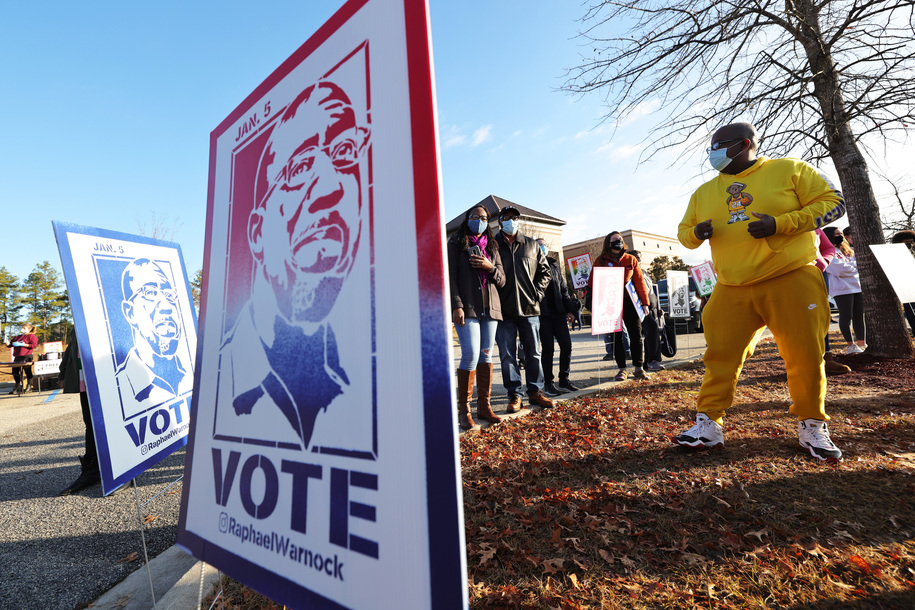


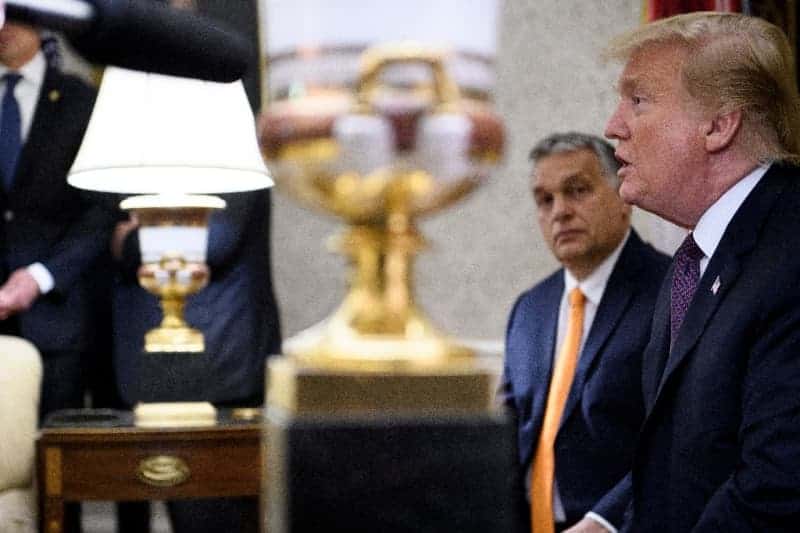


/cdn.vox-cdn.com/uploads/chorus_asset/file/23122159/GettyImages_1294886160.jpg) Spencer Platt/Getty Images
Spencer Platt/Getty Images
/cdn.vox-cdn.com/uploads/chorus_asset/file/23122332/GettyImages_1229133288.jpg) Seth Herald/Getty Images
Seth Herald/Getty Images
/cdn.vox-cdn.com/uploads/chorus_asset/file/23122183/GettyImages_1232636684.jpg) Courtney Pedroza/Getty Images
Courtney Pedroza/Getty Images
/cdn.vox-cdn.com/uploads/chorus_asset/file/23122205/GettyImages_1230455089.jpg) Roberto Schmidt/AFP via Getty Images
Roberto Schmidt/AFP via Getty Images
/cdn.vox-cdn.com/uploads/chorus_asset/file/23122239/AP18120354307302.jpg) AP
AP
/cdn.vox-cdn.com/uploads/chorus_asset/file/23122253/GettyImages_1294908903.jpg) Tasos Katopodis/Getty Images
Tasos Katopodis/Getty Images
/cdn.vox-cdn.com/uploads/chorus_asset/file/23122301/GettyImages_830759682.jpg) Chip Somodevilla/Getty Images
Chip Somodevilla/Getty Images
/cdn.vox-cdn.com/uploads/chorus_asset/file/23122050/GettyImages_932430664.jpg) Akos Stiller/Bloomberg via Getty Images
Akos Stiller/Bloomberg via Getty Images
/cdn.vox-cdn.com/uploads/chorus_asset/file/23122320/GettyImages_1231601978.jpg) Megan Varner/Getty Images
Megan Varner/Getty Images
/cdn.vox-cdn.com/uploads/chorus_asset/file/23122341/AP21257620206200.jpg) Jacquelyn Martin/AP
Jacquelyn Martin/AP
/cdn.vox-cdn.com/uploads/chorus_asset/file/23122069/GettyImages_151326666.jpg) Dante Zegarra/AFP via Getty Images
Dante Zegarra/AFP via Getty Images
/cdn.vox-cdn.com/uploads/chorus_asset/file/23122297/GettyImages_1235998273.jpg) J. David Ake/AFP via Getty Images
J. David Ake/AFP via Getty Images
/cdn.vox-cdn.com/uploads/chorus_asset/file/23122353/GettyImages_1237076662.jpg) Drew Angerer/Getty Images
Drew Angerer/Getty Images
/cdn.vox-cdn.com/uploads/chorus_asset/file/23122364/GettyImages_1301998665a.jpg) Chip Somodevilla/Getty Images
Chip Somodevilla/Getty Images
/cdn.vox-cdn.com/uploads/chorus_asset/file/23122365/GettyImages_1332750788.jpg) Alex Wong/Getty Images
Alex Wong/Getty Images
/cdn.vox-cdn.com/uploads/chorus_asset/file/23122372/GettyImages_1230476983a.jpg) Shay Horse/NurPhoto via Getty Images
Shay Horse/NurPhoto via Getty Images