
Good Morning: The day we were all inspired by a vending machine.
Mashup demigod djBC writes, "Pimpdaddysupreme (Mashville), myself and Jabulani (Bootie Boston) will be spinning the opening night rave at Dragon Con this year.
Read the rest
This video of a bear walking upright through a neighborhood is downright creepy. I'm going to walk on all fours through the forest to settle the score. (Via Arbroath)
How are you cutting your bagels? With a boring straight down the middle cut, or into a delicious linked breakfast chain, using the Mobius strip method?

Lest we forget that Maria Sharapova is 6'2" and Money is only 5'8".
Submitted by:
I got a lot of great feedback and enthusiasm over my recent Neoclassical Geek Revival character sheet. Enough that I figured it was about time that I took another hack at making a character sheet for my one true love, B/X D&D. Well, in the end I wandered off a bit and did a sheet for Labyrinth Lord Advanced Edition Companion – so the saving throws are out of order if you play B/X still.
BUT ANYWAYS.
The sheet looks super-sweet. I’ll be printing off a batch for my next game.

2014 Labyrinth Lord AEC Sheet (Front)
There’s only the front page at this point. With a bit of photoshop I could probably remove the saving throw block and replace it with the stuff needed for other OSR games (like Base Attack Bonuses, single saving throws, etc). But for now this is all you get. Because I’m a lazy motherfucker. Also, it’s a JPG file, not a PDF. So there.
(PS: It has been pointed out by The Badger over at OSRToday that you can definitely use the back of my Neoclassical Geek Revival sheet as a back for this sheet – so here’s the back in question)

NGR Sheet – Back


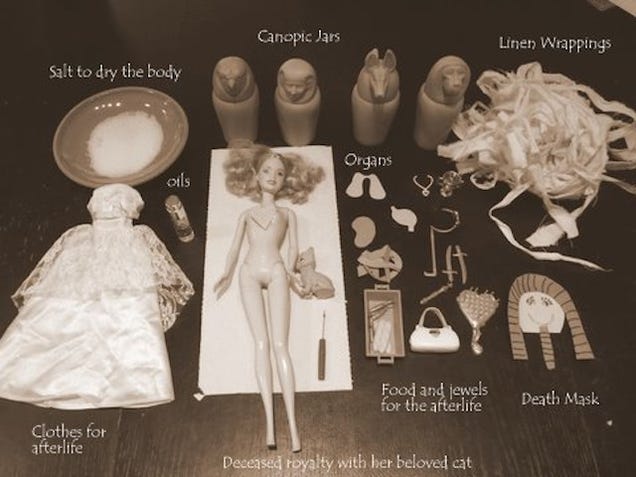
Looking for a fun activity with the kids? Why not mummify Barbie? This little girl figured out all the ingredients she'd need, and did a fantastic job cutting her doll's organs out before wrapping her in linen and preparing her elaborate burial chamber.

 |
| Junot Diaz (photo: ALA) |

“The Matrix” films will forever define perceptions of cities built by machines. Though the third film in the Matrix trilogy, “Revolutions”, was the weakest of the three, it’s most redeeming quality was an inside look into a world built by artificial intelligence. While Omni Reboot envisions the eventual existence of machine cities, we hope they will not be populated by robots and A.I. bent on the destruction of the human race. We’d rather them co-exist with human cities in a pragmatic and distinctive symbiotic manner.
The most distinctive trait of the machine city is the lack of human beings. Other animals live within its limits. Not the rats and pigeons of human cities—the scavengers feeding on our remnants—but animals that can thrive in such particular conditions: algae on the water-cooling ponds, lichen and moss on the unadorned walls, flowering plants within the dirt that invariably builds up along the edges of the roadways and in the cracks of the buildings, and, of course, the insects that come to feed. The machines do not have the same sense of aesthetics and cleanliness as us. They recycle their waste oil and fluid byproducts without question, out of an innate, designed efficiency. Machines have never had a history of dumping sewage into their streets or drinking from their own self-poisoned wells. The machines see nothing wrong with sharing the boundaries of their spaces with other species. And yet humans mostly stay far away.
The city was simply not built for humans. Humans have their own cities, full of buildings of their own preferential shape and size. The streets in human cities are human streets, the spaces between the buildings and the streets are human spaces. We swarm and consume our sidewalks, our bridges, the edges of architecture where we can perch and rest our feet when we tire of our trampling. We feel comfortable standing on balconies and along the banks of rivers; we drift to these places like ants drawn to the chemical trails of ants that have passed before. Humans have no such pheromones, but our physical nature still pulls us towards the elongated steps lining public squares and buildings, towards short walls overlooking wide vistas, towards the shaded space under trees, to the side of well-trafficked footpaths. We build our cities to attract us to these places, to take advantage of this capillary action. The machine city is not like this.

We visit the machine city out of necessity and curiosity, but we quickly retreat back to New York, to Amsterdam, to Rio De Janeiro, to Pyongyang, to Cairo, and to Kinshasa.
The machine city is built by machines. Electricians’ vans and construction cranes roll down the streets every day, contracted to fix particular pieces of the city that are broken, carrying the humans that operate them and who will complete the tasks. But it’s the machines who really build this city, and it’s their designs that are followed, regardless of who does the work. The machines shape it with their needs. The first city that was built for machines was built just like a city for humans, and it didn’t work correctly. The machines wandered into the streets, unfamiliar with what the open areas were for. They fell out of the buildings, confused by their height. They bumped against walls and stopped there, unable to logically decipher how space was divided, and why. In this prototype city, humans were injured by machine negligence: medical equipment was inadvertently unplugged, buildings were damaged and left in ruins, machines collided into each other and caught fire. Machines could not communicate properly with each other in a human city, and so they did not. Lack of communication invariably leads to disaster. So the new city for machines was built with the needs of the machines in mind. The machine city has nothing to do with what we know about cities, and only to do with what machines know about cities.
A city is many things, but mostly it is a place in which the inhabitants are free to have desires and express them to one another, even if they cannot fulfill them. Machines have desires just as we do, though we find them so alien that we might not even recognize them. Each machine is designed differently—the only thing they have in common is their means of communication. In the machine city, machines interact with other machines, each time translating parts of themselves into forms that other machines can understand. Machines express their desires by transmitting their possible actions to other machines around them, while simultaneously receiving and understanding the transmissions of other machines’ desires. The places where this can happen are what the machines recognize as public space.
Our social spaces—parks, promenades, bars, street corners, and squares—are places where we can communicate with other humans using no more than a look. We can speak a word if needed, or have an entire conversation. We can pass time together without saying anything. We can kiss, or argue, or fight. We watch other humans we don’t know, comparing them in our minds to those we do. And we display ourselves to others with our motions, appearance, our manner of activity. Machines are different: they communicate by pinging each other, swapping time, name, and location data. Stand-by indicators blink. They run their range of motion cycles, test peripherals, assign addresses. They complete the tasks they were designed to complete, allowing their function to be their manner of being, in and amongst each other.

Social spaces for machines bear the fragments of their tasks, and nothing superfluous. Machines don’t need places to eat or sleep, but they need places for their own sorts of socially evocative maintenance rituals. They need places where auto parts can be partially assembled and taken apart, time and time again, like a game. Machines hang out in cafes while working on mundane maintenance tasks, with their component addresses made public in unique ways, so that other machines can gather together and show off their range of operations. Machines that build other machines take their half-finished constructions out in the company of other machines, so that they can build them together and get input on possible alternatives. There are public machine exercise spaces, where machines go through their range of motions and data abilities, for the purpose of showing off their various tolerances.
There is a place in the machine city that is nothing more than an unadorned rectangular prism made of concrete, extending up into the sky without a roof. The machines stand within it, gazing upwards, enjoying the experience of adjusting their light sensors to better sense the gradient of light and shadow extending down the walls from the transiting sun. Machines practice slightly self-destructive habits out of the view of most other machines. They cipher for Markov chain data exchanges for no reason save that they feel like it. They sit on the inclined planes that allow them to adjust for relative elevation throughout their city, consuming and recycling fluids; they over-maintenance themselves as a distraction from their desires.
Machines have spaces for their secret passions. Spaces where they practice and flirt with their desires without fully expressing them. Some machines have discovered that they have secret abilities other machines are not yet aware of. These machines play with the idea of displaying their abilities, or one day even using them. If they expressed every ability they had, machines would no longer have a relationship with hidden desires. Hidden desires are potentials, and this is important because without any potential, a machine could be only what it is currently doing. This does not require sentience to do.
Sometimes they share their potential, secret actions to a select number of other trusted machines, in the confines of a storage area or a Faraday cage. Some machines conduct these actions half-publicly, because this violation amuses them and feeds a building desire for self-awareness. Within their city, a lattice of private and public areas contain the machines, building a physical network of places for machines to be more like themselves, whether they admit these functions or not.

Humans feel uncomfortable in the machine city. We feel strange calling it a city. A city is something that we know implicitly. It has been baked into our evolution as a social species, a natural aspect of our civilization. We expect buildings to be separate. We want walls to connect to a roof. We feel strange calling a gaggle of twisted pipes a public space, and we hate to think that a couple of miles of tangled copper cable could be called a neighborhood. We visit the machine city out of necessity and curiosity, but we quickly retreat back to New York, to Amsterdam, to Rio De Janeiro, to Pyongyang, to Cairo, and to Kinshasa. No matter the conditions of our living space, we prefer our sewers, our traffic jams, our slums, and our pollution to the endless repetitively optical codes, to the electrically conductive paths, to the ranks of machines gathered in evenly spaced rows all whirring their servos in unison. Our desires may be corralled and controlled under the regimes of urban life, but no matter how well designed the charging stations and firmware update networks of the machine city, we could never appreciate it.
Machines’ desires are not ours, and we’ll never know the pleasure of freshly re-tooled piston, nor the agony of a slipped bearing.
We talk about cities in the most perfect of terms, in idealistic visions of how a structure or a span ought to be. But both our cities and theirs have problems. Houses fall down; lag times cause errors. Riots erupt; catastrophic failures occur. We should remember that although a city is a means for expression of desire, it is also a system for the control and refutation of those urges. Nerves are frayed by constant work and malnutrition. Communication protocols are corrupted by a lack of updates or insufficient hardware. The streets of our cities have run red with the blood of our people every year, and they will again. The streets of their cities conceal the shattered PCBs and scattered transistors of millions, if not billions, of forced obsolescences. Their e-recycling plants run at near full capacity day and night, both public service and tragedy.
And yet, the cities continue to exist. Both humans and machines are born into them—not as individuals, but collectively. Any particular human or machine may be born or not, may die or not, but together, we are all born into the realities of cities. We must exist with others like us, and all of our existence can only exist in this context of these others. Human life, and machine life, is a city, a boundless accretion of physical consequences of the very fact of our existence.


The post Antimatter – Stun The Senses appeared first on OMNI Reboot.
This video comes from the Sleepy Burrows Wombat Sanctuary in New South Wales, Australia. And while all the wombats' antics are adorable, we're mostly still stuck on the beginning, where the wombat empties the washing machine.


Reader R sends in this gem: Atlas Shrugged plates on a SUV doing deliveries for Domino’s. I don’t think this is quite “going Galt”, but it makes a lot of sense to me.
by Benn Ray
This is a follow-up to "Hampden Slated For Parking Problems", a piece I posted a few weeks ago as preface to a community meeting where some residents were suggesting Residential Permit Parking restrictions for a significant portion of Hampden that would allow those without permits to park there only for 1 hour a day, 24 hours a day, 7 days a week.
In mid-June, nearly 200 concerned residents who are slowly starting to realize what an exclusionary, expensive parking scheme, as launched by a handful of other residents who mistakenly believe this will reserve parking spots in front of their homes for them (spots they mistakenly look at as "theirs) will mean for them all met in Keswick Adult Care to find out just what the hell is going on and why.
At this meeting, Councilperson Mary Pat Clarke, the driver behind this initiative, presented the restricted parking plan (roughly a 2 block radius around the Rotunda and Hopkins that resticts access to public city streets to 1 hour only, 24 hours a day, 7 days a week unless you are a resident who is eligible (and can afford) to purchase a city parking permit) as a "done deal" (like so many controversial initiatives are introduced - and, as usual, it's not. Proponents are simply trying to dampen opposition).
Residents who were just hearing about this for the first time were outraged that they were just hearing about this for the first time. Residents who had been quietly working on this scheme for months were outraged that their neighbors had finally found out about it and weren't happy.
"We've been working on this for months! Who are all these people and why are they here now all of a sudden," one organizer conspiratorially bemoaned.
It was a tense community meeting - with a not insignificant number of residents asking, "Well, what if we don't want this at all" or "Why do we have to do this" only to have their questions ignored by Clarke or shouted down by their neighbors.
The term "generator" was used to describe the supposed causes of the neighborhood's parking density. It was used to refer to the Rotunda (an incomplete project that won't come online until late 2015 at the earliest), it was used to refer to Johns Hopkins University (whose purchase of the empty Zurich building and garage has brought life back to that abandoned block), and it was used to refer to the 36th St. business district, The Avenue.
The one area, and the most siginifcant one, where the term "generator" was not used, was to refer to the residents themselves. Where low density homeownership over the years has become more dense as more people have found Hampden a more attractive place to live, this means that houses that traditionally had 1-2 cars now have 4-6 vehicles (it should be noted that these vehicles will be protected under the RPP plan).
When hysterical residents imagining a doom-like scenario as a result of Hekemian's Rotunda redevolopment demanded that we act now and install the RPP immediately, more rational residents who asked, "Well, why don't we just wait to see what happens years from now when that place actually opens" were not countered with a rational argument. They were shouted down with a "NO WAY!", as if their suggestion was somehow ridiculously naive.
The residents behind the RPP are also intent on overstepping their bounds and seeking to install RPP on blocks that, by law, are supposed to be free parking. Residential Parking Restrictions are only applicable along blocks that are residential. This is why you'll sometimes see RPP signs on one side of a block, and nothing on the other where that block rings a private non-residential, commercial or institutional building. Unfortunately here, residents aren't just happy with restricting access to their own blocks, they are seeking to expand RPP along other commercial blocks which they have no discernable claim to whatsoever. Clarke said that Hekemeian has already conceded them the commercial property along the Rotunda, and now the residents are taking aim at the several blocks of what would be free parking along Johns Hopkins' buildings too.
One point I've made about this sort of Residential Permit Parking is that it doesn't actually solve parking problems - it just creates more parking problems (for other members of your community) by pushing more cars onto fewer blocks and the result is often those blocks then seeking RPP. RPP spreads like syphilis in a community. And in fact, as if to underline this point, early in the meeting, a resident from the south side of 36th St., below where this RPP is being proposed, raised his hand and asked, "How do we get these parking restrictions on our block?"
During the meeting, the tradional petition process of getting RPP was discussed - as in why is Mary Pat Clarke drafting special legislation for RPP when there already is a process by which neighbors can get the restrictions (assuming they meet certain minimum thresholds)?
Clarke had no clear explanation to this - but they are now, retroactively, I guess, going through the petition process. In the context of the meeting, it should be noted, that this process was intentionally obfuscated. Clarke announced that neighbors will be coming around to get you to sign on whether you want 1 hour restrictions or 2 hour restrictions. It wasn't clearly pointed out that neighbors don't have to sign the petition at all and that, legally speaking, if blocks can't meet a 60% threshhold, they don't fulfill the city's minimum requirements for RPP (which, I suppose is where Clarke comes in with her legislation). The whole thing seems very sketchy and may be open to future legal action. It's even more troubling that while Clarke is spearheading this initiative, she could not tell us how many parking spaces this is effecting.
This is a parking meeting, so there were a lot of irrational attitudes on display. For example, one resident, shaking mad, unironically yelled, "I did not pay several hundred thousand dollars for my house on 37th just to not be able to park in front of it because of the businesses on 36th St." This reminded me of the residents who move to Fells Point and then complain about the bars. That he paid several hundred thousand dollars for his house was the tip-off in the flaw of his complaint - he moved here after the 36th St. business district took off - if not, he would have paid the $60-$80,000 rate houses were going for in the late '90s.
I shouted back, "And why is your house worth hundreds of thousands of dollars? You're welcome!"
There was a lot of Old Hampden Xenophobia Syndrome (OHXS) on display. In fact, a woman I used to live next to, and thought of as friendly, said something to the effect of, "I've been in Hampden all my life. But now all these new poeple are moving in, invading my neighborhood, and changing everything and taking away all the green space. This isn't what I want," (I'm not sure what she meant about taking away the green space). I wanted to ask her, so those two years I was living next to you and we were neighborly, did you really just think I was some kind of asshole the whole time?
Hampden has worked very hard for years to overcome its troubling and embarrassing history and reputation as an exclusionary community where old school residents are hostile to and unwelcome to new people coming in. Unfortunately, these newly proposed parking restrictions move the neighborhood dramatically backwards in that regard. And that attitude was on display at the meeting.
There were typical gentrification complaints, "There ain't nuthin' for me on that Avenue anymore." It's just sad that people still feel that way. At this point, it speaks more about them than it does levy any sort of legitimate criticism of gentrification. But this attitude was squashed (hopefully once and for all), when Hampden resident and business owner Debbie Falkenhan got up to speak.
Deb said, "I think y'all know me, I'm Debbie Falkenhan, I live on Roland, I own Falkenhan's hardware, and I've lived here all my life, and I don't want these parking restrictions. Now I understand some of you feel like there isn't much on the Avenue for you..."
At that point, there was a smattering of applause from Old Hampden, thinking they knew where Deb was going with this.
"I just want to say to you all, get over it. There is more to do on 36th St. than I can recall. I remember what the Avenue looked like in the '80s, and it was a real shithole. None of us want to see that come back, so you need to get over it."
The place erupted in applause save for a few scowls from the scolded.
Then Clarke took a very biased straw poll about who wanted what kind of restrictions and here are the results:
Most want 2 hour restricted parking.
Then 2 hour restricted parking.
Then, after someone called out how about NO restricted parking, that got the third most amount of votes.
And then last was the currently proposed 1 hour restricted parking.
I can only wonder what the results would be if Mary Pat had started with No Parking Restrictions and worked her way down. I suspect free parking would have ranked much higher - regardless - it ranked higher than what residents are currently proposing.
The meeting ended with Clarke selecting block captains responsible for gathering petitions even though she was drafting custom legislation for this? I'm still hazy on that. But step #1 is very simple, if you don't want the RPP - don't sign the petition.
But there are a few small points of irony that should be pointed out as we move forward.
Johns Hopkins University, when they first took over the Zurich building and its adjacent parking garage, offered residents the ability to rent spaces in that garage and from what I understand, not a single resident took advantage of it.
Some of the people most vocal and active in trying to get this residential permit parking scheme adopted have parking pads and/or garages that they aren't using for parking.
And finally, when I was a part of Parking Task Force 1.0 - we tried to bring reverse angle parking all the way up Roland Ave. This is something the new Parking Task Force has just revisited and were told the residents won't allow it. This would have meant a dramatic increase in the number of parking spots in an area where they are now looking to expand Residential Permit Parking because of perceived parking density. In other words, they could have had nearly 100 spaces (by Parking Authority's count) nearly 10 years ago but didn't want them. But now, they want to restrict the public's access to these streets to 1 hour a day, 24 hours a day, 7 days a week.
Clearly, when we talk parking, we are not having a rational conversation.
So what can you do?
Email Councilwoman Mary Pat Clarke and tell her how you feel if she is your representative.
Email Councilman Nick Mosby and tell him how you feel if he is your representative because these restrictions will be felt by homeowners and businessowners in that district as well.
Keep aware of any parking-related community meetings. Join the Hampden Community Council if you are a resident, or the Hampden Village Merchants Association if you are a business, and make your feelings known to them.
Talk to your neighbors about what's going on too.
And finally, don't sign any petitions you don't agree with.
For further reading, check out Hampden Community Council President Adam Feuerstein's letter in this month's Hampden Happenings [.pdf]
Related articles American Standard: Hampden Slated For Parking Problems
 Rotunda's $70M residential, retail expansion approved by city panel
 American Standard: All Parked Up In Hampden
 Report From Last Night's Crime Meeting At Northern District
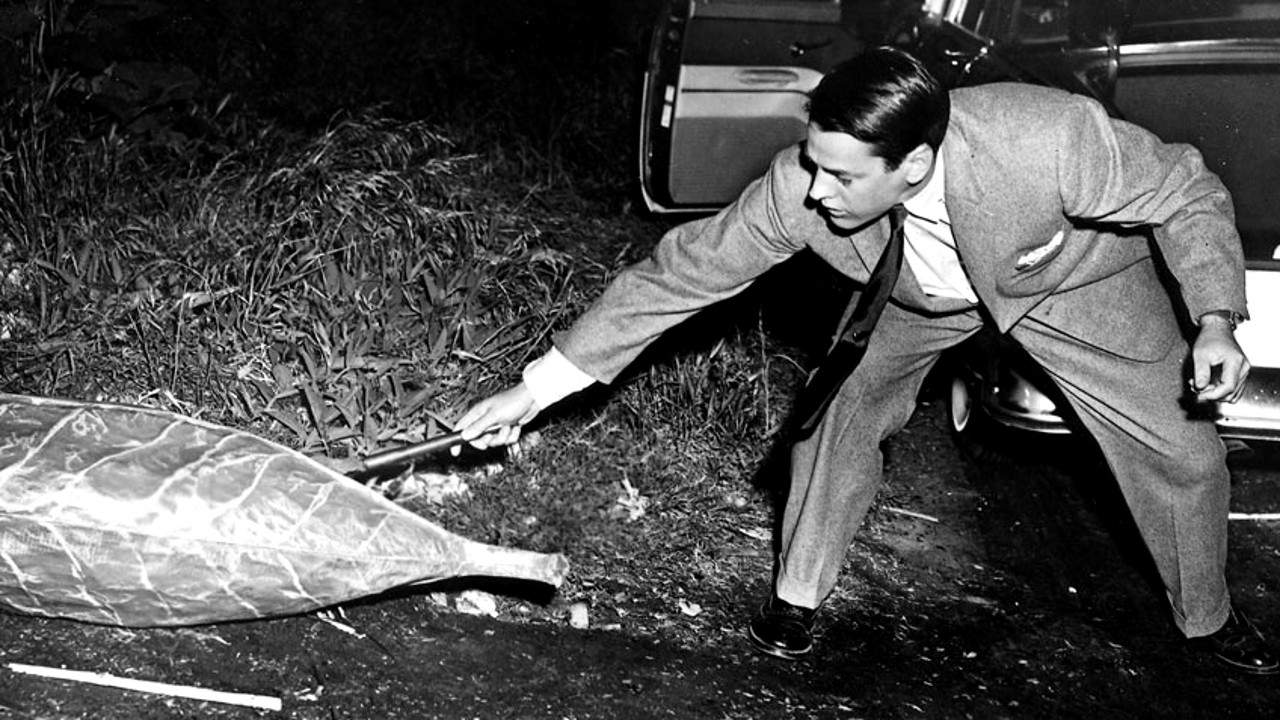
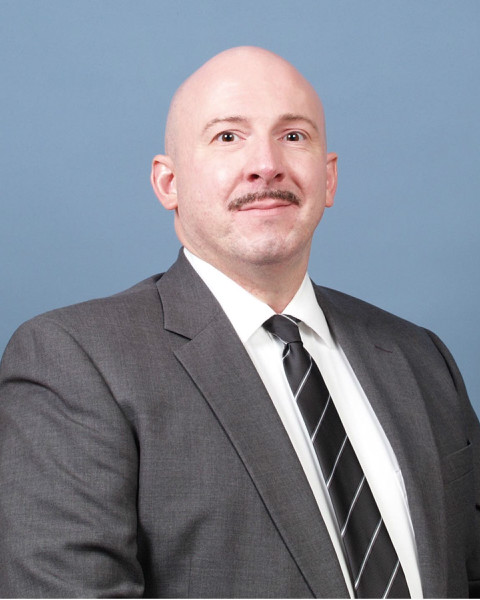 Tim Murray, a self-identified "human," is contesting the Republican Congressional nomination in Oklahoma City's third district, on the grounds that his opponent, the incumbent Rep. Frank Lucas, was secretly replaced with a body-double after being executed by the World Court in Ukraine "on or about jan. 11, 2011."
Read the rest
Tim Murray, a self-identified "human," is contesting the Republican Congressional nomination in Oklahoma City's third district, on the grounds that his opponent, the incumbent Rep. Frank Lucas, was secretly replaced with a body-double after being executed by the World Court in Ukraine "on or about jan. 11, 2011."
Read the rest
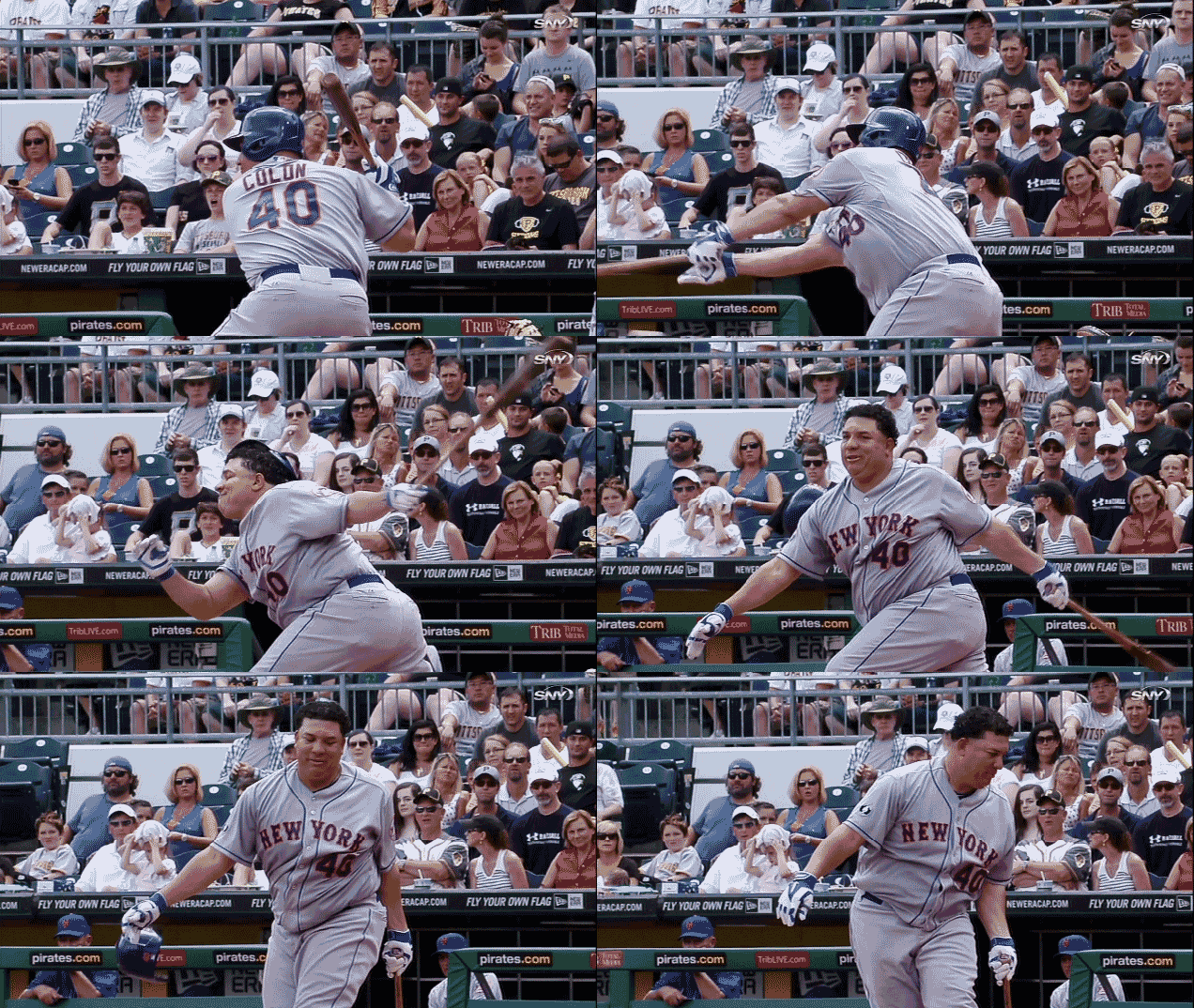
Earlier this season, Bartolo Colon recorded his first hit since 2005. (He now has two on the season!) But in the fourth inning of today's Mets-Pirates game, he wasn't Bartolo the Slugger. He was Bartolo the Whiffer.


This hands-free chokeslam is sold well by both wrestlers, and even the ref reacts appropriately. Good work all around.





![[via]](http://img.izismile.com/img/img7/20140814/640/morning_picdump_602_640_13.jpg)
![[via]](http://thechive.files.wordpress.com/2014/06/usa.png?w=550&h=418)