Scottish artist Katie Paterson is a patient women. Her current project Future Library will take 100 years to consummate! You heard right; a century from inception to completion. Here’s the deal:
A forest has been planted in Norway, which will supply paper for a special anthology of books to be printed in one hundred years time. Between now and then, one writer every year will contribute a text, with the writings held in trust, unpublished, until 2114. The texts will be held in a specially designed room in the New Public Deichmanske Library in Oslo. Tending the forest and ensuring its preservation for the 100-year duration of the artwork finds a conceptual counterpoint in the invitation extended to each writer: to conceive and produce a work in the hopes of finding a receptive reader in an unknown future
Katie Paterson. Photo: Giorgia Polizzi
On selecting the writers Patterson told Blouin Artinfo “The authors are being selected for their outstanding contributions to literature and poetry and for their work’s ability to capture the imagination of this and future generations…Two key words in our selection process are imagination and time. We are aiming for 100 contributions from writers of any age, nationality, of any content, of mixed genres and styles, and in any language. The length of the piece is entirely for the author to decide. The title and their name will be displayed in the library room, but nothing beyond that.” Paterson has also created a limited edition print which doubles as a certificate that entitles the owner to one complete set of the texts printed on the paper made from the trees after they are fully grown and cut down in 2114. Future Library, Katie Paterson from Katie Paterson on Vimeo. Katie Paterson, Future Library.
The 79th Annual World Library & Information Congress (aka IFLA Conference and Assembly is now underway in Singapore and today the organization released a report (multiple resources) that, “identifies five high level trends shaping the information society, spanning access to education, privacy, civic engagement and transformation. Its findings reflect a year’s consultation with a range of experts and stakeholders from different disciplines to map broader societal changes occurring, or likely to occur in the information environment.”
Note: Most of the report is only available to IFLA members. A 16 page summary document (linked below) is available to all.
The Five High Level Trends
Here are the trends discussed in the report:
1. New Technologies will both expand and limit who has access to information.
2. Online Education will democratise and disrupt global learning.
3. Hyper-connected societies will listen to and empower new voices and groups.
4. The global information environment will be transformed by new technologies.
Film history nerds (students and scholars surely among them), it’s time to get it excited. The holdings of The Media History Digital Library are now able to be searched thanks to a project called Lantern.
Eric Hoyt, Carl Hagenmaier, and Wendy Hagenmaier first tried to get search functionality for the materials that were apart of the Media History Digital Library in 2011, and Hoyt later used the institutional support of his employer, the University of Wisconsin–Madison [Media History Digital Library and the University of Wisconsin-Madison Department of Communication Arts] to facilitate the process.
Articles In the Database Come From These and Other Publications:
· Business Screen (1938-1973)
· Educational Screen (1922-1962)
· The Film Daily (1918-1948)
· International Photographer (1929-1941)
· International Projectionist (1933-1965)
· Transactions of SMPE and Journal of SMPE (1915-1954)
· Motion Picture Magazine (1914-1941)
· Motography (1909-1918)
· Movie Classic (1931-1937)
· Movie Makers (1926-1953)
· Moving Picture World (1907-1919)
· The New Movie Magazine (1929-1935)
· Photoplay (1914-1943)
· Radio Annual and Television Yearbook (1938-1964)
· Radio Digest (1923-1933)
· Radio Mirror (1934-1963)
· Radio Broadcast (1922-1930)
· Sponsor (1946-1964)
· Talking Machine World (1906-1928)
· Variety (1905-1926)
Recently Los Angeles-based street artist Plastic Jesus covertly installed a fake product on the shelves of five LA area Best Buy stores: a small plastic box, complete with an official-looking product tag that reads “Useless Plastic Box 1.2.”
Another gadget you don’t really need. Will not work once you get it home. New model out in 4 weeks. Battery life too short to be of use.
Here in Santa Cruz, we're brushing off our tents and lining up the counselor whistles for Hack the Museum Camp, a 2.5 day adventure that starts today. We have 75 campers here from around the world who will be working in teams to develop exhibits based on artifacts from our permanent collection that challenge museum conventions and traditional exhibit design practice. The campers are about half museum professionals, half artists, architects, and designers of all stripes.
This project is a big, audacious risk for everyone involved. For the campers, there's the stress that comes with trying to design and execute an exhibit idea in 48 hours. For me, there's the uncertainty that comes with turning our museum's largest gallery over to a motley crew of risk-taking campers.
But as we work out all of the kinks, I've come to realize that my biggest fear is that the projects won't be risky enough. That even when given the space and opportunity to push boundaries, most of us will settle into our traditional comfort zones of doing it "right," not "screwing up," and playing it safe.
As the camp director, I've been spending a lot of my time thinking about what we can do to scaffold this experience to really encourage creative risk-taking. For me, this comes down to two big areas: how we create space and support for risk-taking, and how we orient the risk-taking towards work that will excite and energize visitors.
Risk-Taking Requires Space-Making
On our staff team, the most important tool that encourages risk-taking is our organizational culture. We can talk all we want about being experimental, but what really matters is the kind of cheerleading, coaching, and love that staff and interns get when they take risks. As Beck Tench has beautifully expressed, every risk-taker needs a "space-maker" to clear the way for true experimentation.
I am asking all of our Hack the Museum counselors and our staff team to think about how we can be those space-makers for campers, focusing not so much on how the projects can be executed but how the campers can really pursue their risk-taking passions. I feel lucky that one of our camp counselors, Kathy McLean, spearheaded the incredible "No Idea is Too Ridiculous" project at the Pew Center for Arts & Heritage - and I'm hoping she and others will be able to bring some of the energy from that work to our campers this week.
Taking Risk-Taking Beyond Provocation
Assuming that campers are ready to take risks at Hack the Museum Camp, the other big question on my mind is how we encourage teams to do so in a way that is about opening up new possibilities instead of shutting down old ones. One of the things I've noticed in working with students in particular is that many risk-takers want to jump directly to confrontation. They see risk-taking as a way to give the finger to the establishment.
While confronting traditions can be a useful starting point, confronting visitors can be lead to unpleasant experiences. Instead of confronting, I always encourage risk-takers to think about how they can approach their work in a way that is "generous" to visitors. It can be just as subversive to hand someone a flower as it is to slap them in the face--and they are probably more likely to be receptive to your larger message. Some of the most powerful risky work I've experienced has started with an invitation, not a confrontation. Our museum's mission to "ignite shared experiences and unexpected connections." I believe that we are most likely to achieve this mission if we invite people into the unexpected in with experiences that radiate generosity and possibility.
I'm not sure what we are going to get out of this week. I am very, very excited to find out (and to share it with you). You can follow along on Twitter and Instagram via @santacruzmah and #hackthemuseum. We'd also love to hear how YOU would hack a museum exhibit if given the opportunity. Happy hacking!
Protest is taking a new form in Istanbul where I was fortunate enough to visit about a month ago. Individuals are standing in their beloved square and reading books of their choice.
Violent scenes are still occurring around Turkey, including in Istanbul once again this past weekend, but the Standing Man protests continue unabated.
The images in this article explore one aspect of the protest in Taksim Square, ongoing since before the communal standing took off. Public reading and informal education has been notable since the earliest days of the protest, but has since merged with the Standing Man to form "The Taksim Square Book Club".
The chosen reading material of many of those who take their stand is reflective, in part, of the thoughtfulness of those who have chosen this motionless protest to express their discontent.
This week’s episode is super cool. We got David Lankes, a professor of information studies at Syracuse University (also known as the world’s best public speaker), to talk to us about libraries. We thought we’d have a grand debate on the topic of libraries and electronic media, but what we actually had was a wide-ranging discussion about knowledge and access to knowledge. We’re wicked happy that we got such a great guy on our show, and we’ll happily have him back on any time his little heart desires!
Kristian Lundberg sa Tack till alla oss på biblioteken
Är det verkligen någon skillnad mellan liv och katastrof börjar författaren Kristian Lundberg sin föreläsning på biblioteksdagarnas sista dag. Föreläsningen har rubriken "Skillnaden mellan liv och katastrof", och Kristian skildrar med känsla och insikt hur han undkom katastrofen. Han berättar om ett barn, om sig själv som liten, när han växte upp i Rosengård med svåra förutsättningar. Han ser klart och osentimentalt att räddningen för honom var att han blev utkörd ur klassrummet till biblioteket som straff. I långsamheten där öppnade han en bok och såg att i berättelsen fanns det någon som tog honom och hans känslor på allvar. Gustaf Fröding! Han fann en bibliotekarie på biblioteksfilialen i Värnhem, en stadsdel i Malmö. Hon var den människa som såg honom, tog honom på allvar. Och till filialen kunde han gå själv, det var inte långt bort.
Biblioteket var ett ställe som gav honom frihet att välja det han ville, bibliotekarien vägledde utan krav, han plöjde igenom den svenska litteraturen. Någon har bestämt att det ska finnas ett bibliotek här, för oss. Att biblioteken och bibliotekarierna finns nära barnen är viktigt, de tar sig inte långt. Att de finns nära dem som mest behöver böckerna är viktigt. Hos ungdomar som lämnar skolan utan godkänt i svenska, där behövs bibliotekarien. För ett bibliotek är större än sin boksamling. Ett bibliotek utan bibliotekarie är en död samling böcker. Rustad med sitt lånekort som en sköld framför sig gav sig Kristian in i livet. Varningen som mamman gav honom att läsningen kommer att göra dig galen skrämde honom inte, bara jag får läsa böcker så är det värt det, berättar Kristian Lundberg att han tänkte.
Det här kommer för mig när jag ser det korta reportaget på Tvärsnytt från Lindesberg om bokbussen och om att biblioteksfilialer läggs ner. Inslaget är gjort med anledning av att den nya Bibliotekslagen är på väg att klubba kravet: ett folkbibliotek per kommun. Och rapporter kommer från landets om hur filialer stängs runt om i landet. Barnen som kommer till bokbussen och hittar sin egen läsning, det de själva vill ha och vill lära sig mer om, utan krav. Bibliotekarie Kristina Blom säger att närheten och tillgängligheten för barnen är avgörande för deras biblioteksbesök. Motivation är en stark grund att lära sig. Barnen behöver bibliotek för sin fria bildning och för att skapa sin egen kunskap. Tillsammans med de vuxna.
När vi på Biblioteksdagarna lyssnade på Anna Ekström, Generaldirektör från Skolverket, berättade hon att det finns ett ämne som de svenska eleverna är i topp i europeiska undersökningar, de kan engelska allra bäst. Hon själv säger att det man kunnat härleda den kunskapen till är att de själva lär sig engelska för de tycker det är roligt och de behöver språket i mötet med mycket omkring sig. Lärarna säger själva att de inte har så stor betydelse i detta. Fast Läraren är, liksom bibliotekarien, den som fyller de döda tingen med liv, med mening.
Biblioteken är public service. Bibliotekens uppgift är att vara i allmänhetens tjänst avslutar Riksbibliotekarien Gunilla Herdenberg Biblioteksdagarna i det avslutande panelsamtalet. Det är ett vackert uppdrag säger hon vidare, biblioteken ska se till att det blir ett gott samhälle, att vi är med och gör resurserna öppna och tillgängliga. Vi ska vara med som utjämnare av livschanser, ett uttryck som Anna Ekström gav oss!
Länkar
Mycket mer hände, debatterades, förelästes om under de tre dagarna som vi träffades, men det blir för långt att skriva om här, det orkar du inte läsa. Har du läst så långt som hit är du tålmodig! Presentationer från föreläsningarna kommer du att hitta på Biblioteksföreningens webb.
Peter Alsbjer skriver i sitt veckobrev till DE500: Du som missade Biblioteksdagarna i Örebro kan få ett hum om vad som behandlades via Biblioteksföreningens Vimeo-sida, här finns fler filmade inslag!
Och mer intryck och tankar från Biblioteksdagarna finns på Kb:s blogg Bibliotekssamverkan, av Elisabet Ahlqvist
Elisabet Brynge
Det fanns bra tid att nätverka under dagarna och solen höll oss sällskap
Bråttom till Bubblan, Sylvia Blomberg och Christina Stenberg på morgonsprång
Erik Fichtelius metar metadata ur URs arkiv
Ett samtal om framtiden:
Med utgångspunkt i bibliotekens grundläggande uppdrag samtalar Gabriella Ahlström med Gunilla Herdenberg,
riksbibliotekarie, Kungliga biblioteket,
Lars Burman, överbibliotekarie, Uppsala universitetsbibliotek
och Lisbeth Forslund, bibliotekschef, Gävle bibliotek
Cykling for Libraries tog med sig cykeln upp på scen!
Libraries Changed My Life http://librarieschangedmylife.tumblr.com/
Real life accounts from library patrons whose lives have been changed for the better by libraries.
In addition to the statistics included in our report, we also asked parents and librarians from around the country about their thoughts on various library services for parents and children. The quotes below are from in-person and online focus groups of library patrons and staff, as well as an online questionnaire of library staff members. More information can be found in the full report.
How parents use libraries
Many of the parents in our in-person focus groups said they were introduced to libraries by their parents or by their schools. In general, they said they had very positive memories of their early library experiences:
“My parents were real big on [the library]. It was a treat for us, twice a week after church . . . You behave, you [get] to go to the library and get a book, get two books if you’re real good, read them that week and bring them back.”
In addition, many parents said they had very positive feelings about their libraries and library staff. However, many often wished that they knew more about what was happening at their library — “there’s so much good stuff going on but no one tells anybody,” one said.
We also asked parents to tell us more about how they use the library with their children. Many described the library as a destination for the whole family, with older children using the library’s resources for schoolwork or to surf the web while younger children attended story times and explored new books:
“A lot of times for school like [my children] need specific articles — like they need more than just one resource for information, so then I’ll take them to the local library . . . if we go, we’re there for hours. So, I just take my work from the office with me and then they do their research there. . . . If they have questions and if I can’t answer them, I ask somebody that works [at the library].”
Early childhood literacy and programs for children
In online questionnaires, many library staff members considered early childhood literacy programs and story times among their most important services:
“I feel that with the early literacy elements and story times and crafts, we are building a foundation for our young children to become lifelong learners. Story time not only provides a educational component, it also provides socialization for the children and the parents, building a close knit community.”
“If you’re trying to raise a reader, you need your library,” one librarian wrote. “It’s too expensive and somewhat wasteful to buy the hundreds of books a young reader goes through in those first years of learning to read.”
Others singled out the unique place libraries can have in children’s lives as a place for children to discover and pursue their own interests. One library staff member wrote that a major strength of public libraries is “serving children in that they are really the only public place in any community where a child’s wants and desires are treated as respectfully as an adults.”
Many library staff members wrote they wanted to help patrons learn to successfully navigate all types of media — and continue to do so as patrons age:
“I believe libraries should take a more active role in teaching patrons — both children and adults — how to interact with digital materials, whether that is computers, digitized materials, e-books, automatic book checkouts, or other devices. … Libraries should step up to the plate and assume responsibility for the digital education of the community.”
Coordinating with schools
Many librarian respondents emphasized the importance of working with area schools. Many respondents said that area schools had little (or no) library support, leaving students to rely on local libraries:
“Our local school does not have a librarian, so we feel even more responsible to the students and their parents when it comes to literacy and academic support.”
And many library staff members said they were also seeking to complement schools’ efforts in bringing newer technologies into the classroom, including tablet computers:
“I want to be able to incorporate iPads into my story time and school-age programming, and I want to be able to include ‘appvisory’ services for caregivers so that they can utilize technology with their children in informed, intentional ways.”
Libraries as community centers
One subject that came up several times in the focus group discussions was how the parents valued the role of their local public library in the larger community. One parent who has a 3-year-old son said:
“To me, a library . . . is a necessity. They have lots of things to offer. It’s kind of like home room for your community. If you want to find something out then you just ask. And they have a lot of things that they offer that they don’t advertise.”
Other parents said they appreciated their relationships with library staff, who were able to recommend specific library books, services, and other resources the patrons would not have known about otherwise. One mother said it was helpful when library staff could point out resources she might be interested in, because many times she wouldn’t think to ask about them in the first place:
“If I want to know something, I’d know to ask [the library staff] questions, but I’m not going to always know what questions to ask because I’m not going to always know what information I can ask about. . . . [An activity] might not necessarily be posted, and if it’s not posted, how would you know to [ask]?”
Many parents said they use the library as a general destination for their family, and appreciated comfortable spaces where they and their children could read and work:
“I actually enjoy being able to go and sit down at a big table with my children and just do homework, lay all the books out. You know what I mean? Interact with them and be able to – instead of being all closed in in the house or whatever. It’s kind of like your mind flows more when you’re at the library.”
When asked about public library’s strengths, one library staff member wrote:
“Libraries — especially public libraries — should be the great connector. Connecting people with information and the resources they need to make informed decisions about their lives. Connecting people with the resources they need for entertainment. Connecting children to books and the love of reading. Connecting people to their roots and their past.”
On responding to community needs
Many library staff members wrote about how libraries could respond to the broader needs of parents and children in the community:
“Many parents who are new to the community, or even to the [country], use the library as a gateway to learning about the area. They see us as an institution that has all the answers not just about books and movies, but about schools, daycare, local parks, other groups that cater to families, etc.”
“We’re definitely an important social place for many groups — children after school, the elderly and retired, job seekers, parents with children. I don’t think we can be just an online presence. Our physical space means a lot to people in our town.”
“I think it is important for libraries to respond to their community needs. Not every library needs to be ran the same way or offer the same services. It is also important for libraries to offer services and programs that match the demographics of their communities. Freeing up space for children doesn’t make sense when the majority of your users are 45+.”
What if you not only could write the books that are checked out in a library by members of your community, but also participate in the construction of that book? The People’s Library, a collaborative project started by Mark Strandquist with Courtney Bowles and Riley Duncan, is allowing the city of Richmond, Virginia to do exactly that and tell the city’s story through its citizens. When asked where the inspiration for this project came from, Mark said that he talked with people while on Positive Force DC and We Are Family, prior projects he worked on.
It stems in part from work I did as a teenager and into my early twenties with low-income senior citizens in Washington, DC. I was spending a lot of time with them, doing oral histories, helping around their homes, delivering groceries. It was leveling to hear their stories. To realize what economic, cultural, political struggles they’ve gone through, only to, on the whole, end up mostly alone.
Mark went on to also touch on how working with the Art Museum of the Americas recently helped influence him. The project was to bring in histories from all of the wards in the city and put them next to the Washington Monument. Mark is looking at the library not in terms of a physical building holding books or information, but rather as a place that represents the community. Taking all of these experiences, Mark and his collaborators partnered with the Richmond Public Library to do an oral history project called The People’s Library.
Here is the process of the first stage of the program:
5,000 discarded books are donated to the program
Mark, Courtney and Riley, working with RPL’s Teen group, tear up the discarded books and shred the paper
Setting up a table by the front door of the Main Library, they create pulp by first shredding the paper in a blender and then pour the shreds into a paper-size frame and dunking it in water
After quickly raising the cage holding the frame and draining the water, the frame is taken off and the new page is moved on to the next station
Here the paper is padded down with a sponge several times and then moved onto a couch sheet, flipped, and padded down on the other side
After a final pat down with between two couch sheets and a press bar, the new page is hung up on a line in the library to dry
The group holds workshops in the library and other locations. Each workshop is about 4 hours long where people can come participate in the process at any time. Some stay for the whole thing, others come in to make 1 piece of paper and leave. The choice is completely theirs.
Once all discarded books are repurposed to make 1,000 new books, the plan is to have the community check out one the 1,000 blank books that will be made. In each book there will be prompts printed on pages, such as “include the one memory you would never want forgotten” “draw a timeline of your life, leave room so you can add to it” and more to help gently push people on what to write. Studio Two Three, who also is printing the cover sheets to all the books, is printing these prompts in all of the books. In doing so, the community will be recording its own personal history in books that are made by the community to be checked out by the community.
Throughout this entire process Mark interacts with people that come and ask questions, one of the perks of being set up near the front door. When asked about how people are taking to the project, Mark said:
The interactions, conversations, public interventions that occur while we’re producing the books (papermaking, silk screening, book binding) are equally important. I’m equally interested in someone coming by, having a conversation with us about what we’re doing and why as I am about someone coming and making paper and helping out for 4 hours.
And it doesn’t stop there. Throughout this process the people doing The People’s Library is doing an ethnography of everyone who works at the library, recording why everyone works in the library, what they view as the purpose of the library, etc. This will be recorded into a book so others can read it. It will be a physical representation of the people that work in the library, in the library, created by members of the community that the library staff serve.
The books constructed will be housed on bookshelves that wrap around a table with chairs available for people to sit and write. They are working with a local cabinet maker who is building a card catalog for the collection into the shelf. The table and bookshelves will be located very close to the main entrance, so when the public enters the library it will be one of the first things they see. The first Saturday in May the public had an opportunity for the first time to check out one of these books and start writing their stories.
This project goes beyond just the physical books being created. Mark plans on having the books digitized once they are filled in so the content can be accessible online. Groups have been contacted to host creating writing workshops throughout the city, with some of the blank books brought as the writing material. They also have plans on bringing the People’s books to those that are unable to come to the library, such as inmates and senior citizens who cannot get transportation to the library. Like Mark said, “We’re trying to bring together people and histories that rarely interact with each other in public space.”
People are recognizing what a great idea the People’s Library is. Not only the Richmond community (Mark has received nothing but positive feedback, except the occasional complaint regarding the blender being loud in the library) but from outside the area as well. They are planning on doing the project in DC later this year at the Martin Luther King Jr. Memorial Library, and are presenting the project at the Open Engagement Conference in Portland, Oregon. To Mark, all they have really done is helped construct the framework for others to follow.
One of the main goals is to present alternative models for the production of history and public/socially engaged art. Once you produce a model it can be used and re-interpreted in another local context. In our context referencing monumentatlity and collective production is integral. That might not be the case elsewhere. I like that it could look and feel completely different. Two things that really excite me about the project are that someone could participate in the project by interacting with books others have written, or by authoring their own book without ever meeting us without us needing to be there. We help to build the structure that other’s complete with their histories and participation.
This is a project that fully embraces the community it is in, or rather it allows the community to fully embrace the project and the library. As Mark put it,
We (the other partners in the project, Courtney Bowles and Riley Duncan) were interested in creating a counter monument, one that includes anyone’s history, regardless of race class identity to question singular and hierarchical readings and productions of history. One that is sustainably and collectively constructed. There’s something really interesting to me about what happens when you bring these histories into public space. We’re hoping it challenges and reimagines the form and function of a library.
Plans released today depicting The New York Public Library’s all-new 53rd Street branch in midtown Manhattan portray an open, light-filled design that offers a rich variety of public reading and meeting spaces, a family and children’s area, state-of-the-art computer labs, an audio-video collection, and accessible book collections that encourage communal interaction throughout.
The 28,000 square-foot branch, one of the largest in the NYPL system, is anchored by an internal topography that connects the library’s three floors, bringing light and views to the deepest corners of the plan’s lower floors and providing opportunities for interaction and public programs upon the interior library steps. A glass curtain wall, at street level, brings sunlight and the feel of the neighborhood into the library and allows those walking by to see the rich diversity of activity happening within.
The new Library is now expected to receive raw space from Tribeca Associates and Starwood Capital in 2014, and the branch is expected to open in late 2015. While it will be fewer square feet than the original Donnell Library, the new branch will not house administrative space or several collections (World Languages Collection, Media Collection, Teen Center, and Centralized Children’s Room) that have been moved to more appropriate and convenient locations for the public. The public space available at 53 Street for the services being offered is virtually identical to the space available at the Donnell. The temporary Grand Central Library will remain in operation until the new 53rd Street branch opens.
The library, which is expected to cost $20 million and was designed for the digital age by the architect Enrique Norten and his firm TEN Arquitectos, emphasizes places to congregate more than shelves for books. And it is a library that will be about one third of its former size.
“It has become more like a cultural space, which is about gathering people, giving people the opportunity to encounter each other,” Mr. Norten said. “It’s not really about just being a repository of books.”
People in the neighborhood have been upset about losing the Donnell since it closed on West 53d Street in 2008.
“They are shrinking it,” said Veronika Conant, a former librarian and a member of the Committee to Save the New York Public Library, an advocacy group. “We want our full-size library back, nothing less.”
[Clip]
Patrons entering from the street will encounter a set of wide bleacher steps to the levels below that can also serve as a 144-seat amphitheater. “I think of it sort of as an agora,” Mr. Marx said, “a place that will attract people to sit and read and write and talk to each other.”
The $20 million library, on the site of the former Donnell branch, will comprise the bottom floors of a ritzy new condo-hotel being developed by the Baccarat crystal company and its parent company, Starwood Capital Group, along with Tribeca Associates.
I think the answer to that question is: We all do! This is a round-up of the most popular — and least popular — posts here on Reel Librarians. Out of 1.75 years and 189 posts so far (umm, wow), I recently took another look at my stats to see who’s ranking at the top… […]
Did you know that ladybugs are brightly colored to warn birds and other predators that they taste awful? Did you know that crickets have long, powerful back legs and can jump about three feet into the air—more than thirty times the length of their bodies? That is like a human jumping about 120 feet.
They crawl among the grass and flowers in your garden, but you may not know how important these tiny creatures are to the ecosystem. With vivid, full-color photographs, the eight-volume set Garden Minibeasts Up Close brings young readers face to face with the beasts and bugs in their backyards. Simple text and numerous large, colorful photographs and illustrations allow readers to learn about each creature, looking at areas such as their anatomy, where to find them, what they eat, and even who eats them!
The Garden Minibeasts Up Close series is available in print and e-book formats.
Playaway View to Launch in Spring 2011
Findaway World, maker of the all-in-one Playaway audio player, has developed a new educational, yet entertaining, product for children called the Playaway View.
The Playaway View is a portable all-in-one video player that comes preloaded with videos or stories in an easy to use, graphic format. There are currently twenty-eight titles available, and the preloaded videos include several Sesame Street titles, while others feature classic picture books like Strega Nona, The Napping House, Wheels on the Bus, and Owen.
It is currently being beta-tested at seven library systems around the country,and is scheduled to launch nationwide in
spring 2011.
New Plug & Play RFID SmartReader
The SmartReader is compatible with any RFID (radio-frequency identification) and integrated library system. The USB-powered RFID SmartReader can be useful for libraries that need an extra reader to assist at check-in and checkout during peak hours. It offers a versatile circulation solution that is simple to use and easy to move from desk to desk. The SmartReader offers an affordable way to add RFID to any circulation desk.
More Libraries Going Mobile with AirPAC for Smartphones
Innovative recently announced that more than seventy libraries around the globe are extending their service to mobile devices with AirPAC for Smartphones. The product has been implemented in several languages and is optimized for the Blackberry Storm, iPhone, Motorola Droid, and many other smartphones. AirPAC for Smartphones brings value to libraries worldwide by providing patrons quick access to the Millennium ILS catalog and other self-service features.
AirPAC for Smartphones is a convenient time-saver and solution for library users. AirPAC offers full search capabilities with RightResult relevance-ranking technology, the ability to request and renew materials, access to online resources and electronic journals, and Google Maps integration integration. AirPAC for Smartphones is a free enhancement for Innovative libraries that currently have the classic AirPAC product for mobile phones.
Encyclopedia.com Offers Free, Authoritative Information
Encyclopedia.com, a free online resource with more than 500,000 entries from over 200 different encyclopedias and dictionaries, provides authoritative answers that are verifiable against multiple sources. Documents about a single subject are combined to form interactive topic pages, allowing users to browse multiple reference sources, images, videos, and other related information all on one easy-tonavigate page.
Encyclopedia.com joined Gale through the acquisition of HighBeam Research in 2008 and now provides value to both individual users and Gale’s core library partners. Encyclopedia.com will soon enable library patrons to access millions of reference articles from Gale Virtual Reference Library for free, courtesy of their local libraries.
Read OverDrive E-Books Now on the iPhone and Android
OverDrive recently released an update to the OverDrive apps for iPhone and Android, which adds support for e-books downloaded from the library. Now customers will be able to download both EPUB e-books and MP3 audiobooks directly to their iPhone, iPod touch, or Android phone/tablet. New users can search for “OverDrive Media Console” in the Apple App Store and Android Market, while current users will be alerted to update the existing OverDrive app on their devices.
OverDrive Media Console v2.0 for iPhone and Android provides two major enhancements that improve the end user experience. First, the apps now enable users to download and enjoy EPUB e-books on their devices (in addition to the existing ability to download MP3 audiobooks). The e-book reading experience includes user-inspired features for bookmarking and adjusting brightness and font size. Additional features will be added as the apps develop, including highlighting, annotation, in-app text-to-speech, and more.
Second, both apps offer a built-in Get Books feature. If a library customer has already downloaded audiobooks from the library with a previous version of the app, the library will be displayed when he or she selects Get Books. With a single click, the user can reach the library’s site once again. If a customer is new to library downloads, he or she can quickly find their Virtual Branch website and save it for single-click access going forward. Once users find their library using Get Books feature, they can browse the Virtual Branch website on their device, check out a title with their library card, and wirelessly downloadan EPUB e-book to the app.
PTFS Releases Open Source MARC Utilities Tools
PTFS has released its MARC Utilities — Metadata Converter, for the conversion of MARC records in batch mode to other metadata formats including Dublin Core and XML.
MARC Utilities is a self-contained, executable program which offers an array of catalog tools to manage, convert, and analyze MARC-based data. It is written in Perl-TK, and is a great add-on to any MARC cataloger’s (or database administrator’s) toolset.
MARC Utilities is a free release and is available to anyone who wishes to download it from the PTFS website.
OCLC and EBSCO to Enhance Discovery Services through Data Exchange
OCLC Online Computer Library Center and EBSCO Publishing are enhancing the discovery experience for users of World-Cat Local and the EBSCO Discovery Service through an expanded data exchange agreement. The new agreement will create more value for libraries that subscribe to services from OCLC and EBSCO.
WorldCat Local libraries that subscribe to EBSCOhost full-text databases will continue to be able to discover EBSCO records and access associated full-text content through the WorldCat Local interface. The new agreement will improve access to these databases by removing the requirement for users of WorldCat Local to authenticate before searching the metadata for EBSCO databases to which their library subscribes (users will continue to be required to authenticate before accessing full text).
OCLC member libraries with a cataloging and WorldCat discovery subscription using EBSCO Discovery Service will now have the option to access WorldCat data through EDS and access holdings information for their library, their resource sharing partners as profiled in WorldCat, and all libraries with holdings in WorldCat. Among other benefits that this partnership brings, libraries will be able to use EBSCO Discovery Service to facilitate interlibrary loan via OCLC.
SirsiDynix Announces Sirsi-Dynix Portfolio Digital Asset Management
SirsiDynix announced the official release of the SirsiDynix Portfolio digital asset management tool. The Portfolio solution builds upon SirsiDynix Enterprise search and discovery, adding digital asset management capabilities, optical character recognition (OCR) technology, Open Archives Initiative (OAI)compatibility for web harvesting, and a security-conscious content management system.
With the Portfolio solution, libraries are empowered to:
gain relevance beyond the library community by exposing digital content to web crawlers;
provide full-spectrum search results and access to previously unsearchable items through in-text (OCR) search and optional harvesting of library-selected websites or external resources;
localize recordkeeping with customizable metadata fields, and ability to cross-link an unlimited number of records for easy reference;
organize and share multimedia collections including PDFs, video, audio, webpages, and more, and preserve historical collections with support for major
standards for the archivist; and
restrict or limit access to protected assets, item-by-item or batch, through the Portfolio platform’s accountability control settings. Optional access control and authentication management features can also accommodate different viewing privileges by individual user, group, or location.
Playaway Adds HD Audio
Findaway World, the creators of Playaway, recently announced the launch of HD Audio. HD Audio provides unsurpassed audio quality, and the entire Playaway collection is now available in this improved audio format.
In addition, new functionality and features have been added. Two new “slow down” audio speeds have been added to the original two “increase” speed functions. Battery life has also been extended, going from an average battery life of twenty hours of playtime to more than thirty hours of playtime per battery with HD Audio. New keypad functionality allows users to reset each Playaway to the beginning and to lock the keypad while playing.
Playaway is a simple way to listen to digital content on the go. It comes with the audio content already preloaded on it and a battery to make it play. Simply plug in earbuds and enjoy. Each Playaway weighs only two ounces and has a universal jack.
Found while weeding. I think there are a few of us here in the tumblarian community who can make this our own.
This is…amazing.
"Jill’s excited about entering her basset hound, Fletcher, in the big dog show, so she and her best friend, Gwen, go to the library to learn about training dogs.
But they’re puzzled and surprised to find that many pictures are cut out of the special dog books they’ve borrowed. Who would want to destroy library books? Luckily there’s strange clue on one page and that’s enough to get super sleuths started on their search.
The books are due back soon and Jill and Gwen don’t want to be blamed for ruining them. But someone is to blame. Will they find the person in time?"
The Russian State Library opened its archives to visitors as it stayed open for Biblionight.
The library was one of about 700 that participated this year, The Voice of Russia reported. Galleries and bookstores also remained open Friday until sunrise Saturday.
While there is another Lord of the Rings library parody here , this is by far superior. Very good prelude! The description states that the student who created this went on to win an Emmy for his work in Heroes, which explains the quality. Good adaption of plot. Characters look spot on. Also “Book of Power” and “Book wraiths”! The last portion introducing the library drags a bit. High quality video that has being viewed a low 5,000 times.
2. The Matrix – KU Libraries
Again, there are probably other library spoofs of the Matrix, but this one is clearly superior. It’s by the same person and library noted above. The theme fits very well I think with the idea of information literacy. and is my personal favourite. Surprisingly it has being view only under 1,000 times.
This is an orientation type game by Milne’s library. “This message will self-destruct…” Pretty obvious, but fairly effective. My own institution used a similar theme recently.
4. Ghost Busters – New York Public Library
This one is very famous (also listed in Librarians Go Gaga: 9 Of The Funniest Library Videos) and probably meets the definition of going “viral” with over 2 millions views. This mimics the famous ghostbuster’s scene in the movie. Was done to drum up support for NYPL. 5. A Christmas Carol – The University of Bergen Library
Was promoted at along other places, Stephen’s lighthouse. Very professional, very clever. Over 100,000 hits.
I’m a fan of survivor! Libraries have also used the theme of reality show-tv Amazing Race for events as well as The Apprentice. 11. Wizard of Oz – Salt Lake County Library
Presented at 2007 ALA
12. Star Wars – “Jennywildcat”
This is the actual movie (library related scenes in parts of Attack of the clones)! Jennywildcat adds comments about library related stuff and uses this for her class on reference service.
Other non-movie related library orientation videos I like The Magic of the Library – The University of Bergen Library
This has very professional editing & special effects. 8,000 hits. Was promoted at Stephen’s lighthouse as well.
Help Me, Ninja Librarian! – AIW Library
There are quite a few Libraries and Ninjas videos, but this is a straight out orientation video , I think the Ninja librarian is pretty cool! Seems to be shot a while ago. Over 10,000 hits.
Get a Clue @ Your Library – Public Library of Charlotte & Mecklenburg County
Mystery type theme.
NUS Libraries: Orientation 2008 – NUS Libraries
Normally, I don’t talk about my own work, and technically I’m not doing so as this was done without any input from me! My institution has done this 3 years already, with roughly the same plot. I personally like this 2008 (and first) version.”
Marcus Tullius Cicero’s “If you have a garden and a library, you have everything you need” is probably one of the best known quotes about libraries. There are a lot more quotes about personal collections of books, but in our “Top 50″ series I’d like to focus on places and people who deserve most attention: public libraries and librarians.
I’ve visualised some of the quotes to let anyone easier share them in social networks – and promote libraries to a growing community of online addicts, especially that they can visit a library without leaving home (to be more precise: the computer; to be even more precise: the browser). It’s just a matter of opening a library’s website, and you can not only borrow an ebook, but also ask the librarian an online question.
Libraries are an essential element in a process of giving users access to digital knowledge. For many people they are the only place with an access to free internet. Most importantly, however, libraries are the places where you can expect smart and clear answers to even most difficult questions. As one of my favorite cartoons shows, a librarian is the original search engine.
Please share the library quotes that are missing in the list. I’ll be updating the post regularly, so any suggestions about which quotes to turn into images are also welcome.
After the earlier list with quotes about books, and this one about libraries, the next one will be focused technology. The world is moving forward, and there is no need to be afraid of it.
50 inspiring quotes about libraries and librarians
An original idea. That can’t be too hard. The library must be full of them.
–Stephen Fry
Without libraries what have we? We have no past and no future.
–Ray Bradbury
A library outranks any other one thing a community can do to benefit its people. It is a never failing spring in the desert.
–Andrew Carnegie
The truth is libraries are raucous clubhouses for free speech, controversy and community.
–Paula Poundstone
When you absolutely positively have to know, ask a librarian.
–American Library Association
The most important asset of any library goes home at night – the library staff.
–Timothy Healy
In the nonstop tsunami of global information, librarians provide us with floaties and teach us to swim.
–Linton Weeks
A library, to modify the famous metaphor of Socrates, should be the delivery room for the birth of ideas – a place where history comes to life.
–Norman Cousins
People can lose their lives in libraries. They ought to be warned.
–Saul Bellow
To build up a library is to create a life. It’s never just a random collection of books.
–Carlos María Domínguez
When I got my library card, that’s when my life began.
–Rita Mae Brown
The library card is a passport to wonders and miracles, glimpses into other lives, religions, experiences, the hopes and dreams and strivings of ALL human beings, and it is this passport that opens our eyes and hearts to the world beyond our front doors, that is one of our best hopes against tyranny, xenophobia, hopelessness, despair, anarchy, and ignorance.
–Libba Bray
I have found the most valuable thing in my wallet is my library card.
–Laura Bush
I’m really a library man, or second-hand book man.
–John le Carre
With a library you are free, not confined by temporary political climates. It is the most democratic of institutions because no one – but no one at all – can tell you what to read and when and how.
–Doris Lessing
A library book, I imagine, is a happy book.
–Cornelia Funke
A library is the delivery room for the birth of ideas, a place where history comes to life.
–Norman Cousins
I ransack public libraries, and find them full of sunk treasure.
–Virginia Woolf
Libraries store the energy that fuels the imagination. They open up windows to the world and inspire us to explore and achieve, and contribute to improving our quality of life.
–Sidney Sheldon
If I was a book, I would like to be a library book, so I would be taken home by all different sorts of kids.
–Cornelia Funke
A library is not a luxury but one of the necessities of life.
–Henry Ward Beecher
Cutting libraries during a recession is like cutting hospitals during a plague.
– Eleanor Crumblehulme
If you want to get laid, go to college. If you want an education, go to the library.
–Frank Zappa
Shout for libraries. Shout for the young readers who use them.
–Patrick Ness
Librarians are tour-guides for all of knowledge.
–Patrick Ness
Librarians are almost always very helpful and often almost absurdly knowledgeable. Their skills are probably very underestimated and largely underemployed.
–Charles Medawar
If truth is beauty, how come no one has their hair done in the library?
–Lily Tomlin
Libraries allow children to ask questions about the world and find the answers. And the wonderful thing is that once a child learns to use a library, the doors to learning are always open.
–Laura Bush
Everything you need for better future and success has already been written. And guess what? All you have to do is go to the library.
–Henri Frederic Amiel
If we can put a man on the moon and sequence the human genome, we should be able to devise something close to a universal digital public library.
–Peter Singer
The standard library saves programmers from having to reinvent the wheel.
–Bjarne Stroustrup
A good library will never be too neat, or too dusty, because somebody will always be in it, taking books off the shelves and staying up late reading them.
–Lemony Snicket
A great library is one nobody notices because it is always there, and always has what people need.
–Vicki Myron
Being a writer in a library is rather like being a eunuch in a harem.
–John Braine
Perhaps no place in any community is so totally democratic as the town library. The only entrance requirement is interest.
–Lady Bird Johnson
Librarians have always been among the most thoughtful and helpful people. They are teachers without a classroom.
–Willard Scott
My two favourite things in life are libraries and bicycles. They both move people forward without wasting anything.
–Peter Golkin
A library is a place where you can lose your innocence without losing your virginity.
–Germaine Greer
Libraries are reservoirs of strength, grace and wit, reminders of order, calm and continuity, lakes of mental energy, neither warm nor cold, light nor dark…. In any library in the world, I am at home, unselfconscious, still and absorbed.
–Germaine Greer
Nothing is pleasanter than exploring a library.
–Walter Savage Landor
Libraries are our friends.
–Neil Gaiman
Rule number one: Don’t fuck with librarians.
–Neil Gaiman
Librarian is a service occupation. Gas station attendant of the mind.
–Richard Powers
The love of libraries, like most loves, must be learned.
–Alberto Manguel
What is more important in a library than anything else – than everything else – is the fact that it exists.
–Archibald MacLeish
What a school thinks about its library is a measure of what it feels about education.
–Harold Howe
A library is a place where you learn what teachers were afraid to teach you.
–Alan M. Dershowitz
A university is just a group of buildings gathered around a library.
–Shelby Foote
When the going gets tough, the tough get a librarian.
“Most of us increasingly read digitally—and the book store industry is in decline as a result. But can you imagine a future where book stores had died out completely?
This video, directed by Richard Dadd and Dan Fryer of British creative studio The Bakery, tells the story of a boy who stumbles upon the last remaining bookshop. The directors explain:
We love bookshops. But we saw that many are going through tough times. We wanted to contribute to the cultural debate with our own celebration in support of these glorious independents and their shelves of treasures. So with the help of some remarkable independent bookshops, and a lot of talented friends, we have been able to make our idea for The Last Bookshop into a reality.
The result is thought-provoking and, on occasion, amusing. It’s enough to make me run out and buy a paperback right now. [The Last Bookshop via Laughing Squid via Digg]”
[What follows is the manuscript I prepared for a workshop I did in Oslo last Sunday, for Montessori teachers from different European countries, most of them, I gathered, working at the high school or junior high school level. The event was arranged by Waterpark Montessori Norge. During the workshop we covered much but not all of what is said below, since there had to be plenty of room for discussion. I'd like to thank the participants for a quite pleasant and rewarding day together!]
[First, we watched this interview:
I mentioned that Ray Kurzweil was recently appointed Director of Technology at Google, a fact which should be kept in mind when evaluating the impact of his ideas and claims. Then I began by holding up a smartphone and a physical book, and proceeded to compare them as mediums and tools for education and thinking:]
Part I: The Smartphone and the Book
Regarding the smartphone you have no idea what's going on beneath the surface. It seems highly intuitive with its touch screen and scrolling function, but it's all an illusion. There's no actual, intuitively graspable relationship beteween the felt movement of your finger and what's actually going on inside. Furthermore, the possible or potential content of what you can access via the screen is virtually infinite, because it's connected to the cell phone network and to the Internet. The smartphone is a computer, giving you access to anything a networked computer can access, which is almost infinite. (It also makes you accessible in ways you're probably not aware of.) In other words, a smartphone is a great ”distractor”. It gets your attention all right, but then it very easily scatters it.
The book, on the other hand, is a physical object. When you turn a leaf you literally turn it. You can feel the texture and weight of the paper. The marks, the letters, are actual physical marks, not pixels on a lit up screen that only represent letters, whose real existence is in binary code. You are directly aware of the book's beginning and end, and if it opens up some inner, imaginative space – that's all your work, a matter of your very own imagination, not a matter of access to a confusing multitude of web sites, movies, music, and games. In other words, a physical book depends very much on you for access. It demands your concentration. If it doesn't get it, if you do not yourself activate your imagination, it remains silent. It doesn't automatically grab your attention, like the literally dynamic smartphone. So, it's a ”concentrator”, powerful but not very forgiving if you're lazy.
Comparing the book and the smartphone yields some interesting observations. The smartphone and the book are both physical objects, and both are based on code. The complexity of the interacting codes (programs) in a smartphone is staggering, compared to the alphabetical code of the book, but they have this in common: they both work by means of abstract codes.
The difference is that in the case of the book, you are yourself intimately and directly engaged and involved in the decoding of the message, and if you write something yourself, on a physical surface, with a physical implement, you are yourself the immediate author of the visible, literally tactile text. You can touch it. It won't go away. There's a permanent feel to it.
But in the case of the smartphone, on which you can write too, the text you see is just a visual representation of what actually happens when you touch what only seems like a keyboard on the screen. There is no direct connection between your finger touching the screen and the text you see appearing on the screen, a fraction of a second later. Normally you don't pay any attention to this, because it all seems so intuitive and obvious. But it's really quite illusory. You could say that it fakes writing. What you subjectively experience as simply writing something, is actually just a part of all that's going on, and can go on, beneath the surface. These invisible goings-on include other programs in the phone keeping tab on everything you do with it, without alerting you in any way. You are, then, very much in the dark about what's really going on. There is, in other words, a disconnect between what you think you're doing and all the other stuff that goes on, both in your own phone and in other computers connected to yours, more or less continually.
But, as I said, both the book and the smartphone are really based on code, and If you are aware of this, you actually have more access to the inner secrets of the world of computers than I think most of you realize. But for this you have to learn to think in a particular way. This is something we will return to at the end of today's workshop.
For now, I'd like us to focus on what this might mean education-wise, specifically from the point of view of some basic premises of Montessori education. What the book-smartphone comparison signifies is the difference between the physical world and the digital world, focused on the implements of learning. The book has always been at the center of learning in civilized societies. Now it is more and more replaced by computers and the Internet, which partly appears like a collection of ”books”, too. However, the Internet is emphatically not just a ”library”.
Some years ago a group called the Alliance for Childhood published a report named Fool's Gold: A Critical Look at Computers and Childhood. I've seen quite a lot of debate about this, and I'm not surprised to find it discussed by Montessori educators, because it seems to vindicate one of the basic principles of Montessori teaching. For example, on the web site of the Montessori Society in UK one can read: "Neurological research confirms Montessori observation that different developmental issues are primary at different ages. In preschool children, sensory and motor skills, and the neural regions most related to them, are paramount. By pushing computer use at such a crucial stage for brain development, we are depriving your child’s intelligence of the actual food it needs for optimal growth. Fool’s Gold asserts that children need to learn their way first around the real world – ‘their bodies, their communities, nature - not cyberspace; they need hands-on experience, not simulations and content delivery, however rich in multimedia flourishes.’ At the time when the child’s brain needs to be absorbing how the natural world works, and adapting to human culture of its place and time, computer use can prevent the link."
Now, I'd like to put before you a rather subtle, but I think important question regarding this. As you know, learning by touch and physical manipulation is basic in the Montessori class room, particularly where young children are concerned. This is used to learn abstract things as well, such as letters, numbers and so on. Think of the sandpaper letters used in preschool. Their purpose is to gain a muscular memory of the shape of the letters as a prelude to writing. So, the immediate link between bodily experience and the world of thought is promoted and recognoized as crucial. If we apply this at later stages of learning, it would seem that the same basic orientation is applicable to the reading of ordinary physical books, but perhaps not when reading text on a screen.
[discussion: - How important is what me might call ”bodily book learning”, the use of physical books, for higher education? - If our students were to read only on screens, would something be missing? - Is there something to be gained from reading physical books rather than on a screen? - What's the difference in experience between reading a physical book and reading on a screen? - How important is that difference?]
The difference may not lie only in the book itself, but in something about the external conditions of book learning.
From Canadian The Globe and Mail: ”On the second day of school, 11-year-old Oscar Judelson-Kelly was asked to find the population density of Hong Kong and the German word for “horse.” The assignment seemed easy enough, but then his teacher introduced an unusual caveat: No using the Internet. Oscar and his classmates at Elizabeth Zeigler Public School in Waterloo, Ont., thought their new Grade 6 teacher was crazy. Those questions were just part of a list of 100 they had to answer, and without Google they didn’t know where to start. “We were stunned,” Oscar said. “We didn’t know what to do. Some people didn’t take it so well.” […] Oscar’s experience may become more familiar. Assigning offline homework is part of a quiet revolt against computer-dependency in the classroom. Educators agree a Luddite future is not what they want: Digital literacy is essential. But teachers are finding ways to ensure their students hone critical thinking and curiosity skills that don’t require WiFi, and perhaps consider the possibility that Google isn’t omnipotent.”
Compare this news report:
Part II: The digital world today (and tomorrow?)
What our discussion of the differences between reading books and reading on screens highlights, in a very basic way, is that even though in both cases we read letters, we read text, the two media are very different. Reading on a screen only seems familiar. It is designed to feel familiar. But underneath, behind this familiar surface impression, something very, very different is going on.
This is a general point which is applicable to virtually all our use of computers. From the user's point of view the programs we ordinarily use all function as amplifiers of some human ability or interest. They give us a sense of power. But that, unfortunately, is not all there is to it, because this means that computers and computer programs are themselves becoming more and more powerful, and already they can do some things much better than we can, as ordinary human beings. In some instances we have in fact reached a point where it would be more appropriate to say that computers use us, than that we use them. One way in which they ”use us” is to make us keep up with them, which will soon become impossible if it isn't already. With the words of the American thinker Stephen L. Talbott, who has a background in the computer indistry: ”What we have made, makes us” (in his 1995 book The Future Does Not Compute.)
I'd like to be clear about one thing. The digital world is here to stay. It won't go away. It will become smarter and more complex, quite rapidly. I think that any radical opposition (”Do not use compurers!”) is meaningless. What is meaningful, however, is to learn to understand when the digital world impacts on us, as human beings, in a way that might take something important away from us. There is no hard and fast way to say in advance what that might be. It is quite possible, even likely, that many digital innovations will serve a creative and constructive purpose in one context, but be detrimental in another, perhaps even during the course of one day, in relation to one individual human being. Consequently, what we need most of all is to know ourselves. Who are we, who do we want to be – in this rapidly changing world? Confronted by any one technological product or innovation, we ought to ask: Why?
So, in this talk we will focus on what kind of world our children will live and work in, that is: what kind of world they will need to be able to find their bearings in, as human beings among a vast number of intelligent machines.
The crucial point here has to do with knowledge. Where do you find knowledge? One precondition of what we call civilization is libraries. This means that a large part of human knowledge is accumulated externally. And this means that the potential knowledge content of a book must be internalized again by a person, in order to become human knowledge. The Internet, with its vast stores of knowledge of every conceivable kind, is also external in this sense. But the Internet, and computer technologies generally, are not just ”libraries”.
When the historian George Dyson once visited Google, he asked why on earth are they scanning, digitizing, all those millions of books. The answer he got was that the intention was not so much that people should read them, but rather that a powerful Artificial Intelligence (an AI) should be able to read them. This budding AI also reads everything anyone writes using Google's various services. And why is that? It's because all this material will help the current and future Google AI to understand and mimic human natural language use. And perhaps you've found that Google Translate is actually getting better and better. It may even reach a point where the question might pop up: Why learn a foreign language in school, if you've got a machine that translates for you?
Math teachers have already, for decades, experienced an analogous question because of ever more powerful calculators: Why should you learn to do arithmetic operations, say, if you've got a machine that does it both faster and more accurately?
A couple of more examples: Recently IBM:s supercomputer Watson beat the best human competitor in the quizz show Jeopardy. (It has, however, been beaten by a human, so the race is on.) This sort of thing might also be a task for some upcoming Google AI: you put your question to it and then you'll get personalized help in answering it, based on what Google already knows about you (which is a lot, unless you have disabled or regularly delete cookies in your web browser, among other things you could do, if you don't want Google or other agents on the Internet to get to know you too deeply). Today you can already speak to Google Search, by the way.
On the Net there exist many partly autonomous programs that continually ”mine” its data flows, aggregating and evaluating enormous amounts of information more or less in real time. They keep tabs on your surfing behavior and, among other things, help show you the ads that might interest you, specifically. Other programs aggregate different kinds of news faster and more efficiently than any human journalist can do. The list goes on. And in more and more instances human beings are left out of the loop.
One response to this is to think that it makes it necessary for us to merge with our supercomputers, to ourselves become very advanced cyborgs:
[Questions for discussion, Part II: Is there anything that humans should always learn and know and do, for themselves, no matter how good machines get at knowing and doing the same thing? Why? And the reverse: Is there anything human persons do not need to know anymore, because a machine knows it better, and, consequently, no time and effort should be wasted anymore by humans learning it? Why?]
Part III: Being Human
In my first talk today I said that both the printed book and the smartphone are really based on code, and If you are aware of this, you actually have more access to the inner secrets of the world of computers than I think most of you realize. And I said that for this you have to learn to think in a particular way.
Think then, first, of a non-fiction book. Perhaps it's meant to be entertaining, but it also has an educational purpose. Its author wants you to learn something, so she takes great care to present her material in an orderly way. That is, she uses the alphabet and the components of language, grammar and vocabulary, the actual codes of language, to literally construct the book. But the construction itself, the readable book, resides at a higher level than the code as such. This level is about the book's overall message, its overall agenda, the overarching ordering of its contents. The linguistic codes are really just the necessary but not sufficient means to deliver that overarching, overall content, what the book is about, what you get from it as you read.
There's a quite close analogy here to computer codes and computer programs. In this context the overall content, the overarching purpose, is called a model. A model is an abstract ”picture” of the world, or, more accurately, some part of the world. It's somewhat like the overall message of a non-fiction book, with the difference that the book's message (the book's ”model” if you will, its picture of the world) depends on you, a human being, to be properly deciphered. And this means that there is some leeway; different interpretations and viewpoints are possible. Human judgment enters the picture.
This is not the case with computer programs. They are totally, completely literal-minded. They are complete slaves to the model implemented in the program. (There are literal-minded physical documents too. Think of one type!) Take Facebook's model of friendship: you either are, or you are not. Or they can become more sophisticated, like dating programs, consumer profiling programs, or programs used in evaluating employees. Whatever the sophistication, however, most programs today are based on very strict and inflexible models. (Intelligent software has some capability of altering their underlying models, and this capability is increasing in some implementations of artificial intelligence, but regardless of what Kurzweil and the Russian enthusiasts say, they're a very long way from being human-like.)
Furthermore, because all of these programs function in a certain kind of economy, namely, a capitalist market economy, they are geared – directly or indirectly – to satisfying the need for profit, which is why they must be both fast and efficient, regardless of our ”slowness” as human beings. In other words, there exists in the world today, a ”model of models” which shapes what happens, and what can happen, to a very large extent. At its most basic this model of models is about book keeping. You don't want red figures on your balance sheet.
There is a very strong tendency for the digital world to turn us, as human beings, into components of itself, of its own functioning. For example, as I said before, the speed with which it operates tends to increase the speed with which we are expected to act and think. However, it is possible to turn this around and to learn to use it in ways that enhance human core values and meaningful human experiences. But that presupposes that we train ourselves, and our children, on our own terms, to be human. Our current and future technological environment forces us to become more consciously aware than ever before, of the question ”What is a human being?”. The very phrase Being Human was in fact the title of a very interesting report issued by Microsoft Research some years ago, warning of the unintended consequences of excessive computerization.
To get back to my point about models. Digital technologies are supremely flexible and adaptable, as such. Flexibility and adaptability reside most of all (but not exclusively) in the model stage of programming. This means that we as human beings have to learn to use our judgment in order to steer the digital world in our direction. And this means that we must understand what the digital world is and how it works. And we must, most of us, work towards using and developing it to our exclusively human, non-technological advantage. At present, I would say, this is often not the case.
In the year 2000 Bill Joy, cofounder of Sun Microsystems and an important contributor to the Java programming language, wrote an essay in the magazine Wired, titled Why the future doesn't need us, where he warned us about what would happen if we didn't manage to become the masters of our own creations. We would, more or less, become their slaves, or, as Stephen Talbott writes: ”What we have made, makes us.”
So, what I'd like to end with is to say this. Education today, more than ever, should not primarily be a matter of ”preparing our children for the job market of the future”. It should be about making them capable of contributing to a working and living environment worth living in, as human beings. This will not come about by itself, becuse of ”progress” or some such, lazy, illusion. It requires of us to learn and to teach one another, how to be human. Unless we do this we will become like our machines, like computer programs, modeled on them, modeled on models. We already are, to some extent, some of us more than others.
Machines are not curious. Machines are not driven by imagination and ambition. Machines cannot strive for a better society. (Machines can learn a lot of things, some things much better than we can.) But they can never become wise. They can never exercise critical judgment, least of all towards themselves.
Are you a library leader? Have you been looking for a place to connect and share with other library leaders? Library Lost and Found may be just the virtual place for which you have been searching.
There is a HUGE void when it comes to library leaders sharing knowledge, experience and tools,"
states Kevin King, creator of Library Lost & Found and Head of Patron Services/IT at the Kalamazoo (MI) Public Library. King wanted to gather a group of close friends who are actively leading in the library world and encourage them to share what it takes to be an effective leader. "My favorite blogs are from writers basically sharing their cool friends to the world," said Kevin.
Library Lost & Found currently has a contributors list of over 20, with representation from all over the country. It includes posts from middle managers, department heads and directors from both small rural to large urban libraries. There are even a couple of school librarians sharing knowledge. Donna Feddern, TechSoup contributor and Digital Services Manager for the Escondido (CA) Public Library, and Shawn Brommer from the South Central Library System in Madison, WI act as Assistant Editors; Feddern is the blog master. Kevin goes on to say,
My dream is for library leaders to use us as a primary resource for real world knowledge. Leaders who are lost when it comes to motivating staff or managing a huge project, will find comfort in the fact that they are not the only ones trying to find answers."
It has been almost 3 years since then, and libraries have been hard at working creating more interesting yet professional videos. These are some of my favourites including some I missed the last time around.
Everyone loves a good spoof, this one by Texas A&M University Libraries is a high quality movie spoof of The Hunger Games. The theme fits beautifully, with librarians talking the roles of mentors/ex-victors, giving advice.
It's a very high quality production, if there is any weakness it is that if you haven't read the book or watched the movie (which I hadn't at the time this video was released), you may not catch all the references.
After watching the movie and reading the book, I really appreciated how clever this was.
It actually makes a librarian look really cool, I want a "Research Rescue" badge too! Incidentally it made me realise the phrase "Research rescue" is actually used by a few libraries!
But in the end the one I am going to showcase is BR, book repair , a spoof of ER the TV show opening credits. If you have ever watched the show you will marvel at how good this is. I would add this concept isn't new , see Arlington Heights Memorial Library's Technical Services for a less polished example.
Not sure who did this one, but it's a brilliant spoof of the trailer the Social Networkhttp://youtu.be/2RB3edZyeYw but instead of Facebook as the subject it's Pubmed. Arguably Mendeley is a better fit :)
Okay I couldn't resist, added one last one by The Harold B. Lee Library Multimedia Unit. Entitled victory lap, it's so fun, I couldn't resist including it in.
As we may appreciate, library buildings are nowadays as fascinating as their book collections. Often the appearance of a building outside gives us some insight of what to expect inside. What really makes a library building fascinating? The size of the building, the shape of the building, the age of the building? Perhaps the architecture of the building is groundbreaking, or perhaps it is simply a very expensive building!
Back in 2003 and again in 2006, during research work for the first and second edition of Library World Records, the author sent out e-mails to several Internet-based bulletin boards for librarians around the world, asking for a vote on the most fascinating library buildings in the world they had visited or seen at home or abroad. The categories voted for were:
1. 10 most fascinating national library buildings.
2. 10 most fascinating university library buildings.
3. 10 most fascinating public library buildings.
4. 10 most fascinating special library buildings.
The results for both the 2003 and 2006 votes on the most fascinating library buildings in the world, with photographs of all the winning library buildings voted for, were published respectively in the 1st and 2nd edition of Library World Records.
Now with a much bigger 3rd edition of Library World Records almost finished, it is time once again cast your vote. The results of this current survey on the most fascinating library buildings in the world, with photographs of all the winning library buildings voted, will be published in the forthcoming 3rd edition of Library World Records
Nu säljer riskkapitalbolagen Ratos och Litorina sitt aktieinnehav i BTJ Group. Man har ingått avtal om överlåtelse av samtliga aktier i bolaget till Per Samuelson, styrelseordförande i BTJ Group.
2003 förvärvade Litorina 75 procent av aktierna i Bibliotekstjänst (”BTJ”) av Svensk Biblioteksförening och KF. Under Litorinas ledning förvärvade BTJ under 2004 InfoData av Schlumberger och koncernen BTJ InfoData bildades. Förvärvet finansierades bland annat genom en riktad nyemission till Ratos, som därefter blev koncernens huvudägare vid sidan av Litorina.
2005 styckades bolaget upp i InfoData och BTJ Nordic – samma år gick InfoData samman med Bonniers Affärsinformation.
Det har under en tid varit känt att BTJ är aktuell för försäljning. Nu ser det alltså ut som företagets styrelseordförande, Per Samuelson, eller ett av honom ”kontrollerat förvärvsbolag” som det heter i ett pressmeddelande från Litorina köper samtliga aktier i BTJ – för 1 krona!
Ratos, vars ägarandel i BTJ Group uppgår till 66 %, har kallat till en extrastämma den 25 april där man ska besluta om godkännande av affären.
2012 gjorde BTJ en förlust på 1 miljon kronor. För 2013 beräknas förlusten till 3 miljoner kronor.
Svensk Biblioteksförening har en fordran hos BTJ:s ägare Ratos och Litorina på 30 miljoner kronor avseende deras köpeskilling för föreningens aktier i BTJ. Fordran som förfaller i år har hittills inte realiserats som en följd av Ratos och Litorina i sin tur realiserat sitt ägande i BTJ vilket ingick i uppgörelsen. Hur den fordran faller ut när nu Ratos och Litorina säljer sitt aktieinnehav för symboliska 1 krona är i skrivande stund oklart.
BTJ Group är leverantör av medieprodukter och informationstjänster till primärt bibliotek i Sverige och Finland.
 Scottish artist Katie Paterson is a patient women. Her current project Future Library will take 100 years to consummate! You heard right; a century from inception to completion. Here’s the deal:
 Katie Paterson. Photo: Giorgia Polizzi
 Paterson has also created a limited edition print which doubles as a certificate that entitles the owner to one complete set of the texts printed on the paper made from the trees after they are fully grown and cut down in 2114. Future Library, Katie Paterson from Katie Paterson on Vimeo. Katie Paterson, Future Library.


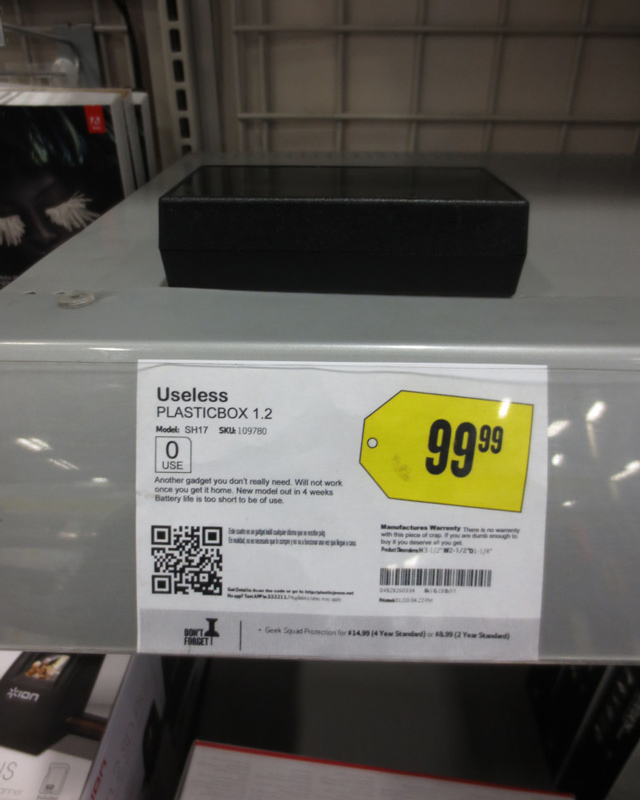



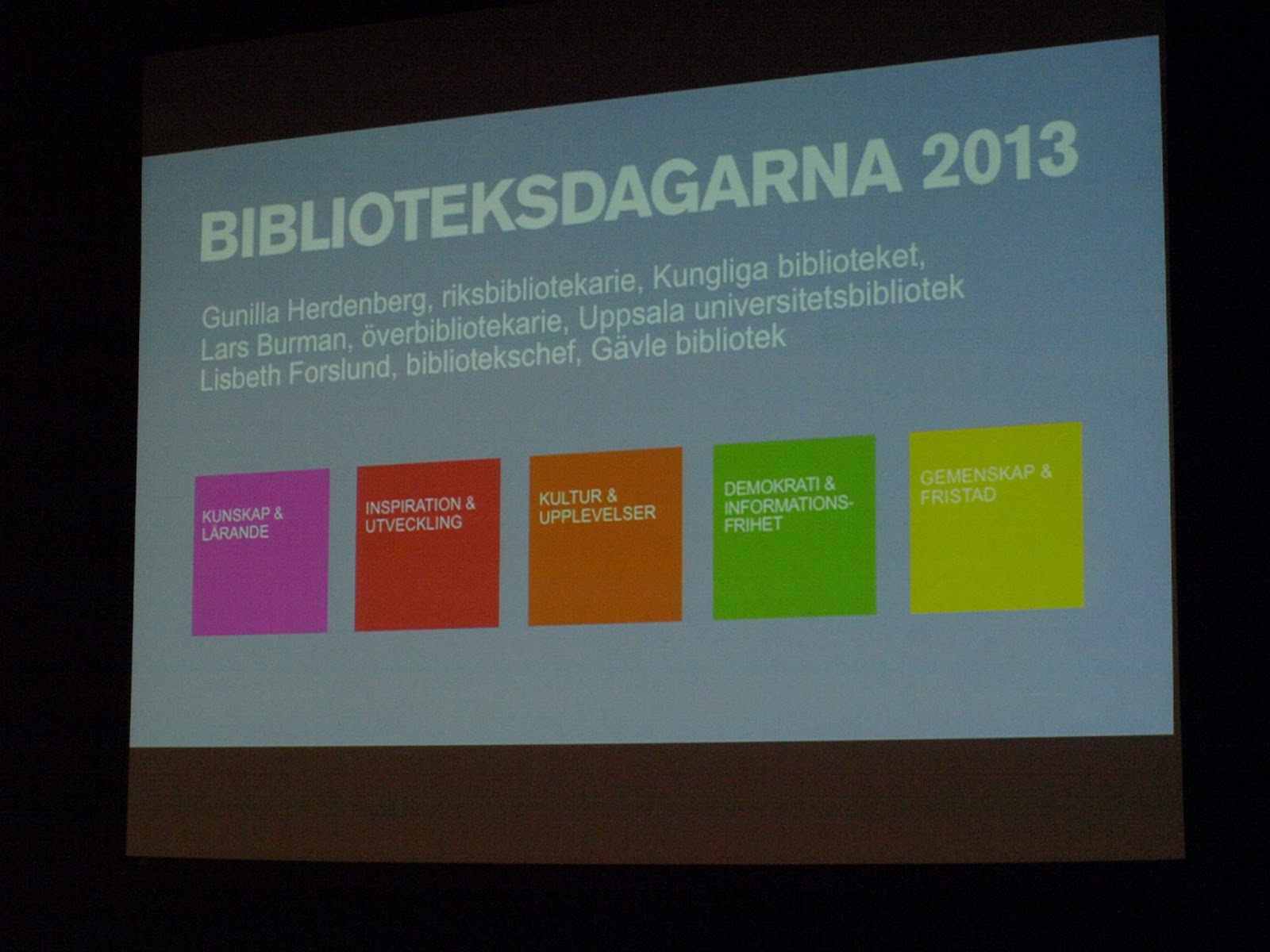


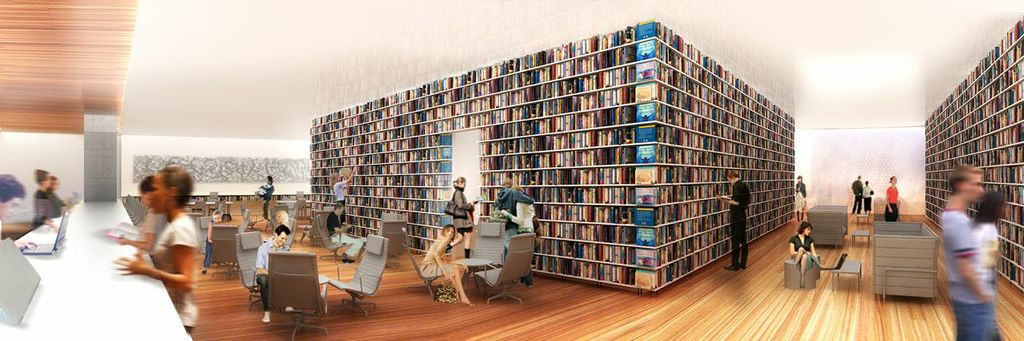
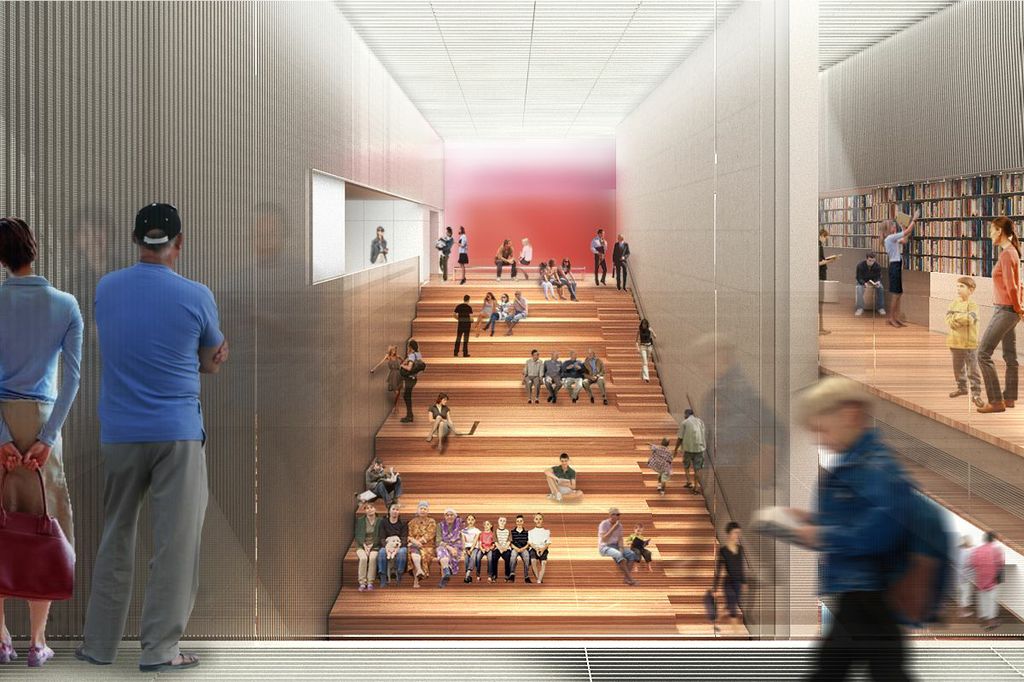




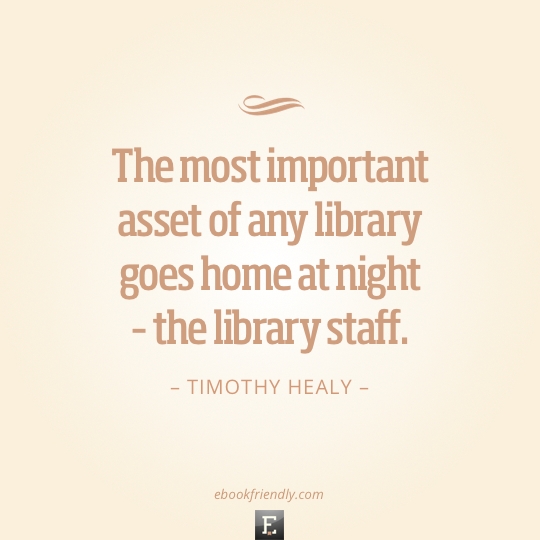
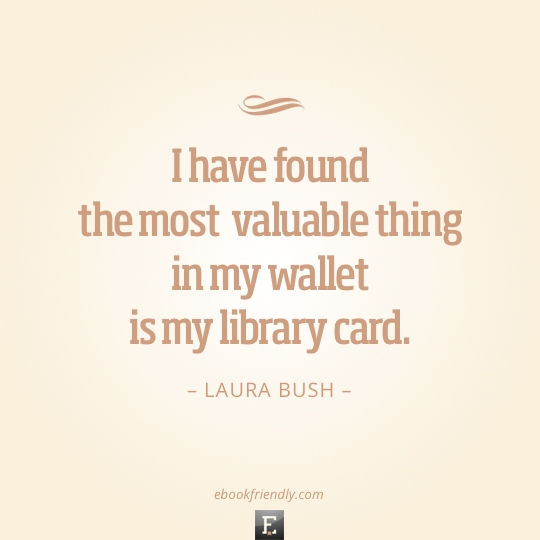


 Technorati Tags: