Ronald.phillips
Shared posts
Toshiba unveils massive hard drives for your PC and NAS
Shades of Doom
U.S. life spans "falling significantly behind those in similarly wealthy European countries"

A paper from the National Bureau of Economic Research reports that Americans die earlier than Europeans in every age group.
From The Atlantic:
— Read the restAverage life expectancy surged above 80 years old in just about every Western European country in the 2010s, including Portugal, Spain, France, Italy, Germany, the U.K.,
Police cite man creeping on beach dressed as Halloween's Michael Myers

On Monday as Hurricane Nicholas was approaching Texas, police were called to a Galveston beach where a gentleman was creeping around dressed as Halloween's Michael Myers, complete with mask and bloody knife. The fellow's name is Mark Metzger, an attorney in the area. — Read the rest
Magnetic phone mount for cars

I've tried many different phone mounts, and this cheap magnetic one is the best. It's a rubberized magnet that attaches to a car vent. It comes with a metallic sticker to attach to the back of your phone. When I get in my car, I just hold the phone against the magnetic surface and the phone snaps against it. — Read the rest
Watch: Newsmax host flips out when veteran says Trump is partially to blame for Afghanistan

Not cut out for real news, Newsmax host Grant Stinchfield blew a gasket when his guest, Iraq War veteran Joe Saboe, dared to slightly criticize Trump. On the subject of Afghanistan Wednesday night, Saboe, "who has been seeking to help those trapped in Afghanistan following the Taliban's takeover," according to The Week, suggested that "multiple administrations" were to blame for the situation we're in now with Afghanistan, and that "the Trump administration's efforts here were fairly weak." — Read the rest
How To Watch The Alien Movies In Order
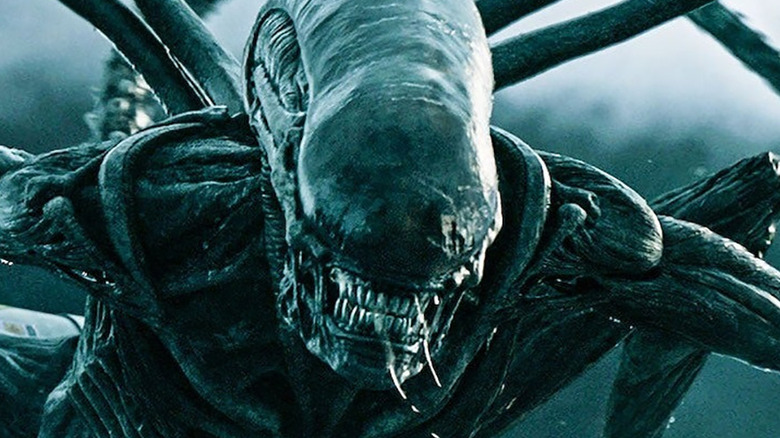
Ridley Scott's Xenomorph started its hunt with "Alien" in 1979, and though there have been some pauses between installments, we inevitably return to its bleak, Geiger-designed future again and again. With a new Alien series exploring amoral mega-corporation Weyland-Yutani on the way, it's worth studying how we got here.
The timeline of the Alien franchise can be hard to follow, as Ridley Scott delved into the creation of the Xenomorphs decades after making the first movie. However, there are a few themes that tie most of the films together. Though the mystery of the Xenomorphs is the acid-drenched soul of the franchise, the movies also tackle the nature of free will through its android characters, and decry the militaristic greed that fuels companies like Weyland-Yutani. When watching the films in order, these themes, with some exceptions, help fans understand where they are in the series' long and complex history.
Determining what is and isn't canon in the broader Alien franchise can be tricky. However, franchise consultant Andrew E.C. Gaska created a terrific resource in his essay, "Defining Canon in an Alien World." Building off of that, here's what you need to know if you're planning to watch the Alien series in order.
Prometheus
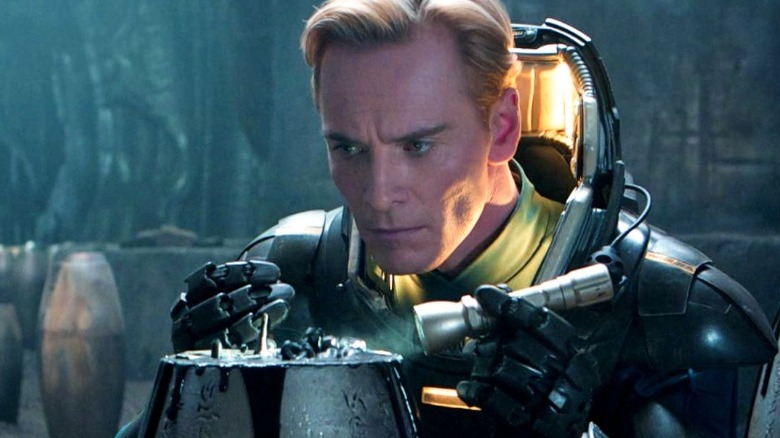
Released in 2012, "Prometheus" was Ridley Scott's long-awaited return to the world of "Alien." The Christmas setting is deliberate, as the film opens with religious symbolism mixed with a glimpse of aliens once nicknamed the Space Jockeys. Now Engineers, these marble-skinned humanoids create life on distant planets using their own DNA. In the original "Prometheus" script, one Engineer was even crucified for heresy on Earth roughly two thousand years ago.
It's not subtle stuff, but it creates some interesting, heavily contextual world-building, and it legitimizes the religious horror of the reviled "Alien 3." "Prometheus" also gives some long-time Xenomorph fans their due, confirming that the iconic monsters were genetically designed as weapons.
Michael Fassbender's eerie android David 8 becomes the bedrock for the role of synthetics in the Alien universe. Too perfect and intrusive, his presence feels like an anachronism. But David's uncanny valley beauty makes sense; he's proof of concept for Weyland's future products. That David is given too much individuality and goes off the rails is part of the series' larger discussion about free will. This is the only canon film streaming on HBO Max.
The Prometheus Promotional Shorts
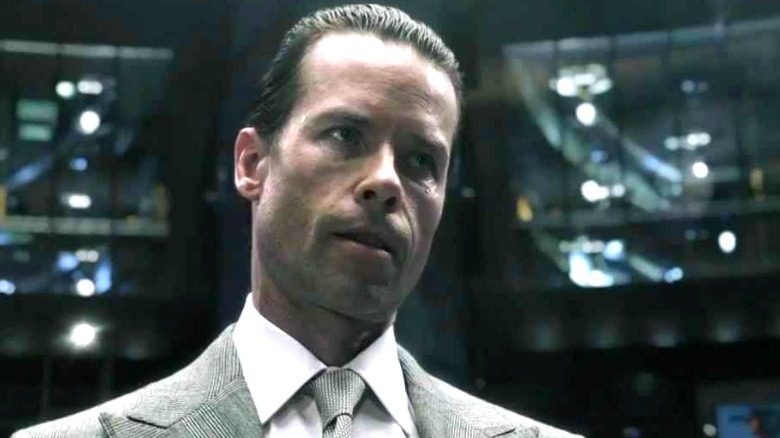
Ridley Scott oversaw production of three short films set before "Prometheus." The most intriguing is "TED Conference, 2023," a recording of young Peter Weyland. Seeing Guy Pearce without his bulky "Prometheus" make-up sheds new light on the character, and Weyland's speech offers clues about how much of Peter is inside David, making David's crawl towards freedom -- and away from the sins of his father -- seem more logical.
"Quiet Eye" is less interesting. It introduces Dr. Elizabeth Shaw via a pre-recorded message to Weyland, in which she asks for help with a research mission. It reuses Noomi Rapace's audition footage with minor touch-ups, and it adds some humanity to her plea to study our interstellar origins. But it's negligible viewing; her introduction in "Prometheus" works better.
The final film is the best. "Happy Birthday, David" is like an Apple product video filmed on weed. It attempts to highlight how human and fun Weyland's new line of androids can be, although it starts off with a newborn David coming off the assembly line to keep us from being too comfortable. Ridley Scott enjoys teasing connections between Weyland's androids and the world of "Blade Runner," and it's easy to picture this advertisement coming from the equally inhumane Tyrell Corporation. All short films are available on YouTube and the home releases of "Prometheus."
The Alien: Covenant Shorts
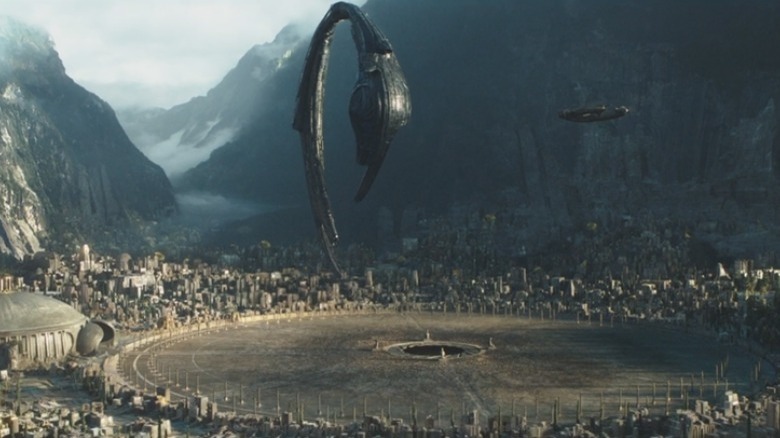
It's bad art to hide information in external media, yet the shorts that premiered before "Alien: Covenant" are guilty of exactly that. "Crew Messages" is "Quiet Eye" but worse, providing character introductions for a movie that didn't bother to make anyone memorable. Inexplicably, one installment is an ad for an Audi lunar rover. "Phobos," which sees the crew of the Covenant undergoing mental examinations, is psychological torture. "She Won't Go Quietly" is non-canon. "Meet Walter" is meant to parallel "Happy Birthday, David," and isn't up to the same level.
Two are crucial, which is frustrating. "The Last Supper" returns to more of the heavy-handed symbolism of "Prometheus," showcasing the colonists while giving James Franco something to do. Franco goes to bed early with a fever, which is foreshadowing 101, while the rest of the crew throw a last-minute party that echoes the last meal scene in "Alien."
"The Crossing" is maddening, laying the groundwork for Dr. Elizabeth Shaw's ultimate fate and showing the first moments of the genocide David releases on the Engineer's world. It's a big source of frustration for fans who wanted to explore the mysteries of creation, but Ridley's new obsession is with David's patriarchal madness. The fact that the entire short isn't part of the movie is bizarre. All of these short films are included on the "Alien: Covenant" DVD and Blu-ray, and most are available on YouTube.
Alien: Covenant
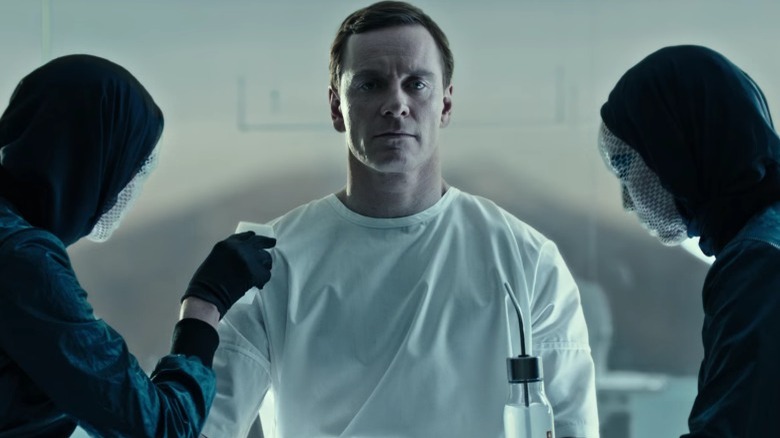
"Alien: Covenant" ties off some loose ends that "Prometheus" left behind, but does it via amputation. The Engineers are annihilated before the movie even starts, and this movie makes it clear that what Ridley Scott found fascinating was never the aliens, but the themes surrounding them. Unfortunately, while "Prometheus" has some strong moments, "Covenant" rarely sticks the landing. David's erratic motivations defy explanation, so the film doesn't even try.
The film goes through the motions, echoing what made "Alien" feel special without adding anything new. Not that the cast is at fault. Danny McBride shines as Tennessee, a caustic fellow with heart, and Michael Fassbender nicely differentiates Walter from David. Free from Weyland's emotional abuse, Walter becomes a humane but tragic ambassador for fellow androids Bishop and Call. Unfortunately, he's disposable.
The worst parts of "Covenant" are the changes to the Xenomorphs. Fandom has done its best to explain why David's facehuggers implant their eggs so quickly, pointing out that they're variations on the original Xenomorph template. It makes sense, but without in-universe clarification, the new Xenomorphs confused fans. Worse, "Alien: Covenant" ends on a cliffhanger that's not likely to be resolved. This film is streaming for a fee on Apple and Amazon.
The Gap Between Covenant And Alien
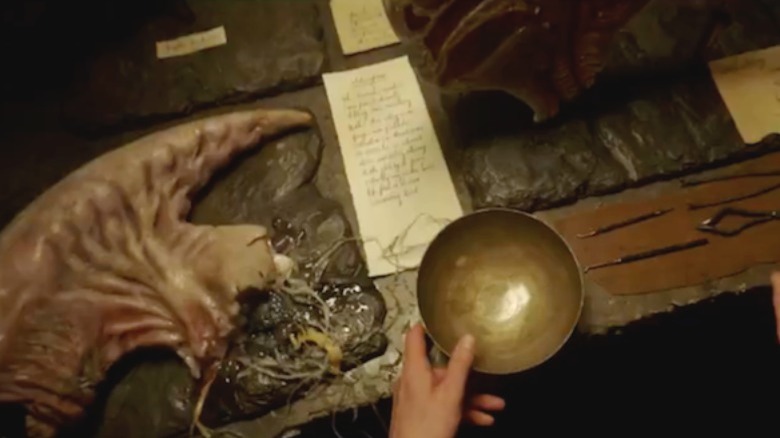
"Alien" takes place in 2122, 17 years after "Alien: Covenant." But, despite that short amount of time, a lot happens in between. "Covenant" continued putting vital information in spin-off media. Peter Weyland's corporation became Weyland-Yutani not on screen, but in a book by Alan Dean Foster. "Origins," published months after the film debut, describes how Yutani's CEO raided Weyland Corp after Peter's death, explaining why the colonists were flying under a familiar corporate banner.
There were also two more "Alien: Covenant" short films produced after the movie's release. One, "Advent," was included on the DVD. It's David's thesis on how to create a superior being, mailed to Weyland-Yutani. In grotesque autopsy sequences, David defiles Dr. Shaw as he talks about perfecting his creation. "Advent" also makes it clear that Daniels, one of the Covenant's two surviving colonists, is fated to become part of the first Xenomorph Queen. It's an act that will ensure the future replication of the species.
The other film, "David's Lab — Last Signs of Life," was released on YouTube as an anniversary gift. Twelve minutes long, it's too slow for what it offers. Weyland-Yutani has sent an expedition to study David's lab, and, of course, one of David's new facehuggers takes a bite out of the new arrivals.
Alien
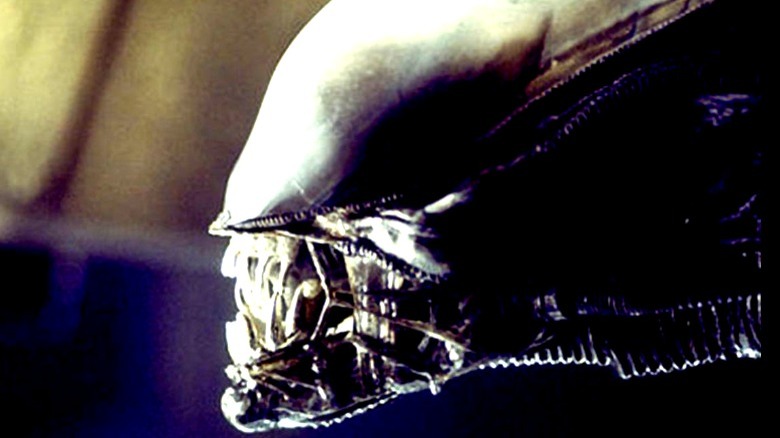
Almost everything important has been said. Ridley Scott's "Alien" is the foundational work of space horror. It's a transgressive statement about masculinity. There are loads of great takes to read about this classic. But at its core, "Alien" is a mashup of haunted house stories and workplace malevolence. Take the crew off their spaceship and give them a fleet of Peterbilt trucks, and it'd be the same story. Blue collar workers must go out of their lane for a special pickup or they'll get no paycheck. One ride-along is a corporate stooge. All of them are disposable.
It's that grimy reality that makes "Alien" ageless. The giant monitors and crappy readouts make sense to anyone who has been on a factory floor. They're towering monuments to the accounting department's insistence that, if the machines still function, there's no reason to upgrade them.
Weyland-Yutani doesn't give a rip about Captain Dallas, Ripley, or even the android they slipped on board. Ash probably cost more than the old workhorse tanker itself, and he has only one directive that doesn't promise his safe return. But the promise of alien tech is too alluring for the corporation, and the prequels make it clear that Weyland-Yutani knows what they're buying with these human lives. "Alien" can be streamed for a fee on Apple and Amazon.
All About Ash
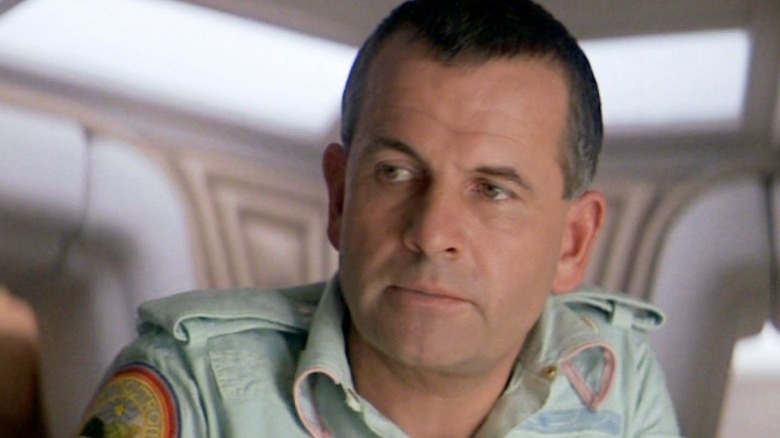
Ash, the Nostromo's secret android, is key to understanding one of the Alien franchise's biggest themes. Ash creates part of a psychological trio, which comprises a less structured version of the human ego. On one side, Ash is the embodiment of corporate desire, analytical and unable to empathize. On the other, there's the crew, motivated by the human drive to survive. Standing between these two halves is the amoral, impulse-driven Xenomorph, a creature that Ash calls the perfect organism, and the weapon the Nostromo's crew is to be sacrificed to acquire.
David is Ash's intellectual progenitor, as he is almost to all the franchise's androids, but Ash's ability to evolve has been removed. Ash exists to serve, and he's content with that. He only becomes erratic when he's forced to improvise. The implication is that androids like David were too unpredictable, so Weyland-Yutani stopped making them. By the time the Nostromo is sent out on its mission, Weyland-Yutani's android development is farmed out to Hyperdyne, a subsidiary (probably) meant to smooth over any PR issues the David products caused. The results are the same; these androids are loyal servants to corporate greed. Only the product labels are different.
Aliens
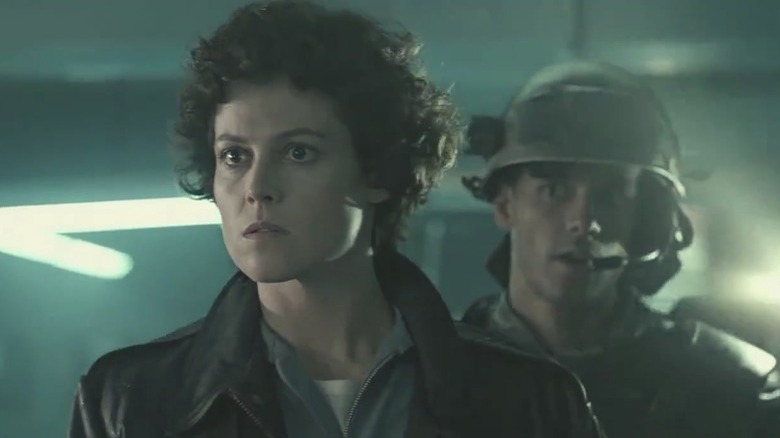
"Aliens" became a worthy follow-up to the original by understanding the theme of "Alien," then building something else. Subverting the expectations of most action flicks, James Cameron tears open the military-industrial complex by confronting it with an unwinnable war. "Aliens" feels like a standard military film right up until the Colonial Marines get torn apart by the Xenomorphs. Part of their problem is that information has been withheld by corporate interests (in "Aliens," Carter Burke represents Weyland-Yutani), a reading that's been heightened by the prequels.
The on-screen war is between the Marines and the Xenomorphs, but behind them a bigger battle stays under the radar until Ripley calls it out. The loss of the colony on LV-426 is a big hit to Weyland-Yutani's finances, who never should've let a settlement be built there in the first place. But Burke's discovery that there's a valuable bioweapon to be recovered in the wreckage renders both the colonists and the Marines just as disposable as Ripley's original crew.
There's no end to corporate greed. It's the heart of the "Alien" franchise, and James Cameron brings it to the foreground. To paraphrase Ellen Ripley, for all the dangers the Xenomorphs hold, they don't tear each other apart for a percentage of the profits. "Aliens" is currently streaming for a fee on Amazon and Apple.
All About Bishop
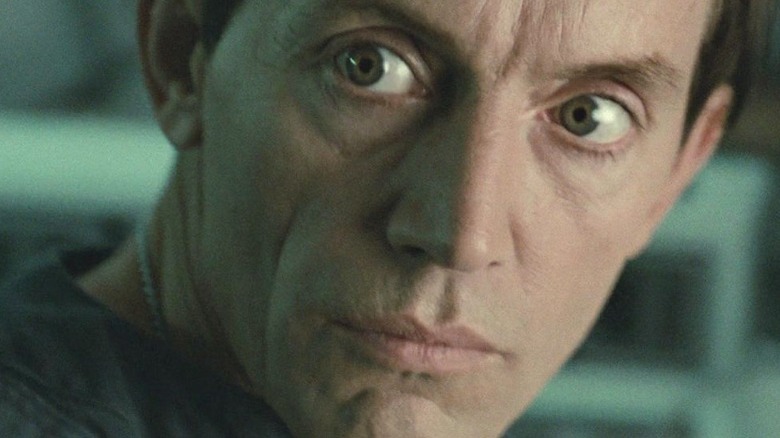
James Cameron also subverted the themes of "Alien" in one other way. Lance Henriksen as the android Bishop is set up to upset both Ripley and the audience. But by not making Bishop's identity a secret, "Aliens" gives the audience a chance to see him as an actual character. It's rational to fear him, especially during his autopsy of a facehugger, but to the Colonial Marines, he's just one of the guys.
Henriksen gives Bishop an awkward sensitivity that eases the fact that he's an android, and it becomes clear that, while he's as intelligent as Ash was, his loyalty is to his crew, not to Weyland-Yutani. He's there to help people come back alive. In order to do that, his programming gives him a reason to care.
The prequels revealed that androids can assume the flaws of their makers. "Alien" showed that, without a heart, an android will execute its commands without hesitation. But Bishop is allowed to be almost human, making what happens to him in the finale all the more devastating. However, his legacy remains. Bishop's choices proved that there's a better future for his synthetic people, if their creators have benevolent motives. In the Alien universe, Bishop represents the future of AI.
Alien 3
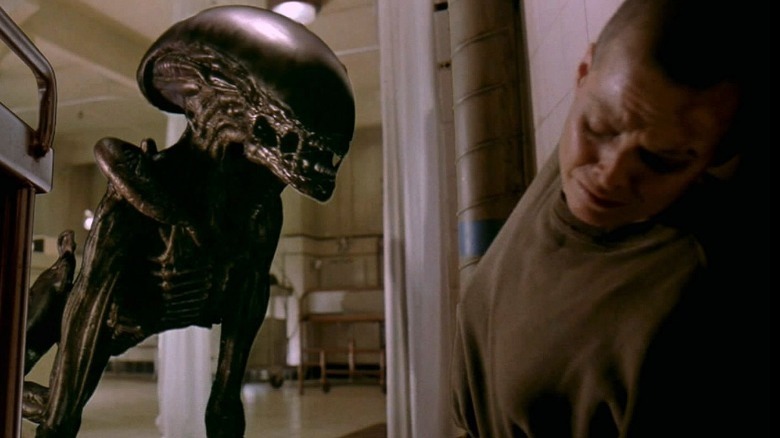
David Fincher's big Hollywood debut isn't a career highlight, but 1992's "Alien 3" isn't entirely his fault. For one, the movie's rotoscoped effects makes the film's quadruped Xenomorph look like a Shrinky-Dink. But the heart of a religious horror movie beats inside this mess, and casting the Xenomorph as an unholy dragon sent to reap judgment on a prison full of sinners, with Ripley herself serving as both Magdalene and Mary, is an interesting take.
The diaspora of the prisoner colonies implies that Weyland-Yutani isn't doing so hot back home, despite the fact that the movie is set during same year as "Aliens." The "Alien 3" finale reinforces that idea by having corporate advocates show up with a skeleton crew, able to accomplish little more than a play for Ripley's emotions by dragging along the designer of the Bishop android line.
The film barely works, although it still hurts to see Ripley throw herself into boiling metal, eternally joined in death with the alien that's haunted most of her life. It's a finale of sorts for Ellen Ripley, but it wouldn't be the end for the Xenomorphs, or for the androids that stood by and watched their development over centuries. "Alien 3" is currently streaming for a fee on both Amazon and Apple.
Alien: Resurrection
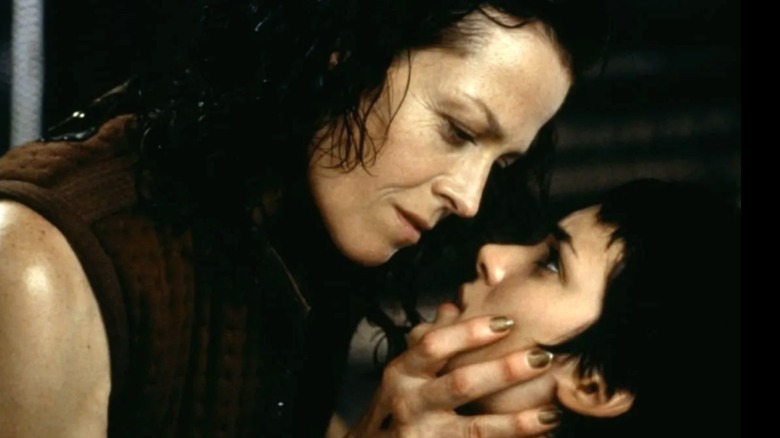
"Alien: Resurrection" takes a 200-year leap into the future and dismisses the threat of Weyland-Yutani with a joke about them being bought out by Wal-Mart. It's a low-key ending for the corporate monster, but there's harmony in the idea that there will always be a bigger, badder shark in the water.
And yet, the mega-corporation left all of its toys behind, and the United Systems Military still wants what Peter Weyland promised them centuries ago. The cloning storyline in "Alien: Resurrection" is garbage carried by good performances, with Ripley 8 becoming David's inhuman bookend. But while cloning has leached away some of Ripley's humanity, the androids get a short but fascinating plot about becoming more human than their makers. Call is an autonomous second-gen android who, like others of her line, have made fixing the malicious ethics of their makers into a cause.
In a better film, the androids' choice to become more like the humans that tried to stop Weyland and his successors would feel more important. Instead, it leaves the film with the same almost-was melancholy that Ripley and Call feel when they both glimpse Earth for the first time. Released in 1997, "Alien: Resurrection" remains the final chronological film in the franchise. "Alien: Resurrection" is streaming for a fee on Apple and Amazon.
Alien Vs. Predator
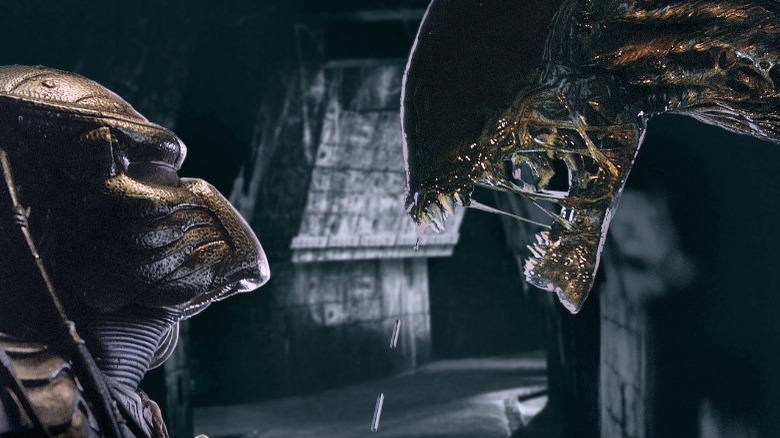
2004's "Alien vs. Predator" and its sequel, "AVP: Requiem," are set before "Prometheus." Neither is canon, and that's for the best. The way to place these films in context is to understand that they're part of their own goofball world, where the rules are made up and the plots don't matter. "Alien vs. Predator" has a garbled notion of Alien history, happy to suggest that the Xenomorphs are training dummies for young Predators. Given the movie's premise, that's fine. Once humans get mixed up in the Predator training mission, there's not much need for a plot.
Lance Henriksen gives the movie his best, and Sanaa Lathan has some awkward but almost touching moments with a Predator. It's a fun watch, at least. Meanwhile, "AVP: Requiem" features a Predalien that's somehow the perfect opposite of how cool it should have looked. The plot feels even more nihilistic than "Alien 3," but without anything meaty to back it up.
When watching the "Alien" films in chronological order, it's best to save "Alien vs. Predator" as a treat for the end; it's out of place, but fun once we're already loopy. Both AVP flicks are available to stream on HBO Max, but from the bottom of our hearts, please, only bother with the first one.
Read this next: Here's Where You Can Stream Or Rent Every 'Alien' Movie
The post How to watch the Alien movies in order appeared first on /Film.
The Blair Witch Project Ending Explained: As Maddening And Mysterious As It Was 20 Years Ago
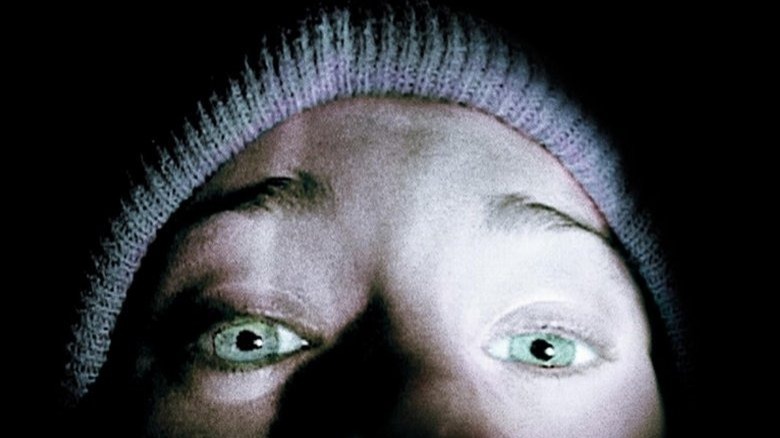
The insidious ending of "The Blair Witch Project" has boggled my mind and the minds of many others for an incredible 20 years. As the story goes, attendees at Sundance 1999 didn't know if they were watching a fictional account or a tried and true documentary when Daniel Myrick and Eduardo Sánchez's masterpiece screened — and even now, in the age of the internet and the ability to debunk information at the stroke of our fingertips, it still packs just as much of a punch. Even more famously, the film's creators made an incredibly convincing companion mockumentary chronicling the legend of the Blair Witch prior to their world premiere, which really upped the ante when it came to the scares and the possible realities of it all. After all, what we concoct in our heads is almost always scarier than anything we may be shown, which, ultimately, is the name of the game with this iconic ending.
Remind Me How The Blair Witch Project Ends Again?
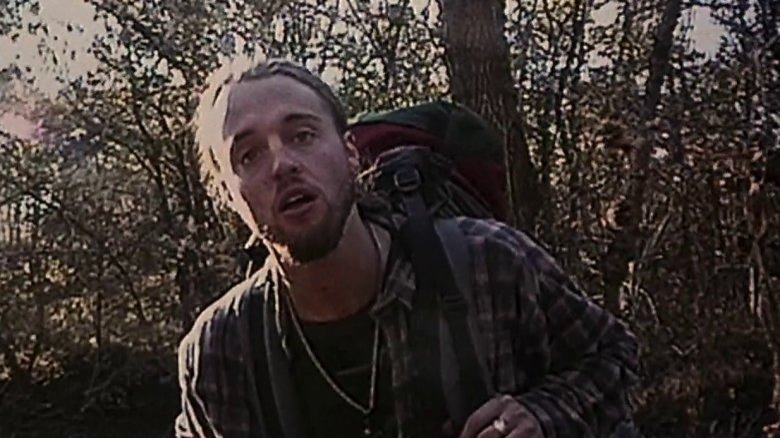
Glad you asked, but sort of wondering how you could possibly forget! After Josh (Joshua Leonard), one of the three college kids who set out to document the Blair Witch in her natural habitat, goes missing in the Black Hills forest of Burkitsville, Maryland, his cohorts Heather (Heather Donahue) and Mike (Michael C. Williams) start to panic looking for him. When night falls, they hear the sound of his screams, which forces them to attempt to save him. In the midst of their efforts, they discover a rundown house and enter it.
With two cameras, Heather and Mike search the disgusting, dilapidated house—which is covered in bloody handprints—and end up separated. Mike ends up in the basement of the house, but only manages to look around for a few seconds before something or someone off-camera knocks him out.
After a few seconds, we switch to Heather's camera as we hear her screaming for her friend. The camera seemingly glides through one of the house's hallways and down the stairs into the basement—and as it does, Heather's screams grow closer. The camera slowly pans to the corner of the room, where Mike is standing tucked into the corner as Heather screams his name. Seconds later, she is knocked out herself and the camera falls to the ground along with her. The footage lingers for several seconds on a choppy image of the basement floor before the credits roll.
So What Actually Happened In This Ending?
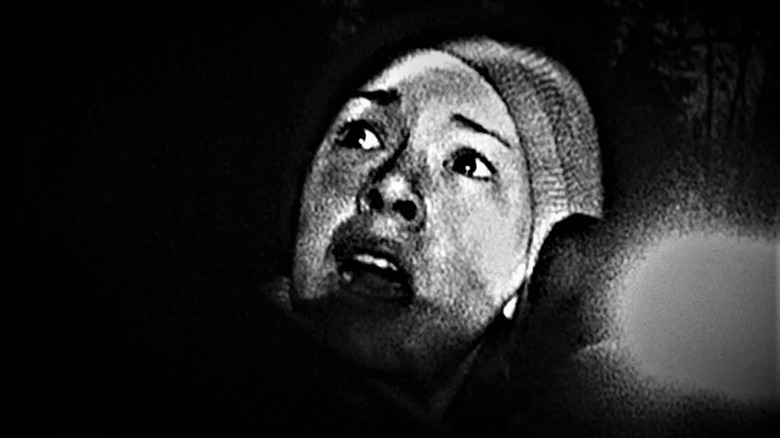
There are theories abound regarding the true nature of the "Blair Witch" ending, but there are two that seem to be the most plausible when you really think about it. But before we can talk theories, we need a refresher on the legend of Rustin Parr. Allow me to explain.
In the beginning of the film, Heather, Mike, and Josh interview several Burtkitsville locals about the Blair Witch and many of them discuss a former resident named Rustin Parr. In the fall and winter of 1940, several children from the town went missing around the same time. Rustin, who lived in a secluded area of the town on a hill, came into the center of town one day following the disappearances and claimed his work was "finished." Though they were unsure what he meant by that at the time, the police later searched his home and found the bodies of seven kids.
Rustin would, admittedly, take the children down to his basement in pairs, where he would force one of them to face into the corner while he killed the other. He would then kill the second child. In court, he claimed he couldn't stand being watched during the killings, which is why he devised the sadistic system.
Now that we have that covered, let's get to the theories. The first theory asserts that after Mike is knocked out in the basement, the perspective we change to is not Heather's, but the Blair Witch's herself. We don't see a moment where Heather loses the camera, but it isn't hard to justify the choice on the filmmakers' part. She could've easily dropped it in the chaos. Another element of the ending that supports this theory is the fact that the mysterious second wielder of Heather's camera is freakishly tall. When the camera pans down the basement steps, it almost hits the ceiling, which means the person or thing carrying it has some height on them.
The second theory—the still plausible but not the numero uno theory—supposes that the perspective change is actually from Heather to Josh, her and Mike's missing friend. This idea stems from the fact that Rustin Parr also claimed that a woman instructed him to perform his killings, a woman speculated to be the Blair Witch. This concept also supposes that Josh's screams on the night Heather and Mike find the Rustin Parr house were a ploy to get the director and the sound guy into the house—meaning he was under the Blair Witch's spell like Rustin Parr was.
Honestly, both theories track. The beauty of this film is that the filmmakers never give us quite enough to be sure of exactly what happens, just enough unsettling camera movement, horrifying set design, and petrified performances to absolutely terrify us until the end of time.
Does The Ending Actually Still Hold Up, Though?
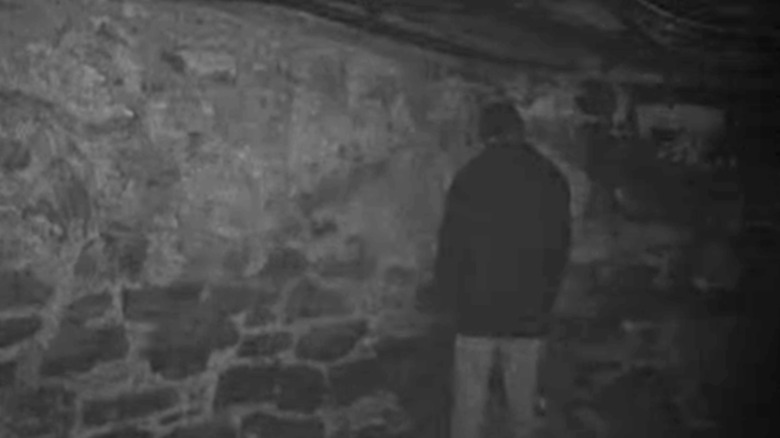
It's hard to understate the utter star power of this ending and how it still holds its own in 2021. We don't speak of the utterly abysmal sequel "The Blair Witch Project 2: Book of Shadows," but the newer, more honorable installment, 2016's "Blair Witch," spent its 89-minute runtime making homage after homage to the original film. In fact, the movie's entire premise hinges on one of the 1999 chiller's final moments.
In director Adam Wingard's continuation, lead character James is Heather's younger brother, who becomes obsessed with finding her in the Black Hills forest after seeing a clip of what appears to be lost footage of Heather's potential last moments in the Rustin Parr house in 1999. He enlists three of his friends to join him in setting out to find her—including one friend who is, shocker, a documentary filmmaker—and they end up in a terrifying mess that harkens back to the film that started it all.
Though that film takes artistic liberties and creates new conventions for the "Blair Witch" universe to play in, it is clear that it is a direct continuation and heavily influenced by the maddening magic of the original's breathtaking ending. During an interview, Simon Barrett, who wrote the script for the 2016 picture, told me (in an aside that never got published) that he specifically wanted to write a "Blair Witch" movie for the die-hards, the people who knew and respected the lore. No matter how you feel about the movie, it's clear he succeeded.
From a filmmaking perspective, I firmly believe the original Blair Witch Project ending will never be topped, especially not in the found footage subgenre. The confusing perspectives, the anxiety-inducing camera work, the absolutely manic acting, the sublime set design. I could go on and on, but there were many elements that came together to make the perfect alchemical potion that is this ending. I'm just glad few people are denying its terrifying staying power.
Read this next: The 15 Best Horror Movies Of 2020
The post The Blair Witch Project Ending Explained: As Maddening and Mysterious As It Was 20 Years Ago appeared first on /Film.
Everything We Know About Obi-Wan Kenobi So Far
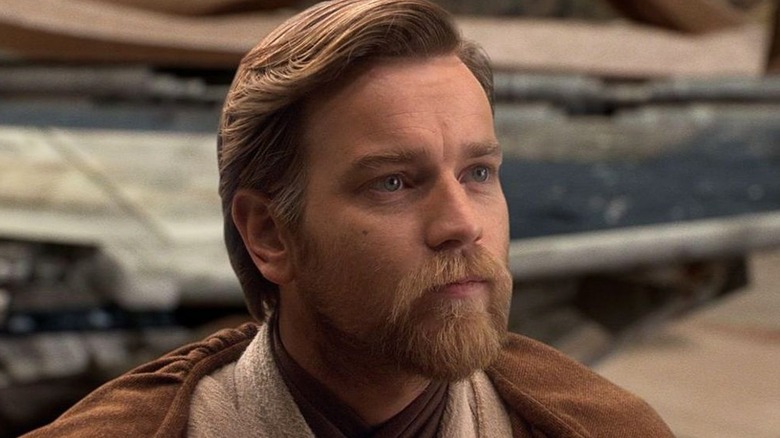
The "Star Wars" Sequel Trilogy might seem like the basis of a perpetual internet war that will forever divide the fandom, but at one point much the same could have been said about the prequels. Once derided as nothing short of the worst movies ever made, a certain generation of fans -- okay I'll 'fess up to it, it's mostly my generation -- have rehabilitated the movies as worthy additions to the canon in their own right ... missteps and all. One thing fans of all ages can agree on is the casting of Ewan McGregor as Obi-Wan Kenobi, seamlessly takings his cues from Alec Guinness' legendary portrayal of the same character in the original movies. In the biggest sign yet that Lucasfilm isn't trying to relegate the Prequel Trilogy to the dustbin of history, the studio announced an "Obi-Wan Kenobi" series to debut on Disney+ that's bound to draw as much (or even more) attention than "The Mandalorian."
Though we have a surprising amount of confirmed information regarding the series, there's still much more we don't know. Follow along as we attempt to connect all the dots and answer as much as possible about what to expect from "Obi-Wan Kenobi."
When And Where To Watch Obi-Wan Kenobi
"Obi-Wan Kenobi" is scheduled to debut exclusively on the Disney+ streaming service sometime in 2022. The six-episode series is currently anticipated to last no more than one season, as McGregor himself has described it as "standalone" ... though not without leaving some wiggle room for more, if the story and the audience calls for it. Filming began in the spring of 2021, which would optimistically put the premiere date in the vicinity of the first half of 2022. While the exact release date might still be in question, we do know that McGregor himself couldn't be more excited about how this series will carve out its own space separate from the "tedious" filming of the prequels. In alluding to the similar technology used on "The Mandalorian," McGregor described the experience as:
"They project [the virtual backgrounds] onto this massive LED screen. So if you're in a desert, you're standing in the middle of a desert. If you're in the snow, you're surrounded by snow. And if you're in a cockpit of a starfighter, you're in space. It's going to feel so much more real."
What We Think Obi-Wan Kenobi Will Be About

This question is a little easier to answer, thanks to Lucasfilm. Described as the "rematch of the century," the "Obi-Wan Kenobi" series will see Obi-Wan now in hiding after the shocking events of "Revenge of the Sith" saw the fall of Anakin Skywalker and the near-eradication of the Jedi Order. Exiled to Tatooine, an older and more rugged Obi-Wan (though not quite to Alec Guinness-levels just yet!) will come face-to-face with Anakin once more, though now as the menacing Darth Vader. It remains to be seen whether this will be a literal rematch, which could risk diluting the power of their face-off in "A New Hope" (although then again, perhaps not), or a more metaphorical one that involves flashbacks, dream sequences, or that classic "Star Wars" penchant for visions and Force-influenced manifestations.
The plot of "Obi-Wan Kenobi" has been officially described as:
"The story begins 10 years after the dramatic events of Star Wars: Revenge of the Sith where Kenobi faced his greatest defeat, the downfall and corruption of his best friend and Jedi apprentice, Anakin Skywalker turned evil Sith Lord Darth Vader."
What We Know About The Obi-Wan Kenobi Writer And Director
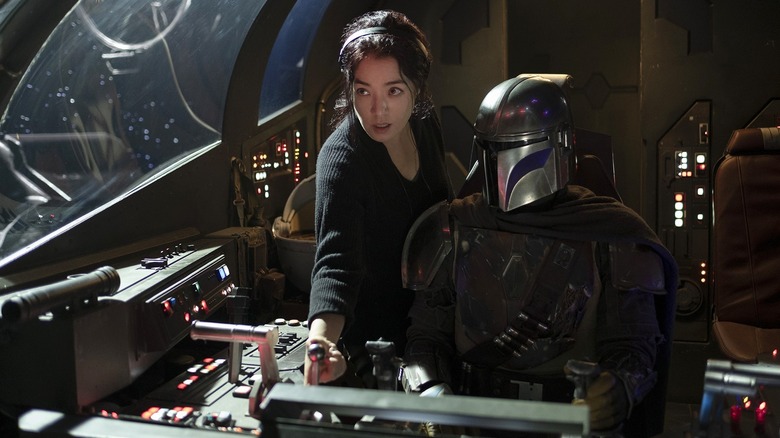
Lucasfilm didn't exactly have far to look when they hired Deborah Chow to helm "Obi-Wan Kenobi." The Canadian filmmaker of Chinese-Australian descent has previous experience directing "Mr. Robot," "Iron Fist," "Fear the Walking Dead," "Jessica Jones," "Better Call Saul," and "The Mandalorian," making her a very familiar face with Disney. At the time of the initial announcement, Lucasfilm president Kathleen Kennedy stated:
"We really wanted to select a director who is able to explore both the quiet determination and rich mystique of Obi-Wan in a way that folds seamlessly into the Star Wars saga. Based on her phenomenal work developing our characters in The Mandalorian, I'm absolutely confident Deborah is the right director to tell this story."
The series is written by Joby Harold, the writer of such projects as "Awake," "King Arthur: Legend of the Sword," and Zack Snyder's "Army of the Dead." He came onto the project after the rather drastic decision to temporarily shut down production of the show in January of 2020 and essentially start over, but it sounds like the show has been smooth sailing ever since.
What We Know About The Obi-Wan Kenobi Cast
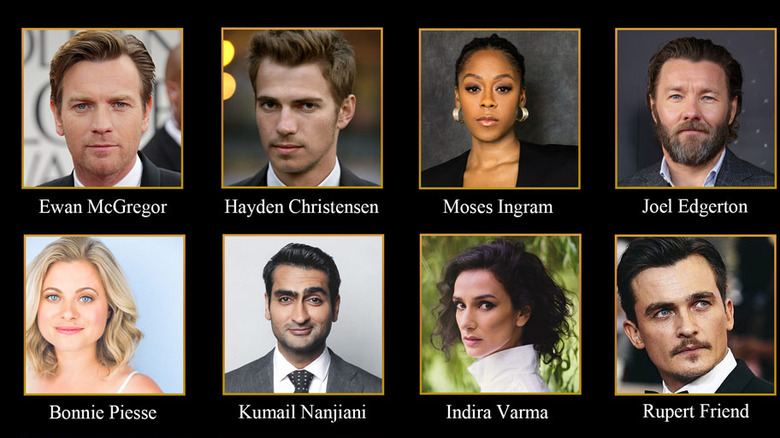
Rumors and speculation have flown rampant around "Obi-Wan Kenobi" since before the series was even officially announced. One rumor that can be safely shot down is that actor Ahmed Best will not be returning to reprise the character of Jar-Jar Binks. As much as Best has experienced a stunning and well-deserved about-face from fans who have come to embrace him in response to rampant toxicity directed towards him over the years, this one is ... probably for the best.
Before "The Mandalorian" beat it to the punch with a digitally de-aged recreation, at one time it seemed that Lucasfilm was looking to recast Luke Skywalker with a younger actor for an appearance on "Obi-Wan Kenobi." Of course, the timeline of the show would mean that this would necessitate a 10-year-old Luke. That certainly feels like a possibility that remains on the table, with the official return of Joel Edgerton as Uncle Owen Lars. Of course, Hayden Christensen is the other familiar face making his grand return after years apart from "Revenge of the Sith." Otherwise, the new cast includes Kumail Nanjiani, Sung Kang of "Fast & Furious" fame, Moses Ingram, Bonnie Piesse, Rupert Friend, O'Shea Jackson Jr., Sung Kang, Simone Kessell, and Benny Safdie.
Read this next: What Is The Best 'Star Wars' Movie? The Runner-Up In Our Poll Might Surprise You
The post Everything We Know About Obi-Wan Kenobi So Far appeared first on /Film.
Dune Director Denis Villeneuve Is Not A Fan Of Marvel Movies, Sorry
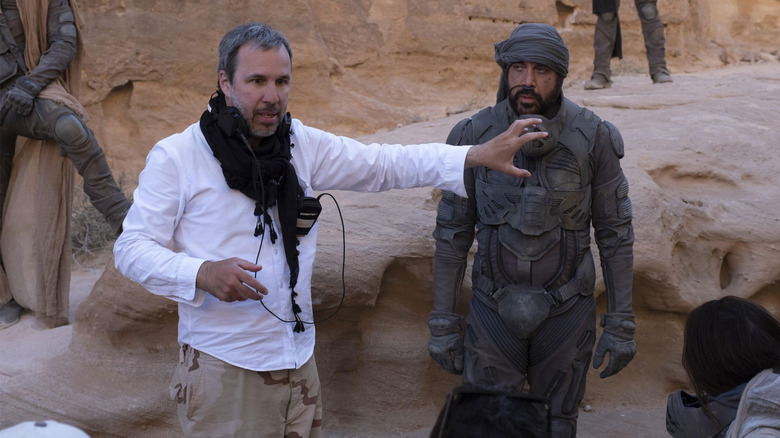
You know what I was just thinking the other day? "It's been far too long since the last time a prominent filmmaker was randomly asked about their opinions about Marvel and sparked another week of relentless social media chicanery." True story, I swear! "Dune" director Denis Villeneuve must have picked up on the vibes I was sending out into the ether (I'll try to do better to control this superpower of mine from now on, don't worry), as he has become the latest in a long line of industry figures to wade into the fray and publicly criticize Marvel Studios.
In this instance, Villeneuve has called out the films for feeling too alike without containing nearly as much variety as they ideally should. Look, I won't tell you how you should react to this news, but clearly it's of the upmost importance that we all get way too invested in these quotes and yell about it online for as long as we possibly can anyway.
Here We Go Again
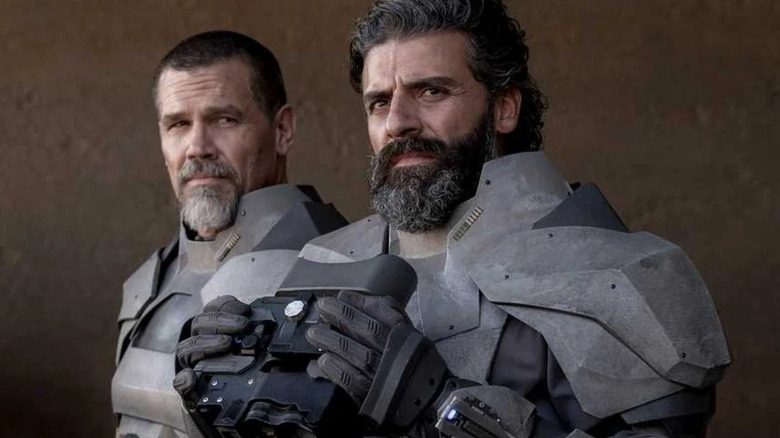
Well, at least nobody can accuse Denis Villeneuve about being anything less than honest and forthright. The "Sicario," "Arrival," and "Blade Runner 2049" filmmaker hasn't exactly been shy over the last year or so when it comes to speaking his mind, first releasing a blistering statement in response to the entire slate of Warner Bros. films releasing day-and-date with HBO Max and again stirring up social media by referring to watching a movie like "Dune" on anything less than the big screen as akin to "[driving] a speedboat in your bathtub." In that light, maybe it was only a matter of time before Villeneuve set his sights on the Marvel Cinematic Universe, the most popular and consistently profitable ongoing franchise at the moment. El Mundo brings us word of his latest comments (via ComicBook.com) directed towards the superhero shared universe as he enlightens us on his chief complaint.
"There are too many Marvel movies that are nothing more than a cut and paste of others."
In all honesty, I was expecting something a little harsher than that. That's not to say that it isn't newsworthy when an established filmmaker speaks in less-than-courteous terms about anyone else's work or that he's even all that wrong in the first place, but I guess a quote like this just doesn't feel as shocking anymore after over a decade of hearing this exact same criticism directed towards the MCU. That's not going to stop anyone on a lovely place like Twitter from getting all riled up about these comments, of course, as a certain tweet from fellow filmmaker Neill Blomkamp proved emphatically.
What's really interesting about these remarks is that it places a number of individuals in Villeneuve's circle in something of an awkward spot. Lest we forget, "Dune" cast members Josh Brolin and Zendaya have played integral parts of the MCU already as Thanos and MJ, respectively. Meanwhile, their "Dune" co-star Oscar Isaac is currently gearing up to make his first appearance as Moon Knight for the upcoming Disney+ series. With Villeneuve's latest film about to embark on its press tour for the upcoming release, well, let's just say we're looking forward to seeing the cast and crew squirm their way out of providing non-answers to some uncomfortable questions!
On a related note, there's also that pesky matter of "Nomadland" director Chloé Zhao specifically using stills from -- who else? -- Denis Villeneuve's previous movies in order to get the "Eternals" gig in the first place. Both filmmakers couldn't say enough good things about each other, which strikes a remarkably different tone from Villeneuve putting "too many Marvel movies" on blast like the way he did. You just can't make this stuff up, folks.
"Dune" will release in theaters and on HBO Max on October 22, 2021. The impending fistfight between Kevin Feige and Villeneuve, on the other hand, is yet to be determined.
Read this next: Everything You Always Wanted To Know About Dune (But Were Afraid To Ask) [TIFF 2021]
The post Dune Director Denis Villeneuve is Not a Fan of Marvel Movies, Sorry appeared first on /Film.
Three Jackass Stunts Were Too Dangerous To Actually Make It Into The Movies
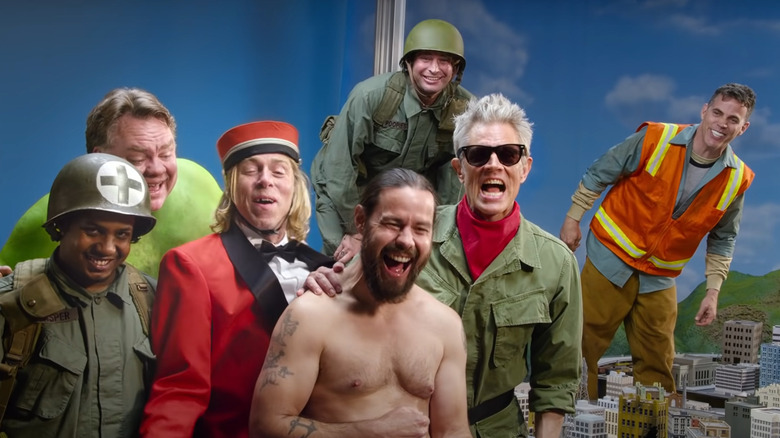
The "Jackass" crew have put themselves through all kinds of cartoonish violence in the name of entertainment, but it turns out there were some stunts that went too far even for these gnarly dudes. While playing "Truth or Dab" with "Hot Ones" host Shaun Evans to promote the upcoming "Jackass Forever", Steve-O and Jason "Wee Man"Acuña recently shared the three bits that were deemed too violent to make it into the "Jackass" movies.
Too Hot For Jackass?
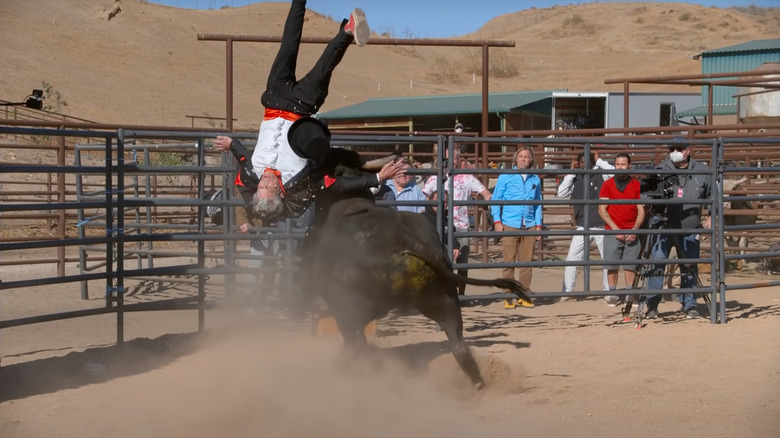
On "Truth or Dab", contestants usually either have to answer Evans' hard-hitting, well-researched questions, or eat a wing doused in flaming hot "The Last Dab" sauce. Steve-O and Wee Man don't really stick to the format, eating wings at random and answering all of the questions honestly anyway.
When Evans asks them if there are any "Jackass" stunts that have been relegated to the vault, Steve-O quickly responds with three that were too violent for Standards and Practices. Perhaps the least surprising thing about all three stunts? The absolutely fearless Johnny Knoxville was at the center of all three.
The first segment, "Box Downstairs", involved Knoxville getting into a cardboard box and, you guessed it, rolling down some stairs.
"It was a great idea," Steve-O relates with a laugh. "He got in a box and tucked in some pillows around him, taped it up, and rolled it down a huge flight of cement stairs."
Knoxville also apparently shot himself with a .38 caliber Smith and Wesson handgun, though he was wearing a bulletproof vest beneath his shirt.
The third stunt involved Knoxville getting hit by a car.
"There was also 'I'm Johnny Knoxville, and I'm gonna get hit by a car.' The car came flying, he hit the windshield and rolled over," Steve-O said. "They asked him 'what were you thinking when you got hit by the car?'"
Knoxville's answer? "I wore two pairs of jeans so I could be safe."
Behind The Famous Baby Gator Bite
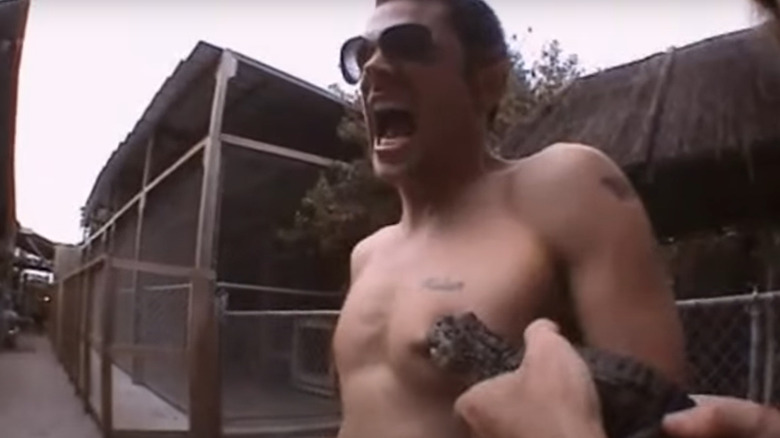
While playing "Truth or and Dab" with Evans, Wee Man also shared the bit that he was most upset to not be involved in. He shared that Manny Pugh, the "Jackass" crew's exotic animal expert, approached him with a baby alligator and asked if he could let the tiny reptile bite his nipple. Wee Man was understandably hesitant, and Pugh ended up letting the little guy latch onto Knoxville instead. Stills from that segment became all kinds of marketing material for the first "Jackass" movie, including posters, T-shirts, and more.
We have a little while to wait for "Jackass Forever" to hit theaters, but hopefully the crew will do some more fun and on-brand promotional gigs to tide us over until then.
"Jackass Forever" is set to crash into theaters on February 4, 2022.
Read this next: The 'Jackass Forever' Trailer Just Made Me Tear Up, And I Have To Deal With That Now
The post Three Jackass Stunts Were Too Dangerous to Actually Make It Into the Movies appeared first on /Film.
15 Must-See Horror Anime Movies

Creating terror with animation means that you aren't limited to our concept of reality. In anime, the body can be bent, stretched, and ripped apart using excruciating and fantastical methods that can only be realized via hand-drawn or computer-generated images. Films such as "Vampire Hunter D" and "Wicked City" realize horror anime's grotesque potential, creating hellish worlds where women become spider demons and eat men alive. Old tropes and well-tread creatures such as zombies are given facelifts and realized in new, repulsive ways that can't be replicated by actors in front of a camera.
There's going to be a lot of gore on this list, especially from director Yoshiaki Kawajiri, who is known for his uncanny ability to create disgusting, sexual creatures with depraved desires. Animation lends itself perfectly to body horror, after all. But that isn't all that the world of horror anime has to offer; there are plenty of haunting ghost stories and psychological thrillers that will appeal to fans more interested in the supernatural side of the genre.
Perfect Blue
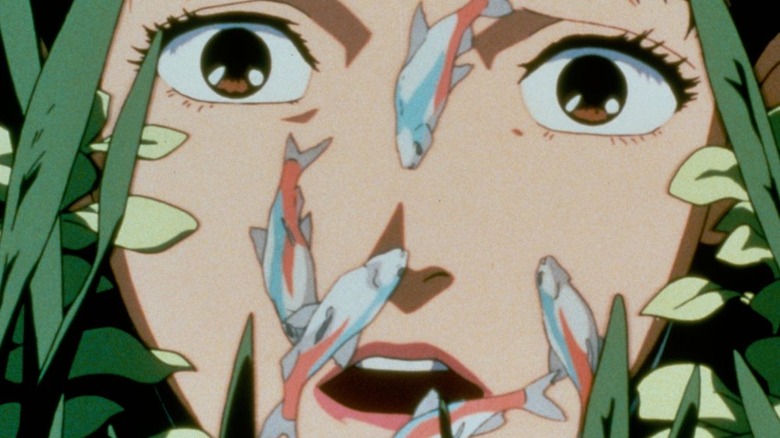
Satoshi Kon's 1997 directorial debut "Perfect Blue" is a horrifying psychological thriller about the effects of fame and obsession. The film, based on the novel of the same name by Yoshikazu Takeuchi, follows Mima Kirigoe, lead singer of the girl group CHAM!, which has a very dedicated fanbase. When Mima decides to move from singing to acting, fans are thrown into an uproar, constantly judging her choice on message boards. As Mima tries to cope with the backlash, as well as make it in the sleazy world of acting, she discovers that she has a stalker named Me-Mania and that someone is murdering those around her.
Between trying to maintain her persona as a grown-up female star and needing to process her trauma, Mima loses her grip on reality. She begins blacking out and can't remember where she was during the murders, making her a prime suspect. Her own concept of identity begins to slip away as she loses any concept of who Mima really is. "Perfect Blue" inspired movies like Darren Aronofsky's "Black Swan," providing a framework for examining modern obsession and their lasting psychological effects; this is not just about stalking, but about how your sense of self disappears when you step into the public eye.
Gyo: Tokyo Fish Attack
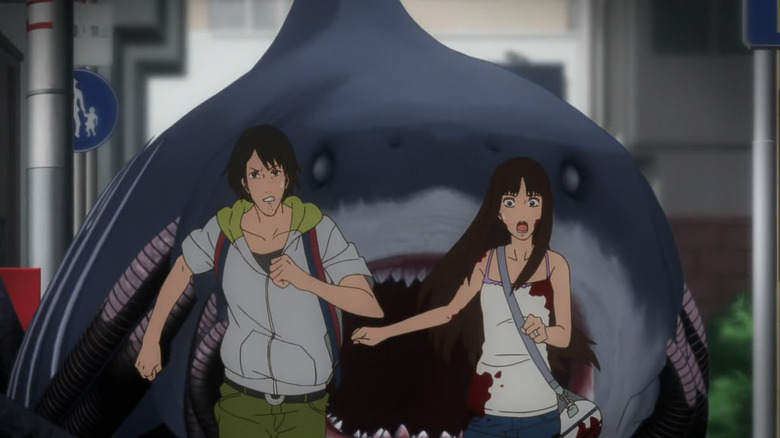
Manga artist Junji Ito is a master of creating horror on the page, authoring classic manga like "Uzumaki" and "Tomie." Then, there's "Gyo," which was adapted into the anime film "Gyo: Tokyo Fish Attack," released in 2012 and directed by Takayuki Hirao. Yes, this is a tale about killer fish. But not just any killer fish -- these aquatic creatures have mutated and grown legs. They also emanate a horrific and nauseating odor that is especially foul to protagonist Kaori, who has a particularly sensitive sense of smell.
The beginning of "Gyo" involves the invasion of a seaside Japanese town by the fish, led by a massive, walking great white shark. And it doesn't stop there. It's revealed that these fish are byproducts of Japanese experiments in biological warfare during World War II. "Gyo" is Ito at his wackiest and nastiest, and that tone is beautifully translated to the screen by Hirao. "Gyo" has something for everyone, especially lovers of horror comedy, aquatic horror, and body horror.
Vampire Hunter D
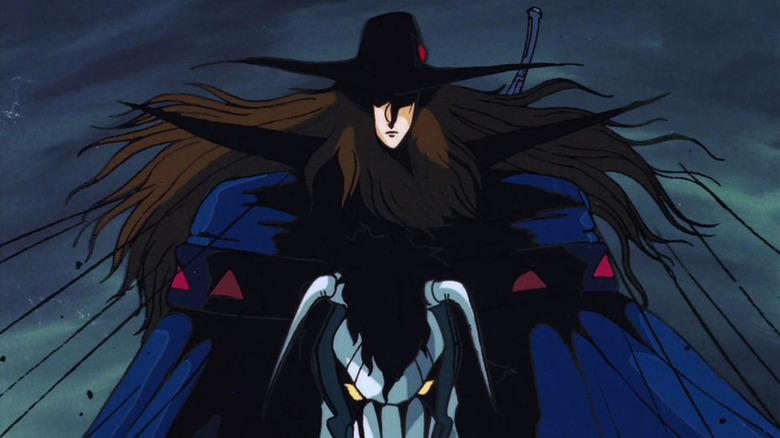
There are two "Vampire Hunter D" films, and sadly, the original 1985 film is often overshadowed by its 2000 remake. But there's a lot of value to "Vampire Hunter D," including some gnarly monsters and death sequences that recall early Japanese animation. D is, in fact, a vampire hunter, but he's more than that; he's a dhampir, or a half-human, half-vampire. D wanders a post-nuclear landscape where vampire nobility, demons, and mutants rule the land. He's hired by Doris Lang to save her from Count Lee, a powerful vampire noble who wants to make her his new blood-sucking bride.
Begrudgingly, D takes on the assignment to save Doris from a tortuous fate, but it won't be easy. He must face a legion of monsters, each more powerful than the next. Did I mention that he also has a parasite in his left hand that manifests as a human face that keeps telling D to drink human blood? "Vampire Hunter D" was marketed as a "dark future science-fiction romance," and while there are moments of extreme gore, much of the film moves at a slow pace, focusing on building out the world's lore. That lore isn't always clear, but the film is still a visual feast for any gorehound.
Seoul Station
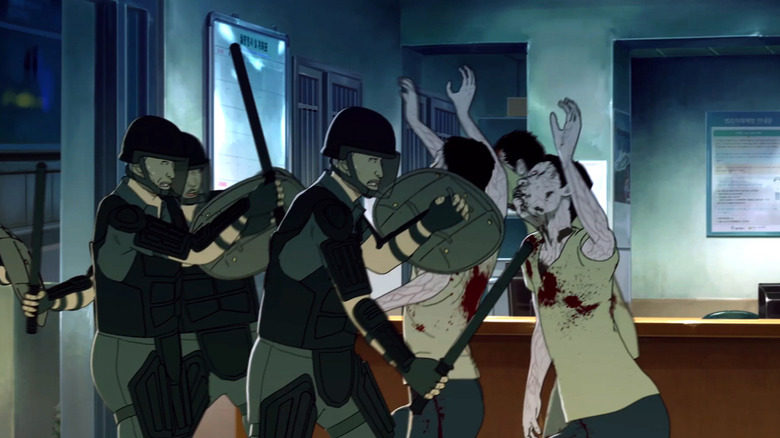
Yeon Sang-ho's 2016 animated film "Seoul Station" is the official prequel to the Korean zombie hit "Train to Busan." It takes place right at the beginning of the zombie pandemic, when the disease was just spreading across the country. Hye-sun is sex worker living with her deadbeat boyfriend Ki-woong, who pimps her out for money. She's stuck in a vicious cycle of trauma and abuse, and is fed up with her life. After an explosive argument at the titular Seoul Station, the two are separated by a zombie outbreak. Meanwhile, Hye-sun's father Suk-gyu is searching the city for his estranged daughter and finally crosses paths with her boyfriend.
"Seoul Station" has a classic two-groups-split-up-during-a-zombie-attack structure, but it doesn't feel tired here due to the gorgeous animation and the political commentary about Korea's treatment of its unhoused population. Squatters are among the first victims of the virus, never taken seriously by authority figures and regarded as unimportant by society at large. While zombie films may be overdone, "Seoul Station" provides a breath of fresh air to a well-worn genre, particularly as it renders it through the lens of animation.
Bio Hunter
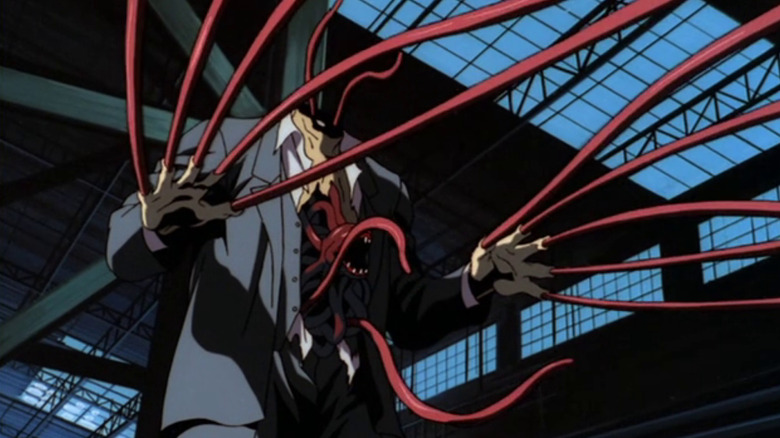
Directed by Yoshiaki Kawajiri, the 1995 film "Bio Hunter" takes place in a world where a malady called the Demon Virus is ravaging Japan. Those infected with the virus transform into horrific creatures with a taste for human flesh. Human bodies are ripped to shreds and blood spurts from open throats.
In this hellscape, there are two men determined to stop the virus. Koshigaya and Kamada are two molecular-biologists-slash-demon-hunters who are trying to both develop a cure and also hunt down the infected. However, their journey takes a turn for the worse when Kamada contracts the virus. He uses the disease to his advantage, trying to keep his demonic side under control so that he can save as many lives as possible.
This is the first film by Kawajiri on this list, but it definitely isn't the last. This prolific director is known for transgressive works that push the limits of the animated body. Teeth burst from flesh, bodies twist and mutate, and any semblance of humanity is stripped away. This hyper-sexual, hyper-violent horror anime proves that not all animated films are meant for children.
King Of Thorn
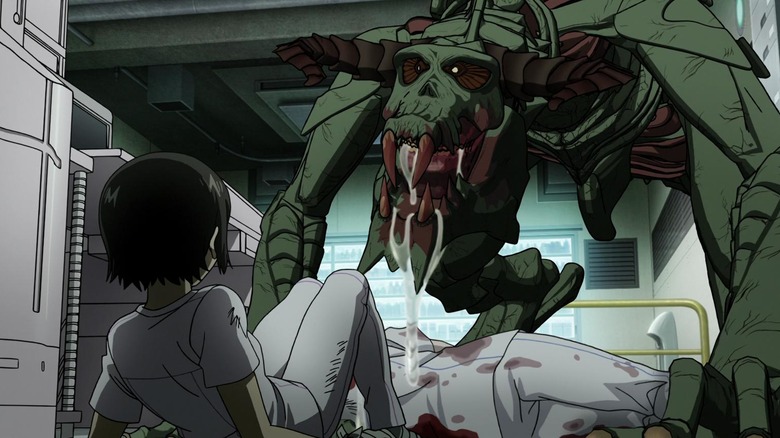
Released in 2010, "King of Thorn" is a gruesome blend of sci-fi and monster horror that is often referred to as "Sleeping Beauty" with a twist. It's another anime about a world ruined by a global pandemic, but this time people are suffering from the Medusa Virus, which essentially causes victims to turn to stone.
In a last-ditch effort to save humanity, 160 volunteers who have been diagnosed with the disease are placed in cold sleep while scientists develop a cure. But when they wake up, the facility is changed, covered in thorns and full of horrific creatures that immediately tear into the newly awakened group.
Only seven survive, and they must figure out what happened, what year it is, and how they can save the world. "King of Thorn" utilizes both 2D and 3D animation, which helps capture the scale of this world. The 2D work creates detailed characters, while the 3D work better illustrates the vast number of creatures and their seemingly impossible size. It makes "King of Thorn" feel big, and the characters' mission all the more futile.
Empire Of Corpses
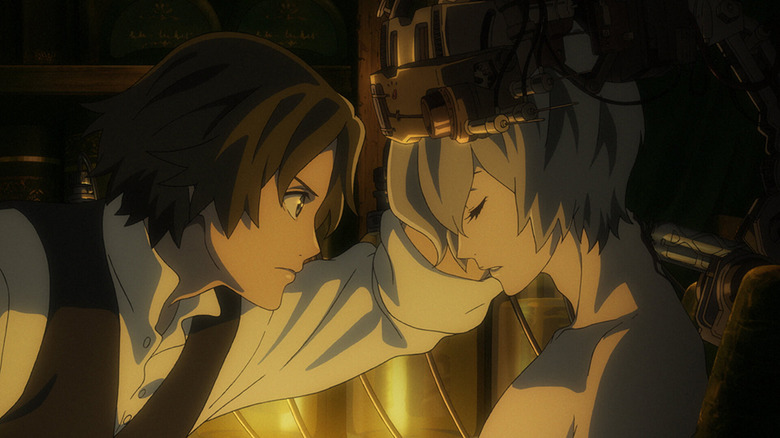
Gothic horror lovers, get ready, because "Empire of Corpses" is the anime for you. This 2015 film takes place in an alternate version of 18th-century England. In this timeline, corpses are regularly reanimated using a technology called Necroware. They're then used as laborers; they don't think, feel, eat, or need to be paid. They're a perfect new labor force.
However, it's rumored that Victor Frankenstein has a machine that can reanimate not only bodies, but souls, too. These corpses would no longer be shells of people, but fully resurrected human beings. Scientist John Watson is chosen to go on an expedition to retrieve Frankenstein's notes and find a new way to bring back the dead.
"Empire of Corpses" is a quintessential steampunk adventure, full of homages to other prominent historical and literary figures, including "The Brothers Karamazov" and Colonel Frederick Burnaby. But it's also deeply emotional and upsetting, as Watson reflects on his own motivations for wanting to resurrect the dead and what it means for a corpse to have real autonomy over its body. "Empire of Corpses" deals with some downright chilling themes that provide a whole new perspective on the story of "Frankenstein."
Memories
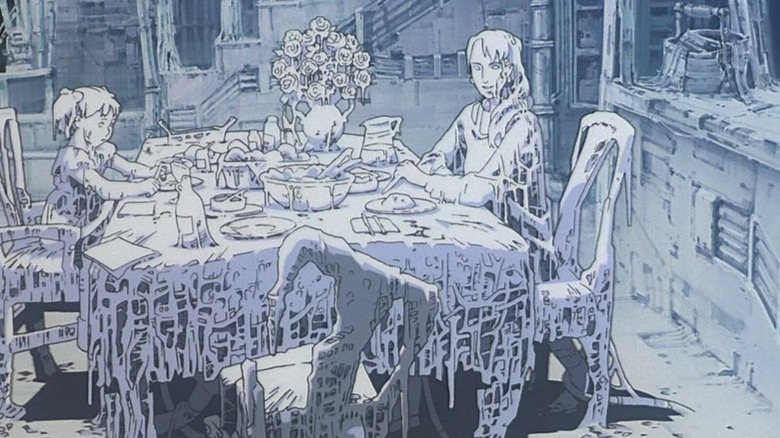
"Memories" is a sci-fi horror anthology from the mind of Katsuhiro Otomo, creator of the manga series "Akira." But this isn't just Otomo's project; it also comes from Satoshi Kon, Kōji Morimoto, and Tensai Okamura, all of whom had previously worked under Otomo.
The first story, "Magnetic Rose," is directed by Morimoto and written by Kon. It follows two engineers who discover an abandoned spaceship full of decadent furnishings and slowly unravel the mystery at the vessel's core. Next, there's "Stink Bomb," directed by Okamura and written by Otomo, about a man who takes the wrong pill and gives himself toxic farts. Yes, there is quite a tonal shift between stories.
Finally, there's "Cannon Fodder," directed and written by Otomo, about a young boy who dreams of becoming a military officer and firing cannons against a seemingly nonexistent enemy. These three unrelated films come together to create three very different imaginings of the future, and yet are united by gorgeous animation and thoughtful writing. These horror tales are psychological and haunting, focusing more on the cerebral experience of terror than visceral violence.
Wicked City
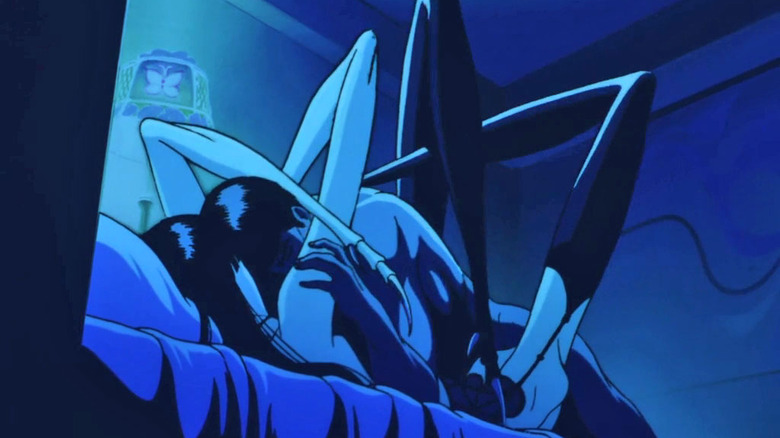
The second Yoshiaki Kawajiri film on this list is his solo directorial debut, 1987's "Wicked City." The film takes place in a world where Earth and the demon-filled "Black World" have struck a tenuous peace treaty to maintain some semblance of order. The Black Guard, a special police force made up of humans and demons, makes sure the treaty is upheld. But that treaty is about to expire, and agents Taki, a human, and Makie, a demon, must protect the diplomat charged with its renewal. However, a radical group of demons don't want that to happen, and Taki and Makie must use their combined abilities to protect humanity from complete destruction.
Kawajiri used this film to show off his grotesque style and eye for shocking violence. With "Wicked City," he burst into the anime scene and established himself as a director with no qualms about breaking taboos. Women turn into spiders with monstrous vaginas; demons absorb humans into their flesh; creatures sprout rows of sharp teeth and tentacles; the body is merely a ball of clay for the animators to play with. Viewer beware: This is another hyper-sexual, hyper-violent joint that isn't for the faint of heart. But if you can handle extreme horror, "Wicked City" is worth seeking out.
Demon City Shinjuku
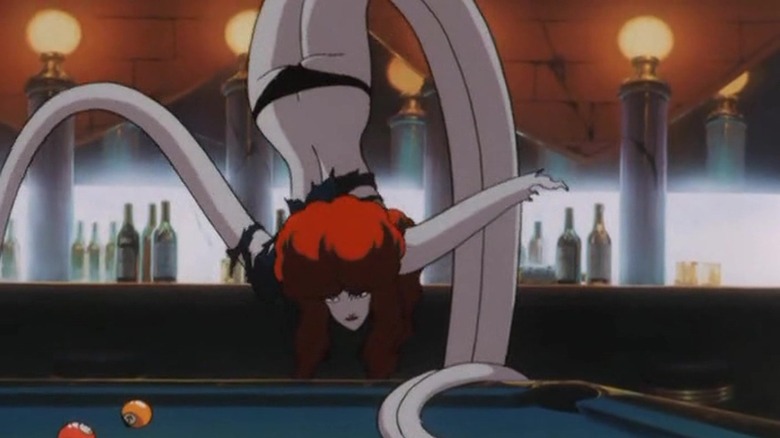
In 1988, Yoshiaki Kawajiri gave the world another taste of his demon-obsessed style with "Demon City Shinjuku." While "Wicked City," "Ninja Scroll," and "Vampire Hunter D: Bloodlust" are Kawajiri's most well-known movies, this is an underrated gem that pumps the brakes on the gore and sexuality (don't worry, there are still a lot of creatures).
"Demon City Shinjuku" follows your typical hero's journey arc as a young man named Kyoya must save the universe from a powerful psychic named Rebi Ra. Ra killed Kyoya's father, and Kyoya seeks revenge as he prowls through a city full of demons. But Kyoya still hasn't discovered his powers' full potential, and he's running out of time to master his abilities. Along the way, the World President is bound to a giant crucifix by a supernatural plant and is going to be sacrificed to bring even more chaos to the world.
Like all of Kawajiri's work, "Demon City Shinjuku" is chock full of gorgeously choreographed action sequences that make up for its uneven pacing.
Paprika

Satoshi Kon appears on this list again with 2006's "Paprika," his last film before he passed away in 2010. Unlike "Perfect Blue" which features a psychological hellscape, "Paprika" is a psychedelic journey through dreams that addresses the terrifying malleability of the human mind.
Dr. Atsuko Chiba is using a device called the DC Mini to illegally access the dreams of her psychiatric patients. By assuming her dream persona, Paprika, Chiba enters people's dreams to better analyze their subconscious. But, of course, such power is easily abused, and scientists with evil intentions steal the device and infiltrate unsuspecting minds, and manipulating people into killing themselves. Chiba dives into a world of colorful dreams to keep it all from oozing into the real world.
No written description can truly capture the jaw-dropping beauty of the film's animation, nor its reliance on dream logic (Kon isn't interested in making this film easy to understand). Christopher Nolan's 2010 "Inception" took quite a bit of inspiration from "Paprika," replicating a physics-defying hallway sequence and other pivotal scenes. But nothing compares to the power of animation. Kon rises to the challenge with this film, making something truly special.
Ninja Scroll
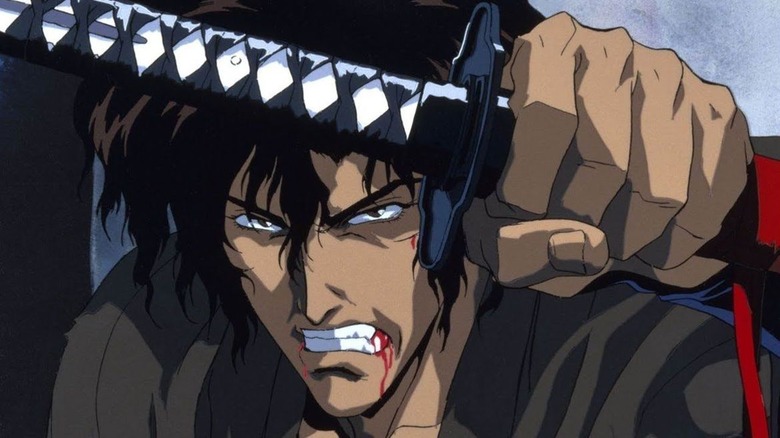
"Ninja Scroll" is Yoshiaki Kawajiri's most influential work, cited alongside "Akira" and "Ghost in the Shell" as one of the three films that brought adult-oriented anime to the West. Released in 1993, Kawajiri pivots from futuristic hellscapes full of demons to feudal Japan. Rest assured, though, there are still demons, this time eight very powerful ones called the Devils of Kimon, who want to overthrow the government.
Swordsman-for-hire Jubei, who wanders the countryside after a betrayal, is offered a large sum of money to learn more about these devils and uncover their motivations. Along the way, he pairs up with a female ninja named Kagero, the sole survivor of her clan. The two work together -- and maybe fall in love -- while saving the world from whatever dangerous plot lurks under the surface.
The action sequences in "Ninja Scroll" are lush and kinetic. Katanas slash across the screen and separate flesh from bodies in the blink of an eye. It's a visual feast, and much like the rest of Kawajiri's work, is packed with as much shocking sex and violence as possible.
Cat Soup
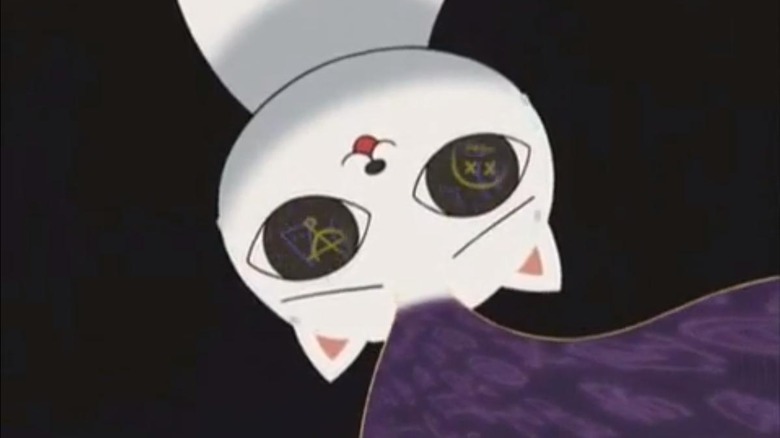
This animated short film by Tatsuo Satō is a surreal, trippy tale about grief and the deep bond between siblings, all represented by anthropomorphic cats. Nyatta is a young male cat who loves his older sister, Nyako, who is very sick. One day, while playing in the bath, Nyatta accidentally drowns and sees Nyako walking with Jizuo, the patron saint of dead children. He grabs her and, after a game of tug-of-war, they split Nyako's soul in half. When Nyatta is revived, he gives Nyako her soul back, but it is incomplete. So, they must embark on a journey through Hell to find the other half and make her whole again.
The short's gorgeous animation makes "Cat Soup" a contemplative sensory experience -- there's no dialogue here to help guide the viewer through the story. Instead, it is up to the viewer to actively engage with "Cat Soup" and really fall into the journey alongside these two cats. But don't let that whimsical aesthetic fool you; "Cat Soup" is full of jarring imagery and violence, which is all the more shocking when it happens to animated cats.
Vampire Hunter D: Bloodlust
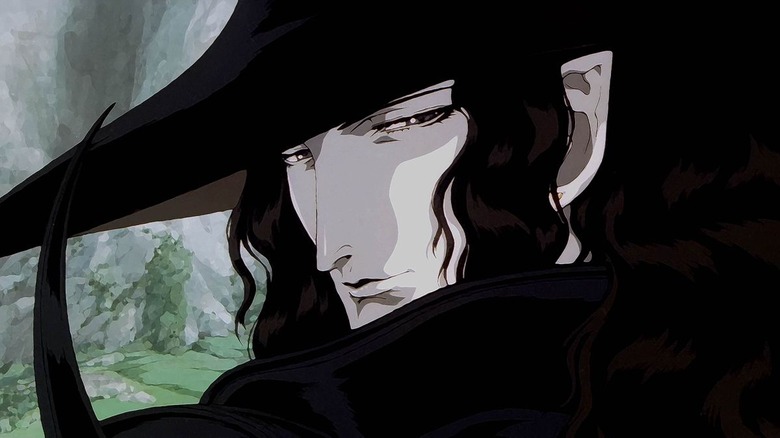
The last Yoshiaki Kawajiri film on this list is his 2001 film "Vampire Hunter D: Bloodlust," another cinematic entry in the world of the vampire hunter named D. Here, D is hired after a young woman named Charlotte is abducted from her home by Baron Meier Link, a vampire nobleman. Charlotte's father pays D to find Charlotte and bring her back unscathed. Little does D know that he has competition, as her brother has hired the Marcus Brothers to get the job done. But nothing is what it seems, as it's revealed that Charlotte is actually in love with the vampire.
Kawajiri's "Vampire Hunter D" is more highly regarded than the 1985 film due to its improved pacing, action sequences, and animation style. It's been touted as one of the better vampire films, striking a balance between gore-filled action and character-driven moments that keep the viewer invested in the story.
Belladonna Of Sadness
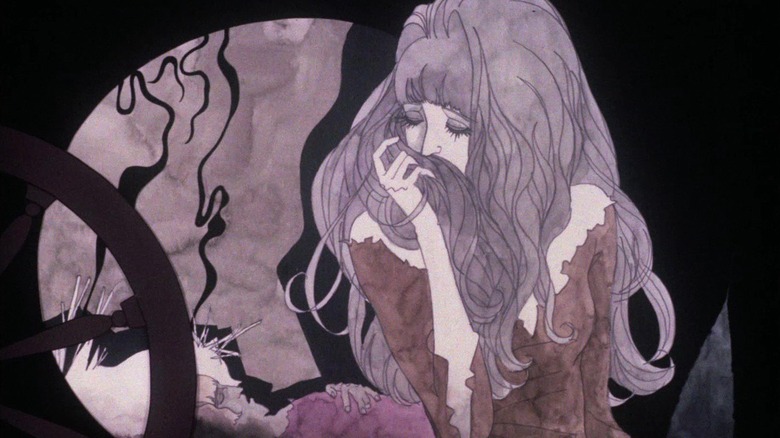
Eiichi Yamamoto's 1973 film "Belladonna of Sadness" is a heart-wrenching rape-revenge masterpiece about a scorned woman who yearns for any type of control. In medieval France, Jeanne and Jean are newlyweds basking in the glow of a new marriage. However, it's sadly short lived when Jeanne is raped by a baron in a ritual ceremony. Despite it being a tradition, Jean can't handle it and abandons Jeanne. In her despair, Jeanne is offered powers by a phallic demon who guarantees revenge on those who have wronged her.
What ensues is a never-ending struggle for Jeanne to regain bodily autonomy; her status as a woman damns her to a life of torture. Jeanne's body undergoes several transformations as she tries again and again to become a more powerful being, her flesh metamorphosing like a perverse butterfly. "Belladonna of Sadness" is an agonizing but strangely alluring watch thanks to psychedelic animation that represents violence against women in the abstract instead of in excruciating, realistic detail.
Read this next: 'The Lighthouse' Is Opening In Japan, And Acclaimed Horror Manga Artist Junji Ito Drew Some Awesome Promotional Art
The post 15 Must-See Horror Anime Movies appeared first on /Film.
The 15 Best Final Girls In Horror Movies Ranked

While horror films have been around for several decades, the term "final girl" was coined more recently than most people may think. Originally created in 1992 by author Carol J. Clover in her book "Men, Women, and Chainsaws: Gender in the Modern Horror Film," the term refers to a common trope in horror movies in which the last female character(s) alive confront and defeat or escape the killer, essentially becoming the only people left to tell the story. Characteristics of a final girl include a refusal to indulge in drugs, alcohol, and sex in order to survive the film. Though not always depicted as the smartest character, more modern versions of the final girl are clever, resilient, and, in some cases, downright fearless.
Characters who fall under the final girl banner gained a tremendous amount of popularity in the '80s and '90s, which saw a surge in slasher movies that saw the main female protagonist return for at least one sequel. Some of the famous franchises that have featured a recurring final girl include "A Nightmare on Elm Street," "Scream," "Halloween," and "Alien."
This list takes a look at many great female characters who have played the role of the final girl over the past several decades. A final girls' ranking will be based on how many appearances her character in her respective franchise, her survival skills, and her influence on the slasher film landscape.
Karla Wilson — I Still Know What You Did Last Summer
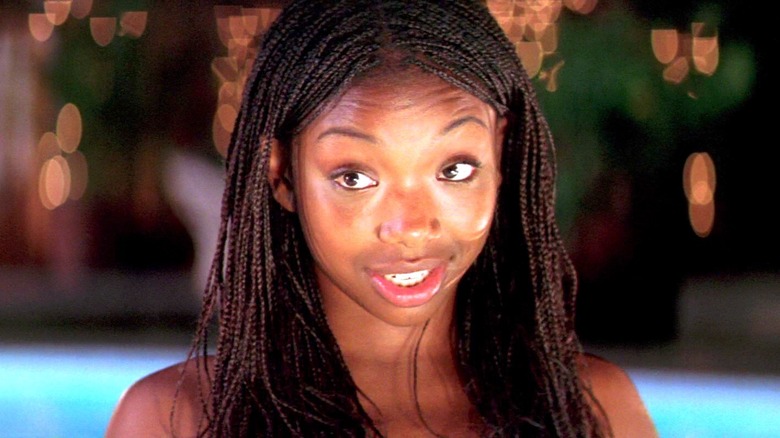
While the sequel to the hit 1997 slasher film "I Know What You Did Last Summer" isn't quite as good as its predecessor, it does elevate the story in some ways. First, it diversifies the previously all-Caucasian cast by adding Brandy Norwood, Mekhi Phifer, and Jennifer Esposito to its ensemble. Taking place exactly one year after the events of the original film, "I Still Know What You Did Last Summer" was one of the earliest horror sequels to deal with the PTSD that comes from surviving a massive traumatic event like the one Jennifer Love Hewitt's character, Julie James, did in the original. Norwood's character, Karla Wilson, is Julie's new bff and is aware of Julie's tragic past, therefore becoming sensitive to her plight.
However, Karla is also the one who tries to get Julie to live life to the fullest. When the two find themselves traveling to a tropical island for a vacation, Karla encourages Julie to let her guard down. People start dropping dead as soon as Julie relaxes, and it's Karla who tries to help Julie stay calm.
Once the killer pursues Julie and Karla, the two become separated and Karla becomes part of one of the tensest chase scenes in modern horror history. Though Karla is feisty and tough, it's her ability to think fast that helps her avoid the killer and stay alive long enough to see her friend again.
Tina Shepard — Friday The 13th Part VII: The New Blood
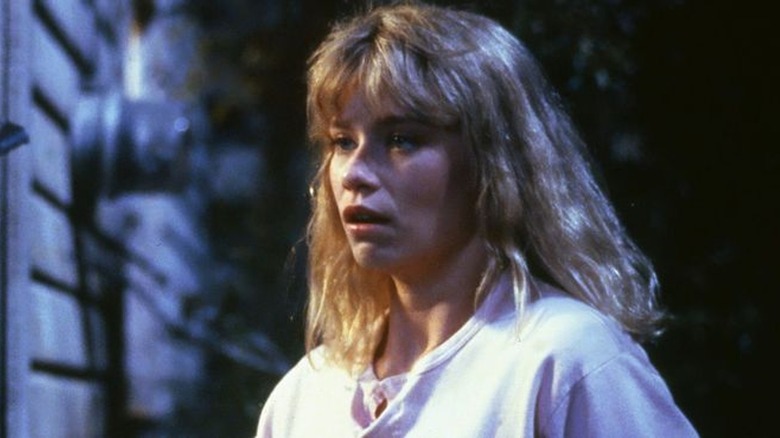
There are over a dozen final girl characters that belong to the Friday the 13th franchise, but none have left quite as big of a mark as Lar Park Lincoln's Tina Shepard in "Friday the 13th Part VII: The New Blood." Born with "Carrie"-like telekinetic powers, Tina is a teenager who has been bullied by her peers and is dealing with the guilt of accidentally causing her father's death before she finally comes to face-to-face with Jason Vorhees.
Overcoming all of the emotional obstacles in her way to channel the memory of her deceased father, Tina is as resilient as they come. Using her powerful abilities, she electrocutes Jason, collapses a house onto his body, and sets fire to a cabin while Jason is still inside. However, for the piece de resistance, Tina uses all of her energy to conjure her father's spirit, who gladly drags Jason's body underwater.
Erin Harson — You're Next
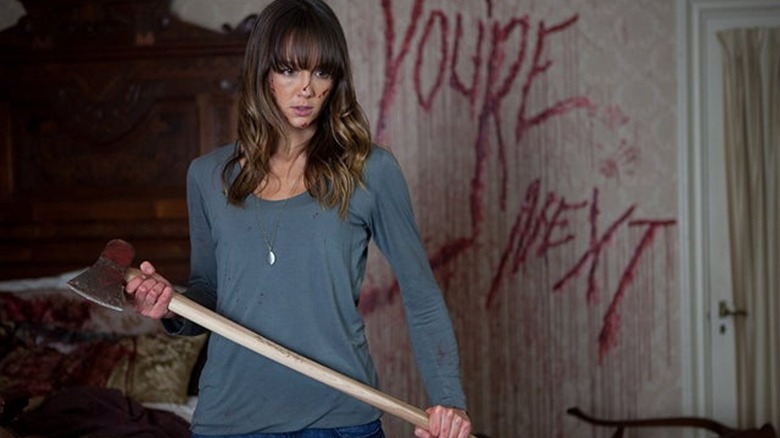
The 2011 slasher film "You're Next" thought outside of the box when it came to its final girl. Erin Harson, played by Australian actress Sharni Vinson, is a young woman who accompanies her boyfriend on a trip to his family reunion. This starts out harmless enough, but quickly turns into a bloodbath as masked killers descend on the family estate and start picking off victims one at a time.
However, in a genuine twist on the final girl trope, Erin was raised in a survivalist compound where she learned combat and survival skills. So, as the killers close in around her, Erin rigs the house with booby traps, using anything she can to kill those who would do her harm, including a kitchen blender and several screwdrivers. She later uncovers a plot between her boyfriend and his brother to kill the rest of the family in order to inherit the family fortune, and is forced to fight them as well.
Vinson plays the character to perfection. Thanks to her quiet determination, there's no doubt about who will come out on top of this deadly game of cat-and-mouse.
Alice Johnson — A Nightmare On Elm Street 4: The Dream Master
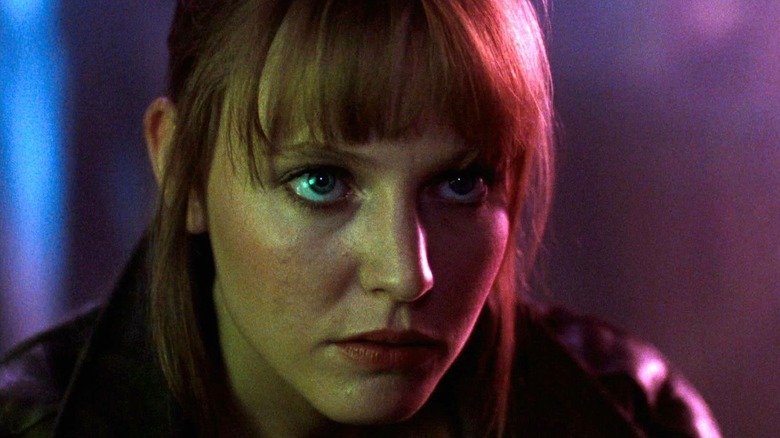
Like the Friday the 13th franchise, the Nightmare on Elm Street series is full of several final girls. However, a couple who stand out from the rest. One of them is Lisa Wilcox's Alice Johnson, who first appeared in 1988's "A Nightmare on Elm Street 4: The Dream Master." Alice was the best friend of original protagonist Kristen Parker (Patricia Arquette), who passed her dream powers to Alice before being killed by Freddy Krueger. Alice, who already had her own abilities, became even more powerful after receiving Kristen's power, making her the eponymous Dream Master.
Alice gained the "dream powers" of Freddy's other victims as well, making her one of the most formidable opponents Freddy has ever faced. After defeating Freddy at the end of the fourth movie, Alice starts a relationship with Dan Jordan (the other survivor) and ends up becoming pregnant. In the sequel, "A Nightmare on Elm Street 5: The Dream Child," Freddy returns and picks off Alice's loved ones, hoping to be reborn in the body of her unborn son.
Originally, Alice was set to return for "Freddy's Dead: The Final Nightmare," though plans were to kill her off early in the film, making her son, Jacob, the main protagonist. However, this idea was later scrapped and the character never reappeared, except during flashbacks in Freddy's introduction in 2003's "Freddy vs. Jason."
Jamie Lloyd — Halloween 4: The Return Of Michael Myers
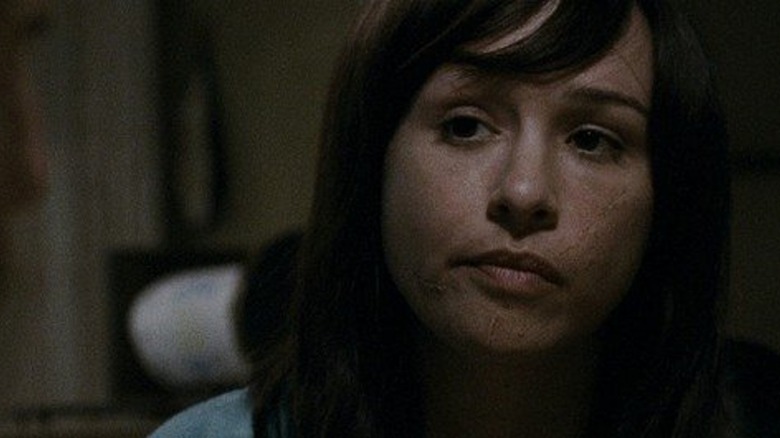
When Jamie Lee Curtis decided to leave the "Halloween" franchise after the 1981 sequel, the studio needed a new final girl to go up against Michael Myers. It found it in Danielle Harris' Jamie Lloyd. Introduced in 1988's "Halloween 4: The Return of Michael Myers," Jamie is the daughter of Curtis' Laurie Strode, who died off-screen in a car accident. Jamie is adopted by the Carruthers family who, coincidentally, also live in Haddonfield. Over time, Jamie develops a psychic connection to her deadly uncle and is able to see through his eyes as he goes on his killing sprees.
As in the previous films, bloody chaos ensues as Michael Myers tries to track down his long-lost niece. The end of "Halloween 4" features one of the franchise's most shocking moments as Jamie follows in Michael's footsteps by attacking her foster mother. Harris reprises the role in "Halloween 5: The Revenge of Michael Myers," in which the mysterious Man in Black returns to free Michael from the clutches of the local police.
Jamie returns in the next installment, "Halloween: The Curse of Michael Myers," but is played by a different actress and is killed off early on in the film. The character never reappeared in the live-action franchise; she was going to be mentioned in 1998's "Halloween H20: 20 Years Later," but the namedrop was ultimately cut.
Tree Gelbman — Happy Death Day
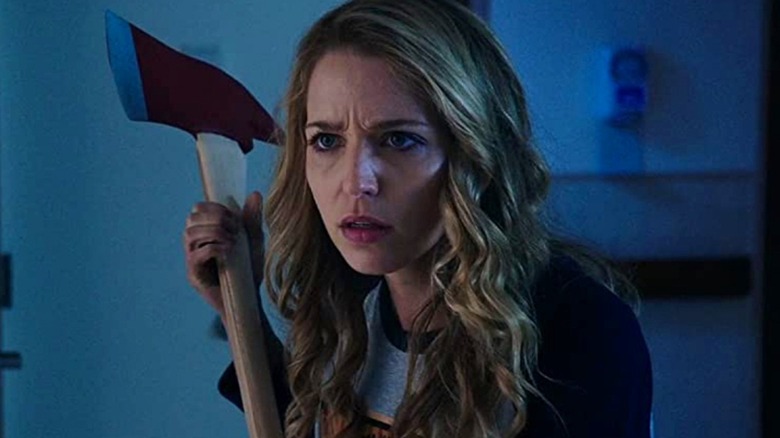
"Happy Death Day" (2017) is an underrated gem of a movie that deftly blends "Groundhog Day" with "Scream." A large part of what makes this film work is its charismatic lead character, Theresa "Tree" Gelbman, played by Jessica Rothe. Created by famous X-Men writer Scott Lobdell, Tree finds herself repeatedly killed on her birthday while she figures out her killer's identity and tries to stop her death from occurring in the first place.
While Tree started out as a carefree teenager, she became bitter following the death of her mother, who lost her battle with cancer three years before the film begins. Tree has had trouble coping with her mother's death and struggles to live everyday college life. After being killed on her birthday and mysteriously waking up the day before her death, Tree races against time in order to find out who her killer is and how to save herself.
While "Happy Death Day" was a hit, its 2019 sequel, "Happy Death Day 2U," expanded the franchise by having Tree's friends also travel back in time with her. In one of the more emotional time-rewinds, Tree's mother never died of cancer and is briefly reunited with her daughter. A third installment to the "Death Day" franchise is currently in the works, although it experienced a slight delay due to the COVID-19 pandemic.
Julie James — I Know What You Did Last Summer
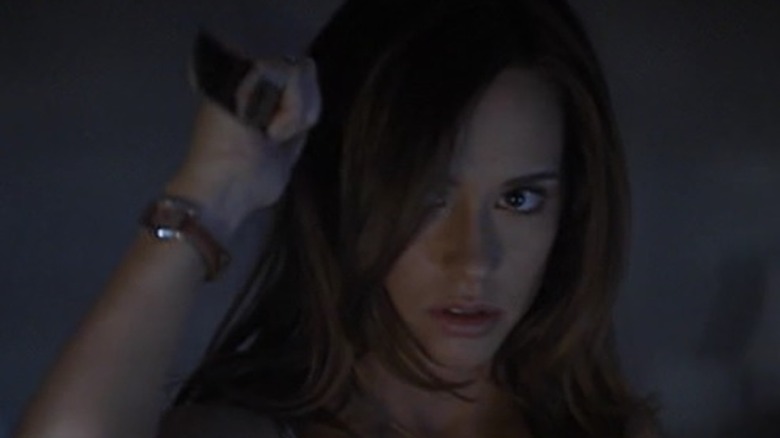
Jennifer Love Hewitt followed in her "Party of Five" co-star Neve Campbell's footsteps by diving into the horror genre in 1997's "I Know What You Did Last Summer." Based on the 1973 novel of the same name, the film follows four friends who cover up a car accident in which they killed a man, which comes back to haunt them. Hewitt stars as the franchise's final girl Julie James, who returned in 1998's "I Still Know What You Did Last Summer."
Hewitt's portrayal of Julie is infamous in pop culture history, particularly her "What do you want from me?!" scream, which was parodied throughout film and television. However, while many criticized Hewitt's acting, she did a tremendous service to the character by having Julie not be as one-note as some film final girls can be. Julie is highly resourceful; she's a survivor even if she doesn't always want to be, and that's more realistic than anything else we had seen in a horror film in a long time.
Sarah Connor — Terminator 2: Judgement Day
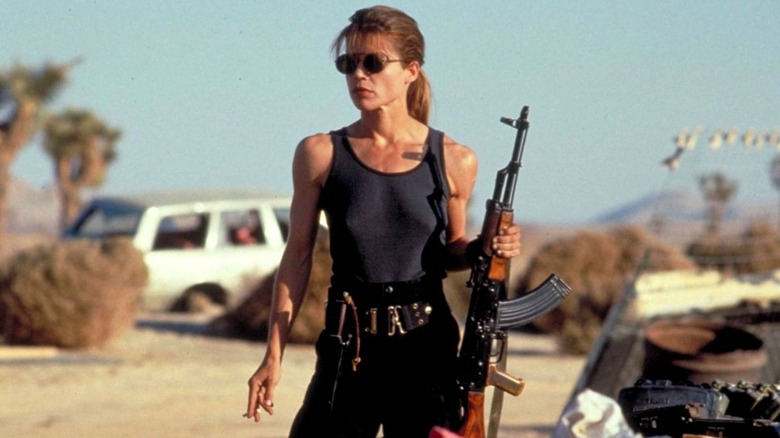
Every so often, a final girl comes along who is so influential that her character development spans decades. "The Terminator" hero Sarah Connor is a prime example. Originally portrayed by Linda Hamilton, Sarah first appeared as a damsel-in-distress in 1984's "The Terminator," but became one of the main protagonists in its sequel, "Terminator 2: Judgement Day." In "T2," Sarah is a hardened warrior who has sacrificed in order to prevent a techno-apocalypse -- in other words, she's a total badass. After a brief departure from the franchise, Hamilton returned in 2019's "Terminator: Dark Fate," serving as a mentor who protects her young protegee from her destiny.
While there have other actresses have assumed the role of Sarah Connor, including "Game of Thrones" stars Emilia Clarke and Lena Headey, Hamilton's turn as the Connor matriarch is the one most closely associated with the character. Her transformation from a weak and relatively defenseless young woman to the jacked fighter and expert marksman we see in the sequel is one of the most remarkable character changes in cinematic history.
Upon her return to the franchise in "Dark Fate," Hamilton easily resumed her role as the headstrong heroine. Though Sarah has become slightly cold on the inside, she also offers warmth to those who she thinks need it, which makes her just as much of a hero as her fighting ability.
Kirsty Cotton — Hellraiser
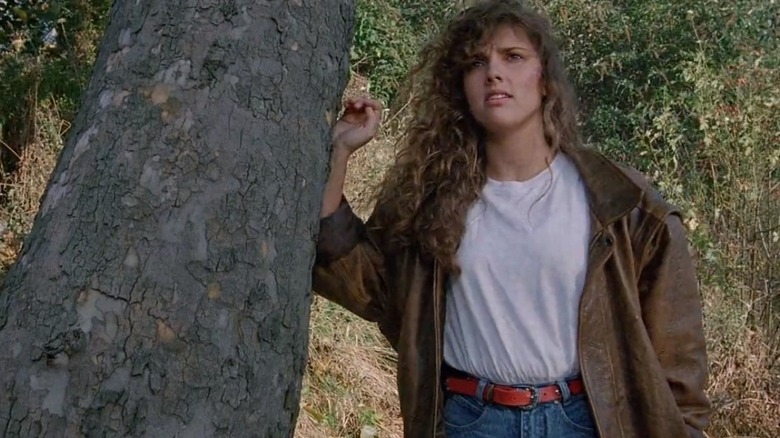
Long before Buffy Summers battled the forces of darkness in Sunnydale, Ashley Laurence's Kirsty Cotton was kicking demon butt in 1987's "Hellraiser." Created by author Clive Barker, Kirsty is a young girl who finds out that her family is in bed (literally) with some demonic, flesh-eating demons known as the Cenobites. The Cenobites use a puzzle box, called Lemarchand's box, to travel between dimensions, and Kirsty must figure out how to use it to put an end to their murderous rampage.
Laurence reprises the role in the 1988 sequel, "Hellbound: Hellraiser II," has a cameo in the third installment, and returns as a supporting character in 2002's "Hellraiser VI: Hellseeker." Kirsty is one of the rare characters on this list who also appears in other types of media, including novels as well as comic books. She most recently appeared in Boom! Studios' "Hellraiser" comic series, set approximately 20 years after the events of the first movie. By issue 8, Kirsty becomes a Cenobite and then a female Pinhead, as the original Pinhead becomes human again.
Gale Weathers — Scream
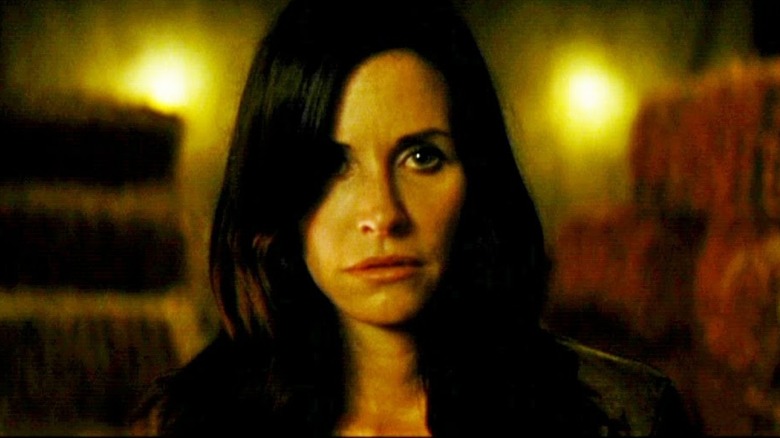
While Neve Campbell's Sidney Prescott is the main final girl of the "Scream" franchise, but Courteney Cox's Gale Weathers has also earned that title. Though her motives are sometimes portrayed as dubious, the strong-willed journalist ultimately becomes friend with Sidney and marries Dewey Riley (David Arquette), proving that she is officially on the side of good.
It's usually Sidney who ends up taking down whichever deranged serial killer happens to be after her, but it's actually Gale and Dewey who do a lot of the investigative work in order to find out who that killer really is. Gale and Sidney don't always see eye to eye, but they eventually become allies, and eventually friends.
Actresses such as Brooke Shields and Janeane Garofalo were offered the role before Cox, who absolutely made the snarky character all her own. Cox is reuniting with Campbell and Arquette for next year's "Scream 5," which is apparently going to serve as a soft reboot to the franchise.
Deena Johnson — Fear Street

The most recent final girl to debut on the list, Deena Johnson is played by Kiana Madeira and is the main protagonist in Netflix's "Fear Street" horror trilogy. The trilogy is based on the "Fear Street" book series from R. L. Stine and follows a group of teenagers in a town called Shadyside, which is terrorized by an ancient evil that's responsible for a series of brutal murders that have cursed the town for centuries. The film is set in 1994, but its two sequels feature flashbacks to both 1978 and 1666.
Deena is the rarest of protagonist in the horror genre: She is both gay and a woman of color, making her appearance on this list all the more important. Deena is brave, passionate, resourceful, and determined to save the life of her girlfriend, who has been possessed by the evil that permeates their town.
The main thing that sets "Fear Street" apart from other teen slasher films is the cast -- everyone pulls their weight, with no weak links in sight. The performances, the horror elements, and the fidelity to the source material make this horror trilogy a must-see.
Nancy Thompson — A Nightmare On Elm Street
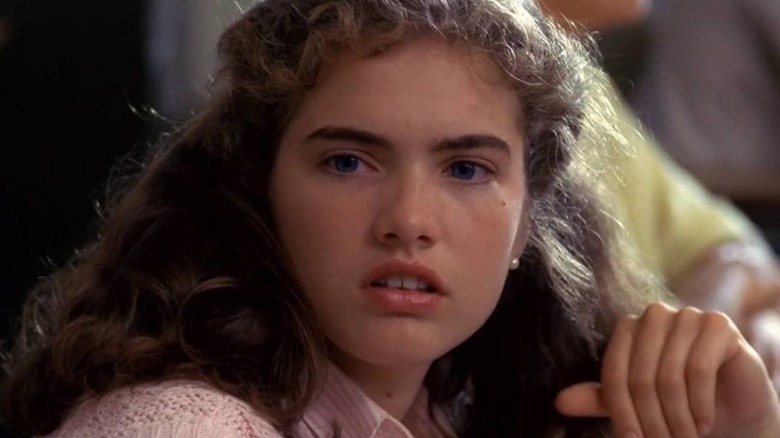
Nancy Thompson, played by Heather Langenkamp, is the first and most memorable final girl in the "A Nightmare on Elm Street" franchise. First appearing in 1984's "A Nightmare on Elm Street" as a teenager who is hunted in her dreams by a psychotic serial killer named Freddy Krueger (Robert Englund), Nancy's arc continued for almost a decade. She returned as a supporting character in "A Nightmare on Elm Street 3: Dream Warriors" and serves as main protagonist once again in 1994's meta "Wes Craven's New Nightmare."
Nancy also experiences significant character development throughout the films, growing from a timid high schooler to a psychiatric intern who helps guide the children in her care. Langenkamp embodies an all-American, girl-next-door vibe as Nancy, and it's nice to see her lighten up a little bit when it comes time to play a version of herself in "New Nightmare."
Rooney Mara played a reimagined version of Nancy in the 2010 "Nightmare on Elm Street" remake, and the character remains an important part of the horror genre, appearing in video games, toy lines, comic books, and fan art.
Ellen Ripley — Alien
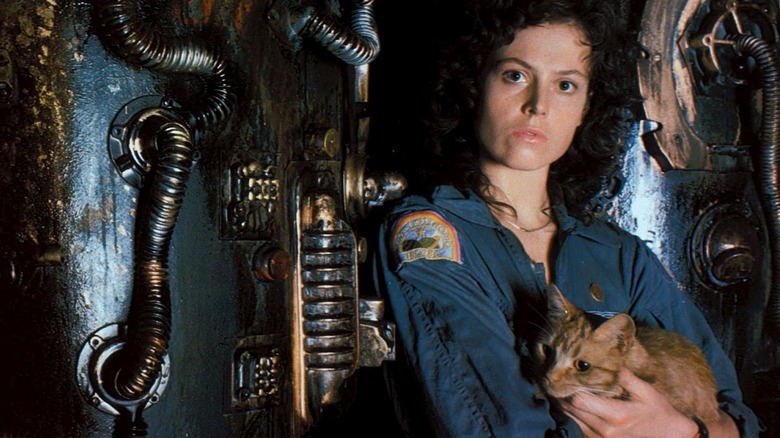
In 1979, Ridley Scott introduced the cinematic masterpiece "Alien" to the world, and along with it, Sigourney Weaver's magnificent portrayal of Lt. Ellen Ripley. From the beginning of the film, viewers are aware that Ripley is the smartest person in the room, though most probably didn't expect her to be the last one standing by the end. Until Ripley, only male action heroes survived science fiction films, so Weaver's performance challenged the gender norms at the time.
Weaver helped launch one of the most successful sci-fi franchises in history, reprising her role in 1986's "Aliens," 1992's "Alien 3," and the often-overlooked "Alien Resurrection" in 1997. Her performance in "Aliens" garnered Weaver both an Academy Award and Golden Globe nominations for best actress, making her the third horror actress in history to receive the honor. She was also a co-producer on the third and fourth film installments of the franchise, and, although they were less successful critically, Weaver's performance was always on point.
The character lives on in pop culture history, appearing in comic books, graphic novels, video games, and toy lines.
Sidney Prescott — Scream
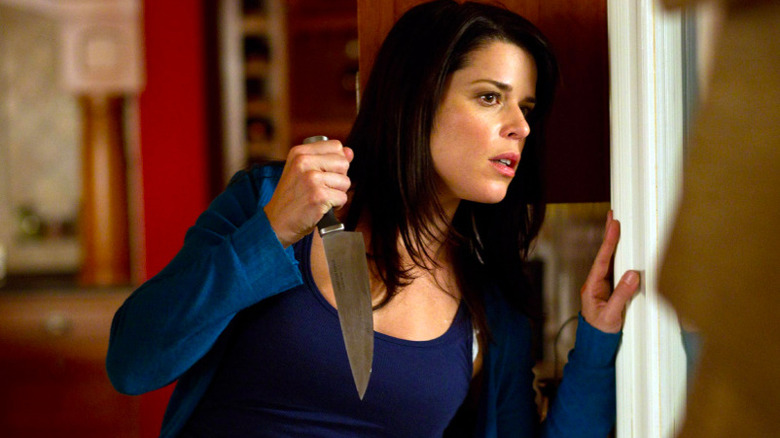
Lightning in a bottle was created the day that Neve Campbell landed the role of Sidney Prescott in "Scream," and it's hard to imagine the Scream franchise without her. Sidney is, of course, a resilient and tough final girl, but Campbell always toed the line between being vulnerable and being a fighter extremely well. A survivor through and through, Sidney has survived multiple attacks on her life, starting in 1996's "Scream" and lasting up through 2011's "Scream 4" (she'll also be appearing in the upcoming "Scream" reboot, which is set to debut in 2022).
Sidney is the final girl that all modern final girls are judged by. Despite the horrible life that she's had, Sidney is still compassionate towards others and still tries to find the light in all of the surrounding darkness. She's probably one of the most inspirational final girls on this list.
Laurie Strode — Halloween
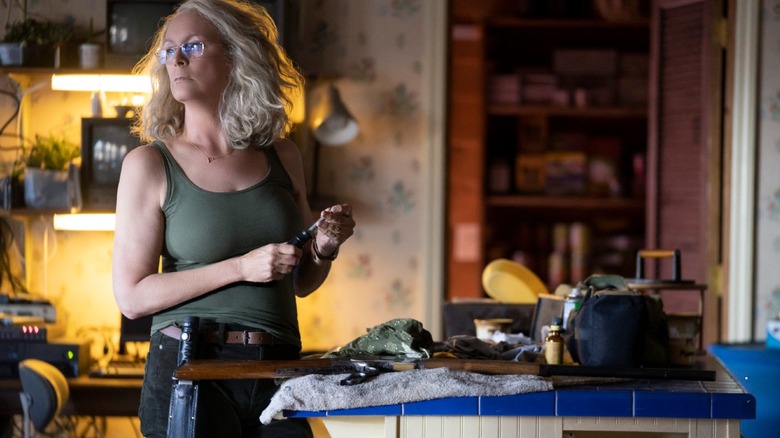
If Neve Campbell perfected the role of a final girl with Sidney Prescott, then Jamie Lee Curtis's Laurie Strode is responsible for creating the trope to begin with. Curtis' Strode was a final girl way before the term existed, making her debut in 1978's "Halloween" and returning for several sequels thereafter. Laurie is another example of someone who has received significant character development through the years -- she started as a brave, young girl and grew up to be a badass who came to terms with her tragic past.
In 2018's "Halloween," a soft reboot of the franchise, Laurie is now a grandmother, and is constantly preparing for Michael Myers' inevitable return. By this time, Laurie has taken a proactive approach to defeating Michael, even if it costs her a relationship with her daughter and extended family.
Curtis has done a remarkable job reclaiming both her past as an actress as well Laurie's tragic past in order to become the warrior Laurie knows she needs to be. Curtis will reprise the role of Laurie Strode in two more installments of the "Halloween" franchise, "Halloween Kills" and "Halloween Ends."
Read this next: 19 Movies Like 'Fear Street' To Stream Or Rent Right Now
The post The 15 best final girls in horror movies ranked appeared first on /Film.
How Threat Response is Evolving
As adversaries changed their view of an attack to include vectors across an organization, defenders have had to evolve their approach as well. This is best captured by Mark Harris from Gartner who observed that adversaries have shifted their focus of attacks from infecting files to infecting systems and now to infecting the entire enterprise. Previously, I talked about how this has impacted our approach to threat detection.
The 10 Best Western Movies Of The Past Decade Ranked
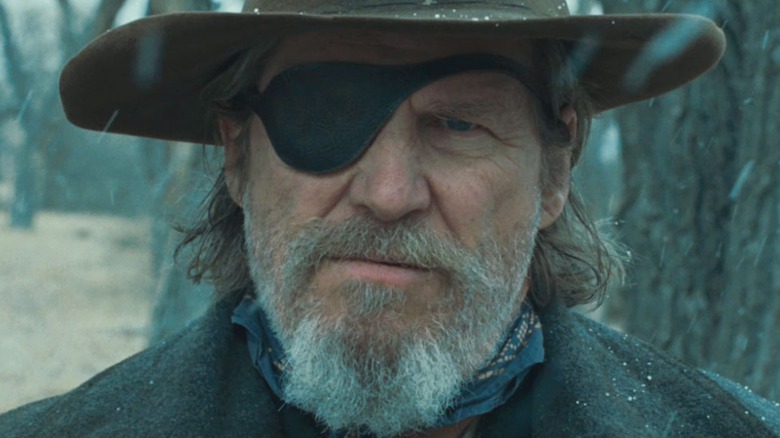
Steven Spielberg famously commented that the rise of superhero movies reminded him of the popularity of westerns, which has declined precipitously since the genre's heyday. And yet, ironically, westerns haven't taken a backseat in the past decade. If the mix of subversive and traditional western films over the past 10 years indicates anything, it's that the genre is always changing.
Westerns are intertwined with the history of cinema itself, as exciting adventure stories set in the Old West were popular even during the silent era. As the medium developed, so did westerns. Cowboys, lawmen, and gunslingers often populated stories that mythologized the American frontier. However, even the classic westerns of the '40s and '50s challenged recurring norms, and began incorporating influences from other genres.
What's exciting about the current state of westerns is that the genre has opened up to a broad range of voices. Some filmmakers grew up with the films of John Ford and Anthony Mann, and seek to emulate their old-fashioned approach, while others are pushing the western in a darker, arthouse-friendly direction. Early westerns were largely told from one perspective. Given the growing diversity in Hollywood, underrepresented voices now have space to expand and deconstruct the genre in new and exciting ways. With all of that in mind, here are the 10 greatest western films of the past decade.
Bone Tomahawk
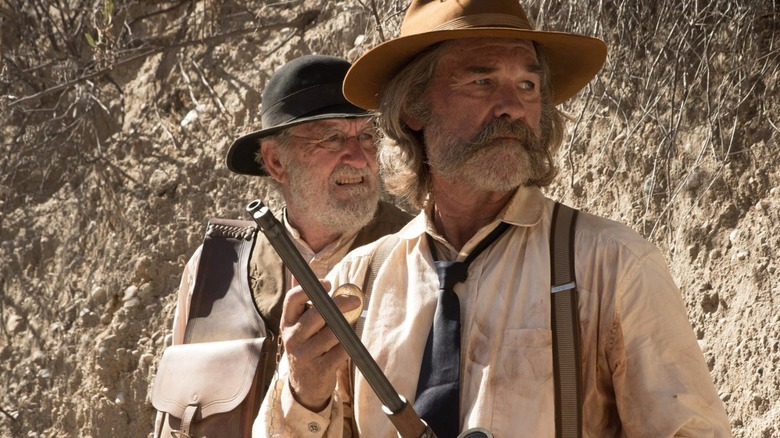
Western films often cross over with other types of movies, but "Bone Tomahawk" creates an entirely new subgenre: the cannibal horror western. The premise sounds like it could be nothing more than exploitation, but "Bone Tomahawk" is patient in setting up its characters and only gradually introduces its horror elements. Although shot on a low budget by debut filmmaker S. Craig Zahler, "Bone Tomahawk" has the look and feel of a mainstream western before the gory mayhem begins.
Rumors of a mysterious band of raiders haunt the quiet town of Bright Hope, but Sheriff Franklin Hunt (Kurt Russell) has seen enough violence in his lifetime and avoids going out in search of danger. Hunt is nonetheless sympathetic when the injured foreman Arthur O'Dwyer (Patrick Wilson) reports that his wife Samantha (Lili Simmons) has been kidnapped by a mysterious group of cave dwellers known as "Troglodytes." Hunt agrees to join O'Dwyer in his investigation, as does the town's doctor Deputy Chicory (Richard Jenkins). Tension grows when the ruthless lawman John Brooder (Matthew Fox) leaps at the potential to kill more Native Americans, claiming he's taken more lives than all of them.
The Troglodytes are revealed to be cannibals, and their gruesome dismemberment of their unlucky victims may cause even the most hardened viewer to look away. While shocking, the horror is an essential part of the story, and makes things feel personal when the four interesting lead characters are put in danger.
The Rider
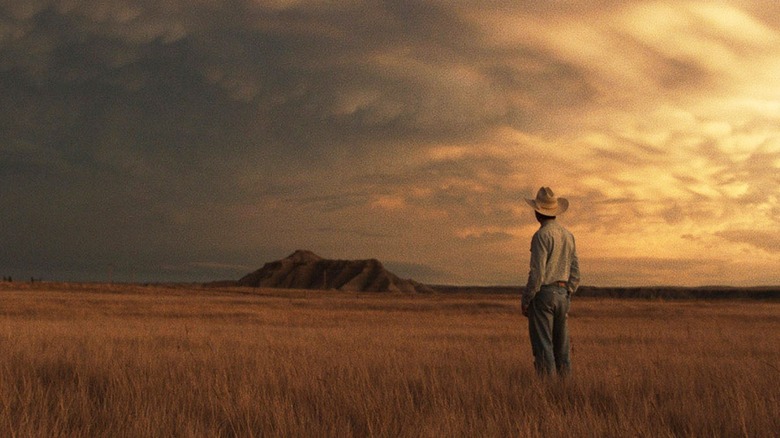
Chloe Zhao has become one of the most exciting voices in the film industry, leaping right from her wins for best picture and best director for "Nomadland" to the highly anticipated Marvel Cinematic Universe project "Eternals." Zhao finds both emotional authenticity and environmental beauty within her stories, so she's a perfect match for the western genre. Zhao's modern western "The Rider" is about a profession and a lifestyle that has never been depicted on the screen with such stunning realism.
"The Rider" follows former rodeo star Brady Blackburn (Brady Jandreau) as he struggles to take care of his autistic sister Lilly (Lilly Jandreau). Brady suffered a debilitating injury during a riding accident and struggles with permanent brain damage. He is forced to take odd jobs in order to support Lilly's medical bills, and has been warned against ever going back to the rodeo. He's in a fragile condition and the slightest misstep could result in his death. However, Brady contemplates taking the risk, as his father (Tim Jandreau) simply gambles away what little money they have left.
Zhao spent months learning about the South Dakota rodeo culture and put together a cast made up entirely of nonprofessional actors. Brady Jandreau is terrific in an incredible breakout performance.
The Hateful Eight
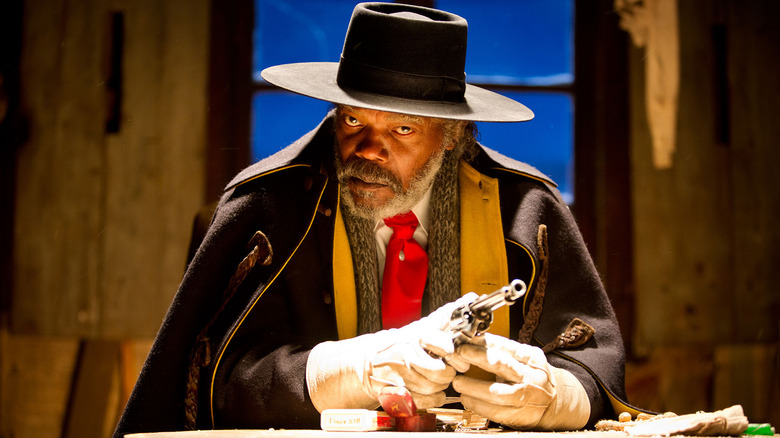
Quentin Tarantino is one of the greatest showmen in Hollywood, and with "The Hateful Eight" he took his love of classic cinema to new heights. The distribution of "The Hateful Eight" was virtually unprecedented. Shot on 70mm film and screened in the exclusive format, it debuted in a limited roadshow, complete with a live orchestrated score and an interlude for intermission. This level of dedication required a thrilling film that could live up to the live experience; thankfully, Tarantino delivered with an intimate chamber piece featuring some of his nastiest characters yet.
A devastating blizzard forces eight strangers to stay overnight in a stagecoach resting area during the aftermath of the Civil War. The motley crew includes reclusive bounty hunter Major Marquis Warren (Samuel L. Jackson), loudmouth hangman John Ruth (Kurt Russell), ruthless serial killer Daisy Domergue (Jennifer Jason Leigh), confederate loyalist Chris Mannix (Walton Goggins), laidback stranger Senor Bob (Demián Bichir), local law enforcement officer Oswaldo Mobray (Tim Roth), secretive traveler Joe Gage (Michael Madsen), and former Confederate General Sandy Smithers (Bruce Dern). Domergue is the target; her fearsome crimes over many years make her a valued bounty.
Tarantino is known for dramatic plot twists, but the surprising ending to the first half of "The Hateful Eight," during which Warren reveals a lurid secret involving Smithers' son, ends in a bloody conclusion that ranks among Tarantino's most shocking. The creeping suspense that builds in the first half sets up an unpredictable second section, justifying Tarantino's epic 187-minute runtime.
The Sisters Brothers
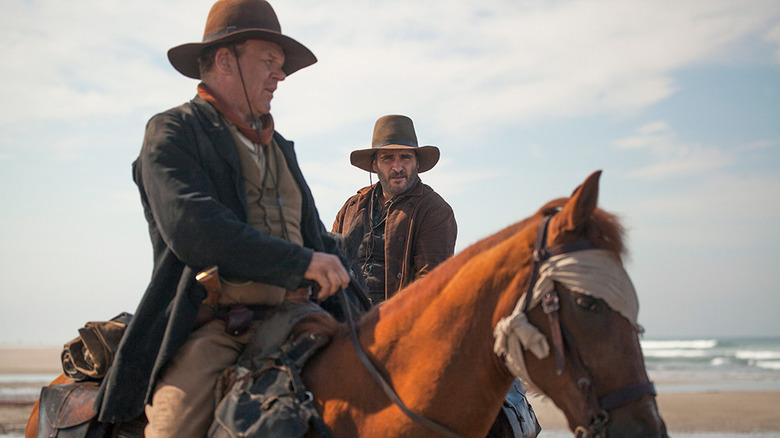
"The Sisters Brothers" subverts the archetypes of old-fashioned westerns. Although it depicts a pair of outlaws who are well-versed in their violent profession, the brothers Eli (John C. Reilly) and Charlie (Joaquin Phoenix) aren't aggressively cruel. Rather than enjoying their work, they're saddened at the state of the world and seek a way to escape. Eli longs for a wife and children, but as a wanted man he knows that he won't be able to settle down.
Eli feels like he must protect his brother; Charlie is headstrong and often bites off more than he can chew, getting the two in trouble. While this is occasionally played for laughs, Charlie is disappointed by his own failures and feels like a burden on his more responsible older brother. Reilly and Phoenix have fantastic chemistry, and although they recount some of their past adventures, the terrific performances hint at a history that isn't explicitly spelled out.
The brothers seek inventor Hermman Kerman Warm (Riz Ahmed), who developed a groundbreaking technique for discovering gold. They suspect that Warm has greedy ambitions, but he's actually idealistic, planning to build a utopian city in Dallas that's far removed from the savagery of the wild west. Warm allies himself with detective John Morris (Jake Gyllenhaal), who helps him with his plan to create a perfect society. While many westerns are steeped in toxic masculinity, "The Sisters Brothers" refreshingly tells a story of four very different men who work together and respect each other's differences.
True Grit
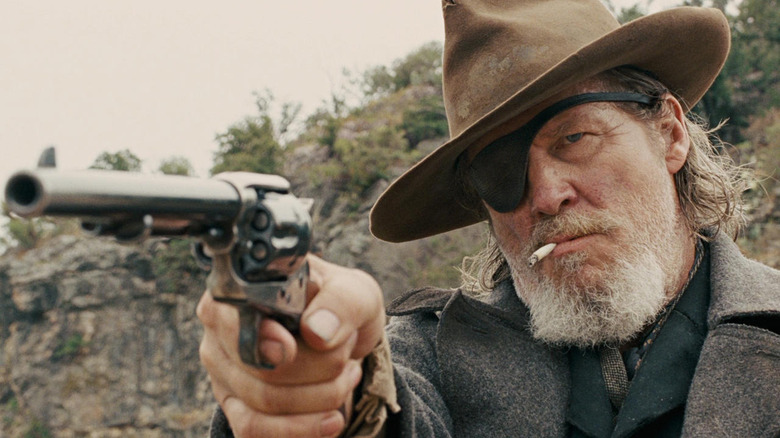
Although it's known as the film that finally won John Wayne his Academy Award, the original 1969 "True Grit" is a classic western that has not aged well. The film's story is rather simple, Wayne's character, Deputy Rooster Cogburn, descends into caricature, and the emotional core is hollow. With the 2010 remake, Joel and Ethan Coen improved nearly every aspect. Not only does the world feel lived-in, but the story is more compelling thanks to the extra depth granted to each character. The Coens bring their signature quirkiness to the film, but when "True Girt" plays things sincerely, the emotions feel authentic.
Teenager Mattie Ross (Hailee Steinfeld) watches helplessly as her entire family is slaughtered by the ruthless gang leader Tom Chaney (Josh Brolin). Although a few local lawmen offer the girl support, they're inactive in their pursuit of Chaney, and the enraged Mattie puts out a bounty on the villainous outlaw. The drunken Marshall Cogburn (Jeff Bridges) is initially skeptical, but respects Mattie's ingenuity as she raises the money needed to pay him, and decides to accompany the girl on her journey of vengeance. The two are joined by the Texas Ranger LaBoeuf (Matt Damon), who also seeks Chaney for the murder of a senator. Mattie prefers that she and Cogburn travel alone, as she doesn't want to see Chaney brought to justice for a different crime, but Cogburn suspects that, even working together, they will still be outnumbered by Chaney's men.
The dueling motivations and gradual friendship between the three heroes make "True Grit" delightful.
Slow West
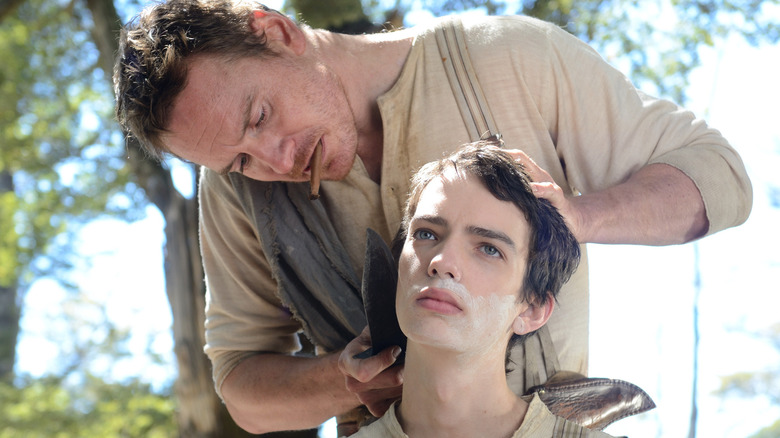
A comically dark coming-of-age story, "Slow West" embraces a fairy tale-esque absurdity as it explores a doomed romantic exploit. Writer-director John McLean is unafraid to make drastic tonal shifts, wedging tender sincerity in between moments of grim violence. While the non sequiturs initially feel disconnected, "Slow West" concludes with a thought-provoking message about futility in western storytelling. The west was certainly wild -- even if the heroes and villains of legend actually existed, few would ever see a happy ending.
Young Scottish immigrant Jay Cavendish (Kodi Smit-McPhee) is hopelessly smitten with a charming girl from his hometown, Rose Ross (Caren Pistorius), but fails to earn the respect of her family. As he travels across the western plains in an effort to win her heart, he's saved by the seasoned Irish bounty hunter Silas Selleck (Michael Fassbender). Although Silas is amused by the meek and naïve Jay, he discovers that there's a bounty on Rose's head and decides to deceive the innocent boy by posing as his protector. As they travel together to find Rose, the pair is hunted by Silas' former ally, the eccentric gang leader Payne (Ben Mendelsohn).
"Slow West" is filled with cruel ironies; Jay sees Silas as a mentor and doesn't suspect his betrayal. Although Jay dreams about the life he and Rose will lead together, she only thinks of him as a "little brother." Fassbender and Smit-McPhee have many humorous conversations, as Silas' world-weary knowledge contrasts Jay's fanciful ideas.
Hostiles
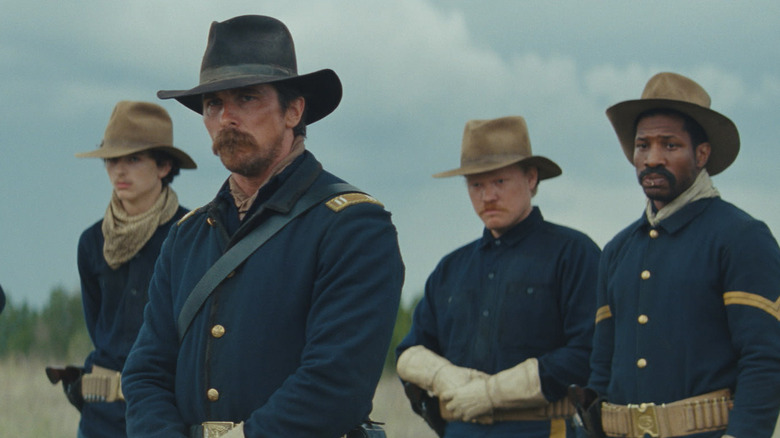
A flaw among many early westerns was ignorance of the Native American perspective. Unfortunately, Native Americans were commonly framed as antagonistic and violent, having little depth and almost no humanity, and were brutally slaughtered on screen without any empathy from the filmmakers. Thankfully, some modern westerns have updated these outdated clichés by respecting Native American culture and attempting to portray history in a more accurate manner. "Hostiles" is a thoughtful meditation on the cyclical violence of the American frontier.
Captain James Blocker (Christian Bale) earned a reputation for brutality fighting in the New Mexico government's "Indian Wars." Blocker is reluctantly tasked with transporting the Cheyenne chief Yellow Hawk (Wes Studi) to his tribal lands, and is told that he'll be court marshaled if he doesn't complete the mission. Yellow Hawk is dying of cancer and must be buried in his ancestral home. He and Blocker are accompanied by Yellow Hawk's family, who must work with Blocker's soldiers and the traumatized widow Rosalee Quaid (Rosamund Pike) to survive their perilous journey.
Blocker and Yellow Hawks' relationship is complex; both men have spent a lifetime killing and have many regrets, yet don't agree with everything their respective parties have done. A respect grows between the two natural enemies; "Hostiles" could have been handled in a way that was cheesy or disrespectful, but the nuanced performances from Bale and Studi, matched with Scott Cooper's sensitive writing, make it powerful.
Django Unchained
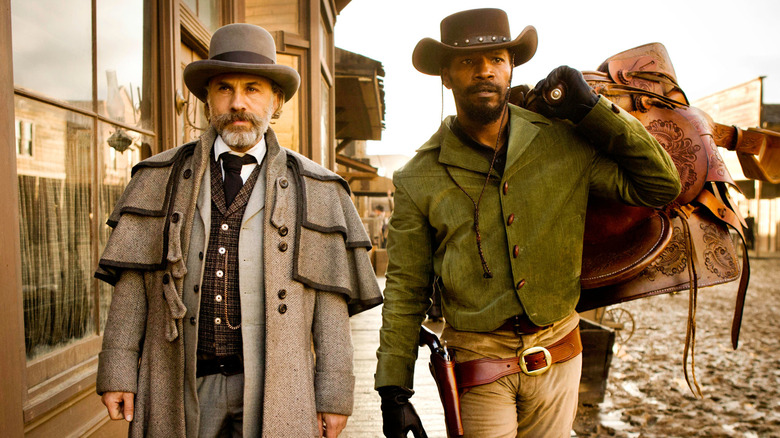
Quentin Tarantino has long spoken of his love of the western genre and frequently lists many classic westerns among his all-time favorite movies. One of Tarantino's most beloved films is the spaghetti western classic "Django" starring Franko Nero. When creating his first film in the genre that he adores, Tarantino used that name to create a new iconic hero. "Django Unchained" has many of the hallmarks of spaghetti westerns, but they're filtered through a modern perspective that explores the racism and bigotry that are often ignored by older films.
The slave Django (Jamie Foxx) is freed by bounty hunter Dr. King Schultz (Christoph Waltz), who despises slavery and offers Django an opportunity to be his new partner. The two team up and capture dangerous fugitives, but Django discovers that his wife Hildi (Kerry Washington) is being held by the sadistic southern plantation owner Calvin Candie (Leonardo DiCaprio). After an introduction to Candie's housemaster Stephen Warren (Samuel L. Jackson), Django and Schultz falsely claim to be seeking Calvin's employment and look for a way to break Hildi out.
Every performance in "Django Unchained" is incredible. Foxx captures Django's seething anger while effortlessly matching Nero's charisma. Waltz rightfully won an Oscar for playing the eccentric bounty hunter, whose outgoing nature masks his brutality and desire for justice. DiCaprio and Jackson create two of the most loathsome villains in recent cinematic memory. Although its depiction of slavery is grueling, "Django Unchained" watching the noble heroes dispatch the slavers is immensely satisfying.
The Revenant
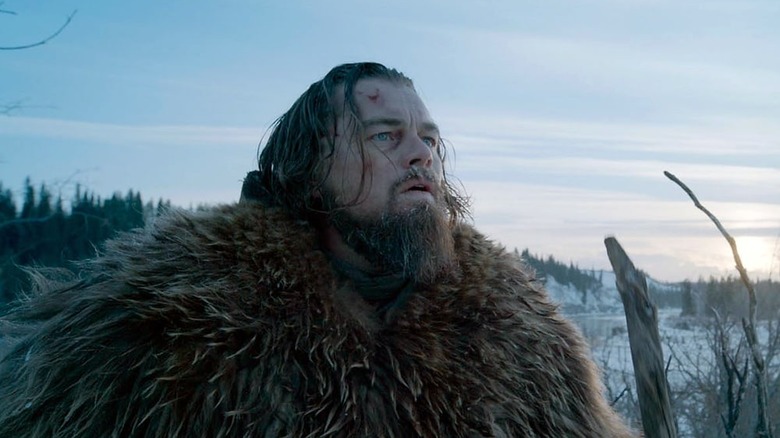
Westerns often make great revenge sagas, and "The Revenant" is a grizzly epic that explores the transformative search for vengeance a man endures when he knows that it won't bring back what he's lost. Director Alejandro Gonzales Innaritu creates a realistic depiction of the 1820s in which the frontier is brutal, Native Americans are massacred, and survival is never guaranteed. Although its painstakingly authentic, "The Revenant" find some room for metaphor as its lead reflects on the rare beauties of the natural world.
Hugh Glass (Leonardo DiCaprio) leads a fur-trapping expedition through the dangerous forests of the Dakotas, protecting his half-Pawnee son Hawk (Forest Goodluck) from attacks by local war parties. Glass has seen many horrors, but he's still shockingly brutalized when a bear assaults him and leaves him clinging for his life. Glass' men fear for their own survival as they transport his barely functioning body, and assign the deceitful coward Fitzgerald (Tom Hardy) to protect him on the long trip back to their camp. Glass watches in agony as Fitzgerald slays his son and flees the scene, helpless to intervene. As Glass builds up his strength, he vows to find his son's killer and bring Fitzgerald to justice.
DiCaprio gives a physically transformative performance as Glass endures horrific conditions throughout his quest. His final battle with Fitzgerald is breathtaking, as both actors stretch their physical and emotional range to showcase pure savagery. "The Revenant" is a banal, darkly beautiful revisionist western that contains one of DiCaprio's greatest performances.
The Ballad Of Buster Scruggs
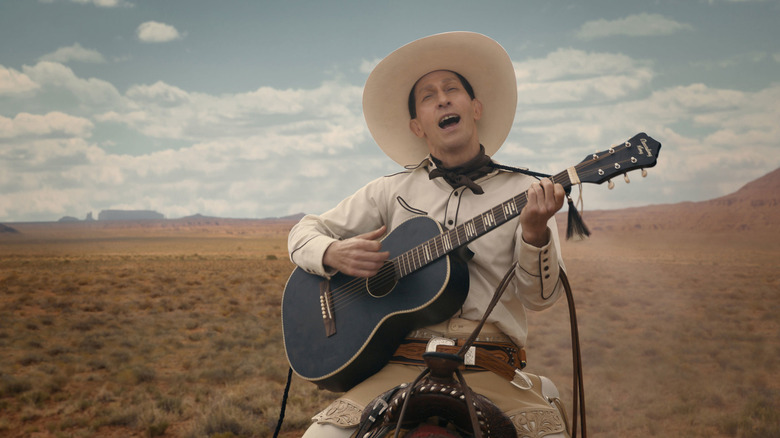
The Coen brothers' iconic partnership may have ended. If so, their last film, "The Ballad of Buster Scruggs," is a beautiful swan song. A thoughtful meditation on death and the fleeting joys of a cruel world, this western anthology tells six unique stories about troubled characters who adapt to changing times on the American frontier.
The titular "The Ballad of Buster Scruggs" follows a cheerful gunslinger (Tim Blake Nelson) who finally meets his match when he's no longer the fastest hand in the west. The fast-paced "Near Algodones" sees a cocky bank robber (James Franco) endure increasingly uncomfortable odds as a seemingly simple heist goes horribly wrong. The devastating "Meal Tickets" shows a greedy impresario (Liam Neeson) turn against his loyal stage performer (Henry Melling) when he finds a new source of income.
The heartwarming "All Gold Canyon" gives a rare moment of joy to a grizzled prospector (Tom Waits) as he searches for buried treasure. The romantic epic "The Girl Who Got Rattled" explores a young woman's (Zoe Kazan) deadly trek across the violent frontier as she's condemned to a doomed marriage. The metaphorical "The Mortal Remains" follows five eccentric passengers as they travel by carriage to an enigmatic location, presumably Hell itself. These stories are totally unique, but each captures the idiosyncratic dialogue, quirky humor, and melancholy worldview that have made the Coen brothers so famous. With gorgeous picturesque visuals and bleak humor, "The Ballad of Buster Scruggs" is a fitting final masterpiece.
Read this next: Coen Brothers: Five Favorite Westerns, Plus Their Joke About Remaking 'Guess Who's Coming To Dinner'
The post The 10 best western movies of the past decade ranked appeared first on /Film.
NASA Confirms Thousands of Massive, Ancient Volcanic Eruptions On Mars


Read more of this story at Slashdot.
Ransomware Encrypts South Africa's Entire Department of Justice Network
Read more of this story at Slashdot.
Corsair Releases New PCIe Gen 4 NVMe M.2 MP600 PRO XT SSD

Last week, Corsair launched the MP600 PRO XT, their new fourth-generation PCIe Gen 4 NVMe M.2 SSD storage solution.
Corsair Announces The Launch Of Its Brand New MP600 PRO XT PCIe Gen 4 SSD
The new MP600 PRO XT is offered in capacities as large as 4TB, allowing the user a massive amount of space for any type of data in a small form-factor size. It boasts "incredible sustained performance" and also features an aluminum heat spreader pre-installed onto the M.2 SSD, a feature most standard SSD manufacturers do not offer.
The MP600 PRO XT boasts extreme performance paired with exceptional cooling and compatibility, breaking the 7,000MB/sec barrier with up to 7,100MB/sec sequential read and 6,800MB/sec sequential write speeds, as well as more than one million input/output operations per second (IOPS). The MP600 PRO XT is built with high-density 3D TLC NAND, delivering both great performance and endurance – up to 3,000TB Written. Leading-edge PCIe Gen4 technology ensures that your drive achieves maximum bandwidth, and backward-compatibility with PCIe Gen3 gives you the versatility to bring fast storage to a host of systems.


The MP600 PRO XT SSD by Corsair offers fantastic thermal limiting while performing any task. The high surface area of the heat spreader allows for efficient heat disbursement while reducing throttling. It is also compatible with Corsair's Hydro X Series XM2 water block. This allows for the user to keep temperatures of the SSD lower in addition to cooling the system and allowing for maximum performance. It is backed by a five-year warranty and Corsair's award-winning customer support team.
Installed directly onto a motherboard with a compact M.2 2280 industry-standard NVMe form-factor, the MP600 PRO XT sports a uniquely styled aluminum heatspreader to ensure optimal temperatures even under maximum speeds. The heatspreader’s high surface area efficiently disperses heat and reduces throttling, giving you the performance you need while also looking more stylish than a typical bare M.2 drive. The MP600 PRO XT is also compatible with the CORSAIR Hydro X Series XM2 Water Block (sold separately), enabling you to integrate your SSD in a custom cooling loop to achieve even lower temperatures and maximize performance.
Like all CORSAIR SSDs, the MP600 PRO XT is supported by free CORSAIR SSD Toolbox software, enabling convenient features such as secure erase and firmware updates directly from your desktop. With a five-year warranty for extended peace of mind that your storage will remain fast and reliable, the MP600 PRO XT takes full advantage of PCIe Gen4 technology for extreme M.2 performance.


Corsair's MP600 PRO XT SSD is currently available through the Corsair website and authorized distributors and retailers.
The post Corsair Releases New PCIe Gen 4 NVMe M.2 MP600 PRO XT SSD by Jason R. Wilson appeared first on Wccftech.

A15 Bionic Lacks Notable CPU Performance Gains Due to a Lack of Chip Engineers Employed at Apple

During the iPhone 13 presentation, Apple left out some key performance details when talking about its latest and greatest chipset for mobile phones, the A15 Bionic. Under normal circumstances, the technology giant boasts tremendous compute performance gains compared to the custom silicon that came before it and the competition, but something was amiss here. According to a new report, the lack of notable performance improvements is due to Apple experiencing a severe brain drain of talented chip engineers.
During the Presentation, the A15 Bionic Was Compared to the A12 Bionic, a Chipset That Came out Three Years Ago
When it came to performance comparisons, Apple mentioned that the A15 Bionic was 40 percent faster than the A12 Bionic, but that silicon came out years ago. Why would Apple decide to compare its best chipset yet to something that is considered dated in the tech industry? It could be due to new findings from SemiAnalysis, who claim that Apple’s chip team saw a brain drain of talent leaving the company.
With a lack of qualified individuals focused to make the A15 Bionic the best chipset for any smartphone, all that Apple was left with was incorporating minor improvements, meaning that the company’s major A-series offering was delayed to 2022. The report also states that instead of using an entirely new core, Apple used a modified variant from last year.
“We believe Apple had to delay the next generation CPU core due to all the personnel turnover Apple has been experiencing. Instead of a new CPU core, they are using a modified version of last year's core.”
At least Apple’s chip engineers brought in ‘some’ changes to the A15 Bionic. The Apple Watch Series 7, on the other hand, uses the same S6 chip present in the Apple Watch Series 6, revealing a second time in a single event that we have yet to see a brand new silicon in action. Fortunately, things are not that bleak, as the A15 Bionic running in the iPhone 13 Pro was soundly beating the A14 Bionic in GPU tests, recording a 55 percent performance increase compared to last year’s GPU.
We expect more analysis to come forth when more Apple products touting the A15 Bionic are released. If you were looking to see serious CPU performance gains this year, we would recommend skipping the iPhone 13 purchase unless you really like owning the latest and greatest hardware.
The post A15 Bionic Lacks Notable CPU Performance Gains Due to a Lack of Chip Engineers Employed at Apple by Omar Sohail appeared first on Wccftech.

Your phone’s new 5G UC icon tells you if you’re on T-Mobile’s Ultra Capacity 5G
Carriers have a long history of customizing the network connection icon on devices, ranging from AT&T’s “5Ge”, which isn’t actually 5G at all, to Verizon’s “5G UW”, for their Ultra Wideband network. T-Mobile has shared it is now joining in with its own 5G UC icon for its Ultra Capacity 5G network.
Starting with the iPhone 12 series and the new iPhone 13 series, when a customer is connected to T-Mobile’s mid-band or millimeter wave 5G, their devices will show a new 5G UC icon. T-Mobile says this will let customers know when they’re getting speeds “as fast as Wi-Fi”, averaging over 200 Mbps. The icon will come to the iPhone 12 series via the iOS 15 update on September 20th.
The icon, shown below, is reminiscent of Verizon’s “5G UW” icon. It simply adds “UC” along the right edge of the 5G branding.

T-Mobile has been building out its Ultra Capacity 5G network very quickly, with an estimated 165 million people covered in the United States already. They estimate that 200 million people will be covered by the end of this year, and over 250 million people by the end of 2022. Their claims of Wi-Fi fast speeds are backed up by recent third-party research from Ookla and Umlaut, who name T-Mobile as having the fastest 5G of all the carriers.
The new 5G UC icon is expected to come to other 5G devices soon via software updates.
#iPhone13 and #iPhone13Pro will let @TMobile customers know when they are in an area with
fast speeds with Ultra Capacity 5G!
Just keep an eye out for the below icon.
users will see it more and more as we continue to rapidly roll out this
spectrum combo. pic.twitter.com/EirfCk8pjl
— Neville (@NevilleRay) September 14, 2021

The post Your phone’s new 5G UC icon tells you if you’re on T-Mobile’s Ultra Capacity 5G appeared first on xda-developers.

20 of the Best Long Movies That Are Actually Worth Their Runtime
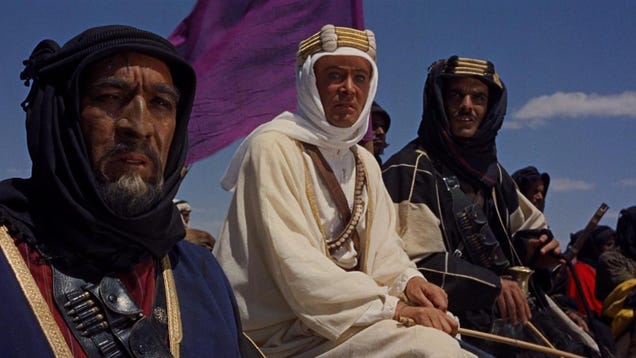
The tendency in movie runtimes seems to be trending toward length, and even if the data doesn’t really bear this out, recent, superlong installments in big box office franchises like Marvel and James Bond (the movies being watched the most, that is) at least mean the bloat feels real. For some reason these wildly…
These two guys re-made Raiders of the Lost Ark, shot-by-shot

Raiders of the Lost Ark: The Adaptation was made by three creative Mississippi teens Eric Zala, Chris Strompolos, and Jayson Lamb over a seven-year period.
The boys began making their own adaptation of Spielberg's hit film when they were only 12 years old in 1982. — Read the rest
Boba Fett's Ship Explained: How Did He Get It And What's Going On With Its Name Change?

After seemingly meeting a grisly end in "Return of the Jedi," the bounty hunter Boba Fett has been officially resurrected in the "Star Wars" universe by way of "The Mandalorian." Along with the return of the bounty hunter, we also have Boba Fett's ship, known as the Slave I. However, since it would appear that Lucasfilm is trying to distance itself from referencing that name, some fans are wondering exactly what's going on with the unique vehicle and its place in the galaxy. Let's break down everything we know about Boba Fett's ship and what the status of the vehicle's name is right now.
Where Did Boba Fett's Ship Come From?

Since Lucasfilm completely revamped "Star Wars" canon after being purchased by the Walt Disney Company, the origin of Boba Fett's ship begins with his father Jango Fett. As we learned in "Attack of the Clones," Boba Fett isn't actually Jango Fett's son. Rather, Boba Fett is a clone of Jango Fett created in the facility on Kamino that created the Republic's Clone Troopers based on Jango Fett's DNA. However, rather than being designed to age at twice the rate of natural humans, Boba Fett was left to age like a normal human and raised as Jango Fett's own child.
As for Jango Fett's ship, it's a a Firespray-31-class patrol and attack craft that was stolen during a job he was completing on the prison moon of Oovo IV. He named the ship Slave I, for no clear reason, though perhaps it's a reference to the fact that, in "Star Wars Legends," there were only six of these Firespray ships in the entire galaxy, and they were all used on Oovo IV. So one could assume that they were named and numbered as Slave I through Slave VI. But then again, in "Star Wars Legends," when Boba Fett got new ships, they took on the names Slave II and Slave III, so it could easily have a different meaning. Whatever the reason might be, it's never been officially explained.
Jango Fett outfitted the Slave I with upgraded laser cannons, projectile launchers, and seismic charges. The cockpit features a unique deck situated on a gyro system, allowing the occupants to stay upright no matter what position the ship is in, which is helpful since the ship flies standing upright but has to rotate onto its back in order to land.
When Jango Fett was killed by Jedi Master Mace Windu during a massive battle on Geonosis in "Attack of the Clones," the ship became Boba Fett's, who added modifications of his own over the years.
Much later, Boba Fett used the ship to track down Han Solo in "The Empire Strikes Back," after being hired for the bounty by Darth Vader. After collecting Han Solo from Cloud City, where he was frozen in carbonite, Boba Fett used Slave I to deliver the smuggler as a prize to the gangster Jabba the Hutt. However, as we've recently learned in the "Star Wars: War of the Bounty Hunters" comic book series, the delivery got sidetracked for a time.
After Boba Fett finally delivered Han Solo to Jabba the Hutt, he got caught up in a battle with Luke Skywalker and his Rebel Alliance friends. During a fight in the middle of the Great Pit of Carkoon, Boba Fett's jetpack was ignited accidentally by Han Solo, who banged into it with a staff, launching him into the mouth of a sarlacc at the center of the pit.
We've yet to learn what happened to the Slave I during the time that Boba Fett was out of commission, but the bounty hunter was clearly able to retrieve it before meeting up with fellow bounty hunter Fennec Shand in the first season of "The Mandalorian," and then crossing paths with Din Djarin in the second season of the "Star Wars" series on Disney+. Perhaps we'll learn more about the ship's history in the upcoming spin-off "The Book of Boba Fett," coming to Disney+ later this year.
What's Going On With Boba Fett's Ship Name?
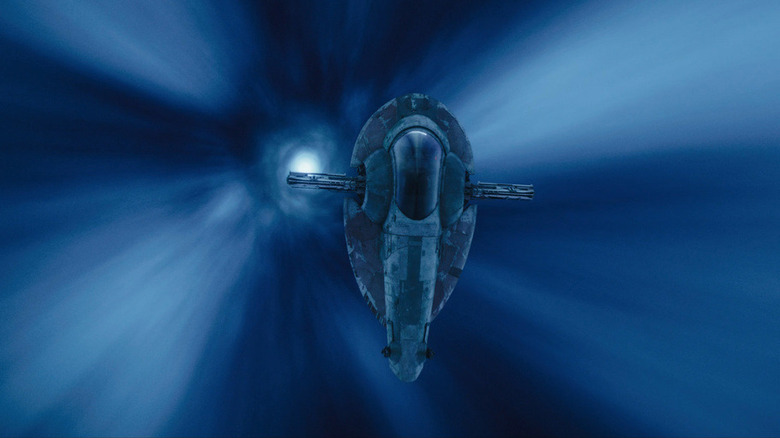
Even though we have no idea where Boba Fett's ship name comes from, it would appear Disney has become a little uncomfortable with throwing Slave 1 around so nonchalantly. Not too long ago, an interview with LEGO Star Wars design director Jens Kronvold Frederiksen and lead designer Michael Lee Stockwell revealed that merchandise featuring Boba Fett's ship had been directed to avoid using the name Slave I. Instead, the vehicle was being referred to as "Boba Fett's Starship."
This new position comes as Disney has gone out of their way to recognize certain insensitive cultural references. In this case, having a prominent, beloved character's ship named after the cruel concept of slavery isn't necessarily the best look. Then again, if the ship's name was given some kind of significant meaning, maybe as a way of taking the power away from the negative connotations that it brings to mind, perhaps it wouldn't be seen that way. After all, the "Star Wars" franchise features a rather prominent character who began life as a slave but became a powerful Jedi and then one of the most feared Sith in the galaxy, so Lucasfilm can't exactly avoid the existence of slavery in the "Star Wars" universe.
Not long after news of the Slave I name being avoided by Disney came to light, it was believed that the recent run of "Star Wars: War of the Bounty Hunters" comics may have given the Boba Fett's ship an official new name. A series of variant covers for the comic created by Paolo Villanelli listed the bounty hunters involved in the story along with the names of their ships. Here's the list of bounty hunters and their corresponding ships:
- Bossk and The Hound's Tooth
- IG-88 and IG-2000
- Zuckuss and The Mist Hunter
- Valance Beilert and The Broken Wing
- Dengar and The Punishing One
- Boba Fett and Firespray
The reason many assumed that "Firespray" was the new name for Boba Fett's ship is because all the other bounty hunters have the official names for their ships listed rather than the class of the ship in question. So referring to Boba Fett's ship as Firespray would be akin to referring to the Millennium Falcon by the name Corellian YT-1300F Light Freighter. On top of that, the official "Star Wars" databank still lists the name of the ship as Slave I, though the URL refers to it as "Boba Fett's Starship." So it would appear that the ship hasn't been renamed. At least not yet.
Honestly, I wouldn't be surprised if "The Book of Boba Fett" offers up a new name for Slave I or provides some kind of significant reason for the name of the ship. But for now, fans don't have to worry about the ship being officially renamed. They can keep referring to it however they prefer and nothing will have changed in the world. This may be one of the most insignificant things to be concerned with, so no matter how this turns out, Boba Fett and his place in the "Star Wars" universe will be fine ... even if they end up calling his ship The Hemorrhoid.
Read this next: Boba Fett's Spaceship Slave I Is Getting Renamed On Toy Packages After Order From Disney
The post Boba Fett's Ship Explained: How Did He Get It and What's Going on with Its Name Change? appeared first on /Film.
Jessica Jones Star Krysten Ritter Really, Really Wants To Play The Marvel Hero Again
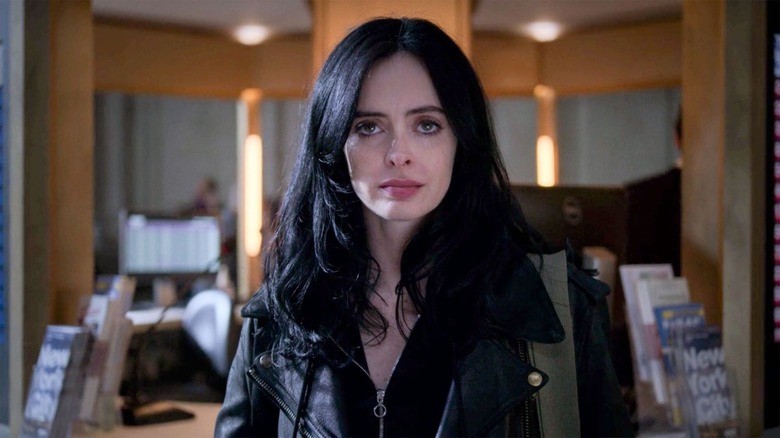
"Jessica Jones" may not have the instant name familiarity compared to other Marvel heroes like Captain America or Spider-Man, but after three seasons of a series over at Netflix, star Krysten Ritter managed to drum up a loyal following. Fans were devastated when Netflix canceled the show citing low-ratings as justification, but few were more heartbroken than Ritter.
What Did Krysten Ritter Have To Say?
As reported in an exclusive interview with Screen Rant, Ritter was asked about the possibility of returning to the Marvel Cinematic Universe. While she couldn't confirm if we'll be seeing Jessica Jones any time soon, she expressed a great desire to return to the character. She said:
I would absolutely just die to play Jessica again. I had the best time doing it and I just love her so much. I'm so proud of that character. Not only because it was like a great role and she's such a bad-ass, but that character has really resonated with people in a way that I don't know who else has. Really, really resonated with women and girls, trauma survivors. It's just so, so big and such a thing I'm so grateful to have been a part of. So if there's ever an opportunity for me to put on those boots, I will be there in a flash.
Ritter's casting as Jessica Jones is one of the most spot-on decisions ever made in the MCU. Known primarily for her role as problematic party girl Chloe on "Don't Trust the B-- in Apartment 23," she perfectly captured everything that makes Jessica Jones an all-time great. Jones is a superhero, yes, but she's also deeply flawed despite her good faith intentions. Exposed to high levels of trauma, Jones' coping mechanism is self-deprecating and sarcastic, not unlike Marvel's favorite sardonic daddy, Robert Downey Jr.'s Tony Stark.
What Was Jessica Jones About?
Fresh on the heels of "Daredevil," the second Marvel Cinematic Universe series for Netflix focused on Jessica Jones, a former superhero who has left the world of crime-fighting in the past in favor of opening her own detective agency in New York. Unfortunately, her past cannot stay in the past as she tries to overcome the trauma she still carries, including the origin of her superpowers and her supervillain ex-boyfriend, Killgrave (David Tennant).
"The Defenders" miniseries also allowed another way to enjoy the character alongside the likes of Daredevil, Luke Cage, and Iron Fist.
The noir-esque series resonated with audiences in large part due to its exploration of post-traumatic stress, bridling the fallout of abuse, and dismantling systemic power dynamics across the gender spectrum. The stakes in "Jessica Jones" always feel high, but not in a "stop a titanic genocidal warlord from wiping out half the population" way. Instead, the series highlights the terrifying danger of everyday existence, with a superhero boost. In the world of "Jessica Jones," overcoming fear, anxiety, and learning how to live alongside your trauma is just as vital to survival as saving innocent civilians.
"Jessica Jones" meant a lot to a superhero loving audience that has only recently been able to see themselves represented on screen. It would be a gift to us all if Krysten Ritter was given the chance to resurrect Hell's Kitchen's favorite sharp-tongued detective.
Read this next: Marvel's 'Jessica Jones' And 'The Punisher' Officially Canceled At Netflix, But Marvel TV Head Teases Some Kind Of Continuation
The post Jessica Jones Star Krysten Ritter Really, Really Wants to Play the Marvel Hero Again appeared first on /Film.
How The Mandalorian Redeemed Boba Fett
Once a minor character with barely any lines, Boba Fett has become a core part of the "Star Wars" saga -- thanks in no small part to the fans who fell in love with the mysterious bounty hunter. The "Star Wars Legends" books, which are no longer canon, detailed Boba's escape from the Sarlaac pit and his subsequent adventures. He was also featured in the animated series "Star Wars: The Clone Wars," which was spared from the Disney-era streamlining of the franchise and remains part of the current "Star Wars" continuity.
When Boba's armor appeared in Disney+'s hit series "The Mandalorian," worn by a marshal on Tatooine, fans wondered if the new canon would give us some closure on Boba Fett. Instead of just closure, we got a whole new look at the character, and he was given a chance to both deepen his backstory and redeem himself.
Sure, silent and mysterious dudes in armor are cool, but giving them a pathos and backstory is even cooler. "The Mandalorian" helped do what previous "Star Wars" entries couldn't do: make Boba Fett into a three-dimensional character.
The "Legends" Of Boba Fett

The "Star Wars" universe has almost always been an expansive, sprawling thing. Prior to Disney buying the franchise, the canon was collected in a system called the Holocron, broken down into five varying levels of canonical authenticity. When Disney took over, the studio did its best to reshape the canon into a single, cohesive timeline -- which meant leaving a lot of the Star Wars Extended Universe behind. This eventually became rebranded as "Star Wars Legends," and includes all non-canon entries, including the holiday special, video games, and more than 150 novels and short story collections.
A handful of those novels and several of the short story collections featured tales of Boba Fett, one of the most feared and revered bounty hunters in the galaxy. The "Tales" series of short story compilations had two important Boba Fett stories.
The first story, "A Barve Like That: The Tale of Boba Fett," was published in "Tales from Jabba's Palace" in 1996. It detailed Fett's experiences trying to survive in the Sarlaac pit and explained how he eventually got out by creating an explosion that broke him loose from the Sarlaac's grasp. The story is surprisingly gruesome for "Star Wars," describing in great detail how Fett is slowly being digested, the Sarlaac's stomach acid eating through everything but his armor. Fett survives, but he loses his left leg and uses a prosthetic leg in subsequent "Legends" stories.
In "Tales of the Bounty Hunters," also from 1996, a story called "The Last One Standing: The Tale of Boba Fett" gave Fett a backstory and established his long-standing feud with smuggler and rebel hero Han Solo. The vast majority of this backstory was retconned in 2002 when "Attack of the Clones" was released, and Fett was given a new backstory as one of the clones of Jango Fett.
A Look At Baby Boba
Even though there were a whole slew of books that gave Fett a backstory and loads of fun adventures, it was almost all retconned in 2002 with a new origin story in "Attack of the Clones." Jango Fett, a Mandalorian bounty hunter, worked with the Empire and allowed them to clone him, creating the titular clone troopers. As part of the deal, he asked them to give him a cloned son who wasn't tinkered with genetically, but instead was simply a direct copy of Jango. The rising Empire obliged and we got a chance to see a very young Boba Fett alongside his father. He doesn't do much in "Attack of the Clones," but it at least establishes a new canon for him.
The only problem? The new canon has him following in the footsteps of the guy who was basically the biggest sellout in the galaxy, and then falling into a Sarlaac pit like someone in a YouTube blooper reel. The mystery of Boba Fett was gone, and he lost some of his cool. He was given an arc on the animated series "Star Wars: The Clone Wars," but he was still a child for most of it.
Thankfully, the folks behind "The Mandalorian" had a way to make Boba just as badass as we remembered, all while giving him significantly more depth as a character.
Boba's Back, Baby!
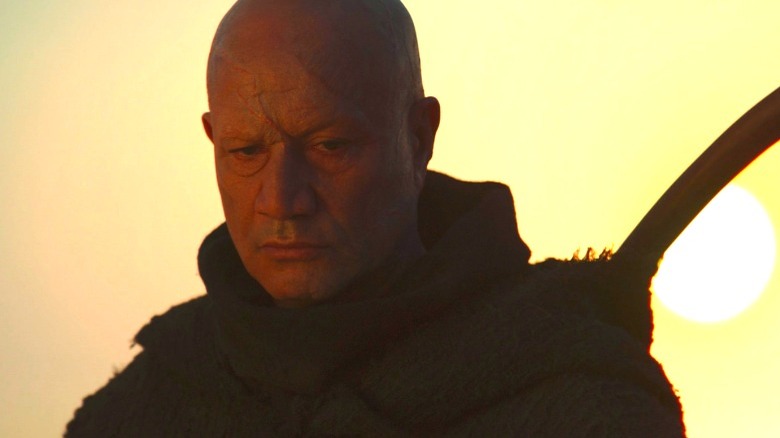
"The Mandalorian" hinted at the return of Boba Fett with the season 2 premiere episode "Chapter 9: The Marshal," in which the self-appointed marshal of a remote part of Tatooine helps the titular Mando in his mission to protect Grogu and return him to the Jedi. The marshal, named Cobb Vanth and portrayed by Timothy Olyphant, wears armor that looks exactly like Boba Fett's. Since the new canon hadn't established any fate for him post-"Return of the Jedi", it was a great tease.
At the end of the episode, we see a man who looks a lot like Jango Fett, unmasked in the desert sand. We soon discover that this man is indeed Boba Fett, and he wants his armor back. Disney made the brilliant choice to bring back actor Temuera Morrison, who played Jango in the prequel trilogy movies, since Boba is Jango's clone. It gives him an immediate familiarity to viewers, and brings the new canon full-circle.
Boba Fett remains a central character in the second season of "The Mandalorian," and we discover that he is a foundling Mandalorian, much like our hero (portrayed by Pedro Pascal). He is not a Mandalorian by blood, like Bo-Katan, but was adopted into the creed and is still very much a part of it. Because of this, Mando ends up giving Fett his armor back, and the two join forces to do some good in the universe despite their dark pasts.
We don't get a ton of background information on Boba or his whereabouts between "The Return of the Jedi" and the events in the series, but we do get to see more of his grizzled but generally good personality. Morrison plays Fett with a world-weariness that fits his character's difficult life, without ever crossing the line into seeming washed up or past his glory days.
Fett's return in "The Mandalorian" went so well that Disney approved a spin-off series, "Star Wars: The Book of Boba Fett." That series will hopefully flesh out the character even more, because what we've been given so far is fantastic. A silent, gruff "Man with No Name" cowboy-style character is a lot of fun, but learning more about the man behind the mystery will help fans care about more than his cool armor.
I love what "The Mandalorian" did to help fix the Boba Fett storyline retcons, and I hope maybe they can do the same for my other favorite masked character who didn't get enough screen-time, Captain Phasma. I mean c'mon, she has chrome armor - what's cooler than that?
Read this next: The Book Of Boba Fett: Release Date, Cast, And More
The post How The Mandalorian Redeemed Boba Fett appeared first on /Film.
The 14 Greatest Science Fiction Movies Of The 21st Century
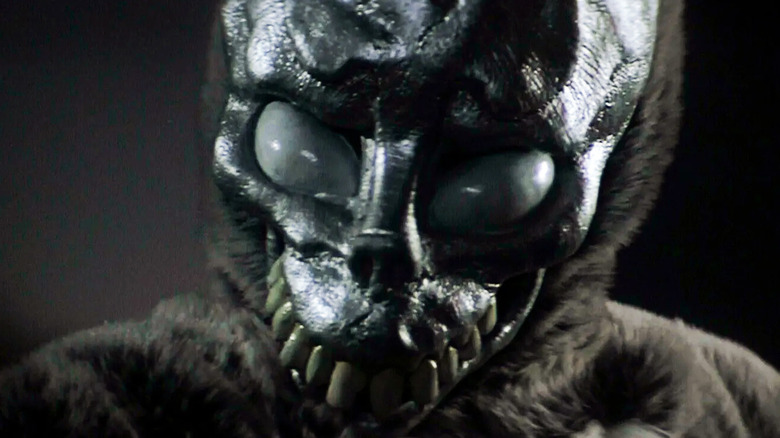
The last two decades have seen an embarrassment of riches for fans of science fiction. Iconic sci-fi franchises like "Star Wars" and "Planet of the Apes" have returned with some of their greatest installments. Filmmakers like Christopher Nolan, Denis Villeneuve, and Alex Garland have pushed the genre forward with stylish, thought-provoking films that prove there's demand for original science fiction stories as well. Sci-fi now intersects regularly with other genres, including fantasy, action, horror, satire, comedy, and even romance. If it was once a niche genre, now, it's everywhere.
There's no one right way to make a great sci-fi movie. Some of the best are blockbusters with massive budgets. Other standouts are tiny independent films made using sparse resources. All that really matters is a great story. Any budget can provide that.
Given the number of great sci-films that have come out since the year 2000, narrowing down the list down to the very best was no easy task, and many beloved favorites did not make the final list. With that in mind, here are the greatest science fiction films of the 21st century -- so far, anyway.
Looper
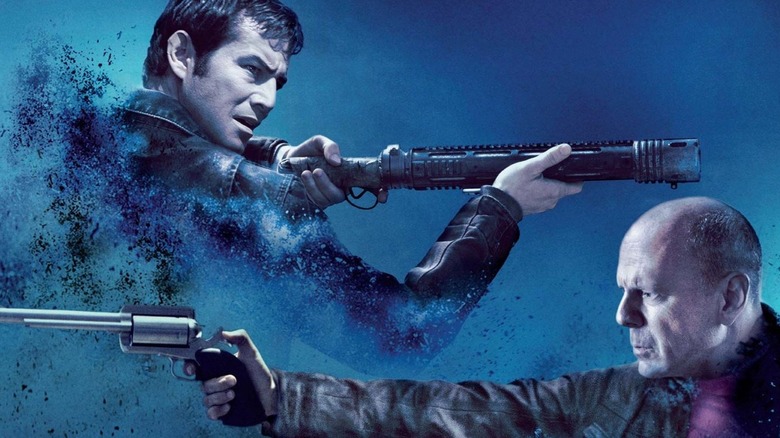
Time travel is a tricky subject, and many films struggle to create a premise and rules that make logical sense without sacrificing compelling character motivations. Rian Johnson's action thriller "Looper" is the rare film that does both. Its world, in which assassins execute criminals sent from the future, is fascinating, and Johnson finds interesting ways to show how events from the past ripple into the future.
The emotional of "Looper" hook comes from seeing the young assassin Joe (Joseph Gordon-Levitt) hunt down his older self (Bruce Willis). The mystery as to what the older version of Joe seeks to accomplish provides mystery, the question about what Joe needs to do to avoid his undesirable future provides drama, and the showdowns between two men who think exactly the same provide plenty of action. Gordon-Levitt completely embodies a young Willis, and Johnson's dialogue is as sharp as ever when the two share the screen together. Johnson's emphasis on character instead over exposition makes "Looper" wholly unique among time travel films.
Ad Astra
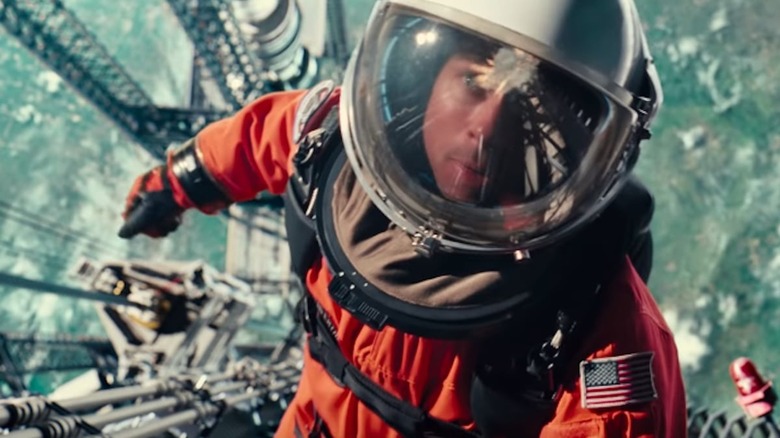
Despite its epic scope, "Ad Astra" is a very personal film about how loneliness spreads even at the edges of the known universe. James Gray's space opera explores the journey that a reclusive explorer (Brad Pitt) takes as he searches the solar system for his father (Tommy Lee Jones), a famous astronaut who is thought to have lost his mind.
Visually similar to classics like "2001: A Space Odyssey," Gray's film thoughtfully meditates on its characters' feelings. While exploring the cosmos is initially exciting, being in outer space means being disconnected from normal human interaction. Despite the slow pace of "Ad Astra," there are many thrilling moments, including a jaw-dropping crash sequence and a horror-themed mutant attack reminiscent of "Alien." Max Richter's gorgeous score compliments the film's visual beauty. And then there's Pitt, who checks his inherent charisma and delivers a soft-spoken, sensitive performance. His final confrontation with his father is among the most devastating moments in modern sci-fi.
Arrival
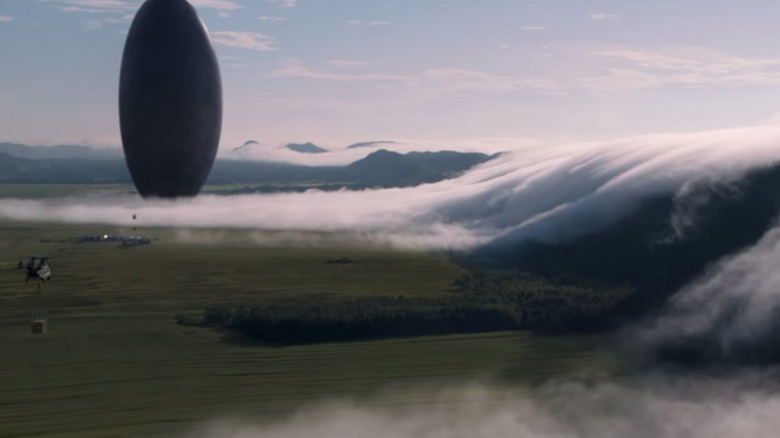
"Arrival" is one of the most emotional films of the 21st century, regardless of genre. Yes, motherhood and communication are themes sci-fi action franchises like "Alien" and "The Terminator" have already explored, but it's interesting to see a sci-fi film take a more grounded approach to the same material. Besides, Denis Villeneuve is a master at deploying satisfying plot twists, and "Arrival" has no lack of interesting ideas that will keep you thinking long after the credits roll.
"Arrival" centers on a linguist, Louise Banks (Amy Adams), who is recruited by the U.S. government to communicate with an alien ship that landed on Earth. Louise is uncomfortable within the highly militarized environment, and her clashes with the brooding Agent Halpern (Michael Stuhlbarg) ramp up the tension. Meanwhile, a budding relationship between Louise and a physicist (Jeremy Renner) on her team provides the romance.
The big draw, however, is Louise's relationship with the aliens, and the visual designs of both the creatures and their unusual language are striking. "Arrival" gradually shows the extra-terrestrials' impact on mankind, but it's their influence on Louise herself that makes "Arrival" stand out, and proves that Villeneuve is one of the pioneers of modern sci-fi.
Inception
Christopher Nolan's dream heist thriller "Inception" is one of the most financially successful sci-fi films of the 21st century, proving there is an appetite among audiences for original sci-fi stories told on a massive scale. One of the most analyzed and discussed films in recent memory, "Inception" continues to inspire debate over the meaning of its closing shot.
In the decade since its release, many elements of "Inception" have reached iconic status. The zero-gravity heist sequence featuring Joseph-Gordon Levitt is one of Nolan's most creative action scenes, and the Hans Zimmer track "Time" is one of the composer's best. The premise of traveling within the world of dreams remains wholly unique -- its creativity hasn't been replicated since.
And yet, the complexity of "Inception" doesn't distract from its entertainment value. One of the fastest-paced two-and-a-half-hour films you'll ever see, "Inception" is the gold standard when it comes to combining ambitious, complex original concepts with thrilling action. A sequel isn't necessary when the original is this satisfying.
District 9
Sci-fi films often tackle real-world issues. Look at "District 9," which explores apartheid and bigotry through the lens of the fraught relationship between humans and aliens. "District 9" imagines the realistic implications of what would happen if an alien colony immigrated to Earth, and shows the lengths that a single alien father (Jason Cope) would go to in order to bring his child home, albeit with some help from a reluctant government employee (Sharlto Coppley).
While the world of "District 9" is expansive, it's a low-budget film, and it never loses its grounded feel. To achieve this effect, director Neill Blomkamp utilizes a found-footage approach that treats the movie like it's a historical relic. Blomkamp works well under these constraints; his follow-ups, "Elysium" and "Chappie," gave him more money and more freedom, and weren't nearly as successful. Still, "District 9" holds up. The film even landed an Academy Award nomination for best picture, a rare achievement considering how few sci-fi films have received that recognition.
Minority Report
It is both exciting and unnerving to see sci-fi films that predict the future. So many elements of "Minority Report" -- driverless cars, voice control, targeted advertising, and facial recognition -- are now part of everyday reality, and question of whether humans have a preordained destiny or follow free will is just as interesting today as it was in 2002.
"Minority Report" follows Chief John Anderton (Tom Cruise), an officer in Washington D.C.'s PreCrime division, which uses precognition to track down criminals before they commit crimes. John rarely questions the moral implications of what he's doing until he's accused of killing his son's murderer. It's a fascinating central conceit, and leads to one of Cruise's most layered performances.
As you'd expect with Steven Spielberg directing, the action sequences in "Minority Report" are thrilling, while the design eerily predicts a world where personalization is characterized only through technology. One of the great sci-fi noirs, "Minority Report" is one of Spielberg's best movies. Given his peerless filmography, that's no small compliment.
Under The Skin

In "Under the Skin," Jonathan Glazer's thoughtful, otherworldly visual style blends perfectly with body horror and an introspective look at human nature. Essentially an alien immigrant story, "Under the Skin" follows an extraterrestrial being who takes the form of a human woman (Scarlett Johansson). The creature learns about mankind by seducing men -- and by leading them to their doom.
Glazer cast nonprofessional actors as the creature's victims and filmed them using hidden cameras, making "Under the Skin" feel eerily natural, while Johansson trades her normal, charismatic on-screen persona for a character that only barely shows emotion, yet learns all about trauma as she witnesses man's cruelty. The stark visuals, particularly when Johansson lures victims into a murky black abyss, are chilling. A terrific score by Mica Levi heightens the suspense, resembling the best music of John Carpenter. Thoughtful and visceral, "Under the Skin'' raises some uncomfortable themes about whether humans are inherently evil. It's a great film to dissect for potential hidden meanings.
Her
Few films depict how isolating technology can be better than Spike Jonze's "Her." Another film that feels oddly predictive of emerging technology, "Her" follows recent divorcee Theodore (Joaquin Phoenix), who begins to fall in love with the artificial intelligence powering his computer's operating system, Samantha (Scarlett Johansson). Given his tragic history and his social anxieties, Theodore's romantic pursuit of Samantha isn't unrealistic. "Her" is funny, but Jonze plays the emotions straight.
So does Phoenix, who turns in one of his most sensitive performances. "Her" explores how Samantha teaches Theodore how to open up again, even as it delves into how his obsession becomes damaging. Scarlett Johansson's vocal work is phenomenal, particularly once Samantha begins to develop a consciousness, and aches to have physical interactions with Theodore that she knows are impossible.
Jonze's Oscar-winning screenplay finds creative ways for Theodore and Samantha to interact, and creates realistic scenarios in which advanced artificial intelligence manifests in daily life. While it has an absolutely devastating ending, "Her" proves that science fiction can be just as emotional as any other love story.
Eternal Sunshine Of The Spotless Mind
"Eternal Sunshine of the Spotless Mind" is one of the greatest romantic films of all time. Is it worth losing the memory of a loved one, even if the relationship ended in heartbreak? Charlie Kaufman's Oscar-winning screenplay delicately explores this question, as well as larger philosophical and moral issues surrounding memory erasure, using compelling characters and nonlinear storytelling. And yet, while "Eternal Sunshine of the Spotless Mind" is heady stuff, it never loses sight of its emotional core.
An introvert named Joel (Jim Carrey) has a chance encounter on a train with Clementine (Kate Winslet), a pink-haired outgoing woman who is his polar opposite. The two fall for each other, but after their relationship crumbles, Joel undergoes a procedure that removes all traces of Clementine from his mind. Joel's memories are imagined in idiosyncratic detail by director Michael Gondry, who ratchets up the weirdness once the surgery begins, and Joel starts inserting Clementine into memories she had no part of.
Carrey may be best known for his zany, eccentric comedic performances, but he's equally effective as a tormented, depressed character. Winslet, on the other hand, is one of the great dramatic actresses of her generation, but in a reversal of roles adds humor to Carrey's dour storyline. Heartbreaking and thought-provoking in equal measure, "Eternal Sunshine of the Spotless Mind" is the ultimate cerebral sci-fi love story.
Mad Max: Fury Road
Before it came out, expectations were incredibly high for "Mad Max: Fury Road." The original Mad Max movies already ranked among the greatest action films of their time, and despite a notoriously troubled production, people couldn't wait. Somehow, "Fury Road" still shattered pretty much every expectation when it debuted. "Mad Max: Fury Road" isn't only the best of the franchise, but a contender for the title of the greatest action film ever made.
Miller's film is a straight two-hour shot of adrenaline. The relentless pacing, mind-blowing practical visual effects, death-defying stunt work, and incredible production design create a vision of a post-apocalyptic future that more than upholds the legacy of the original "Mad Max" trilogy. It's hard to pinpoint one standout sequence in a film that continues to outdo itself; it's basically one long chase scene that never lets up.
Tom Hardy seamlessly steps into Mel Gibson's shoes as the title character, but the real standout of "Fury Road" Charlize Theron's Imperator Furiosa, an avenger of the abused slaves of the vicious warlord Immortan Joe (Hugh Keays-Byrne). Furiosa's inclusion gives "Fury Road" a brilliant, feminist slant that instantly created a new action star -- look, there's a reason why she's getting a spin-off movie. Even in an era of over-the-top spectacle, few cinematic experiences match the awe of witnessing "Mad Max: Fury Road" on the big screen for the first time.
The World's End
Director Edgar Wright enjoys deconstructing -- and reconstructing -- established genres. "Shaun of the Dead" lampooned the George Romero-era of zombie cinema. "Hot Fuzz" parodied buddy-cop movies. With "The World's End," Wright took a comedic approach to alien invasion flicks. Old friends Gary (Simon Pegg), Andy (Nick Frost), Steven (Paddie Considine), Oliver (Martin Freeman), and Peter (Eddie Marsden), who have remained largely separated since high school, reunite when Gary recruits them to finish a pub crawl that they failed to complete in their youth. Their hometown feels cold and unfamiliar, and as they get drunker, they realize that something otherworldly is at play. No, not middle age; extra-terrestrials, who have begun taking over their village, "Invasion of the Body Snatchers"-style
"The World's End" is Wright's most mature film. Gary's addiction issues and his use of nostalgia as a crutch aren't treated lightly, and Pegg weaponizes his gift for humor, turning jokes into the coping method that Gary uses to avoid taking responsibility. The film is layered with the visual gags and sharp banter that Wright's known for, but the closing scenes, in which Gary's friends witness the extent of his mental illness, are genuinely heartbreaking. The film's ambiguous ending is absolutely effective, too; the combination of humor, action, drama, and horror make "The World's End" a standout of modern sci-fi.
Children Of Men
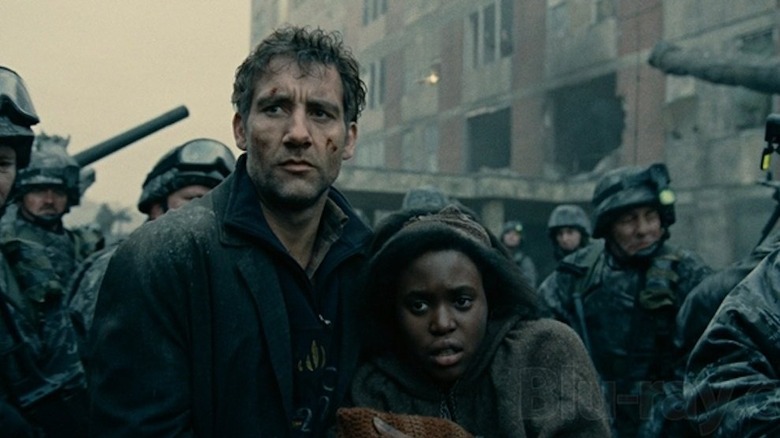
Alfonso Cuarón's masterpiece is a devastating, yet hopeful, tale about how mankind might respond to its extinction. In "Children of Men," the threat doesn't come from an extraterrestrial invasion or supernatural event, but rather from an extended period of infertility. No new children have been born for over 20 years, and while the chaos and panic that results is overwhelming at first, the characters' attempts to find a solution make "Children of Men" an inspirational story, not a tragic one.
Clive Owen gives one of his greatest performances in the movie as Theo, a father reeling from the loss of his child. When his activist ex-wife (Julianne Moore) asks for his help bringing a pregnant woman to safety, Theo resists taking on a mission of such gravity. Witnessing Theo overcome his depression and accept his own value as he transports the unborn child is incredibly emotional, and Owen's genuine performance humanizes a cold, sci-fi world.
Cuarón crafts viscerally terrifying action sequences, particularly the famous tracking shot in which Theo and his allies are targeted by vicious rebels hunting the soon-to-be mother, and builds to a gripping conclusion that marks "Children of Men" as a modern classic, and one of the director's best films yet.
Donnie Darko
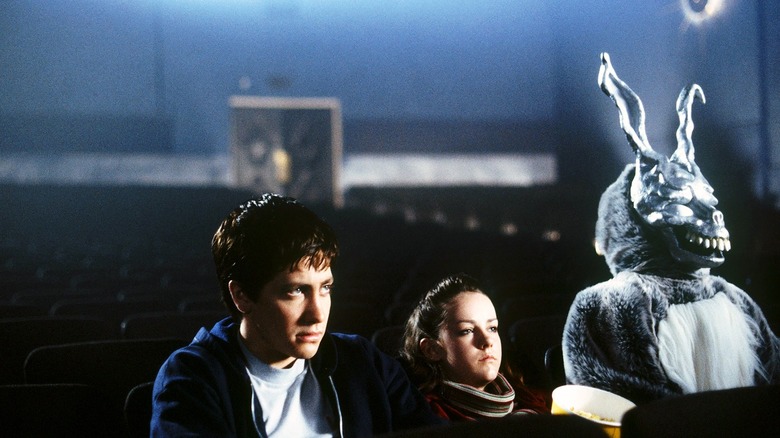
Richard Kelly's directorial debut was a landmark sci-fi film, attracting tons of attention following its buzzy debut at the Sundance Film Festival. It's borderline incomprehensible, but word-of-mouth kept the film alive and inspired a cult following that's dissected every element of the movie's labyrinthian plot, along with a director's cut that explains some of the most confusing elements of the story.
The titular character, played by Jake Gyllenhaal in one of his standout roles, is a teenage outsider who learns about an apocalyptic event that will arrive in 28 days. In order to stop it, Donnie begins committing crimes, and begins to uncover the nature of time travel and destiny. Donnie's social anxieties make him an engaging character, and combining heavy sci-fi with a coming-of-age story makes the intricate storyline compelling even when it's hard to follow.
"Donnie Darko" spans several genres. Many of Donnie's ramblings and misadventures are quite amusing, yet his nightmarish visions descend into true terror. "Donnie Darko" is an overwhelming film -- in addition to time travel, it's loaded with symbols, metaphors, and satire, as well as subtle cues that indicate where each beat fits into the sprawling timeline. And yet, those same elements make "Donnie Darko" endlessly rewatchable. There's nothing else quite like it, and few other films have generated the impact "Donnie Darko" had on science-fiction cinema.
Blade Runner 2049
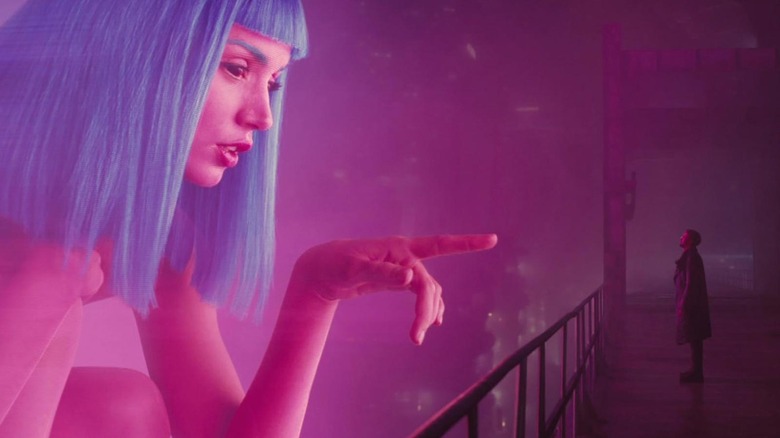
Crafting a compelling sequel that expands on the world of the original without losing what makes it special is no easy task. That goes double if the original movie is considered one of the greatest science fiction films ever made. Yet, somehow, director Denis Villenueve created a "Blade Runner" sequel that not only honors the first one's legacy, but pushes the series in a bold new direction -- and he did it without an endless stream of reissues, revisions, and director's cuts.
"Blade Runner 2049" completely embodies the feel of the original film, expanding Los Angeles' urban metroplex and further developing the mythology behind the government agencies that track down replicants. It looks great, too; with "Blade Runner 2049," Roger Deakins finally won an Academy Award for what is one of the most beautiful films ever made.
Surprisingly, "Blade Runner 2049" does not seek to answer the question that haunts the first film: whether or not Deckard (Harrison Ford) is a replicant. Instead, it crafts a new compelling mystery, as the replicant cop, Agent K (Ryan Gosling), considers his parentage. This twist subverts the "chosen one" narrative, and K's capacity for emotion is felt through his relationship with the android Joi (Ana de Armas).
Unfortunately, like the original, "Blade Runner 2049" was a financial disappointment. Nonetheless, it should stand the test of time. It's a thoughtful examination on what constitutes consciousness, and is a thoughtful, creative film that respects, and perhaps even surpasses, the classic original.
Read this next: 5 Great Science Fiction And Fantasy Books That Demand A Film Or Television Adaptation
The post The 14 Greatest Science Fiction Movies Of The 21st Century appeared first on /Film.
Jackie Chan's 15 Greatest Fight Scenes Ranked
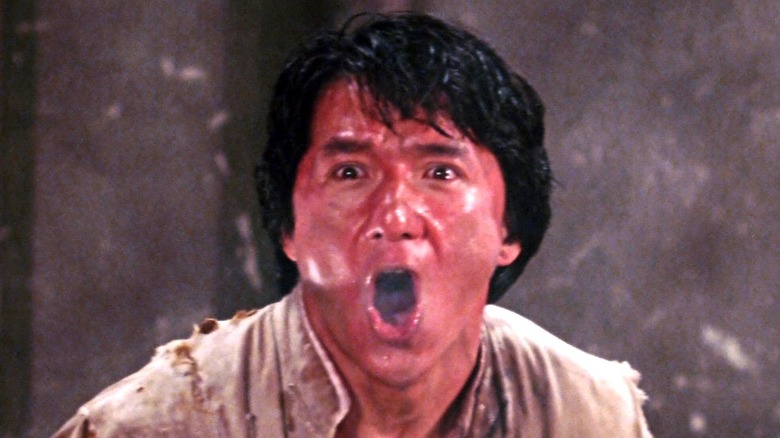
I recently had the pleasure of ranking and writing about the 15 best Jackie Chan movies. You might think that would be enough on the subject, but you'd be wrong -- because I'm back to celebrate the best of Chan's many, many fight scenes! While there's some crossover between titles, the beauty of Chan's talent is that even his lesser films often include terrific action sequences.
The focus of the list that follows, though, narrows the field specifically to fights. His bigger action sequences remain awesome, but I'm ranking the brawls, the scuffles, the beatdowns, and the exquisitely choreographed faceoffs between Chan and one, two, or several opponents. A lot goes into making of a great fight scene, from the technique itself to filmmaking choices that capture the action. For my money and time these are the best fights featuring Jackie Chan. My only rule? Only one entry per film. The odds are good that at least one of your own favorites has made the cut here -- unless that favorite is the epic clash between Chan and Don Cheadle in "Rush Hour 2" (2001), in which case you are sadly out of luck.
Chan Vs. Market Thugs — Shanghai Knights (2003)
It may be sacrilege, but in the great culture war between Chan's US franchises, I'm team "Shanghai Noon" and "Shanghai Knights" over the "Rush Hour" trilogy. They're just more fun (and less sketchy with their race-related humor), and while there's entertaining action to be found in all five films, one sequence stands out: the marketplace street fight that combines combat, intricate choreography involving clothing, and a delightful nod to "Singin' in the Rain" (1952).
Chan and Owen Wilson stop some thugs from harassing a child and wind up in a running chase with multiple bad guys. Chan uses carts, tarps, and even lemons as weapons, and there's an entertaining Rube Goldberg-esque feel to much of the action. It all culminates in a real highlight as Chan weaponizes umbrellas before hopping on top of some shifting boxes for a Gene Kelly homage that's as silly as it is beautiful.
Chan Vs. Bill Wallace — The Protector (1985)
Look, I get it, nobody likes "The Protector." While I'm a fan of Chan's Hong Kong cut, it's still not all that great. That said, there's some solid action to be found amid the gunfire and Danny Aiello's bellowing. An early fight in a massage parlor sees Chan demonstrate the kind of room decorating skills he's famous for, but it's the final set piece that earns a spot here.
Bill Wallace is a karate champion who made his screen debut facing off against Chuck Norris in "A Force of One" (1979), but while that was a competitive fight in the ring, his fight with Chan here is a dirty, scrappy brawl. Chan struggles at first against the bigger man and has limited props at his disposal, but the pair turn in a nasty little back and forth ... and that's even before Wallace brings out the circular saw.
Chan Vs. Hwang In-Shik — The Young Master (1980)
It's subjective, but while I enjoy martial arts films from the '70s, the fights themselves are typically less memorable than those from later decades. The choreography can be strong, but older films often execute the movements at a slower pace in order to highlight the individual steps. Early fights in "The Young Master" follow that trend, but Chan's end brawl against Hwang In-shik (a 10th-degree black belt in hapkido) cuts loose with speed, contact, and aggression.
Chan spends several minutes having his ass handed to him before catching on to his opponent's methods, which include Hwang's terrific stealth kick that strikes from nowhere while his other leg distracts. The pair trade fierce blows, and some of their throws and flips see them hit the ground hard. Chan ends it with a back-breaking move, although that doesn't stop him from pummeling the unconscious Hwang a little bit more.
Chan Vs. Thugs — Rumble In The Bronx (1995)
"Rumble in the Bronx" rewatches make me laugh and shake my head at the street gang -- terrible dubbing, the United Colors of Benetton cosplay -- but there's no denying the fun action beats that Chan and director Stanley Tong squeeze out of the thin setup.
Chan faces off against the gang members a few times before going after the diamond thieves who are terrorizing "NYC" in a giant hovercraft -- a set-piece that still rules, by the way -- but the highlight of the film is the brawl in the gang's clubhouse. Chan takes on the entire group and destroys their place in the process. It's still one of the best examples of Chan's mastery over his environment and a showcase for his use of set dressing as offensive and defensive weapons. Refrigerators, skis, chairs, pinball machines, and more let him play havoc with the thugs, and it's a blast.
Chan Vs. Auto Plant Thugs — Twin Dragons (1992)
While Chan has been a trendsetting action star for years, he's not above borrowing from other talents. "Twin Dragons" seems inspired by Jean-Claude Van Damme's "Double Impact," released the year before, with Chan playing identical twin brothers who get caught up in criminal shenanigans. One's a very capable fighter, while the other only uses his hands to conduct music.
The finale goes down in an automobile testing facility courtesy of Chan's friends at Mitsubishi, and the action moves through crash tests, heat rooms, and all-weather environments, all of which affect the fights. The twins are still unknown to the other characters, meaning that baddies beat up the musician and are then confused when the more capable brother pummels the tar out of them. It's a smartly constructed set piece from directors Tsui Hark and Ringo Lam, and the fighting uses both martial arts and an abundance of unique props to deliver something memorable.
Chan Vs. Ladder Thugs — Police Story IV: First Strike (1996)
"First Strike" is an example of a film that's mostly remembered for a single scene -- the ladder fight. I'll go to bat for the whole movie, including its James Bond-inspired ski slope antics, but it's easy to see why this particular brawl has become an unforgettable one.
Chan's globe-hopping Hong Kong detective is pulled into a fight with some mourners and tries not to hurt anyone -- at first -- but as they kick up the intensity, he's forced to get even more creative with his defensive moves. After blocking hits with a dragon head and a broom handle, Chan picks up a collapsible metal ladder and wields it like an extra appendage. He hits, he blocks, he spins -- just standing a ladder up straight can sometimes be a hassle, but Chan turns it into a weapon and makes it look easy in the process.
Chan Vs. Rope Factory Thugs — Mr. Canton And Lady Rose (1989)
Chan plays an accidental gang leader in this attractive period tale that never quite gets the praise it deserves for its action. There are scraps throughout that lead up to an elaborate brouhaha between Chan and a dozen thugs in a rope factory. Are rope factories a thing? I don't know, but if they are, I'll bet they aren't as well laid out for hijinks as this one.
Large thimbles (?) of rope stacked ceiling high, loose ones dangling from above, thick strands left looped here and there -- it's a playground for someone like Chan, and he makes terrific use of it. Chan and his pursuers scale shelving, swing from ropes, and Chan even takes a few seconds to play jump rope. There are plenty of punches, kicks, and throws throughout as well, making this a set piece that barely gives Chan time to breathe.
Chan Vs. Hwang Jang-Lee — Drunken Master (1978)
One of Chan's breakout films, "Drunken Master" sees him bring a legendary Chinese character to the screen in a way that audiences hadn't seen before. Laughs, drunken fist-style fighting, and various animal styles come into play, but it's the alcohol-fueled martial arts that earn the film a spot on this list, as the big final fight offers up a parade of kinetic fun.
Chan goes toe to toe with Hwang Jang-lee's assassin, and he comes prepared with skills styled after the Eight Drunken Immortals. He unleashes a barrage of movements inspired by his inner strength and flute players with powerful wrists. Loosely based on real styles, the martial arts on display here are the creations of Chan and filmmaker Yuen Woo-ping. They add a unique flavor to the fight, as motions that might appear ridiculous on their own blend seamlessly into Chan's efforts as he lands surprise blows and absorbs hits with a rubber-band ease.
Chan Vs. Brad Allan — Gorgeous (1999)
There's not a lot of action in "Gorgeous," but Chan does get to fight Brad Allan twice. Allan was a member of Chan's stunt team who found success as an action and fight choreographer on big studio films, but it's his fighting skills that shine here. The two men are similarly sized and both fast, and their first pairing is a playful demonstration in which Allan toys with the unprepared Chan.
Their second face-off is an epic display of combat artistry that also highlights the musical nature of fight choreography. Their footwork and rhythmic bouncing reveal two ridiculously light-on-their-feet fighters who shift instantly from a casual bounce to a blistering series of kicks. Both the artists and their characters also demonstrate a mutual respect for each other's skills, and even pause to help each other up at times. This isn't a fight to the death, but it's no less impressive for it.
Chan Vs. Teahouse Thugs — Drunken Master II (1993)
While many of Chan's best fights pit him against just one or two opponents, there's fun to be found in seeing him take on multiple bad guys. This one isn't the only big brawl to make this list, but it's especially relevant as it unfolds in something of an iconic locale for martial arts films -- a teahouse. Chan once again goes against the odds when he and Lau Kar-leung find themselves trapped on the second floor of the restaurant. Not only are dozens of thugs rushing in, but they're also all armed with hatchets.
The Axe Gang swarms like cockroaches, and both Chan and Lau fend off the blades however they can. Furniture shatters and bodies are tossed around like rag dolls. Chan uses a splintered bamboo pole that leaves both him and the gang scratched up and bloodied, and the choreography -- including a shirt wrapped around the pole that lets Chan control the splinters to great effect -- is spectacular. It's a dramatic fight, and it sets the stage for the doozy of an ending that follows.
Chan Vs. Playground Thugs — Police Story 2 (1988)
The big fireworks factory fight that ends "Police Story 2" is terrifically mean, but it's this earlier brawl that I always return to. Chan and Maggie Cheung are enjoying a night out when thugs from the first film come looking for revenge, and it all goes down on a playground.
Chan's outnumbered, which is just how he likes it, and as the thugs come at him with pipes and fists, he runs them ragged around obstacles designed for children. It's among Chan's most consistently fast-paced brawls, and the combat is intricately woven into the surroundings. You'll probably need a second viewing to catch everything that unfolds, as Chan executes hits, kicks, and throws within milliseconds of each other. Chan dives between monkey bars and parkours off swing sets, and one wickedly intense pipe fight rivals the best "sword" duels you've ever seen.
Chan Vs. Yung Kwan And Ron Smoorenburg — Who Am I? (1998)
The first of four collaborations between Chan and director Benny Chan, "Who Am I?" doesn't get the attention it deserves. It delivers some fun action, including a foot chase and fight with Chan in clogs, and attractive international locales including the Netherlands, South Africa, and Malaysia. It earns a high spot here for its final fight, which sees Chan take on two thugs atop a high-rise building.
Both Yung Kwan and Ron Smoorenburg come at Chan with differing styles, and his defense varies accordingly. Kwan is using Choy Li Fut, and what looks almost like flailing is actually designed to expose then pummel his target. By contrast, Smoorenburg is a Dutch kickboxer who showcases some incredible leg strikes. The pair alternates as Chan fights back tirelessly, pausing only to dodge and weave around railings, ventilation shafts, and the rooftop's edge. There are stunts and laughs here, but the fighting is the focus, and it's fantastic. Watch carefully during some of Smoorenburg's fast kicking, and you'll notice it's actually Brad Allan doubling him (despite being nearly a foot shorter), delivering some wicked foot-focused choreography.
Chan Vs. All The Glass In Hong Kong — Police Story (1985)
While "Police Story" is rightfully praised for the amazing opening set piece and Chan's epic slide down the light pole, you can't ignore the brilliant choreography and execution of the mall brawl. It's once again a situation where Chan faces off against multiple enemies, but this time he seems equally furious at something else, too -- glass.
Chan throws baddies through glass display cases, glass shelves, and glass dividers. He hits, kicks, and tosses with abandon, but he also takes a ton of punishment as the thugs come at him with bars, motorcycles, and more. It's a blend of martial arts, property damage, and pure carnage, and while many of Chan's fights have a degree of fun to them, this one is all about rage. The angrier Chan gets, the more pain he doles out for our pleasure. We love him for his sacrifice.
Chan Vs. Benny "The Jet" Urquidez — Wheels On Meals (1984)
This is probably the least surprising entry to make the list, as it is universally beloved. "Wheels on Meals" is mostly an ensemble comedy with Sammo Hung and Yuen Biao joining Chan in fighting some baddies, but it's Chan's fight against Benny "The Jet" Urquidez that rightfully steals the limelight.
Both Chan and Urquidez prove that sometimes big spoonfuls of ass-kickery come in smaller packages. The two hit so hard and so fast that it's easy to forget that they're performing choreographed moves with precision and immense skill. While too many film fights make it easy to spot the pulled punches and intentionally misaimed kicks, these two make it look as if they're truly trying to maim each other. Urquidez's style is also a great contrast to Chan's, as the former keeps his movements to a minimum even as Chan bounces around the room.
Chan Vs. Ken Lo And Ho-Sung Pak — Drunken Master II (1993)
Chan's sequel to his own late '70s classic is arguably among the best martial arts films of all time, so it shouldn't surprise anyone that I'm breaking my own rule and giving it two spots on this list (trust me when I say I almost added a third: Chan's stellar fight against Lau Kar-leung beneath the train). There's just no way I could ignore the end brawl that sees Chan take on both Ken Lo and Ho-sung Pak. A fight in a steel factory that grows increasingly wince-inducing by the second, the set piece took over a month to film due to injuries as much as Chan's meticulous direction. It recycles some elements from the earlier marketplace fight, but the intensity and cruelty are kicked up a few notches.
Speaking of kicks, the long-legged Ken Lo makes for a fierce opponent as he unleashes some delirious footwork that both mesmerizes and hurts to watch. He was Chan's former bodyguard and a Taekwondo champion, and after plans to end the film with Chan fighting Ho-sung Pak one-on-one crumbled due to the latter's injuries, Chan added Lo to the mix, complete with months of additional training.
The result is a thing of beauty as Lo's precise control -- his whipping leg movements and standing split are endlessly impressive -- and Chan's deceptively loose and casual drunken style blend like ass-kicking chocolate and head-spinning peanut butter. After being beaten and burned, Chan downs some alcohol to become a red-faced monster who tears through his opponents and everything else in his path. This movie is a gift that keeps on giving, and it ends with pure action bliss.
Read this next: 5 Great Martial Arts Movies To Stream After Shang-Chi And The Legend Of The Ten Rings
The post Jackie Chan's 15 greatest fight scenes ranked appeared first on /Film.
Emergency Software Patches Are on the Rise
Read more of this story at Slashdot.
When the Wind Stops Blowing, an Energy Storm Brews
Read more of this story at Slashdot.
Midnight Mass Early Buzz: Mike Flanagan Has Made Another Great Horror Series
As if excitement for Mike Flanagan's new Netflix series isn't overwhelming enough, reactions to "Midnight Mass" are taking Twitter by storm!
The horror miniseries is just days away from premiering on the streamer, but it feels like the wait will last an eternity. Even before we caught our first glimpse of the show, most were on board with the pitch: a religious horror from the mind behind the "Haunting" Netflix anthology series ("The Haunting of Hill House" and "The Haunting of Bly Manor'').
Flanagan's latest tells the terrifying tale of an isolated island community whose existing divisions are intensified by the return of a disgraced young man (Zach Gilford) and the arrival of a charismatic priest, Father Paul (Hamish Linklater). The priest's arrival happens to coincide with unexplained and seemingly miraculous events that inspire religious fervor. The community's desperation to believe may seem well-placed, but everything from the trailer to the poster indicates it will come at a harrowing cost. This seems to be the case according to early reactions, which paint the ensuing events as "traumatizing," "frightening," and "truly scary."
Midnight Mass Early Buzz
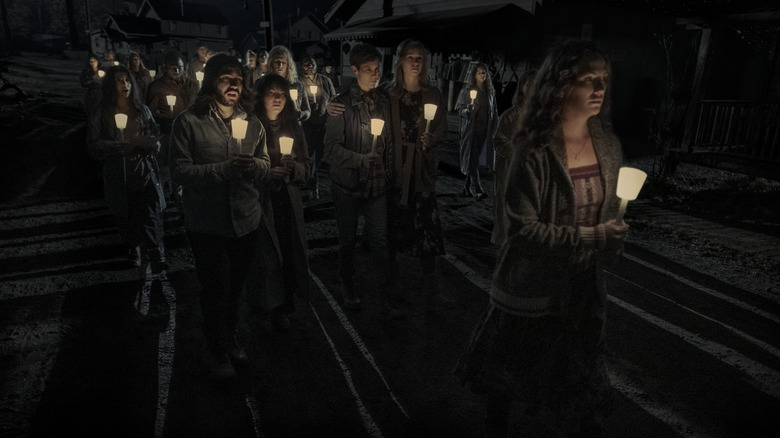
The trickle of social media reactions to "Midnight Mass" started last night, which quickly exploded into a full-on lovefest for Flanagan's latest. So, without further ado, let's take a look at what critics have to say about the newest addition to the Flanagan family.
Even before the buzz arrived in full force, Stephen King weighed in on the miniseries. Some of the director's most heavily praised films include recent King adaptations like "Doctor Sleep" and "Gerald's Game." Here's what King had to say:
King's love for the series was later echoed by pretty much everyone else who had the pleasure of an early viewing.
Even Elijah Wood shared some love for the show.
Much of the praise focused on the way Flanagan grapples with the story's religious overtones, so well that it prompts serious reflection of personal experience with faith and addiction. And don't worry, he seamlessly weaves in the horror so it never gets lost in the mix. With this, there's also the promise of a captivating performance from Kate Siegel (plus a memorable monologue).
Siegel isn't the only performer standing out amongst the talented ensemble: Hamish Linklater's performance as the charismatic priest is clearly making people uneasy.
Overall, the love for "Midnight Mass" is real and thriving, making Flanagan's work as scary as ever.
All seven episodes of "Midnight Mass" arrive on Netflix on September 24, 2021.
Read this next: Midnight Mass Trailer: Mike Flanagan Returns To Netflix For A Religious-Themed Horror Series
The post Midnight Mass Early Buzz: Mike Flanagan Has Made Another Great Horror Series appeared first on /Film.