Ronald.phillips
Shared posts
The ultimate T-Mobile iPhone 13 Pro Max hack could get you Apple's highest-end phone for free - CNET

Ranking John Carpenter's 10 Best Film Scores
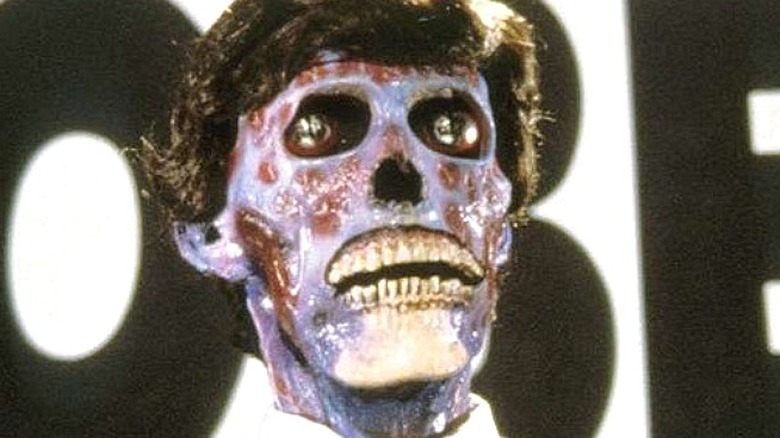
A John Carpenter movie is as recognizable as an AC/DC track. There's a griminess to the cinematography, a cheap but immersive realness to the sets. Faces repeat: Kurt Russell, Jamie Lee Curtis, Donald Pleasance, and the rubbery visage of William Shatner. And then there's the music. Like Angus Young on guitar, we always know what a John Carpenter movie sounds like. There's a synthesizer at the heart of the score, sometimes flanked by Fender guitars and heavy percussion. Most of his compositions have something unique to them, something that makes them stand out.
The simplicity of Carpenter's early scores hides his training. Carpenter's father taught music, and he tried to get his son to learn the violin. But Carpenter never clicked with the classical strings. He moved on, looking for instruments he'd like better. Able to play the piano and bass guitar well enough to rock, Carpenter eventually used the synthesizer as a way of making big budget music on a shoestring. Like his films, John Carpenter seems to do his best with less. His film scores become part of his movies' histories, as recognizable as the on-screen thrills. These are his best.
10. Big Trouble In Little China
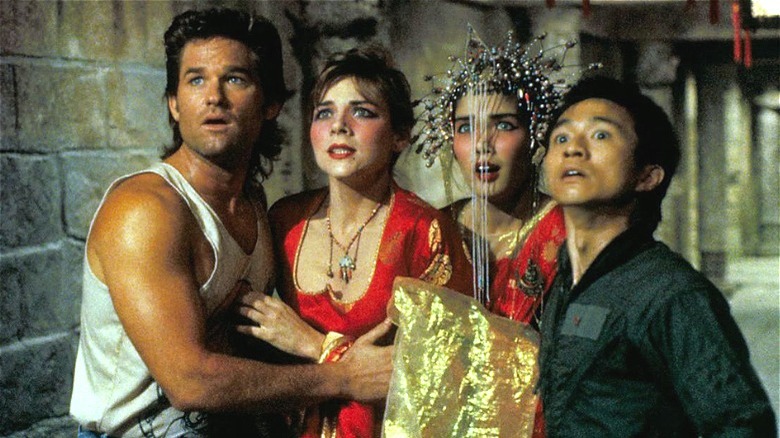
Composed with the help of frequent collaborator Alan Howarth, the score for 1986's "Big Trouble in Little China" avoids trapping itself with racist jingles. There are no out of place gongs, nor that one generic Asian riff. It's straight up '80s rock and roll, as steady as Jack Burton's belief that he's the main character.
The score is headlined by a rarity for Carpenter: a theme song with lyrics. Credited to The Coupe De Villes, "Big Trouble in Little China" is sung by John Carpenter and two buddies: Tommy Lee Wallace, his producer, and screenwriter Nick Castle, better known as the shape under Michael Myers' William Shatner mask. It's light but goofy stuff, meant to be heard in the background as Kurt Russell does cool things and gets upstaged by everyone else doing far cooler things.
The rest of the music isn't the deepest or richest of Carpenter's scores. It doesn't have to be. It remains upbeat, following a movie that's a cheerful homage to wuxia action and quick-paced martial arts. The film, like the score, makes an effort to avoid the racist tropes that are still too common in portrayals of Asian people, and both are the better for it.
9. The Fog
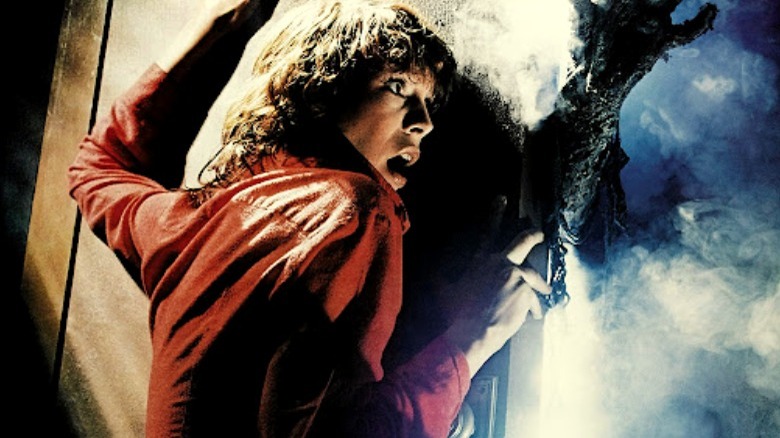
1980's "The Fog" opens with operatic piano music set to the crashing, if synthetically tinny, sounds of thunder. The piano thins into something familiar to "Halloween" fans, repetitive yet haunting. It becomes the thread that ties most of the score together, appearing at crucial moments in the plot, sometimes slowed down during a character's horrified moment of contemplation. The end credits echo the film's opening, adding the unsettling staccato percussion of what sounds like a block of wood being knocked on.
It's not a richly varied score, but it's notable for the way Carpenter grabs onto that one core theme and plays around with it for emotional effect. It's the confident work of a guy that knows he has years of learning ahead of him, but still feels like he's doing pretty well right now. With Carpenter directing, the score does exactly what it needs to do, helping to heighten the tension without overpowering the scene. Carpenter's later compositions are a little more complex, but sometimes the simplicity of one good theme is all a film needs.
8. In The Mouth Of Madness
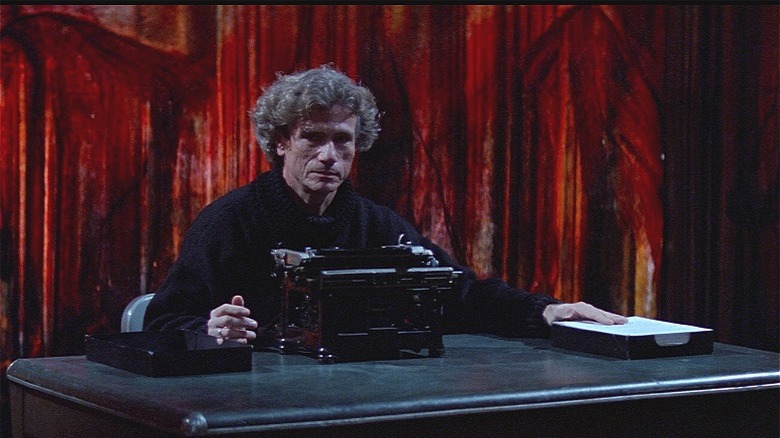
John Carpenter worked with composer Jim Lang for 1995's "In the Mouth of Madness." A love letter to Stephen King, the main theme for this gory cheeseball is pure metal. "In the Mouth of Madness" might be a Lovecraftian-style horror flick, but the score tells us up front that it's going to be cheeky. The Kinks' Dave Davies handles the guitars; it's hard to imagine anyone providing a better riff.
The rest of the score is a subdued mix of bleak, ambient synth and the occasional jumpy chord. The track for "The Black Church" is the most jarring stuff, pulling itself into the foreground with a theatricality that wouldn't be out of place in a Castlevania game. Carpenter's synthesizer pretends to be a pipe organ gone bad, falling into intentional sonic chaos.
The score adds a droning fear to the background of almost every scene. The variety of tones show how far Carpenter's skill has grown since the early '80s, and with Lang's help, make every scene gleefully awful. It's a score that's not as on-the-nose as Sutter Cane's own intervention in the movie's plot, but as an inversion of Crane's dilemma -- his ideas are great, even if his writing isn't -- the score does Crane's job for him, making a little in-joke at the mad writer's expense.
7. Prince Of Darkness
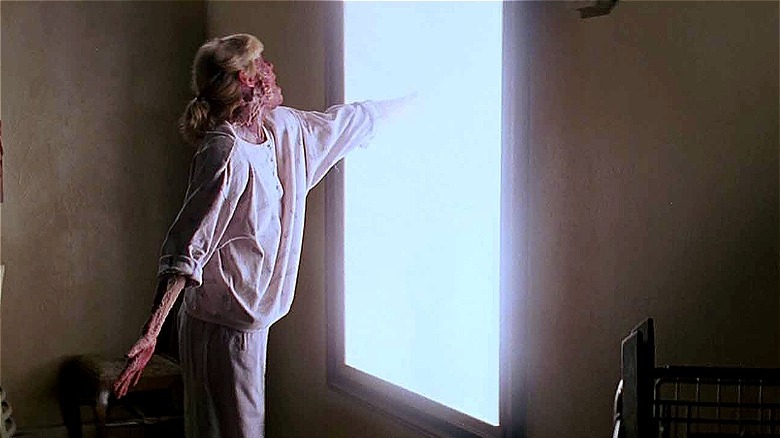
"Prince of Darkness" is a corny but fun blend of science and religious horror. Carpenter's fictional (but well-researched) physics hold up if one doesn't look too closely, and the soundtrack keeps the story bustling along. Carpenter scored this one solo, although longtime pal Alan Howarth produced.
The "Prince of Darkness" soundtrack is initially timid, its opening theme blending together familiar Carpenter synth beats before adding a haunting choral section. Carpenter understands the sounds of religious iconography, and the wordless feminine wails that gradually match with his high-pitched synth evoke the images of ruined statues of Mary and black candles in a desecrated space.
The choral-style sections return as the Anti-God continues to lay claim to a ruined LA church and its secret vault. "Darkness Falls" haunts, fading into bleaker ambience. "Through the Mirror" goes literal, adding the sounds of things breaking and some flat synthetic horns that herald the horror waiting on the other side of reality. Although the score is a solid one with a familiar Carpenter guitar riff in the end credits, at the time of release the highlight of this film's music was a new Alice Cooper tune. Heard on a victim's Walkman, Cooper's "Prince of Darkness" hit the airwaves a couple months later as part of his "Raise Your Fist and Yell" album.
6. Escape From New York
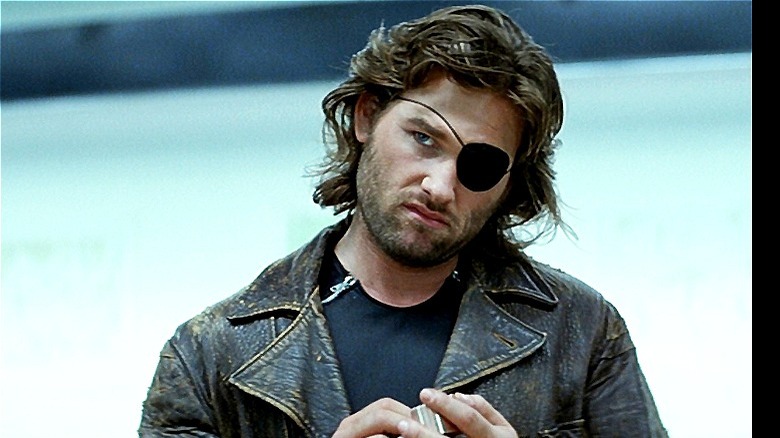
The first collaboration between John Carpenter and Alan Howarth, 1981's cult classic "Escape from New York" is still audibly Carpenter's baby. Still, Howarth's contributions add complexity missing from Carpenter's earlier scores. Carpenter retains control of his synth, but Howarth gives the movie's signature theme an acoustic piano, along with studio guitars. It creates an unusually pure sound when contrasted with the rest of the soundtrack's cyberpunk vibes, giving Snake Plissken a taste of old-school cool.
"Across the Roof" uses some of the same musical notes Carpenter made famous in "Halloween," but set at a different tempo. The man knows what works, and since this science fiction classic was made only a couple of years after Michael's killer debut, it's not surprising that we can hear the similarities. Here, though, Howarth figures out how to elevate Carpenter's signature style without getting in the way.
Two oddities finish out a genuinely fun score. Carpenter performs Claude Debussy's "Sunken Cathedral" on his synth, and a campy showtunes vocal called "Everyone's Coming to New York" is performed with the help of the film's co-writer, Nick Castle.
5. Christine
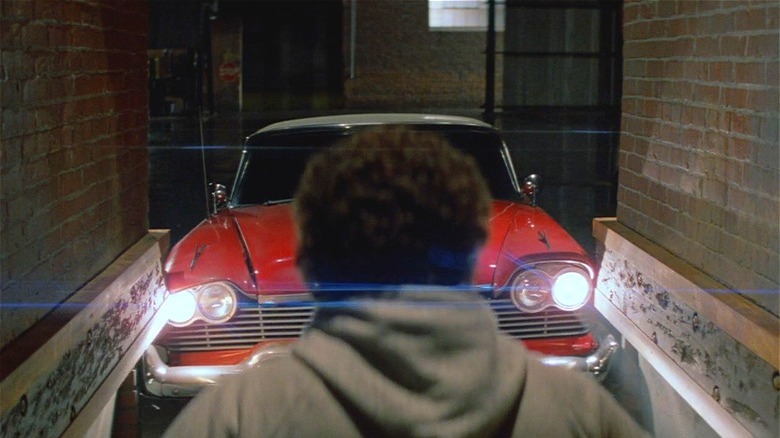
Based on Stephen King's bestselling novel, 1983's "Christine" is one of the few Carpenter films that he didn't help write. He did, however, contribute to the music, adding his signature style and rocking guitar riffs to a Howarth-assisted score, while also adding enough classic tunes to fill out a second CD. George Thorogood's "Bad to the Bone" and Danny & the Juniors "Rock 'n Roll Is Here to Stay" are some of the licks on Christine's radio, with Robert & Johnny's catchy "We Belong Together" serving as the titular vehicle's proclamation of love.
Stephen King's musical tastes aren't hard to divine. He's a classic rocker, a man that probably still has a Blue Oyster Cult ticket stub. John Carpenter implicitly understands the culture surrounding King's stories. Both creators are horror fans with the same musical roots, which builds out of their experiences in complementary ways. Carpenter's composition is still full of simple repetition, but it also shows how well Carpenter knows what Arnie and Dennis are feeling.
Carpenter's essentialist style fits "Christine" in a way that can't be replicated, causing some concern over the news of an upcoming movie remake. Even Bryan Fuller's strong resume can't chase the feeling that only John Carpenter knew how to make his soundtrack sing like a Plymouth Fury roaring her way down the freeway.
4. They Live
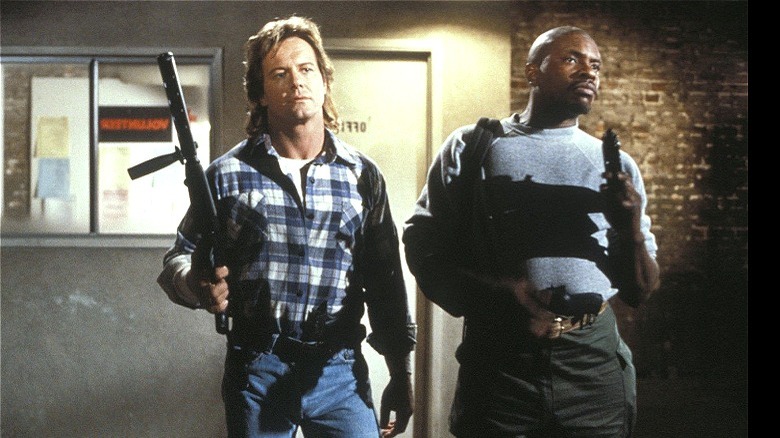
The original soundtrack for 1988's "They Live" is just over a half hour long, and that's part of why it's so highly ranked. Movies are a visual medium, and this one's entire premise relies on what we think we can see. Silence is the biggest tool in this soundtrack's arsenal, making sure our senses are focused on the horrors waiting on the other side of those sunglasses.
Carpenter and Howarth add a blues kick to what music there is, starting with the opening track, "Coming to LA." The familiar Carpenter monotone appears in the bass line, but there's a jazzy harmonica melody that gives it a Depression-era feel. The rest of the tracks are standard for Carpenter. The harmonica returns whenever Piper is back with the street communities, or infiltrating church meetings about the invaders.
"Wake Up" is the only upbeat track on this score, playing over the end credits. Faster guitar and synth tracks sound like a live band shredding at a dive bar, playing a song that extols the virtues of cheap beer while decrying the lasting damage of Reagonomics. The main cast of "They Live" may go down in a grim sacrifice, but the music promises that the fight will continue.
3. Halloween (2018)
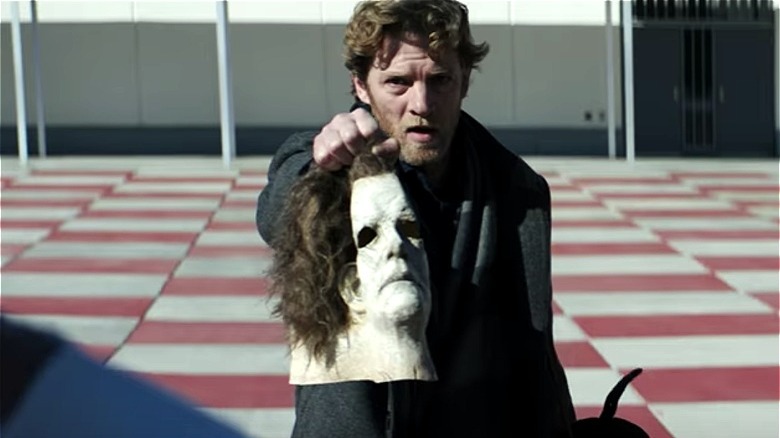
The Halloween franchise suffered through decades of lackluster sequels made by other directors, with each half-hearted new release eating away Michael Myers' mystique. But then, in 2018, Danny McBride surprised horror fans by putting together a script with comedy compatriot David Gordon Green, making a movie that feels like an honest follow-up to the classic film.
Part of the success of the "Halloween" revival lies in its soundtrack, composed by Carpenter himself. John brought his son, Cody, on board, along with Daniel Davies, whose father added those heavy metal riffs to "In the Mouth of Madness" 20 years before. John updates his classic synthesizer theme for the Shape's murderous return, deepening it with a rich piano track and a variety of percussive sounds. The heart of the main theme remains the same, and perfectly so. What applies to the original applies here, but refreshed.
The rest of the score weaves an increasingly percussive but mostly synthetic tapestry, giving Michael's new kills an eerie, out-of-joint accompaniment. There's a variety of new instrumental sounds available for Carpenter to play with, but the same familiar themes keep coming back. Like Michael, set loose in a whole new world full of potential victims, the "Halloween" composer knows what he likes.
2. Halloween
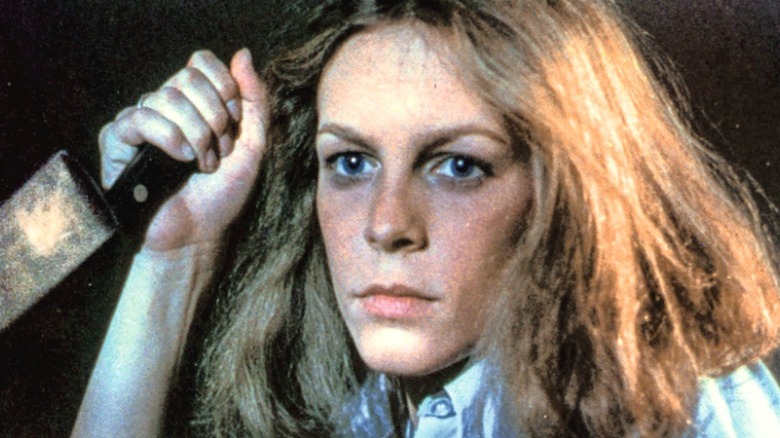
There are two themes an enterprising prankster can blare out a window at night to scare their neighbors. One is "Tubular Bells," made famous by "The Exorcist." The other is John Carpenter's main theme for 1978's "Halloween." Rapid piano notes are backed by what sounds like a heart attack-fast metronome, a metaphor for running away from something that'll never give up.
"Halloween" was only Carpenter's third film and musical score, yet it has a cohesion that marks him as a creator to watch for a long time to come. Carpenter pulled the movie's score together in three days with help from Dan Wyman, who also assisted Carpenter with the score for "Assault on Precinct 13." Despite the crunch, the score itself is legendary.
The music is simplistic and repetitive, which is perfect for the movie, and saves the weirdest twangs of the synthesizer for tracks like "Michael Kills Judith." This track opens with an unsettling, high-pitched screech before the piano returns to provide a stalking beat. It's jangly stuff, but it works; it's a melody that reflects the buzzing hell inside Michael's head. "The Shape Stalks" plays over the finale, all heavy monotone dread and screaming electronic noises. Michael isn't a complex creature, and neither is the music that accompanies him. As a whole, the "Halloween" score promises viewers that Michael isn't done killing. The nightmares won't stop anytime soon.
1. The Thing
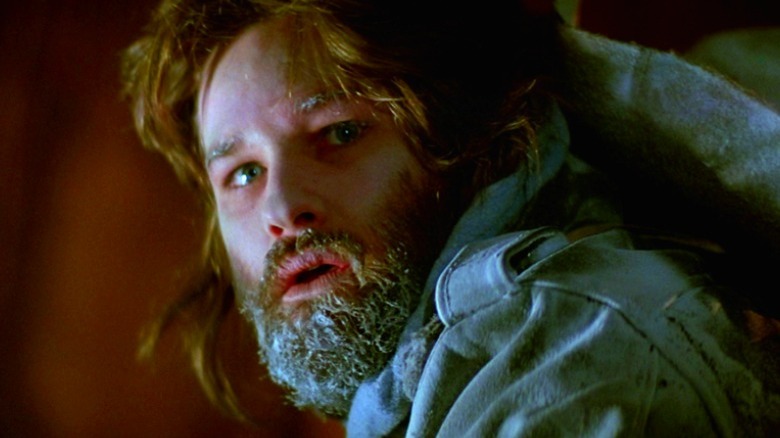
Ennio Morricone is one of the few outside composers who has scored a John Carpenter film, and for 1982's "The Thing," he mimics and uplifts Carpenter's signature style. The main theme is built from a heavy monotone that's made people assume this was a Carpenter score for decades. That may be the best compliment for both composers. "The Thing" has the best Carpenter score, hands down, and it wouldn't exist without Carpenter having a style of his own.
The synthetic bass runs through the movie like the Thing's unkillable heartbeat. Morricone has a bigger musical palette than Carpenter, and sometimes he cuts the tension with soft strings. The track "The Norwegian Camp" is mournful in this way, serving as elegy for characters whose deaths tell a terrifying story -- if only our leads could interpret it.
"Weird and Pissed Off" mimics a racing heartrate monitor in its last second. "The Crater" echoes its theremin-fueled predecessor, Dimitri Tiomkin's score for 1951's "The Thing from Another World." "The Real Thing" skitters along using strings, as inhuman as the titular critter. Finally, as the credits roll, it's back to that rhythmic, monotone bass. Ennio Morricone showed the world that John Carpenter's deceptively simple musical style could embody horror itself.
For Carpenter, The Music Never Stops

John Carpenter's last film came out in 2010, but he never stopped making music. Carpenter has released three studio albums collected under the "Lost Themes" title. The lasting popularity of his film scores and the dark, imaginative ambience of his new work saw him perform live for the first time in 2016. In 2018, Carpenter hit the road with Cody Carpenter, Daniel Davies, and a backup crew honed by touring with Tenacious D.
Carpenter's tour was as eccentric as his music. As seen live in Pittsburgh in 2018, the stage sported a billowing smoke machine and a lot of neon. A big screen played clips from his movies in time with the music, with tunes like "The Porkchop Express" spotlighting Davies while Kurt Russell's majestic mullet flowed in the background. Carpenter remained the king of the synthesizer, happily jamming alongside his son. It was clear the Carpenters were having the time of their lives, reminiscing with the audience through the music that shaped our love of horror.
The finale of the concert brought the guitars back out, rocking to those big sounds of "In the Mouth of Madness." Carpenter returned for a four-track encore, and it's hard to decide if "Christine Attacks" or the theme from "Prince of Darkness" was better. Both had a liveliness that a recording can't capture. If John comes back for another tour, I can't recommend the experience enough.
Read this next: John Carpenter Masterclass: The Future Of Horror, Changing Careers, And More [Fantasia Film Festival]
The post Ranking John Carpenter's 10 best film scores appeared first on /Film.
Russell Crowe's 13 Best Movies Ranked
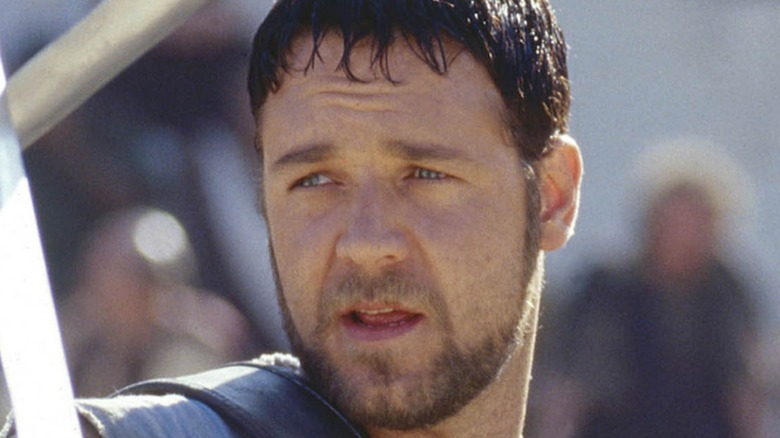
Russell Crowe has a versatility that is rare among actors in the later stages of their careers. While the Australian first established himself as a leading man, he has comfortably stepped into supporting roles over the past few years. He recently made the transition to the small screen as Fox News mastermind Roger Ailes in Showtime's "The Loudest Voice," and made his directorial debut with the World War I epic "The Water Diviner." While his outlandish performance in 2020's road rage thriller "Unhinged" may have earned him some of his worst reviews ever, it showed a willingness to experiment that is refreshing.
Narrowing down Crowe's strongest work is no easy task. Not only is he the star of two back-to-back best picture winners, one of which also earned him a best actor trophy, but he's made historical dramas, romantic comedies, inspirational sports films, gritty crime thrillers, and everything in between. There's not just one type of Russell Crowe movie, and as a result his filmography is eclectic. With that in mind, here are his 13 greatest movies, ranked from best to worst.
Romper Stomper
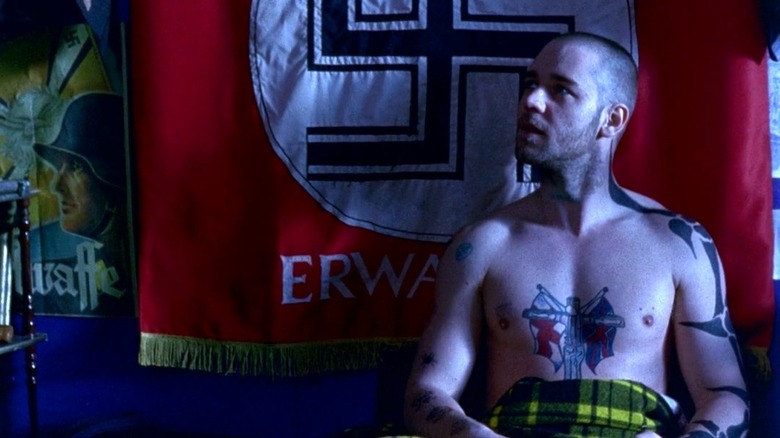
It's remarkable that Crowe found success as a charismatic lead given that his breakout role was as an absolutely unlikeable character. The 1992 Aussie drama "Romper Stomper" saw Crowe play a ruthless neo-Nazi who leads a violent skinhead group into skirmishes with rival gangs. Crowe is unsettling in this film, prone to psychopathic behavior and sudden bursts of aggression.
Crowe plays Hando as an insecure brute who's taken aback by the growth in diversity in his community. He's terrifying, and while there's no attempt to humanize him, Crowe's realism helps elevate the ensemble, which does feature a few characters who grow and change. Still, "Romper Stomper" is often difficult to watch because of how effective Crowe is at playing the white nationalist.
"Romper Stomper" is a flawed film that leans too heavily on "Reservoir Dogs"-like stylistic flourishes, but Crowe elevates the material, especially when Hando's insecurities are tested in the final act. Crowe would go on to star in brilliant films from acclaimed filmmakers, so "Romper Stomper" is interesting mostly because you can see Crowe save a film that wouldn't be nearly as interesting without him.
Boy Erased
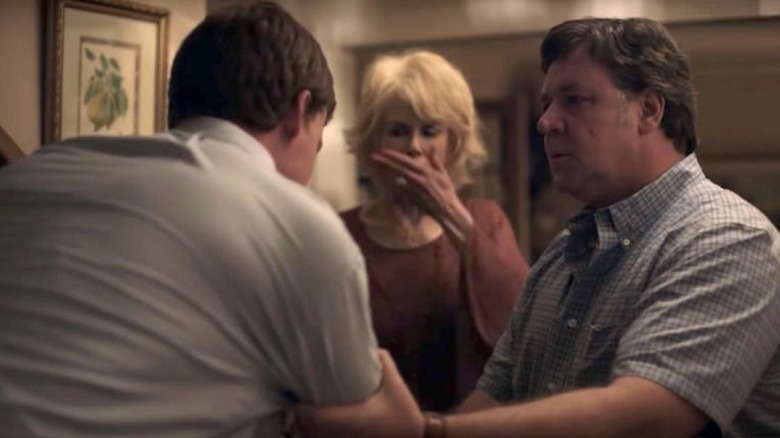
One of Crowe's most admirable qualities is his willingness to play smaller roles, making the most of limited screen time. "Boy Erased" is a great example. As a respected car dealer and Baptist preacher who sends his gay son Jared (Lucas Hedges) to conversion therapy, Crowe adds dimensions to a character that may initially appear to be one-note, delicately complimenting the younger stars at the center of the film.
The actions of Jared's father trigger the film's exploration of these horrific camps, but Crowe's character's lack of outward hatred towards his son makes him more complex. He's driven by misplaced empathy, setting up a nuanced father-son confrontation once Crowe witnesses the pain his child has endured. It's a thoughtful performance that never takes Jared's suffering for granted or feels like it's endorsing bigotry.
Crowe compliments his onscreen partner Nicole Kidman through his restrained yet effective threats when she attempts to get greater agency. His last conversion with Hedges is similarly mannered, as Jared's father expresses words of appreciation that ring hollow given his refusal to apologize. While not at the center of the film, Crowe makes "Boy Erased" better.
The Insider
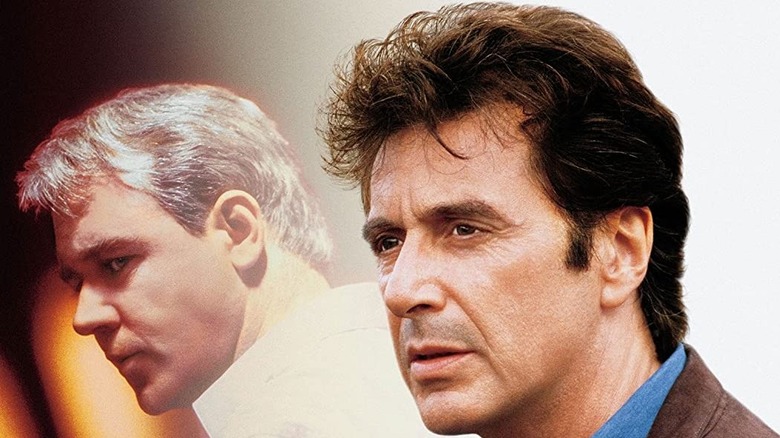
Crowe earned his first Academy Award nomination for best actor for his performance as whistleblower Dr. Jeffrey Wigand in Michael Mann's anxiety-inducing conspiracy thriller "The Insider." A leading expert within the tobacco industry, Wigand is hesitantly spurred into sharing damaging information with "60 Minutes" journalist Lowell Bergman (Al Pacino). As a result, his life is upended as he's spied on by malicious agents working for his former employers.
Initially, Wigand is deeply troubled by Big Tobacco's denial of the health risks surrounding its products and the industry's connection to government agencies, but the fear of disrupting his family life outweighs any aspirations for justice. Seeing a reluctant hero wrestle with the consequences of his actions is more interesting than watching one who is unabashedly valiant.
For the part, Crowe sheds his typically confident persona, turning in a performance that plays up the character's neuroses and anti-social tendencies. The depiction of Wigand's day-to-day responsibilities as a father makes it much more chilling when they're disrupted by spies and analysts, too. "The Insider" is a precise, suspenseful thriller, and Crowe blends seamlessly into its paranoid, high-stakes world.
Body Of Lies
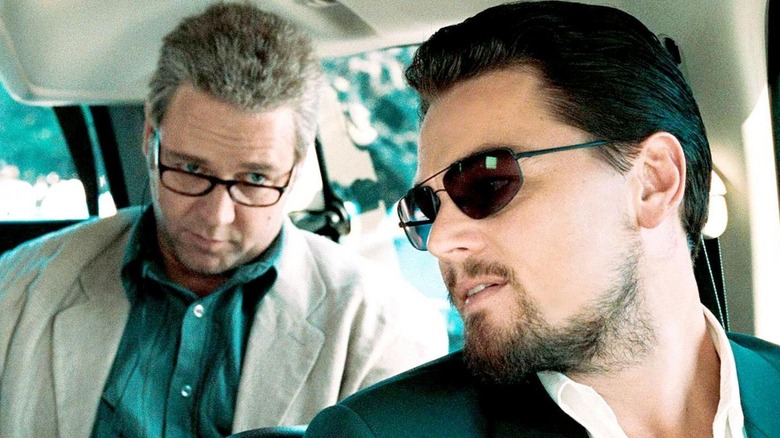
Crowe makes up one half of a memorable buddy duo in Ridley Scott's espionage thriller "Body of Lies." In the movie, Crowe plays CIA chief Ed Hoffman, who guides field officer Roger Ferris (Leonardo DiCaprio) as the latter embarks on a dangerous mission to infiltrate a terrorist sect in Jordan. Although Hoffman is generally steadfast and follows the rules, Ferris' rebellious spirit begins to rub off on him once he discovers that the U.S. government is intentionally spreading misleading information.
While DiCaprio is in the thick of the action, Crowe spends most of his time on the sidelines, overseeing operations from a base. Crowe leans into Hoffman's anxieties as he's forced to make tough calls, and fends off the powerful forces that hope to silence anyone who leaks the government's secrets. As a result, the grounded sequences with Crowe are just as exciting as the action-centric ones with DiCaprio.
Crowe adds an appropriate amount of comedy to the mix, as Hoffman is so focused on detail-driven data that he often takes the risks Ferris faces for granted. The relationship between the two leads is well developed, despite the fact that they rarely share the screen together. An underrated film, "Body of Lies" shouldn't be considered a lesser endeavor from either Crowe or Scott.
State Of Play
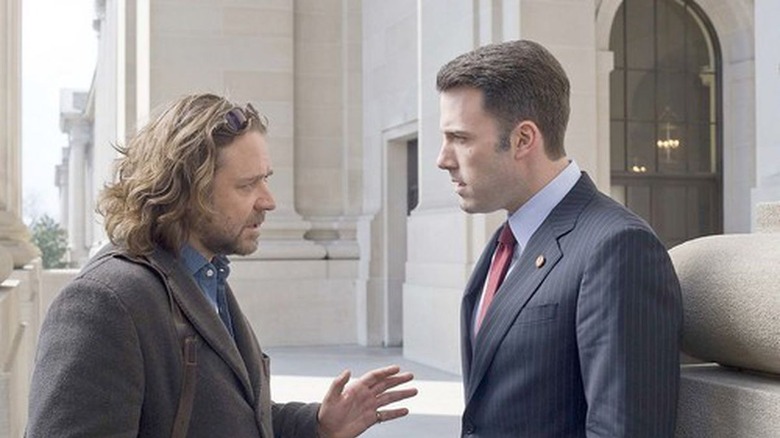
Crowe has no qualms about stepping into the shoes of iconic characters, and he brilliantly reimagined journalist Cal McCaffrey in the film adaptation of the acclaimed BBC limited series "State of Play." An idealist in a world of cynics, Cal grows fascinated with the suspicious death of Congressman Stephen Collins' (Ben Affleck) young mistress.
Crowe embodies the curiosity of a career reporter who is driven to pursue justice, even if he fears his impact will be minimal. Cal is skeptical of Collins' motivations, but he's willing enough to hear the politician's side of the story. Crowe doesn't make Cal so cynical that he loses the audience's empathy, either, while an engaging relationship between McCaffrey and his protégé Della Frye (Rachel McAdams) allows McCaffrey to show his expertise while exposing the human side of the austere character. With Crowe at the center, the American remake is a worthy companion to the original British version of "State of Play."
Cinderella Man
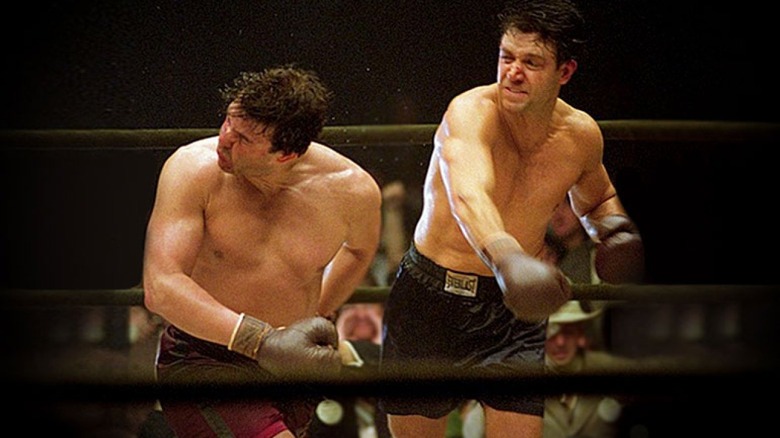
Boxing dramas never go out of style, and Ron Howard's "Cinderella Man" is one of the best in recent memory. Crowe stars as James J. Braddock, a mild-mannered light-heavyweight who comes back from injury to compete for a title shot. Previously, Braddock had abandoned the sport due to the burden it placed on his wife Mae (Renee Zellweger) and their young son Jay (Connor Price), and only reluctantly agrees to return thanks to the prodding of his lifelong friend and trainer, Joe Gould (Paul Giamatti).
Crowe brilliantly plays a figure who unexpectedly becomes an inspiration to his New Jersey community during the Great Depression. Even as Braddock advances to later rounds, Crowe retains his humility. A touching scene in which Braddock forces Joe to apologize for stealing depicts him as a stern, yet empathetic father.
Crowe transformed himself physically and made the boxing sequences exhilarating; while "Cinderella Man" is steadfast in its sincerity, its combat is brutal. By the end of Braddock's title fight, it's clear why his perseverance inspired so many during an era without much hope.
American Gangster
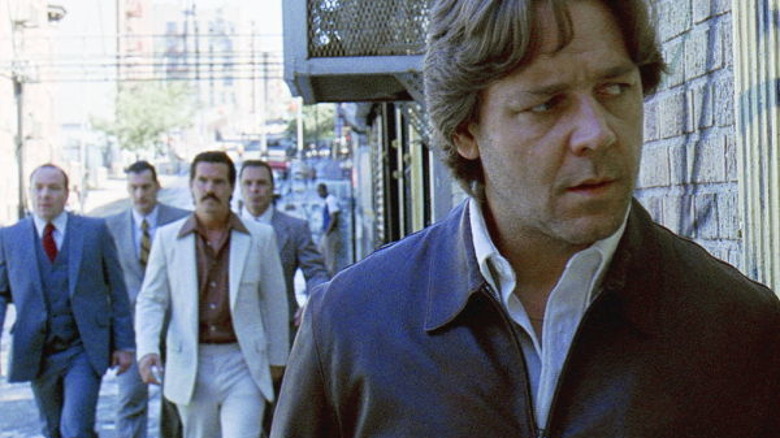
Another pairing with Ridley Scott, "American Gangster" is an epic cat-and-mouse game that remains compelling for its entire 157-minute runtime. Crowe appears as Newark detective Richie Roberts, a lawyer-in-training who becomes obsessed with Harlem mob boss Frank Lucas (Denzel Washington) and his rise to prominence as the rare Black gangster.
Crowe has the challenge of playing a character who is completely overwhelmed by Lucas' power, and he rightfully dulls his on-screen presence in order to let Washington's undeniable charisma shine. Robert's befuddlement with how "the Black Godfather" has been so successful in a typically bigoted community is exasperated when his fellow law enforcement officers refuse to believe his informed insights.
A side plot sees Roberts sparring with his ex-wife (Carla Gugino) during divorce proceedings, adding to the sense that Roberts is overwhelmed. It's surprising to see the respect that grows between Robert and Lucas, two hard working professionals on opposite sides of the law; a film like this requires two dynamite leads, and, thankfully, Crowe and Washington are just as good as you'd expect.
3:10 To Yuma
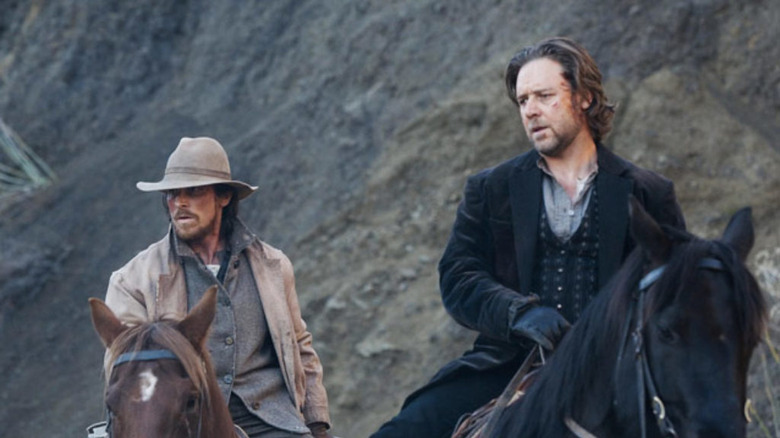
Like "State of Play," James Mangold's reimagining of the classic western "3:10 to Yuma" is a remake worthy of the original. Crowe steps into the shoes of notorious gunslinger Ben Wade, a role originated by Glenn Ford in the 1957 film, to show what happens when Wade is captured by an unassuming rancher (Christian Bale), only to join forces with him as they avoid Wade's men on their journey to the titular train stop.
In "3:10 to Yuma," Crowe and Bale modernize archetypical Western characters. Bale brings the weariness of an injured veteran to the film, and Crowe paints Wade as a product of his environment. His crimes are the result of an unjust government that's too slow to dole out resources, allowing a criminal sect to flourish. Crowe isn't an over-the-top villain, but rather a pragmatist who has strategically cultivated his reputation.
Crowe's command of his men, chiefly his top lieutenant Charlie Prince (Ben Foster), is shown early on, and the gang's unflinching loyalty to Wade sets up an interesting showdown when the outlaw comes to the aid of the rancher and his son. Although it replicates key beats of the original, 2007's "3:10 to Yuma" stands as a western classic in its own right.
A Beautiful Mind
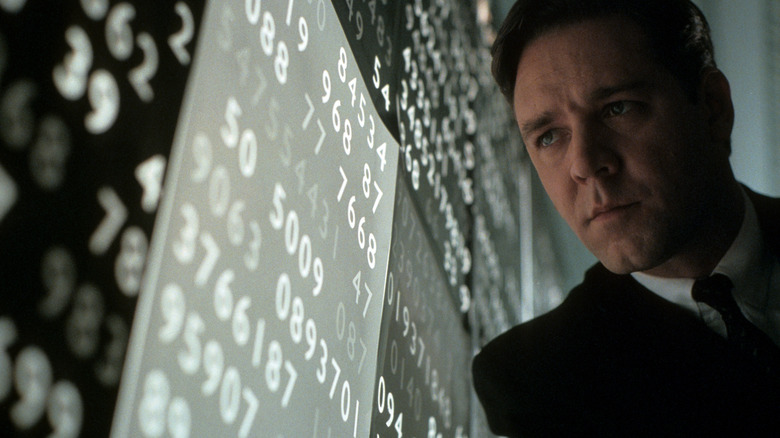
The second of Crowe's back-to-back best picture winners, "A Beautiful Mind" thoughtfully examines the troubled life of brilliant mathematician John Nash. Crowe shows again that he can portray austere characters with depth and empathy, as early on the neurotic genius is characterized by his social awkwardness, and later by his schizophrenia.
Crowe respectfully doesn't lean into showy eccentricities that would devalue or demean the struggles that Nash endured. Instead, "A Beautiful Mind" treats mental health trauma thoughtfully, avoiding harmful stereotypes. We see Nash's decline through his own eyes; his shock at discovering that he's suffering from delusions is a twist for the audience too, as we've been led to believe that Nash's perception was accurate. Director Ron Howard brilliantly tells the story entirely from Nash's perspective, fleshing out the symptoms of his illness.
Crowe's sincerity guides the film through story beats that could feel like biopic clichés. Nash's his romance with his protégé -- and later, his wife -- Alicia (Jennifer Connolly) comes across as touching, not tacked on, and the quintessential "inspirational end speech" in which Nash calls Alicia's love his anchor point is genuinely moving. "A Beautiful Mind" feel light compared to other best picture winners, but Crowe's performance remains a standout.
Gladiator
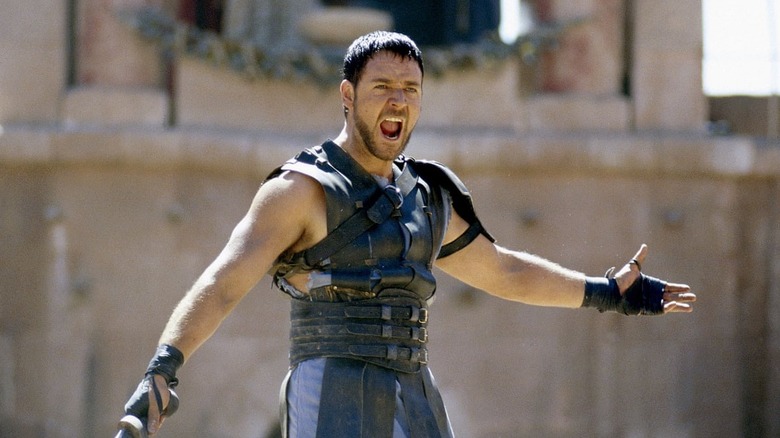
Crowe earned his Academy Award for best actor for "Gladiator," one of the definitive screen epics of the 21st century. Crowe wrings all the dramatic potential out of Maximus Decimus Meridius, a humble Roman general promised the title of Emperor by the current ruler, Marcus Aurelius (Richard Harris), an act that spurs Marcus' vengeful son Commandus (Joaquin Phoenix) into murdering Maximus's family and selling him into slavery. As the title indicates, Maximus has to rise through the ranks of gladiatorial combat in order to achieve justice.
An old-fashioned approach to a classic story of loss and revenge isn't stale when it's this masterfully done. Despite the epic scope of Ridley Scott's riveting action sequences, Crowe keeps it grounded emotionally, as his loss drives him to engage in the violent games. Crowe perfectly plays Maximus's unfamiliarity with this style of combat; Maximus is used to noble campaigns, not gladiators' dirty, intimate violence.
The pain of Maximus's loss is never forgotten, and Phoenix's sniveling performance only heightens the suspense prior to the climactic final duel. "Gladiator" is more than the sum of its parts; with Crowe at the center, the detailed historical backdrop and nuanced language aren't a barrier to moments of both triumph and heartbreak.
The Nice Guys
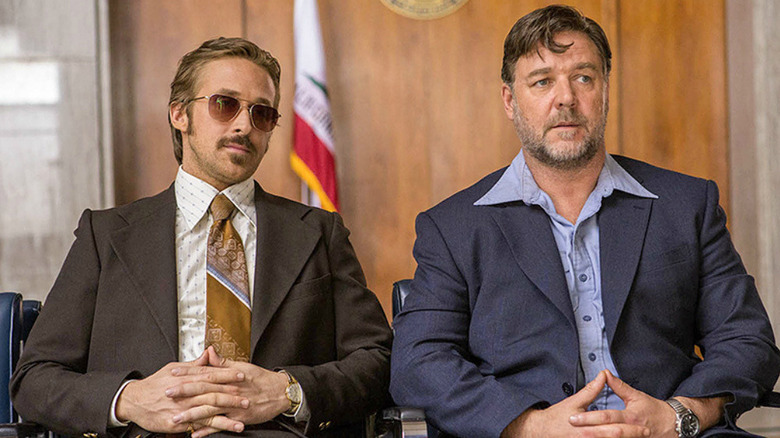
Crowe does not get enough credit for how funny he can be. The blunt staunchness he brings to dramatic roles also makes him the perfect straight man in comedies. No film demonstrates this better than Shane Black's incredibly underrated buddy cop film, "The Nice Guys." In the movie, Crowe plays an intimidating heavy named Jackson Healy, a troubled detective who reluctantly joins forces with an alcoholic private eye named Holland March (Ryan Gosling).
Gosling swings for the fences with a wild performance that aims for Buster Keaton-level physical humor, and Crowe is perfect as his deathly serious counterpart. If Gosling delivers Black's clever lines as eccentrically as possible, Crowe is dry enough to suck all the zest out of his enthusiasm. Crowe's physicality also distinguishes him from Gosling, who manages to injure himself in a variety of hilariously violent ways.
The performances don't descend into caricature, and Crowe shows real depth when interacting with Holland's daughter, Holly (Angourie Rice). Crowe makes these moments touching without being saccharine, and seeing the trio develop as a team makes the investigation more compelling. It's an absolute shame that the film's disappointing box office returns dampened the prospects for Crowe and Gosling to return to these characters in sequels.
L.A. Confidential
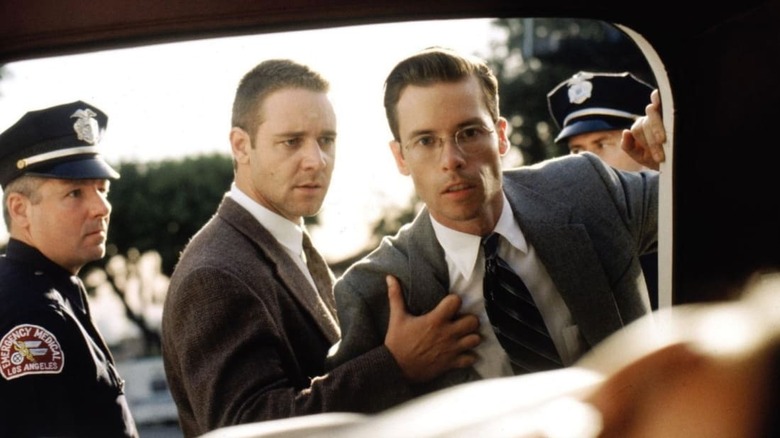
A more serious take on a Los Angeles-set noir story than "The Nice Guys," "L.A. Confidential" is still a ton of fun. The nostalgic approach to film noir is modernized through an exploration of police brutality, as well as the complex performances by Crowe as aggressive LAPD officer Bud White and Guy Pearce as geeky analyst Ed Exley.
There is some humor mined from the union of these clashing personalities, but "L.A. Confidential" plays their investigation into the blackmailing of prominent Hollywood figures pretty straight. Crowe's sudden and violent outbursts, particularly during the film's opening recreation of "Bloody Sunday," adds pressure to Pearce to reign him in. The characters are so duty-driven that they rarely acknowledge their appreciation for each other, but the subtle comfort that develops between the two comes as a bright spot during the ambiguous finale that indicates that, despite their efforts, corruption will continue.
Kim Basinger won an Academy Award for her performance as high-end prostitute Lynn Bracker, and her romance with Crowe is a timely update of the standard relationship between the femme fatale and the brooding detective that grants both characters agency. Crowe's emotionally stunted rule-breaker is just one of the noir archetypes that "L.A. Confidential" subverts.
Master And Commander: Far Side Of The World
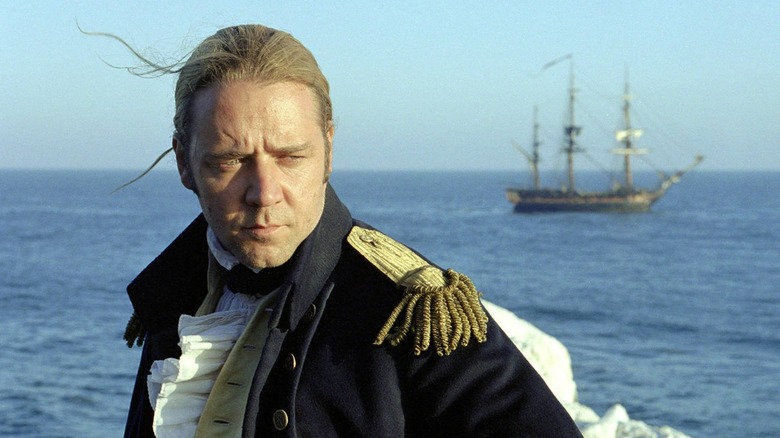
There's a reason why, nearly two decades after its initial release, fans still clamor for a sequel to "Master and Commander: Far Side of the World." The Napoleonic epic may have underwhelmed at the box office, but it's among the most meticulous and gripping depictions of naval combat to ever grace the screen, and Crowe's performance as literary hero Jack Aubrey is one of the key reasons why the film has endured as a favorite.
The captain of the HMS Surprise is a respected veteran of the war campaign, but between unprecedented weather conditions and missions to capture French privateers, Aubrey is left vulnerable by his adventures. Crowe has an engaging repertoire with his crew, whom he shows a fondness for, yet he keeps at a distance in order to maintain his professionalism. Aubrey has seen men he cares for die in combat, and the loss of a single crew member weighs heavily on his heart.
The scale of Peter Weir's expansive sets and eardrum-shattering action sequences is truly awesome, but every combat decision is determined by the crew. Crowe's titular leader is tasked with providing instruction and inspiration during these chaotic sequences. It's a shame that "Master and Commander: Far Side of the World" didn't spawn a recurring franchise, but it remains the crowning achievement of Crowe's career thus far.
Read this next: 20 Years Later, 'L.A. Confidential' Ranks As One Of The Best Movies Of The '90s
The post Russell Crowe's 13 best movies ranked appeared first on /Film.
New Foundation Image Shows Off Lee Pace As A Godlike Clone Emperor
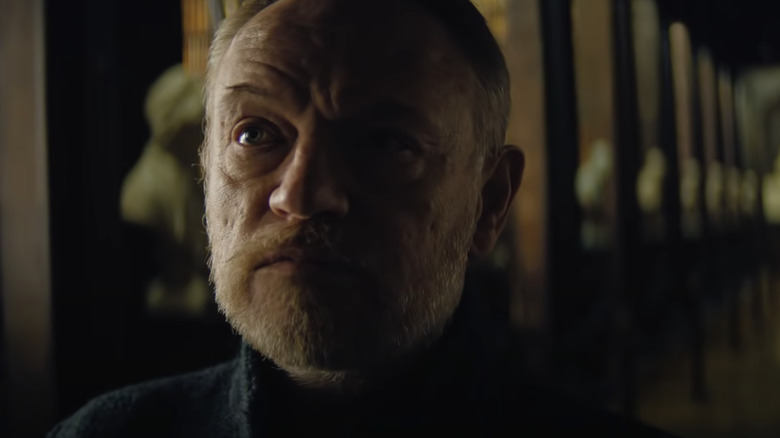
"Foundation," the Apple TV+ adaptation of Isaac Asimov's influential science fiction book series, is less than a week away. The show premieres on September 24, 2021, and it promises to deliver an escapist narrative set in the far future, which could also be germane to the plight of Earth's residents in the here and now.
Jared Harris stars as a scientist who is an expert in "psycho-history," able to predict humankind's fate in numbers. He sees that it is "staring down the barrel of a crisis" and wants to stave off its dark future by preserving a foundation of knowledge for the next generation.
This puts him in the crosshairs of an evil Galactic Empire that would rather preserve its power and stamp out any knowledge that might undermine it. Lou Llobell and Lee Pace co-star, and Llobell featured heavily in last month's trailer for "Foundation." But it's Pace who turns up in the pages of Entertainment Weekly's upcoming fall TV preview.
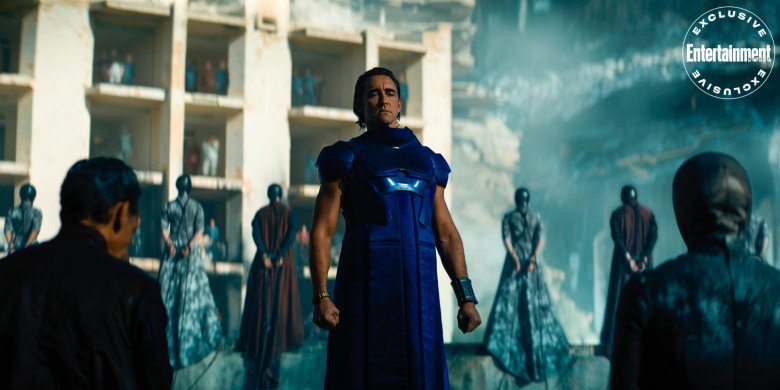
"Foundation" is one of the many shows featured in the magazine, which includes this new promo image of Pace in his futuristic God-Emperor garb. Did I mention he's a clone, the latest ruler in a Genetic Dynasty?
Check out the image below.
Another Major Star Wars Influence
If the evil Galactic Empire part of "Foundation" sounds reminiscent of another space saga in a galaxy far, far away, it may be because Asimov's novels, first published in the early 1950s, helped inspire "Star Wars." At this point, it feels like virtually every piece of pop culture pre-1977 gets retconned as a "Star Wars" inspiration, but in the case of "Foundation," it may actually be true. In the first trailer for the show last year, co-creator David Goyer had this to say:
"People have been trying to make 'Foundation' for over 50 years. 'Foundation' was an enormous influence for 'Star Wars.' It was the greatest science fiction work of all time. The story is sprawling; the scope is sprawling. It unfolds over the course of a thousand years."
As scientists in the real world continue to deliver dire warnings about the catastrophic path this planet is on, it feels like "Foundation" couldn't be more relevant to our current predicament as a species. Whether or not Goyer's show manages to execute a compelling metaphor for the climate crisis remains to be seen.
Here's the official synopsis for "Foundation" via Apple:
The fate of an entire galaxy rests on the beliefs of Dr. Hari Seldon (Jared Harris). Will his conviction save humanity or doom it? Based on the award-winning novels by Isaac Asimov, Foundation chronicles a band of exiles on their monumental journey to save humanity and rebuild civilization amid the fall of the Galactic Empire.
"Foundation" debuts on Apple TV+ on Friday, September 24, 2021.
Read this next: Foundation Season 1: Release Date, Cast And More
The post New Foundation Image Shows Off Lee Pace as a Godlike Clone Emperor appeared first on /Film.
Crysis Remastered is available on Steam now

Crysis Remastered landed on the Epic Games Store last year, and the Crysis Trilogy Remastered will similarly don its freshly dry-cleaned nanosuits for Epic's store on October 15th. But as of today, you can also grab Crysis Remastered from Steam.
Midsommar Ending Explained: Bad Breakups, Burning Buildings, And Bears, Oh My!

The A24 daylight horror "Midsommar" isn't your typical slasher or haunted house flick. Writer and director Ari Aster balances running meta-commentaries on trauma, gender, relationships, race, cults, and personal identity all while providing plenty of scares and a surprising number of laughs.
"Midsommar" follows Dani (Florence Pugh) after she loses her entire family in an unspeakable tragedy. Her relationship with her boyfriend Christian (Jack Reynor) isn't great, but he invites her along on a trip with him and his friends to a remote village in Sweden anyway. Christian and his friends Josh (William Jackson Harper) and Mark (Will Poulter) are going with transfer student Pelle (Vilhelm Blomgren) to witness an ancient ceremony that only happens once every 90 years. They are met by Connie (Ellora Torchia) and Simon (Archie Madekwe), students from London brought by Pelle's brother, Ingemar (Hampus Hallberg).
Because of the village's placement on the globe in rural Hälsingland, Sweden, they have days in the summertime where the sun shines for 23 hours or more. This near-constant daylight is already disorienting, but the people of the commune of Hårga also encourage their visitors to take psychedelic drugs. Things go from strange to scary as the guests start disappearing one by one. By the time "Midsommar" ends, Dani has gone through all of the stages of grief for her family, her relationship, and her former self. So how does the violent, wild ending of "Midsommar" stand up now that the shock has worn off? Let's take a look, spoilers and all.
Communal Catharsis And Shared Grief
Dani, Christian, and the rest of the visitors are understandably shaken after witnessing an ättestupa, a ritual in which two elders sacrifice themselves by jumping off a cliff. Connie and Simon both take off, allegedly getting rides back to town. Dani and Christian begin arguing more, as she doesn't feel safe in this bizarre environment. Meanwhile, Hårga member Maja (Isabelle Grill) clearly has eyes for Christian, and she sets about doing a love spell ritual that involves feeding him her pubic hair and menstrual blood.
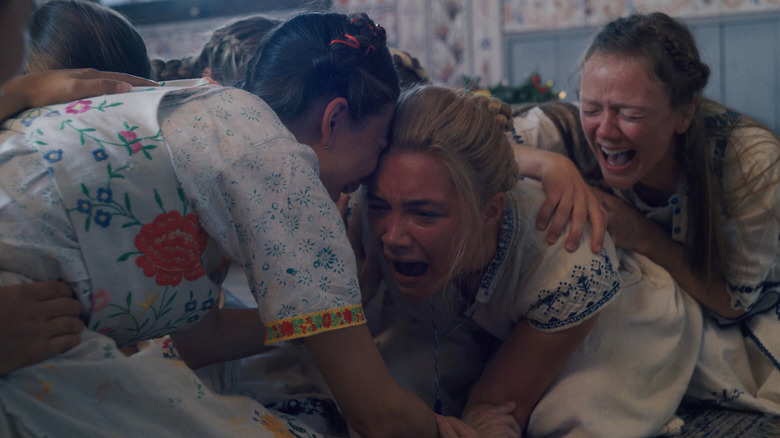
Dani participates in more rituals with the Hårga, including a dance around the maypole while high on psychedelic tea to choose the new May Queen. Dani is the last one standing and is crowned the May Queen, adorned in a crown of flowers and carried around on a platform and pulled in a human-drawn carriage. While she's off performing a harvest ritual using flowers and other sacrificial items, Christian participates in a sex ritual with Maja and many of the other women. Dani catches him in the act and runs, sobbing, into the young people's living area. She's caught by the other young women, who hold her and begin sobbing along with her.
Throughout the course of Dani's ordeal, she has felt isolated. Christian never made her feel supported or loved, and her own family was gone. The women of the Hårga embrace her and make her "feel held" as they share in her grief. Dani has been looking for community all along, and she's finally found it. The question becomes whether that community is better or worse than her isolation.
A 21st Century Fable

After Dani and Christian each go through their separate ordeals, the Hårga prep them for the final ceremony. We discover that Mark, Connie, Josh, and Simon were all killed by the commune and each has been dressed to represent their place as a sacrifice. Pelle's brother, heartbroken over Connie, offers himself as one of the sacrificial members from Hårga, alongside another member named Ulf. As the May Queen, Dani is expected to choose the final sacrifice and is offered two choices: a random villager, or Christian, sewn into the skin of a grizzly bear. She chooses Christian, of course, in what's possibly the harshest breakup of all time. Christian is taken into the yellow, pyramid shaped temple, and then the members of the commune light it ablaze.
Dani and the rest of the commune flail and scream in unison with the men who are trapped, burning alive inside of the temple. They share in more communal suffering, but the final shot lingers on Dani's face as a smile breaks across her face.
While that smile is extremely cathartic for Dani and anyone who identifies with her struggle, it's also a little scary. Dani went from being isolated and miserable to held and happy, but at what cost? Nine people are dead, counting the elders, and Dani has joined a commune that's fine with drugging people and ritual sacrifice. It's a great "be careful what you wish for" kind of fable, because there's no telling what kinds of horrors Dani might eventually commit herself as a member of Hårga.
Differences In The Director's Cut

Ari Aster's original vision for "Midsommar" ran long — clocking in at nearly three hours. Subplots that gave characters more depth were dropped, because most of them intertwined too deeply to cut one and leave the others. Thankfully, Aster and A24 released his director's cut, which provides more context for the film's fiery finale.
Included in the director's cut are extended scenes of Christian and Josh's dueling theses, some hints that the Hårga are white supremacists, a sequence that explains Connie's death by drowning, and more. The scenes make Hårga seem much more sinister, and Dani's joining them at the end is much more bittersweet. It does also show just how awful most of the visiting Americans are, providing heavier commentary on American imperialism.
Perhaps the most important scene added back into the director's cut shows Christian consenting to the sex ritual long before he takes any psychedelics. His betrayal of Dani is more concrete, making his brutal end just a teensy bit more justified. The director's cut is a much more complete story that gives viewers more to chew on, and fans of the theatrical cut are bound to get something out of it. Unfortunately, the only way to do that currently is on Apple TV or by finding one of the A24 special edition Blu rays.
"Midsommar" is a complex film with a lot to say, but its ending doesn't give any easy answers.
Read this next: 'Midsommar': Ari Aster And Florence Pugh's Complex, Climactic Catharsis
The post Midsommar Ending Explained: Bad Breakups, Burning Buildings, and Bears, Oh My! appeared first on /Film.
14 Family Horror Films That Were Too Scary For Kids
Ask anyone about the memorable movies of their childhood, and chances are there will be at least one that has left some long-lasting trauma. We all remember those films that we watched at a tender and vulnerable age that scarred us for life. In some cases, it's because we watched "grown up" movies when we were too young; more often than not, though, it's because we watched a PG film that ended up containing something horrific, terrifying, or heinous that gave us nightmares for weeks.
Whether it's a movie that adapts a beloved (but dark) kids' book or something completely original, these films left us with indelible images that are burned into our brains. Try as we might, we still can't shake them. That's actually a normal and healthy part of growing up! And the best part is, once you're an adult, you might have children of your own who you can inflict your cinematic demons upon, starting the entire cycle anew.
Dark Crystal (1982)
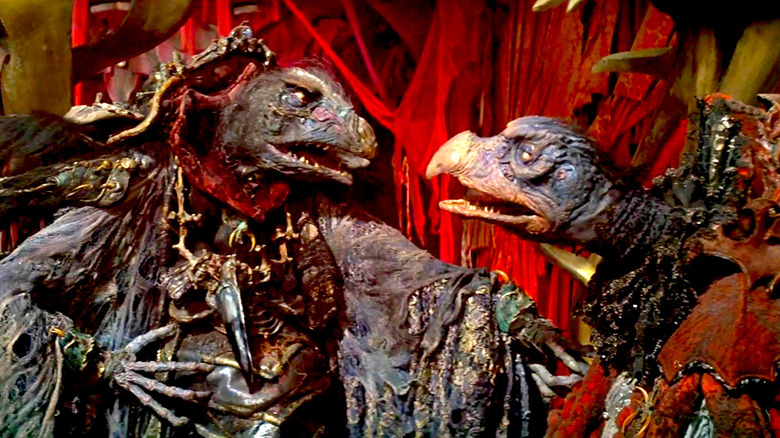
We all have nostalgia for the decade we grew up in, but it's hard to argue with the fact that the '80s had a plethora of brilliant fantasy films for children. This was largely due to one man: Jim Henson. Henson's puppets could be colorful and friendly ("Sesame Street," "The Muppets") or extremely dark and disturbing, as in "The Dark Crystal" (1982) and "Labyrinth" (1986).
The vulture-like Skeksis, the villains of "The Dark Crystal," are burned into the brains of many of us who were children at the time -- and in 2019, Netflix brought them back to traumatize our kids. "Do it, or the Peeper Beetle will get you" is now a frequent threat in this particular household, thanks to Netflix's prequel series, "Dark Crystal: Age of Resistance." As far as the original film goes, the Skeksis Emperor's death scene is particularly horrific.
But the Skeksis aren't the only creepy creatures in this universe. Landstriders and Garthim also provided unsettling shivers up the spine. Henson believed that a good dose of fear was an important part of children's diets, and he certainly provided a large portion of that in "The Dark Crystal."
Ghostbusters (1984)
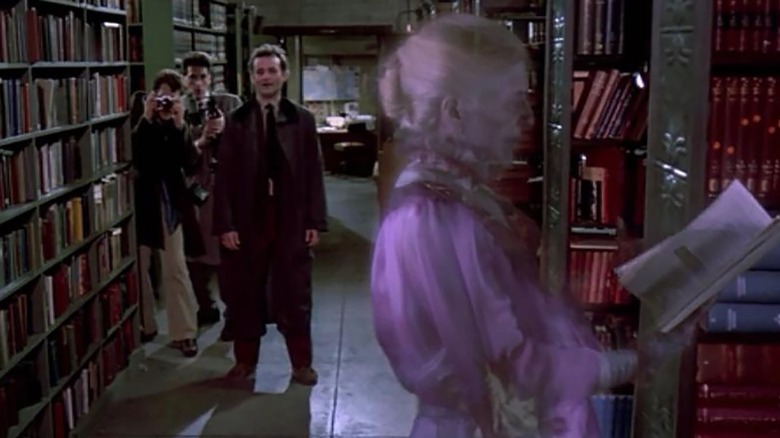
While the classic comedy "Ghostbusters" (1984) -- and its unfairly-maligned sequel -- are the perfect "'safe" introductions to the world of ghosts for kids, there are a few moments that provide genuinely memorable scares. The opening scene in the basement of the New York Public Library will intrude on your thoughts every time you find yourself in a maze of stacks. Books float, record cards are violently flung into the air, and an apparition transforms from a benign elderly librarian into a shrieking skeletal monster when provoked by Bill Murray's Peter Venkman.
The sequel is arguably even scarier, with the painting of Vigo the Carpathian being genuinely creepy. Like "The Dark Crystal," "Ghostbusters" is unsettling a new generation of kids, too. The 2016 reboot provided a scene very similar to the library encounter -- a seemingly benevolent spirit floats out of the basement of a historical mansion only to turn screechy and scary -- and the upcoming sequel to the original films, "Ghostbusters: Afterlife," looks like it's taking a much darker and spookier approach to the source material.
Return To Oz (1985)
If you asked older millennials or members of Gen X to name the scariest movie of their childhoods, the majority would probably answer, "Return to Oz." For some reason, writer-director Walter Murch looked at the beloved 1939 classic "The Wizard of Oz" and thought, "This needs a sequel that will scar an entire generation for life."
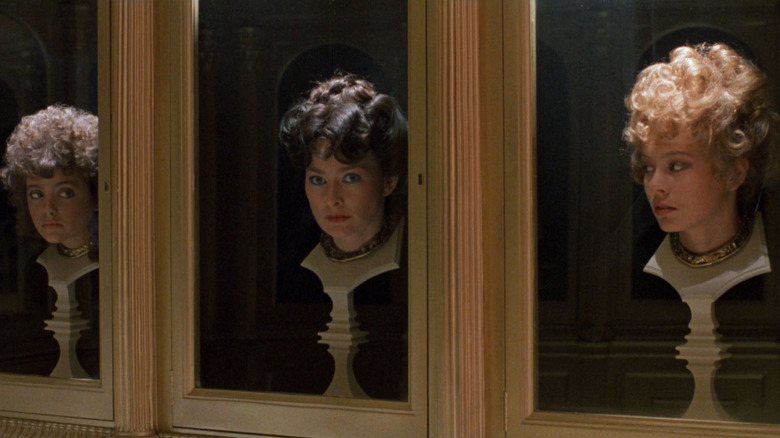
"Return to Oz" starts with a child being strapped down for an electroshock treatment, and only gets scarier from there. While the Wheelers are the most obvious nightmare-fuel, with their fixed-smile masks and horrible laughs, it is actually the Hall of Heads that provides the movie's true terror. Dorothy (Fairuza Balk) has been taken captive by Princess Mombi, a headless woman who keeps cabinets full of beautiful heads so that she can change them when she gets bored.
At night, Dorothy sneaks into a cabinet to get the magic powder she needs to escape, only to find a stray head that starts screaming. That wakes the rest of the disembodied heads, which also start screaming. Then the headless body of the princess starts towards Dorothy, its arms outstretched like a zombie. Absolutely bone-chilling.
The Black Cauldron (1985)
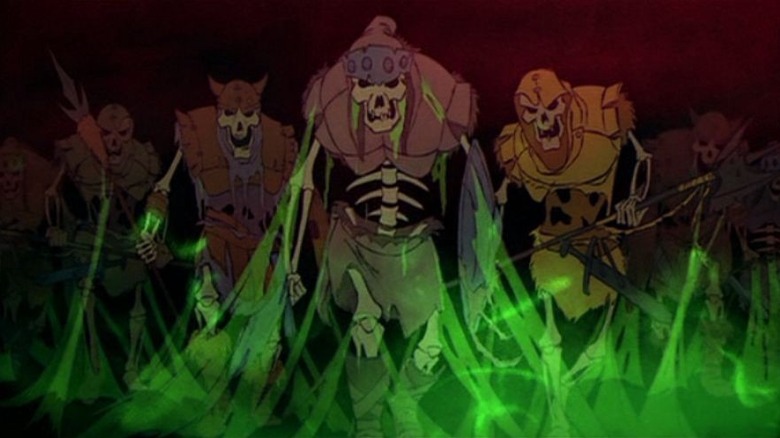
A lesser-known Disney film from the studio's pre-"Little Mermaid" slump, "The Black Cauldron" was actually the first film I saw in a cinema. I'm amazed that it didn't put me off movies for life. It starts off similarly to "The Sword in the Stone" (1963), with a Wart-like character, Taran, and his pig companion, Hen. The first traumatic moment comes when Hen is pig-napped by the Gwythaints, the hench-dragons of the evil villain, the Horned King. Then, the king (who is pretty terrifying in himself) uses the black cauldron to raise the dead and create an army of zombie-skeletons, known as the Cauldron-Born.
In fact, the original climax of "The Black Cauldron" was considered too disturbing for children and was cut and re-edited; despite this, the movie was Disney's first animated feature to be given a PG rating instead of the usual G. The imagery is still pretty dark and horrifying, especially when compared to other Disney cartoons. It's easy to see why it wasn't a hit. However, it would make an excellent companion piece to David Lowery's "The Green Knight" (which is absolutely not for children).
Beetlejuice (1988)
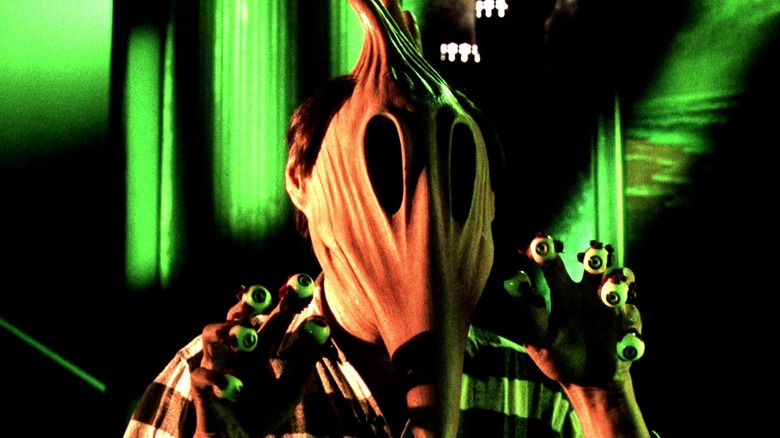
Tim Burton has made a career out of weirdly creepy family films that scare the hell out of kids. Only two of his movies ("Sleepy Hollow" and "Sweeney Todd") are R-rated. All of the rest are PG or PG-13, lulling unwitting parents into a false sense of security.
The first, and arguably one of the best, of Burton's feature-length spook-fests is "Beetlejuice," starring Geena Davis and Alec Baldwin as ghosts who haunt a family (which includes Catherine O'Hara and Winona Ryder) with the "help" of a mischievous spirit called Beetlejuice (a magnificent Michael Keaton).
While most of "Beetlejuice" is fairly mild horror-comedy, there are a few moments that genuinely make the audience recoil in shock. One of these is when the mild-mannered Adam and Barbara change their appearance in an effort to scare the obnoxious family living in their home. The practical make-up effects of the inhabitants of "death's waiting room" and the puppetry when Beetlejuice is transformed into a snake are also fairly creepy. Burton would go onto make "The Corpse Bride" and "Frankenweenie," proving he is still one of the best directors of family-friendly horror films.
The Witches (1990)
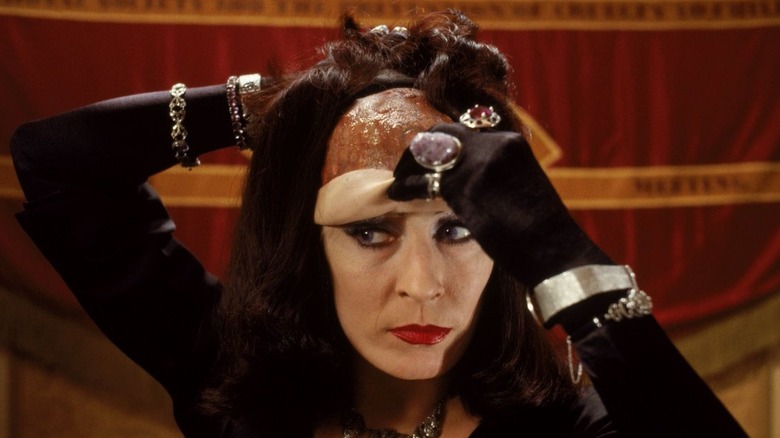
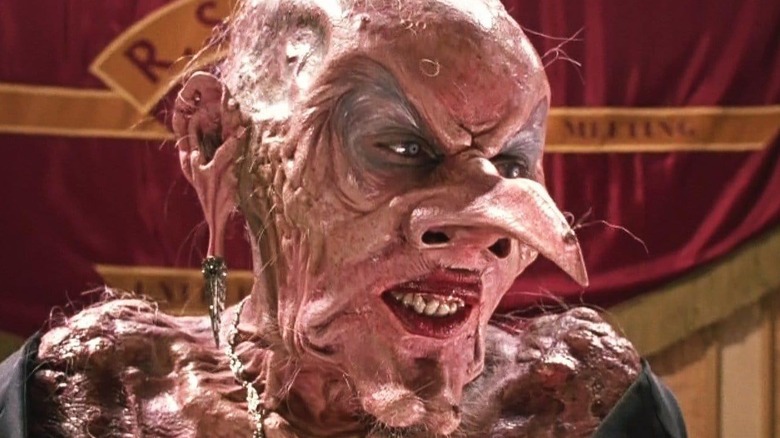
Roald Dahl is one of the all-time greatest children's authors precisely because of how scary many of his books are; crucially, his signature dark humor is also sprinkled liberally throughout. Dahl's most frightening book has to be "The Witches" -- and when Nicolas Roeg adapted it into a film in 1990, he somehow managed to make it even worse.
The most obvious sources of trauma in the movie are the witches themselves. They look normal on the outside, but when they reveal their true natures, they become stomach-churningly monstrous. The other horrific scene involves the transformation of the boy hero and his friend into mice, which sounds like it should be cute, but manages to be comparable to the transformation in "An American Werewolf in London."
But if creeping dread is scarier to you than gruesome practical make-up, then look no further than a scene near the start of "The Witches" in which a young girl gets trapped in a painting for the rest of her life. It's mind-boggling that this movie was made for children. And if "The Witches" isn't enough, the film adaptations of Dahl's "James and the Giant Peach" (1996) and "Charlie and the Chocolate Factory" (2005) also manage to be pretty sinister, in their own ways.
The Nightmare Before Christmas (1993)
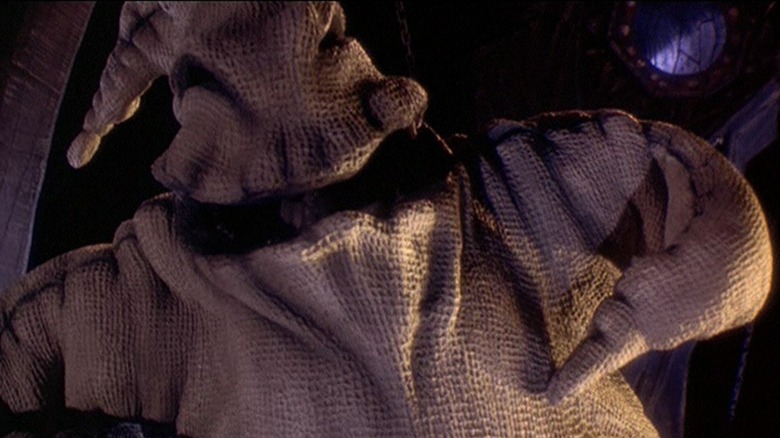
Henry Selick's "The Nightmare Before Christmas" has become a cult classic, with the tie-in merchandise still selling well to this day. Jack Skellington, the Pumpkin King, and Sally, a mannequin brought to life by a Dr. Frankenstein-like evil scientist, may be friendly, but there are plenty of background creatures that make "Nightmare" scary, especially for younger children.
The most frightening character in the film is Oogie Boogie -- the scene in which he straps down and tortures Santa Claus before revealing that he's made entirely of bugs is a lot to swallow. The two-faced mayor of Halloweentown isn't easy to look at, either. The concept of Christmas gifts coming alive and attacking children is also pretty frightening; shrunken heads, Christmas-tree-eating snakes, and a demonic wreath all wreak havoc.
Although "The Nightmare Before Christmas" is popular with small children, it provides the kinds of safe scares that are important part of their development. Viewed as an adult? It's just surprisingly -- and delightfully -- creepy.
A Series Of Unfortunate Events (2004)
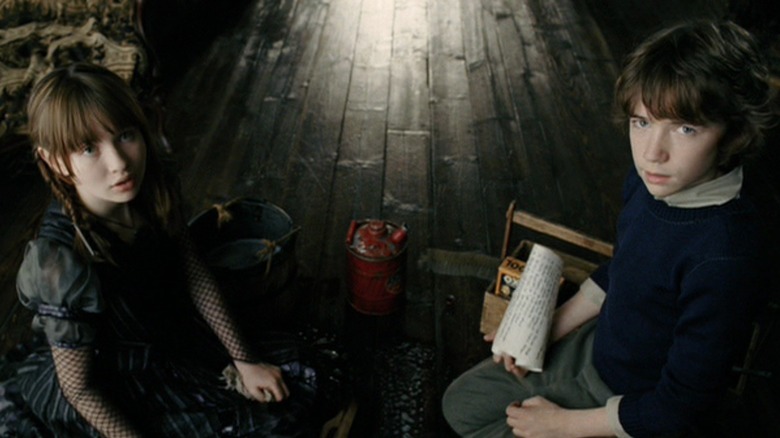
Lemony Snicket's "A Series of Unfortunate Events" is a book series about the poor Baudelaire orphans -- Violet, Sunny, and Klaus -- who are at the mercy of their uncle Count Olaf, an actor who frequently disguises himself in an attempt to steal their inheritance. It was recently made into a Netflix television show, but before that, it was a film starring Jim Carrey as Olaf.
The books and the film are both exceedingly bleak. The gothic stylings have a lot to do with that, but it's the underlying theme -- adults will always let children down and are not to be trusted -- that really makes the movie so dark. While the hurricane scene at the end of the film is full of peril, it's probably the scenes in which Olaf outright abuses the children that carry the most fear. Even though the Baudelaires are exceptional children, they feel powerless and alone when mistreated by an adult with lots of influence. They've already lost their parents; they then have misery upon misery piled upon them. A fun film for the whole family!
Spirited Away (2001)

Studio Ghibli broke out into international success in 2001 with "Spirited Away." It's surprising that this was the movie that became so big, given that it's perhaps Ghibli's strangest film (and that's saying something).
"Spirited Away" starts with 10-year-old Chihiro's parents being turned into pigs in a mysterious abandoned theme park, while the matriarch of the bathhouse, the huge-headed Yubaba, magically sews Chihiro's mouth shut (a common nightmare scenario) when she tries to ask for a job. Chihiro lets a spirit called No-Face into the bathhouse, and it proceeds to start eating the workers; No-Face is black and shapeless, but has a cavernous mouth that opens up in its chest. Chihiro's friend Haku can assume both human and dragon forms -- he is injured as a dragon, and there is a scene in which he is covered in bloody scratches while spewing blood from his mouth.
Like many of the movies on the list, there are surface-level scares in "Spirited Away," but it's also frightening on a deeper level. Like the Baudelaire orphans, Chihiro is separated from her parents and enslaved by a tyrannical figure. This is what's most unsettling to children.
Monster House (2006)
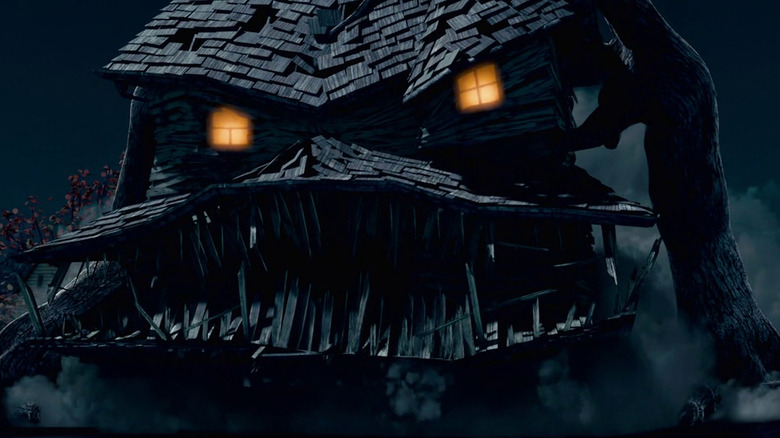
"Monster House" is the first Sony Pictures Imageworks film, and the animation style made it stand out, bringing some of the same uncanny valley vibes as "The Polar Express."
That's not the only reason it's scary though. As the Nebbercracker, the cranky custodian of a possessed house that sometimes comes alive and tries to eat children, Steve Buscemi delivers one of the all-time great voiceover performances. Nebbercracker is initially a scary character himself, threatening children who come near his lawn and toothlessly grimacing at them, but he eventually joins forces with the kids to try to defeat the evil abode.
The inventive ways that the house is personified are ingenious; it has a "heart," a "uvula," and various other "body parts" that the kids must defeat (or use to their advantage). While the backstory regarding the house's identity is a little rough, "Monster House" is a really scary family film that makes for a perfect Halloween watch.
The Spiderwick Chronicles (2008)
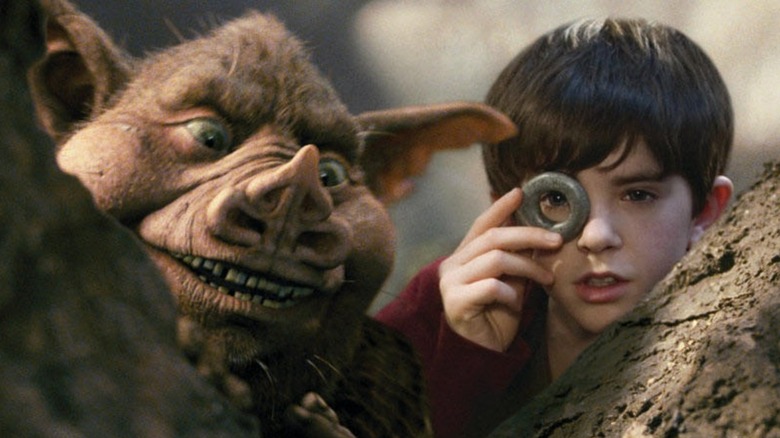
"The Spiderwick Chronicles" is based on a book series and features ogres, trolls, sprites, griffins, and more. Freddie Highmore plays twins Jared and Simon, who move into a new house, discover a magical book, and realize that the house is surrounded by magical creatures, most of whom have evil intent. The main villain is Mulgarath, a shapeshifting ogre; there's also an army of child-snatching goblins, led by a creature called Redcap.
One of the scarier scenes in the movie involves the children being chased through an underground tunnel by a beast-like troll with a forked tongue and yellow eyes. Towards the end, the house comes under attack by the goblins, who reach up from under the floorboards and grab people's ankles. Eventually, Mulgarath himself gets into the house and onto the roof. On top of all that, this is a divorce drama, and Jared is a dark, angry character who resents his mother. It's frightening, but the tumultuous time following a divorce is something that many kids will be able to relate to.
Coraline (2009)
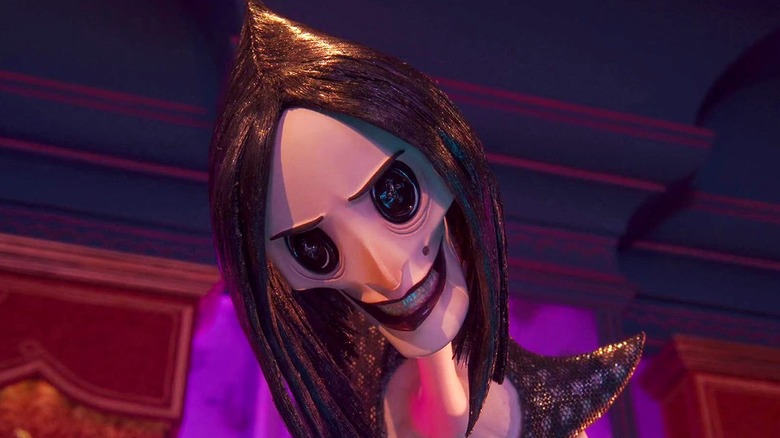
Laika is an animation studio that thrives on making creepy stop-motion movies, including "ParaNorman," "The BoxTrolls," and "Kubo and the Two Strings." It all began, however, with perhaps the darkest Laika film of all, Henry Selick's "Coraline."
Coraline finds a secret door in her new house that leads to an alternate version of her own world where an Other Mother and Other Father live. The Other Mother in particular is one of the most sinister creations ever put into a children's film -- her fixed smile, blank button eyes, and cheery countenance are reminiscent of "The Stepford Wives." The Other Mother charms Coraline with delicious feasts, but soon traps her, planning to sew buttons on Coraline's eyes, too. As the film progresses, Other Mother becomes more skeletal and spider-like, with claw-like hands that terrorize Coraline.
Laika's output has been consistently high quality, and the upcoming "Wildwood" makes it look like the studio will continue terrifying children for some time to come.
Goosebumps 2: Haunted Halloween (2018)
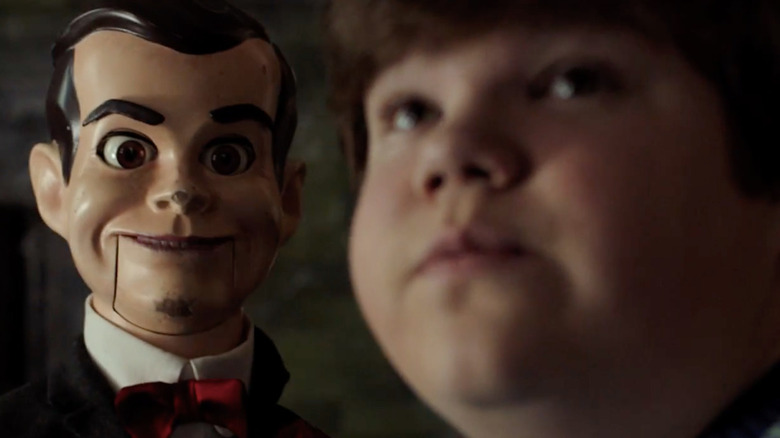
R. L. Stine's "Goosebumps" books have been scaring kids and teens for decades, and several different TV and film adaptations of his work have brought the chills from the page to screen. In order for the 2018 "Goosebumps" sequel to be scarier than the first installment, it only needed to focus on one thing: Slappy, a ventriloquist's dummy. And so, it does.
From "The Twilight Zone" to "Doctor Who" and even "Toy Story 4," ventriloquists' dummies have been terrorizing audiences for years. There's something inherently creepy about them, especially when it turns out that they're sentient even when a ventriloquist isn't controlling them. Slappy in "Goosebumps 2" is no exception, with his high-pitched voice, commanding ways, and possessive tendencies. Add in a scene in which the masks and costumes in a Halloween store come alive, and you have one very spooky family-oriented movie.
The House With A Clock In Its Walls (2018)
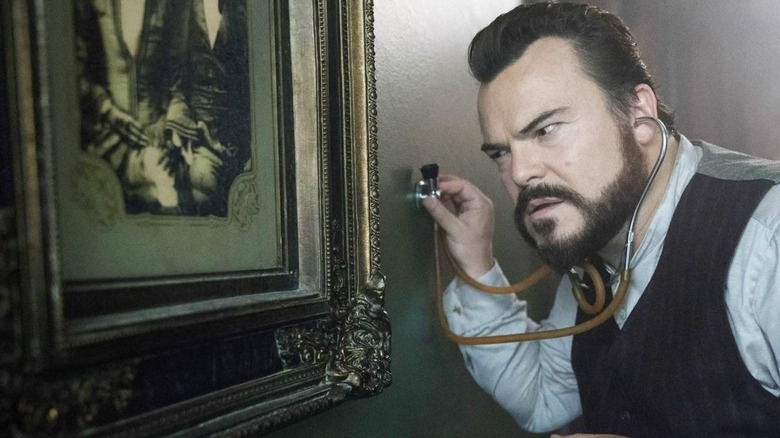
Jack Black (who plays R. L. Stine in "Goosebumps 2") appeared in another scary family movie in 2018, "The House with a Clock in its Walls." Lewis (Owen Vaccaro) visits the titular house, which is owned by his Uncle Jonathan (Black), but the former owners -- Isaac and Selena Izard, played by Kyle MacLachlan and Renee Elise Goldberry, respectively -- have left a clock in its walls.
Lewis is coerced into raising Isaac from the dead, meaning that MacLachlan wears some great undead make-up, while shape-shifting Selena gets some gnarly transition scenes. Isaac intends to turn back time and erase humans from existence. There's a scene with vomiting pumpkins, and another one in which a baby with Jack Black's head crawls through a variety of huge cogs. Believe me, this movie is deeply weird and unsettling on a number of levels. It's also brilliant.
Read this next: Counting Down The 10 Scariest And Most Evil Children In Horror Movies
The post 14 family horror films that were too scary for kids appeared first on /Film.
Ubuntu 18.04.6 LTS Released To Correct Broken Install Media
The Scariest Scene In Land Of The Dead Showcases George Romero At His Finest
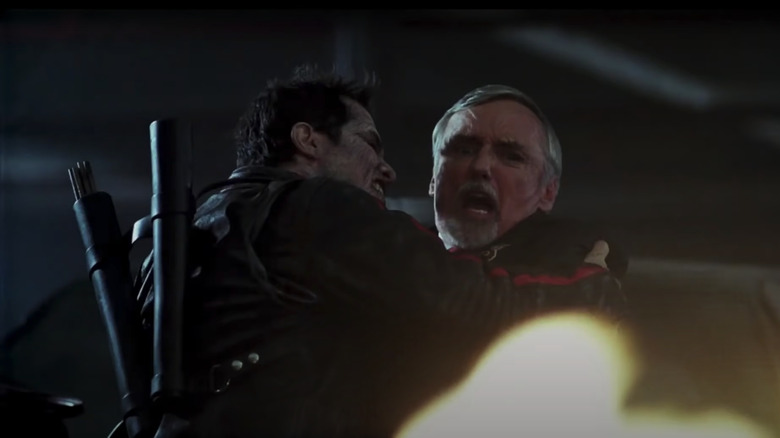
(Welcome to Scariest Scene Ever, a column dedicated to the most pulse-pounding moments in horror with your tour guides, horror experts Matt Donato and Ariel Fisher. In this edition: Matt explains why "Land Of The Dead" is responsible for one of his favorite group-scare memories, and Ariel weighs in on the unexpected pick.)
George A. Romero's original "Dead" trilogy rightfully reigns as the pinnacle of zombie cinema. His later trio, "Land Of The Dead," "Diary Of The Dead," and "Survival Of The Dead," on the other hand? Less publicized, but I'll confess I hold "Land Of The Dead" near and dear since, if memory serves me, the star-studded entry celebrates my introduction to Romero. Yes, the one starring Simon Baker that features Simon Pegg and Edgar Wright as commercialized photo opportunity deadheads in a groovy doomsday dystopia. I'm a horror fan and a byproduct of my time, and my interest in the genre had just started to bubble around the film's 2005 release.
I'm cheating a tad this week because while "Land Of The Dead" doesn't particularly terrify me, it's responsible for one of my all-time favorite movie night memories from childhood. I was deemed the de-facto horror recommender by my girlfriend's friends, and "Land Of The Dead' marks a particular triumph. There's a clever hoot-n-holler sequence in this film that caused such a disruption that I remember someone's parents checking on the lot of us.
Preparedness and expectations go a long way when scaring your audience, and Romero executes this attack with a smirk. Fun and frightful can go hand-in-hand, on display in this tribute to all those classmates who acted tough but damn near jumped off a couch when [redacted] kills [redacted].
The Setup
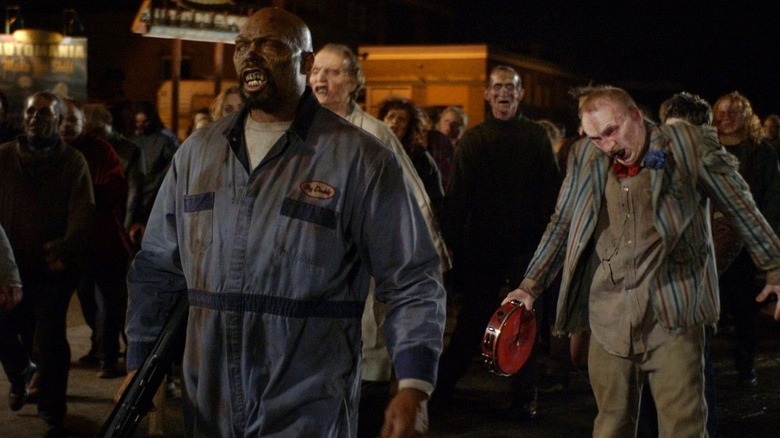
"Land Of The Dead" is Romero's fourth entry in his "Dead" saga, focusing on a feudal-like outpost that safely exists in Pittsburg, Pennsylvania. Paul Kaufman (Dennis Hopper) rules as a classist plutocrat from the luxury high-rise Fiddler's Green, while the impoverished masses live in slums outside. Riley Denbo (Simon Baker) operates and leads missions aboard "Dead Reckoning," an armored personnel vehicle funded by Kaufman that can pass through zombie-infested territories. After a harrowing teammate loss, Denbo decides it's time to leave Fiddler's Green behind, along with Kaufman's authoritarian rule, but he's embroiled in drama and debt after saving prostitute Slack (Asia Argento) from being "Stench" chow. Oh, the complications of having a moral compass.
The Story So Far
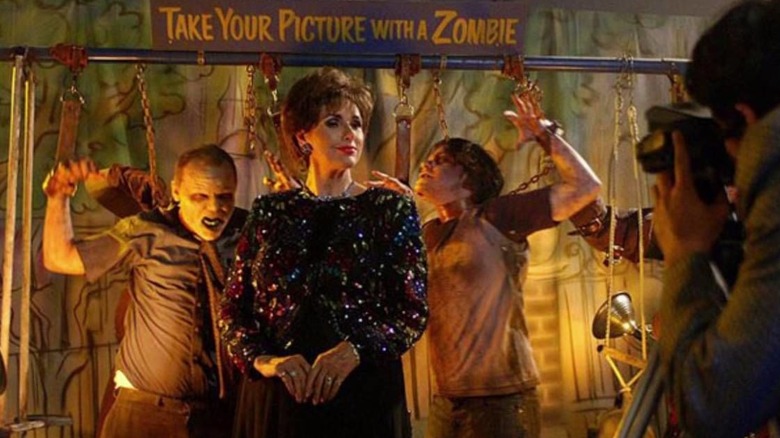
Denbo's resignation follows after the death of a rookie scavenger on his last Dead Reckoning outing -- he's done looting and pillaging on Kaufman's orders. His second in command, Cholo DeMora (John Leguizamo), is less disillusioned and attempts to leverage his position with Kaufman for an apartment in Fiddler's Green. Cholo's denied and reminded of his expendable status, which causes the hot-headed mission operative to go rogue. Denbo's more erratic number two hijacks Dead Reckoning and threatens to fire missiles at Fiddler's Green should his demands once again be denied.
In retaliation, Kaufman tasks Denbo — now without his escape vehicle — alongside Slack and accomplice Charlie (Robert Joy) with tracking Cholo. Kaufman's smart enough to know Denbo isn't in a position to decline, and who better to disable Dead Reckoning than its creator? The two supply runners and their newfound companion are assigned special forces bodyguards for the mission: Manolete (Sasha Roiz), Motown (Krista Bridges), and Pillsbury (Pedro Miguel Arce). There's no reality where Kaufman risks his hide within a mile of undead leftovers beyond the two flanking rivers and third electrified barricade that keeps Fiddler's Green in human control.
As Denbo and his comrades approach the transportation bay area, they realize that Stenches have ravaged the car park while Cholo fled with Dead Reckoning. Their guard goes on alert since military ranks who were supposed to prevent such happenings are now discarded limbs thrown around flaming wreckage. If there's any chance of catching Cholo and disarming his launchers, they'll still need something with wheels and a full tank of gas. Unfortunately, their best option doesn't have a roof, and there are still excess walkers shuffling around. Worse off, Stenches exhibit intelligence and retain memories from their pre-death states along with a collaborative drive and communication skills.
The Scene
Denbo orders everyone but Manolete to secure the "Woody," a top-removed station wagon with roll cages and mounted machine guns that needs to be hotwired. Motown begins touching wires as the rest keep watch while Denbo and Manolete eliminate some feeding zombies hidden away in ammo depots. Charlie zings a bullet past Slack's ear that headshots a lurking zombie two steps away from dinner. Slack returns the favor by firing a few rounds that catch Charlie's ear but still stop a hungry corpse bride in her tracks. In no time, they'll be fighting off more Stenches than they can handle.
Motown ignites the engine with a spark, as Denbo and Manolete return with additional rounds. Everyone piles into Woody, ready to embark on their quest to foil Cholo, and leave their home base. As Manolete gets himself situated in the back seat, while Pillsbury and others are still in last-second preparation mode, two hands grab Manolete's right arm from outside the vehicle. He glances with a shocked expression at the decapitated undead priest grasping his shoulder and bicep.
"Oh, God."
There appears to be no imminent danger because the religious figure's head — and its teeth — is presumed cleanly severed. Then, as the camera focuses at an upward angle on the rotting padre, a hidden noggin attached to a few fibrous neck tendons hurls over the Stench's shoulders and bites through Manolete's uniform and into muscle. An illusion of relief is headbutted away as the creature whips its hair back and forth in a feeding frenzy. Finally, Charlie shoots through chest meat and into the once-again dangling brain sack of Manolete's maker, though definitely too late.
It's one of Romero's most incredible switch-up tricks, in my opinion. Zombies with no mobility past walking speeds aren't as intimidating when compared to runners. Still, Father Peek-A-Boo brings an unexpected element of fear beyond hordes spotted at long distances. Manolete's predicament goes from "close call" to "you're next" within the blink of an eye, which adds a jarring effect to the carnage. I can laugh at this funhouse trick now but still vividly recall the yelps and shrill squeals of novice horror watchers succumbing to Romero's chompy curveball.
The Impact (Ariel's Take)
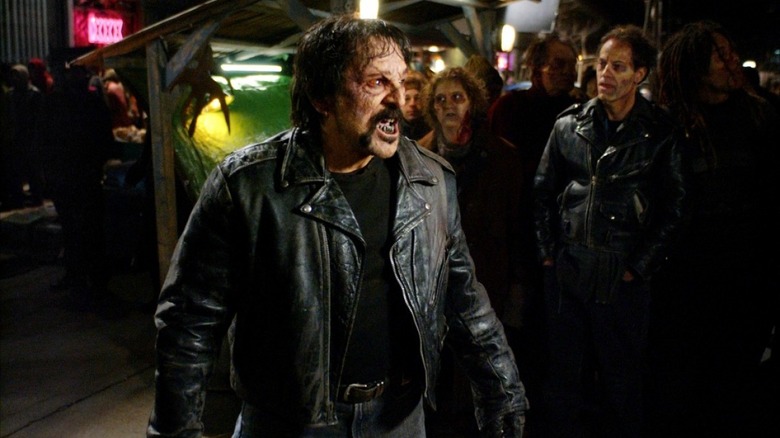
If memory serves me, "Land of the Dead" is the schlockiest of all the "Dead" films, at least up to that point. Watching Denbo struggle to climb Dead Reckoning and sneak inside through the roof hatch is downright hilarious, face slapping against the glass and everything. It's positively Buster Keaton-esque. And while this scene is definitely surprising (particularly for folks not used to horror), it's also kind of hilarious.
Almost as hilarious as Matt christening the undead chomper Father Peek-A-Boo. Almost. But Matt definitely takes the cake today in terms of knee-slappers.
And while it is silly — the entire movie is, let's be honest — you just know Romero had an absolute blast coming up with some of these kills. I imagine him sitting there, giggling to himself about what he was going to put his cast through. Memories of Rhodes screaming "Choke on 'em!" as he was torn in half and devoured by hungry hungry zombies jump to mind because it was an awesome kill. What also jumps to mind is the horrific story of how shooting that scene went horribly wrong, something Romero did not relish! Neither did Joseph Pilato, for that matter.
I'm also reminded of other exceptional set pieces in "Day of the Dead" like Dr. Tongue, Sarah's (Lori Cardille) nightmare wall and Miguel's (Anthony Dileo Jr.) intestines falling out, or the absolutely incredible showstopper that was the headless zombie. Romero and SFX legend Tom Savini (who cameos as Machete Zombie in "Land") loved having fun with their kills and ghoulish gags. "If he liked an effect," Savini once said of Romero, "he would wink at me and make this cricket sound. We had our own language."
Romero's work with Greg Nicotero and KNB EFX Group on "Land" was no different. This scene with Father Peek-A-Boo is a perfect example of the kind of insanity Romero loved to bring to life with almost child-like glee. So rather than scaring me that much, this scene actually makes me a little misty-eyed. Miss you, George.
Read this next: Aliens Is One Of The Scariest Movies Ever Made – This Scene Is One Of Its Creepiest
The post The Scariest Scene in Land of the Dead Showcases George Romero at His Finest appeared first on /Film.
Yes, There Could Be A Cobra Kai Extended Universe Now
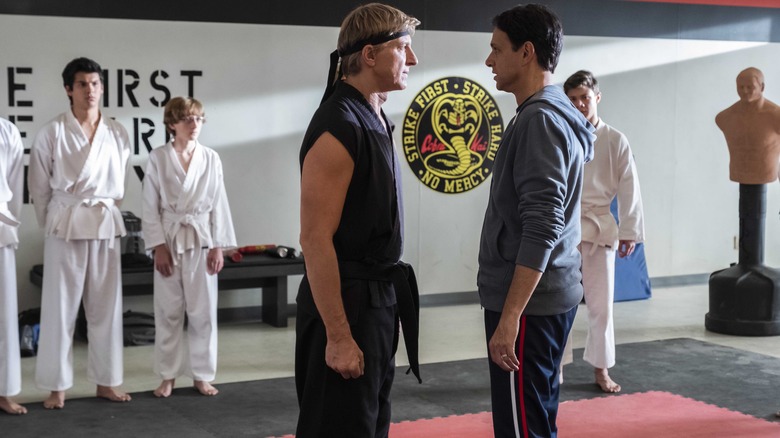
First there was Marvel, then there was DC, now there could be ... "Cobra Kai?" You might not think that the stories of "The Karate Kid" and its follow-up series, "Cobra Kai," would lend themselves to an extended universe of spin-offs and other various projects, but you would be wrong! "Cobra Kai" creator Jon Hurwitz dropped the news on us in a series of tweets, indicating that plans are very much in motion to keep the popular Netflix series going, in one form or another, for the foreseeable future. Ever daydreamed about a "Mr. Miyagi: Origins" prequel series? The possibilities are endless, folks!
'Nothing's Ever Gonna Keep You Down'
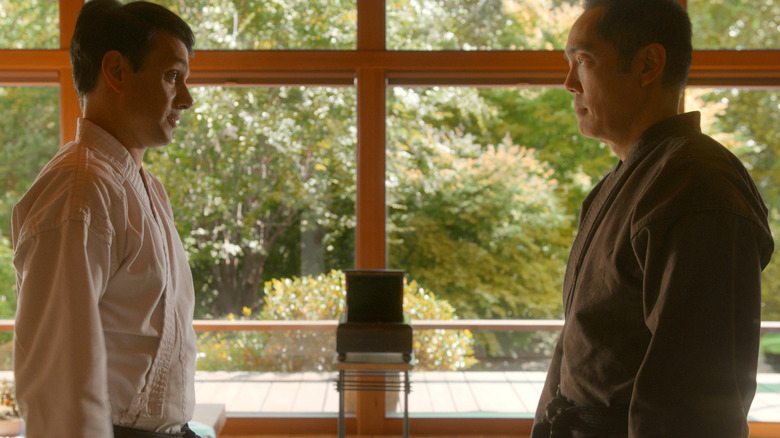
There's still plenty of fight left in this dojo. Having first started out as a YouTube series following up on the events of the original "The Karate Kid" film, "Cobra Kai" is now looking to expand its horizon in a big way. Ultimately landing on Netflix, where it had been recently renewed for a total of five seasons, the nostalgia-bound series stars William Zabka and Ralph Macchio, returning decades later to reprise their classic roles as Johnny Lawrence and Danny LaRusso, respectively. The series has received consistent praise with each of its three seasons so far, making it somewhat less surprising that Jon Hurwitz recently took to Twitter in an impromptu Q&A (h/t Screen Rant) to inform fans that there will be plenty more "Cobra Kai" to look forward to.
Take it straight from the man himself, who tweeted, "We're batting around ideas for various Karate Kid/Cobra Kai spin-offs. Some further along than others. Won't spoil anything beyond that." He also mentioned that the writing team is in the midst of developing season 5, keeping an eye on the light at the end of the tunnel as they attempt to bring "Cobra Kai" to its "endgame."
This is where the show benefits from bringing back the older cast, as well as introducing a whole new generation of karate students. With so many characters, both new and old, there really is quite a bit of space to naturally expand the borders of these stories and bring audiences on all sorts of new adventures. That's not even getting into the breathing room that "Cobra Kai" left itself by skipping over the preceding decades between the original film and the events of the first season. The demand is clearly there for more, in any case, with "Cobra Kai" ranking among the most-watched Netflix series on the streaming service.
The first three seasons of "Cobra Kai" are currently streaming on Netflix and fans can expect season 4 to debut sometime in December 2021.
Read this next: 'Cobra Kai' Season 3: The Still-Shockingly-Good 'Karate Kid' Sequel Series Moves To Netflix Without Missing A Beat
The post Yes, There Could Be a Cobra Kai Extended Universe Now appeared first on /Film.
5 Clint Eastwood Westerns To Watch After Cry Macho
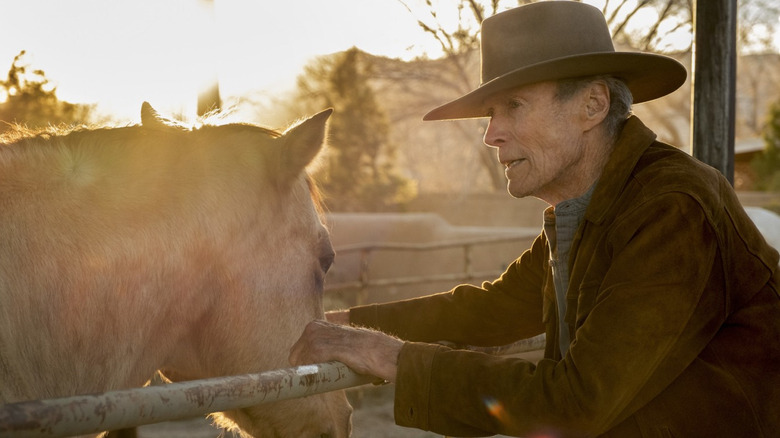
Clint Eastwood, who will apparently be making movies until he's carried away in a coffin, has a new film in theaters and on HBO Max this weekend: "Cry Macho." It's a neo-Western, and Eastwood certainly knows a thing or two about Westerns. If Eastwood's latest has you craving more Western action from the actor/director, I've rounded up five of his horse operas below — and included where you can stream them. So saddle up, partner.
Unforgiven
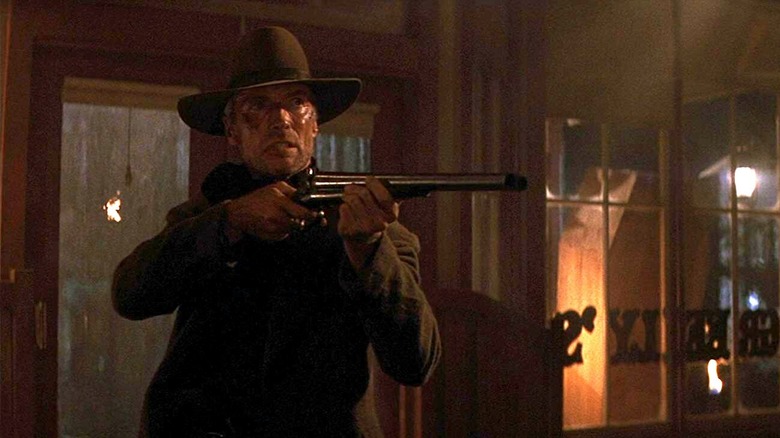
Where to Stream: HBO Max
In my humble opinion, Clint Eastwood's best movie is "Unforgiven." It's a masterpiece, and I don't use that term lightly. Here, Eastwood made a film that reflected on his history of making Westerns. And at the time the film came out, in 1992, it was considered to be a movie about an "old" man remembering his past. And yet here we are nearly 30 years later, and Clint is still at it. In "Unforgiven," Eastwood plays a former outlaw who gets drafted into partaking in some vigilante justice — for a price. While there is action in "Unforgiven," don't go in expecting a shoot 'em up. This is a contemplative, emotionally wrought film, and it's only gotten better with age. Bonus: Gene Hackman steals the show as a brutal sheriff; the type of villain who thinks he's actually the hero.
Pale Rider
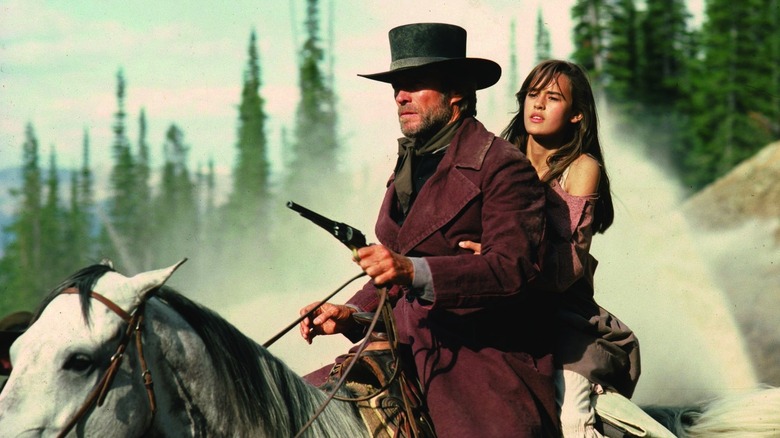
Where to Stream: HBO Max
This Eastwood-directed 1985 Western has the actor playing a mysterious figure who might actually be Death himself. Eastwood's character, known only as Preacher, rides into town and goes up against an evil mining company. At the time "Pale Rider" opened, Eastwood hadn't made a Western in nine years (supposedly because he was allergic to horses; fun fact!). After this, Eastwood wouldn't make a Western again ... until 1991, when he made the aforementioned "Unforgiven."
A Fistful Of Dollars
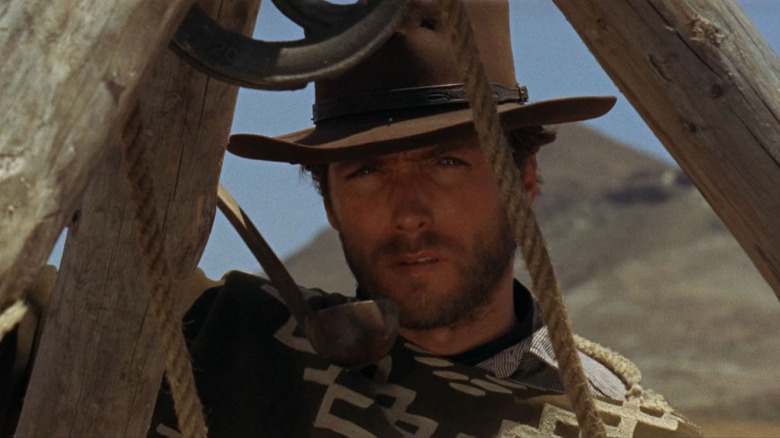
Where to Stream: HBO Max
Clint Eastwood's first leading role was in this Sergio Leone-directed Spaghetti Western, inspired by Akira Kurosawa's "Yojimbo." It was the first in a series of Westerns where Eastwood played a Man with No Name-figure. Here, Eastwood rides into the Mexican village of San Miguel and ends up in the midst of a turf war between warring cowboys and lawmen. Eastwood plays all sides against each other for his own benefit.
The Good, The Bad, And The Ugly
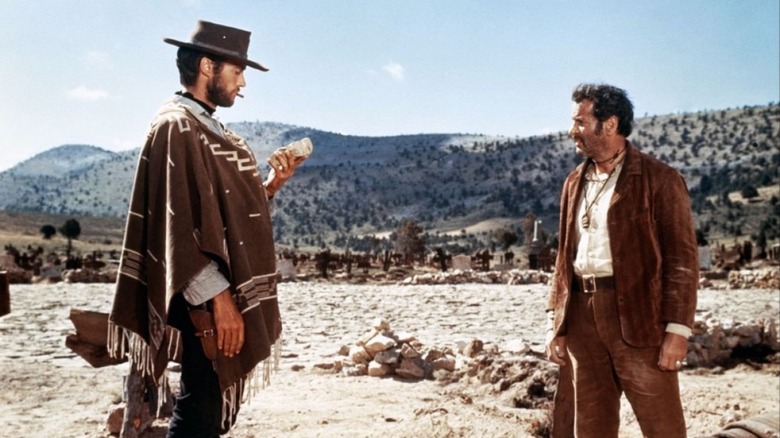
Where to Stream: HBO Max
"The Good, the Bad, and the Ugly," Eastwood's third film with director Sergio Leone, is the title that finally made him a big star. Once again, Eastwood is the Man with No Name-figure, who this time gets mixed up with various characters trying to find Confederate gold during the American Civil War.
The Outlaw Josey Wales
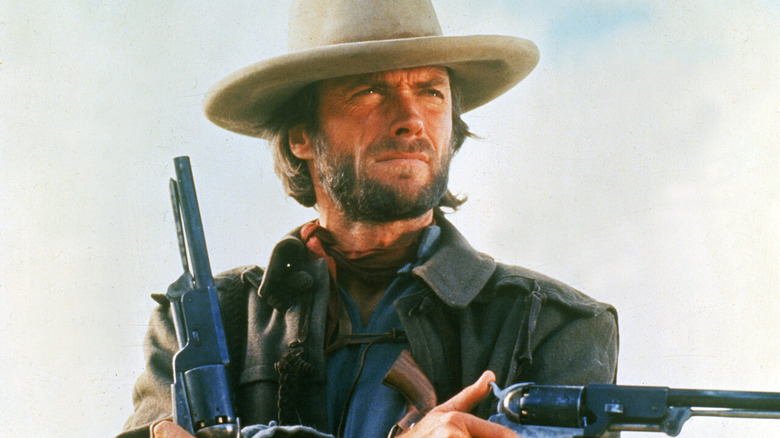
Where to Stream: Netflix
Eastwood directed this Western where he plays a Missouri farmer who joins a Confederate guerrilla group after Union soldiers kill his family. After the war, Eastwood's character becomes an outlaw pursued by bounty hunters. I'm sure the idea of a movie where a Confederate is the main protagonist will probably not sit well with some people, and that's understandable. But if you can get beyond that, you'll find a damn good movie.
Read this next: This Cry Macho Featurette Is All About Some Guy Named Clint Eastwood, Ever Hear Of Him?
The post 5 Clint Eastwood Westerns to Watch After Cry Macho appeared first on /Film.
The Purge Creator James DeMonaco Made A Movie About The Glory Of Rocky III [Interview]
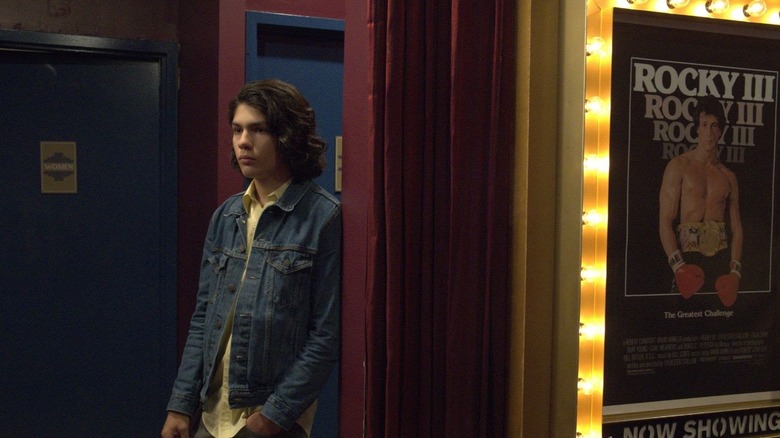
Rocky Balboa is a God in writer/director James DeMonaco's new film "This is the Night." The coming-of-age story focuses on a landmark event in (movie) history: the opening day of "Rocky III." The kids, the parents, and everyone on Staten Island was ready for it. People leave the film inspired and ready to take on the world, which kicks off a night of ups and downs in DeMonaco's film.
For DeMonaco, though, "Rocky III" is also a stand-in for any great film that leaves someone walking out of a theater on a high. DeMonaco, who's known best for creating the "Purge" series of horror films, wants to celebrate not just Rocky Balboa, but the experience of seeing a great movie in a theater with family, friends, and strangers.
We say down with DeMonaco to talk about the making of "This is the Night," and the filmmaker told us about some of the unforgettable experiences he's had in the theater. Yes, that includes "Rocky III."
This is a very different movie from what people would expect from you.
Exactly. Very different, very different. It's been a weird journey with this one. It's different, man. It's very autobiographical in many different ways, mostly because I think it encapsulates that childhood love of film and how much it meant to me. So, hopefully that came across in the movie.
Have you found yourself explaining to a lot of people that it's different and what to expect?
Yeah. That's it, when you make so many Purge movies. The first one I directed, "Staten Island, New York," I don't know if you ever heard of it, it's got Vincent D'Onofrio and Seymour Cassel. It's very weird, and it's more like this. It's very absurd though, so it has a different tone to it. So in a weird way, the first thing I did is more like this.
Then "The Purge" took me down this path of, I don't even want to say it's horror. I don't even say that the Purge are truly horror films, I think they're more like dystopian films. But people definitely are like, "Oh, this is a weird turn for you." For me, it's more, "Oh my God, this is what I was doing before the Purge." So I'm almost returning to that now, but for other people it's like, "Oh, this is a weird move for the Purge guy."
Those Purge movies gave you the goodwill to make this movie, right?
Absolutely, dude. It's been a while, it's been a decade of purging and before that I was writing it for years. So it's been encapsulating my life, and I even just finished writing six. So it's still going on. Sometimes I'm like, "Oh my God, I'm overwhelmed with Purge." But then I think there would be no "This is the Night," no matter what happens with it. I got to make this very personal film, I'm very aware how rare that is in this business sometimes. It's a business so, it's rare that we get to make something so personal. I thank "The Purge" for this.
Not a small personal movie, either.
And dude, it was hard. We shot it like a Purge. We don't have that much money. So it was under the same Blumhouse edict like, "Dude, you're not going to have that much money, but you gotta try to make it look good." So we were still in that low twenties range of how many days we had to shoot. Money was tight, every extra I was begging people from Staten Island, "Please come down and fill up the theater," trying to get family members down. Luckily, we shot on Staten so I was able to, probably shouldn't be saying this but, I was getting people to come down there. Which is, I guess, illegal, but I'll say it anyway.
So it was tough man, but no, it's not a $1 million, crazy shoot in 15 days. We had a little more time than that, but not much more. It's hard. I always say that to Jason, he gets them made, he gets the movies green lit, but they are very hard on the crew. We're pushing and shooting so many pages a day. But listen, I'm not complaining. We got it made and I'm happy that it looked like it had some production value. Because that's the goal always, right? Not to sacrifice.
"It's A Weird Place."
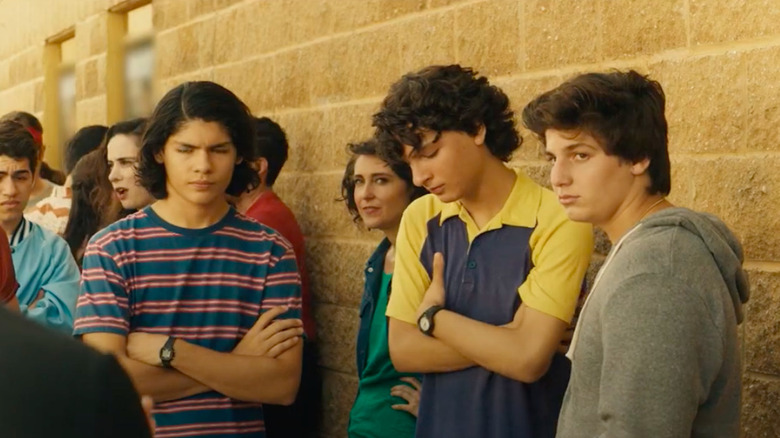
Something this movie captures well is that, whenever you're on Staten Island, you get to meet a lot of characters.
Indeed, dude. It's a weird place.
For you, what are the little things that make Staten Island authentic?
Well, this year things have changed considerably on the island but I won't get into the politics of the island, that's completely blown me off the map. But let's go pre pre-political days. I think what I still see here, we're so close to Manhattan, so we're next to what some people would say is the center of the world. Yet, there is still an odd small town feel.
It was almost a combination of "Stand By Me" and "Goodfellas," which is the weirdest way to grow up. So we had this huge forest that we play in everyday and do our "Stand By Me"-like adventures. Not that we were discovering dead bodies, but we had this idea like Stephen King's Stand By Me's forest growing up and beautiful neighborhoods. Yet on my block and right around the block were two, I'm not going to say their names, very big mob bosses.
You'd see sometimes the violence would creep into the neighborhood a little bit or we'd hear about it. It was a little but not much, it protected the neighborhoods for the most part. It's weird. It was very idyllic yet there was this mob element. We also had a lot of cops and firefighters in the same neighborhood. So it's got the small town feel, yet it's got the trappings of a crime drama, always about to unfold. At any moment we'd hear a story about, "You hear what's going around the corner with so-and-so?"
And again, I'm not going to say the names, you would know who the people are. But so it's been quite a unique way to grow up. But I also don't want to perpetuate the cliche that it's a, I tried to break that a little, but I probably did perpetuate it because I had Bobby playing a mobster. I also wanted to show that it's actually a very nice looking place. It's got great parks and forests, and that's not often depicted, I think in film, on Staten Island. I think the mob angle is always really exploited, but it was a very nice place to grow up, I say. I hope I answered the question, dude. I started to babble.
[Laughs] Not at all. I always enjoy hearing about Staten Island and enjoy my time there. The best sense of humor over there.
It's true, though. I say that about people from Brooklyn, but I think it's true for people from Staten Island. It's why I think Brooklyn back in the day, bred, from Mel Brooks to Larry David. I think it carries over to Staten Island a little bit. I don't know what it is, there's something about New York, probably all the five boroughs have it. But there's an anger combined with curiosity that leads to great humor in some weird way.
"Rocky III" plays such a pivotal role in this movie.
Absolutely, yes.
It's treated like the moon landing in the movie.
Dude, it was. That's exactly how to put it. So, I wanted the movie to represent any movie that inspired anybody. I think the Italian-Americans, especially on the south shore of the island, which is predominantly Italian-American, took Stallone under our wing. It wasn't just the Rocky character, it was the Rambo character too. More Rocky, but Rambo was big, the Rambo openings were huge here.
And dude, they were big, all the stuff in the movie, waiting three and a half hours in line, that's true. I saw the movie twice in one day. At school that week, everybody was carrying Rocky posters. I still remember this, literally walking down the hallway holding your Rocky poster.
He was an Italian-American blue collar guy. He represented what Staten Island was blue collar, Italian-American. There was this hero worship, but it was this great anticipation. I think it really culminated in part three, even four was big, but one and two beloved.
Three, is where it really rose up because we had all those years to worship him and dude, it was crazy; three and a half hours on the line, fights on the line, people screaming in the movie theater. It was great.
Was it the same experience shown in the movie, going with your parents and friends on opening day?
Oh, everybody was there, dude. I remember I cut it out from the movie, but I remember yelling out my window that day to all my neighbors in Staten, wondering who got the newspaper first to check showtimes. I remember that morning, we all woke up like, who was getting the paper first, calling each other, yelling out the window. I got tickets for my family, but I sat with my friends, all that's very true.
There was something about Stallone that he got these people going. I'm telling you, when I met him, he must've heard that before because he knew, he goes, "Yeah, you Staten Islanders really love me over there." He knew it.
Made me think of "Cinema Paradiso." It's a very romantic portrayal of going to the movies.
That's my favorite scene, too, in the movie. And it was important to me, you probably noticed, dude, I don't show Rocky in that scene. I just show the projector and the audience. I think I shot down the barrel of the projector, just a flipper verse of a couple of shots from the movie. But it was important to me to say, "Look, it's not about 'Rocky III.' It's really about these people and their reaction to the film." And again, I want it to almost be at that moment, it could have been "Jaws," it could have been "Close Encounters," it could have been a Fellini film, anything that gets people in a communal setting, what makes going to the theater magical. I mean, I hate that it might be going away in our lives. That's what sucks the most.
It's just not as satisfying watching a movie from home or on your computer.
Absolutely. Listen, beyond the pandemic, obviously they had to shut stuff down. But we were hearing the potential demise of cinema before COVID hit, right? People were already speaking about studios aren't making money and theaters aren't turning a profit. I hope COVID is not accelerating what was already happening, I hope people return. I don't think we can replicate that communal experience, that whatever it is we share inside the theater, you can't do it at home. You just can't do it. Listen, I've seen great movies at home, but they're not nearly like what it's like sitting in a theater.
"The Anticipation On Staten Island Was Insane."
What other movies just left a big mark on Staten Island?
Oh, I'll tell you the other big movie, and it's funny because I worked with the director. It's when "Godfather III'' opened, the one that didn't work as well as the other two. I remember the anticipation on Staten Island was insane. I remember in the theater, opening day, the first show sold out. People were actually standing in the theater. They were just standing in the back like it was a sports stadium. When the theme song started, the place just erupted on its feet. Staten Island was just ready for the next Godfather experience. Many were disappointed at the end of it all, but that was big, dude. Now, what was recently quite big here and it's because of Rocky, is "Creed."
"Creed" was the first time in years that I saw people on their feet and clapping. I was like, "This is great, man. People still do this." So the cinema still has that power, it's still got it. "The Karate Kid" was big here, when I was young.
Dude, know what else was big? "The Warriors." That was all over all the five boroughs. I remember actually there were fights outside every theater and we were afraid of all the gangs rioting. I think Walter Hill talks about this a lot, and I remember even here on the island, it was a lot of people saying, "Don't go outside, all the gangs are rioting because of 'The Warriors'."
Really?
Not that they really were, I think guys were just getting together, feeling strong and tough as they do after a Stallone movie. But "The Warriors" had a big impact. If you look up articles in the daily news and the post from '79, '80? The city was almost on lockdown. It was almost like a Purge movie. People were terrified after "The Warriors" screened, which is fun.
Were gang members really beating each other up after "Rocky III," just to look more like Balboa?
Yes. We knew some tough kids who actually wanted to look like Rocky. It was two crazy kids in my school who punched each other in the face, just to get black eyes to look like Rocky. My friends and I considered doing it, but we were too wimpy. It was literally, "You want to do that?" "No. No, we're good. We're good." We'll eat raw eggs like Rocky, that was a big thing too. Everybody eats a raw egg to be like Rocky, after Rocky one.
Isn't that how you get Salmonella?
Yeah, you get Salmonella. My dad let me do it, I'll never forget that. I remember saying to my dad, that even when I saw Rocky one, I was probably, my God, that was '76 so I was like seven. I remember my dad let me eat the raw eggs and I'd say, "It didn't go to my head, dad." I was a seven year old. I'm like, this doesn't seem like a healthy thing to do, but I had to be like Rocky, so I did it.
Was a mobster getting out of a limo to do pushups following "Rocky III" based on a true story, too?
That was made up, but we were all doing it. I think that happened in school, you'd see guys just randomly dropping and doing pushups. It's so funny because my buddy Todd, he is a writer in Hollywood. Without even seeing my movie or knowing what I put in it, his son had watched "Rocky" recently. And the next day he sent me a picture and he goes, "I showed [my nine-year-old son] Nick, 'Rocky' last night. Look what he's doing in his room." He was just doing pushups. Random, the kid never did a pushup before in his life. There's something about the "Rocky" movies that makes men and maybe women want to do pushups. It's still happening to younger generations. It's very funny, man.
"This is the Night" is now playing in limited release and will be available on VOD on September 21, 2021.
Read this next: 'The Purge' Creator James DeMonaco Intended For 'The Forever Purge' To Be The Finale – But He Also Has A Pitch For A Sixth Film [Interview]
The post The Purge Creator James DeMonaco Made a Movie About the Glory of Rocky III [Interview] appeared first on /Film.
Someone has recreated Bioshock as a SNES 16-bit game, and it looks retro-cool
A couple of weeks ago, we shared a video that showcased Bioshock in Unreal Engine 5. And today, we have something a bit different for all our Bioshock and 16-bit fans. By using the Unity Engine, Thomas Brush was able to recreate – or in this case, demake – Bioshock’s intro as a SNES 16-bit … Continue reading Someone has recreated Bioshock as a SNES 16-bit game, and it looks retro-cool →
The post Someone has recreated Bioshock as a SNES 16-bit game, and it looks retro-cool appeared first on DSOGaming.
The Clerks Ending We're Glad Didn't Happen
"Clerks" is a one-of-a-kind cult gem, a rude and raw low-budget comedy about a couple of clerks at a local convenience store. Director Kevin Smith made his debut feature by maxing out his credit cards and filming after closing the very store in which he worked, and it paid off — "Clerks" launched Smith's career and an entire "View Askewniverse" of movies, comic books, and a short-lived ABC cartoon series.
What many fans don't know is that "Clerks" once had a very different ending, but Smith was convinced to cut it by his mentors, Bob Hawk and John Pierson. If Smith had kept his original, incredibly bleak ending, it's extremely unlikely we would be getting a "Clerks 3" in the next year or so. Honestly, his career might not have taken off at all.
A Deadly End For Dante
In "Clerks", Dante Hicks (Brian O'Halloran) is called in to work on his day off. He goes in and has a terrible day, encountering all kinds of bizarre situations and people. Whenever he gets fed up, he exclaims, "I wasn't supposed to even be here today!" like a kind of catchphrase. While anyone who's ever worked a shift at a dead-end job can certainly sympathize, Smith's original ending to the sardonic comedy took things a step too far. In the cut ending, a robber comes in after Dante's friend Randal (Jeff Anderson) leaves for the night. The robber shoots and kills Dante in a hold-up, and the final shot lingers on Dante's corpse. The credits roll, though no music plays over them.
Smith tweeted about the original ending in January 2021, sharing pages from the original shooting script that showed the interaction between Dante and the robber. He jokingly referred to the first cut of "Clerks" as being his "Snyder Cut," linking to a clip of the original ending.
While the ending is certainly shocking, it's a real bummer after spending the previous 90 minutes laughing. Smith wisely took the advice of his mentors and changed the ending to one that let Dante live to complain another day. It's a good thing, too, because without Hicks, there couldn't really be a "Clerks 2" or "Clerks 3".
Smith claimed over the years that he had a few reasons for the downer ending. The first was that it was an ironic play on Hicks' "not supposed to be here today" declaration. The second was in homage to "The Empire Strikes Back," which is referenced within "Clerks" as ending "on such a down note." The third? Smith told Rolling Stone in 2014 that he just didn't know how to end the movie.
Smith's Other (Sorta) Secret Ending
"Clerks" isn't the only Kevin Smith movie that originally had a different ending. His career-shifting 2014 siege drama "Red State" also had a very different ending planned, but budgets got in the way. "Red State" was shot for about $4 million, and his bonkers original ending would have pushed that budget to nearly $15 million according to Smith's estimations.
In "Red State," tensions rise between a cult hunkered down in a compound and the ATF agents trying to get inside in a siege similar to the real-life situation in Waco, Texas in 1993. In the film's original ending, the cult's prophecies about an impending rapture come true, complete with the Four Horsemen of the Apocalypse, exploding heads, and angels blasting their horns from on high. It sounds absolutely buckwild and seems more tonally consistent with his Catholic comedy "Dogma" than the rest of "Red State," so it's no surprise the extremely expensive idea was left behind.
Smith's next film, "Clerks 3," should hit theaters sometime in 2022. Here's hoping Dante survives this one, too.
Read this next: 'Clerks III' Is Officially Happening, With Kevin Smith Turning His Convenience Store Characters Into Filmmakers
The post The Clerks Ending We're Glad Didn't Happen appeared first on /Film.
Will There Be A Project Power Sequel? Here's What We Know
(Welcome to Will There Be a Sequel?, a series where we answer that question and explore what comes next.)
"Project Power" was released by Netflix at the tail end of last summer. The summer moviegoing season in 2020, for painfully obvious reasons, was sorely lacking in the typical superhero/comic book movie fare. Though not based in the universes of Marvel or DC, this movie attempted to fill that void. Now, more than a year later, we're still left to wonder, is "Project Power 2" going to happen? While we don't have a definitive answer, for the time being, we are going to go over what we know currently.
Here is what we know about the prospect of a "Project Power" sequel.
What Is Project Power All About?
"Project Power" is an original superhero movie that was produced by Netflix. It stars Jamie Foxx, Joseph Gordon-Levitt, and Dominique Fishback in the lead roles. It was directed by Henry Joost and Ariel Schulman, with Mattson Tomlin handling the script. It is important to point out that Tomlin co-wrote "The Batman," the much-anticipated DC flick hitting theaters next year.
Just so everyone is on the same page, here is the synopsis for "Project Power:"
On the streets of New Orleans, word begins to spread about a mysterious new pill that unlocks superpowers unique to each user. The catch: You don't know what will happen until you take it. While some develop bulletproof skin, invisibility, and super strength, others exhibit a deadlier reaction. But when the pill escalates crime within the city to dangerous levels, a local cop (Joseph Gordon-Levitt) teams with a teenage dealer (Dominique Fishback) and a former soldier fueled by a secret vendetta (Jamie Foxx) to fight power with power and risk taking the pill in order to track down and stop the group responsible for creating it.
Project Power 2 Was Set Up By The First Movie
Shortly after the original was released, Mattson Tomlin spoke a bit about the prospect of "Project Power 2" and what that might look like. Ultimately, according to Tomlin, the sequel would explore the far-reaching legend of the power pill. Speaking to Polygon, Tomlin had the following to say:
"There were a lot of conversations specifically about the power pill. Is it something that the whole world knows about? Is it something that everybody has? Is it urban legend? And through the development we were always putting that on the table, and judging if we were making the right choices. We ended up where we ended up, in large part because we wanted to be able to go somewhere in the event that we're lucky enough to do sequel. For me, [Power] is urban legend and people aren't quite sure. And that means there's a very exciting opportunity: How does the world change once everybody knows that this exists? It will change the fabric of how all of life is potentially lived. And I think that that's a really cool place to go."
Netflix Has Made No Decision Regarding Project Power 2
For the moment, no official decision has been made one way or the other regarding a "Project Power" sequel. For what it's worth, the movie divided critics, currently sitting at 61% on Rotten Tomatoes. The audience rating is an un-encouraging 47%. When it comes to building franchises in-house, Netflix tends to go where the audience goes.
Despite the mixed response, "Project Power" seemingly performed quite well. Netflix isn't overly transparent with its streaming figures but the movie spent 10 days in the number one spot on the service's Top 10 list. At the time, the only other movie to accomplish that same feat was "Spenser Confidential." It's worth pointing out that a sequel to "Spenser Confidential" is reportedly happening, as per director Peter Berg.
From an investment standpoint, the movie came with a budget said to be in the $85 million range. Netflix has deep pockets. No doubt about that. However, if the final product divided audiences that sharply, a sequel might be viewed as risky. Where does that leave us? On frustratingly uncertain ground. Though the circumstantial evidence does point, in my humble opinion, every so slightly against a sequel at this point. Time will tell if I'm wrong on that one.
"Project Power" is streaming on Netflix.
Read this next: /Filmcast Ep. 580 - Project Power (GUEST: Robert Daniels From 812FilmReviews)
The post Will There be a Project Power Sequel? Here's What We Know appeared first on /Film.
You Season 3 Trailer: Joe's Bloody Love Story Is Back, With More Twists Than Ever
When season 2 of "You" came to its bloody close, Joe (Penn Badgley) left us with a promise: "See you soon, neighbor."
Unhinged as ever, the bookseller turned stalker is making good on his word by creeping into the life of another unfortunate soul. But his latest obsession Natalie (Michaela McManus) really has her work cut out for her, because Joe is no longer flying solo. That's right, literal serial killer Joe Goldberg has settled down with a wife and kid! See for yourself — below is the first trailer for season 3 of "You."
You Season 3 Trailer
Oh, the wonders of suburbia. Surprising absolutely no one, New York native and the most pretentious man alive, Joe Goldberg, isn't vibing with his new California suburb. Could the joys of married life be getting him down? After her declaration of love at the end of season 2, Joe has moved in with the only person crazy enough to love him, Love Quinn (Victoria Pedretti). The upcoming season sees them raising little baby Henry — which means the rest of us should cross our fingers and hope CPS comes to his rescue.
At the very least, Joe seems committed to fatherhood, but married life isn't enough to change his old ways. Worst of all, his new fixation lives right next door. This certainly won't end well — just ask his prior obsessions, Candace (Ambyr Childers) and Guinevere (Elizabeth Lail) — especially with Love in the mix. While she's trying to build a life for the two, Joe is unwittingly on the verge of destroying it.
While Joe has always been the show's wildcard, Love has proven to be even more deranged than he is. Sure, Joe is impulsive and crazy, but he's generally pretty predictable. It helps that we've spent the past two seasons digging into his psyche, but the same isn't true of Love. She spent much of the second season 10 steps ahead of both Joe and the audience. Right down to the finale, Love was throwing curveballs and taking shocking steps forward. Who's to say she won't surprise us again? This is bad news for anyone who gets in her way — including her obsessive hubby himself.
The season 3 trailer shows off the return of major players Penn Badgley and Victoria Pedretti as Joe and Love, and also gives us a peek at the cast of characters filling out the couple's new neighborhood. The season includes Dylan Arnold, Tati Gabrielle, Shalita Grant, Travis Van Winkle, Scott Speedman, Scott Michael Foster, Ben Mehl, Shannon Chan-Kent, Christopher Sean, Bryan Safi, Mackenzie Astin, Ayelet Zurer, and Jack Fisher. Also returning are the familiar faces of Saffron Burrows as Love's mother, Dottie and Jenna Ortega as Ellie.
Here's the official synopsis for Season 3 of "You":
Joe (Penn Badgley) and Love (Victoria Pedretti), now married and raising their baby, have moved to the balmy Northern California enclave of Madre Linda, where they're surrounded by privileged tech entrepreneurs, judgmental mommy bloggers and Insta-famous biohackers. Joe is committed to his new role as a husband and dad, but fears Love's lethal impulsiveness. And then there's his heart. Could the woman he's been searching for all this time live right next door? Breaking out of a cage in a basement is one thing. But the prison of a picture-perfect marriage to a woman who's wise to your tricks? Well, that'll prove a much more complicated escape.
Season 3 of "You" arrives to Netflix on October15, 2021.
Read this next: You Season 3: Release Date, Cast, And More
The post You Season 3 Trailer: Joe's Bloody Love Story Is Back, With More Twists Than Ever appeared first on /Film.
Copshop Star Frank Grillo Says Jiu Jitsu Saved His Life [Interview]
Actor Frank Grillo can fight. When he's on-screen, he's bringing over 30 years of experience from wrestling, Jiu Jitsu, and boxing. He even trained with one of the greatest fighters of all time, Rickson Gracie, who's a master of Brazilian Jiu Jitsu. Grillo knows how to carry himself, which is why he's one of the more convincing action stars tearing up the screen these days.
Now, he's fighting to survive once again in another Joe Carnahan film, "Copshop." It's one of the many projects Carnahan and Grillo have produced together, and it'll be far from the last. The two are friends and collaborators, but as Grillo told us, that doesn't mean they always see eye-to-eye. Recently, the actor and producer told us about their partnership, the films they want to make, and how Jiu Jitsu saved his life.
But first, he noticed the art over my shoulder during our Zoom call.
Frank Grillo: Is that your painting in the back?
Yes, it is.
I like it.
Oh, thank you. I just paint and see where it goes.
Yeah, I do that too. I like it.
It's therapeutic, right?
It is therapeutic. I've got them all over my house. Me and my kids, I put music on and we did a whole kind of Pollack thing. It's very meditative.
Gotta ask, have you read Rickson Gracie's "Breathe" yet?
I just ordered it. I started with Rickson in 1991. Man, am I old. That whole breathing thing, he was doing it then. The way he would move his body and contort his torso, and again, speaking of meditative ways, I'd never seen anything like it. I've never seen anything since. It was amazing the way he taught us how to breathe and control your heart rate, so I'm excited to read the book.
Because of your background, people very experienced in Jiu Jitsu have told me you're more convincing in action scenes than most actors.
That's good. I do it and I play to the judicious. I want the guys who are black belts to watch this and be able to watch it, right? When we did "Kingdom," all of our guys, Tucker and Jonas and Matt, trained with some of the best Jiu Jitsu and MMA guys so that when they watched it, they are believed. It's important.
It takes so much discipline, too. Has that helped you as an actor?
Absolutely. Listen, martial arts, specifically Jiu Jitsu, for me, the discipline, the gentleness, the breathing, everything, I incorporate all of it. The way I carry myself into how I work. How I move in front of the camera has a lot to do with how I've trained in the martial arts and how comfortable I am inside of my body. A lot of actors are not comfortable. You can tell they're not physically comfortable. They don't know what to do with themselves. Martial arts, it's changed and saved my life. Without martial arts I wouldn't be sitting here talking to you.
"I Could Kill All Of The People"
One of the great tenets of Jiu Jitsu is winning a fight through understanding, not strength. I know you and Joe have your creative battles with others.
[Laughs] With each other. Yeah, we can with each other.
[Laughs] Exactly, So, how does that mindfulness help you there?
It really does. Also, knowing that I could kill all of the people. I'm kidding you [Laughs]. I think you're right. Look, I think it's natural for men when they get aggressive or they get passionate about something, it's ego. But when you train in Jiu Jitsu, it's exactly that; it's you learn to flow like water. You learn to be the palm tree, as he used to say. It's 80 mile an hour winds and the palm tree is not going to fight the wind. It's going to bend that way, then it will bend that way, and then it'll get straight, right?
It's the same thing. I can sit here and argue with this guy for 10 hours about who's right and who's wrong. It doesn't really matter. It doesn't really matter, so try to be the palm tree. Now I fail sometimes and I become rigid. Then I realize I'm not breathing or I'm breathing short breaths and I'm rigid. Nothing good is going to happen from it. So things like that are great lessons in life. When you take what you learned in the martial arts and Jiu Jitsu, for instance, and you apply it to your life, it really, really does work.
Saves lives, yeah. For "Copshop," how'd Teddy read on the page?
Teddy on the page wasn't the greatest character that I've ever played. On the page, I couldn't figure it out. It's supposed to be a little weasley guy. Joe and I decided that doesn't work for me, so make him a guy that people don't like. Who don't you like more than a guy with a man bun and snakeskin boots and flashy suit, right? So it was fun trying to create someone that wasn't necessarily written on in the script. Sometimes it works, sometimes it doesn't but it was fun to put the man bun in, I got to play that.
Like you said, you and Joe don't always see eye-to-eye. What was a disagreement on this movie, and how'd you both resolve it?
We had a couple of disagreements, mostly about how to play a scene or him wanting me to do it one way, but I was not feeling it. Like, it just doesn't make sense based on how I've been playing it. Sometimes he's right, and sometimes I'm right. But when you spend a lot of time collaborating with another person, and there are a lot of egos involved and it's creative, the creative processes, sometimes you have arguments. Joe and I have had our share of arguments.
It helps you two have similar taste, right? Joe has said you two bonded over the movies you like.
Yeah, we have very similar tastes in film and we don't shy away from what people think of as B-movies. I don't judge the quality of a film based on what somebody might call a B-movie or an A-movie. There are a lot of movies that I see that I read reviews about how amazing they are, because you're "supposed" to say that. I watch the films; okay, I'm never going to watch it again. If it's on TV again, I'm never going to watch it. But it's the movies that people sometimes pooh-pooh, I'll watch 50 times when they come on. Put on "Escape From New York." I guarantee you I'll watch.
What other movies can you not turn off if they're on TV?
Maybe Charles Bronson, any kind of "Death Wish" movie. Any old Clint Eastwood spaghetti Western. I loved those movies. I loved those movies.
Joe's "Death Wish" script was very good.
The script was far superior than the movie. Look, that's a studio putting their spin on a great script and destroying it, and putting some people in the movie that probably didn't belong there and took his script. Then he wasn't going to direct it, and that's been Joe's journey. That's why you got to respect it. He's done it with "Bad Boys" and "Mission Impossible." If he's not feeling it he's out. Sometimes I tell him, "Maybe shut up and don't get out. Just play dumb."
Do you and Joe ever talk about making "White Jazz" together? Again, another good script.
Yeah. To me, "White Jazz" is Carnahan's chance to get trophy attention. It's beautiful, it's an amazing script and we've been trying to get it off the ground, but if there are a lot of cooks in the kitchen... There are a lot of people involved in getting the movie made. Then you have to move away. Some of them move away so it's a bit complicated. We will make that. I guarantee we will make that.
"It's Joe's Baby"
What are some other ones you're looking forward to making with him?
We have another script called "Leo from Toledo." I think Mel's going to lead that one. Then this is a script called "Xeno," which is about two brothers. It's similar to "The Raid" in tone. And then whatever else Joe comes up with or I come up with, or we can get offered. The "Cop Shop," we were just sitting around on our asses during COVID and they presented us with this script. It was not very good. Joe rewrote it. He did a page one rewrite, did what Joe does. Butler signed on after that and we were on set. We were one of the first people making a movie during COVID.
I know there's another cut of "Copshop." How does Joe's director's cut vary from the theatrical version?
Yeah. There are two cuts and this happens in the film business. I'll say our cut because Joe's my partner. I think his cut was superior. I think some of the life, the breadth of the characters is chopped out. I know my character, I was happier with the way it was before, but I'm just an actor in the movie. But yeah, there are two cuts.
Look, at the end of the day, it's Joe's baby. He's far more attached to what he's done, and rightfully so, but this is the way things go. What Joe does, and maybe he does realize that he can't make a bad move. So even if some other subpar editor... I don't even know who the editor is, and it's not fair to him either because he's just coming on trying to please people.
But even if they cut the movie in a way you don't like, there's no way that Joe Carnahan movie is not going to come out good. It's just not going to happen.
It still turned out well.
Yeah because he made a great movie. So no matter who's fooling with it or tinkering with it, it's still Joe's movie. Do you know what I mean?
Absolutely. To go back to fighting, you've gotten to train in many different countries. Where's your favorite country to fight?
One of my favorite gyms was in Israel. It was a boxing gym in Israel. The reason why it was one of my favorite gyms, it's because there were Palestinians, there were Israelis, there were Christians all boxing together. I found it fascinating. Religion had nothing to do with it. This is the great thing about fighting in the martial arts, it transcends religion or race or political views. These were just dudes boxing together, and normally they would be enemies. But what the UN and governments can't seem to accomplish, which is peace, fighting does.
I found the gym in Israel fascinating, but I have to tell you, this is what I love about my life. Every place I go to and every gym I'd go into, people kind of know who I am now. I get to see the gym for what it is and to meet the most amazing people. I got to tell you, every gym I go into, I take something really positive from.
Read this next: Copshop Review: Gerard Butler And Frank Grillo Face Off In Joe Carnahan's Trashy, Fun Actioner
The post Copshop Star Frank Grillo Says Jiu Jitsu Saved His Life [Interview] appeared first on /Film.
New Malware Targets Windows Subsystem for Linux to Evade Detection
U.S. Agencies Warn of APTs Exploiting Recent ADSelfService Plus Zero-Day
The U.S. Cybersecurity and Infrastructure Security Agency (CISA), the Federal Bureau of Investigation (FBI), and the Coast Guard Cyber Command (CGCYBER) have sounded the alarm over in-the-wild attacks targeting a recently disclosed vulnerability in Zoho’s ManageEngine ADSelfService Plus product.
Encased: A Sci-Fi Post-Apocalyptic RPG Review – The Post-Dome Dream

The first two entries in the Fallout series still hold a dear place in the hearts of many RPG fans, thanks to their post-apocalyptic setting and classic RPG gameplay mechanics. Developers know this all too well, and the fact that the series has changed so much since the second game allowed many studios to attempt to fill the void with their own take on the post-apocalyptic setting made popular by Fallout. The Wasteland series successfully managed to do so, especially with the third entry in the series released last year, but now a new contender has risen. It's Encased: A Sci-Fi Post- Apocalyptic, a game that can definitely rival Fallout in terms of setting and worldbuilding, although some issues prevent it from achieving the must-have status for all sorts of players.

Encased is set in an alternative 1970s. At some point during the Cold War, a mysterious artifact called the Dome has appeared in the world. No one knows who made it or why it showed up so suddenly, but it's clear right from the get-go that the Dome houses advanced technology that could change the world forever. As such, a corporation called CRONUS is soon established to explore the Dome, with all major superpowers wanting to get their hands first on the advanced technology found within. Many different individuals also line up to work for CRONUS for their own reasons: some are just looking for adventure, others want to leave their mark in history by discovering advanced technology, others are forced to enter the structure to pay for their crimes. No matter their reasons, only one thing is certain: no living being can leave the Dome once entered.
At the start of the game, players can pick between different premade characters or create their own. What sets each character apart, not counting the different stats and specializations, is the CRONUS Corporation Wing they are enlisted into. There are a total of five Wings - Black, Blue, White, Silver, and Orange, which determine how NPCs react to the character, which areas can be accessed directly, and which dialogue options are available at any given time. The different Wings basically act as the character's origins: Orange Wing members are convicts, Black Wing members are former soldiers or mercenaries, White Wing members are renowned scientists and doctors, Blue Wings members are engineers, and Silver Wing members are managers. While a little restrictive on paper, this system works quite well; it is possible to work around the limitations imposed by the chosen Wing in some very clever ways, which contributes to making the world feel truly reactive to the player's choices.

While the main story isn't very long (around 20 hours or so), Encased makes sure your time in the game is as enjoyable as possible, thanks to the amazing worldbuilding. All major NPCs can provide new information on the state of the world, and the number of choices at the player's disposal, combined with the enlisted Wing, will make each playthrough considerably different from another. There are also 14 different endings, so the relatively short main story length is hardly an issue here. The writing is also competent throughout the adventure, managing to capture the feel of this dystopian reality, although it could have used a little bit of trimming here and there, as the game is generally quite verbose and the amount of information provided during dialogues can be overwhelming at times.
The overwhelming amount of information and how it is provided to the player is Encased's biggest issue. While character building is standard fare when it comes to classic, isometric role-playing games, with easy to understand stats and skills like Muscle, Deftness, and Perception or Light, Heavy or Melee Weapons that can be improved freely upon level up, Encased also features some survival mechanics that players must always keep track of, such as hunger, hydration, radiation levels and so on, as well as countless altered conditions with both positive and negative effects. The main issue here lies in the interface and the item descriptions, which are far from the best around: there are times where you have to go through a lot of text to find information that should be readily available, leading to some frustration.
Thankfully, the rest of the Encased gameplay experience is a little bit smoother. Exploration is especially engaging, thanks to the variety of different locations found inside the Dome, such as huge wastelands, old buildings, and hidden ruins all filled with all sorts of searchable and scannable objects, which are tied to a currency system that rewards exploration, and, of course, enemies. Encased employs a classic turn-based tactical combat system where players and AI-controlled enemies must spend Action Points to move characters, attack with equipped weapons, use Skills and Items. It's a very basic iteration of this type of combat system that works decently enough, also thanks to a decent enemy variety that forces players to employ different strategies. However, other modern games like Wasteland 3 feature a considerably superior take on this system that is ultimately more engaging.

As mentioned above, menus in Engaged could have used a little bit more polishing, and so does the rest of the presentation. While locations do look good enough, thanks to the solid design style and the lighting, character models are forgettable and look low quality for a late 2021 game. However, the undemanding graphics make it so that Encased can run on pretty much any PC from the past 10 years or so. The system used for the test, powered by an i7-10700 CPU, RTX 3070 GPU, and 16 GB RAM, obviously had no trouble running the game at 4K resolution, max setting, 60 FPS, but I expect considerably less powerful machines to be able to run the game smoothly with some tweaking and at a slightly lower resolution.
Encased promised to be the post-apocalyptic RPG to play in 2021. It mostly delivers on its promise, featuring an amazing setting that reacts to player's choices, a short but sweet story with tons of replay value, and solid gameplay mechanics. A little more polishing, especially for visuals and the interface, would have made the game better, but you shouldn't let these issues stop you from visiting the Dome if you're a massive fan of the classic Fallout games.
Review code provided by the publisher.
The post Encased: A Sci-Fi Post-Apocalyptic RPG Review – The Post-Dome Dream by Francesco De Meo appeared first on Wccftech.

Reports show no 'practical difference' between Sony's PS5 models
At the end of August, YouTuber Austin Evans posted a video on Sony's updated PlayStation 5 "CFI-1100" console. He was one of the first to obtain the revised model and what he found after tearing down the console was that Sony had equipped it with a smaller and lighter heatsink. In testing the unit, Evans found exhaust temperatures were higher than on the launch variant, leading him to claim it "worse" than its predecessor. That's a statement that led to controversy, and, in some cases, confusion over whether people should buy the updated CFI-1100 model.
Now we have a more definitive answer on what the new heatsink means for the PlayStation 5. Working together, Digital Foundry and Gamers Nexus conducted an independent teardown and analysis of the console. The short answer of what they found is that "in all practical terms, there is no meaningful difference between PS5s old and new." The longer answer is that the new PS5's cooling performance is more complicated than was first reported.
In addition to featuring a new thermal assembly, Sony tweaked the motherboard and baseplate found in the refreshed PS5. The result of those changes is some components run cooler while others get hotter. However, Digital Foundry states, "there is no evidence that this presents anything worth worrying about, assuming you are keeping your PS5 in a well-ventilated area."
Critically, the outlet found that once it installed the latest firmware from Sony, there was also no difference in performance between the new and old models. Both variants will pull as much power as they need to maintain a sufficient boost clock and throttle their fans to limit noise. Even as both consoles get hotter, you won't notice a dip in performance in the way you would with a PC GPU. Either way, should they hit a critical temperature where their components are in danger, both will automatically shut down to prevent damage.
"The core question of whether the new PS5 is better or worse than the launch model can be answered by saying that they're mostly much the same, certainly in terms of the end-user experience," according to Digital Foundry.
The main takeaway from the analysis conducted by the outlets is that you can safely buy the updated model. You don't need to go out of your way to find the launch variant. In fact, it's probably best you avoid doing so since many scalpers have tried to take advantage of the fallout from the initial video Evans posted by selling their launch models for even more money.
10 of the Best Weird (But Awesome) Movies Nobody’s Heard Of
If you’re like me, you exhausted all the interesting mainstream movies on your streaming service about a month into the first lockdown. Luckily, there’s a metric crap-ton of incredible, under-seen flicks under the soil of your streaming service if you do a little digging. So check out these lesser-known movies once…
The Most Important Thing for Living a Fulfilling Life, According to Psychologists
When we think of what a good life entails, we might imagine one that is filled with happiness or defined by a sense of purpose. Perhaps we imagine a life of contentment and stability, supported by a close-knit group of friends and family, or one in which we spend our years working toward a meaningful goal, with all…
12 of the Biggest Fitness Mistakes I've Made (and How to Avoid Them)

I’ve been through plenty of phases in my fitness journey, from a casual exerciser to a marathon runner, to a competitive (if mediocre) weightlifter. Along the way I took a lot of bad advice and failed to follow good advice. Here are some of the biggest mistakes I made, and how you can avoid making them yourself.
How to Keep Your Car's Key Fob From Being Hacked

Someone recently broke into my car two nights in a row. The first time I figured it was a slip up on my end, and that I forgot to lock it after I got home. So I made a point of locking it and arming the alarm the next night, and yet someone was able to break in again.
x86 Champion AMD Is Ready To Make ARM Chips If Needed

AMD has been the de facto champion of the x86 industry ever since Intel stumbled with Skylake and has prevented significant market share deterioration to ARM (something Intel should be thankful for) by being in the right place at the right time. Its Zen-based processors are easily faster than Apple Silicon (in performance) and Intel has just started to catch up with its 10nm based CPUs. So it was very interesting when the company's CFO revealed that while AMD believes x86 is the winner, they aren't unwilling to produce ARM-based chips.
AMD: x86 is dominant but we stand ready to make ARM chips if needed
Without any further ado, lets take a look at the quote from AMD's CFO courtesy of Tom's Hardware:
"But I'll tell you from my standpoint, when you look at compute solutions, whether it's x86 or ARM or even other areas, that is an area for our focus on investment for us," AMD CFO Devinder Kumar responded to a question about the company's view of competing Arm chips. "We know compute really well. Even ARM, as you referenced, we have a very good relationship with ARM. And we understand that our customers want to work with us with that particular product to deliver the solutions. We stand ready to go ahead and do that even though it's not x86, although we believe x86 is a dominant strength in that area." Source: Tom's Hardware

Considering Apple is the current ARM champion and has enjoyed a slight node advantage over AMD (5nm vs 7nm TSMC) and certainly Intel (the company was still at 14nm when it was compared against the 5nm TSMC Apple M1 - which is roughly equivalent to Intel 7), AMD has held the fort against ARM encroachment and readily defended high-performance computing. With Apple planning to create high core count processors for its desktop lineup using ARM architecture, it is clear that an existential threat for the x86 industry is slowly materializing. While Intel has made no such inclination, AMD, the inventor of x86-64 (the current revision of pretty much all x86 CPUs), has hinted that they would be up to the challenge of making ARM chips if needed.
AMD CEO Lisa Su has also previously hinted at the same thing during a JPMorgan Global Technology event, saying, "I think AMD has a lot of experience with the ARM architecture. We have done quite a bit of design in our history with ARM as well. We actually consider ARM as a partner in many respects."
"From an AMD standpoint, we consider ourselves sort of the high-performance computing solution working with our customers, and that that is certainly the way we look at this. And if it means ARM for certain customers, we would certainly consider something in that realm as well," Su explained. Source: Tom's Hardware
All that said, and the way I personally read these comments, there is no indication that AMD is actively developing an ARM-based chip or SoC right now - although this is an avenue they are probably starting to explore going forward. At the risk of inciting the wrath of ARM supporters (and caution, this is just my personal opinion), I firmly believe in the different domains of various architecture. ARM has excellent efficiency and excels at low power applications and x86 has always historically had problems in this area. Similarly, I have yet to see x86 defeated in the high performance compute segment at node parity - and am eagerly awaiting the first benchmarks of Apple's high core count silicon.
The post x86 Champion AMD Is Ready To Make ARM Chips If Needed by Usman Pirzada appeared first on Wccftech.

Kentucky doctor:"It's hard to tell someone who is 40 years old that they're going to be dead within 24 hours and there's nothing we can do" [Sad]

Gamedec - Launch Trailer
Gamedec is a single-player cyberpunk isometric RPG. You are a game detective, who solves crimes inside virtual worlds. Use your wits to gather info from your witnesses and suspects, getting to the bottom of deceptive schemes.
Follow us on:
Web: 👉 https://bit.ly/3rpVmMh
Twitch: 👉 https://bit.ly/3vVI6CJ
Twitter: 👉 https://bit.ly/3fdOUFK
Facebook: 👉 https://bit.ly/2NWKVCw
Nicolas Cage Will Never See The New Nicolas Cage Movie Where Nicolas Cage Plays Nicolas Cage
Nicolas Cage is a man of mystery. His filmography is an enigma. His personal life, a labyrinth. His mind, a puzzle box. We may never completely understand his reasoning or motivation, which is what makes him the Cage we know and love.
There's something about the dichotomy of being so entirely obvious, and yet wholly ambiguous, that gives Cage's performance a little extra magic. Every eccentric role he takes on or piece of hot celebrity gossip that's unearthed about him slots comfortably into the stereotype of Cage, despite the fact that all of his moves seem wildly different. Whether he's buying a famously haunted house in New Orleans or playing himself in a movie that's almost entirely about him, it all feels right and wrong. That's what makes him so fun to watch.
Despite All My Cage
Cage has been busy recently. In 2021 alone, he's starred in two completely different films — "Willy's Wonderland" and "Pig" — and his 2022 is shaping up to be just as frenetic. There's "The Retirement Plan" which follows Cage and Ashley Greene as they do some wild crime boss antics in the Cayman Islands. Then there's the impeccably named "The Unbearable Weight of Massive Talent," which is exactly what you think it is while being not at all what you imagined at the exact same time.
The film finds Cage playing an amped-up, anxious version of himself (shocker), who also happens to have some pretty severe money issues. Things quickly go off the rails when he accepts a cool $1 million to make an appearance at a fan/drug kingpin's birthday party (the fan/kingpin is played by Pedro Pascal, which is almost the wildest part of this movie's synopsis).
Cage Against The Machine
While more than a few actors have taken on roles that are versions of themselves, Cage still seems to be struggling with how to contextualize the character. In an interview with Collider, he said:
"I'm never going to see that movie. I'm told it's a good movie. My manager, Mike Nilon, who is also a producer on it, looked at it. He was very happy. I'm told the audience loved the movie. But it's just too much of a whacked-out trip for me to go to a movie theater and watch me play Tom Gormican's highly-neurotic, anxiety-ridden version of me. Because he kept pushing me in that direction."
Like almost every Nicolas Cage movie, there's a lot to unpack here. I have to admit, watching any movie you star in sounds like a nightmare. Like most people, I can't stand to listen to recordings of my own voice, but beyond that, the idea that strangers on the Internet have read anything I've ever written is also kind of terrifying. To do this job, a thing I love very deeply, part of my brain has to pretend that I'm shouting into the void. I could never watch myself in a movie. I've never felt more connected to Cage than in this very moment.
On the other hand, hearing Cage describe the film as a "whacked-out trip" is an excellent selling point and I think they should use that quote in any and all promotional materials.
Tears Of Cage
In the same interview, Cage opens up a little bit further, explaining the differences between him and his character (who is also him) and dropping a delicious morsel of info that I can't stop thinking about:
"I said 'Tom, that's not really me. I'm really [made of] quiet, meditative, thoughtful moments. I'm not this neurotic, high-strung, anxiety-ridden guy all the time.' But he said, 'well, neurotic Cage is the best Cage.' I said, 'okay, okay. Let's go, man. I'll do what you want.' I won't see it. But I do hope you enjoy it."
Has Calm or Headspace or any of those other meditation apps heard this? Because they should be paying Cage to lead a meditation exercise ASAP. I'm filled with marketing ideas and I cannot be stopped.
Anyway, I think the biggest and also the best thing that came out of this interview is the bonkers line: "Well, neurotic Cage is the best Cage." It's incredible. I cannot believe there is at least one person in Cage's life who talks to him like he's the walking Nicolas Cage meme. I mean he is, but also he's clearly not. It's complicated like that.
If "The Unbearable Weight of Massive Talent" is as wild of a ride as Cage makes it sound, its April 22, 2022 release date cannot come soon enough.
Read this next: Nicolas Cage Says He'll Never Retire, And There Was Much Rejoicing
The post Nicolas Cage Will Never See the New Nicolas Cage Movie Where Nicolas Cage Plays Nicolas Cage appeared first on /Film.