Shared posts

28 Sep 15:31

20 Horror Podcasts That Will Scare the Bejesus Out of You

by Ross Johnson

When I was a odd little kid, I’d pull up the covers and listen to episodes of creepy old time radio shows before bed. (Listening alone to decades-old radio dramas was a very cool thing for children to do back then; I had tons of friends and was in no way considered a weirdo.) Popular storytelling wisdom is that you…

Read more...

28 Sep 01:10

A Tesla Big Battery Is Getting Sued Over Power Grid Failures In Australia

by BeauHD
Tesla's Big Battery, located in southern Australia, just got hit with a federal lawsuit for failing to provide the crucial grid support it once promised it could. Motherboard reports: Built by Tesla in 2017, the 150-megawatt battery supplies 189 megawatt-hours of storage and was designed to support the grid when it becomes overloaded. Now operated by French renewable energy producer Neoen, it supplies storage for the adjacent Hornsdale wind farm, using clean energy to fill gaps that coal power leaves behind. It made waves at the time of its construction for being the largest lithium-ion battery in the world -- though it's now been superseded by another Tesla battery, the 300-megawatt Victorian Big Battery, also in Australia, which caught fire in July. On Wednesday, the Australian Energy Regulator (AER), the body that oversees the country's wholesale electricity and gas markets, announced it had filed a federal lawsuit against the Hornsdale Power Reserve (HPR) -- the energy storage system that owns the Tesla battery -- for failing to provide "frequency control ancillary services" numerous times over the course of four months in the summer and fall of 2019. In other words, the battery was supposed to supply grid backup when a primary power source, like a coal plant, fails. The HPR's alleged pattern of failures was first brought to light during a disruption to a nearby coal plant in 2019, according to the regulator. When the nearby Queensland's Kogan Creek power station tripped on October 9, 2019, the HPR was called on to offer grid backup, having made offers to the Australian Energy Market Operator (AEMO) to do so. But the power reserve failed to provide the level of grid support that AEMO expected, and, in fact, was never able to do so in the first place, the lawsuit alleges, despite making money off of offering them. Though HPR did step in eventually, and no outages were recorded, the incident spurred investigation into a number of similar failures over the course of July to November 2019. The reserve's failure to support the grid in the way it promised created "a risk to power system security and stability," a press release on the lawsuit says.

Read more of this story at Slashdot.

28 Sep 00:43

The 10 Goriest Horror Movies Ever Made

by Chad Collins

Gore is not for everyone, not even all horror aficionados. For many viewers, a few severed limbs and disembowelment go a long way. Outside of the horror community, "gore" is almost a pejorative -- to some people, horror movies are splatter flicks, full stop. 

That isn't true, of course. Horror is diverse and haunting and enduring, and though there is some merit to the argument that gore can compensate for failures elsewhere, it's also an artform in and of itself. For filmmakers like Tom Savini, Greg Nicotero, and Eryn Mekash, gore is paint, and film is their canvas. In the right hands, blood and guts can be a poetic, violent, boundary-pushing interrogation of global ailments and a curative, crimson expression. After all, wounds are healed when blood is spilled. 

In our opinion, the following movies are the goriest ever made. With only 10 to choose from, not every bloodbath could make the list, but whether it's an old classic or a newer gem, these are the movies whose gore is rendered so consistently and effectively that it transcends. Beware of spoilers!

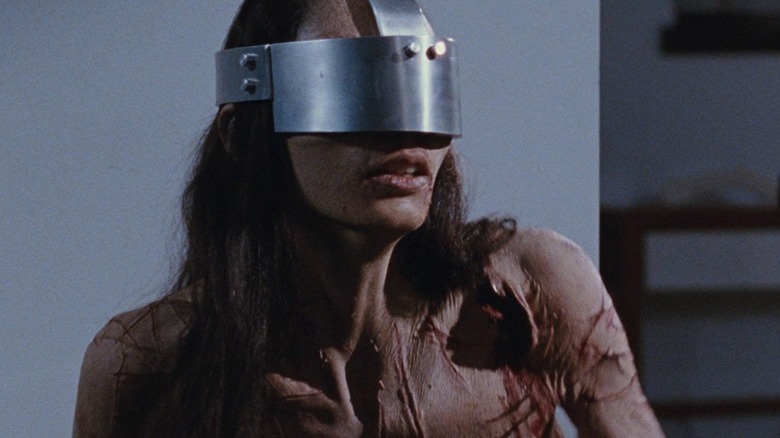
Martyrs

Pascal Laugier's "Martyrs" is not for the faint of heart. Lucie (Mylène Jampanoï) and her friend, Anna (Morjana Alaoui) invade the Belfonds' family home, a rural country estate nestled in the French countryside. Ostensibly a normal family, Lucie nonetheless believes that the Belfonds are responsible for her adolescent capture and torture. Plagued by nightmares and enduring reminders of her kidnapping, Lucie believes that killing the Belfonds will free her -- but Anna is considerably less convinced. 

Subversive, gritty, and featuring some of the genre's most painful gore effects, including exploding heads and an extended sequence of a human being flayed alive, "Martyrs" is a benchmark for the genre. With an existential narrative and a genuine grounding for its uber-violence (the title holds dual meanings), "Martyrs" is unlike anything you've seen before. It's a contemporary classic, and the movie that put Laugier on the map. In addition, "Martyrs" is elevated by its gore, not compromised. Just ask fans of the remake. When the violence is dulled, so too is the narrative's impact.

Inside

New French Extremity is a term coined by Artforum critic James Quant to elucidate upon the trend of violent, transgressive cinema of the 21st century, driven largely by French auteurs. Though Quant was principally concerned with the early '00s, the legacy of New French Extremity endured long into the decade, famously encompassing both "Martyrs" and "Inside." The latter film, the debut feature from duo Julien Maury and Alexandre Bustillo (who also made "The Deep House" and "Kandisha"), is bare bones savagery at its best.

Expecting mother Sarah (Alysson Paradis) is spending Christmas Eve alone, having survived a crash in which her husband was killed. Luckily, both she and the baby lived. Late at night, a woman (Béatrice Dalle) -- or, as she's known, the woman -- breaks in, hellbent on cutting Sarah's baby right out of her. Maury and Bustillo make great use of conventional domestic products, including scissors, knitting needles, and aerosol, as Sarah locks herself in the bathroom and the woman kills anyone unlucky enough to stop by. 

There's little more to "Inside" than that, although the movie does attempt to tackle some dour themes about the fears new mothers face. Still, audiences flocked to "Inside" on account of its increasingly blood-soaked kills. The deaths hit hard, eschewing conventional Hollywood crimson for sticky, viscous blood and viscera. "Inside" is painful to watch, yet that pain cements its legacy. Over the course of this century, no one has made gore quite as artful as Maury and Bustillo, and "Inside" shows them at their best.

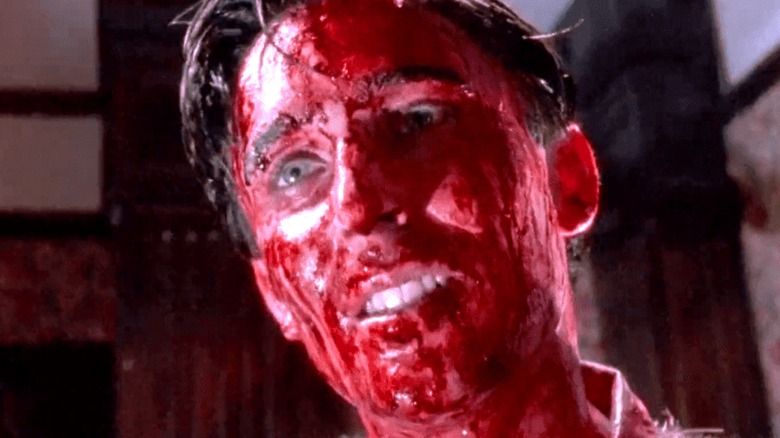
Dead Alive

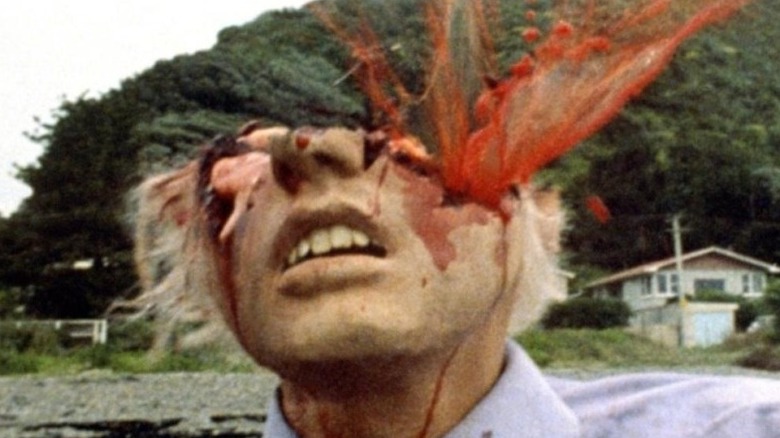
Seongyong Cho, writing for Roger Ebert, calls "Dead Alive," one of the "most disgusting movies ever made." A box office bomb that nonetheless attracted a significant cult following, it is one of director Peter Jackson's (yes, that Peter Jackson) most accomplished movies. A hybrid of early Raimi and late Carpenter, "Dead Alive" follows Lionel (Timothy Balme), a young man who lives with his overbearing, suitably Gothic mother, Vera (Elizabeth Moody). She follows Lionel and his love interest, Paquita (Diana Peñalver) to the Wellington Zoo, and is soon after bitten by a gruesome combination of a rat and a primate. Vera transforms into a zombie, and as overbearing mothers are inclined to do, soon infects large swaths of the townsfolk. Lionel is in a heap of trouble.

Well-choreographed and filmed with a grindhouse sensibility -- and a wicked sense of humor -- "Dead Alive" (also known as "Braindead") is a rollicking good time. Entrails are spilled, bodies are torn asunder, and in the middle of it all is a hapless young adult just looking for love and a good time. "Dead Alive" is sublimely tasteless in its violence, and all the better for it. The zombie subgenre had little momentum in the '90s, yet like a mad scientist, Jackson brought it back from the dead.

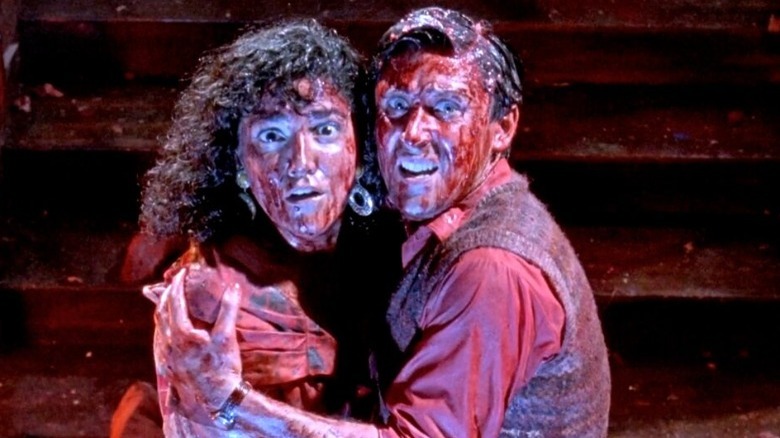
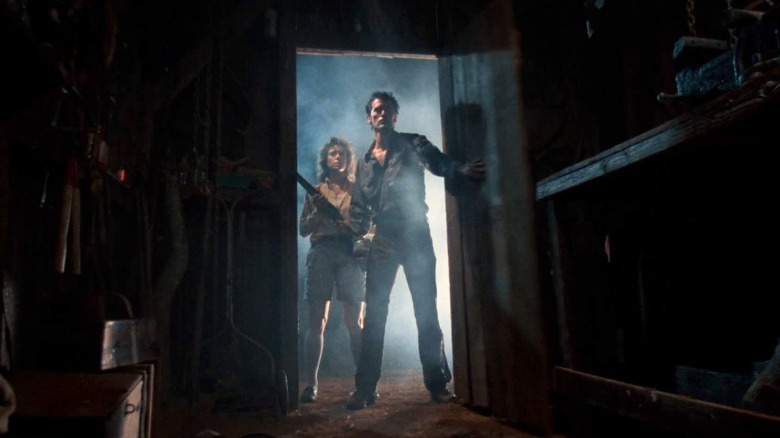
Evil Dead II

It all comes back to the chainsaw arm. Sam Raimi's "Evil Dead II" is exceptionally accomplished on all fronts, but even among non-fans, Bruce Campbell's chainsaw arm is iconic not just in the series, not just in horror, but in cinema writ large. Here, Campbell once again plays Ash, first reenacting the events of the original "Evil Dead," a supremely gory and stylish horror film in its own right, before pushing the film into new territory. In Campbell's own words, "Evil Dead II" is more of a "requel" than a direct sequel, merging conventional sequel sensibilities with backing and budget of a studio film.

Ash travels to a remote cabin with his girlfriend, Linda (Denise Bixler while alive, Snowy Winter in demonic form), where he plays a tape with a recorded passage from the legendary Necronomicon Ex-Morris, unleashing a torrent of demonic activity that possesses Linda. In the ensuing struggle, Ash decapitates Linda and loses his own hand, later replacing his lost limb with a chainsaw for maximum carnage. Other passersby stop in, including the archeological team that originally discovered the book, and so, so much blood is spilled. 

Funnier and more meta than the first movie, "Evil Dead II" cemented Evil Dead as its own franchise, which later expanded to include a sequel, a remake, a television series, comics, video games, and more. This demon just won't -- and shouldn't -- die.

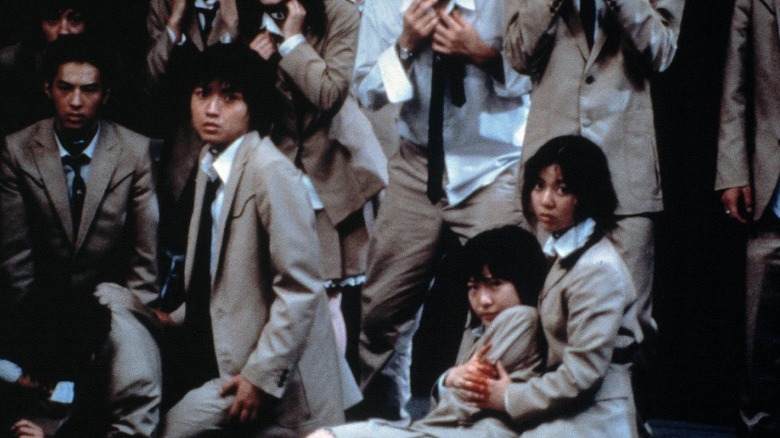
Battle Royale

"Battle Royale" is a Japanese horror-action hybrid and the last directorial outing for filmmaker Kinji Fukasaku, who passed away three years later while working on the sequel, "Battle Royale II: Requiem." A precursor to "The Hunger Games," "Battle Royale" tracks Japanese high schoolers living under a totalitarian regime in the near future. The kids are gassed and taken to a remote island, where they're told they have three days to kill one another -- there will be only one winner. Explosive collars, not unlike those in "The Belko Experiment," have been strapped to their necks, set to detonate when students refuse to cooperate or try to flee.

Though Tatsuya Fujiwara's Shuya and Aki Maeda's Noriko are the ostensible protagonists, "Battle Royale" follows the entire class. Some children are eager to spill blood. Others are unwilling or unable. Either way, blood is spilled, and it's spilled in earnest. There are sword fights, shoot outs, and, yes, exploding heads. 

Banned in several countries --- the United States didn't see a physical release until 2010 -- the violence in "Battle Royale" is just as disturbing as its general conceit, although there's a strong thematic foundation for all of the gore. "Battle Royale" is a classic for good reason. For audiences who can handle its savagery, it's worth fighting for.

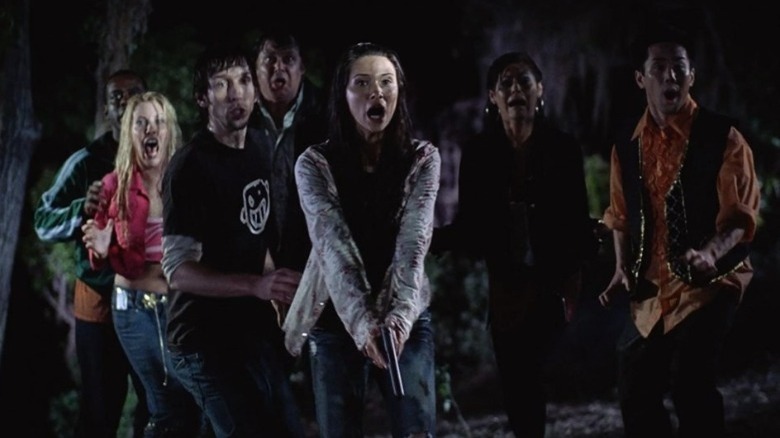
Hatchet

"Hatchet" is the first of four Victor Crowley slashers from director Adam Green. As the Bayou Butcher, Victor Crowley (Kane Hodder, of Jason Voorhees fame) is rumored to haunt a deserted section of New Orleans wilderness, killing anyone who enters his domain. When a haunted tour boat has an accident, a menagerie of tourists and filmmakers -- and one survivor, named Marybeth Dunston (Tamara Feldman) -- find themselves trapped in a nightmare. As they discover, the legend of Victor Crowley is completely true.

The Victor Crowley series has little on its mind other than carnage. The three additional sequels expand the mythology, and though there's something noteworthy about Dunston's attempts to stop Crowley (in later installments, she's played by genre favorite Danielle Harris), "Hatchet" is all about the deaths. People are torn apart, ground down with sanders, and beheaded so graphically that even the most steadfast genre fans are liable to wince. 

More than mere homage to the carnage of slashers past, there's artistry to Green's killings, and while later entries grow more violent and cartoonish, the original "Hatchet" still hasn't been topped. Funny, scary, and exceptionally gory, "Hatchet" will endure as a modern horror classic.

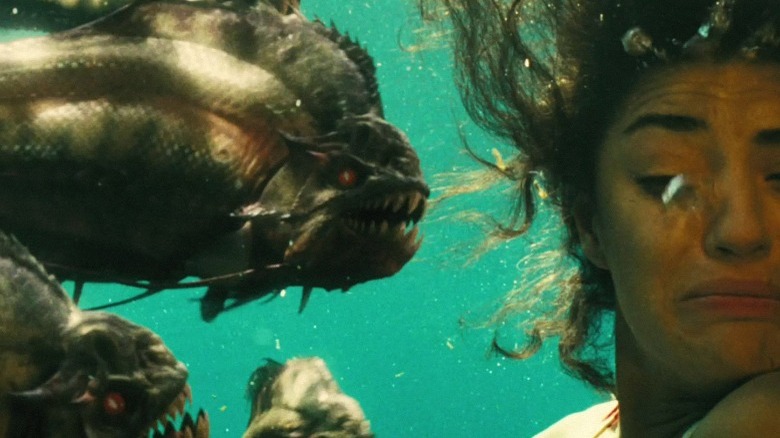
Piranha 3D

"Piranha 3D" is currently sitting at 74% on Rotten Tomatoes. Yes, a movie about prehistoric piranhas rising from a chasm at the bottom of an Arizona lake and chowing down on anything in their path is certified fresh. More accomplished than the original, sequel, or its many remakes and imitators (the original "Piranha" was itself a low-budget "Jaws" rehash), "Piranha 3D" has little more on its mind than exploitive carnage. Half the cast spends the entire movie mostly (or entirely) nude, and if you thought that director Alexandre Aja was going to limit the gore to fish taking bites out of spring breakers, you'd be wrong.

Tourists are sliced in half by errant wires and scalped by boat motors, and in one infamous scene, Jerry O'Connell has his manhood bitten off. 80,000 gallons of blood were used for the movie's climactic massacre, during which thousands of piranhas go to town on a lake full of spring breakers. The chaos is as artfully and poetically crafted as anything I've ever seen. Yes, it is violence for violence's sake, but when it's rendered with this much love, care, and attention to detail, it doesn't matter. Just steer clear of the sequel, "Piranha 3DD." The title says it all.

Demons

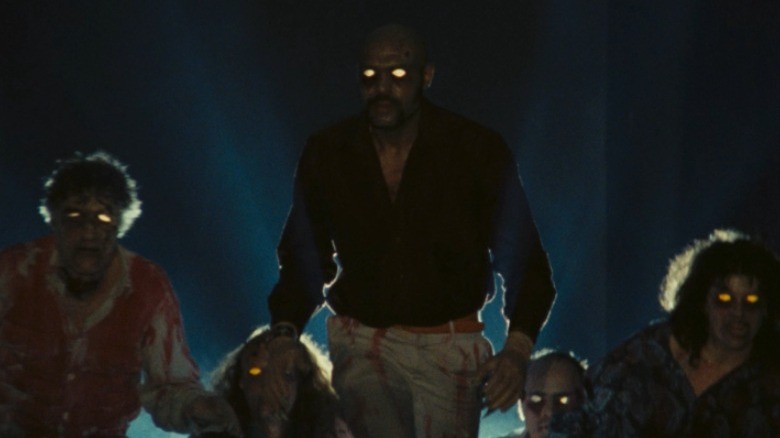
"Demons" is a giallo powerhouse. The hallmarks are all there: lurid lighting, extreme violence, questionable behavior, and fantastic supernatural occurrences. Directed by Lambarto Bava, son of famous Italian gore hound Mario Bava (see: "A Bay of Blood"), "Demons" follows two female university students and several other people who are invited to a mysterious movie screening where they find themselves locked inside a theater with a bunch of demons.

"Demons" isn't the greatest giallo there is, though it does rank among the most violent. Not just bloody, "Demons" is gross in the best ways possible. People are mutilated, dismembered, scalped, stabbed, and ripped apart at such an alarming pace that it's easy to lose track who's left alive. Erected with pristine Gothic sensibilities -- exterior shots were filmed at the Metropol cinema in Berlin -- "Demons" is a consistently entertaining grab-bag of familiar horror movie elements made, thanks to the gore, as shocking as possible.

Henry: Portrait Of A Serial Killer

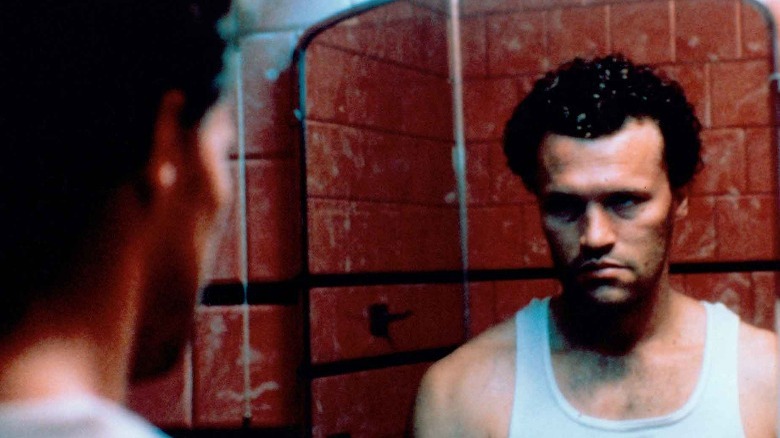
"Henry: Portrait of a Serial Killer" isn't simply one of the scariest movies ever made, it's also one of the goriest -- a feat it achieves by virtue of a single scene during the film's 83-minute runtime. Henry (Michael Rooker, playing a character largely believed to be real-life serial killer Henry Lee Lucas) has killed his friend and roommate, Otis (Tom Towles, basing his character on Ottis Toole). He is seen carving Otis's body in the bathtub. The lighting is stark, the setting grim, and the verisimilitude nauseating. It feels as if audiences are watching an actual man being carved up, and it's terrifying.

The snuff-film elements aren't limited to just that scene. Different cuts of the movie vary, on account of severe censorship in both the United States and abroad, but in brief vignettes, there are shots of bloated bodies on the shore, naked women with bottles shoved down their throats, and an extended home video sequence in which Henry and Otis murder an entire family. Controversial to this day, the violence in "Henry: Portrait of a Serial Killer" doesn't feel cinematic. It feels real.

Burial Ground

Luckily, "Burial Ground" is considerably lighter than "Henry: Portrait of a Serial Killer." In part, that's because "Burial Ground" isn't very good. With regard to basic elements like story, acting, and cinematography, "Burial Ground" falls short. Its title alone is a wild saga -- directed by Andrea Bianchi, "Burial Ground" was released as "Nights of Terror," "Zombi Horror," "The Zombie Dead," and "Zombi 3," and is one of several films marketed as a sequel to George Romero's "Dawn of the Dead."

"Burial Ground' follows a ragtag group of survivors who outrun a zombie apocalypse that is unleashed when a scientist falls afoul of an evil curse. Little that follows amounts to much. "Burial Ground" is cheap, grainy, and poorly conceived. 

A decades-old Italian zombie flick, though, doesn't simply reanimate and endure for nothing. In addition to everything else, "Burial Ground" is ludicrously violent. A woman has her nipple bitten off. Heads are sliced off with scythes. Necks are torn asunder, and heads are crushed against bathtubs. What "Burial Ground" lacks in artistry and narrative cohesion it makes up for in sheer carnage.

Read this next: 10 Truly Frightening PG-Rated Horror Movies

The post The 10 Goriest Horror Movies Ever Made appeared first on /Film.

28 Sep 00:40

The 15 Best Japanese Horror Movies Of All Time

by Mary Beth McAndrews

Japanese horror (or "J-horror") films are their own kind of scary. Whether they're about serial killers or angry ghosts, these films create a different type of fear, one steeped in existential dread about what it means to exist and the loneliness that is inherent to the human condition. It's a special brand of nihilism that's often accompanied by the absurd, creating horror that points at the absurdity of life itself. This tone is what makes these films so hard to adapt to a Western perspective. They are so explicitly Japanese that removing the cultural context in turn removes the horror. It's not just horrific imagery, but in a deeper psychological fear born from increasing loneliness in the age of technology.

This list aims to capture the incredible range of Japanese horror films, from ridiculous horror comedies to harrowing tales of ghostly viruses. It also aims to capture the extensive presence of horror in Japan, which is intrinsically linked to a complex folklore tradition involving spirits, monsters, and demons. You'll see some directors get multiple shout-outs -- horror greats like Takashi Miike and Sion Sono are not just masters of their craft, but they're also ridiculously prolific, and their influence on the genre cannot be limited to just one film. If you're new to Japanese horror, this is a perfect place to start your adventure into the wild and wonderful world of J-horror.

Tetsuo: The Iron Man
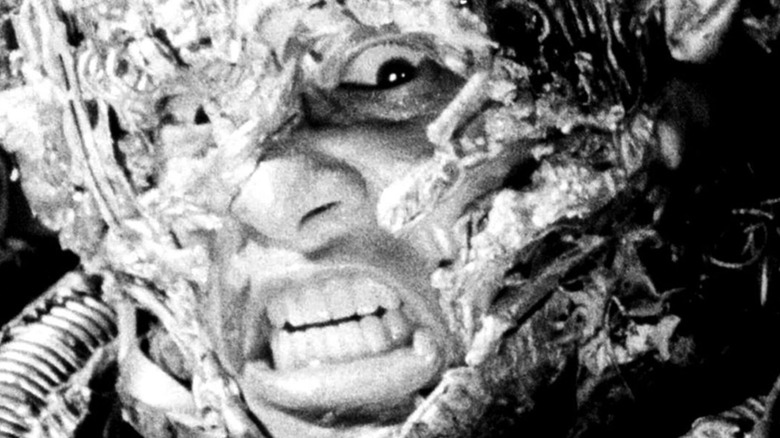
This is a film for the gore-lovers out there. This is also a film for those who are fans of high-concept horror that is less about a set narrative and more about creating a very specific atmosphere that sets your teeth on edge. Directed by Shinya Tsukamoto, "Tetsuo: The Iron Man" chronicles the life of a salaryman (Tomorowo Taguchi) whose thoughts are plagued with images of his body penetrated by scraps of metal. These horrifying thoughts ooze into real life as the man's reality melds with that of a metal fetishist, who loves to insert metal into his skin -- like, really loves it, to the point that maggots squirm in his infected flesh. 

While "Tetsuo: The Iron Man" is shot in black and white, that does not make its graphic violence any less gruesome. Oozing blood resembles goopy oil as it gushes from open wounds, and human flesh becomes synonymous with machinery. But what's even more fascinating about "Tetsuo: The Iron Man" is that it is ultimately a love story between the salaryman and the metal fetishist, both of whom crave an unholy union between flesh and cold steel.

Kwaidan
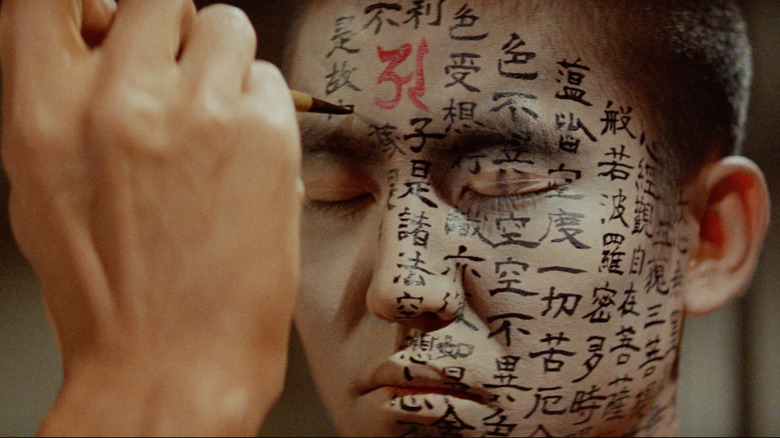
"Kwaidan," which translates to "ghost story," is a 1964 horror anthology film directed by Masaki Kobayashi, based on Lafcadio Hearn's collection of Japanese folktales. The first story, "The Black Hair," follows a poor samurai who regrets leaving his loyal wife for a wealthier, yet cold, woman in order to gain better social status. 

The next is "The Woman of the Snow," in which two woodcutters seek refuge in a hut during a snowstorm. There, one of them is murdered by an angry spirit, who spares the other on the condition that he never tells anyone what he's seen. His resolve is tested when he meets a beautiful woman who resembles the spirit. 

The third segment is a story-within-a-story called "Hoichi the Earless," about a blind musician named Hoichi attracts the attention of a rich family that may not be human. The last tale, "In a Cup of Tea," is a short and sweet segment about a man who keeps seeing faces in his tea. "Kwaidan" is a gorgeous dive into Japanese folklore and some of their traditional ghost stories that have been told -- and re-told -- for centuries.

Marebito

This won't be the only found footage film on this list. After directing the cult hit (now horror classic) "Ju-On: The Grudge," director Takashi Shimizu released "Marebito," a tale about a nervous man who becomes obsessed with filming the world around him after watching a man commit suicide. Through his camera, the man hopes to better understand death. 

In his quest, the protagonist travels to a bizarre world underneath Tokyo, armed with nothing but his video camera. While venturing through this strange place, he encounters a young woman chained to a wall, who he decides to "save" and bring home to his apartment. But, as he spends more time with this woman, he realizes that she won't eat, drink, or even talk -- yes, we are wandering into vampire territory. 

As he continues to care for the stranger, the man's life becomes more violent, and he realizes that he brought something to the surface that should have been left where it was found. "Marebito" takes a lot of cues from the works of H.P. Lovecraft, playing with the overwhelming madness intrinsic to cosmic horror.

Tag
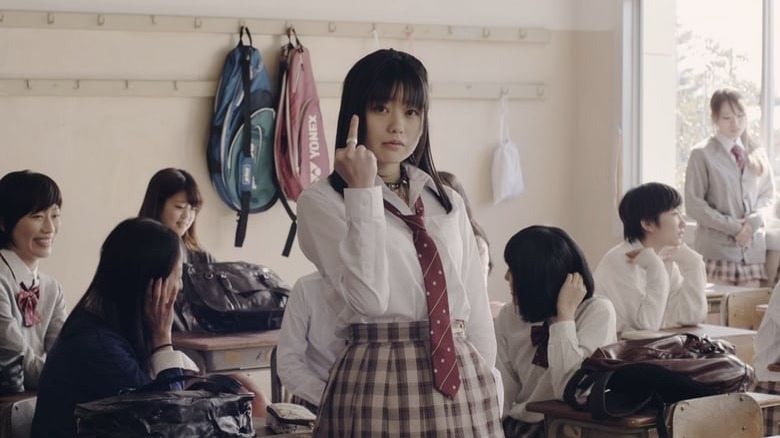
Sion Sono is a mad genius who doesn't let the pesky things like a "cohesive narrative" hold him back. In his 2015 film "Tag," student Mitsuki (Reina Triendl) is the sole survivor of a horrific accident, during which a gust of wind cuts her bus -- and her classmates -- in half. That introduction sets the scene for a truly ridiculous story that involves multiple dimensions, mistaken identities, machine gun-wielding teachers, and much more. 

"Tag" is a film made for gore hounds looking for something absolutely gonzo, but also shockingly feminist. As Mitsuko travels through a bloody hellscape, watching all of her friends die right in front of her, Sono questions the objectification and use of the female body in exploitation horror. So, why exactly is it called "Tag?" Is it really all just one big game? You'll just have to watch to find out.

Onibaba
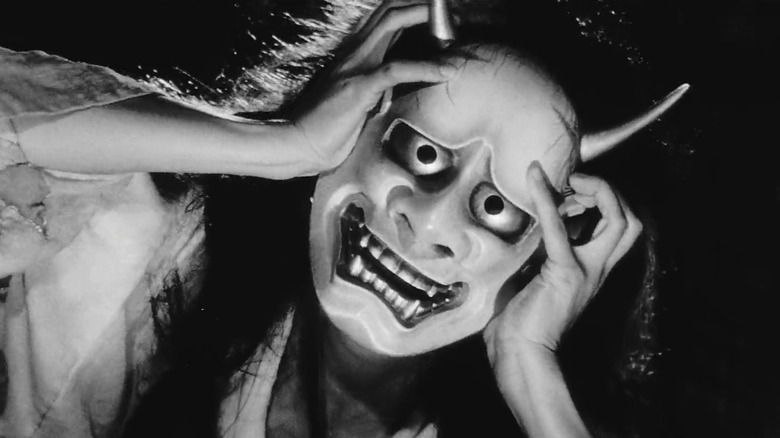
Kaneto Shindo's 1964 horror classic "Onibaba" is set in 14th-century Japan, where an old woman and her daughter-in-law are trying to survive during a civil war. As they await the return of their son-slash-husband, the women murder soldiers, loot their bodies, and sell the stolen goods so they can afford to survive. But when their neighbor returns from war, things get complicated, and a strange love triangle threatens the women's violent, yet simple, way of life. 

Full of tension with a dash of the supernatural, "Onibaba" is an example of Japanese horror excellence, adapting classic Japanese folklore into something that both honors the past while also bringing it into the present. Shindo's early work set a precedent for the genre, and in turn helped shape the current roster of wild and wonderful Japanese horror filmmakers.

Suicide Club
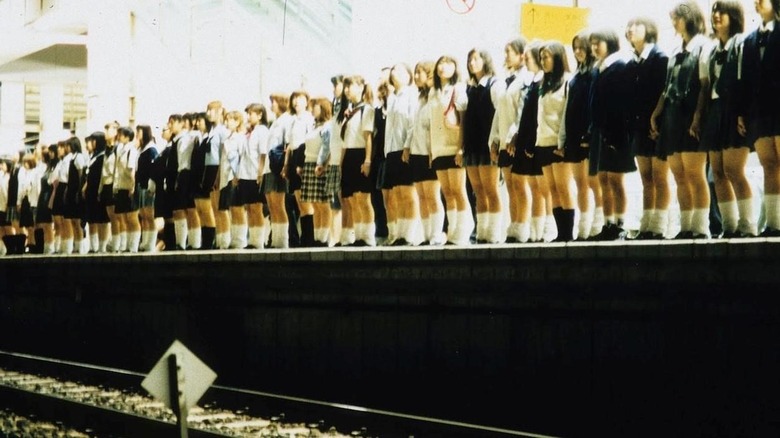
Sono makes an appearance on this list again, this time with his 2001 film "Suicide Club," which is about exactly that: a club where people commit suicide. The film opens with a large group of schoolgirls from across Tokyo, all of whom hold hands and jump together in front of a moving train. As bodies continue to pile up -- literally -- on the streets of Japan, Detective Kuroda (Ryō Ishibashi) tries to get to the bottom of what is causing these suicides. The answer lies in a complex series of clues that includes cryptic websites and special tattoos. 

While the film grapples with serious subject matter, Sono isn't afraid to make the taboo darkly funny. This controversial film relies on a smattering of violent and absurd images, creating a cinematic experience that will keep you enthralled from beginning to end. Even with Sono's sinister playfulness, "Suicide Club" is ultimately a troubling and nihilistic film about the effects of the digital world on the younger generation, whose impressionable minds make easy targets for those with evil intentions.

Hausu
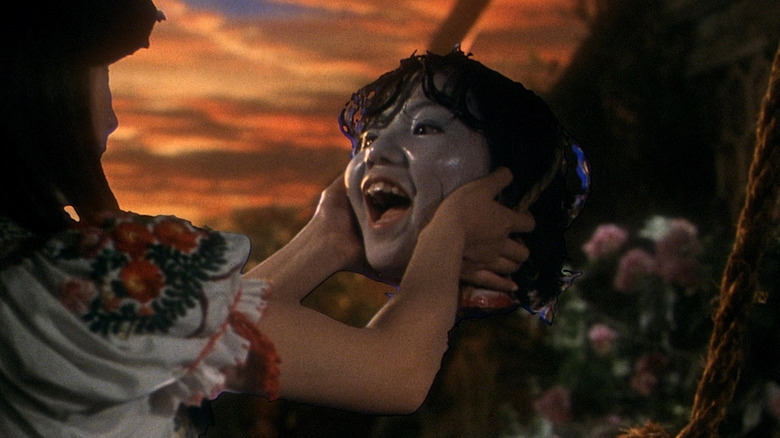
There is no way to truly capture the psychedelic essence of Nobuhiko Obayashi's 1997 wacky classic "Hausu," a film full of disembodied cats, breathtaking animation, and much, much more

In "Hausu," a young woman named Gorgeous brings a group of her close friends to her aunt's house over the summer to relax in the countryside, but they don't know that this house is deeply haunted. Nothing but doom awaits them. "Hausu" is a film that knows exactly what it is, and Obayashi commits wholeheartedly. The result is a campy masterpiece that never pretends to be sleek; instead, "Hausu" leans into its outlandish nature, featuring poor special effects and wild animation sequences. 

Of course, there's good reason for the ridiculousness: "Hausu" was written with the help of Obayashi's young daughter. It is, quite literally, from the mouth of a babe, and her honesty about what scared her as a child helps to create one of the strangest horror films to date.

Kuroneko
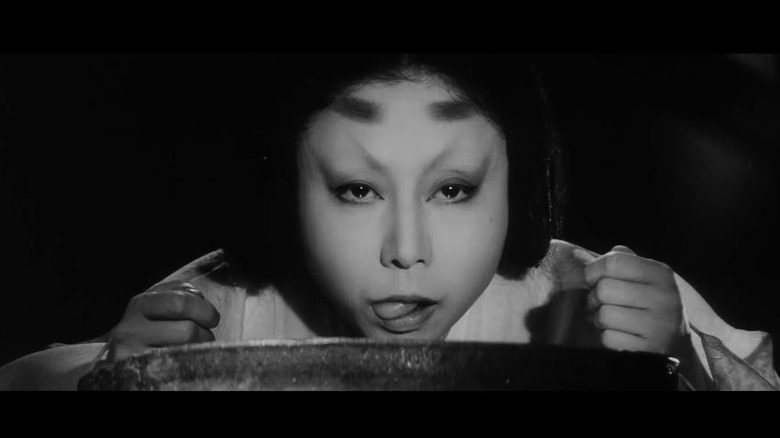
Shot in a beautiful monochromatic color palette, Kaneto Shindo's 1968 ghost story "Kuroneko" is a devastatingly gorgeous revenge tale about a woman and her daughter-in-law, who return as angry spirits after being raped and murdered by violent samurai during a war in feudal Japan. If that sounds similar, it's because Shindo wrote and directed "Onibaba" just four years earlier. 

These two spirits, known as onryo, haunt a popular road, seducing lonely samurai and luring them away to murder them. They take the form of black cats as they pounce and yowl at their prey. Their feline forms also lend to some impressive aerial stunts from the two lead female performers. "Kuroneko" is a fascinating take on the rape-revenge tale; even in death, these two women must try to find justice for the harm inflicted upon them by those in power. While there is a lot of murder in the film, it contains almost no gore, instead relying on an oppressive and ominous atmosphere to create its unsettling tone.

Ju-On: The Grudge

Released in 2002, Takashi Shimizu's "Ju-on: The Grudge" was the third film in a franchise, but the first to be released in theatres, and therefore the first of the films to really make a large mark on the horror genre. When a woman named Kayako and her son are murdered by her husband after he discovers her infidelity, they die with a grudge in their hearts. Their rage and anger spreads like an infection, and the two slowly torture and kill anyone who moves into their home. 

The tradition of rage-filled ghosts who refuse to pass on peacefully is a traditional Japanese horror trope, particularly scorned women who seek revenge on the men who wronged them. "Ju-On: The Grudge" introduced many iconic horror images, as well as the unforgettable bone-chilling screech that emanates from a young boy's mouth as he descends on his next victim. 

Shimizu later adapted "Ju-On: The Grudge" into an English-language film featuring a primarily white cast, but the original is a quintessential Japanese horror films that will haunt your dreams. It's impossible to forget the boy's death rattle, or the sound of Kayako creepily walking down the stairs as her joints creak and snap. 

Ringu
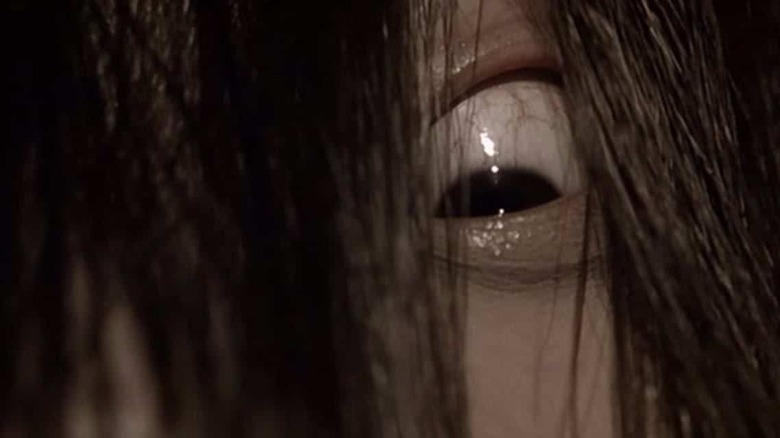
"Ringu" is a classic Japanese horror film, and the one that made J-horror a mainstream concern internationally. Released in 1998 and directed by Hideo Nakata, "Ringu" is about a cursed videotape that kills whoever watches it after seven days. The contents of the tape are an amalgamation of unsettling images, culminating in a sequence in which a young girl climbs out of a well. 

While investigating the tape, reporter Reiko Asakawa travels to the small island of Izu, looking to discover the tape's origin and the identity of the girl in the well; is it real, or is it an elaborate prank? During her investigation, those around Asakawa die violent deaths after watching the tape themselves. "Ringu" is the first film featuring the vengeful spirit Sadako, who has that long, wet, black hair draped over her face. This was also one of the first films to tackle Japan's growing digital landscape, and the horrors that lie in our increasing dependence on technology.

Audition
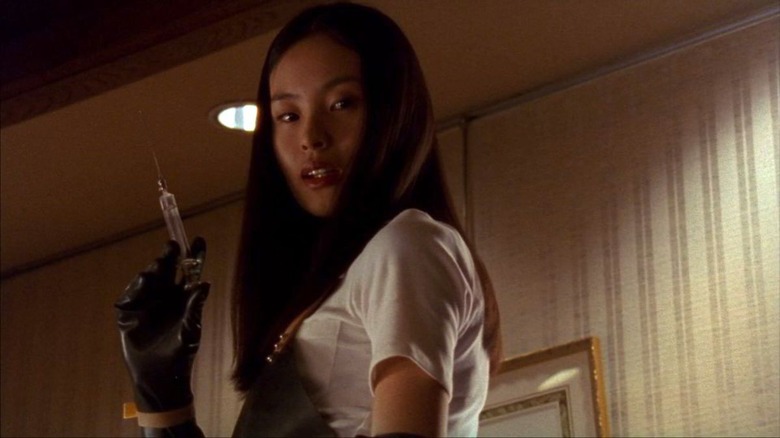
Takashi Miike paints with a bloody, gruesome brush, creating some of Japan's most extreme horror films, including "Visitor Q" and "Ichi the Killer." But perhaps his best work is his 1999 film "Audition," one of James Gunn's favorite horror movies, not to mention a distressing story about finding romance and the harmful misogyny of Japan's older generation. 

Shigeharu Aoyama (Ryo Ishibashi) is a lonely film producer and widower who lives a quiet life. One day, his adult son suggests that Aoyama marry again. So, to help Aoyama find love, his friend Yasuhisa Yoshikawa holds auditions for a fake film role; in reality, the "part" is Aoyama's future wife. 

During the process, Aoyama becomes enamored with the quiet and mysterious Asami (Eihi Shiina). As their relationship blossoms, he begins to discover dark secrets about her past -- dismembering abusers, copious amounts of piano wire, and bowls of vomit. While "Audition" starts as a slow-paced relationship drama, the film's final act is well worth the build-up -- it's one of the most shocking sequences ever committed to film. "Audition" also serves as the perfect introduction to Miike's work, illustrating his unique style of filmmaking as well as his uncanny ability to create disgusting and disquieting images.

Godzilla
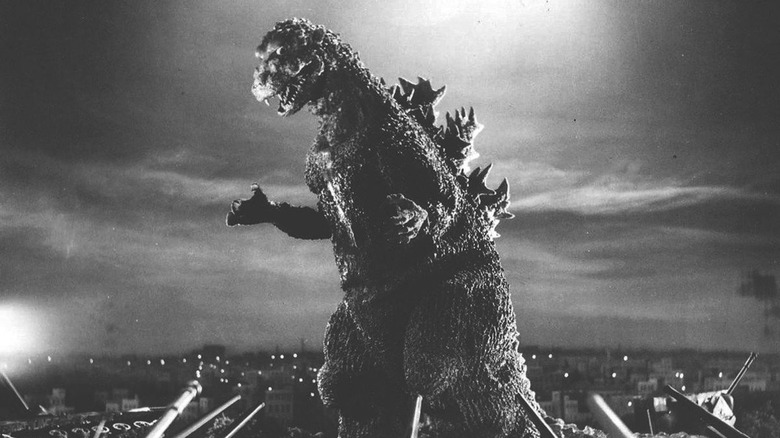
Kaiju movies are often thought of as campy spectacles with no actual fear factor. Cheap rubber costumes distract from the citywide destruction. Massive monster battles are the centerpieces, not the trauma inflicted upon millions of people. But the original kaiju movie, "Godzilla," which was directed by Ishiro Honda in 1954, is a terrifying monster movie that examines the horrors of nuclear war. 

In his original iteration, Godzilla is an ancient creature awakened from his underwater slumber by atomic bomb testing in the Pacific Ocean. He now travels across Japan, leaving devastation in his wake. Not only is the city of Tokyo shown burned to the ground, but Honda also focuses on the individuals affected by Godzilla's destruction, depicting hospitals packed full of sobbing families and dying children. In this film, Godzilla is not the internet's thick-thighed boyfriend; he's a terrifying creature sent to wreak havoc on those who try to play God.

Pulse
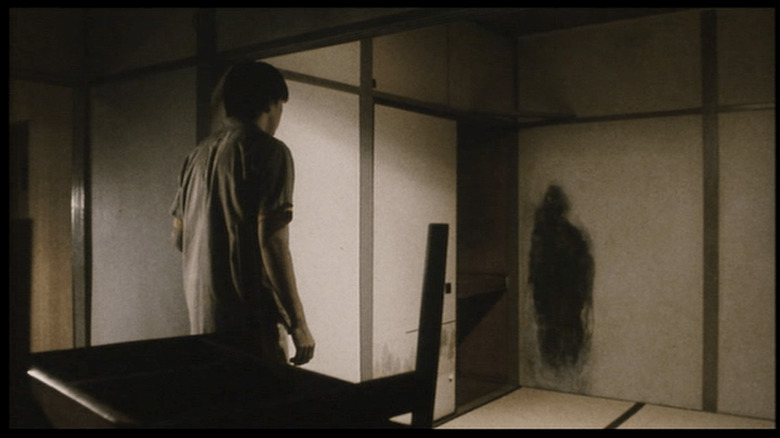
At the turn of the century, one of Japan's biggest fears was the increasing isolation that came with the growth of the internet. Kiyoshi Kurosawa encapsulates that cultural anxiety in his 2001 film "Pulse," which is about a ghostly virus that leaks from the internet into reality. In parallel story lines, two young women discover that something strange is happening to their friends, who begin committing suicide after leaving cryptic notes asking for help. 

As their stories converge, the women discover that the spirit world has found a way to access and infect the real world through internet connections. It's like a computer virus, but one that also takes over the minds of real people. And, like any virus, the mysterious force begins to proliferate exponentially, claiming more and more lives every day. Kurosawa creates some very harrowing moments, including a scene with a slow-dancing ghost who is more menacing than any other cinematic spirit of recent memory.

Noroi: The Curse
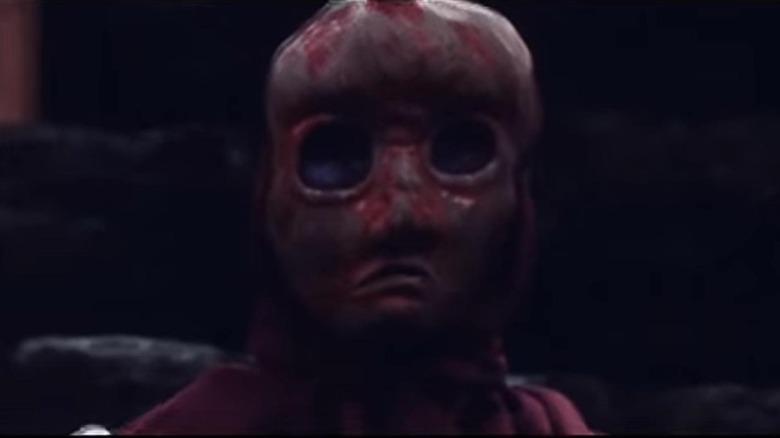
The found footage genre is horrifying, given its ability to place audiences in the shoes of terrorized characters by using a first-person point of view. But director Kōji Shiraishi takes it to another level with his 2005 film, "Noroi: The Curse." The film is presented as an incomplete documentary by paranormal researcher and journalist Masafumi Kobayashi (Jin Muraki), who is known for his books, documentaries, and TV series about ghostly events around Japan. In this documentary, Kobayashi begins investigating reports of disembodied sounds of babies crying, but the film quickly becomes about something much more sinister.

While "Noroi: The Curse" states from the very beginning that Kobayashi's house has burned down and that he's missing, this does not make any of Kobayashi's revelations any less terrifying, particularly in regard to some deeply unsettling imagery at the film's end. This is not the typical found footage film, full of shaky footage and haunted forests. This is a sleek pseudo-documentary that plays with the truth and how filmmakers build trust with the audience. "Noroi: The Curse" is not only a shining example of Japanese horror, but of the found footage genre as a whole.

Cure
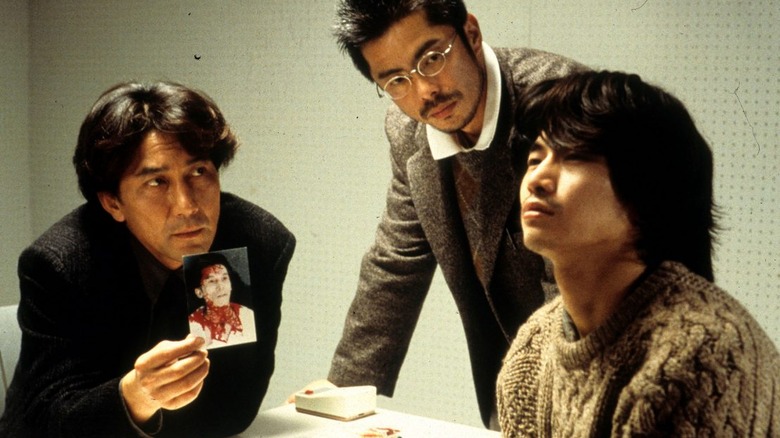
Kiyoshi Kurosawa is a master of psychological horror, creating stories that burrow under your skin and fester, haunting you for days. His 1997 film "Cure" -- one of "Parasite" director Bong-Joon Hoo's favorite movies -- is a prime example, capturing a deep-seated fear of losing control and the destruction that often comes with obsession. Kenichi Takabe (Kōji Yakusho) is a detective investigating a string of strange murders in which all of the victims are marked with a giant X, and yet were all killed by different people. Even weirder, the murderers have no memory of committing the crimes, and have no real motivation for the killings.

Takabe struggles to understand the mystery, until he captures Mamiya (Masato Hagiwara), who seems to have short-term memory loss. However, the detective slowly learns that Mamiya is a master of hypnotism, and that he is using those gifts to manipulate innocent people. "Cure" devolves into a tense game of cat and mouse, set against a drab, gray background that creates an oppressive atmosphere and smothers both the audience and the characters alike. "Cure" is a perfect example of Japanese horror, and how it easily and unsettlingly combines of disturbing imagery and existential dread.

Read this next: 8 Great Asian Horror Films That Hollywood Hasn't Remade

The post The 15 best Japanese horror movies of all time appeared first on /Film.

28 Sep 00:38

Other Ryan Reynolds Movies You Should Watch After Free Guy

by Scott Thomas

2021 is the year of deja vu. It has conquered our airwaves; it has twisted our headlines; and it has massively entrenched itself in multiplexes, where last year's movies are current entertainment. A relief? Sure. Numbing? That too. It's hard to shake the sense that we've already seen everything that theaters have to offer, given that we got our first glimpses of "Black Widow" and "F9" more than a year a half ago. 

So, in this strange season, what does it take to renew a moviegoer's excitement? How about Ryan Reynolds? Reynolds' "Free Guy" has been as delayed as often any tentpole picture, yet that didn't slow its roll at all. An October 2020 trailer netted 55 million views in under 24 hours, surpassing both its initial trailer and the teasers for many Marvel movies. Reynolds even dragged Deadpool into the "Free Guy" fold, using his winking, fourth-wall-breaking alter ego to sell a completely unrelated flick.

"Free Guy" seems to encapsulate Reynolds' appeal in microcosm. He is a comic lightening rod, an actor whose skill is less "making people laugh," and more about bringing laughs to dire moments. It's a talent he deploys in commercials, prestige dramas, and even voice-over work. It's also what's made Reynolds a reliable draw at the box office for years, and an actor whose familiarity is both inherently chaotic and wildly comforting. Here are 10 other films that highlight the actor's skill set.

Deadpool 2

To paraphrase Ben Franklin: In this world, nothing can be said to be certain except death, taxes, and Ryan Reynolds playing Deadpool. The actor is as intrinsically linked to Wade Wilson as Hugh Jackman is to Wolverine, and is as characteristically glib in his portrayal as Robert Downey Jr. was playing Tony Stark. A list of essential Ryan Reynolds films must include a Merc with a Mouth movie and, for my money, it's "Deadpool 2" that represents not only the character's best on-screen appearance, but Reynolds' best hybrid of action and comedy to date. The reason? Director David Leitch.

Leitch, who cut his teeth as a stuntman before breaking through behind the camera with "John Wick," has created a tiny but mighty canon of explosive blockbusters which call the very purpose of the blockbuster film into question. "Hobbes & Shaw" frequently acknowledges its pointlessness. "Atomic Blonde" plays with meta concepts and the audience's complacency. He's an ideal fit for the fourth-wall breaking "Deadpool 2" and anchors its set pieces to Reynolds' tone-shifting talent -- an early sequence goes from spry kung-fu fighting to devastating realism to Celine Dion jokes before the viewer can catch their breath. Simply put: "Deadpool 2" is awesome, and a must watch if you enjoyed "Free Guy" on any level.

Detective Pikachu

Full disclosure: I believe "Detective Pikachu" is one of this century's best family films, a treatise on male vulnerability disguised as light noir. But even the biggest "Detective Pikachu" skeptic would be hard pressed to argue that Rob Latterman's movie isn't a Ryan Reynolds showcase. It approaches "Robin Williams as Genie"-type levels of both ecstatic improv riffing and also out-of-left-field pathos. 

Seriously. When Pikachu isn't singing the Pokémon theme song, he's confessing his crushing loneliness. When he isn't calming Psyduck down with "Seinfeld" references, he's musing on fate and loss with Tim (Justice Smith). It's a big ask, not just of the character, but of Reynolds, and he makes it look easy. And the movie matches his energy, particularly in a Torterra Garden sequence that proves just as madcap and frightening as the rest of the film's spirited, shadow-soaked world building. For families who enjoyed "Free Guy," "Detective Pikachu" is an instant (and kid-safe) watch.

The Hitman's Bodyguard

To say there were low expectations for "The Hitman's Bodyguard" would be putting it mildly. Patrick Hughes' third feature entered a summer movie season where heavyweights such as "Spider-Man: Homecoming" and "Dunkirk" were duking it out for viewers and still earned $176 million worldwide. And though its recent sequel was rightfully derided, "The Hitman's Bodyguard" works because Ryan Reynolds plays well with his co-star -- the one and only Samuel L. Jackson.

Better than "well," in fact. As the NSFW trailer -- which has been streamed over three million times -- proves, Jackson and Reynolds share an affinity for swearing, a predilection for physical comedy, and a sense of cool few others can touch. They both make "Hitman's Bodyguard" better than it ought to be, kicking and screaming their way through a threadbare plot that gives way to competent, sometimes thrilling, action scenes. It's not the best movie either actor has made, but it might be the most deliriously juvenile. If that sounds appealing, run -- don't walk -- to see it. On the other hand, if a more serious Ryan Reynolds buddy comedy is what you crave, look no further than...

Mississippi Grind

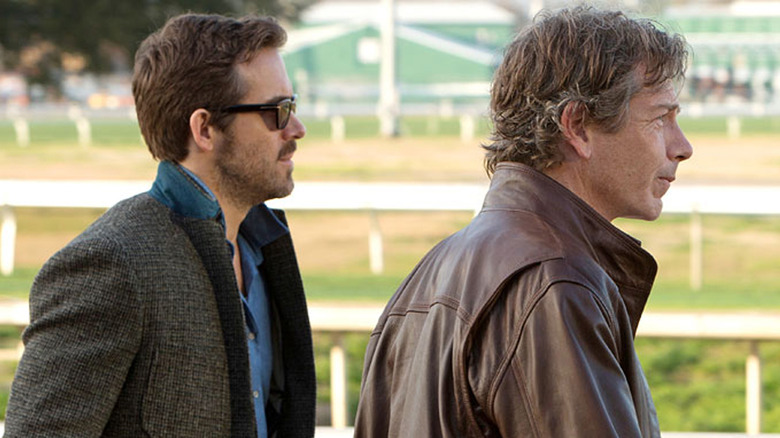
Any filmgoer who assumes Reynolds only traffics in action-comedies and rom-coms would do well to check out "Mississippi Grind" immediately. Why? Where to start? Not only is it the most riotously entertaining film that Ryan Fleck and Anna Boden ("Sugar", "Captain Marvel") have made to date, it's the bittersweet, spiritual successor to Martin Scorsese's "The Color of Money" that you never knew you needed. 

A heady blend of a road movie and a modest gambling thriller, "Mississippi Grind" weaponizes Reynolds' care-free charm, casting him as a man so seemingly baggage-less that he could be mistaken for lucky. However, as several reversals of fortunes come to prove, that's nowhere near accurate. Watching Reynolds navigate those pitfalls is tremendous fun, but it's his relationship with Ben Mendelshon's Gerry that makes a lasting impression. 

Mendelshon is a master of control and understatement, and watching Reynolds crack through his unflappable façade to forge a deep and complicated friendship is one of cinema's most lowkey pleasures. It's the reason "Mississippi Grind' is one of A24's first film Twitter favorites, and it serves as proof that Reynolds can anchor almost any project he pleases. It isn't, however, the only one to do so.

Buried

A one-man or woman show is the ultimate test for an actor. There's no scene partner to play off of; the actor's physical instrument shoulders the story, amplifies its stakes, and is the only entry point for an audience. Not every performer can handle it. The ones who can should be commended accordingly. 

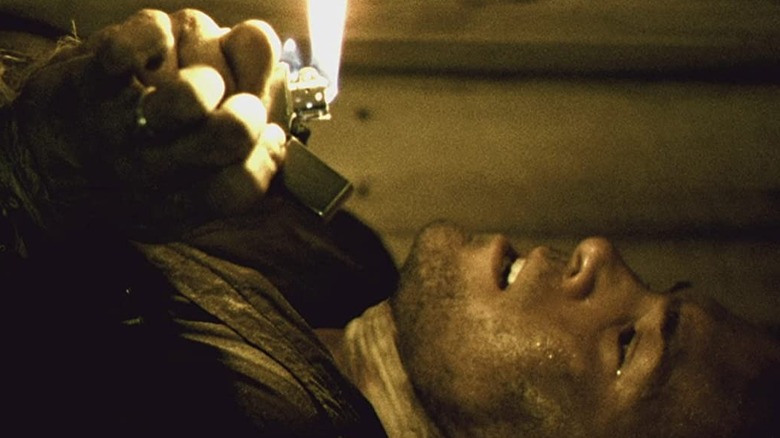
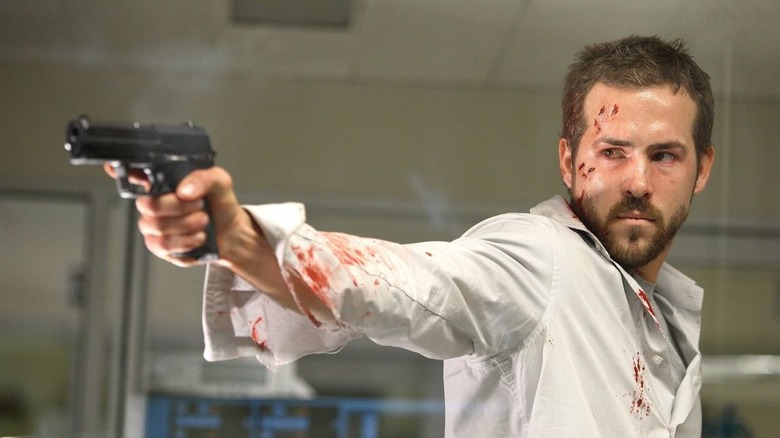
As it turns out, Ryan Reynolds is one such actor, and "Buried" is the proof. An exercise in nerve-shredding tension, Rodrigo Cortes' spare horror-thriller finds Reynolds playing an American truck driver who wakes up in a wooden coffin mere moments into the movie's first reel. He must then use a smattering of mysteriously provided items to try and escape. Cortes shot his debut film over 16 grueling days and Reynolds is on record as having suffered intense claustrophobia during all of them; it shows on screen. Simply put, this is not the kind of work major movie stars have to do, and when A-listers like Leonardo DiCaprio or Adrian Brody step up to these sorts of challenges, they usually win awards. 

Reynolds was not so lucky. "Buried" remains criminally underseen, and while anyone who considers themselves a fan of Reynolds should check it out post-haste, those who aren't warm to the actor might really benefit from screening it. It's the rare, laugh-free Ryan Reynolds film -- and it works.

The Voices

Ryan Reynolds remains a box-office draw because he's singular: The Canadian actor is Tom Hanks by way of Jim Carrey but also ripped, a good guy whose mean streak is simultaneously endearing and dangerous. Because that collection of traits is so idiosyncratic, we tend to know what to expect from a Ryan Reynolds vehicle. That is not true of "The Voices."

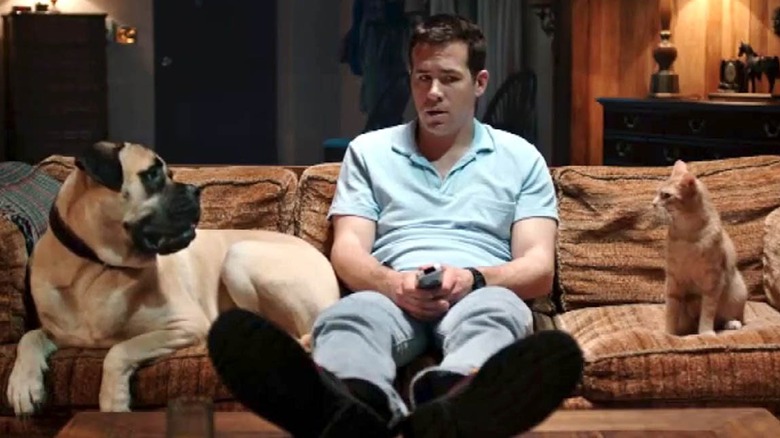
What is "The Voices"? Wikipedia claims it's about "a mentally unhinged factory worker who must decide whether to listen to his talking cat and become a killer, or follow his dog's advice to keep striving for normalcy." That barely scratches the surface of Marjane Satrapi's feature. It doesn't note that Reynolds plays the cat and the dog, effectively arguing with himself for two hours straight, illustrating the full depths of his range. It doesn't note that Straapi is the award-winning creator of "Persepolis," both the film and graphic novel. 

Above all, it doesn't note that "Voices" careens from black comedy to horror and back again, milking its high-concept premise for maximum shock value. "The Voices" is an inverse Ryan Reynolds vehicle, one that challenges audiences to see beyond the limits of the actor's boundless appeal and buy into a vicious plot in which laughs are a chaser, not the main feature. It's a test worth taking.

Smokin' Aces

"Smokin' Aces" is Joe Carnahan's spin on a Ryan Reynolds movie: an action film that plumbs the inherent ridiculousness of the genre, only to reveal a buried, bruised heart in its final moments. Before that? It's knocking off A-listers left and right; it's conscripting Chris Pine into his most insane performance; and it's plumbing the inherent schadenfreude of watching Jeremy Piven suffer for laughs. 

If this all sounds like typical Ryan Reynolds fare, then surprise! The actor's not the film's top star, often ceding screen time to Pine, Andy Garcia, and his frequent scene partner, Ray Liotta. It's as if Reynolds' id was a guiding light for Carnahan. It's the both the movie's gain, and all of cinema's; "Aces" is hardly any of its stars' best movies, but its colorful, specific, and full of top-notch actors. There are far worse movies to watch.

Safe House

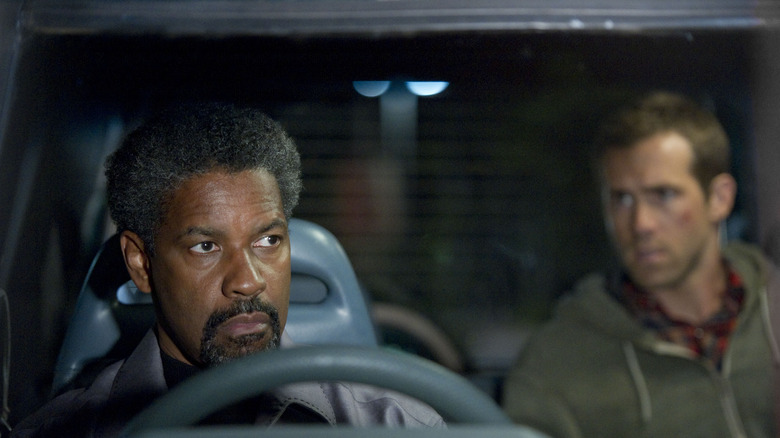
Let's get this out of the way: "Safe House" is not a great film. It's more commendable than good, the sort of serviceable action film that TNT daytime is made of. Why, then, does it make this list? For two reasons. First: in Denzel Washington and Ryan Reynolds, the film has endlessly combustible leads whose every decision makes the screen singe. I can't remember a single plot detail from "Safe House," but I do remember its scintillating stare-downs and the randomly long monologues delivered with steely verve. Given how much wattage Washington and Reynolds bring to the film, "Safe House" serves as an argument for the enduring power of movie stars. In that way, it's worth watching.

Second:  "Safe House" isn't the first average movie to have a truly great fight scene, but the disparity between third-act fight and the rest of the film is notable. For the three plus minutes that Reynolds and Joel Kinnaman are bloodying each other, it's easy to imagine how great "Safe House" could have been. Action fanatics owe this sequence its due. 

The Nines

On its surface, "The Nines" plays like a creative-muscle flexing: writer and director John August -- a Tony winner for Broadway's "Red" and a frequent Tim Burton collaborator -- decides to go full gonzo and create an anthology film that blends "The Truman Show" and David Lynch. 

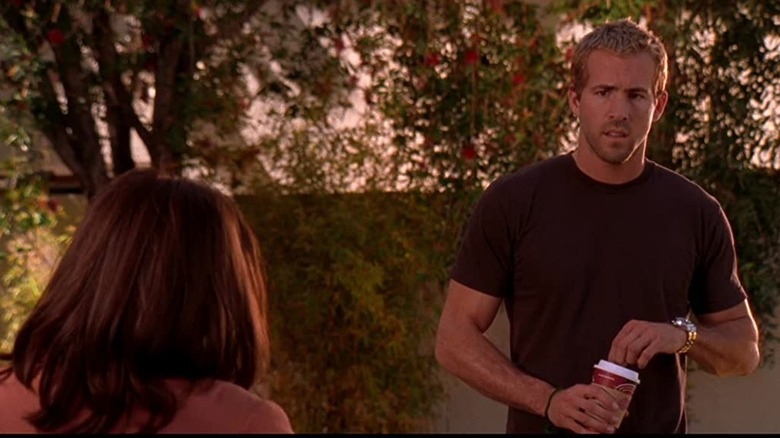
In retrospect, however, the movie's a wild curio. It features tons of notable actors pre-fame, most notably Melissa McCarthy and Octavia Spencer. There's a chance it'll play like a period piece to some viewers, given its strong mid-'00s vibes. And it features one of Reynolds' most expansive acting showcases, letting him play a trio of roles revolving around the concept of false identities. The actor would return to that well for "Free Guy" (albeit in a more family-friendly fashion), but seeing that film's themes filtered through a darker lens makes "The Nines" well worth your time. 

Blade: Trinity

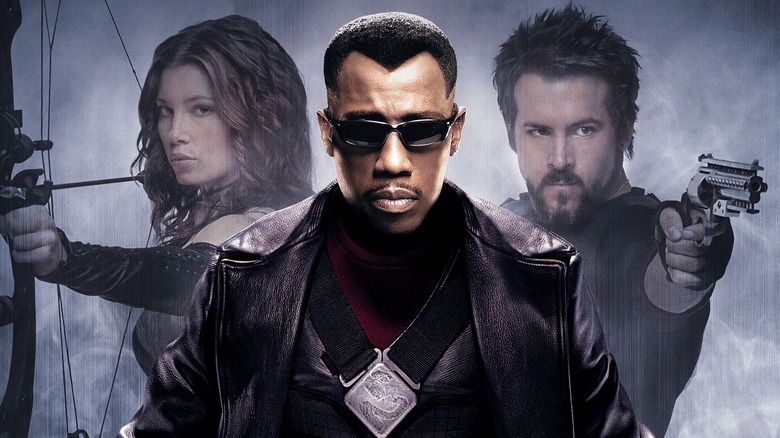
Full disclosure: This isn't an endorsement of "Blade: Trinity" as a movie. It is, however, a co-sign of "Blade: Trinity" as a cultural experience, which is as rich and gleeful a deep dive as exists in comic book moviedom. The capstone of New Line's MCU progenitor is hardly as goofy as its behind-the-scenes antics, which include Wesley Snipes referring to himself as Blade off-screen and trying to choke out director David Goyer.

Most notably, there's this anecdote Patton Oswalt (who appears in the film) shared with The A.V. Club about he and Ryan Reynolds' scenes together: "A lot of the lines that Ryan Reynolds has were just a result of Wesley not being there. We would all just think of things for him to say and then cut to Wesley's face not doing anything because that's all we could get from him. It was kind of funny. We were like, 'What are the worst jokes and puns that we can say to this guy?' And then it would just be his face going, 'Mmm.' ... It's so, so dumb."

That misfit energy creeps into the finished product, mostly through Oswalt and Reynolds. And that glib streak laid the foundation for almost every action-comedy Reynolds would go on to make in the 17 years following it. In that sense, "Blade: Trinity" is seminal; in another, it's so far from seminal that it's actually kind of special.

Read this next: Upcoming Ryan Reynolds Movies To Keep On Your Radar

The post Other Ryan Reynolds movies you should watch after Free Guy appeared first on /Film.

27 Sep 23:37

COVID-19 pandemic causes devastating drop in global life expectancy, study finds - CNET

by Shelby Brown
27 Sep 23:36

Netflix's Biggest Hit Movies and Shows, Ranked (According to Netflix) - CNET

by Joan E. Solsman
Netflix publishes weekly stats on its most watched series and films. These are the biggest hits so far.
27 Sep 23:22

Students Don't Know What Files And Folders Are, Professors Say

by BeauHD
University students in courses from engineering to physics are having to be taught what files and folders are, The Verge reports, because that's not how they've grown up using computers. Whenever they need a file, they just search for it. PCGamer summarizes the findings: "I tend to think an item lives in a particular folder. It lives in one place, and I have to go to that folder to find it," astrophysicist Catherine Garland said. "They see it like one bucket, and everything's in the bucket." Strange as it may seem to older generations of computer users who grew up maintaining an elaborate collection of nested subfolders, thanks to powerful search functions now being the default in operating systems, as well as the way phones and tablets obfuscate their file structure, and cloud storage, high school graduates don't see their hard drives the same way. "Students have had these computers in my lab; they'll have a thousand files on their desktop completely unorganized," Peter Plavchan, an associate professor of physics and astronomy at George Mason University, told The Verge. "I'm kind of an obsessive organizer ... but they have no problem having 1,000 files in the same directory. And I think that is fundamentally because of a shift in how we access files." As The Verge points out, "The first internet search engines were used around 1990, but features like Windows Search and Spotlight on macOS are both products of the early 2000s [...] While many of today's professors grew up without search functions on their phones and computers, today's students increasingly don't remember a world without them." This isn't necessarily a bad thing, or a reason to recoil in horror because how dare the youth of today do things differently, why the very idea. "When I was a student, I'm sure there was a professor that said, 'Oh my god, I don't understand how this person doesn't know how to solder a chip on a motherboard,'" Plavachan said. "This kind of generational issue has always been around." And Garland, the astrophysicist teaching an engineering course, has started using her PC's search function to find files in the same way her students do. "I'm like, huh ... I don't even need these subfolders," she said.

Read more of this story at Slashdot.

27 Sep 22:59

GOG Responds to Hitman Backlash Over Online Requirement Concerns

by Ule Lopez

GOG Hitman

The IO Interactive game Hitman - Game of the Year Edition has been recently released as a DRM-Free game on GOG. GOG advertised the game as a game that didn't need any online connection to play. Thus, it'd stick to GOG's DRM-free standards. However, several users found out that the game does indeed have an online requirement.

The game can be played without issue. Players have access to the main campaign and bonus missions offline. However, Elusive Targets, Escalation Missions, and even user-generated Contracts do require an online connection to play. In response, several GOG users started to express their distaste for this online requirement through GOG's review system.

The review bombing took place during the weekend. Currently, Hitman - Game of the Year Edition sits at a ★1.5/5 rating in GOG. Several users expressed their concerns about the game's online requirement despite being on a storefront that supposedly hands complete control to users over their games. To quote the review by Neurus_Ex:

The game main point is based in its replayability, which is handled trough the player's progression file which is on file stored on IO's server.

This means that all the unlocks (New items, new starting points, new disguises, some events...) are locked behind what is basically an online DRM, leaving for the offline game the basic missions with the generic starting items. Basically the shell of what the game has to offer.

This is completely shameful, on both the side of the publisher, for not working an actual DRM-Free version and on the side of GoG, for selling this as a "DRM-Free" version, when its clearly not the case.

After the backlash and review-bombing, GOG themselves responded to players' concerns over Hitman - Game of the Year Edition's release. They released a statement on the site's forums encouraging players to refund their purchase if necessary. However, they also stated that review-bombing the game would not be acceptable.

The statement is made by a GOG Representative that goes by Community Management Lead Gabriela Siemienkowicz under the username 'chandra':

Thank you for bringing this topic to our attention. We’re looking into it and will be updating you in the coming weeks. In case you have purchased HITMAN and are not satisfied with the released version, you can use your right to refund the game. At the same time, while we’re open for meritful discussion and feedback, we will not tolerate review bombing and will be removing posts that do not follow our review guidelines.

Users were quick to point out that the reviews that had a negative connotation didn't deserve to be labeled as "Review-bombing." The forum was soon met with negative responses from several users.

Thus, Siemenkowicz made another short statement reassuring concerned players that reviews that provide information about what's locked behind the online requirement will not be deleted. Instead, they'll be deleting reviews that go against their review guidelines.


The post GOG Responds to Hitman Backlash Over Online Requirement Concerns by Ule Lopez appeared first on Wccftech.

27 Sep 22:58

SwearNet Mailbag - Funyuns

by SWEARNET

What's worse than dirty ol' mackerel breath?! Watch Mailbag now at https://bit.ly/mailbag-85 and the TPB/SwearNet app!
27 Sep 22:56

Bermuda Triangle mystery resolved?

by noreply@blogger.com (Unknown)

bermuda traingle

A Science channel has reported that the mystery surrounding the Bermuda Triangle may have been solved.

The region is located near North America and has seen the disappearance of countless aeroplanes and ships.

According to a report, a group of scientists from the University of Colorado in the United States observed and studied the weather images, taken via satellite, where they saw unusual clouds over the region.

They claimed that the clouds are acting as “air bombs.”

It has been further mentioned that the wind speed can go above the 170 miles-per-hour mark and the waves can go over 45 ft. The report added that no ships or planes will be able to survive the wind force.

The Bermuda Triangle is unique as the clouds have straight edges.

The recent theory has laid the foundation for further investigation and research for solving the abnormalities surrounding the area.

Earlier, the wreckage of a coal ship that vanished in the Bermuda Triangle with 32 passengers onboard has been found by underwater explorers after nearly 100 years of its disappearance.

The steam-powered bulk carrier, SS Cotopaxi, set off for a journey from Charleston, South Carolina to Havana, Cuba and disappeared near Bermuda in 1925.

As usual, no one knew what happened to the ship or its crew as they were never found.

27 Sep 22:55

Pizza Coming In Piping Hot

by noreply@blogger.com (Jason Adams)

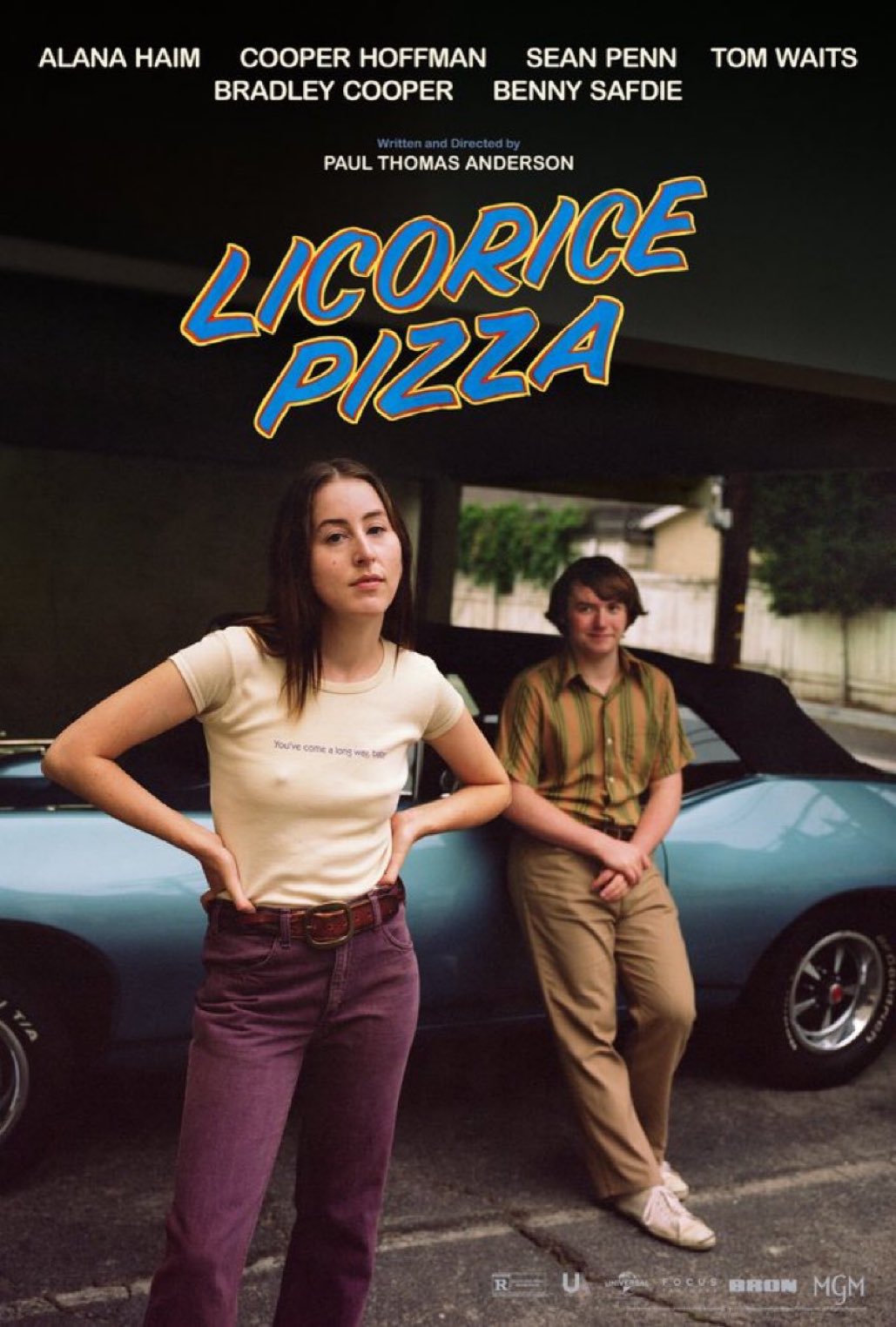
Big day for those of us who continue to worship the ground that writer-director Paul Thomas Anderson walks, as the poster and the trailer for his next one, somehow absurdly trollingly titled Licorice Pizza, has arrived. The movie comes out in limited release at Thanksgiving and then wide release for Christmas, and the trailer has me over the moon excited. And not just because PTA ...

... put his amazing wife in this! (That clearly doesn't hurt though.) Me and PTA have had a rocky road the past decade, I'll admit. It took awhile for The Master to grow on me (it has) and I haven't had any desire to watch Inherent Vice a second time since my first view at NYFF in 2014 (I probably should) but everything he's done since -- the Jonny Greenwood doc Junun, his Thom Yorke short film Anima, and of course Phantom Thread, which has worked up to being My Favorite Paul Thomas Anderson Film in just three short years -- reinvigorated my passion. Watch this trailer and feel yourself reinvigorated too!

Licorice Pizza (still not over this title) hits theaters November 26th. 

27 Sep 22:54

Man, girlfriend drive from Chattanooga to Nashville, stopping for coffee, food, gas along the way with his dead mother in back. When asked why he drove his mom's corpse to Nashville, he explained Chattanooga VA hospital was closed [Creepy]

27 Sep 22:53

Skrt, Cheugy, and All the Other 'Gen Z' Slang You Might Need Help Decoding

by Sarah Showfety

We’ve all been around the social media block long enough to know what the terms extra, basic, lit, and flex mean. (Right? Right?) Still, there are a host of slang words popularized by Gen Z—people born between 1997 and 2012—that, unless you have a teenager in your life, are addicted to TikTok, or are just a hip…

Read more...

27 Sep 22:53

John Hinckley is a free man, current status of Buckwheat unknown at this time [PSA]

27 Sep 22:51

How to Run Slower to Run Faster

by Meredith Dietz

Amazing news: You’re probably running too fast. We’ve previously covered why you need to run slower (we know it sounds counterintuitive), but the gist is that you get faster by running more, and you run more by running slower.

Read more...

27 Sep 22:50

Why Does Salt Have an Expiration Date?

by Claire Lower

Salt is an incredibly common ingredient that most of us take for granted. It’s a simple, inorganic (meaning “not carbon based”) molecule comprised of two tiny ions, sodium and chloride, but its ability to flavor and preserve is what makes it valuable—so valuable that it made its way into the word “salary.”

Read more...

27 Sep 22:48

Why Millennials and Gen Zers Should Be Investing in Roth IRAs

by Mike Winters

Since people in their 20s and 30s tend to make less than they do later in life, they’re ideally suited for a special kind of investment: Roth IRAs and Roth 401(k)s. Roth investments are unique in that contributions are taxed upfront, with the advantage that what’s left grows exponentially with compound interest over…

Read more...

27 Sep 22:43

8-Inch Bottle Cleaning Set

by mark

I have been using these brushes for a couple of years. They work great. I use them in the kitchen and the shop. They are small enough that I can get into small and curved containers or parts. I used to try to use Q-tips or toothpicks, which never worked. They can also be shaped to get into curved spouts.

-- Steve Golden

Bottle Cleaning Brushes, 8 Inch Nylon Tube Brush Set

Available from Amazon

27 Sep 22:43

Old and busted: America will get flying cars by 2021. New hotness: half a million US households lack indoor plumbing [Murica]

27 Sep 22:42

Every Peter Jackson Film Ranked From Worst To Best

by Rob Hunter

Peter Jackson is a filmmaker whose career seems to align with James Cameron's. I know, I know. Let me explain. Both directors revealed an early interest in special effects by making terrific little genre films that still hold up decades later. Both went on to deliver some modern classics, then saw their later years lost to big-budget fantasy and sci-fi franchises that few people seem to be excited about. 

Cameron hasn't directed a feature film since 2009. Jackson hasn't helmed a non-Hobbit feature since 2009. I'm not here to tell them what to do with their time, but come on. Imagine the cool movies we could have had from these two if they hadn't spent the last decade tweaking pixels and rolling in piles of cash.

I'm not bitter, though. While Cameron may be a lost cause, Jackson has happily moved on from his franchise woes. The future is his again. Hopefully, that means we have some non-blockbuster genre thrills heading our way. For now, at least, we have the 15 films he's already made -- so let's rank 'em!

The Lovely Bones

Look, here's the thing. We all know that a ranked list is a subjective thing. That said, anyone who tells you that "The Lovely Bones" isn't Jackson's worst film is lying to you. Like the next few films on this list, it combines attractive visuals with absolute tedium, but unlike the soul-sucking "Hobbit" trilogy, "The Lovely Bones" is also a tonal misfire that offends in its cloying sentimentality and insulting messages.

Saoirse Ronan does good work as the murdered teen, but her arc feels far removed from a story about a child-killing psychopath. After spending what feels like hours in the dead girl's "perfect" afterlife, with some minor suspense beats unfolding back on Earth, the film ends on some dubious notes. 

There is no justice and no closure -- we're meant to be content knowing that little Susie manages to break through her immortal coil for the sole purpose of snagging a kiss (via someone else's body) with a horned-up teenage boy. Her body is never found, her family will never heal, the killer is never caught, and we're meant to celebrate that a bunch of murdered kids get to play in Heaven for eternity. It's just the worst.

The Hobbit: An Unexpected Journey

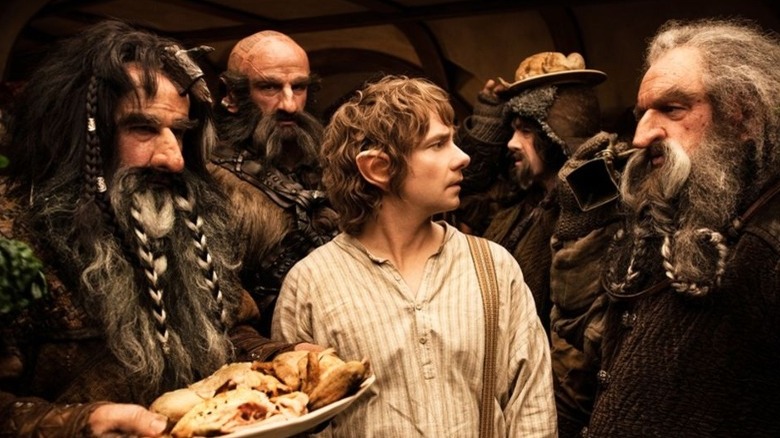
While the three novels that make up "The Lord of the Rings" total over 1,500 pages, J.R.R. Tolkien's "The Hobbit" barely passes 300. Spreading that simple tale across its own trilogy of films was a decision made by executives and bean counters, not creatives, and it shows in the finished product. "An Unexpected Journey" is nearly three hours long, which is enough time to tell the whole tale. Instead, Jackson must stretch out even the most mundane of moments into eternity.

The opening dinner party alone takes up what feels like half the film, unfolding in real-time as it delivers an endless stream of pratfalls. A later scene involving trolls, one that occupies a mere two pages in Tolkien's novel, is fueled by flatulence rather than character or narrative. Jackson and friends bring the expected technical polish to the film (unless you were unfortunate enough to watch the movie at 48 frames per second, in which case it felt like a British television drama aimed at stodgy adults and fart-loving kids), but there's far too little here to justify its length.

The Hobbit: The Battle Of The Five Armies

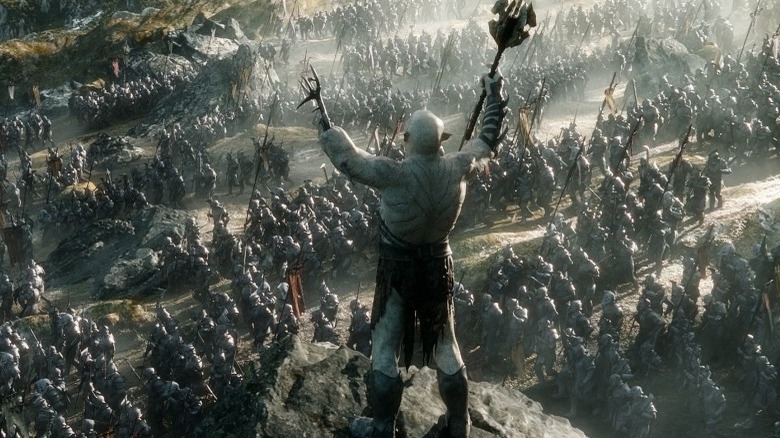
After opening with what should have been the previous film's conclusion, Jackson's concluding chapter of "The Hobbit" finds itself juggling a few too many threads, losing focus in the process. One plot involving a dwarf named Thorin takes up far too much time for a trilogy named after a hobbit. Worse, it feels like a pale reflection of the journey already being undertaken by Bilbo. Greed, ownership, and dark feelings magnified by magic objects is well-covered terrain in Middle-earth, but we're forced to endure it all again to keep this trilogy moving.

"The Battle of Five Armies" fails to maintain its own identity. The best trilogies manage to tell an overarching story while still allowing each individual movie to feel complete in its own way. Instead, "The Battle of Five Armies" tries to check off boxes in-between battles and boredom. The action beats foreshadowed by title at least deliver some thrills. They're lacking in personality, but as the third act transforms into one big fight sequence, it successfully ends "The Hobbit" on the most minor of highs.

The Hobbit: The Desolation Of Smaug

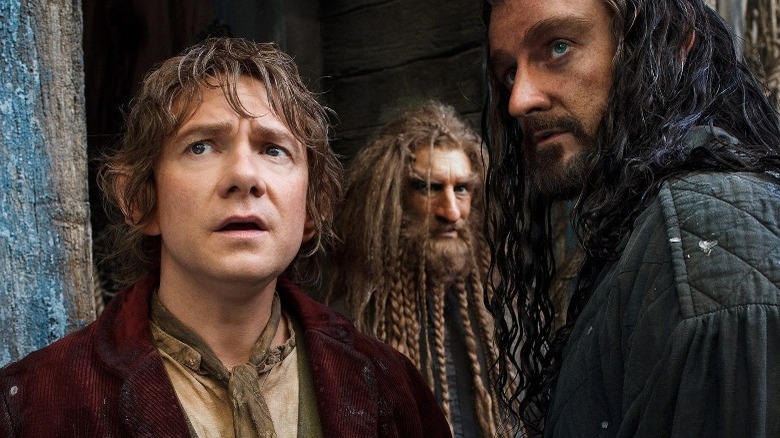
As with "The Two Towers," "The Desolation of Smaug" is a middle entry, offering neither setup nor closure. Unlike "The Two Towers," though, "The Desolation of Smaug" is unable to deliver smaller narrative beats of its own. Not even the story note revealed in its title finds purchase here -- the dragon's miserable destruction is saved for the following movie. False advertising!

However, Jackson is too good of a filmmaker for any of his films to be complete failures, and "The Desolation of Smaug" doesn't skimp on action set pieces. From a creepy attack by giant spiders to a game of hide and seek with Smaug, the action beats thrill and delight between long stretches of chatter. The highlight is a sequence that sees Bilbo and friends chased by orcs down a rapidly moving river. It's exciting and fun in ways the rest of the trilogy isn't. Unfortunately, it's followed by hours of dull meandering.

Meet The Feebles

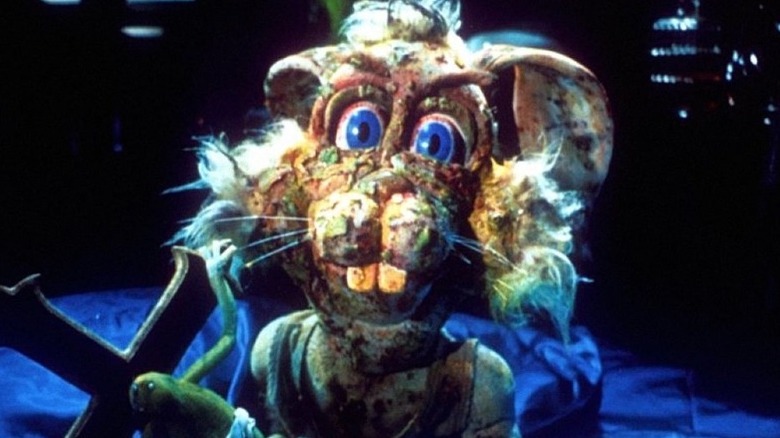
Every movie from this point forward is at least good, if not great. And yes, that includes "Meet the Feebles," Peter Jackson's crass, cruel, and carnage-filled puppet movie. What starts as a low-budget riff on "The Muppet Show" becomes a darkly comic peek behind the felt as betrayal, drug addiction, infidelity, and more unfold offstage -- only to spill violently onto the stage itself during the bloody climax.

"Meet the Feebles" is an all-puppet experience, and it's as of a scathing behind-the-scenes expose as you've ever seen. Sex, drugs, Vietnam flashbacks, gangsters, porno shoots, a tabloid reporter played by fecal-funneling fly; there's a lot going on here, and I haven't even mentioned the elephant who's being sued for child support by a chicken, or the love story that unfolds between a hedgehog and a poodle. Oh, and it's a musical -- a rousing song called "Sodomy" will stick in your head for weeks. Andrew Lloyd Webber, eat your heart out.

Bad Taste

Jackson's debut film remains one hell of a career opener, even if it is a cheap horror comedy about alien invaders who turn a small town's residents into a buffet. Jackson's first feature, shot on 16mm film, is the work of a filmmaker who refuses to let the lack of a budget equal a lack of ambition. "Bad Taste" is full of impressive stunts, creative and gory practical effects, and a fast-moving sense of humor.

Filmed over four years with funds gathered from friends, family, and the New Zealand Film Commission, "Bad Taste" is a scrappy indie that sits proudly alongside Sam Raimi's "The Evil Dead." Limbs are lopped off, brains leak from head wounds, and one alien's death by chainsaw leaves you feeling like you've been born again. The film ends with Derek -- an ornery, wise-cracking, brain-injured Jackson -- piloting a spaceship towards the alien planet, taking the fight to the invaders. I'm still waiting for that sequel, Mr. Jackson!

Forgotten Silver

While Jackson would be showered with praise for another documentary 23 years later, this little seen slice of "non-fiction" is equally deserving of your time and attention. "Forgotten Silver" tells the story of Colin McKenzie, a forgotten filmmaker from New Zealand who revolutionized the art of cinema years before others came along and took credit for the techniques and advancements that McKenzie pioneered.

Of course, it's all a clever ruse, and while it fooled (and upset) television viewers in New Zealand when it first aired, "Forgotten Silver" remains a fantastic piece of cinematic appreciation. Jackson recreates fake movie footage in the exact style and format of the period, resulting in some very convincing sequences, and he sells it with the help of talking heads that include himself, "Jurassic Park" star Sam Neill, and esteemed critic Leonard Maltin.

The Frighteners

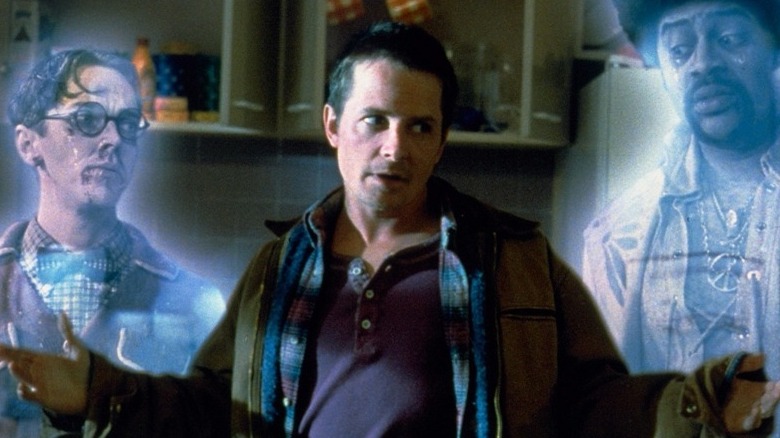
In the MPAA's long history of screwing over films, "The Frighteners" stands as one of its more unsung victims. The film industry's self-appointed arbiters of good taste slapped Jackson's first big-budget Hollywood film with an R-rating, despite that it's more like "Ghostbusters" than a horror movie, and "The Frighteners" paid the price at the box office. It's a darn shame, as Jackson and his cast and crew deliver something fun, frenetic, and highly entertaining with this supernatural comedy.

Michael J. Fox takes the lead as a widower who can see ghosts, a gift he uses to con people as a faux exorcist. However, his scheme falls apart when an undead serial killer starts slashing his way through a small town's populace. "The Frighteners" is a fast-moving supernatural romp with sharp digital effects courtesy of Weta, and as Fox's last (non-animated) lead role, there's something bittersweet about it, too. Also -- and this can't be understated -- as a deranged FBI agent, Jeffrey Combs gives one of the funniest supporting performances the genre's ever seen.

They Shall Not Grow Old

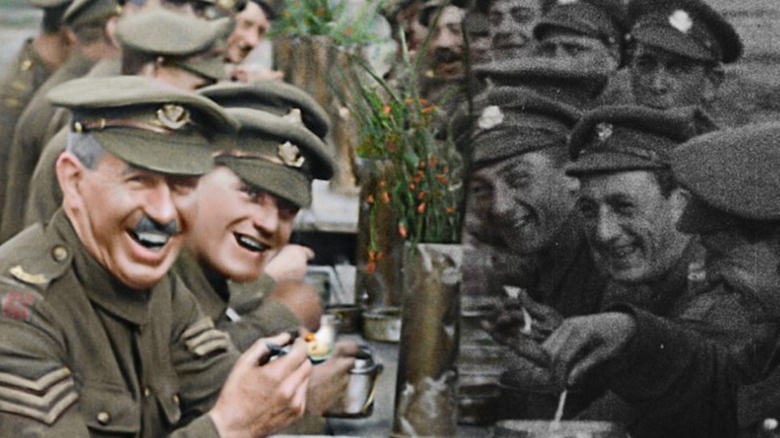
Jackson's first documentary, "They Shall Not Grow Old," follows his faux-doc "Forgotten Silver" and predates his mini-series documentary "The Beatles: Get Back," and is dedicated to his grandfather and other veterans of the first World War. It's less interested in telling a story or focusing on a single event from the war, and is envisioned more as an immersive experience that brings viewers as close as possible to moments that unfolded both on and off the battlefield.

While controversial, Jackson uses actual historical footage that he's tweaked, altered, and imbued with new life. The raw film is a century old, but technology and an artist's touch give it lifelike color and depth, as well as newly recorded "dialogue" that makes viewers witnesses to all of the camaraderie, fear, valor, and heartbreak. The modernization is sure to turn off purists, but for everyone else "They Shall Not Grow Old" brings an immediate warmth and personality to images that otherwise feel a world away.

Heavenly Creatures

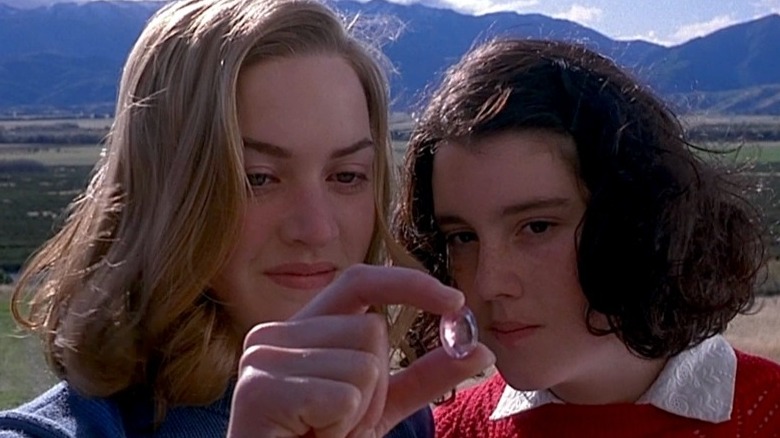
After his trio of low-budget genre films found only minor traction as cult favorites, Jackson's fourth movie pushed him in a more serious direction. "Heavenly Creatures" also introduced the world to two major acting talents in Melanie Lynskey and Kate Winslet, who play teenagers who bond over a shared dislike for their parents. When their time together is threatened, tragedy results.

The direction, writing, and performances make "Heavenly Creatures" a compelling film, one that finds unexpected freshness in the girls' rich fantasy life. Jackson brings their imagined world to the screen in creative fashion, pairing it well with their more mundane realities. The drama and the weight of the film's violence showed a more professional side of Jackson's talents. Also of note: "Heavenly Creatures" is based on a true story, and one of the two girls involved (specifically, Juliet Hume, played by Winslet) grew up to be a best-selling mystery writer.

King Kong

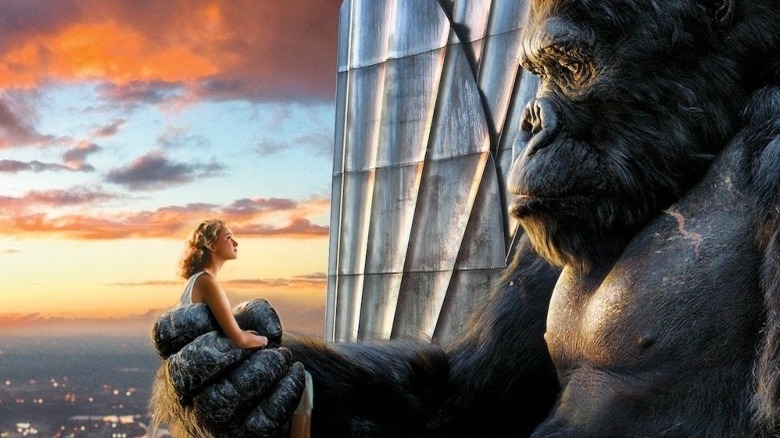
It's difficult not to respect Jackson's big-budget retelling of one of cinema's greatest monster movies -- his love for the beast and its tragedy are clear throughout. Kong has always been the victim of his story, and Jackson gives the big guy room to breathe -- a little too much room, according to some, although the three-hour runtime feels exactly right for a story and character as oversized as Kong.

The spectacle in "King Kong" is off the charts, with spectacular visual effects bringing Kong and his island to glorious life. Credit Weta and the great Andy Serkis for giving the creature life and personality well beyond what men in costumes and CG monsters typically achieve. Just as impressive? Jackson and his cast ensure the human characters are engaging on their own merits, meaning that their stories rarely feel like filler. This is the kind of epic filmmaking that we just don't see anymore.

The Lord Of The Rings: The Fellowship Of The Ring

It can't be overstated how much of a gamble it was to not only produce a trilogy based on J.R.R. Tolkien's masterpiece, but also to hand the reins to Peter Jackson. He had only directed a single studio effort before this, and it bombed in theaters. And yet, Jackson and his partner, Fran Walsh, had a vision of something unprecedented, and "The Fellowship of the Ring" proved they could pull it off in grand fashion.

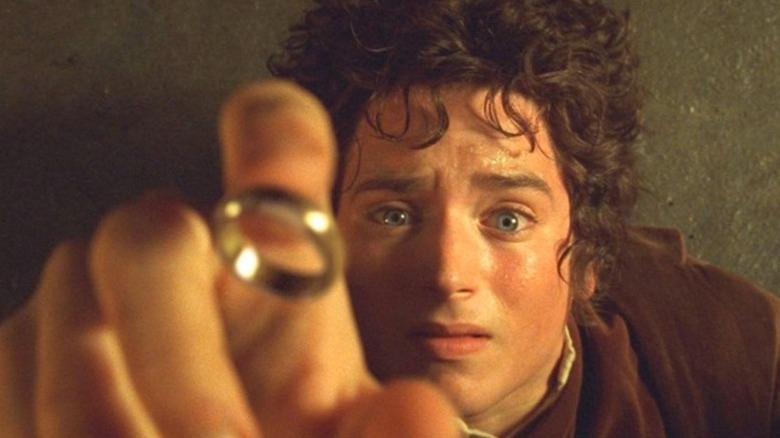
With a nearly three-hour runtime -- even longer in the extended edition -- Jackson, Walsh, and an enormous cast and crew bring the first novel in Tolkien's trilogy to beautiful, thrilling, emotional life. Elijah Wood headlines the massive ensemble as Frodo, and he remains the film's beating heart, but the rest of the cast is equally committed to the journey. There's an unexpected sincerity to the production -- Jackson's "The Lord of the Rings" is as confident in its sentimentality as it is in its swashbuckling, fantasy action. While many filmmakers would have focused on the highlights, Jackson and friends embrace the entirety of Tolkien's creation, resulting in an experience that both honors the literature and injects a freshness that welcomes newcomers to world of Middle-earth.

The Lord Of The Rings: The Two Towers

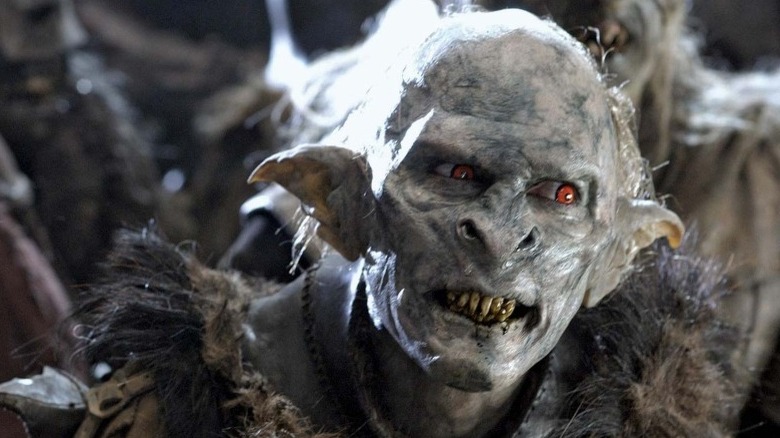
Middle films in trilogies have both the best and worst of it. They don't have to waste time setting up story or characters, but they also don't get to deliver much in the way of closure. What they do have time for, though, are big swings, epic set pieces, and endless excitement. The final hour of "The Two Towers" is practically non-stop in its action, as orcs and humans fight it out during the Battle of Helm's Deep.

One of the strengths of this middle chapter is how well it spreads the love between its players. While "The Fellowship of the Ring" introduced its characters only to separate them, "The Two Towers" focuses on three main threads, giving meaningful time to seemingly lesser characters. Merry and Pippin come into their own here, and the main battle rages without a single hobbit in sight. None of it feels like filler; every character carries their own weight, highlighting how even the smallest piece of a story has value. Sam and Frodo, meanwhile, avoid the bombast and instead stay on the move, landing some emotional beats of their own and taking the film out on a high.

Dead Alive

Some might take umbrage with placing a "mere" horror-comedy higher on this list than two of Jackson's "Lord of the Rings" films, but come on. "Dead Alive" remains an absolute banger of a good time and the film that made Jackson a horror legend. From Sumatran rat monkeys to undead toddlers, "Dead Alive" offers a boundless display of monstrous fun and unforgettable practical gore effects.

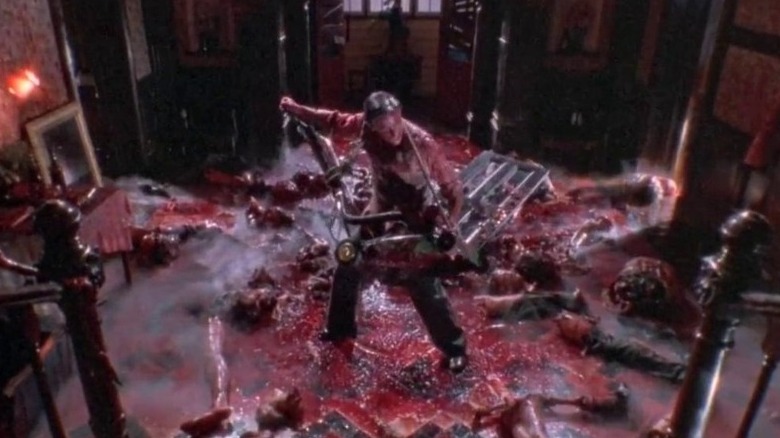
A timid mama's boy is charged with protecting his slowly rotting mother -- and the people she wants to eat -- and things spiral out of control in wildly unexpected ways. Ears are chewed, a priest kicks ass for the Lord, limbs are lopped off, and the set pieces grow increasingly grotesque and bloody, culminating in a gloriously unhinged lawnmower massacre that remains one of the bloodiest -- if not the bloodiest -- scene ever captured on film.

The Lord Of The Rings: The Return Of The King

At a whopping 200 minutes -- and that's still a full hour shorter than the extended cut -- "The Return of the King" isn't exactly a movie you throw on for casual rewatches. What it is, though, is a masterpiece, as well as a masterclass in how to wrap up an epic trilogy. Awards aren't everything, but "The Return of the King" won 11 Academy Awards across multiple categories -- that's still the record for most Oscars awarded to a single film -- highlighting just how well-respected it was by Jackson's filmmaking peers. Audiences were equally enamored, and that love continues nearly two decades after its release.

The three threads of the previous film are cut down to two as Frodo and Sam march towards Mount Doom while the rest of the fellowship gathers for a final fight against Sauron's army of uglies. Both halves bear dramatic weight, one intimate and the other grand, and both story and characters alike get worthy conclusions. As with the first two films, "The Return of the King" works as both a piece of blockbuster cinema and a beautifully told tale of friendship, honor, and the battle between good and evil.

Read this next: The Evolution Of Peter Jackson: From Cult Filmmaker To Industry-Shaking Oscar-Winner [Part 1]

The post Every Peter Jackson film ranked from worst to best appeared first on /Film.

27 Sep 22:10

Steam may be planning to restrict player access to old game builds

by Lauren Morton

As they always do, things in Steam are likely to change again. Unlike Valve's Steam Labs experiments for storefront discoverability or downstream effects of the upcoming Steam Deck, this one is a little more under the hood. As spotted by the unaffiliated Steam tracking site SteamDB, the beta version of Steam's client now has a new method that is capable of preventing users from accessing former builds of games they own. The majority of players likely aren't pulling up old game builds often, if ever, but this change could make life a lot tougher for modders, speedrunners, and anyone trying to roll back a buggy game update while they wait for a hotfix.

Read more

27 Sep 21:17

Licorice Pizza: Release Date, Cast, And More

by Vanessa Armstrong

(Welcome to ...And More, our no-frills, zero B.S. guide to when and where you can watch upcoming movies and shows, and everything else you could possibly stand to know.)

It's been a few years since we last saw a Paul Thomas Anderson film with 2017's "Phantom Thread." His upcoming feature, "Licorice Pizza," will be his first feature-length work since then, and Anderson fans are eagerly awaiting its arrival. 

Read on to learn more about "Licorice Pizza," including where and when you can watch it, and what the heck the title means. 

Licorice Pizza Release Date And Where To Watch It

"Licorice Pizza" will premiere in select theaters starting on November 26, 2021. Metro Goldwyn Mayer Pictures and United Artists, who are producing and distributing the movie respectively, haven't shared when it would be released in digital formats. However, we can expect a window of theatrical exclusivity for this one.

What Is Licorice Pizza?

"Licorice Pizza" is a period piece that focuses on a young man and woman trying to become actors in 1973's San Fernando Valley. It's about a bit more than that, obviously -- it's also a story about young love and pursuing your dreams, if the trailer is any indication. It's also a Paul Thomas Anderson film, and if you've seen any of his previous work, you know that his movies are more about creating a certain mood or aesthetic than being plot-driven enterprises.

The movie's title comes from a the name of an old chain of record stores in Southern California, who got their name from a joke that unsuccessful albums should be sold as licorice pizza. Does this refer to the young man and woman's acting skills or chances of success? Maybe? Probably? We don't know for sure of course, but the trailer suggests strongly that may be the case.

Licorice Pizza Cast

Alana Haim and Cooper Hoffman play the main characters in "Licorice Pizza." Haim plays Alana Kane and Hoffman plays Gary Valentine, who are growing up in Southern California and pursuing acting careers. The real-life Haim is not only an actor, she's part of the musical group HAIM. Hoffman also has other ties to the entertainment industry — his father is the late acting powerhouse Philip Seymour Hoffman, who had frequently collaborated with Anderson before his passing.

Sean Penn, Tom Waits, Bradley Cooper, and Benny Safdie also appear in "Licorice Pizza."

Licorice Pizza Director, Writer, And More

Paul Thomas Anderson is the writer and director of "Licorice Pizza" and the movie undoubtedly features the aesthetic of his previous work, which include critically-acclaimed features such as "There Will Be Blood," "Magnolia," and "Boogie Nights." More recently, he's directed several video shorts for the music group, HAIM, a collaboration that has carried over into "Licorice Pizza" as HAIM member Alana Haim stars in the film. 

Licorice Pizza Trailer

The trailer for "Licorice Pizza" has arrived, and we've also got an official synopsis, which you can check out below:

"Licorice Pizza" is the story of Alana Kane and Gary Valentine growing up, running around and falling in love in the San Fernando Valley, 1973. Written and Directed by Paul Thomas Anderson, the film tracks the treacherous navigation of first love.

Read this next: All 8 Paul Thomas Anderson Feature Films Ranked Worst To Best

The post Licorice Pizza: Release Date, Cast, and More appeared first on /Film.
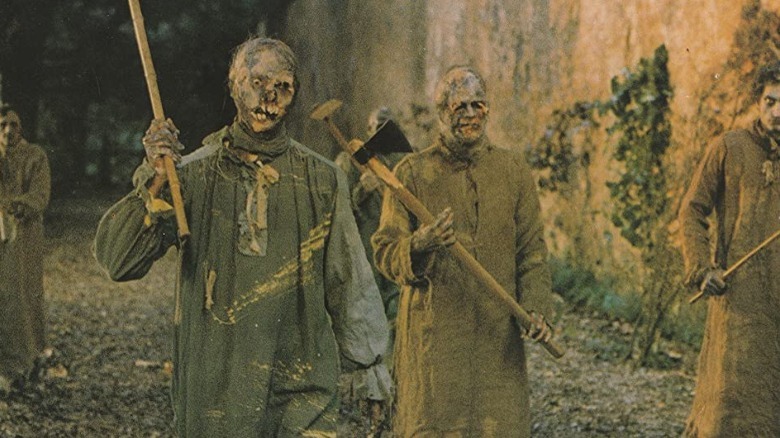
27 Sep 21:14

Every Edgar Wright Movie Ranked From Worst To Best

by Marshall Shaffer

For many cinephiles, Edgar Wright's ascent over the past two decades has been particularly gratifying. As he's made the jumps from British TV to cult comedies to full-blown studio filmmaking, Wright's profile -- and his budgets -- have increased, and yet none of his success has diminished the dynamism of his signature style.

Edgar Wright's love of everything from schlocky B-movies to canonized masterpieces shines through in the affectionate remixes and homages that appear in his own work. But remarkably, Wright's films never feel like a catalog of references meant to make those in the know feel smarter. They don't simply regurgitate or replicate genre tropes, but build on -- and interrogate -- their legacies.

With Wright debuting two new features in 2021, including his first documentary, the time is ripe to reevaluate the director's filmography. Both "The Sparks Brothers" and "Last Night in Soho" should feel familiar to the director's fans, while still opening up exciting new avenues for Wright to explore. Here's where Wright's 2021 output ranks among his previous work.

The World's End

The not-quite-grand finale of Edgar Wright's "Cornetto trilogy" is the director's only film that feels like it loses the thread. Wright frequently marries genre indulgences with potent social messages, encouraging viewers to be more invested in each other than in the minutiae of movie knowledge. Of course, if you squint, you can see this message in almost every action movie, but Wright brings the thematic subtext to the forefront.

The allegory gets a little overblown in "The World's End," an action-comedy that tips over into outright science-fiction. As an estranged group of friends reunites for a pub crawl, they face the only hurdle larger than resetting the time and distance that separates them: a swarm of technologically-minded aliens. The whole thing functions as a commentary about how some technical advances only estrange people from each other and the world around them. It's rather obvious and lacking much depth beyond this surface-level observation, but Wright makes the proceedings enjoyable to watch with a sprinkling of bravura sequences.

A Fistful Of Fingers

In 1995, young and scrappy 21-year-old Edgar Wright pulled together his first feature, "A Fistful of Fingers." The film is a proudly British parody of spaghetti Westerns, and it leans into all the peculiarity of the concept. Wright cleverly wraps the shoestring budget into the story itself, cheekily incorporating anachronisms that poke fun at the film's own construction. Had he continued down this road, Wright could have become his generation's Mel Brooks.

Yet even at 78 minutes, the film wears out its welcome. The "Monty Python"-inspired humor feels one-note, and the limitations of Wright's craft become more apparent with time. "A Fistful of Fingers" becomes less subversive, and more of a series of winks at the end of well-staged sequences, showcasing Wright's prodigiousness as a filmmaker and his mastery of genre conventions. But this is still a freshman film, and it's evident that Wright lacks the confidence to fully subvert and explode genre in the way that he'd later become famous for. "A Fistful of Fingers" is a fascinating sign of what's to come, even if it's not fully realized in its own right.

Last Night In Soho

Following his biggest commercial success, 2017's punchy action flick "Baby Driver," Wright took a turn toward horror and psychological thrills. The resulting film, "Last Night in Soho," is remarkable in the way that it both features that unmistakable Edgar Wright touch and also subsumes Wright's hallmarks in a less overtly playful story. The dueling sensibilities do not always mesh seamlessly, but it's exciting to see a director of Wright's stature try something different.

Wright isn't just experimenting with style but also with substance; in "Last Night and Soho," Wright creates his first female protagonist. Thomasin McKenzie's Eloise, a small-town fashion student drawn to the glitz and glamour of London's swinging '60s, finds herself able to access the period through Anya Taylor-Joy's alluring singer, Sandie. Like many Edgar Wright films, the overlap between the two characters serves as both a celebration of culture and a warning to not let it become all-consuming. Even though the giallo trappings of "Last Night in Soho" do not feel like a natural a fit for Wright, it's still riveting to watch a movie that complicates and challenges the very concept of what an Edgar Wright film is.

Scott Pilgrim Vs. The World

Wright's most kinetic movie is his graphic novel adaptation "Scott Pilgrim vs. the World," an imaginative action-romance in which Michael Cera's titular hero must do battle with his new flame's seven evil exes. More than simply mimicking the look and style of a video game, Wright transposes gaming's visual and narrative logic into a feature film format. Not every bit of trickery works, and the film's quirky sensibility can be overwhelming. And yet, it's exciting to watch Wright take big swings, and to see him connect on a good number of them.

If nothing else, simply marvel at how well Wright cast the film, anticipating the stratospheric ascent of performers like Brie Larson, Aubrey Plaza, and Mary Elizabeth Winstead, and knowing how to use actors like Chris Evans and Kieran Culkin to their full potential years before they took their signature roles. "Scott Pilgrim vs. the World" is also probably peak Michael Cera, debuting at a time when Cera's pouty persona was laughable but not yet a punchline. As Scott, Cera is pathetic enough to sell the jokes, but heroic enough to be a believable action lead, at least within the parameters set up by the film.

The Sparks Brothers

There is absolutely no reason why "The Sparks Brothers" should work, given that it adopts such conventional format: a Wikipedia-like chronological run-through of its subject. That Edgar Wright manages to transcend the limitations of the form speaks volumes about his style and his sensibility. It's rare that a film made by a fan-club president -- with some help from many other high-profile devotees -- does anything other than preach to the choir. Here, Wright actively seeks converts to the tribe of Sparks, and does so by offering a welcoming hand, not posturing as one of the cool kids. Admittedly, he made a believer out of me.

Sure, Wright could probably have trimmed some fat from this 140-minute feature. It's a truly comprehensive document of Ron and Russell Mael's eccentric musical genius, expressed through their group, Sparks. But Wright makes the case for the documentary's length by showcasing the jaw-dropping variety of the styles in which Sparks dabbled. Wright doesn't just take the brother's brilliance for granted, but instead makes a compelling case for their canonization. He's also clearly influenced by Ron and Russell as well, incorporating their rebellious and rambunctious spirit into the film itself.

Shaun Of The Dead

Wright burst onto the scene in 2004 with "Shaun of the Dead," a mash-up of genre deconstruction and social commentary that takes the form of a zombie comedy. The film takes high-concept hijinks -- Simon Pegg's aimless titular character manages to sleepwalk through the zombie apocalypse occurring around him -- and amps up the ridiculousness, even while keeping events grounded. Leave it to Edgar Wright to find a way to marry the madcap and mundane.

Filmmakers should naturally grow and improve as they make more movies, yet it's quite astonishing to see just how fully-formed Edgar Wright's style was from the jump. While he's honed many of the elements introduced in "Shaun of the Dead," none of that detracts from the joy of seeing Wright realize his singular vision for the first time. A devilish wit runs through the film, and a number of its gags and sequences would scare off more seasoned filmmakers. But Wright just seems excited to be making a feature-length movie, lending "Shaun of the Dead" a vibrancy that none of Wright's later accomplishments will ever fully diminish.

Baby Driver

Edgar Wright called his shot in an early draft of "Baby Driver," claiming that music was so central to the film that it would get an Oscar nomination for sound. He was right -- the film that vaulted Wright out of cult fandom and into the mainstream is such a technically precise piece of work that the Academy could not deny its mastery. "Baby Driver" hums like a fine engine revving up, accelerating from 0 to 100 miles per hour with the smoothness of a seasoned pro.

At long last, Wright had all the resources at his disposal to make the kind of big, brassy blockbuster that knocked his socks off as a young cinephile. Now, aspiring filmmakers will hold "Baby Driver" in a similar regard. Wright conducts sound and image like a symphony as he follows the adventures of Ansel Elgort's getaway driver, Baby, who attempts to leave organized crime behind to pursue the girl of his dreams.

The film is a more of an exercise in style and storytelling than the usual Edgar Wright film; it doesn't have much more on its mind than the power of music. But that's only a concern that pops up when looking at "Baby Driver" in the rearview mirror. While watching, it's a pulse-pounding ride that keeps perfect rhythm.

Hot Fuzz

All of Wright's strengths as a director come together seamlessly in "Hot Fuzz." His go-to duo of Simon Pegg and Nick Frost is in top form for this buddy cop comedy, playing an odd pairing in an overzealous sergeant Nicholas Angel (Pegg) and the decidedly less ambitious Danny Butterman (Frost). The rule-abiding Angel makes a fuss in the small town of Sandford, while native son Danny takes his cues on how to perform police work from action movies. Together, their absurd antics play like a gleeful send-up of the cop movie genre, which Wright replicates in startling aesthetic detail just so that he can affectionately poke fun at it.

But Wright does more than satirize the genre. Yes, he comments on and criticizes the inanity of action movies, but he also digs deeper, finding a darker truth lurking underneath: The idyllic small town so often presented in police procedurals is often a hotbed for dangerous insularity. Rather than leaving this as subtext, Wright elevates it to a central plot point in ways that are both startling and satisfying. Wright isn't picking on the action genre so much as picking it apart, laying the framework bare so that other filmmakers can build even smarter structures on top of it.

Read this next: Last Night In Soho Reveals The Thrilling Next Era Of Edgar Wright [Fantastic Fest]

The post Every Edgar Wright movie ranked from worst to best appeared first on /Film.
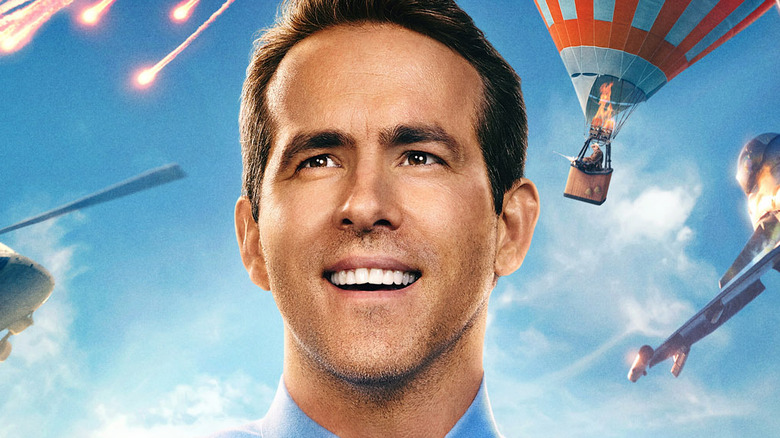
27 Sep 21:14

Mark Hamill Praises The Star Wars Prequels For Having 'Their Own Identity'

by Max Evry

Just a few weeks before I graduated high school, "Star Wars: Episode I - The Phantom Menace" came out on May 19, 1999. While it may have struck the wrong chord in a lot of the die hard Original Trilogy fans, it indoctrinated a whole new generation of acolytes over to what has become a kind of pop culture religion. I was somewhere in the middle with my reaction, ambivalent towards the stilted acting and clunky dialogue but blown away by the baroque visuals. 

Never in my wildest dreams did I imagine we'd still be litigating it in the press over two decades later, but outspoken OT and Sequel Trilogy star Mark Hamill has thrown his hat into the ring with a surprising defense of the Prequel Trilogy in the late J.W. Rinzler's just-published book "Howard Kazanjian: A Producer's Life" about the "Return of the Jedi" producer. 

Here's what Hamill says in the book (via IndieWire):

"I was impressed the prequels had their own identity. They were criticized because they were exposition-heavy and more cerebral and probably, like he said back in 1976, they weren't as commercial. It's a darker story. But in the age of social media, people's voices are amplified, and I'm shocked at how brutal they can be, not just in the case of 'Star Wars' films, but across the board.

This comes a week or so after "Star Wars: A New Hope" editor (and George Lucas' ex-wife) Marcia Lucas made headlines for trashing "The Phantom Menace" in the same book, saying, "I cried because I didn't think it was very good."

Being Diplomatic?

It's widely agreed that the younger generation whose first exposure to the Star Wars galaxy was the Prequels prefers them to the OT, and the Gen X-ers who grew up with the OT are known to spew venom at the prequels as if they, you know, did something inappropriate to their childhood. "The Last Jedi" filmmaker Rian Johnson -- whose had his own share of unearned vitriol directed at him -- put it rather beautifully in his own defense, which I'm inclined to agree with. I would certainly be vindicated for my own love of the look of said Prequels years later, when I learned there's more practical model work in "The Phantom Menace" than the entire OT combined.

What Hamill is saying here rings powerful, especially in the wake of a Sequel Trilogy that, despite its many charms, is ultimately an unnecessary and barely-veiled rehash of the redemption arc in the Original Trilogy (Empire = First Order, Jakku = Tatooine, Pasaana = Tatooine, Snoke literally = Emperor, Maz Kanata = Orangina Yoda, etc.) that takes us back to the same place of trying to restart the Jedi order. The Prequels had their own arc, a dark and uncomfortable one, and had real stakes too. At no point in the OT or ST do you believe that Luke or Rey are ever in any real danger of going over to the Dark Side, but Anakin goes there. 

Hamill's Old Opinion

One caveat to Hamill's defense is that he is a company man still, with his recent cameo in "The Mandalorian" potentially being expanded down the line. In other words, he might be towing the company line to certain degree. If you want to know what Hamill really thinks of "The Phantom Menace," you can go back to this quote during an IGN Q&A back in 2001:

"I get very defensive because I'm not really connected with these new pictures, but people on the street will criticize it and I sort of get upset. It's like, it's okay for me to criticize Jar Jar, but I don't want to hear that from someone else... if I were to talk to George Lucas - and I will - I'd say to him, 'One of the greatest advantages that the earlier pictures had, which the new picture did not have, was a voice of skepticism.' We had someone in there going, (snorts) 'The Force, are you kidding me? I'm just here for the money.' When I heard Samuel L. Jackson was going to be in it, I said he's gonna be the guy going, 'Hey, I ain't goin' in that water.' I thought he'd be all scared and cheating people and getting chicks. Instead, he's like the Pope or something. Everybody's so serious! They're all, (rich, portentous voice) 'The trade routes must remain open.' I mean, sheesh! Lighten up!"

Read this next: Every Episode Of Star Wars: Visions Ranked From Worst To Best

The post Mark Hamill Praises The Star Wars Prequels For Having 'Their Own Identity' appeared first on /Film.
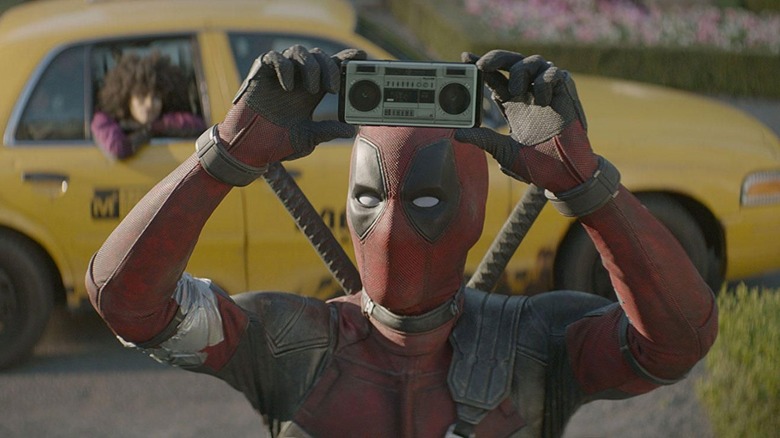
27 Sep 21:13

Babylon 5 Reboot Coming To The CW From Original Creator

by Jeremy Mathai

There's a throwaway joke in the video game "Control" about how reboots and remakes of certain genres of television shows are actually the sneaky manipulations of a secretive and sinister government organization, all in an attempt to make an unsuspecting public more receptive to outlandish ideas and -- essentially -- easier to control. It's a tongue-in-cheek jab that's not to be taken seriously by any conspiracy nuts out there who might be reading these words, of course, but somehow that's the first thing that came to mind when I saw the news that "Babylon 5" would be receiving a series reboot from its own creator. Not only that, but it'll be made for none other than The CW network. If that information doesn't make this sound like a vaguely unsettling PSYOP, nothing does! I'm onto you, Federal Bureau of Control...

Babylon ... 6?

It's a little hard to imagine that The CW's usual target demographic would overlap with the fandom of the original "Babylon 5" space opera series, but that's why I'm not paid the big bucks. According to Deadline, original "Babylon 5" series creator J. Michael Straczynski is in charge of the "from-the-ground-up reboot" for The CW that will similarly follow the character of John Sheridan, who was portrayed by Bruce Boxleitner the first time around. Running for a total of five 22-episode seasons, "Babylon 5" took place on a space station (much like another space station-set series with a numeral in the title, "Star Trek: Deep Space Nine," which broadcast pretty much concurrently with "Babylon 5" during their initial runs) at a crucial historical moment in the series timeline.

Also written and executive produced by Straczynski, the report includes details that "...the reboot revolves around John Sheridan ... an Earthforce officer with a mysterious background, who is assigned to Babylon 5, a five-mile-long space station in neutral space, a port of call for travelers, smugglers, corporate explorers and alien diplomats at a time of uneasy peace and the constant threat of war. His arrival triggers a destiny beyond anything he could have imagined, as an exploratory Earth company accidentally triggers a conflict with a civilization a million years ahead of us, putting Sheridan and the rest of the B5 crew in the line of fire as the last, best hope for the survival of the human race."

Straczynski is hardly a stranger to the sci-fi scene, of course, as his impressive career includes work on "He-Man and the Masters of the Universe" and "She-Ra: Princess of Power," "The Twilight Zone," "Jeremiah," Marvel's "Thor," "World War Z," and co-creating "Sense8" along with the Wachowski sisters.

Read this next: 12 Awesome Sci-Fi Movies That Never Got Sequels

The post Babylon 5 Reboot Coming to The CW From Original Creator appeared first on /Film.
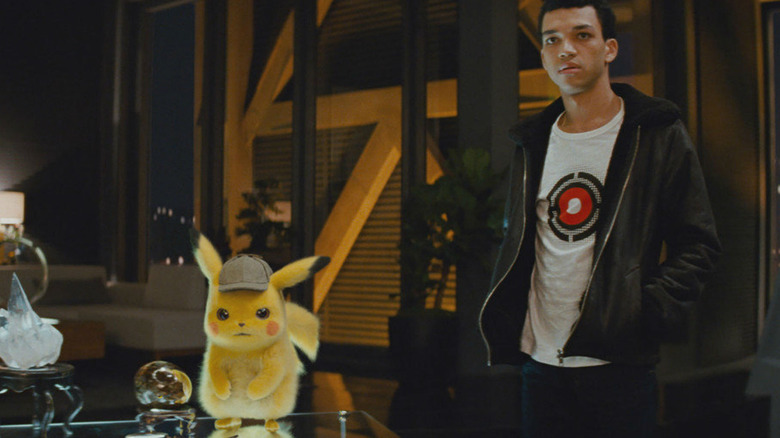
27 Sep 17:21

Russian Turla APT Group Deploying New Backdoor on Targeted Systems

by noreply@blogger.com (Ravie Lakshmanan)
State-sponsored hackers affiliated with Russia are behind a new series of intrusions using a previously undocumented implant to compromise systems in the U.S., Germany, and Afghanistan. Cisco Talos attributed the attacks to the Turla advanced persistent threat (APT) group, coining the malware "TinyTurla" for its limited functionality and efficient coding style that allows it to go undetected.
27 Sep 17:20

Extraction 2 Teaser: Chris Hemsworth Is Back, And He's Somehow Not A Corpse

by Ethan Anderton

"Extraction" became a huge hit when it was released on Netflix at the start of the COVID-19 pandemic back in April 2020. In fact, at the time, the movie was Netflix's most watched original movie ever, bringing in 99 million accounts in the first month of its release. Though we know that Netflix's streaming numbers are made to sound a little better than they actually might be in reality, the film was still a huge draw for subscribers, so of course there was going to be a follow-up. However, what we didn't know was what "Extraction 2" would focus on since Chris Hemsworth's character seems to die at the end of the movie. Now we have our answer. 

Extraction 2 Teaser

During Netflix's Tudum event over the weekend, Chris Hemsworth himself announced the forthcoming arrival of "Extraction 2," complete with a teaser video that officially confirms that his ex-military mercenary character Tyler Rake survived at the end of the movie. The teaser replays Rake's final moments where, after finally taking one too many bullets in a bloody battle on a bridge, he plunges into the river below and sinks to the bottom, seemingly accepting his fate. 

As Rake's body sits there, we hear some words of wisdom from earlier in "Extraction," when the young boy Ovi (Rudhraksh Jaiswal), who Rake was assigned to protect, told him, "You drown not by falling into the river but by staying submerged in it." Though this was meant to be an allusion to Rake wallowing in the tragedy of his son's death and letting is consume his life, now it's used literally.

Suddenly, Rake's eyes open, a burst of air bubbles come from his mouth, and he shoots to the surface. As he gulps a huge breath of air on the surface, we see #RakeLives, confirming the character's survival. Though this might seem like a surprise for some, Rake's survival was at least vaguely teased at the end of "Extraction."

Extraction's Mystery Man

Rake's death felt like a narrative necessity, especially since he mostly felt like a hollow shell of a man after the death of his own son. But the audience questioned whether or not he was really dead due to the movie's final scene. After it's assumed that Rake has died, we see Ovi swimming in a pool, alive and well thanks to his protector's sacrifice. As Ovi comes to the surface, next to the pool stands a man who is intentionally out of focus. It looks like this man could easily be Rake, but the movie cuts to black as Ovi turns to see this mystery man, so we're left to wonder whether it's Rake who is somehow still alive or maybe just a vision of Rake that Ovi is seeing as his watchful protector. Perhaps it's just Luke Hemsworth with nothing else to do.

But now that mystery has been solved, because we know Rake has officially survived. What we don't know is exactly how the story of "Extraction" will continue into the sequel. Will Rake again have to protect Ovi as more criminals try to track him down? Maybe that mystery man isn't Rake but someone else sent to dispatch with Ovi. It's also possible that Rake will have a completely different mission that he's sent on. However, the emotional core of "Extraction" came from Hemsworth trying to make up for not being around for the death of his son by protecting Ovi until the bitter end. So how will "Extraction 2" feel necessary without that element? In some ways, the sequel could make the first movie feel a little less significant, but it sounds like expanding the world of "Extraction" was planned all along. 

Producers Anthony & Joe Russo (the latter also serving as one of the script's writers) previously talked about their hopes of "building out a universe of films that could potentially explore some of the other characters from the first movie and some new characters, and see more historical interaction between the characters." David Harbour's character from the original movie was specifically mentioned as a possible focal point for another movie. Perhaps we'll see him popping up again in "Extraction 2." For now, we'll just have to wait until we hear more details.

Read this next: Russo Brothers Want 'Extraction' Sequel To Spawn A Whole 'Extraction' Cinematic Universe

The post Extraction 2 Teaser: Chris Hemsworth is Back, and He's Somehow Not a Corpse appeared first on /Film.
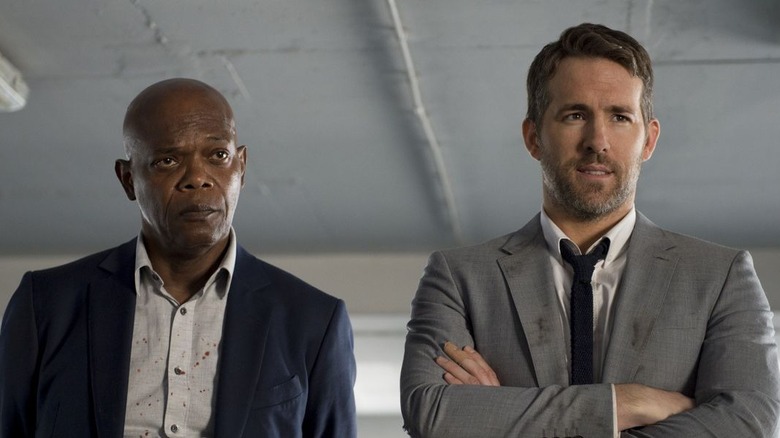
27 Sep 16:19

Watch: Raven attacks Google delivery drone in Australia

by Mark Frauenfelder

A home delivery service in Australia had to suspend operations after ravens started attacking it drones. The Google-owned company, called Wing, has been delivering items like coffee and medicine to customers in Canberra since 2019, but in recent weeks territorial birds have started attacking its drones. — Read the rest

27 Sep 10:47

Mass Effect: Legendary Edition - LE3 Community Patch Available

by ValH

Earlier this year, BioWare re-released their Mass Effect Trilogy as the Legendary Edition. And while this remaster may strike you as perfectly functional, for community modders, "if it ain't broke, don't fix it," is very much an alien concept. As a result, we can now enjoy this massive Community Patch addressing a whole heap of perceived issues you may encounter in the third game of the series.

Here's just the miscellaneous stuff and you take things from there:

About LE3 Community Patch is a comprehensive bug and continuity fix mod for Mass Effect 3 Legendary Edition.

In addition to the Community Patch, a separate mod called the Community Framework has also been included. The goal of the framework is to allow for modification of NPCs without the need for compatibility patches. For more on that click here.

Changelog

Miscellaneous
  • Fixed an issue in various missions where the black screen would end too early before the start of a mission or Citadel DLC meeting. This causes Shepard to awkwardly stand there for one second before the dialogue starts.
  • Helmets now will always obey the option selected in settings. In some scenes, such as the confrontation with Henry Lawson, Shepard’s helmet is always disabled regardless of settings. All instances of this have been rectified in the patch.
  • Fixed various grammatical issues.
  • The Councilors’ subtitles will now also include their names. I.E. Councilor Tevos.
  • Fixed clipping issues with the male leather jacket.
  • Fixed an issue with CTHe diffuse texture that was causing a seam. This affects characters like Conrad Verner and many batarians and human male refugees.

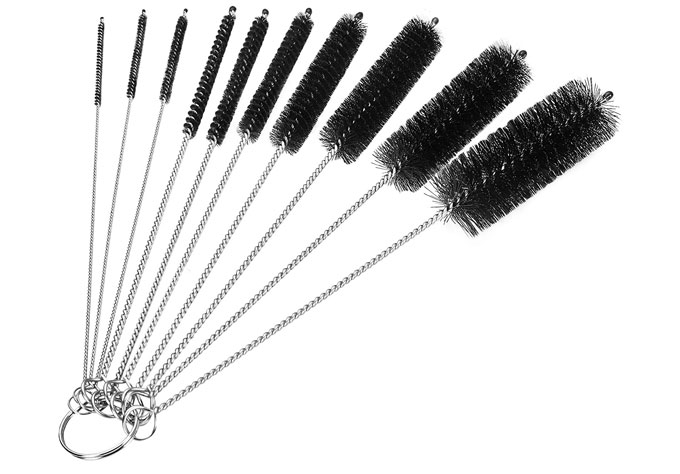
  • Fixed an issue with the N7 Helmet that was causing it to move with Shepard's mouth.
  • Fixed all communicator animations so that characters actually hold their hand up to their ears.
  • Fixed issues with Miranda’s spec maps that were causing her to reflect strange colors.
  • Altered Jacob's scalp textures so his teeth actually look like teeth.
  • Fixed Joker's black teeth.
  • Wrex/Grunt's weapons can now be seen when they are holstered.
  • Fixed issue where Shepard was too high up during the Mars Citadel Transition.
  • Oleg Petrovksy has been moved to the Ex Cerberus War Asset category.
  • The Sniper Rifle Concentration Module now has number values after it, like very other weapon mod.
  • Fixed clipping issues with the HMM_Arm_CTHf outfit.
  • Fixed issue where the Kassa Fabrication Torso was reffered to as the as the Rosenkov Material Toros in Spectre Requisitions.