Shared posts

12 Oct 17:53

The Real Life Inspiration Behind Goodfellas

by Joshua Meyer

"As far back as I can remember, I always wanted to ..." know about the real-life inspiration behind "Goodfellas." Maybe you've thought that, or maybe that's just a convenient paraphrasing of the opening voiceover to Martin Scorsese's 1990 gangster-movie classic.

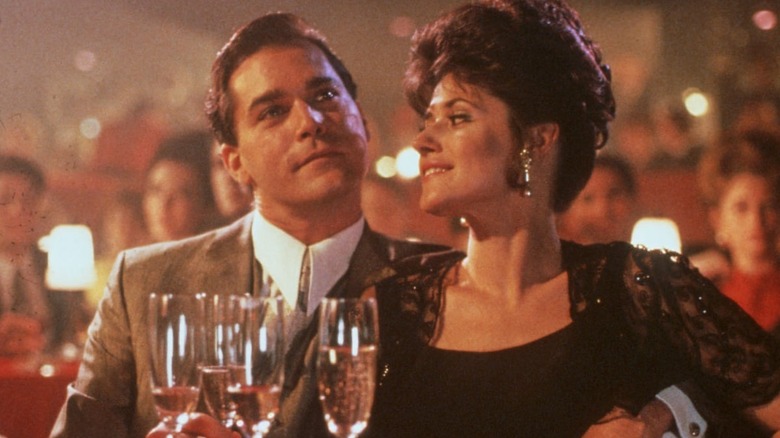
Before we even see the first image — the back plate of a Pontiac Grand Prix, speeding along the highway at night — "Goodfellas" tells us, "This film is based on a true story." It's an adaptation of the non-fiction book, "Wiseguy: Life in the Mafia," by crime reporter Nicholas Pileggi. The book and the movie follow Henry Hill and his "three decades of life in the Mafia." Hill, played by Ray Liotta in the movie, was a real associate of the Lucchese family, one of the infamous Five Families known for controlling organized crime in New York.

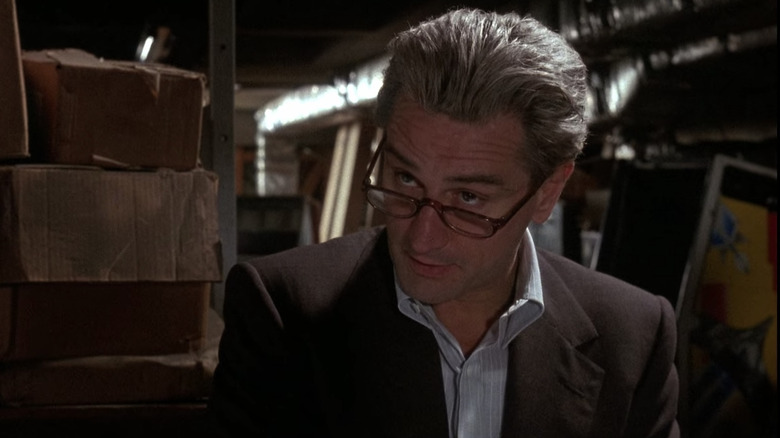
He died in 2012, but the movie keeps many of the details of his biography intact. As Biography.com notes, Hill really was half-Irish, and his partner in crime, Jimmy Burke — who became Robert De Niro's character, Jimmy "The Gent" Conway, in the movie — was full Irish. This prevented them from becoming made men, unlike their associate, Tommy DeSimone, who was full Italian and who became Joe Pesci's Oscar-winning character, Tommy DeVito, in "Goodfellas."

Hill and DeSimone did hijack trucks, and according to "Wiseguy," DeSimone really did murder a mobster nicknamed "Billy Batts" over an insult at a nightclub. Batts was also a made man in the Gambino family, a friend of John Gotti, and his death played out similar to how it is portrayed in the film. They stuck Batts in the trunk of Hill's car, swung by the house of DeSimone's mother, then pulled over on the road and killed Batts once they realized he was still alive.

The Lufthansa Heist

At a card game, DeSimone also gunned down a bartender nicknamed Spider, in a scene similar to the one in "Goodfellas." In the movies, at least, Frank Vincent, who played Batts, would have his revenge on Pesci's character in "Casino." Michael Imperioli, who played Spider, would go on to have success playing Christopher Moltisanti in "The Sopranos."

Hill, Burke, and DeSimone were all involved in the 1978 Lufthansa heist, which netted them and their associates almost $6 million. That's about $23 million when adjusted for inflation, which is just shy of the $25 million estimated production budget for "Goodfellas." They could have almost financed Scorsese's movie themselves.

In a 1986 interview with NPR, Pileggi observed that the Lufthansa heist was, at the time, "the largest successful cash robbery in American history." Hill set it up with Burke after receiving a tip from a bookie and wig shop owner named Marty Krugman, who retained his initials as Morrie Kessler (Chuck Low) in the movie.

The Lufthansa heist did lead to a trail of dead bodies, not unlike the one set to the tune of the piano exit from "Layla" in "Goodfellas." This came about after one of Burke's henchman, Stacks Edwards — played by Samuel L. Jackson in the movie — failed to properly dispose of a van used in the heist. Another henchman disappeared after he bought a pink Cadillac for his wife, like the one we see with the dead bodies in it in the film.

Fact Or Fiction

When it looked like Burke might come for them next, Hill and his wife, Karen (Lorraine Bracco, another "Sopranos" alum) did enter the witness protection program. They really did enjoy the best tables at the Copacabana once upon a time, but by the time "Goodfellas" premiered, they had divorced and Hill had been booted out of the program.

One interesting thing not shown in "Goodfellas" is that Hill was able to get out of prison on "religious" furloughs, so that he could spend weekends gambling in Atlantic City even while incarcerated. "Goodfellas" leaves out other details, like the fact that Hill spent time in the army, and the fact that Burke ultimately went to prison not for homicide, but for rigging college basketball games.

All in all, though, the film adheres to more than enough of the facts to earn that label, "based on a true story."

Read this next: The 20 Best Heist Movies Of All Time

The post The Real Life Inspiration Behind Goodfellas appeared first on /Film.

12 Oct 17:51

Olympus Confirms US Cyberattack, Weeks After BlackMatter Ransomware Hit EMEA Systems

by msmash
Japanese technology giant Olympus has confirmed it was hit by a cyberattack over the weekend that forced it to shut down its IT systems in the U.S., Canada and Latin America. From a report: In a statement on its website, Olympus said it is "investigating a potential cybersecurity incident detected October 10" and is "currently working with the highest priority to resolve this issue." "As part of the investigation and containment, we have suspended affected systems and have informed the relevant external partners. The current results of our investigation indicate the incident was contained to the Americas with no known impact to other regions. We are working with appropriate third parties on this situation and will continue to take all necessary measures to serve our customers and business partners in a secure way. Protecting our customers and partners and maintaining their trust in us is our highest priority. Our investigation is ongoing and we are committed to transparent disclosure and will continue to provide updates as new information becomes available." It's near-identical to a statement put out by Olympus last month following a cyberattack on its European, Middle East and Africa network.

Read more of this story at Slashdot.

12 Oct 01:16

Facebook whistleblower will brief the Oversight Board on 'cross check' rules for VIPs

by Karissa Bell

Members of the Oversight Board will meet with Facebook whistleblower Frances Haugen as it investigates the company’s controversial “cross check” system.

“In light of the serious claims made about Facebook by Ms. Haugen, we have extended an invitation for her to speak to the Board over the coming weeks, which she has accepted,” the Oversight Board wrote in a statement. “Board members appreciate the chance to discuss Ms. Haugen’s experiences and gather information that can help push for greater transparency and accountability from Facebook through our case decisions and recommendations.”

In a statement, Haugen confirmed the upcoming meeting. “Facebook has lied to the board repeatedly, and I am looking forward to sharing the truth with them,” she wrote.

The board has also been pushing Facebook to provide more information about the program, in light of Haugen’s disclosures. “Cross check” is the internal designation used by the social network for high profile accounts, including celebrities, politicians and athletes. The company has said it’s meant to provide an extra level of scrutiny when those accounts might break the platform’s rules. But according to documents Haugen provided to The Wall Street Journal, Facebook often doesn’t review violations from these accounts, effectively allowing them to break its rules without consequences. In other cases, reviews are so delayed that rule-breaking content is viewed millions of times before it’s removed.

Crosscheck was also a central issue in the Oversight Board’s handling of Donald Trump’s Facebook suspension. The board had asked Facebook for more details about cross check, saying that the company’s rules “should apply to all users.” But Facebook said it was “not feasible” to provide additional info, even though Haugen’s disclosures suggested the company has been tracking problems related to the program.

A Facebook spokesperson declined to comment. The company said last month, following The Wall Street Journal's reporting, that it had asked the board to provide recommendations on how to improve cross check. The Oversight Board will release its first transparency report later this month, which will provide an update on cross check, based on its discussions with Facebook officials and Haugen. The report will be the board’s first assessment of how the social network has responded to its policy recommendations.

12 Oct 01:15

'Prodigy' is a kid-friendly Star Trek show taking the right lessons from Star Wars

by Kris Naudus

This post keeps spoilers to the bare minimum since the show will not air until October 28th.

While Star Trek certainly has its share of young fans, it’s never been specifically for the kids. Sure, there was the animated show back in the ‘70s, but that was basically a continuation of the original 1966 series. The newest program, Prodigy, is designed with kids in mind — especially those who might know nothing about Star Trek.

Though the show won’t show up on Paramount+ until the end of the month, fans got a sneak peek at the first episode, “Lost & Found,” during this past weekend's New York Comic Con. It introduces to our core cast of characters, a diverse group of aliens trapped on a distant mining colony and forced to dig in search of a mysterious prize. It’s a pretty grim scenario for a kid’s show, but one that won’t stick for long — this is Star Trek, after all, and part of the franchise’s ethos is exploration.

To keep the series as newbie-friendly as possible, the connections to the wider Trek universe are kept to a minimum. We don’t even know what species our protagonist, Dal, is. The rest of the cast is filled out by aliens that are either new to us or haven’t gotten a lot of screen time in the past. And the Federation is largely unknown here. Not that it isn’t mentioned a few times, but that our group of former prisoners have no idea what that means. Long-time fans will be excited to watch them learn all about it, while new fans will get to take that journey of discovery with them.

It’s that sense of wonder that will keep the show firmly in tone with the franchise, even as its new setting and animation style evoke prior science fiction programs like Star Wars: Rebels and Farscape. Star Wars: Rebels was also intended as a kid’s show, but its role in filling in details about the rise of the Rebel Alliance and sense of pathos also made it an enjoyable watch for adults. While older Trekkies will probably want to keep up with Prodigy for those ties to the greater continuity, the action sequences are solid and the initial plot line is serious enough to keep newcomer adults engaged. It’s a good introduction to the franchise for both kids and grownups alike, something sorely needed when there’s over 800 episodes to trawl through.

Pictured: Environmental coverage of the Paramount+ series Star Trek: Prodigy . Photo Cr: Nickelodeon/Paramount+ ©2021, All Rights Reserved.
Nickelodeon

Prodigy is computer-animated by Eye Animation Productions, part of CBS Television Studios. According to Nickelodeon and Paramount Animation president Ramsey Naito, CG was chosen for being the “most immersive approach,” and that director Ben Hibon’s vision for it had a lot of soul. The show adopts a blocky angular style similar to Rebels but the edges are smoother and the color palette is more expansive. Even when things are grim, it’s still a visual treat in terms of how things are shaded. The planet is a full spectrum of browns and reds, while space isn’t just black and white; it’s purple and blue and pink with an array of glittering stars. It’s a cinematic place you want to explore.

Pictured: Brett Gray as Dal of the Paramount+ series Star Trek: Prodigy . Photo Cr: Nickelodeon/Paramount+ ©2021, All Rights Reserved.
Nickelodeon

And, of course, our tool for exploration is the USS Protostar, a lost Starfleet vessel that the characters unearth in their digging. What exactly is the ship, and how did it end up on this depressing mining colony? Those are questions for the long haul. Some may however be answered by the vessel’s “help desk,” a hologram of Kathryn Janeway. She doesn’t have a huge part to play in the series premiere, which is good because it means she can’t draw attention away from the introduction of the main cast. Paramount+ did, at least, release a short clip starring Janeway to quench your thirst for the coffee-swilling captain.

During the New York Comic Con panel executive producers Dan and Kevin Hageman did share a few casting announcements. Voyager fans will be pleased to hear that Robert Beltran will be reprising Chakotay. It’s unknown if he’ll appear in the flesh or as another hologram, but we do know that he’s been promoted to captain in the time since his last appearance. Kids will probably be more excited by some of the other guest voices, like Hamilton’s Daveed Diggs as Tysess and The Good Place’s Jameela Jamil as Ascensia. These additional announcements also feel like a tip of the hat to Voyager fans, a show that saw its share of guest stars like The Rock. Prodigy will even bring back Jason Alexander, an actor who also appeared on Voyager, but will now appear in the new role of Doctor Noum.

STAR TREK: PRODIGY, with series voice cast including “The Diviner” (voiced by John Noble) and “Drednok” (voiced by Jimmi Simpson) of the Paramount+ series Star Trek: Prodigy . Photo Cr: Nickelodeon/Paramount+ ©2021, All Rights Reserved.
Nickelodeon

There’s a lot about the show to be excited about, and what’s been revealed about Prodigy thus far is extremely promising. But as a middle-aged and long-time Star Trek fan, what got me the most in this premiere was when you get to see the Protostar finally fly. Its ascent from the planet was thrilling, but watching the characters react to seeing the stars for the first time… I might have shed a few tears. Star Trek is about exploring strange new worlds, seeking out new life and new civilizations. Now we get to watch a whole new cast, one that had previously been abused and downtrodden, live out that dream. Even if we’ve left the confines of the Federation, the show’s heart is still firmly in place with its past.

12 Oct 01:10

[Series Review] YOU SEASON 3

by Caitlin Kennedy

[Series Review] YOU SEASON 3
Courtesy Netflix
At the outset of YOU’s third season, it appears that Joe Goldberg (Penn Badgley) has finally met his match. Joe and his new bride, Love (Victoria Pedretti), have settled into suburban life in picturesque Madre Linda with a brand-new baby and a promise of no more bloodshed or lies. Joe is committed to his role as a husband and father, but is fearful of Love’s deadly impulses and bored of the bland day-to-day of suburban living. Will Joe find a distraction – and maybe more – in a beautiful neighbor? Can Love keep her rage and violence under wraps? The surface-level image of their picture-perfect family is prone to some deep and dangerous cracks.

It helps to think of the Netflix series from the perspective shared by its seductive stalker lead… as a love story. A story of all manner of love… and the search for the real deal. This concept is seen to its highest potential in YOU Season 3. YOU’s third season brings a refreshing twist to Joe’s tortured tale, because infatuation and flirtation may be fervent and fleeting but marriage is a commitment. Joe’s search for love has ended with his wife, Love, and their new baby… or so we’d like to think. Love, on the other hand, has yearned for safety and security and is desperate to have it within her marriage. 

At the core of its twisted tale of deadly deception, YOU Season 3 confronts love and acceptance in a shockingly earnest portrayal of marriage. YOU’s killer couple is a caricature of more realistic struggles that married couples face all of the time. The show’s unique brand of love gone wrong is given something more grounded and that makes the drama all the more arresting and the stakes ever higher. For better or for worse, these two broken people may have found their best chance at happiness in one another. Reframing Joe’s obsessions in this way is incredibly refreshing and matures the show into something so much richer. 

(L to R) VICTORIA PEDRETTI and PENN BADGLEY in YOU Cr. JOHN P. FLEENOR/NETFLIX © 2021

While relationships and the fickle nature of love are at YOU’s core, the third season expands the consuming power of devotion into the realm of family. Parenthood adds a layer of complication for Love and Joe. Both must fight for individual identity and identity as a couple while maintaining the difficult task of being present and loving parents. YOU has continuously impressed with deliciously wicked writing and narrative, but the third season has a depth and weight to it that makes it a stand out. Just like its characters, YOU has grown up. It’s not fooling around anymore. 

Victoria Pedretti’s performance as Love Quinn is stellar and the character only gets more interesting with each episode. Badgley’s Joe delivers on everyone’s favorite bad TV boyfriend, but Pedretti steals the show with elevated instincts. 

YOU Season 3 distinguishes itself as a drama for the moment, with a sharp take on contemporary issues like the anti-vaxx movement, nods to COVID-19, and well-worked in discussions of race and privilege. These scenes may tarnish any hope for timelessness, but these asides fall right in step with YOU’s history of placing its drama right on the cutting edge of culture. It’s fresh. It’s smart. 

YOU Season 3 elevates the series out of its pulpy beginnings and into more grounded drama. This season dares to offer more complex notes and a richer finish, seductively smooth and dark. Fans of the show will enjoy the same potent blend of sensual heat and spine-tingling chills, but with a new and more anchored approach. An exciting new direction for the Netflix obsession!

YOU Season 3 premieres on Netflix on October 15, 2021.

The post [Series Review] YOU SEASON 3 appeared first on Nightmarish Conjurings.

12 Oct 01:00

Microsoft explains the Windows 11 security requirements, tries to hack into Windows 11

by Arif Bacchus
One of the biggest controversies with Windows 11 is the minimum hardware requirements. Microsoft has held that these requirements are for reliability, security, and compatibility, but we haven't really seen these claims put to the test. A recent Microsoft Mechanics ... Read more
12 Oct 01:00

In Nigeria, Facebook's Outage Revealed a Dangerous Dominance

by Chisom Peter Job
The platform's shutdown sparked uncertainty and panic. It's time to invest in alternatives.
12 Oct 00:58

NSA Warns of Risks Posed by Wildcard Certificates, ALPACA Attacks

by Ionut Arghire

The National Security Agency last week issued guidance on the risks associated with wildcard TLS certificates and Application Layer Protocols Allowing Cross-Protocol Attacks (ALPACA) techniques.

read more

12 Oct 00:58

Microsoft Exposes Iran-Linked APT Targeting U.S., Israeli Defense Tech Sectors

by Ryan Naraine

Threat hunters at Microsoft are raising the alarm about a new Iran-linked threat actor caught using password-spraying techniques to break into defense technology companies in the United States, Israel and parts of the Middle East.

read more

12 Oct 00:57

This Deus Ex mod turns JC into a lady with fully redone voice lines

by Alice O'Connor

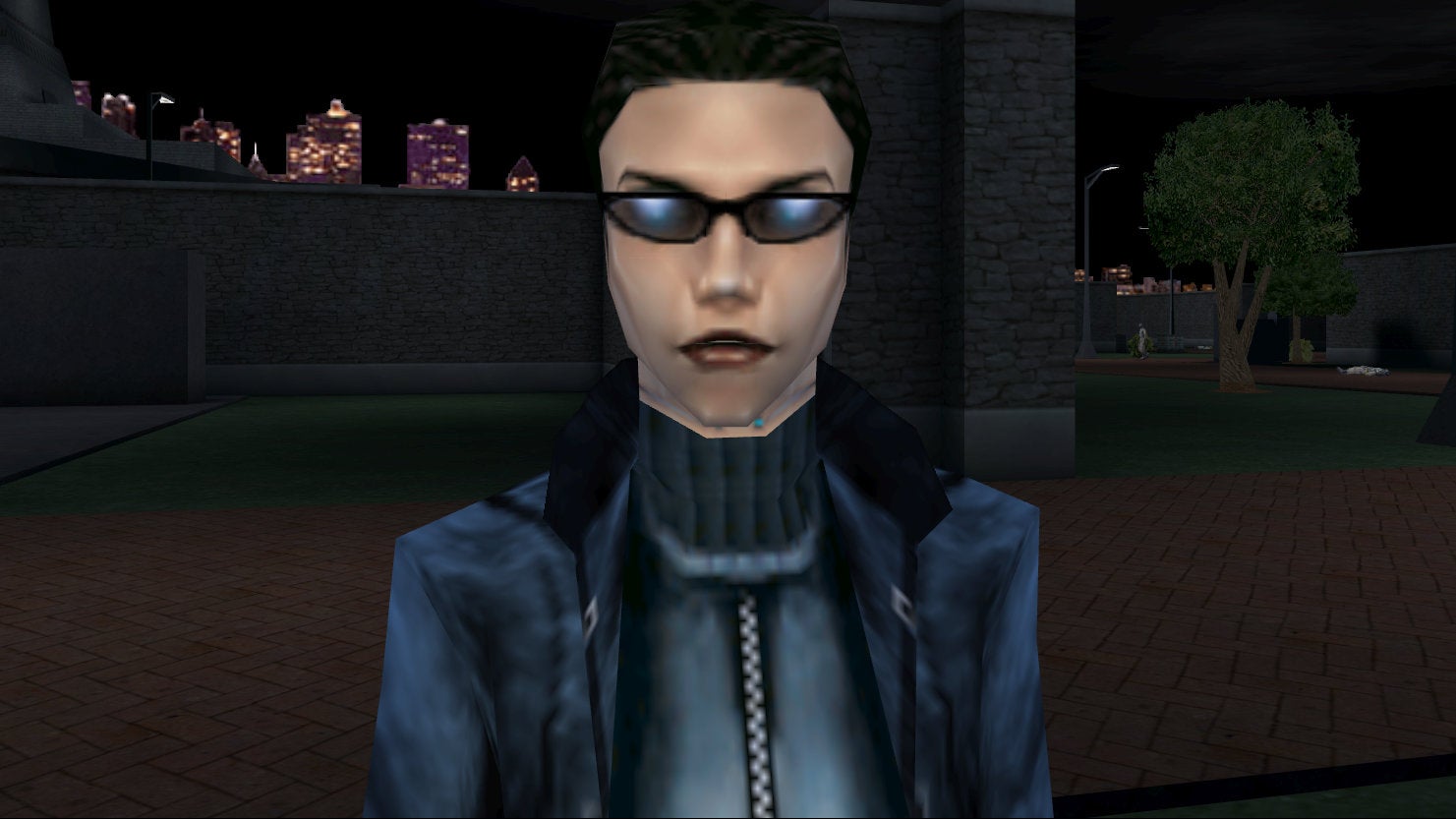
Next time you go to replay Deus Ex (which will be within one week, now that I have put the idea in your head), perhaps you'll want to try it with a twist. A brand new mod named The Lay D Denton Project turns JC Denton from a stoic fella into a stoic lady, complete with full voice acting and a script tweaked to fit. Meet the female JC in the trailer below.

Read more

12 Oct 00:57

Windows 11 Auto HDR is neat, but not worth the upgrade alone

by James Archer

Windows 11 has been out for little under a week, which has proven more than enough time enough time for the bugs to crawl out. Memory leaks, laggy window animations and, most egregiously, major performance issues on AMD Ryzen CPUs have all been reported. All in all, a rather disappointing start, especially given this was pitched as Microsoft most gaming-friendly OS yet.

Read more

12 Oct 00:56

15 Movies About Sharks You Need To Watch

by Chad Collins

Shark movies are so popular that it might surprise people to know that the subgenre, like global shark populations themselves, isn't quite as large as they might suspect. However, if you combine deadly dramas about monstrous attacks, schlocky creature features, documentaries, and a few animated dips into the ocean (looking at you, "Shark Tale"), the subgenre, while small, is exceptionally diverse. Humans simply have a perennial fascination with sharks, perhaps on account of their prehistoric looks or how mysterious and fearsome they are. 

Although the shark movie has been somewhat sullied by SyFy's seasonal iterations ("Santa Jaws," anyone?), there are still a number of aquatic action, horror, and suspense flicks that pack some serious bite. After all, sharks deserve our respect. In real life, these magnificent creatures are threatened by fin harvesting, overfishing, and habitat loss among sundry other threats, and these 15 flicks play tribute to these animals in all their fin-tastic glory. Let's dive in.

The Last Shark
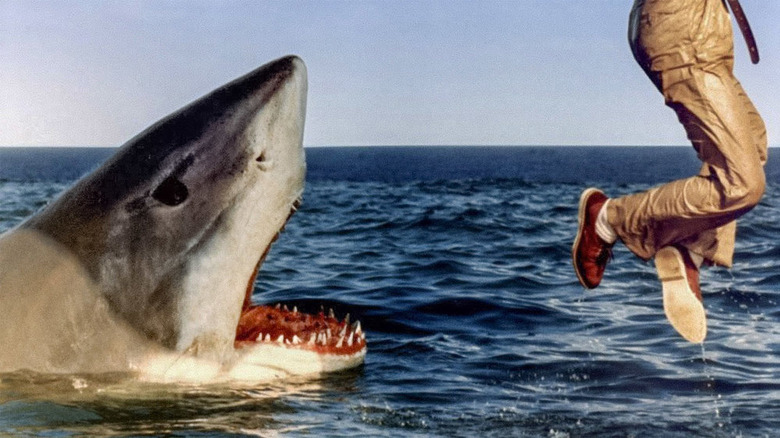
"The Last Shark," also known as "Great White" in some regions, is an Italian redux of Steven Spielberg's "Jaws." In fact, after a successful show at the domestic box office, "The Last Shark" was pulled from theaters when Universal accused the filmmakers of plagiarism

Directed by Enzo G. Castellari, "The Last Shark" stars James Franciscus as horror novelist Peter Benton, the poor sap tasked with saving a coastal town after it's threatened by a great white shark. The "Jaws" similarities are clear, though "The Last Shark" is considerably gorier and hokier than Spielberg's classic. Bodies are bitten in half, legs are ripped off, and cheap dummies line the beaches to signify the shark's wrath. 

One of several international "Jaws" rip-offs, the likes of which also included "Cruel Jaws" and "Deep Blood," "The Last Shark" is arguably the best. It's a movie so bad and ill-informed that it transcends its limitations to become a hollering good time. For a delightful double-feature, pair it with "Jaws." You'll never go in the water again.

47 Meters Down

The release of "47 Meters Down" release is one of this century's strangest sagas. Distributor Dimension Films originally planned to release the movie on DVD in August of 2016, but in July of that year, Dimension sold the rights to Entertainment Studios, which shifted the movie to a theatrical release in the summer of 2017. Dimension, however, had already sent both screeners and copies to retailers under the original title, "In the Deep." Though recalled, copies of the film saturated the market, and "47 Meters Down" was widely available online a year before its official release.

Luckily, the impact of the early release was marginal, as "47 Meters Down" grossed over $60 million against a paltry $5 million budget. Remunerative and high-concept, it would get a sequel two years later (one that is arguably better than the original). Mandy Moore and Claire Holt star as sisters whose cage-diving excursion goes awry when the chain snaps and their cages plunge, you guessed it, 47 meters down. Trapped at the bottom of the ocean with limited oxygen, they must overcome their fear, limited resources, compromised communication with the surface, and several hungry sharks. "47 Meters Down" is a genuinely frightening movie, one that likely reinvigorated the killer shark subgenre. Simple in execution and form, it taps into primal fears and never lets up.

The Meg

"The Meg" was a curious experiment. An American and Chinese co-production, "The Meg" faced numerous problems during production, including clashing tones, shifts in its rating, and cut scenes that comprised some of the source material's most compelling stuff. Still, "The Meg" opened considerably larger than expected, making this Jason Statham megalodon movie became the little (or giant) shark that could. 

Jon Turteltaub directs this adaptation of Steve Alten's novel about the emergence of a giant megalodon from deep within the Mariana Trench. Jason Statham plays Jonas Taylor, a rescue diver who leads the charge to track down and kill the megalodon before it reaches the shore of Sanya Bay, China. 

Though wildly inconsistent -- it's both a deadly-serious drama and a PG-13 B-movie -- "The Meg" is unexpectedly triumphant. The chemistry between Jason Statham and Li Bingbing is delightful and the effects are consistently gorgeous. Plus, "The Meg" features sundry scenes of star Jason Statham diving into the water. A trained diver in real life, those scenes alone warrant the price of admission. With a sequel on the way from genre auteur Ben Wheatley, "The Meg" doesn't look to be slowing down any time soon.

Bait

The conceit of "Bait" alone is enough to give it a look. Released during the height of the 3D craze in the late '00s, "Bait" is sometimes titled "Bait 3D," although the 2D version is the way to go (presuming that anyone still even owns a 3D television). It follows a group of people trapped in a submerged grocery store after an inexplicably deadly tsunami strikes Australia. Even worse, a pack of vicious great white sharks have found their way inside, making it a race against time to escape before everyone is killed. 

Part disaster movie and part monster movie, "Bait" exploits the best (and worst) tropes of both. The effects are iffy, the deaths quick and efficient, and the performers capable at best and downright insufferable at worst. Bad decisions are made, all logic is seemingly swept away in the storm, and a bunch of chiseled Australians are systematically devoured by inconsistently rendered CG sharks. That isn't a bad thing --for audiences willing to go with the bloody flow, "Bait" is a riotously good time.

Deep Blue Sea
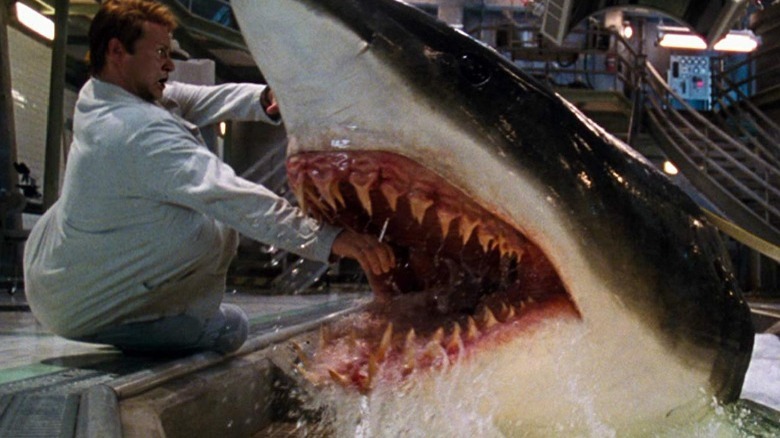
Like "Hollow Man" and "Sleepy Hollow," "Deep Blue Sea" is a relic of a bygone era when high-concept horror blockbusters could command budgets upward of $60 million. "Deep Blue Sea" is the kind of big-budget, low-logic creature feature that we simply don't get enough of today. Sure, there are still killer animal movies ("Crawl" comes to mind as one of the best), but they rarely command the same sense of fun (and budget) that the creature features of yore did. 

"Deep Blue Sea" stars Saffron Burrows as Dr. Susan McCallister, one of the chief researchers at a remote underwater facility where shortfin mako sharks are experimented on. The plan is to grow the sharks' brains and harvest proteins to use in dormant human brain cells, thereby reducing or eliminating the effects of Alzheimer's disease. Unfortunately, before the tissue can be harvested, one of the sharks wakes up, bites Stellan Skarsgård's arm off, and escapes. 

Soon, the facility floods, and the remaining survivors must make their way to the surface. Unbeknownst to them, however, the sharks have entered the facility, and they're smarter than ever. Violent, deeply silly, and full of some ludicrous twists, "Deep Blue Sea" is still a sensationally good time. It's fun, funny, and indicative of the kind of "everything but the kitchen sink" approach the genre used to take. Shark action doesn't get bigger or bolder than this.

Jaws 2

When compared to "Jaws," "Jaws 2" is not a good movie. In fact, it looks downright abhorrent when paired with its predecessor. With some distance and perspective, though -- namely, severing it from the original's legacy -- "Jaws 2" is a lot of fun, as long as you keep your expectations in check. Roy Scheider and Lorraine Gary return as Chief Martin Brody and Ellen Brody, respectively, and are once again tasked with taking down an enormous great white shark that has targeted their resort community of Amity Island. 

Granted, it's a bit unlikely that another giant shark would target this coastal hamlet, though director Jeannot Szwarc wisely eschews Spielberg's sensibilities, offering instead to lean fully into the mayhem of it all. The deaths are bloodier and more chaotic than before, with Szwarc assembling a number of noteworthy set pieces, including a boat crash and gloriously tense attack on a fleet of sailboats. "Jaws 2" isn't "Jaws." In this particular case, that's more than okay.

Soul Surfer

"Soul Surfer" both is and isn't a shark movie. The true story of surfer Bethany Hamilton, it stars a sensational Anna Sophia Robb as Bethany, a young girl living in Kauai, Hawaii with her parents, aptly played by Helen Hunt and Dennis Quaid. While out surfing one day, Bethany's arm is bitten by a shark. She is rushed to a hospital, having lost 60% of her blood. The doctors call her survival a miracle. 

The remainder of the story is a saccharine but inspiring account of Bethany's journey as she overcomes her fear of the ocean -- it's no spoiler to reveal that, at the end of "Soul Surfer," Hamilton is back on the board. However, it's difficult to conceptualize, because while "Soul Surfer" is principally the story of Hamilton's courage and resilience, it is often reduced to a story about a surfer and a shark. The true story dominated the press, and the mystique and terror of a shark attack played a huge role in making it popular. There is considerably more to Hamilton's tale, though, and "Soul Surfer" remains one of the best surfing-based biopics to come out in recent years.

Sharkwater: Extinction

Sharks are the perfect horror movie villains. They're mysterious, large, unpredictable, and the ocean's most dangerous predators. There's something, too, about encountering one while out at sea. At that point, you're in the shark's domain, with nothing to save you other than hope and luck. 

It's all too easy, then, to perceive sharks as monsters, large behemoths that lurk beneath the placid ocean surface. Documentary filmmaker Rob Stewart, who died before the release of "Sharkwater: Extinction," sought to dissuade viewers of that notion, both here and in his first documentary, "Sharkwater." A gorgeously rendered expose of the illegal shark trade, Stewart offers a poignant and worthwhile perspective along with some breathtaking underwater photography. 

Sharks are being targeted, and their extinction threatens entire oceanic ecosystems. It's a theme that other documentary filmmakers have also covered, although the message rarely feels as profoundly urgent as it does here. Well-received upon release, "Sharkwater: Extinction" is one of the greatest documentaries about sharks and ocean life ever made.

47 Meters Down: Uncaged

"47 Meters Down: Uncaged" is much, much better than the original film. The film's anything-goes attitude towards underwater shark mayhem is considerably more engaging, and frightening, than the slow-burn approach of the first.  Director Johannes Roberts returns to direct this sequel, filling it to the brim with ideas likely discarded the first time around. There are more sharks (and this time, they're albino), more deaths, more poor decisions, and most famously, a fish that literally screams underwater. 

Roberts homages "Deep Blue Sea" with this tale of four teen girls who (unwisely) go cave diving in a submerged Mayan city. It's a ludicrous setup, although Roberts has no interest in maintaining fidelity with the real world. Communication is never compromised underwater, oxygen levels vacillate as the plot demands, and the antagonistic sharks navigate with spectral precision. It's also an enormous amount of fun. "Uncaged" is filled with terrific jump scares, gnarly deaths, and a climax that is so absurd that it has to be seen to be believed. In this case, more is truly more.

Sharks 3D

Like "Bait," "Sharks 3D" was a victim of its time -- specifically, a time when 3D reigned supreme, slithering its way into everything from nature documentaries to "Final Destination" sequels. When seen in the proper format, such as at an IMAX theater, 3D can work miracles, transporting audiences to other worlds with such precision and visceral fluidity that it's altogether enchanting. 

"Sharks 3D" was directed by oceanographer Jean-Michel Cousteau, and unlike the other documentaries listed here, is both under an hour long and principally concerned with the majesty of sharks in their ocean kingdom, not their slaughter. Cousteau gets up close and personal with several species of shark, including great whites, hammerheads, and whale sharks. The direction is tender, and the underwater photography is stellar. There's a reason why shows like "Planet Earth" and "The Blue Planet" continue to captivate audiences years after release -- for viewers looking for something in that vein focused on sharks, there's little better than the cerulean wonders of "Sharks 3D."

Fin

"Fin" director Eli Roth is best known for his exploitative, extremely gory horror ventures (and the occasional kid flick). He's an odd choice, then, to helm a documentary about sharks and the commercial fishing trade that threatens their survival. But, then, as he says, Roth really, really loves sharks. 

The practices outlined in "Fin" are doing clear harm to ocean life, and Roth never shies away from the brutality of it all, at one point trying shark fin soup and drawing links between it and his own film, the cannibal thriller "The Green Inferno." His frat-boy swagger is muted here, too, and while Roth does occasionally dip into stereotypes, getting dangerously close to painting an entire group of people as savages, he wisely reins himself in, keeping the focus on the sharks and the devastation being wrought to the creatures and their habitat.

Roth has described "Fin" as the scariest movie he ever made, and for those with a penchant for loving ocean life, his words ring true. Like "Sharkwater: Extinction" before it, "Fin" is an artful yet urgent call for change.

Open Water

"Open Water" has a complicated history. Like its forbears, "Open Water" is allegedly based a true story, much like "The Blair Witch Project," although it's not a found-footage film. Upon release, it was said to be one of the scariest movies ever made. It follows Daniel Kintner and Susan Watkins (Daniel Travis and Blanchard Ryan respectively), a couple left behind after their scuba diving excursion leaves before they're on board. Consequently, Daniel and Susan are stranded at sea. 

"Open Water" is rife with possibilities, though as a micro-budget indie (the budget is suspected to be anywhere between $120,000 and $500,000), those possibilities are most often suggested, not seen. For patient viewers, the results are magnificently tense. Every splash inspires chills, as does the sheer horror of the situation itself -- it's clear that no one is coming back from this. 

During the climax, a storm hits and a school of sharks descend on the couple, lit only by intermittent lightning. "Open Water" may not be the classic that early reviews indicated, but "Open Water" remains one of most frightening and inventive horror films of the century.

The Reef

Director Andrew Traucki has never gotten the credit he deserves. His filmography isn't particularly diverse, but among the subgenre he knows best, he's nearly unmatched. Principally, Traucki directs low-budget animal attack features, though he notably films animals in their actual habitat, adding a veneer of authenticity that CG-centric creature features just can't match. 

"The Reef," Traucki's second feature film, tracks a group of friends whose boat capsizes while sailing to Indonesia. As they swim to a nearby island, they discover that they're being stalked by a great white shark. 

Much like "Open Water" before it, Traucki films real sharks, and when possible, places his thespians in proximity to the creatures. It's a gambit that works, adding genuine terror to the frequent thrills and chills. Was that a splash in the distance? When peering under the surface, did our lead see the figure that we did? Audiences are liable to grip their armrests until their knuckles bleed -- "The Reef" is that scary.

The Shallows

The shark subgenre had been drowning since the release of "Jaws," the movie that started it all. Though there were occasional drops of blood in the water, nothing really came close to matching the pure, unbridled terror of the first modern summer blockbuster. 

Then came Jaume Collet-Serra's "The Shallows," an imperfect exercise in tropical terror that's still best killer shark movie since Spielberg's attempt A furiously good Blake Lively stars as medical student Nancy Adams who, grieving the loss of her mother, travels to a remote beach in Mexico for some surfing and healing. Not far from shore, she is attacked by a leviathan-sized great white. Nancy makes her way to an isolated rock, and for the remainder of the movie, must outwit and outsmart her pursuer if she hopes to stay alive. 

Deliciously tense with several standout set pieces (including an absolutely heart-racing climax atop a distant buoy), "The Shallows" is highly stylized shark horror at its best.

Jaws

"Jaws" is a masterpiece. No other shark movie has had such a profound influence on the cinematic landscape writ large. Steven Spielberg's first foray into blockbuster territory (he had previously directed several television episodes and movies for Universal) remains his most noteworthy. The simple tale of a resort town plagued by a man-eating great white shark, "Jaws" has endured for decades, inspiring several sequels as well as every single movie on this list. The killer shark subgenre simply didn't exist before "Jaws," and decades later, it's still sending ripples through the water. 

"Jaws" is so inimitably terrifying that Spielberg has routinely turned down the prospect of a remake, wisely recognizing that "Jaws," like the deadly shark at its center, remains unmatched. Nothing since has matched it in terms of pure terror, and its introductory scene, with a lone swimmer killed by an unseen monster beneath the surface, remains one of the genre's scariest vignettes. With a classic score, stellar effects, and a legacy with real bite, "Jaws" isn't simply the greatest shark movie of all time -- it's one of the greatest movies ever made.

Read this next: The 20 Best '80s Horror Movies Ranked

The post 15 Movies About Sharks You Need to Watch appeared first on /Film.
12 Oct 00:55

Doom 64

by Jonathan Kaharl

Note: All screens, unless stated otherwise, come from Nightdive Studios remaster, which makes various graphical improvements while aiming to retain the game’s unique art style.

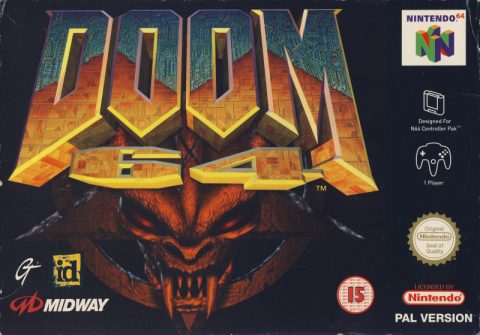
Williams Entertainment, the company behind the Doom PS1 ports, were apart of a larger company called WMS Industries, which also owned Midway, a gaming company you may have heard of. Towards the end of 1996, Williams Entertainment was renamed to be apart of the Midway branding, which is why the same team as those PS1 ports made an original Doom game under a completely different studio credit.

It’s still the same guys, mind you, and they had been working on this particular game since 1994 with guidance and final say from Id Software, if you can believe it. It was under the working title of The Absolution, which is a fantastic title that for one reason or another got the much worse title of Doom 64. This caused confusion as a lot of people, for a very long time, had no idea this once N64 exclusive was a completely original Doom game, a direct sequel no less. It was assumed to be a port just pointing out that it was the N64 version, but it is much more than that. Doom 64 is a unique creature in the Doom franchise, with a mood all its own and with some fun new elements that had never been seen in the franchise until now. Some would even argue this to be the real Doom 3, and yeah, the fact it’s a direct sequel and not a reboot would make it a proper Doom 3.

Doom 64 is set some time after Doom II, the Doomguy having severe PTSD from all the demon murder and murders committed by demonic entities and having to back into the thick of it due to a powerful demon bringing back the demonic dead. Called the mother demon, it is mutating demon flesh into new forms, and the Doomguy is sent in to deal with it since he, you know, kind of stopped a demonic invasion all by himself so he’s probably the right guy for the job even with the Hell struck PTSD. The bits of writing in here are much edgier then before, and that somehow makes them goofier, the primal muck that would become the modern Doomslayer clearly present here.

You’ll notice very quickly that this is very unique among the classic series. This is Id Tech 1, but heavily modified to allow for more complicated traps and scripted events. Doom 64 lacks a lot of the spectacle of Doom II, due to the limited space on the N64 carts limiting the size of mobs for most levels (there’s still a few with big numbers), but the new tech allows for more memorable levels in terms of surprises it has to share. The first secret level, Hectic, is a great example, with its big ending trap where the entire room reshapes to be a tense walkway above a death pit, along with old tricks like the two closets filled with hell knights. The level will also teach you that the rocket launcher also has recoil now, as you’ll most likely unfortunately learn by falling in the death pit.

Besides Hectic, Doom 64 is generally fair, outside the odd obnoxious pit trap, as the game doesn’t give you ways out often. The difficulty levels are also a bit weird, with the equivalent to Ultra Violence being the hardest difficulty called Watch Me Die. That title was probably more fitting in the original release because Doom 64 didn’t have saves during levels, only after, and it was also way too dark on first release.

Monsters from Doom and Doom II are included, with exception to the chaingunner, spider mastermind, arch-viles, or revenants, though the last’s still has their homing missiles left over for a trap on one level. Some monsters have also been tweaked, including letting hell knights and barons in-fight, and the game has a unique final boss and the fast fireball shooting nightmare imps. All the weapons return, however, with more limited animations, but this has the side effect of making the super shotgun lead faster and making it the new workhorse weapon for the whole campaign. The BFG gets nerfed a bit due to how the game handles its damage spread, but that’s okay because the new addition more than makes up for it.

Doom 64‘s unmaker is a ridiculous weapon. It starts as an energy weapon that shoots lasers that works great at a distance, but isn’t too impressive. Thing is, three of the four secret levels have items called demon keys hidden in them, and earning demon keys boosts the damage output of the unmaker to the point it eats pain elementals and barons for breakfast, and can cut through a cyberdemon’s health fairly quick. It is easily the highlight of the classic arsenal alongside the original BFG, even making a return as the final weapon in Doom Eternal, though with a modified projectile to better fit a fully 3D game.

You may have also noticed that Doom 64 is much darker and more colorful than the original games. It has a richer color palette and colored lighting tech that still looks fantastic to this day, which it is well aware of with an early level showing off a black hall with red textures mixed in leading to a beautiful neon blue hall after. The monsters were rendered as pre-renders instead of hard models, like Rareware’s Donkey Kong Country series and Killer Instinct, that results in them looking less goofy and often more threatening, except the cacodemon and is dumb new face and skinny arms. The pain elemental makes up for it by looking like a nightmare with its two horrible mouths. A lot of sound effects are new, so awkward animal sounds are switched out for stuff that actually sounds demonic. It also gives the weapons more of a kick, especially the supped up chaingun.

At the core of this new atmosphere is the returning Aubrey Hodges, who strayed far away from the rock and metal for focusing on ambient noise, resulting in some extremely effective pieces for making a mood. “Breakdown” is probably the stand out just for the bits where the music literally sounds like it’s having a mental breakdown. It’s an interesting take on the series sound that he had been building with the PS1 ports, and finally cements it here. You can also thank him for the rest of the sound work, the whole team in sync on their unique take on this famous franchise.

This even extends to the design of the levels. Along with having more switches and puzzles that take advantage of the new modifications, there’s a greater focus on making places that actually resemble something that could possibly exist, especially in the first third on the UAC bases. The hell levels, making up the majority of the game, even stick out as unique with a heavy focus on castles and old world architecture, with a few surprises like the last secret level having simulated 3D depth via bar hallways that show the empty sky around you. All the tweaks and changes mixed with this team’s particular taste in maps allowed for a unique Doom experience that still hasn’t been replicated in the official release line.

This is still Doom, of course. You strafe, the Y-axis is a theoretical shrug, demons appear and you shoot them in the face with Gun, find the card keys, get to the exit. It’s just a different flavor of it, has the base there but adds a certain flavor that really sticks with you. It’s an interesting way to handle a sequel, and it’s nice to see that the current handlers of the franchise seem to have a great deal of respect for it. The current director and writer for the series, Hugo Martin, has a soft spot for this one in particular, thus Eternal doing so much to work it into the new continuity. Said game also had the remaster by Nightdive Studios as a pre-order bonus, now available for purchase all on its own, bringing it officially to the PC for the first time, among other platforms.

Nightdive Studios has a near spotless record in their remasters, and Doom 64 is no exception. Lots of quality of life improvements, including quick saves, widescreen support, and some buffed up brightness that actually adds to the game’s style rather than detracting, letting you see all the cool touches the team put in every level while remaining moody with the colored lighting system. You can thank the work of Samuel Villarreal, aka Kaiser, who made this version off of his Doom 64 EX unofficial port. Worth noting that like most all Nightdive projects, this version was made in their KEX engine, an extremely versatile engine made for the sake of re-creating old games with some modern flourishes and touches while making sure they behave as they once did before.

N64 Version

It’s almost surreal seeing the love Midway’s take gets these days, considering the reception when it first came out. Doom 64 was seen mainly as another Doom game. A good Doom game, a very good one, but a Doom game nonetheless. Doom was absolutely everywhere by 1997, and both Quake and Duke Nukem 3D came out the year before. Doom, as a franchise, was stretched thin by 1997, having four main games in five years and a flurry of ports of varying degrees of quality and uniqueness. The future was here, either in full polygonal 3D or environmental interaction and quips stolen from 80s action movies. Heck, even on the N64, Doom 64 was being shown up by the Turok games, and it would only be a few months before Goldeneye 007 stole the entire world’s attention. It was a great game, but it was also another Doom game, and general audiences were getting tired of Doom games.

That’s Doom 64‘s awkward legacy. It is arguably the best Doom game of the classic era, with the best tech and with inventive ways to use it, not to mention its harsh, dangerous tone. It just came out at the worst possible time, where the future was rapidly coming, and everyone was fighting to be it, including Id Software. Doom had become a relic in just half a decade, several studios building on it and often surpassing it in tech or design. Doom 64, however, showed that despite the limitations, Doom could still be something amazing. Just harder to stick out when your own parent company is playing with a new toy and the competition was offering something nobody had ever seen before.

This would be the last Doom game until 2004, the now completely in power John Carmack focusing on Quake for the meanwhile, letting other developers (mainly Raven) play around with their toys – except for Doom. It was in the past, like the old Id Software, and when it returned, it would be a very different experience.

Doom 64 was first posted on October 11, 2021 at 9:30 am.
©2017 "Hardcore Gaming 101". Use of this feed is for personal non-commercial use only. If you are not reading this article in your feed reader, then the site is guilty of copyright infringement. Please contact me at kurt@hardcoregaming101.net
12 Oct 00:55

Iran-linked DEV-0343 targeting defense, GIS, and maritime sectors

by Eric Avena

DEV-0343 is a new activity cluster that the Microsoft Threat Intelligence Center (MSTIC) first observed and began tracking in late July 2021. MSTIC has observed DEV-0343 conducting extensive password spraying against more than 250 Office 365 tenants, with a focus on US and Israeli defense technology companies, Persian Gulf ports of entry, or global maritime transportation companies with business presence in the Middle East. Less than 20 of the targeted tenants were successfully compromised, but DEV-0343 continues to evolve their techniques to refine its attacks. MSTIC noted that Office 365 accounts with multifactor authentication (MFA) enabled are resilient against password sprays.

Microsoft uses DEV-#### designations as a temporary name given to an unknown, emerging, or a developing cluster of threat activity, allowing MSTIC to track it as a unique set of information until they can reach high confidence about the origin or identity of the actor behind the operation. Once it meets the criteria, a DEV is converted to a named actor. As with any observed nation state actor activity, Microsoft has directly notified customers that have been targeted or compromised, providing them with the information they need to secure their accounts.

Targeting in this DEV-0343 activity has been observed across defense companies that support United States, European Union, and Israeli government partners producing military-grade radars, drone technology, satellite systems, and emergency response communication systems. Further activity has targeted customers in geographic information systems (GIS), spatial analytics, regional ports of entry in the Persian Gulf, and several maritime and cargo transportation companies with a business focus in the Middle East.

This activity likely supports the national interests of the Islamic Republic of Iran based on pattern-of-life analysis, extensive crossover in geographic and sectoral targeting with Iranian actors, and alignment of techniques and targets with another actor originating in Iran. Microsoft assesses this targeting supports Iranian government tracking of adversary security services and maritime shipping in the Middle East to enhance their contingency plans. Gaining access to commercial satellite imagery and proprietary shipping plans and logs could help Iran compensate for its developing satellite program. Given Iran’s past cyber and military attacks against shipping and maritime targets, Microsoft believes this activity increases the risk to companies in these sectors, and we encourage our customers in these industries and geographic regions to review the information shared in this blog to defend themselves from this threat.

DEV-0343 conducts extensive password sprays emulating a Firefox browser and using IPs hosted on a Tor proxy network. They are most active between Sunday and Thursday between 7:30 AM and 8:30 PM Iran Time (04:00:00 and 17:00:00 UTC) with significant drop-offs in activity before 7:30 AM and after 8:30 PM Iran Time. They typically target dozens to hundreds of accounts within an organization, depending on the size, and enumerate each account from dozens to thousands of times. On average, between 150 and 1,000+ unique Tor proxy IP addresses are used in attacks against each organization.

DEV-0343 operators typically target two Exchange endpoints – Autodiscover and ActiveSync – as  a feature of the enumeration/password spray tool they use. This allows DEV-0343 to validate active accounts and passwords, and further refine their password spray activity.

Observed behaviors

DEV-0343 uses an elaborate series of Tor IP addresses to obfuscate their operational infrastructure. Because of this, there are no static set of indicators of compromise (IOCs) for us to share tied to this activity. The list below provides a series of behaviors and tactics we have observed being used by the attackers. We encourage our customers to use this information to look for similar patterns in logs and network activity to identify areas for further investigation.

  • Extensive inbound traffic from Tor IP addresses for password spray campaigns
  • Emulation of FireFox (most common) or Chrome browsers in password spray campaigns
  • Enumeration of Exchange ActiveSync (most common) or Autodiscover endpoints
  • Use of enumeration/password spray tool similar to the ‘o365spray’ tool hosted at https://github.com/0xZDH/o365spray
  • Use of Autodiscover to validate accounts and passwords
  • Observed password spray activity commonly peaking between 04:00:00 and 11:00:00 UTC

Recommended defenses

The following guidance can mitigate the techniques described in the threat activity:

Advanced hunting queries

Microsoft 365 Defender

To locate related activity, run the following advanced hunting queries in Microsoft 365 Defender:

AlertInfo
| where Title in~('Unusual sequence of failed logons to Exchange services',
'Unusual sequence of failed logons',
'Password spraying')
| join AlertEvidence on AlertId

Azure Sentinel

Azure Sentinel customers can use the following detection queries to look for this activity:

The query below identifies evidence of password sprays activity where ClientAppUsed is either Exchange ActiveSync or Autodiscover and emulated browser is Chrome or Firefox. The query is leveraging Azure AD data to look for failures from multiple accounts from the same IP address within a time window. Details on whether there were successful authentications by the IP address within the time window are also included.  This can be an indicator that an attack was successful. The default failure account threshold is 5 and the default time window for failures is 20m.

let timeRange = 3d;
let lookBack = 7d;
let authenticationWindow = 20m;
let authenticationThreshold = 5;
let isGUID = "[0-9a-z]{8}-[0-9a-z]{4}-[0-9a-z]{4}-[0-9a-z]{4}-[0-9a-z]{12}";
let failureCodes = dynamic([50053, 50126]); // invalid password, account is locked - too many sign ins, expired password
let successCodes = dynamic([0, 50055, 50057, 50155, 50105, 50133, 50005, 50076, 50079, 50173, 50158, 50072, 50074, 53003, 53000, 53001, 50129]);
let ClientApps = dynamic(["AutoDiscover","Exchange ActiveSync"]);
let BrowserList = dynamic(["Chrome","Firefox "]);
// Lookup up resolved identities from last 7 days
let aadFunc = (tableName:string){
let identityLookup = table(tableName)
| where TimeGenerated >= ago(lookBack)
| where not(Identity matches regex isGUID)
| where isnotempty(UserId)
| summarize by UserId, lu_UserDisplayName = UserDisplayName, lu_UserPrincipalName = UserPrincipalName, Type;
// collect window threshold breaches
table(tableName)
| where TimeGenerated > ago(timeRange)
| where ResultType in(failureCodes)
| summarize StartTime = min(TimeGenerated), EndTime = max(TimeGenerated), make_set(ClientAppUsed), count() by bin(TimeGenerated, authenticationWindow), IPAddress, AppDisplayName, UserPrincipalName, Type
| summarize FailedPrincipalCount = dcount(UserPrincipalName) by bin(TimeGenerated, authenticationWindow), IPAddress, AppDisplayName, Type
| where FailedPrincipalCount >= authenticationThreshold
| summarize WindowThresholdBreaches = count() by IPAddress, Type
| join kind= inner (
// where we breached a threshold, join the details back on all failure data
table(tableName)
| where TimeGenerated > ago(timeRange)
| where ResultType in(failureCodes)
| extend LocationDetails = todynamic(LocationDetails)
| extend FullLocation = strcat(LocationDetails.countryOrRegion,'|', LocationDetails.state, '|', LocationDetails.city)
| extend DeviceDetail = todynamic(DeviceDetail)
| extend Browser = DeviceDetail.browser
| summarize StartTime = min(TimeGenerated), EndTime = max(TimeGenerated), make_set(ClientAppUsed), make_set(FullLocation), make_set(Browser), FailureCount = count() by IPAddress, AppDisplayName, UserPrincipalName, UserDisplayName, Identity, UserId, Type
// lookup any unresolved identities
| extend UnresolvedUserId = iff(Identity matches regex isGUID, UserId, "")
| join kind= leftouter (
identityLookup
) on $left.UnresolvedUserId==$right.UserId
| extend UserDisplayName=iff(isempty(lu_UserDisplayName), UserDisplayName, lu_UserDisplayName)
| extend UserPrincipalName=iff(isempty(lu_UserPrincipalName), UserPrincipalName, lu_UserPrincipalName)
| summarize StartTime = min(StartTime), EndTime = max(EndTime), make_set(UserPrincipalName), make_set(UserDisplayName), make_set(set_ClientAppUsed), make_set(set_Browser), make_set(set_FullLocation), make_list(FailureCount) by IPAddress, AppDisplayName, Type
| extend FailedPrincipalCount = arraylength(set_UserPrincipalName)
) on IPAddress
| project IPAddress, StartTime, EndTime, TargetedApplication=AppDisplayName, FailedPrincipalCount, UserPrincipalNames=set_UserPrincipalName, UserDisplayNames=set_UserDisplayName, ClientAppsUsed=set_set_ClientAppUsed, Locations=set_set_FullLocation, FailureCountByPrincipal=list_FailureCount, WindowThresholdBreaches, Type, Browsers = set_set_Browser
| join kind= inner (
table(tableName) // get data on success vs. failure history for each IP
| where TimeGenerated > ago(timeRange)
| where ResultType in(successCodes) or ResultType in(failureCodes) // success or failure types
| summarize GlobalSuccessPrincipalCount = dcountif(UserPrincipalName, (ResultType in(successCodes))), ResultTypeSuccesses = make_set_if(ResultType, (ResultType in(successCodes))), GlobalFailPrincipalCount = dcountif(UserPrincipalName, (ResultType in(failureCodes))), ResultTypeFailures = make_set_if(ResultType, (ResultType in(failureCodes))) by IPAddress, Type
| where GlobalFailPrincipalCount > GlobalSuccessPrincipalCount // where the number of failed principals is greater than success - eliminates FPs from IPs who authenticate successfully alot and as a side effect have alot of failures
) on IPAddress
| project-away IPAddress1
| extend timestamp=StartTime, IPCustomEntity = IPAddress
};
let aadSignin = aadFunc("SigninLogs");
let aadNonInt = aadFunc("AADNonInteractiveUserSignInLogs");
union isfuzzy=true aadSignin, aadNonInt
| where Browsers has_any (BrowserList)
| where ClientAppsUsed has_any (ClientApps)


One of the results that the query surfaces is the IPAddress field from where the sign-in originated. Customers can leverage their threat intel data that have details about the TOR exit nodes to join with this query and make it even higher fidelity. It is often worthwhile to have a list of all the known TOR exit nodes so that these could be used for matching with queries of Azure Sentinel, or to block sign-ins from the TOR exit nodes using conditional access. Azure Sentinel also provides playbooks that can leverage third party providers of TOR information like Big Data Cloud to synchronize the list of known TOR exit nodes on an hourly basis.  Here is the link to one such playbook: https://github.com/Azure/Azure-Sentinel/blob/master/Playbooks/Update-NamedLocations-TOR/readme.md.

Next, we have another hunting query that identifies instances where a single user account has seen a high incidence of failed attempts from highly volatile IP addresses. Changing the IP address for every password attempt is becoming a more common technique among sophisticated threat groups. Often, threat groups randomize the user agent they are using as well as IP address. This technique has been enabled by the emergence of services providing huge numbers of residential IP addresses. These services are often enabled through malicious browser plugins. This query is best executed over longer timeframes. Results with the highest “IPs”, “Failures” and “DaysWithAttempts” are good candidates for further investigation. This query intentionally does not cluster on UserAgent, IP, etc. This query is clustering on the highly volatile IP behavior.

let timeRange = 14d;
let UnsuccessfulLoginCountryThreshold = 5; // Number of failed countries attempting to login, good way to filter.
let ClientApps = dynamic(["AutoDiscover","Exchange ActiveSync"]);
let BrowserList = dynamic(["Chrome","Firefox "]);
SigninLogs
| where TimeGenerated > ago(timeRange)
// Limit to username/password failure errors, most common when bruteforcing/spraying
| where ResultType has_any("50126", "50053")
//Narrowing the result even further to clientapps and browser that are seen in this attack.
| where ClientAppsUsed has_any (ClientApps)
| extend Browser = tostring(DeviceDetail.browser)
| where Browser has_any (BrowserList)
// Find instances where an IP has only been used once
| summarize IPLogins=count(), make_list(TimeGenerated) by IPAddress, Location, UserPrincipalName
| where IPLogins == 1
// We only keep instances where there is 1 event, so we know there will only be one datetime in the list
| extend LoginAttemptTime = format_datetime(todatetime(list_TimeGenerated[0]), 'dd-MM-yyyy')
// So far we've only collected failures, we join back to the log to ensure there were no successful logins from the IP
| join kind=leftouter (
SigninLogs
| where TimeGenerated > ago(timeRange)
| where ResultType == 0
| summarize count() by IPAddress, UserPrincipalNameSuccess=UserPrincipalName
) on $left.IPAddress == $right.IPAddress
// Where there have been fewer than 2 successful logins from the IP
| where count_ < 2 or isempty(count_)
// Confirm that the result is for the same account where possible
| where UserPrincipalName == UserPrincipalNameSuccess or isempty(UserPrincipalNameSuccess)
// Summarize the collected details around the users email address
| summarize IPs=dcount(IPAddress), UnsuccessfulLoginCountryCount=dcount(Location), make_list(IPAddress), make_list(Location), DaysWithAttempts=dcount(LoginAttemptTime), Failures=count() by UserPrincipalName
| project UserPrincipalName, Failures, IPs, UnsuccessfulLoginCountryCount, DaysWithAttempts, IPAddresses=list_IPAddress, IPAddressLocations=list_Location
// Join back to get countries the user has successfully authenticated from to compare with failures
| join kind=leftouter (
SigninLogs
| where TimeGenerated > ago(timeRange)
| where ResultType == 0
// If there is no location make the output pretty
| extend Location = iff(isempty(Location), "NODATA", Location)
| summarize SuccessfulLoginCountries=make_set(Location), SuccessfulLoginCountryCount=dcount(Location) by UserPrincipalName
) on $left.UserPrincipalName == $right.UserPrincipalName
| project-away UserPrincipalName1
| order by UnsuccessfulLoginCountryCount desc
// Calculate the difference between countries with successful vs. failed logins
| extend IPIncreaseOnSuccess = UnsuccessfulLoginCountryCount - SuccessfulLoginCountryCount
// The below line can be removed if the actor is using IPs in one country
| where UnsuccessfulLoginCountryCount > UnsuccessfulLoginCountryThreshold
| project UserPrincipalName, Failures, IPs, DaysWithAttempts, UnsuccessfulLoginCountryCount, UnuccessfulLoginCountries=IPAddressLocations, SuccessfulLoginCountries, FailureIPAddresses=IPAddresses

The post Iran-linked DEV-0343 targeting defense, GIS, and maritime sectors appeared first on Microsoft Security Blog.

12 Oct 00:54

How cyberattacks are changing according to new Microsoft Digital Defense Report

by Emma Jones

In 2021, cybercrime has become more sophisticated, widespread, and relentless. Criminals have targeted critical infrastructure—healthcare,1 information technology,2 financial services,3 energy sectors4—with headline-grabbing attacks that crippled businesses and harmed consumers. But there are positive trends—victims are coming forward, humanizing the toll of cyberattacks and prompting increased engagement from law enforcement. Governments are also passing new laws and allocating more resources as they recognize cybercrime as a threat to national security.

Earlier this month, Microsoft published the 2021 Microsoft Digital Defense Report (MDDR). Drawing upon over 24 trillion daily security signals across the Microsoft cloud, endpoints, and the intelligent edge, the 2021 MDDR expands upon last year’s inaugural report and contains input from more than 8,500 security experts spanning 77 countries—including insights on the evolving state of ransomware, malicious email, malware, and more.

Ransomware goes retail

Ransomware offers a low-investment, high-profit business model that’s irresistible to criminals. What began with single-PC attacks now includes crippling network-wide attacks using multiple extortion methods to target both your data and reputation, all enabled by human intelligence. Through this combination of real-time intelligence and broader criminal tactics, ransomware operators have driven their profits to unprecedented levels.

This human-operated ransomware, also known as “big game ransomware,” involves criminals hunting for large targets that will provide a substantial payday through syndicates and affiliates. Ransomware is becoming a modular system like any other big business, including ransomware as a service (RaaS). With RaaS there isn’t a single individual behind a ransomware attack; rather, there are multiple groups. For example, one threat actor may develop and deploy malware that gives one attacker access to a certain category of victims; whereas, a different actor may merely deploy malware. It’s effectively a crime syndicate where each member is paid for a particular expertise.

Once a criminal actor compromises a network, they may steal confidential information, financial documents, and insurance policies. After analyzing this intelligence, they will demand an “appropriate” ransom to not only unlock their victim’s systems but also to prevent public disclosure of exfiltrated data. This is known as the double extortion model: a victim is extorted for ransom on stolen data and intellectual property (IP), and then again to prevent the attacker from publishing it.

Typically, threat actors will demand payment through cryptocurrency wallets. The underlying blockchain technology enables the owners of crypto wallets to remain pseudonymous. But the criminal actor needs to find a way to cash out, which is where middlemen in the cryptocurrency ecosystem step in to facilitate ransom-related transactions and payments. Both the private sector and government agencies—through civil litigation, prosecution, regulatory enforcement, and international collaboration—can take coordinated action against ransomware intermediaries to disrupt the payment process. Data from Microsoft’s Detection and Response Team (DART) shows that the three sectors most targeted by ransomware were consumer, financial, and manufacturing.

Pie graph showing DART engagement metrics by industry spanning from July 2020-June 2021. According to the graph, Consumer/Retail industry holds the highest engagement rate with 13 percent and Energy industry ranks the lowest at just 4 percent.

Figure 1: DART ransomware engagements by industry (July 2020 to June 2021).

The best way to be prepared against ransomware is to make it harder for attackers to access systems while making it easier for victims to recover—without paying a ransom. Encouraging organizations to prepare for the worst is actually a proactive strategy, one that’s designed to minimize monetary incentives for attackers. To learn more about defending against ransomware, read the 2021 MDDR. Microsoft also supports the guidance presented in the Ransomware Playbook by the Cyber Readiness Institute.

Three steps for deploying ransomware starting with preparing a recovery plan to recover without paying, then limiting the scope of damage by protecting privileged roles, and ending with making it harder to get in by incrementally removing risks.

Figure 2: Three steps for limiting damage from ransomware.

Malicious email: Bait and switch

Reports of phishing attacks doubled in 2020, with credential phishing used in many of the most damaging attacks. The Microsoft Digital Crimes Unit (DCU) has investigated online organized crime networks involved in business email compromise (BEC), finding a broad diversification of how stolen credentials are obtained, verified, and used. Threat actors are increasing their investment in automation and purchasing tools, so they can increase the value of their criminal activities.

Overall, phishing is the most common type of malicious email observed in our threat signals. All industries receive phishing emails, with some verticals more heavily targeted depending on attacker objectives, availability of leaked email addresses, or current events regarding specific sectors and industries. The number of phishing emails we observed in Microsoft Exchange global email flow increased from June 2020 to June 2021, with a pronounced surge in November potentially taking advantage of holiday-themed traffic.

“In 2020, the industry saw a surge of phishing campaigns that has remained steady throughout 2021. Internally at Microsoft, we saw an increase in overall number of phishing emails, a downward trend in emails containing malware, and a rise in voice phishing (or vishing).”—2021 Microsoft Digital Defense Report

Graph showing malicious email techniques including steps from collection, lure development, sender infrastructure, email development, and delivery through files or links. Attacker’s objectives listed at the bottom including extortion, financial fraud, consent phishing, device code authentication, intellectual property theft, credential phishing, discovery/reconnaissance, and malware execution.

Figure 3: Malicious email techniques.

Phishing sites frequently copy well-known, legitimate login pages, such as Microsoft Office 365, to trick users into inputting their credentials. In one recent example, attackers combined open redirector links with bait that impersonates well-known productivity tools and services. Users clicking the link were lead to a series of redirections—including a CAPTCHA verification page that adds a sense of legitimacy—before landing on a fake sign-in page and finally, credential compromise. Those stolen identities can then be weaponized in BEC attacks or via phishing websites. Even after a successful attack, threat actors may re-sell accounts if the credentials remain compromised.

Microsoft Defender SmartScreen detected more than a million unique domains used in web-based phishing attacks in the last year, of which compromised domains represented just over five percent. Those domains typically host phishing attacks on legitimate websites without disrupting any legitimate traffic, so their attack remains hidden as long as possible.

Domains created specifically for attacks tend to be active for shorter periods. Over the last year, Microsoft has seen attacks come in short bursts that begin and end within as little as one to two hours.

Because those minutes matter, Microsoft is again co-sponsoring the annual Terranova Gone Phishing Tournament™, which uses real-world simulations to establish accurate clickthrough statistics. By using a real phishing email template included in Microsoft Defender for Office 365, Attack Simulator provides context-aware simulations and hyper-targeted training to educate employees and measures behavior changes.

Malware: Opportunity knocks

Just as phishing has grown in scale and complexity over the last year, malware too has continued to evolve. Microsoft 365 Defender Threat Intelligence has observed recent innovations that can lead to greater success among attackers. Even with a range of attack goals—ransom, data exfiltration, credential theft, espionage—many malware types rely on time-tested strategies for establishing themselves in a network.

“In every month from August 2020 to January 2021, we registered an average of 140,000 web shell threats on servers, which was almost double the 77,000 monthly average. Throughout 2021 we saw an even bigger increase, with an average of 180,000 encounters per month.”—2021 Microsoft Digital Defense Report

Simple and effective, web shell usage continues to climb among both nation-state groups and criminal organizations, allowing attackers to execute commands and steal data from a web server, or use the server as a launchpad for further attacks. PowerShell, using suspicious flags or encoded values, was the most common behavior Microsoft observed from malware this year.

Also popular is malware that attempts to rename or inject payloads to mimic system processes and collect data from browser caches. Other forms of malware in play were: use of specific reconnaissance strings; processes added to startup folders; Windows Antimalware Scan Interface (AMSI) and registry alterations; and executables dropped from Microsoft Office 365 files accompanied by other alerts. We also observed malware tactics that are more difficult to mitigate, such as:

  • Fileless malware and evasive behavior—these include numerous fileless malware techniques employed by botnets, commodity downloaders, and advanced malware campaigns, all designed to make removal and detection more difficult.
  • Legitimate service abuse in network communications—Google Drive, Microsoft OneDrive, Adobe Spark, Dropbox, and other sites are still popular for malware delivery, while “content dump” sites such as Pastebin.com, Archive.org, and Stikked.ch are increasingly popular for component download in multi-part and fileless malware.

Learn more

Every person and organization has the right to expect the technology they use to be secure and delivered by a company they can trust. As part of Microsoft’s differentiated approach to cybersecurity, the DCU represents an international team of technical, legal, and business experts that have been fighting cybercrime to protect victims since 2008. We use our expertise and unique view of online criminal networks to take action. We share insights internally that translate to security product features, we uncover evidence for criminal referrals to law enforcement throughout the world, and we take legal action to disrupt malicious activity.

For a comprehensive look at the state of cybercrime today, including the rise of malicious domains and adversarial machine learning, download the 2021 Microsoft Digital Defense Report. Look for upcoming blog posts providing in-depth information for each themed week of Cybersecurity Awareness Month 2021. Visit our Cybersecurity Awareness Month page for more resources and information on protecting your organization year-round. Do your part. #BeCyberSmart

To learn more about Microsoft Security solutions, visit our website. Bookmark the Security blog to keep up with our expert coverage on security matters. Also, follow us at @MSFTSecurity for the latest news and updates on cybersecurity.


1Cybercriminals Ramp Up Attacks on Healthcare, Again, James Liu, Security Boulevard. 03 June 2021.

2Microsoft Warns of Continued Attacks by the Nobelium Hacking Group, Nathaniel Mott, PCMag. 26 June 2021.

3Attacks on Financial Apps Jump 38% in First Half of 2021, Natasha Chilingerian, Credit Union Times. 23 August 2021.

4One password allowed hackers to disrupt Colonial Pipeline, CEO tells senators, Stephanie Kelly, Jessica Resnick-ault, Reuters. 08 June 2021.

The post How cyberattacks are changing according to new Microsoft Digital Defense Report appeared first on Microsoft Security Blog.

12 Oct 00:51

10 kitchen tools you may not know about

by Mark Frauenfelder

The impressive Alton Brown dislikes what he calls "unitaskers" — kitchen tools designed for a single task that could easily be accomplished with a general-purpose tool, like a knife.

Brown's got a point. Many unitaskers are just novelty gadgets (like this banana slicer), but over the years I've added at least a dozen useful unitaskers to my kitchen tools collection. — Read the rest

12 Oct 00:50

Why the heck do U.S. plugs have holes in them?

by Mark Frauenfelder

The prongs on electrical plugs in the United States have holes in them, while most other countries don't. What gives? The beloved Technology Connections show has a fascinating (really!) 20-minutes (worth watching every minute) video that explains why.

12 Oct 00:50

Trump's Ashli Babbitt eulogy is a love letter to his rebels

by Jason Weisberger

Trump essentially thanks his rebels for trying by phoning in a thank you to the woman shot dead storming the US Capitol.

Washington Post:

"On that horrible day of January 6, Ashli arrived at the United States Capitol," Trump said in the video.

Read the rest
12 Oct 00:48

Bochs version 2.7 available

Post by rr, 11.10.2021, 20:45:

The Bochs Project released version 2.7 on 01 August 2021.

Summary of changes since version 2.6.11:
- Bugfixes for CPU emulation correctness (CPUID/VMX/SVM fixes to support
  Windows Hyper-V as guest in Bochs)
- Improvements for the plugin handling to simplify Bochs extensions
- Added "multiple NICs" support to the NE2000 and E1000 devices
- Added experimental FTP service for networking modules 'vnet' and 'socket'
- Fixes and improvements for all supported Voodoo graphics adapters
- Added USB keyboard emulation with most of the keys supported
- GUI "cmdmode": create a headerbar event with key combo starting with F7
- LGPL'd VGABIOS updated to version 0.8a (new VGABIOS for Voodoo Banshee)


Most important change for me: No more pre-built 32-bit binaries! -- I'm currently working on rolling my own Windows XP x86 binaries made using MinGW.

Also note: You need to change, e.g., "pci: enabled=1, chipset=i440fx, slot1=pcivga, slot2=ne2k" to "pci: enabled=1, chipset=i440fx, slot1=pcivga, slot2=ne2k0" in your Bochs configuration files, because of the "multiple NICs" support added.

Home page: http://bochs.sourceforge.net/
Official announcement: Bochs 2.7 released
Detailed Changelog: http://svn.code.sf.net/p/bochs/code/tags/REL_2_7_FINAL/bochs/CHANGES
Download: http://sourceforge.net/projects/bochs/files/
12 Oct 00:47

Verify End-Users at the Helpdesk to Prevent Social Engineering Cyber Attack

by noreply@blogger.com (The Hacker News)
Although organizations commonly go to great lengths to address security vulnerabilities that may exist within their IT infrastructure, an organization's helpdesk might pose a bigger threat due to social engineering attacks. Social engineering is "the art of manipulating people so they give up confidential information," according to Webroot. There are many different types of social engineering
12 Oct 00:46

Diablo 2: Resurrected servers are down, Blizzard is investigating

by Ian Boudreau
Diablo 2: Resurrected servers are down, Blizzard is investigating

Players around the world have been struggling to connect to Diablo 2: Resurrected today, with servers going offline for hours at a time since early this morning. It's causing some understandable frustration among the action RPG game's fans, and Blizzard says it's investigating the issue to determine what's causing the server outages.

Diablo 2: Resurrected has been having server troubles throughout the weekend, particularly in the European region. Players reported login issues Saturday, which prompted Blizzard to perform emergency maintenance. More problems cropped up Sunday with Diablo 2: Resurrected authentication servers, which Blizzard said it had resolved after a few hours.

However, as of Monday morning, players are still unable to connect to the game. Blizzard's customer service Twitter accounts have all posted apologies for the inconvenience players have been experiencing, along with reassurances that the company is working to resolve the issue. As of this writing, servers have been down for approximately seven hours today, and the Diablo subreddit has been swamped with posts from players frustrated by the narrow window of uptime they've had to play since the weekend began.

RELATED LINKS: Diablo 2: Resurrected review, The best RPG games, The best Diablo 2 Resurrected classes
12 Oct 00:46

ScummVM gets support for Grim Fandango and Longest Journey in its anniversary update

by Dustin Bailey
ScummVM gets support for Grim Fandango and Longest Journey in its anniversary update

ScummVM launched 20 years ago, and since then has consistently made it easy to run old adventure games on modern PCs. That started with the LucasArts classics built in the SCUMM engine, but has since expanded to include so much more. Now, on the application's 20th anniversary, support has expanded to over a dozen additional games, including Grim Fandango, The Longest Journey, and Myst 3: Exile.

As the devs explain in the announcement, "this is the first release that supports 2.5D games (almost 3D), thanks to the merger with ResidualVM". That merger began last year, and now that it's complete, your original copies of Grim Fandango, Longest Journey, and Myst 3 are now playable from within ScummVM on PC.

Of course, ScummVM is now quite a bit bigger than pure adventure games, and this update has also introduced support for Little Big Adventure (there's a new one of those coming, by the way), and Crusader: No Remorse, alongside support for Adventure Game Studios games from versions 2.5 and up, including games from Ben 'Yahtzee' Croshaw's cult classic Chzo Mythos.

12 Oct 00:46

RetroArch devs say “stay tuned” for more Steam emulator cores

by Dustin Bailey
RetroArch devs say “stay tuned” for more Steam emulator cores

Emulator front-end RetroArch finally launched on Steam in September, but as the devs noted prior to release, it's a somewhat limited form of the program. The Steam version currently only allows you to directly download a selection of ten emulator cores as DLC from the store page, but that number is set to expand soon.

"We are currently waiting on new depots before we can add the next batch of core DLCs," the devs say in the latest RetroArch release notes. "Stay tuned!" That's at least a minor update over previous communication on core releases, which was simply that more would be coming "soon".

You can still add additional cores to the Steam version of RetroArch by installing them manually, but that renders this release substantially less convenient than the standalone version, which allows you to download and update pretty much all supported cores from within the program itself. The RetroArch devs say that this is a Valve restriction - the makers of Steam apparently didn't want RetroArch to be able to bypass the normal distribution and update infrastructure.

12 Oct 00:45

The 14 Greatest Heist Movies Of The 21st Century

by Liam Gaughan

As the past two decades have proved, the heist movie genre is as broad as they come. Real crimes can inspire fascinating biographical films, while current events allow filmmakers to explore relevant issues through perspectives of various criminals. Other heist films don't aim for plausibility at all, and many cross over with other genres, such as comedy, action, or science fiction.

Just look at how popular franchises have incorporated heists into existing mythologies. "The Fast and the Furious" franchise was revitalized with the heist-oriented "Fast Five." The Marvel Cinematic Universe added heist elements with the "Ant-Man" series. "Solo: A Star Wars Story" and the television show "The Mandalorian" occasionally lean on heist film tropes. And that's just the beginning; since 2000, heist movies have been more inventive, experimental, and diverse than ever before.

And yet, while money is often the reward, the best heist films still rely on deeper emotional drama in addition to slick and exciting capers. Either the participants have other, more personal goals they must achieve in conjunction with the crime, or they're looking for a way out of a profession they feel they're no longer equipped for. Either way, these are the 14 greatest heist movies of the 21st century.

Ocean's Eleven

"Ocean's Eleven" isn't just one of the most rewatchable films of all time. It's also one of Hollywood's greatest remakes. The '60s Rat Pack film "Ocean's 11" is a dull, unimaginative caper that relies on Dean Martin and Frank Sinatra's charisma instead of legitimately clever storytelling. However, Steven's Soderbergh's brilliant 2001 remake took the premise of the original and reimagined it as a slick, modern thriller, kicking off a great trilogy.

Where the original movie uses its famous stars as a crutch, Soderbergh's "Ocean's Eleven" gives each member of its incredible ensemble a memorable role. George Clooney stars as Daniel Ocean, a career criminal recently released from prison. Ocean is warned that he must stay out of trouble, but he's unable to resist the allure of a highly profitable heist in Las Vegas. It's also a personal mission; one of Ocean's targets is a casino owned by Terry Benedict (Andy Garcia), who is now involved with Ocean's ex-wife Tess (Julia Roberts). The emotional stakes make the meticulously staged robberies more exciting, and create tension when Ocean doesn't reveal his secret motives to his team.

Ocean's team of experts includes Rusty Ryan (Brad Pitt), his best friend, who, despite his laid-back attitude, is concerned about Ocean's attempts to win back Tess. Matt Damon's performance as the sniveling Linus Caldwell is particularly amusing; Damon generally takes serious parts, and it's entertaining to see him play an awkward buffoon.

Widows

"Widows" challenges the traditional perspective of heist films, and explores the intersection of race, gender, political corruption, and economic disparity. It's an elegantly crafted film, which is even more exciting given that director Steven McQueen had never attempted a genre story before. With a screenplay by "Gone Girl" author Gillian Flynn, "Widows" finds the delicate balance it needs to get the most from its incredible ensemble.

Chicago teacher Veronica Rawlings (Viola Davis) is overcoming the devastating loss of her husband Harry (Liam Neeson), a bank robber who is killed in action. Harry's clients seek his earnings, so Veronica decides to complete one of her husband's unfinished crimes. She enlists the help of Alice (Elizabeth Debicki) and Linda (Michelle Rodriguez), whose husbands worked with Harry. Their operation targets the corrupt local politician Tom Mulligan (Robert Duvall), whose son Jack (Colin Farrell) is running for mayor.

Baby Driver

Writer-director Edgar Wright enjoys subverting genre formulas with films that both honor and lampoon cinematic classics. "Baby Driver" has a lot in common with older caper and car chase films, but its unique soundtrack and idiosyncratic humor are entirely original. Further, despite the light tone, the central romance is surprisingly sincere.

Baby (Ansel Elgort) was born with tinnitus, and needs to listen to music in order to function. As a result, his focus and speed are elevated, making him the perfect getaway driver. Baby works for the enigmatic Atlanta kingpin Doc (Kevin Spacey), who offers protection as Baby works to pay off his debts. Doc also employs the love-stricken, yet ruthless couple Buddy (Jon Hamm) and Darling (Eliza Gonzales), who are charmed by Baby, and the unpredictable gangster Bats (Jamie Foxx).

Baby's world turns upside down when he meets a waitress named Debora (Lily James) and instantly falls for her. Realizing that he finally has a reason to leave this dangerous life behind, Baby tries to tell Doc that their next operation could be his last. What follows is a thrilling, fast-paced, and stylish heist adventure; the car chases are brilliantly coordinated with the soundtrack, which helps tell the story from Baby's perspective.

Killing Them Softly

Both a stylized piece of noir filmmaking and a deconstruction of the financial crisis, Andrew Dominik's "Killing Them Softly" shows the impact that the robbery of an illegal card gaming has on a local economy. The films' events parallel the immediate aftermath of the 2008 financial crisis and presidential election.

The low-level criminal Squirrel (Vincent Curatola) recruits two foolish robbers, Frankie (Scoot McNairy) and Russell (Ben Mendelsohn), to steal from a Mafia-fronted poker tournament. The game's ring leader, Markie Trattman (Ray Liotta), is a powerful figure in the local crime community, but is suspected of having run an inside job and orchestrated a staged robbery of one of his own tournaments. The heist goes horribly wrong, and in the aftermath Frankie, Russell, and Markie are targeted by the Mafia.

Hitmen Jackie (Brad Pitt) and Mickey (James Gandolfini) are called in to track the crooks down. Mickey regrets his life choices, and fears that the mob will force him to return to prison. Although Gandolfini is best known for his iconic role on "The Sopranos," he's extremely sympathetic in "Killing Them Softly" as a sensitive older man.

The Town

While the plot of "The Town" is not particularly original, it's the precision and emotional authenticity that director Ben Affleck brings to the film that make it brilliant. "The Town" gave Affleck a showcase for his intensity as a filmmaker, while also providing space for the actor to give one of the best performances of his career.

Affleck stars as Doug MacRay, a Boston bank robber who manages a team alongside lifelong friends Jem Coughlin (Jeremy Renner), Gloansy MacGloan (Slaine), and Dez Elden (Owen Burke). Doug is experienced and can easily handle stressful situations, but is unexpectedly moved after a bank teller, Claire Keesy (Rebecca Hall), becomes emotionally flustered during a frantic heist. When Doug has a chance encounter with Claire later, he's compassionate and offers to help her work through this difficult time. Claire has no idea that Doug is the man who threatened her during the robbery.

Affleck pays homage to classic heist thrillers, with bank robbery sequences reminiscent of Michael Mann films like "Thief" and "Heat." Obviously, Affleck is a staple of the Boston community, and the way he incorporates specific local details into the film makes "The Town" feel more realistic. The performances are incredible throughout -- Renner received an Academy Award nomination for best supporting actor for playing a wildly unpredictable character.

The Place Beyond The Pines

"The Place Beyond the Pines" explores the impact that a crime can have on multiple generations. Derek Cianfrance's challenging and emotional film shows how one moment forever connects two families, and defines their descendants' futures. Heist movies are rarely this introspective; scattered amid the realistic, chaotic bank robbery sequences are quieter moments, during which only the score plays.

Stunt motorcycle driver Luke Glanton (Ryan Gosling) has a difficult relationship with his wife Romina (Eva Mendes), but feels that he must provide for their infant son amidst economic hardship. Romina wants Luke to be a more responsible father, but his drive to seek out danger puts a wedge between them. Luke is pursued by the honorable police officer Avery Cross (Bradley Cooper), who faces pressure to join the corrupt senior law enforcement officials in an embezzlement scam. Luke and Avery are both sympathetic, challenging' viewers perceptions of each when they come into conflict.

After one of Luke's ambitious heists goes horribly wrong, the film explores the immediate impact the aftermath has on Avery's reputation. "The Place Beyond the Pines" then goes further into its timeline to explore how Luke's grown up son Jason (Dane DeHaan) reacts to his father's secrets, and how Avery's son A.J. (Emory Cohen) grows up in his father's shadow.

Drive

"Drive" explores the life of a getaway driver through stylized, experimental filmmaking. Nicholas Winding Refn's Los Angeles-set thriller spawned many imitators with its synthetic soundtrack, neon lighting, and surprisingly earnest romance, but it's more than just an aesthetic exercise. While "Drive" is an expressionist work interested in the psychology of a man on the run, its heist sequences are electrifying. 

A nameless driver (Ryan Gosling) works as a mechanic during the day, while spending his nights secretly aiding the vicious criminal Bernie Rose (Albert Brooks). Rose likes the driver because he rarely speaks, doesn't ask questions about his tasks, and never engages in personal conversations with the assembled teams. The driver is lonely, but finds hope when he falls in love with his new next door neighbor Irene (Carey Mulligan). Irene is charmed by the mysterious man, and for the first time the driver has a reason to put violence aside.

The wholesome romance is quickly threatened after Irene's husband Standard Gabriel (Oscar Isaac), a violent ex-felon, is released from prison. Standard attempts to recruit the driver for a new heist, and he's caught between his conflicting loyalties to Irene and Rose. While that emotional tension is the heart of "Drive," the getaway sequences are incredible. The driver is incredibly intelligent, and the audience should be thrilled to see how each of his decisions pay off during each heist's conclusion.

Hell Or High Water

Although heist films are often thought of as fun capers, some modern heist flicks address the current social and political climate. Taylor Sheridan's screenplay for "Hell or High Water" explores how the dominance of corporate banks in small Texas communities harms local residents, and the elegant direction from director David Mackenize compliments the heavy message with exciting heist sequences.

"Hell or High Water" follows brothers Toby (Chris Pine) and Tanner Howard (Ben Foster), who rob a series of Texas Midland Banks across West Texas. The brothers only steal small bills so that the money can't be tracked, and their plan ensures that it's only the banks' money that is being stolen. They're sympathetic to the local employees, but aren't afraid to get into intense shootouts. The Howards' reputation grows, and the Texas Rangers Marcus Hamilton (Jeff Bridges) and Alberto Parker (Gil Birmingham) are tasked with tracking them down. Hamilton plans to retire soon and announces that the mission will be his last; Alberto wants to rise in the ranks in order to support his large family.

Each of the four leads are relatable, and the dueling rivalries lead to some surprising humor. Toby is level-headed and plans to use the money to pay for his children's college education; Tanner simply loves the thrill of the chase. Hamilton enjoys teasing Alberto and mocks his heritage, but the insults aren't mean-spirited, and the pair eventually develops a solid friendship.

American Animals

"American Animals" takes a fascinating approach towards telling a true crime story. Documentary filmmaker Bart Layton created a unique docudrama that tells the story of four Transylvania University students who steal a collection of expensive books from their school's library. The film incorporates real interviews with the subjects, who express their regret in the years following their release from prison. However, it also includes dramatized recreations of the story which play as the subjects narrate the action.

Spencer Reinhard (Barry Keoughan) feels unfulfilled by his unexciting life, and is fascinated by the school's resident troublemaker, Warren Lipka (Evan Peters). Lipka is considered to have great potential as a student and athlete, but often engages in petty crimes. He proposes the library heist to Spencer, and they recruit the geeky tactician Eric Borsuk (Jared Abrahamson) and top athlete Chris Allen (Blake Jenner) to assist them. What's fascinating about "American Animals" is that the events are often revisited multiple times, as the interviewees' stories often clash. Lipka claims to have met with the international mobster Mr. Van Der Hoek (Udo Kier); while Lipka's journey to Europe is depicted, Spencer suggests that the events may be made up.

"American Animals" details the post-heist anxiety that the subjects feel after their harrowing plan goes awry. Not only are they unsure what to do with the artifacts they've stolen, but they're traumatized by a moment when they were forced to attack the librarian, Betty Jean Gooch (Ann Dowd). The interviewees also reflect on how they weren't greedy, but simply felt their lives lacked excitement.

Logan Lucky

Steven Soderbergh certainly knows his way around a crime flick. In addition to launching the "Ocean's" trilogy, Soderbergh helmed heist classics like "Out of Sight," "The Underneath," and the showy and stylish "No Sudden Move." Soderbergh's attention to detail and empathy for his character has pushed the genre's boundaries -- the southern caper comedy "Logan Lucky" is another welcome addition to both Soderbergh's filmography and heist movie canon.

Blue-collar worker Jimmy Logan (Channing Tatum) has problems. Not only is he unexpectedly laid off, but he's also concerned about the well-being of his Iraq War veteran brother Clyde (Adam Driver) and his waitress sister Mellie (Riley Keough). In addition, Jimmy wants to become more involved in his young daughter Sadie's life, but his ex-wife Bobbie (Katie Holmes) questions his financial stability. 

So, Jimmy decides to rob the Texas Motor Speedway, and enlists the help of uproarious incarcerated criminal Joe Bang (Daniel Craig) to do so. Part of the fun of "Logan Lucky" is that Jimmy isn't a slick charmer like Danny Ocean, and Soderbergh is sympathetic to the plight of the working class in the face of big business.

Inception

Although its sci-fi worldbuilding is ambitious and complicated, "Inception" is first and foremost a heist thriller. It's ultimately the story of a thief attempting to make up for his past mistakes, and shows the intense planning that goes into a complex robbery. It's the setting that makes Christopher Nolan's densely packed epic original: the heists themselves take place in the victims' subconscious.

Dream thief Dominic Cobb (Leonardo DiCaprio) heads a team of infiltration experts who can enter the thoughts of high-profile targets. Although the action takes place in dreams, Cobb's marks are powerful, and he seeks a change of lifestyle. In particular, Cobb wants to return to the United States so that he can be reunited with his children, who are cared for by his father-in-law, Professor Stephen Miles (Michael Caine). His longtime companion Arthur (Joseph-Gordon Levitt) finds a wealthy client who might help Cobb return home.

The Japanese businessman Mr. Saito (Ken Watanabe) wants Cobb's help performing the unusual task of "inception" -- rather than steal an idea from someone's memory, Cobb must insert one. Cobb hastily accepts the proposal, and realizes he must expand his team in order to perform the complex procedure. He recruits the brilliant architecture student Ariadne (Elliot Page) to help him create a map, and the charismatic British forger Eames (Tom Hardy) to give them false identities.

Sexy Beast

"Sexy Beast" is a slick, stylized British gangster flick that features one of the greatest film villains of the 21st century. Ben Kingsley is captivating as the London mob recruiter Don Logan, and his equally terrifying and eccentric performance earned him an Academy Award nomination for best supporting actor. Logan forces his former associates to return to their prior professions, and intimidates retired safecracker Gal Dove (Ray Winstone) into working a job for mobster Teddy Bass (Ian McShane).

Dove is an empathetic character. He's happily retired in Spain, but has always feared that his violent past will return to haunt him. Director Jonathan Glazer uses untraditional music choices to score some of the key sequences -- although the violence is realistic, the energetic music creates a tonal clash that is unsettling. It's not always clear if Glazer intends these moments to be shocking or humorous, and that unpredictability fits the wild nature of the story.

Dragged Across Concrete

While heist films are often thought of as kinetically paced, "Dragged Across Concrete" is very slow. It's essentially a hang out movie that explores what happens in between exciting moments. At nearly three hours long, "Dragged Across Concrete" risks growing dull, and for many viewers a later-day Mel Gibson movie can (rightfully) be a hard sell, but the entertaining dialogue from writer-director S. Craig Zahler offers a sensitive perspective on police corruption and brutality.

Police detective Brett Ridgeman wants to move his wife and daughter out of their dangerous neighborhood, but is put on leave due to public blowback after he's caught brutalizing a man on tape. Ridgeman still has connections to criminal associates, and enlists his partner Anthony Lurasetti (Vince Vaughn) to assist him with a robbery. Neither character is particularly likeable, but it's fascinating to hear the two banter as they attempt to justify their actions.

The Score

"The Score" unites three generations of movie stars. In 2001, Edward Norton was one of the industry's fastest rising talents, Robert De Niro was reaching the end of his comeback period, and Marlon Brando graced the screen with one of his final performances. Director Frank Oz highlighted their respective talents with an old-fashioned caper that ends with a shocking twist, leading to a film that succeeds despite the famous on-set conflicts between Oz and Brando.

Experienced safecracker Nick Wells (De Niro) decides to retire, but the allure of a French national treasure worth $4 million makes him reconsider. Nick sees the payoff as a chance to create a legitimate business for his longtime girlfriend Diane (Angela Bassett), who dreams of opening a luxury restaurant. He courts the talents of a young thief named Jack (Norton), who uses elaborate disguises, and sets up a plan with his mentor Max (Brando), who empathizes with the man he's employed throughout his career.

Read this next: The 20 Best Westerns Of All Time

The post The 14 Greatest Heist Movies of the 21st Century appeared first on /Film.

12 Oct 00:43

Star Trek: Discovery Season 4 Trailer Takes Us Into The Heart Of An Anomaly

by Vanessa Armstrong

There is a big bad anomaly coming for the crew of "Star Trek: Discovery" and the new trailer for season 4 reveals that it will be a formidable force for Captain Michael Burnham (Sonequa Martin-Green) and her crew.

What is this anomaly? No one knows for certain, but the Discovery crew (in new uniforms!) — along with others from Federation and non-Federation planets alike — are on the case to figure it out and save billions from potential death. You know, just another gargantuan threat the poor D.I.S.C.O. crew has to face.

This new trailer, however, suggests that cooperation between the different groups doesn't go as smoothly as it could. "Leadership is about balance," one of Captain Burnham's colleagues tells her in the trailer. "Your acts of bravery are huge swings of the pendulum. And there is a very fine line between a pendulum and a wrecking ball."

Ouch! You can check out the new "Star Trek: Discovery" trailer below.

Star Trek: Discovery Season 4 Trailer

It looks like season 4 will again take us where no one has gone before, this time into the heart of an anomaly that has a high probability of killing them. We get glimpses in the trailer of what looks to be the inside of said anomaly, as well as several explosions and a very important look at the best space cat out there, Grudge.

Here's the official synopsis for season 4 of the show:

Season four of STAR TREK: DISCOVERY finds Captain Burnham and the crew of the U.S.S. Discovery facing a threat unlike any they've ever encountered. With Federation and non-Federation worlds alike feeling the impact, they must confront the unknown and work together to ensure a hopeful future for all.

"The future remains uncertain, but the captain in me knows anything is possible," Burnham says at the end of the trailer. She then ends the clip by saying, "Let's fly," which appears to be her new catchphrase for when she wants the U.S.S. Discovery to begin its journey toward whatever adventure it and the crew are about to go on.

In addition to Martin-Green, "Star Trek: Discovery" stars Doug Jones as Saru, Anthony Rapp as Paul Stamets, Mary Wiseman as Tilly, Wilson Cruz as Dr. Hugh Culber, David Ajala as Booker, Blu del Barrio as Adira, Ian Alexander as Gray Tal, and Tig Notaro as Jett Reno.

Season 4 of the show premieres on Paramount+ on November 18, 2021.

Read this next: Star Trek: The Next Generation's 10 Best Episodes

The post Star Trek: Discovery Season 4 Trailer Takes Us Into The Heart of an Anomaly appeared first on /Film.

12 Oct 00:42

13 Movies Like Shutter Island That You Really Need To See

by Liam Gaughan

Martin Scorsese's 2010 film "Shutter Island" was an exciting departure from the style that he's best known for. While he's made many different types of movies, Scorsese is best known for his crime dramas -- films like "Taxi Driver," "Raging Bull," "Goodfellas," and "Casino" are all considered classics.

However, a psychological horror film with shocking plot twists was new territory for the beloved director. Scorsese had dabbled in horror themes with "Bringing Out the Dead" and "Cape Fear," but "Shutter Island" utilized graphic imagery and challenged both the viewers' and the main character's perspective. As a result, "Shutter Island" is highly rewatchable; upon multiple viewings, it's fun to find the small details hidden throughout the story that foreshadow the eventual twists and turns.

"Shutter Island" also gave Leonardo DiCaprio one of his best roles. DiCaprio showed his range as a traumatized man forced to reckon with the demons of his past. The story follows US Marshal Teddy Daniels (DiCaprio) and his partner Chuck Aule (Mark Ruffalo), who are dispatched on a mysterious mission to the Ashecliffe Hospital for the Criminally Insane, located on the isolated Shutter Island in Boston Harbor. If you loved "Shutter Island," check out these 13 films as well.

The Stranger

One of the most exciting things about "Shutter Island" is how unexpected it was to see a filmmaker of Scorsese's prestige take on a horror film. Directors like John Carpenter, Wes Craven, and Dario Argento are known for their horror film expertise, but "Shutter Island" is an intriguing outlier on Scorsese's filmography. Another one of the greatest filmmakers of all time, Orson Welles, took a similar risk with his 1946 mystery thriller "The Stranger." Welles is best known for his directorial debut "Citizen Kane" and serious Shakespearean dramas, but "The Informer" is an elevated pulp thriller that benefits from Welles' meticulous character building.

"The Informer" starred Welles as the Nazi fugitive Franz Kindler, who flees the authorities pursuing him for war crimes. Kindler knows that he'll be executed if he's caught. When he escapes to the United States, he disguises himself as a prep school professor named Charles Rankin. Kindler bonds with his students, but refuses to share any details about his past when in social situations. As he approaches his upcoming wedding to Mary Longstreet (Loretta Young), Kindler grows terrified that his secret will be discovered. He covertly murders innocents in the Connecticut community to mask his connections to the Nazis.

Similar to DiCaprio's Teddy Daniels, Kindler is an unlikeable character that is nonetheless compelling thanks to Welles' captivating performance, especially when his anxiety grows as his ruse is shattered.

In A Lonely Place

Casting DiCaprio as the terrifying Daniels in "Shutter Island" was a brilliant move, as it subverted expectations for what a serial killer looked like. Although serial killers are often depicted in films as monstrous and inhumane, DiCaprio's inherent charisma is off-putting and makes his brutal activities more shocking. The casting weaponizes DiCaprio's movie stardom. Humphrey Bogart made a similar gamble in 1947, when he traded on his reputation as a hero in films like "Casablanca" and "The Maltese Falcon" to play an untrustworthy character (and possible killer) in "In A Lonely Place."

Bogart stars in the film as Dix Steele, a renowned screenwriter known for his shocking twists and grisly murders. Steele is prone to violent fits of rage, but his new neighbor Laurel Gray (Gloria Grahame) is fascinated by his charismatic personality. She becomes attracted to him, but grows suspicious after several local homicides are reported that recall the events that Steele wrote about.

Bogart does a terrific job forcing the viewer to question his motivations, as he can be very hard to read. Similar to "Shutter Island," director Nicholas Ray doesn't reveal the twist until the final moments.

The Night Of The Hunter

Catholic guilt is a recurring theme in Martin Scorsese's films. Scorsese is adamant about his faith, and creates complex scenarios in his stories to explore existential questions about the church. Religion is omnipresent in "Shutter Island," as Teddy questions his capacity for redemption and struggles to suppress his inner darkness. Nightmares inspired by Catholicism are frequently used in horror -- the 1955 religious horror film "Night of the Hunter" is one of the scariest movies ever made.

Based on the novel by Davis Grubb, "Night of the Hunter" follows the young Harper children, John (Billy Chapin) and Pearl (Sally Jane Bruce), as they struggle with the imprisonment of their father Ben (Peter Graves). Ben tells his children the location of a secret stash of cash, and forces them to promise not to reveal it until he's released, even to their mother (Shelley Winters). However, their town is uprooted with the arrival of traveling preacher Reverend Harry Powell (Robert Mitchum). Powell becomes popular for his impassioned sermons, but he's secretly a murderous killer who targets the two children in an attempt to find Ben's money.

Mitchum's performance is terrifying. He loudly sings as he travels across the countryside, and justifies his actions by citing Biblical texts. The imagery from director Charles Laughton is also striking; seeing the murders from the children's perspective makes the film even scarier.

Don't Look Now

"Shutter Island" is a devastating portrayal of the complex feelings of loss, but it's not the first frightening film to visualize trauma through metaphorical imagery. Nicolas Roeg's 1973 film "Don't Look Now" does so, too. The horror film follows two parents grieving the death of a child, showing both the immediate aftermath and the months of healing that follow. 

Art historian John Baxter (Donald Sutherland) and his wife Laura (Julie Christie) witness the accidental drowning of their daughter Christine (Sharon Williams) at their London country home, a preventable tragedy that they feel guilty for. In the following months, the pair travels to Venice to study an ancient church and restore its artwork. Not only is it a lucrative offer that will extend their careers, but John theorizes that the new, luxurious environment will allow the couple to relax for the first time since the tragedy.

Upon arriving, the couple are questioned by elderly sisters Heather (Hilary Mason) and Wendy (Clelia Matania), who announce themselves as psychics. The Baxters are unnerved yet intrigued by the prospect of communicating with their deceased daughter. As they attempt to forge a connection with the undead, figures of primal evil begin to appear. The dramatic tension is emotionally authentic, but once the horror elements kick in, the characters are forced to relive the worst moment of their lives over and over again.

Videodrome

"Shutter Island" is thrilling because Daniels can't trust the nature of his own reality. He experiences events, situations, and memories that aren't entirely clear, and it's not until the film's shocking conclusion that he uncovers the state of his own delusions. Daniels thought he was a top American agent investigating mental patients. Really, he is under psychological care. As a result, Daniels breaks down and attempts to deny the truth. A loss of control is also a big part of to David Cronenberg's 1983 body horror classic, "Videodrome."

"Videodrome" follows pretentious Toronto television network president Max Renn (James Woods), who creates technically advanced immersion programming. Renn becomes aware of an enigmatic broadcast signal for a program called "Videodrome," which depicts the violent torture, dismemberment, and murder of innocent Malaysian civilians. Renn is fascinated by the graphic content and decides to invest in developing it further, but while he initially believes that the footage is fake, Max learns from a pornographic artist that it's all real.

As Renn investigates "Videodrome," he discovers that it's the face of an extremist movement that preys upon viewers' hidden violent impulses. Some unsuspecting vagrants watch the program for hours on end, and fall completely under its control. Renn soon finds himself helpless to resist "Videodrome" as well. Like Daniels, Renn isn't necessarily a likable character, but his unsuspecting nature makes him sympathetic. Woods is captivating, and Renn's transformation from abusive employer to helpless victim is exhilarating and terrifying.

Twin Peaks: Fire Walk With Me

"Shutter Island" is a landmark entry on Scorsese's filmography because of how surreal the film is. Scorsese is known for the realism he brings to his stories, but "Shutter Island" features bizarre, abstract sequences. David Lynch is perhaps the most famous curator of cinematic surrealism, and often uses dreamlike logic to explore damaged characters. 

Lynch's 1992 film "Twin Peaks: Fire Walk with Me" follows an abuse survivor who confronts her inner trauma. "Fire Walk with Me" is a prequel to Lynch's beloved ABC series "Twin Peaks," which was canceled after the conclusion of its second season. However, while the series follows an investigation into the death of high school prom queen Laura Palmer (Sheryl Lee), only slowly revealing Laura's abuse at the hands of her possessed father Leland (Ray Wise), "Fire Walk with Me" depicts characters and events that fans are already aware of, telling the story from Laura's perspective for the first time.

Like Daniels, Laura isn't immediately aware of what's happening to her. When possessed, her father is replaced by the killer BOB (Frank Silva), and it's not until Laura's final moments that she realizes the identity of her abuser. "Fire Walk with Me" is often grueling to watch due to Lee's terrified performance, but it's also considered one of Lynch's best films for a good reason.

The Player

"Shutter Island" is effective because of its gradual escalation of violence. Instead of shocking immediately with graphic kills and jump scares, Scorsese creates tension through a deliberate pace. Robert Altman's brilliant 1992 satire "The Player" takes a similar approach, despite wildly different subject material. "The Player" is far more humorous and satirizes Hollywood corruption, but like "Shutter Island" it features a murderous lead character who doesn't fit the mold of a traditional killer.

Los Angeles studio executive Griffin Mill (Tim Robbins) lives a luxurious life, and aims to make a name for himself in the film industry by crafting the next box office smash. Mill listens to pitches from countless screenwriters and dismisses them with casual cruelty; he promises to return their calls, but doesn't, and fakes his enthusiasm. Mill has never been held responsible for his behavior until he gets a mysterious letter from a former client threatening to kill him. Mill becomes obsessed with remembering which screenwriter he set off, and sets out to find his secret tormentor. He tracks down David Kahane (Vincent D'Onofrio) and kills him, covering his tracks. Realizing that he has the power to mask his crimes, Mill continues killing to eliminate his competitors in the industry.

"The Player" explores many of the same themes as "Shutter Island," as both films deal with complicated men who discover their inner brutality. Mill only needs one taste of blood to find his aptitude for violence, which only grows as investigators close in on Mill's location.

Primal Fear

"Shutter Island" has one of the most shocking plot twists in recent memory. A perfectly executed twist is rare, as filmmakers must incorporate subtle clues throughout the movie without making the reveal obvious. A similar thrill comes from the 1996 courtroom drama "Primal Fear," which has one of the greatest plot twists of all time. The appalling final moments of the film force the viewer to reconsider their perception of the entire story.

"Primal Fear" follows Chicago defense attorney Martin Vail (Richard Gere), who is hired to defend adolescent altar boy Aaron Stampler (Edward Norton), who is accused of murdering a priest. Stampler is extremely nervous and has a distinctive stammer. Vail initially believes in Stampler's innocence, but further research into the case uncovers that he was a victim of sexual abuse by the deceased Archbishop Rushman (Stanley Anderson). Further, traumatic situations cause Aaron to switch into an entirely different person, known as "Roy."

The tension of whether Aaron or Roy is in control creates suspense throughout "Primal Fear." Norton's breakthrough debut performance is unpredictable, and he received an Academy Award nomination for best supporting actor. Similar to DiCaprio in "Shudder Island," Norton brings emotional trauma to life in a respectful way, but not at the expense of the story's pulpier elements.

The Mothman Prophecies

The plausibility of "Shutter Island" makes its scares more effective, almost like it's based on real events. Similarly, although it has some supernatural elements, the 2002 psychological thriller "The Mothman Prophecies" is loosely based on a true story. The actual facts that inspired the mystery are disturbing on their own, interwoven with a fascinating unresolved case that explores the chaotic unpredictability of disasters.

Newspaper columnist John Klein (Richard Gere) suffers an unexpected tragedy when his wife Mary (Debra Messing) is killed in a car accident. Mary had been avoiding a dark, monstrous figure, and Klein can't understand what she saw in her final moments. The only clue that he has is a terrifying primal drawing that Mary left on her deathbed. Klein tries to forget the events, but he's reminded of them two years later when he stumbles on the West Virginia town Point Pleasant, where the isolated community has reported sightings of a creature that matches Mary's description.

Klein becomes obsessed with the similarities, and feels that it is his destiny to solve the case. Both "Shutter Island" and "The Mothman Prophecies" weaponize unnerving parallels to make their horror more effective; Klein only discovers Point Pleasant after inexplicably going miles off of his original course.

Stay

Although the events are fictionalized, "Shutter Island" explores real psychological issues like denial and false realities. Daniels is unaware that medical professionals are helping him process his own guilt. The highly underrated 2005 film "Stay" poses similar questions regarding the perception of truth and how tragedy is perceived. In addition, "Stay" also uses a twist to subvert the audience's and the characters' point of view.

In "Stay," Dr. Sam Foster (Ewan McGregor) is assigned to help a young man named Henry Letham (Ryan Gosling) confront his suicidal thoughts. However, Foster is surprised to learn that Henry doesn't intend to kill himself, but rather hears voices in his head prophesying his own demise. Foster becomes invested in saving Henry's life, and is struck by an unusual series of clues: Henry's previous psychologist has gone insane, and in a fit of madness, his own mother doesn't recognize him.

"Shutter Island" was a box office hit and drew critical acclaim, but, unfortunately, "Stay'' received poor reviews and underperformed financially. The analysis-worthy film deserves another look from fans, as its construction is far more clever than some may expect.

The Machinist

Leonardo DiCaprio is one of the greatest actors working today, and "Shutter Island" features a brave performance that ranks among his best. DiCaprio had the challenge of forcing the viewer to empathize with him before his unspeakable crimes are revealed. Few current actors have DiCaprio's range, but Christian Bale is one of them, and he delivered one of his most complex performances in the 2004 psychological thriller "The Machinist."

Bale stars as the insomniac machinist Trevor Reznik, who becomes distracted by the mysterious appearance of a man named Ivan (John Sharidan). Ivan speaks only in cryptic messages and begins to wreak havoc with Trevor's life, eventually causing a serious accident in the factory where Trevor works, leaving one of his fellow operators critically injured. The fatigued Trevor is blamed, and he becomes obsessed with finding Ivan. Events from Trevor's life are shown in flashback, and the nonlinear timeline doesn't reveal the truth until the end.

Sinister

"Shutter Island" is incredibly visceral, and the flashback sequence depicting the drowning of Daniels' wife and children is very upsetting to watch. It's not a film for the faint of heart. Neither is Scott Derrikson's 2012 horror film "Sinister." "Sinister" unveils ritual murders in explicit detail. It's one of the rare modern horror films that uses jump scares effectively, particularly during  the now-iconic lawnmower murder.

Renowned true crime author Ellison Oswalt (Ethan Hawke) moves his family to Pennsylvania to investigate an unsolved case that he plans to spotlight with his latest project. However, Ellison's wife Tracy (Juliet Rylance) is uneasy about his decision to live in the same home where an entire family was murdered. While there, Oswalt discovers a series of Super 8 movies of the killings, and notices that symbols recur in five videos. Derrikson creates tension by removing any safe environments; with their place of residence haunted, the Oswalts are under constant threat from the spirits that lurk in the shadows.

The Double

The experimental filmmaking techniques Scorsese uses in "Shutter Island" make the story unpredictable, as there are intentional continuity errors that hint at Daniels' condition. The British black comedy "The Double" uses similar off-putting elements to hint at its central character's paranoia and anxiety. In "The Double," writer-director Richard Ayoade uses the philosophy of Fyodor Dostoyevsky to search for meaning within the unexplained.

Simon James (Jesse Eisenberg) is an unaccomplished desk worker who can't muster the courage to ask out his crush Hannah (Mia Wasikowska). He's shocked when Hannah is courted by a doppelgänger who goes by the name "James Simon." Simon is helpless to prevent his clone from taking over his life, as no one in his office seems to notice the similarities between them. Eisenberg is often cast as nervous characters, so it's fascinating to watch him play both hapless and confident at once.

"The Double" is minimalistic, with stark visuals set in only a few locations. The disparity between its existentialist themes and the quirky humor is a fascinating blending of genre that "Shutter Island" fans should enjoy.

Read this next: The 15 Best Final Girls In Horror Movies Ranked

The post 13 Movies Like Shutter Island That You Really Need to See appeared first on /Film.

12 Oct 00:40

Netflix Suspends Three Employees, Struggles To Understand Fallout From Dave Chappelle's The Closer

by Ben Pearson

We don't typically write about small-scale suspensions or firings inside major tech companies, but a recent set of suspensions at Netflix warrants some exploration. Let's take a quick look at what happened recently inside Hollywood's biggest streamer, and how it could have consequences that extend far beyond the confines of the entertainment industry.

Who Was Suspended?

According to Variety, Netflix has suspended three employees for crashing a virtual meeting of Netflix executives. One of those employees is Terra Field, a senior software engineer who identifies as queer and trans and who has openly criticized Dave Chappelle's new Netflix comedy special, "The Closer." That special has sparked justified outrage for the way Chappelle continues to punch down at the LGBTQ+ community in general and trans women specifically, and Field recently tweeted a lengthy and impassioned thread pointing out why Chappelle's so-called "jokes" about the members of that community can have serious and deadly consequences.

Netflix has vehemently denied that the suspension has anything to do with Field's tweets calling out Chappelle's new special ("Our employees are encouraged to disagree openly and we support their right to do so," a spokesperson for the streamer told Variety). However, the company has specifically said the suspension came as a result of Field and her two unidentified colleagues appearing at a virtual meeting of company executives to which they were not invited. Another Variety reporter noted that Field and the other two suspended employees did not speak during the meeting. An investigation is currently being conducted into the three people who crashed the meeting.

Ted Sarandos' Response

A few days ago, Netflix co-CEO Ted Sarandos sent a memo to employees specifically addressing the controversy from the latest Chappelle special.

"Chappelle is one of the most popular stand-up comedians today, and we have a long standing [sic] deal with him," Sarandos wrote. "His last special 'Sticks & Stones,' also controversial, is our most watched [sic], stickiest and most award winning [sic] stand-up special to date. As with our other talent, we work hard to support their creative freedom – even though this means there will always be content on Netflix some people believe is harmful, like 'Cuties,' '365 Days,' '13 Reasons Why' or 'My Unorthodox Life.'" 

By mentioning "Cuties," a French film about the hyper-sexualization of children which was willfully misread by right-wing pundits in order to drum up controversy, Sarandos is trying to make "The Closer" seem like a project that's taking a creative risk to get its point across. 

But that's not what's happening here.

Chappelle has a history of saying toxic, misguided, misinformed, and downright dangerous things about trans people on stage, and "The Closer" is just the latest example of Netflix giving him a massive platform to spout those views. None of this even addresses the fact that the reason people were concerned about "13 Reasons Why" and its depiction of teen suicide was justified by a study which showed that seeing imagery like that in popular culture actually causes spikes in teen suicide rates, which is an entirely different category than what we're talking about with Chappelle. But that's another story altogether.

The Fallacy Of Pushing Boundaries

Sarandos' memo also included this paragraph:

"Several of you have also asked where we draw the line on hate. We don't allow titles Netflix that are designed to incite hate or violence, and we don't believe The Closer crosses that line. I recognize, however, that distinguishing between commentary and harm is hard, especially with stand-up comedy which exists to push boundaries. Some people find the art of stand-up to be mean-spirited but our members enjoy it, and it's an important part of our content offering."

And this line:

"Externally, particularly in stand-up comedy, artistic freedom is obviously a very different standard of speech than we allow internally as the goals are different: entertaining people versus maintaining a respectful, productive workplace."

Chappelle definitely pushed boundaries earlier in his career, following in the footsteps of people like Lenny Bruce, George Carlin, Richard Pryor, and other luminaries of comedy. But Chappelle's current fixation on making jokes about trans women does not push boundaries — it perpetuates hatred. Transgender people are over four times more likely than cisgender people to be the victim of a violent crime, last year was the deadliest year since 2013 for transgender people in the U.S., and this year is already on pace to become the deadliest year on record. Sarandos may not think "The Closer" crosses the line into inciting violence, but make no mistake: Chappelle's rhetoric could very easily contribute to the type of violence we've just outlined. And it certainly doesn't help that he has used his association with trans comedian Daphne Dorman as a shield against the valid criticism many viewers have with his approach to this subject. Chappelle talked about Dorman a lot in his previous special, "Sticks and Stones." Dorman took her own life in 2019.

As for the "entertainment vs. workplace" comment, Sarandos seems to have forgotten that entertaining people should never come at the expense of anyone's safety. 

Some of you might think that's a little harsh, that maybe all of this is being blown out of proportion, and that Chappelle is "just telling jokes, stop being so sensitive." But this has never been about sensitivity. As Field wrote in her Twitter thread:

"What [trans people] object to is the harm that content like this does to the trans community (especially trans people of color) and VERY specifically Black trans women ... Promoting TERF ideology (which is what [Netflix] did by giving it a platform yesterday) directly harms trans people, it is not some neutral act. This is not an argument with two sides. It is an argument with trans people who want to be alive and people who don't want us to be."

Here's another great thread on the subject from activist and writer Raquel Willis.

Siding with Chappelle on this issue may strike Sarandos as a smart move since the comedian's specials perform so well on Netflix. But he's clearly on the wrong side of history here — not only because of the anti-trans sentiments spread by "The Closer," but because the decision to give those ideals a platform could lead to long-term negative effects for the company's overall creative voice. Jaclyn Moore, a trans woman who served as a writer and co-showrunner on "Dear White People," says she will no longer work for Netflix "as long as they keep promoting and profiting from dangerous transphobic content." 

Netflix has traditionally been one of the most welcoming outlets for historically marginalized voices, but every time a new Chappelle stand-up special comes around is a stark reminder that the streamer still has more to learn.

Read this next: The 15 Funniest Movies Of The Decade

The post Netflix Suspends Three Employees, Struggles to Understand Fallout from Dave Chappelle's The Closer appeared first on /Film.

12 Oct 00:37

12 Awesome Action Movies That Never Got Sequels

by Liam Gaughan

It's always unfortunate when a promising franchise is cut down in its prime. There are plenty of action franchises that have failed with later sequels -- "The Highlander," "Starship Troopers," and "Die Hard," just to name a few examples. There are also sequels that completely ruined any enthusiasm for future installments; after disasters like "Speed 2: Cruise Control" and "The Whole Ten Yards," no one wanted to see those franchises continue.

A great action sequel gives filmmakers a chance to raise the stakes by building deeper emotional connection with its protagonist. The "Bourne" franchise expanded the titular character's journey of self-discovery with each installment, and the "Mad Max" series showcases Max's growth into a hero as he encounters new allies. Some great action sequels simply outdo their predecessors' set pieces. It was impressive what James Cameron accomplished on a low budget with "The Terminator," but he pushed the boundaries of CGI with "Terminator 2: Judgment Day." The "John Wick" series has continued to up the ante, as each installment has wilder and more inventive fight sequences.

Sometimes it takes multiple installments for a franchise to hone its identity. While "Mission: Impossible II" was a major disappointment, the franchise recovered and delivered four great sequels. "Indiana Jones and the Temple of Doom" was a letdown, but "Indiana Jones and the Last Crusade" rivals the original in quality. 

The catch? All of these stories got a chance to continue. Either due to poor reviews, underwhelming box office, development hell, or lack of interest from the original creative teams, these awesome action movies never got the sequels they deserve.

The Three Musketeers

Stories that exist in the public domain can be adapted by any studio or artist without cost. So, naturally, there have been dozens of films starring heroes like Sherlock Holmes, King Arthur, Robin Hood, Zorro, and Tarzan. Similarly, the story of the Three Musketeers has been retold countless times, most recently by Paul W.S. Anderson in 2011. However, few films have nailed the tone of Alexander Dumas' novel, and Disney's 1993 version remains one of the stronger adaptations. Stephen Herek's lighthearted romp is fun, heartfelt, and features incredible sword fighting sequences.

The film recounts the classic story of the comically aloof fencer D'Artagnan (Chris O'Donnell), who travels to Paris in search of adventure. Haughty and arrogant, D'Artagnan spars with the three titular swordsmen, Athos (Kiefer Sutherland), Aramis (Charlie Sheen), and Porthos (Oliver Platt). All four leads are very charismatic. O'Donnell is perfectly cast as a goofy adolescent in over his head, and Sutherland handles Athos' tragic backstory with the appropriate dramatic weight. Sheen and Platt are very over-the-top, but it fits within the film's comedic tone.

Dumas wrote multiple adventures featuring these characters, but unfortunately the film drew negative reviews. While critics like Roger Ebert criticized the simplification of Dumas' novel, a great sequel could have deepened the relationships between the characters.

The Man From U.N.C.L.E.

The cinematic adaptation of the '60s buddy spy series "The Man from U.N.C.L.E." spent years in development hell before finally reaching the screen. Quentin Tarantino was just one of the directors offered the chance to direct it, and actors like George Clooney, Bradley Cooper, Tom Cruise, Jon Hamm, and Ryan Reynolds were all considered for the role of the charismatic American secret agent Napoleon Solo. Guy Ritchie's version finally reached theaters in 2015 with Henry Cavill as Solo, Armie Hammer as KGB assassin Illya Kuryakin, and Alicia Vikander as the illustrious mechanic Gaby Teller.

2015's "The Man from U.N.C.L.E." is a fun throwback that perfectly utilizes Ritchie's signature style. The dialogue is sharp and clever, winking at the original series with a satirical slant. The three leads have terrific chemistry, and Cavill in particular gives one of his best performances to date. Cavill's version of Superman was overtly grim and serious, and for the first time the actor got to show a more charismatic, playful side to his personality. Solo charms his way around potential dangers, flirting with women and delivering amusing one-liners. Solo's checkered past also gives him more complexity than the original show ever dared.

The film was intended to be a major franchise for Warner Brothers, but it was a huge flop. Although a sequel was being written by screenwriter Lionel Wigram, it seems unlikely to ever reach production, despite Cavill's enthusiasm.

The Shadow

Superhero films were in a very different state in the '90s than they are today. Although the "Batman" and "Teenage Mutant Ninja Turtles" franchises were wildly popular, comic book adaptations didn't dominate pop culture. Many superhero films intended to launch recurring franchises weren't able to continue due to poor box office performance. Planned sequels to 1994's "The Shadow," for example, were cancelled after the film underperformed.

That's a shame, because "The Shadow" is a unique combination of action and noir that hones in on its classical influence; fans of "The Rocketeer" in particular should give this underrated film a shot. It's an adaptation of the classic serial character who has appeared in many novels, comics, and radio dramas since 1930. Lamont Cranston (Alec Baldwin) is a former drug lord given a shot at redemption when he's granted immortality. Going by the name of the Shadow, Cranston has the power of hypnotization, invisibility, and increased combat abilities.

Cranston has a public front as a Bruce Wayne-esque billionaire playboy, and stalks the streets of New York City every night in search of criminals. Baldwin channels Cranston's brooding nature, but is believable as an eccentric aristocrat. Jerry Goldsmith's amazing score further adds to the old school feel. The depiction of female characters was progressive compared to other films from the era; Penelope Ann Miller's Margo Lane easily sees through Cranston's deceit and becomes his ally.

Ghost In The Shell

Sometimes a sequel can allow a franchise to course correct from mistakes made in the first installment. The 2017 adaptation of the iconic anime "Ghost in the Shell" was problematic due to the casting of Scarlett Johansson as the Japanese character Major Mira Killian. It would be one thing if the film had taken place in a different location, but "Ghost in the Shell" retains the original's Japanese setting and employs a primarily Japanese cast. The film's attempts to explain Major's origins make it even worse; instead of leaning into the character's cyborg nature, the ending reveals that she lives in the body of a Japanese woman named Motoko Kusanagi.

It was an unfortunate situation, because otherwise "Ghost in the Shell" is a thrilling adaptation. Director Rupert Sanders delivers extraordinary cyberpunk action sequences, including an amazing opening set piece in which Major infiltrates a skyrise. Takeshi Kitano is captivating as the villainous Chief Daisuke Aramaki, and Kaori Momoi's performance as Kusanagi's mother Hairi gives the film deeper emotional weight. The techno-infused score by Clint Mansell and Lorne Balfe is striking, and the depiction of a dystopian metroplex is distinctly stylized when compared to other live-action manga and anime adaptations.

A sequel that recast Johansson could retain the first film's positive qualities. The anime film's 2004 sequel "Ghost in the Shell 2: Innocence" is equally brilliant, and could be the basis for a thrilling live-action interpretation if the whitewashing was eliminated.

The Losers

DC Comics might be best known for Superman, Batman, Wonder Woman, and the Justice League, but adaptations of lesser-known DC properties have been equally as effective. Films like "Road to Perdition," "V for Vendetta," and "A History of Violence" are all based on comics published by DC and its various imprints, but while those all stand alone, 2010's "The Losers" was primed to launch a cool franchise. "The Losers 2" was in active development before the first film's release, but plans were scuttled after the original bombed at the box office. Warner Brothers devoted a major marketing campaign to the film, but its premise was seen as too similar to the remake of "The A-Team," which was released during the same summer movie season.

Based on the Vertigo Comics series by Andy Diggle and Mark Simpson, "The Losers" follows a quirky group of covert operatives employed by the United States Special Forces. Captain William Roque (Idris Elba) is an experienced weapons expert, and his assembled team includes the Bolivian spy Aisha al-Fadhil (Zoe Saldana), military-minded Lieutenant Colonel Franklin Clay (Jeffrey Dean Morgan), and wisecracking computer hacker Captain Jake Jensen (Chris Evans). Similar to the Suicide Squad characters, the morally grey mercenaries aren't traditionally heroic. However, "The Losers" is distinct because it doesn't feature science fiction or fantasy elements.

"The Losers" is a blast, and the cast has fun chemistry as they bicker and argue. It's particularly amusing to see Evans as a foul-mouthed comedic character, the polar opposite of Steve Rogers.

Nighthawks

Sylvester Stallone has proven that he can make recurring franchises work. Stallone drew acclaim for his inspirational boxing drama "Rocky" and his post-Vietnam action thriller "First Blood," and continued to develop the characters with future installments. While both the "Rocky" and "Rambo" franchises grew sillier with each installment, a majority of the sequels were successful while maintaining the essence of the characters. Stallone even received a late career resurgence when he returned to the "Rocky" universe for the spinoff series "Creed."

One of Stallone's most underrated films, 1981's "Nighthawks," never got the same opportunity. The gritty crime thriller stars Sly as the brooding New York Detective Sergeant Deke DaSilva. DaSilva and his partner Sergeant Matthew Fox (Billy Dee Williams) specialize in solving violent crimes, and they're tasked with tracking down the terrorist Wulfgar Reinhardt (Rutger Hauer). Compared to some of the sillier performances Stallone gave in his later career, "Nighthawks" is much more dramatic. Williams didn't many memorable roles after playing Lando Calrissian in the "Star Wars" series, which is unfortunate considering his charismatic presence.

The streaming service Peacock is planning a television reboot of the film produced by Stallone, but it would still be exciting to see a direct sequel. Stallone has shown continued success in developing new franchises with projects like "Escape Plan" and "The Expendables," while Williams returned to the big screen with a memorable role in "Star Wars: Episode IX — The Rise of Skywalker."

True Lies

James Cameron is one of the greatest action filmmakers of all time, but his process of developing sequels has always been slow. After his game changing low-budget sci-fi thriller "The Terminator" wowed audiences in 1984, Cameron spent seven years developing the advanced CGI needed for "Terminator 2: Judgment Day." "Avatar 2" will finally hit theaters in 2022, 13 years after the first installment, and following a number of release date bumps.

After the success of Cameron's 1994 spy comedy "True Lies," a sequel seemed likely. The film was a smash hit, and it ended on an intriguing note that laid the groundwork for future films. Arnold Schwarzenegger's secret agent Harry Tasker learns to be more honest with his wife Helen (Jamie Lee Curtis), and the prospect of the two working together on further adventures was exciting. 

A sequel was in active development throughout the '90s, but unfortunately, real life tragedy changed the expectations for the sequel. After 9/11, the idea of urban terrorism in an action-comedy seemed insensitive. Curtis recently stated that "True Lies 2" would not be possible, and Cameron also ruled out the possibility. It's unfortunate, because Curtis has had a recent comeback with the new "Halloween" sequels, and Schwarzenegger still actively works. It would also be exciting to see Eliza Dusku return as their daughter Dana; following "True Lies," Dushku appeared as Faith on "Buffy the Vampire Slayer," becoming a bona fide star in the process.

The Saint

The recent documentary "Val" has caused many viewers to look at Val Kilmer's career from a new perspective. Kilmer enjoyed giving challenging performances, but struggled with personal health issues later in life. It was a challenge for him to continue acting, but that won't stop him from appearing in the upcoming sequel "Top Gun: Maverick."

One of Kilmer's favorite roles was professional thief Simon Templar in the 1997 film "The Saint." A reboot of the iconic British television series that starred Roger Moore, "The Saint" follows a master of disguise who orchestrates elaborate heists across the globe. Templar's different disguises are eccentric, and Kilmer had a blast portraying all the different characters he embodies. Templar's origin story is complex; raised in a restrictive Catholic orphanage, he rebels against his abusive caretakers and flees at a young age. His titular moniker is an homage to his religious upbringing.

"The Saint" wasn't given the credit it deserved when first released, and was met with mostly negative reviews despite the moderate box office success. It's unlikely that a sequel will happen now -- it's unfortunate that the initial blowback prevented Kilmer from playing Templar again. Instead, Paramount Pictures is moving forward with a remake from "Rocketman" director Dexter Fletcher starring "Bridgerton" breakout star Regé-Jean Page.

Master And Commander: The Far Side Of The World

Peter Weir's epic naval adventure "Master and Commander: The Far Side of the World" is a masterpiece, and features the greatest performance of Russell Crowe's career. The film adapts the first three novels in author Patrick O'Brian's Aubrey–Maturin series, which follow the adventures of British Naval Captain Jack Aubrey throughout the Napoleonic Wars. Weir shot the film in the open sea and meticulously recreated era-accurate ships; the naval combat sequences are some of the most gripping ever seen on film.

"Master and Commander" was hailed as one of the best films of 2003, receiving ten Academy Award nominations, and winning for best cinematography and best sound editing. Unfortunately, it was only a moderate box office success and barely made back its budget. Crowe recently tweeted about his love for the film, and defended it from rude critics.

While recently it was announced that "A Monster Calls" screenwriter Patrick Ness is developing a prequel, there's been no official confirmation that another Aubrey adventure has been greenlit. O'Brian's series has 20 novels with many exciting adventures that would work well on the big screen; hopefully the film's resurgence in the public consciousness will spark renewed interest in the series. It would be exciting to see Weir return. One of the most versatile filmmakers of his generation, Weir hasn't directed a film since 2010's "The Way Back."

Reign Of Fire

"Reign of Fire" is an underrated gem. It takes place in a universe where London construction workers inadvertently awaken a colony of mythic dragons that have been dormant in the city's tunnels since the Medieval era. The dragons emerge, causing devastation and forcing mankind to abandon its major metropolitan centers. "Reign of Fire" picks up two decades after the initial disaster; the survival of the human race rests in farming colonies where survivors band together.

Quinn (Christian Bale) witnessed the early breakout as a child, and watched as his parents were engulfed in flames. He leads a peaceful colony at Bamburgh Castle, and protects other survivors alongside his best friend Creedy (Gerard Butler). Quinn doesn't think that fighting the dragons is wise, and he's disturbed when a sect led by the American Denton Van Zan (Matthew McConaughey) tries to convince him to join their quest to hunt the beasts down. After reluctantly joining Van Zan's team, Quinn personally slays a dragon. The two groups join forces.

"Reign of Fire" was a massive box office bomb, and reviews were not kind. However, McConaughey recently released an ambiguous tweet with a clip from the film, and "Reign of Fire" has earned a cult fanbase in the years following its release -- director Rob Bowman recently reflected that he's often approached by loyal fans. It's a unique film worthy of reconsideration.

The Brothers Grimm

Terry Gilliam is an incredible filmmaker, but the process of creating "The Brothers Grimm" was not an easy one. Gilliam feuded with the Weinstein brothers throughout the film's production, and the tensions delayed the film's release multiple times. Gilliam was ultimately unsatisfied with the end product, and audiences seemed to share his sentiments. After an extensive marketing campaign, the film underperformed.

"The Brothers Grimm" was inspired by classic fairy tales, and follows con artist brothers Will (Matt Damon) and Jake (Heath Ledger) as they deceive gullible townsfolk into thinking they're experienced demon hunters. When they discover that many of the mythological creatures they've faked are real, the brothers are forced to actually become heroes.

Although "The Brothers Grimm" was not the film Gilliam envisioned, it's still a very enjoyable lampoon of fantasy-action clichés. A sequel made without the influence of the Weinsteins could have given Gilliam the chance to properly realize his story. Gilliam rarely gives up on his passion projects -- just look at the tumultuous history of "The Man Who Killed Don Quixote." Unfortunately, the tragic passing of Ledger makes "The Brothers Grimm 2" impossible.

Dragonslayer

After remaining mostly dormant in mainstream filmmaking, the fantasy genre is making a comeback. "Game of Thrones" became the most talked about series on television throughout its run, and "The Witcher" quickly became one of the most popular shows in Netflix's history. The resurgence has prompted reflection on some of the underrated action fantasy gems of the '80s; "Willow" was initially thought of as a disappointment, but it's now receiving a sequel series on Disney+.

As such, it's a better time than ever to look back at the underrated 1981 classic "Dragonslayer." The film takes place in the mythic sixth-century kingdom Urland, which is terrorized by the ancient dragon Vermithrax Pejorative. King Casiodorus (Peter Eyre) theorizes that the only way to protect the colony is to offer sacrificial virgins to the creature, but the young sorcerer Galen Bradwarden (Peter MacNicol) aims to slay the beast after receiving a mystical amulet. Galen has trained in the arts of magic under his mentor, Ulrich (Ralph Richardson).

"Dragonslayer" was a box office failure, but it drew a loyal cult fanbase. The influence of "Dragonslayer" continues to live on; Guillermo del Toro cited the film's creatures among his favorites, David Lowery was inspired by the film's quest narrative when creating "The Green Knight," and George R. R. Martin ranked it as one of the greatest fantasy films ever made. It would be a great time for a legacy sequel.

Read this next: Fantasy Box Office Bombs That Deserve A Second Chance

The post 12 Awesome Action Movies That Never Got Sequels appeared first on /Film.

12 Oct 00:35

Nintendo Throws Rare Bone To Modern EU Gamers Via N64 60 Hz Toggle

by BeauHD
An anonymous reader quotes a report from Ars Technica: On Monday, Nintendo of Europe announced a very region-specific -- and era-specific -- tweak for its upcoming collection of N64 games on Switch: an option to switch between the video standards PAL and NTSC. While the announcement may sound ho-hum to outsiders, anyone in Europe with a vested interest in classic gaming will appreciate what the toggle affords. The issue boils down to differences between NTSC and PAL, the leading video broadcast standards on CRT TVs during Nintendo's '80s and '90s heyday. North American and Japanese TV sets were configured for NTSC, which has a refresh rate standard of 60 Hz, while PAL sets dominated Europe with a slightly higher pixel resolution and a lower refresh rate standard of 50 Hz. Should you merely watch TV series or films on both NTSC and PAL sets, the difference between each is noticeable yet mild. But for much of the '80s and '90s, many TV video games, especially the ones made by the largely Japanese console industry, suffered in PAL because they were coded specifically for NTSC standards. In order to port them to PAL, developers generally didn't go back and reconfigure all of the timings, especially in the case of early 3D games. Instead, their internal clock speeds were often slowed down to 83.3 percent to match European TV refresh rates. This meant both slower gameplay than originally coded and slower playback of music and sound effects. (These also often shipped with NTSC's pixel maximums in mind in such a way that they were squished to fit on PAL displays, as opposed to being optimized for them.) Sure enough, last month's announcement of N64 games on Nintendo Switch Online put fear into European classic-gamer hearts. That region's reveal video included slightly slower timings of classic N64 games compared to videos posted by Nintendo of America and Nintendo of Japan, since they were emulating the original European retail releases. At that time, Nintendo of Europe did not immediately reply to social media questions about whether European Switch owners would get an option for 60 Hz N64 gameplay -- especially in an LCD TV era, where such CRT-related restrictions no longer technically apply to most EU and UK TV owners. Monday's announcement confirms that European players will get a 60 Hz option by default for every N64 game in the Nintendo Switch Online "Expansion Pack" collection, along with the option to access a game's original 50 Hz version if it launched with multi-language support. Reading between the lines, we believe this means that if a European N64 game only had English language support, its Switch Online version will be the North American NTSC ROM.

Read more of this story at Slashdot.

11 Oct 17:32

Scream First Look: Neve Campbell And Courtney Cox Go Back To School

by Max Evry

It looks like the fifth time is the charm for the Ghostface franchise as Paramount (via Entertainment Weekly) debuts the first look photos from "Scream," the 2022 sequel that reunites surviving members of the original cast along with some fresh new blood. There are over a dozen new photos to pour over, including our introductions to series newcomers Jenna Ortega as Tara, Melissa Barrera as Sam, Jack Quaid as Richie, Jasmin Savoy Brown as Mindy, Mikey Madison as Amber, Mason Gooding as Chad, Kyle Gallner as Vince, Sonia Ammar as Liv, and Dylan Minnette as Wes.

The new film — which opens on January 14, 2022 — will be the first in the series not helmed by the late Wes Craven, although "Scream" is in good hands as it has "Ready or Not" directors Matt Bettinelli-Olpin and Tyler Gillett in tow. Besides replacing a horror icon behind the camera, the pair faced the equally arduous challenge of shooting the new installment under strict COVID-19 guidelines before vaccines were made available. Gillet said it was a challenge:

"The added pressure COVID on the filmmaking process, which is already full of things you have to solve and surprises and ways that it can go wrong, was certainly weighing on us every day. I think we also ended up benefitting oddly from the circumstance of the pandemic. Everybody really came together. We couldn't have hoped for a better outcome in terms of just how everyone rallied around the project and really became a family with a really singular goal of making it across the finish line with this project."

First Look At The Scream Cast

In addition to the fresh young faces "Scream" will introduce to the saga that has been going since 1996, there are also the legacy cast members including the big returning trio of Neve Campbell as series stalwart Sidney Prescott, Courteney Cox as Gale Weathers and David Arquette as Dewey Riley. There's also Marley Shelton reprising her role as Judy Hicks from "Scream 4," and of course what would a "Scream" movie be without Roger L. Jackson, the voice of the Ghostface killer?

For Bettinelli-Olpin getting to reunite all these familiar faces was a bit of a dream come true, as he told EW: 

"Showing up on set, seeing Neve and David and Courteney for the first time, seeing Ghostface for the first time, it was surreal. It felt like we were having this weird, out-of-body fan experience, but we were also doing our adult job at the same time."

See several the new images from "Scream" below, and head to EW to see the rest.

"Scream" is scheduled to be released on January 14, 2022. The synopsis is below.

A young woman who returns to her old hometown, only to encounter horrific murder cases connected to a notorious masked serial killer

Read this next: The 15 Best '90s Horror Movies Ranked

The post Scream First Look: Neve Campbell and Courtney Cox Go Back to School appeared first on /Film.