 Data monster | In times of huge games and home offices, it never hurts to have a bit more memory. If it is also a fast SSD, so much the better. The 4 TB Crucial MX500 is just right. We will take a look at whether it can also convince in terms of speed in our review.
Ronald.phillips
Shared posts
20 Oct 16:58
Data monster | In times of huge games and home offices, it never hurts to have a bit more memory. If it is also a fast SSD, so much the better. The 4 TB Crucial MX500 is just right. We will take a look at whether it can also convince in terms of speed in our review.
Crucial MX500 4TB review - SATA SSD with an extreme amount of space
Data monster | In times of huge games and home offices, it never hurts to have a bit more memory. If it is also a fast SSD, so much the better. The 4 TB Crucial MX500 is just right. We will take a look at whether it can also convince in terms of speed in our review.
Ronald.phillips likes this
20 Oct 16:54
The Witcher 3 Next-Gen delayed, will now release in Q2 2022
by John Papadopoulos
Earlier this week, PEGI rated The Witcher 3: Wild Hunt for next-gen platforms. However, it appears that this updated version will not come out soon. CD Projekt RED has issued a new statement, claiming that The Witcher 3 Next-Gen will release in Q2 2022. CD Projekt RED was initially planning to release The Witcher 3 … Continue reading The Witcher 3 Next-Gen delayed, will now release in Q2 2022 →
The post The Witcher 3 Next-Gen delayed, will now release in Q2 2022 appeared first on DSOGaming.
Ronald.phillips likes this
20 Oct 16:53

Cyberpunk 2077 and The Witcher 3 next-gen versions pushed into 2022
by Eric Van Allen
A little more time is needed for both projects CD Projekt has confirmed that the next-gen console versions of both Cyberpunk...
The post Cyberpunk 2077 and The Witcher 3 next-gen versions pushed into 2022 appeared first on Destructoid.
Ronald.phillips likes this
20 Oct 16:53
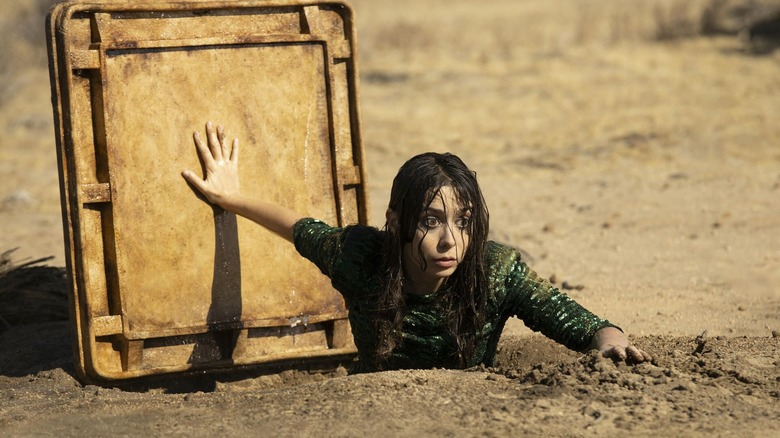
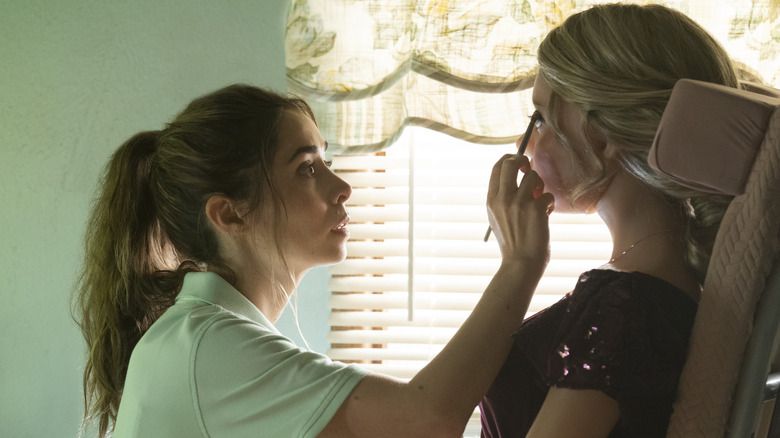
Will There Be A Made For Love Season 2?
by BJ Colangelo
The original dark-comedy series for HBO Max, "Made For Love," is like taking an episode of "Black Mirror," splicing it with 2020's "The Invisible Man" and running it through a comedy filter. Based on Alissa Nutting's 2017 novel of the same name, "Made For Love" is about a woman named Hazel (Cristin Milioti) who escapes from an awful 10-year-long marriage to a tech billionaire named Byron (Billy Magnussen) and the virtual reality complex where they lived for a decade without ever leaving. After she finally gets out, she discovers that her husband had implanted a state-of-the-art tracking device into her brain. Now, with the assistance of this device, her husband is able to not only track her location and watch her in real-time, but he also has access to her "emotional data" as she desperately tries to regain her independence.
After its premiere in April of 2021, "Made for Love" was met with rave reviews. The series currently boasts a 94% on Rotten Tomatoes, with many praising the show's clever commentary on technological dependency and abuse, as well as Cristin Milioti's stand-out performance. /Film's own Jacob Hall said, "She's the show's great asset — an instantly relatable woman in a nightmare future whose bumbling feels like chaotic strength rather than just funny business. He continued, "But with that said...she's just really funny. Effortlessly funny. The kind of funny that balances out the nihilistic world-building and gives you hope."
But this begs the question, after such a great first season ... will "Made for Love" see a second?
Made For Love Returns For Season 2
Scream it from the rooftops, y'all. "Made For Love" is returning to HBO Max for a second season. "Made for Love is funny, dark, and entirely unique," said Suzanna Makkos, executive vice president of comedy and adult animation at HBO Max. "We are thrilled to be reuniting with this dream team of talented producers, incredible cast, and CGI dolphins to tell the next chapter of this exciting story."
Showrunner Christina Lee said told The Hollywood Reporter podcast "TV's Top 5" back in April:
"We wrote an ending that I hope the audience will want to see what's next. But it is a resolution in terms of two primary relationships in the show: Hazel and Byron and Hazel and Herbert (Ray Romano). There's emotional resolution at the end of the show that story-wise doesn't have to stop there."
Lee will be joined by Alissa Nutting who will serve as a co-showrunner for season 2, as the next season will continue beyond Nutting's original novel. Lee mentioned during an interview with Deadline that season 2 would feature more into Byron's backstory, hopefully providing the reasoning behind his maddening ways. And yes, Diane the sex doll will also be coming back for the second season.
Read this next: 15 Shows Like Brooklyn Nine-Nine You Need To See
The post Will There Be a Made For Love Season 2? appeared first on /Film.
20 Oct 16:53
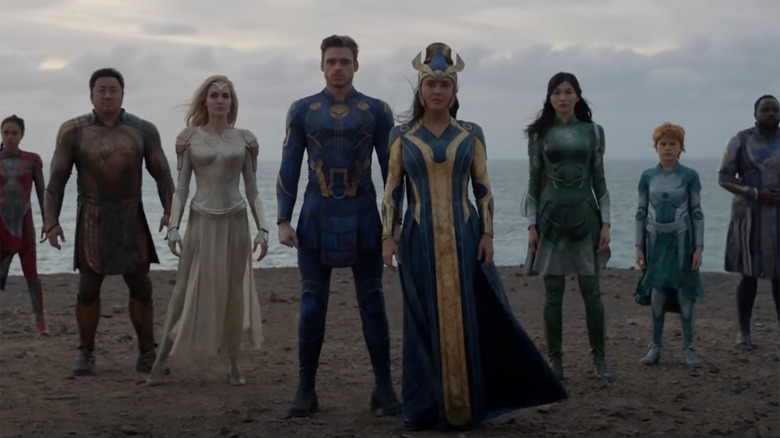
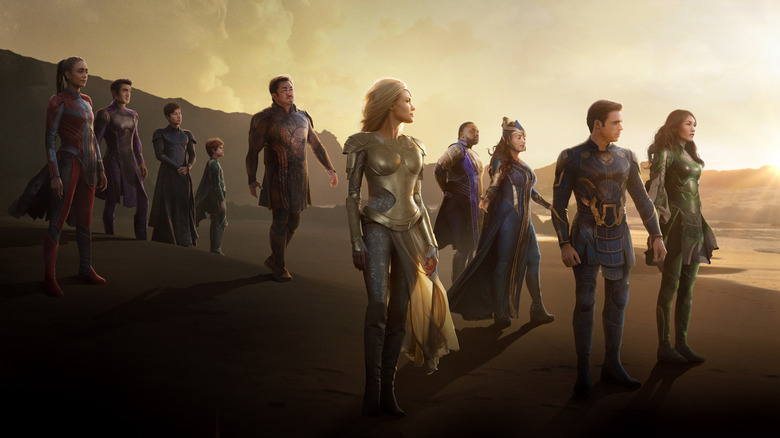
Eternals' Gender-Swapped Characters Is Partly What Drew Chloé Zhao To The Project
by Lex Briscuso
Sometimes, all you need is a woman's touch — in the form of a smart director and a gender-swapped lead, that is. Yesterday, director Chloé Zhao and the cast of her upcoming Marvel film "Eternals" sat down alongside Marvel studio president and producer Kevin Feige for a virtual press conference following the film's Los Angeles premiere one day prior. According to /Film's correspondent on the ground, Hoai-Tran Bui, the "Nomadland" director opened up during the chat about the decision to make Salma Hayek's character, Ajak, the leader of the Eternals, instead of Richard Madden's Ikaris, who leads the group in the comics.
"When I came to the process of the beginning I read a treatment that I believe Kevin made and the team at Marvel Studios put together, and those decisions were made. And it's probably one of the reasons that really drew me to it. I thought it wasn't just, you know, 'Let's swap a bunch of characters,' it was very specifically chosen for the leader of the team to be a mother. You know, it's a very easy decision [that was] made on purpose."
Feige also noted, "As Nate [Moore] was advocating for this project, you can't do the history of humanity without the heroes looking like a cross section of humanity. And that is really what the goal was." Moore is the VP of Production & Development at Marvel Studios, as well as producer on Ryan Coogler's "Black Panther" and several Captain America-centric Marvel films as well as "Eternals."
Cast members Gemma Chan, Richard Madden, Salma Hayek, Angelina Jolie, Barry Keoghan, Don Lee, Kumail Nanjiani, Lia McHugh, Brian Tyre Henry, Lauren Ridloff, and Kit Harington were in attendance to promote the highly anticipated film via the press conference.
The early buzz for the film was, generally-speaking, off the charts following the LA premiere not long before the press conference — so, needless to say, I'm excited to finally experience the film for myself. There has been lot of discussion about Zhao's approach to the Marvel world and I think that is what has me most curious. I adored her sweeping landscapes and vast meditations on the natural world in "Nomadland" — and considering the focus on the collective galaxy in "Eternals," I'm sure we are going to see some incredible visuals if nothing else.
Marvel Loves The Direction Eternals Is Going In
It's clear the Marvel braintrust behind the scenes is also really into the direction Zhao has taken the franchise. When questioned about the more "mature" lane the film drives down, Feige said, "Nate Moore, the producer who is not up here with us, really had that driving vision for what this could be. And when Chloé came in and pitched it to us and took sort of these very general ideas that we had — and obviously the Jack Kirby spectacular source material — it felt like a very new special step for us."
In fact, Zhao certainly seems to be the most unique creator to ever sit in a director's chair on a Marvel set. She revealed that she originally pitched her version of Jack Kirby's 1976 saga via a poem by the legendary poet William Blake — which I can pretty much guarantee no superhero director has ever done, Marvel or DC.
"Eternals" arrives in theaters nationwide on November 5, 2021.
Read this next: Every MCU Post-Credits Sequence Ranked From Worst To Best
The post Eternals' Gender-Swapped Characters is Partly What Drew Chloé Zhao to the Project appeared first on /Film.
Ronald.phillips likes this
20 Oct 16:53
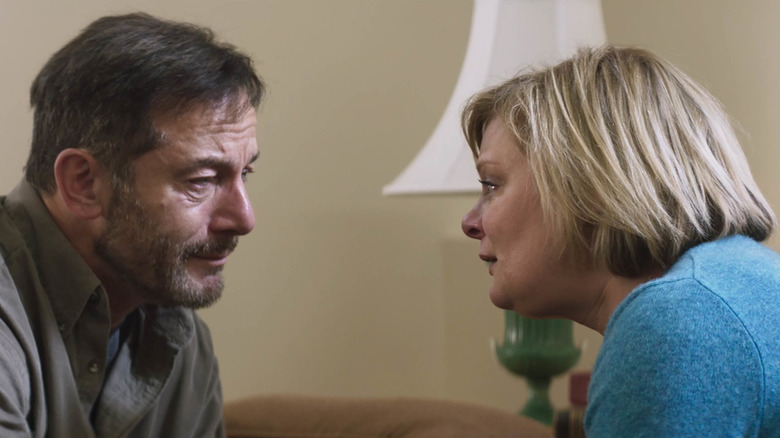
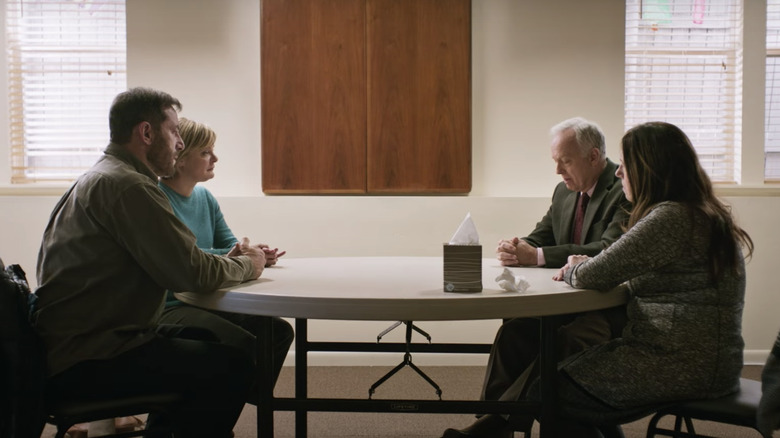
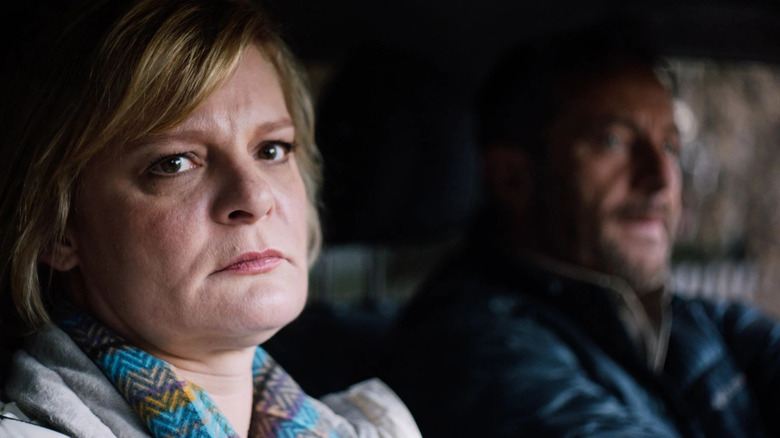
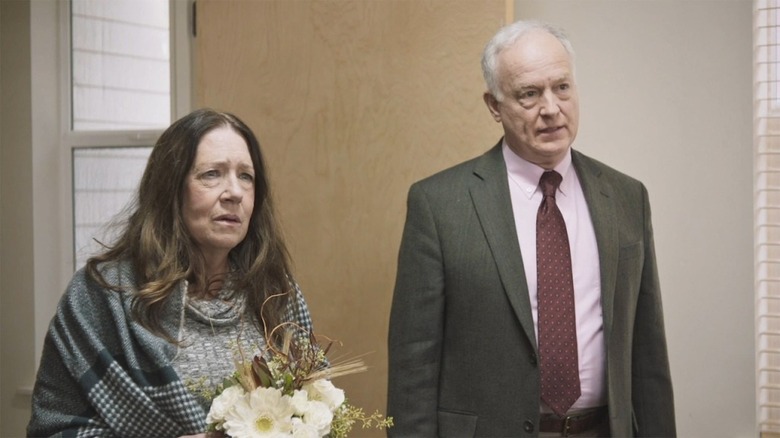
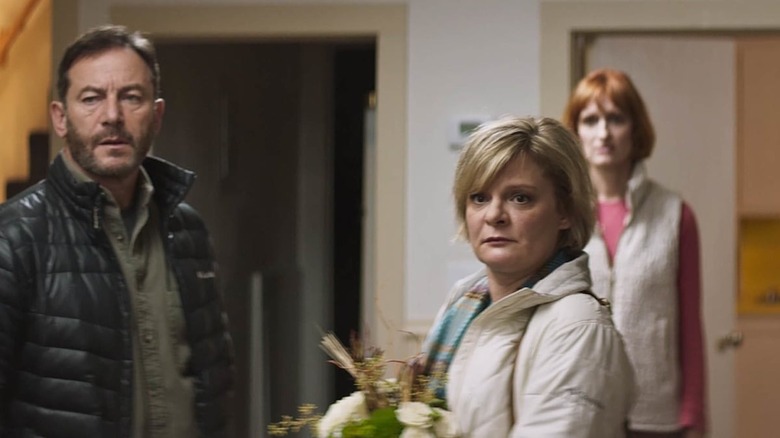
Mass Director Fran Kranz Worries About Our Attention Spans [Interview]
by Jack Giroux
Actor Fran Kranz takes a serious swing with his feature directorial debut, "Mass." Set almost entirely in one location, Kranz's film shows two couples coming together to discuss a tragedy involving their children and a shooting. Both technically and dramatically, it's an ambitious debut for the actor, known for "The Cabin in the Woods" and a variety of films and shows. As a first-time filmmaker, he shows care, sensitivity, and patience.
Kranz never wanted the camera to be omnipresent. He never wanted to call attention to himself or anything happening outside of the frame. It was all about restraint. After years of dreaming and trying, Kranz finally got to get behind the camera. Recently, the writer-director told us about his experience making "Mass" and what he hopes to direct in the future.
"I Just Worry About Our Attention Spans."
There's no score in the movie, is there?
There's not. There's not technically. Three years ago, when I sort of had the idea, I want to make a movie about one of these meetings. Just as soon as I had that thought, I really believed I don't want any music. The only sounds or score, so to speak, would be the practical music that's happening in the church. I had the idea of the piano lesson and I had the idea of the choir. And knowing that I was going to bookend the movie with this practical score, or practical music, I wanted the conversation to be bare. I wanted it just to be about the actors and the musicality of performance. And that sounds really pretentious, but do you know what I mean? Without manipulating them or putting too big of a magnifying glass on it. Nothing against, what was it called, Quibi? Quibi?
That's it, yeah.
I really worry about... And I have a kid, and she wants screen time all the time. I just worry about our attention spans. I want to remind people that they have an attention span, that they can sit through a conversation, they can watch a movie that's just four people talking if it's compelling enough. If the conversation is compelling enough, we will sit through it. We don't need all the bells and whistles, we don't need special effects. I'm pretty down on Marvel movies and a lot of studio, franchise movies, just repeating things and remaking things. There is so much more originality out there.
I really wanted to believe that you could just have four people in the room, great actors delivering an emotional story, and just good storytelling, and that's all you need. And so, I had to fight for it. I mean obviously, ultimately it was my decision. But I wanted to listen to people, I was always collaborating. And there was always this question of, "You got to hire a composer." We did look at it. Darren Morze, who's our composer in the film, did this, I think, really beautiful music for the ending credits. We messed around with it, and he and I both agreed, as soon as you introduce music... For instance, Martha Plimpton has this emotional story towards the end of the film about her son. As soon as you have music underneath, it cheapens it.
It adds more artifice.
Yeah. And look, it might work in another movie. But the way that this movie was set up, that it does exist in real time, there is this sort of point A to point B, real time conversation that rests on realism and naturalism. To introduce music, it just feels false. And so we did play around with it. Kevin Seaton also created a really interesting sound design. You can hear it when you're outside of the church. When Jason Isaacs and Martha Plimpton are parked by this field, in their car, there are these noises that sounds like moaning or aching. But it also kind of sounds like construction far off in the distance. So it feels natural, it feels like the landscape are a part of the world, or some far off noise. But it, sort of, really speaks to the kind of human, subterranean emotion of the film, and sort of what's really existing in these characters lives.
We also developed barking dogs in the distance, at key moments, because we wanted the intensity of the conversation, the emotion, to also be contrasted or juxtaposed with ordinary life happening outside. So you have a truck beeping and going in reverse, you have a dog barking. These little sounds that subtly remind you, you are very much in the real world. And the ordinariness of life is all around us right now, and yet you're watching four people do something extraordinary.
"We Did Not Want To Try To Reinvent The Wheel."
Visually, how'd you approach the conversation? How'd you want to pace it? How'd you know when to cut?
Ryan Jackson-Healy, my cinematographer, and I, we had this little mantra of, "Don't get in the way. Don't let the audience ever feel the director." We talked about "My Dinner with Andre" a lot. And that movie has, basically, four setups, and it works. Maybe it's not for everyone. I love that movie. I can sit through that conversation, and I'm totally entertained and there, I'm with them. And so, we did not want to try to reinvent the wheel.
We called it "the system." It's not a very exciting word, but we had the system that we would stick to every day, at least in that room. We had two cameras, and we had two dollies. We'd kind of move back and forth, depending on where our light was. So we established our four sides of the table, each day in the same order because of lights in the windows. When it was darker, we were finally facing the wall, kind of thing, right? And then we sort of broke it down into mediums, singles, and closeups. It was just getting the coverage in the most basic way.
But each day, we knew we had this plan that as the conversation gets more emotional, the camerawork will sort of deteriorate, so to speak. That it will slowly become handheld and parallel, or sort of mirror, the intensity of emotion on screen. But we wanted it to happen very subtly. So at the beginning of the conversation, there's no more movement. There's these stable two-shots. We talked about "Scenes from a Marriage," the Bergman movie. So much of the beginning of that film it's just a two-shot. So we slowly introduced pans, movement. And then finally, when Jason Isaacs gets up for a sip of water, and he's also quite frustrated in that moment, that is when we break into handheld. And by that point, I think it's about 50 minutes into the conversation, we've developed or we've introduced enough, I think, subtlety and movement that hopefully the audience isn't completely even aware that you've reached handheld. That the camera's now in a handheld, is being handheld.
We got this shot from "Moonlight," the very first shot of "Moonlight." It's resting on the hood of a car, the camera, and then as Mahershala Ali gets out of the car, the camera sort of jerks up, and gets into a Steadicam and starts moving around. It's a really, really great shot. So we talked about that, in terms of Jason Isaacs getting up from the table and all of a sudden, "Whoa, now we're in this handheld world." For something that feels contained and simple, we obviously gave it a lot of thought.
And then when I was in the editing room, if we ever felt like there was a shot that smelled too much like a director making a choice, we cut it. We wouldn't use it. If the dolly was too present, if the pan was just too perfect, if it timed itself, we wanted to stay away from that. It was crucial that the audience was just always there at the table with the four actors and the four characters. If it ever felt like, "Oh, that was a nice move," then we'd be breaking that illusion, right? And then, look, at the end of the day, it was my first time directing, so I was like, "Well, let's not try and do some long Steadicam through the church like I'm Martin Scorsese or something."
"It's A Difficult Profession, A Lot Of Rejection, A Lot Of Disappointment."
It's a contained story, but a big story, as well, given what it's about. Gun control is touched upon only briefly. Sometimes, when a movie covers a sensitive subject, sometimes dialogue unintentionally sounds more like talking points than people simply talking. Did you want to avoid that?
Completely. And I'll be totally honest, the first drafts of the screenplay of "Mass," well, it was called something else back then. The first drafts are so bloated with stuff like that, I'll be honest. I established these sort of four points of view, or these four characters. And less with an agenda or, sort of, a set of beliefs, but more as just who they were and how they were affected by a shooting. So it was just the father of the shooter, how can I imagine being in his shoes? The mother of the shooter, same thing. And then the mother and father of a victim. So I tried to improvise dialogue as those characters. But I was sitting on this kind of mountain of research that I'd been doing over the course of two years, so I had a tendency to go into more political rhetoric and opinions. It was a large part of the screenplay.
And I think much of the early writing process was just what you said, in that I had to really think about the character more than the opinion. I mean, there's a scene in the movie where Gail, Martha Plimpton's character, says, "Why are we talking about this? I didn't come here to talk about f**king politics." In the film, I think they barely get into it. It's about a minute and a half where they start kind of going down that road. Initially, that scene was probably five, six pages of back and forth.
Every time I'd go back to edit it, I'd say, "This is going on too long. She would cut them off then. She would cut them off then." And then we'd do a read-through with some actors and I'd ask them, "At what point were you frustrated? At what point could you not stand to hear this any longer?" And then it would get earlier and it would get shorter. So looking back, I realized there was too much research in the dialogue and not enough of the human emotion. And that was a big part of the early writing process, was knowing what was truthful to the character. Or knowing what was an author venting his opinion about these tragedies on a political level, on a societal level, on a cultural level, as opposed to the personal.
Excavating the personal out of the political, so to speak, was the big challenge of the first several months of writing, for sure. I think the script ended up where it needed to. I'm proud of where it is, but I know that there was a lot of that. And sometimes I feel like it was just my way of justifying my own research. It was almost as if I had to put it all on the page as a way of proving to myself I come at this with some authority or legitimacy. And then it was a way of, "Okay, now we don't need this. Now we don't need any of this. Now it just has to be about the suffering, and the yearning, and the longing of what these characters want." And they're not going to sit around on a soapbox for very long, you know?
When did you first want to direct? When did that become an ambition?
It's sort of a lame answer, but my whole life. I mentioned Martin Scorsese, I was always making mafia movies when I was a kid, with my brother and I. We'd make fake blood and have these weird shootouts shot with my home camcorder, things like that. No, I've always sort of dreamed about it. I would always say, "Next year I'm going to do it. Or this year I'm..." And I would write scripts and they just weren't... I couldn't get them to completion, or the idea wasn't something that I could get people behind. I think this started happening around 36, 37. When the Parkland shooting was, I was about, maybe, 37. I'm 40 now. So obviously, it's taken me a long time to realize this dream of mine.
I think a lot of it had to do with the frustration of being an actor. It's a difficult profession, a lot of rejection, a lot of disappointment. And then also, being a father, finally being a parent. I felt I don't want her to see me frustrated about dreams that I'm not being more proactive about realizing myself. And I don't care if I fail, or if the movie's terrible, or what, but I got to at least try. I want to be a role model or be a parent that shows her you make the effort. And so, Parkland happened, and she was about one and a half. And then I just kind of felt like a man on a mission, and I made the movie like my life depended on it. So Parkland was February 2018 and we were shooting November 2019. So, it happened pretty fast.
"I Feel Like This Will Linger."
Do you ever see yourself directing yourself in one of your movies?
No, no. I had no intention, no interest in doing that on this. I mean, there wasn't a character for me, but I also... And that wasn't by design, this was the story. And no, I had no interest in that. I felt like I got to get this one under my belt and see how all goes before I think about that. But now having done it, I definitely would be interested in doing that. I don't know about being the lead of a film. Who's done that?
Warren Beatty.
Kenneth Branagh. Yeah, Warren Beatty. Maybe one day. At least for now, at this stage, it'd be more fun to just kind of show up in some weird role. I mean, not like a Hitchcock cameo, but just bigger than that. I don't know about a lead role. Maybe one day. Just to be honest, you sit around watching dailies for so long, I don't know if I would enjoy that if it was my stupid face. Kind of just be like, "Ugh." I'd never want to act again if I had to watch myself for that long.
I've heard some of those actor-directors say they end up discovering a lot of their bad habits as actors.
I know. It's really funny, the editing process is also mortifying because you see your bad habits as a director, too. Because the camera is on the actors. And if you roll over there and give them direction, and they're kind of not feeling it, you have to go relive that. You have to relive every, sort of, dispute with your actor, or frustration from your cinematographer. So often, the camera's still rolling, so a lot of these things were captured on camera and I have to suffer through them over and over again. As an actor, I mean look, we'll see. Maybe one day I'll do it. But it feels like a nightmare to watch my dailies. I don't even really watch myself very often, anymore.
Since you made them as a kid, how about a gangster movie?
I don't know. This is is sort of insensitive given the subject matter of "Mass," but I always loved action movies and, obviously, crime movies. A big Scorsese fan. I loved all that stuff, I still do. I would love to make bigger budget action films. I mean, I do have some ideas. But to be honest, a dream of mine would be to make something like "The Iliad." I want to make sword and sandal epic, that kind of Ridley Scott-like period piece. Those are things that really excite me. I mean, my favorite movie growing up was "Star Wars." I love the idea of one day making something bigger budget, action-adventure.
I'd like to think my second movie is very much informed by the real, long-term response to "Mass." Because it doesn't feel totally appropriate to go jump off, and try and make an action movie, in my mind. I feel a deep respect to the subject matter. If I'm lucky enough to direct another movie, I probably will need to make something emotionally more, or tonally more, like "Mass." Just for my own soul and peace of mind, you know what I mean? I think it's something that I couldn't just rip the bandaid off or say goodbye to so easily. I feel like this will linger. So much of the emotion of it will probably linger into the next project, if I'm lucky to get it off the ground.
"Mass" is now in theaters.
Read this next: The 14 Greatest Biopics Of The 21st Century
The post Mass Director Fran Kranz Worries About Our Attention Spans [Interview] appeared first on /Film.
Ronald.phillips likes this
20 Oct 16:52
Eternals' Surprise Secondary Romance Came From The Chemistry Between The Actors
by Jeremy Mathai
Don't ask me how this happened, but the prevailing notion among fans is that the secret sauce behind the success of the Marvel Cinematic Universe has to do with the idea that every major detail was planned out from the beginning. Not only is this patently untrue -- the first "Iron Man" movie entered production essentially without a completed script and relied heavily on daily improvisation! -- but I would argue that such a rigid mindset would've actively done more harm than good. I could point to the almost universally-disliked ending of the sitcom "How I Met Your Mother" as an example of how stubbornly adhering to a pre-planned conclusion at all costs ended up as the worst possible creative choice and, on the other side of the coin, look to "Breaking Bad" as the gold standard of how talented artists can write characters into corners and challenge themselves to find a way out of it in the moment to spectacular results.
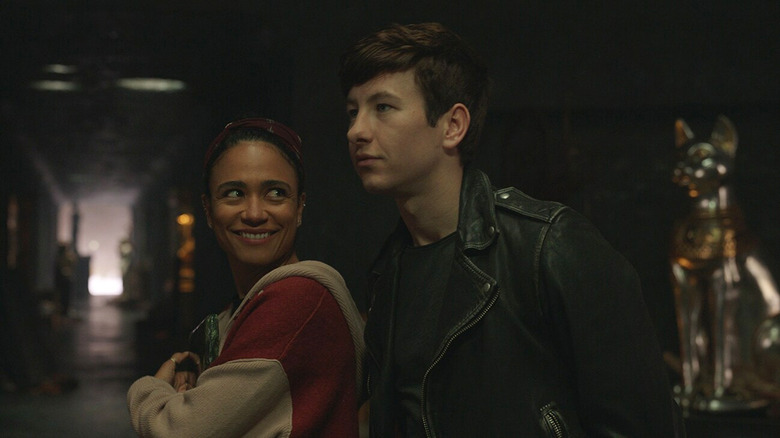
So what's all this rambling a prelude to? Well, /Film's Hoai-Tran Bui recently attended a press conference that "Eternals" director Chloé Zhao and cast members Gemma Chan, Richard Madden, Salma Hayek, Angelina Jolie, Barry Keoghan, Don Lee, Kumail Nanjiani, Lia McHugh, Brian Tyre Henry, Lauren Ridloff, and Kit Harington were all a part of. At one point, the topic of the film's secondary romance came up and it was revealed that this development wasn't as big an emphasis in the script. In fact, it came almost entirely on the strength of the chemistry between actors that the unexpected romance was subsequently played up in the final product.
For the sake of the spoiler-averse (but, you know, within reason), you can read all the details below.
'Sparks Everywhere!'
Those who've been following along already know that the central romance of "Eternals" is made up of a complicated love triangle between Gemma Chan's Sersi, Richard Madden's Ikarus, and Kit Harrington's Dane Whitman. What many may not have known is that the film features another love story between members of the Eternals. By all accounts, the way that Barry Keoghan's Druig and Lauren Ridloff's Makkari hit it off comes as a surprise to both the characters themselves and, as it turns out, the cast and crew as well. During the press conference, an interesting back-and-forth between Ridloff and Zhao gave some insight on how the romance came to be. According to Ridloff:
"First of all, I want to say that I think the relationship between Malkari and Druig really comes to a surprise for actually several people here on stage right, because within the scripts when you first go through it, it wasn't really something that was so apparent. But Chloe under her brilliant direction wanted us to imply that there was a lot more to Druig and Makkari. And I feel like that would actually brought them together, is that ... they're both very impatient, and they both have a lot of power, they're very powerful individuals, and they're told to hold back to hold themselves back. And I think that for Druig and Makkari, they're mischievous and they also have fun. They have this [relationship] on this fabulous planet, and their boss told them not to."
Zhao's perspective is also revealing, as she responds that she took her lead from the two actors and just ran with it.
"Lauren I don't know if you remember, it was your first time meeting Barry, the two of you started just riff. You know, you started to improvise. And I go, "What's happening, sparks everywhere!" So initially that was not the intention. I think really it was from that meeting that we saw that and go, maybe we should let [them] play into it."
Filmmaking is an incredibly tough art and having a plan is obviously important ... but so is the willingness to adapt and change course on a dime. Zhao proved how adept she was at this with "Nomadland" and it's reassuring that she was able to bring this skillset to Marvel.
"Eternals" arrives in theaters on November 5, 2021.
Read this next: Every MCU Post-Credits Sequence Ranked From Worst To Best
The post Eternals' Surprise Secondary Romance Came From the Chemistry Between the Actors appeared first on /Film.
Ronald.phillips likes this
20 Oct 16:52
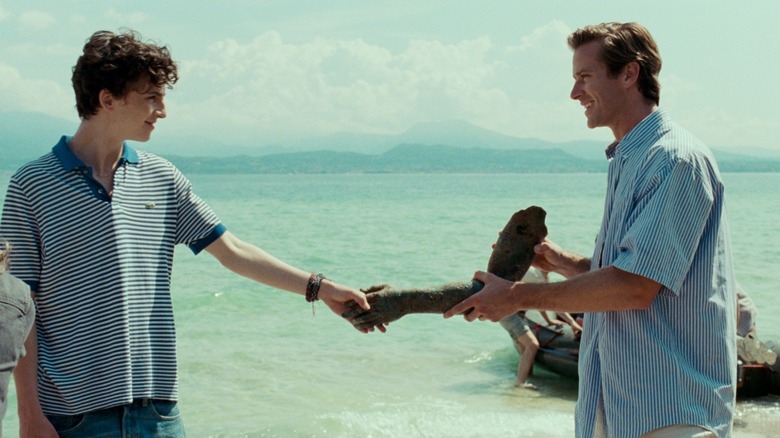
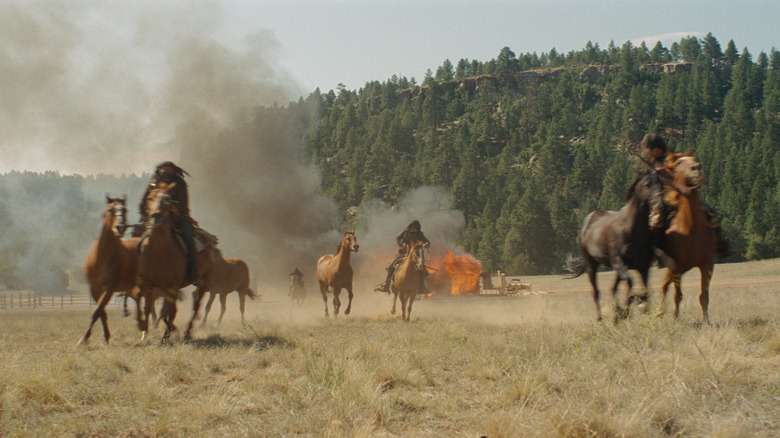
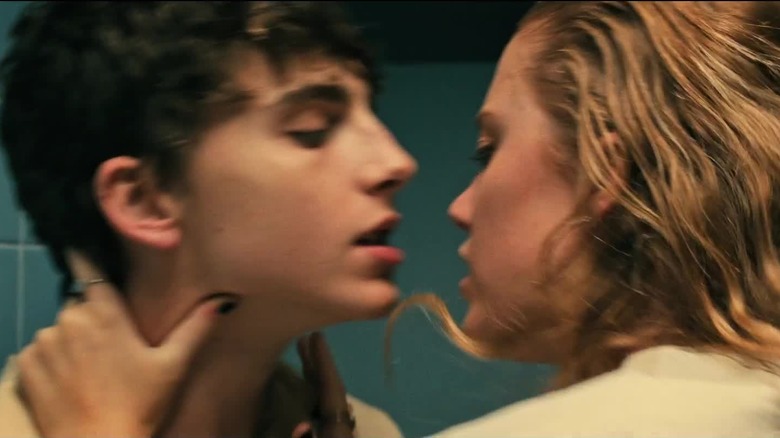
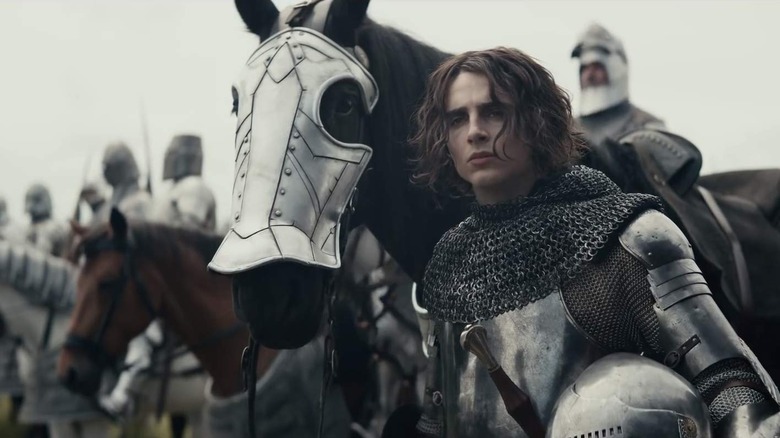
5 Timothée Chalamet Movies To Stream After Dune
by Ryan Scott
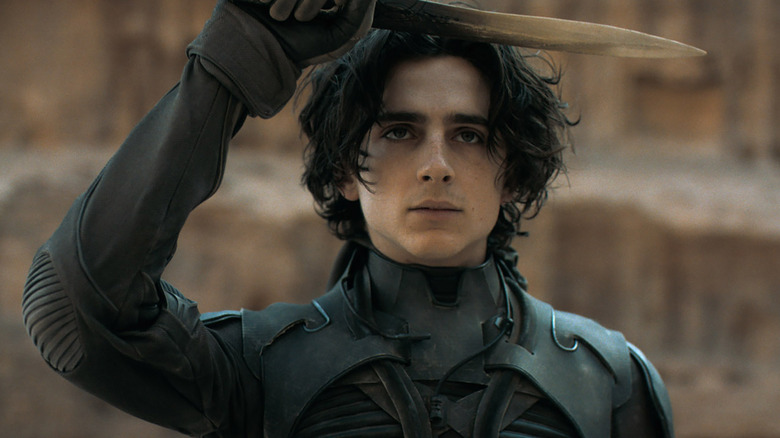
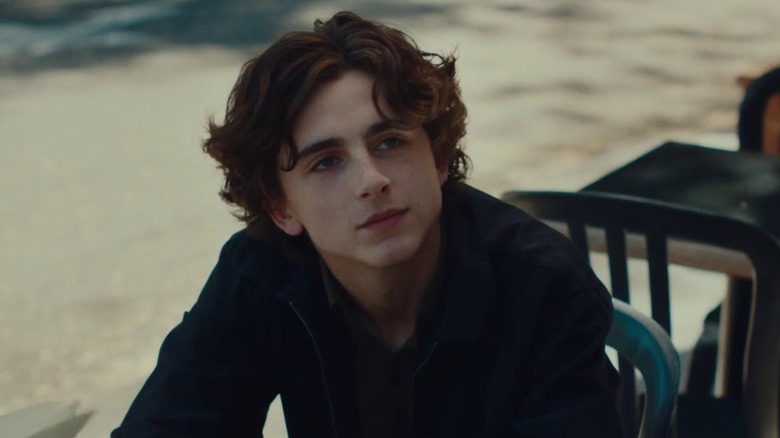
"Dune" finally arrives in theaters and on HBO Max this weekend and it is safe to say it ranks as one of the most anticipated blockbusters of the year. The fact that it has been delayed by the pandemic only fuels the hype fire. But the inclusion of Timothée Chalamet in the lead role as Paul Atreides certainly doesn't hurt matters either, as he's become one of the most popular and in-demand stars on the planet in recent years.
It's also been a couple of years since we've seen the Oscar nominee on the big screen, with his last role coming in 2019's "Little Women." That being the case, we're here to give fans a few recommendations of ways to inject more Chalamet into your life after partaking in director Denis Villeneuve's sci-fi epic. So, here are five of the star's other movies to stream after watching "Dune."
Lady Bird
Where to Stream: Netflix
Timothee Chalamet had a pretty unbelievable year in 2017. The kind of year that most actors can only dream of, and he did it at the age of 21. One major part of that amazing year was the critically acclaimed "Lady Bird" from director Greta Gerwig. Chalamet starred alongside Saoirse Ronan, who played the title role, playing the character Kyle. He was just a part of the larger ensemble but this is a real charmer of a coming-of-age movie and the screen time Chalamet gets is not wasted by any stretch. Aside from that, this is just a great flick that is either worth seeing for the first time or revisiting, as it may have been a few years since its initial theatrical release and Oscar run.
Call Me By Your Name
Where to Stream: Starz
Speaking of Chalamet's amazing 2017, the actor starred as the lead in "Call Me By Your Name." Directed by Luca Guadagnino, this was the other movie nominated for Best Picture at the Oscars that year that Chalamet starred in. But this one also earned him a Best Actor nomination as well, making it one of his most important performances to date. Yes, the messy and complicated (not to mention weird) situation with Armie Hammer, the co-lead of the movie, needs to be set aside to enjoy this one. That aside, this is perhaps, by some measures, the quintessential Timothée Chalamet movie.
Hostiles
Where to Stream: Hulu
Once again going back to the truly incredible 2017 well for a lesser-discussed entry from Chalamet's resume, we have "Hostiles." Now, it's certainly worth pointing out that Chalamet is by no means the lead in this one, as Christian Bale and Rosamund Pike are out front-and-center in director Scott Cooper's brutal Western. That said, this is a great chance to highlight an underseen Western flick from the recent past that sort of slipped through the cracks upon its initial release. Plus, you get to see Chalamet dressed up as a military cowboy. It's a win-win.
Hot Summer Nights
Where to Stream: Showtime
There are a lot of Timothée Chalamet movies that fans and cinema lovers have seen. But, in this case, we're going for another one that sort of slipped through the cracks. "Hot Summer Nights," admittedly, is not among the actor's most acclaimed movies, but there may well be an audience for it. Directed by Elijah Bynum, it sees an awkward teenager (Chalamet) winding up in over his head in the drug game after falling for his business partner's sister (Maika Monroe). For those who may not have Showtime, this one is available to stream for only $1 on Amazon Prime Video currently as well. So, at most, you're out a dollar on this one to give something a shot.
The King
Where to Stream: Netflix
Last, but certainly not least, we have "The King." For the most part, "Dune" is the biggest movie that Timothée Chalamet has been associated with, so it's hard to find direct comparisons from his previous catalog to scratch that same itch. But Netflix's sweeping historical epic, directed by David Michod, may well do the trick. The movie focuses on a Young Henry V (Chalamet) who encounters an awful lot of 15th-century ugliness after becoming King of England. It also includes an excellent supporting cast, including Robert Pattinson, Joel Edgerton, Sean Harris, and Ben Mendelsohn.
Read this next: Sci-Fi Box Office Bombs That Deserve A Second Chance
The post 5 Timothée Chalamet Movies to Stream After Dune appeared first on /Film.
Ronald.phillips likes this
20 Oct 16:52
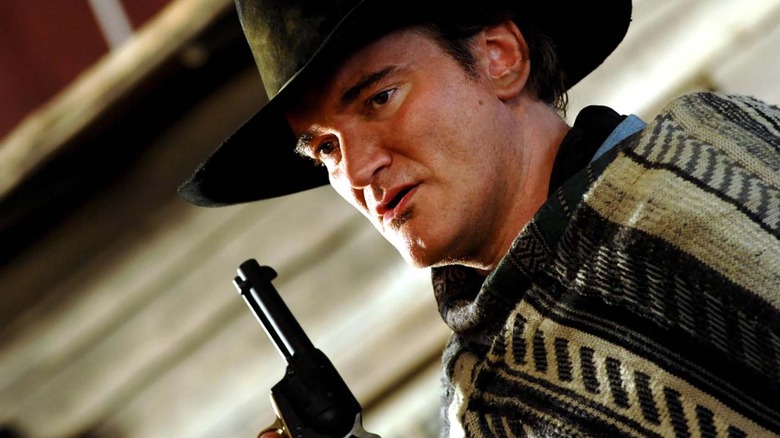
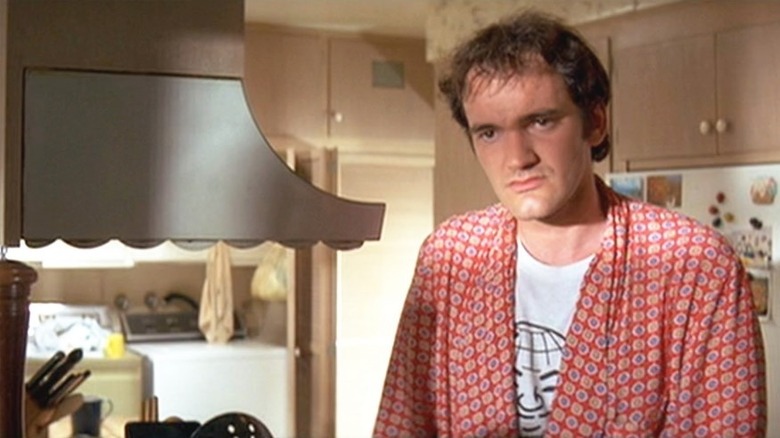
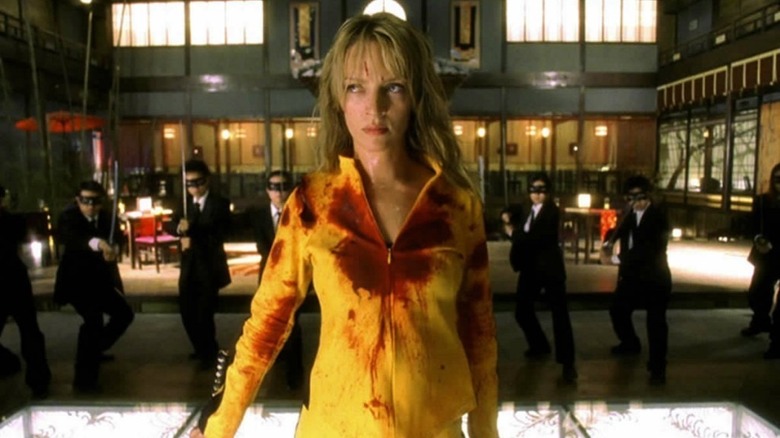
Quentin Tarantino's Next Movie May Be Kill Bill 3, Wants To Make A Comedy Western
by Lex Briscuso
It seems Quentin Tarantino is just ~trusting the universe~ when it comes to his next move as a filmmaker. On October 19, he was questioned while attending the Rome Film Festival about the potential of "Kill Bill 3" being the next film on his roster.
"Why not?" the longtime director, who has made nine films over the span of 30-plus years, said during the event. However, it seems he has more on his plate before he can return to the legacy and lore of The Bride.
According to Variety, Tarantino has a film criticism book and a potential TV series on the horizon — but the filmmaker also wants to do something he hasn't really done before: make a comedy. "It's not like my next movie. It's a piece of something else that I'm thinking about doing — and I'm not going to describe what it is," he explained to Rome fest chief Antonio Monda. "But part of this thing, there is supposed to be a Spaghetti Western in it."
What Would A Tarantino Comedy Look Like?
Tarantino went on to set the scene for his possible upcoming comedy, but as to be expected, it kinda only seems like something that would be funny to him and other older white dudes — and certainly not enough to sustain a runtime like his past filmography.
"I'm looking forward to shooting that [thing] because it's going to be really fun. Because I want to shoot it in the Spaghetti Western style where everybody's speaking a different language. The Mexican Bandido is an Italian; the hero is an American; the bad sheriff is a German; the Mexican saloon girl is Israeli. And everybody is speaking a different language. And you [the actors] just know: OK, when he's finished talking then I can talk."
My personal opinion? Let's skip this one and head straight to "Kill Bill 3." Considering Tarantino has been expressing interest in another installment for nearly 18 years, it seems like all of that creative energy would just be better spent on adding another piece to the puzzle of The Bride and her daughter's lives. But, hey, we all have our delusions of grandeur.
Kill Bill 3 Has Been In The Works For Years — But Who Knows When We'll Get It
Shortly after the release of "Kill Bill 2" in 2004, Tarantino explained his vision for vol. 3 of the series with Entertainment Weekly.
"The star will be Vernita Green's daughter, Nikki. I've already got the whole mythology: Sofie Fatale [Julie Dreyfus] will get all of Bill's money. She'll raise Nikki, who'll take on the Bride. Nikki deserves her revenge every bit as much as the Bride deserved hers."
Years later, Vivica A. Fox, who played Vernita Green in both films, proposed that Zendaya would be great casting for Nikki during an interview with NME. "How hot would that be?" she said in 2020. "And that would probably greenlight this project. Because [she] and Uma are both very tall, and it would just be kick-butt, and I love her."
In July 2021, Tarantino explained on The Joe Rogan Experience podcast that he would be interested in casting longtime lead Uma Thurman's daughter, Maya Hawke, as The Bride's daughter, Bebe, in the third installment.
"I think it's just revisiting the characters 20 years later and just imagining the Bride and her daughter, Bebe, having 20 years of peace, and then that peace is shattered. And now the Bride and Bebe are on the run and just the idea of being able to cast Uma and cast her daughter Maya in the thing would be f—king exciting."
Despite all the chatter over the years, there's nothing concrete about this project to latch onto just yet — but we'll all keep waiting, T. Clock's ticking.
Read this next: 12 Awesome Action Movies That Never Got Sequels
The post Quentin Tarantino's Next Movie May Be Kill Bill 3, Wants to Make a Comedy Western appeared first on /Film.
Ronald.phillips likes this
20 Oct 13:12
The Morning Watch: The Suits In Dune Explained, The Last Duel Script Breakdown & More
by Ethan Anderton
(The Morning Watch is a recurring feature that highlights a handful of noteworthy videos from around the web. They could be video essays, fan-made productions, featurettes, short films, hilarious sketches, or just anything that has to do with our favorite movies and TV shows.)
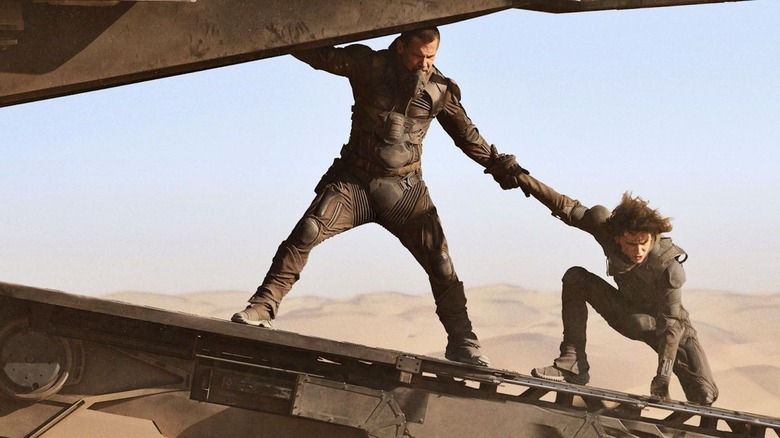
In this edition, find out what the body suits in the upcoming adaptation of "Dune" are all about. Plus, listen as "The Last Duel" stars Matt Damon and Ben Affleck talk about the screenwriting work they did with scribe Nicole Holfcener for the medieval drama. And finally, watch the Honest Trailer take expert shots at all of the James Bond movies starring the one any only Sean Connery.
The Suits In Dune Explained
First up, if you're wondering why everyone in "Dune" is wearing those full body suits, there's actually a good reason for that, and it's not just sci-fi fashion. The stillsuits, as they're called, capture moisture and recycle it into drinking water. In this video from Wired, "Dune" costume designers Jacqueline West and Bob Morgan talk about creating the suits and crafting them so that they could realistically help characters survive in the arid climate of the film.
The Last Duel Script Breakdown
Next, Vanity Fair brought in Ben Affleck, Matt Damon, and Nicole Holofcener to talk about writing the script for "The Last Duel." The story is told from three different perspectives, with two perspectives being handled by Damon and Affleck and the other written by Holofcener. Not only do they talk about writing itself, but they also provide some insight on what happens with different drafts of the script that are printed out for the cast and crew.
Honest Trailer For Every Sean Connery James Bond Movie
Finally, with "No Time to Die" in theaters, ScreenJunkies has delivered an Honest Trailer for all the James Bond movies starring the late, great Sean Connery. From "Dr. No" through ""Diamonds Are Forever" and no special attention paid to "Never Say Never Again." Watch as Connery pretends to drive through exotic locales and deals with villains who all somehow have the body of an egg. These are classic films, people!
Read this next: 12 Awesome Sci-Fi Movies That Never Got Sequels
The post The Morning Watch: The Suits in Dune Explained, The Last Duel Script Breakdown & More appeared first on /Film.
Ronald.phillips likes this
20 Oct 08:16

King's Bounty II Review
by Steven Carter
Introduction
The first King's Bounty game was released in 1990 by New World Computing. I only played it very briefly (and kept dying quickly), but it's considered to be the precursor to the Heroes of Might & Magic franchise. It featured turn-based battles between your army and numerous enemies, but instead of capturing towns and defeating opposing heroes, you were tasked with locating the fabled Sceptre of Order within a time limit to keep King Maximus alive.
When most people talk about King's Bounty, though, they're probably thinking of King's Bounty: The Legend and its three (depending on how you want to count them) follow-ups, which were released between 2008 and 2014. These games kept the same formula as the original, with turn-based battles galore, but they added in extra RPG elements, including skills and quests.
Now we have King's Bounty II from the 1C Company (as both developer and publisher), but I'm not sure which game it's supposed to be the sequel to. King's Bounty: The Legend and its follow-ups where also released by 1C, but the new game includes a lot of references to King Maximus from the original game, and it doesn't mention the other games at all (at least so far as I noticed). But King's Bounty II stays in the same lane as its predecessors, and it continues the franchise's advancement into RPG-land, with a heavier reliance on conversations and quests, and a reduction in battles. Is this change for the better? Keep reading to find out.
Characters and Ideals
As King's Bounty II opens up, you learn that numerous bad things have been happening in your corner of the world: the undead are rising, a blight is spreading, and a city was destroyed under mysterious circumstances. Plus, the king was poisoned, leaving his son in charge. So the prince tabs you, the accused royal poisoner, as the solution, and you're released from prison so you can set everything straight. Does this make sense? Not even remotely, but then writing isn't the game's strong point. (Of course, the game ends with an annoying "to be continued" notice after a major fight, so we don't know the entire story yet. It's possible the prince is really a bad guy with his own agenda. He's certainly been getting a bad guy edit.)
When you create your character, you're given three choices: Katharine the mage, Elisa the paladin, or Aivar the warrior. You can't change your character's name, gender or appearance; there aren't any stats to roll or allocate; and there isn't even a difficulty setting. You just choose your character, and that's it. Mages are good at spellcasting, warriors are good at physical combat, and paladins reside somewhere in between. If you've played any of the earlier King's Bounty games, then the classes should sound familiar.
King's Bounty II uses "ideals" in a lot of ways. There are four ideals -- anarchy, order, finesse, and power -- where anarchy opposes order, and finesse opposes power. Many of the quests give you two ways to complete an objective, where the two ways coincide with two of the opposing ideals. For example, you might steal something (anarchy) or buy it (order), or you might solve a puzzle (finesse) or blindly attack anything that moves (power). Each time you complete an objective associated with an ideal, you gain points for that ideal.
There are four talent trees in the game, one for each ideal. Each tree has ten talents, and all of the talents are passive. As you gain points for an ideal through quests, you unlock talents in that ideal's talent tree, which you can then purchase using the talent points you gain when leveling up. There are more ideal points available than you need to unlock everything in an ideal's talent tree, but not by much, so you need to focus on one or two ideals to unlock the best talents. In general, anarchy talents improve income and trickiness, order talents improve healing and morale, finesse talents improve spellcasting, and power talents improve damage and defense. The talents in all four trees are useful for all characters, so you have to be careful about how you solve quests and spend your talent points, which is nice. Better yet, if you don't like how you've built your character, you're allowed to reset your talent points (but not your ideal points) and re-allocate them.
You can also control up to five stacks of units in your character's army. Units belong to one of the four ideals, and they have a leadership cost, which controls how many of them you can have in a stack. Paladins have the highest leadership rating and thus the most units, while mages have the lowest leadership rating and the least units. Strangely, there is also a cap for each unit, and once you reach that cap, you're not allowed to have more of that unit in a stack, even if they'd fit under your leadership rating. This makes low level troops even worse than you'd expect.
Each ideal has roughly a dozen units, giving King's Bounty II only about half as many units as King's Bounty: The Legend. Worse, many of the King's Bounty II units are simple upgrades of each other, so it feels like there are even fewer units than there are. For example, the order ideal features mostly standard human troops, and they include level 1 healers and level 3 disciples, which are about the same except for disciples being more powerful.
You're also somewhat restricted to using units from one or two ideals. The more you mix units from different ideals, the more of a morale penalty the units take (especially if you mix units from opposing ideals), and the lower a unit's morale is, the more likely it is to skip its turn during battles. Conversely, the higher a unit's morale is, the more likely it is to gain an extra turn during battles, and if you only use units from a single ideal, then you start out with +1 morale.
As you use units in battles, they gain experience and can rise in rank from 1 to 3. As units increase their rank, they become more powerful, sometimes gaining extra skills. For example, the order ideal's disciple units gain a Ray of Light spell as they advance, which adds a damaging spell to their repertoire. You can also keep units in reserve. This reserve space is unlimited (and available right away), and it means you can stockpile extra copies of the units you like, and not have to run back to recruiters (who sell units) as often.
Finally, characters can wear equipment. There are ten item slots available, including slots for body armor, boots, and gloves -- plus some sort of "horse" slot that isn't used for anything. Items give bonuses to your character (for spellcasting) and to your army (for battles), and they come in a variety of qualities, including unique items and set items. Unlike King's Bounty: The Legend, all of the major items in King's Bounty II appear at fixed locations (some as quest rewards, some from shops), so you're guaranteed to get complete sets if you want them. A few of the sets are really useful (like a necromancy set that gives all sorts of bonuses to undead units), but most don't provide enough of a benefit to bother with, and a few are just plain strange (like two sets that do nothing more than improve your shopping prices). There's just barely enough variety to the equipment for it to be interesting in the game.
Gameplay: Questing
Apparently, 1C wanted King's Bounty II to feel more like an RPG than a strategy game, and so they made a couple of important changes to shift the focus. The most obvious is that they switched from using an isometric view to a third-person over-the-shoulder view. This, of course, makes the game more "modern" and "immersive" -- at least that's what their marketing department probably told them -- but in reality it just makes King's Bounty II look like a lightweight Skyrim (or Witcher or take your pick of third-person RPG).
The graphics engine just feels cheap, and issues abound, including lots of obvious seams in the terrain, and maybe ten basic faces that are used for all of the characters you meet, so that everybody looks like distant cousins of each other. When I played King's Bounty: The Legend and its follow-ups, I never thought, "Wow, that looks bad," but I thought that a lot during King's Bounty II. The switch in perspective doesn't help the game at all.
The other major change for King's Bounty II is that 1C greatly decreased the number of battles. Now most of the battles are tied to quests, and the rest act as roadblocks, so you don't wander into a region until you're powerful enough to survive there. There's actually an achievement for King's Bounty II that you earn for defeating 70 enemy armies. I got it right near the end of my first game (where I was playing Aivar the warrior and following the power ideal, which meant I was fighting extra battles). I'm pretty sure King's Bounty: The Legend had about 70 battles in the first region of the game.
With fewer battles, that means you spend more time running around and talking to people. Some people are shopkeepers (who sell equipment and spell scrolls), some are recruiters (who sell army units), and some give you quests. Luckily, the quests work pretty well. There is a nice variety to the objectives and storylines, the side quests support the main quests and add to the worldbuilding, and because of the opposing ideal objectives, there's even some replay value.
But on the downside, the writing and voice acting are sub-par. The former features a serious but dull tone, and lacks the charm (and kookiness) of the earlier King's Bounty games. The latter involves a lot of people reading their lines so you know what they're saying, but with no emotion behind their words. Plus, with all of the characters looking alike, they and their stories tend to blend together, creating more of a mess than a highlight for the game. As a result, everything outside of combat is at best a mixed bag.
Gameplay: Combat
Enemy armies are indicated by a wide yellow circle around them. If you walk into the circle, then you're shown the units in the opposing army, and you're given the option of retreating or attacking. There isn't any penalty for retreating, and enemies never chase you around, so you always get to pick when to fight.
When a battle starts up, each stack of units involved gets one turn per round, with the order being determined by the units' initiative stat. Your character doesn't participate directly, but you can cast one or two (if you have the top finesse talent) spells per round. Spells mainly buff allies, debuff enemies, or deal damage. All characters can cast spells, but only mages are really good at it.
When a unit takes its turn, it's allowed to move and attack. If a unit makes a melee attack, then their target is allowed to counterattack once per round, which means it's best to gang up on enemies rather than spread your hits around. Ranged attacks don't have to worry about counterattacks. This is the same ruleset as employed by King's Bounty: The Legend and its follow-ups, where as a result ranged attackers were the dominant force.
To mitigate this dominance, 1C added 3D terrain to their battle maps. Now ranged units need to have line-of-sight to attack enemies, and things like trees and hills and haystacks can get in the way. Unfortunately, sometimes flat ground and low bushes get in the way as well, so it's still a work in progress. But I think the idea is right, to make melee units more useful.
Most of the units in the game fall into one of three categories: melee unit, ranged unit, or spellcaster. There are a couple of dragon units that become available at the end, but otherwise the units are pretty cut-and-dried. Nothing is as creative as, say, King's Bounty: The Legend's goblin shamans with their totems, or giants with their earthquake ability. It's pretty much just melee attack, ranged attack, or spell (which is frequently just a disguised ranged attack) over and over again in different shapes and flavors. Still, because the Resurrection spell takes a while to find, it's difficult to keep all of your units alive, and so there's always strategy in the battles.
Conveniently, when units "die" in a battle, you can "heal" them afterwards, provided you didn't lose the entire stack. This costs some gold, but it's cheaper (and way faster) than constantly returning to recruiters to refill your ranks. Some units can "purge" defeated units, preventing them from being healed later, so these units become Public Enemy #1 during battles. The healing mechanic also means you have to be careful with your stacks, both in preventing them from being completely destroyed, and in choosing your units carefully so you don't have stacks with only one or two units in them (where one unlucky critical hit might take them out).
The battle difficulty is variable. King's Bounty II doesn't have a difficulty setting, but your set-up can make the game easier -- or not. For my first game, I played as a warrior using order units, and I had an easy time. I'm pretty sure warriors are the most powerful class, and the order ideal has the best units (among other things, they're the only ideal with healers). The main challenge for this playthrough was winning battles efficiently rather than winning them at all. But then I started a game as a mage using anarchy units, and I had a much tougher time. I haven't finished this game yet -- it's taking a lot longer to navigate my way through battles this way -- but so far the spell advantage of mages isn't making up for the physical advantage of warriors, especially since warriors can do useful things with spells even with their restrictions. 1C will probably do some class and troop balancing at some point, but if not then you can always use the differences to create your own difficulty settings.
There are also some puzzles for you to complete, but they're not really challenging. Some of the puzzles can be completed in any haphazard way -- for example, by pushing four buttons in any order to open a secret door -- and for most of the others, you're given a clue that shows you exactly how to solve them, so no great ingenuity is required. Still, easy puzzles are better than no puzzles, I guess.
Conclusion
1C has released some nice patches for King's Bounty II since its release, and they've fixed some of the more obvious problems with the game, like the lack of a quick save button, and the poorly-implemented tooltips. I didn't have any major problems with the game during the 60+ hours I spent playing it (including no crashes at all), but a couple of skills and talents don't seem to work as described, so either they're described poorly or they're broken, take your pick.
But 1C didn't do itself any favors by having the game end with "to be continued." Nobody likes that, regardless of the medium (or maybe you're still waiting with bated breath for the Alita: Battle Angel sequel). With some developers (like, say, Larian or ZA/UM), I'd be hopeful that the game just shipped slightly incomplete, and that eventually a free content DLC would flesh everything out, but in this case I suspect that 1C is hoping that people will pay to see the ending, and purchase some extra DLC. If so, then bleh on them.
Still, I enjoy turn-based strategy games, and even with the negatives I've pointed out in this review, King's Bounty II worked well enough for me. It's not as good as King's Bounty: The Legend, with less than half the options and content, but it gets enough things right to be worth playing. So I'm giving the game a borderline recommendation, but you're probably better off waiting for some more patches and a decent sale before buying it.
Ronald.phillips likes this
20 Oct 08:05

GWJ Conference Call 784
by Amoebic
The Riftbreaker (PC), Metroid: Dread (Switch), Critters For Sale (PC), Back4Blood (PC), Nintendo Switch Online + Expansion Pack, and a chat with Felix Threepaper!
Ronald.phillips likes this
20 Oct 08:04
Updated Links web browser
by Jim Hall
If you want to browse the Web from a text-based browser, you might use Links. Version 2.25 was released earlier this month. The changelog shows this is a minor update, but definitely worth updating so you get the new Let's Encrypt certificates. The changelog says: "+ Delete the expired Let's encrypt certificate from the builtin certificate store + Set the flag X509_V_FLAG_TRUSTED_FIRST, so that Let's encrypt works with openssl-1.0.2." Download from the Links page at Twibright. We've also mirrored this release on the FreeDOS files archive at Ibiblio, under /net/links.
Ronald.phillips likes this
20 Oct 08:04
Bochs PC emulator version 2.7
by Jim Hall
Many users run FreeDOS in a virtual machine. The Bochs Project released version 2.7 of their PC Emulator (Bochs is a highly portable open source IA-32/x86 PC emulator written in C++, that runs on most popular platforms). From the release notes, this contains a number of fixes and improvements: "- Bugfixes for CPU emulation correctness (CPUID/VMX/SVM fixes to support Windows Hyper-V as guest in Bochs) - Improvements for the plugin handling to simplify Bochs extensions - Added "multiple NICs" support to the NE2000 and E1000 devices - Added experimental FTP service for networking modules 'vnet' and 'socket' - Fixes and improvements for all supported Voodoo graphics adapters - Added USB keyboard emulation with most of the keys supported - GUI "cmdmode": create a headerbar event with key combo starting with F7 - LGPL'd VGABIOS updated to version 0.8a (new VGABIOS for Voodoo Banshee)." You can find the new release at the Bochs website. And thanks to Robert for compiling a custom set of binaries for Windows XP users - you can download these from Robert's Bochs page.
Ronald.phillips likes this
20 Oct 08:02


An oblivious truck pushes a car down a freeway while other stunned drivers try to stop it (video)
by Carla Sinclair
A man and his father driving down a highway notice a semi-truck obliviously pushing a small white car, which is sideways, down a highway. They try to get the truck driver's attention, shouting, waving, pointing, even hurling insults. Other car drivers seem to notice as well, as a lot of honking can be heard. — Read the rest
Ronald.phillips likes this
20 Oct 08:02
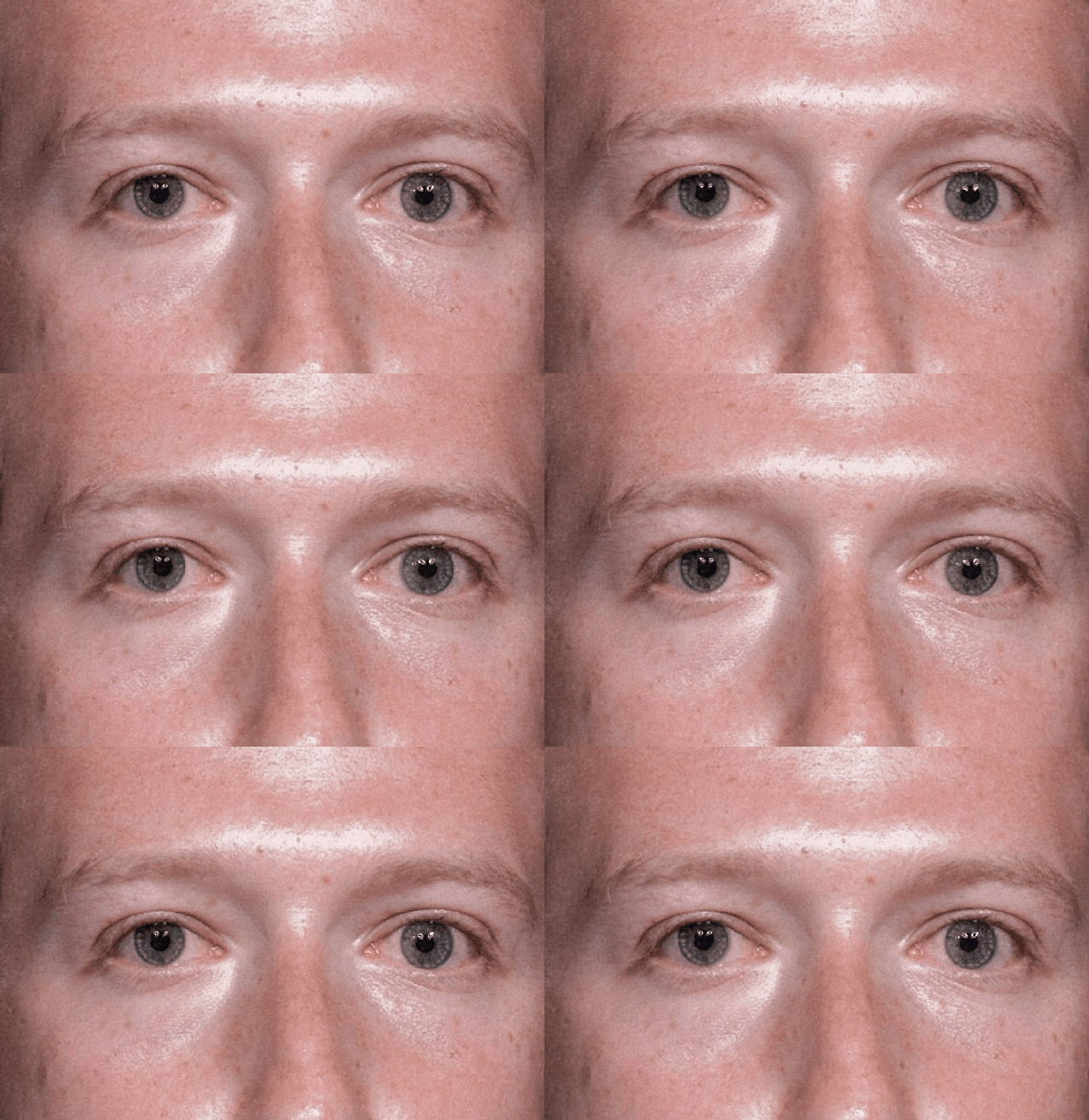

Facebook plans to fix everything by rebranding under a new name
by Rob Beschizza
Any guessses as to what Facebook's new name will be? The company wants to distance itself from its increasingly reviled social network and will choose a new name highlighting its plans to build a "metaverse", reports The Verge's Alex Heath. — Read the rest
Ronald.phillips likes this
20 Oct 08:02
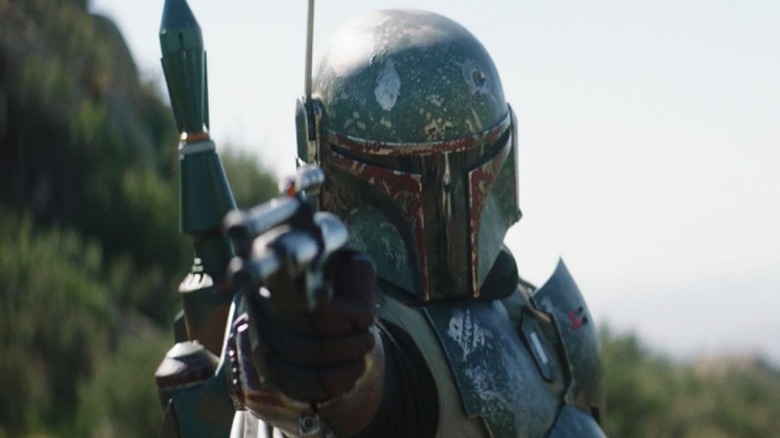
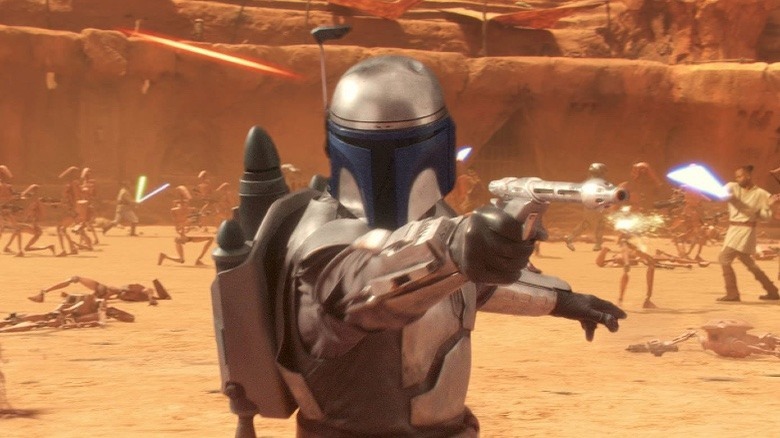
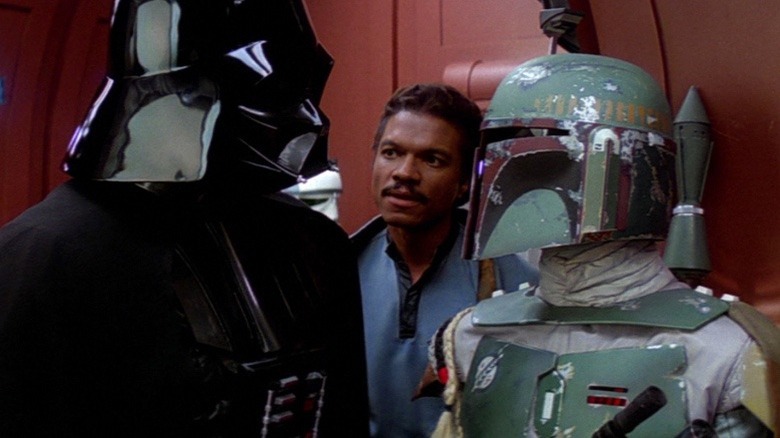
Boba Fett's Armor Explained: How Did He Get It And What Can It Do?
by Sandy Schaefer
Notorious "Star Wars" bounty hunter Boba Fett is easy to recognize, thanks to his trademark Mandalorian armor. He first showed up in the animated segment of the infamous 1978 "Star Wars Holiday Special" (a sequence titled "The Story of the Faithful Wookiee"), long before anyone knew what a Mandalorian even was. The character took off in popularity thanks to his live-action appearances in "The Empire Strikes Back" and "Return of the Jedi," but it wasn't until 2002 that Boba and his armor got an official backstory in the "Star Wars" movies.
"Attack of the Clones," the second film in George Lucas' "Star Wars" prequel trilogy, revealed that Boba is actually a clone of Jango Fett -- himself an armor-clad Mandalorian bounty hunter and the genetic basis for the clones that make up the Grand Army of the Republic. As part of his deal with the Kaminoan scientists responsible for creating the Republic's army, Jango received a non-genetically altered clone to raise as his son, who he named Boba. After the Jedi Master Mace Windu killed Jango in combat during the First Battle of Geonosis, Boba grew up and became a successful bounty hunter in his own right, even wearing Jango's armor as a way of honoring his father. Of course, it helped that Mandalorian armor is incredibly useful when you're someone in Jango and Boba's dangerous line of work.
Mandalorian Armor - What Is It Good For?
Mandalorian armor typically includes a helmet with a T-shaped visor and metal plates that cover the most vulnerable parts of a person's body, including their chest, shoulders, and forearms. However, what really makes the armor powerful is that it's made of Beskar, an incredibly strong alloy native to the planet Mandalore. Not only is Beskar durable enough to repel most blaster fire, but it can even withstand lightsaber strikes. In fact, things might have gone very differently for Windu during his showdown with Jango, had he not managed to land a precise blow with his lightsaber right through Jango's neck (perhaps the most vulnerable spot not protected by Mandalorian armor).
In the modern "Star Wars" continuity (which rendered the "Expanded Universe" stories about Boba non-canon and made them part of "Star Wars Legends"), Boba's armor is seemingly the reason he managed to survive falling into the Great Pit of Carkoon -- the resting place of a deadly creature known as the Sarlacc -- on Tatooine in "Return of the Jedi." The Sarlacc was seemingly unable to digest the Beskar in his gear, giving Boba the opening he needed to escape before it could finish him off. Boba's armor was later acquired by Jawa scavengers and sold to Cobb Vanth, the sheriff of the small Tatooine town Mos Pelgo, who then gave it to yet another Mandalorian armor-clad bounty hunter named Din Djarin, as seen in Season 2 of "The Mandalorian." This led Boba to pursue Din all the way to the Deep Core planet Tython to retrieve it. It's little wonder he did, given its deep personal meaning to him on top of its practical value.
But What About That Dent?
There is one trait that distinguishes Boba Fett's Mandalorian armor from other sets, and it's a peculiar dent in the helmet, which wasn't there when Jango wore it. At 2017's Star Wars Celebration, Lucasfilm Animation head and "The Mandalorian" executive producer Dave Filoni revealed animatic footage from an unaired story arc on the animated "Clone Wars" series that would've explained where this mysterious dent came from. The clip revolved around an Old West-style showdown between Boba and Cad Bane, another extremely cool bounty hunter, that resulted in Cad landing a shot on Boba's helmet. Suffice to say, Boba was lucky his helmet was not only made of some of the strongest material in the galaxy but that he also had it on at the time.
Intriguingly, the first season of the animated "Clone Wars" spinoff series "The Bad Batch" features an appearance by Cad Bane with a previously-unseen metal plate on the left side of his head. It's speculated this is a nod to his duel with Boba (which left Cad terribly injured), although it's anyone guess whether "The Bad Batch" Season 2 or a future "Star Wars" project -- like "The Book of Boba Fett" -- will make that explanation canon.
Read this next: The 12 Best Boba Fett Moments In Star Wars Shows And Movies
The post Boba Fett's armor explained: How did he get it and what can it do? appeared first on /Film.
Ronald.phillips likes this
20 Oct 08:02
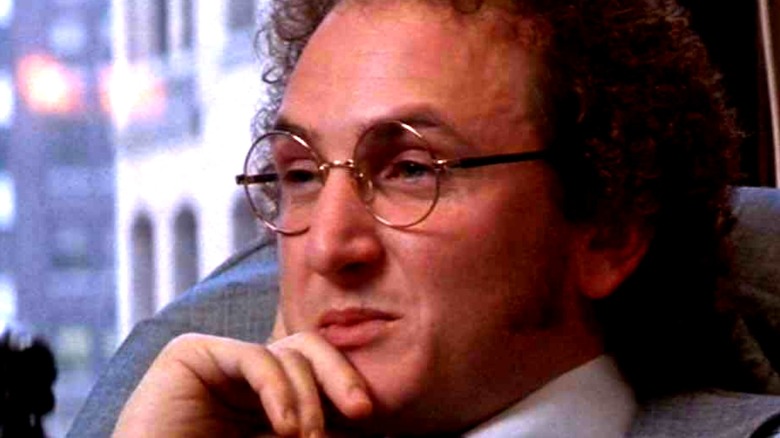
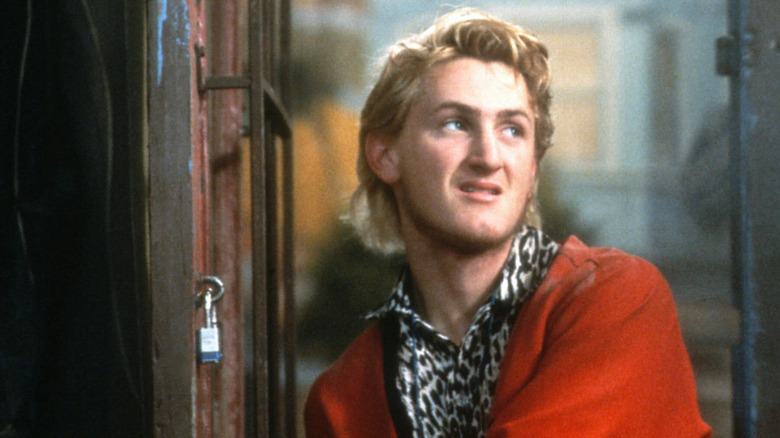
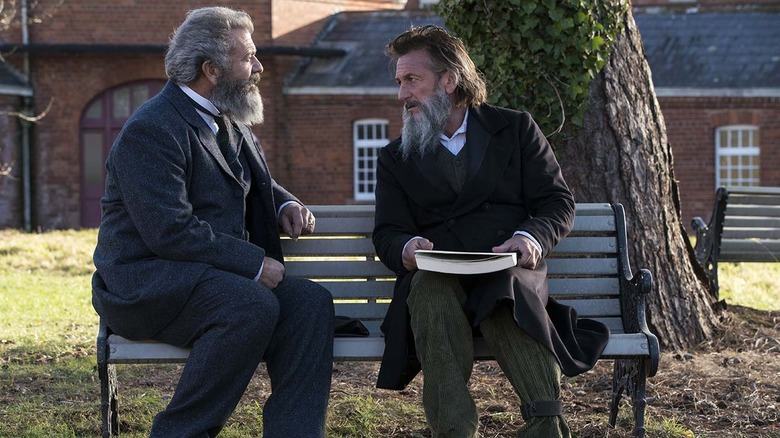
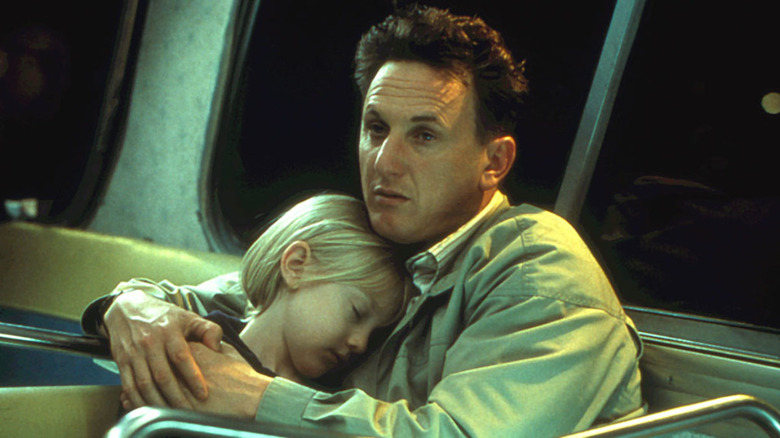
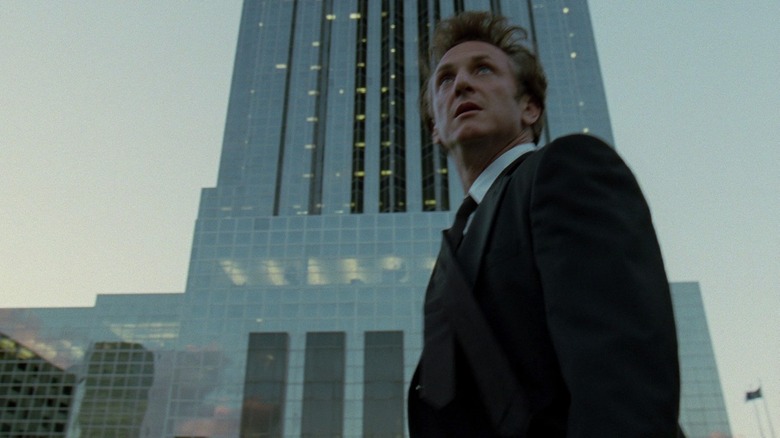
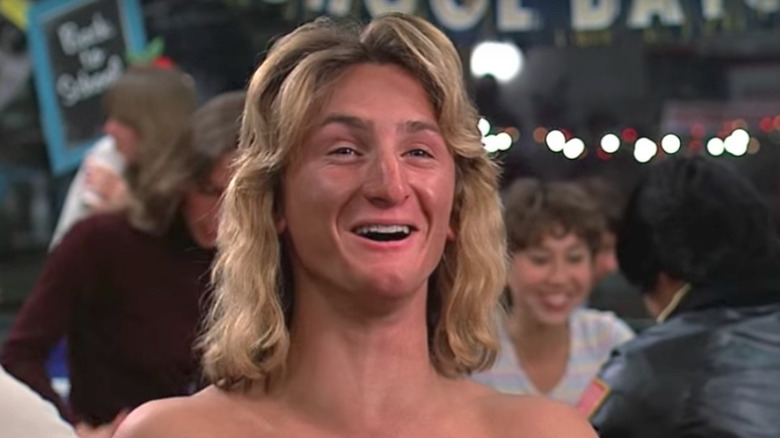
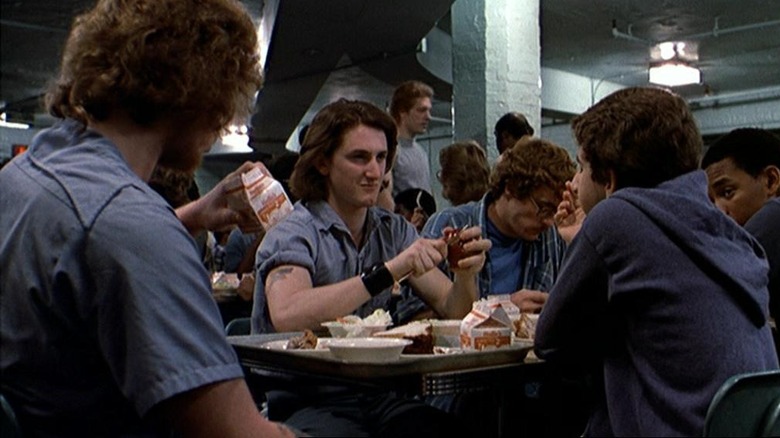
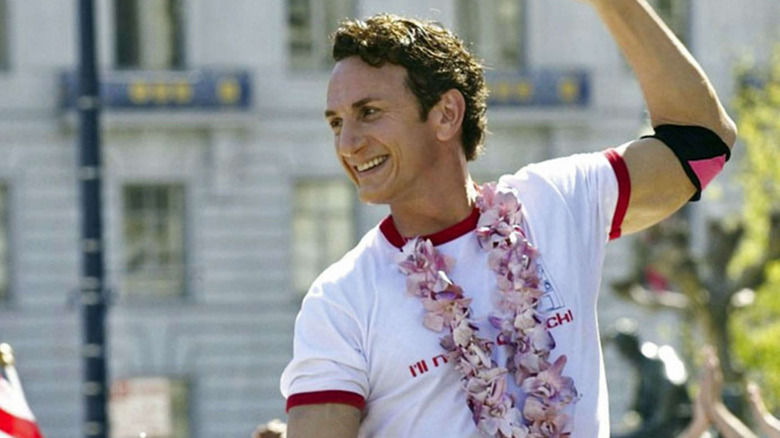
Sean Penn's 15 Best Film Roles Ranked
by Liam Gaughan
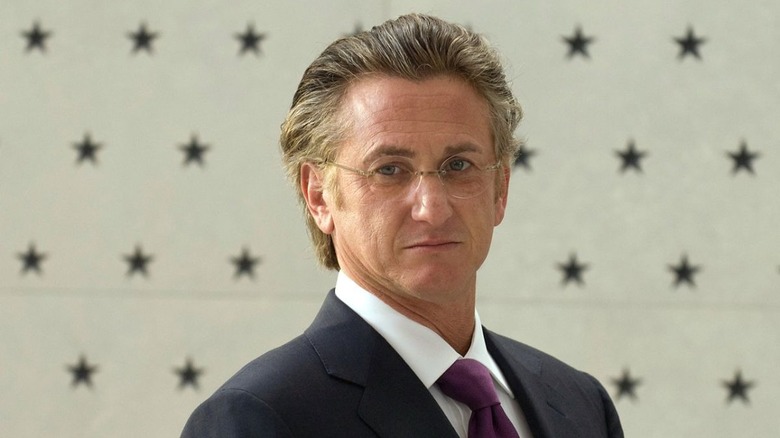
Sean Penn is one of the best actors and most engaging celebrities to grace Hollywood over the past several decades. The two-time Academy Award winner frequently earns critical acclaim for his performances, and has worked with many of the best filmmakers of his generation. He's been an icon since the early '80s, and continues to choose exciting upcoming projects. In 2021, Penn will be seen in Paul Thomas Anderson's latest ensemble feature, "Licorice Pizza."
Penn is extremely versatile, and turns in dedicated performances across many genres. Early dramatic roles in films like "Taps" and "The Falcon and the Snowman" hinted at a dark young actor, but Penn proved to be equally comfortable in wild comedic parts, including those in "Racing with the Moon" and "Shanghai Surprise." He has continued these dynamic pursuits throughout his career; recently he's even appeared in more family-friendly projects like "The Secret Life of Walter Mitty" and "The Angry Birds Movie." Penn has also stepped behind the camera -- directorial debut, "The Indian Runner," arrived in 1991.
Here are Sean Penn's 15 greatest film roles, ranked
Crackers
Penn gave one of his earliest comedic performances in the bank robbery adventure "Crackers," which follows an unlikely alliance between a group of established thieves and dim-witted retail workers. Weslake (Donald Sutherland) is more or less the mastermind behind the planned heist of a pawn shop, and realizes that his existing crew could use some hired help who knows the location. He recruits Penn's character, the electrician Dillard, who dreams of being a musician.
Dillard's inexperience sticks out like a sore thumb, and Penn is willing to be the butt of many jokes. His failed attempts to install a fake security system only derail the team's plans, and Weslake grows irritated by Dillard's limited attention span. Not all of the jokes in "Crackers" land, but Penn's amusing comic oaf makes it worth watching. It is fascinating to compare the juvenile tone of "Crackers" with Penn's more serious work.
The Professor And The Madman
Penn has appeared in many classics, but some of his recent interesting work has gone largely underseen. "The Professor and the Madman" had a challenging road to release. It was barely promoted as a result of legal issues, and was met with disappointing box office returns and very negative reviews. It's unfortunate that "The Professor and the Madman" incited so much controversy, because the film is much better than its reputation suggests.
Set in London during the 19th century, the film chronicles the creation of the first Oxford English Dictionary. Lifelong scholar James Murray (Mel Gibson) has no formal education, but is fluent in a dozen languages, and wants to begin the meticulous task of gathering every known word and in its derivatives. Murray finds a strange companion in the former American soldier William Chester Minor (Penn), who has been labeled insane and imprisoned for murder. Penn explores Minor's PTSD, and the strange friendship he develops with Murray.
I Am Sam
"I Am Sam" is a flawed film. The depiction of a disabled character is earnest, but the film frequently descends into melodramatic territory, and can be manipulative with its heartwarming message. The film itself was divisive among critics, audiences, and disability activist groups, but Penn's performance was acclaimed. Despite the controversy, Penn was still nominated for an Academy Award for best actor.
Sam Dawson (Penn) has the mental capacity of a child, and raises his daughter Lucy (Dakota Fanning) on his own. Sam's ability to care for a girl whose intelligence will soon surpass his own is called into question, and he's threatened with losing custody. The cynical lawyer Rita Harrison Williams (Michelle Pfeiffer) only takes his case to improve her public reputation, but gradually grows charmed by Sam's earnest love of his daughter. Penn is very respectful with his performance; he gives Sam a personality without stigmatizing his childlike behavior.
The Interpreter
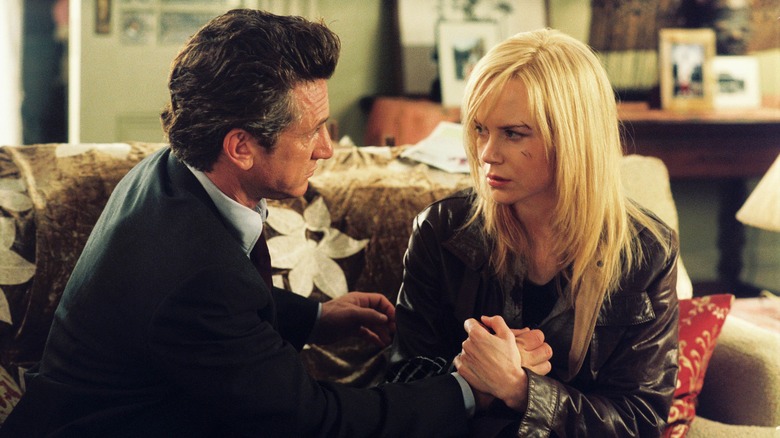
Director Sydney Pollack is one of the foremost creators of the modern political thriller, having crafted classics including "The Way We Were," "Three Days of the Condor," "Absence of Malice," and "The Firm." Appropriately, Pollack's last feature film "The Interpreter," was a modern take on the genre. The film follows United Nations Interpreter Silvia Broome (Nicole Kidman), who overhears details of a murder cover-up during a critical meeting of the International Criminal Court.
Penn plays a key role as Secret Service Agent Tobin Keller, who is tasked with investigating the assassination plot against President Edmond Zuwanie, the dictator of the African Republic of Matobo. Keller has no reason to trust Silvia, but protects her nonetheless as he learns her story. Penn gives the austere character a sympathetic edge, as he's struggling with the death of his wife. He shares his feelings with Silvia, whose family was killed in an African guerilla war.
Fair Game
Films that tackle the Iraq War and conspiracies inside the Bush administration can be very powerful, but often they're unable to capture the scope of the conflict without simplifying the details. 2010's "Fair Game" is one of the better examples, as its premise is unique and its characters face realistic consequences after being labeled public enemies by the media. CIA agent Valerie Plame (Naomi Watts) learns about a US investigation into yellowcake uranium in Niger that conflicts with official reports. Unable to stay silent, her husband Joseph Wilson (Penn) leaks the information to the press.
What's brilliant about "Fair Game" is that it examines the political issues through how they impact an individual marriage. Plame and Wilson see their entire life uprooted; they're hounded by interviewers, scolded by their friends, and don't feel safe in their own home. Valerie is furious at her husband for leaking the report without her permission, which strains their relationship, and Penn and Watts take great pains to make their conflict feel realistic.
The Game
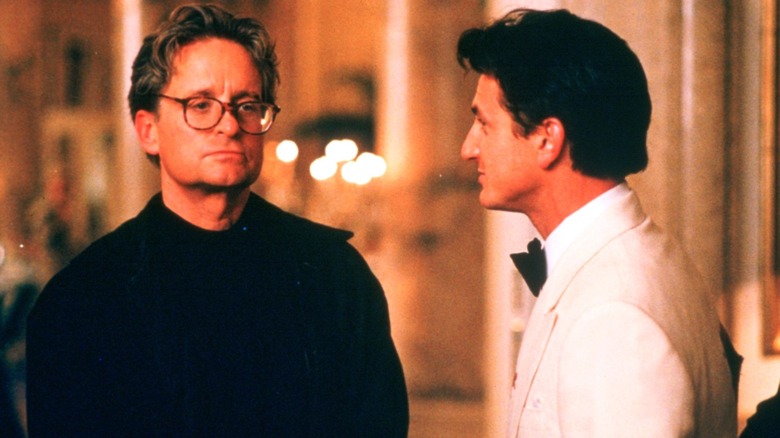
David Fincher's brilliant 1997 thriller "The Game" explores the twisted psychology of selfish men who are forced to reveal their violent impulses as a result of a mind-bending simulation. The pretentious investment banker Nicholas Van Orton (Michael Douglas) is initially an unlikeable, cruel character who routinely insults his waiters and co-workers. He's given a strange birthday present by his wisecracking brother Conrad (Penn): an invitation to an enigmatic game from a company called Consumer Recreation Services.
Compared to Douglas's cold performance, Penn provides a surprising amount of humor and empathy. Neither brother has fully recovered from their father's suicide, and where Nick chooses to pursue business, Conrad enjoys the lavishes of his wealth. Conrad's breakdown during the story's conclusion gives Nick the motivation to amp up his investigation into the organization's origins. Penn's misplaced confidence in his brother makes the tragic ending of "The Game" even more impactful.
The Thin Red Line
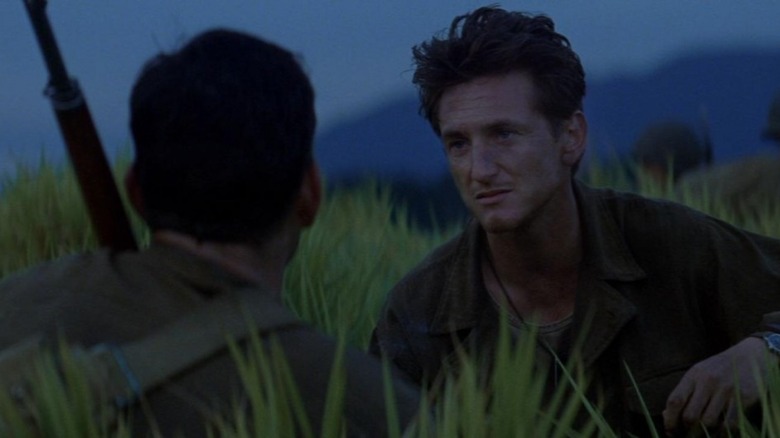
Penn first collaborated with Terrence Malick as just one of the many great actors in the stacked ensemble cast of "The Thin Red Line." The grand World War II epic details the combat in the Pacific Theater during the final Guadalcanal Campaign, and Malick explores the various individual stories of heroism in the American companies. The storyline featuring Penn's character, First Sergeant Welsh, opens the film amid preparations to reinforce a critical canal.
Welsh's men intercept the deserter Private Robert E. Lee Witt (Jim Cavaziel), who has abandoned his post to live with Malaysian natives on the shoreline. Welsh plays down his authority, but lets Witt know that he's the only friend he has. He commands Witt to carry a stretcher for the rest of the war. It's a perfectly grim exchange that sets the right tone for the rest of the film.
The Tree Of Life
Terrence Malick's 2011 masterpiece "The Tree of Life" is a work of groundbreaking ambition, and the only film from the 21st century to appear on Roger Ebert's list of the 10 greatest films ever made. The epic story starts with mankind's origins, but later focuses on the development of the Texas child Jack O'Brien (Hunter McKraken). Jack struggles to reconcile the conflicting lessons he learns from his empathetic mother (Jessica Chastain) and his aggressive father (Brad Pitt).
Penn has a small, but pivotal role as the older Jack, who reflects on his childhood as an adult. The scenes are vital to the thematic resonance of Malick's story; both Jack and Malick seek to understand how kindness and cruelty ripple throughout time. Jack looks back at the moments that define his childhood, including the tragic passing of his brother and his spoiled expectations for his father. Penn's mostly wordless performance captures these memories beautifully.
Fast Times At Ridgemont High
Penn's pursuit of challenging dramatic roles would become one of the hallmarks of his career, so in retrospect it's surprising that his star-making turn came in the 1981 high school sex comedy "Fast Times at Ridgemont High." An adaptation of a series of high school stories by Cameron Crowe, Amy Heckerling's directorial debut is an insightful and hilarious look at the primal desires of California adolescents. Penn generally seems intelligent during his performances, but his intellectual qualities are completely absent from the dim-witted stoner Jeff Spicoli.
Spicoli's passions are as simple as surfing and partying, and he's easily the scene-stealer in a film that features many future stars. Spicoli essentially interrupts the main storyline with his goofy antics, but is forced to reckon with his own obliviousness when the art teacher Mr. Hand (Ray Alston) makes it his goal to get Spicoli expelled. Their heart-to-heart at the film's conclusion is surprisingly respectful, and the only serious moment featuring Spicoli. Compared to other high school comedies, "Fast Times At Ridgemont High" has aged very well, and it's a performance Penn is still proud of -- he recently appeared in a live reading of the original script for charity.
Bad Boys
Although he memorably appeared in "Fast Times at Ridgemont High" a year prior, the 1983 coming-of-age film "Bad Boys" established Penn as a serious actor. Compared to other teen films of the era, "Bad Boys" is notably unsentimental and tackles serious issues of violence, prison culture, and toxic masculinity. Filmmaker Rick Rosenthal is best known for his horror and comedy films, so he was a slightly unusual choice for a weighty drama with an overt message. Penn matches Rosenthal's ambitions; his nuanced performance generates real empathy for victims of neglect and violence.
Irish-American teenager Mick O'Brien (Penn) isn't a dangerous kid, but he's frequently at odds with the law due to a series of petty crimes. A more serious offence that results in the death of his best friend Carl Brennan (Alan Ruck) lands him in a juvenile detention center, where he squares off against his biggest rival, Paco Moreno (Esai Morales). Both Mick and Paco are warned that continued violence will land them in an adult prison, but they're both boiling with rage and can't help themselves.
Penn makes O'Brien's plight empathetic. He has to put on a threatening front in order to stay safe, but he's also gradually able to make strides towards release as he accepts responsibility for his actions. However, Paco continues to goad O'Brien into violence, and a disturbing encounter with O'Brien's girlfriend J.C. Walenski (Ally Sheedy) leaves him enraged.
Milk
Penn's dedication to authenticity made him a perfect choice to play a key historical figure whose impact is still felt today. Gus Van Sant's 2008 biopic "Milk" tells the groundbreaking story of Harvey Milk, the LGBTQ rights advocate who became the first openly gay individual elected to office in California. Milk faced discrimination throughout his entire life, particularly during his tenure in San Francisco. Penn earned a second Academy Award for best actor for his sensitive, thoughtful performance.
The film frames its account around a record Milk makes only a week prior to his assassination at the hands of the homophobic city supervisor Dan White (Josh Brolin). Milk recalls his early days as an activist in the San Francisco community, and his passionate romance with Scot Smith (James Franco). The leadership he shows early on foreshadows his later achievements, but Penn doesn't treat Milk as a superhero. He shows that Milk is still a fallible human, one who makes both enemies and friends through gradual political gains. By treating Milk as a three-dimensional character and not a figurehead, Penn allows the viewer to appreciate his actual purpose, making him more than a list of historical notes. As a result, his tragic end is even more heartbreaking.
Carlito's Way
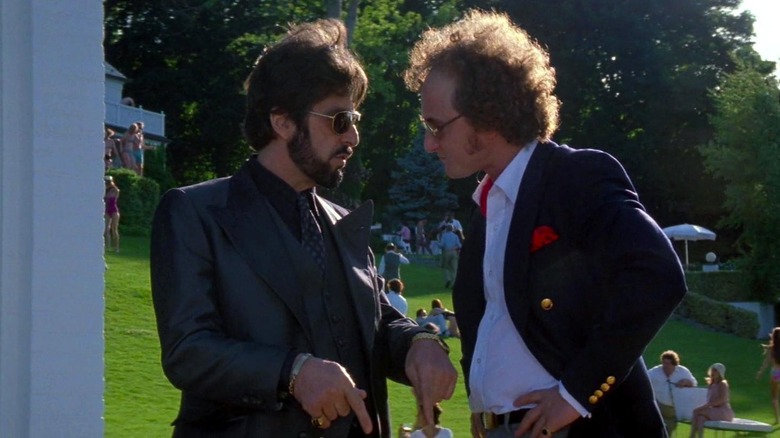
Although he's one of the most famous leading men of his generation, Penn has no issues slipping into supporting character parts. Al Pacino's work in Brain De Palma's 1993 film "Carlito's Way," in which he plays mob boss Carlito Brigante, is one of his greatest performances. Meanwhile, Penn is unrecognizable as the shady lawyer David Kleinfeld, and nearly steals the film.
Kleinfield is Brigante's best friend, and handles his operations while indulging in his own addictions to money, women, and cocaine. Unpredictable and erratic, Kleinfield puts pressure on Brigante. Brigante feels that he owes the man loyalty, but wants to retire alongside his girlfriend Gail (Penelope Ann Miller) and can't be worrying about Kleinfield too. Although he's seen his fair share of violence, Kleinfield is overconfident and nearly killed when he threatens the young Bronx gangster Benny Blanco (John Leguizamo).
De Palma has a great sense of humor, and Penn utilizes his comedic background well without sacrificing the film's dramatic tone. Kleinfield is a character that could easily grow irritating, but Penn finds the right idiosyncrasies to make him both amusing and realistic.
21 Grams
In the same year that he was showered with critical praise for his career-defining role in "Mystic River," Penn delivered another awards-worthy performance in Alejando Gonzales Inarritu's heartbreaking drama "21 Grams." Inarritu is rarely interested in pleasing his audience with a satisfying ending or characters with clearly defined morals, and his outlook on humanity is often bleak. "21 Grams" confronts challenging themes about recovering from loss and accepting death, and is told via a nonlinear structure that may initially seem confusing. However, it's consistently gripping thanks to the phenomenal ensemble, and in it Penn delivers one of his most honest performances.
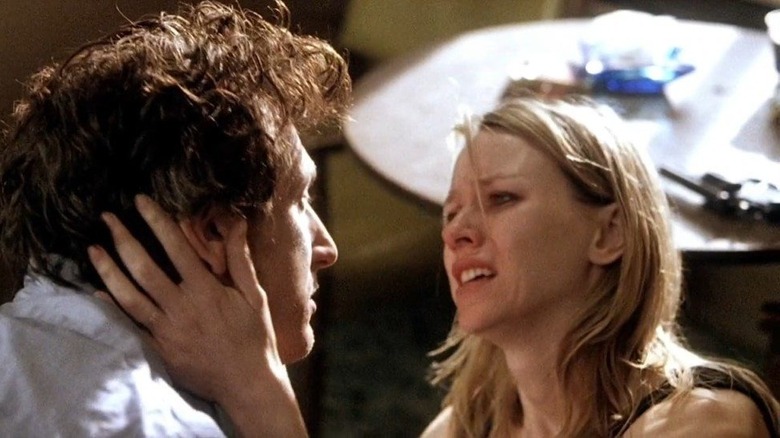
Paul Rivers (Penn) is a brilliant mathematician, but he's hamstrung by a debilitating illness that slowly depletes his cognition. He's eager to return to a semblance of normality, but is caught in a longstanding argument with his wife Cristina (Naomi Watts), who wants to have children through artificial insemination. Cristina is also obsessed with finding the ex-con Jack Jordan (Benicio del Toro), who spent years in prison for a hit-and-run accident that killed her ex-husband and their children.
As Cristina pushes him to help her get revenge, Paul is forced to question what the best course of action is. He's struggling through his own illness, but he also knows that the initial tragedy is what introduced him to Cristina. Inarritu asks fascinating questions about whether vengeance is ever truly satisfying; Penn generates sympathy as he's roped into the uncomfortable scenario.
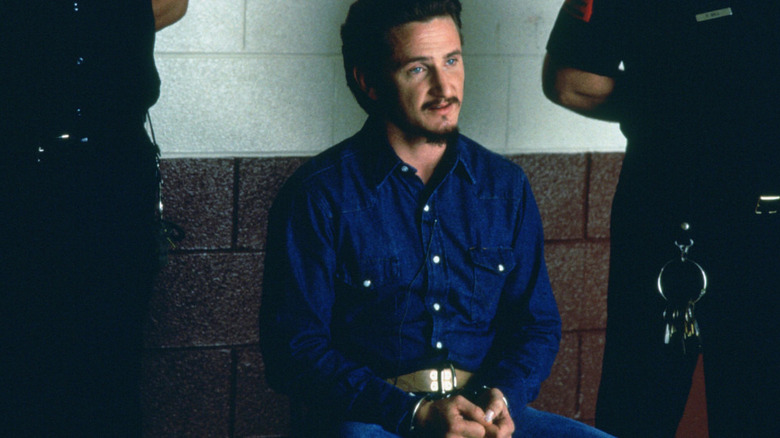
Dead Man Walking
Penn can't be defined by just one genre or archetype, and has experience playing goofballs, heroes, and villains alike. As a result of his range, he can generate empathy for all types of characters, even if they seem inherently unlikeable. Look at "Dead Man Walking," in which Penn had to humanize a serial killer and generate sympathy for a man guilty of violent crimes without discounting his victims' trauma. Penn's future "Mystic River" co-star Tim Robbins directed him in one of his most complex performances to date.
Penn stars as Matthew Poncelet, a death row inmate who is scheduled to be executed at the Louisiana State Penitentiary. During the lead up to his final days, Poncelet is visited by nun Sister Helen Prejean (Susan Sarandon), who is assigned to give him spiritual guidance. Poncelet is hated by both the guards and also his fellow prisoners for the savageness of his crimes, which include brutally murdering a teenage couple. Prejean isn't judgmental of Poncelet, but terrified; she fears that she will be unable to bring faith to a man whose crimes are godless.
Poncelet gradually shares his story with the comforting Prejean. At first, he is just as malicious as he seems, but as Poncelet opens up Prejean pushes to have his sentence changed to life imprisonment. "Dead Man Walking" doesn't ever take Poncelet's side, but is fascinated by his motivations.
Mystic River
"Mystic River" is a heartbreaking depiction of a tragedy at the heart of a seemingly normal small town, and one of the greatest American films of the 21st century. Clint Eastwood's slow, methodical direction has produced mixed results throughout his long career, but with "Mystic River," Eastwood's deliberate pacing escalates the latent tensions within a Boston community haunted by generational family conflicts.
Jimmy Markum (Penn), Dave Boyle (Tim Robbins), and Sean Devine (Kevin Bacon) were childhood best friends, but a shocking tragedy in which Dave endured unthinkable abuse has haunted them well into adulthood. Dave is now a likeable, quiet family man who attempts to raise his son in a nonviolent environment, and Devine is a police detective who rarely contacts his former friends. However, Jimmy has earned a fearsome reputation, and rumors persist about the crimes he may have been involved with.
The shocking death of Jimmy's teenage daughter Katie (Emmy Rossum) brings the trio together again. Jimmy is beyond heartbroken, but his mourning is quickly followed by a need for vengeance. He questions Sean about the details of the case, and becomes obsessed with Dave upon learning that he's a suspect. Jimmy becomes convinced of Dave's guilt, and is willing to go to extreme circumstances to achieve justice.
Read this next: The 15 Best '80s Comedies Ranked
The post Sean Penn's 15 best film roles ranked appeared first on /Film.
Ronald.phillips likes this
20 Oct 08:00
Before the New Version, Let's Revisit 1984's Dune
by BeauHD
Thelasko shares a report from Ars Technica, written by Peter Opaskar: Frank Herbert's 1965 sci-fi novel Dune gets a new film adaptation -- this one helmed by Denis Villeneuve (Arrival, Blade Runner 2049) -- later this month. But before Ars Technica reviews the movie, there's the matter of its predecessor: 1984's Dune, made by a then up-and-coming filmmaker named David Lynch. Detractors call Lynch's saga -- a tale of two noble space families 8,000 years in the future, fighting over the most valuable resource in the universe amidst sandworms the size of aircraft carriers -- incomprehensible, stilted, and ridiculous. It lost piles of money. Yet fans, especially in recent years, have reclaimed Lynch's film as a magnificent folly, a work of holy, glorious madness.
So which group am I in? Both. Am I about to describe Dune as "so bad it's good"? No, that's a loser take for cowards. I once half-heard a radio interview with someone speculating that the then-current artistic moment was not "so bad it's good," and it wasn't "ironic" either -- it was actually "awesome." (I didn't catch who he was, so if any of this sounds familiar, hit me up in the comments.) Art can speak to you while at the same time being absurd. The relatable can sometimes be reached only by going through the ridiculous. The two can be inseparable, like the gravitational pull between a gas giant and its moon -- or Riggs and Murtaugh.
The example the radio interviewee gave was of Evel Knievel, the '70s daredevil who wore a cape and jumped dirt bikes over rows of buses. Absurd? Heavens, yes. A feat of motorcycling and physicality? Absolutely. But beyond that, we can relate to Knievel's need to achieve transcendence at such a, shall we say, niche skill. We might also marvel at our own ability to be impressed by something that should be objectively useless but is instead actually awesome. A more contemporary example might be Tenet. It's a relentless international thriller about fate and climate change and the need for good people to hold evil at bay. But it's also a "dudes rock!" bromance between Two Cool Guys in Suits spouting sci-fi mumbo-jumbo. It can't be one without the other. "I have faith in Denis Villeneuve and his new version of Dune starring Timothee Chalamet," says Opaskar. "But it will probably be a normal movie for normal people, in which characters with recognizable emotions talk in a recognizable way and move through a plot we understand to achieve clearly defined goals. Which is all fine and good, but how likely is it to inspire sick beats for '90s kids doing ecstasy?"


Read more of this story at Slashdot.
Ronald.phillips likes this
19 Oct 23:38
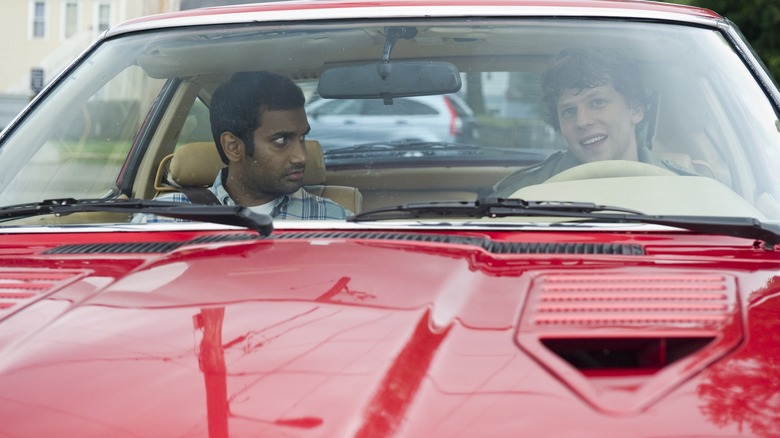
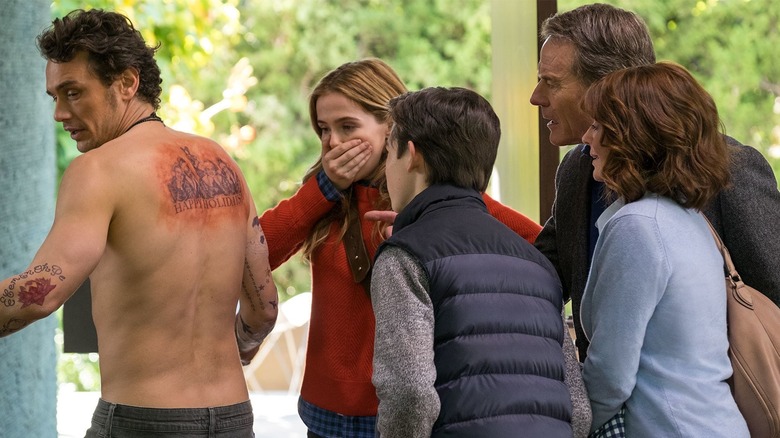
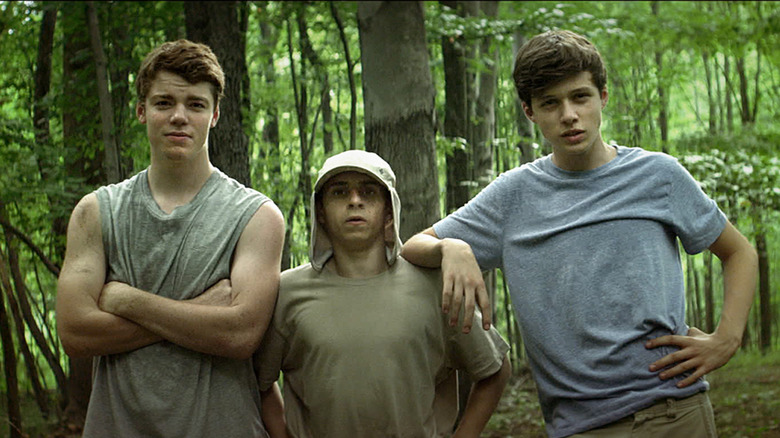
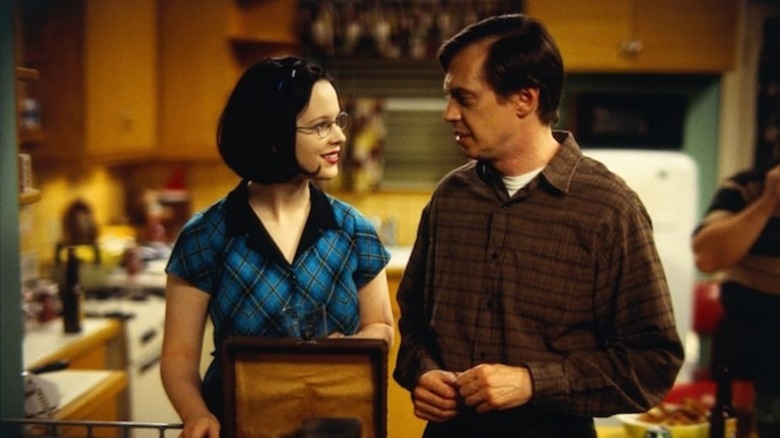
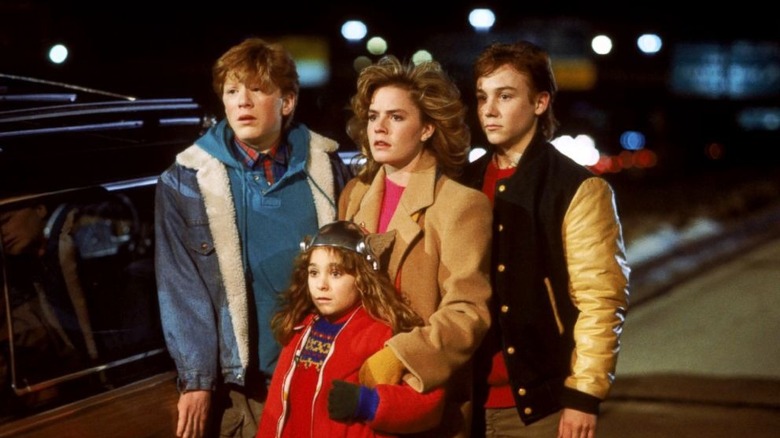
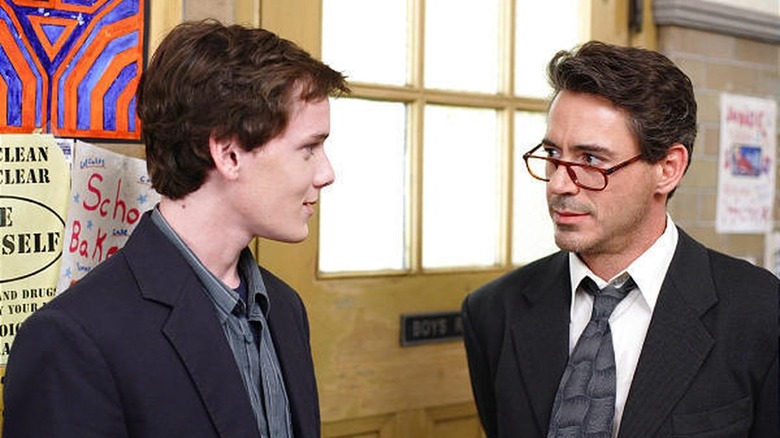
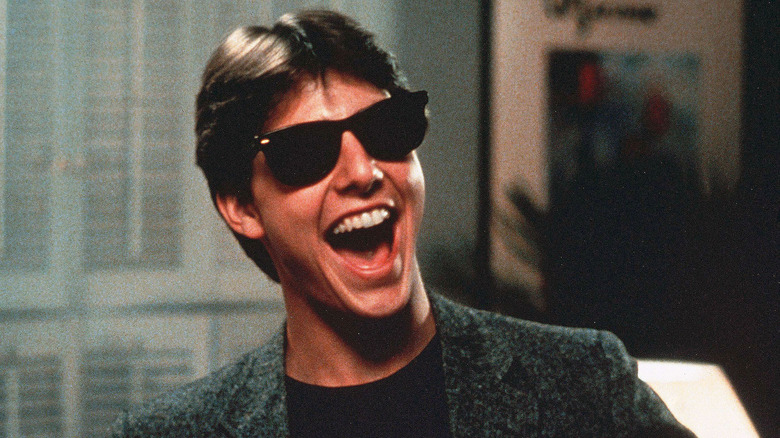
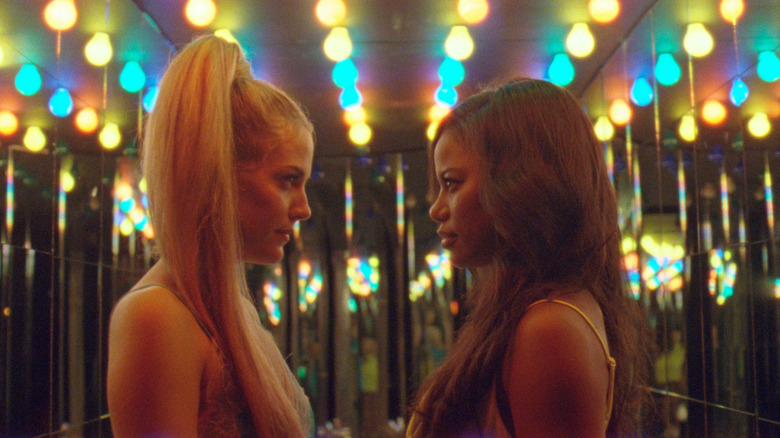
12 Movies Like Superbad That Comedy Fans Need To Watch
by Liam Gaughan
"Superbad" is one of the most influential comedies of the 21st century — or, at the very least, one of the raunchiest. Screenwriters Seth Rogen and Evan Goldberg based the film's wild situations on stories from their own childhood, and worked with director Greg Mottola to craft a new teen comedy classic worthy of the high school movie hall of fame.
Released by Judd Apatow's The Apatow Company, "Superbad" launched successful new stars who would go on to appear frequently in Apatow productions. Michael Cera's comedy credentials were already established thanks to his role as Jason Bateman's son George Michael on "Arrested Development," but "Superbad" was his first major film appearance. It was a breakout role for Jonah Hill as well. In the next decade, Hill expanded beyond comedy to earn two Academy Award nominations for dramatic roles and began a directorial career of his own.
Christopher Mintz-Plasse plays the fan-favorite character Fogell, who awkwardly takes on the personna "McLovin" thanks to a botched fake ID. As with many Apatow productions, "Superbad" has a stacked bench of supporting players, including frequent Apatow collaborators Bill Hader, Emma Stone, Martin Starr, Clark Duke, and Dave Franco.
"Superbad" is dirty and chaotic, but Cera and Hill have a legitimately heartfelt relationship. They care for each other, and fear what their lives will look like when they're separated in college. Even their arguments feel realistic. It's a great blend of both comedy and heart — if you loved "Superbad," these great comedies are also worth checking out.
Adventureland
There's a reason why Olivia Wilde's directorial debut "Booksmart" has been often labeled the "female Superbad," even if Wilde herself wishes it would be judged as an independent work. Their stories are nearly identical: "Booksmart" follows two lifelong friends, Molly Davidson (Beanie Feldstein) and Amy Antsler (Kaitlyn Dever), as they attempt to crash a series of parties ahead of their high school graduation.
While it's easy to see the influence of "Superbad," "Booksmart" sets itself apart with a refreshing change of perspective. Molly and Amy are bookworms who dedicated the past four years to meticulously studying and applying to colleges, sparing no time to party or get into trouble. They're shocked to realize that the wilder students in their graduating class have had no trouble getting into leading universities themselves, and feel cheated of the fun they denied themselves. So, they launch a last-minute effort to cram all of their craziest desires into a single hectic night before they leave high school behind.
Although both "Superbad" and "Booksmart" are crass, the characters' motivations are different. Evan and Seth are just trying to find a romantic fling, but Molly and Amy prize their intelligence, and have higher ambitions. Their friendship is earnest; even though Molly pushes Amy into situations that make her uncomfortable, they're respectful of each other's boundaries. They are rarely in actual danger, but there are serious emotional stakes, leading the girls to argue about how they've controlled each other's lives.
Booksmart
There's a reason Olivia Wilde's directorial debut "Booksmart" has been often labeled the "female Superbad," even if Wilde herself has expressed her desire for the film to be judged as an independent work. The stories are nearly identical. "Booksmart" follows two lifelong friends Molly Davidson (Beanie Feldstein) and Amy Antsler (Kaitlyn Dever) as they attempt to break into a series of parties ahead of their high school graduation.
While it's easy to see the influence of "Superbad," "Booksmart" is distinguishable with thanks to the refreshing change of perspective. Molly and Amy are bookworms that dedicated their past four years to meticulously studying and applying to colleges, with no time to enter the party scene or get into trouble. They're shocked to realize that the wilder students in their graduating class have had no trouble getting into leading universities, and they feel cheated of the fun they denied themselves. They launch a last minute effort to cram all of their craziest desires into a hectic night before they leave high school behind.
Although both films are crass, the characters' motivations are different. Evan and Seth are just trying to find a romantic fling, but Molly and Amy are highly intelligent and maintain their ambitions. Their friendship is earnest; even though Molly pushes Amy into situations she's uncomfortable in, they're respectful of each others' boundaries. They are rarely in actual danger, but there are more emotional stakes. The girls argue over how they've controlled each others' lives.
Everybody Wants Some!!
"Superbad" was praised for authentically depicting the struggles that modern teenagers go through, and few filmmakers capture the everyday hardships young people face quite like Richard Linklater. Linklater has contributed many classics to the coming-of-age genre, and his raucous college sports comedy "Everybody Wants Some!!" is a hidden gem that was unfortunately buried upon release. A spiritual sequel to Linklater's 1993 classic "Dazed and Confused," "Everybody Wants Some!!" follows the adventures of a group of college baseball players who live together in a frat house in the week before their classes start.
Freshman Jake Bradford (Blake Jenner) joins the team's exclusive ranks as he moves in, and finds that the team already has their quirky repertoire in place. The team works effectively on the field and during practice, but outside of official games they're constantly competing with one another. Between scoring with women at parties, playing drinking games, and showing off during tests of endurance, they make a contest out of everything. While this could have easily been a showcase for toxic masculinity, the character dynamics make "Everybody Wants Some!!" fun without being cruel. The non-traditional family unit has an unusual code of respect, and Jake earns his place among them.
"Superbad" features many extravagant parties, and the celebrations in "Everybody Wants Some!!" are equally weird. For example, Jake falls for the freshman theater student Beverly (Zoey Deutch), and reluctantly invites the team to join him at an "Alice in Wonderland"-themed party with the theater kids.
30 Minutes Or Less
"Superbad" effectively ramps up its chaos. If the more shocking moments had appeared too early in the film, the pacing would have been thrown off, and the later gags wouldn't have been as effective. The underrated 2011 film "30 Minutes or Less" takes a similarly careful approach to its frantic situations. The film also features many frequent Apatow collaborators, but is more of a screwball comedy, and deals with notably darker material.
Jesse Eisenberg's antisocial pizza delivery driver Nick Davis sees himself as a likeable guy; he's willing to give out free pizza to desperate kids in order to appease his employer's policies. However, Nick is in an ongoing argument with his best friend and roommate Chet (Aziz Ansari) over an adolescent romance he once had with Chet's twin sister. Nick wants to fix their relationship, but is forced to become a criminal when aspiring bank robbers Dwayne Mikowlski (Danny McBride) and Travis Cord (Nick Swardson) kidnap him and strap a bomb to his chest. They command the perpetually awkward Nick to assist them in a series of heists, and threaten to detonate the device if he informs the police.
Nick's reconciliation with Chet is surprisingly genuine, and the danger they endure is depicted with a light touch. McBride and Cord are also hilarious; the bickering pair want to become big time criminals, but they're completely incompetent and only seek the approval of their foul-mouthed father Jerry (Fred Ward).
Why Him?
"Superbad" is masterful in its handling of cringe-inducing humor. It wouldn't be funny if its situations became too uncomfortable, but the film manages to push the boundaries of good taste without creating unnecessary discomfort for the viewer. It's a fine line to balance, and a lesson that Hill has apparently learned very well. In 2106, Hill produced the comedy "Why Him?," a film much better than its sour early reviews indicated.
Ned Fleming (Bryan Cranston) owns and operates a printing company, but he rarely sees any serious rewards for his hard work. After a meager birthday celebration, Fleming learns that his studious daughter Stephanie (Zoey Deutch) is dating wacky video game developer Laird Matthews (James Franco). Laird is completely out of touch with reality, and has a lavish private mansion where he develops his technology through unnecessarily complicated home living devices. Laird plans to propose to Stephanie, and invites Ned, his wife Barb (Megan Mullally), and their younger son Scotty (Griffin Gluck) to join him for the weekend. Ned is quickly embarrassed by Laird's behavior, and when he learns of the prospective marriage, he decides to do everything in his power to stop it.
Laird pushes Ned far outside of his comfort zone, and Cranston makes the middle-aged man compelling despite his conservative attitudes. Franco may not have to stretch too much to play an eccentric weirdo, but he's nonetheless hilarious.
The Kings Of Summer
In "Superbad," Seth and Even have a playful independent streak. Their parents are largely clueless about their activities, and they're left to their own devices throughout. The 2013 coming-of-age dramedy "The Kings of Summer" takes a more serious approach to similar material. Future "Kong: Skull Island" director Jordan Vogt-Roberts explores both how important and also how dangerous it can be for teenage boys to live on their own with his heartwarming debut film.
Joe Toy (Nick Robinson) is annoyed at his austere father Frank (Nick Offerman) and his controlling nature, and an argument that concludes with Frank calling the cops finally sets him over the edge. Joe gathers his best friend Patrick (Gabriel Basso) and makes plans to run away together, deciding to build a cabin in the woods where they can control their own destinies. An enigmatic and strange boy named Baggio (Moisés Arias) joins them in creating a secluded home off the grid.
While their early adventures are fun, the boys have to adjust to providing for themselves. Their absence leaves gaping holes in their respective families, and "The Kings of Summer" earnestly depicts the process of reconnecting with loved ones who have different moral beliefs.
Ghost World
In "Superbad," Evan and Seth have spent virtually their entire lives together, and essentially feel like they're siblings. The prospect of leaving each other when they go to different colleges subtly terrifies them both, although neither boy is willing to admit their feelings to the other. The tension of Evan's impending departure is present throughout — in the final scene, all it takes is a passing glance to express their affection before they both move on to adulthood.
The stress of leaving a high school best friend behind is also the core theme of the idiosyncratic 2001 indie comedy "Ghost World," based on the beloved graphic novel by Daniel Clowes. Enid Coleslaw (Thora Birch) and Rebecca Doppelmeyer (Scarlett Johansson) pride themselves on their defiant attitudes; they're outsiders in their high school's social circles, and enjoy mocking their graduating class. Their only summer plans are to enter the workforce and live on their own together, but Enid and Rebecca soon discover that their seemingly simple goal is much more complex than it seems.
Rebecca struggles with Enid's constantly ironic outlook. They both enjoy satirizing the superficial desires of their fellow students, but Enid's scheme to deceive the lonely music collector Seymour (Steve Buscemi) with a false date strikes Rebecca as particularly cruel. For her part, Enid surprises herself as she begins to sympathize with Seymour. He's just as isolated as the girls are; the prank is at least a change of pace.
Adventures In Babysitting
"Superbad" is one of the definitive "all in one night" high school adventure films; all of the heartfelt musings, botched romantic encounters, wild drug experiments, and unusual side characters are contained to a brief stretch of time, during which Evan and Seth are never sure what the next moment will bring. It's an effective structure for a comedy, and one that's particularly impactful for adolescent coming-of-age stories about teenagers who treat every night like it's their last on Earth.
The 1987 teen comedy "Adventures in Babysitting" has a similarly chaotic vibe, with a mix of existential high school musing, raunchiness, black humor, and awkward scenarios that "Superbad" fans may enjoy. Freshman Brad Anderson (Keith Coogan) is hopelessly in love with the senior Chris Parker (Elizabeth Shue), but the older girl barely notices him. Brad finally gets a chance to spend some time with his crush when Chris gets a job babysitting his younger sister Sara (Maia Brewton), but his obnoxious sibling only humiliates him by revealing his affections to Chris. Brad laments his hardships to his best friend Daryl (Anthony Rapp); Daryl is a foul-mouthed, yet loveable goofball similar to Hill in "Superbad."
Chris responds to a late-night call from her best friend Brenda (Penelope Ann Miller) and quickly drives to meet her, losing Sara along the way. Chris, Brenda, Brad, Sara, and Daryl embark on a wild trip through the south side of Chicago, encountering robbers, drug addicts, prostitutes, and a mechanic who convinces Sara he's Thor.
Charlie Bartlett
Younger viewers may appreciate "Superbad" for its fleshed-out depiction of older characters. The film's adults, specifically the goofy police officers Slater (Bill Hader) and Michaels (Rogen), are just as clueless as the teenagers, but they're not complete clichés. Slater and Michaels see a yearning within McLovin that they relate to, and are willing to pretend that he's an adult in order to improve the awkward lad's social standing. It's a subversion of the typical stoic police officer archetype that is common in high school comedies.
The 2007 coming-of-age dramedy "Charlie Bartlett" is similarly sensitive to both the kids' and adults' perspectives. The titular Charlie (the late Anton Yelchin) is a privileged student who has been kicked out of every prestigious school that his irresponsible mother (Hope Davis) has enrolled him in. Charlie enters public education for the first time, and immediately his professional demeanor makes him a social outcast and a target for the school's bullies. Charlie finds a reason to keep going when he falls for the rebellious Susan (Kat Dennings). However, he soon learns that Susan's defiant attitude is a reaction to her strict upbringing at the hands of her father, Principal Nathan Gardner (Robert Downey Jr.).
In one of his last roles before "Iron Man," Downey crafts a three-dimensional antagonist. Gardner was once a popular teacher, but he's been unable to rekindle his love of education. No longer able to relate to teenagers, Gardner has become overly strict. He targets Charlie for his pursuit of Susan, but finds they have many things in common.
Risky Business
The anxiety that high school students feel about their futures is pertinent to "Superbad," as Evan and Seth are excited about leaving the restrictions of their parents and school behind. There are hints about where they're going to college, but the exact institutions aren't as important as the freedom itself. However, the pursuit of academic perfection is essential to one of the funniest high school movies ever made.
1983's "Risky Business" launched Tom Cruise's career. In it, Cruise's aptly named Joel Goodson lives in the wealthy North Shore area of Chicago, and is dedicated to getting an acceptance letter to his father's alma mater, Princeton University. Although a great student, Joel is no reclusive bookworm; he and his friends frequently gamble and party, and one night gets particularly wild when Joel falls in love with a prostitute named Lana (Rebecca De Mornay). The classic sequence in which Joel dances in his underwear has been parodied and paid homage to many times.
Joel faces pressure to inform his crush about his true feelings while he's preparing for his fateful interview with a representative from Princeton. It's a brilliant merging of tones from director Paul Brickman. Unfortunately, Brickman made relatively few films after "Risky Business," making the film a fascinating one-hit wonder.
Zola
The raunchiness of "Superbad" is done in good taste; the film pushes the line with some of its more extreme gags, but the characters are not depicted in a way that's demeaning. This is something of a rarity. Raunchy modern comedies often feel unrealistic, and the story of the 2020 black comedy "Zola" reads like one of Hollywood's wilder fictitious creations. However, the film is actually based on a true story, and first-time director Jazinca Bravo creatively integrates the real accounts of those involved in the film.
Zola King (Taylour Paige) is a part-time stripper, and strikes up a friendship with a more experienced dancer, Stefani (Riley Keough). Stefani invites Zola to join her on a road trip to Tampa with her boyfriend Derek (Nicholas Braun), but they're derailed by the dangerous pimp known simply as X (Colman Domingo). Zola is shocked to learn that Stefani hasn't been honest with her as the rowdy gang is forced to appease X's demands.
The Dangerous Lives Of Altar Boys
"Superbad" may have been an instant hit, but not every high school classic worthy of appreciation immediately takes its rightful place within the popular culture lexicon. 2002's independent dramedy "The Dangerous Lives of Altar Boys" has mostly been forgotten, which perhaps isn't surprising considering that its less of an immediate crowd-pleaser than "Superbad." However, while the underrated coming-of-age film highlights the seclusive nature of an extreme religious upbringing, it does so with a comic sense of mischief that "Superbad" fans may appreciate.
In '70s Georgia, private Catholic high school students Francis Doyle (Emile Hirsch), Tim Sullivan (Kieran Culkin), Wade Scalisi (Jake Richardson), and Joey Anderson (Tyler Long) develop their own comic book series called "The Atomic Trinity." It's a work of self-expression that allows them to escape their dull lives, as their legitimate personal hardships aren't recognized by the community elders. In an act of rebellion, the boys begin defacing the school and stealing religious artifacts to hide in their clubhouse. As the pranks begin to spiral out of control, their status at school is threatened, while long-kept secrets threaten to tear the group apart.
Read this next: 15 Must-See Movies About College, Ranked
The post 12 Movies Like Superbad That Comedy Fans Need to Watch appeared first on /Film.
19 Oct 22:54
5 Bootable Windows PE-Based Recovery Discs That'll Save Your System
by Gavin Phillips
Every Windows user should have access to at least one Windows system rescue disc. A Windows system rescue disc is a bootable recovery environment. The recovery environment usually has a bunch of handy tools you can use to fix Windows or at least diagnose the issue.
Ronald.phillips likes this
19 Oct 22:53
Fallout: NV - Why It's Famous for Freedom
Story Mode spoke to Studio Design Director Josh Sawyer and Lead Creative Designer John Gonzalez to explain why Fallout: New Vegas is famous for it's freedom.
loading...
In this video we talk to Studio Design Director Josh Sawyer and Lead Creative Designer John Gonzalez to explore why Fallout: New Vegas is famous for its freedom....
Ronald.phillips likes this
19 Oct 21:53
Non-Horror Fan Anthony Michael Hall Shares What Drew Him To Halloween Kills [Interview]
by Ryan Scott
Anthony Michael Hall has had one heck of a career, and is one of those child stars that managed to navigate the tumultuous business that is Hollywood, coming out on the other side, still working to this day. The star, known for his work with John Hughes in "The Breakfast Club" among many other things, is getting a chance to chew the scenery in a big way in "Halloween Kills," which recently hit theaters as well as Peacock. And it managed to do gangbusters business at the box office on its opening weekend.
For Hall, this represents his biggest role in a major franchise to date. While he did have a small part in the acclaimed "The Dark Knight," he is getting to play Tommy Doyle in the sequel to 2018's "Halloween." As many fans surely know, Tommy was one of the kids Jamie Lee Curtis' Laurie Strode was babysitting on that famed night in 1978 when Michael Myers came back to Haddonfield, Illinois. Now, we get to see Tommy all grown up, and he's had enough of Michael's s**t. As has the rest of the town, which brings mob mentality to the city and sets the events of director David Gordon Green's sequel in motion.
I recently had the good fortune of speaking with Hall all about his big role in the horror flick. We discuss how he put himself in Tommy's shoes, how this compares to his work in the "Batman" franchise, and much more.
"I Think This Idea Of People Wanting To Be Shocked, And Why Is That?"
So we're here to talk about "Halloween Kills," but I've been an enormous fan since the first time my mom sat me down and made me watch the original. My mom was that kind of mom. It was pretty cool. I'm just curious, man. What was your relationship to the franchise like before signing on to do the flick?
So when I saw it, the film came out in '78, so I didn't see it in the theaters. I saw it on cable when cable was new, like streaming. It had to be '79 or '80. That's a distinct memory for me because my parents had left and gone out for the night. I grew up in New York City, where I'm calling you from now. So it was exciting on two levels. My parents went out for the night, I had it on cable. To be very honest, I always had a crush on Jamie Lee [Curtis]. Even then, when I saw her in that film and then years later in "Trading Places" and stuff.
So I remember those images of her walking down through the streets of Haddonfield, those big wide-angle images. She was crossing the street and getting ready for Halloween. Then that John Carpenter, such a good filmmaker, but also that soundtrack left an indelible mark, right? It really is this kind of classic franchise, 43 years and running. I do remember it because I was home alone that night and I was freaked out. I was like, this movie is incredible. It's very intense. So I was probably 11 or 12 years old at that time.
Oh man, that is the perfect time for that movie, too. You're just old enough to know a little better, but you're also still young enough to be very scared by that sort of thing.
That's a great point you just made. Absolutely, man. Absolutely. Over all of these years up in the industry — I'm not a huge horror fan. I don't really follow the genre so much. But this franchise I have. That first viewing of it, as you said, for all of the reasons we discussed, it was fun. It was interesting.
Well, I guess that's why I asked. Because what's interesting, is you talk to so many people. I love horror, but you talk to so many actors and people, and Jamie's this way, where they don't like horror really, outside of being involved in it.
Yeah, No, it is interesting. You know what I think? I thought about this in the weeks leading up to this press tour, but there's something... First of all, the stakes of good versus evil. Whether it's in literature or going back to the Western turn in the movies, 50, 75 years ago. Or the Marvel films. This cost of good versus evil is great. But I think this idea of people wanting to be shocked, and why is that? Whether it's the Day of the Dead festival in Mexico or horror films. Why is it that people unconsciously or subconsciously want that? I think it's for just the thrill of it. It also might be some way of processing this, to be honest. Not to be too heady. Do you know what I mean?
No, totally.
The audiences love the thrill. They love that shock. So I think that you make a good point because I think it's, especially being a part of this franchise now, I see that. Audiences really love it. Again, back to the fan base. They can tell you about every minute, every timeline, every secret. It's such a diehard audience of followers of this franchise. It just added to it all for me. Especially with the delay. I had all this last year to kind of... I was on YouTube like a lot of people every day, and they were looking for stuff and looking for inspiration. I would track all these kind of reaction videos and people with their own YouTube shows and fans of the franchise. That got me even more pumped up, this last year waiting for the film.
So ultimately, I think it's a good thing. The anticipation is what makes it exciting. This added wait of another year, hopefully will pay off at the box office, because there's a real hunger and appetite for people to see it. So I'm just so pumped about that. That's a great feeling in itself. But you're right. The idea of why do people love scary stuff? I think it's as important as drama or comedy, to be very honest, because it's a ride that people want to go on and experience. David really made an audience-friendly film. Even though it sounds ironic because it's a slasher horror film, but it really is, man. It's an hour and 46 minutes of just a freight train coming. It's just terrible. So I'm just so excited, those two things. We know we have a good movie that we're all very proud of, and there's such a great and hungry audience anticipating it. It makes it great.
"We're Not All Frowning Making A Horror Film."
Well, you mentioned David. I remember, because I had been waiting for a while for a new one, and I remember when they said David and Danny [McBride] were doing it. I just thought they were such interesting choices. You wouldn't have thought of them. But as someone who's worked with them now obviously, or at least David. I don't know if you worked with Danny too much. What was it like working with them, and what do you think they bring to it? Or specifically David, I guess.
Well, let me say a couple of things about that. That's a great question. I saw a real interesting similarity in a few different ways between David Gordon Green and John Hughes, and I'll get back to that in a second. Let me just tell you about working with both of them. I was thrilled. I was a big fan of his. I actually went looking for some of their previous HBO series. I've always been a huge fan of Danny's, as well. I love Danny as a comedian. I just think he's awesome. To me, he's like a modern-day Bill Murray. I just love the guy.
He's incredible.
So, you're right. Yeah, he really is. He's such a funny guy, such a good talent, such a humble, nice, down-to-earth kind of guy. You were correct. We didn't have too much work time [together] but he was there the first week. And here's why, because they're producing "Righteous Gemstones" in South Carolina. So he was kind of going upstate, going north to oversee and run that. But that was one of the things when I first met with David back in August of 2019, Ryan, that was interesting. Was that, first of all, he shows up at the lobby bar. We're sitting there having a beer and he was just cool. He was wearing a Bob Seger T-shirt. He was on a first-name basis with the bartender. He was just so chill and relaxed, man.
So we talked about their process. He went from comedy to this franchise. But again, it goes back to the script, where he did a great job. Because I think what's so cool is they thread all the characters as you know them now with all the kids from '78 to 2018 to the present. They just did a phenomenal job. Danny, David and then Scott Teems, their writing partner.
So it was very cool on all those levels. Back to my thing about David and John Hughes. Their issues are paramount because they're just such nice, affable guys. David Grew up in Dallas. He's a humble, nice guy. So easy to talk to, so fun, and very inclusive in his process and collaborative. So when we were on set, he's in constant conversation with not just the cinematographer, [but] the guys on the crew [as well]. They also have a very loyal crew of men and women that have worked for them for 15 years doing all these shows and stuff. That was very interesting to me and it reminded me, shot me right back to the early '80s as a kid working with John. Because again, the parallels are this, more specifically. Great writer/director, really talented filmmaker. A writer/director people expect to see his films.
Totally.
But then again, just that niceness, that genuine goodness. He's a great guy, man. He was really fun to work with. Also, wants to laugh, too. So it wasn't all seriousness. We're not all frowning making a horror film. We were laughing our asses off, too, sometimes. But then also these distinct departments. Christopher Nelson with the special effects and created the mask. Michael Simmons, our cinematographer. Great crew. Then all these powerhouse women. Jamie Lee, Judy Greer, or Andi [Matichak]. Even Kyle [Richards] was fantastic in the film. Nancy Stephens. Just a real privilege.
It was one of those unique experiences in my career, Ryan, where everything was coming together, all the elements are there. It's so cool when you work with talented people that are really impressive as people. They're humble and down-to-earth and fun-loving, too. So it was a great experience for all these reasons.
"They Transcend Just Being Victims Or Survivors And It Goes To This Other Place."
You're playing Tommy Doyle, who was a kid from the original as fans will surely know. The big thing is this is sort of examining the trauma of that town and these people. If I may, how did you put yourself in the shoes of that traumatized kid, and then come back and have to play him as an adult?
I'll try to make it as spoiler-free as possible. Here's what's interesting about the arc of Tommy. As a kid that you know, he and Kyle Richard's character, which is Lindsey Wallace, are kids that Jamie Lee's character babysits, and then their other babysitter gets murdered.
Yes.
So what's interesting, is he goes through being bullied by Lonnie [Elam]. So he's a kid who's bullied, and at the same time, is experiencing, and Jamie Lee's character, Laurie, is experiencing the threat of my history through his eyes as well. As well as Kyle's, right? Lindsey Wallace's character. So for me, that arc was very interesting to go from and see who had that experience, who also was the first one who introduced that line of the charter of the Boogeyman, that comes from Tommy Wallace in the original. What I did is I set all that aside, because my discussions with David led me early on to believe that Tommy was really going to be the hero of the show.
Basically, everybody decides to rise up. They decide to fight. They decide to unify. So they transcend just being victims or survivors and it goes to this other place. In fairness to my other actors and the other co-workers on the film, that's honestly the arc that he gave to all of us. So everybody decides the buck stops here and we're going to put an end to this. We're going to rise up, we're going to unify and create a united front and seek this guy out. So you have this really interesting convention in the context of good versus evil, where the whole town says, all right, that's it. Now, it's so funny because in some of the recent interviews, Jamie Lee, she references this classic movie from the seventies called "Network" with Peter Finch.
Yeah, I love "Network."
Right? Great film. So it is that classic thing of everybody, remember, "I'm sick and tired, I'm not going to take it anymore."
Yeah. Totally.
That's really what the town of Haddonfield does. So, there are echoes and shades of "Network" there as well. But back to the action. It just takes off. You'll see it when you see it tonight. I think you'll approve and enjoy. It's an hour and 46 minutes, and it's just a thrill ride, honest to God it is. It's a freight train because it just keeps coming at you, this movie.
Obviously, doing what I do for a living, movies are a big part of my life. When this was the one that got delayed [last year], it was the one that I was the most bummed about because I love the 2018 one so much where I was just like, damn it.
Oh cool. Right. Wait another year.
Yeah.
Also what's funny, too, Ryan, is that contributes. It adds to the build-up. The fact that there's such a nice anticipation for it, it's so cool to be part of a franchise when you know people are waiting to see it. That's new for me because other than "The Dark Knight," I haven't been a part of a huge franchise like this. So it's very exciting and new for me, too. As I was joking with you, what's been fun this last year is just going on YouTube and finding all these fan sites and YouTube shows, and these citizen journalists who do these reaction videos.
Totally.
It's given me an opportunity to go to "Halloween" University. But I'm learning about all the 11 other films. They have different actors and characters. Man, these fans are so diehard. It's very exciting to unleash it on them. At home a couple of weeks ago, I texted David to see how he was doing. He happened to be in Venice, Italy right before the premiere. He was too cool and warm and usual, and he said, "Oh, I'm here with Jamie Lee." I just sent them love, and he goes, "I can't wait to unleash this movie on the world." I would quote David there. He said that. I can't wait for it to be unleashed this Friday.
"I Would Do It Again In A Second."
That's awesome. Well, I don't want to take too much of your time, man, but you did touch on something I did want to ask you about. You were in "The Dark Knight." Now you're in "Halloween." These are two legendary franchises. Your role in this movie appears to be more prominent compared to your role in "The Dark Knight." How would you compare those two experiences? Being associated with two of these touchstones of pop culture in such wildly different ways?
Honestly, it's humbling. It really is. I'm very grateful for it because I had a very auspicious start back in the early '80s, just a kid with John Hughes, and the fact that those films have found an audience. He became such a great director and of comedy. That part of my career was a great entry point. It was an incredible way to start. As you said, with these two franchises, I was over the moon.
I was finishing up my sixth season of "The Dead Zone" when "The Dark Knight" came up, and I had auditioned months before that. So when I got the call to play that part, I was really excited. I remember going over to Europe, I had an artist friend of mine had been commissioned to do a painting of "The Dark Knight." I mean, the "Batman Begins" poster, where he's sitting there, standing in silhouette with all the bats flying around.
Yeah, yeah, yeah.
I had a buddy of mine paint that, so I gave that as a gift to Chris Nolan. I flew to London and I gave that to him and his wife as a gift as a thank you. Then we started production. That was actually day one shot on "The Dark Knight" all those years [ago in] 2007. So to your question, yeah. I had the same level of excitement, because again, as a kid I wasn't really into comic books. Batman I loved since the early '70s. I used to watch the TV show, which was really kind of fun and funny. But I always loved Batman. So I say very privileged, very honored, and very humbled to be a part of it. It goes back to that human level, just working with such cool people. They really were down to earth. There really was great synergy.
Oftentimes, people they say these things when they're introduced, but you don't know if it's legit. But it really was. On "The Dark Knight," a great experience as well. I got to shoot in London and Chicago, and I got to meet actors that I admired growing up, like Gary Oldman, and I've always respected Christian Bale a great deal. He's a very talented guy. Heath [Ledger] was just in the zone. He was phenomenal, as we all know. He was great at that part. So another great experience. But this one is like times ten. I'm even more amped.
In theory, because horror franchises are what they are, "Halloween Ends" is coming up. Should the opportunity arise, would you come back as Tommy in the next one?
In a split second, I would say yes. Absolutely. It would be a privilege. I would do it again in a second. What I explained to you today about working with David, and just being fans of him and Danny. I love those guys. It was a really good work experience. Interesting, too, not a long shoot. It was only about a six-week shoot. It went pretty quick. We had nights, too. It was mostly nights. so I enjoyed all that.
"Halloween Kills" is in theaters and streaming on Peacock now.
Read this next: The 11 Scariest Scenes In The Halloween Franchise
The post Non-Horror Fan Anthony Michael Hall Shares What Drew Him to Halloween Kills [Interview] appeared first on /Film.
Ronald.phillips likes this

19 Oct 21:51


U.S. Government Issues Urgent Warning on BlackMatter Ransomware
by Ionut Arghire
The Cybersecurity and Infrastructure Security Agency (CISA), the Federal Bureau of Investigation (FBI), and the National Security Agency (NSA) this week published a joint advisory to warn organizations of an increased threat posed by the BlackMatter ransomware gang.
Ronald.phillips likes this
19 Oct 21:51
Anthony Michael Hall Is Game To Return As Tommy Doyle In Halloween Ends [Exclusive]
by Chris Evangelista
Despite its big box office success, "Halloween Kills" seems to be a bit polarizing with fans. Still, if there's one thing I think we can all agree on it's that Anthony Michael Hall does a good job taking over the role of Tommy Doyle. Tommy was a kid being babysat by Laurie Strode in the first "Halloween," where the character was played by young actor Brian Andrews. Tommy returned to the series with "Halloween: The Curse of Michael Myers," where Paul Rudd (in his acting debut) played the character. Now, Hall has stepped into the part, playing Tommy as a guy who has never left Haddonfield, and who has clearly spent his life obsessing over the events of Halloween night 1978. Jamie Lee Curtis' Laurie spends a lot of "Halloween Kills" out of commission, which enables Tommy to take center stage for a good portion of the film. But will we see Tommy again in the already announced "Halloween Ends," due out next October? Before we can answer that, I guess I should warn you: spoilers for "Halloween Kills" follow.
"I Would Say Yes"
Tommy Doyle plays a pretty big part in "Halloween Kills." And then he dies! As played by Anthony Michael Hall, Tommy is portrayed as the type of small-minded, bitter guy who never got any further than his own hometown. It's not the most well-written character, but I really bought into Hall's performance – he really does a good job of playing the type of guy you remember from high school; the guy who never amounted to much, and who still hangs around the same places from his youth, trying to reclaim some form of faded glory.
When Tommy learns that Michael Myers is back in town, he promptly puts together a mob of local vigilantes with the hopes of tracking Michael down. Of course, as is usually the case with unruly mobs, things get out of hand real fast. And ultimately, it all goes very wrong for Tommy when Michael ends up beating him to death with his own baseball bat. But just because Tommy meets his maker at the end of "Halloween Kills" it doesn't mean we won't see him again in "Halloween Ends." And if the opportunity arises, Hall is more than up for it.
When asked during a /Film interview if he'd be up for another "Halloween" adventure, Hall replied:
"In a split second, I would say yes. Absolutely. It would be a privilege. I would do it again in a second. What I explained to you today about working with David, and just being fans of him and Danny. I love those guys. It was a really good work experience. Interesting, too, not a long shoot. It was only about a six-week shoot. It went pretty quick. We had nights, too. It was mostly nights. so I enjoyed all that."
I really do hope Hall gets a chance to come back, because I quite enjoyed his flawed take on Tommy and would be up for seeing more, even if it has to be a flashback, what with his skull being caved in and all. "Halloween Kills" is now in theaters and on Peacock.
Read this next: The Entire Conjuring Universe Timeline Explained
The post Anthony Michael Hall is Game to Return as Tommy Doyle in Halloween Ends [Exclusive] appeared first on /Film.
Ronald.phillips likes this
19 Oct 21:42
Bochs version 2.7 available
Reply from rr, 19.10.2021, 21:10:
> > > I'm taking the long road with my limited C/C++ knowledge and ancient
> > > MinGW/MSYS toolset. :-D I guess, it would be easier with Visual Studio
> > > (Express) <= 2017, but where is the fun then? ;-)
> > >
> > > First result is available from:
> > > https://www.bttr-software.de/download/bochs/
> >
> > Meanwhile I made a small change only: I added 'Comments' to the
> > StringFileInfo block to clearly say, that it's me to blame for this
> build.
> > ;-)
>
> Another update: By switching from MinGW32 v3.1 to v3.4.2 I could enable
> support for guest memory larger than the host supports via compile-time
> option '--enable-large-ramfile'). -- This is untested!
Today's release now includes 'bochsdbg.exe'. :-)
> > > I'm taking the long road with my limited C/C++ knowledge and ancient
> > > MinGW/MSYS toolset. :-D I guess, it would be easier with Visual Studio
> > > (Express) <= 2017, but where is the fun then? ;-)
> > >
> > > First result is available from:
> > > https://www.bttr-software.de/download/bochs/
> >
> > Meanwhile I made a small change only: I added 'Comments' to the
> > StringFileInfo block to clearly say, that it's me to blame for this
> build.
> > ;-)
>
> Another update: By switching from MinGW32 v3.1 to v3.4.2 I could enable
> support for guest memory larger than the host supports via compile-time
> option '--enable-large-ramfile'). -- This is untested!
Today's release now includes 'bochsdbg.exe'. :-)
Ronald.phillips likes this
19 Oct 21:42
Chrome 95 Released With FTP Support Completely Removed, New Developer Additions
Chrome 95 has rolled out as stable today as the latest version of Google's web browser...
Ronald.phillips likes this

19 Oct 21:40
The Origin Of The Ghostface Mask In Scream Is Delightfully Mundane
by BJ Colangelo
Horror fans love a masked slasher, but not all masks are created equal. Designing a quality disguise for a masked villain is crucial not only for scaring the bejesus out of the audience, but for the future merchandising possibilities. Michael Myers' modified Captain Kirk mask, Jason Voorhees' hockey mask, Leatherface's patchwork skin mask, and the Silver Shamrock masks have enjoyed generational longevity, as has the horrifying Ghostface mask from "Scream," now celebrating its 25th Anniversary.
The Ghostface mask is so effective, it feels like it must have been developed in a nightmare lab dedicated to scarring the lives of six-year-olds catching a commercial for the film late at night while walking through the living room. (No, just me?) However, as Kevin Williamson discusses in a new video for the anniversary of "Scream," the real backstory behind the iconic mask is a lot more mundane, yet somehow delightfully perfect for what "Scream" is all about. Check out the exclusive clip below from IGN.
Ghostface Was A Cheap Halloween Costume Mask
It's been relatively common knowledge for a while that the Ghostface mask was meant to emulate Edvard Munch's painting "The Scream," one of the characters on the cover of the Pink Floyd album "The Wall," and the ghostly characters that appeared in the 1930s "Betty Boop" cartoons. However, what many may not realize, is that the mask was not created for "Scream," it was an existing costume mask sold by a company called Fun World and designed by a woman named Brigitte Sleiertin. "Scream" screenwriter Kevin Williamson had this to say about finding the mask:
"No one could agree on a mask and I remember we were in a location scout, and we found Ghostface... in a box of stuff in a garage... Wes [Craven] immediately looked at it and said, 'This is like the famous Scream painting.' And so we took that to our production and we said, 'Riff on this... make something like this.' They must've done 20 different designs. Every one of them was rejected by the studio, and finally we were like, why don't we just get the rights to this mask?"
The maks was created in 1991 as part of the Fun World "Fantastic Faces" collection, and Dimension Films was able to reach an agreement to use the mask. This proved extremely profitable for Fun World, who owns both the mask design and the name "Ghostface." Since the production of "Scream" in 1996, the Ghostface mask has become the most worn and sold costume for Halloween in the United States. Yes, that does include that awesome blood-pumping Ghostface mask we all owned in the early 2000s.
Get your Ghostface masks for the Halloween season now, and prepare for the fifth "Scream" movie due out in theaters on January 14, 2022.
Read this next: The 11 Scariest Scenes In The Halloween Franchise
The post The Origin of the Ghostface Mask in Scream is Delightfully Mundane appeared first on /Film.
Ronald.phillips likes this