

Read more of this story at Slashdot.
Read more of this story at Slashdot.

The most successful bakers are the most methodical and least impulsive, or they have at least learned to channel their impulsiveness into other pursuits. Baking requires a small amount of forethought, a tiny bit of planning, and a crumb of patience. Baking requires certain ingredients to be at certain temperatures…
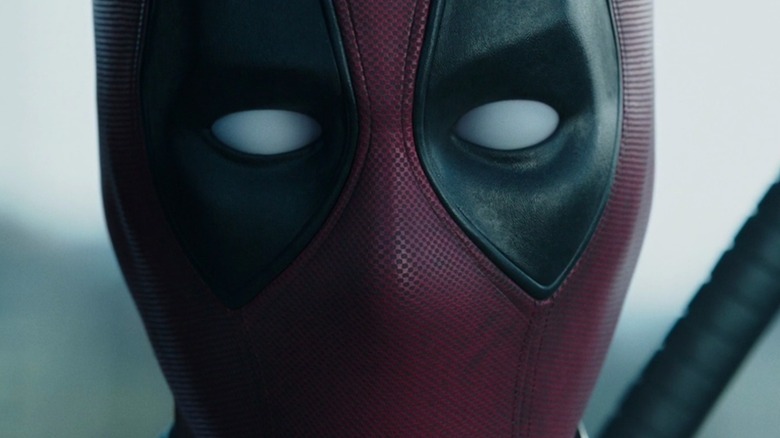
The debate's as old as time: will the MCU ever make a film that truly feels different? Many mostly regress towards the mean, at least stylistically. But as Phase 4 has expanded into the realms of animation or Chloe Zhao's intimate aesthetics, the question of what a Marvel movie can look or feel like has been renewed.
How fitting, then, that "Deadpool 3" has entered the chat. The forthcoming Ryan Reynolds picture written by the Molyneux sisters of "Bob's Burgers" fame is in a unique position. On the one hand, Deadpool's meta and fourth wall-shattering movies are already accepted by the mainstream; on the other, they represent a clear break from anything the MCU has done to date. After all, no major Marvel release has yet achieved an R rating and been packed with scatological innuendos or bloodletting violence.
"Deadpool 3" offers a rare opportunity for Kevin Feige to not only examine but redefine the MCU's artistic and comedic templates. Audiences know these movies. They love these movies. A third one will hit with that built-in audience while shaking up the MCU up irrevocably. So given that Deadpool offers a wide range of low risk narrative possibilities, here are ten storylines we'd like to see in "Deadpool 3."
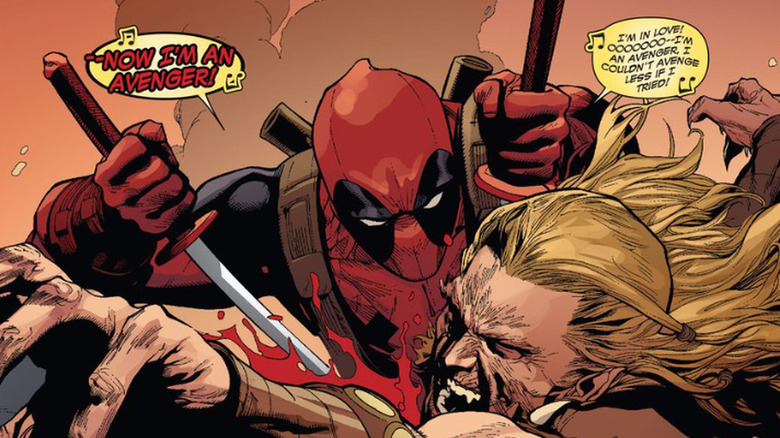
Not only is Gail Simone's "Healing Factor" the funniest Deadpool story ever written, it's one of the funniest comics ever written — truly. I think about it once a week; there's an action sequence involving Wade Wilson and a scooter he hopes is manly, one that culminates with a punchline so silly and ecstatic it would make Tim Robinson envious. If "Deadpool 3" is to top the absurdist highs of the X-Factor sequence in "Deadpool 2" or Dopinder's continued descent into low-level villainy, adapting Simone's "Healing Factor" would be a wise starting point.
Beyond its frequent hilarious highs, though, "Healing Factor" is a story which understands that Deadpool's fractured mind is as important to his survival as a manic wit or sword skills. The Merc With a Mouth is able to transcend or weaponize the endless conversation he has with himself more frequently than not; sometimes, that discourse saves him. In "Healing Factor," Wade's brain is quite literally poisoned. We've already seen him lose the love of his life on screen, but watching him lose his mind? That's an escalation -- and a journey most moviegoers would thrill to see Ryan Reynolds embark on. And, seriously: those scooter scenes.
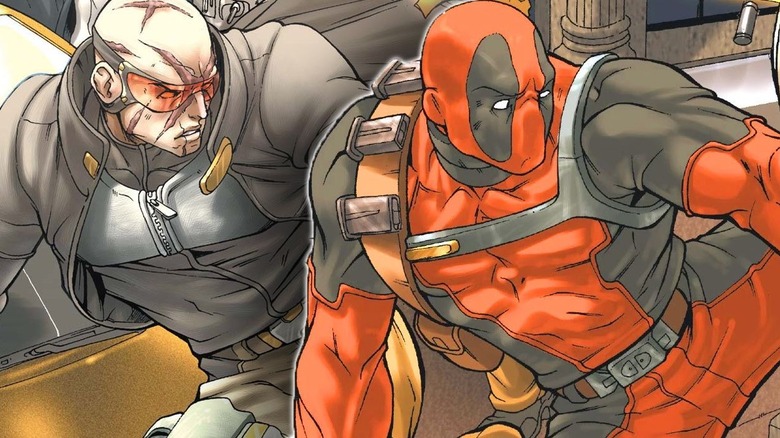
Adapting "Agent X" to film would be an almost impossible task — it's a story which hinges on deliberate obfuscation. The payoffs that writer Gail Simone baked into its story would play far better in print, all of them involving the identity of the helmeted Agent X. But again: "Deadpool 3" is the equivalent of house money. Why not make an exotic parlay?
In truth, the "Agent X" storyline might afford Marvel the opportunity to pull a stunt that Netflix and Beyoncé have mastered — the surprise release. God knows that Kevin Feige productions hinge on exquisite marketing; at this point the campaigns are almost films or characters unto themselves. And given that the discourse has hung for days or weeks on story-altering "Avengers" trailers or the slow Twitter-based reveal of film titles, what would be truly different for the MCU is a project which comes out of nowhere. If any company can afford it, they can — and "Agent X" could be that project. Conversely, if any storyline's marketing had earned the right to deliberately mislead audiences? It's this one. Watching Ryan Reynolds and the Molyneux sisters dance their way around outright lies concerning character identities on the press tour could be content gold.
What's more, "Agent X" could add a new (and thrilling) storytelling space to the MCU -- namely that of Agency X and their entire roster of covert mercenaries. Maybe taking it on is worth the difficulty.
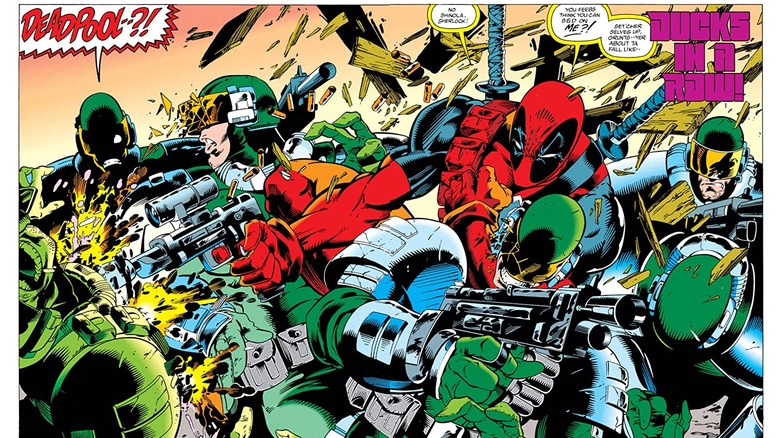
"The Circle Chase" is a Deadpool story as B-movie. It's crammed with gaudy but gritty set pieces, and its boundaries are those of budget and length rather than taste. It's also the sort of self contained affair which improves on repeat readings. Never mind that it has almost no normal continuity ramifications — it rips. Sometimes, reader, that's enough. And that's one of the primary reasons that "The Circle Chase" might anchor "Deadpool 3" and its story spectacularly. As excited as many are to see Deadpool in the MCU, part of what's made his movies sing is how glibly they enter continuity. A single shot of the X-Men is more effective for them than a storyline.
So while the rush to throw Wade in a room with Captain America is tempting, it's possibly more effective to let Deadpool be what he already is — a mouthy and sneakily simple back door for introducing mutants. In "The Circle Chase" alone, you have extended moments with Black Tom and Juggernaut. Making them focal points of a Deadpool sequel allows the MCU to (officially) slow-roll mutants into their cinematic universe without immediately confronting the Cyclops, Jean Gray, or Wolverine of it all. An investment in "The Circle Chase" is one in being able to tell Deadpool or X-Men stories for decades to come — and in that sense it feels like a no-brainer.
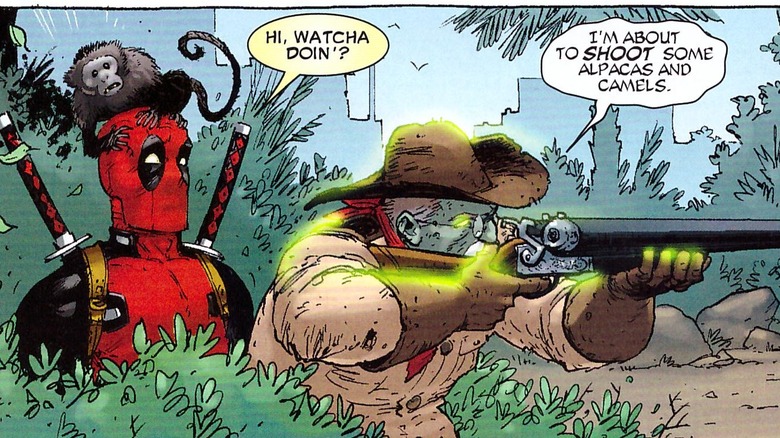
The MCU had incorporated current and historical figures into the fabric of its storytelling, but none would be more memorable (or offer a wilder template for great performances) than the Brian Posehn and Gerry Duggan penned Deadpool storyline "Dead Presidents." Several resurrected United States Presidents -- and then some -- go toe to toe with Wade Wilson himself. In this comic, Deadpool shoots Teddy Roosevelt in the head mid-"Looney Tunes" homage. To call it "nuts" is understatement.
That said: the size and scope of "Dead Presidents" might be exactly the ticket for Deadpool's MCU debut. Barring any unexpected appearances in "Spider Man: No Way Home," "Deadpool 3" could mark the first time a 20th Century Fox licensed character (officially) crosses over with Marvel proper. The moment will be massive. It's only fitting that whatever story contains this landmark of corporate synergy be gargantuan in size and energy. "Dead Presidents" is a template for this and more. And in the dead presidents themselves, Marvel has a veritable gold mine of scenery-chomping roles to cast actors in. Imagine Mark Strong as homicidal George Washington! Sacha Baron Cohen as an evil and pugilistic Abraham Lincoln! The possibilities are almost endless which, honestly, is what you want in a modern-day blockbuster. "Deadpool 3" will undoubtedly be fun, but "Dead Presidents" gives it a shot to be both gonzo and great.
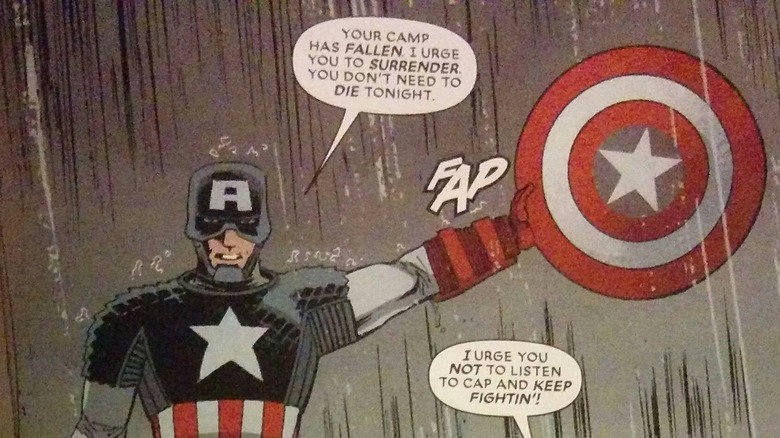
The MCU is making a point to create character crossovers in Phase 4. "Falcon and Winter Soldier" wound up hinging on Baron Zemo and (the now evil?) Sharon Carter; "Hawkeye" is set to feature Yelena Belova (introduced in "Black Widow"). Even the introduction of Deadpool to the MCU represents a crossover between two formerly separate studio properties. It would be both on-brand to place Wade Wilson in relation to other stalwart heroes. So while it's technically the longest of long shots, why not propose that "Deadpool 3" base it's story on Brian Posehn and Gerry Duggan's "The Good, The Bad, and The Ugly?" It would offer Kevin Feige a team up for the ages — Wade Wilson and Captain America.
Let's get this out of the way: there's no world in which Wolverine, originally featured in this tale, would be incorporated into a big-screen adaptation of this gritty yarn. But it wouldn't mark the first time the MCU has sharply deviated from its source material, and the story's core focus — on a series of dark truths at the heart of Deadpool's past — are a fascinating path to tread down. And even if you're not going to have Chris Evans return as Steve Rogers, the reliably glib Anthony Mackie as Sam Wilson would pair wonderfully with Ryan Reynolds. Most superhero movies are, at the end of the day, adaptations — and with a few adjustments, "The Good, The Bad, and The Ugly" might prove silver screen worthy.
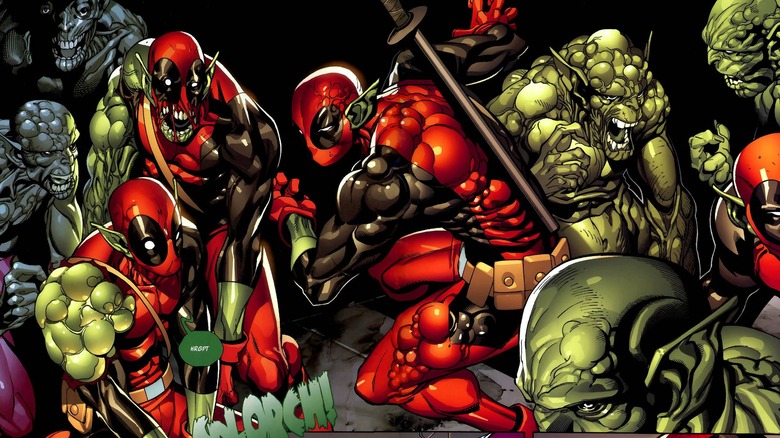
Truth be told, we're not sure what Disney+'s "Secret Invasion" is going to look or feel like. While the involvements of MCU mainstays Samuel L. Jackson and Ben Mendelsohn are confirmed (as well as newcomer Olivia Colman), Thomas Bezucha's series is deliberately shrouded in mystery -- both due to the source comic's twisty plot and the tricky nature of adapting it to the MCU. Whatever the case: if "Deadpool 3" is, in fact, set to release after "Secret Invasion" drops, there's a world in which it might be an adaptation of Daniel Way's "Deadpool: Secret Invasion" storyline. And there's very few worlds in which that wouldn't prove massive dividends for both Marvel and the viewers who love them.
Like the best Deadpool stories, Way's "Secret Invasion" run is reliably funny and violent. More than most, it marries those humorous and action-heavy tendencies to creative locales and sequences (an opening bout in a baseball stadium is particularly notable). And far more than most, it offers a disorienting and specific angle on how Deadpool's mind works. The work done by Way and artist Paco Medina redefined how readers experience Wade's interior monologue — and seeing it translated to cinematic form by the Molyneux sisters, Reynolds, and whatever director they choose could prove tremendously thrilling.
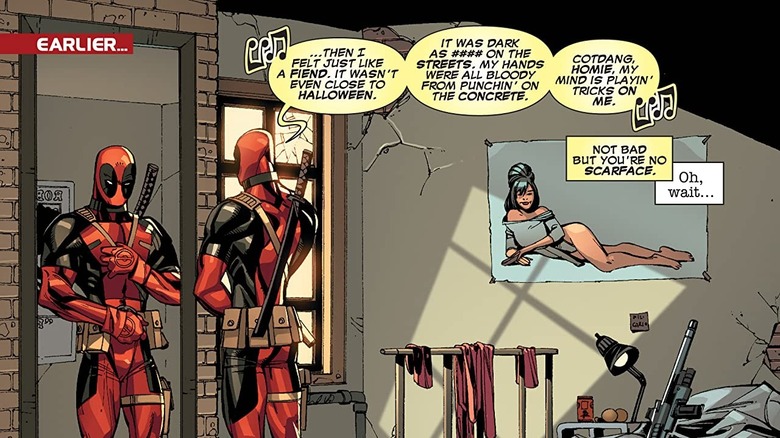
Making "Suicide Kings" the basis for "Deadpool 3" wouldn't give the MCU its "Rounders" or "Ocean's 11" but it wouldn't not do that either. The story's gambling-heavy antics (Deadpool is tricked into working for a wealthy one-percenter who owes obscene amounts of money to a loan shark) offer settings and story beats only briefly glimpsed in "Black Panther" — ones which yielded as strong an action set piece as the Marvel Cinematic Universe has produced to date. There's no reason it wouldn't do so here.
And if "Deadpool meets Brian DePalma's 'Snake Eyes'" isn't a strong enough pitch, here's another: luck, so intrinsic to gambling mythology, is already a major part of the Deadpool on-screen canon in the form of Domino. Having explored how luck and fate deal cruel hands to good people in "Deadpool 2," it would be thematically fitting to bring that discourse to the forefront in its next installment. All in all, "Suicide Kings"' could be a Deadpool story worth gambling on.
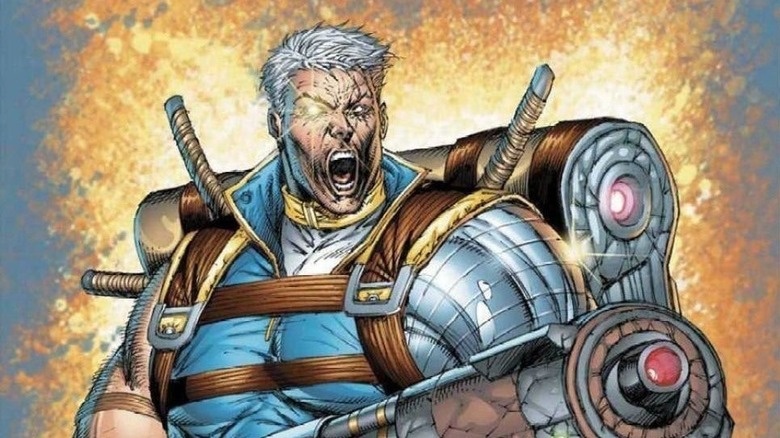
I'm of the opinion that "Deadpool 2" is vastly superior than its (also good!) predecessor, so why not build off its best elements? "If Looks Could Kill" — written by comics legend Fabian Nicieza and drawn by both Mark Brooks and Patrick Zircher — is, first and foremost, a Deadpool and Cable team up story. The miniseries served as a one-off upon its release in 2007 and has only grown in reputation since, making many "best Deadpool stories" lists in the fourteen years since. What's more, it's twisty plot hops all over the known Marvel universe (including but not limited to Wakanda) and offers Deadpool and Cable opportunities to bicker about everything from weapon size to France.
If you're imagining what a feast this would be for the powerhouse team of Ryan Reynolds and Josh Brolin, your impulse is correct. Not only is the pairing hard to resist on paper, but it reinforces the not-so dirty secret about the MCU: that these films are, at their heart, successful experiments of actor chemistry. The MCU house style — which allows for a certain amount of variance but is now wildly recognizable both in terms of plot and aesthetic — is as close to a constant as exists in modern cinema. Even in a pandemic, Marvel films are the year's top grossers. The variables, then, are the actors and characters who are either brought into the fold or return to it. Can a heroic pairing of Reynolds and Brolin carry an entire movie, let alone an entire franchise into the MCU? I'm no scientist, but I think it's an inquiry worth making.
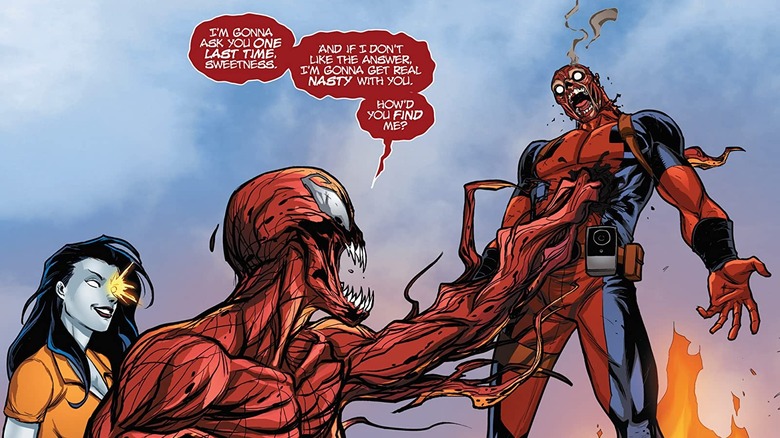
In the wake of "Venom: Let There Be Carnage," it's not clear what characters from Sony have or will be crossing over to the MCU. And even though it's highly unlikely we'll see Cletus Kasady again on the big screen, the "Deadpool Vs Carnage" comics run by Cullen Bunn offers the opportunity to have Woody Harrelson and Ryan Reynolds chewing up the screen together -- and I'm absolutely sold. For many of the same reasons running Josh Brolin and Reynolds back could prove beneficial, pitting Harrelson against the latter is just (if not more) interesting.
In "Venom: Let There Be Carnage," Woody Harrelson leaps onto Tom Hardy's wavelength. No decision is too much, no acting choice in lowercase. Replace Hardy with Reynolds' Wade Wilson, however, and an entirely different Carnage becomes possible. It's hard to imagine Cletus Kasady as a straight man to any character but, with the Merc With A Mouth, that's the only path to success. Someone has to ground the story in real stakes — a job which fell to Cable in the "Deadpool 2" and cancer in the first. An opportunity to make Carnage even more frightening (and, perhaps, R-rated) would seem a welcome one for both the character and Woody Harrelson. Couple that with some of the genuinely terrifying beats from Bunn's original story, and you have a third Deadpool movie both surprising and primed for box-office glory. Hey, Deadpool: let there be Carnage.
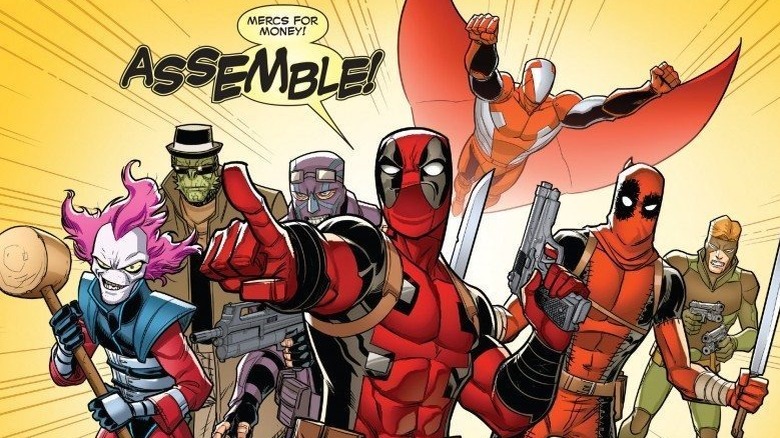
Watching Deadpool attempt to lead a team of erstwhile mercenaries in "Deadpool 2" was that film's highlight -- it blended dark comedy, star power, and genuine action beats as seamlessly as Juice Press does veggies. Given that: why not team Wade Wilson out with even more mercs in "Deadpool 3?" Cullen Bunn (who wrote "Deadpool Vs. Carnage") had the same idea four years ago, when he made Wilson the team leader of the Mercs for Money -- a ragtag team of c-listers who are in for the cash and glory, almost certainly in that order.
Why adapt this arc, however? Simple: it ties together several disparate strains of Marvel continuity. "Deadpool 3" will release after "Hit-Monkey" drops on Hulu; Hit-Monkey is a Merc for Money. The Mercs for Money are eventually led by Domino; Zazie Beetz crushed the role in "Deadpool 2." Finally, Bunn's first volume of "Deadpool and The Mercs for Money" finds the squad battling none other than Negasonic Teenage Warhead, who has already appeared in both "Deadpool" movies. And as "Captain America: Civil War" proved, sometimes the best way to establish memorable villains on screen is simply having heroes fight each other. Of all the stories on this list, the Deadpool movies are primed and ready to adapt this one most readily.
Read this next: Spider-Man Movies Ranked From Worst To Best
The post 10 Deadpool comic storylines we'd love to see in Deadpool 3 appeared first on /Film.

With the dog days of summer behind us, so are well-manicured feet. While we (hopefully) take better care of our peds when they’re on display in the flip flops, strappy wedges, and mandals of July, when we enter into the sneakers, slippers, and Uggs phase of the year, things decline. As fall descends, it’s easy to…
Read more of this story at Slashdot.

More details are coming to light regarding the incident that left cinematographer Halyna Hutchins dead after a prop gun misfire on the set of the Alec Baldwin Western, "Rust." The shooting also left director Joel Souza injured and has brought renewed attention to film crew working conditions, something IATSE (the International Alliance of Theatrical Stage Employees, of which Hutchins was a member) had been negotiating to improve even before the fatal accident.
Deadline shared the details from an affidavit written by a detective in the Santa Fe Sheriff's Department. They reiterate that Baldwin had been careful handling the prop gun before discharging it. According to the affidavit, assistant director Dave Halls did not know there was a live round or rounds in the gun before giving it to Baldwin. He grabbed one of three guns from a cart that armorer Hannah Gutierrez had prepped, then handed the weapon to Baldwin and indicated it had no live rounds by yelling, "Cold gun!"
Baldwin fired the gun during rehearsal for a scene, striking Hutchens and Souza behind her. They had been preparing for the scene, broke for lunch, went offset, and it's uncertain whether anyone checked the guns again after that.
After the shooting, Baldwin changed out of his Old West-style clothes, which were covered in blood. Gutierrez took the gun and gave it to Halls, who removed the spent shell casing and handed it to deputies once they arrived.
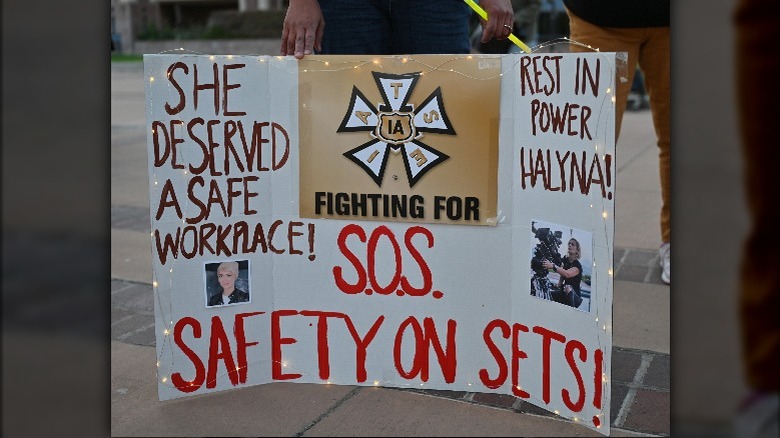
When the detective arrived on the scene, he saw that Hutchins had been shot in the chest and Souza had been shot in the shoulder. Hutchins was quickly helicoptered to the hospital, where she died. The gun went into police custody along with the gun cart, which had been left outside of the church where they were filming before the scene due to Covid restrictions.
Souza later gave a statement saying that the workday started late because seven crew members had walked out and "Rust" needed to find a new non-union camera crew. Having only one camera slowed the day, but Souza claims that despite the stresses, he knew of no altercations. He was more focused on cameras and monitors. They were not filming when Baldwin drew his weapon and pointed it toward the camera during the rehearsal.
Souza was standing behind Hutchins, and both he and Baldwin believed the gun was cold. He explained that, according to his knowledge of firearm safety on set, there should never be live ammunition anywhere near a scene, but that the guns themselves are the only thing checked before a scene.
New information reveals that the gun was used that morning for target practice on beer cans with live ammo. Needless to say, the circumstances preceding the death of Halyna Hutchins have opened up a lot of questions about safety in the film industry during productions. We will continue to follow this story as it develops.
Read this next: The Best Movies Of 2021 So Far
The post Rust Affidavit Reveals What Happened Leading Up to the Fatal Shooting appeared first on /Film.

In some instances, the M1 Max with 32 GPU cores has impressed thoroughly, and in others, not so much. On this occasion, a lead developer of the image editor Affinity Photo points out that Apple’s latest silicon beats the AMD Radeon Pro W6900X, which was the fastest GPU ever tested using the application and costs a whopping $6,000.
According to Andy Somerfield, his Twitter thread highlights that Affinity Photo has been optimizing its program ever since Apple announced the M1 and he wanted to see how far the M1 Max has come in performance. Affinity Photo has developed its own benchmark suite with which it measures this performance, and it runs best when a GPU can deliver high bandwidth and compute performance.
Previously, the Radeon Pro W6900X held the crown for the fastest GPU in Affinity Photo’s leaderboards, thanks to its 32GB GDDR6 onboard memory that could deliver 512GB/s of memory bandwidth. In comparison, the M1 Max with a 32-core GPU tops out at 400GB/s of memory bandwidth. Despite this difference, Apple’s top-end custom SoC outperforms the heavily expensive AMD solution, which also consumes roughly 300W and needs a separate slot to be put into.
Coming to the numbers, the M1 Max scores 32891 in the Raster (Single GPU) test, while the AMD Radeon Pro W6900X barely trailed behind with a score of 32580. While this win goes to Apple, Somerfield points out that not every task will favor the M1 Max GPU, but these results show how the 2021 MacBook Pro models can be the go-to portable machine for editing images using Affinity Photo.
So, with the upcoming delivery of new #M1Pro and #M1Max hardware to customers next week, I thought I’d spend a couple of days talking about how @affinitybyserif Photo uses GPUs, how our benchmark works and what we should reasonably expect from this new hardware
pic.twitter.com/niiTa901oe
— Andy Somerfield (@andysomerfield) October 23, 2021
Instances where the M1 Max GPU came up short, was in previous gaming benchmark results, where it barely beat a 70W laptop RTX 3060 and was thrashed by a 100W RTX 3080. It also underperformed in the 8K Adobe Premiere Pro test, where it just managed to take the lead against the Surface Laptop Studio, which does not sport powerful specifications at all. However, since Premiere Pro is not optimized for Macs, you will see such results. If you really want to take advantage of all this hardware, run Final Cut Pro and see what figures you get.
In fact, DaVinci Resolve boasts around five times faster editing with 8K videos on the 2021 MacBook Pro models, so for certain programs, the M1 Max GPU will excel beyond your wildest expectations. Do remember to check out Andy Somerfield’s Twitter thread to know more about how the benchmark tests were done, and do not forget to share your thoughts down in the comments.
The post Apple’s M1 Max GPU With 32 Cores Beats a $6000 AMD Radeon Pro W6900X in the Affinity Benchmark by Omar Sohail appeared first on Wccftech.

We can all agree that the 2021 MacBook Pro armed with Apple’s M1 Max can effortlessly run circles around last-generation hardware, but to do it while receiving power from the battery is unworldly. The 5K iMac featuring a Core i9 CPU and an AMD Radeon 5700 XT was unable to beat Apple’s fastest portable Mac, which goes to show you how far the company’s custom chipsets have scaled in performance in a short time.
Earlier, we reported that the M1 Max obtained a GPU score that was three times higher than what the M1 obtained, but what about when it faced off against Apple’s powerful desktop offering? According to YouTuber Jonathan Morrison, the 16.2-inch 2021 MacBook Pro does not have any competition here either because, in the Geekbench 5 Metal benchmark, which stresses the GPU, the M1 Max obtained a higher score while running on battery power.
Before we proceed, we want to point out that high-end Windows gaming laptops limit the GPU’s power limit when the machine is running on battery power, so it does not degrade its lifespan. Unfortunately, this severely limits the performance of chips when running benchmarks and games. Apple, however, does not appear to like this approach, because according to the scores obtained by the 2021 MacBook Pro, it is running at full tilt, securing 68,184 points. While running the same test, the 5K iMac with an Intel Core i9 CPU and an AMD Radeon 5700 XT GPU attained a score of 58,919.
GB5 Metal Performance
M1 Max MBP 16” - 68,184
i9 5K iMac w/5700XT - 58,919
Also, the MacBook Pro was on battery.
— Jonathan Morrison
(@tldtoday) October 25, 2021
Granted, the 5700 XT is based on older architecture, but even in 2021, where an ongoing GPU shortage has persisted, this graphics processor will easily last you a while and give you respectable framerates in modern-day games. For customers who currently own this iMac configuration, there is excellent news to help you with a replacement, though you will have to wait for it next year. Apple will reportedly incorporate mini-LED technology on the next iMac, which can only mean the upcoming AIO family can be treated to the M1 Pro and M1 Max.
In gaming benchmarks, the M1 Max’s 32-core GPU continued to impress, though it lost to a 100W laptop RTX 3080. When it comes to tackling other tasks such as image editing, an Affinity Photo developer commented that this GPU is faster than a $6000 AMD Radeon Pro W6900X, which was previously the fastest GPU ever tested using the editing program.
How impressive do you think these results are? Tell us down in the comments.
The post 2021 MacBook Pro With M1 Max Scored Higher Than Apple’s 5K iMac With Core i9, 5700 XT in GPU Benchmark While on Battery Power by Omar Sohail appeared first on Wccftech.
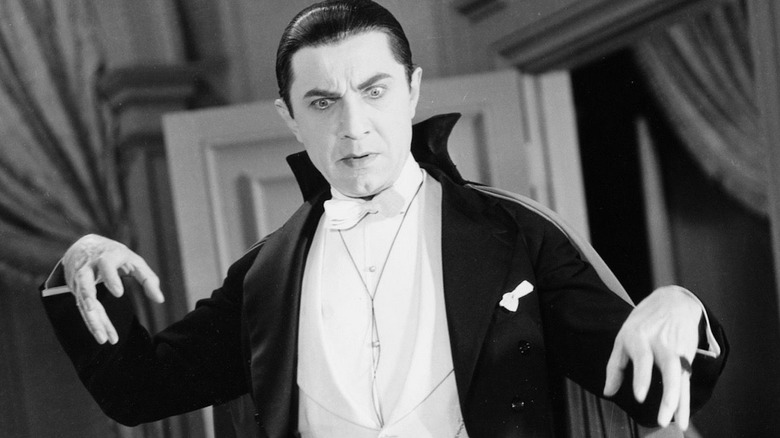
Count Dracula is, and always has been, a sex symbol. All those horny love letters women sent to Bela Lugosi prove it, but if you need more, look to the symbolism: A man sneaking into your room at night to do a little necking and turn you into an (ahem) creature of the night. Looking at things from a more modern perspective, the man owns his own house — a castle, no less — which is more than most Millennials swiping through dating apps on the hunt for someone to split life expenses with can possibly hope for. Hell, I'd go for Drac without the real estate, as long as he had good dental benefits I could glom onto. (The question of whether vampires go to the dentist is one for another time.)
And yet, there's a side of Dracula that makes him sub-optimal as a mate ... and no, it's not all the murder. (OK, it's also the murder.) Dracula, it must be said, cannot dress for s***, and it's time we talked about it.
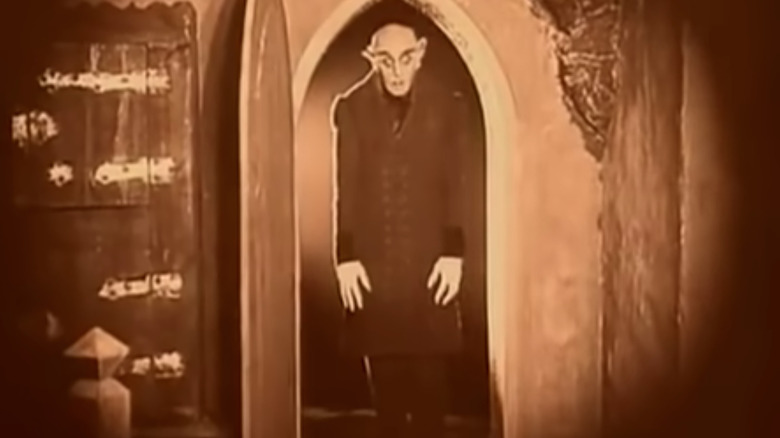
Dracula had his feature debut in 1922's silent film classic "Nosferatu," where he was played by Max Schreck. The name of Schreck's creepy vampire was "Count Orlok," true, but the film's similarities to Bram Stoker's "Dracula" were marked enough for Stoker's estate to successfully sue producer Albin Grau for copyright infringement. And thus, Dracula's pop culture bow established a part of his character that would, by and large, remain relatively intact throughout the following near-century: when it comes to fashion, Drac is one basic b****.
Orlok's military coat and straight-legged jeans combo (and, okay, the coat is serviceable) was supplanted in 1931's "Dracula" by Dracula's now-iconic outfit: a black suit, white shirt combo with (the piece de resistance) a cape, expertly wrangled for maximum drama by Bela Lugosi. (Wear the cape. Never let the cape wear you.) The duds? Fine. A solid six out of ten. They look tailored. They also look boring — if you're an immortal creature some hundreds, potentially thousands of years old, would you not have gotten bored enough at some point to invest in a personal menswear style that's actually interesting?
If Dracula were just Some Dude™, that would be one thing,–but he is, forever and always, the poster boy of vampires. If you have the mantle of history (in addition to a cape) on your shoulders, one would think you'd take a little responsibility for looking your best. Instead, Dracula rests on his laurels. He's the equivalent of every man with the audacity to wear a boring old tuxedo to, of all things, the Met Gala. Dracula pulls the most expected outfit from his closet — he probably has dozens of the same thing, all lined up in a row — and thinks he's put in enough effort to deserve his own vampire wife harem. No.
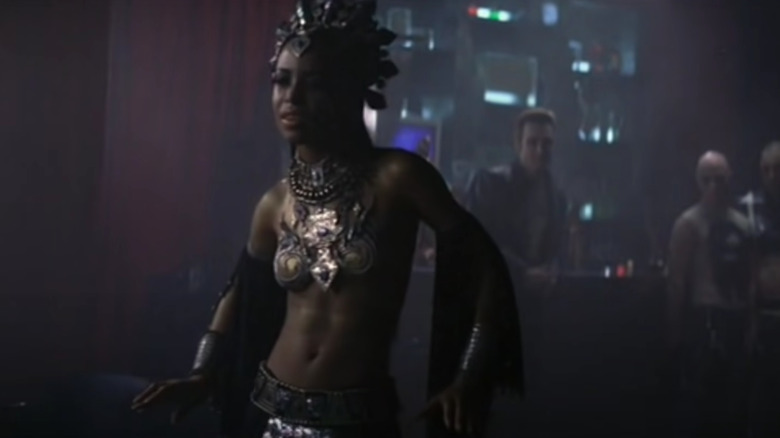
Drac's cinematic progeny have succeeded where he failed. Through the decades, costume designers have expressed the twin exotic and eroticism of vampires through clothing, taking the trends of the era and giving them a little bump towards the fashion-forward extreme. Think the Hot-Topic-on-steroids aesthetic favored by the vampires in the "Underworld" franchise; Aaliyah's abs-bearing metal bikini top in Queen of the Damned; and cravats for days in "Interview with the Vampire." Blade: half the vampire that Dracula is, but twice the fashion sense.
Or, to take it out of the '90s/early aughts: Bill Paxton slashed a man's throat with his spurs in Kathryn Bigelow's "Near Dark." In 1935's "Mark of the Vampire" — like Dracula, directed by Tod Browning and starring Bela Lugosi — Luna brought face. "Blacula" lead Mamuwalde: on the edge of dull, but the ascot pushes it to the right side of history. And "The Lost Boys": what do I even need to say?
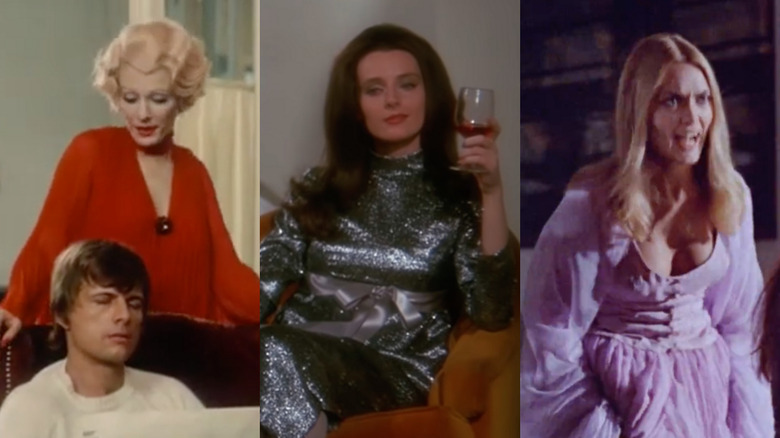
And then there are the lesbians.
The lesbian vampires, that is, star of a sub-genre of horror films that thrived through the '70s, with directors (and auteurs of borderline softcore) Jesús Franco and Jean Rollin leading the charge. There's never been a more fashionable vampire than Delphine Seyrig in Harry Kümel's "Daughters of Darkness: — but Sapphic bloodsuckers from films like "Vampyros Lesbos," "The Blood Spattered Bride," "The Velvet Vampire," and more give her a run for her money. In 1936's "Dracula's Daughter" (in which the lesbianism is, if not outright stated, at least heavily implied), Countess Marya Zaleska (Gloria Holden) brings something to the vampire fashion fold that dear ol' dad couldn't be bothered with: multiple changes of clothing. Just because you're undead doesn't mean you have to smell undead.
Meanwhile, there's Drac. In "Buffy the Vampire Slayer" — a gold mine of eye-catching (if usually in a bad way) '90s trends — he looks like a dollar store Criss Angel. Gerard Butler sunk his teeth into the role in "Dracula 2000," where he was helped along in his route to badassness by... uh... a black duster he found on the clearance rack at Ann Taylor? In 1979, Frank Langella mixed things up by adding a wrap shirt to Dracula's closet, at least. Even the great Christopher Lee couldn't make the basic black suit/black cape combo look all that compelling.
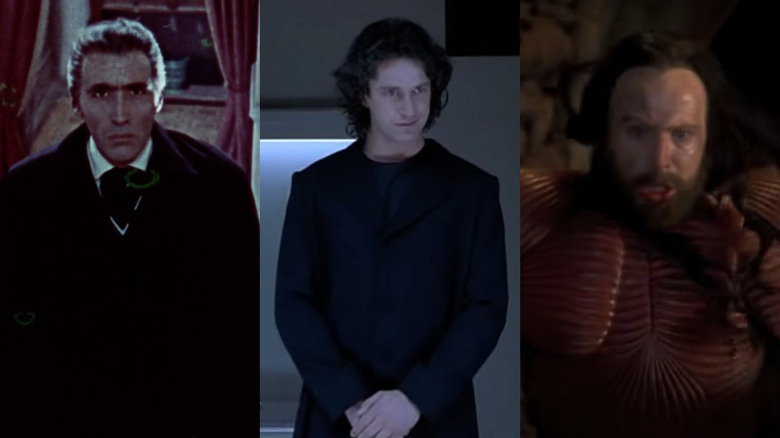
There is one exception, and it's a big one. "Bram Stoker's Dracula," directed by Francis Ford Coppola, takes every shred of sartorial spice that could have been spread across nearly a century and packs it into one movie. Gary Oldman proves Dracula's most fashionable incarnation, with costume designer Eiko Ishioka kitting him out in an anatomical-looking suit of armor, a dove gray suit with (gasp) actual detail-work, and a pretty swaggy loungewear ensemble. If anything, the existence of Oldman's Dracula wardrobe proves my point: it took Eiko Ishioka, one of the most impressive, innovative, and downright brilliant costume designers ever in the game ("The Fall," "The Cell," "Mirror Mirror") to make Dracula dress like anything other than a complete putz.
In short, Dracula: Your clothes suck.
Read this next: The 15 Best '70s Horror Movies Ranked
The post Why Can't Dracula Dress for S***? A Look at Our Worst-Dressed Movie Monster appeared first on /Film.
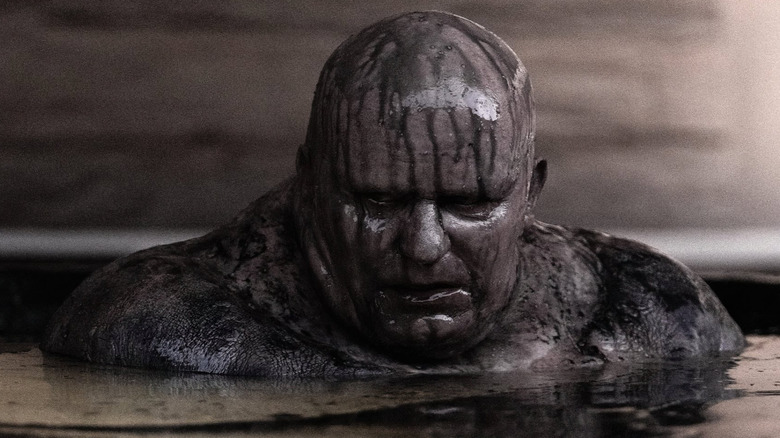
The "Dune" news keeps on rolling in -- and like a ravenous sand worm that consumes everything put before it, we just can't stop writing, reading, and thinking about this movie. Everything we've learned about Denis Villeneuve's sci-fi epic makes us appreciate the pure passion and talent that made the film possible even more than we did before. From Zendaya only being on set for seven days to the "Star Wars" inspiration, there was clearly a lot happening on behind the scenes of the "Dune" set, but no news has delighted us more than Stellan Skarsgård's devotion to his craft and his character.
Skarsgård -- who plays one of the big baddies in "Dune," the abominable Baron Vladimir Harkonnen -- apparently had a lot to say on set about his terrifying take on the character. According to makeup artist Donald Mowat, who was interviewed by The Wrap, Skarsgård was practically begging for more nude scenes, which is only surprising because he was nude in most of the scenes that made it into the final cut of the film anyway. Skarsgård is nude (although, with some very serious makeup on) all over this movie and I'm thrilled at the idea that he couldn't get enough.
As Mowat explains in the interview, "Stellan just loved being naked as the Baron ... We all used to kill ourselves laughing when Stellan would ask for more nude scenes. He felt, quite correctly, that the Baron appeared more frightening and dangerous unclothed than cloaked in robes or armor. So he was always asking for more nudity."
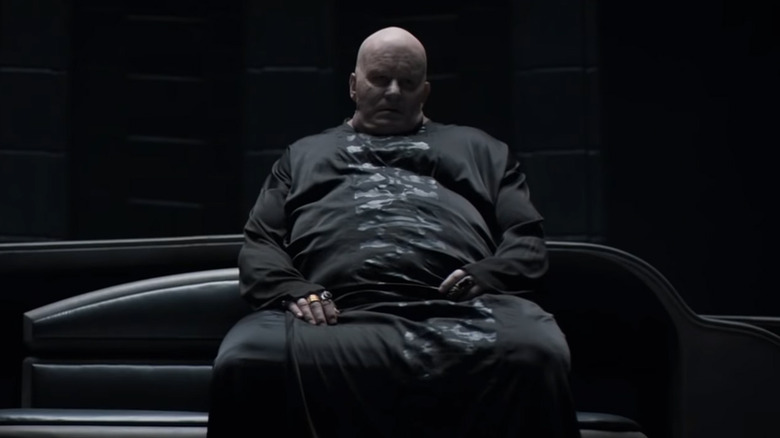
Skarsgård's take on the Baron is pretty different from the Harkonnen introduced in Frank Herbert's novels. In the books, Harkonnen is essentially a scheming oligarch with a penchant for child abuse, but in the films he comes off more monster than man.
By stripping him down, literally and figuratively, to a foreboding character whose motivations beyond pure greed and violence are unclear, Skarsgård makes the Baron seem even more frightening. The Baron is obviously so comfortable with his choices, so filled with hate, that he's confident being completely nude on one of the most demanding and vicious places in the "Dune" universe, his home planet Geidi Prime.
Considering how much time went into transforming Skarsgård into the Baron, it's incredible that he wanted more. According to Mowat:
"It took five people about four hours to apply Stellan's makeup ... And that was when the Baron was wearing a costume. Naked, it took six-and-a-half or seven hours. That's a huge difference in the day, but it was worth it."
If anything, this proves that Skarsgård is a true professional who is willing to do whatever it takes.
"Dune" is in theaters and on HBO Max now.
Read this next: The 14 Greatest Science Fiction Movies Of The 21st Century
The post Dune Star Stellan Skarsgård Kept Demanding More Nude Scenes appeared first on /Film.
Eric Roth, co-writer of the screenplay for blockbuster hit Dune (and how odd it is to write "blockbuster hit Dune"), works using a 30-year-old screenwriting app that runs under MS-DOS, an operating system last updated 21 years ago. He types using a magnificent IBM Model M keyboard of even greater vintage. — Read the rest

If you’re short on cabinet space or are looking for a new way to organize your pots and pans, a pot rack is often a great solution for big and small kitchens alike. And you can hang one yourself using just a few tools and an hour or two of your time.
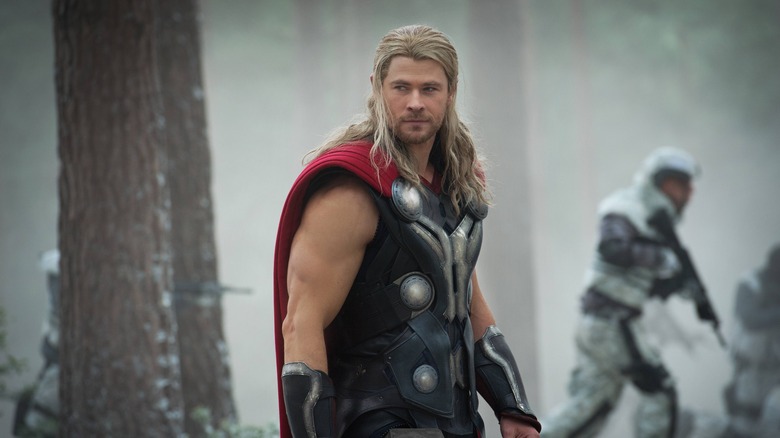
More interesting tidbits are emerging from Abrams Publishing's gargantuan (512-page) new book "The Story of Marvel Studios: The Making of the Marvel Cinematic Universe" by Paul Terry and Tara Bennett. Like yesterday's story about Joss Whedon landing the "Avengers" directing gig due to a recommendation from the producer's wife, this new nugget revolves around perception, namely that of Marvel Cinematic Universe headliner Chris Hemsworth.
You see, Marvel Studios runs such a tight ship that often their own stars have no idea what is happening. Yes, even you reading at home might be more on the up-and-up than some of the actors who play the heroes and villains of the MCU. Heck, even actor Wyatt Russell had no clue what was happening in "The Falcon and the Winter Soldier," and co-star Sebastian Stan basically told the dude to quit asking while he was ahead. That is why Hemsorth temporarily felt like Thor was being quietly swept under the rug after he flew away from the Avengers compound at the end of 2015's "Avengers: Age of Ultron."
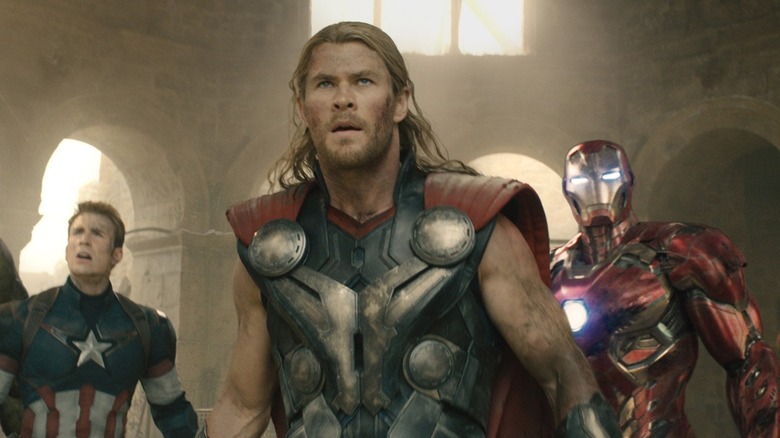
Here is the quote from the new book (via ScreenRant) where Hemsworth explains how he came to feel like he was fired and hadn't been told:
"I remember being on the 'Age of Ultron' press tour, and everyone was talking about 'Civil War.' I was like, 'What's Civil War?' I asked, 'Are you doing a side-project or something?' They're like, 'Oh no, Captain America, y'know? The next one is Civil War.' I'm like, 'Wait... Iron Man's in that?' And it's like, 'Yeah, but there's not just Iron Man. There's Vision (Paul Bettany). There's Spider-Man (Tom Holland) ... [Marvel] said, 'You're doing your own thing.' ... I thought, 'This is it. I'm being written out.'"
Admittedly, this idea probably didn't come out of nowhere. At the time Hemsworth had come off of 2013's "Thor: The Dark World," which had been savaged by critics and fans. Then in "Age of Ultron" a good deal of Thor's scenes were left on the cutting room floor, with Hemsworth only getting a measly 14-minutes of screen time despite being second-billed behind Robert Downey Jr., who got 45-minutes onscreen in the ensemble team-up movie. That's right, Quicksilver and Scarlett Witch got more action than the God of Thunder, although it may stem from the fact that Thor is so vastly overpowered compared to other Avengers that he had to be subtly sidelined in order for there to be any challenge for the other heroes.
Of course, once 2017's "Thor: Ragnarok" came along Hemsworth finally found the right balance of humor and pathos for the character. We also got to find out what Thor was actually up to while "Civil War" was happening, which turned out to be ... not much!
Read this next: 13 Fantasy Films That Never Got Sequels
The post Chris Hemsworth Thought Thor Was Written Out of the MCU After Age of Ultron appeared first on /Film.

We've already had a sinfully tiny taste of Paul Verhoeven's salacious nun romance "Benedetta" via a teaser trailer and an official Cannes Film Festival trailer. With its December 3, 2021 release date finally getting closer, one last trailer has been revealed to titillate and seduce audiences into checking out this absolutely wild period piece.
If you had any concerns that Verhoeven's latest wouldn't be as shocking as any of his previous work, he literally has Jesus talking to the nun Benedetta (Virginie Efira) in a field. She shows signs of stigmata, or wounds in the hands and feet that resemble the wounds Christ endured when he was crucified. There's also a lesbian kiss. No wonder some Catholics have been protesting!
While lesbian nuns who see visions of Christ in sheep fields seem like a major departure for Verhoeven, best known for directing "RoboCop" and "Starship Troopers," the director did publish a book called "Jesus of Nazareth" in 2008 and he is a bonafide religious scholar. Catholicism and blasphemy have clearly been on his mind for awhile.
So what's "Benedetta" about? Here's the official synopsis:
In the late 15th century, with plague ravaging the land, Benedetta Carlini joins the convent in Pescia, Tuscany, as a novice. Capable from an early age of performing miracles, Benedetta's impact on life in the community is immediate and momentous.

Perhaps the best part of all of this blasphemous nun-humping is the fact that it actually happened. Verhoeven obviously took some liberties with the story, but "Benedetta" is based on the book "Immodest Acts: The Life of a Lesbian Nun In Renaissnce Italy" by Judith C. Brown. The book is a deeply researched tome about the life of Sister Benedetta Carlini, Abbess of the Convent of the Mother of God. Possible spoilers ahead for the movie, but these are events that happened more than 400 years ago.
The real-life Benedetta entered the convent at the age of nine. She started having visions at the age of 23, both erotic and religious in nature. She was elected abbess due to the visions, but she later stirred controversy when she claimed to have actual contact with Christ. (Sort of like in the trailer!) Church authorities eventually discovered that she had faked the visions and the stigmata, and in the course of their investigations they uncovered her lesbian affair with another nun named Bartolomeo.
You can check out this horny historical drama for yourself when "Benedetta" hits theaters and VOD on December 3, 2021.
Read this next: Stanley Kubrick's Most Iconic Characters Ranked
The post Benedetta Trailer: God Speaks In Many Tongues In Paul Verhoeven's Nun Romance appeared first on /Film.
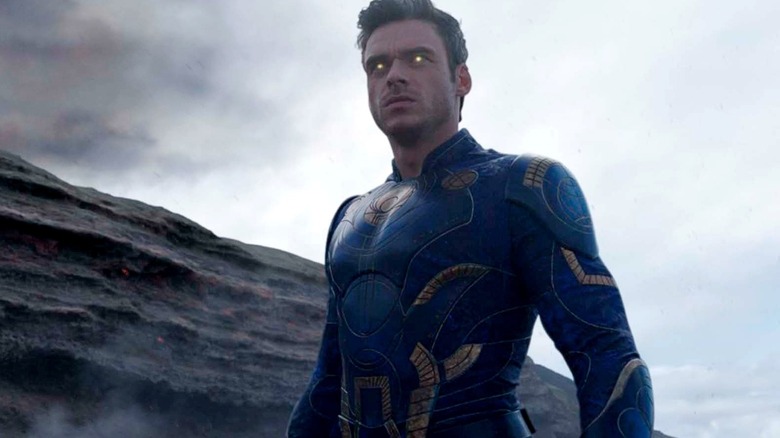
Given how each and every movie in the Marvel Cinematic Universe these days can't seem to escape receiving an intense level of scrutiny, it has become readily apparent that there's simply no such thing as a throwaway gag anymore. Filmmaker Chloé Zhao just might be discovering this the hard way, after a certain "Eternals" clip released during the film's marketing push happened to include a seemingly innocuous Superman reference.
The internet being the internet, of course, everyone immediately latched onto this and ran with it. In absolutely no time whatsoever, fans spun themselves into knots in their attempt to wrap their minds around the fact that the MCU could contain another famously fictional group of superheroes. What's the MCU equivalent of "Marvel vs. DC" fanboy wars? Did "Zack Snyder's Justice League" ever release in-universe, or did Thanos' snap complicate matters? If Christian Bale's Gorr the God Butcher ever makes it to Earth in "Thor: Love and Thunder," will everyday citizens wonder why he resembles Bruce Wayne from Christopher Nolan's "The Dark Knight" trilogy?
These are just a few of the existential questions currently consuming the minds of superhero fans everywhere, all as a result of opening up the Pandora's Box of (gasp) acknowledging a DC superhero in a Marvel movie. Check out what Zhao had to say about sneaking this fun little gag into "Eternals" and unleashing total chaos.
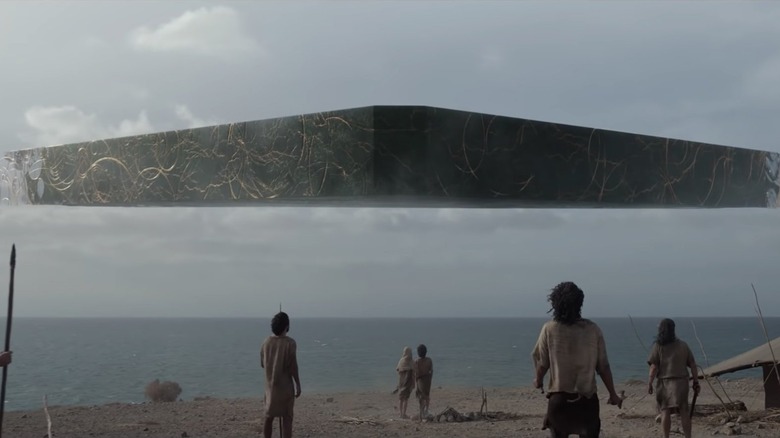
After the Superman Reference Heard 'Round the World, "Eternals" director Chloé Zhao is opening up about how she managed to get away with this status quo-shattering revelation fun and meaningless joke in a scene between Ikaris (Richard Madden), Sersi (Gemma Chan), and the family of Phastos (Brian Tyree Henry). After Ikaris appeared on TV, the powerful Eternal has become a superhero celebrity of sorts, naturally eliciting comparisons from Phastos' kids to Superman.
Speaking to Variety, Zhao playfully admits that "I take responsibility for that" and that there wasn't even all that much discussion needed in order to bring that moment from the script to the big screen:
"You write it on the page, show it to Kevin [Feige], if he doesn't say anything, that's a go. I don't think there was a conversation. Not really, except, he goes, 'Oh, that's cool.'"
More seriously, Zhao explains that "Eternals" takes its cues from myths and legend. Since some consider superheroes to be the closest thing we have to a modern shared language, it was a perfect fit to include such a reference in this specific movie.
"We're playing on a genre that draws so much from mythology, and Superman, for example, was created in the comics and also by these brilliant filmmakers along the way — they're modern reinterpretations of mythical characters that exist in different cultures. Ikaris is our interpretation of it. It doesn't mean we can't pay tribute to the really iconic version that we've all grown to love and has influenced us."
As unstoppable a juggernaut as the MCU appears to be right now, it's clear that none of these movies would be happening without the cinematic superhero that started it all -- Superman. So rather than get caught up in the "canon" concerns of it all, think of this as more of a long-overdue homage to the famous and beloved Man of Steel. As Zhao adds, "Everything that's referenced in this film, whether it's in words or visually, is a tribute. It's out of love and our admiration for these characters."
"Eternals" is due in theaters on November 5, 2021.
Read this next: Superman Movies Ranked From Worst To Best
The post How Eternals Director Chloé Zhao Got Superman Into the MCU appeared first on /Film.

One of genre cinema's great bright lights is turning simply electric for the Halloween season. Fangoria has unveiled a new Divas of Darkness photoshoot with the legendary Barbara Crampton ("We Are Still Here," "You're Next," "Re-Animator") as she gets a Bride of Frankenstein bedazzling from make-up man extraordinaire Brett Freedman. The LA-based makeup artist is transforming Crampton into two more horror icons before the week is up, so keep your eyes peeled for that.
For those of you not in the cool monster kids club, Crampton has been a mainstay of horror and thrillers since her debut in Brian De Palma's 1984 shocker "Body Double." She endeared herself to fans with a trilogy of H.P. Lovecraft-inspired flicks pairing her with Jeffrey Combs and director Stuart Gordon for producer Charles Band: "Re-Animator," "From Beyond" and "Castle Freak," the latter of which she recently produced a remake of. In addition to her movie work as both actress and producer, she has also appeared on recent hit series like "Channel Zero," "Into the Dark," and "Creepshow."
Besides being one of the sweetest and most thoughtful actresses I've ever interviewed, Crampton consistently carries those qualities over to her roles, even in non-genre fare like Zach Clark's wonderful goth nun dramedy "Little Sister." That is why it is so fun to see her embodying Elsa Lanchester's titular "Bride of Frankenstein" from James Whale's 1935 sequel. Like that film, which remains a perennial favorite for its camp charm, Crampton also has that timeless quality about her.
Even Freedman seemed particularly taken with how her makeover turned out, as he writes for Fango:
"The idea was to take Bride's look out from the dark shadows and give it the oh-so-Hollywood magazine cover treatment. I knew Barbara would be gorgeous in the look...but what I didn't expect was how fully she would embody each character. I figured the makeup, hair and clothes would sell it just fine. I learned that the body language, vibe and commitment of the actress would bring it all to life with even more depth."
While it may be too much to hope for Crampton to actually land the role in a new movie version, one can hope. As it stands, producer Amy Pascal was still trying to get a modern "Bride" reboot off the ground last year, possibly with "A Quiet Place" helmer John Krasinski directing and the long-mooted Angelina Jolie to star.
Read this next: The 20 Best Zombie Movies Of All Time
The post Horror Legend Barbara Crampton is Spending Halloweek Cosplaying the Divas of Darkness with Fangoria appeared first on /Film.
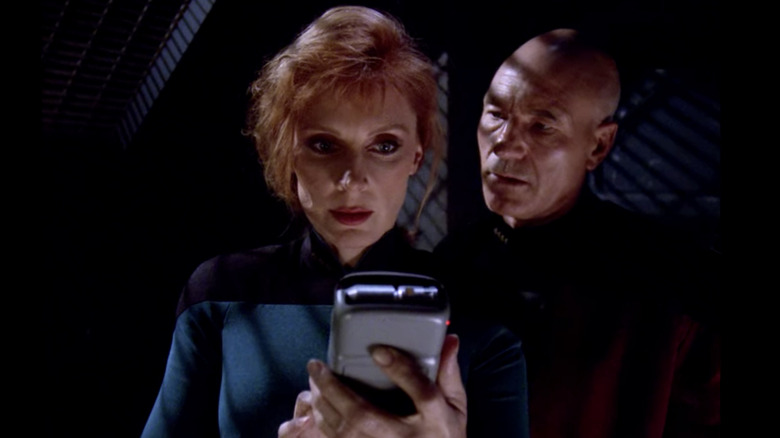
On "Star Trek: The Next Generation," Captain Jean-Luc Picard, played by Patrick Stewart, and Dr. Beverly Crusher, played by Gates McFadden, always had one of those will-they-or-won't relationships that left fans wondering whether they would ever become an official item, romantically speaking. Now that Stewart's character is back captaining his own Paramount+ series, "Picard," it's possible that Dr. Crusher could return at some point and we could see them rekindle their relationship.
In the meantime, there's all of "The Next Generation," which has left us with a complicated relationship history worth untangling. It all goes back to Picard's time on the USS Stargazer. He was commanding the ship during the mission where Crusher's husband, Jack, died.
In "Encounter at Farpoint," the pilot episode of "The Next Generation," Picard meets Beverly and Jack's full-grown son, Wesley Crusher (Wil Wheaton), for the first time. He isn't thrilled, at first, when the turbolift opens on the bridge of the USS Enterprise, and he sees Wesley standing there. In fact, he stands right up from his captain's chair and says, "What the hell? Children are not allowed on the bridge."
Picard's whole tone and demeanor change radically when he sees Dr. Crusher step off the turbolift and realizes that Wesley is the son of the man who died under his command. It's an emotional moment between him and Dr. Crusher. He finally relents and invites Wesley on the bridge, telling him not to touch anything; and as Wesley stares around in wide-eyed wonder, the camera takes on his POV. He's a surrogate for the audience at that moment, guiding us into the world of "Star Trek: The Next Generation."
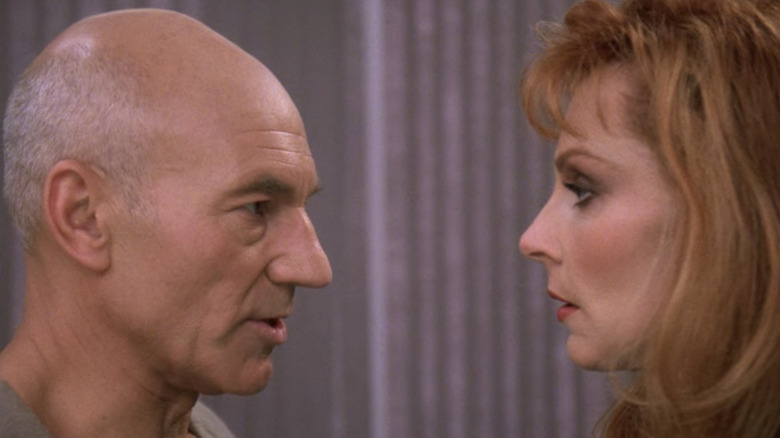
As the series progressed, Wesley would become a kind of surrogate son to Picard. While Picard may have felt some responsibility toward him, however, he and Dr. Crusher also shared their own separate attraction. For most of the series, though, they hid their feelings from each other and kept things professional on the surface.
During the show's final season, in an episode entitled, "Attached," aliens capture Picard and Dr. Crusher and the characters form a telepathic link in which they see each other's thoughts. It's been an open secret, but now they have a window directly into each other's minds and each can see how the other one really feels.
This being Starfleet, duty compels them to compartmentalize their personal feelings and act as if nothing happened after that. However, in the series finale, we get a glimpse of what might have been between Picard and Dr. Crusher. It turns out, not all of it is sunshine and space roses, because they got married and divorced in an alternate future.
They finally do kiss in the present, consummating their series-long flirtation; but then Picard has to go and change the past, erasing that moment on the timeline. We can only hope that Dr. Crusher might show back up on "Picard" at some point and give these two characters another chance at the forbidden romance they so clearly want and deserve.
Read this next: Star Trek: The Next Generation's 10 Best Episodes
The post Dr. Crusher and Captain Picard's Relationship in Star Trek Explained appeared first on /Film.
The award-winning point-and-click adventure returns in the Director's Cut with an extended story, additional puzzles, and new areas to explore. Kathy Rain: Director's Cut is now available on GOG.COM with a 10% discount that will last until 2nd November 2021, 4 PM UTC.
If you already own the original Kathy Rain game in your library, the discount on the Director's Cut will permanently rise to 50%.
Share our love for games? Subscribe to our newsletter for news, releases, and exclusive discounts. Visit the “Privacy & settings” section of your GOG account to join now!
Over the past year, the Microsoft Detection and Response Team (DART), along with Microsoft’s threat intelligence teams, have observed an uptick in the use of password sprays as an attack vector. This threat is a moving target with techniques and tools always changing, and Microsoft continues to find new ways to detect these types of attacks and help protect its customers.
In this blog, we are going to define what password sprays are, detail DART’s investigation techniques and approach to responding to password spray attacks, and outline our recommendations for protecting against them.
Previously, threat actors focused on attacking computers to gain access into an environment. As software becomes more intelligent at detecting abnormal programs and vulnerabilities, attacks against our customers are rapidly becoming more focused on breaking into identities rather than breaking into a network.
The approach to securing user accounts is well-intentioned, but it is often incomplete, with a large investment that typically goes into areas such as complex password policies and limiting access to resources from networks perceived as secure. While these mitigations are necessary best practices, in the case of a compromised trusted user, they are ineffective at preventing unauthorized access.
This is why identity attacks have become so popular. Once attackers have gained the credentials to an account, they can access any sensitive resources that users can access and have the malicious activity appear as normal. This creates a repeating cycle attack pattern, where one compromised account can lead to access to resources where additional credentials can be harvested, and thus even further resource access.

Figure 1. Identity-based attack lifecycle.
To understand how to protect against, and investigate a password spray attack, it is important to understand what it is. Password spray attacks are authentication attacks that employ a large list of usernames and pair them with common passwords in an attempt to “guess” the correct combination for as many users as possible. These are different from brute-force attacks, which involve attackers using a custom dictionary or wordlist and attempting to attack a small number of user accounts.
Sophisticated password spray techniques include some of the following qualities:
Microsoft has implemented new and improved password spray detections over the last year to help continue to address password spray attacks.
DART is no stranger to password spray attacks. When it comes to investigating cybersecurity incidents, our team’s primary goal is to establish the facts and see where they lead us. Here are some of the questions our team typically considers at the start of each password spray attack incident:
Our password spray investigations playbook contains in-depth guidance around investigating password spray attacks and offers information about Microsoft Active Directory Federation Services (ADFS), Microsoft’s solution for single sign-on (SSO), and web-based authentication.
It’s important to understand the targets of the password spray to correctly determine the scope of the potential compromise. Recently, DART has seen an uptick in cloud administrator accounts being targeted in password spray attacks, so understanding the targets is a good place to start. Enumerate the users with the below permissions as the initial list to investigate, and then add users to it as the analysis proceeds:
In addition to privileged accounts such as these, identities with a high profile (such as C-level executives), or identities with access to sensitive data are also popular targets. It is easy to make exceptions to policy for staff who are in executive positions, but in reality, these are the most targeted accounts. Be sure to apply protection in a democratic way to avoid creating weak spots in configuration.
To perform a thorough cloud investigation, exportation of logs and installation of PowerShell modules is inevitable and discussed in detail in our password spray investigation playbook, but there are other methods to gain insights quickly.
The Microsoft Cloud App Security portal is a great first place to check for suspicious activity. If you have Cloud App Security enabled, follow these steps to check for suspicious activity.

Figure 2. Sample alerts in Cloud App Security related to possible password spray attacks.
Here are some alerts that could be associated with a password spray incident:
We describe additional Cloud App Security alerts in our documentation.
For the accounts of interest, check the Cloud App Security investigation priority by navigating to the account under Users and accounts. The investigation priority score is based on security alerts, abnormal activities, and potential business and asset impact related to each user to help you assess how urgent it is to investigate each specific user.

Figure 3. The user page in Cloud App Security shows the investigation priority.
Microsoft Azure Active Directory (Azure AD) incorporates behavioral analysis algorithms into its detection logic natively, so there is a chance that an alert already exists about a password spray attack. Below are several places to check within the portals before going through the hassle of log exporting. Use the indicators of compromise (IOCs) from these alerts to further pivot such as user, IP address, time range, and more.
Identity Protection is a tool in Azure AD designed to identify potential risky behavior surrounding authentication events. Users with an Azure AD Premium P2 license may follow these steps to check for suspicious activity:

Figure 4. Azure AD can display a list of risky sign-ins to identify potential risky behavior.
If an identity is considered compromised, action should be taken immediately to ensure that access is revoked. This should include disabling the user’s device(s), a password reset, account disablement, and token revocation in Azure AD.
Password sprays are worrisome but when we look at the statistics according to the Digital Shadows report “From Exposure to Takeover,” there are over five billion unique credential pairs available for sale worldwide, with new caches of credentials being exposed on a regular basis.1 This kind of volume tells us that we should assume that a breach will occur and consider that a compromised username or password in any given organization is inevitable.
This doesn’t mean we should give up on passwords altogether, but the rabbit hole of password policies, and the potentially endless discussions about complexity, length, and “correct battery horse staple” (Don’t know what we are talking about? Look it up!) should be avoided in favor of applying Zero Trust logic to identity and authentication. This includes areas like:

Figure 5. Conditional Access policy in Azure AD.
Password spray attacks are the perfect combination of low effort and high value for attackers, and even the most secure companies are likely to fall victim to them. However, preventing catastrophic damage is not a hopeless endeavor. By assessing both sides of the situation, the protection against the attack as well as the capabilities to investigate and remediate an attack, you can ensure a substantial amount of coverage against password spray destruction.
DART utilizes these strategies for everyday investigations. We encourage our customers to adopt passwordless technology and enable MFA, regardless of the provider. While attackers are most likely continuously exploring new ways to break into an environment, by assuming breach, we can help to safeguard against inevitable detrimental harm.
Want to learn more about DART? Read our past blog posts.
To learn more about Microsoft Security solutions, visit our website. Bookmark the Security blog to keep up with our expert coverage on security matters. Also, follow us at @MSFTSecurity for the latest news and updates on cybersecurity.
1From Exposure to Takeover: The 15 billion stolen credentials allowing account takeover, Digital Shadows Photon Research Team, Digital Shadows.
The post Protect your business from password sprays with Microsoft DART recommendations appeared first on Microsoft Security Blog.
AMD is calling this time of the year as its ‘5 years of Zen’ time, indicating that back in 2016, it was starting to give the press the first taste of its new microarchitecture which, in hindsight, ultimately saved the company. How exactly Zen came to fruition has been slyly hidden from view all these years, with some of the key people popping up from time to time: Jim Keller, Mike Clark, and Suzanne Plummer hitting the headlines more often than most. But at the time AMD started to disclose details about the design, it was Mike Clark front and center in front of those slides. At the time I remember asking him for all the details, but as part of the 5 Year messaging, offered Mike for a formal interview on the topic.
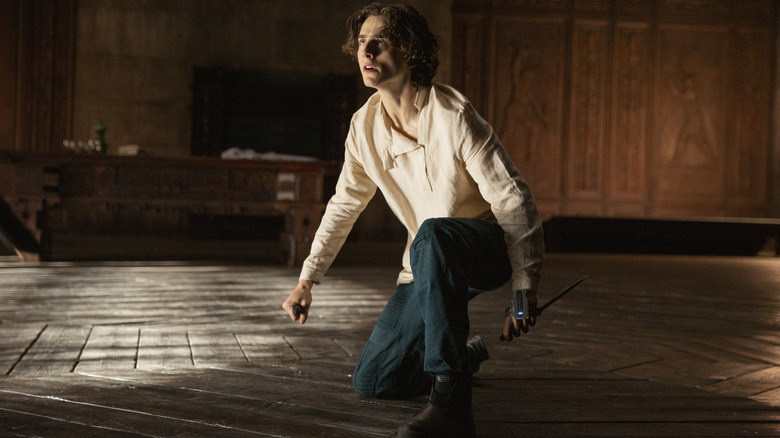
"They have tried to take the life of my son!"
These are the words angrily spoken and repeatedly brooded over by the Duke Leto Atreides at a pivotal moment relatively early on in author Frank Herbert's "Dune." Paul, Leto's son and heir, has just narrowly survived an assassination attempt by a poison-tipped "Hunter-Seeker" drone, mere days after relocating to the unforgiving and dangerous desert world of Arrakis. From a narrative point of view, this shocking event accomplishes a few key goals: it exposes the hubris and overconfidence of the Atreides clan, particularly the shortcomings of the Duke's trusted (but elderly) lieutenant Thufir Hawat; puts Paul's developing abilities and almost superhuman training to the utmost test, with his survival further adding to the crushing weight of destiny that rests on the young boy's shoulders; and drives home the threat of their Harkonnen enemies, who will seemingly stop at nothing to undermine the Duke.
With the exception of a few minor deviations for the sake of a more cinematic experience, this entire sequence of events is recreated beat-by-beat in Denis Villeneuve's adaptation of "Dune." Oscar Isaac's Leto even voices that exact line of dialogue above, hinting at his inner thoughts in the book that viewers are simply not privy to in the movie. And yet, despite such fealty to the source material, this scene was the first of many in the film to give me pause. Despite the life-or-death stakes, it comes and goes in the blink of an eye without ever fully registering with the characters or us viewers. It's a blip on the radar, a "Well, that happened" moment which is barely addressed or dealt with again.
The problem here is one that has plagued countless adaptations before: too much material to get through and not nearly enough time to do so. But it feels particularly disappointing for a story that demands as much of an epic, sweeping scope as "Dune" does. Worse still, this isn't an isolated incident. Too often, Villeneuve rips specific sequences straight out of the pages of the novel ... only to shortchange them in the scramble to get to the next one. Though many will undoubtedly disagree, we're left with what seems like a paradox -- a case where remaining stubbornly faithful to the letter of the text leads to an adaptation that misses the spirit of the book precisely where it matters most.

In a striking difference from Herbert's "Dune," Villeneuve begins his story with the Harkonnens still ruling over Arrakis, though told from the perspective of the victims. Zendaya's Chani narrates the exploitation of the planet's natural resources, the brutalization of her Fremen people, and the abrupt change in stewardship ordered by the Emperor. The prologue ends with the lingering question of why this is happening and who will oppress them next before cutting to the main title and, suggestively, Paul Atreides (Timothée Chalomet) experiencing his dream-visions. These early moments set on Caladan with the Duke accepting formal authority over his new desert planet, Paul and Lady Jessica's (Rebecca Ferguson) foreshadowing display of "The Voice," and Paul's quiet conversation with his father about the burden of leadership are all invented for the film ... and these changes are the most effective scenes in the entirety of "Dune," by far.
Most of the sequences that follow, however, are lifted directly from the novel and don't fare nearly as well in that regard. Other than Paul's "Gom Jabbar" test held by Reverend Mother Gaius Helen Mohiam (Charlotte Rampling), Villeneuve betrays a perplexing need to include scenes that he subsequently renders immaterial to this specific version of the story he chooses to tell. Instances such as Lady Jessica's interaction with the crysknife-wielding housekeeper Shadout Mapes (Golda Rosheuvel) on Arrakis, Paul's aforementioned assassination attempt, the half-baked characters of Liet Kynes (Sharon Duncan-Brewster) and Dr. Wellington Yueh (Chen Chang), and the sandworm attack on the spice harvester are (mostly) well-constructed in and of themselves, yet amount to very little in the grand scheme of things. Their inclusion makes sense in Herbert's novel, combining to add layers of world-building and complexity and tension to the mix, but are so watered down in the film that they no longer serve those purposes anymore. It's damning that all could've been excised completely, allowing precious screen time to be allocated more wisely elsewhere (such as, say, key character-building moments that were apparently left on the cutting room floor).
Once again, Villeneuve's "Dune" follows Herbert's general outline as faithfully as possible. However, this rigidity in painstakingly recreating scattered moments and minor characters from the novel -- regardless of narrative importance -- comes at too high a cost. If only the rest of "Dune" felt as confident to mix things up as it did in its first act.
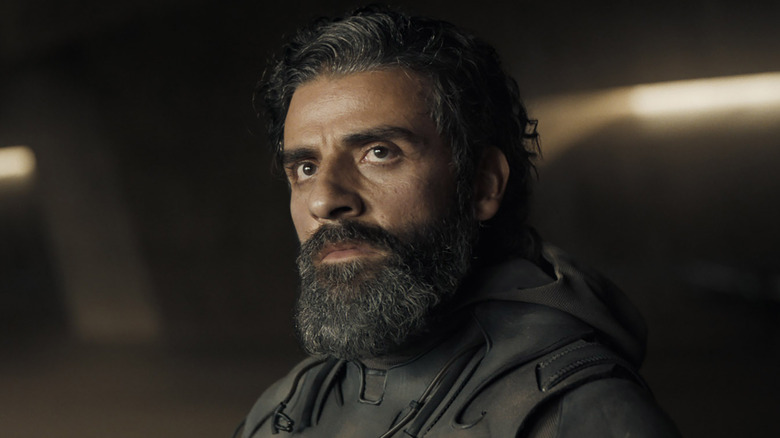
The runtime of "Dune" officially clocks in at 2 hours and 35 minutes, yet it's shocking how it almost feels like half that. Variations of this remark have been widely used to compliment its pacing and engrossing plot, but in this case I don't mean it that way at all. Too often, "Dune" plays like a "Greatest Hits" collection that's on permanent fast-forward, hitting the important beats from the novel but without giving any individual one much time to breathe. It's an adaptation-specific consequence that Leto himself indirectly sums up, telling Lady Jessica (in practically the only conversation the two ever share) that he "thought we'd have more time."
The very foundation of the story -- the Harkonnens losing control of the planet and its valuable spice, ceding Arrakis to House Atreides, and subsequently making a bold power play to reacquire their prize once more -- demands that form follow function. For any of this to land in a filmed adaptation, in other words, we need to really experience it right alongside the Atreides family as they knowingly walk into the jaws of the trap on Arrakis, put down roots, make well-intentioned mistakes, and ultimately pay the price in tragic but inevitable fashion. These are all basic elements that Herbert handles extraordinarily well in the novel. He steadily builds up the fall of House Atreides as a monumental defeat and a devastating setback on both a micro level (through the betrayal, death, or capture of key supporting characters we've gotten to know and love) and the macro (the reinstitution of Harkonnen rule on Arrakis and the forced exile of the few Atreides survivors).
The film, on the other hand, jumps from Paul's assassination attempt to the sandworm set piece to the defeat of House Atreides, all with little to no context of how one builds upon the last. It's missing the vital connective tissue tying these major events together, which gives the impression that the Duke brings his entire force to Arrakis and finds himself completely overthrown in the span of ... a single weekend, give or take a few days? As a result, the Duke's death, Paul and his mother's exile, and their climactic acceptance among the Fremen can't help but seem painfully rushed. Such reverence for only the most obvious aspects of the novel makes this self-styled epic feel disproportionately small.

Every story comes with certain inherent, non-negotiable qualities that need to be preserved at all costs in any adaptation. With "The Lord of the Rings," it stood to reason that Peter Jackson's trilogy would boast epic battles and otherworldly creatures, memorable characters, and the idealized form of fantasy morals that J.R.R. Tolkien helped popularize in the first place. Similarly, "Game of Thrones" at its best brought George R.R. Martin's darker, more cynical outlook to life while still keeping an eye on the war to come with the White Walkers. Along the same lines, one would imagine that the main draw of a film based on Frank Herbert's "Dune" would be its singular focus on politics, religion, philosophy, nature, and all the ways these elements intersect with one another in a self-critical hero's journey. At the heart of my concerns with Villeneuve's film, ultimately, is the complaint that almost all of this is missing from the actual film.
In place of any semblance of the novel's core facets, viewers instead get a barrage of mostly unexplained terminology that washes over audiences while lighting up that rote, "Hey, I vaguely remember reading that before!" pleasure center in the brains of readers. Now, this isn't to say that I needed an in-universe acknowledgement of those floating "glowglobes," a movie-stopping exposition dump on Thufir Hawat's (Stephen McKinley Henderson) "Mentat" capabilities as essentially a living computer, or a fresh glossary of "Dune"-specific terms to immediately consult every time a character referenced something unfamiliar. But based on the movie alone, can anyone really say they have a firm grasp on what the deal is with the bloodline-obsessed Bene Gesserit, or the nature of Paul's foreboding visions and his supposed status as the "Kwisatz Haderach," or why exactly the Emperor and Stellan Skarsgård's Baron Vladimir Harkonnen are so threatened by House Atreides in the first place? These aren't just idle questions, but fundamental details that ought to have been made abundantly clear from the outset.
If I were to take a page out of Frank Herbert's novel and turn any remaining subtext into text, I would say that "Dune" is largely a collection of disconnected moments and an overly literal, weightless journey without symbols or meaning. It's a frustrating outcome for any adaptation of such a rich text; one that misses the forest for the trees ... or the spice for the sand.
Read this next: Sci-Fi Box Office Bombs That Deserve A Second Chance
The post Dune Proves That A Faithful Adaptation Doesn't Always Make A Great Movie appeared first on /Film.
A security researcher at CyberArk was able to easily break more than 70 percent of Wi-Fi passwords he sniffed using relatively simple, cheap equipment.
Read more of this story at Slashdot.
Read more of this story at Slashdot.
Read more of this story at Slashdot.
Read more of this story at Slashdot.
Some 25 years ago, I first released my game Cosmo Chicken and last updated it in 1998 to version 1.6. Earlier today, a quarter of a century later, version 1.7 was released. Why? Because it had a bug that made the game crash DOSBox when running in there. I doubt anybody will ever play the patched version, but it's a matter of pride for me to fix my bugs no matter how old they are and it was an opportunity for me to get back to basics and a good reason to write a nostalgic blog post as a postmortem.
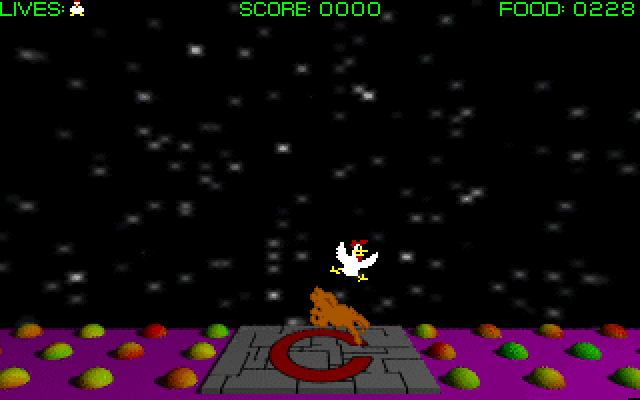
When run in certain versions of DOSBox (including the latest official version 0.74-3), whenever certain sounds would play, DOSBox would crash to the desktop. If you had the DOSBox terminal window up, you might see the error message "Exit to error: DMA segbound wrapping (read)"
Earlier versions, such as 0.73, and indeed later versions of DOSBox, if any are ever released, as well as DOSBox-X would not crash, nor would real hardware, but that doesn't mean that there wasn't a bug in Cosmo Chicken's original code. It's just a happy circumstance that it wasn't a critical problem on there.
To understand what happened, we need to take a look at how memory is handled in the 8086 CPU (and because of that, in the so-called "real mode" of all CPUs in the x86 family). This was the era of the infamous 640k memory barrier. The first x86 CPU had a 20-bit address bus, allowing it to address a maximum of 1 megabyte (1048576 bytes). In hexadecimal, that is 0x100000, with the individual bytes being numbered linearly from 0x00000 to 0xFFFFF. However, the registers on the 8086 were only 16 bits in size, which leaves them 4 bits short of being able to point to any address in memory using a single register.
Thus, pointers had to be more than just 1 register and, the solution Intel chose was to have 2 registers forming a pointer. A segment register and an offset register. The segment registers were CS for the Code Segment, DS for the Data Segment, SS for the Stack Segment, and ES as an Extra Segment register. These registers were then coupled with an offset register to form pointers. CS:IP coupled the Code Segment and Instruction Pointer to point to the currently executing instruction, SS:SP coupled the Stack Segment and Stack Pointer to point to the top of the stack and generally, DS:DX would be used for reading and ES:BX for writing when transferring data around through memory, with the BX register allowing some slightly more advanced addressing modes.
These register pairs weren't just concatenated to form a linear address, which would have allowed for 32-bit pointers for a total of 4 gigabytes of memory. That's something that didn't show up until the introduction of the 32-bit 386 processor family. For the 8086, that would have been overkill, and the architecture only had a 20-bit bus, so such pointers would have far exceeded the amount of memory physically addressable. So, instead, they took the segment register, shifted it left by 4 bits, and then added the value of the offset register to obtain a linear address. For instance, when ES has the value 0x2409 and BX has the value 0x1978 the address calculation would be
0x24090
0x01978
------- +
0x25A08
As the lower three nibbles of the segment register and the upper three nibbles of the offset register overlapped in the calculation, there were actually 4096 different combinations of segment:offset values that all mapped to the same linear address. For example, ES=0x2499 and BX=0x1078 or ES=0x2408 and BX=0x1988 would point to the same linear address of 0x25A08.
Now, the high nibble of the linear address (2, in this case) indicated that this address lay in a 64kB "page" numbered 2... that is, all the addresses ranging from 0x20000 to 0x2FFFF.
The original IBM PC was not very well equipped in the sound department, having a small speaker hooked up to a channel on the Intel 8253 PIT chip that would generate square waves at various frequencies and nothing else. Now, some enterprising souls figured out that, by rapidly (hundreds or thousands of times per second) changing the frequency of the generated square wave, they could generate far more complex sounds. This had to be done with very precise timing, though. As it all had to be done on that single CPU, it took a lot of the available processing power, leaving precious few cycles for actually running the game. Gamers wanted something better.
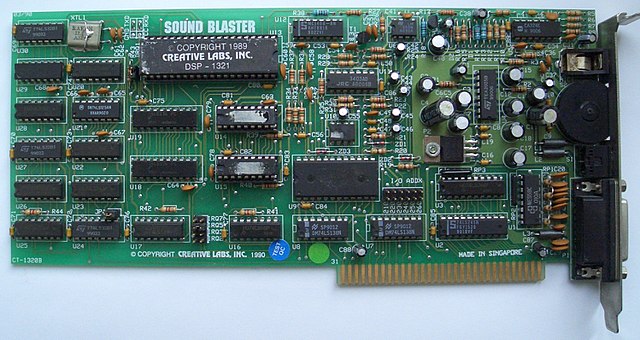
Image credit: Wdwd, CC BY-SA 3.0 , via Wikimedia Commons
In stepped Creative Labs with their Sound Blaster card. They took the Yamaha OPL2 chip that had previously been used on the AdLib Music Synthesizer Card and expanded on it by adding a channel for digitally sampled audio to the existing FM music synthesis. It's fair to say that this was a major revolution in PC gaming.
Now, to take the burden of reading the sound data from memory and outputting it over the DAC away from the CPU, the Sound Blaster used Direct Memory Access, or DMA for short. A chip called the Intel 8237 DMA controller would be set up to read from a certain area of memory and transfer the data onto a DMA channel. By default, the Sound Blaster would listen on DMA channel 1. As the DMA controller feeds the data to the DAC, the main CPU can go about its business and it will be informed of the transfer being completed by an interrupt request or IRQ. The default setting for early Sound Blasters was IRQ 7, but later models would default to IRQ 5.
This brings me to the root cause of the bug that crashed DOSBox. When setting up the DMA controller for DMA transfer, it did not take a standard segment:offset pointer for the source address. Instead, it took a page and an offset into that page. This is why I explained the x86 memory segmentation model before. Again using the aforementioned example address of 0x25A08, the DMA controller required that to be specified as offset 0x5A08 (a 16-bit word value) and page 0x02 (an 8-bit byte value). And, here is the crucial part: it didn't allow the DMA transfer to begin in one page and end in another.
Now, to be honest, I have no idea whether a DMA transfer straddling a page boundary caused any actual problems on real hardware, especially as by the time I wrote Cosmo Chicken, 386 and 486 machines were commonplace. Maybe they acted differently with more modern DMA controllers, or maybe they didn't. Perhaps the DAC would have garbage fed into it, which we'd hear as static. Perhaps (and I consider this the most likely scenario) the offset counter would wrap around from 0xFFFF to 0x0000 and this too could result in garbage being fed to the DAC. Perhaps the transfer would simply be aborted or not even started. And perhaps it would just work anyway. Whatever one of the faults it was, especially when the page boundary was overrun by just a few bytes, none of those scenarios would have been very noticeable if it wasn't an outright crash.
Update: there are actually some videos on YouTube of the game being played, a short video and a longer one that demonstrate that my guess of wrapping around seems to be the correct one, at least on whatever they used to record it. Note that in those recordings, the bouncy sound when hitting the landing pad at too high a velocity is cut off and the explosion sound is played. Thanks to Rikki Daman for bringing those videos to my attention.
So yeah, there you have it. As DOSBox's error message indicated, at least one sound effect was loaded into memory at a place straddling a page boundary and starting playback made DOSBox give up in utter terror to the point where the whole emulator crashed.
My game code did not make use of Turbo Pascal's memory allocator, preferring to use the DOS memory allocator instead. Explaining the details of the allocator would be well beyond the scope of this blog post, but for the most part, let's simplify it to DOS making allocations as sequentially as possible. Note: this bug would have occurred with the TP memory allocator too, just perhaps with a different sound - from the programme's point of view any given address handed out by either allocator may as well be random. But allocations happening one after the other with nothing being done in between (as commonly happens when loading data at game start) are not random. They tend to be sequential.
So, the fix I ended up implementing was that, if the block of memory allocated for a sound happens to straddle a page boundary, the newly allocated block is shrunk to end on that page boundary, but not released. Then, the allocation is retried. This most likely results in this second allocated block starting on the page boundary. Well, actually 16 bytes later, as there is an MCB header, but who's counting? It keeps doing this until an allocation succeeds and doesn't straddle the page boundary or there is no memory available. This ensures that the block that ends up being definitively allocated for the sound always falls within a memory page. At this point, it can also release the memory blocks that were held in reserve during this algorithm.
Problem solved... 25 years late.
Read more of this story at Slashdot.
![[Blu-ray/DVD Review] DEMONS & DEMONS 2](https://i1.wp.com/www.nightmarishconjurings.com/wp-content/uploads/2021/10/demons-1-and-2.jpg?resize=300%2C380&ssl=1)
DEMONS starts with a strange man giving away tickets to college students for a mysterious film screening. After scratching herself on a prop in the lobby, an attendee transforms into a flesh-eating demon. The events of the film they are watching begin to mimic those of their own reality. Soon, others begin transforming and the survivors find themselves stuck in the theater.
DEMONS 2 follows a similar storyline, only this time it involves a televised film that seems to trigger demons to rise. This one is primarily set in an apartment building where a birthday party is being celebrated. DEMONS 2 feels like a much bigger film as there is a larger ensemble cast with action taking place across several residents. With a diverse cast and more elaborate special effects, the sequel manages to pack in humor and memorable gore gags.
Synapse really hit a home run with their Suspiria 4K set and that trend continues here with both DEMONS films. I’m not too familiar with the previous releases, but the video presentations for both films come off as clean. Both films carry new 4K restorations from the original 35mm camera negative in Dolby Vision presentations. Those who are a bit more particular on their audio options will be pleased to know that DEMONS 1 & 2 includes uncompressed DTS-HD MA English and Italian 5.1/2.0 audio mixes (part 1 is on the original cut) derived from the archival audio masters. DEMONS 2 also includes an uncompressed DTS-HD MA English 2.0 true stereo theatrical mix remastered in 2021 by Synapse, while DEMONS has theatrical mono audio.
The press release that accommodated my screener listed bonus features that took up almost two pages. Between the two films, there are three commentaries, two visual essays, and several interviews with cast and crew. If that wasn’t enough, Synapse has included in their limited edition set a reproduction of the original movie ticket from DEMONS, a birthday invitation to the party from DEMONS 2, and a fold-out poster of DEMONS artwork by Wes Benscoter.
Lamberto has an impressive filmography, but his legacy is remembered fondly due to the DEMONS franchise. There isn’t much explained in regards to the origins of the mythos in both films, but they are so much fun to watch unfold. Both films are low budget fare from the mid-80s, but the practical effects levitate them to A-list horror and this transfer treats it as such.
You can purchase the limited edition DEMONS 1 & 2 Collection here.
The post [Blu-ray/DVD Review] DEMONS & DEMONS 2 appeared first on Nightmarish Conjurings.


