Shared posts

29 Oct 20:18

Every Luc Besson Movie Ranked Worst To Best

by Rob Hunter

Luc Besson is different things to different people. A director of memorable genre films ("The Professional," "The Fifth Element"). A writer of action hits with no fewer than five successful franchises to his name ("Taxi," "The Transporter," "District B13," "Taken," "Nikita"). A businessman with poor bookkeeping skills. A real prick and alleged rapist. But for now at least, he and his nearly three-decades of directorial efforts are solely the subject of this wholly necessary and incontrovertible ranking.

Most folks have seen (and probably enjoy) his action efforts from the 90s, but his filmography also includes biopic dramas, epic period films, animated kiddie fare, and a couple of artsy flicks in black and white. Are they all worth seeing? Absolutely not. And in an effort to help you parse the treasure from the trash, I've done the world a real solid by visiting, revisiting, and ranking all of Besson's movies as director.

17. Arthur 3: The War Of The Two Worlds
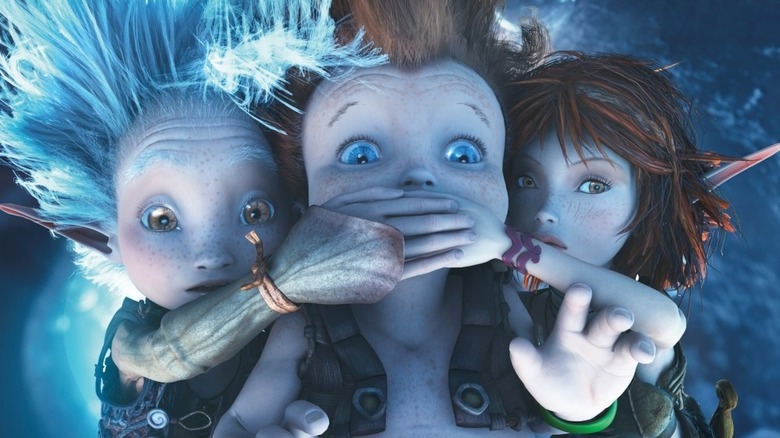
Arthur Bach thought he lost both his fortune and his will to drink, but when an alien invader threatens the planet he calls home, he discovers there are more important things than money and booze. Can he stop the villains, get the girl, and save his liver from failing? Here's hoping!

Okay, that synopsis is a lie, but if you had to sit through these three "Arthur and the Invisibles" films, you'd be daydreaming about sequels to Dudley Moore's 80s comedies too. The real story here sees the diminutive Arthur struggling to fight and finally defeat the enemy who has dogged him the entire trilogy, a task made more challenging after the devious Maltazard leaves the miniature world behind and grows over seven feet tall. Plenty of chaos ensues, but none of it is remotely interesting or engaging -- which is legit bonkers, as the big guy looks like he should be real fun at parties.

16. Arthur And The Revenge Of Maltazard

When the princess he loves is abducted by the evil Maltazard, Arthur must return to the land of the Minimoys to save her. His rescue mission is complicated by competing interests that threaten to leave him trapped in the miniature world forever.

When movie franchises die at the box-office in the US, the sequels are never made. In France, though, Besson just keeps plugging away while millions of euros swirl down le drain. The story this time around picks up a few years after the end of the first film. It sees young Arthur return to his CG form as a Minimoy, but it gives up all interest in emotional development and engaging narrative -- and instead aims for terrible humor and chaos. Two heavy hitters from the first film see their voices replaced this time around, but while Selena Gomez is fine as the damsel in distress, Lou Reed can't muster the sexy gravitas that David Bowie originally brought to the dastardly Maltazard.

15. Anna
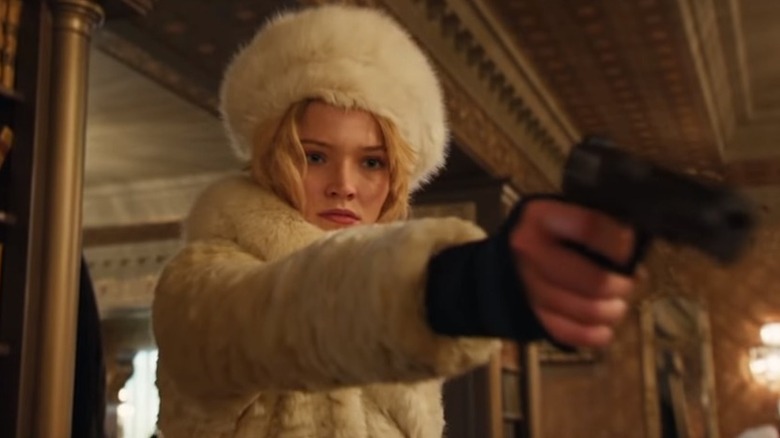
A fashion model hides a depressing past and a dangerous present, as beneath the glitz and glamour sits an assassin in high heels. She's an effective tool for a malicious government organization, but her biggest fight comes as she tries to leave the life behind her.

Besson returns to a familiar well one last time (for now), only to find the previously successful formula crumble before his eyes. His fetish for strong, attractive women slaughtering their way through dozens of villainous dudes is wearing thin. While this latest incarnation delivers a little style and at least one good action scene, it lacks the most important element -- a compelling lead. No disrespect to Sasha Luss, but acting skills, action chops, and charisma aren't her strong points. We need the lead performer to pull us into her situation, and Luss can't muster the engagement. Besson's script, built on recycled story beats and his increasingly icky ideas of female empowerment, isn't doing her any favors either.

14. Arthur And The Invisibles
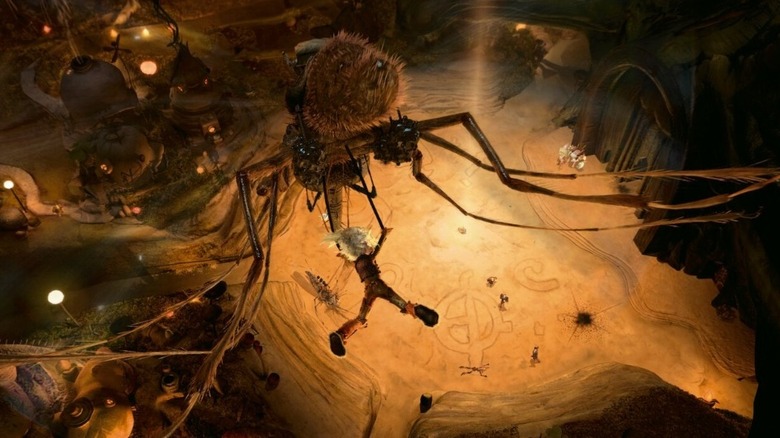
A boy whose family is in financial trouble finds a possible salvation in the hidden world of his grandmother's garden. Of course, he also finds danger, romance, and oodles of magic after being shrunk to miniature size and dropped into a big adventure.

This is an animated fantasy for kids, but I need to get this tidbit out of the way first thing. 14-year-old Freddie Highmore plays/voices the hero Arthur, and his love interest is voiced by ... Madonna. Besson, you dirty rascal you. David Bowie voices the villain, and others are brought to life by an eclectic group including Jimmy Fallon, Jason Bateman, Harvey Keitel, Robert De Niro, and Snoop Dogg. Does it work? Hell no, but there's enough world-building and mildly interesting beats to make it a lively watch suitable for underaged fans of "Like a Virgin." We get messy action, a little bit of heart, and an ending that closes the book and leaves no need for sequels.

13. The Family
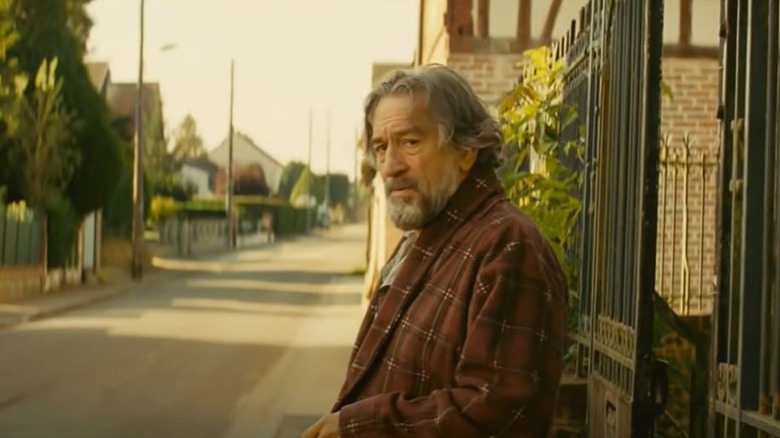
A mobster betrays his fellow gangsters. He and his family are sent to France, but find their time in witness protection to be its own kind of punishment. It's hard enough to fit in with "normal" neighbors, but when mob hitmen come calling, the little village finds more excitement and danger than it can handle.

You certainly can't argue with the cast here as Robert De Niro, Michelle Pfeiffer, and Tommy Lee Jones headline, but hoo boy. Celebs gotta pay some bills too, I suppose. The action and comedy are forgettably lightweight, Besson squeezes in his favorite thing (Dianna Agron plays the daughter who kicks some boys' asses), and your enjoyment comes down to how much you enjoy seeing De Niro cannibalize past roles. Every beat here is just too formulaic and far less funny than it thinks. Honestly, you'd be better served watching 1990's "My Blue Heaven" with Steve Martin and Rick Moranis in the De Niro/Jones roles.

12. Valerian And The City Of A Thousand Planets
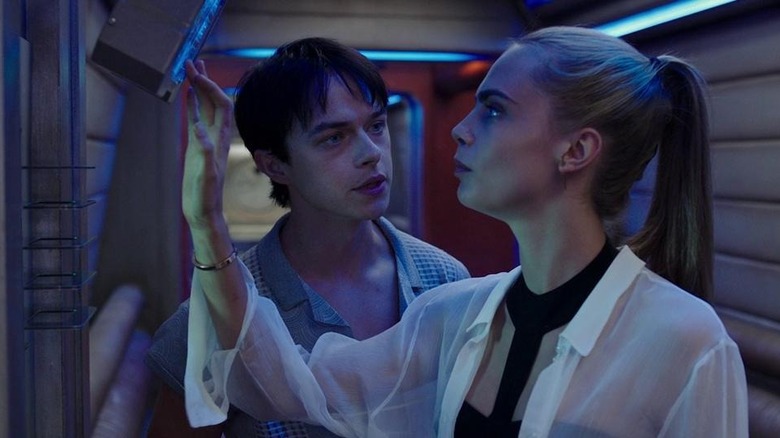
A pair of intergalactic coppers are tasked with identifying and stopping a malevolent force working its way through the Alpha system. Can they save the known universe while also coming to grips with their passionless feelings for each other?

This movie continues to boggle me. Take one look at most any frame of the film, and it feels like something that should be fantastically entertaining. Watch a few seconds and you'll likely be in awe. Settle in for all one-hundred and thirty-six-minutes, though, and you'll be shocked to discover that all of its visual splendor is in service of a remarkably dull and bland space opera. As with "Anna" above, Besson once again lands on leads who lack charisma. While Dane DeHaan is an interesting actor, his gearbox isn't designed for big, sprawling, high-energy adventures like this. Honestly, surrounding DeHaan and Cara Delevingne with such color and personality feels like a cruel joke at their expense. Add in an increasing silliness that hampers the thrills and viewer interest, and you're left with a gorgeous screensaver that will never become the franchise Besson was hoping for.

11. Le Dernier Combat
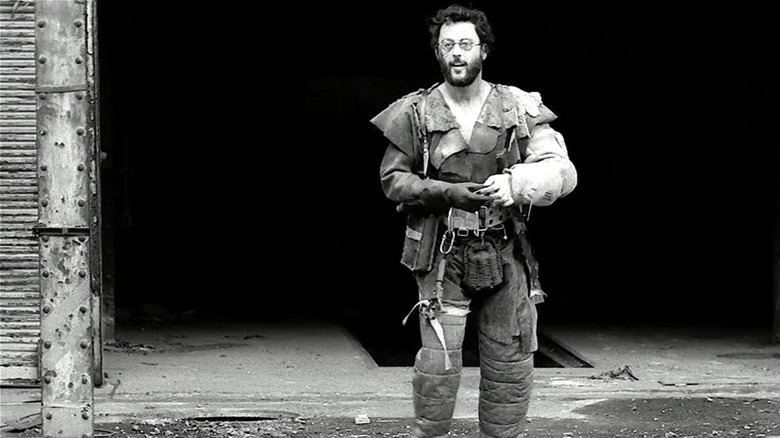
The apocalypse has left a world ravaged and a sparse population mute in the dirt, but one man trudges through with a hope for something more. Unfortunately for him, but fortunately for the rest of us, what he finds is a bespectacled Jean Reno.

Besson's first feature film (also known as "The Last Battle") is his most experimental. While the near complete lack of dialogue will challenge some viewers the black and white cinematography and various themes still hold attention. The lead protagonist, known only as The Man, makes his way among the survivors, but it's two others who affect his life the most. The Doctor introduces him to art, better living, and the possibility of speech, while The Brute offers only violence and destruction. There are whiffs of environmentalism and capitalism among the film's non-verbal commentary, but the clearer theme here seems to be man's struggle with his own urges and desires. The two men offer wildly different nudges to The Man, like an angel and devil sitting on his shoulders, and both help shape his future. It's far from the most exciting film in Besson's career, but completists should still seek it out.

10. The Lady

Aung San Suu Kyi was just a child when her father was assassinated, but when she returns to Burma as an adult she's called to continue his work bringing democracy to the country. The people are behind her, but the military takes a different approach and works to silence her voice by any means necessary. The toll it takes is heavy, but it's a cause she believes in with both her heart and mind.

Easily the most atypical entry in Besson's filmography, this biopic of the famed politician, Nobel laureate, and author succeeds mostly on the shoulders of Michelle Yeoh. Besson resists his inclination to drop her into street battles. He instead explores the warmth of a woman, a wife, a mother who truly cares about the people of Burma as if they were her own family. It's a bit dry and overlong, perhaps, as biopics tend to be, but the respect and admiration for the eponymous lady is powerful stuff.

9. Lucy
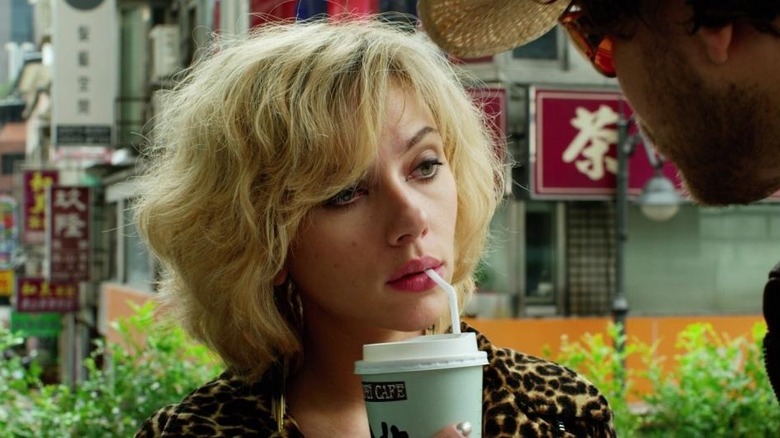
A woman expected to be nothing more than a drug mule instead evolves into an all-knowing, all-powerful version of Siri. With villains in pursuit, she sets out to bring them down, save others from similar fates, and hopefully increase her cloud storage space along the way.

Sometimes a film is just dumb, but once in a while we get a movie that is so spectacularly stupid that it comes full circle towards brilliance. "Lucy" is that movie. Scarlett Johansson plays the woman suckered into transporting drugs. When a bag bursts inside her, she begins transforming into someone capable of using more than a measly ten percent of her brain. That's right, Besson's digging in on that old chestnut and pairing it with his favorite pastime -- women kicking men's asses. The sci-fi gibberish here is laughable, both in its sincerity and its detail, but Besson throws caution to the wind and unleashes a refreshingly brief (running time is under ninety minutes!) but effective blast of goofy fun. Johansson's character is named Lucy, and she travels back in time to meet the OG Lucy, "the mother of man!" This is gold, people, gold!

8. The Messenger: The Story Of Joan Of Arc
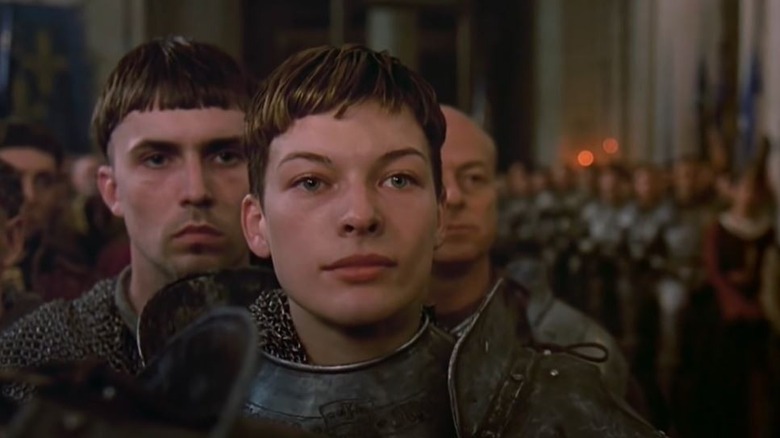
A young woman believes she's received a message from God, and it told her to save France from foreign invaders. The men in power are all for it while she's winning battles, but her fate seems sealed when they decide she's no longer necessary.

This one doesn't get talked about much in conversations about big, epic biopics --especially ones filled with troubled characters from history and bloody battle scenes -- but it's a solid film. Milla Jovovich stars as the legendary Joan of Arc, and while she obviously can't match the intensity of Falconetti's performance in "The Passion of Joan of Arc," she sure wields a sword like a boss. She's supported by the likes of John Malkovich, Faye Dunaway, Dustin Hoffman, Vincent Cassel, Toby Jones, and the always welcome Tcheky Karyo. It manages to find moments both thrilling and affecting. Granted, there's also plenty of filler stretching the film roughly a half hour too long, but history can't be rushed. Apparently.

7. Subway
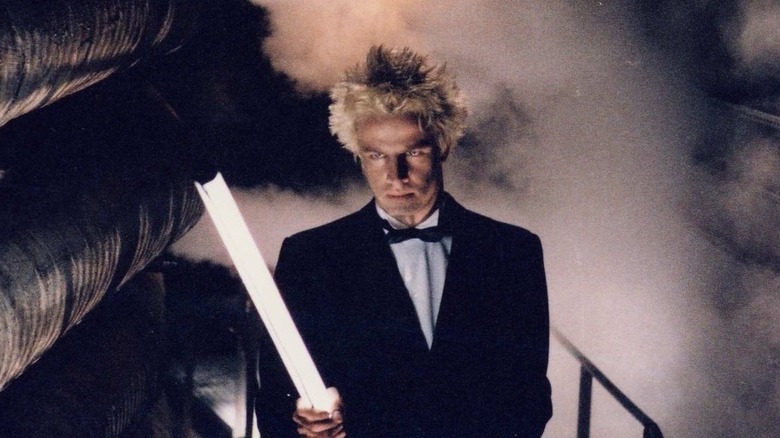
A thief on the run takes refuge in the Paris Metro, but his plan to quietly hide out from his pursuers takes a detour as he meets an eccentric crew of weirdos beneath the city's streets. His life takes an even bigger turn when he falls in love with a bad man's moll.

The term "sloppy cool" feels like an oxymoron, but it's the best way to describe this offbeat feature that's as messy as it is stylish. Christopher Lambert plays the blond-haired live-wire of a safecracker who seems somewhat delighted by his circumstances -- understandable as he uses his free time below to form a band and fall in love, all while eluding cops and crooks alike. Isabelle Adjani and Jean Reno co-star. While the film delivers a car chase, other action, and plenty of style, it's the sweeter, softer, and stranger moments that will stick with you up to and including the very last.

6. The Extraordinary Adventures Of Adele Blanc-Sec
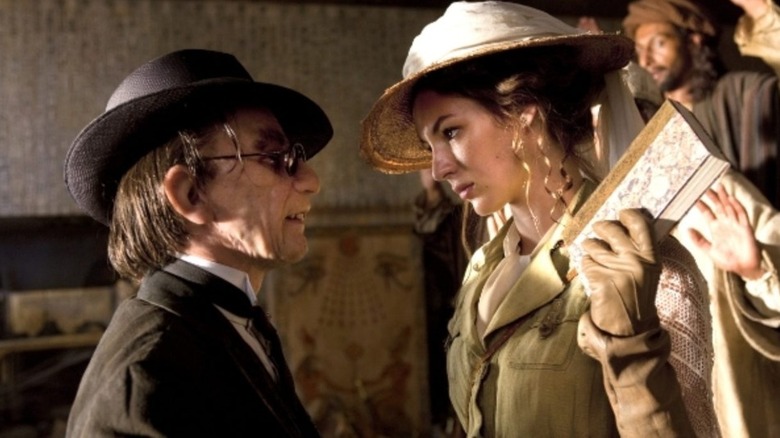
A novelist finds inspiration and adventure in her daily life involving Egyptian tombs, living pterodactyls, and men who won't take no for an answer. Her adventures are international, but when her latest comes home all hell breaks loose in the city.

The easy description here boils down to "Amelie" meets "Raiders of the Lost Ark" (or "The Mummy," if we're being honest) but with the whimsical energy of "Night at the Museum" or "Sonic the Hedgehog." Louise Bourgoin is no Audrey Tautou (or Harrison Ford), but she holds her own as an action gal (Besson's done it again!) and as a fun, engaging character on a zany historical adventure. It's immensely silly stuff at times that I imagine would have found a bigger audience had it been in English -- but honestly, if your kids aren't watching subtitled films yet, what are you even doing being a parent?

5. Angel-A
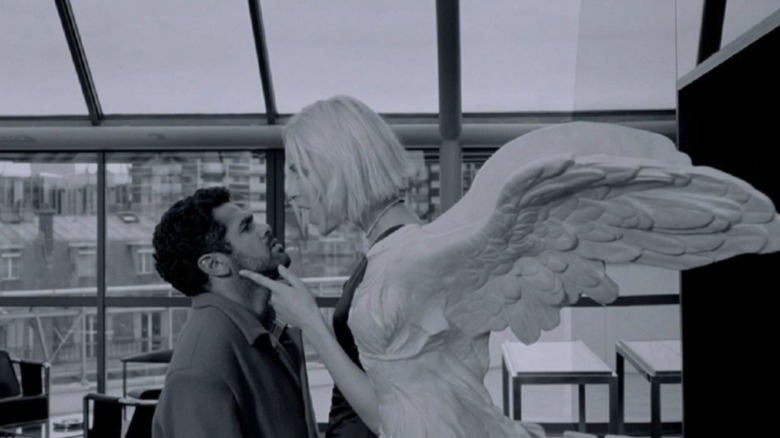
A man with more debt than self-worth decides to kill himself, but fate drops a beautiful, mysterious woman into his life instead. She shakes things up in both his heart and bank account, but can it last?

An intimate little character piece that dabbles in genre, "Angel-A" is an oddly affecting entry in Besson's filmography. Jamel Debbouze (the young scene-stealer from "Amelie") stars as Andre, a disillusioned and broke sad sack. His life is interrupted by the arrival of Angela, a statuesque blonde who just might be something more than human. They're an incongruous pair, but both actors do good work finding the heart despite an occasionally clunky script. They share a beautiful scene in a bathroom mirror (non-French speakers will need to choose English subtitles) that delivers the core theme of the film, and it's easily among the most emotionally affecting moments from Besson's entire career. Gorgeous black and white cinematography adds to the film's romantic, dreamlike atmosphere, and it's one worth seeking out.

4. The Big Blue
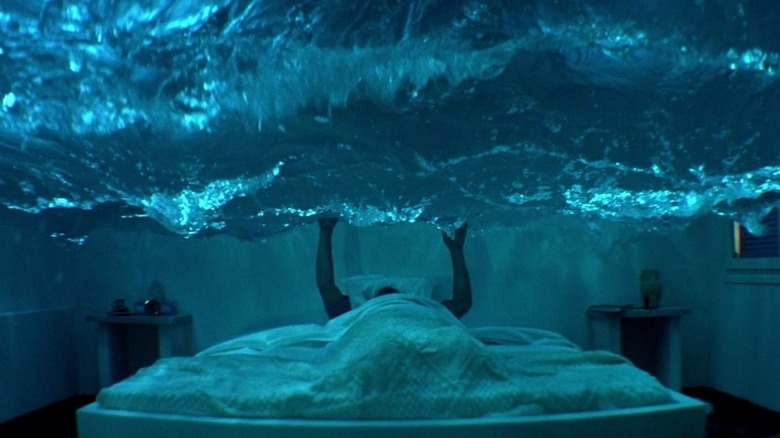
Two men, friends and competitors since childhood, find their fates drawn to the ocean and the perilous sport of freediving. When one pushes the other to an overdue competition, though, the ocean threatens to exact a human price.

This was actually the very first Besson film I saw, and while it may lack the kinetic action beats of the filmmaker's better known works, it holds a secure place in my memory. Rewatching it seemed risky, but happily it holds up well as a beautiful and sometimes otherworldly look at our humanity, our dreams, and our place in a world we'll never know as well as we'd like to. The cinematography is at times breathtaking. The film takes us beneath the surface of the ocean without the usual trappings of boats and bubbles to find only beauty, wonder, and silence. Jacques (Jean-Marc Barr) and Enzo (Jean Reno) compete, but it's their friendship that keeps them close, and the actors convey the strength of their relationship as much through shared quiet as they do through dialogue. The director's cut is the way to go here, as it allows the film's meditative atmosphere to soak in and take control. Composer Eric Serra, a Besson collaborator from the very beginning, delivers his most memorable score here as well.

3. The Fifth Element
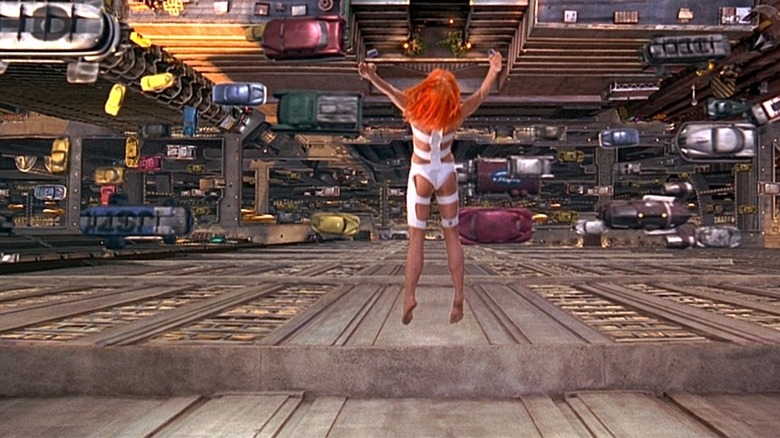
A rough-around-the-edges cab driver has a beautiful woman fall in his lap -- and soon evil forces, aliens, and destiny itself are hot on their heels. Things are complicated even more with the arrival of a high-pitched talk-show host and a budding romance. With the woman, not the host.

What's that? Another movie from Besson about a badass, scantily clad woman? What are the odds! While it's unsurprising that the Frenchman started writing this script while just a horny teen, the resulting film remains an epic blast of cool, exciting, weird, sexy fun. Bruce Willis (back when he was still an actual actor and not just someone who appears in forgettable direct-to-video fare) stars as the terrifically named Korben Dallas in the year 2263, and becomes a reluctant hero when a goofy gal named Leeloo (Milla Jovovich) enters his life with gun-toting thugs in hot pursuit. Aerial chases, scrappy brawls, and gun fights commence with plenty of detours into even more madness. An ornery Gary Oldman, an annoying/hilarious (take your pick) Chris Tucker, alien operas, cool prosthetic aliens, brilliant CG visuals, Luke Perry wandering on set, intergalactic bureaucracy ... this movie has it all!

2. La Femme Nikita
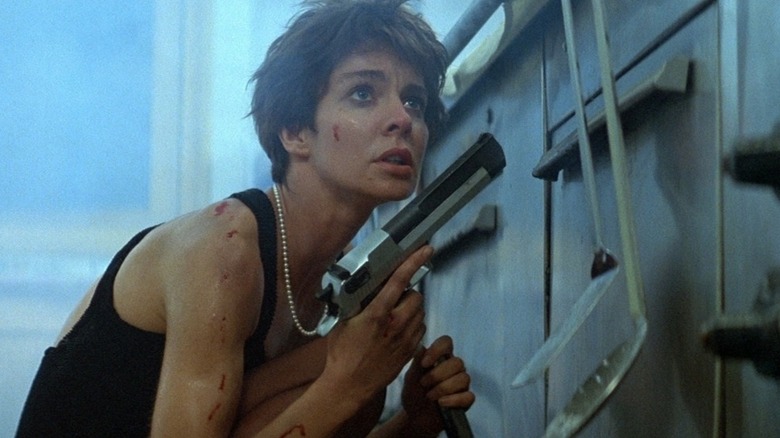
A convicted murderer is given a second chance and trained as an elite assassin for the French government. The job saves her life, but she quickly realizes it might not be a life worth living.

It's easy to forget seeing as there have been roughly a thousand iterations since, but Besson's "La Femme Nikita" really got the ball rolling on the whole female assassin sub-genre. (It also may have kicked off the trope of women being forced into becoming professional killers after being orphaned, mistreated, and/or addicted to something.) Anne Parillaud stars and does a wonderful job morphing from street urchin into a gun-toting Eliza Doolittle-type while still holding onto a struggling humanity. Remade both in Hong Kong ("Black Cat") and the US ("Point of No Return"), and the basis of two successful television series, it remains the best of all incarnations. It's both stylish and grim, thrilling and contemplative, and it bravely goes out on a dramatically satisfying character beat rather than an explosive, action-oriented one. Add in a brief turn by Jean Reno as a mean, effective, and entertainingly ruthless cleaner, and you have a movie deserving of a rewatch.

1. Leon: The Professional
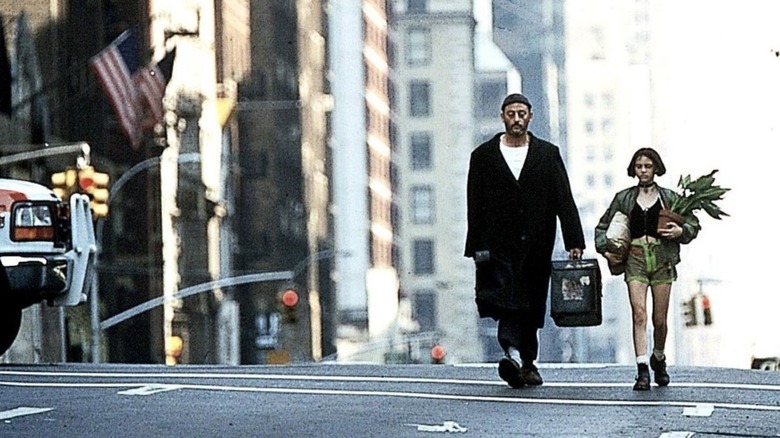
When the best French hitman in New York City meets a young girl in trouble, he goes against his better judgment to try and save her life. He's a killer, but should he be encouraging her own thirst for vengeance or taking the bullet for her on that count instead.

In a career filled with movies about female killers, Besson's best film features a girl who never actually takes that final step towards being a murderer. Instead, it's a socially awkward immigrant and an insanely power hungry detective who unleash all the carnage. The film delivers with stellar action setpieces, suspense, and real heart, and it's a far better remake of John Cassavetes' "Gloria" than even Sidney Lumet managed in 1999 with the actual remake. All three leads are pitch perfect, starting with Natalie Portman as young Mathilda. She's a grieving child forced to grow up a little faster than intended, and you can't help but feel for her desperation as death comes knocking. Jean Reno is equally strong as the hitman who just wants to be left alone with his plants, and Gary Oldman absolutely shines as the corrupt, pill-popping cop who wants Mathilda dead. Am I still hoping for an eventual sequel with a grown up Mathilda whose good and bad impulses are personified by imagined visits from both Leon and Stansfield? Obviously.

Read this next: The 14 Greatest Biopics Of The 21st Century

The post Every Luc Besson Movie Ranked Worst to Best appeared first on /Film.
29 Oct 20:18

The Alternate Seven Ending David Fincher Wanted Us To See

by Joshua Meyer

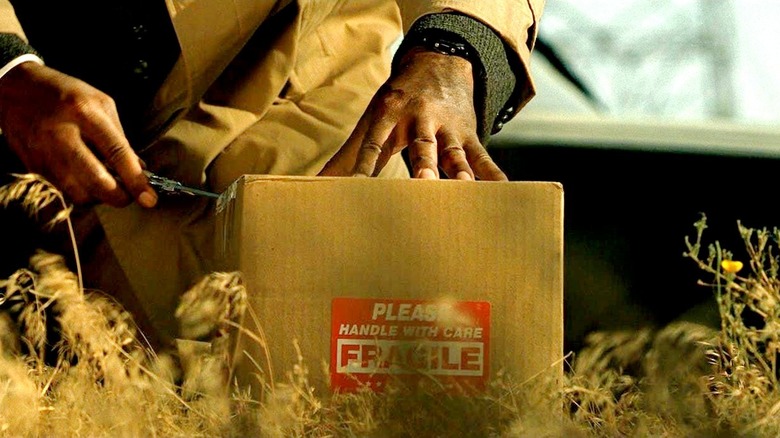
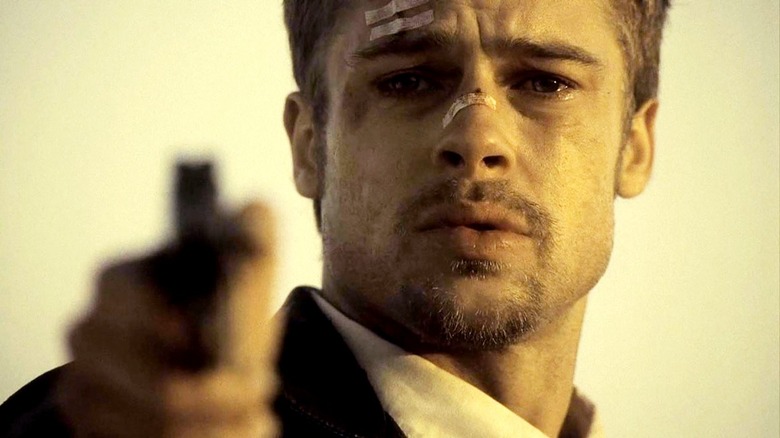
"What's in the box?" An alternate ending. David Fincher's "Seven" has one of the most unforgettable endings in movie history. It's been etched in viewers' minds for over a quarter-century, so the idea of changing it at this point might seem like a sin, not unlike the ones symbolized by the grisly crime scenes where serial killer John Doe (Kevin Spacey) stages his "sermons."

That ending, however, is one of several that was up for consideration during the making of "Seven." The Telegraph did a roundup circa the film's 20th anniversary, detailing no less than seven alternate "Seven" endings. These include an ending where Detective Somerset (Morgan Freeman) kills Doe, an ending where Detective Mills (Brad Pitt) shoots Somerset to keep him from killing Doe, an ending where there's a race against time to save Mills' pregnant wife, Tracy (Gwyneth Paltrow), an ending where there's a dead dog in the notorious box, and an ending that takes place in a burning church.

Fincher favored one other ending above all of those. He had come up from the world of music videos and "Seven" was only his second movie. His first feature, "Alien 3," famously compromised his vision, so much so that he later disowned it.

The budding auteur didn't have as much clout with producers when he was first starting out, and if he had his way back then, the final moments of "Seven" would have been more of a sucker punch. At the end, Doe has lured Somerset and Mills out to the middle of nowhere, with the promise that he's going to reveal the bodies of his last two victims. Fincher draws out the suspense as a delivery van suddenly appears, driving down the long dusty road to where the three men are.

Cut To Black

Spoiler alert: the box from the van contains Tracy's severed head. It's never shown, which gives it even stronger leverage over the viewer's mind. We can only form a terrible picture of such a thing in our imagination as Howard Shore's dramatic music cues up the revelation.

Doe's plan, which he successfully achieves, is to have Mills "become wrath," the seventh and final deadly sin: killing him in a fit of rage, thereby also punishing Doe for his own sin of envy. The two final bodies (three, if you count the baby) are Tracy and Doe himself. Mills knows that he's letting Doe win, but at that point he's so distraught that he doesn't care.

Fincher originally jockeyed for a sudden cut to black as soon as Mills shoots Doe, leaving the audience hanging with a long moment of silence before the closing credits started to roll. This ending, with its "Sopranos" effect — and no parting voiceover from Somerset to cushion the blow — would have given moviegoers no time to emotionally adjust to what just happened. It would have hit them hard-and-fast and left them reeling, but it's tough to say whether it would have really been better.

It was the studio that wanted the ending we got, in which Somerset watches a police car drive away with Mills later that night. "Ernest Hemingway once wrote, 'The world is a fine place and worth fighting for," Somerset narrates. "I agree with the second part."

This moment helps ease the impact of the visceral shock that the ending delivers. It's a small ray of light and humanity from Somerset, who always played the pessimist to Mills' optimist in their conversations. Despite the horror that's just occurred, the weary Somerset lets us know, "I'll be around."

Read this next: Ranking Morgan Freeman's 20 Best Roles

The post The Alternate Seven Ending David Fincher Wanted Us to See appeared first on /Film.

29 Oct 20:17

The 15 Best Horror Movie Villains Ranked

by David Court

"We don't need another hero," bellowed Tina Turner back in the eighties, eerily predicting the origin of this /Film article several decades before its emergence. Mind you, in 1984's "What's Love Got to Do with It" she also made the preposterous claim that hearts were unnecessary, so perhaps it's not wise to regard all of the esteemed Ms. Turner's lyrics as gospel.

An even bigger hive of scum and villainy than Tatooine's notorious Mos Eisley Spaceport, the following piece will take you -– in ascending order of wickedness -– through a veritable pantheon of horror's most horrific. From crooked corporations to fearsome fish, masked miscreants to sanity-sucking squids –- they're all here. With a combined body count of billions and an assumed default absence from Santa's "Nice" list, the nefarious ne'er-do-wells can be revealed unto you with just a click.

It is worthy of note that this feature will not shy away from spoilers. Without this disclaimer, you could rightfully emerge from this article condemning me as the worst villain of all.

The Organization

There exists a shadowy organization, one with an unparalleled proficiency in subterfuge and manipulation. But enough about the IRS (badum-tisch), we're here to talk about The Organization, the all-seeing and all-reaching administration behind the events of "The Cabin in the Woods" (2011).

Existing to placate and appease the Ancient Ones with ritualistic sacrifice (with the worry that their equivalent of falling Nielsen ratings may summon the end of days), this worldwide conglomerate has existed since time began. They're connected to every level of government, have vast resources at their disposal -– including more trapped monsters than you'd find even at the Ghostbuster's New York Headquarters.

The Organization might be monstrous, but they're only too human -- and not opposed to the occasional bet on the ritual's results. In a meta twist, The Organization are probably responsible for a great many forthcoming entries on this list –- but if you're not happy with a powerful organization being treated as a horror villain, feel free to replace this entry mentally with "A Merman." Those things are terrifying, and the clean-up on them is a nightmare.

Bruce The Shark

Putting the "Great" into "Great white shark" is Bruce, a Carcharodon Carcharias of such immensity that it requires, nay, demands you bring a larger sea-faring vessel.

Readily identifiable by his distinctive two note theme tune, Bruce the Shark was the main aquatic antagonist of "Jaws" (1975). With a penchant for eating al fresco, this 25-foot-long Great White was responsible for the most memorable 4th of July weekend in the history of Amity Island. A far from fussy eater, Bruce was as happy dining on lone female swimmers as he was with dogs, boardwalks, and chunks of fishing boat.

Such was the awesomeness of Bruce that -- after a gas cannister explosion reduced him to 4.9 metric tons of chum –- another (possibly related) shark went after the family of Bruce's killer in revenge, pursuing them all the way to Hawaii ("Jaws: The Revenge," 1987). You simply don't get that level of loyalty or commitment from other marine life.

Mister Babadook

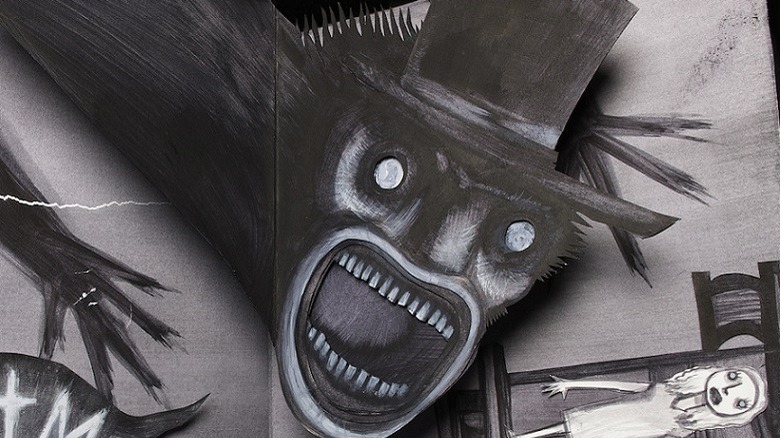
In my day, you knew where you stood with arcane libraries. Eldritch grimoires were easy to recognize and, provided you kept your copy of your first edition signed Necronomicon under lock and key, you were pretty safe. Then "The Babadook" (2014) went and spoiled all that by adding pop-up books to the list of forbidden tomes, being the home of one of the most terrifying entities found in literature since the all-devouring behemoth that is The Very Hungry Caterpillar.

Appearing as a monochrome pale-faced phantasm in long black coat and top-hat, he's an entity that -– much like major news networks -- preys on fear and, the more you dread him, the more terrifying his appearance. He exists mostly as a form in shadow, long pallid fingers stretching from his hands like talons. Removing or destroying his book will have negligible effect -– Mister Babadook is as persistent as he is patient and, unlike the pop-up book that he calls a home, he's unflappable.

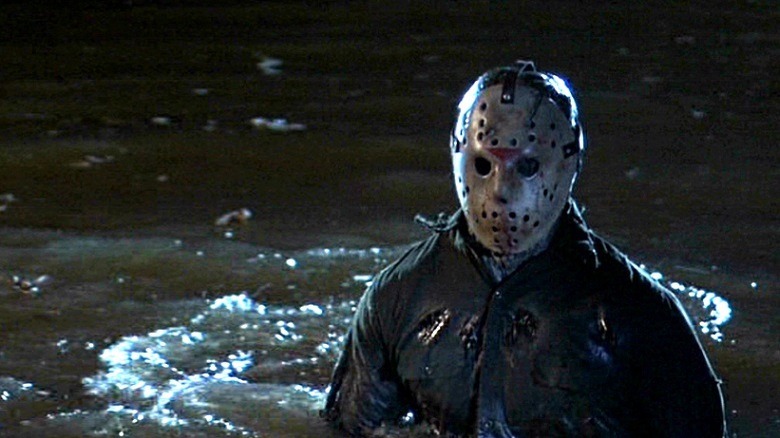
Jason Voorhees

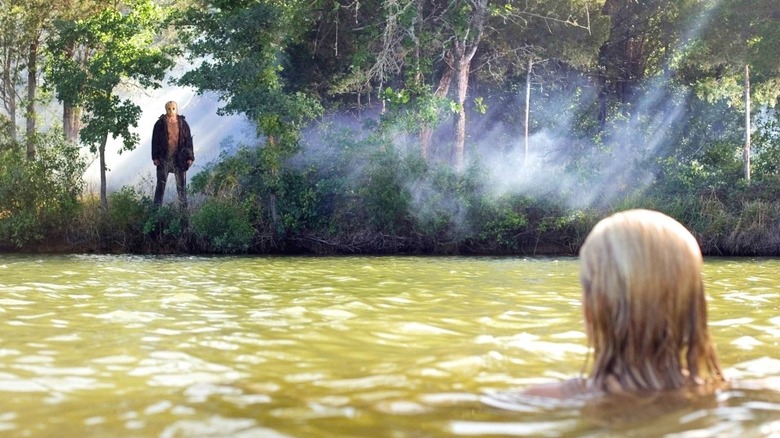
You can't keep a good machete-wielding sociopath down, and plenty have tried. The hockey-masked horror from "Friday the 13th" has been drowned, dissolved with toxic waste, blown into meaty chunks, hacked into slices by both knives and Freddy Kruegers glove, even sent to Hell -- and still insists on coming back for more. Even cryogenically suspending him only ended up making him somebody else's problem for a later date.

Jason wears a hockey mask to hide his hydrocephalic deformities, responsible for him being bullied to death in the very first Friday the 13th movie. Despite his huge lumbering form, he's an expert in both stealth and cunning. The recidivist revenant is also fond of walks by the (Crystal) lake and a keen sports fan.

The only foe presently capable of keeping Jason down appears to be the legal system, with a huge rights battle hovering over the once lucrative franchise. However, now that has been partly resolved, it's very possible that Jason may emerge again from the depths of Camp Crystal Lake.

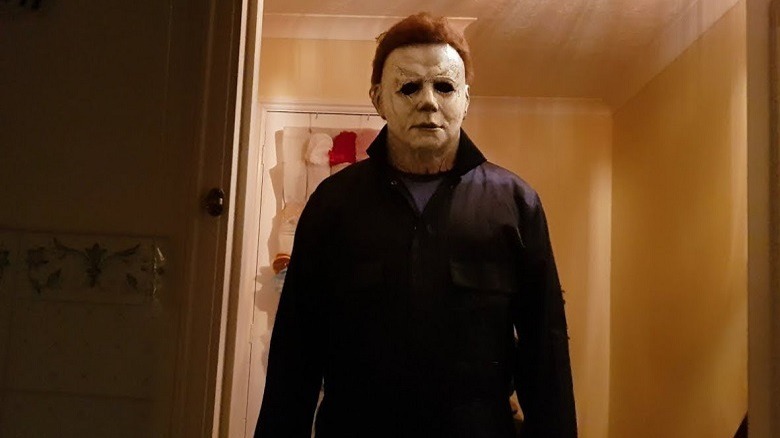
Michael Myers

This Canadian actor and comedian became famous for his work in the long-running TV series "Saturday Night Live" before his runaway success with the "Wayne's World," "Shrek" and "Austin Powers" franchises.

For simple kill-count alone it could be argued that Voorhees should beat Michael Myers in this list, but despite their similarities -– a masked visage, convoluted and muddled origin(s), simple yet practical clothing, and a fondness for cutlery –- this particular malevolent mute does it all with a little more style. Myers, the proud winner of the 1978 "Falling out of a window" World championship, is refreshingly old-school in his approach. He never once resorts to the crowd-pleasing antics of, say, punching a man's head clean off or having his decaying form enhanced through nanotechnology. Simply give Michael (or his chosen alias, The Shape) a knife (or equivalent stabbing implement) and he'll be perfectly content.

Michael is also particularly fond of games of hide and seek and will play them to death.

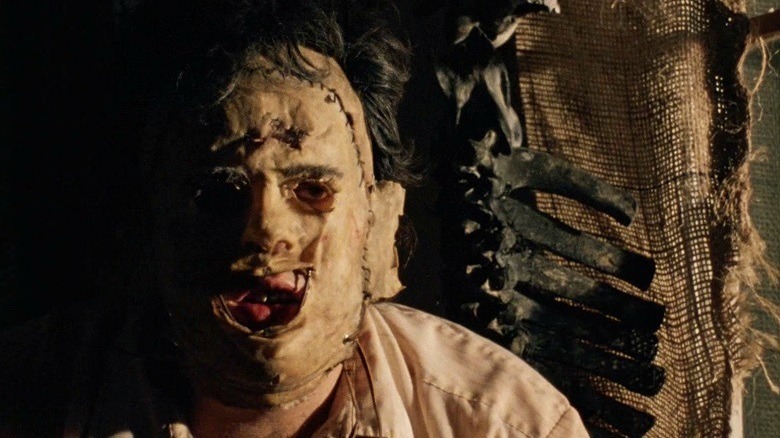
Leatherface

This portly butcher's apron-wearing psychopath may spend his long balmy summer evenings impaling teenagers on meat-hooks and running amok with motorized tree-felling equipment -- but, to Leatherface's credit, he never forgets a face. Primarily because he has them dried, cleaned, and hanging up in his den.

Introduced in Tube Hooper's superlative 1974 horror, "The Texas Chain Saw Massacre," Leatherface is the intellectually and emotionally stunted son of the Sawyer family, a psychotic gang of cannibalistic and vicious murderers. Frequently found wearing the freshly sliced faces of his victims, he may be slow and terrifying, but he's a dab hand with a chainsaw -– which makes him both an ideal murderer and tree surgeon.

The inspiration for Leatherface was serial killer Ed Gein, a man whose varied and unusual hobbies included both murdering women and defiling corpses. Leatherface may have changed name more times than he's washed his butchers' apron -- "Bubba" in the original, "Thomas" in the 2003 remake, and "Jed" in the 3D version -- but one thing remains consistent; his poor social skills and unconventional attire make him a terrible dining companion.

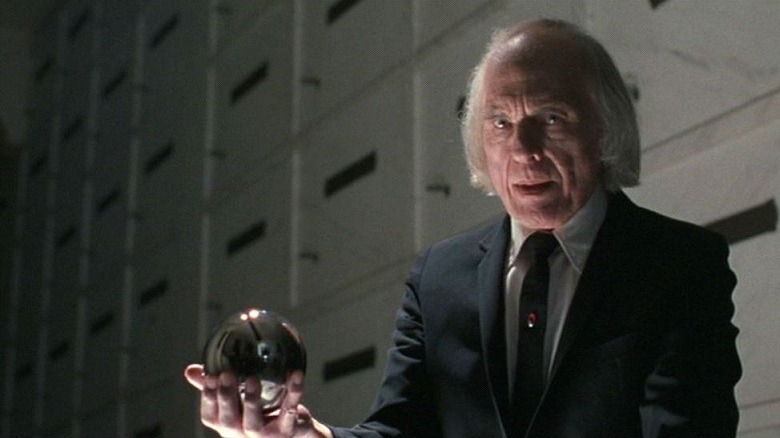
The Tall Man

The very nature of their business already makes morticians terrifying –- making one a malevolent extra-dimensional traveler with a veritable army of killer dwarves and sentient spiked spheres, frankly, seems like overkill.

Inarguably both tall and male, The Tall Man was introduced in the science-fiction horror "Phantasm" in 1979 and continued to thrive across the franchise's four sequels. The terrifying white-haired elderly patron of a sanity-warping mausoleum, The Tall Man uses his pristine catacombs as a front for his true sinister purpose: to shrink and resurrect corpses to act as his slaves, undoubtedly defying all manner of local labor regulations and laws.

These hooded miniscule monks are sent through portals to another dimension to toil away for all eternity, their brains removed and placed into metal weaponized spheres to pilot them like some manner of gooey encephalic aviator. The Tall Man himself is seemingly invulnerable with regenerative qualities, but his true skill lies in grimacing whilst looking menacing, pointing a wrinkled figure at his prey, an act often accompanied by a snarled "Boy!"

The Entity

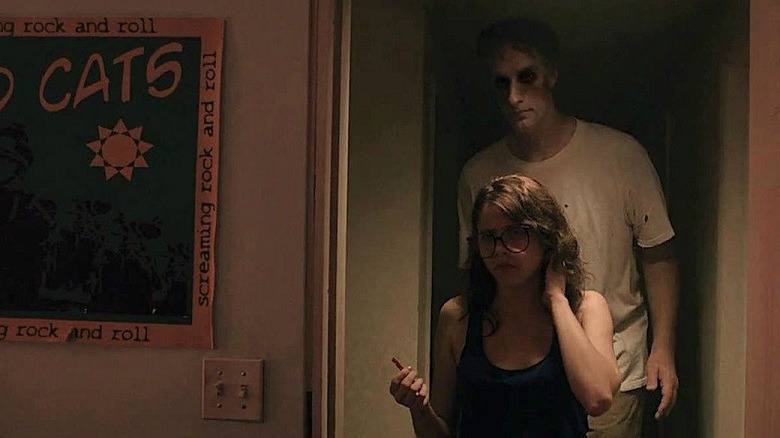
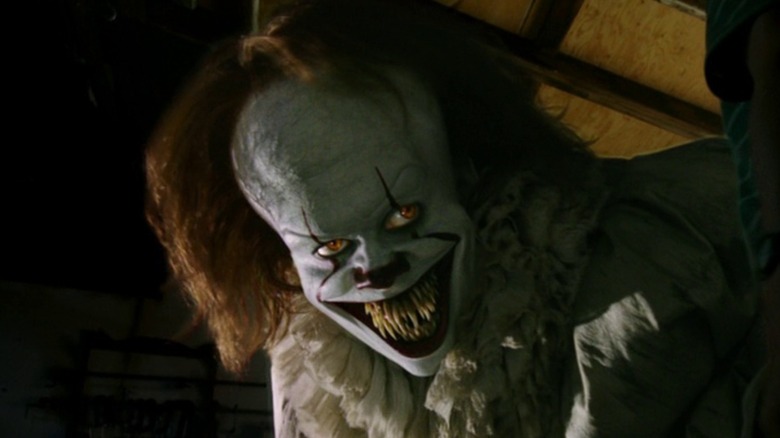
Kids! Sexually transmitted diseases are far from pleasant. The Entity ("It Follows," 2014) is one of the worst of them all, capable of bending you into unnatural shapes only previous attained by a Rubik's Snake. Topical creams will not help you here.

It can take the appearance of anybody, friend, or stranger, and has the dogged stamina and determination of a salesperson trying to sell you an extended warranty. It's a curse given physical form, and one that can only be broken by having sex. The Entity will then consider them it's new target and follow them instead -- until it's snapped them like a fallen twig, when you will once again be its dedicated focus. In seventies and eighties horror, being promiscuous would kill you -– here, it's the only thing that'll keep you alive.

The Entity is fond of long summer walks, being where you'd least expect it, and jump scares.

The Blob

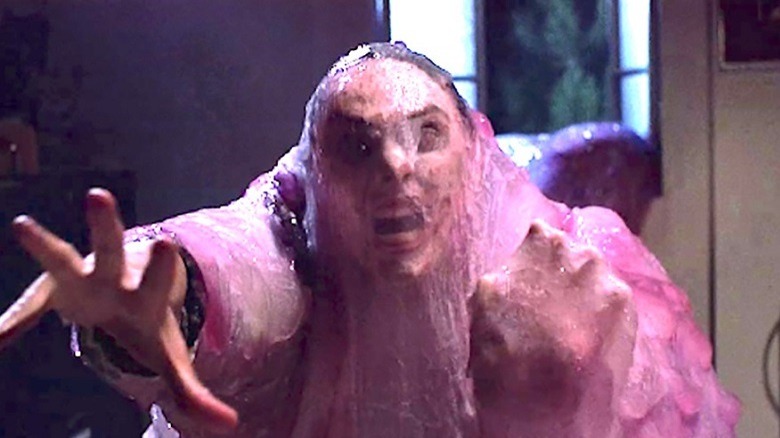
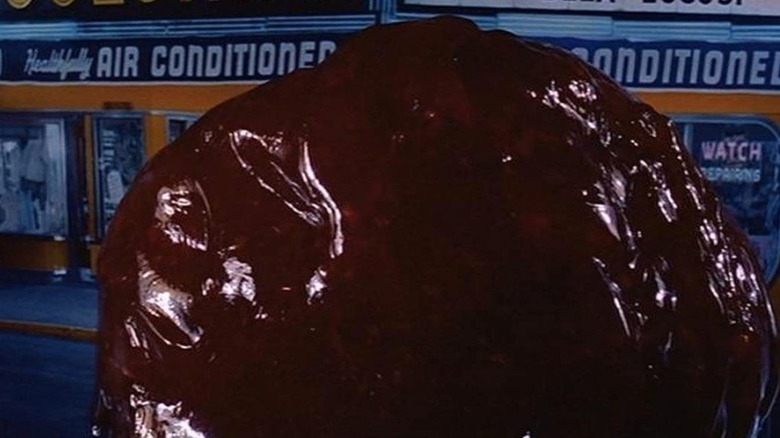
A sentient heap of grape Jell-O might not appear like one of the most dangerous antagonists in horror history, but you wouldn't want it in the vicinity of your peanut butter.

Created as a biological weapon by the US Government during the Cold War, this sinister sentient splodge was sent into space for being too dangerous. However, clearly oblivious to the trusty maxim "what goes up must come down," the Powers that Be don't factor in the possibility of the satellite crashing down outside Arborville, California. The fallen satellite is found by a hapless vagabond who learns that you should stay away from the oozing innards of fallen space debris.

A 1988 remake of the Steve McQueen '58 original, the new (and superior) version sees the murderous mass hiding out in the sewers beneath the town, dissolving everything organic that it comes into contact with. With each new victim absorbed into the Blob's glistening goo, it grows in size and lethality, making it less appropriate to spread on toast with every passing moment.

Freddy Krueger

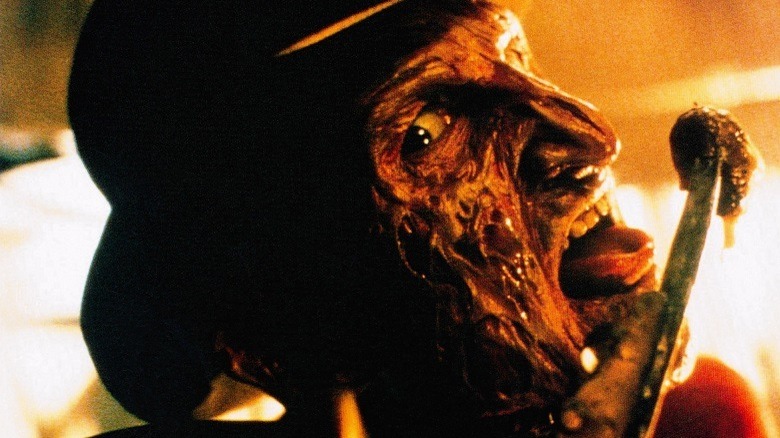
The flambéed fedora-wearing antagonist of the "Nightmare on Elm Street" movies, Krueger was a child murderer who met his fiery fate at the hands of mob justice. The barbequed baddie would later be resurrected as a dream demon. Krueger's main weapon (other than his acerbic wit and dazzling charm) was his trademark glove, a razor tipped leather gauntlet. Able to kill the children of his murderers in their sleep, he dedicated his demonic existence into wreaking havoc on the inhabitants of Springwood -– before being frequently foiled but destroyed for good. The resourceful Ohioans got particularly skilled at removing Freddy permanently, having achieved said aim multiple times.

Like most supernatural slashers, he'd only remain temporarily expelled in the gap between films, ultimately resuscitated via a variety of convoluted means. (Flaming dog urine aimed at his grave was probably one of the more exotic and fragrant means of resurrection.) The most effective and permanent method of expulsion was the poorly received 2010 reboot, seemingly ridding the world of Freddy for good.

I bet you had no idea that the man of your dreams would be quite so crispy.

The Thing

Imagine the humiliation. You've took your flying saucer out for a quick jaunt to see the relatives in the Magellanic clouds and, without warning, it breaks down and you end up crashing headlong into some backwater planet. You've forgotten to pay your AAA (Astronomical Automobile Association) subscription, so you're stuck there. Next thing you know, you're frozen and have to wait until you're defrosted by some pink creatures with weird bone-tentacle digits. You're just trying to get home, but they're all trying to kill you.

A remake of 1951's "The Thing from Another World," John Carpenter's "The Thing" burst onto cinema screens in 1982. A sci-fi horror with a truly alien alien, the creature in question was a nebulous entity with no proper appearance of its own, capable of taking the form of any creature it had encountered and absorbed into its amorphous mass. E.T. may have been released in the same year, but despite them both just wanting to get home, there's only one of the extraterrestrials you'd let anywhere near your Reese's Pieces or bike basket.

The Xenomorph

The egg marketing campaign in the UK in the 50's had an advertising slogan; "Go to work on an egg." Sage advice, but unfortunately, guidance that fellow Brit Kane followed too literally in the 1979 Sci-fi horror "Alien", becoming the unlikely host for what would become a full-grown xenomorph.

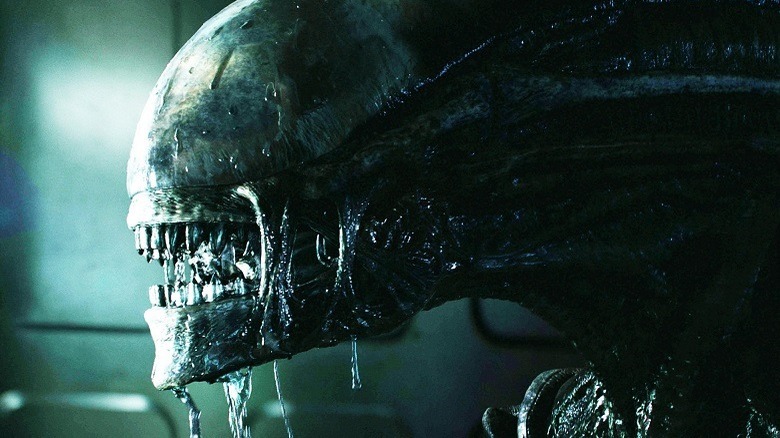
Standing taller than a man, with an oily black insectoid mesodermal skeleton, the adult Xenomorph is the ultimate apex predator. With acid for blood and lethal claws beyond the remit of even the most skilled of pedicurists, this Internecivus raptus was the last visitor you'd ever want on your space-ship –- Shakespeare's Banquo with two sets of jaws.

Science Officer Ash (having never seen "Aliens" and witnessed the slaughter of dozens of the lofty critters) declared the xenomorph to be unkillable, the perfect organism. It's a creature that's sadly had much of its mystique flushed out of the airlock, but it's important to remember quite how terrifying it was back in the '70s.

The Cenobites

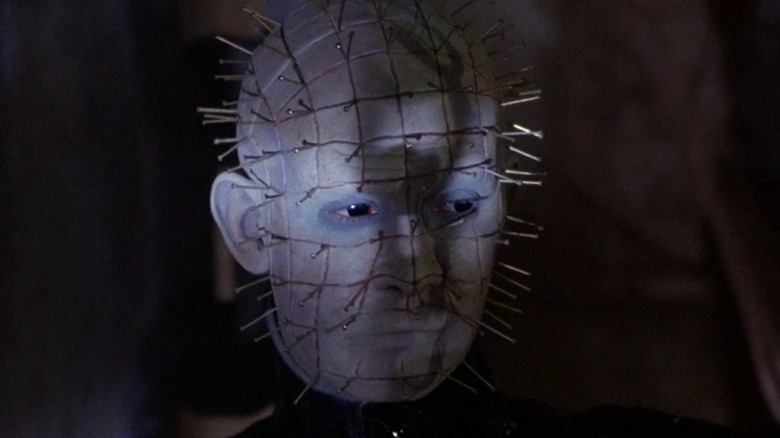
Led by DIY enthusiast and Hell Priest Pinhead, the Cenobites are extra-dimensional servants of the Labyrinth, the hellish reality from the Hellraiser series of movies. Followers of the demon god Leviathan –- which appears as a vast, spinning octahedron -- they are twisted and transformed by his powers into mockeries of their human selves, often inheriting some attribute from their old mortal shell.

All Cenobites entered and were transformed by the labyrinth via the same means -– the puzzle box, or Lament Configuration. Working like some manner of a less frustrating Rubik's Cube, it opens the door to the hellish paradigm and its unmeasurable pleasures and pains.

Pinhead has had a number of Cenobite subordinates over the years, including CD (a cenobite capable of throwing compact discs, essentially defeated in later years by streaming services), Chatterer (a demon with excellent dental habits) and Camera Head  (who, unsurprisingly, has a camera in his head). Leviathan is clearly a very busy demonic entity, with very little time available for thinking up clever names for his loyal team.

Cthulhu

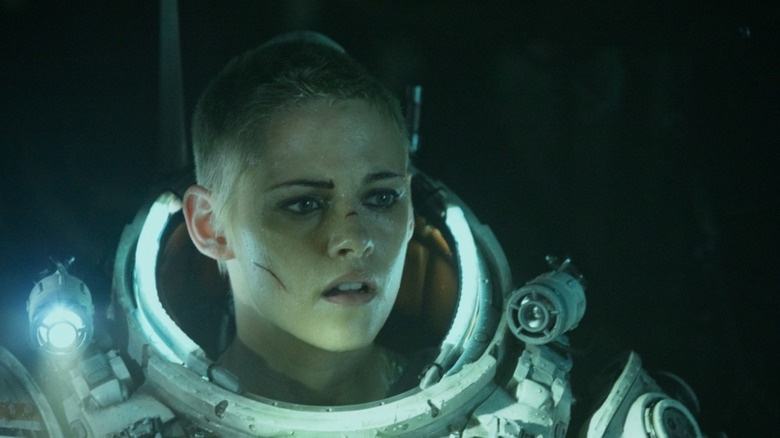
Cthulhu (AKA High Priest of the Great Old Ones, The Sleeper of R'lyeh, The Great Dreamer, Ol' Tentacle face) is a Great Old One, a vast interstellar entity from the mind of H.P. Lovecraft. Appearing across multiple venues -– the Kristen Stewart vehicle "Underwater" (2020), "Call of Cthulhu" (2005) and the darkest forbidden corners of your sleeping consciousness -– this lethargic leviathan has made a number of cinematic appearances, possibly acting as the hand model for the entity at the climax of 2011's "The Cabin in The Woods"

A huge humanoid entity with a head resembling a huge bloated octopus, Great Cthulhu lies trapped in a death-like slumber beneath the Pacific Ocean, ready to emerge when the stars are right –- or when the Beetlejuice sequel is released, whichever comes first.

The works of Cthulhu creator H.P. Lovecraft have appeared in a number of horror films, notably in the works of Stuart Gordon ("Re-Animator," "Dagon," "From Beyond"), and his trademark themes of nihilism and existential dread have featured across countless movies (The "Ernest Goes to" movies, and "Alvin and the Chipmunks: The Squeakquel," 2009).

Death

Although only ever there present as a concept and not in person (and therefore not applicable for acting credits due to broadcast laws), Death is the undisputed star of the "Final Destination" franchise. Impressively solely responsible for the triumvirate of mortality, thanatophobia and existential dread, the Grim Reaper possesses the rare trait of being the unofficial employer of every single entry from this list.

Sometimes only appearing as a concept, sometimes as the familiar Bergman or Matheson and Solomon's anthropomorphic Grim Reaper variant ("The Seventh Seal" and the "Bill and Ted" franchises), it's a constant and unwelcome presence across all movies, let alone just the horror genre. Whether it's a scythe-wielding skeleton ("Monty Python's Meaning of Life," 1979), or a bone-crested Angel of Death ("Hellboy 2", 2008) the motivation and goal remain the same.

It can sometimes be tricked, but never truly fooled. You might temporarily outrun it, but it'll catch up with you in the end. Indeed, from its own words in "Bill & Ted's Bogus Journey," "You may be a king, or a little street sweeper, but sooner or later –- you dance with the Reaper."

Read this next: 13 Box Office Bombs That Are Truly Worth A Watch

The post The 15 Best Horror Movie Villains Ranked appeared first on /Film.

29 Oct 20:17

Ice Cube Exits Jack Black Comedy Oh Hell No After Refusing To Get COVID-19 Vaccine

by Ben Pearson

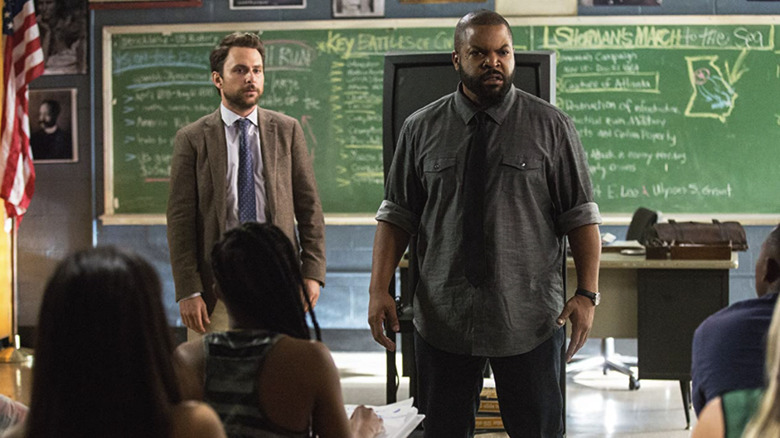
Actor Ice Cube ("Ride Along") has walked away from a starring role in an upcoming comedy after declining the producers' request to get vaccinated against COVID-19. Cube will no longer appear in "Oh Hell No," which would have paired him with Jack Black ("School of Rock") on screen for the first time. Black is still attached to play one of the lead characters, but according to The Hollywood Reporter, the production is pushing back its start date and is on the hunt to find a replacement for Cube. (Jack Black injured himself shooting a bit for the last episode of TBS's "Conan," so Black's recovery time might also be contributing to the production's delayed start.)

Cube Walked Away From $9 Million

Ice Cube originally joined this project back in June, when it was announced that he would be playing a character named Will. "Oh Hell No" tells the story of what happens when Sherman (played by Jack Black) falls in love with Will's mother. That's obviously a bit of an unconventional premise, and it sounds like it will need a script with a light touch and the perfect performers to be able to successfully achieve this high-wire act. Black and Cube seemed like a promising on-screen duo, but according to THR, Cube has left the project after refusing to get vaccinated. Not only that, but the report says he turned his back on a $9 million payday.

Ice Cube is one of the most successful rapper-turned-actors in Hollywood history, and he's been a major movie star for decades. Obviously none of us are privy to his personal financial situation, but from the outside looking in, it doesn't appear that he needs the money. He's not in a "I'll take any job I can because I have to pay off insane debts and cover the cost of my own pyramid tomb" phase like Nicolas Cage was a few years ago. But $9 million is nothing to sneeze at, so he must feel very strongly about this to walk away.

In the unlikely event that you're waiting on a film website to weigh in before you make a decision about whether or not to get the vaccine, let me assure you that we at /Film encourage everyone to get vaccinated as quickly as possible. We're in month nineteen (19!) of a global pandemic that has taken the lives of millions of people and wreaked untold havoc across nearly every aspect of human life, and vaccines are our best tool to fight this deadly virus. This probably won't be the last time we write about an actor who leaves a project because they refuse to take a vaccine, but for everyone's sake, I sincerely hope the remaining instances are few and far between.

Read this next: Actors Who Died In 2021

The post Ice Cube Exits Jack Black Comedy Oh Hell No After Refusing To Get COVID-19 Vaccine appeared first on /Film.

29 Oct 20:16

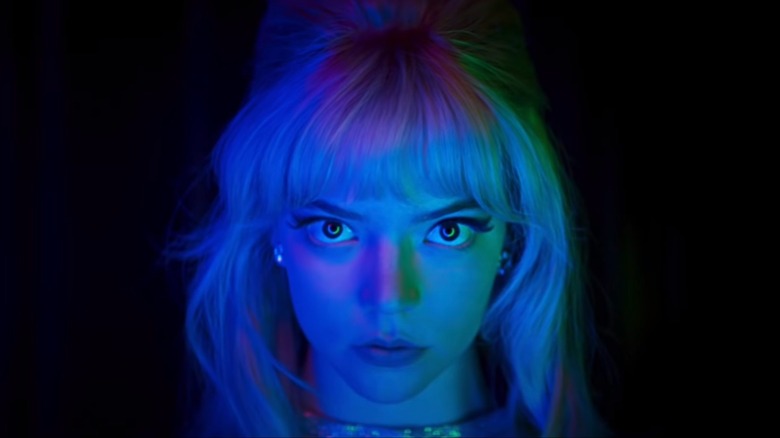
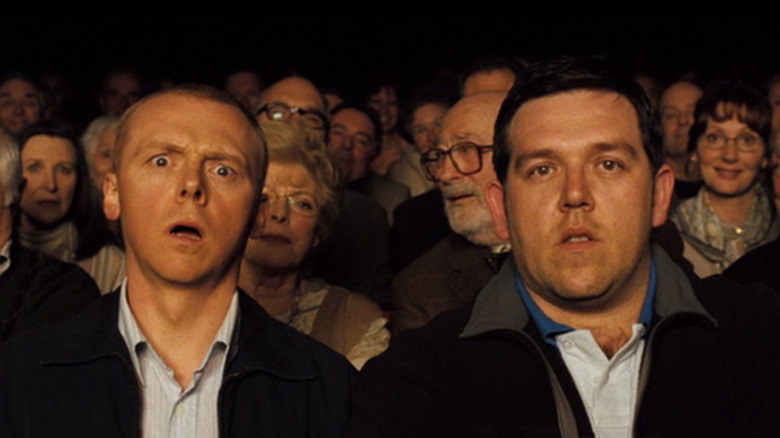
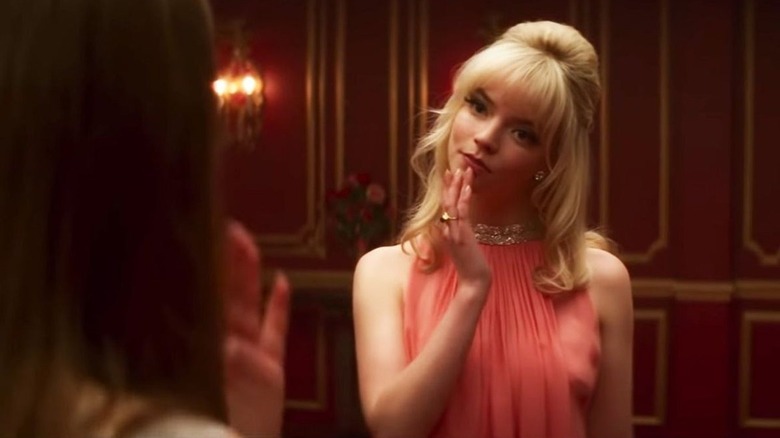
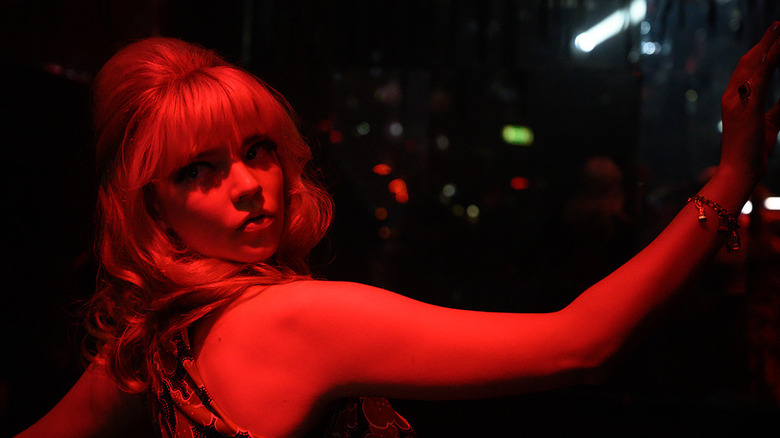
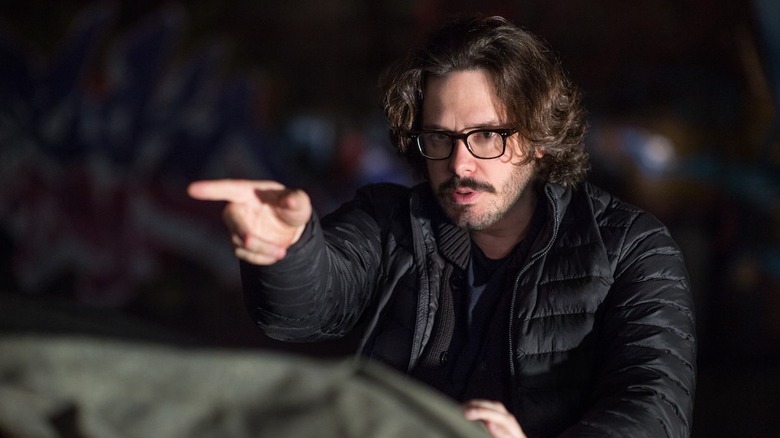
Edgar Wright Shares What Last Night In Soho Has In Common With Hot Fuzz And The World's End [Exclusive]

by Hoai-Tran Bui

We're all feeling a little nostalgic lately. Whether it's for "the good old days " or just for the time before the COVID-19 pandemic, most of us are longing for a time gone by. Edgar Wright's latest, "Last Night in Soho," is a horror movie predicated on the idea that nostalgia can be dangerous. Funnily enough, several of Wright's other films have dug deep into the hazards of hanging onto history: all three films in the "Cornetto Trilogy" deal with nostalgia in some way. 

In an interview with /Film's Jacob Hall, Wright got candid about how nostalgia has played into each of his movies, and how "Last Night in Soho" connects thematically to "Hot Fuzz" and "The World's End." 

The Web Of Nostalgia Throughout Wright's Ouvre

When asked if "Last Night in Soho" was a reaction to his earlier work, Wright had a deep, thought-out answer. While his earlier work is certainly nostalgic ("Shaun of the Dead" is an homage to zombie king George Romero; "Hot Fuzz" is a tribute to action movies), he doesn't regret those movies being sentimental about their subject matter:

I mean, not directly to the films, because there's nothing I regret about those movies, and I feel the same affection for the films that we pay homage to in those movies, I feel the same affections for them now.

So if Wright's not feeling any kind of guilt or shame for the incredible levels of nostalgia in his early work, why turn around and make a film that's an allegory on the dangers of it? The director explained that the characters who had nostalgia for films weren't the ones who stuck with him:

I think the thing with this is more about... And I guess in a strange way, "Hot Fuzz" and "The World's End" do touch on some of the themes. You could say that the baddies in "Hot Fuzz" are nostalgic for the good old days, and that is what motivates their murderous impulses. And in "The World's End," Gary King is trying to recapture something that is long gone. And so, I think in a weird way, those have weighed heavy on my mind, but it's not a rebuttal to "Shaun" or "Hot Fuzz."

What About Bad Time Travelers?

Nostalgia for art is one thing, but nostalgia for a time is different. Wright had a deep attachment to 1960s London, first inspired when he was a child going through his parent's record collection. Just thinking back to the 1960s in Soho made him wish he had the ability to time travel, and he felt that maybe he had "missed out on the best it ever was." The only problem was that he kept thinking about ways that time travel could go wrong:

I would have these recurring dreams and daydream about being a time traveler, but maybe a cultural time traveler. So there's a thing of like, "Oh, I'd like to go back and just be at this gig, and be at this club, or see this film on opening weekend, or see this show." But even that, the idea that you've said, "Oh, I'd like to do this, but not that" is you're already making choices, in terms of you want to experience the good and not the bad. So that started to plague me in the sense that I started to think about it so much that I'd even start to then worry about things that literally didn't matter, because it never going to happen. A time travel machine is not going to be built in our lifetime. But I would start to think, "Well, what if I went back and I had the wrong money? And what if I went back and I had to foil an assassination, but I couldn't remember the dates?" And all those things that are nagging you about being a bad time traveler.

Clearly Edgar Wright has watched some "Star Trek," because these questions tend to pop up every time someone from Starfleet accidentally ends up in a different time period. His worries about the mundane concerns of time travel helped inspire him to keep thinking about the power of nostalgia, however, and that led him to "Last Night in Soho." 

'Questioning My Own Fatal Nostalgia'

Thinking about time travel made Wright wonder why he even longed to see another time so much anyway. After all, it's a little strange to have nostalgia for a decade you never experienced. He wondered if perhaps having nostalgia for a decade was a "failure to deal with modern life," and that led him down the rabbit hole. He also noted that people tend to have nostalgia for the decade just before them, because they feel like they missed out on something:

I think a lot of people get nostalgic about the decade just before them. So I think a lot of '90s kids get nostalgic about the '80s in a way that I don't. So, I'm not quite so... I might feel differently if I had kids who I would take to something, but when there's '80s nostalgia or remakes, I'm less interested, because I remember it. And I felt like, I remember all this very vividly, so it was not so interesting to me, but I could see how it would be interesting to people who missed it, because I missed the '60s and that fascinates me. So I guess that's the thing is it's not a rebuttal against my previous movies, but it's more me questioning my own fatal nostalgia.

"Last Night in Soho" is in theaters nationwide. 

Read this next: 20 Movies About Serial Killers That Will Absolutely Creep You Out

The post Edgar Wright Shares What Last Night in Soho Has in Common With Hot Fuzz and The World's End [Exclusive] appeared first on /Film.

29 Oct 20:16

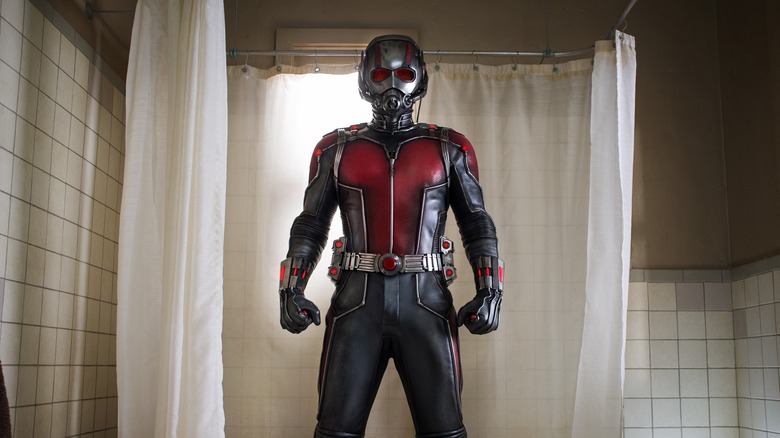
Edgar Wright Has Not Seen Ant-Man And Has A Good Reason For Never Seeing It

by BJ Colangelo

A film based on the Marvel superhero Ant-Man had been waffling around Hollywood since the 1980s, but it was when Edgar Wright and his writing partner Joe Cornish brought their take to President of Marvel Studios, Kevin Feige, that the tiny, mighty hero finally found a future. Wright developed the project for eight years, with three different drafts of the film completed by 2011 and test footage shot in 2012. Wright was even responsible for bringing on Paul Rudd as the titular Ant-Man in 2013. Eventually, Wright left the project due to creative differences with Marvel. Director Peyton Reed was brought in to direct the film, with Paul Rudd and his frequent friend/collaborator Adam McKay delivering a new draft of the script.

"Ant-Man" was released in 2015, with the sequel "Ant-Man and The Wasp" coming out three years later, and the third film, "Ant-Man and The Wasp: Quantumania" due out in 2023. Despite the years gone by, Wright still hasn't seen the "Ant-Man" movie he walked away from, and with good reason. During an "Ask Me Anything" (AMA) on Reddit as part of a promotional event for his latest film, "Last Night in Soho," user u/Alienboy13 asked, "​​Have you gotten a chance to watch 'Ant-Man?' If so, what are your thoughts on it, and what was your original idea for it?"

Edgar Wright replied respectfully and simply, saying: "I decided not to watch it so I would never have to tell people what I thought of it."

Setting Appropriate Boundaries

This isn't the first time Wright has made it public that he's not planning on ever seeing "Ant-Man." In an interview with Uproxx during his press tour for "Baby Driver," he was quoted as saying the following:

I haven't seen it and I haven't even seen the trailer. It would kind of like be asking me, 'Do you want to watch your ex-girlfriend have sex?' Like, 'No, I'm good.' The closest I came to it was that somebody sitting near me on a flight was watching it. And when I saw that the person sitting next to me was going to watch the movie, I thought, hmm, maybe I'm going to do some work on my laptop. I don't think they knew who I was. They were just watching it. That was the closest I came to seeing it.

During Wright's AMA, he also referenced the airplane trip. While Wright and Cornish were still given writing credits on the project, it was a huge bummer when Wright left as director. He has historically handled the situation maturely, telling Variety "I wanted to make a Marvel movie but I don't think they really wanted to make an Edgar Wright movie." Good for Wright for publicly declaring his decision to not watch "Ant-Man" so he doesn't have to have an opinion on it, especially considering he's made three movies since the "Ant-Man" exit and yet he's still continually getting asked about it when he's just trying to promote his new projects. We stan a king who sets healthy boundaries.

Read this next: Every Pre-MCU Marvel Movie Ranked

The post Edgar Wright Has Not Seen Ant-Man and Has a Good Reason For Never Seeing It appeared first on /Film.
29 Oct 20:15

The 20 Best '60s Horror Movies Ranked

by David Court

The '60s was a time of great upheaval –- it was the supposed decade of peace and love but, was also the era of riots, the civil rights movement, and of seismic shifts both politically and culturally. The post-war optimism of World War II had begun to fade, and with that came a new cynicism –- counterculture was in the ascendance, and it was reflected in film tastes. The '50s had been spent watching the stars, but much of the '60s would be spent watching your back. Horror was cheap, and the deterioration of the censorial nature of the already fragmented Hays Code meant that directors could do more, show more –- something that would be truly exploited in the '70s, the golden age of horror.

The growing popularity of television also cast a dark shadow over cinema. The decade saw the traditional studio system begin to fragment, ironically even as the first multiplexes were beginning to appear. Ambitious epics were harder to justify, and it became increasingly cheap to shoot abroad with foreign film crews –- which benefited the UK cinema industry greatly, assisting already established dedicated horror studios such as Hammer and Amicus.

It's worth mentioning that there will be spoilers here –- you've had six decades to watch the twenty movies presented here, so read on at your peril.

Blood Feast

"Blood Feast," is included more as a curio and cinematic landmark than through its quality as a movie. The acting is risible, the plot ludicrous and gossamer-thin, and it was seemingly directed by randomly pointing a camera at actors and scenes, with scant regard for cinematic intricacies such as adequate lighting or being in focus.

And yet for all its faults, "Blood Feast" has achieved a certain notoriety in horror history by being among the first of its genre to feature extensive gore. Writer/director Herschell Gordon Lewis ("The Godfather of Gore") -– no stranger to using gimmickry to put bottoms on cinema seats -– slathers the screen with thick, lurid red, visceral grue.

Ramses is a caterer in Miami. Everybody needs a hobby, and Ramses' is murdering young women and using their body parts to rejuvenate the Egyptian Goddess Ishtar. Lewis delights in showing the full effect of Ramses' handiwork –- all the eye gouging and entrail stripping is presented on screen with gleeful delight, albeit with all the directorial flair of waving a camera around in an abattoir.

Still, all credit to it for being the first splatter movie, and for making this list. And probably the first time that "Blood Feast" has ever been close to a chart which wasn't about the worst horror films ever made.

Black Sabbath

Sometimes known as anthology movies, the portmanteau horror hit its stride in the '60s. They commonly featured numerous standalone stories linked by a framing device. Introduced by a deliciously deadpan Boris Karloff, this Mario Bava directed film (released as "The Three Faces of Fear" in his native Italy) consists of three individual tales.

The first features a woman alone in her apartment being troubled by menacing phone calls from an unseen prowler. The second featuring Karloff himself as a man returning home to his family after supposedly killing an undead creature. The standout story here is the final tale though, "The Drop of Water," which sees a nurse haunted by the corpse of a woman she stole a sapphire ring from.

The first two tales are distinctly average, one ending predictably and the other dragged to a length that the script can't support, but it finishes on a high note. It's a delightfully creepy tale with a terrifying protagonist, the ghastly appearance of whom will linger in your subconsciousness long after Karloff has bid his monotone farewells. We also have this film to thank for the naming of the legendary band Black Sabbath, who were simply known as "Earth" before this film inspired their epochal name change.

Tales Of Terror

Featuring three tales based on the works of Edgar Allan Poe, this 1962 movie was directed by the king of low-budget independent cinema Roger Corman, with a screenplay by Richard Matheson of "I am Legend" fame.

Lacking the typical framing mechanism of the portmanteau, each story stars (and is introduced via voiceover) by horror legend Vincent Price. The three classic tales tell of vengeful spirits, cuckolds and cats, and souls stranded in Limbo.

This was the fourth pairing of Corman and Price on a Poe adaptation, and it's apparent that the novelty was wearing a little thin for both talents. It's the central segment –- "The Black Cat" –- that's the most entertaining, being an odd hybrid of two separate Poe stories ("The Black Cat" and "The Cask of Amontillado"). It's a wonderful showcase for the comedic and dramatic capacities of Peter Lorre and Vincent Price. Both traditionally known for playing villains, it's a tale as camp as it is hilarious, with each actor trying to out-perform and out-ham the other. It's a popular tale with filmmakers that has had numerous subsequent adaptations, appearing again in the 90's anthology "Two Evil Eyes" as well as an episode of the 2007 television stories "Masters of Horror".

Dr. Terror's House Of Horrors

Amicus Productions became inexorably linked with the portmanteau horror format throughout the '70s, but "Dr. Terror's House of Horrors" was their first. The mysterious Doctor Schreck (Peter Cushing) steps into a carriage in London and performs tarot readings for the men within. This is the framework for the upcoming pentalogy of horror tales, stories of werewolves, killer plants, voodoo, possessed disembodied hands, and vampires –- all culminating in a not particularly well-hidden twist ending.

The great beauty (and strength) of the anthology format is the pace; stories are tight, brief, and if they're not particularly good, there'll be another one along in a moment. It allows for a variety of styles, in this case wildly veering so much between genuinely chilling horror and dark humor that it's enough to give you whiplash. This particular film is also a veritable Who's Who of horror talent, featuring genre stalwarts such as Christopher Lee, Michael Gough, and Donald Sutherland, all clearly enjoying themselves way too much.

The title (and portmanteau format) would later be spoofed to significant effect in the BBC Comedy 2001 horror series, "Dr. Terrible's House of Horrible".

Carry On Screaming!

Hammer Film Productions were at the height of their success in the late '50s and early '60s, their works therefore ripe for parody. The phenomenally successful "Carry On" comedy film franchise had spoofed almost every genre with its unique style of bawdy humor, so horror seemed a natural fit.

The 12th "Carry On" film in the series, "Carry on Screaming" takes us to the smoggy streets of Edwardian London. Detective Sergeant Sidney Bung is investigating the recent disappearance of numerous young women. His investigations lead him to the home of the eccentric scientist Doctor Watt, his vampish (and vampirish) sister Valeria, and their collection of surprisingly life-like mannequins.

For a franchise better known for its obsession with underwear, excessive cleavage, and never opting for a double entendre where a single entendre will suffice, "Carry on Screaming!" is a surprisingly respectful and well-observed homage to the Hammer Horror oeuvre. It features eminently quotable lines, great gags, and genuine scares. It also has the cinematography match the lurid colors of Hammer's distinctive Eastman color palette. The cast are clearly having a blast, and the fun is infectious.

Onibaba

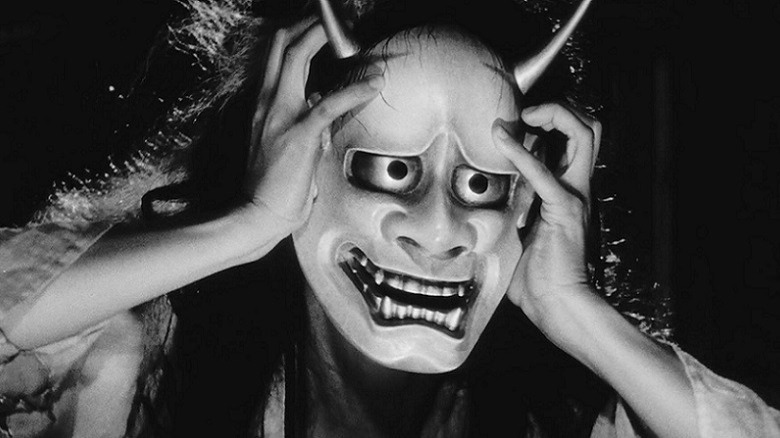
Set in Japan during the Nanboku-cho civil war of the 14th century, Onibaba sees two scavengers –- an older woman and her daughter-in-law –- making a living by murdering samurai unwary enough to stumble into their territory and selling their weapons and armor for coins. One day the two encounter a warrior wearing a hannya mask (a traditional theatrical mask of a jealous female demon) and, he, too is lured to his death. The mask is removed from his hideously disfigured face, and thus begins a chain of events that will make the women pay for their crimes.

Shot in harsh monochrome, "Onibaba" is a bleak and unrelenting view of war -- but is as visually stunning as it is chilling. Much of the film is set amongst plains of silver seven-foot-tall susuki grass, both home and camouflage for the two ill-fated women. A brilliantly distinctive soundtrack tops off this movies assault on the senses, with its weirdly anachronistic avant-garde jazz.

The Devil Rides Out

If the works of author Dennis Wheatley were to be believed, you couldn't move around the English countryside in the first half of the twentieth century without stumbling across various Satanic warlocks and their middle-class covens conducting eldritch practices.

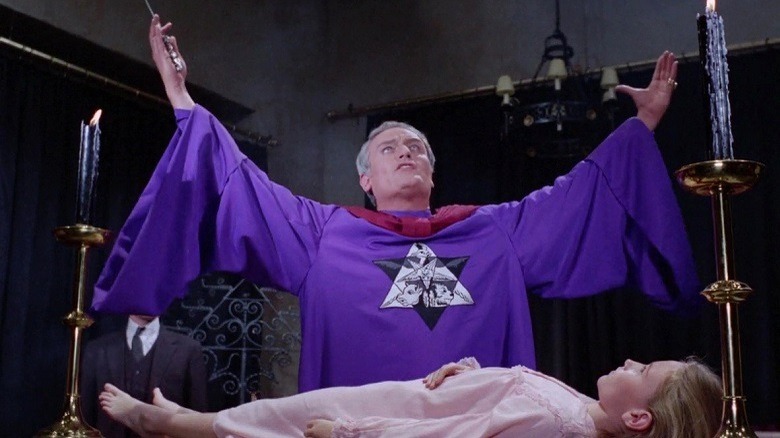
"The Devil Rides Out" was Wheatley's second work (from an eventual 11) featuring his hero Duc de Richleau -- but the only time said character would be portrayed on screen, more than 34 years after the release of the book. Horror stalwart Christopher Lee portrays the aristocratic Duke, an adventurer and occultist. In Hammer Film's "The Devil Rides Out" (released as "The Devil's Bride" in the United States to avoid audiences mistaking it as a Western), Richleau and his colleague Rex Van Ryn learn of a Satanic cult and plan to foil their nefarious mystical plans.

Wheatley himself was a keen student of the occult, and it's the obvious research and deadly serious approach to Satanism –- and the earnestness of the actors involved –- that stop the movie moving into the realms of the silly or far-fetched. Having a performer of Lee's gravitas helps considerably, and it's refreshing to have the king of the Vampires play the dashing hero for once -– and a particularly memorable and interesting protagonist, at that.

Brides Of Dracula

Christopher Lee would make his second performance as the eponymous undead aristocrat in "Dracula: Prince of Darkness" but it's "Brides of Dracula" -– Hammers unofficial sequel to the first movie –- that's of more interest, with a frankly wasted Lee playing the role without dialogue in the former. Deviating away from the Bram Stoker source material, "Brides of Dracula" is the first of a protracted line in Hammer Horror Dracula sequels, "The Legend of the 7 Golden Vampires" (a bizarre martial arts/horror hybrid) being the last such movie in 1974.

A young Baron, cursed with the bloodline of Dracula, breaks free of his castle prison. He's allowed to wreak havoc through the village and a girl's school before professional Vampire Hunter Abraham Van Helsing arrives on the scene.

"Brides" is a quintessential Hammer movie, featuring all the trademarks that cinema audiences had come to expect from the prolific horror studio; a gothic period setting, a garish and distinctive technicolor palette, candle-lit mansions, stoic square-jawed heroes, and beautiful women in flimsy nightdresses. The enigmatic Peter Cushing reprises his role as Van Helsing lifting this up as a worthy entry to Hammer's vampire canon, with enough classy gore to keep the horror fans content.

Witchfinder General

Set during the English Civil War of the 17th century, Matthew Hopkins was the Witchfinder General. He was supposedly tasked by General Oliver Cromwell's Puritans to travel the countryside and seek out confessions from witches –- for which he would collect a handsome fee. Naturally, this means of financial recompense could be exploited by a less-than-honest soul, and Hopkins and his henchmen did exactly that.

Vincent Price remains a rightful legend in the annals of horror history, but he could never ordinarily have been accused of delivering a performance which could be regarded as subtle. Price was a wonderful larger-than-life character, and this extended to the roles he chose -- but in "Witchfinder General," Price plays the character of Matthew Hopkins with earnest seriousness, marking it as one of his finest performances. 

Hopkins was a despicable man, and Price plays him with complete conviction. Effectively murdering women for money, the real Matthew Hopkins lived out his life without ever meeting justice. Naturally, such a conclusion wouldn't make for particularly rewarding cinema, and "Witchfinder General" does a wonderful job at showing the man's crooked deeds finally catching up with him.

Repulsion

The first of two movies on this list from Polish-French auteur Roman Polanski, this is notably the fugitive director's first English-language movie. Set in Kensington, London, "Repulsion" is a psychological horror thriller about an androphobic manicurist named Carol (played by Catherine Deneuve) and her slow descent into madness within the cramped confines of her apartment.

Shot in moody black and white, the apartment is forever doused in shadow, a claustrophobic space mirroring the fractured state of Carol's mind. We're witness to all of Carol's hallucinations, including a particularly memorable scene in which hands emerge from walls to desperately grasp at her (in a shot that would later be paid homage in both the trailer and opening scenes of George A. Romero's "Day of the Dead"). It's all wonderfully surreal, and we're never quite sure what is real and what is not.

The soundtrack is as stifling as the visuals, featuring unnerving repetitive sounds such as the ticking of clocks and the audible beating of Carol's heart. As Carol's neuroses heighten to unsustainable levels that can only end in tragedy, the audience feels complicit in every act. Rarely has mental health been portrayed so vividly (and so disturbingly) on the big screen.

Village Of The Damned

Author John Wyndham was the expert in the low-key subtle invasion; in "Day of the Triffids" he saw the world slowly conquered by sentient vegetation, and in "Village of the Damned" the attempted subjugation of humankind begins in the small sleepy British village of Midwich.

In this adaptation of Wyndham's 1957 science fiction novel "The Midwich Cuckoos", the inhabitants of said village all fall unconscious simultaneously, waking unharmed four hours later. All the women of child-bearing age are found pregnant, and give birth on the same day. As these strange blonde-haired children grow and develop at a baffling rate, they start revealing their terrifying extra-sensory powers.

It's the performance of these children which is the great strength of the film –- there's a great effectiveness in horror in the unnatural staging of seeing innocent youngsters performing hideous acts (Gage in "Pet Semetary," for instance) and the appearance and the demeanor of the Cuckoos are truly haunting. There's a playful malevolence to them, and it's refreshing to see –- in an era where exposition was so often driven home with a sledgehammer –- that the true nature of the children is never properly revealed. This ambiguity is one of the most chilling things of all.

Eyes Without A Face

"Eyes without a Face" ("Les yeux sans visage") tells the tale of guilt-ridden Doctor Génessier, remorseful at being responsible for an accident that disfigured his once-beautiful daughter Christiane. In an attempt to atone for his sins, he kidnaps young women in order to remove their faces to try to graft them onto his scarred daughter.

Despite having been elevated to more than just a mad scientist movie through the skilled camerawork of director Georges Franju, it was poorly received on initial release, with many detractors claiming that the horror genre was beneath Georges' talents. It has since undergone massive critical reevaluation. It's uncomfortable viewing and feels remarkably ahead of its time, especially with its clinical approach to its uneasy imagery.

John Carpenter implied that Christiane's blank faced mask was an inspiration for Michael Myers in the "Halloween" series. "Eyes without a Face" has also been hugely influential on European cinema, inspiring a number of Jesús Franco's movies as well as the Pedro Almodóvar film "The Skin I Live in"

Quatermass And The Pit

The character of Rocket scientist Professor Bernard Quatermass had been around since the early 50s, immortalized on screen across a number of television series. "Quatermass and the Pit" was an adaptation of the six-part 1958 series and was released as "Five Million Years to Earth" in the US.

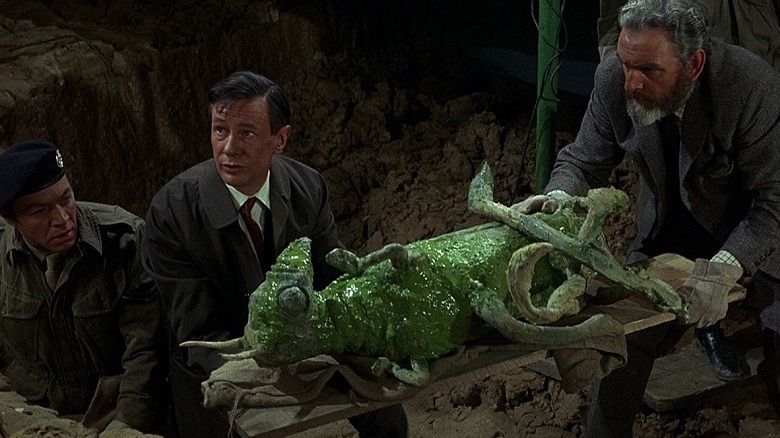
As engineers are digging an extension to the London Underground, they come across a mysterious buried object and the remains of early humans suspected to be at least five million years old. The object turns out to be an ancient spacecraft and reactivates, provoking weird hallucinations and casting a malign effect on all those in the vicinity.

The underlying theme of most of writer Nigel Kneale's Quatermass tales was the intersection between science and myth, and this extended to his other work, including his script duties on "Halloween III." Quatermass was (unusually) always a more intellectual type, being verbose and intelligent rather than prone to acts of derring-do. The tales follow suit with science often being used to defeat the antagonist rather than brute strength or sheer firepower. Along with "2001: A Space Odyssey" from the same year, "Quatermass and the Pit" was one of the heralds of the dawning of a new age of more cerebral drama. Even now it remains both original, and thought-provoking.

The Haunting

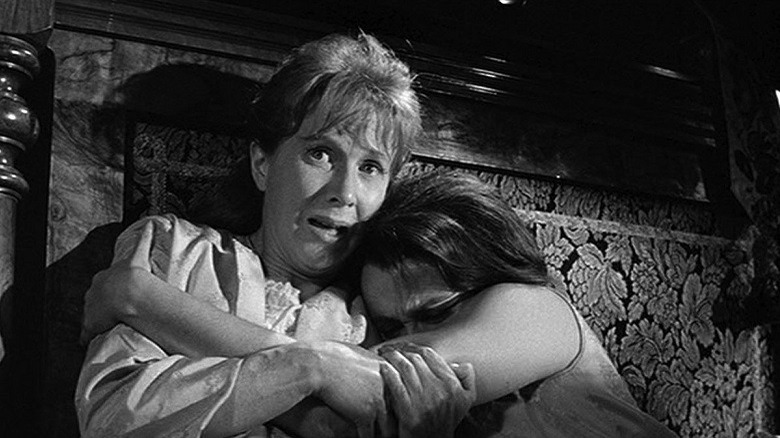
Based on the 1959 Shirley Jackson novel "The Haunting of Hill House," "The Haunting" concerns a group of people invited by a paranormal investigator to stay in and research the supposedly haunted titular house. The investigator, Dr. John Markway, is joined in the sprawling and sinister gothic manor by the family heir Luke, psychic Theodora, and Eleanor, a guilt-ridden woman with a history of hauntings.

In an era where censorship was being gradually relaxed and horror movies were becoming bolder and more experimental in their attempts to scare, "The Haunting" at first appears something of a throwback. It turns out to be a masterclass in ramping up atmosphere and tension, with the sound design worthy of particular note; rattling pipes and creaking walls give the impression that the building is alive and is as much a character as any of the hapless humans wandering within its oddly angled walls. Also worthy of note is the movies surprisingly modern approach to homosexuality -– Theodora is portrayed as feminine, whereas the Hollywood tendency at the time was to portray lesbians as predatory and masculine.

A poorly received remake was released by Jan De Bont in 1999, with a more successful television adaptation for Netflix created and directed by Mike Flanagan in 2018.

Peeping Tom

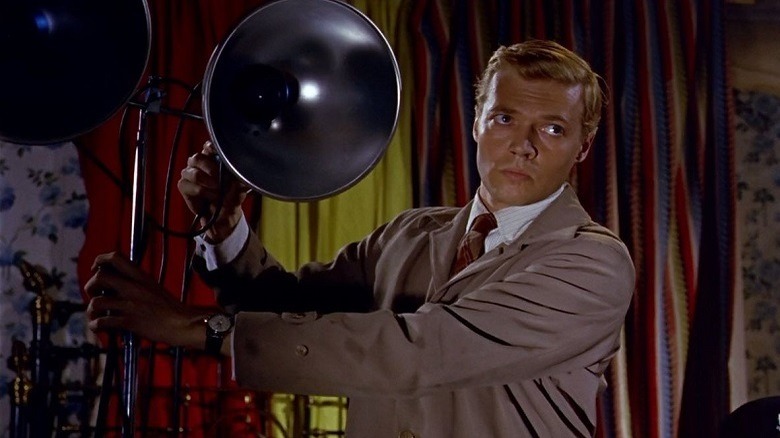
Universally derided on release and responsible for the ostracism of director Michael Powell from the film industry, Peeping Tom is one of the very first –- if not the first –- examples of the slasher genre.

Recluse Mark is a photographer, working in a film studio in daylight and taking bawdy photos of women at night. A childhood victim of abuse, he's making a documentary about fear –- one which involves taping the reactions of his victims as he kills them. A friend sharing the same apartment building learns of his secret and ends up being captured by Mark.

"Peeping Tom" is a slow-burning psychological horror, much of its power coming from the framing of its scenes. A great deal of the movie is viewed either from Mark's perspective, or through the viewfinder of his ever-present camera, which eventually turns out to be the method of murder. The audience is forced into involuntary voyeurism, the camera lingering and never shying away as much as we'd like it to.

Despite the considerable harm it did to Powell's previously exemplary career, "Peeping Tom" has been subsequently reappraised and acknowledged as the standout movie that it truly is. It's a hidden gem but is as bleak and unforgiving as anything from Hitchcock.

Whatever Happened To Baby Jane?

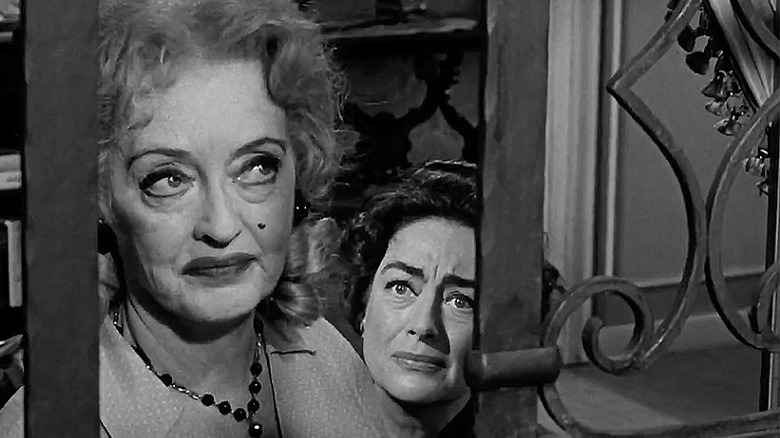
Blanche and Jane Hudson, two aging child stars past their prime, share a dilapidated Hollywood mansion. "Baby" Jane Hudson's star faded in childhood, whereas Blanche went on to a successful acting career. Now living together, Blanche confined to a wheelchair with Jane remains resentful of her sister's success, regularly abusing her crippled sibling.

The backstage story behind the two lead actors from this 1962 psychological horror is almost as vicious as the one portrayed on screen: the two divas just as prone to barbed comments against the other as either of their characters. Bette Davis and Joan Crawford were rivals for at least three decades, and it was rumored that the two only agreed because each was envious of the other's starring role.

Both performances are utterly hypnotic, with Davis' Jane in particular coming across as a truly pathological grotesque. It's as much character study as horror, the venom spat between the two coming across as frighteningly genuine. It's rare that Hollywood dares to be quite so introspective, but "Whatever happened to Baby Jane?" is a gripping and unique look at the aftermath of success and stardom.

The Birds

"The Birds" follows socialite Melanie Daniels and her ill-timed new romance with Mitch Brenner, their relationship just beginning as huge flocks of birds descend on their town and begin attacking people.

Based on a true story in which seabirds attacked a Californian town in the early '60s, director Alfred Hitchcock used the event as research material for the movie. The eventual cause of the real-life event was pinned down to toxic algae, but one of the strongest elements of the film is that the cause for the bird's erratic and uncharacteristic behavior is never explained.

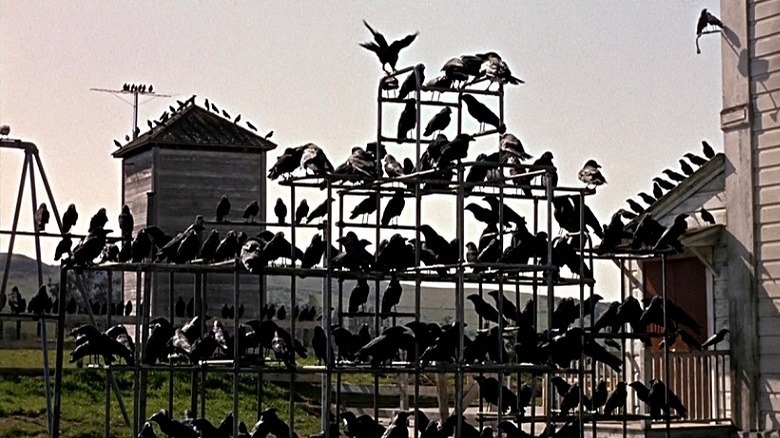
The movie is a delightful example of slow-burning tension, culminating in a violent and frenzied set piece covering the birds' ultimate attack on the townsfolk. Hitchcock truly was the expert in suspense, and it's been rarely used to such favorable effect as it is here. In one particular stand-out scene (that's been ripe for spoof and parody ever since), birds begin amassing on a playground climbing frame, the numbers growing with every glance back at the skeletal metal structure. Just as it feels on the verge of becoming ludicrous, the final act begins.

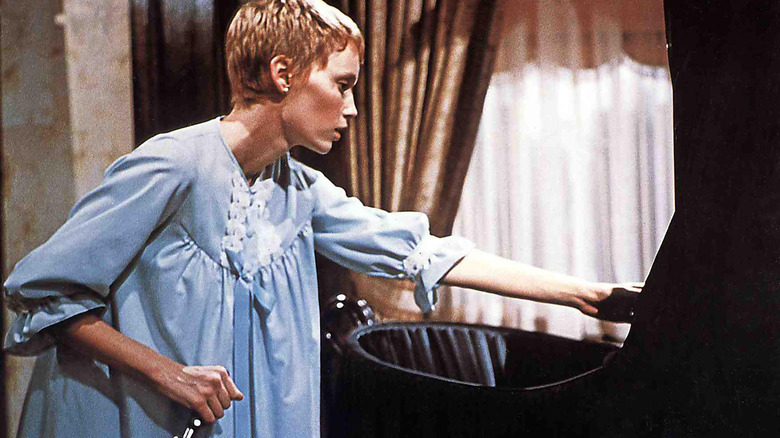
Rosemary's Baby

Rosemary and her husband Guy have recently moved to a New York apartment building, confronted with odd neighbors and the buildings equally odd history. When Rosemary falls pregnant, she begins to strongly suspect that something is wrong with everyone around her -– and it's only when she gives birth that she learns the unholy truth.

Mia Farrow gives a career-best performance as the beleaguered Rosemary, her paranoia only worsening as those around her try to offer comfort. She cuts a waif-like figure, propelled like a leaf in a hurricane as her situation worsens. Is it the hormonal changes of her pregnancy affecting or judgement, or is it something far worse? When she suspects that even her husband is acting against her, is it paranoia or a (soon-to-be) mother's intuition?

Many speak of the standout ending, but it's the moments that happen just before it which are the most chilling: her chirpy and overly helpful neighbors talking about eldritch rituals with the same giddy enthusiasm as they'd talk about a tea party. Just normal-seeming humans capable of conspiring to conduct hideous, nefarious acts in order to achieve a singularly pitch-black aim. Rosemary is little more than a pawn, and the bleaker-than-bleak ending reveals her dark purpose.

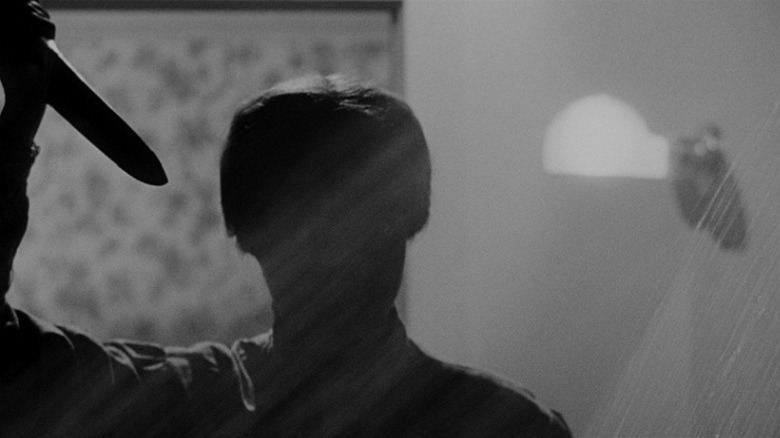
Psycho

To the portly familiar silhouette of Hitchcock again for our penultimate movie, and a film that's been imitated many times since (including rather too studiously in a pointless shot-for-shot remake by Gas Van Sant in the late 90's).

Secretary Marion Crane has embezzled 40 thosuand dollars from her employer, and whilst travelling via back roads to hide from the authorities, stumbles across the ramshackle Bates Motel. There she meets proprietor Norman Bates, and will come to learn of the very unusual relationship the boy has with his mother.

Based loosely on the real-life case of murderer Ed Gein, it features what is one of the most famous film scenes ever shot –- namely, the murder of Marion whilst she showers. One of the most parodied scenes in the movie history, Hitchcock uses an unheard-of number of jump-cuts and perspective shifts in a scene given an incredible dynamism through soundtrack and sound effect (that's a melon and thick juicy stick you're heaving being stabbed, by the way). It may appear a little dated and predictable now, but it's easy to forget that many of the techniques and plot strands were unheard of then. It was "Psycho" that first introduced them to the lexicon of cinema.

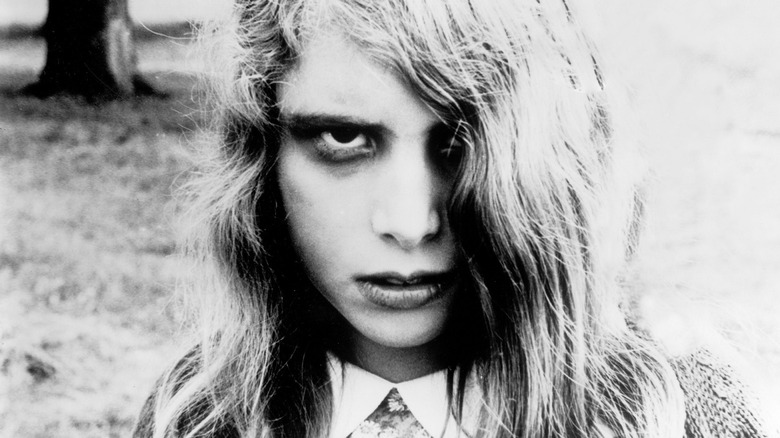
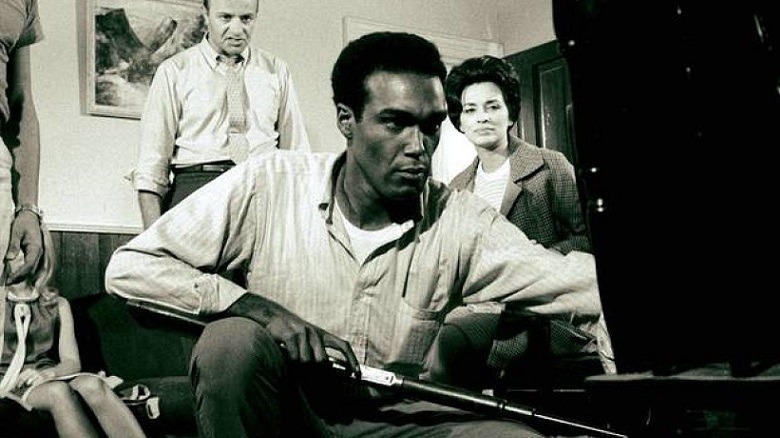
Night Of The Living Dead

"They're coming to get you, Barbara..."

"Night of the Living Dead" is landmark film in many ways. Effectively a siege movie in which a disparate group of people attempt to defend themselves against a horde of the rampaging cannibalistic undead, it was like nothing ever seen before. This was a movie which would dwell on the eating habits of the undead, watching them chow down on human limbs with a documentary-style voyeurism. It was a movie when dead little girls would attack their parents, and a film where the good guy dies at the end.

Hollywood zombies had previously been the product of African necromantic rituals, yet 28-year-old George Andrew Romero would do what countless square-jawed leading men could never do: wipe out all the voodoo zombies. These were the dead reanimated in an ambiguous manner, but through science and not magic -- and that legacy would go on to infest cinema like a plague.

Amazingly, in the same year that saw the assassination of Martin Luther King Jr., African American Duane Jones was cast in the leading role –- not for political reasons, but simply for being the best actor who auditioned, with Romero consciously refusing to amend any of the existing script to reflect the color of his lead's skin.

The threat of Romero's zombie has always been simple; it will not rest, and it will always be there. Like his pale skinned ghouls, the legacy of "Night of the Living Dead" will never die, its all-permeating influence still as strong now as it was half a century ago.

Read this next: 14 Remakes That Are Better Than The Original

The post The 20 Best '60s Horror Movies Ranked appeared first on /Film.
29 Oct 20:15

The Spine Of Night Star Lucy Lawless Talks Voice Acting, Animation, And Pumpkins [Interview]

by Danielle Ryan

Lucy Lawless is no stranger to heroism. The actress, who rose to stardom on the television series "Xena: Warrior Princess," has played all kinds of characters who save the world. In her latest, "The Spine of Night," she voices Tzod, an ancient swamp witch who must fight with all she has to save the planet from the forces of evil. In real life, Lawless has been busy fighting for justice herself, traveling to the Amazonian rainforest and actively fighting on social media to free human rights lawyer Stephen Donziger. 

I had a chance to chat over the phone with Lawless about voice acting, protecting the planet, and what kinds of projects she wants to take on next. 

(This interview has been lightly edited for clarity.)

A Protector Of The Earth — Animated Or Not

Your character in Spine of Night is this ancient protector of her swamp and of the Earth. And I feel like you're basically doing that in real life with your work with Greenpeace and now in Ecuador. And so, I was wondering if you see some of yourself in Tzod.

I am fully in Tzod mode at the moment. Yeah, very much. When I think about, I mean, Xena was always hanging out with Amazons and part of not only this, but "Mothers of the Revolution." Yeah, a lot of my life has been taken up with different things. I feel like that is most of my life right at the moment.

I wanted to ask you how is doing voice acting different from acting on a set.

It's so lovely, because you don't have to get up at sparrow's fart and put on makeup, and you don't have to wear uncomfortable clothes. And there's no stunt fighting and it's so heavenly. It's the ideal way to go. And you stop for lunch, and you have whatever you want. Voice acting is a treat. And the difficulty with this one, the challenge was that we were having to voice to somebody else's movements. So somebody else's rhythm. So it was kind of this hybrid performance of two people. And you had to make it work. Got to try to move somebody, even though you're using somebody else's sort of sort of vocal rhythm.

Surprisingly Not A Fan Of Fantasy

Did you have a chance to hang out any of your co-stars?

No, because we were fully in ... Were we in Covid mode at the time? It might have been prior to that, but I was in New Zealand. And they were all over the world. So no, it just doesn't work like that unfortunately, in the world of voiceovers. Even if you're in the same scene, in some, like I did "Minions" coming up. And you might be in scenes with other people, but you do all your stuff alone on different days probably.

I know that your co-star, Joe Manganiello hosts Dungeons & Dragons games and you've done lots of fantasy stuff. So I was wondering if that was something that you would want to, to try if you'd be interested in Dungeons & Dragons.

I don't know. I've never been exposed to it.

It's basically acting, but for fun.

Probably not, to be honest with you. No, I've got to be honest. Yeah. I can't imagine. I would much rather watch some foggy English drama than watch people with pointy ears. [laughs] That's all I can say.

Fair enough. Well, that leads me to my next question. What draws you to being in fantasy stories?

No, they just own me. I've never ever begged to be in one. It just kind of happened. It's such a weird twist of fate.

"I Kind Of Want To Move Behind The Camera."

I know you're getting to play something very different now on New Zealand TV (on the series "My Life is Murder.") So what kinds of characters would you like to get to play?

I kind of want to move behind the camera.

Ooh. Then what kinds of things would you like to bring to the screen from behind the camera?

I'm thinking documentary at the moment. Got to be things that reveal something about the human condition. So yeah, that's where my interest lies at the moment. So I'm just working on those kinds of projects at the moment.

And what's coming up for you next? What are you passionate or excited about that you want to share with people?

I am deep in the mission to get Steven Donziger out of ... make sure he doesn't go to jail. He's a human rights lawyer who worked in the Amazon. And it's all I can think about right now. I'm have an obsessive personality evidently and this is all I can think about, though I am also chasing a certain documentary, but I can't talk about that 'til it's real. Yeah.

It's Just Meat And Potatoes To Me, I'm Afraid.

Understandably. And so, back to Spine of Night. I was curious. You're no stranger to onscreen violence, "Ash vs. Evil Dead" had some of the nastiest gore I've ever seen, but what did you think about the rawness of the carnage in "The Spine of Night"?

I don't know. Compared to "Spartacus" or something. It says ultraviolent, but I think because of the way it's been, the rhythm of it makes it more ghastlier. It's almost, it's a little bit slow. Seems more explicit to be doing it in cartoon with ... It doesn't have the rhythm of say a stunt fight, which will have all kinds of ... The pace changes all the time. I've done a thousand stunt fights. This isn't like that. There is something very slow and rhythmic, which makes it kind of gross. It's uncanny. That's what it is. It has a sort of an uncanny rhythm to everything they do on this show, on "Spine of Night." Yeah, but as for ultraviolent, but I've done ... It's just meat and potatoes to me, I'm afraid.

And do you have any fun plans for Halloween?

I don't. You know what? Because I'm not American. We do, actually these days, they have started to doing trick-or-treating around my city. And I always do go sit with my friend down at front gate and hand out lollies and dress the dog up and all that stuff. I love welcoming the kids in the neighborhood. But this year I'm in America, so there's no little kids to hand lollies to. So I don't know what to do. I adore all the pumpkins all over the place. Oh my God. They're so beautiful. Those great big ones that look like they've been ... They're all flat on the bottom that, that look like they're melted. Do you know what I mean?

Mm-hmm.

Those huge ones. People have got those on their doorsteps in New York and shops. It's really cool.

"The Spine of Night" is now playing in select theaters.

Read this next: The 14 Best Animated Movies (That Aren't Made By Disney Or Pixar)

The post The Spine of Night Star Lucy Lawless Talks Voice Acting, Animation, and Pumpkins [Interview] appeared first on /Film.
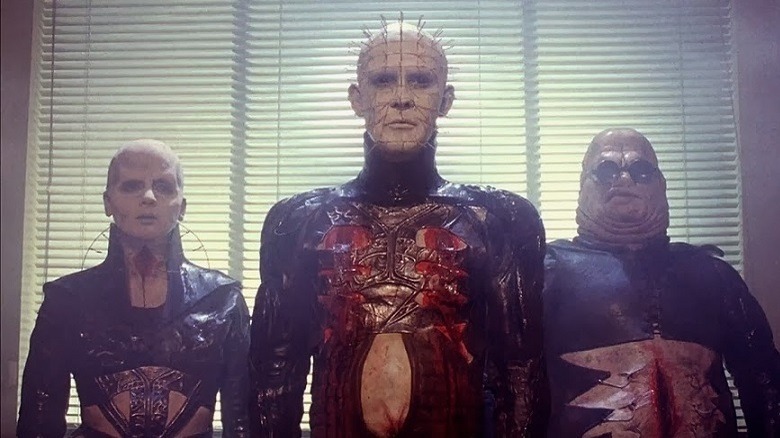
29 Oct 20:14

the width of a circle

by wil@wilwheaton.net (Wil Wheaton)

While watching Discovery to prepare for Ready Room, I had this sudden realization that my journey and Wesley’s journey are almost identical. I don’t think I’ve ever thought about it until just now. But check this out.

When we were about 20, we walked away from everything we knew, every expectation that was ever put on us, every person we ever cared about, because we both knew that something was wrong in our lives. We both needed time and space (he needed all of time and space, if you accept my headcanon that he’s a Traveler) to find out who we were, and what was important to us.

Wesley’s bit in Nemesis is not canon, because it was cut. So his whole “I’m going to serve on the Titan” thing we’ve all seen didn’t actually happen. In fact, I think current actual canon is that he wasn’t even there. I think actual current canon is that he is off on some other plane of existence doing donuts on someone’s lawn.

But let’s presume, for a moment, that it actually did happen. I want to talk about how that mirrors my own journey. To get there, let me put his appearance at Troi and Riker’s wedding through my headcanon … uh … headcanonizer.

He’s been off on his own for a long time. He is in touch — barely — with his family, even though he doesn’t serve on their ship or even exist in their reality. He loves them, and he misses them. He wonders if they think about him. He rarely sees them, but when he does, he is so careful about every word he says every choice he makes. He wants to make them proud, though he knows in his heart that he doesn’t have to do anything to achieve that. They love him already. Still, it’s just part of how he’s wired. But he knows he’s loved.

A quick jump cut, now, to me. I’m in my twenties, I’m wearing Wesley’s haircut from The Game and holy shit I have just got to get away from everything. Yeah, it’s mostly my shitty parents, but also it… well, that’s all of it, actually. Every choice I made from my late teens into my early twenties was driven by needing to get away from them and see if I could find myself, find what was important to me. Because what I had been forced to do by them for my whole life wasn’t it. And honestly? I was just so tired of feeling like shit all the time.
Back to Wesley. What he’s been doing his whole life isn’t what was truly important to him, it turns out. Unlike me, he is loved and supported by his mom and all of his father figures. He’s exploring other planes of existence, gaining valuable experience and context that his life had been lacking until that point. I mean, his entire life had been essentially on a starship, doing what other people expected him to do. It’s scary and exhilarating to be Out There, and he discovers this world beyond Nanites and Holodecks and laying in coordinates and impressing people with his science projects. He discovers this world where, as a Traveler, he can actually make a meaningful difference in this universe in a way he never could if he had stayed in Starfleet.

Hi, it’s me again, I’m doing all the stuff that I wrote about in Just A Geek (AND STILL JUST A GEEK WHICH YOU CAN PRE-ORDER NOW THANKS), and I am learning so much about myself. I’m starting to figure out what’s important to me. During this time, I realize how much I love Star Trek and my Star Trek family. I realize that the things associated with Star Trek that hurt me don’t really have anything to do with the show and universe I’ve loved since I was a child, and they have nothing to do with my relationship with the cast. It’s all my parents, a small but relentless group of shitty fans who thought being shitty to a child was great, two greedy and shitty convention promoters who made that child feel unwanted and unworthy, and an executive producer who, like my mother, treated me like a thing. And like my father, didn’t treat me with any kindness, empathy, or respect.
When it was all set out in front of me, I could see the shit that hurt, and I could do the work of separating it from the stuff I loved. WOW was that a lot of work. It’s work that continues, I think.

A significant component of that work was letting go of the shit that hurt. I don’t mean condoning it, I mean not letting it make decisions for me, any more. I had to find a way to stop carrying it, since it didn’t have anything to do with me, in the first place. It was never about me. It was always about the people who hurt me.

I got rid of as much of the shit that hurt as I could, and I looked at all of it, set out in front of me, again. Without all that shit everywhere, what I found was wonderful.

Cut to Wesley, seeing through space and time for the first moment in his new life. He is changed, and he is ready to go home. Not to stay, but to visit, and to love every moment of it while he’s there.

Back to me. I’m ready for it when I am asked to host an after show for Picard. I say yes so fast. I don’t even have to think about it. Are you kidding me? I fucking LOVE Star Trek and you’re telling me I get to be a guy who is not just a Starfleet veteran, but also an unashamed superfan? Who gets to take other nerds into the Room Where It Happens? Yes yes yes a thousand times yes!

And then they ask me to do it again, for Discovery. And then for Lower Decks. And for Prodigy. And Discovery again. And oh my god how is this even real. Maybe I’ll get to do Strange New Worlds. I can not believe this is happening to me.

So, like Wesley, I chose to come back, in a different way. In a different context. As a different, changed, person. What I choose to come back to is everything I loved, and what I have left behind is everything that hurt.

Wesley didn’t need to find he way out of the hurt like I did. He was loved and supported in ways I was not.

But we both left this thing that had been our entire lives, that looked to be the rest of our lives. We left the only thing we knew, because we knew it just wasn’t right for us. I don’t know if it was as risky for him as it was for me. He’s a character. I’m a person.

But if we accept my headcanon, (and if you’re still reading I presume you do) I love it to death that Wesley came back to this thing that he loved, deliberately not the way he was expected to be part of it. The whole “I’m serving on the Titan” thing? I write it out, and just put him at the wedding, in an appropriate uniform, because he loves his family and wants to be with them. I don’t know if he Traveled off again or not, but I know that, when he left that wedding, he knew that he could come back whenever he needed to. He would always have a home with his crew.

And I did the same thing. For him, it’s a cool story arc. For me, it’s one of the most beautiful closings of a circle I’ve experienced to this point in my life.
Now I’m going back to watching Discovery, loooooong before it’s released to the rest of my fellow nerds, because I have the best job in the world. Yes, that was a little bit of a nerd flex. (Disco S4 is AMAZING don’t tell anyone I told you.)

Oh, real quick: don’t read anything into this about the plot of Disco. I have no idea what makes the part of me that writes stuff and thinks about this kind of stuff wake up and go to work, but I know it wasn’t related to the story. I just saw [CHARACTER REDACTED] and my brain was all, “Hey, did you ever think about this?”

That was like 35 minutes ago and I really need to get back to it. I just told Anne, “I should be watching Disco, and instead I’m writing about Wesley and me. This is how you know your husband is, in his heart and soul, a writer.”

29 Oct 20:12

How Had I Never Seen..."Dune"?

by Cláudio Alves

by Cláudio Alves

Audiences are here for Denis Villeneuve's take of Frank Herbert's Dune – its first half, to be specific. Box office numbers already guaranteed the filming of its sequel, and now there are even talks of a third movie, adapting the second book in the series, Dune Messiah. As the world goes mad for spice and space twinks, Goth nuns, and more made-up sci-fi terminology than you can shake a stick at, it feels like a good time to look at the last big-screen adaptation of Herbert's genre-defining novel. While much hated by its maker, David Lynch's Dune has gained quite the cult following over the years. Indeed, researching this piece, I came across plenty of retrospective defenses of the movie's merits, passionate screeds against its maligned critical reputation.

Does the flick earn such reappraisals, or were the initial reactions right all along? Well…

29 Oct 20:12

Paranormal Activity: Next of Kin – Review (4/5)

by Karina "ScreamQueen" Adelgaard
29 Oct 20:11

Guild Wars 2: Heroic Edition is Free on Prime Gaming for a Limited Time

by Tonci

Amazon Prime Gaming members can now get the Core Edition of Guild Wars 2 for free, plus goodies such a set of armor, four Heroic Boosters and an 18 Slot Mithril Box. 

The post Guild Wars 2: Heroic Edition is Free on Prime Gaming for a Limited Time appeared first on Indie Game Bundles.

29 Oct 20:10

Shrootless: macOS Vulnerability Found by Microsoft Allows Rootkit Installation

by Ionut Arghire

Microsoft on Thursday published information on a vulnerability in Apple’s macOS platform that could allow an attacker to bypass System Integrity Protection (SIP) and modify operating system files.

read more

29 Oct 20:09

Running Windows 11 on a Mac with Parallels Desktop is great, but some questions remain

by Laurent Giret
Microsoft officially released Windows 11 earlier this month, and the new OS has just started rolling out to a larger pool of eligible PCs. Due to stricter minimum hardware requirements, Windows 11 will likely leave many old PCs on the ... Read more
29 Oct 20:09

Looking for High Sierra

by Michal Necasek

Some time ago, I thought it would be useful to understand exactly what is the difference between CD-ROMs recorded in the old High Sierra format versus the ISO 9660 standard. This was in part spurred by the fact that I have a number of CD-ROMs/images that use the High Sierra format (Microsoft Programmer’s Library, some IBM Developer Connection issues, OS/2 Warp 4, and more) that both macOS and Windows 10 refuse to mount. The other part of my motivation was the usual insatiable curiosity.

Finding the actual text of the High Sierra Working Paper (also High Sierra Proposal, i.e. proposed standard) turned out to be rather unexpectedly difficult. I found a number of articles talking about the High Sierra Proposal (HSP) but not the actual HSP text.

The closest thing I could find was an article in the excellent PC Tech Journal in the July 1987 issue (Patterning CD-ROM by Peter Jansson, page 163). Said article recaps the HSP in very good detail but it’s not the actual text. But even that was enough to show that although the structure defined in the High Sierra format is not far from the ISO 9660 standard, the two data structures are just different enough to be mutually incompatible.

Even though the High Sierra Proposal is long obsolete, and it never even was an official standard, it was the de facto standard from mid-1986 until ISO 9660 was approved. In addition, it wasn’t about until July 1988 that MSCDEX 2.0 with ISO 9660 support started shipping, which means that until then CD-ROMs in ISO 9660 format would have been unusable in practice.

It was even worse than that. MSCDEX shipped with CD-ROM drives, and existing CD-ROM drive owners had MSCDEX 1.x which only supported the High Sierra format (HSF). MSCDEX 2.0 was not a free upgrade, which is why until about 1990, CD-ROMs in ISO 9660 format were exceedingly rare.

The same problem was presumably present on the mastering side: Existing CD-ROM publishers had software which supported only the High Sierra format and since it worked just fine, they weren’t motivated to spend money (probably quite a lot of it) on upgrades. Since ISO 9660 isn’t really any more capable than the original HSF, publishers had very little incentive to use ISO 9660 and a lot of good reasons to stick with HSF.

As a case in point, Microsoft’s C 6.0 (May 1990) or Programmer’s Library 1.4 (June 1991) CD-ROMs used the High Sierra format, not ISO 9660. That in turn meant that CD-ROM file system implementors were forced to support HSF for many years to come, otherwise users would rightfully complain that CD-ROMs that can be read just fine in DOS aren’t recognized. Sometimes CD-ROM publishers used HSF well into the 1990s for no apparent reason (e.g. IBM Warp 4 CD-ROM from 1996), but no one really noticed because everything worked just fine.

The High Sierra Working Paper (the actual title of the proposal) used to be available from NISO (National Information Standards Organization) in the late 1980s, but once ISO 9660 was approved, official standards bodies had no reason to distribute the obsolete proposal.

For the few people who needed the original text, the High Sierra proposal used to be available from Howard Kaikow, but he passed away in 2011.

The full text of the HSP was almost certainly published in the 1986 book CD-ROM Standards: The Book by Julie Schwerin, ISBN 0904933547. The book is long out of print and not available used. I would love to get a copy (it should contain several related articles) but I just can’t find any.

Okay, so there’s no way to get the HSP through the front door. But maybe an alternate route might work? Surely someone must still have the full text.

My research showed that the original HSP editor was Howard Kaikow, which is why he was able to offer copies years later. I contacted his sister Rita but she was unfortunately not able to help me (not for lack of trying).

The next name on my list was Bill Zoellick, former manager of software research at TMS, Inc. and not coincidentally, co-author of a 1987 book titled File Structures: A Conceptual Toolkit. In 1986-1987, he published several articles dealing with the technical details of the High Sierra Proposal. Tracking him down was not entirely easy but after piecing together the evidence from several sources, I concluded that the Bill Zoellick who now teaches marine biology really is the same Bill Zoellick who was involved in the High Sierra Group 35 years ago. I e-mailed him and not much later, I had a freshly scanned copy of the High Sierra Working Paper in my inbox.

The High Sierra Working Paper

I ran the scan through OCR, which as a side effect did a good job of straightening the text (the text of the original was impressively askew on many pages). The document is now available here, and as far as I know, not available anywhere else.

After actually looking over the HSP, it became clear that it really was a draft of ISO 9660. The two texts are rather similar, with many sentences and paragraphs entirely identical, and many others with just minor editorial differences. The true technical differences between the HSP and ISO 9660 are not many, but one is that the descriptor signature changed from ‘CDROM’ to ‘CD001’ and the general descriptor layout changed just enough that everything is at a different offset.

The upshot is that even though software supporting HSP can be easily adapted to support ISO 9660 and vice versa, since the overall structure is quite similar, it does require a couple of small but key changes. That’s exactly why software which only supports ISO 9660 (like the CD-ROM image mounting software in Windows or macOS) has no chance of reading High Sierra images (it is difficult to call them ISOs).

More or less for the heck of it, but also in order to get a plain-text-ish version of the document for easier comparisons and for easy navigation within the document, I also produced a HTML version of the High Sierra Working Paper. It looks somewhat like the original, but it’s deliberately not using any CSS, which means that it can be almost perfectly displayed by antique browsers, like this Netscape Communicator 4.61 in OS/2 Warp 4 Convenience Pack 2.

Ancient browser, brand new HTML

I’ve not been able to find how the original High Sierra Working Paper was produced, i.e. what word processing/document processing software was used. I am fairly certain that the serif font used for the body of the text is Palatino… which only narrows it down to “printed on a PostScript printer”, i.e. not much at all. I have no idea what kind of software would have been used at Digital Equipment Corporation (where Howard Kaikow worked at the time) for this purpose back in 1986.

I’m now working on a longer article which will deal with the history of the High Sierra Group, examine the rationale behind the HSP, and attempt to track how the High Sierra Working Paper morphed into ISO 9660 via ECMA-119. That will still take some work and it’ll be published when it’s ready.

29 Oct 20:07

Some of the best games for fans of H.P. Lovecraft’s creepy, cosmic horror

October is upon us and that means it is time to completely dive into everything that makes the month such spooky fun! We’re talking scary movies, haunted houses, and, of course, spooky video games that make your skin crawl.

While there are plenty of games we could talk about, today we wanted to focus on a master of tension, cosmic horror, and “weird fiction” - none other than H.P. Lovecraft

Known for creating the truly creepy Cthulhu, Lovecraft’s works have spanned decades through his books from the early 1900s, and still inspire video games, movies, and even the hit HBO show, Lovecraft Country. He even was an early inspiration for something many of us love, Dungeons & Dragons.

🐙 &nbspGames set in Lovecraftian worlds&nbsp 🐙

The master of horror, Stephen King, has even said that “it is beyond doubt that H. P. Lovecraft has yet to be surpassed as the Twentieth Century's greatest practitioner of the classic horror tale.”

While we could spend many paragraphs talking about Lovecraft’s books and influence on an entire industry, you’re here for the main event - the games! Below, you will find 10 awesome Lovecraft-inspired games that are sure to get your skin crawling as you delve deeper into the mind of H.P. Lovecraft.


🐙 &nbspCall of Cthulhu: Shadow of the Comet&nbsp 🐙

Call of Cthulhu: Shadow of the Comet is a third-person adventure set in the small New England fishing village of Illsmouth. Set in 1910, you take on the role of young astronomer John T. Carter as you go forth on a quest to uncover the secrets that lie deep beneath the town. Discover the link between Halley’s comet and the resurgence of Great Ancients who once ruled over the lands in dominating fashion in Shadow of the Comet.

🐙 &nbspCall of Cthulhu: Prisoner of Ice&nbsp 🐙

Call of Cthulhu: Prisoner of Ice is the next installment based on Lovecraft’s epic Call of Cthulhu story. As World War II looms ahead of you, take on the role of a US Naval Intelligence agent tasked with the job of thwarting Nazi moves. But things aren’t what they seem as you proceed on your journey. Supernatural threats await you in this classic point-and-click adventure.

🐙 &nbspCall of Cthulhu: Dark Corners of the Earth&nbsp 🐙

Call of Cthulhu: Dark Corners of the Earth signals a new direction for Call of Cthulhu games. This first-person action game combines aspects of horror, adventure, and exciting combat as you fight through a vast array of levels. Combine aspects of exploration and investigation with 1920s weaponry and vehicles as you work your way through the many puzzles and evil obstacles that stand in your way in Call of Cthulhu: Dark Corners of the Earth.


🐙 &nbspCall of Cthulhu&nbsp 🐙

Call of Cthulhu is another first-person take on the sci-fi world of Call of Cthulhu. Playing as Private Investigator Edward Pierce, you must investigate the mysterious deaths of the Hawkins family on Darkwater Island. Upon arrival, Pierce is met with supernatural evils and the sinister Cthulhu Mythos cult. Uncover the mysteries of Darkwater Island as your decisions guide your path in Call of Cthulhu.

🐙 &nbspCall of the Sea&nbsp 🐙

Call of the Sea is a much lighter title than the various Call of Cthulhu games mentioned above. As Norah Everhart, you must explore a Southern Pacific island in search of your husband, Harry. But the island isn’t exactly as it seems, which Norah quickly finds out. Solve various puzzles as you explore this supernatural island in this heavily Lovecraft-inspired adventure.

🐙 &nbspConarium&nbsp 🐙

Conarium brings us back closer to the Cthulhu Mythos. Following the story of four scientists on a quest to test the limits of nature, Conarium takes place after the Lovecraft novella At the Mountains of Madness. As Frank Gilman, you wake up alone in a deserted Antarctic base located near the South Pole. Quickly realizing something’s not right, you must study clues as well as your own dreams and visions as you uncover the mysteries of what happened to the others on your expedition.


🐙 &nbspDagon: by H.P. Lovecraft&nbsp 🐙

Dagon: by H.P. Lovecraft is a video game adaptation of the Lovecraft story by the same name. Playing as a former ship officer and morphine addict, Dagon: by H.P. Lovecraft gives you the opportunity to dive into a drug-addled mind as it uncovers the unspeakable cosmic horrors of a distant island. This narrative experience gives you an authentic experience of the original story that you can experience in real-time.

🐙 &nbspLovecraft’s Untold Stories&nbsp 🐙

Lovecraft’s Untold Stories is a rogue-lite RPG that brings a little more action to the Cthulhu Mythos. This top-down action game lets you play as one of five different characters, all with their own weapons and abilities. Fight through randomly generated worlds as you take on cultists and all kinds of other creepy Lovecraft monsters. But don’t worry. Lovecraft’s Untold Stories contains several narrative aspects that will keep you immersed on your hunt to face the Great Old Ones.

🐙 &nbspThe Shore&nbsp 🐙

The Shore is another first-person narrative experience set on a mysterious island filled with dangerous horrors. Play as Andrew, a father in search of his lost daughter as you try to survive and save your daughter’s life. With mind-bending puzzles and dangerous enemies, this psychological thriller will have you immersed in Lovecraftian nightmares the whole time.


🐙 &nbspSunless Sea&nbsp 🐙

Sunless Sea sees you take on the role of a steamship captain sailing into the unknown. This 2D adventure will see you travel across the dangerous black waters of the gothic universe of Fallen London. Fight against the madness of the dark waters as you make important decisions on your journey for riches. Every decision you make will shape your journey, so choose wisely as you head across the Sunless Sea!

So there you have it! 10 games set in the world of Lovecraftian horror. Whether you are looking for a true horror game, an action-packed game, or something that bends the mind thanks to creepy puzzles, you have plenty of options set within the cosmic, creepy world imagined by H.P. Lovecraft.

What do you think? Do you have a favorite H.P. Lovecraft story? Plan on checking out any of these games? Let us know down in the comments!


29 Oct 19:54

Guardians of the Galaxy chapters

by Hayden Hefford

Want to know how many chapters there are in Guardians Of The Galaxy? This planet-hopping adventure takes you on the cosmic ride of your life in an original Guardians Of The Galaxy story, involving plenty of punching, shooting, and generally jumping around with jet boots. Throughout the adventure, you'll come across many classic characters, such as Cosmo the spacedog, Adam Warlock, Mantis, Fin Fang Foom, and Lady Hellbender. However, since it isn't based directly on a certain comic storyline or movie, it can be hard to judge how long you'll actually spend playing Marvel's Guardians Of The Galaxy.

This guide will break down how many chapters there are in Guardians Of The Galaxy, and explain how long it will take to beat the game.

Read more

29 Oct 19:53

Intel's i965 Mesa Classic OpenGL Driver Will Stick Around A Bit Longer

Earlier this year was talk of finally retiring the Intel "i965" Mesa classic OpenGL driver along with the rest of the "classic Mesa" driver code now that it's been replaced by the Crocus Gallium3D driver and the other open-source Mesa OpenGL divers all using the modern Gallium3D architecture. Those plans are still on but shifting now into 2022...
29 Oct 11:13

Games Relying On CEG DRM Should Now Be Able To Run With Steam Play

Running the newest Steam client beta paired with the newest Proton Experimental should yield more Windows games working on Steam Play with Linux...
29 Oct 10:22

The 16 Best Horror Movies On HBO Max Right Now

by Rob Hunter

HBO Max is still one of the younger players in the streaming game, but they've already made a big splash thanks to their pandemic-fueled decision to premiere new Warner Bros. releases simultaneously in theaters and on the service. The experiment will end at the end of 2021, at which point the ultimate merits of the decision will be debated back and forth -- but I'm here to say that high profile move isn't even HBO Max's greatest asset.

Shiny new releases get all the ink, but it's the deep and dense back catalog of titles that sees HBO Max standing out in a crowded field. Their selection of past movies and television shows is impressive, and this being the spooky season we decided to dig into their horror offerings to highlight films worth seeing. While streamers like Netflix are focused on recent titles, HBO Max features a wide selection of older films too. 

With that in mind, I've rounded up the best horror movies currently available on HBO Max -- two from each decade over the past seventy years -- and all of them are worth your time. Whether you're planning a marathon or just looking for a spooky gem before bed, this list is for you.

Diabolique

While its dark twists and devious turns have been remade and ripped off many times over the years, Henri-Georges Clouzot's "Diabolique" (1955) remains his definitive masterpiece. The film is set at a boarding school outside Paris, run by a cruelly indifferent headmaster who only wants to sell the place and move back to the city. Unfortunately for him, it's his wife who owns the property. He mistreats both her and his mistress until the two women collaborate to murder their tormenter, but both god and the devil laugh at human plans.

Clouzot transforms the school into a hauntingly atmospheric locale, complete with evil intentions and ghostly visages, and both female leads demand viewer attention and empathy with strong performances. Alfred Hitchcock wanted to adapt the source novel, "She Who Was No More" by Pierre Boileau & Thomas Narcejac, but Clouzot snapped up the rights, forcing the famed British director to wait for their next book instead. (Don't cry for Hitchcock, though, as that next book became "Vertigo.") If you're looking for a nerve-wracking double-feature, you can hardly do better than "Diabolique" and Clouzot's previous film, "The Wages of Fear." Just make sure you keep your heart medication in close reach.

The Blob

I'm an unapologetic fan of the late-80s remake, but it's hard to deny the appeal of 1958's just silly enough creature-feature, "The Blob." It's been riffed on numerous times since with films like "Creepshow" and "Killer Klowns from Outer Space," but just try not to enjoy Steve McQueen -- in his feature debut! -- as a "teenager" going toe to toe with some murderous Jell-O from outer space. This being the 50s, the film lets the gelatinous terror grow slowly as it absorbs one individual after the next even as teens drag race, have dust ups with authorities, and find true love. They're rebels, Dottie!

Little was expected from the film, as evidenced by it being released on a double feature with "I Married a Monster from Outer Space," but it became a success for obvious reasons -- and by obvious reasons I of course mean this chart-topping title song. One curiously prophetic note on the film: it ends with the realization that the blob doesn't like cold temperatures which make it literally freeze in place. The Air Force ships it off to the North Pole where it will remain imprisoned "as long as the Arctic stays cold." A question mark literally appears on screen, and now sixty-two-years later we get stories about rising arctic air temperatures. Beware the blob, indeed.

Carnival Of Souls

Organ music is already inherently creepy for anyone who grew up attending church on a regular basis, but this gem of a horror thriller takes the instrument's nightmare-inducing qualities to the next level. A young woman riding in a car with friends careens off a bridge into a fast-moving river, and she's the sole survivor. Her memory's hazy, but she moves on with her life. She heads to Salt Lake City, and becomes an organist for a small church. So far so good, but soon pasty-faced strangers are haunting both her days and nights.

Director Herk Harvey's feature debut, his only feature as it turns out, is a low-budget masterclass in atmosphere and dreamlike uncertainty. Young Mary's efforts to put the past behind her haunt her every move, and visions of grinning ghouls slowly rising from the water just might haunt you too. The ending is pretty well-known by now, but as with films like "The Others" or "The Usual Suspects," advance knowledge of the twist can't damper the movie's overall effect.

Kwaidan

The first of two horror anthologies to make this list of chillers, Masaki Kobayashi's 1964 classic delivers three-hours of gorgeously shot and beautifully executed terror. The running time may seem excessive, but "Kwaidan" features four stories adapted from turn-of-the-century folk tales in Japan, and each is given their due. Narrative and character entwine to gift viewers with horror stories fueled by love, regret, and supernatural visitations.

All four tales have their strengths starting with "The Black Hair" which plays with elements that would later become tropes in Japanese horror. The most popular segment is probably "The Woman of the Snow" which offers stunning production design with a tale of love and betrayal and was repurposed for one of the segments in "Tales from the Darkside: the Movie." "Hoichi the Earless" sees a blind musician lured by the undead, and the effort to save him leads to the film's most iconic image -- the man covered nearly head to toe in writings. "In a Cup of Tea" rounds out the film with its simplest tale, but it's guaranteed to leave you hesitant the next time you bring a drink to your lips.

House

I obviously love all of the film's on this list, but if I could insist that you watch just one of them, it would be Nobuhiko Obayashi's "House." This 1977 gem is as unique an experience as any movie could hope to be, even if it does start with a familiar premise. A group of teenage girls head to a remote estate for summer vacation only to find their fates sealed by a house with malicious intentions. I know, it sounds generic, but trust me ... it is anything but.

The girls -- named Gorgeous, Kung Fu, Fantasy, Prof, Mac, Melody, and Sweet -- are soon struggling with all manner of supernatural threats from hungry pianos, possessed mirrors, and decapitated heads with a taste for buttocks. Obayashi fills the screen with color, magic, and dark whimsy, and while there's a real body count here the deaths come with so many bonkers, jaw-dropping beats that you're too busy being flabbergasted to actually feel fear. "House" was a clear inspiration for directors like Sam Raimi, Peter Jackson, and Takashi Miike, and it just might inspire you too.

The Brood

You'd be hard-pressed to find a more tonally contrasted pairing for "House" than David Cronenberg's "The Brood." Like the bulk of his filmography, particularly his 70s films, it's something of a cold, dialogue-heavy exploration of issues both psychological and emotional. Oliver Reed stars as a man engaged in a bitter separation with his wife over custody of their young daughter, and as their fight intensifies so does a series of vicious murders in the area.

Cronenberg made the film in the shadow of his own acrimonious divorce, and it shows in the anger hanging between the ex-couple. As dour and depressing as some aspects are, "The Brood" is one of his most effective horror films due in large part to both 1) a certain visual at the end and 2) the presence of killer kids in colorful pajamas and parkas. Trust me, they're creepy as hell, and one sequence showing Reed try to quietly move among them is both suspenseful and terrifying.

Poltergeist

Different moods call for different kinds of horror films. Sometimes you want to be entertained by a high energy thrill ride. Other times you want to have the bejesus scared out of you through truly terrifying sequences. Lots of films check off one or the other of those boxes, but few manage both. 1982's "Poltergeist" is one of those few, and it doesn't stop there. It's also funny, sweet, and emotionally affecting with its tale of a suburban family rallying to save their little girl.

The film is perfect from start to finish with an incredibly appealing family, a terrifically eccentric group of supernatural investigators, and some scares that still hold up forty years later. The guy clawing his own face off? The pool filled with corpses? The clown?! "The Texas Chain Saw Massacre" may be the film most people associate Tobe Hooper with, but "Poltergeist" is every bit the all-timer.

The Return Of The Living Dead

The 80s were great for horror in general, but 1985 was a banner year for the specific subgenre of horror/comedies about the undead. Exactly two months before the still-terrific "Re-Animator" opened, Dan O'Bannon's brilliant riff on "Night of the Living Dead" came screaming to life with a punk aesthetic, massive laughs, and some incredible practical effects. It's utterly silly, but with a cast including James Karen and Clu Gulager playing it all straight, the laughs come with a healthy dose of sharp wit fleshy thrills.

It's plenty gory and includes the expected scenes of zombies eating people, but the effects also deliver some truly creative beats -- from the "split dog" to the reanimated torso complete with spinal cord whipping about and clacking against the metal gurney. And the laughs, my god, the laughs. "You mean the movie lied?!" "Send more cops!" Brains are all the undead want, and happily for viewers, "The Return of the Living Dead" has plenty to spare. Fans may want to double feature it with "Return of the Living Dead 3" which is also currently streaming.

Event Horizon

Paul W.S. Anderson's horror bonafides are limited to the "Resident Evil" films for most people, but 1997's "Event Horizon" is actually his crowning achievement in the genre. It was drastically cut from his original vision, but even in neutered form it remains a film that delivers bloody gore, philosophical wonders, and some highly memorable visuals.

Essentially a haunted house movie set on a spaceship, the film sees a crew respond to a distress call and discover the Event Horizon -- a ship that went missing years prior and has now appeared to have opened a portal to hell itself. Madness and murder follow as the rescuers themselves find themselves in dire need of saving. Eyes are gouged, flesh is teared, and sacrifices must be made.

Blade

Action/horror is an under-represented subgenre, and while 2021 year saw a great one with James Wan's "Malignant," it's not currently available on HBO Max. Happily, for fans of both wickedly cool action set-pieces and bloody horror beats, Stephen Norrington's "Blade" is. Wesley Snipes stars as a half vampire/half human ass-kicker who finds purpose in hunting down and destroying bloodsuckers, and from its epic opening sequence on it delivers across the board.

Martial arts, swordplay, showers of blood, m*********** always trying to ice skate uphill ... "Blade" has it all, and Snipes owns the role. Stephen Dorff may whine about comic book movies these days, but back in 1998 he both starred in this Marvel film and clearly had a blast in the process as his villain is delightfully over the top. They drop in quality, but if you wanna keep this ride going all night, both "Blade II" and "Blade: Trinity" are also available.

Trick 'R Treat

Michael Dougherty's cult hit may lack the literary influences and cachet of "Kwaidan," but it's still an unforgettable horror anthology. Warner Bros. kept it on the shelf for two years before quietly releasing it in 2009, and it's continued to grow in popularity since. For good reason, too, as it's an absolute blast with gory beats, fun scares, and a new horror icon in little sackhead Max.

While most anthology films tell separate tales with minimal connection (if any), "Trick 'r Treat" sees the characters cross over between stories as they all unfold on one Halloween night. A child-killing principal, bullies who meet a grisly fate, party girls with a secret, and a late-night visit from Sam make for a Halloween treat that should be on your watchlist every October. Hell, it should probably be on a monthly rotation.

Friday The 13th

The 2000s were a busy decade for horror remakes. While some are outright turkeys and others various levels of good, Marcus Nispel's "Friday the 13th" stands tall and bloody at the head of the pack. Derek Mears delivers the series' best Jason, as he turns the lumbering killer into a muscular, fast-moving threat. The film sees him cycle through classic appearances too as he dons both a sack and a hockey mask. Add in an abundance of style, gore, and slasher shenanigans make it a terrifically entertaining reboot.

It's arguably the best entry in the franchise -- yeah, I said it -- and it continues to be a crime that legal wrangling has meant this 2009 film is still the final "Friday the 13th." Those interested in keeping the horror nostalgia train rolling should also add both "House of Wax" (2005) and "My Bloody Valentine" (2009) to their HBO Max watchlist.

The Conjuring

Haunted house movies can often feel a bit "samesie" as unseen presences open doors, blow out candles, and spook homeowners. James Wan, by contrast, has become quite comfortable delivering a breath of fresh air to those stale tropes. His ghosts make themselves visible at times, but even invisible they deliver legitimate chills and thrills as they scare the wits out of characters and audiences alike. Wan's editing and camerawork tease jumps that don't come, and then when you've finally let your guard down a horrifying face jolts you off your seat.

"The Conjuring" makes fictional heroes out of real-life scam artists, but it's a credit to Wan and his lead actors (Patrick Wilson and Vera Farmiga) that we come to care about these characters and the families they're trying to help. That makes the scares so much more effective too. Fans can keep the scares coming with "The Conjuring 2" (2016), "The Conjuring: The Devil Made Me Do It" (2021), and "Annabelle: Creation" (2017) which revisits the infamous doll from the first film.

It

Stephen King's massive bestseller previously hit the screen as an early 90s miniseries, but it's Andy Muschetti's 2017 big-screen feature that nails the absolute childhood horrors of "It." The cast of young newcomers is fantastic, and each brings enormous personality and charm to help balance out the pure terror that envelopes them all. Sophia Lillis is the standout and singlehandedly injects the film with the emotional weight that was missing from the miniseries.

Pennywise is a frightening presence whether he's in clown form or not -- although we can all agree that the clown form is the most terrifying for obvious reasons -- and Bill Skarsgård absolutely makes the role his own (sorry Tim Curry). "It: Chapter Two" (2019) takes a pretty hefty tumble as it can't nail the adult half of the story nearly as well, but it's also streaming if you're up for the double feature.

The Empty Man

Sometimes a great movie comes along and no one sees it. Such was the case with the late 2020 release of David Prior's "The Empty Man," which was unceremoniously dumped into theaters and quickly disappeared. That changed for the better once the film hit VOD in 2021, though, as those of us with great taste began singing its praises. You can join the chorus too, as it's now streaming on HBO Max.

If that sounds like you'll be joining a cult, well, cults are the name of the game with "The Empty Man." An ex-detective digs into a missing person case and finds a lot more than he bargained for. James Badge Dale gets a rare leading role and proves himself worthy, and the film's epic running time packs in plenty of mystery, wonder, terror, and weirdness leading to a creepily satisfying ending. Give it a spin and join us. You'll be glad you did.

Underwater

Speaking of movies that bombed in theaters, this Kristen Stewart-led underwater thriller failed to make a dent on release, but "Underwater" absolutely deserves your time. A research rig on the ocean floor suffers a catastrophic disaster -- it hits within moments of the movie's start, meaning this film doesn't waste any time at all -- and the survivors soon discover they're far from the only intelligent life down there.

Creatures and the natural dangers of the environment battle for the highest kill count as a handful of remaining people fight to reach the surface. Stewart is aces and is joined by equally strong performances by Jessica Henwick, Vincent Cassel, and Mamoudou Athie. The production design is strong and inventive, and the set-pieces deliver plenty of suspense and excitement. It concludes on a Lovecraftian note too delivering big thrills and striking visuals. Add this one to the shortlist of underwater horrors worth revisiting.

Read this next: The Best Movies Of 2021 So Far

The post The 16 Best Horror Movies on HBO Max Right Now appeared first on /Film.
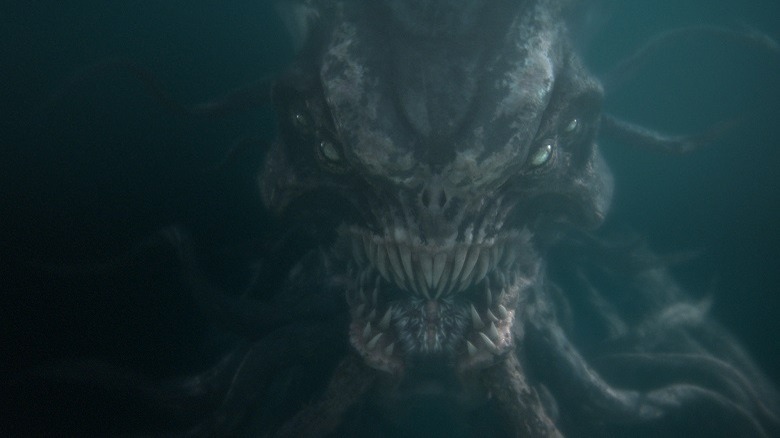
29 Oct 10:18

Horror Movies Like The Exorcist That Will Truly Scare You

by Liam Gaughan

"The Exorcist" is undoubtedly one of the greatest horror films ever made. Based on the gripping novel by William Peter Blatty, William Friedkin's 1973 classic is one of the most chilling stories of demonic possession ever seen on screen. In an era of jump scares, Friedkin's slow approach feels even more unsettling. Friedkin was an untraditional choice to helm a horror film, and his background in dramatic filmmaking grounded the haunting story in reality.

"The Exorcist" follows the helpless mother Chris MacNeil (Ellen Burstyn) as she watches the declining mental and physical state of her 12-year-old daughter Regan (Linda Blair). Chris seeks spiritual guidance when traditional medication fails, and she employs Father Damien Karras (Jason Miller) to perform an exorcism. Karras is already struggling with his faith, but he and his companion Father Lankester Merrin (Max von Sydow) work together in their attempts to heal the child.

"The Exorcist" brought respect to the horror genre when many film critics were dismissive of it entirely. Earning ten Academy Award nominations and becoming the highest grossing film of the year, "The Exorcist" became a classic. Audiences were horrified by the film's graphic imagery, with some even growing physically ill. While the 1977 sequel "Exorcist II: The Heretic" was a notorious failure, the trilogy concluded on a strong note with Blatty's "The Exorcist III."

Horror fans will want to check out these movies similar to "The Exorcist" that are truly terrifying.

Hereditary

Modern horror films tend to feature melodrama and jump scares that bear a striking dissonance to Friedkin's methodical approach. Friedkin understood that true horror occurs on a personal level, and the film has its emotional impact from the realism with which the familial dynamics are depicted. Chris's sense of powerlessness watching her child slip away is devastating thanks to Burstyn's performance, which earned her an Academy Award nomination for Best Actress.

Ari Aster's terrifying directorial debut "Hereditary" immediately announced him as one of the foremost modern horror filmmakers, and a natural successor to Friedkin. "Hereditary" captures family tragedy with unflinching detail, and features similar themes of possession (although it doesn't feature Satan, rather focusing on the demon Paimon). The film introduces its characters through the Graham family's gathering for the funeral of their matriarch.

Annie (Toni Collette), her husband Steve (Gabriel Byrne), teenage son Peter (Alex Wolff), and disfigured daughter Charlie (Milly Shapiro) don't cope together, growing more isolated. Annie becomes fixated on recreating miniature buildings, and Peter grows distant and shuts out his sister. When Annie focuses the two to spend more time together, it results in an anxiety-inducing sequence in which an irresponsible Peter frantically drives Charlie home after she has an allergic reaction. Charlie's grisly death, Peter's silent disbelief, and Annie's faceless screams is one of the most perfectly executed scares of the 21st Century. Colette's stagnated healing is absolutely grueling on an emotional level, and she was truly snubbed of an Academy Award nomination.

The Conjuring

"The Conjuring" universe has been deepened and expanded, launching two sequels, the spinoff "Annabelle" series, and the standalone entries "The Nun" and "The Curse of La Llorona." The mythology has become dense and interconnected, and while it's exciting to see how the overall franchise moves forward, it's easy to forget how impactful James Wan's original film was. The 2013 supernatural horror film was disturbing in a way that horrified audiences, which is surprising given the film was rated PG-13. Wan himself had gained a following with the shocking violence in the "Saw" franchise, but "The Conjuring" was chilling based on its atmosphere and concepts alone.

Like "The Exorcist," "The Conjuring" takes place in a version of reality that viewers could identify with, as it was allegedly inspired by real events. The film follows paranormal investigators Ed (Patrick Wilson) and Lorraine Warren (Vera Farmiga) as they look for the origins of ghostly sightings in Rhode Island during the 1970s. The Warrens are recruited by the Perron family; Roger (Ron Livingston) and Carolyn (Lili Taylor) fear that their family home is haunted, and the mysterious death of their dog sparks an increasingly violent series of events.

Linda Blair's performance in "The Exorcist" is among the best child performances in horror film history, and "The Conjuring" has a great ensemble of young performers. The Warrens' children Andrea (Shanley Caswell), Nancy (Hayley McFarland), Christine (Joey King), Cindy (Mackenzie Foy), and April (Kyla Deaver) are brought to life by the talented young actresses.

The Witch

Religion is essential to the horror within "The Exorcist," as Blatty did extensive research into ensuring the film's accuracy to actual practices within the Catholic Church. Friedkin had little experience in horror, but he knew how to capture the details of a specific profession, and had earned significant acclaim for his depiction of police investigations and crime culture with "The French Connection." It's horrifying to see familiar religious imagery contorted under the influence of the demonic entity in "The Exorcist," particularly the controversial depiction of a crucifix. It's particularly devastating when a veteran priest like Father Merrin grows helpless to protect the MacNeils, as he's never experienced anything similar.

Robert Eggers's breathtaking 2016 debut "The Witch" is among the scariest Christian horror ever made. Few filmmakers announce themselves as icons based solely on the impact of their first work, but Eggers showed a mastery behind the camera that isn't found from those who've worked in the industry for decades. Eggers explored the religious anxieties within early Colonial culture, and details the journey of a Puritan family to New England in the 1630s. William (Ralph Ineson) and his wife Katherine (Kate Dickie) aim to raise their adolescent daughter Thomasin (Anya Taylor-Joy) and younger sons Caleb (Harvey Scrimshaw), Mercy (Ellie Grainger), and Jonas (Lucas Dawson) outside of the corrupting influence of a larger community. Like Friedkin, Eggers only gradually reveals the threat, and doesn't feature jump scares that stretch the story's believability.

The Blackcoat's Daughter

Horror films require a strong directorial voice, but they also benefit from a creative story structure that keeps the audience on their tones. "The Exorcist" felt so scary because it only subtly revealed the extent of the threat, teasing details about Karras's relationship to the Church that grant the film a sense of mystery. The story certainly goes in many unexpected directions, and audiences were unprepared for the tragic twist within the film's final moments.

Oz Perkins may have been best known as a comedic actor with bit parts "Legally Blonde" and "Not Another Teen Movie," but the son of Anthony Perkins -- Norman Bates himself -- knew horror well enough to craft a complex reimagining of the demonic subgenre. Perkin's directorial debut "The Blackcoat's Daughter" has a twisty narrative that is told in a nonlinear fashion, but the intricate timeline doesn't deplete the effectiveness of the scares. Like "The Exorcist," "The Blackcoat's Daughter" intertwines religion, sexuality, female empowerment, and emotional yearning within a contained environment.

The film follows three storylines of female students at the leading Catholic boarding school Bramford Academy in upstate New York who aren't picked up by their parents in the days prior to their holiday break. Katherine (Kiernan Shipka) is recovering from a recent familial tragedy, Rose (Lucy Boynton) is masking a pregnancy, and Joan (Emma Roberts) has recently escaped a mental asylum and is on the run. It's only in the film's final moments where the connection between the narratives is revealed.

Rosemary's Baby

Horror films are often left out of the awards conversation, and rarely receive major nominations from critical bodies like the Academy of Motion Picture Arts and Sciences. "Silence of the Lambs" is the only horror film to ever win Best Picture, but only a few have ever been nominated, including "Jaws," "The Sixth Sense," "Black Swan," and "Get Out." "The Exorcist" was among the first to cross that barrier, earning Best Picture recognition and Best Adapted Screenplay win for Blatty's brilliant work reinventing his iconic novel. The film was able to silence early doubters that the genre wasn't as "serious."

However, shortly before "The Exorcist" became a game changer, the 1968 horror film "Rosemary's Baby" set the precedent by becoming a critical favorite and awards contender. Also based on a novel (the 1967 smash hit by Ira Levin), "Rosemary's Baby" was wholly distinct from the monster movies and campier fare that were popular within the United States at the time. Roman Polanski's horrifying vision of the anxieties of parenthood became a renowned classic of paranoia and suspense, and laid the groundwork for Friedkin's achievement.

The film follows the couple Rosemary (Mia Farrow) and Guy Woodhouse (John Cassavetes) after they move into a new apartment in upstate New York. Rosemary becomes pregnant and suffers from debilitating nightmares, and suspects that her neighbors have sinister connections. Isolated and silenced, Rosemary begins to investigate the clues to the demonic possession on her own.

Lamb

"The Exorcist" is very much a mother's story. The reality of raising a child that Chris deals with gripped audiences because she didn't just act like a character in a film; Chris's heartbreaking search for answers as Regan's well-being declines represents the actual anxieties of a parent forced to raise her child. Horror films are often centered on female empowerment, but "The Exorcist" crafted a mold distinct from the "final girl" of a slasher flick.

2021's underrated supernatural horror film "Lamb" tackles similar themes, told with the same earnest emotional undercurrent that Friedkin mastered. Like "The Exorcist," "Lamb" is a piece of dramatic cinema that gradually introduces its fantasy elements. Valdimar Jóhannsson's film follows the lonely Icelandic couple Maria (Noomi Rapace) and Ingvar (Hilmir Snær Guðnason), who raise livestock on an isolated farm far away from the rest of civilization. They are mourning a series of losses, but Maria desperately wants to raise a child.

When she's unable to slay one of the lambs she's raised, Maria discovers the creature has given birth to an unusual hybrid baby that has human-like qualities. While they're initially shocked, Maria decides to raise the creature as her own child. The film explores themes of nature versus nurture; the lamb is brought up in an unusual home, and feels both the influences of Maria and Ingvars' loving care and the presence of a demonic tribe of lambs that lurk in the outskirts of the farm.

Saint Maud

"The Exorcist" does a terrific job exploring its priest characters and the overall religious hierarchy as it relates to the performance of the exorcism. Father Karras's crisis of faith is treated with respect, and Miller does a great job exploring the unique challenge in front of him; Karras is forced to offer solace and advice to Chris when he himself is struggling with his faith. He's reticent about speaking dishonestly, but also is empathetic to her pain and wants to cure Regan. Older priests can often be depicted as unsympathetic in films, but the experienced Father Levin is both a commanding and nurturing presence thanks to Sydow's gripping performance.

As the subgenre of Catholic demonic possession movies took off following the runaway success of the "The Exorcist," few have been as nuanced. However, A24's recent British horror film "Saint Maud" is similarly meticulous in its depiction of a younger caregiver. Rose Glass's directorial debut honored the legacy of "The Exorcist," a clear inspiration, but changed up the formula by offering a female perspective. The film follows the titular Maud (Morfydd Clark), a young nun within the Roman Catholic Church who is tasked with praying alongside patients who are dying.

Maud has a compelling backstory. She was once a nurse named Katie who failed to save a patient, and the traumatic experience motivates her to shed her former name and commit herself to the church. Maud is youthful, and her lack of experience makes the horror elements more frightening.

The Changeling

"The Exorcist" tells a unique horror story, as it is a film about healing. Instead of focusing on a villain so monstrous that it must be eliminated, Father Karras and Father Levin seek to save Regan's soul while combating her demonic torturer. "The Exorcist" tackles loss and the threat of impending death, as Chris is forced to consider what the intense pressure of the exorcism will have on her daughter. She fears what state Regan could return, and is forced to consider the unthinkable possibilities that either her soul will be compromised or she'll die in the process.

The 1980 Canadian horror classic "The Changeling" explores similar themes of guilt, loss, tragedy, and parental trauma. While it initially only garnered respectable reviews and box office returns, the film's legacy has grown in estimation as it gained a cult audience. Before he contributed to "The Exorcist" franchise with his excellent performance in "The Exorcist III," George C. Scott showed his aptitude for the horror genre with his role as the traumatized musician John Russell.

The film opens on a gripping note, as Russell watches his daughter and wife perish in a shocking car accident during a family winter vacation. Now living as an isolated composer in Seattle, Russell decides to take time to heal by renting a Victorian mansion. As he spends time in the property, Russell encounters frightening flashbacks to the mansion's past inhabitants, witnessing the cries of a dying child and the appearance of a demonic spirit.

Repulsion

One of the more frightening aspects of "The Exorcist" is the threat that the demon could reach Regan no matter where she stayed. The comfort of a home is shattered, and even the environment Chris maintains is disfigured with a sense of uneasiness. Instead of imagining horror as something otherworldly, Friedkin attacked domesticity itself. The incorporation of real locations from Georgetown benefits his realistic approach.

The 1965 horror classic "Repulsion" takes a similarly nuanced approach to its depiction of demonic sightings in a London apartment. It was the first horror film from Roman Polanski prior to his work on "Rosemary's Baby." The film follows the sisters Carol Ledoux (Catherine Deneuve) and Helen (Yvonne Furneaux) live very different lives. Helen is very affluent and sociable, often attending parties and engaging with friends. The younger Carol is much colder, nervous about interactions and unprepared for the advances of the leering Colin (John Fraser). Carol rejects his advances, but she's unable to seek her sister's solace and is left alone in their apartment after Helen departs to Italy on holiday. Carol is haunted by shocking nightmares amidst her isolation.

"Repulsion" does a great job depicting Carol's despair; similar to Chris in "The Exorcist," she feels as if she's exhausted all of her efforts and with no one to turn to for guidance. Deneuve's sensitive performance is just as gripping as Burstyn's. While "The Exorcist" explores motherhood, "Repulsion" tackles the restlessness of a single woman whose sexuality is repressed.

The Neon Demon

One of the more underrated aspects of "The Exorcist" is the attention paid to Chris's acting career. She is dealing with the realities of show business, and her life isn't a fairytale. Preparing for her upcoming roles takes a serious toll on Chris, who must shed her inherent nature to become a different character. Nicolas Winding Refn's divisive, yet brilliant, 2016 horror film "The Neon Demon" takes a similarly unglamorized depiction of Hollywood.

The film follows aspiring 16-year-old model Jesse (Elle Fanning) as she ventures from a small town to the City of Angels in order to follow her career aspirations. Jesse is timid, and she's frightened by the competitive environment and the threats she receives from other models. The film turns into a body horror once Jesse's quick success provokes jealousy among her rivals Gigi (Bella Heathcote) and Sarah (Abbey Lee), who reveal their cannibalistic impulses.

The Killing Of A Sacred Deer

"The Exorcist" remarkably maintains the intensity throughout its runtime. Friedkin doesn't give audiences a moment to breathe amidst Regan's frequent outbursts and reactions to the demon. Sustaining that perpetual dread is something few modern filmmakers can capture, but Greek filmmaker Yorgos Lanthimos brings a similarly demented realism to his idiosyncratic stories. His 2016 film "The Killing of a Sacred Deer" is one of the most tense, nail biting horror films in recent memory.

The film follows surgeon Steven Murphy (Colin Farrell), who decides to invite the teenage boy Martin (Barry Keoghan) to his family home as he deals with the recent death of his father. Steven's wife Anna (Nicole Kidman) takes care of the grieving boy. Martin develops a romantic interest in the Murphys' teenage daughter Kim (Raffey Cassidy), and he steadily begins to infect their family dynamic with sinister intentions. Keoghan's off-putting bluntness heightens the suspense as Martin's behavior grows more violent; his idiosyncratic cadence early on foreshadows the dark direction that the character heads in as his obsessions grow.

Lights Out

Many demonic possession films followed "The Exorcist," but often they focused more on the mythology of the Satanic creatures than the emotional impact it has on the characters. Director David F. Sandberg took an approach similar to Friedkin's with his 2016 supernatural horror film "Lights Out." Sandberg was more interested in developing a compelling family dynamic than wasting time on exposition, and the film is more engaging as a result. Even Sandberg's jump scares are artfully handled.

The film follows the young woman Rebecca (Teresa Palmer), who must take care of her depressed younger brother Martin (Gabriel Bateman). Martin is obsessed with their mother and has developed antisocial behavior, and Rebecca learns that their deceased mother had a secret connection to an imaginary friend. As Rebecca begins researching their family history, they are visited by a shadowy figure who only appears in pitch darkness. Palmer's performance is devastating; she's forced into a maternal role she doesn't feel prepared for, and saddled with shocking family secrets that shake her identity.

Read this next: 14 Sequels That Truly Didn't Need To Happen

The post Horror Movies Like The Exorcist That Will Truly Scare You appeared first on /Film.
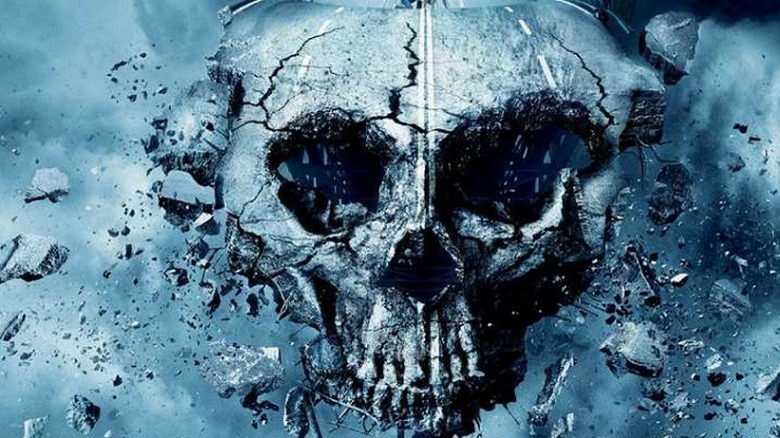
28 Oct 23:00

A Guide to Shift Away from Legacy Authentication Protocols in Microsoft 365

by noreply@blogger.com (The Hacker News)
Microsoft 365 (M365), formerly called Office 365 (O365), is Microsoft's cloud strategy flagship product with major changes ahead, such as the deprecation of their legacy authentication protocols. Often stored on or saved to the device, Basic Authentication protocols rely on sending usernames and passwords with every request, increasing the risk of attackers capturing users' credentials,
28 Oct 22:57

Prime Gaming November Drops Include Control Ultimate Edition, Dragon Age Inquisition and Rise of the Tomb Raider

by Alessio Palumbo

Prime Gaming

November's Prime Gaming drop is a huge one, featuring nine free games to claim including big titles like Control Ultimate Edition, Dragon Age Inquisition, and Rise of the Tomb Raider.

Here's the full list available to Prime Gaming subscribers next month:

Dragon Age Inquisition – Players can become the hero as they are tasked with making
important decisions that shape the future of Thedas. With constant wars and demonic invasions, champions must band together to lead the land of strife to victory… or fall.
Control Ultimate Edition – Developed by Remedy Entertainment, the main game and previously released expansions, including “The Foundation” and “Awe” are available in one great value package.
Rise of the Tomb Raider – Embark on an adventure into Siberia as Lara Croft in search for the legendary city of Kitezh while battling the paramilitary organization Trinity, which intends to uncover the city's promise of immortality.
Rogue Heroes – Team up with friends to combat procedural dungeons and explore the
expansive overworld full of secrets to take down the Titans and save the once peaceful land of Tasos in this 1-4 player classic adventure game with modern rogue-lite elements.
Liberated – Ignite the revolution as players lock, load, and get ready for a new kind of action adventure! Uncover a cyberpunk conspiracy against human rights in the rain-soaked city inside a paperback comic.
Puzzle Agent 2 – In this sequel to the award-winning Puzzle Agent, Agent Nelson Tethers just solved the biggest case of his career. Worried that the case will languish forever unsolved, Tethers ventures back to the eerie town of Scoggins, MN to solve the mystery of 'the Hidden People' once and for all.
Demon Hunter 2: New Chapter – In the sequel to Demon Hunter: Chronicles from Beyond,
Dawn challenges players to face puzzles and mini games which reveal secrets that threaten to shake the core of her very existence.
BAFL - Brakes Are For Losers – Challenge friends, pick a funky car and outrun competitors
with fierce driving skills and dirty tricks in the game that emanates pure arcade fun.
Secret Files: Sam Peters – Discover the truth about the Asanbosam, a mysterious creature that lurks behind the trees in Bosumtwi, a mysterious crater lake in Africa. Join journalist Sam Peters as she searches for answers behind the legends of the Ashanti people in Ghana.

Beyond the aforementioned free full games, Prime Gaming benefits will also provide a wealth of in-game content next month for games like League of Legends, Apex Legends, New World, Far Cry 6, Genshin Impact, Call of Duty, Rainbow Six Siege, Free Fire, and more. Check out the full lineup here.

The post Prime Gaming November Drops Include Control Ultimate Edition, Dragon Age Inquisition and Rise of the Tomb Raider by Alessio Palumbo appeared first on Wccftech.

28 Oct 22:56

Vampire: The Masquerade Bloodhunt Adds “Community Patch” Which Introduces a New Mode

by Ule Lopez

The latest Vampire: The Masquerade - Bloodhunt update introduces several community-requested features to the game, including a whole new game mode, improved game onboarding for new players, and a host of other improvements in direct response to the feedback that the game's developer Sharkmob has been receiving since the game entered Early Access.

In conjunction with the update, Sharkmob has also released a new trailer featuring the Nosferatu clan, playable in Bloodhunt. This trailer can be watched below:

Before we talk about the new update, we should talk about the gift that players will receive. Sharkmob wants to show its appreciation to its ever-growing player base by giving them access to free items for a limited time. A free item will be offered in the store each day for a limited time. Additionally, players can earn tokens by completing specific daily challenges.

Vampire: The Masquerade Bloodhunt

Now, the new game mode is called Duos Mode. This new mode added in the Community Patch will replace the Trios mode. However, Trios mode will return in the near future. It's worth mentioning that Duos Mode supports 42 players. Thus, the game will have a positive impact on performance and become divisible by 2 and 3 player groups.

Players will also be able to requeue after a match without having to return to Elysium in either solo or group modes. However, players will still not be able to requeue to a match as a party since this is not supported yet. It's also worth noting that players will need to leave the results screen in order to be able to requeue.

The game's overall pace has increased as well thanks to the introduction of shorter pre- and post-match timers, archetype selections, and deployments. This way, players will be able to get in and out of games much faster than before. The new timings are as follows:

  • Initial wait time: 90s -> 30s
  • Round 1: 215s -> 185s
  • Round 2: 185s -> 160s
  • Round 3: 180s -> 155s
  • Round 4 & 5 are unchanged at 175s for round 4 and 170s for round 5.

Vampire: The Masquerade Bloodhunt is a Battle Royale game set in the universe of Vampire: The Masquerade. The game is currently available as a free-to-play game on Steam Early Access and it allows players to join the Bloodhunt and fight to the last drop to become the ultimate vampire and restore order.

The post Vampire: The Masquerade Bloodhunt Adds “Community Patch” Which Introduces a New Mode by Ule Lopez appeared first on Wccftech.

28 Oct 22:56

VirtualBox vs. VMWare vs. Hyper-V: What's the Best Virtual Machine?

by Gavin Phillips

There are several virtualization tools available to Windows 10 users. But three tools dominate the market: VirtualBox, VMware, and Microsoft Hyper-V. But which of these virtual machine tools is best?

28 Oct 22:55

"Farewell To Arm" is probably the best rock song ever written about Evil Dead

by Thom Dunn

I've shared some songs here before by my friends in Model Decoy, a jazzy, R&B-driven rock band that mostly play songs about nerdy shit. "Farewell to Arm," above, is technically from a different, older iteration of the band, but it still displays their incredible talent for writing groovy tunes that bring gravitas to geeky stuff while making you bang your head. — Read the rest

28 Oct 22:54

Great white shark attacks on people really are honest mistakes, scientists show

by David Pescovitz

Great white sharks rarely bite people (even though we hear about them when they do), but new research from Macquarie University supports the old theory that attacks are actually the result of mistaken identity. Young great whites have bad vision and easily confuse surfers and swimmers with fat seals. — Read the rest

28 Oct 22:53

Microsoft finds new macOS vulnerability, Shrootless, that could bypass System Integrity Protection

by Eric Avena

Microsoft has discovered a vulnerability that could allow an attacker to bypass System Integrity Protection (SIP) in macOS and perform arbitrary operations on a device. We also found a similar technique that could allow an attacker to elevate their privileges to root an affected device. We shared these findings with Apple through Coordinated Vulnerability Disclosure (CVD) via Microsoft Security Vulnerability Research (MSVR). A fix for this vulnerability, now identified as CVE-2021-30892, was included in the security updates released by Apple on October 26, 2021.

SIP is a security technology in macOS that restricts a root user from performing operations that may compromise system integrity. We discovered the vulnerability while assessing processes entitled to bypass SIP protections. We found that the vulnerability lies in how Apple-signed packages with post-install scripts are installed. A malicious actor could create a specially crafted file that would hijack the installation process. After bypassing SIP’s restrictions, the attacker could then install a malicious kernel driver (rootkit), overwrite system files, or install persistent, undetectable malware, among others.

This OS-level vulnerability and others that will inevitably be uncovered add to the growing number of possible attack vectors for attackers to exploit. As networks become increasingly heterogeneous, the number of threats that attempt to compromise non-Windows devices also increases. Microsoft Defender for Endpoint on Mac enables organizations to gain visibility and detect threats on macOS devices. Such visibility rolls up to Microsoft Defender for Endpoint, which provides organizations with a “single pane of glass” where they can detect, manage, respond, and remediate vulnerabilities and threats across different platforms.

In this blog post, we will share some information about SIP, examine the common types of SIP bypasses previously disclosed, and present the unique ones we discovered.

SIP overview

First introduced by Apple in macOS Yosemite, SIP—also known as “rootless”—essentially locks down the system from root by leveraging the Apple sandbox to protect the entire platform. Internally, it is controlled by the following NVRAM variables:

  • csr-active-config: bitmask of enabled protections
  • csr-data: stores netboot configuration

These variables cannot be legitimately modified in non-recovery mode. Therefore, the only legitimate way to disable SIP is by booting into recovery mode and turning SIP off. Turning SIP on or off is done using the built-in csrutil tool, which can also display the SIP status:

Screenshot of csrutil showing the SIP status

Figure 1: csrutil showing the SIP status. Note that SIP cannot be disabled from non-recovery OS.

The csr-active-config bitmask NVRAM variable describes the different protections SIP offers. While not an exhaustive list, below are a few honorable mentions; the rest can be freely examined in the XNU source code:


csr-active-config NVRAM bit Description
CSR_ALLOW_UNTRUSTED_KEXTS Controls the loading of untrusted kernel extensions
CSR_ALLOW_UNRESTRICTED_FS Controls write access to restricted filesystem locations
CSR_ALLOW_TASK_FOR_PID Controls whether to allow getting a task port for Apple processes (that is, invoke the task_for_pid API)
CSR_ALLOW_UNRESTRICTED_NVRAM Controls unrestricted NVRAM access
CSR_ALLOW_KERNEL_DEBUGGER Controls whether to allow kernel debugging

Compromising any of these protections could enable attackers to bypass SIP completely. Some scenarios include the following:

  • Loading untrusted kernel extensions could compromise the kernel and allow the said extensions to perform operations without any checks
  • Bypassing filesystem checks could allow a kernel extension to enforce SIP to itself completely
  • Freely modifying the NVRAM could control SIP itself

Filesystem restrictions

Over the years, Apple has hardened SIP against attacks by improving restrictions. One of the most notable SIP restrictions is the filesystem restriction. This is especially important for red teamers and malicious actors, as the amount of damage one can do to a device’s critical components is directly based on their ability to write unrestricted data to disk.

The file /System/Library/Sandbox/rootless.conf generally controls which files are SIP-protected. While the said file itself is also SIP-protected, one can run it using ls with the -O flag to list which files are similarly protected. SIP-protected files have the “restricted” marker.

Screenshot of /usr with the -O option

Figure 2: Listing /usr with the -O option. /usr/local is not SIP protected, but /usr/sbin is.

Files with the extended attribute com.apple.rootless are likewise SIP-protected. Of course, there’s no way to add that extended attribute to a file legitimately. Otherwise, malware could use SIP for its own protection. The filesystem restrictions are a great way of restricting attackers. For instance, many of the /System directory and its subdirectories are SIP-protected.

Screenshot of SIP blocking a malicious LaunchDaemon registration

Figure 3: SIP blocking a malicious LaunchDaemon registration that is frequently used for persistence.

Rootless entitlements

Since the filesystem restrictions are so powerful, Apple must consider a few exceptional cases. For example, system updates require unrestricted access to SIP-protected directories. Therefore, Apple introduced a particular set of entitlements that bypass SIP checks by design. These entitlements are fine-tuned to specific SIP checks, and only Apple can assign them. So naturally, Apple only assigns these entitlements to its processes.

In our research, we focused on two powerful entitlements, which have also been targets of vulnerability hunters:


Entitlement Description
com.apple.rootless.install Completely bypasses SIP filesystem checks
com.apple.rootless.install.heritable Inherits com.apple.rootless.install to child processes

Screenshot of "com.apple.rootless.install" entitled process

Figure 4: An example of a “com.apple.rootless.install” entitled process

A quick rundown of notable SIP bypasses

Before our discovery, there had been several interesting SIP bypass vulnerabilities already reported in the past. In this section, we categorize these vulnerabilities into several classes and provide an example for each. Note that this is not a complete list; for instance, we excluded vulnerabilities involving the kernel itself because SIP only protects userland.

Abusing dynamic libraries

Previously, entitled processes could still load arbitrary dynamic libraries. One such example was presented in 2016, where libBaseIA.dylib, which is local to the app, was used by an entitled binary and could be infected with malicious code. At that point, the SIP bypass could be completely implemented in the malicious dylib.

Mounting

In a security update for OSX 10.11.2, Apple fixed a security bug that was also abused by the MacDefender malware. The said vulnerability could allow a malicious .dmg file to be mounted (using hdiutil) over a SIP-protected folder, therefore completely bypassing SIP filesystem restrictions.

Abusing entitlements

Entitled processes have also been sources of security bypasses. One notable example is a bypass that used the entitled fsck_cs utility. The bypass exploited the fact that fsck_cs would follow symbolic links and attempt to fix the filesystem presented to it.

Therefore, an attacker could create a symbolic link pointing from /dev/diskX to /System/Library/Extensions/AppleKextExcludeList.kext/Contents/Info.plist and invoke fsck_cs on the former. As the Info.plist file gets corrupted, the operating system could no longer control kernel extension exclusions, therefore bypassing SIP.

The ‘Shrootless’ vulnerability

While assessing macOS processes entitled to bypass SIP protections, we came across the daemon system_installd, which has the powerful com.apple.rootless.install.heritable entitlement. With this entitlement, any child process of system_installd would be able to bypass SIP filesystem restrictions altogether.

Screenshot of system_installd entitlements

Figure 5: system_installd entitlements. Note the “com.apple.rootless.install.heritable”

Since Microsoft Defender for Endpoint has a post-breach component, we decided to examine all the child processes of system_installd. To our surprise, we saw a few cases that could allow attackers to abuse its functionality and bypass SIP.

For instance, when installing an Apple-signed package (.pkg file), the said package invokes system_installd, which then takes charge of installing the former. If the package contains any post-install scripts, system_installd runs them by invoking a default shell, which is zsh on macOS. Interestingly, when zsh starts, it looks for the file /etc/zshenv, and—if found—runs commands from that file automatically, even in non-interactive mode. Therefore, for attackers to perform arbitrary operations on the device, a fully reliable path they could take would be to create a malicious /etc/zshenv file and then wait for system_installd to invoke zsh.

To create a fully functional proof-of-concept (POC) exploit, we implemented the following algorithm:

  1. Download an Apple-signed package (using wget) that is known to have a post-install script
  2. Plant a malicious /etc/zshenv that would check for its parent process; if it’s system_installd, then it would write to restricted locations
  3. Invoke the installer utility to install the package

As seen in Figure 6 below, the POC exploit was able to override the kernel extension exclusion list:

Screenshot of proof of concept exploit for CVE-2021-30892

Figure 6: Our POC exploit overriding the kernel extension exclusion list with arbitrary data

zshenv as an attack technique

During our research, we also found out that zshenv could also be used as a general attack technique besides being used for a SIP bypass. We discovered that /etc/zshenv has an equivalent for each user profile under ~/.zshenv, which has the same function and behavior but doesn’t require root permissions to write to.

Generally, zshenv could be used as the following:

  • A persistence mechanism. It could simply wait for zsh to start (either globally under /etc or per user).
  • An elevation of privilege mechanism. The home directory doesn’t change when an admin user elevates to root using sudo -s or sudo <command>. Thus, placing a ~/.zshenv file as the admin and waiting for the admin to use sudo later would trigger the ~/.zshenv file, hence elevating to root.

We shared our findings to Apple through Coordinated Vulnerability Disclosure (CVD) via Microsoft Security Vulnerability Research (MSVR). We want to thank the Apple product security team for their professionalism and responsiveness in fixing the issue.

Hardening device security through vulnerability management and behavioral monitoring

Security technology like SIP in macOS devices serves both as the device’s built-in baseline protection and the last line of defense against malware and other cybersecurity threats. Unfortunately, malicious actors continue to find innovative ways of breaching these barriers for these very same reasons. They can take complete control of the device and run any files or processes they wish without getting detected by traditional security solutions.

Our research on the CVE-2021-30892 vulnerability exemplifies this. It highlights the need for organizations to have a security solution like Microsoft Defender for Endpoint that empowers them to quickly discover and remediate vulnerabilities through threat and vulnerability management. This allows defenders to detect vulnerabilities and misconfigurations on devices in real time and prioritize which need to be addressed immediately based on the threat landscape, business context, and other factors.

In addition, Microsoft Defender for Endpoint uses advanced behavioral analytics and machine learning to detect anomalous activities on a device, such as overwriting arbitrary SIP-protected files that our POC exploit is capable of. In the example provided in the previous section, it is anomalous for zsh to override the kernel extension exclusion list. As such, Defender for Endpoint detects it. Extending the concept, Defender for Endpoint has similar detections for sensitive file access, including system launch daemons, the rootless.conf file, and many more.

Finally, this research underscores the importance of collaboration among security researchers, software vendors, and the larger security community. As cross-platform threats continue to increase, vulnerability discoveries, coordinated response, and other forms of threat intelligence sharing help enrich our protection technologies that secure users’ computing experience regardless of the platform or device they’re using.

Learn how Microsoft Defender for Endpoint delivers a complete endpoint security solution across all platforms.


Jonathan Bar Or

Microsoft 365 Defender Research Team

The post Microsoft finds new macOS vulnerability, Shrootless, that could bypass System Integrity Protection appeared first on Microsoft Security Blog.

28 Oct 22:52

Global Covid Cases and Deaths Rise for the First Time in Two Months, WHO Says

by msmash
Covid-19 cases and deaths are climbing across the world for the first time in two months as the virus surges across Europe, World Health Organization officials said at a briefing Thursday. From a report: After weeks of decline, infections in Europe have risen over the last three consecutive weeks, even as cases fall in every other region across the world, according to WHO. There were nearly 3 million new Covid cases reported worldwide for the week ended Sunday, an increase of 4% from the previous seven days, according to WHO's most recent epidemiological update. Globally, Covid cases had fallen 4% the week before, despite a 7% increase across Europe over that same period. Cases in Europe surged by 18% over the last week alone, WHO data shows. "The global number of reported cases and deaths from Covid-19 is now increasing for the first time in two months, driven by an ongoing rise in Europe that outweighs declines in other regions," WHO Director-General Dr. Tedros Adhanom Ghebreyesus said. "It's another reminder that the Covid-19 pandemic is far from over." Covid has surged sharply in Czechia and Hungary, where the seven-day average of cases swelled more than 100% from the previous week as of Wednesday, according to a CNBC analysis of data from Johns Hopkins University. Croatia, Denmark, Norway and Poland each recorded weekly average case increases of more than 70% on Wednesday, JHU found.

Read more of this story at Slashdot.

28 Oct 22:52

Every Martin Scorsese Feature Ranked From Worst To Best

by Audrey Fox

How do you even begin to break down Martin Scorsese's staggeringly consistent filmography, let alone try to rank his movies in order of quality? One of the most talented directors in American cinematic history, there's not a whole lot of daylight between his best and worst films. Even the box office bombs that couldn't connect with an audience have enough redeeming qualities to make them worthwhile. Scorsese's films are never bad, in part because he has such a reverence for cinema; each of his movies is steeped in Hollywood history, with hidden depths and allusions to things that came before. 

Despite the fact that Scorsese is a living legend in the film industry, he hasn't gotten the accolades that he arguably deserves. Several of his films have received Academy Awards, but in his long and storied career, he's only won Best Director once. You wonder if this is because his work continually defies expectations. He's best known for gangster films, but he's also never passed up the opportunity to challenge himself with a totally different genre whenever he found a story he was passionate about.

Boxcar Bertha

There had to be one at the bottom, and "Boxcar Bertha" seems like an obvious choice. After garnering attention for his short films and independent directorial debut a few years earlier, "Boxcar Bertha" would serve as Martin Scorsese's first Hollywood feature. Scorsese tackles the loosely autobiographical story of a female outlaw played by Barbara Hershey, who is on the run with union organizer "Big" Bill Shelly (David Carradine) after a series of train robberies. 

There's nothing particularly wrong with "Boxcar Bertha," but it's clear that Scorsese isn't in his element quite yet. Although his exploration of American criminality tackles themes that would be essential to his later work, he leans a bit too heavily on other crime films for inspiration. And released just a few short years after "Bonnie and Clyde," it suffers by comparison. "Boxcar Bertha" was not especially well-received by audiences or critics, and to this day it remains one of Scorsese's least-remembered films.

Bringing Out The Dead

If you had to list all of Martin Scorsese's films, "Bringing Out the Dead" is the one that everyone except the diehard fans would have trouble remembering. Which is a shame, because it has a pretty decent pedigree. Marty collaborates with screenwriter Paul Schrader for the fourth time (their previous efforts were "Taxi Driver," "Raging Bull," and "The Last Temptation of Christ" so, you know, not too shabby), and in front of the camera he has Nicolas Cage, Patricia Arquette, John Goodman, and Ving Rhames. All signs point to promising.

But for whatever reason, this story about late-night paramedics and their many interactions with the drug addict community failed to connect with audiences. It ended up making only half of its budget back, a rarity for a Scorsese film. And although critics were generally appreciative of its merits, "Bringing Out the Dead" wasn't able to make the sort of cultural impact that has defined many of the lauded director's more successful films.
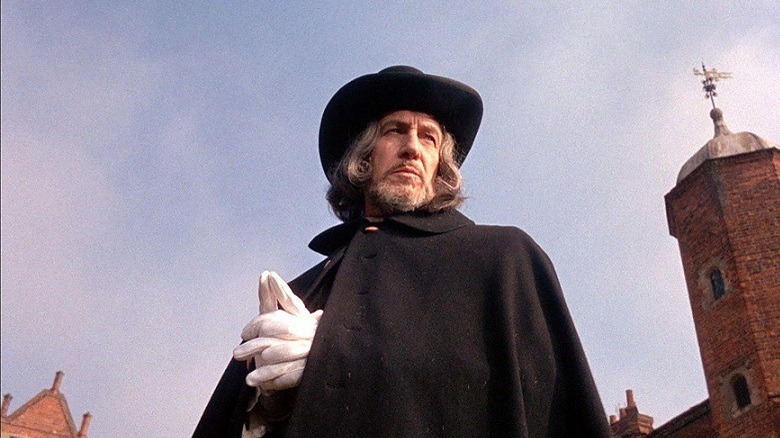
Who's That Knocking At My Door

There's always a certain fascination that accompanies the debut film from a director as illustrious as Martin Scorsese. "Who's That Knocking at My Door" is a bit rough around the edges, but even in his first film, the themes that most interested Scorsese are evident. It stars Harvey Keitel (an actor whom Scorsese would return to again and again over the course of his career) as a Catholic Italian-American who struggles to cope when he learns that his girlfriend was raped by a former boyfriend. 

He is torn between his feelings for her, and a lifetime of religious indoctrination that has taught him to regard such a woman as spoiled. He acts badly out of anger, shame, and fear, and his inability to overcome the influence of his Catholic teachings sabotages their relationship. "Who's That Knocking at My Door" is an ultra low-budget affair, but even without the benefits of a large budget or established stars, Scorsese's talent was clear.

After Hours

Say what you will about Martin Scorsese, but his films can rarely be described as "light." That's why "After Hours" stands out in his filmography, and also why it fails to stack up against some of his work with more gravitas. It's a simple story with a dark sense of humor: a man (played by Griffin Dunne) attempts to make his way home from a night on the town, only to be repeatedly prevented from doing so thanks to a series of comic misadventures. 

Scorsese so often makes films with narratives that he feels a powerful emotional connection to, so it's refreshing that for once he was able to let his hair down a little bit and have fun. And it deserves credit for reminding audiences something that they often forget: Martin Scorsese films can be legitimately funny. But because it is fairly light-weight in terms of story, "After Hours" tends to fly under the radar, not leaving much of a long-term impression on audiences.

Kundun

A continual theme of Martin Scorsese's work is that you should never be too sure that you know what he's going to do next. The story of the Dalai Lama may not have been an obvious choice, but that's likely what drew him to "Kundun" in the first place. It was certainly a step out of his comfort zone. Scorsese has never been a stranger to a sprawling epic, but this went well beyond even his scope, spanning twenty years in early 20th century Tibetan history as it tracks the life of the 14th Dalai Lama from the time he was two years old into adulthood.

As you might expect, "Kundun" did not do particularly well at the box office. The character of the Dalai Lama is one that is inaccessible to many viewers, for the simple fact that he comes across as a spiritual entity rather than a flesh-and-blood human being. It is gorgeously made, but suffers from a lack of the human element that grounds so many of Scorsese's other films.

The Irishman

When a director reaches their seventies, it's almost inevitable that their output starts to lean towards the concept of legacy, as we see in "The Irishman." For this magnum opus, Scorsese assembled a dream team of Italian-American actors known for their performances in gangster films: Robert De Niro, Al Pacino, and Joe Pesci. We are treated to the ascendency of truck-driver-turned-hit-man Frank Sheeran (De Niro) and his life in organized crime, shown from the perspective of an elderly Frank looking back on his life. 

There are elements of "The Irishman" that work well -- the dynamic between De Niro and Al Pacino's Jimmy Hoffa is especially compelling. But there's one fatal flaw in the film: the bad de-aging technology. It's incredibly distracting, and it's a shame that they didn't just hire younger actors for earlier moments in the timeline, especially when you remember that De Niro himself rose to prominence (and won an Oscar for) his performance as the younger version of a character originated by the iconic Marlon Brando.

The Departed

At long last, Martin Scorsese receives his first Best Director Academy Award. The only problem? It definitely falls into the category of the make-up Oscar, where a director ends up getting a win for a film that doesn't really deserve it, because there's a perception that they were slighted for an earlier, superior film and are now "overdue." That's "The Departed" to a tee. 

To be fair, there's nothing really wrong with it. "The Departed" is a perfectly serviceable adaptation of the Hong Kong action thriller "Infernal Affairs" that sees a Boston cop (Leonardo DiCaprio) go undercover in the mob, while a young gangster (Matt Damon) operates as a mole within the police department. Their allegiances are questioned, and they're always an inch away from being found out. DiCaprio and Damon are great in it, and the only shame is that they don't get enough opportunities to play off one another. Really, it's only getting bumped down a few spots because of the over-the-top visual metaphor of the rat at the end of the film. Come on, now.
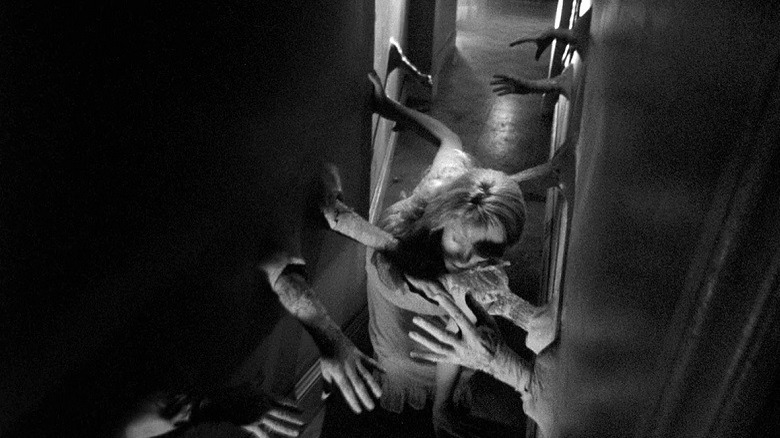
The Color Of Money

Martin Scorsese revisits certain themes in his work over and over again throughout the years, but for the most part he stays away from sequels. He tells the movie that he wants to tell, he makes it however long he wants it to be because no one's going to tell Scorsese to bust out the editing scissors, and then he moves on. In fact, "The Color of Money" is the only real sequel he's made in his entire career, and even that is a sequel to someone else's work. 

It stars Paul Newman, picking up his pool-playing role of "Fast Eddie" Felson from "The Hustler" as he takes a young hustler, Vincent Lauria (Tom Cruise), under his wing, teaching him the tricks of the trade. The only problem is that Vincent's way too cocky: the linchpin in any hustling scheme is that at the beginning, you have to lull your mark into a false sense of security by playing badly on purpose, and he just can't bring himself to do that. But while Cruise is the up-and-coming star of the film, it's Paul Newman who proves himself to be just as charming as ever, winning his first ever Academy Award for "The Color of Money."

New York, New York

Whenever you think you know what to expect from Scorsese, he goes in an unexpected direction. He'd made a name for himself directing hard-hitting, violent New York City dramas, but why not tackle a period musical? "New York, New York" stars Robert De Niro and Liza Minnelli as an extremely dysfunctional couple who meet after World War II and embark on a musical career together. To be honest, it's kind of a frustrating film. Neither of the lead characters are likable enough to sustain the bloated run time of "New York, New York," and it begins to feel a little aimless after the first two hours. 
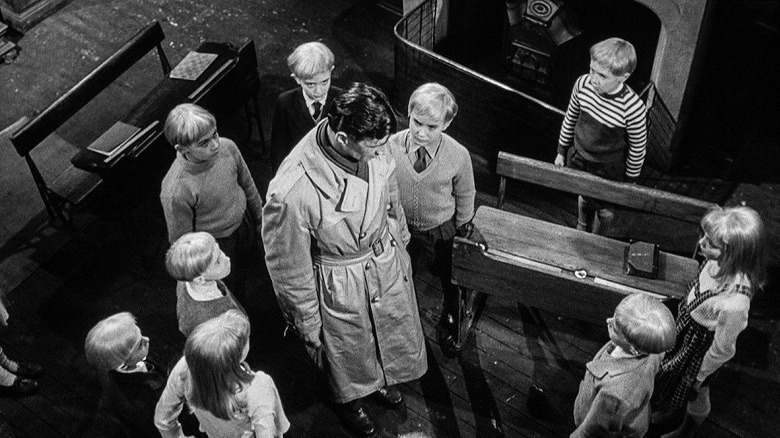
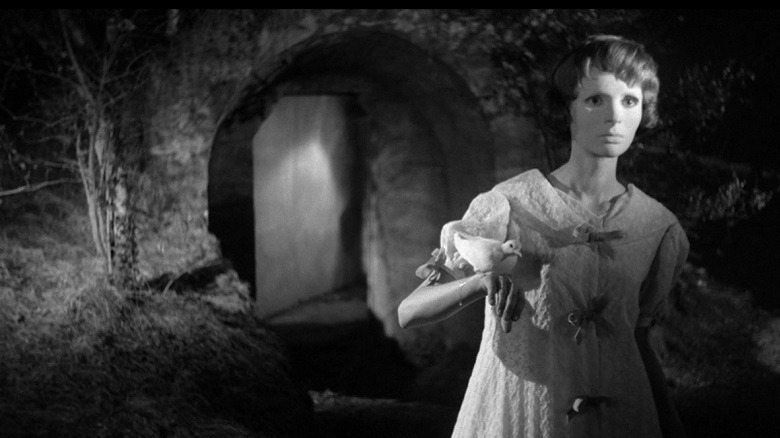
But it has one redeeming factor which is enough, it would seem, to forgive many of its sins: the note-perfect title song. When Liza Minnelli begins her show-stopping performance of "New York, New York," it creates such a mesmerizing atmosphere that for a brief shining moment, you can't tear your eyes away.

Casino

Another day, another Martin Scorsese crime drama starring Robert De Niro and Joe Pesci. This is "Casino," a perfectly serviceable film that won plenty of accolades (including a Best Actress nomination at the Academy Awards for Sharon Stone), but it's hard to avoid feeling like this is Scorsese on autopilot. De Niro plays a Jewish gambling expert who is asked to run the day-to-day operations of a casino in Las Vegas -- a job that, in addition to the inherent occupational difficulties he faces on a regular basis, brings him into close contact with the mafia, who are heavily involved in the casino industry. 

It is genuinely well-made, so much so that if it had been released before "Goodfellas," there's every possibility that it would be the one that received all the credit and addition. But coming out several years later, it isn't able to capture a sense of freshness and creativity that would combat its somewhat repetitive nature.

Alice Doesn't Live Here Anymore

One of the most fascinating aspects of Scorsese's filmmaking career is that no matter how closely he is identified with the gangster genre, from the very beginning of his career he showed an interest in telling other kinds of stories. "Alice Doesn't Live Here Anymore" captured a different perspective on American life, one that is softer than his New York City-based films. It starred Ellen Burstyn as a recently widowed mother who packs up all of her possessions and moves to California, hoping to pursue a singing career that she dreamed of before she was married. 

Gentle but with an often hilariously wry sense of humor, "Alice Doesn't Live Here Anymore" was the first massive hit of Scorsese's career, and the first to garner awards attention. It was nominated for three Academy Awards, and Ellen Burstyn took home Oscar gold for Best Actress.

Gangs Of New York

In a lot of ways, "Gangs of New York" represents Scorsese entering a new era in terms of his collaborations. Up until this point, we had a sense of the actors he would lean on the most for key roles in many of his films: Robert De Niro, Harvey Keitel, Joe Pesci, the familiar faces of the crime genre. But with "Gangs of New York," a period drama set in the violent, lawless Five Points neighborhood of New York City in the late 1800s, he first works with the actor who would define the past two decades of his career: Leonardo DiCaprio. (Interestingly enough, it was reportedly De Niro himself who first mentioned DiCaprio to Scorsese, after he worked with the then 19-year-old actor in "This Boy's Life.")

You can see the potential of the collaboration between the two immediately, although "Gangs of New York" is not without its flaws. It has an unfocused third act, when the Civil War draft riots, and Cameron Diaz makes for an unconvincing female lead. Still, with commanding performances from Daniel Day Lewis and Leonardo DiCaprio, it's difficult to complain too much about the end result.

The Last Temptation Of Christ

On the one hand, Martin Scorsese's work has frequently grappled with a complicated relationship with Catholicism, so it makes sense that sooner or later he would be tempted to do a Jesus film. But at the same time, "The Last Temptation of Christ" is so bold and shocking that it feels like nothing he's ever done before. It stars Willem Dafoe as a grounded, very human version of Jesus during his last days on earth, capturing the audience's emotions in ways that stand in complete opposition to the more epic, impersonal religious blockbusters of previous decades. 

"The Last Temptation of Christ" was incredibly controversial, especially amongst religious groups, for its depiction of Jesus Christ as having had an intimate relationship with Mary Magdalene, and indulging in lustful fantasies. But despite its unconventional approach to the gospels and its underwhelming box office returns, it stands out as one of Scorsese's most abstract and allegorical films, and was responsible for earning him his second Oscar nomination for Best Director.

The Aviator

There was a moment in the early 2000s when Leonardo DiCaprio, desperate to shed his teen heartthrob image and be taken seriously as an actor, began to work with every prestige director who would have him. "The Aviator" represents his second collaboration with Martin Scorsese in just over two years, the beginning of a working relationship still going strong to this day. Here he plays the famously eccentric Howard Hughes, from his early, promising days as a Hollywood producer to his descent into mental illness that would define his legacy. 

"The Aviator" is entirely Leonardo DiCaprio's baby, and he makes a meal out of the showier elements of his performance. But while DiCaprio is good in the lead role, the most fun moments come from the frequent classic Hollywood celebrity cameos that give Scorsese an opportunity to embrace his inner film nerd. Cate Blanchett in particular does a startlingly good imitation of Katharine Hepburn, a role that would win her an Academy Award for Best Supporting Actress.

Shutter Island

Martin Scorsese definitely experiments in different genres whenever the spirit moves him, but most of his films tend to be grounded in reality in a way that "Shutter Island" purposefully defies. Leonardo DiCaprio plays a US Marshall investigating a psychiatric institution on a remote island in New England (it feels as though Stephen King should have been involved), only for events to unfold in such a way as to make him question not just the actions of the hospital, but his perception of reality itself.

Scorsese gleefully throws himself into all of the film's twists and turns, going as abstract and laden with metaphor as he can as it careens towards its shocking ending. Borrowing noir elements and applying them to the sort of psychological thriller we normally see from M. Night Shyamalan, "Shutter Island" isn't for everyone, but it's a dense, perplexing film that benefits from multiple viewings and critical analysis.

Mean Streets

You know when you see an actor and director work together for the first time and you can just tell that they're a perfect fit? That's Robert De Niro and Martin Scorsese in "Mean Streets." De Niro has so far starred in nine of Scorsese's films over the years, and this is where their collaboration began. "Mean Streets" is one of his most autobiographical movies, loosely based on his own experiences growing up in Little Italy. (Scorsese and De Niro knew each other as teenagers, living just a few blocks apart from one another in Greenwich Village.) 

After the less-than-enthusiastic response to "Boxcar Bertha," a film that Scorsese had essentially been assigned to, "Mean Streets" represented an opportunity for him to tell a story that meant something to him. His personal approach connected with audiences, and "Mean Streets" had a massive impact, influencing the gangster genre for decades to come.

Taxi Driver

There are film scenes more frequently quoted than Robert De Niro standing in front of a mirror saying, "You talkin' to me?" in "Taxi Driver," but there definitely aren't many. The story of an alienated Vietnam veteran who befriends a child prostitute (played by a preternaturally mature Jodie Foster), "Taxi Driver" has a gritty naturalism that would make it one of the defining films of the 1970s. 

The moody, atmospheric vision of a lonely New York City at night, combined with De Niro's brooding performance as Travis Bickle as he tries and fails to curb his violent impulses, makes "Taxi Driver" one of the most significant contributions to the burgeoning anti-hero cinematic movement of the period. Unfortunately, one of the lasting impacts of the film is its role as an icon for a particularly tiresome subculture of anti-social, alt-right men. But can a movie be held responsible for people misinterpreting it decades down the line? That doesn't seem quite fair.

The Wolf Of Wall Street

Based on the true story of Jordan Belfort, stock market expert turned white collar criminal turned motivational speaker, "The Wolf of Wall Street" is a heady, seductive fable about not just the corrupting influence of power, but the tendency for figures to seek power who are amoral to begin with. Leonardo DiCaprio is larger than life as Belfort, as he rises through the ranks and clings to his money and prestige even as it becomes clear there's no way for him to escape arrest. 

There's very little going on beneath the surface of "The Wolf of Wall Street," but that seems intentional: the shallowness of Jordan Belfort and his colleagues is the point. If nothing else, the film deserves credit for two main things. It introduces us to the luminous Margot Robbie, who plays Belfort's second wife. And it gives the world the sequence where Belfort is on an astonishing amount of quaaludes, in what is possibly one of the funniest scenes Scorsese's committed to celluloid.

Raging Bull

On the day that toxic masculinity was redefined, we stood in awe and watched. "Raging Bull" captures the turbulent life of Jake LaMotta, a middleweight boxer whose rage and self-destructive behavior would sabotage his career. It stands as a shining example of an actor going to extraordinary lengths to fully embody their character: Robert De Niro plays LaMotta not just when he was in peak fighting shape, but also many years later as an out-of-shape, would-be comedian. 

The practical result of this is that De Niro both trained with LaMotta himself so that he could do justice to the boxing scenes and ended up gaining an incredible sixty pounds to play the older, more pathetic version of the character. Such a commitment has a mesmerizing effect, and won De Niro his second Academy Award (his first came six years earlier for his work in "The Godfather Part II.") In many ways, "Raging Bull" is a challenging film; the brutal violence of LaMotta both in and out of the ring is difficult to watch. But as part of Martin Scorsese's on-going exploration of the dark side of masculinity, it is utterly essential.

Silence

More than any other film in Martin Scorsese's catalog, no one knows quite what to do with "Silence." It's a ponderous tale of two Portuguese priests who travel to Japan, where Christian missionaries have been outlawed, to track down their lost mentor. If any other director in the entire world had pitched this movie, you know it never would have gotten made, for the sole reason that no studio executive would have the first idea of how to sell it. But it's Martin Scorsese we're talking about, and he has his own set of rules.

"Silence" features gorgeous cinematography, with striking vistas that capture the hostile yet beautiful terrain of Japan, reflecting how very unwelcome the two men are on these shores. Both Andrew Garfield and Adam Driver are surprisingly moving in their roles, showing a sense of faith and loyalty that is as fascinating to watch, whether its pure and incorruptible or crumbling into the sea. Of all of Scorsese's twenty-first century films, "Silence" is perhaps the one most due for a popular reevaluation of its merits.

Cape Fear

Although Martin Scorsese has worked on many films that are adapted from previous works (usually novels), "Cape Fear" represents the only instance where he directed a cinematic remake. Based on the 1962 thriller starring Gregory Peck and Robert Mitchum, it tells the story of a lawyer whose family is put in danger after a convicted rapist begins to target him upon his release from prison. 

Robert De Niro's performance is over-the-top but nonetheless chilling. His version of Max Cady is predatory with a cagey intelligence and wild, animalistic tendencies. He has spent his prison time brushing up on both the Bible and law books, and is prepared to mete out punishment for perceived injustices inflicted upon him by Nick Nolte's Sam Bowden. The threat of rape lingers over the entire film, lending it an ugliness that Scorsese wields masterfully. It earned Academy Award nominations for both De Niro and a young Juliette Lewis, who plays Sam Bowden's daughter that Cady attempts to seduce in a commanding early performance.

The King Of Comedy

Robert De Niro normally has an intense charisma to his performances. Even when he's playing the bad guy, there's still a magnetism that draws you to him almost against your will. "The King of Comedy" plays with that quality, by putting him in the role of a thoroughly mediocre comedian. He thinks that he's much more clever, amusing, and charming than he actually is; he allows fantasy conversations to play out that cast him in a powerful light, so much so that it blinds him to reality. Desperate for fame and glory, he kidnaps his celebrity idol, played cannily by Jerry Lewis. 

What "The King of Comedy" captures so well is the dark side of the "little guy" mythos, so popular in American culture, and the danger of privileged white men who feel entitled to a certain level of success and prestige just because they want it bad enough. It's a challenging watch -- despite its title, there are few laughs contained within "The King of Comedy." Scorsese purposefully withholds that release from the audience so that the film has a greater emotional impact.

Hugo

"'Hugo' in the number three slot?" you may say, incredulously. "I'm going to need to tweet at her to tell her that she's wrong about this one."

But listen. "Hugo" deserves a high spot on this list for a number of reasons. First, it is one of the only films in history that was genuinely improved by being filmed in 3D. And secondly, this more than any other film captures Scorsese's deep and abiding love for the cinema.

It's undeniably his most family-friendly movie -- the story of an orphaned boy (Asa Butterfield) who lives in a train station and becomes friends with Isabelle (Chloe Grace Moretz), goddaughter of the great silent film director Georges Méliès (Ben Kingsley.) As they discover the wonders of the cinema, they help him to celebrate his groundbreaking innovations without allowing them to be completely overshadowed by bitter lamentations. As an artist himself, Scorsese was likely aware of the impulse to be ruled by your regrets: creative decisions you might have done differently, shots you wish you could have back, and any number of ruminations that keep you living in the past.

The Age Of Innocence

The vast majority of Martin Scorsese's work is not what you might call romantic. That's why "The Age of Innocence," with all its repressed longing and unrequited love, comes as something of a surprise. Adapted from the 1920 novel of the same name by Edith Wharton, it represents an unexpected foray into a softer, gentler style of filmmaking. He captures the period details perfectly, evoking the ostentatious spirit of Gilded Age glamour, but beyond that, he has the benefit of three powerful performances from Daniel Day Lewis, Michelle Pfeiffer, and Winona Ryder in a slightly imbalanced love triangle. 

Scorsese's attentions, normally devoted to the violent aspects of life, are here channeled into more delicate but nonetheless brutal emotional pain. A great director is capable of stepping outside their comfort zone and bringing along with them the qualities that made their genre films so successful. They are not cowed by the fear of failure or making missteps with an unfamiliar cinematic style. With "The Age of Innocence," we receive confirmation once again that Martin Scorsese is a great director.

Goodfellas

What is there to say about "Goodfellas" that hasn't already been said? It's the most well-balanced of Scorsese's crime dramas, somehow managing to walk a tightrope line of feeling threatening and intense, but not losing the opportunity for nuanced shades of humor to come through. They blend together magnificently, ebbing and flowing within the same scene and amplifying each other in their contrast, as we see in Joe Pesci's iconic "how am I funny?" scene.

Essentially, "Goodfellas" is the life story of a man who rises up the ranks of the mafia organization he sees around him in working-class Brooklyn. It captures this insular world with a rare authenticity. Beyond that, though, there's a sense of artistry to Scorsese's work. The opening sequence, an unbroken Steadicam tracking shot as Henry (Ray Liotta) takes Karen (Lorraine Bracco) out on a date, is an obvious highlight: an incredibly impressive technical achievement that adds depth to the storyline, using the smooth maneuver to show Henry seducing Karen with his lifestyle. "Goodfellas" isn't just one of Scorsese's best films, it's one of the best films, period.

Read this next: The 15 Best Debut Films From Directors

The post Every Martin Scorsese Feature Ranked From Worst to Best appeared first on /Film.