Shared posts

04 Nov 15:56

Upcoming Matt Damon Movies To Keep On Your Radar

by Sandy Schaefer

(Welcome to On Your Radar, a series where we take a look at what's next for the biggest actors and filmmakers, and why you should be excited...or not.)

An Oscar-winning writer, an action film star, some guy who bought a zoo — Matt Damon has been many things and worn many hats (literal and figurative) since he started acting in movies and television in the late 1980s. Much like his bestie, Ben Affleck, Damon has seen his ups and downs and, on more than one occasion, been guilty of putting his foot in his mouth. All the same, he continues to enjoy a creatively rewarding working relationship with filmmaker Steven Soderbergh that dates back two decades and is coming off back-to-back well received performances this year in the dramas "Stillwater" and "The Last Duel," the latter of which he also co-penned with Affleck and Nicole Holofcener.

So, what's next for Damon? Well, he sure does love to pop up unexpectedly in Soderbergh's movies, so he may yet cameo in the director's upcoming crime thriller "Kimi." Failing that, Damon has roles in not one but two big-time tentpoles on the way, and they couldn't be more different in terms of, basically, everything about them.

Thor: Love & Thunder

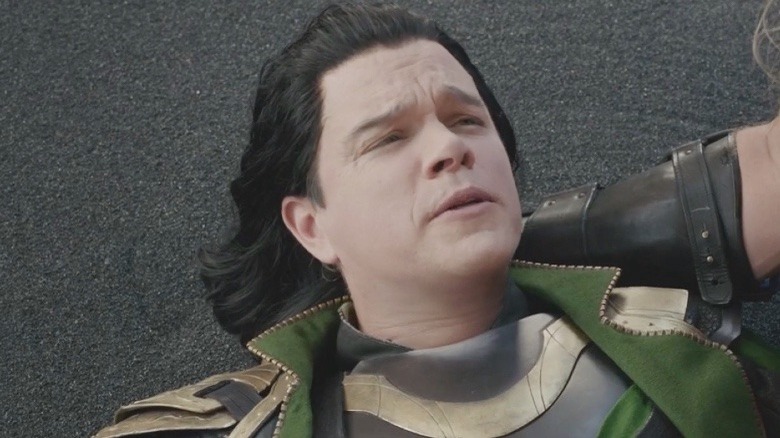
Among the many, many funny moments in "Thor: Ragnarok" was a scene where a group of nameless Asgardians recreated the events of "Thor: The Dark World," with Damon's Actor Loki portraying the God of Thunder's mischievous sibling. Director Taika Waititi is bringing the gag back for the sequel, "Thor: Love & Thunder," and going even bigger with the joke this time around, with Damon reprising his role as Actor Loki opposite Luke Hemsworth (back as Actor Thor), Sam Neill (back as Actor Odin), and two more stars whose identities are best kept secret for anyone who isn't already spoiled.

Waititi's decision to revisit the "Asgardians act out the 'Thor' movies" bit is emblematic of his general approach to "Thor: Love & Thunder," which is to repeat what he did in "Thor: Ragnarok" while being even more ridiculous and off-the-wall when it comes to the film's story, humor, and visuals. The movie itself is drawing from Jason Aaron's run on the "Mighty Thor" comic books, which (again, keeping things spoiler-free for those not in the know) is very much an arc that stands to benefit from being realized through Waititi's Happy Sad style of storytelling.

"Thor: Love & Thunder" is currently in post-production and is scheduled to open in theaters on July 8, 2022.

Oppenheimer

Coming off his James Bond-esque globe-trotting, time-inverting, sci-fi adventure "Tenet," Christopher Nolan is getting back into "Dunkirk" mode with another WWII-era historical drama in the form of "Oppenheimer." As its title suggests, the film revolves around J. Robert Oppenheimer and the creation of the atomic bomb, with Nolan's trusted collaborator Cillian Murphy portraying the conflicted theoretical physicist. Emily Blunt and Robert Downey Jr., neither of whom have worked with Nolan before, are also starring, with Damon rounding out the main cast so far.

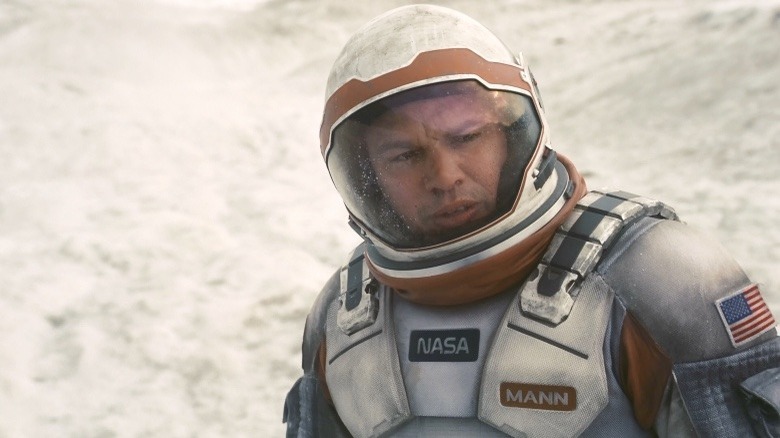
Damon previously made a (curiously brief) appearance in Nolan's 2014 movie "Interstellar" as Dr. Mann, a NASA astronaut who, in a twist, turns out be a surprise antagonist for the film's heroes and gets killed off just as abruptly as he entered the story. The hope, in other words, is that "Oppenheimer" will give Damon a meatier role to sink his teeth into, especially in light of its heavy subject matter.

Production on "Oppenheimer" looks to get underway in early 2022. Universal is financing and distributing the film after Nolan parted ways with Warner Bros. — a studio he's partnered with on every movie he's directed since "Memento" — and plans to release it in theaters on July 21, 2023.

Read this next: 13 Box Office Bombs That Are Truly Worth A Watch

The post Upcoming Matt Damon Movies to Keep On Your Radar appeared first on /Film.

04 Nov 15:55

[Epic] (Game) Aven Colony

by /u/Donnieb1111
04 Nov 15:55

Review: DEAD & BEAUTIFUL, Lifestyles of the Rich and Bloodthirsty

David Verbeek's excellent new thriller is a classy vampire drama with some horror edges, now streaming on Shudder.

[Read the whole post on screenanarchy.com...]

04 Nov 15:54

Intel Alder Lake gaming CPUs reviews round-up – what do the critics think?

by Samuel Willetts
Intel Alder Lake gaming CPUs reviews round-up – what do the critics think?

It’s fair to say that Intel’s new 12th generation Core processors have a lot of ground to make up, with the company losing substantial market share to AMD’s Ryzen CPUs for the past few years. However, Alder Lake is different from every x86 desktop chip we’ve ever had, featuring a hybrid design of performance and efficiency cores which could lead the way for all future processors from not just Intel but AMD as well.

There’ve been numerous leaks surrounding the Core i9-12900K and Core i5-12600K, with Intel formally confirming their specifications and prices at its Intel Innovation event this past October. The price of the Alder Lake lineup ranges between $264-$589 USD, which is comparative to the cost of AMD’s existing Ryzen 5000 offerings.

However, the question remains whether these Alder Lake processors can rank among the best gaming CPUs on the market, and how much of a lead team blue can create of over team red before the arrival of Zen 4 in 2022.

RELATED LINKS: Intel Core i9 9900K review, Intel Core i7 9700K review, Best CPU for gaming
04 Nov 15:53

A man finds three bears at his house, and this one is snarfing KFC in his kitchen

by Carla Sinclair

A man in Sierra Madre, California came home to find his front door wide open. He was then greeted by three little bears — one in his front yard and two in the house. He turned on his camera when he spotted this hungry guy on his kitchen counter, gorging on a bucketful of KFC chicken. — Read the rest

04 Nov 15:53

Perfectly-staged Mein Kampf joke

by Rob Beschizza

The YouTube title and the auto-thumbnail ruin the joke, of course, but its so well-staged. The tradition of humor in which Nazis and the Nazi-intrigued inadvertantly expose their sympathies and interests—Are You Right There, Father Ted?—is all but dead in the age of malignant irony, context collapse, and prevalent denial. — Read the rest

04 Nov 15:53

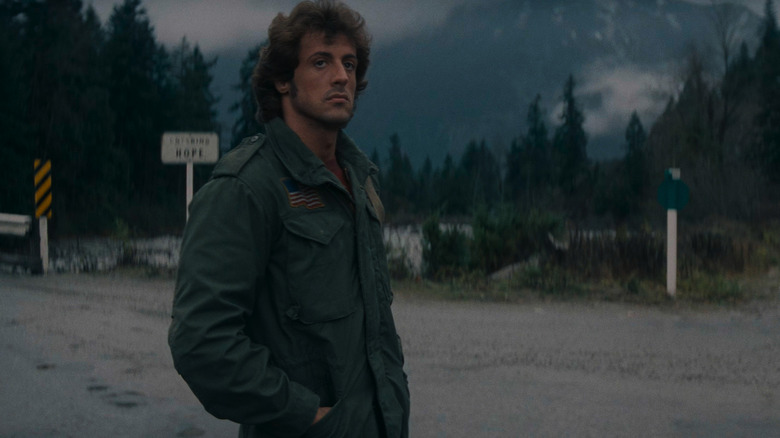
The Dark Rambo Alternate Ending You Likely Haven't Seen

by Joshua Meyer

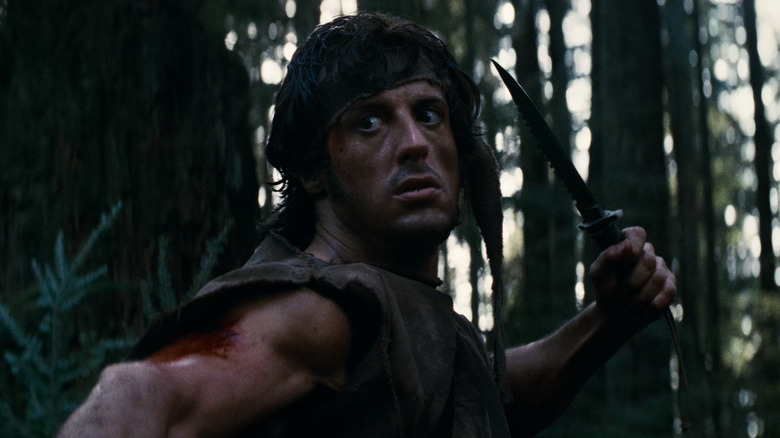
The character John Rambo has appeared in five Sylvester Stallone films, and during his heyday as an '80s action icon, he even had his own animated series and toy line. However, if "First Blood" director Ted Kotcheff had gone with his original plan, Rambo might have been a one-and-done.

Quentin Tarantino isn't the only filmmaker who's envisioned a Rambo movie that would be closer to David Morrell's novel, "First Blood." In the book and Kotcheff's 1982 film adaptation, Rambo is a troubled Vietnam vet who wanders into a small town and faces persecution from the local sheriff.

As Kotcheff told Entertainment Weekly, "The quintessential American town Rambo finds himself in was emblematic of the whole United States." Rambo's plight was that of all veterans, coming home from the war, only to be regarded as "losers" on one side and "babykillers" on the other side of the political divide.

The late Brian Dennehy played the sheriff, Will Teasle, in the movie, which followed the book's storyline up to a certain point: having Teasle arrest Rambo for vagrancy and having Rambo flashback to being a POW, before going berserk as deputies try to shave him. He escapes and becomes the target of a manhunt. But in the book, Rambo dies, unlike the film franchise, where he lives to fight again another day and kill a whole bunch of people across four sequels.

Kotcheff's original film ending would have also shown Rambo die, mirroring the tragedy of other real-life veterans by taking his own life.

Rambo's Death Scene

Kotcheff said he "conceived of 'First Blood' as Rambo's suicide mission." That's how it was planned up until the day they shot Rambo's death scene with Colonel Trautman (Richard Crenna). You can find uploads of that scene on YouTube, but they aren't the best quality. Here is how Kotcheff described it to EW:

"We came around to do the ending. [Rambo is] surrounded by the army, and by the police. He's in the police station. The Colonel comes in there to put him out of his misery. [Rambo] says, "I know you have a gun underneath your jacket there. You created me. Now, you have to kill me." And he pulls out the gun. But he can't do it, of course. But Rambo reaches out, presses the trigger, and blows himself away."

After filming this ending, Stallone (who co-wrote the script) took Kotcheff aside and suggested that Rambo had been through too much abuse for them to let his story end with a grim act of self-immolation. As Kotcheff noted, Stallone had his own "populist sense" of filmmaking. This is something that Stallone applied to his screenplay for "Rocky," which he approached as a crowd-pleasing drama and which he still considers a drama, not a sports film.

They decided to shoot another ending that day where Rambo lives. When they did a test screening with "the original hara-kiri ending," as Kotcheff called it, audiences who had otherwise enjoyed the film were unanimous in their dislike of that ending. They agreed with Stallone, so the filmmakers went with the ending where Rambo lives.

While "First Blood" still doesn't have what you would call a happy ending, it's at least a little happier (and more open to sequels) than it could have been.

Read this next: The 14 Greatest War Movies Of The 21st Century

The post The Dark Rambo Alternate Ending You Likely Haven't Seen appeared first on /Film.

04 Nov 15:52

The Intel 12th Gen Core i9-12900K Review: Hybrid Performance Brings Hybrid Complexity

by Dr. Ian Cutress & Andrei Frumusanu

Today marks the official retail availability of Intel’s 12th Generation Core processors, starting with the overclockable versions this side of the New Year, and the rest in 2022. These new processors are the first widescale launch of a hybrid processor design for mainstream Windows-based desktops using the underlying x86 architecture: Intel has created two types of core, a performance core and an efficiency core, to work together and provide the best of performance and low power in a singular package. This hybrid design and new platform however has a number of rocks in the river to navigate: adapting Windows 10, Windows 11, and all sorts of software to work properly, but also introduction of DDR5 at a time when DDR5 is still not widely available. There are so many potential pitfalls for this product, and we’re testing the flagship Core i9-12900K in a few key areas to see how it tackles them.

04 Nov 15:52

EA Calls NFT and 'Play-to-Earn' Games 'the Future of Our Industry'

by msmash
EA CEO Andrew Wilson called NFT and "play-to-earn" games the "the future of our industry," but added that "it's still early to figure out how that's going to work," when asked about the topic during the company's earnings call this week. From a report: "I think that in the context of the games we create and the live services that we offer, collectible digital content is going to play a meaningful part in our future," Wilson said. "So, it's still early to tell, but I think we're in a really good position, and we should expect us to kind of think more innovatively and creatively about that on a go-forward basis." EA has yet to officially step into the NFT and "play-to-earn," or blockchain space that's been growing in the past few years. "Play-to-earn" games often require players pay an up-front cost through cryptocurrency to play the game and collect unique, in-game items. Those items can then increase in value and be sold to other players. It's common for players to also have input on the game's development as their monetary stake in it increases the game's overall value. Recent EA job listings include "NFT" and "blockchain" in the descriptions, suggesting that the company is at least aware of the genre's surge in popularity. A post for a senior director of the company's competitive gaming brand reads, "We set the pace for EA's investment in gaming subscriptions, our PC storefront and platform, competitive gaming (including FIFA, Apex Legends, and Madden NFL), as well as new business opportunities, including fantasy sports, blockchain and NFTs, and more."

Read more of this story at Slashdot.

04 Nov 10:40

Nine-Year-Old Daughter Unlocked Father’s iPhone With His Face to Call 911 for Help

by Omar Sohail

Nine-Year-Old Daughter Unlocked Father’s iPhone With His Face to Call 911 for Help

An act of pure heroism and wit led a nine-year-old daughter to call for help using her father's iPhone while he was unconscious. The incident took place on October 28, and if it was not for her intervention, both parents' fate may have been a ghastly one.

Daughter's Parents Became Unconscious Because of the Carbon Monoxide Gas That Filled the Room

Jayline Barbosa Brandao heard her dad yelling, after which she rushed to her parents' room. Her mother, Marcelina Brandao, was overwhelmed by the carbon monoxide gas that filled their room, and it did not take long for her father to lose consciousness. During this time, Jayline grabbed her father's iPhone, and since she could not unlock it herself as it was secured by Face ID, she held it to her dad's face to unlock it.

After she gained access to the home screen, Jayline immediately called 911 for help. After calling the authorities, she led year seven-year-old daughter outside to seek assistance from a neighbor. Later, her family was given medical attention, and so far, all of them are doing well. Jayline's mother praised her quick wit, saying that she does not know what would have happened had her daughter not acted accordingly.

“I thought it was just a headache, then two to three minutes I didn't feel anything after that. She was so smart," Brandao's mother said. That was very scary. If it wasn't (for) her to call right away I don't know what would have happened.”

As for how the parents' room was filled with carbon monoxide, it was thanks to the generator the coupled borrowed after their home was out of power for three days thanks to the powerful nor'easter. The generator was apparently only working for a few minutes before it was brought indoors and that was sufficient enough to let the harmful gas fill the room and render the parents unconscious.

As a safety reminder, do not use a generator indoors or in an attached garage. Do not place it near open windows or doors either. In case you have little to no choice to place the generator at the aforementioned locations, have a carbon monoxide detector inside your home.

The post Nine-Year-Old Daughter Unlocked Father’s iPhone With His Face to Call 911 for Help by Omar Sohail appeared first on Wccftech.

04 Nov 10:38

Ashes Afterglow, Total Conversion Mod for Doom, is now available for download

by John Papadopoulos

Vostyok has released the second episode for his Ashes total conversion mod for Doom, Ashes Afterglow. Similarly to the first episode, Ashes Afterglow is designed to be run in the Gzdoom or Qzdoom ports, and includes support for either software or hardware options. Ashes 2063 TC is heavily inspired by 90’s FPS games, 80’s post-apocalyptic … Continue reading Ashes Afterglow, Total Conversion Mod for Doom, is now available for download →

The post Ashes Afterglow, Total Conversion Mod for Doom, is now available for download appeared first on DSOGaming.

04 Nov 01:48

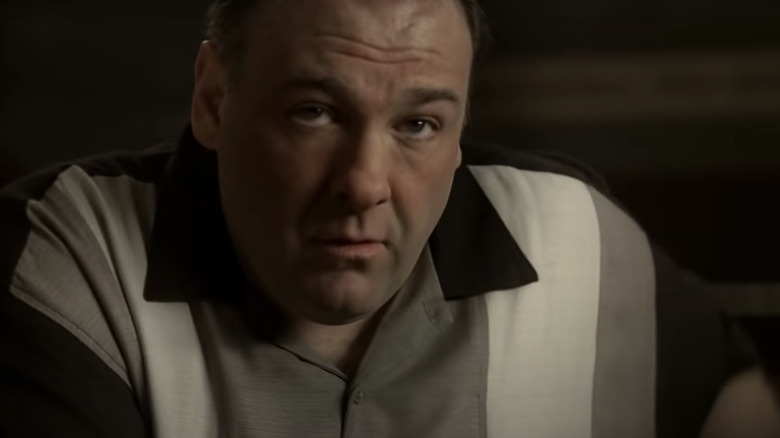
Sopranos Creator David Chase Finally Opens Up About That Ending

by Joshua Meyer

The release of "The Many Saints of Newark" last month has given people a reason to revisit "The Sopranos" and its ending — including series creator, David Chase. It's a natural talking point, since "The Many Saints of Newark" is a prequel to "The Sopranos" and it stars the late James Gandolfini's son, Michael Gandolfini, as a young Tony Soprano.

Chase spoke previously about why he chose the song that he did for the final scene of "The Sopranos." In a new interview with The Hollywood Reporter, he speaks further about the series ending, which famously cut to black at a crucial moment, leaving Tony's fate somewhat ambiguous.

Chase first discussed the alternate ending that he had planned. He said:

"I had a scene in which Tony comes back from a meeting in New York in his car. At the beginning of every show, he came from New York into New Jersey, and the last scene could be him coming from New Jersey back into New York for a meeting at which he was going to be killed."

He then elaborated on his inspiration for the restaurant scene that ended the series:

"I had this notion — I was driving on Ocean Park Boulevard near the airport and I saw a little restaurant. It was kind of like a shack that served breakfast. And for some reason I thought, "Tony should get it in a place like that." Why? I don't know. That was, like, two years before."

Don't Stop Believin'

For fans who watched "The Sopranos" from week to week when it originally aired, the cut to black at the end was so abrupt that many people thought there was something wrong with their television. Chase spoke further about the reaction to the finale and how it annoyed him that some audience members wanted to see more confirmation of Tony's death:

"They wanted to know that Tony was killed. They wanted to see him go face-down in linguini, you know? And I just thought, 'God, you watched this guy for seven years and I know he's a criminal. But don't tell me you don't love him in some way, don't tell me you're not on his side in some way. And now you want to see him killed? You want justice done? You're a criminal after watching this s**t for seven years.' That bothered me."

In the restaurant with Tony, there's a conspicuous character who would be listed in the credits as "Man in Members Only Jacket." He gets up to go to the bathroom, and the viewer is left to imagine that he's fetching a gun, a subtle reenactment of Tony's favorite scene from "The Godfather."

This dovetails with a conversation Tony had earlier in the season with his brother-in-law, where they're talking about how easily death can come for mobsters like them. His brother-in-law says, "You probably don't even hear it when it happens, right?"

Ultimately, while Chase may have envisioned the scene as Tony's death, he chose to leave it open to interpretation for a reason. If you'd rather think Tony's still alive, then as Journey sings, "Don't Stop Believin'."

Read this next: The 14 Greatest Action Movies Of The 21st Century

The post Sopranos Creator David Chase Finally Opens Up About That Ending appeared first on /Film.

04 Nov 00:20

15 Must-Watch Documentaries About Filmmaking

by Jeremy Herbert

On its best day, filmmaking is alchemy. On the rest, it's an affront to the natural order. Forming something from nothing in any other medium is a fundamentally lonely pursuit. Movies, by contrast, are deceit as a team sport. Armies, anywhere from a handful to hundreds strong, must march in microscopic lockstep -- no matter the scope, scale, or genre, all films are made one shot at a time.

It's a miracle that Frank Capra considered a disease. "When it infects your bloodstream, it takes over as the number one hormone," he said. Those afflicted can't help themselves and wouldn't have it any other way. That makes for a fine line between passion and delusion, finer than any one documentary could possibly illuminate. The following 15 chart the agony and ecstasy of filmmaking, in macro and miniature, across many of its component processes. Spiraling budgets. Backyard sets. Shot on camcorders or CinemaScope. It's all the same madness on-screen.

Overnight
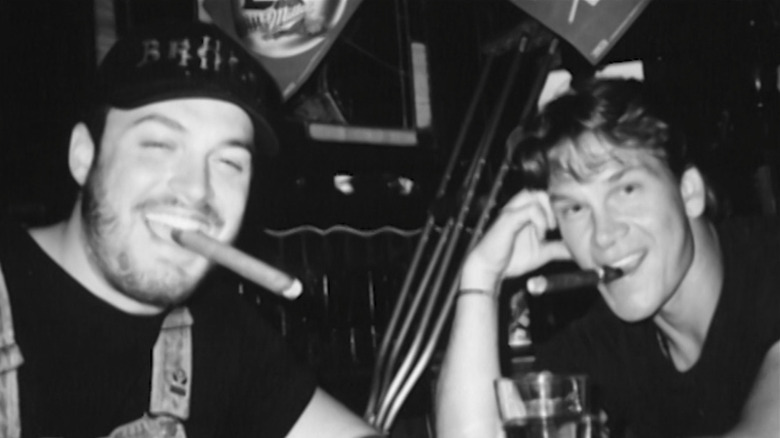
"Overnight" used to be a cautionary tale. Director Troy Duffy pulled the brass ring of all brass rings -- a $300,000 paycheck for his first script, a $15 million budget to direct it, a recording contract for his band, and the guidance of the powerbroker that personally mentored Quentin Tarantino. All the circumstances that made his meteoric rise possible are extinct or incarcerated. It might as well be a "Twilight Zone" episode now.

But despite the devil involved, there is no catch. Duffy's implosion is a staggeringly fast series of unforced errors. He ridicules every actor interested -- Brad Pitt, Keanu Reeves, Kenneth Branagh -- based on, at best, a meeting's worth of interaction. "Success has nothing to do with how you live your life and how you treat your friends," he says amidst B-roll footage of dwindling allies watching their shared success circle the drain.

The off-camera punchline is that he sets it all on fire to make "The Boondock Saints." Once upon a time, "Overnight" was a car crash for indie dreamers to gawk at on their way to work. Now, it's a cannon act with no net, even more fantastic, and even more violent.

Kid Icarus
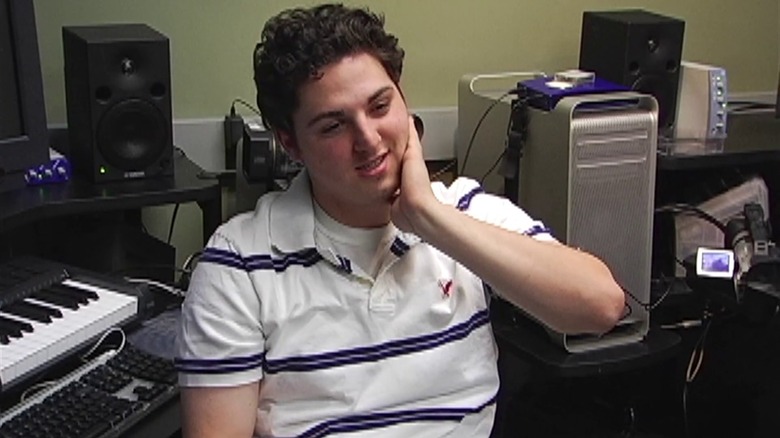
"I don't want to be branded as the next Spielberg," admits 18-year-old film student Leigh Harkrider, "I want to be branded as the new Harkrider." It's the first point in a pattern. Harkrider credits filmmakers for his passion, but rarely films. He is, like so many listless film students before him, doomed before the word "Action."

Mike Ott, documentarian and community college professor of Harkrider, gives the fledgling director all the rope he needs to hang his career-making debut, "Enslavence." During the script meetings, Harkrider overrules his ghost-screenwriter to keep both sexual assault and drug addiction in the picture. Instead of asking for help, he invites cast and crew to "share this experience." Every mistake that can be made, every cliché that can be indulged is.

Ott lets the youthful megalomania self-destruct and zooms in on the beating, broken heart left in the ruins. "Kid Icarus" ultimately asks a simple question that too many wannabe filmmakers blow right past - Why do you want to do this, exactly?

American Movie
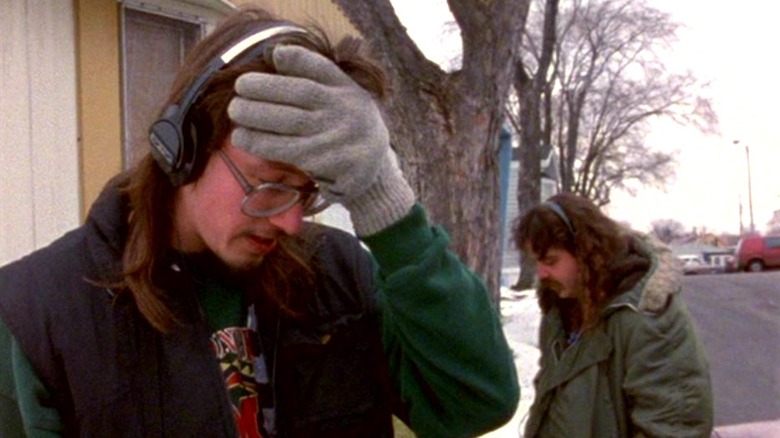
The human condition is captured between credits at a desk top-heavy with unopened bills. Aspiring filmmaker Mark Borchardt slits them one at a time and bemoans each fee like losing lottery numbers. In the last envelope, however, he finds a new Mastercard. "I don't believe it, man," he beams. "Life is kind of cool sometimes."

So it goes for Borchardt, though it doesn't take a Menomonee Falls mailing address to empathize. He lives shift to shift as a graveyard night janitor. What he doesn't accidentally blow on peppermint schnapps and long-distance calls to Morocco he sends to his three kids. Waking hours are spent with unfailingly supportive family and the usual local suspects, like amiably spacey best bud Mike Schank. But somehow, some way, he will complete his passion project, "Northwestern."

The method he settles on is shooting and selling another movie entirely. Production happens between delinquency notices, Burger King runs, and late-night loiters at the grocery store. It's the American Dream as a hang-out picture that just so happens to be non-fiction, enough to make anyone want to grab their friends and film something, credit cards be damned.

Shirkers
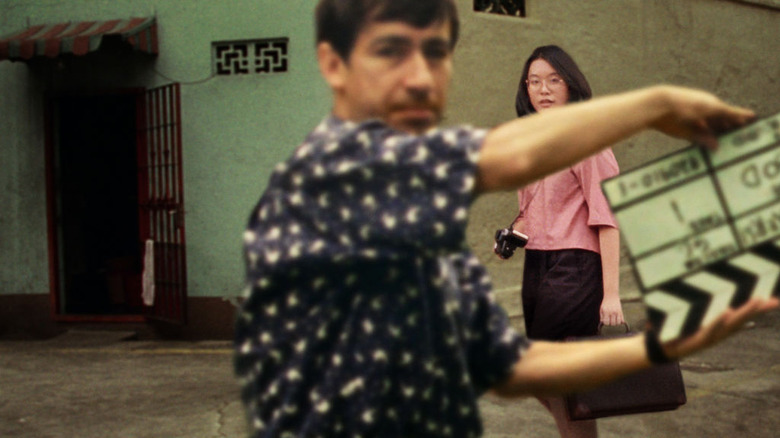
"Shirkers" is about an unforgivable sin. In the early '90s, when Singapore had the highest rate of movie-goers in the world, teenager Sandi Tan and her friends dreamed only of making their own. As soon as they did, their mentor-turned-director stole the footage and disappeared, turning their hopes, bonds, and careers into scarred hypotheticals.

"Shirkers" is Schrödinger's making-of. Surviving reels of the film tantalize as mirage. Missing a soundtrack, it is permanently imperfect, just like Tan's memories of production. But in reworking what's left, along with her notes and drawings, Tan reclaims the film for the women that put their childhoods into it, at long last.

Although the thief looms large over the investigation, he's not worth as much as the smoking crater he left behind. Without him, who knows where Tan and company's collective passion could've taken them. "Shirkers" is an irresistible reckoning, the shrapnel of What Could've Been mosaicked into What Can Be, both for Tan and any aspiring onlookers.

Hearts Of Darkness
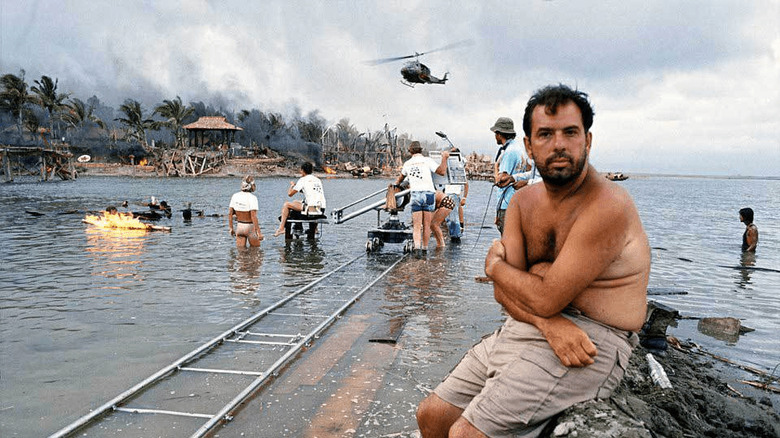
Filmmaking is a confidence game. Decisions made are compounding wagers against the self, with wins or losses months, if not years, away. "Hearts of Darkness" takes Francis Ford Coppola, an unstoppable force fresh from "The Godfather Part II," and crashes him into an endless series of immovable objects until even his basest instincts are shot: "I tell you from the bottom of my heart that I am making a bad film."

Knowing "Apocalypse Now" is one of the greatest films ever made stains each doubt fatal; the crew worry about finishing a movie, but have no idea how narrowly they finish the movie. Typhoons flatten the sets. Marlon Brando falters on the schedule, then the script. Harvey Keitel is fired a few weeks into production and Martin Sheen, his replacement, suffers a severe heart attack not long after. 14 weeks of rolling cameras turn into, give or take, an entire year. The meter's always running and always on Coppola's dime. 

In the midst of a historic disaster, Coppola asks the unaskable question that every filmmaker knows by heart: "Why can't I just have the courage to say, 'It's no good'?"

Corman's World: Exploits Of A Hollywood Rebel
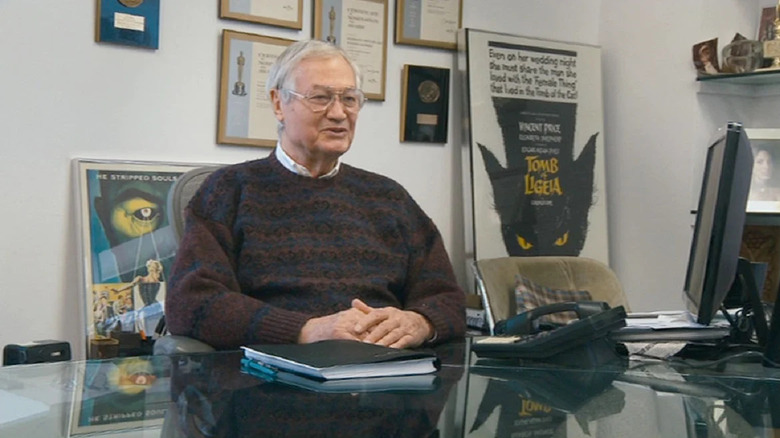
On the first official Roger Corman production, "Monster From The Ocean Floor," he personally transported and unloaded the camera equipment each day because he couldn't afford to pay the crew another hour. At the intersection of art and commerce, Corman is probably shooting a direct-to-video movie about a mutant snake for a buck-twenty-five.

"They weren't encumbered by having to deal with art," says Martin Scorsese with apparent warmth. He should know -- the "King of the Bs" gave him his first shot. In producing movies his way, on his take-no-prisoners bottom line, Corman founded a low-rent conservatory for budding filmmakers. Star pupils include Peter Bogdanovich, Jack Nicholson, Jonathan Demme, Joe Dante, Robert De Niro, and Ron Howard. They delivered and he kept his promise: "If you do a good job on this film, you'll never have to work for me again."

There will never be another pioneer like him -- blockbusters stole his act and the establishment wouldn't even let him out of the rain -- but this is tribute enough. Just try watching Nicholson fight tears and not do the same.

Burden Of Dreams
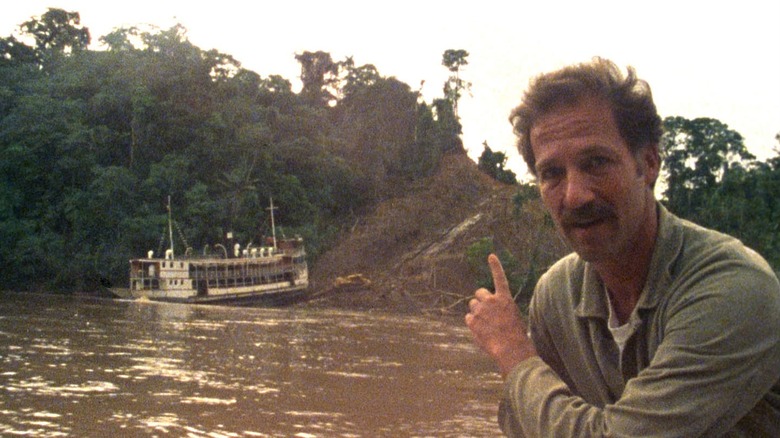
"If I abandon this project, I will be a man without dreams," says Werner Herzog, hiding behind a primal thicket of beard. This is not a documentary about the unmaking of a major motion picture, though the regular disasters are presented without varnish. "Burden of Dreams" is an unblinking stare at the inherent mania of filmmaking. Herzog knows that he's challenging all possible gods with the act of creation, but without daring to do it, he's less than human.

"Fitzcarraldo" is about a real-life dreamer, a rubber baron determined to haul an entire steamship over a mountain. The actual man did it piece by piece. His fictional counterpart, as written and directed by Herzog, saw no need for deconstruction. The agonizing drag transcends metaphor -- Herzog's impossible boat is Fitzcarraldo's and his, Herzog's. Why is he hellbent on beating the odds, in an environment he hates that he suspects hates him back?

Documentarian Les Blank doesn't offer any easy answers or apologies for his subject, but by the end, he finds something like understanding. It's as close as any documentary gets to defining the indefinable compulsion that keeps filmmakers making.

Dangerous Days: Making Blade Runner

Hampton Fancher, the originating screenwriter on what would become "Blade Runner," wanted Robert Mitchum for the leading man. Producers countered with a list: Dustin Hoffman, Peter Falk, Al Pacino, Nick Nolte, Burt Reynolds. IMDb is lousy with similar factoids. What sets "Dangerous Days" apart is the sweat in-between -- Hoffman met with the filmmakers for months and even appeared in concept art, but the production moved on when he insisted on giving the film a message.

At three-and-a-half hours long, "Dangerous Days" is a lot of sweat. Most decisions, from script to set to special edition salvage, get their due, turning the doc into an exhaustive checklist on how to make the definitive cinematic vision of the future. The working title is explained. The working working title is explained. There's a comprehensive featurette on miniature construction and photography hidden in the second hour.

Mileage may vary given your personal attachment to "Blade Runner," but its ambition does make for a broad education on the filmmaking process. Does that throwaway shot of a passing blimp seem easy? Maybe it is, maybe it isn't, but it looks like absolutely nothing else. Just like tears, sweat gets lost in rain.

Side By Side
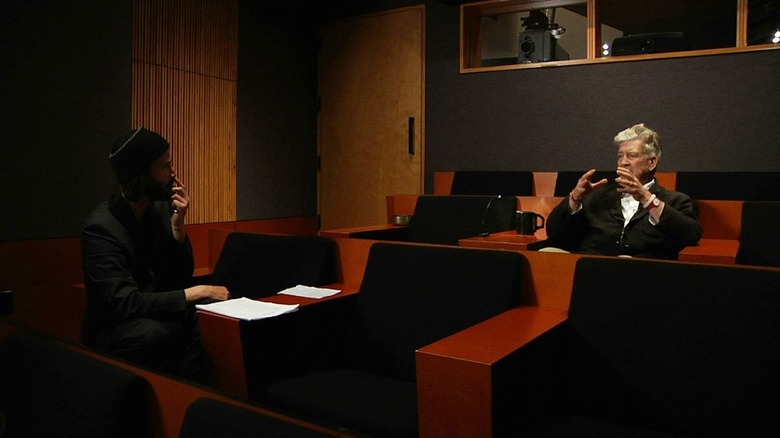
When Keanu Reeves asks David Lynch if he's done shooting on celluloid, the filmmaker weighs it like a life sentence: "Don't hold me to it, Keanu, but I think I am." Such is the appeal of "Side By Side," an eavesdropped montage of directors and cinematographers passionately disagreeing with each other about the most fundamental process of filmmaking.

For his pioneering work in digital cinematography, George Lucas is referred to alternately as an egalitarian messiah and a reckless philistine. Take it as the rule: Battle lines are drawn sharp and wide, with little dynamic range between them. "I'm not going to trade my oil paints for a set of crayons," says Wally Pfister, Christopher Nolan's long-time DP. Early adopters like Steven Soderbergh, David Fincher, and James Cameron are never turning back. Computers will improve, but film can't. Digital means democratization, but more noise. And what of all the jobs that can't, won't, and haven't made the leap between?

The war still rages. The celluloid faction has lost considerable ground. The doc doesn't crown a winner, but that's the beauty of it -- film or digital, "Side By Side" drags everyone into the fight.

Making Waves: The Art Of Cinematic Sound
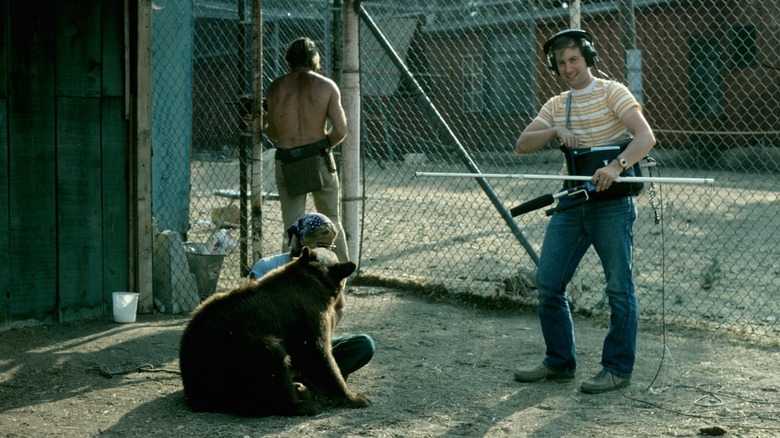
Veteran sound editor Midge Costin took her experience on films like "Days of Thunder" and "Armageddon" and turned it into a one-stop shop. Across 95 minutes, she provides both an A-to-B of the form and a step-by-step process of how it's done. "Your job," says composer Hans Zimmer, "is to come up with the unimaginable." What's shocking is how recently, in the grand scheme of cinema, the unimaginable became possible.

The sonic gold rush started in earnest when sound montage editor Walter Murch and Francis Ford Coppola realized that leaner, meaner recording equipment untethered them from the Hollywood system. It was microphones, not cameras, that gave filmmakers freedom. Murch would go on to become the first-ever credited sound designer, forming a holy trinity alongside Ben Burtt and Gary Rydstrom as the noisemakers of modern pop culture.

Costin taps deep into that joy of discovery. The field work that led to a smacked wire becoming the once and future sound of lasers. The delicately woven cacophony that made Robert Altman movies Robert Altman movies. Barbra Streisand risking "Funny Girl" to sing instead of lip-sync. It's just as adventurous as the rest of the process, and "Making Waves" proudly proves it.

The Cutting Edge: The Magic Of Movie Editing
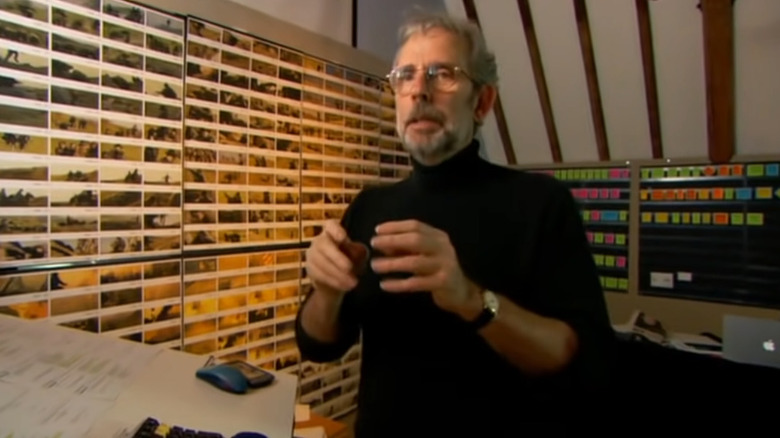
Steven Spielberg fought Verna Fields in the editing room — also her pool house — over that darn shark. Every successful take cost him years of his life; the director wanted to see more of it. The editor, affectionately known as "Mother Cutter," wouldn't let him. Spielberg might've made "Jaws," but Fields made "Jaws" terrifying.

"The Cutting Edge" is both history and practicum. There are plenty of high-wattage anecdotes, like James Cameron learning the power of frames after disastrously removing one every second from "Terminator 2: Judgment Day," but the theory is the thing. Legendary editor Walter Murch defines his role as "the ombudsman for the audience," a band apart for their behalf. The Russian school of Kuleshov contradiction is celebrated alongside the softer emotional rules of the French New Wave. The only absolute is touch — every cut needs an artist holding the scissors.

Documentarian Wendy Apple sheds vital light on film's most invaluable, most invisible process. Editors spin straw into gold, even though their only reward might be Steven Seagal "playfully" demonstrating choke-out moves on them because they won't cut his fights the way he wants.

The Definitive Document Of The Dead
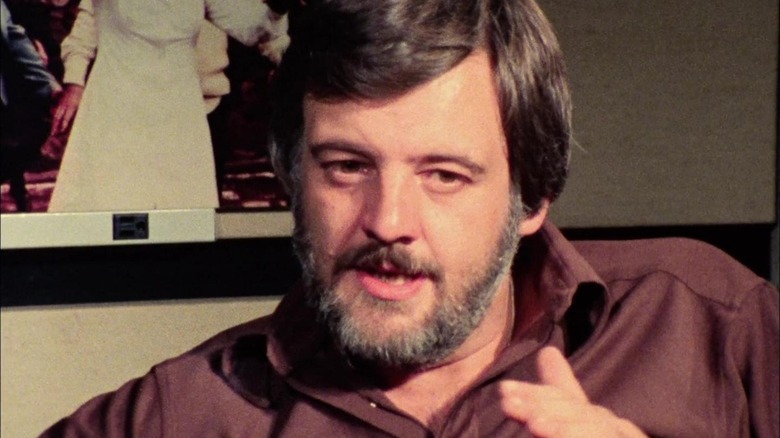
In its original 66-minute form, "Document of the Dead" was an accidental novelty, an overlong educational film about making movies that just so happened to cover one of the greatest horror films ever made. Expanded to 102 minutes with updates from the sets of "Two Evil Eyes" and "Diary of the Dead," it's a complete Master of Horror life cycle.

George Romero never got small, only the pictures did. "Dawn of the Dead" offered him about as much freedom as he'd ever taste. "Having that extra weight is a trip," he says, wandering the empty shopping mall like a peasant suddenly in charge of a kingdom. By the end of "Document," he's gritting his teeth on the con circuit and telling too much truth, "Trying to find an easier way to make a buck."

The "Definitive" cut is pure Frankenstein, with the shambling gait to match. There's altogether too much fan material. The director inserts himself a little more with each time warp to disastrous, accidentally revealing effect. But Romero's no-nonsense philosophy is bulletproof, even if it ultimately made him and Hollywood strange bedfellows.

Tales From The Script
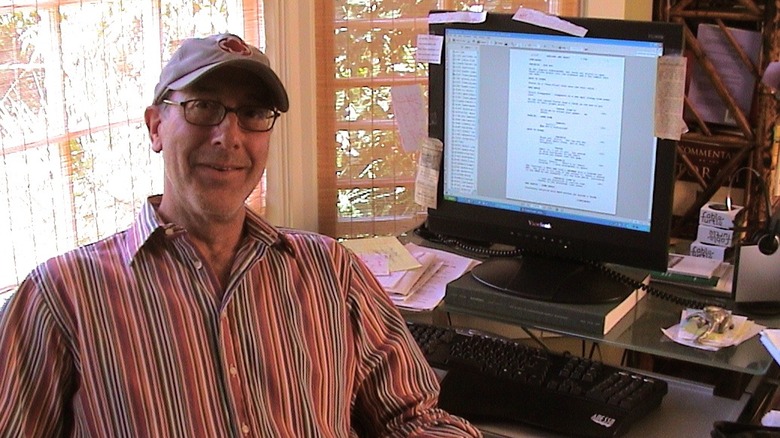
There's something perversely appropriate about a screenwriting documentary looking like a DVD extra buried three menus deep. With the exception of relevant film clips and B-roll footage trying to make the writing process look cinematic, it's wall-to-wall talking heads. The endless conversation is a feature, not a bug; nobody ever listens to screenwriters off the page.

"Tales from the Script" is equal parts frustrated tell-all and Scared Straight program. Viewers expecting a warm or poetic reflection on the form need not apply. This is about the Business with a capital-B. In the tough love words of "2010" director Peter Hyams: "If you're not prepared to do a lot of push-ups, don't enlist in the Marines."

There are few miracles here. There are only one or two accounts of the right script finding the right desk within the first hundred tries. The only thing more random than failure is success, something "Last Action Hero" scribe Zak Penn compares to "winning the lottery for something you actually did." Perspectives range from one-time wunderkinds to battle-hardened veterans. Acclimate to the despair in the air and there's a lesson for every screenwriter. The simplest comes from John Carpenter, the biggest pragmatist in any room: "Learn to love it."

Electric Boogaloo: The Wild, Untold Story Of Cannon Films
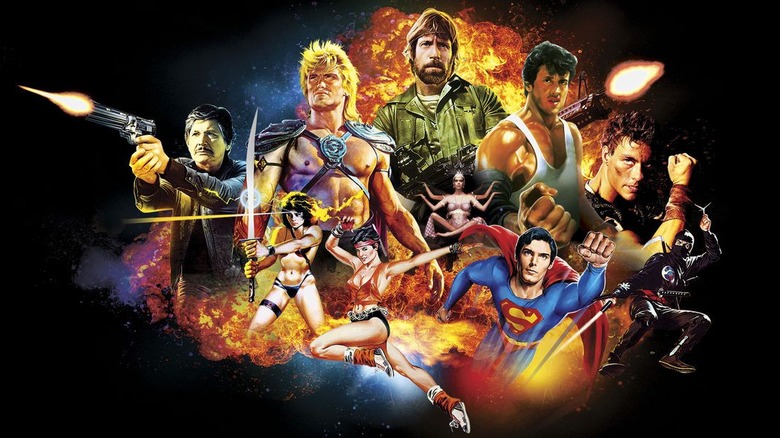
"Movies are an unreal environment at the best of times," says "Death Wish III" gang member Alex Winter, "and the Cannon movies were like that times a hundred."

The Cannon Film Group model, as masterminded by Israeli film moguls Menahem Golan and Yoram Globus, worked like this: paint a schlocky poster, attach a star who may or may not know they're attached, take it to Cannes, sell the rights to foreign markets, use the funds to actually make the movie. The vicious cycle meant only the most predictably lurid projects got funded (see: "Death Wish II," "III," "4: The Crackdown," and "V: The Face of Death").

Golan and Globus spent the 1980s chasing the zeitgeist at cut-race prices, only inflecting it by accident. In the hands of exploitation specialist Mark Hartley, the Cannon odyssey feels like being pleasantly stuck inside a pinball machine. But a warning about life in B-pictures lurks between chyrons. Unpaid crews. Gunpoint nudity. Sadistic directors. The most damning accusation of all comes during the end credits -- somewhere along the line, Cannon's Bs became Hollywood's As.

King Cohen
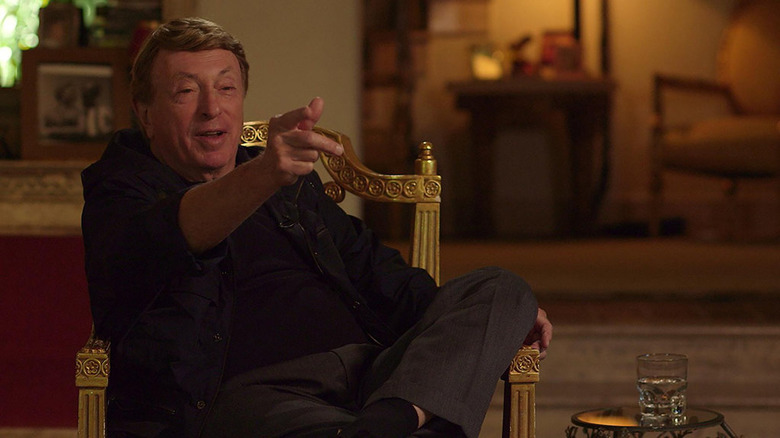
There are independent filmmakers, and then there's Larry Cohen.

"Larry Cohen is so much the invisible man in relation to mainstream Hollywood," diagnoses screenwriter and critic F.X. Feeney. From his earliest days toiling in the mines of live television, Cohen was a conceptual prophet. "The Invaders" foretold "The X-Files." "Coronet Blue" foretold Bourne. A spec script he wrote for "The Naked City" in 1961 was eventually sold to "NYPD Blue" in 1995. What makes him, and the doc, essential is his spirit.

Herzog gets all the credit for encouraging filmmakers to break the law, but it was Cohen who staged a shooting in the middle of a New York City police parade without warning and convinced Andy Kaufman to pull the trigger. No obstacle or threat of self-preservation ever got in his way. And what if somebody stops him? "Who cares? What do they know?"

With its stolen airport fistfights and printed apologies for raining shell casings off the Chrysler Building, "King Cohen" is an anarchist's cookbook read by the man who wrote it, still proud of his recipes all these years later.

Read this next: The Best Movies Of 2021 So Far

The post 15 Must-Watch Documentaries About Filmmaking appeared first on /Film.
03 Nov 23:54

Diablo - DevilutionX v1.3 Released

A new version of DevilutionX (1.3) for Diablo has been released. You can read the changelog here. What is DevilutionX DevilutionX is a source port of Diablo and Hellfire that strives to make it simple to run the game while providing engine improvements, bugfixes, and some optional quality of life features....
03 Nov 23:00

Dr. Brain – Apple TV+ Series Review

by Karina "ScreamQueen" Adelgaard
03 Nov 22:18

CAPSULE: SKY SHARKS (2020)

by Giles Edwards

366 Weird Movies may earn commissions from purchases made through product links.

DIRECTED BY: Marc Fehse

FEATURING: Eva Habermann, Thomas Morris, Barbara Nedeljakova

PLOT: Receding Arctic icebergs release a horrible, long-buried threat: Nazi super-soldiers and their flying sharks.

COMMENTS: When you make a film like Sky Sharks, you have one honor-bound duty, and one obligation. Marc Fehse—writer, director, producer, editor, costume designer, and possibly the on-site hotdog vendor—fulfills his duty. There are sky sharks. They are sleekly designed, cybernetically enhanced, and perhaps too cute (in that heartless, dead-eyed, borderline prehistoric kind of way) for their purposes. Having fulfilled his duty, the question then becomes: does Mr Fehse provide the obligatory narrative framework to support, however barely, this flock of sharks?

Angelique and Diabla Richter are the daughters of superannuated German scientist and American technologist, Dr. Klaus Richter. Under the auspices of the “Investigation of Ancient War Engine” division of Richter’s pharma-bio-mechatronic consortium, Angelique and Diabla are tasked with investigating the wreckage of Finnish plane that crashed mysteriously over the Arctic. Diabla, a field agent who hates the cold, pursues this lead along with a concurrent discovery by Richter’s Arctic laboratory team: the discovery of massive German submarine.

It is around this point that the film’s difficulties become obvious. We don’t expect too much from actors roped into a project titled “Sky Sharks” that features Nazi immortality serum and zombiesque stormtroopers flying mechanically and genetically enhanced sharks. But one does have standards, and the narrative threads feel knotted here. I’ll charitably interpret this as enthusiasm on the part of the filmmaker: Fehse has crammed just every Nazi motif, occult scheme (including the infamous “Bell” weapon), and even some Vietnam nonsense in the hopes of… In the hopes of…

That may remain a mystery. Not wishing to be a Debbie Downer, I’ll go back to the opening requisite: the sky sharks. I would have loved more of them. I want some miniatures to put around my study. The first thing that comes to mind with just the title is “Sharknado + Nazis = Sky Sharks“; this may be true, I have not seen Sharknado. But tucked here amongst the Z-grade movie violence, nudity, both combined—twice over—and, of course, flying sharks (which can cloak, too, just so you know), Fehse takes some political pot shots at his fatherland. Nazi shark riders use Krupp steel cables during a particularly gris-silly plane scene; and the hemming, hedging, and hawing of the German government representative in the “World Leaders Unite to do Something!” montage is bang-on for that country’s waffling  for the past decade.

Having seen his Nazis, sharks, and breasts covered in (fresh) blood, and have no doubt that for so long as Marc Fehse can live to beg, borrow, or steal, he will make another film. It will be with jaundiced eye, but I shall give that film, whatever it turns out to be, a fair hearing. To the rest of you, well, perhaps some ancient Nazi weapons are best left buried in the ice.

WHAT THE CRITICS SAY:

“Perhaps due to its dependence on fundraising from fans, Sky Sharks feels like a film made by committee – and not a very well disciplined committee at that.” -Jennie Kermode, Eye for Film (contemporaneous)

03 Nov 22:17

The best portable SSDs you can buy right now

by Karthik Iyer

If you’re running out of storage space on your computer or if you regularly move large files between two machines, we suggest you buy a speedy portable drive. In this article, we’ll be taking a look at some of the best portable SSDs you can buy in the market right now. Portable SSDs are more expensive than portable hard drives, but they have no moving parts and they also tend to be faster. We’ve managed to go through dozens of portable drives to add some of the best SSDs in this collection.

Navigate this article:

Before we get started with our collection, let’s take a quick look at some important things to consider before buying a portable SSD:

  • Drive speed: SSDs are inherently faster than hard drives, but not all SSDs offer the same speeds. You should pick the ones with higher sequential speeds for transferring and backing up large blocks of data.
  • Connection type: We recommend picking up portable SSDs with USB Type-C (USB-C) connectors that are now replacing older USB Type-A ones. However, we’ve added a few drives that don’t offer the Type-C connectors as well for now. They tend to be more affordable and you can use them adapters or a separate cable.
  • Capacity: It’s recommended that you pick up an SSD with at least 1TB capacity to get the best value for your money. Lower capacity drives are typically more expensive per gigabyte and they lack some important features at times too.
  • Price: Expensive drives on the market may offer faster speeds and all the latest features, but you don’t necessarily need all that. The Samsung T7 drive, for instance, isn’t the fastest drive on the market, but it’s still our best overall pick simply because it offers the best value — a good mix of useful features and reliable transfer speeds.
  • Durability: SSDs are less susceptible than mechanical drives since they lack moving parts, but it’s still important to consider the durable options if you’re always on the move. You can always opt for a drive that comes with a silicone protective cover/case if you need extra protection.

With that out of the way, let’s take a detailed look at the available options now:

Best overall portable SSD: Samsung T7 portable SSD

An image showing a black colored Samsung SSD next to a fountain pen kept on a newspaper

Specification Samsung T7 portable SSD
Capacity 500GB, 1TB, 2TB
Interface USB 3.2 Gen2
Sequential Read Up to 1,050 MB/s
Sequential Write Up to 1,000 MB/s
Dimensions (L x W x H) 57 x 8 x 85 mm
Weight 58 grams
Warranty 3 Years

Samsung took its sweet time to deliver a successor to the very well-received T5, but the new T7 ended up being a worthwhile upgrade. The Samsung T7 is one of the best SSDs you can buy in the market right now. It’s available in two variants — a plain vanilla model and one that packs a fingerprint reader. The standard T7 SSD is more for casual users simply looking to add more storage, whereas the T7 Touch with a fingerprint scanner is for more advanced users.

Both SSDs are available in either 500GB, 1TB, or 2TB capacities and they come in either blue or silver color options. The hardware needed for the biometric feature adds a little bit of weight to the unit, but it still comes in a pocketable form factor. Both variants have a solid aluminum unibody construction and use a type-C connector for file transfer. Samsung uses an NVMe SSD behind the USB 3.2 Gen 2 bridge to offer high sequential read and write speeds of up to 1,050MB/s and 1,000MB/s respectively.

You’ll also get Samsung Portable SSD Plus software included with the SSD. It’ll be one of the files inside the storage and is used to enable fingerprint capabilities. Setting up the fingerprint reader is just as easy as you would enable fingerprint authentication on, say, your smartphone. However, the drive needs to be connected for the fingerprint reader to work. It’s not an issue since you won’t be able to access the data without connecting the drive to a device anyway. You can also download the software as an app to use the SSD with your Android phone if it has a type-c connector.

Both the T7 and T7 Touch SSD come with a three-year limited warranty, Samsung’s Portable SSD Plus 1.0 software (as mentioned above), and AES 256-bit hardware encryption. Despite the amazing build quality and a long list of features, the T7 is a surprisingly affordable drive starting at just $79 for the 500GB model. The T7 Touch variant costs a bit more but we think the added security benefit makes it untouchable (pun-intended) in the market.

The only real drawback of the T7 SSD is the lack of an IP rating, but it’s not a deal-breaker, especially in this price range when you consider other benefits. Samsung’s been raising the bar with its drives in the portable SSD space. The T7 and T7 Touch portable SSDs are not only the best when it comes to the overall build and features, but they’re also amongst the best performing drives. Of course, there are faster drives on the market, but they’re also more expensive and are nowhere close to the T7 when it comes to value for money.

    Samsung T7 portable SSD
    The Samsung T7 is our pick for the best portable SSD you can buy in the market right now. There's also a variant of this SSD with a fingerprint reader for advanced users who're looking for more security.

      Features:

      Pros:

      Cons:

Second overall best portable SSD: Samsung T5

A black colored portable SSD kept on a table as a person works on his computer

Specification Samsung T5 portable SSD
Capacity 250GB, 500GB, 1TB, 2TB
Interface USB Type-C
Sequential Read Up to 540MB/s
Sequential Write Up to 540MB/s
Dimensions (L x W x H) 57 x 8 x 85 mm
Weight 51 grams
Warranty 3 Years

Yes, we’ve already crowned Samsung’s T7 as our pick for the best portable SSD you can buy on the market, but we think the T5 also deserves a respectable spot in our collection. The T5 is where it all started. It’s with this SSD, Samsung proved that an external storage device can be smaller and still deliver impeccable performance. The T5 measures 74 x 57 x 10.5mm and weighs only 51g. It’s small enough to fit into even a tight jeans pocket without any issues.

The Samsung T5 abandons the dual-tone color scheme from its predecessor for a minimal look. It’s made out of metal and features a brushed aluminum finish along with a power LED and the Type-C connector. The Samsung T5 SSD is available in four different capacities – 250GB, 500GB, 1TB, and 2TB — and you can get them in either black, red, gold, or blue color options. Samsung is using an advanced 64-layer 3D V-NAND Triple Level Cell flash memory for reliable performance.

The T5 drive has a USB Type-C Gen 1 to deliver transfer speeds of up to 540MB/s, which is still very commendable for the drive that costs as much as it does. It also comes with 256-bit AES hardware encryption and Samsung bundles USB Type-C to Type-C and Type-C to Type-A cables with the drive. Additionally, you also get a software suite for Windows, macOS, and Android.

Overall, the Samsung T5 portable SSD is a well-rounded product in this space and it’s perfect for those who’re looking to add more storage to their setup without burning a huge hold in their pockets. Even the 2TB variant of this drive is available for just $230 right now, which is fantastic for adding more raw storage to your existing rig. With a fast transfer rate and a three-year warranty, the T5 is definitely one of the best portable SSDs you can get your hands on without spending too much. Notably, the T5 is also backward compatible with USB 3.0 and USB 2.0 if your PC doesn’t have USB Type-C.

Samsung’s T3, the T5 predecessor, is also a great option for those who’re strapped for cash and aren’t too keen on taking the advantage of the performance gain on the T5. We’re expecting Samsung to come up with a new version of its portable SSD for those leaning towards affordable drives, but until then the T5 is going to be our recommendation. The T5 SSD tends to fly off the shelves quickly, so be sure to grab your unit using the link below.

    Samsung T5 portable SSD
    The Samsung T5 is a fantastic portable SSD that offers reliable performance in a compact, pocketable form factor.

      Features:

      Pros:

      Cons:

Best portable SSD for professionals: SanDisk Extreme v2

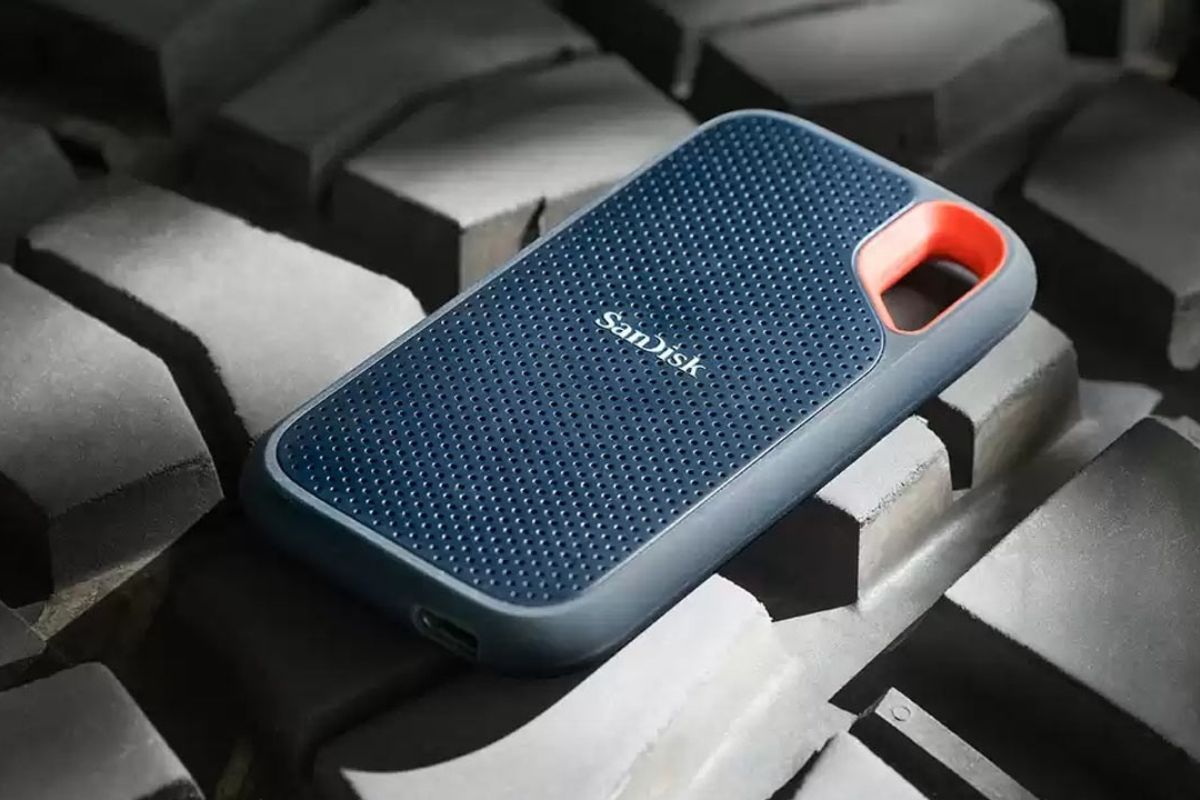
A grey colored SanDisk SSD kept on a set off rocks

Specification SanDisk Extreme v2 Portable SSD
Capacity 500GB, 1TB, 2TB, 4TB
Interface USB 3.2 Gen 2
Sequential Read Up to 2,000 MBps
Sequential Write Up to 2,000 MBps
Dimensions (L x W x H) 100 x 252 x  8.89
Weight 85 grams
Warranty 5 Years

SanDisk is also a popular name in the SSD space with a wide variety of storage drives on the market. However, the one we think deserves a spot in our collection is the SanDisk Extreme Pro v2 Portable SSD. It’s a fast, secure, and durable portable SSD that uses a USB 3.2 Gen2 x2 interface to deliver up to 2 GB/s of sequential throughput. This is a great option for professional users looking for a drive that’s compatible with as many devices as possible.

The SanDisk Extreme v2 Portable SSD comes in capacities of 1TB and 2TB and they carry a premium price tag of $300 for the 1TB model and $500 for the 2TB. They’re backed with lengthy five-year warranties, though. When used with a 20 Gb/s host device, SanDisk says these Extreme v2 portable SSDs can deliver up to 2,000MBps in both read and write workloads. It features an SLC drive cache to absorb most of the inbound write data to increase the speeds. However, the performance will degrade during long transfer as the cache gets filled. This is a common caveat for high-performance SSDs that use SLC cache for momentary speed benefits.

The Extreme v2 SSDs features AES 256-bit hardware encrypted password protection, a significant upgrade over the rather underwhelming software-based AES 128-bit encrypted password protection on the previous version. This ensures the new drive offers better protection and quick access to the drive on both macOS and Windows. You also get a USB Type-C cable and USB Type-C to Type-A cable with the drive along with easy-to-use security management software.

What we like the most about this SSD is its IP55 water and dust-resistant rating. The drive is also rated to withstand a two-meter drop, which is nice. It’s slightly heavier than the Samsung T7 SSD coming in at 85 grams, but it’s still very compact. The $500 price for the 2TB drive makes it quite an expensive option on the market. This is exactly why we think it’s more suited for professional users with a sophisticated workflow than casual users.

You can also check out the other options in our collection if you’re looking for an economical option, but do note that you may have to accept the trade-off of slower and less consistent performance. SanDisk also sells an older generation of this product if you’re hellbent on buying a Sandisk drive and don’t mind putting up with slower transfer speeds. Alternatively, you can check out other drives like the Seagate Fast SSD or even the Adata SD700 External SSD. The SanDisk Extreme v2 Portable SSD is a little hard to come by, so click the link below to check out the availability.

    SanDisk Extreme v2 Portable SSD
    The SanDisk Extreme v2 is a fast, secure, and durable portable SSD for content creators. It's powered by a fast NVMe SSD and it sports a USB 3.2 Gen 2 bridge chip.

      Features:

      Pros:

      Cons:

Best affordable portable SSD: Adata SD700 External SSD

A black colored portable SSD being held by a person in his hands

Specification Adata SD700 External SSD
Capacity 256GB, 512GB or 1TB
Interface USB 3.0
Sequential Read Up to 440 MBps
Sequential Write Up to 440 MBps
Dimensions (L x W x H) 85 x 85 x 14mm
Weight 74 grams
Warranty 5 Years

Buying a reliable portable SSD doesn’t necessarily mean shelling out a copious amount of money. The Adata SD700 External SSD is a great option for those looking to add more storage to their setup without spending too much. It’s available in 256GB, 512GB, and 1TB capacities and you can buy it in either black or yellow color options. The SD700 weighs a mere 74g and measures 85 x 85 x 14mm in size, making it a pocket-friendly option.

The best thing about the Adata SD700 is that it’s a rugged drive and IP68 rated which means that it should be protected against water ingress to a maximum depth of 1.5 meters for up to 30 minutes. It’s also tested to military grades and is rated to withstand shock even when in use. The drive, as you can see, is protected by a non-removable rubber ring and the internals are trapped inside an aluminium enclosure for protection. There’s also an LED light indicator to show you the status. This is, without a doubt, one of the most durable portable SSDs you can buy on the market.

The SD700 uses 3D NAND to ensure it consumes even less power per unit storage. It connects to host devices using a USB Type-A connector (3.1 gen 1) to offer a max theoretical transfer limit is 5Gbps. Yes, it’s not the fastest drive on the market, but it’s hardly a surprise given its price. In addition to the cables, you get a three-year warranty for the drive and some software like Macrium Reflect backup suite, an SSD toolbox, Acronis True Image HD, and more. It supports AES 256 Encryption too.

You can get a 1TB version of the Adata SD700 for as low as $130 right now. That puts it next to some other SSD in the market like the Samsung T3 or even the SanDisk Extreme 500. There are multiple ways in which Adata can improve the SD700 to make it better a offering. We’d love to see an option that uses a USB Type-C connector which will also make it physically smaller in size.

It’s only a matter of time until other manufacturers also offer an affordable drive like the SD700 for economical shoppers. But for now, though, this is as good as it gets when it comes to affordable SSDs on the market. We suggest you pick up the 2TB variant of this drive to get the best value for money. We’ll be on the lookout for other affordable offerings, so be sure to check back again as we keep this space updated with fresh drives.

    Adata SD700 Portable SSD
    The Adata SD700 Portable SSD is a great option for those looking to add more storage to their setup without burning a huge hole in their pockets.

      Features:

      Pros:

      Cons:

Best Thunderbolt 3 portable SSD: Samsung X5 portable SSD

Samsung x5 portable SSD

Specification Samsung X5 portable SSD
Capacity 500GB, 1TB, 2TB
Interface Thunderbolt 3
Sequential Read Up to 2,800 MBps
Sequential Write Up to 2,300 MBps
Dimensions (L x W x H) 118.8 x 61.9 x 20mm
Weight 150 grams
Warranty 3 Years

The Samsung X5 is one of the fastest portable SSDs you can buy right now. It’s not the most affordable drive on the market, but it doesn’t get better than this. The Samsung X5 is driven by the OEM variant of a Samsung 970 EVO and an Alpine Ridge Thunderbolt 3-to-PCIe bridge. It comes in capacities of 500GB, 1TB, and 2TB with price tags of $150, $350, and $600 respectively. We recommend buying either the 1TB or the 2TB variant blend Thunderbolt’s massive bandwidth with the goodness of the efficient NVMe protocol.

These models can deliver sequential read and write speeds of up to 2.8 GB/s and 2.3 GB/s respectively. The 500GB model, in comparison, has a lower write performance rating. You’ll need a true Thunderbolt connection to use these SSDs though, so keep that in mind. These won’t even work with USB-A (USB 3.0/2.0) systems. The X5 also supports TRIM which means its performance won’t degrade as much by background garbage collection.

The Samsung X5 drive comes with a 20-inch Thunderbolt 3 cable and preloaded Portable SSD software for Mac and Windows. You can use this software to enable the optional device encryption feature. It supports full AES 256-bit hardware encryption with no performance penalty. It’ll force you to enter a password each time you connect the drive, though.

One of the best things about the Samsung X5 is that it comes with a large magnesium body to help dissipate heat. It’s not as compact as Samsung’s T-series drives, but that’s the trade-off of high-performance drives. The X5 measures 119x62x19.7mm and weighs 150 grams. It also has Samsung’s Dynamic Thermal Guard to prevent overheating. This means, you may experience throttled speeds due to the thermal output, but it’s not a common occurrence. The drive itself looks great but we wish Samsung offered it in more colors.

We recommend the Samsung X5 drives for creative professionals dealing with large amounts of content, like video, audio, and pictures. These large file transfers may take a lot of time and having a faster drive like the X5 is a godsend. It comes with a three-year warranty, which we think could’ve been more considering it’s a performance-based drive. We may see faster drives in the market soon, but this is as good as it gets for now. It’s relatively expensive, but you’re paying a premium for the faster file transfer speeds. We recommend checking out Samsung’s T5 or T7 drives if you just need a reliable portable drive and don’t mind settling for slightly slower speeds.

    Samsung X5 Portable SSD
    With sequential read and write speeds of up to 2,800 MB/s and 2,300 MB/s respectively, the Samsung X5 is one of the fastest portable SSDs you can buy on the market right now.

      Features:

      Pros:

      Cons:

Best portable SSD for photographers: WD My Passport Wireless SSD

A WD MyPassport wireless SSD kept on a rock next to a digital camera

Specification WD My Passport Wireless SSD
Capacity 250 GB, 500GB, 1TB, 2TB
Interface USB 3.0, 802.11 ac/n
Sequential Read Up to 390 MB/s
Sequential Write Up to 390 MB/s
Dimensions (L x W x H) 134.8 x 134.8 x 29.9mm
Weight 439 grams
Warranty 2 Years

Western Digital, as we all know, is second to none when it comes to storage drives and they also have a ton of portable SSDs on the market too. However, the one we think deserves a spot in our collection is the My Passport Wireless SSD. This portable SSD is a new addition to their existing product stack of Wi-Fi-enabled drives. The My Passport Wireless is a durable and high-speed SSD. The highlight of this product, however, is the built-in SD card reader and its ability to charge your devices when you’re on the move.

My Passport Wireless SSD is available in capacities of 250GB, 500GB, 1TB, and 2TB and the price starts at $210. Western Digital offers a two-year warranty for this drive and also a 30-day money-back guarantee in select markets. The SSD comes with a removable drop-resistant rubber bumper which gives it a rugged look and a non-slip surface to improve grip. It doesn’t have any IP rating though, so keep that in mind.

The My Passport Wireless SSD is equipped with a built-in SD card reader, 802.11ac Wi-Fi connectivity, and an internal Li-Ion battery. The built-in battery can also be used to charge other small devices when you’re on the move. With read speeds of only up to 390MB/s, the My Passport Wireless isn’t the fastest SSD on the market. However, having a built-in SD card reader is one of the main draws here. Photographers, for instance, can quickly throw in their SD card reader to transfer the photo to the SSD and free up space on the card.

You can easily connect the drive to either an Android or an iPhone to both charge them and handle the file transfer part. You can also check your images immediately either on a phone or a tablet, and even upload them to social media, all while filming in the field. Additionally, you can also use it as a NAS box by sharing the onboard storage wireless with other devices.

We wish it had a USB Type-C port instead of the non-standard 10-pin micro-B USB 3.0 connector. We also expect WD to update the drive with faster transfer speeds to make it a well-rounded product. But if you can live with those caveats now, then we can’t recommend this portable drive enough. Photographers should definitely grab this or at least stay on the lookout for an upgraded version with either a USB type-C or a Thunderbolt connector. WD also sells wireless hard drives, but they’re bound to be slower than this SSD.

    WD My Passport Wireless
    The WD My Passport Wireless is the only wireless SSD in the list which also sports an in-built SD card reader. You can easily connect it to your host device and transfer files from your SD card to the drive.

      Features:

      Pros:

      Cons:

Best Rugged portable SSD: LaCie Rugged SSD Pro

A black colored portable SSD submerged in water

Specification LaCie Rugged SSD Pro
Capacity 250 GB, 500GB, 1TB, 2TB
Interface Thunderbolt 3
Sequential Read Up to 2,800 MB/s
Sequential Write Up to 2,300 MB/s
Dimensions (L x W x H) 99 x 66 x 22.8mm
Weight 100 grams
Warranty 3 Years

We understand a lot of people prefer a durable drive over anything else, which is why we’re adding the LaCie Rugged SSD Pro to our collection. It also happens to be one of the fastest SSDs on the market, trading blows with the Samsung X5 SSD. The LaCie Rugged SSD combines a Seagate FireCuda NVMe SSD with a Thunderbolt 3 interface to deliver 2,800MB/s and 2,300MB/s read and write speeds respectively.

The LaCie rugged drive mounts the SSD inside an aluminum case that’s water, dust, shock, and crush-resistant. Additionally, the drive is also wrapped inside a silicone skin that adds more friction to improve the overall grip. The entire unit measures 0.7 by 3.9 by 2.6 inches and weighs just 100 grams, making it one of the most portable drives on the market.

The Rugged SSD Pro comes with an IP67 ingress protection rating for dust and water resistance. It can survive up to 30 minutes in shallow water. The best thing about the drive is that the water-resistance doesn’t rely on whether you remembered to close a flap over the Thunderbolt 3 port since the connector itself is water-resistant. LaCie rates the drive’s drop tolerance at three meters, which is just about what you get on rugged drives on the market.

The LaCie Rugged Pro SSD has a single USB Type-C port and it comes with a single USB-C-to-USB-C cable. Both the port and the cable support Thunderbolt 3. The drive comes preformatted using exFAT, so it will work just fine with both PCs and Macs. Additionally, you also get a downloadable LaCie Toolkit, a five-year warranty, and five years of Rescue Data Recovery Services. The included toolkit will allow you to reformat the drive without any issues.

The LaCie Rugged Pro is one of the best portable drives you can buy if ruggedness is your main concern and you spend a lot of time working on the move. Having faster transfer speeds is like icing on the cake since most rugged drives aren’t necessarily rated for faster sequential read and write speeds. It’s tied with the Samsung X5 drive for the best performance, and it beats almost all the other rugged drives on the market. It’s safe to say it leaves very little room to complain about. If you need ruggedness paired with extreme performance, then this is the one to get.

    LaCie Rugged SSD Pro
    The LaCie Rugged SSD Pro is one of the best rugged SSDs you can buy if you're someone who tends to be on the move all the time. It uses Thunderbolt 3 interface to deliver 2,800MB/s and 2,300MB/s read and write speeds respectively.

      Features:

      Pros:

      Cons:

Best High-Capacity portable SSD: Sabrent Rocket XTRM-Q 16TBA black colored portable SSD kept next to a black MacBook Pro

Specification Sabrent Rocket XTRM-Q
Capacity 16TB
Interface Thunderbolt 3
Sequential Read RAID 0 – 2,800 MBps; JBOD – 1,400 MBps
Sequential Write N/A
Dimensions (L x W x H) 115 x 65 x 16 mm
Weight 233 grams
Warranty 3 Years

Sabrent is a brand known to push the boundaries of fast flash coupled with high capacity, and we think its Rocket XTRM-Q deserves a spot in our collection. We thought 8TB of flash storage drives were niche but Sabrent has now entered the scene with a 16TB model. It’s an upgrade to its highly popular 8TB Rocket XTRM-Q drive.

The new variant, as you can see, doubles the capacity but it’s not the most portable option on the market. This is due to its size and power requirements. Yes, you’ll need external power to use this drive. We know it’s not easy to power a drive all the time, especially when you’re on the move, but at least you can carry it in your backpack, unlike the huge desktop drives that are meant to sit on your desk next to your computer.

The new 16TB model has two Rocket Q M.2 NVMe SSD behind a Thunderbolt 3 bridge. These things can get really fast. However, it comes at a cost, which in this case, is roughly $3000. It offers sequential read speeds of up to 2.8 GB/s over Thunderbolt 3, and it can be configured in RAID 0, RAID 1, or as JBOD.

The Rocket XTRM-Q comes with a USB-C Thunderbolt cable and a power brick to power the unit. It’s keeping in mind that this brick isn’t optional and the SSD will not work without it. Additionally, you also get Sabrent’s RAID assistant software that allows you to easily configure the drive in RAID 0, RAID1, or JBOD setups. The drive measures 115 x 65 x 16 mm and weighs in at 233 grams, which is both smaller and lighter than the desktop drives as we mentioned earlier. We also like the overall aluminum build quality of the drive. It comes with rubber feet to prevent sliding and two power/activity indicator lights.

The XTRM-Q is powered by an Intel JHL6340 Thunderbolt 3 controller with two PCIe 3.0 lanes allocated to each of the SSDs. The drives support Trim and S.M.A.R.T. data reporting, but it’s only compatible with Thunderbolt 3 and will not work with a standard USB Type-C connector. It’s also worth making a note that the RAID functionality is not built-in via a hardware controller. It instead uses software RAID functionality built into Windows or macOS.

The Rocket XTRM-Q’s price tag makes it out of reach for average users, but this is your best if you’re looking for high-capacity flash storage. Nothing else on the market comes close to the sheer capacity and performance this drive provides, at least in this price range. We recommend you check out some other drives in the collection if you don’t need a high-capacity drive.

    Sabrent Rocket XTRM-Q 16TB
    Sabrent has pushed the boundaries of fast flash and high capacity with the Rocket XTRM-Q 16TB SSD. It's one of the very portable SSDs on the market with this much capacity onboard.

      Features:

      Pros:

      Cons:

Final Thoughts

As you can see, there are plenty of portable SSDs on the market to choose from. We think the Samsung T7 is the best portable SSDs you can buy right now. Samsung also sells a variant with a fingerprint scanner if you need additional security. The Samsung T5 is also a fantastic option if you’re leaning towards something that’s a bit more affordable. We’ve added more relatively affordable options like the Adata SD700 External SSD to the list as well. There’s also the My Passport Wireless SSD, which we think is the absolute best for photographers and content creators on the move. Lastly, we’ve added the Sabrent Rocket XTRM-Q drive for folks who need plenty of storage space for dumping all their files, be it a media library or game folders.

As we mentioned earlier, picking the right portable SSD comes down to balancing a few important things. You don’t necessarily have to worry about the brand reliability since we’ve only added options from well-known manufacturers. It all comes down to your workflow and how you want to handle the backup process. If you make nightly backups, for instance, you should look for the ones with high capacity than faster transfer speeds. You might also want to invest in a drive with a longer warranty period since these drives, just like many other tech products, don’t last forever.

That being said, remember that an SSD is almost always better than an HDD with a spinning drive. These drives tend to withstand bumps and falls better than spinning drives. They might wear off faster than hard drives, but that’s the trade you should be willing to take for faster transfer speeds.

Well, that concludes our collection of the best portable SSDs you can buy right now. Let us know if we ended up missing any of your favorite drives. We also suggest you check out our list of the best M.2 SSDs if you’re looking to add more storage directly to your PC or laptop. We also have other useful collections like the best motherboards and best CPUs that might be of interest to you if you’re planning to build a new PC right now.

The post The best portable SSDs you can buy right now appeared first on xda-developers.

03 Nov 22:16

Streaming Review: "Finch" on Apple TV+

by Ben Miller

By Ben Miller

Miguel Sapochnik's Finch revolves around the love between a man (Tom Hanks), his dog...and his robot.

The world has effectively ended.  Solar flares have killed much of mankind and the rest have resorted to living out of society and fighting for food and shelter.  The holes in the ozone layer have made living in the sun impossible, so the surviving humans must don radiation suits or stay in the shade to live...

In St. Louis, Missouri, our titular hero scours the remains of the city for supplies...

03 Nov 22:15

Evolving Zero Trust—Lessons learned and emerging trends

by Emma Jones

Looking back at the last two years, to say that our security strategies have evolved would be an understatement. Organizations around the world made overnight transitions to remote work models in response to a global pandemic, forcing them to reassess attack surface areas as they underwent an accelerated digital transformation. Meanwhile, cybercriminals seized new opportunities—introducing COVID-19-themed social engineering campaigns and accelerated ransomware attacks. Nation-state actors launched increasingly bold and sophisticated nation-state attacks.1

In this environment, security transformation has become key to survival. The mandate to explicitly verify every access request, focus on least privilege access overall, and constantly assume breach to maintain vigilance was made clear, as exemplified by calls from governments and businesses worldwide to accelerate the adoption of Zero Trust strategies.

Sidebar: Zero Trust is a proactive, integrated approach to security across all layers of the digital estate that explicitly and continuously verifies every transaction, asserts least privilege, and relies on intelligence, advanced detection, and real-time response to threats.

The evolution of Zero Trust

Microsoft has embraced Zero Trust to defend our own estate and as a guiding principle for the development of our products. We have also helped thousands of our customers—including Siemens— deploy Zero Trust strategies, accelerate their digital transformation, and increase frequency of advanced attacks using our Zero Trust architecture.

Microsoft Security's Zero Trust architecture flow chart depicting lessons learned from thousands of Zero Trust deployments.

Figure 1: Learnings across thousands of Zero Trust deployments have informed our Zero Trust architecture, which emphasizes the critical importance of integrating policy enforcement and automation, threat intelligence, and threat protection across security pillars.

Lessons learned and emerging trends

Today, we’re publishing the new whitepaper, Evolving Zero Trust, to share the key lessons we’ve learned by embracing Zero Trust at Microsoft and supporting thousands of organizations in their Zero Trust deployments. This informs our beliefs on Zero Trust implementations needed to evolve to adapt and keep organizations protected. We’re also sharing the evolution of our recommended Zero Trust architecture and maturity model that has been informed by these insights.

Highlights from the paper include:

Cover page of Microsoft Security's new whitepaper, Evolving Zero Trust.

  • Lessons from the most successful organizations: The last couple of years have reinforced the importance of applying Zero Trust comprehensively across the digital estate. Organizations that were furthest along in their journeys were more resilient against sophisticated attacks, improved user experiences, and reduced implementation and management costs. We also saw that successful organizations doubled down on automation and a robust Zero Trust governance strategy—both of which can improve security posture and time to remediation while reducing the workload on scarce security personnel.
  • Emerging industry trends: Zero Trust is a dynamic security model that continues to evolve to meet current threats and business realities. Going forward, we will see deeper integration of Zero Trust across pillars—leading to simplified policy automation, more advanced and intelligent threat detection, and more comprehensive attack mitigation. We also predict a wider adoption of the principles behind Zero Trust—verify explicitly, enforce least privilege access, and assume breach—to include the tools and processes used to develop applications, the hybrid and multi-cloud environments in which they run, as well as the application themselves.
  • A more connected Zero Trust architecture: The learnings highlighted above led us to refine our Zero Trust architecture to more emphasize the critical importance of capturing telemetry from across the environment to inform policy decisions, provide better threat intelligence, measure the user experience, and more. The updated architecture showcases the importance of integrating policy enforcement and automation, threat intelligence, and threat protection across security pillars.

This document showcases the incredible evolution and acceleration in the adoption of Zero Trust security strategies. Just a few years ago, Zero Trust was merely a new buzzword for many organizations. Today, 76 percent of large organizations have adopted a Zero Trust approach. We hope that the lessons, trends, and positions we shared in this document are helpful in the planning and application of your own Zero Trust strategy.

The insights and actionable learnings in this document have been provided by a diverse group of customers, partners, and security-focused individuals working across applications, data, endpoint management, identity, infrastructure, networking, threat protection, and our own internal security organization. I’d like to thank our customers and partners for their expertise and insights, as well as my colleagues for their contributions to this whitepaper, architecture, and maturity model guidance.

Learn More

Get the complete  Zero Trust whitepaper for key insights, Zero Trust architecture, and a maturity model to help accelerate your adoption.

For a repository of technical resources to help accelerate the deployment and integration of Zero Trust across all security pillars, visit the Zero Trust Guidance Center.

Use the Zero Trust Assessment tool to evaluate your Zero Trust security posture, maturity, and receive practical recommendations to help reach key milestones.

Read the 2021 Microsoft Digital Defense Report (MDDR) for in-depth findings about Microsoft’s tracking of nation-state threat groups, specific threat actors, attack methods, and more.

To learn more about Zero Trust, visit Microsoft Security’s Zero Trust website.

To learn more about Microsoft Security solutions, visit our website. Bookmark the Security blog to keep up with our expert coverage on security matters. Also, follow us at @MSFTSecurity for the latest news and updates on cybersecurity.


1Microsoft Digital Defense Report shares new insights on nation-state attacks, John Lambert, Microsoft. 25 October 2021.

The post Evolving Zero Trust—Lessons learned and emerging trends appeared first on Microsoft Security Blog.

03 Nov 22:15

Saul has some serious competition [Facepalm]

03 Nov 22:13

Review: Horrified: American Monsters

by Gareth Branwyn

Two years ago, I reviewed the cooperative board game Horrified: Universal Studios Monsters here on Boing Boing. I loved it. Still do. So, I was excited when Ravensburger contacted me about their follow-up game, Horrified: American Monsters.

On Halloween night, we got a chance to play. — Read the rest

03 Nov 22:12

Alec Baldwin Rust shooting looking more and more like the first ten minutes of a Columbo episode. Lawyers claim disgruntled crewmember deliberately put live round in box of dummies. Oh, and just one more thing [Followup]

03 Nov 21:51

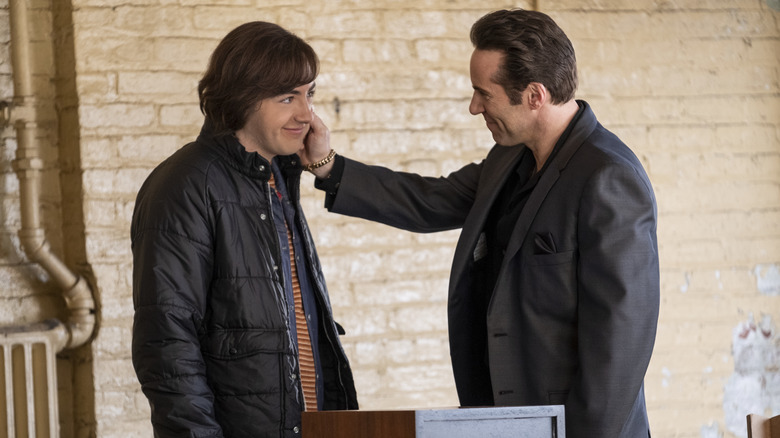
HBO Wants A Sopranos Prequel Series, But Creator David Chase Would Rather Make Another Movie

by Chris Evangelista

It's safe to assume that at some point we're getting more stories set in "The Sopranos" universe. The only question now is how those stories will be told. WarnerMedia, which owns HBO, recently signed a new deal with "Sopranos" creator David Chase to develop new projects, and the minute that news broke, everyone began speculating about the future of "The Sopranos." Not long after the deal was announced, Ann Sarnoff, CEO, Studios and Networks, WarnerMedia, confirmed that there were ongoing conversations with Chase regarding more "Sopranos" material. But here's where things get a little sticky. WarnerMedia wants Chase to whip them up a new "Sopranos" prequel TV series, but Chase would rather make another prequel movie akin to the recent "The Many Saints of Newark." 

It Broke The Machine

While "The Many Saints of Newark" didn't do so well at the box office, the "Sopranos" prequel movie was a big hit on HBO Max, and also rekindled interest in "The Sopranos" TV series. Not long after the movie's release, WarnerMedia signed a new deal with "Sopranos" creator David Chase to create new projects. And not long after that, Ann Sarnoff, CEO, Studios and Networks, WarnerMedia, said: "We're talking to ['Sopranos' creator] David [Chase] about a new series, 'Sopranos' related, on HBO Max."

As you can see above, Sarnoff specifically says WarnerMedia wants "a new series." And that's where the problems begin. Speaking with The Hollywood Reporter, David Chase said he's not really into the idea of another "Sopranos" TV series: 

"Well, of course, the movie didn't do well in theaters, but it, like, broke the machine on streaming — it was huge. So now they want me to do another series of 'Sopranos' from the time the movie ends until the time the series begins. I'm not that anxious to do it."

However, Chase is open to at least one more prequel movie: "I would do one more movie. Yeah. Because I have an idea for that."

An Incredible Character

If Chase does get to make his movie, he already has a great young Tony Soprano lined up in Michael Gandolfini. Gandolfini is the son of the late James Gandolfini, and stepped into his father's shoes to play young Tony in "The Many Saints of Newark." When asked if he would play the part again, the younger Gandolfini said

"This is such an incredible character and incredible group of actors and incredible filmmakers that I learned so much. This is going to jump to the priority to get to work with David [Chase] or anyone again. But I am not so much interested in playing 30-year-old Tony. I think if there's an interesting part after this movie, before the show, that we can explore something about Tony that hasn't been explored, in his youth, in his 20s. After that, we're getting a little too old."

For his part, Chase has said that if he makes another movie, it would focus on Tony in his 20s. Now I guess we just have to wait and see what happens. Will WarnerMedia keep throwing money at Chase until he agrees to make a series? Or will he hold out for his movie idea? 

Read this next: The 14 Greatest War Movies Of The 21st Century

The post HBO Wants A Sopranos Prequel Series, But Creator David Chase Would Rather Make Another Movie appeared first on /Film.

03 Nov 21:50

Cast Away Ending Explained: Time Stops For No One

by BJ Colangelo

Considering the Tom Hanks drama "Cast Away" has been parodied to hell and back thanks to his friendship with a volleyball named Wilson, many have forgotten that this is a genuinely solid movie about the perseverance of humanity, the need for companionship, what makes life worth living, and the tenacity of the human survival spirit. Directed and produced by Robert Zemeckis, "Cast Away" sees Tom Hanks as a FedEx troubleshooter named Chuck Noland who finds himself stranded on an island after his plane crashes into the ocean. FedEx packages (and the body of the pilot) soon wash ashore, and Chuck must utilize the items arriving on the beach as well as the island elements and wildlife to survive.

Chuck spends the next four years alone on the island, every day a new attempt at survival. One day, a piece of the shell of a port-a-potty washes up on the island, and Chuck uses the materials to configure a raft. He stocks the raft with food, water, and an unopened FedEx package, and attempts to sail to help. Sadly, Wilson the volleyball falls off the raft in transit, floating away, and leaving Chuck to mourn the loss of his only companion. Fortunately, Chuck is eventually rescued by a passing cargo ship, and is brought home. The ending of "Cast Away" is not about Chuck's survival, instead focusing on the aftermath of his reunion with his loved ones, namely, his girlfriend Kelly who he saw as his biggest motivator for survival.

The Ending Of Cast Away Explained

When Chuck returns to civilization for the first time in four years, he is desperate to reunite with his girlfriend Kelly, played by Helen Hunt. Unfortunately, upon arrival, Chuck discovers that he was presumed dead, and Kelly's life moved on. Not only was Chuck stranded on the island physically, but with survival as his sole motivator for existence, he was a man lost in time. Chuck spent his days longing for his reunion with Kelly, but with her understanding that he had likely not survived the plane crash, Kelly's time was spent mourning the love of her life, and moving on.

When Chuck finally reunites with Kelly, she has since married a man named Jerry and started a family. Kelly is understandably shocked to see Chuck alive, and explained that despite her belief that he was alive, her friends and family convinced her that he was likely dead, and encouraged her to move on with her life. They exchange a family heirloom with Kelly's picture in it, and the two kiss in his car. It almost seems like Kelly is ready to run away with Chuck, but there's a somber acceptance that Kelly has a family now, and she and Chuck cannot be together.

The Angel Wings

In addition to his love of Kelly, Chuck felt a sense of hope tied to a FedEx package decorated with angel wings. The symbology of the angel wings on the package prevented Chuck from opening it, and saw it as a sign that he was destined to deliver the package. After the realization of Kelly's new life, he sets out on a journey to Texas to deliver the unopened package. When no one answers the door, he leaves the package along with a note saying the package "saved his life." After leaving the house, he comes to a crossroads and a woman in a pickup truck gives him directions: 

"Well, that's 83 South. And this road here will hook you up with I-40 East. Um...if you turn right, that'll take you to Amarillo, Flagstaff, California. And if you head back that direction, you'll find a whole lot of nothin' all the way to Canada."

As she drives away, Chuck sees the back of the woman's truck is painted with angel wings. Chuck walks to the intersection and stares down the open road before the film cuts to credits. With nothing holding him back, and no relationship to return to, Chuck is at a literal and metaphorical crossroads in his life, with his options limitless. His survival was possible because he listened to signs from the universe (like a tree branch that broke when he contemplated taking his own life), and this was the universe speaking again.

Read this next: 14 Remakes That Are Better Than The Original

The post Cast Away Ending Explained: Time Stops For No One appeared first on /Film.

03 Nov 21:43

Camp Friends: HBO Max Orders Comedy Series From American Vandal Writer

by BJ Colangelo

If you're not already a fan of writer Lauren Herstik, now is the best possible time to get on board. The New York Times writer most well known for her coverage of the #FreeBritney movement, is also a gifted screenwriter with writing credits on USA's "Suits" spin-off, "Pearson;" the Discovery Channel docu-series "How To Build ... Everything;" and the hit Netflix mockumentary comedy series, "American Vandal," where Herstik also served as a producer.

Now, according to an exclusive release from Deadline, HBO Max has picked up to pilot a half-hour family comedy series from Herstik with the working title, "Camp Friends." The project was reported as in the works back in April, but the recent news shows that HBO Max is moving full steam ahead with the pilot. The project is being produced by former President of Paramount Pictures, Adam Goodman, for Jax Media and his digital studio Invisible Narratives, which focuses on connecting popular social creators with Hollywood filmmakers and brands.

What Is Camp Friends About?

The comedy series is set to focus on four lifelong "camp friends" who have finally graduated to the big time, and are entering their highly anticipated summer to become counselors-in-training. However, their big plans to have the "Best Summer Ever" are thrown off guard when a mysterious new girl arrives from a different camp, completely messing up the energy of these "Core Four" friends. With their plans ruined and an outsider in their midst, "Camp Friends" is about what it takes to keep a friendship alive.

Thanks to her work on "American Vandal," Lauren Herstik shared the show's Peabody Award and WGA Award nomination for the Netflix true crime parody about a high school scandal involving a mysterious case of spray-painted wieners. Additionally, Herstik directed the documentary short "Hide" based on her LA Weekly cover story about 10 women taxidermists competing at the world taxidermy championships. Her journalism work combined with her screenwriting makes her the perfect fit for Goodman's Invisible Narratives, whose mission is to bridge the generational shift of how Gen Z audiences consume entertainment. Invisible Narratives describes themselves as "disruptive storytelling that fuels culture in partnership with people of influence," having released the films "Crimson" with gaming influencer FaZe Rug, and the pandemic film "Songbird" in co-production with Michael Bay and featuring Demi Moore, Craig Robinson, KJ Apa, Bradley Whitford, and Sofia Carson.

No dates have been made available regarding production or release of "Camp Friends."

Read this next: 15 Shows Like Brooklyn Nine-Nine You Need To See

The post Camp Friends: HBO Max Orders Comedy Series From American Vandal Writer appeared first on /Film.

03 Nov 20:00

Cyber Official Warns 'American Way of Life' at Risk From Hackers

by msmash
A top U.S. cybersecurity official offered a dire warning to members of Congress on Wednesday, saying the "American way of life" faces serious risks amid the drumbeat of ransomware attacks and physical threats to the nation's critical infrastructure. From a report: Jen Easterly, director of the Cybersecurity and Infrastructure Security Agency, known as CISA, told the House Homeland Security Committee Wednesday that "ransomware has become a scourge on nearly every facet of our lives, and it's a prime example of the vulnerabilities that are emerging as our digital and our physical infrastructure increasingly converge." Her appearance, aside National Cyber Director Chris Inglis, comes as the private sector and governments have grappled with pervasive cyberattacks during the last 12 months. Some attacks, including the Colonial Pipeline breach in May, have led to gas shortages, disrupted supply chains and exposed federal systems to significant compromise. Easterly's testimony came after CISA issued a binding operational directive that would create a catalog of known exploited cybersecurity vulnerabilities and would require federal agencies to fix these flaws within specific time frames. It would apply to all software and hardware on federal information systems, including those managed by an agency or hosted by third parties. While the directive would only apply to federal agencies, Easterly said in a statement she wants every organization to adopt the directive "and prioritize mitigation of vulnerabilities listed in CISA's public catalog." Representative John Katko, a Republican from New York, said, "The volume of alerts, advisories, and directives goes to show the pervasiveness of vulnerabilities affecting owners and operators of critical infrastructure, and federal networks." Inglis said that privately owned critical infrastructure, which accounts for 85% of the total, is "increasingly core to the government's imperative to protect and provide for national security."

Read more of this story at Slashdot.

03 Nov 20:00

Google Wants To Work with the Pentagon Again, Despite Employee Concerns

by msmash
Three years after an employee revolt forced Google to abandon work on a Pentagon program that used artificial intelligence, the company is aggressively pursuing a major contract to provide its technology to the military. From a report: The company's plan to land the potentially lucrative contract, known as the Joint Warfighting Cloud Capability, could raise a furor among its outspoken work force and test the resolve of management to resist employee demands. In 2018, thousands of Google employees signed a letter protesting the company's involvement in Project Maven, a military program that uses artificial intelligence to interpret video images and could be used to refine the targeting of drone strikes. Google management caved and agreed to not renew the contract once it expired. The outcry led Google to create guidelines for the ethical use of artificial intelligence, which prohibit the use of its technology for weapons or surveillance, and hastened a shake-up of its cloud computing business. Now, as Google positions cloud computing as a key part of its future, the bid for the new Pentagon contract could test the boundaries of those A.I. principles, which have set it apart from other tech giants that routinely seek military and intelligence work. The military's initiative, which aims to modernize the Pentagon's cloud technology and support the use of artificial intelligence to gain an advantage on the battlefield, is a replacement for a contract with Microsoft that was canceled this summer amid a lengthy legal battle with Amazon. Google did not compete against Microsoft for that contract after the uproar over Project Maven. The Pentagon's restart of its cloud computing project has given Google a chance to jump back into the bidding, and the company has raced to prepare a proposal to present to Defense officials, according to four people familiar with the matter who were not authorized to speak publicly. In September, Google's cloud unit made it a priority, declaring an emergency "Code Yellow," an internal designation of importance that allowed the company to pull engineers off other assignments and focus them on the military project, two of those people said. On Tuesday, the Google cloud unit's chief executive, Thomas Kurian, met with Charles Q. Brown, Jr., the chief of staff of the Air Force, and other top Pentagon officials to make the case for his company, two people said. Google, in a written statement, said it is "firmly committed to serving our public sector customers" including the Defense Department, and that it "will evaluate any future bid opportunities accordingly."

Read more of this story at Slashdot.

03 Nov 17:17

Residents frustrated with authorities who can't seem to stop neighborhood jerk [Weeners]

03 Nov 16:22

Watch your mailbox; the IRS might have a surprise in store for 430,000 Americans [Interesting]

03 Nov 16:22

Station Eleven trailer reveals HBO Max's post-apocalyptic drama: 'There is no rescue mission...' - CNET

by Richard Trenholm
Watch the striking trailer for HBO's take on the bestselling novel, coming this December.