The post The Unlikely Murderer – Netflix Series Review appeared first on Heaven of Horror.
Ronald.phillips
Shared posts
05 Nov 10:47
U.S. Federal Agencies Ordered to Patch Hundreds of Actively Exploited Flaws
by noreply@blogger.com (Ravie Lakshmanan)
The U.S. Cybersecurity and Infrastructure Security Agency (CISA) has published a catalog of vulnerabilities, including from Apple, Cisco, Microsoft, and Google, that have known exploits and are being actively exploited by malicious cyber actors, in addition to requiring federal agencies to prioritize applying patches for those security flaws within "aggressive" timeframes.
<!--adsense-->
"These
Ronald.phillips likes this
05 Nov 10:43
Intel's Alder Lake Reviewed: 12th Gen Core Processors Bring Fight Back To AMD
by BeauHD
MojoKid writes: After months of speculation and early look teases, Intel's 12th Gen Core processors are finally ready for prime time. Today marks the embargo lift for independent reviews of Alder Lake and it's clear Chipzilla is back and bringing the fight again versus chief rival AMD. Intel 12th Gen Core processors incorporate two new CPU core designs, dubbed Efficiency (E-core) and Performance (P-core). In addition to this new hybrid core architecture, 12th Gen Core processors and the Z690 motherboard chipset platform also feature support for the latest memory and IO technologies, including PCI Express Gen 5, DDR5, Thunderbolt 4 and Wi-Fi 6E. The new Core i9-12900K features a monolithic, 16-core (24-thread) die with 8 Performance cores and 8 Efficiency cores, while the Core i5-12600K has 10 cores/16-threads, comprised of 6 P-cores and 4 E-cores. Alder Lake E-cores don't support HyperThreading but P-cores can process two threads simultaneously while E-cores can manage only one, hence the asymmetric core counts.
In the benchmarks, the 16-core Core i9-12900K doesn't sweep AMD's 16-core Ryzen 9 5950X across the board in multi-threaded tests, but it certainly competes very well and notches plenty of victories. In the lightly-threaded tests though, it's a much clearer win for Intel and gaming is an obvious strong point as well. Alder Lake's performance cores are as fast as they come. The $589 (MSRP) 16-core Core i9-12900K competes well with the $750 16-core Ryzen 9 5950X, and the $289 10-core Core i5-12600K has a lower MSRP than a $299 6-core Ryzen 5 5600X. The new Core i5's power and performance look great too, especially when you consider this $289 chip outruns Intel's previous-gen flagship Core i9-11900K more often than not, and it smokes a Ryzen 5 5600X.


Read more of this story at Slashdot.
Ronald.phillips likes this
04 Nov 21:16
Oxford Scientists Find Gene That Doubles Risk of Dying From Covid-19
by msmash
Scientists identified a specific gene that doubles the risk of respiratory failure from Covid-19 and may go some way to explaining why some ethnic groups are more susceptible to severe disease than others. From a report: Researchers from the University of Oxford found that a higher-risk version of the gene most likely prevents the cells lining airways and the lungs from responding to the virus properly. About 60% of people with South Asian ancestry carry this version of the gene, compared with 15% of people with European heritage, according to the study published Thursday. The findings help explain why higher rates of hospitalization and death may have been seen in certain communities and on the Indian subcontinent. The authors cautioned that the gene cannot be used as a sole explanation as many other factors, such as socioeconomic conditions, play a role. Despite a significant impact from the virus to people with Afro-Caribbean ancestry, only 2% carry the higher-risk genotype. People with the gene, known as LZTFL1, would particularly benefit from vaccination, which remains the best method of protection, the authors said. The findings raise the possibility of research into treatments specific to patients with this gene, though no tailored drugs are currently available.

Read more of this story at Slashdot.
Ronald.phillips likes this
04 Nov 20:12
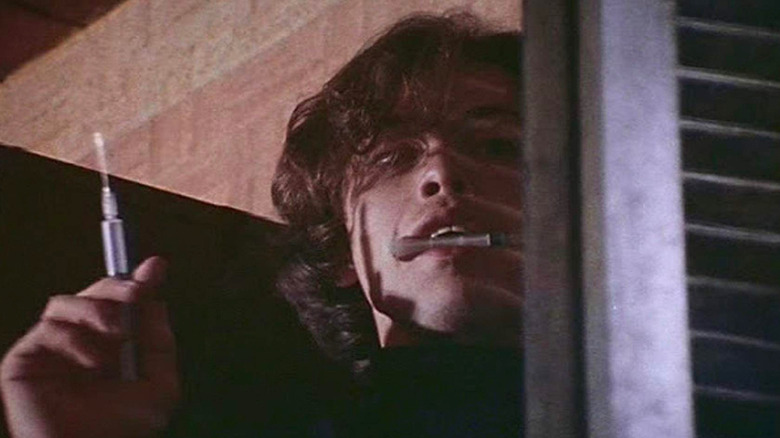
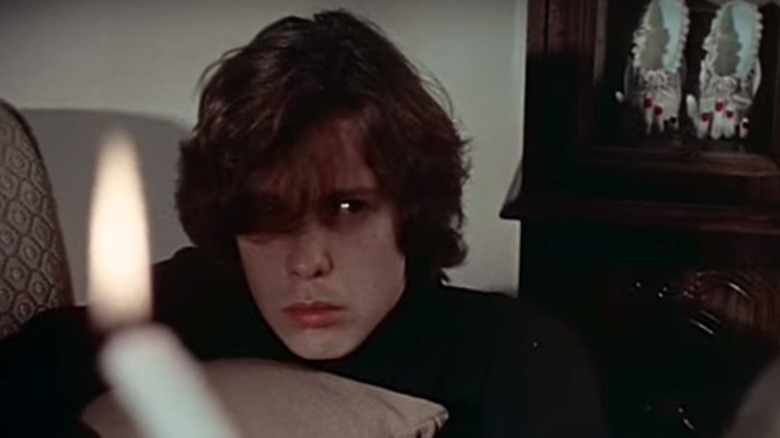
The Director's Cut Of George Romero's Vampire Movie Martin Has Been Found
by Chris Evangelista
Released in 1978, George A. Romero's "Martin" follows a young man, played by John Amplas, who thinks he is a vampire. Martin doesn't have any vampiric powers, so instead, he stalks around drugging women, cutting them with a razor blade, and then drinking their blood. Eventually, Martin decides to start preying on criminals – but his lifestyle is further complicated when he falls in love with a housewife. Second Sight Films is restoring "Martin" for a new 4K release, but that's not the only "Martin" news. Michael Gornick, the film's cinematographer, has revealed on social media that Romero's rarely-seen three-and-a-half-hour director's cut of the film has just been found. While it doesn't seem likely that the director's cut will be included on the Second Sight release, here's hoping we get to see it sometime in the near future.
Romero's Preferred Version
Per a story from the fine folks at Bloody Disgusting, it looks like the lost 3.5-hour director's cut of George Romero's "Martin" has been found. The news comes from someone named "Ronald Gorewood," which appears to be an alias for "Martin" director of photography Michael Gornick. Here's what Gornick had to say:
I simply can't say enough about the efforts of KEVIN KRIESS and THE LIVING DEAD MUSEUM in locating the seldom (if ever) seen, black and white, 16mm version of MARTIN. This "Director's Cut" of some three and a half hours in length was always Romero's preferred version. May it soon return safely to the custody of Richard Rubinstein and Braddock Associates for digital revitalization and distribution to the world.
Note: This photo depicts Reel #1 of 3. The hand written label is one that I prepared back in 1976. To my knowledge, this is the only existing version of this Romero classic.
First screened at the Cannes market in 1977 before being released in 1978, "Martin" follows a guy who thinks he's a vampire. "Martin is designed to that all those supernatural monsters that are part of our literary tradition are, in essence, expurgations of ourselves," Romero said. "They are beasts we've created in order to exorcise the monster from within us...I tried to show in Martin that you can't just slice off this evil part of ourselves and throw it away. It's a permanent part of us, and we'd better try and understand it."
There's no word on when we'll get to see this cut, but it's not unheard of for lost Romero movies to resurface. The filmmaker's educational nightmare "The Amusement Park" was recently restored and released on horror streaming service Shudder.
Read this next: The 15 Best '70s Horror Movies Ranked
The post The Director's Cut of George Romero's Vampire Movie Martin Has Been Found appeared first on /Film.
Ronald.phillips likes this
04 Nov 20:02
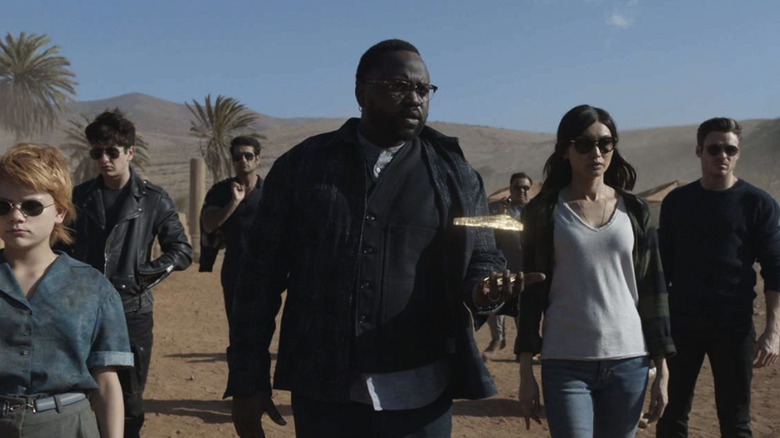

Eternals Banned In Saudi Arabia, Kuwait, And Qatar As Disney Refuses To Cut Gay Elements
by Ben Pearson
Marvel Studios' "Eternals" will not play in theaters in the Middle Eastern countries of Saudi Arabia, Kuwait, or Qatar. According to The Hollywood Reporter, the film was supposed to debut in theaters in those countries on November 11, but when local censors presented Disney with a series of desired edits, the studio reportedly refused to comply.
Since homosexuality is still illegal in many countries in the Middle East, the requested edits likely centered on Marvel's first openly gay superhero, Phastos, who is played by Brian Tyree Henry. (One regional cinema chain told THR that "Eternals" had been "banned," but did not confirm the reasoning behind the ban.) In the movie, Phastos shares a kiss with his husband Ben (Haaz Sleiman), there are several references to their marriage, and we see them in domestic life raising their son. That subplot is arguably one of the movie's biggest emotional cruxes of the film, so removing it would severely hurt the overall storytelling.
The Mouse House Holds Firm
Disney's stance on this issue shows that the studio has supported director Chloé Zhao, who was hopeful that the relationship would not be censored when she spoke to Indiewire last month. "I don't know all the details, but I do believe discussions were had and there's a big desire from Marvel and myself — we talked about this — to not change the cut of the movie," she said. "Fingers crossed."
For Disney, a studio which has previously earned its fair share of bad press for kowtowing to international censoring requests in order to maximize global profits, this is a somewhat surprising (and welcome) instance of the studio showing some backbone and putting creative integrity over transparent greed.
For decades, Disney has positioned itself as Hollywood's most family-friendly major studio – which traditionally has meant avoiding same-sex relationships on screen altogether. In recent years, the company has been taking the tiniest steps beyond that archaic restriction, featuring an "exclusively gay moment" in "Beauty and the Beast" and a reference to a gay relationship in "Avengers: Endgame."
But the studio removed a same-sex kiss between characters in "Star Wars: The Rise of Skywalker" to appease some international censors. And in an alternate universe, Brian Tyree Henry's Phastos wouldn't have been the first LGBTQ superhero in the MCU: Tessa Thompson's Valkyrie character from "Thor: Ragnarok" was going to be bisexual, but the final cut of the movie ended up removing a scene which confirmed her sexuality.
Last year, Disney/Pixar's "Onward" was banned in the countries of Kuwait, Oman, Qatar, and Saudi Arabia because of a single line that alluded to a lesbian relationship. Disney held firm on that movie and refused to censor it, so hopefully this is proof that the studio is entering a new era in which it supports its filmmakers' visions and won't compromise its movies to achieve the widest possible appeal.
"Eternals" arrives in U.S. theaters on November 5, 2021.
Read this next: Every MCU Post-Credits Sequence Ranked From Worst To Best
The post Eternals Banned in Saudi Arabia, Kuwait, and Qatar as Disney Refuses to Cut Gay Elements appeared first on /Film.
Ronald.phillips likes this
04 Nov 20:01
EA Dumps Hats And Pay To Win For NFTs And Play To Earn … To No One’s Surprise
by Jeremy Hellstrom
DLC, loot boxes, cosmetics and pay to win games move on over, EA has once again found an even more despicable thing to implement, pay to earn gaming! They don't know how…
04 Nov 20:01

Why a 401(k) Might Not Be Enough for Retirement (and What Else You Should Do)
by Mike Winters
While 401(k)s plans are often seen as “set it and forget it” investment accounts, they’re not always guaranteed to cover all of the costs of retirement. With contribution restrictions, fees, taxes, and mandatory withdrawals, 401(k)s do have their limitations. This is why putting money into other types of investments…
04 Nov 18:13
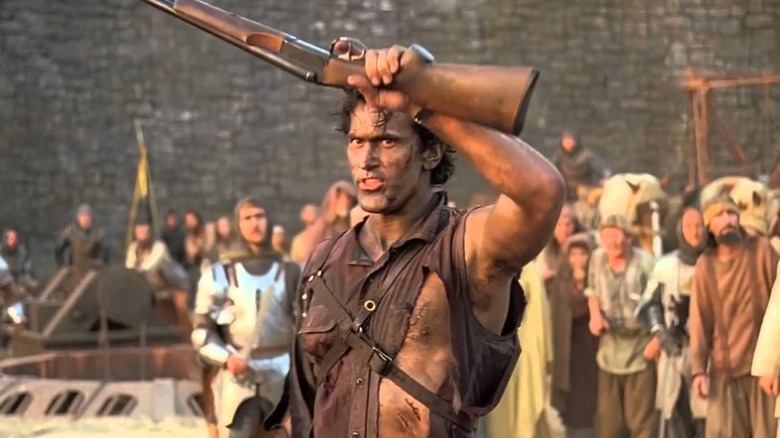
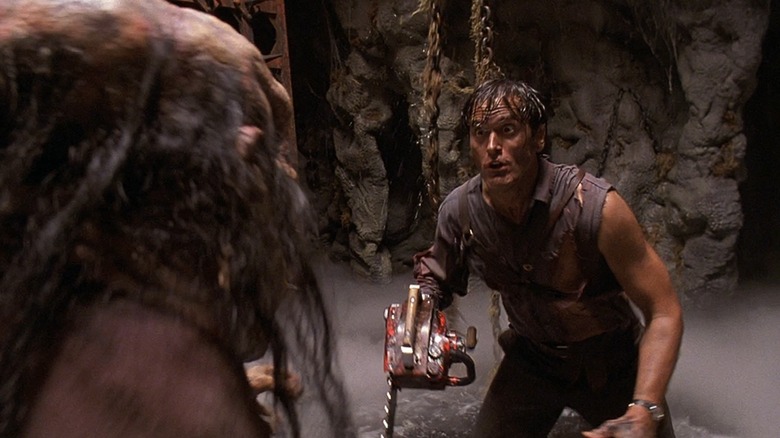
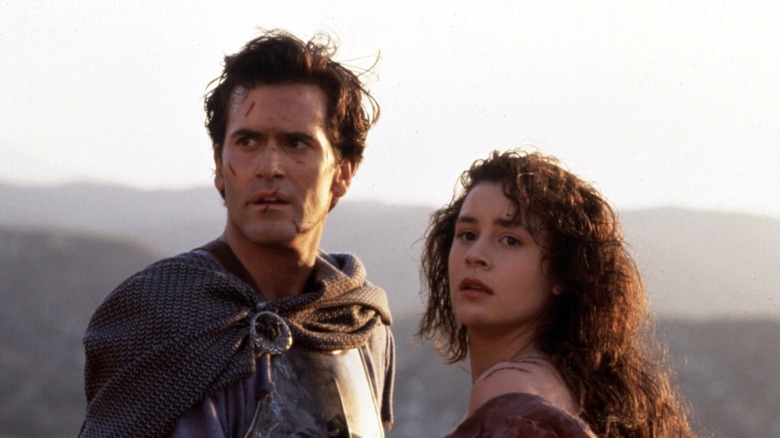
The Alternate Army Of Darkness Ending Sam Raimi Wanted Us To See
by Lee Adams
Sometimes, a director's idea of the perfect ending isn't what the studio wants us to see. Just take Terry Gilliam's visionary dystopian sci-fi "Brazil." It ends on such a brilliantly downbeat note, but Universal was afraid it would bum everyone out too much and ordered a new happy conclusion, resulting in the infamous "love conquers all" cut. Thankfully Gilliam wasn't the kind of guy to take such tinkering lying down, and pushed the studio into releasing the film with his original sublime downer of an ending.
Universal was at it again with Sam Raimi's "Army of Darkness," the third film in the director's cult splatstick "Evil Dead" trilogy. Sent back to the Middle Ages at the end of "Evil Dead II: Dead by Dawn," our dim, square-jawed hero Ash (Bruce Campbell) finds himself captured by Lord Arthur and his men. After killing a Deadite he becomes a hero, and heads off to recover the Necronimicon, or Book of the Dead, which is his only way home.
Unfortunately, Ash screws up the incantation needed to collect the book safely, causing an army of the dead to rise and attack Arthur's castle. Enlisting the help of Lord Arthur's sworn enemy, Henry the Red, Ash helps the embattled humans defeat the Deadites and save his medieval sweetheart.
It's time for Ash to head back home -- but this is the part of the plot where Sam Raimi and the studio differed on the best way to end the movie...
Sam Raimi's Original Ending For Army Of Darkness
Having recovered the Necronimicon, a Wise Man tells Ash that he can return to his own time by taking six drops of a magic potion. After saying his goodbyes, Ash seals himself in a cave with his classic car to take care of business, but gets distracted and swallows too much. This causes him to overshoot his destination time. When he finally awakes, he stumbles out of the cave only to discover a futuristic, post-apocalyptic London. He then does a Charlton Heston thing, sinking to his knees and shouting, "No! I slept too long!"
Universal didn't like the ending, considering it too depressing, and ordered a reshoot. Some fans think it would have been a great way to set up Ash fighting against future Deadites in a sequel, and in a Q&A session during the promotional tour for "Ash vs Evil Dead." Raimi revealed that he had considered using this ending as a jumping off point for a sequel.
Raimi and his brother Ivan were working on a script for "Evil Dead 4" which followed on from both endings, with two different Ashes -- present day Ash and post-apocalyptic future Ash. Ultimately, they felt the idea was too convoluted and decided to concentrated on Universal's "happy" ending instead, and the script eventually turned into "Ash vs Evil Dead."
What Happened In The Theatrical Ending?
In the less downbeat conclusion, Ash must take the potion and recite the same magic words he screwed up earlier in the movie. After kissing his medieval girlfriend goodbye, we dissolve to Ash working in a grocery store, relating his far-fetched tale to a couple of colleagues.
However, it turns out that he didn't exactly pronounce every syllable of the incantation correctly. The evil force returns and possesses a shopper, who attacks him and the customers. Ash springs into action and blows away the Deadite, uttering the immortal line, "Hail to the King, baby!" before passionately snogging an attractive co-worker.
Raimi's original ending might have matched the overall tone of the series better, but the reshot version gave Campbell another iconic quote and is more appropriate for the character Ash evolved into over the course of "Evil Dead II" and "Army of Darkness." It also perfectly sets the table for "Ash vs Evil Dead," which first graced our screens in 2015.
That new last line also took on a life of its own, featuring prominently in "Duke Nukem 3D" and providing the subtitle for the 2000 video game "Evil Dead: Hail to the King." Personally, I think it's a much better way to wrap up the film, as it is both snappier and funnier. While some purists might prefer Raimi's original ending, this might be one occasion when the studio was right to interfere with the director's vision...
Read this next: The 15 Best Horror Movie Directors Of All Time
The post The Alternate Army of Darkness Ending Sam Raimi Wanted Us to See appeared first on /Film.
Ronald.phillips likes this
04 Nov 18:04
10 of the Best Movies From Each Star in Marvel's 'Eternals'
by Ross Johnson
I come not to damn Eternals (as I haven’t seen it yet), but the mixed reviews so far suggest that it could well be the film that dulls our collective love affair with Marvel movies. We’ll see: Chloé Zhao is as good a director as superhero movies are ever likely to see, and the cast here is probably the best that…
Ronald.phillips likes this
04 Nov 18:04
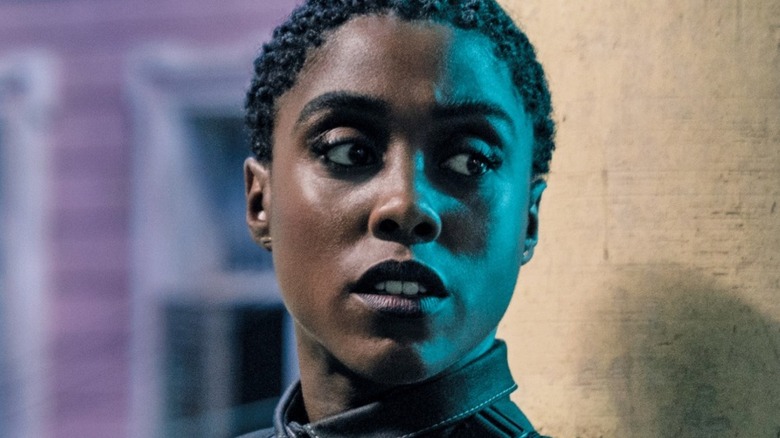
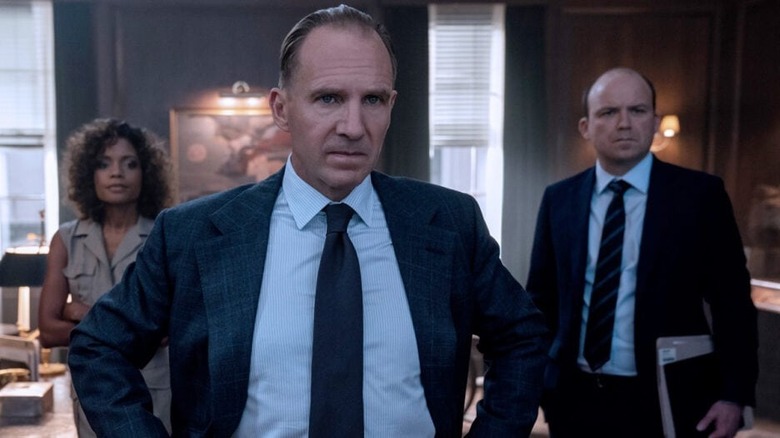


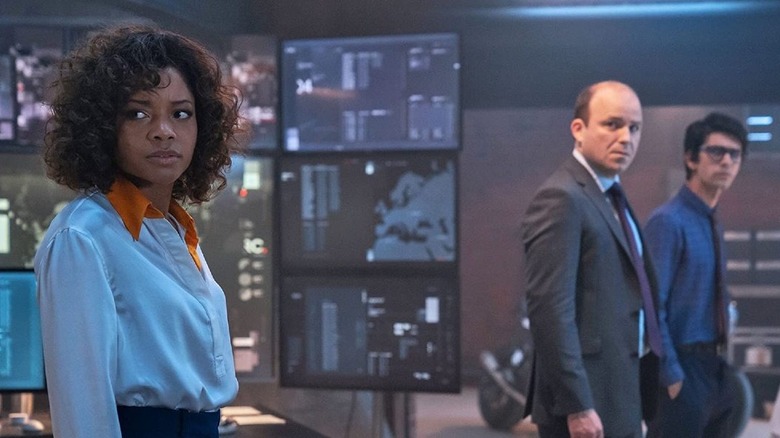

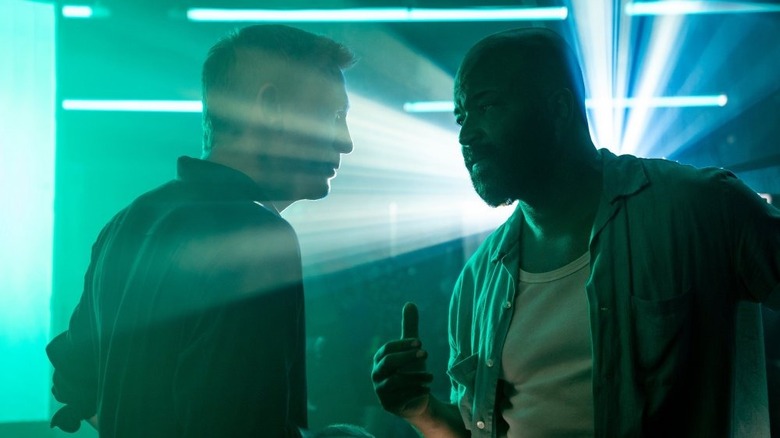




The 12 Best Characters In No Time To Die Ranked
by Leah Marilla Thomas
I'm not a huge Bond person. I have a passing knowledge of the lore, and sit somewhere comfortably between a luddite and an aficionado. Not to state the obvious British stereotype, but the more recent Daniel Craig films are a little stoic and dry for me, despite the occasional campy villain turn from loose cannon actors like Mads Mikkelsen and Christof Waltz.
But pretty much all of the characters in "No Time to Die" won me over. They have the range. They're funny without being quippy. They have lives outside of the world of international espionage, even if we only get glimpses of them.
I know the future of Bond as a franchise is in flux after this film. Craig won't return, but technically the next Bond film doesn't have to be a hard reboot. This does not have to be the last time that we see these characters on screen. Hopefully it's not, because they are finally starting to get good. Here are the best characters in "No Time to Die," ranked from worst to best (suffice to say, there are major spoilers for "No Time to Die" ahead).
M
Is it just me, or is M kind of the worst in this movie? He's not just an annoying bureaucrat and the obstacle standing between Bond and Blofeld, who Bond needs to get answers from. He's practically (though not literally) intertwined with the film's villains. His character doesn't even seem all that bothered by the fact that he commissioned a bioweapon capable of committing mass murder. Even if that wasn't his intent, it must have occurred to the head of MI6, right?
Again, pardon me for reverting to cultural stereotypes, but is this just a British stiff upper-lip thing? Can someone give me emotion? Particularly in the midst of a global pandemic, it was upsetting to see a character we're supposed to like be so blasé about extended families having to quarantine and large swaths of human lives getting wiped out at once.
Bottom line? I do like that his name is Mallory, but Judi Dench's M was a more welcome presence than Ralph Fiennes in "No Time to Die."
Valdo Obruchev
This minor antagonist, a MI6 lackey who helps develop the deadly and programmable nanobots and then leaks them to the villains, initially won me over by making morbid jokes about how easy it would be to kill his coworkers. Obruchev is working on Project Heracles for M, but is secretly in league with Lyutsifer Safin and betrays his team, allowing himself to be kidnapped so he can transfer to Safin's office. Danish actor David Dencik, who you may recognize from "Chernobyl" and "Top of the Lake," does a good job playing the one guy at the office you need to watch out for.
However, at the end of the film he gets very racist when talking to Nomi, so he's bumped all the way down to the bottom of the list. He also literally bumps all the way down into a pool of the very nanobots he developed when Nomi delivers the title line ("Time to die.") and pushes him to his doom.
Madeleine
While Madeleine's tragic backstory, revealed in the opening moments of "No Time to Die" is a good sequence, Madeleine isn't all that interesting to me as a character. Personally, I don't buy the chemistry between her and Bond, but that could be because Léa Seydoux is 17 years Daniel Craig's junior. I'll say it: He looks like her father in Hollywood years, which makes the non-committal reveal that Bond fathered Madeleine's child all the more confounding.
She's also a pretty passive character. She passively betrays James in Italy. She passively kills Blofeld by touching James' hand, then chickening out and leaving the interrogation room. Her choices and actions just didn't make a lot of sense to me. She lies about her child's paternity for seemingly no reason other than to delay the reveal until later in the film. Similarly, she fails to recognize a man who she shares a traumatic history with just so it can be revealed later in the scene.
Madeleine isn't helpless. She makes a proactive attempt to protect her mother in the flashback before ultimately failing. At the end of the film, despite getting kidnapped by the Big Bad, she is not a total damsel in distress. However, I just couldn't bring myself to care enough to root for her, which made the ending of the film a major bummer!
Moneypenny
My only problem with Moneypenny is that there wasn't enough of her! When done well and not reduced to a sexy secretary stereotype, I'm a sucker for Bond and Moneypenny's banter. While M is frustrating in "No Time To Die," the relaxed vibe of this office is almost enviable. They're all very calm, cool, collected, and relaxed around each other. I've never thought about M, Q, and Moneypenny going for a pint at the pub after work, but after seeing them toast at the end of this film, now I kind of wish we'd gotten to see that as well. (Tanner can come too.)
Since the rules of the franchise aren't as well-defined as other cinematic universes, there's nothing stopping Naomie Harris from returning as Moneypenny, and I really hope she does! I'm also really interested in the working relationship she has with Nomi. Seems like the banter potential is high there.
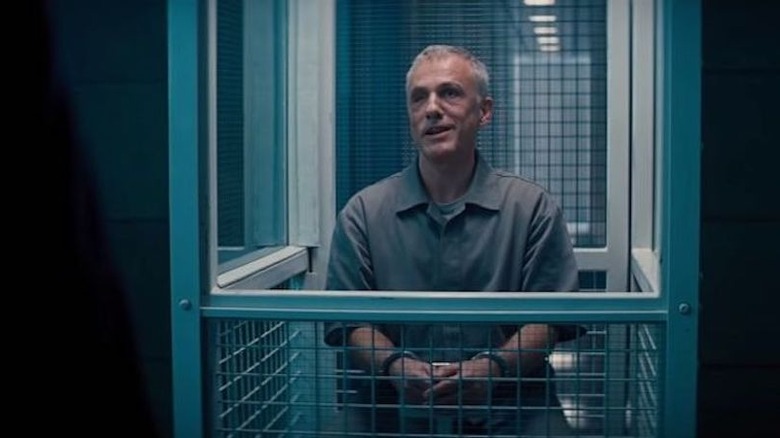
Blofeld
Remember how much fun Christoph Waltz was in "Spectre?" He was one of the best characters — if not the best — in that movie, but that alone is not enough to make him a good character in "No Time to Die."
Waltz's brief physical appearance as Ernst Stavro Blofeld in the latest Bond film is memorable but not nearly as fun. It's too brief. It's confined to a very small space. I laughed out loud when his little cage took its sweet and threatening time rolling down that hallway towards Bond, but a top moment does not a top character make. Some villains do their most captivating work in captivity — Hannibal Lector, the Joker, and Loki, for example — but Blofeld is not one of them.
However, at one point in "No Time to Die" Blofeld does talk through a bionic eyeball that someone is carrying around a Spectre party on a little plate. That's very goofy and very good.
Lyutsifer Safin
The film's actual villain was initially pretty boring to me. While I do appreciate that he wears a "Phantom of the Opera" mask, his obsession with killing children did not win me over. I'm also pretty bored of villains who kidnap female love interests in order to motivate the hero. Get a new move, bad guys. It's been done.
However, as "No Time to Die" goes on, Safrin is revealed to be a campier character than I expected — and I liked that! My first real exposure to Bond villains was through parodies like "Austin Powers" and "Johnny English." This felt like a return to the bad guys that those films were spoofing.
I considered ranking Safrin below Blofeld as a form of protest. The odds are stacked against him, since Blofeld is basically the Moriarty to Bond's Sherlock Holmes in Ian Fleming's novels and is the actual inspiration for Dr. Evil. But then, I remembered that Safrin has a lair. That's cool. Lairs are cool. Ten points for having a lair.
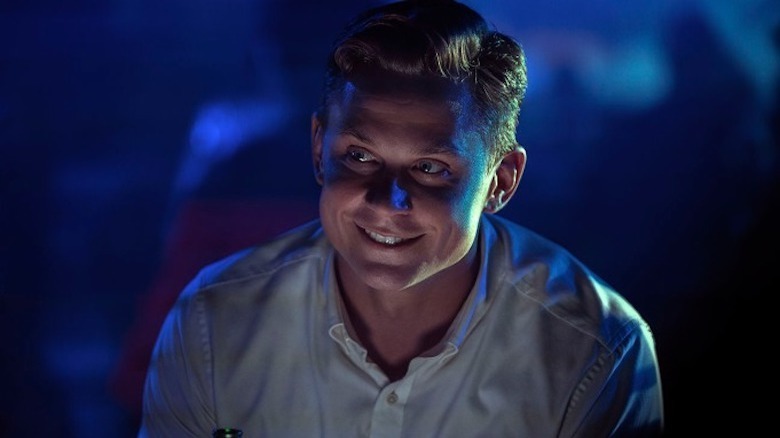
Logan Ash
Billy Magnussen played Logan Ash as a chaotic himbo with a heel turn and it was honestly a revelation. Talk about campy villains! He has a face that's somehow both punchable and lovable. If you enjoyed watching Magnussen being sinister in "No Time to Die," I highly recommend the HBO Max series "Made for Love."
He's entertaining when he's posing as Felix's over-eager CIA buddy, and he's entertaining as one of Safrin's ruthless lackeys. Every time he was on screen, I was delighted to see him. Going into "No Time to Die," I expected a lighter tone because Phoebe Waller-Bridge's punch-up was well publicized, but I don't think I expected any of the characters to be as buoyant and silly as Logan.
He was easily my favorite antagonist. Like Moneypenny, I just wish we'd gotten to see more of him. But it would be rude to rank Logan above the character that he betrays, who is, of course...
Felix Leiter
You know how sometimes you're watching a television series and you just know that a character is about to die because they're finally getting the backstory and/or character-building you've always wanted for them? That's how I felt when Felix showed up in this movie. I know from cultural osmosis that Felix Leiter is James Bond's American BFF, so I was happy to see them bro together, even if it was for the last time.
It doesn't hurt that Jeffrey Wright has chemistry with everybody. Even though a lot of their friendship happened off-screen during Daniel Craig's run, I believed it when he said that Felix was like a brother to him. They really made it work. While this is Wright's final performance as Felix, the actor has recently been in almost as many projects as Timothée Chalamet. You can also catch him in "The French Dispatch," on Disney+ as the narrator of "What If" and, in March 2022, as Commissioner Gordon in "The Batman."
Nomi
I didn't always understand the rivalry between Bond and Nomi, MI6's new 007. Was there one? It seemed at times that Nomi was anticipating more pushback from Bond than she was receiving. He seemed pretty chill about being retired. That said, I like Lashanna Lynch and I loved this character. I like how she works as a spy. She's similar to Bond at times and different at others, because they are two very different characters who approach their job in different ways. I like how she's as bossy and arrogant as any agent who has been given double-0 status deserves to be.
Honestly, the fact that she expected Bond to be offended by her replacing him, and then had to adjust when her expectations were not met, added a complicated and fun little layer to her character in this film. I would definitely watch a spin-off with her as the lead, if that's the type of multiversal route these films are leading us down.
James Bond
Bond would be the best character in his own movie, but (remember that spoiler warning) besides the fact that Craig seems done with the character, I don't fully understand why he had to die. So, he gets infected with nanobots that will kill Madeleine and Mathilde if he ever touches them. So what? First of all, he has a watch that, theoretically, should be able to disable those nanobots -- but Q said it couldn't, so I guess we have to take his word for it.
Second of all, we're all living through a pandemic that has made touching other humans dangerous. What makes Bond so special? I went six months without so much as a hug or even grazing another person's hand. It was difficult and depressing, but I made it out the other side. What I'm trying to say is that I am stronger than James Bond. The fact that he made the choice to sacrifice himself cost him a few points in my book.
Q
We learn more about Q's home life than pretty much anyone else's in "No Time To Die," with the possible exception of Madeleine. It's so cool to see someone in an action movie take a moment to cook a meal. Ever since seeing "No Time to Die," I have also been preoccupied with the moment when M tells Bond that everyone knows he's "staying with" Q. It's incredible to think about James Bond crashing at someone's place. Does he sleep on the couch? Does Q have a guest room that Bond can use? Does he get up earlier than Q and putter around?
Q also had, in my humble opinion, the most emotional and touching reaction to Bond's death. Perhaps that is just a credit to Ben Whishaw as an actor, but it really felt like the completion of an arc that started in "Skyfall."
Paloma
Ana de Armas may only have a handful of scenes in "No Time to Die," but she was a lightning bolt of energy and charm. Paloma may be my favorite character of 2021, especially the way that she bounded into the scene, proudly told Bond that this was her first assignment after only three weeks of training, and still managed to nail it.
In a lesser film, this role would be played by a nerdy, eager, younger guy. The Robin to Bond's Batman, so to speak. But the fact that this character is female adds more variety to an already diverse cast. There isn't just one kind of Bond Girl in "No Time to Die," there are several. Some you love, and some you hate.
I haven't taken a recent poll of half of the population or anything, but I believe that this is what we want: not for any one female character to fit some magical formula that somehow satisfies every demand for representation, but for there to be so many varied female characters that no one character has to be everything for everybody.
Read this next: The 14 Greatest Action Movies Of The 21st Century
The post The 12 Best Characters in No Time to Die Ranked appeared first on /Film.
04 Nov 18:03


Avengers Had a Disappointing Outcome, SQEnix Admits, But Learning This Lesson Will Be Crucial for Future Games
by Alessio Palumbo

It's no secret that Marvel's Avengers, released a little over a year ago by Square Enix after being developed by Crystal Dynamics, failed to meet the massive expectations that came with the IP.
Now, Square Enix president Yosuke Matsuda openly confirmed as much in a message to shareholders included as part of the publisher's 2021 annual report. He noted the disappointing outcome of the project but also reaffirmed that the lesson will be important as Square Enix continues to incorporate the Games as a Service model into its future games.
I would also note that “Marvel’s Avengers” was an ambitious title for us in that we took on the GaaS (Games as a Service) model. We overcame a variety of unexpected difficulties in the final phase of the game’s development, including needing to transition to work-from-home due to the pandemic. We were able to surmount these challenges and release the game, but it has unfortunately not proven as successful as we would have liked.
Nonetheless, taking on the GaaS model highlighted issues that we are likely to face in future game development efforts such as the need to select game designs that mesh with the unique attributes and tastes of our studios and development teams. While the new
challenge that we tackled with Avengers produced a disappointing outcome, we are certain that the GaaS approach will grow in importance as gaming becomes more service oriented. How we go about creating new experiences by incorporating this trend into our game design is a key question that we will need to answer going forward.
That is to say, the failure of Avengers won't diminish the publisher's intention to follow the increasingly important GaaS trend. We can only hope that, at least, this harsh lesson is indeed taken to heart going forward.
In related Avengers news, the developers of the game turned off non-cosmetic microtransactions after fans were outraged that the pre-release promise had been broken.
The post Avengers Had a Disappointing Outcome, SQEnix Admits, But Learning This Lesson Will Be Crucial for Future Games by Alessio Palumbo appeared first on Wccftech.

Ronald.phillips likes this
04 Nov 17:10




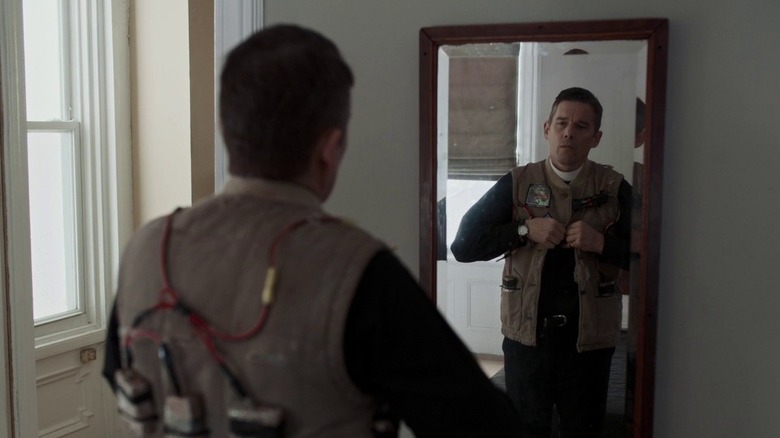

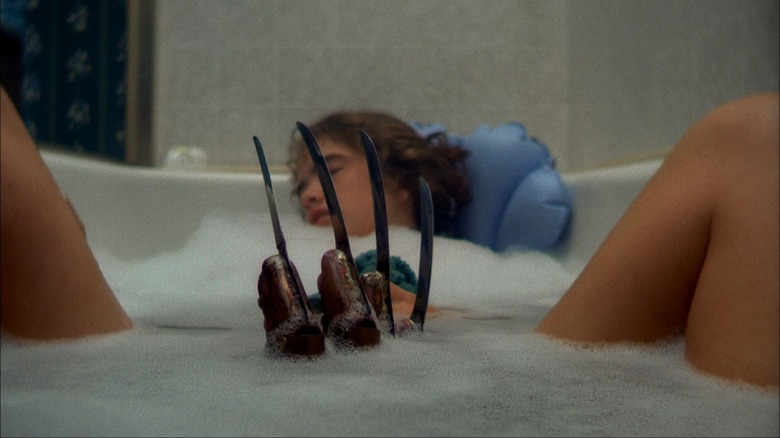
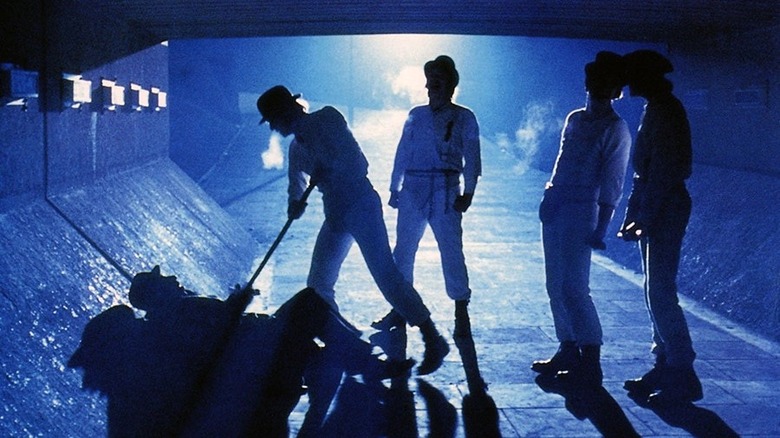
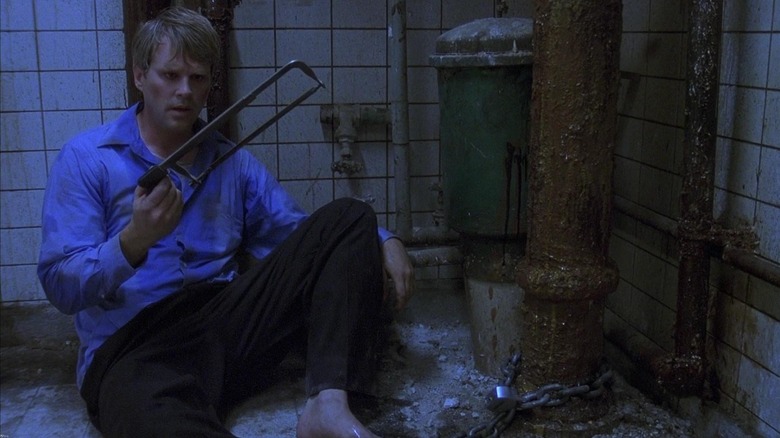



Lex Briscuso's Favorite Movies Of All Time
by Lex Briscuso
Hey /Film cuties, my name is Lex Briscuso and I'm one of the new kids on the block. You may have seen my byline pop up one or two or tens of times over the last couple months — but right now, I'm just a new girl standing in front of all of you, introducing herself and asking you to have a look at her top 15 favorite movies. Take my hand, let's take a stroll.
I hate disclaimers usually, but I do feel compelled to give not one, but two this time around. First off, this list changes every damn second in my head, but I tried really hard to snatch all the long-timers in my brain — the ones I rarely stop thinking about and am always recommending or finding myself having comfort watches of — for this list. Secondly, there's basically zero snobbery in this here list; I am just as into the profound as I am the stupid and/or banal, and I won't apologize for it. Sorry, y'all. Wait. Never mind.
Needless to say, it's not easy to commit to many things in this world, and a top movies list is one of them. But what I can say is that these are movies that will always be with me, whether or not they fall off the favorites list in the future or even make their way back on again. Hell, there are movies that aren't on this list that will always have a place in my heart. You know this, I don't have to explain it to you: making lists is hard but making movie lists is next level.
In any case, here lies my top 15 of the moment — may you find a few on here that you want to rewatch or discover for the first time.
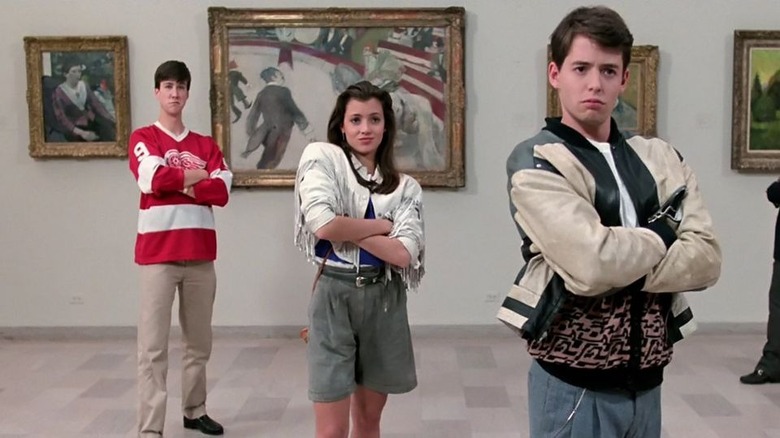
15. Ferris Bueller's Day Off (1986)
This 1986 comedy is probably as close to a modern classic as we'll ever know in the genre — and it's the definition of a comfort movie (though you will realize through this list what a loaded term that is for me). There's nothing more soothing than watching Matthew Broderick and friends place prank phone calls, infiltrate city parades, and contemplate the complexities of life.
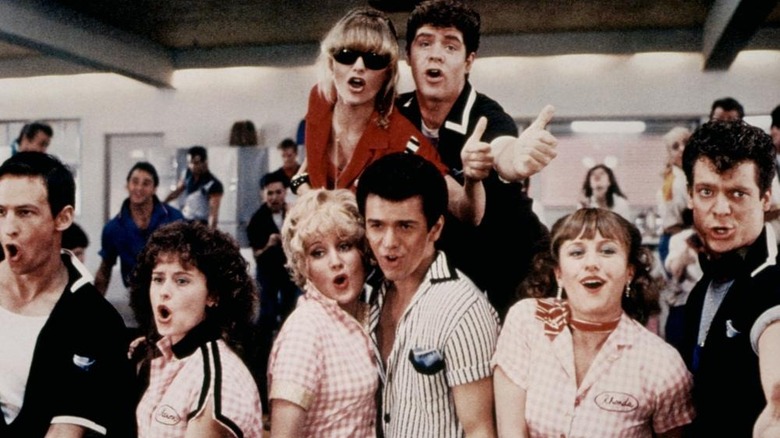
14. Grease 2 (1982)
I have no problem saying it: "Grease 2" is infinitely better than the original. Maybe it's because I find the original to be a bit overdone (which I feel like I can say because I played Rizzo in a high school production), but there's something so fresh and fun about the sequel that the first one just doesn't have. It could be the cast, which is altogether more charismatic and electric than the original group. It could also be the music, which, again, is just so much catchier than the soundtrack that came before it. Though, it's nothing without its roots, which gives us the awesome Frenchie subplot through-line and makes the sequel not just a cash grab but a true continuation. Plus, there's no better line than "Tonight, we bowl."
13. One Direction: This Is Us (2013)
Fun fact about me: I have eaten, slept, and breathed One Direction since 2010. It's been a hard stan life, juggling a dedication to a major global sensation while also harboring my intense love of films over the years — but it was really cool to lean into both of those worlds when documentarian Morgan Spurlock turned his sights on my five favorite dudes in the 2013 concert-film-slash-exploration-of-worldwide-fame. The movie was shot at what seemed to be the height of the band's acclaim as they toured ahead of their third album "Midnight Memories." As the story goes, they got bigger and bigger. It's a touching look at their upbringings and how they found themselves thrust together to become the biggest band in the world — no, they didn't start as a band, surprisingly — interspersed with fun concert footage of the five guys having the time of their lives together. When it comes to serotonin boosts (and, honestly, top-notch documentary work), this one is a double shot.
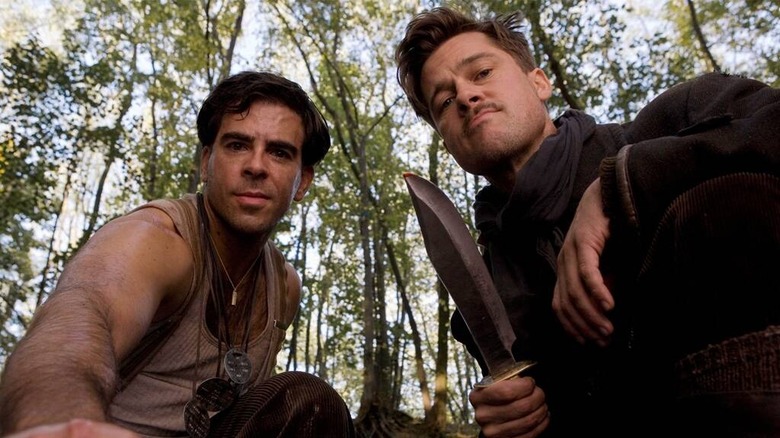
12. Inglourious Basterds (2009)
I remember seeing Quentin Tarantino's seventh film in theaters and thinking what a cultural moment it was. How cool it was to be experiencing that. Now, I realize that it wasn't necessarily a cultural moment, but more of a moment for me personally as I connected deeply with the storytelling risks being taken — hello, who doesn't love bold historical fiction? — and the performances (Melanie Laurent is basically God to me). There's no denying the story is smart and effective, and it isn't hard to get wrapped up in it all, especially with a hilarious villain like Christoph Waltz. He won an Oscar for a reason. To this day, it still feels like a movie I wish I'd written and I think I'll always be jealous of QT for that.
11. Bliss (2019)
Joe Begos' unique and bloody Los Angeles vampire tale had me by the throat from the first viewing — and each subsequent viewing reminds me why I keep coming back to it. Anchored by a fierce lead performance by Dora Madison, the 2019 splatterpunk horror fever dream follows artist Dezzy Donahue, who finds herself with a thirst for blood following a drug binge she went on to garner inspiration to complete an unfinished painting. The movie is steeped in specificity, with a clear picture of Begos' vision of a neon-smoked, blood-tinged LA on display. Between the performances, the direction, the production design, and the fact that it was shot on 35 mm, this movie is unmissable.
10. Daniel Isn't Real (2019)
Speaking of high style in films, Adam Egypt Mortimer's psychological horror rabbit hole starring Patrick Schwarzenegger and Miles Robbins delights me to no end. Upon seeing it at 2019's Brooklyn Horror Festival, it felt like time had slowed down and sped up all at once. The movie simultaneously felt like two seconds and one hundred years long. In short, I never wanted it to end. It could've been the chemistry between Schwarzenegger and Robbins — the cornerstone of the film which follows a troubled college teenager who begins to relive aspects of his childhood trauma when his former imaginary friend comes back into his life — and it could've been the specificity of the story. It could've been the effects, it could've been the stylization of the shots that give us an insight into the tone of the film's world. But it was all of those things together, and that is what makes this under-seen feature great.
9. First Reformed (2017)
In my opinion, this is the quintessential Paul Schrader film. It is where the filmmaker crescendoed with all of his long-standing themes and let the wave crash into something really beautiful, melodic, and chaotic all at once. Ethan Hawke, who plays a priest struggling with his faith, is both electric and contemplative in this movie and I can't help but think his Ernst Toller is the natural progression of his ability to shape the story he's always been telling and continues to tell with each film. He hasn't quite nailed it since, though, and each film he's made since just keeps me coming back to "First Reformed."
8. The Texas Chain Saw Massacre (1974)
The flesh is family, baby. The original 1974 horror show is a sight for the senses and a depraved look at terror for terror's sake, which would become all the rage in the horror genre years later. There's just something about the look of '70s cinema that is really fresh and vibrant, and this movie is no exception. Plus, the film doesn't hold back on the blood and guts — after all, it has a rep for a reason. A true horror original that is just simply a must-watch (and I even like the remake).
7. A Nightmare On Elm Street (1984)
I cannot stress this enough: "A Nightmare on Elm Street" is the blueprint. Every time I watch it, I'm reminded that there's no horror movie quite like this one. It's got style, it's funny, it's anchored by a powerful lead actress (don't you feel bad every time you see that grey streak in her hair?), and features one hell of an iconic antagonist. Freddy became a phenomenon for a reason — he's actually scary — but the film is more than just his character, and I keep finding new things to like about it with every (probably way too frequent) viewing.
6. A Clockwork Orange (1971)
Aside from Ferris, my comfort movie taste errs on the messed up side. The Stanley Kubrick adaptation of Anthony Burgess' novel will forever be burned into my brain as one of the most aesthetically pleasing and textually exciting films I've ever seen. My '70s movie addiction aside, there is something so satisfying about an invented vernacular and the movie does an excellent job of making that palatable for a wide audience. Again, specificity is key (can you tell this is something I love?) and this movie, despite its difficult subject matter and themes, has that in spades.
5. Saw (2004)
Did I mention my comfort movies are disgusting? The first "Saw" entry is, in my eyes, a really riveting drama and almost functions like a stage play, so it's hard for me to not come back to it time and time again and be enchanted by it. A morality play at its finest, "Saw" doesn't skimp on plot, story, dialogue, or themes. I don't think I'll ever stop trying to reframe this movie in people's minds.
4. The Social Network (2010)
While I have my gripes with Aaron Sorkin, I can't fault him for this one. I fell in love with this movie like one does with another living, breathing human being after seeing it for the first time in 2010. Jesse Eisenberg's Mark Zuckerberg and Andrew Garfield's Eduardo Saverin are wholly different, and entirely more human, than their real-life counterparts and that makes for an interesting, and more relatable, story. I can't help but feel an emotional connection to it, the story of how a friendship dies. Plus, that lightning-fast dialogue is just so, so fun.
3. Possession (1981)
Watching this horror-film-cum-divorce-drama feels like plugging myself into an electrical outlet. Actress Isabelle Adjani is best known for her role as Anna, a housewife who becomes increasingly manic and unhinged after asking her husband, Mark (Sam Neill), for a divorce. Her performance is literally second to none and it's hard not to feel personally changed by watching it, every single time. It's hard not to be affected by her acting choices and unsettled by her drive. If you haven't seen it, it's required viewing. I'm waiting.
2. Velvet Goldmine (1998)
Todd Haynes is the "Carol" darling now (and for good reason) but I find that "Velvet Goldmine" is his most under-appreciated gem. The film isn't for the faint of heart in the sense that it more resembles a patchwork quilt than an intelligible, linear narrative, but it isn't hard to follow along when you've got characters like this film does. The ensemble cast — which boasts Christian Bale, Ewan McGregor, Jonathan Rhys Meyers, and Toni Collette — ties this film together like a bow and gives a human touch to what otherwise might just be a sheep in glam rock's clothing. A movie full of personality and heart, it's a queer homage and manifesto all at once.
1. The Blair Witch Project (1999)
There's not much to say about the original found footage movie that hasn't already been said to death. But I found myself engrossed and disgusted and petrified on the first few viewings of "The Blair Witch Project" in my adolescence. This film just has a power and a grip it can choose to tighten on people and I have never not been in its wake. A forever comfort movie, you will find me watching this for both no reason at all and in celebration of some of life's biggest moments (yes, I try to ring in the New Year with this bad boy annually). And I've always felt a deep empathy for Heather, who is just one of the purest filmmakers ever "profiled" on screen. She just wants to get the damn shot, and I think those of us who love this medium more than anything can relate to that.
Read this next: The Best Movies Of 2021 So Far
The post Lex Briscuso's Favorite Movies of All Time appeared first on /Film.
04 Nov 16:54


The blonde, white Capitol rioter who bragged her race and status would keep her from prison is sentenced to 60 days in prison
by Jason Weisberger
Having been sentenced to 60 days in jail, Capitol rioter Jenna Ryan is no longer so certain that her good job, white skin, and blonde hair will keep her out of prison.
— Read the restA Texas real estate agent who swore she wouldn't be jailed over her role in the Jan.
04 Nov 16:53
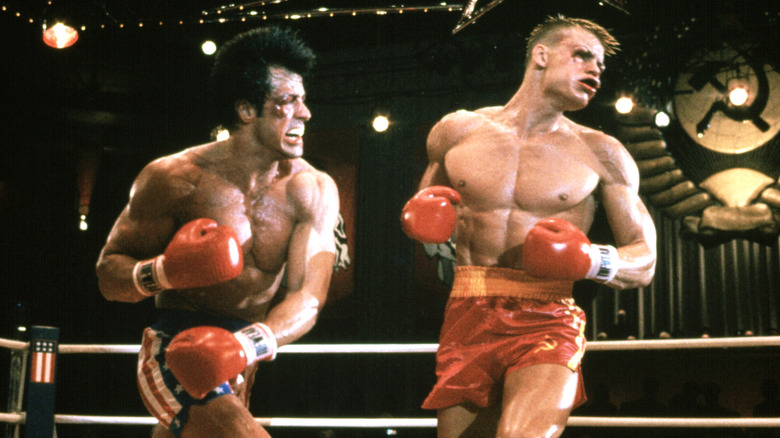

Rocky 4 Director's Cut Clip Shows Off Sylvester Stallone's Revised Take On The Beloved Sequel
by Chris Evangelista
"Rocky IV," the movie where Rocky singlehandedly defeats Communism, is returning to theaters in the form of a new director's cut. The new cut, retitled "Rocky IV: Rocky vs. Drago The Ultimate Director's Cut," will play in theaters for one night only next week before hitting digital and on demand the following day, and ahead of the impending release, a behind-the-scenes clip has surfaced. The clip features star and director Sylvester Stallone talking about his approach to assembling the new cut, which features "40 minutes of never-before-seen footage." As Stallone puts it in the clip below, going back and recutting "Rocky IV" allowed him to approach the material with a "new sensitivity and confidence" he didn't have while making the film back in the 1980s.
Rocky 4 Director's Cut Clip
Released in 1985, "Rocky IV" had Sylvester Stallone's Rocky Balboa heading to the Soviet Union to fight towering Russian boxer Ivan Drago, as played by Dolph Lundgren. This was no mere prizefight for Rocky – it was personal, because Drago killed Rocky's former opponent turned friend Apollo Creed (Carl Weathers). Now, Stallone is re-releasing a new cut of "Rocky IV" titled "Rocky IV: Rocky vs. Drago The Ultimate Director's Cut." In the behind-the-scenes clip above, Stallone talks about resisting the film for the new cut, starting things off by saying: "I didn't believe in myself as a filmmaker as I do now."
Perhaps the most interesting thing in this clip is Stallone saying that if he had to do it all over again (as in, make the movie again – not just re-cut it), he would "never" have killed off Apollo Creed. He says it was "foolish" and he felt like he needed it as a dramatic springboard. Instead of killing off Apollo, Stallone says he now wishes he had simply had Drago paralyze Apollo, having the former champ using a wheelchair. Apollo would then take on the role vacated by Rocky's former trainer Mickey, resulting in a whole new dynamic. Of course, Stallone also adds that had that happened, the "Rocky" and "Creed" films that followed may have never happened, or they would've happened differently. I'll let you decide whether or not that's a good thing, reader.
Rocky IV: Rocky Vs. Drago The Ultimate Director's Cut
Here's the official synopsis for "Rocky IV: Rocky vs. Drago The Ultimate Director's Cut" (note: what a bad, clunky title):
After more than 35 years, director, writer and star Sylvester Stallone masterfully reshapes ROCKY IV, delivering 40 minutes of never-before-seen footage. The fight scenes are more intense, the music is more powerful and the drama is heightened as world heavyweight champion Rocky Balboa (Stallone) must defend his title once again, this time against his most formidable opponent: Ivan Drago (Dolph Lundgren).
For the new cut, MGM teamed with Fathom Events for "nationwide screenings, offering fans a chance to be among the first to see this all-new version of Stallone's classic 1985 film. Additionally, an exclusive Q&A with Stallone will be broadcast live in select movie theaters nationwide, and audiences will be treated to a behind-the-scenes look at the making of the recut film." Those screenings are one night only, November 11, 2021. You can buy tickets here. And if you can't make it out to the theater, you're in luck: the movie will drop onto on demand and digital the following day, November 12, 2021.
Read this next: 14 Sequels That Truly Didn't Need To Happen
The post Rocky 4 Director's Cut Clip Shows Off Sylvester Stallone's Revised Take on the Beloved Sequel appeared first on /Film.
Ronald.phillips likes this
04 Nov 16:53



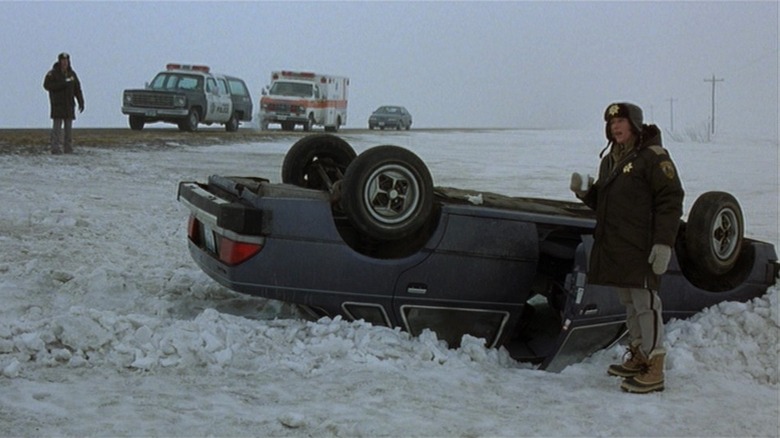
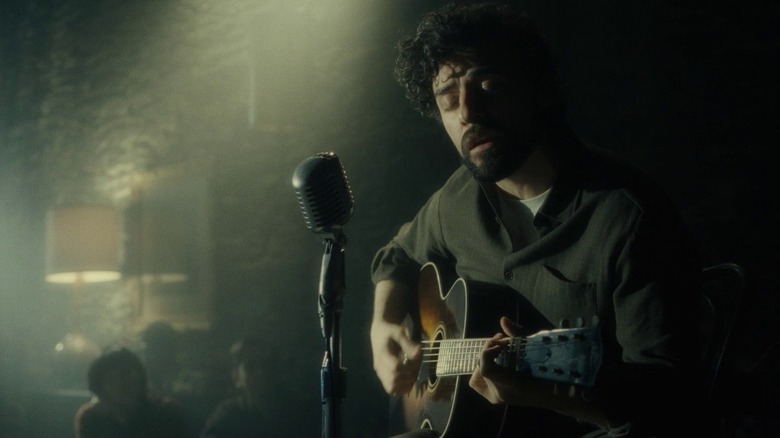
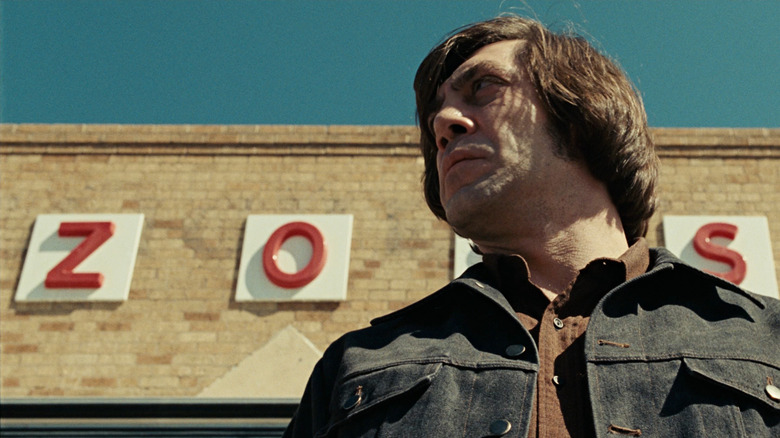
The Coen Brothers Movies Ranked Worst To Best
by Marshall Shaffer
There's no one working in cinema today with both the range and skill level of Joel and Ethan Coen. To find any good point of comparison, one would have to look back as far as the Hollywood studio era, far before the concept of an "auteur" assigned any kind of traceable artistry to the director's chair. No two movies they have ever made are the same, even when they contain similar genre trappings or share a general disposition toward the world. Across comedies, dramas, westerns, thrillers, mysteries, and just about any subgenre possible, they have excelled while also pushing the form forward in exciting ways.
Ranking any body of work with this many singular, daring masterworks proved a formidable task. Any other filmmaker would be lucky to make just one film as good as any among the Coen Brothers' 10 best. But now is as good a time as any given the upcoming release of the first film directed by one brother without the other's involvement, Joel Coen's "The Tragedy of Macbeth." At this junction point in their artistic career, here's how we think that film stacks up against the body of work from an unparalleled partnership.
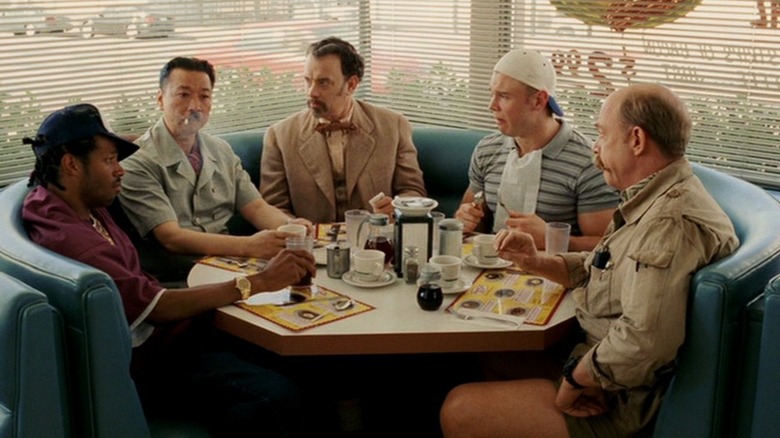
The Ladykillers
There's only one film in the bunch that feels like an unmitigated disaster: 2004's "The Ladykillers." This remake of the '50s British comedy of the same name transposes the film's action of a band of dim-witted crooks trying to hoodwink an old lady to the American South. The broader studio comedy trappings really don't suit the Coen Brothers, though no one can say they — or Tom Hanks, with his thick Foghorn Leghorn accent and Colonel Sanders get-up as Goldthwaite Higginson Dorr, Ph.D. — are not swinging for the fences. They can never quite figure out the chemistry between Hanks and the odd mixture of characters assembled for the task ahead, which includes Marlon Wayans' janitor Gawain, J.K. Simmons' explosives expert Garth, and Tzi Ma's tunneling whiz known only as "The General."
Thankfully, the Coens would get better at remakes and retreads in time. But "The Ladykillers" just feels like it can never quite escape that odd match of concept and artist. At least we'll always have the Ealing original.
The Hudsucker Proxy
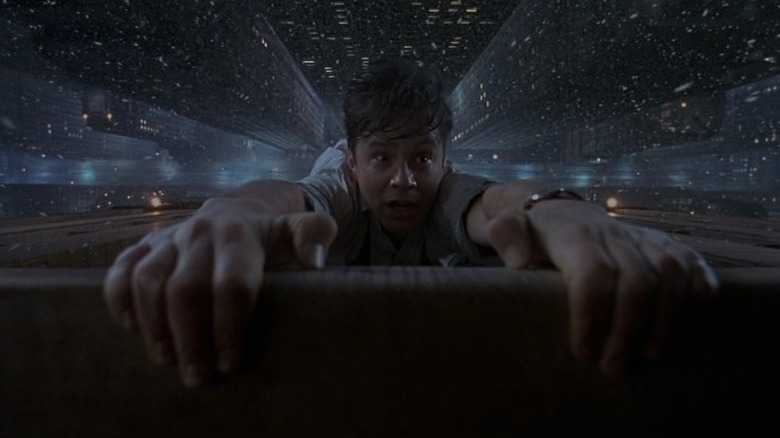
Unsuccessful though "The Hudsucker Proxy" may be, uninteresting it most certainly is not. The Coens poke holes in the rags-to-riches Horatio Alger myth through the story of Tim Robbins' Norville Barnes, an ambitious go-getter who rises from the mailroom to the C-suite of the Hudsucker Corporation. Through an ironic twist of fate, he parachutes to the top of the company by way of a perverse boardroom maneuver designed to tank their stock. Instead, Norville's idea for the hula hoop makes him and the company hotter than ever.
It's not short on ideas or inspiration, yet "The Hudsucker Proxy" does stumble a bit in execution. The film makes for a bit of a tonal jumble as the brothers' unavoidably wry tendencies clash a bit with their intentions of making a valentine to old Hollywood comedies. At the very least, it's fun to watch them be more playful with visuals on the larger-scale budget they were afforded here ... even if the downside of that freedom was that the film's limited audience made this a notorious box office bomb.
Intolerable Cruelty
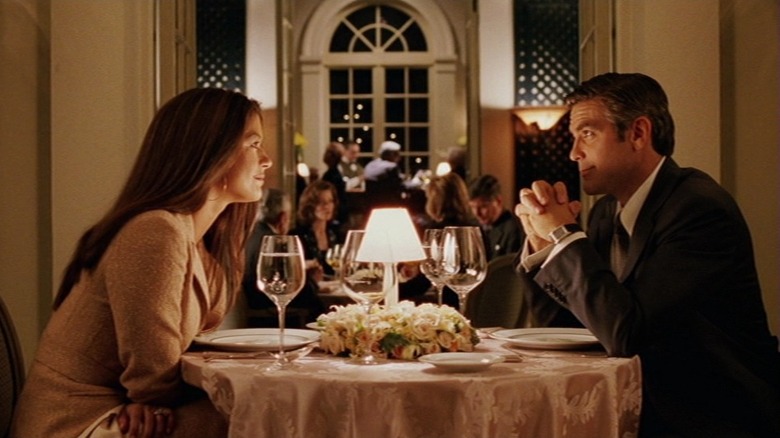
It's clear the Coens sought a contemporary take on the classical Hollywood screwball comedy with "Intolerable Cruelty." Indeed, there are the seeds of something really special in the sparks that fly between George Clooney's divorce attorney Miles Massey and Catherine Zeta-Jones' gold-digging Marilyn Rexroth. But despite two very game participants in this old-school battle of the sexes matchup, something doesn't quite gel here.
The comedy feels a bit miscalibrated by the Coens, whose penchant for the occasional zany outburst disrupts the more refined laughs. Clooney is a master of self-deprecating humor that undercuts his suave demeanor, but he can never reconcile the cartoonish antics the script forces him to engage in with the more buttoned-up nature of his character. The film's many wild supporting characters, ranging from Cedric the Entertainer as a "gotcha!" game show host to Billy Bob Thornton as an oil baron, all feel a bit like they're from different (if entertaining) movies. Though not a total write-off, "Intolerable Cruelty" feels like a missed opportunity for something more. The parts are there, but they don't cohere into something greater like most Coens works do.
Blood Simple
As with many directorial debuts, "Blood Simple" feels like more of a blueprint for what's to come than a fully-baked film. It's impressive to see how many of the Coens' recurring fascinations are already on display here: simple people caught in webs of crime, genre pastiche, cruel irony, dark humor, Frances McDormand. A story of a Texas bartender, Ray (John Getz), who gets caughts in a sordid entanglement of cheating and murder that quickly spirals into something far bigger than he could possibly imagine. Yet, by Coen standards, this yarn feels impressively contained and more coiled than their usual explorations of where warped morality can lead.
When judged against the high standards of what was to come for the Coens, this feels a bit rudimentary and elementary. But as a starting point for any filmmaker, "Blood Simple" is quite an accomplished piece of work with a mastery of mood, story, and image right out of the gate. At the very least, it's a fascinating prism through which to view the decades to come for the Coen Brothers.
Miller's Crossing
"I'm talkin' about ethics," begins Jon Polito's Johnny Caspar in "Miller's Crossing." In case anyone missed the memo, the Coens announce themselves as capital-S "Serious" filmmakers with their third directorial venture. Their not-so-Roaring Twenties chronicle of organized crime is handsomely mounted, sure, but it's also a bit pompously ponderous. As Gabriel Byrne's Tom Reagan plays both sides of a dispute between rival ethnic gangs against each other, the Coen Brothers have a tendency to blare their themes as tensions blaze. While the filmmakers normally find a way to organically smuggle their idiosyncrasies into a film, they make themselves all too present here through grandiose choices in many self-consciously stylized sequences. It's perfectly fine as a mob movie and by no means a disaster, but the Coens' heavy-handedness appears and distracts when it reaches for something bigger than just the genre.
With time, they got better at weaving those idiosyncracies more intricately into the texture of their yarns, such that a declarative streak would no longer be necessary. In later Coen works, the meanings of the stories speak for themselves. In "Miller's Crossing," the characters speak the meaning of the story.
The Man Who Wasn't There
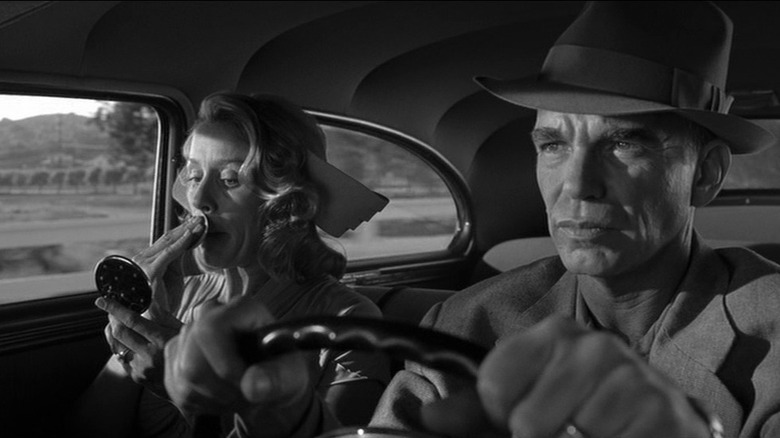
The Coens' collaboration with cinematographer Roger Deakins is one for the books. While perhaps impossible to pick his most impressive contribution to their cinema, it might just be his crisp black and white photography in "The Man Who Wasn't There." As the Coens' homage to classic noir teeters over into outright recreation, Deakins' mastery of light and shadow is essential to setting the mood as Billy Bob Thornton's stoic barber gradually goes over to the dark side. The film might as well have a checkbox of noir hallmarks to hit: blackmail, embezzlement, murder, laconic narration, post-war moral failings and a pervasive sense of emptiness. (All it needed was a femme fatale for noir bingo!)
It's a shame that the film largely fails to match Deakins' visuals. "The Man Who Wasn't There" feels pitched to existing genre fans without expanding or exploding conventions as the Coens do in more subversive efforts. Their austere tribute is a film to admire more than embrace, although the overarching sense of hollowness does prove an oddly fitting companion to the thematic content of the work itself.
Burn After Reading
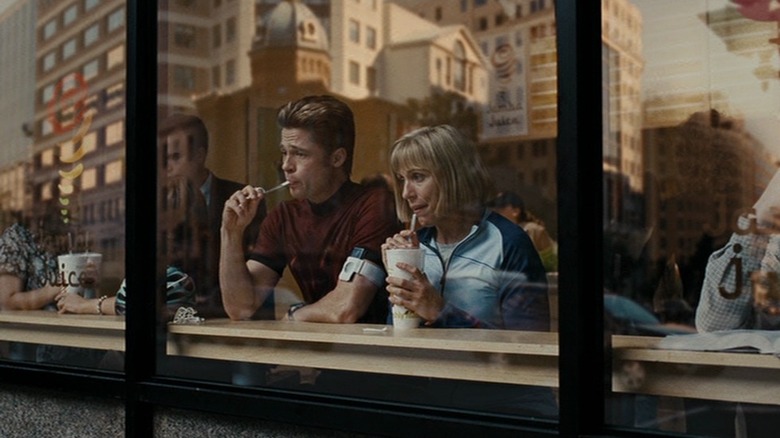
Talk about whiplash after "No Country for Old Men" — within a year of their best picture-winning triumph, the Coens were back with the bonkers "Burn After Reading." This espionage caper gets many stars at their absolutely loopiest: George Clooney once again sending up his debonair aura as a bumbling oaf, Brad Pitt playing a self-assured doofus, Frances McDormand undercutting her traditionally stern persona as an earnest but hapless gym employee obsessed with trying to alter her looks through plastic surgery. Each becomes ensnared in the intrigue around the memoirs of John Malkovich's Osbourne Cox, an embittered ex-CIA analyst felled not by intelligent people but by fools.
This is a ridiculous comedy about ridiculous people doing ridiculous things. It's both fitting and a bit frustrating that the Coens use this as a vehicle for what might be the most nihilistic read of people in their entire body of work. In recent years, the film's justified shrug of an ending, which depicts governmental and societal failure to learn anything from a compounding set of mistakes has become something of an Internet meme. If only the Coens' incisive understanding of humanity proved wrong here ... but they rarely miss. The relevance of "Burn After Reading" will likely only increase before it ever begins to fade.
The Ballad Of Buster Scruggs
The anthology format turns out to be quite suiting to the Coens' sensibilities. "The Ballad of Buster Scruggs" feels like a greatest hits album in many ways, allowing them to show the versatility and range of their artistry. Rather than blending tones as they do within a single feature, the brothers compartmentalize them into single-story segments. Some follow the larger-than-life exploits of a single character ("The Ballad of Buster Scruggs," "All Gold Canyon"), many stretch out a joke or a mood to intriguing effect ("Near Algodones," "The Mortal Remains"), while others do something more like a compressed three-act narrative structure ("Meal Ticket," "The Girl Who Got Rattled").
There's a bit of varying quality among the component parts of "The Ballad of Buster Scruggs," with the Zoe Kazan-starring penultimate chapter "The Girl Who Got Rattled" providing the most complete and satisfying experience of the half-dozen. But even if this feels a bit like the Coens just playing around in an artistic sandbox with Netflix's money ... that's not a bad thing! After several outings in the American West, the brothers prove they're old hands in the genre capable of firing across multiple cylinders.
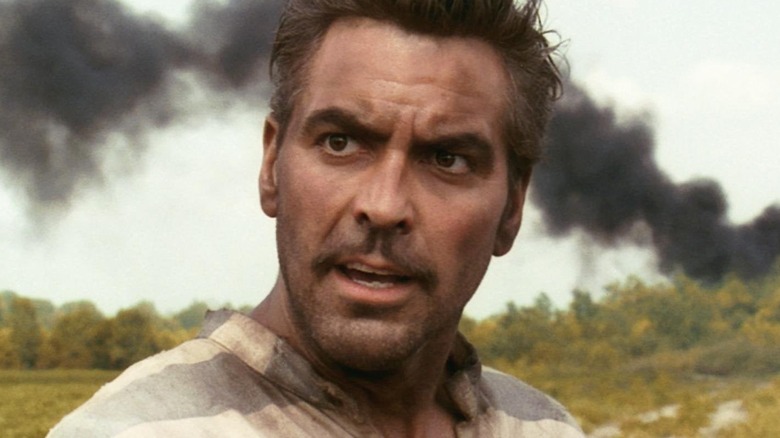
O Brother, Where Art Thou?
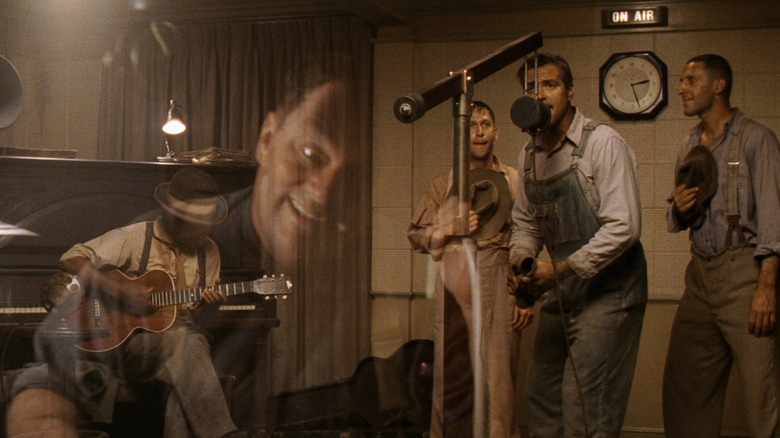
The legacy of "O Brother, Where Art Thou?" as a film may now be dwarfed by the smashing success of its soundtrack, a collection of country and bluegrass tunes that won the Grammy Award for album of the year. The movie is more than just a collection of scenes that provide an excuse for an album, though. The Coens make music an integral part of their film, a Depression-era adaptation of Homer's "The Odyssey" ... never mind that the filmmakers say they never actually read the epic poem, a painfully on-brand admission that blurs the lines between reality and mythology just as they do on-screen.
For those who did pay attention in high school English class, however, the hijinks of three chain gang escapees on a hunt for treasure present any number of analogs to the classic text for spotting. The cyclops becomes a one-eyed handcar driver; the sirens become enticing women washing clothes in a river. The noble journey home is a little bit more open to interpretation because, in classic Coens form, there are few true and incorruptible heroes. For everyone else less familiar with the text, however, "O Brother, Where Art Thou?" is just a fun movie that's easy on the eyes as it is on the ears.
True Grit
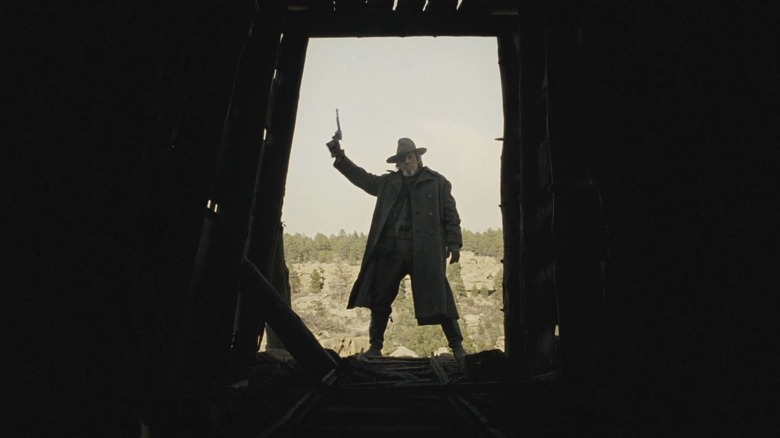
Though the Coens have waxed classical in their genre stylings from time to time, nowhere do they achieve those ambitions so effortlessly as they do in "True Grit." This adaptation of Charles Portis' novel of the same name, which was also made into a film in 1969 starring John Wayne, also feels as if it could have been made within the genre's mid-century heyday. The film rings with an uncommon sincerity and earnestness for the Coens, though it's not without a caustic streak as expressed by the surly U.S. Marshal Rooster Cogburn (Jeff Bridges). He joins the spunky teenager Mattie Ross (Hailee Steinfeld), albeit reluctantly, in pursuit of the notorious criminal who claimed her father's life. They face many a trying obstacle to locate their target, although the Coens offset that grimness with Cogburn's wisecracks as well as some laughs at the expense of the self-serious Texas Ranger LaBeouf (Matt Damon, laying the twang on thickly yet appropriately).
There's terror, tenacity, and tenderness alike in this straightforward yet stupendous film. Just because it's not out to invert any conventions or venerate a hallowed form does not make "True Grit" any less special an achievement. Upending a genre takes skill, but so does upholding it.
The Tragedy Of Macbeth
"The Tragedy of Macbeth," the first film directed by one Coen brother without the other's involvement, makes its biggest change to the Shakespearean text through the simplest of decisions: casting. By having sexagenarian thespians Denzel Washington and Frances McDormand in the roles of Macbeth and Lady Macbeth, parts traditionally played by performers several decades their junior, the entire nature of the characters' relationship to power shifts. Rather than a cautionary tale about the corrosive pursuit of ambition at all costs, the focus becomes on the weariness of a couple who grasp for power as their window of opportunity to seize it shrinks. Just that animating presence alone unlocks new avenues of understanding within a play that's been performed and parsed for centuries.
Joel Coen grants audiences the rarest of gifts, that feeling of hearing Shakespearean dialogue as if for the first time, and he matches this intellectual sensation with a visual one through expressionistic cinematography and set design. If you get lost in the old English verse, the evocative visuals that underscore and undercut the dialogue will ensure it's impossible to miss an emotional beat. No Ethan, no problem for "The Tragedy of Macbeth."
Raising Arizona
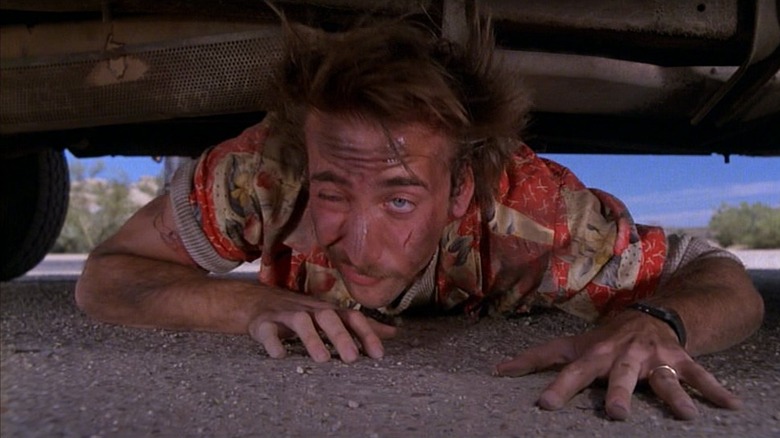
For all the talk of Nicolas Cage's increasingly unhinged performances as of late, he may never top his turn for the Coens in "Raising Arizona." As H.I. McDunnough, he's the closest thing to a live-action Looney Tunes cartoon ever committed to the screen, a moronic yet magnetic criminal with a desire for a rosy future but none of the patience or skill to achieve it earnestly. In the film, he hatches a hair-brained scheme to kidnap a quintuplet from a wealthy family since he and wife Ed (Holly Hunter) — a former law enforcement officer, no less — prove infertile. Even if you think you know what might happen with a crazy concept like this, the Coens take your preconceived notions, dip them in motor oil, and flick a match at them.
The Coen Brothers are at their most madcap fun here, channeling vivacious and fun energy like nowhere else in their work. But just because the antics are so entertaining doesn't mean they lose their bite or insight. "Raising Arizona" is a wry and piercing look at what family means, whether conceived, stolen, or arrived at through some other dubious means. H.I.'s probing narration alone ought to make clear that this film has far more on its mind than a standard-issue studio comedy.
Hail, Caesar!
If there's any film among the Coens' work ripe for reevaluation and reclamation, it's "Hail, Caesar!" This story of studio boss and fixer Eddie Mannix (Josh Brolin) is pitched somewhere between their dominant modes of highly literate genre play, ironic comedy, and bitter moral drama — yet remains somewhat elusive to viewers given how it slides slipperily between these styles. That nebulous quality is precisely what makes the film such a shape-shifting delight. It's a tribute to the possibility, not so much the history, of cinema.
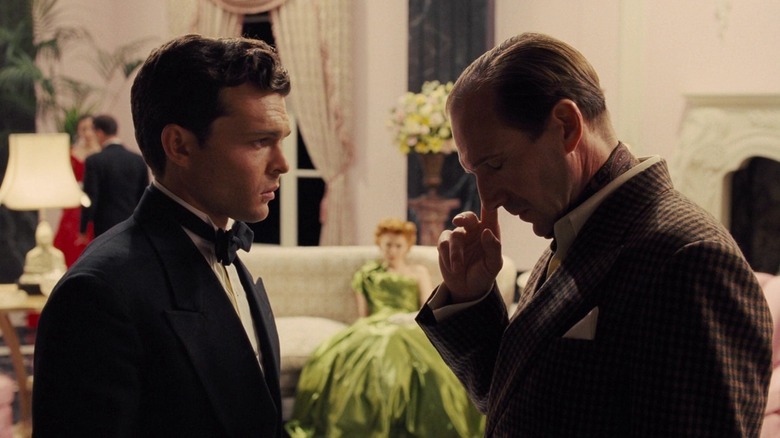
The Mannix character allows the film to toggle between different film sets on the studio lot, providing a glimpse into any number of styles ranging from Biblical epics starring George Clooney's gullible Baird Whitlock to Gene Kelly-like musical numbers featuring Channing Tatum's Burt Gurney. And, with regards to their outright comedic work, the funniest sequence in any Coens movie is easily the futile attempt of Alden Ehrenreich's Hobie Doyle to deliver the line "would that it were so simple" to the satisfaction of Ralph Fiennes' uptight director Laurence Laurentz. With each stop he makes to check in on his stable of stars, the Coens makes clear the business — and coercion — necessary for movie magic that is always lurking just outside the frame.
Barton Fink
Once this deep into the Coens' filmography, it's no longer hyperbole to start throwing around the M-word: masterpiece. Their Palme d'Or winning triumph, 1991's "Barton Fink," marks the first — but by no means the last — time where style, story, and sensation synced perfectly for the filmmaking duo. As John Turturro's eponymous writer struggles to make the leap from Broadway to Hollywood, the film shifts genres and tones as quickly and unpredictably as his mind functions. While the film might initially present as a fairly straightforward tale of writer's block to begin, "Barton Fink" zigs and zags between a number of characters, symbolic images, and thematic developments that further increase the sensation of claustrophobia and mania.
The Coens' ability to synthesize so many styles and sensibilities within the same film and have the work feel inherently coherent is nothing short of a marvel. "Barton Fink" has all the makings of a calling card for the brothers, and three decades later, their breakthrough work has not lost its ability to stun and surprise.
A Serious Man
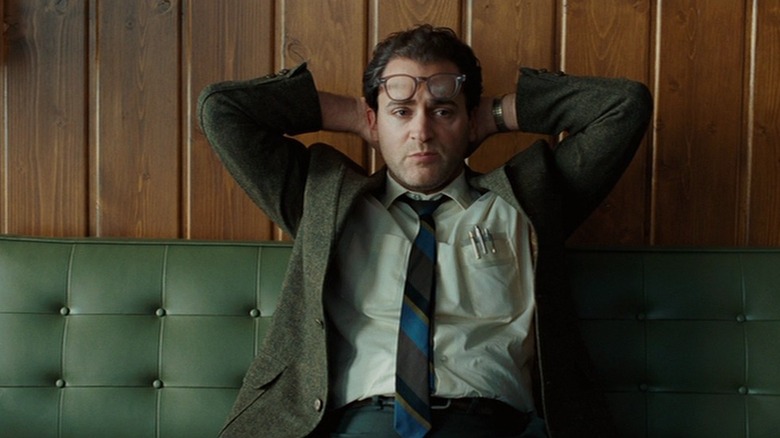
The Coens are not exactly personal filmmakers, but they pull persuasively and potently from their own backgrounds in "A Serious Man." The level of detail as they recreate their foundational milieu of a midwestern suburban Jewish community is remarkable, even by their own exacting standards. The brothers wrestle openly here with the religious undercurrent flowing underneath their work through a retelling of the book of Job. Woebegone math professor Larry Gopnik (Michael Stuhlbarg) tries to be a good and upright person and yet still finds his life little more than a parade of misery. When he tries to engage spiritual leaders to explain the tragedy, they offer little more than platitudes and parables. And while these misadventures bring him pain, the dark humor cannot help but tickle the audience observing his struggles from afar. The brothers are no strangers to deploying music in their films to great effect, and here it's Jefferson Airplane's "Somebody to Love" that speaks the movie's message better than any scripture: "When the truth is found to be lies / and all the joy within you dies / don't you want somebody to love?"
The Coens earn their shrug at the eternal question "Why do bad things happen to good people?" — they're simply parroting back the inexplicable nature of divine justice provided by their faith tradition. "A Serious Man" refuses the easy path of embracing or condemning Judaism or religion at large in favor of issuing an open-ended question to an unanswerable dilemma. The Coens provide a clear-eyed look at what religion can and cannot offer humans in our time of need.
The Big Lebowski
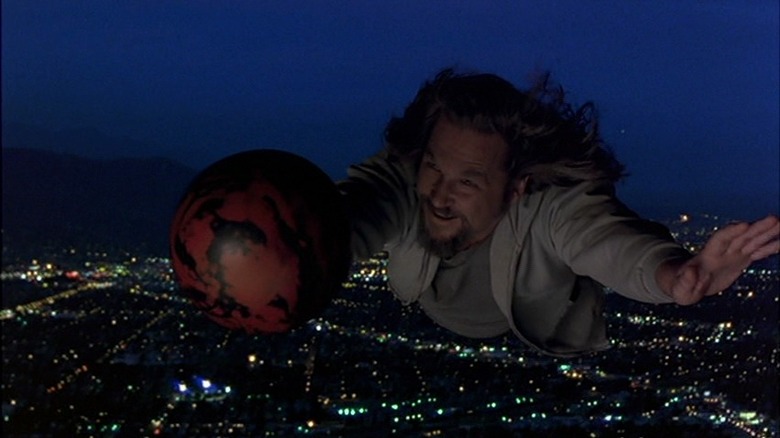
How many movies can say they inspired an entire religion? The brilliance of the Coens' stoner neo-noir "The Big Lebowski" is that you can engage with it on levels spiritual, sardonic, and silly alike. Jeff Bridges' slacker and stoner Jeffrey Lebowski — better known as "The Dude" — will forever rank as the brothers' most iconic cinematic creation. Though he's easily reduced to quotable aphorisms (that those in "Dudeism" take as a kind of gospel), Lebowski serves as a zen guide through one of the Coens' wackiest screenplays. This Chandler-inspired dark comedy updates the neo-noir for the early '90s in Los Angeles, taking audiences on a wild ride spanning from tense ransom stakeouts to euphoric Busby Berkeley-inspired musical reveries.
"The Big Lebowski" might feel random or bizarre for its own sake, but don't let the lackadaisical lead fool you. This ranks among the most meticulously constructed of the Coens' projects. They resolutely deny any improvisation helped shape The Dude, insisting that every word and pause reflect their careful consideration of the character.
Fargo
Nowhere do the Coens navigate the complexities of humanity with more depth and insight than in "Fargo." This film shows people resorting to grisly violence when backed into a corner, yet it also depicts people holding onto hope after seeing those base impulses play out. Is violence our innate state? Is optimism naive? Perhaps all can be true, they suggest, depending on whose vantage point you look through.
The film can hold the lived experiences and values of crooked car salesman Jerry Lundegaard (William H. Macy) as he digs a deeper and deeper hole trying to extort his father-in-law, two contract criminals (Steve Buscemi and Peter Stormare) reluctantly willing to do his dirty work, and pregnant police chief Marge Gunderson (Frances McDormand) trying to make sense of the senseless. The film constantly swerves in unexpected directions — heck, Marge Gunderson doesn't even show up until midway through — without ever feeling disjointed. It's rare to see any movie convincingly span the range of humor of "Minnesota nice" to the horror of blood splayed across white snow to impromptu moralizing about the value of human life without ringing a false note.
Inside Llewyn Davis
The unlucky loser is a staple of the Coen Brothers' work, and the travails of this figure take center stage in "Inside Llewyn Davis." As the titular folk singer, Oscar Isaac captures the passion and desperation of an artist who wants for nothing but the pursuit of his craft. He's made to struggle not only for not selling out to corporate record labels but also simply because he came along a little too early for the scene to take off. With every small breakthrough in the music world (a vivid and toe-tapping recreation of the pre-Bob Dylan New York folk scene), the ghosts of past mistakes and choices yank him several steps back. It's as if Llewyn is in a race to outrun himself, trying with all his might to marry professional stability and artistic satisfaction.
The film is both cruel and compassionate to Llewyn as he tries to scrape by on the margins to keep his dream alive. Like any classic Coen story, it's a little chilling but also oddly comforting to be reminded that skill and talent only get us so far. Though our decisions play a larger part in our fate, the filmmakers use their protagonist's winding journey to show how we're all dependent on the whims of timing and chance.
No Country For Old Men
As shown by the broad range of their filmography, it's questionable whether there can even be such thing as a "Coen Brothers movie." Even still, it does seem a bit weird to select "No Country for Old Men" as the filmmakers' best effort given that it manages to feel like an outlier amidst a body of work already full of them. This brutally effective thriller about a man on the run (Josh Brolin's Llewelyn Moss) from a relentless villain who epitomizes unflinching evil (Javier Bardem's Anton Chigurh) taps into something elemental, rather than merely incidental, about fate and decisions. One step behind Chigurh's dogged pursuit of Moss is Tommy Lee Jones as the aging sheriff Ed Tom Bell, trying his best to parse a case that feels as if it portends an age of lawlessness triumphing which he is unable to stop.
This plaintive adaptation of Cormac McCarthy's tricky prose stylings effectively translates his sparseness for the screen. With few words, McCarthy can conjure a struggle that is larger than life, and the Coens find a cinematic language to invoke a similar sensation. The normally noisy Coen Brothers go quite silent in "No Country for Old Men," dwelling in between the valleys of large events to wring an unbearable tension from them. The uncharacteristic minimalism for the Coens leads to maximum impact — a note-perfect film that lingers in the mind forever.
Read this next: The 15 Funniest Movies Of The Decade
The post The Coen Brothers movies ranked worst to best appeared first on /Film.
Ronald.phillips likes this

04 Nov 16:10
Best Screwdriver Sets 2022 - CNET
by Craig Cole
Screwdrivers are a critical part of any toolbox, so it's important to make sure that you have the best one.

Ronald.phillips likes this
04 Nov 16:08
"Real-life John Wick" targets gang in South Africa. They shouldn't have killed his dog [Scary]

04 Nov 16:08




Movies By Squid Game Creator Hwang Dong-Hyuk You Should Watch
by BJ Colangelo
Writer/director Hwang Dong-hyuk spent over a decade trying to get "Squid Game" off the ground, but the series about hundreds of contestants in need of money competing in children's games to the death isn't the first creation from Dong-Hyuk. The South Korean filmmaker attended the University of Southern California where he earned his M.F.A in Film Production, completing the short films "Heaven & Hell," "Desperation," and "Miracle Mile," the latter of which screened at over 40 international film festivals and won several awards, including the DGA Student Film Award and Student Emmy Award.
By now you've probably binge-watched the hit Netflix series "Squid Game" and, if you're not too emotionally devastated, likely looking for more content to fill the void left behind. Luckily, the success of "Squid Game" has made some of Dong-hyuk's films readily available for western audiences through Netflix, and they're more than worth checking out, especially considering the films cover a wide variety of genres. Hwang Dong-hyuk can really do it all.
The Fortress
In this 17th century historical drama, King Injo and his retainers seek refuge in a fortress in Namhansanseong as the Qing dynasty forces from China invade Korea. The king's advisers are in a constant debate as to what course the king should take, but time is limited as his people struggle, suffer, and die while seeking protection in the fortress. Lee Byung-hun plays the Korean Joseon politician and Neo-Confucian scholar Choi Myung-kil in what is arguably his greatest performance. Byung-hun has since successfully transitioned to Hollywood pictures, showing up in "Squid Game" as well as portraying Storm Shadow in "G.I. Joe: The Rise of Cobra" and its sequel "G.I. Joe: Retaliation," as well as becoming the first South Korean actor to present an Oscar and (alongside Ahn Sung-ki) one of the first South Korean actors to imprint their hand and footprints on the forecourt of Grauman's Chinese Theatre. Dong-hyuk successfully made a historical war epic, proving there's no limit to his talent.
Miss Granny
Considering Hwang Dong-hyuk's track record of existential and deeply serious subject matter, it may surprise many to know that he's also responsible for one of the most successful South Korean box office comedies. 2014's "Miss Granny" is his own play on a "Freaky Friday" or "Seventeen Again" style comedy, with Na Moon-hee starring as a foul-mouthed, stubborn, and shameless woman in her 70s named Oh Mal-soon who magically finds herself in the body of her 20-year-old self (Shim Eun-kyung) after having what she believes will be her funeral portrait taken at a mysterious photography studio. The comedy was a massive hit in South Korea, and became the 13th highest grossing Korean film of all time. Even with its silly and derivative plot, Dong-hyuk brings a unique charm to the story, dissecting what truly makes us human and what makes life worth living.
Silenced
Hwang Dong-hyuk's most difficult film is also one of his best, the 2011 crime drama, "Silenced." The film is based on the book "The Crucible" by Gong Ji-young and centers on real events that took place at Gwangju Inhwa School for the hearing-impaired, where Deaf students were physically and sexually abused by faculty members for over five years. Gong Yoo (who starred in "Train to Busan" and also appears in "Squid Game") plays Kang In-ho, an art teacher who works with a human rights activist to put an end to the abuse at the school and the systems in place that protect the perpetrators. "Silenced" is incredibly powerful but based on the subject matter, is understandably difficult to watch at times. However, Dong-hyuk's ability to humanize characters and tackle difficult subjects à la "Squid Game" is well on display with this one.
Read this next: 14 Korean Horror Movies You Need To See
The post Movies By Squid Game Creator Hwang Dong-hyuk You Should Watch appeared first on /Film.
04 Nov 16:07


Prey 2017 Part 17: Dealing With Dahl
by Shamus
Like I said last time, Walther Dahl showed up for some mustache-twirling villainy just as the main story was getting good. So then the plot of the game slams on the brakes and we spend the next hour or so fighting the same boring enemy robot over and over.
There are a couple of different ways that Morgan can deal with Walther Dahl. She can give him a good old-fashioned murdering, or she can knock him out. And knocking him out isn’t just for bleeding-heart hippies doing “no kill” novelty runs like in some games. Here, sparing Dahl’s life serves an immediate practical benefit: It gives us a way off the station.
Here is one of the escape pod bays. One of the pods has a mimic in it, another is stuck in the launch tube, and none of them actually work.
Technically, we shouldn’t need additional transportation off the station. On Talos-1 there are three escape pod bays. Each bay holds six pods, and each pod holds 8 people. So what we have here is a Titanic-type situation where we only have a lifeboat capacity of 144 for our 260 personnel. If we want to be charitable,[1] we could assume that the original crew size was supposed to be less than 144, but the station has grown in the last few years and nobody’s gotten around to adding more escape pod bays.
Either that or everyone on the station is bad at math.
It doesn’t matter, since none of the pods work anyway. I found an audiolog where Alex Yu specifically directed a member of the maintenance staff to not repair or maintain the escape pods. But I never found a rationale behind the order, and the wiki doesn’t seem to have anything to say about it either.
The unfavorable explanation is that Alex is a much more cartoonish villain than I’ve been giving him credit for. He discontinued the maintenance because he wanted to save money, or because he thought nothing could possibly go wrong. If this is the reason, then Alex is actually kinda dumb.
The more favorable explanation is that Alex realized that the escape pods represented a huge threat to Earth. In the event of an emergency, the Typhon would most likely break containment. If they did, then having 18 different escape pods leave the station would represent 18 different ways for the Typhon to reach Earth. The odds are that at least one pod would end up with a mimic inside, and from there the Typhon can jump to Earth and it’s game over for humanity. So perhaps Alex effectively sabotaged the pods in order to protect the Earth.
It should be noted that Alex has his own private pod at the top of the Arboretum, and that one works just fine. Make of that what you will.
Fly Me From the Moon
I guess he skipped class at merc school on the day when they teach you not to stand with your back to the entrance.
According to the wiki, Talos-1 is parked at the L2 Lagrange Point of the Earth-Moon system. This would put the station on the far side of the moon. Actually, I guess it must orbit the L2 point, since otherwise the moon would block our view of Earth and communications with Earth would be a pain in the ass. This proposed position is consistent with what we see in the game, where the moon appears very close and the Earth is fairly small in the distance.
This means it’s a bit of hassle to get home. During the Apollo missions, it was a 3-day trip to reach the moon, and here we’re a little beyond the moon. No doubt the more advanced space program in Prey can do better than the Apollo program, but I doubt it’s that much better. This isn’t like being parked in low Earth orbit where you can reach the surface in twenty minutes as long as you’re not too picky about which ocean you end up in. That trip back from the moon ought to take a couple days.
Then again, the story makes it sound like Dahl got here from Earth in the space of a few hours. So… I dunno. In any case, even with their improved tech you still need something with rockets on it if you want to go anywhere. This setting doesn’t have Star Trek style magical propulsion.
I guess we need to assume that the escape pods – had they worked – were intended to float around near Talos-1 until other craft arrived to rescue the survivors? There’s no way those tiny pods had the delta-v to get back to Earth.
Getting Home
Yikes. Apparently the procedure to remove neuromods is slightly invasive.
Dahl arrived in a craft that looks a lot like those from the Space Shuttle Program. If Morgan were to do him a murder, then there would be nobody to pilot the ship. If we leave him alive then we have a pilot, and our only problem is that he’s a bloodthirsty badass with orders to kill us all.
But as Morgan has demonstrated again and again over the last few months, you’re never more than a simple uninstall away from a fresh point of view. If we knock him out and remove some of his mods, then he’ll lose access to his recent memories and we’ll be free to tell him whatever we like. For example, we can tell him he’s here to rescue us.
There are several different ways to handle the ending, but I always knock Dhal out because I love making this murderous joke of a character act as our taxi driver back to Earth. Also, I imagine it’s pretty funny when he meets his employer William Yu. He was told to save all the tech and kill the people, and instead he appears in front of his boss with a shuttle full of people and no tech, chest puffed out with pride.
Thanks for the ride, dipshit!
Anyway, by murder or trickery, you eventually get Dahl out of your way.
Next it’s time to meet with Alex, who still owes us his arming key. But I don’t want to jump to that topic just yet. So instead let’s talk about…
Novelty Guns
Stand back! I've got a file cabinet and I'm not afraid to use it!
To be clear, when I say “novelty gun”, I don’t just mean weird weapons like the BFG from DOOM or the Shrink Ray from Duke Nukem 3D. I’m talking about weapons that act more like tools, being useful both in and out of combat.
I’m not sure how far back the tradition of novelty gameplay weapons goes. The earliest one I’m aware of is the gravity gun from Half-Life 2. Yes, it’s a gun for fighting bad guys, but it also has non-combat utility. When you’re not using it to murder combine soldiers with flying radiators and toilets, you can use it to open doors and solve puzzles.[2] In gameplay terms, it is both a weapon and a can opener. Physics engines were something new at the time, and giving the player a tool to arbitrarily manipulate physics objects was a brilliant way to show off the new system. You could use it to stack items to reach high places, punt vehicles out of the way, or to pull goodies towards you that were otherwise unreachable.
A much less appealing novelty gun is the one from the recent Wolfenstein games. Consider the Laser Kraft Werk gun from Wolfenstein: The New Order. It will vaporize specific squares of sheet metal, allowing you access to ducts and such. But unlike the gravity gun, this isn’t some generalized system. It’s not like the devs implemented a system that allowed the player to arbitrarily cut through walls to re-shape the level. Which… fine. That would be super hard and create tons of design problems. The problem is that the LKW ends up being a…
Unitasker
I'll admit it LOOKS cool. But... it really isn't.
I am not a fan of unitaskers. Mechanically, it’s like the game hands you a red keycard. Then once per level you run into a red door, so you pull out your red keycard, open the door to collect your goodies, and then continue on your way.
The game isn’t creating a new system for you to explore, it’s just giving you a very specific can opener, and once in a while you’ll encounter a can to use it on. It’s dumb and shallow.
The LKW is also really good at melting through enemy armor. It’s too good actually. It’s so good that if the game allowed it, you’d use the LKW all the time and one-shot your way through Wolfenstein’s endless armies of bullet sponge enemies. So the devs limit your ability to use it with ammo. The LKW gets its own special refuel station.
So what ends up happening is you’ll see a LKW refueling gizmo and realize that the devs intend for you to use it in this area. So you look around and sure enough, in that dark corner is a square of sheet metal that the LKW can remove.
Imagine if the HL2 gravity gun only worked in certain rooms, and those rooms were always filled with radiators. It’s like the developer put a sign over the door: DESIGNATED FUN ZONE. PLEASE LIMIT FUN ACTIVITIES TO THIS AREA. THANK YOU – MGMT
You can see how much less interesting it would be.
The GLOO Gun
Ew, it's GLOO!
Prey gives us the Gelifoam Lattice Organism Obstructor cannon, and I’m happy to say it turns out to be the good kind of novelty weapon, and not a dumb unitasker like Wolfenstein’s LaserKraftWank. Like the gravity gun, the GLOO gun has utility both in and out of combat.
In combat, you can use it to slow down enemies. This is super-useful with the fast-moving mimic and the invisible poltergeist. You don’t want to spend your real ammo shooting air while these tricksters dance around and gnaw your legs off, so you spam GLOO gun pellets all over the place. GLOO charges are wide (so you can hit the foe easily) and cheap (so you can hold that fire button down without too much guilt) which makes them ideal for small tricky foes. (Although you can totally use them on larger foes if you like.)
On the other hand, GLOO charges don’t directly deal damage. As the name implies, they just slow the enemy down. Slowed foes take more damage, so GLOOing them to the floor is a good way to make your real bullets last longer.
This is a really smart way of handling things in a game about resource management. As the player gets low on bullets, they’ll use the cheap GLOO charges more and more to save bullets. If the player manages to get a nice stockpile of bullets, they’ll naturally skip the GLOO gun stage and jump directly to shotgunning enemies in the face.
Save ammo for your REAL guns by shooting guys with your not-actually-a-gun gun!
Resource management games have two dire failure modes:
- I don’t have any bullets left and I don’t have a way to get more. I am screwed.
- I have too many bullets and I no longer need to worry about efficiency. I am bored.
A tool like the GLOO gun ends up acting as a cushion to help keep the player away from these two states. GLOO naturally allows your bullets to last longer when you’re low, and if you’ve got a lot then you’ll probably burn through them a little faster, eventually returning you to a situation where you need to worry about conservation.
If the player gets really low (which is arguably where you are at the very start of the game) they can even use GLOO to lock down enemies and then finish them off with the wrench.
This is brilliant game design.
But Wait, There’s More!
On top of this, the GLOO gun is also our key to this entire set of mechanics for getting around. You can use GLOO to put out fires, stop arcing electrical boxes, and even use the stuff to build climbable structures to allow you access to high places.
It’s true that the GLOO gun is a bit janky. In the early days of Prey speedrunning, a lot of skips involved using GLOO to break the game in various ways, allowing the player to go out of bounds and skip huge parts of the game.
But who cares? The GLOO gun is a masterwork of game design, and if that means the speedrunners can clip through walls and turn the game into a farce?
Well, that’s fun to watch too.
Ronald.phillips likes this
04 Nov 16:06


EVGA Continues To Have A Horrible 2021 With Shipment of EVGA GeForce RTX 30 Graphics Cards Stolen
by Jason R. Wilson

It is continuing not to be a good year for EVGA and their fanbase. Jacob Freeman, EVGA Product Manager and frequent contributor to the company's forum due to public statements over the last several months, divulged information to EVGA fans and customers that a truck shipment transporting GeForce RTX 30 graphics cards to the company's central distribution center in California was stolen almost one week ago.
Truck Containing Several EVGA GeForce RTX 30 Series Graphics Cards Stolen In California
The shipment was carrying "graphics cards valued between $329.99 up to $1959.99 MSRP," according to VideoCardz. It is speculated that the GeForce RTX 3060 up to 3090 models were the contents of the stolen shipment.
However, EVGA is aware of the exact cards stolen, which means that any registering of the GPUs for warranties will not be accessible. In fact, this situation may cause EVGA to investigate how each stolen card was acquired, forcing customers who purchased the stolen merchandise to return said product to EVGA Headquarters.
We are reminding our readers that if you intend to purchase a GPU from a source, such as eBay, Craig's List, and others, ensure that the graphics cards you are buying are "from a legal source," and make sure to ask the seller of the GPU for some form of proof of purchase or even a serial code, allowing you to verify it was not one of the cards stolen off the shipment.
The following was submitted to the EVGA forums six days ago.
PLEASE TAKE NOTICE that on October 29, 2021, a shipment of EVGA GeForce RTX 30-Series Graphics Cards was stolen from a truck en route from San Francisco to our Southern California distribution center.
These graphics cards are in high demand and each has an estimated retail value starting at $329.99 up to $1959.99 MSRP.
PLEASE TAKE FURTHER NOTICE that under state and Federal law:
- It is a criminal and civil offense to “buy or receive” property that has been stolen. Cal. Penal Code section 496(a).
- It is also a criminal and civil offense to “conceal, sell, withhold, or aid in concealing selling or withholding” any such property.
PLEASE TAKE FURTHER notice that:
- If you are able to successfully register your product and see it under My Products, then your product is NOT affected by this notice, you can also check the serial number at the EVGA Warranty Check page to see if it is affected.
- EVGA will NOT REGISTER or HONOR ANY WARRANTY or UPGRADE claims on these products.
If you have or receive any information relating to these products, please share that with us at stopRTX30theft@evga.com.
We appreciate your attention to this issue.Thank you,
EVGA Management
Source: EVGA, VideoCardz
The post EVGA Continues To Have A Horrible 2021 With Shipment of EVGA GeForce RTX 30 Graphics Cards Stolen by Jason R. Wilson appeared first on Wccftech.

Ronald.phillips likes this
04 Nov 16:06
First third-party gaming benchmarks for Intel’s Alder Lake CPUs leaked online
by John Papadopoulos
Although the review embargo for Intel’s Alder Lake has not been lifted yet, a number of third-party gaming benchmarks have been leaked online. These gaming benchmarks come from Linus Tech Tips who have accidentally published their review earlier. Now while Linus was quick to react and made the video private, someone was able to save … Continue reading First third-party gaming benchmarks for Intel’s Alder Lake CPUs leaked online →
The post First third-party gaming benchmarks for Intel’s Alder Lake CPUs leaked online appeared first on DSOGaming.
Ronald.phillips likes this
04 Nov 16:04
The Beta Test – Movie Review (4/5)
by Karina "ScreamQueen" Adelgaard
The post The Beta Test – Movie Review (4/5) appeared first on Heaven of Horror.
04 Nov 15:58
submitted by /u/OrdinaryPearson
[link] [comments]
32 Denuvo protected games are not compatible with Alder Lake CPU lineup
by /u/OrdinaryPearson
Though I am missing one benchmark result for Intel's Core i9 12900K: Assassin's Creed: Valhalla. The reason being it doesn't work on Alder Lake, or at least our system and probably a fair few more. As Intel told me, "We are aware of an issue with Assassin’s Creed: Valhalla, and we are working with the game publisher on a fix."
As I've said before, Alder Lake isn't an iterative update to an already long-standing architecture. For that, it appears some creases weren't ironed out ahead of launch, and one is the occasional incompatible game, as Intel stated ahead of time in regards to DRM solution, Denuvo.
Intel said it was yet to remedy an issue with Denuvo on Alder Lake for 32 games, which was causing issues playing these games on the platform, but the remainder of the library was good to go.
[link] [comments]
04 Nov 15:58
Deadpool 2 Star Zazie Beetz Would Love To Play Domino Again: 'I'll Make It Happen'
by Joshua Meyer
Zazie Beetz is ready to return as Domino for "Deadpool 3" ... and "Deadpool 19." Domino's mutant superpower is luck, and if that lucks holds then we'll see her working her powers again in 2023 (or thereabouts.)
Nothing's official yet, but Beetz is out promoting her new Netflix Western, "The Harder They Fall," which is available to stream now. While speaking with ComicBook.com, the subject of comic book movies naturally came up, and Beetz sounded as adamant as Wolverine's adamantium that she'll return as Domino. She said:
"I would love to revisit Domino. I would love to do a Deadpool 3, 4, 5, 7, 19. I've also wanted to be like, 'Maybe I could just do my own origin story.' I feel honored to have been able to depict her on screen and to have played with her, as her. I love her and so I would be more than happy to revisit her on camera. And I think I will. If Disney doesn't make it happen, I'll make it happen."
Beetz's counting there, from 5 to 7 to 19, is vaguely reminiscent of the U2 song, "Vertigo," where Bono counts off on his fingers in Spanish, "Uno ... dos ... tres ... catorce!" That song came out in the mid-2000s, before the advent of the Marvel Cinematic Universe, when we were seeing superhero films the likes of "Daredevil," "The Punisher," and "Fantastic Four." A lot's changed since then, and now that Disney owns Fox, characters like those and Deadpool and Domino are ready to join the MCU.
The MCU Or The MCYouTube
Back in January, producer Kevin Feige confirmed that the R-rated "Deadpool 3" will be part of the MCU. Though he's on sabbatical from moviemaking now (per Variety), Ryan Reynolds was, at the time, overseeing a script written by the Molyneux sisters, Wendy Molyneux and Lizzie Molyneux-Loeglin.
We heard an update from Reynolds over the summer, teasing something "wildly divergent" for "Deadpool 3." We also sorta-kinda saw Deadpool make his MCU debut in the above video, which Reynolds posted to his official YouTube channel back in July.
In it, "two members of the MCYouTube react" to the movie "Free Guy," featuring Ryan Reynolds and Taika Waititi. Those two members just happen to be Deadpool and Korg, Waititi's character from "Thor: Ragnarok," "Avengers: Endgame," and the upcoming "Thor: Love and Thunder."
It seems likely that Beetz will return as Domino in "Deadpool 3," which won't go into production until 2022 at the earliest. But if for some strange reason they decide not to include her, there's always the MCYouTube. We already have a precedent for former Marvel actors showing up in fan films on YouTube years later; it's what happened with Thomas Jane of the aforementioned "Punisher" when he starred in Adi Shankar's "Dirty Laundry."
Somehow, given her luck powers, I think Beetz's Domino will fare better than that.
Read this next: 11 Marvel Comics Villains We Really Want To See In The MCU
The post Deadpool 2 Star Zazie Beetz Would Love to Play Domino Again: 'I'll Make It Happen' appeared first on /Film.
Ronald.phillips likes this
04 Nov 15:58
How Foreign-Language Shows Such as Squid Game Are Helping Netflix Succeed
by Raul Mercado
The streaming wars have pitted major platforms against each other in a race to the top, but Netflix has found a secret weapon by promoting foreign language films and shows. The pivot to global markets is a huge success for the platform, and there are plenty of reasons why the strategy has worked out so well for Netflix.

Ronald.phillips likes this
04 Nov 15:57
Microsoft Adds Linux Support To Endpoint Manager
Microsoft's latest surprise is adding native Linux support to their Endpoint Manager software...
frnkmstr and -1 others like this
04 Nov 15:57


Ghostbusters Ending Explained And How It Leads To Ghostbusters: Afterlife
by Ethan Anderton
"Ghostbusters: Afterlife" is coming to theaters on November 19, 2021, picking up the original franchise that began with "Ghostbusters" in 1984. Since the sequel appears to be capitalizing on the events of the first movie, including the return of Gozer the Gozerian and a tiny revival of the Stay Puft Marshmallow Man, it might be time to refresh your memory about the ending of the original movie in order to be fully prepared when the apocalypse rolls around again.
The Set-Up
In the original "Ghostbusters," New York City is overrun with a plethora of spooks, specters, and ghosts, which is good news for the paranormal extermination business that's just been created by Peter Venkman (Bill Murray), Ray Stantz (Dan Aykroyd), and Egon Spengler (Harold Ramis). But the trio that captures ghosts has been running on fumes as the amount of paranormal activity spikes in the city, so they bring in Winston Zeddemore (Ernie Hudson) to help out. However, they have another problem.
Though Egon has created a containment unit in which to keep the ghosts they've caught with their trademark proton pack streams, that unit is nearing capacity, and supernatural energy is still surging across the city. It appears that much of that energy is coming from the apartment building of Dana Barrett (Sigourney Weaver), who encountered a dog-like creature in her refrigerator. Eventually, she becomes possessed by this entity, who identifies itself as Zuul, The Gatekeeper. Meanwhile, her awkward neighbor Louis Tully (Rick Moranis) has been possessed by another dog-like creature, who identifies as Vinz Clortho, The Keymaster.
When Peter arrives at the apartment of Dana Barrett, he finds that she's been possessed. Back at Ghostbusters headquarters, the police have brought in the possessed Louis Tully for examination. Egon believes bringing these two together would be extraordinarily bad. Unfortunately, when a bullish agent of the Environmental Protection Agency shows up to shut down the potentially hazardous containment unit for ghosts, Tully/Vinz Clortho escapes in the ensuing chaos of ghosts being released back into New York City, and The Gatekeeper and The Keymaster are able to unite while the Ghostbusters are taken to jail, having been blamed for the supernatural explosion inside their firehouse headquarters.
In jail, we learn that Louis and Dana's apartment building was designed by a man named Ivo Shandor, the leader of a cult who worshipped a Sumerian shape-shifting god known as Gozer the Gozerian. The building was meant to function as an antenna to attract and concentrate spiritual energy to summon Gozer and bring about the apocalypse, and now that The Gatekeeper and The Keymaster have reunited to allow Gozer to arrive, it just might happen. But not if the Ghostbusters have anything to say about it.
Ghostbusters Ending Explained: Cross The Streams
After convincing the mayor of New York City that they're the only people who can stop this supernatural apocalypse, the Ghostbusters head to the rooftop of the apartment building where Louis and Dana have turned into Gozer's dog-like creatures, known as Terror Dogs. On the rooftop, an elaborate gate has opened to another dimension, and Gozer appears as a red-eyed woman in a sparkling body suit with flat-top haircut.
After evading the Ghostbusters proton pack streams that are used to capture ghosts, Gozer disappears and makes the team choose the form of the destructor that will bring about their demise. Ray, trying to think of the most harmless thing imaginable, thought of a mascot called the Stay Puft Marshmallow man, a puffy marshmallow sailor who looks too happy to destroy a city. But he gets downright monstrous when blasted and toasted by the Ghostbusters proton streams.
The Ghostbusters are left without any idea of how to stop the Stay Puft Marshmallow Man, and Gozer is nowhere to be seen. Suddenly, Egon has an idea. Though he previously instructed the rest of the Ghostbusters that they should never "cross the streams" of energy generated by the proton packs they use to catch ghosts, he thinks that it might generate enough energy to destroy the dimensional gate and stop the apocalypse from being unleashed.
Knowing that this could kill them, all four of the Ghostbusters bring their proton streams together to make one huge stream of energy, and it blows up the dimensional gateway, eviscerating the Stay Puft Marshmallow Man, Gozer, and the Terror Dogs, and leaving the building, surrounding block, and the Ghostbusters team covered in marshmallow fluff.
But what about Louis and Dana? Though it initially seems like they might have died in the ensuing blast, the two unfortunate humans actually reverted back to themselves and survived. The Ghostbusters saved the city and the citizens celebrate their victory in the streets.
How Does This Lead Into Ghostbusters: Afterlife?
When "Ghostbusters: Afterlife" rolls around, it's been around 35 years since the events in New York City. For what it's worth, there is a "Ghostbusters II," but it doesn't seem like it will have much of any narrative relevance in "Afterlife." The Ghostbusters aren't together anymore, and Egon Spengler has been living in a farmhouse in a small town called Summerville in Oklahoma. However, he hasn't been resting and relaxing. It appears he's been investigating some suspicious supernatural activity that appears to have ties to Ivo Shandor's cult and the summoning of Gozer the Gozerian.
Whatever Egon was investigating results in him meeting his demise. His death results in his old farmhouse being passed on to his estranged daughter Callie (Carrie Coon) and grandkids Phoebe (Mckenna Grace) and Trevor (Finn Wolfhard). When they discover all of Egon's old Ghostbusters gear and research, they soon realize that they might be the only ones who can finish the work he started, which means trying to save the world from the supernatural phenomena relating to New York City's "Manhattan Crossrip of 1984," the events of the original "Ghostbusters" movie that have now largely been forgotten by the public or deemed as a hoax.
As for the original Ghostbusters team, we're not sure where they rest of them are (though Ray seems to still be running his occult book store), but they're all supposed to appear in this movie in some capactiy.
If you haven't seen it, watch the most recent "Ghostbusters: Afterlife" trailer below and see how other elements of the original "Ghostbusters" are coming back:
"Ghostbusters: Afterlife" arrives in theaters on November 19, 2021.
Read this next: Actors Who Died In 2021
The post Ghostbusters Ending Explained and How It Leads to Ghostbusters: Afterlife appeared first on /Film.
Ronald.phillips likes this
04 Nov 15:57


The most underrated movies of the 21st century
by Rob Beschizza
Jennifer Wood offers a convincing set of picks for the most underrated movies of the last 20 years. I'm surprised how many things here passed over, even though I remember being fascinated by their trailers and strong reviews. Now most of them are likely free if you have the usual subscriptions. — Read the rest