Shared posts

16 Nov 16:38

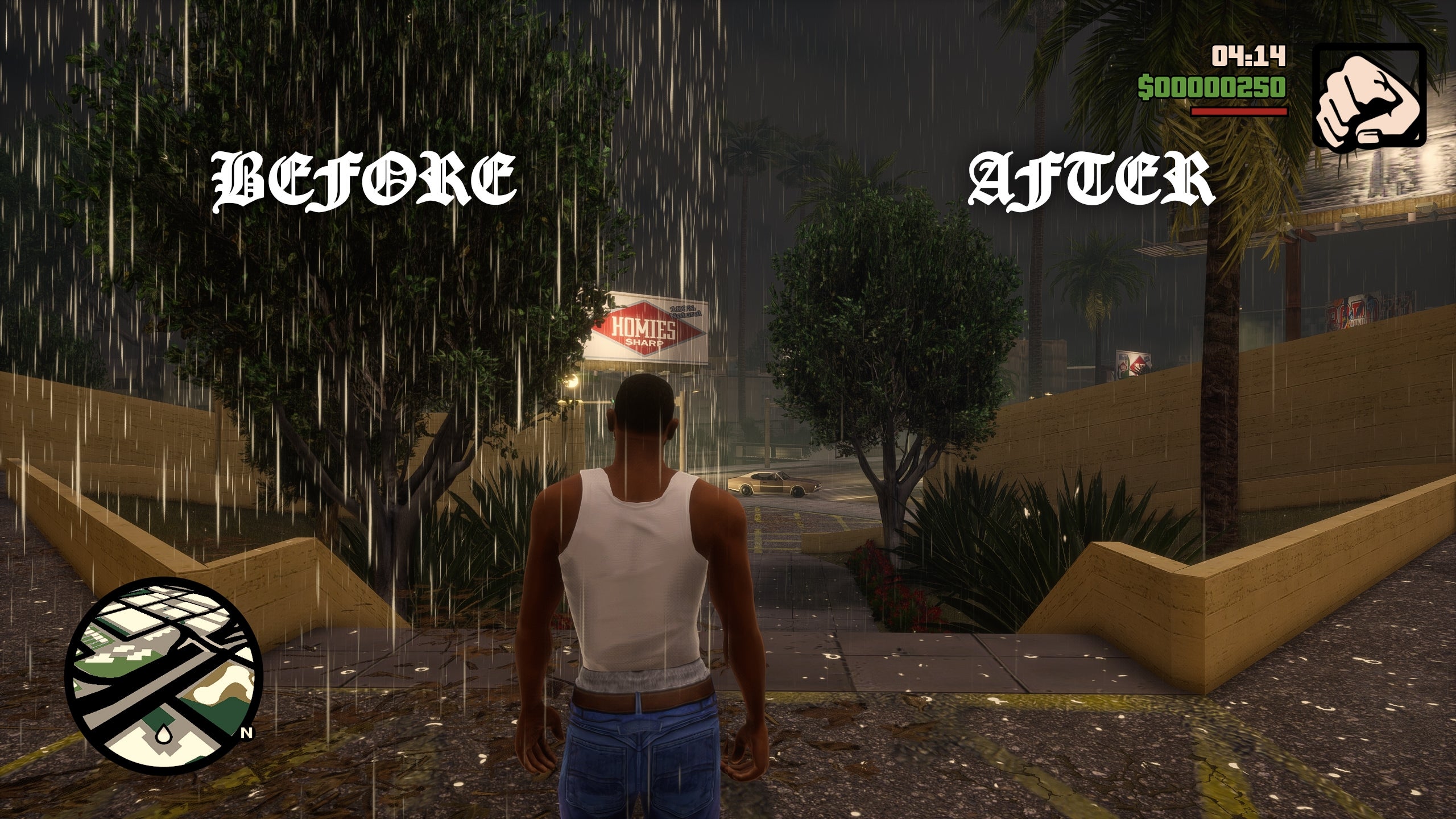
Modders are fixing the GTA Trilogy, from better rain to nut-shaped nuts

by Imogen Beckhelling

Grand Theft Auto: The Trilogy - The Definitive Edition launched last week, and so far it's been a pretty messy affair. And I don't mean the whole removing it from sale fiasco, I mean the game itself is a mess. But fortunately, modders have stepped in, making improvements to the game's rain, fixing typos, adding in lots of nice graphics options and more. One modder has even fixed the nut on the Tuff Nut Donuts sign, which, for some baffling reason, had been rounded out.

Read more

16 Nov 16:37

In 1891, an unknown criminal began poisoning women in London

by Futility Closet

In 1891, a mysterious figure appeared on the streets of London, dispensing pills to poor young women who then died in agony. Suspicion came to center on a Scottish-Canadian doctor with a dark past in North America. In this week's episode of the Futility Closet podcast we'll describe the career of the Lambeth Poisoner, whose victims remain uncounted. — Read the rest

16 Nov 16:36

Epic Games CEO wants to resist monopoly, suggests a single app store for all platforms

by Mahmoud Itani

The Epic Games versus Apple legal battle has been going on for over a year now. While courts have reached a decision, the waters haven’t calmed just yet. The CEO of Epic Games — Tim Sweeney — has renewed his attack on Apple and Google. This time he’s calling for a universal app store that works across all platforms — mobile, desktop, and consoles — to resist monopolies. He made his statement at the Global Conference for Mobile Application Ecosystem Fairness in Seoul, South Korea.

According to Bloomberg, Sweeney argued that “Apple must be stopped” and that Google is “crazy” regarding how it handled payments. At the conference, Tim stated:

What the world really needs now is a single store that works with all platforms. Right now software ownership is fragmented between the iOS App Store, the Android Google Play marketplace, different stores on Xbox, PlayStation, and Nintendo Switch, and then Microsoft Store and the Mac App Store.

He mentioned that Epic Games is already working with developers to allow users to buy a single software license that works across all platforms. The concept of a universal app store that works across all devices would be convenient for users. However, it would be limiting users of all platforms to a single source of software.

Sweeney’s suggestion is quite ironic, considering that one app store for all platforms would end up creating a new monopoly. Would one company control it? Or would it be a collaboration between the most notable companies? Either way, it still would limit all developers and users to a single set of guidelines and options — which they won’t be able to avoid no matter what platform they switch to.

The CEO also criticized Apple for the latest court ruling in South Korea:

Apple locks a billion users into one store and payment processor. Now Apple complies with oppressive foreign laws, which surveil users and deprive them of political rights. But Apple is ignoring laws passed by Korea’s democracy. Apple must be stopped.

The ruling would prohibit Apple from forcing developers to use its payment method exclusively. App developers would have the choice to link to other billing methods that users can choose from. Apple hasn’t made any changes yet, and it has previously stated that it doesn’t need to alter its guidelines to comply with South Korea’s ruling.

What do you think of a universal app store that works across all platforms? Let us know in the comments section below.

The post Epic Games CEO wants to resist monopoly, suggests a single app store for all platforms appeared first on xda-developers.

16 Nov 16:36

The new Nvidia Image Scaling is no DLSS, but boosts performance in any game

by James Archer

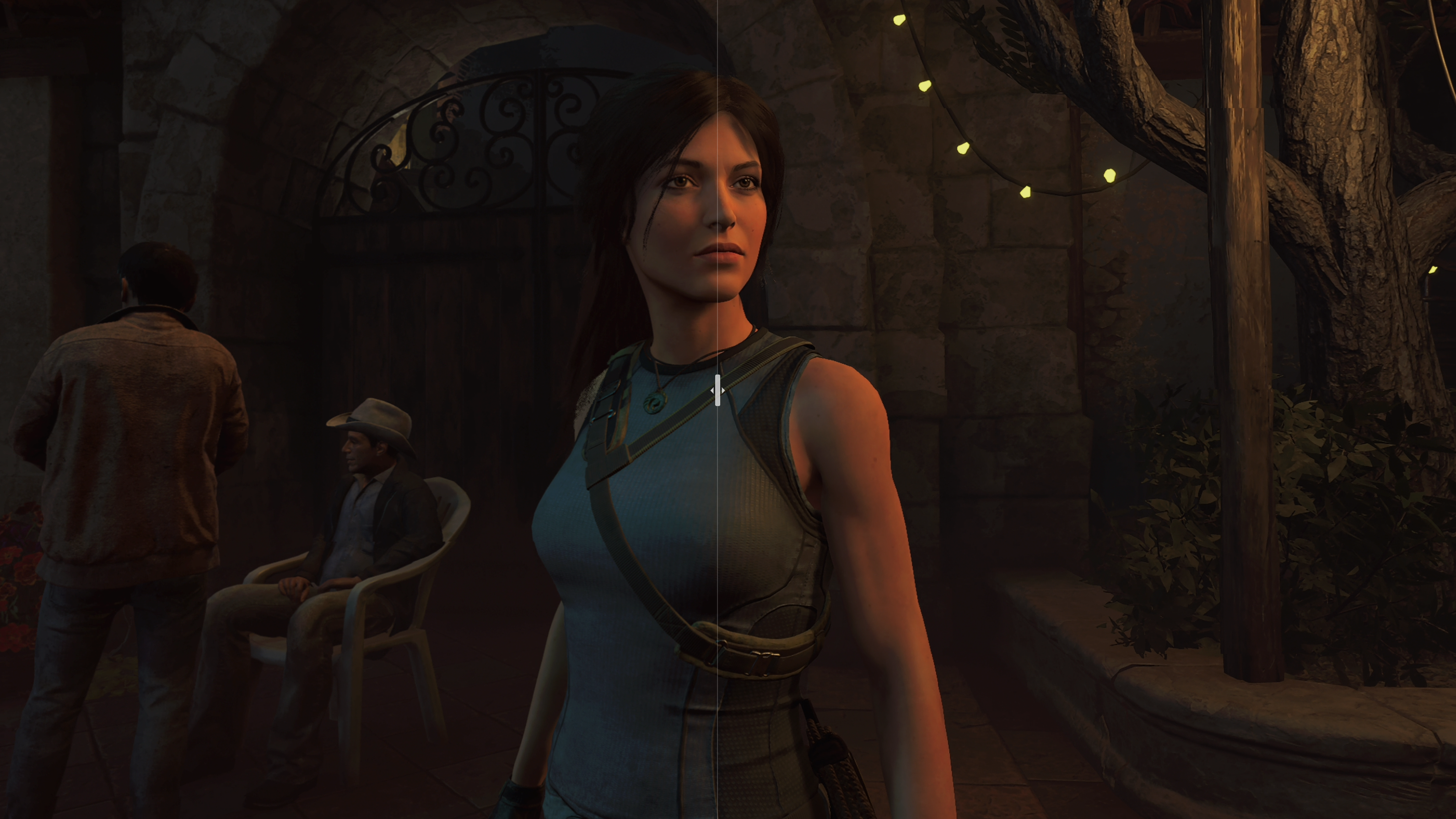
Nvidia have launched a revamped Image Scaling feature that aims to provide a DLSS-style performance boost in your games – as well as ICAT, a new screenshot and video comparison tool that will let you see the difference for yourself.

Read more

16 Nov 16:36

NVIDIA Talks DLSS 2.3 & Compares It To AMD’s FSR, Calling It Superior Than ‘Spatial Upscaling’ Methods

by Hassan Mujtaba

NVIDIA Talks DLSS 2.3 & Compares It To AMD's FSR, Calling It Superior Than 'Spatial Upscaling' Methods

NVIDIA has further dived into details regarding its AI-supercharged DLSS 2.3 technology & revealed a new image comparison tool known as ICAT. The new details include comparisons with the widely used 'Spatial Upscaling' methods that have been around for a while.

NVIDIA Talks DLSS 2.3 - Superior Quality Than 'Spatial Upscaling' Methods & AMD's FSR

The video published by NVIDIA features the company's Vice President of Applied Deep Learning Research, Bryan Catanzaro, who talks about how DLSS 2.3 tech compares against other spatial upscaling methods including AMD's FSR which is a scaled-up, optimized and refined method but given that NVIDIA has an edge through its AI Tensor Core technologies, DLSS does end up to be a more superior method.

  • nvidia-dlss-2-3-image-upscaling-icat-tool-presentation-_1
  • nvidia-dlss-2-3-image-upscaling-icat-tool-presentation-_3
  • nvidia-dlss-2-3-image-upscaling-icat-tool-presentation-_4

We already know how NVIDIA DLSS 2.3 helps produce sharper images through the use of motion vectors. It delivers higher image fidelity and reduces both ghosting/flickering. NVIDIA highlighted that while DLSS 2.3 is better than ever, their own NVIDIA driver suite also features its own spatial upscaling technology which produces better image quality than widely used upscaling methods such as Lanczos and FSR. Do note that AMD's FSR is based on an upgraded & refined version of the Lanczos upscaler as discussed before.

  • NVIDIA Image Scaling
  • nvidia-dlss-2-3-image-upscaling-icat-tool-presentation-_6
  • nvidia-dlss-2-3-image-upscaling-icat-tool-presentation-_8

NVIDIA has also announced that they will make the new Image upscaling technology open-source for integration in a wider variety of games. We have more details on that here!

NVIDIA DLSS 2.3 / Upscaling / FSR Performance Comparison:

NVIDIA doesn't stop there and goes ahead to compare both performance and image quality of DLSS with these Spatial Upscaling techniques. The video doesn't mention which specific spatial upscaling method is used (Lanczos or AMD's FSR) but it looks like DLSS in performance mode delivers higher performance at the cost of slight IQ loss while quality mode delivers higher IQ at similar or slightly faster performance.

  • nvidia-dlss-2-3-image-upscaling-icat-tool-presentation-_9
  • nvidia-dlss-2-3-image-upscaling-icat-tool-presentation-_10
  • nvidia-dlss-2-3-image-upscaling-icat-tool-presentation-_11
  • nvidia-dlss-2-3-image-upscaling-icat-tool-presentation-_12

The performance and image quality comparisons include games such as Necromunda Hired Gun, Back 4 Blood, and Chernonylite (recently added to DLSS suite). You can see the comparisons in the video below:

Both NVIDIA DLSS and AMD FSR are great in their own regards. DLSS is an overall superior and more robust implementation with AI technology backing it up while FSR aims for a more open approach and has a wider adoption rate while being hardware-agnostic. There's also a 3rd GPU player entering the arena soon in the form of Intel's XeSS. We have heard great things about the upcoming AI-powered XeSS suite in our interview here and Intel themselves have shown some really impressive demos which we can't wait to see in action ourselves when the first GPUs are made available to the public by Q1 2022.

The post NVIDIA Talks DLSS 2.3 & Compares It To AMD’s FSR, Calling It Superior Than ‘Spatial Upscaling’ Methods by Hassan Mujtaba appeared first on Wccftech.

16 Nov 16:36

NVIDIA Image Scaling ‘Best-in-Class’ Spatial Upscaler and ICAT IQ Comparison Tool Available Now

by Alessio Palumbo

NVIDIA Image Scaling

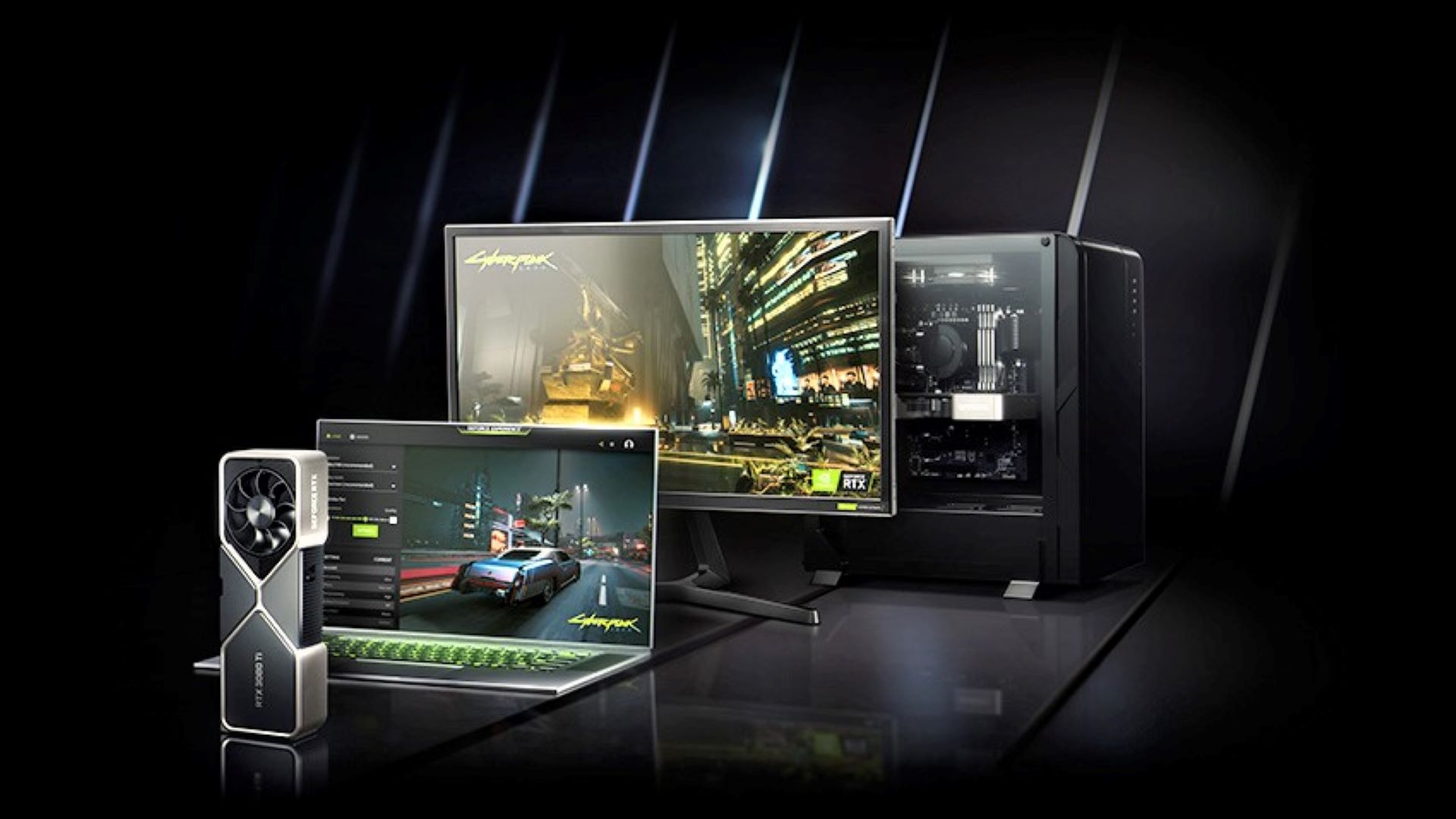
Other than through the latest version of DLSS, NVIDIA is pushing image quality tools and technologies even further today with the release of ICAT, a comparison tool, and with the updated NVIDIA Image Scaling upscaling technology.

Let's start with the latter. Image Scaling originally launched a couple of years ago as an option available through both the Control Panel and the GeForce Experience software. However, today's new Game Ready driver (version 496.76, optimized for Battlefield 2042) includes a significant improvement to the spatial upscaling algorithm, which now uses a 6-tap filter with 4 directional scaling and adaptive sharpening filters to boost performance. According to NVIDIA, it sharpens and upscales in a single pass, making it 'very efficient' compared to existing algorithms (no doubt a jab to AMD's FSR).

Make no mistake: in its presentation, NVIDIA made it exceedingly clear that it believes DLSS to be superior to any spatial upscaling method when it comes to both quality and performance. That said, it also reckons Image Scaling is better than FSR, as they demonstrated with the following comparisons taken from Resident Evil Village and Godfall (two games optimized for AMD).

Image Scaling

Image Scaling

And here's a comparison of Necromunda: Hired Gun featuring FSR, Image Scaling, and DLSS.

Image Scaling

You can opt to enable NVIDIA Image Scaling via the Control Panel or via GeForce Experience. Either way, you'll have the option to tweak the sharpening strength at any time while running games by simply pressing Alt+F3 (with GeForce Experience running) and using the slider.

It is even possible to combinate DLSS and the sharpening portion of Image Scaling in the same game. You can confirm that Image Scaling is only sharpening rather than upscaling (which would be handled by DLSS in this example) by activating the Overlay Indicator checkbox in the Image Scaling option box in Manage 3D Settings of the NVIDIA Control Panel. If the text is in green, then both sharpening and upscaling are enabled, while blue text confirms only sharpening is being done.

Image Scaling

An NVIDIA Image Scaling SDK is available today as well through GitHub. It's open source through the MIT license and has cross-platform GPU support, meaning you can use it on AMD's graphics cards, just like FSR can be used on NVIDIA's graphics cards.

While users can enable the feature through the Control Panel or GFE as we've just outlined, NVIDIA clearly wants developers to integrate it directly into games where possible. There's no supported games list yet, but the following quote from NARAKA: BLADEPOINT producer Ray Kuan suggests we'll see it soon in the melee Battle Royale game.

NVIDIA Image Scaling is a great compliment to a DLSS integration, providing us with a robust upscaling option for the rest of our users.

There is one drawback to this spatial upscaling tech; it doesn't play well with software-based video capture methods like NVIDIA's own ShadowPlay. In this case, the video will be recorded at the pre-upscaled resolution, so you should use a dedicated capture card instead while NVIDIA readies driver-level support for this.

NVIDIA wants to help users navigate through all of these upscaling technologies (DLSS, FSR, Image Scaling, etc.) with the aforementioned ICAT, or Image Comparison & Analysis Tool. Free to download starting today, ICAT lets you easily compare up to four screenshots or videos, checking them with either split screen mode (slider) or side-by-side mode. You can align them spatially and temporally and use advanced features such as trimming, panning and zooming into specific areas, creating loops and adjusting video playback speed.

Supported file types include JPEG, PNG, BMP, and WEBP for images, while video files have to be in the MP4 or WEBM formats. Lastly, it is recommended that users compare footage of built-in game benchmarks since this is the best way to ensure video alignment and 'pixel-perfect comparison'.

NVIDIA shared a handful of screenshot comparisons taken with ICAT in Chernobylite and Necromunda: Hired Gun, two of the games that already support both DLSS and FSR. DLSS Performance Mode is put against FSR Ultra Quality Mode at 1440p resolution.

Chernobylite

DLSS Performance (1440p)
FSR Ultra Quality (1440p)
DLSS Performance Mode (1440p)
FSR Ultra Quality mode (1440p)
DLSS Performance Mode (1440p)
FSR Ultra Quality mode (1440p)

Necromunda: Hired Gun

DLSS Performance Mode (1440p)
FSR Ultra Quality Mode (1440p)
DLSS Performance Mode (1440p)
FSR Ultra Quality Mode (1440p)
DLSS Performance Mode (1440p)
FSR Ultra Quality Mode (1440p)

The post NVIDIA Image Scaling ‘Best-in-Class’ Spatial Upscaler and ICAT IQ Comparison Tool Available Now by Alessio Palumbo appeared first on Wccftech.

16 Nov 16:34

What is this mysterious massive container that washed up on a Florida beach?

by David Pescovitz

On Friday in Brevard County, Florida, visitors noticed this massive metal container that apparently washed up on the beach. It's approximately 20 feet long and 8 feet tall. Canaveral National Seashore resource manager Kristen Kneifl thinks it could be a ballast tank from a ship while others wonder if it's an oil drum or fuel container. — Read the rest

16 Nov 16:34

Windows 11 is making the blue screen of death blue again, hooray!

by Alice O'Connor

Windows has contributed two iconic images to the public consciousness: the default Windows XP wallpaper; and the blue screen of death. But they cut Bliss decades ago, and Windows 11 put the final nail in the coffin of Windows' pop culture relevancy by turning the blue screen of death into a black screen of death. A tragedy. Thankfully, Microsoft have now seen the cerulean light, and are planning to restore the azure annihilator in a future patch.

Read more

16 Nov 16:34

Grand Theft Auto Trilogy: Derision Edition

by Shamus

On the podcast yesterday, we talked about the controversy with the GTA Definitive Edition. For the record, I have not personally experienced the games for myself, so my complaints are based on reports from other people.

This puts me in a really annoying position as a critic. On one hand, I’ll get Rockstar apologists[1] insisting that the controversy is all blown out of proportion and that I shouldn’t be talking about it if I haven’t experienced it first hand.

But if I had bought the game, then I’d have a different group of people yelling at me: “What did you expect? If you were dumb enough to believe Rockstar’s lies and give them your money then you got what you deserved. If you’re dumb enough to fall for this, then I can’t trust you as a critic.”

So you can either be too uninformed to write useful criticism, or you’re unqualified to be a critic. In choosing between these two equally obnoxious fates, I took the one that didn’t cost me $60.

However, the situation is even worse than I reported yesterday.


On Sunday, this video caught my eye:


Link (YouTube)

Apparently, the shovelware dev that threw this mess together wasn’t paying attention, Rockstar didn’t audit their work, and publisher Take-Two didn’t bother double-checking anything before shoving the game out the door in time for Christmas. As a result, they accidentally released a bunch of internal script files and tools. Also, they accidentally included some music tracks that Rockstar no longer had a license for. The tracks were disabled so they wouldn’t play in-game, but they were still part of the download. Also, remember Hot Coffee? Those files were also somehow included with the Definitive Edition.

You might remember that a few years ago, Rockstar foisted their stupid minimum-effort launcher on everyone, effectively Trojan Horsing their platform into all Steam users. Imagine if Gears of War 5 came to Steam, then a year later Epic made it so that launching GoW5 would actually just launch the Epic Store, which you could then use to launch the game. This strategy is what economists call a “dick move”.

This would be bad enough, but then they never bothered to DO anything with the launcher, leaving this sad, pointless, zero-feature launcher as the front end of their billion dollar game franchise. I know I often complain about how under-baked the Epic Games Launcher is, but the Rockstar Launcher makes the EGS look like Steam.

This sort of thing isn’t new, of course. Rockstar has been giving the finger to their PC customers for over a decade now. I mean, remember THIS bullshit?

Good thing they added SecuROM. It would be dangerously irresponsible to only have three layers of pointless DRM on this thing.

But when they screwed up and included all those extra files in the Definitive Edition, this behavior came back to bite them in the ass. They didn’t have a way to cleanly un-do that. If they’d left things alone, then they could have used Valve’s existing, stable, high-speed, feature-rich platform to push out an update to remove the offending files[2] or take the game down, or whatever they needed to do. But they had placed their game out of Steam’s reach. As far as Steam was concerned, your “game” was just the Rockstar Launcher. The actual copy of the game itself is invisible / untouchable to Steam.

So Rockstar had to take down their entire platform on the PC while they worked on an ad-hoc patch to clean up this mess.[3] They never got around to implementing rudimentary features like offline mode, which means this move took down all of their games. For three days.

This wasn’t a single mistake, this was a long series of cut corners and gross irresponsibility, and in the end their customers were the ones punished for this outrageous behavior.

And all of this from a company that made a billion dollars last year selling shark cards to teens to feed the toxic cesspool of cheating and abuse that is GTA Online.

And speaking of…

Shark Cards

No, we're not exploiting young people for money. We're SATIRICALLY exploiting young people for money. Totally different.

These would work as satire if it was something that existed within the universe that NPCs like Jimmy would buy, in order to mock him for being a mindless consumer. I mean “Shark Cards” is just one step away from calling them “Whale” cards. The supposed “satire” is blunt to the point of being insulting.

But no! These are real cards that they sell to real people for real money, which impart actual gameplay advantages! That’s like Facebook openly referring to their users as “Products” within the public-facing Facebook UI. Shark Cards aren’t a satire of nakedly predatory microtransactions, they’re just a really brazen example of the form.

I bring this up because Rockstar made a billion dollars last year from these stupid cards. With that kind of dosh rolling in, you’d think they would have a relaxed attitude towards doing this remaster. Cutting corners on this project is like a billionaire refusing to take his kids to the doctor because he wants to save money . The amount of money is so trivial, and the possible risks are so needless. Just pay the money. You’ll never miss it!

Aged Poorly

These three different images represent different versions of the game. Rockstar pulled the first one from stores and unleashed their legal team to make sure that the third one got taken down, all so they could sell us the second one.

The irony of all of this is that the GTA trilogy has aged really well in terms of visuals. Those chunky models and low-pixel textures still have a lot of charm. If there needed to be a re-release, it should probably be focused on compatibility and interface concerns. Maybe add support for modern resolutions, offer a control layout that mimics the inputs of GTA V, add some cheevos, and patch a few bugs. A lot of this work had already been done for earlier PC releases of the game. We just needed to migrate that stuff to the current-gen platforms.

But Rockstar wasn’t doing this to preserve their legacy and make sure these classic games were available to the next generation. They were looking for a way to get their existing fanbase to buy the game again. So they decided to sell us a visual refresh. But then they outsourced the project to a mobile developer and didn’t bother to check if the resulting port actually accomplished that goal.


Link (YouTube)

Here is a collection of gripes I’ve encountered over the last few days. I’m sure this is just a subset of the whole:

  • Old character models have their skeletons deformed into horrific proportions. Other characters have WIDE OPEN EYES, creating a weird dead-eyed effect reminiscent of Mass Effect Andromeda. This isn’t just the uncanny valley, this is the uncanny abyss.
  • Somehow, this new version struggles to hold a steady framerate on modern machines. The game seems to have these odd lurches every once in a while, as if this was running in a language with garbage collection. (It isn’t.)
  • The fog is just gone. This is really bad in San Andreas, where the fog was needed for both artistic and practical reasons. One, the orange fog was part of recreating the LA smog that gave the world its personality. Two, the fog existed to hide how small the world was. It’s really weird when you can see that all of San Andreas is just a couple of miles wide, and “Mount Chiliad” is basically a big hill. If nothing else, there should have  been an option to re-enable fog.
  • Too many input problems to count. Lots of little headaches and oddities. You can watch this speedrunner trying to make sense of the inputs to get a sense of all the ways in which the current system isn’t just different, but demonstrably worse than the original.
  • The lighting is a disaster. Some cutscenes and locations are too dark. Many interior spaces have flat lighting with no contrast.
  • Numerous signs are misspelled or misplaced, like the burger place where the menu board shows pizzas, or the pizza place where the six-panel menu board now repeats the same panel six times.
  • New bugs! One speedrunner couldn’t pass a particular mission because a scripted explosion was killing him in a cutscene.[4]
  • Expanded bugs! In the old versions of San Andreas, having a high framerate would make you swim more slowly. Now you always swim slowly, regardless of framerate.
  • LOTS of little attention-to-detail mistakes. Bump maps that don’t match the texture, parking lots nonsensically covered in grass, weird collision on objects, stretched or misaligned textures, and LOD objects that vanish up close.

It’s not like these problems are hidden in the obscure corners of the world. Many of these are incredibly obvious. And yet the developer never caught them, Rockstar never caught them, and the publisher never caught them. It feels like this thing passed through three companies without anyone doing any QA testing.

While the visuals of the originals have aged gracefully, one thing that didn’t age well is this quote from Strauss Zelnick, president of publisher Take-Two:

Remastering has always been a part of the strategy. What we’ve done differently than the competition is we don’t just port titles over. We actually take the time to do the very best job we can making the title different for the new release for the new technology that we’re launching it on.

So what we have is a “Definitive Edition” of a classic game that is the absolute worst version of the game, and this version is now the only one for sale on any platform. The old versions have been pulled from store shelves and the various user-made beautification mods have been lawyered out of existence.

Like I said on the podcast, it really lights my fuse when these games begin sneering their disjointed high-school level criticisms of “capitalism”. It’s like Harvey Weinstein complaining about women in Hollywood not getting enough respect.

Just shut your mouth, Rockstar. You’re not just part of the problem, you’re at the forefront of making the problem worse. You’re not allowed to be sanctimonious about capitalism, you hypocritical goddamn vultures.

16 Nov 16:32

Dying Light 2: Stay Human Q&A With Tymon Smektala – No Crossplay at Launch, Hopefully Later

by Kai Powell

Dying Light 2

Alongside our recent four-hour media hands-on preview for Dying Light 2: Stay Human, we managed to fit in twenty minutes to sit down with Tymon Smektala, Lead Game Designer working on the game at Techland. With less than three months separating us from the sequel's debut after many delays, we checked in to get an update on the final development phase.

It's been quite some time since Dying Light 2 was originally revealed. Can you talk a little bit more about what's changed over the years?

We changed the engine at the very beginning of the project. All of the previous Techland games were made using our own in-house tech called Chrome Engine. And we were working on subsequent iterations of the engine up to iteration number 6. Dying Light 1 was created using Chrome Engine 6. When we looked at the other stuff we had, we realized that Dying Light 2 actually has a lot of technical depth and the engine would not be able to support us moving forward. It actually happened at the same time, when we as a company decided that we want to focus on open-world first-person games. So we used the luxury, to be honest, to create the engine, an engine that is our own, and that would suit that particular use, that particular goal of creating high fidelity graphics [and] open-world games.

We made a new thing. Maybe we weren't that creative with the name because it's C-Engine but it is a completely new thing. Yes, it was kind of difficult for us at the start of the project, because the engine was ready, but as always, when you start using a tool, you start discovering that you would like this to work differently. First of all, you need to learn the tool, and then you need to incorporate all the improvements to it or changes to it for a better workflow. So at the initial stages of the project, we had some improvements to do. But I think now the technology has matured, actually, it matured quite some time ago. It is a stable engine our own in-house staff created especially for first-person open-world games like Dying Light 2: Stay Human.

This will be the first big project that Techland has used with C-Engine with the new, or should we say the current, generation of consoles. How are you seeing the Xbox series X or PlayStation 5 starting to take advantage of the C-Engine?

The idea for us was to focus on, I used this expression before, high fidelity graphics open worlds. The idea is that we are creating worlds where when you look around, it's actually quite dense with details. Dying Light, and maybe some other games that will be in the future, will focus more on urban environments, on environments, which are full of those details. It's not open spaces; you have to look at a scene and understand that this is a dense, real place. Of course, PS5 and Xbox Series X with the CPU capabilities and GPU capabilities support that. The thing about C-Engine is that it has a very powerful streaming solution, which allows us to load a lot of data, a lot of textures, a lot of geometry, as the player moves through the city. When you have a lot of memory and when you have a powerful CPU, it helps you to achieve that. As I said, we have created this technology looking into the future. We were aware of what would happen with PS5, Xbox Series X, and the direction for consoles. The engine is built to support that 100%.

How well does the C-Engine support SSDs to accommodate for that faster streaming?

Exactly, the whole idea is to stream a lot of data quickly. Of course, that's the philosophy of the engine and that's the philosophy of modern gaming. That's the philosophy of current/modern gen. As I said before, that technology was built, especially for that kind of environment, so I hope it will serve us very well moving into the future for PS5, Xbox series X, and whatever happens later for the consoles, because I think the general direction of computer graphics, of console graphics, will not change significantly within the next few years.

Taking a step back to look at the previous generation consoles like the PlayStation 4 and the Xbox One: how does C-Engine fit in with those older consoles?

The C-Engine is very scalable. We were aware that with Dying Light 2, we had to prepare the technology, so at least for this one title, it will be able to support that [console generation]. And you could say, okay, that's just one title, maybe you don't need to bother about it that much, but Dying Light is our own IP. It's an extremely important third project for the whole company. [It's] not the only one that we have in the pipeline but this is the biggest thing we have made so far. So yes, the engine was prepared to handle that.I don't know about our engineers, I'm a gameplay designer, so I'm not really a tech guy so maybe I'm not giving you the most precise and the most detail-rich answers.

What I'm experiencing right now, even as a gamer playing the game, I'm really amazed about what the guys are able to pull off on PS4 and Xbox One because now the game is stable, now the game is basically content complete, very stable, we are just polishing it. Now it's the time when the guys are responsible for optimization can step in and do their magic. And for me, it is magic, because I don't understand half of it but you can really feel it as a gamer, how suddenly how more fluid it will become, how good the graphics are. I hope you will be able to see it when you play the PS4 version. Of course, when you compare it like resolution to resolution or texture to texture, you will see differences. The most important thing for me as a gameplay designer, I think the experience stays the same like you feel the same way when you play the game. When you dim your lights, when you just lay on your couch and you start playing the game, you get the same experience on both console generations.

I did want to talk a little bit about the combat experience. With Dying Light, there were some immersive sim elements; if you splash zombies with water and then use an electrical attack on them, that would shock them. How are you expanding those elements in Dying Light 2: Stay Human?

First of all, all of that stuff that you are able to experience in the first game is in Dying Light 2 as well. One thing that we are doing specifically is that we have expanded our modding system for weapons. In the first game, the modifications for weapons were kind of scripted. You could just put specific modifications on different types of weapons; now you have complete freedom to put any elemental effects on any weapon that's moddable. You can also combine those two. I think the most important new thing is that not only you will be able to achieve those environmental effects but also achieve them through modding your weapons. For example, you can put double fire modifications on your weapon and this creates this huge fire explosion that covers a bigger area. The other thing is that when you put freezing modification and fire modification on the weapon, then the game tells you 'Hey, you did something quite stupid' because when you combine freeze and fire, this basically overrides each other so there will be no effect. I think the biggest improvement or biggest addition is your ability to combine those elemental effects on one single weapon through your modding.

Now, multiplayer has been a huge part of these types of games whether it's Dead Island, Dying Light, now Dying Light 2: Stay Human. With the multiplayer, are you planning any sort of cross-play, whether it's cross-platform or cross-generation?

So, no, this will not be implemented at the start but we are looking very closely at it and we hopefully will be able to activate/introduce it later during the life of the game.

Looking at the life of Dying Light 2, if you look at Dying Light 1, you supported that particular title with DLC content for years, even more than half a decade later. What's the lifespan you're looking at for Dying Light 2: Stay Human?

I think similar, that's our expectation. The thing is that right now, we need to do the first thing right. If we release a game, and for some reason, it's lacking [or] it doesn't get as much popularity as much success as the first game, then I think it's it's meaningless to make any plans moving into the future. So yes, we have quite detailed plans of what we want to do in the future for the next few years. The most important thing for us right now is the release of the game. It's February, we have to focus on this and I hope the players and media will enjoy it.

Do you have any plans for paid DLC down the line, or will it be free DLC?

I think it would be a mix of both; it will be the stuff you expect from a modern game. So of course, there will be some paid additions, but there will be a ton of free additional DLCs: small things like new weapons, new customization items, that we will be providing after the game is going to be released.

As far as the performance goes, in terms of the frame rate for Dying Light 2: Stay Human, are you targeting 30 FPS or 60 FPS?

When you play it on the next-gen consoles on Xbox Series X and PS5, you will be able to choose between performance and quality. So yes, you will be able to choose the game to run in 60 fps or you will be able to opt for a higher resolution and high-resolution textures.

Will Dying Light 2: Stay Human have any support for ray tracing?

Yes, ray tracing also is supported on next-gen consoles.

Do you have any plans to implement directional melee combat once again?

Not at this stage. No, this is not planned. I think you mentioned the system we had in Dead Island. We experimented with this on the first game already, and it's really different than in Dead Island because, in Dead Island, you were moving on a flat plane, basically just strafing, moving forward, moving backward. It gave you more space to have fun with the directional melee combat. With Dying Light, when you have to move so much when you have to cross over obstacles and keep mobile on the battlefield when you have a contest with enemies, it's too much, it's like it blows your mind. It doesn't make sense in the context of this particular game.

As far enemy diversity goes, are we going to see beyond humans, zombies, volatiles, etc? Are there any other enemy types that you wanted to mention?

I think that the most important thing is that there will be encounters with humans. This is quite a new thing. I know there were some encounters with humans in the first game, but they were kept to a minimum. This game is basically half and half; you will fight with humans just as you will fight with the infected. So on both sides of those groups, we have quite a few variations. I would say on the infected we have about 10 to 12 variations of different infected types with different behaviors, different visuals. And on the human side, we have about, I think six, different unit types. And all of those types have some variance in terms of behavior. Another thing is that as you play the game, also the behaviors of both the infected and the humans, upgrade improve. So when you start the game, you will just see some of those behaviors. But as you progress, you will see them doing more sophisticated stuff: humans using group tactics more and it scales. I hope you notice that when you play the game there's like this meter that says which player rank you are on. So the enemy scales with that trying to follow your progress.

When you play the game, I think you will finish the main story with side quests at around the player rank six, but it goes higher. So we kept adding new behaviors even when you start to keep playing after the story finishes to give something to players that want to invest more time and maybe have another go at it or just have fun with the open world. The important difference also is that with the infected they don't use advanced tactics so you can use brute force against them. The important thing to look at is the group constitution if there is a lot of biters and maybe some virals, you fight differently than if the virals, the fast-moving units, and a spitter.

That's a completely different group because that group constitution communicates what kind of tactic you should use. When it comes to humans, they are more intelligent, they learn your moves. When you try to, for example, spam one attack, they will realize that and change the tactics during the encounter and also they use more group tactics. So they try to cooperate together, maybe some of the guys when you're focusing on one guy, or maybe one guy is trying to draw your attention. And then another guy tries to find a position far away from you and starts throwing some knives at you. So there are more intelligent behaviors on their side.

One mode that was added into Dying Light 1 very early on was that the Be The Zombie mode. Will Dying Light 2: Stay Human feature something similar?

Not on the release, no, but what will be released in terms of online play is a four-player co-op. So you will be able to play the game with three friends in a four-player group basically from start to finish. There is a short section at the start of the game, kind of like a prologue tutorial, where you have to play it by yourself to get into the story, to understand what the story is about, and also learn the mechanics. But when it ends, you play with your friends.

Also, another thing that's worth mentioning regarding the co-op experience is that because it's a game about choices, and your choices change the world around you, change the city and have some impact on how the city looks and what gameplay opportunities are available there. It's always the host of the session that makes the decisions. But then, if I invite you, you play with me and I make the decisions. You can tell me through headsets or through some in-game UI, that you would recommend me to make this choice or the other choice, but I make the choices. But then you play your game, and you make different choices, and I join you as a co-op player. This is my opportunity to learn the other versions of this story, other versions of what can happen, or other versions of how the city can look. So we do believe that this will support co-op gameplay and playing the game with your friends a lot after the release.

How long do you expect the main campaign to last in Dying Light 2: Stay Human?

It's a very hard question to answer because it's an open-world game like we have created this build to last for about three hours and we give the journalists like four hours to play so they have some free time. But the thing is, I think you will notice that it's very hard to see everything that we have contained. So for us, it might be quicker, but if an actual gamer plays it, they can squeeze more out of it. I think that the main story can be finished in around 20 hours. But of course, there are hundreds of hours of extra content, additional stuff: side quests, open-world activities, challenges. So it is a huge game. But if you want to just focus on the story, I think you'll be able to finish it because this was our goal, like there are a lot of games where you start playing them and it's really very hard to find those 50 hours to finish them. So we wanted everyone to experience the story from start to finish, and then maybe replay it and see other versions of it.

Thank you very much for your time.

The post Dying Light 2: Stay Human Q&A With Tymon Smektala – No Crossplay at Launch, Hopefully Later by Kai Powell appeared first on Wccftech.

16 Nov 16:31

Vancouver is now completely cut off from the rest of Canada by road. It can only be accessed by helicopter, boat, or Stargate [Scary]

16 Nov 16:30

Federal judge says he's helpless in preventing the release of 'Tiger King 2' [Amusing]

16 Nov 16:29

Despite Western music being banned in the country for 40+ years, these women risk public floggings and jail time to shred it up every night in Iran's underground metal scene. Now THAT is SO metal [Cool]

16 Nov 16:29

The 7 Best Outdoor Solar Lights

by Rachel Scherer

How often do you turn on your outdoor lights at night only to forget to switch them off in the morning?

16 Nov 16:29

Assassin's Creed Valhalla – Discovery Tour: Viking Age

by rkalista@gamingnexus.com
Assassin's Creed Valhalla's "Museum Mode" is here. Adding storylines to Discovery Tour: Viking Age adds a noncombative roleplaying game to the educational mix.
16 Nov 16:27

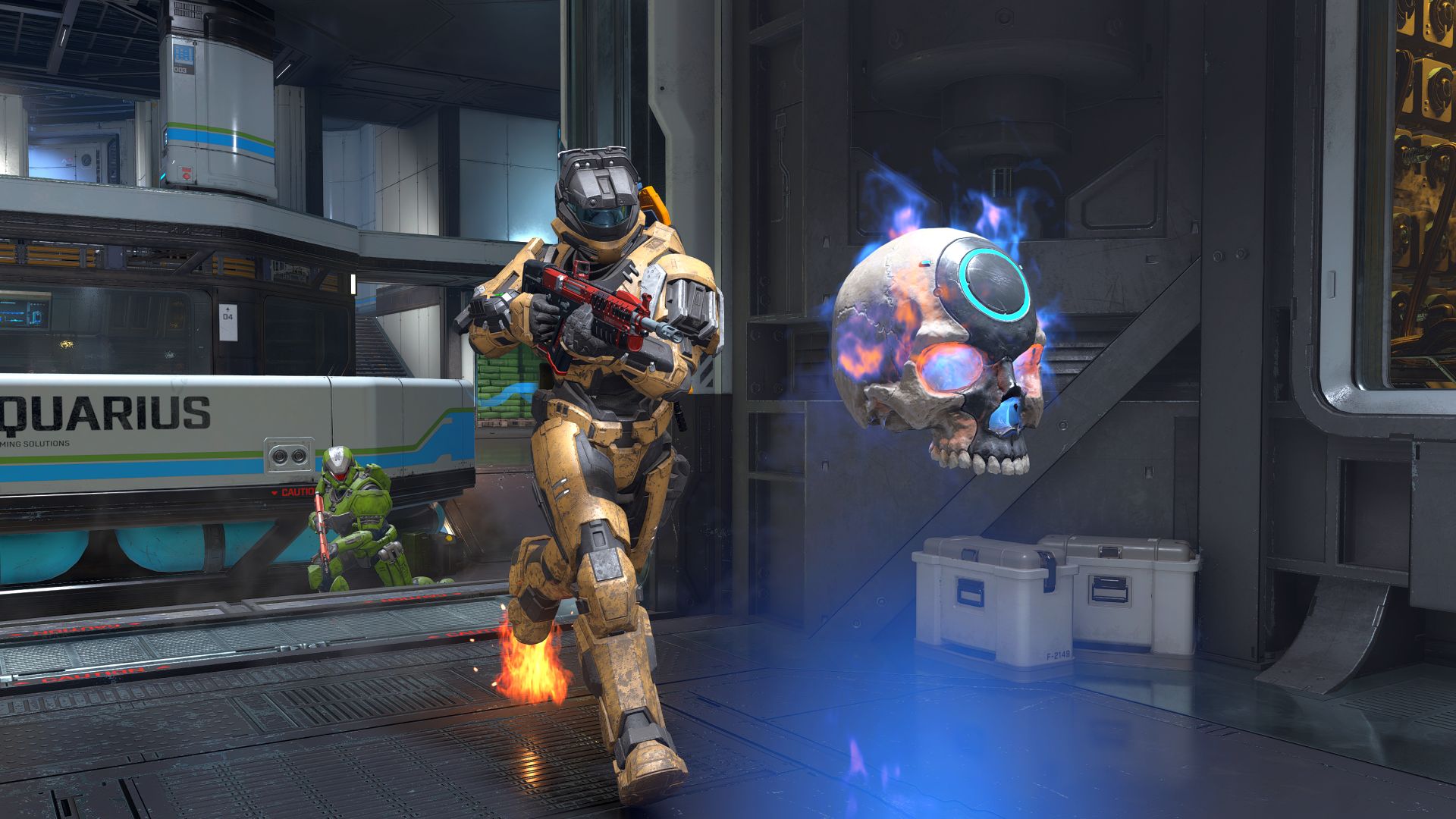
Looks like Halo Infinite is Xbox Game Studios’ biggest launch on Steam yet

by Carrie Talbot
Looks like Halo Infinite is Xbox Game Studios’ biggest launch on Steam yet

Well, that was a wonderful surprise, wasn't it? Yesterday, following some recent rumours, 343 Industries surprise-launched Halo Infinite multiplayer across last and current-gen Xbox consoles and PC via Steam as part of Xbox's 20th anniversary celebrations. Within mere hours of its launch, the FPS game rocketed to more than 100,000 concurrent players on Valve's platform alone - and now it turns out the peak for launch day was more than two-and-a-half times that.

Head to SteamDB's page for Halo Infinite and you'll see that the final figure of peak concurrent players on the game's (multiplayer) launch day hit an eye-watering 272,586. And, as SteamDB creator Pavel Djundik has rightly pointed out on Twitter, that was on a Monday, no less.

This figure puts Halo Infinite multiplayer in the top 25 most-played games - by peak concurrent player count - on Steam of all time, going by SteamDB's figures. Ordering the list by all-time peak player counts, we can see Halo Infinite sits just below the likes of Skyrim (287,411), Destiny 2 (292,513), and the original Counter-Strike (319,586), and above other big names such as Rust (245,243), Payday 2 (247,709), and Rainbow Six Siege (201,053). In the list of all-time most-played multiplayer games on Steam, it's currently in the number 16 slot, as of this story. It's worth noting, though, that Halo multiplayer is free-to-play, while some other titles in these lists are purchasable games.

RELATED LINKS: Halo Infinite release date, Halo Infinite E3 2019, Halo: The Master Chief Collection PC
16 Nov 16:26

Nvidia DLSS 2.3 video claims the gaming PC tech is better than AMD FSR

by Phil Hayton
Nvidia DLSS 2.3 video claims the gaming PC tech is better than AMD FSR

Nvidia's DLSS plays a vital role in gaming PC performance today, as the tech allows players to balance visuals and boost fps in games like Battlefield 2042  and Back 4 Blood. Despite this, DLSS 2.3 launched last month with a distinct lack of announcements, meaning it's still somewhat under the radar. Thankfully, it looks like the latest update will get its chance to shine after all, as a new promotional video claims the graphics card tool is better than “spatial upscaling” options, like AMD's FidelityFX Super Resolution.

Spotted by Videocardz, Nvidia's video celebrates its DLSS AI tech and details its progression since it launched three years ago. The green team's Vice President of Applied Deep Learning Research, Bryan Catanzaro, also uses side by side comparisons to show off the differences between the RTX GPU exclusive feature and other solutions.

While spatial upscaling tends to be associated with blurry visuals, DLSS 2.3 is set to expand upon the achievements of its predecessor, with reduced ghosting, flickering, and improved motion vectors. To help consumers see the difference between DLSS and traditional scalers for themselves, Nvidia also has a free image comparison tool on the way dubbed "ICAT", something that should come in handy for analysis and benchmarking.

RELATED LINKS: RTX 2070 Super review, RTX 2060 Super review, Best graphics card
16 Nov 16:25

Mysterious Object Glimpsed Decades Ago Might Have Actually Been Planet Nine

by msmash
It's one of the most intriguing questions about the Solar System from the last five years: Is there a large planet, lurking out in the cold dark reaches, on an orbit so wide it could take 20,000 years to complete? The answer has proven elusive, but a new study reveals what could be traces of the mysterious hypothetical object's existence. From a report: Astronomer Michael Rowan-Robinson of Imperial College London in the UK conducted an analysis of data collected by the Infrared Astronomical Satellite (IRAS) in 1983, and found a trio of point sources that just might be Planet Nine. This, Rowan-Robinson concludes in his preprint paper, is actually fairly unlikely to be a real detection, but the possibility does mean that it could be used to model where the planet might be now in order to conduct a more targeted search, in the quest to confirm or rule out its existence. "Given the poor quality of the IRAS detections, at the very limit of the survey, and in a very difficult part of the sky for far infrared detections, the probability of the candidate being real is not overwhelming," he wrote. "However, given the great interest of the Planet 9 hypothesis, it would be worthwhile to check whether an object with the proposed parameters and in the region of sky proposed, is inconsistent with the planetary ephemerides." Speculation about the existence of a hidden planet in the outer reaches of the Solar System has swirled for decades, but it reached a new pitch in 2016 with the publication of a paper proposing new evidence. Astronomers Mike Brown and Konstantin Batygin of Caltech found that small objects in the outer Solar System's Kuiper Belt were orbiting oddly, as though pushed into a pattern under the gravitational influence of something large. But finding the dratted thing is a lot more complicated than it might sound. If it is out there, it could be five to 10 times the mass of Earth, orbiting at a distance somewhere between 400 and 800 astronomical units (an astronomical unit is the average distance between Earth and the Sun; Pluto, for context, is around 40 astronomical units from the Sun). This object is very far away, and quite small and cold and probably not reflecting much sunlight at all; and, moreover, we don't know exactly where in the very large sky it is. So the jury is out on whether it is real or not, and the topic is one of pretty intense and interesting debate. IRAS operated for 10 months from January 1983, taking a far-infrared survey of 96 percent of the sky. In this wavelength, small, cool objects like Planet Nine might be detectable, so Rowan-Robinson decided to re-analyze the data using parameters consistent with Planet Nine.

Read more of this story at Slashdot.

16 Nov 11:28

Movies Like Pig That Are Definitely Worth Watching

by Liam Gaughan

"Pig" was one of the most surprising movies of summer 2021, and the beautiful film still stands as one of the best of the year. While it's not always the case that independent dramas keep the momentum going as Hollywood enters the fall festival season, "Pig" earned early buzz with its Gotham Award nomination for best feature, giving hope that critics' groups will remember the captivating, emotionally devastating drama as the end of the year awards ceremonies begin to arrive.

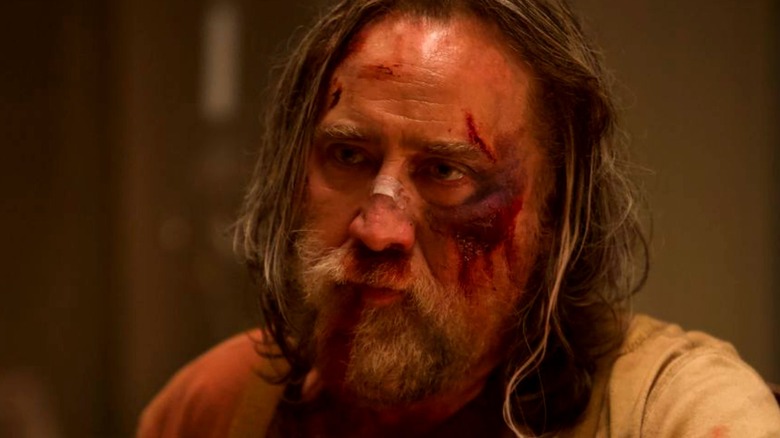
"Pig" follows former top chef Robin Feld (Nicolas Cage), who has abandoned his life in the metroplexes of Portland to live in the woods. His only companion is a truffle pig that aids him as he collects ingredients for his buyer, Amir (Alex Wolff). Amir, the son of one of Portland's wealthiest food retailers, Darius (Adam Arkin), knows Robin's history and seeks his expertise in selecting the best ingredients, but he's fearful of bringing the reclusive man into public. Robin has no reason to return to the city and the painful personal memories that go along with it, but in the middle of the night a band of scavengers break into his meager home and kidnap his pig. It's devastating for Robin, and he immediately seeks out Amir's help in getting his best friend home safely.

It's not always the case that a first film is this impactful, but writer-director Michael Sarnoski establishes himself as a filmmaker to watch with his directorial debut. If you loved "Pig," these other great movies are also worth watching.

Joe
"Pig" is notable for its sensitive depiction of loneliness and heartbreak, but it became a shocker for featuring one of the greatest performances of Nicolas Cage's career. Cage is a brilliant actor, and from the early '80s throughout the early 21st century, he consistently appeared in great films from notable auteurs. Cage even took home the Academy Award for best actor for his gripping performance in "Leaving Las Vegas."

However, in the last decade, Cage's career has taken a different direction. He began appearing in mostly direct-to-VOD films that were poor in quality, and often exaggerated his persona. He became better known for his eccentricities than his performances, so "Pig" was a great reminder of just how devastating Cage can be when delivering a low-key, sensitive performance.

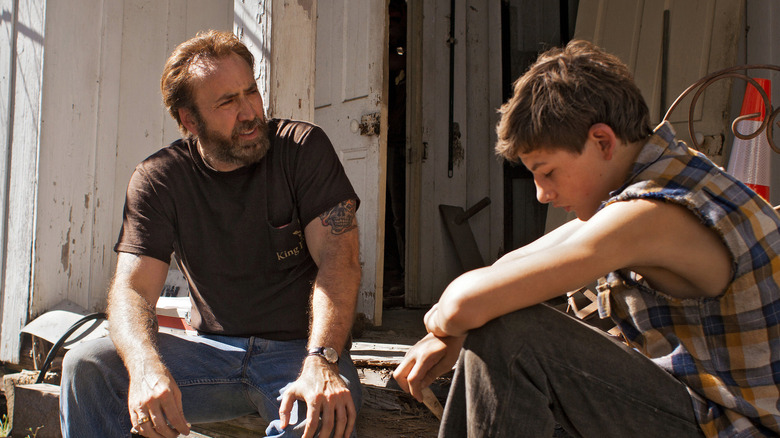
But "Pig" isn't the only great role Cage has played in the last few years. In 2014's "Joe," he appears as a character who is dealing with similar personal torments as Robin in "Pig." David Gordon Green's independent drama follows a mountain man suffering from extreme alcoholism who operates his own tree-poisoning crew in the woods of Texas, and who has isolated himself from most human connections out of fear he'll lash out in anger. Joe is sympathetic towards his 15-year-old employee Gary (Tye Sheridan), who is beaten by his alcoholic father. He works to mentor the boy, while also learning to reintegrate himself into society.

Okja

Much of the impact of "Pig" comes from its sensitive depiction of the relationships between humans and animals. Robin's early scenes scouring the forests for the perfect ingredients are quite touching, thanks to his emotional bond with his pig, and the film treats their earnest relationship with respect. There's nothing ironic about their dynamic, but the film is also not heavy-handed in its message. When Robin confronts a leading Portland chef over his treatment of animals, his monologue doesn't beat the audience over the head with its morals, but rather allows the character to have a genuine and honest emotional moment.

Bong Joon-ho's 2017 Netflix drama "Okja" shows a similar sensitivity to these close human-animal relationships, but does so with a science fiction premise. The film is set in an alternate version of reality where a dishonest "environmentalist" company grows genetically altered pigs to alarming sizes. These "super pigs" are subjected to grueling laboratory experiments, during which they're mistreated and forced to bear children. The radical environmentalist Animal Liberation Front, led by Jay (Paul Dano), aims to expose the company's misdeeds, putting him at odds with its eccentric CEO Lucy Mirando (Tilda Swinton) and wacky children's television host Johnny Wilcox (Jake Gyllenhaal).

But the emotional core of "Okja" lies in the relationship between the titular super pig and its owner, the 12-year-old South Korean farm girl Mija (Ahn Seo-hyun). Mija raises Okja as a pet, and she's devastated when her beloved best friend is kidnapped, forcing her to embark on an epic adventure to recover Okja as corporate battles rage in the background.

Leave No Trace
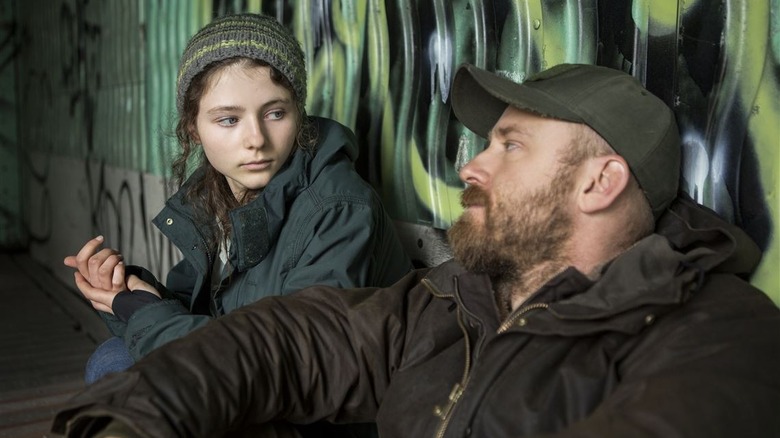
"Pig" is very sensitive in its depiction of a character who lives outside of normal society and does not interact with others on a regular basis. Sarnoski pays careful attention to the details of Robin's daily life and the meticulous process he uses to gather items for his daily meals and future employers. Cage shows how, while some may consider this lifestyle to be psychologically damaging, Robin finds it to be quite comforting.

Debra Granick's emotional 2018 drama "Leave No Trace" shows characters with a similar sense of isolation, and, like "Pig," the low-budget atmosphere helps make its environments feel more realistic. The film centers on Will (Ben Foster), a U.S. military veteran suffering from post-traumatic stress disorder who chooses to live in the wilderness. Like "Pig," it's set on the outskirts of Portland, Oregon and captures the natural beauty of its setting. Will raises his 13-year-old daughter Tom (Thomasin McKenize) and the two are happy together. However, their existence is discovered by park rangers, and they are forced to return to society.

Like Robin in "Pig," Will struggles with the transition. He's haunted by his experiences and is awkward during social exchanges, and his behavior can seem off-putting. Tom becomes slightly better adjusted to their new living conditions, and although the government-oriented programs don't appeal to her, she finds a place within a small community as she grows interested in learning about beehives.

The Electrical Life Of Louis Wain
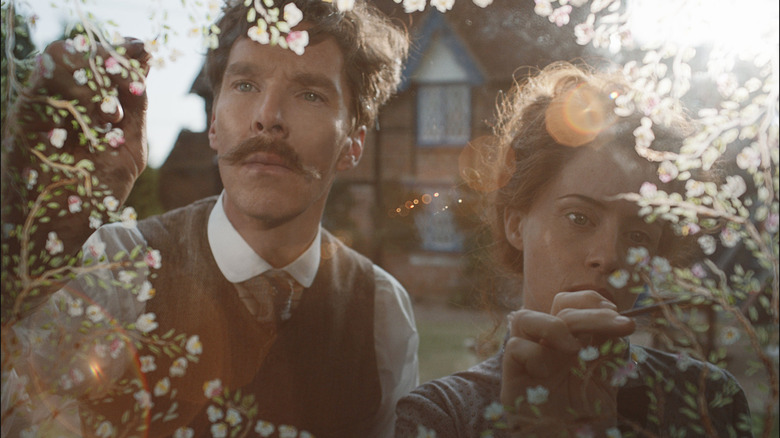
"Pig" has a chance to make a serious dent this awards season, but it's not the only 2021 film to feature an emotional bond between humans and animals. The biographical film "The Electrical Life of Louis Wain" explores the titular 19th-century artist through a memorable performance by Benedict Cumberbatch. Similar to what Cage does in "Pig," Cumberbatch makes his character's idiosyncrasies endearing, and gives a clear reason for why he's more comfortable talking to his new obsession: cats.

Cats were not generally thought of as house pets in 19th-century London, but Wain began to keep his own felines after traumatic circumstances made him anti-social. Wain lost his father when he was a child, and attempted to support his struggling mother and five younger sisters with his artistic career. Unfortunately, paintings that were similar to his contemporaries' faced a tough market, so Wain began creating surrealist images of cats. Initially, Wain was mocked for his work, but while many dismissed him as crazy, Wain found the natural grace and personality in these furry creatures.

Each of the cats that Wain takes home serves as both a muse and a pet, and enters the story at a key point in his life. He adopts Peter, for example, during the period when he marries his sisters' new governess, Emily Richardson (Claire Foy), binding the three of them together. Foy is also delightful as she supports her husband's new endeavors.

The Midnight Sky

The central relationship between Robin and his beloved pig may initially seem strange, but the film treats their interactions sincerely. It doesn't seem strange at all that Robin would be interacting with the animal, and ultimately their conversations are very heartwarming; Cage sheds his typically eccentric behavior and delivers a very sensitive, earnest performance. George Clooney, a movie star renowned for his charisma, took on a similarly unconventional role with his science fiction epic "The Midnight Sky."

Like "Pig," "The Midnight Sky" presents a central character dynamic that carries more emotional weight than it initially seems. The film centers on the scientist Augustine Lofthouse (Clooney), who spent his life exploring the potential of life on other planets. He falls in love with fellow scientist Jean Sullivan (Sophie Rundle), and they have a young daughter named Iris (Caoilinn Springall), but Augustine chooses not to meet her. When mankind begins embarking on interstellar missions to find a new home, Augustine is left alone at an arctic research station, where he communicates with a team of astronauts. He initially thinks that he's destined to live the rest of his life alone, but he discovers a young girl hiding in the station who he befriends.

Like Cage, Clooney subverts his standard onscreen persona and plays as a man who fears the company of others. His relationship with the child is very touching, particularly after a key plot twist reveals a surprising connection between the girl and the team of astronauts.

At Eternity's Gate
"Pig" does a great job of exploring the beauty of the natural world. Michael Sarnoski uses realistic details to show Robin and his pig in their natural state, and the images of the Portland wilderness are simply breathtaking. The stillness of the trees contrasts sharply with the bustle of the cities, as Robin visits a seedy fight club and the back alley behind a restaurant and sees the excesses of wealth.

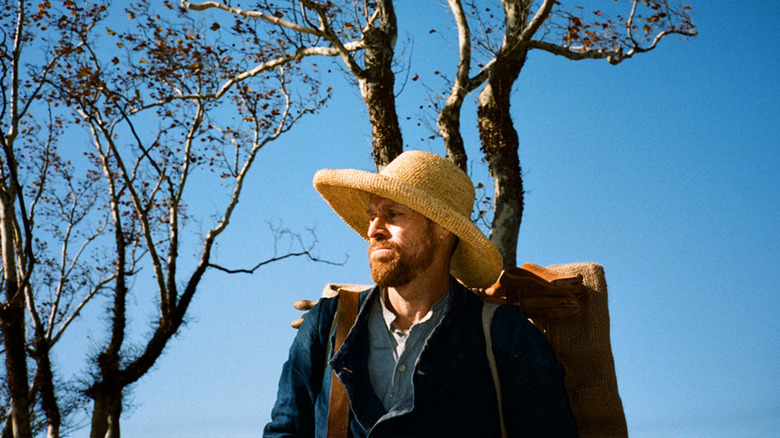
As a painter, Vincent van Gogh was renowned for his ability to create gorgeous still life paintings of landscapes. However, while van Gogh is now considered one of the fixtures of the post-Impressionist era, his avant-garde brushing technique proved to be controversial, and he suffered from severe mental health struggles later in life, experiencing frequent delusions and, at one point, cutting off his own ear. Julian Schnabel's 2018 biographical film "At Eternity's Gate" explores van Gogh's final days as he reflects on his career and mortality.

The film stars Willem Dafoe in one of the best performances of his career. Dafoe has many distinguishing hallmarks as a performer that have led him to be labeled as a "character actor," but, like Cage, he can also generate empathy for unusual characters. Van Gogh is mocked by his contemporaries, and his brother Theo (Rupert Friend) worries about him, but he forms a close working relationship with fellow artist Paul Gaguin (Oscar Isaac) nonetheless. Similar to Robin's interactions with Amir, these relationships tie van Gogh to a connected world that he doesn't want to be part of.

Robot & Frank
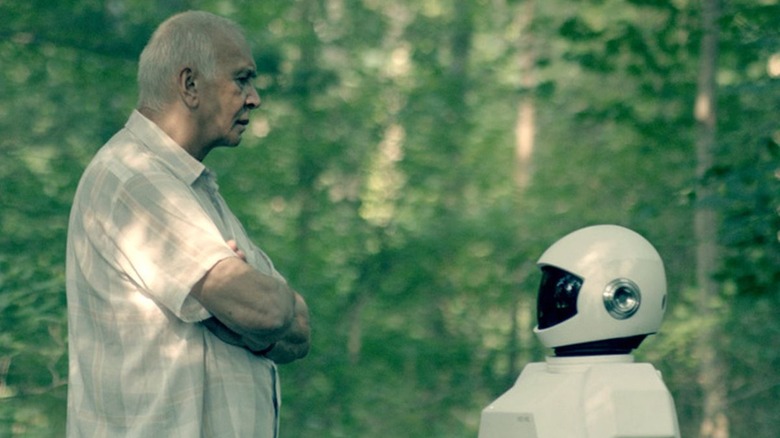
"Pig" does an excellent job showing how Robin's untraditional friendship with his pig allows him to heal from the tragic events earlier in his life. Their relationship is both amusing and heartfelt, and as a result their eventual separation feels even more heartbreaking. Sarnoski taps into an emotional authenticity that's rare for a directorial debut to find, but filmmaker Jake Schreier pulled off the same impressive feat with his brilliant first film, "Robot & Frank."

The 2012 science-fiction dramedy follows the aging cat burglar Frank Weld (Frank Langella). Frank's days of exciting robberies are now far behind him, and he's now gradually losing his memory. Frank resists joining a retirement community or being hospitalized, even as his son Hunter (James Marsden) grows irritated with the constant visits to his father's home. And so, Hunter purchases a robot (voiced by Peter Sarsgaard) designed to care for Frank as his dementia gets worse. Frank is highly skeptical of technology, but quickly learns that he can reprogram the robot himself and convince his new friend into helping him restart his burglary career.

"Robot & Frank" finds its heart by showing how this pivotal relationship reinvigorates Frank and allows him to open up. He begins a romantic relationship with the local librarian Jennifer (Susan Sarandon), who discovers his secret and helps him steal antique books. Like "Pig," it's quite emotional; when he's caught, Frank reveals that the robot isn't only his accomplice, but his friend.

Trees Lounge
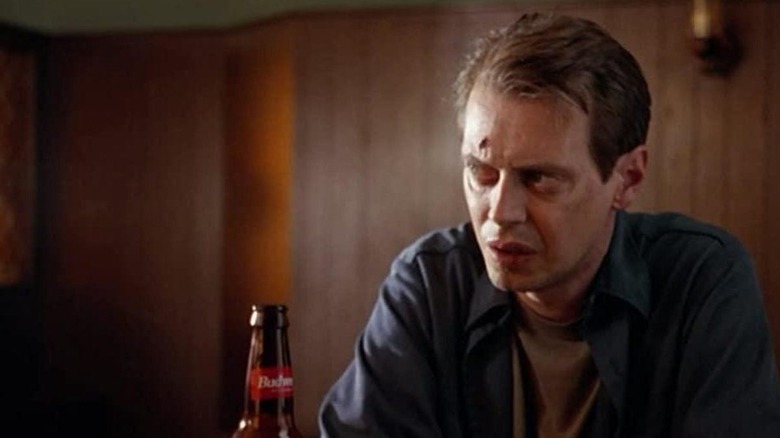
Independent films often provide the type of emotional catharsis that is hard to replicate with a larger studio budget. "Pig" may not have been as effective had it been buried by the influence of studio executives and a larger ensemble; thankfully the film was able to find a niche audience that appreciated it for its own merits. Supporting independent films is important — fans of "Pig" should consider checking out Steve Buscemi's underrated 1996 feature debut, "Trees Lounge."

Buscemi wrote, directed, produced, and starred in the film as Tommy Basilio, and his passion for the material is evident in the same way that Sarnoski's is in "Pig." Tommy has become a local fixture at this point in his alcoholism, showing up at local bars on a nightly basis. His condition grows significantly worse after his girlfriend leaves him, his uncle Al (Seymour Cassell) dies of a heart attack, and he's fired from his job as a mechanic. After a late night spent taking cocaine, Tommy realizes he needs to turn his life around and takes over Al's job as an ice cream truck driver.

Like Robin in "Pig," Tommy struggles to adjust to new relationships, especially given his reputation. The local children refuse to buy treats from him, and he undergoes additional stress when his troublesome 17-year-old niece Debbie (Chloe Sevingy) asks him to help her friends buy liquor. It marks the beginning of another slow decline for Tommy.

You Can Count On Me
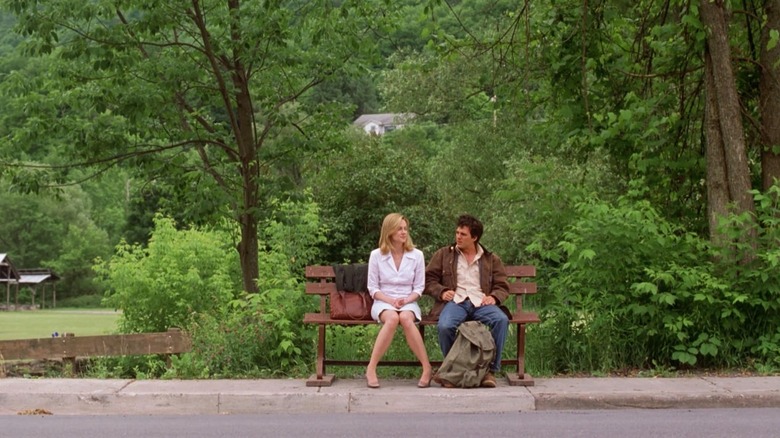
True emotional devastation is very hard to capture on screen. It takes time to develop characters that the audience can invest in, and finding the right balance of tragic events can be a challenge. If a film begins on a traumatic moment, it may be hard to capture and maintain that same level of heightened emotion later in the film. "Pig" does this very well; while the opening kidnapping establishes the stakes, there's a tear-jerking moment later on when Robin prepares a specific meal for Darius that reminds him of a key memory, making him reveal tragic information.

Sarnoski's delicacy is handled with the precision of a stage play, and actual playwright Kenneth Lonergan found a similar tone with his directorial debut, "You Can Count on Me." The film centers on two grown siblings, Terry (Mark Ruffalo) and Sammy (Laura Linney), who lost their parents in a childhood accident. As they mature into adulthood, Sammy struggles to raise her young son Rudy (Rory Culkin) as a single mother while holding a senior position at a leading local bank. The bank's new manager, Brian (Matthew Broderick), imposes strict guidelines on the employees, but is also romantically interested in Sammy.

Terry unexpectedly reunites with his sister, only to reveal that he's become an aimless drifter who struggles with alcoholism, and seeks to make amends by helping to care for Rudy. Terry's difficult relationship with his depressed girlfriend Sheila (Gaby Hoffman) further complicates Sammy's challenging life.

Cast Away
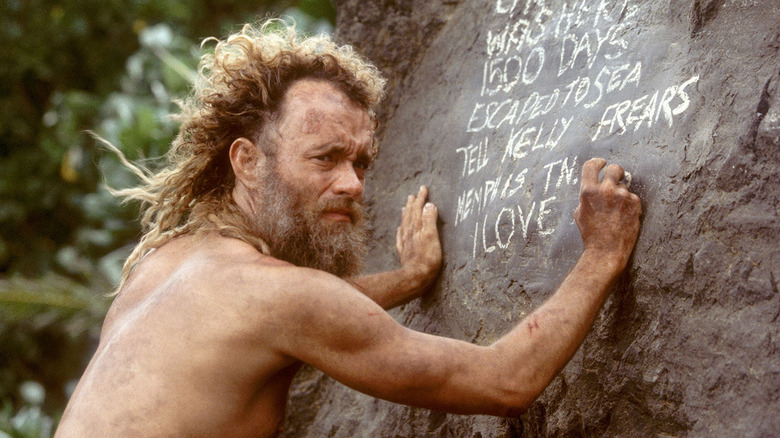
Robin's reintegration into society is a major challenge in "Pig." He's purposely chosen to live off the grid, and upon returning to urban Portland, he's faced with memories that he'd rather forget. Robin learns that the lives of top-level chefs have changed dramatically since he left the profession, and he struggles to adjust to a world that's moved on without him.

These same troubles are a key plot point in Robert Zemeckis's 2000 masterpiece "Cast Away." The film follows Chuck Noland (Tom Hanks), who travels on a FedEx cargo plane that suffers a system breakdown in the middle of a deadly storm over the Pacific Ocean. In a gripping sequence, the plane crashes and Chuck is left stranded on a remote island, where he's forced to survive on his own. While the majority of the film centers on his daily struggles and his odd relationship with a volleyball he names "Wilson," the last act focuses on his difficult journey home. Chuck is shocked to find that his wife Kelly (Holly Hunter) has remarried, having assumed he was dead.

About Schmidt
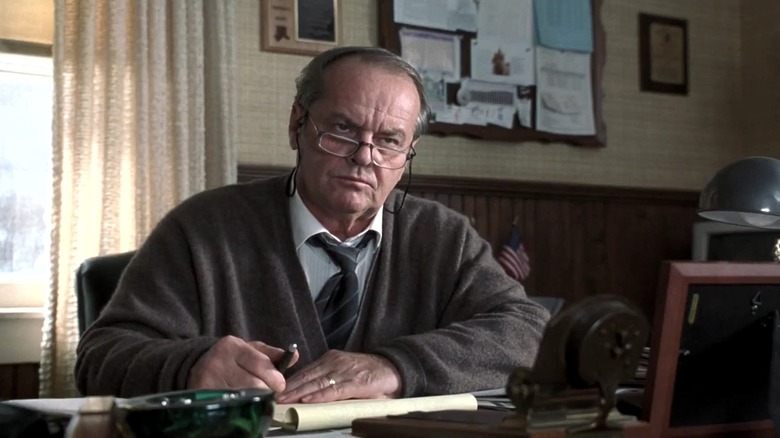
Robin is not a standard leading man, as he's very reclusive and his attitude can be off-putting, but Robin's dismissive behavior towards Amir isn't meant to make him unsympathetic, as the audience gradually begins to learn about the events that led him to live alone. Crafting a compelling lead character who's initially rude is something Jack Nicholson does very well, and like Cage he delivered a surprising late career performance in Alexander Payne's 2002 film "About Schmidt." At the time, Nicholson was at a similar point in his career; he hadn't been in a great film in several years, but it only took one role to remind audiences what a talented actor he is.

"About Schmidt" follows retired life-insurance salesman Warren, who struggles to find a purpose when he's not working. Warren considers donating to charitable causes, and he's skeptical about his daughter Jeannie's (Hope Davis) upcoming marriage. Jeannie is set to marry the ambitious salesman Randall (Dermot Mulroney), who Warren instantly distrusts, and he struggles to give Jeannie guidance without stressing her out.

The Station Agent
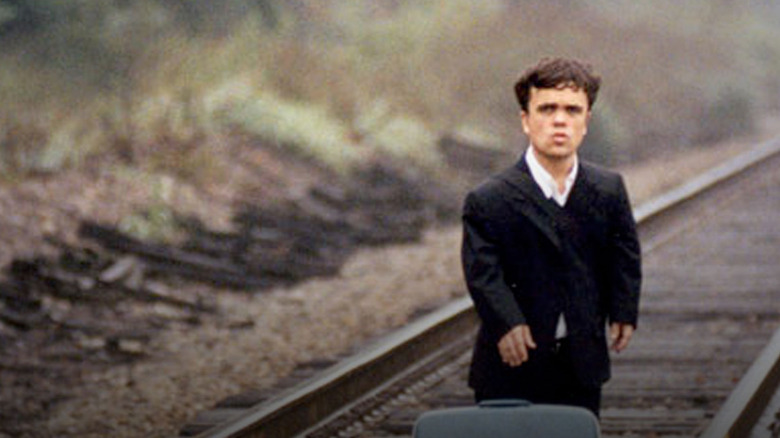
A surprising friendship blossoms between Robin and Amir in "Pig." Robin is quite skeptical of the ambitious young man, as he deeply distrusts Amir's father and believes he may have been involved within the kidnapping of his pig. Their relationship begins awkwardly, as Robin refuses to keep supplying Amir unless he transports him to the city. However, they learn more about each other during the search for the pig, and Robin even teaches Amir his personal cooking techniques. A simple handshake between the two towards the film's conclusion shows the respect they have for each other.

Tom McCarthy's 2003 dramedy "The Station Agent" explores a similarly surprising friendship between two men who seem like polar opposites. Finbar McBride (Peter Dinklage) is the sole operator of a model train shop in New Jersey, and due to his dwarfism he's more comfortable living alone where he can't be mocked. Finbar has few interests outside of trains, and he's surprised when a hot dog stand is opened right next to his shop. The shop's wisecracking owner, Joe Oramas (Bobby Cannavale), initially annoys him, but they open up to each other after working in close proximity, forging a friendship that resonates long after the credits have stopped rolling.

Read this next: The Best Movies Of 2021 So Far

The post Movies Like Pig That are Definitely Worth Watching appeared first on /Film.
16 Nov 10:35

DDR4 Memory Protections Are Broken Wide Open By New Rowhammer Technique

by BeauHD
"An unprivileged application can corrupt data in memory by accessing 'hammering' rows of DDR4 memory in certain patterns millions of times a second, giving those untrusted applications nearly unfettered system privileges," writes long-time Slashdot reader shoor. Ars Technica reports: Rowhammer attacks work by accessing -- or hammering -- physical rows inside vulnerable chips millions of times per second in ways that cause bits in neighboring rows to flip, meaning 1s turn to 0s and vice versa. Researchers have shown the attacks can be used to give untrusted applications nearly unfettered system privileges, bypass security sandboxes designed to keep malicious code from accessing sensitive operating system resources, and root or infect Android devices, among other things. All previous Rowhammer attacks have hammered rows with uniform patterns, such as single-sided, double-sided, or n-sided. In all three cases, these "aggressor" rows -- meaning those that cause bitflips in nearby "victim" rows -- are accessed the same number of times. Research published on Monday presented a new Rowhammer technique. It uses non-uniform patterns that access two or more aggressor rows with different frequencies. The result: all 40 of the randomly selected DIMMs in a test pool experienced bitflips, up from 13 out of 42 chips tested in previous work (PDF) from the same researchers. "We found that by creating special memory access patterns we can bypass all mitigations that are deployed inside DRAM," Kaveh Razavi and Patrick Jattke, two of the research authors, wrote in an email. "This increases the number of devices that can potentially be hacked with known attacks to 80 percent, according to our analysis. These issues cannot be patched due to their hardware nature and will remain with us for many years to come." The non-uniform patterns work against Target Row Refresh. Abbreviated as TRR, the mitigation works differently from vendor to vendor but generally tracks the number of times a row is accessed and recharges neighboring victim rows when there are signs of abuse. The neutering of this defense puts further pressure on chipmakers to mitigate a class of attacks that many people thought more recent types of memory chips were resistant to. In Monday's paper, the researchers wrote: "Proprietary, undocumented in-DRAM TRR is currently the only mitigation that stands between Rowhammer and attackers exploiting it in various scenarios such as browsers, mobile phones, the cloud, and even over the network. In this paper, we show how deviations from known uniform Rowhammer access patterns allow attackers to flip bits on all 40 recently-acquired DDR4 DIMMs, 2.6x more than the state of the art. The effectiveness of these new non-uniform patterns in bypassing TRR highlights the need for a more principled approach to address Rowhammer." While PCs, laptops, and mobile phones are most affected by the new findings, the report notes that cloud services like AWS and Azure "remain largely safe from Rowhammer because they use higher-end chips that include a defense known as ECC, short for Error Correcting Code." "Concluding, our work confirms that the DRAM vendors' claims about Rowhammer protections are false and lure you into a false sense of security," the researchers wrote. "All currently deployed mitigations are insufficient to fully protect against Rowhammer. Our novel patterns show that attackers can more easily exploit systems than previously assumed."

Read more of this story at Slashdot.

16 Nov 10:35

High Severity BIOS Flaws Affect Numerous Intel Processors

by BeauHD
Intel has disclosed two high-severity vulnerabilities that affect a wide range of Intel processor families, allowing threat actors and malware to gain higher privilege levels on the device. BleepingComputer reports: The flaws were discovered by SentinelOne and are tracked as CVE-2021-0157 and CVE-2021-0158, and both have a CVSS v3 score of 8.2 (high). The former concerns the insufficient control flow management in the BIOS firmware for some Intel processors, while the latter relies on the improper input validation on the same component. These vulnerabilities could lead to escalation of privilege on the machine, but only if the attacker had physical access to vulnerable devices. Intel hasn't shared many technical details around these two flaws, but they advise users to patch the vulnerabilities by applying the available BIOS updates. This is particularly problematic because motherboard vendors do not release BIOS updates often and don't support their products with security updates for long. Considering that 7th gen Intel Core processors came out five years ago, it's doubtful that MB vendors are still releasing security BIOS updates for them. As such, some users will be left with no practical way to fix the above flaws. In these cases, we would suggest that you set up a strong password for accessing the BIOS settings. Intel also released a separate advisory for a high-severity elevation of privilege flaw (CVE-2021-0146) that affects several car models that use the Intel Atom E3900. "Intel has released a firmware update to mitigate this flaw, and users will get it through patches supplied by the system manufacturer," the report says.

Read more of this story at Slashdot.

16 Nov 10:33

'If Apple Keeps Letting Its Software Slip, the Next Big Thing Won't Matter'

by BeauHD
If Apple can't improve the reliability of its software, the next big thing won't matter, argues Dan Moren in an opinion piece for Macworld. From the report: Uneven distribution: As sci-fi writer William Gibson famously said, "the future is already here -- it's just not evenly distributed." While Gibson's comment resonates mostly on a socio-economic level that is borne out by Apple's not inexpensive technology, it's also embodied geographically by the company's work: if you're interested, you can see which Apple features are available in which regions. Many of these, of course, are due to restrictions and laws in specific regions or places where, say, Apple has not prioritized language localization. But some of them are cases where features have been rolled out only slowly to certain places. [...] It's surely less exciting for Apple to think about rolling out these (in some cases years old) features, especially those which might require a large degree of legwork, to various places than it is for the company to demonstrate its latest shiny feature, but it also means that sometimes these features don't make it to many, if not most of the users of its devices. Uneven distribution, indeed. To error is machine: It's happened to pretty much any Apple device user: You go to use a feature and it just doesn't work. Sometimes there's no explanation as to why; other times, there's just a cryptic error message that provides no help at all. [...] Shooting trouble: Sometimes what we're dealing with in the aforementioned situations are what we call "edge cases." Apple engineers surely do their best to test their features with a variety of hardware, in different places, with different settings. [...] Nobody expects Apple to catch everything, but the question remains: when these problems do arise, what do we do about them? One thing Apple could improve is the ease for users to report issues they encounter. Too often, I see missives posted on Apple discussion boards that encourage people to get in touch with Apple support... which often means a lengthy reiteration of the old troubleshooting canards. While these can sometimes solve problems, if not actually explain them, it's not a process that most consumers are likely to go through. And when those steps don't resolve the issues, users are often left with a virtual shrug. Likewise, while Apple does provide a place to send feedback about products, it's explicitly not a way to report problems. Making it easier for users to report bugs and unexpected behavior would go a long way to helping owners of Apple products feel like they're not simply shouting their frustrations into a void (aka Twitter). If Apple can't improve the reliability of its software [...] it at least owes it to its users to create more robust resources for helping them help themselves. Because there's nothing more frustrating than not understanding why a miraculous device that can contact people around the world instantaneously, run incredibly powerful games, and crunch data faster than a supercomputer of yesteryear sometimes can't do something as simple as export a video of a vacation. While Moren focuses primarily on unfinished features to help make his case, "there is also a huge problem with things being touched for no reason and making them worse," says HN reader makecheck. "When handed what must be a mountain of bugs and unfinished items, why the hell did they prioritize things like breaking notifications and Safari tabs, for instance? They're in a position where engineering resources desperately need to be closing gaps, not creating huge new ones." An example of this would be the current UX of notifications. "A notification comes up, I hover and wait for the cross to appear and click it," writes noneeeed. "But then some time later I unlock my machine or something happens and apparently all my notifications are still there for some reason and I have to clear them again, only this time they are in groups and I have to clear multiple groups." "Don't get me started on the new iOS podcast app," adds another reader.

Read more of this story at Slashdot.

16 Nov 00:39

The Daily Stream: Cowboy Bebop Is Neo-Noir Anime Perfection

by Danielle Ryan

(Welcome to The Daily Stream, an ongoing series in which the /Film team shares what they've been watching, why it's worth checking out, and where you can stream it.)

The Series: "Cowboy Bebop"

Where You Can Watch It: Netflix, Hulu, and Funimation

The Pitch: The year is 2071. The solar system has been colonized, though the colonies are something like the old west, and Earth is a nearly uninhabitable wasteland. The Inter Solar System Police (ISSP) developed a contract system legalizing bounty hunting across the planets. Registered bounty hunters, referred to as "cowboys," go after criminals whose information is distributed via a television show and the internet. When they catch them, they can bring them in alive for a reward. Basically, law enforcement in the future decides to outsource chasing down crooks, and it becomes a (somewhat) valid profession. 

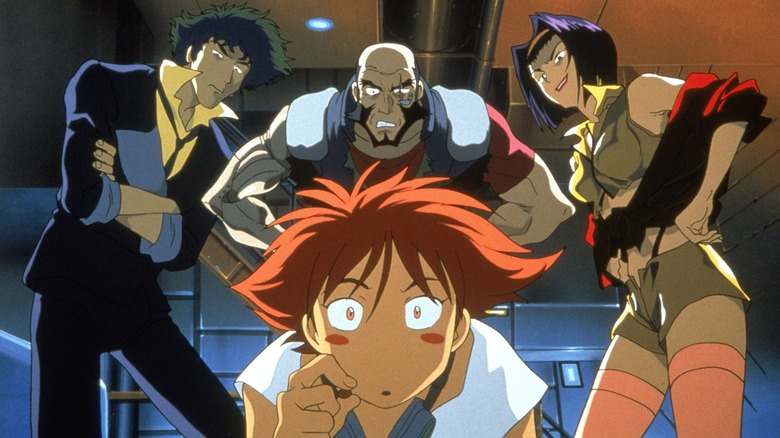
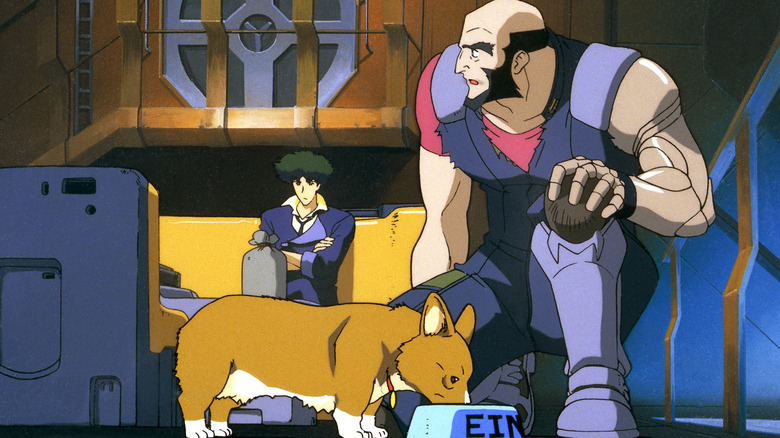
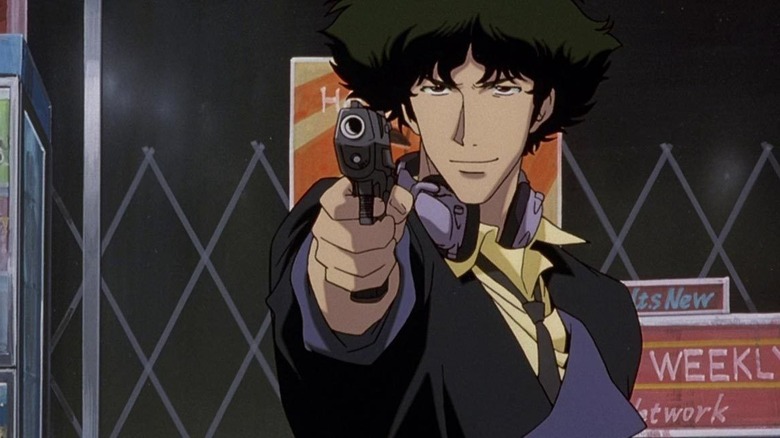
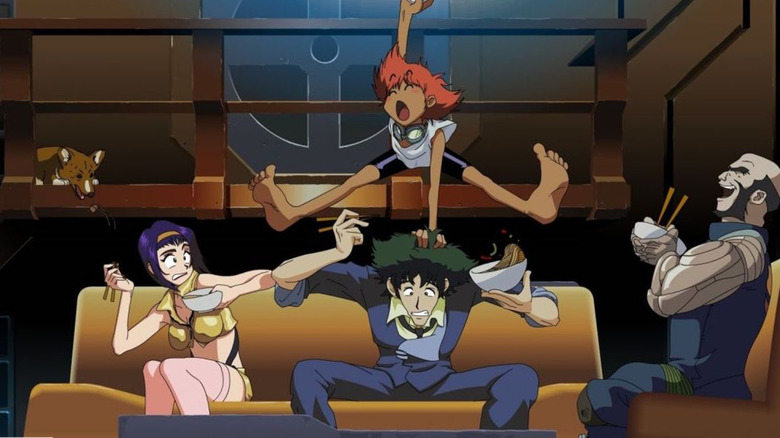
"Cowboy Bebop" follows Spike Spiegel (Kōichi Yamadera/Steve Blum), a former Red Dragon Syndicate hitman on the run after faking his death, and his partner, a former ISSP officer named Jet Black (Unshō Ishizuka/Beau Billingslea). They fly the ship the Bebop, taking bounties in an attempt to put food on the table. They are eventually joined by Faye Valentine (Megumi Hayashibara/Wendee Lee), a con-artist with amnesia; Edward (Aoi Tada/Melissa Fahn), an eccentric teenaged girl who happens to be one of the galaxy's best hackers; and Ein, a genetically-engineered Welsh Corgi who is as smart as any human. (Ein is short for Einstein, after all.)

The 26-episode series follows the crew of the Bebop as they try to survive in the untamed wilds of outer space. The aesthetic is a jazzy, neo-noir with wild West overtones, and it's hard to explain just how effortlessly cool the series is. The soundtrack, by composer Yoko Kanno, is out-of-this-world jazz-pop that absolutely ... well, bops, and the animation is gorgeous. It's one of the most popular anime series of all time, and for good reason. 

Why It's Essential Viewing

The live-action adaptation of "Cowboy Bebop" drops on November 19, 2021, which makes it as good a time as ever to check out this hugely influential anime series. From the opening credits, set to the acid-jazz song "Tank!" by the band Seatbelts, to the closing cards with song lyrics and cool quotes, "Cowboy Bebop" just oozes cool. 

The series originally debuted and was subsequently canceled in Japan in 1998 after running only a handful of episodes, since the adult content was just too much for the network it was on. It had a full run on a different network later that same year and was picked up for an English-language localization by Cartoon Network's Adult Swim. The series introduced a whole generation of westerners to anime for adults. "Bebop" addresses plenty of adult themes including addiction, terrorism, loneliness, lust, grief, and more. It's a surprisingly mature story littered with its fair share of silliness, which was something audiences latched onto immediately on both sides of the Pacific. 

"Cowboy Bebop" is full of excellent worldbuilding, and creator Shinichirō Watanabe developed a rich world with plenty of interesting concepts to go with its visual flair. But where the series shines is its characters, who are all outcasts of one kind or another, forced together by fate and circumstance. Together, they build a found family, one that almost heals the many wounds they each feel. While many anime purists avoid dubbed versions entirely, the English localization is considered one of the best in anime history, and both the English and Japanese voice casts bring their characters to life in dynamic ways. 

The Ballad Of The Space Cowboy

The ongoing story that weaves through "Cowboy Bebop" is that of Spike who faked his own death after a rather nasty falling out with the Red Dragon Syndicate. They're basically the biggest, nastiest mafia in the whole solar system, and Spike used to be one of their top killers. As the series progresses, the audience learns more and more about the enigmatic gunslinger's mysterious past. It turns out that the whole falling out was over a woman named Julia, and Spike's story is a tragic one. Spike's arc sees him learning how to trust in his crewmates and stop being so selfish, though, in the end, his laissez-faire attitude towards the more serious things in life will always come back to bite him. 

Spike and Jet's friendship is often a strained one because both men have trust issues, but they manage to care for each other nonetheless. Faye, Ed, and Ein are all additional emotional burdens on Spike, who seems to do better as a lone wolf. Even though all of the crew impact one another, the greatest change is in Spike, who manages to get past his grief and anger to have some truly beautiful friendships. He's ultimately a deeply flawed man whose sins will always haunt him, but seeing him get a chance at happiness is one of the series' greatest joys. The potential for him to throw that all away in the name of revenge, however, is that much more heartbreaking.

A Unique And Diverse Crew

While "Cowboy Bebop" is very much Spike's story, the rest of the crew get plenty of time to shine. Jet's history with the ISSP is explored, we get to learn more about Faye's background, and Edward ... Edward feeds everyone psychedelic mushrooms just to see what happens. It's better to leave her a mystery, I think. Then again, all 13-year-olds are mysteries. 

The crew of the Bebop becomes a kind of family, and each character's individual arc impacts the others. Much like real-life relationships, the crew often bicker in times of stress. Spike and Faye act like siblings, with Jet as their beleaguered father and Ed as their wild cousin. 

Ein is simply a Good Boy, who has never done anything wrong, ever. 

Sure, the big events in the series are fun, but the best moments are the small ones. Some of the "filler" episodes that don't progress the overall plot are the best parts of the series because we're able to explore the relationships more closely. 

The episode "Toys in the Attic," for example, is "Cowboy Bebop" does "Alien," with an extraterrestrial creature that's snuck aboard the Bebop. Watching the crew try to figure out such a strange situation is a lot of fun, and occasionally genuinely frightening. The aforementioned episode where Ed gives everyone psychedelics, "Mushroom Samba," is similarly delightful, because we get to see what it looks like when each of the adults goes tripping. Spike finds a "stairway to heaven" with a talking frog, to give you a taste.

A Beautiful, Violent Meditation On The Meaning Of It All

You can have all of the fun in the world with the crew, but it doesn't leave a lasting impression without some deeper feelings. Thankfully, "Bebop" has those in spades, because each character is traumatized and trying to reconcile their pain with survival. Spike wonders if he can ever feel peace after the horrors he's inflicted on others, while Jet longs for any kind of serenity beyond his bonsai trees, Faye's looking to belong somewhere, and Ed just wants some company. They'd all be terminally lonely, doomed to drift around the cosmos in constant existential angst if it weren't for each other and the occasional hot bowl of noodles.

"Cowboy Bebop" has a depth that few other series — anime or live-action — could hope for. The characters are so well-developed and their arcs are so intentional that the series is infinitely re-watchable. Each subsequent viewing gives a new perspective, either on an individual character or the series as a whole. It's brilliantly written, acted, and animated, and if I haven't convinced you to check it out by now, I'm not going to. With "Cowboy Bebop" streaming on Hulu, Netflix, and Funimation, you have plenty of options, and this ground-breaking series is worth every minute of your time. 

Read this next: The Daily Stream: The Bad News Bears Is Simultaneously Vulgar And Sweet

The post The Daily Stream: Cowboy Bebop is Neo-Noir Anime Perfection appeared first on /Film.

15 Nov 22:16

Kioxia Updates M.2 2230 SSD Lineup With BG5 Series: Adding PCIe 4.0 and BiCS5 NAND

by Ryan Smith

Kioxia this morning is updating their BG series of M.2 2230 SSDs for OEMs with the addition of the new BG5 family of drives. The latest in the company’s lineup of postage stamp-sized SSDs, the BG5 series sees Kioxia reworking both the NAND and the underlying controller to use newer technologies. As a result, the latest iteration of the drive is gaining overall higher performance thanks to the combination of PCIe 4.0 support as well as the switch to Kioxia’s latest BiCS5 NAND. However, in an unexpected twist, the BG series is no longer a single-chip design; instead, the NAND and controller on the BG5 are now separate packages.

Long a fixture of pre-built systems, Kioxia’s BG series of SSDs have been a favorite of OEMs for the last several years due to their small size – typically M2. 2230 or smaller – as well as their low cost. In particular, the DRAMless design of the drive keeps the overall component costs down, and it allowed Kioxia to simply stack the NAND dies on top of the controller, giving the SSDs their small footprint. As well, the simple design and tight thermal tolerances of such a stacked design mean that power consumption has been kept quite low, too. The resulting performance of the drives is very much entry-level, and thus rarely noteworthy, but for a drive not much bigger than a postage stamp, it fills a small role.

Coming a bit over two years since the BG4 was introduced, the headlining update to BG5 is the addition of PCIe 4.0 support. Whereas BG4 was a PCIe 3.0 x4 drive, BG5 is PCIe 4.0 x4, which at this point gives the drive more bus bandwidth than it could ever possibly hope to use. Truth be told, I was a bit surprised to see that the BG5 went PCIe 4.0 given the limited performance impact on an entry-level drive and the tight power limits, though there are some second-order benefits from PCIe 4.0. In particular, any OEM who ends up only allocating two lanes to the drive (something that happens now and then) will still get the equivalent of PCIe 3.0 x4 speeds out of the drive, which in turn is still high enough to run the drive at almost full performance. This underscores one of the big improvements offered by higher PCIe speeds: for components that don’t need more bandwidth, integrators can instead cut down on the number of lanes.

Kioxia BG5 SSD Specifications
Capacity 256 GB 512 GB 1 TB
Form Factor M.2 2230 or M.2 2280
Interface PCIe Gen4 x4, NVMe 1.4
NAND Flash 112L BiCS5 3D TLC
Sequential Read 3400 MB/s 3500 MB/s 3500 MB/s
Sequential Write 1900 MB/s 2700 MB/s 2900 MB/s
Random Read 350k IOPS 400k IOPS 500k IOPS
Random Write 360k IOPS 430k IOPS 450k IOPS
Power Active 4.0 W 4.1 W 4.3 W
Idle 3 mW

Speaking of performance, the BG5 drives are rated for higher throughput than their predecessor. Kioxia’s official press release only offers a single set of figures, so these are almost certainly for the 1TB configuration, but for that drive they are rating it at 2900MB/sec writes and 3500MB/sec reads – the latter just crossing the limits of PCIe  3.0 x4. Random writes and reads are rated at 450K IOPS and 500K IOPS respectively. As always, these figures are against writing to the drive’s SLC cache, so sustained write throughput does eventually taper off.

As this is a DRAMless drive, there is no significant on-package caching/buffer layer to talk about. Instead, like its predecessor, Kioxia is relying on Host Memory Buffer (HMB) tech to improve the performance of their drive. HMB isn’t used to cache user data, but instead is used to cache mapping information about the drive’s contents in order to speed up access. Along with the latest generation of this tech, Kioxia has also updated their controller to support NVMe 1.4.

Backing the new PCIe 4.0 controller is Kioxia’s BiCS5 generation of TLC NAND, which is a 112L design. BiCS5 has been shipping for a while now, so it’s very much a known quantity, but the time has finally come for it to trickle down into the BG series of drives. BiCS5 was a relatively modest increase in density over BiCS4, so it’s not too surprising here that Kioxia is keeping the largest BG5 configuration at 1TB, which would mean stacking 8 of the 1Tbit dies.

But perhaps the biggest change with the BG5 isn’t the specifications of the controller or the NAND on their own, but rather the fact that the two parts are alone to begin with. A staple of the BG5 series design has been the small package enabled by stacking the memory and controller together into a single package. But from Kioxia’s supplied product photo, we can clearly see that the NAND and the controller are separate packages. Kioxia made no mention of this change, so we can only speculate about whether it’s for simplicity in construction (no TSVs to the controller) or maybe the heat put off by a PCIe 4.0 controller. But one way or another, it’s a big change in how the small drive is assembled.

As a result of this change, the BGA M.2 1620 form factor – which supplied the single-chip package in a solder-down package – has gone away. Instead, the smallest form factor is now the removable M.2 2230 version. The postage stamp-sized M.2 2230 form factor has long been the staple of the lineup, as it’s what we’ve seen in Microsoft’s Surface products and other thin and light designs over the years. Since the form factor here isn’t changing, the use of multiple packages shouldn’t alter things much for a lot of OEMs. And for OEMs that need physically larger drives for compatibility reasons, Kioxia is also formally offering a 2280 design as well. A simple two-chip solution on such a large PCB is unremarkable, but it would allow the BG5 to be easily inserted into systems that are designed to take (and typically use) 2280 drives.

Update 11/22: On the subject of BG5 becoming a two chip solution, Kioxia got back to us with a bit more background information on the change. The change is in part due to gradually increasing power requirements running headlong into the thermal limits of the single chip design. Moving the controller out allows both it and the NAND to be directly cooled, which ultimately allows for better performance at the cost of higher power consumption. More surprising, Kioxia also noted that BGA solutions are falling out of favor with OEMs, whom are swinging back to replaceable/serviceable modules. As a result, Kioxia didn't see a need for a single-chip BGA design for the BG5.

As these are OEM drives, no pricing information is available. The drives are currently sampling to Kioxia’s customers, so expect to see them land in commercial products in 2022.

15 Nov 22:15

How Open Systems uses Microsoft tools to improve security maturity

by Emma Jones

This blog post is part of the Microsoft Intelligent Security Association guest blog seriesLearn more about MISA.

We’ve all seen it happen—an organization has all the top-notch security tools in place and still, they get breached. In today’s rapidly evolving threat landscape, complexity leads to vulnerability. With so many tools to monitor, it’s easy for even the best security operations center (SOC) to get overwhelmed by non-actionable alerts1 and hampered by insufficient personnel to secure a growing digital estate. Research on “security tool sprawl” shows that, on average, organizations run 25 to 49 security tools from up to 10 different vendors.2 In a time of rising cyber attacks,3 the gaps left between mismatched or poorly implemented IT and security tools can make it impossible to establish a high-maturity security program.

Managed services to simplify security

Open Systems’ award-winning Managed Detection and Response (MDR) executes repeatable security missions that protect enterprises in real-time and levels up their security posture for tomorrow. The company’s customers are typically mid-market organizations—enterprise or small-to-medium corporations (SMC)—that are looking for all-day threat detection and response but also aspire to improve their security posture and resilience against attack. Open Systems noticed that many of these customers lean heavily on Microsoft for IT and cloud infrastructure, and can unlock the value of these investments to consolidate and operationalize their security tools. Open Systems accomplishes this by providing a Microsoft Azure cloud-native Managed Detection and Response (MDR) service built for Microsoft Sentinel (formerly known as Microsoft Azure Sentinel), Microsoft Security best practices, and Microsoft 365 E5 (M365 E5).

As a six-time Gold Partner, Open Systems enables Microsoft customers to get more insights from their Microsoft Security tools, and to better grasp their attack surface. The company’s use of Microsoft’s cloud native security information event management (SIEM) and security orchestration automated response (SOAR) capabilities help deliver stronger signal fidelity through machine learning threat modeling—delivering the actionable results Open Systems’ customers need to remain confident in their security every day. Even better, customers can often achieve this level of security using the Microsoft investments they’ve already made. And by integrating with Open Systems’ MDR, they get peace of mind by delegating detection and response to Microsoft-certified SOC analysts and threat hunters, helping contain threats early in the kill chain.

Open Systems’ MDR integration with Microsoft.

Figure 1: Open Systems’ MDR integration with Microsoft.

Open Systems’ approach

As a Microsoft Advanced Threat Protection Specialization certified partner, Open Systems focuses on three critical pillars for their MDR solution: mission-driven processes, a mission-ready platform, and Microsoft-certified experts.

Because the stakes are so high, the service is run like NASA Mission Control, using mission-driven processes to deliver repeatable and predictable outcomes that ensure fast detection and remediation of threats. These mission-driven processes have been honed for over 20 years with scientific rigor to bridge IT and security silos for optimal performance and resilience against attack. This allows Open Systems to deliver outcomes not alerts, greater business value, and out-of-this-world customer satisfaction.

Complementing these mature processes is the mission-ready platform at the heart of Open Systems’ services. This cloud-native platform weaves security into the fabric of an organization’s infrastructure, eliminating the need to stitch together multiple-point security products and the associated complexity. Managed from a “single pane of glass,” the platform also helps organizations realize the full value of their Microsoft infrastructure and that of their existing Microsoft security products.

The company’s four globally distributed SOCs follow the sun, with experts working from Europe, the United States, and Asia. Each of Open Systems’ DevSecOps engineers and security analysts has completed 400 hours of hands-on training and passed rigorous certification testing before servicing customers. They are armed with machine learning-powered high fidelity detection leveraging Microsoft Sentinel runbooks to ensure they can detect threats and make critical decisions fast and accurately.

Leveraging Microsoft

Scalability and enabling customers to retain their data are key aspects of the MDR service, both of which are achieved with Microsoft Sentinel and Microsoft Azure Lighthouse. Open Systems engaged with Microsoft in the early days of Microsoft Sentinel, working with their product teams and early customers to create a solution that runs in the customer tenant. Microsoft Defender for Endpoint absorbs signals, then contains threats as part of the automated response. Open Systems also leverages Microsoft Sentinel’s SOAR capabilities by writing managed runbooks that automatically contain and shut down threats early.

The service uses Azure Lighthouse to operate things—run queries, integrate different log sources, and more. Credible threats are inspected by Open Systems’ engineers and co-managed as needed with the customer. In this way, Open Systems’ MDR service and Microsoft Security don’t just integrate, they feed off each other to deliver better results. As one of our customers put it:

“We’re experiencing exceptional support from Open Systems. They not only help us contain costs and manage Azure, but their engineers, adaptable SASE+ platform, and managed runbooks contain threats before they spread throughout the network,” said James Tsang, Systems Manager, College of Southern Nevada.

Managed security leads to $2.5 million in savings

A publicly traded clinical research organization came to Open Systems for help streamlining their security architecture. They wanted to move away from siloed third-party systems that created too much complexity, too many vulnerabilities, and drove up costs. They needed a cloud platform to provide the accessibility and service necessary to protect their offices worldwide and their hybrid and remote workers. Open Systems partnered with Microsoft and demonstrated how Microsoft 365 E5 and Microsoft Sentinel could work together to help improve the company’s compliance, data protection, and security posture.

The Open Systems team also identified opportunities to replace legacy monitoring tools with Microsoft Azure Monitor and consolidate compliance and security data onto Microsoft Azure Log Analytics, helping reduce the number of suppliers and reduce costs. Together with Microsoft, Open Systems performed a cloud readiness and economic assessment using the company’s real-world costs—learning that the Azure implementation would result in $2.5 million annual savings by eliminating existing applications and unnecessary data centers. Moreover, optimizing Microsoft 365 E5 eliminated the need for several of the company’s existing tools, resulting in additional annual savings of $400,000.

The Open Systems and Microsoft monitoring tools’ capabilities.

Figure 2: Azure Monitor.

MISA membership

Cybersecurity is a high-trust business: trust in technology, trust in services, and trust in the partnership you have with your security vendor. Most of Open Systems customers come to the company through word-of-mouth references; many customers have worked with the company for years. Open Systems joined the Microsoft Intelligent Security Association (MISA) in July 2020 as part of the managed security service providers (MSSP) pilot. Being a MISA member gives Open Systems customers trust that the company can integrate its technologies with their existing Microsoft products, both on-premises and in the cloud. Customers want leadership, and alignment with Microsoft solutions they are investing in. Some of the company’s other ‘wow’ moments since joining MISA include:

As Mandana Javaheri, Global Director, Cybersecurity Solutions Group at Microsoft Corp put it in Open Systems’ press release, “MISA members are the cybersecurity industry leaders, unified by the common goal of helping secure our customers by offering their own valuable expertise and making the association more effective as it expands.”

Learn more

Want to learn more? Check out Open Systems’ Managed Detection and Response solution in the Azure Marketplace or visit the Open Systems’ Microsoft Solutions page.

To learn more about the Microsoft Intelligent Security Association (MISA), visit our website where you can learn about the MISA program, product integrations, and find MISA members. Visit the video playlist to learn about the strength of member integrations with Microsoft products.

To learn more about Microsoft Security solutions, visit our website. Bookmark the Security blog to keep up with our expert coverage on security matters. Also, follow us at @MSFTSecurity for the latest news and updates on cybersecurity.


16 strategies to reduce cybersecurity alert fatigue in your SOC, Innocent Wafula, Microsoft Security, Microsoft. 17 February 2021.

2Too many security tools can be as bad as too few, Taylor Armerding, Security Boulevard. 14 August 2020.

3Why ransomware attacks are on the rise — and what can be done to stop them, Lynsey Jeffery, Vignesh Ramachandran, PBS. 8 July 2021.

The post How Open Systems uses Microsoft tools to improve security maturity appeared first on Microsoft Security Blog.

15 Nov 22:15

Russia appears to have blown up their own satellite with ground launched interceptor, unlike previous tests this one was in high earth orbit and the debris field is putting the International Space Station in danger [Scary]

15 Nov 22:14

Russia May Have Just Shot Down Its Own Satellite, Creating a Huge Debris Cloud

by BeauHD
An anonymous reader quotes a report from Ars Technica: The seven astronauts and cosmonauts onboard the International Space Station sheltered inside their respective spacecraft, a Crew Dragon and Soyuz, on Monday morning as the orbiting laboratory passed through an unexpected debris field. This was not a pre-planned collision avoidance maneuver in low Earth orbit, in which the station would use onboard propulsion to move away. Rather, the situation required the astronauts to quickly take shelter. Had there been a collision during the conjunction, the two spacecraft would have been able to detach from the space station and make an emergency return to Earth. Ultimately that was not necessary, and the astronauts reemerged into the space station later Monday. However, as the crew on board the station prepared for their sleep schedule, Mission Control in Houston asked them to keep as many of the hatches onboard the space station closed for the time being, in case of an unexpected collision during subsequent orbits. It appears likely that the debris field that had alarmed flight controllers on Monday was caused by an anti-satellite test performed by Russia's military early on Monday. [...] It appears that Russia launched a surface-to-space Nudol missile on Monday, between 02:00 and 05:00 UTC, from the Plesetsk Cosmodrome in the northern part of the country. The missile then struck an older satellite, Cosmos 1408. Launched in 1982, the satellite had been slowly losing altitude and was a little more than 450 km above the Earth. This is a large satellite, with a mass of about 2,000 kg. As of Monday afternoon, US Space Command said it was already tracking more than 1,000 pieces of new debris. Although the satellite's altitude is higher than the International Space Station, which is about 400 km above the surface, a kinetic impact would spread a large cloud of debris. Satellite expert Jonathan McDowell believes the Cosmos 1408 satellite is the likely candidate for the space station's ongoing debris event. During a daily briefing today, US State Department Spokesman Ned Price said the test had created more than 1,500 pieces of trackable debris and hundreds of thousands of pieces of un-trackable debris. "The Russian Federation recklessly conducted a destructive satellite test of a direct-ascent anti-satellite missile against one of its own satellites," Price said. "This test will significantly increase the risk to astronauts and cosmonauts on the International Space Station as well as to other human spaceflight activities. Russia's dangerous and irresponsible behavior jeopardizes the long-term sustainability of outer space."

Read more of this story at Slashdot.

15 Nov 22:13

Warped & Faded Reveals The Origins Of Exploitation Cinema — Read An Excerpt Here [Exclusive]

by Jeff Ewing

Before it expanded into a growing national film chain integrated with the Austin, Texas festival circuit, the Alamo Drafthouse began as a simple single-screen theater. Its mission? To offer free screenings of genre films otherwise consigned to oblivion in its Weird Wednesdays film series. Its growing collection became the American Genre Film Archive (AGFA), a selection of the finest in exploitation cinema. The new Mondo book, "Warped & Faded," chronicles the beginnings of the archive in all its gritty glory. In the months to come, Alamo Drafthouse will share exciting programming announcements to celebrate the weird and wonderful films featured in "Warped & Faded," including the long-awaited return of the weekly series that inspired it, which has been on a pandemic hiatus.The book itself is a treasure trove of information about films in the AGFA, alongside a host of posters and stills from exploitation classics. We have an exclusive excerpt from "Warped & Faded," which goes on sale tomorrow (alongside some sweet exclusive posters from the archive). Extensively illustrated with poster art, advertising mats, and rare stills from the films. "Warped & Faded" features contributions from Weird Wednesday Hall-of-Famer Gary Kent and genre champions Tim Lucas, Stephen Thrower, Pete Tombs, Maitland McDonagh, Kat Ellinger, Chris Poggiali, Robin Bougie, Mike Malloy, Bryan Connolly, Heidi Honeycutt, Rodney Perkins, Zack Carlson, Kier-La Janisse, and more.

Warped & Faded Exclusive Excerpt

The excerpt, below, gives a great window into the initial thoughts and discussions behind Weird Wednesday alongside memories of the early days. The idea for the mid-week series began with Tim League and his steadfast acquisition of a massive haul of overlooked gems, loaded in the back of a massive rental truck en route to Texas. One snag perplexed the hopeful exhibitors: they found that the promotion of these films was somewhat hampered by their niche appeal. How do you market grindhouse cinema that never reached its potential audience?  

The exclusive pages below reveal a fascinating discussion about their (at the time) unique solution to advertising these largely under-seen films: focus on promoting the series itself instead of the individual often forgotten cult classics. The result signaled the beginning of the Austin tradition that evolved into a long-running celebration of the weird, wild world of cult classic cinema.

"Warped & Faded" is a glorious celebration of those rare entries in the cult film canon and their innovative exhibition and preservation. You can catch it in bookstores near you as of November 16, 2021.

Read this next: Movies About Cults That Will Keep You Up At Night

The post Warped & Faded Reveals the Origins of Exploitation Cinema — Read an Excerpt Here [Exclusive] appeared first on /Film.

15 Nov 20:58

The Do The Right Thing Controversy Explained

by Lee Adams

In 1989, a movie came out that offered audiences a fresh, colorful, scathing insight into race relations in the United States. That movie wasn't "Driving Miss Daisy," the twee and patronizing tale of an elderly white woman and her Black driver in 1940s Georgia. "Daisy" won Best Picture at the Academy Awards, mystifyingly beating a strong field rounded out by "Born on the Fourth of July," "Dead Poets Society," "Field of Dreams," and "My Left Foot."

The movie I'm talking about, of course, is Spike Lee's sizzling masterpiece, "Do the Right Thing," which inexplicably wasn't even in the running for the big Oscar award while making do with scraps -- a nomination for Best Original Screenplay for Lee and Best Supporting Actor for Danny Aiello.

Set over one long, very hot summer's day in the Bed-Stuy neighborhood in Brooklyn, it follows slacker delivery guy Mookie (Lee) as he ferries pies to customers on foot and generally goofs off from work at Sal's Famous, a pizza joint run by hotheaded Italian-American Sal (Aiello) and his two sons, happy-go-lucky Vito (Richard Edson) and uptight racist Pino (John Turturro).

We meet many other residents of the largely Black neighborhood, including Da Mayor (Ossie Davis), the shabby, alcoholic elder statesman and his unrequited love, Mother Sister (Ruby Dee), the highly-strung matriarch of the block; Buggin' Out (Giancarlo Esposito), the perpetually agitated big-mouth with a cherished pair of Reeboks; Radio Raheem (Bill Nunn), a moody wandering soul blasting Public Enemy from his boombox; and Mister Señor Love Daddy (Samuel L. Jackson), a local DJ who acts as a one-man Greek chorus from his street-window studio.

As the thermometer rises and racial antagonism escalates towards a devastating conclusion, the question is: can anyone Do the Right Thing?

Warning: major spoilers for the plot of "Do the Right Thing."

What Happens In Do The Right Thing?

As white cops prowl the streets, tensions come to a head when Buggin' Out, a regular at the pizzeria, is struck by the absence of Black celebrities on Sal's Wall of Fame. An argument ensues and Sal kicks him out, causing Buggin' Out to organize a boycott, desperately searching for others to join him in his crusade.

Most people aren't interested; they grew up on Sal's pizza and don't really care about the lack of diversity in the decor. The only person willing to join Buggin' Out's boycott is Radio Raheem, who has already had a run-in with Sal over playing his boombox loudly in the restaurant.

It's the end of the day and things get out of hand; Sal loses his temper at Raheem's refusal to turn down his music, starts spewing racist slurs and smashes the boombox with a baseball bat. Raheem reacts violently, trying to strangle Sal. The cops arrive on the scene and end up choking Raheem to death. When they realize what they've done, they quickly scamper, leaving Sal and his boys facing an angry crowd.

That's when Mookie decides to throw a trash can through the window of the pizzeria, kicking off a riot that leaves Sal's Famous in blazing ruins. As the smoke clears, Smiley (Roger Guenveur Smith), a mentally disabled man who has spent the whole movie trying to sell hand-colored pictures of Martin Luther King and Malcolm X, pins one of his photos to what's left of the wall. Finally, Buggin' Out got some Black faces on the Wall of Fame, but at a terrible cost to Raheem and the whole community.

Does Mookie Do The Right Thing?

There are many articles and think pieces that focus on this question. Early in the film, Mookie is stopped on one of his delivery runs by Da Mayor, who tells him to "always do the right thing."

Mookie is a bad employee and bad father, so that advice could apply to many aspects of his life. It comes into question most with his decision to throw the trash can. Some people interpret this as Mookie's way of diverting the mob's anger away from Sal and his sons to the pizzeria, causing plenty of destruction but saving them from violence. That was my first read on the scene but, having watched the film again for this article, I'm not so sure. The crowd's behavior towards Sal is less threatening than I remembered, and Mookie's act of vandalism is what sparks the riot.

Maybe the question should be whether anyone does the right thing, not just Mookie. The cops obviously don't; Buggin' Out and Raheem instigate the situation in the first place; Sal reacts in the worst possible way to their provocations; we even see Mother Sister caught up in the mob justice, screaming for the pizzeria to be burnt down. The only person who does the right thing in those critical moments is Da Mayor, pleading for people to go home before they do something they'll regret.

The film concludes with two quotes. One is from Martin Luther King, rejecting violence as a means of protest; the other is from Malcolm X, advocating violence as a means of self-defense. This double quote is essential to the film, although it raises more debate than it settles, in parallel and contrast to Raheem's earlier Love/Hate speech, which ironically came down hard on the side of Love.

What Was The Controversy About The Film?

On its release, some critics were very vocal about suggesting that "Do the Right Thing" might incite Black audiences to riot. Spike Lee kicked back against those reactions:

"I'll tell you my least favorite: the reviews of David Denby and Joe Klein saying that Black people were going to riot after seeing this film. That they weren't intelligent enough to make the distinction between what's happening on screen and what happens in real life — so they would come out of theaters and riot all across America... Because that was just outrageous, egregious and, I think, racist. I don't remember people saying people were going to come out of theatres killing people after they watched Arnold Schwarzenegger films."

Maybe we can speculate that the "Driving Miss Daisy" Oscar triumph mean that the Academy were also anxious about it, rewarding a cozy tale of reconciliation while ignoring a vital film that took a long hard look at what life was really like for many Black Americans.

Skip forward almost 30 years, and a movie came out that gave a scathing insight into race relations in the United States. That movie wasn't "Green Book," an entertaining but toothless throwback that reversed the roles of "Driving Miss Daisy" while preaching the same old story of reconciliation. "Green Book" won Best Picture at the Academy Awards, while Spike Lee's "Blackkklansman" made do with a solitary win for Best Adapted Screenplay and five other nominations, including Best Picture and Best Director for Lee.

That was some progress, at least. 

While "Blackkklansman" cannily used its period setting to call out the white supremacist then residing in the White House, "Do the Right Thing" still feels like the more contemporary film, raging from the late '80s and still interrogating the present.

Read this next: The 8 Best And 7 Worst Spike Lee Movies

The post The Do the Right Thing Controversy Explained appeared first on /Film.

15 Nov 19:35

[Movie Review] BLACK FRIDAY

by Jovy Skol
Courtesy Screen Media

Holiday horror has cemented its status as a legit sub-genre in the last few years. There has been the occasional film every few years to fulfill that demand, but it seems that the popularity of “best of” lists have helped spread its niche. The original bad boys like Black Christmas and Silent Night, Deadly Night are probably the most popular. Black Christmas not only remains a classic, but helped set the standard for future slashers like Halloween and The House on Sorority Row. Silent Night, Deadly Night was notorious for angering the Karens of the 80s for portraying an evil, ax-wielding Santa in their marketing campaign. While publicity like that would kill a movie back in the day, it’s what catapulted into cult status with poster variants now emphasizing its supposed negative criticism. In the last few years, it seems there are several new offerings on an annual basis trying to become the next holiday horror classic. Krampus has been the most high profile, seeing a wide release in theaters and starring A-list actors like fan-favorite Toni Collette (Hereditary). Now, we have BLACK FRIDAY trying to enter the scene with some familiar genre faces, but it falls down the chimney as soon as death makes its presence known.
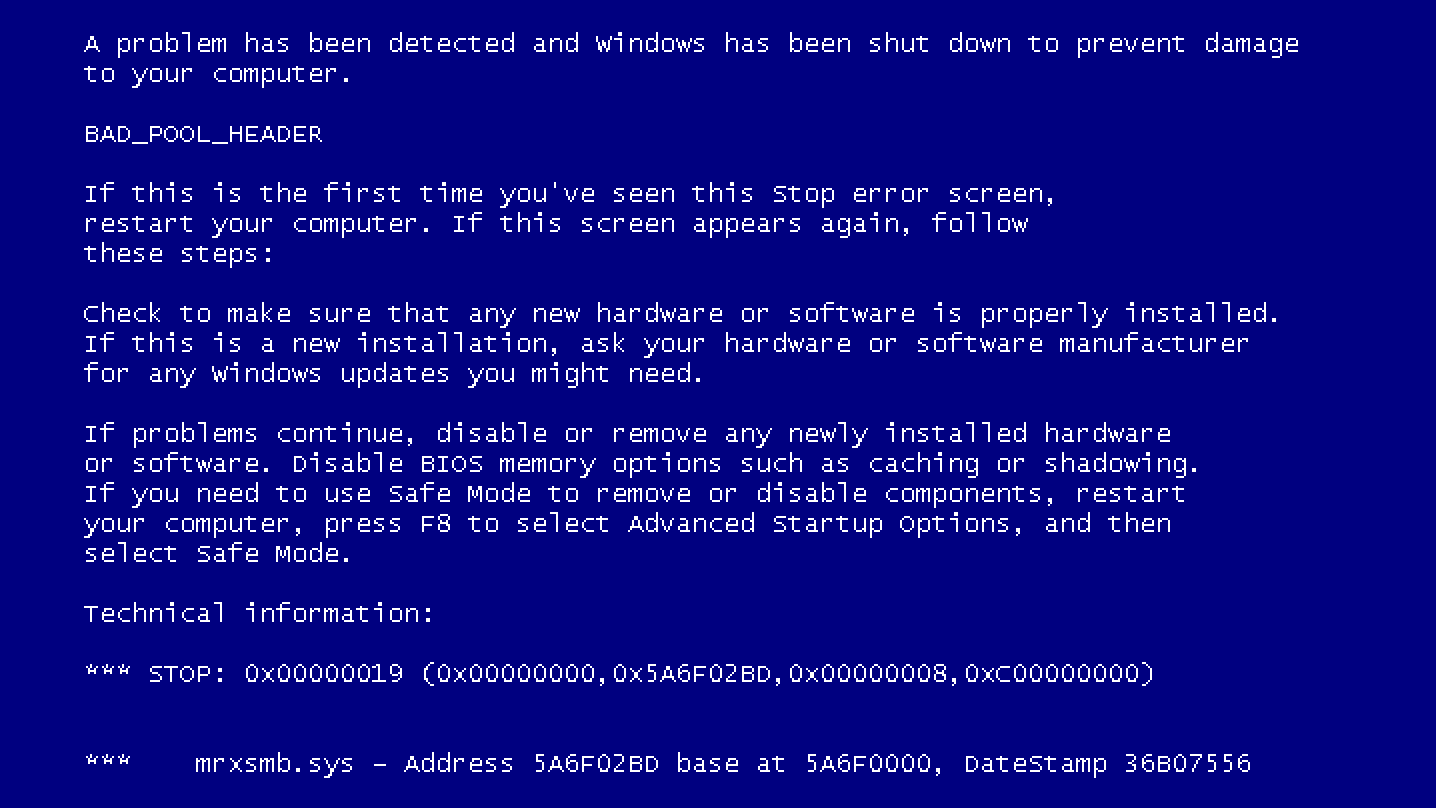
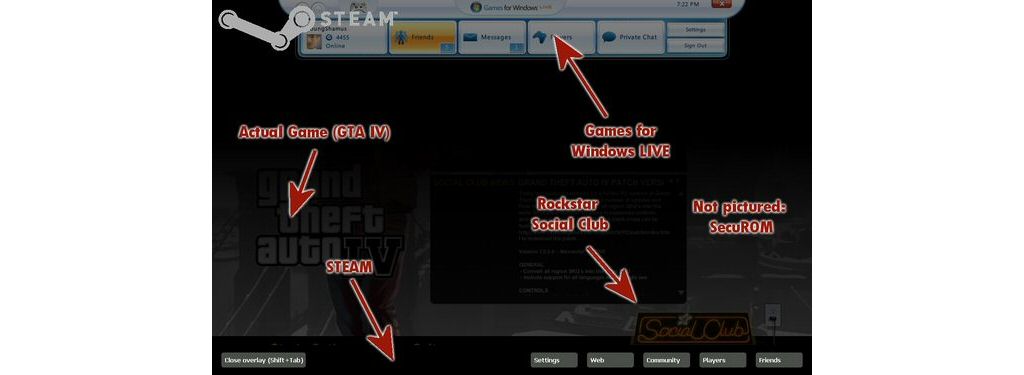
A group of employees of a toy store has their huddle, preparing for the awful shopping day that every retail worker dreads. The comradery is apparent, with Ken (Devon Sawa) seemingly being our leader of the pack. He’s one of the oldest in the group, not hiding his disdain for his current employment status as well as being in the middle of a divorce. He also knows he’s still got it when it comes to the ladies which is apparent with his fling with a very young associate. They conclude the pep talk and open their doors for the flood of hungry consumers. As expected, the customers are all assholes and they have to close their doors early when someone gets attacked. The employees soon find themselves trapped inside their hellish store when a slimy, pink alien creature starts to infect people and turn them into killer zombie-like creatures.

BLACK FRIDAY succeeds in its first act in giving us a satirical look at retail hell during the holidays. Everyone needs a job and just trying to put their happy face on when the monsters that are holiday shoppers treat them like crap. Brian (Stephen Peck) steals the show in these scenes as the condescending junior manager. His snark remarks and fake smile to the employees totally added some flavor to a rather dry script. I wouldn’t be surprised if viewers point at him and think “I worked with someone like that.” Sawa has been continuously acting, but lately has re-embraced the genre as he is currently a regular on the amazing Chucky TV series. Fans of his should follow his social media if they’re not already as he interacts with fans, posting self-deprecating memes about his earlier roles as well as catering to thirsty followers by posting himself doing jumping jacks in grey sweatpants. He’s that cool kind of celebrity that everyone should be.

Still from BLACK FRIDAY

Bruce Campbell also has some fun with his role as manager Jonathan, a corporate ass-kissing piece of work that leads the employees to believe they are getting holiday bonuses. Campbell is perfect for the role as he’s made a career out of playing smart ass, fast-talking anti-heroes. He may not be the villain in the Evil Dead franchise, but he makes quite a few choices that lead to the mayhem. Maybe that’s his charm as he’s not your average action leading man, but he has a way with words. His casting feels appropriate and his swagger helps elevate the limitations of the character.

The main issue with BLACK FRIDAY is that it’s a beautiful 80 minutes, but has incredibly slow pacing. The most interesting characters have the shortest screen time and the horror sequences are actually the least exciting. Chase sequences lack any suspense and the characters have zero chemistry, leaving any kind of remorse out the door. They are either annoying or simply just bad people so you want to see a gruesome death, which the film is lacking. There’s a final act that was very ambitious, but the CGI monster that becomes Godzilla-size will leave you feeling embarrassed for the actors.

With a slow pace and lack of exciting characters, BLACK FRIDAY is a holiday entry not worth skipping Thanksgiving dinner for.

BLACK FRIDAY is available in theaters on November 19, 2021, and will be available On Demand on November 23, 2021.

The post [Movie Review] BLACK FRIDAY appeared first on Nightmarish Conjurings.