Irdeto's Denuvo doesn't have many fans among game players. On the other hand, real gamers also dislike cheating. So those who are fond of the anti-tamper and digital rights management software for...
If you’ve got an alcove, corner, or otherwise awkward empty space in a room that needs a little extra storage or decorative touch, the best solution may be a simple floating shelf. Floating shelves are cost-effective to make—and are fairly easy to install—and they can finish off a space that needs a little something.
Ethan and Joel Coen tend to oscillate between making films about hapless law-breakers who get in over their heads and movies that cheekily subvert genre conventions (be they those of the gangster flick, screwball comedies, or Golden Age musicals). 2007's "No Country for Old Men" marked the rare occasion where the brothers directed a film based on a story they didn't come up with, instead adapting the 2005 neo-western novel of the same name by Cormac McCarthy. The union of the Pulitzer Prize-winning, punctuation-shunning American literary giant and the acclaimed oddball filmmakers was a fruitful one: "No Country for Old Men" took home many honors, including the Best Picture Oscar, and is still seen by many as one of the best movies of the 21st century.
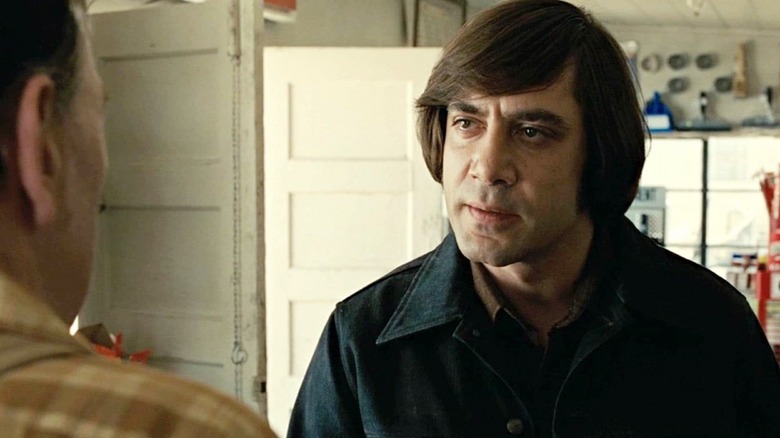
Upon revisiting "No Country for Old Men" more recently, a few thoughts stuck in my mind — among them, Javier Bardem's haircut as the menacingly stoic hitman Anton Chigurh is still a perfect nightmare, the movie's handling of its Mexican supporting characters has only grown more uncomfortable over the years (I think everyone's more aware now of the Coens' poor track record when it comes to portraying anyone who isn't strictly a white U.S. citizen), and the film remains a masterfully crafted, well-acted work of suspenseful storytelling ... but is it really saying anything that profound or just waxing nihilistic, as McCarthy especially is often accused of doing?
First things first, though: let's take a look at the movie's actual plot.
(Don't) Take The Money And Run
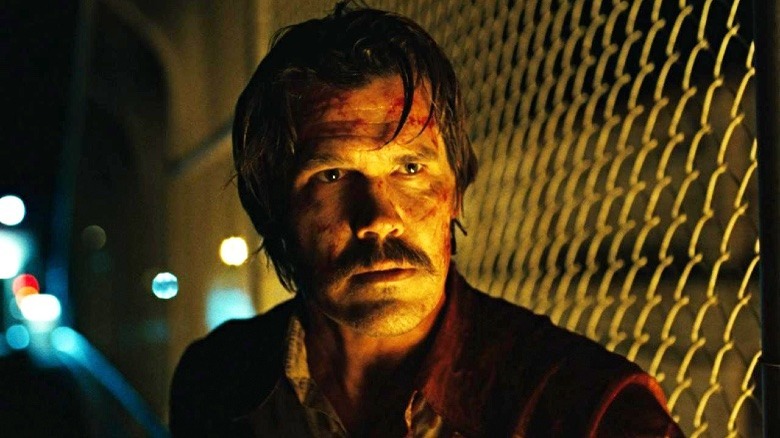
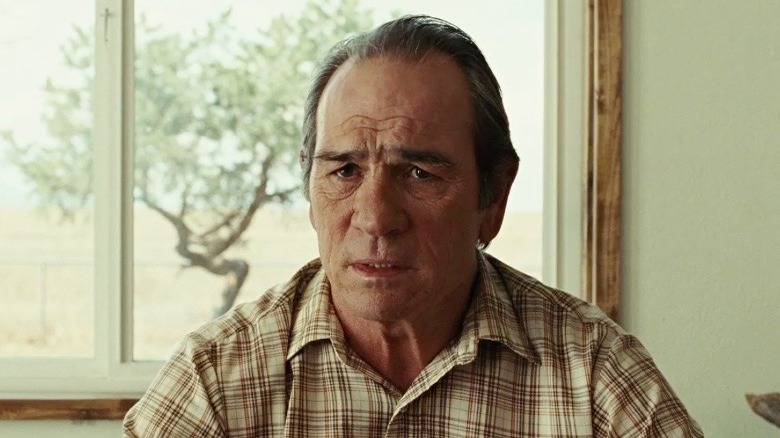
The 1980-set "No Country for Old Men" follows Llewelyn Moss (Josh Brolin), a Texan welder who goes on the run after stumbling upon and stealing $2 million from a drug deal gone wrong. A proficient survivalist and Vietnam War veteran, Llewelyn finds himself hunted by Chigurh, a twisted killer-for-hire who wields a captive bolt pistol and occasionally gives his targets a chance to live if they can successfully call a coin toss. What's more, the pair are pursued by Texan Sheriff Ed Tom Bell (Tommy Lee Jones), a world-weary, aging lawman who seems all-but resigned to always being one step behind his quarries.
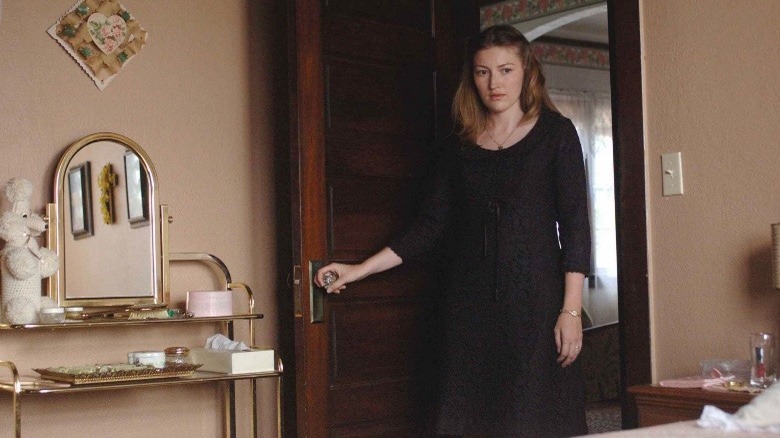
In keeping with McCarthy and the Coens' track record of subverting genre tropes, Llewelyn is unexpectedly killed by a different group of criminals who've been chasing him before he and Chigurh can have their final showdown. Chigurh then manages to recover the cash and tracks down Llewelyn's wife, Carla Jean (Kelly Macdonald), having sworn to kill her if Llewelyn didn't surrender himself.
This is where "No Country for Old Men" deviates from its source material. In the novel, Chigurh offers the heartbroken, terrified Carla Jean his coin toss challenge, which she eventually accepts (and fails). However, in the movie, a quietly scared yet resolute Carla Jean refuses to play his sick game and, when he demands she "Call it," retorts that he can blame chance or fate all he wants: it's Chigurh who will decide whether she lives or dies.
Who Is No Country For Old Men Really About?
Despite their differences, Chigurh kills Carla Jean in both versions of "No Country for Old Men" (although the movie only implies he did without showing it). Yet, Carla Jean's reaction to Chigurh's bleak philosophical outlook in the film speaks to a greater idea: that everyone who lives long enough will one day grow old and feel like the world is spinning out of control (even if it isn't). And while we can't choose the hand of cards that life deals us, we can choose how to play the hand we're dealt while being aware of the privileges we enjoy that others don't.
This is also why Bell fully emerges as the story's true protagonist after Llewelyn's death in the Coens' "No County for Old Men." By that point, Bell (who's in his late 50s) has spent most of the film talking about how overwhelmed he is by all the violence in the world — with Llewelyn's death and Chigurh's escape being the last straw that finally convinces him it's time to retire. All the same, it's Bell who could really stand to learn the lesson imparted by Carla Jean's confrontation with Chigurh. Bell's uncle Ellis even drives this point home during his conversation with his nephew towards the end of the movie, telling him:
"What you got ain't nothin' new. This country's hard on people. You can't stop what's coming. It ain't all waiting on you. That's vanity."
The Book Vs. The Movie
The Coens' "No Country for Old Men" is quite faithful to McCarthy's novel. Sure, it removes some backstory details and a minor subplot involving a runaway teenager, but beyond that, the broader strokes are kept intact. That being said, Carla Jean's tweaked fate in the movie does a better job of driving home the message that, yes, we do have a say in how we react to the way life treats us. It similarly reframes the car accident Chigurh gets into after killing her in both the novel and film, with the latter suggesting it was less an ironic twist of fate and more a direct result of Chigurh being distracted by Carla Jean's last act of defiance. (Also, not wearing his seatbelt — buckle up out there, kids!)
To be fair, because McCarthy's "No Country for Old Men" includes Bell's internal ruminations at the start of every chapter, it's clearer earlier in the novel than in the movie that Bell is the story's real protagonist, not Llewelyn. Still, I prefer how the film ends with Bell telling his wife about the recent dreams he had involving his father, including one where he saw his dad ride ahead of him on horseback through a snowy mountain pass, knowing he would be waiting when Bell caught up. The last shot then shows him looking silently frightened but at least determined to face his mortality head-on. By McCarthy and the Coens' standards, that's a positively cheery conclusion.
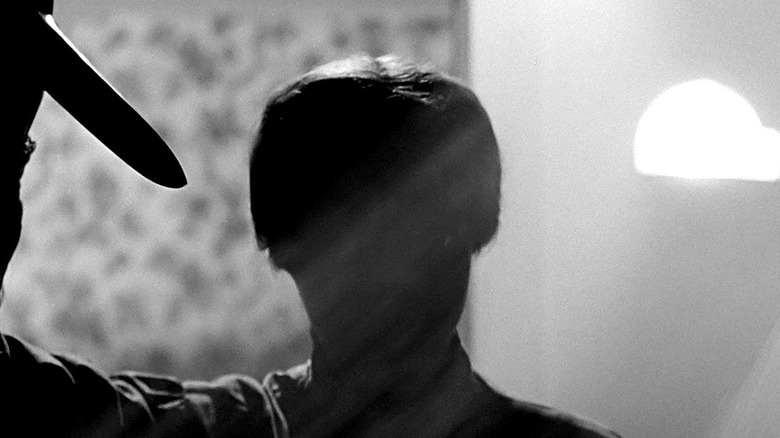
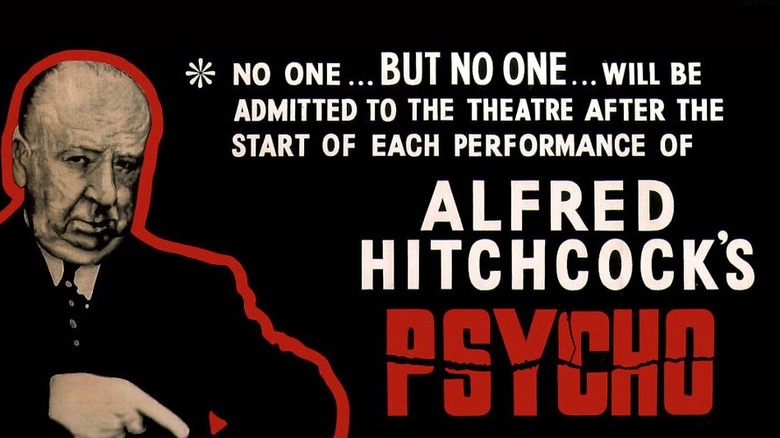
Alfred Hitchcock boasts a reputation for being one of the greatest filmmakers of all time, but he's also one of the earliest proponents for spoiler-alerts, and may have hated movie spoilers more than anyone else on the planet. Yes, that even includes everyone with some combination of Nolan/Snyder/Marvel/DC in their social media handles.
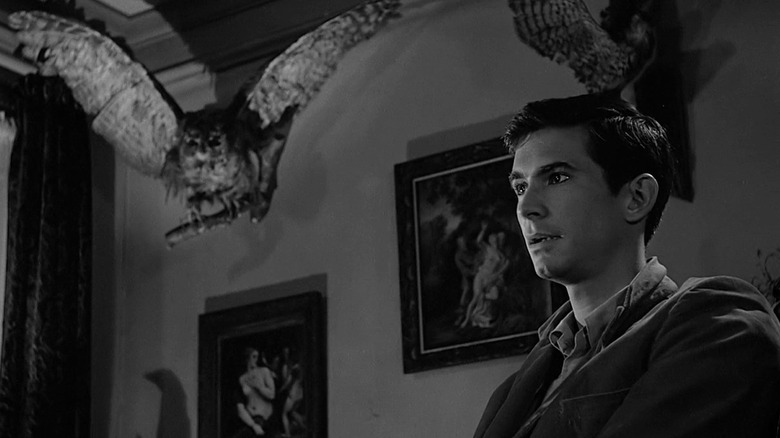
Hitchcock's "Psycho" is arguably the director's most iconic film, with multiple moments, reveals, and scenes becoming cultural mainstays, completely changing the fabric of how horror movies would be made moving forward. To spoil a 61-year-old film, the choice in "Psycho" to kill off leading lady Marion Crane (Janet Leigh) early in the film and then reveal that timid Norman Bates has been behind a series of brutal murders while dressed like his deceased mother were unlike anything audiences had ever seen before at the time, and Hitchcock knew the impact of these twists would be strongest if audiences couldn't see them coming. "Psycho" has a problematic legacy of putting the "killer man in a dress" trope in one of the most successful films in history, but it's also a masterfully made mystery filled with misdirections, and Hitchcock did everything in his power to keep viewing experiences completely spoiler-free.
It didn't work. But you'd be hard-pressed to find a more entertaining anti-spoiler campaign.
An Early Fight Against Spoiler Culture
One of the most notorious ways Hitchcock tried to curb spoilers was pushing the marketing taglines of "If you can't keep a secret, please stay away from people after you see 'Psycho,'" and "After you see 'Psycho,' don't give away the ending. It's the only one we have." Hitchcock also reportedly bought up as many copies as possible of Robert Bloch's source novel to keep the Marion Crane mid-film death twist under wraps. When he had personally acquired the rights to the book, he did so under a pseudonym to make sure people wouldn't run out and start buying the book in preparation for the film.
Additionally, Hitchcock made theaters establish a rule that there would be no late admittance to any screenings. "This is more than a suggestion," he told the theaters. "It is a requirement." Any late audience members, even by one minute, were not allowed to enter the theater and were given tickets to the next screening. Hitchcock turned the marketing campaign around "Psycho" into a bonafide event, and his dedication to prevent plot leaks and spoilers puts the recent boom of hashtag campaigns to shame.
Spoiler Alert: It Was Spoiled Anyway
Unfortunately, Hitchcock's efforts were spoiled by both Variety and The Hollywood Reporter writing pieces on the movie and publishing many of the top-secret moments in printed articles. Obviously people were talking about the reveals, but in an age before social media, word of mouth was impossible to spread as quickly as the printed news. Despite the availability of spoilers, people were still ecstatic to see the buzzed about film, and the film broke box-office records in Japan and the rest of Asia, France, Britain, South America, the United States, and Canada.
Fortunately for Hitchcock, the reports didn't hurt the success of "Psycho" in the slightest and the film has gone on to be one of the most beloved films in history. In 1992, the film was deemed "culturally, historically, or aesthetically significant" by the United States Library of Congress and was selected for preservation in the National Film Registry, and inspired a franchise of sequels, a popular television series, and a ridiculous amount of merchandise.
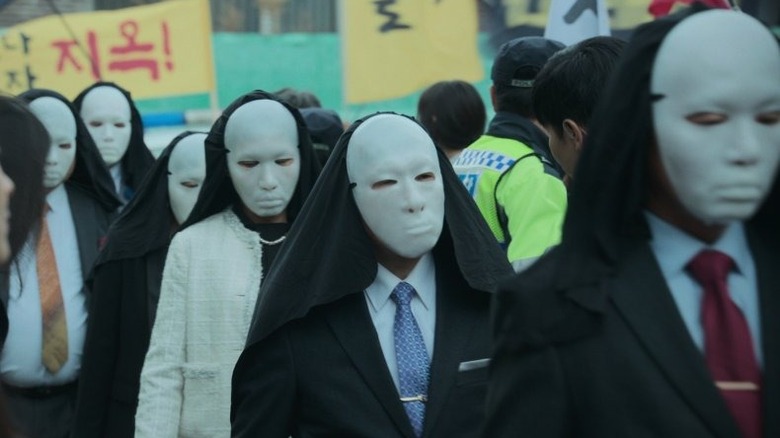
It's been a big year for Korean-made dystopian dramas on Netflix. In their latest series, Netflix snagged "Train to Busan" director Yeon Sang-ho for the terrifying supernatural world of "Hellbound." Based on a digital comic written by Yeon Sang-ho and Choi Kyu-seok called "The Hell," "Hellbound" is about a nation learning to deal with a prophecy that unfortunately comes true, where people allegedly deemed as sinners are condemned to bloody damnation, pursued by horrific creatures that brutally murder the sinner before zapping their souls to Hell. Profiting off of the fear the nation finds themselves consumed by are two different religious cults that rise up and gain power for their own iniquitous means.
The first group is a religious organization called the New Truth Society led by the Chairman Jeong Jin-soo (Yoo Ah-in), that have been tracking the emergence of the monsters, believing them to be angels making society a better place by ridding the world of sinners. The New Truth Society feels like a standard church, in contrast to the religious cult known as The Arrowhead, a group of violent radicals not unlike QAnon. While both groups believe those being killed are being done in by divine retribution, The New Truth believes the arrival of these monsters to be a motivator to live a more righteous life, which seems kind compared to The Arrowhead who see these actions as a call to arms to rid the world of sinners. Let's get inside the mind of the religious cult and explain what's going on with The Arrowhead.
What Does Their Name Mean?
One of the major figures of The Arrowhead is a livestreamer donning neon makeup known as Skull Face. He might as well be a stand-in for other right-wing extremists, and his furious rantings serve as a call to action for Arrowhead members. During one of his viral rants, he explains the name of the cult. "When God decides to release an arrow, we, the Arrowhead, should fly and hit a target," he shouts. His streams are marching orders, as anyone that he targets during his live streams are tracked down by Arrowhead members and brutally bludgeoned with metal pipes and baseball bats.
With these beasts magically appearing, killing, and disappearing, society is looking for something to help them make sense of it all. News media and law enforcement fail to accept the otherworldly nature of the situation, instead trying to treat it like any other homicide story. That's not good enough for a terrified nation, which has led many of them to follow the beliefs of the Arrowhead, because even if their answers are wrong, at least they have answers to give.
What Do The Arrowhead Want?
Where The New Truth wants the acknowledgement and acceptance that people are being killed due to their sins, the Arrowhead's motivations are less than clear. They organize predominantly online, and don't have much structure apart from answering to Skull Face's aggressive livestreams, which appeal directly to the panicked survival instincts of his followers. Skull Face frequently targets people "sinners" without any actual evidence, but his followers listen without any questioning. It's so hard not to view this cult as another version of Q Anon with someone like Skull Face as a stand-in for an Alex Jones type, but that's an admittedly Western-washing read of the Korean-made show.
Much like "Train to Busan," the real horrors of "Hellbound" are not the supernatural monsters, but the ways people react to their presence in the wake of fear. The Arrowhead are terrifying not because of their ultra-violent actions, but because they look all-too familiar to the extremists we know already exist.
"Ghostbusters II" is proof that sometimes the worst thing a sequel to a hit movie can be is "disappointing." Far from a flop upon its release, director Ivan Reitman's 1989 followup to his beloved 1984 horror-comedy earned middling reviews and turned a healthy profit while falling well short of its predecessor's box office gross. This was enough to sour franchise mainstay Bill Murray on the idea of making "Ghostbusters III" for 20-plus years, but not so much as to convince Sony to reboot the property until after Harold Ramis passed away in 2014.
It's since become popular to argue that "Ghostbusters II" isn't as bad as you remember and, honestly? It isn't ... With some caveats. Much like certain modern legacy sequels bank too much on audiences' nostalgia, the movie rehashes a lot of what worked in the first "Ghostbusters" (be they plot points, jokes, scares, or even montages) to diminished returns, rather than forging a new path. However, "Ghostbusters II" also has a better human antagonist and clearer message, evolves Murray's Peter Venkman from a borderline sex pest into more of a harmless rascal who, surprisingly, embraces fatherhood — and when it wants to be scary, it's dang scary.
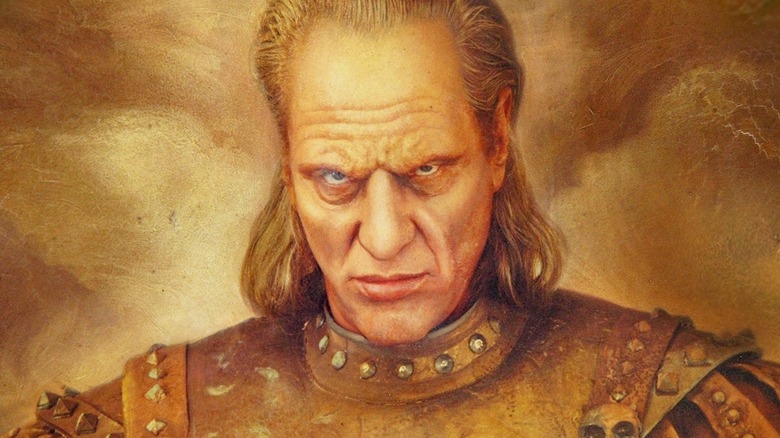
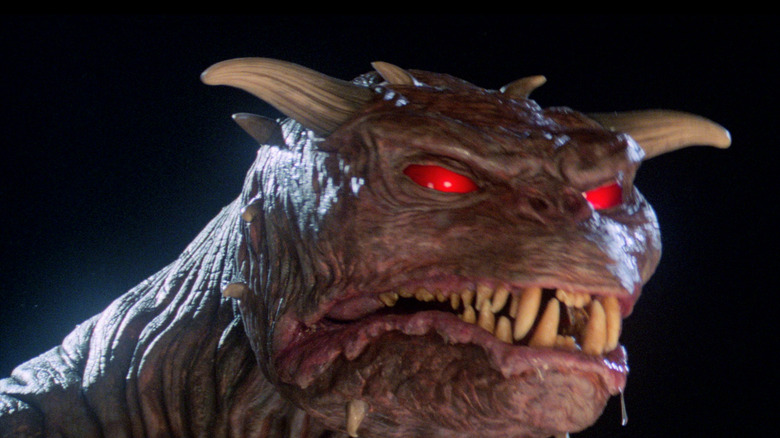
Case in point: the film's supernatural villain, Vigo the Carpathian, a genocidal sorcerer turned baby-napping haunted painting brought to physically intimidating life by German boxer, wrestler, and actor Wilhelm von Homburg. But while he boasts an equally menacing voice, we can't give Homburg credit for that aspect of the character.
Who's The Voice Behind The Painting?
Homburg did, in fact, voice Vigo during filming on "Ghostbusters II," but his lines were later re-dubbed during post-production after it was decided his delivery was too slurred and unrefined for the specter of the self-described "Scourge of Carpathia, the Sorrow of Moldavia." Adding insult to injury, Homburg wasn't informed of this ahead of the movie's premiere and stormed out of the screening when he learned this information firsthand.
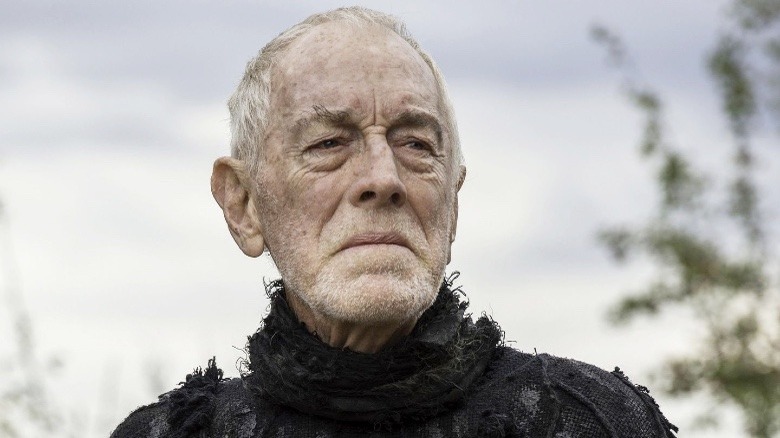
Ultimately, it was Max von Sydow who voiced Vigo's lines in "Ghostbusters II." The Swedish screen icon starred in no less than 11 movies helmed by Swedish auteur Ingmar Bergman, most notably 1957's "The Seventh Seal" (where Sydow portrayed Antonius Block, the knight who played literal chess with Death). Sydow continued to act until his death at 90 in 2020, working with such esteemed directors as Steven Spielberg ("Minority Report"), Martin Scorsese ("Shutter Island"), and Ridley Scott ("Robin Hood") along the way. He even played the Three-Eyed Raven in "Game of Thrones" season 6 after Struan Rodger brought the mystical character to life in Season 4.
Homburg (born Norbert Grupe), on the other hand, appeared in a handful of Hollywood films after "Ghostbusters II" before his acting career fizzled out and he passed away from cancer in 2004. (His greater life story is even darker, if you can believe it.) And while his "Ghostbusters II" villain was fully named Vigo Von Homburg Deutschendorf in his honor, one imagines that didn't mean much to him.
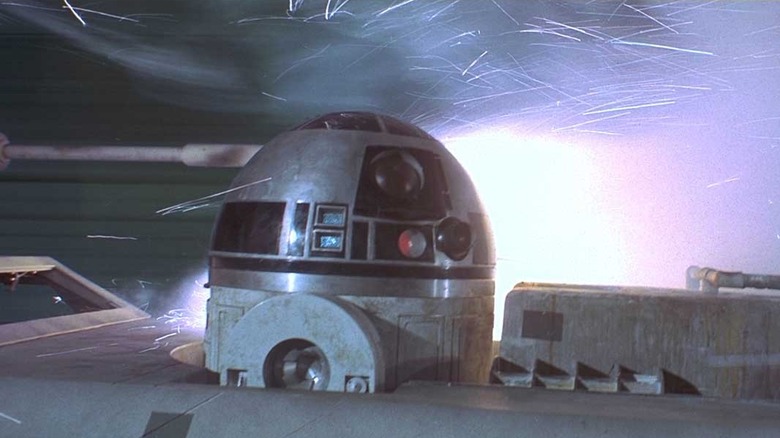
"Star Wars" is so much more in the pop culture landscape than a popular series of movies. Few films have ever managed to penetrate the collective social consciousness in the way George Lucas' sci-fi saga has, and so many elements of those movies that might otherwise be forgotten in other franchises have lived on for decades. A sometimes underrated element of these movies is the astonishing sound design, which has resulted in sounds that even the most casual of fans recognize: a lightsaber blade igniting, Darth Vader's breathing, and even R2-D2 screaming.
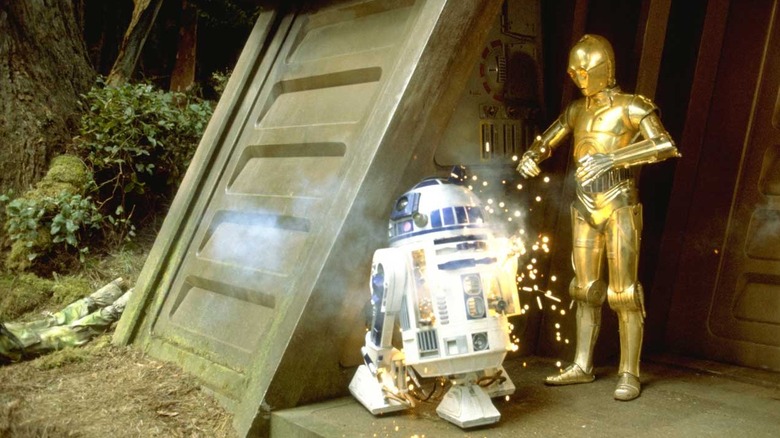
But what is it that we're hearing when we hear that beloved droid scream? It's a unique notion -- making a robot that doesn't communicate with actual words scream in a way that is discernible as a scream. The sound has some pretty interesting roots that actually make one understand why that memorable scream feels so, well, genuine.
Stress Led To R2-D2's Iconic Scream
It all starts with some advice George Lucas had for the team crafting the sound of this universe: rather than use a synthesizer "go out into the world with your tape recorder," as "The Sounds of Star Wars" author J.W. Rinzler recalled to NPR back in 2010. Sound designer Ben Burtt was then tasked with gathering a library of real-world sounds that could then later be manipulated to craft the sounds of this universe. This took him on a wild journey, from recording scuba gear to capture Darth Vader's breathing, to recording the hum from a projection booth at a cinema to create the lightsaber sound.
But Burtt revealed in that same interview that R2-D2 was his greatest challenge of all. After trying, and failing, with many methods, Burtt realized making his own sound was the way to go. It's a blend of Burtt's voice and the manipulation of a synthesizer that birthed the R2 unit's sounds. As for the scream? It was pretty much just Burtt screaming himself, perhaps motivated by stress.
"I had a room in George Lucas' house where their offices were, but I was down in the basement. When I wanted to record something -- I didn't have a recording booth -- I used to get under a big table down in the room where I worked, with a microphone, and kind of curl up in a corner. And one day, I just made a scream. I just screamed. Maybe there was some stress behind it. That scream, sped up, is used pretty much straight up as R2-D2's scream."
One Scream For Every Star Wars Project
One truly remarkable thing about that fateful scream is that it has never been duplicated, and no other scream has been used for R2-D2 ever since. That famed scream Ben Burtt did under that table has been used repeatedly for decades now, and it will probably continue to be used for decades to come. As we can see (or hear rather) in the above video, J.W. Rinzler explains that is the only scream that exists:
"Ben, probably because he was stressed, was able to do a really good scream which he's never been able to duplicate. So every time R2-D2 screams in the movies, it's always that 1977 one."
One fateful moment of stress managed to help define a character through more than four decades and nine movies in the Skywalker saga -- and counting.
Superhero movies haven't killed action films the way video did the radio star dirty, but they have boxed them out as the genre entertainment of choice for audiences seeking high-octane thrills and spectacle. And even most of the action franchises that have continued to thrive over the last decade, like "Fast & Furious," have evolved in such a way that they're practically superhero films in their own right now. Heck, there was a whole running joke in "F9: The Fast Saga" about how invulnerable the series' heroes have become.
There have, naturally, been exceptions to the rule at the box office in recent years, and that will continue to be the case for 2022 and what little remains on the calendar for 2021. So, let's look ahead to the action movies that seem worth keeping on your radar.
Note: This list will not include any Marvel Studios or DC Comics films. Not because there aren't any promising-looking ones on the horizon (far from it) or none of them qualify as action movies, but, frankly, it's not as though they're hurting for attention at the moment.
The Matrix Resurrections
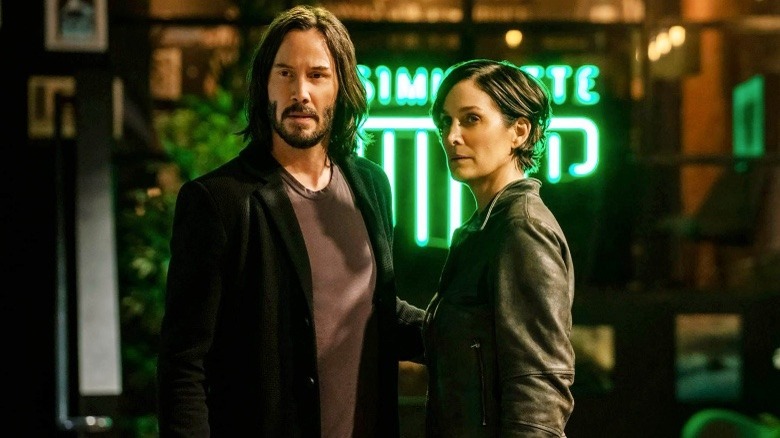
Neo and Trinity are back from the dead, Morpheus is younger than he was in the original "Matrix," someone made Neil Patrick Harris a licensed therapist — what upside-down simulated reality is this?
Yes, "The Matrix Resurrections" looks as wild as everything else the Wachowskis have made in the 22 years since they first showed audiences how deep the rabbit hole truly goes. And while Lana Wachowski is directing without her sister for the first time here, that doesn't make me any less intrigued to find out what she's got up her sleeves this time, be it in terms of philosophical ideas, phantasmagorical imagery, or merely answering the question: Does "The Matrix" franchise have anything meaningful to say about the world we live in today? Hopefully, the answer is an emphatic "Yes."
"The Matrix Resurrections" opens in theaters and streams on HBO Max on December 22, 2021, making it the final Warner Bros. movie to release that way this year.
The 355
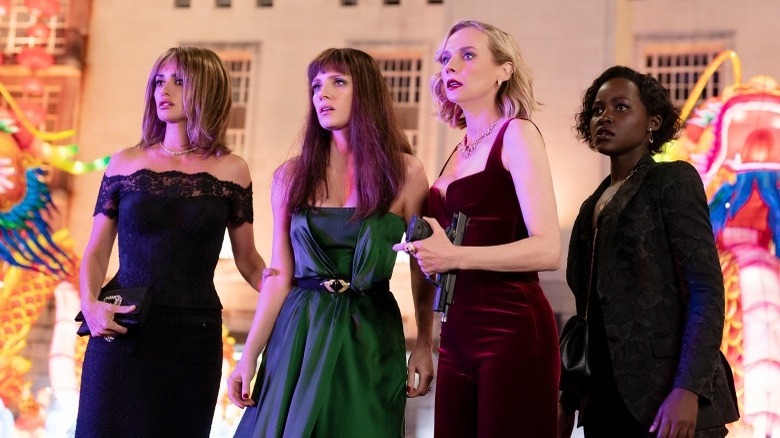
The last time Jessica Chastain and writer-director Simon Kinberg joined forces, the results were Not Great, Bob. Hopefully, things will go better with "The 355," an original spy movie that Chastain got the ball rolling on out of a want to create a women-led action flick in the vein of "Bourne" and "Mission: Impossible."
Chastian stars in "The 355" opposite Oscar-winners Lupita Nyong'o and Penélope Cruz, Diane Kruger, and Fan Bingbing, all of whom are playing secret agents from different countries who team up to retrieve a secret weapon from a sinister mercenary. (For those unfamiliar: "Agent 355" was the code name for a female spy who worked against the British during the American Revolution, which is where the movie gets its title.) It's a pretty basic premise for a globe-trotting tale of espionage and derring-do, but so long as the execution is up to scratch, that shouldn't be a deal-breaker.
"The 355" arrives in theaters on January 7, 2022.
Bullet Train
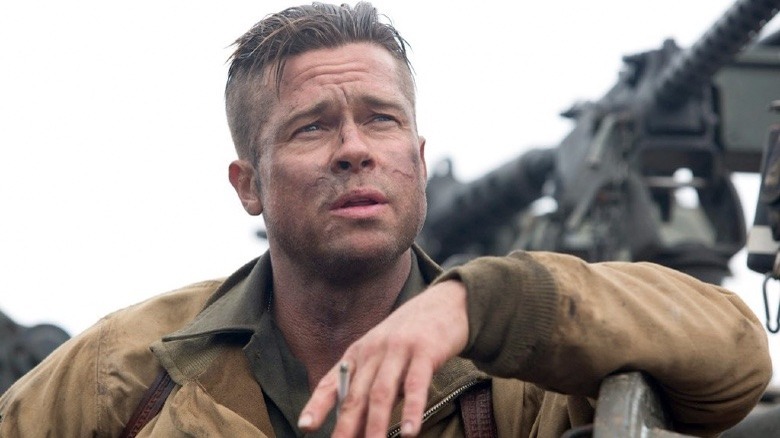
Five assassins on a bullet train discover their individual missions are all connected. That's the refreshingly simple concept for "Bullet Train," a film based on Kōtarō Isaka's novel (also known as "Maria Beetle") and starring the likes of Brad Pitt, Aaron Taylor-Johnson, Brian Tyree Henry, Zazie Beetz, and "Warrior" actor-martial artist Andrew Koji. I say "refreshingly" because I feel like "Bullet Train" director David Leitch (who, true facts, used to be Pitt's stunt double) really shines as an action filmmaker when he's playing in a relatively constrained sandbox ("John Wick," "Atomic Blonde"), as opposed to crafting movies driven by big set pieces ("Deadpool 2," "Hobbs & Shaw"). And hey, after the exhilarating bus brawl in "Shang-Chi and the Legend of the Ten Rings," I'm all for more films with people beating the snot out of each other on rapidly moving vehicles.
"Bullet Train" debuts in theaters on April 8, 2022.
John Wick: Chapter 4
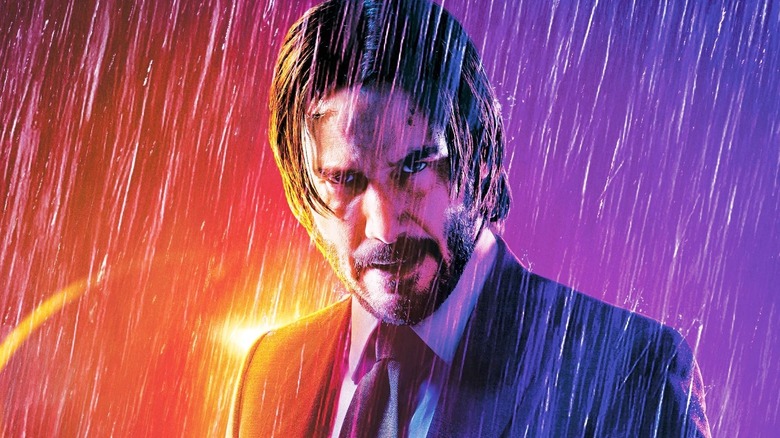
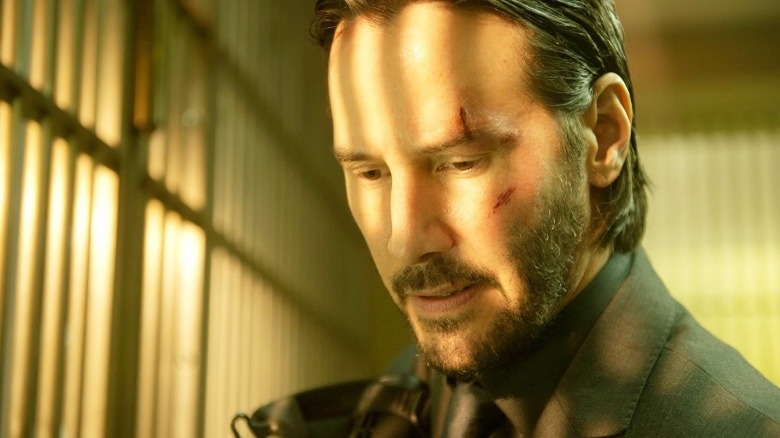
Speaking of Baba Yaga: Keanu Reeves is coming back for "John Wick: Chapter 4," with Chad Stahelski once again solo directing as he did on the previous "John Wick" sequels. (To clear up any confusion: Leitch was Stahelski's uncredited co-director on the first "John Wick.") Like Leitch, Stahelski is someone I would like to see scale things down a bit this time around. "John Wick: Chapter 3 - Parabellum" boasted all the exquisitely choreographed martial arts-y brawls audiences now expect from this franchise, yet it seemed to lose track of John's arc a little among all the world-building and opulently staged violence. Fortunately, the ending to "Chapter 3" suggested "Chapter 4" will be all about John being done with the High Table's rules and seeking to reclaim his agency by taking the fight to them directly. Good luck with that, High Table-ites!
"John Wick: Chapter 4" charges into theaters on May 27, 2022.
Samaritan
Okay, so this list does include a superhero movie, just not one of the Marvel or DC variety. "Samaritan" adapts the Mythos Comics graphic novels co-created by the film's writer, "Escape Room" scribe Bragi F. Schut, and stars Sylvester Stallone as a famous superhero who's been living in retirement since a major battle twenty years earlier. It's an intriguing premise for a comic book-based action movie, least of all one from director Julius Avery: the helmer behind 2018's largely satisfying WWII Nazi monster horror thriller "Overlord." Sly's legacy as an action icon adds an extra meta layer of meaning to the story (something Avery is well aware of) and could be the ingredient that pushes "Samaritan" over the edge from "just another superhero flick" into being a more memorable and meaningful addition to the genre.
"Samaritan" has seen its release date change a few times due to Covid but is now set to bow in theaters on August 26, 2022.
Mission: Impossible 7
Tom Cruise's self-performed stunts have gotten as ludicrous as his off-screen antics, but gosh dang, it's fun to watch him cheat death in the "Mission: Impossible" movies. That should stay the case with "Mission: Impossible 7," a film that has already given the world the amusing image of Cruise's IMF agent Ethan Hunt hanging on a speeding steam train, as well as terrifying behind-the-scenes footage of the actor riding a motorbike off a ramp on the side of a cliff before parachuting down. (A completely normal thing to spend one's day doing.) And although Cruise isn't chilling on the movie's set with scary Covid robots (a rumor that's strangely believable), "Mission: Impossible 7" sees him once again working with Christopher McQuarrie, a filmmaker whose craft has only grown sharper and more refined each time he sits in the director's chair.
"Mission: Impossible 7" is making steady progress after several Covid-related delays and is now set to hit theaters on September 30, 2022.
It might seem like all of Joel and Ethan Coen's special and specific ragtag characters belong in the same universe — the TCBU, if you will — but the brothers previously refuted that theory. However, one thing you may not know is that they did confirm that four of their films (yes, four) are part of a special trilogy called the Numbskull Trilogy. How's that for some film trivia?
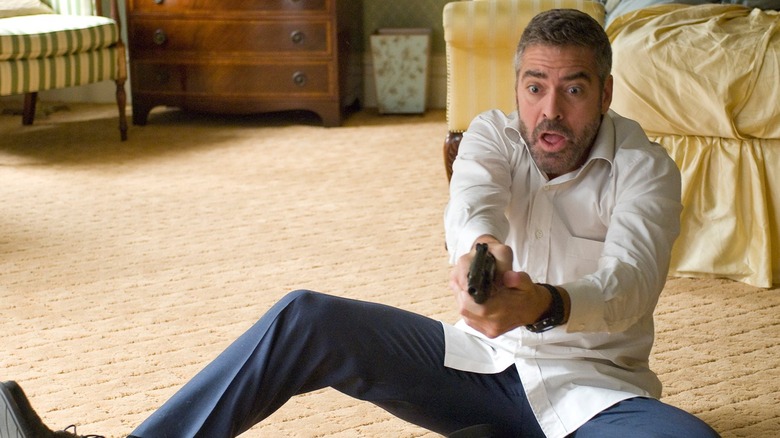
The four entries in the Numbskull Trilogy include 2000's "O Brother, Where Art Thou?", 2003's "Intolerable Cruelty," 2008's "Burn After Reading," and 2016's "Hail Caesar!" What do each of these films have in common, you might be wondering? Well, none other than the George Clooney stars in each of them. Spoiler alert, he's always playing one of the numbskulls.
"I just want to point out that only a Numbskull Trilogy could have four parts. When did we start talking about the Numbskull Trilogy? I can't really remember," Ethan noted in a 2016 interview with the Huffington Post. "Maybe it was the second one we did with George?"
Joel added:
"We like the idea like Krzysztof Kieślowski would do a trilogy: 'Three Colors: Red,' or there was the 'The Apu Trilogy' — Satyajit Ray — that great trilogy of movie about a Bengali boy. We thought, 'Well, we have to do a trilogy. Which trilogy is not taken?' Well, nobody's done a Numbskull Trilogy, and I met George. We realized that our environment lined up perfectly, so to speak, and we found our numbskull."
George Clooney's "Numbskull" Legacy
Joel even revealed that Clooney nearly tapped out of the token dummy roles ahead of "Hail, Caesar!"
"You know, George did say after 'Burn After Reading,' on the last day I think he said, 'OK, boys. I've played my last idiot,'" he told the outlet. "But to his credit, George has come back for the fourth installment of the trilogy."
The actor is known for being a bit of a heartthrob, but I'd argue that Clooney shines brightest when given slapstick, comedic material that has a dark edge. I've always been grateful to the Coens for knowing how to utilize him, much like they knew exactly how to bring out the best in Brad Pitt (truly, bless all of them).
I generally think of "Burn After Reading" when I search for a great example to back up my point. He plays a paranoid US marshal who gets into an affair with the wife of a CIA analyst — and it's deeply impressive how well the romantic lead sheds his usual skin and steps into such a dumbed down and almost pure role. Since he's known for his handsomeness and movie star charisma, he tends to play roles that are the complete opposite of his Coen characters, which makes these turns stand out all the more.
"Burn After Reading" happens to be my personal favorite of this bunch, but there's not one of Clooney's roles from the "trilogy" that doesn't completely embody the numbskull archetype — and he might be the least likely actor to take that on, but damn is he good at it.
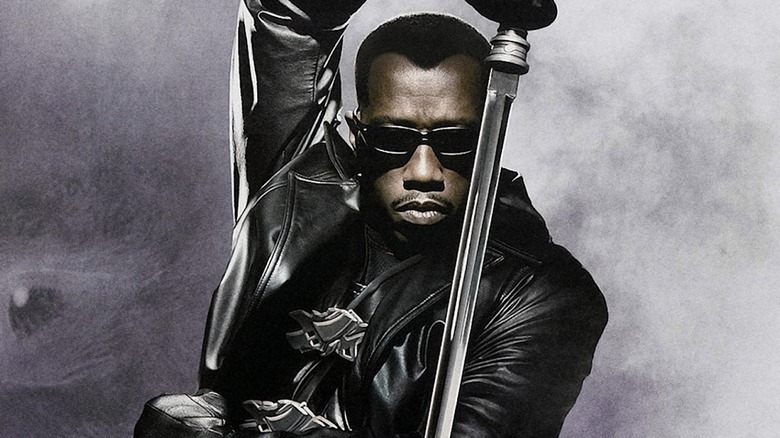
It's difficult to remember a time when the box office wasn't dominated by the Marvel Cinematic Universe, but when "Blade" hit theaters in 1998, it was a huge gamble. Just the second major movie inspired by a Marvel Comics character (following "Howard the Duck" in 1986, which wasn't exactly a hit), the film starred Wesley Snipes as the titular vampire hunter. The movie, which has retained a passionate following over the decades, was successful enough to spawn two sequels and a short-lived TV show. "Blade" will soon be rebooted in the MCU, with Mahershala Ali in the role.
Based on the Marvel character of the same name, "Blade" told the story of Eric Brooks, who was forever changed after his mother was attacked by a vampire while pregnant with him. She didn't survive (or so he thought) and he was transformed into a vampire-human hybrid who grew up and made it his life's mission to hunt down the immortal undead. He was uniquely suited for this task, having "all of their strengths and none of their weaknesses."
"Blade" is darker than the average superhero movie, but it is also gleefully violent and tons of fun. The movie still holds up as one of the better pre-MCU films (which range from excellent to awful) and one could say it was at least partially responsible for the current superhero boom. It certainly helps that "Blade" ends really strong, sending audiences out on a high note. But there was originally supposed to be more to it. Specifically, a Spider-Man villain was initially set to appear.
How Does Blade End?
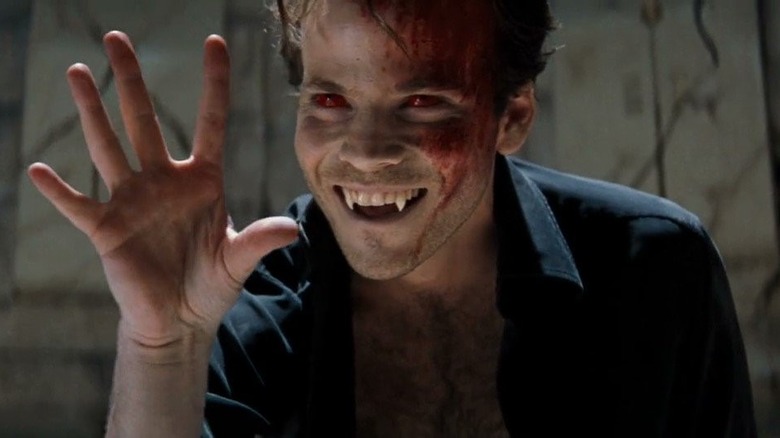
"Blade" had a truly memorable villain in Deacon Frost. Screenwriter David Goyer told EW they wanted Frost "to be almost like a character from a Bret Easton Ellis novel," while actor Stephen Dorff explained that for him, the character was something of a variation on "The Lost Boys" for a new generation. Deacon was certainly a match for Blade/Eric himself, who didn't come out this movie unscathed. Not only had his mother actually survived, but she'd also been sired by the vampire who attacked her in the first place, which was none other than Deacon Frost. After already losing his mentor, Whistler (Kris Kristofferson), Eric was also forced to kill his own mom.
So, when Eric finally looks Deacon in the eye again, he's staring at the monster responsible for the death of both his mother and his father figure. Unfortunately, the vampire is also supercharged thanks to the summoning ritual he'd performed. After a brutal, but awesome battle, Eric does vanquish his foe -- in somewhat disgusting fashion. Emerging victorious, Karen (N'Bushe Wright) and Eric head to the roof the roof. She'd found a cure for her own looming vampirism and offered to cure him as well. Of course, the hero refused so he could continue on his mission. There is a brief epilogue that follows, in which Blade was shown fighting vampires in Moscow. However, there was originally another character involved in that rooftop scene.
What Spidey Villain Did We Almost See?
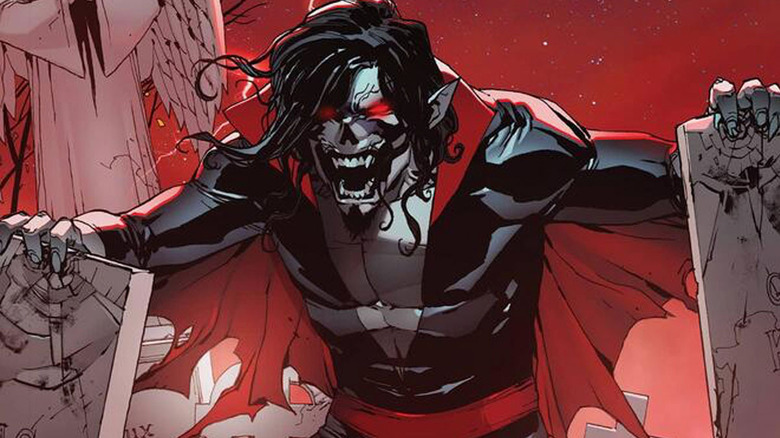
It's wild to think that Morbius, the Living Vampire, who is poised to make his live-action debut in 2022, almost appeared at the end of a 1998 movie. That's right, the antihero played by Jared Leto in the upcoming "Morbius" originally showed up at the end of "Blade," before Spider-Man had even been given the live-action treatment. The unused ending revealed someone was watching Eric and Karen on that rooftop. As Karen says, "You're back on the clock," a figure meant to be Morbius is glimpsed on a nearby building.
Spider-Man villain Michael Morbius became a vampire after experimenting on himself in an effort to find a cure for his rare blood disease. And since he was actually still mortal, like Blade, he walks in two worlds. So, why wasn't this obvious sequel tease used? Goyer explained in the DVD commentary (via Bloody Disgusting) that Morbius was indeed meant to be the antagonist of "Blade II." However, the idea was tied to "Blade" director Stephen Norrington, so when he exited the franchise, the Living Vampire left with him. Interestingly, the figure on the rooftop sporting a trench coat and Morbius' long dark hair was actually the director himself. After Norrington passed on the sequel, Guillermo del Toro signed on to direct the sequel using his own ideas and the rest is history.
It's fascinating to consider what could have been. Morbius and Blade do share a fair amount in common, such as struggling to curb their bloodlust, so could they have put aside their differences and teamed up? There's plenty to explore, as they've had an on-again-off-again feud in comics over the years. Sadly, we'll probably not see them share the screen anytime soon as there don't seem to be any concrete plans for the MCU to crossover with "Sony's Spider-Man Universe."
In the winter of 1971, dozens of New York gangs including the Savage Skulls, the Black Spades, the Immortals, the Majestic Warlocks, and the Spanish Daggers met in the gymnasium of the Hoe Avenue Boys Club in the Bronx to discuss a truce. This parley came after the murder of "Black Benji" of the Ghetto Brothers, who himself had tried to promote peace between the city's gangs. To ensure that there was no trouble at the summit, a gang member was positioned on the rooftop across from the venue with a rifle.
Although gang violence was common in the city at that time, there evidently was some taste for diplomacy. A youth worker called Eduardo Vincenty, aka, "Spanish Eddie," proposed the grand idea of forming a super-gang under the "Family Peace Treaty." As a means of settling conflicts, his scheme got the leaders of 68 gangs on board at a time when the NYPD estimated there were around 10,000 gang members in just the Bronx alone. Before his idea could fully come to fruition, Vincenty was transferred to Brooklyn and shot in the head while trying to stop a fight. He survived, but some of his colleagues suspected it was an attempt on his life for trying to unite the gangs.
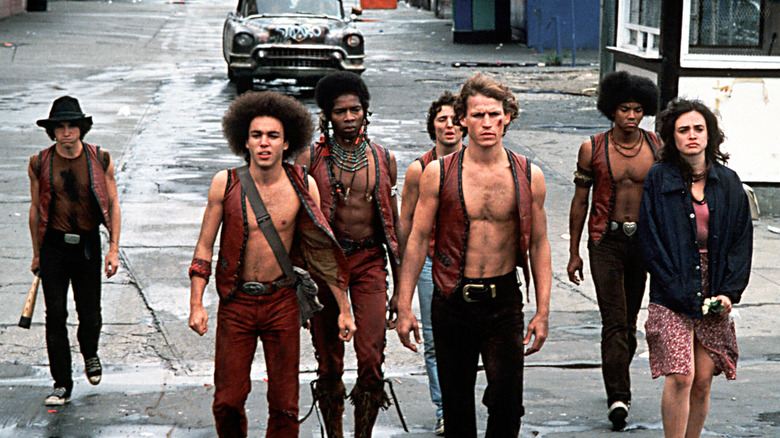
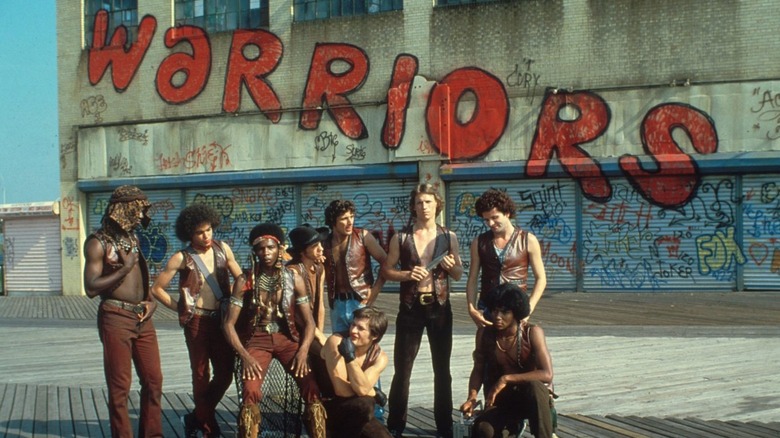
These incidents would provide some background atmosphere for Walter Hill's 1979 cult classic, "The Warriors," a streamlined action thriller charting the odyssey of a small group of Coney Island toughs as they journey across New York after they are framed for the murder of a messianic gang leader, with all the city's other crews in vengeful pursuit.
While Hill himself envisaged the film as more of a dystopian fantasy than some realistic gangland thriller, the movie soon found itself embroiled in controversy for sparking violence.
What Happens In The Warriors?
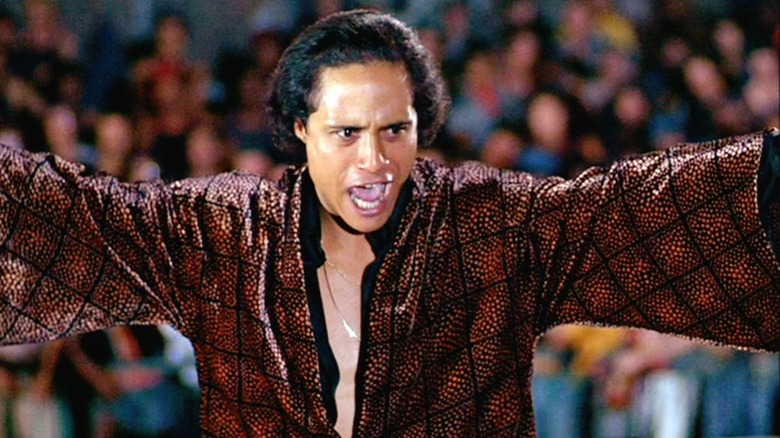
The Warriors, a small leather-waistcoated gang from Coney Island, attend a summit in a Bronx park called by Cyrus (Roger Hill), the charismatic leader of one of New York's most powerful gangs, the Riffs. Cyrus's grand scheme is for all the gangs to unite and control the city together, since they would significantly outnumber the police. Most of the attendees definitely seem to dig this idea, but the deranged leader of a rival gang shoots Cyrus dead and pins the murder on the Warriors.
The Riffs send out a message on the radio calling for the Warriors' heads and the city's other gangs start scouring the streets for them. Framed for the killing and miles from the safety of their home turf, leader Swan (Michael Beck) must get his beleaguered troops home alive, dodging cops and rivals along the way.
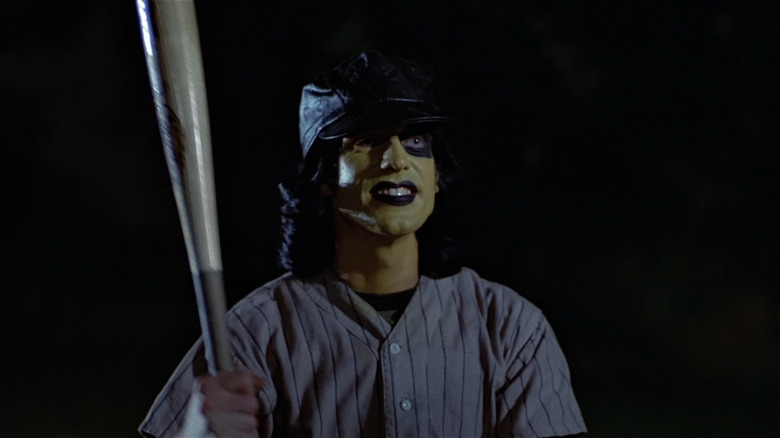
The basic plot of "The Warriors" is about as simple as they come, which suits Walter Hill's stripped-back style. He's more interested in mood, attitude, and style; shot on location during the summer nights of '78, it's a viscerally nocturnal movie, of spooky rubble-strewn neighborhoods that could be right out of "Escape from New York," graffiti-scarred subway trains, and neon reflected in rain-slicked streets. Then there are the colorful gangs, who register more as characters as a unit than most of the individual faces in the film. This is where the film clearly tips over into the fantastical, showcasing outrageous gangs like The Baseball Furies in their green face paint and sports uniforms, and the Hi-Hats, who dress like mimes. The Warriors themselves are a likable bunch, at least enough to keep us rooting them home, and their journey takes on a mythic quality as they are ambushed, attacked and waylaid.
Why Was The Warriors So Controversial?
"The Warriors" opened in early February 1979 and two weeks later the New York Times reported:
"Despite sporadic acts of violence and vandalism in theaters around the country showing "The Warriors," a film about teen‐age gang violence in New York City, Paramount Pictures yesterday resumed print advertising for the high‐grossing film after a six‐day hiatus."
Paramount had pulled promotional material from radio and TV, and reduced adverts in the newspapers to just the film's title after a series of violent outbreaks at screenings. In some places, the results were fatal; two Californian youths were killed during fights in two different theaters, while in Boston another teenager was stabbed to death by a friend who had just seen the movie.
"I think the reason why there were some violent incidents is really very simple: The movie was very popular with the street gangs, especially young men, a lot of whom had very strong feelings about each other. And suddenly they all went to the movies together! They looked across the aisle and there were the guys they didn't like, so there were a lot of incidents. And also, the movie itself is rambunctious—I would certainly say that."
Fights were also reported in New York theaters, but police said that there was no increase in gang activity related to the movie. A volunteer group called the Magnificent 13 protested outside screenings outside the Loews State One Theater in Times Square after some kids allegedly harassed subway commuters after seeing the film. Although the film's violence is pretty tame by today's standards, the group felt that it was a dangerous picture, glamorizing violence that others might try to copy or emulate.
Aftermath And A Cult Classic
The precautions taken by Paramount had some effect and the violent incidents died down, with only a few minor scuffles reported after the initial ads were pulled. Hill claimed that Ed Koch, the mayor of New York City at the time, was supportive of the film, and "The Warriors" even picked up a fan in the White House. President Ronald Reagan called Michael Beck personally to say how much he enjoyed the film at a Camp David screening.
As always, there's nothing like a bit of controversy to pump up a movie's box office figures. Paramount started running a new ad campaign that focused on positive reviews from high-profile critics like Pauline Kael, who was one of the few contemporary critics to really get behind the movie. It went on to make $22.5 million against its $4 million budget.
Since then, "The Warriors" has gone become a popular cult classic that has also featured on Entertainment Weekly's 2008 list "The 25 Most Controversial Movies Ever," beating the likes of "Freaks," "Cannibal Holocaust," and "Do the Right Thing" to the #14 spot. Its enduring legacy is a source of pride to Hill:
"It's certainly a pleasant thing to think that something you did so many years ago still resonates. It's one of those movies that people continue to ask me about and talk about with a smile on their face, so it's a good feeling. It makes you really understand and believe that people like a good story."
"The Warriors" just looks better with age, one of those great '70s New York movies like "Dog Day Afternoon" and "The Taking of Pelham One Two Three." Thankfully, talk of a remake has gone quiet over the past few years -- that's something I definitely could not dig.
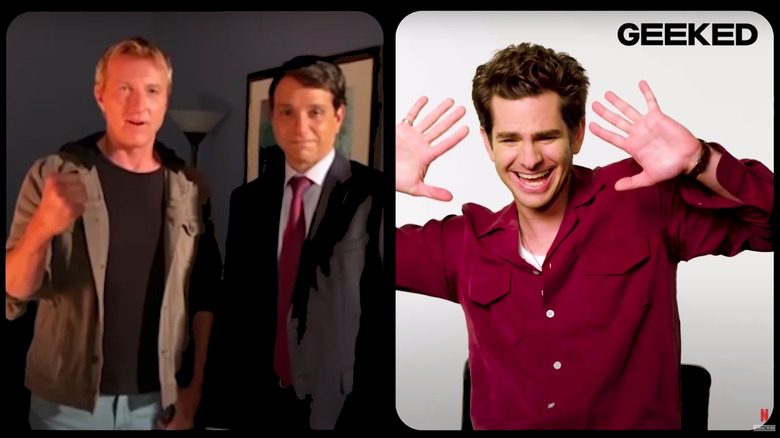
Andrew Garfield has been inundated with questions about "Spider-Man: No Way Home" throughout the publicity tours for both "The Eyes of Tammy Faye" and "Tick, Tick...BOOM!" But that's not what brought the actor to tears. Instead, it was a special greeting from the cast of "Cobra Kai," which just so happens to be one of Andrew Garfield's favorite shows. So it's a good thing that "Tick, Tick...BOOM!" is at Netflix, the home of "Cobra Kai," in order to make this sentimental synergy happen.
Cast Of Cobra Kai Makes Andrew Garfield Cry
"It feels like Christmas in my body. My body feels like Christmas." That's what Andrew Garfield said with a grin that went from ear-to-ear. This is just flat out adorable. Seeing an actor like Andrew Garfield geek out like this reminds us that some of our favorite actors really still are just like us. Not only are they big fans of the same movies and TV shows that we love, but they can be just as giddy about them too.
Garfield's love for "Cobra Kai" came from a little Netflix promotional video where the actor talked about the things that he geeks out about. Self-described as being "obsessed" with "Cobra Kai," Netflix saw the perfect opportunity to help Garfield geek out even more. You can watch his full proclamation of love for the "Karate Kid" sequel series below.
Initially, "The Amazing Spider-Man" franchise star lamented the fact that the fourth season of "Cobra Kai" hadn't been released yet. But after having the cast of the series send him these wonderful messages, he's got something to hold him over until the new episodes of "Cobra Kai" arrive. If only we could all be so lucky to receive personal messages from the cast. But that would take the actors a long time, and then we probably wouldn't get any more episodes of the series.
If case you didn't already hear, the fourth season of "Cobra Kai" will help you close out 2021 and ring in 2022 with a premiere set for December 31, 2021. Plus, the fifth season of the series is almost done shooting, so you've already got that to look forward to as well. It's not clear how much longer the series will last, but there have been rumblings about spin-offs being in the works to keep expanding "The Karate Kid" universe.
In the meantime, check out Andrew Garfield in "Tick, Tick...BOOM!" as soon as you can, because it's apparently a great movie in which the actor gives a stellar performance.
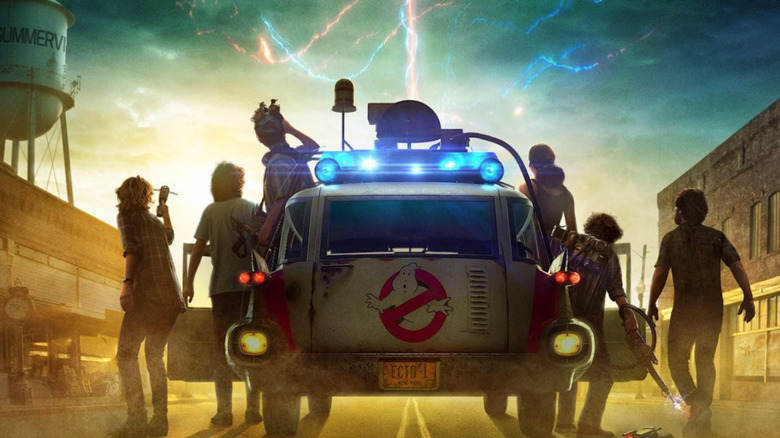
In a recent feature for The A.V. Club, writer Matt Schimkowitz highlights the distressing trend of fan service he feels present in "Ghostbusters: Afterlife." Most prominently: The movie's surplus of fan surrogates. "Traditional audience surrogates speak to the viewer's logic and put their point of view on screen," Schimkowitz explains. "A fan surrogate focuses on a specific viewer who knows everything about the cinematic universe unfolding before them ... allowing a movie like Reitman's 'Ghostbusters: Afterlife' to speak the language of the fan community, verbalizing all its desires, interests, and moods." To Schimkowitz, "Ghostbusters: Afterlife" is a self-serving mirror for the "Ghostbusters" faithful -- the ones who lambast "Answer The Call" too harshly, who luxuriate in the Stay Puft Marshmallow Men returning (even if their return makes little sense).
Given that, one might think that the Easter eggs in "Ghostbusters: Afterlife" would border on the obnoxious. Instead, the best of them reveal a movie that's in conversation with Ivan Reitman's "Ghostbusters," not reverently shouting over it. These Easter eggs err on the side of fan appreciation even when "Ghostbusters: Afterlife" fails to. Here are 12 of them you may have missed.
The forthcoming slides contain massive spoilers for "Ghostbusters: Afterlife" -- proceed at your own risk.
Zuul's Assassination Of Egon
I've written about why the opening prologue of "Ghostbusters: Afterlife" rips, and I wholeheartedly stand by my assessment. The sequence is terrifically tense, and confirms Jason Reitman is trying to up his game as an action craftsman from the jump. That said, it's also a nifty bit of telegraphing. According to "the 15-minute movie method," you can see hints of where an entire film is headed within the start of its first act, which certainly applies here: Even though the presence of "Ghostbusters" characters like The Key Master, Zuul, and Gozer are twisty reveals in "Ghostbusters: Afterlife," Reitman tips his hand that they're returning here.
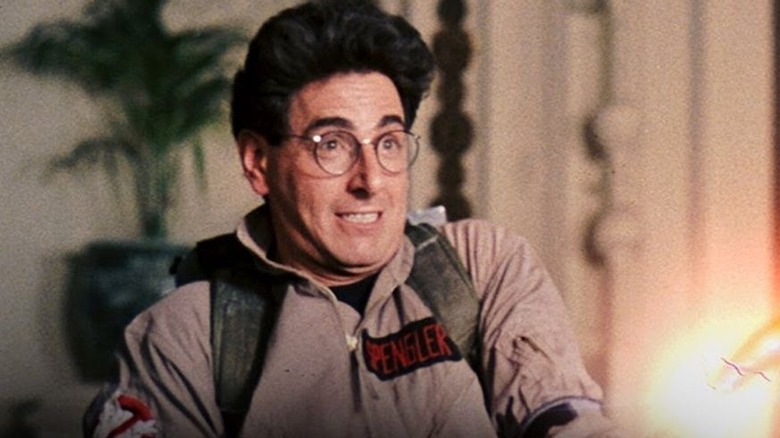
How? Simple -- the way that Egon Spengler ("The Dirt Farmer") perishes. As "Ghostbusters: Afterlife" opens, Egon is speeding home to what is later dubbed the Murder House, tailed by a spectral presence. Upon arriving, he races to the farm's deck and unholsters a PKE Meter. This appears to be how he'll best his ghostly foe, except something goes horribly wrong. Knowing he's not long for this Earth, Egon retreats inside to leave a few temporal clues for whoever might see them. He is then surrounded by smoke which billows in under the door and murdered in the armchair where he sits.
Does any of this sound familiar? It should. Zuul entered Dana Barrett's apartment in the exact same way during "Ghostbusters," similarly possessing her in an armchair by reaching its claws through the fabric. The goal and result with Egon are assassination, but the method and approach are kindred. This is no strange ghost -- only Zuul.
The Stacked Books In Egon's Murder House
For much of "Ghostbusters: Afterlife," the spirit of Egon Spengler attempts to aid his family: He leads them to old ghost-busting equipment; he directs his daughter to photos of her as a child to redeem his absentee parenting (no, really), and even reveals clues about Shandor's mine. But what becomes abundantly clear by the conclusion of "Ghostbusters: Afterlife" is that Egon had no way of knowing who'd show up to his recently departed farm first. Would it be his love, Janine? His estranged family? Or even his old friends, the Ghostbusters? Egon simply has no clue, so he does what any good scientist would -- accounts for multiple possibilities with many, many variables, one of which is the most moving Easter egg that "Ghostbusters: Afterlife" deploys.
When the Spengler kids are touring the late Egon's home, they find a stack of books that's seven or eight feet high. This recalls the first act of 1984's "Ghostbusters," when Venkman, Stanz, and Spengler -- scouring Bryant Park Library for a poltergeist -- come upon a tower of tomes. Spengler claims it's a sign the ghost they're searching for is near, with Venkman retorting "You're right, no human would stack books that high." Whether Venkman was right or not, his comment proves heartbreakingly prescient. The tower of manuscripts is a sign from Egon's ghost that something supernatural's afoot, and a signpost to fans that Jason Reitman played close attention to the original.
Early Sightings Of Shandor
Ivo Shandor is the Cult of Gozer's founder, an imposing figure who served as the primary antagonist of "Ghostbusters: The Video Game" and has been played by both Brian Doyle-Murray and J.K. Simmons. But in "Ghostbusters: Afterlife," Ivo Shandor is a misdirection. The film builds him up to be a formidable big bad for its first two reels before promptly ripping him in half. That build-up, however, is even more layered than it appears at first glance, and provides some of the best Easter eggs in "Ghostbusters: Afterlife."
Let's start with the more obvious one: The primary mine in Summerville, Oklahoma is literally owned by the Shandor Mining Company, and signs for said company (seen throughout the first act of "Ghostbusters: Afterlife") all but underline in neon that Ivo will need to be reckoned with. But in a blink-and-you'll-miss-it detail, when Podcast takes Phoebe to said mountain he points out some art-deco hieroglyphics which score its surface. Those hieroglyphics, upon closer examination, are a perfect recreation of the statue layout that topped Dana Barrett's building in the original film. "Ghostbusters: Afterlife," it seems, tips its hand right from the very beginning. It's not just Shandor we have to worry about -- it's Gozer.
Mr. Gruberson's Horror Movie Collection
The best comedies stack jokes in service of their story -- even a film like "Blazing Saddles," ostensibly a series of surreal and side-splitting sketch pieces, finds funny ways to push the plot forward. "Ghostbusters: Afterlife" is no different. One of its better recurring gags contains a great Easter egg that tees up major revelations for Phoebe and Podcast.
We haven't discussed Paul Rudd's Gary Grooberson much yet, mostly because he's an elevated bench player brought to life by Rudd's A-list charms and mischievous nature. Case in point: Grooberson shows his students (Phoebe and Podcast) old horror movies like "Cujo" instead of actually teaching them. One of these movies (and here's our Easter egg) is 1988's "Child's Play." The idea of an adult showing grade-schoolers a movie where toys commit murder is amusing enough, but the kids' unfamiliarity with both it and "Cujo" (released in 1983) perfectly backs up the plot twist which follows them: That none of them have heard of the 1984 New York hauntings which are the primary thrust of "Ghostbusters."
And so, when Gooberson loads up YouTube clips of the Stay Puft terrorizing Manhattan (which in and of itself is an Easter egg, as much of the footage is comprised of shots deleted from the original "Ghostbusters"), we're more willing to believe it's the first time Phoebe and Podcast are seeing it. It's a top-tier comedy move, and one which both honors and builds off of the "Ghostbusters" legacy ... as opposed to just being overly reverent of it.
The Twinkie
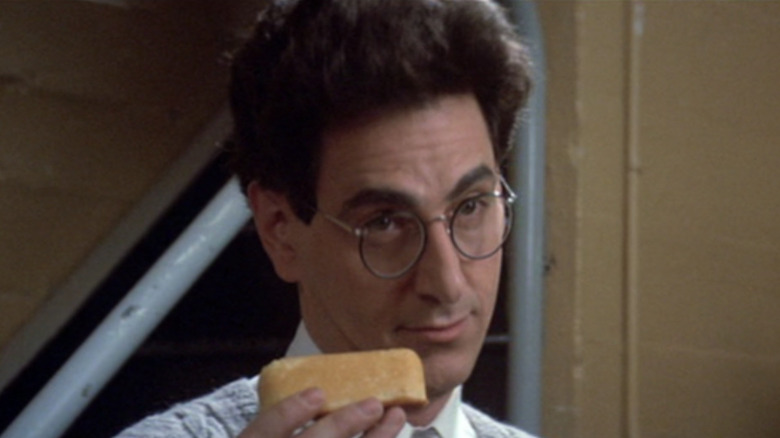
One of the more bizarre wrinkles of "Ghostbusters" fandom is watching cast-off jokes from Ivan Reitman's film become Wikipedia-worthy entries. Case in point: Egon's Twinkie. Used to explain the uptick in supernatural forces during the second act of "Ghostbusters," the Hostess dessert's appearance has inspired band names and a lovely callback in "Ghostbusters: Afterlife."
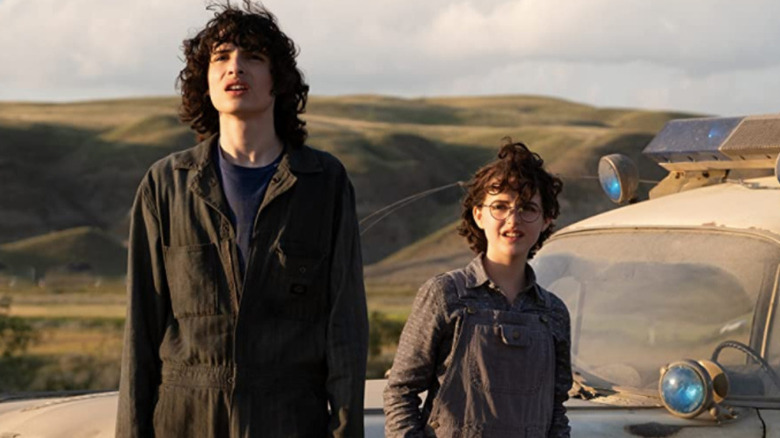
When the kids go out to hunt Muncher (a ghost who chews on and through anything), they do so in the Ecto-1, Egon and the Ghostbusters' old vehicle. Being minors and having already caused plenty of chaos during their attempted capture of the ghost, they are eventually pulled over by a Summerville police officer who demands to see their license and registration. Trevor (Finn Wolfhard) has enough sense to check the glove compartment for the latter, but instead of necessary papers, he finds only Egon's last Twinkie. It's a surprising moment, but one which also seems in keeping with Egon's character. Here was a man so obsessed with the paranormal that he was more like to have his favorite comfort food on him than important documents (given his brushes with the EPA, this tracks). Sometimes it's the cast-off jokes which offer the richest resonance.
Ray's Occult Books
When the trailers for "Ghostbusters: Afterlife" first dropped, fans spotted the original "Ghostbusters" logo on the new Ecto 1 instead of the "Ghostbusters II" version, leading some to wonder if the original's 1989 sequel remained canon. Over the last two weeks, director Jason Reitman confirmed as much. Had fans waited until they'd actually seen "Ghostbusters: Afterlife," however, they would have seen ample proof that "Ghostbusters II" is canon -- namely, Ray's Occult Books.
In "Ghostbusters II," Ray Stanz opens an occult book store following the collapse of his ghost-fighting squad. We learn, touchingly, that Venkman and Spengler were frequent customers of it. And when "Ghostbusters: Afterlife" first catches up with Ray Stanz (when Phoebe is in jail and needs to call someone who's ready to believe her stories of spirit-hunting), we find him -- where else? -- in Ray's Occult Books.
The loveliest component of this touch is far more than nostalgia-baiting or continuity-confirmation; it's the implication that Ray has remained steadfast in his belief, even as relationships with his friends dissolved. The events of '84 and '89 shaped Stanz irrevocably (much as they did Dan Aykroyd) and Ray's continued stewardship of his tiny store is both a wonderful Easter egg and a bit of character building.
Revelations 6:12
Speaking of character-building, when we see Ray Stanz on the phone with Phoebe, he is sporting fresh ink. A tattoo of "Revelations 6:12" can be seen on Stanz's arm, which is found in King James' Bible and reads as follows: "And I beheld when he had opened the sixth seal, and, lo, there was a great earthquake; and the sun became black as sackcloth of hair, and the moon became as blood." Fans of the first "Ghostbusters" will recall Stanz misquotes this exact passage as "Revelations 7: 12" to Winston as both are trying to process the increased amount of paranormal hauntings happening around them.
So it isn't for nothing that Stanz now has Revelations' memorable entry permanently written on his skin -- it's forever signed upon his soul, emblematic of a moment that changed the trajectory of his entire life. He's become a true believer, be it in the Bible or the supernatural or both.
But the verse is also crucial foreshadowing in "Ghostbusters: Afterlife." When Spengler's family first pulls up to Egon's farm, there's a sign displaying "Revelations 6:12" prominently displayed at its entrance. The message is clear to those who could see it: Egon believes again that the end is coming, and -- given his history with saving the world -- it's almost certainly an entity who turns the sky red. In the case of Ray and Egon, they're ready to believe it.
A History Of Hauntings
Historical context is a quick way to grant instant importance to the seemingly casual. In the case of "Ghostbusters: Afterlife," a single sequence from its midpoint not only ups the stakes its young protagonists are facing, but also adds gravity to "Ghostbusters" and "Ghostbusters II."
When Phoebe, Podcast, Trevor, and Lucky (Celeste O'Connor) descend into Shandor's mine, they find a series of dates inscribed upon the walls, each of which corresponds to various real-life disasters. One of these is 1908, which would refer to the Tunguska Blast, in which a meteor exploded over the plains of Siberia causing 830 square miles, 80 million trees, and an unknown number of people to be wiped off the Earth. If this sounds familiar to you, it might be because Ray inaccurately refers to the blast occurring in 1909. This not only builds on the gag of Ray being off on everything by one number -- it's also a strong indication as to why the original Ghostbusters might have missed a malevolence was set to terrorize the world in 2021.
The other years listed there? 1984 and 1989 are among them, which, of course, are the years in which Gozer and Vigo The Carpathian haunted New York. If there was any doubt as to just how connected "Ghostbusters: Afterlife" is to Reitman's other "Ghostbusters" films, this Easter egg settles the matter firmly.
Ray Is A God
Old habits die hard. John McClane can't help but fall into trouble. James Bond orders martinis shaken, not stirred, no matter what mission or threat he's facing. So while it's reasonable to assume that, 40 years removed from staring down a paranormal force bent on wiping humanity from existence, Ray Stanz would've broken a habit that almost cost him his life, we all know that isn't how it works.
"Ghostbusters: Afterlife" reunites Ray not only with his team of spook-fighters but also the villain they encountered back in '84. Asked once again by Gozer if he is a God, Ray remembers to say yes this time ... but only after hesitating for a few beats. It's one of the nicer callbacks "Ghostbusters: Afterlife" incorporates into the proceedings, all the more so because Ray delaying his answer in the face of evil is still objectively funny whether you have or haven't seen "Ghostbusters." That makes it an Easter egg for much of the film's younger audience, and one that reinforces that the Ghostbusters' arrival is as much out of habit as growth.
"I Thought You Might Show Up"
At the end of "Ghostbusters: Afterlife," a chryon appears on the screen. It reads, simply, "For Harold." Whatever you make of Jason Reitman's film, it's hard not to be moved by this simple bit of text, as it confirms what was clear from the preceding two hours -- it is a heartfelt labor of love.
An example: Ramis' Egon (played by Bob Gunton here) doesn't speak in "Ghostbusters: Afterlife," with Bill Murray's Venkman speaking for him during their confrontation with Gozer. Their subsequent catch-up -- which revolves a mentioned feud between Egon and Venkman -- is fleeting, funny, and more than a little melancholy. It feels strikingly intimate, possibly because it borrows from real life.
Off the silver screen, Ramis and Murray didn't speak for more than two decades. According to Violet Ramis Stiel's memoir/biography Ghostbuster's Daughter: Life With My Dad, Harold Ramis, Ramis and Murray had such intense creative disagreements on the set of "Groundhog Day" that "one day Ramis grabbed Murray by the shirt collar and threw him against a wall. After that, Murray didn't speak to Ramis for over 20 years." This continued until just before Ramis passed, when "Murray showed up unannounced at his old friend's house at 7 a.m. with a box of doughnuts and a police escort. Ramis had pretty much lost his ability to speak by that point, so Murray did most of the talking."
It's not clear this is directly referenced by "Ghostbusters: Afterlife," but it's impossible to imagine a world where the matter wasn't felt on-set in some way, if only in its talent's minds. It also helps distinguish "Afterlife" from becoming the exercise in fan service many worried it would be.
Deleted Scenes Become Canon
Like most modern-day blockbusters, "Ghostbusters: Afterlife" contains not one but two post-credits scenes -- and if you're exhausted just reading that sentence, I empathize. We're in an era where entertainment comes packaged with the promise of more entertainment, where films can exist to shore up future projects (and, in the process, hopefully create deafening waves of buzz). It can be a bit much for viewers who don't want movies to feel like homework. That said, the post-credits sequences of "Ghostbusters: Afterlife" feel more like extra credit than additional assignments.
Case in point: the second of the two scenes (which we'll detail further in just a moment), opens with old footage of Egon receiving a medal at the World's Fair. And though it would be fair to assume it's a bit of posthumous CGI given Ramis' untimely passing, the scene is actually a deleted sequence from the original "Ghostbusters." The decision helps make the moment as much a love letter to the first film and the fans, one which tees up some major revelations...
The Ghost Containment Unit's Been On The Whole Time
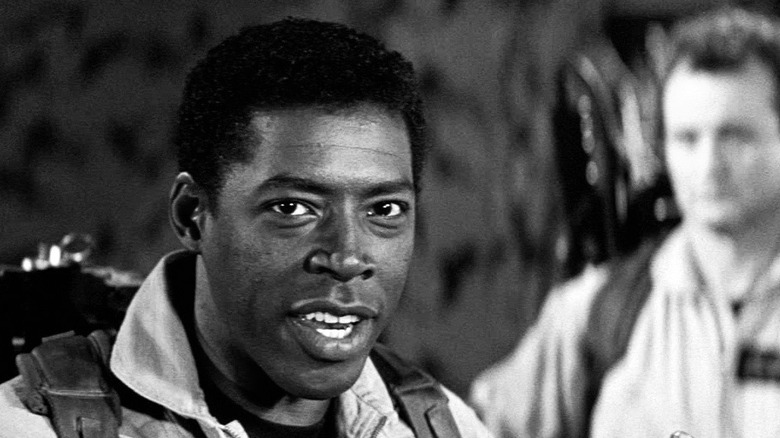
If I'm being transparent, I always thought Winston Zeddemore was underrated. He had the best name of any Ghostbuster, and as portrayed by the indelible Ernie Hudson, there were depths to him that felt lifted from a different, emotionally richer movie. You could feel it while watching the original as a kid, and if Jason Reitman's post-credits scene for "Ghostbusters: Afterlife" is any indication, he did too. Yes, the scene's big bombshell is that the ghost containment unit which was shut down by EPA pencil-pusher Walter Peck ominously flashes back on, a single red light glowing. But the scene also leaves the audience with a richer sense of who Winston Zeddmore is, and that is -- in its own way -- a massive Easter egg.
Hudson has made no secret of the fact that the "Ghostbusters" script he signed on for had a richer backstory for Winston than the one which appeared in the film's final cut. The character didn't even appear on the film's primary movie posters! Winston, it seemed, was more of an afterthought than the movie's other three, comic white leads. Here, in "Ghostbusters: Afterlife," Winston is not only given more due but the proverbial keys to the kingdom. He's purchased the old firehouse headquarters. He's positioned at the forefront of wherever the franchise heads next. Winston's status has risen, and it's about dang time.
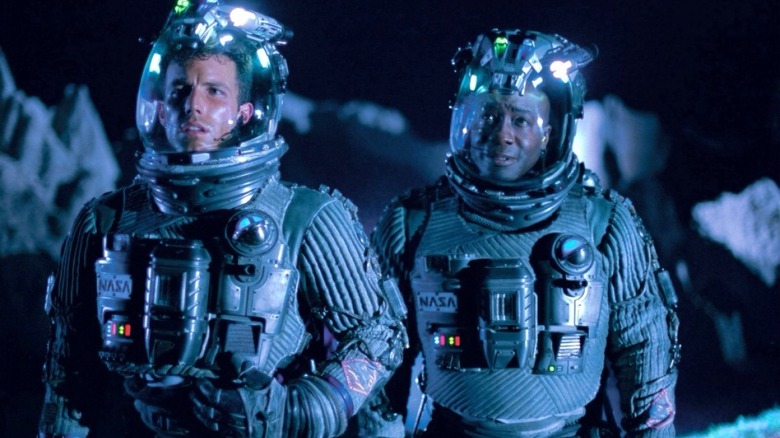
Who among us hasn't tried to take credit -- even with tongue firmly planted in cheek -- for multi-million dollar space ventures created in the pursuit of scientific knowledge and planetary defense? I can't speak for everyone, but that's pretty much a normal weekday for me. It probably won't come as much of a surprise to most that none other than blockbuster filmmaker Michael Bay would be the first to draw some rather interesting parallels between a currently ongoing NASA mission with incredible ramifications on the future of humanity's collective existence ... and the 1998 disasterpiece known as "Armageddon." Honestly, on some level, I have no choice but to respect Bay's hustle here.
As it turns out, all the haters and losers who laughed off the absurd premise of oil drillers training to become astronauts in the span of a fortnight so they can travel to an incoming asteroid, blow it in half with a nuclear bomb, and save the planet were actually wrong! Over two decades later, Bay is finally having the last laugh. Kind of. You know what, we'd better unpack this a bit more.
The Armageddon Effect?
Let's set the stage. In 1998, Michael Bay unleashed "Armageddon" onto an innocent and unsuspecting world. After enduring two and a half hours of physics-defying (some might say physics-insulting) antics, Aerosmith needle drops, and general testosterone-infused Bayhem, audiences walked out in a dazed mass and nothing was ever the same again. If Bay gets his way, however, the legacy of "Armageddon" would also have ramifications as far-reaching as a 2021 NASA mission that has been decades in the making.
That's where DART comes in, which stands for "Double Asteroid Redirection Test." To be fair, the mission has some (very superficial) similarities to "Armageddon." Having launched last week on November 23, the idea of the mission is to send an unmanned craft, roughly the size of a car, on a collision course to an asteroid named Dimorphos -- which, importantly, poses no threat whatsoever to Earth. The goal is to smash the probe into the planetary body and see if the high-speed kinetic impact alters the orbit of the asteroid in any measurable way. This will provide scientists with invaluable data to determine if this could ever actually be a viable option should a deadly asteroid, comet, or any other cosmic killjoy end up putting our planet in its crosshairs in the future. Since setting off nuclear explosions in space is kind of frowned-upon, this would be the next best thing.
According to The Wrap, Bay said what everyone who's ever watched "Armageddon" was thinking and claimed that, "Our plan was not far off." Thankfully, he also recognized the obvious differences between the two.
"[NASA is] not sending in an oil-drilling team, but our plan was not far off where they send a craft to nudge it, either with a nuke or whatever, they just have to nudge it. They had a bunch of stuff we mentioned in the movie that were real plans that are on the table.
It just makes the world aware that there is a big effing problem that we might have one day so it's better to get our asses in gear now and practice for what can be a very serious situation. It's great that they're trying something."
In all seriousness, this is a neat instance of reality (somewhat) following fiction. We'll have to wait 11 months until the spacecraft impact actually takes place, but you won't want to miss a thing.
Microsoft's $300 Xbox Series S was the most popular console during Black Friday, it's been claimed. From a report: According to Adobe's Digital Economy Index data, the cheaper Series S outsold both PS5, Switch OLED Model and the more expensive Xbox Series X during the biggest holiday sale day of the year. Adobe claims its data comes from analysing 1 trillion visits to retail sites, in addition to surveying over 1,000 retailers on their most popular items. If accurate, a key element of Series S's popularity is likely that, unlike the highly sought-after PlayStation 5 and Xbox Series X, Series S has been widely available to purchase during Black Friday week. At the time of publishing, it's still in stock at many retailers.
The Omicron coronavirus variant is likely to spread internationally, posing a very high global risk of infection surges that could have severe consequences some areas, the World Health Organization (WHO) said on Monday. From a report: The UN agency urged its 194 member states to accelerate vaccination of high-priority groups and, in anticipation of increased case numbers, to "ensure mitigation plans are in place" to maintain essential health services. "Omicron has an unprecedented number of spike mutations, some of which are concerning for their potential impact on the trajectory of the pandemic," the WHO said. "The overall global risk related to the new variant ... is assessed as very high." To date, no deaths linked to Omicron had been reported, though further research was needed to assess Omicron's potential to escape protection against immunity induced by vaccines and previous infections, it said.
Disney, terrified at the prospected of having the spigot of HK$ flowing into its coffers shut off, quietly omitted an episode of The Simpsons that criticized China's official denial of the 1989 Tiananmen Square crackdown.
In the missing episode, "Goo Goo Gai Pan," the cartoon family visits the Beijing square where a character confronts a line of tanks — a reference to the famous Tank Man photograph — and a sign reads "Tien An Men Square: on this site, in 1989, nothing happened."
Half-Life 3, or any other follow-up to Half-Life: Alyx is currently not in development, according to online rumors.
In a new video shared on YouTube, known Valve leaker Tyler McVicker talked about the future of the series, saying that no new entry in the series is currently in development, despite Half-Life: Alyx hinting that a continuation of Gordon Freeman's story. According to the leaker, Valve is focusing on the Steam Deck, and so it is working on games that will work well on the system, like the rumored Citadel, pretty much putting any traditional FPS with keyboard and mouse controls to the side.
While it seems like the Half-Life series has been put on hold again, Valve hasn't completely forgotten about its popular series, as it has released last month new updates for Half-Life 2, Episode One, and Episode Two that introduce a variety of improvements.
The latest entry in the series, Half-Life: Alyx, is now available on Steam. The game can only be played in VR, although it is possible to play the game normally with mods.
Half-Life: Alyx is Valve’s VR return to the Half-Life series. It’s the story of an impossible fight against a vicious alien race known as the Combine, set between the events of Half-Life and Half-Life 2.
Playing as Alyx Vance, you are humanity’s only chance for survival. The Combine’s control of the planet since the Black Mesa incident has only strengthened as they corral the remaining population in cities. Among them are some of Earth’s greatest scientists: you and your father, Dr. Eli Vance.
As founders of a fledgling resistance, you’ve continued your clandestine scientific activity—performing critical research, and building invaluable tools for the few humans brave enough to defy the Combine.
Every day, you learn more about your enemy, and every day you work toward finding a weakness.
Unusual duos are always a blast — there's something exciting about two very different people who manage to have a deep friendship. It's also the foundation for a lot of friction, which is the heart of good storytelling. Over the years there have been dozens of television odd couples. One series, "The Odd Couple," took the trope to extremes in 1970, following the adventures of Felix and Oscar, two recently divorced men forced to live together.
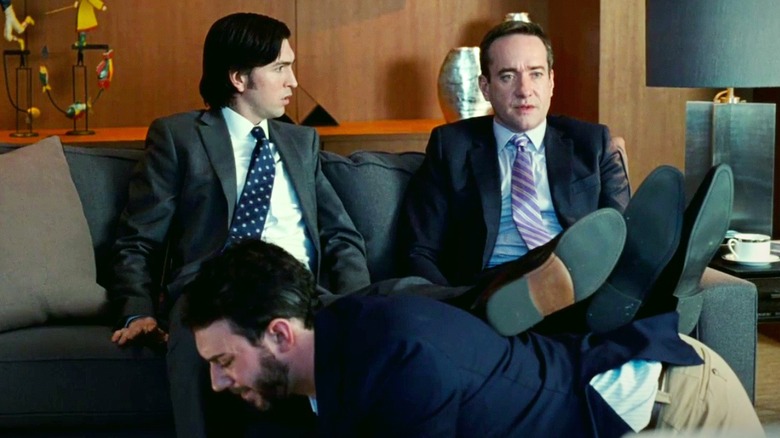
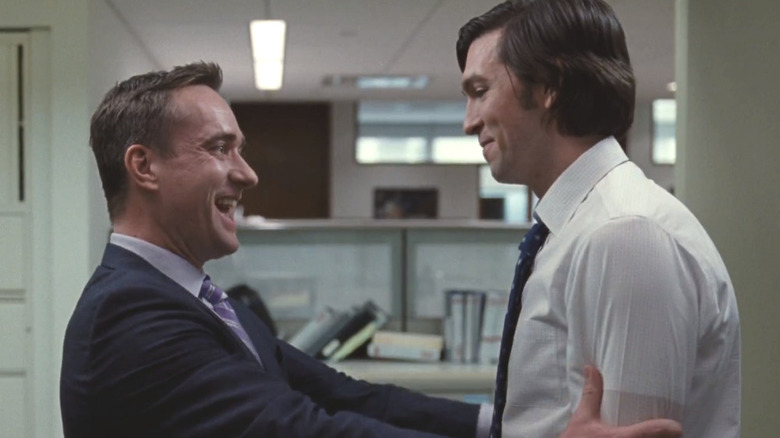
The HBO series "Succession" has given us a new terrible twosome to love and loathe in Greg Hirsch (Nicholas Braun) and Tom Wambsgans (Matthew MacFayden), two outsiders sucked into the horrifying family dynamics of the Roys. The season 3 scene where Tom tells Greg "I'd castrate and marry you in a heartbeat" cemented their place in the Odd Couple Hall of Fame and got me thinking the best of TV's strange pairs, from Lucy and Ethel to Jesse and Walt. Few of these couples are romantic couples in the traditional sense, but instead their relationships transcend the usual boundaries of friendship.
Read on for the top 15 TV odd couples of all time (excluding "The Odd Couple" itself, because that's a little too on-the-nose, even for me.)
Tom And Greg
The Couple: Tom Wambsgans (Matthew MacFayden) and Greg Hirsch (Nicolas Braun)
The Show: Succession
Why They're Terrible For Each Other: Tom and Greg are both wildly insecure, but they show it in very different ways. Tom is an old-school bully, prone to launching insults and projectiles when he's upset. Greg crumples in on himself like a kicked puppy, which makes him the perfect target for Tom. Sure, the two share a common bond, but they're also both willing to throw each other to the wolves immediately when things go wrong. When Greg first betrays Tom by keeping some of the secret documents Tom gave him to shred, Tom is a little hurt but also commends Greg for being sneaky. These two bring out the worst competitive nature in one another, and they tend to cheer on each others worst impulses.
Why They're Perfect For Each Other: When Cousin Greg first showed up in the Roys world, he was a naïve young man who had no idea what he was getting into. Tom married into the family, but he was also woefully unprepared for the madness of the Roy family. They are both outsiders forced to deal with the roller-coaster lives of the Roys while also trying to carve out places for themselves. They have strange kind of understanding because they're both trying to survive despite being in way, way over their heads. These two attempted social-climbers deserve one another. They should grab Tom's dog Mondale, take Greg's secret documents to the Feds, and run away together in witness protection.
Lucy And Ethel
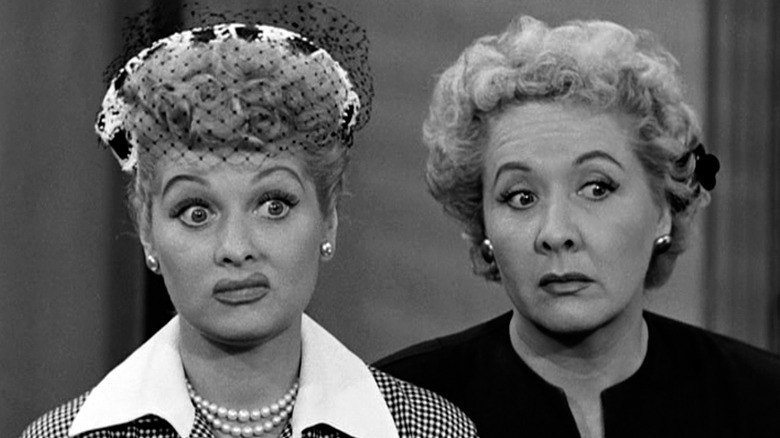
The Couple: Lucy Ricardo (Lucille Ball) and Ethel Mertz (Vivian Vance)
The Show: I Love Lucy
Why They're Terrible For Each Other: Lucy and Ethel tend to encourage one another to behave badly. They're both tough women trying to make it in a man's world, and when they get together, trouble's bound to be around the corner. That's what led them to failing spectacularly at their jobs at the candy factory, regularly put stress on both of their marriages, and got them arrested, after all.
Why They're Perfect For Each Other: Lucy and Ethel support each other in everything. Sure, Ethel might be a bit older than Lucy, and she may be Lucy's landlady, but the two have the shared understanding of beleaguered housewives. While Lucy's marriage to Ricky (Desi Arnaz) was significantly less rocky than Ethel's marriage to Fred (William Frawley), they both bonded over their shared dissatisfaction in marriage. Their friendship became the strongest bond they had, and they were both the better for it.
Charlie And Frank
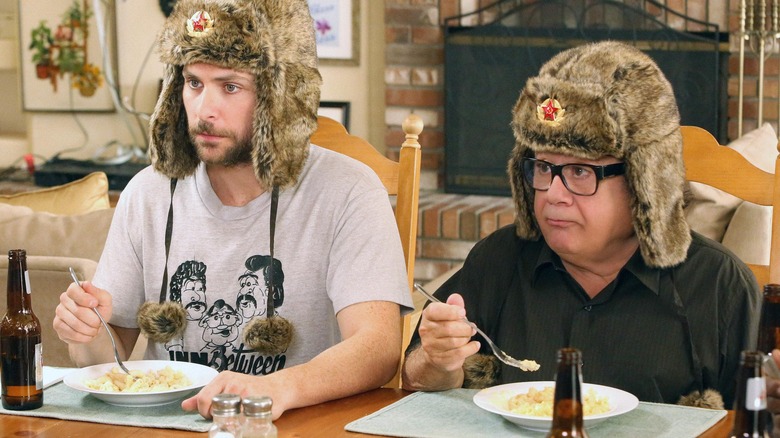
The Couple: Charlie Kelly (Charlie Day) and Frank Reynolds (Danny DeVito)
The Show: It's Always Sunny in Philadelphia
Why They're Terrible For Each Other: Frank might be Charlie's dad, though no one's entirely sure. At some point Frank and Charlie's mom had an affair and Charlie's mom became pregnant, but Frank denies that Charlie is his. The two of them live in squalor in a one-bedroom apartment with no toilet, cooking "Grilled Charlies" on hot plates and eating cat food to go to sleep. They encourage one another's depravity and constantly up the ante on bad ideas.
Why They're Perfect For Each Other: Charlie and Frank love one another like no one else ever will. They play nightcrawlers together, pretending to be worms and crawling around in the dark. They got married when Charlie needed health insurance and realized he could get on Frank's as a spouse, only to annul the marriage when they realized that they weren't cut out for that kind of domestic partnership. They have been through everything together, from hanging out under bridges boiling denim to swinging with a couple of hot Eastern European girls. Their love for one another is unconditional, which is just as well, given how horrible they both are.
Buster And Lucille
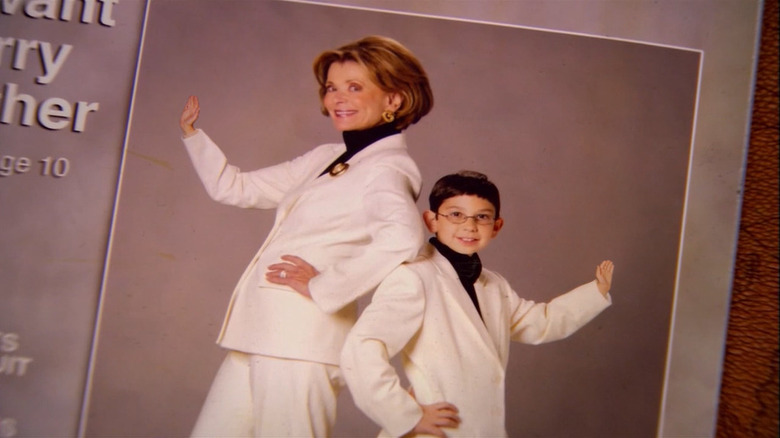
The Couple: Buster Bluth (Tony Hale) and Lucille Bluth (Jessica Walter)
The Show: Arrested Development
Why They're Terrible For Each Other: Buster spent 11 months inside of Lucille's womb, and in that time he grew completely dependent on her. The two are inseparable, and Lucille's constant coddling of her youngest son has left Buster a neurotic, childish mess of a man. Lucille belittles and bosses Buster around at every turn, but he stays loyal to her no matter what. He's her closest companion and does whatever she asks, which is just not healthy for a mother and son.
Why They're Perfect For Each Other: Lucille has alienated all of her other children and grandchildren, and the only other person Buster's ever been close to is his mother's worst rival, Lucille 2 (Liza Minelli). Who else is going to be there for either of them?
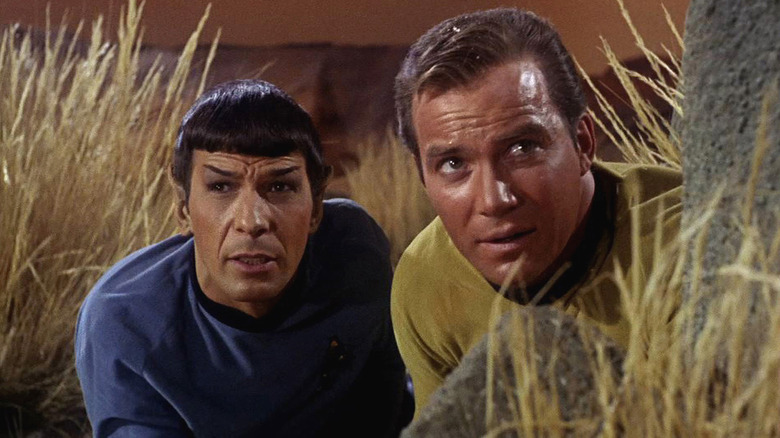
Kirk And Spock
The Couple: James T. Kirk (William Shatner) and Dr. Spock (Leonard Nimoy)
The Show: Star Trek: The Original Series
Why They're Terrible For Each Other: James Tiberius Kirk is a hot-headed ladies man who acts first and deals with the repercussions later. S'chn T'gai Spock is a half-human, half-Vulcan who tries to live up to his Vulcan culture's ideals of logic and serenity. The two are almost always at odds, with Spock frustrated with Jim's foolhardy emotionality or Jim frustrated with Spock's constant rationality. It's amazing they manage to run a starship together at all.
Why They're Perfect For Each Other: Even though they rarely agree, Kirk and Spock help make each other better people. Spock forces Kirk to think about the consequences of his actions instead of just flying by the seat of his pants, while Kirk helps Spock reconcile his confusing human emotions with his Vulcan need to put everything into neatly defined boxes. The human versions of love and friendship are alien to stoic Vulcans, so when Spock sacrifices himself to save Kirk and the rest of the crew in "Star Trek: The Wrath of Khan" and tells Kirk "I have been — and always shall be — your friend," it's pure emotional devastation. There are plenty of amazing odd couples in "Star Trek," like Garak and Bashir on "Deep Space Nine" or Picard and Q on "The Next Generation," but nothing does it quite like the original space bromance.
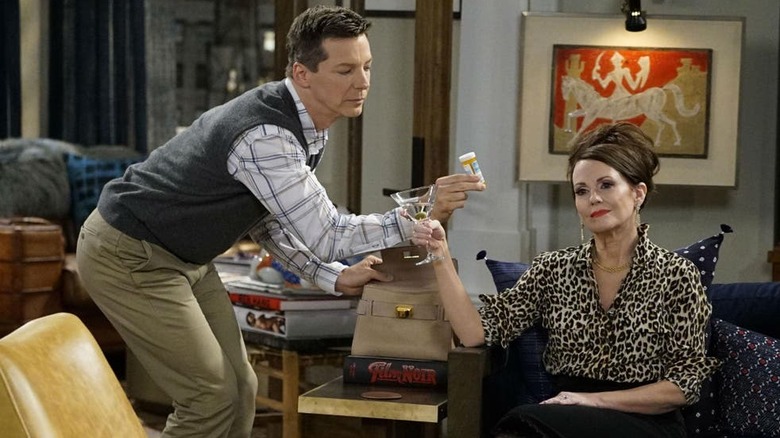
Karen And Jack
The Couple: Jack MacFarland (Sean Hayes) and Karen Walker (Megan Mullally)
The Show: Will & Grace
Why They're Terrible For Each Other: Will (Eric McCormick) and Grace (Debra Messing) are a gay man and straight woman whose friendship transcends traditional boundaries. They're neurotic and ego-driven, striving for success at the cost of their individuality. Enter the chaos to their order: Jack and Karen. These two march to the beat of their own drummer, and are the kind of sassy, fun-loving besties we all long to be. Even when they fight, they're still offering one another compliments and love. There's actually nothing about their friendship that makes them terrible for one another, though they do spell trouble for everyone else.
Why They're Perfect For Each Other: Karen and Jack are just a perfectly weird match. When they first meet, Jack asks Karen if they can touch stomachs. She calls him a freak and then does it anyway, because they're instantly on the same wavelength. Whether they're trying to dance, getting way too real with one another, or just laughing at how ridiculous everyone else is, Jack and Karen are friendship goals.
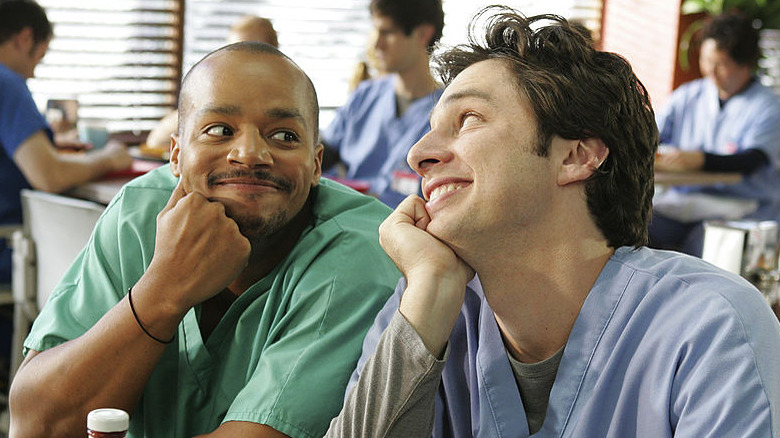
J.D. And Turk
The Couple: John "J.D." Dorian (Zach Braff) and Christopher Turk (Donald Faison)
The Show: Scrubs
Why They're Terrible For Each Other: Some of the other odd couples on this list are co-dependent, but nobody holds a candle to J.D. and Turk. The two went to medical school together and then do their residencies at the same hospital. J.D. can't live without his Chocolate Bear and Turk can't live without his Vanilla Bear, to the point that their own romantic relationships are often put to the test because of their intense co-dependency. When Turk gets married to Carla (Judy Reyes), J.D. is forced to live without his Turkleton, and he doesn't handle it particularly well.
Why They're Perfect For Each Other: J.D. is a neurotic mess, while Turk is about as chill as chill can be. The two help one another balance out, and often provide needed context when one of them gets too wrapped up in their own nonsense. While J.D. has Dr. Cox (John C. McGinley) and Turk has Carla to help them grow into more mature adults, they'll always have each other to stay young at heart.
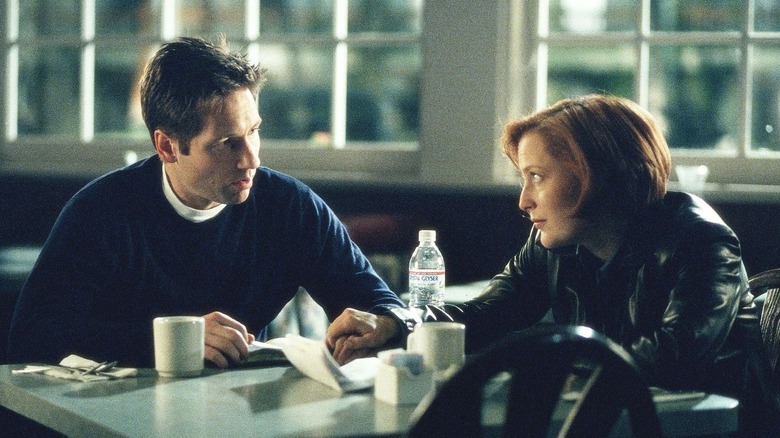
Mulder And Scully
The Couple: Fox Mulder (David Duchovny) and Dana Scully (Gillian Anderson)
The Show: The X-Files
Why They're Terrible For Each Other: First, Mulder and Scully are co-workers with serious sexual tension, which is never good for anyone. Second, Mulder is a goofy conspiracy theorist who believes in all kinds of wild stories, while Scully is a tough cynic trying to prove herself in a male-dominated field. They eventually grow to trust one another, but they often undermine one another's work, which isn't exactly helpful when they're supposed to be partners working a case. Mulder's imagination often gets the best of him, while Scully's need for proof sometimes makes her miss the big picture. They butt heads all the time, and it's amazing they get any cases solved at all. They're at their worst when they actually do give in to their romantic urges, because they make an even worse couple than they do co-workers.
Why They're Perfect For Each Other: Even when faced with the worst existential and extraterrestrial threats, Mulder and Scully have each other's backs. Sure, they have a habit of going behind each other's backs and doing all kinds of sneaky nonsense in order to prove that they're the correct one on any particular case, but they are always there for one another when things go bad. The very best example of their unique partnership is in the first season, in the episode "Ice," which riffs on the same short story as John Carpenter's "The Thing." When paranoia makes even old friends go at each other's throats, the fairly newly paired Mulder and Scully still manage to come to an understanding. Now if they could just do that all the time instead of just when things get out of hand...
Nandor And Guillermo
The Couple: Nandor the Relentless (Kayvan Novak) and Guillermo De La Cruz (Harvey Guillen)
The Show: What We Do in the Shadows
Why They're Terrible For Each Other: Nandor the Relentless is a centuries-old vampire, and Guillermo is his human familiar. Nandor has promised that he would turn Guillermo into a vampire for his services, but poor Guillermo has been working as a familiar for over a decade. Nandor keeps leading him on with his promises, while Gullermo realizes that Nandor may not actually care about him all that much. Nandor treats poor Guillermo as disposable most of the time, even when the handsome familiar-turned-vampire-hunter proves that he's essential to Nandor's survival repeatedly.
Why They're Perfect For Each Other: Guillermo loves Nandor with all of his heart, even if the vampire tends to treat him terribly. No matter how many times Guillermo tries to move on or how many stupid situations he has to rescue Nandor from, he just can't quit the gorgeous bearded vampire. (Who could blame him?) Nandor, for his part, clearly cares for Guillermo, but he doesn't know how to process those feelings. After all, the closest relationship Nandor has ever had with anyone was with his horse, Jahan, so he's just not very good at expressing himself. The end of season 3 saw the duo getting split up, but hopefully they'll one day be the adorable vampire couple they're clearly destined to be.
Bert And Ernie
The Couple: Bert (Frank Oz) and Ernie (Jim Henson)
The Show: Sesame Street
Why They're Terrible For Each Other: Bert and Ernie were created to show that two people with very different personalities could still be close friends, and sometimes those differences are very apparent. Bert is a no-nonsense cynic, while Ernie is an empathetic dreamer. Ernie gets on Bert's nerves a lot with his childlike whimsy. Bert tends to be very grumpy with Ernie as a result, which hurts the soft little puppet man. Their differences are many, and sometimes they seem insurmountable.
Why They're Perfect For Each Other: They're freaking Bert and Ernie! The two characters are so close that many have questioned whether they're actually a gay couple, though officially they're only buddies. They've been inseparable for decades, and their friendship was modelled on the friendship between Oz and Henson, who were an awful lot like the characters they voiced. Oz and Henson remained close friends until Henson's death in 1990, and Bert and Ernie are still bffs to this day.
Troy And Abed
The Couple: Troy Barnes (Donald Glover) and Abed Nadir (Danny Pudi)
The Show: Community
Why They're Terrible For Each Other: Troy and Abed sometimes get a little too wrapped up in their imaginations. They have a ton of silly bits, like the fake TV show "Troy & Abed in the Morning," or going on adventures in the Dreamatorium, but they're often out of touch with reality. When Annie (Alison Brie) moves in with the duo, she quickly realizes that what's charming in short spurts can be downright frustrating when it's a constant. They keep one another in a state of permanent adolescence, which sounds like a lot of fun but isn't exactly healthy.
Why They're Perfect For Each Other: Even though Troy and Abed both have a hard time maturing, eventually they help one another become better people. Troy helps Abed understand other people, while Abed helps Troy get past his own insecurities. When Troy is given the chance of a lifetime to sail around the world with his hero, Levar Burton, it's Abed who helps him drum up enough courage to do it. Their friendship is eternal, and strong enough to survive even oceans between them. Now fans just want to see Troy and Abed in a Movie. We were promised!
Janet And Jason
The Couple: Janet Della-Denunzio (D'Arcy Carden) and Jason Mendoza (Manny Jacinto)
The Show: The Good Place
Why They're Terrible For Each Other: Janet is a timeless, genderless, nearly infinitely-powerful being with access to all knowledge. Jason is an amateur DJ from Florida who died when he crawled into a safe during a botched restaurant heist. They are about as poorly matched as possible, and yet...
Why They're Perfect For Each Other: The love between Jason and Janet is probably the most pure love in the history of television. Janet was created by whoever the heck is in charge of it all, and she serves a very specific purpose in the afterlife. Jason is sort of like if those same creators just spilled a person. His answer to everything is to just throw a Molotov cocktail at it, but somehow he manages to grow as a person and become someone worthy of Janet. By the time their relationship reaches the end of the series, it's a truly beautiful romance that's sure to bring audiences to tears.
Will And Hannibal
The Couple: Will Graham (Hugh Dancy) and Hannibal Lecter (Mads Mikkelsen)
The Show: Hannibal
Why They're Terrible For Each Other: Hannibal is not only a cannibal who murders people and eats the rude, but he also manipulates Will at every turn. Because of Hannibal, Will loses everything he loves multiple times. Well, not everything, because he still has Hannibal, but I digress. Hannibal even keeps Will's encephalitis a secret from him, which I'm pretty sure is the exact opposite of what doctors are supposed to do for their patients. Will really isn't all that bad for Hannibal, except that the cannibal loves him so much that he gets a little sloppy in his work because of it.
Why They're Perfect For Each Other: There's a reason the fandom, or "Fannibals," call Will and Hannibal "murder husbands." The two have a deep connection that goes beyond their cat-and-mouse games. Together they have a murder daughter, Abigail Hobbs (Kacey Rohl), whom they both try to mentor after Will kills her serial killer father to save her life. In Hannibal's dream world, the three of them would travel the planet, turning rude people into fine dining. While that's probably not great for the rest of the world, the three of them would have a strange kind of happiness. Will is an empath, capable of feeling other people's emotions as his own, and Hannibal is very close to being a sociopath, unable to relate to others in any way. Together, they're almost a whole man.
Walt And Jesse
The Couple: Jesse Pinkman (Aaron Paul) and Walter White (Bryan Cranston)
The Show: Breaking Bad
Why They're Terrible For Each Other: Without Jesse, Walt would have never been able to get into the meth game. Without Walt, Jesse would have probably always been a low-level criminal sitting around talking about "Star Wars" with Badger and Skinny Pete. While they're both bad for one another, Walt is much worse for Jesse than the other way around. Walt is an immoral, power-hungry madman who kills the love of Jesse's life, fails to protect him from skinheads, and basically treats Jesse as disposable at every turn. Sure, working with Walt gave Jesse an opportunity to grow, but it also traumatized him for life.
Why They're Perfect For Each Other: Jesse and Walt are the perfect criminal duo. Walt is the brains of the operation, while Jesse is the heart and soul. Whenever a situation requires ruthless cunning, Walt is the man, but whenever it requires thinking outside the box, Jesse is who you want. They balance one another out and somehow manage to create a meth empire that makes them both ridiculously wealthy. The partnership falters several times throughout the series, and each time their empire nearly crumbles. Walt and Jesse are perfect criminal partners, even if they're horribly matched in every other way.
Arya And The Hound
The Couple: Arya Stark (Maisie Williams) and Sandor "The Hound" Clegane (Rory McCann)
The Show: Game of Thrones
Why They're Terrible For Each Other: One is a murderous former Kingsguard. One is a murderous former nobleman's daughter. Both are strong-willed, bull-headed, and so stubborn that it's impressive anyone can ever get through to them at all. They tend to bring out each other's homicidal tendencies, encouraging more bloodshed when other options might be possible. Then again, both Arya and the Hound are driven by revenge, so they're probably already lost causes without egging one another on.
Why They're Perfect For Each Other: Arya is an orphaned child from a noble family who becomes a face-changing assassin; the Hound was tortured by his older brother and mistreated by every noble he worked for. They both are fiercely independent survivors who have become bitter nihilists in the face of their repeated trauma. Their friendship, as unusual and unhealthy as it may be, is one between two wounded animals forgotten by the rest of the world, and that makes it something special.
Golden Globe-winning Swedish actor Stellan Skarsgård has a career spanning nearly five decades, most well known for his performances as Captain Viktor Tupolev in "The Hunt for Red October," Jan Nyman in "Breaking the Waves," Bootstrap Bill Turner in "Pirates of the Caribbean: Dead Man's Chest," Bill Anderson in "Mamma Mia!," Martin Vanger in "The Girl With the Dragon Tattoo," Baron Vladimir Harkonnen in "Dune," and Dr. Erik Selvig in the Marvel Cinematic Universe. He's worked on both independent darlings and some of the biggest budgets available in film history, and is the father of actors Alexander, Gustaf, Valter, and Bill Skarsgård. Coming from a family so uniquely involved in the entertainment industry, Stellan Skarsgård has a wealth of knowledge regarding the world of movie-making that we all so dearly love.
In a recent interview with The Guardian, readers were able to submit their own questions for an interview with Skarsgård. Some asked story-invoking questions, like the reader who asked about his time with polarizing director Lars Von Trier. A few asked lighter questions like whether or not he'd ever pen his own cookbook, and one reader went for the inevitable and asked Skarsgård for his opinion on Martin Scorsese's continued criticisms of superhero movies. Instead of taking the bait and becoming Film Twitter's villain of the day, Skarsgård gave quite possibly the best response to the continually asinine question asked of anyone who has ever been in a superhero movie.
'There's No Distribution Channels'
In Skarsgård's answer, he lamented the loss of mid-budget films in our algorithm-based world controlled by a handful of wealthy corporation owners. "I've got nothing against superhero movies,'' Skarsgård said. "I've been in a couple and they definitely have a place." He continued:
"The problem is that the system that allows eight people to own half of the wealth in the world enhances the power of the market forces, so small and independent cinemas rarely exist any more outside a few big cities."
Skarsgård isn't alone in his thinking. "Avengers: Endgame" director Joe Russo has also said that he doesn't think independent films have a future in the theater, with independent and mid-budget fare pivoting to streaming services. Skarsgård continued:
"There's no distribution channels for all the mid-budget films that have the best actors, the best writing, because they can't throw up $3 million for a marketing campaign. When cinemas let them in, they do so for one week and if it doesn't pay off in a week, they're gone."
Last December, independent theaters called the Warner Bros. deal with HBO Max to stream releases day-and-date a "questionable decision," made when independent theaters were at their most vulnerable at the height of the pandemic (which we're still in, mind you). The deal is ending next year, but Warner Bros. will still produce 10 movies exclusively for HBO Max in 2022.
'The People's Opinion Has No Chance'
Stellan Skarsgård also cited "The Godfather," considered by many to be one of the greatest films ever made, and noted how a film like that may not have ever reached audiences in today's current theatrical landscape:
"Remember that 'The Godfather' first opened in 100 cinemas in the United States –- big films now open in 4,000. They had small ads in the New York Times, but it grew and grew because it was such a good film. The people's opinion has no chance any more. And that is sad."
The difference in his opinions compared to folks like Scorsese and Ridley Scott is that Skarsgård isn't hating the players, he's hating the game.
"I think that we should have Marvel films and more rollercoaster films. We should have other films, too. And that's the sad thing: when raw market forces come in, studios start being run by companies that don't care if they're dealing in films or toothpaste so long as they get their 10% [return on investment]."
The enemy here is not the superhero blockbuster or the fandom that enjoys them. The enemy is, as it usually is, capitalism and a system of wealth inequity leading to unchecked monopolies of power.
After 40 years of deadite killing, boomstick wielding, and one-liner delivering, the strongest chin in horror is putting his most iconic character out to pasture. In a recent interview with Collider, Bruce Campbell confirmed his retirement from playing Ashley J. Williams of "The Evil Dead" series. "Whatever the cliched phrase is, I left it all on the table. I've got nothing left to give," said Campbell.
"The Evil Dead" launched the careers of both Bruce Campbell and the film's writer/director Sam Raimi, and evolved into a mega media franchise including two sequels, a soft reboot, video games, comic books, and the follow-up TV series "Ash vs. Evil Dead." While Bruce Campbell has enjoyed a highly successful acting career in non-horror properties, his bequest as arguably horror's greatest male protagonist turned him into a pop culture icon.
34 years after the first "The Evil Dead" film was released, Campbell proved he still had all of the charisma to bring Ash back to life for "Ash Vs. The Evil Dead." But now, at 63 years old, he's hanging up the chainsaw and retiring the legendary character. "There's not gonna be any traditional form of 'Evil Dead' anymore," Campbell says. "Ash is gone. I've retired the character because I physically just can't do him anymore, so why bother?"
Campbell first mentioned retiring Ash back in 2018, but many were holding out hope that he'd change his mind. Well, he's not. Playing Ash was extremely physically demanding and Campbell is setting necessary boundaries for himself and for the legacy of the character.
Playing Ash Was Physically Painful For Campbell
There are plenty who struggle to leave behind their beloved characters (Julie Newmar's Catwoman comes to mind) but Campbell has given Ash all he can, especially physically. "The three seasons were the longest seasons of my life," he says in reference to "Ash Vs. Evil Dead." He continues in the interview saying:
"If you saw the emails pleading with various directors that were like, 'Hey, my knee's not working right.' 'Be careful about tomorrow.' 'Let's have the stunt guy nearby.' 'Hey, I can't run anymore.' It just was an endless physical struggle. I'm really glad we did it because we saw Ash's home, we went into his bedroom, we met his girlfriends, we met his daughter that we never knew he had and that he never knew he had, and we met his father, played by the great Lee Majors.
"I feel we really pushed all the buttons and he fulfilled his destiny written in that ancient book. He was the guy destined to defeat evil in the past, present and future, and he took off with a hot robot chick at the end to go kick in the future. What else do you need? We knew the ratings were bad. We knew, going into the last season, that we had to have an end because we didn't think Starz was gonna re-up us and we were right. So, thank God we did that."
It's hard to say goodbye to the beloved character, but no one needs or should want a broken-down Ash.
The Evil Dead (And Bruce Campbell) Will Continue
While Ash is the bleeding heart of "The Evil Dead," Fede Alvarez' soft reboot from 2013 proved that the universe Raimi created can exist without Ash. "I'm done playing Ash, so that determines a lot of where we go with the franchise without that character, but there are more stories," said Campbell. "That darn book gets around, and that's how we play it." Campbell is of course referring to the Necronomicon, the book responsible for possessing trees, hands, taxidermied deer, and the undead. "That book wound up in an urban environment with a single mom, so let's see what happens, it's fun to fiddle with it."
Campbell also noted that Raimi handpicked Alvarez for the reboot, and has again handpicked Lee Cronin ("The Hole in the Ground") for the upcoming "Evil Dead Rise." Campbell describes them both as Sam Raimi proteges that he hopes "will do a good job."
Campbell may be retiring Ash, but he's not retiring himself. His newest venture is the horror comedy "Black Friday" with Devon Sawa, now available in theaters and on VOD.
"Remember how Microsoft spent years in hot water in the late '90s and early '00s by forcing Internet Explorer on its customers?" asks ZDNet.
"European open-source cloud company Nextcloud does."
Now, with a coalition of other European Union (EU) software and cloud organizations and companies called the "Coalition for a Level Playing Field," Nextcloud has formally complained to the European Commission about Microsoft's anti-competitive behavior by aggressively bundling its OneDrive cloud, Teams, and other services with Windows 10 and 11.
Nextcloud claims that by pushing consumers to sign up and hand over their data to Microsoft, the Windows giant is limiting consumer choice and creating an unfair barrier for other companies offering competing services. Specifically, Microsoft has grown its EU market share to 66%, while local providers' market share declined from 26% to 16%. Microsoft has done this not by any technical advantage or sales benefits, but by heavily favoring its own products and services, self-preferencing over other services. While self-preferencing is not illegal per se under EU competition laws, if a company abuses its dominant market position, it can break the law. Nextcloud states that Microsoft has outright blocked other cloud service vendors by leveraging its position as gatekeeper to extend its reach in neighboring markets, pushing users deeper into its ecosystems. Thus, more specialized EU companies can't compete on merit, as the key to success is not a good product but the ability to distort competition and block market access....
So, Nextcloud is asking the European Commission's Directorate-General for Competition to prevent this kind of abusive behavior and keep the market competitive and fair for all players. Nextcloud is doing this by filing an official complaint with this body. In addition, Nextcloud has also filed a request with the German antitrust authorities, the Bundeskartellamt, for an investigation against Microsoft. With its partners, it's also discussing filing a similar complaint in France.
Nextcloud is being joined in its complaint by several open-source, non-profit organizations. These include the European DIGITAL SME Alliance; the Document Foundation, LibreOffice's backing organization; and the Free Software Foundation Europe (FSFE)... Numerous businesses are also supporting Nextcloud's legal action. This includes Abilian, an open-source software publisher; DAASI, an open-source identity management company; and Mailfence.
Despite releasing back in 2018, Neverwinter Nights: Enhanced Edition - the re-release of the nearly 20-year-old classic Dungeons & Dragons RPG by BioWare - is still apparently being supported by developer Beamdog, which just released a free official HD texture pack that makes it look better than even Neverwinter Nights 2.
Neverwinter Nights released all the way back in 2002 and looks pretty ropey now, which is why Beamdog's Enhanced Edition in 2018 was so welcome - as included improved graphics, effects, and general visual improvements. However, that apparently wasn't enough for the developer, who has been working on a full HD upgrade ever since.
Finally, the free "HD Models & Textures Pack" update for Neverwinter Nights: Enhanced Edition has arrived and it has the classic RPG looking a lot more modern. As Beamdog states in a blog post on Steam, this update is the result of "several years of hard work" and clocks in at over 4.1 GB - bringing the game's total disc space requirement to over 16 GB.
ZDNet reports:
By and large, the public cloud runs on Linux. Most users, even Microsoft Azure customers, run Linux on the cloud. In the case of market giant Amazon Web Services (AWS), the cloud provider will let you run many Linux distros or their own homebrew Linux, Amazon Linux. Now, AWS has released an early version of its next distro, Amazon Linux 3, which is based on Red Hat's community Linux, Fedora.
AWS has long tried to incorporate Red Hat Enterprise Linux (RHEL) compatibility into Amazon Linux, but this latest release takes that to new heights. By using Fedora as its upstream, the new Amazon distro, also called AL2022, is a stable distribution. It's gone through extensive testing to offer package stability, and it also includes all available security updates....
TechRadar adds some more details:
The distro has had two major releases till now; the first in 2010, and the second in 2017. However, with the third AL2022 release the service is committing to a two year release cycle, with each release supported for a period of five years... AWS argues that the two year major release cycle, with updates shipped quarterly via minor releases, will help keep the software current, while the five year support commitment for each major release will give customers the stability they need to manage long project lifecycles.
Heroine’s Quest: The Herald of Ragnarok is the very definition of a labor of love. Originally conceived in the mid-2000s as an ode to Sierra’s Quest for Glory franchise, the game was made by the indie development group Crystal Shard and released for free in 2013. It lives up to its Quest for Glory inspiration by offering a similar blend of point and click adventure and RPG skill-building, but goes one step further, arguably surpassing the series that Lori Ann and Corey Cole created with an intricate Nordic setting and deeper roleplaying mechanics.
Heroine’s Quest tasks players with choosing between the roles of warrior, sorceress and rogue to save the realm of Jarnvidr from Egther, last of the frost giants who hopes to usher in the twilight of the gods, also known as Ragnarok. Featuring a number of locations and characters straight from the Prose Edda, the 13th century poems that defined Norse myth, Heroine’s Quest feels distinctly rooted in real-world mythology to a degree deeper than any of the Quest for Glory games.
Quest for Glory I, for instance, may have been vaguely influenced by Germanic folklore, but Heroine’s Quest goes all-out by having the heroine interact with the likes of the Norns and the valkyrie Brynhild. You’ll meet Ratatosk the squirrel, travel to Svartalfheim, and possibly even encounter trickster god Loki, who appears decidedly more like a frost giant than his more recognized depiction in Marvel movies.
This Norse setting wasn’t always present in the game. Heroine’s Quest was originally envisioned with a quasi-Celtic fantasy flair, and this early iteration, carrying the subtitle The Legend of Fair Spring, was the brainchild of artist Corby La Croix, who scrapped it and decided to rework the concept after moving to Yellowknife, Canada. Inspired by the snowy landscapes of the region, he teamed up with Pieter Simoons, founder of Crystal Shard and the game’s writer and programmer.
“The Nordic snowy setting was chosen for atmospheric reasons, because Corby wanted to try something new after doing ‘standard’ medieval forest work,” Simoons said in an interview. “Myself, I’m a big mythology fan; I’ve collected books from Greek, Indian, Egyptian, and other myths and legends since I was twelve. So when I started writing characters and puzzles, I took a lot of inspiration from my Norse mythology books. Several of the puzzles come from there, and I rather like that many of the characters and locations can be found in myth books or on Wikipedia. For instance, the character Snorri is named after Snorri Sturluson, who compiled the Prose Edda.”
With Heroine’s Quest’s frigid setting comes survival gameplay that is, once again, more advanced than Quest for Glory’s relatively simple “run out of stamina and you die” mechanic. The first day of the game requires the heroine to venture beyond the city of Fornsigtuna to forage for food and a freezing meter appears in the upper left hand side of the screen, indicating the very real chance that she’ll turn into an icicle if she goes too far. Depending on your character class, you’ll have to turn to warm clothes or fire magic to traverse the wilderness, and the first few days of Heroine’s Quest feel more akin to The Long Dark than Quest for Glory. Some might find the challenge frustrating, but there’s no denying the feeling of accomplishment at seeing your heroine dashing across frigid Jarnvidr with nary a care in the finale, while she could barely leave the city gates in the beginning.
As far as other gameplay mechanics go, Heroine’s Quest offers class-specific methods of achieving goals similar to its inspiration. The warrior can bash monsters, the sorceress wields spells and the rogue cheats. Each class also has specific quests, such as an opponent in the swamp that can only be fought by warriors, a magic mini-game for sorceresses and a thieves’ guild for rogues – who are encouraged to sequence break by stealing major items from NPCs before they’re needed. There’s no secret fourth paladin class a la Quest for Glory, but there is a hidden honor meter, which players can max out to gain access to the flaming sword Balmung, straight out of The Nibelungenlied.
One interesting wrinkle in these class-specific quests (particularly for the rogue, who needs to elude guards while thieving), is the fact that all of the NPCs in the game have their own schedules. While Quest for Glory also did this, it was mostly limited to having the Burgomeister of Quest for Glory IV out by his window during the day and asleep at night. In Heroine’s Quest, NPCs are constantly wandering around the game’s three towns and interacting with other NPCs, with their respective dialogue changing depending on who’s present. There are also a number of optional side quests (including a thought-provoking one featuring a major character who is arguably holding his wife hostage) that can only be completed by observing NPCs in the wild. All of this adds substantially to Heroine’s Quest’s replay value and makes the world of Jarnvidr feel alive to a degree rarely seen in point and click adventure games.
Heroine’s Quest also features Easter eggs aplenty. Characters from not just Quest for Glory but other franchises like Monkey Island will randomly appear in certain screens, and you can temporarily transform yourself into a pixelated sprite reminiscent of those produced by Sierra’s AGI interpreter. At times, the game feels like it’s a love letter to the adventure genre in general, which was a spirit that many Quest for Glory-inspired projects born during the Adventure Game Studio (AGS) craze of the mid-2000s tried to channel. Unfortunately, most of those efforts were cancelled, with Heroine’s Quest standing as one of three survivors. (The other two are Quest for Infamy, by Infamous Adventurers, and the VGA remake of Quest for Glory II, by AGD Interactive.)
Simoons said the tiny group behind the game prevented it from coming down with the bloat that led to the slow demise of other projects. Aside from Simoons, only four others were the primary team members behind the scenes – lead artist Corby La Croix, additional artist and voice director Elissa Ng, composer and sprite artist Dimitrii Zavarotny and composer Matthew Chastney.
Ng added that Simoons’ prior experience as an independent developer was a great aid in ensuring that Heroine’s Quest was actually finished: “A lot of the fan projects were started by people who were well meaning but didn’t really know what they were getting into, and without good direction and someone managing the overall project, things won’t really come together, which leads to loss in motivation. With an inexperienced group, it’s very easy to have lots of ideas. Scope creep can lead to things becoming too overwhelming and unwieldy to manage. And I would say that it’s also sheer doggedness to make sure we saw the project through to completion. We did have dry spells where work wasn’t getting done because of real life commitments, but none of us let it go.”
This doggedness paid off. Following its release, Heroine’s Quest was voted the Best Adventure Game of 2013 during the AGS Awards and even attracted praise from Corey Cole, who said it was “great to see a female-centric heroic quest.” While sequels are currently not planned, Heroine’s Quest remains a loving, self-contained story that is perfect for any Quest for Glory fan hoping for more – not to mention those interested in seeing how a free fan project actually managed to make it through the finish line.
Keanu Reeves is on the record as saying he's "always wanted" to play Wolverine, but has indicated he's too old to bring the semi-immortal superhero to life. (As though everyone isn't well aware that Reeves is secretly a centuries-old vampire masquerading as the nicest guy in Hollywood.) So, in-between eating sandwiches on park benches, he went and did what anyone who really wants to portray an X-Man would do: he co-created his own comic book series about an unkillable warrior battling his way through the ages. With Blackjack! And, well, you know how the rest of the meme goes.
The comic in question, "BRZRKR," hales from Boom! Studios and sold over half a million copies of its first issue before it was even published in March 2021 (making it the biggest-selling debut issue in the last ten years behind Marvel's relaunch of the "Star Wars" comics in 2015). Reeves collaborated on the comic with co-writer Matt Kindt, artist Ron Garney, and colorist Bill Crabtree. Surprising no one, movie studios quickly came a-knocking after that, with Netflix announcing its plans for a live-action "BRZRKR" film and anime series the same month the comic hit stores. Here's what we know about the movie adaptation so far.
When And Where To Watch BRZRKR
"BRZRKR" will stream exclusively on Netflix after (most likely) receiving the now-customary limited two-week theatrical run the streamer reserves for its most noteworthy original movies. Reeves only just wrapped production on "John Wick: Chapter 4" and will reprise his role as the eponymous, unstoppable assassin in the already-confirmed "John Wick 5" when filming begins in the foreseeable future. He also needs to finish promoting "The Matrix Resurrections" and make the press rounds for the fourth "John Wick" and his mystery voice role in the animated film "DC League of Super-Pets" next spring, all of which ought to keep him busy until the second half of 2022.
Reeves should finally have an opening in his schedule at that point, presumably freeing him up for the "BRZRKR" movie (which he's attached to star in). That would put the film on-course to reach Netflix in either 2023 or 2024, pending any unexpected obstacles. But again, audiences will either be seeing or, in the case of "Super-Pets," hearing Reeves on-screen plenty between now and then.
What We Think BRZRKR Will Be About
The "BRZRKR" comics revolve around "B," a fellow who, at a passing glance, seems ordinary enough. In truth, however, his name is Unute (a word meaning "tool" or "weapon"), and he was born to a tribe of nomadic people 80,000 years ago after his parents prayed to their gods for a weapon to use against their enemies. Unute has spent the millennia since then fighting his way through a never-ending wave of adversaries, leaving a blood-soaked trail in his wake. But, as you would imagine, he's come to regard his immortality as more of a curse than a blessing and, by the time he's working for the U.S. government in the present-day, is all-too ready for the sweet relief of death.
It seems the "BRZRKR" movie will hew closely to the plot of its source material, judging by the film's synopsis. And if the comics sound like a mashup of elements from "The Old Guard" (another graphic novel that's been turned into a Netflix Original), the "John Wick" movies, and the "Wolverine" franchise, that's because they basically are. As is always the case, though, it's the way "BRZRKR" executes those familiar tropes that has resulted in mostly positive reviews from comic book critics.
What We Know About The BRZRKR Cast And Crew
Reeves will star in the "BRZRKR" film adaptation as Unute, which only makes sense since, as you've no doubt noticed from looking at the comics' artwork, the character was modeled after his likeness. He's also serving as a producer on the movie with Boom! Studios' Stephen Christy and Ross Richie, as well as Reeves' Company Films' partner Stephen Hamel.
Beyond that, Reeves confirmed to Collider that "BRZRKR" will be rated R (no shock there; its source material is practically dripping red with bloodshed and ultra-violence) and has Mattson Tomlin working on its script. The latter previously wrote Netflix's R-rated super-powers thriller "Project Power" and is acting as showrunner on the streamer's "Terminator" anime series, so he's clearly in his comfort zone adapting an adult-oriented, violent story like "BRZRKR." No stranger to comic books, Tomlin also had a hand in penning "The Batman," although it seems he may only receive story credit for Battinson's big screen debut.
It's that time of year again: check out the Boing Boing Gift Guide for dozens of great ideas for stocking stuffers, brain-hammers, mind-expanders, and terrific toys. The cheapest items are just a few bucks. The most expensive cannout be bought at any price. — Read the rest
When running on the very latest Linux 5.16 Git kernel paired with recent Mesa and various experimental components to the virtualization stack, it is possible getting at least basic Vulkan acceleration working within QEMU guest virtual machines that in turn is accelerated by the host...