Shared posts

01 Dec 00:07

15 Underrated Westerns You Need To Watch

by Nick Bartlett

The western is a great genre but an odd one in nature. It covers a very specific era, and is filled with easily identifiable tropes and archetypes (including a few that haven't aged particularly well), and yet there is so much variety within it. This has, in turn, led to a vast number of iconic films. In fact, there are so many great westerns that some gems are always going to be overlooked.

This is a list of the best underrated westerns that we think deserve a wider audience. This is not a list of the most underrated westerns we can think of, but rather a selection of excellent films that are rarely found on "best of all time" lists. Once you're done with the classics — "Stagecoach," "The Good, the Bad, and the Ugly," "Unforgiven," and so on — make sure you check these other fantastic westerns out at the earliest opportunity.

Day Of The Outlaw
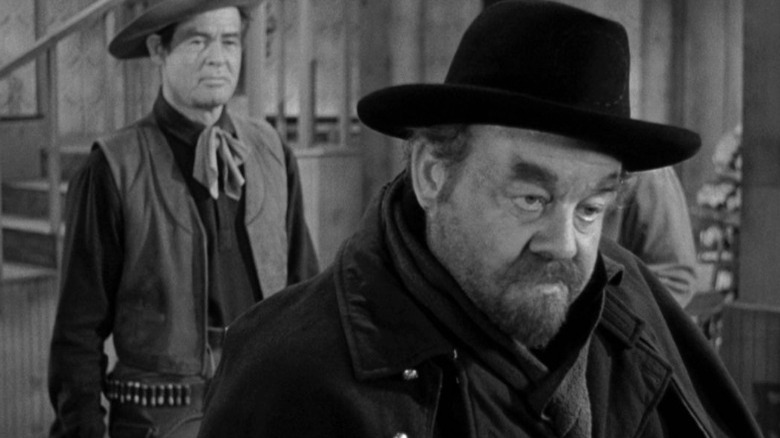
Best summed up as "High Noon" if Gary Cooper was also a baddie, this little seen classic from Andre De Toth is an efficient, moody character piece, with an excellent self-loathing performance from Robert Ryan. He plays Starrett, the iron-willed cattle baron and self-appointed leader of his community, where the homesteaders have come to detest him. But when the town is overrun by a group of deserters, led by the ailing Bruhn (Burl Ives), Starrett takes it upon himself to protect them.

Ryan was always best when playing complicated roles, and Starrett is a perfect example. He's arrogant and cold-hearted at the start, perfectly willing to gun down a farmer if it means that he can marry the man's widow. But Ryan perfectly conveys his character's inner vulnerability, and his petulance that the townsfolk don't like him. This complex characterization is what makes the story so compelling, especially as he attempts to save the town (and redeem himself) by leading the volatile gang into the snow-covered mountains for a tense climax.

Silverado
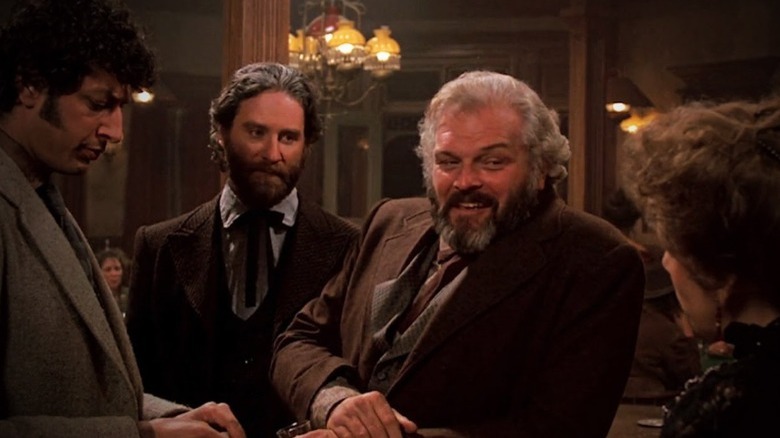
This film really deserves more love. Similar to his seminal neo-noir debut, "Body Heat," Lawrence Kasdan incorporates every genre trope he can into "Silverado." And yet, it's a film that seems to have been universally forgotten, which is a shame because it might be the most fun western ever made, with a rousing score and a pitch-perfect cast that includes Scott Glenn, Kevin Kline, Danny Glover, and Kevin Costner.

The dialogue is as playful as you would expect from Kasdan, and there are some laugh-out-loud moments mixed with set pieces that are as memorable as any from the classic western era. The romance plot might be a damp squib, but the real heart of the film is the platonic relationship between saloon owner Stella (Linda Hunt) and adventurer Paden (Kline). Brian Dennehy plays the villainous, constantly grinning sheriff, one of the greatest Western villains of all time, and certainly Dennehy's best film role. Dennehy brings so much charisma to the part that it's impossible to hate him, especially when he delivers lines like "I'm running out of deputies" as his henchmen are continually killed by our heroes.

Hombre
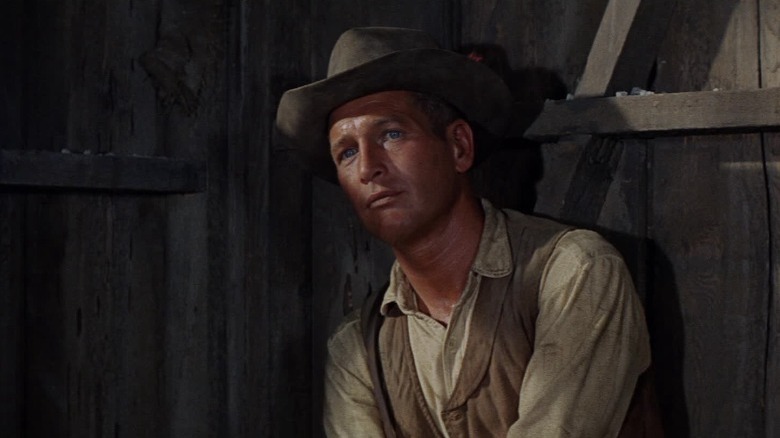
Elmore Leonard wrote his fair share of westerns, but none resonate today in quite the same way as "Hombre." In the film, Paul Newman plays John Russell, a man raised by the Apache who has to travel to the nearest city by stagecoach. The other passengers are shocked when they find out about his heritage, and demand he sit outside with the Mexican driver (Martin Balsam). However, when the coach is held up and they are abandoned in the desert, the passengers turn to Russell to save them. 

Newman is effortlessly cool here, and never softens his character to make him more likable. He is a blunt, unsentimental man who sees through the hypocrisy of the pious Doctor Favor (Fredric March) immediately, calling him out on his "charitable" nature. Favor remains the most despicable character, and that's really saying something considering the caliber of the villains on display.

Richard Boone makes an imposing, charismatic baddie, and has strong support from Cameron Mitchell, David Canary, and Frank Silvera as his henchmen. Leonard's dialogue is quick-witted as ever — after Boone walks up a steep hill to deliver a threatening ultimatum to the survivors, Russell pipes up with, "Hey, I got a question. How do you plan on getting down that hill?" before mercilessly opening fire. So cool.

The Tall T
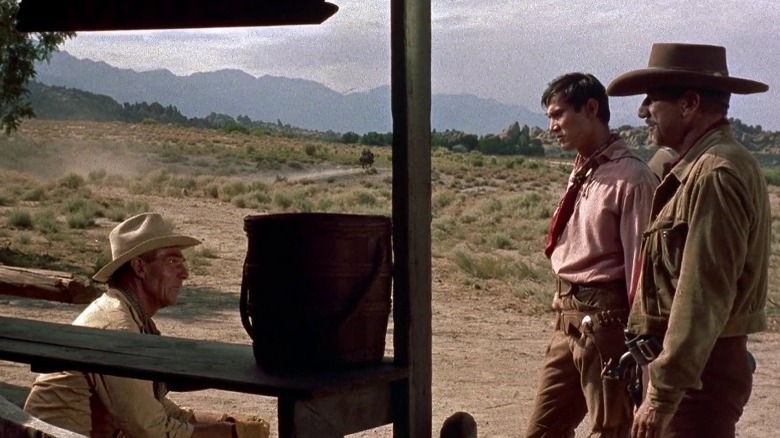
Certainly overdue for a re-evaluation, Budd Boetticher's westerns, particularly the ones he made with Randolph Scott, are B-movie masterpieces. "Comanche Station" and "Ride Lonesome" are both worth a look, but "The Tall T" is the best, and a perfect introduction to his style. Scott plays an aging cowboy caught up in a hostage situation when his stagecoach is hijacked by a trio of desperate outlaws played by Richard Boone, Henry Silva, and Skip Homeier, who take the passengers hostage in the hope of ransoming the newly married heiress (Maureen O'Sullivan) to her wealthy father.

What makes this film so interesting is the relative lack of violence for most of the runtime. Instead, Boetticher examines the blurred lines between good and evil, with supposedly heroic characters shown to be just as venal as the villains, and Boone's Frank Usher emerging as an almost noble character with his own moral code. Weary of his criminal lifestyle, he identifies with Scott more than his sadistic henchmen. When the violence does arrive, though, it's shocking in its casual brutality.

Boetticher's films with Scott all propagate the mythic nature of the old west, and "The Tall T" is a perfect example. The dialogue is so pulpy that it would be risible if it wasn't delivered with wonderful conviction by Scott — "There are some things a man can't ride around".

The Missouri Breaks
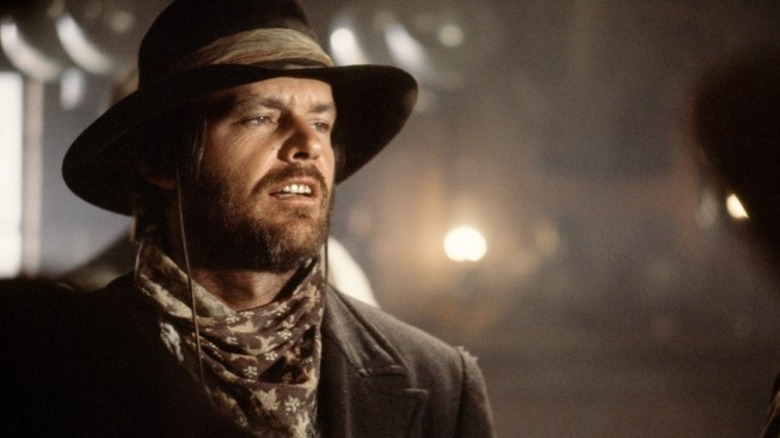
Arthur Penn's offbeat western is a hidden gem, with both stars playing outside their comfort zone to great effect. Jack Nicholson has never been more understated as the cattle rustler Tom Logan, while Marlon Brando is flamboyant as Robert Lee Clayton, the "regulator" hired to kill Logan and his gang, which is made up of some of the best actors from the '70s, including Fredric Forrest, Randy Quaid, and Harry Dean Stanton (in one of his most memorable and poignant supporting roles). Clayton is a terrifying figure — even when serenading his horse, there's something chilling about him, and the way he toys with his unassuming victims before killing them.

Penn takes pleasure in undermining the mythos of the traditional western. Logan is an old-fashioned western archetype, more honorable than the lawman on his trail. He criticizes Clayton for shooting his quarry from a distance, never having to look them in the eye, but Clayton takes pride in this (reflected later in the film, when he kills Logan's men when they are at their most vulnerable). Logan even refuses to kill Clayton when he turns his back on him. By the end, though, Logan descends to Clayton's level in a final showdown that is simultaneously audacious, anticlimactic, and entirely appropriate.

Ride With The Devil
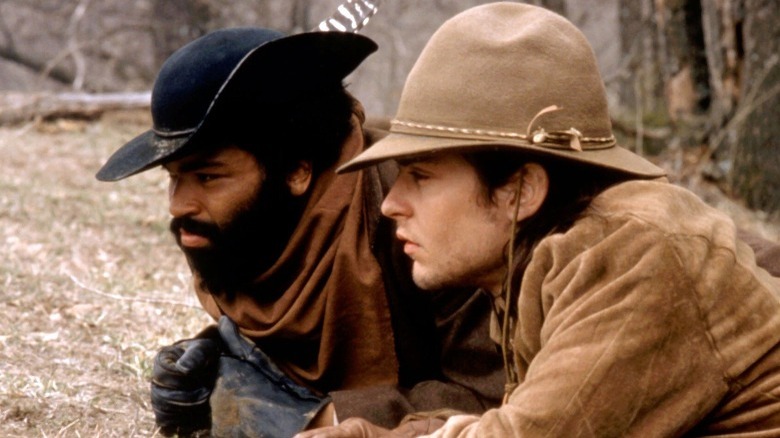
Ang Lee's Civil War epic is often forgotten among his more mainstream movies, but it might be his best film. The war is shown through the eyes of a handful of characters, principally Tobey Maguire's German-born Roedel, who joins the Bushwhackers, guerrilla soldiers on the side of the Confederacy. Maguire has never delivered a more mature performance, and his character almost imperceptibly changes over the course of the film. Lee really nails the way neighbors were turned against one another and treats both sides with an even hand. When Maguire bumps into old acquaintance Mark Ruffalo on the opposing army, there's a sense of awkwardness. It's an uncomfortable encounter for both men that inevitably ends in tragedy.

All of the characters are nuanced and interesting, especially Jeffrey Wright as the freed slave fighting for the Confederates, and Jonathan Rhys Meyers as a truly loathsome villain. It has a real sense of authenticity, and Lee directs the frenetic battle scenes with a sure hand. An excellent western and an equally excellent war film, "Ride with the Devil" is underrated on both counts.

The Long Riders
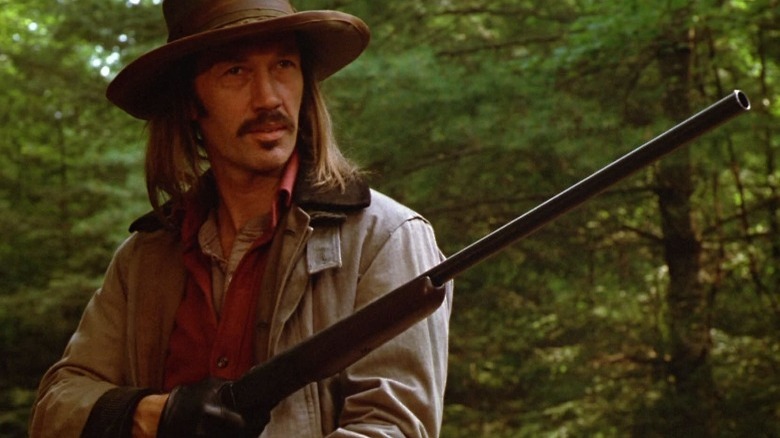
You could make the argument that all of Walter Hill's films are westerns (he certainly would) but he only ventured overtly into the genre a handful of times, to varying degrees of success. There's little doubt, though, that "The Long Riders" is the most successful of these efforts.

The film is best remembered for the casting of real-life brothers as related gang members — James and Stacy Keach play the James brothers, David, Keith, and Robert Carradine appear as the Youngers, Randy and Dennis Quaid take on the Millers, and Nicholas and Christopher Guest play the opportunistic Ford brothers. It's a proper family affair that informs the dynamic of the group. There's something about Randy Quaid turning his back on his real brother that just carries more weight. Towards the end the casting bears even more significance, as family loyalties lead to fractures among the gang. 

Hill gets the era perfectly right, with the shadow of the Civil War still looming large over the characters, and the climactic shootout is the most visually impressive since "The Wild Bunch," with disorienting, slow-motion action, and the impact of each bullet reverberating on the soundtrack.

Bone Tomahawk
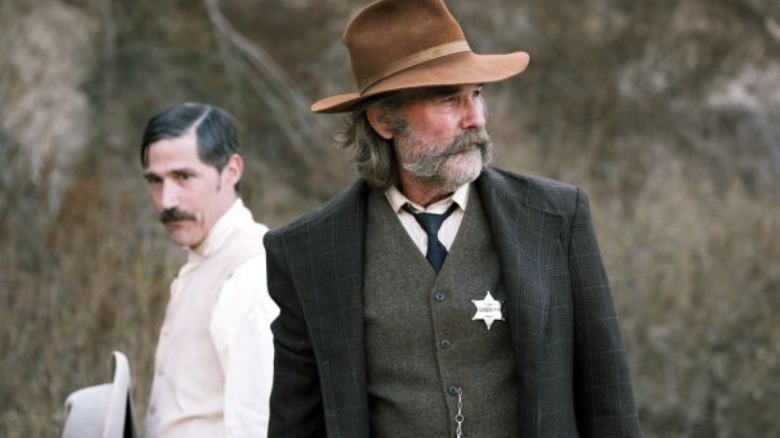
Part western, part horror, S. Craig Zahler's assured debut has a lot more substance than the infamously grisly sequences it's now best known for. Zahler creates a world that feels lived in, with authentic dialogue that's witty without drawing attention to itself. The entire middle section could have been lifted from a traditional western, with the four heroes bickering and squabbling as they track the nightmarish "troglodytes" across all manner of barren landscapes. The characters are all developed and shown to be likeable, decent men, which only makes the horror elements all the more disturbing when they appear.

In his second western of 2015 (he also appeared in "The Hateful Eight"), Kurt Russell finds his niche as an irascible sheriff, barking lines like "Why are you in my breakfast?" like a seasoned pro. However, it's Matthew Fox who steals the film as the cocky Brooder, a callous dandy who is nonetheless revealed to be a more nuanced character than he first appears.

Shot in only 21 days, Bone Tomahawk is an impressive genre piece, with economical storytelling and some truly horrifying moments that sear themselves into your memory. Surrounding those moments though, is a well-observed, classic story with well-rounded performances from an excellent cast.

The Naked Spur
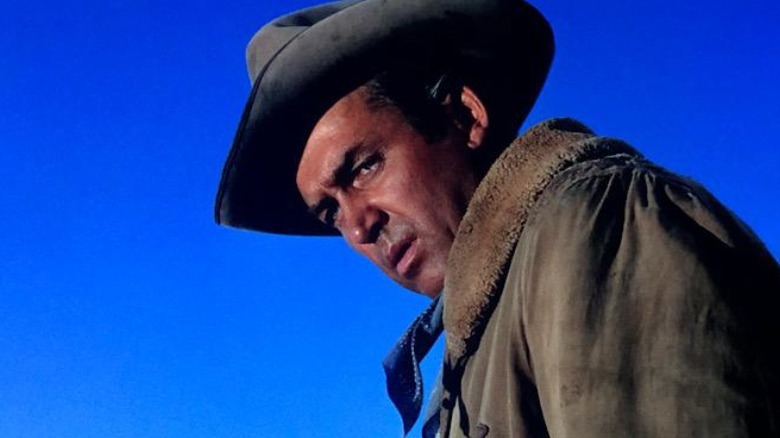
Anthony Mann made several celebrated westerns with James Stewart, but "The Naked Spur" is one that isn't talked about enough. It's a film with a minimal cast, but tells its story on an epic scale, with some beautiful, expansive locations. Kemp (Stewart) is hunting murderous outlaw Ben Vandergroat (Robert Ryan) and is aided by grizzled prospector Tate (Millard Mitchell) and disgraced cavalryman Anderson (Ralph Meeker). However, once they capture the fugitive and his accomplice (Janet Leigh), he reveals that Kemp isn't a lawman but a bounty hunter, entitling the others to a share of the reward. 

So begins a morality tale of mistrust and avarice, as the characters squabble about their shares, and Vandergroat plants the seeds of betrayal in their minds. With only five named characters in the entire film, it's a proper character piece, and the way each of their backgrounds and personality flaws are revealed over the course of the film is masterfully done. The broody, vengeance-driven hero is one of Stewart's darkest roles, and Ryan is exceptional as the amiably malevolent killer who pits the others against each other, whispering in their ears and fueling their paranoia.

The Nightingale
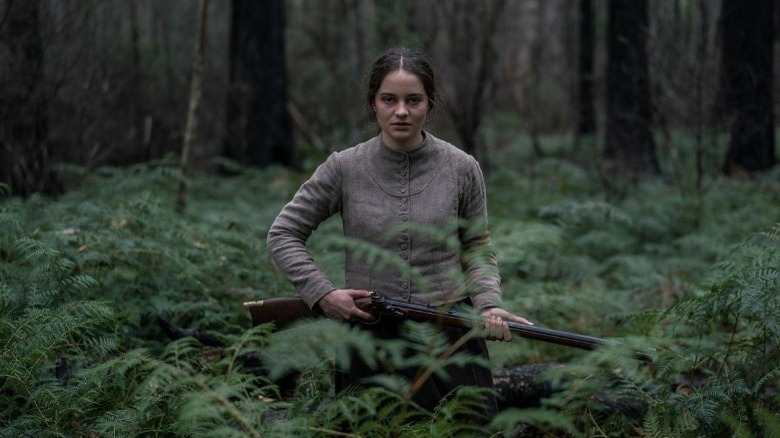
Jennifer Kent's follow up to "The Babadook" flew largely under the radar but remains an incredibly powerful piece of cinema. Aisling Franciosi gives a breathtaking performance as a former prisoner who is abused by her captor and suffers a devastating loss, setting her on a course of vengeance, guided reluctantly by Billy (Baykali Ganambarr), an Aborigine tracker.

It's a bleak, controversial film (several critics walked out when the film was shown at Cannes), and Kent never flinches in her depiction of the horror that she puts her characters through. But while the violence is sudden and shocking, it's never gratuitous. In fact, it's necessary. This isn't a story about a "badass" woman getting her own back, it's about a woman who is broken reclaiming her humanity.  Billy himself is so accustomed to the unforgiving environment, and the endemic racism, that he's utterly desensitized to it all, but breaks down when he's shown the tiniest amount of kindness.

What really makes "The Nightingale" work though, is the relationship between the two leads. The grudging respect that grows between them, which gradually evolves into affection, makes it an incredibly beautiful, brutal film.

Matewan
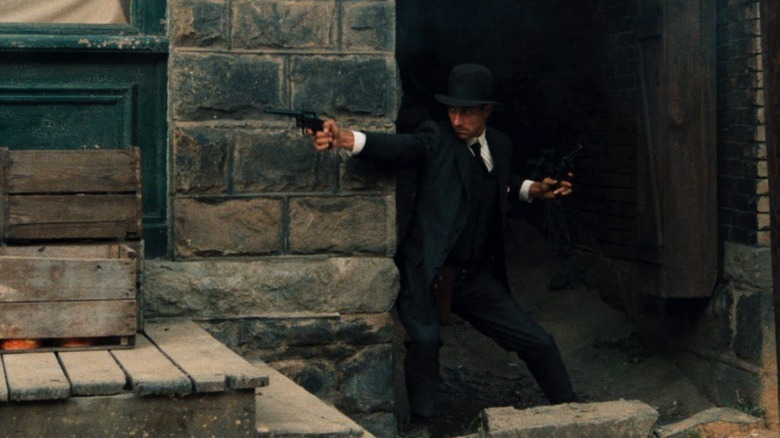
John Sayles' socialist drama barely qualifies as a western, focusing more on the infamous miners' strike of the title than any genre tropes. It even sits in an awkward place historically — it's filled with motorcars and machine guns, which don't usually crop up in movies like these. However, Haskell Wexler's beautiful cinematography, and the central conflict, is evocative of classic westerns.

In his film debut, Chris Cooper plays the idealistic union man who arrives in the town of Matewan to unite the disparate groups of miners being exploited by the coal company. As hired guns coerce and intimidate the workers and begin evicting anyone who stands up to them, the tension builds to an unavoidable confrontation.

The climactic shootout is breathtaking, as the townspeople leap into action. David Strathairn has never been cooler than he is as the blunt, taciturn sheriff who proves his mettle during the gunfight. Kevin Tighe is deeply unpleasant as the grinning heavy, and Bob Gunton plays a character even more loathsome than his warden from "The Shawshank Redemption." A significant and increasingly relevant film, "Matewan" remains criminally overlooked.

The Great Silence
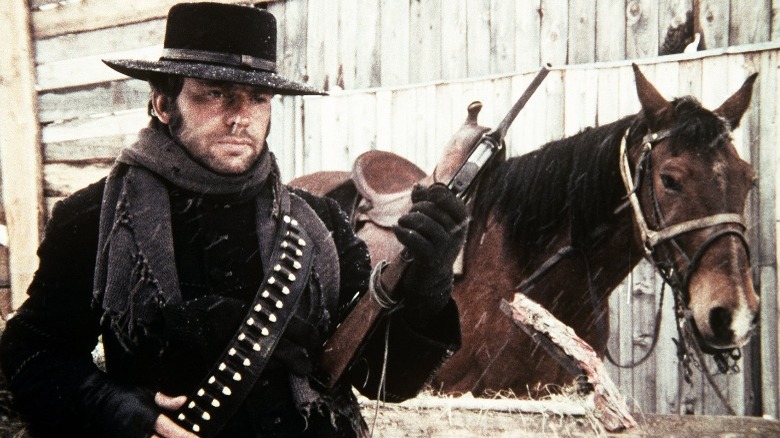
Another favorite among cinephiles (and a clear influence on "The Hateful Eight"), Sergio Corbucci's "The Great Silence" is arguably the greatest spaghetti western not directed by Sergio Leone. 

Beautifully shot in the snow with a sorrowful, elegiac score by Ennio Morricone, the film follows Silence (Jean Louis Trintignant), a mute gunslinger with a Mauser pistol who only kills in self-defense. For once, the bounty hunters are the villains, as Tigrero (Klaus Kinski) gleefully kills unarmed fugitives, secure in the knowledge that the law is on his side. With the outlaw villagers chased into the hills, the bounty hunters kill them one by one, until the arrival of Silence stirs up trouble. 

Trintignant makes Silence a melancholy, compelling character, and Kinski is a pragmatic, deliciously evil villain — the scenes between the two are packed with tension, and they play off each other brilliantly. There are plenty of spaghetti westerns worthy of a place on this list ("The Big Gundown," "Face to Face," "Death Rides a Horse") but none of them are as unique as this one; it also features what might be the most pessimistic ending in all of cinema.

Man Of The West
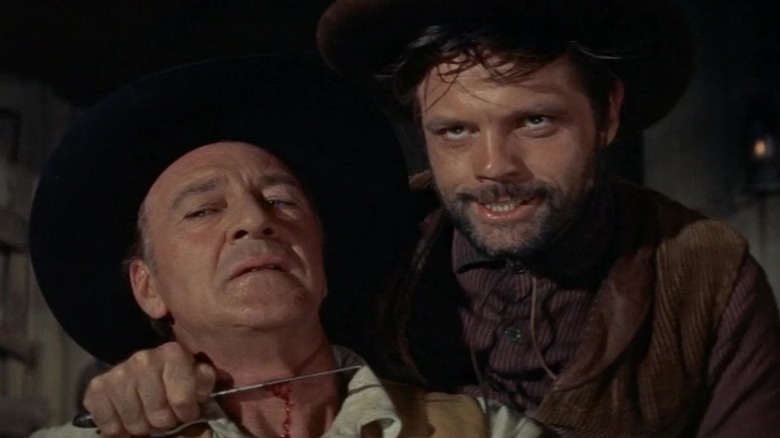
A favourite of Jean Luc Godard, who called it "an admirable lesson in cinema - in modern cinema," Anthony Mann's masterpiece should be as highly regarded as "Stagecoach" or "The Searchers," but is in reality rarely discussed, maybe because at its core it's a much darker film than it initially appears.

Link Jones (Gary Cooper) is the reformed outlaw on his way to hire a schoolteacher when the train he's traveling on is robbed, and he and a couple of other passengers are left to fend for themselves. As they walk to the next town, they find the train robbers hiding out (Jack Lord, John Dehner, Robert J. Wilke, and Royal Dano form just about the best gang of villains of any classic western), and Link's murky past catches up with him.

Beginning conventionally enough, the tone changes subtly over the course of the film, starting the shocking moment the comic relief character is ruthlessly killed off. From then on, there's a palpable sense of dread that builds until the final inevitable showdown, as Link is torn between his criminal past and the peace he has found in his new life. Casting Cooper as the protagonist is both questionable and pretty astute. He's clearly too old for the role — he's nearly 10 years older than Lee J. Cobb, who plays his uncle — however, it also seems apt that such an icon of the genre would play the lead in a film that feels so final.

The Proposition
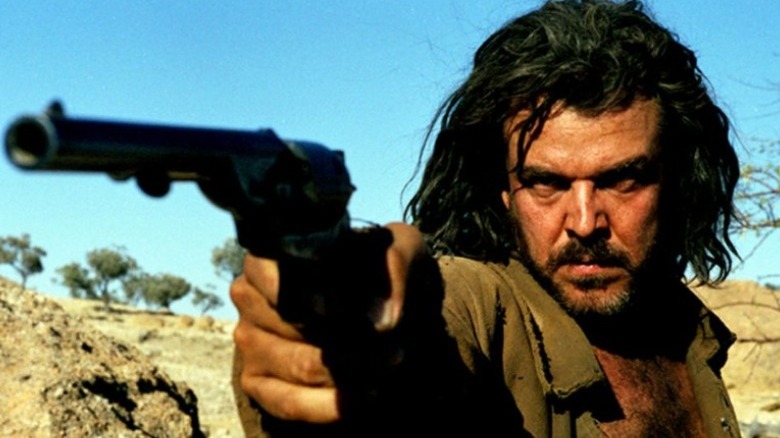
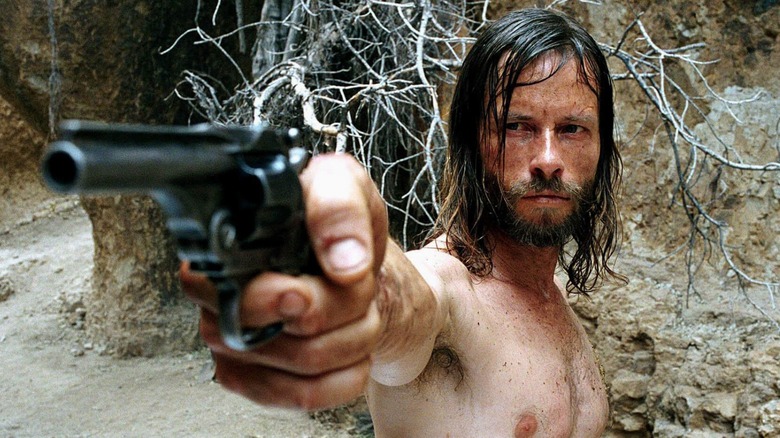
15 years later, John Hillcoat still hasn't bettered this brutal Australian western. Charlie Burns (Guy Pearce) and his younger brother Mikey (Richard Wilson) are captured by British Captain Stanley (Ray Winstone) when he is presented with a choice. He can find and kill his older brother Arthur (Danny Huston), or Mikey will be hanged.

Pearce is full of pathos as the conflicted outlaw, but even more impressive is Winstone as the decent captain who is hampered by disloyal subordinates and sneering bureaucrats. His relationship with his wife (Emily Watson) is incredibly tender, contrasting with the harsh violence of the Burns gang. Arthur Burns is a brilliant creation, vividly brought to life by Huston. He's well-versed in poetry and philosophy, and yet utterly insane. When one of his henchmen asks if they're misanthropes, he warmly replies, "Good lord no, we're a family" before viciously attacking a homestead. 

Incredibly nasty in places and yet poetic in its use of dialogue, "The Proposition" remains one of the most lyrical westerns ever made, with a hypnotic soundtrack by Nick Cave, and some beautifully sparse cinematography. Australia has never seemed more desolate or empty.

Dead Man
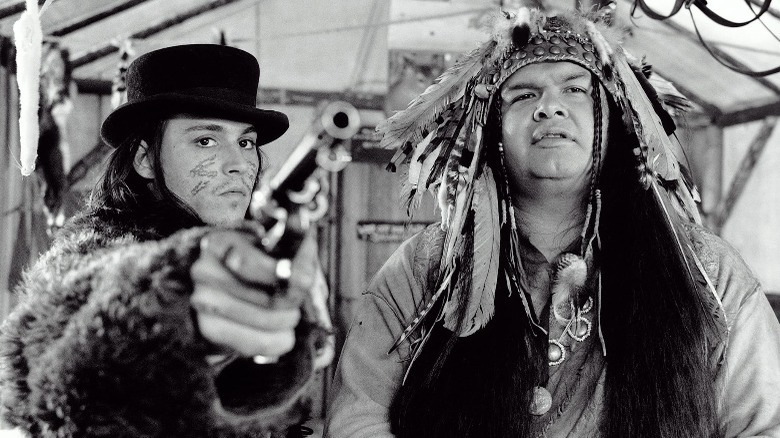
One of Jim Jarmusch's most linear films, "Dead Man" is still full of his offbeat style. For once Johnny Depp plays it straight as Bill Blake, an accountant on his way to start his new job in the town of Machine. However, upon arrival, he finds there is no job, and after a confrontation that ends with him killing the son of Robert Mitchum's town boss, he ends up on the run from the law and bounty hunters alike, with only a Native American called Nobody (Gary Farmer) for company.

Depp's bewildered performance allows the supporting cast to shine, from Lance Henriksen's cannibalistic bounty hunter to Crispin Glover's decidedly odd train fireman. Meanwhile, Farmer is endlessly likable as the poetry-loving Nobody, and it's refreshing to see a depiction of a Native American character largely free of the stereotypes that pervade the genre. His performance is incredibly touching, as he constantly protects Blake, believing him to be the reincarnation of the classic poet William Blake (there are several nods to his work peppered throughout the film).

Blackly funny even if it's not an overt comedy, "Dead Man" is just as potent a deconstruction of the old west as any poe-faced revisionist western, punctuated by scenes of extreme violence and evocative symbolism. Neil Young's industrial soundtrack is incredible and washes over the film almost as much as Robby Muller's inky black and white cinematography.

Read this next: The 14 Greatest War Movies Of The 21st Century

The post 15 underrated westerns you need to watch appeared first on /Film.

30 Nov 23:40

Microsoft Adds Buy Now, Pay Later Financing Option To Edge -- And Everyone Hates It

by BeauHD
Microsoft has decided to add "Buy Now, Pay Later" financing options to its Edge browser in the U.S. -- and the overwhelming response has been negative. The Register reports: The Buy Now Pay Later (BNPL) option pops up at the browser level (rather than on checkout at an ecommerce site) and permits users to split any purchase between $35 and $1,000 made via Edge into four instalments spread over six weeks. The system is powered by Zip, previously Quadpay, and offers a Chrome extension for users who want to split their payments (interest-free if you make the payments on time, although Zip charges $1 per installment). Microsoft has now bundled the platform into Edge. Feedback could charitably be described as negative so far, as demonstrated by the tags assigned to the post on Microsoft's Tech Community site. Comments (numbering 119 at time of writing) posted by visitors to the site can be pretty much summed up thusly: "This [is] a cheap and disgusting move from Microsoft and edge team to the browser users. You should be ashamed for pushing such crap to users. Listening to the users checkout flows, suggesting third party services. Bloating the browser. Seriously, be better and more responsible." "It's deeply shocking this is built into the base Windows OS on billions of devices," writes cybersecurity expert Kevin Beaumont in a tweet. "I feel like I should start a GoFundMe for Microsoft, or teach them how to beg bounty, as clearly they need the money."

Read more of this story at Slashdot.

30 Nov 22:13

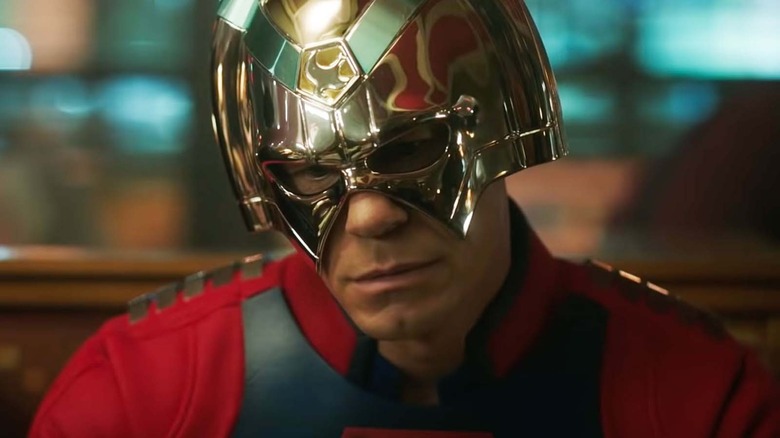
Peacemaker Clip: Peacemaker Is Totally A Better Superhero Than Aquaman

by BJ Colangelo

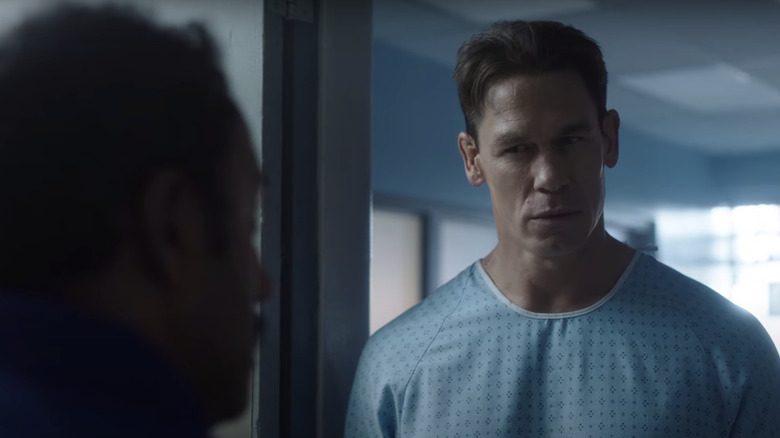
"I can't believe they're letting me shoot this," Gunn reportedly said on the set of "Peacemaker," the new show for HBO Max centered on John Cena's breakout performance in "The Suicide Squad." When James Gunn said that "Peacemaker" was going to be a "funeral for Warner Bros.," it sounds like he was talking about the type of material, as seen in the latest teaser clip released, where "Peacemaker" talks about smoking weed with the hospital janitor (Rizwan Manji of "Schitt's Creek"), and dropping a whole lot of f-bombs.

James Gunn wrote all eight episodes of the upcoming "Peacemaker" series, and served as the director on five. Based on everything we've seen from teasers and set reports, it truly does seem like Gunn has been given carte blanche to make the hero series, well, as "James Gunn" as humanly possible. Lest we forget, Gunn comes from a background of low-budget schlock with Troma films, and his edgy sensibilities pop up throughout all of his work ... which is likely why that Comic-Con exclusive promo clip features Peacemaker delivering the hilarious line of "F*** Aquaman!" Is Peacemaker a better superhero than Aquaman? I can't claim to be an authority on whether or not Peacemaker's claims are true, but with an argument like "all they do is swim," in reference to the fact fish cannot understand peace, Peacemaker may be on to something.

Wait. IS Peacemaker More Famous Than Aquaman?

Peacemaker Christopher Smith makes the bold claim that he's more famous than Arthur Curry's Aquaman, so I got to thinking about the validity of that statement as someone who doesn't actually follow the canon of the DC Cinematic Universe, because I am old, tired, and have the attention span of a seagull on a crowded beach. That said, Smith may have a point!

Until Jason Momoa made the character ridiculously hot and kind of cool in "Aquaman," I spent my entire upbringing thinking the character was lame because "Super Friends" painted him that way, and every cartoon parody portrays aquatic heroes as punchlines, with Seaman of "South Park" and Mermaid Man of "Spongebob Squarepants" as standouts. There's definitely been more exposure to the existence of Aquaman, but it has been overwhelmingly negative until very recently. Whereas Peacemaker, a character many didn't know existed until "The Suicide Squad" came about, was immediately awesome. Aquaman is frequently outshined by Superman and Batman whereas Peacemaker is slowly carving out a niche for himself as the premiere anti-hero. He's definitely got some ground to cover in the longevity of popularity department, but those that know him seem to love him a lot more than they do the King of the Seven Seas, even though he's more of a villain than a hero. Sorry, fish-boy, I'm giving the popularity contest crown to Peacemaker.

"Peacemaker" debuts on HBO Max on January 13, 2021 with episodes released weekly.

Read this next: Joker's Wild: Ranking The Cinematic Versions Of The Clown Prince Of Crime

The post Peacemaker Clip: Peacemaker is Totally a Better Superhero Than Aquaman appeared first on /Film.
30 Nov 22:13

FBI Document Shows What Data Can Be Obtained From Encrypted Messaging Apps

by BeauHD
An anonymous reader quotes a report from the Record: A recently discovered FBI training document shows that US law enforcement can gain limited access to the content of encrypted messages from secure messaging services like iMessage, Line, and WhatsApp, but not to messages sent via Signal, Telegram, Threema, Viber, WeChat, or Wickr. The document, obtained earlier this month following a FOIA request filed by Property of the People, a US nonprofit dedicated to government transparency, appears to contain training advice for what kind of data agents can obtain from the operators of encrypted messaging services and the legal processes they have to go through. Dated to January 7, 2021, the document doesn't include any new information but does a good job at providing an up-to-date summary of what type of information the FBI can currently obtain from each of the listed services. [...] While the document confirms that the FBI can't gain access to encrypted messages sent through some services, the other type of information they can glean from providers might still help authorities in other aspects of their investigations. The content of the document, which may be hard to read due to some font rendering issues, is also available in the table [embedded in the article]. Of note, the table above does not include details about Keybase, a recent end-to-end encrypted (E2EE) service that has been gaining in popularity. The service was acquired by video conferencing software maker Zoom in May 2020.

Read more of this story at Slashdot.

30 Nov 21:47

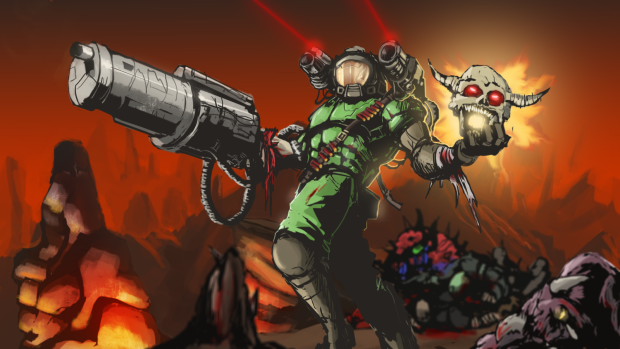
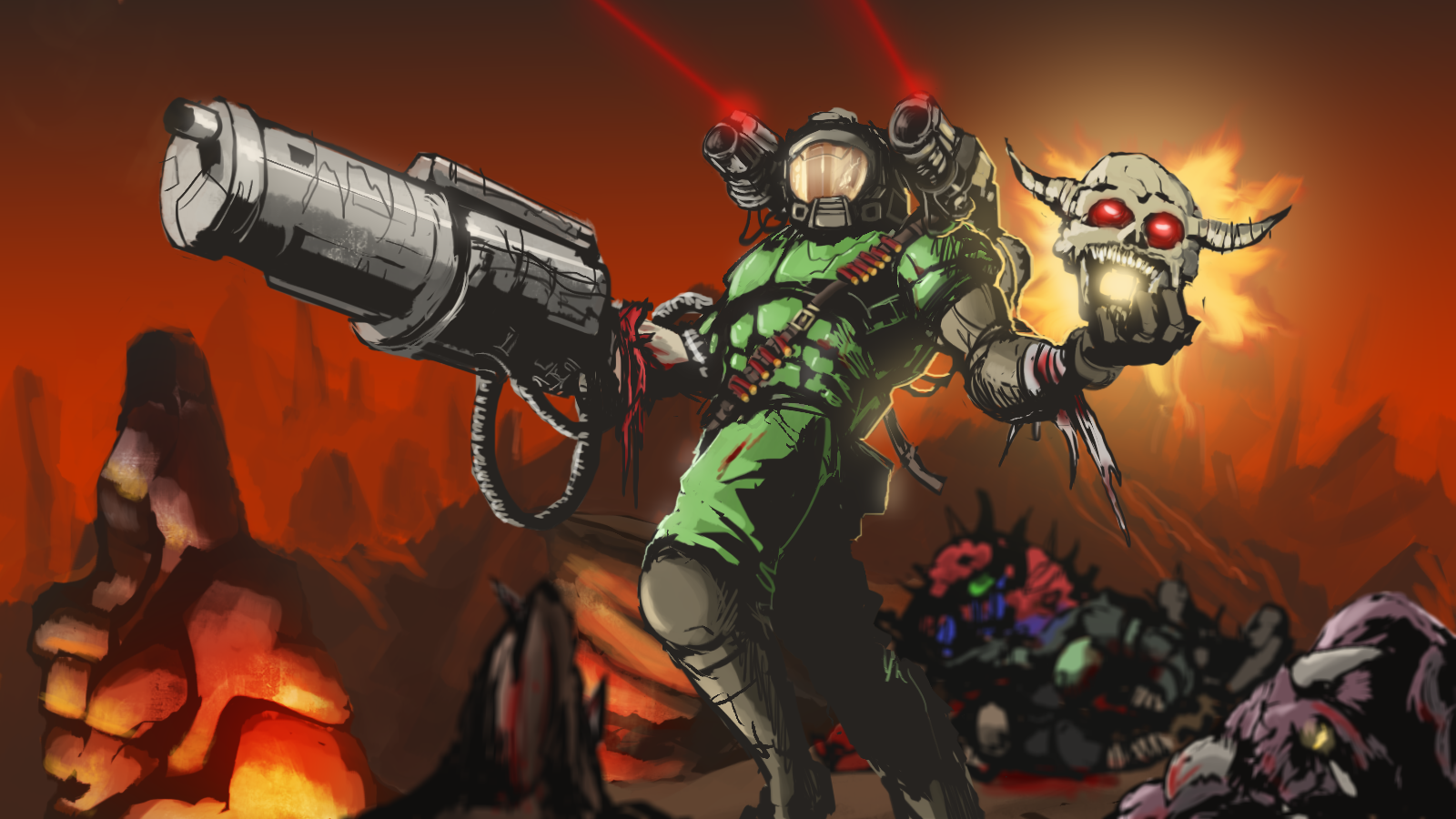
Crysis Back to Hell Mod promises to be an unofficial sequel to the original Crysis

by John Papadopoulos

Modder ‘Flowgroover’ announced an unofficial sequel mod to the original Crysis game, called Crysis Back to Hell. Crysis Back to Hell will take place right after the ending of the first Crysis game, and will release on December 11th. According to the modder, this mod will have the same sandbox gameplay that most Crysis and … Continue reading Crysis Back to Hell Mod promises to be an unofficial sequel to the original Crysis →

The post Crysis Back to Hell Mod promises to be an unofficial sequel to the original Crysis appeared first on DSOGaming.

30 Nov 21:47

The Morning Watch: VFX Artists React To Back To The Future, Making Of Marvel's Hit-Monkey & More

by Ethan Anderton

(The Morning Watch is a recurring feature that highlights a handful of noteworthy videos from around the web. They could be video essays, fan-made productions, featurettes, short films, hilarious sketches, or just anything that has to do with our favorite movies and TV shows.)

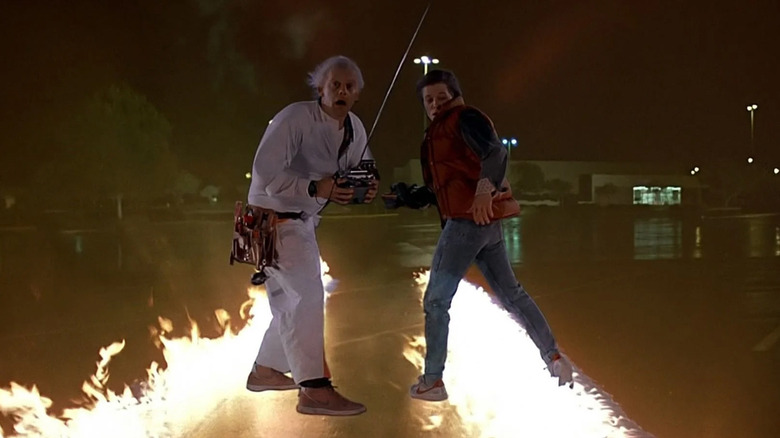
In this edition, hear what visual effects artist have to say about the work done in the classic time travel adventure "Back to the Future" and more. Plus, go behind the scenes of Marvel's new animated series "Hit-Monkey" on Hulu. And finally, listen as Jeremy Renner breaks down many of the roles throughout his career, from early work in "National Lampoon's Senior Trip" to his various turns as Hawkeye in the Marvel Cinematic Universe and more.

VFX Artists React To Back To The Future And More

First up, Corridor Crew brought in Captain Disillusion to take a closer look at some of the visual effects done on the original "Back to the Future," analyzing some of the tricks they employed to pull of the film's many memorable sequences. Plus, they also take the time to debunk some viral magic videos that have made their way around the web, using their knowledge of VFX to figure out how people are being fooled.

The Making Of Hit-Monkey

Next, in case you didn't hear, Marvel has a new animated series out at Hulu called "Hit-Monkey," based on the comic of the same name. The series follows a Japanese snow monkey whose tribe is slaughtered, leading him to join forces with the ghost of an American assassin, and, together, they begin killing their way through the Yakuza underworld. If that doesn't sound cool enough by itself, watch this featurette on the making of the series. 

Jeremy Renner Career Breakdown

Finally, Vanity Fair brought in "Hawkeye" star Jeremy Renner to run through some of the more memorable roles throughout his career. Obviously the video highlights his work in the Marvel Cinematic Universe, but it also reaches back to roles in "National Lampoon's Senior Trip" and "Dahmer," as well as his acclaimed turns in "The Hurt Locker" and "The Town." Plus, stick around for some chatter about the new "Hawkeye" series, as well as Renner's other streaming series, "Mayor of Kingstown."

Read this next: The 15 Best Spy Movies Of All Time

The post The Morning Watch: VFX Artists React to Back to the Future, Making of Marvel's Hit-Monkey & More appeared first on /Film.
30 Nov 21:47

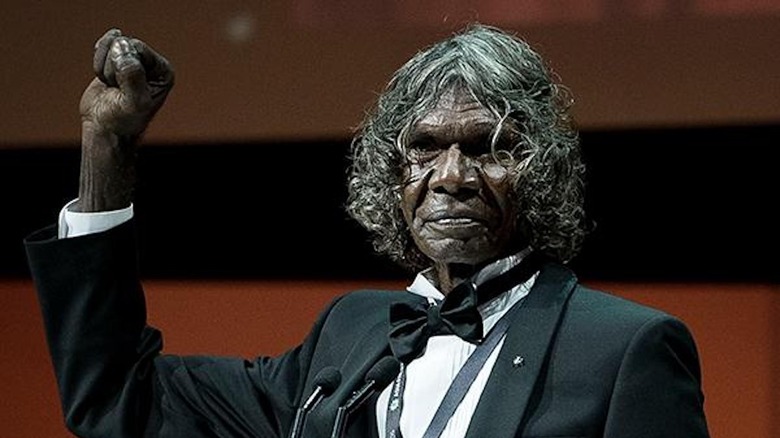
David Dalaithngu, The Beloved And Celebrated Aboriginal Actor, Has Died

by Marisa Mirabal

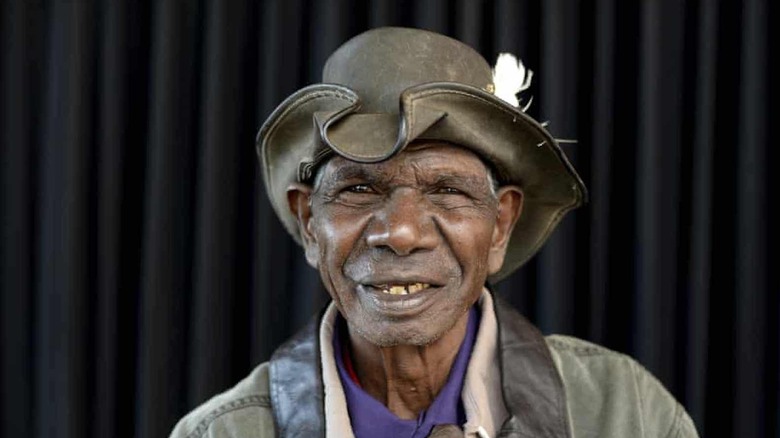
Indigenous Australian actor David Dalaithngu passed away today at the age of 68 after battling lung cancer for four strenuous years. In a statement released Monday night, the south Australian premier, Steven Marshall, stated, "It is with deep sadness that I share with the people of South Australia the passing of an iconic, once-in-a-generation artist who shaped the history of Australian film and Aboriginal representation on screen. An actor, dancer, singer and painter, he was also one of the greatest artists Australia has ever seen."

Dalaithngu was from the Mandhalpingu (Djilba) clan of the Yolngu people and raised in Arnhem land located in the Northern Territory of Australia. In his youth, he was an accomplished ceremonial dancer, tracker, and hunter. At only 16 years old, his dancing technique caught the eye of filmmaker Nicolas Roeg who was in Maningrida scouting film locations. Roeg cast Dalaithngu as the principal role in his 1971 film "Walkabout" which tells the story about two white schoolchildren lost in the Australian Outback who encounter a teenage Aboriginal boy that helps them survive. Dalaithngu's friendly face, charisma on-screen, and talent captured the hearts of audiences both domestic and abroad. His professional career continued to blossom over the next 50 years with other films such as "Storm Boy" (1976), "The Last Wave" (1977), and "Australia" (2008). He also worked on several documentaries including "Gulpilil: One Red Blood" in 2003 which disclosed aspects of his life. Known as David Gulpilil to many in the film world, the title of his documentary came from his reflection on humanity as a whole. He stated, "We are all one blood. No matter where we are from, we are all one blood, the same." He continued to shine light on his culture and Indigenous rights with other documentaries such as "Think About It!" and "My Name Is Gulpilil", which premiered at the 2021 Adelaide Festival.

A Man Of The World

David Gulpilil Ridjimiraril Dalaithngu seemed to have it all. It's difficult to even imagine the kind of incredible life that he led and how he was able to share his talent and his knowledge with the world. To this day, Indigenous stories are rarely heard and yet Dalaithngu took that challenge head-on for decades, speaking up for those who many may not even encounter let alone understand. He used art to not only educate but to heal. Through dancing, storytelling, acting, and advocacy, his footprint stretched farther than most ever dare to dream. He bravely stood his ground encountering racism, xenophobia, and culture shock all while delivering impressive performances with an unforgettable smile.

Dalaithngu was appointed a Member of the Order of Australia in 1987 and was awarded the Centenary Medal in 2001. A few years later, in 2005, he was named Northern Territory Australian of the year. His accomplishments are staggering and his legacy will continue to live on both in the hearts and on the screens for generations to come, teaching us all the importance of representation, culture, and sharing one's authentic story no matter what part of the world they may find themselves in.

Read this next: Actors Who Died In 2021

The post David Dalaithngu, The Beloved and Celebrated Aboriginal Actor, Has Died appeared first on /Film.
30 Nov 21:47

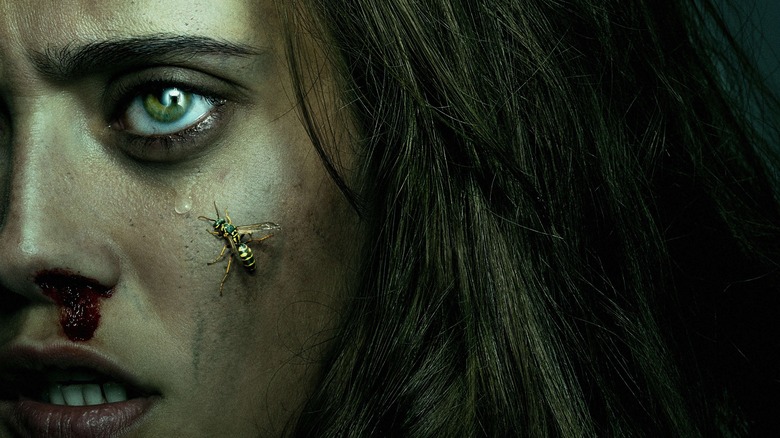
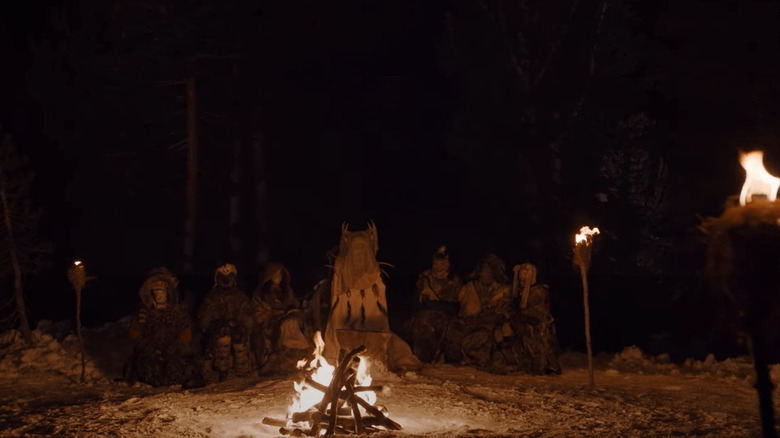
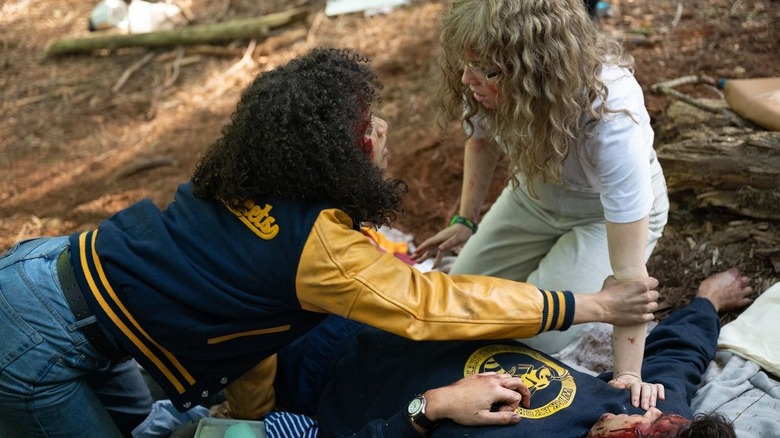
Why Isn't Everyone Obsessed With Yellowjackets, Showtime's Multi-Timeline Cannibal Thriller?

by BJ Colangelo

Did I plan on spending the last weeks of 2021 falling violently in love with a TV series so hard I'd want to write weekly recaps? No, I did not, but Showtime's cannibal thriller "Yellowjackets" has infected my entire being and my head is now constantly buzzing with the urge to scream "WHY IN THE ACTUAL FRESH HELL AREN'T WE ALL COLLECTIVELY OBSESSED WITH THIS SHOW?!" every 3.5 seconds. 

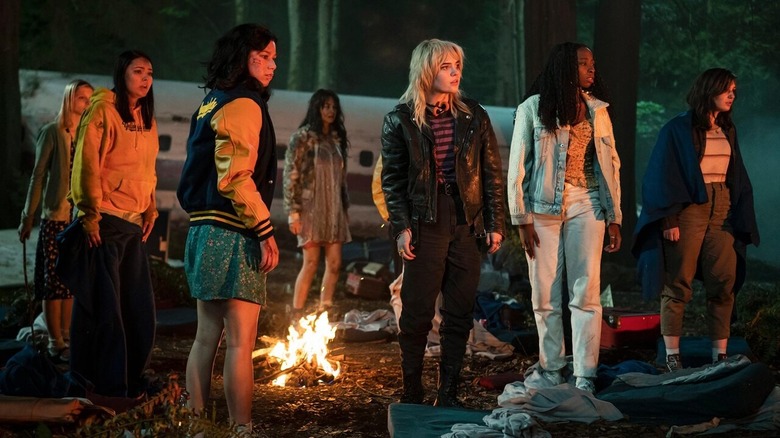
The show has different timelines running concurrently, all centered on the Yellowjackets high school championship girls' soccer team. In 1996, the team's plane crashes deep in the Ontario wilderness and the girls are forced to fend for themselves before being rescued 19 months later. The show chronicles their descent into cannibalistic madness, as well as showcasing how their trauma and secrets have impacted them after 25 years as adults trying to live normal lives despite their wholly not normal circumstances.

Sophie Nélisse, Jasmin Savoy Brown, Sophie Thatcher, and Sammi Hanratty star as the teenagers, while Melanie Lynskey, Tawny Cypress, Christina Ricci, and Juliette Lewis portray their severely damaged adult counterparts, respectively. Are these four the only survivors? Did everyone get eaten? Only time and my future weekly recaps will tell. Since we're already three episodes deep, consider this my attempt to convince you to stop your hundredth rewatch of "The Office" or whatever and join me on the side of champions with "Yellowjackets."

Let's meet the major players on the team: mild spoilers ahead.

Shauna & Taissa

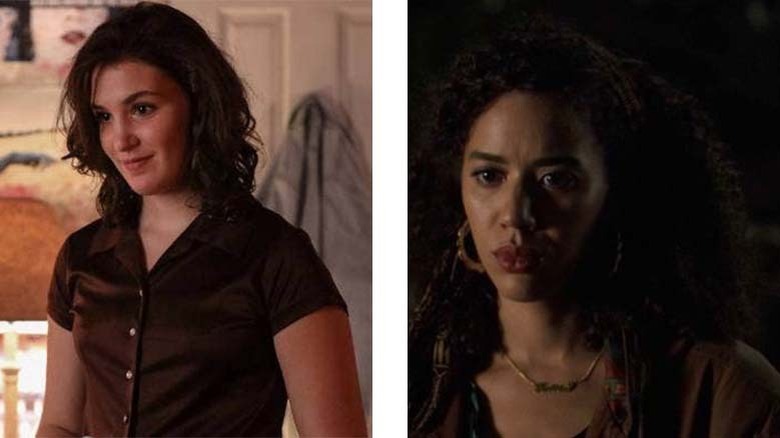
Shauna: As a teenager, Shauna (Sophie Nélisse) is the fastest player on the team, the best friend of team captain Jackie, oh, and despite her innocent demeanor, she's also happily screwing her best friend's boyfriend behind her back and demanding that he tell her he loves her mid-thrust. As an adult (Melanie Lynskey), Shauna has a sordid marriage to said best friend's boyfriend, has a bratty daughter who won't put her phone down, and is eerily calm while killing rabbits she finds in her garden. She may appear to be the most well-adjusted of the group, but if the language she uses when a reporter approaches her to "tell her story," is an indication, Shauna has seen and done some serious s***.

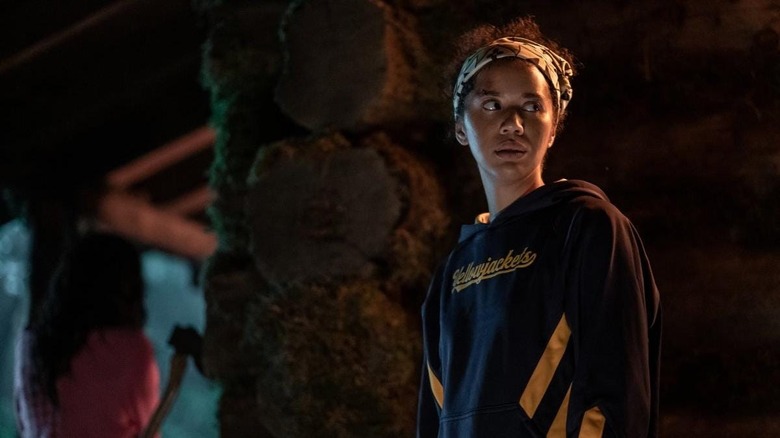
Taissa: The first two episodes painted Taissa (Jasmin Savoy Brown) as a predictable character, but episode 3 proved she's anything but. Teenage Taissa is presumably still in the closet, but a dedicated leader who will stop at nothing. When a freshman on the team looks like she's going to be a liability for their shot at nationals, she goes hard on her during a scrimmage, which results in a compound fracture snapping her shin in half. Taissa may or may not be hooking up with butch goalie Van (Liv Hewson), but as an adult, she (Tawny Cypress) is happily married to another Black woman, raising their creepy-as-hell son together, and running for state senator, which is throwing a massive "don't vote for this possible cannibal" wrench in the whole "keep a low profile" pact that Shauna insinuates was made.

Natalie & Misty

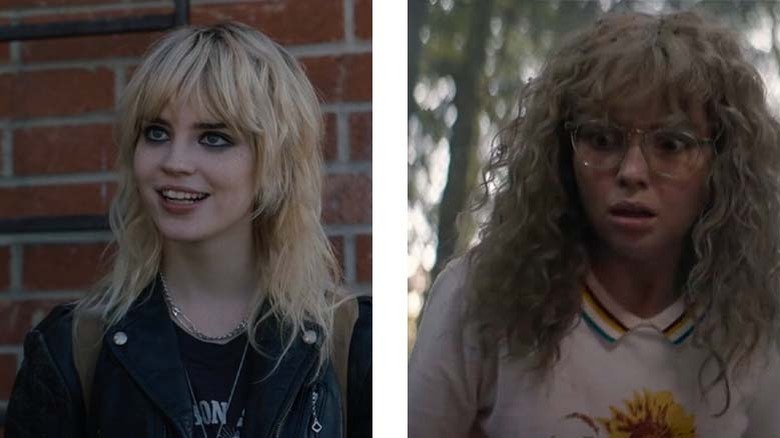
Natalie: Teenage Nat (Sophie Thatcher) is the "bad girl" of the team, which we know because she wears dark eyeliner and frequently sneaks out with her Marilyn Manson t-shirt-clad best friends to drink behind buildings and throw bottles at a-hole jocks. Nat comes from a hard life in poverty, and there's a real bitter streak knowing she's on a team filled with a lot of privileged girls that don't understand her. Adult Nat (Juliette Lewis) has been bouncing around rehabs for years, and after her latest stint asks the cab driver to take her directly to a bar. She's, uh, not handling things well, and the fact she's been keeping a shotgun in a Porsche she's had parked in a storage unit for years is also not a sign that she's been healing well.

Misty: HAHAHAHAHA OH MY GOD, MISTY. I laugh because there is no character on television that scares me more than Misty. Whenever she pushes up her glasses, I get goosebumps and my blood pressure spikes. Teen version (Sammi Hanratty) or adult version (Christina Ricci)? Doesn't matter. Misty is an unhinged nightmare and already one of my favorite villains I've seen in recent memory. There is absolutely no way to guess what ridiculous and deranged nonsense is going to come out of her mouth, and her actions are completely unpredictable. Just when you think you've figured her out, she does something weirder and more terrifying. I love her. I'm obsessed.

Episode One: BUZZ! BUZZ! BUZZ! BUZZ!

The "Yellowjackets" pilot is sincerely one of the best I've ever seen, and the episode is a fantastic introduction to all of the major players -- all the information included above comes from this episode. The first episode of "Yellowjackets" is not f***ing around. The opening shot shows a young woman running through the snow presumably being pursued by something. We don't see her face, but we do see her plummet through the snow into a barbaric trap of sharpened wood spikes that turn her into a human pin cushion, her blood slowly spreading through the snow.

Karyn Kusama of "Jennifer's Body" and "The Invitation" directed the pilot, and her impeccable grasp of horror direction is on full display. I genuinely don't know if there's a better way to start the series, because the stakes immediately skyrocket through the roof. We're about to fall in love with these characters, who we now know in the back of our minds are going to eventually turn into unrecognizable beasts.

"Lord of the Flies," eat your heart out, baby. This is "Yellowjackets" Country.

Episode Two: Misty Quigley Took An Axe...

Now that we've met all of our characters, it's time to strand them in the wilderness and scar them for life! The opening of episode two shows the plane crash, and it's brutal. If you thought "Final Destination" was scary, "Yellowjackets" is here to kick open the door, set a flight attendant on fire, launch a coach out of the door mid-air, and impale a JV alternate with a metal pole with her oxygen mask still intact. The team hierarchy is now in disarray, as captain Jackie absolutely sucks at survivalist planning but thanks to Misty's taking of the Babysitter Red Cross training (twice), she immediately steps up, including chopping off the assistant coach's leg with an axe, which has been pulverised into a pancake by falling debris. I'm not going to spoil it, but Misty pulls a move at the end of this episode that made me audibly scream at my TV. God, I love that curly haired psycho.

In present day, Shauna and Jeff try and fail at the world's most awkward couples therapy-required roleplay, Taissa's son continues to be weird as hell, Nat shows up to Misty's place with a shotgun, and we realize that all of the known survivors (known to us, rather) have received mysterious postcards saying "Wish you were here" over an image of the wilderness, and a mysterious symbol on the back, the same symbol we see carved into trees near the crash site. Who is sending these? We don't know. Why are they sending them? We also don't know.

Episode Three: EVERYTHING IS OMINOUS!

Up until this point, "Yellowjackets" has been playing around with possible supernatural elements, but episode 3 jumps from survival thriller to full on horrorshow. In 1996, the girls (and the assistant coach and the head coach's kids) have held a makeshift burial ceremony for those who didn't survive the crash, and it's a sad, awkward, awful moment. Taissa notices a lake and despite Jackie's request that they all stay close to the crash site, the majority, Shauna included, vote to hike to the lake to be near a water source. Jackie takes it super personally because it clearly has not hit her that survival doesn't give a single s*** about "girl code" feelings. Upon arrival, they find a weird house that has a terrible odor (give ya one guess as to why), but it's a shelter nonetheless.

In the present, Nat and Misty are on a journey to find Travis (coach's kid), who we now know also survived and has some serious history with Nat. Misty continues to be the weirdest person on the planet, and Nat's sobriety is nonexistent. Shauna finds out her husband has been cheating on her and tries to catch him, but ends up reuniting with this mysterious flirty guy she rear-ended in the pilot. The real star of the episode though is Taissa, who experiences absolute horror of three different and similar terrifying moments of trauma converging at the same time, including a hallucination of a figure of a man with no eyes. Is "Yellowjackets" going full "LOST?" I need answers and the inability to binge is killing me, Showtime! (I'm a masochist though, so I secretly love it.)

Buzzworthy Moments And Additional Thoughts

Laura Lee: No clue if she's alive as an adult, but there's a super religious girl on the team named Laura Lee who is so pure she's convinced that thinking her music teacher is a "c***" caused the plane crash and I'm secretly hoping turns into a vicious monster after the experience makes her question her faith.

Lottie: I am gonna go out on a limb and predict that Lottie will absolutely get eaten. We know she has to take anti-psychotics and by the end of episode 3, she's taken her last pill. Yikes.

Caligula: Misty has a bird named Caligula and this is just one example of the weird personality quirks she's been assigned. See also: her preference for coconut La Croix and the "Cats" soundtrack as her go-to road trip playlist.

Kevyn: Okay, so Nat's goth pal Kevyn grows up to be a cop, and he clearly still loves Nat despite the fact she's a messy alcoholic who has absolutely not dealt with her trauma. No way this doesn't come into play in future episodes.

Considering Showtime doesn't have the name-brand reputation of HBO, it's been high-key annoying that "Yellowjackets" isn't a show on everyone's radar, so I didn't want to ruin the goods for people who likely haven't seen it yet. Now that we're all caught up to speed, know that future recaps will focus on individual episodes and I'll be diving a lot deeper into themes, moments, and of course, spoilers. See y'all next week. BUZZ! BUZZ!

Read this next: The 15 Best Horror TV Shows Of All Time

The post Why Isn't Everyone Obsessed With Yellowjackets, Showtime's Multi-Timeline Cannibal Thriller? appeared first on /Film.
30 Nov 21:46

Denny's Is Promoting The Matrix So You Can See How Deep The Breakfast Menu Rabbit Hole Goes

by Joshua Meyer

Outside the Matrix, the only food is a protein gruel that the crew of the Nebuchadnezzar likened to "runny eggs" or, less flatteringly, "a bowl of snot." If you prefer your eggs fluffy and scrambled, then get ready to head back into the Matrix ... by way of Denny's.

That's right, America. On Cyber Monday, everyone's favorite 24-hour dining option, Denny's, started a new promotion tied to the upcoming Warner Bros. movie release, "The Matrix Resurrections." The promotion runs from now until January 4, 2022, and it will enable hungry cinephiles to jack into the Matrix through Denny's.com or the restaurant's app. There, you'll experience the proverbial glitches in the Matrix, not as déjà vu, but as discounts and free menu items.

From now until December 12, 2021, they're offering free delivery on digital orders. Since they do deliver, that means you could theoretically eat food from Denny's at home while watching "The Matrix Resurrections" on HBO Max (and crying). Who needs theater pubs or social interaction when you've got that?!

It doesn't look like McDonald's ever offered a "Matrix" Happy Meal, which is a shame. But allow me to riff on Denny's for a second ...

Where The Matrix Meets Idiocracy

Denny's is famous for its Grand Slam breakfast, but over the years, it has offered some other creatively named "Slams," like the Slim Slam and the Mega French Toast Slam. Even now, some locations offer a thing called the Lumberjack Slam, which sounds like a backyard wrestling move. Neo (Keanu Reeves) could probably learn that move in seconds flat as he's having martial arts like kung fu and drunken boxing uploaded into his brain.

Apologies to any vegetarians reading this, but Denny's also used to offer a dish called the Meat-Lover's Bowl, which they billed as "the complete bowl breakfast." It was a meal fit for a semi-trucker: ham, bacon, and sausage, over a bed of hash browns, with even more bacon and sausage and pancakes on the side. By all rights, they should have called it the Pig-Lover's Banquet.

When I ordered my Meat-Lover's Bowl at Denny's, it was listed simply as, "Meat Bowl," on the receipt. The sweet simplicity of that phrasing, so dumbed down that even a gentle giant could understand it, appealed to the "Idiocracy" side of my brain. If I had somehow de-evolved to a more animalistic state like the crew of the Enterprise on that one episode of "Star Trek: The Next Generation," the phrase "Meat Bowl" or "Mega French Toast Slam" would probably still elicit a grunt of recognition.

Maybe we're already halfway in the Matrix, as a culture. Remember what Cyber (Joe Pantoliano) said to Agent Smith (Hugo Weaving):

"I know this steak doesn't exist. I know that when I put it in my mouth, the Matrix is telling my brain that it is juicy and delicious. After 9 years, you know what I realize? Ignorance is bliss."

"The Matrix Resurrections" slams its way into theaters and bowls is way onto HBO Max on December 22, 2021.

Read this next: Jackie Chan's 15 Greatest Fight Scenes Ranked

The post Denny's is Promoting The Matrix So You Can See How Deep the Breakfast Menu Rabbit Hole Goes appeared first on /Film.
30 Nov 21:45

Drago Could Get His Own Movie Spinoff, According To Dolph Lundgren

by Joshua Meyer

Dolph Lundgren is ready to rumble as Ivan Drago again. With the release of a director's cut, newly subtitled "Rocky vs. Drago" — not to mention a feature-length behind-the-scenes documentary — "Rocky IV" has been back in the news recently. It's the 1985 Cold War-adjacent movie where the Russian Drago famously left the all-American Apollo Creed (Carl Weathers) to die in the boxing ring while celebrating his victory.

When asked for comment, Drago only said, "If he dies, he dies."

In "Rocky IV," Drago would face off against Creed's friend, Rocky Balboa (Sylvester Stallone, who also served as writer-director), in the grudge match of the century. An older version of Drago made his reemergence in "Creed II," where his son, Viktor (Florian Munteanu), traded blows with Creed's son, Adonis (Michael B. Jordan).

Lundgren also told The Hollywood Reporter that "Creed II" originally had a scene with a brief rematch between Rocky and Drago. It was left on the cutting room floor, but according to Lundgren, there have been discussions of a Drago spinoff at MGM. Of the deleted rematch, he first said:

"I thought it was a good moment. It was also a fan moment. It was a quick little fight, and I thought it worked. But the director [Caple] and MGM felt that it was extraneous and that it didn't add anything. By the way, I think there's some talk about doing a whole spinoff on Drago with MGM. So you may get more of that."

Giving Drago The Cobra Kai Treatment

The idea of a Drago spinoff brings to mind the current Netflix series, "Cobra Kai," which acts as a sequel to the 1980s "Karate Kid" movies, told from the perspective of Johnny Lawrence (William Zabka), the antagonist who became a victim of a crane kick to the face in the first movie. There's already a significant connection between the "Rocky" franchise and "The Karate Kid" franchise. John G. Avildsen directed the original "Rocky" and the first three "Karate Kid" movies.

As THR notes, "Creed II" was able to humanize Drago a little more so that he wasn't just a cartoon Cold War villain anymore. After years languishing in direct-to-video movies (back when skipping the theater was a sign of less quality), Lundgren made something of a late-career resurgence in the 2010s with his role in "The Expendables" movies and "Aquaman." He's set to appear in "The Expendables 4" and "Aquaman and the Lost Kingdom," and if you close your eyes and say a Russian prayer, maybe you'll see him in a Drago spinoff, too.

Read this next: Butkus To Punchy: Ranking All 8 'Rocky' Movies From Worst To Best

The post Drago Could Get His Own Movie Spinoff, According to Dolph Lundgren appeared first on /Film.
30 Nov 21:45

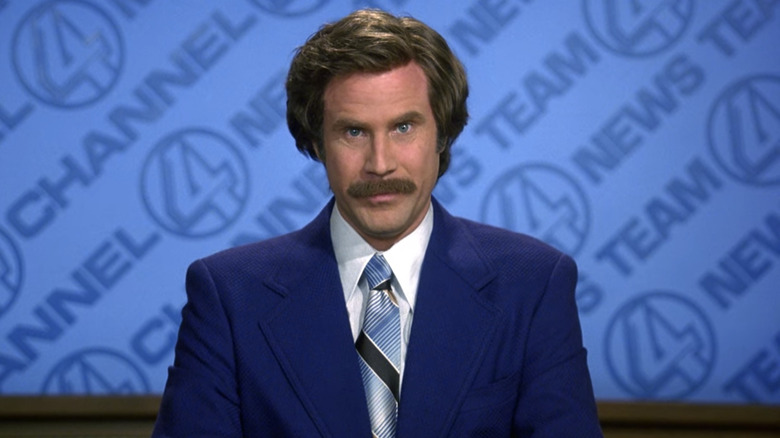
Adam McKay's Professional Split From Will Ferrell Sounds Downright Heartbreaking

by Joshua Meyer

Before he started directing Oscar favorites like "The Big Short," "Vice," and the upcoming "Don't Look Up," Adam McKay was known for the Will Ferrell comedies he helmed, starting with "Anchorman: The Legend of Ron Burgundy," continuing with "Talladega Nights: The Legend of Ricky Bobby," "Step Brothers," and "The Other Guys," and ending with "Anchorman 2: The Legend Continues" in 2013. He and Ferrell also co-founded the video website, Funny or Die, and co-starred in its very first video, "The Landlord."

In 2019, they officially ended their partnership after 13 years, dissolving their production company, Gary Sanchez Productions, and issuing a joint statement to the press saying: "The two of us will always work together creatively and always be friends. And we recognize we are lucky as hell to end this venture as such."

If you ever wondered why they split, however, a new profile on McKay in Vanity Fair reveals that everything was not so rosy and their personal relationship was also deteriorating behind-the-scenes. According to McKay, the last time he and Ferrell spoke was in a brusque phone conversation, which he described as follows:

"I said, 'Well, I mean, we're splitting up the company.' And he basically was like, 'Yeah, we are,' and basically was like, 'Have a good life.' And I'm like, 'F***, Ferrell's never going to talk to me again.' So it ended not well."

"It's The Old Thing Of Keep Your Side Of The Street Clean"

McKay and Ferrell had been developing a Los Angeles Lakers miniseries for HBO, and that's still going forward at McKay's new production label, Hyperobject Industries. Yet it's the Lakers series, based on the book, "Showtime," that finally drove a wedge between McKay and Ferrell as friends. Ferrell wanted to play 1980s team owner, Jerry Buss, but McKay and others involved in the project couldn't see him in the role.

The person they did see in the role? John C. Reilly, Ferrell's best friend and frequent co-star. McKay cast Reilly without telling Ferrell, and it upset Ferrell so much that they haven't spoken since. McKay said:

"I f***ed up on how I handled that. It's the old thing of keep your side of the street clean. I should have just done everything by the book.

"In my head, I was like, 'We'll let all this blow over. Six months to a year, we'll sit down, we'll laugh about it and go, It's all business junk, who gives a s***? We worked together for 25 years. Are we really going to let this go away?' [But Ferrell] took it as a way deeper hurt than I ever imagined and I tried to reach out to him, and I reminded him of some slights that were thrown my way that were never apologized for."

After making people laugh together for so many years, it's sad to hear that McKay and Ferrell ended their collaboration and friendship this way. We can only hope they reconcile at some point, to give this story an ending more in line with comedy than tragedy.

Read this next: 14 Awesome Comedies That Never Got Sequels

The post Adam McKay's Professional Split From Will Ferrell Sounds Downright Heartbreaking appeared first on /Film.
30 Nov 21:45

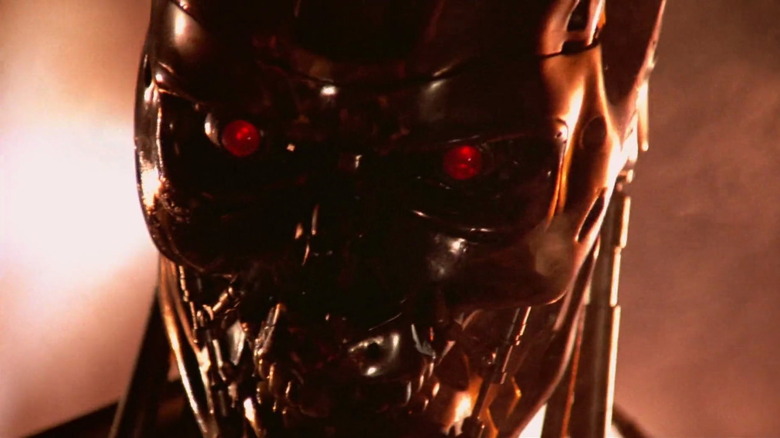
The Nightmarish Inspiration Behind The Terminator

by Joshua Meyer

"Where do you get your ideas?" People love to lob this question at writers, and it's often unanswerable, but for James Cameron, the writer-director of "The Terminator," it's a question that scrapes the dust — or nuclear ash — off his darkest dreams.

Cameron would go on to direct "Aliens" and "Terminator 2: Judgment Day," two of the greatest movie sequels of all time, as well as "Titanic" and "Avatar," two of the three highest-grossing films of all time; but "The Terminator" was his breakthrough feature. It's a well-known bit of behind-the-scenes movie lore that the idea for the terrifying T-800 endoskeleton came to him in a dream. However, in an interview with the British Film Institute, Cameron went into more detail about the creative process that said dream inspired.

The image he saw in his head first went on paper before he ever put it to film. John Lennon once joked that a man on a "flaming pie" revealed the Beatles' band name to them in a vision. Cameron, meanwhile, really did see the T-800 walking out of the flames in a fever-induced nightmare. He told the BFI:

"The Terminator came from a dream that I had while I was sick with a fever in a cheap pensione in Rome in 1981. It was the image of a chrome skeleton emerging from a fire. When I woke up, I began sketching on the hotel stationery.

"The first sketch I did showed a metal skeleton cut in half at the waist, crawling over a tile floor, using a large kitchen knife to pull itself forward while reaching out with the other hand. In a second drawing, the character is threatening a crawling woman. Minus the kitchen knife, these images became the finale of The Terminator almost exactly."

The Doomsday Clock And The Sword Of Damocles

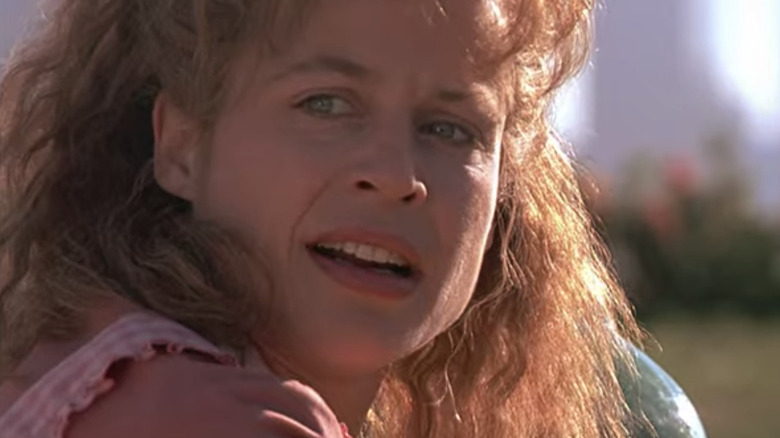
As Cameron observed, "The Terminator" does end with a sequence where all of Arnold Schwarzenegger is burned away and the Terminator endoskeleton comes walking out of the fire, just like in his dream. After Kyle Reese (Michael Biehn) blows the murderous cyborg and himself apart, it still terrorizes Sarah Conner (Linda Hamilton) by lurching toward her, dragging its damaged torso across the floor of a factory.

Cameron had his "Terminator" nightmare during the height of the Cold War, when nuclear fears were at the forefront of people's minds. The U.S. had boycotted the 1980 Summer Olympics in Moscow and the Soviet Union would soon boycott the 1984 Summer Olympics in Los Angeles.

Tensions were escalating between the two global superpowers, and the Doomsday Clock was ticking closer to midnight. "Terminator 2" notably features a scene where a dream version of Sarah Conner, played by Linda Hamilton, watches in horror as a mushroom cloud detonates over L.A., enveloping her and a playground full of children.

Cameron likened the threat of nuclear disaster in the early-to-mid 1980s to the Sword of Damocles, dangling over everyone's head. The idea of a fiery apocalypse seemed all too real. He said:

"It seemed very possible, even likely, given enough time. I felt that the world went about its business under this Damoclean threat as if it didn't exist, and that everyone walking the streets around me was delusional."

"The Terminator" is what put Cameron on the map and gave him his career, which now includes two movies that have raked in over $2 billion at the box office. Knowing that might give you incentive to start keeping a dream diary. You never know when there could be a billion-dollar idea in there.

Read this next: The 10 Best Sci-Fi Movie Villains

The post The Nightmarish Inspiration Behind The Terminator appeared first on /Film.
30 Nov 21:45

New The Munsters Movie Image Is All About Preparing A Coffin For Grandpa Munster

by Jenna Busch

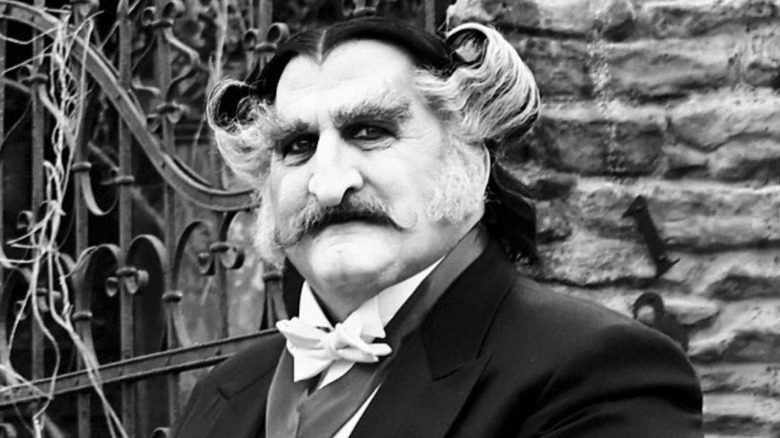
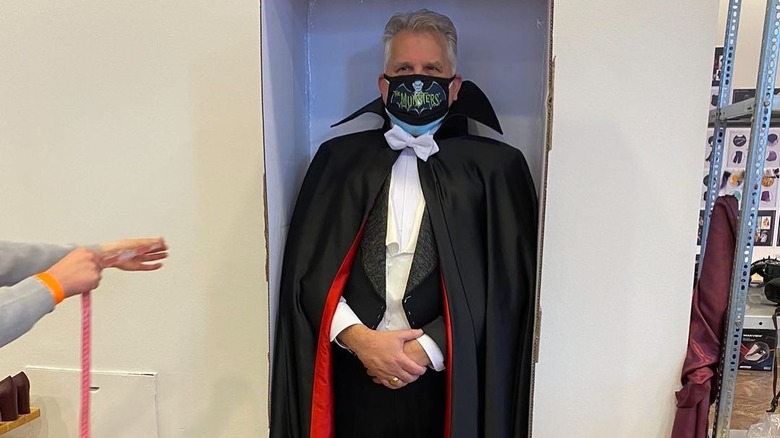
Rob Zombie's "The Munsters" began filming in Budapest in early November 2021. Can you imagine a better mashup than a renowned horror director taking on an iconic goofy monster TV series? Today, Zombie posted a pic of cast member Daniel Roebuck as Grandpa Munster on Instagram. In the shot, Roebuck is getting measured for his custom coffin. "The Munsters" cast includes Jeff Daniel Phillips as Herman Munster, Sheri Moon Zombie as Lily Munster, and of course, Roebuck as Grandpa. 

Zombie is a lifelong fan of the series. Remember his song "Dragula?" As our own BJ Colangelo mentioned in his article earlier this month, he named it after the drag racing car that Grandpa makes in the episode "The Munsters: Hot Rod Herman," which is named "Drag-U-La." I can't wait to see what the director of films like "House of 1000 Corpses" and "The Devil's Rejects" makes of this series.

One Coffin, Please!

In the Instagram post, director Rob Zombie says: 

"It's Monday! ☠️ Time to measure @mrdanielroebuck for his custom coffin. He can't just buy one off the rack."

I love that he has a "Munsters" face mask to cover up those vampiric germs. As you know, Al Lewis played Grandpa Munster in the original TV series. Zombie recently posted a link to a clip from "Al Lewis: Forever Grandpa" on the official YouTube channel for "The Munsters" TV series. 

As long as we're on the subject of the original Grandpa and his newest incarnation, Roebuck posted a little nostalgia of his own on Instagram. He visited an auction for one of Grandpa's suits. He wrote: 

"What a bittersweet but extraordinary time last night @heritageauctions preview of our brilliant friend, Kevin Burns, Munsters collection! Kevin is gone for over a year now. He was a one of a kind and legendary friend. Kevin's love of the TV show, the Munsters, is the stuff legends are made of, and not a day goes by that I don't think about him during this very special time of my life. I couldn't help but try to steal a little DNA from the great Al Lewis' original Grandpa tuxedo from Munsters Go Home!"

Even sweeter was Jeff Daniel Phillips commenting, "BUY IT!!!" on the post.

We don't know if Zombie's new film will be in black and white like the original series or in color, or the release date for the movie, but "The Munsters" will be seen in theaters as well as on Peacock. 

Read this next: Counting Down The 10 Scariest And Most Evil Children In Horror Movies

The post New The Munsters Movie Image is All About Preparing a Coffin for Grandpa Munster appeared first on /Film.
30 Nov 21:44

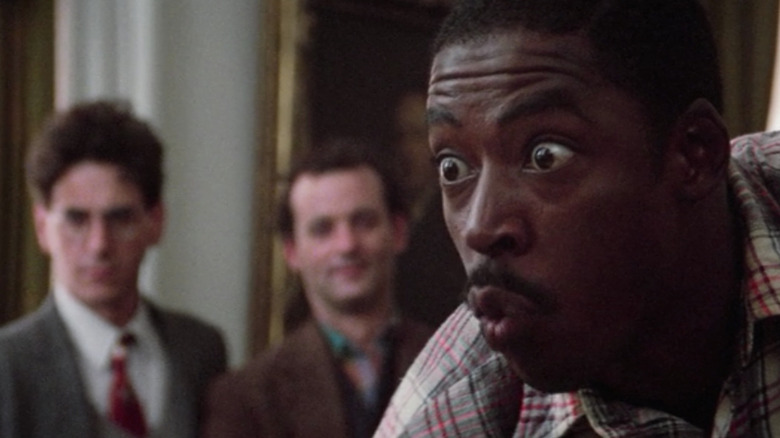
The Real-Life Moment That Inspired Ghostbusters: Afterlife

by Ethan Anderton

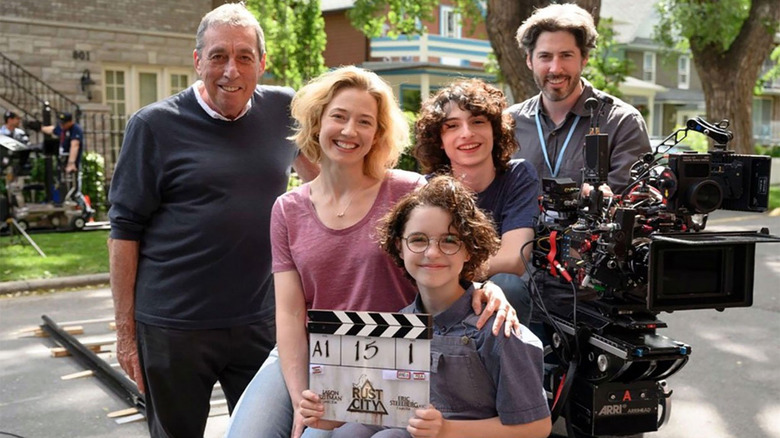
"Ghostbusters: Afterlife" is in theaters now, but it's been a long road to get there. Aside from being delayed nearly a year and a half due to the coronavirus pandemic, it's been over 30 years since the original "Ghostbusters" franchise has been touched. Aside from passing the torch to a new generation of younger Ghostbusters, the sequel also passed the torch from franchise filmmaker Ivan Reitman to his son, "Juno" and "Up in the Air" director Jason Reitman. However, even though the idea for "Ghostbusters: Afterlife" came from Jason Reitman's mind, it took a certain real-life event, unfortunately a tragic one, to truly develop the film we know today.

Jason Reitman's Vision

During Jason Reitman's publicity tour for "Ghostbusters: Afterlife," there was one story that he repeatedly told about the inception of the story. As relayed by Insider, Reitman recalled:

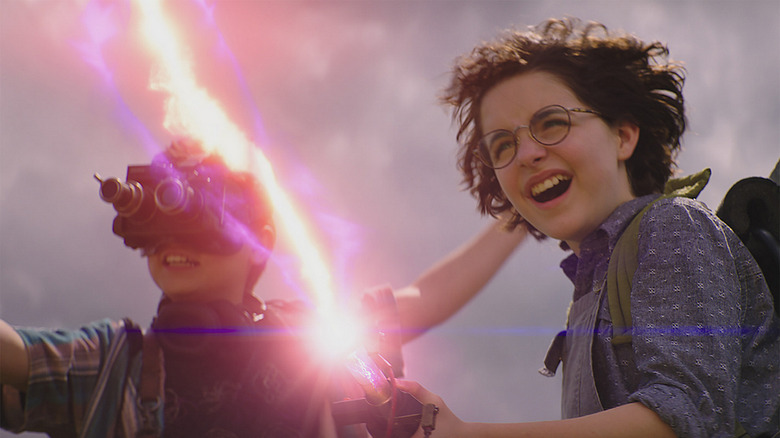
"A decade ago, I had this vision of a girl shooting a proton pack in a cornfield and suddenly popcorn flying up and her catching and eating it."

Reitman had this thought while enjoying his morning coffee as the sun shined through the backyard window of his office. While you might think this inspired a flurry of writing and creative development, Reitman said, "It was just one of those images where I was like, 'Well, I don't know what to do with that.'"

So this idea sat around in Reitman's imagination for 10 years. Why didn't he do anything with it? Jason Reitman never felt compelled to follow in the footsteps of his father by digging into the blockbuster comedy realm. Instead, he chose to tell stories that felt more at home in the indie or prestige drama circuit. He directed Oscar-nominated movies like "Juno" and "Up in the Air," not to mention "Young Adult" and "Tully" with Charlize Theron, and "The Front Runner" with Hugh Jackman. Something like "Ghostbusters" simply wasn't his speed. But then something unfortunate happened that lit a fire in his heart.

After Life

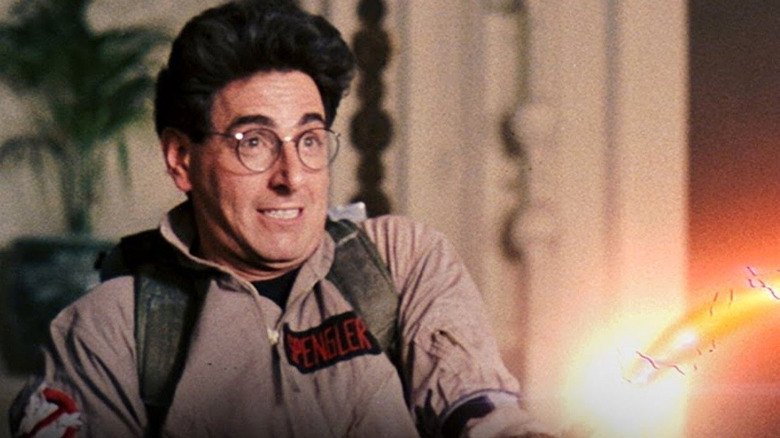
In 2014, Harold Ramis passed away. Not only was he one of the original members of the Ghostbusters, the brainy and dry Egon Spengler, but he also co-wrote the script for the 1984 hit and the sequel that followed in 1989. Along with a lack of interest from Bill Murray, losing one of the core pieces of the "Ghostbusters" franchise made it seem like we'd never see another sequel, despite the numerous attempts over the years to make it happen. But the death of Ramis actually inspired Jason Reitman to finally follow through on that vision that he had so many years ago. The director recalled, "I suddenly knew who the girl was when Harold died."

That girl became none other than Egon Spengler's granddaughter, the driving force behind a new generation of young Ghostbusters who pick up where her grandfather's work came to a tragic end at a dusty old farmhouse in Summerville, Oklahoma. Discarded and ignored as a crazy old dirt farmer, even by those who once knew him best, Egon Spengler became the very thing he used to catch: a ghost. Perhaps Egon Spengler would best be described as a spirit, since it's his spirit that lives on in (and beside) his granddaughter, and the two come together in an unbelievable, albeit ghoulish (no pun intended) fashion in the film's awkward and clumsy finale

But "Ghostbusters: Afterlife" wasn't just about paying tribute to Harold Ramis or bringing the original Ghostbusters back together, no matter how satisfying that might have been for longtime fans. As Reitman explained to Gizmodo:

"This is a movie about what is it like to become a Ghostbuster and in that way, it's about nostalgia inside and out. It's about the rest of us. It's about the group that grew up thinking about Ghostbusters and wondering what it was like to drive Ecto-1 and wondering what it was like to put on a proton pack. It is about the children of [Ghostbusters fans]. And certainly, I was going through a very personal story of my fears of picking up the proton pack and emulating that through the main characters."

The Saving Grace Of Ghostbusters: Afterlife

Whether you shed tears of joy and nostalgia for "Ghostbusters: Afterlife" or walked away feeling betrayed and bewildered, there's one good thing about this sequel: It finally delivers the stepping stone to continue the Ghostbusters franchise without the need to bring original team back together again. Fans have been given the reunion they've been clamoring for, and Harold Ramis has been appropriately honored, at least in the eyes of the creators and those who knew him best. Now the franchise can continue, and at least one of the Ghostbusters might be sticking around to continue the legacy with a new team. We'll just have to wait and see what happens.

Read this next: The Best Movies Of 2021 So Far

The post The Real-Life Moment That Inspired Ghostbusters: Afterlife appeared first on /Film.
30 Nov 21:44

Why The Terminator Theme Is Unlike Any Other Movie Score

by Sandy Schaefer

Director James Cameron's classic 1984 sci-fi thriller "The Terminator" hauntingly taps into Cold War-era fears of a global nuclear holocaust with its nightmarish vision of a post-apocalyptic future where self-aware machines threaten to wipe out the last remnants of humanity. It's also full of charmingly funny details that date it as a relic of the '80s, from Arnold Schwarzenegger dropping cheesy one-liners as the T-800 hunting Sarah Connor to Linda Hamilton's wonderfully blown-out hairdo as the mother-to-be of the future's human resistance leader. And let's not forget Bill Paxton's gloriously blue spiked hair in his brief role as the doomed "Punk Leader."

While the "Terminator" score by Brad Fiedel is similarly reminiscent of the many other synth-heavy film soundtracks that came out of the '80s, the machine-like precision of its recurring beats — combined with its blend of metallic and electronic sounds — also makes it the perfect fit for a movie about a time-traveling killer cyborg. But at the same time, there's something unique about Fidel's main "Terminator" leitmotif that sets it apart from the equally simple, unnerving horror themes for movies like "Jaws" and "Halloween." That's not just me carrying on, either; Fiedel's score is literally unlike most other film scores due to its unusual time signature.

Come With Me If You Want To Make Film History

"The Terminator" score (see the above video) wasn't easy to finish either, as Fiedel has admitted:

"Terminator was very difficult because I was using many different synths and sequencers and because I didn't have midi available on many of them I had to sync them by hand. This is why the main theme is in a very odd time signature. The looping of the Prophet-10 was just a little short of a complete measure."

In order to complete the "Terminator" score, Fiedel reached out to jazz musician George Kahn, a friend of his who had the formal training needed to finish putting the music to paper. Khan then took it upon himself to figure out the score's time signature, upon realizing it was "quirkier" than something more conventional like 6/8 (which was Fiedel's initial rough estimate). He ultimately concluded it was 13/16: "Three plus three plus three plus two plus two."

Fiedel would go on to reunite with Cameron on "Terminator 2: Judgement Day" and "True Lies" before quietly retiring from scoring movies and TV projects in the late 1990s. His main "Terminator" theme later resurfaced in "Terminator 3: Rise of the Machines," as well the opening titles for "Terminator: The Sarah Connor Chronicles." The latter's composer, Bear McCreary, also took noticeable inspiration from Fiedel's original "Terminator" soundtrack for the show's soundscape of industrial noises, and for good reason: it's really unlike anything else in the world of screen scores.

Read this next: The 25 Best Movie Robots Of All Time

The post Why The Terminator Theme is Unlike Any Other Movie Score appeared first on /Film.
30 Nov 21:44

Sanity restored in the world as CVS bans greeting cards with images of great apes on them [Facepalm]

30 Nov 21:44

SWAT team blows up innocent woman's house, city tries to stop her from suing for damages

by Mark Frauenfelder

When a McKinney, Texas SWAT team caused $50,000 of damage to Vicki Baker's home, making it unlivable, the owner sued the city after it refused to compensate her for the repair costs. The city tried to stop the lawsuit, but a federal court ruled that Baker can proceed with the lawsuit. — Read the rest

30 Nov 21:44

Why Steven Spielberg Resented Filming Jurassic Park

by Sandy Schaefer

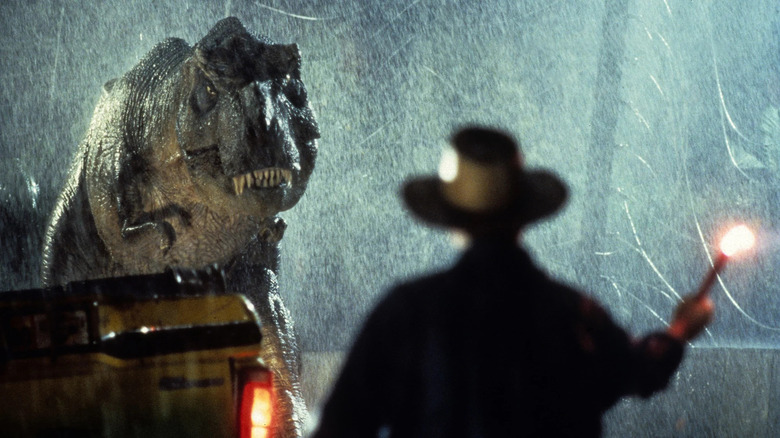
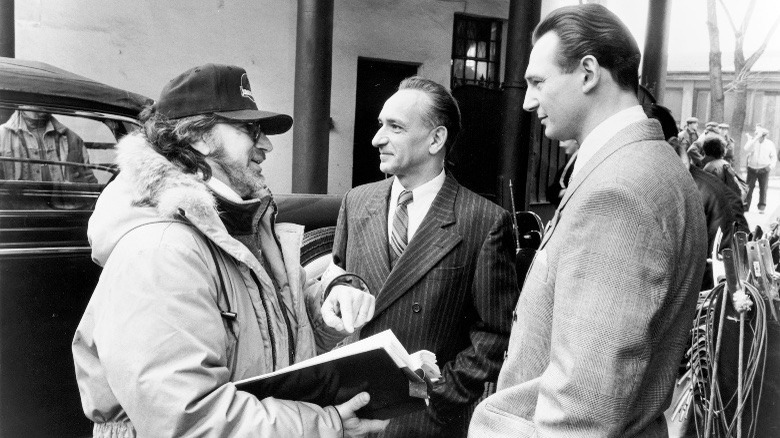
Directing a movie to completion is a real challenge. Directing two movies to completion and releasing them within the span of a single year could be called "Pulling a Spielberg." (Or maybe a Ridley Scott). Yes, Steven Spielberg has not only performed this trick multiple times over the course of his filmmaking career, the resulting movies have often been good or even great. Of course, he's never managed this maneuver as successfully as the time he did it in 1993, with "Jurassic Park" and "Schindler's List."

Both Oscar-winning classics in their own right, Spielberg's rip-roaring dinosaur adventure and harrowing dramatization of the Holocaust are worlds apart from one another, as far their subjects, tone, and style go. And while that makes it all the easier for those of us on the outside looking in to admire Spielberg's accomplishment, the filmmaker has confessed he initially felt anything but great about spinning those two plates at once.

The problem was that Spielberg was still knee-deep working on "Jurassic Park" when he felt "Schindler's List" scribe Steve Zaillian had gotten the script to where he wanted it. "[But] I didn't want to miss the winter," he explained at the Tribeca Film Festival's 25th anniversary screening of the latter movie. "I knew I had to be shooting ['Schindler's List'] in January [on location] in Poland, so it came together awfully quickly."

Spielberg Found A Way

"Schindler's List" ultimately began production in Poland in March 1993, a mere three months before "Jurassic Park" opened in theaters. Because of this, Spielberg had "about two to three" evenings per week where, upon completing filming on "Schindler's List" for the day, he would get on "a very crude satellite feed to Northern California to be able to approve T-Rex shots" for his dino flick.

This, in turn, led Spielberg to build up "a tremendous amount of resentment and anger" towards "Jurassic Park" for reasons that go well beyond the stress of having to work around the clock. More than anything, he said it was strain of having to switch gears from the emotionally draining and psychologically exhausting process of recreating the real-life horrors of the Holocaust to signing off on shots of "dinosaurs chasing jeeps" and other moments from "Jurassic Park" that, as suspenseful as they are to watch in the movie, are obviously removed from reality in a way "Schindler's List" isn't. "... All I could express was how angry that made me at the time," he noted.

Spielberg's anger naturally gave way to him being "grateful" when "Jurassic Park" bowed to widespread accolades and huge box office returns, despite it being "a burden" up until then. And of the many valuable lessons one could take away from this story, perhaps the most universally applicable is this: you never really know the true worth of something you're working on until after it's completely done.

Read this next: 11 Spielberg Projects We Never Saw But Wish We Could've

The post Why Steven Spielberg Resented Filming Jurassic Park appeared first on /Film.
30 Nov 21:43

How A Nightmare On Elm Street Essentially Saved New Line Cinema

by Lee Adams

In 2004, New Line Cinema's "The Lord of the Rings: The Return of the King" cleaned up at the Oscars, taking home a record-equalling 11 awards, including Best Picture and Best Director. It was something of a coronation for Peter Jackson's spectacular trilogy and a triumph for New Line CEO Bob Shaye, who had greenlit the project on the condition that Jackson expand his original pitch to three films. It was a gamble that paid off; few trilogies have such a strong sense of continuity and the concluding part remains the only fantasy film to win the Best Picture Oscar. The trilogy are three of the highest grossing films ever made, raking in almost $3 billion worldwide.

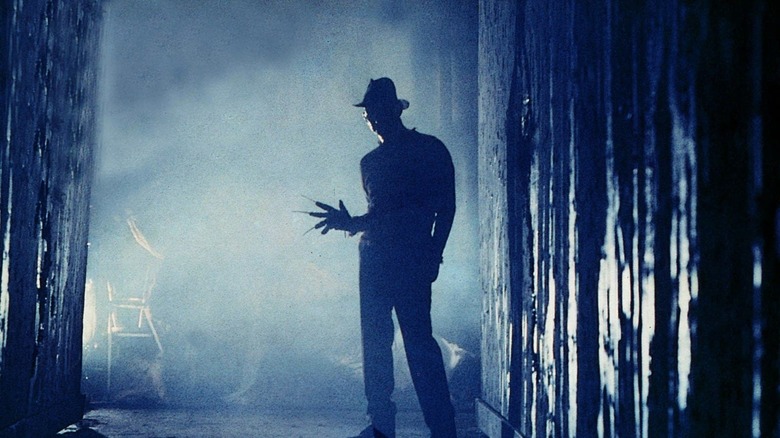
That's really not bad for a company that started out peddling movies to universities all the way back in the '60s. They had other big hits along the way, like "The Mask," "Rush Hour," and "Seven" in the '90s and have long since merged with Warner Bros. Yet the influential studio was in serious danger of going under 20 years before their big Oscar success, when a low-budget horror movie about a scarred, fedora-wearing killer with a striped sweater and bladed glove helped them hit the big time.

The Beginnings Of New Line Cinema

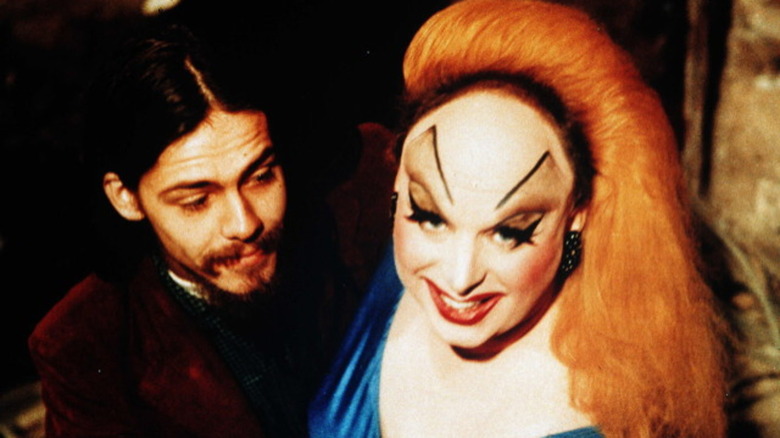
New Line Cinema began life back in 1967. Founded by Shaye, the company originally started out distributing world cinema and arthouse movies to college campuses before branching out into other genres. In the '70s, they had several cult hits. They re-distributed "Reefer Madness," a pious piece of '30s anti-marijuana propaganda that became a midnight hit with the sub-culture it intended to demonize; several movies from the "Pope of Trash" John Waters, including his notorious "Pink Flamingos;" and they picked up the rights for "The Texas Chain Saw Massacre" and gave it a very successful re-release.

The blend of arthouse and trash worked nicely for New Line, and they also got their first Oscar win in 1979 with "Get Out Your Handkerchiefs," a French comedy starring Gérard Depardieu that took home Best Foreign Language film.

New Line moved into producing their own movies in the early '80s, with Shaye planning to get into low-budget horror flicks. Their first effort was "Alone in the Dark" with Jack Palance, Donald Pleasance, and Martin Landau. But it wasn't until the studio was in the midst of a financial crisis that they had their first major hit, with a film that no other studio wanted to make. 

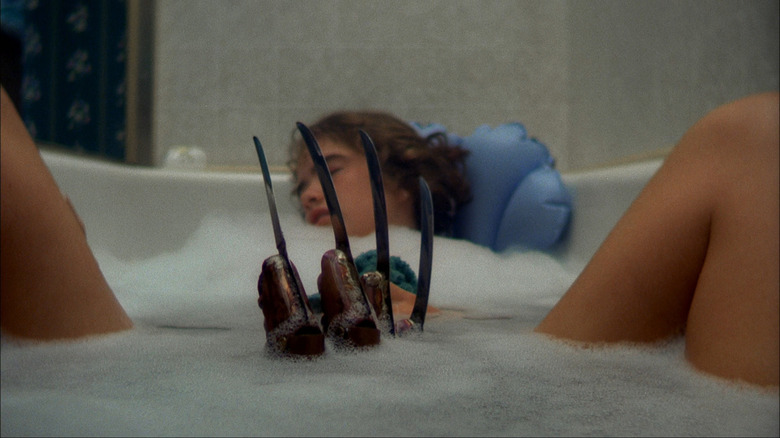
Wes Craven wrote "A Nightmare on Elm Street" in the early '80s after he finished "Swamp Thing" and started circulating the script around the studios. Paramount and Universal both passed. Improbably, Disney were the most interested, but they wanted the screenplay toned down to appeal to kids and pre-teens. Craven kept searching.

Eventually indie studio New Line picked it up. They didn't have enough money for the production themselves, however, and turned to financial backers for the modest budget.

Along Came Freddy...

Craven's screenplay was one of those perfect horror concepts: what if there was a supernatural killer who murders people in their dreams, and the only way to stay safe was to stay awake? The bogeyman at the center of the story was Freddy Krueger, a child killer burned to death by vengeful parents many years before, who returns to haunt the nightmares of their offspring.

Craven got the idea from a terrifying real-life incident. The L.A. Times ran an article in the early '80s about a series of Asian refugees who mysteriously died in their sleep. One story about a young survivor of the Cambodian genocide is particularly haunting; he was terrified of falling asleep in case he was attacked in his dreams and never wake up again. As Craven explained:

"When he finally fell asleep, his parents thought this crisis was over. Then they heard screams in the middle of the night... by the time they got to him, he was dead. He died in the middle of a nightmare."

David Warner was originally cast as Krueger, but dropped out. The role eventually fell to Robert Englund, who Craven liked because he was willing to go to dark places that made some other actors uncomfortable. After playing nice guys and nerds for much of his career to that point, Englund relished playing someone truly evil. It was wonderful casting and Freddy would become a sensation.

Financial Difficulties And A Big Hit

With New Line relying on external money, Craven was lucky to get the film made. One backer, who had a 40% stake in the film, dropped out a month before production began. Luckily, New Line were able to find someone else to step in with the funds. That was just the beginning of their financial woes, and at one point or another, each of the film's external backers dropped out. During filming, their distribution deal for the movie also fell through and the production had to be shut down for a few weeks because New Line were unable to pay the bills. Serbian producer George Zevecic helped rescue the film by stumping up a large chunk of the budget, reportedly because he wanted his girlfriend to get into pictures.

It turned out to be a smart move on his part. Against a budget of $1.1 million, "A Nightmare on Elm Street" went on to make $57 million at the box office and launched a hugely successful franchise, which collectively made almost half a billion dollars. The string of sequels inevitably watered down Freddy Krueger's menace, playing up his wisecracks and novelty kills. The low point arguably came in 1988 when Englund, dressed as Krueger, rapped on the "Are You Ready for Freddy" single with The Fat Boys.

It got a bit silly and was a far cry from the genuine sense of fear Krueger generated in the original film, but that didn't stop him becoming one of the iconic trio of slashers of the '80s alongside Michael Myers and Jason Vorhees. Thanks to Craven and Krueger, New Line became known as "The House That Freddy Built."

Read this next: Counting Down The 10 Scariest And Most Evil Children In Horror Movies

The post How A Nightmare On Elm Street Essentially Saved New Line Cinema appeared first on /Film.
30 Nov 21:43

Op Ed

by Blue
Kotaku - Halo Infinite’s Battle Pass Is Fine The Way It Is—For Now. "Whether or not you believe that full completion of a battle pass should be a badge of honor solely reserved for the most...
30 Nov 21:43

Oddworld: Soulstorm Enhanced Edition Released

by Blue
Oddworld: Soulstorm Enhanced Edition is now available for Windows, Xbox, and PlayStation, adding some refinements to this platformer sequel. The PC edition is on the Epic Games Store, and it is a...
30 Nov 21:43

Moderna CEO Says Vaccines Likely Less Effective Against Omicron

by msmash
The head of drugmaker Moderna said COVID-19 vaccines are unlikely to be as effective against the Omicron variant of the coronavirus as they have been previously, sparking fresh worry in financial markets about the trajectory of the pandemic. From a report: "There is no world, I think, where (the effectiveness) is the same level... we had with Delta," Moderna Chief Executive Stephane Bancel told the Financial Times in an interview. "I think it's going to be a material drop. I just don't know how much because we need to wait for the data. But all the scientists I've talked to are like 'this is not going to be good.'" Vaccine resistance could lead to more sickness and hospitalisations and prolong the pandemic, and his comments triggered selling in growth-exposed assets like oil, stocks and the Australian dollar. Bancel added that the high number of mutations on the protein spike the virus uses to infect human cells meant it was likely the current crop of vaccines would need to be modified. He had earlier said on CNBC that it could take months to begin shipping a vaccine that does work against Omicron.

Read more of this story at Slashdot.

30 Nov 21:42

Miramax Prevails In Copyright Battle Over Pulp Fiction Poster

by Joshua Meyer

The image of Uma Thurman in the poster for "Pulp Fiction," lounging in black bob hair as her character, Mia Wallace — with a gun, cigarettes, and pulpy reading material — is one of the most iconic movie marketing images of all time. It's also been the subject of a lawsuit and copyright battle between Miramax Films and Firooz Zahedi, the photographer who snapped the picture of Thurman featured in that poster. Now, a judge has ruled in favor of Miramax.

According to The Hollywood Reporter, Zahedi shot the photo of Thurman at his private studio in April 1994 and was suing Miramax "for using the image on 'untold thousands of consumer products.' " Miramax claimed that he took the picture as part of a work-for-hire agreement for "Pulp Fiction," but sometime in the last 27 years, the studio misplaced the signed documents that made the agreement official, so it couldn't dig up anything to prove that.

What made the judge rule in favor of Miramax, regardless, was the belated nature of Zahedi's claim. He was disputing ownership of the photo and not just the studio's continued use of it without crediting him, and because of that technicality, the case exceeded the statute of limitations.

Zahedi's case was undone by an Instagram post, of all things, which just goes to show that you should be careful what you write on social media. A seemingly innocuous birthday exchange between him and his stepson involving a Mia Wallace action figure came back to haunt him in court years later.

The Toy And Instagram Post That Killed A Court Case

Six years ago, Zahedi's stepson posted an Instagram photo of him with the action figure. The caption on that post read, "Happy Birthday to my Stepdad @fitzphoto [emojis] Turns out he didn't get toy royalties for his famous photo of Uma TM... But at least he has the toy now..."

Zahedi replied to the post, "Thanks... Sometimes it's best to settle for the little things in life."

That might sound perfectly harmless, but the district judge, in turn, ruled:

"Zahedi's receipt in 2015 of an action figure prominently featuring the iconic photo, bearing Miramax's copyright notice, and failing to credit Zahedi is uncontroverted evidence of his actual knowledge of Miramax's plain and express repudiation of his ownership. While it may be true that Miramax changed its position on its copyright claim over the decades since 1994—Zahedi is correct that Miramax credited Zahedi as the owner of the photograph on the cover of its 1994 script, and the record is not clear at what point Miramax stopped crediting Zahedi—it is clear that Zahedi understood in 2015 that Miramax claimed more rights in the photograph than Zahedi believed it had."

In other words, there's a record in 2015 that shows Zhedi knew Miramax had repudiated his ownership at least that far back. The three-year statue of limitations for that ended in 2018, so as far as the judge was concerned, it was case closed.

For this case, at least. Indeed, this isn't the only recent legal brouhaha that Miramax has been involved in. It's also suing writer-director Quentin Tarantino himself over "Pulp Fiction" NFTs.

Read this next: 13 Box Office Bombs That Are Truly Worth A Watch

The post Miramax Prevails in Copyright Battle Over Pulp Fiction Poster appeared first on /Film.
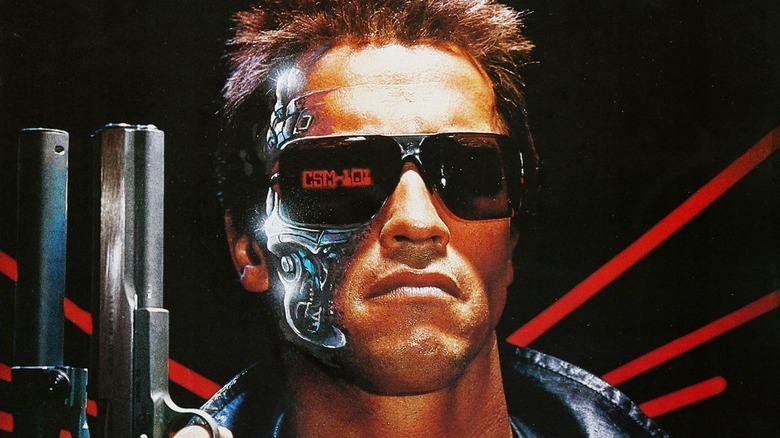
30 Nov 21:42

Do FPS games even need a single-player campaign these days?

by Ed Thorn

In the last few weeks I’ve spent a lot of time looking through scopes. Red dots and ACOGs and telescopic ones. From one FPS to the other, I put my eye up to a lens and I press triggers. Sometimes I’m a sniper dropping Nazis to protect my father, sometimes I’m a soldier surrounded by 127 other players. Lately, I’m a chunky spartan with crunchy crayon armour.

All this time with the three big FPSes of the year, each packaged in their own ways, has left me wondering what’s important nowadays. Do they need campaigns, or is multiplayer-only the way to go? How about introducing one a bit later than the other?

Read more

30 Nov 21:42

Brutal Doom Platinum V1.1

Brutal Doom Platinum V1.1
Small update with new mugshots for Demon runes and quite a few bugfixes
30 Nov 21:41

Dying Light 2 Is Now Gold; 15-Min Gameplay Coming on December 2nd

by Alessio Palumbo

Dying Light 2

Techland announced that its long-anticipated Dying Light 2 game is now officially gold. This means it's ready to be manufactured on discs ahead of the February 4th, 2022 release date.

Of course, since it's nearly 2022, that doesn't mean the developers' work is over. They will continue preparing the day one patch, and subsequent patches as well.

Tymon Smektała, Lead Game Designer, said in a statement:

We are very excited about this and now we can truly feel that this is actually happening! After so many years of hard work we are proudly looking forward to the release of Dying Light 2 Stay Human.
This is it. The final and crucial moment for us. The game is ready to be manufactured, but we will not slow down. The fact that the game is done and we hit the gold status two months before the release is a great sign but it doesn’t mean that our work ends here. There are still some upgrades and tweaks to add, and community feedback to implement, but the base is solid and ready to play. I’m extremely proud of the whole team!

Dying Light 2 was originally due for release in early 2020, but the developer said the game needed more time and delayed it indefinitely. This sequel is, after all, much more ambitious than the original given its RPG-like choice and consequences mechanics.

Eventually, on May 27th, 2021, Techland hosted an event where they revealed the game would launch on December 7th, 2021. Then, on September 14th, the Polish studio delayed it again for a couple of extra months.

Dying Light 2 fans can look forward to a brand new 15-minute gameplay video captured from the game. Techland is planning to air this as part of the fifth episode of the Dying 2 Know series on December 2nd, 2021, at 12 PM PT / 9 PM CET via Twitch.

In case you haven't already, do check out Kai's hands-on preview and/or his interview with Tymon Smektała from a recent press event.

The post Dying Light 2 Is Now Gold; 15-Min Gameplay Coming on December 2nd by Alessio Palumbo appeared first on Wccftech.

30 Nov 21:41

The Funniest Fan Theory The Coen Brothers Have Ever Heard

by Joshua Meyer

The Coen Brothers are often cagey about the meaning of their films, and in the case of "Barton Fink" — their uncategorizable 1991 film starring John Turturro and John Goodman — perhaps there is no grand unifying message to it. That hasn't stopped critics and academics from analyzing the movie to death, and there are now long Wikipedia sections about its symbolism and themes.

While the Coens may be a national treasure, U.S. critics aren't the only ones who have spent time analyzing "Barton Fink" and developing pet theories about it. The press tour for the Coens' 2016 comedy, "Hail, Caesar!" came 25 years after "Barton Fink," and the film's title arose when an interviewer for HuffPost asked them the funniest theory they had ever heard about one of their films. Ethan said:

"Oh, there's one I remember thinking, 'Oh that's kind of nice,' when somebody said it. You want to talk about surreal experiences. We were in Japan promoting 'Barton Fink.'... And a journalist said -- I don't know if you've seen 'Barton Fink' -- but a journalist asked if John Goodman's character was real."

Joel chimed in to clarify that the journalist thought Goodman's character, Charlie Meadows, was imaginary (within the world of the film). Ethan added:

"Imagining he's the spirit of the hotel, which is so Japanese. And, you know, not inappropriate, and I said, 'OK, that's kind of nice.' What are you gonna tell them? You say, 'No,' you're a killjoy. And you say, 'Yes.' That's not exactly true."

The Hotel Is The Spirit Of Charlie

Without elaborating further, Joel noted that the theory was "not exactly wrong, either." If you look at other comments the Coens have made over the years, it becomes clear that there's a definite connection in spirit between the Hotel Earle and Charlie. The book "Joel and Ethan Coen" by R. Barton Palmer has a transcription of one interview where Joel says they intended the hotel to "function as an exteriorization" of Charlie, with its wallpaper peeling the way "sweat drips off his forehead" and pus leaks from his infected ear.

Instead of Charlie being the spirit of the hotel, it appears the Coens meant the hotel to be the spirit of Charlie.

With his Shakespearean adaptation, "The Tragedy of Macbeth," Joel Coen has officially gone solo. And with the way he and his brother have downplayed the thematic depths of "Barton Fink," it might be tempting — in the spirit of Shakespeare — to see it as a film "full of sound and fury, signifying nothing." Yet there was clearly some intention behind its many symbols, and without a doubt, the Hotel Earl is a place suffused with great atmosphere: an eerie, wartime emptiness, which tips over into hellishness by the end.

The Coens have also likened the hotel to a "ghost ship" (via The New York Times). The Earl's slogan is, "A day or a lifetime," and when Barton Fink checks in for his indefinite stay, it's almost like he's checking into the Hotel California. The Coens would even use a Spanish version of that Eagles song in "The Big Lebowski."

If nothing else, entertaining such theories stimulates "the life of the mind," as Barton called it, and it may soon have you wanting to check into the hotel yourself with a rewatch of "Barton Fink."

Read this next: Robert Redford's 15 Best Movies Ranked

The post The Funniest Fan Theory the Coen Brothers Have Ever Heard appeared first on /Film.

30 Nov 21:41

Zorro 2.0 Will Reboot The Classic Character As A Hacker

by Chris Evangelista

Remember Zorro? He's back, in hacker form. Or that's the plan, at least. Alex Rivera has been tapped by Sobini Films to write and direct "Zorro 2.0," which reimagines the famous swashbuckling character as a modern-day hacker. And no, I'm not making this up. Everything about this pitch, including the title, sounds like a relic from the '90s when the average filmgoer didn't quite understand computers and therefore Hollywood was free to pump out wildly inaccurate entertainment like "Hackers" and "The Net." But hey, maybe reimagining Zorro as a hacker is just what the characters needs. 

Hollywood has been attempting to launch a new Zorro project for a few years now. Antonio Banders took on the role in the excellent "The Mask of Zorro" and the not-so-great sequel, "The Legend of Zorro." Since then, there's been talking of sending Zorro to the future; a gritty reboot in the style of "The Dark Knight"; even a potential TV series with a female Zorro. None of those things came to pass, so there's a chance that "Zorro 2.0" might fall apart, too. And if that doesn't work, who knows? Maybe they'll make a Zorro movie where Zorro uses Tiktok. 

Zorro 2.0

Hollywood is all about that recognizable IP, especially if it's in the public domain. That's why we are frequently inundated with "new takes" on classic characters like King Arthur and Robin Hood. And then there's Zorro. Created in 1919 by pulp writer Johnston McCulley, Zorro is the swashbuckling adventure hero prone to slashing the letter Z wherever he goes, because he's kind of a show-off. There have been a whole bunch of Zorro-related titles, some good, some not so good. The character got a fresh makeover in 1998 with the incredibly fun "The Mask of Zorro." Sadly, that film's sequel, "The Legend of Zorro," was a bit of a dud. And since then, the character has been in limbo.

Now, Deadline is reporting that Alex Rivera, a recipient of a 2021 MacArthur Genius grant, will write and direct "Zorro 2.0," which reimagines the character as a hacker. Here's a synopsis: 

The film reimagines the iconic character as Oscar de la Vega, a young, undocumented hacker known as 'z0rr0.' While fighting back against a secret government unit that attacked his mother, he discovers a high-tech conspiracy that threatens not only his family but the world.

That sounds very similar to the series "Mr. Robot" to me, but perhaps I'm just making the connection since they both focus on hackers. Regarding his new take on the material, Rivera said:

"I've always been interested in films that address real-world issues through genre. This project is an opportunity to connect Zorro—the original masked avenger—to today's border wars, a conflict in which immigrant families are pitted against regimes of hi-tech surveillance and government control. 'Zorro 2.0' will be visually elevated, socially grounded, sci-fi cinema, and I'm thrilled to be working with Sobini to get this vision on the screen."

The Masks Of Zorro

And now, let's take a quick trip down memory lane to see the other "Zorro" projects that never got off the ground. 

  • In 2011 we learned of "Zorro Reborn," which dropped the character into a "desolate and post-apocalyptic future," with "echoes of both Sergio Leone and 'No Country for Old Men.'"
  • In 2014, there was talk of a "gritty" reboot for "Zorro" that would use "The Dark Knight" as inspiration. 
  • 2016 brought word of a movie called "Z," a new take on "Zorro" from "Gravity" writer Jonas Cuarón. While this was an entirely separate idea from "Zorro Reborn," "Z" was also going to be set in the future. Later in 2016, it was revealed that Gael García Bernal would play the new Zorro. Kiersey Clemons was also attached. 
  • Perhaps most surprising of all was the news in 2019 that Quentin Tarantino and Jerrod Carmichael would team up for "Django/Zorro," which would have Zorro working alongside Django from Tarantino's "Django Unchained." Word about this project evaporated almost as soon as it was announced. 
  • Finally, as recently as last year we learned that Robert Rodriguez was developing a TV series about a female Zorro, a character named Sola Dominguez, described as "an underground artist who fights for social justice as a contemporary version of the mythical Zorro. Her life is threatened by several criminal organizations after she exposes them."

Will "Zorro 2.0" succeed where these other attempts failed? Stay tuned! 

Read this next: The 20 Best Westerns Of All Time

The post Zorro 2.0 Will Reboot the Classic Character as a Hacker appeared first on /Film.

30 Nov 21:41

Watch Jason Alexander describe how he channeled Woody Allen to get his Seinfeld role as George Costanza

by Mark Frauenfelder

George Costanza is my favorite character on Seinfeld, so it was interesting to listen to his story about how Jason Alexander landed the role. He says he was so sure that he wasn't going to get the part that when he got called in for a reading, he read the lines as if he were Woody Allen. — Read the rest

30 Nov 21:40

How Willow Changed The Game For Special Effects In Film

by Sandy Schaefer

Unlike many other well-remembered fantasy adventure films released in the 1980s ("Legend," "Return to Oz"), director Ron Howard's "Willow" was neither a critical nor financial dud before it found a second life as a cult favorite on the home market. No, the tale of Willow Ufgood's unexpected journey received lukewarm reviews from critics and did okay (no more, no less) at the box office. It's not as exciting as the stories we movie geeks love to tell about how certain films we adore weren't appreciated at all in their time, but so it goes.

None of that's to say "Willow" isn't enjoyable. George Lucas' story for the film may be a derivative mashup of elements from "Lord of the Rings" and "Star Wars" (complete with some proto-Jar Jar Binks-style sidekicks), but Warwick Davis is wonderful as the plucky, lovable Willow, as is Val Kilmer as the incorrigible, Han Solo-y swordsman Madmartigan. The movie's fantasy setting is similarly imaginative and full of wondrous creatures brought to life through Industrial Light & Magic's visual effects sequences, most of which hold up decently today.

Interestingly, "Willow" was actually a game-changer for digital effects, thanks to the scene where Willow struggles to use magic to restore the sorceress Fin Raziel (Patricia Hayes) to her human form so she can help the film's heroes save the day. Willow ends up transforming Fin into multiple animals before getting the spell correct — an effect that might seem ho-hum today but was a big deal in 1988.

It's Morphin' Time!

In order to create the illusion of Fin seamlessly changing forms (seen above), ILM's Dennis Muren and his team (including his fellow "Willow" VFX artist David Allen) decided to use a technique known as "digital morphing." This process required them to photograph each animal featured in the scene and Hayes' body double separately before feeding the imagery into a computer program newly developed by Douglas Smythe (who later won an Oscar for his VFX work on 1992's "Death Becomes Her"). Said program then generated a smooth transition from one image to another before outputting the whole thing back onto film.
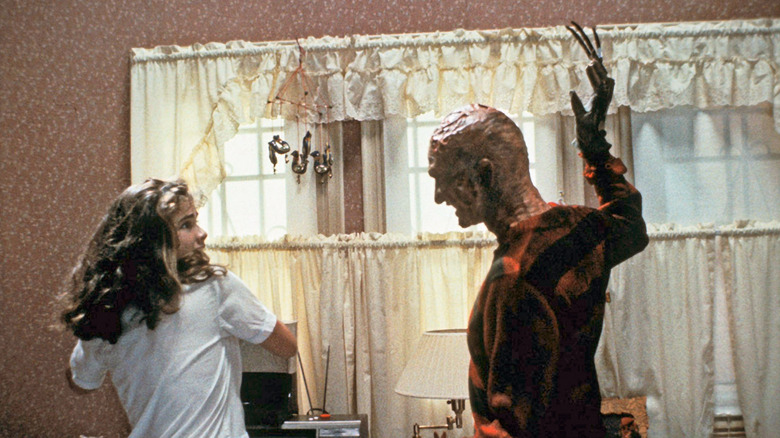
Mind you, "Willow" wasn't the first movie to utilize "morphing." Two years before, the 1986 fantasy action-comedy "The Golden Child" had used an early version of this effect in a scene where the evil Sardo Numspa (Charles Dance) transformed from a rat into his human form before calmly stabbing someone in the face and turning back into a rat. Here, however, the "morphing" effect was notably less complex than the one in "Willow."
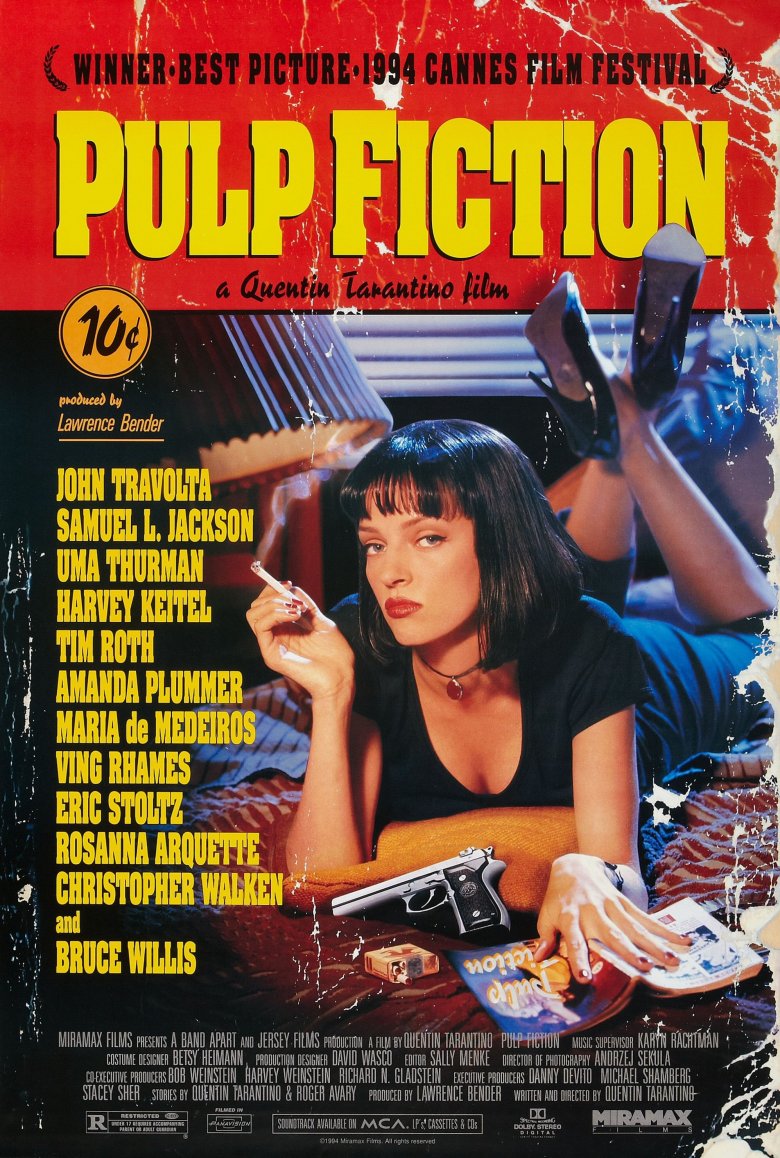
All the same, "The Golden Child" and "Willow" represented a major landmark for live-action films, which had previously relied on dissolves to "morph" objects or people (to far less refined results). "Morphing" effects would famously take another leap forward a few years later with the T-1000 in 1991's "Terminator 2: Judgement Day" and are still widely used today. And to think: it all goes back to a couple of weird '80s fantasy flicks.

Read this next: 13 Fantasy Films That Never Got Sequels

The post How Willow Changed the Game For Special Effects in Film appeared first on /Film.