Shared posts

02 Dec 18:40

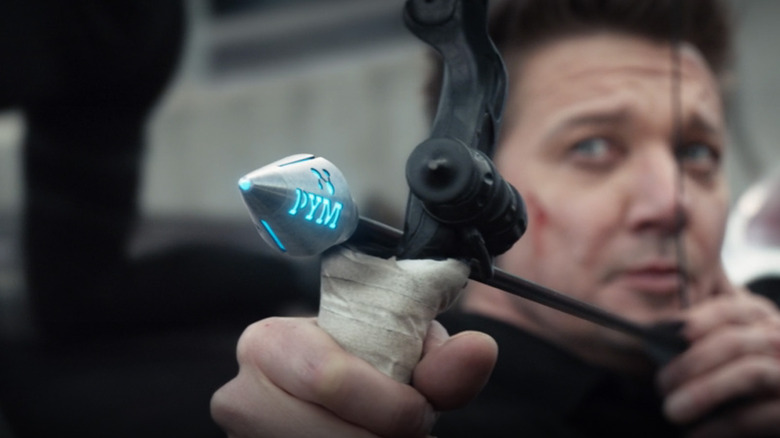
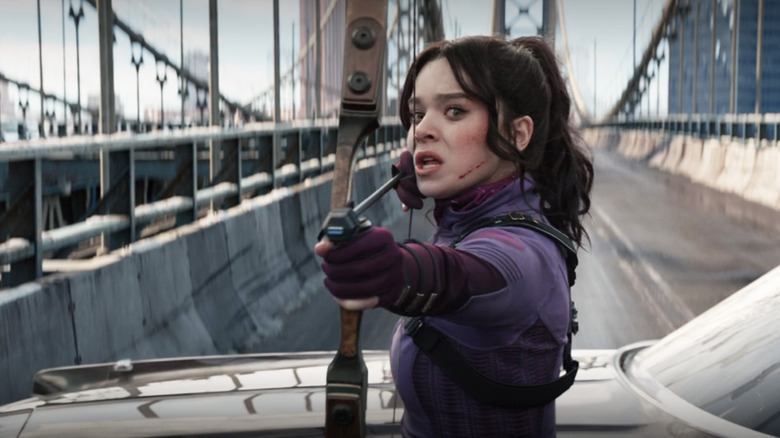
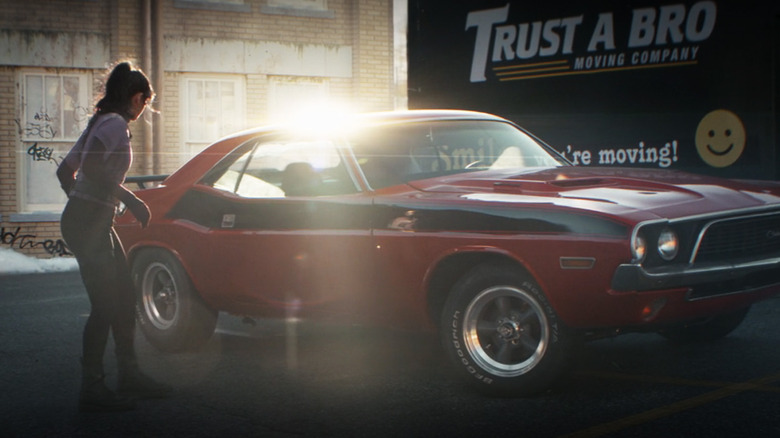
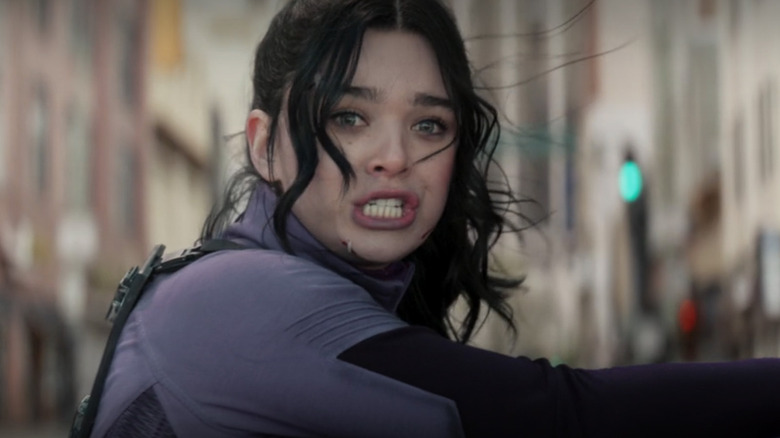
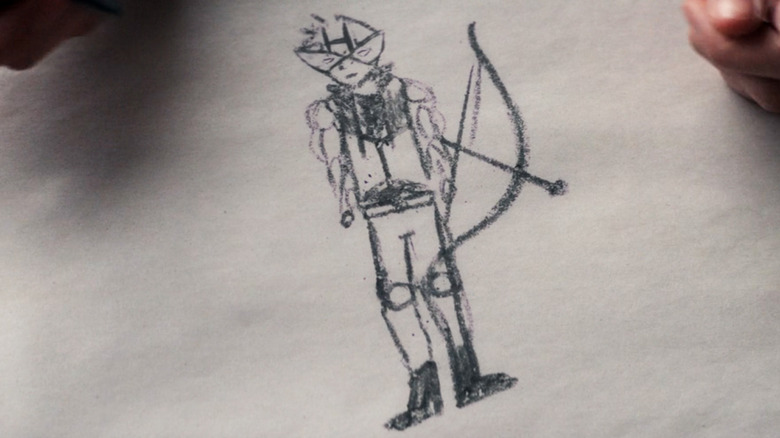
Meet Pizza Dog, The Breakout Star Of Hawkeye And The Goodest Boy

by Shania Russell

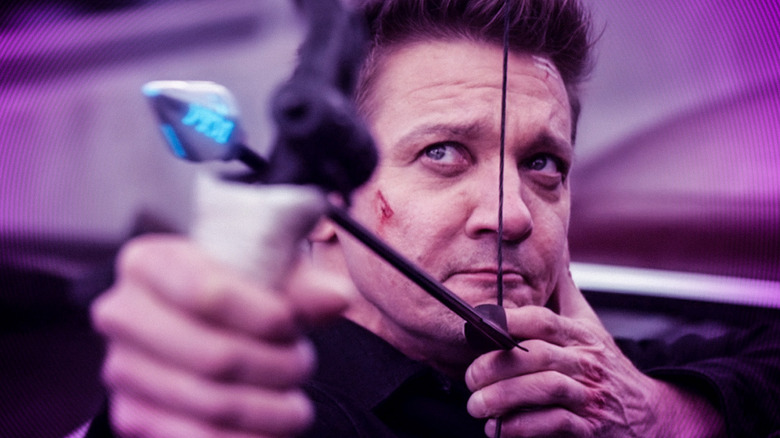
Ever since he first entered the Marvel Cinematic Universe, Clint Barton (Jeremy Renner) has been waiting for his moment to shine. So often he's crammed in alongside heroes who double as literal gods, or genius billionaires, or symbolic super-soldiers, or ... you get the point. But at long last, the arrow-wielding Avenger gets the screen all to himself in the latest Marvel Disney+ series, "Hawkeye."

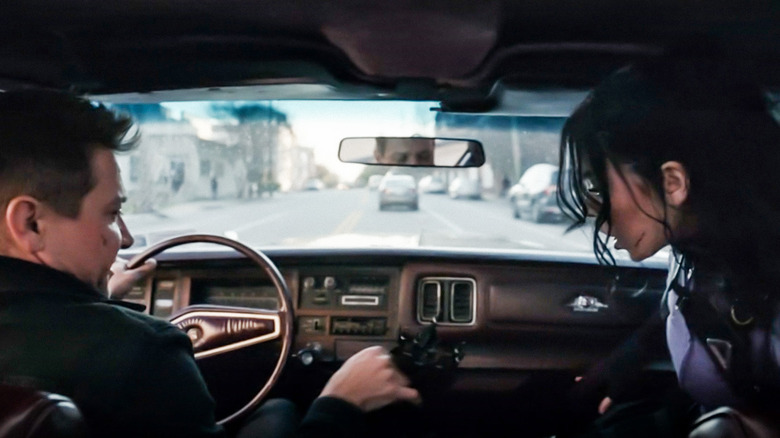
Here, Clint shows off his heroic abilities against street-level villains whilst trying his best to bury his post-Blip past and return to his family for Christmas. Given the name of the series, the lack of other Avengers, and a plot revolving around his past, this should obviously be Clint's moment to take center stage... Too bad his thunder is being stolen by the greatest character to enter the MCU since its inception. That's right, I am indeed talking about Lucky, the Pizza Dog!

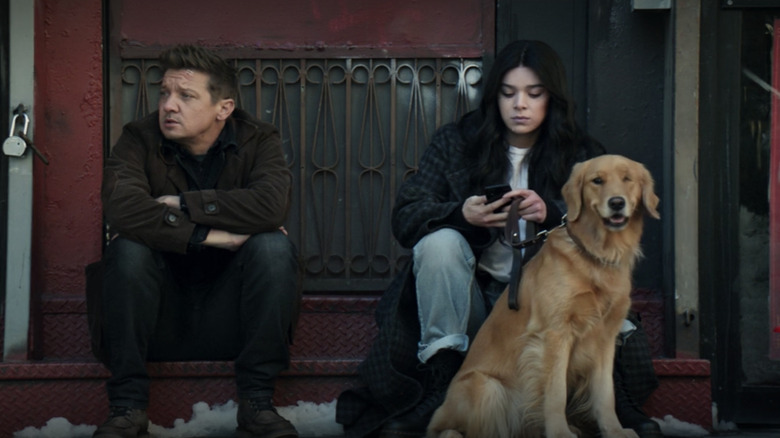
So far, the name Lucky hasn't been attributed to our beloved canine companion — but Pizza Dog is a title he earned right off the bat in episode 1. A hero in training, Kate Bishop (Hailee Steinfeld) risked her life to save the dog from both oncoming traffic and a mysterious Tracksuit clad gang, and hasn't let go of him since. Upon discovering he likes pizza, she did as any sane human would and named the puppy after his new favorite meal. And based on the huge doggy grin he wears whenever his title is called, PIzza Dog approves. Don't let the name fool you though, getting rid of leftover pizza is just the beginning of what Pizza Dog has to offer.

The Pizza Dog In Action

The "Hawkeye" series is in large part inspired by the Matt Fraction and David Aja comic run, which also featured Kate Bishop and first introduced the trusty Pizza Dog, Lucky. Naturally, the creative team behind the series was determined to weave Bestest Boy, Lucky into the show and in their brainstorming, discovered that he could be a crucial part of the audience understanding Kate. They decided to have the young archer casually encounter the dog, then later save him from the villainous clutches of the Tracksuit Mafia. According to executive producer Trinh Tran (via Marvel.com), this approach "shows her nature of wanting to be a hero, and this was a good deed that she did in order to rescue him."

Pizza Dog also helps us get to know the young hero in another crucial way. Three episodes in, you may or may not have noticed that Kate is a very talkative person. She has a tendency to get overexcited, especially when it comes to making plans with her childhood hero and quasi-mentor, Hawkeye. Clint's not exactly the best listener though, often tuning her out and sometimes literally turning off his hearing aid — but Pizza Dog would never ignore his new pal! He makes the perfect listening companion, which Hailee Steinfeld notes is deeply important for Kate:

"You see and hear Kate sort of talk to herself a lot or have moments where she's either trying to contain her excitement or figure something out, out loud. That's a similar thing that she has with Pizza Dog where she's talking to the dog. She's looking for a connection. She's sort of coping in ways when she is having those moments to herself out loud. But there are moments that she has with this dog where she's not accepting the fact that he's hers or that she's responsible for him. But this connection grows; she feels that what's she's looking for in everyone around her. And it's quite sweet that she finds it with Pizza Dog."

Much like he did in the comics, Pizza Dog helps to ground this dynamic duo. He may technically be in Clint and Kate's care, but he's also providing them with some much needed joy. In the wake of car chases and explosive battles with the mafia, the pair repeatedly return to their home base (aka Kate's apartment) where Lucky eagerly awaits, excited about park walks, pizza and lots of good head pats.

Pizza Dog Behind The Scenes

Now to answer the question everyone's been wondering about: what is Pizza Dog like behind the scenes? Series stars Hailee Steinfeld and Jeremy Renner have been all too happy to answer. Steinfeld gushed to Marvel.com, "It was so fun; I am such a dog lover." She went on to add:

"The minute I knew Pizza Dog was as much a part of this show as he is, I was very excited. It was definitely a challenge; the dog is unbelievably well-trained — do not get me wrong — but it is a dog. When it sees a squirrel, it wants to have a moment with the squirrel."

The third episode of the series sees the duo walking their good boy through the park. Y'know, like the kind that's infested with squirrels. And just like Steinfeld hints, this caused a bit of onset trouble. Renner set the scene, saying:

"We are trying to have a very serious walk-and-talk through Washington Square Park. I can get a lot of important information out as I'm carrying a backpack, a quiver and a bow, and all these other things. And then I've got this dog that is trying to, again, have a moment with a squirrel. So, difficult at times but mainly very fun."

One squirrel chase here and there is no punishable crime! Who among us hasn't declared a break from work to chase after a rodent? Sans a few bushy tailed distractions, the doggo behind Pizza Dog is a total professional, who Renner admitted is "unbelievably well-trained." Tran even went into the hiring process that eventually led them to Jolt:

"We had several dogs; we had photos and we put the dogs on tape in terms of what they can do. We went on from there, trying to really figure out which is the best dog to play Pizza Dog. And Jolt, our amazing dog on set, was cast for it."

Jolt won out in the end because, as he's proven in every episode of "Hawkeye" thus far, he's a bonafide star. Three episodes in sadly means we only have a few more hours with Pizza Dog before the series ends. We're crossing our fingers that the heroes wrap up this mafia situation real soon, so we can see what we really came here for: Pizza Dog chomping down on his favorite cheesy meal, whilst getting some much deserved head scratches.

The first three episodes of "Hawkeye" are currently streaming on Disney+, with new episodes arriving on Wednesdays.

Read this next: Every Pre-MCU Marvel Movie Ranked

The post Meet Pizza Dog, the Breakout Star of Hawkeye and the Goodest Boy appeared first on /Film.

02 Dec 18:35

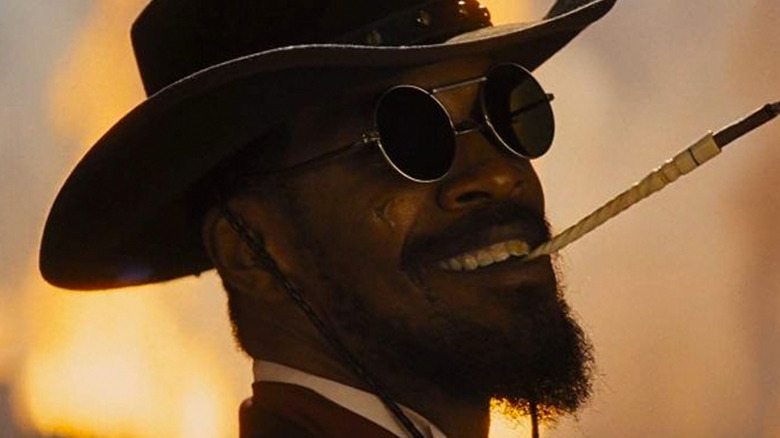
This Cut Plotline Would've Completely Changed Django Unchained

by Lyvie Scott

Quentin Tarantino's filmography has always been jam-packed with homages and references to some of his favorite films. The director is a massive fan of the spaghetti western — essentially the American western remixed by Italian directors in the '60s — and uses the classic themes of the genre in most of his work. True to form, "Django Unchained'' is a refreshing remix of the well-worn genre. For some, the western has been done to death, but Tarantino breathed new life into the film staple by transplanting it to the Antebellum South and focusing on the titular Django (Jamie Foxx), a freed slave who teams up with an altruistic bounty hunter (Christoph Waltz) to rescue his wife from an off-kilter slave owner.

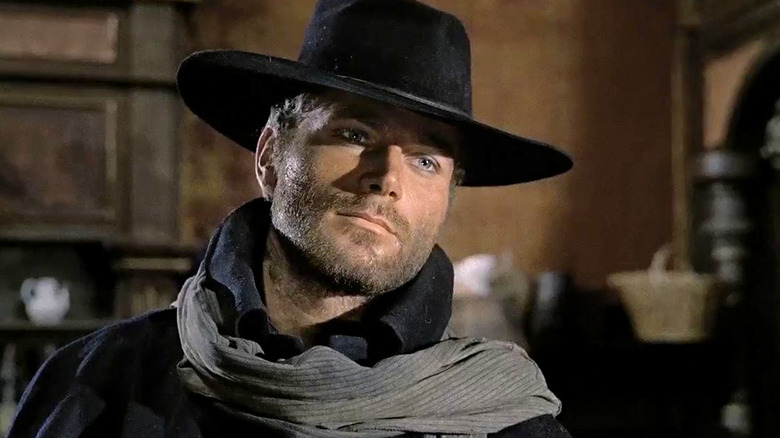
Though Tarantino took some of the most beloved elements of the western and flipped them on their head in "Django Unchained," the director was arguably the most inspired by the original Django, played by Franco Nero in the 1966 classic of the same name. In fact, Nero nearly inspired a crucial dynamic in "Django Unchained" — one that might have changed the trajectory of the film.

The Django That Started It All

Over the years, Quentin Tarantino has been consistently outspoken about his love of the spaghetti western. The director is especially passionate about Italian auteur Sergio Corbucci, who directed Franco Nero in his breakthrough role in "Django." The film was inspired by Akira Kurosawa's "Yojimbo" (like several other westerns of the era), but it was "Django" that helped cement the spaghetti western in a category all its own, alongside other classics like "A Fistful of Dollars." The film spawned dozens of unofficial sequels and adaptations, and created countless iterations of Nero's classic character.

Tarantino first saw "Django" at the age of 14, and from that point on seemed determined to one day meet, and eventually work with, Franco Nero. The pair met for the first time in 2009, and Tarantino flattered Nero with his extensive knowledge of the actor's work. "He knew practically all my work," Nero told The Hollywood Reporter. "He recited lines from my movies, and the music from my movies. He knew almost all of them."

It wasn't until 2011, however, that the two would have an opportunity to collaborate. That year, Tarantino was gearing up to direct "Django Unchained," the latest movie to use the Django name. He called Nero up to pitch his ideas for the film — and the actor in turn had his own concept for a potential cameo.

Nero's Plans For Django Unchained

Nero detailed a bit of his idea to THR in 2013. "My idea is that Jamie Foxx, through the movie, had a vision of a horseman dressed in black ... It haunted him." The identity of the horseman wouldn't be revealed until the end of the film. Nero suggested that he play the father of Foxx's Django, and would deliver a crucial bit of wisdom to his son, "like 'Fight for freedom,' or something like that," via flashback.

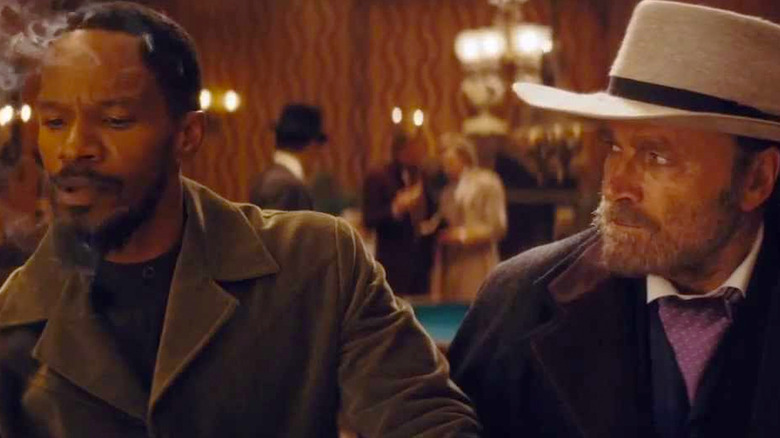
However, Tarantino already had another role in mind for Nero. The actor appears during one of the quieter moments in "Django Unchained," in a cameo that honors the film that inspired devout western fans like Tarantino. Nero's character asks Django for his name, and as he answers, adding: "The D is silent."

Nero, without missing a beat, responds with an effortless "I know." Foxx's well-known line leaves a lasting impression, but it's Nero's response that makes it all the more gratifying for fans who know Django's history.

Nero agrees that two Djangos in one film might have made for a very different outcome. "I became friends with Jamie Foxx in real life, but I'm not sure the Djangos would have gotten along," he said. But Tarantino cut and trimmed a considerable amount of the film to get it down to its nearly three-hour runtime. For all we know, there's a chance that another interaction between the Djangos might appear in the film's anticipated extended cut.

Read this next: The 14 Greatest Biopics Of The 21st Century

The post This Cut Plotline Would've Completely Changed Django Unchained appeared first on /Film.

02 Dec 18:35

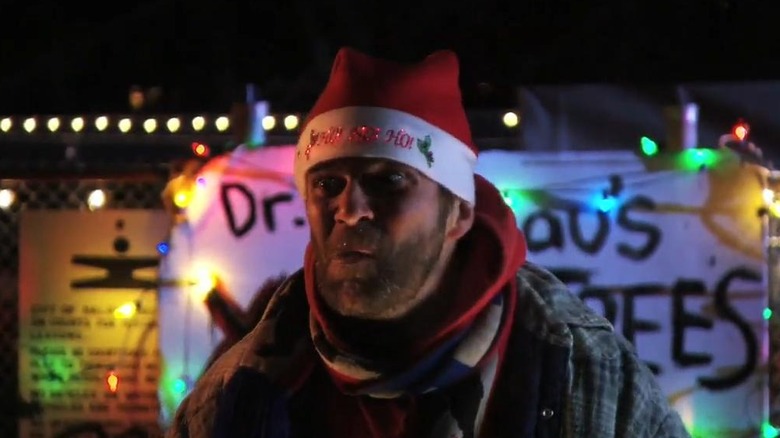
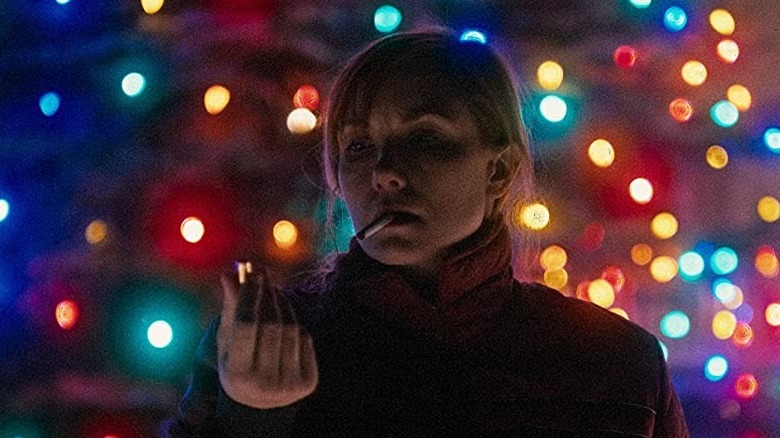
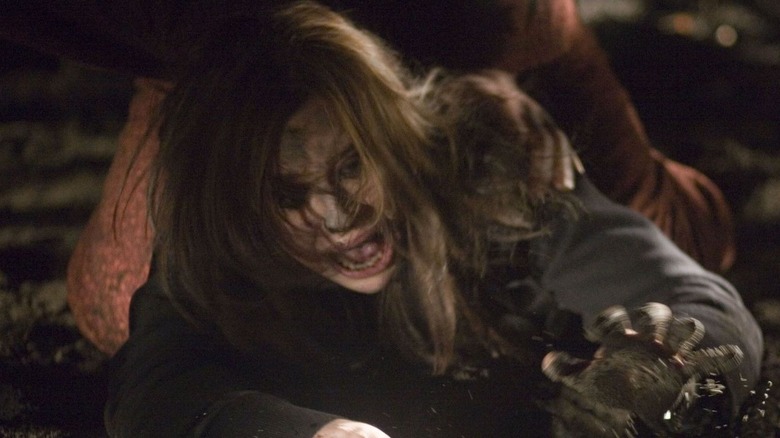
The 15 Best Christmas Horror Movies Ranked

by Scott Thomas

Christmas is inherently menacing -- there, I said it. Yes, the holiday celebrating the birth of Jesus Christ is often rife with cheer and good company, but it's also the day after a burly man in crimson red clothes stalks down your chimney, eats what sweets you have, and leaves it silent as a ghost. 

Is that not terrifying? Of course it is! Charles Dickens' "A Christmas Carol" is, too, as is the European myth of Krampus and the horse skull-filled Welsh folk custom Mari Lwyd. Though we think of Christmas as a festive and charitable time, it is (and always has been) a moment in which severe judgments are passed, from those of the innkeepers who cast out Joseph and Mary to those of Frau Perchta. That is fertile ground from which to make a fun or nightmare-inducing fright flick. 

Here then, ranked, are the 15 best horror movies set in the holiday season.

15. Treevenge

Some films' quality hinges on their subtext. "Treevenge" doesn't suffer from this problem, as there is almost zero subtext in "Treevenge." What it does include, I am thrilled to report, is a sentient Christmas tree that's brutally murdering people left and right. Its branches sever limbs. It fills eye sockets with pine needles. If someone needs to sell you on why "Treevenge" is a hysterical and transgressive time at the movies, it probably not gonna be your thing. 

That said, director Jason Eisener (who would go on to helm the equally bugnuts "Hobo With A Shotgun") is nothing if not a craftsman, and "Treevenge" is stuffed with more inventive shots and little lighting tricks than many feature-length films. The short serves as proof that runtime and theme don't necessarily guarantee a great time at the movies. As it turns out, sometimes construction and creativity are enough to get the job done. Don't watch it in view of your Christmas tree.

14. I Trapped The Devil

Slow-burn horror is a difficult beast. Make a movie with too little build and it doesn't fit the genre. Make one with too little payoff and the whole thing ends up feeling insubstantial. 2019's "I Trapped The Devil," written by and starring indie horror mainstay A.J. Bowen, finds an elegant way to strike that tricky balance correctly: set your film on Christmas Eve. 

Is any day of the year more emblematic of high-stakes waiting than December 24th? I think not -- it's an entire night dedicated to anticipation! The plot of "I Trapped The Devil," which finds a couple arriving at their extended family's home for the holidays only to find Satan might be in the basement, supercharges the evening's built-in anticipation to "pressure-cooker boiling over" levels. Add in tremendous performances from Scott Poythress, Susan Burke, and the previously mentioned Bowen and you have a recent addition to both the holiday horror and slow-burn canons worth celebrating.

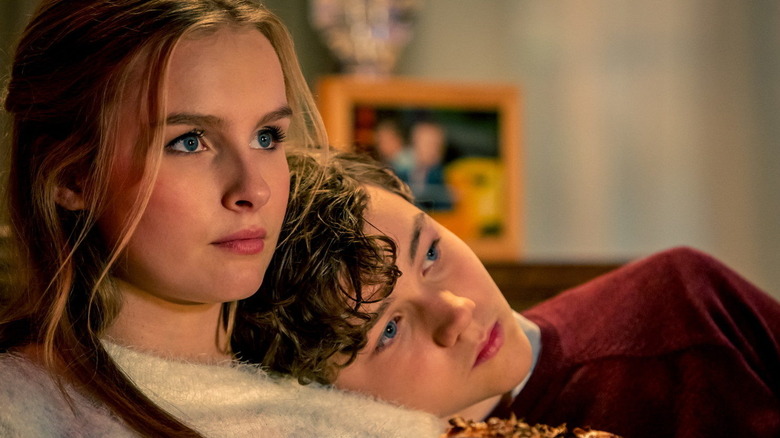
13. Better Watch Out

There's a sub-genre of film whose trailer is both sales pitch and smokescreen. Think "Malignant," "The Village" or even "Avengers: Endgame." In all three instances, the audience's first taste of the movie bore little similarity to the eventual main course. It's a heck of a gamble, and only sometimes pays off. And more than any of the films either linked to or listed above, the Christmas horror standout "Better Watch Out" really took a gamble with its first trailer release. It obfuscates a twist that changes the whole thrust of the movie, namely (spoiler alert): What is marketed as "'Home Alone' but make it horror" is really "babysitter attacked by home invaders hired by psychopathic child."

Slightly different, yeah? The major plot reveals of "Better Watch Out" are infamously divisive and, for my money, well worth it whether you enjoy them or not. Chris Peckover's direction is stylish enough to carry any turn of story and the film boasts several stars before their breakout, including "Stranger Things" MVP Dacre Montgomery and rising genre stalwart Olivia DeJonge ("The Visit," "The Society"). And don't worry, folks, this write-up didn't spoil "Better Watch Out" entirely. Those reveals really are worth it. 

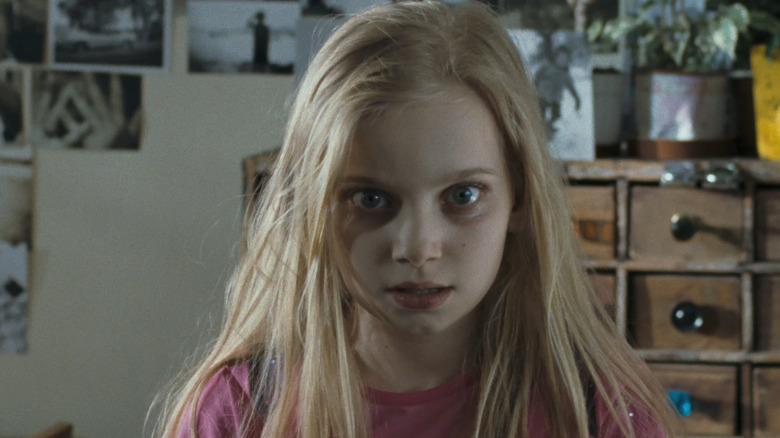
12. The Children

I don't have children so I'm not confident I can fully appreciate the potential horror of parenting on Christmas. It isn't difficult to imagine, though. No holiday is higher-stakes or more rife with potential pitfalls for parents than December 25th. Did you buy the right gift for your child? If you have more than one, will both be pleased with their hauls, or will your choices instantly inspire (possibly violent) in-fighting? Hey, did you develop an ulcer just reading this?

Having children on Christmas, it seems, speedily reveals all the anxiety and tension which are consistent undercurrents of the holiday. So it's little wonder that "The Children," a British horror film released in 2008, is so brazenly effective. From its opening moments, Tom Shankland's lean chiller makes young ones the sort of nightmare they can feel like around the holiday. The story of two families gathered together whose children become sick and suddenly violent, "The Children" does not hesitate to put its young protagonists in harm's way. 

What's more, Shanklandm divines sterling performances from his entire ensemble of both minor and adult performers, who inexorably shift the film's premise from ridiculous to sublimely scary. "The Children" plugs audiences into a bevy of nightmares all at once -- from the interpersonal to the super-natural -- and its ability to do both makes it linger in the mind long after credits roll. 

11. & 10. Black Christmas (2006) / Black Christmas (2019)

"Black Christmas" will appear on this list three times in three different forms. I'm as shocked as you are. Somehow, when no one was looking, Bob Clark's ice-cold slasher classic became both a template for and a time-capsule of the latest horror trends. 

2006's "Black Christmas," for example, offers a gory slice of post-Bush-era nihilism. As outlined by the "Aughtsterion" podcast (which you can listen to here), horror films of the mid-2000s (lovingly referred to by the show as "tank-top horror") are due for critical reappraisal. For few films is this truer for than 2006's "Black Christmas," which was written off as a 1970s retread but is slickly directed by Glenn Morgan ("Final Destination," "The X-Files"), offers a gorehound's paradise, and serves as a summit for some of the decade's more notable teen-movie superstars to be memorably axed off. 

2019's "Black Christmas," in contrast, inverts the focus of Clark's original chiller, honing in on the terrors women face on a daily basis more than those of evil, masked psychopaths. Don't worry: Sophia Takal's take is still full of costumed malevolent. But without getting into spoilers, the specters of macho hostility and gaslighting feel just as deadly (if not more so) in this version. Neither reimagining of "Black Christmas" can compare to the original, but taken as a triptych? They become an almost anthropologically enjoyable watch.

9. Anna & The Apocalypse

Christmas and musicals pair as impeccably as milk and cookies. If it's not a musical with an iconic Christmas song or sequence ("Rent," "White Christmas"), it's a Christmas movie that has been turned into a musical ("Elf," "A Christmas Story). The pairing is logical when you consider how often musicals rely on characters whose feelings grow so large that only the form of song can hold them. Anyone who's ever attended a Christmas anything -- be it service, dinner, or work party -- can attest that emotions run high. What "Anna & The Apocalypse" has that other Christmas musicals or most musicals period have is zombies. Lots of zombies.

Greenlit during the heart of the zombie-movie boom, "Anna and The Apocalypse" is as gleefully genre-blending as "Warm Bodies," "Cooties," or "Pride and Prejudice With Zombies;" its setting and songs, however, immediately distinguish it from the pack. Especially the songs, which feel like the logical extension of the bouncy, endearing tunes which made the "Buffy" musical episode so memorable. Add in some hysterical, Yuletide-inspired gore and you have a recipe for a great Christmas horror watch that you might see on stage before long.

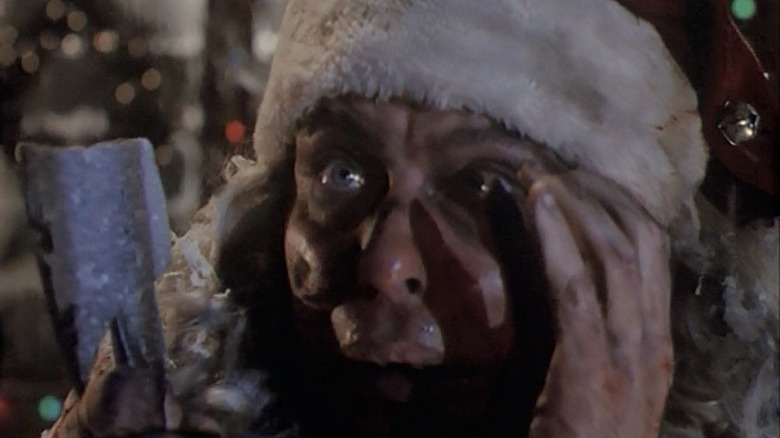
8. "Tales From The Crypt" ("And All Through The House...")

Yes, I've included a television episode among our best Christmas Horror Movies of all-time list, and with good reason. "All Through The House," which was the second episode of HBO's breakthrough horror anthology series "Tales From The Crypt," is an impeccably crafted Yuletide yelp yarn directed by a Hall of Fame helmer at the peak of his powers.

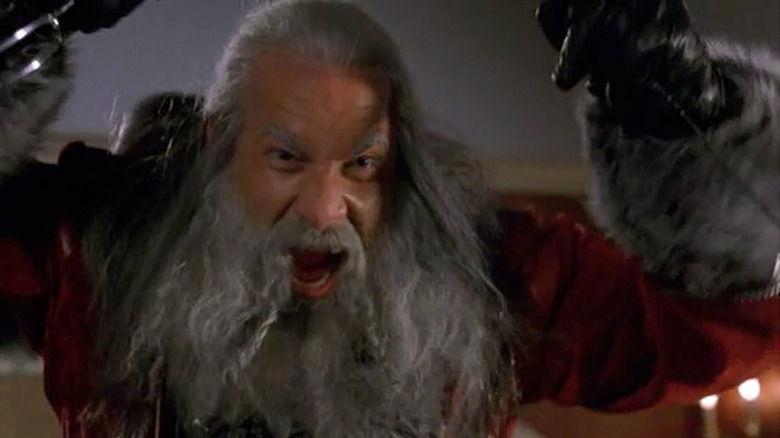
Excess alliteration aside, let's discuss Robert Zemeckis for a moment. In an excellent YouTube essay, noted Christmas enthusiast Patrick H. Willems observes how Zemeckis does his best work "about ambition and escape and someone's tactical process of getting there." That, it should be noted, is the story of "All Through The House," which opens on a beleaguered housewife murdering her husband and then having to survive a psychopath dressed as St. Nicholas. 

The episode also finds Zemeckis toying around in both the mediums of TV and horror right before dropping "Back To The Future Part II," and three years before his finest horror effort, the iconic "Death Becomes Her." Simply put: He's keyed in here. Every frame is impeccably composed, it's shot with verve by Dean Cundy ("Jurassic Park, "Apollo 13"), and the end result is a breathless ride from start to finish. There's no reason not to think of it as a short film and, as such, it's still better than several entries on this list. It belongs right where it's at.

7. Rare Exports

Growing up is a series of journeys both shared and idiosyncratic. As we age, most humans can't help but wonder if our friends and family experience the same joys and fears that we do. Fairytales, happily, suggest this actually happens. The catch of that truth is this: They age from meaningful to childish and back again, growing almost ominous by the time we hit adulthood. The lasting resonance of these stories helps us understand that the distance between youth and old age is shorter and more tenuous than we're ever prepared to imagine.

I wax poetic about all this because "Rare Exports," the fantastic Finnish horror film directed by Jalmari Helander, is presented as a sort of fairy tale. It's filled with adult content, though, from a monstrous St. Nick who gets thawed from the deep ready to kill to a surprising amount of male genitalia (Truly, it is as if "Rare Exports" took it upon itself to restore the decades-old balance between male and female nudity in movies and, honestly, we respect it). 

Most fascinatingly, its balance of whimsy and pitch-black horror encapsulates our shared human experience of both fairy tales and the holiday season at almost any age. It's the sort of film you're surprised to discover most people like, even if it isn't their cup of tea. "Rare Exports" cuts deep. Just like growing up. 

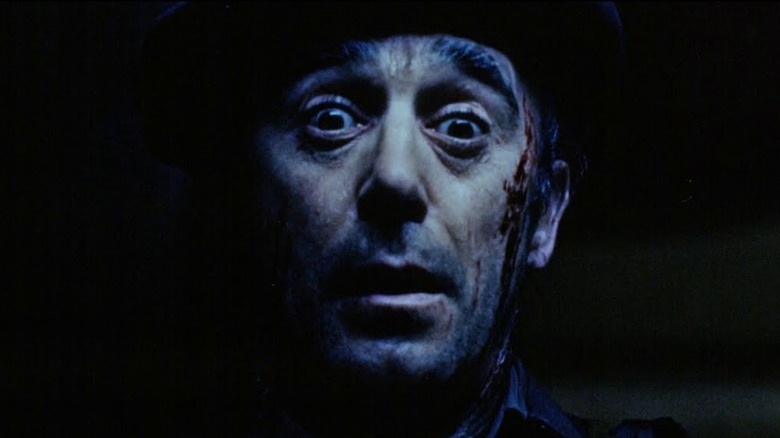
6. The Day Of The Beast

Alex de la Iglesia has made a career out of defibrillator horror. His movies are made for folks whose love of film is in cardiac arrest, who need a shock to restore their faith in what cinema and the horror genre can do. His recent breakthrough TV hit, the gothic and buck wild "30 Coins," was pitch-perfect proof of this. Every week featured sequences and creature designs that titillated, stunned or frightened in equal measure. Somehow the show was also a Telenovela riff. And if "Telenovela by way of Catholic horror" doesn't make your pulse race, well, you need Alex de la Iglesia more than you think. 

Given that: Why not try "The Day Of The Beast?" Inglesia's thrilling early-career highlight features heavy metal fans, psychic priests, and an infant Antichrist all against the backdrop of Christmas. It seers crazy image after crazier image right onto your brain until its wildness is your everything. And if your family only watches, say, "The Family Stone" at Christmas, this is a film to shake up those doldrums. Shocks to the system can save lives.

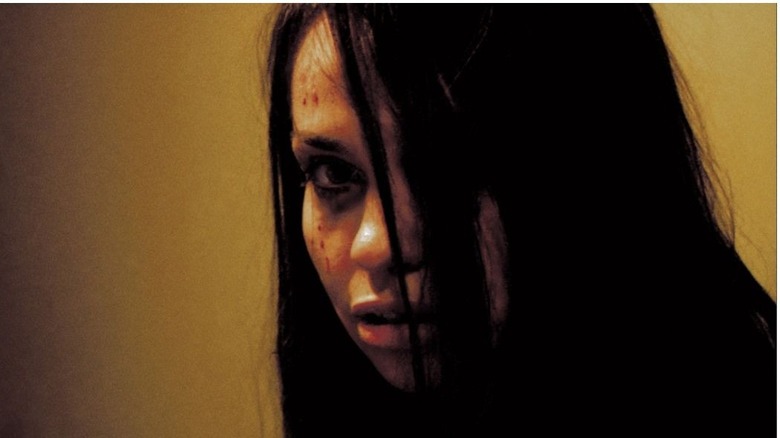
5. Inside

Near the beginning of the 21st Century, "Artform" critic James Quandt dubbed a set of recent films the "New French Extremity." Their hallmarks included an unruly convergence of exploitation tropes and arthouse presentation and were often full of body horror, slasher, and "torture porn" elements. Think "Martyrs." Think "Haute Tension" (Or maybe don't think about either, given how gnarly both films are).

"Inside," a late "New French Extemity" offering, might somehow be gnarlier than both of the above examples. When I tell you that a scissors-induced c-section is just one of the stomach-churning horrors that writers-directors Julien Maury and Alexandre Bustillo deploy here, know that it isn't the most discomforting one. The good news, if any, is that the violence of "Inside" reaches operatic pitches. At a certain point, the gore is more noise than not, which allows the deeply felt performances by Alysson Pardis and Beatricé Dalle to play out like contrapuntal bass lines to every bloody development, both anchoring and complimenting the distorted riffs of the plot. Through them, the film almost becomes traditional. 

That surprising classicism is what makes "Inside" a great Christmas horror beyond its bloodied holiday trappings. The holiday season is a time for both the comforting and familiar, and while "Inside" is not the former, it's enough of the latter to make horror fans of all stripes feel right at home.

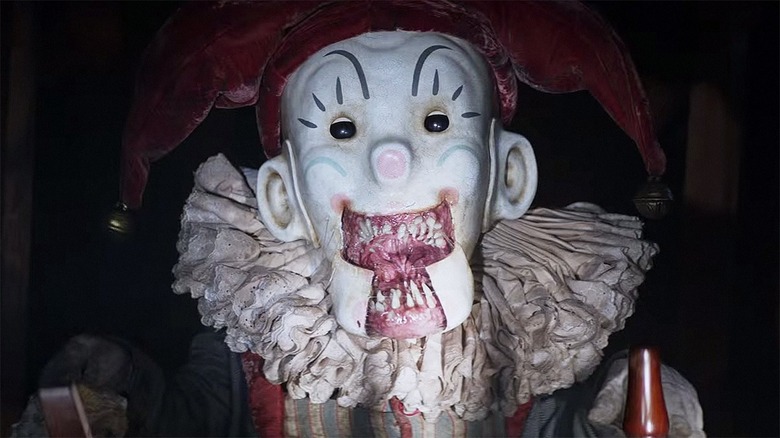
4. Krampus

People tend to underrate the work of Michael Dougherty at first blush, and their inevitable reappreciation of his films seems to follow a pattern. First, Michael Dougherty makes a film. By the time the new Michael Dougherty has dropped, the last one's become a cult classic. In the case of "Trick R Treat," it's become utterly emblematic of Halloween. According to some, "Godzilla: King Of The Monsters"  is our best and most pointed modern Godzilla movie. But when the new Michael Dougherty movie actually drops the result is a just above fresh Rotten Tomatoes score and tepid box office mojo.

What I'm getting at is this: It's unclear why "Krampus," which was the follow-up to Dougherty's beloved "Trick R Treat," was ever deemed a disappointment. Few horror films or Christmas horror films employ a nasty streak with such a Cheshire Cat grin full of razor-sharp teeth. That's how "Krampus" feels for the entirely of its run time. 

The story of a family whose squabbling summons the fearsome demon of Austro-Bavarian folklore, "Krampus" makes no character indispensable, finds no holiday tradition it can't skewer (The opening sequence, which finds a round of holiday shopping grow hysterically, uncomfortably violent, resembles peak Billy Wilder in its hysterical, bleak strain of savagery). When it isn't killing characters off, it's giving those characters room to breathe and employing dynamite actors like Adam Scott and Toni Collette to bring them life. An R-rated version drops next month, but honestly, we should also be celebrating the great version of "Krampus" we already have. Life's too short for underrating. 

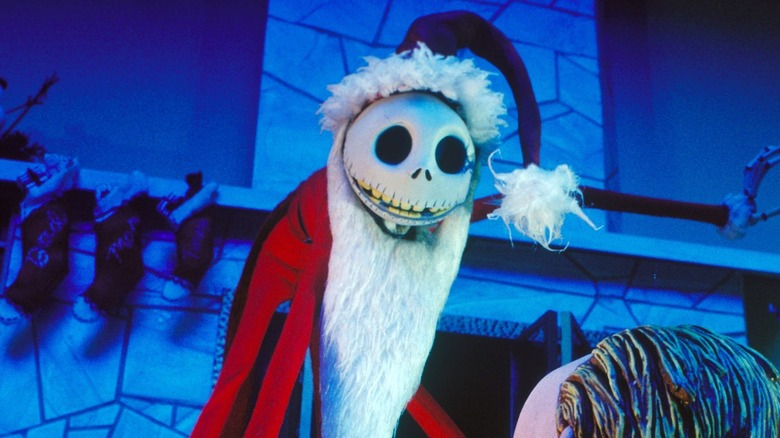
3. The Nightmare Before Christmas

If you are between the ages of 28 and 40, "oogie" and "boogie" are two words which still might terrify you.  And if you don't know why "Oogie Boogie" strikes fear in the hearts of grown adults, you need to watch "The Nightmare Before Christmas."

"The Nightmare Before Christmas" is a horror movie; it is also a Christmas movie. It's a Christmas movie in the sense that it (mostly) believes in the best of its characters. Accordingly, director Tim Burton extends them the gift of a happy ending, olive-branch like, or even the stocking stuffer of somewhat morbid personal betterment (looking at you, Mayor of Halloween Town). 

But here's the rub: "The Nightmare Before Christmas" is also a horror film, because only a horror film would construct the waking nightmare that is the Oogie Boogie man and dispatch him to such a queasy end that I still think about it every time I see an errant bug. In Christmas tales, punishment is just. Here, it's also just a little cruel. That edge makes "The Nightmare Before Christmas," like the protagonists who inhabit it, a blend of separate and wonderful worlds. It's the best.

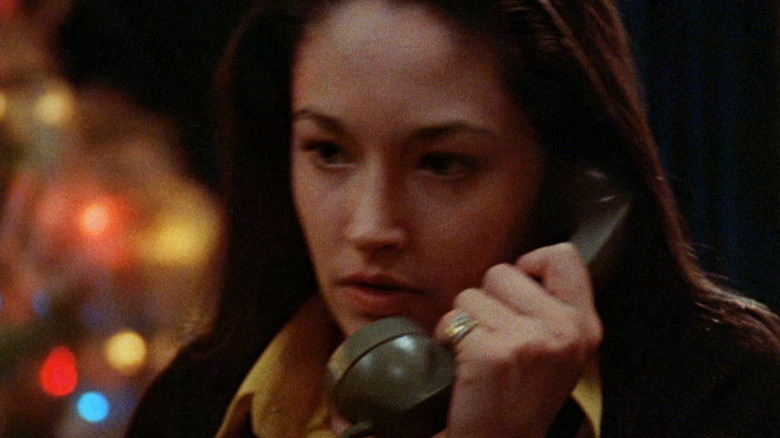
2. Black Christmas

It's tempting to include "Black Christmas" on this list as a "respect your elders" gesture alone because Bob Clark's 1974 film is the proof in the figgy pudding that holiday horror films can not only exist, but thrive at the box office. What's more, it is viewed as a major influence on the most important slasher film of all time. Failing to note it here would be a lump of coal in SlashFilm's stocking and mine. 

That said, it's also important to find a reason "Black Christmas" is worth celebrating that we haven't acknowledged before, so let me offer a bevy of them. For one, the cold, stark realism of Clark's vision still has few equals in either horror or the slasher sub-genre (Watch the trailer for proof). From the cross-cutting between brutal violence and ominous shots of a decoration-decked home to the reveal of a corpse amongst unhinged yet artful acting, its two minutes of transgression are emblematic of the whole. Boundary-pushing art, regardless of its quality, endures."Clash of The Titans" comes to mind, as does the previously mentioned "Back To The Future" series. Though "Black Christmas" couldn't be different than both of those films, it's an essential watch for the strains of possible art it all but introduces into cinematic language. That it's also excellent and relentlessly disturbing makes it one of the ultimate Christmas horror classics. 

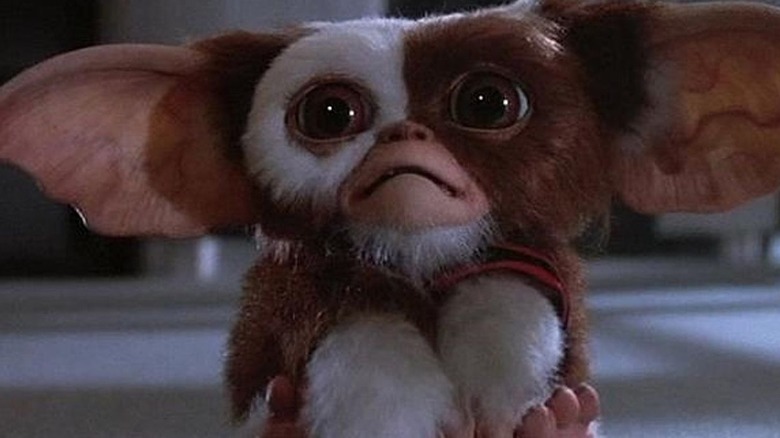
1. Gremlins

There's no wrong way to make a great Christmas horror movie. But Joe Dante, B-movie wunderkind, made the blueprint for the best kind of Christmas horror movie. Have one archetypal Scrooge (someone cynical, cruel) then add another character who definitely loves Christmas (the Nephew Fred, as it were). Find time to make a Christmas tree ominous. For mayhem, and at least one sequence anyone would feel guilty for watching on Christmas. That is the blueprint for "Gremlins," and that blueprint is perfect. 

If you've been living under a rock since 1984, here's the plot of "Gremlins:" A gadget salesman buys a rare pet, a Mogwai, for his son Billy ... but he must follow three rules in order to do so. Those rules get broken, gremlins get birthed, and Dante's film shifts into overdrive to a degree that would inspire countless others to build more manic engines. 

Every set-piece in "Gremlins" is more memorable than the last. It's a movie the way that Green Day's "Dookie" is an album -- all hits, front to back (That the kitchen and YMCA sequences happen back-to-back is some sort of cinematic miracle, pure kismet). More than that, the movie is transgressive, being one of two films with Steven Spielberg's name on it that led the MPAA to make the PG-13 rating two months after its release. There's no catching that sort of Yuletide lightning in a bottle again, and "Gremlins" is an enduring testament to both a genre and holiday's transformative, wicked powers.

Read this next: The 14 Best Christmas Movies Ranked

The post The 15 Best Christmas Horror Movies Ranked appeared first on /Film.

02 Dec 18:35

Many Severe Covid-19 Survivors Die Within a Year, Study Finds

by BeauHD
fahrbot-bot shares a report from Gizmodo: New research this week finds that people hospitalized with severe covid-19 often pay a heavy price afterward. The study concluded that these survivors were more than twice as likely to die in the subsequent 12 months compared to people who had tested negative for the virus. This relatively increased risk of death was even higher for people under the age 65. While there remains much research to be done, studies thus far have made it clear that many covid-19 survivors can experience lingering symptoms even after the infection itself has cleared up. And those who are hospitalized are all the more vulnerable to these aftereffects. Severe covid often seriously damages the lungs and other organs, while life-saving interventions like steroids, ventilators, and life support devices like ECMO can take a toll on the body as well. Researchers from the University of Florida had already published a study in July showing that hospitalized survivors were significantly more likely to be hospitalized again within six months, compared to those with mild to moderate covid-19. This new study of theirs, based on an examination of anonymous electronic health records, instead looked at the long-term mortality risk of patients up to a year later. Nearly 14,000 patients in the same health care system were studied. These included 178 diagnosed with severe COVID-19 and 246 diagnosed with mild to moderate covid-19, as well as many others who tested negative for the virus but may have been sick for other reasons and received medical care in some way. Compared to covid-negative patients, and even after accounting for other factors like age and sex, those with severe covid were 2.5 times more likely to die in the next 12 months after their illness. Overall, just over 52% of severe covid patients died in a year's time. There was no significant increased risk of mortality for mild to moderate cases, however. "About 20% of the deaths among these patients post-infection were attributed to problems with either the respiratory or cardiovascular system," the report adds. "[A]mong patients in this study, the associated risk of dying was actually relatively greater for survivors of severe covid under age 65 than it was for patients over 65. Compared to similarly aged but non-infected people, they were more than three times more likely to die in the months after their hospitalization." The findings have been published in the journal Frontiers in Medicine.

Read more of this story at Slashdot.

02 Dec 18:35

US Government Agencies Bought Chinese Surveillance Tech Despite Federal Ban

by msmash
schwit1 writes: At least three U.S. federal agencies, including the military, have purchased China-made video surveillance equipment banned from use in the federal government. Purchasing records seen by TechCrunch and video surveillance news site IPVM show the agencies collectively spent thousands of dollars on purchasing video surveillance equipment manufactured by Lorex, a wholly owned subsidiary of Dahua Technology. Dahua is one of several China-based companies banned from selling to the federal government under a 2019 defense spending law over fears that the technology could help the Chinese government conduct espionage.

Read more of this story at Slashdot.

02 Dec 18:34

AWS Brings M1 Mac Minis To Its Cloud

by msmash
At today's AWS re:Invent keynote, Amazon CTO Werner Vogels announced that AWS will now offer M1 Mac minis as part of its EC2 compute service. From a report: It was only last year, that AWS first brought Mac minis to its cloud. Using the Thunderbolt port, these minis connect to the AWS Nitro System, which helps make them available in the EC2 cloud, just like any other instance. The minis used here are the standard M1 8 core machines with 16 GiB of memory. The new instances will be available in two regions (US West - Oregon and US East - North Virginia) for $0.6498 per hour, with support for discounts through AWS' Savings Plans, too. AWS promises that these new machines offer a "60% better price performance over the x86-based EC2 Mac instances for iPhone and Mac app build workloads."

Read more of this story at Slashdot.

02 Dec 01:22

The Best Freddy Krueger Kills In The Nightmare On Elm Street Series Ranked

by David Court

Being a memorable cinematic serial killer is challenging work. It's all very well possessing preternatural strength, constitution, and tracking skills — not to mention ability to both wear a mask and fall neatly out of windows — but your Jasons, Shapes, Chuckies, and Leatherfaces can only go so far with the tools of their trade. There are only a finite number of ways to skin a brat, after all.

The Springwood Slasher, Freddy Krueger, faces no such limitations. Being a (mostly) unkillable dream demon with complete control over the realm of nightmares has its perks, and this clawed recidivist often exploits them to the full. Sometimes, he just wants to kick off and go old-school (I'm looking at you, "Nightmare on Elm Street 2: Freddy's Revenge"), but at others he wants to properly savor his kills, giving them a little panache and style.

Here are Krueger's very best (or, at least, most memorable) kills ranked, with more entries than Freddy could count on his steel-tipped razor fingers. One, two, Freddy's coming for you...

Will Stanton
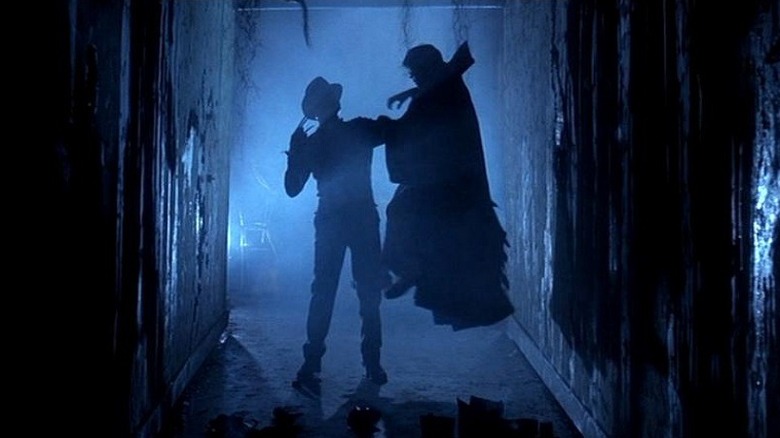
Hunted by our chargrilled child-killer in "A Nightmare on Elm Street 3: Dream Warriors," Will finds himself in a poorly lit corridor, outrunning an out-of-control spiked wheelchair, narrowly avoiding being shish-kebabbed. When it makes another pass, Will remembers his powers in the Dream World.

"I am the Wizard-Master!" he yells. Suddenly garbed in an outfit that looks like a cross between classic Dracula and Presto from the old "Dungeons & Dragons" cartoon, he casts a spell that destroys the chair and strikes Krueger. Thinking that Freddy is defeated, he closes in, forgetting that spellcasters should leave melee combat to the fighters. Freddy pins him up against the wall, and poor old Will fatally fails his saving throw. Before you can say "Abra-Cadaver," he's a perforated prestidigitator. 

This entry barely scrapes onto the list, being mediocre at best. What should have been an epic bout of spell-slinging ends up anything but. Still, this entry from the third Elm Street film is the closest you'll get to Harry Potter and "Nightmare on Elm Street" slash fiction — emphasis on the "slash."

Spencer Lewis
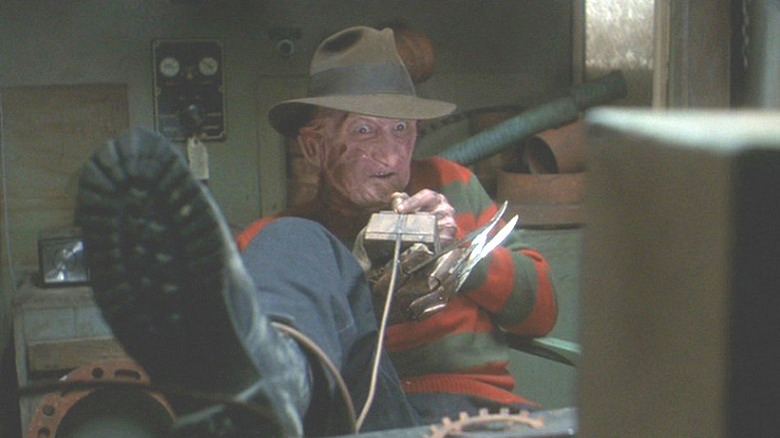
When Mattel released the Power Glove peripheral for the Nintendo Entertainment System in 1989, I doubt the company suspected it would get the unlikeliest of movie tie-ins in "Freddy's Dead: The Final Nightmare," albeit with lethal razor-tipped blades.

Being a slacker and a stoner, Spencer's fate was sealed from his very first appearance. Falling asleep in front of the television, Spencer passes through some Jefferson Airplane outtakes before finding himself as the protagonist in a side-scrolling video game — imagine "Super Mario Bros." with repressed childhood abuse and trauma instead of Goombas and Koopa Troopas.

It's hard to take this one seriously, as Spencer bounces around like the Energizer Bunny on a sugar rush, but it's equally hard not to raise a smile at Krueger referring to his aforementioned power glove, even if the reference was instantly dated by the catastrophic failure of said peripheral. Ultimately, as in "Space Invaders," the game always wins — Spencer is sent plummeting off to Hell, and, breaking with the tradition of the video games of the day, doesn't get an extra two lives. Game over, Spencer. Game over.

Mark Gray
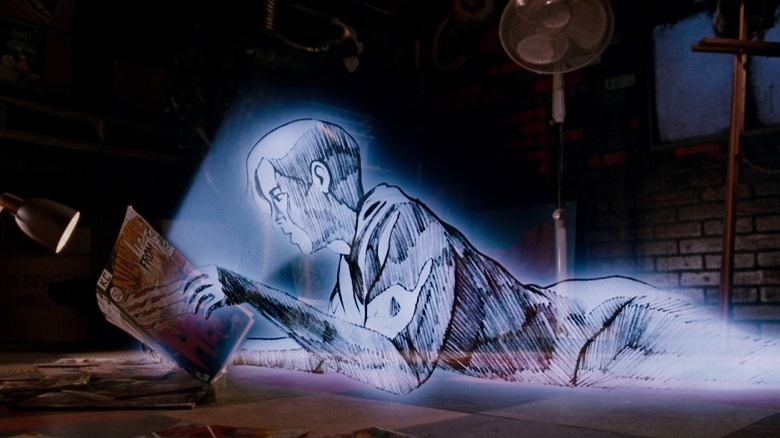
While reading a comic book, Mark is horrified to see everything that has happened so far in "A Nightmare on Elm Street 5: The Dream Child" laid out in black and white panels. Before he can do the right thing and skip to the end of the film, saving us all nearly an hour, he's pulled screaming into the book's pages.

Mark confronts Freddy in this weird monochrome world, eventually transforming into the kind of grimdark antihero that was all the rage in the '80s. He guns down Freddy, but sadly, Krueger responds by hulking out and slicing up his two-dimensional target like a weekend craft project.

The soundtrack is of particular note here, with heroic anthems sounding like a particularly well-done Danny Elfman pastiche. This kill may have aged immediately — it's clearly designed by somebody who hasn't glanced at a comic since the mid-'70s — but it's inventive, and a muscle-bound Freddy is clearly enjoying himself.

Dan Jordan
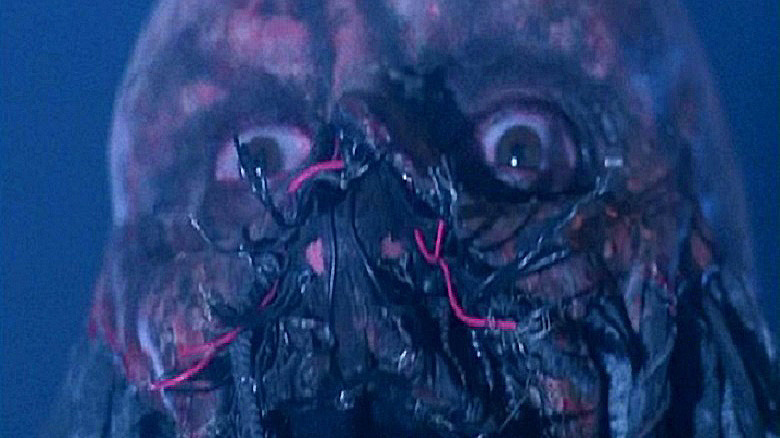
Dan, having survived "A Nightmare on Elm Street 4," didn't fare so lucky in its sequel, "The Dream Child." Speeding down the freeway on his motorcycle to save his girlfriend Alice, the jock meets a particularly grisly fate. As Freddy torments him, Dan begins to fuse with his motorbike. Wires, pistons, and cables pierce and burrow under his skin. As the bike continues to accelerate, the last of his skin is flayed away by the encroaching chassis. Dan, his lower jaw a tangle of wires and flesh, can only watch on in horror. He wakes too late to avoid a massive collision with an oncoming vehicle.

This is a particularly nasty kill, with effects that would seem more at home in the Japanese cyberpunk film "Tetsuo: The Iron Man" than in an Elm Street flick. Freddy has clearly been revising his Cronenberg movies, as this is as nasty a piece of body horror as you'll see in the series until — well, you'll find out later.

Joey Crusel
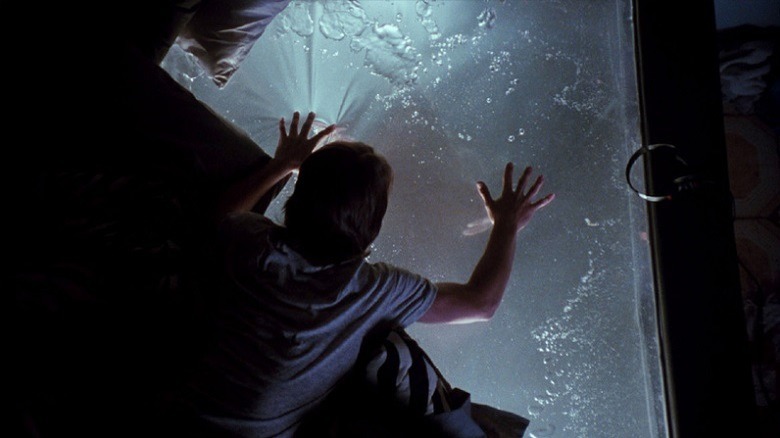
In "A Nightmare on Elm Street 4: The Dream Master," Joey is relaxing on his waterbed and watching MTV. Suddenly, the quilt is a quakin', and the beautiful swimsuit model from the poster on his wall is swimming naked beneath him. The seductress beckons to Joey, vanishing from sight like a mattress-based mermaid. Then Freddy emerges, stabbing Joey and drowning him.

Joey's mother finds him dead inside his intact waterbed, resulting in yet another confusing case for the Springwood Police department. While this kill is worth it for the Freddy quip alone — ""How's this for a wet dream?" — it's also quite telling that Joey nearly met a similar fate in the previous film at Freddy's clawed hands, with the sizzled scamp disguised as a topless nurse. Joey's kryptonite is clearly just the straightforward fact that he's a horny teenager.

Nancy Thompson
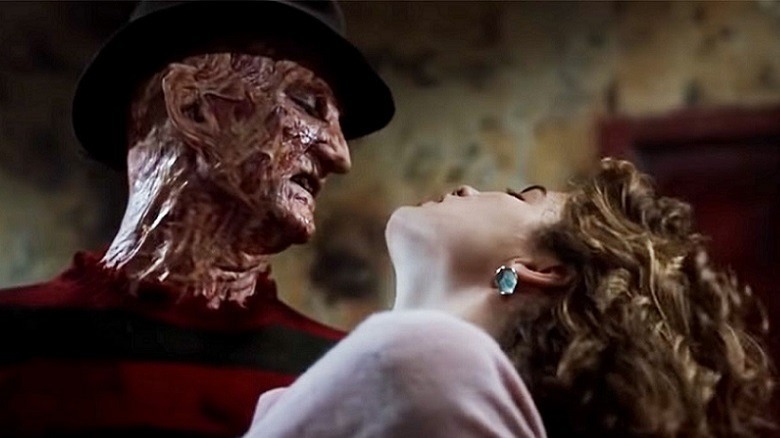
As a Freddy kill, Nancy's fate in the third Elm Street film is as vanilla as they come. There's no clever quip accompanying her demise. Her means of death is as simple as the series ever gets: a handful of razor-tipped fingers to the chest.

So, why is it placed so high? Well, it's Nancy, isn't it? She's the final girl from the first (and best) film in the franchise, the strong and resourceful student who refused to let grief define her. This is the girl who turned her house into a dream demon death-trap "Home Alone"-style (that the Springwood library has a book called "Booby Traps & Improvised Anti-Personnel Devices" is a topic for another day).

Nancy is the girl who finally beat Freddy by turning her back on him and refusing to be scared. That's why her death is to be mourned, and her life celebrated. Like the existence of the aforementioned tome, the fact that she's taken out like a chump by falling for the oldest trick in the book — Freddy pretends to be her deceased father — is unimportant.

Taryn White
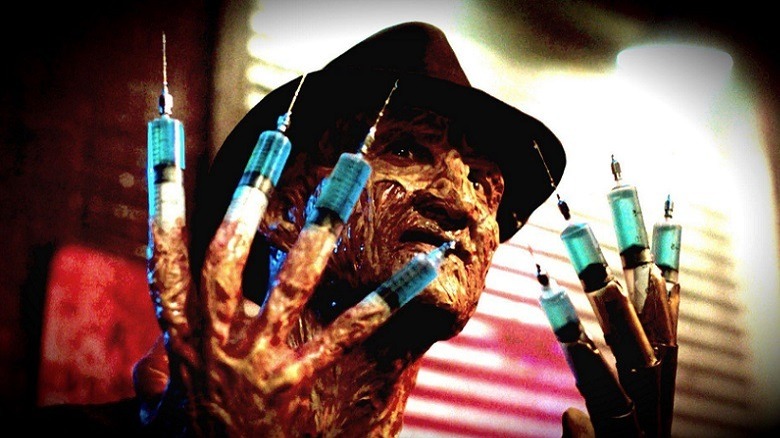
Elsewhere in America, Nancy Reagan was championing her "Just Say No" campaign to keep kids off drugs, but in Ohio (or, more precisely, the unknown geographical realms of the Dream World) Freddy Krueger was cheekily urging the exact opposite. 

In the third Elm Street movie, ex-junkie Taryn discovers that, in Freddy's realm, she's a kick-ass knife-wielding punk straight from central casting ("beautiful and bad," in her own words). After a short battle with the gauntlet-wielder, it looks like she has the upper hand, but then Freddy makes an offer she can't refuse. His blades become dirty drug-filled syringes, and holes open up in Taryn's arms like baby birds eagerly waiting to be fed.

An overdose is Taryn's unfortunate reward. It's a simple yet effective kill in a film packed with them, showing Krueger for the merciless and calculating monster that he is. He's far better as a villain when he's taking advantage of his prey's weaknesses, rather than being a generic blade-wielding slasher.

Greta Gibson
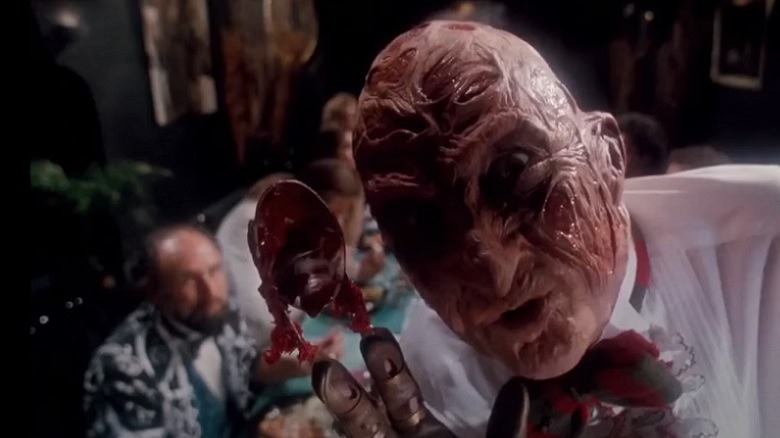
Given that this is one of the most sadistic kills in "Nightmare on Elm Street 5: The Dream Child," it's almost hard to stomach that the original scene was far, far worse. Bulimic Greta falls asleep and wakes at a nightmarish dinner party hosted by her overbearing mother. Strapped into her chair, Greta is helpless to resist as Freddy — the reddest-faced, sweariest, and angriest chef since Gordon Ramsay — force-feeds her until her face is hideously bloated. 

In the previously mentioned cut scenes, it's heavily implied that Freddy is feeding Greta chunks of herself ("You are what you eat!"). In the real world, she chokes to death at the actual dinner party, flailing around wildly before expiring.

This is Freddy as his most cruel. It's even worse when you consider that Greta is one of the gentlest and kindest characters in the entire franchise. Bon appétit indeed.

Sheila Kopecky
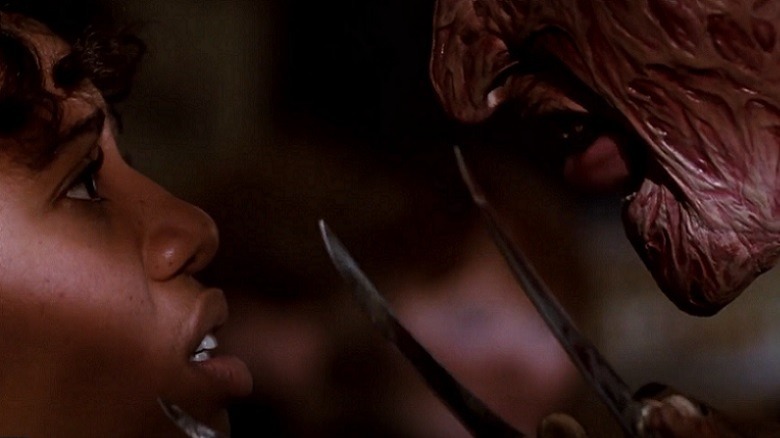
Taking an exam — or, more precisely, taking an exam that you haven't studied for — is, unsurprisingly, a common theme in anxiety dreams. However, Sheila is as smart as they come; I doubt she had any such nightmares.

This pivotal scene from the fourth Nightmare on Elm Street film takes place during an exam — a physics test, to be specific. Sheila falls asleep during the test, and Freddy's torment begins. At first, the words dance around on the paper, forming a threatening message ("Learning is fun with Freddy!"). Then, the sweater-wearing sociopath appears in person, instantly breaking the rules about talking during examinations.

Freddy proceeds to lift Sheila up and suck the very life out of her, causing her to deflate into a withered husk, her dead eyes sinking into their sockets, while in the real world she dies from an asthma attack. It's a nasty way to go, and that she dies in front of her friends as they're unable to help makes this a particularly cruel end.

Carlos Rodriguez
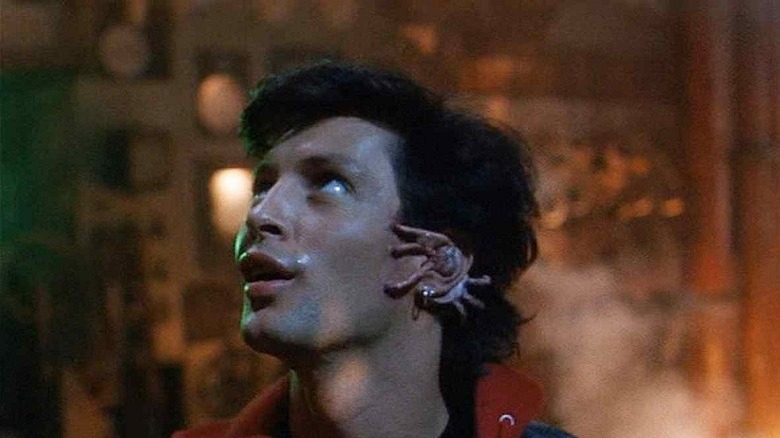
Having already established himself as an equal-opportunity psychopath, equally at home slaughtering kids in wheelchairs in addition to everyone else, Freddy turns his hand towards the hard of hearing in "Freddy's Dead." Despite being able to hear in the Dream World, young Carlos gets his ear cut off by Freddy and is forced to use his hearing aid.

Unfortunately for Carlos, Freddy has replaced the hearing aid with a parasitic creature that burrows into his ear canal, making Carlos' hearing super-sensitive. Freddy toys with Carlos for a while, dropping pins on the floor before scraping the tip of his finger-blades across a chalkboard. The sound design is absolutely on point here, with the audience forced to share in Carlos' anguish. It builds to a crescendo as Freddy goes for it with a chalkboard solo, and poor Carlos' head explodes. 

Jennifer Caulfield
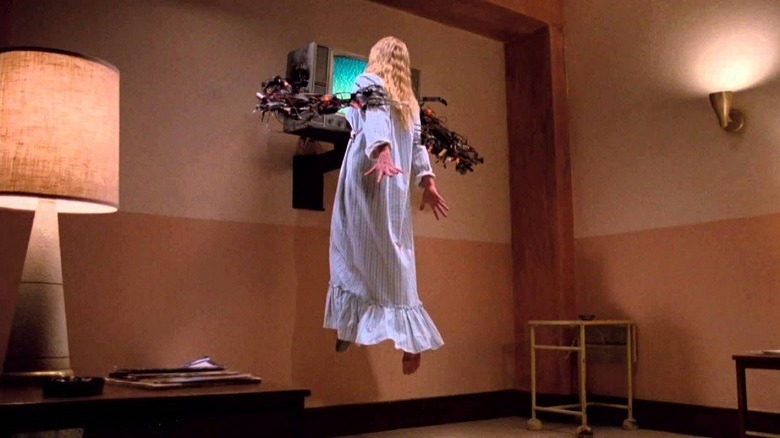
If the movie "Poltergeist" taught me anything, it's that if you hear weird voices coming from the static on your TV, it's time to take it in for a service. Preferably a church service, with an exorcist.

It's advice that "Dream Warriors" victim Jennifer would have done well to follow, confronted with a broken television in the psychiatric hospital's dorm room. Following Freddy's surprise appearance during a television interview with Zsa Zsa Gábor, bane of spell checkers everywhere, the TV breaks and Jennifer tries to fix it by randomly hammering at buttons on the set.

Clawed hands emerge from the side of the TV and lift the poor girl skyward. As Freddy emerges from the top of the appliance to taunt her, her head is plunged through the screen. Unlike the similarly ill-fated Mike Teavee from "Charlie and the Chocolate Factory," no Oompa-Loompas appear to mourn her demise.

Tina Gray
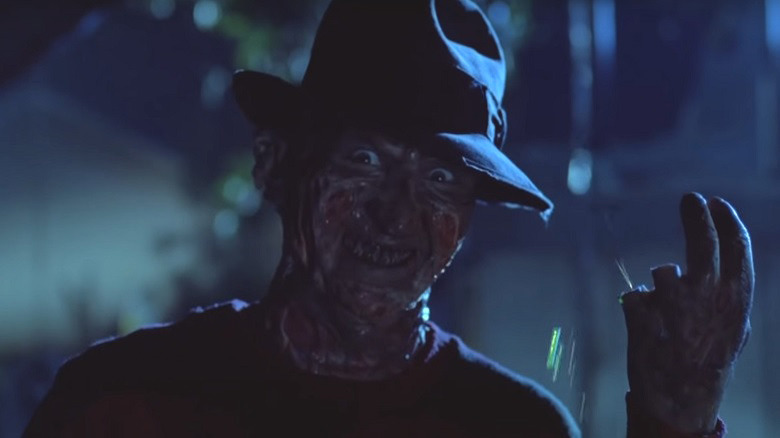
It's easy to forget that, before Freddy had a pun prepared for each grisly dispatch, the character used to be a genuine figure of terror. Over time, the Nightmare on Elm Street franchise became increasingly muddled, with Freddy's abilities and origins growing ever more convoluted, but it's key to remember that wasn't always the case.

Tina's death was the first kill of the franchise, and (briefly) set the tone for what was to come. Tired of toying with his sleeping prey in his surreal (and genuinely disturbing) realm of dreams, Freddy strikes. In the real world, Tina wakes up to find Freddy straddling her. Her boyfriend pulls the covers away and can only watch as an unseen force slashes at her and drags her flailing form across the walls and ceiling, only releasing her when she's a bloodied corpse.

The effect, achieved with a rotating set, would be repeated for Julie in "Wes Craven's New Nightmare," but was never as effective. This was Wes Craven proudly announcing the boundless powers of his new kind of slasher villain, one who possessed ultimate control over you whilst you slept. It was, and remains, horrifying.

Philip Anderson
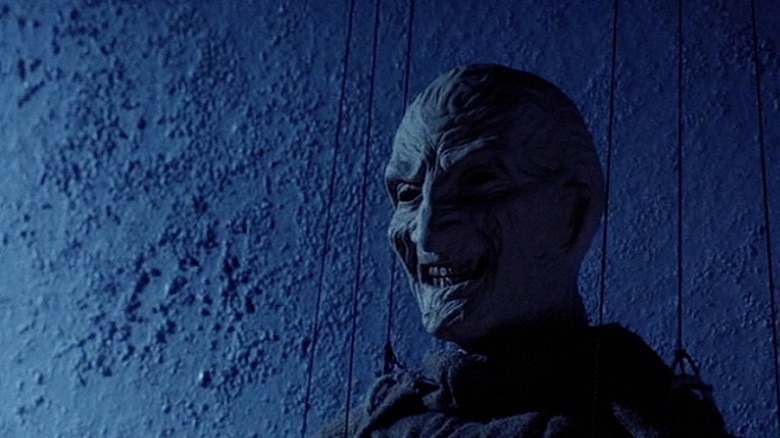
The third film in the series boasts some of the franchise's most inventive and memorable kills. Poor Philip's means of shuffling from this mortal coil is no exception. Sleepwalking Philip is a puppet fan, and when one of his dolls comes to life as he sleeps (animated dolls: officially never not scary), it transforms into a full-grown Krueger. Slicing open the boys' limbs, he pulls out Philip's tendons and transforms him into a living puppet, ligaments taking the place of marionette strings.

Philip is wide awake yet unable to stop himself as Krueger walks him through the building, guiding him up to the highest point of the psychiatric institution. His friends see the monstrous form of Krueger towering over them as he slices through the tendons, causing poor Philip to plummet to his death.

Again, this is peak Freddy. Not only does he put his victim through sheer hell, but he forces Phillip's friends to watch in vain. Being the first victim of the third instalment, we sadly never get to see what Philip's powers would have been in the dream realm.

Glen Lantz
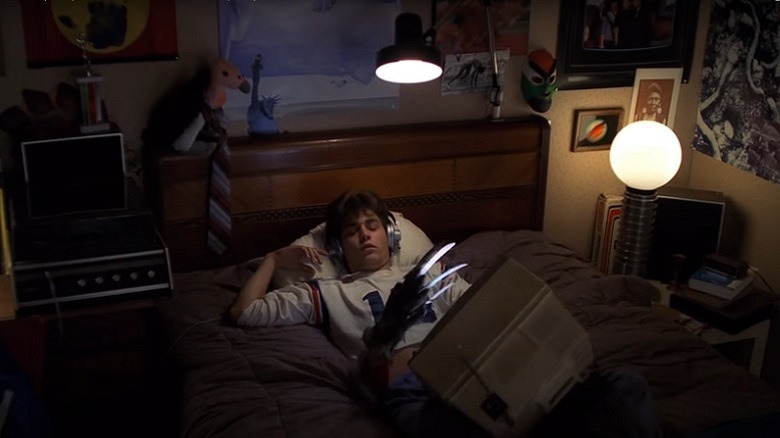
Much like Kevin Bacon in "Friday the 13th" and Renée Zellweger in "The Return of the Texas Chainsaw Massacre," many young actors cut their teeth in horror. The first "Nightmare on Elm Street" is no exception, as it features a young Johnny Depp as Glen Lantz.

The cropped t-shirt already identifies fresh-faced Glen as a fashion victim, but he's about to be Freddy's third kill in the first Nightmare on Elm Street film, too. Pulled under his bedspread by a familiar clawed hand, the next time we'll see him is as a geyser, torrents of blood exploding from the bed and coating the room and ceiling.

It's brutal, memorable, and viciously over the top; how Glen's poor parents are going to explain this to the police, I'll never know. ("Yes, Glen was our son. No, we had no idea he had so much blood in him — he wasn't a particularly large boy.")

Debbie Stevens
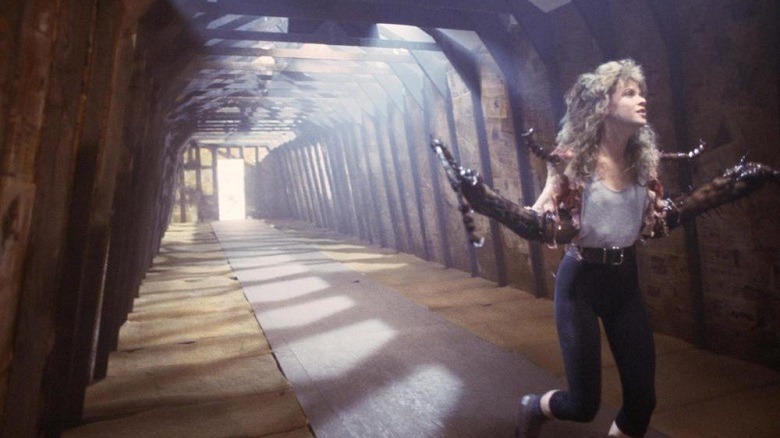
This is the horrific highlight of the franchise, with an "ick" factor that threatens to break the scale. Poor Debbie's workout in the fourth film is interrupted by Freddy, who breaks her arms, exposing hideous insectoid limbs beneath. She tries to flee, but the ground is covered with a thick, sticky glue, and she stumbles. As she tries to stand up, her face is torn away, exposing a cockroach beneath. We can hear her anguished cries of distress as we learn that she's inside a cockroach trap in Freddy's razor-clawed fist, finally dying as his grip tightens.

Like Vera's robotic fate in "Superman 3," this is one death that will linger in the memory long after watching. It's one of the more mean-spirited kills in the series, and one that truly takes full advantage of the surreal aspect of Freddy's dream realm — his powers there are godlike. In a series that often forgets its roots (and its own rules), this is an example of Freddy at his most inventive and cruel.

Read this next: The 20 Best '80s Horror Movies Ranked

The post The Best Freddy Krueger Kills in the Nightmare On Elm Street Series Ranked appeared first on /Film.

01 Dec 23:07

Elizabeth Holmes: My BF abused me and was always running me down, and that's why I commit all those crimes out of low self esteem. Prosecutors you mean like in this text where he said: ""U r god's tigress and warrior. You are extraordinary."? [Fail]

01 Dec 23:07

Titanfall is Being Removed from Sale Following a Long Losing Battle with Hackers

by Nathan Birch

Titanfall

The battle between Titanfall developer Respawn Entertainment and the hackers who have been making the game difficult to play has come to an end, and it seems the bad guys have won. The state of the original Titanfall has been a bone of contention for years now – while the servers have remained on, various unpatched vulnerabilities have allowed malicious parties to make the game largely unplayable via DDoS attacks other hacks.

While you’d reasonably expect the hackers to receive the lion’s share of the anger over this, much of it has spilled back on Respawn, who have been accused of neglecting the game. Well, it seems Respawn is waving the white flag, as they’ve announced they’re ceasing sales of the game and removing it from subscription services. Servers will remain switched on for current owners, but don’t expect the issues plaguing the game to get any better.

Titanfall is part of our DNA at Respawn. It's a game that showcased the ambitions of the studio when it was first released more than 7 years ago and it continues to be a beacon of innovation that we strive for in all of our games.

We've made the decision to discontinue new sales of the original Titanfall game starting today and we'll be removing the game from subscription services on March 1, 2022. We will, however, be keeping Titanfall servers live for the dedicated fanbase still playing and those who own the game and are looking to drop into a match.

Rest assured, Titanfall is core to Respawn's DNA and this incredible universe will continue. Today in Titanfall 2 and Apex Legends, and in the future. This franchise is a north star for the caliber of experiences we will continue to create here at Respawn. Thank you from the entire Respawn team.

Any Titanfall fans out there? What are your thoughts on this situation? Personally, I think Respawn should have pulled the game a long time ago when it became clear they didn’t have the resources free to keep the game in proper working order. Unfortunately, there probably won’t be recompense for Titanfall fans who believed Respawn’s repeated promises that help was coming.

The post Titanfall is Being Removed from Sale Following a Long Losing Battle with Hackers by Nathan Birch appeared first on Wccftech.

01 Dec 22:21

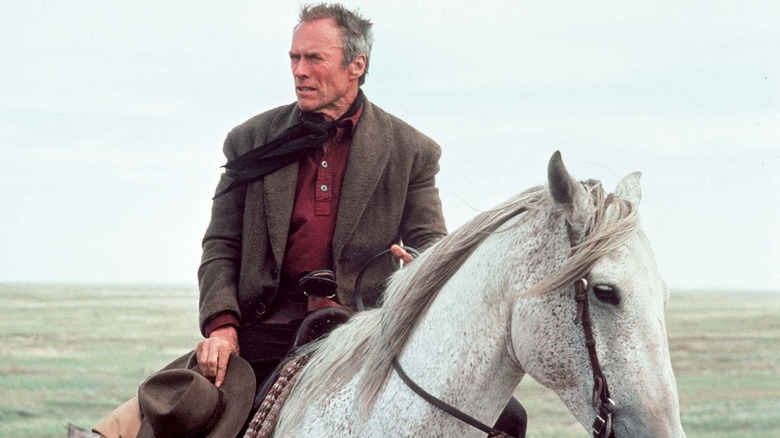
20% Of Fans Believe This Is The Best Clint Eastwood Movie – Are They Right?

by Caroline Madden

Clint Eastwood is a cinematic icon who has been starring, directing, writing, and composing films for over 50 years. He first rose to fame as the Man With No Name in Sergio Leone's spaghetti westerns. Known for his steely stare, raspy voice, and quick draw, Eastwood became a staple of the western genre. As a filmmaker he has not only puts his own spin on the western, but also explores other kinds of films such as war dramas, melodramas, and even romance. 

With over 40 titles under his directorial belt and over 70 as an actor, Eastwood has had an incredibly prolific career. We recently ran a poll with 590 respondents to determine Clint Eastwood's best movie. With such a substantial and remarkable output, it may seem hard to nail down Eastwood's best film. However, the results show that there is one exceptional film that clearly deserves the crown.

Eastwood's Westerns Are The Most Popular

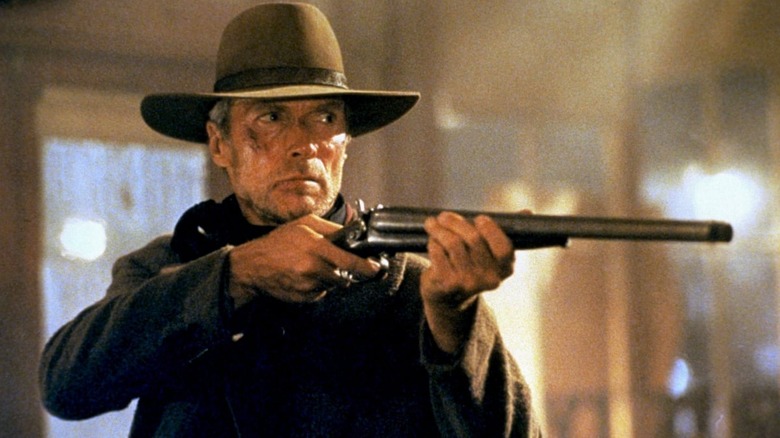
It may come as no surprise that "Unforgiven," which won Best Picture in 1993, takes the number one spot with 20.34% of votes. /Film writer Chris Evangelista hails the revisionist Clint Eastwood western as a "masterpiece." It is an emotionally complex and harrowing epic that subverts western genre tropes -- ones Eastwood himself helped establish. 

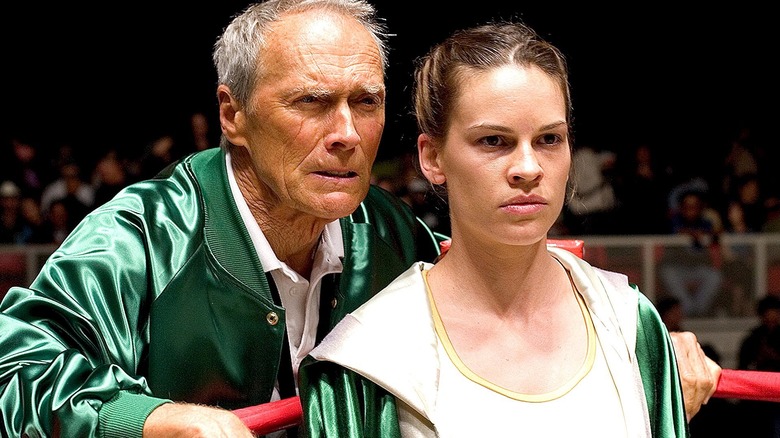
Revenge drama "Gran Torino" takes the second spot at 18.47%, followed by the Oscar-winning "Million Dollar Baby" with 16.27% votes. Western and war films "The Outlaw Josey Wales" and "Heartbreak Ridge" are in the middle with 14.07% and 12.20% of the votes. The star-studded drama "Mystic River" is surprisingly low on the list, chosen by 8.81% of those polled. Perhaps moments like Sean Penn screaming for his daughter are considered too overwrought. Rounding out the list is another western, "High Plains Drifter," with 7.97% votes, and finally "Richard Jewell," selected by 1.86% of voters. Clint Eastwood's latest release, "Richard Jewell" was a box office flop and was panned by /Film writer Josh Spiegel as dull and obvious. 

Unforgiven Subverts Western Tropes

Directed by Eastwood, "Unforgiven" predictably takes the top spot because it subverts the western genre tropes that made him famous in fascinating ways. It is not an exciting adventure, but rather a haunting meditation on the ramifications of violence that demythologizes Eastwood's heroic star image. The story revolves around William Munny, an aging outlaw who takes on one final job years after he settling down on a pig farm. Munny is not a gallant savior but an aging former gunfighter haunted by the people he's murdered; he is apprehensive about seeking further vengeance and must face a sociopathic sheriff (played by Gene Hackman). Brian D. Johnson hails the film in his review for Maclean's Magazine:

"Eloquent and expansive, 'Unforgiven' is arguably the best film of Eastwood's career — a movie that could well serve as the last word on the western."

"Unforgiven" is unquestionably Eastwood's best because it actively deconstructs the conventions of westerns past to present them in a gritty new format, as No Film School explains in further detail. "Gran Torino" ranking as second accounts for its wide appeal as a gripping vigilante justice narrative that wields Eastwood's new grumpy old man persona, but it has been criticized for its racial politics and white savior narrative, as reported by IndieWire. "Million Dollar Baby" has lots of accolades and is a tear-jerking tragedy, but it is no match for the revenge tales Eastwood is known for. 

As someone who became known for his silence and stoicism as The Man With No Name, Eastwoods' heartfelt character studies are quite the opposite. Rather than retiring, Eastwood keeps creating his brand of passionate, feel-everything movies — frequently starring in narratives suitable for his older age. He directed "Richard Jewell" just before turning 90! Clint Eastwood is an enduring film legend who continues to make incredible work. 

Read this next: The 20 Best Westerns Of All Time

The post 20% of Fans Believe This is the Best Clint Eastwood Movie - Are They Right? appeared first on /Film.

01 Dec 22:08

Free games with Amazon Prime Gaming for December 2021

by Tonci

The December Free Games with Prime feature Frostpunk, Journey to the Savage Planet, Football Manager 2021, Spellcaster University, Youtubers Life, Stubbs the Zombie in Rebel Without a Pulse and more.

The post Free games with Amazon Prime Gaming for December 2021 appeared first on Indie Game Bundles.

01 Dec 21:55

After almost eight years, British expert 'pinpoints' precise resting spot of lost flight MH370. So was it the smoke monster? [Unlikely]

01 Dec 21:55

What’s in my survival kit? — Dug North

by claudia

Sign up here to get What’s in my bag? a week early in your inbox.

Dug North is a maker, best known for his mechanical wooden sculptures. He spent five years running an antique clock restoration business. These days he enjoys outdoor bushcraft activities. You can find Dug on YouTube @dugnorth, and on Instagram @dug.north, and on Facebook @DugNorthCreations.


I am passionate about learning and teaching wilderness survival skills. As an example for my students, I put together a well-rounded survival kit. This kit is based on a design by my colleague, Tim Swanson of Owl Eyes Wilderness.

One of the hardest things to do in the wild is keeping track of your stuff. This is why every item in the kit is bright orange or red.

Survival-kit

Orange Waist Pack ($13)
You must have these items with you if they are to be of any use. This is the reason for dedicating a small pack specifically for this kit. Let’s say you go for a day hike. You might take your main backpack off now and then. Only take this waist pack off if it is absolutely necessary.

ESEE Fixed Blade Knife ($70)
In most environments, the most essential survival item is a sturdy knife. ESEE makes two small fixed-blade knives that don’t take up a lot of room. The models I like are the Izula and the Candiru (shown).

Exotac fireSLEEVE ($18) for the Bic Lighter ($20, 5ct)
It may not fit with your mental image of wilderness survival, but the classic Bic lighter is the best fire starter you can possibly have. The fireSLEEVE protects this valuable resource by keeping it dry, preventing the gas button from accidentally discharging the fuel, and by making the lighter float in water.

UST StrikeForce Fire Starter ($20)
Isn’t it redundant to have two ways to start a fire? Yes – and that is precisely the goal. A ferrocerium rod can create thousands of fires and is an ideal backup for a lighter. This model is not only orange, but easy to handle, and has a small compartment to hold dry tinder. Scrape the rod with the metal striker to ignite the included tinder tabs.

Black Diamond Ion Keychain Light ($20)
This little flashlight puts out an impressive 40 lumens of light. Unlike most flashlights of this size, it has a twisting lock that ensures it will not turn on by accident while jostling around in your bag. The brightness can be adjusted and it has a dedicated strobe mode for signalling.

S.O.L. Utility Reflective Tinder Cord ($26)
Cordage allows you to construct shelters, repair gear, and make other helpful items. This utility cord has an outer sheath that glows brightly when light hits it at night. The inner core is a specially designed fire-starting tinder to use in conjunction with your lighter or ferro rod.

Orange 55 Gallon Drum Liner ($20)
Something as simple as a large trash bag can serve many uses — from improvised poncho, to tarp shelter, to make-shift sleeping bag. Few items are so worth their weight.

Aquatabs ($11) with Whirl-Pak Stand-up Bags ($9)
Drop one Aquatab tablet into one of these free-standing plastic bags filled with water and in 30 minutes you will have a liter of drinking water that is free of pathogens. This is a lightweight means for staving off potentially dangerous levels of dehydration.

LuxoGear Emergency Whistle ($8)
A whistle can signal for help at great distances and for far longer than the human voice. Remember: three blasts in sequence is the universal signal for distress.

Cotton bandana ($7)
This is another simple item that is easy to underestimate. A cotton bandana can serve as a signal flag, head covering, washcloth, dust mask, bandage, and water pre-filter.

Tiny Survival Guide ($12) with Plastic Fresnel Lens ($9)
This little booklet is actually a folded waterproof poster that provides concise information on a variety of survival topics. In a bad situation, a little expert guidance could be invaluable. Tuck a flat plastic fresnel lens into the guide as a backup for your reading glasses and third possible means to start a fire by solar ignition.

All of these items have been tested to my satisfaction. It’s true that the cost of the full kit does add up, but keep in mind that these items have been chosen to help save your life. How much is that worth?

01 Dec 21:54

Woman, four and a half months pregnant, rushes up to house, bangs on front door, awakens man inside, yelling: A) "You said you were sterile;" B) "Jesus is the Daddy;" or C) "Your house is on fire?". Sadly it's C but would have loved for it to be A or B [Sappy]

01 Dec 21:53

LAN Manager 2.1/2.2 Registration

by Michal Necasek

Anyone who spent a bit of time archiving software distributed on floppies probably knows this situation: There’s only one disk set of a given software release known to exist, and it’s not clean. That is, it’s been previously used to install the software and the installer scribbled something on the floppies, like the user’s name or a serial number.

Installing a clean copy of LAN Manager 2.2

Restoring the disks to a virgin state is desirable, but that’s easier said than done. There are easy cases like the OS/2 installation boot floppy: The installer creates a file named INSTALL.LOG and writes a couple of things to it, but does not modify any existing files. Such behavior is relatively harmless because the additional file can be simply ignored, or all traces of it can be thoroughly erased.

LAN Manager 2.1 and 2.2 is in a different category. The setup program “burns in” the user name, modifying a file on one of the installation disks. That is far more difficult to undo because an existing file’s timestamp is changed and the contents modified. Restoring original content is rather difficult because it’s not at all obvious what it had originally been. Although having just one “clean” set of LAN Manager disks helps.

LAN Manager 2.1 Licensing

In LAN Manager 2.1, Microsoft implemented a new licensing scheme which relied on overwriting a special block of data in the file called SERVICES\NETSVINI.EXE. This is the “root” service without which LAN Manager can not run. The data block serves two purposes: Copy protection and license management.

The copy protection is very lightweight and only consists of “burning in” the user name and installation date into the executable. Licensing is much stricter and limits the number of connections to a server. Microsoft sold 10-user license packs ($995) which increased the server’s capacity; these could be purchased and installed multiple times through the ADDPAK utility. Microsoft also sold unlimited upgrades ($5,495) which removed the connection limit entirely, or rather set it to 1,000 users.

I primarily focused on the user registration in my analysis. When the LAN Manager setup is first run, it asks for the user name and writes it to the NETSVINI.EXE file on the OS/2 Workstation disk. This file is copied to all installed machines. On a subsequent install, setup no longer asks for the user name and just uses the existing information.

The user name is scrambled such that it cannot be easily found in the NETSVINI.EXE file. Modifying it is naturally even harder.

Analyzing the LAN Manager setup utility revealed that Microsoft pulled out the big gun for this—DES encryption. Note that LAN Manager 2.0 already used DES for calculating password hashes and optionally encrypting traffic.

On the OS/2-based server and workstations, DES encryption/decryption API was implemented in a kernel component and accessed through an IOCTL in order to make snooping more difficult. This was of course not available to the setup utility, therefore LAN Manager’s SETUP.EXE has its own DES implementation.

From a modern perspective, the use of DES for encrypting the user name is a waste of time. Why? Because LAN Manager uses a single hardcoded key for it. The use of DES serves only to obfuscate, something which could be achieved through much simpler means. Once you fish out the key out of the SETUP.EXE executable, the user registration data has nowhere to hide.

Well, almost. Even after I had the encrypted data and the key, it still took me quite a while to decrypt it using a standard DES implementation. Although DES is outdated, it is real crypto… which means that if you get a single bit of the key wrong, the result will be complete garbage.

The troublemaker turned out to be the format of the DES key. The standard DES algorithm uses 56-bit keys, but these are usually supplied as a 64-bit key where the low bit of each byte is ignored.

Given how LAN Manager turns passwords more or less directly into DES keys, Microsoft did not want to toss out the low bit of each byte, so that “PasswdB” would not be equivalent to “PasswdC”. Instead, Microsoft packed the DES key into 7 bytes (56 bits); before feeding the key to the DES algorithm, LAN Manager inserts one dummy bit for each 7 bits of the input, thus obtaining a 64-bit key for DES.

What this means is that when the DES key hardcoded in the LAN Manager setup is used with a standard DES implementation, it will produce garbage. It has to be first spaced out and have dummy parity bits inserted. Once that’s done, a standard DES implementation (e.g. the one in the Python Crypto module) works just fine.

Data Structure Details

The above mentioned data structure is stored in NETSVINI.EXE. It has a header with a ‘LMPI’ signature—perhaps that stands for LAN Manager Product Information? The format is roughly as follows:

Offset Size Contents
0 4 ‘LMPI’ signature
4 2 Unknown, zero
6 4 ‘LMPI’ signature
10 24 Product/serial
34 36 User name
70 4 Installation timestamp
74 2 Number of additional licenses
76 ?? Additional licenses

This structure has at least three users: The SETUP.EXE utility, the ADDPAK.EXE utility, and NETSVINI.EXE itself. As far as I can tell, SETUP only touches the user name and timestamp. ADDPAK updates the additional licenses. NETSVINI uses the product/serial and additional licenses to calculate the licensed connection limit.

The field I named “product/serial” looks about like this: ‘096-045v210-xxxxxxxx’; that is literally ‘xxxxxxxx’. I suspect the original idea was to put the LAN Manager serial number in there, but Microsoft appears to have decided against it and left a sequence of ‘x’ characters in place of the serial number. The middle part (‘045v210’) is significant because it determines the LAN Manager version and the maximum user limit.

If additional licenses are installed through the ADDPAK utility, those will be stored after the encrypted user name and timestamp. The additional licenses do include a complete serial number. That was an inevitable requirement, because otherwise users could install additional 10-user licenses several times. The serial number was a way of preventing that.

Lies and Half-Truths

Microsoft published KB article Q77358 which describes the how Additional User Paks are installed. As far as I can tell, the description might perhaps fit LAN Manager 2.0. It definitely does not apply to LAN Manager 2.1/2.2. I have one LAN Manager 2.1 unlimited user AddPak and it most certainly does not create ADDPAK.SER, but rather installs the additional license into NETSVINI.EXE, as described above.

While I cannot test it, I am almost certain that additional 10-user licenses are installed in exactly the same manner on LAN Manager 2.1/2.2, by modifying NETSVINI.EXE, rather than creating or modifying a separate ADDPAK.SER file.

As an aside, LAN Manager 2.1/2.2 can also be installed as a peer server/workstation. In that case, NETSVINI.EXE is not used, and a separate NETPSINI.EXE (PS for Peer Server) is used instead. NETPSINI.EXE does not include the ‘LMPI’ data block, the installer does not ask for user name, and the connection limit cannot be changed.

Examining Registration Data

I slapped together a simple Python utility which lets one view the registration information in LAN Manager. It looks for the LMPI header and can be used on NETSVINI.EXE or on a (raw) floppy image containing NETSVINI.EXE (which, unlike other files on the installation disks, is not compressed for obvious reasons).

The utility requires the Crypto module. If not already in place, this can be typically installed with ‘pip install pycryptodome’ or equivalent, depending on the host OS.

Here’s an example output from running lmcrypt.py against NETSVINI.EXE from LAN Manager 2.1 and upgraded to unlimited connection through ADDPAK:

LMPI signature found at file offset 0xbef6
Product ID: 096-045v210-xxxxxxxx
Registered to: OS/2 Museum
Timestamp: 1638040400 (2021-11-27 19:13:20)
Number of AddPaks: 1
AddPak serial: 096-244v210-72201277

See the Python source code for details. Note that the implementation is based on guesswork and may be inaccurate. Modifying the registration data is intentionally left as an exercise to the reader.

01 Dec 21:51

Release: Chronomaster

Join Rene Korda, a retired designer of "pocket universes" who must restore two of them from a state of "temporal stasis". Chronomaster, a cult classic adventure game with the script by Roger Zelazny, as well as featuring the voices of Ron Perlman and Brent Spiner, is now available on GOG.COM!

Until 15th December 2021, 2 PM UTC, you can buy Chronomaster 35% off.

Share our love for games? Subscribe to our newsletter for news, releases, and exclusive discounts. Visit the “Privacy & settings” section of your GOG account to join now!


01 Dec 21:50

[Interview] Devon Sawa for BLACK FRIDAY

by Shannon McGrew

[Interview] Devon Sawa for BLACK FRIDAY
Courtesy Screen Media
In Casey Tebo’s horror/comedy BLACK FRIDAY, a group of disgruntled toy store employees begrudgingly arrive for work on Thanksgiving night to open the store at midnight for the busiest shopping day of the year. Meanwhile, an alien parasite crashes to Earth in a meteor. This group of misfits led by store manager Jonathan (Bruce Campbell) and longtime employee Ken (Devon Sawa) soon find themselves battling against hordes of holiday shoppers who have been turned into monstrous creatures hellbent on a murderous rampage on Black Friday.

Prior to the release of the film, Nightmarish Conjurings’ Shannon McGrew had the chance to chat with actor Devon Sawa where we discussed everything from what drew him to join BLACK FRIDAY,  working with the legendary Bruce Campbell, and how it feels to have fans follow his work through the horror realm throughout all these decades.

To start things off, when you read the script for BLACK FRIDAY, what stood out to you about the film?

Devon Sawa: The thing that stood out most was it was different than a lot of scripts I was getting at the time. Not a lot of people are doing horror/comedy right. This is the first time I felt like this could be something close to the fun I had doing Idle Hands. It didn’t take itself seriously. It was a movie about Black Friday shoppers going crazy and a group of really cool characters having to deal with it. [Director] Casey Tebo, I watched his movie Happy Birthday and it was done for a very low budget, but he killed it. It was a phenomenal film and I felt like that particular style fit this particular script, and that’s why I wanted to do it.

This was your first time working alongside the legendary and iconic Bruce Campbell. What was that experience like for you?

Devon Sawa: I had to tell him I was a fan right off the bat so we could get the nerves out of the way [Laughs]. Here’s a guy when I was a young fella who’s films meant a lot to me. I love the Schwarzenegger films. I love the Stallone films, but Brace Campbell…Army of Darkness and Evil Dead 2 were films that I watched a lot, and they were quotable films when you were 12, 13 years old. He had this heightened performance in both the films that were done right at that right level. It was perfectly done. It was bordering the believable and unbelievable right at that sweet spot of awesomeness, especially for a 13-year-old. He’s a great guy to work with.

Still from BLACK FRIDAY

Many of us have grown up with your work beginning with Casper (1995) then sliding into the insanity that is Idle Hands (1999), followed by the terrifying Final Destination (2000) franchise. Recently, you were in the horror/thriller Hunter Hunter and the highly acclaimed “Chucky” series. How does it feel to see your fans who grew up with you still following your career to this day? 

Devon Sawa: It’s flattering. I know that I’m lucky. I did a couple of those fan conventions and I didn’t know whether I would… I still don’t know whether I particularly like doing fan conventions because I’m a quiet, private person, but the one thing that I was very surprised with is that every person that stood in that line and came up to me and got a picture, most of them, 99% of them have these amazing stories and had particular things to say about particular films. I’ve had a long journey and I’m so lucky for some of the people that have stuck with me and continue to watch my stuff. I’m just blushing, I’m a lucky guy.

It’s hard to navigate the film industry without bringing up the pandemic. That being said, what was your experience like filming BLACK FRIDAY during this time? 

Devon Sawa: It was bittersweet. A lot of my peers have not been as fortunate as I was because things shut down, there wasn’t as much work, and it was harder to find work. It was amazing that I stayed as busy as I did, but it was hard especially doing the comedy, for me. You gauge your performance [by those around you] and if they got smiles on their face during a scene that you’re supposed to have smiles on your face for, you might be doing it right. And you didn’t get to see that on this. There were a lot of masks and hoods and a lot of the crew had to go away when another crew was there. But we did it. We did it safely, and we were fortunate enough not to have any cases. Everybody worked as a team and we’re kind of adapting to the new way of doing things for as long as we have to.

With this film being a horror/comedy, were you able to do any improvising? 

Devon Sawa: I didn’t improvise too much. I stuck with a lot of the stuff that came out. There might’ve been a line here or there, a little bit of twist here and there, but I stuck with what I thought was great material, to begin with. It was all there on the page.

With this movie being about the wretched tradition of Black Friday, I have to ask, have you ever participated in all of that insanity? 

Devon Sawa: I don’t think I have. I don’t like to go to stores…it’s really crazy because I don’t like ordering things online and I hate going to stores [Laughs]. I’m really just like this really difficult person [Laughs]. So the idea of going to a Black Friday shopping experience…because I’ve only seen the bad stuff, I’ve never seen a good Black Friday. I’ve never seen somebody walk into a store and get the TV they want. I’m sure it exists somewhere but that’s not what we see. What we see is what we see and that’s, you know, chaos.

And before we wrap up I just want to say congratulations again on both BLACK FRIDAY and “Chucky.” But also, I gotta give you some love for your performance in 2019’s The Fanatic.

Devon Sawa: Thank you! I’m still optimistic that that film will grow and it’ll hit differently in like 10 years. It’s like Idle Hands, no one liked Idle Hands when it came out, and then all of a sudden we have rooftop screenings and this and that. So I’m hoping The Fanatic will be like…10 years from now some young kids will be like, this movie is great!! [Laughs].

BLACK FRIDAY is now in theaters and On Demand. For more on the film, check out our review here.

The post [Interview] Devon Sawa for BLACK FRIDAY appeared first on Nightmarish Conjurings.

01 Dec 21:49

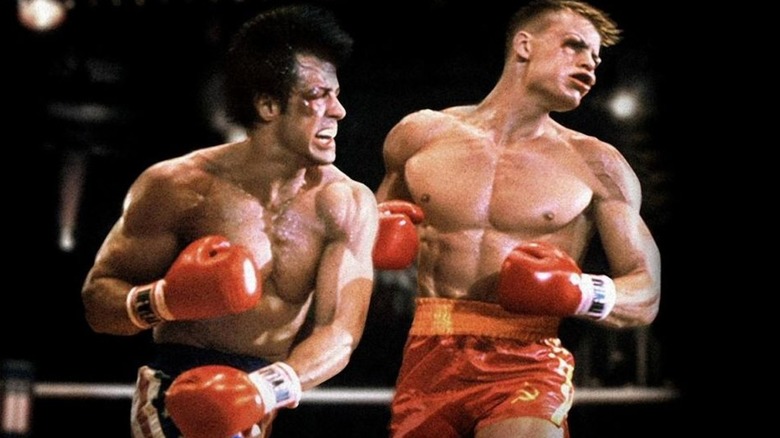
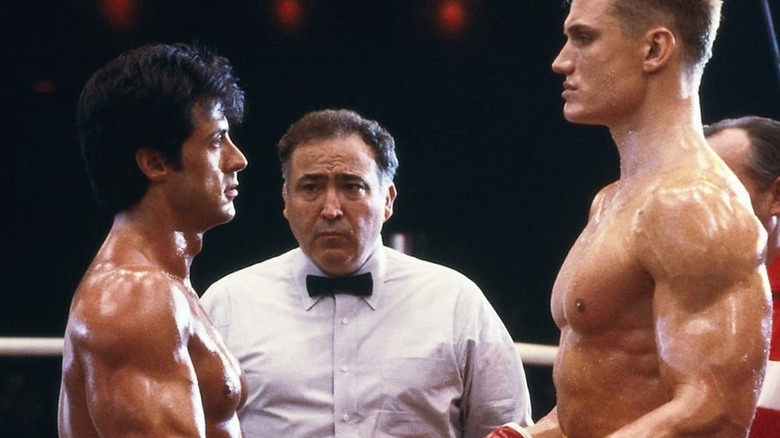
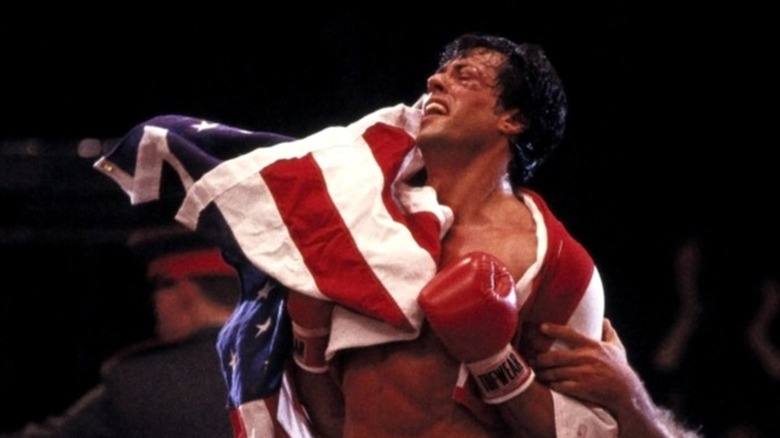
The Dangerous Lengths Sylvester Stallone Went To Make Rocky IV Feel Authentic

by Valerie Ettenhofer

Uber-patriotic "Rocky IV" might not be the most beloved entry in Sylvester Stallone's boxing franchise, but it's certainly one of the most memorable. It's known as the highest-grossing Rocky film ever, and for decades, it was also the highest-grossing sports film, period. You might also remember "Rocky IV" as the last bow for Rocky's buddy, Apollo Creed (Carl Weathers), whose death was the impetus for the recent "Creed" sequels. And yes, it was also the one with Paulie's (Burt Young) beer-serving robot companion.

Perhaps more than anything, "Rocky IV" will always be remembered as the film where Rocky knocks the Cold War out of the ring by going head-to-head with the murderous, borderline super-powered Ivan Drago (Dolph Lundgren). In a moment of high-octane triumph, Rocky beats Drago after 12 rounds on Soviet Union turf and gets the local crowd cheering for him. Apparently, that victorious ending almost never happened, thanks to a fight that got a little too real.

A Punch From Lundgren Put Stallone In The Hospital

In an interview with The Hollywood Reporter, Sylvester Stallone explained that he encouraged Lundgren to throw a few real punches during shooting. "Just go out there and clock me," he said, explaining that he wanted the first minute of the fight to be a true "free-for-all." As both director and star, Stallone was able to establish on-set expectations, and he apparently decided to mirror the intensity of the scene in real life. However, this decision appears to have backfired.

"Dolph Lundgren put me in the hospital for nine days," Stallone revealed. He told interviewers that he initially felt fine after filming, but as the evening wore on, he realized he had been seriously injured. For Lundgren's part, the Swedish actor says he didn't know about the injury until he spoke to a producer, who delivered it as a good-news, bad-news situation. "You've got two weeks off," he remembers the producer saying. "Sly's in the hospital."

On-Set Injuries Are A Serious Concern

Hollywood has a long and troubling track record of on-set injuries, but the blow that put Stallone in a hospital bed appears to have been a typical uppercut. Stallone was able to pinpoint the exact punch when reviewing footage later on. He says the blow "caught the ribs and hit the heart against the ribcage." Doctors described it as the kind of injury associated with a head-on collision.

Recent on-set tragedies such as the fatal shooting on the set of the Alec Baldwin-led film "Rust" cast anecdotes like this one in a more serious light. Hollywood is long overdue for a conversation about set safety, and Stallone's on-set injury highlights the often-fraught relationship between on-screen authenticity and real-life danger.

In fact, in his interview with The Hollywood Reporter, Sylvester Stallone actually implied that he was close to death during the "Rocky IV" incident, saying, "I knew I was in trouble when I showed up and nuns met you at the ICU." Lucky for everyone, last rites weren't needed, and Stallone has gone on to appear as scrappy underdog Rocky Balboa in four more films to date.

The 35th anniversary director's cut of "Rocky IV" is available now.

Read this next: The 20 Best Sports Films Of All Time Ranked

The post The Dangerous Lengths Sylvester Stallone Went to Make Rocky IV Feel Authentic appeared first on /Film.

01 Dec 21:49

All The Hawkeye Easter Eggs You Might Have Missed In Episode 3

by Danielle Ryan

Marvel comics have a long and complex publication history, and one way creators pay homage to all of the comics that came before is by putting tiny Easter eggs throughout their projects for fans to find. Each of the Marvel movies and shows is packed to the brim with Easter eggs for eagle-eyed fans to search for, and "Hawkeye" on Disney+ is no exception. The first two episodes provided plenty of clues about our holiday heroes, Kate Bishop (Hailee Steinfeld) and Clint Barton (Hawkeye), and how they relate to the rest of the Marvel Cinematic Universe. Details about the villains of "Hawkeye" were slim in those first two episodes, but episode 3, "Echoes," made up for that in spades. 

Let's take a look at the Easter eggs in episode 3, and what they could mean for the show and the greater MCU. On top of some fun comic callbacks, the episode features hints about the possible future big bad of the Marvel shows, who will be very familiar to fans of Netflix's "Daredevil." The focus here is on Easter eggs that aren't immediately obvious, not just characters pulled from the comics. After all, that would make pretty much every single thing an Easter egg, given that the comics are the origin for so many of these stories. 

So yes, we know that's Kazi and Echo, and we appreciate the linguistic stylings of the Tracksuit Mafia, bro. Those aren't Easter eggs, but we've found plenty of fun tidbits that are, so check them out below.

A Whole Bag Of Trick Arrows

Let's start with Team Hawkeye, because their Easter eggs this week are all of the fun and silly variety. When Kate and Clint manage to get away from the nefarious Tracksuit Mafia but end up in a wild car chase with Echo, it's a moment pulled straight from Hawkeye's most famous run in the comics. In the Matt Fraction and David Aja "Hawkeye" run from 2012, Kate and Clint end up in almost the exact same situation. Kate's doing the driving instead of Clint in the comics, but otherwise it's pretty stinking accurate. They're also forced to dig into Hawkeye's quiver of trick arrows after they run out of regular ones, another moment straight from that seminal comics run. There are all kinds of trick arrows in the quiver, including an explosive arrow, a plunger arrow that's more comical than useful, and two very special arrows that deserve extra attention. 

The Shrinky-Stretchy Pym Arrow

Apparently Hank Pym (Michael Douglas) is just handing out his tech like candy on Halloween, because Hawkeye's got one of those sweet Pym arrows in his quiver. Those arrows have the same size-changing technology as Ant-Man's suit, which means that Barton can shrink or grow whatever he shoots with those very special arrows. In this case, it's one of Kate's regular arrows, but he probably has more of those bad boys in his quiver. (He'd better, because if not that was a very strange moment to use such a rare item!) Hopefully we'll get to see him use one on a baddie to potentially hilarious effect. Just imagine a 50-foot Tracksuit Dracula. "Bro. Bro! Everything's getting really tiny, bro!" Or better yet, imagine a pocket-sized version that you could pick up and put in your backpack. Heck, one could even ride an arrow. Bro!

An Arrow For Your Math Homework

The other arrow that requires mention is the USB arrow -- the only arrow you have to fire three times before you get it in the right way. Kate only ever really threatens the baddies with it, since the worst it might do is poke out an eye, but the USB arrow has made several other MCU appearances. In the first "Avengers" film, Hawkeye used one to hack into SHIELD's helicarrier system while he was brainwashed by Loki (Tom Hiddleston). It also appeared in the "What If...?" animated series, carrying a virus that can wipe out the killer android Ultron. That's right, there's an alternate universe where the USB arrow saves the world. 

In the "Hawkeye" comic "L.A. Woman," Kate asks Clint about the usefulness of the USB arrow, and he mentions that it could hold a few music albums, lots of photos, or even very important tax records. The stick in the comics is only 256 megs of data space, so it's a safe bet that the one Bishop pulls out of the quiver on the Disney+ series is the upgraded version. I don't even think you can buy USB sticks that small anymore. 

The Coolest Of Classic Cars

Another pull straight from the Aja and Fraction comic run is the 1970 Dodge Challenger that Kate wants to steal as a getaway car. Barton takes one look at the gorgeous vintage vehicle and refuses to steal it, knowing full well that the chase they're about to get into will wreck it. Instead they boost a fairly basic model, though it would have been an absolute blast to see the comics come to life with the bright red roadster weaving through traffic as our heroes fire off trick arrows. Unfortunately, the car turns out to belong to the Tracksuit Mafia and ends up getting totaled anyway. Oh well, at least we got a glimpse of this absolute beauty of a car, which will hopefully reappear and maybe eventually end up in Barton's garage. He deserves something nice for Christmas. 

Also, the moving company branding for the Tracksuit Mafia's business in the background is absolute perfection. When you need a mover to help you pack up your things, just trust them, bro.

Kate Bishop's Curses Get Cut Off - It's A Marvel Tradition!

Mid-car chase, Kate fires off one of the more powerful arrows in Hawkeye's arsenal and blows up an SUV, sending it rolling down the street in a fiery explosion. In complete shock, she yells out "holy s***!," though the final sound is cut off before audiences get a chance to hear it. Cutting off characters mid-swear has become an MCU tradition, even stopping champion curser Samuel L. Jackson mid-"motherf***er" when he got Thanos-snapped in "Avengers: Infinity War." Kate is only the latest hero to have her adult language comically cut-off in order to maintain the family friendly tone of the MCU. While Marvel characters have done plenty of swearing in the non-Disney adaptations, like the New Line "Blade" movies or the Netflix "Daredevil" series, the folks at the House of Mouse aren't really keen on foul language. Kids watch these shows and movies, after all, and the last thing Marvel wants is parents angry because their children are dropping f-bombs like frat boys. 

Kate Designs The Classic Costume

After Kate and Clint manage to escape and get Clint's hearing aid fixed, they head to a diner for a little breather. While there, Kate shows Clint her design for a Hawkeye costume, and comic fans will recognize it as the original costume the comic character wore when he debuted in 1964. The original costume was bright purple and blue, featured wings on the mask, and had an "H" on the forehead for, you know, "Hawkeye." Clint isn't impressed with the design, telling Kate that it's too flashy and his wife would leave him if he ever wore something like that. Kate ends up suggesting something all-black, in a little tongue-in-cheek joke about the way the MCU has turned many of its classic costumes into black leather sameness. I, for one, would love to see Renner rocking purple tights.

Sloan, LTD Hints At Another Major Marvel Hero Joining The MCU

Curious about Tracksuit Mafia member Kazi (Fra Fee), Kate and Clint end up breaking into her mom's place. After all, Kate's mom is the CEO of Bishop Security, and security firms have loads of private information on people. After searching for Kazi, they discover that he's an employee of a company called Sloan, LTD. While there are plenty of folks named Sloan in Marvel's lengthy history, Nerdist points out that this one is most likely Jason Sloan. Sloan was a partner at the law firm Broderick, Sloan, and Cranston in the "Daredevil" comics. Attorney Matt Murdock, the secret identity of Daredevil, eventually joined their law firm, only to discover that both Cranston and Broderick were villains. (Cranston was even revealed to be supervillain Mr. Fear, who uses a fear gas that's similar to Scarecrow's in the "Batman" comics and movies. This is one of several hints that both Daredevil and his nemesis, Kingpin, could be joining the MCU very soon.)

Kate And Kazi, Sitting In A Tree?

While Kate and Clint are discussing their rather dire situation at the diner, Kate refers to Kazi as "the hot guy who spoke sign language." In the comics, Kazi is a much scarier character who wears face paint and calls himself the Clown, but there's still plenty of time for that to happen. In "Hawkeye #10," Kate and Kazi meet for the first time at a dinner party. The two have some serious chemistry and share a passionate kiss, though they're content with a little mystery and never cement a date or exchange phone numbers. Given how stilted some of the romance has been in other Marvel entries, there's potential for one twisted and tragic romance between the two characters, so it will be interesting to see how that plays out.

Echo's Dad Refers To The Dragons In Shang-Chi

We know where our heroes stand, but what about the villains? At the end of the second episode, we were introduced to Maya Lopez, aka Echo, a Marvel comics character first introduced in the "Daredevil" comics in 1999. The "Hawkeye" series diverges slightly from the comics version of Maya's backstory (more on that later), but we do get to see some heartwarming moments with her father, William Lopez (Zahn McClarnon) in flashbacks. While communicating with young Maya via American Sign Language, he uses the idea of dragons as a metaphor for her survival as a deaf person in a speaking and hearing world. She asks with childlike wonder if dragons are real, and he tells her that they live in another world. 

In "Shang-Chi and the Legend of the Ten Rings," we learned that dragons do in fact live on another plane, so Papa Lopez was on the right track. While it's unlikely that he knows the secrets of the mystical universe and was probably just trying to teach Maya truth from fiction, he still managed to be right about dragons, at least in this reality. He also calls Maya his "little dragon," hinting at her potential for greatness. 

Echo Is The Perfect Mimic

The episode gives us a great, subtle look at Maya's superpower: photographic reflexes. Anything she sees, she can perfectly replicate, and that includes playing musical instruments, martial arts, and dancing. In the comics, Echo's dancing is one of the few things that brings her happiness, and she combines it with her martial arts training. In "Hawkeye," we see her writing that she wants to learn the Brazilian martial art of capoeira, which combines dance-like movements with kicks, punches, and spins. We later see her practicing capoeira in a boxing ring, and she's quite good at it. Earlier, we see a young Maya watch another student in her martial arts class flip someone, and then she immediately replicates the move on her much-larger opponent. Maya ends up calling herself Echo not only as a play on her deafness, but because of her ability to "echo" everyone around her. Heck, in the comics, she even copies the near-inimitable Daredevil with ease. 

Echo's Trademark Handprint

In Marvel Comics, Echo's father is killed by Wilson Fisk, aka Kingpin, when she's a little girl. Her father was one of Kingpin's gangsters, and his dying wish was for Kingpin to raise his little girl. As such, Maya grew up with Fisk as a father figure, and grew to love him and trust him. In "Hawkeye," Maya's father is killed by the mysterious Ronin, and she sets out on a path of vengeance against him. This is a strong departure from the comics, which see Kingpin tricking Maya by telling her that Daredevil killed her father. This could have major implications for how Daredevil is woven into the MCU, as it would affect the relationship and eventual romance he has with Maya as his alter-ego, Matt. 

One important detail to note is that Maya's father touches her face and leaves a bloody hand print, directly referencing her backstory in the comics. When in her vigilante attire as Echo, she wears a white face-paint handprint on her face to honor her father's memory and serve as a reminder of why she fights. It's also a nod to her Indigenous heritage, where face paint can have significant cultural meaning. 

Ronin's Potential Identity

After Thanos snapped half of the world and Clint lost his family, the Avenger went rogue and started killing baddies as the masked vigilante Ronin. In the flashback sequence where Maya watches Ronin go on a criminal murder spree at the auto garage, it seems very much like she's watching Clint kill lots of her associates. That means that Clint could have very possibly also killed her dad.

In the episode, Kate asks Clint about Ronin's identity and he's a little evasive on the subject. It's also worth noting that the Ronin costume has been missing, so it's entirely possible that Clint didn't kill Maya's father or the rest of the folks inside of the garage. Given the swordsmanship, it could even be Kate's mom's fiancé, Jack Duquesne, who happens to be an exceptional swordsman. While we don't know who's under Ronin's mask in the flashback, we do know it will have major repercussions for "Hawkeye," the spin-off "Echo" series, and the rest of the MCU. It's also worth noting that in the comics, the original Ronin was Maya herself, and she later passed the mantle onto Clint. Maybe they're doing a switcheroo here, or maybe we're in for something new entirely. 

Who Is Echo's Terrifying 'Uncle'?

One of the most important figures in Echo's life is Wilson Fisk, or Kingpin, a crime boss who rules Hell's Kitchen with an iron fist. Kingpin hasn't appeared in the MCU, though he was the main villain of the Netflix "Daredevil" series, played to perfection by actor Vincent D'Onofrio. There are several hints that Fisk might be making his grand MCU entrance very soon, stacked within Echo's flashbacks. 

The first of these is a brief moment after young Maya defeats her opponent in martial arts class. Following her father's congratulations, a man reaches out and touches her face, telling her how wonderfully she did. Her "uncle" has the same tenor and laugh of D'Onofrio, and it's hard not to hold onto hope that he's returned in the role. The second comes in the flashback where Maya's father dies, as the name of the auto repair shop is "Fat Man Auto Repair." Given the Kingpin's size and the sense of humor of many of his underlings, it's pretty likely that the garage is a Kingpin-owned shop. Not that any of them would ever call Fisk "fat man" to his face, of course. 

There are several references in dialogue to Maya's "uncle," who is apparently much more frightening than either she or her father. There are hints at the connection between father and "Uncle," including a reference to their dedication to their criminal enterprise. All this Marvel fan wants for Christmas is one very scary bald man. 

"Hawkeye" is streaming exclusively on Disney+.

Read this next: Every Pre-MCU Marvel Movie Ranked

The post All the Hawkeye Easter Eggs You Might Have Missed in Episode 3 appeared first on /Film.

01 Dec 21:45

When is a bad review good for a movie? When it contains the line, "This is like Showgirls in a convent" [Spiffy]

01 Dec 21:44

Everything We Know About Last Friday So Far

by Ben F. Silverio

For over 25 years, the "Friday" movies have been intricately woven into the fabric of pop culture. Known as the launchpad for Ice Cube's acting career, bits and gags from the original film are used today with many not even knowing where "Bye Felicia!" even comes from. And based on the amount of reboots and revivals out there today, you would think that another "Friday" sequel would be a no-brainer. So where is it?

Back in 2011, Cube and New Line Cinema announced that they were developing "Last Friday." Intended to be the last movie in the series after sequels "Next Friday" and "Friday After Next," the star/writer was even looking to bring Chris Tucker back into the fold in order to give Craig, Smokey, Day-Day, and the rest of the gang a proper send-off. Yet the project remains in limbo after all this time. Now as things continue to move at a snail's pace, here's everything that we know about "Last Friday" so far.

Ten Years Later

Since the final chapter of this cult favorite series was announced, there has been very little movement. Occasionally, Ice Cube will chime in during an interview or on Twitter to inform the public that he's still working on it. For example, the legendary rapper tweeted in 2016, "We had a meeting. Can't do 'Last Friday' unless we can do it right. Ball is in New Line Cinema's hands. Bat is in mine."

While appearing on Kevin Smith's "Smodcast" in early 2021, Cube shared that he used that bat to knock the script out of the park. Twice. But the studio kept sending back copious notes about why they wouldn't work.

"One they just wouldn't do because it was before cannabis was legal. Craig and Day-Day had a dispensary and they had a flash mob in there who stole all the sh*t. We ended up f***ing up some kids and going to jail. In jail, we see all the motherf***ers we put there... Our whole thing was trying to survive in jail with all these motherf***ers locked in with us. Then we get sent to rehab. I had the rehab run by Smokey and it's a f***in' scam. They're back there smoking all the dope they find on people."

Details on his second pass at the script aren't as readily available, but Cube thought it was absolutely perfect. He even gave it a chef's kiss when talking about it with Silent Bob. The studio disagreed though. They were apparently hung up on a love story element that wasn't even that prominent.

So it was back to the drawing board yet again. Unfortunately, this rewrite would have to take out a few notable characters.

Rest In Peace

On Oct. 29, 2019, John Witherspoon, who played a number of memorable roles including Willie Jones in the "Friday" series, died of a heart attack at 77 years old. Then, on Dec. 10, 2020, Tommy "Tiny" Lister died from coronary artery disease after battling COVID-19. Known to wrestling fans as Zeus and Z-Gangsta thanks to his battles against Hulk Hogan, Lister also portrayed the "Friday" franchise's neighborhood bully, Deebo.

Losing two prominent members of the "Friday" cast is a huge blow to fans and the filmmakers alike. Many were left extremely disappointed because New Line had plenty of time to greenlight the project before Witherspoon and Lister passed away. Now Ice Cube is forced to reimagine "Last Friday" without them. Understandably, it doesn't seem like he's ready to do so just yet.

Speaking to Mike Reyes of CinemaBlend while promoting "The High Note," Cube gave a passionate response when asked for an update on the long-gestating sequel.

"I haven't been able to write since John Witherspoon passed. It's just been very difficult to even pick up that project because I've been trying to get it made for over ten years now with two scripts and a bunch of dumb notes that, in the end, wouldn't have made much of a difference. So I'm just a little frustrated with the process. I would hope that New Line would do the right thing so that we can get the movie made for real. But I'm still fighting the good fight. There's still a movie to be made."

And he is still fighting to this day.

Ice Cube Vs. New Line

The most recent update on "Last Friday" came from a new report from The Wall Street Journal. Over the summer, Ice Cube really stepped up his efforts to regain the rights to the "Friday" series from New Line (a Warner Bros. company), plus two other movies that he made at Warner Bros. — "All About the Benjamins" and "The Players Club." A letter from Cube's lawyer reportedly stated that the studio provided excessive notes in order to delay production. "We're right there at the finish line, and they don't pull the trigger," he said. The studio called these claims are "revisionist history" and that the delay is due to the star's "unwillingness to engage with the studio."

The report also notes that Ice Cube feels that there's a possibility of discrimination at play on the part of the studio. He feels that his work is "'habitually underfunded in comparison with projects featuring white casts and creative teams." Naturally, the studio dismissed these accusations by stating that they support diverse voice and storytellers, but the multi-hyphenate performer is determined to maintain this course of action and take "Next Friday" elsewhere: "I'm going to go somewhere else and make a hit and embarrass them."

Gotta Get Down On Friday

Since that WSJ report was released, there doesn't seem to be any updates on "Last Friday." It looked like Ice Cube had a number of projects lined up to fill his schedule while waiting for the fate of the "Friday" rights get sorted out. However, due to his recent refusal to get vaccinated in order to work on certain projects, his load might be lightening up very soon and he'll have more time to dedicate to this ongoing battle with New Line/WB. At this point, time will tell if cameras ever roll on this highly-anticipated sequel.

Read this next: 14 Awesome Comedies That Never Got Sequels

The post Everything We Know About Last Friday So Far appeared first on /Film.

01 Dec 21:43

Remembering Quibi, One Year Later After Its Tragic Demise

by Witney Seibold

It has been one year since Quibi shuttered its doors after a brief but exciting (to this viewer) seven months in operation. Launched on April 6, 2020 and shut down December 1 that same year, Quibi has gone on to be widely derided for being a $2 billion dollar blunder destined to go down in the record books as one of the most misguided business ventures of all time. It is already being compared to the Edsel, New Coke, Bic for Her, The UPN, or Nintendo's Virtual Boy, and it won't be long before it is forgotten entirely. This is a sad moment of remembrance for the platform's small, but passionate, legion of followers (in the interests of full disclosure, I own maybe the only Quibi t-shirt in existence). So let us take a few moments to give a short eulogy to the Little Streaming Service that Could, But Didn't. 

Remind Me Again, What Was Quibi?

The idea for Quibi must have come to founders Jeffrey Katzenberg and Meg Whitman after they had observed people on a bus watching TikTok videos. One can even hear the conversation they had over a board room table festooned with croissants: Say, Jeff, people seem to like watching short-form amateur entertainments on their phones while in public. They sure do, Meg. Wouldn't it be keen if we offered high-end, professionally made films and TV shows in the same format? Yes, very keen, Jeff. We could offer it with cutting-edge video technology, people would be able to shift the shows' aspect ratios by turning their phones, and no video would be over 10 or 11 minutes in length. Just little quick bites. Meg! Did you say QUIck BItes? 

And, lo, Quibi was born. 

The idea behind Quibi was individual public consumption. Their short-form content model was intended for people to watch while on a bus, in line at the store, or hanging around in waiting rooms. And, frankly, this is not a bad idea. Why not have shows and films specifically designed to be broken into bite-size comestibles, made for art consumption on the go? Many, after all, do ingest their favorite videos in this fashion, as seen by the popularity of TikTok or the number of views on certain short YouTube videos. If you want to watch a hot new film starring Liam Hemsworth and Christoph Waltz, based in the classic story "The Most Dangerous Game," now you can watch it in specially designed chapters. 

Quibi was, in many ways, a resurrection of the classic theatrical serial, constructing longer-form stories over the course of seven to 10-minute chapters. Only updated for modern, portable media consumption habits. And all for only $5 a month.

And There Was Some Excitement

The announcement of Quibi was met with mixed-to-negative reactions. Immediately, film purists pointed out that watching an entire feature film on a telephone was antithetical to the very notion of cinema, and more than one personal acquaintance of mine announced that they would never subscribe to such a service because they never want to watch a film that way. It's likely many of us were still burned by Sony's previous attempt, back in 2007, to break existing TV shows into smaller "minisodes" meant for viewing on MySpace. That, too, was derided. Heck, even the name was mocked.

It certainly didn't help matters that Quibi was announced as a phones-only platform, and would be offering no in-home, for-television app. If you wanted to see a Quibi show, you had to watch it on a palm-size telephone screen. There was also a general attitude that Quibi was a misguided attempt by Boomers (Katzenberg was born in 1950, Whitman in 1956) to elbow their way into the Gen-Z gestalt; a "How do you do, fellow kids" meme in a $2 billion media venture form. Didn't they understand that the appeal of TikTok and YouTube was that it felt homemade and sincere? Quibi, in comparison, couldn't possibly be sincere. People scoffed at the conceit that such a platform could possibly compete with both Netflix and with TikTok simultaneously. The ambition, it seemed, was far too large. 

But, yes, there was some enthusiasm. Mostly in the shows offered in Quibi and in the talent it attracted. Quibi offered no reruns of existing shows, nor recut versions of existing movies, meaning they needed many, many hours of original content to fill their coffers, and offer a wide variety of programming right out of the gate. They launched with some high-profile titles, and announcements for even larger shows and films down the road. 

Some Of Quibi's Launch Titles

Among the launch titles on Quibi were a new version of "The Fugitive" with Kiefer Sutherland, a new version of "The Most Dangerous Game," the dark police drama "#FreeRayshawn," the '90s coming-of-age-crime story "When the Street Lights Go On," and a new horror serial series led by Sam Raimi called "50 States of Fright," which was to feature 50 horror stories, one for each of the United States. Raimi tackled the debut episode devoted, of course, to Michigan. There were also a collection of comedies, including, notably, the revival of "Reno 911!," the star-studded Agatha Christie spoof "The Mapleworth Murders," the film "Die Hart," in which Kevin Hart played himself, and the gloriously bizarre "Dummy," starring Anna Kendrick as Cody Heller, the real-life girlfriend of "Rick and Morty" creator Dan Harmon, and the relationship she had with Harmon's talking silicone sex doll.

Additionally, Quibi offered comedy news shows, a few weird reality programs -- "Murder House Flip," a home improvement show specifically for homes where murders took place, was certainly a sight to behold -- and even a few game shows, including a revival of "Singled Out." There was a Rotten Tomatoes film review show -- and video film reviews can fit perfectly into their 10-minute format -- as well as an animated daily horoscope program (which was occasionally funny), a sex advice program (Quibi was generally PG-13 to R-rated content), and just straight up news from the BBC, Telemundo, E!, Polygon, Vox, and NBC.

Some projects never came to fruition: I was looking forward to "Spielberg's After Dark," an anthology series, directed by Steven Spielberg, that was only going to be available on the platform during nighttime hours. You couldn't watch it during the day.

Yes, they were a real platform.

The Tech Experiment

Quibi's tech -- which was always impeccable, by the way -- allowed for shifting aspect ratios, leading to some interesting creative choices for filmmakers. In what might be the platform's best film, Zach Wechter's and Jack Seidman's "Wireless," audiences could watch the central drama of the feature by holding their films in landscape mode -- where we would see Tye Sheridan frantically making phone calls from a truck he is driving down a remote, snowy road -- but then hold their phones upright to see whatever was on the main character's phone in that moment in the film. 

You could switch back and forth as much as you wanted, going so far as to see what radio station he was listening to, and even check on his phone's battery life ... which would become a plot point later in the film. This is a clever way to add an element of interactivity to a film, while still allowing it to play out as cinema. It's also constructed in such a way that it cannot be consumed any other way; I don't know how something like "Wireless" could play on a television. 

In terms of the upright-screen aesthetic, no other film on the platform took advantage better than Mary Harron's horror film "The Expecting," an poverty-forward, kitchen sink riff on "Rosemary's Baby." When viewing a film in a more tradition 2.39:1 Scope aspect ratio, filmmakers tend to follow the Rule of Thirds, that is: composing shots so the focus of the frame is one-third of the way across the screen. 

With an upright aspect ratio of 1:2.39, all the action is now upright. As such, a frame now has landscapes that rest at the very bottom of a tall sky. People are now boxed in, their whole bodies on display from top to bottom, the edges of their world right next to them. Harron had an eye for filling the frame in a new way, and "The Expecting," while not an entirely original tale, explored a cinematic aesthetic that existed at 90 degrees from what our eye is used to. Why not free ourselves of certain aspect ratios? Technology allows for so much more.

The Princess Bride Remake

"Home Movie: The Princess Bride" was, as it would eventually be revealed, the nexus of why Quibi worked, and a peek as to the biggest reason why it failed. 

In "Home Movie: The Princess Bride," a slew of celebrities were asked to costume themselves and act out -- in their own homes -- an assigned scene or two from Rob Reiner's beloved 1987 classic. Everyone from Seth Rogan to Penélope Cruz, from Fred Savage to Jennifer Garner, from David Oyelowo to Finn Wolfward to Jack Black to Retta to Zoe Saldana to Patton Oswalt to Charlize Theron to Tiffany Haddish to Elijah Wood to Javier Bardem to Common to Chris Pine ... you get the idea. 

Anyway, each of them "sweded" their own scene or two out in public parks, or in their own personal living rooms and backyards, each bringing their own take to the material. Some did direct imitations, others did unusual riffs. All were passionate. The film began with Fred Savage as the grandson (reprising his role) and Rob Reiner as the grandfather. The film ended with Rob Reiner as the grandson ... and Carl Reiner as the grandfather. This was the last thing Carl Reiner filmed before his death in June of 2020. I defy you not to feel at least a little wistful.

This home movie approach understood the function of "The Princess Bride" as an intergenerational tale passed from grandfather to grandson. In re-enacting it on Quibi, the actors are become part of a larger bardic tradition of fairy tale and myth, now updated for the 21st century technological milieu. More than just fan pandering, "Home Movie: The Princess Bride" is part of the myth. 

But Fail It Did

But the very existence "Home Movie: The Princess Bride" reveals maybe the main reason why Quibi tanked: COVID-19. The reason "Home Movie" was filmed the way it was because filming of all other projects had shut down due to the pandemic. As such, actors, like the rest of us, were confined to their homes, unable to visit the set of whatever they might had been working on. In their idle time (when they weren't singing "Imagine," blecch), Quibi came to their door and asked of they could cobble together a classic film at home. 

But that was the problem: Everyone was at home. As such, Quibi, a platform meant for art consumption on the go, was now only at home as well along with every other streaming platform. It's hard to sell Quibi and its unique proscenium when the entire catalogues of Netflix, Prime, and HBOmax are awaiting. Heck, it was even a time to finally catch up on The Criterion Channel, Ovid, and Night Flight. It was easy to ignore Quibi -- launched into a mosh pit of mockery -- when all the films you had meant to catch up on were waiting for you.

And Flights Of Angels Sing Thee To Thy Rest

It has been one year since Quibi shut its doors forever. After months of quiet silence, The Roku Channel stepped up and bought the Quibi catalogue, repackaging them as "Roku Originals." Watching the Quibi shows on a TV feels ... off. You can tell something is missing. Plus, the Quibi tech allowed for a pretty smooth transition from one episode to the next. Every single streaming service is comparatively clunky and difficult to navigate (don't get me started on the murderous frustration sparked by interacting with Hulu or Paramount+). Quibi was smooth, it worked well, and it was fascinating. 

Its serialized format was fun and left audiences, perhaps, more accepting of sillier film tropes. While lambasted for being a cynical enterprise meant to approximate the patois of hip-talking media-soaked Zoomer youths, Quibi -- a $2 billion dollar venture, mind you -- actually managed to feel earnest. Its struggle made its earnestness show through, and its failure left interesting stories, weird, lost media experiments, and a small but devoted fan base that consists of me and only me. 

Failure is far more interesting than success. And while we can all chatter about whatever the Disney might be doing in its quest for indifferent, Big Brother-like global dominance, the legend of Quibi will always loom quietly in the shadows, ready to remind us all that ambitions can be cut down, and that great art can remain undiscovered. It's not a constant reminder, mind you, but it can give us a quick bite. 

Read this next: The Best Movies Of 2021 So Far

The post Remembering Quibi, One Year Later After Its Tragic Demise appeared first on /Film.

01 Dec 21:43

Alec Baldwin on Rust killing: "The trigger wasn't pulled. I didn't pull the trigger."

by David Pescovitz

"The trigger wasn't pulled. I didn't pull the trigger."

That's what Alec Baldwin said in the above clip from an ABC News interview by George Stephanopoulos that will air on Thursday night.

"I would never point a gun at anyone and pull a trigger at them — never," Baldwin said. — Read the rest

01 Dec 20:09

This dog comes up with a great solution when a cat takes over his bed

by Carla Sinclair

What should a pup do when its feline housemate takes over its bed? Some dogs might fight for their rightful property, while others might sulk and walk away. But this Great Pyrenees named Dill has the perfect solution — simply use the soft furry intruder as a cushion, much to the kitty's chagrin. — Read the rest

01 Dec 20:02

The Thing's Classic Chest Chomp Was More Real Than You Think

by Sandy Schaefer

2011's "The Thing," a prequel to John Carpenter's 1982 flop turned cult classic sci-fi horror film of the same name, is a perfectly decent thriller that committed the cardinal sin of not being as good as its predecessor. Really, there's a lot to like about the former, from Mary Elizabeth Winstead getting her action hero strut on (complete with a flamethrower) as the movie's protagonist to the way it recaptures the chilly atmosphere and paranoid mood of Carpenter's original. That said, there is one area where 1982's "The Thing" has the clear advantage: the non-CG effects used to bring the titular, shape-shifting alien creature to life.

To be fair, "The Thing" prequel director Matthijs van Heijningen Jr. and his production team (including creature effects co-designer and co-creator Alec Gillis) made extensive use of practical monster effects during filming, only to have most of them replaced with CGI during post-production, as noted by Sci-Fi Now. While digital effects aren't inherently inferior to practical ones and vice versa, in this case, the end result fell well short of the bar set by Carpenter's "Thing" — a movie that had some truly gross monster imagery, including a particularly nasty jump scare that was much more "real" than many people realize on their first watch (or later re-watches for that matter).

You Gotta Be F***in' Kidding...

The scene in question finds the film's lead, helicopter pilot R.J. MacReady (Kurt Russell), in a standoff with the other surviving workers at a research station in the Antarctic, all of them questioning whether the other is secretly The Thing in disguise. The tension then causes one of the men, Norris (Charles Hallahan), to seemingly suffer a heart attack. Except, when the station's on-hand medic, Dr. Copper (Richard Dysart), tries to defibrillate him, Norris' chest suddenly bursts open and turns into a giant mouth, sinking its pointed "teeth" into Copper's forearms and ripping off his hands.

In order to ensure this grotesque "chest chomp" was as convincing as possible, according to Film School Rejects, Carpenter and his crew used a hydraulic mechanism to make Norris' fake body cavity snap open and shut like a cartoon Venus flytrap. They also created two realistic brace-supported replica arms — utilizing dental wax for the bones and Jell-O and gelatin blood tubes for everything else — and attached them to Joe Carone, a double-amputee who served as Dysart's stand-in for the close-up of Copper's arms being bitten and torn off. Carone can also be seen wearing a mask modeled after Dysart in a wider shot that quickly follows, showing Copper screaming in agony and flailing his bloody stumps.

Again, practical effects can be just as sloppy as bad CGI. In this case, though, some useful tools and a healthy dose of inventiveness came together to give Carpenter's "Thing" one of its most memorably sickening scares.

Read this next: The 20 Best '80s Horror Movies Ranked

The post The Thing's Classic Chest Chomp Was More Real Than You Think appeared first on /Film.

01 Dec 20:02

The Coen Brothers Consider This Their Worst Movie

by Witney Seibold

Starting with their feature film debut in 1984, Joel and Ethan Coen have been power players in the world of American indie cinema. Throughout the late '80s and the whole of the '90s, the filmmakers put out a ling string of critically revered and Award-winning films. Their 1996 film "Fargo" still tops lists of the best films of its decade, "Barton Fink" has been called one of the best films ever made about screenwriting, and both 1986's "Raising Arizona" and 1998's "The Big Lebowski" are still on regular rotation at midnight movie houses. 2000's "O Brother, Where Art Thou?," a 1930s retelling of "The Odyssey," boasts one of the best soundtracks of all time and after a series of debated letdowns in the early 2000s, they won the Oscar for Best Picture with "No Country for Old Men."

Collectively, the Coen brothers' films have garnered 39 Oscar nominations and 6 wins. Editorial: It should have been 7, as "When a Cowboy Trades His Spurs for Wings" from "The Ballad of Buster Scruggs" was a great, great song.) But how do the filmmaking duo rank their own movies, and which one do they think is the worst? 

The Crude One

The aforementioned 1984 debut was "Blood Simple," a crime film made for a mere $1.5 million, starring John Getz, M. Emmet Walsh, Dan Hedaya, and Frances McDormand in her own film debut. It tells the story of a bar owner, an affair, and a string of bloody vengeful killings. The film climaxes with a tense cat-and-mouse sequence with McDormand and Walsh ... and I will not reveal anything more, as the twists and turns of "Blood Simple" are a large part of the fun. 

The film is still largely celebrated, and was given very positive reviews when it came out. Kenneth Turan of The Los Angeles Times called it "A dazzling comedie noire, a dynamic, virtuoso display by a couple of talented fledgling filmmakers who give the conventions of the genre such a thorough workout that the result is a movie that's fresh and exhilarating." /Film even declared "Blood Simple" to be one of the best films in the history of the Sundance Film Festival. In 2016, "Blood Simple" was given the Tiffany treatment by The Criterion Collection

This is the film, however, that The Coen Brothers consider their worst, and have described as "pretty damn bad."

'Pretty Damn Bad'

In the 2000 book "My First Movie: Twenty Celebrated Directors Talk About Their First Film," edited by Stephen Lowestein, Joel Coen was interviewed about "Blood Simple" and he revealed his ambivalence toward his debut. Like all debut filmmakers, the Coens were evidently still learning the ins and outs of filmmaking, and, to Joel's eyes, still had a way to go. Ethan went so far as to describe the film as "crude, there's no getting around it." Joel continued, clarifying: "On the other hand, it's all confused with the actual process of making the movie and finishing the movie which, by and large, was a positive experience ... You never get entirely divorced from it that way. So, I don't know. It's a movie that I have a certain affection for. But I think it's pretty damn bad!"

Anyone who makes art can likely relate. You may not like what you made, but you can be grateful for the effort it took, the growth you went through, and the overall experience of assembling something yourself. They may not want to watch it or celebrate it the way critics do, but the Coens still appreciate it as a learning exercise.

Read this next: The 15 Funniest Movies Of The Decade

The post The Coen Brothers Consider This Their Worst Movie appeared first on /Film.

01 Dec 20:02

Coyote Vs. Acme: Release Date, Cast, And More

by Danielle Ryan

(Welcome to ...And More, our no-frills, zero B.S. guide to when and where you can watch upcoming movies and shows, and everything else you could possibly stand to know.)

Some coyotes just can't catch a break. Wile E. Coyote, the cartoon canine created by animator Chuck Jones and writer Michael Maltese, can never seem to catch one. He can't ever catch the Roadrunner, either, despite using many contraptions and traps from the fictional Acme corporation in his attempts. Warner Bros. is set to release a new cartoon and live-action hybrid film, "Coyote vs. Acme," highlighting the efforts of the wily Wile E. Here's everything we know about the upcoming movie, which might finally give this disastrous dog his day. 

Coyote Vs. Acme Release Date And Where You Can Watch It

The Roadrunner may be speedy, but this movie isn't going to be getting here anytime soon. "Coyote vs. Acme" is set for release exclusively in theaters on July 21, 2023. 

What Is Coyote Vs. Acme?

While Warner Bros. hasn't released any information on the plot of "Coyote vs. Acme," a cursory Google search reveals that writer Ian Frazier has a collection of comical essays called, you guessed it, "Coyote V. Acme." The titular tale is comprised of "the opening statement of an attorney representing Wile E. Coyote in a product liability suit against the Acme company, supplier of unpredictable rocket sleds and faulty spring-powered shoes." 

Whether or not Warner Bros. are going to use that plot or not is anyone's best guess, but a courtroom drama between a cartoon coyote and living, breathing humans sounds like a weird, fun adventure. They might take it a step further, with the coyote trying to use his "talents" on the Acme company, turning their own faulty equipment against them. Unfortunately, Roadrunner could not be reached for comment.

Coyote Vs Acme Writers, Director, And More

Writers Jon and Josh Silberman, who have worked on shows like "Living Biblically" and "It's Always Sunny in Philadelphia," are writing the movie's script. "The LEGO Batman Movie" director Chris McKay is set to produce. 

There's no word on how the live-action and animated parts will be mixed, or what style of animation they'll use. Something like "Who Framed Roger Rabbit," with two-dimensional cel-shaded animation alongside live-action footage, could be a lot of fun. They'll probably go with something a little closer to the "Sonic the Hedgehog" movie or "Space Jam: A New Legacy," trying to make the two worlds blend seamlessly, which is fine but not as artistically interesting. 

Coyote Vs. Acme Cast

There's no announced cast for "Coyote vs. Acme" yet, though more details should be coming as we get closer to production. 

Read this next: The 20 Best Westerns Of All Time

The post Coyote vs. Acme: Release Date, Cast, and More appeared first on /Film.

01 Dec 20:02

Who Is Kazi In Hawkeye Episode 3? The Villain's Significance Explained

by Jeremy Mathai

Marvel's "Hawkeye" has gotten off to a fast start and hit the ground running, with the first two episodes on Disney+ quickly covering Kate Bishop's origin story and wasting little time bringing the young hero (played by Hailee Steinfeld) together with Jeremy Renner's Clint Barton. The two archers have since found themselves mixed up with the formidable Tracksuit Mafia, a Russian street gang that is bent on revenge against the mysterious Ronan -- who we know to be an undercover and rage-filled Clint, during his bleakest low point in the period after Thanos' Snap -- for the death of their leader, Maya Lopez's father. But throughout their efforts to locate their target, Kazimierz "Kazi" Kazimierczak has taken a hands-on role in the action ... only to step back into a second-in-command position upon Maya's appearance on the scene late in episode 2, helpfully translating from American Sign Language to English and vice versa for his hearing impaired boss in episode 3.

Kazi's role, particularly in the third episode titled "Echoes," may have fans wondering about his possible significance in future episodes. As Marvel Studios has done many times before with previous movies and shows, this supporting character comes loaded with quite a bit of backstory and history from Marvel Comics that could add several layers of context to his live-action appearance in "Hawkeye."

Spoilers for the first three episodes of "Hawkeye" and potential spoilers for future episodes follow!

Kazi In The Comics

The cast and crew behind "Hawkeye" have made no secret of their comic book influences, primarily drawing inspiration from Matt Fraction and David Aja's acclaimed "Hawkeye" series. It's no surprise, then, that the Tracksuit Mafia have played a main antagonistic role thus far in the Disney+ series, though with the usual MCU-styled adjustment behind their motivation to account for the well-established continuity in the movies -- particularly concerning Hawkeye throughout the events of "Avengers: Endgame." Maya Lopez (Alaqua Cox) and Kazi (Fra Fee) have become the two main faces of the Tracksuit Mafia gang, with perceptive fans who keep close tabs on Marvel Studios projects already aware of plans for a spin-off series focused entirely on Maya Lopez, AKA Echo.

When it comes to Kazi, however, the situation is slightly more complicated. First appearing in the pages of Hawkeye (Vol. 4) #8 in 2013, Kazimierz Kazimierczak is established as a hitman for hire who is burdened by an immensely tragic upbringing. Originally brought up in the circus, the deaths of his entire family and his dear friend eventually turned Kazi into a coldblooded killer. Quickly making a name for himself among the criminal underground -- his clients have included villains such as the fearsome Kingpin (who may or may not be set up for an appearance in this "Hawkeye" series), Leland Owlsley (who appeared throughout the first season of Netflix's "Daredevil" series), and ultimately the Tracksuit Mafia (referred to as "Tracksuit Draculas" in the Fraction/Aja series) to take out Clint Barton for good.

In a nod to the turmoil of his past, Kazi adopts the moniker of "Clown" while doing his dirty work, even going so far as to dress up his face Joker-style in white makeup. For fans who may be concerned about a potentially reduced role in the Disney+ series, however, feel free to breathe a little easier. Definitely don't click through if you're wary of spoilers, but a since-deleted Instagram post by Fra Fee late last year certainly points towards an accurate and very faithful rendering of this character in upcoming episodes.

The weekly episode release means we have plenty of time to dig into Easter eggs, character details, and speculative theories. In the meantime, you can watch (or re-watch) the first three episodes of "Hawkeye" currently streaming on Disney+.

Read this next: 11 Marvel Comics Villains We Really Want To See In The MCU

The post Who is Kazi in Hawkeye Episode 3? The Villain's Significance Explained appeared first on /Film.
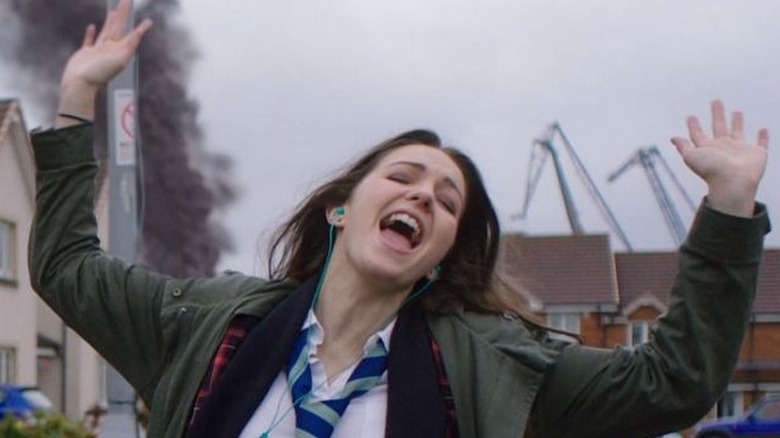
01 Dec 20:02

Will There Ever Be A Christmas With The Kranks 2? Here's What We Know

by Witney Seibold

One of the best reviews of any piece of media was Andy Klein's review of the 2004 film "Christmas with the Kranks," printed in the now-defunct CityBeat weekly. Because of the foibles of online archiving and the shuttering of many news outlets in 2004, CityBeat articles are no longer available. But in his review, Klein likened Joe Roth's anti-classic to the rise of fascism in Europe, holding the film's Dan Aykroyd character as leading a Nazi-like neighborhood charge against the people on their block -- the leads, played by Jamie Lee Curtis and Tim Allen -- who would dare, DARE, to buck the ultra-moneyed norms of Christian holiday conformity. It's one of the funniest reviews I have had the pleasure to read, and was very wise about how toothless Hollywood comedies tend to come with some very unsavory messages about conformity buried not so far under the surface. 

Christmas films though, however bad they may be, tend to become canonized and re-watched every holiday season as our vision becomes blurred by too much brandy and sentimentality. As such, some pretty darn terrible films -- like, say, "Jingle All the Way" or "Dr. Seuss' How the Grinch Stole Christmas" -- have become canonized as classics. While "Christmas with the Kranks" was panned upon its release, and currently holds an inauspicious 5% approval rating on Rotten Tomatoes (making it the second worst-rated Christmas film on the site behind only 2013's "The Nutcracker in 3D"), it's not out of the realm that it would have been cherished by a certain age group at a certain time, only to be reconsidered as an important classic today. 

I mean, if it happened with "Space Jam," it can happen to anything.

Krank Harder

Will there be a "Christmas with the Kranks 2?" Short answer: No. Long answer: Nooooooooo. There have been no rumors or petitions to have another visit to the Kranks' house. 

"Christmas with the Kranks," based on the 2001 novel "Skipping Christmas" by John Grisham (yes, that John Grisham) tells the story of Luther and Nora Krank (Allen and Curtis) as their adult daughter leaves home to work for the Peace Corps in Peru. She will be absent for Christmas, and Nora and Luther realize that much of their traditions -- over-decorating, competing in decoration competitions to please their unofficial homeowners association, overspending on gifts -- were all done for her benefit. Rather than put the logistical and financial pressure on themselves (Luther figures they spend at least $6000 every year on Christmas stuff), they elect to skip Christmas for the year, eschewing decorations and celebration in favor of a nice vacation abroad. 

But wouldn't you know it, pressure arrives from without in the form of Vic Frohmeyer (Aykroyd) who accuses them of being Grinches who are ruining, RUINING I say, the entire neighborhood's vibe with their lack of decoration. What follows is not a tale of a neighborhood allowing its members to follow their bliss and celebrate in their own way, but a madcap farce forcing the Kranks to come back around. Which they eventually do when they learn their daughter is returning home for Christmas after all. 

The film, it seems, wants audiences to be ideologically on Frohmeyer's side, rooting for him to turn the Kranks into Christmas-lovers once again. He doesn't ask if the Kranks might be Jehovah's Witnesses now, or Jewish, or even atheists. Christmas must be celebrated in the neighborhood style. "Christmas with the Kranks" would make a good double feature with Michael Haneke's 2009 proto-fascist yarn "The White Ribbon."

The Strange Caprices Of Streaming

Thanks to the caprices of streaming, however, it's harder and harder to predict what will gain a cult following. In the home video era, many films didn't gain an audience until years after their release, and some gained traction due to insistent over-rotation on cable TV. In the streaming era, classic films and TV shows can suddenly appear in front of modern audiences where younger audiences, perhaps not previously familiar with the shows, may now run marathons. Hence why Gen-Z kids are exploring "Friends" for the first time, or why you occasionally hear news stories about how "The Incredibles 2" is now topping ratings charts merely because it's about to leave Netflix and head over to Disney+. 

"Christmas with the Kranks" was included on FreeForm's 25 Days of Christmas Marathon in 2020, so its reputation may currently be in the process of being salvaged. All it will take is more and more appearances of the film on various streaming services, and perhaps -- distantly -- it will gain a toehold. "Christmas with the Kranks" is currently available to rent on various streaming services, and is only available for free for those who subscribe to Starz and Hoopla. Not the ideal position to gain a cult via ubiquity. But maybe "Christmas with the Kranks: The Desolation of Smaug" awaits in the future nonetheless. 

Until then, it lurks.

Read this next: The 14 Best Christmas Movies Ranked

The post Will There Ever Be a Christmas With the Kranks 2? Here's What we Know appeared first on /Film.
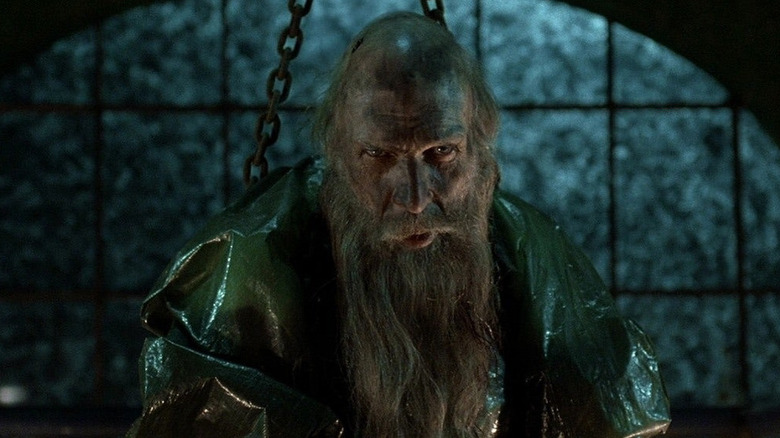
01 Dec 20:01

The Matrix Resurrections TV Spot Gives You Déjà Vu, Shows Off New Footage

by Jeremy Mathai

One way or another, audiences probably aren't ready for everything -- or maybe even anything -- that "The Matrix Resurrections" has in store for us. Those who don't have memories of the original "Matrix" trilogy fresh in their minds would likely be well-advised to, well, first and foremost revisit those movies while you can. After that's done, however, it'd probably be wise to expect nothing except the unexpected with this legacy sequel, which certainly looks more and more as if it will follow its own radical path rather than taking the conventional route of what audiences would want from a fourth "Matrix" film. Our latest look at "Resurrections" comes courtesy of a new television spot. Unlike the previous trailers, this footage remixes famous iconography from the originals with intentional echoes from the new sequel. Check it out below!

The Matrix Resurrections TV Spot

The latest generation of moviegoers who are obsessed with "parallels" in film are going to have a field day with this, let's just put it that way. Serving as a sort of crash course in the major events of the previous movies, this "Matrix Resurrections" TV spot flexes its editing muscles and puts several cleverly juxtaposed sequences side-by-side to show off just how carefully (and intentionally) composed the Wachowski sisters designed these movies to be. Fans of the original will remember the explanation of how the sensation of déjà vu, represented by a certain black cat in the first film, indicates a glitch in the Matrix. This is emphasized once more at the start of this clip, with a familiar-sounding voiceover by someone who sounds like Jessica Henwick's new character named Bugs.
As much as "Resurrections" could be looked at cynically as little more than a nostalgia-fest, the idea of purposeful "change" dominates this footage and would seem to indicate a major theme in the film itself. Or it could easily just be a very gif-able piece of marketing that will go over very well on social media. Either one! As for myself, I'm going to keep poring over these images for neat little details, like the blink-and-miss-it return of a much older and shaggier Merovingian (played by Lambert Wilson, who is reprising his role from "Reloaded" and "Revolutions") or the disturbing green-tinted eyes of a crowd of onlookers in the Matrix in the last few seconds of the TV spot.

What does it all mean? We'll find out soon enough when "The Matrix Resurrections" comes to theaters and HBO Max on December 22, 2021. Meanwhile, tickets go on sale December 6.

Read this next: 12 Awesome Sci-Fi Movies That Never Got Sequels

The post The Matrix Resurrections TV Spot Gives You Déjà Vu, Shows Off New Footage appeared first on /Film.