Shared posts

28 Jan 22:37

Yennefer's Motherhood Storyline In The Witcher Isn't Sexist — It's Empowering

by Deshawn "DeLa Doll" Thomas

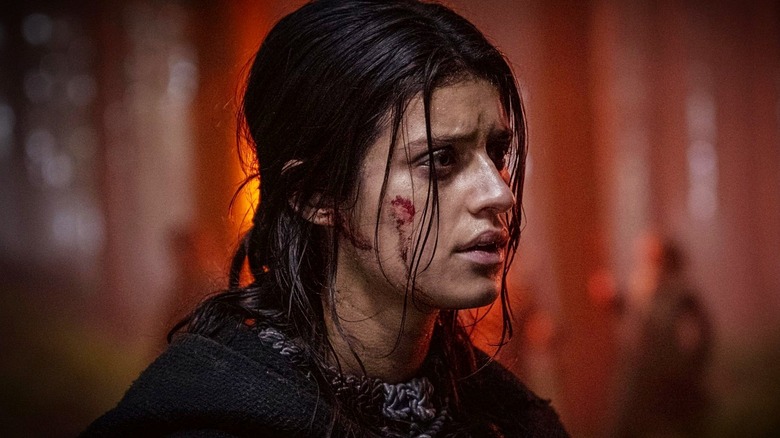
Not too long ago, I binge-watched Netflix's "The Witcher," a fantasy series based on the books by Andrzej Sapkowski and starring Henry Cavill. When I went to the internet to see what other people were saying about the show, I found that a fair number of people had harsh words for Yennefer, the powerful sorceress played by Anya Chalotra. No, I'm not talking about that magical orgy scene where the consent of the townspeople is a bit murky. Instead, many fans and critics have been pretty vocal about Yennefer's fertility struggles and her yearning for motherhood, dismissively writing it off as sexist or clichéd.

Because of this, I'm here to defend Yennefer, and by extension the writers behind "The Witcher." Not for that weird orgy she orchestrated, but for her choice to pursue motherhood. Yes, it can potentially come off as sexist to have a powerful woman character like Yennefer yearn for things like beauty and motherhood. But my stance on Yennefer's maternal aspirations is a bit more forgiving than that, and perhaps that stems from my own experiences as a mother.

A Little About Me (I'm Not A Dragon, Sorry)
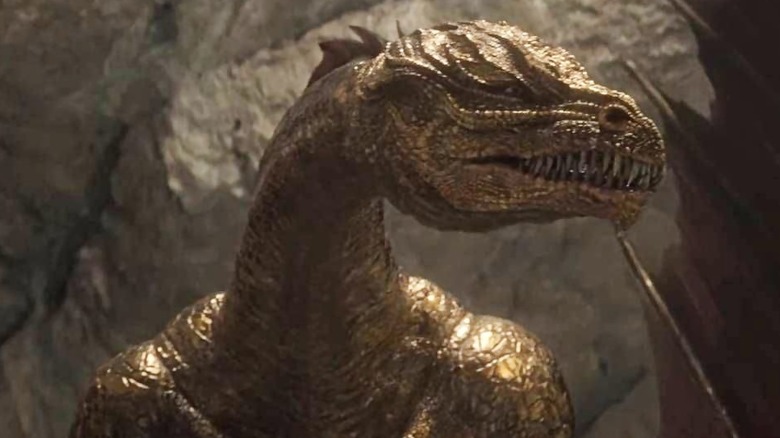
To understand where I'm coming from, here are some fun facts about me. I had my daughter at 19. I found out I was pregnant two days before high school graduation. I remember my mom asking me if I wanted to proceed with the pregnancy, and I told her I needed to think about it. My daughter is almost 11 years old now, and I do not regret my decision at all. 

In fact, despite what cynical media (looking at you, "Vivarium") and the increasingly common internet pastime of patronizing and bashing parents (but mainly mothers) and children for merely existing would have you believe, I enjoy being a mom. My life is not miserable -- my daughter sleeps in on the weekends later than I do and is one of the most considerate and interesting people (yes, children are, in fact, people) I know. I haven't had to give up my own identity or sense of self to be a good and effective mom. I still went to college, still pursued (and am pursuing) my goals, and still have plenty of time to enjoy and raise my kid.

Motherhood does come with some challenges, but it's far from the torturous, thankless prison that so many people like to pretend it is. In fact, it's not even the most difficult part of my life -- that's an honor reserved for navigating society as a Black woman who doesn't fit into the very narrow view of what many people think a Black woman should be. Yennefer, too, is somewhat of an outsider and rule-breaker within the rules and expectations of the "Witcher" universe.

It's Not Out Of Character
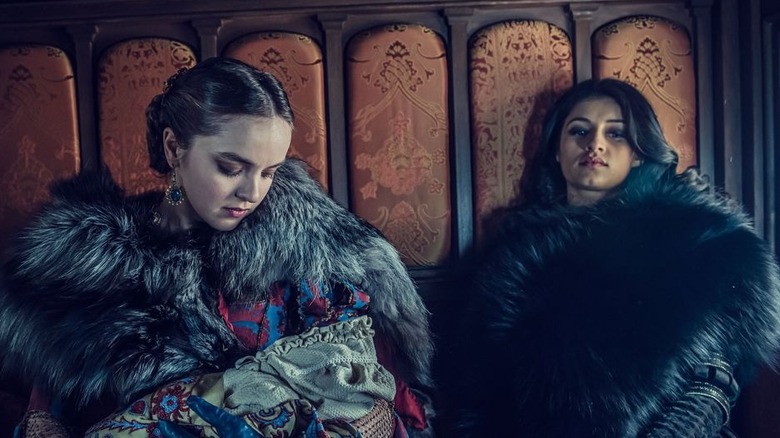
One of the main arguments I've seen against Yennefer's desire to experience motherhood and/or restore her ability to give birth is that it's not a natural progression for the character -- but in fact it fits perfectly with what we know about Yen. Since escaping her miserable upbringing, she has lived her life in pursuit of power. She wants to have it all, including everything she feels she has been denied. When she becomes disillusioned with her position as a powerful sorceress to nobles, and finds out that physical beauty is a useful but overrated double edged sword, it's natural she'd turn to something she hadn't yet experienced or had access to. In this case, that something was motherhood – or at least the option to experience it.

In the "Witcher" season 1 episode "Rare Species," Yennefer says outright to Geralt that she wants her choice back. At least to some degree, it's not about having a child right then and there, or even having one at all; it's about having the option to. It's not that Yennefer thinks motherhood is the greatest or only value women can have; she simply wants the power to decide for herself. Though she submitted to the transformation ritual at Aretuza, in which her reproductive organs were removed as the price for her initiation, her goal was always to gain agency; the first thing she does with her newly-transformed appearance is use it to catch the eye of a king and win a different royal court appointment than the one she was given.

This is important because Yennefer was never given much choice at all. She came to Aretuza reluctantly after being sold to Tissaia de Vries for four marks. As Geralt points out in "Rare Species," forced sterilization is the standard for magic-wielders and witchers. He also tells Yennefer she wouldn't be a good mother, which is pretty awful, untrue, and -- given that Yennefer is a strong-willed individual who has a track record of wanting to prove naysayers wrong -- probably only hardened her resolve to have a child. 

She knows she is powerful. She knows she has value. None of what makes her a strong, complex character is diminished by wanting the option to be a mom someday, and I certainly don't live the miserable life that weirdos like to project onto single mothers. Like Yennefer, I still have other talents, interests, and pursuits separate from motherhood. My ambition did not disappear just because I gave birth. 

Yennefer is clearly an unconventional person in the society that makes up "The Witcher." She rejects the bureaucracy and limitations of the Brotherhood of Sorcerers, and rejects the notion that she has to choose between having power and having a child. Her desire to restore her fertility partially stems from her realization that she was influenced into trading something of great value. It's simply an extension of Yennefer's drive to take back what she has been denied: her "chance to become beautiful;" her power as sorceress and royal advisor; her freedom; and now, her fertility. This isn't out of character, and it's not inherently sexist to depict some women who desire the opportunity to raise children. 

It's revealed during her conversation with Istredd in an earlier episode that Yennefer's greatest fear is that she will never be enough for someone to truly love her. Later, following her conversation with a queen in "Of Banquets, Bastards and Burials," who says that she is "the whole world" to her baby, Yennefer seems to latch onto the idea of having a child as a means to finally be enough for someone. 

Is it selfish to want to have a kid solely so you can have someone to love and be loved by? I'm not sure how to answer that. Is Yennefer a flawed character who sometimes acts selfishly and doesn't think things through in pursuit of her personal goals? Yup, definitely. I personally do not want perfect characters; I want characters that feel real. Perfection isn't real, and it'd be pretty boring if characters we watch only ever did things we personally understood or agreed with.

It's The Choice That Matters
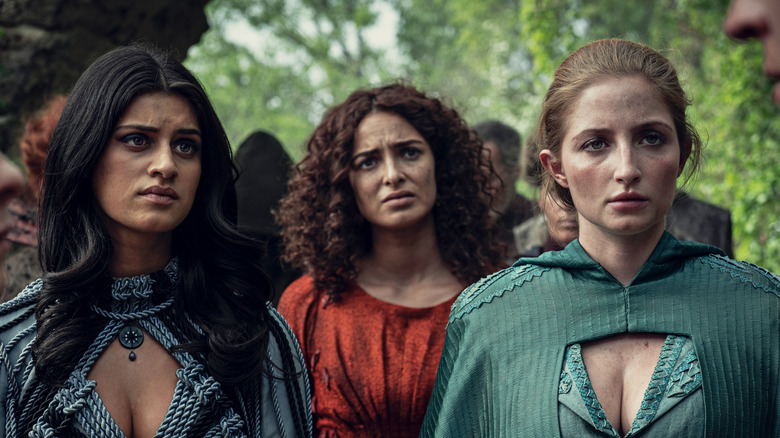
I'm not unsympathetic to "The Witcher" fans who are put off by Yennefer's yearning. I'm intimately familiar with the way women have historically been depicted as having little value or personal desire outside of being mothers and baby-making factories. I 100% support any woman's decision to be child-free; to have complete and total autonomy over her reproductive health. It should not even be up for debate or discussion that a woman should be able to decide for herself -- and only herself -- when and if she wants to experience motherhood at all. We should be the only people determining whether or not we are "suited" for motherhood.

There are those who will attack child-free women as selfish, projecting their own fears of leading an unfulfilling life onto perfectly happy individuals. And at the other extreme end of the spectrum there is no shortage of people eager to lambast perfectly happy mothers as miserable failures who traded any chance of freedom or success when they decided to become parents. 

I really don't believe that the answer to sexism is internalized misogyny aimed at women whose choices may appear more "traditional" on the surface. And yet the notion that women who have or want children are somehow harmful to feminist causes seems to be a driving force in the criticism of Yennefer's motherhood journey. It's especially unfortunate because this kneejerk response to reject this part of Yennefer's arc overlooks the fact that she pursues motherhood in defiance of a sexist organization that tells her she can be powerful, or she can be a mother, but she cannot be both. It also ignores the ways in which Yennefer's character provides meaningful representation for some viewers.

Rejecting Forced Sterilization & Challenging Expectations
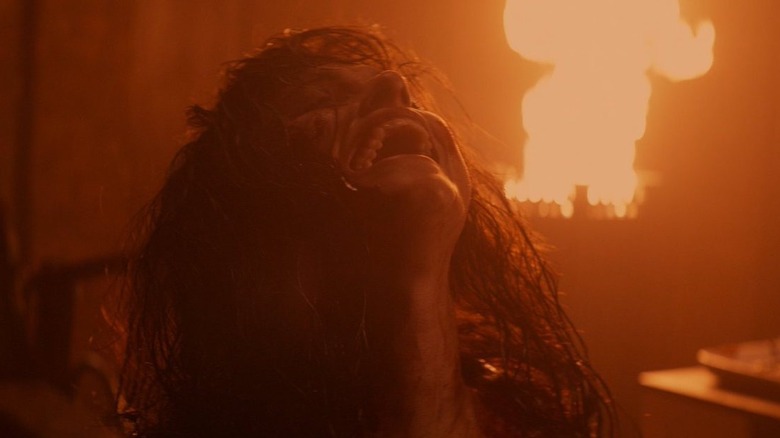
Yennefer's story arc calls into the question the coerced sterilization that takes place in Aretuza. In the show, we learn that the students of the magic academy are all sterilized as part of their schooling and graduation, as though this were a necessary step in becoming a powerful sorceress. However, we also find out that Geralt's biological mother is a sorceress, meaning that sterilization is actually not necessary. The "Witcher" novels go into further detail about this, when Tissaia de Vries reveals that she personally enforces sterilization due to her own beliefs about the supposed incompatibility of motherhood and magic:

"Most of us wizards lose the ability to procreate due to somatic changes and dysfunction of the pituitary gland. Some wizards -- usually women -- attune to magic while still maintaining efficiency of the gonads. They can conceive and give birth -- and have the audacity to consider this happiness and a blessing. But I repeat: no one is born a wizard. And no one should be born one! Conscious of the gravity of what I write, I answer the question posed at the Congress in Cidaris. I answer most emphatically: each one of us must decide what she wants to be -- a wizard or a mother. I demand all apprentices be sterilized. Without exception."

While she doesn't outright say these things in the show, the implication is there and even echoed by Geralt when he tells Yennefer that people like them -- witchers and magic users -- aren't cut out to be parents. Of course, by "The Witcher" season 2 Geralt is eating his words as he learns how to be a father to his own "child of surprise," Ciri. In this way, "The Witcher" not only makes a point that infertility does not preclude having a family; it also challenges the narrative that people can't "have it all," and instead must choose between having a family or pursuing their own destiny. 

A prime example of this is Lady Calanthe: mother, grandmother, and badass warrior queen. Calanthe balances her duties as a leader with her duties as a parent, which is far more impressive to me than simply having every powerful character be completely and conveniently free of any conflicting responsibilities. As a mom, I can't help being interested in depictions of motherhood that are more than just "she gave up everything to have a kid, never lived her dreams, or did anything for herself. The end." Besides the obvious sexism, this cliché also ignores the reality of the many people who raise children while still maintaining their own identities, careers, and interests.

Parenthood & Family Were Always The Point
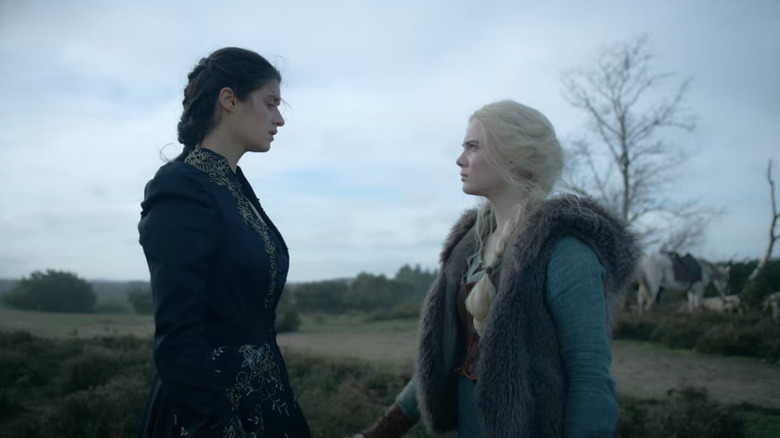
One of "The Witcher's" most obvious, overarching themes is that of families bound by blood, choice, or circumstance, and to dismiss Yennefer's journey to motherhood is also to dismiss one of the best examples of the "chosen family" theme within the show. Yennefer's initial focus on the biological path to motherhood is not really the point. For instance, Geralt's biological mother, who is also a sorceress, abandoned him. Clearly, biology has little to do with one's ability to be a good parent -- a point illustrated by numerous characters including Vesemir, Geralt, and of course, Yennefer. 

After losing her magic and sense of purpose, Yennefer ends up becoming a maternal figure to Ciri as she is the only person who is able to help her control her powers. While she initially sought out Ciri under false pretenses, having been manipulated by the Deathless Mother, Yennefer comes to value her kinship with Ciri more than the possibility of regaining her magic. Yennefer may not have succeeded in restoring her fertility, but it doesn't mean she can't still be a mother and have a family of her own. With Geralt and Ciri, she forms her own family.

If all of this stood out in stark contrast to the rest of the show, I could understand some of the harsher criticisms -- but it doesn't. "The Witcher" season 2 heavily focuses Geralt learning how to be a father and a mentor to Ciri, with guidance from his own paternal figure, Vesemir. Themes of parenthood and family were also prevalent throughout the show's first season with characters other than Yennefer, so it's not as though all those themes were carried solely on her shoulders (which would indeed have been pretty crappy and questionable). Instead, it works because "The Witcher" is a fantasy show that's very much about how familial bonds are influenced by the chaos of the world around them -- not unlike the predicament of many people (myself included) who find themselves having to navigate parenthood in the midst of a pandemic and growing civil unrest.

There's Room For More Than One Type Of 'Strong Female Character'
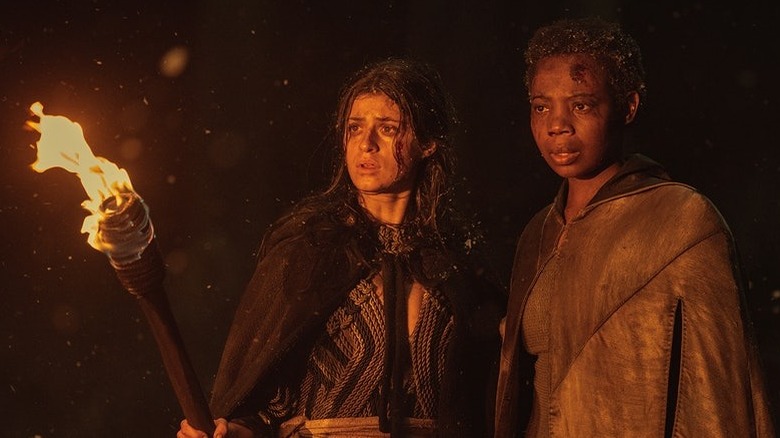
It should also go without saying that Yennefer's story also serves as meaningful representation for people who have their own struggles to come to terms with infertility. With that in mind, it's shallow and insensitive to condemn that aspect of her character as harmful or unrealistic; to do so is to disregard the very real people who have dealt with similar situations in favor of one very narrow idea of what a "strong female character" is supposed to look like.

While I do not share that particular experience, I strongly identify with Yennefer's desire to have it all, and to defy anyone and anything that tells her she can't. I have dealt with pressure and preconceived notions from others my entire life -- long before I became a mom. I have been told there are certain things I can't or shouldn't do because of aspects of my identity beyond my control: my Blackness, my gender, the fact that I am on the autism spectrum, the fact that I had a kid at 19. 

Yennefer, too, was made to feel like she was nothing, and then made to feel like she had to live up to someone else's idea of who she should be in order to live happily. In response, she repeatedly pushed back against whatever didn't suit her, and in the end she has both her magic and a family. Similarly, I rejected everyone else's ideas about what I should do and who I should be as a woman who chose motherhood: I still went to college, and I'm in a happy and loving relationship. I am on a journey towards the fulfilling career I have always dreamed of, while also having the family I always wanted. That's not sexism or an unrealistic fantasy. That's just my life.

Surely there is a happy medium that allows for women to be respectfully depicted as individuals in charge of their own destinies, even if those destinies sometimes include issues like pregnancy, birth, and parenthood? Women should be able to make their own decisions on their own terms, and well-written characters can and should reflect the nuances of this reality. That is why I don't take issue with Yennefer's motherhood character arc. I don't think media representation is a zero-sum game wherein all depictions of women as mothers or desiring motherhood are inherently reductive, sexist, or harmful. It's the execution that matters. 

In Yennefer's case, I think those themes were handled well. And if we're going to talk sexism in "The Witcher" universe, the lack of female witchers on the basis of "biological differences" and the asinine notion that girls are just not as "strong" as boys is a far more glaring example - and hopefully we'll see that rule being challenged in the show's future as well.

"The Witcher" seasons 1 and 2 are available now on Netflix.

Read this next: The 15 Best Anthology TV Series Ranked

The post Yennefer's Motherhood Storyline In The Witcher Isn't Sexist — It's Empowering appeared first on /Film.

28 Jan 20:27

Xbox Game Pass Subscription Practices to be Changed per CMA Mandate

by Ule Lopez

Xbox Game Pass CMA

Microsoft has agreed to implement several improvements to the Xbox Game Pass service following concerns from the UK's Competition and Markets Authority. These improvements will be adopted in the UK at first but will be applied globally overtime. The changes will have Microsoft become more transparent when someone signs up for a Xbox Game Pass membership.

As part of an investigation into the online console video gaming sector the Competition and Markets Authority (CMA) identified concerns about certain features of Microsoft’s auto-renewing subscriptions, in particular: whether it was clear upfront that contracts would automatically renew; how easy it was to turn off automatic renewal; and whether people may not have realised they were still paying for services they no longer used.

With this in mind, the CMA secured undertakings with Microsoft to address the concerns. Now, the improvements fall into four categories:

  • Better upfront information - Microsoft will now provide more transparent information to help customers understand their Xbox membership. The company is now bound to make clear that the subscription will auto-renew unless the customer turns off auto-renewal; when the subscription will auto-renew; how much it will cost; and how the customer can receive a refund after an accidental renewal.
  • Refunds - Microsoft will contact existing customers on recurring 12-month contracts and give them the option to end their contract and claim a pro-rata refund.
  • Inactive Memberships - Microsoft has to contact existing customers who haven't been using their Game Pass membership for a long time but are still paying. The company is bound to remind customers how to stop payments and even stop altogether if the users continue not to use their memberships.
  • Price Increase Information - Microsoft now has to give clearer indications of any future price rises. Not only that, but this ties back to point 1 where Microsoft will have to ensure people know how to turn off auto-renewal in case they don't want to pay for a higher price for the service.

Michael Grenfell, Executive Director of Enforcement at the CMA, said the following:

Gamers need to be given clear and timely information to make informed choices when signing up for auto-renewing memberships and subscriptions. We are therefore pleased that Microsoft has given the CMA these formal undertakings to improve the fairness of their practices and protect consumers, and will be offering refunds to certain customers.

Other companies offering memberships and subscriptions that auto-renew should take note, and review their practices to ensure they comply with consumer protection law.

Speaking of other companies, the CMA has confirmed that it will look into the way Nintendo and Sony are handling their subscription services as well. The report filed by CMA on the matter expresses that the regulator is concerned about whether some of these companies’ business practices are legal, such as their use of auto-renewals for online gaming contracts, their cancellation and refund policies and their terms and conditions.

As such, it shouldn't be a surprise if Nintendo's or Sony's policies see a radical change that will benefit consumers in general anytime soon.

The post Xbox Game Pass Subscription Practices to be Changed per CMA Mandate by Ule Lopez appeared first on Wccftech.

28 Jan 20:26

God of War Update 1.0.4 released, full patch notes revealed

by John Papadopoulos

God of War came out on PC earlier this month and Santa Monica and Jetpack have already released four patches for it. The teams have just released a brand new update that adds support for DLSS Sharpening slider, and fixes a number of issues. Going into more details, Update 1.0.4 fixes some rare instances of … Continue reading God of War Update 1.0.4 released, full patch notes revealed →

The post God of War Update 1.0.4 released, full patch notes revealed appeared first on DSOGaming.

28 Jan 20:17

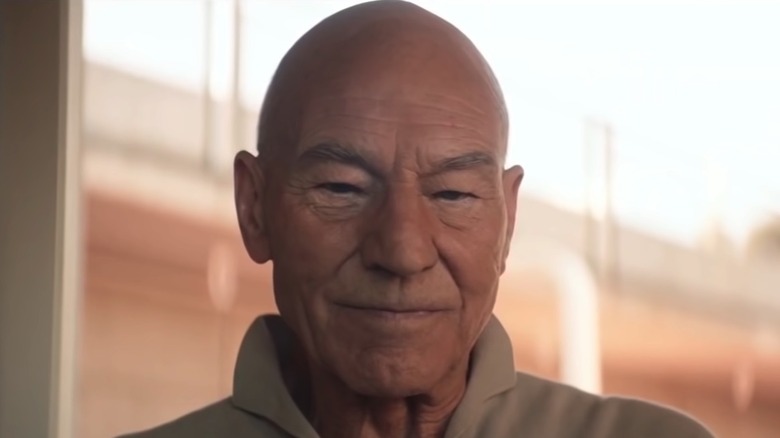
The Most Emotional Scene Patrick Stewart Filmed For Star Trek: Picard

by Jenna Busch

Reconnecting with one of the finest starship captains in "Star Trek: Picard" has been a joy, but there is a part of me that is very aware of all the time that has passed since "Star Trek: The Next Generation" went off the air back in 1994. I'm so grateful that we're revisiting these characters that we've known and loved all these years, but it's also emotional to watch.

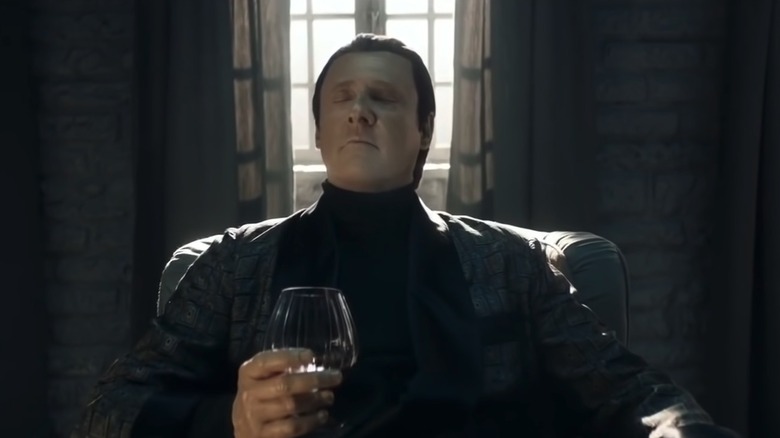
Picard (Patrick Stewart) and Data (Brent Spiner) are two of the best characters to ever have existed in sci-fi television and film, and their relationship is one for the ages. If you never watched "The Next Generation," you must go back and at least watch the episode "The Measure of a Man," the ninth episode of the second season. In it, Picard has to prove that Data is a sentient being. If we ever reach the singularity, this episode is going to come up a lot. Knowing this, it's no surprise that Data is involved in what Stewart considers the most emotional scene in "Star Trek: Picard."

There are SPOILERS ahead for the end of the first season of "Star Trek: Picard," so consider yourself warned.

Blue Skies

Indiewire recently interview Patrick Stewart, and he recalled the scene where Jean-Luc Picard says goodbye to Data as they remove his memory chips. I won't go into exactly what happens, but the goodbye (at least one part of it) takes place in a simulation. Picard is a synthetic now, and maybe that means he understands Data better than he ever had before. Picard finally gets why Data would want the entire human experience, including death. His virtual self holds Data's hand while he withers away and disappears, and friends, I'm tearing up just writing this. 

As this is happening, the synthetic Picard is removing Data's memory chips and quoting Shakespeare's "The Tempest." He says, "We are such stuff as dreams are made on, and our little lives are rounded with a sleep." All the while, a cover of "Blue Skies" sung by "Picard" co-star Isa Briones is playing in the background, and that's the same song Data was singing when he died in "Star Trek: Nemesis." Stewart had this to say about the heartbreaking sequence:

"That scene was so powerful an experience for Brent and myself ... "To the extent that when I began to walk through the door and then turned back and said, 'Goodbye, Commander,' we had to do it several times because the emotion overwhelmed me every time. And as you can probably hear, it is doing so right now. The chair faces my desk in my study, so I see it every day. At times like this conversation, I'm able to sit in it and enjoy the memory of playing what I think was one of the most important scenes that I've ever had to play on film or television."

Excuse me. I have to go weep into my "Star Trek" pillow for a while.

The second season of "Star Trek: Picard" is coming in March.

Read this next: Star Trek: The Next Generation's 10 Best Episodes

The post The Most Emotional Scene Patrick Stewart Filmed For Star Trek: Picard appeared first on /Film.
28 Jan 20:15

Ubisoft think people "don't get" the thrilling benefits of NFT items

by Alice O'Connor

Ubisoft were the first huge games company to excitedly launch a line of NFTs then be told by almost everyone no, don't do that, it sucks. Well done, almost everyone! In a new interview, Ubisoft's blockchain boys have said people "don't get it".

Read more

28 Jan 11:26

Official Says Puerto Rico's Senate Targeted by Cyberattack

by Associated Press

Puerto Rico’s Senate announced Wednesday that it was the target of a cyberattack that disabled its internet provider, phone system and official online page, the latest in a string of similar incidents in recent years.

read more

28 Jan 11:22

Gamedec - Patch 1.4

Gamedec received a patch too. PATCH 1.4 IS LIVE NOW! Detectives! New year, new challenges, and of course, new content and improvements! As we have leaked a little bit of information on what's going to happen in 2022, today, we focus on the patch 1....
28 Jan 11:22

Microsoft Mitigated Record-Breaking 3.47 Tbps DDoS Attack on Azure Customers

by noreply@blogger.com (Ravie Lakshmanan)
Microsoft this week revealed that it had fended off a record number of distributed denial-of-service (DDoS) attacks aimed at its customers in 2021, three of which surpassed 2.4 terabit per second (Tbps). One of the DDoS attacks took place in November, targeting an unnamed Azure customer in Asia and lasted a total of 15 minutes. It hit a peak throughput of 3.47 Tbps and a packet rate of 340
28 Jan 11:21

Hackers Using Device Registration Trick to Attack Enterprises with Lateral Phishing

by noreply@blogger.com (Ravie Lakshmanan)
Microsoft has disclosed details of a large-scale, multi-phase phishing campaign that uses stolen credentials to register devices on a victim's network to further propagate spam emails and widen the infection pool. The tech giant said the attacks manifested through accounts that were not secured using multi-factor authentication (MFA), thereby making it possible for the adversary to take
28 Jan 02:35

Horror Roles That Changed Actors Forever

by SlashFilm Staff

We often think about the life-changing impact horror has on us. Whether it was Regan MacNeil doing the spider walk in "The Exorcist" that made us terrified of stairs, "Jaws" effectively making us never want to set foot in the water again, or "Psycho" forcing us to develop questionable hygiene habits, horror movies leave a serious mark. But what about the actors who have to make those movies that scare us half to death? Sometimes, they can't let go of the strange things that happened on set, or they feel ... haunted. Some actors wind up "cursed" by horror movies, so to speak, in as much as they get pigeon-holed in their career. They can get physically hurt or suffer some serious trauma while making a movie, and in some cases even risk losing their careers altogether. 

These 11 stories may not send chills down your spine, but they certainly changed the lives of the actors forever. 

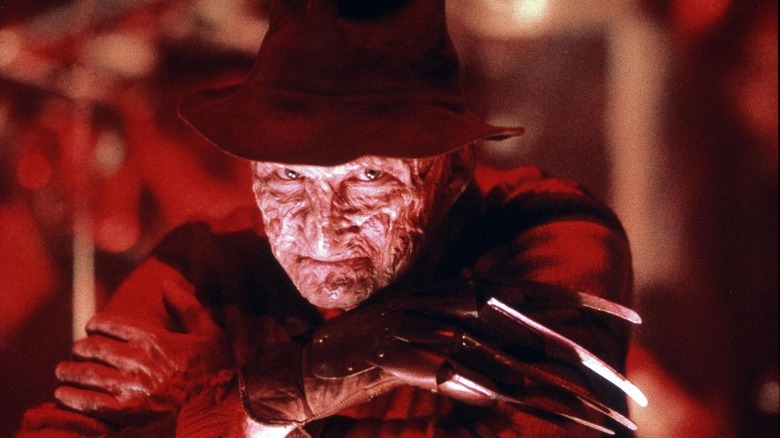
Robert Englund Will Always Be Freddy Krueger

Robert Englund is the horror icon, Freddy Krueger. Anyone can put on Jason Voorhees' hockey mask or bag head and become the quiet brute. Englund developed Krueger's personality over eight feature films, 44 episodes of the anthology show, "Freddy's Nightmares." The 2010 remake opted for a less empathic Freddy Krueger played by Jackie Earle Haley, yet something was missing — Robert Englund. He's one of few actors whose career mostly revolves around one legendary character, which, given that Englund is a tremendously hard-working actor, his laundry list of credits often goes unmentioned. How can we forget Englund's work as Mayor Buckman in "2001 Maniacs" or Buck in "Eaten Alive," for example, both of which play to Englund's sadistic sense of humor?Englund's IMDb totals 168 credits as of January 2022, but how many can you recall that aren't Freddy Krueger? Whenever Englund appears in another indie horror flick as a professor, doctor, or elder with answers, he's still "that guy who played Freddy Krueger" to horror fans. Many forget Englund is a classically trained actor who starred in other projects like 1989's "Phantom of the Opera" or appeared on popular television shows like "Charlie's Angels." 

Englund's range is vastly more diverse than his reputation suggests, thanks to Freddy Krueger's influence on horror fandom and pop culture. How many classical adaptations might Englund have explored had Freddy's publicity tour not taken precedence? Commercials, TV spots, Japanese variety shows — Freddy fever is incurable. There's no doubt that Englund's influence as a horror icon makes for an illustrious and well-deserved career. But one can't help but wonder about the performances we lost to Freddy's grip on the actor. (Matt Donato)

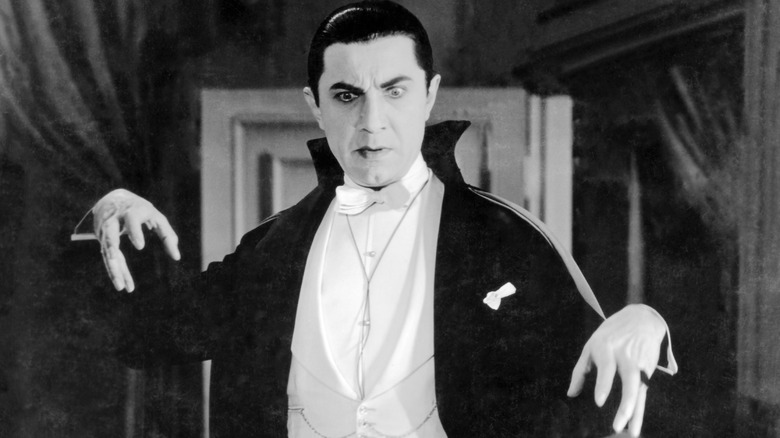
Bela Lugosi Couldn't Escape Count Dracula

When you think of movie vampires, you almost certainly think of Bela Lugosi. The icy glare, that charismatic screen presence, the now-iconic accent; Lugosi's portrayal cemented the popular silver screen image of a vampire in a way that's been tied to him since 1931's "Dracula." Being so strongly associated with that star-making role proved both a blessing and a curse as Lugosi found himself immediately typecast following the film's runaway success. He was unable to escape being repeatedly pigeonholed into similar horror roles in films like "The Raven" and "White Zombie." Adding insult to injury, Lugosi was repeatedly cast alongside fellow horror icon Boris Karloff and frequently received second billing in a series of Universal and RKO pictures.When horror's popularity started to decline in the '30s, Lugosi's typecasted history put his career in a downward spiral and had a detrimental effect on his well-being. He suffered from increasingly severe chronic sciatica, for which doctors prescribed opiates like morphine. His drug dependence worsened in tandem with his career's decline, and in 1955 he voluntarily entered a state hospital for treatment. Released later that year, he spent the rest of his career working on a series of B-movies (often for the infamous Ed Wood, Jr.) before dying of a heart attack in 1956. 

Lugosi was so intimately tied to the legacy of "Dracula" that he was famously buried in the long black cape he wore in the role, following his own wishes. It's a sad twist of fate that his incredible success in the role of Dracula ultimately contributed to a life of professional hardship and poverty that eclipsed other notable accomplishments, such as opposing rising European fascism and co-founding the Screen Actor's Guild

His legacy, like the character he was so tragically unable to shake, nevertheless remains immortal. (Jeff Ewing)

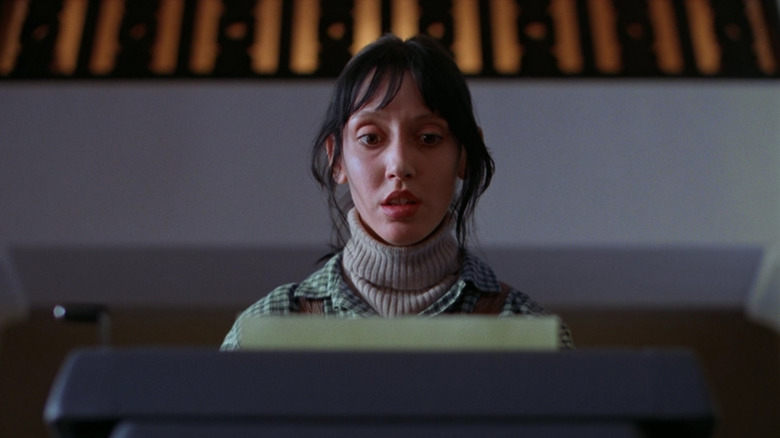
Shelley Duvall Was Tormented While Making The Shining

Stanley Kubrick's 1980 horror film "The Shining," based on the book by Stephen King, has become a major part of the horror movie canon. The gorgeous, atmospheric film follows the Torrance family working as the winter caretakers for the Overlook Hotel. Unfortunately, father Jack (Jack Nicholson) starts losing his mind and talking to the hotel's ghostly residents and eventually tries to murder his wife, Wendy (Shelley Duvall), and son, Danny (Daniel Lloyd).

Kubrick was notoriously hard on Duvall, forcing her through a different kind of shoot than the rest of the cast. He tortured her to enhance her performance, overlooking that she was a real person with real feelings. He forced all of his actors to shoot their scenes a ridiculous number of times, but putting Duvall through 127 takes of crying and swinging a bat at her attacker is cruelty. Her hair began falling out, she woke up having crying fits, and she ended up having lasting trauma from the ordeal.

"The Shining" took 56 weeks to film. That means that, for over a year, Duvall put herself through the rigorous hell that Kubrick had devised for her. They filmed six days a week, for up to 16 hours a day, which is enough to make anyone miserable without being treated so poorly. Years later, she would tell The Hollywood Reporter that she doesn't know how she did it:

"[...] After a while, your body rebels. It says: 'Stop doing this to me. I don't want to cry every day."

Kubrick's treatment of Duvall was abuse, and no amount of prestige is ever going to wash that away. Actors shouldn't be traumatized for a performance, no matter how beloved or "talented" the person doing the traumatizing may be. (Danielle Ryan)

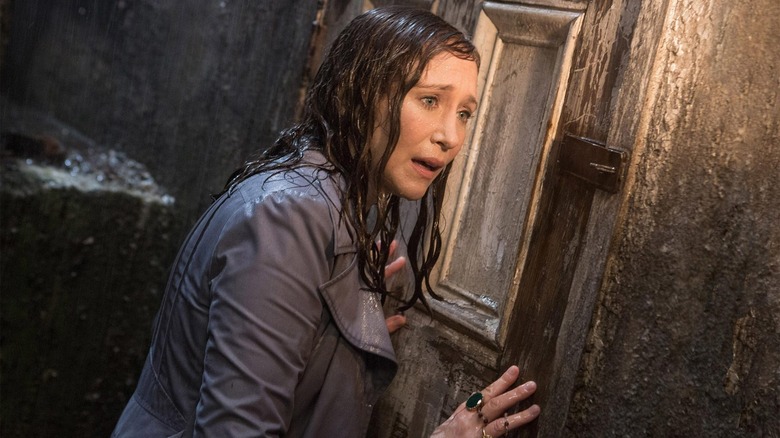
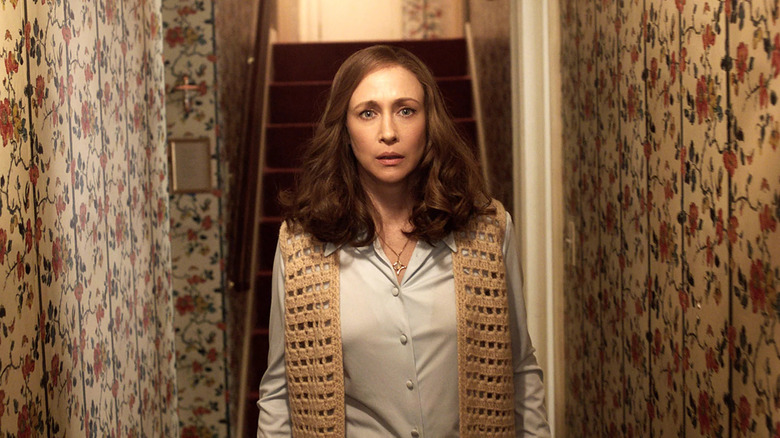
Vera Farmiga Felt Haunted After The Conjuring

Vera Farmiga is known for her turn as Christian demon hunter Lorraine Warren in the "Conjuring" franchise. After taking on the role, she claims she found herself plagued by unexplainable and creepy occurrences in her personal life. 

The "Conjuring" actress, who stars alongside Patrick Wilson, alleged that she opened herself up to the spiritual world during her preparation for the first film. As a result, all sorts of strange things started happening. Rogue claw marks started appearing around her home, including on rolls of toilet paper and on her computer screen, and the day after she finished filming the first movie, she allegedly found three claw marks on her thigh. On multiple occasions, while shooting the first "Conjuring movie, she claimed she was woken up between the hours of 3:00 and 4:00 a.m., also known as "the devil's hour" or "the witching hour," considered the time of night when ghosts and other paranormal entities have a greater chance of appearing. These are just a few of the bizarre encounters has experienced since starting to play Lorraine Warren.

It's certainly possible that Farmiga was experiencing some bizarre, supernatural happenings. Considering the presumably fraudulent nature of Lorraine and Ed Warren's real-life paranormal investigations, it seems as though whatever entities were communicating with Farmiga likely had nothing to do with the true stories these movies were based on. That said, there's no denying something spooky was happening, and it left a lasting impression. (Lex Briscuso)

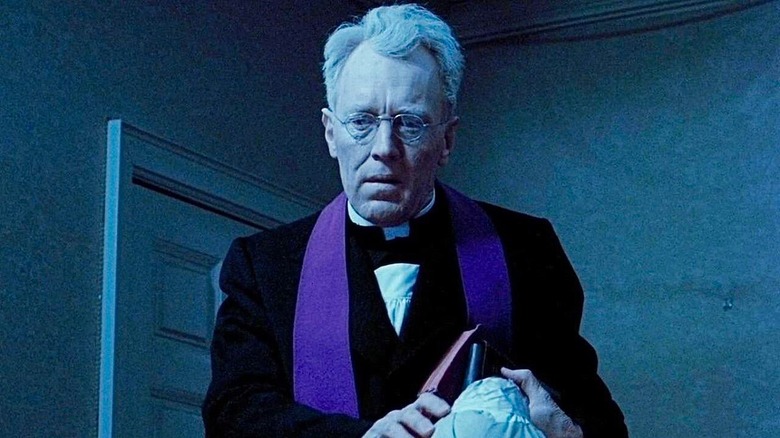
Max Von Sydow's Career Suffered After The Exorcist

For "The Exorcist," of course, Linda Blair had to wear tons of prosthetics and makeup for her truly horrifying closeups. But, believe it or not, Max von Sydow had to sit in the chair longer than Regan herself to get that perfect old-age look. It took roughly three and a half hours for legendary makeup effects artist Dick Smith to transform the then-44-year-old von Sydow into the 74-year-old Father Merrin. Emoting through the prosthetics was a chore, forcing the often understated von Sydow to over emote in order for his facial expressions to register properly. However, none of this stood in the way of him delivering an incredible performance that garnered him his second and final Golden Globe nomination.

Unfortunately, his Hollywood career hit a roadblock as a result. The makeup, it seems, was so good that many people in the industry actually believed the Swedish actor was in his 70s. U.S. casting directors were already reluctant to hire him because of his gravitas and grand screen presence, so this certainly didn't help matters. His already illustrious career in Europe did fine following the William Peter Blatty adaptation, but he wouldn't star in another American film until "The Ultimate Warrior" in 1975. He reprised his role as the old priest in "The Exorcist II: The Heretic" in 1976, then Emperor Ming in "Flash Gordon" in 1980, and Bond nemesis Blofeld in "Never Say Never Again" in 1986, but his Hollywood career took a while to recover. (Ariel Fisher)

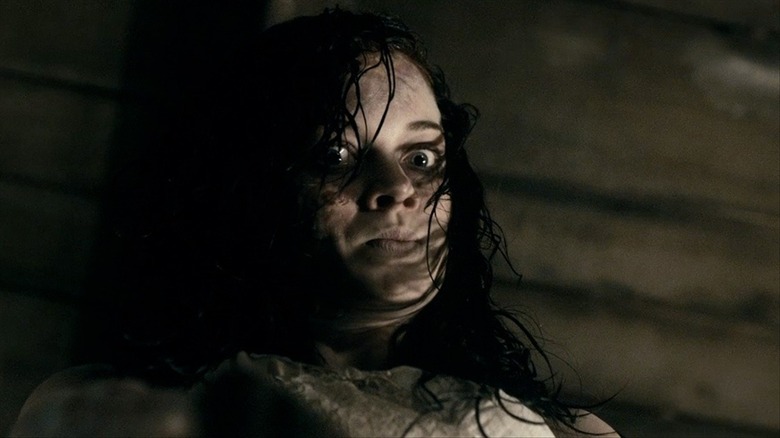
Jane Levy Was Traumatized By Evil Dead

Actress Jane Levy delivers an all-timer performance as Mia in Fede Álvarez's remake-slash-sequel "Evil Dead," but the production process seems to have taken its toll. The sensationally violent horror film put Levy through the wringer with horrible weather conditions, sticky blood baths, and demands that pushed her to her brink. Levy went on to work with Álvarez again in "Don't Breathe," but didn't return for the sequel. Her comments about not participating in "Don't Breathe 2" should speak volumes about her experiences working on "Evil Dead" and beyond: "Maybe we should be asking why these films are made in such a way that their directors are averse to having committed actors participate?" One might argue it's for the sake of authenticity, but evaluating the cost of such authenticity is also worth discussing.If you own "Evil Dead" on DVD or Blu-ray, there's a featurette that follows Levy through a particularly strenuous production day. You can see the hard work that led to such an outstanding performance, but the pain, exhaustion, and exasperation are apparent, as well. She's shown shivering between takes, soaked in fake blood raining from hoses, only briefly wrapped in warmer outerwear. Even worse, there's a scene where Levy's character, Mia, is buried alive. 

"I had a plastic bag tied around my head with an oxygen tube behind my ear, laid in a ditch," Levy said. Once cameras stopped rolling, she would reportedly lose air and need to dig herself out of the ground. "No matter what anyone says, you never know what it feels like to have a huge tube that's like an inch-and-a-half diameter stuck down your throat so you can projectile vomit on someone's face," Levy recalls about a particularly gnarly "blood kiss" between her and castmate Jessica Lucas that caused a bloody nose at one point. By the end of filming, in Levy's own words, she had "nothing left." (Matt Donato)

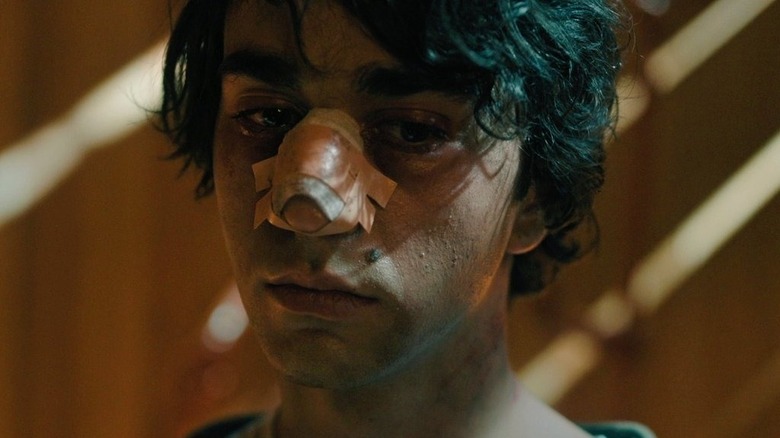
Making Hereditary Was Hard On Alex Wolf And Milly Shapiro

In 2018, audiences were traumatized by Ari Aster's haunting family drama and psychological horror movie, "Hereditary." The film cleverly relies on the realistic horrors of uncomfortable family dynamics, trauma, and grief, which are augmented by the presence of a sinister supernatural entity. It also breaks the common cinematic trope of keeping children just out of harm's way in a particularly grotesque fashion with the shocking decapitation of a 13-year-old girl — including a close-up of her decomposing, insect-infested head. 

As it turns out, merely viewing such deeply disturbing subject matter isn't nearly as damaging as making it. Alex Wolff and Milly Shapiro, the then-teenage actors who played Peter and Charlie, have opened up about the lingering negative impact of starring in one of the century's most horrifying films.Shapiro, who was born with the genetic condition cleidocranial dysplasia (CCD), revealed in a TikTok video that she dealt with emotional damage as a result of the many cruel comments about her physical appearance in the movie. In it, she states how she was intentionally made to look her "worst" for the role, while the caption reads "I just remember when the trailer came out and one of the top three comments was about how ugly I looked hahahahhahahajahaahjzjsja live laugh love."As for Wolff, the young actor has said that he also struggled psychologically and emotionally due to the demanding nature of the filming process. This included long periods of isolation in his hotel room akin to "The Shining," accidentally injuring himself and drawing real blood during the shocking face-slamming scene, and the frustrating method-acting that resulted in the realistic strained sibling dynamic between him and his younger costar. Their experiences certainly highlight the hefty price actors sometimes pay to help bring the movies we love to life. (Deshawn "DeLa Doll" Thomas)

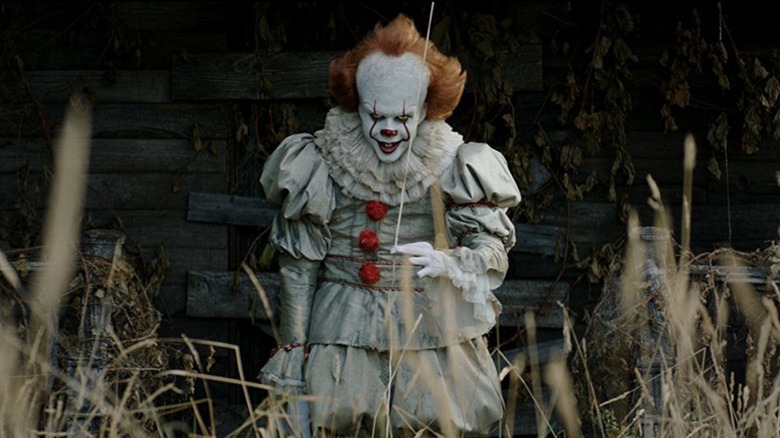
Bill Skarsgård Never Got Over Pennywise

After Tim Curry, Swedish actor Bill Skarsgård is the second person to portray Pennywise the dancing clown — an ancient, trans-dimensional evil entity that preys upon the children of Derry, Maine, every 27 years. The monster was born in the pages of Stephen King's horror novel "It," and Skarsgård terrifically captured his essence in the 2017 silver screen adaptation and its subsequent sequel. 

Pennywise has frightened several generations since the 1990 miniseries aired, but Skarsgård's performance raised the frightening bar. He worked on recreating Pennywise's menacing grin made famous by Curry and even added his own touch to the character: because the actor has a lazy eye, he can move his eyes independently, achieving the wall-eyed effect that many fans initially believed was CGI. In the process of connecting with Pennywise, Skarsgård felt isolated from his co-stars, who were afraid of being around the actor when he was in costume. 

It also wouldn't be an exaggeration to say that the role changed him forever. Playing a child-killing monster is a task on its own, but having said child-killing monster haunting your dreams is something else entirely. The actor spent a lot of time with the character, and likened the process to a "destructive relationship." He was relieved when he finally put away the intimidating costume, but that didn't stop the fictional clown from invading his dreams. 

In an interview with Entertainment Weekly, Skarsgård revealed that even though he was done working on the movie, Pennywise wasn't done with him yet; the terrifying dancing clown haunted his dreams. Sometimes, he even dreamed about himself as Pennywise in circumstances he "didn't appreciate." Now that's a nightmare I wouldn't want to have. (Fatemeh Mirjalili)

The Blair Witch And Cannibal Holocaust Casts Had A Lot In Common

"The Blair Witch Project" and "Cannibal Holocaust" are two horror films that, at face value, don't have very much in common other than their shared genres. However, they do share an interesting and unfortunate aspect of their respective marketing campaigns: they each claimed that their leading cast members were actually dead.  

With "Cannibal Holocaust," Ruggero Deodato was put on trial for the murder of his principal cast. He had the actors sign contracts saying they wouldn't go out in public for a full year after the film's release to help sell the idea that they'd been murdered. They had to make an appearance in court to prove that they were, in fact, still alive. "The Blair Witch Project" adopted a similar campaign with its release, and it proved very effective. Due to the complete lack of internet when "Cannibal Holocaust" was released and its limited reach when "Blair Witch" came out in 1999, most folks believed it was true.

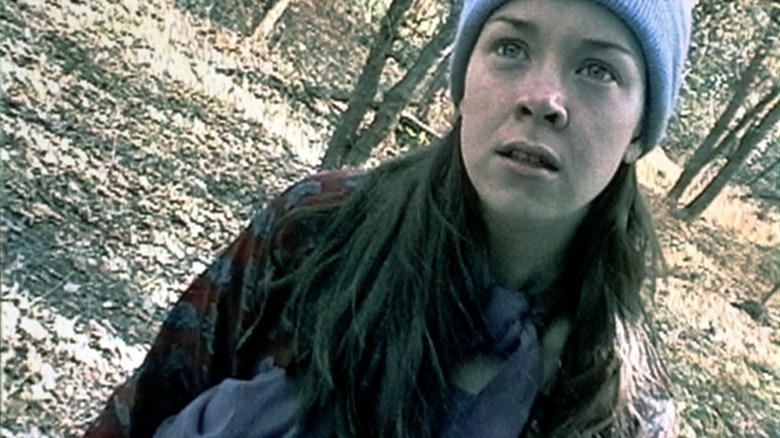
This was difficult for both casts, as they weren't exactly able to capitalize on the success of their respective projects because, well, they were allegedly dead. "It was very hard as a young actress where you did something where you were really proud of your work and you feel like you did a really good job, and then you're kind of in this really stuck situation where you're an overnight success, but you're dead," Heather Donahue, the lead actress of "The Blair Witch Project," told Paper Magazine in 2016. "It even said on my IMDb page that I was dead. It said Heather Donahue: Deceased." 

There's no denying the influence of both films. But the decision to stand firm on the falsehood of these alleged deaths wound up ruining several careers. Though they will always be remembered as a part of something great, their work in the industry was never the same. (Lex Briscuso)

Making Possession Took A Toll On Isabelle Adjani

Andrzej Zulawski's "Possession" is a horrifying, brutal story about the end of a relationship. Long before "Midsommar" turned a breakup into a bloody nightmare, "Possession" dug into the delirium of a couple falling apart. Isabelle Adjani and Sam Neill star as Anna and Mark, a couple dealing with infidelity and a possible demonic possession. The movie is intense and occasionally histrionic, but Neill and Adjani each give it their all.

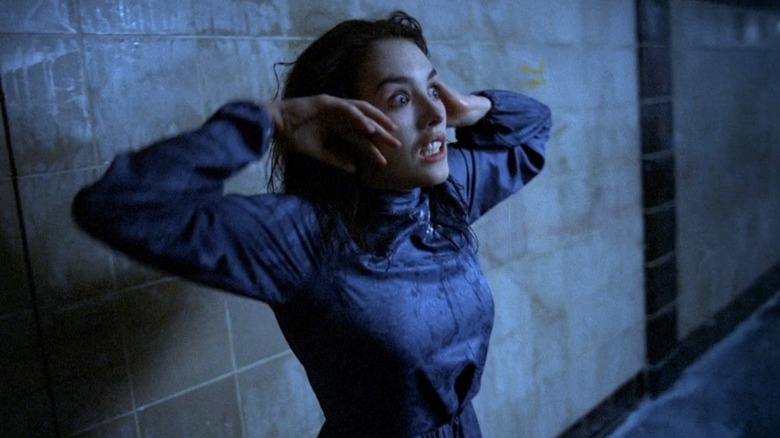
One infamous sequence shows Anna going through a miscarriage on a subway platform. She throws herself into walls and the floor, contorting her body and writhing in agony. Filming "Possession" was allegedly as painful as that very scene, and Adjani has spoken about the lingering trauma of the shoot for some time since its release. In an interview with The Playlist in 2016, she opened up about her experience, saying:

"It was quite an amazing film to do, but I got bruised, inside out. It was exciting to do. It was no bones broken, but it was like, 'How or why did I do that?' I don't think any other actress ever did two films with him."

In an interview with Film Comment, Zulawski said that actors must "pay a heavy price." Adjani ended up agreeing, telling Zulawski that she felt violated by the final cut of the film: "Your camera had no right to look there where it had insinuated itself."

Adjani has said that she required years of therapy after completing the role. Even Neill had a hard time with the production, telling Far Out Magazine in 2021 that he "just escaped that film with [his] sanity barely intact." "Possession" had a troubled release and has become an underground legend among the video nasty crowd, which is a shame because it keeps Adjani's incredible and soul-searing performance from getting the attention it deserves. (Danielle Ryan)

Linda Blair And Ellen Burstyn Were Severely Injured While Filming The Exorcist

"The Exorcist" is one of the most terrifying movies of all time for a reason. William Friedkin took what could have been a hoaky concept and imbued it with a haunting level of realism. Unfortunately, it came at a price. 

Not unlike Kubrik's drive to elicit realism from Shelly Duvall, who he essentially tortured throughout the filming of "The Shining," Friedkin was dead set on things looking real in his film. That resulted in Ellen Burstyn sustaining a severe back injury that left her using crutches for the duration of the shoot. She was rigged up to a wired system that would pull her backward after Regan (Linda Blair) slapped her across the face, sending her flying across the room. When she voiced concerns that she was being pulled too hard, Friedkin told the rig tech to take it easy. Then, while Burstyn's back was turned, he told him to "really give it to her this time." It had a lasting effect on her, compounded by the fact that Friedkin has not only never apologized, but still denies she was actually hurt.

Unfortunately, something similar happened to Linda Blair. 

In one scene, Regan famously thrashes backward and forward on her bed, before her throat bulges out and she screams obscenities at the doctors who just entered her room. To shoot the scene, Blair was laced into a rig that would whip her back and forth to create the unnatural movement. According to Blair in her "Cursed Films" interview on Shudder, "in this particular case, the lacing came loose. I am having my back pounded. I mean, I'm crying, I'm screaming ... they think I'm actin' up a storm." She fractured her lower spine and wasn't sent to the hospital. As with Burstyn's scene, Blair's injury is the footage that made it into the final cut of the film. Her back has never been the same. (Ariel Fisher)

Read this next: 14 Awesome Horror Movies That Never Got Sequels

The post Horror Roles That Changed Actors Forever appeared first on /Film.
28 Jan 01:30

macOS 12.3 Will Break Cloud-Storage Features Used By Dropbox and OneDrive

by BeauHD
If you're using either Dropbox or Microsoft OneDrive to sync files on a Mac, you'll want to pay attention to the release notes for today's macOS 12.3 beta: the update is deprecating a kernel extension used by both apps to download files on demand. Ars Technica reports: The extension means that files are available when you need them but don't take up space on your disk when you don't. Apple says that "both service providers have replacements for this functionality currently in beta." Both Microsoft and Dropbox started alerting users to this change before the macOS beta even dropped. Dropbox's page is relatively sparse. The page notifies users that Dropbox's online-only file functionality will break in macOS 12.3 and that a beta version of the Dropbox client with a fix will be released in March. Microsoft's documentation for OneDrive's Files On-Demand feature is more detailed. It explains that Microsoft will be using Apple's File Provider extensions for future OneDrive versions, that the new Files On-Demand feature will be on by default, and that Files On-Demand will be supported in macOS 12.1 and later. In addition to integrating better with the Finder (also explained by Microsoft here), using modern Apple extensions should reduce the number of obnoxious permission requests each app generates. The extensions should also reduce the likelihood that a buggy or compromised kernel extension can expose your data or damage your system. But the move will also make those apps a bit less flexible -- Microsoft says that the new version of Files On-Demand can't be disabled. That might be confusing if you expect to have a full copy of your data saved to your disk even when you're offline.

Read more of this story at Slashdot.

28 Jan 00:15

Netflix's Texas Chainsaw Massacre Has The Same Narrator As The 1974 Original

by Anya Stanley

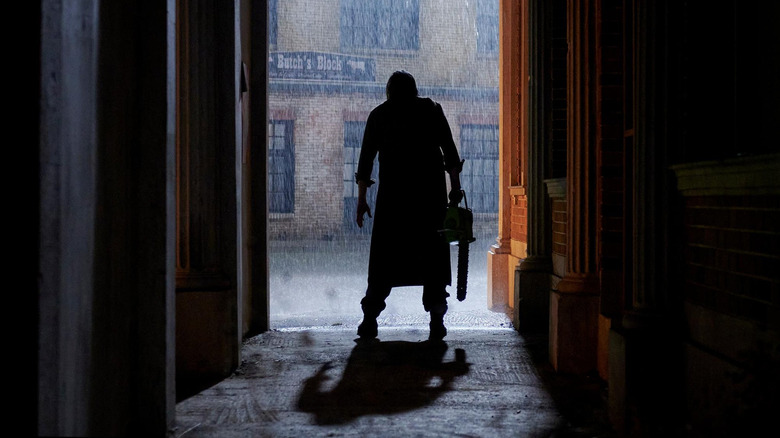
The new "Scream" brought back a killer's house from Wes Craven's original1996 meta-slasher with the same title. Last year, Nia DaCosta's "Candyman" had composer Robert A.A. Lowe conjuring up the tragic melodies of Philip Glass' 1991 score for the franchise original when the moment called for a throwback. Now, David Blue Garcia's "Texas Chainsaw Massacre" is invoking the spirits of the past in hopes of conjuring up some of the runaway success of Tobe Hooper's 1974 original slasher. 

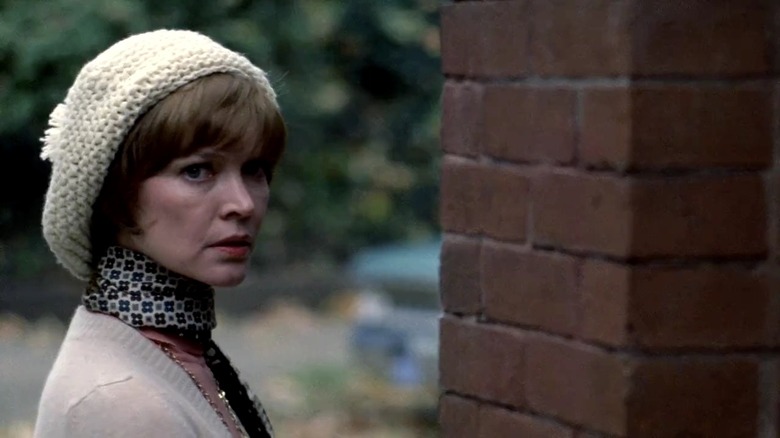
The Netflix feature is a direct sequel to "The Texas Chain Saw Massacre" and takes place after the events that left Sally Hardesty (originally played by Marilyn Burns with Olwen Fouéré taking over the role) bloodied and screaming in the back of a passing truck outside of a house of horrors in rural Texas. Banned in multiple theaters and embraced by a generation of moviegoers, Hooper's "The Texas Chain Saw Massacre" is now considered one of the most influential horror movies of all time, partly due to its raw, unfiltered terror rooted in reality; the now-iconic Leatherface is loosely based on the serial murderer Ed Gein.

As a nod to Hooper's terrifying tale, Garcia's new film pays homage by resurrecting the narrative voice of John Larroquette to narrate the movie's opening. The "Night Court" star's grave and frank delivery gave believe-it-or-not credence to the news brief spoken at the beginning of the 1974 film, reading:

The film which you are about to see is an account of the tragedy which befell a group of five youths, in particular Sally Hardesty and her invalid brother, Franklin. It is all the more tragic in that they were young. But, had they lived very, very long lives, they could not have expected nor would they have wished to see as much of the mad and macabre as they were to see that day. For them an idyllic summer afternoon drive became a nightmare. The events of that day were to lead to the discovery of one of the most bizarre crimes in the annals of American history, The Texas Chain Saw Massacre.

'John's Voice Is Iconic In The Original Opening...'

Speaking with Variety, "Texas Chainsaw Massacre" director David Blue Garcia clearly understands the necessity of Larroquette's presence as a way to prime the pump for a strong franchise return with the saw-swinging, chili-eating Sawyer family. The filmmaker said:

"It felt important to honor the original 'TCM' at every opportunity. John's voice is iconic in the original opening and we thought it would help set the perfect tone in our own intro. It's also a subtle way of letting the fans know they're in good hands."

Honoring the source material is always a top priority in an age of retconned sequels and meta re-quels (or legacy-quels. Just ask David Gordon Green on the nu-"Halloween" saga. Nia DaCosta and Radio Silence also knew this was necessary for "Candyman" and "Scream" respectively. As long as these new iterations of iconic favorites are continuing to blossom, there's nothing wrong with a throwback to the really good old stuff.

"Texas Chainsaw Massacre" is directed by David Blue Garcia from a screenplay penned by Chris Thomas Devlin. Devlin picks up from an original story by Fede Álvarez and Rodo Sayaguess. The ninth entry in the "Texas Chainsaw" film series is set decades after the original film, centering on the serial butcher Leatherface coming out of retirement and chopping up a new crop of potential victims, including a survivor out for payback. The new blood is played by Sarah Yarkin, Elsie Fisher, Mark Burnham, Jacob Latimore, Moe Dunford, Alice Krige, Jessica Allain, Nell Hudson, and Olwen Fouéré.

"Texas Chainsaw Massacre" arrives at Netflix on February 18, 2022.

Read this next: Every Texas Chainsaw Massacre Movie Ranked Worst To Best

The post Netflix's Texas Chainsaw Massacre Has the Same Narrator as the 1974 Original appeared first on /Film.
27 Jan 22:26

Windows 11’s TPM requirement is causing stuttering issues with AMD Ryzen CPUs

by Samuel Willetts
Windows 11’s TPM requirement is causing stuttering issues with AMD Ryzen CPUs

Windows 11 has been around for just under four months now, quickly becoming the second most popular version of Microsoft’s operating system among gaming PCs. While it will undoubtedly eventually replace Windows 10, there’s still plenty of troubleshooting to be done before then, especially when it comes to AMD Ryzen CPUs.

A thread on the Linus Tech Tips forums contains multiple testimonies of users experiencing stuttering issues on their Windows 11 PCs, while running an AMD Ryzen processor. Worse still, these reports date back to July 2021. The problem appears to be related to the ‘fTPM’ BIOS setting (firmware Trusted Platform Module), which must be enabled in order for Windows 11 to be installed.

However, users say that turning ‘fTPM’ off not only resolves the issue, but also has no impact on the functionality of their OS. It’s unclear what plans Microsoft has to address this issue, or how quickly a fix can be deployed, but the company was previously quick to address other issues relating to AMD Ryzen CPU performance on Windows 11.

RELATED LINKS: Best SSD for gaming, How to build a gaming PC, Best gaming CPU
27 Jan 22:25

White House Publishes Federal Zero Trust Strategy

by Eduard Kovacs
27 Jan 22:23

California governor details $10 billion plan to boost electric vehicle adoption

by Mariella Moon

Back in 2020, California governor Gavin Newsom issued an executive order that will ban the sales of new gasoline and diesel vehicles in the state by 2035. While California already represents half the EV market in the US, the state's officials know that they have to offer help and incentives to accelerate EV adoption and reach an all-electric future. They need to take steps so that removing gas vehicles from the market wouldn't hurt consumers. California committed $3.9 billion for its EV-related initiatives last year, and Newsom recently proposed the addition of $6.1 billion to the state's zero-emission vehicle package to bring the total to $10 billion. Now, the governor has detailed what he plans to do with the money.

First off, Newsom is hoping to make EVs more accessible by putting aside $256 million for low-income consumer EV purchases and spending $900 million on deploying affordable charging options to low-income neighborhoods. Another $935 million will also be spent to add 1,000 zero-emission short-haul trucks and 1,700 electric buses to the state's fleet. $1.5 billion will be used to electrify school buses, while $1.1 billion will be used to buy trucks, buses, off-road equipment and fueling infrastructure. California will spend $400 million on the electrification of ports and $419 million to support projects that increase access to zero-emission transportation in low-income communities, as well.

Alvaro Sanchez, Vice President of Policy at The Greenlining Institute non-profit org, said in a statement:

"To achieve California's climate goals we must focus on the needs of the most polluted and underserved neighborhoods. Governor Newsom’s ZEV investment proposal recognizes this reality. We're excited to work with the Governor and the Legislature to prove to the rest of the country that we can not only advance our climate agenda but also advance equity."

You can read more information about the proposal on the governor's website.

27 Jan 22:21

Spotify chooses Joe Rogan over Neil Young

by Mark Frauenfelder

Earlier this week Neil Young wrote an open letter to Spotify instructing them to either kick Joe Rogan off the platform or stop streaming his songs. "I am doing this because Spotify is spreading fake information about vaccines — potentially causing death to those who believe the disinformation being spread by them," wrote Young. — Read the rest

27 Jan 22:20

Spotify Removes Neil Young's Music After He Objects To Joe Rogan's Podcast

by msmash
Spotify has removed famed singer-songwriter Neil Young's recordings from its streaming platform. From a report: On Monday, Young had briefly posted an open letter on his own website, asking his management and record label to remove his music from the streaming giant, as a protest against the platform's distribution of podcaster Joe Rogan. Rogan has been widely criticized for spreading misinformation about coronavirus vaccines on his podcast, which is now distributed exclusively on Spotify. Late Wednesday, the musician posted two lengthy statements on his website, one addressing the catalyst of his request and the other thanking his industry partners. In the first, he wrote in part: "I first learned of this problem by reading that 200-plus doctors had joined forces, taking on the dangerous life-threatening COVID falsehoods found in Spotify programming. Most of the listeners hearing the unfactual, misleading and false COVID information of Spotify are 24 years old, impressionable and easy to swing to the wrong side of the truth. These young people believe Spotify would never present grossly unfactual information. They unfortunately are wrong. I knew I had to try to point that out." As of last week, more than 1,000 doctors, scientists and health professionals had signed that open letter to Spotify. According to Rolling Stone, Young's original request on Monday, which was addressed to his manager and an executive at Warner Music Group, read in part: "I am doing this because Spotify is spreading fake information about vaccines -- potentially causing death to those who believe the disinformation being spread by them ... They can have Rogan or Young. Not both." The letter was quickly removed from Young's website. Spotify's scrubbing of Young from its service was first reported on Wednesday afternoon by The Wall Street Journal. His removal from the streaming platform makes him one of the most popular musical artists not to appear on Spotify, where his songs have garnered hundreds of millions of streams.

Read more of this story at Slashdot.

27 Jan 22:15

LG Announces New Ad Targeting Features for TVs

by msmash
LG has announced a new offering to advertisers that promises to be able to reach the company's millions of connected devices in households across the country, pummeling TV viewers with -- you guessed it -- targeted ads. From a report: While ads playing on your connected TV might not be anything new, some of the metrics the company plans to hand over to advertisers include targeting viewers by specific demographics, for example, or being able to tie a TV ad view to someone's in-store purchase down the line. If you swap out a TV screen for a computer screen, the kind of microtargeting that LG's offering doesn't sound any different than what a company like Facebook or Google would offer. That's kind of the point. Online ad spending reached more than $490 billion by the end of last year, and those numbers are only going to keep going up as more advertisers look for more ways to track and target more people online. Traditional TV ad spend, meanwhile, has tanked since its peak around 2016. In order to lure ad dollars back, folks in the television space, like LG, are using every tool at their disposal to claw back the ad dollars the internet's taken away. And it's clearly working. While traditional TV ad spend has plummeted, there's never been more money spent on advertising across the digitally connected TVs offered by companies like LG. Roku, for example, recently announced an upcoming Shopify integration that would let retailers target TV viewers with more ads for more of their products. Amazon rolled out a new beta platform that lets networks promote apps, movies, or TV shows to people right from the device's home screen. And I don't need to remind Samsung TV owners how their devices are getting absolutely plastered with ads from every conceivable angle.

Read more of this story at Slashdot.

27 Jan 22:15

How to Enable TPM in popular VMs to install Windows 11

by Kevin Okemwa
27 Jan 22:14

Boba Fett And Obi-Wan Kenobi Actor Shares The Intense Secrecy Of Working On A Star Wars Show [Exclusive]

by Jeremy Mathai

Marvel gets all the attention and memes these days about anti-spoiler "snipers" who stand at the ready, just waiting to silence any hapless actor who mistakenly says a little too much about an upcoming project during an interview or public appearance. But between Mark Ruffalo and Tom Holland constantly running their mouths -- to say nothing about that certain spoiler in "Spider-Man: No Way Home" that ended up becoming the internet's worst-kept secret -- I'd say it's about time we suspended that little narrative and found a more suitable candidate to claim that anti-spoiler title for themselves.

Like, I don't know, "Star Wars," perhaps. Setting aside the entire "The Rise of Skywalker" snafu, we can go back several years and list any number of major surprises that fans knew nothing about until either the lights went down in the theater or we fired up the latest Disney+ streaming show in our living rooms. Think of Frank Oz reprising his role as Yoda in an unexpected appearance in "The Last Jedi," or Baby Yoda showing up at the end of that very first episode of "The Mandalorian," or a de-aged Luke Skywalker himself waltzing into Din Djarin's world one season later. By all accounts, that strict lockdown extends to "Star Wars" projects still to come.

/Film's Ryan Scott recently talked to Rory Ross, an actor with roles in both "The Book of Boba Fett" as one of the Tusken Raiders and the upcoming "Obi-Wan Kenobi" as a Stormtrooper. We previously brought you the juicy tidbit from their conversation that Ross believes "Obi-Wan Kenobi" will be every fan's dream series, and now we have even more intriguing details about his perspective on the rampant secrecy surrounding his roles in these shows. In response to a question about how "intense" it is from his point of view, Ross answered:

"I mean, you definitely sign a lot of NDAs, so that's why I have to be careful on talking about proprietary technology. Obviously, the Volume has already been explored in the '[Disney] Gallery' series, which I definitely recommend people watching that if they're curious about behind the scenes. Especially when it comes to 'Kenobi,' there hasn't been a lot out there. So that's why I'm like, 'I'm a Stormtrooper. People are going to enjoy it. It's going to be a fun time.'"

"Got To Be Very Careful What You Do And Don't Say"

By the sound of it, joining the cast of any "Star Wars" production on any level whatsoever is both a dream come true ... and a constant source of anxiety about saying the wrong thing at any given moment. Luckily, Rory Ross can consider himself among the ranks of "Star Wars" actors who've successfully navigated that tricky minefield so far. In his interview with /Film, he goes on to say:

"I mean, you want to make sure that you're not spoiling anything, as well, for the fans. Because you imagine if someone knew about Grogu, or even Luke Skywalker [in 'The Mandalorian']. That would be devastating to know beforehand. So I would never want to be the one that would give out any of those big things or anything like that, and just enjoy the show. I'm happy to talk with the fans and stuff like that. But yeah, got to be very careful what you do and don't say."

As much as I think we sometimes take the anti-spoiler conversation to some really silly lengths sometimes, the gist of Ross's statements here are on-point. In any case, it's fun to hear about these sorts of concerns from a vastly different perspective of our own ... even if Ross himself appears to be a knowledgeable and passionate "Star Wars" fan in his own right. Check out the full interview to see for yourself.

Read this next: 12 Awesome Sci-Fi Movies That Never Got Sequels

The post Boba Fett and Obi-Wan Kenobi Actor Shares the Intense Secrecy of Working On a Star Wars Show [Exclusive] appeared first on /Film.

27 Jan 22:11

Unknown Space Object Beaming Out Radio Signals Every 18 Minutes Remains a Mystery

by msmash
While mapping radio waves across the universe, astronomers happened upon a celestial object releasing giant bursts of energy -- and it's unlike anything they've ever seen before. From a report: The spinning space object, spotted in March 2018, beamed out radiation three times per hour. In those moments, it became the brightest source of radio waves viewable from Earth, acting like a celestial lighthouse. Astronomers think it might be a remnant of a collapsed star, either a dense neutron star or a dead white dwarf star, with a strong magnetic field -- or it could be something else entirely. A study on the discovery published Wednesday in the journal Nature. "This object was appearing and disappearing over a few hours during our observations," said lead study author Natasha Hurley-Walker, an astrophysicist at the Curtin University node of the International Centre for Radio Astronomy Research, in a statement. "That was completely unexpected. It was kind of spooky for an astronomer because there's nothing known in the sky that does that. And it's really quite close to us -- about 4,000 light-years away. It's in our galactic backyard."

Read more of this story at Slashdot.

27 Jan 22:04

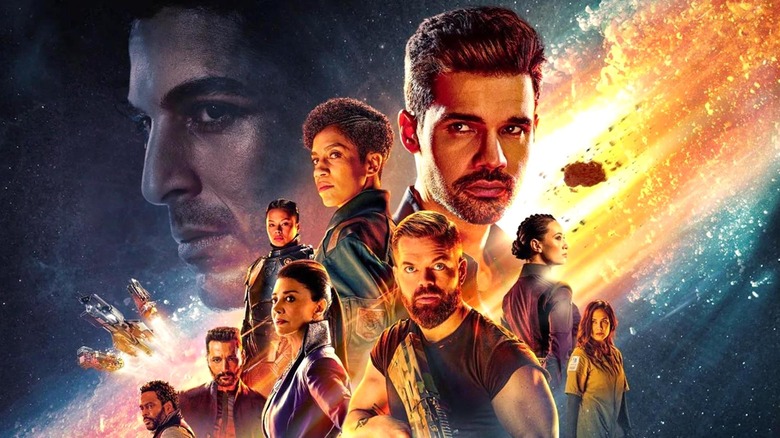
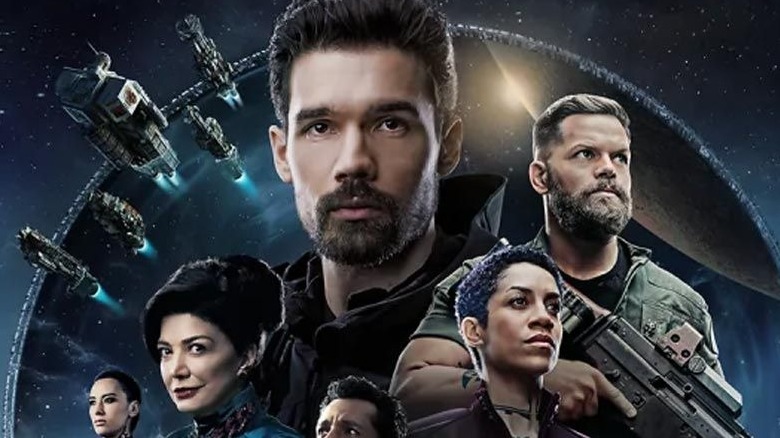
The Reason The Expanse Season 6 Was Cut Short

by Collier Jennings

All good things must come to an end, and that's especially true for "The Expanse". Based on the science fiction novels by James S.A. Corey, "The Expanse" was a critical and commercial success -- even surviving cancellation at its original network SyFy, spending the remainder of its run on Amazon Prime Video. As someone who's read the novels, I certainly see where the praise is coming from: the show is impeccably cast (especially when it comes to Shohreh Aghdashloo as Chrisjen Avasarala -- name another character on TV who can use swear words so creatively), and it manages to adapt the events of the novels in a way that appeals to longtime readers and newcomers alike. 

The sixth and final season of "The Expanse" pulled out all the stops, pitting the combined forces of Earth and Mars' spaceships against the Inner Fleet. Compared to previous seasons, "The Expanse" season 6 was rather short, clocking in at only six episodes. It turns out there's a perfectly good reason for that.

Six Is The Magic Number

During an interview with io9, Ty Franck and Daniel Abraham (who co-created the pseudonym of Corey and wrote "The Expanse" novels) and series showrunner Naren Shankar discussed crafting the final season. According to Shankar, the decision to make the season shorter was part of an agreement between Amazon and Alcon Television:

"I mean, you always kind of agree on how much money you're going to commit to the production of the show. And that was the decision. It came down to making six episodes of it. It's always a negotiation to some extent. Could we have done 10? Absolutely. Could we have done eight? Certainly. Uh, I don't think we would've been able to tell the season in any less than six."

Even though the episode count is on the short side, season 6 manages to give each character a send-off that either fits their personal story or manages to be extremely emotional or even both. As the old saying goes, quality trumps quantity -- and "The Expanse" has quality in spades.

Stay On Target

Shankar also revealed that the shortened episode length helped the writing team focus on the story they wanted to tell:

"So that was kind of presented to us as, "Can we tell this story in six episodes?" and our response was, "Let's think about it." We talked about it and we came back with, "Yeah, we can do it, but we're going to have to supersize the sixth episode." That one's really like an episode and a half."

The series finale, entitled "Babylon's Ashes," certainly features enough space battles and political intrigue to fit into two episodes' worth, and the ending feels appropriately climatic while also hinting at future adventures. Abraham hints that there are three books left in the series to adapt -- so it's quite possible, if "The Expanse" continues, future seasons will be longer. Personally, I'm all for it, especially if we get to hear more of Avasarala's perfectly placed letter bombs. 

The entire series run of "The Expanse" is streaming on Amazon Prime Video now.

Read this next: The 14 Greatest Science Fiction Movies Of The 21st Century

The post The Reason The Expanse Season 6 Was Cut Short appeared first on /Film.

27 Jan 22:00

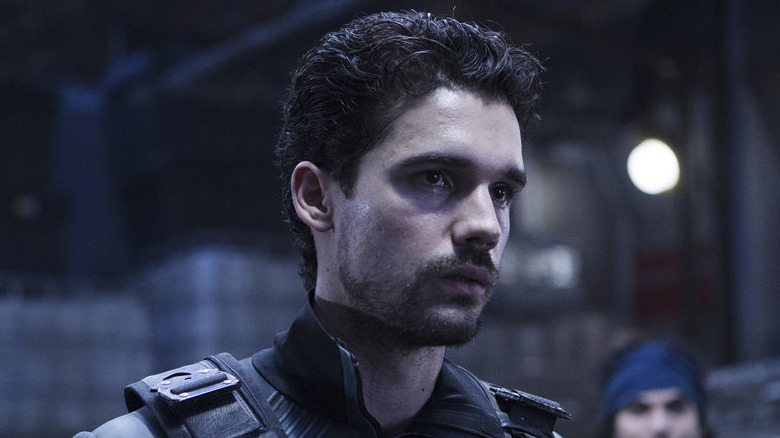
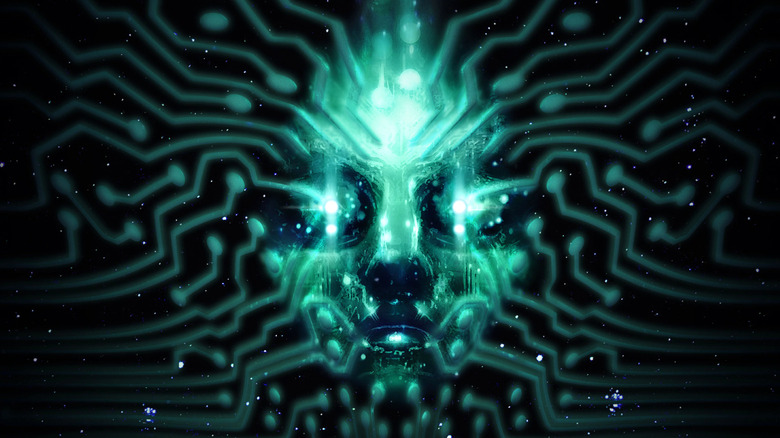
Mortal Kombat Writer Brings System Shock Adaptation To Binge Streaming Service

by Debopriyaa Dutta

The trend of adapting popular video games into live-action adaptations continues (a trend with an uneven, complicated legacy), key examples being 2021's "Mortal Kombat" and the recently released Netflix series, "Arcane," which is set in the "League of Legends" universe. According to a report by Deadline, Greg Russo, one of the writers involved in the "Mortal Kombat" movie reboot, will be writing and directing the upcoming "System Shock" series, which will be released on Binge.

Back To Hacking The Mainframe

"System Shock" is set to stream exclusively on Binge, a gaming streaming platform, with Russo serving as executive producer alongside Binge producer Allan Ungar, who also helmed the upcoming movie adaptation of "Uncharted." Nightdive Studios, who own the action video game franchise, are also heavily involved in the creation of the series.

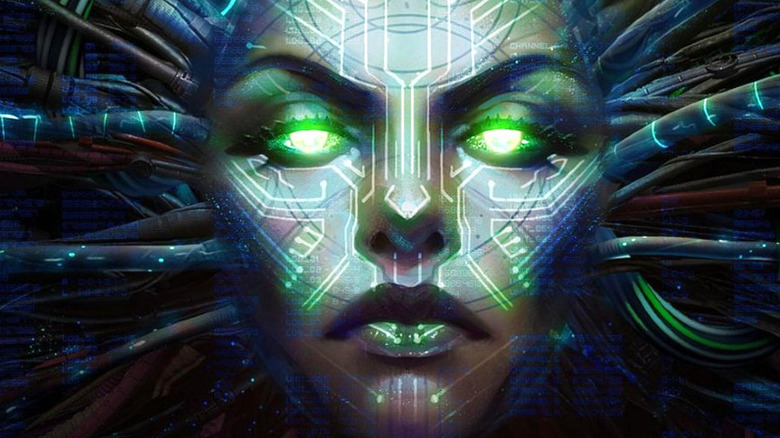
Needless to say, the overwhelming legacy of "System Shock" lies in the fact that it is the key progenitor of most story-based action games today, including "Metal Gear Solid," "Bioshock," and even "Half-Life" (yes, truly). As the sheer brilliance of "System Shock" lies in its intelligent first-person experience, an adaptation would understandably negate that concept completely, hinging more on narrative gameplay as a whole. On a narrative level, "System Shock" plunges players into Citadel Station (a space station) in the year 2072, where the protagonist — a nameless hacker — is asked to retrieve an AI named SHODAN, post which, they undergo a healing coma. After the player awakens, they are confronted with hostile robots, cyborgs, and mutants, who they have to fight off.

This is an interesting premise for a sci-fi video game adaptation, especially a series that would allow more scope for character development and in-depth world-building. Per IGN, Russo expressed excitement over the opportunity to bring the world of "System Shock" to life:

"I'm honored to have the opportunity to work alongside the fantastic team at Binge and Nightdive Studios to bring the iconic System Shock franchise to life. I've been waiting for the right opportunity to make my directorial debut, and I finally found it."

Russo has been involved with several video game adaptations throughout his writing career, including the fairly-recent adaptation, "Resident Evil: Welcome to Raccoon City." Interestingly, Russo has also been attached to the long-gestating "Space Invaders" film and the "Saints Row" adaptation. Ungar went on to praise Russo's skills and how thrilled he was to have him on board:

"Greg is a superbly talented screenwriter who possesses an unmatched knowledge and passion for gaming. His artistic approach to storytelling and his deep understanding of the source material will undoubtedly get fans excited about this new franchise. We're thrilled to be bringing him on board and can't wait to share his vision with audiences worldwide."

Hopefully, the upcoming "System Shock" adaptation will be following the footsteps of (mostly) good video game adaptations, allowing both casual viewers and fans of the franchise to immerse themselves in a stakes-heavy, futuristic world.

Read this next: The 12 Best Video Game Movies Ranked

The post Mortal Kombat Writer Brings System Shock Adaptation to Binge Streaming Service appeared first on /Film.
27 Jan 21:53

Is There a 32-Bit Version of Windows 11?

by Arol Wright

Windows 11 has been out for a few months, and so far, it's been a worthy successor to Windows 10—despite the fact that Microsoft once claimed that Windows 10 would be the last version of Windows ever. So far, despite a handful of initial bugs at launch, it's been great now that they've been ironed out, but one thing yet remains: its fixation for newer hardware.

27 Jan 21:53

Booby-trapped Sites Delivered Potent New Backdoor Trojan To macOS Users

by msmash
Researchers have uncovered advanced, never-before-seen macOS malware that was installed using exploits that were almost impossible for most users to detect or stop once the users landed on a malicious website. From a report: The malware was a full-featured backdoor that was written from scratch, an indication that the developers behind it have significant resources and expertise. DazzleSpy, as researchers from security firm Eset have named it, provides an array of advanced capabilities that give the attackers the ability to fully monitor and control infected Macs. Features include: victim device fingerprinting, screen capture, file download/upload, execute terminal commands, audio recording, and keylogging. Mac malware has become more common over the years, but the universe of advanced macOS backdoors remains considerably smaller than that of advanced backdoors for Windows. The sophistication of DazzleSpy -- as well as the exploit chain used to install it -- is impressive. It also doesn't appear to have any corresponding counterpart for Windows. This has led Eset to say that the people who developed DazzleSpy are unusual. "First, they seem to be targeting Macs only," Eset researcher Marc-Etienne M.Leveille wrote in an email. "We haven't seen payloads for Windows nor clues that it would exist. Secondly, they have the resources to develop complex exploits and their own spying malware, which is quite significant."

Read more of this story at Slashdot.

27 Jan 21:53

Hitman 3 Steam Version will be Upgraded for Free After Launch Issues

by Ule Lopez

Hitman 3

Last time on Hitman 3, we were talking about how the game was recently released on Steam, and how the game was charged at full price for the third game alone. Thus, the story became about how IO Interactive clearly didn’t realize that they were re-releasing a game like that at full price on a completely different storefront when others have had it on sale several times.

Steam users, in response, had decided to go and review bomb the game. Noting that the gameplay was very good, but the pricing was absolutely dismal. This review bombing made the game drop to a shockingly low 54%, in comparison to 2018’s 84% approval and Hitman 2’s 92% approval

Well, IO Interactive seems to have noticed that things were clearly not received how they were expecting them to be. Thus, they went and released a developer update on their website regarding HITMAN 3’s launch, and plan to offer a fair bit of compensation to those planning to purchase Agent 47’s third game in the World of Assassination trilogy.

The post (which you can read right here) breaks down how the team was disappointed with the initial reception to the frankly exorbitant asking price for the game and its multiple versions (not helping is the factor of their confusing DLCs).

Our HITMAN 3 launch on Steam didn’t go as planned. We were excited to bring HITMAN 3 to Steam with new content and we knew that anticipation and excitement levels amongst our Steam players was high, especially as the game had been an Epic exclusive for a year.

Ultimately, we didn’t meet our own expectations of a launch experience and we don’t like that our Steam community is beginning their HITMAN 3 journey in this way.

To detail their compensation, they’re offering free upgrades on two of the Hitman 3 versions. Firstly, if you’re purchasing the base game of Hitman 3 before February 19th, 2022, you’re entitled to a free upgrade to the game’s Deluxe Edition, which gives you extra missions in the form of Escalation Contracts, as well as several new costumes and items at Agent 47’s disposal.

If you already own the Deluxe or Trilogy editions of Hitman 3, you’ll receive the Seven Deadly Sins Pack for no additional charge. Essentially, it’s the game’s DLC missions, akin to Hitman 2’s New York and Haven Island missions. These deals will be rolling out starting today, January 27th, and all you’ll have to do is launch your corresponding version of Hitman 3 to receive the benefits.

Hitman 3 is available now on PlayStation 5, PlayStation 4, Xbox Series, Xbox One, Nintendo Switch, and PC via the Epic Games Store and Steam.

The post Hitman 3 Steam Version will be Upgraded for Free After Launch Issues by Ule Lopez appeared first on Wccftech.

27 Jan 21:49

DAEMON X MACHINA is free to own on Epic Games Store

by John Papadopoulos

Epic Games is currently giving away for free Marvelous’ mecha game, DAEMON X MACHINA. From today and until February 3rd, PC gamers can visit its EGS page and acquire their free copy. In DAEMON X MACHINA, players will be able to pilot their fully customizable Arsenal mech. Players will also join their fellow mercenaries in … Continue reading DAEMON X MACHINA is free to own on Epic Games Store →

The post DAEMON X MACHINA is free to own on Epic Games Store appeared first on DSOGaming.

27 Jan 21:48

Best Car Battery for 2022 - CNET

by Roadshow staff
Old school? Maybe, but no automobile is going anywhere without a good 12-volt battery.
27 Jan 21:47

Outlook Security Feature Bypass Allowed Sending Malicious Links

by Ionut Arghire

A Trustwave researcher has discovered a new technique to completely bypass a security feature of Microsoft Outlook and deliver a malicious link to the recipient.

The new technique, Trustwave SpiderLabs lead threat architect Reegun Richard Jayapaul explains, is a variation of a vulnerability that was initially addressed in February 2020.

read more

27 Jan 21:46

Computers Uncover 100,000 Novel Viruses in Old Genetic Data

by msmash
sciencehabit writes: It took just one virus to cripple the world's economy and kill millions of people; yet virologists estimate that trillions of still-unknown viruses exist, many of which might be lethal or have the potential to spark the next pandemic. Now, they have a new -- and very long -- list of possible suspects to interrogate. By sifting through unprecedented amounts of existing genomic data, scientists have uncovered more than 100,000 novel viruses, including nine coronaviruses and more than 300 related to the hepatitis Delta virus, which can cause liver failure. "It's a foundational piece of work," says J. Rodney Brister, a bioinformatician at the National Center for Biotechnology Information's National Library of Medicine who was not involved in the new study. The work expands the number of known viruses that use RNA instead of DNA for their genes by an order of magnitude. It also "demonstrates our outrageous lack of knowledge about this group of organisms," says disease ecologist Peter Daszak, president of the EcoHealth Alliance, a nonprofit research group in New York City that is raising money to launch a global survey of viruses. The work will also help launch so-called petabyte genomics -- the analyses of previously unfathomable quantities of DNA and RNA data. That wasn't exactly what computational biologist Artem Babaian had in mind when he was in between jobs in early 2020. Instead, he was simply curious about how many coronaviruses -- aside from the virus that had just launched the COVID-19 pandemic -- could be found in sequences in existing genomic databases. So, he and independent supercomputing expert Jeff Taylor scoured cloud-based genomic data that had been deposited to a global sequence database and uploaded by the U.S. National Institutes of Health. As of now, the database contains 16 petabytes of archived sequences, which come from genetic surveys of everything from fugu fish to farm soils to the insides of human guts. (A database with a digital photo of every person in the United States would take up about the same amount of space.) The genomes of viruses infecting different organisms in these samples are also captured by sequencing, but they usually go undetected.

Read more of this story at Slashdot.