‘Zombies’ Hold out your hands in front of you like Giorgio A. Tsoukalos and say “zombies.” Now go run toward...
The post Review: Dying Light 2 appeared first on Destructoid.
‘Zombies’ Hold out your hands in front of you like Giorgio A. Tsoukalos and say “zombies.” Now go run toward...
The post Review: Dying Light 2 appeared first on Destructoid.
Warning: this post contains major spoilers for "The Book of Boba Fett." Proceed with caution.
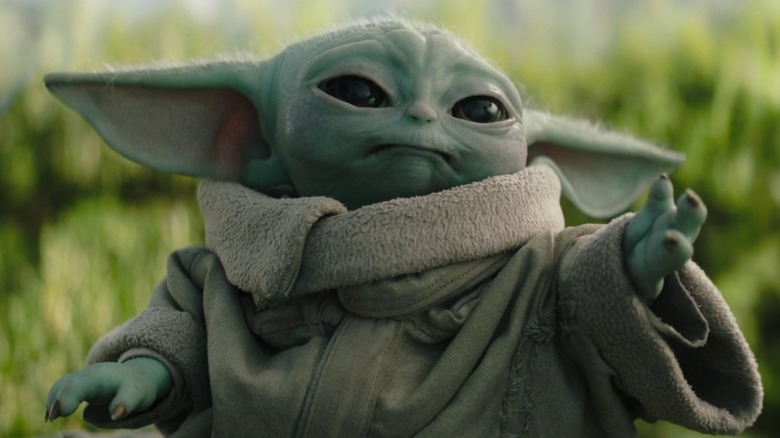
"The Mandalorian" introduced not only one of the most popular characters of the modern "Star Wars" era with Grogu (aka Baby Yoda), but perhaps one of the most popular characters in the history of ... history? Time will tell if that popularity can endure, but the mysterious nature of the cute little Force user may well help with his longevity. To that point, we actually learned quite a bit more about Mando's little buddy and Luke's new Padawan recently, though what we discovered actually raises more questions that will need answering at one point or another.
Last chance to turn away for "The Book of Boba Fett" spoilers, folks.
Specifically, "The Book of Boba Fett" Chapter 6 brought back not only Grogu, but Din, Luke, Ahsoka, and a whole bunch of other characters both old and (relatively) new to the galaxy. In the process, some of the hazy backstory for Grogu was revealed, and it could link Baby Yoda to some of the most tragic events in the history of "Star Wars." Let's dig in.
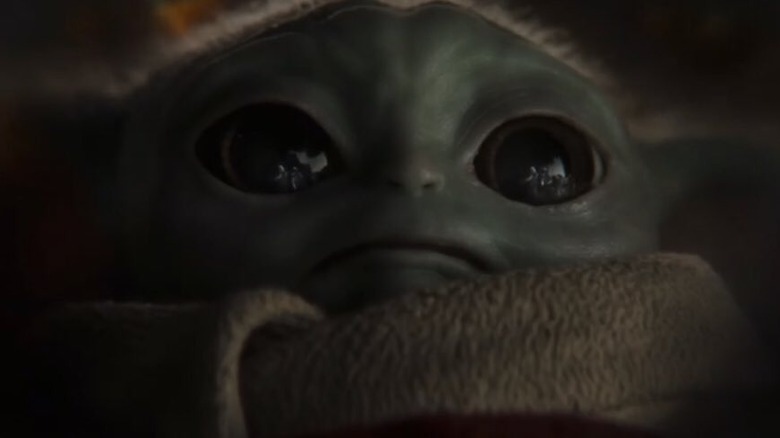
Baby Yoda was kept a complete secret until he showed up at the end of the first episode of "The Mandalorian." Even then, finding that bounty in a floating metal container raised so many questions that the first two seasons of the show did very little to answer. Where did he come from? Where did the Empire find him? What happened in those first 50 years of life to lead him to Mando? Luckily, "The Book of Boba Fett" offered a window into the past by sidelining the title character for the penultimate episode of his own show to focus on these mysteries.
During his training with Luke at the new Jedi temple, Luke asks Grogu about "back home" and realizes that Grogu doesn't seem to have memories of where he came from. He then asks if the little guy would like to remember, and through the Force, he returns him to some dark, distant memories. It is here that we get a very important flashback that offers up far more about the character's backstory than we had up to this point.
During the vision, we see Grogu lying down, not dissimilar to when we first met him in his little pod. We see a garrison of Republic troopers from the Clone Wars era battling some Jedi. All of this is happening while little Grogu watches on in horror, his Jedi friends no match for the barrage of blaster fire coming their way. Yes, indeed, it does appear that the little alien was present for Order 66, the major event that happens during "Revenge of the Sith" and "The Clone Wars" finale that sees Palpatine ordering the death of all Jedi. As one might expect, many details are left off the table for now, but the implication is clear. Grogu was there around 25 years ago (give or take) when the Jedi were nearly wiped off the map, yet somehow managed to survive the ordeal himself.
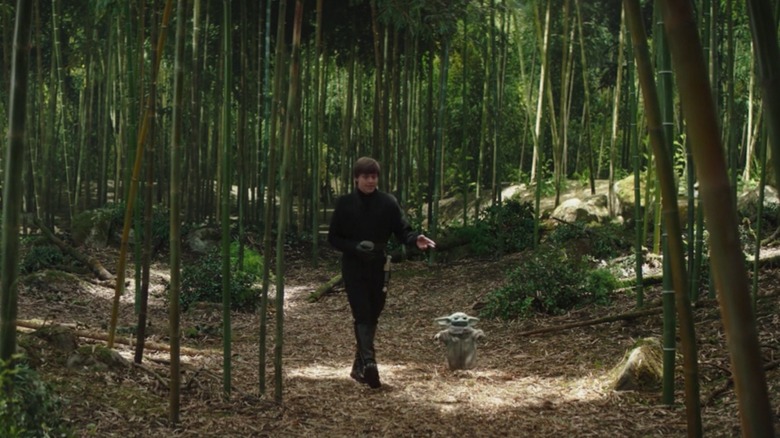
The episode doesn't give us too much more regarding Grogu's origin story, at least not directly. There is another moment where Ahsoka approaches Luke after a training session with the little Padawan. Ahsoka compliments Luke for training him well and the Jedi replies, "It's more like he's remembering than I'm actually teaching him anything." Therein lies an important hint as it suggests that the little one had previously been trained in the ways of the Force, but has been away from the Jedi for some time, which may be why his skills are (or at least were) so rusty.
To do some theorizing, it seems like Grogu may well have been training at the Jedi temple during the height of the Republic during the prequel trilogy era. At that time, there would have been many younglings at the temple and it would be easy enough to imagine he was just part of the crowd before Order 66 was carried out. That opens the floodgates for a host of other questions that eventual "Star Wars" stories will need to fill in.
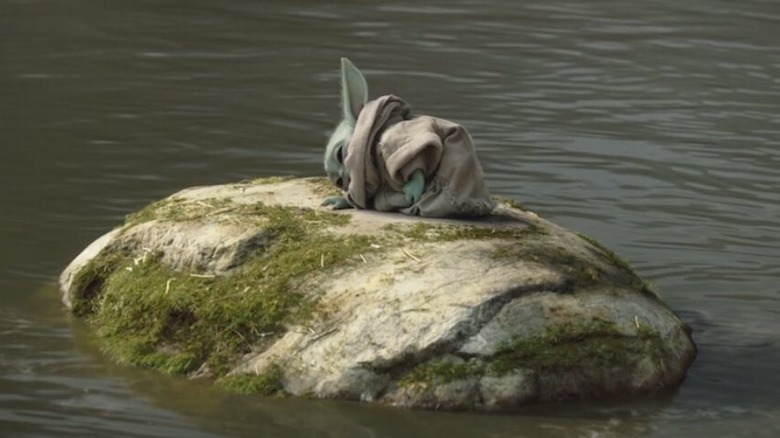
So, where does that leave us? For one, it would be interesting to find out just where Grogu was during those events. If he was at the actual Jedi temple on Coruscant, then the implication is that he somehow avoided Anakin Skywalker's wrath. After all, we know the newly-christened Darth Vader had no issues killing younglings. If that's the case, who saved Grogu? Where has he been for the last 25 years? Did Yoda know he existed? Does that mean everyone from Yoda's planet is a Force user? Or was Grogu special? A great many questions with precious few answers at the moment.
The fact of the matter is that we still have many, many questions regarding the one we call Baby Yoda and we may have to wait a while to get those answers -- if we ever get them at all. Jon Favreau and Dave Filoni, the folks driving the Disney+ "Star Wars" ship, know all too well that the mystery is part of what makes Grogu so interesting right now and they aren't likely to give it all up right away. They are going to make us wait for it and, in the end, that probably makes for better storytelling.
Read this next: Counting Down The 10 Scariest And Most Evil Children In Horror Movies
The post Everything We Know About the Secret Origin of Grogu appeared first on /Film.
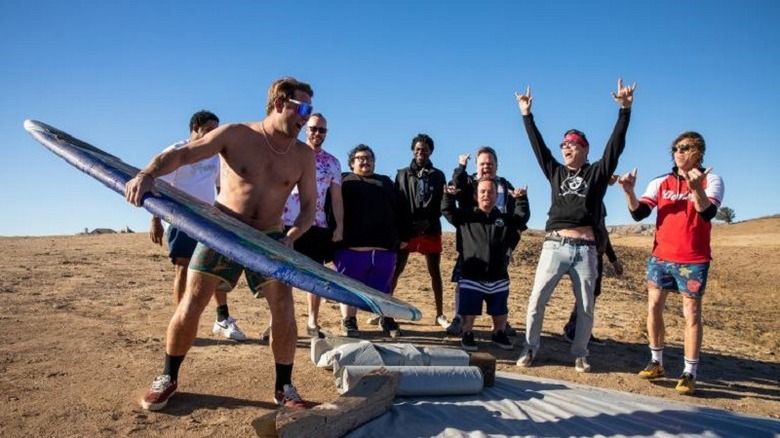
Chaos has never been more hilarious or perverse than when you enter the world of "Jackass". Twenty years after the original film was unleashed in theaters by Paramount Pictures and MTV Films, and a few sequels and spin-off shows later, the crew of this warped fantasia of stunts, nudity, and gleeful gross-out humor has survived to make a fourth entry in the series, "Jackass Forever". Although some of the cast members have aged notably – ringleader Johnny Knoxville's hair is white in a number of segments, for example – their appetite for personal destruction has not ebbed. "Jackass Forever" is as bluntly, dementedly, brilliantly funny and horrific, and unforgettable as any of its predecessors or the TV series that started it all. If you are a fan of anything or anyone even tangentially related to "Jackass Forever," you can rest assured that you know what you're getting.
That might be worth noting near the top of this review: though we can lob the phrase "critic-proof" at big-budget blockbuster nonsense, there really isn't a more critic-proof film than "Jackass Forever." The movie itself feels like a paraphrase of a snappy line from the 1991 comedy "Barton Fink": it's a "Jackass" movie with outlandish stunts, Johnny Knoxville, and heaping helpings of frontal male nudity. Whaddya need, a road map? Just as director Jeff Tremaine, the largely reunited cast (except, sadly, the late Ryan Dunn, who died in a car accident a decade ago), and some assorted guest stars know what movie they're making, it's safe to say that any audience member will likely have a good idea of what to expect. All a review of this movie can come down can be for a critic to follow in the steps of Roger Ebert, and decide if he can be honest with himself and admit that he laughed himself hoarse at the proceedings. Reader, this is that review of "Jackass Forever" because I am that critic.
Some of the stunts in "Jackass Forever" are as terrifying as they are memorably funny. An early high point is a riff on the beloved thriller "The Silence of the Lambs," in which Knoxville and the crew invite in a few separate duos among the "Jackass" crew, including Wee Man, Preston Lacy, Dave England, and new cast member Sean "Poopies" McInerney, into an unassuming room where they're shown a deadly rattlesnake being displayed by an animal handler. The duos are then escorted out of the room briefly, and when they're sent back in, the door is slammed shut, the lights turn off, and we see – via night-vision goggles – that while the rattlesnake has been removed, the cast members are unaware and scared out of their wits.
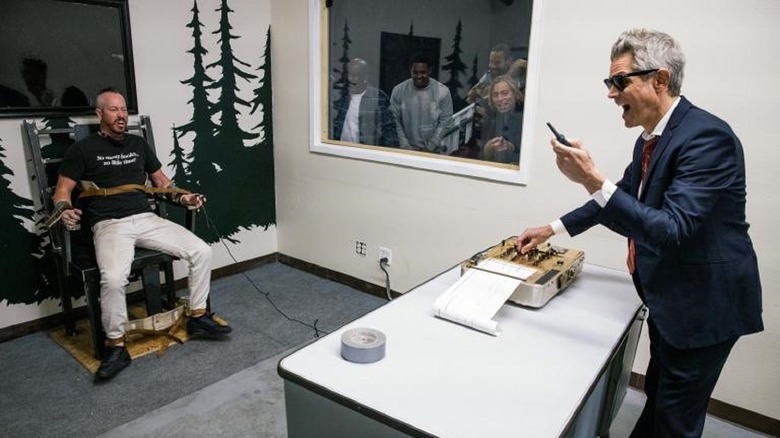
As hilarious as "Jackass Forever" is, it's also easy to imagine how indescribably scary it can be to work in this world, and wonder when the pranks end. If they end. Danger Ehren, as he's known still, gets a fair brunt of it, including another climactic high point where he's strapped to both a lie detector test and an electric shock device ... while a bear is let loose on him. (Oh yes, he's also been adorned with honey and pieces of salmon. A slight detail worth noting.) Danger Ehren also gets to do a revival of an early "Jackass" stunt, the Cup Test, which is a simple four-part test of how effective protective gear that athletes wear to cover their genitalia are. Here, Danger Ehren is beset upon by a UFC heavyweight, a softball pitcher, a hockey star, and ... well, the last part of the test is too gruesome to even hint at in the review.
"Jackass Forever," like its predecessors, is as proudly homemade-feeling as even the show was. Though so many of the men onscreen are two decades older – there's a handful of newbies, as well as some younger actors and musicians, who talk about how formative "Jackass" was when they were growing up – they all still display the genuine bonds of friendship and equal-opportunity madness that have bound them together. It's not just that you'd have to be a touch crazy to agree to, say, wear half of a "spider helmet" in the hopes of blowing enough air into a spider's gaping maw so that it turns around and attacks the person wearing the other half of the helmet. It's that you have to like the people putting you up to the prank. And that, more than anything, is what makes even the truly disgusting, how-in-God's-name-did-this-gag-not-earn-the-NC-17-rating stuff remarkably enjoyable: you're watching friends go through this insanity.
"Jackass Forever" is not high art, nor is it trying to be. This movie captures the inexplicable joy of grossing your buddies out for a good laugh, just as the other "Jackass" movies have done. But it also tips its hand to the passage of time, so that when Steve-O agrees to tie a cage with a queen bee to his genitalia and subsequently get a ton of bees stinging ... that part of his body, or when Knoxville does a "magic trick" that recalls one of his most famous and deadly stunts, the pain is a little less avoidable. (Knoxville's "magic trick" is quickly followed by a smash cut to him exiting a hospital, looking much the worse for wear.) "Jackass Forever" doesn't dawdle on these moments – it's too smart to get maudlin or sappy. But it's honest, both in its jaw-dropping stunts and in the impacts those stunts must-have. I just thank God that a movie this crazy exists. It's been a long time since a comedy has been this enormously, outrageously funny.
/Film Rating: 8.5 out of 10
Read this next: 14 Awesome Comedies That Never Got Sequels
The post Jackass Forever Review: 20 Years Later, It's Just As Demented As Ever appeared first on /Film.
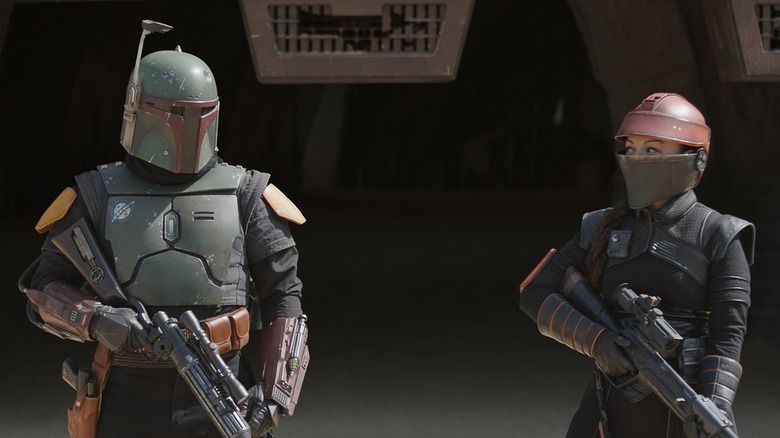
We are rapidly approaching the conclusion of "The Book of Boba Fett" and Chapter 6, titled "From the Desert Comes a Stranger," brought us closer to the mark and set the stage for the finale. To that end, a great deal happened in this episode and, in particular, it seems the fate of a rather important "Star Wars" character is hanging in the balance as a result of this latest episode's unexpected conclusion. But is this person really dead? Or is there more to the story? We're here to look at the evidence and attempt to answer that very question with the information we have available. Let's dive in.
Warning: spoilers ahead for "The Book of Boba Fett" Chapter 6. Proceed with caution.
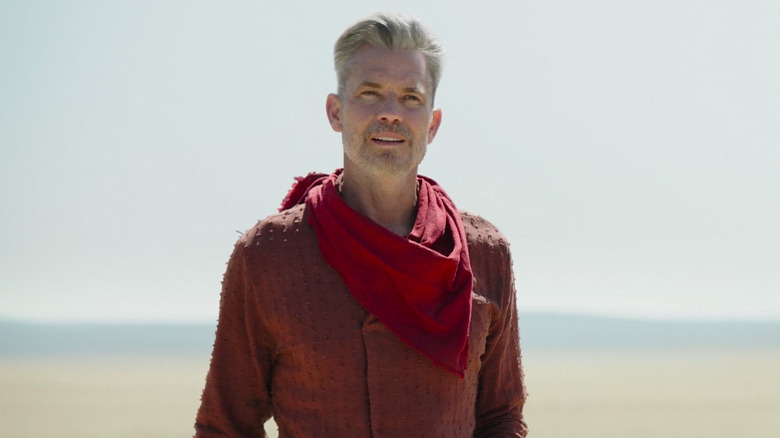
In the episode's opening minutes we are treated to the return of none other than lawman Cobb Vanth, played once again by Timothy Olyphant in all of his silver-haired glory. He is handling some spice runners who are treading on his turf, which he doesn't take too kindly to. As it just so happens, this confrontation puts him smack dab in the middle of everything that has been going on with Boba Fett, Mando, and the escalating situation with the Pyke Syndicate, who are trying to use Tatooine as their personal spice expressway.
A little later on in the episode. Cobb is paid a visit by his old pal Mando. The two previously worked together in "The Mandalorian" season 2, an episode that effectively opened the door for Boba Fett's return, as the lawman of this little area on the desert planet had obtained the bounty hunter's armor. In any event, Mando was there to ask for Cobb's help to see if he and his people would be interested in aiding them in the fight against the Pyke Syndicate. Reluctant at first, Cobb leaves Mando with some home and decides to call a meeting with any battle-capable citizens. But this is where things go south quickly for our friend Mr. Vanth.
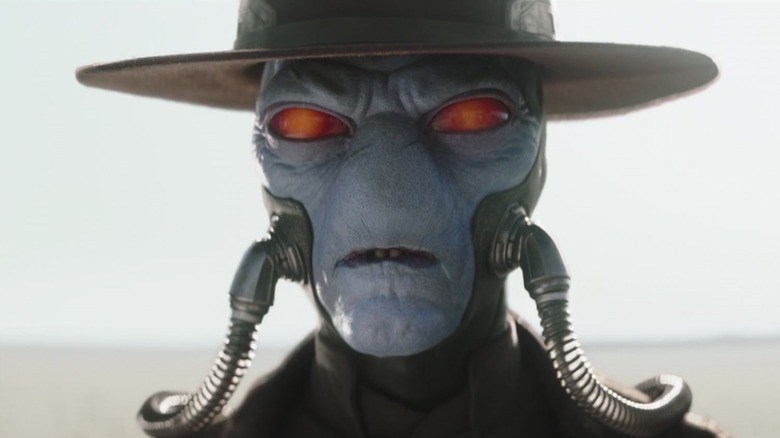
One of the episode's biggest surprises was saved for the very end. Shortly after Mando leaves and Cobb calls his meeting, a mysterious figure begins approaching from the desert with his big-rimmed hat tilted down, in a moment feeling like it was ripped straight from a Clint Eastwood Western. Two men on opposite sides of the law getting ready for a showdown in the streets with the twin suns at high noon. Hell yeah.
For fans of "The Clone Wars, it was very likely clear who he was from the moment we saw him in the distance, but the character who showed up to have words with Cobb Vanth was none other than Cad Bane, the famed blue-skinned deadly bounty hunter. This serves as the character's live-action debut and director Dave Filoni didn't waste the opportunity to introduce those who didn't watch the animated "Star Wars" stuff to his brand of ruthlessness. When he finally approaches the town after Cobb clears the streets (sensing things might get ugly), Cad reveals his face and also reveals that he is clearly working with the Pykes. He encourages Cobb and his people to stay out of it, to let the spice flow, and nobody will be hurt.
Foolishly, Cobb's new deputy comes out to join in on the action and, as one might expect, Cobb doesn't back down. This results in a quick little shootout, with Cobb taking a blaster bolt in the torso before the bounty hunter proceeds to unload into the deputy. That will become important in a moment but he leaves them both for dead and leaves a lasting impression; Tatooine belongs to the Pyke Syndicate and bad things will happen to those who get in the way.
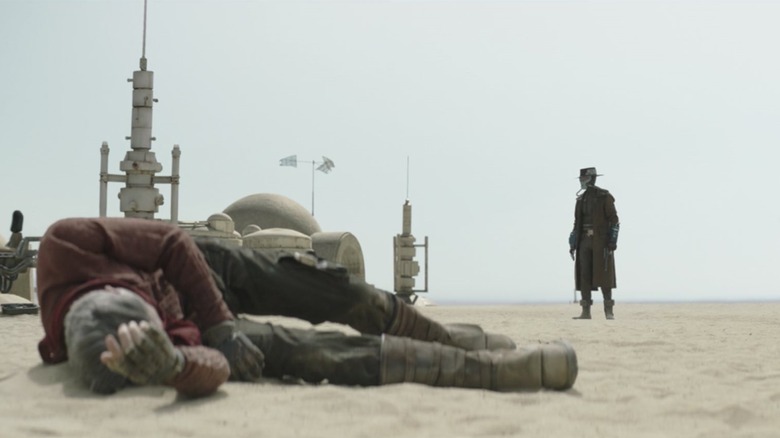
Now comes the big question on everyone's mind; did "Star Wars" really just kill off one of its best new characters? We didn't get a definitive answer but if we read between the lines it seems the answer may come into focus a bit. First, let's look at what Cad Bane actually did. This is a cold, calculating, and deadly bounty hunter with a lot of skill. He fired but one shot into Cobb, yet he unloaded into his deputy. This seemed to be a deliberate choice. Why not empty a few more blasts into the marshall just to endure the job was done? Well, what if he was just trying to make a point and wanted to leave someone alive to warn of what's to come to those who get in the way?
In my mind, it's quite clear that Bane deliberately didn't deliver a kill shot as he could have easily disposed of one Mr. Vanth and had every opportunity to do so. Also, lots of the townsfolk came pouring into the street to check on the status of their beloved marshall and nobody yelled "he's dead" or anything of the like. There is plenty on the table to suggest that the handsome lawman of Tatooine is not dead — at least not yet. We'll surely learn whether or not that assessment is correct when "The Book of Boba Fett" reaches its conclusion next week.
Read this next: Star Wars Movie Villains Ranked Least To Most Powerful
The post Did The Book of Boba Fett Just Kill Off One of Our Favorite New Star Wars Characters? appeared first on /Film.
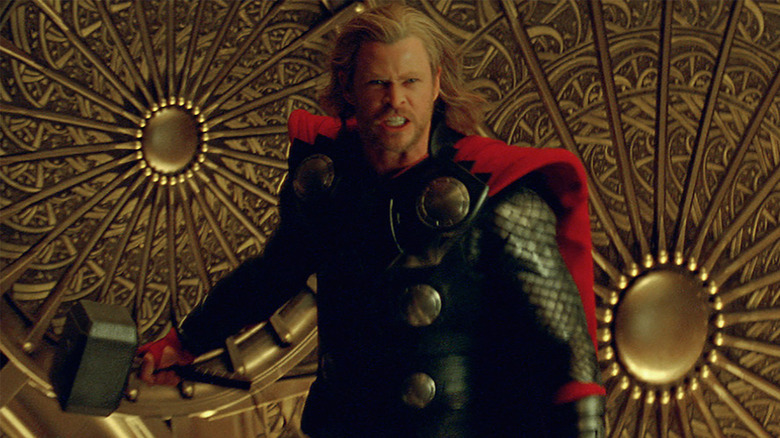
Any self-respecting Marvel Cinematic Universe fan should probably know these two things: First, Marvel Studios really likes Easter eggs. Secondly, Thor's father Odin likes to lie a lot. One of the most talked-about Easter eggs in the franchise (and mind you, there are many) is the first appearance of the Infinity Gauntlet, the powerful Dwarven-made Uru glove designed to channel the power of all six Infinity Stones.
Although most fans consider "Avengers: Age of Ultron" to be the Infinity Gauntlet's first official appearance, that isn't technically true. Marvel Studios first teased the future Mad Titan's weapon in the original "Thor" movie in 2011 — but it is a blink-and-you-miss-it moment that barely lasts a second. And it actually ended up being retconned later in the MCU anyway.
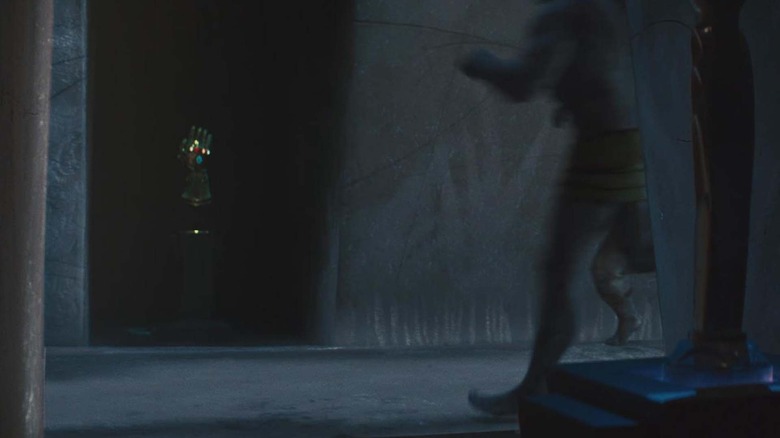
In the first "Thor" movie, Thor prepares to ascend to the throne of Asgard. Odin announces Thor as his heir to the throne of Asgard, but the procession is interrupted by the Frost Giants attempting to retrieve the Casket of Ancient Winters. During the ensuing scene, the Infinity Gauntlet appears in a dim-lit corridor in Odin's vault, guarded by the Destroyer. The scene is easy to miss, but eagle-eyed fans quickly made a note of it.
The Easter egg served a purpose until 2015, when "Avengers: Age of Ultron" was released. While MCU fans expected the Infinity Gauntlet in Odin's vault to be a clever foreshadowing for its future, it ended up creating a massive plot hole — after Thanos was seen wielding the glove four years later, in the "Age of Ultron" post-credits scene that found it sitting in a secret locker that seemingly belonged to the Mad Titan.
In the scene, Thanos wore a left-handed glove that did not feature any Infinity Stones yet, but the one in "Thor" appeared to hav all the Infinity Stones in place. It turns out there are two Infinity Gauntlets in the MCU, but only one is a proper, fully functioning one.
The Infinity Gauntlet Easter egg led to a big continuity issue in the MCU when it came time for the Infinity Gauntlet storyline to actually play out. How did Thanos get hold of the Infinity Gauntlet if it was in Odin's locker on Asgard? Better yet, why are there two gauntlets?
Following the release of "Avengers: Age of Ultron," a frustrated Kevin Feige caved in following immense pressure from fans and declared that there were two Infinity Gauntlets in the MCU. That's it. We didn't have any clarification until 2017, when "Thor: Ragnarok" arrived in theaters and put an end to all our doubts.
Thor is referred to as Odin's firstborn, but "Thor: Ragnarok" reveals how that isn't true. Asgard wasn't always the safe haven it appeared to be, and Odin, along with his firstborn, his daughter Hela (Cate Blanchett), made their way through the nine realms bringing death and destruction, engaging in bloodshed. At that point, Thor and Loki's peaceful home of Asgard is revealed to be built upon lies, and Hela brings down the roof (literally), destroying the extravagant ceiling paintings that depict peaceful unions between the Nine Realms. They're soon replaced by the paints of warfare and bloodshed that actually made it happen.
After exposing Asgard's dark past, Hela walks into Odin's vault (seen above), deeming his stolen relics useless. During this scene, she is seen approaching the massive right-handed Infinity Gauntlet (from "Thor" 2011) and knocking the weapon off its pedestal, declaring it to be a "fake." Odin's vault, which was believed to have been a room housing objects of great cosmic history, is now revealed to have at least one attempt at trickery. The Gauntlet isn't real, and Odin's reason for keeping it as a souvenir remains unknown. But some fans assume the All-Father learned of the Infinity Stones and their power during his many conquests and designed a fake one to reinforce his superiority.
Where Thanos' Gauntlet is concerned, it is later revealed that the purple-skinned supervillain from Titan traveled to Nidavellir (a neutron star and one of the Nine Realms) to get it made. He forced the Dwarves there (who come from an ancient race of skilled forgers and blacksmiths) to make it for him. The dwarves previously made Thor's hammer Mjolnir on Odin's request, and Eitri, the king of dwarves played by Peter Dinklage of "Game of Thrones," relays the truth of Thanos' Gauntlet to Thor when the God of Thunder visits him during "Avengers: Infinity War."
After the dwarves made Thanos his weapon of choice, the Titan kills them almost all of them and leaves Nidavellir to ruin. To ensure that Eitri doesn't make another gauntlet, he encases the dwarf's hands in metal. But that doesn't stop him from helping Thor restart the dying star so the blacksmith can make Stormbreaker for him after Mjolnir was destroyed by Hela during the events of "Thor: Ragnarok." Unfortunately, Thor didn't use the axe to go for Thanos' head, and we all know how that turned out. At least The Avengers were able to fix everything and the Infinity Gauntlet and Infinity Stones no longer pose a threat to the MCU.
Read this next: Every MCU Post-Credits Sequence Ranked From Worst To Best
The post The Infinity Gauntlet Easter Egg You Never Noticed in Thor appeared first on /Film.
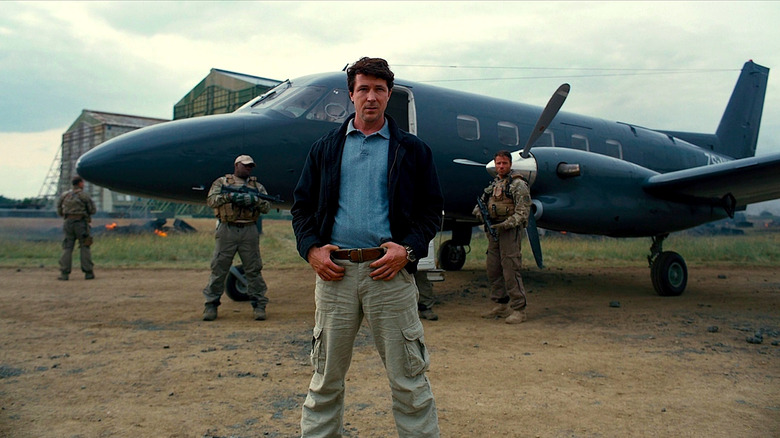
It's a memorable scene. Confident and garble-voiced Bane (Tom Hardy) informs an overly cocky CIA agent (Aidan Gillen) that his plan is to crash the plane they are currently flying in, making sure to leave no survivors. The agent, who looks like a befuddled Paul Rudd, doesn't seem to get it. After all, there's seemingly no way for Bane to crash the plane without killing himself as well, right? Ah, but this is a movie, where far-fetched escape plans happen all of the time with relative ease!
Which means that what follows is a roughly four-minute scene in which all sorts of ridiculously insane things happen. A second plane appears seemingly out of nowhere, dispensing four men all clad in black who parachute down to the much smaller C-130, tethering it to the larger plane with anchoring devices that don't even seem like they'd be real ... or legal. The CIA agents and Bane are sent flying as their plane is tipped completely vertical as the larger plane ascends. Naturally, this abrupt change in flight pattern causes the wings of the C-130 to get ripped from its body until nothing is left but a useless metal tube waving in the wind. The henchmen expertly cut the tail of the plane off as if it's just a can of peas they're preparing to cook for dinner, and they climb inside where everything is topsy turvy, but Bane and his crew seem relatively unfazed.
There's some stuff with a dead body and a blood transfusion that's left some viewers perplexed about its significance, and finally, after ruthlessly ordering one of his henchmen to stay behind because "they expect one of us in the wreckage, brother!" Bane and a now-kidnapped nuclear physicist tie themselves to a rope and hang on as the rest of the plane plummets to the earth below.
From the very beginning, "The Dark Knight Rises," director Christopher Nolan's third and final installment in his Batman trilogy, does not hold back. The movie is filled with impressive sets and intricately designed props that dispense that particular Nolan-esque magic, but Nolan, who has worked on many impressive movies over his career, has said that it's this opening scene that he is most proud of, and that's because the plane you see dangling in the air and falling to the ground was actually real.
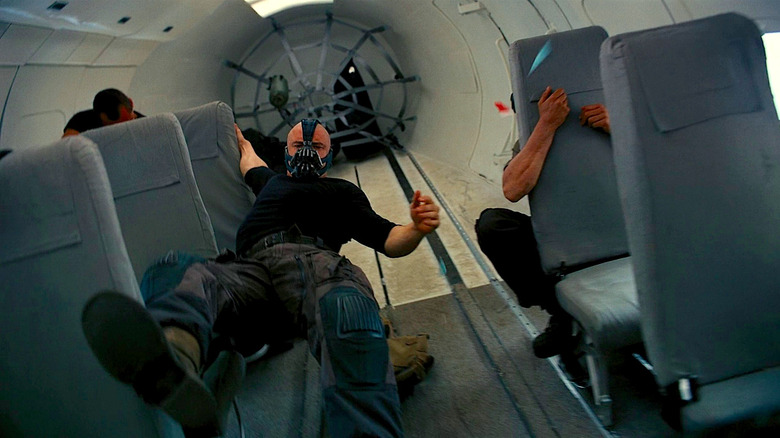
In an article for Insider, Nolan is quoted as claiming that the opening scene to "The Dark Knight Rises" is the one "the director is most proud of putting together." He openly talked about it during a press event at the Tribeca Film Festival. From a technical standpoint, the scene was extremely complex and required a great deal from the cast and crew to film it correctly. Behind-the-scenes footage of the moment shows Nolan and his crew directing this intense airplane scene from a helicopter that hovers around the actual plane we see crashing to the ground in the movie. It's wild to watch as stuntmen skydive out of a second helicopter to swoop and swing their way around the plane seemingly without any fear. Nolan revealed that the entire scene was "an incredible coming together of lots and lots of planning by a lot of members of the team who worked for months rehearsing all these parachute jumps."
Looking to avoid a "Donnie Darko" situation, Nolan also had to obtain permission from the Scottish government (where the scene was filmed) to drop the plane from the sky. This only seems fair, considering the whole thing is kind of, well, dangerous. When it came time to film, the filming calendar had the scene scheduled to take five days, but it miraculously took only two, most likely because of the dedication and skill of Nolan's cast and crew. Nolan, who is known in the business for his love and preference for practical effects over CGI, really took things to the next level with this bonkers plane hijacking scene. Thinking of that mangled plane finally getting dropped to the ground reminds me of that one "Mythbusters" episode where they drop the world's largest rubber band ball from a plane to see if it bounces. Just like watching the opening of "The Dark Knight," the suspense is palpable. But the end results are the same for both the ball and Nolan's plane. Total and absolute destruction, with killer footage to prove it.
Read this next: 13 Box Office Bombs That Are Truly Worth A Watch
The post The Opening Scene Of The Dark Knight Rises Was More Real Than You Think appeared first on /Film.
I long for the days when the public perception of conspiracy theories was based in nonsensical fun like whether or not Bigfoot is real, and not this current timeline where people gather en masse at Dealey Plaza awaiting the "return" of the very dead JFK Jr. so he can become the vice presidential running mate of Trump in 2024. In 2011, master of disaster Roland Emmerich took a break from his usual schtick of films like "Independence Day," "Godzilla" and "The Day After Tomorrow" to play with one of the oldest and most frequently debated harmless conspiracy theories in history -- that William Shakespeare didn't actually write all of those plays and sonnets.
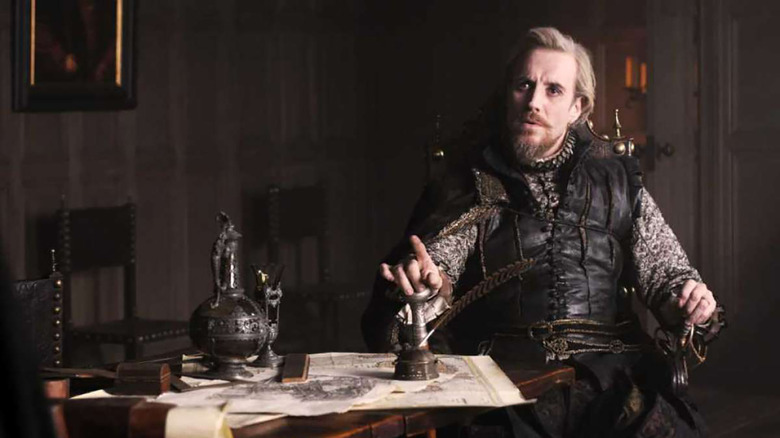
Recently added to Hulu as a sign that the universe loves us and wants us to be happy and NOT because Emmerich's "Moonfall" is due out on February 4, 2022, "Anonymous" is the story of Edward de Vere, the Earl of Oxford (Rhys Ifans), one of the people rumored to have been the true author of the works attributed to William Shakespeare (Rafe Spall).
The original trailer for the film featured the Radiohead song "Everything in its Right Place," so if anyone was looking toward a film about whether or not Shakespeare was a fraud set to the tune of Radiohead for historical accuracy, that sounds like a personal problem. The brilliance of "Anonymous" is not that it's a film that blows the doors off a widely accepted truth, but because it presents a frequently debunked theory as absolutely true, as if an entire film production is playing one giant practical joke.
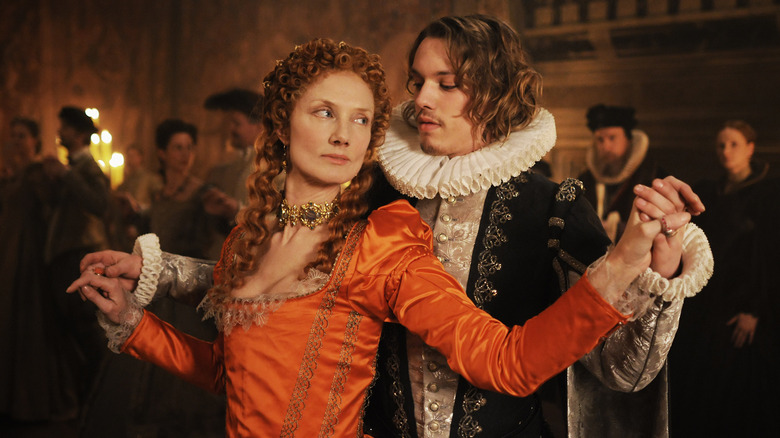
People give Emmerich a lot of flack for his films being less-than-grounded-in-reality, which means they're frequently missing out on a lot of fun that could be had. While "Anonymous" is more about tearing down universally accepted truths than blowing up buildings with alien spaceships, it looks just as magnificent as any of his other sweeping epics. His film before "Anonymous" was "2012," the disaster thriller inspired by Charles Hapgood's theory that polar shift and the Mesoamerican Long Count calendar show 2012 would bring the end of the world. The man clearly lives for crackpot theories, and considering "Anonymous" presents a far more harmless theory than something that may possibly encourage doomsday preppers, it allows us the space to give ourselves over to the high-camp fanfiction he's created.
"Anonymous" features great decisions like Joely Richardson playing the younger version of her mother Vanessa Redgrave as Queen Elizabeth I and the theory that Edward de Vere fathered a child with Queen Elizabeth I while also being her illegitimate son making their child both is son and brother ...which is absolutely some messy Shakespearean drama that I WISH was true. In preparation for "Moonfall," which includes NASA teaming up with a conspiracy theorist to save humanity after the moon is knocked from orbit, "Anonymous" feels like the perfect appetizer, even if you never did get around to reading "A Midsummer Night's Dream" after all these years.
Read this next: The 15 Best '90s Comedies Ranked
The post Celebrate Moonfall With Roland Emmerich's Conspiracy Theory Himbo Shakespeare Movie appeared first on /Film.
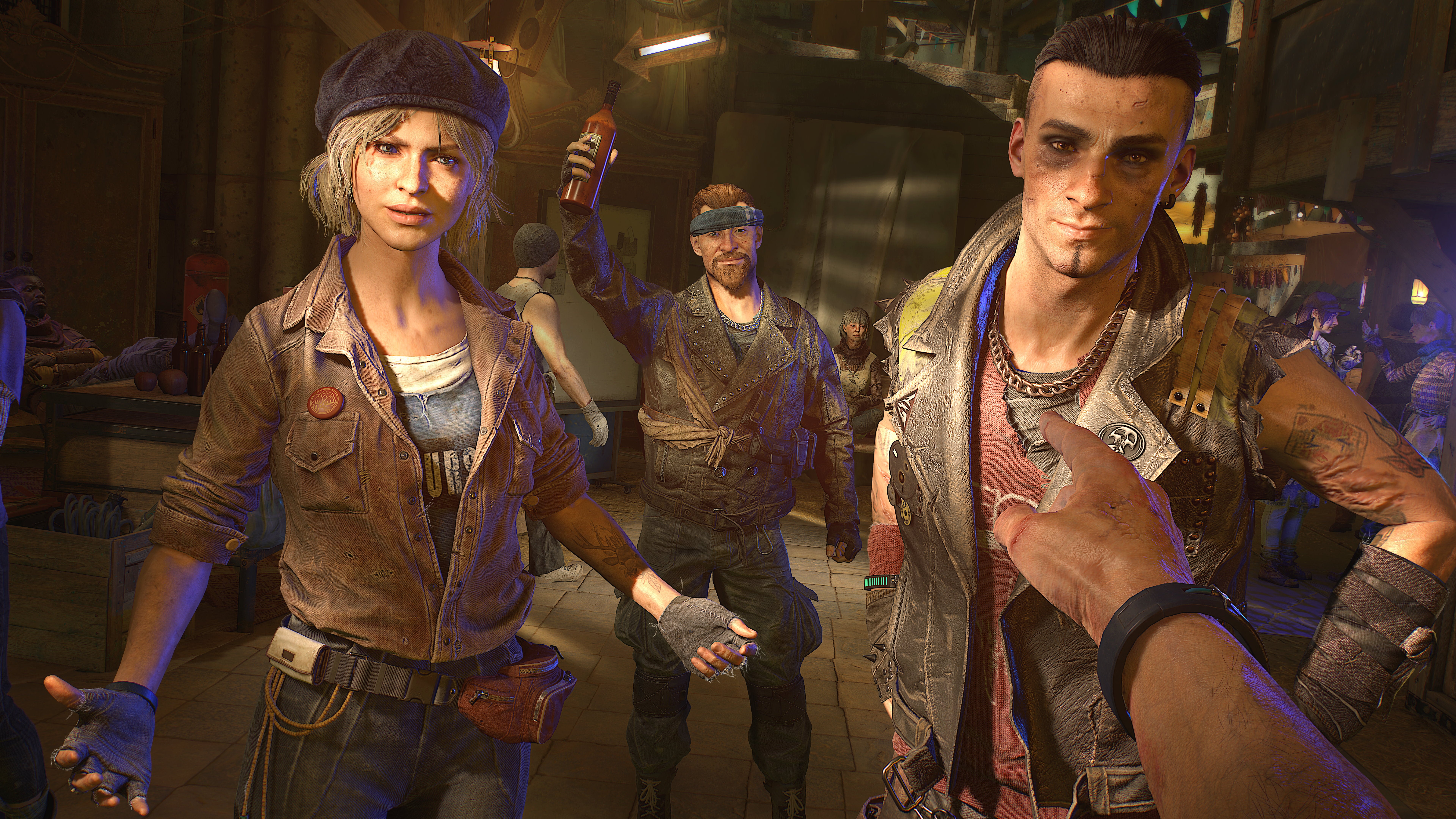
No, Dying Light 2 doesn’t take 500 hours to complete. Call it closer to 30 and change, although my map still swarms with chores and requests to deal with post-campaign. Plenty of words have been written about Techland’s backfiring boast of a three week runtime, so no need to relitigate that here. Going in, the only time value I was interested in was how long - if ever - the game takes to sink its teeth into you.


Read more of this story at Slashdot.
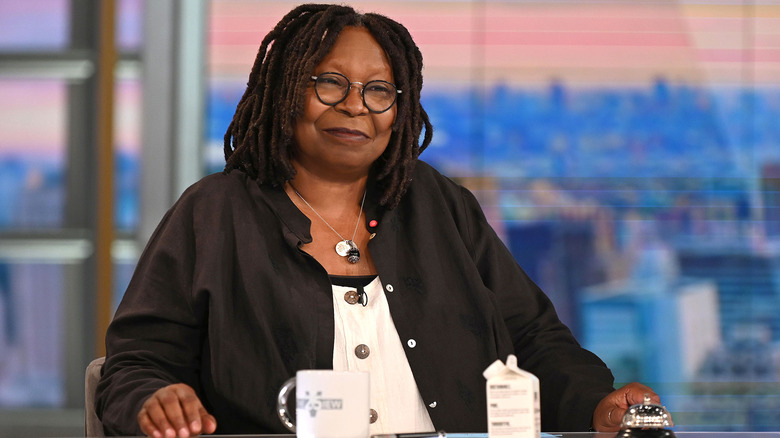
On the January 31, 2022 episode of ABC's "The View," the hosts were discussing the recent decision by a Tennessee school district to ban Art Spiegelman's Pulitzer Prize-winning serialized nonfiction graphic novel "Maus." Spiegelman wrote "Maus" by interviewing his father about his experiences as a Polish Jew and survivor of the Holocaust, depicting Jews as mice, Germans as cats, Poles as pigs, Americans as dogs, the English as fish, the French as frogs, and the Swedish as deer. The district banned the book on grounds of "inappropriate language and nudity," an absurd claim to make regarding a book about the mass genocide of over six million people, and a clear act of antisemitism.
During the discussion of the book banning, co-host Whoopi Goldberg made the ill-informed comment, "Let's be truthful about it because Holocaust isn't about race," she said. "It's not about race, it's not about race, it's about man's inhumanity to man." "The View" co-host Ana Navarro immediately corrected her, stating, "But it's about white supremacists going after Jews." Goldberg disagreed and replied, "But these are two white groups of people!" She continued, "The minute you turn it into race, it goes down this alley. Let's talk about it for what it is. It's how people treat each other. It doesn't matter if you're Black or white, Jews, it's each other." Goldberg's comments immediately came under fire for being antisemitic, and as of Tuesday night, ABC News president Kim Godwin had announced to staff that Goldberg would be suspended for two weeks "for her wrong and hurtful comments."
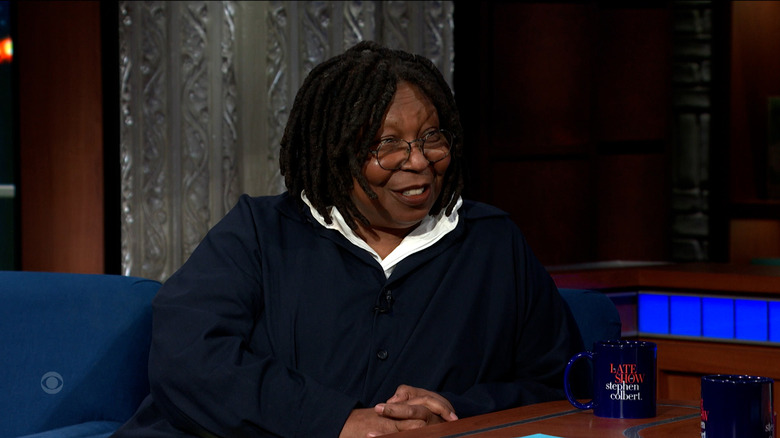
After the comments began flooding in regarding Goldberg's remarks on "The View," she recorded an episode of "The Late Show with Stephen Colbert" where she continued the conversation and clarified her reasoning for believing that the Holocaust was not a race issue. Unfortunately, "The Late Show" aired after Goldberg had already issued an apology for her statements. This led to people viewing her appearance on "Colbert" as doubling down, not realizing that the apology was written after she had been rightfully called in and educated, as well as after her appearance had been recorded.
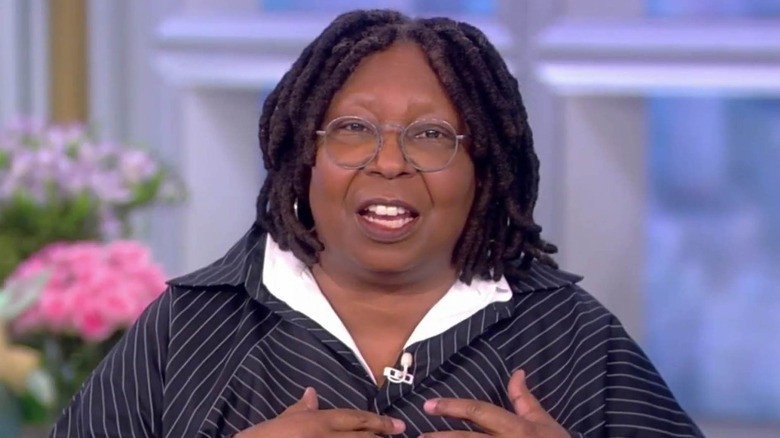
On Tuesday morning, Goldberg apologized publicly on "The View," in addition to a segment that included an interview with Anti-Defamation League CEO Jonathan Greenblatt. Her apology went as follows:
"Yesterday on the show I misspoke. [The Holocaust] is indeed about race, because Hitler and the Nazis considered the Jews to be an inferior race. Now, words matter, and mine are no exception. I regret my comments and I stand corrected. I also stand with the Jewish people."
ABC's decision to suspend Goldberg came after this public apology. There are plenty who see her suspension as a good thing, but many acknowledge it as a double-standard when compared to other hosts who have said offensive and problematic things in the past. The decision also continues to pit the Black and Jewish communities against one another.
Antisemitic hate crimes are on the rise not just in the United States, but around the world, and they have been, steadily, for some time. It's impossible to fathom just how deeply embedded antisemitism is in our global society, as it isn't just an act of discrimination or bigotry, but is linked to and birthed out of dangerous conspiracy theories that cause legitimate harm, continually putting the Jewish people in danger.
We (meaning Americans in this instance) frequently apply America's perspective of racism onto other countries and time periods, discussing them as if we're making a one-to-one comparison, which is not always applicable, and fosters ignorance. Jewish educational professional, essayist, and TikTok creator Shekhiynah Larks offered an important and nuanced dissection of how Goldberg came to her incorrect conclusion, noting that we often forget that whiteness in America has changed over time, where people who weren't considered "white" during the turn of the 20th century (Jews, Italians, Greeks, Poles, Hungarians, Slavs, etc.) are typically seen as white today as many of us benefit from white supremacy due to our lack of melanin and eurocentric features. But the Holocaust was absolutely about race, as the Jewish people were not only viewed as "not white," but subhuman and often compared vermin or disease.
While I cannot speak on behalf of Goldberg nor will I ever attempt to do so, it appears that her statements are rooted in ignorance on the subject matter from a history of misinformation, and perhaps most importantly, her own lived experiences as a Black woman in America. "The core of the problem is that people don't realize we're working with two definitions of race," Larks said in another video. "White supremacy and Aryanism define race in different ways."
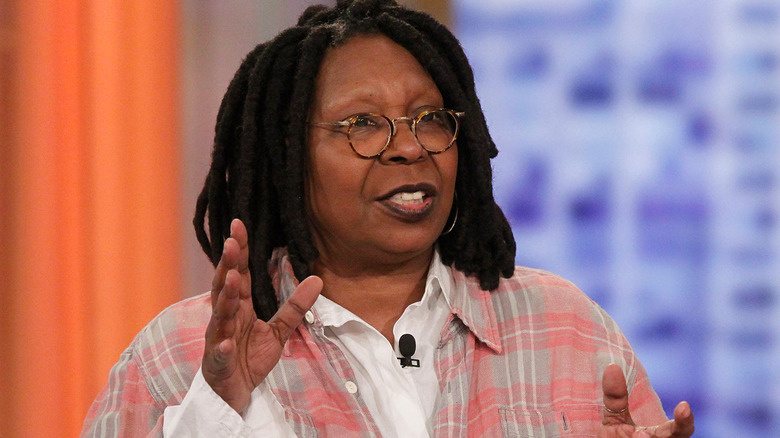
When people cause harm, accountability and making amends are necessary, and it very much seems like Goldberg was putting in the work to repair the harm that she caused. I can't help but view her suspension as a performative move, especially considering ultra-conservative Meghan McCain was never suspended during her four-year run on "The View" despite making a plethora of offensive and straight-up racist comments. Why was McCain given "teachable moments" while Goldberg was put on suspension the same day she brought on Greenblatt to have him help explain why the Holocaust absolutely was about race?
While I assume ABC's intentions came from the right place, this move not only expresses an unnecessary desire for punitive measures, it's also already stirring up more antisemitism from those who feel her suspension was an overcorrection, which we will not be linking to because giving hatred more attention is like giving oxygen to a forest fire. If there's any silver lining to be found in this situation, it's that Goldberg's misstep has at least sparked much-needed and long-overdue discussions about antisemitism, why it endures today and has for centuries.
Stand up for your Jewish friends, call out antisemitism, learn from the mistakes of others, and educate yourself and your community.
Read this next: The Best Movies Of 2021
The post Whoopi Goldberg's Suspension From The View Was Not Necessary (But Not For the Reason You Might Think) appeared first on /Film.
Read more of this story at Slashdot.
Read more of this story at Slashdot.
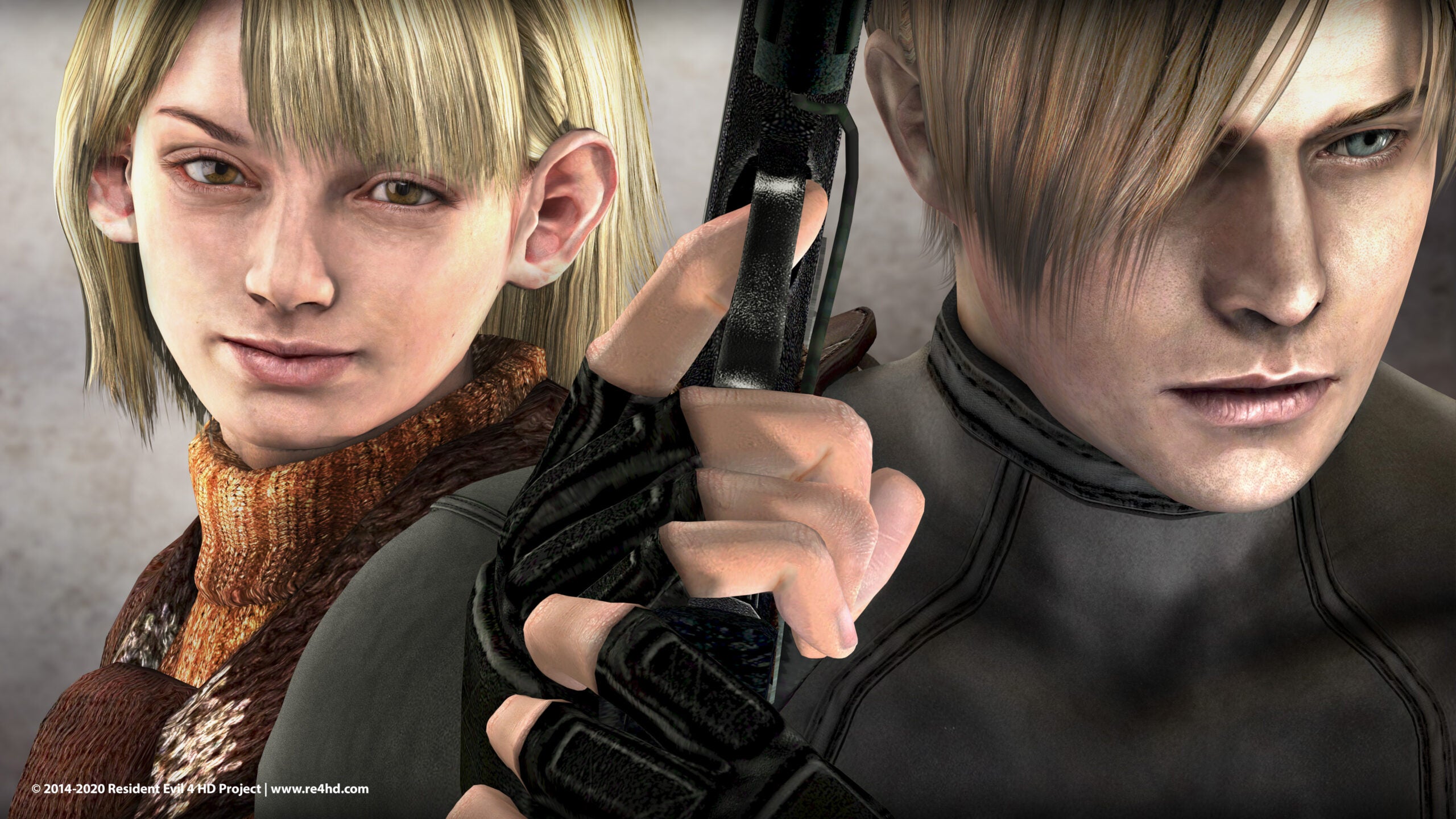
Capcom released an 'HD' remaster of Resident Evil 4 in 2014, but their official makeover is nothing compared to the work by a small team of modders across almost eight years. Their mod, the Resident Evil 4 HD Project, is out now, and I think it's the most impressive remaster mod ever made. In replacing the game's textures and models with high-def versions, they've tried hard to replicate both the form and the style, and even tracked down locations and objects Capcom had photographed to work into textures. Dead impressive.

(Welcome to The Daily Stream, an ongoing series in which the /Film team shares what they've been watching, why it's worth checking out, and where you can stream it.)
The Special: "Fortune Feimster: Sweet & Salty"
Where You Can Stream It: Netflix
The Pitch: Southern-born Fortune Feimster first broke into the mainstream scene on NBC's "Last Comic Standing," and successfully sparked a career as a comedian, writer, and actor. More than likely, you recognize her as Colette from "The Mindy Project," hosting "What a Joke" on Sirius XM's channel Netflix is a Joke, plenty of cameo roles in some of the best comedies of the last 10 years, like as Pinky in "Barb and Star Go To Vista Del Mar." In 2020, Feimster was finally given her first (seriously overdue) hour-long televised special, "Sweet & Salty," and I find myself returning to her special again and again, immediately transported to a much happier reality filled with visits to Chili's chain restaurants after church, binging on Fun Dip and nachos before swim meets, debutante classes, and realizing you might be a lesbian in the middle of a Hooters.
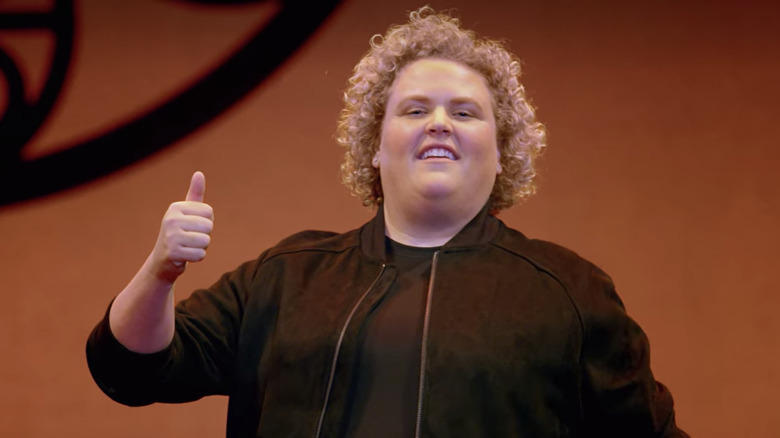
Comedy is one of the most subjective art forms, but Fortune Feimster is impossible not to love. She's not a "clean" comedian by any means, but she's also not one that leads with mean-spirited takedowns or cruelty for the sake of comedy. "Sweet & Salty" is a comedy special as much as it is a comedy memoir and the story of Feimster's self-discovery as a lesbian. There are great moments of self-deprecation that all feel rooted in admiration for her younger self, and plenty of imitations of her equally southern mother, who introduces her to the stage at the start of the special. There's such a charm in Feimster's willingness to provide an introspective look at how she got to where she is now, and there's joy in poking fun at how absurd her upbringing truly was.
She jokes about being mistaken for Ham Porter in "The Sandlot" and quoting "You're killing me, Smalls" at strangers so they don't feel disappointed that she's not actually Patrick Renna. She pokes fun at her family's insistence that she join the swim team as a chubby 12-year-old, despite the fact she'd never expressed any interest in swimming, ever. As an extremely visibly queer person, she frequently points out how painfully obvious her budding lesbianism was, treating her own inability to see what was right in front of her face as the punchline, and does it all with a genuine sense of love for who she is.
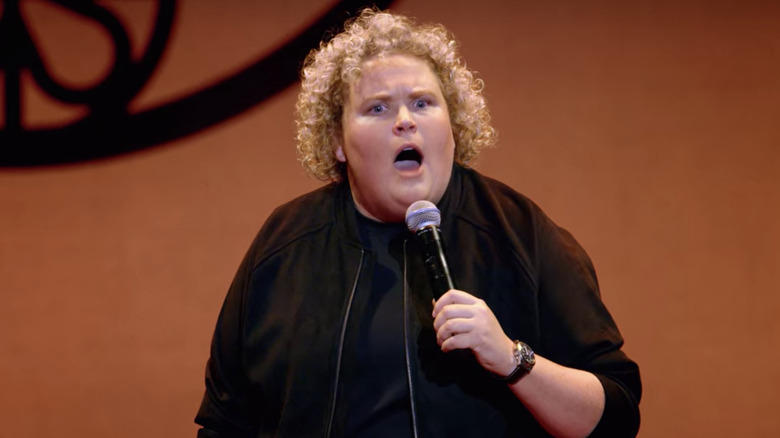
While there are plenty of great one-liners thrown in throughout the special, her comedy truly shines when she's able to set up her jokes narratively and paint the world for us. We can see the entire debutante ball she attended as a child, we can picture her wearing business casual power suits with elbow pads when her mom wanted her to look like a classier young lady, and in the best moment of the special, when she's describing what it was like to celebrate her 18th birthday at Hooters surrounded by beautiful women before she knew what her feelings toward them really meant ... aka "The Gay Salem Witch Trials."
As a Southerner, Feimster has no qualms talking about what it was like growing up in a religious household with a mother constantly dating conservative, deeply religious men, but never paints it with a traumatic brush, instead reveling in the hilarity of hypocrisy. She was also a fat kid growing up, and rather than feel a sense of shame about it, speaks with the confidence of loving her former fat kid self the same way Jack Black does in "School of Rock." We get the impression that Feimster's past may not perfectly align with who she is now, but her way of coping with it all has been with humor. She effortlessly embodies imitations of herself, her family, and those who got her to where she is and never once do her imitations feel like mockery.
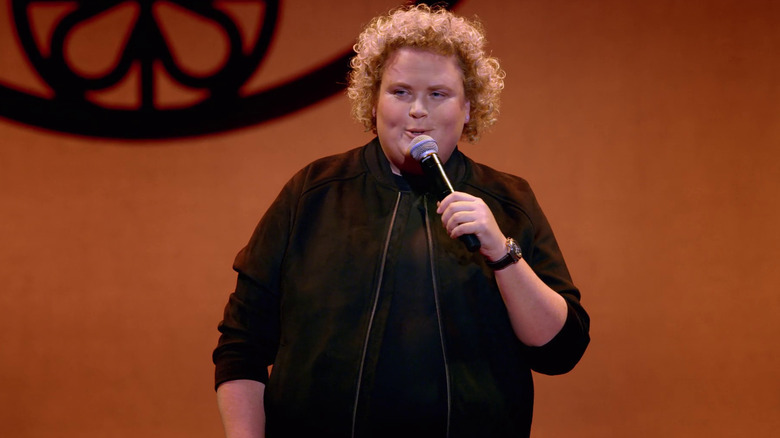
In the last fifth of her special, Feimster discloses that she skipped the "in the closet" phase of her identity discovery, not realizing what her friends and brothers had already assumed until her 20s. Feimster grew up in an era where the LGBTQIA+ representation was non-existent at best and problematic as hell at worst, but she finally figured out her truth while watching the Lifetime movie "The Truth About Jane" with Stockard Channing and Ellen Muth. She jokes that for as much as conservatives like to scream that "letting your kids watch gay content will turn them gay," she might have ended up being an unhappy housewife married to some guy named Tim had she not watched a Lifetime movie.
Now, as one of the most recognizable queer women working in the industry, we witness the former tomboy come to the realization that by having this stand-up special and by continuing to follow her dreams, she has become the visibility for others that she wished she had in her younger years. It could have helped her understand her weird obsession with helping her friends apply lotion in college or her unfounded hatred of every boyfriend her friends would date, but no matter what, she's trying, and that's something to be proud of.
Read this next: The Daily Stream: The Muppets Take Manhattan Has Frogs, Dogs, Bears, Chickens...and Heart
The post The Daily Stream: Fortune Feimster's Sweet & Salty Is Your Happy Escape From The Hell We're Living In appeared first on /Film.
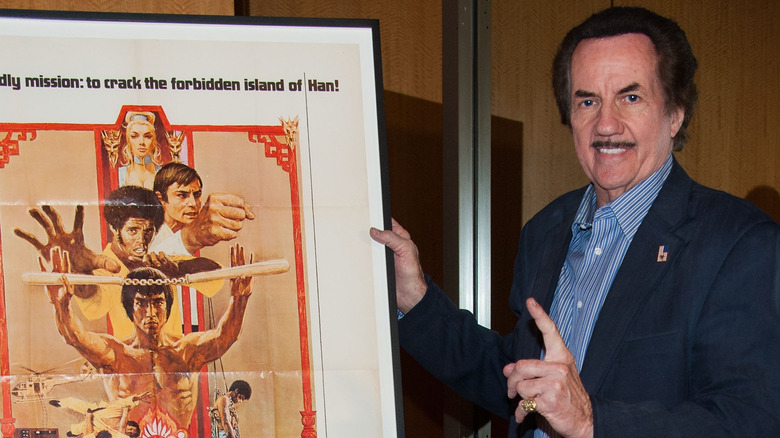
One of the world's greatest martial artists is no longer with us. Bob Wall, best known as the trainer for martial arts legend Bruce Lee, passed away on Sunday at the age of 82. In addition to training Lee, Wall opposed the martial arts legend in classic kung fu films including "Enter The Dragon" and "Game of Death," mostly serving as a major foe for Lee's protagonist.
In a statement released to the Hollywood Reporter, his family spoke about how much Wall meant to them and emphasized how important his legacy was. "He was a pillar of strength and inspiration to all who encountered him, and his radiant spirit and legacy will never be forgotten," the statement reads. "He was a brilliant martial artist, a never-ending source of jokes, a gifted speaker and a passionate man whose unconditional love and support were unmatched." It's a statement that sums up the martial arts legend's impact, both in his personal life and the world of martial arts cinema.
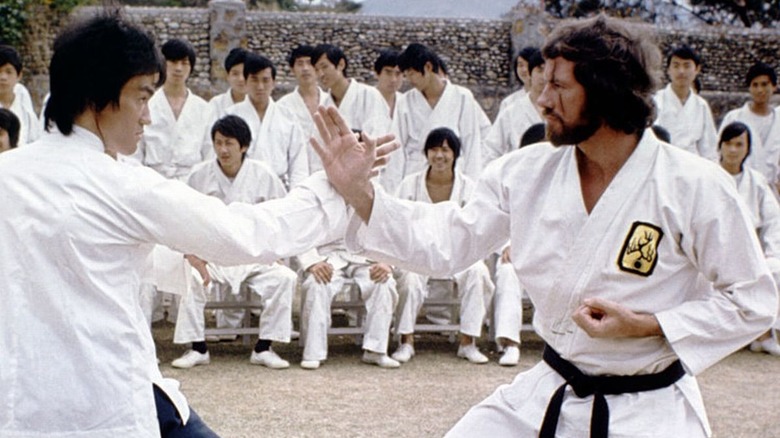
Wall's crowning achievement was his work on "Enter the Dragon." There, he plays O'Hara, the bodyguard to Shih Kien's Han — Lee defeats him in a battle using a broken bottle. Since Lee insisted that his fights be authentic, Wall used a real bottle, which showed his respect for his opponents and his dedication to the craft. But his work wasn't just limited to fighting on screen; he also hired stuntmen for "Enter The Dragon," including one Jackie Chan, who would go on to become a martial arts legend in his own right.
Another talent that Wall sought out was Jim Kelly, who plays Black martial artist Williams. Kelly and Wall would later reunite for "Black Belt Jones," with Wall providing fight choreography. In addition to being friends with Lee, Wall also trained and befriended Chuck Norris who worked on "Enter The Dragon." Wall would later work with Norris on other projects including the classic "Walker, Texas Ranger" television series.
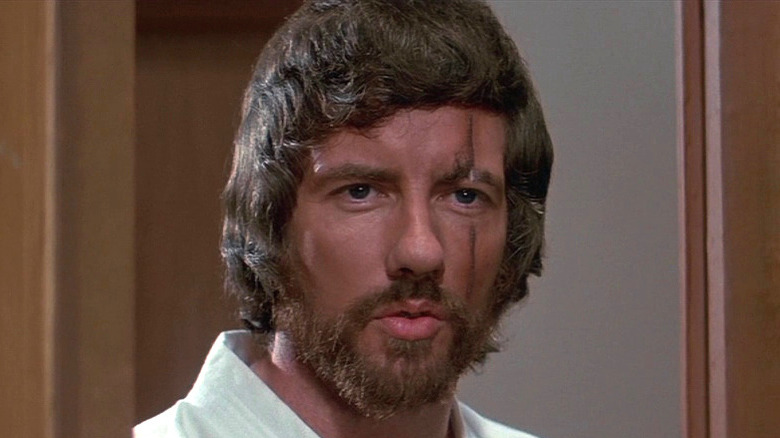
Wall continued to train other actors in martial arts, including Michael Jai White, Elvis Presley, and Arnold Schwarzenegger. As a ninth-degree black belt in Tang Soo Do and a member of the Professional Karate Hall of Fame, his martial arts skills were undeniable in every one of his on-screen fights with his proteges.
Wall is survived by his wife of 54 years, Lillian, and children Shana, Kara, Gennine, and Ron. Though he is no longer with us, his history in the world of martial arts and the influence he had on a generation of martial artists is a feat that deserves to be applauded. His influence through films like "Enter the Dragon" continues to inspire new generations of directors for film and television, including Netflix's "The Paper Tigers" and "Shang-Chi and the Legend of the Ten Rings," just to name a couple.
Read this next: The Best Movies Of 2021
The post Bob Wall, Frequent Bruce Lee Collaborator and Martial Arts Expert, Has Died appeared first on /Film.
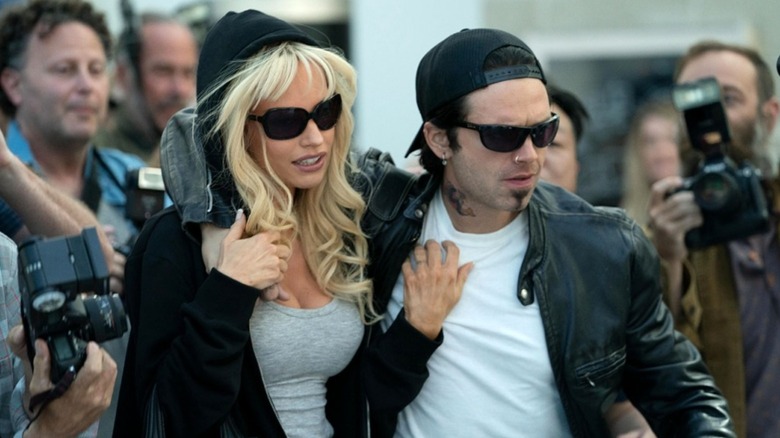
Remember the '90s? If not, you're about to. "Pam & Tommy" debuted on Hulu today with a three-episode premiere that featured a deep dive on the stolen honeymoon tape that led to the world's first major internet sex scandal. With "I, Tonya" director Craig Gillespie behind the camera, it's no surprise that the show presents a more fully rounded portrait of the people at the center of the scandal than typical tabloid fare.
Yet these episodes don't hold back, either, especially when portraying the bad behavior of Mötley Crüe drummer Tommy Lee. These first three episodes don't focus on Pamela Anderson (Lily James) as much as trailers promised the full series will, but they're still an excellent introduction to James' fully immersed performance as the misunderstood model and actress.
The show's first episode, "Drilling and Pounding," finds an unorthodox entry point to the story of Pam and Tommy. It's Rand Gauthier (Seth Rogen), the contractor who finally snaps after enduring months of poor treatment from Tommy. The series takes a big gamble by placing us squarely in Rand's corner from the jump, but since he's the third key player in the true story who often goes unmentioned, it makes sense to introduce him early on.
Rogen developed "Pam & Tommy" alongside Evan Goldberg, using a Rolling Stone article that heavily features Rand as a foundation for the story. The team clearly has empathy for the guy, but he's also the type of person who seems to be born with a chip on his shoulder. He fumes when Tommy appears in a Speedo and demands the team entertain his latest design idea. When their work relationship disintegrates entirely, Rand starts sitting in a van outside their house, recording their comings and goings.
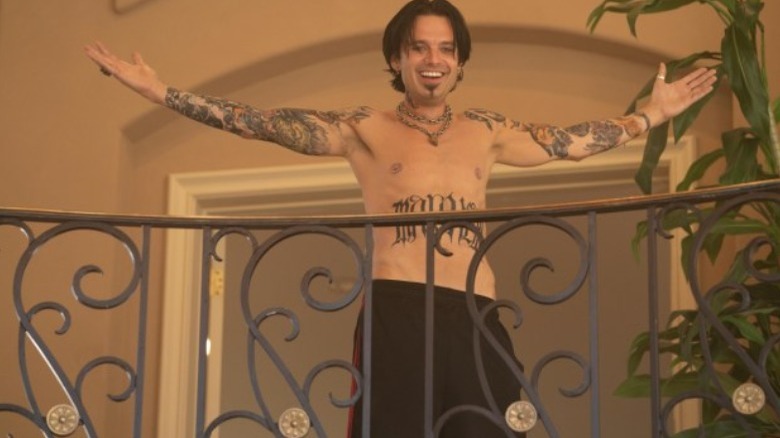
Make no mistake: Tommy also comes off terribly here. In the Rolling Stone article, interior designer Guerin Swing says the celebrity couple "spent money like they hated it." That's the impression we get from Tommy early on. He pitches ideas for waterbeds and 360-degree views of the shower, imagining a love nest that's expensive, skeezy, and difficult to construct. He also doesn't get that Rand has bills, and when the contractor finally asks him to pay up, the rock star fires him and his team, unpaid. Pamela, meanwhile, only shows up briefly, as the pantsless bombshell Rand tries not to stare at when he stumbles upon her in the kitchen.
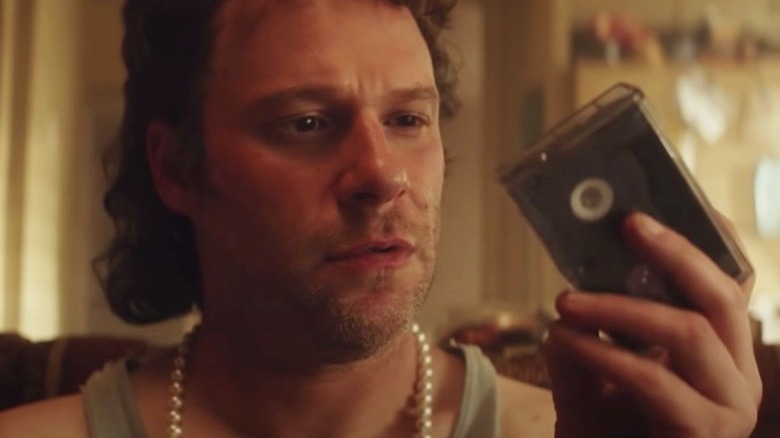
"Drilling and Pounding" spends an inordinate amount of time going into the details of Tommy and Rand's feud, but it's all fuel for the fire that leads Rand to steal the couple's safe – and the sex tape inside. When Rand goes back to collect his tools, paranoid Tommy holds him at gunpoint. Rand is so scared, he wets his pants; we see in flashback that this has happened once before, when his jerk dad locked him in his room as a kid so he could entertain several lady friends. Rand believes in karma – "The righteous, they get rewarded. The wicked, they get punished," he tells his coworker. Except, after that humiliation, he wants to be karma himself.
Rand sneaks onto the Lee property in the middle of the night, initially planning to wear furs that will make him look like Tommy's big sheepdog in security footage. He sees Pamela and Tommy asleep, naked, and stands at the foot of their bed just because he can. Finally, he takes the safe. In the final moments of the "Pam & Tommy" premiere, we see a montage of Rand, self-satisfied and up to his neck in weed, snacks, and paid bills. He doesn't notice a small hi8 tape for days or even weeks, but when he does, he takes it to a guy called Miltie (Nick Offerman). When the credits roll on the first episode of "Pam & Tommy," we've just been formally introduced to Pamela Anderson on the explicit videotape that would soon take over her life.
Episode one of "Pam & Tommy" almost feels like a detour, a decent opening act for episode two's main attraction. "I Love You, Tommy" takes us through the dizzying, ridiculous courtship that led to Pam and Tommy's marriage – and the video that came from it. The episode also gives us a better look at the show's two uber-committed leads, who elevate the series from what could have been a trashy retelling into something closer to a genuine love story.
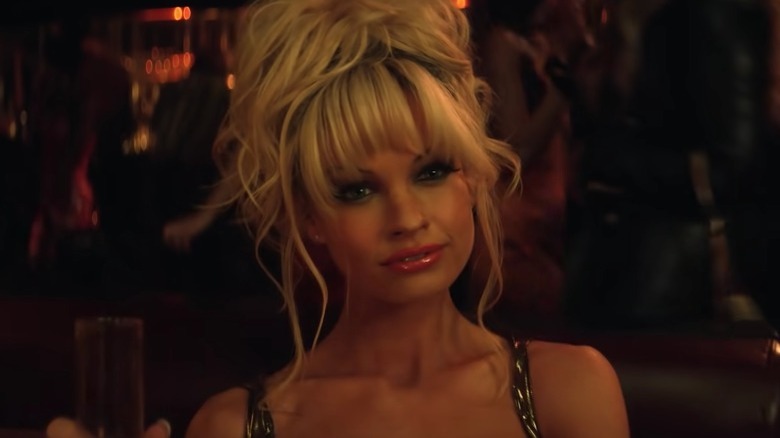
The episode opens with Pamela, and title cards let us know she'll be engaged to Tommy in two months' time. Right now, though, she's at a club with friends, swearing off bad boys entirely. She doesn't realize Tommy is just one VIP section over from hers, fiercely making out with his date.
The impetus for their initial introduction is as unbelievable as the couple themselves; when Pamela buys a round for everyone in the bar, Tommy seems to think she sent him one special. He sidles into the womens' booth, and, I kid you not, licks Pamela's face. There's immediate heat between the two, so this isn't the absolute weirdest time for one person to lick another's face, but it's still the series' first hint at just how much of an unexpected kick this relationship will have. Pamela, thinking quickly, turns it into a game where each person licks the face of the person next to them. Sure!
This scene is a great barometer for "Pam & Tommy" as a whole. The series never questions Pamela's intelligence, but instead portrays her as a savvy, sweet woman with a romantic streak and an appearance that makes her easy to underestimate. The show creates a version of the duo's love that's silly and dramatic but rooted in real, palpable chemistry that grows into deep care. In the beginning, though, they're just two wild things determined to show each other they're up for anything. "I'm Greek," Tommy says, after shattering a glass on the floor. "I'm Pam," Pamela answers in deadpan. Now that's a meet-cute.
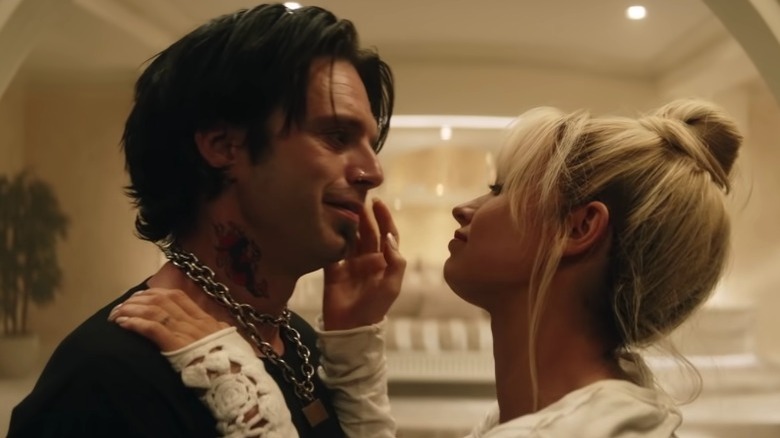
The rest of the episode enthusiastically recreates the couple's whirlwind 1995 courtship. Tommy is both annoying and magnetic, leaving Pam immature voicemails one minute and surprising her in Cancun the next. The man is on a singular mission to bag Pam. As played by Stan, he's an impulsive dirtbag who's a little bit irresistible despite wearing all his worst traits loud and proud. He meets her at dinner, but the pair get kicked out because he refuses to follow the restaurant dress code. He proposes to her after four days – with a ring he took off someone else.
He's also more than a little bit d**k obsessed. He introduces his member to Pamela – in a surprisingly chaste scene, because she doesn't want to hook up before marriage – with all the seriousness of introducing a partner to one's parents. Later, on their honeymoon, he hangs a do not disturb sign on it. None of this compares, though, to the scene in which Tommy has a full-blown conversation with his junk.
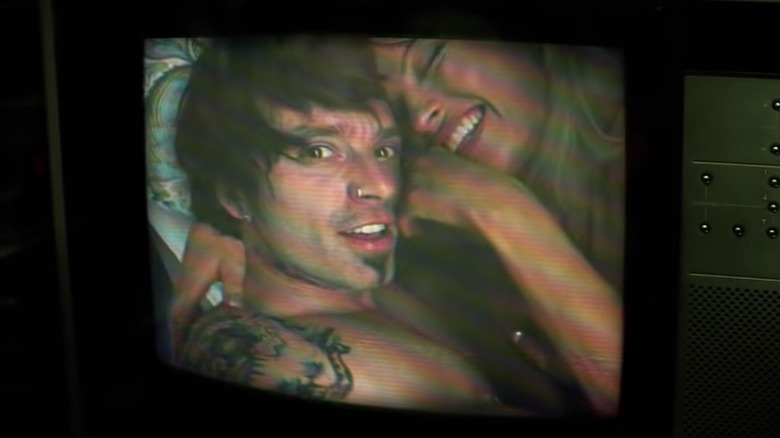
That's right. In one of the show's most off-putting scenes, Tommy engages in conversation with his penis, which is voiced by Jason Mantzoukas. Unfortunately, his member talks back, wriggling in all directions as it helps him unpack his feelings for Pamela. Initially, I was put off by this scene, as its sensationalism seems to undercut the project's apparent goal of humanizing these two oft-objectified celebrities. I did, however, find out that the scene is pulled from Lee's own memoir, "Tommyland," which makes it a little easier to stomach. Series writer Robert Seigel told Variety, "As much as I'd like to take credit for that, I was simply adapting a chapter from [Lee's] memoir. I think it might be a first [for television]."
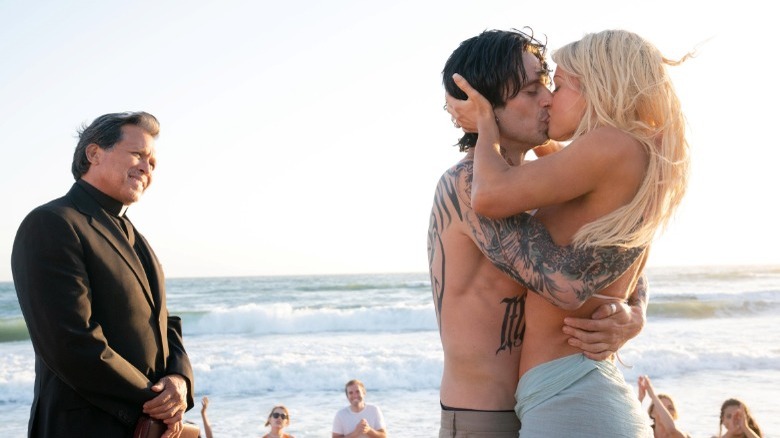
It certainly looks like a first. It's honestly hard to pay attention to what Tommy's penis is saying as it moves to and fro, rasping out advice in the voice of Derek from "The Good Place". The scene goes on for a long time – nearly two minutes – and by the time it ends, Tommy is certain Pamela is the love of his life. The two get married on a beach in Cancun in a scene that's much cuter than this one.
After a montage of memorable and surprisingly cinematic honeymoon sex – so many drinks spilling in slow motion – the couple find themselves headed back to their real lives. They realize they've never even been to each others' houses, and don't even know where they're going to live. There's a scene on the plane here that I love, another moment that gets to the heart of "Pam & Tommy." The show may be salacious at times, but it's never mean in its approach to the pair's unorthodox love story.
When Pamela and Tommy try to find common ground, something to grab onto that proves this wasn't a huge mistake, they struggle for a minute. He doesn't like romance movies and she doesn't like horror movies. They look panicked, as if this is a bad omen, but then Pam tells Tommy that French fries are her favorite food. He laughs in relief. "I f**kin' love French fries," he tells her, and he's so heartfelt, it's as if he's saying his vows all over again.
There's one more thing that the couple has in common; they're both eager to start a family. Pam moves into Tommy's house and the pair settle into newlywed life, talking immediately about the idea of getting pregnant. The episode ends having properly convinced us that these two kooky kids really have something special. They watch "The King and I" in bed, and giddily sing "Getting To Know You" along with Julie Andrews. This is Tommy without anyone to impress; his swagger and defensiveness are both switched off, and he's just having fun with his girl. Pamela is already plenty loveable, but despite what the song says, we won't really get to know her until the show's third episode.
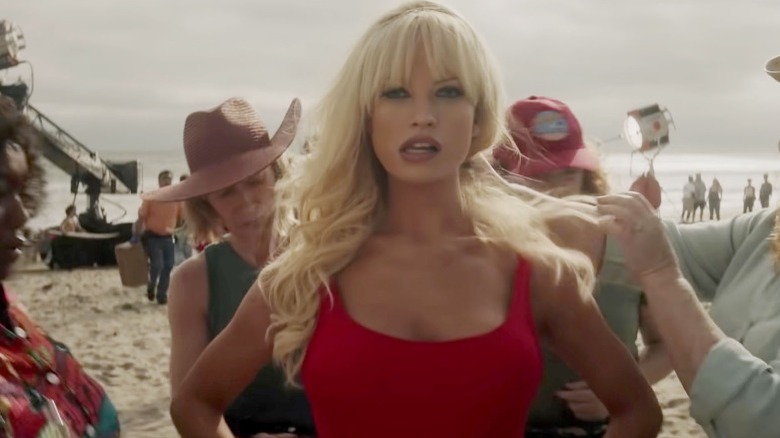
Now that we're up to speed on all the story's major players, "Pam & Tommy" is finally ready to dig into the tape at its center. First, though, the series has to clue us in as to just how big of a deal Pamela Anderson was when the scandal happened. This is the first episode that shows us who Pamela is separate from Tommy, and the show writes her as a level-headed woman who sees the best in people, even if they all too often see her as a body without a brain.
Much of the episode involves a monologue Pam is excited to perform on "Baywatch," only to have it cut at the last moment. She's a hard worker, and it's clear that Tommy has complete faith in her. He helps her practice, then cooks her a big dinner to celebrate the day on set. His own days are a lot emptier though; in a rather on-the-nose scene, he sits alone on a couch in his mansion, watching a "Behind The Music"-esque show that explains how obsolete Motley Crue has become when faced with the advent of grunge. Tommy's confidence in her pushes Pamela to be more assertive, though, and she ultimately speaks up for herself – in a cheerful, non-confrontational way – on the "Baywatch" set.
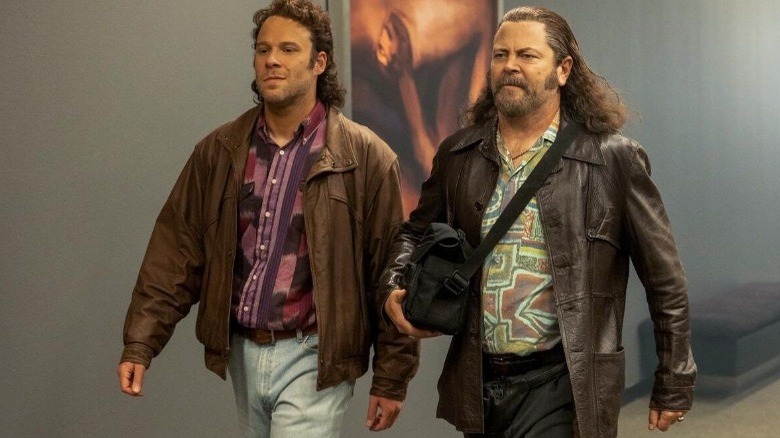
This episode of "Pam & Tommy" introduces us to the recurring motif of Eastern religion. After Rand and Miltie decide to try to make money off the stolen tape, Rand prays over it. The self-proclaimed theology and metaphysics fan starts off selfless enough, but by the end, he's waving a feather over the tape and saying, "May you knock those f***ers down a peg." Later, Pam and Tommy hold a similar, if more positive, ceremony over a pregnancy test, referencing the Hindu principle of samsara. They may not be on the same page, but all three characters are seeking some sense of order that's higher than themselves.
And yet, "Pam & Tommy" is all about the bodily, the inescapably earthly and instinctual. Just as the two celebrities can't stop craving each other, Rand and Miltie crave the money that will no doubt get them laid. The episode introduces us to Erica (Taylor Schilling), Rand's ex who is way more likable than he is. Erica is an adult actress, and when the pair first met, she introduced him to the porn industry. This is where Rand returns to when he discovers the hi8 tape. Miltie and Rand make a plan to get a distributor for the tape, but it soon goes awry when it becomes clear that no one will sell it without signed releases from its stars.
It's nice to know that the porn industry wasn't the wild west in the '90s and that plenty of people said no to Rand's exploitative idea. He finds a way around the moral dilemma, though; a cool new thing called the world wide web. It would be easy to say that everyone involved in this sex tape debacle should have known better, but "Pam & Tommy" presents the early days of the internet as a whole different world. In a funny bit that will follow his character throughout the series, Rand has to explain the entire internet to potential collaborators. In this instance, he ends up pitching the idea to Miltie's contact, a mob guy named Butchie (Andrew Dice Clay) who looks like bad news. Butchie bites, and by episode's end, the tape is officially on its way to the world.

Meanwhile, Pam and Tommy are like a couple of rich and famous deer in the headlights. Their house is so big they haven't even noticed the safe is gone yet. The episode ends with Pam at a business meeting, where she's asked to help craft her PR narrative ahead of her starring role in the upcoming movie "Barb Wire." When asked who she looks up to, Pam says Jane Fonda. She praises the "bad*ss" multi-hyphenate for managing to be a fitness guru, serious actor, sex symbol, and anti-war activist all at once. This is what Pamela wants: freedom to be anything and everything.
This episode ends with a surprisingly painful bit of dramatic irony. Pamela, still daydreaming about her Fonda-esque future, finds out she's pregnant and runs to Tommy with joyful abandon. He instantly starts crying; the two are getting what they want most. At that same moment, the website advertising the tape – the one that will ensure Pamela will only be seen one way for years to come – goes live on the internet.
"Pam & Tommy" had plenty to prove with this premiere, and viewed together, these three episodes check off all the right boxes. Stan and James, especially, have proven they can lend depth to two over-the-top and often-maligned real-life people without sacrificing any of the magnetism that made them tabloid fixtures in the first place. The show only works if it sets the record straight, rather than presenting the same shallow narrative that traumatized them – especially Pam – all those years ago. No one can speak for its subjects, but from where I'm standing, these three episodes work as both compelling television and an effective reframing of a misrepresented true story. As long as Tommy's penis stops talking, "Pam & Tommy" has us hooked.
Read this next: 13 Shows Like Manifest You Can Binge Watch Right Now
The post The Three-Episode Pam & Tommy Premiere Balances Sensitivity and Sleaze appeared first on /Film.
Read more of this story at Slashdot.

We thank our sponsor for making this content possible; it is not written by the editorial staff nor does it necessarily reflect its views.
Between guarding the home against the dangerous gang of neighborhood squirrels, chasing its own tail, and offering (many times unsolicited) tongue baths to his humans, your pooch is absolutely pooped. — Read the rest
And the time has finally come. Modders ‘Albert’ and ‘Cris’ have released Version 1.0 of the amazing Resident Evil 4 HD Project. This is a must-have mod for Resident Evil 4, and we highly recommend downloading it. Resident Evil 4 HD Project is a mod that completely restores the visuals using the original real-world sources. … Continue reading The highly anticipated Resident Evil 4 HD Project V1.0 is available for download →
The post The highly anticipated Resident Evil 4 HD Project V1.0 is available for download appeared first on DSOGaming.
Read more of this story at Slashdot.
Read more of this story at Slashdot.
If you have recently installed Windows 11 on a solid-state drive (SSD), you may have noticed that it doesn't load things as quickly as you may like. Fortunately, Microsoft knows of this issue and is now rolling out a patch to improve SSD performance on Windows 11.
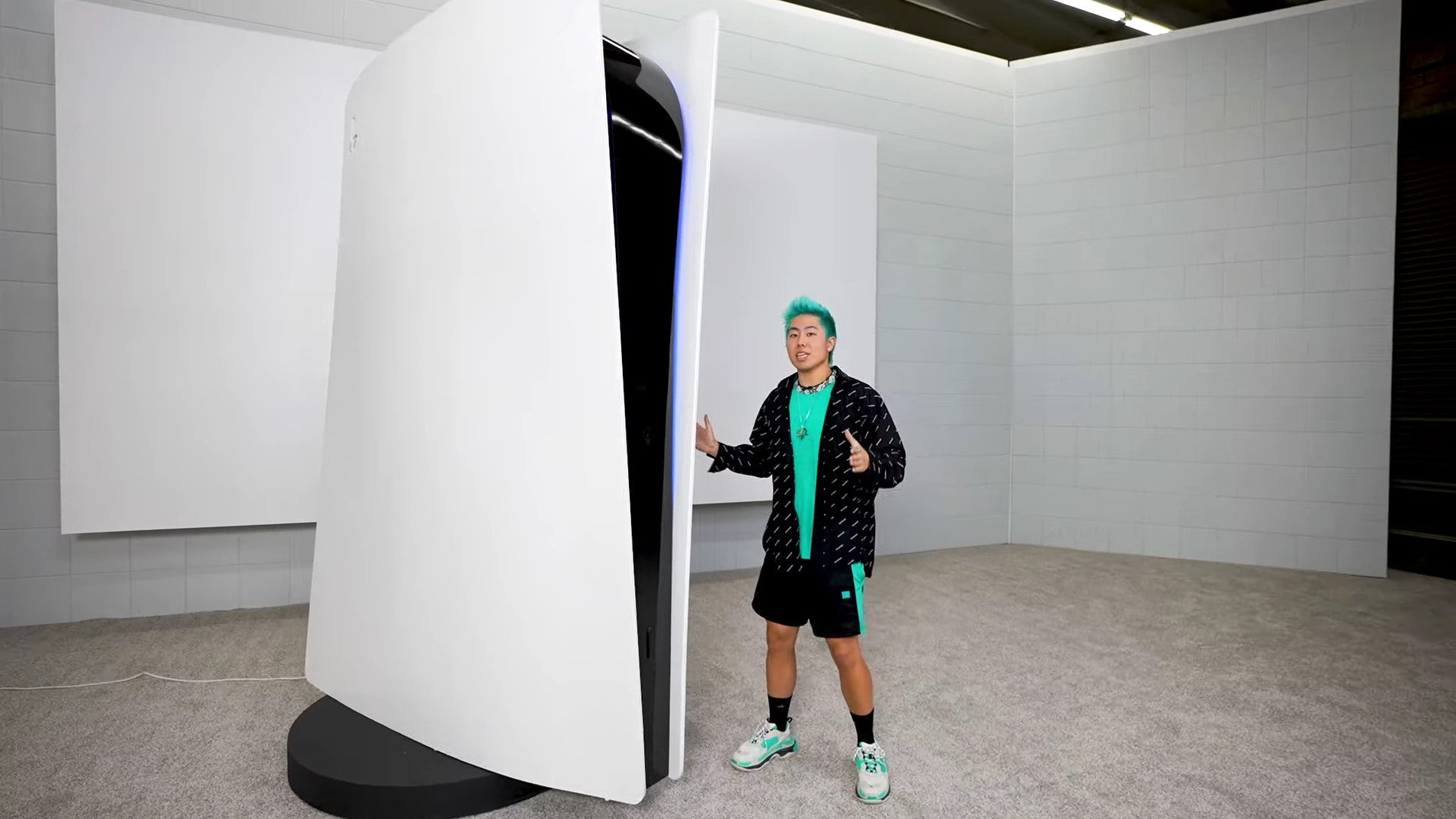
Hi, nice to meet you. Can I get you anything? A drink, a bite to eat, an acquisition maybe? There are apparently a lot of them to go around, after all. Hear that? It's Sony buying Bungie. It's Microsoft buying Activision Blizzard. It's Tencent accidentally dropping £365 billion down a grate as they stroll down the street and unknowingly buy the Earth's crust. They were on the phone to me at the time, putting an offer on my flat. I am tired of these big companies buying everything. Can we just slow down for a hot second and chill out a bit, please?