Shared posts

24 Mar 01:11

This small dog fell off a yacht and swam seven miles to shore

by David Pescovitz

On Sunday afternoon, this one-year-old cute corgi named Jessica was on her owner Jon Atwood's parent's 65-foot-yacht on Florida's Indian River when she apparently fell or jumped off. As soon as Atwood realized Jessica was gone, they began searching the water in a small boat and posted about her on social media. — Read the rest

18 Mar 16:12

How Suspiria Pulled Off Its Most Grotesque Scene

by Witney Seibold

Luca Guadagnino approached the 2018 version of "Suspiria" with the utmost respect. Acknowledging that Dario Argento's 1977 original was a horror classic, Guadagnino was careful to include certain elements from the film — the 1977 setting, the witches, the dance school, the dark conspiracy therein — and tie them into deeper thematic and political themes pertaining to Germany in the 1970s. The Berlin Wall is literally just outside the doors of the Markos Dance Academy, and there are multiple references to the Baader-Meinhof group

There also appears to have been an effort to make the new "Suspiria" as grotesque as possible. Although Guadagnino hadn't directed a horror film before 2018, he certainly had a knack for blood and mutilation, and several sequences in the film required crushed bones, blood splatter, and flesh rent to shreds. 

To briefly editorialize, the 2018 version of "Suspiria" is one of the best of all horror remakes, as it stands as a beautiful work of art unto itself. It is calm and gorgeous yet violent and weird. Tilda Swinton gives several great performances, including that of an elderly man (Swinton was credited as Lutz Ebersdorf for this role). What thematic reasons Guadagnino had for casting Swinton as an elderly man is a matter of artistic debate, although he does seem to be drawing a parallel between mourning death and the monstrous misguidedness of lusting for immortality. Argento's film remains one of the more visually exhilarating horror movies of all time, but Guadagnino's version warrants discussion. 

Olga's Horrible Fate

One of the more notable scenes of violence in "Suspiria" involves a character named Olga (Elena Fokina) who is locked in a mirrored dance studio by witches. In the room above, Susie Bannion (Dakota Johnson) is performing a modern dance routine for her instructor (Tilda Swinton). Susie's hands and feet have been, unbeknownst to her, psychokinetically tied into Olga's body. As Susie dances, Olga is thrown around the room, her arms, legs, torso, and jaw snapping out of place and contorting her into a helpless ball of flesh and blood. The sequence lasts about 10 minutes. 

To realize the broken bones and twisted arms, "Suspiria's" makeup team, led by prosthetics artist Mark Coulier, had to sculpt multiple body parts out of a fleshy, soft silicone to make it appear as if Fokina was being twisted like a pretzel. Olga's broken jaw was a prosthetic appliance attached to Fokina's face. The distended stomach and broken ribs were part of a rubber vest that Fokina wore. To realize the broken arm and leg, entire prosthetic limbs were constructed and attached to the actress, with her real limbs covered in green stockings to be digitally erased in post-production. When "suited up," Fokina looked like she had fallen down every staircase in a 100-story building. 

The scene is enhanced by the sound effects produced by a very talented foley team. In Hollywood, the sound of broken bones was once captured by breaking sticks, crunching cereal, or twisting stalks of celery. For "Suspiria," it sounds like foley artists used the whole kitchen. 

Slicing Open Stomachs

Mia Goth plays a character named Sara, who ... well, horrible things happen to her throughout "Suspiria." Mark Coulier had to construct multiple torsos out of silicone and fill them with artificial — and in some cases real — organs for bloody removal. Evidently, Guadagnino handed Coulier several medical reference textbooks and pictures of actual cadavers to ensure medical accuracy. Because of what happens to her character, Chloë Grace Moretz had to wear a full-size silicone bodysuit constructed of as many as 20 prosthetic pieces which took five hours to apply. The pieces were then attached to off-screen tubes that pumped in fake blood. There was a lot of fake blood, and several of the effects technicians had to wear protective gear as to not get coated themselves. 

The fleshy silicone in "Suspiria" was a material called PlatSil Gel-10, produced by a company called Polytek. PlatSil Gel-10 is, in the words of the manufacturer, a two-part, platinum-catalyzed, liquid silicone system that cures to a milky white. Its consistency and color make it ideal for casting prosthetics and life molds, and it is used in a lot of horror movies. If you, dear reader, wish to make your own prosthetic limbs for horror movie purposes, you can buy two pounds of the stuff for a mere $58.00. An 80-pound kit will run you $1,411.00. 

Neck Stabbing

In what is a relatively smaller moment of gore, the character of Miss Griffith, played by Sylvie Testud, stabs herself repeatedly in the neck at a dinner table. Achieving this effect required building a thin, false flap of neck flesh that was strapped around Testud's throat with the stab wounds already sculpted into it. Testud would stab where the wounds were (with a safe prop knife, of course), and the blood technicians would pump blood through the cuts. 

These sorts of messy effects typically only get a few takes, as cleaning up the blood, resetting the shot, and reapplying the effect takes a great deal of time. Often, when you see practical gore effects in a horror movie, they were probably only done once. 

Whatever Gudagnino and his effects team did, however, they did it right. There were reports of dry heaves when some of the gore scenes were previewed at conventions. Practical gore effects tend to look better than their digital counterparts. There is a visceral heft to seeing liquid blood and rubbery flesh onscreen, as opposed to carefully animated arterial spray or squished organs provided by ILM. Guadagnino may not have directed a horror film before, but he proved that he has a knack. 

Guadagnino's next film is "Bones & All," and it will be a sequel to his hit 2017 romance film, "Call Me By Your Name" with Timothée Chalamet reprising his role. 

Read this next: Horror Movies That Even Horror Fans Could Hardly Finish

The post How Suspiria Pulled Off Its Most Grotesque Scene appeared first on /Film.

18 Mar 16:10

14 Ways to Achieve Immortality That Will Totally Work, I Swear

by Stephen Johnson

Ocean quahogs can live to be over 500 years old. These clammy assholes spend centuries doing nothing but burrowing into the ocean floor and filtering algae out of sea water. People, on the other hand, only get like 78 years before we die! This is not fair.

Personally, I live actively in defiance of death, and I will…

Read more...

18 Mar 12:59

The Cursed – Netflix Series Review

by Karina "ScreamQueen" Adelgaard
18 Mar 12:58

Human Resources 2022 S01 720p NF WEBRip DDP5 1 Atmos x264-TEPES

18 Mar 12:57

SATCOM Cybersecurity Alert Issued as Authorities Probe Possible Russian Attack

by Eduard Kovacs
18 Mar 12:55

New flagship Intel Alder Lake CPU trumps AMD Ryzen 9 5950X

by Phil Hayton
New flagship Intel Alder Lake CPU trumps AMD Ryzen 9 5950X

Intel's Alder Lake Core i9-12900KS has made its way into the wild early, and leaked benchmarks suggest it outperforms AMD’s Zen 3 flagship offering. Shared on Reddit by Seby9123 and highlighted by Tom's Hardware, the CPU boasts max boost clock speeds up to 5.5Ghz, while its performance and efficiency cores can reach respective speeds of 5.2GHz and 4.0GHz.

According to the leaked Cinebench results, the Core i9-12900KS achieves 2,162 in single-core tests and 29,164 points in multi-core. Not only does this put it ahead of its predecessor, the i9-12900K, but it also runs rings around AMD's Ryzen 9 5950X chip. This isn't exactly surprising, especially since Intel's new flagship is designed to compete with the upcoming Ryzen 7 5800X3D. However, the fact it's seemingly 29.6% faster than the 5950X boosts its chances of becoming the next best gaming CPU.

Seby's early tests also include CPU-Z data, which confirms that the chip has a TDP of 150W – a 25W increase over the i9-12900K. While this change in power consumption isn't drastic, it could put extra strain on your power supply if paired with an Nvidia next-gen graphics card, especially since the GeForce RTX 4090 apparently guzzles 600W.

RELATED LINKS: Arc Alchemist GPUs - everything we know, Raptor Lake CPUs - everything we know, Best gaming CPU
18 Mar 02:23

Long Naps May Be Early Sign of Alzheimer's Disease, Study Shows

by BeauHD
Taking long naps could be a precursor of Alzheimer's disease, according to a study that tracked the daytime sleeping habits of elderly people. The Guardian reports: The scientists think it is more likely that excessive napping could be an early warning sign, rather than it causing mental decline. The scientists tracked more than 1,000 people, with an average age of 81, over several years. Each year, the participants wore a watch-like device to track mobility for up to 14 days. Each prolonged period of non-activity from 9am to 7pm was interpreted as a nap. The participants also underwent tests to evaluate cognition each year. At the start of the study 76% of participants had no cognitive impairment, 20% had mild cognitive impairment and 4% had Alzheimer's disease. For participants who did not develop cognitive impairment, daily daytime napping increased by an average 11 minutes a year. The rate of increase doubled after a diagnosis of mild cognitive impairment to a total of 24 minutes and nearly tripled to a total of 68 minutes after a diagnosis of Alzheimer's disease, according to the research published in the journal Alzheimer's and dementia. Overall, participants who napped more than an hour a day had a 40% higher risk of developing Alzheimer's than those who napped less than an hour a day; and participants who napped at least once a day had a 40% higher risk of developing Alzheimer's than those who napped less than once a day.

Read more of this story at Slashdot.

17 Mar 23:16

One Of Star Trek: Voyager's Most Memorable Episodes Could Have Been An Entire Season

by Collier Jennings

Though "Star Trek: Voyager" isn't held in quite as high esteem as some of its fellow "Star Trek" series, it still contains a number of episodes that are worth watching. Who could forget season 3's "The Chute," which featured BFF's Harry Kim (Garrett Wang) and Tom Paris (Robert Duncan McNeill) working together to survive an alien prison? Or the emotional series finale "Endgame," which crosses time and space to bring the crew of the Voyager back to Earth? 

The Trek based podcast Inglorious Treksperts recently hosted Bryan Fuller, who served as a writer/story editor/co-producer on "Voyager" -- and would later develop "Star Trek: Discovery." During the podcast episode, Fuller delved deep into his time on "Voyager," including the struggle to find an identity separate from "Star Trek: The Next Generation" and, more importantly, how the two-part season 4 entry "Year of Hell" almost served as the basis for an entire season of "Voyager."

Through Hell And Back

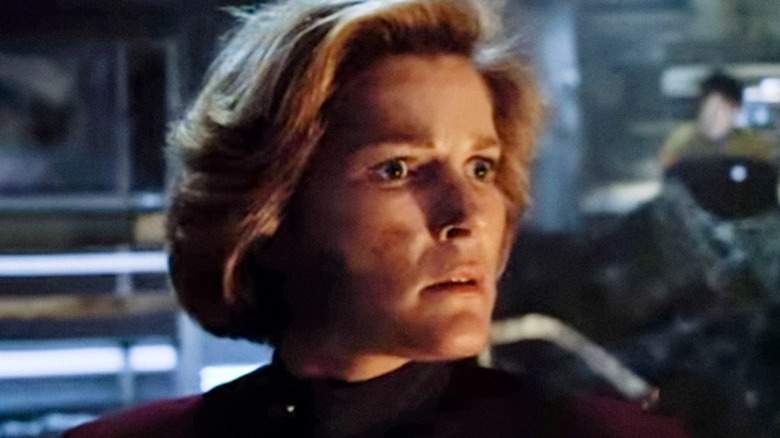
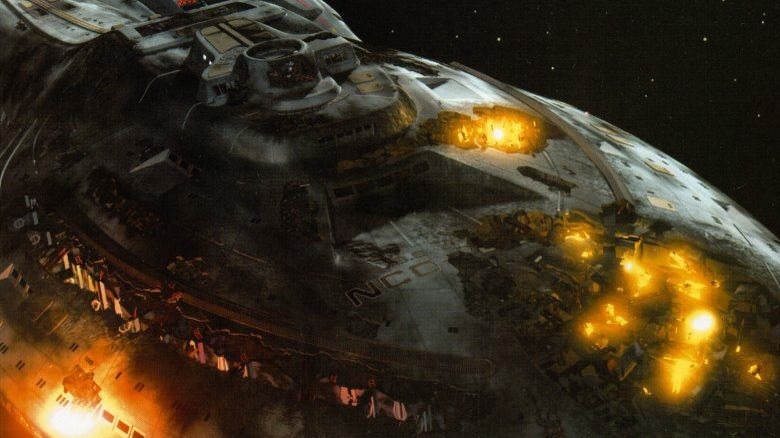
"Year of Hell" lives up to its name, as the Voyager is caught in a series of time waves that slowly destroy the ship and cause the crew to suffer heavy casualties: Tuvok (Tim Russ) is blinded when a proton torpedo backfires, Chakotay (Robert Beltran) and Paris are captured by the Krenim Imperium, and Janeway ends up sacrificing the Voyager by ramming it into a Krenim warship. Fuller said that the writers' room, particularly Brannon Braga and Joe Menosky, wanted the events to last an entire season.

"We wanted to see Voyager get its ass kicked every episode and through that season was going to be marbled the story of Annorax and the time ship that was changing things. So, we would go back to it every once in a while to remind the audience that is the larger story."

Ultimately, executive producer Rick Berman rejected the idea due to prior experiences on "Star Trek: Deep Space Nine" making him "violently ill" to serialized storytelling, according to Fuller.

Battle On The Bridge

Fuller also discussed how he witnessed Berman shooting down Braga's ideas, which had become commonplace within the creative battles that took place on "Voyager:"

"I remember Brannon going over to Rick's office with all of this enthusiasm and coming back broken and his head hanging low and having to break it to the writing staff. We all felt like we were doing it, we are making great 'Star Trek.' For him to come back and say we can't and we can only do two episodes as opposed to twenty-two, it was heartbreaking. There was an interesting division between what Rick Berman wanted the show to be, which was episodic and for the syndicated audience, and how we wanted to be creative storytellers playing with the 'Star Trek' toy box."

Ironically this would not be the last time that Fuller ran into creative differences while working on "Star Trek." During the first season of "Discovery" his original plans were upended, leading to him departing the series. However, "Discovery" would eventually catapult its cast into the far future -- fulfilling Braga and Menosky's vision for "Year of Hell".

Read this next: The 14 Best Star Wars Creatures Ranked

The post One Of Star Trek: Voyager's Most Memorable Episodes Could Have Been An Entire Season appeared first on /Film.

17 Mar 21:54

Shadow Warrior 3 Review

by jmoorer@gamingnexus.com
I had an absolute blast with Shadow Warrior 3
17 Mar 21:39

Elon Musk Has New Estimate for When Humans Might First Step on Mars - CNET

by Eric Mack
Red Planet real estate is looking very unlikely to hit the market any time soon.
17 Mar 21:39

How to Care for (and Reduce the Appearance of) a Scar

by Lindsey Ellefson

All surgeries, whether medically necessary or cosmetic, have something pretty big in common: You’ll be cut into, even if only a little bit. Incisions leave scars which, if you’re focused on preserving your health or accomplishing a goal, might not be that big of a deal to you in the moment. Still, if you’re worried…

Read more...

17 Mar 21:37

Stephen King Calls This Director His Favorite Collaborator

by Travis Yates

Stephen King is the unquestioned king of horror when it comes to the literary world. Part of what gives him that distinction also makes his books incredibly challenging to adapt to film. King's writing heaps layer upon layer of descriptive narrative and scenery with round, complex characters for our imagination to digest. Several of his novels top 1,000 pages.

To say the least, this depth of character, landscape, and narrative is challenging when it comes to adapting his work to film. In a completely visual world that lasts roughly 90 to 120 minutes, it's nearly impossible to do any King story justice. It certainly takes a special talent to squeeze an entire King narrative into a small cinematic window. The bottom line is this: Anything King cooks up on the page is more horrifying in our imagination than anything we'll see on screen.

Of course, that hasn't stopped many from trying. Last year Vanity Fair ranked the top 20 Stephen King film adaptations, with Rob Reiner's "Stand by Me" coming in at No. 1. So it might have come as a surprise when King revealed his favorite collaborator, it was the director whose film came in at No. 13 (of course) on Vanity Fair's list.

It Was A Match Made In Hell

I was expecting Frank Darabont to be the author's slamdunk answer. Darabont teamed with Stephen King to direct "The Shawshank Redemption," "The Green Mile," and "The Mist." But two of those stories stray from King's horror roots. Given his body of work, King has a soft spot for horror, which is why he says his favorite collaborator is the king of the zombie flick, George A. Romero.

King and Romero's friendship dates back to the 1970s. According to iHorror, Warner Bros. arranged a meeting between the two after Romero released the vampire film "Martin" and King released the vampire novel "Salem's Lot." It seemed like a match made in heaven (or maybe hell?), and it was, as the two would collaborate on numerous projects and remained good friends until Romero died in 2017.

In the early 1980s, Romero had the idea for a horror anthology based on 1950s EC Comics like "The Vault of Horror" and "Tales From the Crypt," and tasked King with writing the screenplay. The result was the 1982 film "Creepshow." It was two horror masters from different mediums working towards the same goal: scaring the hell out of the audience and having a lot of fun doing it. 

As Horror Homeroom notes, there were some near misses for Romero to adapt a full-length King novel after "Creepshow." At one point he was attached to both "Salem's Lot" and "Pet Sematary." It would take more than a decade, however, for the pair to finally produce a full-length film adaptation of a King novel.

George Romero Helped King Exorcise His Demons

King's novel, "The Dark Half," about a writer's seedy alter ego that materializes as a terrifying murderer, was second on the 1989 fiction best-seller list. The story was also personal to King, who knew a thing or two about having a dark half. He battled substance abuse, famously admitting he barely remembers writing "Cujo." He also wrote five novels under the pseudonym, Richard Bachman. Down to the film's inciting event that mirrors a fan outing King as Richard Bachman, there's no denying the similarities between King's real-life struggles and those of the protagonist in "The Dark Half."

George Romero spent most of his career as an independent filmmaker, giving him the freedom to explore personal and political issues free of studio influence. His influential debut "Night of the Living Dead" created the rules for the modern zombie film while examining racism in America. Given the personal nature of "The Dark Half," it made perfect sense for King to turn to his old friend to bring the story, partially his story, to life on screen.

Although many consider "The Dark Half" one of King's most faithful film adaptations, the movie opened to mixed reviews. The film was one of the few Romero directed for a major studio, Orion Pictures, which might have played a role in the film's tepid performance. Romero would later reveal that he did not have control of the final cut of the film and that it didn't turn out the way he'd planned.

Despite the memorable work produced by the pair, horror fans are still left wondering what might have been.

Romero Almost Directed 'The Stand'

During their initial meeting, the horror duo discussed plans for Stephen King's apocalyptic epic novel, "The Stand." It makes sense that King wanted George Romero for his longest and arguably most complex piece of work. Unfortunately, Warner Brothers wasn't willing to take on what they considered a risky project and passed on the idea.

The 1,152-page book would eventually be made into a 1994 TV mini-series to lukewarm reactions and again in 2020 for streaming service CBS All Access. Imagining a Romero-led film adaptation of "The Stand" is perhaps the ultimate case of "what might have been." 

Despite the missed opportunities, the two made magic when working together. It's fitting that these masters of horror forged a strong bond. King has gone on record, calling Romero his favorite collaborator.

Two well-timed vampire projects led to the fateful meeting that spawned several collaborations and decades of friendship. In a surprising twist for King and Romero, there's nothing scary about that.

Read this next: All 59 Stephen King Movies Ranked From Worst To Best

The post Stephen King Calls This Director His Favorite Collaborator appeared first on /Film.

17 Mar 20:11

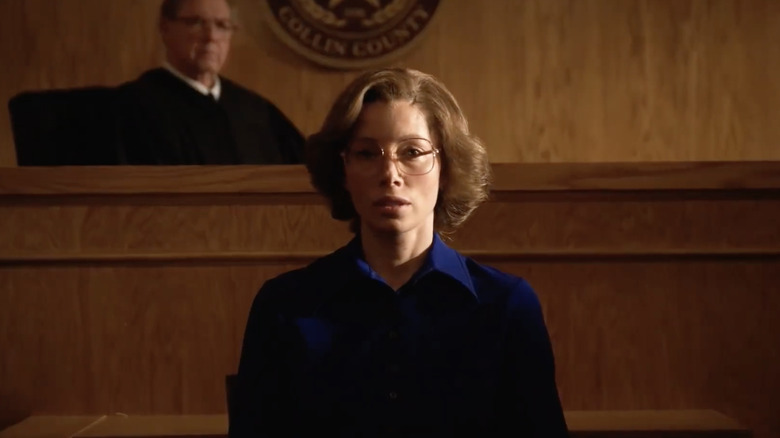
Candy Teaser: Jessica Biel Is Unrecognizable As An Infamous Axe Murderer

by Shania Russell

The Candy Montgomery story is turning heads all across Hollywood, with two different streamers set to release their take on the infamous ax-murderer later this year. When you think about it, is there a story better suited for the miniseries treatment? This is a tale based on a true story, featuring everything you could want in a show: suburban housewives, a sordid affair, a gruesome murder, and a mystifying trial. It's no wonder that both HBO and Hulu have a vision for getting this story onscreen! First up to bat is Hulu with "Candy," a series hailing from three-time Emmy nominee Robin Veith, known for her work on "Mad Men" and "The Act." The series stars Jessica Biel, though you may not realize it from glimpsing the first teaser trailer, in which the actress is basically unrecognizable in her 80s wig and glasses, as the titular Candy Montgomery. You can check out the teaser below!

Candy Teaser

Though we never see her lift an axe, Jessica Biel's Candy Montgomery has an unsettling air surrounding her. From what we see, she seems to have it all: an idyllic life in the suburbs with a daughter and son, a successful husband, regular church activities, and even a best friend by her side, in Betty Gore. But as the teaser reveals, somewhere along the lines, Montgomery kills her gal pal with an axe. So how do they get there? We might find a hint or two in the series synopsis:

Candy Montgomery is a 1980 housewife and mother who did everything right—good husband, two kids, nice house, even the careful planning and execution of transgressions—but when the pressure of conformity builds within her, her actions scream for just a bit of freedom. Until someone tells her to shush. With deadly results.

Based on disturbingly true events, the series tells the sordid story of Texas housewife Candy Montgomery, who killed her lover's wife, Betty Gore, in 1980. Fans of Hulu's addictive mystery series "Yellowjackets" will be thrilled to see the familiar face of Melanie Lynskey, yet again a mild-mannered suburban housewife — though we know better than to underestimate her. Lynskey stars as Candy's eventual victim, Betty Gore. "Candy" also features Timothy Simons, Pablo Schreiber, and Raúl Esparza and comes from series creators, Veith and Nick Antosca, who rose to fame as writers and producers on the award-winning miniseries, "The Act."

Elsewhere, HBO Max's "Love and Death" is currently in development with Elizabeth Olsen ("Wandavision") set to star as Montgomery, and Lily Rabe ("American Horror Story") attached to play Gore. Both shows are inspired by the book "Evidence of Love: A True Story of Passion and Death in the Suburbs" by Jim Atkinson and John Bloom. On "Candy," Atkinson and Bloom serve as consulting directors.

"Candy" debuts as part of a "five-night event" on Hulu, beginning on May 9, 2022. 

Read this next: The 20 Best Zombie Movies Of All Time

The post Candy Teaser: Jessica Biel Is Unrecognizable As An Infamous Axe Murderer appeared first on /Film.

17 Mar 20:11

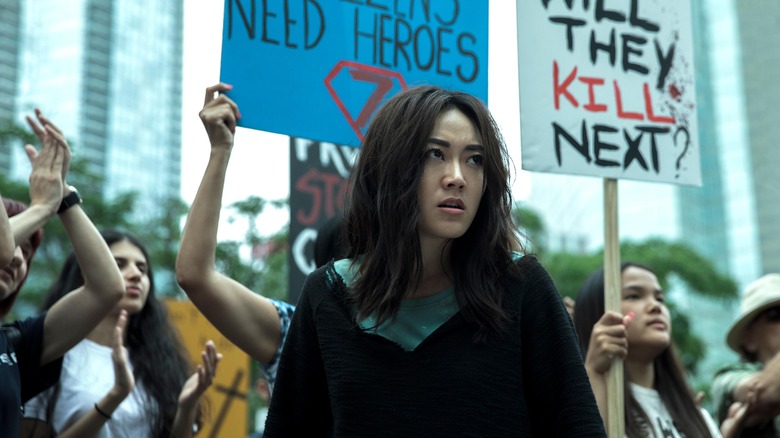
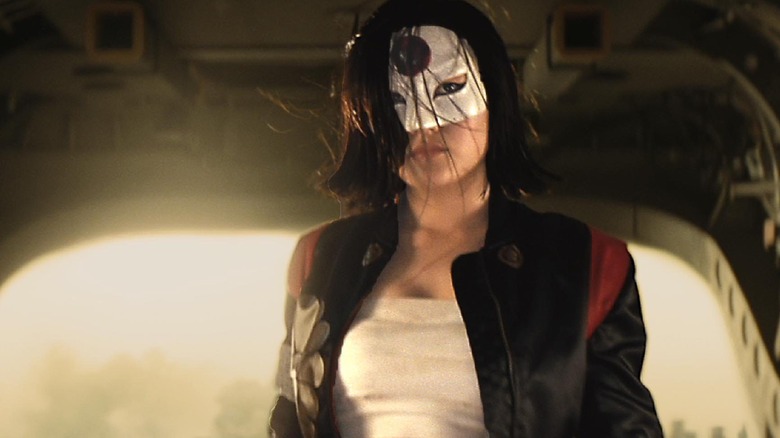
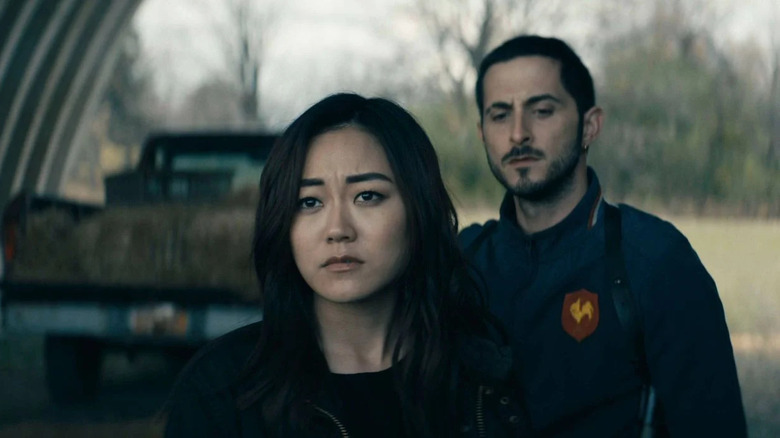
The Boys Star Karen Fukuhara Is Recovering From A Hate Crime Attack

by Jenna Busch

I am horrified as I write this, and I'm losing any tiny scrap of belief in the human race that still lingered after these past few years. Karen Fukuhara, who plays Kimiko Miyashiro in the Prime Video series "The Boys" and appeared as Katana in "Suicide Squad," says that she has been assaulted in a hate crime attack. Fukuhara posted about the vile act on Instagram with a text statement about what happened (via Variety). She said that she is "physically fine," but called for the public for help in the ongoing attacks against Asians, particularly women and the elderly. 

The attack happened on the street, though Fukuhara doesn't say where. She explained that he came up behind her and hit the back of her head, though there was no interaction between them before that. He then yelled at her and finally left. She says it made her want to take self defense classes, but asked why the victims are the ones who have to think about things like this when it's the perpetrators who should be held accountable. She then replied to her post with the hashtag #stopasianhate.

I'm putting the full text in here in case you can't read it on Instagram because it matters that the word is spread about this. 

Karen Fukuhara Shines A Light On Anti-Asian Hate Crimes

Here's Karen Fukuhara's statement in full:

Today I was struck in the head by a man (I'm physically fine) & this s*** needs to stop. Us women, Asians, the elderly need your help. I rarely share about my private life but something happened today that I thought was important.

I was walking to a cafe for some coffee and a man struck me in the back of my head. It came out of nowhere. We made no eye contact before, I wasn't doing anything out of the ordinary. It came to my surprise and my hat flew off. By the time I looked back, he was a few feet away from me (he must have kept walking after hitting me). I thought about confronting him first but he started coming towards me and I didn't think it was worth the risk. After a few seconds of staring at each other, and him yelling at me, he eventually walked away.

This is the first time I've been harmed physically, although racial slurs and hurtful actions have been directed to me in the past. I write this, because I've had conversations with multi-racial friends of mine that had no idea these hate crimes happen to everyday, regular people -- people that they share meals with. I felt it was important to raise awareness.

Ultimately I know I got lucky. He could have come back to hit me again. He could have carried a weapon. The shock of this experience has me thinking about taking self defense classes. But why is this something we as "victims" have to think about? What satisfaction are these perpetrators getting from hitting women, Asians, the ELDERLY? They need to be held accountable. What can we do as a community to prevent these horrible crimes?

#StopAsianHate

Some of Fukuhara's co-stars from "The Boys" posted messages of support including (at the time of this writing) one from Chace Crawford saying, "F this person!! Hope you're okay this is awful," and one from Jack Quaid who said, "Karen thank you for sharing your experience. I'm sorry that happened to you. Love you. Here if you need anything." Laz Alonso said, "This pisses me off. Wish I was there...." So many people have posted with encouragement and outrage at what happened, and I'm glad to see that at least. 

You want to know how often this happens? Less than a week ago, the New York Times reported that a woman who was hit in the head 125 times simply because she's Asian, and earlier this year a report by the Center for the Study of Hate and Extremism (via NBC) found that anti-Asian hate crimes increased 339 percent nationwide last year. Yesterday was exactly one year since a spree shooter targeted Atlanta-area spas and killed eight people, six of whom were Asian women. This latest attack on Fukuhara is unacceptable, as all hate crimes are.

Read this next: The Best Movies Of 2021

The post The Boys Star Karen Fukuhara is Recovering From a Hate Crime Attack appeared first on /Film.

17 Mar 20:10

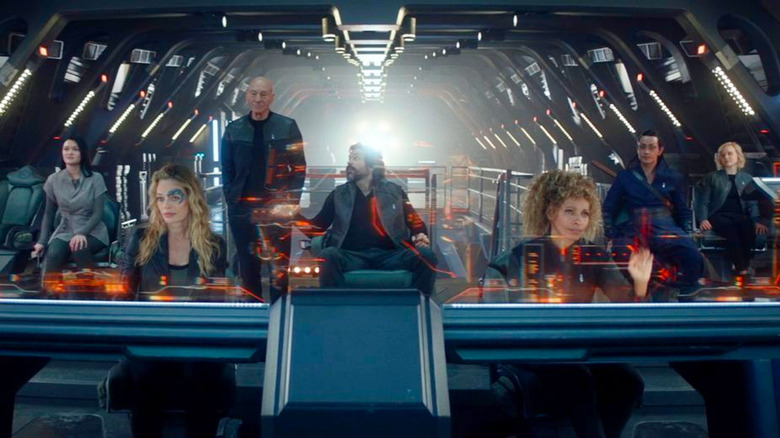
Star Trek: Picard Is Finally Giving Its Most Fascinating New Character Time To Shine

by Lyvie Scott

Spoilers for "Star Trek: Picard" follow.

Raffi might not be a legacy "Star Trek" character like Seven of Nine (Jeri Ryan) or Jean-Luc Picard (Patrick Stewart), but her introduction in the latter's self-titled series felt like a reunion with an old friend. An old friend with an energy rifle and a grudge, sure — but a friend nonetheless. Getting to know Raffi was easy, and it had as much to do with Michelle Hurd's blistering vulnerability as it did with Raffi's (for lack of a better word) absolute candor. Her tumultuous past — at least where it concerned Picard — was more or less an open book. Raffi wore her bitterness, her rage, and yes, her barely-functioning addiction on her sleeve, and it endeared her to Star Trek fans before her "softer side" (or her more personal secrets) had even presented itself.

Unfortunately, Raffi was sidelined more than once during the first season of "Picard." Her addiction, her tragic backstory, and even her relationships with other characters weren't explored with nearly as much diligence as Picard's own issues — or the issues surrounding Dr. Soji Asha (Isa Briones), the mysterious daughter of the late Lieutenant Commander Data. For the most part, all these slights can be forgiven — after all, "Picard" was only just starting to find its footing. While there were issues in the first season, its second is shaping up to be an excellent character study for its most fascinating characters — Raffi especially.

What 'Picard' Got Right
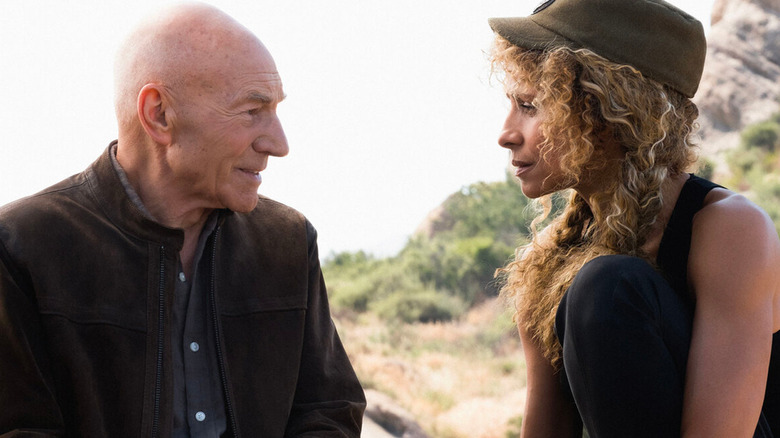
It's difficult to root for Picard knowing all that went down after his falling-out with Star Fleet. His protest resignation triggered the end of Raffi's own position with the Federation, and though Picard was able to weather out the storm in cushy retirement, options were decidedly less heartening for Raffi. Her conspiracy theories about Romulan extremists fell on deaf ears, even estranging her from her husband and son (which in turn drove her to alcohol and drug abuse!) — but Picard is ignorant to all of that when he comes knocking on Raffi's door 14 years later ... not to see how she's doing, mind you, but to ask her for a favor.

I know: The nerve. Even after coming face to face with the consequences of his actions, Picard still seems more concerned with his quest to find Dr. Soji than soothing any hurt feelings on Raffi's part. Though he apologizes profusely enough, Raffi doesn't forgive him right away — and rightly so: her life became "one long slide into humiliation and rage" because of Picard. But she does eventually join his crusade — he is still Picard, after all. He's decidedly difficult to say no to, especially with a bottle of his homegrown red wine in hand.

All of this bitterness and begrudging, lingering fondness makes Picard's relationship with Raffi one of his most surprisingly intimate. She is the only one who calls him "JL," and one of the few he trusts to pull off some of his mission's trickier tasks. The intimacy, however, feels pretty one-sided for most of the first season. Raffi continues to struggle with her inner demons alone, even after the events of "Stardust City Rag," when she abruptly leaves Picard's mission to try and reconnect with her son on Freetown.

Their interaction is one of the most heartbreaking of the series. It's hard to watch a parent (and a recovering addict) try to make up for the hurt she inflicted on her child, however earnest her intentions. It's every bit a twist on Picard's own reconciliation with Raffi, except Raffi does not find forgiveness with her son so easily. In fact, Gabriel effectively shuns Raffi, and prohibits her from getting to know his wife — who, to make it even more devastating, is pregnant with the couple's first child.

...And Where It All Went Wrong
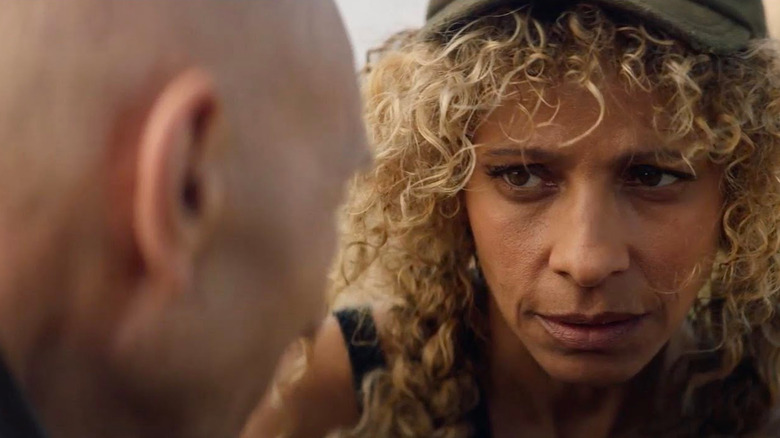
Raffi is forced to return to Picard's crew aboard "La Sirena," but the shame also drives her back to drugs and alcohol. Her relapse is pretty revolutionary for a "Star Trek" series; though the franchise is always keen to explore the light and the dark in humanity, it's never come very close to the stigmatized theme of addiction — or how it affects those dealing with it.

Unfortunately, "Picard" still doesn't spend much time unpacking those themes. No sooner is Raffi back on the ship than she's called in to perform another favor for Picard. JL's mission has brought him into Borg territory, and he needs diplomatic credentials to board the now-defunct Borg cube called The Artifact. Conveniently, Raffi is the only one with the connections to procure it, and she does so flawlessly — even while under the influence of drugs and alcohol. Picard may be dealing with his own trauma (returning to the Borg as a formerly-assimilated member of the Collective isn't exactly a walk in the park, mental health-wise) but he, again, doesn't seem concerned with anyone else's issues bust his own.

Picard doesn't thank Raffi for her efforts so much as he applauds them ... as in, he claps for her, and encourages the rest of the "Sirena" crew to do the same. It feels like a painfully glib response to someone who's very clearly hurting, especially since her drunken operation was already played for laughs only moments before.

By then, it's clear that Picard is not by any means equipped to treat Raffi with the consideration she deserves. But there are others aboard "La Sirena" that definitely are: Captain Chris Rios (Santiago Cabrera), Raffi's longtime friend, is the only one who comforts her after her relapse. "Picard" fans were also quick to notice what's going on between Raffi and Seven in the season 1 finale — and though their bond will be explored further in the season to come, there's another character that could help bring Raffi out of Picard's shadow: Elnor.

Who's Elnor, Again?
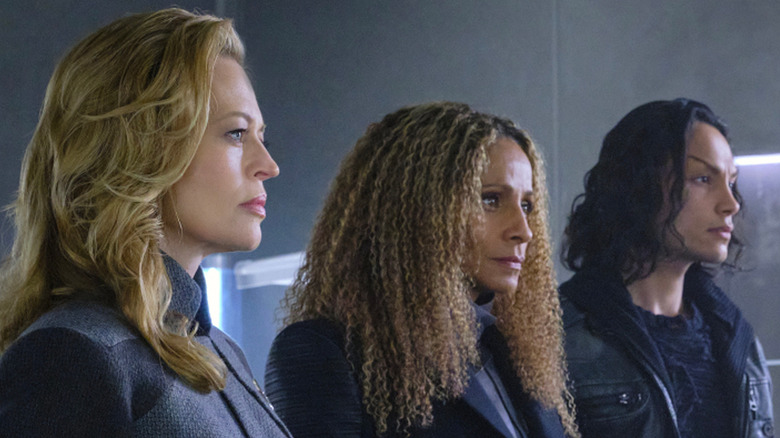
You know Elnor: The perpetually-honest Romulan warrior who was raised by nuns (and Picard kind of?) and now fights evil with his wicked Romulan sword? His season 1 look kind of doomed him to comparisons with Legolas — and it didn't help that he was the only one aboard "La Sirena" without anything to do — but he still found a way into our hearts. Elnor's stilted father-son dynamic with Picard felt like another means to inflict the latter with guilt, much like Picard's relationship with Raffi. Still, it was clear (despite his underbaked arc) that he was searching for some semblance of belonging, much like Raffi was.

When JL succumbs to his mysterious disease at the end of season 1 (and before he's reincarnated as a synth, of course), Elnor seems to find what he's looking for in Raffi. In season two, Raffi has essentially become his surrogate mom. It's all hopelessly endearing, but like all good things, it can't exactly last.

Thanks to Q's intertemporal meddling, the "Sirena" crew is transplanted into a perversion of their own reality. Earth is now overrun with fascists and just barely keeping the effects of global warming at bay. Picard is also a warlord, Agnes Jurati (Alison Pill) is an evil scientist, and Seven is the President now (also, no longer Borg and married to a man). Thankfully, Picard and co. manage to reunite and piece together their mission as it stands: to travel back in time and reverse the chaos that Q set in motion. In their efforts to escape to the past, Elnor is badly wounded — and though Raffi tries to save him, he eventually succumbs to his injuries.

Hope Prevails — But It Won't Be Pretty
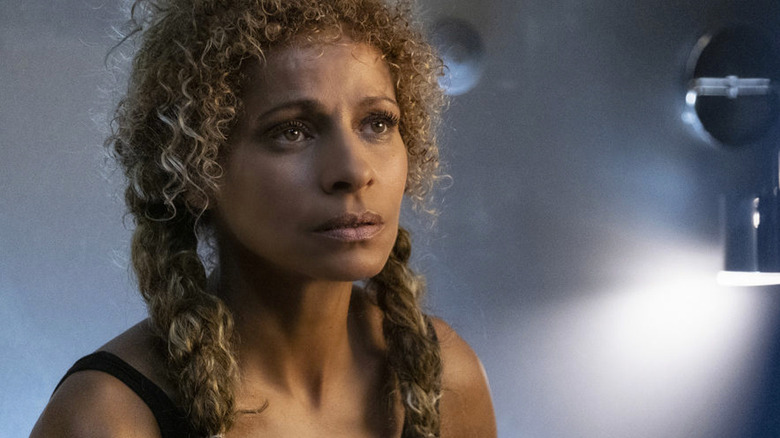
Though everyone on "La Sirena" is undoubtedly going through their own issues this season, Elnor's death has reopened a wound that, for Raffi, never really healed. Raffi has clearly done the work to heal from her addiction, which is a feat in itself — but given her reaction to Elnor's death, she has yet to make amends with her son Gabriel, or even really come to terms with their estrangement. Her split with him was never resolved after the events of "Stardust City Rag"; losing Elnor has to feel like she's lost Gabriel all over again, especially knowing that Elnor's death could have been prevented. There's obviously a way to save him: if the "Sirena" crew manage to restore their timeline, Elnor's life should be restored too. But that makes it all the more personal — and urgent — for Raffi.

The circumstances couldn't be more different, but Raffi is determined to make up for her mistakes with Gabriel. She couldn't be there for him (and she might spend the rest of her life dealing with that), so it's imperative that she be there for Elnor. But even if she doesn't manage to save him, this mission will force her to confront all the pain that she buried in season 1. It's a massive opportunity for her character to develop past the limits of her previous arcs. And given how deftly Michelle Hurd has portrayed Raffi up to now, I can only hope that the writers see that too.

Read this next: The 14 Best Sci-Fi Shows On Amazon Prime

The post Star Trek: Picard is Finally Giving Its Most Fascinating New Character Time to Shine appeared first on /Film.


17 Mar 20:06

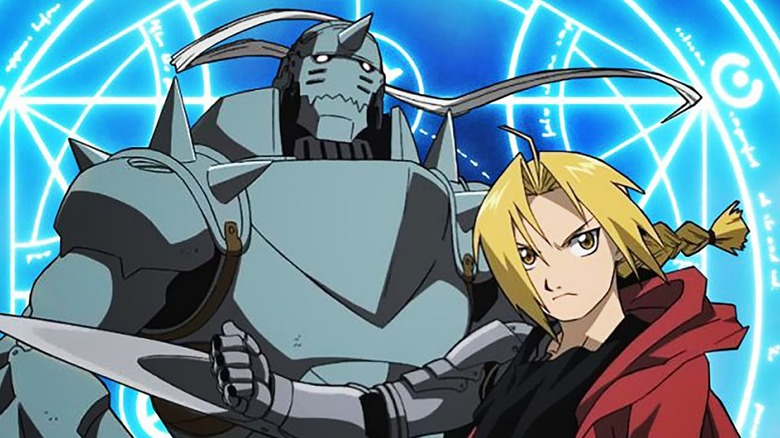
The Forgotten Anime Classic That Inspired Fullmetal Alchemist

by Collier Jennings

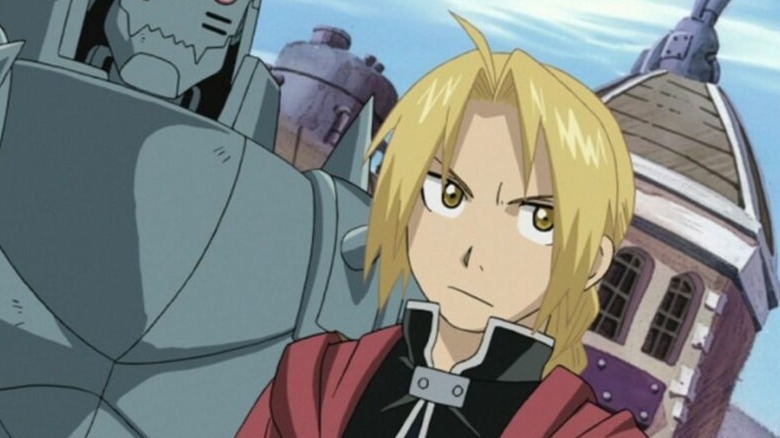
"Fullmetal Alchemist" is one of my favorite anime series ever. The series of two brothers searching for the Philosopher's Stone balances insane fight scenes with intensely emotional moments, thanks to the deft work of author Hiromu Arakawa. Who can forget the horror of learning what Shou Tucker did to his daughter? Or Roy Mustang raining down an unceasing firestorm on Envy? It also doesn't hurt that the Elric brothers have perhaps one of the most compelling journeys when it comes to shonen protagonists, literally bending the laws of the universe to help each other.

Arakawa has been fairly open about the influences on "Fullmetal Alchemist," which include doing research about the Industrial Revolution in Europe and her childhood memories of her parents' farm on Hokkaido. In a 2017 video interview, she revealed another major manga series that inspired her -- and it happens to come from another legendary manga artist.

Waste Not, Want Not

Arakawa named "Urusei Yatsura" by Rumiko Takahashi as her biggest influence, as it was the first manga she ever read. And while most artists often pay homage to the works that inspire them, it was Takahashi's storytelling efficiency that stuck with Arakawa the most.

I think Urusei Yatsura is what I started being conscious of how to write manga. I mean there's no waste in this manga. I read it again when I grew up and thought it was astonishing.

"Urusei Yatsura" follows the misadventures of high schooler Ataru Moroboshi, who manages to win a game against the alien invaders known as the Oni and their ruler Princess Lum. Lum mistakes Ataru's celebration of getting married to his girlfriend Shinobu as a proposal to her, and falls in love with him. Although "Urusei Yatsura" would receive an anime adaptation and kickstart Takahashi's career, Takahashi's following works including "Ranma 1/2" and "InuYasha" proved to be more popular.

A Philosopher's Legacy

True to her word, Arakawa kept "Fullmetal Alchemist" moving with a momentum that most manga lacked, while still allowing for character development and action sequences that are the hallmarks of shonen series. The end result was a successful series that rivaled Takahashi's own work; it even ended up being the most popular anime series in its native home of Japan, and led to two anime adapations including "Fullmetal Alchemist: Brotherhood", which is more faithful to the source material. The series even inspired a live-action adapation -- though I can safely say that you'd be better off watching the anime, as the live action film feels less like a polished Hollywood production and more akin to a fan film.

Arakawa continues to work as a manga artist, with her most recent series "Silver Spoon" wrapping in 2019; she also adapted the popular "Heroic Legend of Arslan" novels into manga form.

Read this next: The 14 Greatest Science Fiction Movies Of The 21st Century

The post The Forgotten Anime Classic That Inspired Fullmetal Alchemist appeared first on /Film.
17 Mar 20:05

Researchers May Have Discovered Origin of Floating Microplastics in Arctic Ocean - CNET

by Julian Dossett
Using models of ocean currents and simulations of floating microplastics, researchers sought to determine where the particles originated.
17 Mar 16:10

Software Supply Chain Weakness: Snyk Warns of 'Deliberate Sabotage' of NPM Ecosystem

by Ryan Naraine

Software supply chain security fears escalated again this week with the discovery of what’s being described as "deliberate sabotage" of code in the open-source npm package manager ecosystem.

read more

17 Mar 16:10

WHO says COVID is rising again? I dunno. THIRD BASE [Scary]

17 Mar 16:10

Cyber Security Takeover May Harm Competition: UK Regulator

by AFP

US cyber security giant NortonLifeLock's planned purchase of Czech rival Avast for more than $8 billion risks harming competition and could face an in-depth probe, Britain's regulator warned on Wednesday.

read more

17 Mar 16:09

The Golden Hour of Incident Response

by noreply@blogger.com (The Hacker News)
As a CSIRT consultant, I cannot overemphasize the importance of effectively managing the first hour in a critical incident. Finding out what to do is often a daunting task in a critical incident. In addition, the feeling of uneasiness often prevents an incident response analyst from making effective decisions. However, keeping a cool head and actions planned out is crucial in successfully
17 Mar 16:09

How to Ease Back Into Running This Spring Without Getting Injured

by Jason Fitzgerald

When spring sunshine and warmer temperatures begin to tempt us, the roads and trails beckon. After struggling mentally and physically to get our training in during the winter, conditions are now more conducive to longer miles and harder training. But if you rush into training too quickly, you may find yourself…

Read more...

17 Mar 16:09

NIST Releases ICS Cybersecurity Guidance for Manufacturers

by Eduard Kovacs

NIST releases ICS cybersecurity guidance for manufacturers

NIST guide provides examples of commercial products that manufacturers can use to address specific security risks

read more

17 Mar 16:09

'Discovery' fully clicks into the philosophy of Star Trek with its fourth season finale

by Kris Naudus

The following contains minor spoilers for season four, episode 14 of 'Star Trek: Discovery.'

Season four has been an interesting one for Star Trek: Discovery. The show finally embraced a more episodic format, only to slide back into an ongoing storyline in the back half of the season. But today’s finale once again promises a return to the things that make Star Trek, well, Star Trek. And, while Discovery also made those promises at the end of last season, there’s more reason to believe that this time the changes will stick.

It starts with the fact that while the major threat this season began as a spatial anomaly (known as the Dark Matter Anomaly, or “DMA”), it was discovered to be merely a harvesting tool used by a previously unknown species, one the Federation calls the 10C. It may have seemed harmless to the 10C in its role as farmers, but the Federation found itself in the role of a rabbit in front of a plow. The DMA destroyed Kwejian; both Ni’Var (née Vulcan) and Earth were next.

The crew of the Discovery on the bridge
CBS

In previous seasons this would have shifted Starfleet into action hero mode, and some characters did advocate for a more assertive and violent approach. But instead of merely jumping into the fray we got lots of… arguing. This may not sound exciting, but it’s always been one of the things Star Trek does best: people discussing conflicting ideas. Some advocated for a peaceful solution and that was ultimately the course decided upon, since it was closest to the Federation ethos of peace and exploration. In other series this might seem like a terrible idea, but Trek is supposed to be, in theory, a utopia. This kind of thinking is one of the cornerstones of the franchise.

There are those who disagree, spearheaded by Cleveland Booker and Ruon Tarka. But while their actions turn them into antagonists, they don’t become villains. We’ve seen this in previous shows like The Next Generation and Voyager, where terrorists like the Maquis were treated with empathy. In Discovery it’s even more at the forefront given Book’s status as a main character, but also the series’ ethos as the Star Trek show that’s all about feelings. While the show sometimes takes flak for all the crying, here the emotional elements feel well balanced, with everyone’s motives clearly articulated both to each other and to the audience. It’s easy to understand each character even if you disagree.

And understanding is the lynchpin of the plot here; the 10C are not carbon-based lifeforms and they don’t communicate like humanoids do. It’s a classic Star Trek problem, as seen in episodes like “Darmok” or “Amok Time.” So last week’s episode was dedicated to the crew and assorted ambassadors methodically working through mathematical and chemical solutions to build a working bridge language. They managed to establish to the 10C that there were problems with the DMA, opening up the door to further negotiation in this week’s episode.

“Coming Home” has a lot of meanings in the context of the actual episode. There’s the threat of the DMA heading toward Earth, there’s a number of scenes set in our solar system involving returning character Sylvia Tilly, and reconciliation between Michael Burnham and her lover Cleveland Booker, the person who grounds her in the 32nd century.

President Rillak, Michael Burnham, Adira and Paul Stamets
CBS

But there’s also meaning in that the episode is where Discovery finally reconciles itself as a Star Trek show, making its highest point of drama not the struggle to evacuate a doomed planet, or the attempts to stop Tarka’s plan, but the actual face-to-face (so to speak) discussion with the 10C. It’s nothing like the action-based approach of the Abrams films or even earlier seasons that dealt with war and time travel and evil sentient computers. It’s diplomacy. It’s a lot of talking, and sitting around and talking about feelings.

And some of those feelings are what you’d call… environmentally minded. It isn’t enough that the 10C merely stops destroying planets that house sentient life. The fact is, the DMA also creates pollution and that needs to be stopped as well. With Earth in immediate danger it seems like an unreasonable ask at the moment, but it’s also very much in the ethos of Star Trek to consider one’s general societal and galactic impact as well. The core of Star Trek is humanism and social justice, and so many classic episodes deal with issues of identity, civil rights, and environmental issues. Discovery has spent so much time dealing with one huge violent crisis after another that it hasn’t had time to do simpler humanist metaphors, and bringing that in at the end here seems to indicate a desire to deal with those issues more in upcoming seasons.

The entire denouement makes that promise: The Federation is growing in strength, the Discovery crew is taking some time off for themselves, and a very special guest toward the end seems to be the show making its politics clear to those segments of the audience who love to decry “woke Trek.” Star Trek has always been woke, but Discovery has only dipped its toe into the water in previous seasons. With its fifth season on the horizon, it’s ready to plunge fully in.

17 Mar 16:08

Deep Water – Hulu Review (3/5)

by Karina "ScreamQueen" Adelgaard
17 Mar 16:05

Popular NPM Package Updated to Wipe Russia, Belarus Systems to Protest Ukraine Invasion

by noreply@blogger.com (Ravie Lakshmanan)
In what's an act of deliberate sabotage, the developer behind the popular "node-ipc" NPM package shipped a new tampered version to condemn Russia's invasion of Ukraine, raising concerns about security in the open-source and the software supply chain. Affecting versions 10.1.1 and 10.1.2 of the library, the alterations introduced by its maintainer RIAEvangelist brought about undesirable behavior
17 Mar 15:57

Arnold Schwarzenegger's appeal to Russia

by Rob Beschizza

Like pretty much everything else he's done, I didn't expect it to be quite this good.

17 Mar 15:57

Does anyone have two tens for a five?

by Devin Nealy
2 10 4 5 Image

Going to the gas pump these days feels like highway robbery. Even though bravely bearing the strain of keeping Russia accountable for its horrific actions in Ukraine can endow one with feelings of altruism, it doesn't make the prospect of dropping $60 to fill up your tank go down any easier. — Read the rest

17 Mar 15:57

AMD Looking To Improve The GPU Reset Experience Under Linux

AMD's Radeon Linux graphics driver developers are looking at enhancing the GPU reset experience so more information about the troublesome event can be communicated up the stack for better informing the user and/or taking greater action to ensure the desktop gets successfully restored...